Finley Bandy ’26 finds a future in history
Finley Bandy spent last summer in the cool temperatures and dim light of UMBC’s Albin O. Kuhn Library and Gallery Special Collections—the perfect environment to preserve rare books, photographs, manuscripts, archives, and artifacts. As part of UMBC’s 2025 Co-Lab interdisciplinary undergraduate summer research program, Bandy learned techniques to produce “Special Collections 101”, an informative video about how to use the resources in the collections. Bandy also loves being surrounded by thousands of historical narratives and working with Special Collections staff Beth Saunders, associate director and curator, and Lindsey Loeper, reference and instruction archivist. The infinite possibilities housed in Special Collections and the people who ensure historical narratives aren’t forgotten have inspired Bandy to join the cadre of museum and archive professionals.
“I was accepted into UMBC’s master’s program in historical studies,” says Bandy. “I love the process of using my historical and archival research to write about what I’m finding so that other people are aware that this piece of history exists. That’s why I want my master’s research to be an online exhibit that is accessible to the world.”
Museums and archives are only two of Bandy’s passions. When Bandy transferred to UMBC from Lamar Community College in Colorado, they brought their love of Russian language, history, and culture, and their deep love of Baltimore City.
Q: Did you come to UMBC already knowing what you wanted to study?
A: When I started at UMBC, I was all set to learn Russian and study Soviet history, but then I decided to go broader and major in history. I did finish all the Russian language courses, so I can speak Russian. I’m still interested in Russian history, and I love Russian music. I really love the language and like Eastern European culture.
Q: Where does your passion for Russian language and culture come from?
A: In my community college, I took a 20th-century world history class, and learned about the Cold War, which lasted from 1947 to 1991. A lot of the history really broke my heart. It made me want to learn more about it. I took a lot of Russian history classes and started reading Russian and Soviet literature. I really love how unique it is.
Q: Is there a modern piece of Russian culture that you enjoy, or are you focused on the history?
A: I think it’s really interesting to see how Soviet culture is beginning to meld with Western culture.
Soviet rock bands are really, really cool. There’s this great rock band that has been around since the ’70s called Akvarium or Aquarium. They were underground for a long time due to the war. I listen to them a lot. There’s also a current pop musician named Monetochka. She’s really cool.
I’ve never travelled abroad or have a passport, but one day I would like to visit Moscow and St. Petersburg, and travel all over Eastern Europe and the Balkans.
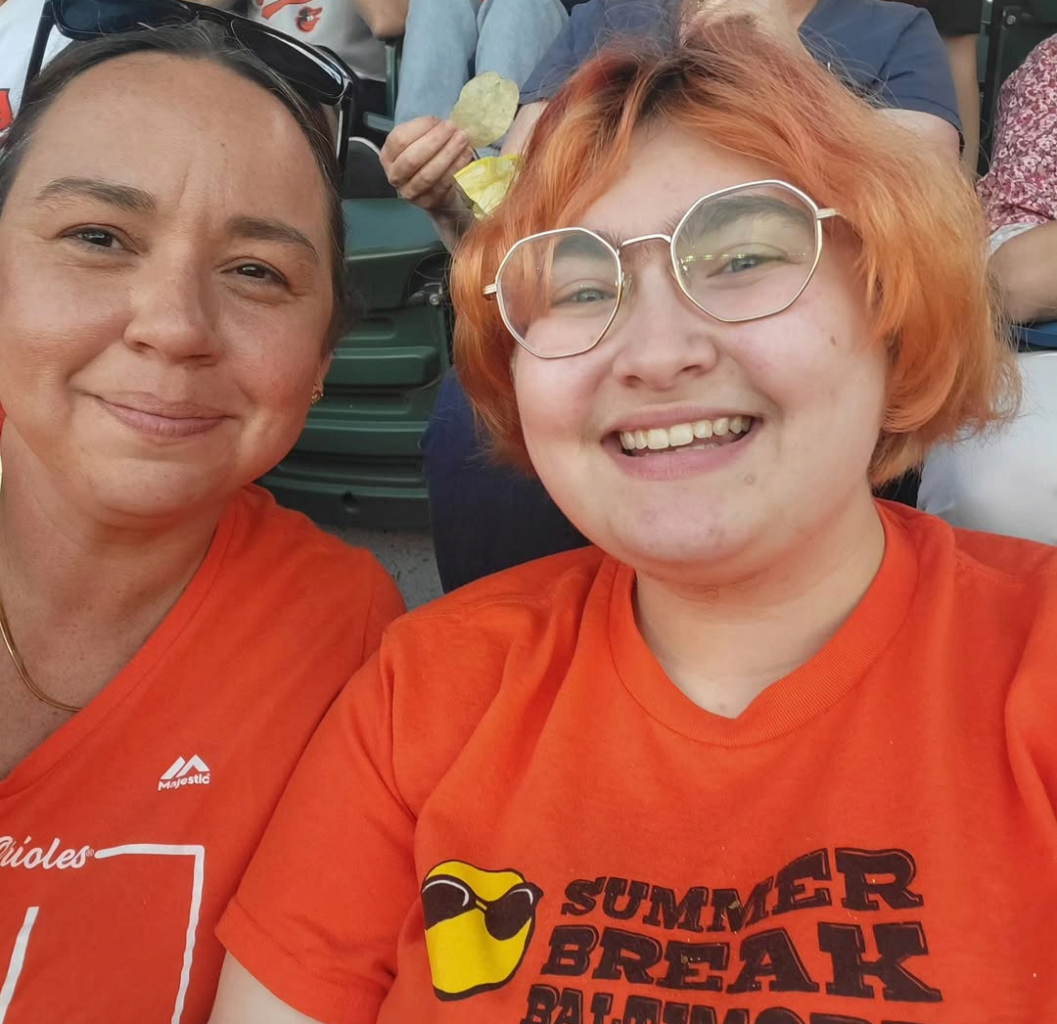 UMBC’s proximity to Camden Yards makes for a great trip to cheer on the Orioles! (Image courtesy of Bandy)
Q: Do you have a community to speak Russian with and immerse yourself in Russian culture?
A: Yes! UMBC’s Russian Club is a really tight-knit group. In the past, we hosted many holiday celebrations. In post-Soviet Russia and Eastern Europe, they still celebrate Christmas, but New Year’s is celebrated more because during the Soviet era, atheism was promoted and New Year’s didn’t have religious ties. Towards the end of the fall semester, we organized a giant Novy God [New Year’s] celebration. And then in the spring, we celebrated Maslenitsa. In the Russian Orthodox Church, this is the last week to feast before a period of fasting that ends at Easter. We also hung out a lot and talked about different Eastern European cultures. It’s called the Russian Club, but we have students from all over Eastern Europe—Ukraine, Armenia, and Belarus.
Q: Why do you love Baltimore City?
A:. Even though I was in Colorado for community college, I spent a lot of my childhood in Baltimore City because my grandmother worked in the city and my mom lived there. I have a connection to Baltimore, but I never really knew its history. I took “The History of Baltimore” at the Lion Brothers Building downtown. Every week, we took field trips to historic sites in Baltimore City to connect what we were learning with real-world experiences.
Q: Why did you change your major from Russian to history, and who has inspired you in this path?
A: I decided to switch majors from Russian to history while doing research in Professor Melissa Blair‘s “The History of Baltimore” class. It inspired me to pivot and focus my work on Maryland’s transportation history. The experiential learning and field work inspired me to better understand Baltimore and its history. I think Baltimore is a very unique city with a rich history that is often ignored by the historical record. I enjoyed interacting with other public historians and museum professionals within the city through that class.
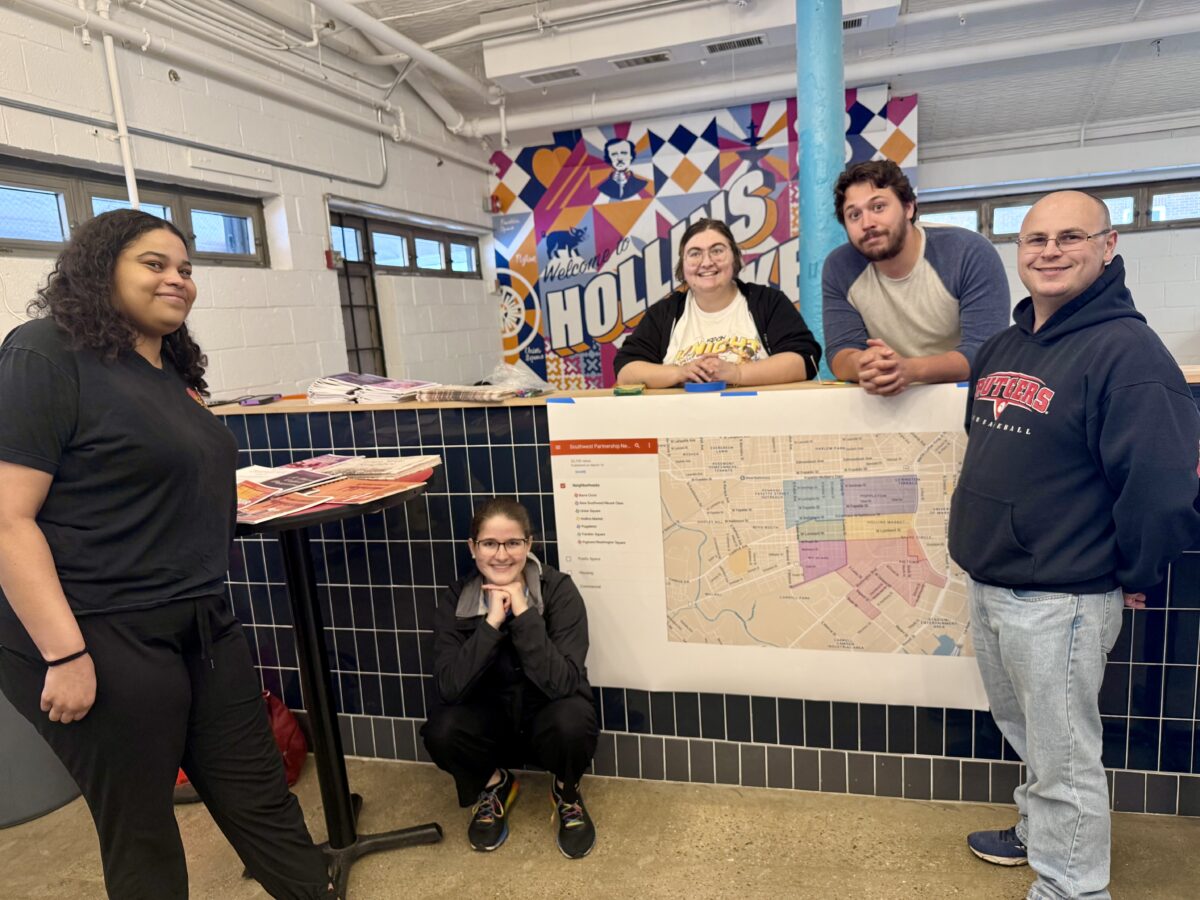 Students from King’s class, “Preserving Spaces, Making Spaces in Baltimore,” participated in a Community Archiving Day event. The class planned this event to engage with residents and community members from neighborhoods in Southwest Baltimore and to gauge interest in developing a Community Archive to preserve their histories. (l-r) Amina Thiam ’24, history, Em Schumacher, a geography and environmental systems senior, Bandy, Tristan Diaz ’25, cultural anthropology and sociology, and Bandy’s fiancé, Max Taylor (who is not a UMBC student). (Image courtesy of King)
I’ve also worked a lot with Professor Nicole King in American studies—I took her “Preserving Places, Making Spaces in Baltimore” class twice. In 2025, we worked with the Poppleton Now Community Association and the Southwest Partnership Historic Preservation Committee on a Public History and Preservation Study. It included my research on the “Highway to Nowhere,” a 1.4-mile stretch of U.S. Route 40 in West Baltimore, built in the 1970s, that ends abruptly. The highway cuts off a section of Poppleton, one of the city’s oldest historically Black neighborhoods. We also created an online story map.
Q: Why are you passionate about transportation equity?
A: I don’t have a car, so I rely on Baltimore’s terrible public transportation. I love public transit, and I need it to be better. In the Baltimore history class, I realized the bus schedules, the bus routes, and the history of highway construction in the city have limited transportation, not expanded it. I conducted research with American studies Professor Michael Cassiano, my public humanities advisor. I presented my research, “Our City Is a City Without an Expressway: A Historical Review of Transportation Injustice in Baltimore City,” at URCAD. I’m interested in exploring these topics in my master’s program.
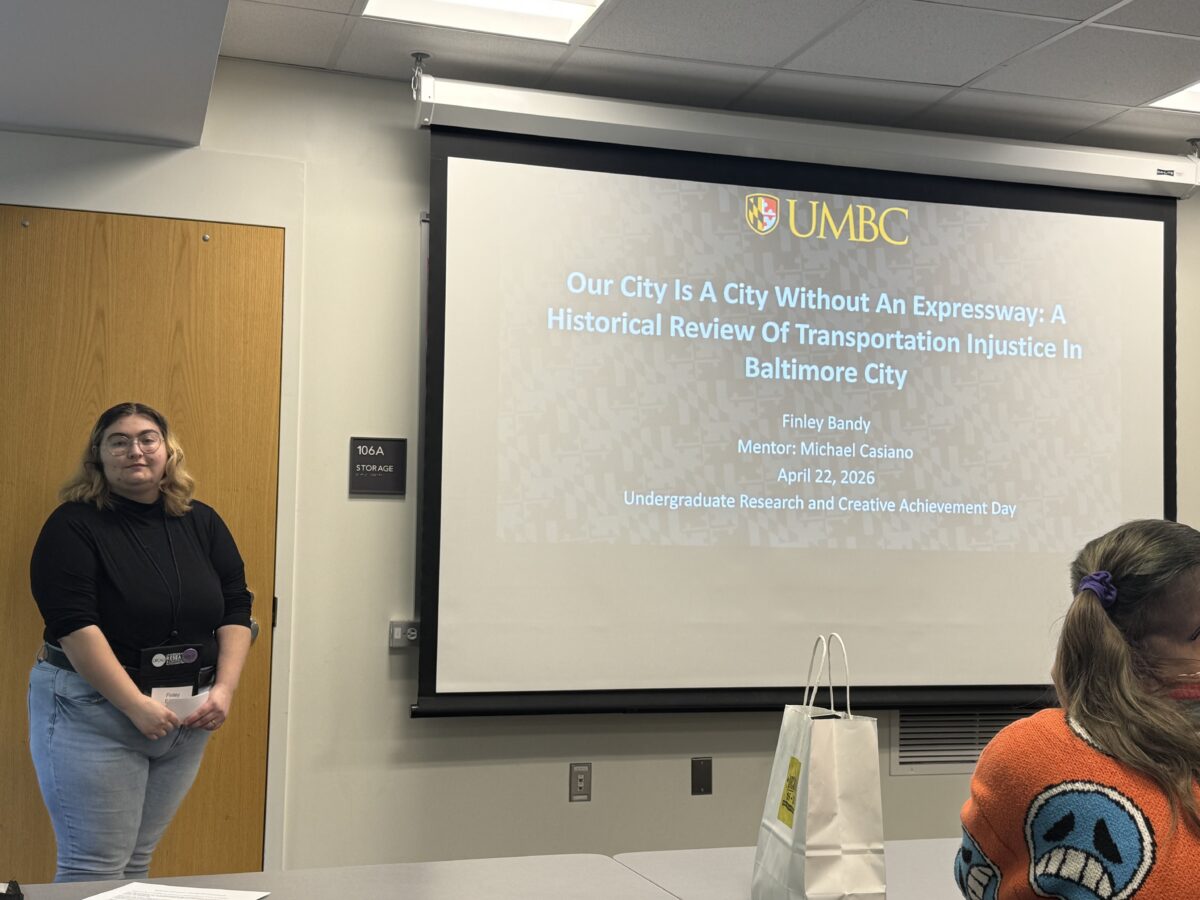 Bandy presents her research at the 2026 Undergraduate Research and Creative Achievement Day. (Image courtesy of King.)
Q: What is a challenge that you love?
A: I love creative writing. I’ve been writing since I was a kid. I think it’s a natural segue into history, because history is narrative-based. It’s very humanistic. I won’t say it comes naturally to me. It takes me probably an hour to write a sentence because I overthink my word choices a lot. But I love using language to evoke certain feelings and really press home on an idea. I try to choose the right word to fit what I’m talking about and its context. I also try to support students in the writing process as the History Student Council president. Last semester, we organized a bi-weekly writing group to encourage community and motivation within the major.
Q: What advice do you have for undergraduate and transfer students?
A: For undergraduate students, I would say to be realistic. Don’t put too much on your plate. That’s been the biggest challenge for me. I’ve been suffering a lot of burnout, because, in addition to my classes, I am a teaching assistant for “Introduction to the University for Transfer Students.” I started getting better at saying no to things. I encourage students to get out there, explore new things, but also recognize their limits. Prioritize making space for something that brings you joy.
For transfer students, I would say time management. Most of us work full-time or part-time, are raising families, and have other commitments. We’re not fresh out of high school and can sometimes internalize a feeling of being behind or not doing college “right.” It’s important to get over that because it doesn’t really matter. When I was 18 years old, my coworker was 40 years old. They had been working for decades. Once you leave high school, age doesn’t matter the same way—people are people, and everyone is busy. I wouldn’t focus on trying to get things done in a way that’s expected of you. Instead, focus on what you need to do to succeed.
Read more Class of 2026 stories.
]]>
Finley Bandy spent last summer in the cool temperatures and dim light of UMBC’s Albin O. Kuhn Library and Gallery Special Collections—the perfect environment to preserve rare books, photographs,...
https://umbc.edu/stories/finley-bandy-finds-a-future-in-history/
Video Preview
https://assets2-my.umbc.edu/system/shared/attachments/3a687cba60a9c8a1585bf7569cda5a70/6aa071a6/news/000/160/021/753b160cd612d83ee6b7c8c05e556046/2VV5_EeP8xs.jpg?1778616307
https://my3.my.umbc.edu/api/v0/pixel/news/160021/guest@my.umbc.edu/74ebb52b16afdf97b14dc160572a104f/api/pixel
american-studies
aok-library
baltimore-city
cahss
class-of-2026
ges
history
news
policy-and-society
saph
story
UMBC News & Magazine
https://my3.my.umbc.edu/groups/umbc-news-magazine
https://assets1-my.umbc.edu/system/shared/avatars/groups/000/001/943/24435aa6207c452e7bc15cc74b42c7bb/xsmall.png?1748556657
https://assets1-my.umbc.edu/system/shared/avatars/groups/000/001/943/24435aa6207c452e7bc15cc74b42c7bb/original.png?1748556657
https://assets2-my.umbc.edu/system/shared/avatars/groups/000/001/943/24435aa6207c452e7bc15cc74b42c7bb/xxlarge.png?1748556657
https://assets2-my.umbc.edu/system/shared/avatars/groups/000/001/943/24435aa6207c452e7bc15cc74b42c7bb/xlarge.png?1748556657
https://assets3-my.umbc.edu/system/shared/avatars/groups/000/001/943/24435aa6207c452e7bc15cc74b42c7bb/large.png?1748556657
https://assets1-my.umbc.edu/system/shared/avatars/groups/000/001/943/24435aa6207c452e7bc15cc74b42c7bb/medium.png?1748556657
https://assets2-my.umbc.edu/system/shared/avatars/groups/000/001/943/24435aa6207c452e7bc15cc74b42c7bb/small.png?1748556657
https://assets1-my.umbc.edu/system/shared/avatars/groups/000/001/943/24435aa6207c452e7bc15cc74b42c7bb/xsmall.png?1748556657
https://assets2-my.umbc.edu/system/shared/avatars/groups/000/001/943/24435aa6207c452e7bc15cc74b42c7bb/xxsmall.png?1748556657
UMBC News & Magazine
0
0
false
Tue, 12 May 2026 15:44:27 -0400
Tue, 12 May 2026 15:44:27 -0400
Last Day of Classes!
Dear UMBC Community,
Happy Last Day of Classes! To our students: I wish you all the best on your final exams, papers, and projects—you are almost there, and I know you can finish strong. To our faculty and staff: Thank you for your dedication to our students and to your work across all departments and every corner of our campus.
To our entire campus community: Congratulations on all you have achieved during this semester and throughout the academic year. I know it has been challenging on many fronts; I hope you all take time to pause and reflect on what you have accomplished and the positive difference you have made for others.
I look forward to joining you in celebrating our graduating students at Spring Commencement next week!
Sincerely,
President Valerie Sheares Ashby
]]>
Dear UMBC Community, Happy Last Day of Classes! To our students: I wish you all the best on your final exams, papers, and projects—you are almost there, and I know you can finish strong. To our...
https://umbc.edu/stories/last-day-of-classes/
https://my3.my.umbc.edu/api/v0/pixel/news/160014/guest@my.umbc.edu/2cde57db848a18ae45db214179525216/api/pixel
president
rss
story
UMBC News & Magazine
https://my3.my.umbc.edu/groups/umbc-news-magazine
https://assets1-my.umbc.edu/system/shared/avatars/groups/000/001/943/24435aa6207c452e7bc15cc74b42c7bb/xsmall.png?1748556657
https://assets1-my.umbc.edu/system/shared/avatars/groups/000/001/943/24435aa6207c452e7bc15cc74b42c7bb/original.png?1748556657
https://assets2-my.umbc.edu/system/shared/avatars/groups/000/001/943/24435aa6207c452e7bc15cc74b42c7bb/xxlarge.png?1748556657
https://assets2-my.umbc.edu/system/shared/avatars/groups/000/001/943/24435aa6207c452e7bc15cc74b42c7bb/xlarge.png?1748556657
https://assets3-my.umbc.edu/system/shared/avatars/groups/000/001/943/24435aa6207c452e7bc15cc74b42c7bb/large.png?1748556657
https://assets1-my.umbc.edu/system/shared/avatars/groups/000/001/943/24435aa6207c452e7bc15cc74b42c7bb/medium.png?1748556657
https://assets2-my.umbc.edu/system/shared/avatars/groups/000/001/943/24435aa6207c452e7bc15cc74b42c7bb/small.png?1748556657
https://assets1-my.umbc.edu/system/shared/avatars/groups/000/001/943/24435aa6207c452e7bc15cc74b42c7bb/xsmall.png?1748556657
https://assets2-my.umbc.edu/system/shared/avatars/groups/000/001/943/24435aa6207c452e7bc15cc74b42c7bb/xxsmall.png?1748556657
UMBC News & Magazine
0
0
false
Tue, 12 May 2026 14:19:49 -0400
Vunnathi Ankem ’26—finding community and her place at UMBC
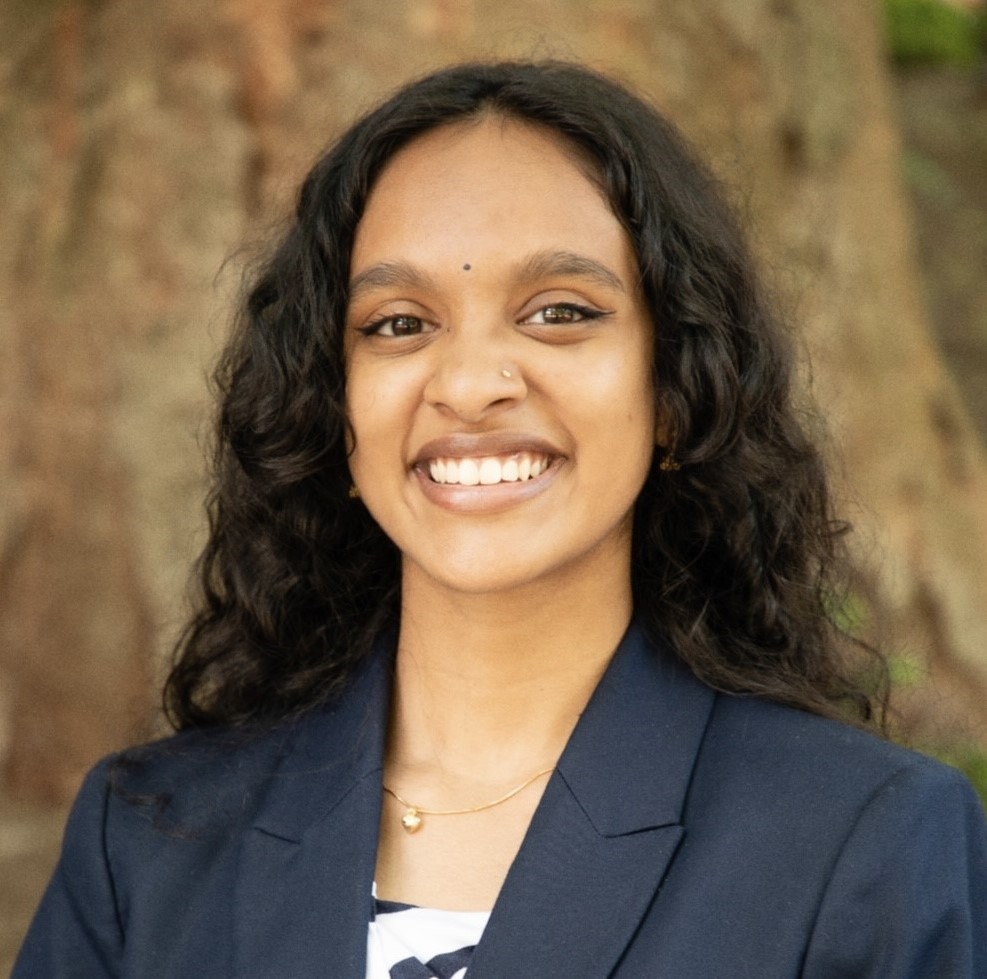
For Vunnathi Ankem, psychology, the UMBC experience has been defined by one word: community. As an resident assistant, a researcher, and a multifaceted student leader, she has spent her four years both building community and studying its impact on the human experience. From hosting public service retreats in Baltimore to interviewing members of the South Asian diaspora for her thesis, Ankem’s work bridges the gap between community-centered research and heartfelt advocacy. As she prepares to graduate, she leaves behind a campus made stronger by her leadership and a personal roadmap focused on healing, mentorship, and global research.
Q: What brought you to UMBC?
A: I was really trying to find community, to find a place that fit who I was. And I found that at UMBC. I’ve been welcomed by so many communities here, and that’s not just what brought me to UMBC—it continues to be the reason why I love it.
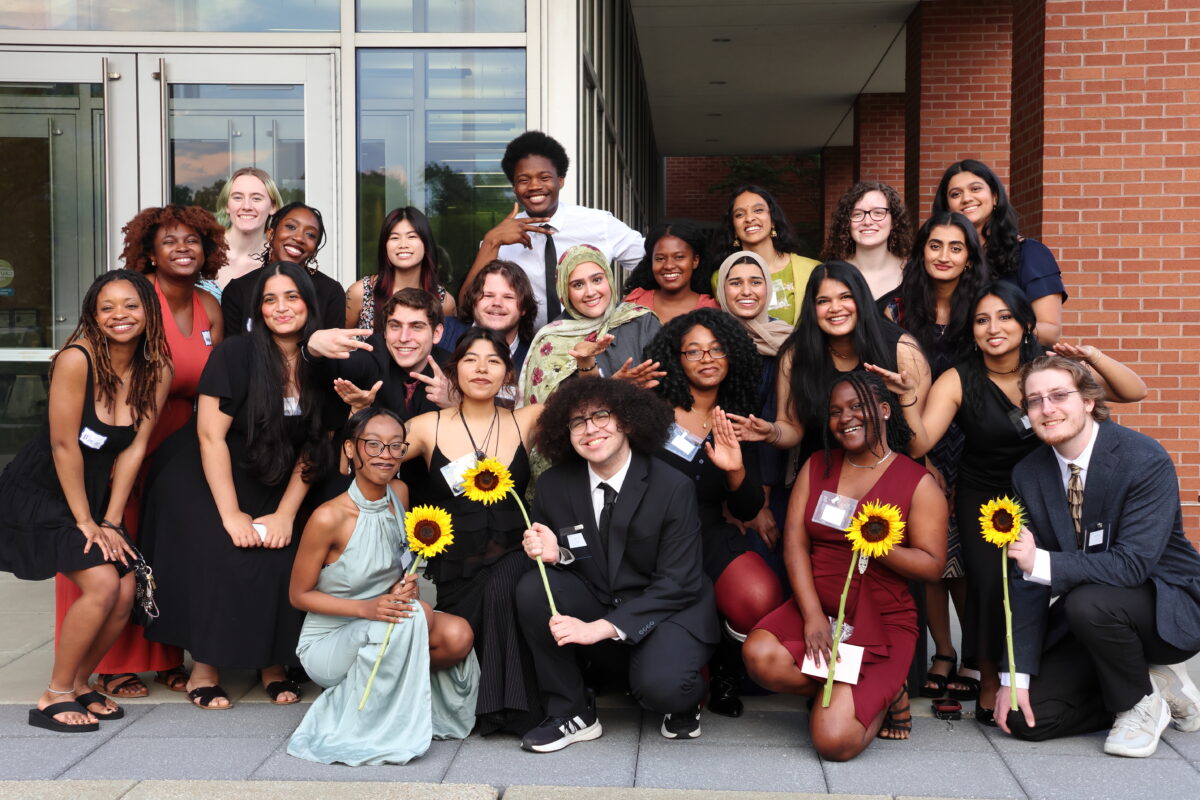 Peer mentors from this year’s Shriver LLC floor’s annual Passing of the Torch ceremony.
Q: What drew you to the leadership roles you’ve taken on?
A: The three leadership roles I think about are RA of the Shriver Living Learning Community (LLC), upperclassman chair of the Sondheim Scholars Program Steering Committee, and Honors College Council president. I initially never thought I’d become an RA, but the Shriver LLC floor is something I’m very passionate about. Everyone is always helping each other, and that sort of community is what I love. For Sondheim I was drawn to its public service orientation. I was able to host retreats in Baltimore for first-year students and could make sure they understood how beautiful this city is. My role in the Honors College has become something much deeper after we lost the president and my good friend. She was everywhere and her impact on my life, and on everyone else, continues to be inspiring to me after she’s gone.
Q: What does leadership mean to you?
A: A lot of leadership is serving and listening. As one person, you can’t have all the ideas and you can’t do everything yourself. The best leaders create other leaders because a huge part of leadership is mentorship. You have to always be looking to see who’s interested and giving people the opportunity to grow and blossom and become amazing student leaders. I’ve been lucky to watch that happen in every single role I’ve had on campus. It’s beautiful.
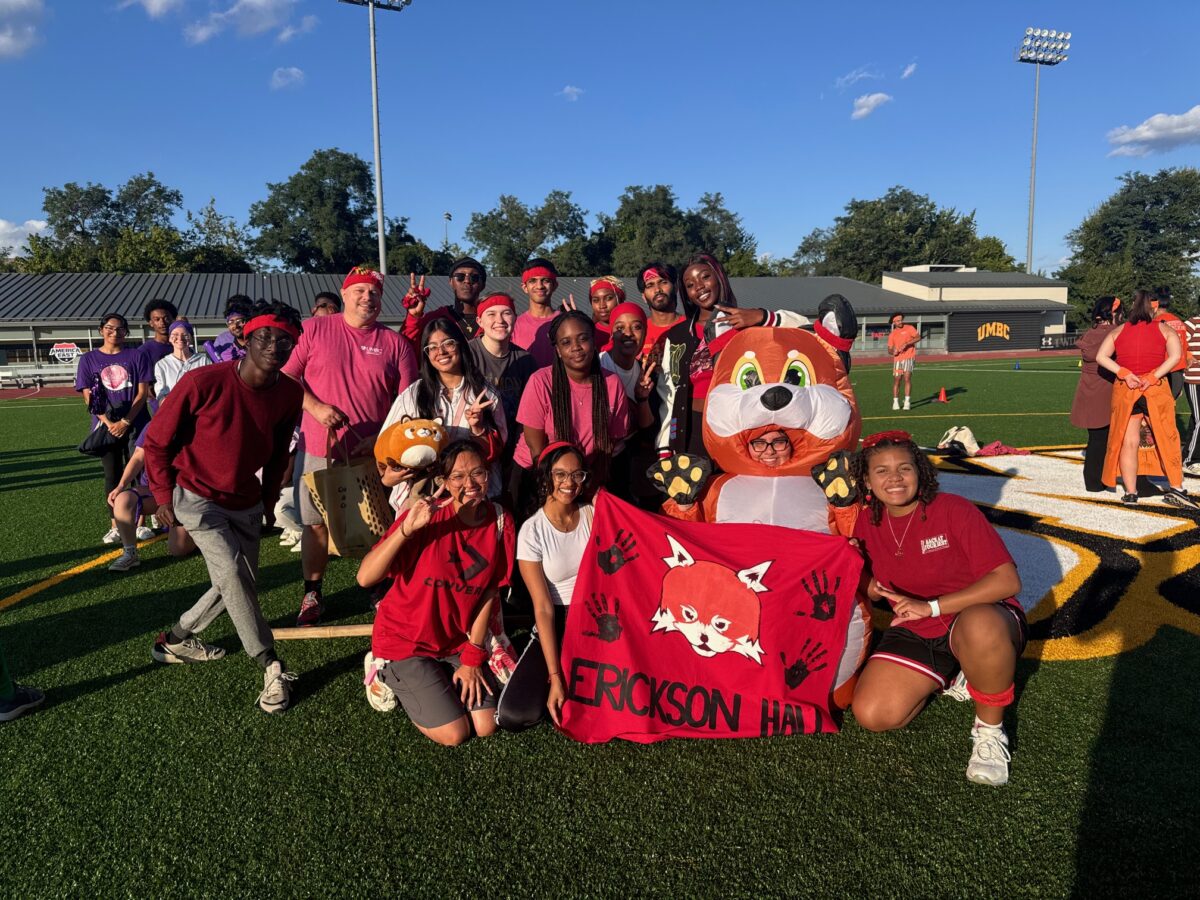 The resident assistant team from Erickson Hall participating in the ResLife tournament over summer training.
Q: Tell us about your honors thesis research.
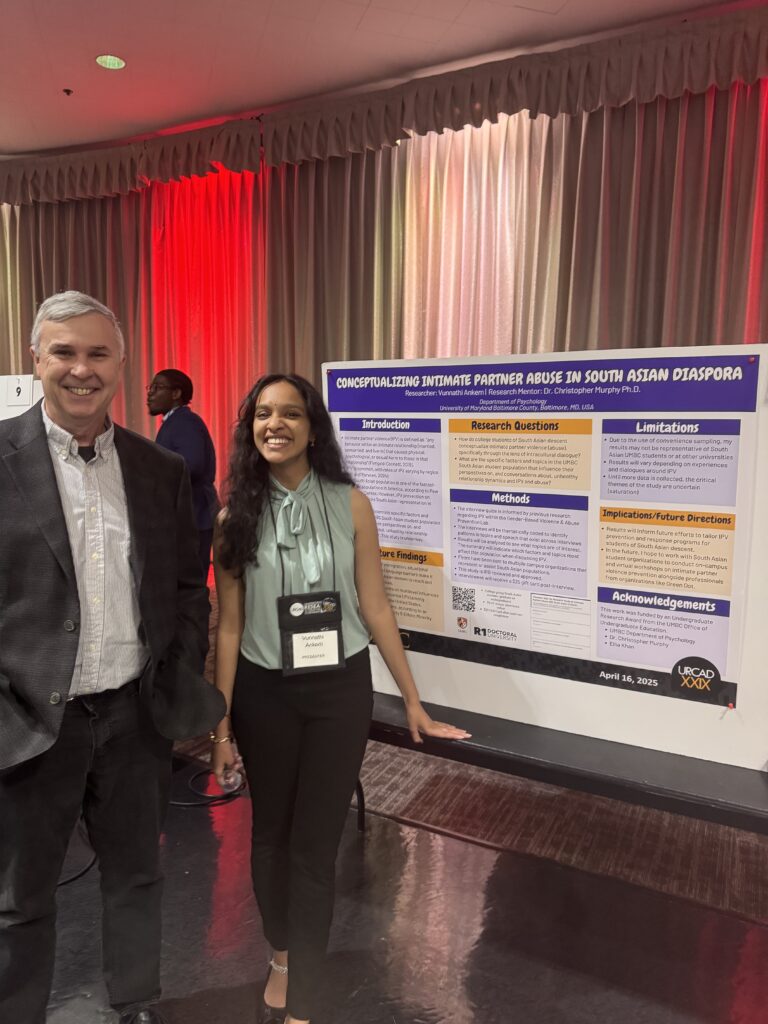
A: It all started with Alternative Spring Break. The topic was educational justice for youth experiencing intimate partner violence, which inspired me to do research in that field. A psychology grad student from Pakistan, Ellia Khan, in Dr. Christopher Murphy’s lab inspired me with her South Asian perspectives on this research. Our conversations led me to look into what social factors make us believe certain things and develop certain concepts about unhealthy relationships. The South Asian diaspora is an interesting population to study because it’s fast growing and there’s a wide range of experiences. I’ve done about 14 interviews now, and every single person I’ve talked to I’ve learned so much from.
 Ankem shows President Valerie Sheares Ashby how to dance to the popular Indian song Naatu Naatu.
Q: What advice do you have for incoming students?
A: When I think about what I’m proud of, it’s not the awards, it’s the people. I remember all the people who were there when I needed support—those people meant more to me than any accomplishment. My advice would be to think about what you’ll look back on. It will most likely be community—the people who were there when you weren’t at your best.
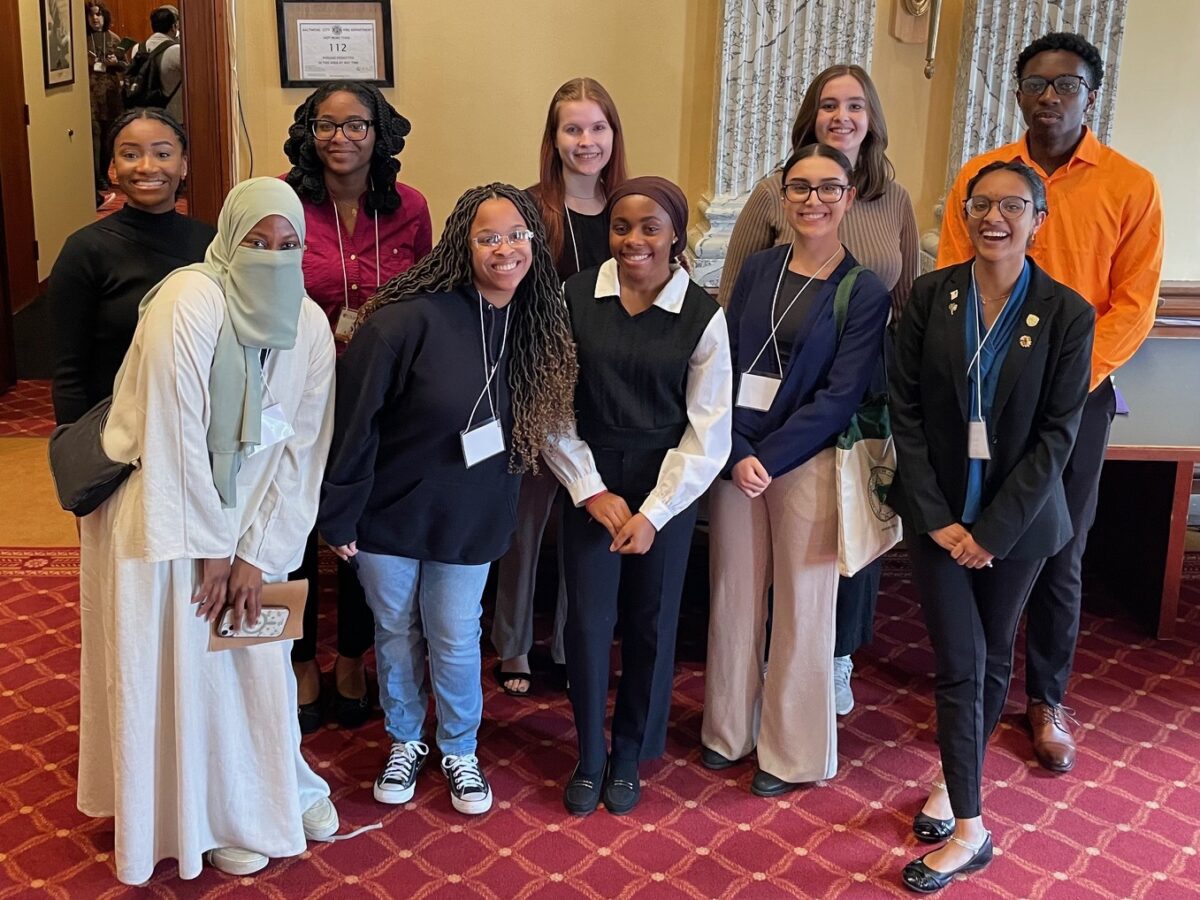 Ankem, front, right, and others visited Baltimore City Hall during the Alternative Spring Break trip she co-led for the health equity and patient care group.
Q: What does life after UMBC look like?
A: I’ve been thinking about this question for the whole year. I definitely want to pursue a clinical community psychology Ph.D. in the future—that’s the goal. I was awarded a Fulbright Scholarship, so I’ll be heading to India for a nine-month research project – a sort of extension of my thesis, but with people from different states across India. I’m also excited to return to my Indian classical dancing roots. Something about being on stage and dancing, it’s my ultimate peace.
All photos courtesy of Ankem. Story by Katharine Scrivener, assistant director of alumni and development communications.
]]>
For Vunnathi Ankem, psychology, the UMBC experience has been defined by one word: community. As an resident assistant, a researcher, and a multifaceted student leader, she has spent her four years...
https://umbc.edu/stories/vunnathi-ankem-26-finding-community-at-umbc/
https://my3.my.umbc.edu/api/v0/pixel/news/160037/guest@my.umbc.edu/94d479ecc7a982f61bd1b3bc504d2d2f/api/pixel
cahss
class-of-2026
honorscollege
news
policy-and-society
psychology
shrivercenter
story
UMBC News & Magazine
https://my3.my.umbc.edu/groups/umbc-news-magazine
https://assets1-my.umbc.edu/system/shared/avatars/groups/000/001/943/24435aa6207c452e7bc15cc74b42c7bb/xsmall.png?1748556657
https://assets1-my.umbc.edu/system/shared/avatars/groups/000/001/943/24435aa6207c452e7bc15cc74b42c7bb/original.png?1748556657
https://assets2-my.umbc.edu/system/shared/avatars/groups/000/001/943/24435aa6207c452e7bc15cc74b42c7bb/xxlarge.png?1748556657
https://assets2-my.umbc.edu/system/shared/avatars/groups/000/001/943/24435aa6207c452e7bc15cc74b42c7bb/xlarge.png?1748556657
https://assets3-my.umbc.edu/system/shared/avatars/groups/000/001/943/24435aa6207c452e7bc15cc74b42c7bb/large.png?1748556657
https://assets1-my.umbc.edu/system/shared/avatars/groups/000/001/943/24435aa6207c452e7bc15cc74b42c7bb/medium.png?1748556657
https://assets2-my.umbc.edu/system/shared/avatars/groups/000/001/943/24435aa6207c452e7bc15cc74b42c7bb/small.png?1748556657
https://assets1-my.umbc.edu/system/shared/avatars/groups/000/001/943/24435aa6207c452e7bc15cc74b42c7bb/xsmall.png?1748556657
https://assets2-my.umbc.edu/system/shared/avatars/groups/000/001/943/24435aa6207c452e7bc15cc74b42c7bb/xxsmall.png?1748556657
UMBC News & Magazine
0
0
false
Tue, 12 May 2026 13:24:41 -0400
Tue, 12 May 2026 13:24:41 -0400
Happy Monday: A UMBC Saturday
Dear UMBC Community,
I recently had one of those days that reminded me—through a richly diverse set of experiences—exactly who we are. I had the opportunity to attend three events the first Saturday in May that showcased in different ways the strengths of our community and the contributions UMBC makes to the state of Maryland.
My day began at an open house at the Institute of Marine and Environmental Technology (IMET) in Baltimore’s Inner Harbor, where UMBC faculty, students, and partners are advancing research on the Chesapeake Bay and beyond. The family-friendly open house gave visitors a chance to experience IMET’s research through hands-on science activities, conversations with scientists, and demonstrations exploring marine science. I could see curiosity taking hold in the minds of the attendees.
Then it was on to Maryland History Day, a celebration of the humanities and the culmination of the Maryland History Day contest that we have hosted on our campus for more than two decades. A partnership with Maryland Humanities, the event brought hundreds of middle and high school students whose questions and perspectives are adding to our understanding of history.
I ended the day at the Linehan Concert Hall, listening to “Songs of Freedom,” a concert by the UMBC Jubilee Singers and Gospel Choir. The music was powerful, carrying stories and history and bringing people together. Three different spaces, three different ways of connecting, learning, and contributing to our communities: That is UMBC.
With deep appreciation,
President Valerie Sheares Ashby
]]>
Dear UMBC Community, I recently had one of those days that reminded me—through a richly diverse set of experiences—exactly who we are. I had the opportunity to attend three events the first...
https://umbc.edu/stories/happy-monday-a-umbc-saturday/
https://my3.my.umbc.edu/api/v0/pixel/news/159965/guest@my.umbc.edu/00fbc5e97f9e08b27d3f19e3a8c7eef1/api/pixel
happy-monday
rss
story
UMBC News & Magazine
https://my3.my.umbc.edu/groups/umbc-news-magazine
https://assets1-my.umbc.edu/system/shared/avatars/groups/000/001/943/24435aa6207c452e7bc15cc74b42c7bb/xsmall.png?1748556657
https://assets1-my.umbc.edu/system/shared/avatars/groups/000/001/943/24435aa6207c452e7bc15cc74b42c7bb/original.png?1748556657
https://assets2-my.umbc.edu/system/shared/avatars/groups/000/001/943/24435aa6207c452e7bc15cc74b42c7bb/xxlarge.png?1748556657
https://assets2-my.umbc.edu/system/shared/avatars/groups/000/001/943/24435aa6207c452e7bc15cc74b42c7bb/xlarge.png?1748556657
https://assets3-my.umbc.edu/system/shared/avatars/groups/000/001/943/24435aa6207c452e7bc15cc74b42c7bb/large.png?1748556657
https://assets1-my.umbc.edu/system/shared/avatars/groups/000/001/943/24435aa6207c452e7bc15cc74b42c7bb/medium.png?1748556657
https://assets2-my.umbc.edu/system/shared/avatars/groups/000/001/943/24435aa6207c452e7bc15cc74b42c7bb/small.png?1748556657
https://assets1-my.umbc.edu/system/shared/avatars/groups/000/001/943/24435aa6207c452e7bc15cc74b42c7bb/xsmall.png?1748556657
https://assets2-my.umbc.edu/system/shared/avatars/groups/000/001/943/24435aa6207c452e7bc15cc74b42c7bb/xxsmall.png?1748556657
UMBC News & Magazine
0
0
false
Mon, 11 May 2026 15:26:12 -0400
Chinonso Ezeobi, Ph.D. ’26, channels his own challenges to become a better teacher and mentor
When Chinonso Ezeobi decided to pack up his life and come to the United States to pursue his Ph.D. in electrical engineering at UMBC, he was thrilled at the prospect of finding a program that would bring him fulfillment. However, financial struggles and the impact of COVID pandemic quickly threatened Ezeobi’s plans for the future. Never one to be derailed, he found mentors across campus who made it their mission to keep him on the path to his Ph.D. Ezeobi recognized how invaluable their support was and found his own ways to give back to the place and people who gave him so much, including founding two organizations on campus and keeping his door open to any students who may be struggling.
Q: What brought you to the United States and to UMBC to earn your doctorate?
A: After earning my bachelor’s degree in Nigeria, I went into the telecommunications industry for about 15 years. Then I went to graduate school in Finland with the hope of completing my Ph.D. to qualify me to be a teacher, as I believed that I would impact people more by becoming a teacher. But, none of the Ph.D. programs I was interested in in Finland could give me full funding.
As part of my search for fully funded Ph.D. programs, my wife and I visited the United States in 2018 and had the opportunity to come to UMBC. I had a meeting with the chair of the Department of Computer Science and Electrical Engineering (CSEE). After that, my wife and I ate lunch in The Commons. There was a Nigerian flag hanging from the ceiling. When I saw it, I thought, “Oh, my people are represented here.” I applied for several Ph.D. programs and was offered admission to UMBC. Seeing the Nigerian flag that day played a big part in choosing UMBC for my doctoral study.
Q: What is your most meaningful memory from your time at UMBC?
A: When I came to UMBC, I actually didn’t have funding in my very first semester. So I struggled. I paid out of pocket from my savings. I discovered this wasn’t sustainable. At the end of my first semester, I had made up my mind to leave UMBC and transfer to a different university I had been admitted to because I still couldn’t get funding, and I couldn’t afford to pay anymore. I was stressed; I was anxious; I was depressed. I went to the inaugural meeting of the Black Graduate Student Organization. There were about 15 students in attendance as well as [President Emeritus] Freeman A. Hrabowski and [Dean Emerita of Graduate Studies] Janet Rutledge. Dr. Hrabowski and Dr. Rutledge went around the table and asked each student to share how we were faring and what our experiences at UMBC had been like. I told them it wasn’t easy. And the president directed me to work with Dr. Rutledge to sort my situation out. I and Dr. Rutledge had several one-on-one meetings afterwards where she helped me to navigate my challenges at UMBC. When I reached out to Dr. Rutledge the week I wanted to leave UMBC, she asked me to give her one more week to figure out how to fund me. That was what changed everything. I was able to get the support I needed, and the rest, they say, is history.
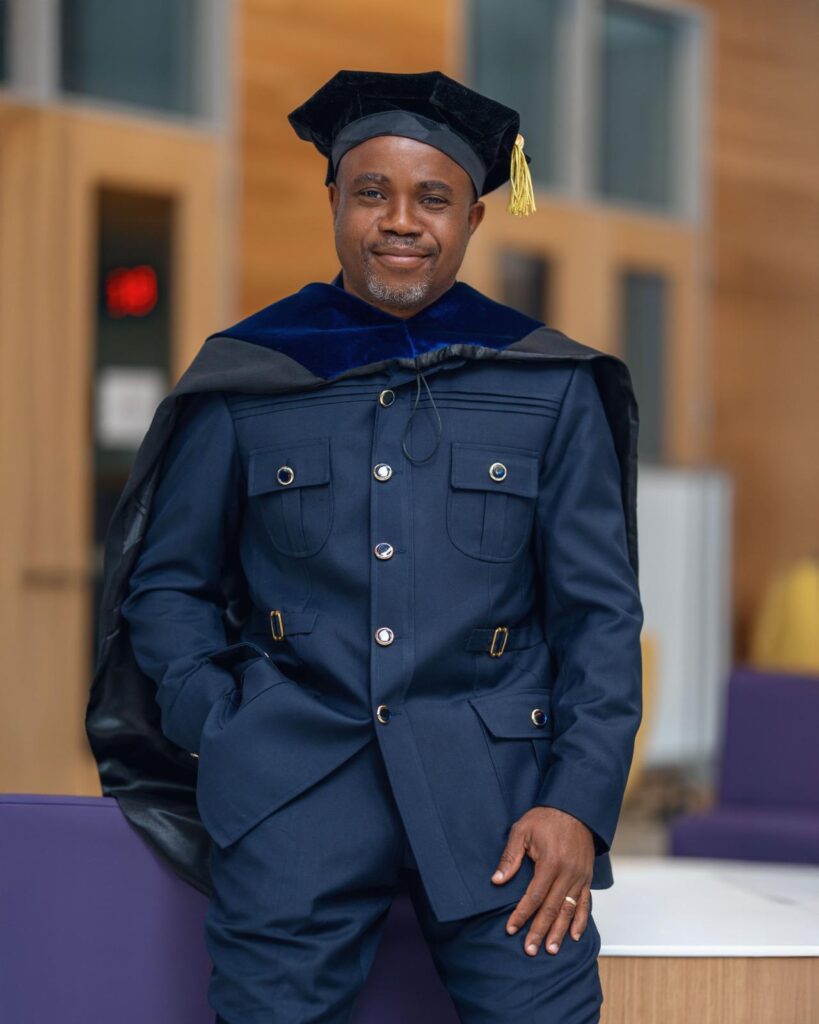 Ezeobi in Commencement regalia. (Courtesy of Ezeobi)
Q: How have you navigated and overcome the challenges you’ve faced during your time at UMBC?
A: I faced a lot of challenges in my time at UMBC. I was coming in from industry, and I had not been in school for a long time. I was trying to acclimatize. But then the COVID-19 pandemic hit in my second semester, and everybody was at home. It was so devastating for me as someone who loves to interact with other people in person. I had left a good job to come to graduate school, and I started to wonder, “Did I do the right thing?”
The kind of research I was doing in my previous lab was difficult to adjust, and I needed a little more help, but because everything was virtual it wasn’t easy to get the kind of help I needed. The lab was able to fund me for a semester, but unfortunately, the day my wife arrived in the United States they informed me that they couldn’t support me any longer. So now my wife had joined me but I had no source of income and funding for my Ph.D. program. The graduate program director of CSEE department offered me a grader position without tuition remission, which I accepted.
Then I got an email from Dr. Robin Cresiski asking if I was available to work with her in the Graduate School based on Dr. Rutledge’s recommendation. She was able to give me a position that could pay for my tuition and still allow me to work in the CSEE department. That was how my relationship with Dr. Cresiski started. She and the Graduate School have always been there for me.
The challenges with my research were similarly massive. Because my lab didn’t have funding, it was very self-driven research. My mentor, Dr. Anthony Johnson, was skeptical about the novelty of my research in the beginning since the ZBLAN sample [a fiber optics slab sample] I used had been around for a long time. Not only did I have to search for and obtain the samples and materials I needed, but I had to convince him that my research was worth it. I went the extra mile to go to the company where I got my samples (Thorlabs) and pulled them into a meeting with Dr. Johnson and I discussed my approach and possible outcome. The meeting highlighted the novelty of my approach to the ZBLAN material and that was how he came on board.
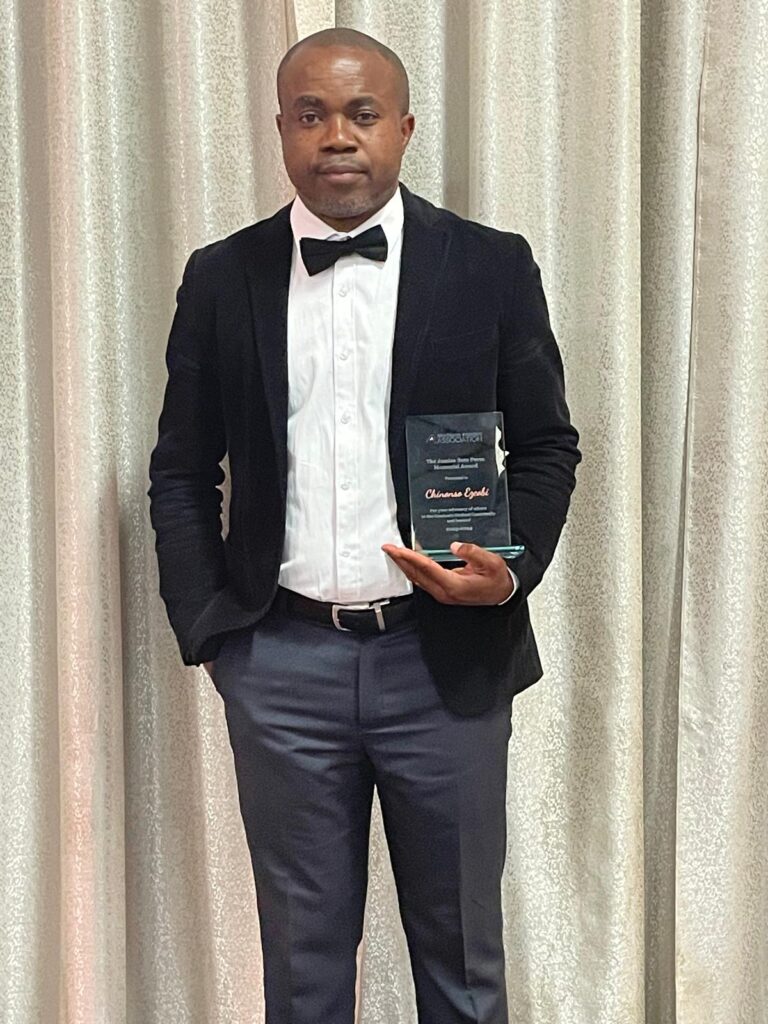 Ezeobi stands with an award for his work. (Courtesy of Ezeobi)
Once I navigated through one challenge, another one came in. But at the end of the day—it was worth it. I was able to pull through all of those challenges. I was also able to transition from being an international student to having a green card through self-petition and self-advocacy, so I’m able to graduate without the additional pressure of thinking about my visa status while looking for jobs. My faith and the community at UMBC were essential in navigating through all challenges. The motivation was that I had a community of people who wanted my success, people who I felt would advocate for me even when I’m not in the room.
I wouldn’t change my UMBC experience for anything. The struggles I’ve faced have been very, very challenging, but I’m glad I went through them. It has made me a better person. It has prepared me for the next phase of my life, which will be teaching. And when you’re teaching students, you teach with context of all of the challenges you have been through to try to make sure that the students have a good experience.
Q: How have your experiences engaging and organizing within UMBC’s graduate student community enhanced your journey here?
A: I know a lot of people on campus. When other graduate students have serious issues, they will come to me and share their challenges. I have ideas of who they can talk to and am able to connect them with people who can help. I follow through with whatever issues students are having and make sure they are solved. Some of the students will even request that I sit in meetings with them and help them navigate the conversation! Because of my advocacy and engagement work, I was also nominated to serve on a lot of committees, including a Student Emergency Fund disbursement committee that supports students when they experience financial hardships and need support with groceries. It’s been a good opportunity to get to know more people, and I’m glad that we’re able to make UMBC a better place.
I also have helped in organizing most of the Graduate School’s events through PROMISE. I make sure that I advertise the events in such a way that we bring graduate students together. After the COVID lockdowns ended, I helped improve turn-out at our in-person events. Many international graduate students like myself feel like when they come here, they want to be the best in everything: best in their class, best in their research. There’s nothing wrong with that, but what happens is that they end up not living. They don’t experience the school. Based on my experiences, I have seen that those who advance more in life are those who know people who can mention their names when they’re not in the room. One of the events we organize in the Graduate School is to help students understand how to access the resources on campus before they need it in order to enhance their experience at UMBC. We organize events as simple as a coffee hour with graduate students, where students can come and talk about their classes. It helps them to destress and creates an opportunity for them to see graduate students from other departments.
Doing all of this gives me fulfillment. It’s the same reason that I want to be a teacher: Whenever I help students solve their problems, I feel good about it. I feel that the struggles I have experienced throughout my UMBC journey have given me this capacity to help others.
Q: As an aspiring educator, what teaching practices from your time as a UMBC student do you want to carry forward?
A: Several of my UMBC professors, including Dr. Johnson, Dr. Fow-Sen Choa, and Dr. Gary Carter, have exemplified what it means to be a teacher. They make sure that every student is heard and seen. They assign amazing class projects. And they’re very responsive to email, even when I reach out to them late at night. I don’t think I’ve ever sent an email that they didn’t get back to almost immediately.
I also took some trainings with UMBC’s Center for Research, Teaching, and Learning on how to be a better teacher, on how to engage students and support active learning. I would highly recommend that UMBC graduate students who are aspiring faculty take this training in teaching, because earning a Ph.D. or being a good researcher does not automatically make one a good teacher.
In the course of my study here, I have also had the opportunity to participate in the UMBC Summer Enrichment Academy as an instructor and as a mentor to other instructors. I’ve been able to connect with high school students, teach them optics, try to help them be interested in engineering, and it has been fulfilling.
I’m hoping to get a faculty position and eventually a tenure track position around here after I graduate. I believe that having a bigger stage will present a bigger challenge, and will result to a bigger impact.
Written by Tess McRae ’22, Assistant Director for Connective Learning, Center for Democracy and Civic Life
]]>
When Chinonso Ezeobi decided to pack up his life and come to the United States to pursue his Ph.D. in electrical engineering at UMBC, he was thrilled at the prospect of finding a program that...
https://umbc.edu/stories/chinonso-ezeobi-26-strives-to-be-better-mentor/
https://my3.my.umbc.edu/api/v0/pixel/news/159963/guest@my.umbc.edu/de68b0595dacd9ca0cf41d44f8399207/api/pixel
class-of-2026
coeit
csee
graduate-research
news
science-and-tech
story
UMBC News & Magazine
https://my3.my.umbc.edu/groups/umbc-news-magazine
https://assets1-my.umbc.edu/system/shared/avatars/groups/000/001/943/24435aa6207c452e7bc15cc74b42c7bb/xsmall.png?1748556657
https://assets1-my.umbc.edu/system/shared/avatars/groups/000/001/943/24435aa6207c452e7bc15cc74b42c7bb/original.png?1748556657
https://assets2-my.umbc.edu/system/shared/avatars/groups/000/001/943/24435aa6207c452e7bc15cc74b42c7bb/xxlarge.png?1748556657
https://assets2-my.umbc.edu/system/shared/avatars/groups/000/001/943/24435aa6207c452e7bc15cc74b42c7bb/xlarge.png?1748556657
https://assets3-my.umbc.edu/system/shared/avatars/groups/000/001/943/24435aa6207c452e7bc15cc74b42c7bb/large.png?1748556657
https://assets1-my.umbc.edu/system/shared/avatars/groups/000/001/943/24435aa6207c452e7bc15cc74b42c7bb/medium.png?1748556657
https://assets2-my.umbc.edu/system/shared/avatars/groups/000/001/943/24435aa6207c452e7bc15cc74b42c7bb/small.png?1748556657
https://assets1-my.umbc.edu/system/shared/avatars/groups/000/001/943/24435aa6207c452e7bc15cc74b42c7bb/xsmall.png?1748556657
https://assets2-my.umbc.edu/system/shared/avatars/groups/000/001/943/24435aa6207c452e7bc15cc74b42c7bb/xxsmall.png?1748556657
UMBC News & Magazine
1
0
false
Mon, 11 May 2026 15:12:11 -0400
Mon, 11 May 2026 15:12:11 -0400
UMBC to honor faculty and staff at presidential awards ceremony
UMBC President Valerie Sheares Ashby will host the 2026 Presidential Faculty and Staff Awards Ceremony on Wednesday, May 13, in the University Center Ballroom. The event will take place from 3 to 5 p.m. and will include an awards ceremony and reception recognizing faculty, staff, and university honorees for excellence in teaching, research, mentorship, service, and creative achievement.
Several UMBC community members have received the University System of Maryland Board of Regents awards, including Tara Carpenter for Excellence in Teaching, Michael Summers for Excellence in Mentoring, Curtis Menyuk for Excellence in Scholarship or Research, Brian Kaufman for Excellence in Creative Activity, and Laura Schraven for Outstanding Service for Students.
Other featured honorees include Lindsay DiCuirci, named 2026 – 2029 Presidential Teaching Professor, and Weidong Zhu, selected as 2026 – 2029 Presidential Research Professor. Joby Taylor, Ph.D. ’05, will receive the 2026 Presidential Distinguished Exempt Staff award, while Michele Kimery will be recognized as the 2026 Presidential Distinguished Non-Exempt Staff honoree.
Additional university honors will be presented to David Clurman and Michael Canale, recipients of the 2026 Diane M. Lee Teaching Award; Keith Harmon, recipient of the 2026 Jakubik Family Endowment Staff Award; Maisha Cron, recipient of the 2026 Karen L. Wensch Endowment Award for Outstanding Non-Exempt Staff; Ramana Vinjamuri, recipient of the 2026 Marilyn E. Demorest Award for Faculty Advancement; David Hoffman, Ph.D. ’13, recipient of the 2026 Teresa Lupinek Endowment Award; and Mehdi Benna, recipient of the 2026 UMBC Research Faculty Excellence Award.
]]>
UMBC President Valerie Sheares Ashby will host the 2026 Presidential Faculty and Staff Awards Ceremony on Wednesday, May 13, in the University Center Ballroom. The event will take place from 3 to...
https://umbc.edu/quick-posts/2026-presidential-faculty-and-staff-awards/
https://my3.my.umbc.edu/api/v0/pixel/news/159935/guest@my.umbc.edu/5c1925dc90cc5d97cadfc90bcb1ef532/api/pixel
awards
community
faculty-and-staff
quick-post
UMBC News & Magazine
https://my3.my.umbc.edu/groups/umbc-news-magazine
https://assets1-my.umbc.edu/system/shared/avatars/groups/000/001/943/24435aa6207c452e7bc15cc74b42c7bb/xsmall.png?1748556657
https://assets1-my.umbc.edu/system/shared/avatars/groups/000/001/943/24435aa6207c452e7bc15cc74b42c7bb/original.png?1748556657
https://assets2-my.umbc.edu/system/shared/avatars/groups/000/001/943/24435aa6207c452e7bc15cc74b42c7bb/xxlarge.png?1748556657
https://assets2-my.umbc.edu/system/shared/avatars/groups/000/001/943/24435aa6207c452e7bc15cc74b42c7bb/xlarge.png?1748556657
https://assets3-my.umbc.edu/system/shared/avatars/groups/000/001/943/24435aa6207c452e7bc15cc74b42c7bb/large.png?1748556657
https://assets1-my.umbc.edu/system/shared/avatars/groups/000/001/943/24435aa6207c452e7bc15cc74b42c7bb/medium.png?1748556657
https://assets2-my.umbc.edu/system/shared/avatars/groups/000/001/943/24435aa6207c452e7bc15cc74b42c7bb/small.png?1748556657
https://assets1-my.umbc.edu/system/shared/avatars/groups/000/001/943/24435aa6207c452e7bc15cc74b42c7bb/xsmall.png?1748556657
https://assets2-my.umbc.edu/system/shared/avatars/groups/000/001/943/24435aa6207c452e7bc15cc74b42c7bb/xxsmall.png?1748556657
UMBC News & Magazine
0
0
false
Mon, 11 May 2026 10:51:53 -0400
Diving into a new sport
Kaleb Cave’s story is unique among almost all collegiate swimming and diving athletes: When he started college, he was not a strong swimmer.
He is, however, the youngest person ever to perform a standing double backflip. His athletic prowess had also earned him a spot on the USA Gymnastics national team in the Senior Elite Trampoline and Tumbling division.
So how did this mechanical engineering major and gymnast end up on the swimming and diving team? It started on Instagram: Cave’s account (@lub.lub), where he chronicles his athletic feats, has over 140,000 followers.
Junior computer science major Andy Vines, a member of the diving team, messaged Cave when he saw the tumbler was a fellow Retriever. “My mom always told me to find a way to get involved at UMBC, and I thought this might be it,” Cave says. “After reaching out to head dive coach Jeff Fisher, a few months later, I was on the team and in the water.”
From setback to success
While diving and tumbling have many similarities, the transition was anything but smooth water for Cave.
“Learning how to dive was more of a mental than a physical battle for me. With my gymnastics background, the flipping and twisting came naturally. However, I struggled —and still struggle—with my approach and entries into the water,” Cave says. “Landing on my head was definitely weird to get used to, especially when I’ve been landing on my feet all my life. My aerial awareness is pretty good, though. As a gymnast, I’m used to doubles and triples, so when I have to dial it down, my body doesn’t quite understand.”
Cave officially joined the UMBC swimming and diving team as a sophomore. He had a solid rookie campaign, qualifying for the finals in both the one- and three-meter board events at the America East Championships. However, less than a month later, his diving journey suffered a big setback.
 Kaleb Cave competes in the qualifying round of the one-meter diving event at the America East Championships in February, 2026.
In March 2025, he ruptured his Achilles tendon at a tumbling national team camp. He had surgery five days later and started physical therapy eight weeks post-operation.
“My physical therapist did an amazing job getting me back to where I need to be, and he is still helping me become stronger,” Cave says. “In the beginning, physical therapy frustrated me—seeing how weak I was and how long it was taking to gain back little bits of strength was taxing on my mental health.”
However, he persisted with rehab and returned to competition in October 2025, just under seven months after the injury—much faster than anyone expected.
“It felt great,” said Cave. “My return didn’t feel rushed at all, just natural and smooth.”
Two for the team
In January 2026, Cave broke a 14-year-old school record en route to winning the three-meter competition at the Towson Diving Invitational. He qualified for NCAA Zones, the preliminary event for the NCAA Diving Championships, in the one- and three-meter events.
Two weeks later, Cave won bronze in both the one- and three-meter events at the America East Championships, helping lead the men’s swimming and diving team to its 15th title.
 For Kaleb Cave (left), earning two individual medals was not as meaningful as contributing to the team championship.
Cave’s two medals “contributed to the team winning that title, which means more to me than if I had felt like I didn’t contribute to it. Those were also my first diving-related medals ever, which is special to me,” he adds.
With two full seasons of diving under his belt, Cave feels ready to level up. “Next year, I definitely think I can start pushing the difficulty, now that I’ve cleaned up my form a bit since my very first season.”
Being a student athlete is time-consuming, especially when learning a new sport and alongside a technical major like mechanical engineering, but Cave says UMBC has allowed him to succeed.
“UMBC provides so much support for student-athletes, whether it be a quiet place for us to study or one-on-one tutoring sessions. Teachers are always here to provide help when needed and guide you through the course content.” It seems that Cave has landed on his feet after all.
By Zachary Seidel ’12, M.S. ’15
]]>
Kaleb Cave’s story is unique among almost all collegiate swimming and diving athletes: When he started college, he was not a strong swimmer. He is, however, the youngest person ever to...
https://umbc.edu/stories/diving-into-a-new-sport/
https://my3.my.umbc.edu/api/v0/pixel/news/159886/guest@my.umbc.edu/76bb68addcbfd14eec15a9b49a043c36/api/pixel
at-play
athletics
campus-life
coeit
meche
spring-2026
story
swimming-and-diving
themes
UMBC News & Magazine
https://my3.my.umbc.edu/groups/umbc-news-magazine
https://assets1-my.umbc.edu/system/shared/avatars/groups/000/001/943/24435aa6207c452e7bc15cc74b42c7bb/xsmall.png?1748556657
https://assets1-my.umbc.edu/system/shared/avatars/groups/000/001/943/24435aa6207c452e7bc15cc74b42c7bb/original.png?1748556657
https://assets2-my.umbc.edu/system/shared/avatars/groups/000/001/943/24435aa6207c452e7bc15cc74b42c7bb/xxlarge.png?1748556657
https://assets2-my.umbc.edu/system/shared/avatars/groups/000/001/943/24435aa6207c452e7bc15cc74b42c7bb/xlarge.png?1748556657
https://assets3-my.umbc.edu/system/shared/avatars/groups/000/001/943/24435aa6207c452e7bc15cc74b42c7bb/large.png?1748556657
https://assets1-my.umbc.edu/system/shared/avatars/groups/000/001/943/24435aa6207c452e7bc15cc74b42c7bb/medium.png?1748556657
https://assets2-my.umbc.edu/system/shared/avatars/groups/000/001/943/24435aa6207c452e7bc15cc74b42c7bb/small.png?1748556657
https://assets1-my.umbc.edu/system/shared/avatars/groups/000/001/943/24435aa6207c452e7bc15cc74b42c7bb/xsmall.png?1748556657
https://assets2-my.umbc.edu/system/shared/avatars/groups/000/001/943/24435aa6207c452e7bc15cc74b42c7bb/xxsmall.png?1748556657
UMBC News & Magazine
0
0
false
Fri, 08 May 2026 14:10:24 -0400
Fri, 08 May 2026 14:10:24 -0400
Zareen Taj earns her Ph.D., publishing the first autoethnography by a Hazara Afghan woman about the ongoing genocide of Hazara women under Taliban rule
This spring on Thursday evenings, students filled room 424 in the Fine Arts building for their Asian Diaspora in Motion: Media, Culture, Identity, and Activism class. At the head of the classroom was Zareen Taj, who designed the new 300-level class based on her experiences as a documentary filmmaker and activist defending the rights of her community—the Hazara women of Afghanistan, a community that has for over a century experienced extreme ethnic, religious, and gender oppression, including multiple massacres and starvation, under Taliban rule.
It’s a reality Taj grew up with as part of the Hazara people, a religious and ethnic minority. In the 1990s, when the Taliban increased their killings of the Hazara people, Taj and her family fled to a refugee settlement in Pakistan. There, Taj started speaking out against the systemic oppression of Hazara women. Her activism made her a Taliban target. With a scholarship from the Feminist Majority Foundation, Taj fled once more, this time to Towson University, where she earned a bachelor’s in political science and women’s studies and a master’s in women’s studies.
After graduation, Taj worked for Voice of America as an international broadcaster and producer. At UMBC, she worked for Chartwells in the HR department first and then as an accounting associate at The Shriver Center. A year later, Taj was accepted into the language, literacy, and culture (LLC) doctoral program. During her studies, she raised two children and created four short documentaries about Hazara women while teaching in the global studies, Asian studies, and American studies departments.
This semester, Taj successfully defended her dissertation, “Journey of a Scholar-Activist: An Autoethnographic and Multimodal Inquiry,” which includes written narratives and her fourth documentary short film titled “For My People.” The project marks the first time she took the time and space to reflect on her life.
“I learned from this journey that I am different. I look different. I work differently. I see things differently, but my difference is not a problem,” says Taj about her experience at UMBC, where she hopes to become a professor. “My experience is an asset. It’s my wealth. The UMBC community, particularly the LLC and my professors, were very supportive of what I’m doing. So they supported me at each stage of my life.”
Q: What was your journey to UMBC?
A: I studied in a refugee displacement settlement in Pakistan, so it was very hard. But I got the Feminist Majority Scholarship and moved to Maryland in 2000 to attend Towson University. I could not speak English well. I saw a computer for the first time in my life. It was very hard because I came from a very war-torn country. We don’t have that advanced education system, and it’s often interrupted by war. Every minute, I reminded myself about the other Afghan girls who didn’t have this opportunity, so I couldn’t give up.
I always wanted to get a Ph.D. That was my dream. I put all of my experiences into my academic world. In 2018, I applied to the LLC doctoral program. I talked with Carole McCann, professor of gender, sexuality, and women’s studies, about what I wanted to do. She said yes to being my advisor right away. Joby Taylor, Ph.D. ’05, assistant vice provost and co-leader of The Shriver Center for Public Service and Community Engagement, and Tania Lizarazo, associate professor of modern languages, linguistics, and intercultural communication, and global studies, also lent their support as co-chairs.
Q: How did you decide on the topic for your dissertation?
A: My master’s thesis, titled “Dual Identity, Dual Oppression of Hazara Women,” didn’t follow the same research path as a traditional thesis because there were no official documents that I could use for my research. I felt frustrated. My thesis was informed by my firsthand research trips to Afghanistan. This work represents the first contribution of its kind in the academic field. My personal experiences and frustrations motivated me to return to my country, which ultimately shaped and grounded the development of my thesis.
For my dissertation, my committee wanted me to talk about myself, to write a book. I appreciated them encouraging me, but I continued to focus on Hazara women until Dr. Tanya Saunders, associate professor of sociology, pointed out all the different types of ethnography I was doing and encouraged me to focus on myself to do an autoethnography. I was surprised that I could do that, and that’s how I started.
That gave me a kind of confidence in my writing. I’m always reflecting on all of these things I’m doing, but not reflecting on myself. I never had the chance, or I never thought of doing it. I never thought I would be allowed to talk about myself, so I didn’t. I come from a culture where we never talk about ourselves because this is taboo. Women would be told, “Why are you talking about yourself? We have bigger issues, bigger things to talk about.” That’s the culture, especially for Hazara women. We never talk about ourselves, our pain, our joy. Everything is internalized.
I am reaching a stage of very clear realizations about how this academic process is a very healing process for me. I’m making my people visible and bringing awareness to the cause. We’ll get to know people, my people, my ethnicity, their suffering, and also the resilience of these women.
Q: Why was this dissertation process a healing process?
A: My short documentary, “For My People,” which I produced for my dissertation, helped me process the anger and isolation I have carried after years of fighting for survival and against oppression. This process led to exploration and, for the first time, I explored healing and the shift to joy, community, and belonging I have found with the Hazara women who resettled in Washington, D.C., my global network of activists, and my UMBC community.
The more work I’m doing in the form of writing an article, creating films, or public speaking, the more visibility I have to those dimensions, those identities. It’s helping me feel that I do justice for them. That’s the process of healing. The more I work to bring community sustainability and collectiveness, the stronger my sense of belonging, satisfaction, and deep attachment to my community.
Q: What inspired the topics for your other films?
A: I was doing my master’s thesis about Hazara women, but there wasn’t much data. I decided to go back to Afghanistan for the first time since fleeing Pakistan to document the living conditions and experiences of Hazara women living under the fear of genocide. When I returned, I had 40 hours of videotapes, 700 photographs, and 20 hours of cassette recordings that helped me make my first film, “The Oppression of Hazara in Afghanistan.”
But I didn’t just want to show the oppression of Hazara women as victims. I wanted to show the resistance and leadership of Hazara women. After the fall of the last Afghan government in 2021, some Hazara refugees came to the Washington, D.C., Maryland, Virginia area. We have a lot of activists and advocates like Azra Jafari, the first woman in Afghanistan to hold the office of mayor. They were willing to be interviewed for “Our Face Tells: Seeing the Genocide of Hazaras in Afghanistan.”
Last year, I collaborated with several organizations and led efforts to train Hazara women to create and share their own stories. The Hazara Women of Afghanistan Share Digital Stories event trained and supported Hazara women to tell their own stories. That inspired “Voices of Resistance.”
Q: How have you passed on your documentary film skills to your students?
A: UMBC has given me so much and helped me to contribute to it. I taught three years in the global studies program as a visiting lecturer, and I designed, established, and taught Global Studies 409: Documentary Film as Global Activism. Students had to make a documentary about their families from any part of the world. They had to document where their identity and sense of belonging came from. Their films reflected their family backgrounds as well as their personal passions and engagement with social issues.
I still remember a student whose grandparents came from Ethiopia. His film was about them, and afterwards told me that when he was given the assignment, he said to himself, “If this lady, this lady from Afghanistan, can do these films, I can do that too.” It made me smile
Q: Looking back on everything that you have experienced and accomplished, has your purpose changed?
A: In 2021, when the Taliban returned, it was like the loss of a 20-year-old child. It was hard not to despair. But in all the chaos, some Hazara were able to get out and needed help arriving to live in the United States. That service rescued me from that vulnerable situation. Community work changed me again. It lifted me up.
 Zareen Taj (first row, second from the left), at the Hazara Women of Afghanistan Share Digital Stories event. (Image courtesy of Taj.)
After the Hazara Women of Afghanistan Share Digital Stories event, I realized I do not need to feel the responsibility to speak for Hazara women, as they are now able to articulate and share their own stories with the world. This is my message for Hazara around the world, especially Hazara women who feel like their stories do not matter. You need to tell your story because your story is our history. And your story is our future. Sharing our stories will hold us together and make us known to the world.
]]>
This spring on Thursday evenings, students filled room 424 in the Fine Arts building for their Asian Diaspora in Motion: Media, Culture, Identity, and Activism class. At the head of the classroom...
https://umbc.edu/stories/zareen-taj-publishes-first-autoethnography-by-a-hazara-afghan-woman/
Video Preview
https://assets2-my.umbc.edu/system/shared/attachments/d8f5742f8f929abea0efafdf36dd4b1d/6aa071a6/news/000/159/731/e0c4ba8f6e02c02ed67cc30334e8c183/2498820.jpg?1778009707
https://my3.my.umbc.edu/api/v0/pixel/news/159731/guest@my.umbc.edu/f9e9ea2143bc436276841dd469489856/api/pixel
asianstudies
cahss
class-of-2026
global-studies
gwst
international
language-literacy-and-culture
mlli
news
policy-and-society
saph
shrivercenter
story
UMBC News & Magazine
https://my3.my.umbc.edu/groups/umbc-news-magazine
https://assets1-my.umbc.edu/system/shared/avatars/groups/000/001/943/24435aa6207c452e7bc15cc74b42c7bb/xsmall.png?1748556657
https://assets1-my.umbc.edu/system/shared/avatars/groups/000/001/943/24435aa6207c452e7bc15cc74b42c7bb/original.png?1748556657
https://assets2-my.umbc.edu/system/shared/avatars/groups/000/001/943/24435aa6207c452e7bc15cc74b42c7bb/xxlarge.png?1748556657
https://assets2-my.umbc.edu/system/shared/avatars/groups/000/001/943/24435aa6207c452e7bc15cc74b42c7bb/xlarge.png?1748556657
https://assets3-my.umbc.edu/system/shared/avatars/groups/000/001/943/24435aa6207c452e7bc15cc74b42c7bb/large.png?1748556657
https://assets1-my.umbc.edu/system/shared/avatars/groups/000/001/943/24435aa6207c452e7bc15cc74b42c7bb/medium.png?1748556657
https://assets2-my.umbc.edu/system/shared/avatars/groups/000/001/943/24435aa6207c452e7bc15cc74b42c7bb/small.png?1748556657
https://assets1-my.umbc.edu/system/shared/avatars/groups/000/001/943/24435aa6207c452e7bc15cc74b42c7bb/xsmall.png?1748556657
https://assets2-my.umbc.edu/system/shared/avatars/groups/000/001/943/24435aa6207c452e7bc15cc74b42c7bb/xxsmall.png?1748556657
UMBC News & Magazine
0
0
false
Tue, 05 May 2026 15:29:15 -0400
Tue, 05 May 2026 15:29:15 -0400
Rileigh Mansfield ’26—a mathematician with contagious enthusiasm and a ‘Survivor’ spirit
The UMBC career of Rileigh Mansfield ’26, mathematics, has been a masterclass in combining high-level theory with real-world impact. A Meyerhoff Scholar who began conducting research in her first year, Mansfield has spent the last three years applying complex data assimilation to everything from epidemiology to volcanology. Her academic path has taken her from the Andes of Ecuador to a math camp in Rwanda, and now it will take her to Stanford University to pursue a Ph.D. in geophysics. But Mansfield’s time at UMBC has included much more than academics: It has been defined by resilience and a contagious enthusiasm for building community—whether through tutoring and mentoring fellow students or playing Settlers of Catan with classmates and friends.
Q: What’s next for you after graduation?
A: I’m heading to Stanford University to pursue a Ph.D. in geophysics. Stanford has always been my dream school. I was nervous about applying, because I was switching from math to geophysics and graduating a year early. Plus, I didn’t do as well as I’d hoped on the GRE, and I felt like it was going to be impossible to get in. But I went for it anyway, with encouragement from my best friend—and now I get to go!
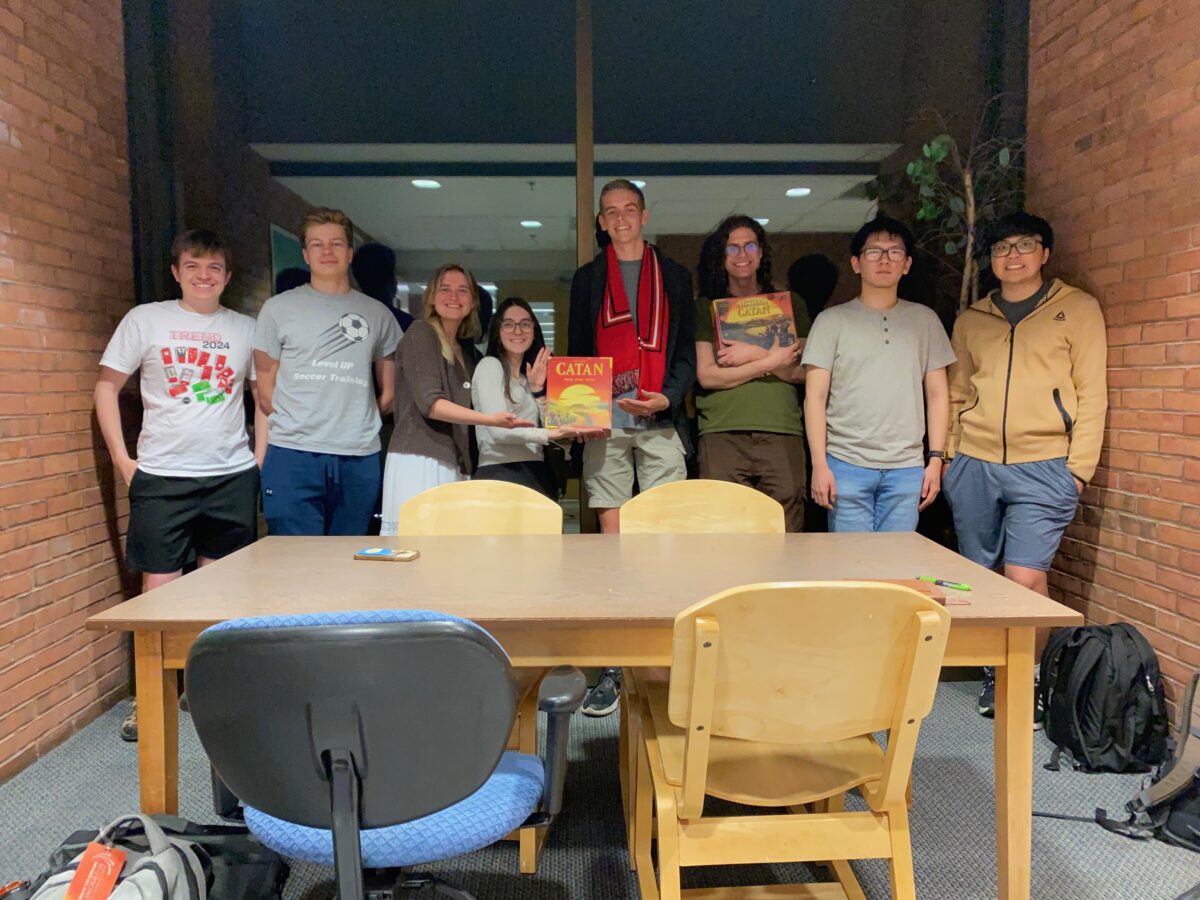 Rileigh Mansfield (third from left) gets together regularly with friends to play the strategic board game Catan. (Courtesy of Mansfield)
Q: How have you gotten involved on campus, and how have those activities supported your growth?
A: I’ve served as the president of Pi Mu Epsilon (the national math honors society), a Meyerhoff Peer Advisor, and a teaching assistant in the math department. I also conducted research with math professors Dr. Animikh Biswas and Dr. Kathleen Hoffman. But honestly, some of my most meaningful involvement has been more informal. Last spring, I was having a tough semester when I got invited to join a group from the math lounge to play the board game Catan on Tuesdays. It became a little community and something to look forward to every week—a much-needed step back from school and work. I actually play in competitive Catan tournaments now, and I’m even hosting an official tournament this spring through the math honors society.
Q: How did you first get involved in research at UMBC, and what did you focus on?
A: I got involved in research through the Meyerhoff Scholars Program. Dr. Biswas taught one of my Summer Bridge classes. I asked a lot of questions, and he said I should apply to be in his lab. In the fall, a notification went out for a research position in the math department, so I filled it out, and it ended up being for his lab combined with Dr. Hoffman’s. I got to start my first year, which was really cool. My research focused on data assimilation—specifically looking at parameter sensitivity and estimation for biological models. I was studying how diseases like cholera and HIV spread. Jumping into that as a freshman was tricky, but I had a lot of support from the seniors in the lab.
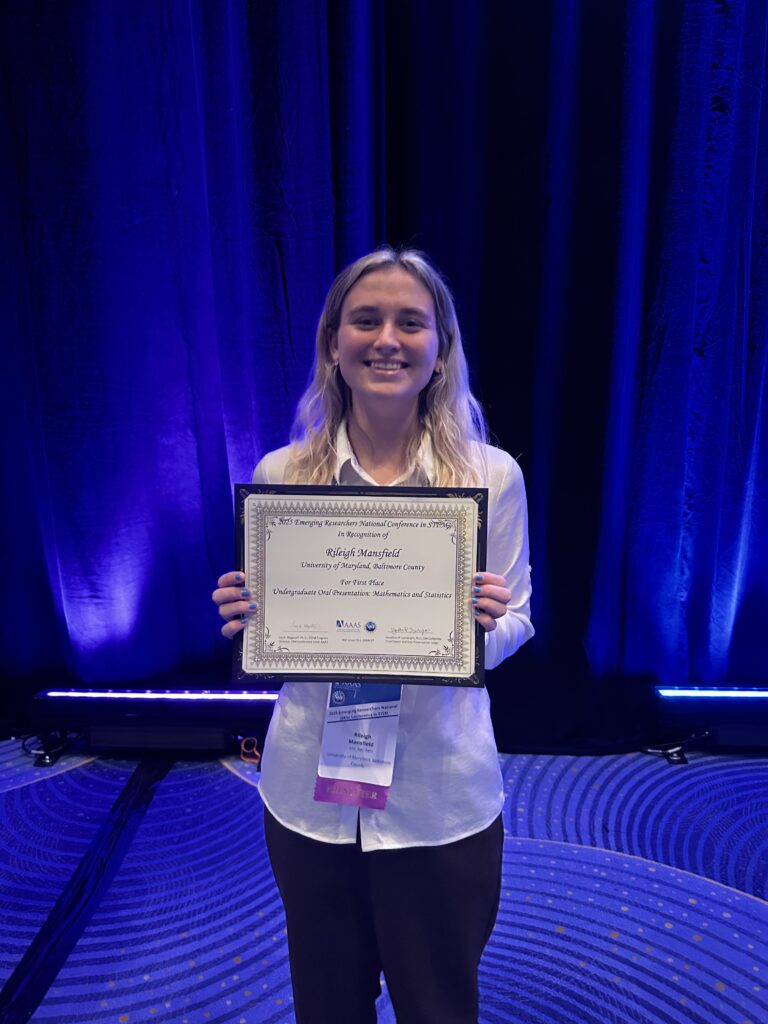 Rileigh Mansfield won first place in the Undergraduate Oral Presentation category at the 2025 Emerging Researchers National Conference in STEM. (Courtesy of Mansfield)
Q: So how did you end up pivoting to geophysics for graduate school?
A: My dad was a budget analyst for NASA, so I grew up around space and earth science. I’ve always been mystified by natural disasters like earthquakes and volcanoes, because we don’t really have them in Maryland. When Dr. Biswas introduced me to data assimilation, he mentioned it’s used for weather forecasting. That was the spark. I liked my research at UMBC, because it’s easy to see how working in biology can help save people’s lives, but honestly biology isn’t my passion. When I looked internally at what I’m excited about that can also help people, natural disasters came to mind. I realized I could use my math background to work on earthquake or volcano early-warning systems.
Q: Who has supported you throughout your UMBC journey?
A: I met my friend Emilia Pelegano-Titmuss at a summer program at Caltech in 2024, and we have supported each other in our pursuit of earth science ever since. Last spring, I had an incredibly challenging semester. My grades dipped, and I lost my self-confidence; I felt like I wasn’t made for research. Emilia talked me through it. She told me, “If you and I aren’t made for the research life, I don’t know who is.” She pushed me to graduate early and apply to grad school with her. Without her courage and motivation, I wouldn’t be in the position I am today.
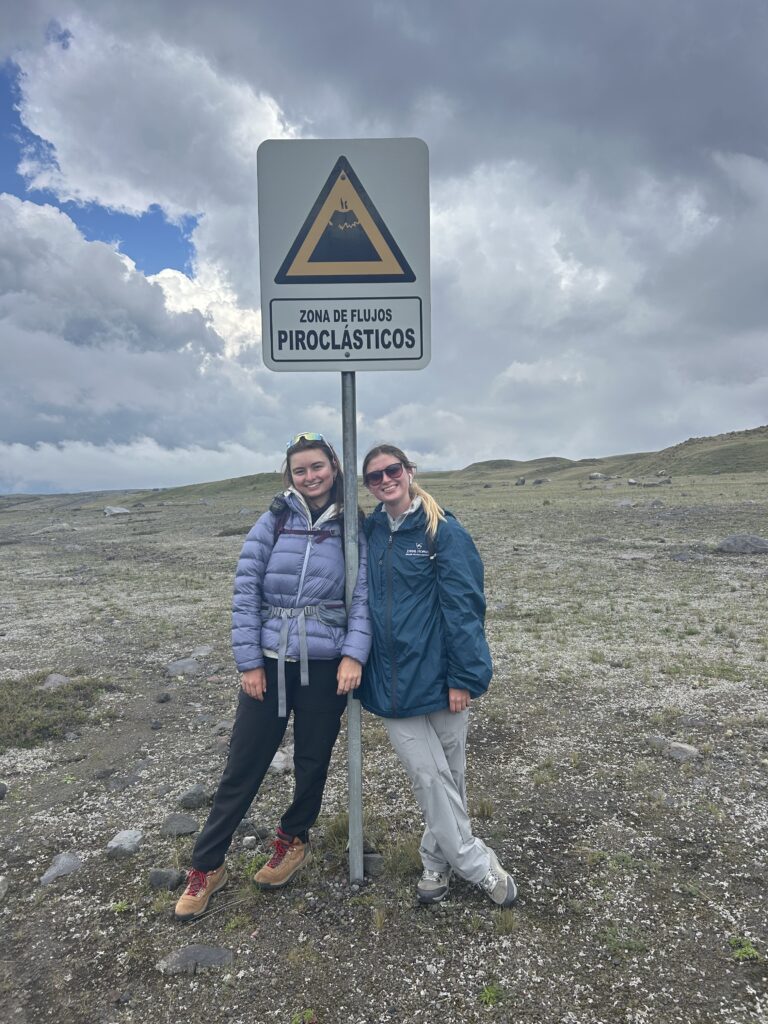 Rileigh Mansfield (right) and her best friend, Emilia Pelegano-Titmuss (left), studied volcanoes in Ecuador among the indigenous people who live there. The sign warns that they are in a volcanic flow zone. (Courtesy of Mansfield)
Q: Can you describe key takeaways from your education abroad experiences?
A: Going to Ecuador was my favorite part of undergrad. In winter 2025, I went into the Andes to do field work in volcanology with Emilia, who goes to Hunter College. We stayed with indigenous communities who lived right on a volcano. It was a huge cultural experience in addition to the science we did. I even got to shear alpacas! Sitting down for dinner with the people I want my work to impact was a huge motivator. I learned about how there was a lot of distrust between their community and scientists, including the ones who order evacuations around disasters. I want to help bridge those divides.
I also went to Rwanda to teach elective math seminars at a Supporting African Maths Initiative (SAMI) camp. I taught game theory and disease modeling, but I also spent a lot of time helping students understand the U.S. college admissions process. Many of those students are so bright, and they really want to come to the U.S. for college, but they don’t have the resources or information to navigate the system. I still talk to some of them today to help them through the Common App.
Q: Why is it important to you to make a positive impact and help others?
A: I don’t like to feel like I’m wasting my time—if I’m going to spend my life doing research, I want to know it’s having a real-world impact. I’m also just genuinely excited about what I do. I really love it, and I want everyone else to love it, too. My favorite type of mentor is someone who loves something so much that even if at first you don’t understand what they’re talking about, you start caring about it just because they do—their enthusiasm is contagious. I try to bring that same energy to my work as a teaching assistant and peer mentor and to sharing math and science with anyone and everyone.
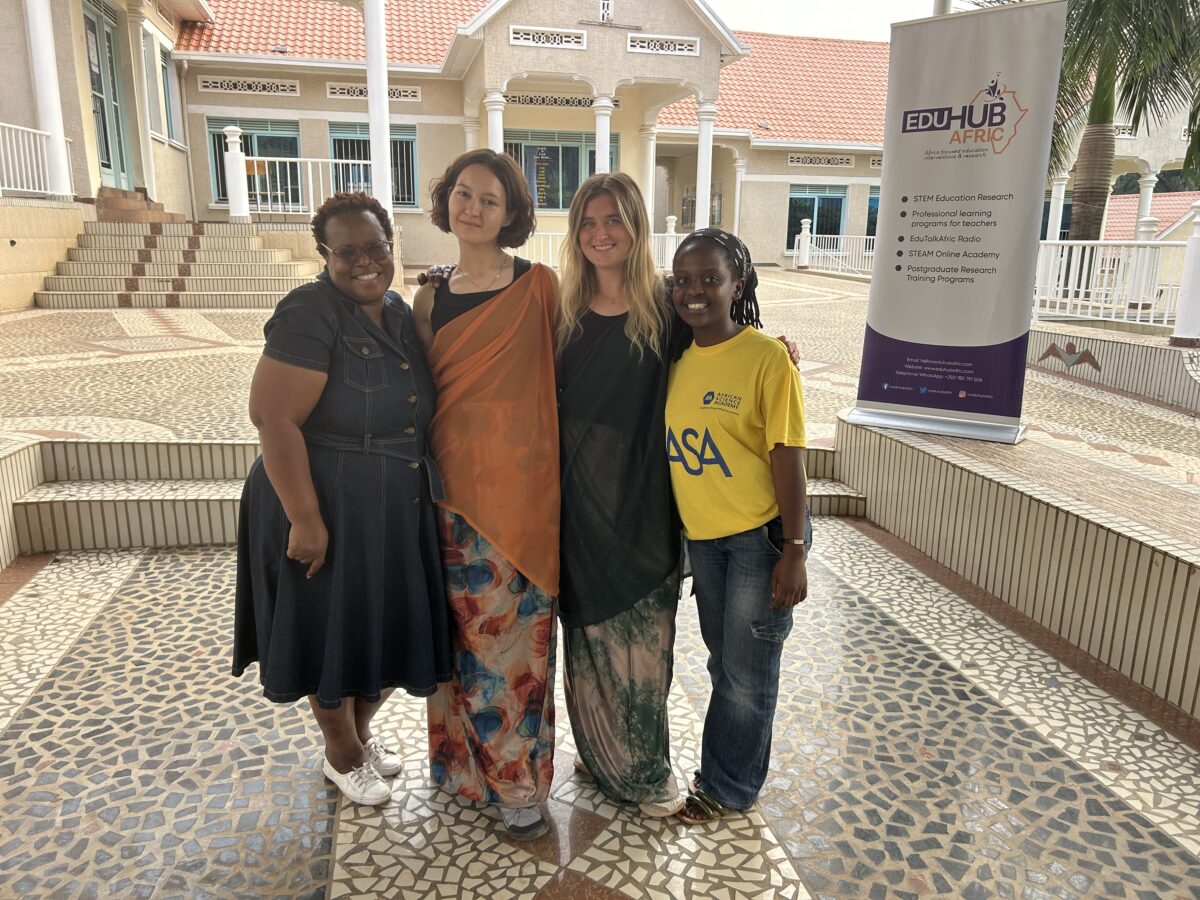 Rileigh Mansfield (second from right) had a transformative experience tutoring math in Rwanda. (Courtesy of Mansfield)
Q: What’s something unique about you that isn’t obvious from your résumé?
A: I am obsessed with the show Survivor. I audition for it every year. I’ve been watching it since third grade, and I’m always training for it. One year during finals, I even practiced eating only small portions of rice and working out on very little sleep just to see if my brain could still function—and it turned out it could. I also practiced starting fires with a flint.
I also did competitive trampolining for years, and I play in competitive Catan tournaments. It’s interesting because, like Survivor, it’s a social game and a strategic game. My strength is always the social game. More recently, I went on The Price is Right with my friend Emilia. If you watch the June 1 episode, you’ll see us screaming and jumping up and down in the audience; she got picked to participate!
Q: What advice do you have for incoming UMBC students or aspiring undergraduate researchers?
A: Go to office hours. Even if you don’t have a specific question, just go and talk to your professors. It helps the professors know who you are, which can have the side benefit of motivating you even more to do well in the class. It can also create opportunities, like how I talked to Dr. Biswas at Summer Bridge, which led to doing research in his lab.
And if you really want something, you can always find a way to get it. Don’t just say, “UMBC doesn’t offer it,” or, “It’s not easy to get.” Many of the things I did weren’t here at UMBC, but UMBC professors sent me applications for workshops and opportunities. Dr. Justin Webster and Dr. Biswas sent me to a workshop in Texas on partial differential equations and to Colorado for a conference on data simulation—both were incredibly valuable. The resources are there to help you get what you want, but you have to go after it.
]]>
The UMBC career of Rileigh Mansfield ’26, mathematics, has been a masterclass in combining high-level theory with real-world impact. A Meyerhoff Scholar who began conducting research in her first...
https://umbc.edu/stories/rileigh-mansfield-survivor-spirit/
https://my3.my.umbc.edu/api/v0/pixel/news/159722/guest@my.umbc.edu/b4633ce5875caa60c53eef598bb38645/api/pixel
class-of-2026
cnms
mathematics
news
science-and-tech
story
undergraduate-research
UMBC News & Magazine
https://my3.my.umbc.edu/groups/umbc-news-magazine
https://assets1-my.umbc.edu/system/shared/avatars/groups/000/001/943/24435aa6207c452e7bc15cc74b42c7bb/xsmall.png?1748556657
https://assets1-my.umbc.edu/system/shared/avatars/groups/000/001/943/24435aa6207c452e7bc15cc74b42c7bb/original.png?1748556657
https://assets2-my.umbc.edu/system/shared/avatars/groups/000/001/943/24435aa6207c452e7bc15cc74b42c7bb/xxlarge.png?1748556657
https://assets2-my.umbc.edu/system/shared/avatars/groups/000/001/943/24435aa6207c452e7bc15cc74b42c7bb/xlarge.png?1748556657
https://assets3-my.umbc.edu/system/shared/avatars/groups/000/001/943/24435aa6207c452e7bc15cc74b42c7bb/large.png?1748556657
https://assets1-my.umbc.edu/system/shared/avatars/groups/000/001/943/24435aa6207c452e7bc15cc74b42c7bb/medium.png?1748556657
https://assets2-my.umbc.edu/system/shared/avatars/groups/000/001/943/24435aa6207c452e7bc15cc74b42c7bb/small.png?1748556657
https://assets1-my.umbc.edu/system/shared/avatars/groups/000/001/943/24435aa6207c452e7bc15cc74b42c7bb/xsmall.png?1748556657
https://assets2-my.umbc.edu/system/shared/avatars/groups/000/001/943/24435aa6207c452e7bc15cc74b42c7bb/xxsmall.png?1748556657
UMBC News & Magazine
0
0
false
Tue, 05 May 2026 13:48:11 -0400
Tue, 05 May 2026 13:48:11 -0400
Meyerhoff Scholars Program celebrates 500th Ph.D.
This spring, the Meyerhoff Scholars Program at UMBC celebrates a landmark achievement: 500 program graduates have earned a Ph.D.
The milestone highlights the program’s success as the nation’s original model for increasing diversity in science, technology, engineering, and mathematics (STEM). Grounded in high expectations and robust support, Meyerhoff Scholars consistently go on to excel in top graduate programs and lead in academia, industry, and government while mentoring the next generation. UMBC has maintained its position as the national leader in producing Black M.D./Ph.D. graduates: Between 2014 and 2024, UMBC alumni accounted for 15 percent of all such dual-degree recipients nationwide, far outpacing any other institution. UMBC is also the leader in graduating Black students who go on to earn Ph.D.s in the life sciences, math and computer sciences, and engineering.
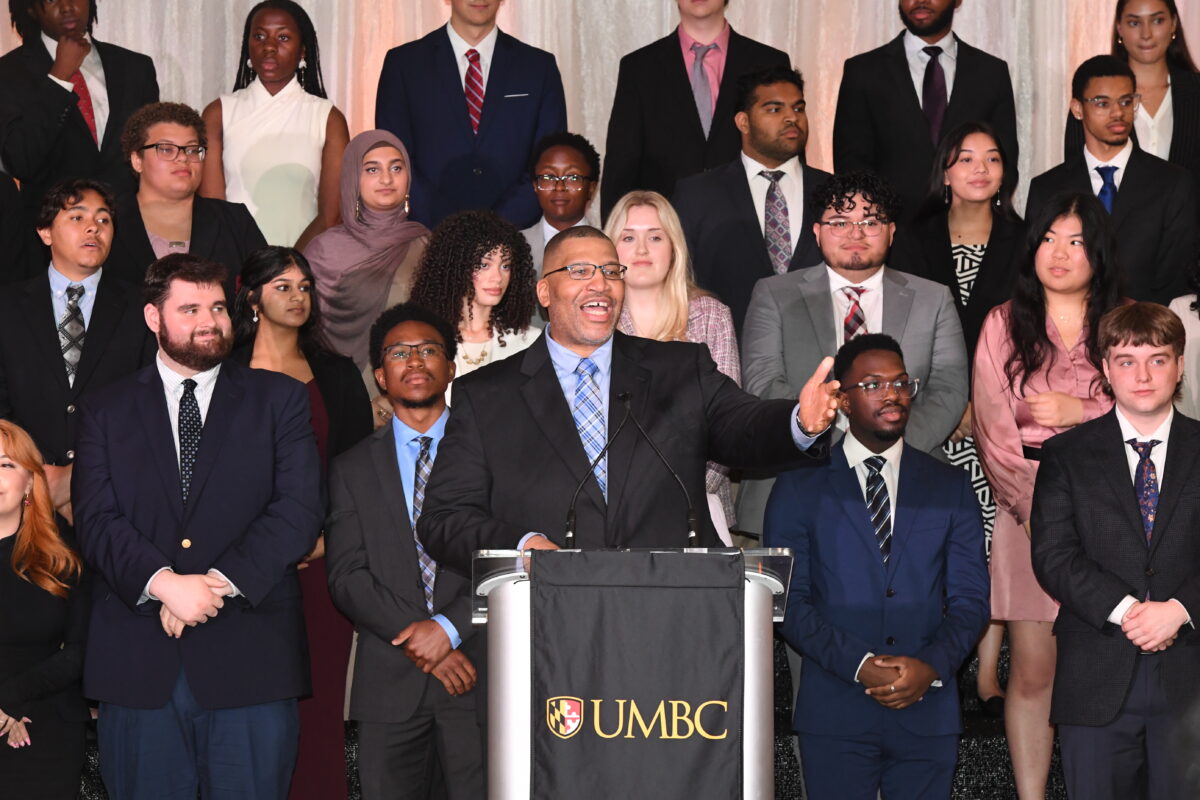 Keith Harmon, director of the Meyerhoff Scholars Program, celebrates graduating scholars at the 2024 Meyerhoff Senior Reception. (Jim Burger for UMBC)
Joseph Washington ’97, mechanical engineering, a member of the fourth Meyerhoff cohort (M4), embodies this trajectory. A first-generation college student, he initially considered trade school after a knee injury derailed his plans to attend the U.S. Naval Academy. The Meyerhoff scholarship changed his path. In particular, Selection Weekend for admitted Meyerhoff Scholars and Summer Bridge, intensive group programming prior to the scholars’ first UMBC semester, affirmed his identity and potential: “The most important message I internalized from the Meyerhoff program was that I can be Black and intelligent,” he recalls.
Washington earned a master’s degree before returning to UMBC for his Ph.D. Today, he serves as an assistant teaching professor at UMBC at the Universities at Shady Grove. He mentors students informally, advises the UMBC chapter of the American Institute of Aeronautics and Astronautics, and creates space for Meyerhoff Scholars to discuss graduate school and careers. “UMBC has always felt like home,” he says. “I would not be here if not for the Meyerhoff Scholars Program.”
A family tradition
Sadella Santos ’12, chemical engineering, M20, and her sister Melissa Santos ’12, chemical engineering, M19, also credit the program with shaping their journeys. Sadella, a senior scientist at Exponent, Inc. with a Ph.D. in chemical engineering, values the emphasis on community. “Academic success is a collective effort, rather than individual competition,” she says. “At work, I champion the message that diverse perspectives are necessary to drive scientific progress.” She pays it forward by reviewing abstracts for the Annual Biomedical Research Conference for Minoritized Scientists (ABRCMS) and hosting lab visits to expose high school students to possible careers.
 Meyerhoff Scholar alumni gathered at the 2022 Meyerhoff Family Meeting. (Marlayna Demond ’11/UMBC)
Melissa, who earned a Ph.D. in chemical engineering followed by a J.D., applies problem-solving and adaptability skills honed through Meyerhoff to her legal career. She recently participated in a panel for McNair Scholars on summer research experiences. “Community and network are important,” she notes. “Surround yourself with people who will support you but also challenge you to grow.”
Meyerhoff scholars often refer to themselves as family—and that’s especially true for the Santoses. Justin Santos ’17, biochemistry and molecular biology, M25, is the third scholar in the family. He is completing his M.D./Ph.D. in neuroscience at Emory University this spring and will begin residency in emergency medicine at Washington University in St. Louis. He mentors students pursuing clinical-scientist careers and assists with ABRCMS abstract reviews. “High-quality, comprehensive mentorship” was invaluable to him, and he works to provide that same guidance to others.
Reaching back to pay it forward
Naomi Mburu ’18, M26, chemical engineering, was UMBC’s first Rhodes Scholar, attending Oxford University on one of the world’s oldest and most prestigious scholarships. She earned a D.Phil. in engineering science from the University of Oxford and today serves as lead analyst at Fusion Advisory Services, providing analysis of the fusion industry to a wide range of stakeholders. Meyerhoff pushed her beyond her comfort zone into leadership roles and strengthened her public speaking and networking skills, she says. She now reviews scholarship essays for UMBC students and organizes summer internships to bring diverse talent into the fusion energy field. “Supporting the next generation is so important,” she says. “I have only come this far myself with the help of my own mentors.”
 From left to right, UMBC sophomore Amir Walton-Irvin, and juniors Jessica Slaughter, Deeya Mistry, and Phoenix Bryant all received a Goldwater Scholarship this year—and all four are Meyerhoff Scholars. (Brad Ziegler/UMBC)
These alumni illustrate the program’s lasting influence. Meyerhoff Scholars do not simply succeed—they reach back, creating opportunities and building communities for current students and early-career researchers. The model’s impact now extends even further: universities including Penn State, UNC-Chapel Hill, UC Berkeley, Stony Brook, and others have adapted key elements of the Meyerhoff approach with support from funders such as the Chan Zuckerberg Initiative and Simons Foundation. The Howard Hughes Medical Institutehas also been a long-term supporter of Meyerhoff and its replications.
With more than 2,200 undergraduates supported to date and a national reputation for producing leaders committed to diversity in STEM, the 500th Ph.D. stands as compelling proof of the Meyerhoff model’s effectiveness. As alumni advance in their fields and invest in those who follow, the Meyerhoff Scholars Program continues to change lives one by one, transforming the face of American science through excellence, community, and a powerful ripple effect that will benefit generations to come.
]]>
This spring, the Meyerhoff Scholars Program at UMBC celebrates a landmark achievement: 500 program graduates have earned a Ph.D. The milestone highlights the program’s success as the nation’s...
https://umbc.edu/stories/meyerhoff-scholars-program-celebrates-500th-ph-d/
https://my3.my.umbc.edu/api/v0/pixel/news/159662/guest@my.umbc.edu/842d203280497d3bf9ff4f93dcf9ec8f/api/pixel
alumni
biochemistry-and-molecular-biology
chemical-biochemical-and-environmental-engineering
chemical-engineering
chemistry-and-biochemistry
class-of-2026
cnms
coeit
community
mechanical-engineering
meche
meyerhoff-scholars
news
science-and-tech
story
UMBC News & Magazine
https://my3.my.umbc.edu/groups/umbc-news-magazine
https://assets1-my.umbc.edu/system/shared/avatars/groups/000/001/943/24435aa6207c452e7bc15cc74b42c7bb/xsmall.png?1748556657
https://assets1-my.umbc.edu/system/shared/avatars/groups/000/001/943/24435aa6207c452e7bc15cc74b42c7bb/original.png?1748556657
https://assets2-my.umbc.edu/system/shared/avatars/groups/000/001/943/24435aa6207c452e7bc15cc74b42c7bb/xxlarge.png?1748556657
https://assets2-my.umbc.edu/system/shared/avatars/groups/000/001/943/24435aa6207c452e7bc15cc74b42c7bb/xlarge.png?1748556657
https://assets3-my.umbc.edu/system/shared/avatars/groups/000/001/943/24435aa6207c452e7bc15cc74b42c7bb/large.png?1748556657
https://assets1-my.umbc.edu/system/shared/avatars/groups/000/001/943/24435aa6207c452e7bc15cc74b42c7bb/medium.png?1748556657
https://assets2-my.umbc.edu/system/shared/avatars/groups/000/001/943/24435aa6207c452e7bc15cc74b42c7bb/small.png?1748556657
https://assets1-my.umbc.edu/system/shared/avatars/groups/000/001/943/24435aa6207c452e7bc15cc74b42c7bb/xsmall.png?1748556657
https://assets2-my.umbc.edu/system/shared/avatars/groups/000/001/943/24435aa6207c452e7bc15cc74b42c7bb/xxsmall.png?1748556657
UMBC News & Magazine
0
0
false
Mon, 04 May 2026 15:15:30 -0400
Mon, 04 May 2026 15:15:30 -0400