Alum Paul Tschirgi releases new mobile game Deliverance
Three years in the making, the mobile game Deliverance by Paul Tschirgi ’15, visual arts, is now available for download on the App Store and Google Play.
In this satirical game, players need to deliver fresh pizza to save the world from fake food, which requires excellent weaponry and driving skills to fend off world destruction. “The goal of this project was to bring a fully formed story into the mobile market and talk about the importance of fresh food vs. artificial food in a hilarious and action packed world,” says Tschirgi. In the three weeks since the game was published, the app has garnered positive reviews on both platforms.
Tschirgi invested savings from freelance work for Autodesk and selling 3D models on TurboSquid to fund the music, voice acting, and licensing necessary to make the game but he hopes to generate enough interest in Deliverance to gain outside financial support to work on another game. “I love working on games and my goal is to slowly hire on more team members to make more beautiful and fun games,” he says. “I have several more game ideas that I was able to make pieces of during my time in college on my website.”
Tschirgi developed his skills and a lot of the game during his final two years at UMBC, working closely with many faculty and students through classes and independent study. He notes that working with visual arts professor Eric Smallwood was critical in creating the animated cutscenes, cinematic sequences that are not part of the interactive gameplay controlled by the player and often are narrative interludes to introduce characters or new elements and set the mood.
“Smallwood helped me set milestones so that I was able to finish work on the cutscenes during that semester,” said Tschirgi, noting that the modeling, texturing, rigging, and animating of 3D characters as well as directing the voice acting and musical scoring of these scenes were completed during the independent study.
The hardest thing about making this game specifically was the incredible amount of time it takes to make 3D games combined with animated lip sync cutscenes and more than two hours of gameplay. Making a character in three dimensions takes about 10 hours. You start with a cube and then add more and more points until you can morph the cube into the shape of a human or whatever I need to make. Then I had to make it move in a convincing way, fire weapons and fit dialogue in—without making phones struggle to render it all. There are about 20 characters in the game, 25 roadway courses to drive on and all lots of exciting monsters and effects that I modeled and animated.
Additional collaborative study opportunities through the Linehan Scholars program and interactive media classes helped him refine his animation and programming skills. Tschirgi was also an active member of the Game Developer’s Club at UMBC, finding resources and encouragement to help him get through the thousands of hours he worked on the game. “Anyone who is curious about what game development is like or what it takes needs to visit the GDC on Wednesdays at noon during the free hour in Engineering 005A,” says Tschirgi.
I’ve done a lot of research on what are realistic goals and right now I’m working really hard to get at least 100 ratings/reviews on both the iOS and Android platforms. At that magic number I might be able to get high enough in the listings of games for people who have never heard of my game to stumble across it just by scrolling all the way down some of the app categories and then I could be reaching hundreds of thousands of people.
The next game project he would like to produce is Black Fowl. He estimates it will take about 6,000 hours to complete.
]]>
Three years in the making, the mobile game Deliverance by Paul Tschirgi ’15, visual arts, is now available for download on the App Store and Google Play. In this satirical game, players need to...https://umbc.edu/stories/alum-paul-tschirigi-releases-new-mobile-game-deliverance/https://my3.my.umbc.edu/api/v0/pixel/news/121077/guest@my.umbc.edu/c6e95b7e0055fd15cb48635ab822c526/api/pixelalumniarts-and-culturecahssvisualartsUMBC News & Magazinehttps://my3.my.umbc.edu/groups/umbc-news-magazinehttps://assets1-my.umbc.edu/system/shared/avatars/groups/000/001/943/24435aa6207c452e7bc15cc74b42c7bb/xsmall.png?1748556657https://assets1-my.umbc.edu/system/shared/avatars/groups/000/001/943/24435aa6207c452e7bc15cc74b42c7bb/original.png?1748556657https://assets2-my.umbc.edu/system/shared/avatars/groups/000/001/943/24435aa6207c452e7bc15cc74b42c7bb/xxlarge.png?1748556657https://assets2-my.umbc.edu/system/shared/avatars/groups/000/001/943/24435aa6207c452e7bc15cc74b42c7bb/xlarge.png?1748556657https://assets3-my.umbc.edu/system/shared/avatars/groups/000/001/943/24435aa6207c452e7bc15cc74b42c7bb/large.png?1748556657https://assets1-my.umbc.edu/system/shared/avatars/groups/000/001/943/24435aa6207c452e7bc15cc74b42c7bb/medium.png?1748556657https://assets2-my.umbc.edu/system/shared/avatars/groups/000/001/943/24435aa6207c452e7bc15cc74b42c7bb/small.png?1748556657https://assets1-my.umbc.edu/system/shared/avatars/groups/000/001/943/24435aa6207c452e7bc15cc74b42c7bb/xsmall.png?1748556657https://assets2-my.umbc.edu/system/shared/avatars/groups/000/001/943/24435aa6207c452e7bc15cc74b42c7bb/xxsmall.png?1748556657UMBC News & Magazine00falseTue, 26 Jul 2016 12:33:48 -0400In groundbreaking move, NEH extends tour of acclaimed exhibit “For All the World to See”
For the past five years, For All the World to See: Visual Culture and the Struggle for Civil Rights,an exhibition organized by UMBC’s Center for Art, Design and Visual Culture (CADVC) in partnership with the Smithsonian National Museum of African American History and Culture, has traveled the nation through the National Endowment for the Humanities’ NEH on the Road program. Now, the NEH has extended the exhibition’s tour for an addition five years, marking the first time that the NEH on the Road program has doubled to ten years a tour period for an exhibition.
Through a host of media— including photographs, television and film, magazines, newspapers, posters, books, and pamphlets — the project explores the historic role of visual culture in shaping, influencing, and transforming the fight for racial equality and justice in the United States from the late-1940s to the mid-1970s.
The first full-scale version of the exhibition opened at the International Center of Photography in 2010 and traveled to six venues through 2013, including the National Civil Rights Museum, the National Museum of African American History and Culture, the DuSable Museum of African American History, and UMBC.
The NEH on the Road version of the show opened in Kansas City in April 2012, and has toured to more than 20 venues since then, including stops in Chattanooga, Tennessee; Wilmington, North Carolina; Richmond, Virginia; Las Cruces, New Mexico; Eu Claire, Wisconsin; San Antonio, Texas; and Wichita, Kansas.
Maurice Berger, research professor and chief curator at the CADVC, noted:
…the role of the National Endowment for the Humanities, as the principal funder of For All the World to See, has been extremely important. But no more so than its support of the NEH on the Road version of the exhibition. By allowing the show to travel across the United States, to more than 50 venues, the NEH will also allow its novel ideas about the civil rights movement to reach many more people.
So much research and writing about the modern civil rights movement — and so many exhibitions — have focused on photography or have ignored visual culture completely. The NEH on the Road version of For All the World to See will help thousands of new visitors to understand the powerful role that visual media — including film and television, graphic art and posters, advertising, photography, and even toys — played in altering prevailing ideas about race in America. By 2023, more than a million visitors will have seen both iterations of the show.
]]>
For the past five years, For All the World to See: Visual Culture and the Struggle for Civil Rights, an exhibition organized by UMBC’s Center for Art, Design and Visual Culture (CADVC) in...https://umbc.edu/stories/groundbreaking-extension-of-for-all-the-world-to-see-exhibition-tour-by-neh/https://my3.my.umbc.edu/api/v0/pixel/news/121099/guest@my.umbc.edu/39ac30d4b1a9e21bb60b9fb0bc0385d9/api/pixelamericanstudiesarts-and-culturecadvccahssengagehistoryvisualartsUMBC News & Magazinehttps://my3.my.umbc.edu/groups/umbc-news-magazinehttps://assets1-my.umbc.edu/system/shared/avatars/groups/000/001/943/24435aa6207c452e7bc15cc74b42c7bb/xsmall.png?1748556657https://assets1-my.umbc.edu/system/shared/avatars/groups/000/001/943/24435aa6207c452e7bc15cc74b42c7bb/original.png?1748556657https://assets2-my.umbc.edu/system/shared/avatars/groups/000/001/943/24435aa6207c452e7bc15cc74b42c7bb/xxlarge.png?1748556657https://assets2-my.umbc.edu/system/shared/avatars/groups/000/001/943/24435aa6207c452e7bc15cc74b42c7bb/xlarge.png?1748556657https://assets3-my.umbc.edu/system/shared/avatars/groups/000/001/943/24435aa6207c452e7bc15cc74b42c7bb/large.png?1748556657https://assets1-my.umbc.edu/system/shared/avatars/groups/000/001/943/24435aa6207c452e7bc15cc74b42c7bb/medium.png?1748556657https://assets2-my.umbc.edu/system/shared/avatars/groups/000/001/943/24435aa6207c452e7bc15cc74b42c7bb/small.png?1748556657https://assets1-my.umbc.edu/system/shared/avatars/groups/000/001/943/24435aa6207c452e7bc15cc74b42c7bb/xsmall.png?1748556657https://assets2-my.umbc.edu/system/shared/avatars/groups/000/001/943/24435aa6207c452e7bc15cc74b42c7bb/xxsmall.png?1748556657UMBC News & Magazine00falseSat, 02 Jul 2016 15:39:18 -0400Baltimore Museum of Art features Christos Palios in Sondheim finalist exhibition
Christos Palios ’02, visual arts, is among the seven talented finalists vying for the Janet & Walter Sondheim Artscape Prize, which recognizes a working artist in the Baltimore region with $25,000 to further their career. The Baltimore Museum of Art (BMA) has included his work in a Sondheim Prize finalist exhibition on view now through July 31.
Each year the museum hosts this exhibition in the Thalheimer Galleries. The exhibit enables finalists to present their work to the public and also to the contest jurors. The diverse finalists produce an eclectic array of work each year—work often as significant as that in a solo show.
Palios, born in Baltimore, is a fine art photographer “whose work probes ideas and aspects of identity, memory, and isolation within urban, industrial, and natural spaces.” His work can be found in public and private collections all over the country, and has appeared in such online publications as F-Stop Magazine and Dotphotozine. For the Sondheim exhibition at the BMA, he presents photographs from two series he developed while visiting family in Greece.
UN-FINISHED // Contemporary Ruins is a collection of obviously abandoned unfinished concrete buildings on otherwise empty landscapes in the Greek countryside. Together the pictures are a bizarre and fascinating collection that Palios says are “pillars of stalled progress,” testament to both the current economic struggles and perhaps an ethos, comparable to the American Dream, that fueled it.
Palios’ second series in the exhibition is also devoid of people, but feels far less abandoned. In Conversations, a series of vivid still lives of post-meal tables seen from overhead embody the vitality of the diners just out of view but with their cell phones, keys and other personal items still on the table. The pictures capture their presence and the taste, smells and sounds of the meal and conversation they’ve just shared. Palios is particularly interested in the tech on the table and how our fixation with these devices might be changing the dynamic of the dinner table, recently commenting to the Baltimore Sun “I remember my 87-year-old grandfather picking up a flip phone to look at the time, even though he had a watch on.”
An independent panel of jurors chooses the finalists and semifinalists. This year’s jurors are Tim Griffin, executive director and chief curator at The Kitchen; Rujeko Hockley, assistant curator of contemporary art at the Brooklyn Museum; and Mia Locks, co-curator of The Whitney Museum of American Art’s 2017 Whitney Biennial. The prestigious award is named after the late Baltimore civic leader Walter Sondheim and his late wife, Janet, and presented in conjunction with the Artscape arts festival.
The winner will be announced at an award ceremony followed by a reception on Saturday, July 9 at 7 p.m. In addition, M&T Bank has partnered with the Baltimore Office of Promotion & the Arts to grant the M&T Bank Sondheim Finalists’ Awards, which provide a $2,500 honorarium for each of the remaining finalists not selected for the fellowship.
Several UMBC community members will also be presenting work in the 2016 Sondheim Semi-Finalist Exhibition, including Marian Glebes, M.F.A. ’09, intermedia and digital arts; Jason Hughes, M.F.A. ’15, intermedia and digital arts; Vincent Carney ’06, visual arts; Ben Marcin ’80, economics; and Lynn Cazabon, associate professor of visual arts. That exhibition is on view at the Decker and Meyerhoff galleries of MICA from Friday, July 15 through Sunday, July 31, 2016. An opening reception for the semifinalist exhibition takes place July 14, 2016, 6-9 p.m. at MICA.
Images, top-bottom: Bittersweet Inevitable, 2016; portrait of artist Christos Palios by Geoffrey Baker; and Dervenochoria, Greece, 2015. All images courtesy of Christos Palios.
]]>
Christos Palios ’02, visual arts, is among the seven talented finalists vying for the Janet & Walter Sondheim Artscape Prize, which recognizes a working artist in the Baltimore region with...https://umbc.edu/stories/baltimore-museum-of-art-features-christos-palios-in-sondheim-finalist-exhibition/https://my3.my.umbc.edu/api/v0/pixel/news/121102/guest@my.umbc.edu/ab02ef81831cb4aca4b8d4edfa7fc38d/api/pixelalumniarts-and-culturecahssengagevisualartsUMBC News & Magazinehttps://my3.my.umbc.edu/groups/umbc-news-magazinehttps://assets1-my.umbc.edu/system/shared/avatars/groups/000/001/943/24435aa6207c452e7bc15cc74b42c7bb/xsmall.png?1748556657https://assets1-my.umbc.edu/system/shared/avatars/groups/000/001/943/24435aa6207c452e7bc15cc74b42c7bb/original.png?1748556657https://assets2-my.umbc.edu/system/shared/avatars/groups/000/001/943/24435aa6207c452e7bc15cc74b42c7bb/xxlarge.png?1748556657https://assets2-my.umbc.edu/system/shared/avatars/groups/000/001/943/24435aa6207c452e7bc15cc74b42c7bb/xlarge.png?1748556657https://assets3-my.umbc.edu/system/shared/avatars/groups/000/001/943/24435aa6207c452e7bc15cc74b42c7bb/large.png?1748556657https://assets1-my.umbc.edu/system/shared/avatars/groups/000/001/943/24435aa6207c452e7bc15cc74b42c7bb/medium.png?1748556657https://assets2-my.umbc.edu/system/shared/avatars/groups/000/001/943/24435aa6207c452e7bc15cc74b42c7bb/small.png?1748556657https://assets1-my.umbc.edu/system/shared/avatars/groups/000/001/943/24435aa6207c452e7bc15cc74b42c7bb/xsmall.png?1748556657https://assets2-my.umbc.edu/system/shared/avatars/groups/000/001/943/24435aa6207c452e7bc15cc74b42c7bb/xxsmall.png?1748556657UMBC News & Magazine00falseFri, 01 Jul 2016 16:56:45 -0400Developers and designers team up in new UMBC mobile app course
Effective mobile apps require solid visual and technical design. A new course launched in spring 2016 brought together UMBC arts and computer science students to create new apps from scratch, working on collaborative teams throughout the development process.
The professors behind “Designing and Developing Effective Mobile Applications” created the course specifically to prepare students for careers requiring interdisciplinary, team-based approaches to creative projects. Viviana Cordova, assistant professor of visual arts, and Nilanjan Banerjee, associate professor of computer science and electrical engineering, jointly developed and taught the course with support from the Hrabowski Fund for Innovation.
“Cross-disciplinary collaboration is a very important part of education,” says Cordova, “because not only do students learn to collaborate, but also to compromise.”
“We saw that most mobile applications either lacked good implementation or slick user interfaces,” says Banerjee. “Students in fine arts were able to develop usable, aesthetically pleasing interfaces while students in computer science were able to build functional apps.”
Most coders think in terms of “function first, user later,” says Michael Leung ’17, computer science, whose Team Huebotics represented UMBC in the final four of the Microsoft Imagine Cup last spring. This course reinforced for Leung that collaborating with a designer from the beginning actually makes coding faster and easier, in addition to improving the final product.
Computer science majors on almost every team echo Leung’s sentiments. Jessica Rolfe ’16 says “starting with a unified look made merging our work easy later on,” and Michael Bishoff ‘16 summed his feelings up saying, “It’s been awesome. Life with a designer is so much better.”
Visual arts students valued the opportunity to see their work in an end-product that could be accessed and enjoyed by users. Cordova previously offered a more conceptual graphic design course focused on mobile apps, but, she says, “My students wished they could actually have a fully developed app at the end of the project.” Collaborating with computer scientists made that possible.
Students presented their final work at a demo day on May 10, inviting guests from UMBC and the industry. Some of their games are now available in the Google Play store and, Cordova shares, “students had internship and job offers during our event from companies that came to visit the demo presentation.”
Apps produced through the class:
Flee helps users find something to do in their area. It pulls in events from meetup.com and displays all events in selected categories, like arts and sports, within a specified geographic area. Then it links to the event website or Google maps for directions. (Creators: Aletena Sahlu, Amanda Pyryt, Siddharth Utgikar, Lloyd Prudente, Carmella Pombuena)
Soundless syncs with Google Calendar and turns a phone’s sound off when the user has an appointment, then turns it back on after the appointment. It prevents a favorite song from blaring during a staff meeting and helps users avoid missed calls that can result when a user forgets to turn the ringer back on after a meeting ends. (Creators: Joseph Daniels, Kshipra Kode, Oladipupo Eke, Mark Pileggi, Monica William-Henein) Ringtriever is similar to Soundless, except it syncs with UMBC’s PeopleSoft program, which includes a student’s class schedule. (Creators: Benjamin Lelonek, Frank Zastawnik, Sophia Haire, Jenna Conn, Johnson Tien)
Fetcher allows users to flag terms they want to learn more about—ideas that come up in a class, book or conversation— and then emails the user a list of related search results in a bundle at a selected day and time. (Creators: Lemuel Sun, Michael Leung, Prutha Date, Rakshit Verma, Mariko Sakemi)
Intelliwake delivers everything a user needs first thing in the morning in one app: an alarm, weather forecast, traffic information and directions to your first appointment, and top news. (Creators: David Wiedel, Taylor Nycum, Nayan Sharma, Sola Awojoodu)
Doggone-It tracks the location of a pet wearing a GPS tracking device and alerts the user if the pet strays beyond a predefined perimeter. It tracks how far a pet travels during the day (indicating activity level) and can point a pet owner in the right direction if their pet strays. (Creators: Anudeep Nallamothu, Devendra Dahiphale, Sujata Devi, Dan Kostov)
UMBC Grit targets current UMBC community members and campus visitors. It allows users to pin photos and videos to the campus map. Users can scroll through tagged images within their current map view. UMBC Grit imports campus events, which users can add to their Google Calendar, and also includes floor maps for campus buildings. (Creators: Robert Ginsburg, Sazedul Alam, Leslie McAdoo, Kim Trinh, Hope Berger)
Spotswap and Photodrop are also campus-focused apps, but could potentially be implemented elsewhere. Spotswap helps students find available seating in study areas around campus, which could come in handy at peak study times. (Creators: Jessica Rolfe, Randall Brunecz, Rujuta Palande, Venkata Bujunuru, Sandy Nguyen, Nicholas Desaulniers) Photodrop allows users to take a photo and “drop” it at a location on a map to entice people to check out areas on campus where exciting activities are taking place. (Creators: Lun-Chung Yuan, Michael Bishoff, Siqi Lin, Xiaoxia Zheng, Tim Shattuck, Jimena DelCastillo)
Hex is a fun puzzle game with a beehive theme. (Creators: Brooke Washington, Tiantian Xie, John Swank, Kevin Jones)
ULock is a surveillance tool that allows users to lock and unlock their doors remotely. (Creators: Persephone Della, Sandep Narayanan, Siraj Memon, William Morgan, Andrea Cervantes-Medin)
SoWifi allows users to share wifi networks without giving out a password, and to set a time limit on access, providing more options for coffee shops and other businesses that offer their customers wifi access. (Creators: Robert Grossman, Nasif Sikder, Suraksha Shukla, Matia Wills, Matt Walker)
Header image: Michael Bishoff explains the PhotoDrop app to visitors at a demo presentation of the projects from the interdisciplinary course “Designing and Developing Effective Mobile Applications.”
Other images from top to bottom: Mariko Sakemi explains Fetcher and ULock creators explain their app.
All images by Marlayna Demond ’11 for UMBC.
]]>
Effective mobile apps require solid visual and technical design. A new course launched in spring 2016 brought together UMBC arts and computer science students to create new apps from scratch,...https://umbc.edu/stories/developers-and-designers-team-up-in-new-umbc-mobile-app-course/https://my3.my.umbc.edu/api/v0/pixel/news/121128/guest@my.umbc.edu/69d93abaab470b4528b9e198be180fa1/api/pixelarts-and-culturecahsscoeitcseescience-and-technologyvisualartsUMBC News & Magazinehttps://my3.my.umbc.edu/groups/umbc-news-magazinehttps://assets1-my.umbc.edu/system/shared/avatars/groups/000/001/943/24435aa6207c452e7bc15cc74b42c7bb/xsmall.png?1748556657https://assets1-my.umbc.edu/system/shared/avatars/groups/000/001/943/24435aa6207c452e7bc15cc74b42c7bb/original.png?1748556657https://assets2-my.umbc.edu/system/shared/avatars/groups/000/001/943/24435aa6207c452e7bc15cc74b42c7bb/xxlarge.png?1748556657https://assets2-my.umbc.edu/system/shared/avatars/groups/000/001/943/24435aa6207c452e7bc15cc74b42c7bb/xlarge.png?1748556657https://assets3-my.umbc.edu/system/shared/avatars/groups/000/001/943/24435aa6207c452e7bc15cc74b42c7bb/large.png?1748556657https://assets1-my.umbc.edu/system/shared/avatars/groups/000/001/943/24435aa6207c452e7bc15cc74b42c7bb/medium.png?1748556657https://assets2-my.umbc.edu/system/shared/avatars/groups/000/001/943/24435aa6207c452e7bc15cc74b42c7bb/small.png?1748556657https://assets1-my.umbc.edu/system/shared/avatars/groups/000/001/943/24435aa6207c452e7bc15cc74b42c7bb/xsmall.png?1748556657https://assets2-my.umbc.edu/system/shared/avatars/groups/000/001/943/24435aa6207c452e7bc15cc74b42c7bb/xxsmall.png?1748556657UMBC News & Magazine00falseMon, 06 Jun 2016 20:00:12 -0400The Glass Knife exhibit animates the life and work of cell biologist Dr. Keith Porter
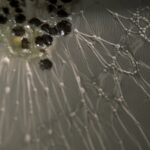
There is a hum that accompanies the current exhibition, The Glass Knife, by Stephen Bradley and Kathy Marmor in the Albin O. Kuhn Library Gallery. The installation is structured by the artists to illuminate Keith Porter’s life-long relationship with the micro world of cells, integrating select elements from Porter’s archive within a series of sculptures that allude to his scientific laboratory setting. Both visually and aurally, these works build a sensory experience of discovery as homage to a creative life in science.
“With TheGlass Knife, Bradley and Marmor propose a model of imagination that embraces a vision mediated by technology that extends our seeing,” says Emily Hauver, curator of the library gallery exhibitions. “The artists as curators offer metaphoric insight into Porter’s scientific inquiry made possible with his groundbreaking use of the electron microscope that changed the world of cellular science.”
Entering the installation viewers find several workstations, each uniquely presenting a way through rather than a mere reflection of Porter’s working methods and invention. In some, actual artifacts — specimens, images, illustrations, and tools — are embedded within these works alongside the studied re-imaging of the artists.
Porter was the chair of biological sciences at UMBC from 1984 to 1988; today the university’s Keith R. Porter Core Imaging Facility is dedicated to him. He was one of the first scientists to study whole cells and the first to make photographs of tissue cells with the aid of an electron microscope. At the Rockefeller Institute in the 1940s, he produced the first image of an intact cell, made possible by his development of an innovative slicing technique and specimen preparation for viewing and photographing with the electron microscope. The exhibition title “The Glass Knife” refers to the sharp wedge-shaped glass tool he invented.
“It must be evident by now to even the most confirmed skeptic,” Porter said in 1956, “that electron microscopy is destined to have a profound influence on the future development of biology and related sciences.”
His in-depth experience in experimental embryology and histology, along with his talent to interpret these highly magnified images, enabled him to infer the functional activities of cell organelles such as the endoplasmic reticulum (which he discovered and named) and microtubules. Considered among the founders of the modern field of cell biology, Porter was awarded the National Medal of Science in 1977, some referring to him as the “Father of Cell Biology.”
From a research career spanning more that five decades, he accumulated an extensive archive of research images and personal papers. Planning was already underway for a historically contextualized exhibition, but curators Tom Beck and Emily Hauver’s curatorial vision for the exhibition expanded and led them to invite the artists to work with the archive.
Excited to bounce ideas back and forth, Marmor and Bradley’s collaboration began with a list of topics to discuss and consider as they explored the archive: observation, categorization, logic of inquiry, the subjects of inquiry, artifacts, innovation and limitations, bias, and transformation.
Ultimately they came back to the notion of observation, interpretation and resolution as their framing concept for the series of sculptures they made: an immersive experience through Porter’s archive that would reflect his work and also the man himself. The resulting sculptures in the installation incorporate some artifacts from the archive, but it is the artists’ interpretation through their own processes — such as sampling images and illustrations to create their own images and gestures in other materials, and recording sound from tools such as an operational electromagnetic electron microscope to create sound elements -— that heighten the experience of discovery in the exhibition.
They selected a mutable metal shelving system as the support structure for many of the sculptures, finding the material worked formally as a reference for the lab setting they intended to invoke with formal qualities that mimic cell structure and their lattice and scaffolding organization.
Marmor says the exhibition is “a tribute to Porter’s creativity” and Bradley chimes in, adding “and persistence.” He is referring to evidence in the archive that Porter would re-image a cell over and over in an effort to see it more clearly, to push as far as he could to “see.” Both relate as artists to this extended process of repetition and adaption that they saw in Porter’s imaging work and the desire for more and clearer images.
Marmor also calls aspects of her work in the exhibition a “tip of the hat to the women” that worked with Porter. She found examples of their contributions in the archive, including the illustration of the microtrabeculae by Catherine A Verhulst in the exhibition and a photograph of Dr. Mary A Bonneville, Porter’s colleague at University of Colorado, Boulder who operated the electron microscope.
Both artists, says Marmor, wanted to offer a historical glimpse into the “situation of his life, a sense of the man…a guy of the 1950s.” One sculpture includes an x-ray of Porter’s lungs showing the damage from tuberculosis he suffered in the 1940s. In another, a personal letter offers rare insight into the life of a renowned scientist.
Also on view is a complementary exhibition of Life magazines, designed by curator Emily Hauver, illustrating achievement in the sciences in the mid-20th Century. The display contextualizes the era Porter worked in and illustrates the important role scientific imaging was playing is shaping culture around scientific discovery.
The exhibition runs through June 30 in the Albin O. Kuhn Library Gallery. Gallery hours are Monday–Friday: 10:00–4:30 p.m., and in June open on Sunday: 12:00 p.m.–5:00 p.m.
The Glass Knife is part of SEEING SCIENCE a year long project connecting photography, science and visual culture online and at UMBC through April 2017.
Installation images by Stephen Bradley
]]>
There is a hum that accompanies the current exhibition, The Glass Knife, by Stephen Bradley and Kathy Marmor in the Albin O. Kuhn Library Gallery. The installation is structured by the artists to...https://umbc.edu/stories/the-glass-knife-exhibit-animates-the-life-and-work-of-cell-biologist-dr-keith-porter/https://my3.my.umbc.edu/api/v0/pixel/news/121150/guest@my.umbc.edu/b99b3b35ebdd4d4b63c5d43ea79071cb/api/pixelarts-and-culturebiologyengageresearchvisualartsUMBC News & Magazinehttps://my3.my.umbc.edu/groups/umbc-news-magazinehttps://assets1-my.umbc.edu/system/shared/avatars/groups/000/001/943/24435aa6207c452e7bc15cc74b42c7bb/xsmall.png?1748556657https://assets1-my.umbc.edu/system/shared/avatars/groups/000/001/943/24435aa6207c452e7bc15cc74b42c7bb/original.png?1748556657https://assets2-my.umbc.edu/system/shared/avatars/groups/000/001/943/24435aa6207c452e7bc15cc74b42c7bb/xxlarge.png?1748556657https://assets2-my.umbc.edu/system/shared/avatars/groups/000/001/943/24435aa6207c452e7bc15cc74b42c7bb/xlarge.png?1748556657https://assets3-my.umbc.edu/system/shared/avatars/groups/000/001/943/24435aa6207c452e7bc15cc74b42c7bb/large.png?1748556657https://assets1-my.umbc.edu/system/shared/avatars/groups/000/001/943/24435aa6207c452e7bc15cc74b42c7bb/medium.png?1748556657https://assets2-my.umbc.edu/system/shared/avatars/groups/000/001/943/24435aa6207c452e7bc15cc74b42c7bb/small.png?1748556657https://assets1-my.umbc.edu/system/shared/avatars/groups/000/001/943/24435aa6207c452e7bc15cc74b42c7bb/xsmall.png?1748556657https://assets2-my.umbc.edu/system/shared/avatars/groups/000/001/943/24435aa6207c452e7bc15cc74b42c7bb/xxsmall.png?1748556657UMBC News & Magazine00falseWed, 18 May 2016 17:21:13 -0400Researchers across disciplines gather for vital conversation about academic freedom
UMBC students, faculty, and staff gathered on May 12, 2016, to honor the work of two accomplished emerging scholars and to engage in a vibrant discussion on academic freedom and the display and interpretation of research.
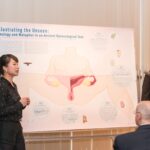
At the discussion forum, Zoe Wang ‘16, interdisciplinary studies, and Riley Auer ‘17, ancient studies, presented their poster “Illustrating the Unseen: Analogy and Metaphor in an Ancient Gynecological Text.”
Their work became the center of a campus-wide conversation on academic freedom in late April after the poster was moved to a less prominent location shortly before Undergraduate Research and Creative Achievement Day (URCAD), with nearby signage stating, “Certain research posters may contain content that may be inappropriate for children under the age of 17.”
President Freeman Hrabowski responded to apologize to the students and affirm university support for their academic work. Scott Casper, dean of the College of Arts, Humanities, and Social Sciences, and Diane Lee, vice provost and dean of undergraduate education, then organized a special campus event to discuss “the nature of artistic, humanistic, and scientific research and representation; the presentation of research to academic and public audiences; and the meaning and centrality of academic freedom.”
Several UMBC faculty members joined the students in a panel discussion to reflect on the issues that their poster and response to it during URCAD have raised for UMBC’s research community; the context of how research on reproduction, gender, sexuality, and women’s bodies has been interpreted over time; as well as positive steps the university administration and community can take to ensure that the academic freedom of student researchers is fully supported in the future.
Wang and Auer’s research is connected with “Seeing Science,” a new initiative of the Center for Art, Design, and Visual Culture (CADVC) to reveal and advance connections between the visual arts and the sciences. Their research project examined gynecology from ancient Greek texts with a focus on Soranus’ studies about female reproductive organs. The work combined text, illustrations, and design to create an artistically interpreted visual representation to help contemporary readers understand the ancient texts without losing their original content.
“Why did we chose to hold on to medical terms that are thousands of years old?” asked Auer, during her research presentation at the forum. “I wanted to understand what terms were used…and what allowed us to develop the terms and continue their usage.”
Addressing the decision to move her poster at URCAD, Wang explained, “if we don’t treat reproductive biology with a healthy attitude, then research and education in this field will have a difficult time moving forward. I believe that we have to provide a healthy academic environment for everyone who wants to come and learn.”
Following the poster presentation, Molly Jones-Lewis, visiting assistant professor of ancient studies; Carole McCann, professor and chair of gender and women’s studies; Stephen Freeland, director of interdisciplinary studies; and Preminda Jacob, associate professor and chair of visual arts, presented their thoughts on the questions about scholarship and academic freedom that have been asked in the days following the URCAD incident.
Jones-Lewis, who served as a faculty mentor to Auer, commended the students on their bravery and tenacity in addressing a research topic that isn’t often discussed in the larger cultural landscape.
McCann spoke about the historical context of sexual and reproductive health and politics in the United States. She pointed to the 1870s when Comstock Laws were passed to ban representations, information, and devices related to sexual and reproductive health. She said the laws have reverberated for nearly 150 years and have made it harder to attract research scholars to address essential topics related to gender, women, reproduction, and sexual health, and to build a reputation for reproductive health sciences.
“As a university that is committed to a search for knowledge and inclusive excellence…we should be conscious of these politics, we should learn to see them when they are implied in decisions, and we should learn to discuss them quite openly,” said McCann.
Freeland commented on the power of URCAD and UMBC to “build bridges” among disciplines and to create dialogue to grapple with and address significant research questions. “This exercise was one in building bridges between images and text,” said Freeland. “In a nation and a world that is so divided between belief systems and perspectives, the university stands proud in its ability to welcome those discussions and to show and teach our students the tools of how they can navigate brave spaces,” he suggested, with a nod to the UMBC Women’s Center’s influential work promoting “brave space” discussions on campus.
As an historian of modern and contemporary art, Jacob spoke about the interpretations that images generate and the public perceptions and history of responses to those images. She explained that in today’s world, where people are constantly inundated with images, if there is one that “breaks the norm,” it can evoke a more passionate response that can bring deep-seeded emotions and assumptions to the surface.
Following the panel presentations, the audience engaged in a discussion about academic freedom, the lessons learned from the incident, and next steps in moving forward to affirm the university’s support for student research in the future.
Tim Nohe, visual arts professor and director of the Center for Innovation, Research, and Creativity in the Arts, shared that for him it was also a day to recognize the importance of each generation of scholars committing actively to support the continuity of academic freedom. He was grateful to Wang and Auer, he said, for “carrying the torch” of academic freedom for generations to come.
Images: (Top) Students Zoe Wang and Riley Auer present their research poster during a conversation about academic freedom. (Bottom) Carole McCann speaks during the panel discussion. Photos by Marlayna Demond ’11 for UMBC.
]]>
UMBC students, faculty, and staff gathered on May 12, 2016, to honor the work of two accomplished emerging scholars and to engage in a vibrant discussion on academic freedom and the display and...https://umbc.edu/stories/researchers-across-disciplines-gather-for-vital-conversation-about-academic-freedom/https://my3.my.umbc.edu/api/v0/pixel/news/121154/guest@my.umbc.edu/6ce37a5fd3724d47bb0a2442682ff757/api/pixelancientstudiescadvccahsscommunitygwstindsvisualartsUMBC News & Magazinehttps://my3.my.umbc.edu/groups/umbc-news-magazinehttps://assets1-my.umbc.edu/system/shared/avatars/groups/000/001/943/24435aa6207c452e7bc15cc74b42c7bb/xsmall.png?1748556657https://assets1-my.umbc.edu/system/shared/avatars/groups/000/001/943/24435aa6207c452e7bc15cc74b42c7bb/original.png?1748556657https://assets2-my.umbc.edu/system/shared/avatars/groups/000/001/943/24435aa6207c452e7bc15cc74b42c7bb/xxlarge.png?1748556657https://assets2-my.umbc.edu/system/shared/avatars/groups/000/001/943/24435aa6207c452e7bc15cc74b42c7bb/xlarge.png?1748556657https://assets3-my.umbc.edu/system/shared/avatars/groups/000/001/943/24435aa6207c452e7bc15cc74b42c7bb/large.png?1748556657https://assets1-my.umbc.edu/system/shared/avatars/groups/000/001/943/24435aa6207c452e7bc15cc74b42c7bb/medium.png?1748556657https://assets2-my.umbc.edu/system/shared/avatars/groups/000/001/943/24435aa6207c452e7bc15cc74b42c7bb/small.png?1748556657https://assets1-my.umbc.edu/system/shared/avatars/groups/000/001/943/24435aa6207c452e7bc15cc74b42c7bb/xsmall.png?1748556657https://assets2-my.umbc.edu/system/shared/avatars/groups/000/001/943/24435aa6207c452e7bc15cc74b42c7bb/xxsmall.png?1748556657UMBC News & Magazine00falseTue, 17 May 2016 17:25:11 -0400Robert Pawloski’s script “Bronze” wins prize at Nashville Film Festival
At film festivals the flickering lights on screen get most of the attention, but film projects also almost universally begin with the written word — either a script or, for documentaries, a detailed synopsis. This essential document serves as both a road map to make the movie and a tool to hunt for necessary funding.
Entering and winning screenwriting competitions can help a film project find the backing needed to move from page to screen. Robert Pawloski ’92, visual arts, and adjunct faculty in visual arts, recently won an award at the Nashville Film Festival Screenwriting Competition for his script Bronze, co-written with Australian writer Kerri-Anne Weston. Bronze, which was the winner in the “Feature: Inspirational” category, is based on Kerri-Anne Weston’s life story: an athletic young woman loses the use of her legs but fights back to win five swimming medals at the 1984 Summer Paralympics in Stoke Mandeville, U.K.
Pawloski, who currently teaches screenwriting, film history and the history of animation, says he met Weston through his work as a story editor, initially helping her craft some early stories she hoped to turn into screenplays.After she worked with another editor to realize her inspirational story as a book, she returned to adapt the story into a screenplay.
Pawloski explains, “We worked together in a collaborative, back and forth fashion until we felt we had a worthy screenplay.” Asked about what happens next for the project, he says that after the festival win his agent at Zero Gravity Management sent the script to their production department for review. In addition to representing talent, the company is also a full-service production company capable of handling the development, finance, execution, and sale of projects.
Pawloski entered the Nashville Film Festival Competition for the first time in 2015 with Illuminate, a short film script that won Best Dramatic Short Screenplay. He says, “it’s a quirky but touching story of a woman who must find the lost table lamp where she’s convinced her father’s soul resides and honor his dying wishes.” He plans to produce and direct this 20-minute short himself and is preparing to fund-raise.
In addition to teaching, Pawloski is an award-winning screenwriter and story editor with 15 years of experience in Los Angeles before his return to Maryland in 2011. He is still actively writing, rewriting, and polishing screenplays and estimates that since 1996 he has evaluated over 2,000 screenplays for a wide range of clients that have included New Regency and Polygram Films studios, as well as established independent producers. In 2003, he started RP Story Consulting to provide development notes and consulting for writers, directors, and producers at all levels.
The Nashville Film Festival, which ran this year from April 14 to 23, is one of the oldest and largest film festivals in the United States and holds the important distinction of being an Academy Award qualifying festival. In 2016 the festival received over 6,000 entries over the three competitions they run in in film, web series and screenwriting, and 1,500 of those entries were in screenwriting.
Images: Portrait by Catherine Borg; Kerri-Anne Weston swimming, courtesy of Weston.
]]>
At film festivals the flickering lights on screen get most of the attention, but film projects also almost universally begin with the written word — either a script or, for documentaries, a...https://umbc.edu/stories/robert-pawloskis-script-bronze-wins-prize-at-nashville-film-festival/https://my3.my.umbc.edu/api/v0/pixel/news/121156/guest@my.umbc.edu/fb4d173706664ed94d0fff4ba2af5bc3/api/pixelarts-and-culturecahssengagevisualartsUMBC News & Magazinehttps://my3.my.umbc.edu/groups/umbc-news-magazinehttps://assets1-my.umbc.edu/system/shared/avatars/groups/000/001/943/24435aa6207c452e7bc15cc74b42c7bb/xsmall.png?1748556657https://assets1-my.umbc.edu/system/shared/avatars/groups/000/001/943/24435aa6207c452e7bc15cc74b42c7bb/original.png?1748556657https://assets2-my.umbc.edu/system/shared/avatars/groups/000/001/943/24435aa6207c452e7bc15cc74b42c7bb/xxlarge.png?1748556657https://assets2-my.umbc.edu/system/shared/avatars/groups/000/001/943/24435aa6207c452e7bc15cc74b42c7bb/xlarge.png?1748556657https://assets3-my.umbc.edu/system/shared/avatars/groups/000/001/943/24435aa6207c452e7bc15cc74b42c7bb/large.png?1748556657https://assets1-my.umbc.edu/system/shared/avatars/groups/000/001/943/24435aa6207c452e7bc15cc74b42c7bb/medium.png?1748556657https://assets2-my.umbc.edu/system/shared/avatars/groups/000/001/943/24435aa6207c452e7bc15cc74b42c7bb/small.png?1748556657https://assets1-my.umbc.edu/system/shared/avatars/groups/000/001/943/24435aa6207c452e7bc15cc74b42c7bb/xsmall.png?1748556657https://assets2-my.umbc.edu/system/shared/avatars/groups/000/001/943/24435aa6207c452e7bc15cc74b42c7bb/xxsmall.png?1748556657UMBC News & Magazine00falseMon, 16 May 2016 19:03:50 -0400Cinematic arts student Matt Myslinski presents “Lightyears” at Cannes Film Festival
A student film project can easily fly under the radar as an “extracurricular,” until it lands the filmmaker at one of the most acclaimed international film festivals in the world.
Matthew “Matt” Myslinski ’17, visual arts, the writer and director of the short film Lightyears (2015), is at the 69th Cannes Film Festival this week to screen his film internationally on the French Riviera.Professor Timothy Nohe, visual arts, notes, “Matt will be missing his final in my Sound Design class, but I think a screening at Cannes is a pretty justifiable excuse.”
Myslinski made Lightyears, with a crew of several other UMBC students collectively as Donut Guy Productions, for the nationwide 2014-15 Campus MovieFest (CMF) competition. As an award winner (Jury Award, GTA Nominee – Special Effects, and Campus Finalist) the film has already been shown in-flight on Virgin America. For the 9th year the top CMF films are also being presented at the Short Film Corner at the Cannes Film Festival.
This is an amazing opportunity for student filmmakers to show their work to thousands of attendees, network with filmmakers from across the globe, and attend workshops about the business of filmmaking. From Cannes via email Myslinski says, “It’s been such a privilege to come out and be a part of it all.”
Campus MovieFest (CMF) is the world’s largest student film festival. Students at over 30 participating colleges and universities compete, creating five-minute films in one week solely with crew from their school. Top films from the campus festivals move on to the Campus MovieFest Grand Finale competition. Lightyears was the Donut Guy group’s third submission to CMF and it competed against 23 films from UMBC.
Myslinski shares:
The Campus MovieFest has really been a life-changing experience for me. The competition itself is stressful and hectic. But at the end of the day, getting it done and doing what you love with your friends in a highly creative environment like that is what makes it so special. It’s also given me the chance to meet some incredible new friends over the years, and afforded me incredible opportunities to travel and show my work at noteworthy venues…
Asked about what inspired the concept for the film, Myslinski said:
Lightyears was born out of the desire to make a science fiction film. As a student filmmaker, I try to do something different every project I do to gain experience telling a variety of different stories. I had never done a film of that genre and felt as though now was the best time to produce one. The story itself, as well as the tone, was heavily inspired by the British television series Black Mirror as well as science fiction classics like Close Encounters of the Third Kind and Fire in the Sky.
A pivotal scene in the film, likely recognizable to physics majors, was shot in the astronomical observatory atop UMBC’s Physics Building.
Myslinski says his filmmaking began with Lego, making stop motion shorts as a youngster. He gradually developed his skills and won his first film prize in a Howard County film festival open to middle and high school students.
Now working on much more complex film projects, Myslinski speaks passionately about the importance of collaborating with skilled, creative, and committed team. He shares:
I have always been gifted with an incredibly talented group of friends and associates with whom I can collaborate and produce projects…this film was no exception. I worked alongside an immensely talented team of individuals who all brought a unique craft to the table that helped bring this complex story to life. We are a collective who look to push the boundaries of what is possible in student, as well as independent, filmmaking and tell the most compelling stories possible.
Update: On June 1, 2016, The Baltimore Sun reported that Lightyears would screen at the new Columbia Film Festival.
Images: Courtesy of Matthew Myslinski.
]]>
A student film project can easily fly under the radar as an “extracurricular,” until it lands the filmmaker at one of the most acclaimed international film festivals in the world. Matthew “Matt”...https://umbc.edu/stories/cinematic-arts-student-matt-myslinski-presents-lightyears-at-cannes-film-festival/https://my3.my.umbc.edu/api/v0/pixel/news/121163/guest@my.umbc.edu/5f28aef255a831a42ee17c6165210304/api/pixelarts-and-culturecadvccahssengageundergradresearchvisualartsUMBC News & Magazinehttps://my3.my.umbc.edu/groups/umbc-news-magazinehttps://assets1-my.umbc.edu/system/shared/avatars/groups/000/001/943/24435aa6207c452e7bc15cc74b42c7bb/xsmall.png?1748556657https://assets1-my.umbc.edu/system/shared/avatars/groups/000/001/943/24435aa6207c452e7bc15cc74b42c7bb/original.png?1748556657https://assets2-my.umbc.edu/system/shared/avatars/groups/000/001/943/24435aa6207c452e7bc15cc74b42c7bb/xxlarge.png?1748556657https://assets2-my.umbc.edu/system/shared/avatars/groups/000/001/943/24435aa6207c452e7bc15cc74b42c7bb/xlarge.png?1748556657https://assets3-my.umbc.edu/system/shared/avatars/groups/000/001/943/24435aa6207c452e7bc15cc74b42c7bb/large.png?1748556657https://assets1-my.umbc.edu/system/shared/avatars/groups/000/001/943/24435aa6207c452e7bc15cc74b42c7bb/medium.png?1748556657https://assets2-my.umbc.edu/system/shared/avatars/groups/000/001/943/24435aa6207c452e7bc15cc74b42c7bb/small.png?1748556657https://assets1-my.umbc.edu/system/shared/avatars/groups/000/001/943/24435aa6207c452e7bc15cc74b42c7bb/xsmall.png?1748556657https://assets2-my.umbc.edu/system/shared/avatars/groups/000/001/943/24435aa6207c452e7bc15cc74b42c7bb/xxsmall.png?1748556657UMBC News & Magazine00falseFri, 13 May 2016 14:25:34 -0400Device to prevent head trauma in baseball wins 2016 Cangialosi Business Innovation Competition
Mechanical engineering majors Andrew Wallace ‘16, Michael Torres ‘16, Stefan Wroblewski ‘16, Jezron Basbas ‘16, and Baruch Weiner ‘16have won top prize in the 2016 Cangialosi Business Innovation Competition (CBIC) for Preventing Injuries, Trauma and Cracks to the Head (PITCH), a lightweight protective device designed to reduce head trauma and skull fractures in baseball players.
The competition, hosted by the Alex. Brown Center for Entrepreneurship, is supported by Greg Cangialosi ‘96, English, a leading Baltimore entrepreneur. “My goal in creating this competition was to connect our students with mentors who are off campus, actively running companies, or investing in startups,” he says. “It is important for them to know, while they are still in school, that the Baltimore region is thriving as an innovation ecosystem and here to develop and support the next generation of entrepreneurs.”
The CBIC allows students to experience and plan a start-up company, explains Vivian Armor ‘73, American studies, director of the Alex. Brown Center for Entrepreneurship. “The CBIC targets students who are serious about starting a business in the near future, and the goal is to provide them with mentors, potential seed funding and networking opportunities to help them take their idea to the next level,” she says.
This year, 30 ideas were submitted, and seven of those ideas were selected for the final competition by a panel of judges from various Baltimore-area employers. Business mentors worked with each team to help develop and refine their idea before the final competition was held.
Second place went to an app called SupplySense, which uses sensors to track product inventory in a way that can help business function more strategically and efficiently. The idea was created by Filip Dabek ‘13, ‘14 M.S., and ‘21 Ph.D., computer science.
Third place was awarded to Aerwell, a device that extracts clean, pure water from humidity in the air to provide fresh water and sustainable energy. The Aerwell team includes Alexis Walmsley ‘16, music; Marios Levi ‘19, mechanical engineering; Bedford Boylston ‘16, interdisciplinary studies; Terry Wasserleben ‘17, computer engineering; and Arthur Schorr ‘17, media and communications studies and visual arts.
The top three teams were given cash awards, and membership in Betamore, a Baltimore-based incubator and educational facility, which Cangialosi cofounded.
The prizes themselves are designed to help students explore what it would mean to take their business ideas to the next level. Armor explains that the competition is “meant to be a real world experience to get them thinking about what is involved in planning and launching a business.”
“The CBIC was designed for those students who are truly going to go after the dream of entrepreneurship,” says Cangialosi. “Now, in its third year, it’s exciting to see how alive and vibrant entrepreneurship is at UMBC.”
Image: The PITCH team with Greg Cangialosi, left to right: Michael Torres, Jezron Basbas, Greg Cangialosi, Stefan Wroblewski and Andrew Wallace; missing Baruch Weiner; top. Vivian Armor, director of the Alex. Brown Center of Entrepreneurship; middle. Greg Cangialosi at a UMBC event, bottom. Photos courtesy of the Alex. Brown Center for Entrepreneurship (top), and Marlayna Demond ’11 for UMBC (middle and bottom).
]]>
Mechanical engineering majors Andrew Wallace ‘16, Michael Torres ‘16, Stefan Wroblewski ‘16, Jezron Basbas ‘16, and Baruch Weiner ‘16 have won top prize in the 2016 Cangialosi Business Innovation...https://umbc.edu/stories/device-to-prevent-head-trauma-in-baseball-wins-2016-cangialosi-business-innovation-competition/https://my3.my.umbc.edu/api/v0/pixel/news/121173/guest@my.umbc.edu/a3527f31021411a7ac9e3f21afe6828e/api/pixelalexbrowncenteramericanstudiescoeitcseeenglishindsmcsmechescience-and-technologyvisualartsUMBC News & Magazinehttps://my3.my.umbc.edu/groups/umbc-news-magazinehttps://assets1-my.umbc.edu/system/shared/avatars/groups/000/001/943/24435aa6207c452e7bc15cc74b42c7bb/xsmall.png?1748556657https://assets1-my.umbc.edu/system/shared/avatars/groups/000/001/943/24435aa6207c452e7bc15cc74b42c7bb/original.png?1748556657https://assets2-my.umbc.edu/system/shared/avatars/groups/000/001/943/24435aa6207c452e7bc15cc74b42c7bb/xxlarge.png?1748556657https://assets2-my.umbc.edu/system/shared/avatars/groups/000/001/943/24435aa6207c452e7bc15cc74b42c7bb/xlarge.png?1748556657https://assets3-my.umbc.edu/system/shared/avatars/groups/000/001/943/24435aa6207c452e7bc15cc74b42c7bb/large.png?1748556657https://assets1-my.umbc.edu/system/shared/avatars/groups/000/001/943/24435aa6207c452e7bc15cc74b42c7bb/medium.png?1748556657https://assets2-my.umbc.edu/system/shared/avatars/groups/000/001/943/24435aa6207c452e7bc15cc74b42c7bb/small.png?1748556657https://assets1-my.umbc.edu/system/shared/avatars/groups/000/001/943/24435aa6207c452e7bc15cc74b42c7bb/xsmall.png?1748556657https://assets2-my.umbc.edu/system/shared/avatars/groups/000/001/943/24435aa6207c452e7bc15cc74b42c7bb/xxsmall.png?1748556657UMBC News & Magazine00falseThu, 05 May 2016 21:10:35 -0400Undergraduate Research and Creative Achievement Day celebrates 20 years of remarkable student work
The University Center Ballroom was humming on Wednesday, April 27, with the voices of hundreds of UMBC students presenting their research and creative work to proud long-time supporters and curious first-time visitors alike.
This year UMBC celebrated its 20th annual Undergraduate Research and Creative Achievement Day, a particularly special celebration for a university so focused on student-led projects and engaged learning experiences. As Diane Lee, dean of undergraduate education, said, reflecting on the anniversary, “Indeed, we know of no other university where so many students, faculty members, and staff gather to come and learn from the voices of undergraduate students.”
URCAD programming included performances, film screenings, exhibits, posters, and talks from all disciplines, as well as a large number of interdisciplinary partnerships.
Aakash Bajpai ‘18, mechanical engineering, and three partners presented a collaboration with the Baltimore City Department of Public Works on research to anticipate when aging city pipes will fail before those incidents occur. Their research is also helping to determine why these pipes are failing and how the failures can be prevented in the future. Bajpai says that this project can save Baltimore millions of dollars by minimizing the disruptions caused by emergency repairs, moving toward a more proactive and cost-effective infrastructure maintenance approach.
Joel Tyson ‘18, biochemical engineering, is studying probes to determine whether they are compatible with the chemistry of the human body, under the mentorship of Gymama Slaughter, assistant professor of computer science and electrical engineering. The probes will be used to simultaneously sense neurotransmitters and monitor the electrical activity in the brain. Analyzing the safety of the probes and how they interact with the body’s chemical composition will be essential for when the probes are tested on mice and, later, in human models. The sensor is being designed as a more effective, less invasive way to continuously monitor neurotransmitter release and the brain’s electrical activity in people with neurological disorders.
Elise Donkor ‘16, computer engineering, is developing more personalized software to better diagnose and treat patients experiencing heart arrhythmia. Unusual patterns in heart activity can be signs of conditions like diabetes or heart attacks. Current software designed to track heart activity is mass produced, Donkor explains, and personalization could make it a more effective tool. The algorithms that she has developed to detect abnormalities have shown a 97.8% level of accuracy in identifying arrhythmia patterns.
Nerissa Vasconcells ’16, dance, presented her solo dance performance Limitless. Her primary research focuses on modern dance and methods developed by such masters as Graham, Horton, and Limon, but Vasconcells also has studied ballet. She was motivated to create a work that “emphasized beauty as a classical ballet choreographer, while using choreographic methods commonly found in modern dance.” Vasconcells says, “classical ballet has its origins in the 18th and 19th centuries, emphasizing elegance, beauty, and regimentation, and has a choreographic process directly related to a musical score. Modern dance, a product of the 20th century, is often abstract and uses a wide variety of choreographic processes not linked to the musical score. Combining these varied techniques has been a personal challenge and a pursuit of self-exploration.”
Rachel Wolven ’16, visual arts,presented her time-lapse photography film, Light Inhibits Light, the culmination of a comparative study of the visibility of deep space objects and the Milky Way as affected by light pollution. Her film presented over a dozen night sky locations from Baltimore to Nova Scotia, with light pollution measurements and GPS coordinates noted to orient viewers. Her time-lapse photography captured sublime celestial movements across dark skies as well as starless, hazy summer city nights, highlighting both particle and light pollution. Wolven aims to “bring attention…to show what is missing from the skies above our cities.” She says, “To protect this natural resource, awareness must first be raised in order for people to want to make changes and work to fight the overabundance of light pollution.”
James Loy ’16, mathematics and physics, works with Matthew Pelton, assistant professor of physics, on “quantum dots,” which are nanoscale semiconductor crystals. The dots may eventually be used as a lower-cost alternative to silicon-based solar cells. Using “acceptor molecules” to grab the excited electrons released by the dots increases overall electrical current output. Loy’s work showed that more acceptor molecules increased the output linearly, which is encouraging for future work to optimize quantum dots for eventual commercial use in solar energy harvesting. “Working in Dr. Pelton’s lab was the best part of my college career,” Loy says, noting “I experienced research from the posing of the problem through to publication.” Loy will pursue a Ph.D. in physics at Princeton this fall.
Rebekah Rashford ’18, biological sciences, is studying how ribosomes, the cellular structures that build proteins, are put together. Ribosomes are made of both protein and RNA. The unnecessary parts of the initial RNA molecule need to be cut out before it can function in the ribosome, a process called “maturation.” Ribosomal proteins bind to the RNA throughout the maturation process. By taking snapshots of the RNA at different points in time, she’s creating a map of what happens when. This foundational research could eventually contribute to treating diseases caused by ribosomal defects. Rashford’s mentor, Lasse Lindahl, professor of biological sciences, has had a major impact on her UMBC experience and aspirations as a scientist. “He’s so excited about the research, and he gets me excited about it, too.” Rashford says. “When you’re motivated, your work will be that much better.”
Taisha Gainor ‘16,political science, and Asfiya Mariam ’16, biological sciences, researched how pop culture can influence citizens’ participation in politics. After coming across studies suggesting people who have read or watched Harry Potter are statistically more likely to participate in politics, they focused on exploring the series’ political elements. Gainor noted that she hopes her work will spur more engagement with the political system. “I think it’s a great way to get people involved in politics…relating it to something that they want to talk about and then showing how that actually relates to things in their everyday life.”
Deirdre Lohrmann ‘16,ancient studies and history, studied Roman glass production in antiquity with a specific focus on glassware from the Marie Spiro collection. Viewing a display during UMBC’s Ancient Studies Week sparked her interest in the project, and she says that studying artifacts from Ancient Rome has helped her develop a greater appreciation and understanding of the world around her. “We learn from our past,” she says, to understand the similarities between people in antiquity and people today.
Throughout the event, students shared the impact of mentors who served as guides through research and creative processes and as sounding boards on graduate school and career path possibilities inspired by their work.
Featured URCAD speaker Mark Reynolds ‘78, ‘82 M.A., psychology, picked up on these themes. Reynolds, now dean of the University of Maryland School of Dentistry, shared how his undergraduate research experience paved the way for his career and how UMBC faculty mentors helped him develop a passion for teaching, learning, and supporting others.
“To students, please give back,” said Reynolds crediting his career success to the interest and mentorship of people who encouraged him during his student years. “It is so important,” he told the URCAD crowd, “…and you want to perpetuate that.”
**Update: Dean Scott Casper and Provost Diane Lee invite the university community to a campus forum on Thursday, May 12, at noon in the Albin O. Kuhn Library and Gallery, where students Zoe Wang and Riley Auer will present their poster, “Illustrating the Unseen: Analogy and Metaphor in an Ancient Gynecological Text.” This event follows a decision made to move the poster before URCAD began and a thoughtful conversation that followed, regarding the important issues of the nature of artistic, humanistic, and scientific research and representation; the presentation of research to academic and public audiences; and the meaning and centrality of academic freedom. In addition to the presenting students, several members of UMBC’s faculty, including Carole McCann, Preminda Jacob, Molly Jones-Lewis, and Stephen Freeland, will reflect on the issues that the poster and its presentation raise for scholarship and our academic community, and audience members will be welcomed to join in the dialogue.
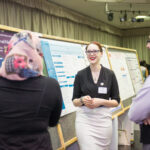
Images: URCAD 2016 posters, performances, and presentations by (from top to bottom) Taisha Gainor ’16, political science; Elise Donkor ’16, computer engineering; Nerissa Vasconcells ’16, dance; and Mark Reynolds ’78, ’82 M.A., psychology. All photos by Marlayna Demond ’11 for UMBC.
]]>
The University Center Ballroom was humming on Wednesday, April 27, with the voices of hundreds of UMBC students presenting their research and creative work to proud long-time supporters and...https://umbc.edu/stories/undergraduate-research-and-creative-achievement-day-celebrates-20-years-of-remarkable-undergraduate-work/https://my3.my.umbc.edu/api/v0/pixel/news/121184/guest@my.umbc.edu/a6f8701829cd7515a44d8055cf44c8cc/api/pixelancientstudiesarts-and-culturebiologycahsscnmscoeitcommunitycseedancehistorymathstatmechephysicspolicy-and-societypoliticalsciencescience-and-technologyundergradresearchvisualartsUMBC News & Magazinehttps://my3.my.umbc.edu/groups/umbc-news-magazinehttps://assets1-my.umbc.edu/system/shared/avatars/groups/000/001/943/24435aa6207c452e7bc15cc74b42c7bb/xsmall.png?1748556657https://assets1-my.umbc.edu/system/shared/avatars/groups/000/001/943/24435aa6207c452e7bc15cc74b42c7bb/original.png?1748556657https://assets2-my.umbc.edu/system/shared/avatars/groups/000/001/943/24435aa6207c452e7bc15cc74b42c7bb/xxlarge.png?1748556657https://assets2-my.umbc.edu/system/shared/avatars/groups/000/001/943/24435aa6207c452e7bc15cc74b42c7bb/xlarge.png?1748556657https://assets3-my.umbc.edu/system/shared/avatars/groups/000/001/943/24435aa6207c452e7bc15cc74b42c7bb/large.png?1748556657https://assets1-my.umbc.edu/system/shared/avatars/groups/000/001/943/24435aa6207c452e7bc15cc74b42c7bb/medium.png?1748556657https://assets2-my.umbc.edu/system/shared/avatars/groups/000/001/943/24435aa6207c452e7bc15cc74b42c7bb/small.png?1748556657https://assets1-my.umbc.edu/system/shared/avatars/groups/000/001/943/24435aa6207c452e7bc15cc74b42c7bb/xsmall.png?1748556657https://assets2-my.umbc.edu/system/shared/avatars/groups/000/001/943/24435aa6207c452e7bc15cc74b42c7bb/xxsmall.png?1748556657UMBC News & Magazine00falseFri, 29 Apr 2016 15:16:49 -0400

 Three years in the making, the mobile game Deliverance by Paul Tschirgi ’15, visual arts, is now available for download on the App Store and Google Play.