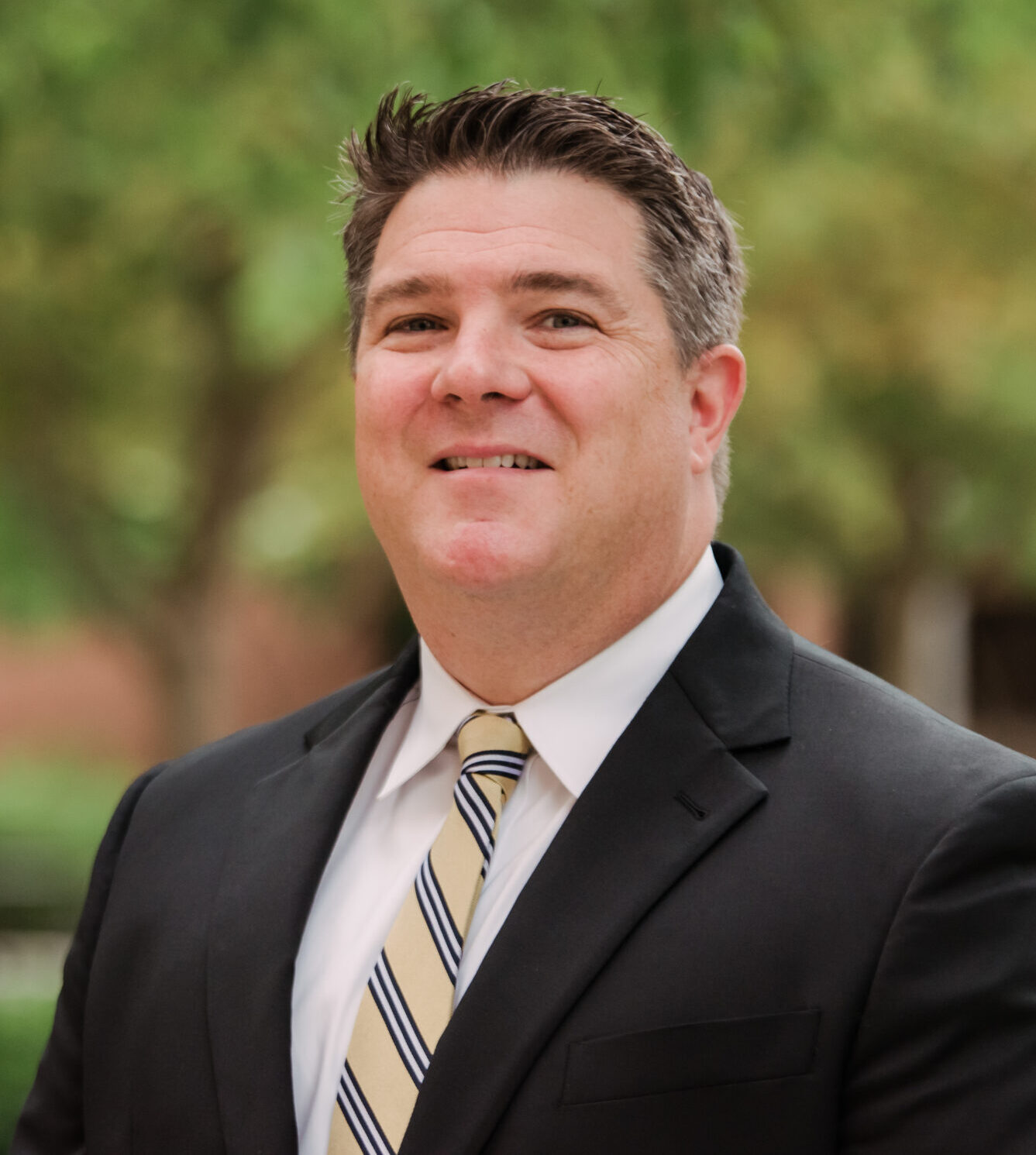
UMBC’s Leamon defines “solar clock” that can precisely predict solar cycle events years in advance

Ever since humans could first observe sunspots about 400 years ago, we’ve been using them to try to define the solar cycle. Approximately every 11 years, solar activity such as sunspots and solar flares ebbs and flows, causing changes to weather patterns on Earth and occasionally threatening telecommunications. Predicting these changes reliably could help everyone from farmers to the military.
Traditionally, scientists have used the concept of a “solar minimum,” when solar activity is reduced, to mark the beginning of each cycle. But the “solar minimum” framework is somewhat arbitrary and imprecise, explains Robert Leamon, research scientist at the Partnership for Heliophysics and Space Environment Research (PHaSER), a UMBC partnership with NASA.
Leamon led new research showing that a “solar clock” based on the sun’s magnetic field, rather than the presence or absence of sunspots, can precisely describe and predict many key changes throughout the solar cycle. The new framework offers a significant improvement over the traditional sunspot method, because it can predict surges in dangerous solar flares or changing weather trends years in advance.
Specifically, the new research, published in Frontiers in Astronomy and Space Sciences, shows that the solar cycle operates as a distinct sequence of events. Notable, and sometimes abrupt, changes occur at each one-fifth of a cycle. That’s true regardless of the exact length of a given cycle, which can vary by several months to a year. In a nod to music enthusiasts, Leamon and colleagues call it a “circle of fifths.”
 Robert Leamon (courtesy of Robert Leamon)
Finding the landmarks
The new paper by Leamon, Scott McIntosh, at the National Center for Atmospheric Research (NCAR), and Alan Title, at the Lockheed Martin Advanced Technology Center, builds on work by Leamon, McIntosh, and Daniel Marsh, also at NCAR, published in 2020. That paper demonstrated the existence of a solar cycle phenomenon the research team dubbed “the terminator.”
The sun’s magnetic field changes direction each solar cycle, but there is overlap between consecutive cycles. The sun’s magnetic field is sometimes called the polar field, because it either points to one of the sun’s poles or the other. A terminator marks when the previous cycle’s polar field has completely disappeared from the sun’s surface, and is quickly followed by a dramatic rise in solar activity.
The new paper points to additional landmarks along the journey through a full solar cycle from terminator to terminator. These landmarks are clearer and more consistent than using sunspots as a guide to cycle length. For example, “The max number of sunspots doesn’t quite align with when the polar field reverses, but the polar field reversal happens at exactly one-fifth of the cycle going from terminator to terminator,” Leamon says.
At two-fifths of a cycle, dark areas called “polar coronal holes” re-form at the sun’s poles. At three-fifths of a cycle, the last X-flare, a class of very large and potentially dangerous solar flares, occurs. At four-fifths, sunspots are at a minimum—but this landmark is less consistent. And then the sun passes through another terminator, after which solar activity rapidly picks up again. Other phenomena, such as UV emissions, also line up nicely on the fifths.
 The dark area represents a coronal hole on the sun’s surface. The new solar clock framework can predict formation and dissolution of coronal holes. (NASA/SDO)
Symptoms and causes
The team picked out patterns in data collected daily by two ground-based observatories. The Dominion Radio Astrophysical Observatory in Penticton, Canada has measured solar radio flux, which serves as a useful proxy for solar activity, daily since 1947. The Wilcox Solar Observatory at Stanford University has collected daily measurements of magnetic fields on the sun’s surface since 1975.
Once the team noticed the changes that occur at exactly one-fifth of a cycle, they asked, “How many different solar things can we look at? And then we realized they all overlap on this same set of fifths,” Leamon says. Different parameters shift at different points on the cycle, but “everything is tied to these five landmarks.”
This new theory of a solar clock changes the focus from sunspots to shifts in magnetic field. “It’s almost like symptoms and causes,” Leamon says. While sunspots are an important symptom, the magnetic field is the underlying cause driving the solar cycle.
The longest threads
This shift in framework improves researchers’ ability to predict events in the solar cycle more precisely and further in advance, which gives people like satellite operators time to make preparations as needed based on predicted solar activity. Once observatories detect an initial polar field reversal, the precise length of the first fifth of the cycle is set. That means the timing of the other fifths (and their associated events) is a simple matter of multiplication.
The new framework also puts tighter bounds on the period within the cycle when severe flares are expected, which is useful information for people on Earth. Rather than a gradual shift from minimum to maximum activity, the period from terminator to about three-fifths of a cycle seems to be the peak period for flares, with a rapid drop-off after that point until the next terminator. The current cycle began after a terminator in December 2021, and the new framework predicts the last major flares should occur in mid-2027.
Leamon points to a quote by physicist Richard Feynman to explain the value of a theory like this one, that accounts for many variables within a system. “Nature uses only the longest threads to weave her patterns, so that each small piece of her fabric reveals the organization of the entire tapestry,” Feynman said. Leamon and colleagues’ new theory is an example of one of these long threads—precisely predicting many aspects of the solar cycle with a single, simple parameter, and making it easier for humans to be ready for changes driven by the sun.
]]>
Ever since humans could first observe sunspots about 400 years ago, we’ve been using them to try to define the solar cycle. Approximately every 11 years, solar activity such as sunspots and solar...
https://umbc.edu/stories/solar-clock-can-predict-solar-cycle-events-far-in-advance/
https://my3.my.umbc.edu/api/v0/pixel/news/126822/guest@my.umbc.edu/ea0b3330506610742f488b76b4e17711/api/pixel
news
phaser
research
science-and-tech
UMBC News & Magazine
https://my3.my.umbc.edu/groups/umbc-news-magazine
https://assets1-my.umbc.edu/system/shared/avatars/groups/000/001/943/24435aa6207c452e7bc15cc74b42c7bb/xsmall.png?1748556657
https://assets1-my.umbc.edu/system/shared/avatars/groups/000/001/943/24435aa6207c452e7bc15cc74b42c7bb/original.png?1748556657
https://assets2-my.umbc.edu/system/shared/avatars/groups/000/001/943/24435aa6207c452e7bc15cc74b42c7bb/xxlarge.png?1748556657
https://assets2-my.umbc.edu/system/shared/avatars/groups/000/001/943/24435aa6207c452e7bc15cc74b42c7bb/xlarge.png?1748556657
https://assets3-my.umbc.edu/system/shared/avatars/groups/000/001/943/24435aa6207c452e7bc15cc74b42c7bb/large.png?1748556657
https://assets1-my.umbc.edu/system/shared/avatars/groups/000/001/943/24435aa6207c452e7bc15cc74b42c7bb/medium.png?1748556657
https://assets2-my.umbc.edu/system/shared/avatars/groups/000/001/943/24435aa6207c452e7bc15cc74b42c7bb/small.png?1748556657
https://assets1-my.umbc.edu/system/shared/avatars/groups/000/001/943/24435aa6207c452e7bc15cc74b42c7bb/xsmall.png?1748556657
https://assets2-my.umbc.edu/system/shared/avatars/groups/000/001/943/24435aa6207c452e7bc15cc74b42c7bb/xxsmall.png?1748556657
UMBC News & Magazine
0
0
false
Fri, 12 Aug 2022 09:57:56 -0400
Fri, 12 Aug 2022 09:57:56 -0400
Sparking History at The Peale
The commonly-told histories of the American Civil War don’t usually include any Asian stories, although Asian Americans were certainly engaged with the war to end slavery.
“Thomas Sylvanus (aka Ching Lee, Ye Way Lee, Ah Yee Way), was born in Hong Kong, brought as an orphaned child to America for schooling in 1852, but was enslaved in Baltimore,” says Irene Chan, an associate professor of visual arts at UMBC. “He ran away at age 16 to join the Union Army and served all the war years. His story, along with many 19th-century Chinese in America, has been forgotten.”
Chan’s new six-part intermedia work, “The Thomas Project,” is devoted to telling Sylvanus’ story in many mediums: fabric silkscreens, paper lithography, drawing, hand lettering, embroidery, and book arts, and debuts in August as part of SPARK: New Light at The Peale in downtown Baltimore.
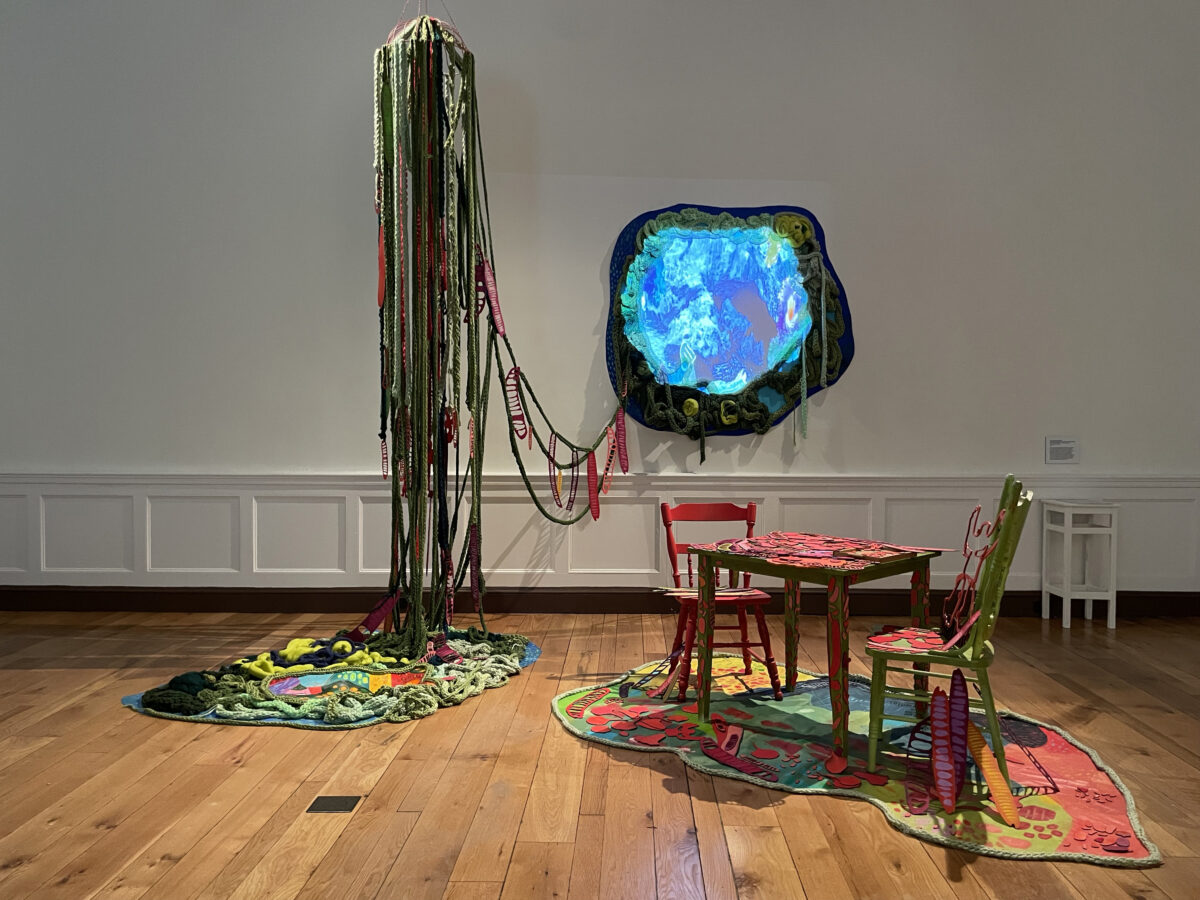
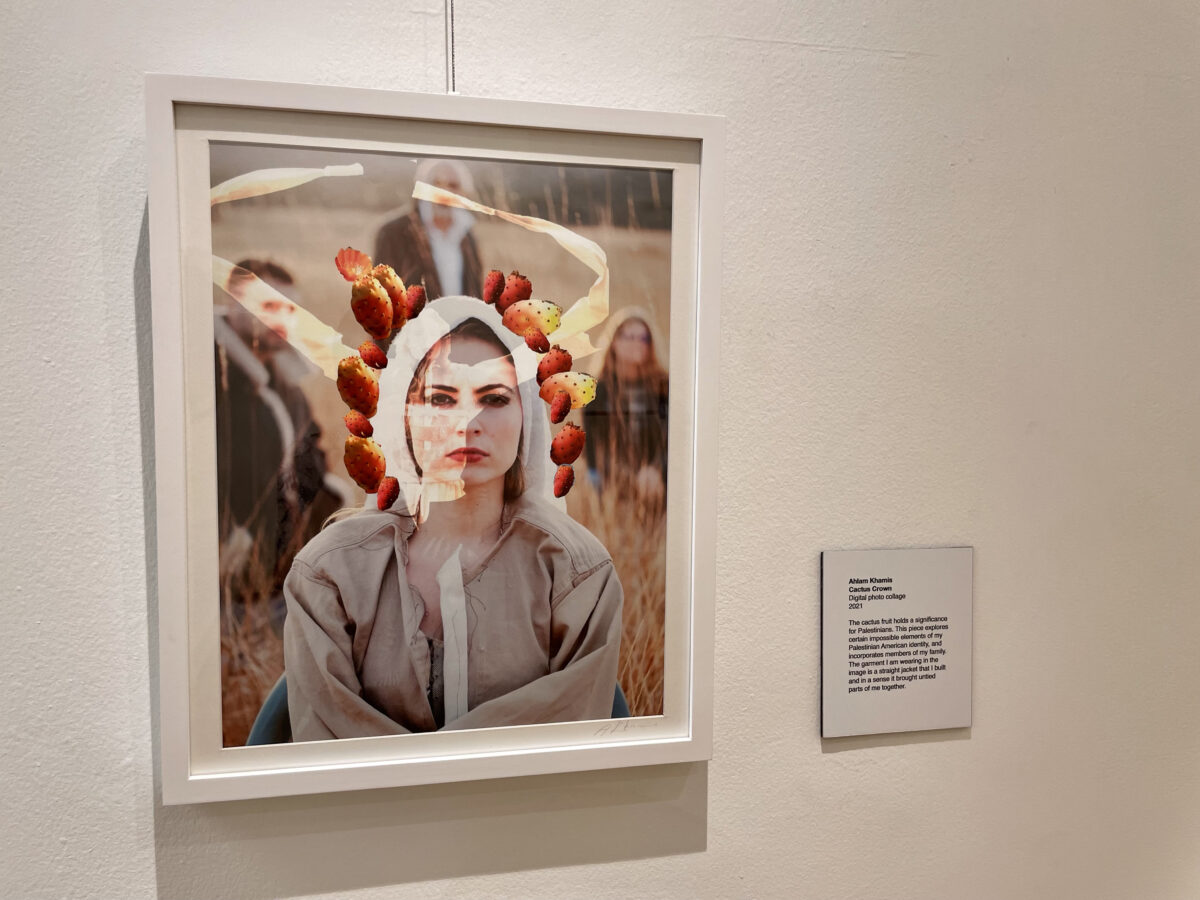 At left: Foster Reynolds-Santiago, Transgender Euphoria: Puerto Rico’s Queer Exaltation, 2022. Mixed media installation, with video projection, 33 minutes, 35 seconds. At right: Ahlam Khamis, Cactus Crown, 2021. Digital photo collage, 24” x 17”. Photos by Catherine Borg.
SPARK, an annual group exhibition of works by faculty, staff, alumni, and students at UMBC and Towson University curated by Catherine Borg, returns for its fifth edition August 13-September 25. SPARK: New Light features work from 24 artists, and opens concurrently with the Founder’s Day Grand Reopening of The Peale, a celebration of the completion of extensive renovations to the historic facility. Each of the annual SPARK exhibits has been made possible through a partnership with PNC Bank, which also helped secure the venue.
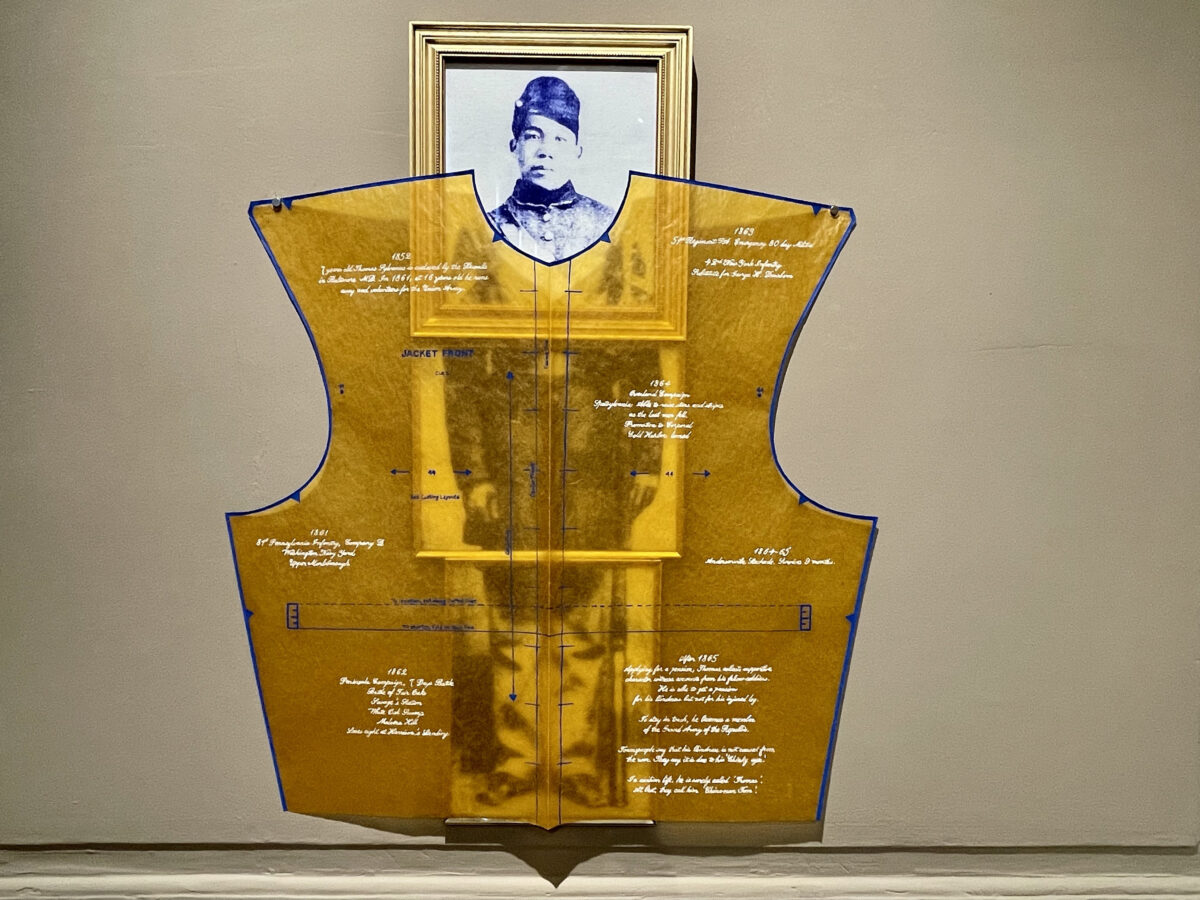 Irene Chan, Thomas in the War, 2022. Paper lithography, in three frames, with hand-drawn overlay with calligraphy on golden yellow glassine. Photo by Catherine Borg.
Community spark
The Peale, the first museum building in the United States, was established in Baltimore in 1814 by the artist Rembrandt Peale. Over the course of its nearly 200 years, The Peale has seen many incarnations before landing on its current role as a center devoted to celebrating the unique history of Baltimore, and telling the stories of the city’s people and buildings.
“The Peale is Baltimore’s community museum,” says Chan. “I have had the Peale space in mind throughout the development of ‘The Thomas Project,’ and this exhibit uses the unique architectural features of the room to tell part of Thomas’ story, starting with living his early American life in Baltimore.”

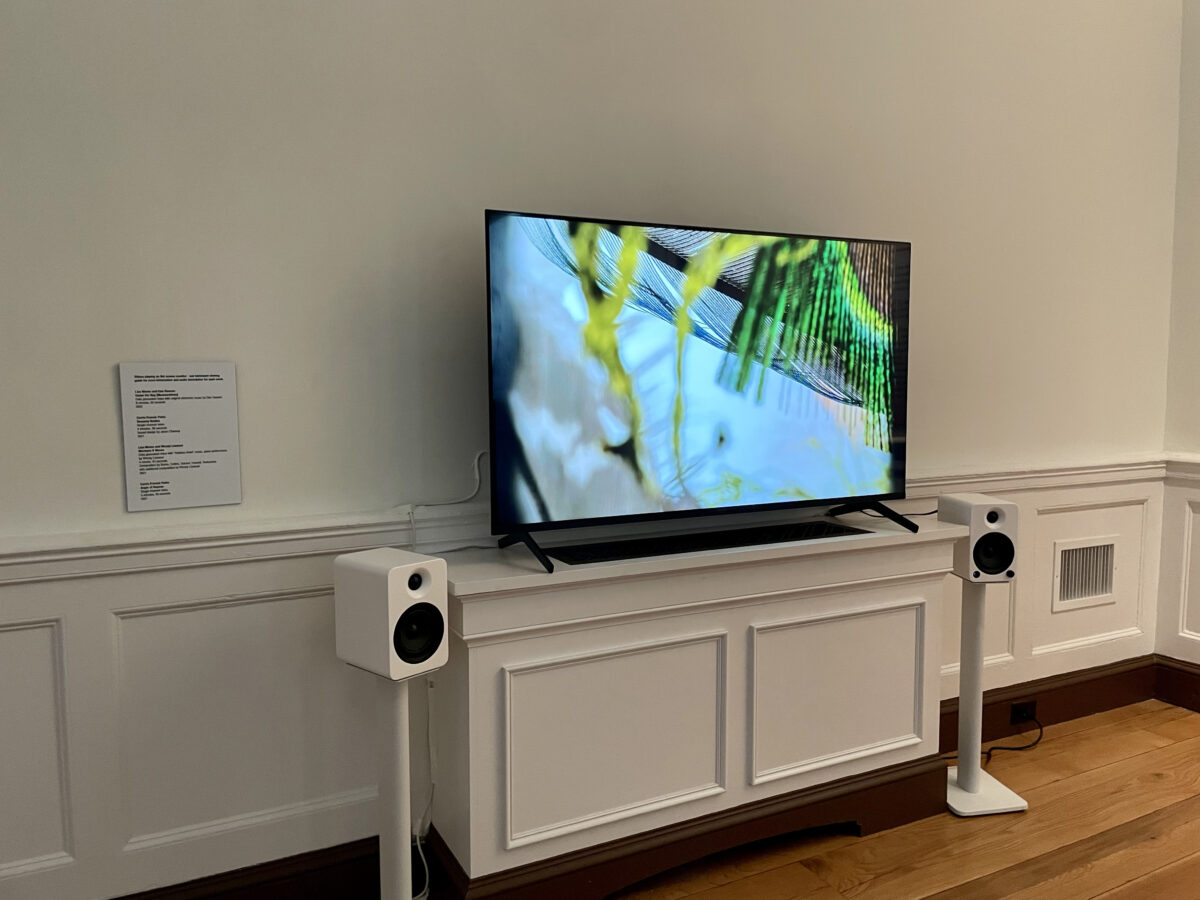 At left: Adam Droneburg, detail from Top 5 Outfits Trending Right Now (from Post Us series), 2022. Mixed media costumes. At right: Corrie Francis Parks, Uncanny Bodies, 2021. Single channel video, 4 minutes, 38 seconds. Sound design by Jason Charney M.F.A. ‘20. Photos by Catherine Borg.
Chris Peregoy ’81, M.F.A. ’99, a photographer who manages the photo and print facilities for the Visual Arts department, also incorporated The Peale’s architecture into “Time Capsules,” his new work for SPARK: New Light.
“Working with The Peale, I placed pinhole cameras on windowsills in east, south and west facing windows for six weeks in May and June,” Peregoy says. “The results capture the streak of the sun and the accumulated light that had fallen on the scene during the long exposure.”
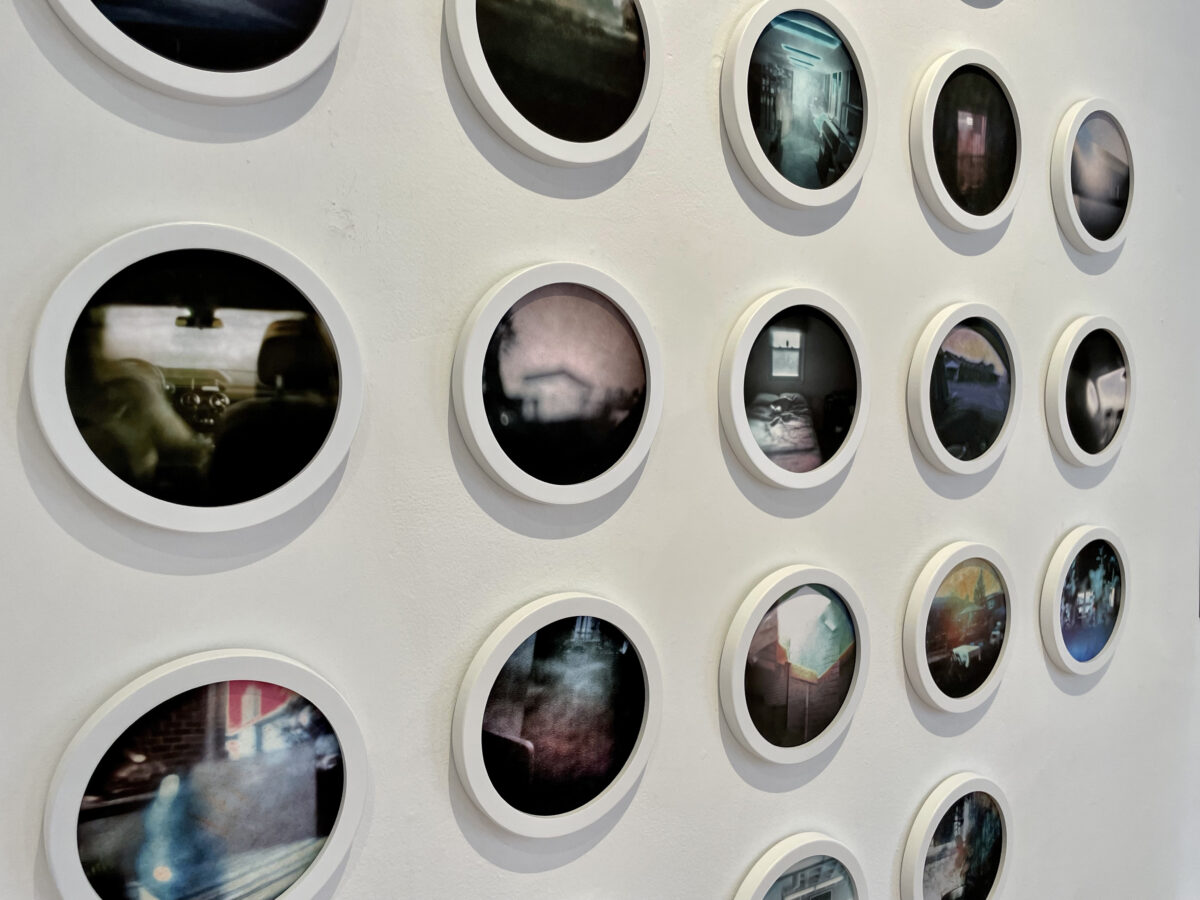 Chris Peregoy, detail of Time Capsules, 2021-2022. Archival pigment prints, 8” diameter each. Photo by Catherine Borg.
In all, 24 artists are exhibiting new work in SPARK: New Light. UMBC contributors include Chan and Peregoy as well as Lynn Cazabon, Adam Droneberg, M.F.A. ’22, Kathy Marmor (with Penny Rheingans), Lisa Moren (with Tsvetan Bachvaroff, Dan Deacon, and Woody Lissauer), Timothy Nohe, Corrie Francis Parks, Foster Reynolds-Santiago, M.F.A. ’22, and current IMDA graduate students Ahlam Khamis and Fahmida Hossain.
Hossain’s video work, “Touch,” focuses on the artist touching different objects in the context of urban life in her hometown, Dhaka, expressing the yearning for physical contact with loved ones and her friends.
“I am always curious about touching objects around me and feeling their textures, but the recent pandemic made us fearful of handling things,” says Hossain. “This work represents my visualization of the human brain, which is a subconscious world where we can have different personalities and experiences, like the changing abstract shapes in my video.”
Participating artists from Towson University include Mark Burchick, Grace Doyle, Carrie Fucile, Alexandra Garove, Danielle Hawk, Jinyoung Koh, Diane Kuthy, Jenee Mateer, Kat Navarro, Sookkyung Park, Lynn Tomlinson, and J. Yablonsky.
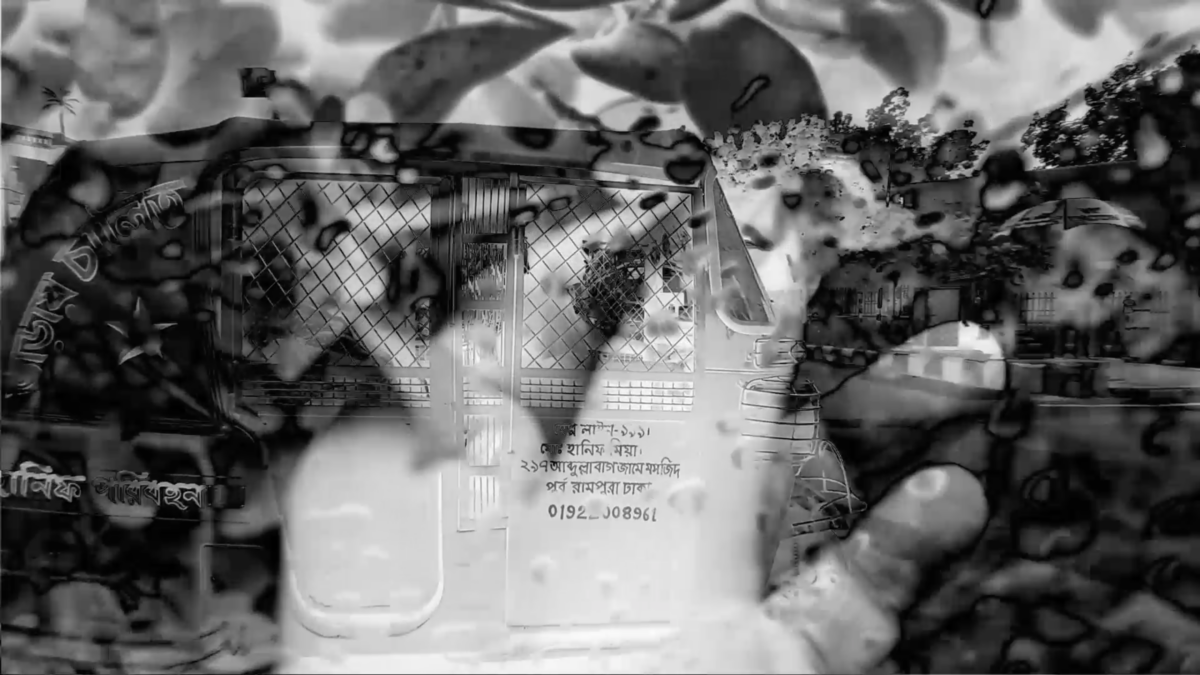 Fahmida Hossain, still from Touch, 2020. Digital video collage, 1 minute, 9 seconds.
Sparking creativity
Additional events will include an artist reception on the evening of September 7, and a cameraless photography workshop by Peregoy on the afternoon of September 11.
The exhibition will draw to a close with a series of projected artworks by visual arts associate professor Kelley Bell, M.F.A. ’06, and performances by the Towson Percussion Ensemble, the UMBC Percussion Ensemble (a group featuring UMBC faculty and alumni), and the Umbilicus percussion ensemble over the weekend of September 23–25.
* * * * *
SPARK: New Light opens August 13 and will run through September 25, 2022. Opening festivities run from 10 a.m.–4 p.m. on August 13. Tickets are free of charge, and masks will be required to attend. Learn more at the UMBC Arts & Culture Calendar or by following The Peale.
]]>
The commonly-told histories of the American Civil War don’t usually include any Asian stories, although Asian Americans were certainly engaged with the war to end slavery. “Thomas Sylvanus...
https://umbc.edu/stories/sparking-history-at-the-peale-in-downtown-baltimore/
https://my3.my.umbc.edu/api/v0/pixel/news/126809/guest@my.umbc.edu/ab44174510f532c0a6012fae8660cdbd/api/pixel
discovery
imda
magazine
spark
visualarts
UMBC News & Magazine
https://my3.my.umbc.edu/groups/umbc-news-magazine
https://assets1-my.umbc.edu/system/shared/avatars/groups/000/001/943/24435aa6207c452e7bc15cc74b42c7bb/xsmall.png?1748556657
https://assets1-my.umbc.edu/system/shared/avatars/groups/000/001/943/24435aa6207c452e7bc15cc74b42c7bb/original.png?1748556657
https://assets2-my.umbc.edu/system/shared/avatars/groups/000/001/943/24435aa6207c452e7bc15cc74b42c7bb/xxlarge.png?1748556657
https://assets2-my.umbc.edu/system/shared/avatars/groups/000/001/943/24435aa6207c452e7bc15cc74b42c7bb/xlarge.png?1748556657
https://assets3-my.umbc.edu/system/shared/avatars/groups/000/001/943/24435aa6207c452e7bc15cc74b42c7bb/large.png?1748556657
https://assets1-my.umbc.edu/system/shared/avatars/groups/000/001/943/24435aa6207c452e7bc15cc74b42c7bb/medium.png?1748556657
https://assets2-my.umbc.edu/system/shared/avatars/groups/000/001/943/24435aa6207c452e7bc15cc74b42c7bb/small.png?1748556657
https://assets1-my.umbc.edu/system/shared/avatars/groups/000/001/943/24435aa6207c452e7bc15cc74b42c7bb/xsmall.png?1748556657
https://assets2-my.umbc.edu/system/shared/avatars/groups/000/001/943/24435aa6207c452e7bc15cc74b42c7bb/xxsmall.png?1748556657
UMBC News & Magazine
0
0
false
Thu, 11 Aug 2022 14:16:36 -0400
Thu, 11 Aug 2022 14:16:36 -0400
Leading a (Retriever) Nation

It’s never easy to start a new job, but athletic director Brian Barrio had more to contend with than which parking lot to use. He joined #RetrieverNation in January of 2020 and after only two months (during which time, he even lived in a campus apartment), UMBC closed its physical campus due to COVID-19. With 17 Division I sports and over 350 student-athletes, this would have been a massive undertaking in the best of circumstances. We talked to Brian about what that transition was like, what he’s learned from the experience, and what’s up next. And he almost managed to make it through the entire interview without one sports reference.
Q: I feel like it would be a gross understatement to say that a lot has changed since you first came to UMBC as our athletic director in January 2020. What has that journey been like for you?
A: Obviously, my first year or so didn’t look quite the way I thought it would. But that’s how it goes in athletics and in life and I’m really proud of the way we adjusted and managed to get through it.
I think we felt our way through it as well as anyone in college athletics and I’m really proud of how our student-athletes and our coaches handled it. I’m really excited about where we are at this point and how we got here is less important than the fact that we’re here.
I’ve told people a hundred times, ‘I’d rather be at UMBC during a pandemic than anywhere else during normal times.’ That’s how much I like it here.
Brian Barrio
Athletic Director
Q: What have been some of your biggest challenges?
A: I think the hardest thing for me was trying to build culture and establish the connective tissue that you need in the department when you couldn’t really fully be together. It really only feels like the last six months or so have been truly “in person” and that robust interpersonal piece of what we do has been able to come together. I had to spend the most time with that, trying to figure out how to be creative and different and build relationships during a difficult time. Because of that, we learned new ways to interact, new ways to recruit, and new ways to team build.
Q: In terms of your leadership style, I’m sure you came into this community thinking you were going to do things a certain way. And then everything kind of got turned on its head. How did this change your approach?
A: I talk a lot about servant leadership and there are times in leadership when you have to be top down with one single authority figure. But 95% of the time when we’re not in crisis mode, I really like to have a collaborative environment. I try to lead with some degree of emotional intelligence, so as opposed to that being a change, I think that’s just something that has served our department really well – being a place where we take a lot of care with the whole person and the quality of life in the office. That’s more important right now in athletics than maybe ever because of how much pressure, burnout, and administrative hardship has taken place over the last two years. More important than anything has been creating a quality of life in the office that makes people feel valued and like they can continue on.
Q: Working in athletics, there’s no such thing as a 9-to-5. You’re working nights, you’re working weekends. Last spring, all the winter and fall sports from 2020 were moved to 2021 to play alongside spring sports. The rate of burnout must be so much higher and then when you throw in all these other issues, I’m sure you have to be really cognizant as a leader about how you’re taking care of your people.
A: People in athletics do it because they have a passion for it– for higher education and for athletics. Particularly the spring of 2021 was a tremendous challenge because we had 15 sports going at once, which has never happened before.From the perspective of the athletes, it’s great they all got to compete, but from the point of view from our support staff…we were going 24/7 for four months. People gave a lot, they truly gave everything they had, and I’m thankful and cognizant of that and I’ve tried to make allowances for that as we’ve recovered from that schedule.
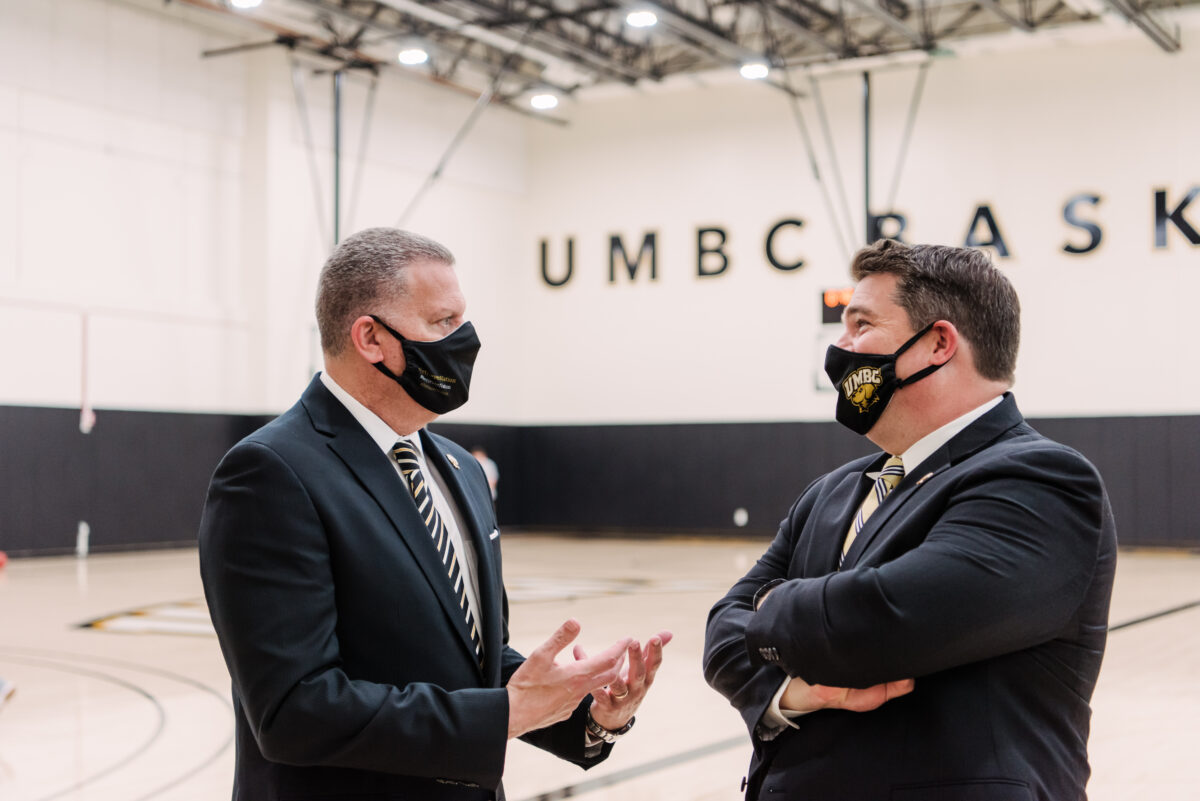 Barrio (r) talks strategy with UMBC men’s basketball head coach Jim Ferry (l). (Marlayna Demond ’11/UMBC)
Q: Let’s be clear: It hasn’t all been dire since you got here! During your tenure, you’ve seen swimming and diving, softball, volleyball, and others take home America East titles, among numerous other academic, athletic, and personal achievements by our student-athletics and athletic department. Is there one that really stands out to you the most?
A: In the grand scheme of things, we set an all-time record for student-athlete grade point averages last fall, which is something I think we’re all especially proud of amid all the turmoil and challenges. It’s a credit to our student-athletes, to our coaches who take it very seriously and recruit the right kind of students for UMBC, and to our academic support staff who do a great job.
As far as the championships, it’s like picking your favorite child. One memory that really stands out is in the spring of 2021 when we were coming out of a period of tremendous uncertainty and things were still very restrictive. The volleyball championship was the first we’d won since we’d been back and it was a really special moment for the student-athletes and for us. It really sent the message that we’re back in business and I won’t ever forget that.
Q: Depending on the day, it can sometimes feel like you’ve been working here for five minutes or five years. Was there a moment you can really pinpoint that made you feel like you were officially part of the Retriever community, or was it there from day one?
A: It’s a credit to everyone on this campus, particularly campus leadership and Greg Simmons and President (Emeritus) Freeman Hrabowski, but I was made to feel like part of the family before I even started. I was all in with both feet from day one and nothing has happened in the interim to make that waver at all.
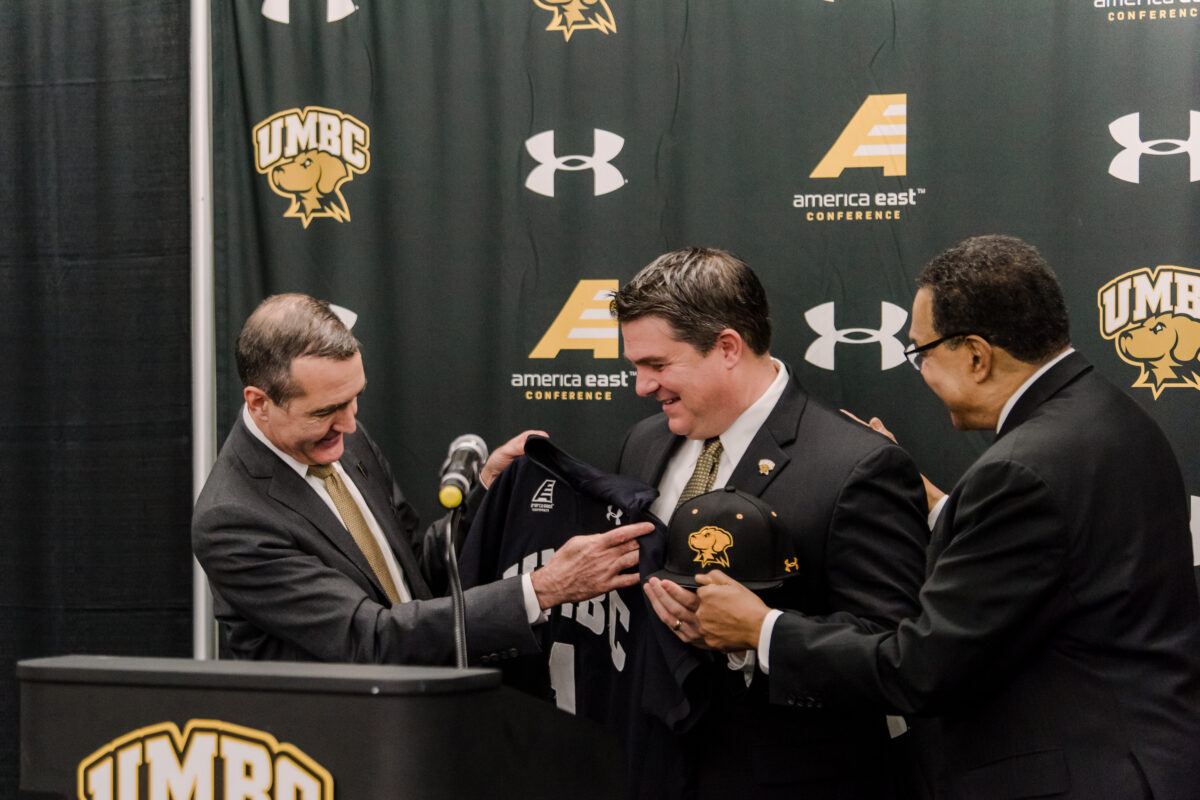 Barrio accepts his new Retriever jersey. (Marlayna Demond ’11/UMBC)
Q: Speaking of becoming one of us, how have you enjoyed the transition from Connecticut to Baltimore over the last few years?
A: I’ve really loved going to Camden Yards and enjoying crabs in the summer, so I really couldn’t be more stereotypical about what I like about Baltimore. It feels like winter comes a month late and leaves a month early and being from New England, I also enjoy that.
Q: In March, you were elected to the NCAA Division I Council and just recently it was announced that you’ll represent the America East as part of the NCAA DI-AAA Executive Committee. What will the work look like for you and what does it mean for you to have earned these positions?
A: It means a ton to me that the America East trusts me to be our lone representative on the NCAA Council which is the most important decision-making body at the NCAA. It’s an honor and a big responsibility and I think the work we’re doing is really beneficial for UMBC. The work is for the conference, first and foremost, but it’s important to have representation from schools like UMBC. Non-football playing Division I schools really need a voice. I take that responsibility very seriously to speak up.
Q: Looking ahead to the upcoming year, are there any goals you have for yourself and for UMBC Athletics?
A: I really think this can be the most exciting year we’ve ever had at UMBC in athletics. We have so many great teams that can compete across the board for championships and I think we’ve got a really great sense of morale in the department.
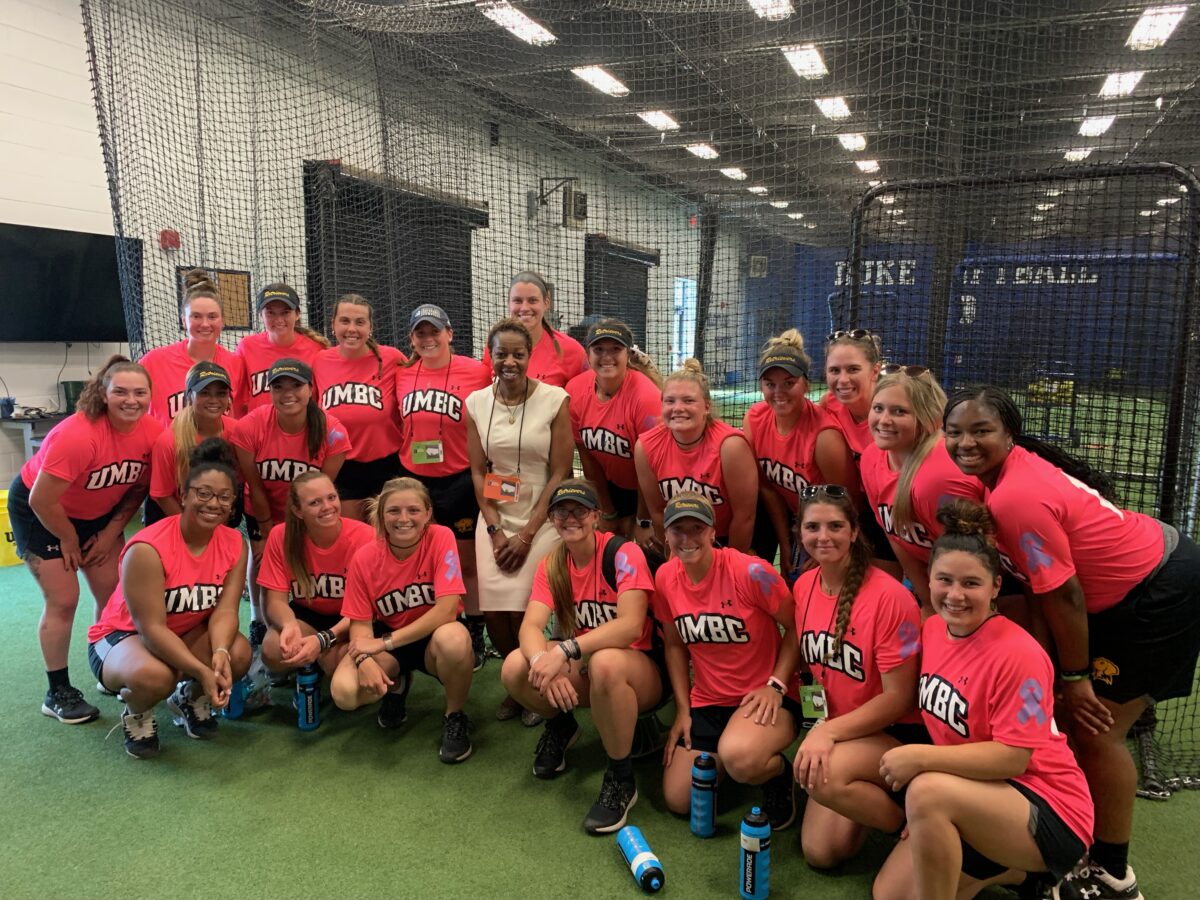 UMBC softball pauses for a quick photo with UMBC President Valerie Sheares Ashby at NCAA tournament play in May 2022. (UMBC Athletics)
Q: We just welcomed our new president [Dr. Valerie Sheares Ashby] to UMBC. As someone who was new to #RetrieverNation not too long ago, what advice would you give her?
A: I got a chance to spend a little bit of time with Dr. Sheares Ashby at Duke for the NCAA softball game and I would say she doesn’t need any advice from me. Just like I benefited from Dr. Hrabowski’s leadership and mentorship, I look forward to benefiting from hers. She brings a level of commitment to students and I’m going to be leaning on her, not the other way around.
Q: How would you sum up #RetrieverNation in one word?
A: I tried but I just can’t narrow it down to one. Excellence, resilience, togetherness–it would be hard to pick one but it’s all of those things. To me, we always punch above our weight class. It’s that sense that we’re bigger than the sum of our parts and I think it’s what makes it exciting to be here.
Visit UMBC Athletics and mark your calendars to come support #RetrieverNation at a sporting event this year!
]]>
It’s never easy to start a new job, but athletic director Brian Barrio had more to contend with than which parking lot to use. He joined #RetrieverNation in January of 2020 and after only two...
https://umbc.edu/stories/leading-a-retriever-nation/
https://my3.my.umbc.edu/api/v0/pixel/news/126768/guest@my.umbc.edu/93d850ef0e0aa66c4d86dd98d688e95c/api/pixel
athletics
campus-life
magazine
UMBC News & Magazine
https://my3.my.umbc.edu/groups/umbc-news-magazine
https://assets1-my.umbc.edu/system/shared/avatars/groups/000/001/943/24435aa6207c452e7bc15cc74b42c7bb/xsmall.png?1748556657
https://assets1-my.umbc.edu/system/shared/avatars/groups/000/001/943/24435aa6207c452e7bc15cc74b42c7bb/original.png?1748556657
https://assets2-my.umbc.edu/system/shared/avatars/groups/000/001/943/24435aa6207c452e7bc15cc74b42c7bb/xxlarge.png?1748556657
https://assets2-my.umbc.edu/system/shared/avatars/groups/000/001/943/24435aa6207c452e7bc15cc74b42c7bb/xlarge.png?1748556657
https://assets3-my.umbc.edu/system/shared/avatars/groups/000/001/943/24435aa6207c452e7bc15cc74b42c7bb/large.png?1748556657
https://assets1-my.umbc.edu/system/shared/avatars/groups/000/001/943/24435aa6207c452e7bc15cc74b42c7bb/medium.png?1748556657
https://assets2-my.umbc.edu/system/shared/avatars/groups/000/001/943/24435aa6207c452e7bc15cc74b42c7bb/small.png?1748556657
https://assets1-my.umbc.edu/system/shared/avatars/groups/000/001/943/24435aa6207c452e7bc15cc74b42c7bb/xsmall.png?1748556657
https://assets2-my.umbc.edu/system/shared/avatars/groups/000/001/943/24435aa6207c452e7bc15cc74b42c7bb/xxsmall.png?1748556657
UMBC News & Magazine
0
0
false
Tue, 09 Aug 2022 13:31:37 -0400
Tue, 09 Aug 2022 13:31:37 -0400
Welcoming UMBC’s Newest Retriever, President Valerie Sheares Ashby

Most new Retrievers begin their time at UMBC checking off a to-do list of essentials. New UMBC President Valerie Sheares Ashby was no exception on August 1, starting her first day by getting her computer set up, taking that all-important photo for her campus ID, and figuring out her go-to order in the Admin Coffee Shop.
And like other new Retrievers, once those duties were finished, the real fun began. For Sheares Ashby, that meant getting straight to what excites her most—getting to know the people of UMBC face to face.
“This day is just pure joy to me. I feel like I am among my people. We have similar values. We have similar goals,” she told a crowd gathered on Main Street in The Commons before calling dozens of students forward for a group photo, and sticking around to meet any and all who wanted to say hello.
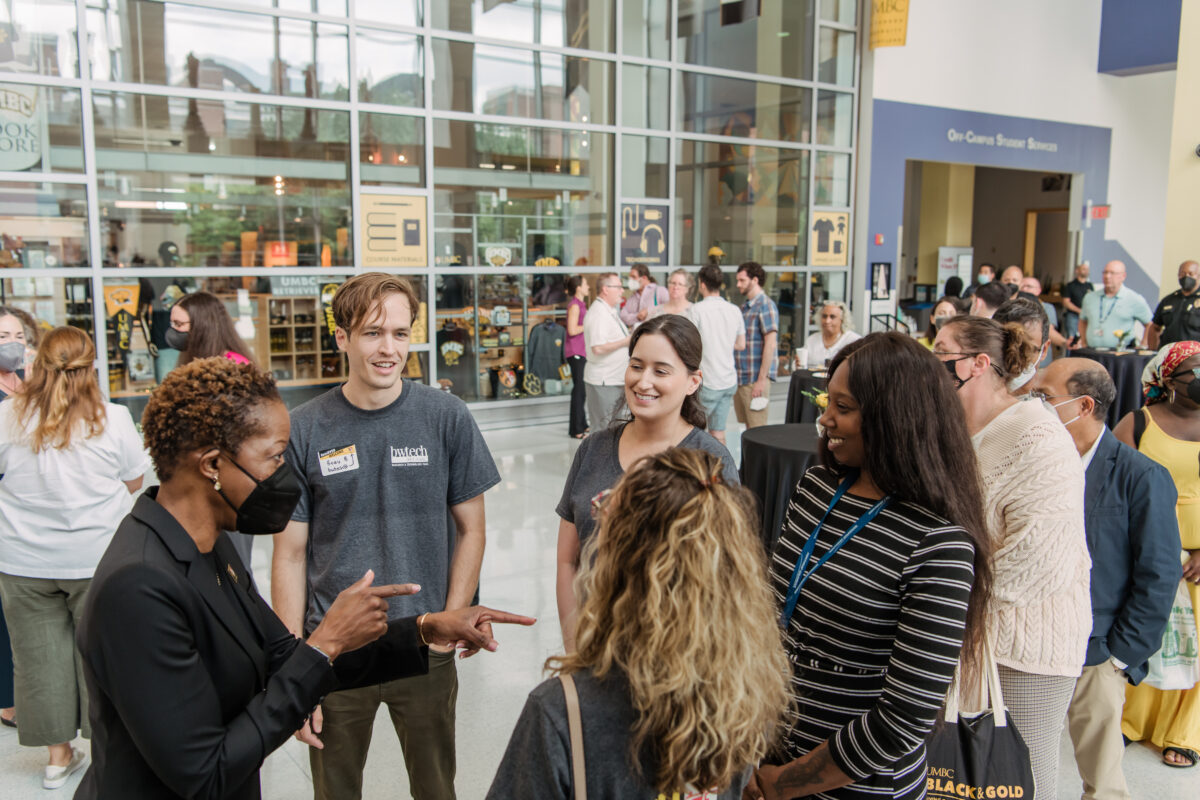 Meet and greet with students, staff, and faculty on Main Street in The Commons. (Marlayna Demond ’11/UMBC Magazine)
Connecting with community
Sheares Ashby spent most of her first full day of work visiting colleagues and community members across main campus, traveling from the Administration Building and the Albin O. Kuhn Library in the morning, to Residential Life, Athletics, and the UMBC Police Station in the afternoon. Over the course of the coming year, she plans to conduct a “listening tour” in order to meet as many people as possible across the UMBC community.
Sharing her visible excitement with a crowd of students, staff, and faculty members, Sheares Ashby explained how her parents—teachers of English, and math and science—not only instilled in her an appreciation of the sciences and humanities, but also the importance of thanking people who show her kindness.
“Thank you all. I’m just grateful to each one of you. Those of you I have not yet met, I look forward to it,” she said. “It is a privilege and pleasure to join you. And I look forward to all the work we’re going to do together.”
Learn more about welcome events for President Sheares Ashby here.
What would a first day at UMBC be without rubbing True Grit’s nose for good luck?
]]>
Most new Retrievers begin their time at UMBC checking off a to-do list of essentials. New UMBC President Valerie Sheares Ashby was no exception on August 1, starting her first day by getting her...
https://umbc.edu/stories/welcoming-new-president-valerie-sheares-ashby/
https://my3.my.umbc.edu/api/v0/pixel/news/126723/guest@my.umbc.edu/922a515bf33b4d3a3019826540b4c82e/api/pixel
campus-life
magazine
president-sheares-ashby
UMBC News & Magazine
https://my3.my.umbc.edu/groups/umbc-news-magazine
https://assets1-my.umbc.edu/system/shared/avatars/groups/000/001/943/24435aa6207c452e7bc15cc74b42c7bb/xsmall.png?1748556657
https://assets1-my.umbc.edu/system/shared/avatars/groups/000/001/943/24435aa6207c452e7bc15cc74b42c7bb/original.png?1748556657
https://assets2-my.umbc.edu/system/shared/avatars/groups/000/001/943/24435aa6207c452e7bc15cc74b42c7bb/xxlarge.png?1748556657
https://assets2-my.umbc.edu/system/shared/avatars/groups/000/001/943/24435aa6207c452e7bc15cc74b42c7bb/xlarge.png?1748556657
https://assets3-my.umbc.edu/system/shared/avatars/groups/000/001/943/24435aa6207c452e7bc15cc74b42c7bb/large.png?1748556657
https://assets1-my.umbc.edu/system/shared/avatars/groups/000/001/943/24435aa6207c452e7bc15cc74b42c7bb/medium.png?1748556657
https://assets2-my.umbc.edu/system/shared/avatars/groups/000/001/943/24435aa6207c452e7bc15cc74b42c7bb/small.png?1748556657
https://assets1-my.umbc.edu/system/shared/avatars/groups/000/001/943/24435aa6207c452e7bc15cc74b42c7bb/xsmall.png?1748556657
https://assets2-my.umbc.edu/system/shared/avatars/groups/000/001/943/24435aa6207c452e7bc15cc74b42c7bb/xxsmall.png?1748556657
UMBC News & Magazine
17
0
false
Fri, 05 Aug 2022 13:01:28 -0400
Fri, 05 Aug 2022 13:01:28 -0400
NSF awards $10M to UMBC to expand successful initiative developing underrepresented postdocs in STEM

UMBC will expand its work boosting diversity in academia from Maryland to the national level through a new NSF INCLUDES Alliance: Re-Imagining STEM Equity Utilizing Postdoc Pathways (RISE UPP). The RISE UPP Alliance, anticipated to officially launch in fall 2022, is modeled after the AGEP PROMISE Academy, a high-impact initiative co-led by UMBC that supports faculty diversification in the biomedical sciences across University System of Maryland (USM) institutions.
The UMBC-led RISE UPP Alliance will assist the University of Texas System, Texas A&M University System, and University of North Carolina System in creating programs similar to the AGEP PROMISE Academy, but tailored to meet the needs of their specific institutions and systems. The AGEP PROMISE Academy focuses on recruiting diverse Ph.D. recipients and helping them develop their careers from the postdoc to tenure-track faculty stage. UMBC has received a $10 million grant from the National Science Foundation (NSF) to replicate this national model.
RISE UPP seeks to help R1, R2, and teaching-intensive institutions recruit and train postdoctoral scholars from underrepresented backgrounds in STEM, and help them build community and supportive networks, facilitating their progression into tenure-track positions.
“The underrepresentation of minoritized scholars in universities has been a stagnant problem for a really long time and decades of effort have not yet yielded much change,” said Robin Cresiski, assistant vice provost for graduate student development and postdoctoral affairs. “There is an appetite for trying something different.”
A systemic approach to faculty diversity
The AGEP PROMISE Academy, which launched in 2018 and is set to continue until 2023, is an extension of Maryland’s nationally-regarded PROMISE Alliance for Graduate Education and the Professoriate (PROMISE AGEP) program, also funded by NSF. UMBC co-leads the Academy with the University of Maryland, College Park, University of Maryland, Baltimore, Towson University, and Salisbury University.
Since its inception, 10 fellows have participated in the AGEP PROMISE Academy, including UMBC’s Nykia Walker, a biological sciences research assistant professor. Walker’s lab is focused on how primary breast tumors initiate metastases through transcriptional regulation.Walker is currently preparing for a tenure track position as one of UMBC’s Pre-Professoriate Fellows.
Cresiski, who also serves as the director of Maryland’s AGEP PROMISE Academy Alliance, explains that the Academy was developed as an extension of UMBC’s Fellows for Faculty Diversity program. UMBC developed that program to better recruit, support, and retain scholars committed to diversity, equity, and inclusion, particularly members of groups underrepresented in the professoriate.
As members of UMBC’s Executive Committee for the Recruitment, Retention and Advancement of Underrepresented Minority Faculty shared in a recent Baltimore Sun letter, “the program, launched in 2011, has been a resounding success.” In its first decade, the initiative brought in 18 postdoctoral fellows in disciplines from dance to history to geography and environmental systems, 17 of whom have transitioned to higher academic positions (11 at UMBC).
The success of the Fellows Faculty Diversity program, along with UMBC’s Natural Sciences Pre-Professoriate Fellowship program, served as the inspiration for the AGEP PROMISE Academy program, Cresiski notes. “We feel so fortunate that UMBC’s leadership has led us to generate approaches to addressing faculty diversity at a large scale,” she says.
The USM leading the way
In addition to the AGEP PROMISE Academy, other university systems will also be learning from additional RISE UPP Alliance partner, the University of California President’s Postdoctoral Fellowship Program.
Principal investigator Philip Rous, UMBC provost and senior vice president for academic affairs, shares that at its core RISE UPP is a research project that assesses the effectiveness of a university system-based approach to faculty diversification and allows participating systems to learn from one another.
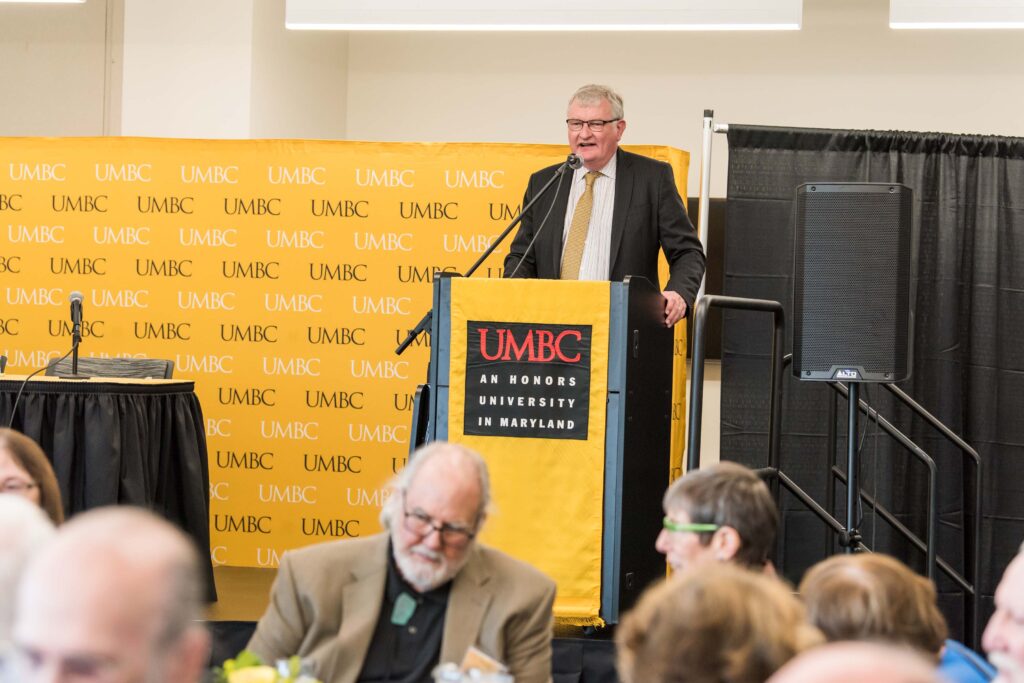 Philip Rous (Marlayna Demond ’11/UMBC)
He underscores that by replicating USM’s approach within other university systems, more institutions across the country may also be able to increase the faculty diversity.
“Only by many systems and many universities doing this are we actually going to succeed in what we want to do, which is not only to change the diversity of our faculty but change the opportunities for diversity and inclusion of faculty across the nation,” says Rous. “All universities and all university systems have an obligation—and should, with our support—to diversify their faculty. Hopefully we can be useful to the other systems from our experience and help guide them.”
Rising up to the challenge
The RISE UPP Alliance will work with both participating university systems and their institutions and departments to make campus cultures and structures more inclusive.
In order to do this, RISE UPP will focus on four areas. The first will be supporting postdoctoral scholars from underrepresented groups by providing training, professional development, and community with other scholars across their university system and the RISE UPP Alliance network. RISE UPP will also facilitate formal assessment of participating departments, institutions, and systems to check if the adaptations are proving effective.
The Alliance will help the institutions create pathways, through policy and practice, that remove barriers for postdocs from underrepresented groups to access tenure-track positions within and across participating university systems. To make all this work possible, they will develop and support faculty who serve as mentors for postdoctoral fellows and junior colleagues through training, compensation, recognition, and advocacy.
“We have learned a lot about the benefits of working across the [USM] to develop, implement, study and evaluate our model that allows multiple pathways for postdocs to convert to tenure track faculty positions,” says Janet Rutledge, vice provost and dean of UMBC’s graduate school. “We look forward to further development, dissemination and further evaluation and research with additional state system partners to expand opportunities for postdoc conversions.”
]]>
UMBC will expand its work boosting diversity in academia from Maryland to the national level through a new NSF INCLUDES Alliance: Re-Imagining STEM Equity Utilizing Postdoc Pathways (RISE UPP)....
https://umbc.edu/stories/nsf-awards-10m-to-umbc-to-expand-successful-initiative-developing-underrepresented-postdocs-in-stem/
https://my3.my.umbc.edu/api/v0/pixel/news/126721/guest@my.umbc.edu/a85b2a6b5e4b1f20deab49aa821a553e/api/pixel
cnms
diversityandinclusion
graduateschool
majoraward
news
science-and-tech
UMBC News & Magazine
https://my3.my.umbc.edu/groups/umbc-news-magazine
https://assets1-my.umbc.edu/system/shared/avatars/groups/000/001/943/24435aa6207c452e7bc15cc74b42c7bb/xsmall.png?1748556657
https://assets1-my.umbc.edu/system/shared/avatars/groups/000/001/943/24435aa6207c452e7bc15cc74b42c7bb/original.png?1748556657
https://assets2-my.umbc.edu/system/shared/avatars/groups/000/001/943/24435aa6207c452e7bc15cc74b42c7bb/xxlarge.png?1748556657
https://assets2-my.umbc.edu/system/shared/avatars/groups/000/001/943/24435aa6207c452e7bc15cc74b42c7bb/xlarge.png?1748556657
https://assets3-my.umbc.edu/system/shared/avatars/groups/000/001/943/24435aa6207c452e7bc15cc74b42c7bb/large.png?1748556657
https://assets1-my.umbc.edu/system/shared/avatars/groups/000/001/943/24435aa6207c452e7bc15cc74b42c7bb/medium.png?1748556657
https://assets2-my.umbc.edu/system/shared/avatars/groups/000/001/943/24435aa6207c452e7bc15cc74b42c7bb/small.png?1748556657
https://assets1-my.umbc.edu/system/shared/avatars/groups/000/001/943/24435aa6207c452e7bc15cc74b42c7bb/xsmall.png?1748556657
https://assets2-my.umbc.edu/system/shared/avatars/groups/000/001/943/24435aa6207c452e7bc15cc74b42c7bb/xxsmall.png?1748556657
UMBC News & Magazine
0
0
false
Fri, 05 Aug 2022 12:12:49 -0400
Fri, 05 Aug 2022 12:12:49 -0400
UMBC students, educators, and researchers advance Maryland through innovative computing partnership

In early 2022, Nadja Franklin ‘23 was exploring summer opportunities through the UMBC Career Center when she heard about a chance to connect with tech internships at Maryland’s state agencies. As a business technology administration major, her interest was piqued. She arrived at the on-campus internship event with résumé in hand, ready to discuss her skills, and her preparation and enthusiasm paid off.
The hiring event was hosted by the Maryland Institute for Innovative Computing (MIIC) to help state agencies expand their technical talent pipeline through intern recruitment. The MIIC is a collaboration between the University System of Maryland and partners in the public and private sectors, launched in 2021. Administered by UMBC, the MIIC addresses workforce challenges related to computing and analytics in state agencies. Students at colleges and universities across Maryland are eligible to apply for internships through the MIIC, connecting skilled students with state employers seeking fresh tech talent.
“The State of Maryland has realized tremendous value from the partnership with UMBC through the technology internship program. Beyond the contribution of the students during their internship, many have gone on to become permanent members of the team. This program helps to fill the workforce pipeline with qualified and talented workers, lessening the impact caused by the shortage of technology and cybersecurity workers.”
Chip Stewart
Maryland’s State Chief Information Security Officer
Talent meets opportunity
The MIIC is continuously growing the pipeline of tech talent ready to support state agencies in the longer term, helping them run securely and efficiently. So far, in 2022, they’ve connected nearly 40 interns with opportunities at state agencies across Maryland, including the Department of Labor, Department of Information Technology, Department of Health, Department of Transportation and the Chief Data Office within the Governor’s Office.
“The MIIC reflects Maryland’s dedication to ensuring our state agencies have the technical staffing and internal infrastructure they need,” explains Annie Weinschenk, program director of workforce initiatives in the UMBC Career Center.
“With cyber crime on the rise, including attacks on government agencies, MIIC is helping to build a skilled workforce dedicated to service within the state of Maryland,” Weinschenk says. “MIIC internship areas range from data science, cybersecurity, and artificial intelligence, to geographic information systems at seven agencies across Maryland.”
Prepared to succeed
Franklin is a T-SITE Scholar in UMBC’s Center for Women in Technology who transferred to UMBC from the Community College of Baltimore County. At the MIIC event, she connected with the Maryland Department of Transportation (MDOT) about projects that would draw on her interests and experience, and she realized the opportunity could be a great match.
Afterward, she quickly completed her application for a project management internship in MDOT’s information technology department. She also accessed other Career Center resources to help her stand out as a top candidate, including interview prep with Weinschenk and Career Center Director Christine Routzahn.
“Students come to their internship experiences with a variety of backgrounds, levels of experience, and majors,” says Weinschenk. “We work to make sure they put their best foot forward, so they can access these unique hands-on learning opportunities.”
Meaningful connections
Franklin’s primary project with MDOT involves radio frequency identification (RFID), tagging IT and non-IT assets for use in various projects across the agency. But she has particularly enjoyed the chance to meet with MDOT’s chief information officer and deputy chief information officer. She’s also had a chance to learn about the broad range of projects across MDOT, and how project management works, through supporting directors’ meetings.
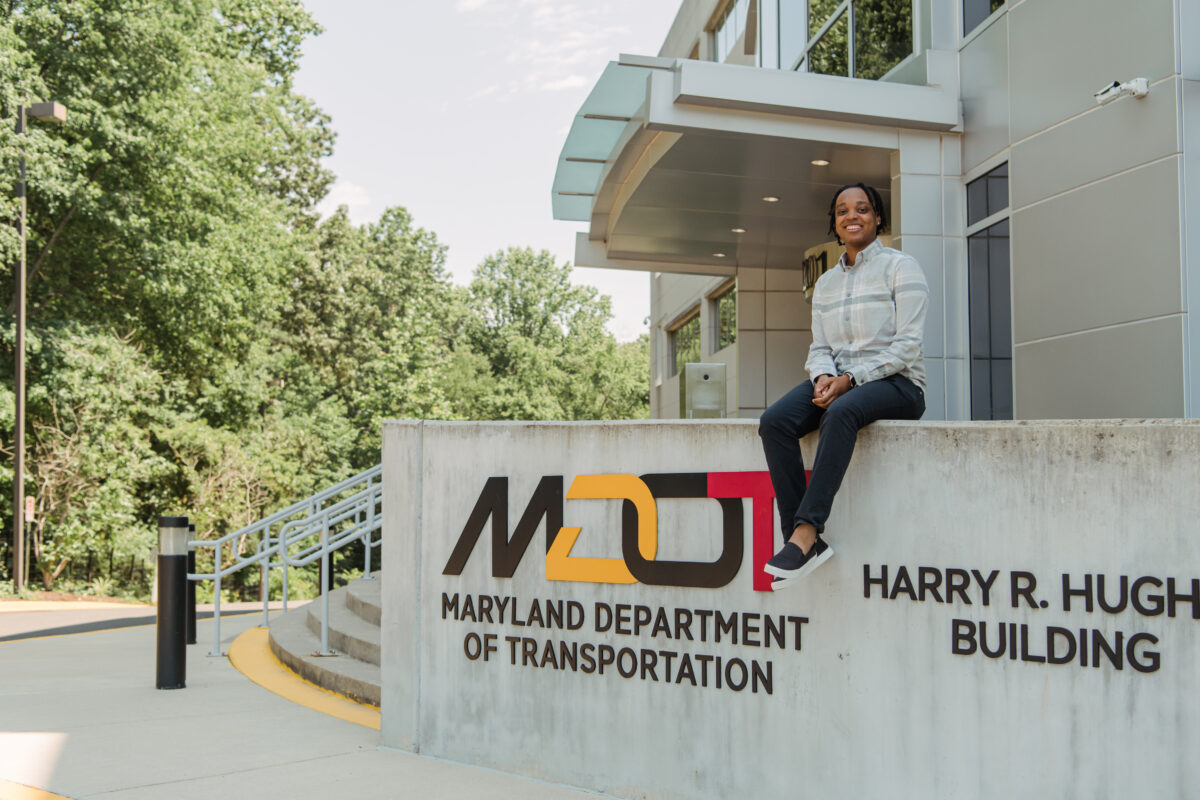 Nadja Franklin. (Marlayna Demond ’11/UMBC)
Franklin also drew on her writing skills and creativity to help develop scripts for MDOT training videos, and she enjoyed a unique chance to participate in the video filming and production process.
Beyond learning new skills, her favorite aspect of the internship has been MDOT’s inclusive, welcoming environment.
K-12 and higher ed partnerships
While Franklin came to UMBC interested in a career in tech, that’s not the case for many students who have the talent and skills to succeed in tech fields. With this in mind, the MIIC has also focused on expanding K-12 initiatives, to help prepare students earlier on for these high-demand careers, particularly in cybersecurity.
Earlier this year, Governor Larry Hogan announced the launch of the Maryland Cyber Range for Elevating Workforce and Education, operated by the MIIC. This $1.2 million initiative will expand cybersecurity education and training through collaboration with the Maryland Center for Computing Education (MCCE), Virginia Tech U.S. Cyber Range, and the nonprofit Teach Cyber.
This partnership will include initiatives at all educational levels, from K-12 through higher education and workforce training. The U.S. Cyber Range will provide access to a high quality simulated environment for teachers and students to learn cybersecurity.
Overall, this collaborative effort will enable Maryland to continue to grow and strengthen the state’s cybersecurity education infrastructure, explains Jack Suess, UMBC’s vice president of information technology and chief technology officer.
Innovating cybersecurity education
A leader in cybersecurity education, UMBC is also advancing the field in other ways, complementing the work of the MIIC. For example, Alan T. Sherman, professor of computer science, recently received more than $260,000 of a $500,000 grant from the National Science Foundation (NSF) to study and improve how cybersecurity is taught at the U.S. Naval Academy and U.S. Military Academy.
The project, Examining Pedagogy in Cybersecurity (EPIC), is collaborative with the University of Illinois Urbana-Champaign and University of Minnesota Duluth, and is funded through NSF’s Secure and Trustworthy Computing (SaTC) program. Because the academies teach cybersecurity to all first-year students, EPIC offers a large-scale opportunity to investigate how simulation-based teaching and learning affects different student populations.
In the first phase of the research, Sherman and his collaborators—including computer science Ph.D. student Andew Slack and Linda Oliva, assistant professor of education—will study how instructors at the academies structure and teach their cybersecurity courses. In the second phase, they will introduce active simulation-based learning exercises and pedagogies and assess their effectiveness.
UMBC’s championship-winning Cyberdawgs cyberdefense team will help adapt and improve learning materials. As one quantitative measure of the new pedagogy’s effectiveness, EPIC will assess students’ conceptual understanding using the Cybersecurity Concept Inventory (CCI), developed by Sherman and his team.
Benefits for Maryland
MIIC initiatives continue to expand in new directions. In research, The Hilltop Institute at UMBC is receiving funding to bring together health data related to opioid addiction from different state sources to more accurately identify patients’ risks for relapse. Like the MIIC’s educational initiatives, this work demonstrates how innovations in computing can benefit Maryland and its residents.
]]>
In early 2022, Nadja Franklin ‘23 was exploring summer opportunities through the UMBC Career Center when she heard about a chance to connect with tech internships at Maryland’s state agencies. As...
https://umbc.edu/stories/umbc-advances-maryland-through-innovative-computing-partnership/
https://my3.my.umbc.edu/api/v0/pixel/news/126686/guest@my.umbc.edu/677bb319e0fccaab53315b06228fb1bc/api/pixel
business-technology-administration
career-center
coeit
csee
cwit
cybersecurity
education
feature
information-systems
news
policy-and-society
rca-2
science-and-tech
tsite
UMBC News & Magazine
https://my3.my.umbc.edu/groups/umbc-news-magazine
https://assets1-my.umbc.edu/system/shared/avatars/groups/000/001/943/24435aa6207c452e7bc15cc74b42c7bb/xsmall.png?1748556657
https://assets1-my.umbc.edu/system/shared/avatars/groups/000/001/943/24435aa6207c452e7bc15cc74b42c7bb/original.png?1748556657
https://assets2-my.umbc.edu/system/shared/avatars/groups/000/001/943/24435aa6207c452e7bc15cc74b42c7bb/xxlarge.png?1748556657
https://assets2-my.umbc.edu/system/shared/avatars/groups/000/001/943/24435aa6207c452e7bc15cc74b42c7bb/xlarge.png?1748556657
https://assets3-my.umbc.edu/system/shared/avatars/groups/000/001/943/24435aa6207c452e7bc15cc74b42c7bb/large.png?1748556657
https://assets1-my.umbc.edu/system/shared/avatars/groups/000/001/943/24435aa6207c452e7bc15cc74b42c7bb/medium.png?1748556657
https://assets2-my.umbc.edu/system/shared/avatars/groups/000/001/943/24435aa6207c452e7bc15cc74b42c7bb/small.png?1748556657
https://assets1-my.umbc.edu/system/shared/avatars/groups/000/001/943/24435aa6207c452e7bc15cc74b42c7bb/xsmall.png?1748556657
https://assets2-my.umbc.edu/system/shared/avatars/groups/000/001/943/24435aa6207c452e7bc15cc74b42c7bb/xxsmall.png?1748556657
UMBC News & Magazine
0
0
false
Wed, 03 Aug 2022 14:43:51 -0400
Wed, 03 Aug 2022 14:43:51 -0400
UMBC-led team generates first global map of cargo ship pollution, revealing effects of fuel regulations

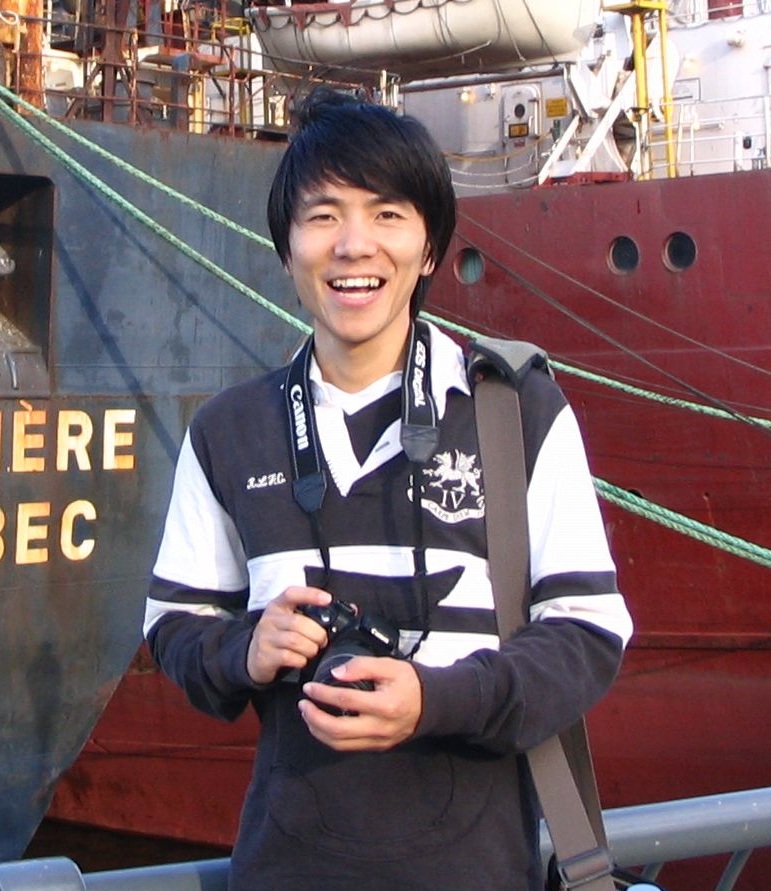 Tianle Yuan. (Image courtesy of Tianle Yuan)
A new study in Science Advances led by UMBC’s Tianle Yuan used satellite data from 2003 – 2020 to determine the effect of fuel regulations on pollution from cargo ships. The research team’s data revealed significant changes in sulfur pollution after regulations went into effect in 2015 and 2020. Their extensive data set can also contribute to answering a bigger question: How do pollutants and other particles interact with clouds to affect global temperatures overall?
Tiny particles in the atmosphere, which are called aerosols and include pollution, can harm human health, but they also often have a cooling effect on the planet because of the way they interact with clouds. However, estimates of the extent of that effect range by a factor of 10—not very precise for something so important.
“How much cooling the aerosols cause is a big unknown right now, and that’s where ship tracks come in,” says Yuan, an associate research scientist at the Goddard Earth Sciences Technology and Research (GESTAR) II Center.
Sea of data
When pollutant particles from ships enter clouds low in the atmosphere, they decrease the size of individual cloud droplets without changing the total volume of the cloud. That creates more droplet surface area, which reflects more energy entering Earth’s atmosphere back to space and cools the planet.
Instruments on satellites can detect these differences in droplet size. And the air over the ocean is generally very clean, making the relatively narrow ship tracks that snake across the ocean easy to pick out. “Most of the original cloud is unpolluted, and then some of it is polluted by the ship, so that creates a contrast,” Yuan explains.
While ship tracks can be relatively obvious in satellite data, you have to know where to look and have the time and resources to search. Before advances in computing power and machine learning, Yuan says, Ph.D. students could focus their entire thesis on identifying a group of ship tracks in satellite data.
“What we did is automate this process,” Yuan says. His group “developed an algorithm to automatically find these ship tracks from the sea of data.”
This huge advance allowed them to generate a comprehensive, global map of ship tracks over an extended period (18 years) for the first time. Next, they will share it with the world—opening the door for anyone to dig into the data and make further discoveries.
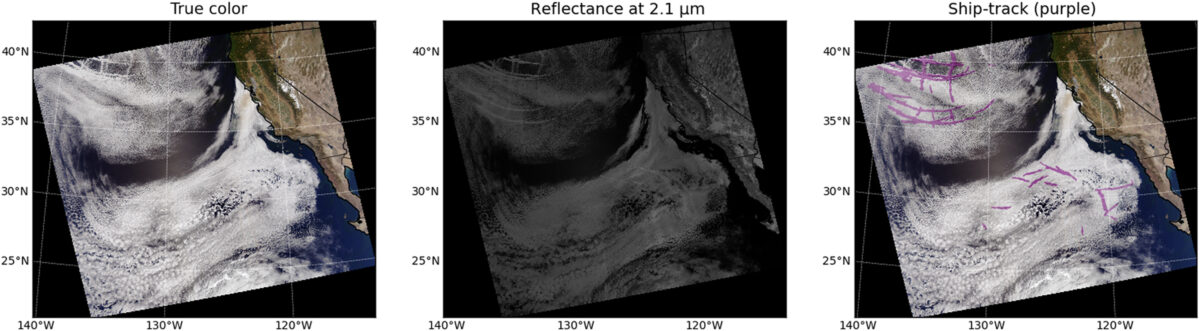 A figure from the new study shows an image collected by NASA’s MODIS satellite of the U.S. West Coast (left) overlaid with ship tracks detected by the research team’s algorithm (right).
Disappearing act
Even before pollution-limiting regulations were put into place, Yuan and his colleagues found that ship tracks didn’t occur everywhere ships were traveling. Only areas with certain types of low cloud cover had ship tracks, which is useful for adjusting the role of clouds in climate models. They also found that after Europe, the U.S., and Canada instated Emission Control Areas (ECAs) along their coastlines in 2015, ship tracks nearly disappeared in those regions, demonstrating the efficacy of such regulations for reducing cargo ship pollution in port cities.
However, shipping companies didn’t necessarily reduce their pollution output across the board. Instead, they made changes to adapt to the new rules. Ports in northern Mexico (not part of the ECA system) saw increased activity, and pollution “hot spots” built up along the boundaries of the ECAs as ships altered their routes to spend as few miles as possible inside the restrictive zones.
In 2020, though, an international agreement set a much more restrictive standard for shipping fuel across the entirety of global oceans, rather than only near coastlines. After that, the only ship tracks the team’s algorithm could detect were those in the cleanest clouds. In clouds with even mild background pollution, the presumed ship tracks blended right in.
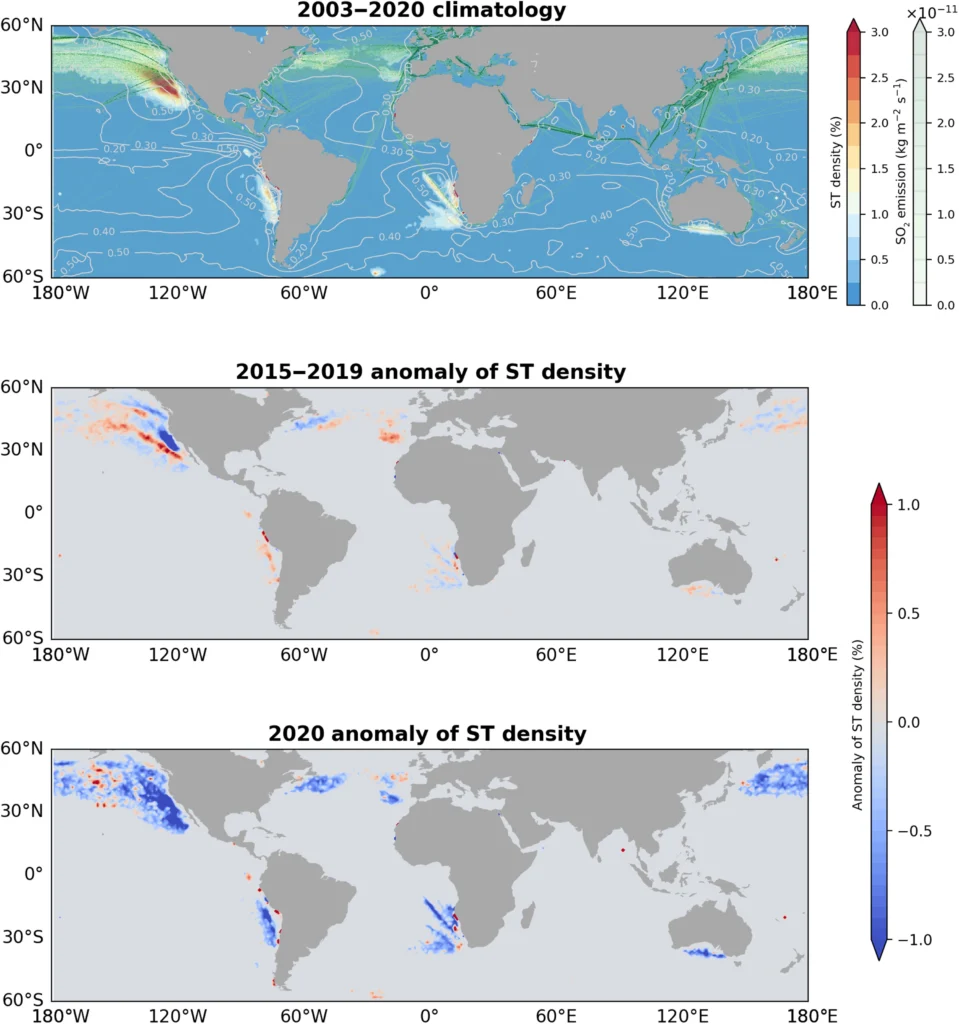 Another figure from the paper shows how regulations affected ship tracks. In the middle panel, blue areas show how ships were carefully avoiding the Emission Control Areas near the coasts. The red and orange areas show increased traffic just outside the ECA boundaries and at ports not affected by the regulations. In 2020 (bottom panel), blue areas indicate that ship tracks largely disappeared even in areas with high ship traffic.
Climate conundrum
It seems obvious that reducing pollution from ships would produce a net benefit. However, because particles (such as shipping pollution) have a cooling effect when interacting with clouds, reducing them significantly could contribute to a problematic uptick in global temperatures, Yuan says.
That’s another reason it’s important to firm up the degree to which particulate pollution cools the planet. If the cooling effect of these pollutants and other particles is significant, humans will need to balance the need to prevent extensive warming with the need to reduce pollution where people and other species live—which creates difficult choices.
“Ship pollution alone can create a substantial cooling effect,” Yuan says, “because the atmosphere over the ocean is so clean.” There is a physical limit to how small cloud droplets can get, so at a certain point, adding more pollution doesn’t increase the clouds’ cooling effect. But over the ocean, because the background is largely unpolluted, even a small amount of pollution from ships has an effect.
Ocean pollution is also an outsize driver of the cooling effect of aerosols, because low clouds, which are most conducive to creating ship tracks, are more common over water than on land. And, as Yuan reminds us, “the ocean covers two-thirds of the Earth’s surface.”
 Low clouds over the ocean. (Nicolas Raymond/CC BY 2.0)
The bigger picture
Moving forward, Yuan and his colleagues are helping address this conundrum by continuing their work to define more precisely the role clouds play in climate. “We can take advantage of the millions of ship track samples we have now to start to get hold of the overall aerosol-cloud interaction problem,” Yuan says, “because ship tracks can be used as mini-labs.”
By analyzing data from a relatively simple and well-controlled system—narrow ship tracks running through very clean clouds—they can come to conclusions they can be confident about.
Other research teams can also use the team’s data set and algorithm to come to their own conclusions, amplifying the potential public impact of this work. That spirit of collaboration will help scientists and communities determine how best to approach global challenges like pollution and temperature change.
]]>
Tianle Yuan. (Image courtesy of Tianle Yuan) A new study in Science Advances led by UMBC’s Tianle Yuan used satellite data from 2003 – 2020 to determine the effect of fuel regulations on...
https://umbc.edu/stories/first-global-map-of-cargo-ship-pollution-reveals-effects-of-regulations/
https://my3.my.umbc.edu/api/v0/pixel/news/126447/guest@my.umbc.edu/5e4dd3c1c6d724098128982c9ef98d29/api/pixel
gestar
news
research
science-and-tech
UMBC News & Magazine
https://my3.my.umbc.edu/groups/umbc-news-magazine
https://assets1-my.umbc.edu/system/shared/avatars/groups/000/001/943/24435aa6207c452e7bc15cc74b42c7bb/xsmall.png?1748556657
https://assets1-my.umbc.edu/system/shared/avatars/groups/000/001/943/24435aa6207c452e7bc15cc74b42c7bb/original.png?1748556657
https://assets2-my.umbc.edu/system/shared/avatars/groups/000/001/943/24435aa6207c452e7bc15cc74b42c7bb/xxlarge.png?1748556657
https://assets2-my.umbc.edu/system/shared/avatars/groups/000/001/943/24435aa6207c452e7bc15cc74b42c7bb/xlarge.png?1748556657
https://assets3-my.umbc.edu/system/shared/avatars/groups/000/001/943/24435aa6207c452e7bc15cc74b42c7bb/large.png?1748556657
https://assets1-my.umbc.edu/system/shared/avatars/groups/000/001/943/24435aa6207c452e7bc15cc74b42c7bb/medium.png?1748556657
https://assets2-my.umbc.edu/system/shared/avatars/groups/000/001/943/24435aa6207c452e7bc15cc74b42c7bb/small.png?1748556657
https://assets1-my.umbc.edu/system/shared/avatars/groups/000/001/943/24435aa6207c452e7bc15cc74b42c7bb/xsmall.png?1748556657
https://assets2-my.umbc.edu/system/shared/avatars/groups/000/001/943/24435aa6207c452e7bc15cc74b42c7bb/xxsmall.png?1748556657
UMBC News & Magazine
0
0
false
Wed, 27 Jul 2022 11:37:27 -0400
Wed, 27 Jul 2022 11:37:27 -0400
UMBC’s Eileen Meyer and team find strongest evidence yet of a black hole zooming away from its galaxy’s center

A new study has confirmed that a black hole eight billion light years away is zipping away from its galaxy’s center at 2,000 kilometers per second, or more than 4.5 million miles per hour. The result also provides, for the first time, very strong evidence that it is possible for two black holes to merge.
The galaxy where this is happening, named 3C 186, was first discovered in 2017. Initial observations suggested that 3C 186 was the result of two galaxies (and their respective black holes) merging. However, there were still other possible explanations for the physical distance detected between the galaxy’s center and the black hole. The new study, published in Astronomy and Astrophysics, strongly supports only one of the remaining scenarios: that two black holes merged and the resulting black hole is moving away from the galaxy’s center.
“This is probably the most clear-cut case” illustrating this phenomenon that scientists are aware of, says Eileen Meyer, associate professor of physics. She is co-lead of the new study with Gianluca Castignani at the University of Bologna.
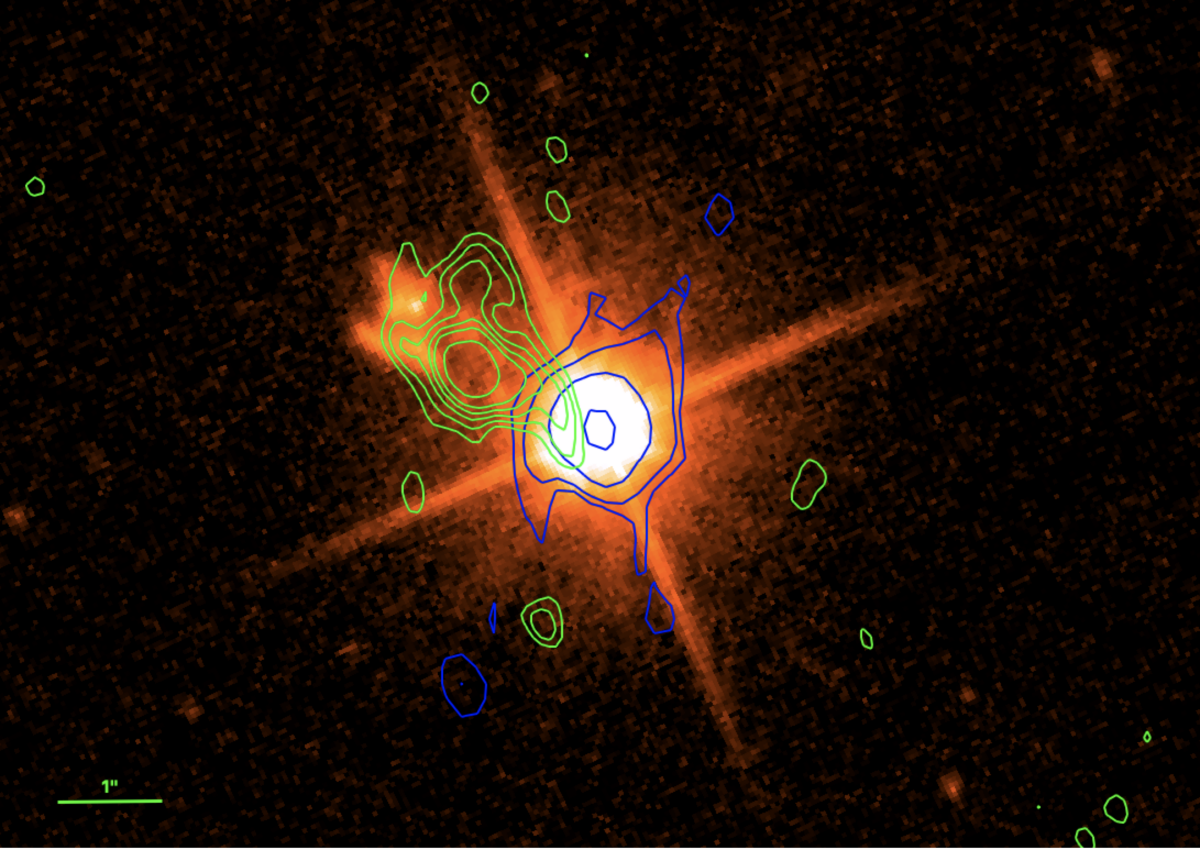 Figure 1 from Meyer and Castignani’s paper shows galaxy 3C 186. The black hole (blue lines/bright white area) is offset from its galaxy’s center (green lines).
Speedy departure
The two major findings—the black hole merger and its ouster from the galaxy’s center—are related. Theorists have predicted that if two black holes were to merge, they would release huge amounts of energy in the form of gravitational waves, Meyer explains.
Sometimes, “depending on how the black holes are spinning and their relative mass and how they’re oriented,” she says, that energy is not equally distributed in all directions. If there is “a lot of gravitational wave energy in one direction, there is consequently going to be literally kinetic energy given to the black hole in the other direction.” That means the black hole is going to move—in this case, very quickly.
“There were basically two pieces of evidence that made this story come together,” Meyer says. First, an earlier paper used high-resolution imaging from the Hubble Space Telescope to establish the physical offset between the black hole and the galaxy’s center. “That in itself might not have been weird,” Meyer says, because after two galaxies merge, “stuff is flying all over the place,” and it can take time for the black hole to settle in the center of the new, merged galaxy, she explains.
However, Castignani and Meyer’s new paper confirmed a critical second finding: the velocity of the black hole.
The imaging plus the velocity comes as close as you can in astronomy to proving the scenario that Meyer and her colleagues favor: a merged black hole has been kicked out from the center of its galaxy as a reaction to gravitational wave energy headed in the opposite direction. This is the first time both physical offset and velocity have come together so convincingly.
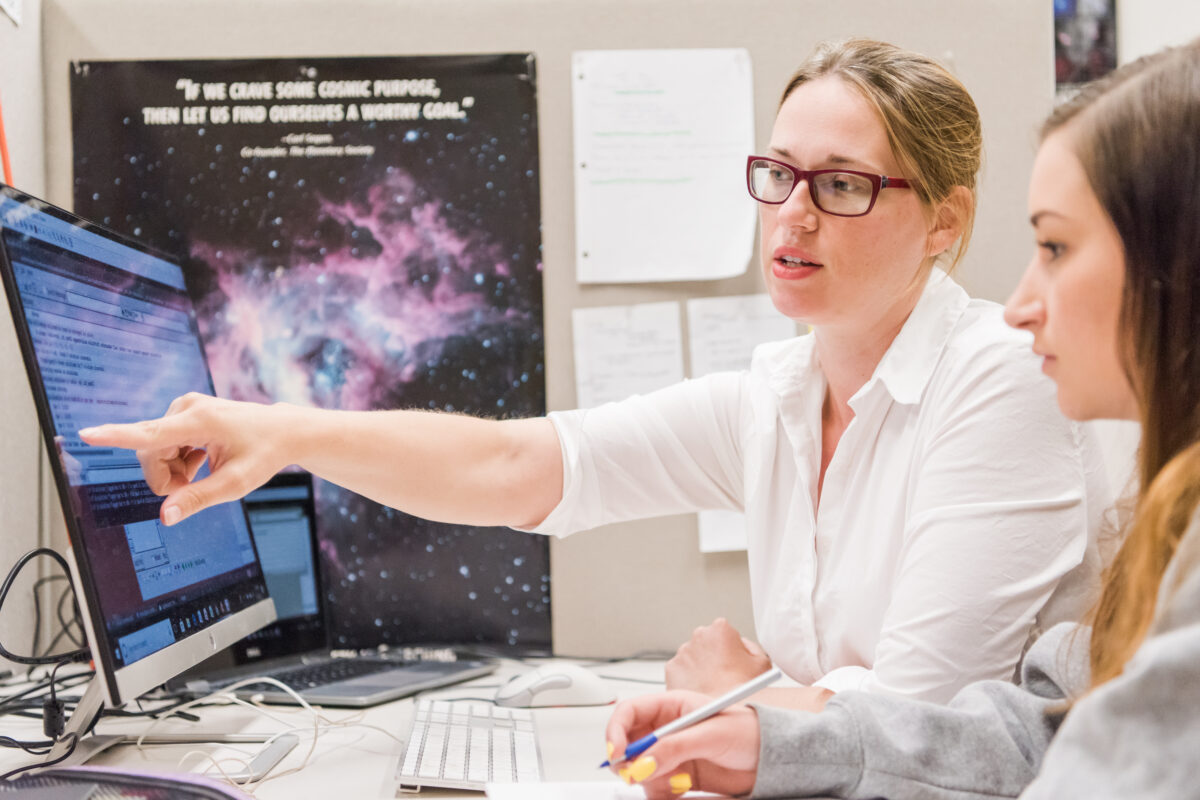 Eileen Meyer works with a student in her research space.
Shifting understanding
Meyer and colleagues figured out the velocity of the black hole by measuring the radiation emitted by carbon monoxide (CO) gas in the galaxy. They used a ground-based observatory called the Northern Extended Millimeter Array (NOEMA), located in the French alps, to collect the measurements.
The wavelength of the radiation emitted from CO gas increases as it travels across the universe from 3C 186 to NOEMA, a phenomenon referred to as red-shift. The farther away something is, the greater the red-shift will be. Galaxy 3C 186 is stable overall, so one would expect the radiation it emits to all have the same red-shift. However, NOEMA detected radiation with a smaller red-shift coming from the gas near the black hole. That indicates the black hole is moving quickly toward NOEMA relative to the center of 3C 186—in this case, at 2,000 km/s.
Detecting the velocity “was the thing that made us say, maybe this isn’t just some post-merger weirdness, but instead the black hole is offset because it has traveled out from what should have been the center of the galaxy,” Meyer says.
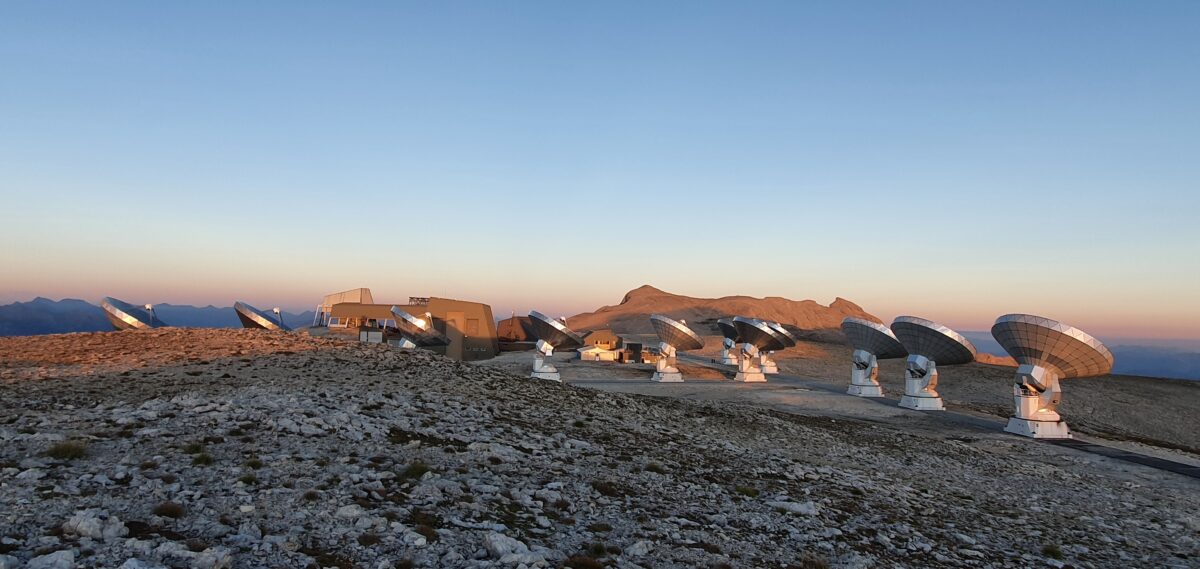 The NOEMA space observatory in the French Alps. (Institut de Radioastronomie Millimétrique)
Detective work
The research team wasn’t looking specifically for the galaxy 3C 186 when their study began. The initial observations came from what’s called a “snapshot proposal” with the Hubble Space Telescope.
Sometimes space-based observatories like Hubble make observations that require multiple orbits around Earth. But between these major observations, scientists can utilize smaller chunks of time for other studies that need only a quick “snapshot.” The data the researchers receive aren’t of the same quality as longer exposures, but they can be very useful.
In this snapshot study, the researchers received images of a couple dozen of their 100 or so preferred targets as Hubble traversed a partial orbit. “This black hole merger was observed by chance,” Meyer says. “There were odds against us.”
In astronomy, there can be pressure to choose a “safe” proposal, where researchers seek new data on a particular space object that’s already known to be interesting. In snapshot proposals, you often don’t know what you’re going to find, Meyer says, “but sometimes you need to take a chance on the unknown to make new discoveries.’”
As it turns out, this time they made a major discovery, adding to the story of how black holes merge. “When you build a story out of the evidence, it’s a bit like detective work,” Meyer says.
For systems so far away, scientists often can’t directly image everything that’s happening. Instead, Meyer explains, they have to infer what’s going on from the light produced, and it can be hard to narrow down the possible scenarios for what’s actually happening. This new study takes a big step forward by translating theoretical predictions into actual observed phenomena at galaxy 3C 186.
Finding the first
The new finding confirming that two black holes merged, and that the resulting black hole is traveling away from the galaxy’s center, “is actually very important,” Meyer says. “People always want the evidence for the scientific story, and now we have that evidence.”
The results are also encouraging for a new major mission led by the European Space Agency. The Laser Interferometer Space Antenna (LISA) will observe gravitational waves from space and could help detect more instances of merged black holes at the centers of galaxies.
“If you find one, you know there’s got to be many more,” given the sheer number of galaxies out there, Meyer says. “The first one is definitely important.”
]]>
A new study has confirmed that a black hole eight billion light years away is zipping away from its galaxy’s center at 2,000 kilometers per second, or more than 4.5 million miles per hour. The...
https://umbc.edu/stories/black-hole-zooms-away-from-galaxys-center/
https://my3.my.umbc.edu/api/v0/pixel/news/126431/guest@my.umbc.edu/abac999e9937cff4ae43af7cc6e922f5/api/pixel
cnms
news
physics
research
science-and-tech
UMBC News & Magazine
https://my3.my.umbc.edu/groups/umbc-news-magazine
https://assets1-my.umbc.edu/system/shared/avatars/groups/000/001/943/24435aa6207c452e7bc15cc74b42c7bb/xsmall.png?1748556657
https://assets1-my.umbc.edu/system/shared/avatars/groups/000/001/943/24435aa6207c452e7bc15cc74b42c7bb/original.png?1748556657
https://assets2-my.umbc.edu/system/shared/avatars/groups/000/001/943/24435aa6207c452e7bc15cc74b42c7bb/xxlarge.png?1748556657
https://assets2-my.umbc.edu/system/shared/avatars/groups/000/001/943/24435aa6207c452e7bc15cc74b42c7bb/xlarge.png?1748556657
https://assets3-my.umbc.edu/system/shared/avatars/groups/000/001/943/24435aa6207c452e7bc15cc74b42c7bb/large.png?1748556657
https://assets1-my.umbc.edu/system/shared/avatars/groups/000/001/943/24435aa6207c452e7bc15cc74b42c7bb/medium.png?1748556657
https://assets2-my.umbc.edu/system/shared/avatars/groups/000/001/943/24435aa6207c452e7bc15cc74b42c7bb/small.png?1748556657
https://assets1-my.umbc.edu/system/shared/avatars/groups/000/001/943/24435aa6207c452e7bc15cc74b42c7bb/xsmall.png?1748556657
https://assets2-my.umbc.edu/system/shared/avatars/groups/000/001/943/24435aa6207c452e7bc15cc74b42c7bb/xxsmall.png?1748556657
UMBC News & Magazine
0
0
false
Tue, 26 Jul 2022 16:54:22 -0400
Tue, 26 Jul 2022 16:54:22 -0400
Why the big fuss over Nancy Pelosi’s possible visit to Taiwan?

Meredith Oyen, Associate Professor of History and Asian Studies, UMBC
U.S. House Speaker Nancy Pelosi hasn’t confirmed when – or even if – she is to visit Taiwan. Yet such is the sensitivity over the island’s status that reports of her possible trip have resulted in a warning by China of “serious consequences” and a suggestion by President Joe Biden that the visit was “not a good idea.” Amid the rhetoric and heightened tensions, Taiwan is conducting military drills.
The comments follow a report by the Financial Times that Pelosi planned to take a delegation to Taiwan in August. The outlet based its report on six people “familiar with the situation”; Pelosi’s spokesperson has said she could neither confirm not deny the reported trip.
As someone who has long studied the U.S.‘s delicate diplomatic dance over Taiwan, I understand why this reported trip has sparked reaction in both Washington and Beijing, given the current tensions in the region. It also marks the continuation of a process that has seen growing U.S. political engagement with Taiwan – much to China’s annoyance.
Cutting diplomatic ties
The controversy over reports of Pelosi’s potential visit stems from the “one China” policy – the diplomatic stance under which the U.S. recognizes China and acknowledges Beijing’s position that Taiwan is part of China. The policy has governed U.S. relations with Taiwan for the last 40-plus years.
In 1979, the U.S. abandoned its previous policy of recognizing the government of Taiwan as that of all of China, instead shifting recognition to the government on the mainland.
As part of this change, the U.S. cut off formal diplomatic ties with Taiwan, with the U.S. embassy in Taiwan replaced by a nongovernmental entity called the American Institute in Taiwan.
The institute was a de facto embassy – though until 2002, Americans assigned to the institute would have to resign from U.S. State Department to go there, only to be rehired once their term was over. And contact between the two governments was technically unofficial.
As the government in Taiwan pursued democracy – starting from the lifting of martial law in 1987 through the first fully democratic elections in 1996 – it shifted away from the assumption once held by governments in both China and Taiwan of eventual reunification with the mainland. The government in China, however, has never abandoned the idea of “one China” and rejects the legitimacy of Taiwanese self-government. That has made direct contact between Taiwan and U.S. representatives contentious to Chinese officials.
Indeed, in 1995, when Lee Teng-hui, Taiwan’s first democratically elected president, touched down in Hawaii en route to Central America, he didn’t even set foot on the tarmac. The U.S. State Department had already warned that the president would be refused an entry visa to the U.S., but had allowed for a brief, low-level reception in the airport lounge during refueling. Apparently feeling snubbed, Lee refused to leave the airplane.
Previous political visits
Two years after this incident came a visit to Taiwan by then-House Speaker Newt Gingrich.
Similarly to the possible Pelosi visit, the one by Gingrich annoyed Beijing. But it was easier for the White House to distance itself from Gingrich – he was a Republican politician visiting Taiwan in his own capacity, and clearly not on behalf of then-President Bill Clinton.
Pelosi’s possible visit could be different, because she is a member of the same party as President Joe Biden, and China may assume she has Biden’s blessing, despite his comments to the contrary.
Asked on July 20 about his views on the potential Pelosi trip, Biden responded that the “military thinks it’s not a good idea right now.”
The comment echoes the White House’s earlier handling of a comment by Biden in which he suggested in May 2022 that the U.S. would intervene “militarily” should China invade Taiwan. Officials in the Biden administration rolled back the comment, which would have broken a long-standing policy of ambiguity over what the U.S. would do if China tried to take Taiwan by force.
Similarly with Pelosi, the White House is distancing itself from a position that suggests a shift in U.S.-Taiwanese relations following a period in which the U.S. had already been trying to rethink how it interacts with Taiwan.
Shifting policy?
In 2018, Congress passed the bipartisan Taiwan Travel Act. This departed from previous policy in that it allowed bilateral official visits between the U.S. and Taiwan, although they are still considered to be subdiplomatic.
In the wake of that act, Donald Trump’s Health and Human Services secretary, Alex Azar, became the highest-ranking U.S. official to visit Taiwan since 1979. Then in 2020, Keith Krach, undersecretary for economic growth, energy and the environment, visited Taiwan.
And in April 2022, a U.S. congressional delegation visited Taiwan. Pelosi herself was reportedly due to visit the island that same month, but canceled after testing positive for COVID-19.
Each of these visits has provoked angry statements from Beijing.
A high-profile visit – even one without the public backing of the White House – would signal support to the island at a time when the invasion of Ukraine by Russia has raised questions over the international community’s commitment to protect smaller states from more powerful neighbors.
Meanwhile, the erosion of democracy in Hong Kong has undermined China’s commitment to the idea of “one nation, two systems.” The principle, which allowed Hong Kong to maintain its economic, political and social systems while returning to the mainland after the end of British rule, had been cited as a model for reunification with Taiwan. The Chinese Communist Party also plans to hold its 20th congress in the coming months, making the timing sensitive for a Taiwan visit from a high-profile U.S. political figure such as Pelosi.
* * * * * *
Meredith Oyen, Associate Professor of History and Asian Studies, University of Maryland, Baltimore County
This article is republished from The Conversation under a Creative Commons license. Read the original article.
]]>
Meredith Oyen, Associate Professor of History and Asian Studies, UMBC U.S. House Speaker Nancy Pelosi hasn’t confirmed when – or even if – she is to visit Taiwan. Yet such is the sensitivity...
https://umbc.edu/stories/why-the-fuss-over-nancy-pelosis-possible-visit-to-taiwan/
https://my3.my.umbc.edu/api/v0/pixel/news/126430/guest@my.umbc.edu/2ae4ff51ab97b761e47e0fdf78cbc2a4/api/pixel
asianstudies
cahss
discovery
history
magazine
UMBC News & Magazine
https://my3.my.umbc.edu/groups/umbc-news-magazine
https://assets1-my.umbc.edu/system/shared/avatars/groups/000/001/943/24435aa6207c452e7bc15cc74b42c7bb/xsmall.png?1748556657
https://assets1-my.umbc.edu/system/shared/avatars/groups/000/001/943/24435aa6207c452e7bc15cc74b42c7bb/original.png?1748556657
https://assets2-my.umbc.edu/system/shared/avatars/groups/000/001/943/24435aa6207c452e7bc15cc74b42c7bb/xxlarge.png?1748556657
https://assets2-my.umbc.edu/system/shared/avatars/groups/000/001/943/24435aa6207c452e7bc15cc74b42c7bb/xlarge.png?1748556657
https://assets3-my.umbc.edu/system/shared/avatars/groups/000/001/943/24435aa6207c452e7bc15cc74b42c7bb/large.png?1748556657
https://assets1-my.umbc.edu/system/shared/avatars/groups/000/001/943/24435aa6207c452e7bc15cc74b42c7bb/medium.png?1748556657
https://assets2-my.umbc.edu/system/shared/avatars/groups/000/001/943/24435aa6207c452e7bc15cc74b42c7bb/small.png?1748556657
https://assets1-my.umbc.edu/system/shared/avatars/groups/000/001/943/24435aa6207c452e7bc15cc74b42c7bb/xsmall.png?1748556657
https://assets2-my.umbc.edu/system/shared/avatars/groups/000/001/943/24435aa6207c452e7bc15cc74b42c7bb/xxsmall.png?1748556657
UMBC News & Magazine
0
0
false
Tue, 26 Jul 2022 16:35:02 -0400
Tue, 26 Jul 2022 16:35:02 -0400
Chronicle report on “new era” of inclusive administration highlights UMBC leaders
In the newly-released Chronicle of Higher Education report “Diverse Leadership for a New Era,” Valerie Sheares Ashby shares a powerful story of mentorship. Years ago, when Sheares Ashby was a professor of chemistry at University of North Carolina at Chapel Hill, she came to UMBC for the first time to learn about the Meyerhoff Scholars Program. After meeting Sheares Ashby and seeing how others responded to her leadership, even in those early days, UMBC President Freeman A. Hrabowski turned to her and said, “You’re going to be a president.”
It was the same prediction that Hrabowski’s predecessor, Michael K. Hooker, made to him years before. For Sheares Ashby it will become a reality on August 1 when she begins as UMBC’s next president.
Positive impact
Like Hrabowski three decades before her, Sheares Ashby wasn’t sure what to make of the idea at first, but the comment inspired her to think in new ways about a leadership career. She loved teaching and says, to this day, “I am a teacher at heart.” But she also came to see how she could positively affect the lives of more students through university leadership.
As her career progressed, she assembled a team of mentors, including former UNC-Chapel Hill Chancellor Holden Thorp, who is now editor-in-chief of Science. Much of the new Chronicle report focuses on the essential role of mentors in supporting leaders, particularly from underrepresented groups.
 Dr. Valerie Sheares Ashby and Dr. Freeman Hrabowski at the RetriEVER Empowered campus event, April 2022.
Advocacy and community
Beyond mentors, President Hrabowski notes in the report, are champions. “A champion will knock down doors for you,” he says. “When people tell you no, the champion will say, ‘We don’t accept no.’ When you want to quit, it takes a champion to say, ‘No, you won’t.’”
Effectively supporting the development of diverse leaders also takes the right community, Hrabowski notes. At UMBC, the diverse faculty members teaching the diverse students are led by a diverse administration, Hrabowski explains. “You put that team together and you see how they approach problems from very different perspectives,” he says, “and it makes for a very rich conversation.”
 Dr. Valerie Sheares Ashby (center) connects with UMBC faculty, staff, and students at the RetriEVER Empowered event, April 2022.
Through these rich conversations, universities can find the best ways to support their students, carry out high-impact research, and foster the ongoing growth of their community members—all essential elements of their mission.
The full report is available through The Chronicle of Higher Education.
]]>
In the newly-released Chronicle of Higher Education report “Diverse Leadership for a New Era,” Valerie Sheares Ashby shares a powerful story of mentorship. Years ago, when Sheares Ashby was a...
https://umbc.edu/stories/chronicle-report-on-inclusive-administration-highlights-umbc-leaders/
https://my3.my.umbc.edu/api/v0/pixel/news/126413/guest@my.umbc.edu/fc340b4ef30517cf9be042964e5a495b/api/pixel
community
diversityandinclusion
hrabowski
news
sheares-ashby
UMBC News & Magazine
https://my3.my.umbc.edu/groups/umbc-news-magazine
https://assets1-my.umbc.edu/system/shared/avatars/groups/000/001/943/24435aa6207c452e7bc15cc74b42c7bb/xsmall.png?1748556657
https://assets1-my.umbc.edu/system/shared/avatars/groups/000/001/943/24435aa6207c452e7bc15cc74b42c7bb/original.png?1748556657
https://assets2-my.umbc.edu/system/shared/avatars/groups/000/001/943/24435aa6207c452e7bc15cc74b42c7bb/xxlarge.png?1748556657
https://assets2-my.umbc.edu/system/shared/avatars/groups/000/001/943/24435aa6207c452e7bc15cc74b42c7bb/xlarge.png?1748556657
https://assets3-my.umbc.edu/system/shared/avatars/groups/000/001/943/24435aa6207c452e7bc15cc74b42c7bb/large.png?1748556657
https://assets1-my.umbc.edu/system/shared/avatars/groups/000/001/943/24435aa6207c452e7bc15cc74b42c7bb/medium.png?1748556657
https://assets2-my.umbc.edu/system/shared/avatars/groups/000/001/943/24435aa6207c452e7bc15cc74b42c7bb/small.png?1748556657
https://assets1-my.umbc.edu/system/shared/avatars/groups/000/001/943/24435aa6207c452e7bc15cc74b42c7bb/xsmall.png?1748556657
https://assets2-my.umbc.edu/system/shared/avatars/groups/000/001/943/24435aa6207c452e7bc15cc74b42c7bb/xxsmall.png?1748556657
UMBC News & Magazine
0
0
false
Mon, 25 Jul 2022 15:46:01 -0400
Mon, 25 Jul 2022 15:46:01 -0400