Seven new UMBC grads to pursue Fulbright fellowships around the globe
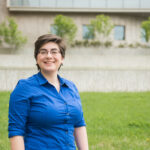
Seven recent UMBC graduates will travel around the globe to teach and conduct research as Fulbright fellows for the 2017 – 18 academic year, setting a new record for the university. The UMBC fellowships range from teaching English in Colombia to using animation to recreate Viking Age artifacts in Norway. All will provide the graduates opportunities for transformative cultural exchanges.
More than 11,000 applicants across the United States apply to the program, sponsored by the U.S. Department of State, each year. The Fulbright U.S. Student Program recommends recipients based on academic or professional achievement and demonstrated leadership potential.
“A record number of UMBC students have been given a life-changing year of research or teaching as part of the Fulbright U.S. Student Program this year,” says Brian Souders, interim director of International Education Services and UMBC’s Fulbright Program advisor. The students “started their journey to the award a year ago, attending information meetings and Fulbright Boot Camps,” he explains. They also worked closely with Souders and faculty advisors to hone their research proposals and participated in on-campus interviews as part of the application process.
 Fulbright recipients Michael Wolfe, William Klotz, and Kirsten Clark chat in the UMBC Commons. Photo by Sarah Hansen ’15 for UMBC.
Kirsten Clark ’17, Spanish, is looking forward to teaching English at EAN University in Bogotá, Colombia. “I have been dreaming of Fulbright since before I transferred to UMBC,” Clark says, “so I am beyond excited to finally take this next step in my career.”
Clark’s work with UMBC’s Shriver Center and English Language Institute have prepared her to take this next step. “I have not only vastly increased my Spanish proficiency, but I have been challenged to question my own assumptions about language and culture,” she says, “ultimately broadening my perspective to the diversity and complexity of the Spanish-speaking world.”
After returning from Colombia, Clark plans to pursue a master’s in Teaching English to Speakers of Other Languages so she can effectively “teach in a bilingual program and advocate for language and education access for immigrant youth in the D.C./Maryland area.”
Michael Wolfe ’17, physics, expects his research experience at RWTH Aachen University in Germany to bring out the best in his work as a scientist. “In my opinion, science thrives when faced with a multitude of interpretations and explanations,” he says. “Effectively exchanging ideas with scientists on an international scale is an essential skill the Fulbright Program will equip me with as a future physicist.”
Wolfe also shares, “The diversity of UMBC’s student body and faculty provided me with a unique perspective on the importance of intercultural exchange in the scientific community.”
William Klotz ’14, MLLI (Spanish/German), M.A.T. ’17, will teach English at the Secretaría de Educación Pública in Mexico during his Fulbright experience. “I plan on working in education as a language teacher,” Klotz says, “and the Fulbright will further prepare me in my own language education and give me valuable classroom experience outside of the U.S.”
Klotz thanks his UMBC mentors for pushing him to pursue this opportunity, saying they “are the ones who helped me get to where I am today.” Klotz is also featured in among UMBC’s exceptional graduates in the Class of 2017.
 Fulbright recipient William Klotz. Photo by Marlayna Demond ’11 for UMBC.
Jacqueline Wojcik ’17, visual arts, will combine her interests in digital animation and history in a unique research project in Oslo, Norway, creating 3D digital models of Viking Age ship burials. “This project aims to connect people with history through technology, and will explore the intersection of games, learning, and archaeological visualization,” Wojcik shares.
“UMBC fostered an interdisciplinary approach to learning, allowing me to develop the skill set to combine my love of animation, history, and programming,” says Wojcik, who was also highlighted in UMBC’s Class of 2017 feature. She anticipates her Fulbright experience will nurture these passions and support her future goal of developing a game exploring gender roles in Viking society.
Aaron Kennet ’16, political science, returned to the U.S. from a year of teaching in Russia driven to learn more, and through his Fulbright will travel back to Eastern Europe to teach English in Ukraine. He is thankful for the opportunity “to explore the territories of the Former Soviet Union, and enhance mutual understanding between the United States and Ukraine.”
Kennet is also grateful for the encouragement of UMBC mentors. Without these mentors, he explains, “I wouldn’t have had the support or confidence to move forward with my ambition of exploring and understanding the cultural nuances of Eurasia.”
Jacob Hippert ’17, cultural anthropology, will teach English in Malaysia, and Brian Shouse ’17, political science, will teach English in Bulgaria for their Fulbright fellowships. Kritika Chugh ’17, biological sciences, was selected for a fellowship in the Czech Republic, but was unable to accept the invitation. Justine Lottermoser ’17, biochemistry; Laura Riddering, Ph.D. candidate in geography and environmental systems; and Christina Smith ’15, global studies, were selected as alternates for the program.
The Fulbright Program is the flagship international educational exchange program sponsored by the U.S. government and is designed to increase mutual understanding among people of different nations. The program operates in more than 160 nations and receives support from governments, host institutions, corporations, and foundations across the globe. Participating in Fulbright fellowships will extend these emerging scholars’ interdisciplinary, culturally diverse experiences and allow them, as Souders says, to “go on to serve as cultural ambassadors of the United States.”
Banner image: Jacqueline Wojcik ’17; photo by Marlayna Demond ’11 for UMBC.
]]>
Seven recent UMBC graduates will travel around the globe to teach and conduct research as Fulbright fellows for the 2017 – 18 academic year, setting a new record for the university. The UMBC...
https://umbc.edu/stories/seven-new-umbc-grads-to-pursue-fulbright-fellowships-around-the-globe/
https://my3.my.umbc.edu/api/v0/pixel/news/120735/guest@my.umbc.edu/ec7a4747236fefa2c8637302a929231f/api/pixel
arts-and-culture
cahss
chembiochem
cnms
community
education
ges
globalstudies
international
mlli
physics
politicalscience
saph
shrivercenter
visualarts
UMBC News & Magazine
https://my3.my.umbc.edu/groups/umbc-news-magazine
https://assets1-my.umbc.edu/system/shared/avatars/groups/000/001/943/24435aa6207c452e7bc15cc74b42c7bb/xsmall.png?1748556657
https://assets1-my.umbc.edu/system/shared/avatars/groups/000/001/943/24435aa6207c452e7bc15cc74b42c7bb/original.png?1748556657
https://assets2-my.umbc.edu/system/shared/avatars/groups/000/001/943/24435aa6207c452e7bc15cc74b42c7bb/xxlarge.png?1748556657
https://assets2-my.umbc.edu/system/shared/avatars/groups/000/001/943/24435aa6207c452e7bc15cc74b42c7bb/xlarge.png?1748556657
https://assets3-my.umbc.edu/system/shared/avatars/groups/000/001/943/24435aa6207c452e7bc15cc74b42c7bb/large.png?1748556657
https://assets1-my.umbc.edu/system/shared/avatars/groups/000/001/943/24435aa6207c452e7bc15cc74b42c7bb/medium.png?1748556657
https://assets2-my.umbc.edu/system/shared/avatars/groups/000/001/943/24435aa6207c452e7bc15cc74b42c7bb/small.png?1748556657
https://assets1-my.umbc.edu/system/shared/avatars/groups/000/001/943/24435aa6207c452e7bc15cc74b42c7bb/xsmall.png?1748556657
https://assets2-my.umbc.edu/system/shared/avatars/groups/000/001/943/24435aa6207c452e7bc15cc74b42c7bb/xxsmall.png?1748556657
UMBC News & Magazine
0
0
false
Mon, 12 Jun 2017 16:42:34 -0400
Natalie DeNigris continues work with NASA while completing astronomy Ph.D.

Natalie DeNigris
B.S., Physics
Magna Cum Laude, Certificate: Honors College
Hometown: Kensington, MD
Plans: Ph.D., Astronomy, U Mass.-Amherst; Intern, NASA Goddard Space Flight Center
UMBC prepared me for a future in astronomy research by allowing me to get hands on experience with amazing mentors… I was also able to cultivate a passion for science education outreach which I hope to develop further in my graduate school endeavors.
Natalie DeNigris has combined her interests in astronomy and education throughout her time at UMBC. As a researcher with physicist Eileen Meyer, DeNigris has explored x-ray emissions from black hole jets, receiving an undergraduate research award to support her work. As a Sherman STEM Teaching Scholar Affiliate and a volunteer with the Shriver Center, she grew her passion for science outreach.
 Enjoying time with friends, Natalie DeNigris (center) celebrates winning UMBC’s Iron Chef competition; photo courtesy of DeNigris.
DeNigris has been honored as Learning Assistant of the Year in physics and received the Joseph F. Mulligan Award for physics. She was also named the Jacqueline Hrabowski Service Scholar for 2016 – 2017, a special recognition awarded to a student who demonstrates exceptional commitment to improving the lives of at-risk urban youth through academic support and community service activities.
As she graduates from UMBC, DeNigris has weighed a job offer from NASA and multiple graduate school acceptances. She has decided to attend University of Massachusetts, Amherst for a Ph.D. in astronomy while also completing an internship at NASA Goddard Space Flight Center. She has a standing offer to return to NASA as an electrical engineer following her Ph.D.
DeNigris shares, “Attending UMBC introduced me to talented, motivated peers who inspired me to apply for my current job at NASA and who supported my growth in the field of physics.”
Portrait by Marlayna Demond ’11 for UMBC.
]]>
Natalie DeNigris B.S., Physics Magna Cum Laude, Certificate: Honors College Hometown: Kensington, MD Plans: Ph.D., Astronomy, U Mass.-Amherst; Intern, NASA Goddard Space Flight Center UMBC...
https://umbc.edu/stories/natalie-denigris/
https://my3.my.umbc.edu/api/v0/pixel/news/120776/guest@my.umbc.edu/1fe8d644caa67e95814e3ccdd376a274/api/pixel
class-of-2017
cnms
honorscollege
physics
science-and-technology
shermanscholars
shrivercenter
undergradresearch
UMBC News & Magazine
https://my3.my.umbc.edu/groups/umbc-news-magazine
https://assets1-my.umbc.edu/system/shared/avatars/groups/000/001/943/24435aa6207c452e7bc15cc74b42c7bb/xsmall.png?1748556657
https://assets1-my.umbc.edu/system/shared/avatars/groups/000/001/943/24435aa6207c452e7bc15cc74b42c7bb/original.png?1748556657
https://assets2-my.umbc.edu/system/shared/avatars/groups/000/001/943/24435aa6207c452e7bc15cc74b42c7bb/xxlarge.png?1748556657
https://assets2-my.umbc.edu/system/shared/avatars/groups/000/001/943/24435aa6207c452e7bc15cc74b42c7bb/xlarge.png?1748556657
https://assets3-my.umbc.edu/system/shared/avatars/groups/000/001/943/24435aa6207c452e7bc15cc74b42c7bb/large.png?1748556657
https://assets1-my.umbc.edu/system/shared/avatars/groups/000/001/943/24435aa6207c452e7bc15cc74b42c7bb/medium.png?1748556657
https://assets2-my.umbc.edu/system/shared/avatars/groups/000/001/943/24435aa6207c452e7bc15cc74b42c7bb/small.png?1748556657
https://assets1-my.umbc.edu/system/shared/avatars/groups/000/001/943/24435aa6207c452e7bc15cc74b42c7bb/xsmall.png?1748556657
https://assets2-my.umbc.edu/system/shared/avatars/groups/000/001/943/24435aa6207c452e7bc15cc74b42c7bb/xxsmall.png?1748556657
UMBC News & Magazine
0
0
false
Sat, 13 May 2017 20:22:03 -0400
Fourth annual Cangialosi Business Innovation Competition celebrates student entrepreneurs

At the fourth annual Cangialosi Business Innovation Competition, held on April 26, 2017, six finalists pitched their business ideas to a three-judge expert panel. The projects, selected from 33 contest entries, ranged from an innovative advertising platform to a solar-powered fresh water generator. The top three projects would receive a monetary prize, membership to BetaMore, and advice from members of the Baltimore Angels venture capital organization.
“The idea behind the competition,” says Greg Cangialosi ‘96, English, a long-time supporter of emerging business innovators from UMBC and across the region, “is to enable the students who want to become entrepreneurs to have the opportunity to manifest their reality.”
Mustafa Al-Adhami M.S. ’15, mechanical engineering, leads GermoSense, which took third place. He proposed a device that can quickly detect the efficacy of antibiotics against sepsis, which causes more deaths than prostate cancer, breast cancer, and AIDS combined each year in the United States. The current protocol can take up to a week to detect antibiotic efficacy, while Al-Adhami’s device would take only an hour. It’s also less expensive and more convenient. Time is of the essence in sepsis treatment, as survival rates drop rapidly if it goes untreated. Al-Adhami completed his master’s at UMBC’s Center for Advanced Sensor Technology (CAST) and is now pursuing a Ph.D. in mechanical engineering at CAST, after working there for a year as a research scientist.
 Greg Cangialosi ’96 addresses the crowd at the Cangialosi Business Innovation Competition on April 26.
The four-person team behind Aerwell earned second place with a device that uses the principles of a dehumidifier to provide fresh water. About the size of a small doghouse, Aerwell uses solar power to run fans and takes advantage of near-constant temperatures underground to induce condensation. The team hopes to sell the device below cost in developing countries suffering from severe, long-term drought while turning a profit selling to microfarmers who want to use water-conserving farming techniques.
Noting that water stress is increasing worldwide, Christian Ingham ’17, mechanical engineering, says, “We’re really excited about how our technology could impact the world.” Other team members include Elyse Hill, Hannah Corcos, and Ben Hallett, who are all also senior mechanical engineering majors.
Chris Bodan ‘18, psychology, and James Baker, who studied mechanical engineering at Cooper Union, won this year’s competition with Aye-Aye, a device designed to provide a type of vision for people with vision impairments. It applies vibrations to a person’s back that the brain can interpret to form images. The venture’s first prototype involved a bike helmet and an XBox Kinect, but a second model the team demonstrated at the competition is much sleeker. The team plans to work with blind user testers and organizations that support the blind community to ensure Aye-Aye meets their needs, and to eventually seek FDA approval for the tool as an assistive technology. In the meantime, they hope to market it to gamers and explore other potential users, such as first responders who find themselves in low-visibility conditions like smoke or whiteout snow.
“This whole competition just allowed me to come out of my shell” and engage more with the campus community, Bodan shared, saying, “I’m really excited and inspired to work on this project.”
 Igor Kuzmin ‘17 (left) and his friend Nick Shields make their pitch for Advertuozo, an innovative advertising platform, at the CBIC.
Markus Proctor ’16, interdisciplinary studies, who won the competition in its first year, agrees that the positive effects of crafting and pitching entrepreneurial projects can extend far beyond a particular business idea. “I’m still leveraging the benefits of the CBIC experience four years later,” he says. The program “puts the spark in education for students,” Proctor says, and he believes it is “one of the best learning vehicles at UMBC.”
Vivian Armor, director of UMBC’s Alex Brown Center for Entrepreneurship, adds that while the program “targets students who are very serious about starting a business in the next year or so,” she, Cangialosi, and program mentors “look at this as a learning opportunity for students.” Armor thanked the mentors for “helping to develop the next generation of entrepreneurs.”
The contest’s additional three finalists included Laptop Buyers, by Fabrice Pani ‘18, information systems; Hilltop Apparel, by Mohammad Marzooghian ’17, computer science, Peter Roberts ‘20, biological sciences, Sean Gawron ’20, physics, Jamen King ‘18, biochemistry and molecular biology, and James Seeman ’19, undeclared; and Advertuozo, by Igor Kuzmin ‘17, financial economics, and Nick Shields, computer science major at Howard Community College.
For Cangialosi, though, it wasn’t just about the top finalists or who won the competition that day. He had a message for all participating teams: By simply entering the contest, taking a chance on submitting their ideas, they had already taken the first essential step to succeed as entrepreneurs. Keeping an eye on the future, he said, “Let’s make things happen.”
Banner image: Mustafa Al-Adhami ’15, mechanical engineering, makes his case for GermoSense, which won third place at the CBIC on April 26. All photos by Marlayna Demond ’11 for UMBC.
]]>
At the fourth annual Cangialosi Business Innovation Competition, held on April 26, 2017, six finalists pitched their business ideas to a three-judge expert panel. The projects, selected from 33...
https://umbc.edu/stories/fourth-annual-cangialosi-business-innovation-competition-celebrates-student-entrepreneurs/
https://my3.my.umbc.edu/api/v0/pixel/news/120811/guest@my.umbc.edu/f307088b930fd149f1586ebdbacd0797/api/pixel
alexbrowncenter
alumni
biology
chembiochem
community
csee
economics
english
inds
is
meche
physics
psychology
UMBC News & Magazine
https://my3.my.umbc.edu/groups/umbc-news-magazine
https://assets1-my.umbc.edu/system/shared/avatars/groups/000/001/943/24435aa6207c452e7bc15cc74b42c7bb/xsmall.png?1748556657
https://assets1-my.umbc.edu/system/shared/avatars/groups/000/001/943/24435aa6207c452e7bc15cc74b42c7bb/original.png?1748556657
https://assets2-my.umbc.edu/system/shared/avatars/groups/000/001/943/24435aa6207c452e7bc15cc74b42c7bb/xxlarge.png?1748556657
https://assets2-my.umbc.edu/system/shared/avatars/groups/000/001/943/24435aa6207c452e7bc15cc74b42c7bb/xlarge.png?1748556657
https://assets3-my.umbc.edu/system/shared/avatars/groups/000/001/943/24435aa6207c452e7bc15cc74b42c7bb/large.png?1748556657
https://assets1-my.umbc.edu/system/shared/avatars/groups/000/001/943/24435aa6207c452e7bc15cc74b42c7bb/medium.png?1748556657
https://assets2-my.umbc.edu/system/shared/avatars/groups/000/001/943/24435aa6207c452e7bc15cc74b42c7bb/small.png?1748556657
https://assets1-my.umbc.edu/system/shared/avatars/groups/000/001/943/24435aa6207c452e7bc15cc74b42c7bb/xsmall.png?1748556657
https://assets2-my.umbc.edu/system/shared/avatars/groups/000/001/943/24435aa6207c452e7bc15cc74b42c7bb/xxsmall.png?1748556657
UMBC News & Magazine
0
0
false
Mon, 08 May 2017 19:00:52 -0400
UMBC’s Deffner finds “quantum speed limit” may put brakes on “quantum supremacy” in computing
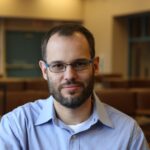
Even computers make mistakes. In classical computers, tens of thousands of atoms are involved in each computation, so the system can tolerate a few mistakes and still give correct output. But in quantum computers, information is stored in single electrons, leaving no room for error.
Special techniques now allow quantum systems to operate quickly and free of errors, but speed comes at a cost. Sebastian Deffner, assistant professor of physics at UMBC, and colleague Steve Campbell, postdoctoral fellow at the National Institute of Nuclear Physics in Italy, have coauthored a study calculating that cost for the first time.
Theory suggests the tantalizing idea that using these techniques results in error-free, incredibly fast computing with no additional energy input. In practice, though, Deffner and Campbell found a correlation between a quantum process’ speed and its energy requirements. In other words, explains Deffner, “If you want to go infinitely fast, you have to pay an infinite price.”
The tradeoff between speed and accuracy in computing is why researchers have developed shortcut techniques that allow quantum systems to operate more quickly and still be reliable. But Deffner and Campbell’s work suggests there is a limit to how fast a quantum system can actually go.
“There’s this notion of ‘quantum supremacy,’ which means that quantum computers are exponentially more powerful than classical computers,” explains Deffner. “Well, if you have to operate these quantum computers infinitely slowly to avoid errors, they’re totally useless. This is where these quantum speed limits come into play.”
The “quantum speed limit” dictates the minimum time it takes for a bit of information in a quantum system to transform from one state to another. That time can be very brief, but never zero. As a result, “I don’t think you can universally say that quantum computers will be faster than classical computers,” says Deffner. Because of the quantum speed limit, classical computers may always be faster for certain applications.
While theorists may not be so concerned about the energy costs of quantum computation, understanding costs is critical for researchers working to develop real-world applications like engines made of single atoms. If a system requires a huge amount of energy to run quickly and also accurately, explains Campbell, “then your engine is useless because you’re putting more energy in than you’re getting out.”
With this finding, “There are many interesting problems that we now can attack,” says Deffner. This paper focused on one of several shortcut techniques, but future work could look at the others. He explains that more research could “give experimentalists a guideline: For this process, you might want to use this technique, but for another, you might want to use something else” for greatest efficiency.
In addition to contributing to the quest for optimal quantum computing, “none of these concepts are restricted to quantum technologies,” Deffner says. “These shortcuts are something that we can also imagine in a biological system.” After all, most biological processes are facilitated by enzymes, proteins that speed up chemical reactions that otherwise would occur too slowly to be useful.
While it’s still conjecture at this point, Campbell says, “There’s an obvious analogy” when you look at living organisms. Follow-up research could help solve a longstanding mystery. As Campbell puts it, “How does a biological system manage to do it, when we can’t in the lab with all of our fancy technology? There must be something there.”
Image: Sebastian Deffner, courtesy Sebastian Deffner.
]]>
Even computers make mistakes. In classical computers, tens of thousands of atoms are involved in each computation, so the system can tolerate a few mistakes and still give correct output. But in...
https://umbc.edu/stories/umbcs-deffner-finds-quantum-speed-limit-may-put-brakes-on-quantum-supremacy-in-computing/
https://my3.my.umbc.edu/api/v0/pixel/news/120840/guest@my.umbc.edu/424ca969fda26333349c4bd7752d8059/api/pixel
cnms
physics
research
science-and-technology
UMBC News & Magazine
https://my3.my.umbc.edu/groups/umbc-news-magazine
https://assets1-my.umbc.edu/system/shared/avatars/groups/000/001/943/24435aa6207c452e7bc15cc74b42c7bb/xsmall.png?1748556657
https://assets1-my.umbc.edu/system/shared/avatars/groups/000/001/943/24435aa6207c452e7bc15cc74b42c7bb/original.png?1748556657
https://assets2-my.umbc.edu/system/shared/avatars/groups/000/001/943/24435aa6207c452e7bc15cc74b42c7bb/xxlarge.png?1748556657
https://assets2-my.umbc.edu/system/shared/avatars/groups/000/001/943/24435aa6207c452e7bc15cc74b42c7bb/xlarge.png?1748556657
https://assets3-my.umbc.edu/system/shared/avatars/groups/000/001/943/24435aa6207c452e7bc15cc74b42c7bb/large.png?1748556657
https://assets1-my.umbc.edu/system/shared/avatars/groups/000/001/943/24435aa6207c452e7bc15cc74b42c7bb/medium.png?1748556657
https://assets2-my.umbc.edu/system/shared/avatars/groups/000/001/943/24435aa6207c452e7bc15cc74b42c7bb/small.png?1748556657
https://assets1-my.umbc.edu/system/shared/avatars/groups/000/001/943/24435aa6207c452e7bc15cc74b42c7bb/xsmall.png?1748556657
https://assets2-my.umbc.edu/system/shared/avatars/groups/000/001/943/24435aa6207c452e7bc15cc74b42c7bb/xxsmall.png?1748556657
UMBC News & Magazine
0
0
false
Tue, 11 Apr 2017 19:13:14 -0400
‘You’re outta here!’: UMBC physicists explain black hole ejected from center of galaxy
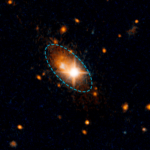
A team of researchers including UMBC’s Eileen Meyer and Markos Georganopoulos have found strong evidence of a striking astrophysical phenomenon: a supermassive black hole traveling away from the center of its galaxy at an incredibly rapid pace.
A scenario like this has been predicted for some time. “The theory is great, but we’ve got to have some observations to see if our simulations are correct,” says Meyer, assistant professor of physics. Those observations are now in hand, with copious lines of evidence all supporting the team’s explanation.
“There have been previous cases of systems like this,” says Georganopoulos, associate professor of physics, “but ours is the most solid case.” Meyer adds, “It’s the only one I can think of where all the little pieces of evidence line up in favor of this scenario very specifically.”
When two galaxies with black holes at their centers merge, gravitational forces pull the black holes to the center of the newly-formed galaxy. The black holes spin around each other, gradually slowing down. This process releases gravitational waves—ripples in the fabric of spacetime that travel outward at the speed of light. Depending on the relative rotational speeds of the two original black holes, once they merge the new black hole may be kicked out of the galaxy’s center by the gravitational waves.
Video produced by NASA, accessed on Hubble’s site here.
Data collected by the Hubble Space Telescope and other sources confirm that the black hole’s speed and position—approximately 4.8 million miles per hour, offset from the center of its galaxy—are consistent with the team’s explanation that the black hole has been powerfully ejected from the galaxy by the force of gravitational waves.
First author Marco Chiaberge, research scientist at the Space Telescope Science Institute at Johns Hopkins University, approached Meyer and Georganopoulos almost two years ago to help interpret the surprising data. Georganopoulos shares, “For me, the most exciting thing was to go from the raw data to building up a scenario—gradually realizing that the other scenarios are very implausible.”
Although alternative explanations are unlikely, the team still wants to collect additional observations to further confirm their interpretation. They’re submitting a proposal for time on the Atacama Large Millimeter Array (ALMA), a powerful telescope in Chile that could help them answer remaining questions.
“At the same time that it creates the opportunity to solidify our model, it’s also an opportunity to falsify it,” says Georganopoulos, of the possible opportunity to use the array in Chile, and the importance of remaining open to new interpretations of the data.
Either way, it will be exciting research. “Even if it doesn’t turn out the way we’re expecting,” says Meyer, “this is still a strange and remarkable system that needs to be studied.”
See the NASA press release and other media coverage of this new research on Deep Astronomy (video), New Scientist, Washington Post, Science, Laboratory News, Sky and Telescope, TrendinTech, The Daily Galaxy, Sputnik International, and others.
Image: NASA’s Hubble Telescope collected this image of a bright quasar, a proxy for the presence of a black hole, far from the galaxy’s center.
]]>
A team of researchers including UMBC’s Eileen Meyer and Markos Georganopoulos have found strong evidence of a striking astrophysical phenomenon: a supermassive black hole traveling away from the...
https://umbc.edu/stories/youre-outta-here-umbc-physicists-explain-black-hole-ejected-from-center-of-galaxy/
https://my3.my.umbc.edu/api/v0/pixel/news/120841/guest@my.umbc.edu/2d46bfeaa189362cedbc53b3d1825221/api/pixel
cnms
physics
research
science-and-technology
UMBC News & Magazine
https://my3.my.umbc.edu/groups/umbc-news-magazine
https://assets1-my.umbc.edu/system/shared/avatars/groups/000/001/943/24435aa6207c452e7bc15cc74b42c7bb/xsmall.png?1748556657
https://assets1-my.umbc.edu/system/shared/avatars/groups/000/001/943/24435aa6207c452e7bc15cc74b42c7bb/original.png?1748556657
https://assets2-my.umbc.edu/system/shared/avatars/groups/000/001/943/24435aa6207c452e7bc15cc74b42c7bb/xxlarge.png?1748556657
https://assets2-my.umbc.edu/system/shared/avatars/groups/000/001/943/24435aa6207c452e7bc15cc74b42c7bb/xlarge.png?1748556657
https://assets3-my.umbc.edu/system/shared/avatars/groups/000/001/943/24435aa6207c452e7bc15cc74b42c7bb/large.png?1748556657
https://assets1-my.umbc.edu/system/shared/avatars/groups/000/001/943/24435aa6207c452e7bc15cc74b42c7bb/medium.png?1748556657
https://assets2-my.umbc.edu/system/shared/avatars/groups/000/001/943/24435aa6207c452e7bc15cc74b42c7bb/small.png?1748556657
https://assets1-my.umbc.edu/system/shared/avatars/groups/000/001/943/24435aa6207c452e7bc15cc74b42c7bb/xsmall.png?1748556657
https://assets2-my.umbc.edu/system/shared/avatars/groups/000/001/943/24435aa6207c452e7bc15cc74b42c7bb/xxsmall.png?1748556657
UMBC News & Magazine
0
0
false
Mon, 10 Apr 2017 19:49:38 -0400
CRESST II space science consortium to receive $87.5 million from NASA Goddard
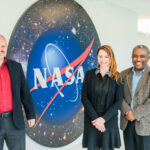
The Center for Research and Exploration in Space Science and Technology (CRESST II) is prepared to embark on a new era of innovative research and teaching with the commitment of $87.5 million from the National Aeronautics and Space Administration (NASA) Goddard Space Flight Center.
UMBC and the University of Maryland, College Park are the leading partners in a consortium formed to compete for this program. New consortium partners under this renewal agreement include Howard University, Catholic University of America, and the Southeastern Universities Research Association (SURA).
CRESST was first launched in 2006 under a ten-year cooperative agreement. The CRESST II agreement is valued at $87.5 million over the next five years, and provides for a renewal option for another five years.
“We are very proud of our long-term relationship with NASA Goddard,” states Karl V. Steiner, UMBC vice president for research. “The CRESST II program builds on the complementary scientific strengths at both UMBC and at College Park, and highlights the value that strong USM partnerships bring to the federal labs in Maryland and their national and global scientific missions. We are especially excited to grow our partnerships with Howard University, Catholic University and SURA. ”
The funding will primarily be used to support CRESST scientists who will work on specific, short-term projects at NASA’s Goddard Space Flight Center in Greenbelt, MD. The collaboration “opens up a broad range of projects in hardware, theory, and observation,” says T. Jane Turner, professor of physics and director of the Center for Space Science and Technology (CSST), the UMBC arm of CRESST.
CSST represents one of three major Cooperative Agreements between NASA Goddard and UMBC. The other two are the Joint Center for Earth Systems Technology (JCET) and the Goddard Planetary Heliophysics Institute (GPHI).
This partnership provides significant opportunities for university scientists to make major contributions to space science through cutting-edge research in areas like high energy astrophysics, gravitational waves, exoplanet exploration, and the study of planets within our own solar system. Additionally, says Turner, “We offer these scientists an enhanced career path,” by seamlessly connecting them with classroom experiences that relate to their work in the lab.
Turner explains that CSST scientists get “the best of both worlds—the research, networking, and facilities at Goddard and the opportunity to get teaching experience and work with graduate and undergraduate researchers here. There’s a symbiosis.” In turn, the program creates opportunities for UMBC students to learn from expert space scientists in the classroom and the lab, and to contribute to innovative and impactful research.
“This grant—and the important partnership it represents—will enable us to continue research that advances science and benefits our state and beyond,” says President Freeman Hrabowski. “Moreover, it will create opportunities for students to prepare for careers by working alongside world-class experts.”
NASA also benefits from the educational aspect of the work, as many students go on to postdoctoral and research scientist positions with the agency. “Goddard loves new talent,” says Turner. “They want to have young people involved, and there’s a lot of work that’s really suitable for providing research experience to the students.”
“NASA has played a key role in making the Baltimore region a national leader in scientific research,” says Congressman Elijah Cummings. “This grant will help UMD and UMBC to continue providing students from diverse backgrounds with opportunities to learn and grow so they can launch successful careers in STEM fields.”
Turner is particularly excited to collaborate with the new partners through this new, expanded stage of the consortium’s work. She’s looking forward to “bringing together other local astrophysics students and networking them in,” which aligns with UMBC’s mission to diversify the scientific community. Turner is also working with UMBC’s Meyerhoff Scholars Program to help undergraduates obtain summer internships with NASA through CRESST II.
The renewal is here just in time to create an all-around win. “Several exciting projects are now ramping up at Goddard,” says Turner, “and our scientists and students will move that work forward.”
Image: Jan Merka, GPHI director; T. Jane Turner, CSST director; and Belay Demoz, JCET director (l to r). Photo by Marlayna Demond ’11 for UMBC.
The CRESST II renewal has also been featured in The Baltimore Sun, The Daily Record, Baltimore Business Journal, and Washington Business Journal.
]]>
The Center for Research and Exploration in Space Science and Technology (CRESST II) is prepared to embark on a new era of innovative research and teaching with the commitment of $87.5 million from...
https://umbc.edu/stories/cresst-ii-space-science-consortium-to-receive-87-5-million-from-nasa-goddard/
https://my3.my.umbc.edu/api/v0/pixel/news/120852/guest@my.umbc.edu/eeef2ce149f154786f4bc618a6fa3783/api/pixel
cnms
csst
gphi
jcet
majoraward
physics
research
science-and-technology
UMBC News & Magazine
https://my3.my.umbc.edu/groups/umbc-news-magazine
https://assets1-my.umbc.edu/system/shared/avatars/groups/000/001/943/24435aa6207c452e7bc15cc74b42c7bb/xsmall.png?1748556657
https://assets1-my.umbc.edu/system/shared/avatars/groups/000/001/943/24435aa6207c452e7bc15cc74b42c7bb/original.png?1748556657
https://assets2-my.umbc.edu/system/shared/avatars/groups/000/001/943/24435aa6207c452e7bc15cc74b42c7bb/xxlarge.png?1748556657
https://assets2-my.umbc.edu/system/shared/avatars/groups/000/001/943/24435aa6207c452e7bc15cc74b42c7bb/xlarge.png?1748556657
https://assets3-my.umbc.edu/system/shared/avatars/groups/000/001/943/24435aa6207c452e7bc15cc74b42c7bb/large.png?1748556657
https://assets1-my.umbc.edu/system/shared/avatars/groups/000/001/943/24435aa6207c452e7bc15cc74b42c7bb/medium.png?1748556657
https://assets2-my.umbc.edu/system/shared/avatars/groups/000/001/943/24435aa6207c452e7bc15cc74b42c7bb/small.png?1748556657
https://assets1-my.umbc.edu/system/shared/avatars/groups/000/001/943/24435aa6207c452e7bc15cc74b42c7bb/xsmall.png?1748556657
https://assets2-my.umbc.edu/system/shared/avatars/groups/000/001/943/24435aa6207c452e7bc15cc74b42c7bb/xxsmall.png?1748556657
UMBC News & Magazine
0
0
false
Thu, 30 Mar 2017 16:59:12 -0400
UMBC’s JCET researchers discover new wrinkle in the role of clouds in climate change
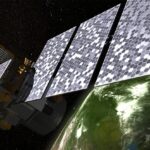
Clouds continue to be one of the greatest sources of uncertainty in climate change models. At night, clouds keep Earth warm by preventing heat from escaping. During the day, most clouds cool Earth by keeping some sunlight from reaching the surface. Understanding the balance of these opposite effects on a global scale, as clouds constantly form, move, and break up, is a major challenge to climate forecasting.
Jasper Lewis and Simone Lolli, scientists at UMBC’s Joint Center for Earth Systems Technology, contributed to new research that reveals clouds’ effects on climate may be even more complex than previously understood. The study focuses on cirrus clouds, the wispy ribbons that float up to 20 km above Earth’s surface.
Cirrus clouds are known to contribute minimally, if at all, to cooling during the day because they are so thin. Lewis and Lolli’s study was the first to show that cirrus clouds can sometimes cool Earth during the day, depending on factors like the cloud’s thickness, height, and the temperature. “A cooling effect during daytime was something before known only in theory,” says Lolli, “but for the very first time we verified it with measurements.”
The study, led by the Naval Research Laboratory in Monterey, California and in collaboration with UCLA, analyzed 2012 data collected by the NASA Micro Pulse Lidar Network (MPLNET) at Goddard Space Flight Center. The team’s previous work used data from NASA’s CALIPSO, an orbiting satellite.
“With the satellite you get many locations, but only one measurement per day,” said Lolli. “With ground-based instruments you can take measurements 24 hours per day.”
These measurement capabilities offer a huge advantage if you’re looking for variations between day and night. The copious data also allow the team to hypothesize how cirrus clouds affect climate differently across seasons and latitudes, which is critical to understanding global energy balance.
The research improved on previous work because Lewis designed new protocols to analyze the data, taking into account the huge size of cirrus clouds (up to hundreds of kilometers across) and their high elevation, which creates noise in the data.
Lolli’s task was to input the data into an existing model to determine whether the clouds were warming or cooling the atmosphere, a process known as “climate forcing.” Data input posed a major challenge, as the type of data MPLNET collected was not in a form the model could use. Lolli had to convert the data into something the model could accept, which required significant time, attention to detail, and, as Lolli puts it, a lot of math.
Recognizing the team’s innovative methodology and groundbreaking study results, the Naval Research Laboratory just honored Lewis and Lolli’s paper with the 2016 Alan Berman Research Publication Award. According to the award ceremony program, these competitive awards “not only honor individuals for superior scientific accomplishments in the field of naval research, but also seek to promote continued excellence in research and its documentation.”
For Lewis, the best part about receiving the award “is recognition of the significance of the work that you’ve done.” Lolli adds, “It’s very important, because it’s motivation for others to get going in this area of research.”
“Uncertainty about climate forcing is one of the big things that people don’t fully understand yet” in climate science, Lewis shares, “so this is a small step in the direction of moving that understanding a bit further.”
Read “Daytime cirrus cloud top-of-the-atmosphere radiative forcing properties at a midlatitude site and their global consequences“ in the Journal of the American Meteorological Society.
Image: NASA’s CALIPSO satellite, used to collect data for Lewis and Lolli’s previous work. Artist rendering from NASA Goddard Space Flight Center.
]]>
Clouds continue to be one of the greatest sources of uncertainty in climate change models. At night, clouds keep Earth warm by preventing heat from escaping. During the day, most clouds cool Earth...
https://umbc.edu/stories/umbcs-jcet-researchers-discover-new-wrinkle-in-the-role-of-clouds-in-climate-change/
https://my3.my.umbc.edu/api/v0/pixel/news/120859/guest@my.umbc.edu/e9d81f3e2f6876183dd957208c41287d/api/pixel
cnms
jcet
physics
research
science-and-technology
UMBC News & Magazine
https://my3.my.umbc.edu/groups/umbc-news-magazine
https://assets1-my.umbc.edu/system/shared/avatars/groups/000/001/943/24435aa6207c452e7bc15cc74b42c7bb/xsmall.png?1748556657
https://assets1-my.umbc.edu/system/shared/avatars/groups/000/001/943/24435aa6207c452e7bc15cc74b42c7bb/original.png?1748556657
https://assets2-my.umbc.edu/system/shared/avatars/groups/000/001/943/24435aa6207c452e7bc15cc74b42c7bb/xxlarge.png?1748556657
https://assets2-my.umbc.edu/system/shared/avatars/groups/000/001/943/24435aa6207c452e7bc15cc74b42c7bb/xlarge.png?1748556657
https://assets3-my.umbc.edu/system/shared/avatars/groups/000/001/943/24435aa6207c452e7bc15cc74b42c7bb/large.png?1748556657
https://assets1-my.umbc.edu/system/shared/avatars/groups/000/001/943/24435aa6207c452e7bc15cc74b42c7bb/medium.png?1748556657
https://assets2-my.umbc.edu/system/shared/avatars/groups/000/001/943/24435aa6207c452e7bc15cc74b42c7bb/small.png?1748556657
https://assets1-my.umbc.edu/system/shared/avatars/groups/000/001/943/24435aa6207c452e7bc15cc74b42c7bb/xsmall.png?1748556657
https://assets2-my.umbc.edu/system/shared/avatars/groups/000/001/943/24435aa6207c452e7bc15cc74b42c7bb/xxsmall.png?1748556657
UMBC News & Magazine
0
0
false
Fri, 24 Mar 2017 13:16:25 -0400
Expanded core facilities offer imaging and analysis services for UMBC and local start-ups
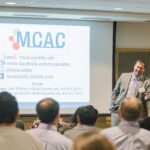
Dean Bill LaCourse, of the College of Natural and Mathematical Sciences (CNMS), has been working for 20 years to build up a set of core analysis and imaging facilities at UMBC, open to the full UMBC community, local startups, and other institutions in need of these research tools. The campus celebrated the realization of his vision on February 24 with the Core Crawl, a special event where dozens of guests toured four core facilities, guided by their managers.
The Keith R. Porter Imaging Facility (KPIF), Nano-Imaging Facility, Research Graphics, and Molecular Characterization and Analysis Complex (MCAC) each offer unique tools to support scientific research, from mass spectrometry to scientific animations. The facilities’ most recent addition is a state-of-the-art transmission electron microscope recently donated by the Howard Hughes Medical Institute’s Janelia Research Campus.
Tools like these “are all about the most fundamental aspect of science—observation,” says LaCourse, and they “leverage and extend our capabilities so we can look at everything from the atom to the ends of the universe.”
The four UMBC facilities are unique among similar facilities at other universities because their directors do much more than analyze experimental samples for researchers. “The leaders of these facilities really are your allies as you are trying to gain new knowledge,” says Karl Steiner, vice president for research at UMBC. “They bring their expertise to your problem and work with you to get somewhere you may not have known you could go.” He adds, “It’s not the newest and latest instrument that makes a facility successful—it’s the people who run it and work with you.”
 Marios Levi ’19, mechanical engineering, demonstrates a 3D printer at the Keith Porter Imaging Facility to Julia Wolf, biological sciences.
One of those people is Tagide deCarvalho, manager of the KPIF, who stressed the teaching and learning aspects of the facilities. “I’m really interested in helping people at all levels,” she shared, “from sample prep, to instrument training, to experimental design.”
Joshua Wilhide, M.S. ’10, chemistry, and manager of the MCAC, emphasized that the goals of the facilities extend beyond generating results researchers can publish. “We are a university—at the end of the day we have to look at how we’re teaching the next generation,” he shared, “be it graduate student or undergrad, we’re going to train you on any of the instruments so you not only understand what the analytical techniques are, you can actually run them.” Developing those skill sets early in their scientific careers can open up new and exciting opportunities for students who work in the labs.
As university-based facilities, the labs are also able to provide low rates for instrument time, which is particularly useful for local start-ups. Before making a major investment in expensive equipment, new companies can get advice from dedicated staff and determine what instrumentation they might need down the road.
Dean LaCourse is particularly excited that the four expanded core facilities will reach a broad range of users, within and beyond CNMS. “Now we have facilities that are customer-focused, client-focused. We’re here to service and facilitate the research enterprise in the most effective and efficient way possible,” said LaCourse. “It’s access for everybody.”
Banner image: Joshua Wilhide describes the instruments available at the MCAC; photo by Marlayna Demond ’11 for UMBC.
]]>
Dean Bill LaCourse, of the College of Natural and Mathematical Sciences (CNMS), has been working for 20 years to build up a set of core analysis and imaging facilities at UMBC, open to the full...
https://umbc.edu/stories/expanded-core-facilities-offer-imaging-and-analysis-services-for-umbc-and-local-start-ups/
https://my3.my.umbc.edu/api/v0/pixel/news/120867/guest@my.umbc.edu/7824a5473469328463771a72f651561d/api/pixel
biology
chembiochem
cnms
kpif
marinebiotech
mcac
physics
research
science-and-technology
UMBC News & Magazine
https://my3.my.umbc.edu/groups/umbc-news-magazine
https://assets1-my.umbc.edu/system/shared/avatars/groups/000/001/943/24435aa6207c452e7bc15cc74b42c7bb/xsmall.png?1748556657
https://assets1-my.umbc.edu/system/shared/avatars/groups/000/001/943/24435aa6207c452e7bc15cc74b42c7bb/original.png?1748556657
https://assets2-my.umbc.edu/system/shared/avatars/groups/000/001/943/24435aa6207c452e7bc15cc74b42c7bb/xxlarge.png?1748556657
https://assets2-my.umbc.edu/system/shared/avatars/groups/000/001/943/24435aa6207c452e7bc15cc74b42c7bb/xlarge.png?1748556657
https://assets3-my.umbc.edu/system/shared/avatars/groups/000/001/943/24435aa6207c452e7bc15cc74b42c7bb/large.png?1748556657
https://assets1-my.umbc.edu/system/shared/avatars/groups/000/001/943/24435aa6207c452e7bc15cc74b42c7bb/medium.png?1748556657
https://assets2-my.umbc.edu/system/shared/avatars/groups/000/001/943/24435aa6207c452e7bc15cc74b42c7bb/small.png?1748556657
https://assets1-my.umbc.edu/system/shared/avatars/groups/000/001/943/24435aa6207c452e7bc15cc74b42c7bb/xsmall.png?1748556657
https://assets2-my.umbc.edu/system/shared/avatars/groups/000/001/943/24435aa6207c452e7bc15cc74b42c7bb/xxsmall.png?1748556657
UMBC News & Magazine
0
0
false
Fri, 10 Mar 2017 14:44:31 -0500
SmallSat revolution: Physicist Vanderlei Martins explains the rise of tiny spacecraft
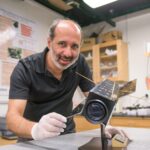
Right now, almost 500 SmallSats—spacecraft from the size of a refrigerator to a golf ball—are orbiting 200 miles above Earth’s surface, and 78 percent of them launched after 2013. In The Conversation, Vanderlei Martins explains the skyrocketing numbers of SmallSats and the important contributions they are making to scientific research focused on Earth and beyond.
“These SmallSats are poised to change the way we do science from space,” says Martins, professor of physics at UMBC. They are more affordable than larger satellites, and the most basic are almost within reach for serious hobbyists. The lower price tag has allowed countries such as Poland, Pakistan, Colombia, and others to launch their space programs for the first time and contribute to the global quest for knowledge.
The first SmallSat launch in 1999, by a team at Stanford University, was a proof of concept to demonstrate that something so small could survive in space. “Like all space explorers, [SmallSats] have to contend with vacuum conditions, cosmic radiation, wide temperature swings, high speed, atomic oxygen, and more,” explains Martins.
Since the first launch, and particularly in the last few years, SmallSats have become much more sophisticated. Now they not only survive in space, but also carry complex scientific instruments to collect all kinds of data and send it back to Earth. SmallSats currently in orbit “aim to answer specific science questions, covering a broad range of sciences including weather and climate on Earth, space weather and cosmic rays, planetary exploration and much more,” says Martins. They also “serve as pathfinders for bigger and more expensive satellite missions.”
Martins leads the team responsible for the Hyper-Angular Rainbow Polarimeter (HARP) SmallSat, scheduled to launch in June 2017. HARP “observes interactions between clouds and aerosols—small particles such as pollution, dust, sea salt, or pollen, suspended in Earth’s atmosphere,” explains Martins. These interactions affect cloud formation and precipitation, which affect Earth’s global water cycle, energy balance, and climate.
HARP’s capabilities reflect rapid improvements in SmallSat technology. “It’s an example of the kind of advanced scientific instrument it wouldn’t have been possible to cram onto a tiny CubeSat in their early days,” says Martins.
Still, SmallSats do have limitations. Although HARP could conceivably collect data continuously, a compact power supply limits how much data it can send back to Earth. Researchers at a new interdisciplinary center at UMBC will analyze and interpret the data it does send back, which, though limited, is still expected to be robust and insightful.
As SmallSat technology continues to improve, “seeing what works and what doesn’t will help inform larger space missions and future operations,” says Martins. In their pathfinding role, “the next generation of nanosatellites will advance the frontiers of science.”
As of this posting, SmallSat revolution: Tiny satellites poised to make big contributions to essential science has been read more than 25,000 times across 16 publications.
Image: Vanderlei Martins in his lab at UMBC with the HARP CubeSat. Photo by Marlayna Demond ’11 for UMBC.
]]>
Right now, almost 500 SmallSats—spacecraft from the size of a refrigerator to a golf ball—are orbiting 200 miles above Earth’s surface, and 78 percent of them launched after 2013. In The...
https://umbc.edu/stories/smallsat-revolution-physicist-vanderlei-martins-explains-the-rise-of-tiny-spacecraft/
https://my3.my.umbc.edu/api/v0/pixel/news/120890/guest@my.umbc.edu/51a09222542293e32d89cb552bdf39f5/api/pixel
cnms
physics
science-and-technology
UMBC News & Magazine
https://my3.my.umbc.edu/groups/umbc-news-magazine
https://assets1-my.umbc.edu/system/shared/avatars/groups/000/001/943/24435aa6207c452e7bc15cc74b42c7bb/xsmall.png?1748556657
https://assets1-my.umbc.edu/system/shared/avatars/groups/000/001/943/24435aa6207c452e7bc15cc74b42c7bb/original.png?1748556657
https://assets2-my.umbc.edu/system/shared/avatars/groups/000/001/943/24435aa6207c452e7bc15cc74b42c7bb/xxlarge.png?1748556657
https://assets2-my.umbc.edu/system/shared/avatars/groups/000/001/943/24435aa6207c452e7bc15cc74b42c7bb/xlarge.png?1748556657
https://assets3-my.umbc.edu/system/shared/avatars/groups/000/001/943/24435aa6207c452e7bc15cc74b42c7bb/large.png?1748556657
https://assets1-my.umbc.edu/system/shared/avatars/groups/000/001/943/24435aa6207c452e7bc15cc74b42c7bb/medium.png?1748556657
https://assets2-my.umbc.edu/system/shared/avatars/groups/000/001/943/24435aa6207c452e7bc15cc74b42c7bb/small.png?1748556657
https://assets1-my.umbc.edu/system/shared/avatars/groups/000/001/943/24435aa6207c452e7bc15cc74b42c7bb/xsmall.png?1748556657
https://assets2-my.umbc.edu/system/shared/avatars/groups/000/001/943/24435aa6207c452e7bc15cc74b42c7bb/xxsmall.png?1748556657
UMBC News & Magazine
0
0
false
Fri, 03 Feb 2017 15:47:19 -0500
Physicists Deffner and Ibrahim explain winter’s extra helping of static electricity
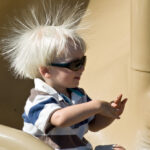
Winter has arrived in the northern hemisphere, and along with it an extra dose of static electricity. But do most people know how static electricity works? Why is it more prevalent in the winter months, and how can people prevent those nasty shocks?
Sebastian Deffner, assistant professor of physics, and Muhammed Ibrahim, a research collaborator in his lab, demystify static electricity in a new piece in The Conversation, republished on Phys.org and by newspapers across the United States.
“Static electricity comes down to the interactive force between electrical charges,” Deffner and Ibrahim write. Electrons coat every surface, but some surfaces hold onto those electrons more tightly than others. When two materials with different abilities to retain electrons come close together, “electrons can be ripped out of the ‘weaker’ materials and find themselves on the material with stronger binding force.” The zap we feel is the electrons moving from one surface to the other.
Drier air is the culprit for increased static in the winter. Moisture in the air allows electrons to flow more freely and return to their original surface without shocking anyone. But when the air is dry, “electrons get trapped on the surface with the stronger binding force,” Deffner and Ibrahim explain.
 The classic static electricity “zap”; Muhammed Ibrahim, CC BY-ND.
“They can’t find their way to flow back to the surface where they came from,” they write, “and they can’t make the distribution of charges uniform again.” Until, that is, the object that has strongly attracted the electrons, like your finger, come close to an object that hasn’t collected as many electrons, like a doorknob or your cat. Then the electrons flow quickly onto the uncharged object, creating the classic static electricity “zap.”
There are ways to avoid the pain, though. Deffner and Ibrahim recommend dryer sheets to take static down a notch on clothing. They also suggest running a humidifier to boost the amount of moisture in the air in a home or office.
The first known recorded observation of static electricity is from the sixth century B.C., and in the 18th century people mostly took advantage of static for parlor tricks. Today, Deffner and Ibrahim write, static electricity is put to use in everything from office copiers and smartphones to cutting-edge nanotechnology.
Learn more from “Static electricity’s tiny sparks.”
Banner: A boy’s hair gets charged with static electricity as he rides a playground slide; Ken Bosma, CC BY.
]]>
Winter has arrived in the northern hemisphere, and along with it an extra dose of static electricity. But do most people know how static electricity works? Why is it more prevalent in the winter...
https://umbc.edu/stories/shocking-news-physicists-deffner-and-ibrahim-explain-winters-extra-helping-of-static-electricity/
https://my3.my.umbc.edu/api/v0/pixel/news/120906/guest@my.umbc.edu/c3797cb28c7e38e47538990be4b0ffbe/api/pixel
cnms
physics
science-and-technology
UMBC News & Magazine
https://my3.my.umbc.edu/groups/umbc-news-magazine
https://assets1-my.umbc.edu/system/shared/avatars/groups/000/001/943/24435aa6207c452e7bc15cc74b42c7bb/xsmall.png?1748556657
https://assets1-my.umbc.edu/system/shared/avatars/groups/000/001/943/24435aa6207c452e7bc15cc74b42c7bb/original.png?1748556657
https://assets2-my.umbc.edu/system/shared/avatars/groups/000/001/943/24435aa6207c452e7bc15cc74b42c7bb/xxlarge.png?1748556657
https://assets2-my.umbc.edu/system/shared/avatars/groups/000/001/943/24435aa6207c452e7bc15cc74b42c7bb/xlarge.png?1748556657
https://assets3-my.umbc.edu/system/shared/avatars/groups/000/001/943/24435aa6207c452e7bc15cc74b42c7bb/large.png?1748556657
https://assets1-my.umbc.edu/system/shared/avatars/groups/000/001/943/24435aa6207c452e7bc15cc74b42c7bb/medium.png?1748556657
https://assets2-my.umbc.edu/system/shared/avatars/groups/000/001/943/24435aa6207c452e7bc15cc74b42c7bb/small.png?1748556657
https://assets1-my.umbc.edu/system/shared/avatars/groups/000/001/943/24435aa6207c452e7bc15cc74b42c7bb/xsmall.png?1748556657
https://assets2-my.umbc.edu/system/shared/avatars/groups/000/001/943/24435aa6207c452e7bc15cc74b42c7bb/xxsmall.png?1748556657
UMBC News & Magazine
0
0
false
Mon, 09 Jan 2017 20:02:20 -0500
 Fulbright recipients Michael Wolfe, William Klotz, and Kirsten Clark chat in the UMBC Commons. Photo by Sarah Hansen ’15 for UMBC.
 Fulbright recipient William Klotz. Photo by Marlayna Demond ’11 for UMBC.


