UMBC’s Krizmanic, Cannady contribute to research that adds new wrinkle to understanding the origins of matter in the Milky Way
New findings published this week in Physical Review Letters suggest that carbon, oxygen, and hydrogen cosmic rays travel through the galaxy toward Earth in a similar way, but, surprisingly, that iron arrives at Earth differently. Learning more about how cosmic rays move through the galaxy helps address a fundamental, lingering question in astrophysics: How is matter generated and distributed across the universe?
“So what does this finding mean?” asks John Krizmanic, a senior scientist with UMBC’s Center for Space Science and Technology (CSST). “These are indicators of something interesting happening. And what that something interesting is we’re going to have to see.”
Cosmic rays are atomic nuclei—atoms stripped of their electrons—that are constantly whizzing through space at nearly the speed of light. They enter Earth’s atmosphere at extremely high energies. Information about these cosmic rays can give scientists clues about where they came from in the galaxy and what kind of event generated them.
An instrument on the International Space Station (ISS) called the Calorimetric Electron Telescope (CALET) has been collecting data about cosmic rays since 2015. The data include details such as how many and what kinds of atoms are arriving, and how much energy they’re arriving with. The American, Italian, and Japanese teams that manage CALET, including UMBC’s Krizmanic and postdoc Nick Cannady, collaborated on the new research.
Iron on the move
Cosmic rays arrive at Earth from elsewhere in the galaxy at a huge range of energies—anywhere from 1 billion volts to 100 billion billion volts. The CALET instrument is one of extremely few in space that is able to deliver fine detail about the cosmic rays it detects. A graph called a cosmic ray spectrum shows how many cosmic rays are arriving at the detector at each energy level. The spectra for carbon, oxygen, and hydrogen cosmic rays are very similar, but the key finding from the new paper is that the spectrum for iron is significantly different.

This image combines data from four space telescopes to reconstruct all that remains of the oldest documented example of a supernova, which was witnessed in 185 A.D. by Chinese astronomers. Supernovae are understood to be important sources of cosmic rays arriving at Earth. Image credit: NASA
There are several possibilities to explain the differences between iron and the three lighter elements. The cosmic rays could accelerate or travel through the galaxy differently, although scientists generally believe they understand the latter, Krizmanic says.
“Something that needs to be emphasized is that the way the elements get from the sources to us is different, but it may be that the sources are different as well,” adds Michael Cherry, physics professor emeritus at Louisiana State University (LSU) and a co-author on the new paper. Scientists generally believe that cosmic rays originate from exploding stars (supernovae), but neutron stars or very massive stars could be other potential sources.
Next-level precision
An instrument like CALET is important for answering questions about how cosmic rays accelerate and travel, and where they come from. Instruments on the ground or balloons flown high in Earth’s atmosphere were the main source of cosmic ray data in the past. But by the time cosmic rays reach those instruments, they have already interacted with Earth’s atmosphere and broken down into secondary particles. With Earth-based instruments, it is nearly impossible to identify precisely how many primary cosmic rays and which elements are arriving, plus their energies. But CALET, being on the ISS above the atmosphere, can measure the particles directly and distinguish individual elements precisely.

The Pierre Auger Observatory is a ground-based cosmic ray detector in Argentina. Photo: Pierre Auger Observatory, shared under CC BY-SA 2.0
Iron is a particularly useful element to analyze, explains Cannady, a postdoc with CSST and a former Ph.D. student with Cherry at LSU. On their way to Earth, cosmic rays can break down into secondary particles, and it can be hard to distinguish between original particles ejected from a source (like a supernova) and secondary particles. That complicates deductions about where the particles originally came from.
“As things interact on their way to us, then you’ll get essentially conversions from one element to another,” Cannady says. “Iron is unique, in that being one of the heaviest things that can be synthesized in regular stellar evolution, we’re pretty certain that it is pretty much all primary cosmic rays. It’s the only pure primary cosmic ray, where with others you’ll have some secondary components feeding into that as well.”
“Made of stardust”
Measuring cosmic rays gives scientists a unique view into high-energy processes happening far, far away. The cosmic rays arriving at CALET represent “the stuff we’re made of. We are made of stardust,” Cherry says. “And energetic sources, things like supernovas, eject that material from their interiors, out into the galaxy, where it’s distributed, forms new planets, solar systems, and… us.”
All of the rocky and metallic material we stand on, the iron in our blood, the calcium in our teeth, the carbon in our genes were produced billions of years ago in the interior of a red giant star. We are made of star-stuff.
Carl Sagan, “The Cosmic Connection: An Extraterrestrial Perspective,” 1973
“The study of cosmic rays is the study of how the universe generates and distributes matter, and how that affects the evolution of the galaxy,” Krizmanic adds. “So really it’s studying the astrophysics of this engine we call the Milky Way that’s throwing all these elements around.”
A global effort
The Japanese space agency launched CALET and today leads the mission in collaboration with the U.S. and Italian teams. In the U.S., the CALET team includes researchers from LSU; NASA Goddard Space Flight Center; UMBC; University of Maryland, College Park; University of Denver; and Washington University.The new paper is the fifth from this highly successful international collaboration published in PRL, one of the most prestigious physics journals.
CALET was optimized to detect cosmic ray electrons, because their spectrum can contain information about their sources. That’s especially true for sources that are relatively close to Earth in galactic terms: within less than one-thirtieth the distance across the Milky Way. But CALET also detects the atomic nuclei of cosmic rays very precisely. Now those nuclei are offering important insights about the sources of cosmic rays and how they got to Earth.
“We didn’t expect that the nuclei – the carbon, oxygen, protons, iron – would really start showing some of these detailed differences that are clearly pointing at things we don’t know,” Cherry says.
The latest finding creates more questions than it answers, emphasizing that there is still more to learn about how matter is generated and moves around the galaxy. “That’s a fundamental question: How do you make matter?” Krizmanic says. But, he adds, “That’s the whole point of why we went in this business, to try to understand more about how the universe works.”
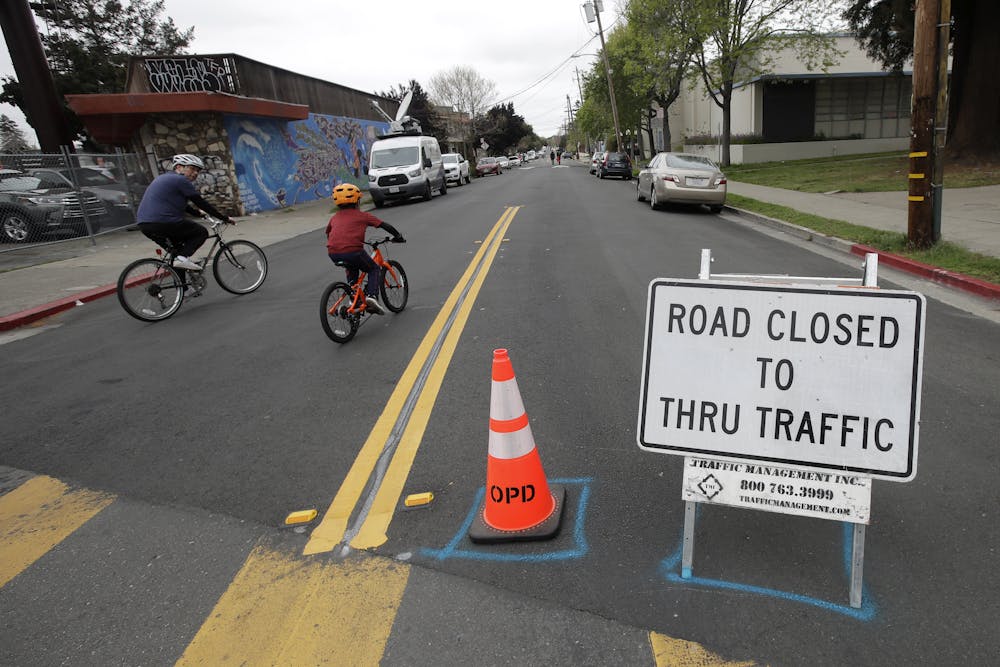
Banner image: A Japanese transfer vehicle (labeled HTV-5) is docked at the International Space Station. The CALET experiment is being extracted by the station’s robotic arm (labeled with “Canada”). Credit: NASA
]]>
New findings published this week in Physical Review Letters suggest that carbon, oxygen, and hydrogen cosmic rays travel through the galaxy toward Earth in a similar way, but, surprisingly, that...
https://umbc.edu/stories/umbcs-krizmanic-cannady-contribute-to-research-that-adds-new-wrinkle-to-understanding-the-origins-of-matter-in-the-milky-way/
https://my3.my.umbc.edu/api/v0/pixel/news/119592/guest@my.umbc.edu/dea589af5412bb3396f0ae8e0cd14562/api/pixel
csst
research
science-and-technology
UMBC News & Magazine
https://my3.my.umbc.edu/groups/umbc-news-magazine
https://assets1-my.umbc.edu/system/shared/avatars/groups/000/001/943/24435aa6207c452e7bc15cc74b42c7bb/xsmall.png?1748556657
https://assets1-my.umbc.edu/system/shared/avatars/groups/000/001/943/24435aa6207c452e7bc15cc74b42c7bb/original.png?1748556657
https://assets2-my.umbc.edu/system/shared/avatars/groups/000/001/943/24435aa6207c452e7bc15cc74b42c7bb/xxlarge.png?1748556657
https://assets2-my.umbc.edu/system/shared/avatars/groups/000/001/943/24435aa6207c452e7bc15cc74b42c7bb/xlarge.png?1748556657
https://assets3-my.umbc.edu/system/shared/avatars/groups/000/001/943/24435aa6207c452e7bc15cc74b42c7bb/large.png?1748556657
https://assets1-my.umbc.edu/system/shared/avatars/groups/000/001/943/24435aa6207c452e7bc15cc74b42c7bb/medium.png?1748556657
https://assets2-my.umbc.edu/system/shared/avatars/groups/000/001/943/24435aa6207c452e7bc15cc74b42c7bb/small.png?1748556657
https://assets1-my.umbc.edu/system/shared/avatars/groups/000/001/943/24435aa6207c452e7bc15cc74b42c7bb/xsmall.png?1748556657
https://assets2-my.umbc.edu/system/shared/avatars/groups/000/001/943/24435aa6207c452e7bc15cc74b42c7bb/xxsmall.png?1748556657
UMBC News & Magazine
0
0
false
Tue, 22 Jun 2021 03:53:20 -0400
UMBC’s Tyson King-Meadows will carry forward commitment to inclusive excellence as dean at UMass Boston

Tyson King-Meadows, professor of political science and associate provost for strategic initiatives in the Office of the Provost, has played a vital role in UMBC’s culture and academic policy work since 2003, when he joined the campus as an assistant professor of political science. He credits these experiences for preparing him to serve next as dean of the College of Liberal Arts at the University of Massachusetts Boston (UMass Boston) this fall.
“At UMBC, I have learned that a university can only move forward when it moves beyond talking about a problem and shifts into creating and implementing solutions,” shares King-Meadows. “I developed a keen eye for big solutions to big problems.”
King-Meadows is an accomplished scholar, notes President Freeman Hrabowski, as well as an inspiring teacher with a strong voice for the arts, humanities, and social sciences. “What makes him particularly effective in his work is his dedication to serving as a champion for both students and colleagues,” shares Hrabowski. “All of us at UMBC are very proud of him as he begins this new role at UMass Boston.”
Kimberly Moffitt, interim dean of the College of Arts, Humanities and Social Sciences (CAHSS), has worked with King-Meadows for 15 years. She says his example to all is to keep envisioning possibilities in the face of adversity. “I am simply ecstatic that UMass Boston recognizes him as a talented, visionary leader who will enhance their campus as he has ours,” she shares.
National recognition
King-Meadows has achieved local, regional, state, national, and international recognition for his work. In 2019-2020, he was awarded the American Council on Education (ACE) Fellowship, serving in the Provost’s Office at Case Western Reserve University. He assisted Provost Ben Vinson III on efforts related to strategic planning, community engagement, and faculty development.
“Tyson has drawn upon his ACE experience to significantly impact our work at UMBC,” shares Philip Rous, provost and senior vice president for academic affairs. “In addition to working with deans and shared governance to align general education with the priorities of UMBC’s strategic plan, Tyson has strengthened our partnerships with academic learned societies in ways that significantly expanded our efforts to recruit and retain diverse faculty, staff, and students.”
King-Meadows served as an American Political Science Association Congressional Fellow in 2012-13, working for the U.S. House Committee on the Judiciary. Earlier in his career, he was also a recipient of the National Academy of Sciences’ Ford Foundation Postdoctoral Fellowship and was a fellow of the W.E.B. Du Bois Institute for African American Research at Harvard University. And in 2003-04 he was a Fulbright U.S. Scholar in the Department of Political Science at the University of Ghana, where he taught American politics and researched aspects of African politics and democratization.
Diversity and inclusion leadership
In his current UMBC role as special assistant to the provost for faculty development and engagement, King-Meadows has researched and developed best practices for faculty development programs. He has also laid the groundwork with campus and external partners to develop new programs aimed at recruiting prospective underrepresented minority faculty and students.
As a co-chair of the Provost’s Executive Committee for the Recruitment, Retention, and Advancement of Underrepresented Minority Faculty, King-Meadows has played a vital role in the design and implementation of the Postdoctoral Fellowship for Faculty Diversity and the Emerging Scholars Program. Launched in 2011, the postdoctoral program has brought in 18 fellows across a broad range of disciplines. Seventeen have already transitioned to higher academic positions, including 11 at UMBC.
“Talented minority faculty are not unicorns,” King-Meadows said to Amy Scott, senior correspondent for Marketplace, in a segment on confronting bias in faculty hiring. “It just depends on where you’re looking,” he told Scott. He went on to explain the importance of senior faculty of all backgrounds demonstrating commitment to faculty diversity, saying, “We understand here at UMBC that the burden of inclusiveness should not rest on minority faculty.”
Political science research
King-Meadows’s contributions to the field of political science are many. His research has broadened understanding of the complex issues that influence the political involvement and representation of Black communities.
King-Meadows explores this topic through the lens of the economic disparities and sociopolitical stratification present in the United States during the late twentieth century and early twenty-first century. His first single-authored book was When the Letter Betrays the Spirit: Voting Rights Enforcement and African American Participation from Lyndon Johnson to Barack Obama(Rowman & Littlefield, 2011). It examines the design and implementation of the 1965 Voting Rights Act and the impact of its four renewals on Black voter registration and election turnout.
“Tyson is a tremendous scholar who exhibits a rare command of both the institutional side of the American politics subfield as well as the behavioral side of American politics,” says Thomas Schaller, professor of political science. He and King-Meadows co-authored Devolution and Black State Legislators: Challenges and Choices in the Twenty-first Century(State University of New York Press, 2006). Schaller says, “I’m proud to have co-authored a book with him about the growing power of Black state legislators in the United States.”
Launching student careers
Over the last 17 years, King-Meadows has enriched students’ research experiences and helped them explore various career pathways. He shares that he is grateful for the opportunity to work with students at the beginning of their academic journeys and then see them take that knowledge through to successful careers.
Arthur Johnson, professor of political science and provost emeritus, hired King-Meadows and recalls the young faculty member’s rigorous classes and the valuable research experiences he provided his students. He remembers, “It was common for Tyson to be in his office with students well into evening hours advising them, helping them understand the material presented in class, and planning research.”
 King-Meadows (right) and Lauren Lochocki ‘14, political science, (center) presented the co-authored paper, “Is the VRA Still Necessary? Attitudinal Support of Electoral Reform in a Post-Jim Crow Era” at the National Conference of Black Political Scientists.
King-Meadows also values opportunities to collaborate with alumni as they move on in their careers. He is currently working on two articles with a former senior research assistant, Rhoanne Esteban ‘11, political science. Esteban is a doctoral student at UC Santa Barbara and a data analytics engineer at Travelers Insurance.
He is also co-authoring a book chapter on Baltimore with McNair Scholar mentee Marcus Board ‘07, political science. After graduating from UMBC, Board earned a Ph.D. from the University of Chicago and is now an assistant professor of African American studies at Georgetown University.
“I’ve never considered it a mentor/mentee relationship as much as a unique pairing with great strengths,” says Board. “Between the two of us, we hold great imagination, kindness, focus, and a commitment to racial justice. I’m thankful for Dr. King-Meadows’s support over the years.”
Teaching social justice
Social upheavals in Baltimore and across the nation have put King-Meadows in the spotlight as a scholar of Black political representation and as a former president of the National Conference of Black Political Scientists. Media and institutions have frequently called upon him to share policy background and reflections related to urgent demands for police reform and anti-racism work.
After Baltimore’s 2015 Uprising in response to the death of Freddie Gray, King-Meadows participated in a campus teach-in offered by UMBC faculty. At the teach-in, he discussed his research paper, “Harbingers of unrest in Baltimore.” The Washington Post included the paper in “Here’s how to teach Black Lives Matter,” a curated syllabus of research articles on the Black Lives Matter movement.
In June 2020, in the midst of global protest asking for justice for the murder of George Floyd and the increased support for the Black Lives Matter movement, King-Meadows once again joined UMBC faculty and leadership in a town hall, “The Many Faces of Structural Racism: A Campus Conversation.” He explained the history of disenfranchisement in the Black community.
“Whether centered on social justice issues related to the Baltimore Uprising or the racial reckoning after George Floyd’s death,” shares Moffitt, “Dr. King-Meadows has consistently encouraged us to do more and do better while continuing to center issues of inclusive excellence and equity.”
King-Meadows also worked with UMBC’s Shriver Center to develop an afterschool civic engagement program for elementary school students. “Our Civic Voices” taught students at Baltimore City’s Federal Hill Preparatory School how to write letters to their representatives on the City Council and in Congress to express their concerns about problems in their community. King-Meadows notes, “The students now know they can be an active part in the democratic process without actually casting a vote—that was powerful.”
Lessons from UMBC
One of King-Meadows’s most salient memories while at UMBC was Baltimore’s 2011 earthquake, which happened while campus leaders were busy working at their annual retreat. Everyone left the building—but not for long.
After the building was deemed safe, everyone stayed to continue with their work of planning for the year ahead. His takeaway was that as long as people are safe, “we are going to continue to be in the trenches, to fulfill our social justice purpose, our economic mobility purpose, in service of the faculty, staff, and students,” says King-Meadows. “I will carry this lesson with me as I head to the University of Massachusetts Boston.”
Banner image: Tyson King Meadows. Photo by Marlayna Demond ’11 for UMBC.
]]>
Tyson King-Meadows, professor of political science and associate provost for strategic initiatives in the Office of the Provost, has played a vital role in UMBC’s culture and academic policy work...
https://umbc.edu/stories/umbcs-tyson-king-meadows-will-carry-forward-commitment-to-inclusive-excellence-as-dean-at-umass-boston/
https://my3.my.umbc.edu/api/v0/pixel/news/119593/guest@my.umbc.edu/df5f1ef61c50bfbb7aec3495b8ec052a/api/pixel
cahss
cahssresearch
community
diversityandinclusion
page1
policy-and-society
politicalscience
UMBC News & Magazine
https://my3.my.umbc.edu/groups/umbc-news-magazine
https://assets1-my.umbc.edu/system/shared/avatars/groups/000/001/943/24435aa6207c452e7bc15cc74b42c7bb/xsmall.png?1748556657
https://assets1-my.umbc.edu/system/shared/avatars/groups/000/001/943/24435aa6207c452e7bc15cc74b42c7bb/original.png?1748556657
https://assets2-my.umbc.edu/system/shared/avatars/groups/000/001/943/24435aa6207c452e7bc15cc74b42c7bb/xxlarge.png?1748556657
https://assets2-my.umbc.edu/system/shared/avatars/groups/000/001/943/24435aa6207c452e7bc15cc74b42c7bb/xlarge.png?1748556657
https://assets3-my.umbc.edu/system/shared/avatars/groups/000/001/943/24435aa6207c452e7bc15cc74b42c7bb/large.png?1748556657
https://assets1-my.umbc.edu/system/shared/avatars/groups/000/001/943/24435aa6207c452e7bc15cc74b42c7bb/medium.png?1748556657
https://assets2-my.umbc.edu/system/shared/avatars/groups/000/001/943/24435aa6207c452e7bc15cc74b42c7bb/small.png?1748556657
https://assets1-my.umbc.edu/system/shared/avatars/groups/000/001/943/24435aa6207c452e7bc15cc74b42c7bb/xsmall.png?1748556657
https://assets2-my.umbc.edu/system/shared/avatars/groups/000/001/943/24435aa6207c452e7bc15cc74b42c7bb/xxsmall.png?1748556657
UMBC News & Magazine
0
0
false
Mon, 21 Jun 2021 23:04:36 -0400
As Urban Life Resumes, Can US Cities Avert Gridlock?
By John Rennie Short, professor, School of Public Policy, UMBC
Traffic is so ubiquitous in U.S. cities that until recently, imagining urban life without it meant looking to other nations for examples. Then, in 2020, COVID-19 closures and lockdowns took drivers off the roads. The thought experiment became real.
The main impacts are clear. First, public transit ridership plummeted by 80%, leaving mainly lower-income workers in jobs declared essential riding buses, subways and commuter trains.
Second, private vehicular traffic declined by more than 50% in most metro areas, and by more than 75% in some tech-oriented cities such as San Francisco, where more people could work from home. With less traffic, cities became quieter, less polluted. People could hear birdsong for the first time. Air quality improved. Skies were clearer.
Surprisingly, however, traffic accidents did not lessen. Though fewer people were driving, average speed levels increased with emptier roads. Distracted driving also increased, with more drivers texting, emailing and shopping while behind the wheel. Overconfidence, speed and distraction led to an increase in accidents.
Third, quiet roads provided an opportunity to reimagine and create less car-centric cities. From Boston to Los Angeles, street eateries blossomed. Diners, pedestrians and cyclists reclaimed outdoor spaces.
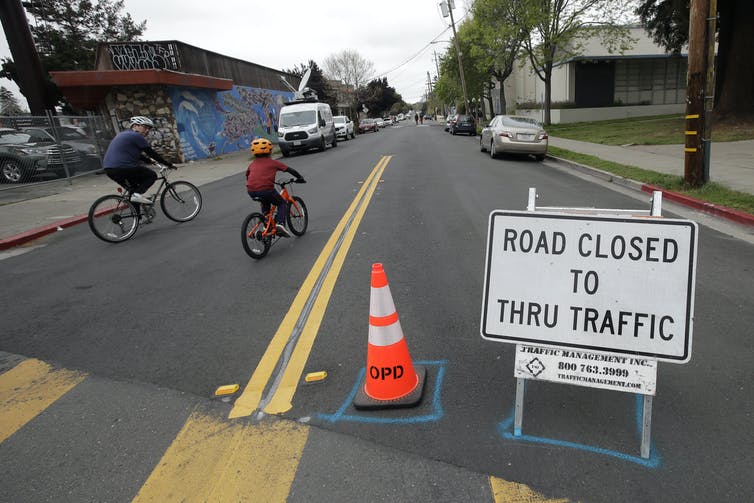
Oakland, California, closed 74 miles of streets in the spring of 2020 to give people safe spaces to get outdoors and exercise.
AP Photo/Jeff Chiu
As states lift pandemic restrictions and workers debate whether to return to office settings, will these trends continue? As a scholar who researches cities, I expect the following key factors to shape what post-pandemic traffic looks like.
Public transit in crisis
Public transportation finances took a big hit during the pandemic as ridership shrank. Many cities responded by reducing bus and train service, eliminating routes and laying off employees. Whether urban public transportation can recover over the longer term is a critical question.
So far, surveys suggest that more affluent riders are less willing to return, especially if they can work productively from home. There is still a lingering sense that public transportation, and indeed all ride-sharing, is riskier than walking, cycling or personal auto travel.
Any longer-term declines in the quality of public transportation will be disproportionately shouldered by lower-income workers, who have less choice and will be forced to navigate more expensive, less reliable services. The ripple effects on access to employment opportunities, commuting times and general quality of life could be severe, adding yet another layer to mounting inequality in U.S. society.
Public transportation already was chronically underfunded in the U.S. before 2020, and the pandemic only added to these fiscal woes. However, the scale of the current crisis may be changing attitudes, especially at the federal level.
Public transportation received a fiscal boost from the Coronavirus Aid, Relief, and Economic Security Act, known as the CARES Act, that Congress passed in March 2020. And President Joe Biden has proposed US$85 billion for capital investments in public transit in his infrastructure plan.
The details of potential investments are still taking shape, and much depends on congressional negotiations. But although the traditional American road and car mentality remains strong, the pandemic may have finally made clear that urban public transportation has a vital social and economic role in making cities fairer, as well as more efficient.
Traffic is rebounding
The increase in walking and bicycling during the pandemic was good news for many reasons. With less surface traffic, cities became quieter and less polluted. People could hear birds singing in many places for the first time and walk on streets free from busy traffic.
Cities traditionally plagued with gridlock, such as Boston, Dallas, Houston, Los Angeles and Washington, D.C., all saw less congested roads. But it’s not clear whether this will be a lasting change or a short-term response.
By mid-June 2020, while many states and cities were still under COVID-19 restrictions, traffic had rebounded across the country to almost 90% of pre-pandemic levels. Washington, D.C., was at 70% of its normal level, New York City was at 82%, and Los Angeles was at 85%. Now, as vaccines and the end of pandemic controls make people freer to move around, many cities are quickly returning to prior traffic levels.
Somewhat counterintuitively, having more cars on the road could actually improve safety. With more traffic, average speed may decline to safer levels.
However, distracted driving could offset this trend. We live in an age of distraction, where many people feel it is OK to drive while texting and tweeting. As traffic returns to pre-pandemic levels, cities and states will need to refocus attention on measures such as restricting cellphone use in cars.
Making city streets more people-friendly
Perhaps the most encouraging traffic-related news is that many cities are forging ahead with plans to reduce car travel and make streets safer for pedestrians and cyclists.
The pandemic offered a unique opportunity to reimagine the city as a place where drivers had to share space with others. This also was a trend that predated COVID-19 but accelerated in 2020 when streets were relatively empty.
Many cities are now implementing initiatives like free public transportation, protected bike lanes, bike-sharing initiatives, congestion pricing, regular street closures, priority bus lanes, quiet streets and reduced traffic speeds. These cities include Boston, Chicago, Los Angeles, New York, Seattle, San Francisco and Washington, D.C.
But there are competing interests and political counterpressures. One survey of mayors found that many endorsed changes to street space, but relatively few were planning to make them permanent. City leaders realize that powerful economic interests want consumers and workers to have downtown access by private car.
The coming months could well be a key pivotal point. The pandemic gave Americans a tantalizing glimpse of what less car-oriented cities would look like. The pandemic saw the reclamation of urban streets for public use, the emergence of a less car-centric city and the reimagining of a safer, slower, quieter city with streets shared among a variety of users. But many interests want a quick return to the status quo.
The outcome will depend on how effectively urban dwellers and advocacy groups make their case for more people-centered city streets.
*****
Header image: Rush-hour traffic in Los Angeles on June 15, 2021. Carolyn Cole / Los Angeles Times via Getty Images
John Rennie Short, Professor, School of Public Policy, University of Maryland, Baltimore County
This article is republished from The Conversation under a Creative Commons license. Read the original article.
]]>
By John Rennie Short, professor, School of Public Policy, UMBC Traffic is so ubiquitous in U.S. cities that until recently, imagining urban life without it meant looking to other nations for...
https://umbc.edu/stories/as-urban-life-resumes-can-us-cities-avert-gridlock/
https://my3.my.umbc.edu/api/v0/pixel/news/119594/guest@my.umbc.edu/3ab843242a87d84767a0333a1b29ffcf/api/pixel
cahss
covidresearch
perspectives
public-policy
the-conversation
UMBC News & Magazine
https://my3.my.umbc.edu/groups/umbc-news-magazine
https://assets1-my.umbc.edu/system/shared/avatars/groups/000/001/943/24435aa6207c452e7bc15cc74b42c7bb/xsmall.png?1748556657
https://assets1-my.umbc.edu/system/shared/avatars/groups/000/001/943/24435aa6207c452e7bc15cc74b42c7bb/original.png?1748556657
https://assets2-my.umbc.edu/system/shared/avatars/groups/000/001/943/24435aa6207c452e7bc15cc74b42c7bb/xxlarge.png?1748556657
https://assets2-my.umbc.edu/system/shared/avatars/groups/000/001/943/24435aa6207c452e7bc15cc74b42c7bb/xlarge.png?1748556657
https://assets3-my.umbc.edu/system/shared/avatars/groups/000/001/943/24435aa6207c452e7bc15cc74b42c7bb/large.png?1748556657
https://assets1-my.umbc.edu/system/shared/avatars/groups/000/001/943/24435aa6207c452e7bc15cc74b42c7bb/medium.png?1748556657
https://assets2-my.umbc.edu/system/shared/avatars/groups/000/001/943/24435aa6207c452e7bc15cc74b42c7bb/small.png?1748556657
https://assets1-my.umbc.edu/system/shared/avatars/groups/000/001/943/24435aa6207c452e7bc15cc74b42c7bb/xsmall.png?1748556657
https://assets2-my.umbc.edu/system/shared/avatars/groups/000/001/943/24435aa6207c452e7bc15cc74b42c7bb/xxsmall.png?1748556657
UMBC News & Magazine
0
0
false
Mon, 21 Jun 2021 18:57:03 -0400
By Saving One Life, You Have Saved All Humankind
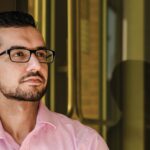
Arrested for his role in a failed terrorist plot as a teenager, Mohammed Khalid found freedom from his radicalization after prison officials showed him kindness and empathy. Freed in 2017 and now a senior at UMBC, Khalid has surrounded himself with mentors as he researches how to help others see through the lure of extremism.
As an incoming transfer student to UMBC, Mohammed Khalid needed to be excused from some of the mandatory McNair Scholars Program orientation sessions to give a presentation at TEDxJHU. The title of his talk? Reconciling Humanity: Struggles of a Former Teenage Terrorist.
As McNair program director Michael Hunt listened to the information systems major tell his story over the phone, he could hear Khalid gaining more confidence as he went through the details. At the end, Hunt asked if Khalid would like to practice giving his presentation to his fellow McNair scholars before the real thing.
This is not how Khalid normally introduces himself at first meetings, but he doesn’t shy away from it either. “What I told him,” says Hunt, ’06, M13, mathematics, “is that you’re part of us now. You’re one of us. So just know that your story is now our story. Right? I really wanted him to understand that.”
 At the 2019 McNair orientation, Michael Hunt, right, talks to Khalid before he leaves for the TedxJHU event.
Before Khalid immigrated to America at age 13, his perspective of the West was shaped through literary fantasy like the Harry Potter books and The Chronicles of Narnia. Once arrived in a land less magical than he hoped, Khalid would come to be enmeshed in his own struggle of good versus evil, envisioning the world in a false dichotomy of strict black and white, pitting his perceived brothers and sisters versus the world.
Born in the United Arab Emirates and raised in Pakistan, Khalid and his family joined his father in 2007 in Howard County, Maryland. Certain memories stand out from that first day, he says. An overly brusque immigration officer at the airport in New York, his father in the car emphasizing that this is their new home—they will go to school, work, live, and die here one day, he said—and the loneliness of arriving at their townhouse late at night.
One thing that excited Khalid was starting school in his new country. He already knew English well after being brought up in a British education system and was excited to find a group of friends. But when he introduced himself in class, his new classmates snickered, he remembers.
“Mohammed is a terrorist’s name,” they told him.
Sharing his journey
Khalid ’21, information systems—a Cyber Scholar, an Honors College student, and a UMBC McNair Scholar—has shared these painful memories very publicly—in a Vice news segment, in panels around the country, and recently in a national magazine. He presents them not as an excuse for what followed in his teenage years, but as an open way of grappling with the decisions he made, with the goal that he might possibly help someone else avoid the descent into extremist circles.
Mohammed Khalid was the youngest person to be convicted of terrorism in the United States. He was arrested at 17 in July 2011 and released from criminal custody in December 2015, although he was immediately detained by the U.S. Immigration and Customs Enforcement until May 2017. He won his U.S. citizenship in 2018. After his deradicalization in prison, Khalid has dedicated his life to helping other young people not fall under the sway of extremists like he did.
Hunt explains that the McNair program does more than prepare students for graduate education in all disciplines through research, mentoring, and other scholarly activities—it also focuses heavily on community building with an emphasis on providing a space where students can cultivate productive interactions, and speak honestly and critically from their own experience with the goal of mutual learning.
Khalid took Hunt up on the offer to practice his talk in front of the McNair peers he had only just met. “There was a real emotional connection,” remembers Hunt, “and an understanding of his vulnerability. I know that for the community, it really shaped their understanding of the dynamics of the group. So it wasn’t just about him. It was about how this allows you to connect with a group of people who are going to be sharing your journey.”
Who are your brothers and sisters?
Connecting with people in real life was not going well for Khalid in high school. The terrorist comments didn’t abate, and neither did digs at his religion and origins. These insults were completely out of context for Khalid, so he turned to a common source for answers—Google. He then found a home on YouTube where he met people he considered friends—his true brothers and sisters in the faith, he thought at the time—watching and translating into English videos explaining his religion. Soon, the website algorithm changed the videos promoted to Khalid; he was watching suicide bombings and communicating with people tied to Al-Qaeda and other terrorist organizations. He was embraced by people online who called him a brother and welcomed him into their extremist community.
“Calling someone your brother and sister in Islam is the biggest modicum of respect that you can give them,” explains Khalid. “I think that it’s an innate human need to be heard and to be listened to. And these people online who I was calling my brothers and sisters, I would talk to them online and then come to find out they were actually listening to me and they would reflect my feedback. That’s something, I think, very necessary to camaraderie.”
 Khalid spoke at an event in 2019 called the Pathways In and Out of Islamism: A Conversation with Two Former Extremists.
On his way to discovering more about his religion, Khalid mistook extremism for fervor, recognizing now that “extremists had actually hijacked the philosophy and the ideology of Islam, which I call Islamism; the political side of it obviously, not the religious side, which is different.”
In parsing how his thinking worked at the time, Khalid says he thought along these lines: “Well, my classmates are calling me a terrorist because of what’s happening in other countries and at the same time they [Americans] are hurting ‘my people.’ So who does my allegiance lie with? Is it with people who are part of my faith or with people whom I’ve just encountered in this new country who are actually demonstrating this antagonism against me?”
Khalid says he was spending 40 hours a week on YouTube chats with like-minded individuals, all the while pulling away from his real family. His involvement eventually broadened beyond the virtual, and in 2011, he was arrested in connection with an international (unsuccessful) plot to murder a Swedish cartoonist. He attempted to recruit people and solicit funds for an American woman known as “Jihad Jane” who was organizing the hit.
In his TEDx talk, Khalid goes into detail about his arrest and how surreal the situation seemed in the moment. An FBI officer had to remind the then-17-year-old to say goodbye to his parents. After his arrest, Khalid was diagnosed with Asperger’s Syndrome, a type of autism, which has helped explain to him those feelings of detachment during the harrowing moments of his arrest and also when thinking back on how hard it was to make friends in school.
“What I told him is that you’re part of us now. You’re one of us. So just know that your story is now our story. Right? I really wanted him to understand that.”
Michael Hunt, UMBC McNair program director
It was in prison, of all places, that Khalid says he began to see the shared humanity with fellow prisoners and guards alike. “All that the prisoners and prison officials wanted to do was understand, and all I ever wanted in my life was to be understood,” says Khalid. The correctional officers took time to share their own experiences with Khalid, which over time broke down the barriers Khalid had erected. One officer in a juvenile facility even challenged him, “Have you actually read the Qur’an from front to back?” When Khalid said no, he was given a copy.
“And I read it at that point,” Khalid says. “That’s when the ideological farce that I was believing in came breaking down. I think one of the verses that really resonated with me was how saving one life means that you’re saving humanity, and how killing one life, it’s like you’re killing all of humanity. I think that’s just one of the many beautiful principles in the Qur’an, that it is completely divorced from extremism.”
Finding ethical ways of detecting online radicalization
At UMBC, Khalid has jumped head first into his information systems major with a focus on cybersecurity. His drive to help other young people not fall sway to extremism online is apparent, says Vandana Janeja, professor and chair of Information Systems. “Mohammed has tapped into all the right resources for him to advance,” says Janeja. “He’s a real good example for other students—he showcases the best of what we have to offer at UMBC.”
Khalid transferred to UMBC in winter 2019. He quickly reached out to Janeja and Anupam Joshi, professor and chair of Computer Science and Electrical Engineering and the director of the UMBC Center for Cybersecurity, for help with formulating methodology for his research project assessing indicators of online radicalization.
 Khalid shares his poster “Mass Media’s Ideology of Middle Eastern Terror and the Impossibility of the Individual” at the 2019 Annual Biomedical Research Conference for Minority Students.
“Frankly, if I’m being very honest,” says Joshi, “if someone from any background other than Mohammed’s had approached me and said, ‘I want to do this work,’ I would have probably not agreed to do it. In some areas, you can’t bring a certain amount of necessary empathy to your research unless you’ve been in that situation.”
And what Khalid was interested in researching—how to detect signs of Islamist radicalization from online discourse—is extremely complex, adds Joshi. “It sounds deceptively simple, but it’s very hard to do that. Because you’re trying to judge the mental state of a person based purely on what they’re saying in public-facing platforms.”
Both Joshi and Janeja pushed Khalid to study the ethics of data analysis. “In speaking to him about his research, I encouraged him to look at various perspectives to data analytics,” shares Janeja. “In our department, we frequently have conversations around ethics with students. ‘Keep in mind, as you are making choices in your algorithm, that you’re using this threshold to cut off these participants from analysis or using this threshold which impacts people in a certain way.’” Joshi adds that researchers’ biases can also easily enter their algorithms without careful consideration.
“What I told Mohammed,” says Joshi, “was that for his project, I am happy if he just ends up getting exposed to these ideas and how the technology can be applied to detect radicalization. He’ll have the rest of his graduate career or research career if he wants to continue to improve things, because this is a particularly hard problem.”
Holistic mentorship
Khalid is in the distinct position of knowing personally how people can influence you to pursue good or evil. He has become more discerning about the type of mentors he allows into his life, but more than ever understands the need for trust and vulnerability and has surrounded himself with teachers who can address all facets of his mental, physical, spiritual, financial, and academic life.
When Khalid was released from prison in 2017 after his five-year sentence, he quickly sought to make up for lost time. Prior to being arrested, he had received early acceptance to Johns Hopkins University, but now he had to start his educational journey from scratch. “Rejection is the word I associate the most with that period,” Khalid says candidly. He eventually found his footing at the Community College of Baltimore County (CCBC).
 Khalid participates in activities at the February 2019 McNair Scholars Program group interview with other UMBC students.
“Mohammed is the type of student that takes every opportunity that comes before him—every opportunity to grow, to learn, and to serve,” says Natasha Cole-Leonard, associate professor of English and director of the honors program at CCBC, who got to know Khalid when he was a leader in the honors program and on the student honors council.
At some time early in their relationship, Cole-Leonard says Khalid asked for a one-on-one meeting. “In reflection, I appreciated the fact that he trusted me to hear his story before it was a situation where he felt compelled to or because it was breaking news. It was just out of his own desire to be honest about his background.”
Khalid has continued to open up to advisors and mentors at UMBC, and through the McNair program has been mentoring other students as well. It’s a role he’s taken to heart. “One of the things that I really emphasize is empathy. We can all sympathize with anyone, but empathizing is where it becomes difficult because you’re really putting yourself in the other person’s shoes and looking through their eyes, which is super hard,” says Khalid. “It’s exciting and interesting to coach others, providing them with words of affirmation and giving them encouragement and support. I’m letting them know that I’m there for them, no matter what happens.”
McNair program director Hunt is developing his dissertation for the language, literacy, and culture Ph.D. program at UMBC on holistic critical mentoring, which he also practices with his McNair scholars. Some of the tenets Hunt mentions are reciprocity between mentee and mentor, while both parties are asked to collectively bring their culture and lived experiences to the relationship.
 Khalid with fellow McNair cohort member, Dildora Salimjonova ’20 (standing, left), at the 27th Annual UMBC McNair Scholars Conference on September 20, 2019.
“We provide a space where affirmation comes first,” says Hunt. “Before any of the work, before we get to the deadlines, before we get to anything we’re dealing first with their humanity. In our McNair community, we have been intentional about scholars, staff, and mentors being able to show up as fully themselves.”
“Having someone who always believes in you is super important. And that’s something I’ve actually personally experienced at UMBC,” says Khalid. “All these people who I count as my mentors, Dr. Joshi, Dr. Janeja, Cindy Greenwood of the Cyber Scholars program, and Mr. Hunt…all these people actually believed in me when the whole world said I couldn’t do this, and here we are and I’m still a mentee.”
The power of being heard
Khalid’s cautionary tale against the temptations of extremism seems especially necessary in American culture currently. As the country wrestles with conspiracy theories that have torn at the fabric of the nation, what can we learn from the mistakes of teenager Khalid? “People tend to find ideology that already fits in with their perfect narrative…whatever reinforces what they want to believe in, no matter the regard for the facts out there,” says Khalid.
As hard as it might be, Khalid says, we need to work on pinpointing our commonalities.
 Khalid poses with Jonathan Velez, an instructor at University of Pittsburgh who guided Khalid in incorporating machine learning approaches in his research in 2019.
“Emphasize the humanity of the other person and things will get better. I know that sounds like just a perfect world, but I’ve found that people who feel heard—if you listen to their story—that’s a way to start the conversation of what’s bothering them.” He returns to his own period of deradicalization.
“I started to change after I was able to look at these correctional officers in a new light. This led me to come out of that us-versus-them mindset and believe, ‘Well, these people, their humanity is no different than mine,’” he says. “And that was the first crack in the ice, that kind of led to the shattering of the philosophy and the ideology that I was believing in.”
Khalid acknowledges that everyone loves “a classical prison story of redemption,” but knows that he will continue to face questions about the sincerity of his deradicalization. “To that,” he adds, “only time will tell, and time has been telling so far.”
*****
STEM professionals need to prioritize the social impact of their work. Read more about interdisciplinary teams at UMBC researching methods to support these efforts.
Header image: Mohammed Khalid ’21 on campus in spring 2021, by Marlayna Demond ’11. All other images provided by Khalid.
]]>
Arrested for his role in a failed terrorist plot as a teenager, Mohammed Khalid found freedom from his radicalization after prison officials showed him kindness and empathy. Freed in 2017 and now...
https://umbc.edu/stories/by-saving-one-life-you-have-saved-all-humankind/
https://my3.my.umbc.edu/api/v0/pixel/news/119595/guest@my.umbc.edu/cc860579a9436cc783432a90063b9cd9/api/pixel
campus-life
coeit
communityimpact
cybersecurity
information-systems
mcnair
transfer
UMBC News & Magazine
https://my3.my.umbc.edu/groups/umbc-news-magazine
https://assets1-my.umbc.edu/system/shared/avatars/groups/000/001/943/24435aa6207c452e7bc15cc74b42c7bb/xsmall.png?1748556657
https://assets1-my.umbc.edu/system/shared/avatars/groups/000/001/943/24435aa6207c452e7bc15cc74b42c7bb/original.png?1748556657
https://assets2-my.umbc.edu/system/shared/avatars/groups/000/001/943/24435aa6207c452e7bc15cc74b42c7bb/xxlarge.png?1748556657
https://assets2-my.umbc.edu/system/shared/avatars/groups/000/001/943/24435aa6207c452e7bc15cc74b42c7bb/xlarge.png?1748556657
https://assets3-my.umbc.edu/system/shared/avatars/groups/000/001/943/24435aa6207c452e7bc15cc74b42c7bb/large.png?1748556657
https://assets1-my.umbc.edu/system/shared/avatars/groups/000/001/943/24435aa6207c452e7bc15cc74b42c7bb/medium.png?1748556657
https://assets2-my.umbc.edu/system/shared/avatars/groups/000/001/943/24435aa6207c452e7bc15cc74b42c7bb/small.png?1748556657
https://assets1-my.umbc.edu/system/shared/avatars/groups/000/001/943/24435aa6207c452e7bc15cc74b42c7bb/xsmall.png?1748556657
https://assets2-my.umbc.edu/system/shared/avatars/groups/000/001/943/24435aa6207c452e7bc15cc74b42c7bb/xxsmall.png?1748556657
UMBC News & Magazine
0
0
false
Fri, 11 Jun 2021 12:53:04 -0400
Up On the Roof—Spring 2021
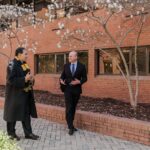
Although we may still be limited in terms of opportunities to physically visit campus, there are still many ways UMBC alumni can engage with the community. In a recent chat with UMBC President Freeman Hrabowski, Alumni Association President Brian Frazee ’11, political science, and M.P.P. ’12, the vice president of government affairs for the Maryland Hospital Association, shares why it’s so important to stay connected. And no, you don’t have to live next door to do it.
Frazee: You know, from the very beginning, I was so fortunate to have a great experience at UMBC. When people talk about UMBC they say that you get individualized attention, that people care about you, it’s a community. I felt that way right away. I was a Sondheim Public Affairs Scholar, and I did the B.A./M.P.P. program and I went straight through, stayed for five years to finish my master’s in public policy. And then I actually bought a house right next to UMBC. I did, I lived right next to the campus. I thought, now there’s really no excuse for me not to give back to this university. So I participated in every opportunity I could—alumni events, Homecoming, mentoring students, and staying connected with my professors.
A few years went by doing that, and then Dr. Art Johnson, the former provost and director of the Sondheim Public Affairs Scholars Program said, “You should think about joining the alumni association board of directors.” Long story short, I applied, he nominated me, and I got on the board and the rest is history, and now I feel that my role is really twofold. Number one is to keep my fellow alumni engaged with UMBC. And two, is encouraging my fellow alumni to give back to the university, whether that’s financially and or through their time of volunteering.

Hrabowski: That’s wonderful. UMBC is all about stories, and I love hearing about those experiences and the memories of connecting to UMBC and the Sondheim program. And Brian, you reflect the significance of that program as we think about producing leaders in our state…and thinking about the whole picture, who are we as a campus, as a university, and how do alumni connect to the rest of campus and to the larger society? Your story is a great example of alumni engagement and the reasons why giving back is so important. It’s inspiring to me.
Frazee: The past year has been incredibly challenging for obvious reasons, but it has also presented us incredible opportunities to learn from what we have been through. I think one of the greatest ways we can do that is through the virtual opportunities that we now have learned work very well. Retrievers Connect is one example of that. It is a new platform where folks can make those virtual connections from alumni to alumni, to current students, to faculty, or to any member of the UMBC community. It’s been very active…and it’s been interesting to connect with old friends and old professors in this new way.
Our alumni are busy like everyone else, and they are all over the world, which is a great thing. So the ability for us to really expand our network of alumni beyond just the folks that happen to live in this area has been huge. We now have alumni board members that live in Atlanta. We have another one coming from Chicago; before that just wouldn’t have been possible. It’s wonderful. Nothing replaces the in-person networking opportunities, but at same time, how can we leverage the virtual environment to connect more people? And how do we find that right balance when things go back to “normal.”
There are other ways, too. There are so many alumni chapters that are very active, depending on your interest area. You can reach directly out to a board member as a first step to engagement. You can connect with any member of the alumni engagement staff. Many alumni may not know that there is an entire staff that is dedicated to alumni relations and they are incredible. And when we are able, be sure to come to events, or connect with your favorite professor or your old department. There are a multitude of ways to stay involved. You just have to figure out what’s right for you.
Hrabowski: And we’ll look forward to seeing you when you do. You know, we always remember how people make us feel, and how universities make us feel. We really do. And either the university tells students in so many ways that they’re special and they will be fine and to be their best selves or they don’t. We are determined to do that. Thank you, Brian, for all you do. We’re so proud of you.
Learn more about Retrievers Connect and other ways of engaging with Retriever alums at alumni.umbc.edu.
*****
Header image: President Hrabowski and Brian Frazee walk on campus in early spring 2021. Photos by Marlayna Demond ’11.
]]>
Although we may still be limited in terms of opportunities to physically visit campus, there are still many ways UMBC alumni can engage with the community. In a recent chat with UMBC President...
https://umbc.edu/stories/up-on-the-roof-spring-2021/
https://my3.my.umbc.edu/api/v0/pixel/news/119596/guest@my.umbc.edu/8a3f325551fd0468fd2f340bd425d375/api/pixel
alumni-association
campus-life
political-science
public-policy
retrievers-connect
spring-2021
up-on-the-roof
UMBC News & Magazine
https://my3.my.umbc.edu/groups/umbc-news-magazine
https://assets1-my.umbc.edu/system/shared/avatars/groups/000/001/943/24435aa6207c452e7bc15cc74b42c7bb/xsmall.png?1748556657
https://assets1-my.umbc.edu/system/shared/avatars/groups/000/001/943/24435aa6207c452e7bc15cc74b42c7bb/original.png?1748556657
https://assets2-my.umbc.edu/system/shared/avatars/groups/000/001/943/24435aa6207c452e7bc15cc74b42c7bb/xxlarge.png?1748556657
https://assets2-my.umbc.edu/system/shared/avatars/groups/000/001/943/24435aa6207c452e7bc15cc74b42c7bb/xlarge.png?1748556657
https://assets3-my.umbc.edu/system/shared/avatars/groups/000/001/943/24435aa6207c452e7bc15cc74b42c7bb/large.png?1748556657
https://assets1-my.umbc.edu/system/shared/avatars/groups/000/001/943/24435aa6207c452e7bc15cc74b42c7bb/medium.png?1748556657
https://assets2-my.umbc.edu/system/shared/avatars/groups/000/001/943/24435aa6207c452e7bc15cc74b42c7bb/small.png?1748556657
https://assets1-my.umbc.edu/system/shared/avatars/groups/000/001/943/24435aa6207c452e7bc15cc74b42c7bb/xsmall.png?1748556657
https://assets2-my.umbc.edu/system/shared/avatars/groups/000/001/943/24435aa6207c452e7bc15cc74b42c7bb/xxsmall.png?1748556657
UMBC News & Magazine
0
0
false
Thu, 10 Jun 2021 19:48:40 -0400
MUTUAL FLOURISHING
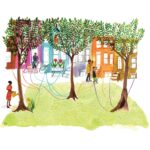
In music, science, and theatre classes, in research labs, in conservation efforts, and almost every corner of academia, there’s a growing awareness and dedication to community-engaged scholarship. How are different disciplines training up social justice-minded students to do no harm to the communities they work in? With one thriving relationship at a time.
A tree grows in Baltimore. Its roots push against the surface, its newly budding canopy blocks some of the dreary rain on this last day in March. The aphorism promises flowers soon, but the daffodils are already here, lush and golden against the wet grass. Rooted in this environment, the tree struggles to absorb water in a heavily-paved area. It faces possible invasive species, the whims of developers, a strike of lightning or disease.
These outside influences affect the flourishing of this tree, and the flourishing of the neighborhood it’s rooted in is just as interconnected. A tension, a balance, a system of reciprocity.
In Franklin Square Park, on a parcel of land donated by developers to the southwest Baltimore neighborhood in 1839, this tree and 96 others were recently surveyed by UMBC students at the request of the Franklin Square Neighborhood Association. They wanted a catalog of their natural resources, but also a record of what they’ve lost—only seven of the original 149 trees on a 1916 map of the park remain.
Working with members of the neighborhood, Mariya Shcheglovitova, Ph.D. ’20, geography and environmental systems, and Bee Brown ’21, environmental science, and other UMBC student researchers began their work. Their project would rapidly expand from an arboreal park survey to a community-focused project that invited local kids to participate in a scavenger hunt and other activities to build on the students’ existing connection to the park. As Shcheglovitova and Brown discovered, “understanding park quality is dynamic and can only be partially captured in a survey of the park features. Historic accounts and a focus on what happens in a park can enrich our understanding of park quality.”
What began in Franklin Square as an effort to catalog trees—separate trunks with roots and canopies equally intermingling—broadened to encompass the community who interacts with the park the most. Acknowledging this interconnectedness in research of all types at UMBC is not new to academia but is becoming a more prominent approach to research as different disciplines wrestle with ways to train up social justice-minded students and do no harm to the communities they work in.
Bridging campus and community
Community-engaged research gives a name to this method. At UMBC, most service-learning and community engagement experiences are facilitated through The Shriver Center, which was founded nearly 30 years ago. Director Michele Wolff explains that in the early days, the Center emphasized “that higher ed institutions shouldn’t tell communities what they need. The partnership should be one of mutuality and reciprocity. So our focus should be listening to community partners, hearing where their gaps are and then being a resource to work with them to fill the gaps.”
This is still the Center’s primary mission, and in January 2020, the Carnegie Foundation for the Advancement of Teaching honored UMBC with its distinguished Carnegie Community Engagement Classification, acknowledging UMBC faculty, staff, students, and partners for their deep commitment to strengthening the bonds between campus and community.
As part of the application process, more than 120 campus partners and dozens of community partners underwent a rigorous self-study. Along the way, they found that in music, science, and theatre classes, in research labs, in conservation efforts, and almost every corner of academia, there’s a growing awareness and dedication to community-engaged scholarship. Wolff sees this movement come alongside “an increased appreciation of disparities, racial inequities, and other social justice issues. At the same time, people have been working on increasing appreciation and inclusion of community members as experts, or thinking about what counts as scholarly work.”
Some departments are working on ways to adopt these methods, and others have this ethos baked into their core. American studies, one of the original majors at UMBC, calls community-based research and engagement one of the “signatures” of the major. With its joint focus on “coupled natural and human systems,” geography and environmental systems (GES) is another department that recognizes the necessity and power of community-engaged scholarship.
Slow scholarship
“In the field of environmental justice, it’s absolutely assumed and expected that you’re going to do community-engaged research,” says Dawn Biehler, a GES professor who first became aware of the concept as a graduate student. “More and more people are realizing that this is important and a good way of doing research, but to do it really well takes so much time and you have to be brave, in a way.”
As an academic, says Biehler, you have to honestly assess if your career—the timing of publications and tenure-track expectations—will suffer from this process. “It takes time to build genuine relationships with the community,” she continues. After engagement and research, then you still need to publish, and all of this takes more time than many instructors have allotted in their balance of research and teaching. “The other thing you have to recognize is that the people in the community you’re working with, they’re exposed to risks all the time, just a different set of risks,” says Biehler.
Institutionally, UMBC is changing to reflect community-engaged research as a priority. In May 2019, the Faculty Senate successfully proposed new language to include evaluation of community-engaged scholarship in the promotion and tenure policy for all departments, says Donald Snyder, chair of the committee that spearheaded the policy change and a lecturer in media and communications studies.
Still, even with the university’s acknowledgement of this methodology, why would professors or students voluntarily choose the inherently riskier, if not just slower, approach to research?
Wolff highlights two affective or social emotional competencies she hopes students take from their time in community work—perspective taking and shared humanness. “What better place to develop and grow (those competencies) than in experiences where you have the opportunity to work with others who are different from yourself and in contexts that are different from the ones you’re used to?” asks Wolff.
Intersectional research
As a doctoral student, Shcheglovitova was known as “the person who cared about trees and social justice in the city,” so she wasn’t surprised when undergraduate student Bee Brown approached her to collaborate on a research project that interwove those topics.
Biehler’s multi-year connection with the Franklin Square community, says Shcheglovitova, gave neighborhood folks someone to approach who was willing to listen and respond about local environmental issues and allowed her and Brown to more easily gain the trust of the people involved.
Scott Kashnow, vice president of the Franklin Square Neighborhood Association, wanted an updated survey of the park’s trees that could inform future plantings in the park. Looking at historical photos and a 1916 map of the park, it’s clear a lot has changed in the past 100 years. Park features have disappeared or degraded—the once bubbling fountain is planted over, the park bathroom is boarded shut, and many of the area’s ash trees were decimated by an invasive insect species.
After the survey was completed, Kashnow came up with the idea to invite students from a local school to celebrate the work and take part in the ongoing research. Shcheglovitova, Brown, and Biehler took the opportunity to gain a deeper understanding into community relationships with the park space.
“This is a way research can actually be helpful to the community,” says Kashnow, a Franklin Square resident for 14 years. “Through various organizations, we’ve been studied so much and oftentimes the studies don’t make any tangible difference in people’s lives. And people are still very happy to participate, you know, everybody has opinions, they love to talk about them. But does the research actually translate to some difference in people’s lives?”
Orchestrating social change
Regardless of the discipline, successful community-engaged scholarship depends on sustained relationships over time. Brian Kaufman, associate professor of music, sees grade school music teachers as great examples of this practice. Unlike other academic subjects in grade school where students have new instructors each year, music teachers interact with the same student musicians year after year. So it naturally follows for Kaufman that his music education students at UMBC should commit to a school for longer than a semester.

Through the Baltimore Symphony Orchestra initiative OrchKids (and with the support of The Shriver Center), UMBC students work with Kaufman at Booker T. Washington Middle School in West Baltimore for two years at a time. “It’s unusual for student teachers to spend four semesters at the same school, but to really build relationships with students, to see them develop, this is necessary,” Kaufman says, not just for the middle school students, but his UMBC students as well.
Pre-COVID, (although they have continued the program virtually) this would mean seven to 10 site visits to the school per semester. UMBC students spend the first half of the visit observing the teacher or engaging with the class, and the last hour spent in guided reflection.
“To me,” shares Kaufman, “that’s where the juicy part comes in.” Before heading back to campus in a Shriver Center van, Kaufman says, “we sit down and talk about what we learned. And we really try to unpack our experience and make connections to some bigger issues—issues of equity, and these larger discussions about teaching in the field and service-learning in the city and how these things tie together. That’s where the real richness comes in for the students.”
Science on the stage
If music education lends itself naturally to following a community-engaged process, what about cross-disciplinary initiatives like Erin Lavik and Lynn Watson’s project Theatre Arts and Communicating Science? Lavik, professor in the department of chemical, biochemical, and environmental engineering, and Watson, a theatre professor, collaborated with Arbutus Middle School science teachers to use theatre skills—playwriting, improvisation, and voice/speech—to help their young students tell stories about their capstone science projects.
Lavik had personally experienced the powerful interplay between STEM and theatre in her own studies, she says, “So I wanted to create a program that helped college students tell the story of their science and let them engage with students in middle school who were vulnerable to losing their passion in science.” When she approached Watson about the idea, the theatre professor was thrilled. “We shared an understanding of the power of theatrical storytelling that can bring communities of people together,” says Watson.
Prior to the program, the UMBC undergraduate and graduate engineering and theatre students spent a preparatory weekend workshopping with science teachers at Arbutus Middle School. Lavik and Watson saw the Retrievers’ confidence and community-building efforts gain steam over the weekend which led to a more successful outcome when they worked with the middle schoolers.
The students ultimately used a playwriting exercise to understand the plight of endangered species and improv scenarios to demonstrate the real world effects of Newton’s Laws of Motion—all of this performed with joy, says Watson. She noticed that the experience also “had a tremendous impact on the UMBC students in terms of confidence in their abilities as leaders and their ability to take action in contributing to the wider community, including outside the university.”
Before their joint project in January 2020, Lavik and Watson were both interested in the concept of community-engaged programming, but they attribute the successful launch of their vision to The Shriver Center. After the fact, Lavik observed that community-engaged scholarship can increase student retention—the stipends attached to the program, made possible by a Charlesmead Initiative for Arts Education grant, afforded students the time to participate. “I hope that over time, we will be able to show that programs that integrate arts and science can help students thrive at UMBC, and bringing these programs to our communities can increase the number of students, particularly from underrepresented populations, who can begin to see themselves as scientists and engineers with joy.”
Changing university culture
UMBC’s Center for Democracy and Civic Life has been instrumental in creating a campus culture of an engaged community—promoting equitable off-campus partnerships while emphasizing the importance of starting that process within the communities at UMBC. The Center’s Director David Hoffman, Ph.D. ’13, language, literacy, and culture, and Assistant Director Romy Hübler ’09, MLL, M.A. ’11, intercultural communications, Ph.D. ’15, LLC, say that an initiative that precedes the formalization of the Center is the BreakingGround grant program.
The origins of BreakingGround came from an effort to organize a UMBC Civic Year in 2012, says Hoffman, when “we discovered all of these people who were doing amazing things.” Greg Simmons, M.P.P. ’04, vice president of institutional advancement, challenged the group to think bigger, remembers Hoffman. “He said, ‘you know, you’re talking about this as a year, but this really is about UMBC’s identity. This is a place where we come together because we want to change the world and we want to change it in particular ways that align with values like inclusive excellence.’”
Hoffman, along with Wolff and others, recognized that community-engaged work was happening in classrooms, at service-learning sites, and in other campus settings, but there wasn’t a unifying structure for like-minded people to find each other easily. Through a sustaining grant from the provost’s office, BreakingGround has offered grants to 80 applicants to infuse courses and programs with opportunities for students to develop civic agency, and to shape their experiences so they’re not “just a one-off community service project, but an opportunity for lasting community engagement,” says Hoffman.
Hübler joined the BreakingGround working group in 2012 as the community liaison for the Graduate Student Association, and as a result of her involvement changed the topic of her dissertation. “I noticed among graduate students from all these different disciplines that many of us were drawn to our topics of study because we either had personal experience with them or we lived in communities where we would observe the effects of bad policy on people and centuries of oppression and marginalization.”
In 2013, UMBC began sending delegations to the Imagining America conference, which, according to the group’s mission, brings together people in higher education, non profit organizations, and activists to “imagine, study, and enact a more just and liberatory ‘America’ and world.” Imagining America’s leaders were struck by the holistic vision described by UMBC participants. “They saw how we were changing the university’s culture,” says Hübler. “Like this was not just one faculty member doing this in this discipline and another one over here, and they’re not communicating, but they could see that this was an organized effort.”
As a result, UMBC was asked to bring the 2015 conference to Baltimore. Hübler and others began to reach out to partners to co-organize workshops around the city. “What is the story that we want to tell of Baltimore?” Hübler would ask. “We didn’t want it to be UMBC saying, ‘this is the story,’ right? But we came up with the story together.” In between planning the conference and the actualization of the work, Freddie Gray died in police custody in April 2015. Uprisings shook the city and caused UMBC to conduct a campus-wide inventory of Baltimore-based engagement, and that accounting ultimately strengthened the intentionality to focus community-based activities on racial equity. One of the most significant outcomes of that reckoning would come in 2017, with the establishment of the Truth, Racial Healing, & Transformation Campus Center at UMBC, which works to break down racial hierarchies with a focus on the university’s service-learning and community-engagement partnerships in Baltimore City.
Importantly, Hübler notes that UMBC is, in fact, its own community and should apply the same community-engaged best practices internally. “There are challenges we have,” she says, “and UMBC can be better. We are constantly making and co-creating UMBC. Students are not just customers floating through to get a degree, but we all have responsibility for our own community. And if we want to co-create our space, there are skills, knowledge, and dispositions that we need that are pretty much the same as what we need when we work with communities elsewhere.”
Good stewardship
Alumna Briana Yancy always envisioned herself following a typical research path, as she thought of it, a scientist in a lab. So she was surprised when she found herself on her third trip to the Bahamas as a part of biological sciences Professor Kevin Omland’s lab studying the Bahama Oriole. Yancy and the other students working with Omland partnered with The Bahamas National Trust, and she says the local community was always excited to talk about their orioles, showing them nests and asking insightful questions.

“I started to see how important this community connection is,” says Yancy, now the diversity work group staffer at the Chesapeake Bay Program, a collective of organizations whose shared mission is to protect the Chesapeake Bay. “It’s important that scientists and researchers learn how to work with local communities and how to talk about the things that they’re working on, especially for the environmental field, because it impacts everybody. If you can’t articulate that, people aren’t going to care and they’re not going to try to make a difference or get involved.”
Yancy ’19, M27, environmental science, says Omland set an example in the Bahamas that she’s tried to emulate since in her own work. “He always made sure to invite people along, to take the time to explain things to people, and also stop to get their insight,” says Yancy. As an intern at the National Aquarium checking water quality in the harbor, Yancy remembers, “people would always come up to me and be like, ‘Oh, what are you doing?’ And I would take the time to explain to them, ‘I’m doing this. This is what this machine is called. And this is how I do it, the numbers I’m looking for, and why it’s important.’”

In her current position, Yancy sees an increased attention toward community-engaged research as organizations like the Chesapeake Bay Program ask themselves how they can reach a more diverse audience. “If we keep getting engagement from the same people from the same walks of life, we’re going to miss things,” says Yancy. “And we really can’t afford to miss anything. Climate change is now and the environment is struggling. And I think that, especially with COVID, we’re seeing more clearly the intricate connection between environmental health and public health.”
Moving toward the ideal
What does it mean to engage in relationships that encourage mutual flourishing? How can the roots and the canopy both benefit and nourish the good of the one tree? This is a question The Shriver Center and their partners at UMBC have been asking themselves and the thousands of students who use the Center’s service-learning structure to engage with the surrounding Baltimore County and City communities for the past 30 years.
Wolff sees community-engaged scholarship as a step away from transactional partnerships to transformational ones. The ideal, she says, should be to include the community from start to finish so everyone benefits.
“We’re recognizing community members as experts and moving forward with a goal of reciprocity and mutuality in our work,” says Wolff. “Part of the ideal is having community members be a part of every aspect of the activity. That’s where we want to get to. I think we’re moving toward that ideal.”
*****
Illustrations by Rebecca Bradley.
]]>
In music, science, and theatre classes, in research labs, in conservation efforts, and almost every corner of academia, there’s a growing awareness and dedication to community-engaged scholarship....
https://umbc.edu/stories/mutual-flourishing/
https://my3.my.umbc.edu/api/v0/pixel/news/119597/guest@my.umbc.edu/f54618ef01ea93bb68525f057a032028/api/pixel
cahss
cbee
center-for-democracy-and-civic-life
discovery
environmental-systems
feature
ges
music
professorsnottomiss
spring-2021
the-shriver-center
theatre
UMBC News & Magazine
https://my3.my.umbc.edu/groups/umbc-news-magazine
https://assets1-my.umbc.edu/system/shared/avatars/groups/000/001/943/24435aa6207c452e7bc15cc74b42c7bb/xsmall.png?1748556657
https://assets1-my.umbc.edu/system/shared/avatars/groups/000/001/943/24435aa6207c452e7bc15cc74b42c7bb/original.png?1748556657
https://assets2-my.umbc.edu/system/shared/avatars/groups/000/001/943/24435aa6207c452e7bc15cc74b42c7bb/xxlarge.png?1748556657
https://assets2-my.umbc.edu/system/shared/avatars/groups/000/001/943/24435aa6207c452e7bc15cc74b42c7bb/xlarge.png?1748556657
https://assets3-my.umbc.edu/system/shared/avatars/groups/000/001/943/24435aa6207c452e7bc15cc74b42c7bb/large.png?1748556657
https://assets1-my.umbc.edu/system/shared/avatars/groups/000/001/943/24435aa6207c452e7bc15cc74b42c7bb/medium.png?1748556657
https://assets2-my.umbc.edu/system/shared/avatars/groups/000/001/943/24435aa6207c452e7bc15cc74b42c7bb/small.png?1748556657
https://assets1-my.umbc.edu/system/shared/avatars/groups/000/001/943/24435aa6207c452e7bc15cc74b42c7bb/xsmall.png?1748556657
https://assets2-my.umbc.edu/system/shared/avatars/groups/000/001/943/24435aa6207c452e7bc15cc74b42c7bb/xxsmall.png?1748556657
UMBC News & Magazine
0
0
false
Thu, 10 Jun 2021 17:57:01 -0400
The Show Must Go On

Dimmed lights, Twizzlers, and a big bowl of popcorn. Most of us may not have had the traditional movie theatre experience this year, but in living rooms across the country this year, many have found much-needed solace and escape through television and movies. Behind the scenes, Retrievers working in Hollywood as writers, producers, and directors have embraced the challenges of the moment—and remained ever-thankful for their audiences and creative roots. UMBC Magazine editor Jenny O’Grady sat down with five alumni working in entertainment to hear more about how they got their start, and what has kept them going creatively during this unusual time.
UMBC Magazine: What has it been like to continue working during the pandemic in order to keep up with demand for entertainment? What does that look like?
 Name: Kara Corthron ’99, theatreJob: Author, playwright, and TV writerAbout:
 Author of
The Truth of Right Now and
Daughters of Jubilation. Plays include
What Are You Worth?,
Welcome to Fear City,
AliceGraceAnon, and
Holly Down in Heaven. Writes for the TV drama-thrillers
You (Netflix),
The Flight Attendant (HBO-Max), and M. Night Shyamalan’s
Servant (Apple TV+). A multiyear MacDowell Fellow and resident playwright at New Dramatists.
Where do you turn for inspiration? Toni Morrison, Shirley Jackson, and Octavia Butler. Korean horror films.
Your favorite creative spot at UMBC? AOK Library’s “colorful Alice in Wonderland chairs”
Fave pandemic entertainment? Search Party, Schitt’s Creek, Gilmore Girls
Kara Corthron: Well, I’ll just say, I feel really fortunate that I’ve been able to work, because 40 percent of our country is experiencing food insecurity. But, the biggest shift for me in TV writing was that everything became Zoom meetings…and I still am not in love with it. We’ve found a way to make it work and be productive, but I still would much rather be with humans, and I miss that a lot.
Brandon Spells: On the network side, making that transition from our office on Sunset Boulevard, to taking pitches on Zoom, it’s just a different energy when you’re in the room with talent, and taking pitches and getting excited about things…it’s just different. Initially we stopped all productions, so that was tough. Once we got the green light, we first started productions in countries overseas, and then slowly, during the summer, we started picking up back in America. Last fall we were going nonstop, trying to catch up, because there was a gap from when we stopped. This year, you’re probably going to see that things kind of slow down, as far as the launch cadence. But maybe that’s not a bad thing, because we come out with something every week, and maybe we don’t need to launch a million things in one weekend.
Brian Dannelly: For me, when the virus came on, we were writing all the scripts, prepping everything, trying to figure out the COVID situation and trying to be ahead of it, so that when we were able to get back on set we’d be ready to go. We had no idea when we were going back, and so during that time period I had a physical, and my doctor didn’t want me flying, so I had to give up the show (In the Dark), which was terrible and sad…and really scary, too. I went into the pandemic with the hopes of coming out a better person, a better creator. We’re so lucky because there are so many people who are really struggling, so you’re trying to balance that with how you can use this time for good. And so I helped In the Dark transition to the third season, and then I just started writing like a crazy person. I became a whole food plant-based vegan, I learned how to cook. I’m adopted, so I found all my brothers and sisters—there’s nine of them. And I just really tried to kind of reconnect with who I was when I started the business, who I was when I was at UMBC, and what got me into the business, and I feel like so far I’ve come out in a place that’s really good.
Cat Mihos: For me, it’s been fascinating watching the budgets balloon for COVID compliance. We have two shows in pre-production for Amazon right now that are going to be filmed in Scotland, so we were trying to share things, like catering, so we have one bubble, also trying to make new workarounds so we use the same COVID compliance officers—we’re trying to work smarter. It’s been a year. Brandon, I get it, Netflix has definitely been our biggest supporter, and we love working with them. It comes down to Zoom meetings, our writer rooms are all remote, so if there’s any technical glitch…where you’re just frozen on a screen, ugh. It’s learning to cope, that’s the best skill on any set that you can have. I did work on Brian’s first couple films when he was in AFI (American Film Institute), so we have quite an old friendship. We’re old. But it’s lovely to have that support just right down the street.
UMBC Magazine: Is there anyone who particularly influenced you, or some other takeaway from your time at UMBC, that you still look to now in your careers?
 Name: Brian Dannelly ’97, visual arts
Job: Writer, director, and producerAbout: Executive producer and the producing director on The CW’s sleeper hit,
In the Dark. Directed shows for Netflix, Hulu, Showtime, MTV, ABC, and CBS, including
Scream, Sweet Vicious, Haters Back Off, Pushing Daisies, United States of Tara, and
Weeds. Co-wrote and directed the cult teen film,
Saved, and directed
Struck by Lightning. Currently co-creating an animated series called
Humperdinck.
Where do you turn for inspiration? Whatever personal crisis I’m going through at the moment.
Your favorite creative spot at UMBC? Kathy O’Dell’s office.
Fave pandemic entertainment? GENERA+ION on HBO Max
Dannelly: You know, I was a little broken when I got there, which is interesting because UMBC really put me back together again. My first college was Morgan State University, so it was there I made my first film at a satellite program that they had in Towson. I went from being vice president of my class to failing out because I was so freaked out about making this film. And so I struggled for like two years. It didn’t make sense that I could do this, because at the time we didn’t have internet, and we weren’t connected all over the world. It was like, I’m in this small town, how do I go from here to Hollywood?
I knew that John Waters edited his early films at UMBC, and I knew they had a lot of film equipment. I went to a meeting there, I was so scared. And so UMBC said come on in, come do this. And I had teachers like Kathy O’Dell, Holly Rubenstein, Jill Johnson—these women carried me. In fact, I was so broken when I went there, when it came to applying for a master’s degree, I applied to all of the film schools that I thought I could get into, and Kathy O’Dell sat me down and said, “You apply to the best schools.” And I applied to AFI (the American Film Institute) literally running to the train station in Washington, D.C., to put my application in the mail, because I was late and it had to be in by that night. And I never thought in a million years that I would get into that school. So, not only did they help me tap into my creativity and be who I am, but they helped put me back together again.
McKenzie Chinn: For me, part of my identity as a creative person is working in multiple spaces, in multiple disciplines. I’m still an actor, but I’ve forged more space for my own projects, my own writing. I have a poetry collective. And all of these things I do in equal measure. When I was at UMBC, I was an actor, in a very conservatory-like program. And I think the thing that I learned the most, was a level of discipline that allowed me to succeed as much as I have thus far, and that work ethic was reinforced by all my instructors in the Theatre Department. But I think it has been applying that discipline to carving out space for my own ideas and my own stories, and taking my own agency as an artist, especially as a Black person and a woman in this world, that have really benefited me as an artist and advanced my career beyond what I imagined it could be. And it has been that rebellion, frankly, that I think has allowed me to be able to pivot in the ways that I have during the pandemic. Theater is on pause right now, and so we’re all finding ways to do what we do in a different space.
Corthron: In my senior year, I was part of a group that just started writing, and were kind of performing our own works and listening. And we’re like it would be really cool to have a playwriting class, but we don’t have one. So we went to the department head who was Wendy Salkind at that time, who is lovely. We told her we were really interested in writing, and she created a class for us. She found a teacher, and they added it to the curriculum. It was really cool. I feel like she saw that what we were getting wasn’t quite enough, so she thought let’s try and figure out a way to make it enough.
I’ve never thought of myself as one thing, either, which is hard, because people really want you to do your one thing, stay in your lane. And eventually I realized I’m a writer, so I write. But whether that’s playwriting, whether that’s novels—I write young adult fiction—or it’s TV or film, I finally got to a place that’s taken a long time, to realize I can do all of it, it’s my choice if I want to be exhausted. It’s really up to me. So I think that some of that was instilled in me at UMBC.
 Name: Brandon Spells ’14, media and communication studies
Job: Creative assistant at Netflix, unscripted content
About: Worked on BET’s “106 & Park” in New York City and on productions with Nat Geo, Sirens Media, and E! In L.A., produced shows like
The Doctors,
Who Wants to Be a Millionaire?, and
The Bachelor. Today, develops and produces impactful global content for Netflix.
Where do you turn for inspiration? My mom! She is the reason I never gave up on my goals.
Your favorite creative spot at UMBC? Professor Kimberly Moffitt’s “Baltimore in Film” classroom
Fave pandemic entertainment? My favorite reality show
The Real World
Spells:So my freshman year, I was a graphic design major, and I was supposed to do this portfolio, but of course being a freshman, I procrastinated and I threw something together and submitted it to the program. And I didn’t get in. I wanted to be a cartoonist, graphic design—that was always what I was going to do. And so when I didn’t get into the program, it was a crossroads moment.What other things do I like to do? What are my other passions?
And I remembered me and my friends would shoot and edit YouTube videos and stuff, and so I was like I kind of like entertainment, but I don’t know anyone who is in the entertainment industry. I don’t even know how you get into making films, or any of that stuff. Nobody in my family ever did that. And so I started going into media communications. And the first class that I took was Baltimore Film with Kimberly Moffitt. I enjoyed it, but I just wasn’t looking at film or television in a very analytical way. Professor Moffitt, she broke things down in such a creative way, it really helped me see things I hadn’t thought of before. And I literally use those techniques today. Giving notes on a cut, and kind of using the analytical eye to look at things creatively, I use that everyday. And I honestly think it started with that class, because watching The Wire, watching Crybaby, she was breaking each scene down and why this led to this, and I’m like how? I would never have thought of something like that. And so it was really a full circle moment for me.
Mihos: I was a photography major. I worked in the darkroom at UMBC, and Alan Rutberg was one of my teachers, and I was very sad to hear we lost him two years ago. When I was 12; I built a darkroom with my dad. So it was always about analog film, and poor Alan, really I put him through the paces. I was adamant, why do I have to learn digital, there’s still going to be film. He said nope, and he pulled me into the digital age. He was great, he was challenging. Chris Peregoy, as well, was excellent. Very different teachers, but they both contributed important parts of my photographic life, which I do still use. I’ve done photo shows, I need to return to that. Digital is still not my true love. I had sort of two dads telling me digital is the future, get with it, forget complaining about it, just go. And Peregoy was like no, keep your analog film love, because it is still there, it’s just almost gone.
UMBC Magazine: Why do you think entertainment has been such a unifying force during the pandemic, and what are you hearing from people that keeps you going creatively?
Spells:I feel like some of our stuff has definitely provided people with escapism, because everyone’s cooped up in their house, they’re not traveling, not experiencing things. And so being able to just get out of your little box and put yourself somewhere else for a little bit is always helpful. Love is Blind, for instance, people loved that show. And I feel like people were unified in people’s misery, craziness, misfortune. They’re like this is so crazy, this is so wild. But having that connectivity with people, especially when you feel so far away from them, is always nice.
Corthron: Yeah, I totally agree, I think we’d all love a little bit of a vacation from what’s going on. These shows have helped a lot. I also think not only is it giving us something to connect about, because of the past year, it was giving people a reason to connect over something that wasn’t politics. I feel like there was so much going on that was painful, that it was a way not to have to, at least for like a moment, to have a conversation that wasn’t about how stressed we should be. It was a stressful year.
 Name: McKenzie Chinn ’06, theatreJob: Filmmaker, actor, and poetAbout:
 Writer, producer, and lead actor of
Olympia. Acted in the FOX pilot
The Big Leap, Empire, CBS’s
The Red Line, and onstage with Goodman and Steppenwolf Theatres, The Second City, and others. Part of Growing Concerns Poetry Collective whose releases include two albums—
Big Dark Bright Futures and
We Here: Thank You For Noticing.
Where do you turn for inspiration? Currently, ideas around Afrofuturism.
Your favorite creative spot while at UMBC? Room 318 of the theatre building, which acting students shared with the Registrar.
Fave pandemic entertainment? I’ve been very drawn to cult documentaries.
Chinn: I agree with both of you, Brandon and Kara, the world is a lot right now. Even now, if I just think too hard about it, I get really overwhelmed. And I think as creative people we have sensitivity, where we are deeply impacted by things going on around us, and the suffering of others. But in order to be able to show up for ourselves and our families, we need to be able to dispel some of that anxiety, some of that sorrow, some of that tension, because it is so strong.
And so having these various forms of entertainment from prestige television to the trashiest of the trash, has been, I think, for me, been a lifesaver…. I’ve had this really amazing experience over the last year, where my movie, Olympia, got distributed and hit streaming platforms in 2019. And then everything stopped, and so people were watching more media than they ever had. And so I think smaller indie films that maybe would not have gotten as much attention were suddenly being watched by a lot of people, mine included. And my movie is mostly Black people and people of color, and it’s a comedy. It’s got some heavier moments, some heartfelt moments, but it is a lighter movie….I remember thinking, does anybody need this movie right now? Little did I know, that was exactly what people would need during this time. And I got an experience I’m so grateful for, where I’ve had just so many Black people, specifically Black women sliding in my DMs just to thank me for the movie, from all over. And every time it happens, I’m just beside myself with gratitude.
Dannelly: One thing I don’t think people realize is that people making film and TV, they work 16 hours a day. Everyone works so hard, they’re away from their families….The other thing I always say to people, is that Hollywood is just a bunch of people from small towns and cities. It’s not like a bunch of people from L.A. Cat and I came from a little small town, and we didn’t go there as Hollywood people, and I’m sure you guys have the same experience—you go there because that’s where you go to make films and TV.
Mihos:Well, I wanted to add on that note, my dad came from Greece, he came over when he was 16. I went home to see him recently with great concern, because I thought I don’t want to get him sick, he’s 90, and he’s like, please come home. I asked him, “Dad, should I be doing this? Should I be doing this with my life?” He said, “You know what, we need to laugh, we need entertainment!” His 90-year-old wisdom just kind of turned my brain around, because I was thinking, what really is this? Is this going to matter in the big picture? Shouldn’t I be out there fighting for people, healing people, doing something more important? I really appreciated that from my dad, because you never know what you’re giving back to the world.
Dannelly: This is what I love about our business. Yes, we entertain people, that’s part of our job. I think hopefully we’re doing it for good, even if it’s a laugh. But also, we have the ability to affect every single person we work with. We have the ability to change culture by inclusiveness, by who we choose to hire. So it’s like this sort of weird external thing, where we entertain people on many different levels, and it’s also this very active, internal mechanism for change, which I love. I’m always going into a project with an agenda, always, always.
UMBC Magazine: So, what advice would you give a student or recent grad who’s trying to get into this business?
 Name: Cat Mihos ’00, visual and performing arts (photography)Job: Producer/writer, photographer, former roadieAbout:
 Met author Neil Gaiman while on tour with Tori Amos in 2002. Toured full time with bands like Tool, Mötley Crüe, Soundgarden, and Gaga until 2016 when she set up Gaiman’s production company, which she currently manages on the Jim Henson Studio lot. Worked on
American Gods,
Good Omens, and managed several book tours. Authored
Comic Book Tattoo Tales Inspired by Tori Amos. Writing a graphic novel for Z2 Comics about Vikings titled
Lore of the Havamal.
Where do you turn for inspiration? I flip through old comics.
Your favorite creative spot while at UMBC? Fells Point, where I opened my little shop 9th Life.
Fave pandemic entertainment? The Wire, X Files,
30 Rock
Mihos: I think what’s really important in life is you come up with your people. The other assistants, the people working with you on the ground. It’s important to keep checking in with people, even if you have nothing to say, no news, just be like, “how are you doing?” I do so many little mentorships, because I didn’t have much of that, and I didn’t know how to find it. There’s no rule book, and I think the younger kids, they do seem to be fine with asking. I just never thought you were supposed to ask. So please, be generous with your time.
Dannelly: While you’re there at school, understand who you are and what kind of stories you want to tell. Really connect with why you’re at UMBC. Take a lot of different classes outside of the arts department, because no one wants to make projects with people who only have a theater degree. Whatever other interests you have, spend time doing that. Create as much content as you can. Short films, Tik Toks, YouTube. I can’t tell you how many people I discover on Tik Tok and I’m like, that person is interesting, I wonder what they would be like in a film or show.
And then the other thing that’s hugely important, and I think McKenzie and Kara, you touched on this so well, is write. The fastest way to have a career is to have something that you’ve written that somebody wants. You don’t have to do anything but have this thing that you’ve written that you want to direct. And I guess the final thing I would say is don’t sell yourself short, like I did.
Chinn: This year, what I come back to is what a wonderful opportunity this was to enrich yourself as an artist, as a creative person. Before things got surprisingly busy again, I was just like, oh my gosh, I’m going to read so many books. I’m going to watch so many movies that have been on my list. I’m going to grow things in my apartment. I was actually quite excited for the opportunity to connect with the other parts of myself that feed my artistry, that give me something to even talk about, that give me a perspective to have in the world that I bring with me when I sit down at my laptop, or when I walk onto a set. I feel like I need space. I need literal time and space in the world, and also in my head and my heart, to realize what it is that I have to say. And I think if there’s an opportunity like one the pandemic has presented for some people to have that time and space. Or, rest, right? We don’t always have to be productive. We don’t always have to be in making mode. We can also just take a nap, that’s also important work.
Corthron: I’m just going to go with what everybody said, particularly Brian. Write, and write scripts that cannot be ignored.
Mihos: And a P.S. on that, hold onto your intellectual property. Don’t give it away, be careful with that. Starting out, especially. I see it happen so often.
Spells:And like Cat said, relationships are just so important, not only in this industry, but obviously in every industry. A lot of it is about what you can do, but it’s also about who you are and how you connect with the people around you and work with the people around you. And then networking, it’s also not bad to ask for help. When I was just graduating, I quickly found out that no one has made it on their own. And the moment I started connecting with other people, and asking for help, is the moment that they saw how genuine I was, and I saw how genuine they were, and we made those connections. And I was able to help them along the way, and they helped me. And so it’s all a collaborative effort.
]]>
Dimmed lights, Twizzlers, and a big bowl of popcorn. Most of us may not have had the traditional movie theatre experience this year, but in living rooms across the country this year, many have...
https://umbc.edu/stories/the-show-must-go-on/
https://my3.my.umbc.edu/api/v0/pixel/news/119598/guest@my.umbc.edu/85c1dc582c50d7de29602531cf1a7daa/api/pixel
alumni
feature
mcs
spring-2021
theatre
visual-arts
UMBC News & Magazine
https://my3.my.umbc.edu/groups/umbc-news-magazine
https://assets1-my.umbc.edu/system/shared/avatars/groups/000/001/943/24435aa6207c452e7bc15cc74b42c7bb/xsmall.png?1748556657
https://assets1-my.umbc.edu/system/shared/avatars/groups/000/001/943/24435aa6207c452e7bc15cc74b42c7bb/original.png?1748556657
https://assets2-my.umbc.edu/system/shared/avatars/groups/000/001/943/24435aa6207c452e7bc15cc74b42c7bb/xxlarge.png?1748556657
https://assets2-my.umbc.edu/system/shared/avatars/groups/000/001/943/24435aa6207c452e7bc15cc74b42c7bb/xlarge.png?1748556657
https://assets3-my.umbc.edu/system/shared/avatars/groups/000/001/943/24435aa6207c452e7bc15cc74b42c7bb/large.png?1748556657
https://assets1-my.umbc.edu/system/shared/avatars/groups/000/001/943/24435aa6207c452e7bc15cc74b42c7bb/medium.png?1748556657
https://assets2-my.umbc.edu/system/shared/avatars/groups/000/001/943/24435aa6207c452e7bc15cc74b42c7bb/small.png?1748556657
https://assets1-my.umbc.edu/system/shared/avatars/groups/000/001/943/24435aa6207c452e7bc15cc74b42c7bb/xsmall.png?1748556657
https://assets2-my.umbc.edu/system/shared/avatars/groups/000/001/943/24435aa6207c452e7bc15cc74b42c7bb/xxsmall.png?1748556657
UMBC News & Magazine
0
0
false
Thu, 10 Jun 2021 14:59:49 -0400
Her Science Is the World’s

 Corbett in the Interdisciplinary Life Sciences Building on campus in April 2021. Photo by Marlayna Demond ’11.
Everyone who’s ever met Kizzmekia Corbett ’08, M16, biological sciences and sociology, gets it.
Sue Florence, one of the few Black teachers in the Hillsborough, North Carolina, school district where Corbett went to elementary and middle school, got it. Rhonda Brooks, Corbett’s mother, remembers Florence saying, when Corbett was in third grade, “She’s got a gift. You’d better seek into it.”
Florence’s comments pushed Brooks to make sure expectations were high for Corbett in school, and to encourage—no, require—15-year-old “Kizzy” to find a scholarly internship rather than a position in retail when she wanted a summer job in high school.
So, at her mother’s behest, Corbett got involved in Project SEED, a program that offers research experiences to talented high school students from underrepresented groups in STEM. Her first program mentor was James Morken, who was on the chemistry faculty at University of North Carolina at Chapel Hill at the time.
He got it, too.
“When Kizzy started in my laboratory, she didn’t have much hands-on research experience, but she had loads of curiosity, a drive to learn what she didn’t know, and a very strong work ethic,” Morken says. “It was abundantly clear she would be successful in whatever she chose to do.”
Today, Corbett is an assistant professor of immunology and infectious diseases at the Harvard T.H. Chan School of Public Health, after leading the team behind the successful effort to create a vaccine for COVID-19 at the National Institutes of Health (NIH). Working with the pharmaceutical company Moderna, Corbett’s achievements on the global stage benefit all of us. Now, we get it, too.
“She can do anything”
As a Meyerhoff Scholar and NIH Scholar at UMBC, Corbett worked in Barney Graham’s lab at the Vaccine Research Center at the NIH. He’s also her boss today.
“Kizzmekia’s spirit was noticeable even from a young age,” Graham says. “New people who come into the lab have always quickly realized that she was a person who had bigger things in her future.”
Corbett met Jessica Kelley, a UMBC assistant professor of sociology at the time, when Corbett took her Introduction to Sociology course. “She was a standout in that large lecture class from the beginning,” Kelley recalls. Later, Corbett took Kelley’s course on applied community research, and conducted research with Kelley as part of a National Institute on Aging study on healthy aging in diverse neighborhoods.
 Photos kindly provided by Kizzmekia Corbett, unless otherwise noted.
The work with Kelley inspired Corbett’s double major and her approach to all of her future work. Corbett even became the only undergraduate enrolled in one of Kelley’s graduate-level courses. “She kept the graduate students on their toes,” Kelley says.
“When she’s got her mind set on something, it’s set,” Brooks says. “She can do anything.”
A leading role
Today, Corbett has proven them all right. As the scientific lead of the Vaccine Research Center’s coronavirus team at the NIH, she developed a new technology for the Moderna COVID-19 vaccine and others, and as a result, she has played a leading role in one of the most important measures to end the pandemic. She has also become the first Black woman in the world to create a vaccine.
Anthony Fauci, head of the National Institute of Allergy and Infectious Diseases (NIAID) and one of the most trusted voices about the pandemic around the world, described Corbett as “widely recognized in the immunology community as a rising star,” when he nominated her for TIME magazine’s TIME100 Next list. Based on her leadership of COVID-19 vaccine development at NIAID, he added, “Her work will have a substantial impact on ending the worst respiratory-disease pandemic in more than 100 years.”
People drive the research
Perhaps just as important as her scientific accomplishments, Corbett has burst onto the public stage as the face of a diverse and rising generation of talented scientists who will transform the world. She is a stellar science communicator, explaining the vaccine and the virus in highly accessible ways to media outlets, her family, two U.S. presidents, and more. She is an inspiration to children who may now imagine becoming scientists.
 Corbett visits a lab on campus in April 2021. Photo by Marlayna Demond ’11.
“Dr. Corbett’s voice has been particularly important this year,” Graham says, “and going forward, her ability to inspire and to educate and motivate young people to see science as something feasible and even to see science as something fun will be part of her legacy.”
And yet, amid her newfound celebrity status and her vast scientific acumen, somehow she has managed to remain unabashedly human.
“I am still Kizzy. I’m still the little girl you met when I was 17 and being recruited into the Meyerhoff program,” she told UMBC President Freeman Hrabowski during a conversation in February 2021, when they were both being recognized at the Kaiser Permanente and Reginald F. Lewis Museum 2nd Annual African American Health Care Awards.
“Actually, before a scientist, I’m a Christian, and I’m sassy, and I’m bright, and I’m fashionable…” she says, “and I’m Southern, and I’m empathetic, and I’m all of these things that make me into this person, that make me a better scientist. I think that is the most important part of the story—that people drive the research.”
The genuine thing
First there was Sue Florence. Then there was James Morken and others with the SEED Project. All through her childhood, there was her mother, Rhonda Brooks, cheering her on. Combine that support structure with Corbett’s own deep-seated determination to succeed, and by the time she was looking at colleges, Corbett had lots of options. But when she, her parents, and her grandmother visited UMBC, it felt like home. The first reason? The grain silo along UMBC Boulevard.
“It reminded me of being back at home in the country,” Brooks remembers. When they began touring campus, Brooks thought, “Oh man, this is really her,” but, “I needed her to see it was her. So I didn’t even say anything.” There was no need. By the end of Meyerhoff Selection Weekend in 2004, Kizzy was glowing.
Beyond the welcoming silo were all the welcoming faces. “Everybody was so friendly,” Brooks says. “You think when you go visit campuses that people have to be this way because they’re trying to get students to come, but as a person who’s been in the education field for so long, I can weed out who’s genuine and who isn’t.” And, Brooks says, despite the emphasis on Meyerhoff cohort numbers, of which Kizzy belonged to M16, “it just felt like she would be not just a number.”
Equaling the playing field
In the February conversation with Hrabowski, Corbett recalls her father telling her that she should “go where she would be loved.” UMBC became that place.
Asked to describe the value of the Meyerhoff Scholars Program, she said, “It is simply one word: resources. It is equaling the playing field for people who have generally been under-resourced, and those are communities of color and people from underrepresented minority groups. And the Meyerhoff Program does that.”
 Corbett with fellow Meyerhoff alumni at a 2017 on-campus event. Photo courtesy of Keith Harmon, director, Meyerhoff Scholars Program.
The Meyerhoff Scholars Program, founded in 1989, is considered the gold standard of programs designed to support students from underrepresented groups in STEM. Hundreds of alumni have gone on to standout careers, including U.S. Surgeon General, Baltimore City health commissioner, and professorships at the nation’s top-tier universities.
The Meyerhoff Scholars Program “is a place where every single person was special and would be loved. The goal is not to fail you out, but to lift you up,” Corbett says. And for underrepresented students in STEM, living in a world that too often still doesn’t expect people who look like them to excel as researchers, the Meyerhoff Program “provided a niche for us to just be, to be comfortable, and to just thrive.”
A mother’s touch
It wasn’t always easy, though. Brooks remembers when Kizzy received her first C. “Being on the phone with her just didn’t help,” Brooks remembers. “So I got in my car, and I drove all the way to Maryland. I was trying to tell her it was going to be alright, but it was just heartbreaking, because she never had that C. I told her, it’s gonna be tough—you might get more than one C.”
Even world-class, world-saving scientists sometimes get Cs and need their moms.
And even now, Brooks is ready to support Corbett as she navigates this new chapter in her life. “If she needs me now, if she’s feeling stressed,” Brooks says, “if she picks up the phone, I don’t care what time of night it is, I pick it up.”
On Corbett’s college bedside also sat a Bible—another lasting connection to her family and her faith, which Corbett brings up often in her interviews. Brooks gave each of her children a Bible as they left for college. “I say take this Bible with you. Even if you don’t look at it, keep it next to your bed. I don’t care if you don’t open it. But if you touch it, it will make you feel a whole lot better.”
Corbett and her mother, though apart during the pandemic, have stayed connected by attending online services from the same church in Texas. Their first travel plans post-pandemic? A trip to attend the service in person.
Lifting others up
Whether it’s her faith, an innate empathy, 35 years of experience as a Black woman in the U.S., or other factors, Corbett’s dedication to lifting people up goes far beyond her work in the laboratory. Her commitment to equity has demanded that she speak out to address vaccine hesitancy, especially in communities hit hardest by the virus, and champion the participation of minorities in science and research, both as scientists and as participants in clinical trials.
“She has always, even as a young student, brought an energy and curiosity and love of science that made our lab a better place,” Graham says. “She has also always been very devoted to making things better for people around her, particularly younger people coming behind her.”
Brooks says that Corbett has always had a selfless nature. One day she brought home a classmate who had no place to go after school and asked if she could stay with the family. Brooks was uncertain at first, “but we did it,” she says. “And we’ve been taking kids in ever since.”
Fighting for the public good
Corbett’s study of sociology at UMBC enhanced and sharpened her innate desires to help people and promote fairness into a commitment to consider social factors throughout her scientific career. For example, when the Moderna vaccine was in clinical trials, Corbett pushed hard to make sure that there were more people of color among the study population.
 Corbett at a Rally for Medical Research event in Washington, D.C.
“You have to start things equitably to finish them that way,” she told Hrabowski at the February event. “We slowed down the phase three clinical trial until we got to a point where we felt the numbers were respectable. We wanted 13 percent, to represent the proportion of Black people in the country,” she said, but they didn’t quite make it. Still, she says, “I have other vaccines heading into trials, so we will take care of it then.”
Kelley, her sociology instructor and research mentor at UMBC, reflects on how Corbett has developed over time. “Kizzmekia’s training in both biology and sociology has helped her become both a scientist working at the cutting-edge of vaccine development to provide a universal public good and a humanist who understands that historically and structurally not all groups have had access to these public goods,” she says.
Corbett has faced her own challenges throughout her career, some of which have predictably intensified since she became more of a public figure.
Kizzmekia, whose name is a combination of “Kizzy” from the character in Alex Haley’s Roots and “-mekia” from Brooks’s own imagination, has been teased since childhood and continues to be harassed about her name. When Kizzy showed her mother a particularly hurtful social media post, “I told her, tell them to call your mama,” Brooks recalls, “because your mama chose your name for a reason, because you’re a gift from God to me.”
As a child, even Kizzy’s strong interest in academic success was sometimes looked down upon by her peers, but “she just went beyond,” Brooks says.
 Corbett (center, front) with her NIAID research team, including Olubukola Abiona ’17, M25, biochemistry and molecular biology (center, back).
Corbett has also experienced sexism and racism as a scientist. Brooks says sometimes men have skipped over Corbett and instead approached her boss, but “that’s why I like her boss, [Barney Graham] so much, because he’s always been behind her back,” she says—pointing people right back to Corbett.
Finding your champions
Corbett has taken her mother’s message to heart. “You just have to believe in yourself and believe in your work,” she says. Important, too, is having your own champions. “I always had someone in the space who was looking out for me,” she said—people like Sue Florence, Freeman Hrabowski, and Barney Graham. “Find those people and seek them out. You want someone to be as invested in you, as you are in you.”
High expectations and support from all those people who “got it,” cheering for her and setting the bar high from elementary school onward, combined with Corbett’s inner determination—and a dash of spunk—have fueled her success. If you had met a childhood Kizzy, she would have said, “Hi, I’m Kizzmekia Corbett, and I’m going to be the first Black woman to win the Nobel Prize in Medicine.”
Verbalizing one’s goals is a risk, because people will know if you fail. But it’s also a critical step toward turning them into reality. Little Kizzy knew it as a kid. “It speaks to putting yourself where you want to be, and really speaking the words to the universe,” she told Hrabowski. Even if she hasn’t reached her childhood goal yet, she’s happy with what she’s been able to accomplish so far.
“I haven’t won a Nobel prize, and I don’t know if I will,” she says, “but I think helping to ‘save the world,’ so to speak, is good enough.”
For now.
Read more about other ways Retrievers are giving their time and efforts to help others access the vaccine.
*****
Header image of Corbett on campus in April 2021 by Marlayna Demond ’11.
]]>
Corbett in the Interdisciplinary Life Sciences Building on campus in April 2021. Photo by Marlayna Demond ’11. Everyone who’s ever met Kizzmekia Corbett ’08, M16, biological sciences and...
https://umbc.edu/stories/her-science-is-the-worlds/
https://my3.my.umbc.edu/api/v0/pixel/news/119599/guest@my.umbc.edu/7ce5d4efc33fbc01db43592b40e066b3/api/pixel
biological-sciences
communityimpact
covidresearch
discovery
feature
meyerhoffscholars
mhoff
sociology
spring-2021
UMBC News & Magazine
https://my3.my.umbc.edu/groups/umbc-news-magazine
https://assets1-my.umbc.edu/system/shared/avatars/groups/000/001/943/24435aa6207c452e7bc15cc74b42c7bb/xsmall.png?1748556657
https://assets1-my.umbc.edu/system/shared/avatars/groups/000/001/943/24435aa6207c452e7bc15cc74b42c7bb/original.png?1748556657
https://assets2-my.umbc.edu/system/shared/avatars/groups/000/001/943/24435aa6207c452e7bc15cc74b42c7bb/xxlarge.png?1748556657
https://assets2-my.umbc.edu/system/shared/avatars/groups/000/001/943/24435aa6207c452e7bc15cc74b42c7bb/xlarge.png?1748556657
https://assets3-my.umbc.edu/system/shared/avatars/groups/000/001/943/24435aa6207c452e7bc15cc74b42c7bb/large.png?1748556657
https://assets1-my.umbc.edu/system/shared/avatars/groups/000/001/943/24435aa6207c452e7bc15cc74b42c7bb/medium.png?1748556657
https://assets2-my.umbc.edu/system/shared/avatars/groups/000/001/943/24435aa6207c452e7bc15cc74b42c7bb/small.png?1748556657
https://assets1-my.umbc.edu/system/shared/avatars/groups/000/001/943/24435aa6207c452e7bc15cc74b42c7bb/xsmall.png?1748556657
https://assets2-my.umbc.edu/system/shared/avatars/groups/000/001/943/24435aa6207c452e7bc15cc74b42c7bb/xxsmall.png?1748556657
UMBC News & Magazine
0
0
false
Thu, 10 Jun 2021 14:54:22 -0400
Supporting the Whole Student
 Lewis on campus in 1992. Photo courtesy of Lewis.
“To me, UMBC opened up the world,” says Tamara L. Lewis ’92, psychology. As a student, that meant joining Alpha Kappa Alpha Sorority, Inc., for instance, holding multiple jobs all around campus, and ultimately re-envisioning her career path.
Lewis began her studies focusing on industrial and organizational psychology. However, it was her many on-campus jobs—conference assistant, desk staffer, and student worker in the admissions office—that allowed her to realize that she was actually drawn to counseling. Working across campus let Lewis see how a university can support student success, so she began to explore how she could work with students.
Thirty years later, Lewis still feels a sense of real connection to the campus and actively works to help other alumni engage with students and the institution. And her career pathway has allowed her to continue to support students in the manner she first observed at UMBC.
The need to belong
Academic support has defined many aspects of Lewis’s career and philanthropic life. After UMBC, Lewis received her master’s degree in counseling from Hampton University—UMBC President Freeman Hrabowski’s alma mater. She then began her career in the counseling center at Baltimore City Community College.
“Being in the academic realm got me thinking more about college student experiences,” she shares, and she started thinking about what structures exist to help young people succeed. She drew on lessons learned at UMBC that helped her understand the value of community and support in educating the whole student.
 Lewis speaking at a CBLA event. Photo courtesy of the Alumni Association.
Lewis continued exploring the topic of academic success in her dissertation for her doctorate from Morgan University. After earning both her graduate degrees from Historically Black Colleges and Universities, Lewis understood the advantages of students feeling a sense of belonging while at school. Her own experience, along with research and alumni work, has shown her the importance of making students feel important and valuable within their community.
Carving out space
Creating a space for Black and Latinx alumni to come together came organically through events and outreach supported by UMBC’s Office of Alumni Engagement, says Lewis. What started as a UMBC-hosted evening for Black and Latinx alumni at Baltimore’s Reginald F. Lewis Museum of African American History, would result in the creation of the Chapter of Black and Latino Alumni (CBLA) at UMBC in 2006.
“Tamara was instrumental in creating the CBLA and leading events and initiatives that would speak to and acknowledge the unique experiences of our Black and Latine/x graduates,” says Stanyell Odom, director of Alumni Engagement. “Her love for UMBC is evident in the way she gives back her time, talent, and resources through the CBLA, the Alumni Board and her beloved sorority.”
In 1991, Lewis became a member of Alpha Kappa Alpha Sorority (AKA), one of the first historically Black sororities on campus. She remembers how important it felt to build community within the “small community” of Black students on campus. Through her student work in AKA, as well as her residential life involvement, she saw the value of supporting Black students to do their very best at UMBC, a vision that was shared through the administration, she says.
Now, nearly 30 years after joining her sorority, she continues to connect with members to support UMBC. In 2011, Lewis helped plan the first AKA Homecoming reunion. Anita Jackson ’80, health science and policy, then a member of the Alumni Association Board of Directors, and the Office of Alumni Engagement leveraged connections to the alumni community to make the event a success. AKA members have gathered at Homecoming every year since. The event also fundraises for the UMBC Second Generation Scholarship, which is dedicated to students who show a commitment to the advancement of minorities. In 2020, during the COVID-19 pandemic, the sorority sisters came together virtually in honor of the charter anniversary of their chapter.
“It’s important that people give what they can; even if it’s not money but time,” Lewis says, emphasizing the value of expanding the ways alumni can support the UMBC community.
Integral part of the community
Now, as the state test security officer and the National Assessment of Educational Progress state coordinator for the Maryland State Department of Education (MSDE), Lewis continues to ensure students have everything they need to succeed on standardized testing. The Assessment Branch of MSDE works to create uniform and accessible testing standards so students, educators, and community members can best support students and address any gaps in education. Working in Baltimore City, Lewis understands the value of equitable testing practices so students can use every support available. Her continued curiosity about addressing gaps and building community has made her an integral part of the UMBC alumni community.
As a student, Lewis realized that being an active member of the UMBC community was the best way to get the most of her education. Now, she wants to help current students—who she sees as future alumni—realize how important it is to give back to UMBC when they do graduate. “When I tell people I went to UMBC, they’re impressed,” she says, which just inspires her to give back even more.
— Imani Spence ’16
*****
Header image: Lewis, right, at an AKA Homecoming reunion in 2014. Photo by Marlayna Demond ’11.
]]>
Lewis on campus in 1992. Photo courtesy of Lewis. “To me, UMBC opened up the world,” says Tamara L. Lewis ’92, psychology. As a student, that meant joining Alpha Kappa Alpha Sorority, Inc.,...
https://umbc.edu/stories/supporting-the-whole-student/
https://my3.my.umbc.edu/api/v0/pixel/news/119600/guest@my.umbc.edu/2085d6b424400e388285f53706764f4b/api/pixel
alumni-association
alumni-profile
cbla
homecoming
impact
psychology
spring-2021
UMBC News & Magazine
https://my3.my.umbc.edu/groups/umbc-news-magazine
https://assets1-my.umbc.edu/system/shared/avatars/groups/000/001/943/24435aa6207c452e7bc15cc74b42c7bb/xsmall.png?1748556657
https://assets1-my.umbc.edu/system/shared/avatars/groups/000/001/943/24435aa6207c452e7bc15cc74b42c7bb/original.png?1748556657
https://assets2-my.umbc.edu/system/shared/avatars/groups/000/001/943/24435aa6207c452e7bc15cc74b42c7bb/xxlarge.png?1748556657
https://assets2-my.umbc.edu/system/shared/avatars/groups/000/001/943/24435aa6207c452e7bc15cc74b42c7bb/xlarge.png?1748556657
https://assets3-my.umbc.edu/system/shared/avatars/groups/000/001/943/24435aa6207c452e7bc15cc74b42c7bb/large.png?1748556657
https://assets1-my.umbc.edu/system/shared/avatars/groups/000/001/943/24435aa6207c452e7bc15cc74b42c7bb/medium.png?1748556657
https://assets2-my.umbc.edu/system/shared/avatars/groups/000/001/943/24435aa6207c452e7bc15cc74b42c7bb/small.png?1748556657
https://assets1-my.umbc.edu/system/shared/avatars/groups/000/001/943/24435aa6207c452e7bc15cc74b42c7bb/xsmall.png?1748556657
https://assets2-my.umbc.edu/system/shared/avatars/groups/000/001/943/24435aa6207c452e7bc15cc74b42c7bb/xxsmall.png?1748556657
UMBC News & Magazine
0
0
false
Wed, 09 Jun 2021 19:27:00 -0400
Passing the Baton
When conductor Robert Gerle raised his arms and gave the downbeat to the Overture to Die Meistersinger by Richard Wagner on December 11, 1972, he might not have predicted that the orchestra in front of him—now known as the UMBC Symphony—would become such an important part of UMBC’s culture. The program, which was presented in what then was known as Gymnasium One, continued with Bartók’s The Miraculous Mandarin and Beethoven’s Piano Concerto No. 1.
Gerle, a noted violinist who had taught at Ohio State and Peabody, had been enticed to UMBC—in an era when the nascent department of music didn’t even offer a degree—by the opportunity of starting a string program and building an orchestra. To get enough players on the stage, Gerle’s solution was to engage community members and UMBC students, and so the UMBC Community Orchestra, as it was then known, came into existence.
 Gerle conducting in a photo of a 1972 issue of
 The Retriever.
“In addition to all of these wonderful musical journeys in the orchestra, it was a place to make lasting friendships,” recalls Ronald Mutchnik ’80, music. “Years later, I came back to visit and there was Gerle rehearsing Dvořák’s ‘New World’ Symphony with many of the same people—such was the loyalty he and the symphony engendered.”
When trumpeter Wayne Cameron, who was then conducting UMBC’s wind ensemble as well as the Frederick Symphony, heard of Gerle’s retirement, he approached the department to ask about taking on the orchestra. Time passed, and Cameron, hearing nothing, assumed he had been passed over. Shortly before the start of the fall semester he asked the department chair who had been selected. The chair replied incredulously and said, “Didn’t you hear? We picked you!”
Cameron renamed the UMBC Symphony and increased the number of players from about 55 to about 70. He also broadened the scope of repertoire, introducing more American, contemporary, and lesser-known works. “Conducting the UMBC Symphony was a distinct privilege,” he recalls. “To work with so many talented students and community members was a special delight.”
When Cameron stepped down in 2001, UMBC’s overall enrollment had more than doubled from Gerle’s era, and the symphony’s new conductor, clarinetist, and faculty member E. Michael Richards, opened up more opportunities for student participation. As a result, the number of community players decreased.
Richard Sigwald ’03, music—who played trumpet with the symphony during Richards’ entire tenure of two decades—says, “He challenged students and community members to work together to create an extremely rewarding performance experience. He was extremely passionate when conducting as it was the only time I ever heard him raise his voice. If the brass weren’t at the volume he desired, he would storm off the podium and tell us that he could ‘play louder than all of us on his clarinet.’ Once we performed more to his liking, he would return to the podium and quip my favorite line of his, ‘I’m not angry, I’m excited!'”
 Richards conducting a rehearsal in the Linehan Concert Hall in 2017. Photo by Marlayna Demond ’11.
Violinist Michelle Ko ’10, music, echoes many of Sigwald’s thoughts. “Maestro Richards is so knowledgeable and passionate about the compositions, and it was magical to watch him lead the orchestra.” Ko continues, “Richards had an invaluable impact on my artistic growth and career success.”
A highlight of Richards’ years came in 2016, when the symphony performed Stravinsky’s Firebird suite during UMBC’s 50th Anniversary celebrations, with fireworks going off overhead. Richards jokes that he thought his back was getting singed from the fireballs going off near the stage.
Although retired, Richards looks forward to continuing being part of the university community. In the meantime, the Department of Music has opened a search for a visiting lecturer in orchestral studies to ensure the leadership of the Symphony transitions to experienced and capable hands.
*****
Header image: E. Michael Richards conducting the UMBC Symphony at the Linehan Concert Hall in 2018. Photo by Marlayna Demond ’11.
]]>
When conductor Robert Gerle raised his arms and gave the downbeat to the Overture to Die Meistersinger by Richard Wagner on December 11, 1972, he might not have predicted that the orchestra in...
https://umbc.edu/stories/passing-the-baton/
https://my3.my.umbc.edu/api/v0/pixel/news/119601/guest@my.umbc.edu/29ec58d4c07012a68c35834066d72b58/api/pixel
at-play
campus-life
spring-2021
umbc-symphony
UMBC News & Magazine
https://my3.my.umbc.edu/groups/umbc-news-magazine
https://assets1-my.umbc.edu/system/shared/avatars/groups/000/001/943/24435aa6207c452e7bc15cc74b42c7bb/xsmall.png?1748556657
https://assets1-my.umbc.edu/system/shared/avatars/groups/000/001/943/24435aa6207c452e7bc15cc74b42c7bb/original.png?1748556657
https://assets2-my.umbc.edu/system/shared/avatars/groups/000/001/943/24435aa6207c452e7bc15cc74b42c7bb/xxlarge.png?1748556657
https://assets2-my.umbc.edu/system/shared/avatars/groups/000/001/943/24435aa6207c452e7bc15cc74b42c7bb/xlarge.png?1748556657
https://assets3-my.umbc.edu/system/shared/avatars/groups/000/001/943/24435aa6207c452e7bc15cc74b42c7bb/large.png?1748556657
https://assets1-my.umbc.edu/system/shared/avatars/groups/000/001/943/24435aa6207c452e7bc15cc74b42c7bb/medium.png?1748556657
https://assets2-my.umbc.edu/system/shared/avatars/groups/000/001/943/24435aa6207c452e7bc15cc74b42c7bb/small.png?1748556657
https://assets1-my.umbc.edu/system/shared/avatars/groups/000/001/943/24435aa6207c452e7bc15cc74b42c7bb/xsmall.png?1748556657
https://assets2-my.umbc.edu/system/shared/avatars/groups/000/001/943/24435aa6207c452e7bc15cc74b42c7bb/xxsmall.png?1748556657
UMBC News & Magazine
0
0
false
Wed, 09 Jun 2021 19:08:00 -0400
 This image combines data from four space telescopes to reconstruct all that remains of the oldest documented example of a supernova, which was witnessed in 185 A.D. by Chinese astronomers. Supernovae are understood to be important sources of cosmic rays arriving at Earth. Image credit: NASA
 The Pierre Auger Observatory is a ground-based cosmic ray detector in Argentina. Photo: Pierre Auger Observatory, shared under CC BY-SA 2.0