UMBC expands arts opportunities for K-8 students in Baltimore through Charlesmead partnership

Two UMBC projects have taken flight this spring, designed to support the academic, creative, and social success of Baltimore City students through arts opportunities. Both projects are funded through the UMBC-Charlesmead Initiative for Arts Education, which was established in 2018 with a $500,000, five-year gift from the Charlesmead Foundation.
The partnership is designed to introduce or strengthen arts opportunities for K-8 students in Baltimore City Public Schools , especially those in Title I schools. The Charlesmead Foundation, which was established in 1987 and is based in Baltimore, primarily supports the arts, cultural programs, and education.
Music in Sandtown-Winchester
Daniel Pesca and Janice Jackson in the department of music have joined forces with the Carter School of Music at New Shiloh Baptist Church and the William Knabe Piano Institute to offer after-school and summer music classes to youth in the Sandtown-Winchester community. The New Shiloh Baptist Church is recognized as a key community and spiritual hub in its neighborhood. The non-profit Knabe Institute raises awareness of the cultural significance of the piano, and produces a major young artist piano competition that is held annually at UMBC.

Pesca (left). Photo by
Rosen-Jones Photography. Jackson (right).
Photo courtesy of Jackson.
The Charlesmead grant to Pesca and Jackson fully funds the musical education of ten students between the ages of 8 and 14 who face obstacles to music study. The participating students receive instruction in piano and choral music for two academic years and two summers, taught by Chinny Ohia, a member of the Carter School faculty for over twenty years and chair of music at Howard University, and UMBC alumnus and pianist Riccardo Jefferson ’20, music. The summer instruction will be hosted in part by UMBC’s Summer Enrichment Academy.
The Carter School hired Jefferson specifically to teach students in this cohort. This strengthens the connection between the school and UMBC, while providing Jefferson with an exceptional opportunity to launch his career as a professional musician and music educator. “These young musicians were brave enough to start their musical journey during a pandemic,” says Jefferson. “Somehow, someway, they’re moving through it, and it inspires me to match their determination in the classroom and in my own life.”
 Riccardo Jefferson. Photo by Willie Santiago, concert coordinator for UMBC.
Success despite challenges
The project faced and overcame significant challenges during the current academic year. A major initial expense was the purchase of ten high-quality keyboards for use at home by students. Members of the faculty and staff of the Carter School spent two days delivering the large keyboards and assembling them in the students’ homes.
Once instruction began, some students faced challenges accessing reliable internet connections, which required that they and their instructors be flexible and adjust their lesson schedules when necessary.
Plus, “each student started as an absolute beginner who had no previous experience with the piano or with reading music,” explains Pesca. “Learning to make music brings the students joy and uplift during these times of isolation, and some have shared that the one-on-one contact with their instructors is a high point in their week. Eight out of ten students stayed fully engaged in the program and achieved significant musical growth over the semester, an outstanding outcome under such trying circumstances.”
The pandemic continues to make it challenging for the organizers to fully implement the program as they initially envisioned. Pesca had hoped to bring the students to campus for UMBC’s 2021 Summer Enrichment Academy, but that program will be online due to health and safety guidelines. Similarly, the Knabe Institute’s activities are likely to take place remotely as well.
However, the organizers hope to incorporate in-person learning at both UMBC and the Knabe Institute for the program’s 2021-2022 academic year, providing students with an even more enriching experience.
Kultur Stories
Shriver Center Director Michele Wolff is working with Gail Prensky, founder of the Jüdische Kulturbund Project (Jewish Kulturbund), to bring its Kultur Stories Program to UMBC. Wolff and Prensky are collaborating with local and international theatre, visual arts, and digital storytelling educators, artists, and community leaders. Together, they are gathering girls from City Springs Elementary/Middle School in Baltimore City, Aktörerna school in Sweden, and Promised Land Secondary School in South Sudan to participate in a virtual digital storytelling experience.
Kultur Stories explores issues of oppression and response through music and art. The Project’s mission is to connect people through shared experiences, inspire a response to persecution through cultural expression, and encourage freedom of expression and culture. This mission spoke to the work Wolff carries out through the Shriver Center.
“Kulture Stories aligns seamlessly with our commitment to racial equity, inclusion, and social justice,” shares Wolff. “This collaboration gives us the opportunity to extend beyond our current network of partners to engage and give voice to more young people in schools in Baltimore City and in countries around the world.”
Grappling with oppression through art
Jewish Kulturbund works with artists and communities around the world to explore the themes of oppression, the arts, and human rights through a variety of media. These initiatives honor the story and legacy of Jüdische Kulturbund artists who performed across Germany between 1933 and 1941, before being forced into Nazi concentration camps. The organization recalls their performances as a reminder of the complex questions and danger artists must grapple with under oppressive situations.

Margot Neuhaus working on an art piece.
Photo courtesy of Michele Wolff.
With this purpose in mind, the design team developed an 8-week collaborative Kultur Stories Program among young girls in the United States, Sweden, and South Sudan. Pods of around 10 girls from each country are connecting virtually to learn about each other. They are reflecting on the impact of the pandemic on themselves and their communities and the oppression it has caused. They are also creating art and joining in discussions about human rights, and participating in mentoring sessions.
The students began meeting this spring. In one session, Margot Neuhaus, a visual artist based in Washington D.C., was invited to give a virtual presentation. She discussed how her art process has provided a way for her to express her pain and healing in relation to her family surviving the Holocaust in Poland and their fleeing to Mexico, where Neuhaus was born.
The presentation initiated a profound conversation about oppression across borders and time. The students from South Sudan related to the persecution and displacement that Neuhaus described. And the Swedish students found it impactful as well. “That session was so powerful for my group of students,” shares Jok Abraham Thon, founder and director of the Aktörerna School. “They spoke about differences in language, skin color, and religion being issues that separate and cause issues of hatred.”
Connecting through digital stories
Shekinah Davis, co-facilitator of the Charlesmead Initiative for Arts Education at UMBC, serves as a teacher’s assistant in the project. Davis, M.A. ‘21, intercultural communication, supports lead teachers in communication strategies and helps manage the flow of the virtual pods. As a Shriver Center Peaceworker Fellow, she brings experience working with international and local communities.

Shekinah Davis.
Photo courtesy of Davis.
“I was drawn to participate in the project to gain a perspective of how to guide young people through a virtual creative process,” explains Davis. “I hope to gain a deeper understanding of virtual collaborative art-making, especially to help express experiences about the impact of the pandemic and oppression.”
The K-8 students are also connecting with interns from UMBC, Montgomery College, and Baltimore Polytechnic Institute, a high school in Baltimore City. These interns are guiding the girls in using storytelling and digital art production to express their personal reactions to oppression and how to embrace freedom.
The digital storytelling tools are bringing together students who would otherwise not be able to meet. They are also expanding the students’ opportunities to make digital art, beyond what is available in their everyday school experiences.
Design intern Joyce Koo ‘24, graphic design, is inspired by the Judische Kulturbund Project. She sees it as an important step in her education and career. In addition to assisting with a teaching pod, she is creating graphics and other visuals for the project’s social media outreach. “I hope to connect to and grow in a global community of both experienced and rising artists,” shares Koo.
Banner image: “In Memoriam” and “Light Motives” by Margot Neuhaus. Photo courtesy of Michele Wolff.
This article was co-authored with UMBC’s Thomas Moore, director of arts and culture.
]]>
Two UMBC projects have taken flight this spring, designed to support the academic, creative, and social success of Baltimore City students through arts opportunities. Both projects are funded...
https://umbc.edu/stories/umbc-expands-arts-opportunities-for-k-8-students-in-baltimore-through-charlesmead-partnership/
https://my3.my.umbc.edu/api/v0/pixel/news/119632/guest@my.umbc.edu/4ed70c8e9fd70fb19ee1bd5640788f7c/api/pixel
arts-and-culture
cahss
diversityandinclusion
graduateschool
international
mlli
music
policy-and-society
shrivercenter
visualarts
UMBC News & Magazine
https://my3.my.umbc.edu/groups/umbc-news-magazine
https://assets1-my.umbc.edu/system/shared/avatars/groups/000/001/943/24435aa6207c452e7bc15cc74b42c7bb/xsmall.png?1748556657
https://assets1-my.umbc.edu/system/shared/avatars/groups/000/001/943/24435aa6207c452e7bc15cc74b42c7bb/original.png?1748556657
https://assets2-my.umbc.edu/system/shared/avatars/groups/000/001/943/24435aa6207c452e7bc15cc74b42c7bb/xxlarge.png?1748556657
https://assets2-my.umbc.edu/system/shared/avatars/groups/000/001/943/24435aa6207c452e7bc15cc74b42c7bb/xlarge.png?1748556657
https://assets3-my.umbc.edu/system/shared/avatars/groups/000/001/943/24435aa6207c452e7bc15cc74b42c7bb/large.png?1748556657
https://assets1-my.umbc.edu/system/shared/avatars/groups/000/001/943/24435aa6207c452e7bc15cc74b42c7bb/medium.png?1748556657
https://assets2-my.umbc.edu/system/shared/avatars/groups/000/001/943/24435aa6207c452e7bc15cc74b42c7bb/small.png?1748556657
https://assets1-my.umbc.edu/system/shared/avatars/groups/000/001/943/24435aa6207c452e7bc15cc74b42c7bb/xsmall.png?1748556657
https://assets2-my.umbc.edu/system/shared/avatars/groups/000/001/943/24435aa6207c452e7bc15cc74b42c7bb/xxsmall.png?1748556657
UMBC News & Magazine
0
0
false
Fri, 14 May 2021 21:48:46 -0400
Career Q&A: Robert Deloatch ’11, M19
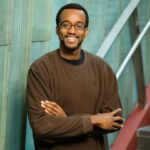
Every so often, we chat with an alum about what they do and how they got there. Robert Deloatch ’11, M19, computer science, has followed his research interests to an exciting job at Apple. We asked Robert about what his experience as a Meyerhoff Scholar means in his life today, and what he would say to a future scholar.
Q: What is your current job title and employer?
A: I am a Human Factors Engineer at Apple Inc.
Q: Tell us about your current job and what you enjoy most about it.
A: I manage a team of researchers who focus on applying user-centered design principles to design and develop Apple products. I collaborate with teams at Apple to come up with new ways to continue to enhance the customer experience. I enjoy the fast paced environment of Apple which allows for conducting research that leads to immediate customer impact.
Q: When you think about the “ripple effect” of the Meyerhoff Scholars Program, how do you see that playing out in your field and in your life?
A: I’ve been amazed at how the Meyerhoff Scholars Program has continued to affect my field and life. I’ve encountered researchers and faculty of color that were part of the Meyerhoff Scholars Program or programs that were modeled after Meyerhoff at conferences and internships. It’s been a reminder to me of the staying power of such a program and how it’s focus on leadership, diversity, and scholarship has been ingrained into my beliefs and relationships.
Q: Why is the Meyerhoff mission so important, not only to you, but to society?
A: The Meyerhoff mission is important because diversity in STEM is important. To generate the best ideas and solve complex problems requires discussion and being challenged. Having groups from various backgrounds and perspectives is foundational to promote useful discussion.
Q: What advice would you give to a student considering the program?
A: I would tell a student to follow the advice of your Meyerhoff staff. They have been instrumental in helping produce thousands of amazing scholars and have your best interest at heart. Listen to them.
Learn more about the Meyerhoff Scholars Program here.
]]>
Every so often, we chat with an alum about what they do and how they got there. Robert Deloatch ’11, M19, computer science, has followed his research interests to an exciting job at Apple. We...
https://umbc.edu/stories/career-qa-robert-deloatch-11-m9/
https://my3.my.umbc.edu/api/v0/pixel/news/119633/guest@my.umbc.edu/4cd30822664f76375c603032d56853ee/api/pixel
alumni
career-q-and-a
computer-science
meyerhoff
mhoff
UMBC News & Magazine
https://my3.my.umbc.edu/groups/umbc-news-magazine
https://assets1-my.umbc.edu/system/shared/avatars/groups/000/001/943/24435aa6207c452e7bc15cc74b42c7bb/xsmall.png?1748556657
https://assets1-my.umbc.edu/system/shared/avatars/groups/000/001/943/24435aa6207c452e7bc15cc74b42c7bb/original.png?1748556657
https://assets2-my.umbc.edu/system/shared/avatars/groups/000/001/943/24435aa6207c452e7bc15cc74b42c7bb/xxlarge.png?1748556657
https://assets2-my.umbc.edu/system/shared/avatars/groups/000/001/943/24435aa6207c452e7bc15cc74b42c7bb/xlarge.png?1748556657
https://assets3-my.umbc.edu/system/shared/avatars/groups/000/001/943/24435aa6207c452e7bc15cc74b42c7bb/large.png?1748556657
https://assets1-my.umbc.edu/system/shared/avatars/groups/000/001/943/24435aa6207c452e7bc15cc74b42c7bb/medium.png?1748556657
https://assets2-my.umbc.edu/system/shared/avatars/groups/000/001/943/24435aa6207c452e7bc15cc74b42c7bb/small.png?1748556657
https://assets1-my.umbc.edu/system/shared/avatars/groups/000/001/943/24435aa6207c452e7bc15cc74b42c7bb/xsmall.png?1748556657
https://assets2-my.umbc.edu/system/shared/avatars/groups/000/001/943/24435aa6207c452e7bc15cc74b42c7bb/xxsmall.png?1748556657
UMBC News & Magazine
0
0
false
Fri, 14 May 2021 17:03:53 -0400
Strong finish: UMBC student-athletes discuss support and resilience in “one of the toughest years”

Due to the pandemic, the NCAA has offered senior college athletes around the country a waiver to compete for an extra year. Many fourth-year student-athletes at UMBC and around the country will take advantage of this opportunity, but others decided to press forward with making the most of an unusual senior year before shifting gears to the next phase of their lives.
Among that group in Retriever Nation are a pair of lacrosse players, a swimmer, and a diver who will earn undergraduate degrees this month. All four are recognized for outstanding achievements during a very challenging time for student-athletes. And all four share that support from UMBC Athletics staff was instrumental in helping them reach their goals and move forward along their paths.
From sports to sports journalism
Nick Doyle ‘21, media and communication studies, has been a steady contributor for men’s lacrosse, including during UMBC’s America East championship run and NCAA Tournament win over Marist in 2019. He’s also a voice of UMBC Athletics, both on air and behind the scenes.
Doyle assisted with player interviews on “The Ryan Odom Report,” provided on-air analysis on women’s soccer’s streamed game broadcasts, and led social media takeovers for the men’s lacrosse Instagram account, among other projects. He also wrote game recaps, gained experience behind the camera, shadowed on-air talent, and learned how to construct a sports broadcast.
 UMBC lacrosse player Nick Doyle. Photo by John McCreary for UMBC Athletics.
“UMBC’s partnership with ESPN+ allowed me to receive hands-on experience inside the tech truck with producers, directors, replay personnel, and graphics,” says Doyle. The San Diego native worked for his hometown Padres’ flagship station in the summer of 2019 and put those recap writing skills to good use.
“UMBC Athletics has been an invaluable source of support, guidance, and confidence for me,” Doyle shares. “Since I introduced myself to Steve Levy [‘85, interdisciplinary studies], he has taken me under his wing and has done an amazing job getting me into positions of opportunity and experience.”
He also noted that Zach Seidel ‘12, media and communication studies, M.S. ‘15, human-centered computing; Dustin Roddy ‘14, American studies; and Shanna Moser have “all played instrumental roles in advancing my experience at UMBC, not just as a student-athlete, but in sports journalism.”
Doyle will pursue his master’s degree at the University of Maryland, College Park’s Philip Merrill School of Journalism in the fall.
Community leadership
Like Doyle, Cassie Evans ‘21, biological sciences and psychology, is a defender on the lacrosse field. She has started in all 33 UMBC’s women’s lacrosse contests since 2019 and earned America East All-Academic Team honors in 2020 and 2021. She’s also a 4.0 student who earned the UMBC psychology department’s 2020-21 Distinguished Achievement Award. And she got there, she says, thanks to the support of a caring advisor.
Evans serves on the executive board of the Student-Athlete Advisory Committee, for which former UMBC Athletics’ Academic Advisor Kristin Ferris served as staff advisor. “Kristin has always believed in me,” Evans shares. “I always went to her when I was stressed or struggling and she actively worked to create a plan of action that helped me approach problems with ease. She advocated for me in so many settings.”
 UMBC’s Cassie Evans (left) competes against Hartford. Photo by Gail Burton.
Ferris shared that Evans “has been tremendously effective as a community leader despite challenges faced by the COVID-19 pandemic.” In summer 2020, Evans coordinated a virtual 5k that raised over $2,000 for Baltimore’s Living Classrooms organization in support of anti-racism and social justice. She later organized an equipment drive for the Children’s Home, collecting over $3,300 of sports equipment and art supplies for displaced children.
Evans shares that Ferris introduced her to leadership opportunities she didn’t know existed, such as serving as the student-athlete representative on UMBC’s Athletics Policy Committee. Of Ferris, Evans says, “I respect her so much and have learned so much from her. She has taught me through her own actions the importance of work ethic, persistence, reliability, accountability, and determination.”
Currently studying for the MCAT, Evans will continue volunteer work in Baltimore and El Salvador prior to medical school. Her long-term career goal is to support those who do not have access to affordable medical treatment.
Team support
As a men’s swimming team captain for two years, Jeremy Gates ‘21, mechanical engineering, has spent a lot of time thinking about how to support his teammates in connecting with and taking care of each other and competing at a high level during a pandemic. Part of his approach was hosting outdoor, small-group team-building activities that met COVID-19 protocols. Another major piece was being present for other swimmers who needed one-on-one support.
“I have tried to make myself available for my teammates whenever they need it,” says Gates. While he doesn’t always know the perfect thing to say, he shares, “I have found that simply lending an ear as a friend is a good start.”
Gates also found it was important to reach out to others for support, and to make sure he was managing his own stress. “I am no help to anyone if I don’t take care of myself first,” he says. “The great thing about this team is that there are numerous people I can go to if I need someone to lean on.”
One person that Gates and his teammates leaned on was Brian Amenta, director of strength and conditioning. Amenta, a six-year UMBC veteran, completely revamped all 17 UMBC Athletics’ teams training regimens to meet COVID health and safety guidelines, and understood the pressures Gates was experiencing.
 UMBC swimmer Jeremy Gates. Photo by Ian Feldmann.
Amenta became a fixture in the lives of Gates and his teammates. Starting in fall 2020, Amenta worked with the team twice each week twice each week at 6 a.m., with dry land training. He provided Gates with a model for working effectively with a large group of student-athletes while supporting team members’ individual needs.
After graduation, Gates will reconnect with family in California before starting as a systems engineer through Northrop Grumman’s Pathways Program.
“One of the toughest years”
After injury-plagued sophomore and junior campaigns, diver Isabel Rayner ‘21, biological sciences, was looking forward to a strong finish to her UMBC career as team captain. Then came the COVID-19 pandemic. Rayner helped her team feel connected and supported at a time of great uncertainty. The cancellation of a meet in fall 2020, just three days before it was scheduled, was a particularly challenging setback.

UMBC diver Isabel Rayner. Photo courtesy of UMBC Athletics.
“My biggest goal in being captain is to make everyone feel that there is support all around them,” said Rayner. Her greatest challenge was taking care of herself. “I was so focused on making sure that everyone else was okay that I struggled to find a balance,” she says.
Rayner’s injuries started in her sophomore year—chronic bicep and shoulder strains and a sprained ankle in 2018-19. That same year, athletic trainer Meghan Sullivan (at UMBC since 2011) was assigned to the team. “Meghan has been there for me without fail,” says Rayner. “These injuries were never severe enough to keep me out of diving, but they did require physical therapy. I was in the training room every day with Meghan. And she was always there for emotional support.”
Last season, Rayner suffered a wrist injury when entering the water and was back in the training room daily. She was able to compete in the 2020 championships and climbed the ladder for the final time as a Retriever in an April 2021 meet, placing second on the three-meter board.
She’s grateful to Sullivan for helping her get to the podium one more time in her senior year. “Meghan has been invaluable to me and others as a support system while we’ve gone through one of the toughest years of our lives,” Rayner says.
After graduation, Rayner will work as a diving coach prior to graduate school.
Article written by Steve Levy, associate athletic director for athletic communications. Featured image: UMBC lacrosse player Nick Doyle. Photo by John McCreary for UMBC Athletics.
]]>
Due to the pandemic, the NCAA has offered senior college athletes around the country a waiver to compete for an extra year. Many fourth-year student-athletes at UMBC and around the country will...
https://umbc.edu/stories/strong-finish-umbc-student-athletes-discuss-support-and-resilience-in-one-of-the-toughest-years/
https://my3.my.umbc.edu/api/v0/pixel/news/119634/guest@my.umbc.edu/4946dc3754a64fa9e1940bc1027c50ea/api/pixel
athletics
biology
cahss
classof2021
cnms
coeit
community
mcs
meche
psychology
UMBC News & Magazine
https://my3.my.umbc.edu/groups/umbc-news-magazine
https://assets1-my.umbc.edu/system/shared/avatars/groups/000/001/943/24435aa6207c452e7bc15cc74b42c7bb/xsmall.png?1748556657
https://assets1-my.umbc.edu/system/shared/avatars/groups/000/001/943/24435aa6207c452e7bc15cc74b42c7bb/original.png?1748556657
https://assets2-my.umbc.edu/system/shared/avatars/groups/000/001/943/24435aa6207c452e7bc15cc74b42c7bb/xxlarge.png?1748556657
https://assets2-my.umbc.edu/system/shared/avatars/groups/000/001/943/24435aa6207c452e7bc15cc74b42c7bb/xlarge.png?1748556657
https://assets3-my.umbc.edu/system/shared/avatars/groups/000/001/943/24435aa6207c452e7bc15cc74b42c7bb/large.png?1748556657
https://assets1-my.umbc.edu/system/shared/avatars/groups/000/001/943/24435aa6207c452e7bc15cc74b42c7bb/medium.png?1748556657
https://assets2-my.umbc.edu/system/shared/avatars/groups/000/001/943/24435aa6207c452e7bc15cc74b42c7bb/small.png?1748556657
https://assets1-my.umbc.edu/system/shared/avatars/groups/000/001/943/24435aa6207c452e7bc15cc74b42c7bb/xsmall.png?1748556657
https://assets2-my.umbc.edu/system/shared/avatars/groups/000/001/943/24435aa6207c452e7bc15cc74b42c7bb/xxsmall.png?1748556657
UMBC News & Magazine
0
0
false
Fri, 14 May 2021 13:39:55 -0400
An Interrupted Education, Completed

In the late 1960s, Bob Bolton ’70, mathematics, caught glimpses of his mother around UMBC’s new relatively small campus. While he was heading to or from class, he’d spot her in the French Department, where Elinora Bolton ’70, French, was getting her undergraduate degree, or in the library, studying.
“It was quieter than at home,” Bolton says, laughing. He had nine brothers and sisters, and most of them still lived in their Elkridge home at the time.
In spring of 1970, Bob in his cap and gown followed his 52-year-old mother, in her own commencement regalia, across the stage. Mother and son were awarded their undergraduate degrees in the same first graduating class of UMBC.
-
 Elinora Bolton in 1944.
-
 Elinora Bolton in 2004.
“I was so proud of her,” said Bolton, the second son in the family and now the chief executive officer of an actuarial firm. “I didn’t really appreciate then how hard it was for her.”
A tribute to the matriarch
In 2018, Bolton wanted to honor his mother, and all his family. So he endowed the Bolton Family Scholarship, to support two students annually in UMBC’s Individualized Studies Program (INDS), with stipends of $1,000 a semester. “Education was the most important thing” to his parents, Bolton says, though they were agnostic about their fields of study. “They gave us no particular direction, they just made sure we were well educated.”
Bolton explains that he chose to give the scholarship to INDS majors to reflect the breadth of interests of the Bolton family members who attended UMBC, studying everything from math and music to French, sociology, and geography.
“The INDS program is grateful for the generosity of the Bolton family,” says Carrie Sauter ’96, psychology, INDS assistant director. “Their commitment to support the INDS student community offers a wonderful family tribute of hard work and success.”
An international childhood
Born into Baltimore society in the elegant townhouse that is now the Brewer’s Art restaurant, Elinora Bowdoin moved to France at age 7 with her mother and sister after her parents’ divorce, according to Steve Bolton, her son and family historian. At 18, Elinora was presented in a flowing white dress to King George VI, Steve says. She studied at the Sorbonne in Paris for 18 months, but the onset of World War II and her mother’s death interrupted her education.
Elinora and her sister returned to Baltimore in 1939. “Feeling foreign” and a bit at sea, Steve says. The sisters kept themselves busy with becoming nationally ranked as tennis doubles champions, and attending balls at elegant locations, such as the Alcazar Hotel (now the Baltimore School for the Arts), where Elinora met her future husband in 1940.
 Elinora and Robert Bolton in an undated photo.
Robert Harrison Bolton was a pilot in the Army Air Corps and married Elinora on a three-day pass. Their first child was born in 1944, and for more than 20 years, Elinora stayed home to raise her children. The family remembers her as an energetic mother, an indifferent cook, and an avid reader.
“She did have the life of the mind,” Steve says.
A family tradition
The same year her tenth and final child entered kindergarten, Elinora started at UMBC. Her records from the Sorbonne were lost in the war, so she began again at the beginning. Almost tripped up by having to kill and dissect a frog in a biology course, Elinora persevered for four years while her “well-trained” children looked after one another when she was on campus, Bob says.
After her graduation from UMBC, she remained close friends with May Roswell, a UMBC founder who established the modern languages department. Elinora went on to earn her master’s degree in French literature at the University of Maryland, College Park, and teach for decades at UMBC, College Park, and Catholic University. She died in 2012 at the age of 92.
Following mother and son’s trailblazing graduation, the family has established a legacy at UMBC. In 1975, Chris, another of Elinora’s sons graduated with a degree in sociology, and in 1986 her two youngests, Andy and Jim, graduated together with degrees in music and sociology, respectively. Her granddaughter Erin Bolton, geography, graduated from UMBC in 1999.
Education is a family tradition. At their childhood home, complete with a family goat and all those siblings, the brothers remember their mother’s books and papers spread out on the dining room table, evidence of her life of the mind. But mostly Elinora studied outside her house. It was quieter.
— Susan Thornton Hobby
*****
Header image of Elinora Bolton with her husband Robert and their 10 children in 2002. All photos courtesy of the Bolton family.
]]>
In the late 1960s, Bob Bolton ’70, mathematics, caught glimpses of his mother around UMBC’s new relatively small campus. While he was heading to or from class, he’d spot her in the French...
https://umbc.edu/stories/an-interrupted-education-completed/
https://my3.my.umbc.edu/api/v0/pixel/news/119635/guest@my.umbc.edu/0c02b5054214e01fd1b199c3233c4d4b/api/pixel
alumni-profile
french
giving
impact
inds
mathematics
spring-2021
UMBC News & Magazine
https://my3.my.umbc.edu/groups/umbc-news-magazine
https://assets1-my.umbc.edu/system/shared/avatars/groups/000/001/943/24435aa6207c452e7bc15cc74b42c7bb/xsmall.png?1748556657
https://assets1-my.umbc.edu/system/shared/avatars/groups/000/001/943/24435aa6207c452e7bc15cc74b42c7bb/original.png?1748556657
https://assets2-my.umbc.edu/system/shared/avatars/groups/000/001/943/24435aa6207c452e7bc15cc74b42c7bb/xxlarge.png?1748556657
https://assets2-my.umbc.edu/system/shared/avatars/groups/000/001/943/24435aa6207c452e7bc15cc74b42c7bb/xlarge.png?1748556657
https://assets3-my.umbc.edu/system/shared/avatars/groups/000/001/943/24435aa6207c452e7bc15cc74b42c7bb/large.png?1748556657
https://assets1-my.umbc.edu/system/shared/avatars/groups/000/001/943/24435aa6207c452e7bc15cc74b42c7bb/medium.png?1748556657
https://assets2-my.umbc.edu/system/shared/avatars/groups/000/001/943/24435aa6207c452e7bc15cc74b42c7bb/small.png?1748556657
https://assets1-my.umbc.edu/system/shared/avatars/groups/000/001/943/24435aa6207c452e7bc15cc74b42c7bb/xsmall.png?1748556657
https://assets2-my.umbc.edu/system/shared/avatars/groups/000/001/943/24435aa6207c452e7bc15cc74b42c7bb/xxsmall.png?1748556657
UMBC News & Magazine
0
0
false
Thu, 13 May 2021 20:39:05 -0400
Retrievers buck ‘traditional’ timelines and redefine success
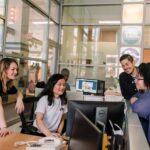
Evangeline Kirigua—mother, grandmother, immigrant, community college transfer student, civic entrepreneur—might have felt like the epitome of a “non-traditional” college student, but as she got closer to other Returning Women Scholars in the Women’s Center at UMBC, she realized that her “different” story might not be so different after all.
Navigating school during the pandemic hasn’t been effortless for anyone, but the wealth of online classes has made it easier for adult learners (ages 25 and up) to think about returning for an unfinished degree, as seen through the success of the UMBC Finish Line program. This unusual time also marks a good period to pause and reevaluate how UMBC approaches the terms “traditional” and “non-traditional” students.
 Kirigua, center in blue dress with white collar, with other Returning Women Scholars and President Freeman Hrabowski. Photo courtesy of The Women’s Center.
As with many public research universities, nearly 50 percent of UMBC’s 11,000 undergraduates are transfer students, “so the notion that transfer students are ‘non-traditional’ is actually far from the truth,” says Chloe Terrell, UMBC’s Transfer Student Success coordinator in Off-Campus Student Services (OCSS). “Transfer students bring a wealth of knowledge and experiences to our campus,” she continues. “Without them, we wouldn’t be the vibrant community we are.”
Understanding your own worth
As a student at Prince George’s Community College (PGCC), Sandra Crespin-Melgar ’21, social work, was really excited about what she heard from Katie Morris, the program director at UMBC at the Universities of Shady Grove and an instructor of social work, about transfering to UMBC. Crespin-Melgar, a first-generation student, immigrant, and adult learner, had been nervous about pursuing her bachelor’s degree, even though she knew that was her goal.
 Headshot of Sandra Crespin-Melgar, courtesy of The Women’s Center.
“When I started to learn more about UMBC,” says Crespin-Melgar, “I liked that they put forth the effort to create a space that provided belonging to all students. And that was something that really attracted me—the different ways of creating community on campus.”
Talking with Morris, Ph.D. ’21, language, literacy, and culture, not only led Crespin-Melgar to apply to UMBC, but also to major in social work. “I’m someone who has gone through different experiences in higher ed,” says Crespin-Melgar. “And I think that people who come from immigrant communities, there’s a lot of things that we have to tackle as far as dealing with imposter syndrome or feeling like we don’t belong. Even that fear of applying, you ask yourself, ‘Am I worthy enough to be in those spaces or am I worthy enough to even succeed?’”
Seek help, give help
Crespin-Melgar, who is also a Returning Women Scholar, suggests that other students with similar doubts find support at the Counseling Center. “Talking with someone who can really listen to what you’re going through and can relate to some of the struggles as a person of color, or as a woman—there’s a lot that goes into owning those spaces and feeling like, ‘yes, I belong here and I’m working to receive my degree because I put so much work into it and there’s no less value in my work than anyone else.’ That’s my biggest take-away from my journey as an undergrad at UMBC.”
 Crespin-Melgar at an event hosted by The Women’s Center. Photo courtesy of The Women’s Center.
While finishing her degree, Crespin-Melgar is also working in recruitment and admissions at PGCC. This fall, she will pursue a master’s of social work at the University of Maryland, Baltimore. She says that her experience at UMBC has made her want to continue to work in higher education, helping guide other first-generation students and Latinx students like herself through the complicated process of college.
“I feel really prepared and confident that I’m walking away from a school that really lives up to their words,” says Crespin-Melgar. “They told me what they were going to do for me, and they did it.”
The backbone of UMBC
At UMBC’s Shady Grove campus, “All the students are transfer students,” explains Katie Morris. “A majority are working and balancing family responsibilities, and they all have a life outside of school,” she says. “Shady Grove provides a place for students who are in this similar situation to see others like them, build a community, connect with faculty, learn in the classroom, and find success if they make the commitment to their learning and attaining their degree.”
 Students mingle at the Shady Grove campus in 2019. Photo by Marlayna Demond ’11.
Across UMBC’s campuses, 80 percent of transfer students come in from community colleges, versus other four-year institutions. This makes the community college transfer experience a common way of joining the UMBC community.
OCSS serves commuter, transfer, veteran, and adult-learner student populations. “Often,” Chloe Terrell says, “we’re referred to as the hub for ‘non-traditional’ students, but my time here has shown me that the students we serve are the backbone of UMBC.”
A break for mental health
In that respect, Ting Huang ’21, psychology, followed a well-worn path to UMBC, even if it felt less straightforward at the time. Despite a full-ride to a four-year college right out of high school, Huang made the decision to attend Montgomery College to better suit the needs of her family. She also knew about the Transfer Student Alliance, which helps smooth the application process to certain Maryland schools after obtaining an associate’s degree.

Headshot provided by Ting Huang.
Huang thought the process was going smoothly, despite the stress she was feeling. But a frequent customer at the restaurant where Huang worked helped gently reframe her perspective when she asked if Huang was feeling OK. She looked much thinner than usual, the customer said.
“I thought, well, if a stranger seemed to care about me, maybe I could care about me,” says Huang. She called her high school mentor to talk through this revelation, then went home and closed her transfer application for a semester.
When Huang did enroll at UMBC, she was drawn to study social psychology because of her own experiences. “I feel that my own psyche is really impacted by my upbringing and by my interactions with my family and the world around me—especially as a first-gen immigrant, like the transition from being a child in China to being a teenager in the U.S.,” says Huang.
 Huang, top middle, at an online family game night with her fellow McNair scholars. Photo courtesy of Huang.
At UMBC, she became a McNair Scholar. The program provides mentorship and community for low-income, first-generation college students, and students from other underrepresented groups, while helping them hone their research tools to potentially pursue doctoral degrees. “The McNair program makes me feel like I can accomplish the graduate process,” says Huang. Next, she will pursue a master’s degree in experimental psychology at Towson University, with the long-term goal of teaching psychology at the university level.
Building confidence
Alicyn Curtis ’21, modern languages and linguistics, originally matriculated to UMBC in 2011, but left her studies after three years. “I liked what I was studying, especially Korean, but I didn’t have the drive or passion at the time,” says Curtis. “I’m one of those people who can’t simply do things because it looks good on a résumé. If I’m going to do anything, I’m going to do it because I like it. So I was very depressed and lost and needed to take some time off.”

Alicyn Curtis in Korea while she was teaching abroad. Photo courtesy of Curtis.
Curtis had the opportunity to move to Korea for three years, and she took it. She taught English there, but realized that in order to progress in that career, she’d need to finish her degree. In fall 2020, Curtis re-enrolled at UMBC having a more clear goal for her studies. With the help of her Korean advisor, Kyung-Eun Yoon, she is graduating after two final semesters.
“Being abroad built my confidence in myself,” says Curtis. “When I first started at UMBC, I was very shy and standoffish. I didn’t really reach out to other people—I just went to school and went home. But this time around, I thought, if I can live in a different country for three years and navigate around in a different language, I can do anything. And I brought that sense of competence with me when I returned to campus.”
 Curtis poses with one of the symbols of Seoul. Photo courtesy of Curtis.
For the past year, Curtis has worked as a peer advisor in the Education Abroad office, encouraging more students to gain life skills and confidence overseas when the pandemic permits. Overall, of her time back at UMBC, Curtis says, “I never felt alienated because I’m technically ‘non-traditional.’ I felt just like a regular student on campus.”
Lifelong learners
Gayle Chapman ’21 also found a home in modern languages and linguistics, but that’s not the only home she has on campus. She’s worked at UMBC since 2002, and is now the assistant controller in Financial Services.
Chapman earned her master’s in public policy in 2011. A decade later, she is earning a second undergraduate degree in Russian. Her sons are also UMBC alumni: Daniel Chapman ’02, mathematics, ’03, physics; and David Chapman ’06, M.S. ’08, Ph.D. ’12, computer science—an assistant professor of computer science and electrical engineering at UMBC.
 Headshot courtesy of Gayle Chapman.
“I am not your traditional student, but a lifelong learner,” shares Chapman, who is also a member of the Russian Club and sings in the UMBC Russian Choir. “It is vitally important, in my opinion, to continue to broaden your knowledge and perspective of this world, and there is no better way than to study a major language and culture in our world.”
Chapman is in good company among other lifelong learners at UMBC. Jim Kruger ’13, political science, M.P.P. ’14, will complete his Ph.D. in public policy this spring at the age of 71. Kruger, spent his career in waste management and after retirement wanted to impact that field as a researcher. That goal, in addition to his love of learning, kept him coming back to the classroom.
 Jim Kruger and his wife Kathy on the bench they donated to UMBC. Photo by Marlayna Demond ’11.
During Kruger’s time on campus, UMBC and the University of Maryland, Baltimore partnered to become Maryland’s first “age-friendly” universities. They join 58 institutions worldwide that make up the Age-Friendly University Global Network, led by Dublin City University in Ireland.
No one “right” way
When Kirigua moved from Kenya to the United States in 2002, she put all her time and effort into finding a job and helping her children adjust to a new country. She told herself she’d attend to her own education after her son Joel graduated from college. True to her own word, before she heard Michelle Obama give the graduation address to her son’s college in 2016, Kirigua had enrolled at Montgomery College.

Kirigua with her son Joel (in pink) and his friends at the Lincoln Memorial in D.C.
“For me, personally, if you have something that you have a purpose to do—if you don’t do it—you owe yourself something,” says Kirigua. Pursuing higher education became her priority. “When you’re making that sacrifice, you don’t feel like someone is making you do it. You know you’re doing it for yourself.”
After transferring to UMBC in 2018, Kirigua has found fellowship through the Returning Women Scholars program—it’s been encouraging to hear the other students’ stories. “I thought that this was just me,” says Kirigua, “but there are others like me and who have had to face even more challenging situations.”
“When an adult learner thinks they’re the only one in the classroom, it can make them feel like maybe they don’t belong,” says Jess Myers, Women’s Center director. “Perhaps it may reinforce that their experience is the ‘wrong way’ to do college. So, when you put 20-25 adult learners in a room and give them the space to center their experiences of being older, being parents, having a full life before coming to UMBC, it feels…magical. I see some students struggle with their journeys and then once they hear from someone who is like them, an automatic sense of solidarity forms.”
 Kirigua with Jess Myers at a USM Women’s Forum Conference. Photo courtesy of Myers.
That sense of connection has spurred Kirigua forward. After graduating this month, she will continue on at UMBC, pursuing a master’s in public policy.
Featured image: Chloe Terrell, left, in the center for Off-Campus Student Services in 2019. Photo by Marlayna Demond ’11.
]]>
Evangeline Kirigua—mother, grandmother, immigrant, community college transfer student, civic entrepreneur—might have felt like the epitome of a “non-traditional” college student, but as she got...
https://umbc.edu/stories/retrievers-buck-traditional-timelines-and-redefine-success/
https://my3.my.umbc.edu/api/v0/pixel/news/119636/guest@my.umbc.edu/2d09e3642b02f5eb61e4b7e410f4fe8a/api/pixel
cahss
classof2021
community
international
mlli
page1
political-science
psychology
publicpolicy
shadygrove
socialwork
womenscenter
UMBC News & Magazine
https://my3.my.umbc.edu/groups/umbc-news-magazine
https://assets1-my.umbc.edu/system/shared/avatars/groups/000/001/943/24435aa6207c452e7bc15cc74b42c7bb/xsmall.png?1748556657
https://assets1-my.umbc.edu/system/shared/avatars/groups/000/001/943/24435aa6207c452e7bc15cc74b42c7bb/original.png?1748556657
https://assets2-my.umbc.edu/system/shared/avatars/groups/000/001/943/24435aa6207c452e7bc15cc74b42c7bb/xxlarge.png?1748556657
https://assets2-my.umbc.edu/system/shared/avatars/groups/000/001/943/24435aa6207c452e7bc15cc74b42c7bb/xlarge.png?1748556657
https://assets3-my.umbc.edu/system/shared/avatars/groups/000/001/943/24435aa6207c452e7bc15cc74b42c7bb/large.png?1748556657
https://assets1-my.umbc.edu/system/shared/avatars/groups/000/001/943/24435aa6207c452e7bc15cc74b42c7bb/medium.png?1748556657
https://assets2-my.umbc.edu/system/shared/avatars/groups/000/001/943/24435aa6207c452e7bc15cc74b42c7bb/small.png?1748556657
https://assets1-my.umbc.edu/system/shared/avatars/groups/000/001/943/24435aa6207c452e7bc15cc74b42c7bb/xsmall.png?1748556657
https://assets2-my.umbc.edu/system/shared/avatars/groups/000/001/943/24435aa6207c452e7bc15cc74b42c7bb/xxsmall.png?1748556657
UMBC News & Magazine
0
0
false
Wed, 12 May 2021 20:39:50 -0400
UMBC celebrates 25th Undergraduate Research and Creative Achievement Day with an expanded global audience

UMBC’s 25th Undergraduate Research and Creative Achievement Day (URCAD) reached more viewers than ever before, with visitors connecting online from as far away as Spain, Indonesia, Nigeria, Brazil, Bhutan, Germany, and the U.K.. Audiences logged more than 11,000 visits (compared with 8,000 in 2020) and posted more than 3,500 comments over the course of the week-long event.

Winner of URCADs “Best Selfie With The Number “25”
Angelika Albertorio ’21, English and dance.
“While we are eager to get back to the live event, there are definitely aspects of the online event that have widened the scope of URCAD,” says April Householder, director of undergraduate research and prestigious scholarships. “Presenters were able to invite friends and family members from other countries to view their presentations, and invite international scholars as potential future collaborators.”
Over 350 students presented projects, from novel artistic work to lab research to analysis of historical archives. The questions they asked reflected engagement with significant challenges and opportunities of today.
Anti-Asian racism
Zoe Hwang, English, was inspired to study the history of Koreans in Baltimore after reading a chapter about Korean immigrant communities in the city written by Aletheia Hyun-Jin Shin in the book Baltimore Revisited. Then COVID-19 happened and with it came a rise in hate crimes toward members of Asian communities in the United States. “I’m scared to go outside,” shares Hwang, who is Korean and lives in Maryland. “I was surprised that so many people thought this was new and were unaware of the history of racism toward the Asian community.”
She decided to widen the scope of her research for URCAD. In “We Were Never Welcome Here: How American History Predicted the Rise of Racism and Xenophobia During COVID-19,” Hwang uses archival posters and newspapers to contextualize racism toward Chinese and Japanese communities in the U.S. from 1850 to the present, while demonstrating how negative sentiments about one Asian community have often translated into violence for other Asian communities. “I want to continue to educate others about the diversity of the Asian community and the dangers of lumping the people and cultures under a single term,” says Hwang.
Connecting Baltimore
When COVID struck, many Baltimore families without internet access were completely disconnected from much-needed services that had moved online, and were disconnected from their communities. In fall 2020, Foad Hamidi, assistant professor of information systems, received NSF funding to research this problem in collaboration with the Digital Harbor Foundation and Project Waves, providing affordable internet service in Baltimore. Hamidi and Nora McDonald, research assistant professor of information systems, led a study to understand the experiences of low-income Baltimore families without broadband access, and student researchers played a major role in the work.

The Project Waves team installing a sector antenna in downtown Baltimore City.
Photo courtesy of Project Waves.
Hamidi says a lot has changed from when they started the project. “The preliminary findings have found that participants and partners value connectivity that is affordable, that can be used with social distancing, is offered by grassroots community organizations, and is private,” he shares.
Working on project Waves has been a humbling and a very rewarding experience for Karina Lopez-Brown ‘21, information systems. “Our research in Project Waves demonstrated to me that it doesn’t matter the level of knowledge or expertise that we have,” says Lopez-Brown, “we just need to be willing to share our knowledge to help our community.”
In addition to Lopez-Brown, the student team included seniors Rushaad Wright, business technology administration, and Daniel Laguna, information systems, as well as Lydia Stamato, a doctoral student in human-centered computing.
For Laguna, the project has been an opportunity to strengthen relationships with his peers and mentors and to collaborate with the Baltimore City community. “In these times where we have had to remain physically distant from one another it’s been easy to feel isolated from the world,” says Laguna. “But all of these connections have really helped me feel closer to the rest of the world.”
Conversation with squeegee kids
Growing up in Baltimore City, Sydney Fryer ’22, psychology, was accustomed to seeing young Black boys and men standing on downtown street corners ready with squeegees, trying to earn money by cleaning car windshields. Fryer saw the “Squeegee Kids” as a positive part of Baltimore City’s culture and economy but knew some residents and visitors didn’t share this sentiment.

Sydney Fryer.
Photo by Marlayna Demond ’11 for UMBC.
In “Decriminalizing (and Re-Humanizing) the ‘Squeegee Kid,” Fryer used Baltimore Sun archives, social media data, and interviews with the youth to examine the criminalization of these young men over forty years of city history. “Sydney’s methodology was designed to recognize the crucial role that discourse and policy play in shaping young people’s daily experiences,” says Dena Aufseeser, assistant professor of geography and environmental systems.
Fryer found that White boys and men doing similar work were seen as entrepreneurial while “Squeegee Kids” were often described through unsubstantiated narratives about crime and violence. She says her interviews revealed that, “many of them are working to buy clothes, food, books, and to help their families,” so what they earn often goes right back into the city’s economy.
Understanding the structure of HIV
As COVID-19 vaccine research moved forward at light speed this past year, research on other pandemics continued to make steady progress. Three groups of students presented their research on HIV-1, the retrovirus that causes AIDS.
Michael Summers, Distinguished University Professor of chemistry and biochemistry and Howard Hughes Medical Institute investigator, mentored over a dozen students that contributed to two of the major collaborative projects presented at URCAD, focused on the structures of HIV-1 MAL junction conformers and the HIV-1 5′ leader. Faith Davis ‘22, sociology and biological sciences, is part of the second project and a 2021 Newman Civic Fellow.

Davis (left) with her co-researchers tied for URCAD’s 2021 “Best Overall Selfie” award.
Photo courtesy of April Householder, director of undergraduate research and prestigious scholarships.
“The work is focused on determining an unsolved piece of the structure of the 5` leader of HIV-1’s genome, which is what makes HIV so infectious,” she explains. “If the structure of this area can be determined, it could possibly inform cures or better treatments for HIV.”
Collaborative process
For UMBC’s video game designers, going virtual was not new. Marc Olano, associate professor of computer science and electrical engineering, mentored four projects presented at URCAD, each led by a group of about four students. They include Sword Shibe; Recurring Moment – A Time Travel Puzzle Platformer; Jump Starters, and the two-player Android and PC strategy game Hamster Toaster Checker. Students in UMBC’s computer science game development track collaborated with students in animation and interactive media to envision and begin developing the new games.
“The beauty of the CMSC 493 class is that it brings artists and programmers together and the management of the project is completely led by us,” says Kristian Mischke ‘21, computer science, the game designer for the Recurring Moment project.

A scene from Recurring Moment.
Image courtesy of Mischke.
In Sword Shibe, players take a dog with a sword through different paths. The student team that created it drew inspiration for its concept designs from Japanese culture, folklore, and legends. The dog in the game is also inspired by a Shiba Inu, which is a breed of hunting dog from Japan.
Olano worked to model the students’ project experience on the structure of the game design and development industry. “Students began working through ideas in small teams and worked their way through prototypes and onto a bigger team,” he explains. “In the game industry, you have to work collaboratively or you fail.”
Mischke explains how he would bounce ideas off the artists for visual appeal or about the game’s narrative arc. With the other programmers, he talked through implementation feasibility. “We all would give feedback and discuss adaptations together,” says Mischke. “Everyone on the team was able to be part of the process and apply their unique skill set.”
Thought-provoking animation
UMBC artists also shared short animated films through URCAD. These include projects like “Finding the Sun” and “Familiarity in Change,” which resonated with audiences.

Young’s avatar.
Courtesy of Young.
“Finding the Sun” was created by Michelle Young ‘21, visual arts, who directed, animated, and composed the music for the film. She took an interdisciplinary approach by combining her illustration, design, 2D animation, and sound design skills to explore the themes of self-worth and self-acceptance.
The girl in the movie wakes up to a dark world and goes in search of the sun, says Young, only to find out she is the light in the world—that she is enough. “I was hoping that the simplicity of the character would allow the viewer to put themselves in their shoes,” she explains. “I wanted to create something that was meaningful and encouraging to people wherever they are in this difficult time in our lives.”
“Familiarity in Change” shows viewers imagery of various locations, such as an empty beach and snowy park, that express a desolate feeling. However, by pairing those images with peaceful music, creator Angela Endres ‘22, visual arts, transforms the mood to serenity and comfort.
Endresfinds meaning in showing the emptiness of these places, which prior to COVID would have been enjoyed by family and friends coming together. “Isolation has made me see the beauty in everyday life,” she shared in her URCAD talk. “The world has changed and that’s OK.”
Banner image: A scene from Michelle Young’s short film “Finding the Sun.” Image courtesy of Young.
]]>
UMBC’s 25th Undergraduate Research and Creative Achievement Day (URCAD) reached more viewers than ever before, with visitors connecting online from as far away as Spain, Indonesia, Nigeria,...
https://umbc.edu/stories/umbc-celebrates-the-25th-undergraduate-research-and-creative-achievement-day-with-an-expanded-global-audience/
https://my3.my.umbc.edu/api/v0/pixel/news/119637/guest@my.umbc.edu/65dfaf8d60c48038f5cd90721ba37421/api/pixel
arts-and-culture
biology
cahss
cnms
coeit
csee
diversityandinclusion
english
ges
interdisciplinary
international
policy-and-society
psychology
saph
science-and-technology
undergradresearch
urcad
visualarts
UMBC News & Magazine
https://my3.my.umbc.edu/groups/umbc-news-magazine
https://assets1-my.umbc.edu/system/shared/avatars/groups/000/001/943/24435aa6207c452e7bc15cc74b42c7bb/xsmall.png?1748556657
https://assets1-my.umbc.edu/system/shared/avatars/groups/000/001/943/24435aa6207c452e7bc15cc74b42c7bb/original.png?1748556657
https://assets2-my.umbc.edu/system/shared/avatars/groups/000/001/943/24435aa6207c452e7bc15cc74b42c7bb/xxlarge.png?1748556657
https://assets2-my.umbc.edu/system/shared/avatars/groups/000/001/943/24435aa6207c452e7bc15cc74b42c7bb/xlarge.png?1748556657
https://assets3-my.umbc.edu/system/shared/avatars/groups/000/001/943/24435aa6207c452e7bc15cc74b42c7bb/large.png?1748556657
https://assets1-my.umbc.edu/system/shared/avatars/groups/000/001/943/24435aa6207c452e7bc15cc74b42c7bb/medium.png?1748556657
https://assets2-my.umbc.edu/system/shared/avatars/groups/000/001/943/24435aa6207c452e7bc15cc74b42c7bb/small.png?1748556657
https://assets1-my.umbc.edu/system/shared/avatars/groups/000/001/943/24435aa6207c452e7bc15cc74b42c7bb/xsmall.png?1748556657
https://assets2-my.umbc.edu/system/shared/avatars/groups/000/001/943/24435aa6207c452e7bc15cc74b42c7bb/xxsmall.png?1748556657
UMBC News & Magazine
0
0
false
Wed, 12 May 2021 19:04:27 -0400
UMBC’s Faith Davis is named a 2021 Newman Civic Fellow for work on healthcare, food, and housing insecurity
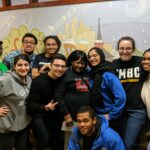
Faith Davis ‘22, M30, sociology and biological sciences, grew up in Mechanicsville, a small town in Maryland. Her family regularly welcomed people in need of temporary housing into their home. This shaped her sense of how housing and income insecurity affect people, but did not prepare her for the shock she felt at seeing the scale of people living without housing in Washington D.C. while visiting the capital as a teenager.
That was a deciding moment for Davis. She wanted to understand the underlying factors of why homelessness persists widely and at such high rates, and she was determined to find sustainable interventions. She has invested the last three years researching food and housing insecurity both on campus and in Baltimore City, as well as working with community organizations to implement interventions. In recognition of her engaged leadership and long-term commitment to this work, Campus Compact Mid-Atlantic (CCMA) has named Faith Davis a 2021 Newman Civic Fellow.

Faith Davis.
Photo courtesy of Davis.
“While I have spent a great deal of my time at UMBC conducting scientific research and taking advanced chemistry and biology coursework, I have also tried to engage with the campus community and the surrounding community,” shares Davis, who is a Meyerhoff Scholar. “Being selected as this year’s Newman Civic Fellow means UMBC recognizes my efforts to change the world in a positive way.”

Davis (first row on the right) volunteering at the Meyerhoff Scholars Program 30th Anniversary Celebration.
Photo courtesy of Davis.
Davis is the most recent in a long line of UMBC students who have earned Newman Civic Fellowships in recognition of their dedication to public service. They include Nihira Mugamba ‘21, political science and Africana studies; Maheen Haq ‘20, global studies and economics; Stephanie Milani ‘19, computer science and psychology; Sophia Lopresti ‘17, global studies; Maxwell Poole ‘18, computer science; economics; and Kelly Cyr ‘12, biological sciences, and M.S. ’13, applied molecular biology.
Civic action
Davis joined UMBC’s Center for Democracy and Civic Life’s (CDCL) Alternative Spring Break (ASB) program as a participant in her first year on campus and as a leader every year after. ASB is an immersive learning experience in which participants explore the systemic and human dimensions of complex social issues in Baltimore. Through UMBC’s Shriver Center, ASB students participate in a service-learning course to learn how to best foster sustainable, long-term connections with local communities.

Faith Davis (back row, first on the left) at a community organization in Baltimore City
during ASB 2019.
Photo courtesy of Davis.
Her first ASB project focused on housing insecurity in Baltimore. “I learned that the most common causes of death for people experiencing homelessness are conditions that could have been easily treatable,” explains Davis.
As an ASB leader her sophomore and junior years, she helped design projects focused on how structural barriers to the availability of nutritious food impact residents’ overall health, education, and well-being in Baltimore, as well as approaches to achieving nutritional equity. Davis has also facilitated several of CDCL’s programs such as the Change Makers Dinners, where she leads discussions addressing nutrition and food access and on women’s political empowerment.

ASB 2019 symposium (Davis is first on the right).
Photo courtesy of David Hoffman.
Research to address healthcare access
Davis’s work in ASB increased her awareness of the challenges that people experiencing homelessnes face in accessing preventative healthcare and basic information about chronic health issues. “I had the opportunity to survey the health resources available in Baltimore City,” shares Davis. “There was a noticeable gap when it came to providing basic health information.”
Davis designed a research project to develop a model that could both assess individuals’ current state of health and connect them with groups who could follow up with free medical services. She received an Undergraduate Research Award in 2019 to gather and analyze health information from shelter residents at two homeless shelters in Baltimore City who volunteered to participate.
The data revealed that the population she surveyed frequently lacked access to consistent primary medical care and regular health screenings, where preventative medicine could reduce the risk of life-threatening emergencies. She was able to present the initial phase of the project at UMBC’s 2019 Undergraduate Research and Creative Achievement Day. Unfortunately, the project could not continue to its next phase due to COVID-19.
Examining food insecurity
In the fall of 2020, Davis was invited to join the Retriever Essentials on a research project analyzing food and housing insecurity at UMBC. Retriever Essentials is an organization led by faculty, staff, and students that tackles food insecurity in the UMBC community. Davis worked alongside Fariha Khalidshe, a CCMA AmeriCorps VISTA member serving with UMBC Retriever Essentials.
Together they compiled and analyzed data from surveys of faculty, staff, and students to determine the prevalence of food and housing insecurity at UMBC, the effectiveness of UMBC’s efforts to address these issues, and the impact of the pandemic on people’s housing and food access.

Davis (left) with her mentor from the Meyerhoff Scholars Summer Bridge program,
Rebekah Rashford ’18, M26, biological sciences, (center), and Davis’s former roommate,
Ridhi Chaudhary ’21, M30, biological sciences (right).
Photo courtesy of Davis.
“Faith is an outstanding member of our research team,” says Khalidshe. “She is an avid advocate for understanding food and housing justice by looking at the statistics and hearing people’s stories about their lived experiences.”
The research team found that a decrease in access to public transportation due to COVID-19 restrictions has been a significant barrier to people’s ability to access food. Additionally, Davis notes that limited income due to unemployment has also affected food and housing security, especially “because government support is decreasing while many people are still unemployed.”
Many organizations that support local communities’ food and housing needs rely heavily on volunteers to function, and have been impacted significantly by COVID-related shutdowns. “As these organizations suffered, more mutual aid networks have taken hold or grown,” explains Davis. “The pandemic has also led to people growing in community and supporting their neighbors, both through formal mutual aid networks and informally.”
HIV research
In addition to her research in housing and health insecurity, Davis also has interests in biomedical research. She is both a U-RISE Scholar and a Howard Hughes Medical Institute Scholar. She has worked with Distinguished University Professor and HHMI Investigator Michael Summers, chemistry and biochemistry, for three years, helping to examine the structure of the HIV-1 5` leader.
“The lab work is focused on determining an unsolved piece of the structure of the 5` leader of HIV-1’s genome, which is important because this area is what makes HIV so infectious,” explains Davis. “If we can determine the structure of this area, it could possibly inform cures or better treatments for HIV.”

Davis (second from the right) at a ABRCMS workshop she helped to facilitate.
Photo courtesy of Davis.
She presented her research on the structure of the HIV-1 5` leader at the American Society of Microbiology Annual Biomedical Research Conference for Minority Students. She also won a poster presentation award at UMBC’s Undergraduate Research Symposium in the Chemical and Biological Sciences and came in 2nd place in the poster presentation at UMBC’s Summer Undergraduate Research Fest. Davis presented her latest research at this year’s 25th UMBC Undergraduate Research and Creative Achievement Day.

Davis (left) with her co-researchers tied for URCAD’s 2021 “Best Overall Selfie” award.
Photo courtesy of April Householder, director of undergraduate research and prestigious scholarships .
Above and beyond
Davis’s passion for being an agent of change in her community extends well beyond her campus work. Through UMBC’s Shriver Center service learning community partnerships, she was placed as a volunteer at the St. Agnes Hospital Stroke Center in Baltimore County, collecting and recording patients’ vital signs and helping with administrative tasks. She is active as a tutor for Arbutus Achievers, a mentoring and college readiness program for middle school students at Arbutus Middle School in Baltimore County.
Among her leadership roles, Davis is the president of UMBC’s Phi Delta Epsilon Medical Fraternity, the secretary of the Ethics Bowl and the Catholic Retrievers, and is a member of the Physical Chemistry Club. While at UMBC, Davis also served on the Volunteer Rescue Squad In her hometown of Mechanicsville.
“Faith is someone who truly walks her talk. She is committed to making a difference through collaboration and engagement over the long haul,” say CDCL’s director, David Hoffman, Ph.D. ‘13, language, literacy and culture (LLC), and assistant director, Romy Hübler ‘09, modern languages and linguistics, M.A. ‘11, intercultural communication, and Ph.D. ‘15, LLC. “We are proud to work with her.”
Social change network
This type of long-term commitment to social change is precisely what the Newman Civic Fellowship honors. The year-long fellowship supports each recipient in further developing their social change and leadership skills through regional and state gatherings. Fellows are paired with mentors and become part of a national network of peers. They support each other in finding solutions for challenges facing communities locally, nationally, and internationally.
Davis has already met other Newman Fellows through online events. She has begun to volunteer in some of the new social justice organizations they introduced her to. She is grateful to be able to learn from previous Newman Fellows and join peers who, like her, are ready to lend their energy and expertise to move social justice work forward. Davis plans to pursue an M.D.-Ph.D. after graduating next year. She hopes these experiences will help inform her future work developing community programs to improve health outcomes for people experiencing poverty.
“My greatest hope for this fellowship is to connect with a large network of change-makers who I can learn from and be inspired by throughout my life,” says Davis. “I hope to eventually work together to create a better world.”
Banner image: Faith Davis (second from the right) with fellow 2019 ASB participants. Photo courtesy of Davis.
]]>
Faith Davis ‘22, M30, sociology and biological sciences, grew up in Mechanicsville, a small town in Maryland. Her family regularly welcomed people in need of temporary housing into their home....
https://umbc.edu/stories/umbcs-faith-davis-is-named-a-2021-newman-civic-fellow-for-work-on-healthcare-food-and-housing-insecurity/
https://my3.my.umbc.edu/api/v0/pixel/news/119638/guest@my.umbc.edu/016c6d52d22f398664ced14812e3ce62/api/pixel
biology
cahss
chembiochem
civic
cnms
community
cs3
meyerhoffscholars
policy-and-society
saph
shrivercenter
undergradresearch
UMBC News & Magazine
https://my3.my.umbc.edu/groups/umbc-news-magazine
https://assets1-my.umbc.edu/system/shared/avatars/groups/000/001/943/24435aa6207c452e7bc15cc74b42c7bb/xsmall.png?1748556657
https://assets1-my.umbc.edu/system/shared/avatars/groups/000/001/943/24435aa6207c452e7bc15cc74b42c7bb/original.png?1748556657
https://assets2-my.umbc.edu/system/shared/avatars/groups/000/001/943/24435aa6207c452e7bc15cc74b42c7bb/xxlarge.png?1748556657
https://assets2-my.umbc.edu/system/shared/avatars/groups/000/001/943/24435aa6207c452e7bc15cc74b42c7bb/xlarge.png?1748556657
https://assets3-my.umbc.edu/system/shared/avatars/groups/000/001/943/24435aa6207c452e7bc15cc74b42c7bb/large.png?1748556657
https://assets1-my.umbc.edu/system/shared/avatars/groups/000/001/943/24435aa6207c452e7bc15cc74b42c7bb/medium.png?1748556657
https://assets2-my.umbc.edu/system/shared/avatars/groups/000/001/943/24435aa6207c452e7bc15cc74b42c7bb/small.png?1748556657
https://assets1-my.umbc.edu/system/shared/avatars/groups/000/001/943/24435aa6207c452e7bc15cc74b42c7bb/xsmall.png?1748556657
https://assets2-my.umbc.edu/system/shared/avatars/groups/000/001/943/24435aa6207c452e7bc15cc74b42c7bb/xxsmall.png?1748556657
UMBC News & Magazine
0
0
false
Tue, 11 May 2021 21:52:04 -0400
Access for All—Rising Together

Since 2009, as part of its Alumni Awards celebration, the UMBC Alumni Association has named one “Rising Star” recipient each year who exemplifies early career and professional achievement. In the coming weeks, we will spend some time with awardees from the past decade to see where they are now—and how they’ve grown in their fields while maintaining ties to UMBC. In this installment, UMBC Rising Stars Galina Madjaroff Reitz ’08, psychology, M.A. ’11, aging studies, Ph.D. ’18, human centered computing, and Sondheim Scholar Aaron Merki ’05, political science, discuss their mutual goal to uplift the dignity of elderly, cognitively impaired, and low-income individuals. Reitz is using tech to assist older folks and Merki is creating accessible communities through a different path—law and philanthropy.
Using tech the ‘right way’
Growing up in an intergenerational household helped focus her research with assistive devices, says Reitz, who received UMBC’s Rising Star award in 2016. Although during her childhood, she says, her family functioned without a lot of technology. “It was just stories,” Reitz clarifies. “It was a lot of talking to my grandparents, hearing their perspective on life, and getting a lot of advice, solicited or unsolicited,” she laughs, “but in retrospect, I’m actually kind of glad that we didn’t have so much tech around us. I think that really gave space for reflection and to kind of connect on a different level. But now that we are so consumed by it and it’s all around us, I think it has to be incorporated into our lives the right way.”
 Reitz confers with participants of her research into assistive technologies. Photo courtesy of Reitz.
Now, after teaching at UMBC for 12 years, Reitz is now the faculty program director of the University of Maryland’s College of Information Studies and also an affiliate faculty at the Trace Center, which develops technology with the end goal of increasing the accessibility of information and communication technologies for people with disabilities.
Finding intuitive tools
Reitz also consults for Google and Amazon on their Echo and Alexa products to make the tech more helpful for older, cognitively impaired adults. But she didn’t come up with this idea on her own. About six years ago, in a conversation with a research participant whose wife had dementia, Reitz asked him about what technologies he already used. When he mentioned Amazon Alexa, Reitz was immediately interested. It had so much potential—it was an intuitive tool already built for consumers and at a moderately affordable price point, two things that often inhibit the accessibility of assistive technology.
 Reitz with (from left) Dr. Judah Ronch, her mentor, President Freeman Hrabowski, and then-President of the UMBC Alumni Association John Becker ’01. Photo by Marlayna Demond ’11.
“For a long time we were developing tech that was, I think, infantilizing, and we didn’t understand the needs of older adults,” says Reitz, who explains that what older adults wanted was the devices they already used to better assist them. “So we’ve been really focused on building this ecosystem of tech that can support somebody—so they can stay in their home as long as possible, feel like themselves and continue to focus on their personhood versus just disease management.”
Long-lasting mentorship
 Headshot courtesy of Merki.
Merki, who was a Sondheim Public Affairs Scholar at UMBC, tries to carry the values of the program’s namesake and his mentor—the late Walter Sondheim—into his own work in creating accessible communities. Merki was just 17 when he first met Sondheim, but the 93-year-old civic leader made a lifelong impact on him. “Everything about him as a leader went contrary to what you might envision,” says Merki. “He was such a humble, gentle man, and everybody trusted him, which enabled him to get so much done.”
“We only provide grants to direct service providers—no policy, no research, no higher education, just direct services in the field of combating poverty,” says Merki.
Now, as managing director of programs and grants at The Weinberg Foundation—one of the largest grant makers in the older adults and aging space in the United States—Merki oversees approximately $130 million a year in grant distributions from the foundation, all focused on meeting the basic human needs of people experiencing poverty.
Staying connected
Like Reitz, Merki sees the need to ground himself in the experiences of the populations he’s working with. “It’s easy to become disconnected when you work in philanthropy,” says Merki, who was a Rising Star recipient in 2010. “It’s easy to get an inflated sense of your own importance and capacity for impact. And it’s important to remember that it’s not you who’s doing the real work on the ground, that you are simply a partner and a supporter for those nonprofit leaders, for those people who are out there meeting the needs of older adults and children and families every day.”
 Merki with Alicia Wilson ’04, right, and Paul Pineau and Susan Leviton, at the Alumni Award ceremony in 2010.
To combat distancing himself, Merki says he and his team go out in the field a lot. “We are traveling to the communities that we work in. We are meeting people and making sure that the projects that we’re funding are top notch. You really have to make it a priority to be with the people who your grants serve.”
Twenty years after meeting Sondheim, Merki says, “He is still a guiding force in my life, and I try to live up to his example. Walter’s life of service was focused on bettering the lives of other people, largely disadvantaged and vulnerable populations throughout Baltimore—he was just so fundamentally concerned with everyone else and the community at large, more than himself.”
Read more about other Retrievers rising together and stay tuned for more information about UMBC’s 32nd annual Alumni Awards in October.
]]>
Since 2009, as part of its Alumni Awards celebration, the UMBC Alumni Association has named one “Rising Star” recipient each year who exemplifies early career and professional achievement. In the...
https://umbc.edu/stories/access-for-all/
https://my3.my.umbc.edu/api/v0/pixel/news/119639/guest@my.umbc.edu/87763bc9a14aa032287560f9e66e7d0a/api/pixel
aging-studies
alumni
alumni-awards
erickson-school
human-centered-computer
political-science
psychology
rising-star
sondheim
spring-2021
UMBC News & Magazine
https://my3.my.umbc.edu/groups/umbc-news-magazine
https://assets1-my.umbc.edu/system/shared/avatars/groups/000/001/943/24435aa6207c452e7bc15cc74b42c7bb/xsmall.png?1748556657
https://assets1-my.umbc.edu/system/shared/avatars/groups/000/001/943/24435aa6207c452e7bc15cc74b42c7bb/original.png?1748556657
https://assets2-my.umbc.edu/system/shared/avatars/groups/000/001/943/24435aa6207c452e7bc15cc74b42c7bb/xxlarge.png?1748556657
https://assets2-my.umbc.edu/system/shared/avatars/groups/000/001/943/24435aa6207c452e7bc15cc74b42c7bb/xlarge.png?1748556657
https://assets3-my.umbc.edu/system/shared/avatars/groups/000/001/943/24435aa6207c452e7bc15cc74b42c7bb/large.png?1748556657
https://assets1-my.umbc.edu/system/shared/avatars/groups/000/001/943/24435aa6207c452e7bc15cc74b42c7bb/medium.png?1748556657
https://assets2-my.umbc.edu/system/shared/avatars/groups/000/001/943/24435aa6207c452e7bc15cc74b42c7bb/small.png?1748556657
https://assets1-my.umbc.edu/system/shared/avatars/groups/000/001/943/24435aa6207c452e7bc15cc74b42c7bb/xsmall.png?1748556657
https://assets2-my.umbc.edu/system/shared/avatars/groups/000/001/943/24435aa6207c452e7bc15cc74b42c7bb/xxsmall.png?1748556657
UMBC News & Magazine
0
0
false
Tue, 11 May 2021 21:05:04 -0400
UMBC Cyber Dawgs defend title as Mid-Atlantic cyber champions

UMBC’s Cyber Dawgs took first place in the Mid-Atlantic Collegiate Cyber Defense Competition (MACCDC) earlier this month. The team participated in the competition virtually, working to protect their networks from simulated cyber threats and attacks. The Cyber Dawgs earned their win against teams including George Mason University and the University of Pittsburgh.
The team advanced to the national competition, vying for the title against Rochester Institute of Technology; the University of Texas at Austin, the University of Central Florida, and others. While UCF brought home the national title this year, RJ Joyce ‘18, M.S. ‘20, Ph.D. ‘23, computer science, says the team is already preparing for the next competition.
“This is my fourth year competing in the Collegiate Cyber Defense Competition and my first as team captain. I’m incredibly proud of my team, who put in countless hours of preparation, adapted quickly to unexpected situations during the competition, and placed 7th out of the 168 teams who competed across the nation,” he says. “We’re already making plans for how to improve next year!”
The Cyber Dawgs team includes Henry Budris ‘22, computer science; Nikola Bura ‘21, computer science; Rob Shovan ‘23, information systems; Richard Baldwin ‘23, computer science; Robert Joyce ‘18, M.S. ‘20, Ph.D. ‘23, computer science; Chris Hamer ‘22, mathematics; Adam Sachsel ‘21, computer science; and Chris Skane ‘21, computer science. Their advisors are Charles Nicholas, professor of computer science and electrical engineering (CSEE), and Rick Forno, senior lecturer in CSEE.
This is the fourth time in seven years that the Cyber Dawgs have won the MACCDC, including in 2020. The UMBC team won the national championship in 2017.
Banner image: A student working on a computer. Photo by Marlayna Demond ’11 for UMBC.
]]>
UMBC’s Cyber Dawgs took first place in the Mid-Atlantic Collegiate Cyber Defense Competition (MACCDC) earlier this month. The team participated in the competition virtually, working to protect...
https://umbc.edu/stories/umbc-cyber-dawgs-defend-title-as-mid-atlantic-cyber-champions/
https://my3.my.umbc.edu/api/v0/pixel/news/119640/guest@my.umbc.edu/15cb736541addbf85742213f67d5d60f/api/pixel
coeit
csee
science-and-technology
UMBC News & Magazine
https://my3.my.umbc.edu/groups/umbc-news-magazine
https://assets1-my.umbc.edu/system/shared/avatars/groups/000/001/943/24435aa6207c452e7bc15cc74b42c7bb/xsmall.png?1748556657
https://assets1-my.umbc.edu/system/shared/avatars/groups/000/001/943/24435aa6207c452e7bc15cc74b42c7bb/original.png?1748556657
https://assets2-my.umbc.edu/system/shared/avatars/groups/000/001/943/24435aa6207c452e7bc15cc74b42c7bb/xxlarge.png?1748556657
https://assets2-my.umbc.edu/system/shared/avatars/groups/000/001/943/24435aa6207c452e7bc15cc74b42c7bb/xlarge.png?1748556657
https://assets3-my.umbc.edu/system/shared/avatars/groups/000/001/943/24435aa6207c452e7bc15cc74b42c7bb/large.png?1748556657
https://assets1-my.umbc.edu/system/shared/avatars/groups/000/001/943/24435aa6207c452e7bc15cc74b42c7bb/medium.png?1748556657
https://assets2-my.umbc.edu/system/shared/avatars/groups/000/001/943/24435aa6207c452e7bc15cc74b42c7bb/small.png?1748556657
https://assets1-my.umbc.edu/system/shared/avatars/groups/000/001/943/24435aa6207c452e7bc15cc74b42c7bb/xsmall.png?1748556657
https://assets2-my.umbc.edu/system/shared/avatars/groups/000/001/943/24435aa6207c452e7bc15cc74b42c7bb/xxsmall.png?1748556657
UMBC News & Magazine
0
0
false
Thu, 06 May 2021 17:31:20 -0400
Rising Together
Since 2009, as part of its Alumni Awards celebration, the UMBC Alumni Association names one “Rising Star” recipient each year who exemplifies early career and professional achievement. Prior to our October 2021 award ceremony, we’re spending some time with awardees from the past decade to see where they are now—and how they’ve grown in their fields while maintaining ties to UMBC.
Software that Empowers the Community
In this installment, UMBC Rising Stars and Fearless coworkers Delali Dzirasa ’04, computer engineering, and Kelsey Krach ’14, anthropology, discuss their Retriever networks and the responsibility of working in the civic tech space. The vision for the software company was to provide digital services, but specifically tools that empower communities and create good change. “Software with a soul,” Dzirasa, CEO, says.
And their methods caught the attention of the Retriever community. In 2011, Dzirasa won the Rising Star award from the UMBC Alumni Association, and in 2019 Fearless project manager and designerKrach, won the same award for her contributions to human centered design. Here’s a little secret they both share—as members of Retriever-filled families, neither Dzirasa nor Krach initially saw themselves going to UMBC, but the campus won them over as high schoolers and the pair can’t help but hype their alma mater.
Access for All
This story follows UMBC Rising Stars Galina Madjaroff Reitz ’08, psychology, M.A. ’11, aging studies, Ph.D. ’18, human centered computing, and Sondheim Scholar Aaron Merki ’05, political science, as they discuss their mutual goal to uplift the dignity of elderly, cognitively impaired, and low-income individuals. Reitz is using tech to assist older folks and Merki is creating accessible communities through a different path—law and philanthropy.
Growing up in an intergenerational household helped focus her research with assistive devices, says Reitz, who received UMBC’s Rising Star award in 2016. Merki, who received the Rising Star in 2010, tries to carry the values of the Sondheim Program’s namesake and his mentor—the late civic leader Walter Sondheim—into his own work in creating accessible communities.
Creating Technology that Protects Us
As we embrace life in a technologically immersive world—scrolling out of habit or relying on a life-saving medical device—there’s a common question many of us have about the tech we’ve come to depend on: How can we best harness it to protect us? From malware and scams, but also from disease and unnecessary pain?
Here, UMBC Rising Stars Isaac Kinde’05, M13, biological sciences, and Christopher Valentino ’02, M.S. ’06, information systems, discuss their roles in the healthcare and defense industries, respectively. Both alumni discovered their passion for their work while at UMBC and have dedicated their careers to early prevention against disease and cyber warfare.
Building an Inclusive Workforce
“If a woman sets the table, everyone wants to pull up a seat,” says Alicia Wilson. “It’s important for women to set the table—to be in positions of leadership—so they can build a strong team.”
Indeed, the following Rising Star Alumni Award recipients have not just set the table, they’ve helped build it.
In this virtual conversation, UMBC Rising Stars Alicia Wilson ’04, political science, Nicole DeBlase ’06, financial economics, and Lauren Mazzoli Zavala ’15, computer science and mathematics, M.S. ’17, computer science, discuss their leadership roles in economic development, finance, and engineering and their concerted efforts to make these career paths more available to women and other underrepresented communities.
*****
Header image of the 2019 Alumni Award ceremony in the Linehan Concert Hall by Marlayna Demond ’11.
]]>
Since 2009, as part of its Alumni Awards celebration, the UMBC Alumni Association names one “Rising Star” recipient each year who exemplifies early career and professional achievement. Prior to...
https://umbc.edu/stories/rising-together/
https://my3.my.umbc.edu/api/v0/pixel/news/119641/guest@my.umbc.edu/31bcd4f07da1a3b4de0aa4ac5fa10e04/api/pixel
stories
UMBC News & Magazine
https://my3.my.umbc.edu/groups/umbc-news-magazine
https://assets1-my.umbc.edu/system/shared/avatars/groups/000/001/943/24435aa6207c452e7bc15cc74b42c7bb/xsmall.png?1748556657
https://assets1-my.umbc.edu/system/shared/avatars/groups/000/001/943/24435aa6207c452e7bc15cc74b42c7bb/original.png?1748556657
https://assets2-my.umbc.edu/system/shared/avatars/groups/000/001/943/24435aa6207c452e7bc15cc74b42c7bb/xxlarge.png?1748556657
https://assets2-my.umbc.edu/system/shared/avatars/groups/000/001/943/24435aa6207c452e7bc15cc74b42c7bb/xlarge.png?1748556657
https://assets3-my.umbc.edu/system/shared/avatars/groups/000/001/943/24435aa6207c452e7bc15cc74b42c7bb/large.png?1748556657
https://assets1-my.umbc.edu/system/shared/avatars/groups/000/001/943/24435aa6207c452e7bc15cc74b42c7bb/medium.png?1748556657
https://assets2-my.umbc.edu/system/shared/avatars/groups/000/001/943/24435aa6207c452e7bc15cc74b42c7bb/small.png?1748556657
https://assets1-my.umbc.edu/system/shared/avatars/groups/000/001/943/24435aa6207c452e7bc15cc74b42c7bb/xsmall.png?1748556657
https://assets2-my.umbc.edu/system/shared/avatars/groups/000/001/943/24435aa6207c452e7bc15cc74b42c7bb/xxsmall.png?1748556657
UMBC News & Magazine
0
0
false
Thu, 06 May 2021 16:11:34 -0400
 Pesca (left). Photo by Rosen-Jones Photography. Jackson (right). Photo courtesy of Jackson.
 Riccardo Jefferson. Photo by Willie Santiago, concert coordinator for UMBC.


