Low-cost infant incubator developed at UMBC completes successful clinical trial in India

Innovative technologies don’t have to be expensive or complicated.
UMBC’s Govind Rao, professor of chemical, biochemical, and environmental engineering and director of the Center for Advanced Sensor Technology, has been developing a low-cost solution to improve the care of babies born prematurely.
A standard incubator found in a newborn intensive care unit costs between $1,500 and $35,000—beyond the means of many hospitals in low- and middle-income countries. Public impact research initiated by Rao and UMBC students has culminated in the successful clinical trial of an incubator that costs only $200.
 Govind Rao, center, presents a prototype incubator to then-Maryland Secretary of Commerce Mike Gill in 2017. Photo by Marlayna Demond ’11 for UMBC.
“This will be a game-changer,” says Rajeev Seth, managing trustee of BUDS, a nonprofit that advocates for the health and welfare of children in India.
Student project beginnings
The low-cost incubator traces its roots to a UMBC course on sensors in 2011. There, Rao asked students to come up with solutions for real-world problems. Kevin Tran ’12, chemical engineering, was part of a team that designed a low-cost infant incubator. He continued on the project that summer.
“As an engineer, [when] you start something, you can’t leave it half-finished,” Tran says. He and his teammates tested out prototypes built with different materials, like wood and PVC. The team ultimately took a trip to India to visit various healthcare settings and receive feedback on their design.

Govind Rao, third from left, with UMBC students and research partners, during a trip to India.
Photo courtesy of Kevin Tran.
The students encountered facilities that faced frequent power outages and lacked resources they’d taken for granted in the U.S. One healthcare center had broken incubators that sat unused, Tran says, because they couldn’t be maintained, even if it was a simple fix.
The team was accompanied by Geetha Mohanram, a retired elementary school teacher who acted as a translator. Mohanram now lives in the U.S. but is from Karnataka, one of the areas the team visited. She bridged the gap between the engineers and the nurses and doctors, not only through fluency with the local dialect, but also because of familiarity with the local culture. This helped the UMBC team access the medical staff’s observations and insights.
Feedback gathered during the trip guided updates to the design, such as smaller dimensions and cardboard construction for single use. The design work culminated in a paper published in the Journal of Laboratory Automation in 2014. It provided recommendations for a prototype suited to a clinical trial.
Cardboard incubator in action
An updated version of the cardboard incubator has now proven successful in a clinical setting. In an EClinicalMedicine study, published by The Lancet, the low-cost incubator maintained the body temperatures of premature babies as well as a more expensive, standard incubator over 48 hours.
The low-cost incubator is made up of a cardboard chamber, designed to be disposed of after use by one infant, and a reusable heating unit. The cardboard packs down flat, so it can be easily transported. It is straightforward to assemble—almost like a pop-up book, Rao says.
Careful monitoring
The clinical trial was a collaborative effort supported by the U.S. Food and Drug Administration. Subawards supported Phoenix Medical Systems, which provided the cardboard incubators, and researchers at Sri Ramachandra Institute of Higher Education and Research (SRIHER), who conducted the study.
The study involved 96 preterm babies, ranging from 32 to 36 weeks old, without health complications. By limiting the clinical trial to babies that were relatively well, the researchers were able to focus on the performance of the incubators, says Ashok Chandrasekaran, associate professor of neonatology at SRIHER.
The babies spent 48 hours in either a standard or cardboard incubator, with continued monitoring by medical staff. Skin sensors tracked the babies’ temperatures. They raised alarms if temperatures deviated over half a degree Celsius (0.9 degrees Fahrenheit) from 37 degrees Celsius (98.6 degrees Fahrenheit). Nurses also checked the infants using underarm thermometers every four hours and adjusted the incubator temperature as needed.
 A prototype of Rao’s cardboard incubator. Photos courtesy of V. Sashi Kumar.
There were cases where the babies’ temperatures were slightly low with both incubators, as well as several instances of mild hypothermia. But, overall, the performance of the low-cost incubator was on par with the standard incubator.
Avoiding hospital-acquired infections
The surfaces of the low-cost and standard incubators were disinfected daily, but in two cases the standard incubator harbored bacteria responsible for hospital-acquired infections. None of the low-cost incubators were positive for surface bacteria. The disposable nature of the cardboard incubator would also prevent infectious outbreaks, since each chamber would only be used by a single infant.
“One of the major killers of preterm babies in developing countries is infection,” Chandrasekaran says. “Especially hospital-acquired infections.”
Future studies will assess how well the low-cost incubator performs over longer periods of time and whether premature babies continue to gain weight, says Binu Ninan, director and professor of neonatology at SRIHER. Future iterations of the incubator could include sensors to track babies’ weight and cameras to monitor babies more closely.
“You don’t necessarily need to have very expensive interventions to improve outcomes,” Rao says. “You can come up with something simple that works, that can have a huge impact.”
Banner image: “Happy Foot” by Natesh Ramasamy, Flickr CC BY-NC 2.0.
Article written by Jack J. Lee for UMBC News
]]>
Innovative technologies don’t have to be expensive or complicated. UMBC’s Govind Rao, professor of chemical, biochemical, and environmental engineering and director of the Center for...
https://umbc.edu/stories/low-cost-infant-incubator-developed-at-umbc-completes-successful-clinical-trial-in-india/
https://my3.my.umbc.edu/api/v0/pixel/news/119682/guest@my.umbc.edu/36a5869ee2cc363f1bf2d7a6b0f129dd/api/pixel
alumni
cast
cbee
coeit
international
page1
research
science-and-technology
UMBC News & Magazine
https://my3.my.umbc.edu/groups/umbc-news-magazine
https://assets1-my.umbc.edu/system/shared/avatars/groups/000/001/943/24435aa6207c452e7bc15cc74b42c7bb/xsmall.png?1748556657
https://assets1-my.umbc.edu/system/shared/avatars/groups/000/001/943/24435aa6207c452e7bc15cc74b42c7bb/original.png?1748556657
https://assets2-my.umbc.edu/system/shared/avatars/groups/000/001/943/24435aa6207c452e7bc15cc74b42c7bb/xxlarge.png?1748556657
https://assets2-my.umbc.edu/system/shared/avatars/groups/000/001/943/24435aa6207c452e7bc15cc74b42c7bb/xlarge.png?1748556657
https://assets3-my.umbc.edu/system/shared/avatars/groups/000/001/943/24435aa6207c452e7bc15cc74b42c7bb/large.png?1748556657
https://assets1-my.umbc.edu/system/shared/avatars/groups/000/001/943/24435aa6207c452e7bc15cc74b42c7bb/medium.png?1748556657
https://assets2-my.umbc.edu/system/shared/avatars/groups/000/001/943/24435aa6207c452e7bc15cc74b42c7bb/small.png?1748556657
https://assets1-my.umbc.edu/system/shared/avatars/groups/000/001/943/24435aa6207c452e7bc15cc74b42c7bb/xsmall.png?1748556657
https://assets2-my.umbc.edu/system/shared/avatars/groups/000/001/943/24435aa6207c452e7bc15cc74b42c7bb/xxsmall.png?1748556657
UMBC News & Magazine
0
0
false
Mon, 22 Feb 2021 18:16:28 -0500
UMBC international students build community online during COVID-19


Kirthana Kolekar.
Photo courtesy of Kolekar.
Graduate student Kirthana Kolekar began volunteering as one of UMBC’s first Global Ambassadors in summer 2020. It was a time of incredible stress. COVID-19 made personal connections challenging, federal policies for international students were in limbo, and her family was thousands of miles away in India. But serving as a resource for UMBC international students living abroad helped her feel a strong sense of purpose.
Then, in the fall, everything changed. Kolekar’s mother suddenly passed away from COVID-19 and she flew from Baltimore to Bidar, India, to be with her family. Through it all, she says, she felt supported by her UMBC community. Faculty, classmates, and fellow ambassadors reached out to offer support, as she had reached out to others before.
Kolekar ‘21, information systems, says, “They kept asking: ‘How are you doing? Do you need any help?’” And that mentality—proactively being present for a person half-way around the world—is what the Global Ambassador Peer Mentor Program is all about.
Year of rapid growth
UMBC’s Global Ambassador Program began with a few volunteers connecting with fellow students online. In less than a year, it has quickly grown into a fully-fledged, paid leadership opportunity for UMBC international students living in Baltimore to connect with peers around the globe.
Ambassadors provide peer support that transcends borders. They host panels, facilitate webchats, lead presentations, conduct workshops, and guide newly enrolled students, all online. And when, as COVID-19 recedes, more new international students can physically come to campus, they look forward to welcoming them in person.
“The mission of the Ambassador Program is to ensure you feel connected with your peers as soon as you become a part of the UMBC community,” says Natalie Lobb, a UMBC international student support specialist who oversees the program’s day-to-day operations. “It’s important to know that you are never alone, that you always have someone you can lean on.”
‘They are new, just like I was’

Nastaran Azar.
Photo courtesy of Azar.
Even in a typical year, international students face distinct challenges adjusting to campus life. “Everything was completely different,” says Nastaran Azar, a junior biology major and Global Ambassador, recalling her first semester.
Daily assignments and regular tests at UMBC were a shift from the semesterly exams in Azar’s native Iran. Outside the classroom, she had to navigate getting an apartment, a job, and a driver’s license.
Azar had two older brothers already living in Baltimore, but she realizes other students often don’t have such connections. “They are new, just like I was—uncomfortable and feeling like they don’t know how to do anything. I hope I can help them all to be comfortable and find friends,” she says.

Dmitry Pankratov. Photo courtesy of Pankratov.
Ambassador Dmitry Pankratov recalls how jarring it felt to move from Moscow to Maryland five years ago—and that was without COVID-19 closures. “I understand how awful it can be when you have just come to a new place, and you don’t have anyone around,” the data science master’s student says.
Incoming international students have a litany of questions for ambassadors—everything from how to file taxes to where to buy their favorite foods. “What kind of masalas, what are the ranges in prices, what spices do you need to bring from your home country,” Kolekar lists off, before the self-described foodie adds: “The taste slightly differs!”
Given the global pandemic, ordinary challenges quickly become complex. With that reality, receiving outreach has proven instrumental in connecting international students with university life.
Building relationships
The Global Ambassador Program has found ways to foster community as students study remotely. Many of the ambassadors lead webinars teaching students how to continue engaging in university life. One will focus on the university’s award-winning Bollywood fusion dance team, Adaa. Others spotlight UMBC resources, such as virtual gaming options accessible now and the Gameroom available for students when they eventually come to campus.
Pankratov has spoken about UMBC’s chess club at past events. He plans to deliver a session about the running club next. He’ll focus on the best trails in Maryland and how UMBC students can keep each other motivated while exercising safely outdoors.
“We have special training and people who can guide you, because when you’re just starting, it’s very hard to understand your own physical limitations,” Pankratov says. “It’s team building. You talk with people, get acquainted. Even with COVID-19, you can share your pace and time with others.”
Expanding horizons
UMBC already has a global feel, with international students making up nearly eight percent of the overall student body and a quarter of graduate students. The Global Ambassadors Program enables international students to benefit from connecting with fellow UMBC students from around the globe even if they can’t say hello to each other on Academic Row.
 Students at the Center for Global Engagement 2019 international student orientation. Photo by Marlayna Demond.
Students build trust with one other in the program, Azar says, helping them form homes away from home. They also come to understand themselves and the world in new ways. Kolekar, an aspiring business analyst, says making friends with a diverse set of viewpoints is reframing how she’ll approach her career.
Pankratov marvels at how he has met students from all across the globe, from India and China to Ecuador. “We all have different schools of thought, of literature, and so it just enlightens,” he says. “With this program, I can make friends with people who I never knew existed before.”
Banner image: Flags of the world in the UMBC Commons. Photo by Marlaynd Demond ’11 for UMBC.
Article written by Nick Ford for UMBC News.
]]>
Kirthana Kolekar. Photo courtesy of Kolekar. Graduate student Kirthana Kolekar began volunteering as one of UMBC’s first Global Ambassadors in summer 2020. It was a time of incredible...
https://umbc.edu/stories/umbc-international-students-build-community-online-during-covid-19/
https://my3.my.umbc.edu/api/v0/pixel/news/119683/guest@my.umbc.edu/320954fe3c413b58727fa65c04ef7c10/api/pixel
biology
classof2021
cnms
coeit
community
international
is
page1
UMBC News & Magazine
https://my3.my.umbc.edu/groups/umbc-news-magazine
https://assets1-my.umbc.edu/system/shared/avatars/groups/000/001/943/24435aa6207c452e7bc15cc74b42c7bb/xsmall.png?1748556657
https://assets1-my.umbc.edu/system/shared/avatars/groups/000/001/943/24435aa6207c452e7bc15cc74b42c7bb/original.png?1748556657
https://assets2-my.umbc.edu/system/shared/avatars/groups/000/001/943/24435aa6207c452e7bc15cc74b42c7bb/xxlarge.png?1748556657
https://assets2-my.umbc.edu/system/shared/avatars/groups/000/001/943/24435aa6207c452e7bc15cc74b42c7bb/xlarge.png?1748556657
https://assets3-my.umbc.edu/system/shared/avatars/groups/000/001/943/24435aa6207c452e7bc15cc74b42c7bb/large.png?1748556657
https://assets1-my.umbc.edu/system/shared/avatars/groups/000/001/943/24435aa6207c452e7bc15cc74b42c7bb/medium.png?1748556657
https://assets2-my.umbc.edu/system/shared/avatars/groups/000/001/943/24435aa6207c452e7bc15cc74b42c7bb/small.png?1748556657
https://assets1-my.umbc.edu/system/shared/avatars/groups/000/001/943/24435aa6207c452e7bc15cc74b42c7bb/xsmall.png?1748556657
https://assets2-my.umbc.edu/system/shared/avatars/groups/000/001/943/24435aa6207c452e7bc15cc74b42c7bb/xxsmall.png?1748556657
UMBC News & Magazine
0
0
false
Wed, 17 Feb 2021 18:20:00 -0500
ERRANDS with Friends
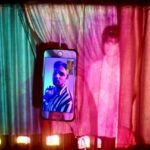
A new online exhibit featuring alumnus Zachary Z. Handler’s pandemic portraits of friends and strangers makes the most of a challenging situation.
What have you missed most during the pandemic? For many, it’s the freedom to move about the neighborhood safely, to interact with complete strangers on the street—and the magical potential of turning those strangers into friends.
Since last April, artist Zachary Z. Handler ’03, visual arts, has harnessed the creative constraints of lockdown to meet and get to know hundreds of people around the world. And by weaving video chat conversations together with DIY props and dioramas pulled from his own home, he has created a collection of nearly 300 intimate portraits to reflect that shared experience.
“Photography, for me, has always been like a gift exchange, and ERRANDS has definitely proved this true in so many, unexpected ways,” said Handler, who by day works in health care with the Deaf and Hard of Hearing Community, and who captures his subjects within the frame of an iPhone with a clear amber-colored case. “From its inception, ERRANDS was always more about the conversation we have during the call. The set-up and portrait we take are a bonus; a time capsule of this shared moment in our lives. That’s the gift. Each session is the most wonderful gift.”
A selection of Handler’s work—including behind-the-scenes peeks into his process—is now on display in ERRANDS, the first in a series of online exhibits offered by the Albin O. Kuhn Library & Gallery. Handler, a Linehan Artist Scholar, will give a virtual artist’s talk for the public at noon on February 18.
“The Library Gallery traditionally plays an important role in the intellectual, creative, and social life at UMBC. To continue filling these roles during the closure of UMBC’s physical campus, we are presenting opportunities to engage with photography and the creative community through virtual exhibitions and events,” said gallery curator Emily Cullen ’06, visual arts. “We especially hope that our effort to connect our audiences with artists and share new work and ideas offers respite and inspiration amid all the challenges of the past year.”
That spirit of connection comes through with every piece Handler creates. At the beginning of the pandemic, he began offering portrait sessions to anyone who asked. He posted them on Instagram a few at a time, and the project took off from there, to the point where he was scheduling six to eight 30-minute sessions a night after a full work day—with many more on the weekends, and each encompassing entirely new and different props, feelings, and experiences. He even recruited fellow alum Kiirstn Pagan ’11, theatre, for help with graphic design to accompany the project.
While Handler loves the chance to talk with so many people, he also finds great joy in using the existing objects in his home to build dioramas and make tiny props from scratch. One night he might be stacking slices of white bread or piling frozen peas around the phone. The next, he might be fashioning a butter dish and plate from terry cloth, or pulling the elastic from a pair of underwear to create five tiny sets of shoelaces for only-slightly-larger pairs of Converse All-Stars. It’s a peculiar pandemic-driven sensibility that really resonates with Handler.
“I think it was born out of the pandemic in the sense that I wasn’t going into stores and I didn’t want to spend money when I didn’t need to. I’d rather give that money to charities or fundraisers,” he said. “Plus I’d rather the challenge of repurposing what I already have in my house to make my sets. It worked more for the aesthetic of being quarantined.” Handler adds, “I’m more of a thrift store person than a boutique store person anyway. That’s very much my personality. I just love that objects carry meaning and stories when we receive them, and then once we pass them onto someone else, we get to add that story. “
One such beloved object—a musical album—came into play in Handler’s portrait of Carlyn Thomas ’13, visual arts, with whom he co-curated the exhibition and queer performance series, Miami is Nice, at Space Camp gallery in Baltimore a few years ago. In Thomas’ portrait, Handler evokes the cover of a Christine and the Queens album—a musical artist they both adore—with Thomas as Christine surrounded by a frame of squiggled yellow icing.
“I loved it,” said Thomas. “The month my portrait was taken was June, which is widely known as Pride month and was also around the same time that I came out as non-binary (I actually came out to Zach on that very call), so it felt very affirming for me to see myself reflected and represented in a way that gave me gender euphoria, and was just an honor to be compared to Chris. I think the finished portrait encapsulates a lot of things about Zach and I’s friendship and it’s very special to me. Icing is also just so much fun and yellow is my favorite color!”
 Zachary Z. Handler, Dr. Hrabowski. Owings Mills, MD, USA. 2020. From the series ERRANDS. Courtesy of the artist.
As a special treat for Retriever audiences, Handler also sat with UMBC President Freeman Hrabowski for a portrait session where they explored shared memories of an interaction on campus in the days just after September 11, 2001. As a photographer for the campus newspaper, Handler recalled snapping a photo of Hrabowski—a personal moment that stuck with both of them and remains in newspaper ink to this day.
“Zachary surprised me by bringing me into the process to reflect on the human condition during this challenging time,” said Hrabowski, whose portrait by Handler shows him surrounded by boxes of precious family slides. “I found myself having a substantive conversation with him about our experience years ago when he was a student at UMBC and our campus, along with the rest of the world, was reacting to the 9/11 tragedy. As he talked, he brought me back to the feeling of grabbing for hope in the midst of a storm, and I realized that we human beings go through these periods, and we get through them because of our connections to others. Zachary was masterful.”
 Zachary Z. Handler, Anne Marie & Amanda (& Bea & Carol). Baltimore, MD, USA. 2020. From the series ERRANDS. Courtesy of the artist.
ERRANDS is online now through February 28, and Handler will give a public artist’s talk on Thursday, February 18, at noon. American Sign Language interpretation will be provided. Visit https://librarygallery.umbc.edu/zach-handler-errands/ for more information about this exhibit and upcoming shows. See more of Handler’s work on Instagram or at www.zzhandler.com.
Header image: Zachary Z. Handler, Samuel Cullman. Alabama, USA. 2020. From the series ERRANDS. Courtesy of the artist.
Gallery of images, left to right, top to bottom: Allan. Guatemala City, Guatemala; Dejah. Philadelphia, Pennsylvania; Alvaro. Stuttgart, Baden-Wurttemberg, Germany; Grant (Hao-Wei). San Ramon, California; Jose. Washington, DC; Hershey. Baltimore, Maryland; Ryder. Chapel Hill, North Carolina; Yim. Chiang Mai, Thailand; Zeljko and Daniel. Razanac, Croatia. From the the series ERRANDS. Courtesy of Zachary Z. Handler.
Learn more about upcoming exhibits at the AOK Gallery here:
]]>
A new online exhibit featuring alumnus Zachary Z. Handler’s pandemic portraits of friends and strangers makes the most of a challenging situation. What have you missed most during the...
https://umbc.edu/stories/errands-with-friends/
https://my3.my.umbc.edu/api/v0/pixel/news/119684/guest@my.umbc.edu/414569ea3a092d6feb57ebad04e97699/api/pixel
alumni
UMBC News & Magazine
https://my3.my.umbc.edu/groups/umbc-news-magazine
https://assets1-my.umbc.edu/system/shared/avatars/groups/000/001/943/24435aa6207c452e7bc15cc74b42c7bb/xsmall.png?1748556657
https://assets1-my.umbc.edu/system/shared/avatars/groups/000/001/943/24435aa6207c452e7bc15cc74b42c7bb/original.png?1748556657
https://assets2-my.umbc.edu/system/shared/avatars/groups/000/001/943/24435aa6207c452e7bc15cc74b42c7bb/xxlarge.png?1748556657
https://assets2-my.umbc.edu/system/shared/avatars/groups/000/001/943/24435aa6207c452e7bc15cc74b42c7bb/xlarge.png?1748556657
https://assets3-my.umbc.edu/system/shared/avatars/groups/000/001/943/24435aa6207c452e7bc15cc74b42c7bb/large.png?1748556657
https://assets1-my.umbc.edu/system/shared/avatars/groups/000/001/943/24435aa6207c452e7bc15cc74b42c7bb/medium.png?1748556657
https://assets2-my.umbc.edu/system/shared/avatars/groups/000/001/943/24435aa6207c452e7bc15cc74b42c7bb/small.png?1748556657
https://assets1-my.umbc.edu/system/shared/avatars/groups/000/001/943/24435aa6207c452e7bc15cc74b42c7bb/xsmall.png?1748556657
https://assets2-my.umbc.edu/system/shared/avatars/groups/000/001/943/24435aa6207c452e7bc15cc74b42c7bb/xxsmall.png?1748556657
UMBC News & Magazine
0
0
false
Mon, 15 Feb 2021 21:57:50 -0500
UMBC receives $870K NIH grant to launch ESTEEMED Scholars program that brings engineering into biomedicine

This spring, the first cohort of ESTEEMED Scholars arrives at UMBC on their path to revolutionizing biomedicine. The new program stands for Enhancing Science, Technology, Engineering, and Mathematics Educational Diversity. Funded with a $870,000 grant from the National Institute of Biomedical Imaging and Bioengineering (NIBIB), ESTEEMED will serve students pursuing a wide range of STEM majors who have an interest in bringing engineering solutions to biomedicine challenges.
The ESTEEMED program will support first- and second-year students, with the goal of preparing them to apply for advanced honors programs (such as the U-RISE Scholars) in their third and fourth years. Scholars will participate in many of the same activities as UMBC’s Meyerhoff Scholars, such as summer bridge experiences that build community, structure and support to apply for research opportunities, funding for academic conference travel, peer and faculty mentoring, and intensive academic advising. They will also have their own unique experiences.
Building resilience
Among elements that make the ESTEEMED program distinctive are monthly casual gatherings for the scholars and UMBC faculty. These opportunities are “designed to promote the community and STEM identity of the students,” shares Patrice Darby, general associate of the Meyerhoff Scholars Program. “They can mingle with the faculty to see themselves as a ‘we,’ as in, ‘I belong here, I am part of this community.’”
 Jennie Leach mentors a student in her laboratory.
Seminar courses also create opportunities for students to learn about faculty members’ career journeys. “I am particularly excited to lead our seminar series for first-year students,” shares Jennie Leach, associate professor of chemical, biochemical, and environmental engineering, and the lead on the grant. “In these seminars,” Leach says, “UMBC faculty and alumni are invited to talk about their research, share their personal story, and provide wisdom that they developed during their path from training to their current career.”
A Second Year Experience course will give the ESTEEMED Scholars the skills and confidence to continue progressing in their degrees. Topics may include science communication skills, leadership training, and habits and practices that can help them thrive through common challenges STEM majors face in their sophomore year.
Setting the course
In addition, each student will generate an Individual Development Plan (IDP). “The IDP has students begin with the end in mind, and think about ‘What are my long-term career goals, and what steps can I take now to get there?’” Darby says. “We bring in a specialist to help students flesh out what it is they want to do, and what is the most effective pathway to get there.”
 Anna Gifty Opoku-Agyeman ’19, M26, meets for advising with Jacqueline King, associate director of the MARC U*STAR and U-RISE programs.
One thing the scholars will work on with the consultant is how to have effective conversations with faculty. “The IDP gives students the tools they need to have pivotal conversations with their research mentors,” Darby says, “to put everybody on the same page and set them up for success, and really propel them into their Ph.D. and M.D.-Ph.D. programs.”
A national model—again
Before launching ESTEEMED at UMBC, the university played an outsize role in the program’s development at a national level. In 2012, NIBIB reached out to UMBCand asked if the Meyerhoff Scholars Program would be willing to pilot a program for students interested in applying engineering to biomedical applications. The Meyerhoff program is nationally renowned as a “gold standard” for producing hundreds of leading STEM researchers from underrepresented groups.
UMBC said yes to NBIB’s invitation to launch th pilot, which also served as a research study to inform the national program structure. At the end of the four-year pilot, UMBC produced a report with recommendations for the formal creation of the program.
 Abby Cruz ’18, a MARC U*STAR Scholar, works in the lab with Fernando Vonhoff, who was just named Undergraduate Research Mentor of the Year at UMBC.
“The pilot served as a model that they could take and adapt to launch a nationwide initiative, which became ESTEEMED,” says Keith Harmon, director of the Meyerhoff Scholars Program. The study recommended that all institutions joining the program be required to provide key elements for success, such as summer bridge, peer advising, and early exposure to research.
NIBIB listened, and ESTEEMED now closely resembles UMBC’s proven vision for effectively building community, supplying ample support, and instilling confidence and independence in students. Together, these components set students on a path to persist in STEM and earn graduate degrees.
Now that UMBC is officially part of the program, “We have a new project to give more students a distinctive experience,” Harmon says.
‘Eagerness into action’
UMBC’s faculty also make the university particularly well-suited to offer ESTEEMED Scholars a rich interdisciplinary research experience. The scientific leads on the grant are Leach and Phyllis Robinson, professor of biological sciences. They and several of their colleagues already take engineering approaches to biomedicine. They also have significant depth of experience mentoring and publishing with undergraduate students from a range of backgrounds.
 UMBC’s 2018 valedictorian Eudorah Vital (right), a MARC U*STAR and Meyerhoff Scholar, with MARC U*STAR program director Phyllis Robinson (center) and commencement speaker Paula Johnson, president of Wellesley College.
“That was a strength of our application, that we have wonderful faculty at UMBC whose records met those requirements,” Harmon says. “We have experienced and dedicated faculty with strategies and mentoring styles that promote success and inclusion.”
Harmon adds that the research by those same faculty mentors “has that thread, that connection, to bridging engineering and physical and computational sciences with medicine and health and biomedicine.”
The new scholars are poised to take in their mentors’ knowledge and then create their own for the benefit of society. “Today’s students are eager to use science and engineering to make the world a better place,” Leach says. “The ESTEEMED Scholars program will support students in putting this eagerness into action via engagement in real biomedical research.”
Banner image: STEM BUILD Trainee Alexis Waller ’18, biological sciences, with her mentor, postdoctoral fellow Pengfei Ding.
All photos by Marlayna Demond ’11 for UMBC.
]]>
This spring, the first cohort of ESTEEMED Scholars arrives at UMBC on their path to revolutionizing biomedicine. The new program stands for Enhancing Science, Technology, Engineering, and...
https://umbc.edu/stories/umbc-receives-870k-nih-grant-to-launch-esteemed-scholars-program-that-brings-engineering-into-biomedicine/
https://my3.my.umbc.edu/api/v0/pixel/news/119685/guest@my.umbc.edu/dd3d8a571dfef0ed09ed9dd029e0a021/api/pixel
cnms
coeit
meyerhoffscholars
page1
science-and-technology
undergradresearch
UMBC News & Magazine
https://my3.my.umbc.edu/groups/umbc-news-magazine
https://assets1-my.umbc.edu/system/shared/avatars/groups/000/001/943/24435aa6207c452e7bc15cc74b42c7bb/xsmall.png?1748556657
https://assets1-my.umbc.edu/system/shared/avatars/groups/000/001/943/24435aa6207c452e7bc15cc74b42c7bb/original.png?1748556657
https://assets2-my.umbc.edu/system/shared/avatars/groups/000/001/943/24435aa6207c452e7bc15cc74b42c7bb/xxlarge.png?1748556657
https://assets2-my.umbc.edu/system/shared/avatars/groups/000/001/943/24435aa6207c452e7bc15cc74b42c7bb/xlarge.png?1748556657
https://assets3-my.umbc.edu/system/shared/avatars/groups/000/001/943/24435aa6207c452e7bc15cc74b42c7bb/large.png?1748556657
https://assets1-my.umbc.edu/system/shared/avatars/groups/000/001/943/24435aa6207c452e7bc15cc74b42c7bb/medium.png?1748556657
https://assets2-my.umbc.edu/system/shared/avatars/groups/000/001/943/24435aa6207c452e7bc15cc74b42c7bb/small.png?1748556657
https://assets1-my.umbc.edu/system/shared/avatars/groups/000/001/943/24435aa6207c452e7bc15cc74b42c7bb/xsmall.png?1748556657
https://assets2-my.umbc.edu/system/shared/avatars/groups/000/001/943/24435aa6207c452e7bc15cc74b42c7bb/xxsmall.png?1748556657
UMBC News & Magazine
0
0
false
Fri, 12 Feb 2021 20:53:05 -0500
UMBC faculty, alumni entrepreneurs receive record number of MIPS awards for tech collaborations

Six UMBC faculty members have just received grants from the Maryland Industrial Partnerships (MIPS) program to develop new technologies with potential to grow the state’s economy. This is UMBC’s largest number of winning proposals within a single proposal round since MIPS began in 1987.
The program connects University System of Maryland (USM) faculty and students with Maryland businesses. UMBC’s latest MIPS grantees include computer science and electrical engineering faculty Tim Oates, Chein-I Chang, and Anupam Joshi; Soobum Lee, mechanical engineering; Dipanjan Pan, chemical, biochemical, and environmental engineering; and Vikram Vakharia, marine biotechnology. Among their industry partners are UMBC alumni entrepreneurs who are building businesses in Maryland.
Advances in aquaculture technology
Vakharia partnered with Mary Larkin, founder and CEO of Gaskiya Diagnostics, on a high-impact aquaculture project. The pair worked to develop a proposal for rapid, low-cost, easy-to-use diagnostic tests to protect and support aqua-farm production.
Larkin received her Ph.D. in marine biotechnology from UMBC in 2018. She was supported by research funding through MIPS as a graduate student at the Institute of Marine and Environmental Technology. She now serves as an industry partner through the program.
 Institute of Marine and Environmental Technology
According to Larkin, “Low-cost, on-site tests enable aqua-farms to rapidly identify pathogens, allowing them to monitor disease and take actions to protect their crop.” Gaskiya’s initial focus for this testing is Whiteleg shrimp production facilities, which have an average of more than $4.5 billion in losses annually from disease.
“Farmers need to test their ponds and get instant information so that they can quickly take action and mitigate disease,” says Larkin.
What faster, simpler tests look like
Larkin describes Vakharia as a “perfect match” for her collaborator on this research. Vakharia’s background is in viruses that impact organisms important to aquaculture, including shrimp.
For this project, Vakharia notes, “I first had to identify the target. With the target, I can make a protein that Larkin can use to detect those pathogens in shrimp.” He explains, “This protein is a critical first step in making a non-animal-based binder that detects the pathogen.”
The team plans to incorporate the proteins and binders into a paper-based test. The test will provide results in minutes, similar to a pregnancy test.
Aqua-farms’ current tests for similar pathogens must be done through a lab. This results in an elongated turn-around time and average cost of $50 per sample. Gaskiya Diagnostics hopes to price the new diagnostic test at $5 to $10. The test results will be available in as quickly as 10 minutes. No expertise or additional equipment are required to perform or interpret the results.
Next generation cybersecurity
Joshi, professor and chair of computer science and electrical engineering, received a MIPS grant for a cybersecurity collaboration with the startup CyDeploy. They are developing a platform that automates the quality assurance process for cybersecurity updates made to IT and “internet of things” (IoT) devices like Amazon Alexa, Google Home, and health and medical devices.
CyDeploy CEO Tina Williams-Koroma ‘02, computer science, presented Joshi with the idea to develop a “cybersecurity-driven change management system.” The technology is based in and leverages the use of artificial intelligence and machine learning to create a cloud-based replica of a company’s systems.
 Tina Williams-Koroma. Photo courtesy of Williams-Koroma
From prototype to launch
Williams-Koroma and Joshi’s group at UMBC developed a conceptual prototype. It shows the infrastructure and technology that would make the system feasible, combining off-the-shelf tools with novel research.
“Increasingly, the government is now beginning to mandate security requirements around IoT devices. The longer-term vision that CyDeploy has is capturing the state of these systems, virtually recreating them and then running the security changes against virtual versions to see how the changes would affect those systems,” Joshi adds.

Anupam Joshi
Williams-Koroma, who is also an adjunct instructor at UMBC, projects that the initial development of the platform will be complete in late spring 2021. They anticipate launching a free pilot version for businesses to test their IT systems. IoT pilots will come in a later phase.
Funding that matters
Joseph Naft, director of the MIPS program, is excited about the tremendous potential of these projects. The long-term vision is creating additional high-quality jobs in Maryland. “We do this,” he says, “by bringing the expertise of faculty and students to bear on technology issues in product development for companies within the state.”
Since its inception, the MIPS grant program has had a $42 billion economic impact on the state of Maryland and has created nearly 22,000 jobs. UMBC’s incredibly strong results “speak well to the engagement of UMBC’s faculty with commercially viable products and technologies,” says Naft.
Dean Drake, associate vice president for research at UMBC, credits these results to the “expansive pool of talent” at UMBC and across all of the University System of Maryland.
“Helping our industry partners solve their challenges is a great strength of both UMBC and USM institutions more broadly,” says Drake. “Our talented faculty, students, staff, and alumni have expertise in every discipline that’s out there.”
These results also demonstrate UMBC’s “interest in working with companies in the state” for the benefit of all Marylanders, Naft notes, and UMBC’s robust potential for future growth.
Banner image: IMET entrance. All photos by Marlayna Demond’ 11 unless otherwise noted.
Article by Adriana Fraser for UMBC News.
]]>
Six UMBC faculty members have just received grants from the Maryland Industrial Partnerships (MIPS) program to develop new technologies with potential to grow the state’s economy. This is UMBC’s...
https://umbc.edu/stories/umbc-faculty-alumni-entrepreneurs-receive-record-number-of-mips-awards-for-tech-collaborations/
https://my3.my.umbc.edu/api/v0/pixel/news/119686/guest@my.umbc.edu/d04d87810bfbfd8566d3937a837118b7/api/pixel
alumni
cbee
cnms
coeit
csee
cybersecurity
imet
majoraward
marinebiotech
meche
page1
research
science-and-technology
UMBC News & Magazine
https://my3.my.umbc.edu/groups/umbc-news-magazine
https://assets1-my.umbc.edu/system/shared/avatars/groups/000/001/943/24435aa6207c452e7bc15cc74b42c7bb/xsmall.png?1748556657
https://assets1-my.umbc.edu/system/shared/avatars/groups/000/001/943/24435aa6207c452e7bc15cc74b42c7bb/original.png?1748556657
https://assets2-my.umbc.edu/system/shared/avatars/groups/000/001/943/24435aa6207c452e7bc15cc74b42c7bb/xxlarge.png?1748556657
https://assets2-my.umbc.edu/system/shared/avatars/groups/000/001/943/24435aa6207c452e7bc15cc74b42c7bb/xlarge.png?1748556657
https://assets3-my.umbc.edu/system/shared/avatars/groups/000/001/943/24435aa6207c452e7bc15cc74b42c7bb/large.png?1748556657
https://assets1-my.umbc.edu/system/shared/avatars/groups/000/001/943/24435aa6207c452e7bc15cc74b42c7bb/medium.png?1748556657
https://assets2-my.umbc.edu/system/shared/avatars/groups/000/001/943/24435aa6207c452e7bc15cc74b42c7bb/small.png?1748556657
https://assets1-my.umbc.edu/system/shared/avatars/groups/000/001/943/24435aa6207c452e7bc15cc74b42c7bb/xsmall.png?1748556657
https://assets2-my.umbc.edu/system/shared/avatars/groups/000/001/943/24435aa6207c452e7bc15cc74b42c7bb/xxsmall.png?1748556657
UMBC News & Magazine
0
0
false
Thu, 11 Feb 2021 20:41:47 -0500
UMBC receives 2020 Engaged Campus Award

Campus Compact Mid-Atlantic (CCMA) has recognized UMBC with its 2020 Engaged Campus Award. This award acknowledges UMBC faculty, staff, students, and community partners’ commitment to service-learning and community engagement within the greater Mid-Atlantic region.
UMBC has been selected out of 38 CCMA institutions across the Mid-Atlantic. This includes other institutions that, like UMBC, have been recognized with the Carnegie Community Engagement Classification.
 Students fill packages of healthy foods and other essential supplies for
UMBC’s Retriever Essentials program. Photo courtesy of Retriever Essentials.
CCMA honors UMBC’s deep dedication in five categories:
- Philosophy and mission of community engagement
- Student support for and involvement in community engagement
- Faculty support for involvement in community engagement
- Community participation and partnerships
- Institutional support for community engagement
The Engaged Campus Award reflects the UMBC community’s dedication to working in partnership with others to increase racial equity, inclusion, and social justice.
Supporting tomorrow’s college students
Kaitlynn Lilly ‘22, physics and mathematics, exemplifies this dedication to community. Lilly shares that until she came to UMBC, she did not have the mentorship and guidance to fully understand or access all the resources college could offer. At UMBC, she found support for her academic and professional goals and numerous opportunities for community engagement. This experience instilled in her a passion for working with students of all backgrounds to achieve their highest goals.

Kaitlynn Lilly.
Photo courtesy of Lilly.
Lilly has served as a tutor at UMBC’s Physics Tutorial Center and a technical aide at the Johns Hopkins University Applied Physics Laboratory. She has carried what she’s learned through those roles to her work as an advisor to two teams of high school girls participating in the Society of Women Engineers Next Design Challenge.
“I want to give that mentorship and academic assistance I didn’t have growing up to those that are coming after me,” shares Lilly. “My goal is to show every student that their dreams of higher education and careers are possible.”
Community engagement hub
The Shriver Center has led UMBC’s community-engaged work for over 30 years. It has prepared and connected faculty, staff, and students from all academic programs with community partners. Its applied learning experiences have helped thousands of students to develop as community-minded agents of change. At the same time, the center has helped hundreds of partner organizations to meet their goals.
 Maggie Holland (left), geography and environmental systems, and Lee Blaney (second from right), chemical, biochemical, and environmental engineering, prepare to plant trees in Costa Rica with a group of UMBC students. Photo courtesy Holland.
“UMBC’s community-engaged activity and the people who make this activity possible give me great hope,” shares Michele Wolff, director of the Shriver Center. “Now more than ever, our community and civic engagement can help change the current narrative and move us towards a more inclusive, equitable, and just society.”
Banner image: Mavis Sanders (center), professor of education, is director of the Sherman Center for Early Learning in Urban Communities. She talks with a parent participating in the Families, Libraries, and Early Literacy Project. A center staff member (right) shows a book to a child participating in the project. Image by Marlayna Demond ’11 for UMBC.
]]>
Campus Compact Mid-Atlantic (CCMA) has recognized UMBC with its 2020 Engaged Campus Award. This award acknowledges UMBC faculty, staff, students, and community partners’ commitment to...
https://umbc.edu/stories/umbc-receives-2020-engaged-campus-award/
https://my3.my.umbc.edu/api/v0/pixel/news/119687/guest@my.umbc.edu/88db7ce179e26deefbd4fa7aa66b3fb8/api/pixel
cnms
community
majoraward
mathstat
physics
shrivercenter
UMBC News & Magazine
https://my3.my.umbc.edu/groups/umbc-news-magazine
https://assets1-my.umbc.edu/system/shared/avatars/groups/000/001/943/24435aa6207c452e7bc15cc74b42c7bb/xsmall.png?1748556657
https://assets1-my.umbc.edu/system/shared/avatars/groups/000/001/943/24435aa6207c452e7bc15cc74b42c7bb/original.png?1748556657
https://assets2-my.umbc.edu/system/shared/avatars/groups/000/001/943/24435aa6207c452e7bc15cc74b42c7bb/xxlarge.png?1748556657
https://assets2-my.umbc.edu/system/shared/avatars/groups/000/001/943/24435aa6207c452e7bc15cc74b42c7bb/xlarge.png?1748556657
https://assets3-my.umbc.edu/system/shared/avatars/groups/000/001/943/24435aa6207c452e7bc15cc74b42c7bb/large.png?1748556657
https://assets1-my.umbc.edu/system/shared/avatars/groups/000/001/943/24435aa6207c452e7bc15cc74b42c7bb/medium.png?1748556657
https://assets2-my.umbc.edu/system/shared/avatars/groups/000/001/943/24435aa6207c452e7bc15cc74b42c7bb/small.png?1748556657
https://assets1-my.umbc.edu/system/shared/avatars/groups/000/001/943/24435aa6207c452e7bc15cc74b42c7bb/xsmall.png?1748556657
https://assets2-my.umbc.edu/system/shared/avatars/groups/000/001/943/24435aa6207c452e7bc15cc74b42c7bb/xxsmall.png?1748556657
UMBC News & Magazine
0
0
false
Tue, 09 Feb 2021 20:58:16 -0500
Academy for Gerontology in Higher Education honors UMBC’s innovative leadership in the field of aging

Dana Bradley, dean of UMBC’s Erickson School of Aging Studies, recently recognized President Freeman Hrabowski with a prominent honor from the nation’s preeminent organization devoted to research, education, and practice in the field of aging.
Bradley is incoming chair of the Academy for Gerontology in Higher Education (AGHE), the educational unit of the Gerontological Society of America (GSA). The AGHE’s Administrative Leadership Honor recognizes twenty international leaders in the field of gerontology. This year there were representatives from countries like the United States, Canada, and Japan.
“The award is about helping an international audience understand the impact that our scientific researchers and educators have in the field of aging,” shares Bradley. Honorees’ outstanding work represents milestones in the history and development of gerontology.
Bradley nominated Hrabowski for the award in collaboration with John Schumacher, associate professor of sociology, anthropology, and public health (SAPH), and Leslie Morgan, professor emerita of SAPH. Schumacher is the graduate program director of the gerontology Ph.D. program. This doctoral program is jointly offered by UMBC and the University of Maryland, Baltimore (UMB). These are complementary to the Erickson School’s bachelor’s and master’s degrees and certificate programs.
 L-to-R: Bradley; Amy Berman, RN, LHD, FAAN; Schumacher; and Nicole Brandt (UMB).
National leadership in aging studies
Bradley’s work in aging research has created avenues and networks for scientists, educators, and students to investigate, advocate, research, and innovate in the fields of aging and longevity. This, in turn, has had a positive impact on housing, health services, community wellbeing, and lifelong learning for older adults.
Bradley is a GSA and AGHE fellow. She has long served as an elected leader within the GSA and Southern Gerontological Society. She was drawn to become dean of UMBC’s Erickson School in 2018 because of its focus “on leading and being on the edge through engaged scholarship with endless possibilities.” Hrabowski, she says, has cultivated and supported the Erickson School’s leadership in the field.
Over the last three years, Bradley has collaborated with Hrabowski, faculty, campus, other universities within the University System of Maryland, and community partners on interdisciplinary initiatives to broaden and diversify UMBC’s research in the field of aging services. Last year she and Hrabowski served on a steering committee to support UMBC joining the Age-Friendly University Global Network.
The “age-friendly” designation is a commitment to innovate advances in gerontology, health research, and community initiatives to support older adults in higher education. The group, led by Dublin City University in Ireland, includes fifty-eight institutions worldwide.
A model for teaching, learning, and research
“Dr. Hrabowski has been at the forefront of creating and promoting a vision of how we think and talk about aging and longevity,” shares Bradley. And the inclusive, forward-looking vision that he and the Erickson School emphasize has had notable impacts, including on the student experience.
At the same time, Hrabowski shares that he sees his AGHE honor as “a reflection of the Erickson School’s innovative approach to teaching, learning, and research.” He shares, “I’m so proud of the work being done at the school. It has had great success preparing alumni who are now leaders in the field of aging.”
Erickson School alumni likeLauren Mortimer ‘19, and Malgorzata Bondyra ‘20, management of aging services, exemplify the type of innovation that UMBC fosters, in their work to reach older adults in creative ways. Mortimer designed a comfort book that provides tools for people with dementia to soothe themselves during periods of confusion and irritability. Bondyra’s internship in senior housing inspired her to create a virtual cooking class for the older members of her Polish community senior center.

Bondyra cooking pierogi for Seven Oaks Senior Center’s online cooking class.
Photo courtesy of Bondyra.
The Erickson School has become a place where students equip themselves with the skills and knowledge to address issues in longevity care. Students are then able to enter the workforce with skills that are inclusive and holistic.
The school is now developing a certificate in inclusion and diversity in aging services. Says Bradley, “Dr. Hrabowski inspires me to continue to envision possibilities for what the future of aging services can look like.”
Banner image: UMBC students gather at the sculpture “Forum” by Thomas Sayre in 2016. Photo by Marlayna Demond ’11 for UMBC.
]]>
Dana Bradley, dean of UMBC’s Erickson School of Aging Studies, recently recognized President Freeman Hrabowski with a prominent honor from the nation’s preeminent organization devoted to research,...
https://umbc.edu/stories/academy-for-gerontology-in-higher-education-honors-umbcs-innovative-leadership-in-the-field-of-aging-2/
https://my3.my.umbc.edu/api/v0/pixel/news/119688/guest@my.umbc.edu/13ffda400314ca9ab1048279e1ec9045/api/pixel
cahss
ericksonschool
gerontology
policy-and-society
saph
UMBC News & Magazine
https://my3.my.umbc.edu/groups/umbc-news-magazine
https://assets1-my.umbc.edu/system/shared/avatars/groups/000/001/943/24435aa6207c452e7bc15cc74b42c7bb/xsmall.png?1748556657
https://assets1-my.umbc.edu/system/shared/avatars/groups/000/001/943/24435aa6207c452e7bc15cc74b42c7bb/original.png?1748556657
https://assets2-my.umbc.edu/system/shared/avatars/groups/000/001/943/24435aa6207c452e7bc15cc74b42c7bb/xxlarge.png?1748556657
https://assets2-my.umbc.edu/system/shared/avatars/groups/000/001/943/24435aa6207c452e7bc15cc74b42c7bb/xlarge.png?1748556657
https://assets3-my.umbc.edu/system/shared/avatars/groups/000/001/943/24435aa6207c452e7bc15cc74b42c7bb/large.png?1748556657
https://assets1-my.umbc.edu/system/shared/avatars/groups/000/001/943/24435aa6207c452e7bc15cc74b42c7bb/medium.png?1748556657
https://assets2-my.umbc.edu/system/shared/avatars/groups/000/001/943/24435aa6207c452e7bc15cc74b42c7bb/small.png?1748556657
https://assets1-my.umbc.edu/system/shared/avatars/groups/000/001/943/24435aa6207c452e7bc15cc74b42c7bb/xsmall.png?1748556657
https://assets2-my.umbc.edu/system/shared/avatars/groups/000/001/943/24435aa6207c452e7bc15cc74b42c7bb/xxsmall.png?1748556657
UMBC News & Magazine
0
0
false
Wed, 03 Feb 2021 17:09:12 -0500
5 ways the Biden administration may help stem the loss of international students

By David L. Di Maria, associate vice provost, International Education, UMBC
Over the past four years, the Trump administration made it increasingly difficult for students from other countries to study in the United States.
In 2017, the number of new international students enrolled at American colleges and universities – that is, those just coming to the U.S. for the first time – declined for the first year on record. Restrictive immigration policies, frayed relations with foreign nations and travel bans all contributed to further drops in new enrollment over each of the following years of Trump’s presidency.
President Joe Biden’s election signals a new day for international education. This is evident based on a slew of Biden’s executive orders, many of which revoked immigration and travel restrictions imposed by the Trump administration. Additionally, Biden sent a bill to Congress aimed at reforming the nation’s immigration system.
As a university administrator who specializes in international education, I foresee five major ways the United States may once again become the top choice for students from around the world during the Biden administration.
1. Reform of the immigration system
In 2019, the total number of enrolled international students – that is, newly-arrived students as well as those already studying in the U.S. – dropped for the first time since 2005. And the economic impact of international students decreased by US$1.8 billion.
While the declining number of international students wreaked havoc on U.S. colleges and universities, as well as the communities in which they are based, there is renewed optimism that things will change.
That’s because the Biden administration has expressed a commitment to modernizing the nation’s immigration system in ways that respond to economic needs and prevent the U.S. from losing talent to other nations. This includes making it easier for international students who are working on advanced degrees in science, technology, engineering and mathematics – or STEM – to stay and work after graduation.
How much Biden can actually reform the immigration system remains to be seen. But international applications to U.S. colleges for this fall are already up 9% compared to a year ago. This suggests a renewed interest in the U.S. as a study destination. It also serves as a hopeful sign that international enrollment will soon rebound, presuming Biden’s handling of the pandemic instills more confidence abroad than that of his predecessor.
2. Elimination of discriminatory bans
On his first day in office, Biden revoked the Trump administration’s so-called Muslim ban and other discriminatory restrictions on travel and entry in favor of strengthening information-sharing relationships with foreign governments.
While many of the country-specific restrictions did not directly affect people with student visas, the policy had a broad cooling effect. Consider the sharp decline in student visas issued to applicants from countries included in the bans. For instance, student visas issued to Iranian nationals fell by 59%, from 3,139 in 2016 to 1,970 in 2019.
Biden’s approach to national security aims to keep would-be threats from entering the U.S. while allowing for citizen diplomacy efforts, such as student exchange programs, to resume. This tactic will ultimately increase the diversity of nations represented on college campuses. Such diversity enhances learning opportunities for all.
3. Protections for Dreamers
Undocumented immigrants brought to the U.S. as children – often known as Dreamers – faced an uncertain future under Trump. The Trump administration refused to accept new applications for the Deferred Action for Childhood Arrivals program – which extends certain protections to Dreamers – that was established under the Obama administration. And this occurred even after the program was upheld by the U.S. Supreme Court.
Biden issued a memorandum aimed at preserving and fortifying DACA the same day he was sworn in. While further actions are needed to achieve these goals, the memorandum should provide the country’s more than 200,000 DACA-eligible college students with the hope that a pathway to citizenship is not far off.
4. Options for graduates to stay
Even before he was elected, former President Donald Trump regularly claimed that immigrants were taking jobs away from American workers. This is a notion largely disproved by economists, disputed by employers and rejected by 64% of the general population.
In sharp contrast to his predecessor, Biden has proposed making it easier for international students with advanced degrees in STEM fields to receive work visas and apply for permanent residency. If successful, Biden would enable the U.S. to retain a greater number of STEM workers who are critical for continued economic growth. Just consider that nearly 25% of billion-dollar startup companies had a founder who first arrived to the U.S. as an international student.
STEM products and services are the focus of many of these companies, which create an average of 1,200 new jobs each.
5. Boost for global science
According to a recent survey, the top recommendation that researchers around the world have for the Biden administration is to expand scientific collaborations between the U.S. and other countries.
The exchange of ideas between students and scholars from different parts of the world is important for advancing knowledge and addressing global threats that range from climate change to COVID-19. However, research indicates that two of the most significant barriers to international collaboration are a lack of funding and restrictions on sharing data.
Biden’s decisions to elevate the director of the White House Office of Science and Technology to a Cabinet-level position, rejoin the Paris climate accord and reverse the previous administration’s move to depart from the World Health Organization all indicate that science will inform future policy decisions. This could help address current barriers to international collaboration.
Biden’s commitments to “lead with science and truth” and attract top global talent to the U.S. not only bode well for U.S. colleges, universities and companies but also hold the promise of reclaiming lost ground by restoring U.S. leadership in science and technology.
*****
David L. Di Maria, Associate Vice Provost for International Education, University of Maryland, Baltimore County
This article is republished from The Conversation under a Creative Commons license. Read the original article.
Header image: President Biden’s rollbacks on former President Trump’s travel restrictions signal new opportunities for international students. Brothers91/E+ via Getty Images Plus
]]>
By David L. Di Maria, associate vice provost, International Education, UMBC Over the past four years, the Trump administration made it increasingly difficult for students from other countries...
https://umbc.edu/stories/5-ways-the-biden-administration-may-help-stem-the-loss-of-international-students/
https://my3.my.umbc.edu/api/v0/pixel/news/119689/guest@my.umbc.edu/658ceaf4b55e70cb55229715e8816fa0/api/pixel
ies
international
international-education-services
perspectives
the-conversation
UMBC News & Magazine
https://my3.my.umbc.edu/groups/umbc-news-magazine
https://assets1-my.umbc.edu/system/shared/avatars/groups/000/001/943/24435aa6207c452e7bc15cc74b42c7bb/xsmall.png?1748556657
https://assets1-my.umbc.edu/system/shared/avatars/groups/000/001/943/24435aa6207c452e7bc15cc74b42c7bb/original.png?1748556657
https://assets2-my.umbc.edu/system/shared/avatars/groups/000/001/943/24435aa6207c452e7bc15cc74b42c7bb/xxlarge.png?1748556657
https://assets2-my.umbc.edu/system/shared/avatars/groups/000/001/943/24435aa6207c452e7bc15cc74b42c7bb/xlarge.png?1748556657
https://assets3-my.umbc.edu/system/shared/avatars/groups/000/001/943/24435aa6207c452e7bc15cc74b42c7bb/large.png?1748556657
https://assets1-my.umbc.edu/system/shared/avatars/groups/000/001/943/24435aa6207c452e7bc15cc74b42c7bb/medium.png?1748556657
https://assets2-my.umbc.edu/system/shared/avatars/groups/000/001/943/24435aa6207c452e7bc15cc74b42c7bb/small.png?1748556657
https://assets1-my.umbc.edu/system/shared/avatars/groups/000/001/943/24435aa6207c452e7bc15cc74b42c7bb/xsmall.png?1748556657
https://assets2-my.umbc.edu/system/shared/avatars/groups/000/001/943/24435aa6207c452e7bc15cc74b42c7bb/xxsmall.png?1748556657
UMBC News & Magazine
0
0
false
Wed, 03 Feb 2021 14:31:58 -0500
NIA grants UMBC’s Laura Girling $750K for research on living with dementia, including the impacts of COVID-19

Laura Girling, director of UMBC’s Center for Aging Studies, breaks down stereotypes of people living with dementia through innovative research. Since 2019, the NIH’s National Institute of Aging (NIA) has awarded her more than $750,000. The funding helped her examine how people with dementia live alone in community settings. This includes research focused on how COVID-19 social distancing guidelines impact this vulnerable population and how to ethically include people living with dementia as research participants.
“Persons with dementia are often portrayed as bedridden,” shares Girling, Ph.D. ’15, gerontology. “When I show clips of people living with dementia leading active lives, there is a realization that people with dementia can do many of the same activities others can.”
In-home assessment
Girling began studying people living alone with dementia two years ago. The project launched under the title Aging at Home Alone with Alzheimer’s and Related Dementias. She began to assess how people experiencing dementia manage their day to day living. Girling noted their interactions with their caregivers and community, and how they navigate and negotiate their physical and social environments.
To gather such detailed information Girling completes in-home neuropsychometric assessments and in-depth in-person interviews. These in-person interviews have helped her observe the cognition and behavior of people with dementia who live alone in community settings in Maryland.
As COVID-19 spread and in-home visits became impossible, the project had to pause. Virtual visits didn’t allow for the same kind of assessment, Girling explains. But the situation did draw her attention to important new research questions.
Living with dementia during a crisis
As social distancing guidelines were implemented, Girling wanted to know how community-dwelling persons with dementia and their informal and formal supports were managing during a pandemic.
She began a new research project, Exploring COVID-19’s Impact on the Care and Well-being of Community Dwelling Persons with Dementia, with supplemental funding from her main NIA grant. This research evaluates the impact of social distancing guidelines on the health and wellbeing of community-dwelling persons with dementia.

Mary Nemec. Photo courtesy of Nemec.
Girling’s local COVID-19 research team includes research assistant Amber Zurn ‘21, sociology; Michael Allison, assistant director of the Adult Intensive Care Unit at Saint Agnes Hospital; and Mary Nemec, geriatric social worker and senior ethnographer. Nemec worked at UMBC’s Center for Aging Studies for more than 20 years and came out of retirement to lend her expertise to this project.
“Working with Dr. Girling I have learned how to code and systematically sort through research narratives,” shares Zurn. She is enrolled in UMBC’s health and public policy program and holds a certificate in social dimensions of health. “This has been an insightful process. It shows the nuances of qualitative data collection, a skillset I will be able to use in future career fields.”
Preliminary findings, from virtual and phone interviews, indicate that community-dwelling persons with dementia are experiencing more periods of isolation. This is due to the disruption in the supports and structures that allow them to successfully engage in daily living activities. And it puts their health and ongoing independence at risk.
Creating inclusive research
Girling notes that there is still so much that is unknown about improving the health and wellbeing of people with dementia in times of crisis and daily living. Expanding who is included in dementia research will help improve our understanding of the early stages of dementia. It will also give us insight on how to support people experiencing it.
One obstacle in pursuing dementia research, she explains, is the frequent exclusion of people with dementia in human subject research broadly. She is working with Nancy Berlinger, a bioethics research scholar at the Hastings Center, as well as Kate de Medeiros from Miami University, to address this issue.
Berlinger researches health care ethics and social ethics in aging societies. Girling has received supplemental NIA funding to research the bioethical implications of including people with dementia as participants in dementia research. Together, they will develop best practices relating to logistical and other challenges of working with this vulnerable population.
“These guidelines will help the research community support inclusion of people with dementia in future social research,” says Girling.
Banner image: Laura Girling. Photo courtesy of Girling.
]]>
Laura Girling, director of UMBC’s Center for Aging Studies, breaks down stereotypes of people living with dementia through innovative research. Since 2019, the NIH’s National Institute of Aging...
https://umbc.edu/stories/nia-grants-umbcs-laura-girling-750k-for-research-on-living-with-dementia-including-the-impacts-of-covid-19/
https://my3.my.umbc.edu/api/v0/pixel/news/119690/guest@my.umbc.edu/82ffd2b3bdf677f72493dedf955a3430/api/pixel
cahss
cahssresearch
covidresearch
page1
policy-and-society
saph
undergradresearch
UMBC News & Magazine
https://my3.my.umbc.edu/groups/umbc-news-magazine
https://assets1-my.umbc.edu/system/shared/avatars/groups/000/001/943/24435aa6207c452e7bc15cc74b42c7bb/xsmall.png?1748556657
https://assets1-my.umbc.edu/system/shared/avatars/groups/000/001/943/24435aa6207c452e7bc15cc74b42c7bb/original.png?1748556657
https://assets2-my.umbc.edu/system/shared/avatars/groups/000/001/943/24435aa6207c452e7bc15cc74b42c7bb/xxlarge.png?1748556657
https://assets2-my.umbc.edu/system/shared/avatars/groups/000/001/943/24435aa6207c452e7bc15cc74b42c7bb/xlarge.png?1748556657
https://assets3-my.umbc.edu/system/shared/avatars/groups/000/001/943/24435aa6207c452e7bc15cc74b42c7bb/large.png?1748556657
https://assets1-my.umbc.edu/system/shared/avatars/groups/000/001/943/24435aa6207c452e7bc15cc74b42c7bb/medium.png?1748556657
https://assets2-my.umbc.edu/system/shared/avatars/groups/000/001/943/24435aa6207c452e7bc15cc74b42c7bb/small.png?1748556657
https://assets1-my.umbc.edu/system/shared/avatars/groups/000/001/943/24435aa6207c452e7bc15cc74b42c7bb/xsmall.png?1748556657
https://assets2-my.umbc.edu/system/shared/avatars/groups/000/001/943/24435aa6207c452e7bc15cc74b42c7bb/xxsmall.png?1748556657
UMBC News & Magazine
0
0
false
Mon, 01 Feb 2021 21:15:21 -0500
UMBC researchers use AI to help businesses understand complex legal docs, like the Code of Federal Regulations
UMBC researchers have made strides in automated legal document analytics by creating a way to machine-process the Code of Federal Regulations (CFR). The CFR is a complex document containing policies related to doing business with the federal government. All business affiliates of the federal government must comply with it. For government contracts to be equitably open to a broad range of businesses, policies within the CFR must be accessible.
This document automation is just one part of a broader project to help contractors and other entities manage and monitor their legal documents. Directed by Karuna Joshi, associate professor of information systems, the team has successfully managed to do a complete analysis of the CFR. Digital Government: Research and Practice recently published their methodology.
 Karuna Joshi (left) with Yelena Yesha, 2018.
Automating document review through AI
The team’s method for analyzing the CFR involves artificial intelligence (AI), which learns how to categorize information within the document, store it, and extract it when it is requested. Joshi and her team achieved this by creating a knowledge graph using Semantic Web technologies to illustrate all the key terms, rules, and regulations in the document. This basic framework enables users to ask an automated tool about a specific rule and be provided with the answer.
The semantic web language OWL, or Web Ontology Language, is used to represent concepts and to contextualize relationships. According to Joshi, the framework of the knowledge graph can be “adopted by federal agencies and businesses to automate their internal processes that reference the CFR rules and policies.” To facilitate this, they will make it available in the public domain.
Question and answer
General users can interact with the knowledge graph through a question-and-answer process, similar to how many people use Amazon’s Alexa or Apple’s Siri. For example, Joshi says, someone could ask a policy-related question like, “How many days at a minimum must a Request for Proposal (RFP) be posted open/available?” The system would query the CFR knowledge graph to find sections in the document that answer this question.
 Karuna Joshi presents at the USNA-UMBC research symposium, 2016.
The researchers anticipate this will be a highly useful system for any business held to the CFR thanks to how it breaks down CFR’s legal complexity through the automated process with ease.
Access and accountability
This project to automate and support users’ understanding of legal documents has been an ongoing effort by the UMBC team. Beyond the CFR, they seek to assist people with understanding legally binding contracts that they encounter every day, such as terms of service for major companies.

Lavanya Elluri. Image courtesy of Elluri.
Lavanya Elluri, graduate student of information systems, adds, “Our research helps the organizations that use cloud services to understand the context from these textual documents quickly.”
Many users have found that companies are using their data without their knowledge. Often, this is due to the information buried within terms of service and privacy policies. Joshi predicts that the tools her team is developing to help users better understand these documents will be essential to hold companies accountable for their data use.
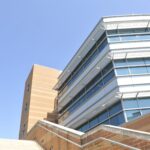
Featured image: UMBC’s Information Technology and Engineering Building. All photos by Marlayna Demond ’11 for UMBC unless otherwise noted.
Story by Morgan Zepp for UMBC.
]]>
UMBC researchers have made strides in automated legal document analytics by creating a way to machine-process the Code of Federal Regulations (CFR). The CFR is a complex document containing...
https://umbc.edu/stories/umbc-researchers-use-ai-to-help-businesses-understand-complex-legal-docs-like-the-code-of-federal-regulations/
https://my3.my.umbc.edu/api/v0/pixel/news/119691/guest@my.umbc.edu/926a3718aaab2c7cf11bf5049e9c9917/api/pixel
coeit
is
research
science-and-technology
UMBC News & Magazine
https://my3.my.umbc.edu/groups/umbc-news-magazine
https://assets1-my.umbc.edu/system/shared/avatars/groups/000/001/943/24435aa6207c452e7bc15cc74b42c7bb/xsmall.png?1748556657
https://assets1-my.umbc.edu/system/shared/avatars/groups/000/001/943/24435aa6207c452e7bc15cc74b42c7bb/original.png?1748556657
https://assets2-my.umbc.edu/system/shared/avatars/groups/000/001/943/24435aa6207c452e7bc15cc74b42c7bb/xxlarge.png?1748556657
https://assets2-my.umbc.edu/system/shared/avatars/groups/000/001/943/24435aa6207c452e7bc15cc74b42c7bb/xlarge.png?1748556657
https://assets3-my.umbc.edu/system/shared/avatars/groups/000/001/943/24435aa6207c452e7bc15cc74b42c7bb/large.png?1748556657
https://assets1-my.umbc.edu/system/shared/avatars/groups/000/001/943/24435aa6207c452e7bc15cc74b42c7bb/medium.png?1748556657
https://assets2-my.umbc.edu/system/shared/avatars/groups/000/001/943/24435aa6207c452e7bc15cc74b42c7bb/small.png?1748556657
https://assets1-my.umbc.edu/system/shared/avatars/groups/000/001/943/24435aa6207c452e7bc15cc74b42c7bb/xsmall.png?1748556657
https://assets2-my.umbc.edu/system/shared/avatars/groups/000/001/943/24435aa6207c452e7bc15cc74b42c7bb/xxsmall.png?1748556657
UMBC News & Magazine
0
0
false
Fri, 29 Jan 2021 20:37:15 -0500
 Govind Rao, center, presents a prototype incubator to then-Maryland Secretary of Commerce Mike Gill in 2017. Photo by Marlayna Demond ’11 for UMBC.
 Govind Rao, third from left, with UMBC students and research partners, during a trip to India. Photo courtesy of Kevin Tran.
 A prototype of Rao’s cardboard incubator. Photos courtesy of V. Sashi Kumar.