Sisters in science: How one UMBC lab kindled a family tradition of discovery
On the fourth floor of UMBC’s Meyerhoff Chemistry Building, where students are hard at work exploring the intricacies of RNA molecules that may hold the key to combating viral diseases, a unique family tradition has taken root. Three sisters—Huda, Reem, and Rowah Abdelghani—have each stepped into the same research space and found the thrill of discovery, the warmth of community, and a mentor who welcomes eager learners at all levels.
It began with Huda, the trailblazing eldest of the three sisters. As a high school junior in Howard County’s Applications and Research Laboratory (ARL) biotechnology program, she dove into the program’s intensive training—mastering lab basics like micropipetting, PCR, and gel electrophoresis alongside students from across the county. ARL encourages seniors to pursue off-site internships, so Huda cold-emailed labs at nearby universities. “It was tough,” she recalls. “Some of my friends emailed over 30 people before finding a spot. I got lucky with Dr. Koirala.”

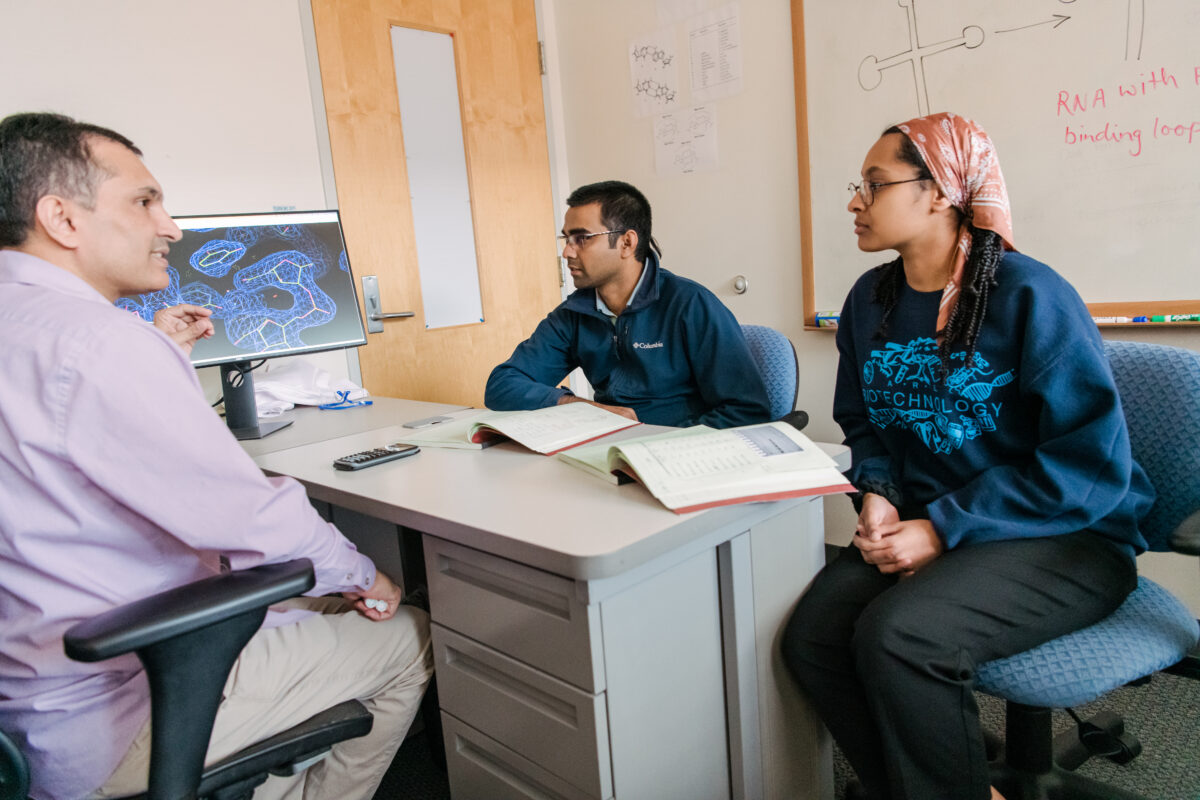 Huda Abdelghani (left) was the first of her three sisters to work in Deepak Koirala’s lab through Howard County’s Applications and Research Laboratory program. At right: Deepak Koirala (left), Naba Krishna Das (center), and Huda Abdelghani discuss their research in Koirala’s office. (Photos by Marlayna Demond ’11/UMBC)
Skills that apply everywhere
Deepak Koirala, associate professor of chemistry and biochemistry, leads a UMBC research group that studies the structures of RNA in enteroviruses—a family of pathogens behind illnesses like hand-foot-and-mouth disease, polio, and myocarditis. Huda joined in the summer of 2022 and stayed through spring 2023. Mentored by a Ph.D. student in the lab, Hasan Al Banna, she quickly learned that scientific research frequently involves failure—but that’s no reason to give up.
“You can do everything right and still not get results,” she says. “It’s not personal—that’s just science.” This lesson in perseverance stuck with her, as did Koirala’s individualized attention. When her graduate student mentor was away, he spent hours helping her set up trays of crystallization plates for her experiments.
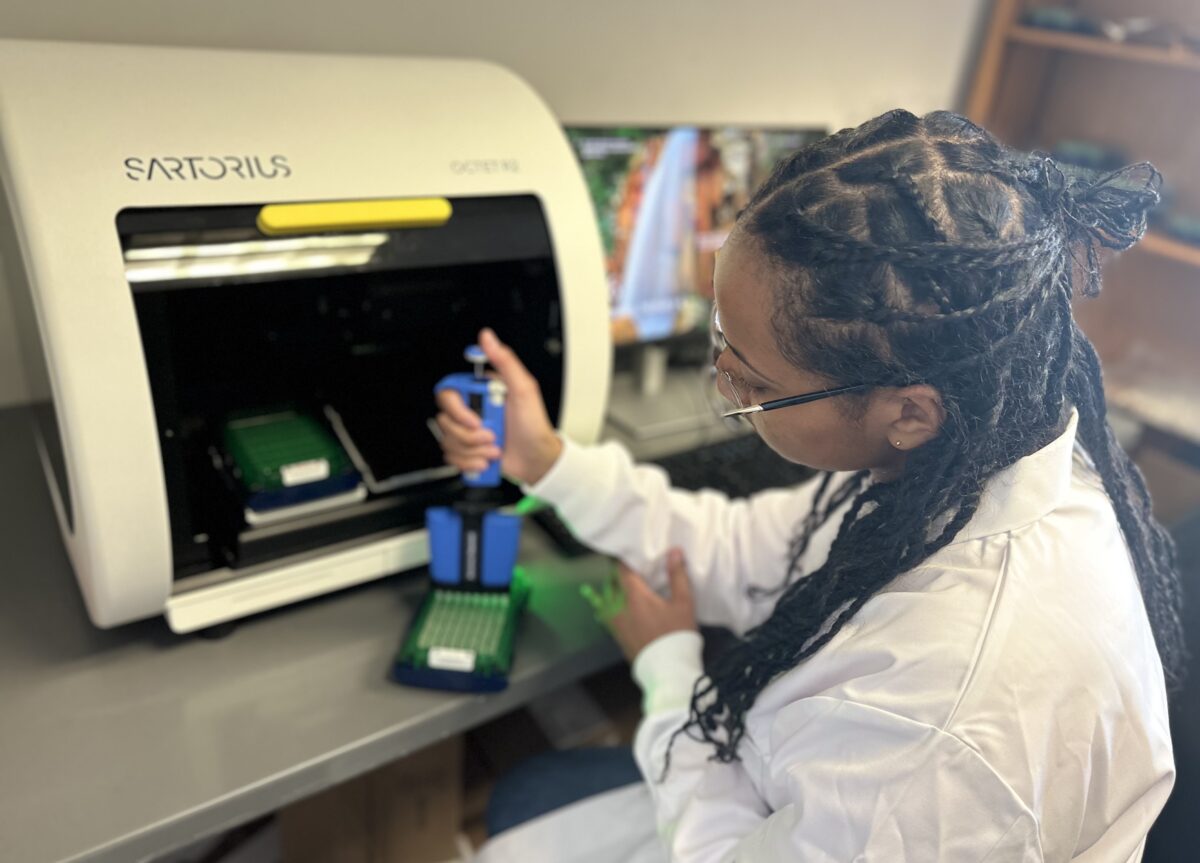
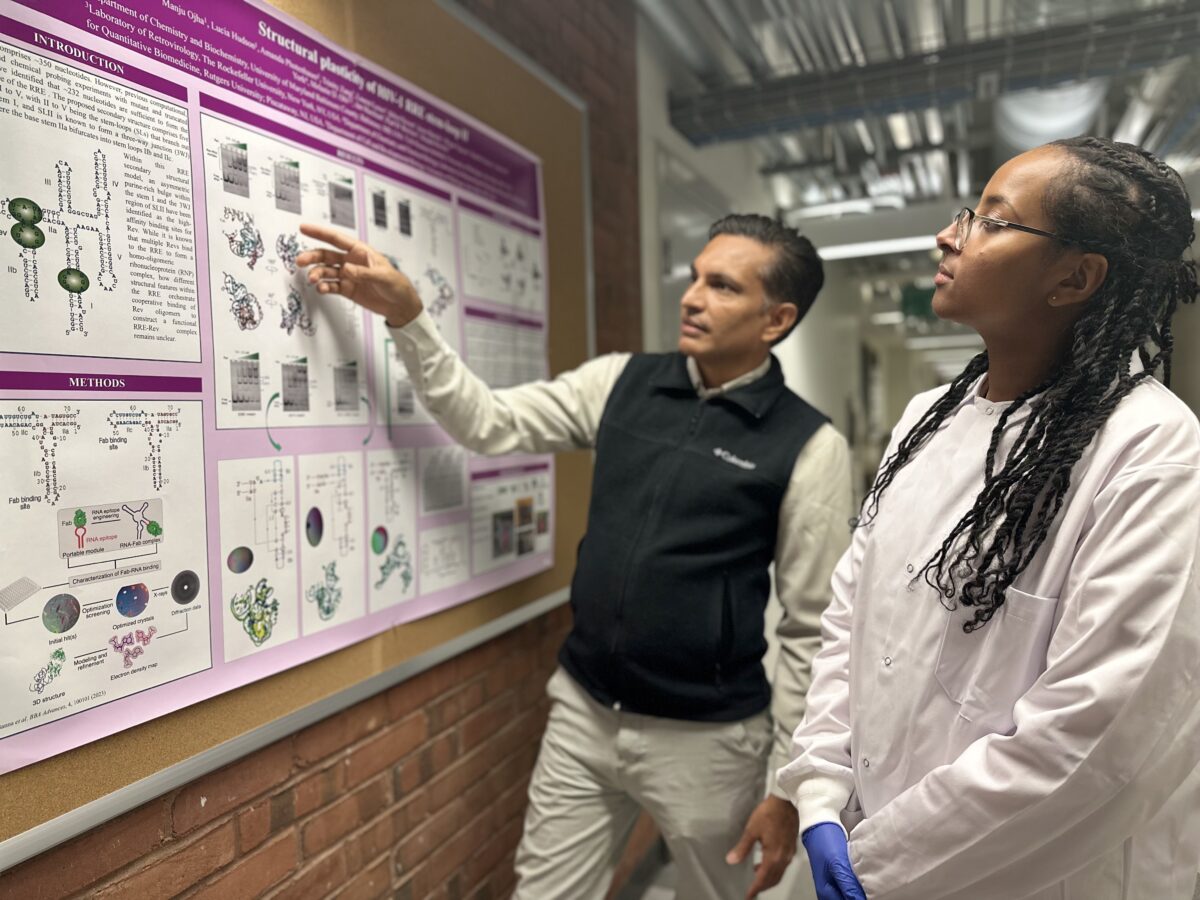 Left: Reem Abdelghani works with a multi-channel micropipet in the lab. Right: Reem and Deepak Koirala discuss research at a poster in the hallway outside Koirala’s lab. (Photos courtesy of Deepak Koirala)
Huda is now a junior mechanical engineering major at MIT, spending this semester on co-op with Apple’s Mac product design team in Austin, Texas—but the lab’s influence lingers. It sparked her interest in tools that help accelerate biochemistry research, like imaging platforms. “The technical and soft skills I gained at UMBC can apply anywhere,” she reflects. Even her first MIT lab connection came from a conversation overheard down the hall from her bench in Koirala’s lab. “It showed me the interconnectedness of academia,” she says.
Shattering preconceptions
Huda’s enthusiasm inspired Reem, the middle sister, to reach out to Koirala for her own ARL biotech internship. She started in Koirala’s lab in the summer of 2024, before her senior year of high school. “I saw how happy Huda was—and it looked like something I’d enjoy, too,” Reem says.
Mentored by Ph.D. student Naba Krishna Das, who isnow a postdoctoral fellow at the National Cancer Institute in Frederick, Maryland, Reem immersed herself in the lab’s operations, from presenting at lab meetings to executing tasks like sterilizing equipment and generating crystal structures of RNA and protein complexes. The lab’s collaborative vibe shattered her preconceptions. “I was worried grad school could be isolating, but it’s so interactive, with people at every stage of their scientific careers,” she explains.
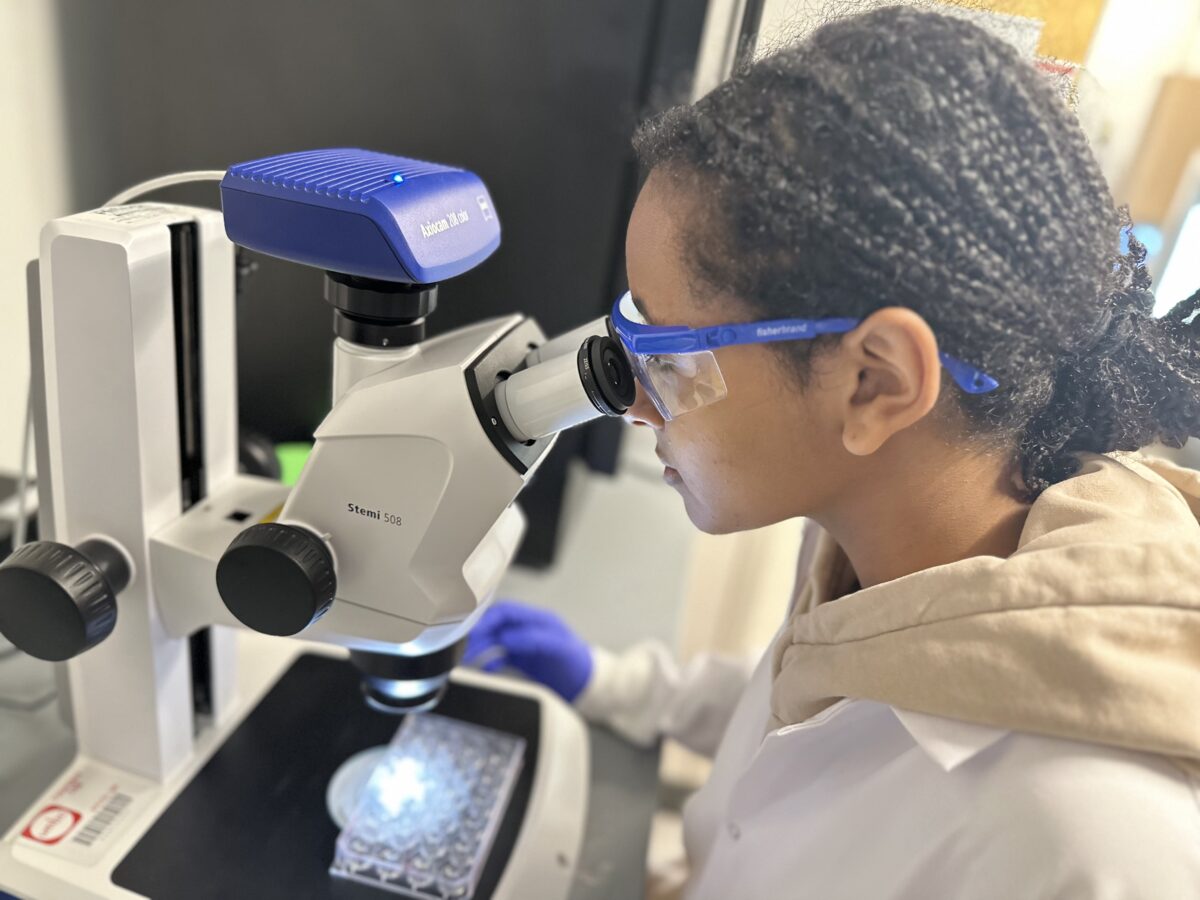
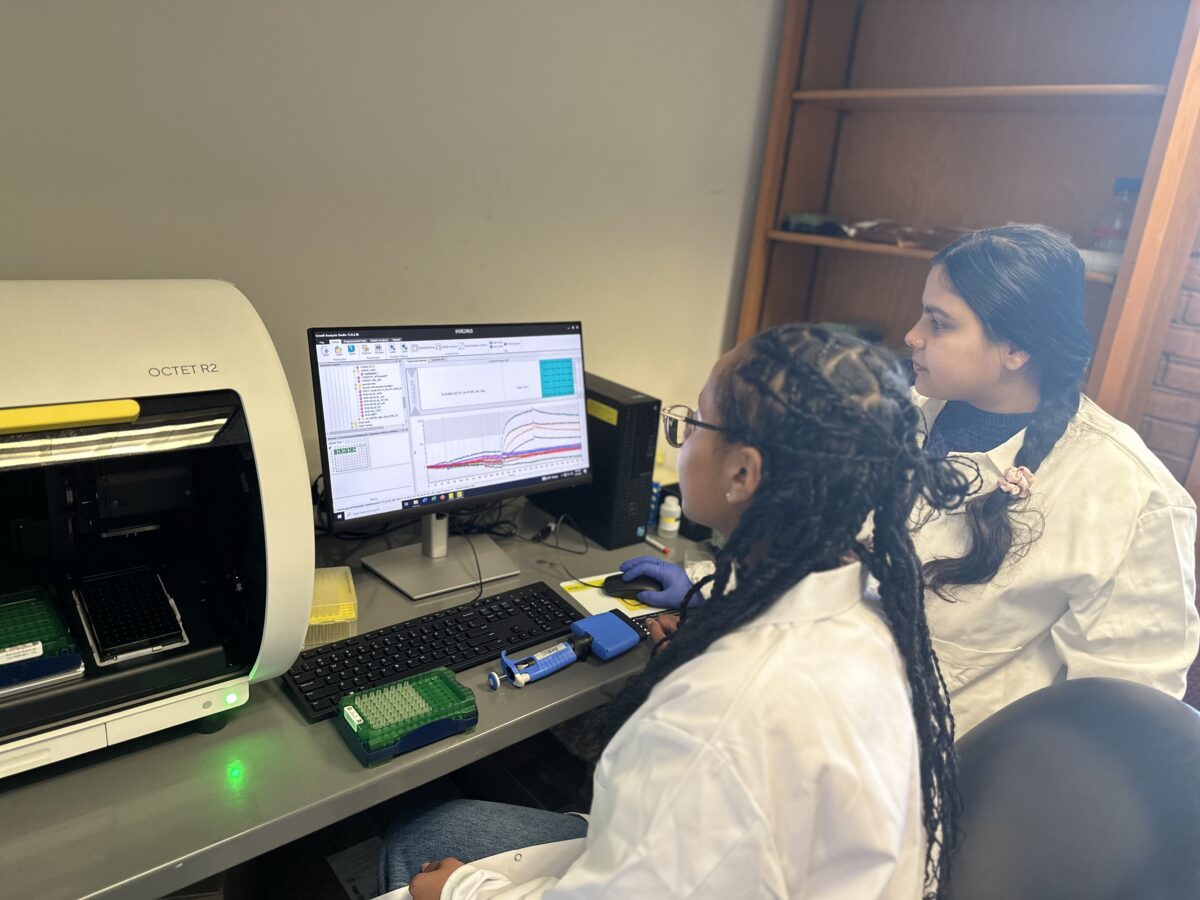 All three sisters gained valuable experience and skills working with Koirala. Left: Rowah looks at experimental wells under a microscope. Right: Reem (left) and Manju Ojha analyze data. (Photos courtesy of Deepak Koirala)
Reem conducted experiments for a project on viral replication, earning co-authorship on a 2025 Nature Communications paper as a high schooler. “I never expected to be so involved—I feel privileged,” she says. The process taught her the value of replication and troubleshooting. “Sometimes it’s trial and error as you’re exploring something new,” she says.
Now a first-year student at UMBC majoring in biochemistry, Reem plans to return to the Koirala lab as soon as space becomes available. “I didn’t consider grad school before, but now it’s definitely on the table,” she says—a perspective born of early research experiences that revealed what the scientific process is really like.
A real community
Rowah, a high school senior, joined the lab last fall. Her expectations of a “scary, strict PI” melted away. “Dr. Koirala is one of the kindest people I’ve met,” Rowah says. The lab’s supportive dynamic impressed her, too. Members shared resources, brainstormed next steps, and lifted each other up. “They push each other to do better—it’s a real community.”
Building on her ARL skills, Rowah felt like a valued member of the team. Her mentor in the lab, Ph.D. student Bethel G. Beyene, provided scientific papers for context, ensuring she grasped the concepts behind the team’s research, not just individual lab techniques. She, too, came face to face with failure and learned from it.
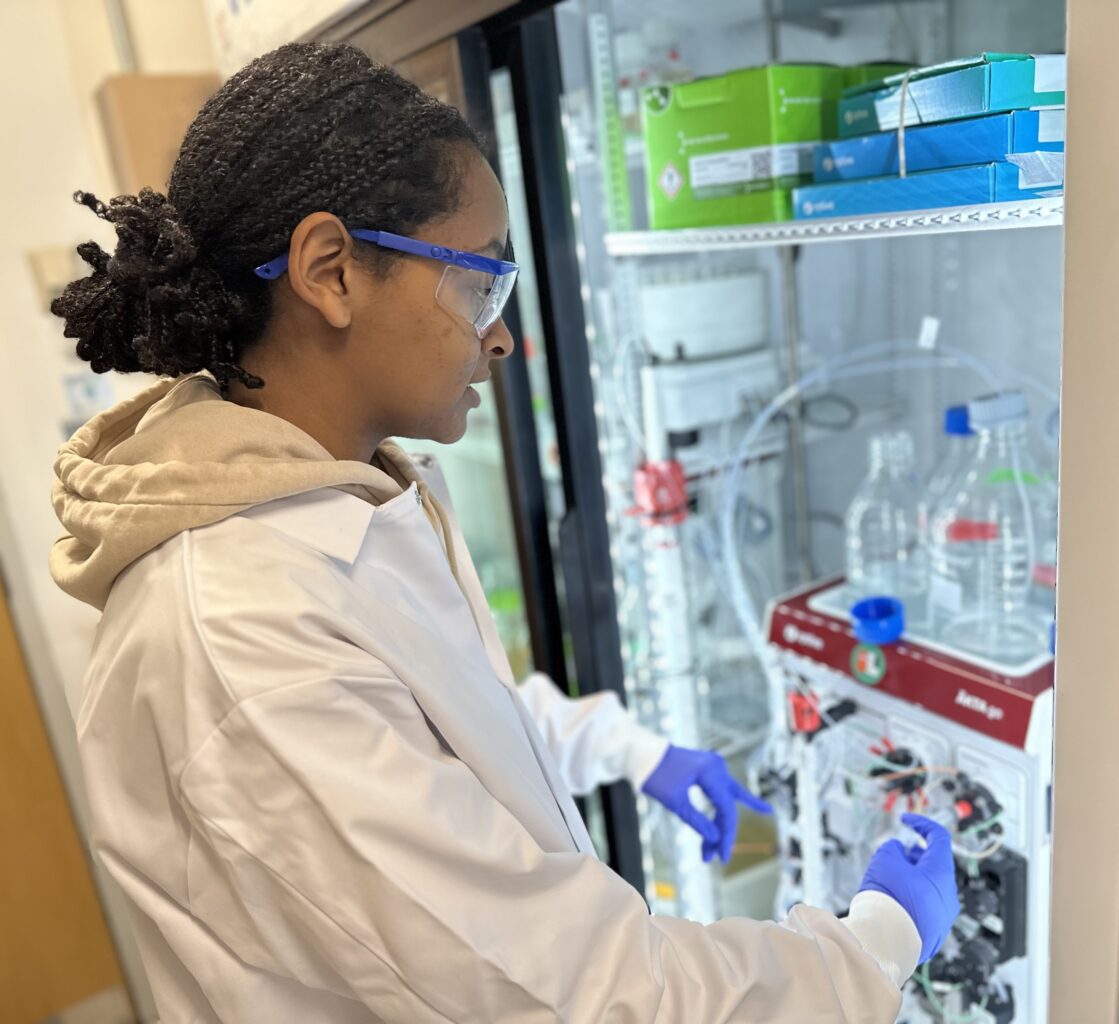
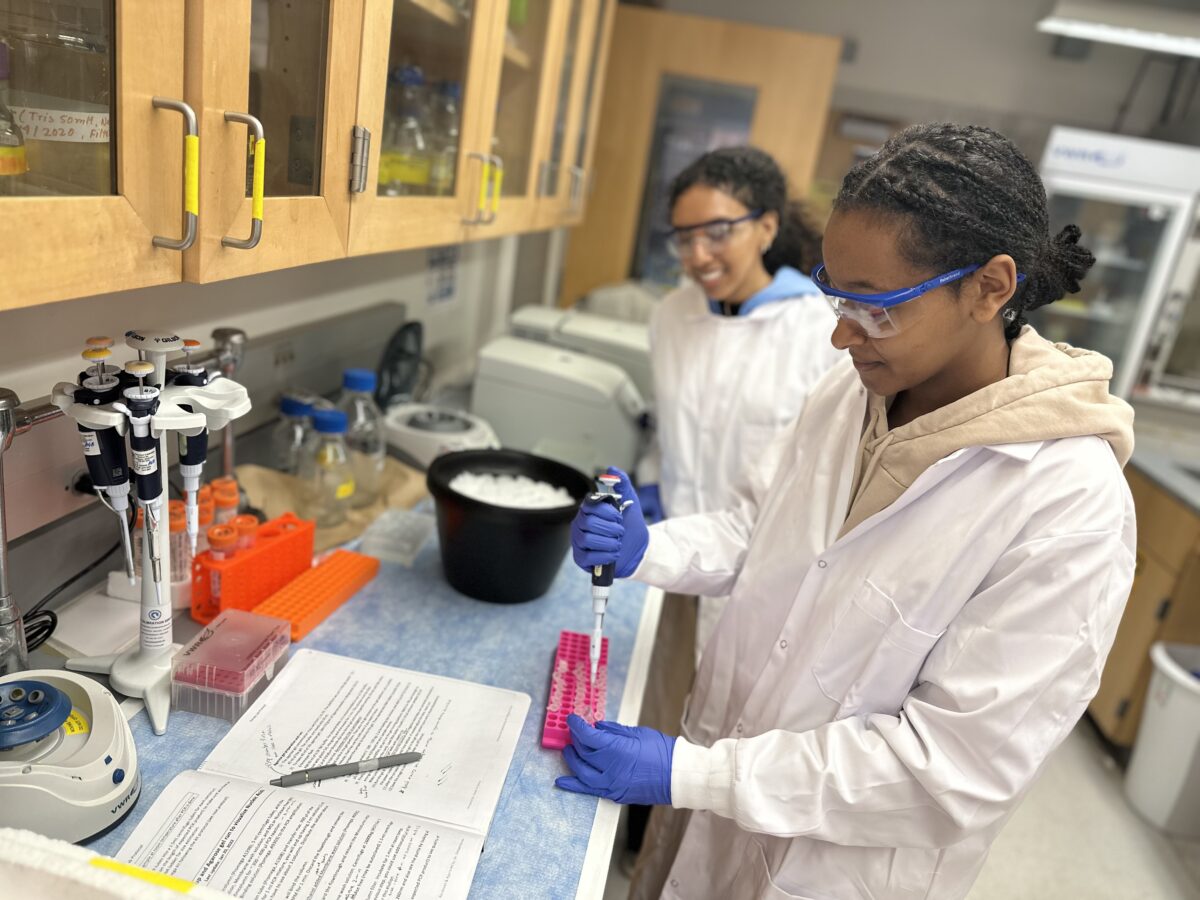 Rowah (at left and pipetting on right) received supportive mentorship from Ph.D. student Bethel Beyene (right photo, background). (Photos courtesy of Deepak Koirala)
“When things go wrong, we sit down and figure it out. It’s not that failure means you’re wrong; overcoming it is how you succeed.” That creative problem-solving carried over into her high school robotics competitions. “I applied lab thinking by evaluating all the possible sources of error to debug our robot—it felt great,” Rowah says. With her interests across biology and engineering, Rowah is considering a biomedical engineering major in the future. “The Koirala lab showed me that I don’t have to choose between my interests,” she says.
Making science better
The sisters’ bond fueled their experiences. “We talk openly—about lab life, plans, even arguments,” Reem laughs. Rowah says her admiration for Huda encouraged her to pursue working in Koirala’s lab. Though they never overlapped in the lab, Huda’s path reassured the others. “If I hadn’t had that chance, I couldn’t have shared it with my family,” Huda says.
Koirala credits the ARL program for bringing talented high schoolers like the Abdelghanis into his group. “They’re not just mentioned in the acknowledgments for completing experiments, but contributing intellectually at the level of authorship,” he says, noting the paper Reem co-authored.
His inclusive approach welcomes students with diverse backgrounds, training the next generation of scientists. “High schoolers, undergrads, women and men from varied backgrounds—they’re all making science better,” Koirala says. Clearly, including less experienced scientists isn’t hurting the lab’s output. Koirala has received multiple major grants and published high-profile papers since he arrived at UMBC in 2020.
In Koirala’s welcoming space, beginners become contributors, failures forge innovators, and family ties amplify ambition. As Rowah troubleshoots gels, Reem eyes graduate school, and Huda designs bioimaging tech at MIT, their paths affirm that science thrives on curiosity, community, and the courage to explore.
]]>
On the fourth floor of UMBC’s Meyerhoff Chemistry Building, where students are hard at work exploring the intricacies of RNA molecules that may hold the key to combating viral diseases, a unique...
https://umbc.edu/stories/sisters-in-science/
https://my3.my.umbc.edu/api/v0/pixel/news/156260/guest@my.umbc.edu/87ca52c1e4d306e0d8b68899f861ab8c/api/pixel
chembiochem
cnms
community
news
research
science-and-tech
story
undergradresearch
UMBC News & Magazine
https://my3.my.umbc.edu/groups/umbc-news-magazine
https://assets1-my.umbc.edu/system/shared/avatars/groups/000/001/943/24435aa6207c452e7bc15cc74b42c7bb/xsmall.png?1748556657
https://assets1-my.umbc.edu/system/shared/avatars/groups/000/001/943/24435aa6207c452e7bc15cc74b42c7bb/original.png?1748556657
https://assets2-my.umbc.edu/system/shared/avatars/groups/000/001/943/24435aa6207c452e7bc15cc74b42c7bb/xxlarge.png?1748556657
https://assets2-my.umbc.edu/system/shared/avatars/groups/000/001/943/24435aa6207c452e7bc15cc74b42c7bb/xlarge.png?1748556657
https://assets3-my.umbc.edu/system/shared/avatars/groups/000/001/943/24435aa6207c452e7bc15cc74b42c7bb/large.png?1748556657
https://assets1-my.umbc.edu/system/shared/avatars/groups/000/001/943/24435aa6207c452e7bc15cc74b42c7bb/medium.png?1748556657
https://assets2-my.umbc.edu/system/shared/avatars/groups/000/001/943/24435aa6207c452e7bc15cc74b42c7bb/small.png?1748556657
https://assets1-my.umbc.edu/system/shared/avatars/groups/000/001/943/24435aa6207c452e7bc15cc74b42c7bb/xsmall.png?1748556657
https://assets2-my.umbc.edu/system/shared/avatars/groups/000/001/943/24435aa6207c452e7bc15cc74b42c7bb/xxsmall.png?1748556657
UMBC News & Magazine
0
0
false
Thu, 05 Feb 2026 13:43:47 -0500
Thu, 05 Feb 2026 13:43:47 -0500
A place to spark scientific curiosity—UMBC hosts 1,200 high schoolers at Science Olympiad invitational
On a cloudy Saturday in January, UMBC buzzed with the energy of over 1,200 high school students from across the Mid-Atlantic region. For the third consecutive year, UMBC’s College of Natural and Mathematical Sciences (CNMS) hosted its Science Olympiad Invitational Tournament, transforming the campus into a vibrant hub of hands-on scientific discovery for the high school competitors.
From building hovercrafts and bridges to tackling exams in anatomy, astronomy, and beyond, the event showcased 23 competitive challenges across an array of STEM disciplines. What started as a modest gathering of 40 teams three years ago has ballooned into Maryland’s largest invitational, drawing participants from Virginia, Delaware, New Jersey, Pennsylvania, and D.C.
The tournament exemplifies UMBC’s commitment to nurturing young talent and building community connections. “A couple of years ago, I suggested a Science Olympiad tournament as a way to invite more high school students onto the campus and get them excited about science—and UMBC,” shared event co-organizer Bindu Abraham, Ph.D. ’06, chemistry, assistant teaching professor of chemistry and biochemistry, and executive director of Maryland Science Olympiad.
Abraham first encountered Science Olympiad as a homeschool parent watching a passion for science emerge in her son. Now, she is happy to be involved in encouraging a similar enthusiasm for science in students across the region. This year’s event also spotlighted partnerships with organizations like STEM Champions of Baltimore, ensuring under-resourced Baltimore City schools could participate in a dedicated league and envision futures at UMBC.
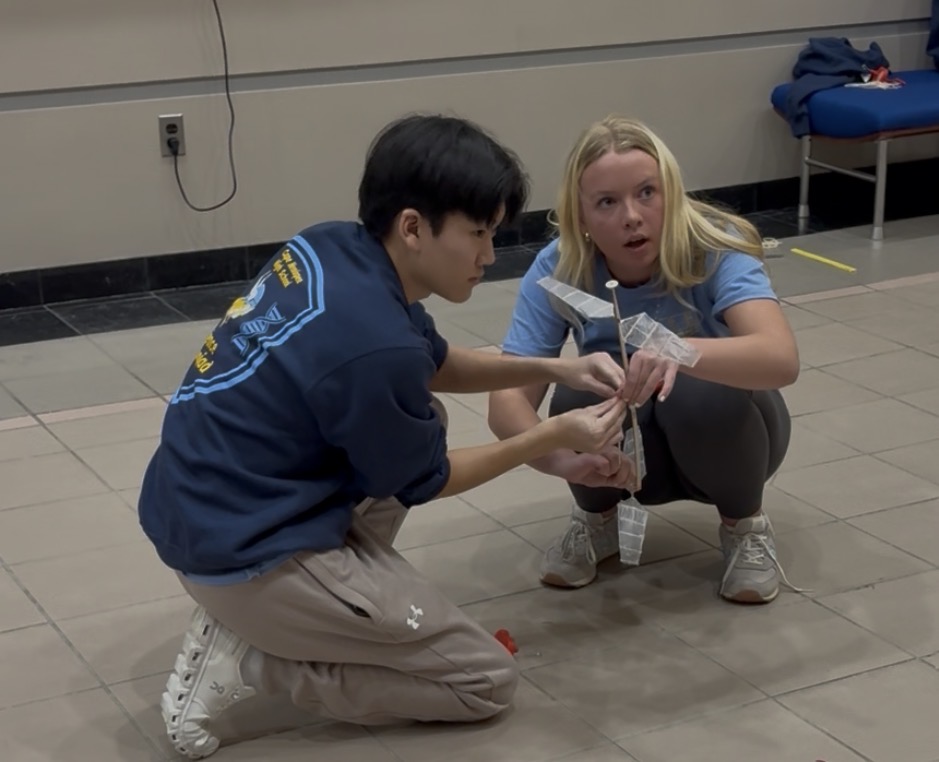
 Cape Henlopen High School in Delaware brought three complete teams to the Science Olympiad at UMBC. Left: Nathaniel Hoang and Ellie Sprague compete in the helicopter event. Right: Quinton Eisenmann and Ava Lewis prepare for the hovercraft event. (Photos courtesy of Priscilla Coolbaugh)
Inspiring students’ interest in science
Volunteers—including UMBC faculty, alumni, current students—made the day possible, each driven by motivations rooted in their own journeys. Mark Grzanna, M.S. ’15, biological sciences, today a Science Olympiad coach at John Carroll High School in Bel Air, Maryland, brought two teams of eager students for his third year at the UMBC tournament. Grzanna teaches biology, anatomy and physiology, and a biotech course he designed at John Carroll, and he views the Olympiad as a gateway to scientific curiosity.
“Education is so important. I became a teacher to get kids interested in science—or at least to help them understand enough science to navigate their world,” he said. His co-coach, John Carroll teacher Andrew Ketchum, echoed the sentiment: “It’s a great experience for our kids to see other students excited about science.”
Frank Tagaytay, a senior physics and math major, supervised the “boomilever” event, where teams tested structures’ strength and integrity. Based on experience as president of his high school Science Olympiad club, Tagaytay patiently guided participants through event regulations, offering encouragement amid the occasional structural mishap.

 Left: Frank Tagaytay (left), a senior UMBC physics and math major, encourages Aalyna Johnson (center) and Cassidy Mehegan from Cape Henlopen High School as they set up their “boomilever” for competition. (Photo by Sarah Hansen, M.S. ’15/UMBC) Right: Cape Henlopen students Theodore Noe Fellows, Shouta Sano, Quinton Eisenmann, and Ava Lewis (left to right) carry their equipment to the competition site in the UMBC Physics Building. (Photo courtesy of Priscilla Coolbaugh)
“It’s an early season event for teams to work out the kinks,” he explained, highlighting how the low-stakes environment builds confidence and resilience. For Tagaytay, volunteering bridges his past and present, reinforcing UMBC’s supportive community.
Fareedah Owolabi, a junior chemical engineering major who recently transferred from the Community College of Baltimore County, found the event particularly meaningful. “I have a soft spot for STEM outreach, because it’s how I was introduced to UMBC,” she shared. Through the Upward Bound Math and Science program, Owolabi connected with UMBC tutors as a high schooler. Now, as a volunteer, she fielded questions from participants about campus life. “I want to inspire younger students,” she said, embodying the cycle of mentorship that defines the tournament.
Broadening their horizons
Priscilla Coolbaugh, Science Olympiad coach at Cape Henlopen High School in Delaware, started her team three years ago after loving Science Olympiad as a student herself. “I want to share that love,” she said. Her three full teams traveled far to compete. “They get to see themselves at these universities. They might have planned to stay close to home, but this way they get exposure to out-of-state schools,” Coolbaugh said. “It broadens their horizons to different schools as well as different STEM fields.”

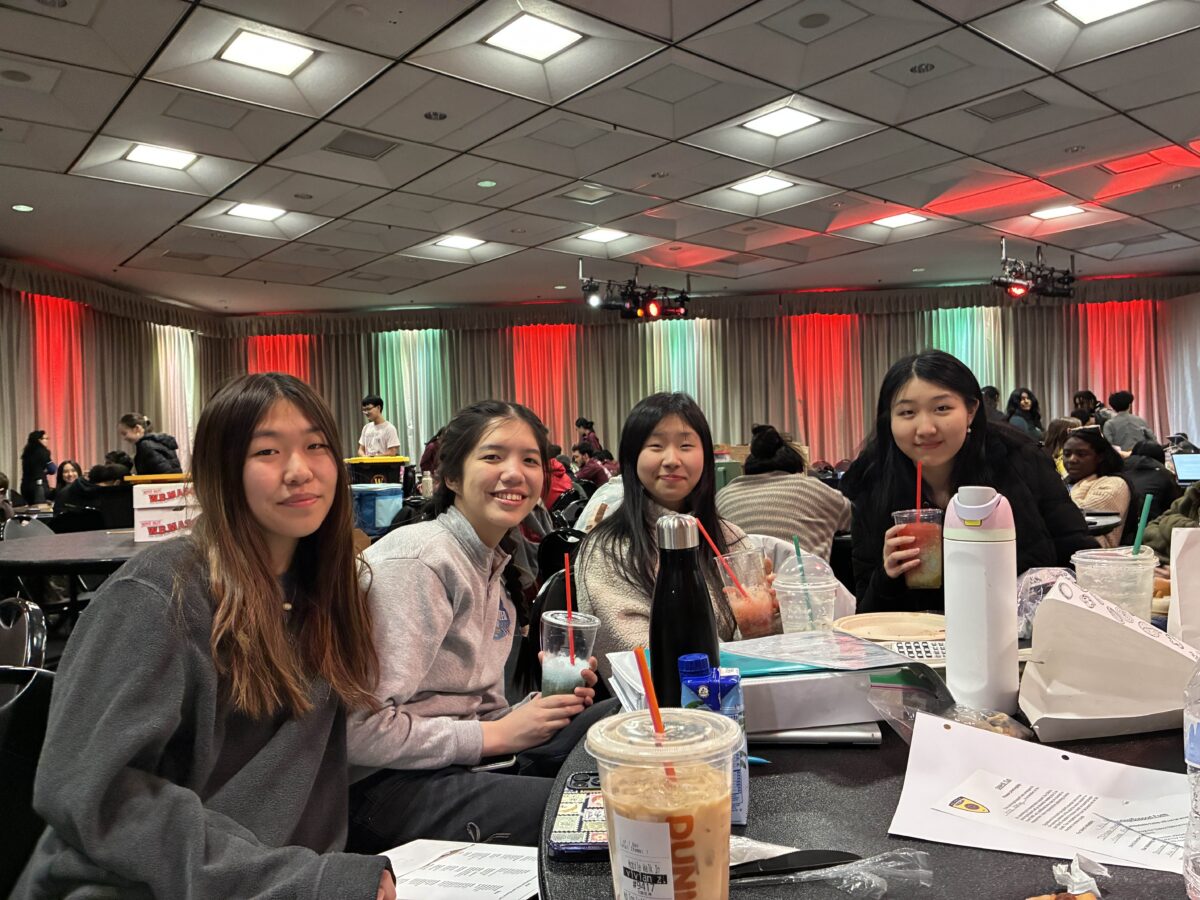 Students and a coach from Winston Churchill High School in Potomac, Maryland, relax in the UMBC Ballroom between events. (Photos courtesy of Jonathan Lee)
Students expressed their sense of community and excitement about their experiences at the UMBC event. Cape Henlopen freshman Aalya Desai noted how the event helped her make friends despite starting as a newcomer, and sophomore Grace Eanes appreciated the chance to bond with peers across grades while exploring the beautiful campus. Michael Song, a junior from Winston Churchill High School in Potomac, Maryland, who with his teammate, Leo Jiang, earned the top score in the hovercraft event, commented, “UMBC is much bigger than I expected. It’s a lot of fun to travel to Olympiad events.”
In good hands
Faculty and staff volunteers underscored the event’s broader impact. CNMS dean William R. LaCourse, surveying the awards ceremony, reflected on the promise of the participants. “As I stood on the stage looking over the ballroom filled with excited and creative students, I couldn’t help feeling as if I was looking into the future and thinking, ‘We (all of us) are in good hands,’” he said.
Zeev Rosenzweig, professor of chemistry and biochemistry, supervised the rocks and minerals test with three undergraduates and three of his graduate students. “Being here is just an important thing to do,” he said. “It’s a great outlet to show them that their interests matter,” he noted. “The kids who come to the Olympiad—they’re our people.” Ph.D. student Kushani Mendis, a Ph.D. student in Rosenzweig’s lab, added, “The best way to support the next generation in STEM is to organize events like this and spend time with them.”
In April, UMBC will host the Maryland State Science Olympiad for the first time, building on this invitational’s momentum. “It’s fun to see young people so excited about different areas of STEM,” shared Michelle Starz-Gaiano, professor and chair of biological sciences, adding, “It’s critical to foster the growth of young scientists. We love the energy and enthusiasm that they bring.”
]]>
On a cloudy Saturday in January, UMBC buzzed with the energy of over 1,200 high school students from across the Mid-Atlantic region. For the third consecutive year, UMBC’s College of Natural and...
https://umbc.edu/stories/1200-high-schoolers-at-science-olympiad/
https://my3.my.umbc.edu/api/v0/pixel/news/156251/guest@my.umbc.edu/8fcd1fc51406ee5d71336ef39bd47917/api/pixel
biology
cbee
chembiochem
cnms
coeit
community
news
physics
science-and-tech
story
trio
UMBC News & Magazine
https://my3.my.umbc.edu/groups/umbc-news-magazine
https://assets1-my.umbc.edu/system/shared/avatars/groups/000/001/943/24435aa6207c452e7bc15cc74b42c7bb/xsmall.png?1748556657
https://assets1-my.umbc.edu/system/shared/avatars/groups/000/001/943/24435aa6207c452e7bc15cc74b42c7bb/original.png?1748556657
https://assets2-my.umbc.edu/system/shared/avatars/groups/000/001/943/24435aa6207c452e7bc15cc74b42c7bb/xxlarge.png?1748556657
https://assets2-my.umbc.edu/system/shared/avatars/groups/000/001/943/24435aa6207c452e7bc15cc74b42c7bb/xlarge.png?1748556657
https://assets3-my.umbc.edu/system/shared/avatars/groups/000/001/943/24435aa6207c452e7bc15cc74b42c7bb/large.png?1748556657
https://assets1-my.umbc.edu/system/shared/avatars/groups/000/001/943/24435aa6207c452e7bc15cc74b42c7bb/medium.png?1748556657
https://assets2-my.umbc.edu/system/shared/avatars/groups/000/001/943/24435aa6207c452e7bc15cc74b42c7bb/small.png?1748556657
https://assets1-my.umbc.edu/system/shared/avatars/groups/000/001/943/24435aa6207c452e7bc15cc74b42c7bb/xsmall.png?1748556657
https://assets2-my.umbc.edu/system/shared/avatars/groups/000/001/943/24435aa6207c452e7bc15cc74b42c7bb/xxsmall.png?1748556657
UMBC News & Magazine
1
0
false
Thu, 05 Feb 2026 11:30:12 -0500
Thu, 05 Feb 2026 11:30:12 -0500
Starting the Spring Semester
Dear UMBC Community,
With the cold and wintry conditions that delayed the start of in-person classes by a week, it seems strange to refer to this as the spring semester! I hope that you all stayed warm and safe as we worked to resume normal campus operations.
I know that beyond our campus, the challenges in our nation and world are increasingly difficult and felt deeply by members of our community, whether you are affected directly or indirectly. As we begin this new semester together, I hope you will take advantage of every opportunity to lean on and lift up one another, and that the inspiring and essential public mission of UMBC helps sustain us and propel our work every day.
I hope, as well, that each of you found time to rest, reflect, and renew over the winter break. For me—someone who has essentially never left college—such breaks in the academic year are not only a much-needed respite, they also are energizing periods of reflection, planning, and prioritizing for the semester ahead.
After spending a few days with my family in North Carolina—where we gathered in full force, as always—I returned to Baltimore and got down to work. By the end of the break, as usual, my kitchen island was covered with piles of different colored sticky notes, each of them representing different priorities for me and for our leadership team. It looks pretty chaotic, but this is my process for getting to some order. It is what I do to start the semester with a clear sense of the work ahead, what comes next, and what is possible.
When I was a faculty member teaching organic chemistry, I would spend time before every semester thinking about my syllabus and the activities I was going to do in class. I would match pictures from the student directory with the names of those enrolled in my class, so that I would recognize them and be able to call them by name in class.
Today, I think about our students, staff, and faculty and our departments and units across UMBC. I think about our alumni and how I can engage them more deeply in the life of the university. I think about our neighbors in Catonsville and Arbutus, the city of Baltimore, and the state of Maryland, and how we can partner to address challenges and continue to improve our communities. I think about what went well in the last semester and what I could have done better. And I think about our future, mapping out the work I can do to keep us advancing toward our shared vision for UMBC.
Finally, I want to celebrate and amplify a couple of pieces of terrific news: First, UMBC has again been classified as a
Carnegie Community Engaged Campus, recognizing the university-wide commitment of our students, faculty, and staff to engage collaboratively in strengthening our communities. Congratulations and thanks to all who contribute to this work that is so deeply embedded in our identity and culture, and to all who played a part in the rigorous effort to achieve this classification from the American Council on Education and the Carnegie Foundation for the Advancement of Teaching.
My best to you all for a productive and fulfilling semester!
Sincerely,
President Valerie Sheares Ashby
]]>
Dear UMBC Community, With the cold and wintry conditions that delayed the start of in-person classes by a week, it seems strange to refer to this as the spring semester! I hope that you all...
https://umbc.edu/stories/starting-the-spring-semester-2/
https://my3.my.umbc.edu/api/v0/pixel/news/156124/guest@my.umbc.edu/3ae99437bf0bd47eacb4c75db4481cc4/api/pixel
president
rss
story
UMBC News & Magazine
https://my3.my.umbc.edu/groups/umbc-news-magazine
https://assets1-my.umbc.edu/system/shared/avatars/groups/000/001/943/24435aa6207c452e7bc15cc74b42c7bb/xsmall.png?1748556657
https://assets1-my.umbc.edu/system/shared/avatars/groups/000/001/943/24435aa6207c452e7bc15cc74b42c7bb/original.png?1748556657
https://assets2-my.umbc.edu/system/shared/avatars/groups/000/001/943/24435aa6207c452e7bc15cc74b42c7bb/xxlarge.png?1748556657
https://assets2-my.umbc.edu/system/shared/avatars/groups/000/001/943/24435aa6207c452e7bc15cc74b42c7bb/xlarge.png?1748556657
https://assets3-my.umbc.edu/system/shared/avatars/groups/000/001/943/24435aa6207c452e7bc15cc74b42c7bb/large.png?1748556657
https://assets1-my.umbc.edu/system/shared/avatars/groups/000/001/943/24435aa6207c452e7bc15cc74b42c7bb/medium.png?1748556657
https://assets2-my.umbc.edu/system/shared/avatars/groups/000/001/943/24435aa6207c452e7bc15cc74b42c7bb/small.png?1748556657
https://assets1-my.umbc.edu/system/shared/avatars/groups/000/001/943/24435aa6207c452e7bc15cc74b42c7bb/xsmall.png?1748556657
https://assets2-my.umbc.edu/system/shared/avatars/groups/000/001/943/24435aa6207c452e7bc15cc74b42c7bb/xxsmall.png?1748556657
UMBC News & Magazine
1
0
false
Mon, 02 Feb 2026 20:59:40 -0500
UMBC physicist wins Amazon award to build AI-orchestrated scientific assistant
Fabio Anza, an assistant professor in UMBC’s Department of Physics, Quantum Science Institute and Cybersecurity Institute, has won an Amazon Research Award to develop Physics Co-Pilot—a scientific AI assistant that combines large language model (LLM) orchestration with reliable computational algorithms to address critical bottlenecks in modern physics research.
The problem isn’t just coding. Theoretical physics, like many other areas of scientific research, is currently facing two major challenges: knowledge fragmentation and hyperspecialized computational tools. The open-access, online scientific paper repository ArXiv alone publishes over 25,000 new papers monthly across computer science, math, and physics. Meanwhile, using sophisticated computational methods requires mastering ultra-niche software ecosystems—work that diverts researchers from scientific discovery.
“Researchers spend increasingly large amounts of time wrestling with software issues rather than exploring scientific questions,” Anza explains. “Valuable human capital gets diverted from discovery to dealing with technical problems that could be avoided with better infrastructure.”
A hybrid approach to scientific computing
Physics Co-Pilot takes a fundamentally different approach from pure AI code generation systems. Rather than having language models write code—which, at scale, produces unreliable results—the system uses LLMs only for natural language understanding, while delegating all computational work to pre-written, validated algorithms.
Researchers spend increasingly large amounts of time wrestling with software issues rather than exploring scientific questions. Valuable human capital gets diverted from discovery to dealing with technical problems that could be avoided with better infrastructure. — Fabio Anza, assistant physics professor
“The LLM acts as an orchestrator, not a programmer,” Anza says. “It translates natural language into structured commands that call expertly implemented computational routines. This maintains computational rigor while making advanced techniques accessible through conversation.”
The tool features specialized software routines for literature analysis and physics simulations. For the initial release, the system will focus on modeling a a narrow set of physical systems, serving as proof-of-concept for future community-driven expansions.
From concept to open-source release
Anza has recruited computer science senior Samuel Truong to help develop the system over the next year, with plans to expand the team as the project progresses.
The project follows a short timeline: an initial prototype with literature analysis capabilities will be released in the first six months, enabling researchers to conduct natural language-driven searches and synthesis of ArXiv papers. The complete system, including simulation and visualization capabilities for dynamical systems, will be released (under the MIT open-source license) by the end of 2026.
“Physics Co-Pilot represents a new paradigm in scientific assistants,” Anza notes. “By combining conversational accessibility with computational reliability, we aim to give researchers access to advanced computational techniques without the need to know any programming languages.”
The system aims to enable physicists to discover and synthesize knowledge across disciplines, eliminate programming barriers to sophisticated analysis methods, and accelerate research cycles through rapid hypothesis testing—all without researchers writing a single line of code themselves.
]]>
Fabio Anza, an assistant professor in UMBC’s Department of Physics, Quantum Science Institute and Cybersecurity Institute, has won an Amazon Research Award to develop Physics Co-Pilot—a scientific...
https://umbc.edu/quick-posts/anza-ai-orchestrated-scientific-assistant/
https://my3.my.umbc.edu/api/v0/pixel/news/156016/guest@my.umbc.edu/381414bc27cf343cac1118e24912a032/api/pixel
cnms
coeit
csee
cybersecurity
physics
quick-post
science-and-tech
UMBC News & Magazine
https://my3.my.umbc.edu/groups/umbc-news-magazine
https://assets1-my.umbc.edu/system/shared/avatars/groups/000/001/943/24435aa6207c452e7bc15cc74b42c7bb/xsmall.png?1748556657
https://assets1-my.umbc.edu/system/shared/avatars/groups/000/001/943/24435aa6207c452e7bc15cc74b42c7bb/original.png?1748556657
https://assets2-my.umbc.edu/system/shared/avatars/groups/000/001/943/24435aa6207c452e7bc15cc74b42c7bb/xxlarge.png?1748556657
https://assets2-my.umbc.edu/system/shared/avatars/groups/000/001/943/24435aa6207c452e7bc15cc74b42c7bb/xlarge.png?1748556657
https://assets3-my.umbc.edu/system/shared/avatars/groups/000/001/943/24435aa6207c452e7bc15cc74b42c7bb/large.png?1748556657
https://assets1-my.umbc.edu/system/shared/avatars/groups/000/001/943/24435aa6207c452e7bc15cc74b42c7bb/medium.png?1748556657
https://assets2-my.umbc.edu/system/shared/avatars/groups/000/001/943/24435aa6207c452e7bc15cc74b42c7bb/small.png?1748556657
https://assets1-my.umbc.edu/system/shared/avatars/groups/000/001/943/24435aa6207c452e7bc15cc74b42c7bb/xsmall.png?1748556657
https://assets2-my.umbc.edu/system/shared/avatars/groups/000/001/943/24435aa6207c452e7bc15cc74b42c7bb/xxsmall.png?1748556657
UMBC News & Magazine
3
0
false
Thu, 29 Jan 2026 13:46:52 -0500
Thu, 29 Jan 2026 13:46:52 -0500
Recent Updates to Immigration and Visa Policies
Dear Campus Community,
I am writing to update you regarding four recent changes to federal immigration and visa policies. Each of these changes is summarized in bold, with details underneath, followed by campus guidance.
Please remember that each individual’s circumstances are different, and this communication is provided for informational purposes only. It should not be construed as legal advice on any subject matter. If you have specific questions and hold F, H, or J immigration status, please contact the Center for Global Engagement. If you have specific questions and hold another immigration status, please consult with a private immigration attorney.
U.S. Citizenship and Immigration Services (USCIS) expands adjudicative hold and intensifies review of applications for certain immigration benefits
On January 1, 2026, USCIS issued an updated policy memorandum, expanding on its December 2, 2025, memorandum, directing USCIS personnel to perform the following actions:
-
Place a hold on all pending benefit applications for aliens listed in Presidential Proclamation (PP) 10998, Restricting and Limiting the Entry of Foreign Nationals to Protect the Security of the United States, pending a comprehensive review, regardless of entry date;
-
Conduct a comprehensive review of all policies, procedures, and screening and vetting processes for benefit requests for aliens from countries listed in PP 10998; and
-
Conduct a comprehensive re-review of approved benefit requests implicated in PP 10998 that were approved on or after January 20, 2021.
Based on the above actions, students and employees who utilized Palestinian Authority-issued travel documents or listed a PP 10998 named country as their country of birth or citizenship on certain immigration benefit applications will be subject to a re-review of benefits eligibility and admissibility, including a potential interview or re-interview. The January memorandum expands, but does not replace, the policy outlined in the December memo. The expanded policy specifically:
-
Extends adjudicative holds to the additional countries designated under PP 10998.
-
Clarifies that the hold applies to individuals based on country of birth, nationality, certain citizenship-by-investment scenarios, and Palestinian-Authority-issued travel documents.
-
Communicates that “USCIS will place an adjudicative hold on all pending benefit requests submitted by or for aliens from the high-risk countries identified in PP 10998, allowing for a thorough case-by-case review. This hold will remain in effect until lifted or modified by the USCIS Director through a subsequent memorandum or memorandum attachment. Any requests to lift the hold due to litigation or other extraordinary circumstances must receive approval from the USCIS Director or Deputy Director.”
-
Establishes very limited exceptions to the adjudicative hold for certain benefit types (e.g., some I-765 categories, I-90, N-600), subject to strict coordination requirements.
-
Explicitly states that it does not supersede the December 2 memorandum, except where it creates enumerated exceptions.
Exceptions to the adjudication hold include:
-
Form I-90, Application to Replace Permanent Resident Card (Green Card);
-
Form N-565, Application for Replacement Naturalization/Citizenship Document;
-
Form N-600, Application for Certificate of Citizenship (“Except Yemen and Somalia”);
-
Form I-765, Application for Employment Authorization filed under the (c)(8) [pending asylum], limited (c)(11) (parolees), and limited (c)(14) (deferred action) categories;
-
Form I-910, Application for Civil Surgeon Designation (only for physicians that are citizens or nationals of the United States);
-
Benefit requests filed by any alien who is an athlete or member of an athletic team, including the coaches, persons performing a necessary support role, and immediate relatives for the purpose of participating in the World Cup, Olympics, or other major sporting event as determined by the Secretary of State;
-
Benefit requests that are a priority for law enforcement and where ICE has requested USCIS take adjudicative action to uphold public safety or national security;
-
Benefit requests filed by aliens whose entry would serve a United States national interest;
-
Benefit requests, as well as the associated underlying benefits, for any programs that are terminated or discontinued as a result of an Executive Order, Proclamation, Federal Register Notice, or Directive issued by the President, the Secretary of Homeland Security, or the USCIS Director; and
-
Automatic termination decisions for ancillary or related benefit requests when an alien is granted Legal Permanent Resident status or becomes a naturalized citizen.
Notably, there is no exception for immigration benefits commonly used in higher education, such as a Form I-765 filed for Optional Practical Training, a Form I-539 filed to change to nonimmigrant student status, or a Form I-129 filed by an H-1B petitioner requesting extension of an H-1B employee’s stay. Furthermore, on December 5, 2025, USCIS posted on its “X” account, “…all final decisions for asylum have been shut down, we’ve paused adjudication of immigrant and non-immigrant benefits for any alien from the 19 countries of concern, and we will review all existing green cards that were granted in the last 5 years.”
Campus Guidance:
-
Citizens of the countries listed in PP 10998 should be aware that their immigration benefits approved on or after January 20, 2021, may be subject to renewed scrutiny. As a result, USCIS may require additional documentation, biometrics, interviews or re-interviews.
-
Affected individuals should expect delayed processing and increased scrutiny of their immigration benefit requests. While petitions may still be submitted, they will be processed by USCIS up to the final adjudication stage, at which point they will stall until the adjudicative hold is lifted. A “final adjudication” refers to the issuance of a final decision on a case, such as an approval, denial, or dismissal.
USCIS announces increased premium processing fees
On January 12, 2026, USCIS published a final rule in the Federal Register announcing increases to premium processing fees effective March 01, 2026.
Premium processing is a service whereby DHS provides expedited processing of eligible immigration benefit requests in exchange for an additional fee. This service is necessary for certain students and employees who require certain time-sensitive immigration benefit requests to be processed by a specific date in order to study or work at UMBC.
Below is a summary of premium processing fee increases that are most likely to impact our UMBC community. For a full listing of the fee increases, please refer to the published final rule.
-
Form I-129, Petition for a Nonimmigrant Worker (E-1, E-2, E-3, H-1B, H-3, L-1A, L-1B, LZ, O-1, O-2, P-1, P-1S, P-2, P-2S, P-3, P-3S, Q-1, TN-1, and TN-2): The fee will increase from $2,805 to $2,965
-
Form I-140, Immigrant Petition for Alien Worker (E11, E12): Increases from $2,805 to $2,965
-
Form I-539, Application to Extend/Change Nonimmigrant Status (requests for change of status to F-1, F-2, J-1 or J-2): Increases from $1,965 to $2,075
-
Form I-765, Application for Employment Authorization (F-1 students seeking Optional Practical Training or STEM Optional Practical Training): Increases from $1,685 to $1,780
Campus Guidance:
-
In order to avoid having to pay the additional fee, students and employees who know they will require premium processing should ensure their time-sensitive immigration benefit petitions are postmarked prior to March 1, 2026.
-
Please note that the U.S. Postal Service (USPS) recently implemented operational changes meant to consolidate its processing network under the Delivering for America (DFA) plan. One such change could result in a postmark date being applied to a piece of mail days after USPS first receives the mail from a customer. According to advice issued by USPS, “customers who want a postmark aligning with the date on which the Postal Service first accepted possession of their mailpiece may request, for no additional fee, a manual (local) postmark at any Post Office, station, or branch when tendering their mailpiece.”
-
Students, employees, and hiring departments should budget for the additional expense required for premium processing requests postmarked on or after March 1, 2026.
U.S. Department of State added 25 more countries to the visa bond list
On January 8, 2026, the Department of State expanded the list of countries whose nationals are subject to visa bonds. As outlined in a temporary final rule published in the Federal Register on August 5, 2025, the Visa Bond Pilot Program requires covered individuals applying for visas as temporary visitors for business or pleasure (B-1/B-2) to post a bond of up to $15,000 as a condition of visa issuance. This pilot program runs from August 20, 2025 through August 5, 2026.
Bonds are only required from individuals applying for a visitor visa (B-1/B-2) with a passport issued by one of the countries listed in the notice.
Campus Guidance:
-
Family members and friends of UMBC students and employees wishing to visit them in the United States should confirm whether or not they are subject to the Visa Bond Pilot Program.
-
Individuals subject to the Visa Bond Pilot Program should contact the U.S. Consulate or Embassy where they plan to apply for a visa to inquire about the actual bond fee.
U.S. Department of State pauses immigrant visa processing for nationals of 75 countries effective January 21, 2026
On January 14, 2026, the Department of State announced that, effective January 21, 2026, it is pausing all visa issuances to immigrant visa applicants who are nationals of the following countries:
Afghanistan, Albania, Algeria, Antigua and Barbuda, Armenia, Azerbaijan, Bahamas, Bangladesh, Barbados, Belarus, Belize, Bhutan, Bosnia and Herzegovina, Brazil, Burma, Cambodia, Cameroon, Cape Verde, Colombia, Cote d’Ivoire, Cuba, Democratic Republic of the Congo, Dominica, Egypt, Eritrea, Ethiopia, Fiji, The Gambia, Georgia, Ghana, Grenada, Guatemala, Guinea, Haiti, Iran, Iraq, Jamaica, Jordan, Kazakhstan, Kosovo, Kuwait, Kyrgyz Republic, Laos, Lebanon, Liberia, Libya, Moldova, Mongolia, Montenegro, Morocco, Nepal, Nicaragua, Nigeria, North Macedonia, Pakistan, Republic of the Congo, Russia, Rwanda, Saint Kitts and Nevis, Saint Lucia, Saint Vincent and the Grenadines, Senegal, Sierra Leone, Somalia, South Sudan, Sudan, Syria, Tanzania, Thailand, Togo, Tunisia, Uganda, Uruguay, Uzbekistan, and Yemen
This pause only applies to immigrant visas. It does not apply to non-immigrant visas, such as those issued to H-1B employees, J-1 exchange visitors, and F-1 students.
Campus Guidance:
Resources
-
UMBC’s Employee Assistance Program provides employees with access to free confidential counseling and connections to attorneys who can help with a variety of issues, including immigration concerns.
-
The Office of International Students and Scholars is available to consult on immigration-related travel issues for individuals holding F-1, H-1B, and J-1 immigration status.
-
Individuals in other immigration statuses may contact a private immigration attorney.
UMBC’s Center for Global Engagement is committed to providing comprehensive support to all international students and scholars. If you have further questions about these immigration policy updates, please reach out to our team by visiting our contact page.
Additional information and resources related to immigration and other federal policy updates are available on UMBC’s Federal Orders and Actions Page.
Sincerely
David L. Di Maria
Vice Provost for Global Engagement
]]>
Dear Campus Community, I am writing to update you regarding four recent changes to federal immigration and visa policies. Each of these changes is summarized in bold, with details underneath,...
https://umbc.edu/stories/recent-updates-to-immigration-and-visa-policies/
https://my3.my.umbc.edu/api/v0/pixel/news/155875/guest@my.umbc.edu/89168aeb8d0f97bc449b07c57d452cb6/api/pixel
federal-orders
rss
story
UMBC News & Magazine
https://my3.my.umbc.edu/groups/umbc-news-magazine
https://assets1-my.umbc.edu/system/shared/avatars/groups/000/001/943/24435aa6207c452e7bc15cc74b42c7bb/xsmall.png?1748556657
https://assets1-my.umbc.edu/system/shared/avatars/groups/000/001/943/24435aa6207c452e7bc15cc74b42c7bb/original.png?1748556657
https://assets2-my.umbc.edu/system/shared/avatars/groups/000/001/943/24435aa6207c452e7bc15cc74b42c7bb/xxlarge.png?1748556657
https://assets2-my.umbc.edu/system/shared/avatars/groups/000/001/943/24435aa6207c452e7bc15cc74b42c7bb/xlarge.png?1748556657
https://assets3-my.umbc.edu/system/shared/avatars/groups/000/001/943/24435aa6207c452e7bc15cc74b42c7bb/large.png?1748556657
https://assets1-my.umbc.edu/system/shared/avatars/groups/000/001/943/24435aa6207c452e7bc15cc74b42c7bb/medium.png?1748556657
https://assets2-my.umbc.edu/system/shared/avatars/groups/000/001/943/24435aa6207c452e7bc15cc74b42c7bb/small.png?1748556657
https://assets1-my.umbc.edu/system/shared/avatars/groups/000/001/943/24435aa6207c452e7bc15cc74b42c7bb/xsmall.png?1748556657
https://assets2-my.umbc.edu/system/shared/avatars/groups/000/001/943/24435aa6207c452e7bc15cc74b42c7bb/xxsmall.png?1748556657
UMBC News & Magazine
0
0
false
Thu, 22 Jan 2026 17:58:11 -0500
‘Why do I need to know this?’ Padhu Seshaiyer, Ph.D. ’98, on why math matters
More than 20 years ago, Padmanabhan “Padhu” Seshaiyer, Ph.D. ’98, applied mathematics, observed researchers stretching aneurysm tissue samples in a neighboring lab, generating a dataset to describe the resilience of artery walls under varying conditions. Those mathematical computations could then be used to help doctors predict how likely an aneurysm in a patient’s artery was to rupture and choose the safest effective treatment—potentially saving lives.
For Seshaiyer, that exposure was a revelation. “Mathematics has a place to change people’s lives,” he realized. Today, as a professor of mathematical sciences at George Mason University (GMU), he directs the Center for Outreach in Mathematics Professional Learning and Educational Technology (COMPLETE). Previously, he also directed the STEM Accelerator Program for the College of Science at GMU, where he later served as associate dean for academic affairs. Both initiatives embody his mission: reform STEM education so every student experiences that same powerful connection to real-world impact.
Learning from mistakes
Seshaiyer grew up in India, earning a bachelor’s degree in electrical and electronics engineering and a master’s in mathematics. He loved math but, like many kids, kept asking, “Why do I need to know this?” Seeking applied graduate programs abroad, he chose UMBC in 1993 for its strong faculty and focus on applied math research—plus a presidential scholarship that made it possible. “UMBC had some really top-notch professors, and in particular, really good people doing applied mathematics,” he recalls.
At UMBC, mentors lit Seshaiyer’s path in research and teaching. With Manil Suri, professor of mathematics,he studied finite element methods, which break a complex problem into many simple pieces, solve each separately, then combine the results to approximate the behavior of the whole. His scholarship didn’t require him to teach, but he pursued classroom opportunities anyway to enrich his experience—which they certainly did. For example, “four into eight” means multiplication in Indian English, but division to American students. “Unless you’re in front of the classroom, make that mistake, and learn from it—well, that’s how you become a good teacher,” he reflects.
From “how” to “why”
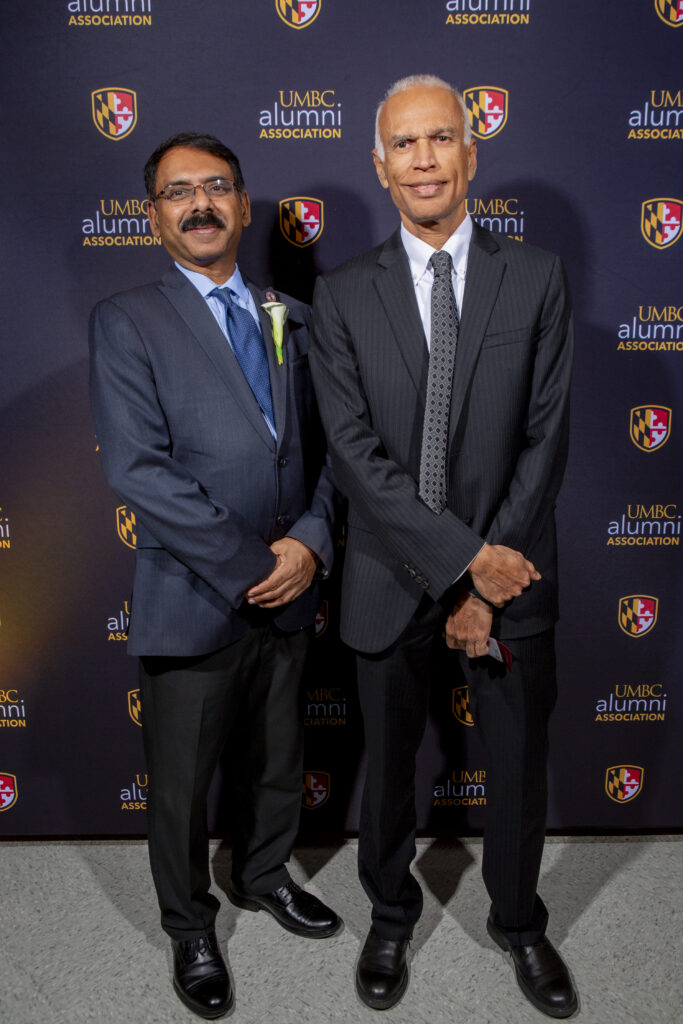 Padmanabhan Seshaiyer (left) with Manil Suri, one of his UMBC mentors, at the 2024 UMBC Alumni Awards. (Photo by Jill Fannon, M.F.A. ’11)
A course with former UMBC engineering professor Jay Humphrey exposed Seshaiyer to biomechanics. Impressed, Humphrey later recruited him for a postdoctoral position at Texas A&M University. It was there that Seshaiyer observed the aneurysm experiments that sparked his pivot to education reform. Traditional teaching, he had seen, often skipped the “why,” leaving students disengaged.
“There was a gap,” he says, “between understanding how to do the mathematics and the why.” That idea inspired him to found the COMPLETE Center, which has trained over 2,500 teachers since 2010 in blending procedural skills with conceptual understanding. The training is grounded in evidence-based pedagogy, such as the 5E instructional model: engage, explore, explain, elaborate, and evaluate.
“Students are not just consumers of mathematics,” Seshaiyer emphasizes. “They are producers of mathematics. It’s important to treat them as producers.” He starts lessons by making connections to real life. When teaching conic sections—the various cross-section shapes created if one slices through a cone—he begins with GPS satellites, which draw intersecting circles to pinpoint a location: “Now, I just told you why we need to learn what we’re learning.”
UMBC has emphasized this same shift toward relevance and active discovery in its own curriculum. MATH 110: Math in Action, launched in fall 2023, is a lab-based class for non-STEM majors that replaces traditional lectures with hands-on experiments—such as tracking brine shrimp movement to explore velocity or using clinometers to measure real-world heights—to demonstrate how math permeates everyday life. By encouraging students to investigate, analyze data, and forge their own connections, the course helps transform math anxiety into curiosity and shows that understanding the “why” can make the subject engaging and empowering for all learners.
Student-led discovery
Seshaiyer has realized that reforming mathematics education at the college level is insufficient, though. As chair of Virginia’s STEM Advisory Board, he spearheaded the state’s first K – 12 data science standards, in part responding to employer demands for a data science-ready workforce. Data science sits at the intersection of statistical reasoning, mathematical foundations, and computational thinking and may not carry the emotional baggage that straight-up “math” does for some students, Seshaiyer explains.
In Virginia’s data science curricula, students follow a hands-on cycle: acquire data, process it, visualize trends, generate a model, use it to predict future results, and communicate the findings. Students often get to choose their own projects, which have included everything from river pollution to rates of depression among high schoolers.
The process follows a framework Seshaiyer developed called the “five Cs.” It starts with “context” (a real-world problem), followed by creating a meaningful “curriculum” that incorporates integrated “content” presented via effective teaching “concepts.” Throughout the process, the teacher cultivates student “competencies” including communication skills, collaboration, critical thinking, and creativity.
Sometimes, the best thing a teacher can do to foster these skills is step away: A high school student interested in modeling the spread of Zika virus was in Seshaiyer’s office when an undergraduate student arrived who was interested in gang violence in Puerto Rico. Seshaiyer stepped out (ostensibly for a cup of coffee) and encouraged the two to discuss their ideas. When he returned, the two students had come up with modes of gang violence “transmission” that paralleled the ways Zika spreads. The research eventually yielded a published paper on which both students were co-authors.

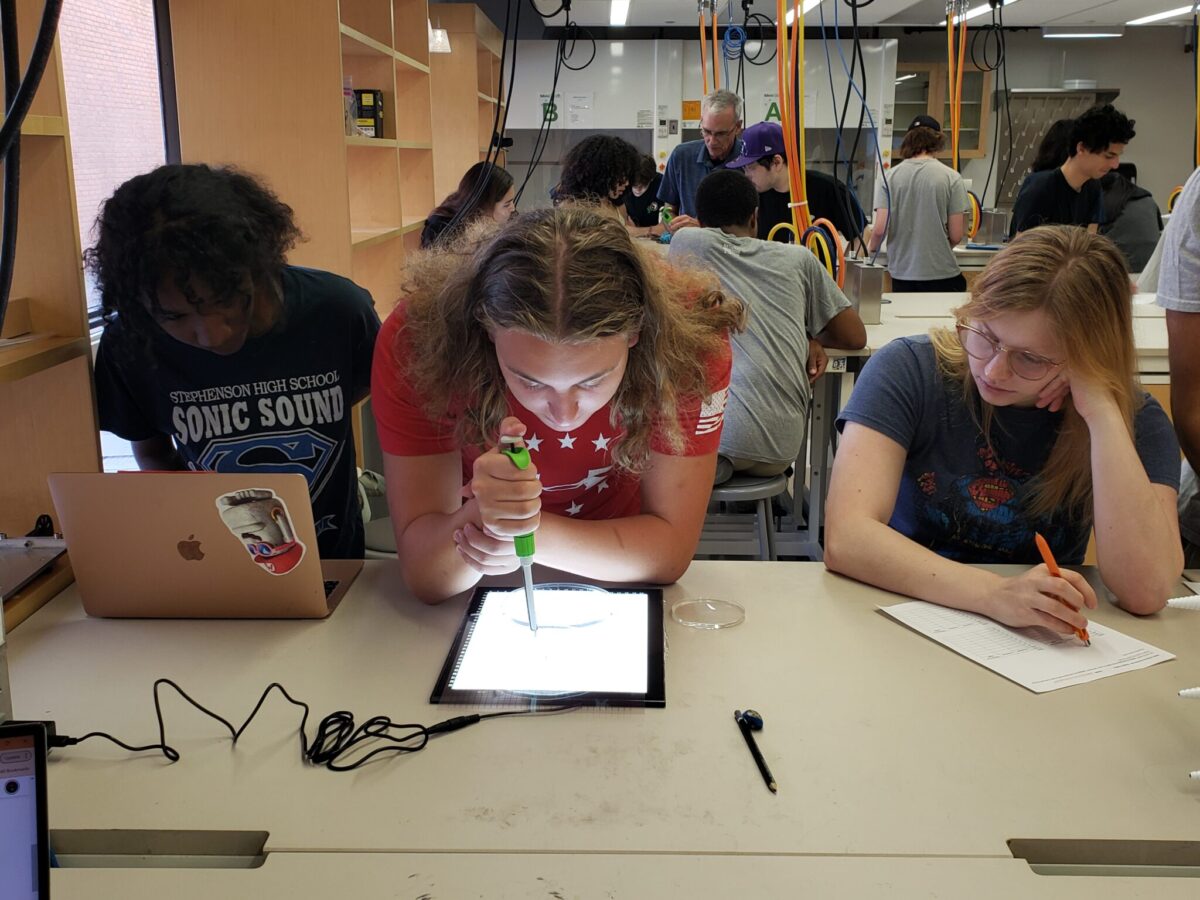 Left: Students in the Building STEPs program run a trial in a lab activity about potential and kinetic energy. (Photo by Brad Ziegler/UMBC) Right: Students in MATH 110: Math in Action record the movements of brine shrimp. (Photo by Sarah Hansen, M.S. ’15/UMBC)
“Mathematics for impact”
Seshaiyer’s experiences at UMBC remain foundational, including a personal relationship with president emeritus (and fellow mathematician) Freeman Hrabowski, with whom he’s shared the stage for keynote addresses. “UMBC has definitely taught me so much,” says Seshaiyer, who received a 2024 Outstanding Alumni Award from the UMBC Alumni Association Board of Directors.
Recently nominated for Virginia’s Math Educator of the Year, his core passion—“mathematics for impact”—endures. UMBC is extending that same impact into K – 12 classrooms through strategic partnerships with Baltimore City high schools. A longstanding collaboration with Building STEPs brings MATH 110-style hands-on labs to rising seniors, helping build math confidence and real-world connections.
Newer partnerships, such as with the Ingenuity Project at Baltimore Polytechnic Institute, include hosting campus visits for students and professional development for teachers and supporting student research in math modeling. These efforts create pipelines for engaged, math-ready learners—proving that when institutions meet students where they are, math can be an exciting path forward rather than an obstacle to overcome.
]]>
More than 20 years ago, Padmanabhan “Padhu” Seshaiyer, Ph.D. ’98, applied mathematics, observed researchers stretching aneurysm tissue samples in a neighboring lab, generating a dataset to...
https://umbc.edu/stories/seshaiyer-why-math-matters/
https://my3.my.umbc.edu/api/v0/pixel/news/155833/guest@my.umbc.edu/418e3482bd412f305fede66cd1b8fb9a/api/pixel
alumni
cnms
mathstat
news
science-and-tech
story
UMBC News & Magazine
https://my3.my.umbc.edu/groups/umbc-news-magazine
https://assets1-my.umbc.edu/system/shared/avatars/groups/000/001/943/24435aa6207c452e7bc15cc74b42c7bb/xsmall.png?1748556657
https://assets1-my.umbc.edu/system/shared/avatars/groups/000/001/943/24435aa6207c452e7bc15cc74b42c7bb/original.png?1748556657
https://assets2-my.umbc.edu/system/shared/avatars/groups/000/001/943/24435aa6207c452e7bc15cc74b42c7bb/xxlarge.png?1748556657
https://assets2-my.umbc.edu/system/shared/avatars/groups/000/001/943/24435aa6207c452e7bc15cc74b42c7bb/xlarge.png?1748556657
https://assets3-my.umbc.edu/system/shared/avatars/groups/000/001/943/24435aa6207c452e7bc15cc74b42c7bb/large.png?1748556657
https://assets1-my.umbc.edu/system/shared/avatars/groups/000/001/943/24435aa6207c452e7bc15cc74b42c7bb/medium.png?1748556657
https://assets2-my.umbc.edu/system/shared/avatars/groups/000/001/943/24435aa6207c452e7bc15cc74b42c7bb/small.png?1748556657
https://assets1-my.umbc.edu/system/shared/avatars/groups/000/001/943/24435aa6207c452e7bc15cc74b42c7bb/xsmall.png?1748556657
https://assets2-my.umbc.edu/system/shared/avatars/groups/000/001/943/24435aa6207c452e7bc15cc74b42c7bb/xxsmall.png?1748556657
UMBC News & Magazine
0
0
false
Thu, 22 Jan 2026 14:19:08 -0500
Thu, 22 Jan 2026 14:19:08 -0500
Brown named dean of the College of Arts, Humanities, and Social Sciences at UMBC
Christia Spears Brown, Ph.D., has been named dean of the College of Arts, Humanities, and Social Sciences at the University of Maryland, Baltimore County (UMBC) effective July 1, 2026. Brown joins UMBC from the University of Kentucky where she currently serves as a professor of developmental psychology and associate dean of student engagement and success in the College of Arts and Sciences.
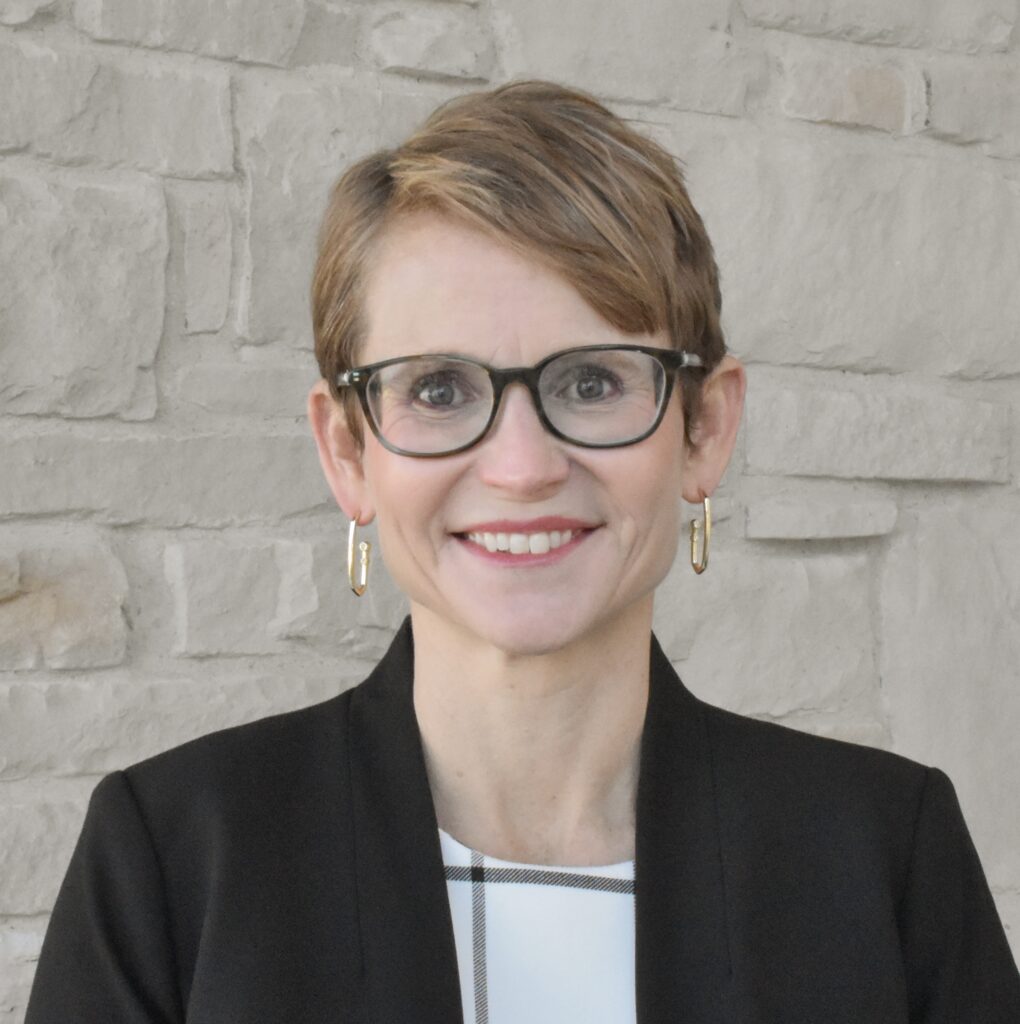
Brown previously served as the director of the Center for Equality and Social Justice and associate chair in the department of psychology. Her administrative work has focused on building inclusive, student-centered systems that promote engagement, belonging, and academic success across diverse disciplines and communities. She earned her Ph.D. in psychology at the University of Texas at Austin and began her career as an assistant professor at the University of California, Los Angeles.
An accomplished scholar, Brown has published more than 100 peer-reviewed journal articles and book chapters on children’s and adolescents’ understanding of discrimination, stereotypes, and social identity and the implications of these processes for academic and developmental outcomes. She is the author of three books, including Discrimination in Childhood and Adolescence, and her research spans gender, race and ethnicity, immigration status, and economic inequality. Her work has been supported by federal and foundation funding and is widely cited across psychology and education.
A committed educator and public-facing scholar, Brown is known for translating developmental science to broader audiences. She regularly engages with educators, families, and organizations, is frequently featured in national media, and has served as an expert witness on cases involving discrimination in schools. She is a fellow of the Association for Psychological Science, president of Society for the Study of Human Development and secretary of Society for Research in Child Development, and has served in editorial leadership roles for several scholarly journals.
]]>
Christia Spears Brown, Ph.D., has been named dean of the College of Arts, Humanities, and Social Sciences at the University of Maryland, Baltimore County (UMBC) effective July 1, 2026. Brown joins...
https://umbc.edu/stories/brown-named-dean-of-the-college-of-arts-humanities-and-social-sciences-at-umbc/
https://my3.my.umbc.edu/api/v0/pixel/news/155779/guest@my.umbc.edu/73c26ad242af941f6bcd9d1e81a4dce4/api/pixel
cahss
community
news
story
UMBC News & Magazine
https://my3.my.umbc.edu/groups/umbc-news-magazine
https://assets1-my.umbc.edu/system/shared/avatars/groups/000/001/943/24435aa6207c452e7bc15cc74b42c7bb/xsmall.png?1748556657
https://assets1-my.umbc.edu/system/shared/avatars/groups/000/001/943/24435aa6207c452e7bc15cc74b42c7bb/original.png?1748556657
https://assets2-my.umbc.edu/system/shared/avatars/groups/000/001/943/24435aa6207c452e7bc15cc74b42c7bb/xxlarge.png?1748556657
https://assets2-my.umbc.edu/system/shared/avatars/groups/000/001/943/24435aa6207c452e7bc15cc74b42c7bb/xlarge.png?1748556657
https://assets3-my.umbc.edu/system/shared/avatars/groups/000/001/943/24435aa6207c452e7bc15cc74b42c7bb/large.png?1748556657
https://assets1-my.umbc.edu/system/shared/avatars/groups/000/001/943/24435aa6207c452e7bc15cc74b42c7bb/medium.png?1748556657
https://assets2-my.umbc.edu/system/shared/avatars/groups/000/001/943/24435aa6207c452e7bc15cc74b42c7bb/small.png?1748556657
https://assets1-my.umbc.edu/system/shared/avatars/groups/000/001/943/24435aa6207c452e7bc15cc74b42c7bb/xsmall.png?1748556657
https://assets2-my.umbc.edu/system/shared/avatars/groups/000/001/943/24435aa6207c452e7bc15cc74b42c7bb/xxsmall.png?1748556657
UMBC News & Magazine
0
0
false
Tue, 20 Jan 2026 12:45:34 -0500
Tue, 20 Jan 2026 12:45:34 -0500
UMBC retains designation as a Carnegie Community Engaged campus
UMBC has been designated as one of only three institutions in Maryland dually recognized with Carnegie R1 status—among the top 5 percent of research universities in the nation—and the Carnegie Community Engagement classification, which recognizes universities who systematically share knowledge and resources with those of the public and private sectors to enrich scholarship, research, and creative activity in order to contribute to the public good. Following an extensive full campus self-study demonstrating increased depth, breadth, and integration of engagement, this week UMBC was classified as a Carnegie Community Engaged Campus for a second six-year period.
“As a public university for the public good, community engagement is at the heart of UMBC’s mission to provide world class education and research that directly supports our students, community, and partners in an inclusive environment,” says Provost Manfred H. M. van Dulmen. “The Carnegie Community Engagement Classification is an acknowledgement of the dedication and excellent work of the UMBC faculty, staff, and students to engage and serve the city of Baltimore and the state of Maryland.”
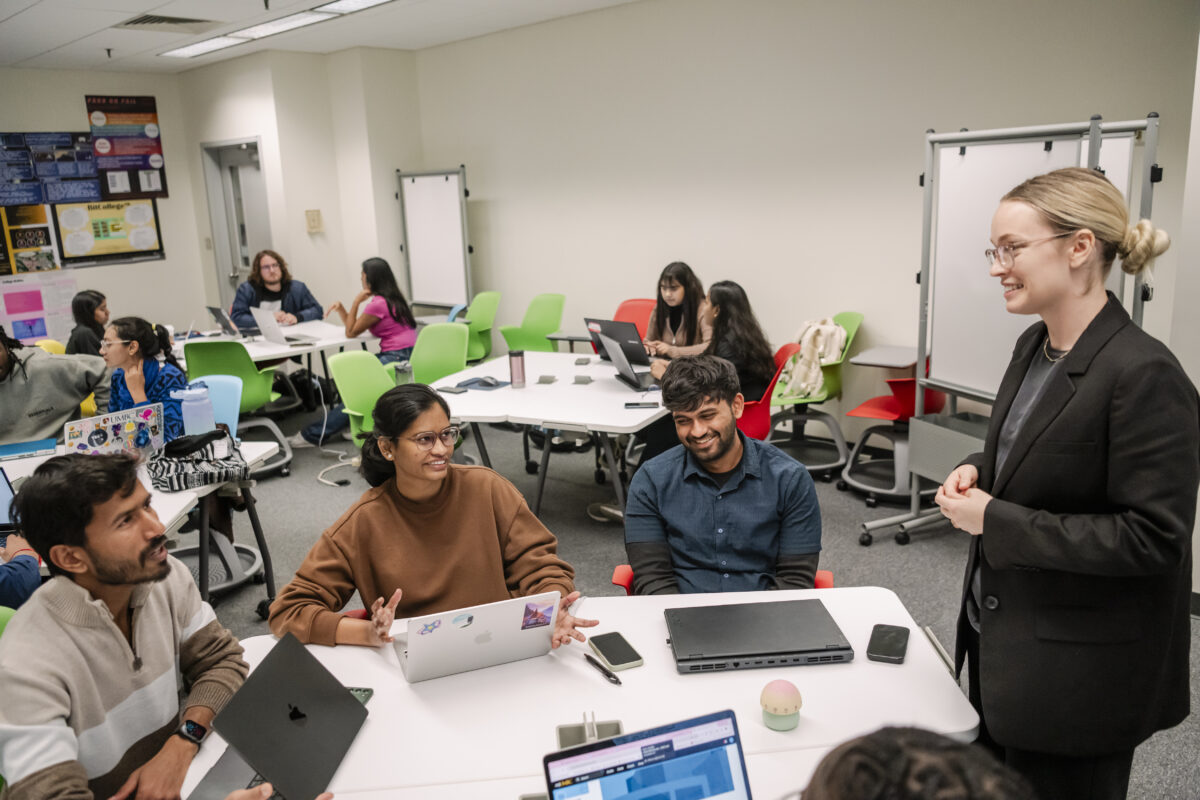 Students engaging in a lively classroom discussion.
Community engagement at UMBC flows from the university’s vision of a culture of inclusive excellence, explains Joby Taylor, Ph.D. ’05, assistant vice provost and co-leader of The Shriver Center for Public Service and Community Engagement. Taylor and Preminda Jacob, associate dean of the College of Arts, Humanities, and Social Sciences, co-chaired the reclassification study with the conviction that: “Community engagement extends our vision and practice of an inclusive culture out into the world beyond our campus through relationships and partnerships focused on mutual collaborations that matter and make a difference…locally, regionally, and globally.”
This community engagement classification re-affirms UMBC as a place where people and relationships are centered. At a time when the impact of higher education is in question, UMBC’s commitment to inclusive excellence as seen through this reclassification offers a powerful counter narrative about the roles of universities in a critically important moment.
“It speaks to how learning and knowledge can be transformational, not just transactional,” says Taylor, noting his belief that higher ed can be oriented toward positive social change, supporting holistic and lifelong learning with civic purposes, as well as professional pathways and economic mobility.
President Valerie Sheares Ashby echoes these sentiments, noting during the self-study that, “At UMBC, we do not just talk about equity and social justice, we make it happen in real, tangible ways that improve people’s everyday lives.”
]]>
UMBC has been designated as one of only three institutions in Maryland dually recognized with Carnegie R1 status—among the top 5 percent of research universities in the nation—and the Carnegie...
https://umbc.edu/stories/umbc-r1-and-carnegie-community-engaged-campus/
https://my3.my.umbc.edu/api/v0/pixel/news/155640/guest@my.umbc.edu/4cd85be05d719f4ea306b629070a5eb7/api/pixel
community
news
rankings
shriver-center
story
UMBC News & Magazine
https://my3.my.umbc.edu/groups/umbc-news-magazine
https://assets1-my.umbc.edu/system/shared/avatars/groups/000/001/943/24435aa6207c452e7bc15cc74b42c7bb/xsmall.png?1748556657
https://assets1-my.umbc.edu/system/shared/avatars/groups/000/001/943/24435aa6207c452e7bc15cc74b42c7bb/original.png?1748556657
https://assets2-my.umbc.edu/system/shared/avatars/groups/000/001/943/24435aa6207c452e7bc15cc74b42c7bb/xxlarge.png?1748556657
https://assets2-my.umbc.edu/system/shared/avatars/groups/000/001/943/24435aa6207c452e7bc15cc74b42c7bb/xlarge.png?1748556657
https://assets3-my.umbc.edu/system/shared/avatars/groups/000/001/943/24435aa6207c452e7bc15cc74b42c7bb/large.png?1748556657
https://assets1-my.umbc.edu/system/shared/avatars/groups/000/001/943/24435aa6207c452e7bc15cc74b42c7bb/medium.png?1748556657
https://assets2-my.umbc.edu/system/shared/avatars/groups/000/001/943/24435aa6207c452e7bc15cc74b42c7bb/small.png?1748556657
https://assets1-my.umbc.edu/system/shared/avatars/groups/000/001/943/24435aa6207c452e7bc15cc74b42c7bb/xsmall.png?1748556657
https://assets2-my.umbc.edu/system/shared/avatars/groups/000/001/943/24435aa6207c452e7bc15cc74b42c7bb/xxsmall.png?1748556657
UMBC News & Magazine
14
0
false
Mon, 12 Jan 2026 13:37:35 -0500
Mon, 12 Jan 2026 13:37:35 -0500
Good News to Start the New Year: Yvette Mozie-Ross
Dear UMBC Campus Community,
Happy New Year!
I am delighted to share good news about Dr. Yvette Mozie-Ross ’88, vice provost for enrollment management and planning.
When I began at UMBC more than three years ago, we intentionally staffed the president’s office with a small, strategic team of three members. As the university continues to grow, and as we look ahead to the next phase of UMBC’s future, the scope and complexity of our work have expanded significantly. This includes deepening existing and new partnerships that benefit the institution; increasing UMBC’s visibility and engagement across Baltimore, the state, and the region; and advancing key initiatives associated with our forthcoming strategic plan. At this moment, we need an exceptional leader to help drive these efforts forward.
I am confident Yvette is that leader who can hit the ground running. Effective August 1, 2026, she will join my office as senior advisor to the president for strategic initiatives. With Yvette in this new role, UMBC is getting the best of both worlds: a deeply trusted and accomplished campus leader who knows our community well and a respected ambassador with a strong record of building meaningful relationships across the region and state. Yvette has also been a consistent champion of UMBC’s students, mission, and values.
While this move takes a highly respected leader out of Provost and Senior Vice President Manfred van Dulmen’s leadership team, he agrees that it is the right opportunity at the right time for the university. Provost van Dulmen will share additional information later this month regarding the search process to fill the vice provost for enrollment management and planning position.
Until August, Yvette will continue to lead enrollment management and planning, ensuring a smooth transition for her team.
Please join me in congratulating Yvette on her new role, and thanking her for her continued leadership and service to UMBC.
Sincerely,
President Valerie Sheares Ashby
]]>
Dear UMBC Campus Community, Happy New Year! I am delighted to share good news about Dr. Yvette Mozie-Ross ’88, vice provost for enrollment management and planning. When I began at UMBC...
https://umbc.edu/stories/good-news-to-start-the-new-year-yvette-mozie-ross/
https://my3.my.umbc.edu/api/v0/pixel/news/155595/guest@my.umbc.edu/a754ffd2b729f63cb7cf6b3b86e6d53e/api/pixel
president
rss
story
UMBC News & Magazine
https://my3.my.umbc.edu/groups/umbc-news-magazine
https://assets1-my.umbc.edu/system/shared/avatars/groups/000/001/943/24435aa6207c452e7bc15cc74b42c7bb/xsmall.png?1748556657
https://assets1-my.umbc.edu/system/shared/avatars/groups/000/001/943/24435aa6207c452e7bc15cc74b42c7bb/original.png?1748556657
https://assets2-my.umbc.edu/system/shared/avatars/groups/000/001/943/24435aa6207c452e7bc15cc74b42c7bb/xxlarge.png?1748556657
https://assets2-my.umbc.edu/system/shared/avatars/groups/000/001/943/24435aa6207c452e7bc15cc74b42c7bb/xlarge.png?1748556657
https://assets3-my.umbc.edu/system/shared/avatars/groups/000/001/943/24435aa6207c452e7bc15cc74b42c7bb/large.png?1748556657
https://assets1-my.umbc.edu/system/shared/avatars/groups/000/001/943/24435aa6207c452e7bc15cc74b42c7bb/medium.png?1748556657
https://assets2-my.umbc.edu/system/shared/avatars/groups/000/001/943/24435aa6207c452e7bc15cc74b42c7bb/small.png?1748556657
https://assets1-my.umbc.edu/system/shared/avatars/groups/000/001/943/24435aa6207c452e7bc15cc74b42c7bb/xsmall.png?1748556657
https://assets2-my.umbc.edu/system/shared/avatars/groups/000/001/943/24435aa6207c452e7bc15cc74b42c7bb/xxsmall.png?1748556657
UMBC News & Magazine
0
0
false
Thu, 08 Jan 2026 16:01:04 -0500
Meet a Retriever—Triple alum Corris Davis is building a stronger network for students
Corris Davis’98, M.P.P. ’19, Ph.D. ’25, didn’t originally envision such a long career at UMBC or the number of students she would directly impact. As a Meyerhoff Program Scholar, Corris experienced how intentional mentoring and support could lift up students on their UMBC journeys. Now the senior director of the Office of Academic Opportunity Programs—which she founded as a home to UMBC’s five TRIO Programs as well as first-generation student programming—Corris has been at the front lines for first-gen and low-income students for 26 years. By forging cross-departmental connections, Corris has built a network of support and encouragement for UMBC’s growing population of first-gen students. Tell us all about it!
Q: What’s one essential thing you’d want another Retriever to know about you?
A: I’m a three time UMBC alum—undergrad in biological sciences in 1998, M.P.P. ’19, and Ph.D. ’25, public policy—who has recently rekindled a love for Galaga and LEGOs (because everything old is new again).

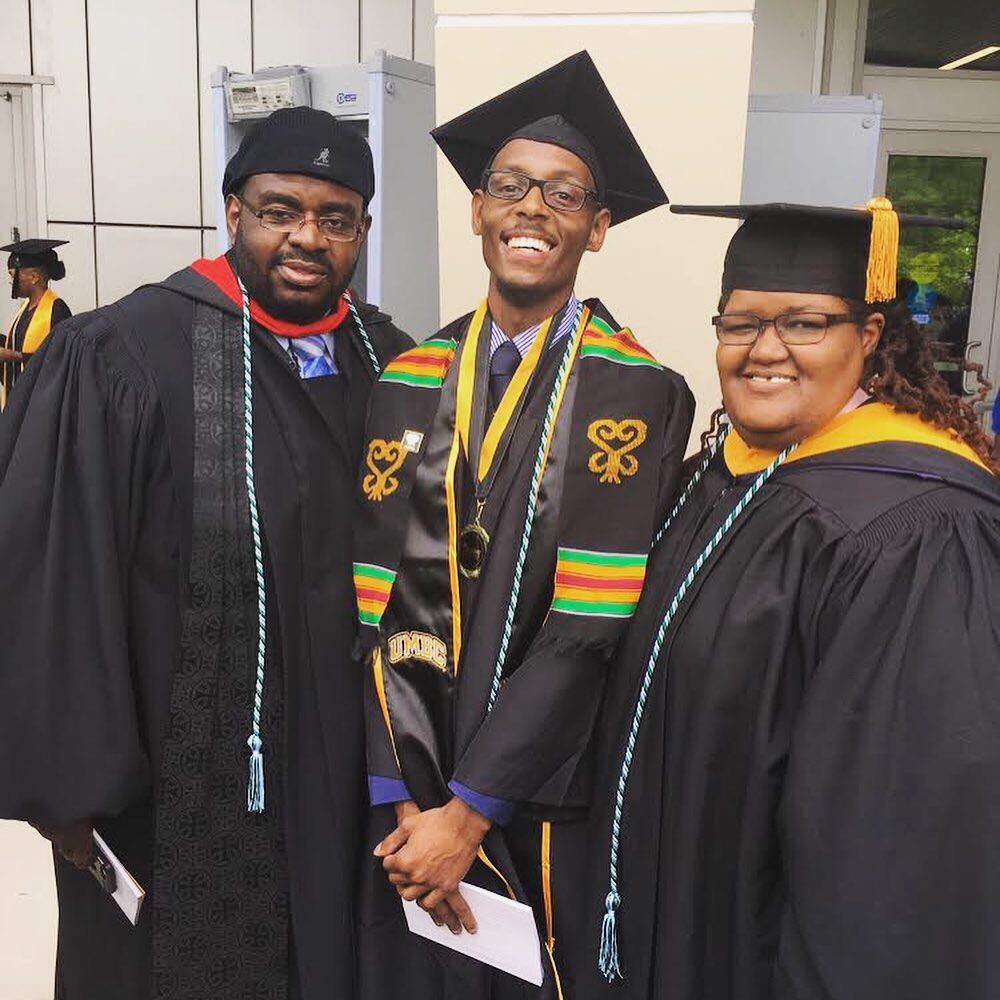 Left: Fellow staff of the Upward Bound Program outside of the Apollo Theatre in New York City during an end of summer field trip. Left to right: Terri Chambers, Christine Harris ’98, Allen Bolden ’99, Karriem Farrakhan ’97, Kerrian McLean ’00, and Corris. Right: At UMBC Commencement 2022, Dr. Michael Hunt, Damarius Johnson ’22 (McNair alum), and Corris.
Q: What’s the one thing you’d want someone to know about the support you find here?
A: “Support” and “community” aren’t just words. People show up for each other because that’s who we are, be it faculty, staff, students, or alumni.
Q: What part of your job do you enjoy the most and why?
A: I support programs that allow students from middle school all the way to undergrad to see what they can be. I have seen students that I met in 8th or 9th grade earn Ph.D.s. I love knowing that while I don’t always work directly with students, the work I do supports them in reaching their goals.
Q: What brought you to UMBC in the first place?
A: I started my professional staff journey as the office coordinator of the TRIO Upward Bound program at UMBC, one of what is now five TRIO programs hosted at UMBC (Upward Bound, Upward Bound Math/Science, Talent Search, McNair Scholars, and now Student Support Services). Since then, I’ve been the assistant director of Upward Bound, and then director. In 2016, I was able to form the Office of Academic Opportunity Programs that houses all of the TRIO Programs as well as first-generation student programming.
After completing my bachelor’s degree, I left UMBC to go to a Ph.D. program in molecular and cellular biology, but about seven months in, I realized that it was not a good fit. I had previously worked with Upward Bound as an undergrad so I essentially came home until I could figure out what my next moves were. I didn’t think that I would still be at UMBC 26 years later.
The reason I stay at UMBC is that I am given the space to help students who are from similar backgrounds to grow and thrive and have great experiences.
Photo: Over the years, many participants have become like family, says Corris. Left side front to back: Prentiss Haney, Gerrod Williamson (Upward Bound alum and current staff member), Corris’s wife, Consuela Lowery; on the right from front to back: Tobias Davis (Upward Bound alum), Dr. Durell Callier ’14, McNair Scholar alum), and Corris.

Q: Tell us about the people who have helped you at UMBC, and why it has made such a difference to you.
A: I must start with the late LaMont Toliver, director of the Meyerhoff Scholars Program. While my initial relationship with him was as a Meyerhoff Scholar, once I became a staff member, he provided even more guidance and support. I use much of what I learned from him in my work in supporting students now, both directly and behind the scenes. I recall him sharing a quote from Harry Truman: “It is amazing what you can accomplish if you do not care who gets the credit.” This has shaped a lot of my work at UMBC. It’s all about advancing our students.
I’ve found support at UMBC in two ways: sometimes by making the ask, and sometimes because people see the vision and step forward on their own. A great example is the creation of the First Generation Network. While it’s not as active as we’d like currently, it’s very existence comes from a group of campus partners, many of whom were first-generation students themselves who understand the importance of the work and volunteering.
The quote… “It is amazing what you can accomplish if you do not care who gets the credit.” This has shaped a lot of my work at UMBC. It’s all about advancing our students.
Corris Davis
Senior director of the Office of Academic Opportunity Programs
We’ve been able to honor first-generation graduates with cords for about six years now. Offices like the Academic Success Center, the Career Center, and several Student Affairs departments have regularly stepped up, not just as cord pick-up sites, but as co-creators of programming that supports UMBC’s first-gen students. Support may be handing out graduation cords, or staffing First Gen Week tables, or even redesigning programming and workshops so they tackle the hidden curriculum and the barriers created by higher-ed jargon.
 Staff of the various TRIO programs in the Office of Academic Opportunity Programs at the annual regional TRIO conference in Hershey, PA, in Feb 2023. Front, left to right: Tanaj Mogase, Talent Search, Corris, Ting Huang (UMBC and McNair alum), Ahdrianna Boyce (UMBC and Upward Bound alum); back left to right: Jennifer Appleby (former TS coordinator), Dr. Michael Hunt, and Dr. Sunji Jangha ’25
Although my office sits in Academic Affairs, this cross-division collaboration is exactly how things get done at UMBC: People come together to support students. It’s impossible to name everyone who has supported me and this work over the years, but I must acknowledge the incredibly talented staff in AOP. Their commitment, partnership, and care make everything we do not only possible, but even more meaningful.
Q: What would you tell someone who is considering a career at UMBC?
A: UMBC is a place where you can take a dream and run with it. We have a culture of supporting students and supporting each other in that work.
UMBC’s greatest strength is its people. When people meet Retrievers and hear about the passion they bring, the relationships they create, the ways they support each other, and the commitment they have to inclusive excellence, they truly get a sense of our community. That’s what “Meet a Retriever” is all about.
Learn more about how UMBC can help you achieve your goals.
]]>
Corris Davis’98, M.P.P. ’19, Ph.D. ’25, didn’t originally envision such a long career at UMBC or the number of students she would directly impact. As a Meyerhoff Program Scholar, Corris...
https://umbc.edu/stories/meet-a-retriever-triple-alum-corris-davis-is-building-a-stronger-network-for-students/
https://my3.my.umbc.edu/api/v0/pixel/news/155467/guest@my.umbc.edu/c1b04b96258202ea2847b3e626f8104b/api/pixel
biological-sciences
cnms
graduateschool
meet-a-retriever
meyerhoff-alumni
story
trio
uncategorized
UMBC News & Magazine
https://my3.my.umbc.edu/groups/umbc-news-magazine
https://assets1-my.umbc.edu/system/shared/avatars/groups/000/001/943/24435aa6207c452e7bc15cc74b42c7bb/xsmall.png?1748556657
https://assets1-my.umbc.edu/system/shared/avatars/groups/000/001/943/24435aa6207c452e7bc15cc74b42c7bb/original.png?1748556657
https://assets2-my.umbc.edu/system/shared/avatars/groups/000/001/943/24435aa6207c452e7bc15cc74b42c7bb/xxlarge.png?1748556657
https://assets2-my.umbc.edu/system/shared/avatars/groups/000/001/943/24435aa6207c452e7bc15cc74b42c7bb/xlarge.png?1748556657
https://assets3-my.umbc.edu/system/shared/avatars/groups/000/001/943/24435aa6207c452e7bc15cc74b42c7bb/large.png?1748556657
https://assets1-my.umbc.edu/system/shared/avatars/groups/000/001/943/24435aa6207c452e7bc15cc74b42c7bb/medium.png?1748556657
https://assets2-my.umbc.edu/system/shared/avatars/groups/000/001/943/24435aa6207c452e7bc15cc74b42c7bb/small.png?1748556657
https://assets1-my.umbc.edu/system/shared/avatars/groups/000/001/943/24435aa6207c452e7bc15cc74b42c7bb/xsmall.png?1748556657
https://assets2-my.umbc.edu/system/shared/avatars/groups/000/001/943/24435aa6207c452e7bc15cc74b42c7bb/xxsmall.png?1748556657
UMBC News & Magazine
0
0
false
Mon, 22 Dec 2025 20:33:40 -0500
Mon, 22 Dec 2025 20:33:40 -0500