New blood-clotting agent shows promise for soldiers in combat zones with extreme temperatures
When soldiers suffer traumatic battle wounds in combat, there is a window of just around 10 minutes for medics to apply blood-clotting agents before they will likely lose too much blood to survive. The U.S. military has relied on injectable blood-clotting agents to save soldiers lives for years, but many are unstable at extreme temperatures. This is where the Lavik Lab comes in.
Erin Lavik, professor of chemical, biochemical and environmental engineering (CBEE) and a new faculty member at UMBC, has developed nanoparticles that, as a new article describes, “act like bridges between platelets to make clots form faster.” The have effectively stimulated platelet aggregation in cell culture, remained stable temperatures, and performed well in animal testing. Her team’s research, including a recent successful phase of testing in rats with traumatic liver injury, was featured in Chemical & Engineering News.
To test their ability to remain effective after storage at high temperatures, similar to those found in many combat zones, the nanoparticles were heated to 122 degrees Fahrenheit for one week. Lavik found that the agents performed just as well as in earlier tests. Further tests will determine if this blood-clotting agent could be applied clinically, to serve as a more stable and less expensive alternative to current drugs.
Read more about Lavik’s work in “Artificial Clotting Agent Could Treat Internal Bleeding in Combat Zones,” in Chemical & Engineering News.
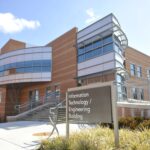
Image: The Information Technology and Engineering building, by Marlayna Demond ’11 for UMBC.
]]>
When soldiers suffer traumatic battle wounds in combat, there is a window of just around 10 minutes for medics to apply blood-clotting agents before they will likely lose too much blood to...
https://umbc.edu/stories/new-blood-clotting-agent-shows-promise-for-soldiers-in-combat-zones-with-extreme-temperatures/
https://my3.my.umbc.edu/api/v0/pixel/news/121363/guest@my.umbc.edu/be46c919adf6262881ab811bf823e7de/api/pixel
cbee
coeit
science-and-technology
UMBC News & Magazine
https://my3.my.umbc.edu/groups/umbc-news-magazine
https://assets1-my.umbc.edu/system/shared/avatars/groups/000/001/943/24435aa6207c452e7bc15cc74b42c7bb/xsmall.png?1748556657
https://assets1-my.umbc.edu/system/shared/avatars/groups/000/001/943/24435aa6207c452e7bc15cc74b42c7bb/original.png?1748556657
https://assets2-my.umbc.edu/system/shared/avatars/groups/000/001/943/24435aa6207c452e7bc15cc74b42c7bb/xxlarge.png?1748556657
https://assets2-my.umbc.edu/system/shared/avatars/groups/000/001/943/24435aa6207c452e7bc15cc74b42c7bb/xlarge.png?1748556657
https://assets3-my.umbc.edu/system/shared/avatars/groups/000/001/943/24435aa6207c452e7bc15cc74b42c7bb/large.png?1748556657
https://assets1-my.umbc.edu/system/shared/avatars/groups/000/001/943/24435aa6207c452e7bc15cc74b42c7bb/medium.png?1748556657
https://assets2-my.umbc.edu/system/shared/avatars/groups/000/001/943/24435aa6207c452e7bc15cc74b42c7bb/small.png?1748556657
https://assets1-my.umbc.edu/system/shared/avatars/groups/000/001/943/24435aa6207c452e7bc15cc74b42c7bb/xsmall.png?1748556657
https://assets2-my.umbc.edu/system/shared/avatars/groups/000/001/943/24435aa6207c452e7bc15cc74b42c7bb/xxsmall.png?1748556657
UMBC News & Magazine
0
0
false
Tue, 09 Feb 2016 15:26:45 -0500
Lee Blaney’s sustainability-focused engineering research examines the potential impact and value of waste streams
The National Science Foundation has recognized Lee Blaney, assistant professor of chemical, biochemical, and environmental engineering (CBEE), as a tremendously promising researcher in concurrently funding three projects that work to reimagine waste streams as important resources and investigate threats from toxic contaminants.
The grant funding, totaling more than $800,000, will support Blaney’s work in the areas of environmental engineering, environmental sustainability, and environmental chemical sciences. The three projects focus on sustainably recovering phosphorus from agricultural waste, the photodegradation of organometallic compounds in water, and understanding how three antibiotic classes react when exposed to UV-based processes. Blaney began receiving funding for all three grants within the two-month period of July 1-September 1, 2015.
Blaney’s environmental engineering research lab focuses on the detection, fate, and transport of contaminants of emerging concern (CECs), such as pharmaceuticals, personal care products, hormones and antibiotics. Many of the projects that his group works on are centered on detecting CECs in water and wastewater, and removing them through various treatment processes.

“These projects build into a concept that we are calling ‘emerging contaminants and resources,’” says Blaney. “The general idea is that the products that we use everyday, and the wastes that we generate everyday, contain hidden threats and opportunities.”
Blaney’s interest in this topic stems from a gap he has seen in environmental research over the last few decades, where substantial data is available on the toxicity of inorganic metals like arsenic and tin, but much less is known about the toxicity of organometallics. In his lab, Blaney studies the impact that organometallics, including platinum and selenium, have on the environment.
He explains that several public health issues are related to his work and research. “Antibacterial resistance is widely viewed as a global challenge to public health. Each year, there are more cases of multi-drug resistant superbugs,” Blaney says. “Ultimately, we hope that this work will result in improved guidance on removal of antibiotics in water and wastewater treatment plants.”
Blaney suggests a paradigm shift is on the horizon that will impact current waste management practices, in Maryland, nationally, and globally. “We envision every ‘waste’ stream as a ‘resource’ stream,” he says, thinking particularly of his work on Maryland’s Eastern shore with phosphorus from poultry litter, which can be seen as both a contaminant and a vital nutrient.
Because of high levels of phosphorus in Eastern shore soil, due to usage of large quantities of poultry litter as fertilizer, a significant amount of phosphorus is washed into nearby bodies of water. Removing excess phosphorus from the litter would reduce the amount of phosphorus in runoff and also isolate a soil nutrient that could be sold to farmers in need of phosphorus-rich fertilizer. “The project will facilitate development of a sustainable source of phosphorus and contribute to water, food, and economic security,” Blaney says.
The grants will also enable more graduate and undergraduate students at UMBC to contribute directly to hands-on, high-impact research through positions in the Blaney Lab. Whether working with students in his lab, analyzing findings, or collaborating with farmers and partners in business or government, Blaney keeps his eye on the big picture, how “the research that we are pursuing will help to ensure sustainable development and protection of human and ecological health.”
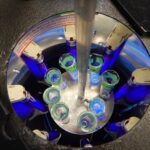
Images: Equipment in Lee Blaney’s lab (top); Lee Blaney and Ke He, chemical and biochemical engineering PhD candidate, study a sample in the lab (bottom). Photos by Tim Ford, coordinator of illustrative services in the biological sciences department at UMBC.
]]>
The National Science Foundation has recognized Lee Blaney, assistant professor of chemical, biochemical, and environmental engineering (CBEE), as a tremendously promising researcher in...
https://umbc.edu/stories/lee-blaneys-sustainability-focused-engineering-research-assesses-the-potential-impact-and-value-of-waste-streams/
https://my3.my.umbc.edu/api/v0/pixel/news/121389/guest@my.umbc.edu/d3e2c373c4cf26eeb26440bd87038554/api/pixel
cbee
coeit
science-and-technology
UMBC News & Magazine
https://my3.my.umbc.edu/groups/umbc-news-magazine
https://assets1-my.umbc.edu/system/shared/avatars/groups/000/001/943/24435aa6207c452e7bc15cc74b42c7bb/xsmall.png?1748556657
https://assets1-my.umbc.edu/system/shared/avatars/groups/000/001/943/24435aa6207c452e7bc15cc74b42c7bb/original.png?1748556657
https://assets2-my.umbc.edu/system/shared/avatars/groups/000/001/943/24435aa6207c452e7bc15cc74b42c7bb/xxlarge.png?1748556657
https://assets2-my.umbc.edu/system/shared/avatars/groups/000/001/943/24435aa6207c452e7bc15cc74b42c7bb/xlarge.png?1748556657
https://assets3-my.umbc.edu/system/shared/avatars/groups/000/001/943/24435aa6207c452e7bc15cc74b42c7bb/large.png?1748556657
https://assets1-my.umbc.edu/system/shared/avatars/groups/000/001/943/24435aa6207c452e7bc15cc74b42c7bb/medium.png?1748556657
https://assets2-my.umbc.edu/system/shared/avatars/groups/000/001/943/24435aa6207c452e7bc15cc74b42c7bb/small.png?1748556657
https://assets1-my.umbc.edu/system/shared/avatars/groups/000/001/943/24435aa6207c452e7bc15cc74b42c7bb/xsmall.png?1748556657
https://assets2-my.umbc.edu/system/shared/avatars/groups/000/001/943/24435aa6207c452e7bc15cc74b42c7bb/xxsmall.png?1748556657
UMBC News & Magazine
0
0
false
Wed, 13 Jan 2016 17:21:48 -0500
UMBC researchers develop affordable incubator for vulnerable newborns in low-resource areas
In low- and middle-income countries, gaps in healthcare infrastructure and high costs for medical supplies and services can mean high numbers of babies dying in their first week of life. Often, these deaths are due to “extremely preventable causes,” says Govind Rao, professor of chemical and biochemical engineering and director of the Center for Advanced Sensor Technology (CAST) at UMBC.
Rao described for The Hindu, a major Indian newspaper, how he and a team of faculty and student researchers designed an affordable infant incubator that addresses two of the three leading causes of infant death (which include preterm birth, lack of oxygen and sepsis).
“This incubator chamber has been made using cardboard. It’s low-cost, disposable, and possesses heating and cooling functionality,” he explains. The cardboard helps regulate the temperature of the environment, which allows babies to use their metabolic energy for growth rather than regulating their body temperature.
The device is powered by a solar rechargeable battery and can be used without electricity for up to eight hours each day.
“While in urban hi-tech hospitals, the cost of infant care would be in tens of thousands of rupees, in rural India, the medical centers have no facilities—typically a light bulb serves as a warmer,” says Rao.
The incubator design was created and prototype developed over three years with support from the National Collegiate Inventors and Innovators Alliance and the Food and Drug Administration. The next step is for the built-in sensors to be integrated into the device and validated in a field setting.
Read the full article, “For a frugal way to save lives,” in The Hindu Business Line.
]]>
In low- and middle-income countries, gaps in healthcare infrastructure and high costs for medical supplies and services can mean high numbers of babies dying in their first week of life. Often,...
https://umbc.edu/stories/umbc-researchers-develop-affordable-incubator-for-vulnerable-newborns-in-low-resource-areas/
https://my3.my.umbc.edu/api/v0/pixel/news/121398/guest@my.umbc.edu/355e5c53501ed409631d10dc6bc2fc0e/api/pixel
cast
cbee
coeit
science-and-technology
UMBC News & Magazine
https://my3.my.umbc.edu/groups/umbc-news-magazine
https://assets1-my.umbc.edu/system/shared/avatars/groups/000/001/943/24435aa6207c452e7bc15cc74b42c7bb/xsmall.png?1748556657
https://assets1-my.umbc.edu/system/shared/avatars/groups/000/001/943/24435aa6207c452e7bc15cc74b42c7bb/original.png?1748556657
https://assets2-my.umbc.edu/system/shared/avatars/groups/000/001/943/24435aa6207c452e7bc15cc74b42c7bb/xxlarge.png?1748556657
https://assets2-my.umbc.edu/system/shared/avatars/groups/000/001/943/24435aa6207c452e7bc15cc74b42c7bb/xlarge.png?1748556657
https://assets3-my.umbc.edu/system/shared/avatars/groups/000/001/943/24435aa6207c452e7bc15cc74b42c7bb/large.png?1748556657
https://assets1-my.umbc.edu/system/shared/avatars/groups/000/001/943/24435aa6207c452e7bc15cc74b42c7bb/medium.png?1748556657
https://assets2-my.umbc.edu/system/shared/avatars/groups/000/001/943/24435aa6207c452e7bc15cc74b42c7bb/small.png?1748556657
https://assets1-my.umbc.edu/system/shared/avatars/groups/000/001/943/24435aa6207c452e7bc15cc74b42c7bb/xsmall.png?1748556657
https://assets2-my.umbc.edu/system/shared/avatars/groups/000/001/943/24435aa6207c452e7bc15cc74b42c7bb/xxsmall.png?1748556657
UMBC News & Magazine
0
0
false
Wed, 06 Jan 2016 14:35:32 -0500
UMBC students explain what environmental engineers do in video for international competition

UMBC environmental engineering students have created a YouTube video to help middle and high school students and the broader public understand the kinds of work environmental engineers do and the impacts their work has on the world. They developed the video as part of a national competition hosted by the Association of Environmental Engineering and Science Professors (AEESP) with the theme “Environmental Engineers Protect Public and Ecological Health.”
UMBC students Helena Gaifem ‘16, Ph.D., chemical and biochemical engineering; Nick Rogers ‘15, environmental engineering; Utsav Shashvatt ‘19, Ph.D., environmental engineering; and Kiranmayi Mangalgiri ‘16, Ph.D., environmental engineering, approached Lee Blaney, assistant professor of chemical, biochemical and environmental engineering (CBEE), to express interest in entering the AEESP contest. Gaifem illustrated the drawings in the video and Shashvatt photographed the images and edited them before sending them to Mangalgiri, who put the video together using VideoScribe. After the visuals were completed, Rogers added narration. Environmental engineering majors Hollie Adejumo ‘16, Savannah Steinly ‘18, and Hannah Aris ‘18, also contributed to the video.
The discipline of environmental engineering is fairly new and AEESP members have been concerned it is not yet well understood by the general public, Blaney notes, in explaining the origins of the competition. “Hopefully, more efforts like this one will increase knowledge and understanding of the field,” says Blaney. He emphasizes that another major goal of the competition is to “increase outreach to younger students (K-12) and build interest in the major.”
Competition finalists and winners will be announced on January 29, 2016, with the winning teams receiving cash prizes.
*Update (2/10/2016): The AEESP announced that the UMBC team’s video “What do Environmental Engineers do?” was awarded first place in the competition. The team will receive a $1000 cash prize.
Image taken from YouTube video.
]]>
UMBC environmental engineering students have created a YouTube video to help middle and high school students and the broader public understand the kinds of work environmental engineers do and the...
https://umbc.edu/stories/umbc-students-explain-what-environmental-engineers-do-in-video-for-international-competition/
https://my3.my.umbc.edu/api/v0/pixel/news/121408/guest@my.umbc.edu/a1ff1e82e36e627e6c1dfbff0dd98ea0/api/pixel
cbee
coeit
science-and-technology
UMBC News & Magazine
https://my3.my.umbc.edu/groups/umbc-news-magazine
https://assets1-my.umbc.edu/system/shared/avatars/groups/000/001/943/24435aa6207c452e7bc15cc74b42c7bb/xsmall.png?1748556657
https://assets1-my.umbc.edu/system/shared/avatars/groups/000/001/943/24435aa6207c452e7bc15cc74b42c7bb/original.png?1748556657
https://assets2-my.umbc.edu/system/shared/avatars/groups/000/001/943/24435aa6207c452e7bc15cc74b42c7bb/xxlarge.png?1748556657
https://assets2-my.umbc.edu/system/shared/avatars/groups/000/001/943/24435aa6207c452e7bc15cc74b42c7bb/xlarge.png?1748556657
https://assets3-my.umbc.edu/system/shared/avatars/groups/000/001/943/24435aa6207c452e7bc15cc74b42c7bb/large.png?1748556657
https://assets1-my.umbc.edu/system/shared/avatars/groups/000/001/943/24435aa6207c452e7bc15cc74b42c7bb/medium.png?1748556657
https://assets2-my.umbc.edu/system/shared/avatars/groups/000/001/943/24435aa6207c452e7bc15cc74b42c7bb/small.png?1748556657
https://assets1-my.umbc.edu/system/shared/avatars/groups/000/001/943/24435aa6207c452e7bc15cc74b42c7bb/xsmall.png?1748556657
https://assets2-my.umbc.edu/system/shared/avatars/groups/000/001/943/24435aa6207c452e7bc15cc74b42c7bb/xxsmall.png?1748556657
UMBC News & Magazine
0
0
false
Wed, 23 Dec 2015 16:54:39 -0500
Inaugural Inventors’ Luncheon honors UMBC faculty innovators across disciplines
UMBC’s inaugural Innovators Luncheon, held November 30, 2015, celebrated faculty innovators from across the university who are forging new paths in their fields. Sponsored by the Office of the Vice President for Research, Office of Technology Development (OTD), Office of Institutional Advancement (OIA), and bwtech@UMBC, the event acknowledged accomplishments of UMBC Technology Catalyst Fund (TCF) and Maryland Innovation Initiative (MII) awardees.
In addition to recognizing the TCF and MII awardees, five UMBC faculty were presented with awards for outstanding initiatives in disclosing their inventions. Christopher Geddes, professor of chemistry and biochemistry and director of the Institute of Fluorescence (IOF); Fow-Sen Choa, professor of computer science and electrical engineering (CSEE); Leah Croucher, research professor in chemical, biochemical and environmental engineering (CBEE) and assistant director of the Center for Advanced Sensor Technology (CAST); and Dan Kostov, research professor in CBEE, adjunct professor in CSEE and assistant director in CAST, were recognized for having submitted over 25 invention disclosures each. Govind Rao, professor in CBEE and director of CAST, was presented with an award for over 50 invention disclosures. In addition, Ryan Robucci ’02, computer engineering, and Nilanjan Banerjee, both assistant professors in CSEE, were recognized as up-and-coming inventors at UMBC for not only advancing technology in their respective academic fields but also pursuing commercial applications of those advancements.

Vice President for Research Karl Steiner opened the event by drawing inspiration from John Lennon’s “Imagine.” He highlighted how the entrepreneurial spirit of UMBC’s inventors enables them to develop novel, creative solutions to pressing issues in Maryland, nationally, and globally. Greg Simmons, M.P.P ’04, public policy, vice president for institutional advancement, shared Steiner’s sentiment, and emphasized the importance of supporting faculty in their work to solve society’s biggest challenges.
University System of Maryland (USM) Chancellor Bob Caret and R. Michael Gill, secretary of commerce for the State of Maryland, also shared brief comments. Chancellor Caret compared UMBC innovators with inventors in Silicon Valley—their innovative spirit, fresh ideas, fast work pace, and confidence they can have a major positive impact. With that vision in mind, he argued that the State of Maryland must develop “an ecosystem where we can all come together to create that level of success.” Gill challenged the inventors to wake up each morning with the determination to figure out “how to move this forward,” moving past the setbacks and challenges that each will undoubtedly encounter along the way.
For UMBC President Freeman Hrabowski, the drive to engage talented faculty from diverse backgrounds in developing solutions to the problems our world faces is essential. President Hrabowski shared how inspired he feels by “what we do on UMBC’s campus to impact people’s lives.”
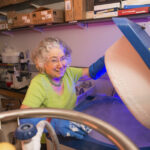
Image: UMBC TCF and MII awardee Suzanne Ostrand-Rosenberg; Seven UMBC faculty were presented with awards during the Innovators Luncheon. Photos by Marlayna Demond ’11.
]]>
UMBC’s inaugural Innovators Luncheon, held November 30, 2015, celebrated faculty innovators from across the university who are forging new paths in their fields. Sponsored by the Office of the...
https://umbc.edu/stories/inaugural-inventors-luncheon-honors-umbc-faculty-innovators-across-disciplines/
https://my3.my.umbc.edu/api/v0/pixel/news/121441/guest@my.umbc.edu/dfe17f5672c009f292562955ca4632b7/api/pixel
cahss
cast
cbee
chembiochem
cnms
coeit
csee
hrabowski
iof
research
science-and-technology
UMBC News & Magazine
https://my3.my.umbc.edu/groups/umbc-news-magazine
https://assets1-my.umbc.edu/system/shared/avatars/groups/000/001/943/24435aa6207c452e7bc15cc74b42c7bb/xsmall.png?1748556657
https://assets1-my.umbc.edu/system/shared/avatars/groups/000/001/943/24435aa6207c452e7bc15cc74b42c7bb/original.png?1748556657
https://assets2-my.umbc.edu/system/shared/avatars/groups/000/001/943/24435aa6207c452e7bc15cc74b42c7bb/xxlarge.png?1748556657
https://assets2-my.umbc.edu/system/shared/avatars/groups/000/001/943/24435aa6207c452e7bc15cc74b42c7bb/xlarge.png?1748556657
https://assets3-my.umbc.edu/system/shared/avatars/groups/000/001/943/24435aa6207c452e7bc15cc74b42c7bb/large.png?1748556657
https://assets1-my.umbc.edu/system/shared/avatars/groups/000/001/943/24435aa6207c452e7bc15cc74b42c7bb/medium.png?1748556657
https://assets2-my.umbc.edu/system/shared/avatars/groups/000/001/943/24435aa6207c452e7bc15cc74b42c7bb/small.png?1748556657
https://assets1-my.umbc.edu/system/shared/avatars/groups/000/001/943/24435aa6207c452e7bc15cc74b42c7bb/xsmall.png?1748556657
https://assets2-my.umbc.edu/system/shared/avatars/groups/000/001/943/24435aa6207c452e7bc15cc74b42c7bb/xxsmall.png?1748556657
UMBC News & Magazine
0
0
false
Fri, 04 Dec 2015 19:39:20 -0500
Lee Blaney explains how technology can transform pollutants in chicken manure into a valuable product

 While manure is often used as fertilizer for crops, regulations designed to protect the environment do not allow farmers to use untreated manure on fields that already saturated with elements like phosphorus. Lee Blaney, assistant professor in the department of chemical, biochemical and environmental engineering, is developing new technologies in his lab to remove phosphorus from agricultural waste, such as chicken litter, to transform it into two highly valuable products: processed animal litter that can be used as fertilizer and chemicals that can be sold to farmers with land that is deficient in rather than saturated with particular nutrients.
Blaney explains in a new Voice of America video that he sees this challenge as an opportunity to turn agricultural waste into a product that is profitable, and does not pollute the environment. His thought process is to ask “What’s in there? Can we extract it and turn it around into a valuable product?”
 For updates on the work of the Blaney Lab, see their website and Twitter.
]]>
While manure is often used as fertilizer for crops, regulations designed to protect the environment do not allow farmers to use untreated manure on fields that already saturated with elements like...
https://umbc.edu/stories/lee-blaney-explains-how-technology-can-transform-pollutants-in-chicken-manure-into-a-valuable-product/
https://my3.my.umbc.edu/api/v0/pixel/news/121477/guest@my.umbc.edu/42825b19327923969ea945b3ad185650/api/pixel
cbee
coeit
science-and-technology
UMBC News & Magazine
https://my3.my.umbc.edu/groups/umbc-news-magazine
https://assets1-my.umbc.edu/system/shared/avatars/groups/000/001/943/24435aa6207c452e7bc15cc74b42c7bb/xsmall.png?1748556657
https://assets1-my.umbc.edu/system/shared/avatars/groups/000/001/943/24435aa6207c452e7bc15cc74b42c7bb/original.png?1748556657
https://assets2-my.umbc.edu/system/shared/avatars/groups/000/001/943/24435aa6207c452e7bc15cc74b42c7bb/xxlarge.png?1748556657
https://assets2-my.umbc.edu/system/shared/avatars/groups/000/001/943/24435aa6207c452e7bc15cc74b42c7bb/xlarge.png?1748556657
https://assets3-my.umbc.edu/system/shared/avatars/groups/000/001/943/24435aa6207c452e7bc15cc74b42c7bb/large.png?1748556657
https://assets1-my.umbc.edu/system/shared/avatars/groups/000/001/943/24435aa6207c452e7bc15cc74b42c7bb/medium.png?1748556657
https://assets2-my.umbc.edu/system/shared/avatars/groups/000/001/943/24435aa6207c452e7bc15cc74b42c7bb/small.png?1748556657
https://assets1-my.umbc.edu/system/shared/avatars/groups/000/001/943/24435aa6207c452e7bc15cc74b42c7bb/xsmall.png?1748556657
https://assets2-my.umbc.edu/system/shared/avatars/groups/000/001/943/24435aa6207c452e7bc15cc74b42c7bb/xxsmall.png?1748556657
UMBC News & Magazine
0
0
false
Tue, 10 Nov 2015 17:20:10 -0500
Helping kids with asthma breathe easier
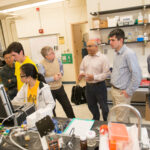
UMBC team to develop wearable system to track asthma triggers in pediatric patients.
An innovative team of researchers working across engineering fields has received a nearly $2 million award from the National Institutes of Health (NIH) PRISMS program to develop a comprehensive system to monitor critical environmental asthma triggers and physiological status indicators for pediatric asthma patients.
Living with asthma, a chronic disease caused by the inflammation of the airway, can substantially impact a person’s well-being and, if not controlled, can be life threatening. Asthma prevalence has increased over the past decade to now impact 25.7 million adults and 7.1 million children in the United States, with disproportionately high rates of asthma and low levels of asthma control among children in urban and minority groups.
The grant is led by UMBC’s Center for Advanced Sensor Technology (CAST). UMBC PIs Yordan Kostov and Govind Rao, assistant director and director of CAST, respectively, teamed up with Southern Methodist University psychology professors and asthma experts Thomas Ritz and Alicia Meuret, as well as UMBC computer science and electrical engineering (CSEE) faculty Ryan Robucci and Nilanjan Banerjee, and chemical, biochemical, and environmental engineering (CBEE) faculty Xudong Ge and Chris Hennigan.
The wearable asthma monitoring system they are developing will include technology that measures environmental triggers, such as air pollution, pollen, dust, smoke and pet hair, and a monitor that measures physiological triggers, such as level of physical activity and emotional stress. Both types of triggers can exacerbate asthma symptoms. Studies on existing oxygen and carbon dioxide sensors will be analyzed and applied to the development of this technology.
The monitoring system will be small enough to be worn by the patient in the form of a pendent, explains Yordan Kostov, research professor in CBEE and adjunct professor in CSEE. He notes that although simple asthma trigger monitoring systems do exist, they have had limited success due to the need to measure a great variety of potential asthma triggers.
“A wide range of sensors are being developed as part of this project, including breathing rate detection sensors, particle monitoring sensors, and carbon dioxide and oxygen sensors,” Banerjee explains. “Using them together, for the first time, we will be able to accurately determine reliable triggers of asthma amongst children.”
The researchers anticipate these highly accurate measurements will have a significant impact on pediatric asthma patients’ well-being. As Kostov describes, “The monitoring system will help patients objectively determine when and why they experienced the asthma symptoms.”
Children with asthma and their parents can have difficulty noticing or recalling environmental factors that have triggered asthma attacks. Kostov notes that this problem increases families’ anxiety, as it can make attacks less predictable and more frequent, and that’s where this new technology can help. The monitoring system will enable asthma patients and physicians decode correlations between asthma symptoms and environmental factors, improving their ability to prevent future attacks and decreasing their anxiety around anticipating those attacks.
Ryan Robucci, assistant professor of CSEE, hones in on a major factor, behind the scenes, that makes this team’s work so innovative and compelling. The project’s integrated, interdisciplinary approach allows the research team to explore scientific questions that require new sensors, systems, data collection, analytics, and domain expertise to find answers.
“The strength of this NIH project is in its diverse team,” says Nilanjan Banerjee, assistant professor of CSEE. “We have experts in chemical engineering, electrical engineering, computer science, and experts who work closely with individuals suffering from asthma.”
What unites them all, explains Chris Hennigan, assistant professor of CBEE, is the gratification and high motivation they feel in working on a problem that affects so many children. Govind Rao, professor in CBEE agrees. His definition of success for this work is ultimately developing “a suite of sensors that help children better manage chronic asthma and lead better lives.”
Image: UMBC asthma monitor research team from the departments of chemical, biochemical, and environmental engineering (CBEE) and computer science and electrical engineering (CSEE), with student researchers. Photo by Marlayna Demond ’11.
]]>
UMBC team to develop wearable system to track asthma triggers in pediatric patients. An innovative team of researchers working across engineering fields has received a nearly $2 million award...
https://umbc.edu/stories/helping-kids-with-asthma-breathe-easier/
https://my3.my.umbc.edu/api/v0/pixel/news/121486/guest@my.umbc.edu/a6da4001efe443a67533becb0b9ac4f7/api/pixel
cast
cbee
coeit
csee
science-and-technology
undergradresearch
UMBC News & Magazine
https://my3.my.umbc.edu/groups/umbc-news-magazine
https://assets1-my.umbc.edu/system/shared/avatars/groups/000/001/943/24435aa6207c452e7bc15cc74b42c7bb/xsmall.png?1748556657
https://assets1-my.umbc.edu/system/shared/avatars/groups/000/001/943/24435aa6207c452e7bc15cc74b42c7bb/original.png?1748556657
https://assets2-my.umbc.edu/system/shared/avatars/groups/000/001/943/24435aa6207c452e7bc15cc74b42c7bb/xxlarge.png?1748556657
https://assets2-my.umbc.edu/system/shared/avatars/groups/000/001/943/24435aa6207c452e7bc15cc74b42c7bb/xlarge.png?1748556657
https://assets3-my.umbc.edu/system/shared/avatars/groups/000/001/943/24435aa6207c452e7bc15cc74b42c7bb/large.png?1748556657
https://assets1-my.umbc.edu/system/shared/avatars/groups/000/001/943/24435aa6207c452e7bc15cc74b42c7bb/medium.png?1748556657
https://assets2-my.umbc.edu/system/shared/avatars/groups/000/001/943/24435aa6207c452e7bc15cc74b42c7bb/small.png?1748556657
https://assets1-my.umbc.edu/system/shared/avatars/groups/000/001/943/24435aa6207c452e7bc15cc74b42c7bb/xsmall.png?1748556657
https://assets2-my.umbc.edu/system/shared/avatars/groups/000/001/943/24435aa6207c452e7bc15cc74b42c7bb/xxsmall.png?1748556657
UMBC News & Magazine
0
0
false
Thu, 05 Nov 2015 01:12:00 -0500
Govind Rao discusses portable bioreactors developed to save lives on battlefields
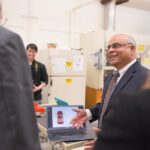
Soldiers on the battlefield and first-responders in conflict zones will soon be able to save lives by using a portable, briefcase-sized tool that rapidly manufactures medicines. Govind Rao, professor of chemical and biochemical engineering and director of the Center for Advanced Sensor Technology (CAST) at UMBC, leads the research team behind this innovation. At the recent Bioprocess International conference, he called the system “beyond revolutionary,” reports BioPharma.
“Welcome to the Betty Crocker world of bioprocessing,” said Rao. “Within a few hours you are expressing a high quality protein.”
The product emerged from concerns that current methods for getting pharmaceutical supplies to battlefields, often requiring airdrops, needed to be replaced with point-of-care technology. The project is a collaborative effort among multiple academic institutions and corporations, and was funded by a $7.9 million grant from the U.S. Defense Advanced Research Projects Agency. In the future, Rao hopes this technology can be applied to producing low-cost vaccines.
Read the full article, “‘Beyond revolutionary’: bioreactor-in-a-briefcase brings warzone production,” on BioPharma.
Image: Govind Rao. Photo courtesy Marlayna Demond ’11 for UMBC.
]]>
Soldiers on the battlefield and first-responders in conflict zones will soon be able to save lives by using a portable, briefcase-sized tool that rapidly manufactures medicines. Govind Rao,...
https://umbc.edu/stories/govind-rao-discusses-portable-bioreactors-developed-to-save-lives-on-battlefields/
https://my3.my.umbc.edu/api/v0/pixel/news/121495/guest@my.umbc.edu/f6ee0ca09a717ce5acc410c062dd8ff0/api/pixel
cast
cbee
coeit
science-and-technology
UMBC News & Magazine
https://my3.my.umbc.edu/groups/umbc-news-magazine
https://assets1-my.umbc.edu/system/shared/avatars/groups/000/001/943/24435aa6207c452e7bc15cc74b42c7bb/xsmall.png?1748556657
https://assets1-my.umbc.edu/system/shared/avatars/groups/000/001/943/24435aa6207c452e7bc15cc74b42c7bb/original.png?1748556657
https://assets2-my.umbc.edu/system/shared/avatars/groups/000/001/943/24435aa6207c452e7bc15cc74b42c7bb/xxlarge.png?1748556657
https://assets2-my.umbc.edu/system/shared/avatars/groups/000/001/943/24435aa6207c452e7bc15cc74b42c7bb/xlarge.png?1748556657
https://assets3-my.umbc.edu/system/shared/avatars/groups/000/001/943/24435aa6207c452e7bc15cc74b42c7bb/large.png?1748556657
https://assets1-my.umbc.edu/system/shared/avatars/groups/000/001/943/24435aa6207c452e7bc15cc74b42c7bb/medium.png?1748556657
https://assets2-my.umbc.edu/system/shared/avatars/groups/000/001/943/24435aa6207c452e7bc15cc74b42c7bb/small.png?1748556657
https://assets1-my.umbc.edu/system/shared/avatars/groups/000/001/943/24435aa6207c452e7bc15cc74b42c7bb/xsmall.png?1748556657
https://assets2-my.umbc.edu/system/shared/avatars/groups/000/001/943/24435aa6207c452e7bc15cc74b42c7bb/xxsmall.png?1748556657
UMBC News & Magazine
0
0
false
Fri, 30 Oct 2015 15:55:52 -0400
UMBC researchers collaborate to improve sustainability, with impacts in Maryland and across the nation
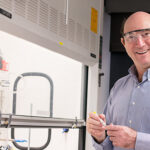
Local sustainability researchers and thought leaders took center stage on October 16, 2015, at a forum for urban sustainability in Baltimore, hosted by UMBC’s School of Public Policy. The forum was designed to examine how collaborations among government agencies, companies, and nonprofits can improve sustainability policies and programs. It also emphasized how a broad range of perspectives is needed to effectively assess and address environmental concerns.
This isn’t news to Claire Welty, professor of chemical, biochemical, and environmental engineering and director of UMBC’s Center for Urban Environmental Research and Education. Welty is the associate director of research for the Urban Water Innovation Network (UWIN), recently created through a $12 million commitment from the National Science Foundation (NSF).
Global climate change and extreme events can impact water security and be costly to economies. Through UWIN, UMBC and 13 other academic institutions and key partners, including Princeton University and the University of Pennsylvania, will address challenges that threaten urban water systems in the United States. Led by Colorado State University, UWIN will create solutions to help communities increase resilience in their water systems and boost preparedness for responding to water crises.
The research completed by UMBC and other UWIN partners will produce sustainability blueprints for cities of various sizes, detailing the likely effects and tradeoffs of potential solutions to urban water problems. This will serve as a guide for actions urban centers can take to improve their water security.
UMBC’s strong research and education programs focusing on stormwater management, water quality control, and urban biodiversity will serve as major assets for UWIN. In addition to Welty, Andrew Miller and Christopher Swan, both professors of geography and environmental systems, will play an active role in the collaboration.
NSF also recently announced a major $20 million award to expand the Center for Sustainable Nanotechnology (CSN), which uses fundamental chemistry to explore how modern nanomaterials interact with the environment and living organisms. Zeev Rosenzweig, professor and chair of chemistry and biochemistry at UMBC, is leading UMBC’s participation in the CSN, which includes 13 faculty from research institutions across the United States.
Nanotechnology involves the use of materials at the smallest scale, including the manipulation of individual atoms and molecules. There are hundreds of products that use nanoscale technologies in various ways, including beer bottles, car wax, electric and hybrid car batteries, and even Kindle devices, but there are still many concerning unknowns when it comes to how tiny particles interact with biological systems.
“This research center will greatly impact society by preparing next generation nanomaterials that retain high function, while being safer for human health and the environment,” said Rosenzweig.
Each of these projects demonstrates the need for collaboration across disciplines and institutions to develop optimal solutions for environmental problems. Faculty, staff, and students across UMBC are participating in this work in innumerable ways, from the Maryland Green Prisons Initiative, to reducing phosphorus loads in Maryland’s waterways, to constructing new buildings on campus that have been recognized for leadership in energy and environmental design.
In just one week, a UMBC research forum on climate change and the environment will bring together faculty from all three colleges for discussions that may inspire even greater collaboration.
At the recent urban sustainability forum in Baltimore, researcher Eric Zeemering shared, “I think it’s very important that we need to discuss strategies beyond ‘green.’” Zeemering told the crowd that when it comes to developing partnerships to tackle sustainability issues, “Baltimore can continue to be a model for the rest of the nation.”
Image: Zeev Rosenzweig, professor and chair of chemistry and biochemistry, is leading UMBC’s participation in the Center for Sustainable Nanotechnology. Photo by Marlayna Demond ’11.
]]>
Local sustainability researchers and thought leaders took center stage on October 16, 2015, at a forum for urban sustainability in Baltimore, hosted by UMBC’s School of Public Policy. The forum...
https://umbc.edu/stories/umbc-researchers-collaborate-to-improve-sustainability-with-impacts-in-maryland-and-across-the-nation/
https://my3.my.umbc.edu/api/v0/pixel/news/121509/guest@my.umbc.edu/1eb197159d341aa3dde6b88943dd9aec/api/pixel
cahss
cbee
chembiochem
cnms
coeit
cuere
ges
publicpolicy
science-and-technology
UMBC News & Magazine
https://my3.my.umbc.edu/groups/umbc-news-magazine
https://assets1-my.umbc.edu/system/shared/avatars/groups/000/001/943/24435aa6207c452e7bc15cc74b42c7bb/xsmall.png?1748556657
https://assets1-my.umbc.edu/system/shared/avatars/groups/000/001/943/24435aa6207c452e7bc15cc74b42c7bb/original.png?1748556657
https://assets2-my.umbc.edu/system/shared/avatars/groups/000/001/943/24435aa6207c452e7bc15cc74b42c7bb/xxlarge.png?1748556657
https://assets2-my.umbc.edu/system/shared/avatars/groups/000/001/943/24435aa6207c452e7bc15cc74b42c7bb/xlarge.png?1748556657
https://assets3-my.umbc.edu/system/shared/avatars/groups/000/001/943/24435aa6207c452e7bc15cc74b42c7bb/large.png?1748556657
https://assets1-my.umbc.edu/system/shared/avatars/groups/000/001/943/24435aa6207c452e7bc15cc74b42c7bb/medium.png?1748556657
https://assets2-my.umbc.edu/system/shared/avatars/groups/000/001/943/24435aa6207c452e7bc15cc74b42c7bb/small.png?1748556657
https://assets1-my.umbc.edu/system/shared/avatars/groups/000/001/943/24435aa6207c452e7bc15cc74b42c7bb/xsmall.png?1748556657
https://assets2-my.umbc.edu/system/shared/avatars/groups/000/001/943/24435aa6207c452e7bc15cc74b42c7bb/xxsmall.png?1748556657
UMBC News & Magazine
0
0
false
Fri, 23 Oct 2015 16:18:00 -0400
Dean Julia Ross receives “Outstanding Chemical Engineer” honor
 Purdue University has honored Dean Julia Ross of UMBC’s College of Engineering and IT as one of six Outstanding Chemical Engineers for 2015.
Dean Ross is an alumna of Purdue and received her PhD in chemical engineering from Rice University in 1995. She has served as dean of COEIT since August 2014, and is also UMBC’s Constellation Professor of Information Technology and Engineering.
Prior to her appointment as dean, Ross served as special assistant to the provost for inter-institutional research initiatives, 2012-14, and was instrumental in enhancing research collaborations between UMBC and the University of Maryland, Baltimore.
Among her current projects, Dean Ross has collaborated with colleagues Jon Singer and Chris Rakes from UMBC’s department of education, and Richard Weisenhoff from Baltimore County Public Schools, on developing curriculum and training resources to integrate engineering into high school biology and technology classrooms. Most recently, NSF supported UMBC-BCPS Inspires through a $3 million grant in 2014.
As dean, Ross has contributed to several important national initiatives, including signing on to a letter of commitment to improve the inclusiveness of engineering education at the first White House Demo Day, hosted by President Barack Obama in August 2015.
Joining Dean Ross are fellow award recipients Norm Kidder, CEO of Lomar Corporation; John Klier, a global R&D director at Dow; Seung Bin Park (PhD ’88) a vice president at the Korea Advanced Institute of Science and Technology; Charles E. Smith, president and CEO of Countrymark; and Vijay Swarup, vice president of R&D for ExxonMobil Research and Engineering Company.
]]>
Purdue University has honored Dean Julia Ross of UMBC’s College of Engineering and IT as one of six Outstanding Chemical Engineers for 2015. Dean Ross is an alumna of Purdue and received her PhD...
https://umbc.edu/stories/dean-julia-ross-receives-outstanding-chemical-engineer-honor/
https://my3.my.umbc.edu/api/v0/pixel/news/121543/guest@my.umbc.edu/d29b754a9dc257740d13560c5a082fd1/api/pixel
cbee
coeit
science-and-technology
UMBC News & Magazine
https://my3.my.umbc.edu/groups/umbc-news-magazine
https://assets1-my.umbc.edu/system/shared/avatars/groups/000/001/943/24435aa6207c452e7bc15cc74b42c7bb/xsmall.png?1748556657
https://assets1-my.umbc.edu/system/shared/avatars/groups/000/001/943/24435aa6207c452e7bc15cc74b42c7bb/original.png?1748556657
https://assets2-my.umbc.edu/system/shared/avatars/groups/000/001/943/24435aa6207c452e7bc15cc74b42c7bb/xxlarge.png?1748556657
https://assets2-my.umbc.edu/system/shared/avatars/groups/000/001/943/24435aa6207c452e7bc15cc74b42c7bb/xlarge.png?1748556657
https://assets3-my.umbc.edu/system/shared/avatars/groups/000/001/943/24435aa6207c452e7bc15cc74b42c7bb/large.png?1748556657
https://assets1-my.umbc.edu/system/shared/avatars/groups/000/001/943/24435aa6207c452e7bc15cc74b42c7bb/medium.png?1748556657
https://assets2-my.umbc.edu/system/shared/avatars/groups/000/001/943/24435aa6207c452e7bc15cc74b42c7bb/small.png?1748556657
https://assets1-my.umbc.edu/system/shared/avatars/groups/000/001/943/24435aa6207c452e7bc15cc74b42c7bb/xsmall.png?1748556657
https://assets2-my.umbc.edu/system/shared/avatars/groups/000/001/943/24435aa6207c452e7bc15cc74b42c7bb/xxsmall.png?1748556657
UMBC News & Magazine
0
0
false
Mon, 28 Sep 2015 15:05:10 -0400