Graduating CNMS Scholars carry on a commitment to support women in STEM
UMBC has made great strides in increasing its number of women faculty members in STEM through the ADVANCE program. Now, through the CNMS Scholars Program, these women are serving as mentors to the next generation of scientists and engineers committed to the advancement of women in STEM. The CNMS Scholars program is specifically designed to boost the representation of women in STEM fields that haven’t reached gender parity, from physics and bioinformatics to chemical engineering.
This spring, five women will graduate from UMBC as CNMS Scholars, including Olivia Norman ’20, physics, and Jada Damond ’20, chemical engineering. The financial support, mentorship, and sense of community the program offered created an environment that helped them thrive. Importantly, “CNMS Scholars are paired with our most experienced faculty, who go beyond mentoring to act as champions of these promising future leaders,” says Bill LaCourse, dean of the College of Natural and Mathematical Sciences (CNMS).
Norman’s CNMS Scholars mentor was Theodosia Gougousi, professor of physics and a member of UMBC’s Women in Science and Engineering (WISE) group, affiliated with the ADVANCE program. Damond worked with Jennie Leach, an associate professor of chemical, biochemical, and environmental engineering (CBEE), and a member of UMBC’s 4th ADVANCE cohort.
A nudge in the right direction
The coming weeks will hold excitement for new beginnings and also poignant goodbyes for Olivia Norman, as she prepares to leave UMBC and Maryland. After graduation, she will head to a Ph.D. program in atmospheric science at MIT—a goal realized through research opportunities during her time as a Retriever.
Norman chose to transfer to UMBC as a sophomore specifically to access UMBC’s unique research opportunities. She has been working with Zhibo Zhang, associate professor of physics, on a project involving “polluted dust”—dust particles mixed with pollutants in the atmosphere. They are working to understand how this dust affects cloud formation and climate.
 Olivia Norman ’20 (center, rear) participates in a lab group meeting with Zhibo Zhang (far right) and other lab members.
Zhang and Norman have found their work together rewarding. “He always pushes you to ask questions and seek out things that you’re interested in to inform your research, while also helping nudge you in the right direction if you are feeling a little lost,” Norman shares.
Zhang suggested that Norman join the lab when he noticed her performing exceptionally well in one of his courses. Since then she has made significant contributions to the group’s progress. Now she is participating in the NSF-funded Cyber Training program, which brings together researchers from data science, atmospheric physics, and high-performance computing—a program initially designed for graduate students and early-career faculty.
While it is bittersweet for Zhang to see Norman leave UMBC for her graduate studies, “I have no doubt that Olivia will soon rise as a young star in my field who will lead us to new and exciting scientific discoveries,” he says.
Growth and discovery
CNMS Scholar Jada Damond is also heading to an exceptional Ph.D. program—UMBC’s program in environmental engineering. This offers her a chance to continue research she is committed to moving forward.
Through the CNMS Scholars program, Damond realized the value of mentorship and a community of support. “I gained a really powerful network, and I learned a lot more about the opportunities the campus has to offer,” she shares. In particular, she’s grateful to her program mentor, Jennie Leach, who has offered her both professional and personal support.
“Dr. Leach facilitated my transition to UMBC’s Ph.D. program by offering advice about the program and sharing her own experiences with getting a Ph.D.,” Damond says.
 Jennie Leach works with a student in her lab.
“It’s been really fun to know Jada first as a sophomore, new to engineering, and now, as a senior entering graduate school,” Leach says. “I am so excited to witness all the great things she will accomplish in her career ahead.”
Damond looks forward to continuing research with Upal Ghosh, professor of CBEE, and collaborators at the Smithsonian Environmental Research Center on methods for better measuring mercury levels in water. She’s passionate about the work, she explains, because measuring mercury is a difficult problem and also an important one to solve to protect human health.
She’s also grateful for Ghosh’s ongoing support. At the numerous national and regional conferences Damond has attended with the lab, “Dr. Ghosh always makes sure to introduce his students to other professionals in the field relevant to the specific work that they do, so I have been able to broaden my network,” she says.
 Jada Damond ’20, chemical engineering, introduces herself at the CNMS Scholars opening reception in 2017.
On the academic side, Ghosh “is always making sure his students are on track in their studies,” she says. “He was eager to spend time reviewing concepts that were new to me, and would give me resources to point me in the right direction.”
Damond’s goal is to pursue environmental consulting work. She enjoyed tutoring chemical engineering courses and mentoring younger CNMS Scholars so much that she also hopes to find a way to teach throughout her career.
“Tutoring helped to improve my communication skills, as I had to explain concepts in a way that the students would understand, while making sure that they could replicate those explanations,” she says. “It was very rewarding when they left a tutoring session feeling more confident about the subject than they did going in.”
 Upal Ghosh (right) and Kevin Sowers, professor of marine biotechnology, at the Institute of Marine and Environmental Technology.
Building a network
In addition to supporting young women on their way toward success in STEM fields, the CNMS Scholars program is also all about building a community among the scholars. Caitlin Kowalewski, assistant director of undergraduate initiatives in CNMS, coordinates regular activities for the group. This helps the scholars build relationships with each other and with others members of the UMBC community, such as potential research mentors, leading administrators, and alumni in STEM careers.
“I think the main thing I’ve gained from being a CNMS Scholar was this ability to build a network with people in different levels of their education and professional careers, both in and outside of my department,” Norman shares. “That has been a major plus of being in the program.”
Regular lunches and informal activities like craft projects with just the scholars “allowed us to connect with each other over shared experiences,” Damond says. “Caitlin was really good about getting us together,” adds Norman. “It gave us that opportunity to reach out to other people in a low-key setting.”
Representation in STEM
Both Norman and Damond feel strongly that the program has shaped their futures. Damond wasn’t sure about pursuing a Ph.D. until Leach helped her see the career options the degree could offer her, even if academia is not her goal. For Norman, the program has made her want to do more than make advances in atmospheric science.
 Caitlin Kowalewski, center, at the launch event for the CNMS Scholars program in 2017.
“Being a CNMS Scholar has made me interested in not just doing research, but making sure that where I do research and how I do research is reflective of the scholars program itself,” Norman shares. “I want where I am to have an ongoing conversation about progress being made toward fair representation in STEM.”
Kowalewski is confident Norman and the other scholars will make a difference wherever they go. “I could not be more proud of all that these bright, engaging young women have accomplished during their time at UMBC,” she says. “I have no doubt they will help to pave a stronger path for the advancement of women in STEM in their future careers.”
Additional graduating CNMS Scholars include Ashley Mitchell ’20, biochemistry and molecular biology; Alida Hartwell ’20, bioinformatics and computational biology; and Laina Colony ’20, chemical engineering. To support UMBC’s CNMS Scholars program visit giving.umbc.edu.
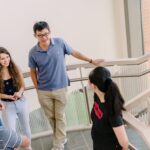
Banner image: Olivia Norman ’20 (left of center) relaxes with Zhibo Zhang (center) and other members of the lab group. All photos by Marlayna Demond ’11 for UMBC.
]]>
UMBC has made great strides in increasing its number of women faculty members in STEM through the ADVANCE program. Now, through the CNMS Scholars Program, these women are serving as mentors to the...
https://umbc.edu/stories/graduating-cnms-scholars-carry-on-a-commitment-to-support-women-in-stem/
https://my3.my.umbc.edu/api/v0/pixel/news/119888/guest@my.umbc.edu/7dc89c471b2b6a1d2526a8119bff3e8a/api/pixel
cbee
classof2020
cnms
coeit
physics
science-and-technology
undergradresearch
UMBC News & Magazine
https://my3.my.umbc.edu/groups/umbc-news-magazine
https://assets1-my.umbc.edu/system/shared/avatars/groups/000/001/943/24435aa6207c452e7bc15cc74b42c7bb/xsmall.png?1748556657
https://assets1-my.umbc.edu/system/shared/avatars/groups/000/001/943/24435aa6207c452e7bc15cc74b42c7bb/original.png?1748556657
https://assets2-my.umbc.edu/system/shared/avatars/groups/000/001/943/24435aa6207c452e7bc15cc74b42c7bb/xxlarge.png?1748556657
https://assets2-my.umbc.edu/system/shared/avatars/groups/000/001/943/24435aa6207c452e7bc15cc74b42c7bb/xlarge.png?1748556657
https://assets3-my.umbc.edu/system/shared/avatars/groups/000/001/943/24435aa6207c452e7bc15cc74b42c7bb/large.png?1748556657
https://assets1-my.umbc.edu/system/shared/avatars/groups/000/001/943/24435aa6207c452e7bc15cc74b42c7bb/medium.png?1748556657
https://assets2-my.umbc.edu/system/shared/avatars/groups/000/001/943/24435aa6207c452e7bc15cc74b42c7bb/small.png?1748556657
https://assets1-my.umbc.edu/system/shared/avatars/groups/000/001/943/24435aa6207c452e7bc15cc74b42c7bb/xsmall.png?1748556657
https://assets2-my.umbc.edu/system/shared/avatars/groups/000/001/943/24435aa6207c452e7bc15cc74b42c7bb/xxsmall.png?1748556657
UMBC News & Magazine
0
0
false
Mon, 18 May 2020 15:30:23 -0400
Graduating UMBC student advocates keep building community in an unprecedented time
For Nadia BenAissa ’20, gender, women’s, and sexuality studies (GWST), and Sam Hertl ’20, social work, UMBC has been a place to grow as leaders and advocates. Their college experiences have been defined by their work to educate, speak out, and create resources for survivors of sexual assault and LGBTQIA+ students at UMBC.
As the university community has responded to COVID-19 and transitioned to a virtual environment, BenAissa and Hertl have held steadfast in their commitments. They have continued working to create supportive spaces online and make sure that survivor and LGBTQIA+ voices are heard. At the same time, as seniors graduating during a pandemic, they have been managing their own sense of loss.
Centering the experience of survivors
BenAissa became involved with the Women’s Center as a sophomore after supporting her best friend through the Title IX process. “We needed to do something with our grief, and our sadness at the outcome of the process, but at the time there was no discussion group around the shared experience of trauma when we needed it most,” she explains.
BenAissa began researching Title IX, the federal law that proxihibits sex discrimination, sexual assault, and sexual harassment in education settings, for a class. “Nadia’s incredible focus and sharp intellect showed in her fine work in that course,” says her professor, GWST Chair Carole McCann.

Nadia BenAissa (c) and Haley Owens ’21 (l) speak with Pres. Hrabowski about We Believe You.
Photo by Marlayna Demond ’11 for UMBC.
Then, in 2017, she and her friend founded We Believe You, an activist/advocacy and discussion group centered around survivors, with help from Women’s Center Director Jess Myers and Assistant Director Amelia Meman. BenAissa’s detailed research “prepared her to lead the We Believe You group through its subsequent challenges and successes,” says McCann.
While We Believe You was getting ready to celebrate its one-year anniversary in 2018, UMBC launched Retriever Courage. UMBC created this campus-wide initiative in response to a call from students, faculty, and staff for the university to better prevent and respond to sexual assault and violence.
Seeing results
As president of We Believe You, BenAissa met with President Freeman Hrabowski and other campus leaders to discuss major challenges and possible steps forward. She then stepped into additional leadership roles as a member of the Retriever Courage implementation team and co-chair of the Student Advisory Committee.
 Retriever Courage mission statement. Photo by Marlayna Demond ’11 for UMBC.
At the same time, BenAissa accepted an invitation from Baltimore County Executive John Olszewski, Ph.D. ’17, public policy, to join the County’s newly created sexual assault investigations task force.
BenAissa’s collaborative work with students, faculty, and staff led to UMBC launching mandatory Title IX training and an Office of Equity and Inclusion, and hiring more counseling staff. As part of We Believe You, BenAissa also worked with the implementation team to develop two resource stands in The Commons. They will eventually be replicated at other locations across campus.
 Retriever Courage resource station in The Commons. Photo by Marlayna Demond ’11 for UMBC.
“Through her leadership of Retriever Courage, Nadia has already changed the campus for the better in how we confront sexual violence,” says Kate Drabinski, GWST senior lecturer and director of the Women Involved in Learning and Leadership program.
“Nadia is a fierce advocate who consistently speaks truth to power on behalf of survivors,” Myers adds. I believe she’s helped all of us be braver in this work.”
Building space for LGBTQIA+ students
Hertl became increasingly involved in advocacy for LGBTQIA+ students, particularly trans students, as a member of UMBC’s University Health Services (UHS) Student Health Advisory Council. They used their voice to help find ways for UHS and the Counseling Center to be more affirming of trans students. Some of their solutions were simple to implement, but powerful, such as placing pronoun buttons in the waiting rooms for students to wear.
In their junior year, they attended a Women’s Center program and quickly became involved in the Center’s work. Eventually, they became a Women’s Center intern for their social work field placement.

Sam Hertl (l) at a Women’s Center event in the breezeway.
Photo courtesy of the Women’s Center.
In that role they served as a facilitator for Between Women. This discussion-based program centers the experience of women students who identify as LGBTQIA+. They also supported We Believe You, promoted Women’s Center events and resources, and began writing about LGBTQIA+ and accessibility issues.
 Hertl (r) tables for the Women’s Center in the breezeway. Photo courtesy of the Women’s Center.
This was all on top of the work supporting students as a residential assistant and social work courses, preparing for a public service career.
“In everything that they do, Sam strives to build an affirming, compassionate space for the LGBTQIA+ community,” says Meman. “Whether that’s in Residential Life, the classroom, or the Women’s Center, they are a truly rare person who is able to both bring people together and challenge them to be better human beings.”
Online community-building
The transition to online learning has been especially disruptive for the survivor and LGBTQIA+ communities, BenAissa and Hertl share. Both groups rely on communities of support, and have had to find new ways to connect online. BenAissa and Hertl have been determined to offer them continuity and community when they need it most.
Women’s Center groups like We Believe You’s discussion group continue to meet online. “I was especially impressed to see Sam easily replicate their skills of support once we moved online,” says Myers. “In virtual discussions they’ve modeled that care and compassion can be translated across distance and via our computer screens.”

Hertl, second from right, with other members of The Women’s Center, including Myers (l) and Meman (r).
Photo courtesy of the Women’s Center.
Still, online group meetings don’t meet the needs of all students. Hertl explains, “It’s challenging because survivors and LGBTQIA+ students may be in an unsafe environment—home with perpetrators or with family members who aren’t aware of how they identify or who don’t approve of their choices.”
BenAissa and Hertl have also focused on using social media, which can be more anonymous, to connect students with resources. During Sexual Assault Awareness month, the Women’s Center created an online zine where survivors could tell their stories. They then hosted an Instagram Live event for contributors to read their submissions, or just tune in to hear others speak.
“It’s all new territory,” says BenAissa. “We look at what we as individuals can do, continue providing resources on social media, and keep speaking out about issues like consent and boundaries. We can hold space for one another and be kind.”
Coping with loss, strengthening connections
During the distance learning period, BenAissa and Hertl also missed seeing their own support communities in person. They grieved the loss of spring community activities and the graduation experiences they were expecting.
“I miss being on campus, leading the Take Back the Night march, and keeping people invested in what we’ve been building. There’s a lack of closure,” explains BenAissa.

Nadia BenAissa walks with Take Back the Night. This sexual assault awareness event works to expose rape culture and to enable survivors and allies to share personal stories.
Photo by Ian Feldmann ’21.
Still, she is doing her best. Over the last two months, BenAissa adapted her URCAD research on inequities in university Title IX processes into an online presentation. As captain of the Women’s Ultimate Frisbee team, she dealt with the disappointment of a canceled season. Still, she keeps in touch with teammates online, and she looks forward to joining the club’s active alumni community.
 BenAissa at an ultimate frisbee tournament in February. Photo by Alexander Wright.
Hertl feels melancholy at times, and thinks about missing out on this year’s Quadmania and Take Back the Night. Continuing to support other students as a residential assistant and through work with the Women’s Center keeps them centered and engaged.
“There are so many unknowns right now,” says Hertl. “I just want to make sure people know what’s happening and where they can go for help.”
Continuing their commitment
Following graduation, Hertl will enter the University of Maryland, Baltimore’s accelerated master’s in social work program. There, they will focus on social policy and community action, particularly in working with trans and nonbinary people, as well as people with disabilities and people who are experiencing homelessness.
Hertl has also accepted a 2020 – 21 graduate assistantship at UMBC. This means the university will continue to benefit from their commitment to inclusivity.
 Before leaving campus due to COVID-19, Hertl and fellow RA Julia Corns ’21, biological sciences, made “PAL”entine grams for residents. Photo courtesy of Hertl.
BenAissa plans to continue advocating for survivors in higher education. “I want to work to ensure survivors are centered in the policies that affect them and make sure they get the resources they need,” she says. “I’m not finished with this work, and I’m not finished being part of We Believe You, Retriever Courage, or UMBC.”
“The work we’ve done through Retriever Courage is a step in the right direction,” BenAissa continues. “We’re headed toward the standard we need to have here, and we will exceed that standard because we are UMBC. And UMBC has been great at giving me ways to be my best.”
Article written by Eleanor Lewis, communication specialist in the Division of Student Affairs.
Featured image: BenAissa speaks at Take Back the Night. Photo by Ian Feldmann.
]]>
For Nadia BenAissa ’20, gender, women’s, and sexuality studies (GWST), and Sam Hertl ’20, social work, UMBC has been a place to grow as leaders and advocates. Their college experiences have been...
https://umbc.edu/stories/graduating-umbc-student-advocates-keep-building-community-in-an-unprecedented-time/
https://my3.my.umbc.edu/api/v0/pixel/news/119889/guest@my.umbc.edu/7ad1e8aad4f33f3a82a8c5f0514433ae/api/pixel
cahss
classof2020
community
gwst
page1
retrievercourage
socialwork
womenscenter
UMBC News & Magazine
https://my3.my.umbc.edu/groups/umbc-news-magazine
https://assets1-my.umbc.edu/system/shared/avatars/groups/000/001/943/24435aa6207c452e7bc15cc74b42c7bb/xsmall.png?1748556657
https://assets1-my.umbc.edu/system/shared/avatars/groups/000/001/943/24435aa6207c452e7bc15cc74b42c7bb/original.png?1748556657
https://assets2-my.umbc.edu/system/shared/avatars/groups/000/001/943/24435aa6207c452e7bc15cc74b42c7bb/xxlarge.png?1748556657
https://assets2-my.umbc.edu/system/shared/avatars/groups/000/001/943/24435aa6207c452e7bc15cc74b42c7bb/xlarge.png?1748556657
https://assets3-my.umbc.edu/system/shared/avatars/groups/000/001/943/24435aa6207c452e7bc15cc74b42c7bb/large.png?1748556657
https://assets1-my.umbc.edu/system/shared/avatars/groups/000/001/943/24435aa6207c452e7bc15cc74b42c7bb/medium.png?1748556657
https://assets2-my.umbc.edu/system/shared/avatars/groups/000/001/943/24435aa6207c452e7bc15cc74b42c7bb/small.png?1748556657
https://assets1-my.umbc.edu/system/shared/avatars/groups/000/001/943/24435aa6207c452e7bc15cc74b42c7bb/xsmall.png?1748556657
https://assets2-my.umbc.edu/system/shared/avatars/groups/000/001/943/24435aa6207c452e7bc15cc74b42c7bb/xxsmall.png?1748556657
UMBC News & Magazine
0
0
false
Fri, 15 May 2020 20:57:54 -0400
UMBC’s Naghmeh Karimi receives NSF CAREER Award to develop long-lasting security for cryptographic chips
Naghmeh Karimi is the most recent UMBC faculty member to receive a prestigious CAREER Award from the National Science Foundation (NSF). The grant, totaling approximately $500,000 over five years, will support her work to investigate how device-aging related risks compromise the security of cryptographic devices.
Karimi explains that cryptographic chips offer continued advances in authenticating messages and devices as well as preserving the integrity and confidentiality of sensitive information. They do so by implementing cryptographic algorithms in hardware. These chips combine the benefits of cryptographic applications with the speed and power advantage of hardware implementations.
Despite their significant benefits, cryptographic chips can be compromised by adversaries who have gained physical access to the chips. Current protections against such attacks do not consider the aging of devices, which can shift device parameters over time.
Addressing security vulnerabilities
Aging makes cryptographic chips operate slower and, ultimately, results in their malfunction, says Karimi. She explains that the typical lifetime of integrated circuits is 7 to 8 years. As the devices age, their performance decreases. Karimi is exploring the specific security vulnerabilities of aged devices and how they can be protected.
“We want to preserve the security of devices over their lifetime,” Karimi says.
Karimi and her research team will study whether the success of the side-channel analysis and fault-injection attacks increase in older devices. Karimi will create and test several countermeasures to protect devices against such attacks.
Connecting students with opportunities in tech security
The CAREER Award funding will support several UMBC undergraduate and graduate student researchers working with Karimi to develop long-lasting security solutions for hardware platforms.
At the same time, Karimi will also develop and launch a new course in UMBC’s computer science and electrical engineering department on cryptography, hardware security, and testing. She will also work with the UMBC Cyber Scholars Program to connect students with internship opportunities focused on hardware security, to give them additional hands-on experience in the field.
“The success of this project will enable us to develop long-lasting security for trusted hardware platforms,” Karimi says. “This will result in aging-resistant security solutions that benefit society through devices that remain secure over their lifetime.”
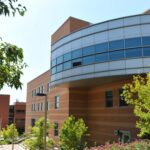
Banner image: UMBC’s ITE building. Photo by Marlayna Demond ’11 for UMBC.
]]>
Naghmeh Karimi is the most recent UMBC faculty member to receive a prestigious CAREER Award from the National Science Foundation (NSF). The grant, totaling approximately $500,000 over five years,...
https://umbc.edu/stories/umbcs-naghmeh-karimi-receives-nsf-career-award-to-develop-long-lasting-security-for-cryptographic-chips/
https://my3.my.umbc.edu/api/v0/pixel/news/119890/guest@my.umbc.edu/4cf239ba32673a88d85d286708ec2049/api/pixel
coeit
csee
majoraward
research
science-and-technology
UMBC News & Magazine
https://my3.my.umbc.edu/groups/umbc-news-magazine
https://assets1-my.umbc.edu/system/shared/avatars/groups/000/001/943/24435aa6207c452e7bc15cc74b42c7bb/xsmall.png?1748556657
https://assets1-my.umbc.edu/system/shared/avatars/groups/000/001/943/24435aa6207c452e7bc15cc74b42c7bb/original.png?1748556657
https://assets2-my.umbc.edu/system/shared/avatars/groups/000/001/943/24435aa6207c452e7bc15cc74b42c7bb/xxlarge.png?1748556657
https://assets2-my.umbc.edu/system/shared/avatars/groups/000/001/943/24435aa6207c452e7bc15cc74b42c7bb/xlarge.png?1748556657
https://assets3-my.umbc.edu/system/shared/avatars/groups/000/001/943/24435aa6207c452e7bc15cc74b42c7bb/large.png?1748556657
https://assets1-my.umbc.edu/system/shared/avatars/groups/000/001/943/24435aa6207c452e7bc15cc74b42c7bb/medium.png?1748556657
https://assets2-my.umbc.edu/system/shared/avatars/groups/000/001/943/24435aa6207c452e7bc15cc74b42c7bb/small.png?1748556657
https://assets1-my.umbc.edu/system/shared/avatars/groups/000/001/943/24435aa6207c452e7bc15cc74b42c7bb/xsmall.png?1748556657
https://assets2-my.umbc.edu/system/shared/avatars/groups/000/001/943/24435aa6207c452e7bc15cc74b42c7bb/xxsmall.png?1748556657
UMBC News & Magazine
0
0
false
Fri, 15 May 2020 17:21:47 -0400
This spring, UMBC’s Returning Women Student Scholars achieve dreams long deferred

Graduating during a pandemic means students won’t be able to celebrate in the ways they expected, with family and friends cheering in a packed UMBC Event Center. But earning their degrees will still be a joyful achievement that honors years of hard work and opens doors. For UMBC’s adult learners in particular, including Returning Women Student (RWS) Scholars, holding that diploma will mean the achievement of dreams long deferred.
“Once I made the first step, everything opened up”
This month Karla Gonzalez ‘20, social work, will become the first in her family to graduate from college, at age 34. For much of her life, college didn’t really seem like a possibility. She was proud to be one of the first in her family to finish high school, and to have a job that could support her three children. But as the years passed, Gonzalez realized something was missing—she had yet to reach her full potential.
Pursuing college involved significant change in Gonzalez’s life. She ended her marriage, left full-time work, and began to prioritize her dreams for the first time. She chose a career path that would build on the skills and talents she already had, and open up new possibilities. “Returning to college was the next stepping point that would allow me to stand on my own two feet,” she explains. “Once I made the first step, everything opened up.”
 Jumina Ito (left) and Karla Gonzalez (center) at an RWS orientation event. Photo courtesy of the Women’s Center
Gonzalez was very conscious that as an adult learner her experience didn’t follow a traditional timeline. It was her son who reminded Karla that she would be the first in their entire extended family to graduate college. Then, other family members joined in on the refrain, “You’re the first. You’re the first!”
“I never saw myself as a leader, but at UMBC I learned that I was one”
Gonzalez now sees her achievement not just as a brave step for herself, but as clearing the path for her family members to move forward with their own college dreams. “Even though I’m in my 30s, it is special and it should be celebrated,” Gonzalez shares. ”I am that example that will tell them they can go for whatever goals they have.”
 Karla Gonzalez celebrates her graduation with her children. Photo courtesy of Gonzalez.
She also celebrates the friendships she has built along the way, and how her peers and professors transformed the way she saw herself. “It isn’t just about getting a degree, but it’s also about those connections,” says Gonzalez. “I never saw myself as a leader, but at UMBC I learned that I was one.”
Gonzalez is this year’s Title IV-E Student of the Year, an honor recognizing a talented social work student who is dedicated to a career in public child welfare practice. She’ll next pursue a master’s in social work (MSW) through the advanced standing program at the University of Maryland, Baltimore.
 Karla Gonzalez in front of a University of Maryland School of Social Work building. Photo courtesy of Gonzalez.
“It’s been almost a 30-year journey”
Like her classmate, Nia Latimer ‘20, social work, entered UMBC at the age of 42 as a single parent, no longer willing to defer her dreams. After graduating from high school, Latimer went right to college, but withdrew due to financial constraints. Over the years, she would re-enroll in college, but be forced to pause to focus on other life events. She shares, “It’s been almost a 30-year journey.”
Latimer has had a fulfilling job with Baltimore City Public Schools, but the dream of a college degree always remained in the back of her mind. After the death of her husband, she realized that now was the time to finish her degree, while continuing to work full-time. She began listening to the way others described her strengths and skills and decided to pursue a degree and career in social work.
When Latimer arrived at UMBC, she shared, she finally felt like she “was home.” She felt welcomed into a community with students of all ages and was impressed by how inclusive UMBC’s social work program was for adult learners.
 Returning Women Student Scholars orientation, fall 2019, including Latimer (second row from the front, center) and Pres. Hrabowski (left, near front). Photo courtesy of the Women’s Center.
“It’s never too late to do this”
Latimer joined UMBC’s Returning Women Student Scholars + Affiliates program in her senior year. She found that other adult learners provided her with an additional layer of support that proved crucial to her success. The experience “validated that this is my time,” she says. “It’s never too late to do this.”
 Nia Latimer (left) and Karla Gonzalez (center) at an RWS orientation event. Photo courtesy of the Women’s Center.
Graduating this May finally “feels like closure,” Latimer shares. She will become the first of her siblings to graduate with a college degree. And she has earned an award as Outstanding BSW Student Graduate, recognizing her academic achievements.
Latimer also knows this is just the beginning of a new chapter. She’ll soon begin an MSW through the advanced standing program at the University of Maryland, Baltimore.
Feeling “behind,” racing to catch up, and pausing to breathe
For Jumina Ito ‘20, biochemistry, “It was never a question as to whether I would return to school, only a question of when.”
 Jumina Ito in front of the UMBC Library. Photo by Marlayna Demond ’11 for UMBC.
Between the time of graduating high school and enrolling at UMBC in the fall of 2016 at the age of 26, Ito traveled across the U.S. and internationally, working on farms. Taking this time to explore her interests helped her develop a better understanding of herself, she says, but it also left her feeling “behind” when she got to college.
Once at UMBC, she felt an urgency to blaze through, taking as many credits as possible while also working to support her family. Eventually, Ito realized this approach was not sustainable. If she was going to finish, she’d need to slow down and to find a community of support.
“The slow and steady climb is worth it”
Ito found her community in the Returning Women Student Scholars + Affiliates program, which also connected her with the Sherman STEM Teacher Scholars Program. These two programs provided her space to explore new possibilities for herself, including as an educator.
 Jumina Ito (r) at an RWS orientation event. Photo courtesy of the Women’s Center.
Now, she’s excited to pursue a STEM teaching career that will help her serve as a model and mentor for girls interested in science. This fall, Ito will begin teaching chemistry and aquaponics full-time at Green Street Academy, where she completed her applied learning experience as a Sheman Scholar.
Ito will be the first of her four siblings to graduate. She hopes her graduation will be a helpful example for others, reflecting that we “inherently put limitations on ourselves, but you can rise above them.” Looking back at her life’s twists and turns over the past decade, she shares, “The slow and steady climb is worth it.”
“I could do this on my own”
When Lauren Hall graduated with her bachelor’s degree from UMBC at the age of 29, she kept right on going to pursue a master of arts in teaching (M.A.T.). But her college path wasn’t always so clear. “If you asked me ten years ago, I never would have thought I’d have a master’s degree,” she says.
Hall ‘18, English literature, M.A.T. ‘20, became a mother at age 18, and devoted her years after high school to raising her two young children and supporting her then-husband’s pursuit of higher education. After her marriage ended, she decided to return to college. Even while feeling afraid to leave the comfort of the life she knew, she also determined, “I could do this on my own.”
 Lauren Hall (l) and Jess Myers (r) at the RSW Graduation Celebration, fall 2018. Photo courtesy of the Women’s Center.
Another new beginning
What began as small steps in returning to college quickly became a sprint. She took classes at the Community College of Baltimore County before transferring to UMBC. Once on campus, she focused on building a community where she could thrive even while juggling work and single parenthood.

Lauren Hall celebrates receiving her UMBC bachelor’s degree.
Photo courtesy of Hall.
Hall enjoyed the chance to connect with students of all ages through shared values, interests, and a mutual commitment to each other. She shares that some of her younger classmates not only became friends, but also an integral part of her support system, helping with childcare and carpool duty.
Hall has been a rock for her family for years, but jokes that her master’s degree means, “Now, I’m a full grown-up!” It’s another step forward—another new beginning. She looks forward to working as an English teacher, in either Baltimore City or Howard County Public Schools, and is committed to helping students believe in their potential.
For information about the Women’s Center and the RWS Scholars + Affiliates program that supports adult learners seeking their first undergraduate degree, visit womenscenter.umbc.edu.
In addition to the students featured above, the Women’s Center’s RWS Scholars + Affiliates Program celebrates May 2020 graduates Shanice Bramwell, health administration and policy (HAPP); Josephine Gyasi-Baaye, social work; Samantha Homa, geography and environmental studies; Victoria Hughes, social work; Tatiana Pearson, information systems; Joanna Riley, social work; Aieda Solomon, HAPP and sociology; and Sheila Yeelon, social work. UMBC also honors the numerous other adult learners earning degrees this spring, from across the university.
Article written by Jess Myers, director of the Women’s Center at UMBC.
Featured image: RWS Scholars (including Jumina Ito and Lauren Hall) meet with President Freeman Hrabowski during fall 2018 orientation. Photo courtesy of the Women’s Center.
]]>
Graduating during a pandemic means students won’t be able to celebrate in the ways they expected, with family and friends cheering in a packed UMBC Event Center. But earning their degrees will...
https://umbc.edu/stories/this-spring-umbcs-returning-women-student-scholars-achieve-dreams-long-deferred/
https://my3.my.umbc.edu/api/v0/pixel/news/119891/guest@my.umbc.edu/8dc4af0421c599bd3951f196e9269bc0/api/pixel
cahss
chembiochem
classof2020
cnms
community
education
graduateschool
policy-and-society
science-and-technology
socialwork
womenscenter
UMBC News & Magazine
https://my3.my.umbc.edu/groups/umbc-news-magazine
https://assets1-my.umbc.edu/system/shared/avatars/groups/000/001/943/24435aa6207c452e7bc15cc74b42c7bb/xsmall.png?1748556657
https://assets1-my.umbc.edu/system/shared/avatars/groups/000/001/943/24435aa6207c452e7bc15cc74b42c7bb/original.png?1748556657
https://assets2-my.umbc.edu/system/shared/avatars/groups/000/001/943/24435aa6207c452e7bc15cc74b42c7bb/xxlarge.png?1748556657
https://assets2-my.umbc.edu/system/shared/avatars/groups/000/001/943/24435aa6207c452e7bc15cc74b42c7bb/xlarge.png?1748556657
https://assets3-my.umbc.edu/system/shared/avatars/groups/000/001/943/24435aa6207c452e7bc15cc74b42c7bb/large.png?1748556657
https://assets1-my.umbc.edu/system/shared/avatars/groups/000/001/943/24435aa6207c452e7bc15cc74b42c7bb/medium.png?1748556657
https://assets2-my.umbc.edu/system/shared/avatars/groups/000/001/943/24435aa6207c452e7bc15cc74b42c7bb/small.png?1748556657
https://assets1-my.umbc.edu/system/shared/avatars/groups/000/001/943/24435aa6207c452e7bc15cc74b42c7bb/xsmall.png?1748556657
https://assets2-my.umbc.edu/system/shared/avatars/groups/000/001/943/24435aa6207c452e7bc15cc74b42c7bb/xxsmall.png?1748556657
UMBC News & Magazine
0
0
false
Thu, 14 May 2020 02:22:59 -0400
How To Spot Maryland’s State Bird
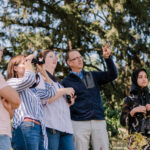
With Kevin Omland, professor of biological sciences
UMBC is teeming with wildlife—the infamous frenzied squirrels, the occasional wandering deer, a curious woodchuck or two, and lots and lots of birds. Melodic chirping can be heard from the wee hours of the morning all the way until the last night classes let out. And not just any birds; the areas surrounding UMBC and campus alike are home to a special species, one that is widely revered around the entire state—the Baltimore Oriole.
Having researched orioles and ravens for decades, it’s not surprising that Kevin Omland, a biological sciences professor, calls himself the mascot biologist for the state of Maryland. Since joining UMBC in 2000, Omland’s work has almost exclusively centered on orioles. Along with members of his lab, the Presidential Research Professor studies a range of topics in avian evolution, behavior, and conservation. We asked the life-long ornithophilehow to spot the Baltimore Oriole, our state bird, in its natural habitat.

Tools of the Trade
- A good pair of binoculars
- A smartphone or tablet to access the website “All About Birds”
- A device to play an imitation of the Oriole’s song
- Patience—and lots of it!
Step One – Pick a Park
Baltimore Orioles can be found all around suburban parks in Baltimore County and City. Omland estimates that there are at least 100 oriole territories between the Inner Harbor and the Pennsylvania/Maryland border.
“The Baltimore Oriole loves hanging out in local suburban parks,” he notes. “I’ve even seen them in the trees near the entrance to the Maryland Zoo in Druid Park. You have a good chance of seeing them in Patapsco State Park, too.”
To find a Baltimore Oriole on UMBC’s campus Omland suggests scoping out Pig Pen Pond and the Conservation Environmental Research Area (CERA) located south of bwtech, UMBC’s business park. Omland notes that it may be harder to spot Baltimore Orioles on campus due to an increase of construction here in the past twenty years, but it is still possible to find the occasional oriole flying near the green spaces on campus.
Step Two: Look (and Listen!) High in the Sky
After you’ve picked your park, it’s important to know how to find the elusive bird. According to Omland, the state bird may be harder to spot than you think. He recommends looking and listening up toward the treeline.
“You’ll never see a Baltimore Oriole on the ground to save your life,” he joked, noting that he is also known to be the worst exaggerator in the world. “But in all seriousness, it is very rare to see [them] on the ground. Some particularly adventurous orioles may forage for food on the ground, but it’s rare.”

Omland says that your best bet is to grab a pair of binoculars and look in the tops of tall trees near rivers, ponds, and even golf courses.
As for the signature colors, Omland says that there’s no other bird around that boasts the bright orange coloring complemented by the jet black feathers—it’s unmistakable. He notes that adult males will have vibrant, discernible colors, while females and adolescents will be a bit more muted, but still identifiable.
“You’re sure to recognize the colors. It’s the same ones on the baseball caps for the O’s team,” Omland says. “Historically speaking, it’s called Lord Baltimore’s Orange, and there’s no other bird that carries that indisputable color. If you know that color, you’re on the right track!”
Step Three: Work on Your Whistle
No less important than the distinct colorings of the Baltimore Oriole is the sound that it makes—a low, loud, clear whistle that can often be heard from far distances.
“It is difficult for humans to imitate the sounds of many other birds,” says Omland, “but for the Baltimore Oriole, it can be fairly easy to imitate if you practice. If you get really good at their whistle, there’s a chance that they will answer back!”
Step Four: Take Your Skills Farther Afield
The Baltimore Oriole is just one of more than 30 different species of orioles found all over the world, and Omland doesn’t limit himself to studying just one kind.
Omland’s research also includes the Bahama Oriole, a critically endangered species native only to Andros Island. Thanks to an International Research Experience for Students grant funded by the National Science Foundation, Omland has been taking students to the remote island in the Bahamas since 2016 to study how climate change is impacting weather patterns and creating natural disasters that have nearly decimated the species.
“It gives students the chance to be on the front lines of climate change,” Omland says. “This is where climate change is killing people, destroying homes, and eliminating ecosystems…the students care about what happens to these islands and want to make a difference.”
Omland extends the invitation to his students and beyond to participate in what he calls “adventure biology”—getting outdoors and sharing intimate opportunities with the surrounding wildlife, especially in readily accessible areas. “The Baltimore Orioles are one of the many spectacular birds that are here in our forests,” he said. “If people stop, look up, and start paying attention, Maryland has a lot of wonderful diversity to offer us.”
*****
Photos of Omland and his class by Marlayna Demond ’11. Oriole image courtesy of Kevin Omland.
]]>
With Kevin Omland, professor of biological sciences UMBC is teeming with wildlife—the infamous frenzied squirrels, the occasional wandering deer, a curious woodchuck or two, and lots and lots...
https://umbc.edu/stories/how-to-spot-marylands-state-bird/
https://my3.my.umbc.edu/api/v0/pixel/news/119892/guest@my.umbc.edu/b55c7a7d32bdb62ca5cab51b0b7f456d/api/pixel
cnms
discovery
how-to
professorsnottomiss
spring-2020
UMBC News & Magazine
https://my3.my.umbc.edu/groups/umbc-news-magazine
https://assets1-my.umbc.edu/system/shared/avatars/groups/000/001/943/24435aa6207c452e7bc15cc74b42c7bb/xsmall.png?1748556657
https://assets1-my.umbc.edu/system/shared/avatars/groups/000/001/943/24435aa6207c452e7bc15cc74b42c7bb/original.png?1748556657
https://assets2-my.umbc.edu/system/shared/avatars/groups/000/001/943/24435aa6207c452e7bc15cc74b42c7bb/xxlarge.png?1748556657
https://assets2-my.umbc.edu/system/shared/avatars/groups/000/001/943/24435aa6207c452e7bc15cc74b42c7bb/xlarge.png?1748556657
https://assets3-my.umbc.edu/system/shared/avatars/groups/000/001/943/24435aa6207c452e7bc15cc74b42c7bb/large.png?1748556657
https://assets1-my.umbc.edu/system/shared/avatars/groups/000/001/943/24435aa6207c452e7bc15cc74b42c7bb/medium.png?1748556657
https://assets2-my.umbc.edu/system/shared/avatars/groups/000/001/943/24435aa6207c452e7bc15cc74b42c7bb/small.png?1748556657
https://assets1-my.umbc.edu/system/shared/avatars/groups/000/001/943/24435aa6207c452e7bc15cc74b42c7bb/xsmall.png?1748556657
https://assets2-my.umbc.edu/system/shared/avatars/groups/000/001/943/24435aa6207c452e7bc15cc74b42c7bb/xxsmall.png?1748556657
UMBC News & Magazine
0
0
false
Thu, 14 May 2020 00:10:11 -0400
Conversations that Matter

By Michele Wojciechowski
In 1980, while spending the summer with family in South Carolina, 13-year-old Karsonya “Dr. Kaye” Wise Whitehead noticed that the corner grocery store owner had kept up the “Whites Only” and “Colored Only” signs. She was offended and wanted him to take them down. The teen decided to stage her first protest. She told her grandmother that she was going to march every day in front of his store until he took the signs down.
The proprietor took them down from the counter. But he later had them framed and put on the wall to make them “art.”
“My grandmother gave me a similar framed ‘Colored Seating Only’ sign so that I would always remember that moment in my life,” says Whitehead, Ph.D. ’09, language, literacy, and culture.
While she didn’t get the exact result that she wanted, Whitehead did see that her actions could make a direct change in her community. This lesson would guide Whitehead as she found ways to amplify her voice.

“It changed my life,” Whitehead says of the language, literacy, and culture program. “I knew that I wanted to be in a field where I could research, write about, and teach Black women’s history.”
After living in New York City—working first at MTV and then at a PBS affiliate making documentary films—Whitehead, along with her husband Johnnie and their sons, Kofi and Amir, moved to Baltimore 16 years ago. She taught in Baltimore City middle schools for four years and was named Maryland History Teacher of the Year before she left to pursue her Ph.D. in language, literacy, and culture in 2006 at UMBC.
From teacher to student
In 2005, Whitehead was still working as a teacher when a friend sent her copies of the 1863–1865 diaries of Emilie Davis. “I started reading the diaries at night, and when I realized that I was reading the diaries of a free black woman, I knew that I wanted to transcribe and publish them,” recalls Whitehead. Because she didn’t know how to do this kind of work, she started looking into Ph.D. programs that could guide her.
Whitehead settled on UMBC, remembering the impression President Freeman Hrabowski had made on her years before after hearing him speak at an event. “Like most people, I was amazed by the depth of his passion, his ability to take complicated issues and make them understandable, his desire to get [people] motivated to push beyond their comfort zone, and his dedication to helping Black students—and all students of color—receive their doctoral degrees,” she says. “When I decided to apply to a doctoral program, the only place I wanted to attend was UMBC.”
“Dr. Wise Whitehead’s commitment to both local and national social justice issues exhibits the best of UMBC,” says Kimberly Moffitt, associate professor and LLC program director, “and how we work to support our graduate students in their desires to excel and thrive beyond a classroom setting.”
“It changed my life,” Whitehead says of the language, literacy, and culture program. “I knew that I wanted to be in a field where I could research, write about, and teach Black women’s history.”
And that writing Whitehead wanted to do about Emilie Davis? It became her dissertation as well as her first book, Notes from a Colored Girl: the Civil War Pocket Diaries of Emilie Frances Davis.
Taking it to the airwaves
In 2015, Whitehead was approached by Beverly Burke, then-news director of WEAA, 88.9, out of Morgan State University, about coming on to do one- or two-minute African American history spots on the station. At first, she appeared monthly, but then Whitehead began getting requests to come on other hosts’ shows and progressed to being a guest host. Three years ago, the station’s general manager Malarie Pinkard Pierre approached Whitehead with the idea of giving her an afternoon slot for her own talk show.
Whitehead was thrilled.
Her show, “Today with Dr. Kaye” runs on WEAA, Monday through Friday from 3 to 5 p.m. “It’s unbelievable! That’s prime drive time, when you’ve got three generations in the car listening,” says Whitehead. “To be in that time slot is really exciting. The reception has been phenomenal.”
Whitehead is one of only a handful of black women in the country who have afternoon drive time radio talk shows. Building on the blocks of her early activist efforts and her continued education at UMBC, Whitehead knows that her voice has power. At the start of every show, she begins with, “We have conversations that matter.”
“[We have] conversations that are designed to challenge us, to make us think, to make us laugh, and sometimes to make us cry,” explains Whitehead, who wants her radio show to help make changes in Baltimore. “When I got into doing this show, I made a commitment to speak to, with, and for the people of Baltimore City.”
Whitehead says that her listeners range in age from young children to 85-year-olds, and because the show is on Facebook Live, she has listeners from all over, including callers from Alaska, Canada, and Jamaica. “I tell people that we have a two-hour window where they can come and wrestle with some questions with us and join us at the kitchen table,” says Whitehead.
In addition to her radio show, Whitehead writes a bi-monthly column for the AFRO, op-eds for The Baltimore Sun, and works full-time as an associate professor of communications and African American studies at Loyola University.
While she loves her activist work, Whitehead admits that her greatest joy is being a wife and mom. “Before I had the show, I was a black mommy activist. I was involved in a lot to help my sons…to help carve out a world where they can get home safe,” she recalls.
“Baltimore is a city that’s in a lot of pain, and people are searching for someone who’s going to tell them the truth, listen to them, and fight for and with them. I’ve made a lot of good friends and colleagues who are willing to do battle with me,” says Whitehead. “I’ve fallen in love with this city, and I’m willing to fight to bring about changes.”
*****
All photos courtesy of Karsonya Wise Whitehead Ph.D. ’09.
]]>
By Michele Wojciechowski In 1980, while spending the summer with family in South Carolina, 13-year-old Karsonya “Dr. Kaye” Wise Whitehead noticed that the corner grocery store owner had kept...
https://umbc.edu/stories/conversations-that-matter/
https://my3.my.umbc.edu/api/v0/pixel/news/119893/guest@my.umbc.edu/0e8b1f1957da2ae655fe228ab01ea83c/api/pixel
cahss
language-literacy-and-culture
perspectives
UMBC News & Magazine
https://my3.my.umbc.edu/groups/umbc-news-magazine
https://assets1-my.umbc.edu/system/shared/avatars/groups/000/001/943/24435aa6207c452e7bc15cc74b42c7bb/xsmall.png?1748556657
https://assets1-my.umbc.edu/system/shared/avatars/groups/000/001/943/24435aa6207c452e7bc15cc74b42c7bb/original.png?1748556657
https://assets2-my.umbc.edu/system/shared/avatars/groups/000/001/943/24435aa6207c452e7bc15cc74b42c7bb/xxlarge.png?1748556657
https://assets2-my.umbc.edu/system/shared/avatars/groups/000/001/943/24435aa6207c452e7bc15cc74b42c7bb/xlarge.png?1748556657
https://assets3-my.umbc.edu/system/shared/avatars/groups/000/001/943/24435aa6207c452e7bc15cc74b42c7bb/large.png?1748556657
https://assets1-my.umbc.edu/system/shared/avatars/groups/000/001/943/24435aa6207c452e7bc15cc74b42c7bb/medium.png?1748556657
https://assets2-my.umbc.edu/system/shared/avatars/groups/000/001/943/24435aa6207c452e7bc15cc74b42c7bb/small.png?1748556657
https://assets1-my.umbc.edu/system/shared/avatars/groups/000/001/943/24435aa6207c452e7bc15cc74b42c7bb/xsmall.png?1748556657
https://assets2-my.umbc.edu/system/shared/avatars/groups/000/001/943/24435aa6207c452e7bc15cc74b42c7bb/xxsmall.png?1748556657
UMBC News & Magazine
0
0
false
Wed, 13 May 2020 21:11:58 -0400
What Is a Clinical Trial? A Health Policy Expert Explains

ByZoe McLaren, associate professor, public policy, UMBC
A commonly used malaria drug was recently proposed as a treatment for COVID-19 during a White House press briefing, even though it hadn’t yet been properly evaluated in clinical trials or approved for this use. Does the urgency of the current pandemic give doctors a good reason to skip evaluation and rush an untested drug to patients?
The field of medicine considers randomized-controlled trials, also known as “clinical trials,” as the gold standard for assessing the effectiveness of new treatments. These studies set up a fair test for treatments and enable researchers to rule out alternate explanations. Without randomized-controlled trial evidence to guide them, doctors risk wasting resources on ineffective treatments or causing harm to patients.
What is a randomized-controlled trial?
A controlled trial means that study participants are split into two groups: One group is given the treatment and the other (the control group) is not. The control group may be given a placebo that mimics the actual treatment, but does not contain the treatment being tested.
For example, a sugar pill or an injection of saline solution may be used instead of a dose of the drug. This ensures the only meaningful difference between the two groups is whether they received the treatment or not.
The control group helps researchers learn what would have happened to the treatment group if they hadn’t received the treatment. For example, some patients may recover on their own. Researchers need to know how often this happens, so they don’t attribute all recoveries to the effect of the treatment.
Study participants are randomly assigned to one group or the other, a process similar to a coin toss. Just as a coin toss is equally likely to end up heads or tails, study participants are equally likely to end up in the treatment or the control group. With enough study participants, this results in two groups that closely resemble each other. The only difference is that one group got “heads” while the other got “tails.”
The randomization of randomized-controlled trials with large enough samples ensures that all possible differences are accounted for, even those that may not be observed, such as genetic traits.
If the treatment and control groups are similar at the start of the study but end up with different outcomes, the treatment is the most likely cause. The randomized-controlled trial allows researchers to rule out alternative explanations.
What if patients aren’t randomly assigned?
If doctors were allowed to choose which patients received the treatment, it’s likely the treatment and control groups would not resemble each other, making it much harder to rule out different factors at play.
For example, malaria drugs aren’t approved for use against COVID-19, but may be prescribed to patients under the Food and Drug Administration’s “expanded access” program. It allows certain drugs to be used as a last resort to treat seriously ill patients when no other treatments are available.
These “last resort” patients are frailer than those who had a milder form of the disease or who responded well to other treatments. When you’re comparing very sick patients to healthier patients, the effect of the treatment is hard to see because it may be obscured by important differences such as age, diet, cigarette use, heart disease or obesity.
If frail patients on treatment fared significantly better than strong patients without it, researchers could conclude the treatment was effective. But this situation is extremely rare, which is why doctors generally can’t draw valid conclusions about a drug’s effectiveness in a “last resort” situation. Too many other factors are likely at play.
Some researchers may be able to use sophisticated statistics techniques to account for the differences between frail and strong patients. But there is a long list of potential differences between frail and strong patients, so it is hard to address them all. Gauging the quality of such statistical analysis is also difficult, so these studies should be viewed with skepticism.
Approving drugs prematurely
Without results from randomized-controlled trials, doctors can’t be sure whether a potential new treatment will help patients, harm them or prove ineffective.
The case of the malaria drug hydroxychloroquine as a potential treatment for COVID-19 underscores this concern. In an early wave of optimism, doctors prescribed and some even stockpiled so much hydroxychloroquine that pharmacies reported shortages of the drug. Within weeks however, randomized-controlled trials demonstrated that not only was this treatment ineffective against COVID-19, it also caused some patients to develop serious heart rhythm problems. Prematurely prescribing this treatment to all but the “last resort” cases instilled false hope, wasted medical resources and, most importantly, put patients at risk.
*****
Zoe McLaren, Associate Professor of Public Policy, University of Maryland, Baltimore County
[You need to understand the coronavirus pandemic, and we can help. Read The Conversation’s newsletter.]
This article is republished from The Conversation under a Creative Commons license. Read the original article.
Header image: Yulia Reznikov/Movement via Getty Images
]]>
ByZoe McLaren, associate professor, public policy, UMBC A commonly used malaria drug was recently proposed as a treatment for COVID-19 during a White House press briefing, even though it...
https://umbc.edu/stories/what-is-a-clinical-trial-a-health-policy-expert-explains/
https://my3.my.umbc.edu/api/v0/pixel/news/119894/guest@my.umbc.edu/492dea0e82a322f7d9a1fada0f26ffbb/api/pixel
covidresearch
discovery
publicpolicy
the-conversation
UMBC News & Magazine
https://my3.my.umbc.edu/groups/umbc-news-magazine
https://assets1-my.umbc.edu/system/shared/avatars/groups/000/001/943/24435aa6207c452e7bc15cc74b42c7bb/xsmall.png?1748556657
https://assets1-my.umbc.edu/system/shared/avatars/groups/000/001/943/24435aa6207c452e7bc15cc74b42c7bb/original.png?1748556657
https://assets2-my.umbc.edu/system/shared/avatars/groups/000/001/943/24435aa6207c452e7bc15cc74b42c7bb/xxlarge.png?1748556657
https://assets2-my.umbc.edu/system/shared/avatars/groups/000/001/943/24435aa6207c452e7bc15cc74b42c7bb/xlarge.png?1748556657
https://assets3-my.umbc.edu/system/shared/avatars/groups/000/001/943/24435aa6207c452e7bc15cc74b42c7bb/large.png?1748556657
https://assets1-my.umbc.edu/system/shared/avatars/groups/000/001/943/24435aa6207c452e7bc15cc74b42c7bb/medium.png?1748556657
https://assets2-my.umbc.edu/system/shared/avatars/groups/000/001/943/24435aa6207c452e7bc15cc74b42c7bb/small.png?1748556657
https://assets1-my.umbc.edu/system/shared/avatars/groups/000/001/943/24435aa6207c452e7bc15cc74b42c7bb/xsmall.png?1748556657
https://assets2-my.umbc.edu/system/shared/avatars/groups/000/001/943/24435aa6207c452e7bc15cc74b42c7bb/xxsmall.png?1748556657
UMBC News & Magazine
0
0
false
Wed, 13 May 2020 13:41:13 -0400
UMBC students create products to meet community needs at Cangialosi Business Innovation Competition

Four UMBC student groups vied for the top prize in the finals of this year’s Cangialosi Business Innovation Competition (CBIC), held entirely online for the first time on April 30. Their projects ranged across industries, from fashion to artificial intelligence.
A pair of judges from the Baltimore Angels selected the finalists from among nearly 20 ideas submitted earlier in the semester. In advance of the event, each team prerecorded a seven-minute-long pitch video. They then participated in a live online Q&A with the judges.
The first prize winner was a familiar team, which first drew attention after winning the Alex. Brown Center for Entrepreneurship’s Idea Competition in the fall. After that early recognition for their project concept, they grew it into a prototype that once again captured the judges’ imaginations.
Helping kids communicate
The $3,000 first prize went to Octotalk, presented by Emma Neubert ‘21 biochemistry, and Scott Hart ‘22, visual arts. Neubert and Hart developed an interactive tool in the form of a plush octopus that children who are nonverbal can use to communicate their needs, thoughts, and feelings. Neubert hopes Octotalk will help children interact with people in a simple, comforting, and effective way.
Holding a prototype in her pitch video, Neubert explained Octotalk’s eight buttons, one on each tentacle. There are buttons for “yes,” “no,” and “I don’t know” responses. The other five buttons can be programmed through an app. The system is built in the Arduino platform. It is easily customizable, which allows teachers to change the options as a child’s needs and abilities change and grow, Neubert says.
The Octotalk team thinks this fills an important gap in the market because there is no similar communication device that is soft, friendly, and affordable. Most assistive communication devices for children are expensive electronics, like tablets, Neubert explains.
Next, Hart and Neubert hope to work with child development experts to optimize Octotalk. “We hope to have psychologists and counselors working with us to bring the greatest possible interactive experiences to the children using them, before moving them to homes and other caregiving situations,” explains Hart.
Connecting communities with healthy food
Second-place winners Laura Holland ‘22, computer science,and Niky Sicilia ‘21, business technology administration, joined forces after presenting individual projects at UMBC’s Idea Competition in fall 2019. Together, they developed Greater Plate, an app that helps people find healthier and more affordable meal alternatives to fast food in their local areas.

Niky Sicilia and Laura Holland. Photo courtesy of the Alex. Brown Center for Entrepreneurship.
Greater Plate helps address food insecurity in Baltimore City, where many low-income people do not have a grocery store within a quarter mile of their home, and don’t have transportation to access a store, says Holland. Connecting people with nourishing food options is essential to improving community health, she explains.
Through Greater Plate, local businesses will offer reduced price meals to app users, who can then select meals that fall within a set price range. Users will also be able to pre-order meals and purchase meal plans, which could offer additional cost savings. “For all of the meal plans, the cost per meal will be roughly equivalent to the cost of an average fast food meal,” explains Holland. “The meals will be as convenient as fast food, but they will be better quality.”
“With Greater Plate, we also want to lead the way in connecting people in Baltimore City with better ways to support and engage in local business,” Holland says.
To ensure vendors have a steady stream of income, they’ll have the option to sell market-rate priced meals in addition to reduced-price meal options. This will also help meet the needs of a range of users, whether they are driven primarily by convenience, supporting local businesses, eating healthy, or accessing affordable meals. They hope to work with other local groups already working on local dining and food access issues.
Affordable modest fashion
Third-place winner Noha Darwish ‘20, psychology, pitched Madina Girl, a modest fashion company. The concept is inspired by her experience as a Muslim woman who has trouble finding clothing that is stylish, comfortable, modest, and affordable.
“Growing up, I always expressed myself through fashion but I always felt limited because there weren’t options for me on the market,” says Darwish. “I felt invisible in the eye of mainstream fashion, so I started to create clothes for myself, and people loved my designs, which was how Madina Girl was born.”
Darwish calls the challenge of finding clothes that meet her needs “the compensating game.” For every clothing item bought, she will often have to purchase another item to pair it with, to reach the level of modesty she’s seeking. “Madina Girl was created so that modestly-dressing women do not have to choose between modesty and style,” explains Darwish
In her pitch for Madina Girl, Darwish noted that the modest fashion market is expected to reach $300 billion in 2022. Many of the companies already in this space, she suggests, don’t necessarily meet the needs of Muslim women in the United States. “At Madina Girl, we pride ourselves on our American designs, that are created for the American girl by the American girl.”
“It brings me so much fulfillment to know that my team and I are creating something that people really need and that brings them joy,” she says.
Identifying pain points in research
Akshay Peshave, M.S. ‘14, Ph.D. ‘20, computer science, earned fourth place for Karotene, a platform that connects researchers with information and data they need to do their work. The project is inspired by his Ph.D. research, which focuses on how machines can be taught to gather knowledge like people. Peshave explained that researchers often face challenges when searching for information to support their work. “Every time I have an idea in my head of what I am looking for, I need to translate it into a language that the search engine understands,” Peshave says. Then, once those results appear, he has to manually filter the results based on his needs.
To alleviate some of this time and frustration, Peshave developed Karotene. This tool combines artificial intelligence with natural language queries to streamline the process of searching for information, and it can connect with any textual search engine Pershave will use the CBIC funding to help support cloud costs for a pilot of Karotene.
“It was very important that we continue to offer this competition this year even though it could not be held in person,” says Vivian Armor ‘73, American Studies, director of the Alex. Brown Center for Entrepreneurship. “These student entrepreneurs are serious about their business ideas and the competition provided both seed funding to help them launch and also valuable feedback from experienced judges. Going forward, the Alex. Brown Center will continue to provide ongoing support to assist them in making their dreams a reality.”
Banner image: Noha Darwish with the Madina Girl logo. Photo courtesy of Darwish.
]]>
Four UMBC student groups vied for the top prize in the finals of this year’s Cangialosi Business Innovation Competition (CBIC), held entirely online for the first time on April 30. Their projects...
https://umbc.edu/stories/umbc-students-create-products-to-meet-community-needs-at-cangialosi-business-innovation-competition/
https://my3.my.umbc.edu/api/v0/pixel/news/119895/guest@my.umbc.edu/0798ad0bf95d36bbb335eeb1235d6d74/api/pixel
alexbrowncenter
chembiochem
cnms
coeit
community
csee
is
policy-and-society
psychology
science-and-technology
visualarts
UMBC News & Magazine
https://my3.my.umbc.edu/groups/umbc-news-magazine
https://assets1-my.umbc.edu/system/shared/avatars/groups/000/001/943/24435aa6207c452e7bc15cc74b42c7bb/xsmall.png?1748556657
https://assets1-my.umbc.edu/system/shared/avatars/groups/000/001/943/24435aa6207c452e7bc15cc74b42c7bb/original.png?1748556657
https://assets2-my.umbc.edu/system/shared/avatars/groups/000/001/943/24435aa6207c452e7bc15cc74b42c7bb/xxlarge.png?1748556657
https://assets2-my.umbc.edu/system/shared/avatars/groups/000/001/943/24435aa6207c452e7bc15cc74b42c7bb/xlarge.png?1748556657
https://assets3-my.umbc.edu/system/shared/avatars/groups/000/001/943/24435aa6207c452e7bc15cc74b42c7bb/large.png?1748556657
https://assets1-my.umbc.edu/system/shared/avatars/groups/000/001/943/24435aa6207c452e7bc15cc74b42c7bb/medium.png?1748556657
https://assets2-my.umbc.edu/system/shared/avatars/groups/000/001/943/24435aa6207c452e7bc15cc74b42c7bb/small.png?1748556657
https://assets1-my.umbc.edu/system/shared/avatars/groups/000/001/943/24435aa6207c452e7bc15cc74b42c7bb/xsmall.png?1748556657
https://assets2-my.umbc.edu/system/shared/avatars/groups/000/001/943/24435aa6207c452e7bc15cc74b42c7bb/xxsmall.png?1748556657
UMBC News & Magazine
0
0
false
Tue, 12 May 2020 17:45:55 -0400
First Light—UMBC-Developed Satellite Successfully Launches

AFTER YEARS IN DEVELOPMENT, AND MONTHS OF WAITING, A UMBC-DEVELOPED MINI SATELLITE LAUNCHED INTO SPACE STUDIES CLIMATE AND AIR QUALITY, PROVING PERSISTENCE PAYS OFF.
In the early morning hours of Saturday, November 2, 2019, a few hundred guests at the NASA Wallops Flight Facility gathered at the VIP launch viewing site—a grassy pad near a large tent. Sitting on metal bleachers and in camping chairs, they gazed upward. The NASA Antares rocket and the Northrop Grumman Cygnus capsule stared back at them from two miles away, more than 14 stories high and loaded with supplies for the International Space Station (ISS). Also on board were more than 30 “cubesats”—small satellites no bigger than large loaves of bread—all of them containing scientific instruments their makers hoped would contribute to a better understanding of our world.
One cubesat, the Hyper-Angular Rainbow Polarimeter (HARP), has been a labor of love for a small group of dedicated UMBC scientists and engineers for the last five years. There were times when they weren’t sure if HARP would ever get to space, but the big moment had finally arrived. Today, HARP was headed up. Way up.
Around 9:55 a.m., the crowd quieted. Their thoughtful silence spoke to years of late nights, early mornings, sighs and tears, hugs and high-fives. They thought back to team meetings with frantic napkin scribbling, spacecraft models made of children’s toys when an idea struck at home, and big dreams.
UMBC’s Roberto Borda, one of the core engineers for HARP, stood at the front of the viewing area, his arms around his wife. “It’s happening, it’s happening!” he whispered excitedly in her ear. Other team members stood nearby with their spouses, children, and friends.
The crowd collectively held its breath and squinted across open fields at the rocket, which was backed almost directly by the low morning sun. And then, finally, it got loud. Really loud. The silent guests watched as Antares and Cygnus roared to life, 440,000 pounds of oxygen fueling eight massive explosions generating upwards of a million pounds of thrust.
 The Antares rocket, with Cygnus resupply spacecraft onboard, launches from NASA’s Wallops Flight Facility. Photo Credit: (NASA/Bill Ingalls)
At exactly 9:59:37, right on schedule, the rocket burst from its restraints and bolted upward into the sky. Cheers erupted, and the nervous tension dissipated as the rocket rose ever higher. Within four minutes, it was 100 miles above the Earth, headed to the space station at 17,000 miles per hour.
A few minutes later, champagne bottles popped and the celebration began.
Observing particles in Earth’s atmosphere
The HARP satellite’s unique sensors will collect new kinds of information about clouds and tiny particles in Earth’s atmosphere, such as wildfire smoke, desert dust, and human-generated pollutants. These particles, collectively known as aerosols, have a multitude of effects on the global climate and the health of organisms. For example, rain droplets condense around the particles, so they play a role in global precipitation. The particles can also reflect light away from Earth as well as trap energy inside Earth’s atmosphere, which both affect climate. And pollutants can lead to various respiratory ailments in humans and other animals.
With its innovative design, HARP is able to observe the particles from many angles at once to give scientists a more comprehensive view of what’s going on in the atmosphere. The new data will equip scientists with information they need to better understand climate and air quality concerns.
“HARP is really a technology demonstration mission,” explains Vanderlei Martins, the lead researcher on HARP and director of UMBC’s Earth and Space Institute, “but our goal is to also do some science with the data.”
-
 The stripes on this image HARP collected of the Mediterranean represent the many wavelengths of light, from near infrared to blue, that HARP’s sensors can detect. The HARP team will combine hundreds of images like these to create smooth depictions of areas all around the world.
-
 The bright white stripes in these minimally-processed images HARP collected represent an operational test. They indicate that the three sensors on HARP are all working and that they are properly aligned.
The team includes engineers, physicists, and mathematicians from UMBC and Space Dynamics Laboratory (SDL) in Utah—which designed the exterior parts of the satellite that would carry the UMBC instrument into space. “As an engineer, I’m looking to develop technology that can make the science happen,” says Dominik Cieslak, an assistant research scientist with the Joint Center for Earth Systems Technology (JCET), a UMBC partnership with NASA.
Other UMBC team members are developing algorithms to effectively analyze the data that will eventually be arriving in huge quantities. Cieslak notes that the data could be used in new ways for years to come as researchers develop new algorithms and computing power continues to grow.
Awaiting “first light”
“We’re going to celebrate every step,” Martins said on the morning of the rocket launch. He was careful to note that the launch was just one step—a particularly exciting one—in a lengthy sequence. Only when the satellite was safely orbiting Earth and sending back data would he and his team know whether HARP was working the way they intended.
Despite the additional steps to come, the launch was “a big milestone,” said Brent McBride ’14, physics, a current Ph.D. student in atmospheric physics. With the setbacks the project had experienced over five years, to arrive at launch day was “a wonderful thing.”
 Roberto Borda, one of the core engineers on the HARP project, anticipates the launch with his wife, Carolina Napp Avelli. Photo by Sarah Hansen, M.S. ’15.
Cieslak acknowledged that going forward, “there are many ways for things to go wrong—but there is only one way for everything to go right.”
To increase the likelihood of things going right, before the rocket launch the team tested HARP many times on two different kinds of aircraft that fly at high and low altitudes, to ensure the instrument was working properly. But still, says Borda, “It’s a different beast going in a plane versus going to space.”
If every step in HARP’s journey went perfectly, it would be sending back images from space—the first of which the team calls “first light”—within a few months. “I’ll really, really celebrate when we get the first light,” Martins said.
A hero’s journey
Two days after it launched from Wallops, on Monday, November 4, the Cygnus capsule made it safely to the ISS—another step completed. Then, the team waited with anticipation until astronauts were available to release it into orbit. Finally, after multiple delays, on February 19, 2020, UMBC community members gathered in the Physics Building to watch a live stream of the release.
“We are 55 seconds from jettison,” came the voice over the internet. Once again, the crowd fell silent as the clock ticked down. At the prescribed moment, the group witnessed a small blob silently exit the launch tube and float slowly into space. HARP was the 100th cubesat ever launched by NASA. The successful ISS release was another necessary step—if less dramatic than the rocket launch—along HARP’s journey.
Then, more waiting. Even if HARP was collecting data, if it couldn’t send that data back to scientists on Earth, all would have been for naught. Thankfully, a little over a week after HARP’s release, Earth-bound instrumentation at Wallops successfully established a connection with the satellite.
 Vanderlei Martins, Roberto Borda, and Dominik Cieslak with HARP at UMBC. Photo by Marlayna Demond ’11.
Still, the team didn’t know then if HARP was actually working. Under normal circumstances, the team would have gotten an answer to that question within a few more weeks, by mid-March. But that was just as COVID-19 began to wreak widespread havoc in the United States. So, more waiting for the HARP team. NASA, UMBC, and Space Dynamics Laboratory employees scrambled to figure out how to operate the satellite from their homes, and competition for data transfer time on ground-based instruments became ever steeper, as NASA’s capacity dwindled.
Finally, on April 15, 2020, a full nine weeks after HARP’s release from the ISS, almost six months after its launch on the Antares rocket, and nine months since anyone on the HARP team had actually laid hands on the instrument—not to mention the years and years of research, design, and construction of HARP itself—it came. First light. And it was perfect.
Moment of Truth
A week later, Martins perused the first fully-processed image, which happened to be of the Mediterranean region. The outline of Italy was clearly visible. He started out as any scientist would, making careful, objective observations: “There are no defects. So far, there are zero issues with the UMBC payload. It is working as designed, and so far, it has exactly the same performance as we had in the lab.”
Slowly, it started to sink in. Every setback, every time he and his team had put off celebrating, every time he had tempered his enthusiasm in anticipation of first light… Well, here it was. First light. Then, it came out in a rush:
“You know, the last time we touched the sensor was last September. It has been shipped, it has been transported, it was launched in a rocket to the space station, it was released from the space station…All those things happened and we had no idea how people were treating it… is it contaminated? Is it broken? And so far… everything is perfect.” His smile grew broader.
“Now, it is operating in space. HARP is a demonstration of a new technology that was completely developed at UMBC, and it is now operating in space. It’s working, it’s performing, it’s showing everything we expected and that we’ve been working toward for the last 10 years…So it’s fantastic.”
True Teamwork
Karl Steiner, UMBC’s vice president for research, was thrilled to witness his first NASA rocket launch as HARP leapt into the sky on November 2. “To have seen Vanderlei and his team work on this as long as I’ve known them, and know the amount of work and sacrifice they’ve put in, the chance to be with them on this important day…” He trailed off, brimming with emotion. “It’s a very special day for the team and for UMBC.”
Steiner’s pride only grew as HARP continued its journey. “This successful launch of the HARP CubeSat is the latest achievement in a long string of impactful scientific and technical milestones from UMBC and its Earth and Space Institute,” he shared. “We can’t wait to explore the scientific data that HARP will make accessible.”
 Even though they couldn’t get VIP passes for the special launch viewing area, a number of Martins’ undergraduates came along to Virginia for the experience. Photo by Sarah Hansen, M.S. ’15.
No team deserves this success more than Martins’. After every setback, they never gave up. Even when the instrument was damaged during testing, Cieslak brought it back to UMBC from Space Dynamics Laboratory in Utah, completely deconstructed it, cleaned it, and put it back together. “It turned out that after that operation, the instrument was working better than before,” Martins said. “To me, that’s a testament to my team.” Always rising to the occasion. Always coming back stronger.
Persistence pays off
Yet, even after achieving first light, and proving that this technology—which is unlike any ever deployed in space—can work, the team isn’t resting on its laurels. HARP2 is well underway, and is scheduled for launch on NASA’s PACE mission in 2021. HARP2 will have bigger scientific goals, and even better optical, electrical, and mechanical systems.
Much of HARP2’s infrastructure is being designed by UMBC students, who have dubbed themselves “the space coders.” The HARP2 team includes three Ph.D. students, one master’s student, and eight undergraduate students—seven from UMBC and one from Towson University. The HARP team also included two high school students.
 The team toasts the successful launch with bottles of Harp. Photo courtesy of Sarah Hansen, M.S., ’15.
All this looking forward provides powerful motivation for a dedicated team. But looking back is important, too. At a pizza party after the rocket launch, the team members reminisced about the time they’ve spent together—some as many as 15 years on other projects and five years on HARP.
“Life can surprise you. Even five years ago I couldn’t have imagined I’d be here today. So keep dreaming,” said Cieslak. “Keep dreaming.”
******
Header image designed by Dusten Wolff ’13.
]]>
AFTER YEARS IN DEVELOPMENT, AND MONTHS OF WAITING, A UMBC-DEVELOPED MINI SATELLITE LAUNCHED INTO SPACE STUDIES CLIMATE AND AIR QUALITY, PROVING PERSISTENCE PAYS OFF. In the early morning...
https://umbc.edu/stories/umbc-developed-satellite-is-successfully-launched-into-space/
https://my3.my.umbc.edu/api/v0/pixel/news/119896/guest@my.umbc.edu/882c395cb2a76bade619dee42994a380/api/pixel
cnms
discovery
spring-2020
UMBC News & Magazine
https://my3.my.umbc.edu/groups/umbc-news-magazine
https://assets1-my.umbc.edu/system/shared/avatars/groups/000/001/943/24435aa6207c452e7bc15cc74b42c7bb/xsmall.png?1748556657
https://assets1-my.umbc.edu/system/shared/avatars/groups/000/001/943/24435aa6207c452e7bc15cc74b42c7bb/original.png?1748556657
https://assets2-my.umbc.edu/system/shared/avatars/groups/000/001/943/24435aa6207c452e7bc15cc74b42c7bb/xxlarge.png?1748556657
https://assets2-my.umbc.edu/system/shared/avatars/groups/000/001/943/24435aa6207c452e7bc15cc74b42c7bb/xlarge.png?1748556657
https://assets3-my.umbc.edu/system/shared/avatars/groups/000/001/943/24435aa6207c452e7bc15cc74b42c7bb/large.png?1748556657
https://assets1-my.umbc.edu/system/shared/avatars/groups/000/001/943/24435aa6207c452e7bc15cc74b42c7bb/medium.png?1748556657
https://assets2-my.umbc.edu/system/shared/avatars/groups/000/001/943/24435aa6207c452e7bc15cc74b42c7bb/small.png?1748556657
https://assets1-my.umbc.edu/system/shared/avatars/groups/000/001/943/24435aa6207c452e7bc15cc74b42c7bb/xsmall.png?1748556657
https://assets2-my.umbc.edu/system/shared/avatars/groups/000/001/943/24435aa6207c452e7bc15cc74b42c7bb/xxsmall.png?1748556657
UMBC News & Magazine
0
0
false
Tue, 12 May 2020 01:06:25 -0400
Three UMBC student veterans adapt to a new mission: teaching science and math online
Graduating UMBC students Christine Crisostomo, Emily Satterfield, and Benjamin Park had expected that this May they would be finishing their student teacher internships in person. They would be leading classroom instruction in secondary schools across Maryland. COVID-19 changed all that, as they had to pivot quickly to an online teaching environment.
But as military veterans, these student teachers are used to managing stressful and rapidly changing situations. They have drawn on skills and strategies from their years in the military to support their students and their own families during this time.
After first serving their country in the armed forces, “they have chosen to serve again by being teachers,” says Cheryl North, clinical assistant professor of education. “I am proud of them. All of them are going to be an asset to their schools, and their students are going to get outstanding teachers.”
Unique school, special opportunity
Crisostomo ‘20, chemistry and modern languages, linguistics, and intercultural communication,came to UMBC after eight years of service as a language analyst in the U.S. Navy. She chose UMBC because of its strong chemistry teaching program. Plus, “UMBC felt like an environment that supported adult learners and veterans,” says Crisostomo.
For her, the partnership UMBC has with Fort Meade High School has offered a unique opportunity. Fort Meade High School is the only school in the country that is on military property but is managed by a county school system. The school includes a mixture of military and civilian families.
Crisostomo’s military experience helped her understand the challenges that children of military families face. Her passion for chemistry made her an engaging science teacher. In addition, thanks to her background in linguistics, she knows five languages and has been able to support many English Language Learners (ELL) at the school. These strengths provided an opportunity for her to serve as a lead teacher early on, guiding a classroom of students.
Learning to teach during COVID-19 school closures
Soon after COVID-19 began to affect Maryland, the state changed how it would deliver public education. As a student teacher, Crisostomo didn’t have immediate access to the teaching software. Once she could access the system, she had to develop strategies to help her ELL families, who were struggling with online materials posted in English.
Thanks to her experience in the military, though, she was confident that she’d find a way to make it work. She would support her students and successfully complete her internship.
“I knew there would be a solution… I may have some frustration, but I can’t worry about something I don’t have control over,” says Crisostomo. “In the military you develop skills to adapt to a change in plans and unforeseen problems, and how to step up. Teachers have to use the same skills.”
Everything under one roof
Satterfield, M.A.T. ‘20, misses the classroom. She misses interacting with her students in real time. But she’s also found ways to make it work.

Satterfield while serving in the U.S. Marine Corps.
Photo courtesy of Satterfield.
Even before public schools moved online due to the pandemic, Satterfield had a tight schedule. She managed her own course work while also planning and delivering lessons at Chesapeake High School, supporting her third-grader with special needs, and keeping up with her toddler.
At night she would complete her course work, plan her lessons, and manage her family’s needs. It was a juggle, but the skills she brought from her time in the U.S. Marine Corps and the support of the UMBC community helped make it all possible.
“I couldn’t have earned a 4.0 and kept balance in my life without the support of the education faculty,” says Satterfield. “It wasn’t only technicalities of teaching that they helped me with, but they helped me through my own son’s Individualized Education Program process and always truly listened when life became overwhelming.”
Now, her life as a student, teacher, and parent are all under one roof. There are no clear schedules anymore, for her family or the families of students she is teaching.

Satterfield with one of her two children.
Photo courtesy of Satterfield.
As Satterfield sees her own third-grader struggle with how to complete and submit lessons online, she knows her students must also be struggling. She has shifted focus to primarily offering support to students outside of the regular 8 a.m. – 3 p.m. school hours.
Preparing for a new normal
Satterfield is leaning on her military training to persevere by preparing for a new normal. Faced with her husband’s shipping orders to North Carolina this summer and the uncertainty of COVID-19, she prepared her lessons far in advance. By the time public schools officially closed, she was ahead of the curve.
Satterfield also completed online teacher development courses in Google Classrooms and online learning. And she maintains clear communication with her mentor teacher and her professors.
“I was a little stressed at the beginning, but life comes and goes, and it is constantly changing. You never know what you are going to do,” says Satterfield. “I offer my own students the same empathy and support the UMBC education faculty have given me. Any time my mentor needs anything and students need me I am there for them.”
Finding a path to teaching
Park ’19, mathematics, and M.A.T. ‘20, left the U.S. Army after five years of service and began his studies at UMBC soon after. He felt UMBC was a great fit for him because of the diversity he experienced in the Army. “Our differences make our lives richer, so why not celebrate them,” he shares.

Park (right) in the Army.
Photo courtesy of Park.
When Park arrived at UMBC as an undergraduate, he was confident in his love of mathematics, but didn’t yet clearly see his path as a teacher. Still, UMBC’s education department quickly noticed his skill in helping his peers understand complex math problems.
Park remembers his professors encouraging him many times to consider teaching. With the support of Christopher Rakes, associate professor of education, he eventually took the leap, committing fully to pursuing the M.A.T. and becoming a high school math teacher.
“Ben is quite simply one of the finest students with whom I have had the privilege of working. His intellectual curiosity exemplifies the best of scientific inquiry, which he instills into his mathematics classes,” shares Rakes. “He is dedicated to helping his students see mathematics as a way of thinking and a tool for understanding the world, not just a series of algorithms to memorize.”
“You have to pivot and adapt”
Park’s approach to teaching is grounded in his experience as a child struggling with dyslexia in an education system that was not able to identify or address his needs. Determined to not be left behind, Park discovered that he was able to understand concepts if he could break things down by starting at the end and working his way back.
In the Army, he continued to grow and to hone his self-discipline. His mentors share that all of these qualities and experiences combined make him a dedicated, empathetic, and successful aspiring teacher.

Park (center) with fellow student teachers at his baby shower.
Photo courtesy of Park.
Park sees the shift from in-person to online teaching not as a challenge, but as an adaptation needed to fulfill a mission. “No battle plan survives a battle. Going to class, going to a physical building, teaching students, and having the students in that building all day so they can receive a proper education—that was the original battle plan,” he explains. “Things change and you have to pivot and adapt.”
“The first priority is the students,” Park says. “I think that is the main axiom that we need to focus on.”

Park (left) with his family.
Photo courtesy of Park.
Learning how to learn
Working alongside Park at home is his wife, Elpiniki Park, who is also a teacher. They manage their classrooms and two young children, in addition to Park’s course work, which means working day and night.
Park’s chief goal now is to help his students learn how to learn in their new environment. Recalling his own challenges in school, it is a mission that is close to his heart.
“It is more important right now to teach them how to study math individually, than to teach the subject,” shares Park. “Learning how to learn gives a good foundation. Then we can pivot and increase the probability of student success.”
“We are going to make it work,” he emphasizes. “We are going to make sure kids get educated.”
Banner image: True Grit statue on graduation day. Photo by Marlayna Demond ’11.
]]>
Graduating UMBC students Christine Crisostomo, Emily Satterfield, and Benjamin Park had expected that this May they would be finishing their student teacher internships in person. They would be...
https://umbc.edu/stories/three-umbc-student-veterans-adapt-to-a-new-mission-teaching-k-12-science-and-math-online/
https://my3.my.umbc.edu/api/v0/pixel/news/119897/guest@my.umbc.edu/958fbda14a8bda8c3687966105250f0d/api/pixel
cahss
classof2020
education
mlli
policy-and-society
science-and-technology
UMBC News & Magazine
https://my3.my.umbc.edu/groups/umbc-news-magazine
https://assets1-my.umbc.edu/system/shared/avatars/groups/000/001/943/24435aa6207c452e7bc15cc74b42c7bb/xsmall.png?1748556657
https://assets1-my.umbc.edu/system/shared/avatars/groups/000/001/943/24435aa6207c452e7bc15cc74b42c7bb/original.png?1748556657
https://assets2-my.umbc.edu/system/shared/avatars/groups/000/001/943/24435aa6207c452e7bc15cc74b42c7bb/xxlarge.png?1748556657
https://assets2-my.umbc.edu/system/shared/avatars/groups/000/001/943/24435aa6207c452e7bc15cc74b42c7bb/xlarge.png?1748556657
https://assets3-my.umbc.edu/system/shared/avatars/groups/000/001/943/24435aa6207c452e7bc15cc74b42c7bb/large.png?1748556657
https://assets1-my.umbc.edu/system/shared/avatars/groups/000/001/943/24435aa6207c452e7bc15cc74b42c7bb/medium.png?1748556657
https://assets2-my.umbc.edu/system/shared/avatars/groups/000/001/943/24435aa6207c452e7bc15cc74b42c7bb/small.png?1748556657
https://assets1-my.umbc.edu/system/shared/avatars/groups/000/001/943/24435aa6207c452e7bc15cc74b42c7bb/xsmall.png?1748556657
https://assets2-my.umbc.edu/system/shared/avatars/groups/000/001/943/24435aa6207c452e7bc15cc74b42c7bb/xxsmall.png?1748556657
UMBC News & Magazine
0
0
false
Mon, 11 May 2020 18:13:28 -0400