UMBC’s Rickesh Patel determines how mantis shrimp find their way home

Mantis shrimps have earned fame for their powerful punching limbs, incredibly unusual eyes, and vivid exoskeletons. And, it turns out, they’re also really good at finding their way home. Through a series of painstaking experiments with these often-uncooperative creatures, Rickesh Patel has produced new findings on mantis shrimp navigation, published today in Current Biology.
Patel, a Ph.D. candidate in biological sciences at UMBC, found that the species of mantis shrimp he investigated relies on the sun, patterns in polarized light, and internal cues—in that order—to navigate directly back to their non-descript burrows. These straight-line returns often follow forays that meander and zig zag as the shrimp looks for a meal or a mate. The ability to get home quickly comes in handy when seeking shelter in the presence of a predator, or a perceived one, as Patel noted on his first research fieldwork expedition.
After his first year at UMBC, Patel traveled with Tom Cronin’s lab to Lizard Island in the Great Barrier Reef to collect mantis shrimps for study. “As soon as they notice you, they’ll turn around and zip straight to some sort of shelter,” Patel says. Like a true scientist, “That got me wondering how they go about finding their way home.”
 Neogonodactylus oerstedii, the mantis shrimp species that Rickesh Patel used in his study. Photo by Rickesh Patel.
A crucial starting point
Scientists have written a great deal on navigation in other species—primarily bees, ants, and mice—but Patel’s is the first work on navigation in mantis shrimp.
First, Patel had to find a behavior he could work with to test ideas about how mantis shrimp navigate. So he created a small arena with an artificial shrimp burrow buried in sand. He placed the shrimp in the arena, and to his delight, the mantis shrimp was happy to occupy the small section of PVC pipe. Then he placed a piece of food at a distance from the burrow. He watched as the shrimp left its burrow, meandered until it found the food, and then returned to its burrow in a fairly straight line.
From those initial observations, Patel hypothesized that mantis shrimp use a process called path integration to find their way home. In other words, they are somehow able to track both their distance and direction from their burrow.
“That was probably the most exciting part of the experiments for me, because I knew I had a really robust behavior that I could work with,” Patel says. “Everything I did really extended from that initial point.”
 Can you find the mantis shrimp in its burrow? Photo by Rickesh Patel.
Sunshine surprise
After that first discovery, the challenging work began, to figure out what cues the animals were using to determine the path home.
Patel built eight much larger arenas, each about 1.5 meters in diameter, to run his experiments. The first question he asked was whether the shrimp were using internal or external cues to go home.
To test that, Patel created a setup that rotated the animal 180 degrees as it retrieved the food. If the shrimp was using external cues to remember its distance and direction from home, it would still head in the right direction. If it was using internal cues, based on the orientation of its own body, it would head in the opposite direction. In the first round of trials, the animals consistently headed in the exact opposite direction.
“That was really cool, but it didn’t make a lot of sense,” Patel says, “because an internal compass is going to be a lot less accurate than something that is tied to the environment.” Then it hit him: “We just happened to have a really overcast week when I did these experiments, so I waited until we had a clear day, and then every time, they went right back home.”
 Rickesh Patel with the arenas he built to conduct his experiments. Photo by Natalie Roberts.
Putting together the puzzle
Patel realized that his experiment perfectly demonstrated the hierarchy of cues used by the animals. They used external cues first, but when those weren’t available, they used internal cues.
That was the beginning of a long series of creative experiments that further teased out how these animals navigate. When Patel used a mirror to trick the animals into thinking the sun was coming from the opposite direction, they went the wrong way. This indicated they use the sun as a primary cue. When it was cloudy but not totally dark, they used polarization patterns in light, which are still detectable when it’s overcast. And when the sky was completely covered, they reverted to their internal navigation system.
A varied skill set
For Patel, creating the experimental arenas—essentially, the shrimp obstacle course—was almost as fun as getting the results. “That’s something I really enjoy—building things, creating things,” he shares. Patel studied art and biology as an undergraduate at California State University, Long Beach. “I think those skills lent me a hand in designing my experiments.”
Other skills Patel needed were patience and perseverance. “The animals will only behave maybe once a day, so if you scare the animal, you’ve lost that day,” he says.
For example, one of the experiments involved putting the animals on a track that pulled them to a new position, and seeing where they headed from there. “If the track is too jerky or goes too fast, they get scared and just don’t behave,” Patel says. “So I had to design the experiment so that it was so gentle they didn’t realize they were being moved.”
New questions
All of Patel’s patience has paid off with new findings that open up an array of future questions to answer. While path integration is well-documented in other species, mantis shrimp are the first to demonstrate the technique underwater. Looking up at the sky through water is a very different view than doing so through air, so Patel is curious how the animals’ process is different from other species.
Patel is also ultimately interested in the neural basis of navigation behavior, but “before you can investigate what’s happening in the brain, you have to understand what the animal’s doing,” he says. “So that’s why I really focused on the behavior work, to figure out what the animal is doing and what kind of stimuli are appropriate to show the animal that we can use to investigate its neurology.”
So far, other work has demonstrated that a brain region called the central complex has uncanny similarities between insects and mantis shrimps. This is especially interesting considering how far apart bees and shrimp are on the tree of life. The central complex is known to contribute to navigation in bees, so Patel is intrigued to learn more about its function in mantis shrimp. Alice Chou, another graduate student in the Cronin lab, is also investigating the brain structures of mantis shrimp.
 Ricky Patel (rear), Natalie Roberts (center), and Alice Chou (foreground) on a hike after the 2019 Society for Integrative and Comparative Biology Annual Meeting in Tampa, FL. Photo by Alice Chou.
UMBC to Europe
Other scientists in the U. S. and around the world are also interested in this work. Patel’s research, like other work in his mentor’s lab, is supported by the Air Force. They would like to know more about how animals use polarized light for navigation, on land and underwater, in hopes of imitating it in human-made systems.
Patel will have the chance to work on some of these questions as he continues his research career at Lund University in Sweden as a postdoctoral fellow, starting this summer. Right now, he’s thankful for the experience he’s had at UMBC, from that first summer through his dissertation research.
Patel says he benefited from being the mentee of Tom Cronin, professor of biological sciences and a pre-eminent scholar of mantis shrimp vision. “Tom has been great in that he’s given me complete freedom to approach any question I want to, while also being happy to offer advice when asked,” Patel says. “That combination has helped me grow into my own as a researcher.”
With this initial paper and more on the way, Patel has made the most of that freedom. His next chapter is sure to be one of further discovery.
Banner image: A peacock mantis shrimp. Photo by Bernard Dupont, shared under CC BY-SA 2.0
]]>
Mantis shrimps have earned fame for their powerful punching limbs, incredibly unusual eyes, and vivid exoskeletons. And, it turns out, they’re also really good at finding their way home. Through a...
https://umbc.edu/stories/umbcs-rickesh-patel-determines-how-mantis-shrimp-find-their-way-home/
https://my3.my.umbc.edu/api/v0/pixel/news/119922/guest@my.umbc.edu/9c997a699a9d4a0bf1a842572da27979/api/pixel
biology
cnms
gradresearch
research
science-and-technology
UMBC News & Magazine
https://my3.my.umbc.edu/groups/umbc-news-magazine
https://assets1-my.umbc.edu/system/shared/avatars/groups/000/001/943/24435aa6207c452e7bc15cc74b42c7bb/xsmall.png?1748556657
https://assets1-my.umbc.edu/system/shared/avatars/groups/000/001/943/24435aa6207c452e7bc15cc74b42c7bb/original.png?1748556657
https://assets2-my.umbc.edu/system/shared/avatars/groups/000/001/943/24435aa6207c452e7bc15cc74b42c7bb/xxlarge.png?1748556657
https://assets2-my.umbc.edu/system/shared/avatars/groups/000/001/943/24435aa6207c452e7bc15cc74b42c7bb/xlarge.png?1748556657
https://assets3-my.umbc.edu/system/shared/avatars/groups/000/001/943/24435aa6207c452e7bc15cc74b42c7bb/large.png?1748556657
https://assets1-my.umbc.edu/system/shared/avatars/groups/000/001/943/24435aa6207c452e7bc15cc74b42c7bb/medium.png?1748556657
https://assets2-my.umbc.edu/system/shared/avatars/groups/000/001/943/24435aa6207c452e7bc15cc74b42c7bb/small.png?1748556657
https://assets1-my.umbc.edu/system/shared/avatars/groups/000/001/943/24435aa6207c452e7bc15cc74b42c7bb/xsmall.png?1748556657
https://assets2-my.umbc.edu/system/shared/avatars/groups/000/001/943/24435aa6207c452e7bc15cc74b42c7bb/xxsmall.png?1748556657
UMBC News & Magazine
0
0
false
Thu, 09 Apr 2020 15:17:21 -0400
Three years in, UMBC’s Inclusion Imperative connects humanities scholars focused on diversity, inclusion, equity, and justice

UMBC’s Inclusion Imperative is now in its third year of promoting diversity and inclusion in the humanities—on campus and across the region. The five-year initiative, funded by a $750,000 grant from The Andrew W. Mellon Foundation, began in March 2017. This grant provides support for a Visiting Faculty Fellows Program, Diversity Teaching Network in the Humanities, and Humanities Teaching Labs. All three programs have had a notable impact and continue to grow.
The Inclusion Imperative is led by Scott Casper, dean of UMBC’s College of Arts Humanities and Social Sciences, and Jessica Berman, director of the Dresher Center for the Humanities. The three core Inclusion Imperative programs support a regional community of scholars committed to diversity in the humanities. They also focus on expanding community-engaged humanities research and implementing new approaches to teaching and learning in the humanities.
“The Inclusion Imperative has created real excitement about the benefits of connecting humanities faculty with one another,” shares Berman. “Faculty at UMBC have learned a variety of new tools to practice inclusive and engaged teaching. They have been able to exchange ideas with visiting scholars about methods of inclusive research in the humanities.”
Humanities Teaching Labs
Lindsay DiCuirci, associate professor of English, is the director of the Interdisciplinary Humanities Teaching Labs (HT Labs). They bring together visiting fellows, UMBC faculty, graduate and undergraduate students, and Baltimore community partners. Together, these collaborators examine issues of race, equity, inclusion, and justice. The labs share different approaches and strategies in humanities work, and show how faculty can create active learning projects.

Anne Rubin, assistant professor of history, leading the Frederick Douglass Transcription Lab.
Photo by Marlayna Demond ’11.
One popular UMBC faculty-led HT Lab focused on integrating crowdsourced transcription projects into undergraduate coursework. Others have explored diversity-focused digital humanities projects in the classroom and best practices for interviewing and collecting oral histories.

Faculty and staff review images from
The Baltimore Sun archives at UMBC.
Photo courtesy of the Dresher Center.
HT Labs led by external experts have demonstrated how to use software to create content and analyze data. Faculty also participated in a workshop on how to engage diverse communities by using Baltimore Sun photographs housed in UMBC’s Special Collections.
Course transformations
The HT Labs initiative also offers Course Transformation Support Grants. With these grants, faculty redesign their courses to reflect new approaches and technologies, and more diverse perspectives.
One of the first three faculty members awarded a transformation grant was Earl Brooks, assistant professor of English. He used the funding to purchase recording equipment for students to use in his Sounds Like Social Justice course. They created interactive media projects that use sound to tell stories related to social justice.

Brooks presenting his course transformation work.
Photo courtesy of the Dresher Center.
“The grant made it possible for my students to have the technology they needed to create high-quality digital media projects,” shares Brooks. “This was a pivotal improvement that strengthened our collective commitment to the digital humanities.”
Jennifer Maher, associate professor of English, combined two of her classes to create a more community-engaged experience. Maher’s communication and technology seminar focused on race, rhetoric, and technology. Students worked closely with Nina Duzhikhin’s Community Closet to create new marketing materials for the clothing donation group. The class also collaborated with UMBC’s Choice Program, New Media Studio, and WombWork Productions on promotions. They developed effective and culturally-sensitive marketing materials to create awareness of clothing drop-off locations throughout Southwest Baltimore.
“The intersections among race, rhetoric, and technology materialized for students in very real and important ways,” says Maher. “Topics such as gentrification manifested right in front of our eyes. These experiences could not be happen in a more traditional class environment.”
Nicole King, professor and chair of American studies and director of the UMBC Orser Center for the Study of Place, Community, and Culture, also received a grant. She used it to engage radio producer Aaron Henkin in her Public Humanities course. She also brought in local speakers to share their expertise in community-engaged humanities work.
Visiting faculty fellows
The Inclusion Imperative also invites full-time faculty from colleges and universities across the region to apply for visiting faculty appointments at UMBC. This fellows program supports humanities scholars who commit to advancing diversity through research. The program works to connect them to the UMBC campus community. Fellows work with UMBC faculty in similar research areas.

(L to R) Bediako, Bankole-Medina, Runstedtler, King.
Photo by Marlayna Demond ’11.
UMBC has so far hosted four visiting faculty fellows. Katherine Bankole-Medina, professor of history at Coppin State University, researched the history of African Americans in clinical care settings based on 40 years of the Maryland Medical Journal. Her foundational work at UMBC evolved into a book project. She collaborated with Shawn Bediako, associate professor of psychology and director of UMBC’s Collaborative for the Interdisciplinary Promotion of Health Equity Research (CIPHER).
Theresa Runstedtler, associate professor of history at American University, explored the intersection of blackness, masculinity, labor, and criminalization through the lens of 1970s professional basketball. In the fall of 2019, Runstedtler received a National Endowment for the Humanities Public Scholar award for the project she worked at UMBC. Nicole King collaborated with Runstedtler during her time at UMBC, which led to joint presentations at national meetings and other continuing projects.
This year’s fellows
This year’s fellows are Elizabeth Groeneveld, assistant professor of women’s studies at Old Dominion University, and Tracy Perkins, assistant professor of sociology and criminology at Howard University.
Groenveld is exploring how lesbian pornographic media has shaped ideas about objectification and the body by developing a discourse of sex-positive feminism. Kate Drabinski, senior lecturer of gender, women’s, and sexuality studies, is her faculty collaborator.

L to R: DiCuirci, Groenveld, Perkins, and Berman.
Photo courtesy of the Dresher Center.
“Working with Liz has been a great experience. We learn about each other’s research and write together regularly. It keeps both of us on track while also building real community around the writing process itself,” shares Drabinski. “I am excited for the ways our work in queer histories will intersect long after the fellowship year is over.”
Perkins’s project covers a 1990s campaign to stop the construction of a nuclear waste landfill in the Mojave Desert’s Ward Valley. Dillon Mahmoudi, assistant professor of geography and environmental systems, serves as her UMBC collaborator.
Diversity Teaching Network
The Diversity Teaching Network brings together faculty at UMBC, HBCU partners, and other institutions in the Baltimore-DC region. The network’s activities expand conversations on diversity in curricula, socially-aware humanities pedagogies, and community-engaged research. These activities create a supportive environment for faculty to pursue inclusive teaching practices.
The inaugural Diversity Teaching Network event last year was headlined by noted scholar Gloria Ladson-Billings. Kerrie Kephart, associate director of the UMBC Faculty Development Center, led a workshop about practicing inclusive teaching in the classroom.
The workshop “challenged faculty to collaboratively develop responses to real-life teaching challenges,” she explains. “This includes how to create inclusive syllabi and assignments, and how to facilitate class discussions around ‘hot button’ topics.”
One event included discussions about the history and evolution of African texts. It provided suggestions on how to integrate them into U.S. university settings. Another discussed linguistic diversity as a cultural resource.
In the spring of 2019, the Diversity Teaching Network held its inaugural symposium, “Being Human: How the Arts and Humanities Expand Boundaries and Inspire Action in the 21st Century” at Bowie State University. Faculty from UMBC, Bowie State University, Coppin State University, American University, and Howard University participated in panels on the intersection of teaching, action, and justice.
Faculty at the event shared best practices in community-engaged humanities research. They built on connections developed over the past three years and generating ideas for future work together.
“The Inclusion Imperative is fostering an increasingly collaborative, inclusive approach to humanities teaching and scholarship,” shares Dean Casper. “I’m excited about continuing this work, both within UMBC and with our partner institutions.”
Banner image: (L to R) Courtney C. Hobson M.A.’14, history, coordinator for the Dresher Center; Joby Taylor ’05, Ph.D., LLC, director of the Shriver Peaceworker Program; and Beverly Bickel, clinical associate professor of language, literacy, and culture doctoral program. Photo by Marlayna Demond ’11 for UMBC.
]]>
UMBC’s Inclusion Imperative is now in its third year of promoting diversity and inclusion in the humanities—on campus and across the region. The five-year initiative, funded by a $750,000 grant...
https://umbc.edu/stories/three-years-in-umbcs-inclusion-imperative-connects-humanities-scholars-focused-on-diversity-inclusion-equity-and-justice/
https://my3.my.umbc.edu/api/v0/pixel/news/119923/guest@my.umbc.edu/237763579340d0df2d86e9015f89cfe0/api/pixel
cahss
dreshercenter
english
ges
gwst
history
policy-and-society
psychology
UMBC News & Magazine
https://my3.my.umbc.edu/groups/umbc-news-magazine
https://assets1-my.umbc.edu/system/shared/avatars/groups/000/001/943/24435aa6207c452e7bc15cc74b42c7bb/xsmall.png?1748556657
https://assets1-my.umbc.edu/system/shared/avatars/groups/000/001/943/24435aa6207c452e7bc15cc74b42c7bb/original.png?1748556657
https://assets2-my.umbc.edu/system/shared/avatars/groups/000/001/943/24435aa6207c452e7bc15cc74b42c7bb/xxlarge.png?1748556657
https://assets2-my.umbc.edu/system/shared/avatars/groups/000/001/943/24435aa6207c452e7bc15cc74b42c7bb/xlarge.png?1748556657
https://assets3-my.umbc.edu/system/shared/avatars/groups/000/001/943/24435aa6207c452e7bc15cc74b42c7bb/large.png?1748556657
https://assets1-my.umbc.edu/system/shared/avatars/groups/000/001/943/24435aa6207c452e7bc15cc74b42c7bb/medium.png?1748556657
https://assets2-my.umbc.edu/system/shared/avatars/groups/000/001/943/24435aa6207c452e7bc15cc74b42c7bb/small.png?1748556657
https://assets1-my.umbc.edu/system/shared/avatars/groups/000/001/943/24435aa6207c452e7bc15cc74b42c7bb/xsmall.png?1748556657
https://assets2-my.umbc.edu/system/shared/avatars/groups/000/001/943/24435aa6207c452e7bc15cc74b42c7bb/xxsmall.png?1748556657
UMBC News & Magazine
0
0
false
Tue, 07 Apr 2020 19:52:01 -0400
UMBC Cyber Dawgs win Mid-Atlantic Collegiate Cyber Defense Competition

Over the weekend, the UMBC Cyber Dawgs took first place in the Mid-Atlantic Collegiate Cyber Defense Competition (MACCDC), which was held virtually. UMBC’s team was one of eight that participated in the competition, fighting to protect their networks efficiently and effectively from simulated cyber threats and attacks. The team topped Penn State; the University of Maryland, College Park; and University of Virginia, which won the national championship for the past two years.
UMBC’s Cyber Dawgs will move on to compete in the National Collegiate Cyber Defense Competition (NCCDC). Due to COVID-19, the competition will be held remotely this year.
How does the competition work?
These regional and national competitions attract leading collegiate cybersecurity teams from across the nation. They put teams in situations that mimic scenarios they might encounter working to secure and protect online systems for government agencies and companies.
Throughout each challenge, teammates work together to protect their systems from hackers and cyber attacks. At the same time, they keep their networks accessible to the users relying on them.
Meet the team
The MACCDC was about 14 hours long, and was held over two days. During the competition, the teams were not permitted to interact with their coaches Charles Nicholas, professor of computer science and electrical engineering (CSEE), and Rick Forno, senior lecturer in CSEE.
The winning UMBC team included Anna Staats ‘20, computer science; RJ Joyce ‘18, M.S. ‘20, computer science; Cyrus Bonyadi, Ph.D. ‘23, computer science; Drew Barrett ‘20, computer science; Seamus Burke ‘20, computer science; Henry Budris ‘22, computer science; Chris Skane ‘21, computer science; and Nikola Bura ‘21, computer science.
“We are so proud of our team, and their ability to work together as a team under such extraordinary conditions,” says Nicholas.
This is the third time in six years that the Cyber Dawgs have won the MACCDC. The UMBC team won the national championship in 2017.
Banner image: Student using a computer. Photo by Marlayna Demond ’11 for UMBC.
]]>
Over the weekend, the UMBC Cyber Dawgs took first place in the Mid-Atlantic Collegiate Cyber Defense Competition (MACCDC), which was held virtually. UMBC’s team was one of eight that participated...
https://umbc.edu/stories/umbc-cyber-dawgs-win-mid-atlantic-collegiate-cyber-defense-competition/
https://my3.my.umbc.edu/api/v0/pixel/news/119924/guest@my.umbc.edu/a8b47826f6c99fe8878124ff5b88d0ce/api/pixel
coeit
csee
science-and-technology
UMBC News & Magazine
https://my3.my.umbc.edu/groups/umbc-news-magazine
https://assets1-my.umbc.edu/system/shared/avatars/groups/000/001/943/24435aa6207c452e7bc15cc74b42c7bb/xsmall.png?1748556657
https://assets1-my.umbc.edu/system/shared/avatars/groups/000/001/943/24435aa6207c452e7bc15cc74b42c7bb/original.png?1748556657
https://assets2-my.umbc.edu/system/shared/avatars/groups/000/001/943/24435aa6207c452e7bc15cc74b42c7bb/xxlarge.png?1748556657
https://assets2-my.umbc.edu/system/shared/avatars/groups/000/001/943/24435aa6207c452e7bc15cc74b42c7bb/xlarge.png?1748556657
https://assets3-my.umbc.edu/system/shared/avatars/groups/000/001/943/24435aa6207c452e7bc15cc74b42c7bb/large.png?1748556657
https://assets1-my.umbc.edu/system/shared/avatars/groups/000/001/943/24435aa6207c452e7bc15cc74b42c7bb/medium.png?1748556657
https://assets2-my.umbc.edu/system/shared/avatars/groups/000/001/943/24435aa6207c452e7bc15cc74b42c7bb/small.png?1748556657
https://assets1-my.umbc.edu/system/shared/avatars/groups/000/001/943/24435aa6207c452e7bc15cc74b42c7bb/xsmall.png?1748556657
https://assets2-my.umbc.edu/system/shared/avatars/groups/000/001/943/24435aa6207c452e7bc15cc74b42c7bb/xxsmall.png?1748556657
UMBC News & Magazine
0
0
false
Mon, 06 Apr 2020 20:51:20 -0400
Perspective: An American Artist in Italy

Leah Clare Michaels is a Baltimore native, artist, activist, historian, and surfer. She earned her M.F.A. in Intermedia and Digital Arts from UMBC in 2019 and her B. A. in History from the University of Washington in Seattle.
* * * * *
It was five months after my graduation from UMBC’s M.F.A. program when I decided to fulfill a promise I made to myself years ago. When you finish your M.F.A. you can focus on languages again.
For months after graduation, I had worked on drafting proposals for every grant and research opportunity I could get my hands on – including a massive, time-consuming Fulbright application. I found myself caught in a limbo of countless freelance contracts, part-time gigs, and waiting tables. At first it was exciting, the idea of not knowing where I could be in the next month. But it soon turned into a series of disappointing holding patterns. I was too afraid to commit to anything long-term just in case I was awarded one of these opportunities. This became a slippery hope slope, and by October I was starting to feel…depressed.
One day, I was reviewing some old journals and a piece of advice from someone I love popped out at me. It read, “You don’t have to have it all figured out all the time, Leah.” I instantly felt a weight lift off my chest and thought, “That’s it. I’m going to Italy. I’m going to study Italian, and I’m going to start making art again.” With the small savings I had cobbled together from this array of jobs, I bought a one-way ticket to Italy.
 The Fountain of Neptune in Bologna.
IL DOLCE FARE NIENTE
By early January, I was lucky enough to be living with family friends – Angela and Antonio and their children Federico and Rebecca – in Bologna, a small Medieval city in the North of Italy. I was finally going to lean into Il Dolce Fare Niente (the art of doing nothing) and attempt to scurry out of the hamster wheel of this life.
In between taking the bus to my language lessons, wandering around the city, and sharing daily life with my family, the first whispers of the COVID-19 panic began to permeate the airwaves. We were listening to the news as we prepared for dinner one evening. I missed a sentence that the announcer reported. “What did she just say?” I asked Federico, the eldest son, who is twenty years old and currently in medical school.
“There is a new virus in China,” he replied to me. At that moment I thought, that’s strange. I hope it doesn’t harm a lot of people. We finished dinner and the whole family squeezed onto the couch to watch Angela’s favorite soap opera, Un Posto al Sole.
 Piazza Navona in Rome, Italy.
WHEN IN ROME
I considered hopping all around Italy after my language lessons were finished: Venice, Milan, Verona, Siena, Florence, Rome, Naples, but a little voice in my head said, Don’t do that, just go to Rome. There had been three cases of coronavirus in Rome by the end of January. However, contract tracing had been done, and the three patients, including two Chinese tourists, were isolated at the hospital; all three had recovered. I believe this was a major news point that led many Italians, and me, to believe that this virus would not have a large effect, and that if you did get sick you would most likely get better. There were no other reports of COVID-19 in Rome, yet, so I traveled to the Eternal City on February 10.
I love Rome, but I guess that would be no surprise knowing I received my undergraduate degree in history. I know this ancient city has its faults and complications, but loving something means loving all of it. Traffic there is horrible, it is difficult to navigate, and large portions of the busy sidewalks are currently overrun with trash. But despite all that, Rome is the most magical city. Time unfolds differently there; the ancient meets the contemporary and pours into the streets, and this coupling of lifetimes is embedded in the energy that floats through the urban landscape.
 The Colosseum in Rome, Italy.
I let myself wander for ten days, discovering new treasures and previous haunts. On Valentine’s Day, my favorite holiday, I visited the relic of Saint Valentine, climbed the hill to the orange grove of the Aventine, and wandered into the church of Santa Sabina where a group of students surprised fellow tourists by slowly flowing into song. I treated myself to cappuccinos in cafes in the morning and stumbled into bookstores in the evening. Ruins appeared in grand and simple ways, fountains glowed at night and lit my way as I roamed. I overheard conversations in Italian and felt proud of myself when I could understand half of it.
 Crowd at the glowing Trevi Fountain.
I made friends with a woman named Sabrina, who owned a small nail salon next to my apartment. At one point we discussed the virus. “Sei preoccupata? (Are you worried?),” I asked her. She paused for a minute and replied, “Un po’ (a little).”
A NEW WORLD IN BOLOGNA
After my final cappuccino at one of my favorite cafes, I packed my things, took the bus to Termini Station, and headed back to Bologna on Saturday the 22nd. That Sunday morning, I visited the MAMBO and discovered Daniela Comani’s work for the first time. She moved to Berlin in 1989 and kept a diary of her life. Wow, what a time to live in Berlin, I thought.
Around the dinner table that night, it was announced that all the schools, universities, cinemas, libraries, and museums of Bologna would be closed starting on Monday. Neighboring states were experiencing rapidly spreading outbreaks of COVID-19. In Milan, the police had barricaded the city, and the trains between Italy and Austria had been shut down. Davvero?! (Really?!)
Within the span of a few days, the energy around the coronavirus has shifted. One of my best friends from high school texted me. She and her husband were supposed to go to Milan the following week and she asked my opinion. “The city is police barricaded, everything is closed, La Scala is closed. You have to cancel,” I told her. It was hard for her to believe at first but after some convincing she conceded. I had already planned on coming home on Tuesday, February 25th, for another small trip planned with friends, and I am still shocked at the timing.
For my last day in Italy, I took a food tour of Bologna; there were only three people. Our tour guide shared with us that she hoped the closures would not affect small businesses, and she hoped they could still do tours. Bologna was not very busy that Monday and I thought about how the city had slowly been making its way into my heart with its painted ceiling porticos, talking walls, hidden canals, and frescos of hell.
When I came back from the tour, Federico and I watched the news. He told me he was worried. The hospitals in the North of Italy could handle this, he said, but if it spread to the south… We were both glued to the television for what felt like hours. “We have to stop,” I tell him. “This will make us crazy. There is nothing we can do right now.” He agreed with me and we turned it off.
After my final dinner with the family, I met some friends at a bar to say goodbye. Most of them were not worried. Everyone thought it would pass in a week or two. I called the airline that Monday night and they assured me that the flight would still be taking off in the morning.
SAYING GOODBYE
Tuesday morning, Angela and I sat together at the kitchen table, holding hands and holding back tears as we said our goodbyes. I hugged everyone and Antonio drove me to the airport. I was nervous for the entire two hours that I sat in the airport in Bologna.
I was shocked by what happened next: Nothing. At each check-in point in Bologna and Frankfurt, someone asked me if I had been to China in the last two weeks. My check-in point in Houston did not ask me any questions. There were no temperature checks, no hand sanitizers, no discussions of the growing outbreak in Italy.
I arrived home in Baltimore that Tuesday at midnight, glad to be home safely on one hand, but with an impending sense of worry and concern on the other. I knew what was coming; I could feel it in my body.
 Italian flag in the Campo de’ Fiori in Rome, Italy.
LOCKDOWN
On March 9, the entire country of Italy was put on lockdown. On March 12, I visited the Baltimore Museum of Art with a renewed sense of urgency. I knew that this would be the last time I would have a chance to see the work promised to the Baltimore community. The BMA vowed that 2020 would be a year dedicated to women artists, local and international.
I viewed Howardena Pindell’s Free White And 21, wandered inside Katharina Grosse’s Is It You?, felt moved by Valerie Maynard’s Lost and Found, and was mesmerized by Ana Mendieta’s Blood Inside Outside all over again. (Mendieta’s work has been an influence for years and I referenced her in my M.F.A. thesis.) I thought about how much she loved Rome, the pieces she created there, and that she also dreamed of building a life in the Eternal City.
We live our lives in layers, through time and space. I thought about how all these women used art as their medium to express their personal and political experiences. These works create spaces to reflect on pain, trauma, oppression, and offer to guide the viewer into sacred conversations on how to bear witness to these hurts and how to heal.
A deep sense of sadness filled me as I walked down the marble steps and left the museum. I knew that we would soon be living in a world without direct access to art, without shared spaces, and in a sense, without each other. I thought about how this would hurt the already disenfranchised more than most, and how our government is not prepared to handle this emergency. The BMA closed soon after, and one after another many institutions and businesses followed.
 Street art in Bologna encourages us to “Breathe.”
A TIME FOR REFLECTION
As I look back on my journey, these thoughts remain. May this unprecedented challenge lead us to a period of reflection. This is the time to take note of the national and international systems that have been broken – many have not sufficiently served their communities for centuries.
Perhaps this will lead to a new way, new leaders, and a new series of systems where the primary focus is the health, safety, and happiness of communities and not volatile markets which make the rich richer and the poor poorer. May we start revolutions from our bedrooms and living rooms, and imagine using the rubble of this time to build a world without poverty where everyone has equitable access for healthcare, knowledge, and art.
May there be creative work that comes out of this period, which gives ourselves time to mourn and also offers some solace. And may this time bring an awakening to just how connected we all truly are.
* * * * *
All images courtesy of Leah Clare Michaels. Header image: Piazza Santo Stefano in Bologna, Italy.
]]>
Leah Clare Michaels is a Baltimore native, artist, activist, historian, and surfer. She earned her M.F.A. in Intermedia and Digital Arts from UMBC in 2019 and her B. A. in History from the...
https://umbc.edu/stories/perspective-an-american-artist-in-italy/
https://my3.my.umbc.edu/api/v0/pixel/news/119925/guest@my.umbc.edu/97ed56f42902028b70ef4d4728134a3f/api/pixel
alumni
cahss
graduateschool
imda
resilience
UMBC News & Magazine
https://my3.my.umbc.edu/groups/umbc-news-magazine
https://assets1-my.umbc.edu/system/shared/avatars/groups/000/001/943/24435aa6207c452e7bc15cc74b42c7bb/xsmall.png?1748556657
https://assets1-my.umbc.edu/system/shared/avatars/groups/000/001/943/24435aa6207c452e7bc15cc74b42c7bb/original.png?1748556657
https://assets2-my.umbc.edu/system/shared/avatars/groups/000/001/943/24435aa6207c452e7bc15cc74b42c7bb/xxlarge.png?1748556657
https://assets2-my.umbc.edu/system/shared/avatars/groups/000/001/943/24435aa6207c452e7bc15cc74b42c7bb/xlarge.png?1748556657
https://assets3-my.umbc.edu/system/shared/avatars/groups/000/001/943/24435aa6207c452e7bc15cc74b42c7bb/large.png?1748556657
https://assets1-my.umbc.edu/system/shared/avatars/groups/000/001/943/24435aa6207c452e7bc15cc74b42c7bb/medium.png?1748556657
https://assets2-my.umbc.edu/system/shared/avatars/groups/000/001/943/24435aa6207c452e7bc15cc74b42c7bb/small.png?1748556657
https://assets1-my.umbc.edu/system/shared/avatars/groups/000/001/943/24435aa6207c452e7bc15cc74b42c7bb/xsmall.png?1748556657
https://assets2-my.umbc.edu/system/shared/avatars/groups/000/001/943/24435aa6207c452e7bc15cc74b42c7bb/xxsmall.png?1748556657
UMBC News & Magazine
0
0
false
Mon, 06 Apr 2020 19:00:51 -0400
Emergency Funds Help UMBC Students Stay Black and Gold
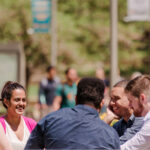
 UMBC Senior Karina Martinez
Last July, UMBC senior Karina Martinez’s world crashed down around her when an auto accident left her with two broken arms and a totaled car.
In a matter of moments, reality set in. Surgery and recovery would take at least three weeks. And even after that, without a car, she couldn’t get to school or her part-time server job, much less the required field placement she needed to complete to graduate. Her manager gave her a less physically-taxing hostess position, but losing a month’s work and switching from tip wages to hourly left Martinez in a real bind.
“I had bills I had to pay, I had a balance with UMBC on a summer course I took that summer, and I was looking to see if I could somehow buy a car for my commutes,” says Martinez, a social work and psychology major set to graduate from UMBC’s Shady Grove campus this spring.
“I thought about dropping some classes so I could work more to be able to pay off my UMBC balance but then my sister told me I should look into seeing if UMBC has an emergency fund for students.”
Addressing Emergency Needs
UMBC’s Stay Black and Gold Emergency Fund is an initiative of the Student Government Association that provides emergency funding in awards ranging from $1,000 to $8,000 depending on needs arising from unexpected crises ranging from accidents to house fires, deaths of parents, loss of jobs and other sudden losses of income that could prevent the continuation of classes.
In the past year, five students have received funding, but as the world confronts the COVID-19 pandemic, this fund will become even more important for student success, explains Vice President for Institutional Advancement Greg Simmons, M.P.P. ’04, public policy.
“The Stay Black and Gold Emergency Fund acknowledges that sometimes we are faced with circumstances we could not have predicted and we need help from others,” he says. “Donors who give to this fund are committed to helping us do all we can to help students finish their degrees in the face of challenges they hadn’t expected, and in some cases hadn’t even imagined could be true.”
Last week, longtime UMBC supporters George and Betsy Sherman made a pledge of $25,000 to reinforce the fund, and other individual donations have been coming in steadily, including gifts from more than 40 new donors since a call went out for help yesterday.
Supporters have also been making donations to support UMBC’s Retriever Essentials Food Pantry, which offers dry goods and toiletries to students with those ongoing needs. Going forward, both of these funds will be crucial in helping UMBC students affected by the COVID-19 crisis. Like many universities across the country creating similar support systems for their students, UMBC will continue to try to grow its resources to respond to its community’s needs.
A Much-Needed Helping Hand
“When the committee approved me for the scholarship it was a relief off my shoulders knowing that I would not have to drop my classes in order to work more to pay off my balance and that most importantly that I would be able to graduate this year,” said Martinez, who has been accepted into the University of Maryland Baltimore’s advanced standing master’s of social work program in the fall.
As someone who hopes to eventually work in child welfare, she keenly appreciates what it means to be on the other end of the helping hand.
“Unfortunately, sometimes unexpected things happen not to just students but, to people in general, so having funds like this available to them really makes a difference,” she says. “For me it was allowing me to graduate on time with my class. So, thank you so much for donating, it is much appreciated.”
Support UMBC’s Stay Black and Gold Emergency Fund here.
]]>
UMBC Senior Karina Martinez Last July, UMBC senior Karina Martinez’s world crashed down around her when an auto accident left her with two broken arms and a totaled car. In a matter of moments,...
https://umbc.edu/stories/emergency-funds-help-umbc-students-stay-black-and-gold/
https://my3.my.umbc.edu/api/v0/pixel/news/119926/guest@my.umbc.edu/5b53e289eaaaa7efda577256808bb10a/api/pixel
giving
impact
resilience
spring-2020
UMBC News & Magazine
https://my3.my.umbc.edu/groups/umbc-news-magazine
https://assets1-my.umbc.edu/system/shared/avatars/groups/000/001/943/24435aa6207c452e7bc15cc74b42c7bb/xsmall.png?1748556657
https://assets1-my.umbc.edu/system/shared/avatars/groups/000/001/943/24435aa6207c452e7bc15cc74b42c7bb/original.png?1748556657
https://assets2-my.umbc.edu/system/shared/avatars/groups/000/001/943/24435aa6207c452e7bc15cc74b42c7bb/xxlarge.png?1748556657
https://assets2-my.umbc.edu/system/shared/avatars/groups/000/001/943/24435aa6207c452e7bc15cc74b42c7bb/xlarge.png?1748556657
https://assets3-my.umbc.edu/system/shared/avatars/groups/000/001/943/24435aa6207c452e7bc15cc74b42c7bb/large.png?1748556657
https://assets1-my.umbc.edu/system/shared/avatars/groups/000/001/943/24435aa6207c452e7bc15cc74b42c7bb/medium.png?1748556657
https://assets2-my.umbc.edu/system/shared/avatars/groups/000/001/943/24435aa6207c452e7bc15cc74b42c7bb/small.png?1748556657
https://assets1-my.umbc.edu/system/shared/avatars/groups/000/001/943/24435aa6207c452e7bc15cc74b42c7bb/xsmall.png?1748556657
https://assets2-my.umbc.edu/system/shared/avatars/groups/000/001/943/24435aa6207c452e7bc15cc74b42c7bb/xxsmall.png?1748556657
UMBC News & Magazine
0
0
false
Fri, 03 Apr 2020 18:32:19 -0400
A small trial finds that hydroxychloroquine is not effective for treating coronavirus

by Katherine Seley-Radtke, Professor of Chemistry and Biochemistry, UMBC, and President-Elect of the International Society for Antiviral Research
On Saturday the Food and Drug Administration approved the use of two antimalarial drugs, hydroxychloroquine and a related medication, chloroquine, for emergency use to treat COVID-19. The drugs were touted by President Trump as a “game changer” for COVID-19.
However, a study just published in a French medical journal provides new evidence that hydroxychloroquine does not appear to help the immune system clear the coronavirus from the body. The study comes on the heels of two others – one in France and one in China – that reported some benefits in the combination of hydroxychloroquine and azithromycin for COVID-19 patients who didn’t have severe symptoms of the virus.
I am a medicinal chemist who has specialized in discovery and development of antiviral drugs for the past 30 years, and I have been actively working on coronaviruses for the past seven. I am among a number of researchers who are concerned that this drug has been given too much of a high priority before there is enough evidence to show it is indeed effective.
There are already other clinical studies that showed it is not effective against COVID-19 as well as several other viruses. And, more importantly, it can have dangerous side effects, as well as giving people false hope. The latter has led to widespread shortages of hydroxychloroquine for patients who need it to treat malaria, lupus and rheumatoid arthritis, the indications for which it was originally approved.
The idea that the combination of hydroxychloroquine with an antibiotic drug, azithromycin, was effective against COVID-19 gained more attention after a study published on March 17. This study described a trial of 80 patients carried out by Philippe Gautret in Marseille, France. Although some of their results appeared to be encouraging, it should also be noted that most of their patients only had mild symptoms. Furthermore, 85% of the patients didn’t even have a fever – one of the major telltale symptoms of the virus, thus suggesting that these patients likely would have naturally cleared the virus without any intervention.
In another study, posted on medRxiv, which has not yet been peer-reviewed, Chinese scientists from Renmin Hospital of Wuhan University, in Wuhan, China, gave hydroxychloroquine to patients with only mild infections who were free of medical issues, similar to the Gautret study. The results showed that the 31 patients who received the drug showed a lessening of their symptoms 24 hours earlier than patients in the control group. In addition, pneumonia symptoms improved in 25 of the 31 patients versus 17 of 31 in the control group. As noted in several of the comments associated with the manuscript, there are issues related to the translation of the paper, thus clouding interpretations of some of the results. The paper also appears to focus more on pneumonia than COVID-19. However, these issues may cleared up or addressed once the paper finishes the peer-review process.
But two other studies have conflicting results.
A second French group, led by Jean-Michel Molina, has now tested the hydroxychloroquine-azithromycin combination treatment in 11 patients at the Hôpital Saint-Louis in Paris, France, and their results were strikingly different.
Like the Marseille study, the Molina trial was also a small pilot study. Molina and colleagues used the same dosing regimen as Gautret. In contrast, however, to the Gautret study, eight of the 11 patients had underlying health conditions, and 10 of 11 had fevers and were quite ill at the time the dosing began.
These Paris researchers found that after five to six days of treatment with hydroxychloroquine (600 mg per day for 10 days) and azithromycin (500 mg on day 1 and 250 mg on days 2 to 5), eight of the 10 patients still tested positive for COVID-19. Of these 10 patients, one patient died, two were transferred to the ICU and another had to be removed from the treatment due to serious complications.
In addition, a similar study in China also showed no difference in viral clearance after seven days either with or without the hydroxychloroquine with the patients in the trial. This supports Molina’s findings.
Thus, despite the recent approval of this drug for use against COVID-19, questions remain as to the efficacy of this treatment. As Molina and colleagues note: “Ongoing randomized clinical trials with hydroxychloroquine should provide a definitive answer regarding the alleged efficacy of this combination and will assess its safety.”
* * * * *
[You need to understand the coronavirus pandemic, and we can help. Read The Conversation’s newsletter.]
Katherine Seley-Radtke, Professor of Chemistry and Biochemistry and President-Elect of the International Society for Antiviral Research, University of Maryland, Baltimore County
Header image: A trial of an anti-malaria drug in France found different results from a similar study last month.
Liliboas / Getty Images
This article is republished from The Conversation under a Creative Commons license. Read the original article.
]]>
by Katherine Seley-Radtke, Professor of Chemistry and Biochemistry, UMBC, and President-Elect of the International Society for Antiviral Research On Saturday the Food and Drug Administration...
https://umbc.edu/stories/a-small-trial-finds-that-hydroxychloroquine-is-not-effective-for-treating-coronavirus/
https://my3.my.umbc.edu/api/v0/pixel/news/119927/guest@my.umbc.edu/921196a7844c3e9a3e6689a23baf9618/api/pixel
chemistry-and-biochemistry
cnms
covidresearch
discovery
the-conversation
UMBC News & Magazine
https://my3.my.umbc.edu/groups/umbc-news-magazine
https://assets1-my.umbc.edu/system/shared/avatars/groups/000/001/943/24435aa6207c452e7bc15cc74b42c7bb/xsmall.png?1748556657
https://assets1-my.umbc.edu/system/shared/avatars/groups/000/001/943/24435aa6207c452e7bc15cc74b42c7bb/original.png?1748556657
https://assets2-my.umbc.edu/system/shared/avatars/groups/000/001/943/24435aa6207c452e7bc15cc74b42c7bb/xxlarge.png?1748556657
https://assets2-my.umbc.edu/system/shared/avatars/groups/000/001/943/24435aa6207c452e7bc15cc74b42c7bb/xlarge.png?1748556657
https://assets3-my.umbc.edu/system/shared/avatars/groups/000/001/943/24435aa6207c452e7bc15cc74b42c7bb/large.png?1748556657
https://assets1-my.umbc.edu/system/shared/avatars/groups/000/001/943/24435aa6207c452e7bc15cc74b42c7bb/medium.png?1748556657
https://assets2-my.umbc.edu/system/shared/avatars/groups/000/001/943/24435aa6207c452e7bc15cc74b42c7bb/small.png?1748556657
https://assets1-my.umbc.edu/system/shared/avatars/groups/000/001/943/24435aa6207c452e7bc15cc74b42c7bb/xsmall.png?1748556657
https://assets2-my.umbc.edu/system/shared/avatars/groups/000/001/943/24435aa6207c452e7bc15cc74b42c7bb/xxsmall.png?1748556657
UMBC News & Magazine
0
0
false
Fri, 03 Apr 2020 13:48:49 -0400
UMBC’s Tagide deCarvalho wins Olympus Image of the Year contest with striking portrait of a “water bear”
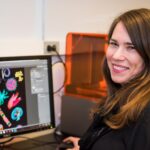
UMBC’s Tagide deCarvalho has won the 2019 Olympus Image of the Year Global Life Science Light Microscopy Award, Americas division. The award recognizes the “very best in life science imaging worldwide,” according to Olympus.
deCarvalho’s winning image features a tardigrade, a microscopic animal that can withstand conditions that would kill almost any other living thing. Extreme pressures and temperatures, lack of air and water, exposure to radiation—none can destroy the resilient little tardigrade, also known as a “water bear.”
Bringing tiny creatures to life
Tardigrades are mostly colorless, so deCarvalho, director of UMBC’s Keith Porter Imaging Facility (KPIF), uses fluorescent stains to bring them to life.
“I’m able to produce so much color in my images by using multiple fluorescent stains and capitalizing on the natural fluorescence of the samples,” she says. “I’m excited about this image because the fluorescent dyes I used allow you to see the tardigrade digestive tract, including the mouthparts and stomach filled with food.”
 Tagide deCarvalho’s winning image of tardigrade.
The featured tardigrade came from a sample deCarvalho used in the Microscopy and Imaging Techniques class that she teaches in the KPIF. “Students remarked that observing these cute little guys was one of their favorite parts of the class,” she says.
To create the winning image from this tardigrade, deCarvalho used the new super-resolution confocal microscope in the Interdisciplinary Life Sciences Building.
Sharing fascinating microorganisms
deCarvalho enjoys combining her interests in art and biology to make beautiful microscope images. One of her other projects involved making 13 images of microorganisms collected on campus by students. The collection has been made into a beautiful poster titled “Campus Microcosmos.”
As for the winning tardigrade, “I knew the moment I saw this colorful specimen that it was going to be a remarkable image,” deCarvalho says. “I love sharing the fascinating things I see in the microscope with other people.”
Banner image: Tagide deCarvalho works on Campus Microcosmos in the Keith Porter Imaging Facility. Photo by Marlayna Demond ’11 for UMBC.
]]>
UMBC’s Tagide deCarvalho has won the 2019 Olympus Image of the Year Global Life Science Light Microscopy Award, Americas division. The award recognizes the “very best in life science imaging...
https://umbc.edu/stories/umbcs-tagide-decarvalho-wins-olympus-image-of-the-year-contest-with-striking-portrait-of-a-water-bear/
https://my3.my.umbc.edu/api/v0/pixel/news/119928/guest@my.umbc.edu/63606f329508ed446b801509ac1feea0/api/pixel
arts-and-culture
biology
science-and-technology
UMBC News & Magazine
https://my3.my.umbc.edu/groups/umbc-news-magazine
https://assets1-my.umbc.edu/system/shared/avatars/groups/000/001/943/24435aa6207c452e7bc15cc74b42c7bb/xsmall.png?1748556657
https://assets1-my.umbc.edu/system/shared/avatars/groups/000/001/943/24435aa6207c452e7bc15cc74b42c7bb/original.png?1748556657
https://assets2-my.umbc.edu/system/shared/avatars/groups/000/001/943/24435aa6207c452e7bc15cc74b42c7bb/xxlarge.png?1748556657
https://assets2-my.umbc.edu/system/shared/avatars/groups/000/001/943/24435aa6207c452e7bc15cc74b42c7bb/xlarge.png?1748556657
https://assets3-my.umbc.edu/system/shared/avatars/groups/000/001/943/24435aa6207c452e7bc15cc74b42c7bb/large.png?1748556657
https://assets1-my.umbc.edu/system/shared/avatars/groups/000/001/943/24435aa6207c452e7bc15cc74b42c7bb/medium.png?1748556657
https://assets2-my.umbc.edu/system/shared/avatars/groups/000/001/943/24435aa6207c452e7bc15cc74b42c7bb/small.png?1748556657
https://assets1-my.umbc.edu/system/shared/avatars/groups/000/001/943/24435aa6207c452e7bc15cc74b42c7bb/xsmall.png?1748556657
https://assets2-my.umbc.edu/system/shared/avatars/groups/000/001/943/24435aa6207c452e7bc15cc74b42c7bb/xxsmall.png?1748556657
UMBC News & Magazine
0
0
false
Thu, 02 Apr 2020 18:27:06 -0400
Latest global and national rankings name UMBC a leading university, from engineering and biology to public policy
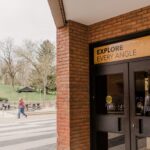
UMBC is again one of the top 500 universities in the world, according to the QS World University Rankings. In their recently released subject area rankings, UMBC is noted globally in the broad category of life sciences and medicine, performing particularly well in biological sciences. The world rankings also recognize UMBC for strengths in computer science and information systems and in physics and astronomy.
“UMBC’s College of Engineering and Information Technology (COEIT) has been incredibly successful in recruiting great teachers and researchers as faculty,” says Keith J Bowman, dean of COEIT. “It is gratifying that employers and our colleagues recognize the quality of our programs and our people.”
UMBC performed among the top 8.8% U.S. universities in the global ranking and ranked #68 among U.S. doctoral universities.
The newly released U.S. Newsgraduate program rankings highlight UMBC as having some of the best engineering programs in the U.S. The publication recognizes a broad range of UMBC engineering focus areas, including environmental, computer, chemical, electrical, and mechanical engineering.
In the humanities and social sciences, the UMBC School of Public Policy is listed as offering one of the top 100 public policy graduate programs in the nation.
Business First also just released its annual ranking of 500 four-year public institutions across the U.S. UMBC is one of the top two public universities in Maryland, and ranked #53 in the nation, improving by six places from last year.
Banner image: UMBC logo on campus. Photo by Marlayna Demond ’11 for UMBC.
]]>
UMBC is again one of the top 500 universities in the world, according to the QS World University Rankings. In their recently released subject area rankings, UMBC is noted globally in the broad...
https://umbc.edu/stories/latest-global-and-national-rankings-name-umbc-a-leading-university-from-engineering-and-biology-to-public-policy/
https://my3.my.umbc.edu/api/v0/pixel/news/119929/guest@my.umbc.edu/d5fb7c531aa51484d37f8b7fdbb2a0ab/api/pixel
coeit
community
publicpolicy
rankings
UMBC News & Magazine
https://my3.my.umbc.edu/groups/umbc-news-magazine
https://assets1-my.umbc.edu/system/shared/avatars/groups/000/001/943/24435aa6207c452e7bc15cc74b42c7bb/xsmall.png?1748556657
https://assets1-my.umbc.edu/system/shared/avatars/groups/000/001/943/24435aa6207c452e7bc15cc74b42c7bb/original.png?1748556657
https://assets2-my.umbc.edu/system/shared/avatars/groups/000/001/943/24435aa6207c452e7bc15cc74b42c7bb/xxlarge.png?1748556657
https://assets2-my.umbc.edu/system/shared/avatars/groups/000/001/943/24435aa6207c452e7bc15cc74b42c7bb/xlarge.png?1748556657
https://assets3-my.umbc.edu/system/shared/avatars/groups/000/001/943/24435aa6207c452e7bc15cc74b42c7bb/large.png?1748556657
https://assets1-my.umbc.edu/system/shared/avatars/groups/000/001/943/24435aa6207c452e7bc15cc74b42c7bb/medium.png?1748556657
https://assets2-my.umbc.edu/system/shared/avatars/groups/000/001/943/24435aa6207c452e7bc15cc74b42c7bb/small.png?1748556657
https://assets1-my.umbc.edu/system/shared/avatars/groups/000/001/943/24435aa6207c452e7bc15cc74b42c7bb/xsmall.png?1748556657
https://assets2-my.umbc.edu/system/shared/avatars/groups/000/001/943/24435aa6207c452e7bc15cc74b42c7bb/xxsmall.png?1748556657
UMBC News & Magazine
0
0
false
Tue, 31 Mar 2020 19:47:47 -0400
UMBC psychology faculty work to prevent intimate partner violence and support survivors

UMBC’s psychology faculty closely collaborate with communities on research to prevent intimate partner and gender-based violence and to support survivors. Their work to transform systems is earning support from government agencies and colleagues in their field, with new awards that will enable them to have an even greater impact.
Meeting the needs of the community
Chris Murphy, a professor of clinical psychology, has received a $420,000 grant from the Department of Justice’s Office on Violence Against Women. The three-year grant will fund a research collaboration with the Gateway Program at the House of Ruth Maryland in Baltimore City to assess their Batterer Intervention Program (BIP) supportive services model.
The 26-week court-ordered rehabilitation program is designed to hold offenders of intimate partner violence (IPV) accountable and to maintain survivors’ safety. It focuses on changing participants’ violent behavior through lessons about power and control as well as nonviolent strategies for communication.
“We know that one abusive partner can create multiple victims and, if they have children, they begin a generational cycle that is difficult to interrupt,” says Lisa Nitsch ‘01, psychology, a social worker and director of training and education at the House of Ruth Maryland. “It is time for us to stop asking why victims choose to stay in abusive relationships and start asking why abusive partners feel entitled to terrorize their victims.”
To better meet the needs of the communities they serve, the Gateway Program developed a culturally sensitive approach to their BIPs over the last two years. Through that process, they found that BIPs don’t usually address several issues impacting clients, such as past trauma, mental health, employment, or parenting.
In collaboration with a number of city agencies, the Gateway Program developed a supportive services model to complement the BIP. This includes optional on-site services related to mental health, parenting, and employment. By addressing these intersecting needs, the Gateway program aims to reduce IPV.
“We have to find more effective ways of addressing abusive partners and engaging them in a change process,” saysNitsch. “We are invested in this project because it is essential to our mission ‘to lead the fight to end intimate partner violence.’”
When Murphy heard about the Gateway Program’s new supportive services model, he offered to develop an assessment to evaluate its effectiveness. “A lot of the field has focused on holding offenders accountable for their behavior, but not necessarily what will make them less likely to engage in abuse or violence,” explains Murphy.
A team approach to IPV research
Murphy brought together a team from across disciplines and institutions to help design a holistic assessment. The team includes Tara Richards, co-principal investigator, assistant professor in the School of Criminology and Criminal Justice at the University of Nebraska, Omaha; Charvonne Holliday, assistant professor in the Johns Hopkins Bloomberg School of Public Health; and Nitsch,who is also aboard member of the National Resource Center on Domestic Violence.
The program evaluation is a three-part process. Murphy and his team will first assess if there is a decrease in IPV incidents among offenders in the Gateway Program after they’ve participated solely in the Batterer Intervention Program. Second, they will examine if there is also a decrease among clients who choose to access additional support services. Third, they will assess the challenges and values that clients express, and if how they receive services fits their expectations and needs.
“We have been working with the Gateway Program for over a year to collaboratively develop the assessments needed to determine who will benefit the most from certain services,” says Murphy.
Richards explains that to identify clients’ needs the team assesses factors such as substance abuse, low educational attainment, and antisocial behavior, which are correlated with criminal behaviors among other types of offenders. She explains her role as evaluating how integrating knowledge of those factors and of abusive behaviors “with a culturally sensitive curriculum to help develop individualized services” can reduce recidivism. She explains, “We can’t separate these issues and expect to get the best outcomes.”
In addition to this research, Murphy also offers training on motivational communication strategies for service providers, to increase the likelihood that their clients will utilize the available services.
The results will be used to improve the delivery of Gateway Program services. They will also inform other programs nationwide, and inform training materials for service providers in other agencies.
“Those of us who work in this field know intimate partner violence tends to carry on through generations,” says Murphy. “If we can stop someone now from being abusive who is in their twenties and has young children, it can benefit everyone else in their family and system.”
Community-based participatory research with survivors of gender-based violence
Nkiru Nnawulezi, assistant professor of psychology, has received the Linda Saltzman New Investigator Award for her work with communities to support survivors of gender-based violence. The award is funded by the Center for Disease Control Foundation, Futures Without Violence, and RALIANCE. It honors her ongoing research and will be formally announced at the 2020 National Conference on Health and Domestic Violence in late April.

Nnawulezi.
Photo courtesy of Nnawulezi.
“The award is such an honor because it isn’t just my work, but also the communities I work with. It’s about the people who I have a privilege to know and be surrounded by,” says Nnawulezi. “It is a community honor.”
The accolade acknowledges her work using transformative Community-Based Participatory Research (CBPR) to evaluate the systems and institutions that serve survivors of gender-based violence. Her work in this field spans from her dissertation, through her time as a UMBC Postdoctoral Fellow for Faculty Diversity, to her current scholarship as an assistant professor of community psychology.
Nnawulezi explains that transformative CBPR focuses on shifting the status quo from institutionally-focused research to community-driven research where the community acts on its power and determines what knowledge is generated and how it is used.
She works with survivors to research structures and policies related to domestic violence housing programs. When it comes to her specific focus in that area, she explains, “As a community, the survivors and practitioners decide what they want to research. It may be understanding what it takes for survivors to experience power, whether the organizational policies and culture create a loss of power, or if they support survivors having and using power.”
A focus on intersectional identities
Nnawulezi specializes in working with survivors with intersectional identities and community-based practitioners, exploring how survivors navigate institutions intended to support them. This includes survivors who are people of color, living with HIV, queer and trans, low-income, homeless or housing insecure, experiencing addiction, or experiencing severe mental illnesses.
She finds transformative CBPR to be particularly suited to working with survivors with histories of multiple marginalizations because it questions why and how researchers can support communities facing multiple forms of oppression. This approach dismantles the traditional views of psychologists as altruistic professionals saving people in need, she explains. Instead, it moves toward supporting the liberation of historically marginalized communities by challenging systems of oppression and creating social change with community members.
“The purpose of my work can be summed up by this quote from Lilla Watson, an aboriginal elder, activist and educator,” shares Nnawulezi. “If you have come here to help me you are wasting your time, but if you have come because your liberation is bound up with mine, then let us work together.”
Banner image: Murphy. Photo by Marlayna Demond ’11 for UMBC.
]]>
UMBC’s psychology faculty closely collaborate with communities on research to prevent intimate partner and gender-based violence and to support survivors. Their work to transform systems is...
https://umbc.edu/stories/umbc-psychology-faculty-work-to-prevent-intimate-partner-violence-and-support-survivors/
https://my3.my.umbc.edu/api/v0/pixel/news/119930/guest@my.umbc.edu/f94429fd4e9d744d20ffeac092e174c9/api/pixel
cahss
policy-and-society
psychology
research
UMBC News & Magazine
https://my3.my.umbc.edu/groups/umbc-news-magazine
https://assets1-my.umbc.edu/system/shared/avatars/groups/000/001/943/24435aa6207c452e7bc15cc74b42c7bb/xsmall.png?1748556657
https://assets1-my.umbc.edu/system/shared/avatars/groups/000/001/943/24435aa6207c452e7bc15cc74b42c7bb/original.png?1748556657
https://assets2-my.umbc.edu/system/shared/avatars/groups/000/001/943/24435aa6207c452e7bc15cc74b42c7bb/xxlarge.png?1748556657
https://assets2-my.umbc.edu/system/shared/avatars/groups/000/001/943/24435aa6207c452e7bc15cc74b42c7bb/xlarge.png?1748556657
https://assets3-my.umbc.edu/system/shared/avatars/groups/000/001/943/24435aa6207c452e7bc15cc74b42c7bb/large.png?1748556657
https://assets1-my.umbc.edu/system/shared/avatars/groups/000/001/943/24435aa6207c452e7bc15cc74b42c7bb/medium.png?1748556657
https://assets2-my.umbc.edu/system/shared/avatars/groups/000/001/943/24435aa6207c452e7bc15cc74b42c7bb/small.png?1748556657
https://assets1-my.umbc.edu/system/shared/avatars/groups/000/001/943/24435aa6207c452e7bc15cc74b42c7bb/xsmall.png?1748556657
https://assets2-my.umbc.edu/system/shared/avatars/groups/000/001/943/24435aa6207c452e7bc15cc74b42c7bb/xxsmall.png?1748556657
UMBC News & Magazine
0
0
false
Mon, 30 Mar 2020 18:16:05 -0400
Three UMBC student researchers receive prestigious Goldwater Scholarships
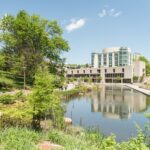
Three UMBC students have been named Barry Goldwater Scholars for the 2020 – 2021 academic year, earning one of the most prestigious scholarships available to U.S. undergraduates. This is the second time that three UMBC students have received Goldwater Scholarships in the same year.
The Barry Goldwater Scholarship and Excellence in Education Program seeks to provide the United States with “a continuing source of highly qualified scientists, mathematicians, and engineers.” UMBC’s Goldwater Scholars include Jordan Troutman ‘21, M29, computer science and mathematics; Dominique Brooks ‘21, M29, biological sciences; and Olumide Fagboyegun ‘21, M29, biochemistry. They will receive substantial scholarship funding that advances their undergraduate work and supports their educational paths.
“We are so proud of UMBC’s Goldwater Scholars. Each student will make significant contributions to their respective fields, as future Ph.D.s,” says April Householder, director of undergraduate research and prestigious scholarships at UMBC.
“Their research—in neuroscience, genetics, and machine learning bias—is timely and important,” Householder says. “We can’t wait to see where they will take it with the help of this scholarship.”
Brooks, Fagboyegun, and Troutman are among the 396 winners selected this year. More than 1,300 students applied from 461 institutions across the country.
This year, the Goldwater Scholarship modified their nomination guidelines and allowed each institution to send forward up to five nominees, with one spot specifically designated for a transfer student. Fagboyegun is the first UMBC transfer student to receive a Goldwater.
Jordan Troutman: Eliminating biases in computer algorithms
Troutman currently serves as student commissioner for the Maryland Higher Education Commission (MHEC), and is committed to both research and leadership. His research, at the intersection of technology and policy, focuses on eliminating biases in computer algorithms.

Jordan Troutman. Photo by Marlayna Demond ’11 for UMBC.
Troutman explains that artificial intelligence and machine learning have changed how the world operates in complex ways. Those impacts aren’t uniformly positive or equitable. Built by people, these technologies can include discriminatory biases that can impact how people are treated and cared for.
“It is so exciting to see a student who is such a strong scientist doing work that has extensive applications in everything from how banks determine home loan acceptance to recidivism rates for prisoners of color,” says Householder.
At UMBC, Troutman works alongside James Foulds, assistant professor of information systems. He has also completed research experiences at Rutgers University and the University of California, Berkeley, and is passionate about using his work to improve society.
“Receiving the Barry Goldwater Scholarship provides me with a stronger sense of confidence in my ability to research topics that have a significant impact on all people,” he says. “Being a Goldwater Scholar reminds me that I will always and forever be a curious scientist.”
Outside of the classroom, Troutman has been involved with UMBC’s chapter of the National Society of Black Engineers (NSBE), where he serves as the conference planning chair. UMBC’s NSBE chapter supports the NSBE Jr. chapter in Howard County. Troutman and the chapter support middle school and high school students through tutoring, workshops, tours, and other activities. He also helps Baltimore City College students prepare for the SATs.
Additionally, Troutman serves on UMBC’s Undergraduate Student Advisory Council, where he advises the vice president for Undergraduate Academic Affairs on important university decisions that affect students.
Support from the UMBC community, including fellow students applying for the Goldwater, has been important to Troutman throughout the process. “Dr. Householder has been pivotal in encouraging me to apply for scholarships like the Goldwater,” he shares. He adds that the Honors College and Meyerhoff Scholars Program encouraged him to apply for the scholarship and helped him refine his career goals.
The application process for the Goldwater Scholarship enabled Troutman to push himself beyond his comfort zone and what he thought he could achieve. “Eventually, after I got comfortable with my uncertainty, I understood that I had nothing to lose. It is better to try and not win than not try at all,” he says, adding, “When one UMBC student wins, I think we all win. And when three students win, that says something powerful about UMBC.”
Dominique Brooks: Developmental biology research and developing as a researcher
Dominique Brooks developed an interest in genes from a young age. She shares that growing up as a light-skinned African American child, she felt different than her mostly dark-skinned classmates. She wondered how that physical difference came to be, which led to a curiosity about how genes worked.

Dominique Brooks. Photo courtesy of Dominique Brooks.
At UMBC, Brooks’s curiosity about genes and gene expression led her to the developmental biology lab of Rachel Brewster, professor of biological sciences. She has worked with Brewster for the last two years and intends to earn a Ph.D. in genetics. Her goal is to launch a career as a researcher in gene therapy or genetic engineering.
“My mentors, Dr. Brewster and UMBC graduate student Maki Negesse, push me to exceed beyond my own expectations,” she shares. “They challenge me to take on various projects while encouraging me to overcome moments of failure in the lab.”
Brooks is involved in research through the Meyerhoff, MARC U*STAR, and HHMI Scholars programs. For Brooks, the community generated through these scholars programs has been critical to her success.
“My peers will forever keep me motivated and focused on achieving my academic and career goals,” Brooks says. “I would also like to thank the staff members of these programs for caring about my future and providing a nurturing environment for me to seek guidance.”
Brooks has received awards for her research posters at the Annual Biomedical Research Conference for Minority Students and UMBC’s Undergraduate Research Symposium in the Chemical and Biological Sciences. She is also highly engaged in leadership, service, and mentoring through several organizations.
Brooks serves as a student justice in UMBC’s Office of Student Conduct and Community Standards and tutors for UMBC’s introductory biology courses. She also volunteers with the Global Brigades international service organization and the student-led STAR STEM outreach program.
When selecting potential Goldwater Scholar candidates, “Dominique emerged because of her strong academic record, impressive research, international service, and community engagement,” Householder says. “She is a STEM leader who will definitely go on to give back to the community and represent Goldwater, and UMBC, well.”
Brooks is already successful by any measure. But “being named a Goldwater Scholar signifies my potential to become a successful researcher in the STEM field,” she says, “which has given me confidence in my ability to be a leader in the field of genetics.”
Olumide Fagboyegun: Tackling neurological disorders and impostor syndrome
Olumide Fagboyegun came to UMBC after graduating from Anne Arundel Community College as its valedictorian in 2018, and has focused his research on how the brain works.

Olumide Fagboyegun at his graduation from Anne Arundel Community College. Photo by Larry Canner.
Fagboyegun has worked with both Erin Green, assistant professor of biological sciences at UMBC, and John Cirrito, associate professor of neurology at Washington University in St. Louis (WashU). Doing research has fueled his desire to pursue basic science on brain function, in hopes of contributing to improved therapies for neurological disorders such as Parkinson’s and Alzheimer’s diseases.
Through research and the other opportunities he has pursued, Fagboyegun has also always kept top of mind supporting other underrepresented students in STEM. He shares that as an African American, he is all too familiar with the challenges that underrepresented minority students can face in STEM and in broader U.S. culture.
Fagboyegun talks about struggling with impostor syndrome, but the research he has done at UMBC and WashU has helped build his confidence. Now, he wants to pass that on to others through his career as a researcher and mentor—and he’s already putting that plan into action.
Fagboyegun served as a STEM Ambassador and supplemental instruction leader for general chemistry at Anne Arundel Community College. He participates in the STAR STEM outreach program at UMBC. He is also a member of the Sigma Lambda Alpha Honor Society, a Meyerhoff and MARC U*STAR Scholar, and part of the LSAMP program.
Participating in formal and informal mentorship roles “gave me a significant appreciation for mentorship and the influence a single individual can have on a person’s success,” Fagboyegun shares. “I’ve rarely felt greater joy than when students would email me or come to me in person talking about their success on an exam or their interest in science.”
With the Goldwater Scholarship, Fagboyegun is well-aware of his capacity to serve as a role model for other underrepresented minority students in STEM, and especially transfer students from all backgrounds. “This [scholarship] is a sign to other community college transfer students that such an accomplishment is definitely within reach,” he says, “and that UMBC has the ability to help them achieve it.”
That UMBC support has included mentors such as Peter DeCrescenzo, who coordinatesLSAMP; Keith Harmon, director of the Meyerhoff Scholars Program; Jackie King, associate director of MARC U*STAR; and Fagboyegun’s research mentors.
“All of these individuals have been instrumental in helping me understand that I have the ability to pursue whatever goals I set my mind to,” Fagboyegun shares. “They’ve given me opportunities to grow and succeed, and have helped me paint an image of the kind of mentor I will tirelessly work to become.”
From artificial intelligence to human brain function and development, undergraduate scholars at UMBC make meaningful contributions to research. With support from mentors across campus, and now as Goldwater Scholars, Troutman, Brooks, and Fagboyegun will continue to make scientific advances.
Just as importantly, they will also advance the cultures of their disciplines to be more inclusive. They aim to produce a ripple effect, encouraging future talented students from underrepresented groups to pursue STEM research careers.
Banner image: UMBC’s library and pond.
Story written by Sarah Hansen and Megan Hanks.
]]>
Three UMBC students have been named Barry Goldwater Scholars for the 2020 – 2021 academic year, earning one of the most prestigious scholarships available to U.S. undergraduates. This is the...
https://umbc.edu/stories/three-umbc-student-researchers-receive-prestigious-goldwater-scholarships/
https://my3.my.umbc.edu/api/v0/pixel/news/119931/guest@my.umbc.edu/79fe7fdce0721ed82d8a00c659633d1f/api/pixel
biology
chemistry
cnms
coeit
csee
mathstat
page1
science-and-technology
UMBC News & Magazine
https://my3.my.umbc.edu/groups/umbc-news-magazine
https://assets1-my.umbc.edu/system/shared/avatars/groups/000/001/943/24435aa6207c452e7bc15cc74b42c7bb/xsmall.png?1748556657
https://assets1-my.umbc.edu/system/shared/avatars/groups/000/001/943/24435aa6207c452e7bc15cc74b42c7bb/original.png?1748556657
https://assets2-my.umbc.edu/system/shared/avatars/groups/000/001/943/24435aa6207c452e7bc15cc74b42c7bb/xxlarge.png?1748556657
https://assets2-my.umbc.edu/system/shared/avatars/groups/000/001/943/24435aa6207c452e7bc15cc74b42c7bb/xlarge.png?1748556657
https://assets3-my.umbc.edu/system/shared/avatars/groups/000/001/943/24435aa6207c452e7bc15cc74b42c7bb/large.png?1748556657
https://assets1-my.umbc.edu/system/shared/avatars/groups/000/001/943/24435aa6207c452e7bc15cc74b42c7bb/medium.png?1748556657
https://assets2-my.umbc.edu/system/shared/avatars/groups/000/001/943/24435aa6207c452e7bc15cc74b42c7bb/small.png?1748556657
https://assets1-my.umbc.edu/system/shared/avatars/groups/000/001/943/24435aa6207c452e7bc15cc74b42c7bb/xsmall.png?1748556657
https://assets2-my.umbc.edu/system/shared/avatars/groups/000/001/943/24435aa6207c452e7bc15cc74b42c7bb/xxsmall.png?1748556657
UMBC News & Magazine
0
0
false
Mon, 30 Mar 2020 17:35:03 -0400


