Canadian artificial intelligence (AI) firm BlueDot has been in the news in recent weeks for warning about the new coronavirus days ahead of the official alerts from the Centers for Disease Control and Prevention and the World Health Organization. The company was able to do this by tapping different sources of information beyond official statistics about the number of cases reported.
BlueDot’s AI algorithm, a type of computer program that improves as it processes more data, brings together news stories in dozens of languages, reports from plant and animal disease tracking networks and airline ticketing data. The result is an algorithm that’s better at simulating disease spread than algorithms that rely on public health data – better enough to be able to predict outbreaks. The company uses the technology to predict and track infectious diseases for its government and private sector customers.
Traditional epidemiology tracks where and when people contract a disease to identify the source of the outbreak and which populations are most at risk. AI systems like BlueDot’s model how diseases spread in populations, which makes it possible to predict where outbreaks will occur and forecast how far and fast diseases will spread. So while the CDC and laboratories around the world race to find cures for the novel coronavirus, researchers are using AI to try to predict where the disease will go next and how much of an impact it might have. Both play a key role in facing the disease.
However, AI is not a silver bullet. The accuracy of AI systems is highly dependent on the amount and quality of the data they learn from. And how AI systems are designed and trained can raise ethical issues, which can be particularly troublesome when the technologies affect large swathes of a population about something as vital as public health.
It’s all about the data
Traditional disease outbreak analysis looks at the location of an outbreak, the number of disease cases and the period of time – the where, what and when – to forecast the likelihood of the disease spreading in a short amount of time.
AI systems look at multiple types of data, like flights in and out of Wuhan Tianhe Airport, to predict disease outbreaks. Painjet/Wikimedia Commons, CC BY-SA
More recent efforts using AI and data science have expanded the what to include many different data sources, which makes it possible to make predictions about outbreaks. With the advent of Facebook, Twitter and other social and micro media sites, more and more data can be associated with a location and mined for knowledge about an event like an outbreak. The data can include medical worker forum discussions about unusual respiratory cases and social media posts about being out sick.
Much of this data is highly unstructured, meaning that computers can’t easily understand it. The unstructured data can be in the form of news stories, flight maps, messages on social media, check ins from individuals, video and images. On the other hand, structured data, such as numbers of reported cases by location, is more tabulated and generally doesn’t need as much preprocessing for computers to be able to interpret it.
Newer techniques such as deep learning can help make sense of unstructured data. These algorithms run on artificial neural networks, which consist of thousands of small interconnected processors, much like the neurons in the brain. The processors are arranged in layers, and data is evaluated at each layer and either discarded or passed onto the next layer. By cycling data through the layers in a feedback loop, a deep learning algorithm learns how to, for example, identify cats in YouTube videos.
Researchers teach deep learning algorithms to understand unstructured data by training them to recognize the components of particular types of items. For example, researchers can teach an algorithm to recognize a cup by training it with images of several types of handles and rims. That way it can recognize multiple types of cups, not just cups that have a particular set of characteristics.
Any AI model is only as good as the data used to train it. Too little data and the results these disease-tracking models deliver can be skewed. Similarly, data quality is critical. It can be particularly challenging to control the quality of unstructured data, including crowd-sourced data. This requires researchers to carefully filter the data before feeding it to their models. This is perhaps one reason some researchers, including those at BlueDot, choose not to use social media data.
One way to assess data quality is by verifying the results of the AI models. Researchers need to check the output of their models against what unfolds in the real world, a process called ground truthing. Inaccurate predictions in public health, especially with false positives, can lead to mass hysteria about the spread of a disease.
AI for the common good
AI holds great promise for identifying where and how fast diseases are spreading. Increasingly, data scientists are using these techniques to predict the spread of diseases. Similarly, researchers are using these techniques to model how people move around within cities, potentially spreading pathogens as they go.
However, AI doesn’t eliminate the need for epidemiologists and virologists who are fighting the spread on the front lines. For example, BlueDot uses epidemiologists to confirm its algorithm’s results. AI is a tool to provide more advanced and more accurate warnings that can enable a rapid response to an outbreak. The key is bringing AI’s forecasting and prediction prowess to public health officials to improve their ability to respond to outbreaks.
Even if all else was perfect and AI were a technological silver bullet, the AI field would still face ethical challenges. We have to be more vigilant against phenomena like digital redlining, the computerized version of the practice of denying resources to marginalized populations, that can creep into AI outcomes. Entire regions or demographics could be sidelined, for example, from access to health care if the data used to train an AI system failed to include them.
In the case of AI models collating social media data, digital redlining can exclude entire populations with limited internet access. These populations might not be posting to social media or otherwise creating the digital fingerprints many AI models rely on. This could lead AI systems to make flawed recommendations about where resources are needed.
While researchers are continuously creating new AI algorithms, some of the foundational issues like understanding what’s going on inside the models, minimizing false positives and identifying and avoiding ethical issues are not well understood and require more research.
AI is a powerful tool for predicting and forecasting disease spread. However, it’s not likely to completely replace the tried-and-true combination of statistics and epidemiology first used when John Snow tracked down and removed the handle from the pump of a cholera-ridden water supply in 1854 London.
]]>
by Vandana Janeja, Professor of Information Systems, UMBC Canadian artificial intelligence (AI) firm BlueDot has been in the news in recent weeks for warning about the new coronavirus days ahead...https://umbc.edu/stories/predicting-the-coronavirus-outbreak-how-ai-connects-the-dots-to-warn-about-disease-threats/https://my3.my.umbc.edu/api/v0/pixel/news/119942/guest@my.umbc.edu/1b105f8c2cd7300e96155352fef12d33/api/pixelcoeitcovidresearchdiscoveryisthe-conversationUMBC News & Magazinehttps://my3.my.umbc.edu/groups/umbc-news-magazinehttps://assets1-my.umbc.edu/system/shared/avatars/groups/000/001/943/24435aa6207c452e7bc15cc74b42c7bb/xsmall.png?1748556657https://assets1-my.umbc.edu/system/shared/avatars/groups/000/001/943/24435aa6207c452e7bc15cc74b42c7bb/original.png?1748556657https://assets2-my.umbc.edu/system/shared/avatars/groups/000/001/943/24435aa6207c452e7bc15cc74b42c7bb/xxlarge.png?1748556657https://assets2-my.umbc.edu/system/shared/avatars/groups/000/001/943/24435aa6207c452e7bc15cc74b42c7bb/xlarge.png?1748556657https://assets3-my.umbc.edu/system/shared/avatars/groups/000/001/943/24435aa6207c452e7bc15cc74b42c7bb/large.png?1748556657https://assets1-my.umbc.edu/system/shared/avatars/groups/000/001/943/24435aa6207c452e7bc15cc74b42c7bb/medium.png?1748556657https://assets2-my.umbc.edu/system/shared/avatars/groups/000/001/943/24435aa6207c452e7bc15cc74b42c7bb/small.png?1748556657https://assets1-my.umbc.edu/system/shared/avatars/groups/000/001/943/24435aa6207c452e7bc15cc74b42c7bb/xsmall.png?1748556657https://assets2-my.umbc.edu/system/shared/avatars/groups/000/001/943/24435aa6207c452e7bc15cc74b42c7bb/xxsmall.png?1748556657UMBC News & Magazine00falseTue, 03 Mar 2020 13:50:45 -0500UMBC Alumnae Racing to Develop Coronavirus Vaccine
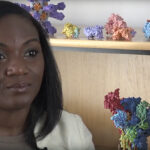
Kizzmekia Corbett ’08, M16, biological sciences, says it feels like she’s “living in a constant adrenaline rush.” Maybe that’s because she and her team at the Vaccine Research Center at the National Institute of Allergy and Infectious Diseases have been working around the clock for weeks. They’re racing to develop a vaccine for the coronavirus faster than it can race across the globe.
“To be living in this moment where I have the opportunity to work on something that has imminent global importance…it’s just a surreal moment for me,” Corbett says.
Despite it feeling surreal, the advances Corbett and her team are making are very real, and they’re setting records. “We are making better progress than I could have ever hoped for,” she says. After three months of studies in test tubes and in animals, the vaccine her team developed is about to enter a phase I clinical trial, a crucial hurdle on the way to FDA approval.
“Focus, focus, focus”
Corbett says her experience as a Meyerhoff Scholar at UMBC helped prepare her and another core team member, post-baccalaureate researcher OlubukolaAbiona ‘17, M25, biochemistry and molecular biology, for a moment like this. “Discipline is one of the biggest things that Meyerhoff taught us,” Corbett says. “And it matters—a lot—in these instances of being pulled in multiple directions and really trying to understand what the priorities are.”
Corbett, who came to UMBC from North Carolina, and Abiona, who attended Eleanor Roosevelt High School in Prince George’s County, also draw on UMBC President Freeman Hrabowski’s consistent exhortation to “Focus, focus, focus,” Corbett says. “The UMBC connection and the training we received there, for both of us, has been instrumental in how we are operating right now,” she adds.
A couple of years ago, Corbett and Abiona were the only members of their team. It’s since grown, but their relationship remains special. “Essentially we started out being the team alone, and as a result, there is this level of trust and understanding that we have with each other,” Corbett says. “It’s extremely rewarding to watch someone exponentially grow into a scientist in the course of a few years,” Corbett reflects. “I think next to getting data, mentoring young scientists is the most exciting and rewarding part of what I do here.”
As an African American woman in STEM, Corbett says she has also experienced people thinking she’s only there because of diversity initiatives. “That’s been a cloud around my movement in science,” she shares. So, she says, “showing up, particularly in a moment like this, and setting a standard about what people from different backgrounds can contribute” is just as important as mentoring the next generation of scientists.
“Hopefully we will open people’s eyes to the credibility of people who look like us as real scientists.”
Corbett, Abiona, and team at NIH.
Setting the standard
While that message is always in the back of their minds, right now, Corbett and Abiona are deeply focused on the work at hand. “For me, I’m very interested in looking ahead to the kinds of data we’ll get from human trials,” Corbett says. “Yes, we have tons of data that will support this vaccine being a fruitful one and a protective one, but it’s always just a hypothesis until we get some real human data.”
If the phase I trials are successful, that will be a huge step toward an FDA-approved vaccine for the coronavirus—and also set a new benchmark for future disease outbreaks.
“I’m really excited about fulfilling this proof-of-concept for pandemic preparedness, where we can literally go from receiving the genetic sequence of a virus all the way through to a vaccine clinical trial in less than three months,” Corbett says. “I think that’s somewhat of an unprecedented standard to set, and I’m looking forward to helping to standardize it. I hope that it will get even shorter.”
]]>
Kizzmekia Corbett ’08, M16, biological sciences, says it feels like she’s “living in a constant adrenaline rush.” Maybe that’s because she and her team at the Vaccine Research Center at the...https://umbc.edu/stories/umbc-alumnae-racing-to-develop-coronavirus-vaccine/https://my3.my.umbc.edu/api/v0/pixel/news/119943/guest@my.umbc.edu/2484ad6ce05702d67cb5feb2d391e875/api/pixelalumnibiologychemistrycnmscovidresearchmeyerhoffmeyerhoffscholarsmhoffresilienceUMBC News & Magazinehttps://my3.my.umbc.edu/groups/umbc-news-magazinehttps://assets1-my.umbc.edu/system/shared/avatars/groups/000/001/943/24435aa6207c452e7bc15cc74b42c7bb/xsmall.png?1748556657https://assets1-my.umbc.edu/system/shared/avatars/groups/000/001/943/24435aa6207c452e7bc15cc74b42c7bb/original.png?1748556657https://assets2-my.umbc.edu/system/shared/avatars/groups/000/001/943/24435aa6207c452e7bc15cc74b42c7bb/xxlarge.png?1748556657https://assets2-my.umbc.edu/system/shared/avatars/groups/000/001/943/24435aa6207c452e7bc15cc74b42c7bb/xlarge.png?1748556657https://assets3-my.umbc.edu/system/shared/avatars/groups/000/001/943/24435aa6207c452e7bc15cc74b42c7bb/large.png?1748556657https://assets1-my.umbc.edu/system/shared/avatars/groups/000/001/943/24435aa6207c452e7bc15cc74b42c7bb/medium.png?1748556657https://assets2-my.umbc.edu/system/shared/avatars/groups/000/001/943/24435aa6207c452e7bc15cc74b42c7bb/small.png?1748556657https://assets1-my.umbc.edu/system/shared/avatars/groups/000/001/943/24435aa6207c452e7bc15cc74b42c7bb/xsmall.png?1748556657https://assets2-my.umbc.edu/system/shared/avatars/groups/000/001/943/24435aa6207c452e7bc15cc74b42c7bb/xxsmall.png?1748556657UMBC News & Magazine00falseMon, 02 Mar 2020 22:41:26 -0500Why do Americans say ‘bay-zle’ and the English say ‘baa-zle’?
We develop different accents because of whom we interact with and where we grow up.
An accent is how a person sounds. Kids who grow up in Australia develop Australian accents. Kids who grow up in England develop British accents. And kids who grow up in the United States develop American accents. Everyone has an accent.
When we pick up on another person’s accent, it means we are identifying clues in their pronunciation that tell us something about who they are. These differences can be as small as a single sound, but we often spot them right away.
For example, in the U.S., the word “basil” is pronounced “bay-zle.” But in England, it is pronounced “baa-zle,” like the word “dazzle.” In the U.S., “schedule” is pronounced with a “sk” sound at the beginning, but in England, it’s pronounced with a “sh” sound.
There are also spelling differences, like “theatre” in England versus “theater” in the U.S., and word differences, like “aubergine” in England versus “eggplant” in the U.S.
Everyone has an accent.
Across the country
There are also linguistic differences within countries. Not all people from England sound the same, and the same goes for people from the U.S.
In my own research, I study differences in English spoken in the U.S. In the Great Smoky Mountains, you might hear the word “fire” pronounced like “far,” and “tire” pronounced like “tar.” In the U.S. South, the words “bide” and “ride” tend to sound more like “bad” and “rad.”
And in the city of Baltimore, you might hear some African American residents pronounce “dog” as “dug,” and “frog” as “frug.”
Even in a globally connected world, where it is easier to meet people from other countries than ever before, the way we talk still represents who we are.
So be proud of your vocal fingerprint. A kaleidoscope of languages and accents helps make our world a culturally rich and exciting place.
Hello, curious kids! Do you have a question you’d like an expert to answer? Ask an adult to send your question to CuriousKidsUS@theconversation.com. Please tell us your name, age and the city where you live.
And since curiosity has no age limit – adults, let us know what you’re wondering, too. We won’t be able to answer every question, but we will do our best.
]]>
by Christine Mallinson, Professor of Language, Literacy and Culture and Director of the Center for Social Science Scholarship, UMBC Curious Kids is a series for children of all ages. If you...https://umbc.edu/stories/why-do-americans-say-bay-zle-and-the-english-say-baa-zle/https://my3.my.umbc.edu/api/v0/pixel/news/119944/guest@my.umbc.edu/49030f7f91a585f51adcd8d238ee4ac2/api/pixelcahssdiscoveryllcUMBC News & Magazinehttps://my3.my.umbc.edu/groups/umbc-news-magazinehttps://assets1-my.umbc.edu/system/shared/avatars/groups/000/001/943/24435aa6207c452e7bc15cc74b42c7bb/xsmall.png?1748556657https://assets1-my.umbc.edu/system/shared/avatars/groups/000/001/943/24435aa6207c452e7bc15cc74b42c7bb/original.png?1748556657https://assets2-my.umbc.edu/system/shared/avatars/groups/000/001/943/24435aa6207c452e7bc15cc74b42c7bb/xxlarge.png?1748556657https://assets2-my.umbc.edu/system/shared/avatars/groups/000/001/943/24435aa6207c452e7bc15cc74b42c7bb/xlarge.png?1748556657https://assets3-my.umbc.edu/system/shared/avatars/groups/000/001/943/24435aa6207c452e7bc15cc74b42c7bb/large.png?1748556657https://assets1-my.umbc.edu/system/shared/avatars/groups/000/001/943/24435aa6207c452e7bc15cc74b42c7bb/medium.png?1748556657https://assets2-my.umbc.edu/system/shared/avatars/groups/000/001/943/24435aa6207c452e7bc15cc74b42c7bb/small.png?1748556657https://assets1-my.umbc.edu/system/shared/avatars/groups/000/001/943/24435aa6207c452e7bc15cc74b42c7bb/xsmall.png?1748556657https://assets2-my.umbc.edu/system/shared/avatars/groups/000/001/943/24435aa6207c452e7bc15cc74b42c7bb/xxsmall.png?1748556657UMBC News & Magazine00falseMon, 02 Mar 2020 15:14:08 -0500UMBC once again ranks among the top 150 universities in federal research funding
The annual Higher Education Research and Development (HERD) survey from the National Science Foundation again includes UMBC as a top recipient of federal research support.
The most recent survey aggregates federal research and development expenditures for fiscal year 2018. The survey data combines total funding from all federal agencies and also provides information on research funding from non-federal and non-governmental sources.
Overall, UMBC is ranked #148 in federal research funding for the 2018 fiscal year, and #173 in total research funding from all sources. The federal investment figures include funding from sources such as the Department of Defense, Department of Health and Human Services, and NASA, among others.
“The annual HERD Rankings represent a widely reviewed national comparison of institutional scholarly and research activities,” says Karl V. Steiner, vice president for research at UMBC. “The most recently released 2018 data represents the fourth consecutive year of growth in research expenditures for UMBC.”
A leader in studying Earth’s atmosphere
UMBC is now ranked #13 nationally in NASA funding and #27 in federal funding for geosciences, atmospheric sciences, and ocean research more broadly. Among the projects included in that funding was UMBC’s Hyper-Angular Rainbow Polarimeter (HARP) cubesat.
Vanderlei Martins, Roberto Borda, and Dominik Cieslak with HARP at UMBC. Photo by Marlayna Demond ’11 for UMBC.
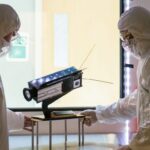
This small satellite, the size of a loaf of bread, was developed by a team of UMBC scientists, led by Vanderlei Martins, director of UMBC’s Earth and Space Institute. It was recently launched into space aboard a NASA rocket heading for the International Space Station. The satellite contains sensors that will collect information about Earth’s atmosphere, informing our understanding of pollution and climate.
Computing hardware to address infrastructure challenges
In computer and information sciences, UMBC ranked #69 in federal research support. Among awards in this area was NSF support for UMBC to lead a new $3 million research partnership to solve major infrastructure challenges with next-generation computing hardware.
Yelena Yesha, right, alongside faculty and students who conduct research through CARTA. Photo by Marlayna Demond ’11 for UMBC.
Yelena Yesha, computer science and electrical engineering, serves as principal investigator for the five-year grant from the NSF Industry-University Cooperative Research Centers. UMBC launched the Center for Accelerated Real Time Analytics (CARTA) to complete computing hardware research supported by this grant. A portion of the NSF funds are also furthering collaborative research with partner institutions North Carolina State University; Rutgers University, Newark; Rutgers University, New Brunswick; and Tel Aviv University. UC San Diego and the University of Utah are also collaborating, and industry partners like Seagate and Morgan Stanley are engaged in this work as well.
Yesha explains, “CARTA will usher in the era of accelerated real-time analytics by effectively utilizing innovative technologies such as cognitive computing, machine learning, and quantum computing to address our nation’s global competitive challenges in health security, disaster mitigation, and the emerging artificial intelligence revolution.”
Social science research to address health disparities
In the social sciences, UMBC ranks #27 in federal research dollars among universities nationwide. UMBC psychology faculty received a particularly high number of federal grants in 2018, including Danielle Beatty Moody (NIH funding), Shawn Bediako (NSF funding), Chris Murphy (DHHS-NIH funding), and Shari Waldenstein ( DHHS-NIH funding, as well as support from the VA Medical Center in Baltimore). Additionally, Christine Yee, economics, received a research grant from the U.S. Department of Veterans Affairs.
Danielle Beatty Moody. Photo by Marlayna Demond ’11 for UMBC.
Beatty Moody is director of UMBC’s Social Determinants of Health Lab. In 2018 she was the PI on three NIH grants, funded through the National Institute of Aging. They all focused on the HANDLES study, which stands for Health Aging in Neighborhoods of Diversity across the Life Span. Beatty Moody’s team examined health disparities among middle-aged and older residents of Baltimore. This includes the relationship between factors like structural discrimination and early life experiences with cognitive decline and cardiometabolic measures.
“We are proud of the broad impact of our work, from the social sciences, to computing, to our close relationship with NASA Goddard,” says Steiner. “I am pleased with the continued efforts and growing success of our entire research community.”
Banner image: Research team of Vanderlei Martins, professor of physics, with a model of the HARP satellite. Photo by Marlayna Demond ’11 for UMBC
]]>
The annual Higher Education Research and Development (HERD) survey from the National Science Foundation again includes UMBC as a top recipient of federal research support. The most recent...https://umbc.edu/stories/umbc-once-again-ranks-among-the-top-150-universities-in-federal-research-funding/https://my3.my.umbc.edu/api/v0/pixel/news/119945/guest@my.umbc.edu/6836f3b7f8c57244a547fc39547c3346/api/pixelcahsscnmscoeitcseeeconomicsjcetpage1physicspsychologyrankingsresearchscience-and-technologyUMBC News & Magazinehttps://my3.my.umbc.edu/groups/umbc-news-magazinehttps://assets1-my.umbc.edu/system/shared/avatars/groups/000/001/943/24435aa6207c452e7bc15cc74b42c7bb/xsmall.png?1748556657https://assets1-my.umbc.edu/system/shared/avatars/groups/000/001/943/24435aa6207c452e7bc15cc74b42c7bb/original.png?1748556657https://assets2-my.umbc.edu/system/shared/avatars/groups/000/001/943/24435aa6207c452e7bc15cc74b42c7bb/xxlarge.png?1748556657https://assets2-my.umbc.edu/system/shared/avatars/groups/000/001/943/24435aa6207c452e7bc15cc74b42c7bb/xlarge.png?1748556657https://assets3-my.umbc.edu/system/shared/avatars/groups/000/001/943/24435aa6207c452e7bc15cc74b42c7bb/large.png?1748556657https://assets1-my.umbc.edu/system/shared/avatars/groups/000/001/943/24435aa6207c452e7bc15cc74b42c7bb/medium.png?1748556657https://assets2-my.umbc.edu/system/shared/avatars/groups/000/001/943/24435aa6207c452e7bc15cc74b42c7bb/small.png?1748556657https://assets1-my.umbc.edu/system/shared/avatars/groups/000/001/943/24435aa6207c452e7bc15cc74b42c7bb/xsmall.png?1748556657https://assets2-my.umbc.edu/system/shared/avatars/groups/000/001/943/24435aa6207c452e7bc15cc74b42c7bb/xxsmall.png?1748556657UMBC News & Magazine00falseFri, 28 Feb 2020 20:23:06 -0500Challenge Met: UMBC Giving Day 2020 a Resounding Success
Each February, the UMBC community reaches together to support student success with gifts made during one 24-hour Giving Day extravaganza. And every year, our Retriever Nation comes through – sharing news of their gifts and reasons for supporting UMBC far and wide.
This year’s “Black and Gold Rush” on February 27 was no exception. Several hours before the midnight deadline, our Retrievers blew past the original goal of 1,800 donors to reach more than 2,600 donors and $188,500, with more donations still being tallied, that will support everything from academics to athletics to campus organizations. More than a hundred social media ambassadors also shared the love by encouraging friends and colleagues to contribute.
“I am always amazed but never surprised by the generosity of the UMBC community,” said Greg Simmons, MPP ’04, Vice President of Institutional Advancement. “So many students and programs will benefit from the amazing support that we received on Thursday. It makes me proud to be a Retriever.”
During free hour, students and others passing through The Commons wrote thank you notes to donors and celebrated as the donor count passed the halfway mark. And faculty and staff in offices and departments across campus took to social media energizing their networks to support the great work happening in all aspects of the community.
Here is a snapshot of the day, and a thank you to all who contributed!
]]>
Each February, the UMBC community reaches together to support student success with gifts made during one 24-hour Giving Day extravaganza. And every year, our Retriever Nation comes through –...https://umbc.edu/stories/challenge-met-umbc-giving-day-2020-a-resounding-success/https://my3.my.umbc.edu/api/v0/pixel/news/119946/guest@my.umbc.edu/4d7df450374fd4c6b9e38a016077be65/api/pixelgivingimpactUMBC News & Magazinehttps://my3.my.umbc.edu/groups/umbc-news-magazinehttps://assets1-my.umbc.edu/system/shared/avatars/groups/000/001/943/24435aa6207c452e7bc15cc74b42c7bb/xsmall.png?1748556657https://assets1-my.umbc.edu/system/shared/avatars/groups/000/001/943/24435aa6207c452e7bc15cc74b42c7bb/original.png?1748556657https://assets2-my.umbc.edu/system/shared/avatars/groups/000/001/943/24435aa6207c452e7bc15cc74b42c7bb/xxlarge.png?1748556657https://assets2-my.umbc.edu/system/shared/avatars/groups/000/001/943/24435aa6207c452e7bc15cc74b42c7bb/xlarge.png?1748556657https://assets3-my.umbc.edu/system/shared/avatars/groups/000/001/943/24435aa6207c452e7bc15cc74b42c7bb/large.png?1748556657https://assets1-my.umbc.edu/system/shared/avatars/groups/000/001/943/24435aa6207c452e7bc15cc74b42c7bb/medium.png?1748556657https://assets2-my.umbc.edu/system/shared/avatars/groups/000/001/943/24435aa6207c452e7bc15cc74b42c7bb/small.png?1748556657https://assets1-my.umbc.edu/system/shared/avatars/groups/000/001/943/24435aa6207c452e7bc15cc74b42c7bb/xsmall.png?1748556657https://assets2-my.umbc.edu/system/shared/avatars/groups/000/001/943/24435aa6207c452e7bc15cc74b42c7bb/xxsmall.png?1748556657UMBC News & Magazine00falseFri, 28 Feb 2020 12:15:16 -0500Fri, 28 Feb 2020 12:15:16 -0500UMBC’s Suzanne Ostrand-Rosenberg recognized for 40-year career advancing cancer immunotherapy
After 41 years at UMBC, Suzanne Ostrand-Rosenberg, professor emerita of biological sciences, retired in August 2018 and moved to Utah to enjoy the mountains with her spouse. But she couldn’t stay away from her research and mentoring for long. “I just can’t quit it,” Rosenberg says. “I realized I really did not want to stop.”
That attitude is emblematic of Rosenberg’s dedication to the field of cancer immunotherapy—using the human immune system to fight cancer. It also reflects her commitment to the next generation of researchers. Now, she has been recognized by the American Association of Immunologists (AAI) as a Distinguished Fellow, a very small, international group of scientists known for their deep and lasting contributions to immunology.
“This honor correctly recognizes Sue as a leader in the field of cancer immunotherapy and her early insight that the immune system could be made to target cancer cells more effectively,” says Philip Farabaugh, professor and chair of biological sciences. “It was exciting for me, over the last 20 years, to watch how her lab homed in on this target.”
Part of the reason for Rosenberg’s unabated enthusiasm is that “right now the whole cancer immunotherapy field is at such an exciting stage,” she says. Rosenberg started on this work in the 1970s, and at that time, “nobody thought that the immune system would have any efficacy against cancer.” But in just the last 10 years, a lot has changed. Major advances have led to immunotherapies being used successfully with real patients.
“My generation of researchers in cancer immunology really set the groundwork to enable the type of advances that we’re seeing now in the clinic,” Rosenberg says. “For the people who’ve been in this field a long time, it’s very rewarding.”
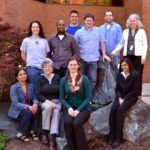
Suzanne Ostrand-Rosenberg (far right, back row) and her lab members in 2013. Lucas Horn, Ph.D. ’17, is third from left in the back row (bright blue shirt). Photo courtesy Suzanne Rosenberg.
Students at the center
For Rosenberg, the success of her research and the success of her students have always been inextricably linked. “The students are the ones that made the success possible,” she says.
Lucas Horn, Ph.D. ’17, biological sciences, was one of Rosenberg’s final UMBC graduates and is currently a postdoc at the National Cancer Institute. “The lab environment really was a synergistic blend of ideas from all the students and Sue,” he reflects. “The open flow of ideas was often crucial in solving complicated problems, but also helped the students to develop the confidence to suggest ideas and control the direction of their projects.”
Rosenberg equally valued all members of the lab. “I always felt like an important part of the team,” says Lydia Grmai ’11, M19, biochemistry and molecular biology, who participated in undergraduate research with Rosenberg. Rosenberg’s high expectations of her students “gave us the chance to rise to the occasion,” Grmai adds. “She taught me how to really take ownership of a research project, which was instrumental as I began to envision and plan my career as an independent scientist.”
Grmai gives her experience in Rosenberg’s lab, and especially the frequent opportunity to travel to conferences, credit for her rapid advancement through graduate school at the New York University School of Medicine and to her current role as a postdoc at Johns Hopkins University.
“Science communication and professional networking remain two of the most valuable skills in my research career,” Grmai says, “and getting to hone these skills as an undergrad accelerated my growth that much more once I got to grad school.”
Lydia Grmai. Photo courtesy Lydia Grmai.
The ideal combination
Rosenberg is grateful for the UMBC environment that emphasizes both research and education. That’s why she made UMBC her home for her 41-year professorial career. Many immunology labs are located in medical schools, research institutes, or hospitals , outside of undergraduate academic settings, but Rosenberg knew that connecting with undergraduate students would be a significant part of her career.
“It was really a combination of the quality and enthusiasm of the students, and being in an environment where I could both be involved with student activities and do research,” she reflects. “The undergrads drive the intellectual atmosphere of the lab as much as the grads and the postdocs do. I’ve been incredibly fortunate to have had undergraduates in my lab who have just been dynamite people.”
Despite her long-term commitment to her field, and significant contributions to immunotherapy research, Rosenberg remains humble. “I was shocked by the company I’m keeping as a Distinguished Fellow,” she says. “I think UMBC is in very good company. It feels good to be right up there with some of the other major players.”
Suzanne Rosenberg examines research data. Photo by Marlayna Demond ’11 for UMBC.
Rosenberg held the Robert and Jane Meyerhoff Chair for Biological Sciences at UMBC for many years, which provided significant financial support that allowed her to send students to conferences and otherwise enhance the lab’s impact. That experience, and the generally supportive environment at UMBC, are top of mind for Rosenberg. “I never would have gotten this award if it hadn’t been for UMBC,” she says. “That’s absolutely true—providing the resources, the support, the students…I’m very grateful to UMBC.”
Driven by her endless curiosity and inspired by her time at UMBC, Rosenberg is involved in research, writing grants, and graduate education at the University of Utah School of Medicine. With the next big breakthrough in cancer immunotherapy right around the corner, she says, “I just can’t bring myself to quit.”
Banner image: Sue Rosenberg opens the super-cold sample storage. Photo by Marlayna Demond ’11 for UMBC.
]]>
After 41 years at UMBC, Suzanne Ostrand-Rosenberg, professor emerita of biological sciences, retired in August 2018 and moved to Utah to enjoy the mountains with her spouse. But she couldn’t stay...https://umbc.edu/stories/umbcs-suzanne-ostrand-rosenberg-recognized-for-40-year-career-advancing-cancer-immunotherapy/https://my3.my.umbc.edu/api/v0/pixel/news/119947/guest@my.umbc.edu/2785f9f26ffd1a6e90d43ce5de3ab0f0/api/pixelalumnibiologycnmsmeyerhoffscholarsresearchscience-and-technologyUMBC News & Magazinehttps://my3.my.umbc.edu/groups/umbc-news-magazinehttps://assets1-my.umbc.edu/system/shared/avatars/groups/000/001/943/24435aa6207c452e7bc15cc74b42c7bb/xsmall.png?1748556657https://assets1-my.umbc.edu/system/shared/avatars/groups/000/001/943/24435aa6207c452e7bc15cc74b42c7bb/original.png?1748556657https://assets2-my.umbc.edu/system/shared/avatars/groups/000/001/943/24435aa6207c452e7bc15cc74b42c7bb/xxlarge.png?1748556657https://assets2-my.umbc.edu/system/shared/avatars/groups/000/001/943/24435aa6207c452e7bc15cc74b42c7bb/xlarge.png?1748556657https://assets3-my.umbc.edu/system/shared/avatars/groups/000/001/943/24435aa6207c452e7bc15cc74b42c7bb/large.png?1748556657https://assets1-my.umbc.edu/system/shared/avatars/groups/000/001/943/24435aa6207c452e7bc15cc74b42c7bb/medium.png?1748556657https://assets2-my.umbc.edu/system/shared/avatars/groups/000/001/943/24435aa6207c452e7bc15cc74b42c7bb/small.png?1748556657https://assets1-my.umbc.edu/system/shared/avatars/groups/000/001/943/24435aa6207c452e7bc15cc74b42c7bb/xsmall.png?1748556657https://assets2-my.umbc.edu/system/shared/avatars/groups/000/001/943/24435aa6207c452e7bc15cc74b42c7bb/xxsmall.png?1748556657UMBC News & Magazine00falseThu, 27 Feb 2020 20:32:38 -0500Sharing a Love of Green Chemistry – Ram Mohan, Ph.D. ’92
According to recent statistics, approximately 6,000 people in the United States apply for Fulbright awards yearly. Fewer than 800 are awarded and rarely does one person win two.
Nevertheless, Ram Mohan, who received his Ph.D. from UMBC in 1992, was awarded a Fulbright Teacher-Scholar Grant in 2012, and a second Fulbright Teacher-Scholar Grant in 2020 to teach Green Chemistry in India, where he was born and raised, before moving to Baltimore at the age of 21 to attend UMBC.
Now a professor of chemistry at Illinois Wesleyan University, Mohan fondly remembers the people who inspired him as a student at UMBC.
Finding a Research Family at UMBC
Mohan graduated with honors in chemistry from a Hansraj College in New Delhi, and, like many of his friends, he says, wanted to pursue higher education in the United States. His interests were in organic chemistry but he really wanted to focus on the relationship between the environment and cancer. The incidence of cancer, often caused by environmental pollution, is increasing worldwide, especially in India.
Through his research, in the 1980s, Mohan discovered that the work of UMBC’s Dale Whalen, now professor emeritus of chemistry, matched his own interests. “Simply put,” he relates, “I would not be where I [am] professionally without the kind and caring faculty at UMBC,” adding, “from the day I arrived, [Professor Whalen] took me under his wing . . . whether taking me to the Social Security office or showing me lab techniques.”
“The faculty at UMBC,” explains Mohan, “not only did cutting-edge research, but its members also cared about the success of each and every student.” Whalen was not the only UMBC professor he remembers fondly. He also mentions Professors Creighton, Hosmane and Pollack. In fact, Mohan says, the entire Chemistry Department “hung out together,” including the staff, Anne Geffert, Patty Gagne, and Audrey Mahoney. He stays in touch with many of them.
After graduating from UMBC, Mohan pursued postdoctoral work at the University of Illinois Urbana Champaign. He began his teaching career in 1994 as a visiting professor at Coker College in Hartsville, South Carolina. After two years, he moved back to Central Illinois as an Assistant Professor at Illinois Wesleyan University (IWU), a small selective liberal arts college, where he remains today. Again, Mohan claims his current passion for teaching stems from being a teaching assistant at UMBC for many semesters.
Mohan (center back) with students at a workshop conducted at Shantou University, China.
Raising Awareness
His research is inspired by green chemistry—principles and application—and he has traveled to Hong Kong, Malaysia, China and throughout India, lecturing and conducting workshops, which is what he now is doing in India as a Fulbright-Nehru scholar.
He is especially passionate about taking green chemistry to small, undergraduate colleges in rural areas where most students come from a farming background. “Raising awareness for environmental problems in such areas,” he explains, “will help to solve India’s overall environmental problems.”
For example, a typical workshop consists of 10 lectures on various green chemistry topics and includes interesting case studies that highlight environmental problems and solutions, using green chemistry concepts.
Mohan also has introduced green chemistry into the curriculum at Illinois Wesleyan University and made significant strides in “greening” organic chemistry laboratory experiments. His course at IWU especially highlights environmental problems in the United States. Undergraduate students at IWU take this enthusiasm for green chemistry on to graduate school and beyond into their professional careers.
Giving Back
Green chemistry, or sustainable chemistry, is the design of chemical processes and products that use nontoxic chemicals. The goal of green chemistry is to minimize the impact of chemicals on human health and the environment.
What Mohan finds especially rewarding is “the chance to give back to [his] country of birth while representing the United States as a cultural ambassador.”
Although Mohan enjoys his work—both teaching and research—at Illinois Wesleyan, and he likes to travel by train between Bloomington and Chicago, he says that even after 28 years he still misses UMBC. “Maryland and Baltimore always will remain my first home in America,” he says proudly.
– By Lynne Agress
* * * * *
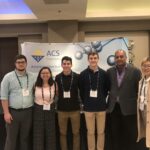
Header Image: Ram Mohan (second from right) and his Illinois Wesleyan University undergraduate students at The Great Lakes Regional Meeting (May 2019, Lisle, IL).
]]>
According to recent statistics, approximately 6,000 people in the United States apply for Fulbright awards yearly. Fewer than 800 are awarded and rarely does one person win two. Nevertheless,...https://umbc.edu/stories/sharing-a-love-of-green-chemistry-ram-mohan-ph-d-92/https://my3.my.umbc.edu/api/v0/pixel/news/119948/guest@my.umbc.edu/db24544806a9e5e11c29462706906ee1/api/pixelalumnialumni-profilechemistrycnmsgraduateschoolspring-2020UMBC News & Magazinehttps://my3.my.umbc.edu/groups/umbc-news-magazinehttps://assets1-my.umbc.edu/system/shared/avatars/groups/000/001/943/24435aa6207c452e7bc15cc74b42c7bb/xsmall.png?1748556657https://assets1-my.umbc.edu/system/shared/avatars/groups/000/001/943/24435aa6207c452e7bc15cc74b42c7bb/original.png?1748556657https://assets2-my.umbc.edu/system/shared/avatars/groups/000/001/943/24435aa6207c452e7bc15cc74b42c7bb/xxlarge.png?1748556657https://assets2-my.umbc.edu/system/shared/avatars/groups/000/001/943/24435aa6207c452e7bc15cc74b42c7bb/xlarge.png?1748556657https://assets3-my.umbc.edu/system/shared/avatars/groups/000/001/943/24435aa6207c452e7bc15cc74b42c7bb/large.png?1748556657https://assets1-my.umbc.edu/system/shared/avatars/groups/000/001/943/24435aa6207c452e7bc15cc74b42c7bb/medium.png?1748556657https://assets2-my.umbc.edu/system/shared/avatars/groups/000/001/943/24435aa6207c452e7bc15cc74b42c7bb/small.png?1748556657https://assets1-my.umbc.edu/system/shared/avatars/groups/000/001/943/24435aa6207c452e7bc15cc74b42c7bb/xsmall.png?1748556657https://assets2-my.umbc.edu/system/shared/avatars/groups/000/001/943/24435aa6207c452e7bc15cc74b42c7bb/xxsmall.png?1748556657UMBC News & Magazine00falseMon, 24 Feb 2020 14:28:01 -0500Is your city making you fat? How urban planning can address the obesity epidemic
Nearly 40% of Americans are considered obese. Rates of obesity for children have increased in recent decades, putting more people at increased risk of heart disease, diabetes and some cancers. One in 5 deaths of those aged 40 to 85 are now attributed to obesity, and one recent study projects that by 2030, nearly half of all U.S. adults will be obese.
This problem is too often treated only as an issue of personal responsibility, with calls for people to eat healthier diets and exercise more. It is true that Americans need to cut their caloric intake, especially of foods high in sugar and saturated fats, and get more exercise. Nearly 80% of U.S. adults are not meeting federal guidelines for physical activity, which recommend 2.5 to 5 hours of moderate physical activity weekly.
But our built environment, which includes not only buildings but roads, sidewalks and public spaces, also plays an important role in physical health. Researchers call cities that promote sedentary lifestyles and poor diet obesogenic. As a researcher focusing on urban issues, I am encouraged to see city planners paying increasing attention to helping residents lead healthy lifestyles.
Former Oklahoma City Mayor Mick Cornett describes how his city helped residents drop a collective million pounds through public education and investments in parks, sidewalks and sports facilities.
Fat cities
Modern U.S. cities were designed to make exercise unnecessary. Cars and elevators symbolized urban areas as machines for more efficient living. Now it is clear that these improvements provide great benefits but also impose health costs.
As a thought experiment, what would a city that makes residents more overweight look like? It would probably have few fresh food facilities and discourage physical activity, thus encouraging people to eat fast food and sit in cars rather than walking or bicycling. In other words, it would resemble the standard car-centric U.S. cities that have emerged in the past 50 years.
One hundred U.S. cities, rated on key indicators of weight-related problems. Low scores (purple/dark blue) connote higher obesity rates; higher rank (light blue) indicates healthier cities. Mouse over locations for individual scores.
Creating the healthy city
Urban planning still centers in large part on solving the problems of the past. Of course cities still need to foster standard public health practices, such as separating toxic facilities from homes and restricting heavy truck traffic through dense residential areas. But it’s also important to create healthier cities – and the discussion is already underway.
One important issue in many poorer neighborhoods is a lack of fresh food. Food deserts are places where good nutritional options are limited. Cities across the country are reshaping ordinances and changing tax codes so as to make it easier to create and sustain the production and sale of local, affordable and nutritious food.
As one example, Tulsa now limits permits for stores that do not provide fresh food. Others, including Boston, Buffalo, New York City and Seattle, have passed new ordinances that allow for community gardens, urban gardens and urban farms.
Cities are pursuing a wide range of nutrition strategies. Detroit modified its zoning ordinances to encourage urban gardens to sell food. Cleveland now allows residents to raise small farm animals and bees. Los Angeles has an urban agriculture incentive zone that promotes farming on vacant lots through reduced property tax assessments.
Other programs include “virtual supermarkets” in Baltimore that enable purchases of fresh food with food stamps; a food hub in New Orleans that teaches people how to grow and cook healthier food; and a statewide program in Pennsylvania that uses public and private dollars to support fresh food projects in low-income neighborhoods. Residents of two low-income communities in Louisville cleared land for a farm that now produces good-quality food for people with little access to healthy options.
Dietitian Heba Abdel Latief talks to her patient, Richard Ware, at Inner-City Muslim Action Network’s farmers market in Chicago. AP Photo/Amr Alfiky
Getting out and about
Planners are also paying increasing attention to encouraging physical activity by making it easier and safer for people to recreate, walk, bike and take public transportation. Longevity studies show that people live the longest in environments where physical activity is part of everyday life.
Providing more walkable spaces, better protected bike lanes and more recreational spaces are important steps. But even smaller changes can be effective.
Cities can close off streets on weekends to encourage communities to get out and walk. They also can provide more seating in public places, so that less-fit residents can rest during their journeys. Using public spaces in cities as places where people can exercise promotes equity, rather than allowing physical activity to become restricted to private gyms with often-expensive monthly fees.
Studies show that when cities are designed to provide walkability, bikeability, public transportation and more attractive green recreational spaces, then physical activity across the entire community increases. Minneapolis-St. Paul was rated the nation’s fittest city after it made a commitment a decade ago to expand bike lanes, tree planting and safer sidewalks. The changes encouraged residents to walk more and get more exercise.
Cities as machines
It will be expensive to create healthier cities. But a recent survey of mayors revealed that a majority believes their cities were too car-centric. Many wanted to invest more in bike infrastructure, parks and public sports complexes. Cities with high levels of obesity typically don’t make these features a priority.
The U.S. health care system, with its emphasis on tests and interventions to treat individual illness rather than on prevention, is the most expensive in the world with only modest levels of health outcomes and life expectancy compared to similarly wealthy countries. Integrating better diets and more physical activity into everyday urban life can help Americans become healthier more effectively, and at less cost.
* * * * *
Header image: The Ohio City Farm in Cleveland provides low-cost land, shared facilities and technical assistance to support entrepreneurial farmers.Horticulture Group/Flickr, CC BY
]]>
by John Rennie Short, Professor, School of Public Policy, UMBC New disease outbreaks, like the novel coronavirus that recently emerged in China’s Hubei province, generate headlines and...https://umbc.edu/stories/is-your-city-making-you-fat-how-urban-planning-can-address-the-obesity-epidemic/https://my3.my.umbc.edu/api/v0/pixel/news/119949/guest@my.umbc.edu/50ded373ae611518e42ec8592f37a2a3/api/pixelcahssdiscoverypublicpolicythe-conversationUMBC News & Magazinehttps://my3.my.umbc.edu/groups/umbc-news-magazinehttps://assets1-my.umbc.edu/system/shared/avatars/groups/000/001/943/24435aa6207c452e7bc15cc74b42c7bb/xsmall.png?1748556657https://assets1-my.umbc.edu/system/shared/avatars/groups/000/001/943/24435aa6207c452e7bc15cc74b42c7bb/original.png?1748556657https://assets2-my.umbc.edu/system/shared/avatars/groups/000/001/943/24435aa6207c452e7bc15cc74b42c7bb/xxlarge.png?1748556657https://assets2-my.umbc.edu/system/shared/avatars/groups/000/001/943/24435aa6207c452e7bc15cc74b42c7bb/xlarge.png?1748556657https://assets3-my.umbc.edu/system/shared/avatars/groups/000/001/943/24435aa6207c452e7bc15cc74b42c7bb/large.png?1748556657https://assets1-my.umbc.edu/system/shared/avatars/groups/000/001/943/24435aa6207c452e7bc15cc74b42c7bb/medium.png?1748556657https://assets2-my.umbc.edu/system/shared/avatars/groups/000/001/943/24435aa6207c452e7bc15cc74b42c7bb/small.png?1748556657https://assets1-my.umbc.edu/system/shared/avatars/groups/000/001/943/24435aa6207c452e7bc15cc74b42c7bb/xsmall.png?1748556657https://assets2-my.umbc.edu/system/shared/avatars/groups/000/001/943/24435aa6207c452e7bc15cc74b42c7bb/xxsmall.png?1748556657UMBC News & Magazine00falseThu, 20 Feb 2020 18:21:34 -0500UMBC men’s swimming and diving named America East champions, women’s team captures 2nd place
UMBC’s swimming and diving teams celebrated strong performances at the 2020 America East Championships, which concluded on February 16 at Worcester Polytechnic Institute. The men’s team won the four-day meet, while the women’s team finished second to New Hampshire.
The Retriever men have now captured 12 of the 13 championships overall and three in a row since America East reinstituted men’s swimming and diving as a championship sport in the winter of 2018. This year, the team captured 16 of 18 swimming events and amassed 1,051 points, more than 200 points ahead of second-place Binghamton.
“We knew it was one of the deepest men’s squads we have ever had,” said head coach Chad Cradock ‘97, psychology. “They came into the meet with confidence and belief in themselves.”
UMBC also received 2020 America East Men’s Coaching Staff of the Year honors.
UMBC men’s swimming and diving team celebrates winning the America East Championships; Feb. 16, 2020; Worcester, Mass. Photo by Brian Foley for America East.
Leading “in every way”
UMBC senior Ilia Rattsev swept the freestyle sprints (50, 100, 200 yards). In doing so, he became the first-ever swimmer in America East history to sweep the freestyle sprints in three consecutive years. He earned the league’s David Alexander Coaches’ Award as the senior with the most points accrued at the meet.
America East also honored Rattsev with their Elite 18 Award, which is presented to the top-achieving student-athlete at the championships. Rattsev is maintaining a 3.97 GPA in bioinformatics and computational biology.
“Ilia is a leader in every way,” Cradock said. “We are grateful for his trust in all aspects of our program. We are going to miss him and all of the seniors.”
Retriever junior Kai Wisner, mechanical engineering, earned the meet’s Most Outstanding Swimmer Award. Wisner triumphed in the 500 freestyle, 400 individual medley, and 1650 freestyle.
Freshman Niklas Weigelt took home the men’s Most Outstanding Rookie Award. The California native earned golds as part of the 200, 400 and 800 freestyle relays, took silver in the 200 yard freestyle, and earned bronze in the 100 freestyle.
Senior Garrett Wlochowski, financial economics, also captured multiple golds for the Retrievers, winning the 100 and 200 backstroke events. He was also part of the title-winning 200 and 400 medley relay quartets.
In addition to sharing his pride in the success of UMBC’s graduating seniors, Cradock says, “Our freshmen have already made a huge impact and they give us a lot of hope for the future.” He also notes, “Our sophomores and juniors are our future leaders. They bought in more this year and their results showed this weekend that hard work does pay off.”
Success in the pool and the classroom
On the UMBC women’s team, junior Vanessa Esposito, psychology, took home gold in the 1650 freestyle. Sophomore Caroline Sargent, psychology, earned a pair of silvers in the 100 and 200 backstroke events and a bronze in the 200 individual medley.
“We started the year losing close races, but, as the season went on, we built our confidence and were able to find the power to win the close ones and get the job done,” Cradock said.
Junior Natalija Marin earned the women’s Elite 18 award, for academic excellence. The native of Belgrade, Serbia is maintaining a 3.87 grade-point average in mechanical engineering. Marin, a three-time champion in the league championships, took home silver in the 200 butterfly in the final individual event of this year’s meet.
“On the women’s team, we knew we had big shoes to fill after losing an amazing senior class.” Cradock said. “We found our new and returning athletes to be resilient and tough, and highly competitive. We are so proud of them.”
Cradock is quick to point out the tremendous support that he and his programs receive from the UMBC community, including university and athletics department leadership and staff, alumni, parents, and his own family.
“Your love and support does not go unnoticed by our student-athletes and our coaching staff,” says Cradock. “This family is the best, and one I am sure everyone would dream to be a part of.”
To support UMBC Swimming and Diving during Giving Day on February 27, visit givingday.umbc.edu.
Steve Levy, ‘85, interdisciplinary studies, of UMBC Athletics was the lead author for this article. For more swimming and diving coverage, see the UMBC Retrievers website.
Featured image (l-r): UMBC’s Ilia Rattsev, Jeremy Gates, Jack Carlisle, and Jethro Ssengonzi pose with the 2020 America East Championship trophy; Feb. 16, 2020; Worcester, Massachusetts. Photo by Brian Foley for America East.
]]>
UMBC’s swimming and diving teams celebrated strong performances at the 2020 America East Championships, which concluded on February 16 at Worcester Polytechnic Institute. The men’s team won the...https://umbc.edu/stories/umbc-mens-swimming-and-diving-named-america-east-champions-womens-team-captures-2nd-place/https://my3.my.umbc.edu/api/v0/pixel/news/119950/guest@my.umbc.edu/c6652e0251ad8d8c46fb8ba9e4a1a181/api/pixelathleticscommunitypage1rankingsUMBC News & Magazinehttps://my3.my.umbc.edu/groups/umbc-news-magazinehttps://assets1-my.umbc.edu/system/shared/avatars/groups/000/001/943/24435aa6207c452e7bc15cc74b42c7bb/xsmall.png?1748556657https://assets1-my.umbc.edu/system/shared/avatars/groups/000/001/943/24435aa6207c452e7bc15cc74b42c7bb/original.png?1748556657https://assets2-my.umbc.edu/system/shared/avatars/groups/000/001/943/24435aa6207c452e7bc15cc74b42c7bb/xxlarge.png?1748556657https://assets2-my.umbc.edu/system/shared/avatars/groups/000/001/943/24435aa6207c452e7bc15cc74b42c7bb/xlarge.png?1748556657https://assets3-my.umbc.edu/system/shared/avatars/groups/000/001/943/24435aa6207c452e7bc15cc74b42c7bb/large.png?1748556657https://assets1-my.umbc.edu/system/shared/avatars/groups/000/001/943/24435aa6207c452e7bc15cc74b42c7bb/medium.png?1748556657https://assets2-my.umbc.edu/system/shared/avatars/groups/000/001/943/24435aa6207c452e7bc15cc74b42c7bb/small.png?1748556657https://assets1-my.umbc.edu/system/shared/avatars/groups/000/001/943/24435aa6207c452e7bc15cc74b42c7bb/xsmall.png?1748556657https://assets2-my.umbc.edu/system/shared/avatars/groups/000/001/943/24435aa6207c452e7bc15cc74b42c7bb/xxsmall.png?1748556657UMBC News & Magazine00falseTue, 18 Feb 2020 21:15:18 -0500Retriever Engineer Seeks Space – Kenneth Harris II ’14
Beneath the desk of his father, NASA engineer Kenneth Harris, was a slice of foam left over from the Mars Pathfinder. After school, Kenneth the younger would curl up on the foam and nap or color Pokemon pictures while his dad worked.
Perhaps he became an engineer by osmosis, but that makes it sound too easy.
Harris ’14, mechanical engineering, labored doggedly to become a senior satellite engineer at NASA Goddard Space Flight Center, where his father still works. Recently named to the Forbes Magazine 30 Under 30 List, Harris helped build the NASA telescope set for launch in 2021, and flies satellites that spot wildfires and hurricanes, and tends to the data that can predict weather to save lives.
Image by Taylor Mickal.
High Expectations
But at UMBC, a worried academic advisor once suggested Harris change majors. “It was not an option to change my future goals,” Harris remembered, shaking his head. He talked to his father and friends, then buckled down. “I saw it as adversity to be overcome.”
Anne Spence, a former engineering professor at UMBC now at Baylor University, remembered Harris struggling.
“There was one course, in particular, that seemed to be his nemesis. Yet he persevered,” Spence recalled. Harris tried the class a third time, with tutoring and faculty support, she said, and passed. “The effort required to be an engineer is high and individuals rise to the occasion at different points in their career. UMBC places high expectations on their students. Kenneth has certainly achieved the dreams that we hoped for him.”
Harris started working at NASA in high school, graduated from UMBC, then finished a master’s degree from Johns Hopkins University. Now, he strolls through the vast NASA building where space telescopes and satellites are built. He peers into cleanroom prep areas stacked with white “bunny suits,” peeks in the vibration chamber that tests whether machines will withstand the rattle of launch, and wistfully motions to a pair of massive venting towers, the last remaining pieces of the James Webb Space Telescope left at Goddard.
Standing in front of a color-coded schematic, Harris points to connections that he ensured would deliver data and power to each piece of the massive telescope. Set to launch in 2021, the Webb telescope will see back in time to when the universe first began, even farther than its predecessor, the Hubble.
Pondering the deep questions about time and space, not to mention the engineering steps to reach those nebulous answers, was difficult, Harris admitted. Terrific mentors guided him, he said, but didn’t give him the answers.
“That’s something I’ve adopted,” Harris said. “I never give my mentees the full answer. It may be frustrating, but you learn more when you come up with the answer on your own.”
Image by Taylor Mickal.
Paying it Forward
Passionate about mentorship, Harris has done a TEDx Talk on it and speaks at schools and conferences to promote mentorship and STEM studies.
“Mentors are the foundation I was built on,” Harris said, and he hopes to “pay it forward.”
Harris worked as a UMBC resident assistant, and closely with Nancy Young, vice president of student affairs.
“Ken is making a mark in science, but as a resident assistant, he had great compassion for others,” Young said. “He would be in my office lobbying me about Greek organizations — he would argue up a good storm — but he was always willing to take on another’s perspective to solve problems. People in research are often intensely focused. But Ken is also passionate about leadership, passionate about cultural organizations. He had passion and focus in everything he did. He’s the quintessential UMBC Retriever.”
Driven to Explore
At NASA, Harris strides into the observation room overlooking the cleanroom, a space large enough to house two Space Shuttle payloads, where he helped build the Webb telescope high up on ladders. Harris is joined by his best friend, Reginald McNeill, also a Meyerhoff Scholar, a planning and facilities project manager at NASA who just finished his masters’ degree at UMBC. They each married UMBC classmates, and all four remain close; Harris often cooks for Taco Tuesdays.
Harris nodded over his shoulder to a Hubble Space Telescope photograph, a blue and gold marvel of cloud that shows the Eagle Nebula. Exploration drives him, he said. He wants to be an astronaut and excitedly talks about astronauts he knows who are rooting for him.
“My belief is that as scientists, as engineers, we have the opportunity, no, the responsibility, to be open to the unexpected,” Harris said. “Our goal is to make it more plausible for the next generation to explore with a different definition.”
]]>
Kenneth Harris II caught the engineering bug early. Beneath the desk of his father, NASA engineer Kenneth Harris, was a slice of foam left over from the Mars Pathfinder. After school, Kenneth...https://umbc.edu/stories/retriever-engineer-seeks-space-kenneth-harris-ii-14/https://my3.my.umbc.edu/api/v0/pixel/news/119951/guest@my.umbc.edu/5effb0f01b295a384957430777877a0a/api/pixelalumnicoeitmechengUMBC News & Magazinehttps://my3.my.umbc.edu/groups/umbc-news-magazinehttps://assets1-my.umbc.edu/system/shared/avatars/groups/000/001/943/24435aa6207c452e7bc15cc74b42c7bb/xsmall.png?1748556657https://assets1-my.umbc.edu/system/shared/avatars/groups/000/001/943/24435aa6207c452e7bc15cc74b42c7bb/original.png?1748556657https://assets2-my.umbc.edu/system/shared/avatars/groups/000/001/943/24435aa6207c452e7bc15cc74b42c7bb/xxlarge.png?1748556657https://assets2-my.umbc.edu/system/shared/avatars/groups/000/001/943/24435aa6207c452e7bc15cc74b42c7bb/xlarge.png?1748556657https://assets3-my.umbc.edu/system/shared/avatars/groups/000/001/943/24435aa6207c452e7bc15cc74b42c7bb/large.png?1748556657https://assets1-my.umbc.edu/system/shared/avatars/groups/000/001/943/24435aa6207c452e7bc15cc74b42c7bb/medium.png?1748556657https://assets2-my.umbc.edu/system/shared/avatars/groups/000/001/943/24435aa6207c452e7bc15cc74b42c7bb/small.png?1748556657https://assets1-my.umbc.edu/system/shared/avatars/groups/000/001/943/24435aa6207c452e7bc15cc74b42c7bb/xsmall.png?1748556657https://assets2-my.umbc.edu/system/shared/avatars/groups/000/001/943/24435aa6207c452e7bc15cc74b42c7bb/xxsmall.png?1748556657UMBC News & Magazine00falseMon, 17 Feb 2020 21:20:13 -0500

 AI systems look at multiple types of data, like flights in and out of Wuhan Tianhe Airport, to predict disease outbreaks.
 AI isn’t likely to replace epidemiologists and virologists anytime soon.