The Future of W.E. B. Du Bois: Nimi Wariboko presents UMBC’s 41st annual W.E.B. Du Bois lecture
What is the future of W.E.B. Du Bois? Nimi Wariboko, the featured speaker at UMBC’s 41st annual W.E.B. Du Bois lecture, aims to address this question. “I want to bring Du Bois’s rich and complex concept of consciousness to the study of citizenship and epistemology in Africa,” says Wariboko, the Water G. Muelder Professor of Social Ethics in the School of Theology and chair of the philosophy, theology, and ethics department at Boston University.
The lecture bridges generations who may not be familiar with Du Bois’s work with scholars whose research is significantly influenced by him. “W.E.B. Du Bois’s foundational work on black consciousness, citizenship, and racial inequality is as relevant today as it was in 1903,” shares Maleda Belilgne, assistant professor of Africana studies and English. “The future of Du Bois is the striving for a global order that recognizes the intrinsic value and unlimited potential of every black life.”
The 41st W.E.B. Du Bois lecture will take place on November 13, 6 p.m. – 8 p.m., in UMBC’s University Center Ballroom. Find out more about the lecture, organized by the Africana studies department, at the Dresher Center for the Humanities.
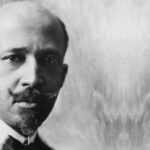
Banner image: W. E. B. Du Bois. Photo from creative commons.
]]>
What is the future of W.E.B. Du Bois? Nimi Wariboko, the featured speaker at UMBC’s 41st annual W.E.B. Du Bois lecture, aims to address this question. “I want to bring Du Bois’s rich and complex...https://umbc.edu/stories/the-future-of-w-e-b-du-bois-nimi-wariboko-presents-umbcs-41st-annual-w-e-b-du-bois-lecture/https://my3.my.umbc.edu/api/v0/pixel/news/120015/guest@my.umbc.edu/e4543cacc425124da11d3dabcfb98d18/api/pixelafricanastudiescahssdreshercenterphilosopphilosophypolicy-and-societyUMBC News & Magazinehttps://my3.my.umbc.edu/groups/umbc-news-magazinehttps://assets1-my.umbc.edu/system/shared/avatars/groups/000/001/943/24435aa6207c452e7bc15cc74b42c7bb/xsmall.png?1748556657https://assets1-my.umbc.edu/system/shared/avatars/groups/000/001/943/24435aa6207c452e7bc15cc74b42c7bb/original.png?1748556657https://assets2-my.umbc.edu/system/shared/avatars/groups/000/001/943/24435aa6207c452e7bc15cc74b42c7bb/xxlarge.png?1748556657https://assets2-my.umbc.edu/system/shared/avatars/groups/000/001/943/24435aa6207c452e7bc15cc74b42c7bb/xlarge.png?1748556657https://assets3-my.umbc.edu/system/shared/avatars/groups/000/001/943/24435aa6207c452e7bc15cc74b42c7bb/large.png?1748556657https://assets1-my.umbc.edu/system/shared/avatars/groups/000/001/943/24435aa6207c452e7bc15cc74b42c7bb/medium.png?1748556657https://assets2-my.umbc.edu/system/shared/avatars/groups/000/001/943/24435aa6207c452e7bc15cc74b42c7bb/small.png?1748556657https://assets1-my.umbc.edu/system/shared/avatars/groups/000/001/943/24435aa6207c452e7bc15cc74b42c7bb/xsmall.png?1748556657https://assets2-my.umbc.edu/system/shared/avatars/groups/000/001/943/24435aa6207c452e7bc15cc74b42c7bb/xxsmall.png?1748556657UMBC News & Magazine00falseTue, 12 Nov 2019 19:25:08 -0500Silicon Valley Success Starts at UMBC
Although it’s been 15 years and he now works in Silicon Valley, Rahul Razdan ’05, information systems, Hilltop Society Member, can still hear UMBC database management instructor Richard Sponaugle’s lessons echoing in his current work.
“I still talk about normalizing a table,” he says. “A lot of what I learned at UMBC applies to what I do today.”
Razdan lives in San Jose and works as a senior business process architect for Intuitive, a global company that produces minimally invasive surgery technology, most notably the da Vinci Surgical System. The system translates the surgeon’s hand motions inside the patient’s body using a miniaturized surgical camera and wristed instruments (i.e., scissors, scalpels, and forceps). Because the doctors are seated while they use the systems, they can perform longer, more complicated procedures.
Entering new markets in new countries, each of which has its own regulations, is where Razdan comes in. “I work with the legal and regulatory teams to interpret the standards into business requirements,” he says. The fundamentals of his work, according to Razdan, are rooted in his time at UMBC, where he studied information systems on the Shady Grove campus.
“It’s the foundation of my career today,” says Razdan, “The systems analysis and design focus in my undergrad taught me to deconstruct problems into smaller parts and apply root cause analysis. I had such an amazing experience.”
Making a home at Shady Grove
Karen Archambault, a former program coordinator at UMBC, isn’t surprised by Razdan’s accomplishments. “He didn’t just focus on credits and classes,” she says. “He took advantage of the full experience at UMBC.”
As a transfer student from Montgomery College, Razdan knew about UMBC’s reputation from its number one ranking in chess. “I thought, ‘That’s pretty awesome. They brag about chess.’ But you know what? Nerds get paid in the end,” says Razdan, with a chuckle.
On the Shady Grove campus, Razdan distinguished himself outside of the classroom. As president of the Universities of Shady Grove Student Association, he organized a job fair and started a dining discount program with nearby restaurants.
“This wasn’t just a place to take classes [for Razdan],” says Sponaugle, senior lecturer and associate undergraduate program director of UMBC at Shady Grove. “Any college experience is going to be what you make of it. He stood out, and really applied himself to his studies too.”
Razdan meets with other alumni at a UMBC event in San Francisco. Photo courtesy of Poulomi Banerjee ’16.
Razdan says he was struck by the genuineness of his classmates and professors. “They were really humble and genuinely inviting,” he says, adding that he always felt welcome on the main campus in Catonsville.
“I never felt like a stepchild. I never felt apart,” says Razdan. “I could go to Catonsville and watch a basketball game or catch a lacrosse match.”
Staying connected from the West Coast
Before Razdan graduated, he’d already completed an internship at the Washington Post and had a job waiting for him at a software company when he graduated.
After earning a master’s degree from the George Washington University in information systems technology, in 2014, Razdan moved to California with his wife. He’s stayed connected to UMBC from afar in a variety of ways.
Razdan’s gifts to the university have earned him a membership in the Hilltop Society. One program he donates to is the Center for Women in Technology. “It’s a great way to give back to my school that gave me so much,” says Razdan, “and while doing so, support women entering the science and technology space. We need a more diverse group of people at the table talking about problems affecting us today, and I find this is one way to address that problem.”
Razdan still follows the news from his undergraduate alma mater, and particularly enjoyed bragging from the West Coast about UMBC’s NCAA Division I Men’s Basketball Tournament upset in 2018. Even more fun, he said, was getting together with fellow Retrievers earlier this year at a UMBC alumni event in California. “It was great,” Razdan says. “I’d love to get together once a year and build on this network.”
— Laura Cech
*****
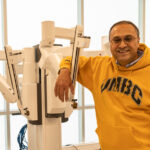
Header image: Razdan with the DaVinciX system. Photo courtesy of Razdan.
]]>
Although it’s been 15 years and he now works in Silicon Valley, Rahul Razdan ’05, information systems, Hilltop Society Member, can still hear UMBC database management instructor Richard...https://umbc.edu/stories/silicon-valley-success-starts-at-umbc/https://my3.my.umbc.edu/api/v0/pixel/news/120016/guest@my.umbc.edu/bf474395a89af42d6e6d4f3148be9c44/api/pixelalumnicoeithilltop-societyinformation-systemsisshadygroveUMBC News & Magazinehttps://my3.my.umbc.edu/groups/umbc-news-magazinehttps://assets1-my.umbc.edu/system/shared/avatars/groups/000/001/943/24435aa6207c452e7bc15cc74b42c7bb/xsmall.png?1748556657https://assets1-my.umbc.edu/system/shared/avatars/groups/000/001/943/24435aa6207c452e7bc15cc74b42c7bb/original.png?1748556657https://assets2-my.umbc.edu/system/shared/avatars/groups/000/001/943/24435aa6207c452e7bc15cc74b42c7bb/xxlarge.png?1748556657https://assets2-my.umbc.edu/system/shared/avatars/groups/000/001/943/24435aa6207c452e7bc15cc74b42c7bb/xlarge.png?1748556657https://assets3-my.umbc.edu/system/shared/avatars/groups/000/001/943/24435aa6207c452e7bc15cc74b42c7bb/large.png?1748556657https://assets1-my.umbc.edu/system/shared/avatars/groups/000/001/943/24435aa6207c452e7bc15cc74b42c7bb/medium.png?1748556657https://assets2-my.umbc.edu/system/shared/avatars/groups/000/001/943/24435aa6207c452e7bc15cc74b42c7bb/small.png?1748556657https://assets1-my.umbc.edu/system/shared/avatars/groups/000/001/943/24435aa6207c452e7bc15cc74b42c7bb/xsmall.png?1748556657https://assets2-my.umbc.edu/system/shared/avatars/groups/000/001/943/24435aa6207c452e7bc15cc74b42c7bb/xxsmall.png?1748556657UMBC News & Magazine00falseFri, 08 Nov 2019 15:56:43 -0500We have liftoff! UMBC-developed mini satellite launched into space to study climate, air quality
In the early morning hours of Saturday, November 2, a few hundred guests at the NASA Wallops Flight Facility gathered at the VIP launch viewing site—a grassy pad near a large tent. Sitting on metal bleachers and in camping chairs, they gazed upward. The NASA Antares rocket and Northrop Grumman’s Cygnus capsule stared back at them from two miles away, more than 14 stories high and loaded with supplies for the International Space Station (ISS). Also on board were more than 30 “cubesats”—small satellites no bigger than large loaves of bread—all of them containing scientific instruments their makers hoped would contribute to a better understanding of our world.
The Cygnus capsule containing UMBC’s HARP cubesat sits atop the Antares rocket on the launchpad. Photo by Bill Ingalls/NASA.
One cubesat, the Hyper-Angular Rainbow Polarimeter (HARP), has been a labor of love for a small group of dedicated UMBC scientists and engineers for the last five years. There were times when they weren’t sure if HARP would ever get to space, but the big moment had finally arrived. Today, HARP was headed up. Way up.
Around 9:55 a.m., the crowd quieted. Their thoughtful silence spoke to years of late nights, early mornings, sighs and tears, hugs and high-fives. They thought back to team meetings with frantic napkin scribbling, spacecraft models made of children’s toys when an idea struck at home, and big dreams.
Roberto Borda, one of the core engineers on the HARP project, anticipates the launch with his wife, Carolina Napp Avelli. Photo by Sarah Hansen, M.S. ’15.
UMBC’s Roberto Borda, one of the core engineers for HARP, stood at the front of the viewing area, his arms around his wife. “It’s happening, it’s happening!” he whispered excitedly in her ear. Other team members stood nearby with their spouses, children, and friends.
The crowd collectively held its breath and squinted across open fields at the rocket, which was backed almost directly by the low morning sun. And then, finally, it got loud. Really loud. The silent guests watched as Antares and Cygnus roared to life, 440,000 pounds of oxygen fueling eight massive explosions generating upwards of a million pounds of thrust.
LIFTOFF! Photo by Bill Ingalls/NASA.
At exactly 9:59:37, right on schedule, the rocket burst from its restraints and bolted upward into the sky. Cheers erupted, and the nervous tension dissipated as the rocket rose ever higher. Within four minutes, it was 100 miles above the Earth, headed to the space station at 17,000 miles per hour.
A few minutes later, champagne bottles popped and the celebration began.
From left to right: Roberto Borda, Dominik Cieslak, Carolina Napp Avelli, Vanderlei Martins, and Pam Millar, director of the NASA Earth Science Technology Office, react just after the rocket launch. Photo by Sarah Hansen, M.S. ’15.
Observing particles in Earth’s atmosphere
The HARP satellite’s unique sensors will collect new kinds of information about clouds and tiny particles in Earth’s atmosphere, such as wildfire smoke, desert dust, and human-generated pollutants. These particles, collectively known as aerosols, have a multitude of effects on the global climate and the health of organisms. For example, rain droplets condense around the particles, so they play a role in global precipitation. The particles can also reflect light away from Earth as well as trap energy inside Earth’s atmosphere, which both affect climate. And pollutants can lead to various respiratory ailments in humans and other animals.
With its innovative design, HARP is able to observe the particles from many angles at once to give scientists a more comprehensive view of what’s going on in the atmosphere. The new data will equip scientists with information they need to better understand climate and air quality concerns.
Vanderlei Martins with the HARP satellite. Photo by Marlayna Demond ’11 for UMBC.
“HARP is really a technology demonstration mission,” explains Vanderlei Martins, the lead researcher on HARP and director of UMBC’s Earth and Space Institute, “but our goal is to also do some science with the data.”
The team is comprised of engineers, physicists, and mathematicians. “As an engineer, I’m looking to develop technology that can make the science happen,” says Dominik Cieslak, an assistant research scientist with the Joint Center for Earth Systems Technology (JCET), a UMBC partnership with NASA. Other team members are developing algorithms to effectively analyze the data that will eventually be arriving in huge quantities. Cieslak notes that the data could be used in new ways for years to come as researchers develop new algorithms and computing power continues to grow.
The launch guests mingled in this huge NASA hangar from about 6 to 8 a.m. before boarding buses for the viewing area. Photo by Sarah Hansen, M.S. ’15.
Awaiting “first light”
“We’re going to celebrate every step,” Martins said on the morning of the rocket launch. He is careful to note that the launch is just one step—a particularly exciting one—in a still-lengthy sequence. Only when the satellite is orbiting Earth and sending back data will he and his team know if HARP is working the way they intended.
Cieslakshared Martins’ cautious optimism. “There are many ways for things to go wrong,” he said, “but there is only one way for everything to go right.”
To increase the likelihood of things going right, the team tested HARP many times on two different kinds of aircraft that fly at high and low altitudes, to ensure the instrument is working properly. But still, says Borda, “It’s a different beast going in a plane versus going to space.”
The HARP cubesat team and their colleagues from Space Dynamics Laboratory wait in the NASA hangar with their families on the morning of the rocket launch. Photo by Sarah Hansen, M.S. ’15.
On Monday, November 4, the Cygnus capsule made it safely to the ISS. Another step completed. In about a month, astronauts will launch it and its cubesat companions into space. If that goes smoothly, the satellite will stabilize and enter low-Earth orbit. Then, Earth-bound instrumentation will need to successfully establish a connection with the satellite for transferring data.
If that succeeds, the team will anxiously await the first images from the satellite, which Martins refers to as “first light.” “I’ll really really celebrate when we get the first light,” Martins says.
Vanderlei Martins is an educator as much as a scientist. After the launch, he pulled out his laptop to teach a group of his undergraduate students, who made the trip to Virginia, what HARP will do once it enters orbit. Photo by Sarah Hansen, M.S. ’15.
An important day
Despite the additional steps to come, the launch “is a big milestone,” says Brent McBride ’14, physics, a current Ph.D. student in atmospheric physics. With the setbacks the project has experienced over five years, to arrive at launch day “is a wonderful thing.”
“We’re all really invested in the spacecraft and the work that will come out of it,” says Ryan Martineau, from the Utah State University Space Dynamics Laboratory, which partnered with UMBC on HARP, and “there’s still more to do.”
Dawn gradually breaks behind the Antares rocket on launch morning. Photo by Bill Ingalls/NASA.
Karl Steiner, UMBC’s vice president for research, was thrilled to witness his first NASA rocket launch, especially after being inspired by the moon landing and Apollo missions as a child. “To have seen Vanderlei and his team work on this as long as I’ve known them, and know the amount of work and sacrifice they’ve put in, the chance to be with them on this important day…” He trailed off, brimming with emotion. “It’s a very special day for the team and for UMBC.”
At a pizza party after the launch, the team members reminisced about the time they’ve spent together—some as many as 15 years on other projects and five years on HARP—as the excitement of making it to this next big step began to sink in.
“Life can surprise you. Even five years ago I couldn’t have imagined I’d be here today. So keep dreaming,” said Cieslak. “Keep dreaming.”
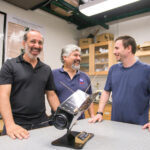
Banner image: Vanderlei Martins, Roberto Borda, and Dominik Cieslak with HARP at UMBC. Photo by Marlayna Demond ’11 for UMBC.
]]>
In the early morning hours of Saturday, November 2, a few hundred guests at the NASA Wallops Flight Facility gathered at the VIP launch viewing site—a grassy pad near a large tent. Sitting on...https://umbc.edu/stories/we-have-liftoff-umbc-developed-mini-satellite-launched-into-space-to-study-climate-air-quality/https://my3.my.umbc.edu/api/v0/pixel/news/120017/guest@my.umbc.edu/b213abdd07ebf35bc50c36a96948706d/api/pixelcnmsgradresearchjcetpage1physicsresearchscience-and-technologyUMBC News & Magazinehttps://my3.my.umbc.edu/groups/umbc-news-magazinehttps://assets1-my.umbc.edu/system/shared/avatars/groups/000/001/943/24435aa6207c452e7bc15cc74b42c7bb/xsmall.png?1748556657https://assets1-my.umbc.edu/system/shared/avatars/groups/000/001/943/24435aa6207c452e7bc15cc74b42c7bb/original.png?1748556657https://assets2-my.umbc.edu/system/shared/avatars/groups/000/001/943/24435aa6207c452e7bc15cc74b42c7bb/xxlarge.png?1748556657https://assets2-my.umbc.edu/system/shared/avatars/groups/000/001/943/24435aa6207c452e7bc15cc74b42c7bb/xlarge.png?1748556657https://assets3-my.umbc.edu/system/shared/avatars/groups/000/001/943/24435aa6207c452e7bc15cc74b42c7bb/large.png?1748556657https://assets1-my.umbc.edu/system/shared/avatars/groups/000/001/943/24435aa6207c452e7bc15cc74b42c7bb/medium.png?1748556657https://assets2-my.umbc.edu/system/shared/avatars/groups/000/001/943/24435aa6207c452e7bc15cc74b42c7bb/small.png?1748556657https://assets1-my.umbc.edu/system/shared/avatars/groups/000/001/943/24435aa6207c452e7bc15cc74b42c7bb/xsmall.png?1748556657https://assets2-my.umbc.edu/system/shared/avatars/groups/000/001/943/24435aa6207c452e7bc15cc74b42c7bb/xxsmall.png?1748556657UMBC News & Magazine00falseFri, 08 Nov 2019 04:52:35 -0500UMBC expands offerings at The Universities at Shady Grove to grow Maryland’s STEM workforce
UMBC students like Jackelyn Flores are increasingly taking advantage of high-impact programs at The Universities at Shady Grove (USG), a Montgomery County campus UMBC shares with eight other Maryland public universities. Opportunities for her and other UMBC-Shady Grove students are expanding even further today with the opening of a new Biomedical Sciences and Engineering (BSE) Education Facility on the popular campus.
Flores ’21 is one of the first students to pursue UMBC’s new degree in translational life sciences technology (TSLT), launched at Shady Grove this fall. Fascinated by biotechnology, she completed her associate’s degree in the field at Montgomery College (MC) while working full-time in the cell therapy department at Lonza, a biotech company near Frederick, Maryland. She’s now enhancing her biomedical sciences knowledge and lab skills through the UMBC program, in a region with particularly high demand for biotech professionals.
Exterior of the just-completed Biomedical Sciences and Engineering Facility at The Universities at Shady Grove. Photo courtesy UMBC-Shady Grove.
Access to state-of-the-art science
At USG, UMBC offers both the new TLST bachelor’s degree and a master’s of professional studies in biotechnology that relaunched exclusively at USG last year. Three new teaching labs in the BSE will greatly increase opportunities for students in these programs to develop their skills with state-of-the-art lab equipment, from liquid chromatography to bioreactors to high-end microscopes.
“Because it’s top-notch equipment, this is what they’ll see when they go work at a biotech company,” says Annica Wayman ’99, mechanical engineering, M6, associate dean for Shady Grove affairs in UMBC’s College of Natural and Mathematical Sciences (CNMS). “They’ll be more prepared for those jobs because they’ll already be familiar with the equipment.”
The fact that many disciplines will offer courses in the building will also help students prepare for the workforce. “This building symbolizes an opportunity to bring the disciplines together to address societal problems,” Wayman says, “and to discover how they can work together to address the biggest challenges.”
Wayman hopes the building will be a resource for companies in the area, whether that means project-based courses where students tackle real industry needs, or startups renting time on the equipment for their own projects. These connections would benefit students, too, who will get the chance to work more closely with biotech professionals while completing their degrees.
Annica Wayman ’99, M6, mechanical engineering, is leading UMBC’s efforts to grow STEM programs at UMBC-Shady Grove. Photo by Marlayna Demond ’11 for UMBC.
Blazing a trail in student training
The path that Jackelyn Flores took from Montgomery College to UMBC is one purposefully designed through a collaboration between the two institutions. “CNMS is a trailblazer in keeping our education programs up to date with the rapid pace of science and technology development, and in making sure students have the skills the biotech industry needs now,” Wayman says. “We also work closely with MC so the program pairs well with their very hands-on biotech program. We created this program to build on that.”
As she prepared to transfer from MC to UMBC, Flores found a supportive community that gave her the information and resources she needed to be successful. “UMBC offered plenty of open house sessions where I was able to meet directly with UMBC staff who answered all of my questions, and UMBC staff maintained active communication throughout the application process,” she says. “It was extremely reassuring to know that the school cared and was offering so much help.”
“The program at Montgomery College did an amazing job in helping me develop the lab skills necessary for the industry,” Flores says. “The TLST program is enhancing my lab and critical thinking skills while also reinforcing my knowledge of the biomedical industry.”
Informal gathering spaces inside the Biomedical Sciences and Engineering Facility encourage interaction and collaboration. Photo courtesy of UMBC-Shady Grove.
Growing Maryland’s STEM workforce
UMBC plans to continue to grow its already robust STEM presence at USG. Beyond offering TLST at the undergraduate level, UMBC offers graduate programs in biotechnology, cybersecurity, data science, geographic information systems, and technical management. Additional STEM programs matching the needs of local employers are on the horizon. Complementing all of these are popular programs in psychology, social work, political science, and history.
“One of the goals of CNMS and UMBC being at Shady Grove is to contribute to workforce development for the state, particularly in STEM,” Wayman says, “The new building provides USG and UMBC the opportunity to greatly expand training students and develop the workforce in high-demand STEM careers.”
It’s working for Flores. “The BSE will open doors for students to network and become involved in the industry while establishing critical connections,” she says, like the one she has with Lonza. “I can’t wait to see what the rest of the TLST program has to offer.”
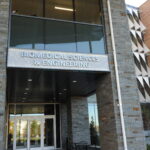
Banner image: The entryway to the new Biomedical Sciences and Engineering Facility at The Universities at Shady Grove. The new space will facilitate growth in STEM programs offered by UMBC and other institutions at USG. Photo courtesy Universities at Shady Grove.
]]>
UMBC students like Jackelyn Flores are increasingly taking advantage of high-impact programs at The Universities at Shady Grove (USG), a Montgomery County campus UMBC shares with eight other...https://umbc.edu/stories/umbc-expands-offerings-at-the-universities-at-shady-grove-to-grow-marylands-stem-workforce/https://my3.my.umbc.edu/api/v0/pixel/news/120018/guest@my.umbc.edu/6523f908b05c6e4907a199f2ee80ddfd/api/pixelcnmscoeitmechescience-and-technologyshadygrovetlstUMBC News & Magazinehttps://my3.my.umbc.edu/groups/umbc-news-magazinehttps://assets1-my.umbc.edu/system/shared/avatars/groups/000/001/943/24435aa6207c452e7bc15cc74b42c7bb/xsmall.png?1748556657https://assets1-my.umbc.edu/system/shared/avatars/groups/000/001/943/24435aa6207c452e7bc15cc74b42c7bb/original.png?1748556657https://assets2-my.umbc.edu/system/shared/avatars/groups/000/001/943/24435aa6207c452e7bc15cc74b42c7bb/xxlarge.png?1748556657https://assets2-my.umbc.edu/system/shared/avatars/groups/000/001/943/24435aa6207c452e7bc15cc74b42c7bb/xlarge.png?1748556657https://assets3-my.umbc.edu/system/shared/avatars/groups/000/001/943/24435aa6207c452e7bc15cc74b42c7bb/large.png?1748556657https://assets1-my.umbc.edu/system/shared/avatars/groups/000/001/943/24435aa6207c452e7bc15cc74b42c7bb/medium.png?1748556657https://assets2-my.umbc.edu/system/shared/avatars/groups/000/001/943/24435aa6207c452e7bc15cc74b42c7bb/small.png?1748556657https://assets1-my.umbc.edu/system/shared/avatars/groups/000/001/943/24435aa6207c452e7bc15cc74b42c7bb/xsmall.png?1748556657https://assets2-my.umbc.edu/system/shared/avatars/groups/000/001/943/24435aa6207c452e7bc15cc74b42c7bb/xxsmall.png?1748556657UMBC News & Magazine00falseThu, 07 Nov 2019 14:18:23 -05002020 U.S. News global ranking names UMBC a top university, a leader in geosciences and space science
U.S. News & World Report has again named UMBC one of the best universities worldwide, with UMBC appearing as one of the top 150 U.S. institutions on the 2020 global list. Thirteen areas of achievement are used to determine this ranking, including global research reputation, regional research reputation, journal citations, and books published. Full methodology can be found here. UMBC performed particularly well in international collaboration and faculty research impact.
The ranking highlights UMBC’s international leadership in geosciences and space science. Recently, the NASA-funded satellite that UMBC’s Vanderlei Martins, physics, developed in collaboration with the Space Dynamics Laboratory launched from NASA’s Wallops Flight Facility to the International Space Station. From there it will be released into Earth orbit.
Banner image: Exterior of UMBC’s new Interdisciplinary Life Sciences Building. Photo by Marlayna Demond ’11 for UMBC.
]]>
U.S. News & World Report has again named UMBC one of the best universities worldwide, with UMBC appearing as one of the top 150 U.S. institutions on the 2020 global list. Thirteen areas of...https://umbc.edu/stories/2020-u-s-news-global-ranking-names-umbc-a-top-university-a-leader-in-geosciences-and-space-science/https://my3.my.umbc.edu/api/v0/pixel/news/120019/guest@my.umbc.edu/5fae190788bf9fa2f7938c8509325bb5/api/pixelcnmscommunityinternationalrankingsUMBC News & Magazinehttps://my3.my.umbc.edu/groups/umbc-news-magazinehttps://assets1-my.umbc.edu/system/shared/avatars/groups/000/001/943/24435aa6207c452e7bc15cc74b42c7bb/xsmall.png?1748556657https://assets1-my.umbc.edu/system/shared/avatars/groups/000/001/943/24435aa6207c452e7bc15cc74b42c7bb/original.png?1748556657https://assets2-my.umbc.edu/system/shared/avatars/groups/000/001/943/24435aa6207c452e7bc15cc74b42c7bb/xxlarge.png?1748556657https://assets2-my.umbc.edu/system/shared/avatars/groups/000/001/943/24435aa6207c452e7bc15cc74b42c7bb/xlarge.png?1748556657https://assets3-my.umbc.edu/system/shared/avatars/groups/000/001/943/24435aa6207c452e7bc15cc74b42c7bb/large.png?1748556657https://assets1-my.umbc.edu/system/shared/avatars/groups/000/001/943/24435aa6207c452e7bc15cc74b42c7bb/medium.png?1748556657https://assets2-my.umbc.edu/system/shared/avatars/groups/000/001/943/24435aa6207c452e7bc15cc74b42c7bb/small.png?1748556657https://assets1-my.umbc.edu/system/shared/avatars/groups/000/001/943/24435aa6207c452e7bc15cc74b42c7bb/xsmall.png?1748556657https://assets2-my.umbc.edu/system/shared/avatars/groups/000/001/943/24435aa6207c452e7bc15cc74b42c7bb/xxsmall.png?1748556657UMBC News & Magazine00falseTue, 05 Nov 2019 15:09:34 -0500Food for Thought
Most students come to college armed with the essential adult knowledge—make a dentist appointment every six months, don’t lose your social security card, and never wash a red sock with your whites. But Tim Dunn, UMBC’s executive chef, and Adam Sachs, UMBC’s dietitian, think we can do a little bit better. Enter: UMBC’s new Teaching Kitchen.
“Most students don’t have great cooking skills, so we want to help them out and teach them about how to construct a meal,” says Dunn.
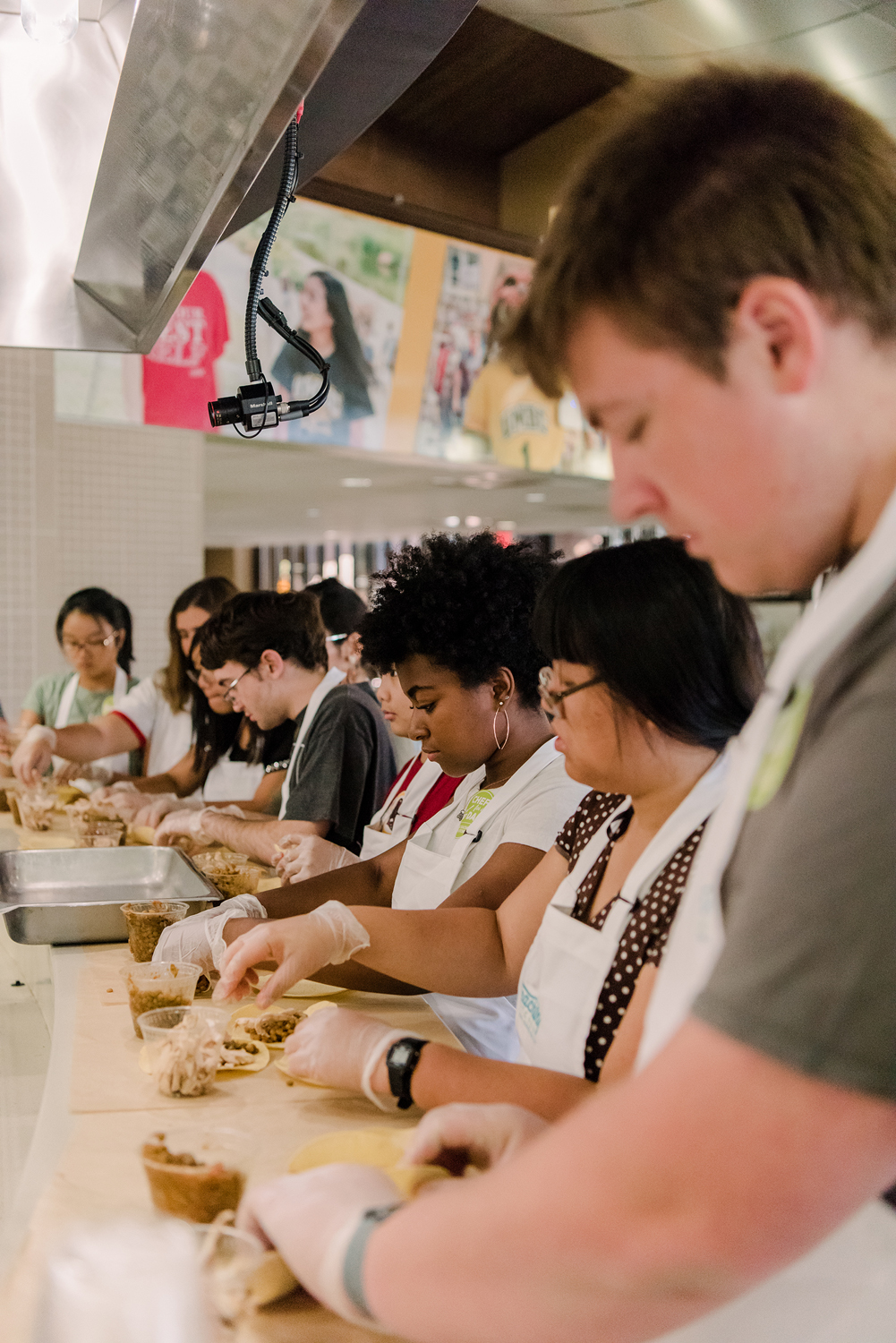
As part of a required Chartwells higher education initiative, UMBC spent the summer of 2019 making updates to True Grit’s Dining Hall to incorporate a Teaching Kitchen. Equipped with cameras and screens, the new addition aims to give students the skills they need to up their culinary game. Students are able to see the chef preparing meals in front of them, utilizing the screens to concentrate on the up-close action of chopping, dicing, and slicing. The scene is set with blazing lights and individual cooking stations so each student has the ability to put their own spin on the recipe.
“The method of using TVs to show the students the cooking process in real time was really helpful. I found it way more effective than if we were just being given verbal directions,” says Johanna Alonso ’20, English, of her first Teaching Kitchen experience. “We were able to look at what the chefs were doing—like how they were cutting the onion and garlic—and imitate it.”
The first meal students prepared at the inaugural Teaching Kitchen in September was chicken and lentil enchiladas. While the entree was fairly simple to create, students were able to produce a meal that both looked and felt more intensive. This was an introduction to lentils for some students, and the nutritional value and cooking process was a valuable kitchen skill.
“We want to help students create meals that are easy to cook, but also well-rounded and full of nutrients,” explains Sachs.
Easy to cook and nutritional value are definitely factors that Sachs and Dunn look at when deciding their menu for the Teaching Kitchens. But they also want to incorporate seasonal favorites and support local vendors. The October menu includes a pumpkin salsa, the designated campus superfood and a fall favorite.
Sachs and Dunn both went to culinary school at Johnson & Wales University in Rhode Island, so perhaps their close partnership was destined for success.
“During the Teaching Kitchen, it’s a lot of going back and forth. I talk about what ingredients we’re using and what the nutritional benefits are, and Tim demonstrates prep techniques and the execution,” Sachs explains. “We are helping students in real time as things constantly change.”
The duo doesn’t expect that students will show up ready to make their “Top Chef” appearance. To lay a proper foundation, they start with the basics—knife skills and technique.
As the program grows, Sachs and Dunn hope to add cooking competitions, visits from professionals in the food industry, and integration with various campus organizations. Students who were part of the pioneer Teaching Kitchen walked away eager to put their newly learned skills to the test— and like any good UMBC student, they’re even prepared to share.
“I’d definitely make these enchiladas for my roommates sometime. And really, I want to try to make some of the other recipes in the cookbook they gave us. I’m already looking forward to the next one,” says Alonso.
****
Sign up for the next Teaching Kitchen workshop on November 13.
All images by Marlayna Demond ’11.
]]>
Most students come to college armed with the essential adult knowledge—make a dentist appointment every six months, don’t lose your social security card, and never wash a red sock with your...https://umbc.edu/stories/food-for-thought/https://my3.my.umbc.edu/api/v0/pixel/news/120020/guest@my.umbc.edu/f3f47ebf2f901962a8b38e2e09635c62/api/pixelcampus-lifedining-hallfall-2019teaching-kitchentrue-gritsUMBC News & Magazinehttps://my3.my.umbc.edu/groups/umbc-news-magazinehttps://assets1-my.umbc.edu/system/shared/avatars/groups/000/001/943/24435aa6207c452e7bc15cc74b42c7bb/xsmall.png?1748556657https://assets1-my.umbc.edu/system/shared/avatars/groups/000/001/943/24435aa6207c452e7bc15cc74b42c7bb/original.png?1748556657https://assets2-my.umbc.edu/system/shared/avatars/groups/000/001/943/24435aa6207c452e7bc15cc74b42c7bb/xxlarge.png?1748556657https://assets2-my.umbc.edu/system/shared/avatars/groups/000/001/943/24435aa6207c452e7bc15cc74b42c7bb/xlarge.png?1748556657https://assets3-my.umbc.edu/system/shared/avatars/groups/000/001/943/24435aa6207c452e7bc15cc74b42c7bb/large.png?1748556657https://assets1-my.umbc.edu/system/shared/avatars/groups/000/001/943/24435aa6207c452e7bc15cc74b42c7bb/medium.png?1748556657https://assets2-my.umbc.edu/system/shared/avatars/groups/000/001/943/24435aa6207c452e7bc15cc74b42c7bb/small.png?1748556657https://assets1-my.umbc.edu/system/shared/avatars/groups/000/001/943/24435aa6207c452e7bc15cc74b42c7bb/xsmall.png?1748556657https://assets2-my.umbc.edu/system/shared/avatars/groups/000/001/943/24435aa6207c452e7bc15cc74b42c7bb/xxsmall.png?1748556657UMBC News & Magazine00falseFri, 01 Nov 2019 15:47:52 -0400Excerpt: The Empowered University
By UMBC President Freeman Hrabowski, Provost Philip Rous, and Peter Henderson
It is challenging to understand fully the culture of an institution. It is even more challenging to change that culture. At UMBC, we have focused our attention and resources on work that is critical to improving our administrative operations, building our research, and supporting student learning and achievement. We were guided in this work by questions that reflected our shared values: Are we putting people first? Are we providing students who come to our campus with the best experience possible? Are we doing the very best we can in all aspects of institutional operations given our mission and resources? Are we then taking that extra step, “above and beyond,” to do more, to do things differently, and to do our work better?
Photo by Marlayna Demond ’11.
When I started at UMBC as vice provost in the late 1980s, our chancellor [Michael Hooker] had just articulated a new vision that asked us to improve our academics, grow our research, and be a more engaged partner with our community. Hooker had set UMBC on a new trajectory toward a new future. Yet, in my first years, if something went wrong, people would often say, “That’s UMBC.” That’s just the way it is, and the way it is just isn’t so great. It is unlikely that an institution with such a negative prevailing attitude could encourage and enable behavior that would lead to sustained excellence. To move toward the vision articulated by our leadership, something had to change. But how?
The larger vision that Hooker articulated was important, yet there was also a new and different feel at a more granular level. We began to take ourselves much more seriously. We created the Meyerhoff program, and it was a success. We became known as a destination for talented students. We built a research park, without which the state would not have taken us seriously as a research university. We evolved rapidly from a commuter school to a residential research university. We upgraded our admissions standards. We looked carefully at our performance on state audits and how to improve our financial and administrative structures. We celebrated as a community our commitment, hard work, and accomplishments (what we now call “grit and greatness”).
It is a cliché, but every journey does begin with a single step and a single success that can demonstrate for others what could be. With each success and subsequent success, more and more members of the community began to look at our goals, values, and work in a different way. Culture change can be imperceptible at times, yet at other times one can recognize that the institution has reached a tipping point. One day, you realize that your campus has changed, the paradigm has shifted, the culture is now perceptibly different. It was in this manner that our campus transformed itself from “That’s UMBC” to “unabashedly aspirational.”
In 2017, our campus was named one of the nation’s top academic workplaces in Great Colleges to Work For by the Chronicle of Higher Education for the ninth year in a row.We were just one of ten four-year institutions with more than 10,000 students featured on an “honor roll” of those with outstanding marks across nearly every measured category.
During this same period, when we went from “that’s UMBC” to “great college to work for,” our six-year graduation rate also climbed from 35 percent to more than 65 percent (more if you include the 10% who transfer out of UMBC and earn a degree at another institution and the 10% still enrolled after six years). So, how did we get from being perceived by some as mediocre to “unabashedly aspirational”? We’ll talk about particular programs and initiatives [later in the book]. Here it suffices to say that small innovations and initiatives can lead to big changes. Eventually, over a period of time, the organization is transformed.
Serious, sustainable change is hard work. It is often far harder than we would like to think it will be. When the change we want to see involves race, diversity, differences, and inclusion, it can be even more challenging, as these are topics most Americans are not comfortable discussing. But when change is the right thing to do, we must nevertheless engage and persist.
At UMBC, we are hungry for change. The imperative to evolve rapidly arises from our collective commitment to do all we can to better serve our students and their families; support student learning, persistence, and completion; connect our students and faculty to opportunities in the Baltimore-Washington region; and work to address our region’s social and economic needs. At just over fifty years of age, we are yet a young, growing institution, and to advance these goals, we must innovate, continually addressing new needs as they arise while simultaneously laying the foundation of a new model of the public university. Our mantra is “success is never final.”
As a campus, we are also a healthy community. This quality is expressed in our ability to be reflective; we can look in the mirror and be honest about what we see, good, bad, or challenging. When issues arise, our culture of reflection leads us to collect data that can inform our decision-making and to have respectful conversations that identify problems and possible solutions. We can acknowledge openly both our strengths and weaknesses, recognize the challenges we face and opportunities we can embrace, and understand how a well-considered response can lead to the desired outcomes. We structure our conversations so that they are inclusive and open to differing perspectives, using our shared governance structures or focus groups with stakeholders for a specific issue.
Change requires grit—commitment and resilience—because it does not happen overnight. Change that matters only succeeds because of long, organized, and sometimes expensive commitments. It requires the engagement of many individuals as leaders and change agents in order to persuade others, and that can require, from time to time, difficult conversations. This can be daunting for some.
Change requires courage, because it requires us to see things differently from the way they are at present. It requires us to recognize our failures as well as successes. For change to be possible, you first have to see the world and the lens through which you view it. Only then can you observe what could be and understand what the possibilities are. To make progress, you need to ask different and often difficult questions of yourself and others and then set different expectations so that others begin to see the world from a different perspective too.
Change necessitates courage because, so often, it requires a leap of faith and an acceptance of substantial risk—believing that a goal is achievable even if the outcome is, as yet, unseen: “No one believed it could be done, because it hadn’t been done before. And then we did it.”
* * * * *
Note: This excerpt is from chapter three of The Empowered University, co-written by UMBC President Freeman Hrabowski, Provost Philip Rous, and Peter Henderson, in Hrabowski’s voice. The excerpt has been modified for length and clarity. The Empowered University is available in the UMBC Bookstore, as well as Holding Fast to Dreams (2016) and President Hrabowski’s earlier books.
]]>
By UMBC President Freeman Hrabowski, Provost Philip Rous, and Peter Henderson It is challenging to understand fully the culture of an institution. It is even more challenging to change that...https://umbc.edu/stories/excerpt-the-empowered-university/https://my3.my.umbc.edu/api/v0/pixel/news/120021/guest@my.umbc.edu/0df4a31712cb6b768f8905814043b357/api/pixelhrabowskiimpactmeyerhoffUMBC News & Magazinehttps://my3.my.umbc.edu/groups/umbc-news-magazinehttps://assets1-my.umbc.edu/system/shared/avatars/groups/000/001/943/24435aa6207c452e7bc15cc74b42c7bb/xsmall.png?1748556657https://assets1-my.umbc.edu/system/shared/avatars/groups/000/001/943/24435aa6207c452e7bc15cc74b42c7bb/original.png?1748556657https://assets2-my.umbc.edu/system/shared/avatars/groups/000/001/943/24435aa6207c452e7bc15cc74b42c7bb/xxlarge.png?1748556657https://assets2-my.umbc.edu/system/shared/avatars/groups/000/001/943/24435aa6207c452e7bc15cc74b42c7bb/xlarge.png?1748556657https://assets3-my.umbc.edu/system/shared/avatars/groups/000/001/943/24435aa6207c452e7bc15cc74b42c7bb/large.png?1748556657https://assets1-my.umbc.edu/system/shared/avatars/groups/000/001/943/24435aa6207c452e7bc15cc74b42c7bb/medium.png?1748556657https://assets2-my.umbc.edu/system/shared/avatars/groups/000/001/943/24435aa6207c452e7bc15cc74b42c7bb/small.png?1748556657https://assets1-my.umbc.edu/system/shared/avatars/groups/000/001/943/24435aa6207c452e7bc15cc74b42c7bb/xsmall.png?1748556657https://assets2-my.umbc.edu/system/shared/avatars/groups/000/001/943/24435aa6207c452e7bc15cc74b42c7bb/xxsmall.png?1748556657UMBC News & Magazine00falseWed, 30 Oct 2019 22:32:35 -0400“The Empowered University” brings UMBC’s story to readers nationwide
A new read on UMBC’s story is now hitting bookstores across the country. The Empowered University details how the UMBC community has come together to tackle some of higher education’s most intractable challenges, and has become a national model for inclusive excellence along the way. It’s a story of how leaders across administration, faculty, staff, and students have worked to get a full, honest view of UMBC’s strengths and weaknesses, and move the university forward.
UMBC President Freeman Hrabowski will speak about The Empowered University at “Brilliant Baltimore” (November 3, 2 p.m., in the Literary Salon at the USM Columbus Center). UMBC colleagues, students, and alumni are encouraged to attend this free, public talk.
The book’s subtitle is telling: Shared Leadership, Culture Change, and Academic Success. Readers hear directly from President Hrabowski, with coauthors Provost Philip Rous and senior advisor Peter Henderson. At the same time, the book is full of insights and experiences from all corners of the UMBC community.
Taking on the big challenges
How can universities prepare students to be leaders and change-makers—not just for the future, but in their own communities today? How can universities redesign courses to more actively engage students and prepare them for the future? How can universities more actively welcome and include diverse faculty as well as diverse students?
Yvette Mozie-Ross, vice provost for enrollment management and planning, congratulates a new UMBC graduate at commencement.
President Hrabowski narrates the university’s drive to tackle these questions, providing clear and accessible examples from decades of innovation at UMBC. Many of UMBC’s explorations have also been research studies, with program evaluation to determine what works, what doesn’t, and what has the greatest impact for the investment. This means that in addition to boosting student success at UMBC, these innovations can be more readily applied at universities across the country.
Already, UMBC’s tried and tested approaches to providing holistic student support have been implemented at universities in North Carolina, California, Michigan, Pennsylvania, and more. Still, the authors emphasize that supporting students isn’t all about implementing one strategy or another—it’s also creating a healthy, supportive campus culture.
Abby Cruz ‘18, a Meyerhoff affiliate and MARC U*STAR Scholar, works in Fernando Vonhoff’s biology lab. The Chan Zuckerberg Initiative recently invested $6.9M in replicating the Meyerhoff Scholars Program at UCSD and UC Berkeley.
“Culture change is hard as hell”
What does a healthy university community look like? “This quality is expressed in our ability to be reflective; we can look in the mirror and be honest about what we see, good, bad, or challenging,” writes President Hrabowski, in The Empowered University.
And that work takes time. “It is a cliché, but every journey does begin with a single step and a single success that can demonstrate for others what could be. With each success and subsequent success, more and more members of the community began to look at our goals, values, and work in a different way,” President Hrabowski notes.
Faculty and staff connect at the UMBC Retreat, a planning event before the start of each school year.
“Culture change can be imperceptible at times, yet at other times one can recognize that the institution has reached a tipping point,” he writes. “One day, you realize that your campus has changed, the paradigm has shifted, the culture is now perceptibly different. It was in this manner that our campus transformed itself…to ‘unabashedly aspirational.’”
The Empowered University is available in the UMBC Bookstore, as well as Holding Fast to Dreams (2016) and President Hrabowski’s earlier books.
Featured image: President Hrabowski with UMBC students on the roof of the Administration Building. All photos by Marlayna Demond ’11 for UMBC.
]]>
A new read on UMBC’s story is now hitting bookstores across the country. The Empowered University details how the UMBC community has come together to tackle some of higher education’s most...https://umbc.edu/stories/the-empowered-university-brings-umbcs-story-to-readers-nationwide/https://my3.my.umbc.edu/api/v0/pixel/news/120022/guest@my.umbc.edu/ac175a1ab850587d1449eec4a6ae411d/api/pixelcommunityhrabowskipage1UMBC News & Magazinehttps://my3.my.umbc.edu/groups/umbc-news-magazinehttps://assets1-my.umbc.edu/system/shared/avatars/groups/000/001/943/24435aa6207c452e7bc15cc74b42c7bb/xsmall.png?1748556657https://assets1-my.umbc.edu/system/shared/avatars/groups/000/001/943/24435aa6207c452e7bc15cc74b42c7bb/original.png?1748556657https://assets2-my.umbc.edu/system/shared/avatars/groups/000/001/943/24435aa6207c452e7bc15cc74b42c7bb/xxlarge.png?1748556657https://assets2-my.umbc.edu/system/shared/avatars/groups/000/001/943/24435aa6207c452e7bc15cc74b42c7bb/xlarge.png?1748556657https://assets3-my.umbc.edu/system/shared/avatars/groups/000/001/943/24435aa6207c452e7bc15cc74b42c7bb/large.png?1748556657https://assets1-my.umbc.edu/system/shared/avatars/groups/000/001/943/24435aa6207c452e7bc15cc74b42c7bb/medium.png?1748556657https://assets2-my.umbc.edu/system/shared/avatars/groups/000/001/943/24435aa6207c452e7bc15cc74b42c7bb/small.png?1748556657https://assets1-my.umbc.edu/system/shared/avatars/groups/000/001/943/24435aa6207c452e7bc15cc74b42c7bb/xsmall.png?1748556657https://assets2-my.umbc.edu/system/shared/avatars/groups/000/001/943/24435aa6207c452e7bc15cc74b42c7bb/xxsmall.png?1748556657UMBC News & Magazine00falseTue, 29 Oct 2019 17:18:29 -0400UMBC’s newest Postdoctoral Fellows for Faculty Diversity explore who has a voice in literature, policy, and social movements
“UMBC is giving me the ultimate opportunity of time and support to think, write, and teach about what matters to me the most—conducting research about my community,” says Fernando Tormos-Aponte, public policy and political science. He shares the same enthusiasm that Emily Yoon Perez, English, and Blake Francis, philosophy, have about their new appointments as 2019-2020 Postdoctoral Fellows for Faculty Diversity in UMBC’s College of Arts, Humanities, and Social Sciences (CAHSS).
The postdoctoral fellows are pursuing research in a broad range of topics. Perez researches diverse twentieth- and twenty-first-century texts. Francis studies the ethics of environmental problems. Tormos-Aponte focuses on identity and social movements. What connects them all is a dedication to pursuing research involving diverse communities and working closely with students who are eager to explore these subject areas.
Reflecting diversity in literary texts
Perez was born and raised in Baltimore by immigrant parents from Korea who were small business owners in Northeast Baltimore. She was constantly surrounded by the rich diversity Baltimore has to offer and saw that reflected in some of the texts she read throughout high school. “I read African American texts throughout my time in secondary and higher education, which provided an opening to explore other minority literatures,” remembers Perez. In graduate school, she was able to take an African American literature course. This reaffirmed for her the desire to pursue an academic career in English, which was first inspired by Toni Morrison’s writing.
Her current research areas focus on twentieth- and twenty-first-century literature, critical race theory, postcolonial and transnational studies, and feminist theory. Perez’s book project is titled Little Intimacies: Race and Oceanic Migrations in Minority U.S. Fiction. It brings together transnational literary studies, comparative racialization studies, postcolonial theory, and ethnic studies.
“I choose to teach in a way that is inclusive. My courses always center on twentieth- and twenty-first-century authors from marginalized identities,” shares Perez. “Diversity is also what is not seen—students may have jobs or take care of family members. They have lives beyond the classroom that I do not always know about. I use a range of assessments to allow students to show their mastery of the material in different ways and to be mindful of different modes of learning.”
Emily Yoon Perez
Her teaching mentor, Lindsay DiCuirci, English, notes Perez’s background and research focus are a great match for the needs of UMBC students. “Emily’s expertise in contemporary multiethnic U.S. literature and world literatures resonates with our students’ desire to read literature that reflects their own diverse backgrounds,” says DiCuirci.
“Perez’s Analysis of Literary Language course draws from writers like Audre Lorde, Ocean Vuong, Toni Morrison, Jhumpa Lahiri, and Viet Thanh Nguyen,” DiCuirci notes. “She invites students to not only study literary form, but to think about how these forms enable writers to engage with subjects of race and ethnicity, belonging, sexuality, migration, family, language, and power.”
Climate change responsibility
This sense of responsibility to students also drives Francis. He will be teaching a course on climate change and intergenerational justice social justice in the spring that explores issues of environmental racism.
Francis grew up in the southwestern U.S. with a great appreciation for the outdoors. When he identified as a masculine woman, he found it safer to be in distant natural environments, where he did not have to manage issues like which bathroom he could use.
“I began identifying as a transgender man around the time I decided to specialize in environmental ethics,” shares Francis. “Protecting the wild places that have made me who I am is part of what motivates me to work on climate change, intergenerational justice, and environmental values.”
In particular, Francis focuses on moral questions that come up in environmental policy and decision making, including the responsibility of nations to address climate change and what happens when they don’t take responsibility. He is currently examining the responsibility of the U.S. to provide reparations for the victims of climate change and whether taxpayers should be responsible for underwriting those costs.
“I am committed to working across disciplines (including science, public health, and economics) to make progress on climate change,” explains Francis. “I model this commitment to my students, and I design classes at the intersection of ethics, political philosophy, environmental studies, and economics, which are open to students from all backgrounds.”
Blake Francis
Francis hopes to build connections with scientists and social scientists at UMBC and other institutions in the region who are doing intergenerational work on environmental justice issues. “I’ve seen students at UMBC from across all majors gather to protest for sound environmental policy,” he adds. “Successful political action on climate change requires an interdisciplinary approach. It won’t make their message stronger necessarily, but it probably makes it smarter.”
Jessica Pfeifer, philosophy,appreciates Francis’s ability to work across different fields for the greatest impact. “Blake Francis’s work has significant implications for how we balance different sorts of harms and goods and whether we can hold collective agents (such as nations and corporations) accountable for climate change,” explains Pfeiffer. “He also helps build connections to other departments and programs on campus, including the Human Context of Science and Technology Program.”
Identity and social movements
Climate change also underlies much of Tormos-Aponte’s work. “I was born and raised in Puerto Rico,” he shares. “You can’t live in a place like Puerto Rico and not care about the beauty of this planet, the politics that drive it as well as who is impacted by it and who is ignored in that political process.”
Fernando Tormos-Aponte.
Tormos-Aponte spent time working on climate change research and social movements during the 2015 Climate Change Conference in Paris. While there he was able to join a delegation of indigenous people from all over the world protesting for their rights to be included in the climate change agreements. “You cannot separate identity and social movements,” he says.
Tormos-Aponte at the 2015 Climate Change Conference in Paris.
Professor Pamela Bennett, public policy, mentors Tormos-Aponte and sees him as an excellent model for students who want to learn how to combine their scholarly research interests with real-world engagement. “From his work on social justice movements such as Black Lives Matter to his work on climate change and the ongoing impact of Hurricane María in Puerto Rico, Fernando’s research engages with a range of issues that are vitally important to the Baltimore metropolitan region, the state, and around the world,” says Bennett.
For all the fellows, accepting the opportunity to come to UMBC as a postdoctoral fellow was not only about exploring their research in an inclusive scholarly community but also about finding a home for themselves that is open to their many identities and affiliations.
“Being at UMBC is about being able to be myself,” says Tormos-Aponte, “to be proud of my heritage and its positive influence on my research.”
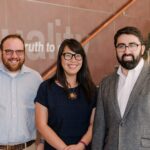
Banner image: (L to R) Francis, Perez, and Tormos-Aponte at UMBC. All photos by Marlayna Demond ’11 for UMBC unless otherwise noted.
]]>
“UMBC is giving me the ultimate opportunity of time and support to think, write, and teach about what matters to me the most—conducting research about my community,” says Fernando Tormos-Aponte,...https://umbc.edu/stories/umbcs-newest-postdoctoral-fellows-for-faculty-diversity-explore-who-has-a-voice-in-literature-policy-and-social-movements/https://my3.my.umbc.edu/api/v0/pixel/news/120023/guest@my.umbc.edu/28219e6986d605fec354aaa8eb5e15aa/api/pixelcahssdiversityandinclusionenglishpage1philosophypolicy-and-societypoliticalsciencepublicpolicyresearchUMBC News & Magazinehttps://my3.my.umbc.edu/groups/umbc-news-magazinehttps://assets1-my.umbc.edu/system/shared/avatars/groups/000/001/943/24435aa6207c452e7bc15cc74b42c7bb/xsmall.png?1748556657https://assets1-my.umbc.edu/system/shared/avatars/groups/000/001/943/24435aa6207c452e7bc15cc74b42c7bb/original.png?1748556657https://assets2-my.umbc.edu/system/shared/avatars/groups/000/001/943/24435aa6207c452e7bc15cc74b42c7bb/xxlarge.png?1748556657https://assets2-my.umbc.edu/system/shared/avatars/groups/000/001/943/24435aa6207c452e7bc15cc74b42c7bb/xlarge.png?1748556657https://assets3-my.umbc.edu/system/shared/avatars/groups/000/001/943/24435aa6207c452e7bc15cc74b42c7bb/large.png?1748556657https://assets1-my.umbc.edu/system/shared/avatars/groups/000/001/943/24435aa6207c452e7bc15cc74b42c7bb/medium.png?1748556657https://assets2-my.umbc.edu/system/shared/avatars/groups/000/001/943/24435aa6207c452e7bc15cc74b42c7bb/small.png?1748556657https://assets1-my.umbc.edu/system/shared/avatars/groups/000/001/943/24435aa6207c452e7bc15cc74b42c7bb/xsmall.png?1748556657https://assets2-my.umbc.edu/system/shared/avatars/groups/000/001/943/24435aa6207c452e7bc15cc74b42c7bb/xxsmall.png?1748556657UMBC News & Magazine00falseMon, 28 Oct 2019 19:05:36 -0400UMBC shines at Brilliant Baltimore with artwork, talks, performances, a reception, and more
From November 1 through 10, UMBC will again join in two of Baltimore’s signature events — Light City and the Baltimore Book Festival — which will be held together in 2019 under the theme of Brilliant Baltimore.
Organized by the Baltimore Office of Promotion and the Arts, Brilliant Baltimore promises to illuminate the city with literature, ideas, world-class light installations, and performances. UMBC’s contributions include a talk by President Freeman Hrabowski, a UMBC-Light Ekphrastic panel discussion, apanel discussion on Baltimore Revisited featuring UMBC faculty, and the SPARK gallery, which will showcase visual artwork and offer performances and presentations.
President Hrabowski: The Empowered University // Sunday, November 3, 2 p.m., Literary Salon, USM Columbus Center
UMBC President Freeman Hrabowski will discuss his new book, The Empowered University: Shared Leadership, Culture Change, and Academic Success, written with Philip Rous and Peter Henderson. The Empowered University examines how university communities support academic success by cultivating an empowering institutional culture and broad leadership for innovation. President Hrabowski argues that higher education can play a unique role in addressing the fundamental divisions in our society and economy by supporting people in reaching their full potential.
Pres. Hrabowski and UMBC students on the roof of the Administration Building.
SPARK Gallery // November 1 – 10, 5 – 10 p.m., USM Columbus Center
The SPARK Gallery represents a the third year of collaboration between UMBC, Towson University, PNC Bank, and BOPA. Curated by Catherine Borg, it features light art by UMBC faculty Corrie Francis Parks, Evan Tedlock, Lisa Moren, Lynn Cazabon, Timothy Nohe, Vin Grabill, and Colette Searls, with presentations of animated films by UMBC students.
Performances and events at SPARK will be presented by the UMBC Jazz Ensemble, directed by Matt Belzer; Lisa Cella and Stephen Bradley; and the UMBC New Music Ensemble; the Umbilicus percussion ensemble. They also include a site-specific dance performance by UMBC students choreographed by Ann Sofie Clemmensen and Carol Hess.
The SPARK gallery (shown here in 2018) will showcase art and performances.
UMBC Light City Reception // Saturday, November 9, 4 – 9 p.m., USM Columbus Center
UMBC alumni and the UMBC community are invited to stop by the Columbus Center to enjoy light refreshments and pick up a fun glow in the dark giveaway (for first 300 guests), and enjoy a breathtaking view of the harbor and Light City Baltimore. Attendees are encouraged to bring friends and family, and to register in advance for the reception.
Light City visitors enjoyed the UMBC reception in 2018.
Word & Image // Saturday, November 2, 6 p.m., World Trade Center
In its first decade, The Light Ekphrastic (TLE) has paired more than 450 artists and writers from Baltimore and around the world to create new works of art and writing inspired by that of their partners. In “Word & Image: Creative Collaborations with UMBC and The Light Ekphrastic,” TLE participants share their work and talk about how the experience of collaborating with strangers has broadened the way they create.
The panel will be co-moderated by Jenny O’Grady, editor of UMBC Magazine; and Timothy Nohe, professor of visual arts and director of the Center for Innovation, Research, and Creativity in the Arts. Panelists will include Melissa Cormier, M.F.A. ’17, visual arts, and Katie Feild ’05, visual arts.
Baltimore Revisited // Sunday, November 3, 2 p.m., Radical Book Fair Pavilion
Baltimore Revisited is an innovative new edited volume that examines the complex histories of Charm City and efforts underway to address the city’s pervasive inequalities. These issues continue to resonate with Baltimore residents almost five years after the death of Freddie Gray and the Baltimore Uprising that followed.
The book is co-edited by Nicole King, associate professor and chair of American Studies; Kate Drabinski, lecturer, gender, women’s, and sexuality studies; and University of Baltimore historian Joshua Clark Davis. King will moderate a panel that will include Baltimore Revisited contributors Drabinski; Michael Casiano, assistant professor, American studies; and Ashley Minner, professor of the practice, American studies. It will take place in the Radical Book Fair Pavilion at the Baltimore Book Festival.
Drabinski has shared, “We hope the book raises questions about how history can inform the present to understand the roots of the city’s many inequalities. We wish readers to imagine new ways of being in and organizing for Baltimore in the future.”
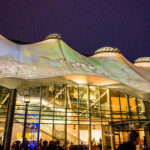
Featured image: The roof of the Columbus Center was illuminated in 2016 with artwork by UMBC’s Kelley Bell and Corrie Francis Parks. Photos by Marlayna Demond ’11 for UMBC.
]]>
From November 1 through 10, UMBC will again join in two of Baltimore’s signature events — Light City and the Baltimore Book Festival — which will be held together in 2019 under the theme of...https://umbc.edu/stories/umbc-shines-at-brilliant-baltimore-with-artwork-talks-performances-a-reception-and-more/https://my3.my.umbc.edu/api/v0/pixel/news/120024/guest@my.umbc.edu/df0accc9e663714ffa48cfdc68e98d37/api/pixelartsarts-and-culturebaltimorebookfestivalbrilliantbaltimorecahsscommunitylightcitypage1UMBC News & Magazinehttps://my3.my.umbc.edu/groups/umbc-news-magazinehttps://assets1-my.umbc.edu/system/shared/avatars/groups/000/001/943/24435aa6207c452e7bc15cc74b42c7bb/xsmall.png?1748556657https://assets1-my.umbc.edu/system/shared/avatars/groups/000/001/943/24435aa6207c452e7bc15cc74b42c7bb/original.png?1748556657https://assets2-my.umbc.edu/system/shared/avatars/groups/000/001/943/24435aa6207c452e7bc15cc74b42c7bb/xxlarge.png?1748556657https://assets2-my.umbc.edu/system/shared/avatars/groups/000/001/943/24435aa6207c452e7bc15cc74b42c7bb/xlarge.png?1748556657https://assets3-my.umbc.edu/system/shared/avatars/groups/000/001/943/24435aa6207c452e7bc15cc74b42c7bb/large.png?1748556657https://assets1-my.umbc.edu/system/shared/avatars/groups/000/001/943/24435aa6207c452e7bc15cc74b42c7bb/medium.png?1748556657https://assets2-my.umbc.edu/system/shared/avatars/groups/000/001/943/24435aa6207c452e7bc15cc74b42c7bb/small.png?1748556657https://assets1-my.umbc.edu/system/shared/avatars/groups/000/001/943/24435aa6207c452e7bc15cc74b42c7bb/xsmall.png?1748556657https://assets2-my.umbc.edu/system/shared/avatars/groups/000/001/943/24435aa6207c452e7bc15cc74b42c7bb/xxsmall.png?1748556657UMBC News & Magazine00falseFri, 25 Oct 2019 22:19:33 -0400














 The SPARK gallery (shown here in 2018) will showcase art and performances.
