UMBC Center for Cybersecurity receives funding from T. Rowe Price to support students
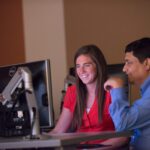
Global investment management firm T. Rowe Price is supporting cybersecurity research and students at UMBC through a new sponsorship of the UMBC Center for Cybersecurity. The funding reinforces UMBC’s strength in cybersecurity research and talent development, and T. Rowe Price’s leadership in advancing cybersecurity for financial services.
“We are delighted to be working with T. Rowe Price,” says Anupam Joshi, director of the Center for Cybersecurity and chair of computer science and electrical engineering. “This new collaboration with T. Rowe Price’s security team will provide great opportunities for our students to be exposed to cybersecurity in financial services and prepare them for promising careers protecting critical infrastructure.”
The sponsorship from T. Rowe Price will support a graduate student conducting cybersecurity research relevant to financial services and will also support undergraduate cybersecurity students through UMBC’s Cyber Scholars Program. This collaboration will enhance UMBC’s efforts to cultivate new cyber talent and increase diversity in the field. The students will have opportunities to meet, interact with and learn from members of T. Rowe Price’s security team.
“We have built a strong partnership with UMBC over the past few decades that has provided us a robust talent pipeline for the firm. We currently have over 200 associates who are UMBC alumni,” says Tom Quinn, head of information security at T. Rowe Price.
UMBC and T. Rowe Price have built a strategic partnership spanning several decades that provides support to students across disciplines and a highly skilled workforce for the company. T. Rowe Price is a top employer of UMBC graduates and student interns in areas from investment research to technology development.
“For many years, UMBC has consistently provided our firm with hundreds of exceptionally talented students that we have hired across all areas of our business. UMBC students are well-rounded and diverse in their experiences and skills, which make them strong assets to our firm year over year,” said Mindy Silverman, talent acquisition leader for university relations at T. Rowe Price.
Photo by Marlayna Demond ’11 for UMBC.
]]>
Global investment management firm T. Rowe Price is supporting cybersecurity research and students at UMBC through a new sponsorship of the UMBC Center for Cybersecurity. The funding reinforces...
https://umbc.edu/stories/umbc-center-for-cybersecurity-receives-funding-from-t-rowe-price-to-support-students-in-cybersecurity/
https://my3.my.umbc.edu/api/v0/pixel/news/120558/guest@my.umbc.edu/2abaf9c39b2c3121925b9f741715f31c/api/pixel
cfr
coeit
csee
cyberscholars
cybersecurity
science-and-technology
UMBC News & Magazine
https://my3.my.umbc.edu/groups/umbc-news-magazine
https://assets1-my.umbc.edu/system/shared/avatars/groups/000/001/943/24435aa6207c452e7bc15cc74b42c7bb/xsmall.png?1748556657
https://assets1-my.umbc.edu/system/shared/avatars/groups/000/001/943/24435aa6207c452e7bc15cc74b42c7bb/original.png?1748556657
https://assets2-my.umbc.edu/system/shared/avatars/groups/000/001/943/24435aa6207c452e7bc15cc74b42c7bb/xxlarge.png?1748556657
https://assets2-my.umbc.edu/system/shared/avatars/groups/000/001/943/24435aa6207c452e7bc15cc74b42c7bb/xlarge.png?1748556657
https://assets3-my.umbc.edu/system/shared/avatars/groups/000/001/943/24435aa6207c452e7bc15cc74b42c7bb/large.png?1748556657
https://assets1-my.umbc.edu/system/shared/avatars/groups/000/001/943/24435aa6207c452e7bc15cc74b42c7bb/medium.png?1748556657
https://assets2-my.umbc.edu/system/shared/avatars/groups/000/001/943/24435aa6207c452e7bc15cc74b42c7bb/small.png?1748556657
https://assets1-my.umbc.edu/system/shared/avatars/groups/000/001/943/24435aa6207c452e7bc15cc74b42c7bb/xsmall.png?1748556657
https://assets2-my.umbc.edu/system/shared/avatars/groups/000/001/943/24435aa6207c452e7bc15cc74b42c7bb/xxsmall.png?1748556657
UMBC News & Magazine
0
0
false
Tue, 06 Feb 2018 17:04:18 -0500
UMBC receives $1.3 million grant from the Alfred P. Sloan Foundation to diversify economics Ph.D.s

The UMBC economics department has received a $1.3 million grant from the Alfred P. Sloan Foundation to increase the number of students from underrepresented racial and ethnic groups who complete highly competitive doctoral programs in economics. This five-year program will support students through scholarships, mentoring, research experiences, and, finally, entry into post-graduation programs specializing in doctoral preparation.
“This grant will help increase the diversity of the profession. The students in the program will go on to become academic economists who will, in turn, inspire future generations of underrepresented ethnic and racial minorities,” explains David Mitch, director of the new program and economics department chair, who said he was thrilled by the news.
Through this grant, UMBC will become a partner in a larger effort by the Sloan Foundation to provide resources to diversify the field of economics by creating interventions from the undergraduate level through the post-baccalaureate level. The UMBC program prepares students to apply for and participate in a two-year post-graduation paid fellowship in Sloan-supported programs at New York University, Harvard University, or other highly selective institutions. UMBC will become an integral part of establishing a national pipeline for underrepresented students to understand, get excited about, and pursue careers in economics.
Top tier economics graduate programs require rigorous academic preparation often well beyond the traditional economics major, including coursework in high-level math courses. This coursework, which students are often unaware of until their junior year, is a major barrier to many students, including those from underrepresented groups. UMBC’s program will help students overcome this and other challenges by focusing on recruitment efforts, educating students about opportunities in economics, intensive personalized mentoring, and placement in high-quality and prestigious research experiences at academic and other partner institutions. The most involved students will also have the chance to receive scholarships during their senior year and help to apply and pay for post-baccalaureate programs. This program helps UMBC provide financial support but also the infrastructure needed for underrepresented minority students to succeed in managing the social and academic demands of a rigorous Ph.D. program.
Across the nation, a host of academic fields including economics lack ethnic and racial diversity. Surveys by the American Economic Association indicate that fewer than ten percent of newly minted Ph.D.s in economics or related areas are earned by underrepresented minorities. For 2015, the American Economics Association reported that only two percent of new Ph.D.s that year were awarded to African American students and six percent to Hispanic/Latino students. If the percentage of African Americans completing Ph.D. degrees in economics were to increase by just one percentage point, the number of African Americans entering the job market would more than double.
UMBC, with its national reputation for inclusive excellence and the academic success of diverse students, is the ideal university to join the larger Sloan initiative. UMBC’s economics department has already begun creating a more supportive institutional culture by providing undergraduates with rigorous coursework and high-level internship and research opportunities. They also work closely with the math department to evaluate how to design or adapt courses to make the process easier for students to navigate. The department also has a history of success helping underrepresented students gain admittance to post-baccalaureate and doctoral programs in economics at NYU, Duke University, MIT, Harvard, and the University of Chicago, some of whom have already indicated an interest in being a resource or mentor for new students in the Sloan-supported program.
 Brandon Enriquez ’17, economics and mathematics. Photo by Marlayna Demond ’11 for UMBC.
Brandon Enriquez ’17, economics and mathematics, is among them. A current student in the Ph.D. program at MIT, he didn’t know anyone with a Ph.D. before coming to UMBC. He agrees, “UMBC is an ideal place to cultivate new diverse scholars in economics because of its strength in math.”
He acknowledges that there weren’t other students of color going on to competitive economics Ph.D. programs and he found it extremely valuable to work with Isaiah Andrews, a professor of color in the economics department at MIT. “It helps to have a role model who is a person of color in economics that knows what kinds of challenges there can be and how to adjust,” explains Enriquez. “UMBC is very strong in the STEM fields and has a proven record with Dr. Hrabowski and the Meyerhoff Program of cultivating minority Ph.D.s.”
 M’Balou Camara ’15, political science. Photo courtesy of Camara.
M’Balou Camara ’15, political science, is currently a student at Duke’s Sanford School of Public Policy Ph.D. program, with a concentration in economics. For Camara, the Ph.D. Excellence Initiative (PHDEI) at NYU was a bridge between where she was and where she wanted to be. “I wanted to get more hands-on research experience and hone my mathematical skills,” she said. Working with NYU professor Peter Blair Henry “made me a more competitive candidate and able to manage the rigor and course load of my first year of graduate school.”
Camara is clear, though, that success is not only skills dependent. Having the support of mentors of color at UMBC, NYU, and Duke has been crucial to her success. “It is really important to me to have people of color that I can look up to, come to, and connect with me on that level. It can be hard to understand what you are capable of doing if you don’t see a lot of people in this higher level of academia that look like you being successful,” she said,
Camara hopes mentor future women of color economists in a way similar to the mentorship she received from Jacqueline Hrabrowski as a Jacqueline C. Hrabowski Endowment recipient. She says, “I can inspire people like me to go through with a dream in academia.”
Banner image: UMBC Winter Commencement 2016. Photo by Marlayna Demond ‘11 for UMBC.
]]>
The UMBC economics department has received a $1.3 million grant from the Alfred P. Sloan Foundation to increase the number of students from underrepresented racial and ethnic groups who complete...
https://umbc.edu/stories/umbc-receives-1-3-million-grant-from-the-alfred-p-sloan-foundation-to-diversify-economics-ph-d-s/
https://my3.my.umbc.edu/api/v0/pixel/news/120594/guest@my.umbc.edu/7f54adea00cdeb926bd8f5f0a1c0bb42/api/pixel
cahss
cfr
diversityandinclusion
economics
policy-and-society
roi
UMBC News & Magazine
https://my3.my.umbc.edu/groups/umbc-news-magazine
https://assets1-my.umbc.edu/system/shared/avatars/groups/000/001/943/24435aa6207c452e7bc15cc74b42c7bb/xsmall.png?1748556657
https://assets1-my.umbc.edu/system/shared/avatars/groups/000/001/943/24435aa6207c452e7bc15cc74b42c7bb/original.png?1748556657
https://assets2-my.umbc.edu/system/shared/avatars/groups/000/001/943/24435aa6207c452e7bc15cc74b42c7bb/xxlarge.png?1748556657
https://assets2-my.umbc.edu/system/shared/avatars/groups/000/001/943/24435aa6207c452e7bc15cc74b42c7bb/xlarge.png?1748556657
https://assets3-my.umbc.edu/system/shared/avatars/groups/000/001/943/24435aa6207c452e7bc15cc74b42c7bb/large.png?1748556657
https://assets1-my.umbc.edu/system/shared/avatars/groups/000/001/943/24435aa6207c452e7bc15cc74b42c7bb/medium.png?1748556657
https://assets2-my.umbc.edu/system/shared/avatars/groups/000/001/943/24435aa6207c452e7bc15cc74b42c7bb/small.png?1748556657
https://assets1-my.umbc.edu/system/shared/avatars/groups/000/001/943/24435aa6207c452e7bc15cc74b42c7bb/xsmall.png?1748556657
https://assets2-my.umbc.edu/system/shared/avatars/groups/000/001/943/24435aa6207c452e7bc15cc74b42c7bb/xxsmall.png?1748556657
UMBC News & Magazine
0
0
false
Mon, 27 Nov 2017 14:04:25 -0500
UMBC receives $6 million gift from the George and Betsy Sherman Family Foundation for two urban education initiatives

UMBC has received a $6 million gift from the George and Betsy Sherman Family Foundation to establish a new Center for Early Learning in Urban Communities and expand the work of the Sherman STEM Teacher Scholars Program.
Mavis Sanders, professor of education and affiliate professor for the language, literacy, and culture doctoral program, has been appointed the inaugural director for the new center. Its goal is to improve STEM, literacy, and mathematics practices and outcomes in early childhood education, with an initial focus in the South Baltimore/Greater Baybrook Alliance area. Sanders, who joined the UMBC community in 2011, has partnered with schools in Baltimore City since 1995.
 Mavis Sanders.
“This targeted approach is going to have implications for systemic change. We are looking at what works for the diverse populations that live in Baltimore City. We believe that the schools, families, and communities are the ‘experts’ on their needs and collaborative planning is key,” says Sanders. “We have an opportunity to contribute to the information and the understanding of what different populations face in the city, what is distinctive about them, and also what is common, and through that understanding address critical needs.”
The center will use this targeted approach beginning in two Baltimore schools – Maree G. Farring Elementary/Middle and Lakeland Elementary/Middle, – both of which have diverse populations including African American, Latinx, and white students. These schools also have dynamic principals with a deep understanding of how change occurs, as well as how to understand data, lead collaboratively, and enact community and family engagement. The center will promote research-based interventions needed to make the most impact for each of these populations.
The multidisciplinary center will also support UMBC’s established and new school partnerships by identifying and working with academic leaders in Baltimore City. Sanders will collaborate closely with the Provost’s Office and university-wide faculty-led research partnerships.
Sanders’ strong ties to Baltimore City schools come from years of sharing research and identifying best practices, as well as teaching undergraduate and graduate students, some of whom are now teachers, principals, and education leaders in the city. It is a bond that has been fostered through engagement with schools and listening to the experiences of students, parents, principals, and teachers.
“I am committed to K-12 education. If we don’t serve children and we can’t get education right then we get more of the same. I think things can change for individuals, and if we can change things for individuals then that is where the hope lies,” reflects Sanders.
These systemic changes are also being addressed through the Sherman Family Foundation gift with the expansion of The Sherman STEM Teacher Scholars program. The scholars program has produced almost 100 graduates prepared to teach in high need and urban schools. Early childhood, elementary and secondary candidates participate in cohorts that provide academic, social, and financial resources to help students be ready to become highly qualified STEM teachers and serve all children.
 George and Betsy Sherman (first from left) in front of Josh Michael. President Freeman Hrabowski and Jacqueline Hrabowski (first from right) next to Rehana Shafi (yellow) at the Sherman STEM Scholars Program 10 year anniversary held on April 1, 2017.
“We know there are two main things that help determine where a teacher becomes a teacher. One is where they are from and the other is where they complete their student teaching internship,” explains Josh Michael ’10, political science and education, assistant director of the program. “We are working with the education department to increase internship placements and also have more applied learning experiences before teaching in Baltimore.”
This current gift provides, over the course of five years, more financial support for students and an additional staff member to help with recruitment of candidates from groups that are underrepresented in teaching. The program is building a pipeline for educators, both natives of Baltimore and others, who have developed the mindset and skill to be highly effective teachers. The goal is to graduate 25 teachers annually, many of whom will teach in Baltimore.
 Caitlyn Fleming ’12, animal science, and M.A. ’15, education. Sherman Scholar and intern in the 2015 Lakeland Freedom Schools during the morning community meeting.
“All the work that we do is to help our scholars see themselves as agents of change. We don’t want students to just go teach somewhere. We want them to go somewhere and make a real impact not just in the classroom, but in the school and in the community” emphasizes Rehana Shafi, director of the program.
Being an agent of change also means having scholars from city schools working with scholars who aren’t from city schools to understand from each other what change could look like so they can return to the schools to work in partnership to make those changes. “It isn’t only about having more money to go to school,” says Shafi, “we are talking about significant social justice and systemic changes.”
Banner image: UMBC intern at the 2015 Lakeland Freedom Schools. All photos by Marlayna Demond ’11 for UMBC.
]]>
UMBC has received a $6 million gift from the George and Betsy Sherman Family Foundation to establish a new Center for Early Learning in Urban Communities and expand the work of the Sherman STEM...
https://umbc.edu/stories/umbc-receives-major-gift-from-the-george-and-betsy-sherman-family-foundation-for-two-urban-education-initiatives/
https://my3.my.umbc.edu/api/v0/pixel/news/120609/guest@my.umbc.edu/e5f78241fc58f30531222df9fec0c167/api/pixel
alumni
cahss
cfr
community
diversityandinclusion
education
innovation
majoraward
policy-and-society
roi
shermanscholars
UMBC News & Magazine
https://my3.my.umbc.edu/groups/umbc-news-magazine
https://assets1-my.umbc.edu/system/shared/avatars/groups/000/001/943/24435aa6207c452e7bc15cc74b42c7bb/xsmall.png?1748556657
https://assets1-my.umbc.edu/system/shared/avatars/groups/000/001/943/24435aa6207c452e7bc15cc74b42c7bb/original.png?1748556657
https://assets2-my.umbc.edu/system/shared/avatars/groups/000/001/943/24435aa6207c452e7bc15cc74b42c7bb/xxlarge.png?1748556657
https://assets2-my.umbc.edu/system/shared/avatars/groups/000/001/943/24435aa6207c452e7bc15cc74b42c7bb/xlarge.png?1748556657
https://assets3-my.umbc.edu/system/shared/avatars/groups/000/001/943/24435aa6207c452e7bc15cc74b42c7bb/large.png?1748556657
https://assets1-my.umbc.edu/system/shared/avatars/groups/000/001/943/24435aa6207c452e7bc15cc74b42c7bb/medium.png?1748556657
https://assets2-my.umbc.edu/system/shared/avatars/groups/000/001/943/24435aa6207c452e7bc15cc74b42c7bb/small.png?1748556657
https://assets1-my.umbc.edu/system/shared/avatars/groups/000/001/943/24435aa6207c452e7bc15cc74b42c7bb/xsmall.png?1748556657
https://assets2-my.umbc.edu/system/shared/avatars/groups/000/001/943/24435aa6207c452e7bc15cc74b42c7bb/xxsmall.png?1748556657
UMBC News & Magazine
0
0
false
Thu, 02 Nov 2017 09:54:41 -0400
UMBC’s Amy Hurst and William Easley connect with Baltimore teens through 3D printing makerspace

In the heart of Baltimore’s Federal Hill, the Digital Harbor Foundation (DHF) is bustling with students of all ages. The building features makerspaces that encourage innovation and creativity, and help students build their technical skills through activities like 3D printing. Here, Amy Hurst, associate professor of information systems, works alongside middle school students to help explore and prepare for future careers at the intersection of science, technology, entrepreneurship, and the arts.
Hurst began developing the makerspace in collaboration with the DHF through a grant from the National Science Foundation in June 2016. It features a large open room filled with tables, chairs, 3D printers, and dozens of small objects, such as animal figurines, that students have created using 3D printers. It doesn’t function as a traditional classroom, teaching design concepts in the abstract, to be applied later. Rather, the 3D print shop accepts orders from clients, and the student employees then work through each step in the production process, with mentorship and support.
“The print shop serves as a ‘living laboratory’ where we test the limits of modern 3D printing and scanning technology and how to design technical after-school jobs,” explains Hurst.
In addition to Hurst, William Easley ‘13, information systems management, M.S. ‘15, human-centered computing, and Ph.D. ‘22, human-centered computing, plays a major role in managing the shop’s activities. “William is at the print shop throughout the week, working with the youth employees and helping design workflow in the shop,” she says.
 William Easley, center, works with youth in the makerspace at the Digital Harbor Foundation.
As part of the grant, Hurst and Easley are researching how the experience of being employed at the DHF shop impacts the educational and career trajectories of the Baltimore youth who participate. Will this experience, and this broader connection to the maker movement, help them remain engaged in STEM study — majoring in related fields in college — or open up new job prospects for them? So far, Hurst, Easley, and the DHF have been encouraged by the results.
“Since opening in January 2017, nine youth have had paid positions in the print shop and we have completed jobs from local companies, schools, universities and nonprofits,” says Hurst.
While the project is ongoing, Hurst and Easley have already begun sharing lessons they’ve learned so far about running the print shop at the Digital Harbor Foundation, and the ways in which the youth are impacted through this work. They’ve spoken at the annual conference of the Society for Engineering Education and NSF recently highlighted the Baltimore project in a widely-shared Science Nation video and article. In the video, Hurst explains the print shop’s immediate goals — to help participating Baltimore youth develop the skills necessary to pursue STEM degrees and careers — and her broader focus on increasing diversity in STEM fields.
“I think an important part of growing up is having some experience working, and starting to think about who you are and who you want to be after you’ve finished school,” says Hurst in the NSF video.
Banner image: Amy Hurst, center, mentors youth who work at the Digital Harbor Foundation’s makerspace. Photos by Marlayna Demond ’11 for UMBC.
]]>
In the heart of Baltimore’s Federal Hill, the Digital Harbor Foundation (DHF) is bustling with students of all ages. The building features makerspaces that encourage innovation and creativity, and...
https://umbc.edu/stories/umbcs-amy-hurst-and-william-easley-connect-baltimore-youth-with-new-opportunities-at-digital-harbor-foundation-3d-printing-makerspace/
https://my3.my.umbc.edu/api/v0/pixel/news/120673/guest@my.umbc.edu/97e552794b339b30ddc3a20ce3685c81/api/pixel
arts-and-culture
cfr
coeit
community
is
science-and-technology
UMBC News & Magazine
https://my3.my.umbc.edu/groups/umbc-news-magazine
https://assets1-my.umbc.edu/system/shared/avatars/groups/000/001/943/24435aa6207c452e7bc15cc74b42c7bb/xsmall.png?1748556657
https://assets1-my.umbc.edu/system/shared/avatars/groups/000/001/943/24435aa6207c452e7bc15cc74b42c7bb/original.png?1748556657
https://assets2-my.umbc.edu/system/shared/avatars/groups/000/001/943/24435aa6207c452e7bc15cc74b42c7bb/xxlarge.png?1748556657
https://assets2-my.umbc.edu/system/shared/avatars/groups/000/001/943/24435aa6207c452e7bc15cc74b42c7bb/xlarge.png?1748556657
https://assets3-my.umbc.edu/system/shared/avatars/groups/000/001/943/24435aa6207c452e7bc15cc74b42c7bb/large.png?1748556657
https://assets1-my.umbc.edu/system/shared/avatars/groups/000/001/943/24435aa6207c452e7bc15cc74b42c7bb/medium.png?1748556657
https://assets2-my.umbc.edu/system/shared/avatars/groups/000/001/943/24435aa6207c452e7bc15cc74b42c7bb/small.png?1748556657
https://assets1-my.umbc.edu/system/shared/avatars/groups/000/001/943/24435aa6207c452e7bc15cc74b42c7bb/xsmall.png?1748556657
https://assets2-my.umbc.edu/system/shared/avatars/groups/000/001/943/24435aa6207c452e7bc15cc74b42c7bb/xxsmall.png?1748556657
UMBC News & Magazine
0
0
false
Tue, 19 Sep 2017 15:48:21 -0400
UMBC Ph.D. candidate Kavita Krishnaswamy receives Google and Microsoft awards for robotics research
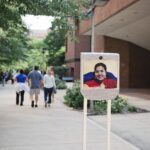
Kavita Krishnaswamy ’07, computer science and mathematics, Ph.D. ’18, computer science, has been named both a 2017 Microsoft Fellow and recipient of the Google Lime Scholarship. These prestigious honors recognize emerging scholars in computing who are dedicated to increasing diversity in the field, and Krishnawamy’s awards will support her Ph.D. research on “Smart Algorithms via Knowledge Management of Safe Physical Human-Robotic Care.”
“I am very humbled, honored, and grateful to Google Lime and Microsoft for providing me with this enriching experience and lifetime opportunity to serve society by advancing the field of human-robot interaction,” Krishnaswamy says.
The Google Lime Scholarship seeks to promote greater access to knowledge for people with visible and invisible disabilities. It was established through a partnership between Google and Lime Connect, a nonprofit focused on breaking stereotypes about disability and encouraging companies to recognize the importance and value of employing people with disabilities.
 Kavita Krishnaswamy. Photo by Sarah Safir for Google
The program encourages students with disabilities to pursue their passions in computing and technology, and to become leaders in those fields. As part of the fellowship program, Krishnaswamy will receive scholarship funding and will participate in the 2017 Google Scholars’ Retreat.
Through the Microsoft Fellowship, Krishnaswamy will receive funding to support her Ph.D. research and will participate in the Microsoft Research workshop held in fall 2017. Her research currently focuses on building a teleoperated mobile robotic prototype, in addition to creating an accessible robotic interface, that seniors and people with disabilities will be able to control by repositioning their arms and legs. Tim Oates, professor of computer science and electrical engineering, is Krishnaswamy’s Ph.D. advisor.
“Our goal is to explore the intersection between providing physical care and robotics, and how it is possible to translate safe patient handling and mobility guidelines into smart human-robotic interaction algorithms,” Krishnaswamy explains. “As assistive robotics become more mainstream, these best practices can improve safety in direct physical care in the process of repositioning the human body with a mobile robotic arm.”
Krishnaswamy is excited about the possible new directions her research can now explore, thanks to support from these awards. “The resources will provide me with a solid and steady foundation to cultivate new technical expertise and professional skills to successfully continue my dissertation research in robotics, and to broaden my knowledge in the field,” she says.
Krishnaswamy has been recognized internationally as an emerging leader in robotics and accessibility design throughout her graduate studies. She is a former Ford Foundation Predoctoral Fellow, and a National Science Foundation Graduate Research Fellow. In 2015, she was named to Robohub’s “25 Women in Robotics You Need to Know About” list.
Read The Baltimore Sun article to learn more about Krishnaswamy’s research. The article was also published in The Washington Post.
Banner image: Photo of Kavita Krishnaswamy, exploring UMBC via robot, by Britney Clause ’11.
]]>
Kavita Krishnaswamy ’07, computer science and mathematics, Ph.D. ’18, computer science, has been named both a 2017 Microsoft Fellow and recipient of the Google Lime Scholarship. These prestigious...
https://umbc.edu/stories/umbc-ph-d-candidate-kavita-krishnaswamy-receives-highly-competitive-google-and-microsoft-awards-for-robotics-research/
https://my3.my.umbc.edu/api/v0/pixel/news/120707/guest@my.umbc.edu/a268161c164a39dea27367d8fbd2902f/api/pixel
cfr
coeit
csee
graduateschool
science-and-technology
UMBC News & Magazine
https://my3.my.umbc.edu/groups/umbc-news-magazine
https://assets1-my.umbc.edu/system/shared/avatars/groups/000/001/943/24435aa6207c452e7bc15cc74b42c7bb/xsmall.png?1748556657
https://assets1-my.umbc.edu/system/shared/avatars/groups/000/001/943/24435aa6207c452e7bc15cc74b42c7bb/original.png?1748556657
https://assets2-my.umbc.edu/system/shared/avatars/groups/000/001/943/24435aa6207c452e7bc15cc74b42c7bb/xxlarge.png?1748556657
https://assets2-my.umbc.edu/system/shared/avatars/groups/000/001/943/24435aa6207c452e7bc15cc74b42c7bb/xlarge.png?1748556657
https://assets3-my.umbc.edu/system/shared/avatars/groups/000/001/943/24435aa6207c452e7bc15cc74b42c7bb/large.png?1748556657
https://assets1-my.umbc.edu/system/shared/avatars/groups/000/001/943/24435aa6207c452e7bc15cc74b42c7bb/medium.png?1748556657
https://assets2-my.umbc.edu/system/shared/avatars/groups/000/001/943/24435aa6207c452e7bc15cc74b42c7bb/small.png?1748556657
https://assets1-my.umbc.edu/system/shared/avatars/groups/000/001/943/24435aa6207c452e7bc15cc74b42c7bb/xsmall.png?1748556657
https://assets2-my.umbc.edu/system/shared/avatars/groups/000/001/943/24435aa6207c452e7bc15cc74b42c7bb/xxsmall.png?1748556657
UMBC News & Magazine
0
0
false
Wed, 26 Jul 2017 17:51:45 -0400
UMBC receives major award to support inclusive excellence in the humanities

UMBC’s Dresher Center for the Humanities and College of the Arts, Humanities, and Social Sciences (CAHSS) are launching a major new five-year initiative to promote diversity and inclusion in the humanities through a $750,000 grant from The Andrew W. Mellon Foundation. The Inclusion Imperative will cultivate a supportive regional community of scholars committed to diversity in the humanities and to expanding community-engaged humanities research, teaching, and learning focused on issues of race, equity, inclusion, and justice.
“The Mellon award recognizes and allows us to expand and deepen our work toward inclusive excellence in the humanities—not just at UMBC, but throughout our region,” says Scott Casper, dean of the CAHSS. “Thanks to this award, we will bring together a community of scholars and students who are developing a diverse vision of the humanities.”
The initiative’s three interconnected parts include the Visiting Faculty Fellows Program, Diversity Teaching Network in the Humanities, and Humanities Teaching Labs, coordinated by project directors Jessica Berman, director of the Dresher Center, and Dean Casper. In addition to supporting students and faculty in the humanities, these programs will produce new tools and partnerships to support Baltimore-Washington communities as they move toward meaningful change.
The Visiting Faculty Fellows Program will invite full-time faculty from the region’s colleges and universities to join UMBC for a semester or year as residential research fellows, with a focus on faculty who are committed to diversity and inclusion. These exchanges will promote the sharing of diverse ideas and perspectives, and development of new research and teaching collaborations.
Through the Diversity Teaching Network in the Humanities, current and former visiting fellows, and other interested faculty, scholars, and graduate students, will meet regularly to work on course curricula and research projects that focus on diversity, inclusion, and community engagement. This program will deepen UMBC’s partnerships with Historically Black Colleges and Universities (HBCUs), including Coppin State University, Bowie State University, and Howard University, creating a regional community of faculty committed to diversity and inclusion in the humanities.
“Coppin State University is pleased to be part of this timely and innovative project, which recognizes correctly the excellence that resides on our diverse campuses and encourages top scholars from these communities to engage each other as colleagues and not as competitors,” says Ron L. Collins Sr., dean of the Coppin State University Honors College. He reflects, “The Dresher Center’s bold and brilliant effort will spawn lifelong professional relationships among faculty and create research agendas that respect the important voices of scholars from diverse communities of practice.”
Berman shares this vision. She notes that nurturing strong relationships among faculty at different institutions will be essential to the success of the initiative, commenting, “I’m perhaps most excited about the chance to work in partnership with area HBCUs to diversify curriculum, build new approaches, and share insight and experiences.”
Humanities Teaching Labs (HTLabs), the third component of the Inclusion Imperative, will support faculty at UMBC and partner institutions in undertaking community-engaged work on issues of race, equity, inclusion, and justice. Faculty and graduate teaching assistants will be invited to attend workshops to learn about tools and methods of community-engaged teaching and will have access to state-of-the-art media tools for classroom use. HTLabs will support approaches that bridge the divides between fields and between universities and partners beyond the academy.
“I firmly believe that the humanities offer us crucial tools for addressing pressing issues of civic life,” says Berman. “Now more than ever, we need the tools of the humanities to advance local and national conversations about our history, our identities, and our common future.”
Image: UMBC Humanities Scholars seminar “Political Childhood and Children’s Citizenship in Western Culture” in the Dresher Center, November 2016. Students include, r-l, Julia Byrne, De`Jia Long-Hillie, Dever Cunningham, Jonathan Harness, Garrett Beeg, and Kara Gavin. Photo by Marlayna Demond ’11.
]]>
UMBC’s Dresher Center for the Humanities and College of the Arts, Humanities, and Social Sciences (CAHSS) are launching a major new five-year initiative to promote diversity and inclusion in the...
https://umbc.edu/stories/umbc-receives-major-award-to-support-inclusive-excellence-in-the-humanities/
https://my3.my.umbc.edu/api/v0/pixel/news/120853/guest@my.umbc.edu/dfe888ae5442ed28eedfbf9f3da8945f/api/pixel
arts-and-culture
cahss
cfr
diversityandinclusion
dreshercenter
humanitiesscholars
innovation
majoraward
policy-and-society
UMBC News & Magazine
https://my3.my.umbc.edu/groups/umbc-news-magazine
https://assets1-my.umbc.edu/system/shared/avatars/groups/000/001/943/24435aa6207c452e7bc15cc74b42c7bb/xsmall.png?1748556657
https://assets1-my.umbc.edu/system/shared/avatars/groups/000/001/943/24435aa6207c452e7bc15cc74b42c7bb/original.png?1748556657
https://assets2-my.umbc.edu/system/shared/avatars/groups/000/001/943/24435aa6207c452e7bc15cc74b42c7bb/xxlarge.png?1748556657
https://assets2-my.umbc.edu/system/shared/avatars/groups/000/001/943/24435aa6207c452e7bc15cc74b42c7bb/xlarge.png?1748556657
https://assets3-my.umbc.edu/system/shared/avatars/groups/000/001/943/24435aa6207c452e7bc15cc74b42c7bb/large.png?1748556657
https://assets1-my.umbc.edu/system/shared/avatars/groups/000/001/943/24435aa6207c452e7bc15cc74b42c7bb/medium.png?1748556657
https://assets2-my.umbc.edu/system/shared/avatars/groups/000/001/943/24435aa6207c452e7bc15cc74b42c7bb/small.png?1748556657
https://assets1-my.umbc.edu/system/shared/avatars/groups/000/001/943/24435aa6207c452e7bc15cc74b42c7bb/xsmall.png?1748556657
https://assets2-my.umbc.edu/system/shared/avatars/groups/000/001/943/24435aa6207c452e7bc15cc74b42c7bb/xxsmall.png?1748556657
UMBC News & Magazine
0
0
false
Thu, 30 Mar 2017 14:33:39 -0400
UMBC Engineers Week celebrates contributions of engineers to society and highlights career paths

UMBC’s third annual Engineers Week brought the campus community and corporate partners together for a celebration of the ways engineers contribute to society and the workforce. The week-long celebration was planned by UMBC’s engineering student groups, and included nearly a dozen special events to mark the national week.
“For this year’s Engineers Week, we wanted to expand the planning committee to include leaders from every engineering organization on campus,” explained Sean Najmi ‘17, chemical engineering, president of Tau Beta Pi, the engineering honors society.
Brian Wayman ‘99, mechanical engineering, now program manager for GE Healthcare, delivered the opening remarks to kick off Engineers Week at UMBC. He shared stories about his personal, academic, and professional journeys.
As a student at UMBC, Wayman was involved with Tau Beta Pi and the National Society of Black Engineers, and held a series of internships that opened doors and had a major impact on his career trajectory. During his time at GE, Wayman has helped develop half a dozen products, including infant incubators, critical to the early lives of premature babies. Wayman detailed challenges he’s faced and difficult decisions he had to make throughout the course of his career, and offered advice for students now exploring their future professional pathways.
 President Hrabowski speaks during the kick-off event for Engineers Week.
The week’s closing speaker was Dr. Arvind Krishna, senior vice president for hybrid cloud, and director of IBM Research. IBM is currently collaborating with UMBC on the Accelerated Cognitive Cybersecurity Lab. Krishna discussed the cognitive revolution and the rapid technological changes that the world has experienced. He explored how new technologies are not just helping humanity share information on a global scale, but are are solving major societal challenges, such as by reducing pollution, improving food safety, and strengthening banks.
Throughout the week, student organizations within the College of Engineering and Information Technology hosted events to highlight the breadth of opportunities and career paths available to UMBC students. A diversity forum gave students the opportunity to hear from industry professionals at Cisco, Northrop Grumman, and RMF Engineering. During the forum, panelists discussed and reflected on their experiences related to diversity in engineering.
The popular Battle of the Engineers event attracted a large, enthusiastic audience as teams of students from chemical, biochemical, and environmental engineering; computer science and electrical engineering; and mechanical engineering competed in whimsical and creative minute-to-win-it-style competitions. The CBEE team emerged victorious, and took home the 2017 Battle of the Engineers trophy.
 The back of an Engineers Week t-shirt
Already, organizer Sean Najmi is looking ahead to drawing in student of all majors, including those outside of engineering, with an interest in collaboratively solving major global challenges and exploring diverse career paths. He shares, “My hope is that Engineers Week will soon become something the whole campus community looks forward to each year.”
Header image: Brian Wayman talks to students during the opening event during Engineers Week. All photos by Marlayna Demond ’11 for UMBC.
]]>
UMBC’s third annual Engineers Week brought the campus community and corporate partners together for a celebration of the ways engineers contribute to society and the workforce. The week-long...
https://umbc.edu/stories/umbc-engineers-week-celebrates-contributions-of-engineers-to-society-and-highlights-career-paths/
https://my3.my.umbc.edu/api/v0/pixel/news/120868/guest@my.umbc.edu/2621271beea473e850fb7f23b2ef4a78/api/pixel
cbee
cfr
coeit
csee
meche
science-and-technology
UMBC News & Magazine
https://my3.my.umbc.edu/groups/umbc-news-magazine
https://assets1-my.umbc.edu/system/shared/avatars/groups/000/001/943/24435aa6207c452e7bc15cc74b42c7bb/xsmall.png?1748556657
https://assets1-my.umbc.edu/system/shared/avatars/groups/000/001/943/24435aa6207c452e7bc15cc74b42c7bb/original.png?1748556657
https://assets2-my.umbc.edu/system/shared/avatars/groups/000/001/943/24435aa6207c452e7bc15cc74b42c7bb/xxlarge.png?1748556657
https://assets2-my.umbc.edu/system/shared/avatars/groups/000/001/943/24435aa6207c452e7bc15cc74b42c7bb/xlarge.png?1748556657
https://assets3-my.umbc.edu/system/shared/avatars/groups/000/001/943/24435aa6207c452e7bc15cc74b42c7bb/large.png?1748556657
https://assets1-my.umbc.edu/system/shared/avatars/groups/000/001/943/24435aa6207c452e7bc15cc74b42c7bb/medium.png?1748556657
https://assets2-my.umbc.edu/system/shared/avatars/groups/000/001/943/24435aa6207c452e7bc15cc74b42c7bb/small.png?1748556657
https://assets1-my.umbc.edu/system/shared/avatars/groups/000/001/943/24435aa6207c452e7bc15cc74b42c7bb/xsmall.png?1748556657
https://assets2-my.umbc.edu/system/shared/avatars/groups/000/001/943/24435aa6207c452e7bc15cc74b42c7bb/xxsmall.png?1748556657
UMBC News & Magazine
0
0
false
Wed, 08 Mar 2017 16:40:57 -0500
HackUMBC inspires students to create fresh technical solutions in whirlwind 24-hour hackathon

Nearly 500 students from UMBC and colleges across the region gathered on campus for HackUMBC 2016, a 24-hour hackathon for students to develop technological solutions (“hacks”) to problems that matter to them. The event enables students, both with and without coding experience, to work on innovative projects independently and collaboratively, to network and expand their skills, and to learn directly from leaders in the industry.
“I was completely blown away by how many people came out not only from UMBC but schools from across the East Coast. Seeing how much HackUMBC has grown and is continuing to grow is an overwhelming feeling that continues to leave me in awe year after year,” said Celeste Wong ‘18, computer science and social work, a HackUMBC co-organizer.
Participating student teams submitted 71 hacks at the end of the event. Twelve hacks received awards from the HackUMBC organization and from sponsors.
The award-winning app Parking Pronto was designed to help users find parking spots on campus through crowdsourcing, showing available spots based on permit type. Another app, Beige, won the award for the “Best Hack Against Online Harassment.” This app automatically blocks from a Twitter user’s view those accounts that post a certain number of “user-defined trigger words.”
Katherine Gibson ’08, computer science, and John Park, both lecturers of CSEE, and Rick Forno, assistant director of the UMBC Center for Cybersecurity, director of the Cybersecurity Graduate Program at UMBC, and faculty advisor to HackUMBC student organization, served as judges.
“Now in its fourth year, HackUMBC continues to grow in standing and regional attraction,” said Forno. “It’s always an awesome feeling to see the amazing intellectual energy and technical results these students—novices and experts alike—generate at this prominent, intense, around-the-clock campus event.”
In addition to becoming a very popular regional event, HackUMBC is gaining steam on a larger scale. The official student hackathon league Major League Hacking recently released standings for the North American Spring 2016 season, listing UMBC as eighth out of 47 schools. Wong explained that while the ranking shows HackUMBC has become a popular event with students, it also shows that the university’s “hackathon community is representing UMBC well across North America.”
For more information about the entries and winners of HackUMBC 2016, visit the HackUMBC website.
Logo courtesy of HackUMBC.
]]>
Nearly 500 students from UMBC and colleges across the region gathered on campus for HackUMBC 2016, a 24-hour hackathon for students to develop technological solutions (“hacks”) to problems that...
https://umbc.edu/stories/hackumbc-inspires-students-to-create-fresh-technical-solutions-in-whirlwind-24-hour-hackathon/
https://my3.my.umbc.edu/api/v0/pixel/news/120982/guest@my.umbc.edu/3ed614f37685a51e80dfc8faad5e3081/api/pixel
cfr
coeit
community
csee
cybersecurity
science-and-technology
socialwork
UMBC News & Magazine
https://my3.my.umbc.edu/groups/umbc-news-magazine
https://assets1-my.umbc.edu/system/shared/avatars/groups/000/001/943/24435aa6207c452e7bc15cc74b42c7bb/xsmall.png?1748556657
https://assets1-my.umbc.edu/system/shared/avatars/groups/000/001/943/24435aa6207c452e7bc15cc74b42c7bb/original.png?1748556657
https://assets2-my.umbc.edu/system/shared/avatars/groups/000/001/943/24435aa6207c452e7bc15cc74b42c7bb/xxlarge.png?1748556657
https://assets2-my.umbc.edu/system/shared/avatars/groups/000/001/943/24435aa6207c452e7bc15cc74b42c7bb/xlarge.png?1748556657
https://assets3-my.umbc.edu/system/shared/avatars/groups/000/001/943/24435aa6207c452e7bc15cc74b42c7bb/large.png?1748556657
https://assets1-my.umbc.edu/system/shared/avatars/groups/000/001/943/24435aa6207c452e7bc15cc74b42c7bb/medium.png?1748556657
https://assets2-my.umbc.edu/system/shared/avatars/groups/000/001/943/24435aa6207c452e7bc15cc74b42c7bb/small.png?1748556657
https://assets1-my.umbc.edu/system/shared/avatars/groups/000/001/943/24435aa6207c452e7bc15cc74b42c7bb/xsmall.png?1748556657
https://assets2-my.umbc.edu/system/shared/avatars/groups/000/001/943/24435aa6207c452e7bc15cc74b42c7bb/xxsmall.png?1748556657
UMBC News & Magazine
0
0
false
Tue, 18 Oct 2016 14:44:30 -0400
Seeing Science: UMBC project explores how photographs shape and further science
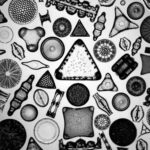
“I’m fascinated with the ways images and technology are transforming our lives today. And looking back, I realized that photography and the sciences have always worked hand in hand to redefine each other and culture-at-large, too,” says Marvin Heiferman, curator of the new Seeing Science project at UMBC.
“Images are essential in the work scientists do and make their work more accessible to the public,” Heiferman shares. “Seeing Science grew out of my desire to explore that.”
A year-long project, Seeing Science: Photography, Science and Visual Culture, will explore the central role photographic images play in defining, shaping, promoting, and furthering science, and how photographic images made in and about the sciences impact public opinion and health, policy and funding, science education, as well as visual and popular culture.
The project’s diverse components include a website, exhibitions, online salon, film series, publications, and an active social media presence. The Seeing Science website, the cornerstone of the project, will continually expand with weekly mini-exhibitions of historical and contemporary images, thematic looks at science-related images in visual culture, newly commissioned short essays, links to breaking news stories that chart the use and impact of imaging in and on science, a timeline that tracks the historical inter-relationships of science and photographic imaging, an interactive map of science images made and used on UMBC’s campus, and downloadable PDFs of materials generated through the project.
Last spring, UMBC’s Library Gallery hosted an exhibition, The Glass Knife, curated by visual arts faculty Stephen Bradley and Kathy Marmor, that explored the pioneering imaging work of biologist Keith Porter.
This fall, an online salon, co-produced with Reading the Pictures, a visual and media literacy group, will be held on October 20, exploring science images in the media. A Seeing Science Film Festival begins presentations in September featuring films from 1966: “Fantastic Voyage,” “Fahrenheit 451,” and “Daleks–Invasion Earth: 2150 A.D.” A series of public conversations between Heiferman and other scholars will take place at the School of Visual Arts in New York City beginning in October. A book, Seeing Science: Photography, Science and Visual Culture, will be published in 2017 featuring content developed in the course of the project and exploring the evolving relationships of photographic imaging and the sciences, social sciences, and the arts.
“While researching and developing Seeing Science, I realized that most photography and science exhibitions in the past tended to document 19th and 20th century imaging advances and then celebrate how artists respond to them,” adds Heiferman. “I want Seeing Science to do that, and much more. That’s why the project is multi-faceted and primarily web-based. It invites viewers and participants to explore how science images also impact the news, public policy, popular culture and, most importantly, radically change the ways we see, understand, and live in the world.”
Marvin Heiferman, a visiting scholar at UMBC’s Center for Art, Design & Visual Culture (CADVC), has organized projects about photography and visual culture for the Museum of Modern Art, Smithsonian Institution, International Center of Photography, Whitney Museum of American Art, Carnegie Museum of Art, and the New Museum. He has written for The New York Times, Art in America, Gagosian Gallery, CNN, Artforum, Design Observer, Aperture, and BOMB. Heiferman is the author, editor, and packager of more than two dozen books on photography and visual culture, including Photography Changes Everything (Aperture, 2012).
Kelley Bell, associate professor of graphic design at UMBC, is the art director of Seeing Science. Bell has worked with clients including MTV Networks, The Walt Disney Company, and Baltimore-D.C. area non-profits, and her public art works have been featured in numerous events.
Complete information about Seeing Science: Photography, Science and Visual Culture can be found on the UMBC Arts & Culture Calendar.
Seeing Science is produced by the CADVC in collaboration with the Office of the Vice President of Research. A grant from the Alfred P. Sloan Foundation was instrumental in the development of the project’s website.
Image: Detail of Carl Strüwe, Archetype of Individuality (1933). Courtesy Steven Kasher Gallery, New York.
]]>
“I’m fascinated with the ways images and technology are transforming our lives today. And looking back, I realized that photography and the sciences have always worked hand in hand to redefine...
https://umbc.edu/stories/seeing-science-umbc-project-explores-how-photographs-shape-and-further-science/
https://my3.my.umbc.edu/api/v0/pixel/news/121031/guest@my.umbc.edu/525358d97091514007543870f0fe73fb/api/pixel
arts-and-culture
cadvc
cfr
research
science-and-technology
visualarts
UMBC News & Magazine
https://my3.my.umbc.edu/groups/umbc-news-magazine
https://assets1-my.umbc.edu/system/shared/avatars/groups/000/001/943/24435aa6207c452e7bc15cc74b42c7bb/xsmall.png?1748556657
https://assets1-my.umbc.edu/system/shared/avatars/groups/000/001/943/24435aa6207c452e7bc15cc74b42c7bb/original.png?1748556657
https://assets2-my.umbc.edu/system/shared/avatars/groups/000/001/943/24435aa6207c452e7bc15cc74b42c7bb/xxlarge.png?1748556657
https://assets2-my.umbc.edu/system/shared/avatars/groups/000/001/943/24435aa6207c452e7bc15cc74b42c7bb/xlarge.png?1748556657
https://assets3-my.umbc.edu/system/shared/avatars/groups/000/001/943/24435aa6207c452e7bc15cc74b42c7bb/large.png?1748556657
https://assets1-my.umbc.edu/system/shared/avatars/groups/000/001/943/24435aa6207c452e7bc15cc74b42c7bb/medium.png?1748556657
https://assets2-my.umbc.edu/system/shared/avatars/groups/000/001/943/24435aa6207c452e7bc15cc74b42c7bb/small.png?1748556657
https://assets1-my.umbc.edu/system/shared/avatars/groups/000/001/943/24435aa6207c452e7bc15cc74b42c7bb/xsmall.png?1748556657
https://assets2-my.umbc.edu/system/shared/avatars/groups/000/001/943/24435aa6207c452e7bc15cc74b42c7bb/xxsmall.png?1748556657
UMBC News & Magazine
0
0
false
Thu, 01 Sep 2016 13:29:52 -0400
bwtech@UMBC’s Potomac Photonics makes big strides in micro-manufacturing
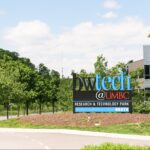
Potomac Photonics, a bwtech@UMBC-based micro-manufacturing company, uses lasers, 3D printers and other technologies to alter and develop products with extreme precision, to the scale of one micron, smaller than a particle of dust.
“We like to say that if you can see it, we didn’t do it,” says Mike Adelstein ‘96, biochemistry and molecular biology, and president and CEO of Potomac Photonics, in a recent article in The Baltimore Sun.
The company has used lasers to insert tiny holes into medical stitches so localized radiation can be delivered in small doses to patients with breast and prostate cancer. These sutures have been approved by the U.S. Food and Drug Administration and are now being used at hospitals, including Walter Reed National Military Medical Center. Potomac Photonics is also working with a company in Europe to create a device to identify early stage cancer cells in a new way.
With all of the advances that the company is making, Adelstein anticipates that the Baltimore County region “will become a hotbed for manufacturing technology.” He suggests facilities and programs at UMBC and the Community College of Baltimore County will contribute significantly to that surge.
“There’s really a lot of resources and investment that are going on in this area right here to develop new advanced manufacturing technologies,” said Adelstein. “I think there’s a great opportunity for this region to grow.”
Read the full article “Arbutus-based micro-manufacturing company doesn’t sweat the small stuff,” in The Baltimore Sun.
Image: The bwtech@UMBC entrance. Photo by Marlayna Demond ’11 for UMBC.
]]>
Potomac Photonics, a bwtech@UMBC-based micro-manufacturing company, uses lasers, 3D printers and other technologies to alter and develop products with extreme precision, to the scale of one...
https://umbc.edu/stories/bwtechumbcs-potomac-photonics-makes-big-strides-in-micro-manufacturing/
https://my3.my.umbc.edu/api/v0/pixel/news/121066/guest@my.umbc.edu/2c92fd488cf9237163a799dcab6358ba/api/pixel
biology
bwtech
cfr
chembiochem
cnms
science-and-technology
UMBC News & Magazine
https://my3.my.umbc.edu/groups/umbc-news-magazine
https://assets1-my.umbc.edu/system/shared/avatars/groups/000/001/943/24435aa6207c452e7bc15cc74b42c7bb/xsmall.png?1748556657
https://assets1-my.umbc.edu/system/shared/avatars/groups/000/001/943/24435aa6207c452e7bc15cc74b42c7bb/original.png?1748556657
https://assets2-my.umbc.edu/system/shared/avatars/groups/000/001/943/24435aa6207c452e7bc15cc74b42c7bb/xxlarge.png?1748556657
https://assets2-my.umbc.edu/system/shared/avatars/groups/000/001/943/24435aa6207c452e7bc15cc74b42c7bb/xlarge.png?1748556657
https://assets3-my.umbc.edu/system/shared/avatars/groups/000/001/943/24435aa6207c452e7bc15cc74b42c7bb/large.png?1748556657
https://assets1-my.umbc.edu/system/shared/avatars/groups/000/001/943/24435aa6207c452e7bc15cc74b42c7bb/medium.png?1748556657
https://assets2-my.umbc.edu/system/shared/avatars/groups/000/001/943/24435aa6207c452e7bc15cc74b42c7bb/small.png?1748556657
https://assets1-my.umbc.edu/system/shared/avatars/groups/000/001/943/24435aa6207c452e7bc15cc74b42c7bb/xsmall.png?1748556657
https://assets2-my.umbc.edu/system/shared/avatars/groups/000/001/943/24435aa6207c452e7bc15cc74b42c7bb/xxsmall.png?1748556657
UMBC News & Magazine
0
0
false
Thu, 04 Aug 2016 14:59:07 -0400


