Retrievers buck ‘traditional’ timelines and redefine success

Evangeline Kirigua—mother, grandmother, immigrant, community college transfer student, civic entrepreneur—might have felt like the epitome of a “non-traditional” college student, but as she got closer to other Returning Women Scholars in the Women’s Center at UMBC, she realized that her “different” story might not be so different after all.
Navigating school during the pandemic hasn’t been effortless for anyone, but the wealth of online classes has made it easier for adult learners (ages 25 and up) to think about returning for an unfinished degree, as seen through the success of the UMBC Finish Line program. This unusual time also marks a good period to pause and reevaluate how UMBC approaches the terms “traditional” and “non-traditional” students.
 Kirigua, center in blue dress with white collar, with other Returning Women Scholars and President Freeman Hrabowski. Photo courtesy of The Women’s Center.
As with many public research universities, nearly 50 percent of UMBC’s 11,000 undergraduates are transfer students, “so the notion that transfer students are ‘non-traditional’ is actually far from the truth,” says Chloe Terrell, UMBC’s Transfer Student Success coordinator in Off-Campus Student Services (OCSS). “Transfer students bring a wealth of knowledge and experiences to our campus,” she continues. “Without them, we wouldn’t be the vibrant community we are.”
Understanding your own worth
As a student at Prince George’s Community College (PGCC), Sandra Crespin-Melgar ’21, social work, was really excited about what she heard from Katie Morris, the program director at UMBC at the Universities of Shady Grove and an instructor of social work, about transfering to UMBC. Crespin-Melgar, a first-generation student, immigrant, and adult learner, had been nervous about pursuing her bachelor’s degree, even though she knew that was her goal.
 Headshot of Sandra Crespin-Melgar, courtesy of The Women’s Center.
“When I started to learn more about UMBC,” says Crespin-Melgar, “I liked that they put forth the effort to create a space that provided belonging to all students. And that was something that really attracted me—the different ways of creating community on campus.”
Talking with Morris, Ph.D. ’21, language, literacy, and culture, not only led Crespin-Melgar to apply to UMBC, but also to major in social work. “I’m someone who has gone through different experiences in higher ed,” says Crespin-Melgar. “And I think that people who come from immigrant communities, there’s a lot of things that we have to tackle as far as dealing with imposter syndrome or feeling like we don’t belong. Even that fear of applying, you ask yourself, ‘Am I worthy enough to be in those spaces or am I worthy enough to even succeed?’”
Seek help, give help
Crespin-Melgar, who is also a Returning Women Scholar, suggests that other students with similar doubts find support at the Counseling Center. “Talking with someone who can really listen to what you’re going through and can relate to some of the struggles as a person of color, or as a woman—there’s a lot that goes into owning those spaces and feeling like, ‘yes, I belong here and I’m working to receive my degree because I put so much work into it and there’s no less value in my work than anyone else.’ That’s my biggest take-away from my journey as an undergrad at UMBC.”
 Crespin-Melgar at an event hosted by The Women’s Center. Photo courtesy of The Women’s Center.
While finishing her degree, Crespin-Melgar is also working in recruitment and admissions at PGCC. This fall, she will pursue a master’s of social work at the University of Maryland, Baltimore. She says that her experience at UMBC has made her want to continue to work in higher education, helping guide other first-generation students and Latinx students like herself through the complicated process of college.
“I feel really prepared and confident that I’m walking away from a school that really lives up to their words,” says Crespin-Melgar. “They told me what they were going to do for me, and they did it.”
The backbone of UMBC
At UMBC’s Shady Grove campus, “All the students are transfer students,” explains Katie Morris. “A majority are working and balancing family responsibilities, and they all have a life outside of school,” she says. “Shady Grove provides a place for students who are in this similar situation to see others like them, build a community, connect with faculty, learn in the classroom, and find success if they make the commitment to their learning and attaining their degree.”
 Students mingle at the Shady Grove campus in 2019. Photo by Marlayna Demond ’11.
Across UMBC’s campuses, 80 percent of transfer students come in from community colleges, versus other four-year institutions. This makes the community college transfer experience a common way of joining the UMBC community.
OCSS serves commuter, transfer, veteran, and adult-learner student populations. “Often,” Chloe Terrell says, “we’re referred to as the hub for ‘non-traditional’ students, but my time here has shown me that the students we serve are the backbone of UMBC.”
A break for mental health
In that respect, Ting Huang ’21, psychology, followed a well-worn path to UMBC, even if it felt less straightforward at the time. Despite a full-ride to a four-year college right out of high school, Huang made the decision to attend Montgomery College to better suit the needs of her family. She also knew about the Transfer Student Alliance, which helps smooth the application process to certain Maryland schools after obtaining an associate’s degree.

Headshot provided by Ting Huang.
Huang thought the process was going smoothly, despite the stress she was feeling. But a frequent customer at the restaurant where Huang worked helped gently reframe her perspective when she asked if Huang was feeling OK. She looked much thinner than usual, the customer said.
“I thought, well, if a stranger seemed to care about me, maybe I could care about me,” says Huang. She called her high school mentor to talk through this revelation, then went home and closed her transfer application for a semester.
When Huang did enroll at UMBC, she was drawn to study social psychology because of her own experiences. “I feel that my own psyche is really impacted by my upbringing and by my interactions with my family and the world around me—especially as a first-gen immigrant, like the transition from being a child in China to being a teenager in the U.S.,” says Huang.
 Huang, top middle, at an online family game night with her fellow McNair scholars. Photo courtesy of Huang.
At UMBC, she became a McNair Scholar. The program provides mentorship and community for low-income, first-generation college students, and students from other underrepresented groups, while helping them hone their research tools to potentially pursue doctoral degrees. “The McNair program makes me feel like I can accomplish the graduate process,” says Huang. Next, she will pursue a master’s degree in experimental psychology at Towson University, with the long-term goal of teaching psychology at the university level.
Building confidence
Alicyn Curtis ’21, modern languages and linguistics, originally matriculated to UMBC in 2011, but left her studies after three years. “I liked what I was studying, especially Korean, but I didn’t have the drive or passion at the time,” says Curtis. “I’m one of those people who can’t simply do things because it looks good on a résumé. If I’m going to do anything, I’m going to do it because I like it. So I was very depressed and lost and needed to take some time off.”

Alicyn Curtis in Korea while she was teaching abroad. Photo courtesy of Curtis.
Curtis had the opportunity to move to Korea for three years, and she took it. She taught English there, but realized that in order to progress in that career, she’d need to finish her degree. In fall 2020, Curtis re-enrolled at UMBC having a more clear goal for her studies. With the help of her Korean advisor, Kyung-Eun Yoon, she is graduating after two final semesters.
“Being abroad built my confidence in myself,” says Curtis. “When I first started at UMBC, I was very shy and standoffish. I didn’t really reach out to other people—I just went to school and went home. But this time around, I thought, if I can live in a different country for three years and navigate around in a different language, I can do anything. And I brought that sense of competence with me when I returned to campus.”
 Curtis poses with one of the symbols of Seoul. Photo courtesy of Curtis.
For the past year, Curtis has worked as a peer advisor in the Education Abroad office, encouraging more students to gain life skills and confidence overseas when the pandemic permits. Overall, of her time back at UMBC, Curtis says, “I never felt alienated because I’m technically ‘non-traditional.’ I felt just like a regular student on campus.”
Lifelong learners
Gayle Chapman ’21 also found a home in modern languages and linguistics, but that’s not the only home she has on campus. She’s worked at UMBC since 2002, and is now the assistant controller in Financial Services.
Chapman earned her master’s in public policy in 2011. A decade later, she is earning a second undergraduate degree in Russian. Her sons are also UMBC alumni: Daniel Chapman ’02, mathematics, ’03, physics; and David Chapman ’06, M.S. ’08, Ph.D. ’12, computer science—an assistant professor of computer science and electrical engineering at UMBC.
 Headshot courtesy of Gayle Chapman.
“I am not your traditional student, but a lifelong learner,” shares Chapman, who is also a member of the Russian Club and sings in the UMBC Russian Choir. “It is vitally important, in my opinion, to continue to broaden your knowledge and perspective of this world, and there is no better way than to study a major language and culture in our world.”
Chapman is in good company among other lifelong learners at UMBC. Jim Kruger ’13, political science, M.P.P. ’14, will complete his Ph.D. in public policy this spring at the age of 71. Kruger, spent his career in waste management and after retirement wanted to impact that field as a researcher. That goal, in addition to his love of learning, kept him coming back to the classroom.
 Jim Kruger and his wife Kathy on the bench they donated to UMBC. Photo by Marlayna Demond ’11.
During Kruger’s time on campus, UMBC and the University of Maryland, Baltimore partnered to become Maryland’s first “age-friendly” universities. They join 58 institutions worldwide that make up the Age-Friendly University Global Network, led by Dublin City University in Ireland.
No one “right” way
When Kirigua moved from Kenya to the United States in 2002, she put all her time and effort into finding a job and helping her children adjust to a new country. She told herself she’d attend to her own education after her son Joel graduated from college. True to her own word, before she heard Michelle Obama give the graduation address to her son’s college in 2016, Kirigua had enrolled at Montgomery College.

Kirigua with her son Joel (in pink) and his friends at the Lincoln Memorial in D.C.
“For me, personally, if you have something that you have a purpose to do—if you don’t do it—you owe yourself something,” says Kirigua. Pursuing higher education became her priority. “When you’re making that sacrifice, you don’t feel like someone is making you do it. You know you’re doing it for yourself.”
After transferring to UMBC in 2018, Kirigua has found fellowship through the Returning Women Scholars program—it’s been encouraging to hear the other students’ stories. “I thought that this was just me,” says Kirigua, “but there are others like me and who have had to face even more challenging situations.”
“When an adult learner thinks they’re the only one in the classroom, it can make them feel like maybe they don’t belong,” says Jess Myers, Women’s Center director. “Perhaps it may reinforce that their experience is the ‘wrong way’ to do college. So, when you put 20-25 adult learners in a room and give them the space to center their experiences of being older, being parents, having a full life before coming to UMBC, it feels…magical. I see some students struggle with their journeys and then once they hear from someone who is like them, an automatic sense of solidarity forms.”
 Kirigua with Jess Myers at a USM Women’s Forum Conference. Photo courtesy of Myers.
That sense of connection has spurred Kirigua forward. After graduating this month, she will continue on at UMBC, pursuing a master’s in public policy.
Featured image: Chloe Terrell, left, in the center for Off-Campus Student Services in 2019. Photo by Marlayna Demond ’11.
]]>
Evangeline Kirigua—mother, grandmother, immigrant, community college transfer student, civic entrepreneur—might have felt like the epitome of a “non-traditional” college student, but as she got...
https://umbc.edu/stories/retrievers-buck-traditional-timelines-and-redefine-success/
https://my3.my.umbc.edu/api/v0/pixel/news/119636/guest@my.umbc.edu/2d09e3642b02f5eb61e4b7e410f4fe8a/api/pixel
cahss
classof2021
community
international
mlli
page1
political-science
psychology
publicpolicy
shadygrove
socialwork
womenscenter
UMBC News & Magazine
https://my3.my.umbc.edu/groups/umbc-news-magazine
https://assets1-my.umbc.edu/system/shared/avatars/groups/000/001/943/24435aa6207c452e7bc15cc74b42c7bb/xsmall.png?1748556657
https://assets1-my.umbc.edu/system/shared/avatars/groups/000/001/943/24435aa6207c452e7bc15cc74b42c7bb/original.png?1748556657
https://assets2-my.umbc.edu/system/shared/avatars/groups/000/001/943/24435aa6207c452e7bc15cc74b42c7bb/xxlarge.png?1748556657
https://assets2-my.umbc.edu/system/shared/avatars/groups/000/001/943/24435aa6207c452e7bc15cc74b42c7bb/xlarge.png?1748556657
https://assets3-my.umbc.edu/system/shared/avatars/groups/000/001/943/24435aa6207c452e7bc15cc74b42c7bb/large.png?1748556657
https://assets1-my.umbc.edu/system/shared/avatars/groups/000/001/943/24435aa6207c452e7bc15cc74b42c7bb/medium.png?1748556657
https://assets2-my.umbc.edu/system/shared/avatars/groups/000/001/943/24435aa6207c452e7bc15cc74b42c7bb/small.png?1748556657
https://assets1-my.umbc.edu/system/shared/avatars/groups/000/001/943/24435aa6207c452e7bc15cc74b42c7bb/xsmall.png?1748556657
https://assets2-my.umbc.edu/system/shared/avatars/groups/000/001/943/24435aa6207c452e7bc15cc74b42c7bb/xxsmall.png?1748556657
UMBC News & Magazine
0
0
false
Wed, 12 May 2021 20:39:50 -0400
UMBC’s Jordan Troutman to continue algorithmic fairness research as Knight-Hennessy Scholar at Stanford
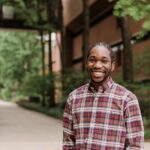
Jordan Troutman ’21, M29, computer science and mathematics, first discovered algorithmic fairness during a summer research program at Rutgers University after his first year at UMBC. The field focuses on how computer algorithms, such as those responsible for facial recognition or the content in our social media feeds, can foster fairness or unfairness. The effects include anything from attempting to identify someone who committed a crime to curating the content we see in ways that influence how we think about others.
“Because these algorithmic systems are being used to make a lot of life-changing decisions,” Troutman says, “now we have to make sure that the tools and technologies we’re developing have some type of guarantees or safeguards to make sure that they don’t have unintended consequences towards minority groups specifically, or just any unintended actions.”
When Troutman returned to UMBC from his summer at Rutgers, he sought out James Foulds, assistant professor of information systems. He’s researched these issues under Foulds’s mentorship for the past three years.
This fall, Troutman will take his research interests to Stanford University, where he’ll pursue a Ph.D. in computer science as UMBC’s first Knight-Hennessy Scholar. The international Knight-Hennessy Scholarship is open to students applying to graduate school at Stanford in any area of study. In addition to funding, it offers robust leadership and community-development training. Troutman was selected as exemplifying the scholarship’s core values: independence of thought, purposeful leadership, and civic mindedness.
Socially-minded scholarship
In the 2019 – 2020 academic year, Troutman represented the student perspective as a voting member of the Maryland Higher Education Commission (MHEC), which establishes policies for every college in the state. At UMBC, Troutman took on leadership roles in the Student Government Association (SGA), the National Society for Black Engineers (NSBE), and as a teaching assistant and tutor supporting fellow students. In 2020, he received another prestigious honor, the Barry Goldwater Scholarship.
 Jordan Troutman, left, and Dan Barnhart, former director of The Commons and student life at UMBC, who recommended Troutman apply for the MHEC position.
Troutman is a Meyerhoff Scholar and a member of the Honors College, and he’s one of two UMBC valedictorians for 2021. In addition to Rutgers, he’s conducted summer research at the University of California, Berkeley and in the Fairness, Accountability, Transparency, and Ethics (FATE) research group at Microsoft. Troutman has also been involved with UMBC’s Center for Democracy and Civic Life (CDCL), and he counts its director, David Hoffman, among his mentors.
“Jordan embodies the kind of creativity that transcends disciplinary boundaries, and has found dazzling ways to weave his social concerns into his scholarship,” Hoffman shares. “I’m confident he will thrive in the Knight-Hennessy program, and that we will have many more occasions to celebrate his civic contributions.”
Participating in leadership has also given Troutman the chance to get to know other leaders. His experience with MHEC demonstrated what true leadership looks like. “It’s really powerful to see how—when you are passionate about something, and you care about the people, and not the power or the position—you can do good work and effect good change.”
From intention to impact
With the Knight-Hennessy Scholarship, as well as a highly competitive Graduate Research Fellowship from the National Science Foundation, Troutman will have the freedom to pursue research of his choice at Stanford. He values the opportunity to be creative in his approach and thinks of his research as “computational social sciences”—interdisciplinary by definition. His computer science and math courses have prepared him for the work; so have courses in the liberal arts and his experiences with campus engagement.
Elective courses in philosophy “helped me understand broadly how to articulate these non-quantitative concepts,” such as fairness, Troutman says. A particular Honors College course about how the media uses faces and how we internalize what the faces represent stuck with him.
Social media algorithms “are everywhere. So if these algorithms are unfair in any way, then the way we’re consuming this media may not necessarily be representative of the world we live in,” Troutman says. “I think that’s a super important problem, and because I’ve taken these other classes, it’s given me a broader context of how important this problem is and has reaffirmed my interest in doing this kind of research.”
 Jordan Troutman, far left, attends a lab meeting in fall 2019 with James Foulds (right rear, green shirt) and his peers.
Troutman is looking forward to collaborating with the other Knight-Hennessy Scholars on some of these big ideas. He also appreciates the leadership training offered through the program, which he sees as being about “trying to figure out how to be a well-intentioned person, and then making really good work out of what your intentions are for the world.”
Supportive community
Troutman shares that several UMBC experiences were instrumental in helping him build his confidence and understand the powerful difference he can make.
Roles in SGA and participating in UMBC’s STRiVE student leadership retreat and Alternative Spring Break “helped me understand my own sense of agency and my ability to make an impact,” Troutman says. He realized that solving massive, intimidating problems often starts with a single person, and says, “Learning that has just made me believe that I literally could do anything.”
The Meyerhoff Scholars Program helped him internalize some of the same ideas. “Meyerhoff gave me this idea that you can really make a change in your life,” Troutman says. “You can be whoever you want to be. You just have to be active about it and to believe in yourself and use the support and community around you to get where you want to be.”
NSBE also played a role in Troutman’s growth. NSBE “helps students feel that they belong in science,” he says. “It’s helped to center me and to help me really understand what it means to build community. Now, I hope to go and help to foster more communities at these other places that I go in my life.”
And Foulds, his research mentor, “has given me really good insight, perspective, and guidance on how to do research, think about problems, and especially how to overcome a lot of different pitfalls that happen in research,” Troutman says.
 Jordan Troutman ’21
An ethical leader
All these programs, communities, and experiences are representative of the culture at UMBC, Troutman says. “You can really be yourself and be engaged and very intentional with people, and you can be as cool or kooky as you want—there’s a space for you at UMBC,” he says.
In the Knight-Hennessy application process, students submit a video addressed to their future Knight-Hennessy cohort. “Jordan’s video demonstrated how to do a gymnastics flip. Not the kind of thing you’d expect from a computer scientist—but it was a way to showcase his other interests and let his personality shine,” April Householder, director of undergraduate research and prestigious scholarships, observes. “Lately, UMBC has been winning very prestigious scholarships, and I think part of the success has to do with encouraging our students to be themselves throughout the process.”
“I think that’s the beauty of this school,” Troutman shares. “You can be whoever you want. And it’s not just something that you say to get people in here. It’s like, no, they’re actually backing it up with the things that they do. It’s really about the students.”
For Troutman, his research, civic engagement, and leadership are all about one thing: making positive social change.
“While Jordan was working in my lab, I was gratified to see his enthusiasm grow as he realized that his technical research could be a part of the efforts he was already making toward creating positive change in our society,” Foulds says. “Jordan is on a path toward becoming an ethical leader and a thought leader who can help steer the course of progress in AI technology in the right direction.”
Ultimately, Troutman says, “What I want to do is just help people see their ideas come true.”
Banner image: Jordan Troutman on UMBC’s Academic Row. All photos by Marlayna Demond ’11 for UMBC.
]]>
Jordan Troutman ’21, M29, computer science and mathematics, first discovered algorithmic fairness during a summer research program at Rutgers University after his first year at UMBC. The field...
https://umbc.edu/stories/umbcs-jordan-troutman-to-continue-algorithmic-fairness-research-as-knight-hennessy-scholar-at-stanford/
https://my3.my.umbc.edu/api/v0/pixel/news/119642/guest@my.umbc.edu/f102ef21857b9362360578f9db57e09b/api/pixel
civic
classof2021
cnms
coeit
community
csee
honorscollege
mathstat
meyerhoffscholars
page1
policy-and-society
science-and-technology
undergradresearch
UMBC News & Magazine
https://my3.my.umbc.edu/groups/umbc-news-magazine
https://assets1-my.umbc.edu/system/shared/avatars/groups/000/001/943/24435aa6207c452e7bc15cc74b42c7bb/xsmall.png?1748556657
https://assets1-my.umbc.edu/system/shared/avatars/groups/000/001/943/24435aa6207c452e7bc15cc74b42c7bb/original.png?1748556657
https://assets2-my.umbc.edu/system/shared/avatars/groups/000/001/943/24435aa6207c452e7bc15cc74b42c7bb/xxlarge.png?1748556657
https://assets2-my.umbc.edu/system/shared/avatars/groups/000/001/943/24435aa6207c452e7bc15cc74b42c7bb/xlarge.png?1748556657
https://assets3-my.umbc.edu/system/shared/avatars/groups/000/001/943/24435aa6207c452e7bc15cc74b42c7bb/large.png?1748556657
https://assets1-my.umbc.edu/system/shared/avatars/groups/000/001/943/24435aa6207c452e7bc15cc74b42c7bb/medium.png?1748556657
https://assets2-my.umbc.edu/system/shared/avatars/groups/000/001/943/24435aa6207c452e7bc15cc74b42c7bb/small.png?1748556657
https://assets1-my.umbc.edu/system/shared/avatars/groups/000/001/943/24435aa6207c452e7bc15cc74b42c7bb/xsmall.png?1748556657
https://assets2-my.umbc.edu/system/shared/avatars/groups/000/001/943/24435aa6207c452e7bc15cc74b42c7bb/xxsmall.png?1748556657
UMBC News & Magazine
0
0
false
Thu, 06 May 2021 15:29:49 -0400
UMBC Mock Trial defeats Yale to win first national championship

Looking out her window at the blue sky on Sunday, UMBC Mock Trial President Sydney Gaskins ‘21, political science, remembers thinking, “What a beautiful day to win a national championship.” But she didn’t quite realize exactly what becoming a champion would feel like. Now, she knows.
On the evening of April 18, UMBC defeated Yale University to win the American Mock Trial Association National Championship for the first time in program history.
The final round was a nail-biter for Retriever fans tuning in online. Five of the eleven judges voted for UMBC, five went for Yale, and the final judge stated it was a tie. To determine the winner, the judges tallied the scores from all their final round ballots, which put UMBC ahead of Yale, 1,360 to 1,355. The five-point margin was the second-closest winning margin in AMTA National Championship history.
Confident and prepared
Gaskins has been widely recognized as one of the top mock trial competitors in the country. With her on Sunday (over Zoom) was UMBC’s well-rounded, practiced team, whose combined efforts made the victory possible. Team members included Thomas Azari ‘22, political science; Natalie Murray ‘22, biological sciences; Maria Kutishcheva ‘24, political science and Russian; Zinedine Partipilo Cornielles ‘23, political science and financial economics; Lauren Wotring ‘22, political science; and Thomas Kiley ‘21, political science.
They were assisted by three team members who provided technical support: Sunnah Brooks ‘23, political science; Brinda De Tchappi ‘23, political science; and Poushali Banerjee ’23, health administration and policy.
 Screenshot of the UMBC Mock Trial team from the Opening Round Championship Series. Courtesy of UMBC Mock Trial.
“I’m always confident in my team’s ability,” says Azari. “But I was on the edge of my seat.”
The last time UMBC faced Yale was in the fourth round of the National Championships in 2019. UMBC narrowly lost, with the teams splitting the round’s ballots 2-2. Since Yale had more ballots going into the round, they moved on to the National Championship final that year.
UMBC’s win comes after an undefeated regional season and 8.5 wins at the Opening Round Championship Series (ORCS).
“It was one-hundred percent the right time and our time,” says Gaskins, about their win.
Success requires sacrifice
Mock Trial coach Ben Garmoe ‘13, political science, says the team’s national championship title is a dream come true, reflecting hundreds of hours of hard work. UMBC Mock Trial has made it to the national championship competition in three out of the past four seasons. Even knowing they would be competing with 650 teams this year, and that they’d have to rework their approach for a Zoom environment, they had their eye set on the final from the very beginning.
“The team has given up so much to get to this level,” says Garmoe. “It is a testament to their individual character that they’ve decided that they want to be great at this activity and that they’re willing to commit so much time, dedication, and energy to it.”
 Maryland Governor Larry Hogan (center) congratulates UMBC Mock Trial on winning the 2021 national championship. Photo courtesy of the Office of the Governor.
Their sacrifices paid off by earning the team not just the national title, but also individual honors. Every team member earned all-American titles for competing in the final round of Nationals. Gaskins also earned a double-sided All-American Attorney award for both defense and plaintiff. Azari earned an All-American Attorney award and Murray won an All-American Witness award.
These awards come after Gaskins earned a double-sided All-National Attorney award and Kiley earned an All-National Witness award at ORCS, the semifinal level competition. The four total all-American titles set a UMBC Mock Trial record for the number of all-American awards earned.
UMBC Mock Trial also earned the Spirit of American Mock Trial Association Award, honoring their commitment to the principles of civility, justice, and fair play.
Community members who wish to support the UMBC Mock Trial team can do so directly through this webform.
Article by Morgan Casey ’22, media and communication studies, for UMBC News. Photo by Marlayna Demond ’11 for UMBC.
]]>
Looking out her window at the blue sky on Sunday, UMBC Mock Trial President Sydney Gaskins ‘21, political science, remembers thinking, “What a beautiful day to win a national championship.” But...
https://umbc.edu/stories/umbc-mock-trial-defeats-yale-to-win-first-national-championship/
https://my3.my.umbc.edu/api/v0/pixel/news/119650/guest@my.umbc.edu/7882d237af78006f1a96cdd4b74abff3/api/pixel
cahss
classof2021
community
majoraward
page1
UMBC News & Magazine
https://my3.my.umbc.edu/groups/umbc-news-magazine
https://assets1-my.umbc.edu/system/shared/avatars/groups/000/001/943/24435aa6207c452e7bc15cc74b42c7bb/xsmall.png?1748556657
https://assets1-my.umbc.edu/system/shared/avatars/groups/000/001/943/24435aa6207c452e7bc15cc74b42c7bb/original.png?1748556657
https://assets2-my.umbc.edu/system/shared/avatars/groups/000/001/943/24435aa6207c452e7bc15cc74b42c7bb/xxlarge.png?1748556657
https://assets2-my.umbc.edu/system/shared/avatars/groups/000/001/943/24435aa6207c452e7bc15cc74b42c7bb/xlarge.png?1748556657
https://assets3-my.umbc.edu/system/shared/avatars/groups/000/001/943/24435aa6207c452e7bc15cc74b42c7bb/large.png?1748556657
https://assets1-my.umbc.edu/system/shared/avatars/groups/000/001/943/24435aa6207c452e7bc15cc74b42c7bb/medium.png?1748556657
https://assets2-my.umbc.edu/system/shared/avatars/groups/000/001/943/24435aa6207c452e7bc15cc74b42c7bb/small.png?1748556657
https://assets1-my.umbc.edu/system/shared/avatars/groups/000/001/943/24435aa6207c452e7bc15cc74b42c7bb/xsmall.png?1748556657
https://assets2-my.umbc.edu/system/shared/avatars/groups/000/001/943/24435aa6207c452e7bc15cc74b42c7bb/xxsmall.png?1748556657
UMBC News & Magazine
0
0
false
Tue, 20 Apr 2021 15:50:11 -0400
UMBC international students build community online during COVID-19


Kirthana Kolekar.
Photo courtesy of Kolekar.
Graduate student Kirthana Kolekar began volunteering as one of UMBC’s first Global Ambassadors in summer 2020. It was a time of incredible stress. COVID-19 made personal connections challenging, federal policies for international students were in limbo, and her family was thousands of miles away in India. But serving as a resource for UMBC international students living abroad helped her feel a strong sense of purpose.
Then, in the fall, everything changed. Kolekar’s mother suddenly passed away from COVID-19 and she flew from Baltimore to Bidar, India, to be with her family. Through it all, she says, she felt supported by her UMBC community. Faculty, classmates, and fellow ambassadors reached out to offer support, as she had reached out to others before.
Kolekar ‘21, information systems, says, “They kept asking: ‘How are you doing? Do you need any help?’” And that mentality—proactively being present for a person half-way around the world—is what the Global Ambassador Peer Mentor Program is all about.
Year of rapid growth
UMBC’s Global Ambassador Program began with a few volunteers connecting with fellow students online. In less than a year, it has quickly grown into a fully-fledged, paid leadership opportunity for UMBC international students living in Baltimore to connect with peers around the globe.
Ambassadors provide peer support that transcends borders. They host panels, facilitate webchats, lead presentations, conduct workshops, and guide newly enrolled students, all online. And when, as COVID-19 recedes, more new international students can physically come to campus, they look forward to welcoming them in person.
“The mission of the Ambassador Program is to ensure you feel connected with your peers as soon as you become a part of the UMBC community,” says Natalie Lobb, a UMBC international student support specialist who oversees the program’s day-to-day operations. “It’s important to know that you are never alone, that you always have someone you can lean on.”
‘They are new, just like I was’

Nastaran Azar.
Photo courtesy of Azar.
Even in a typical year, international students face distinct challenges adjusting to campus life. “Everything was completely different,” says Nastaran Azar, a junior biology major and Global Ambassador, recalling her first semester.
Daily assignments and regular tests at UMBC were a shift from the semesterly exams in Azar’s native Iran. Outside the classroom, she had to navigate getting an apartment, a job, and a driver’s license.
Azar had two older brothers already living in Baltimore, but she realizes other students often don’t have such connections. “They are new, just like I was—uncomfortable and feeling like they don’t know how to do anything. I hope I can help them all to be comfortable and find friends,” she says.

Dmitry Pankratov. Photo courtesy of Pankratov.
Ambassador Dmitry Pankratov recalls how jarring it felt to move from Moscow to Maryland five years ago—and that was without COVID-19 closures. “I understand how awful it can be when you have just come to a new place, and you don’t have anyone around,” the data science master’s student says.
Incoming international students have a litany of questions for ambassadors—everything from how to file taxes to where to buy their favorite foods. “What kind of masalas, what are the ranges in prices, what spices do you need to bring from your home country,” Kolekar lists off, before the self-described foodie adds: “The taste slightly differs!”
Given the global pandemic, ordinary challenges quickly become complex. With that reality, receiving outreach has proven instrumental in connecting international students with university life.
Building relationships
The Global Ambassador Program has found ways to foster community as students study remotely. Many of the ambassadors lead webinars teaching students how to continue engaging in university life. One will focus on the university’s award-winning Bollywood fusion dance team, Adaa. Others spotlight UMBC resources, such as virtual gaming options accessible now and the Gameroom available for students when they eventually come to campus.
Pankratov has spoken about UMBC’s chess club at past events. He plans to deliver a session about the running club next. He’ll focus on the best trails in Maryland and how UMBC students can keep each other motivated while exercising safely outdoors.
“We have special training and people who can guide you, because when you’re just starting, it’s very hard to understand your own physical limitations,” Pankratov says. “It’s team building. You talk with people, get acquainted. Even with COVID-19, you can share your pace and time with others.”
Expanding horizons
UMBC already has a global feel, with international students making up nearly eight percent of the overall student body and a quarter of graduate students. The Global Ambassadors Program enables international students to benefit from connecting with fellow UMBC students from around the globe even if they can’t say hello to each other on Academic Row.
 Students at the Center for Global Engagement 2019 international student orientation. Photo by Marlayna Demond.
Students build trust with one other in the program, Azar says, helping them form homes away from home. They also come to understand themselves and the world in new ways. Kolekar, an aspiring business analyst, says making friends with a diverse set of viewpoints is reframing how she’ll approach her career.
Pankratov marvels at how he has met students from all across the globe, from India and China to Ecuador. “We all have different schools of thought, of literature, and so it just enlightens,” he says. “With this program, I can make friends with people who I never knew existed before.”
Banner image: Flags of the world in the UMBC Commons. Photo by Marlaynd Demond ’11 for UMBC.
Article written by Nick Ford for UMBC News.
]]>
Kirthana Kolekar. Photo courtesy of Kolekar. Graduate student Kirthana Kolekar began volunteering as one of UMBC’s first Global Ambassadors in summer 2020. It was a time of incredible...
https://umbc.edu/stories/umbc-international-students-build-community-online-during-covid-19/
https://my3.my.umbc.edu/api/v0/pixel/news/119683/guest@my.umbc.edu/320954fe3c413b58727fa65c04ef7c10/api/pixel
biology
classof2021
cnms
coeit
community
international
is
page1
UMBC News & Magazine
https://my3.my.umbc.edu/groups/umbc-news-magazine
https://assets1-my.umbc.edu/system/shared/avatars/groups/000/001/943/24435aa6207c452e7bc15cc74b42c7bb/xsmall.png?1748556657
https://assets1-my.umbc.edu/system/shared/avatars/groups/000/001/943/24435aa6207c452e7bc15cc74b42c7bb/original.png?1748556657
https://assets2-my.umbc.edu/system/shared/avatars/groups/000/001/943/24435aa6207c452e7bc15cc74b42c7bb/xxlarge.png?1748556657
https://assets2-my.umbc.edu/system/shared/avatars/groups/000/001/943/24435aa6207c452e7bc15cc74b42c7bb/xlarge.png?1748556657
https://assets3-my.umbc.edu/system/shared/avatars/groups/000/001/943/24435aa6207c452e7bc15cc74b42c7bb/large.png?1748556657
https://assets1-my.umbc.edu/system/shared/avatars/groups/000/001/943/24435aa6207c452e7bc15cc74b42c7bb/medium.png?1748556657
https://assets2-my.umbc.edu/system/shared/avatars/groups/000/001/943/24435aa6207c452e7bc15cc74b42c7bb/small.png?1748556657
https://assets1-my.umbc.edu/system/shared/avatars/groups/000/001/943/24435aa6207c452e7bc15cc74b42c7bb/xsmall.png?1748556657
https://assets2-my.umbc.edu/system/shared/avatars/groups/000/001/943/24435aa6207c452e7bc15cc74b42c7bb/xxsmall.png?1748556657
UMBC News & Magazine
0
0
false
Wed, 17 Feb 2021 18:20:00 -0500
Sam Patterson, UMBC’s newest Rhodes Scholar, plans to transform transportation
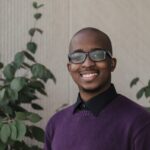
Sam Patterson ’21, M29, is now the second student in UMBC history to receive a Rhodes Scholarship. Only 32 American students are awarded the prestigious scholarship each year, which supports graduate study at the University of Oxford in England.
Patterson will pursue an M.Sc. in the Nature, Society, and Environmental Governance program at Oxford focusing on the economics of transportation. This research area will take full advantage of his three undergraduate degrees from UMBC. This spring, Patterson will earn bachelor of science degrees in mathematics and statistics and a bachelor of arts in economics.
A Meyerhoff Scholar and member of the Honors College, Patterson has steadily nurtured his interest in transportation economics at UMBC and through intensive summer internships. He conducted research supported by the Alfred P. Sloan Foundation at Harvard University with the Harvard Leadership Alliance and at the University of Chicago’s Booth School of Business. Most recently, at the National Bureau of Economic Research, he evaluated trends in transportation changes in urban centers due to the pandemic.
A strong network of support has been a cornerstone of Patterson’s UMBC experience. “From the Meyerhoff Scholars program to the Honors College to Dr. Householder to Naomi Mburu [UMBC’s first Rhodes Scholar] to my recommenders and mock interviewers and beyond, I’ve never had so many people on my team before, pushing me to achieve something I’m pursuing,” Patterson shares.
A commitment to equity
Patterson’s mentors all point out how his intelligence, drive, and charisma are balanced by a deep humility and desire to pursue the common good—a core expectation of Rhodes Scholars.
“Sam has an exceptionally fine mind, and couples to it diligence and determination,” shares Simon Stacey, director of the UMBC Honors College. “He has a genuine capacity for identification with others, and a deep commitment to justice, equity, and equality.”
That commitment translates to Patterson’s research—current and future—in transportation economics. “Sam has a strong interest in economic research that can inform the debate on public policy questions,” says Tim Gindling, professor of economics.
“Sam is a deep critical thinker who looks at car culture and considers its effects not only on the environment, but also in how it shapes access to education, work, healthcare, food, and culture,” adds April Householder, director of prestigious scholarships. “He raises questions about how class and race intersect with suburban and city planning to limit people’s lives.”
Community connections
Sam’s instructors also appreciate the way he approaches his coursework, which goes far beyond how he maintains a 4.0 GPA. “His obvious interest and earnest engagement inspire students around him, contributing to the classroom community,” shares Liz Stanwyck, senior lecturer in mathematics and statistics. “He was equally comfortable in applied and theoretical classes, always willing to speak up but also a great listener, drawing his peers out and helping to develop ideas.”
Beyond the classroom, Patterson is a dedicated community member who values connecting with and supporting others. He performs and produces music and has volunteered with Creative Coders, an afterschool program that teaches coding skills to middle school students.
As a newcomer to Baltimore when he joined the UMBC community four years ago, Patterson has taken full advantage of the opportunities the area offers and managed to maintain interests outside of his demanding academic schedule.
“I found new hobbies, interests, and activities that I hadn’t really considered before; now they’re key to keeping me relaxed and centered,” Patterson shares. “Producing music with Retriever Music Society and running their instrumental group, JOIS, has been one of my greatest pleasures here. Going down to Arbutus and perusing the shelves of Now and Then Music and Universal Comics has been essential to my weekends and birthdays.”
A transformative opportunity
Originally from Marietta, Georgia, Patterson’s education and internships have taken him around the U.S. However, he has never traveled abroad, so the Rhodes Scholarship offers a unique opportunity for him to broaden his perspective by studying in the U.K. and visiting other European countries. He hopes to further deepen his understanding of challenges—and potential solutions—related to a range of transportation systems.
“I’m so excited to go to the U.K.! I think it will do wonders for my research when I experience the European perspective on public transportation and its place in society and sustainability,” Patterson says. “There are so many brilliant academics at Oxford that I’m raring to meet. I just feel so fortunate to be where I am and to be going where I’m going.”
After Oxford, Patterson already has plans to attend Harvard University for a Ph.D. Before he gets there, though, Patterson and his mentors have no doubt the Rhodes experience will be transformative.
“The Rhodes Scholarship is a life-changing opportunity for exceptional young people with the potential to make a difference for good in the world. Sam has that mixture of grit and excellence that is the best of what UMBC represents,” Householder says. “His experience in the U.K. will enrich not only his academic path, but also his personal journey in so many profound ways. I can’t wait to see what he will accomplish.”
]]>
Sam Patterson ’21, M29, is now the second student in UMBC history to receive a Rhodes Scholarship. Only 32 American students are awarded the prestigious scholarship each year, which supports...
https://umbc.edu/stories/sam-patterson-umbcs-newest-rhodes-scholar-plans-to-transform-transportation/
https://my3.my.umbc.edu/api/v0/pixel/news/119744/guest@my.umbc.edu/8665c1f7f23bf23c61b975ddd5a2c164/api/pixel
cahss
classof2021
cnms
community
economics
majoraward
mathstat
page1
policy-and-society
undergradresearch
UMBC News & Magazine
https://my3.my.umbc.edu/groups/umbc-news-magazine
https://assets1-my.umbc.edu/system/shared/avatars/groups/000/001/943/24435aa6207c452e7bc15cc74b42c7bb/xsmall.png?1748556657
https://assets1-my.umbc.edu/system/shared/avatars/groups/000/001/943/24435aa6207c452e7bc15cc74b42c7bb/original.png?1748556657
https://assets2-my.umbc.edu/system/shared/avatars/groups/000/001/943/24435aa6207c452e7bc15cc74b42c7bb/xxlarge.png?1748556657
https://assets2-my.umbc.edu/system/shared/avatars/groups/000/001/943/24435aa6207c452e7bc15cc74b42c7bb/xlarge.png?1748556657
https://assets3-my.umbc.edu/system/shared/avatars/groups/000/001/943/24435aa6207c452e7bc15cc74b42c7bb/large.png?1748556657
https://assets1-my.umbc.edu/system/shared/avatars/groups/000/001/943/24435aa6207c452e7bc15cc74b42c7bb/medium.png?1748556657
https://assets2-my.umbc.edu/system/shared/avatars/groups/000/001/943/24435aa6207c452e7bc15cc74b42c7bb/small.png?1748556657
https://assets1-my.umbc.edu/system/shared/avatars/groups/000/001/943/24435aa6207c452e7bc15cc74b42c7bb/xsmall.png?1748556657
https://assets2-my.umbc.edu/system/shared/avatars/groups/000/001/943/24435aa6207c452e7bc15cc74b42c7bb/xxsmall.png?1748556657
UMBC News & Magazine
0
0
false
Sun, 22 Nov 2020 14:49:50 -0500
 Kirigua, center in blue dress with white collar, with other Returning Women Scholars and President Freeman Hrabowski. Photo courtesy of The Women’s Center.
 Headshot of Sandra Crespin-Melgar, courtesy of The Women’s Center.
 Crespin-Melgar at an event hosted by The Women’s Center. Photo courtesy of The Women’s Center.
 Students mingle at the Shady Grove campus in 2019. Photo by Marlayna Demond ’11.
 Headshot provided by Ting Huang.
 Huang, top middle, at an online family game night with her fellow McNair scholars. Photo courtesy of Huang.
 Jim Kruger and his wife Kathy on the bench they donated to UMBC. Photo by Marlayna Demond ’11.
 Kirigua with her son Joel (in pink) and his friends at the Lincoln Memorial in D.C.
 Kirigua with Jess Myers at a USM Women’s Forum Conference. Photo courtesy of Myers.


