UMBC supports promising internal research and creative endeavors with 2026 – 27 START, SURFF awards
UMBC’s Division of Research and Creative Achievement recently announced the recipients of the 2027 Strategic Awards for Research Transitions (START) and the 2026 Summer Research Faculty Fellowship (SURFF) awards, two of the university’s primary, internal funding opportunities that support faculty-led research and creative work.
The latest awards cover diverse projects, including exploring the genetic origins of a neurologic disorder in Siberian huskies, securing smartphones against voice scams, building novel animated sculpture, and exploring the legacy of Argentine-born American cellist Ennio Bolognini.
In total for fiscal year 2027, 12 faculty members and researchers across UMBC’s three colleges and the university’s research centers were awarded up to $25,000 in START funding to advance their research and creative projects. The awards help recipients build research momentum early in their careers and hone their research pitches to pursue external funding. They can also help faculty pivot to new fields of inquiry later in their careers.
For summer 2026, 21 faculty members received a SURFF award, which supports non-tenured, tenure-track faculty members in pursuing research and creative achievement projects during the summer. Recipients are awarded $8,000 in funding.
“Each year when we review applications, we find we have so many faculty who are being very creative and really pushing the edge of what’s known in their various disciplines,” says Don Engel, associate vice president for strategic research initiatives at UMBC, who coordinates the faculty committee that reviews prospective awards. “The proposals really illustrate the breadth of achievement that goes on across the university.”
]]>
UMBC’s Division of Research and Creative Achievement recently announced the recipients of the 2027 Strategic Awards for Research Transitions (START) and the 2026 Summer Research Faculty Fellowship...
https://umbc.edu/stories/umbc-2026-27-start-surff-awards/
https://my3.my.umbc.edu/api/v0/pixel/news/160970/guest@my.umbc.edu/3135e22beb3f1d1bead291c5198c4080/api/pixel
cahss
cnms
coeit
discovery
research
stories
story
UMBC News & Magazine
https://my3.my.umbc.edu/groups/umbc-news-magazine
https://assets1-my.umbc.edu/system/shared/avatars/groups/000/001/943/24435aa6207c452e7bc15cc74b42c7bb/xsmall.png?1748556657
https://assets1-my.umbc.edu/system/shared/avatars/groups/000/001/943/24435aa6207c452e7bc15cc74b42c7bb/original.png?1748556657
https://assets2-my.umbc.edu/system/shared/avatars/groups/000/001/943/24435aa6207c452e7bc15cc74b42c7bb/xxlarge.png?1748556657
https://assets2-my.umbc.edu/system/shared/avatars/groups/000/001/943/24435aa6207c452e7bc15cc74b42c7bb/xlarge.png?1748556657
https://assets3-my.umbc.edu/system/shared/avatars/groups/000/001/943/24435aa6207c452e7bc15cc74b42c7bb/large.png?1748556657
https://assets1-my.umbc.edu/system/shared/avatars/groups/000/001/943/24435aa6207c452e7bc15cc74b42c7bb/medium.png?1748556657
https://assets2-my.umbc.edu/system/shared/avatars/groups/000/001/943/24435aa6207c452e7bc15cc74b42c7bb/small.png?1748556657
https://assets1-my.umbc.edu/system/shared/avatars/groups/000/001/943/24435aa6207c452e7bc15cc74b42c7bb/xsmall.png?1748556657
https://assets2-my.umbc.edu/system/shared/avatars/groups/000/001/943/24435aa6207c452e7bc15cc74b42c7bb/xxsmall.png?1748556657
UMBC News & Magazine
0
0
false
Mon, 06 Jul 2026 15:17:16 -0400
Baltimore City hometown recruits shine bright
The Best of Baltimore Grant, a UMBC initiative started in fall 2025, is changing how students from Baltimore City imagine college: not as a distant possibility overshadowed by debt, but as a tangible, financially supported path forward, and right in their backyard.
For first-year student Essence Jones, who went to Baltimore City College, a high school in east Baltimore, “that financial freedom really pushed me towards UMBC,” she says, describing the moment she learned the grant would cover what other aid could not—including room and board. A double major in biological sciences and psychology, Jones is already thinking ahead to a future in forensics, drawn by what she calls “the puzzle problem-solving aspect” of analyzing crime scenes. But her present focus is simpler: adjusting, learning, and finding her place and people.
Embracing the ‘B’ in UMBC
The Best of Baltimore grant grew out of President Valerie Sheares Ashby’s desire to see a greater number of Baltimore City high school students become Retrievers. And the grant is just one part of a bigger initiative, says Yvette Mozie-Ross ’88, vice provost for enrollment management and planning: “This year, we have been more intentional with our outreach efforts—partnering with community based organizations such as CollegeBound and College Track to continue to help us get the word out about the many benefits of a UMBC education and specifically how the Best of Baltimore grant can make a UMBC education attainable for all Baltimore City residents.”
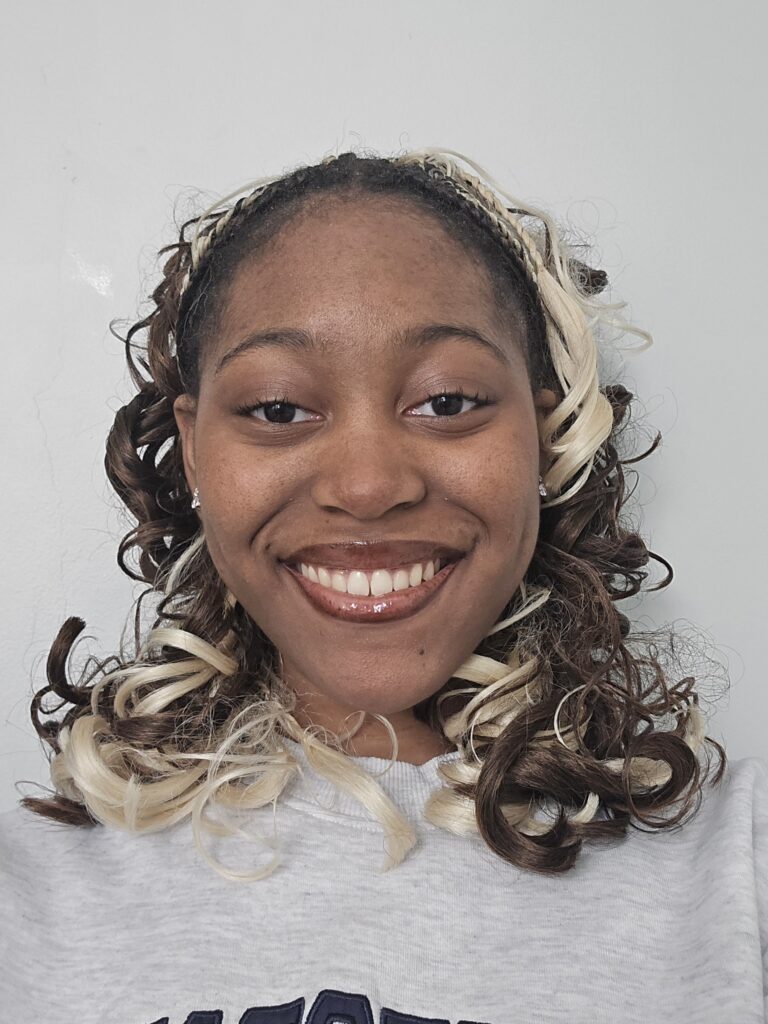 Essence Jones
The grant is designed to cover remaining billed costs after federal grants, subsidized loans, and other scholarships are applied—closing gaps that often prevent students with demonstrated financial need from enrolling.
Early results suggest momentum. In its first year, the program offered awards to nearly 140 students, with dozens ultimately enrolling and receiving grants ranging from $1,100 to $22,000. Just as importantly, Mozie-Ross notes, the early promise of financial support helped families make confident decisions about college. And the increased outreach methods are paying off—applications from city residents grew by 20 percent for fall 2026.
UMBC, Jones says, meets her at her pace and provides lots of student support. She points to spaces like the Learning Collaboratory, where students gather to work through complex chemistry problems together. “You’re both teaching and learning,” she explains. “That helps solidify the information.”
That sense of shared effort—of not struggling alone—has defined her early college experience. Whether studying with friends from her STEM courses or working quietly on the sixth floor of the library, Jones has found community. Her path to science was shaped before UMBC. At Baltimore City College, she was inspired by teachers who looked like her—women of color leading classrooms in biology and chemistry. “Being able to see them in that space… really helped me enjoy science,” she says. Now, she hopes to carry that sense of belonging forward.
Support fosters success
Deylon Moy Joseph, a mechanical engineering first-year student and another Best of Baltimore awardee, echoes Jones’ observations about support and community at UMBC. Originally from Trinidad and Tobago, he arrived in the United States in 2022 and enrolled at Mergenthaler Vocational-Technical High School—a mile north of Jones’ school. From the start, financial reality shaped his college search. “It was necessary for me to get some type of college funding,” he says. “I didn’t want to be stuck with really heavy student loans.”
At UMBC, he found a layered support system: the prestigious Meyerhoff Scholars Program, and unexpectedly, the Best of Baltimore grant. “We didn’t have to apply, but when we were accepted to UMBC, we received letters saying, ‘Congratulations,’” he recalls. “It was amazing.”
For Moy Joseph, that confidence extends into the classroom. He describes his technical coursework as demanding but manageable—especially with the right support. He credits faculty like Joseph Washington ’97, mechanical engineering, an assistant teaching professor whose open-door approach allows students to work through complex problems in real time. “Having the professor right there to give pointers… it really made retention much easier,” he says.
Outside class, in spaces like the Retriever Learning Center, students gather around whiteboards filled with equations, working through concepts together. “It’s so easy to study with someone,” Moy Joseph says. “And it’s satisfying to help people, too.”
That reciprocity—learning, then teaching—is central to many Retrievers’ experiences. It reflects a broader culture at UMBC, one that merges academic rigor with connection, starting in our very own neighborhood.
]]>
The Best of Baltimore Grant, a UMBC initiative started in fall 2025, is changing how students from Baltimore City imagine college: not as a distant possibility overshadowed by debt, but as a...
https://umbc.edu/stories/baltimore-city-recruits-shine-bright/
https://my3.my.umbc.edu/api/v0/pixel/news/160819/guest@my.umbc.edu/f96cc653dbc18a3b7081fca1134b9df1/api/pixel
baltimore-city
cahss
cnms
coeit
impact
spring-2026
stories
story
UMBC News & Magazine
https://my3.my.umbc.edu/groups/umbc-news-magazine
https://assets1-my.umbc.edu/system/shared/avatars/groups/000/001/943/24435aa6207c452e7bc15cc74b42c7bb/xsmall.png?1748556657
https://assets1-my.umbc.edu/system/shared/avatars/groups/000/001/943/24435aa6207c452e7bc15cc74b42c7bb/original.png?1748556657
https://assets2-my.umbc.edu/system/shared/avatars/groups/000/001/943/24435aa6207c452e7bc15cc74b42c7bb/xxlarge.png?1748556657
https://assets2-my.umbc.edu/system/shared/avatars/groups/000/001/943/24435aa6207c452e7bc15cc74b42c7bb/xlarge.png?1748556657
https://assets3-my.umbc.edu/system/shared/avatars/groups/000/001/943/24435aa6207c452e7bc15cc74b42c7bb/large.png?1748556657
https://assets1-my.umbc.edu/system/shared/avatars/groups/000/001/943/24435aa6207c452e7bc15cc74b42c7bb/medium.png?1748556657
https://assets2-my.umbc.edu/system/shared/avatars/groups/000/001/943/24435aa6207c452e7bc15cc74b42c7bb/small.png?1748556657
https://assets1-my.umbc.edu/system/shared/avatars/groups/000/001/943/24435aa6207c452e7bc15cc74b42c7bb/xsmall.png?1748556657
https://assets2-my.umbc.edu/system/shared/avatars/groups/000/001/943/24435aa6207c452e7bc15cc74b42c7bb/xxsmall.png?1748556657
UMBC News & Magazine
0
0
false
Tue, 23 Jun 2026 16:18:32 -0400
Tue, 23 Jun 2026 16:18:32 -0400
The Class of 2026 found communities to help tackle big challenges
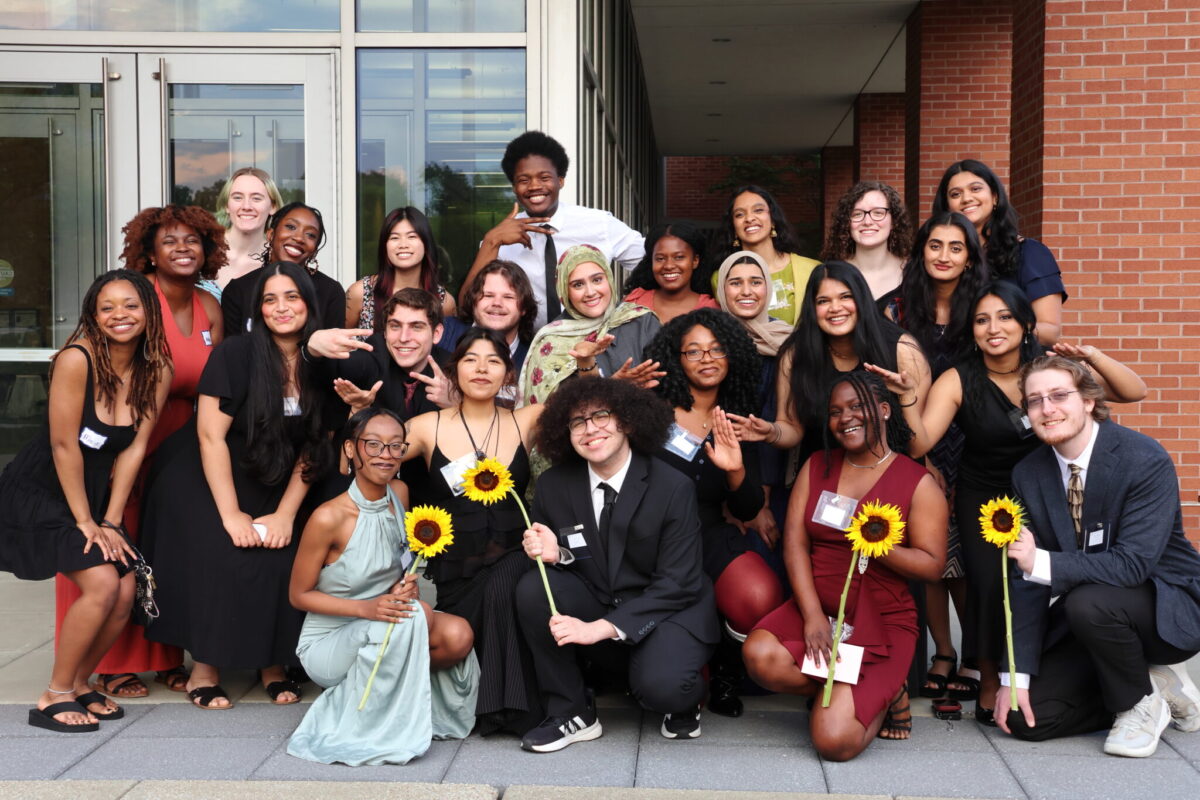
If you surveyed UMBC’s Class of 2026 and generated a word cloud, the word “community” would instantly dominate the screen. You might be tempted to dismiss it as a buzzword until you see how many graduating students highlight the communities they found and the communities they made as their defining experience of being a student at UMBC. “I can be myself here and I’m not going to be judged. Community is truly the word to describe UMBC,” says Shawn Bearam, Jr., computer science.
Who are the graduates of the Class of 2026?
It’s safe to say they contain multitudes: There’s an engineering management graduate student from India who devoted time to helping Marylanders complete their taxes; an English and political science student who volunteered as an educational and workforce advocate for Baltimore City youth; a mathematician—and Survivor hopeful—teaching game theory and disease modeling to students in Rwanda while also helping them understand the U.S. college admissions process.
What do they have in common? If you meet a Retriever from the Class of 2026, you will walk away from the encounter feeling hopeful for the future. These leaders and educators and entertainers and researchers are making room in the world for each person’s voice to be heard and heeded. We can’t wait to see where they take it from here!
“It’s the people”
If community is the key takeaway from the Class of 2026, where are students finding their niche groups? Vunnathi Ankem, psychology, saw a way to bridge multiple areas together. As a resident assistant, a researcher, and a multifaceted student leader, she has spent her four years both building community and studying its impact on the human experience. From hosting public-service retreats in Baltimore to interviewing members of the South Asian diaspora for her thesis, Ankem’s work bridges the gap between community- centered research and heartfelt advocacy.
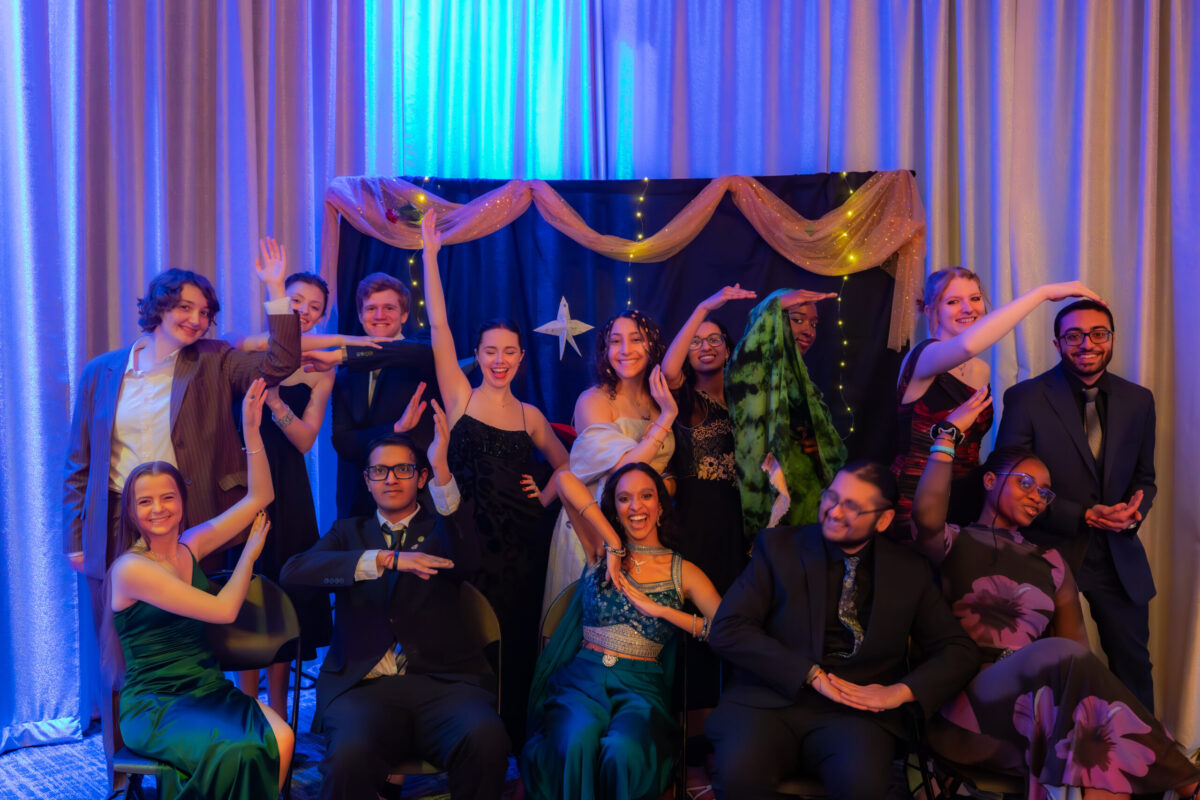
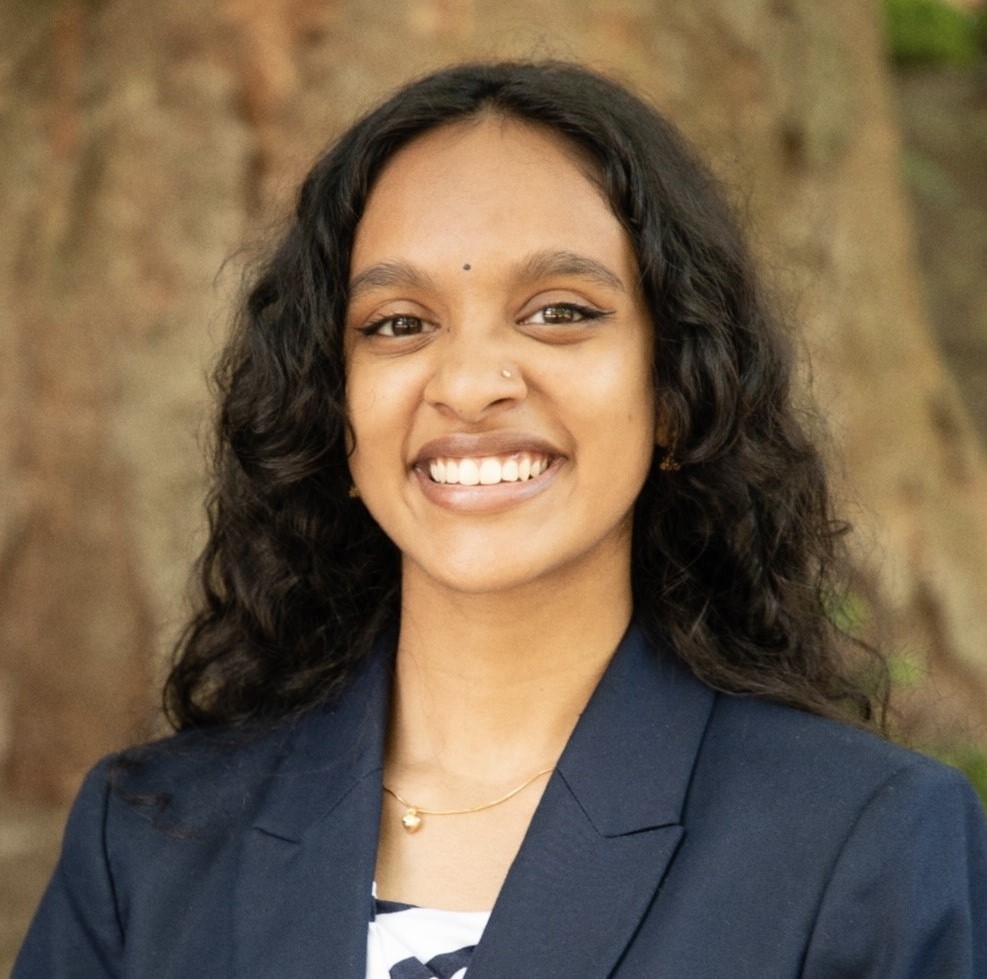
 Vunnathi Ankem, psychology, looks forward to returning to her classical dancing roots as she heads to India for a nine-month research project through a Fulbright Scholarship.
As a newly awarded Fulbright Scholar to India, Ankem leaves behind a campus made stronger by her leadership and a personal roadmap focused on healing, mentorship, and global research. “When I think about what I’m proud of, it’s not the awards, it’s the people,” says Ankem. “I remember all the people who were there when I needed support—those people meant more to me than any accomplishment. My advice would be to think about what you’ll look back on. It will most likely be community—the people who were there when you weren’t at your best.”
Bearam in computer science was not content to confine himself to one campus community. He puts it plainly: “I found communities where it seemed that everyone was having fun together, and I wanted to be a part of that,” he says. He had roles with the events staff in Athletics, at UMBC’s research and technology park, bwtech@UMBC, and working as a lead
office assistant for the vice president of student affairs. If that wasn’t enough, he also served as a lead resident assistant and a first-year ambassador for the Student Government Association.
“I started to see that I was able to learn so much here,” says Bearam. “I saw people who looked like me in different spaces, and I knew they would be able to understand me, so I wanted to get involved.”


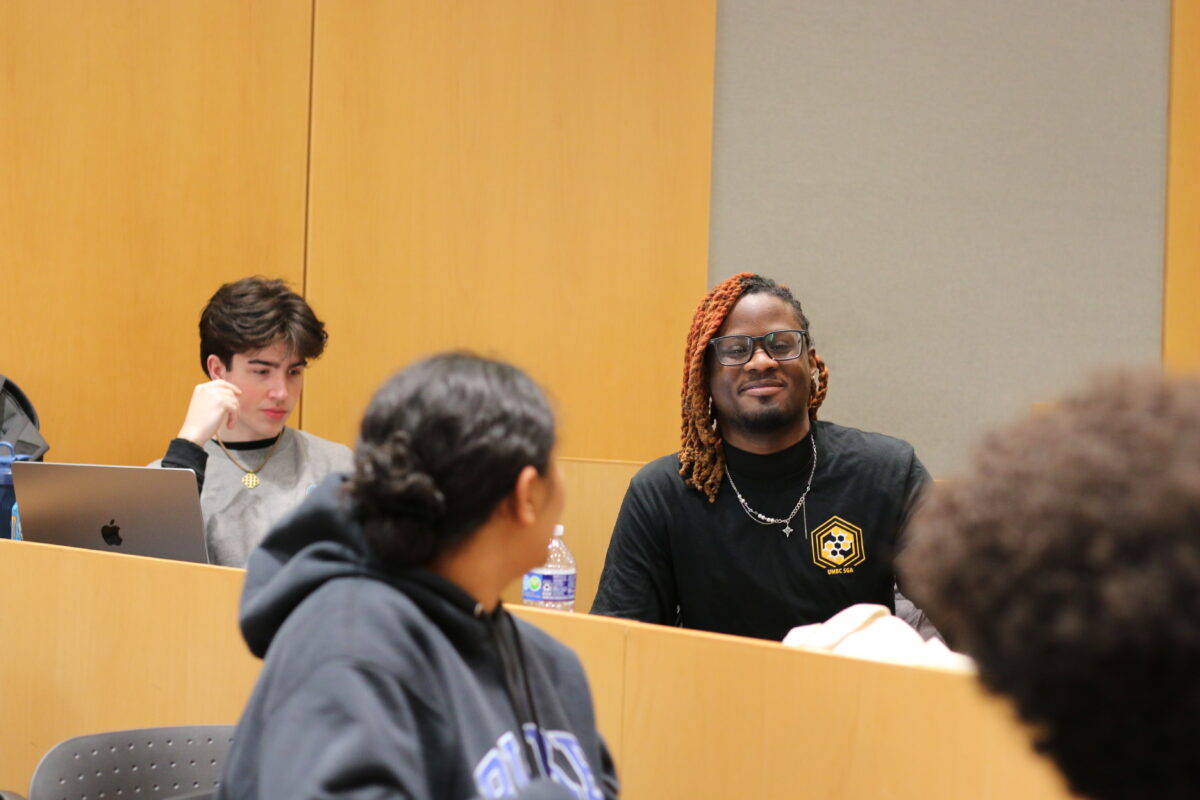 Using the skills he gained in his computer science major, Shawn Bearam, Jr., computer science, will be working as a project analyst for the State of Maryland within the Division of Information and Technology.
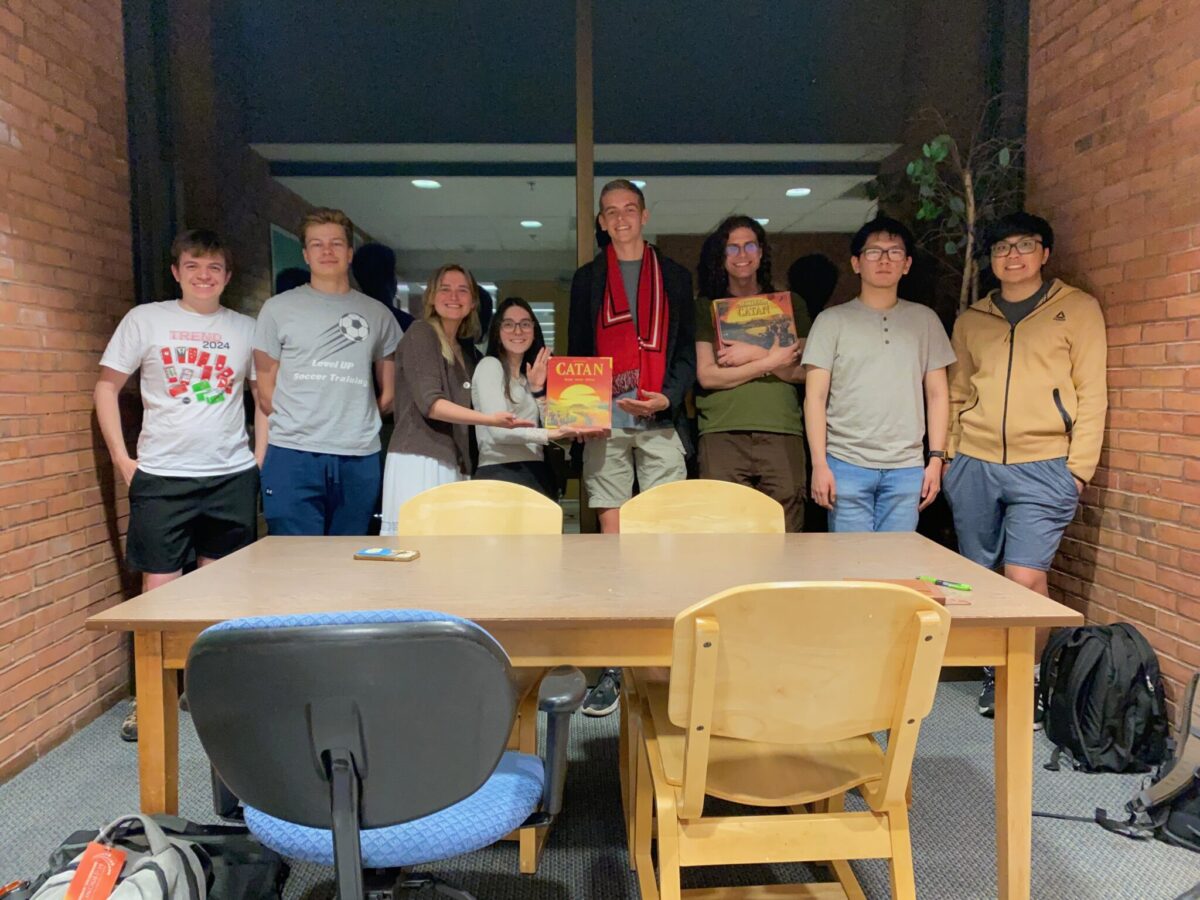
Rileigh Mansfield, mathematics, also made it her goal to build connections across a variety of UMBC communities. As a Meyerhoff Scholar, she served as a peer advisor and conducted research with multiple math professors, “but honestly,” she shares, “some of my most meaningful involvement has been more informal. Last spring, I was having a tough semester when I got invited to join a group from the math lounge to play the board game Catan on Tuesdays. It became a little community and something to look forward to every week—a much-needed step back from school and work. I actually play in competitive Catan tournaments now, and I’m even hosting an official tournament this spring through the math honors society.”
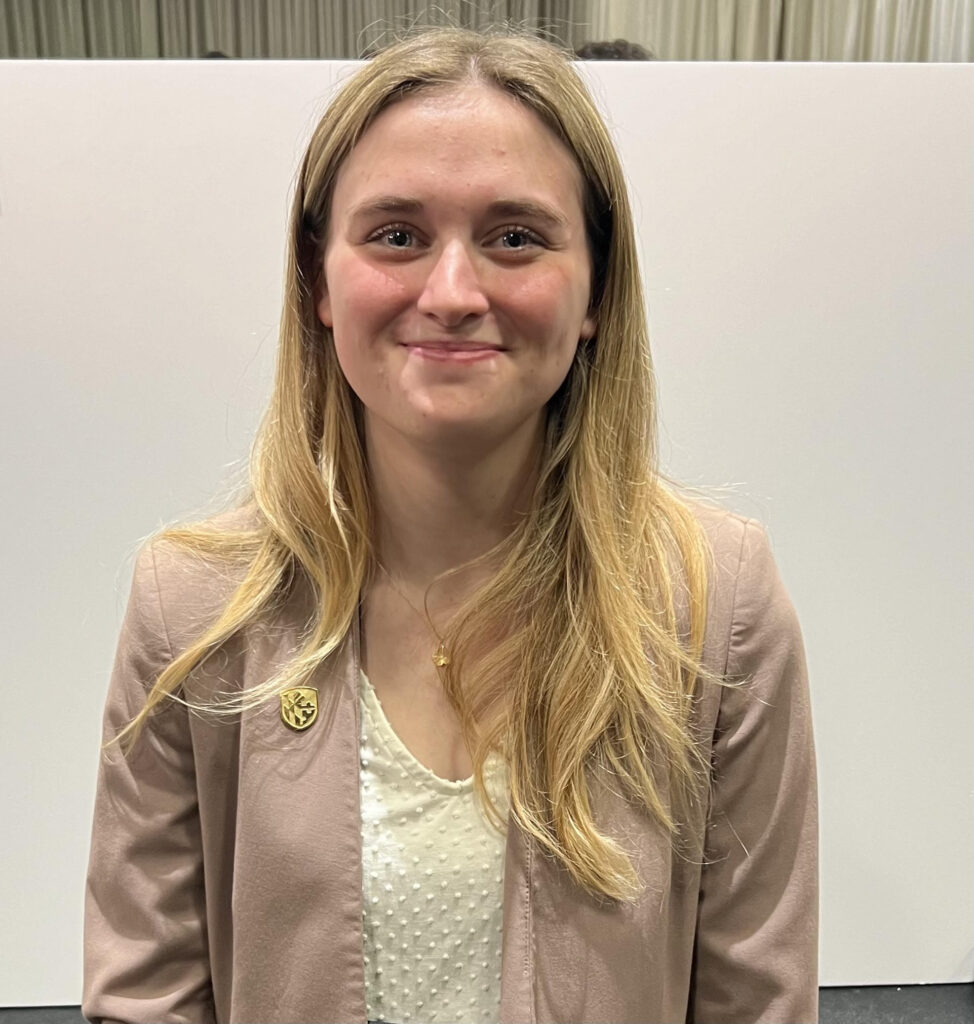
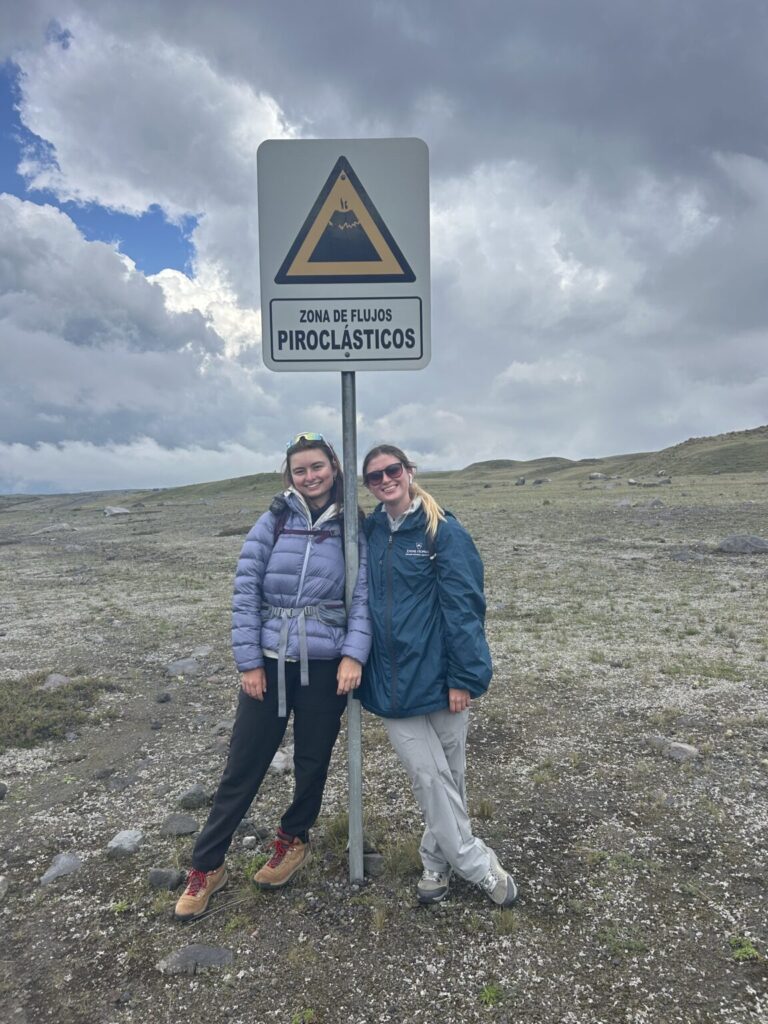 Looking toward sunny California skies, Rileigh Mansfield, mathematics, will start her Ph.D.at Stanford University in geophysics this fall.
“Just see it through”
Often, the defining moment in a student’s successful academic trajectory is a challenge that they can point back to. When Chinonso Ezeobi decided to pack up his life in Nigeria and come to the United States to pursue his Ph.D. in electrical engineering at UMBC, he was thrilled at the prospect of finding a program that would bring him fulfillment. However, financial struggles and the impact of the COVID-19 pandemic quickly threatened Ezeobi’s plans for the future.
“Once I navigated through one challenge, another one came in,” he says. “But at the end of the day, it was worth it. I was able to pull through all of those challenges. I was also able to transition from being an international student to having a green card through self-petition and self-advocacy, so I’m able to graduate without the additional pressure of thinking about my visa status while looking for jobs. My faith and the community at UMBC were essential in navigating through all challenges. The motivation was that I had a community of people who wanted my success, people who I felt would advocate for me even when I’m not in the room.”
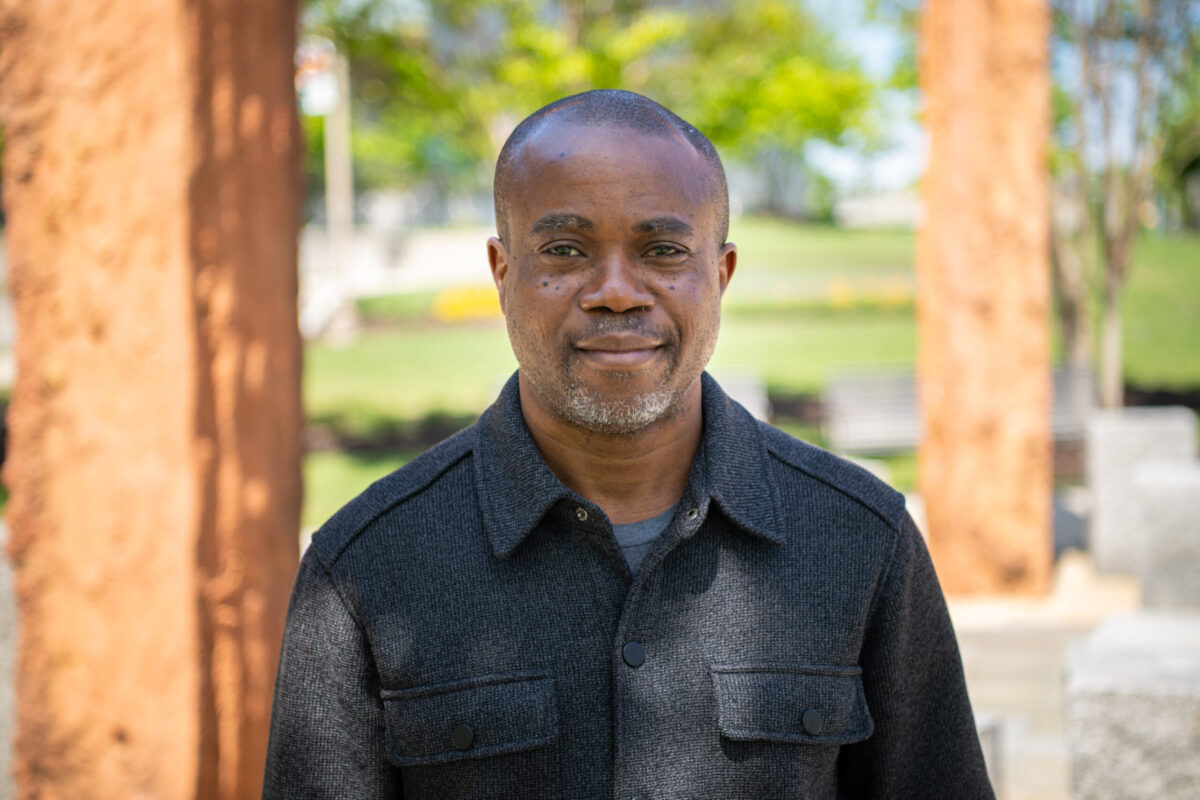 Whenever Chinonso Ezeobi, Ph.D., electrical engineering, helps students solve their problems, he says, “I feel that the struggles I have experienced throughout my UMBC journey have given me this capacity to help others.”
Never one to be derailed, Ezeobi found mentors across campus who made it their mission to keep him on the path to his Ph.D. Ezeobi recognized how invaluable their support was and found his own ways to give back to the place and people who gave him so much, including keeping his door open to any students who may need an advocate on their side.
At one point, Maia Turman Cooke, English and political science, was thinking about backing out of her scholar’s program opportunity. In the end, though, she was surprised by how the McNair Scholars Program changed her life. “At the beginning of the application process, it seemed like a lot, and I wanted to quit—I didn’t want to join. The director of the McNair Scholars Program, Dr. Michael Hunt [’06, Ph.D. ’25], called me and said, ‘Just see it through, see it out. If you don’t like it when you get more involved, then you can leave.’”


 Maia Turman Cooke, English and political science, will continue to pursue her passions this fall as she embarks on her journey toward a Ph.D. in English at the University of Maryland, College Park.
Turman Cooke processed the expectations of the programs—like pursuing graduate school—while recognizing she had so much to learn about how research worked. “I was so overwhelmed because I thought I had to solve every world problem. But my peers convinced me to stay. Soon, that work became a normal part of my schedule. I had no idea what research was, and now it’s something I’m super passionate about,” says Turman Cooke, who starts her Ph.D. in English at the University of Maryland, College Park this fall.
“A person who needs a path”
Sometimes the way forward is clearly marked, and other times Retrievers forge their own way. Kayla Nemirovsky, mathematics and financial economics, had a love for international travel and a scholarship with the Sondheim Public Affairs Scholars Program but wasn’t sure how those interests combined with her majors.
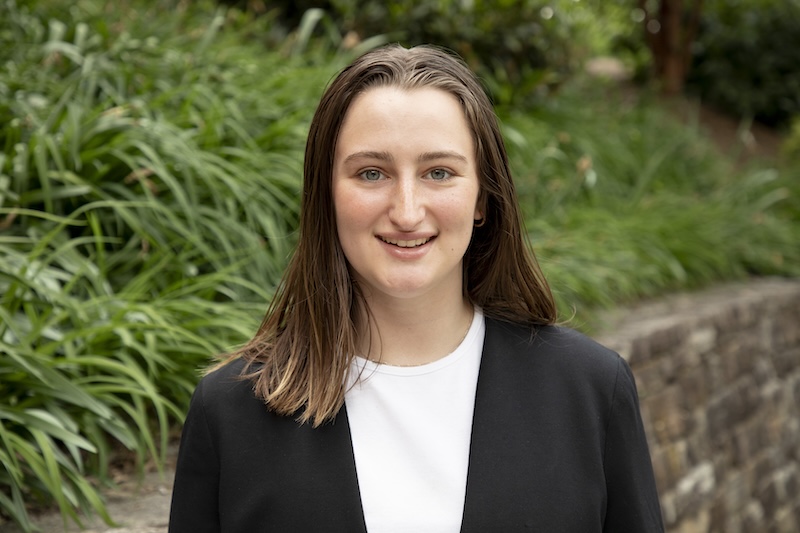

 For once, Kayla Nemirovsky, mathematics and financial economics, won’t be traveling far after graduation. She’ll be staying at UMBC to pursue her master’s in teaching.
Nemirovsky, who is staying at UMBC to pursue her master’s degree in teaching, charted her own route at UMBC as an Education Abroad ambassador, sharing widely with her peers the importance (and accessibility) of studying abroad for any major. Her Sondheim mentors connected her with an internship at the Maryland State Department of Education, and this experience helped her solidify her interest in math education curriculum and policy.
“I’m a person who needs a path,” says Nemirovsky, who has traveled to more than 30 countries and counting. “I realized once I got to college that there’s kind of no more path—I have to make my own. At was really scary to me, so having mentors who can help me make this path…give
me advice and offer suggestions, that was extremely helpful. I really believe you have to choose the people you look up to and kind of aspire to be them.”
Over his two years of graduate study at UMBC, Yash Bhatt, M.S., engineering management, saw his time at UMBC as much bigger than “just earning a degree.” He charted a path to contribute meaningfully to both the university and the greater Baltimore community. As a graduate student, Bhatt arrived at UMBC with an undergraduate degree and professional experience, but he says he was not yet the confident leader he is today.
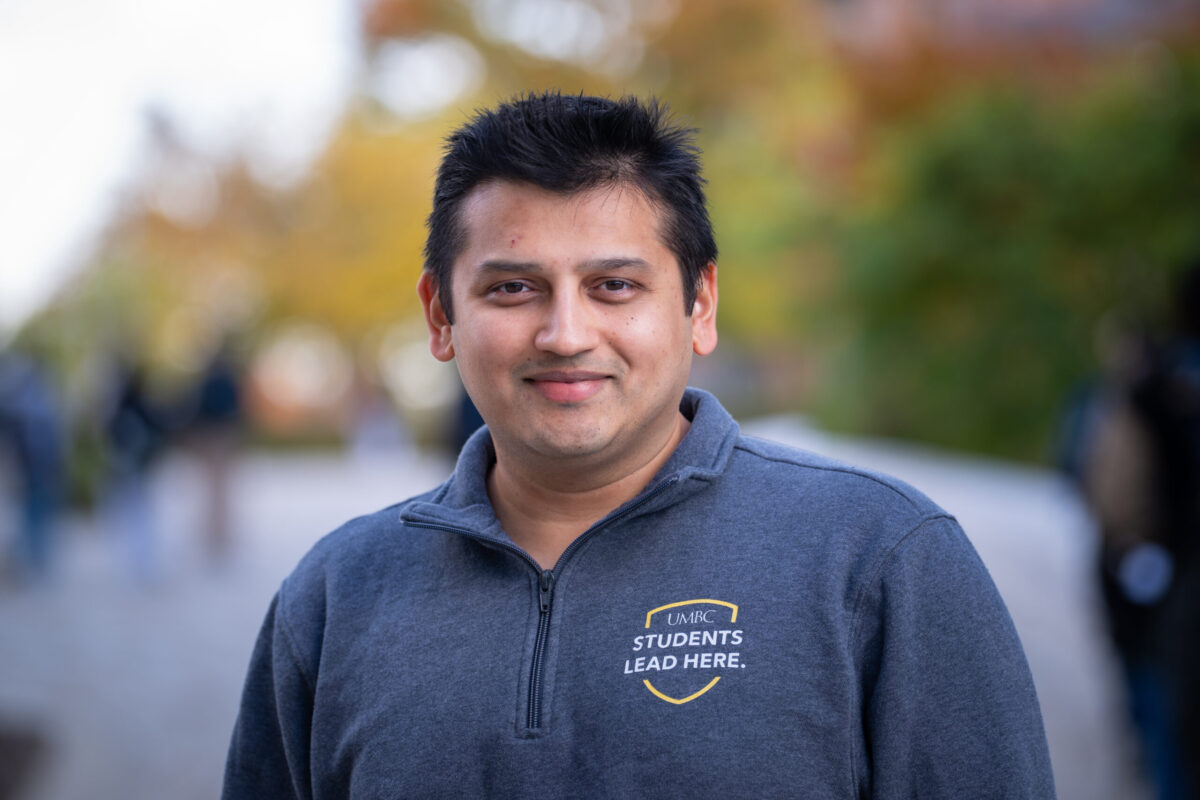

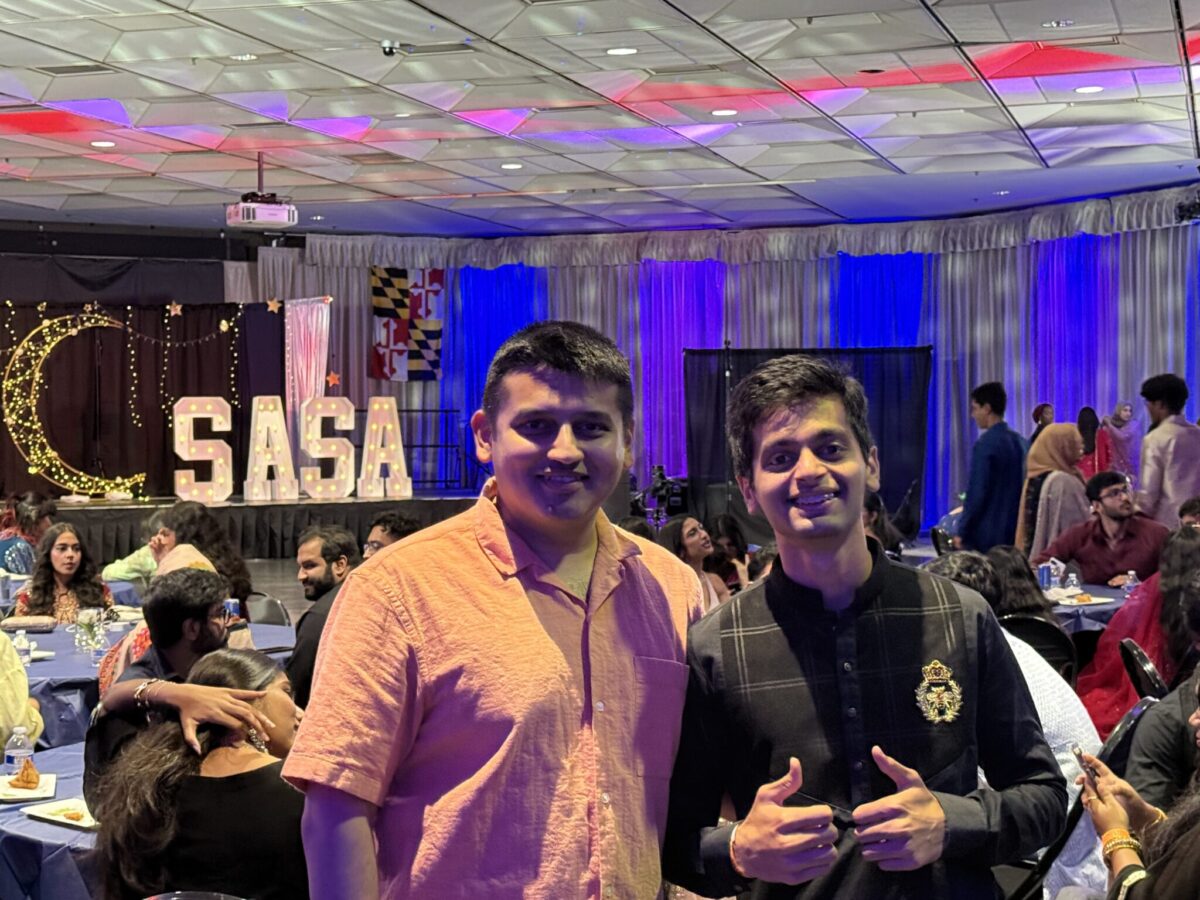 Building on the experience and relationships he has poured into at UMBC, Yash Bhatt, M.S., engineering management, is exploring career options that will allow him to find impactful work in the United States.
Outside of the classroom, Bhatt dedicated himself to enhancing student life for his classmates. As a member of the Indian Graduate Student Association and the Black and Gold Student Advisory Board, he advocated for international students and contributed to university decision-making. Bhatt also joined two Alternative Spring Break experiences. Starting as a participant and returning as a program leader, Bhatt immersed himself in what he considers a genuine “American student experience,” building local friendships and making connections within local government and community organizations, in addition to the service the participants provided to the community.
“The best part of my UMBC experience has been the people and the sense of community,” says Bhatt. “UMBC has this unique balance—it’s diverse and full of opportunity like a larger university yet still close-knit enough that you truly feel seen and supported.”
Read about more members of the Class of 2026.
]]>
If you surveyed UMBC’s Class of 2026 and generated a word cloud, the word “community” would instantly dominate the screen. You might be tempted to dismiss it as a buzzword until you see how many...
https://umbc.edu/stories/the-class-of-2026-found-communities/
https://my3.my.umbc.edu/api/v0/pixel/news/160816/guest@my.umbc.edu/cf04ba1651301975b30808841d7317ae/api/pixel
cahss
class-of-2026
cnms
coeit
community
feature
spring-2026
stories
story
UMBC News & Magazine
https://my3.my.umbc.edu/groups/umbc-news-magazine
https://assets1-my.umbc.edu/system/shared/avatars/groups/000/001/943/24435aa6207c452e7bc15cc74b42c7bb/xsmall.png?1748556657
https://assets1-my.umbc.edu/system/shared/avatars/groups/000/001/943/24435aa6207c452e7bc15cc74b42c7bb/original.png?1748556657
https://assets2-my.umbc.edu/system/shared/avatars/groups/000/001/943/24435aa6207c452e7bc15cc74b42c7bb/xxlarge.png?1748556657
https://assets2-my.umbc.edu/system/shared/avatars/groups/000/001/943/24435aa6207c452e7bc15cc74b42c7bb/xlarge.png?1748556657
https://assets3-my.umbc.edu/system/shared/avatars/groups/000/001/943/24435aa6207c452e7bc15cc74b42c7bb/large.png?1748556657
https://assets1-my.umbc.edu/system/shared/avatars/groups/000/001/943/24435aa6207c452e7bc15cc74b42c7bb/medium.png?1748556657
https://assets2-my.umbc.edu/system/shared/avatars/groups/000/001/943/24435aa6207c452e7bc15cc74b42c7bb/small.png?1748556657
https://assets1-my.umbc.edu/system/shared/avatars/groups/000/001/943/24435aa6207c452e7bc15cc74b42c7bb/xsmall.png?1748556657
https://assets2-my.umbc.edu/system/shared/avatars/groups/000/001/943/24435aa6207c452e7bc15cc74b42c7bb/xxsmall.png?1748556657
UMBC News & Magazine
0
0
false
Tue, 23 Jun 2026 14:41:14 -0400
Tue, 23 Jun 2026 14:41:14 -0400
Meet a Retriever—Beryl Fuamazeh ’26 is on her way to medical school with an eye on aging care
Beryl Fuamazeh ’26, biology, and a minor in health, wellness, and aging, is on her way to Howard University College of Medicine. After connecting with Nancy Kusmaul, professor of social work, Beryl found her research interests piqued by learning more about healthcare and aging care. While at UMBC, Beryl worked as a nursing assistant at a retirement community and volunteered for an organization that supports people with disabilities and older adults. After presenting her research at UMBC’s Undergraduate Research and Creative Achievement Day, she received the Erickson School of Aging Studies Award for Excellence in Undergraduate Research.
Beryl transferred to UMBC from the Community College of Baltimore County through the Degrees to Succeed program, and says that the support and funding she’s received from UMBC has made her education affordable and given her time to focus on her passion: healthcare and aging. Outside of school and work, she loves watching Korean dramas.
Q: Tell us about someone in the UMBC community who has inspired you.
A: Dr. Nancy Kusmaul is my research mentor, and she has been instrumental in my undergraduate research journey. The work she does to support the aging community has deeply inspired me. I have also been greatly influenced by Professor Mary Carter, an English professor here, who taught me how to better express myself through writing—a skill that was invaluable during my medical school application process. The support and guidance both faculty members have given me have truly shaped my experience at UMBC.
Q: Tell us about what you love about your academic program.
A: I’ve really enjoyed being part of the Erickson School of Aging Studies through my minor in health, wellness, and aging. Many of the classes I’ve taken have been meaningful because I can directly apply what I learn to my work as a nursing assistant in a retirement community. My biology major has also given me a strong foundation as I prepare to matriculate into medical school.
Q: What’s one thing you’d want someone to know about the support you find here?
A: Because it’s a smaller university, I’ve been able to build meaningful one-on-one relationships with professors, which has been incredibly valuable. I’ve also loved being surrounded by students who are passionate, driven, and genuinely supportive of one another, especially within the sciences. UMBC is a very supportive community.
Q: What brought you to UMBC in the first place?
A: I wanted to further my education while building meaningful relationships along the way. As someone pursuing the pre-med path, I knew it was important to be surrounded by supportive, like-minded people, and UMBC provided that for me, especially as a transfer student from the Community College of Baltimore County.
I was also drawn to the smaller campus environment, which made it easier to adapt and connect with professors and peers. Through my community college’s Degrees to Succeed partnership program, I was introduced to UMBC and the opportunities it offered, including research experiences, mentorship, and a strong academic community.
Right: Fuamazeh next to her poster at URCAD 2025.
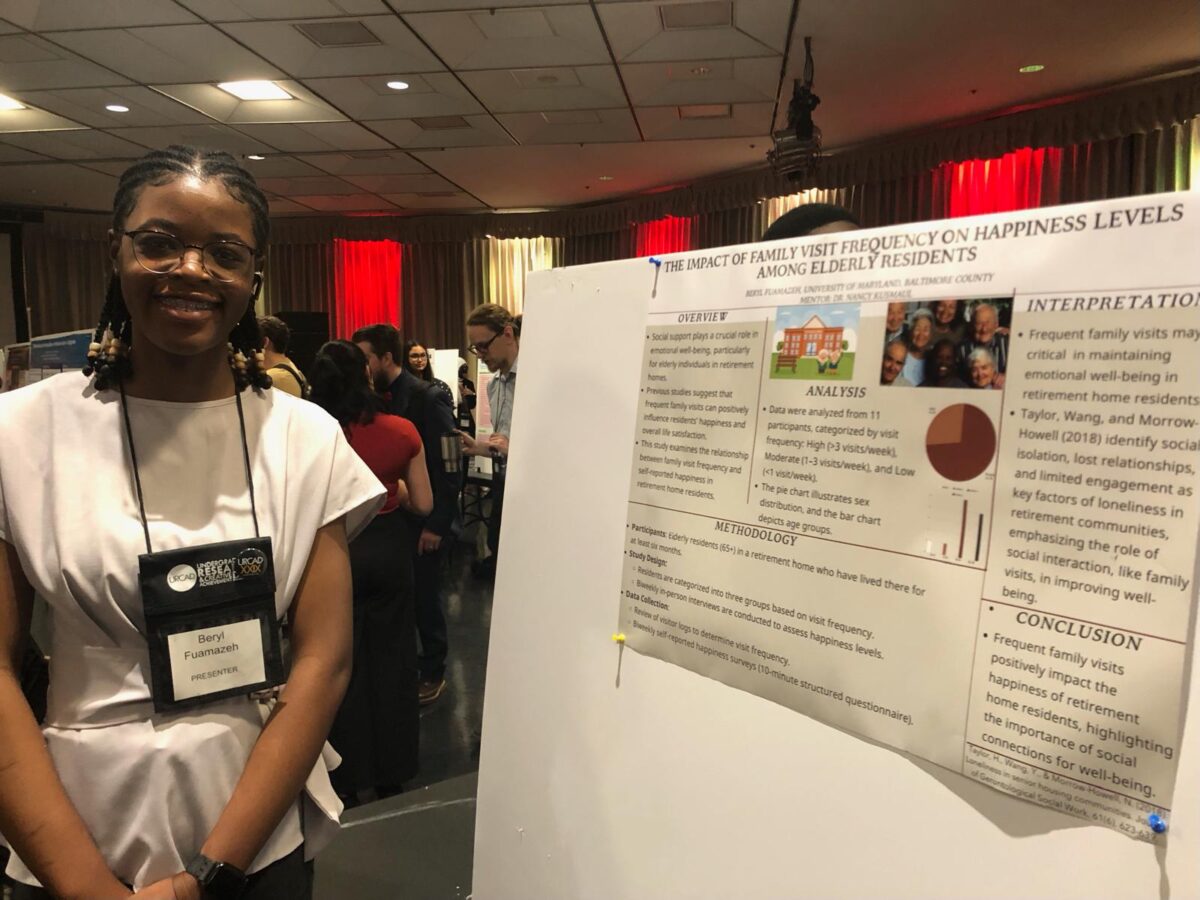
Q: Tell us about the people who are helping you grow at UMBC.
A: Dr. Nancy Kusmaul has been incredibly instrumental in helping me grow at UMBC. She helped me kickstart my undergraduate research journey, which initially felt very daunting. All it took was reaching out to her by email, and she was immediately supportive and responsive. She took time out of her busy schedule to help me develop an individualized research study focused on aging, a topic that has become deeply meaningful to me and the communities it impacts.
Q: How have you connected with the community?
A: I have been involved in community programs, like volunteering with the Trusted Ride Program at Ascension Saint Agnes Hospital, which supports older adults and individuals with disabilities by helping them get to medical appointments safely. Experiences like this have allowed me to stay connected to the community while pursuing my interests in healthcare and aging.
Q: What would you tell others who are in your shoes about UMBC?
A: I transferred to UMBC from the Community College of Baltimore County, and through scholarships and financial support, including merit-based awards, UMBC helped ease the financial burden of pursuing higher education, which allowed me to focus more on my academics and future goals. I also felt well supported as a transfer student through the Degrees to Succeed program, even before officially transferring to UMBC. The transition felt smooth, and I always felt like there were people willing to help guide me along the way.
UMBC’s greatest strength is its people. When people meet Retrievers and hear about the passion they bring, the relationships they create, the ways they support each other, and the commitment they have to inclusive excellence, they truly get a sense of our community. That’s what “Meet a Retriever” is all about.
Learn more about how UMBC can help you achieve your goals.
]]>
Beryl Fuamazeh ’26, biology, and a minor in health, wellness, and aging, is on her way to Howard University College of Medicine. After connecting with Nancy Kusmaul, professor of social work,...
https://umbc.edu/stories/meet-a-retriever-beryl-fuamazeh-aging-care/
https://my3.my.umbc.edu/api/v0/pixel/news/160752/guest@my.umbc.edu/8b4bf215522e0179499e5c60c5bc173d/api/pixel
aging-studies
alumni
cnms
erickson-school
meet-a-retriever
perspectives
social-work
story
urcad
UMBC News & Magazine
https://my3.my.umbc.edu/groups/umbc-news-magazine
https://assets1-my.umbc.edu/system/shared/avatars/groups/000/001/943/24435aa6207c452e7bc15cc74b42c7bb/xsmall.png?1748556657
https://assets1-my.umbc.edu/system/shared/avatars/groups/000/001/943/24435aa6207c452e7bc15cc74b42c7bb/original.png?1748556657
https://assets2-my.umbc.edu/system/shared/avatars/groups/000/001/943/24435aa6207c452e7bc15cc74b42c7bb/xxlarge.png?1748556657
https://assets2-my.umbc.edu/system/shared/avatars/groups/000/001/943/24435aa6207c452e7bc15cc74b42c7bb/xlarge.png?1748556657
https://assets3-my.umbc.edu/system/shared/avatars/groups/000/001/943/24435aa6207c452e7bc15cc74b42c7bb/large.png?1748556657
https://assets1-my.umbc.edu/system/shared/avatars/groups/000/001/943/24435aa6207c452e7bc15cc74b42c7bb/medium.png?1748556657
https://assets2-my.umbc.edu/system/shared/avatars/groups/000/001/943/24435aa6207c452e7bc15cc74b42c7bb/small.png?1748556657
https://assets1-my.umbc.edu/system/shared/avatars/groups/000/001/943/24435aa6207c452e7bc15cc74b42c7bb/xsmall.png?1748556657
https://assets2-my.umbc.edu/system/shared/avatars/groups/000/001/943/24435aa6207c452e7bc15cc74b42c7bb/xxsmall.png?1748556657
UMBC News & Magazine
1
0
false
Wed, 17 Jun 2026 15:25:50 -0400
Wed, 17 Jun 2026 15:25:50 -0400
Office Hours—President Sheares Ashby talks with a graduating senior about rootedness and change
Manav Narendra’s story has been shaped by constant motion. A math and computer science double major, who graduated from UMBC this spring, Narendra grew up moving frequently between India and the United States, adapting to new schools, cultures, and environments every few years. Raised by a single mother who was always striving to create a better life for them, Narendra grew accustomed to change—but also to the challenges that come with it.
Coming to UMBC marked a turning point. Narendra sought out a smaller, close-knit academic environment where he could build community, form lasting friendships, and explore what it means to belong somewhere. In this Office Hour, President Valerie Sheares Ashby—who has also been at UMBC for four years—and Narendra reflect on growing rooted to a place and what effect those lasting connections can have.
UMBC Magazine: Manav, tell us about your background and what brought you to UMBC.
Manav Narendra: I’m originally from India, and I’ve spent about half my life there and half in the U.S. Growing up, I moved a lot because my mom would switch jobs for better opportunities. By my senior year of high school, we had just moved to Maryland. I applied to a vast array of colleges, but I ultimately chose UMBC because I wanted a smaller, more personal environment where I wouldn’t feel lost.
And here, I’ve met people in so many different ways—through classes, the Honors College, tutoring, tennis, even the Career Fair. It’s been really meaningful.
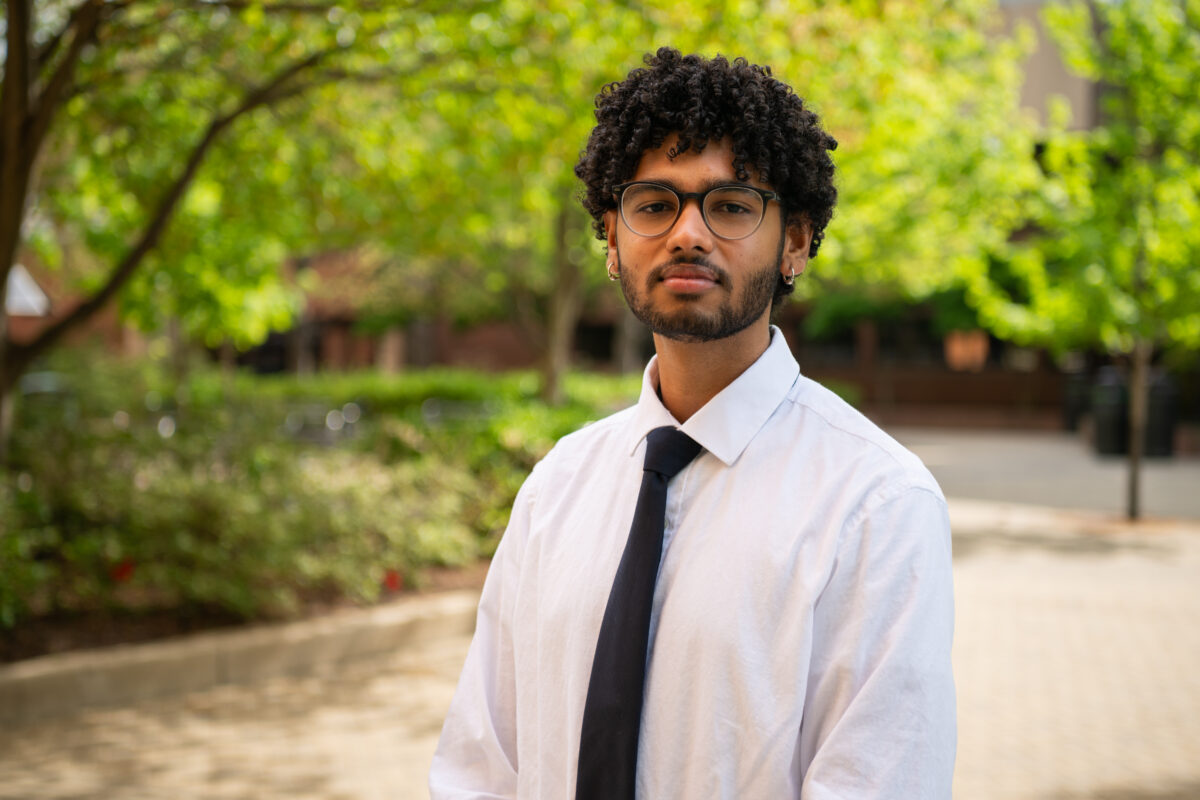 Narendra on campus in spring 2026.
President Valerie Sheares Ashby: You wanted a place where you could feel seen—that is powerful. And these smaller communities within UMBC can really shape your experience.
UMBC Magazine: How did moving so often affect your ability to build relationships?
Narendra: It was difficult. I became more introverted over time because you don’t really get the chance to build lasting friendships when you’re always leaving. I just didn’t realize how much I was missing in terms of long-term connections until I got here. Nevertheless, I’m forever grateful to have met so many incredible people from such beautifully different walks of life—they’ve all shaped who I am today.
President Sheares Ashby: I understand that. I am an introvert, too, and I think those kinds of experiences can really shape how you connect with people. It is not always easy to keep starting over. When I moved to Baltimore, I did not know anyone here, but from experience, I knew what I needed to put in place in order to feel like I am grounded and rooted in community. I learned how to do that when I was your age. In college and in graduate school, I started to ask myself: “What is it that I need to feel grounded?” And then I would go get it—I do not wait for it to happen.
UMBC Magazine: How has UMBC shaped your conception of community?
Narendra: I’ve made friendships that have lasted all four years, which still surprises me. I’ll see someone on campus and think, “Wow, I’ve known you for so long.”
President Sheares Ashby: That is such a special realization. I always tell students that those relationships are one of the most important parts of college. You learn so much in the classroom, but those connections—those are what stay with you.
UMBC Magazine: What does “home” mean to you now, after having moved so much?
Narendra: Growing up, home was my mom. Wherever she was, that’s where home was. She was the only constant in my life. I was diagnosed with cancer when I was 13, and my mom and I went through it together. I dealt with the physical pain, but she carried the brunt of the emotional and mental burden. She quit her job to take care of me. I couldn’t have done it without her. Now, I feel like I have another home here. I have a place where I belong, where I feel valued. It’s comforting to be in one place and not have everything constantly changing.
UMBC Magazine: How did that experience influence your future goals?
Narendra: It’s made me want to give back. I’m looking at various roles, ranging from data and actuarial science to software and astrophysics—seeing where I can best utilize my skills to make a difference: something that helps people and advances our collective understanding of the world. I feel like I’ve been given a second chance at life, and I want to use it well.
President Sheares Ashby: Often, our experiences guide us toward that sense of purpose. There is this idea of finding where your talents meet the greatest need—that is where meaningful work happens.
]]>
Manav Narendra’s story has been shaped by constant motion. A math and computer science double major, who graduated from UMBC this spring, Narendra grew up moving frequently between India and the...
https://umbc.edu/stories/office-hours-rootedness-and-change/
https://my3.my.umbc.edu/api/v0/pixel/news/160751/guest@my.umbc.edu/9430445fa9c6f071aa889ed9b10c3a72/api/pixel
alumni
campus-life
cnms
coeit
computer-science
mathematics
office-hours
spring-2026
story
UMBC News & Magazine
https://my3.my.umbc.edu/groups/umbc-news-magazine
https://assets1-my.umbc.edu/system/shared/avatars/groups/000/001/943/24435aa6207c452e7bc15cc74b42c7bb/xsmall.png?1748556657
https://assets1-my.umbc.edu/system/shared/avatars/groups/000/001/943/24435aa6207c452e7bc15cc74b42c7bb/original.png?1748556657
https://assets2-my.umbc.edu/system/shared/avatars/groups/000/001/943/24435aa6207c452e7bc15cc74b42c7bb/xxlarge.png?1748556657
https://assets2-my.umbc.edu/system/shared/avatars/groups/000/001/943/24435aa6207c452e7bc15cc74b42c7bb/xlarge.png?1748556657
https://assets3-my.umbc.edu/system/shared/avatars/groups/000/001/943/24435aa6207c452e7bc15cc74b42c7bb/large.png?1748556657
https://assets1-my.umbc.edu/system/shared/avatars/groups/000/001/943/24435aa6207c452e7bc15cc74b42c7bb/medium.png?1748556657
https://assets2-my.umbc.edu/system/shared/avatars/groups/000/001/943/24435aa6207c452e7bc15cc74b42c7bb/small.png?1748556657
https://assets1-my.umbc.edu/system/shared/avatars/groups/000/001/943/24435aa6207c452e7bc15cc74b42c7bb/xsmall.png?1748556657
https://assets2-my.umbc.edu/system/shared/avatars/groups/000/001/943/24435aa6207c452e7bc15cc74b42c7bb/xxsmall.png?1748556657
UMBC News & Magazine
0
0
false
Wed, 17 Jun 2026 14:49:56 -0400
Wed, 17 Jun 2026 14:49:56 -0400
Business—not as usual
At UMBC, entrepreneurship transcends a traditional business education: It empowers scientists, artists, and technologists to transform their expertise into real-world impact. Through business accelerators, ambassador programs, interdisciplinary courses, and other innovation pathways, the university offers many avenues for ideas to flourish.
Kushani Mendis and her labmates have developed novel nanomaterials that could transform biomedical technology. She wants to translate their discoveries into a business opportunity, but initially, wasn’t sure what steps to take. So, early in her chemistry Ph.D. with Zeev Rosenzweig, professor of chemistry and biochemistry, Mendis told him that she wanted to become an entrepreneur—and he jumped at the chance to creatively support her with internal and external resources.
UMBC has no formal business school. Yet it may be one of the best places in the country to learn entrepreneurial thinking—precisely because the best ideas so often come from those with technical expertise rather than MBAs. Also, many UMBC entrepreneurs are motivated by a desire to drive positive social change rather than profit, which is supported by courses on “socialpreneurship.” Overall, the university’s model rests on a simple but powerful dual thesis: 1) Disciplinary excellence paired with an entrepreneurial mindset produces graduates who create real-world impact, and 2) entrepreneurship is for everyone.
Employers repeatedly say they need graduates who excel in communication, creative problem-solving, collaboration, and constructive conflict navigation. Traits like resilience and empathy are in high demand—after all, finding effective solutions often requires understanding problems from another’s perspective. UMBC’s courses and programs deliberately train these skills, which can enhance the success of entrepreneurs—and every UMBC graduate.
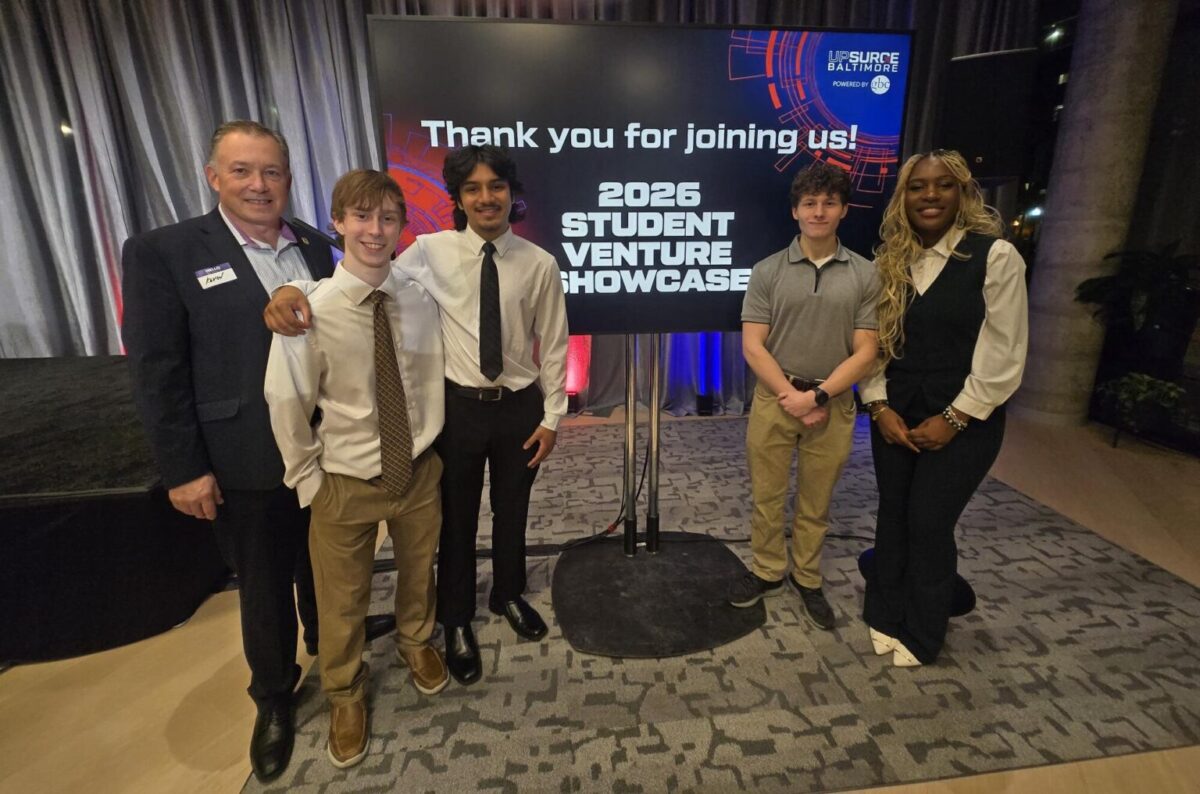 From left to right, Kevin Fulmer, director of the The Alex. Brown Center for Entrepreneurship and Innovation at UMBC, and students Charles Nerad, Abhinav Patel, Aidan Fleischer, and Velma Funebe at the 2026 Maryland Student Venture Showcase in Baltimore. (Photo courtesy of Kevin Fulmer)
The results speak for themselves. Students are winning state and national funding, launching ventures, gaining versatile life skills, and contributing to Maryland’s innovation economy. This spring, two UMBC student teams—iBraid and StrikeSense—each received $50,000 Pava LePere Innovation Awards. Others have advanced through the university’s Summer Launchpad accelerator and secured funding totaling more than $300,000 in the past three years.
An entrepreneurial environment
The roots of UMBC’s entrepreneurship emphasis trace back to 2000, with the founding of the Alex. Brown Center for Entrepreneurship and Innovation. Initially led by Vivian Armour and supported by Constellation Energy Group and the Bearman Foundation, the center took off in 2006 the Kauffman Foundation awarded funds to a small cohort of universities including UMBC, as well as Brown, Carnegie Mellon, Arizona State, and Purdue, to further their entrepreneurship efforts. Armour invited Gib Mason ’95, economics, a serial entrepreneur who had been guest lecturing at UMBC, to help steward UMBC’s $2 million Kauffman award.
“Kauffman’s research had shown that it wasn’t the business school students bringing entrepreneurial ideas to the marketplace,” Mason recalls. “It was the engineers and the tech guys and gals.” The foundation’s premise was that exposing disciplinary experts to entrepreneurial environments could help them develop and commercialize new ideas, he explains.
That initiative led to the creation of UMBC’s minor in Entrepreneurship and Innovation. The 18-credit program combines two core entrepreneurship courses with 12 credits from designated courses across UMBC’s three colleges, where faculty have infused entrepreneurial principles into existing major curricula. Today, more than 70 courses in biology, public health, information systems, art, and engineering count toward the minor, making it broadly accessible.
 Gib Mason (standing) leads entrepreneurship programming at the UMBC Training Centers. (Marlayna Demond ’11/UMBC)
The center turned 25 this academic year. Kevin Fulmer, its first full-time director and a lifelong entrepreneur, has spent the past five years expanding its reach and visibility. “Before there were any full-time staff, awareness of the center was fairly minimal,” he says. Under his leadership, Introduction to Entrepreneurship—which fills up quickly every semester—was approved as a General Education Program course. The center also launched a student ambassador program, and now six students promote events, support programming, and serve as peer mentors. Faculty can apply for funding to embed entrepreneurial thinking in their courses, and designated faculty fellows from each college are designing discipline-specific tracks within the minor. “We’re trying to make it as accessible for as many students as possible,” Fulmer explains.
A separate master’s in Entrepreneurship, Innovation, and Leadership—developed by Mason and offered through UMBC’s Division of Professional Studies—has served working professionals since 2019 and draws on the same philosophy of practical application. Meanwhile, the center’s summer Launchpad accelerator has supported more than 20 student ventures since 2022; participants receive an $8,000 stipend to dedicate 10-weeks to full-time customer discovery and problem validation. iBraid and StrikeSense, the Maryland award winners, emerged from the accelerator’s pipeline. Additional opportunities include the fall Idea and Innovation Challenge (with a popular social-impact category) and the spring Cangialosi Business Innovation Competition for more developed concepts.
All of this exists without a traditional business school. Instead, UMBC has built an ecosystem that meets students where they are—inside their technical and creative majors—and provides the tools to translate discovery into impact. “Entrepreneurship is for everyone,” the Alex. Brown Center’s website proclaims, regardless of major or career aspirations.
Not-so-risky business

Entrepreneurship at UMBC emphasizes mindset over venture creation alone. “It’s really just about solving problems and using an entrepreneurial mindset to do that,” Fulmer stresses.
Studies suggest that only 30 to 50 percent of graduates nationally are employed in roles directly related to their specific field of study, Fulmer notes. “You may have all the technical skills in the world, but not get these life skills from your major,” he adds. UMBC’s approach prepares students for diverse careers—launching startups, innovating inside a corporation, teaching, or pursuing research—by developing empathy and resilience and building creative problem-solving and communication skills.
Mason challenges the stereotype that entrepreneurs are reckless risk takers. “Most entrepreneurs are constantly making informed decisions to mitigate risks,” he says. He draws from childhood summers working on his grandfather’s Kansas farm, where he earned money from “his” acres of wheat—until one year a tornado destroyed the crop. The experience taught him that “there’s a lot that you can control and a lot that you can’t.” True entrepreneurs, he says, take calculated risks and then work diligently to reduce them.
Many UMBC students are drawn to “socialpreneurship”—ventures that solve societal problems rather than chase profit. “Students today seem especially geared toward trying to do things for social impact,” Mason says. The center’s social-impact track in competitions reflects this, and courses like Creative Problem Solving and The Socialpreneur have led to tangible outcomes, such as OCA Mocha, a coffee shop connecting UMBC with the Baltimore community.
Braiding the future
Velma Funebe, a public health major, embodies this orientation. Her venture, iBraid, uses augmented reality to help users part and braid their own hair—transforming protective styling that can become a multi-day ordeal into a more manageable process. Inspired by braiding her own hair since age 11 and running a professional braiding business since ninth grade, Funebe validated demand via TikTok and conversations. “I realized it was a major problem because so many people struggled with it,” she says. “I couldn’t find any solutions out there.”
As an Entrepreneurship Ambassador, she now supports programming and events like 1 Million Cups, another Kauffman Foundation initiative where entrepreneurs pitch ideas and get feedback. The Baltimore edition meets at OCA Mocha twice monthly. “The scariest part is when the idea is not just in your brain, but other people hear it,” Funebe says. “But I think it’s a great space to get feedback and say, ‘Okay, I can live through an application rejection.’”
Funebe’s faith helps anchor her while she balances classes, leadership in the Public Health Council of Majors, weekend braiding appointments, and venture development. iBraid has gained strong traction: a second-place finish in UMBC’s Idea and Innovation Challenge, the Pava LaPere Innovation Award, a waitlist approaching 4,000, and more than 10,000 TikTok followers. Beta testing is underway, supported in part by two UMBC data science graduate fellows through the Maryland New Venture program at bwtech@UMBC, a business incubator adjacent to campus. iBraid’s momentum continued to build at Maryland New Venture Pitch Night ’26, where Funebe took third place and received the Audience Choice Visionary Award.
“The Alex. Brown Center has played an essential role in helping me to grow my confidence,” she says. To others considering giving entrepreneurship a try, she says, “Don’t be afraid to fail—at least you get a result out of failing, and can learn a lot from it.”
Striking while it’s hot
Abhinav Patel, Charles Nerad, and Aidan Fleischer, co-founders of StrikeSense, channeled frustration with their Taekwondo training into innovation. In competition, expensive electronic wearables detect hits and record scores, but most athletes lack access to that equipment in practice. “I had the idea for a sparring vest with a health bar like something from a video game,” Nerad says.
The team developed an affordable sensor attachment that turns any existing sparring vest into a smart vest capable of detecting and scoring hits, with a gamified “health bar” interface. After placing second in the 2025 Cangialosi Business Innovation Competition, they joined the summer Launchpad program.
“All of the support we have gotten from UMBC has been instrumental, and we wouldn’t be where we are today without it.” Patel notes. Mentors like Donald Miner ’06, Ph.D. 2010, computer science; and Chris Ewing, an “entrepreneur in residence” at bwtech@UMBC, and especially Fulmer provided guidance: “Without him, we would not have had the encouragement to continue, the accountability to work hard, and the guidance to grow,” Nerad adds.
They are now refining software and preparing a pilot program with local dojos. “There is no better time to take a chance on an idea than right now,” Nerad advises. “You are surrounded by thousands of brilliant minds at UMBC, and have access to dedicated mentors who genuinely want you to succeed.”
And Kushani Mendis is now thriving at the intersection of research and entrepreneurship. She’s participated in the Center for Sustainable Nanotechnology, represented UMBC in the regional 3-Minute Thesis competition, and completed training at Brookhaven National Lab through UMBC’s Chemistry and Biology Interface program. To younger scientists, she says: “Being a scientist does not have to mean being confined in a lab. You are a human who has a lot of potential that you can give out to the community.”
As Fulmer puts it, “We’ve always been really great at UMBC at training students’ analytical, left-brain development—but our entrepreneurship programs are promoting right-brain skills as well, which are just as important.”
Extending the ecosystem
Faculty, alumni, and the broader community benefit, too. bwtech@UMBC offers state-of-the-art labs and work spaces, educational programming, mentorship, and industry connections. Many alumni and community members have built businesses there that contribute jobs and innovative products and services to the regional economy.
 bwtech@UMBC, located adjacent to main campus, supports Maryland entrepreneurs at every stage of business growth. (Marlayna Demond ’11/UMBC)
In addition, the Entrepreneurial Skills Training program for faculty in the College of Natural and Mathematical Sciences helps principal investigators apply strategic, startup-style thinking to manage their multi-million-dollar research labs. “They’re running a business, whether they like it or not,” says Mason, who originally designed the program that’s now run by Fulmer. “They’re hiring people, buying resources, creating stuff.”
Finally, the new Entrepreneurial Learning Lab (ELL) pairs faculty with trained students to evaluate research for commercialization potential—without requiring faculty to become full-time CEOs. The inaugural cohort drew strong interest: 23 faculty applied for 10 spots alongside 54 student applications. “We’re not trying to change what faculty do in terms of research and teaching,” Fulmer explains, “but while they’re doing that, think about potential impact.”
This diverse array of entry points—from minors and master’s programs to accelerators, competitions, and faculty-student collaborations—deliberately creates an inclusive entrepreneurial ecosystem. Ideas from any discipline or career stage have room to grow.
The bigger picture
UMBC’s entrepreneurial ecosystem does more than launch student ventures; it strengthens Maryland’s innovation economy, particularly in biotech, health tech, and advanced materials. The university’s strengths in these areas—coupled with proximity to federal labs and funding—creates what Fulmer calls a “target-rich environment.” Many Launchpad teams naturally transition into bwtech@UMBC’s incubation programs, forming a clear pathway from classroom concept to scalable company.
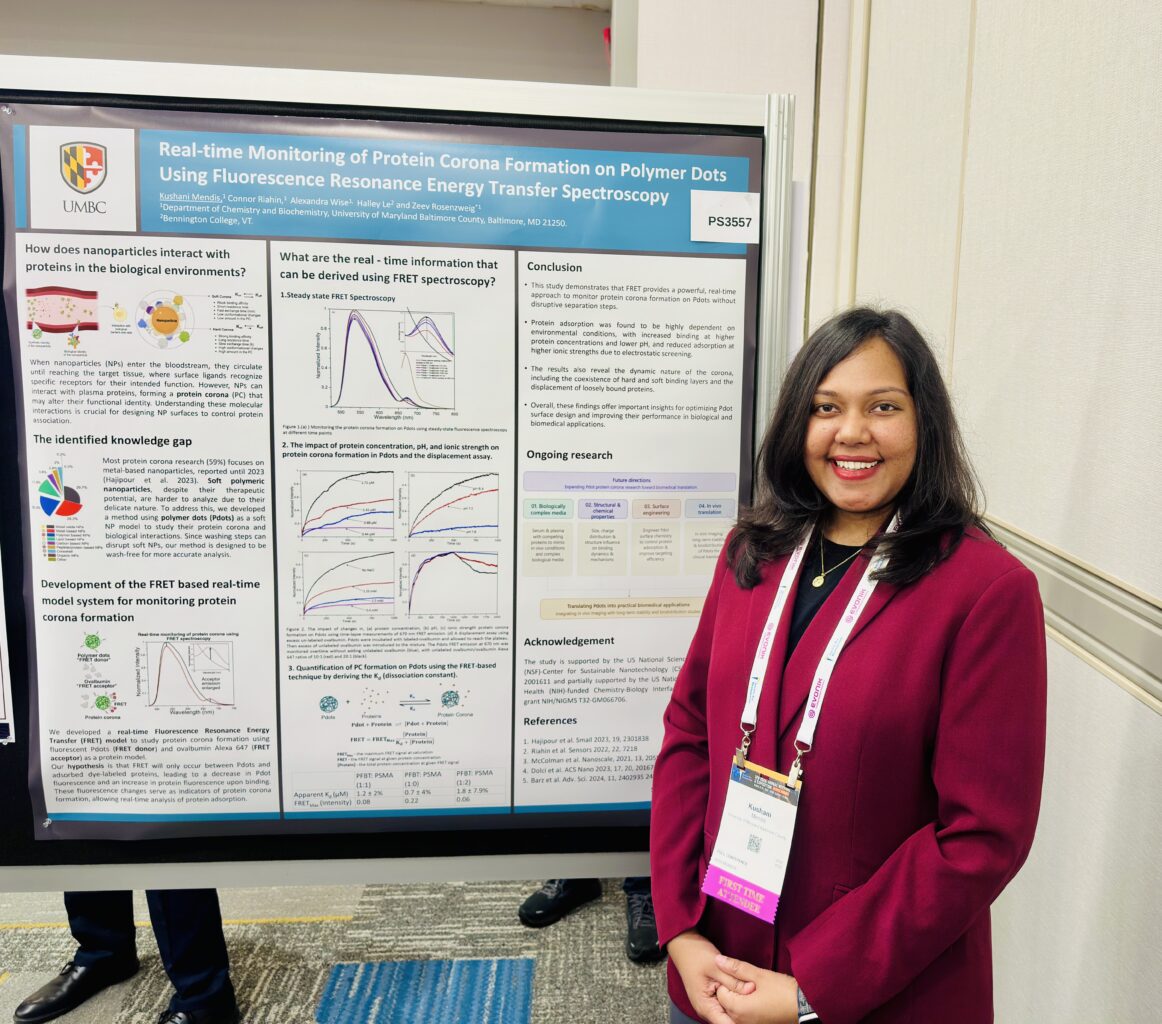 Kushani Mendis presented her research at the 2026 Society for Biomaterials Annual Meeting. (Courtesy of Mendis)
Today, Mendis’s schedule is packed with interviews of biomedical technology researchers in government, academia, and industry. Her probing questions are helping determine whether her lab’s novel nanomaterials have commercial potential. Rosenzweig’s encouragement and programs like the National Science Foundation Innovation Corps (I-Corps), which trains scientists to translate research into societal impact, have been key. She is thriving, balancing independent laboratory research, teaching and mentoring undergraduates, and her entrepreneurial work; she even occasionally finds time to engage her artistic side.
Whether or not students like Mendis ultimately launch businesses, at UMBC, they gain versatile skills—problem-solving, communication, empathy, and resilience—that will serve them across diverse careers. Here, entrepreneurial thinking is not an elective add-on but foundational preparation for an unpredictable world.
“UMBC’s model—technical excellence plus mindset training—prepares graduates to innovate anywhere,” Fulmer says, “making the university a powerful driver of Maryland’s future.”
]]>
At UMBC, entrepreneurship transcends a traditional business education: It empowers scientists, artists, and technologists to transform their expertise into real-world impact. Through business...
https://umbc.edu/stories/business-not-as-usual/
https://my3.my.umbc.edu/api/v0/pixel/news/160676/guest@my.umbc.edu/3eb018960d350b6c9c83e9cf0bcdf92a/api/pixel
alexbrowncenter
alumni
bwtech
cahss
campus-life
chemistry-and-biochemistry
cnms
coeit
csee
discovery
economics
entrepreneurship
feature
graduate-research
magazine
public-health
story
UMBC News & Magazine
https://my3.my.umbc.edu/groups/umbc-news-magazine
https://assets1-my.umbc.edu/system/shared/avatars/groups/000/001/943/24435aa6207c452e7bc15cc74b42c7bb/xsmall.png?1748556657
https://assets1-my.umbc.edu/system/shared/avatars/groups/000/001/943/24435aa6207c452e7bc15cc74b42c7bb/original.png?1748556657
https://assets2-my.umbc.edu/system/shared/avatars/groups/000/001/943/24435aa6207c452e7bc15cc74b42c7bb/xxlarge.png?1748556657
https://assets2-my.umbc.edu/system/shared/avatars/groups/000/001/943/24435aa6207c452e7bc15cc74b42c7bb/xlarge.png?1748556657
https://assets3-my.umbc.edu/system/shared/avatars/groups/000/001/943/24435aa6207c452e7bc15cc74b42c7bb/large.png?1748556657
https://assets1-my.umbc.edu/system/shared/avatars/groups/000/001/943/24435aa6207c452e7bc15cc74b42c7bb/medium.png?1748556657
https://assets2-my.umbc.edu/system/shared/avatars/groups/000/001/943/24435aa6207c452e7bc15cc74b42c7bb/small.png?1748556657
https://assets1-my.umbc.edu/system/shared/avatars/groups/000/001/943/24435aa6207c452e7bc15cc74b42c7bb/xsmall.png?1748556657
https://assets2-my.umbc.edu/system/shared/avatars/groups/000/001/943/24435aa6207c452e7bc15cc74b42c7bb/xxsmall.png?1748556657
UMBC News & Magazine
0
0
false
Fri, 12 Jun 2026 11:42:24 -0400
Fri, 12 Jun 2026 11:42:24 -0400
Darter detective: Ph.D. student Payton Barry on ecosystems, outreach, and grant hunting
Payton Barry, a fourth-year Ph.D. candidate in biological sciences, is diving into the world of Maryland’s streams. Under Tamra Mendelson’s mentorship, he studies how introduced species of darters, a family of freshwater fish, are affecting native ones. Equal parts dedicated researcher and enthusiastic science communicator, Payton has creatively pieced together funding from organizations like The Explorers Club while sharing his work with the public through outreach events and his engaging Instagram account, @barrybiome.
Q: Why did you choose UMBC for graduate school, and how is it going?
A: I completed my undergrad at the University of Missouri and applied to UMBC specifically to work with Dr. Tamra Mendelson. I discovered her research on Twitter and thought, “This is really cool.” I sensed her great energy in our first virtual meeting, and I knew I could work with her. I moved from Missouri, and it’s been incredible ever since.
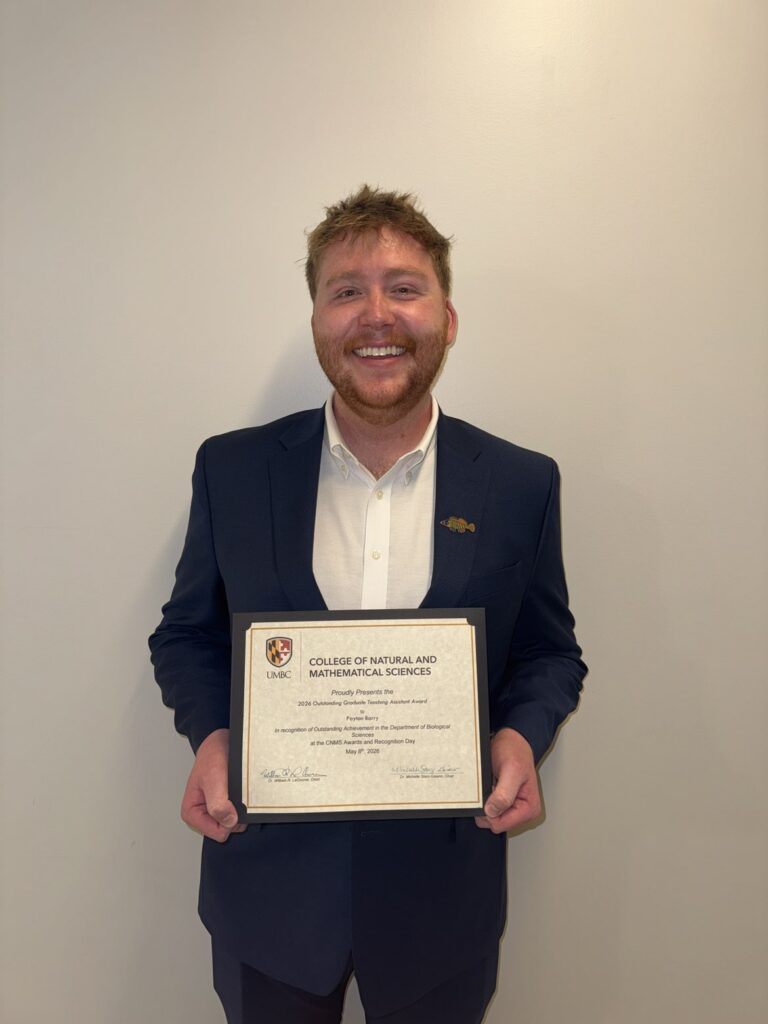
My project is pretty independent, but Tamra is always supportive. She is an awesome mentor—super approachable, really relaxed, and incredibly knowledgeable. Anything I have an issue with or a question about, she’s got an answer or knows who to direct me to. I’m one of three grad students in the lab, including Ph.D. students Georgie Puffer and Shea Buczkowski. Plenty of undergrads are involved in our work, too—sophomore James Keller has been especially helpful with my research. I was humbled to be selected as an Outstanding TA of the Year after nominations from Kevin Omland, Tamra, and Cheng-Yu Li for teaching introductory biology and evolution.
At right: Payton Barry holds the 2026 Outstanding Graduate Teaching Assistant Award presented at the CNMS Awards and Recognition Day. (Courtesy of Barry)
Q: What are the primary goals of your research, and why is this work important to you?
A: Darters are small freshwater fish common in streams. They primarily eat macroinvertebrates—little bugs—and reproduce in spring. My research evaluates how introduced darter species might affect native darter species in Maryland. We study two native species and two that were introduced in the late 1950s and 1970s, likely unintentionally by anglers using them for bait.
One of my projects focuses on habitat use. Native darters provide paternal care, with the males guarding eggs, so they need specific microhabitats to reproduce. We found a large degree of overlap between one introduced species and the native species, especially during the reproductive season—that added competition could hamper native reproduction.
We’re also studying what darters are eating, including whether introduced species prey on native eggs. We sample streams to compare how their diet matches or doesn’t with what’s available across the seasons.
This work matters because these little fish play important roles in stream ecosystems. Losing natives through competitive exclusion could affect Maryland’s biodiversity and even impact recreational fisheries.
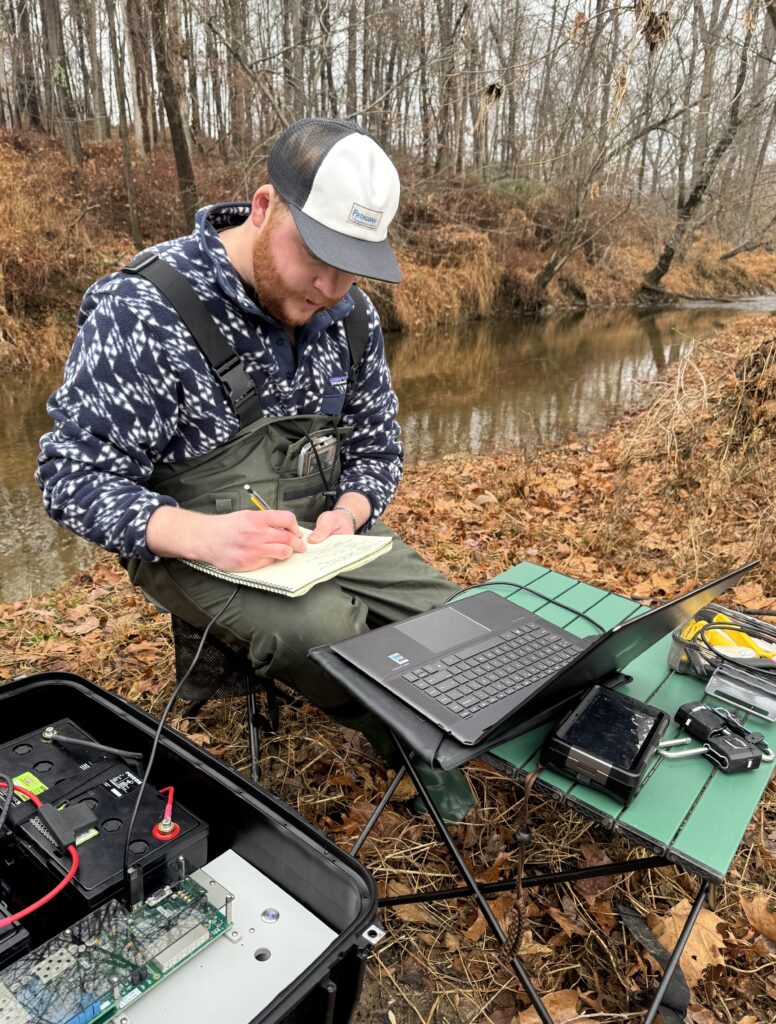
At left: Payton Barry conducts fieldwork to monitor the seasonal movement behavior of native and introduced darter species. (Courtesy of Barry)
Q: What does a day in the field look like?
A: It’s mostly me, though Dr. Mendelson joins when she can, and it’s a lot of fun. We drive about an hour to sites near Frederick, Maryland at Little Bennett Creek and the Little Monocacy River; in Montgomery County near Rock Creek; and in the Monocacy River area, plus closer sites on the Anacostia River.
First we catch the darters, and then we survey macroinvertebrates in the stream to measure food availability. We use a nonlethal technique called “gastric lavage” to wash out the fishes’ gut contents. We prep the gut samples and then send them out for genetic sequencing to identify what the fish are eating. We sampled six populations in spring, summer, and winter—when biodiversity is lowest.
Q: To support your work, you’ve sought a range of funding sources. Can you talk about that process and offer any advice?
A: With recent changes to the federal funding landscape, smaller grants from nonprofits have been crucial. I rely on racking up these small awards to support big projects. This project is funded by four or five grants combined. Our newest grant from The Explorers Club covers our genetic sequencing costs. Other support comes from the North American Native Fishes Association (NANFA), the Society for Freshwater Science, and Fly Fishers International.
I just search online for terms like “native fish research grants” or “stream fish restoration.” I tailor my applications and projects for the funders’ priorities—for example, I tied my work to the health of stocked fish populations for Fly Fishers. If you can find an organization focused on your research niche, you might have a greater chance of success, because fewer people are applying.
 Payton Barry presents on introduced freshwater fish species in the Potomac River at the Baltimore Underground Science Space Science Slam . (Courtesy of Barry)
Q: You’ve made an effort to share your research with members of the broader community. Can you describe some of that work?
A: I’m involved with the graduate student outreach group in UMBC’s biology department. For example, last fall, we hosted an event called Science on Tap at Checkerspot Brewing in Baltimore, where we invited UMBC graduate student researchers in biology and geography and environmental systems to give talks about what they do. We’ve also presented at events run by the Baltimore Underground Science Space. Plus, I run the Instagram account @barrybiome, where I post research updates and a weekly Fieldwork Friday series in collaboration with undergrads in the lab.
A lot of times researchers present only to specific audiences, which makes science less accessible. It is really fun for me to share my passion for what I do. I love getting questions about how my work relates to people. It really makes an impression when I’m able to tell them how important these little guys are and their role in the ecosystem—everybody’s got a part to play.
]]>
Payton Barry, a fourth-year Ph.D. candidate in biological sciences, is diving into the world of Maryland’s streams. Under Tamra Mendelson’s mentorship, he studies how introduced species of...
https://umbc.edu/stories/darter-detective-payton-barry/
https://my3.my.umbc.edu/api/v0/pixel/news/160575/guest@my.umbc.edu/364c90b8c15dfe8e03bf510300a1edf2/api/pixel
biology
cnms
community
graduate-research
news
research
science-and-tech
story
UMBC News & Magazine
https://my3.my.umbc.edu/groups/umbc-news-magazine
https://assets1-my.umbc.edu/system/shared/avatars/groups/000/001/943/24435aa6207c452e7bc15cc74b42c7bb/xsmall.png?1748556657
https://assets1-my.umbc.edu/system/shared/avatars/groups/000/001/943/24435aa6207c452e7bc15cc74b42c7bb/original.png?1748556657
https://assets2-my.umbc.edu/system/shared/avatars/groups/000/001/943/24435aa6207c452e7bc15cc74b42c7bb/xxlarge.png?1748556657
https://assets2-my.umbc.edu/system/shared/avatars/groups/000/001/943/24435aa6207c452e7bc15cc74b42c7bb/xlarge.png?1748556657
https://assets3-my.umbc.edu/system/shared/avatars/groups/000/001/943/24435aa6207c452e7bc15cc74b42c7bb/large.png?1748556657
https://assets1-my.umbc.edu/system/shared/avatars/groups/000/001/943/24435aa6207c452e7bc15cc74b42c7bb/medium.png?1748556657
https://assets2-my.umbc.edu/system/shared/avatars/groups/000/001/943/24435aa6207c452e7bc15cc74b42c7bb/small.png?1748556657
https://assets1-my.umbc.edu/system/shared/avatars/groups/000/001/943/24435aa6207c452e7bc15cc74b42c7bb/xsmall.png?1748556657
https://assets2-my.umbc.edu/system/shared/avatars/groups/000/001/943/24435aa6207c452e7bc15cc74b42c7bb/xxsmall.png?1748556657
UMBC News & Magazine
2
0
false
Fri, 05 Jun 2026 14:10:50 -0400
Fri, 05 Jun 2026 14:10:50 -0400
Humanities Books: A Room in Bombay
Manil Suri moved to the United States after spending the first 20 years of his life living in a 400-square-foot room in Bombay, India, with his father, Ram, and mother, Prem, to whom he dedicated his latest book, A Room in Bombay. The rest of the apartment was shared between three other families. “In the apartment lived my family, which was Hindu, and three Muslim families. We had a lot of fights, but those fights were really not about religion. They were about the shared bathroom, or the shared kitchen, or resources, or money, or space,” explains Suri, a professor of mathematics at UMBC.
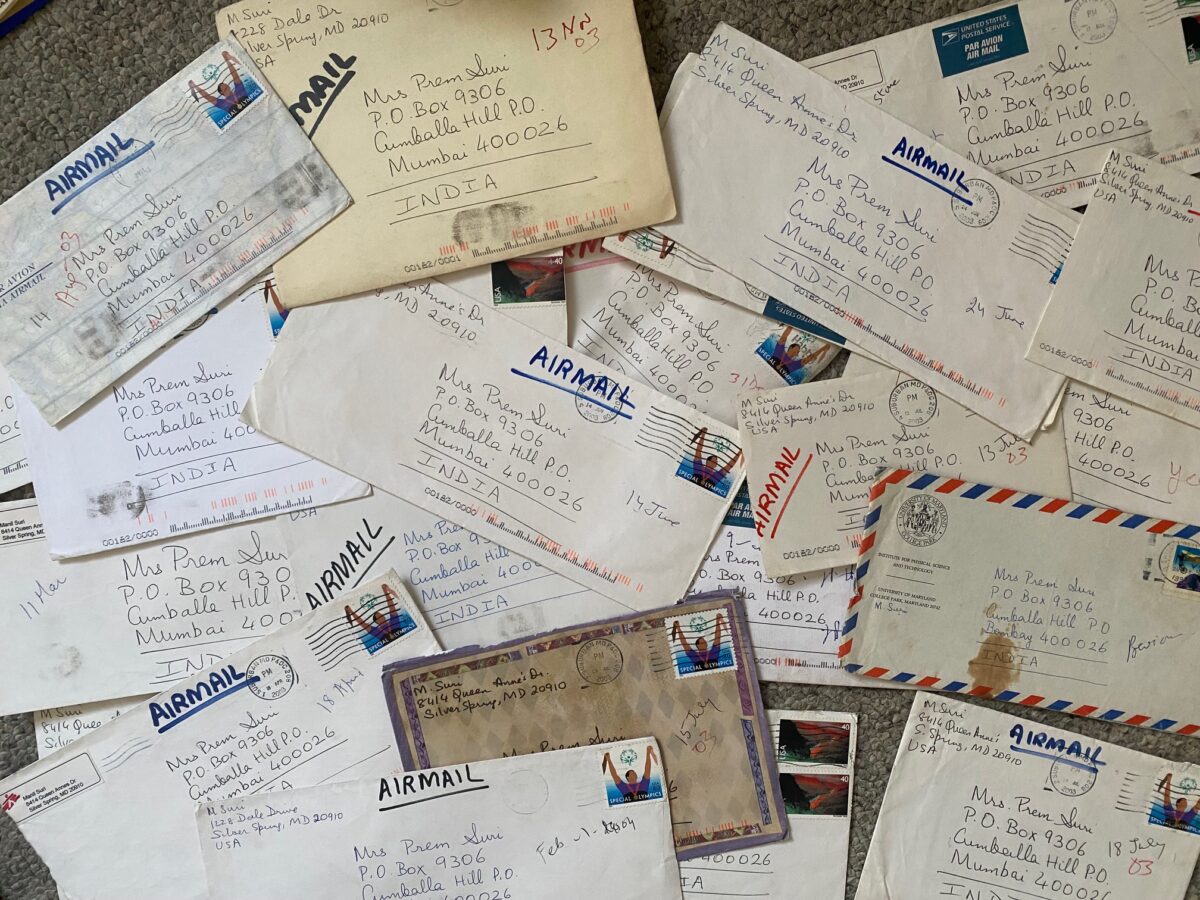 Some of the envelopes from letters Suri sent to his mom, Prem, in India once he moved to the U.S. (Image courtesy of Manil Suri)
Suri is also an award-winning author of three novels named after Hindu gods: The Death of Vishnu, The Age of Shiva, and The City of Devi. His fourth book, The Big Bang of Numbers: How to Build the Universe Using Only Math, is a humanities-based approach to mathematical concepts. They all paved the way for Suri’s most personal and most recent book. In three parts, Suri shares his life growing up in this room in Bombay and his life in the United States, drawing on more than 2,700 letters he wrote to his mother, which she saved in bundles organized by year, beginning with his time as a graduate student at Carnegie Mellon University. The letters chronicle his life in the U.S., including his relationship with his partner Larry, whom he took twice to meet his parents in the room in Bombay.
Q: Who is your book for?
A: I think it’s a book that, first of all, I want to work as a story. People who like a good narrative will enjoy it. It also ties into a different idea of immigration. You hear drastic tales of how immigrants are being shunned and put into prisons. But there’s another side of immigration, too, a little more subtle, perhaps. People immigrate for all sorts of reasons—including “finding themselves,” as I did.
 Aditya Desai ’09, English, a fellow writer, editor, teacher, and activist in Baltimore, and a great fan of Suri’s work, interviewed Suri during an Asian Studies Program book event in spring 2026. (Brad Ziegler/UMBC)
Also, I’ve already received a few pieces of feedback from people who are taking care of their aging parents. There are a huge number of people in various generations who are doing that. So I think it’ll appeal to them and help them negotiate the very difficult road ahead that many will face.
Q: How did the timing for publishing this memoir come about?
A: I have published three novels and a book on math. I felt I had to write the math book as a public service, since I had one foot in the humanities and one in the sciences—and needed to make something out of it. Once this math book was done, there was this other lingering project [the memoir] that I actually started around 2010.

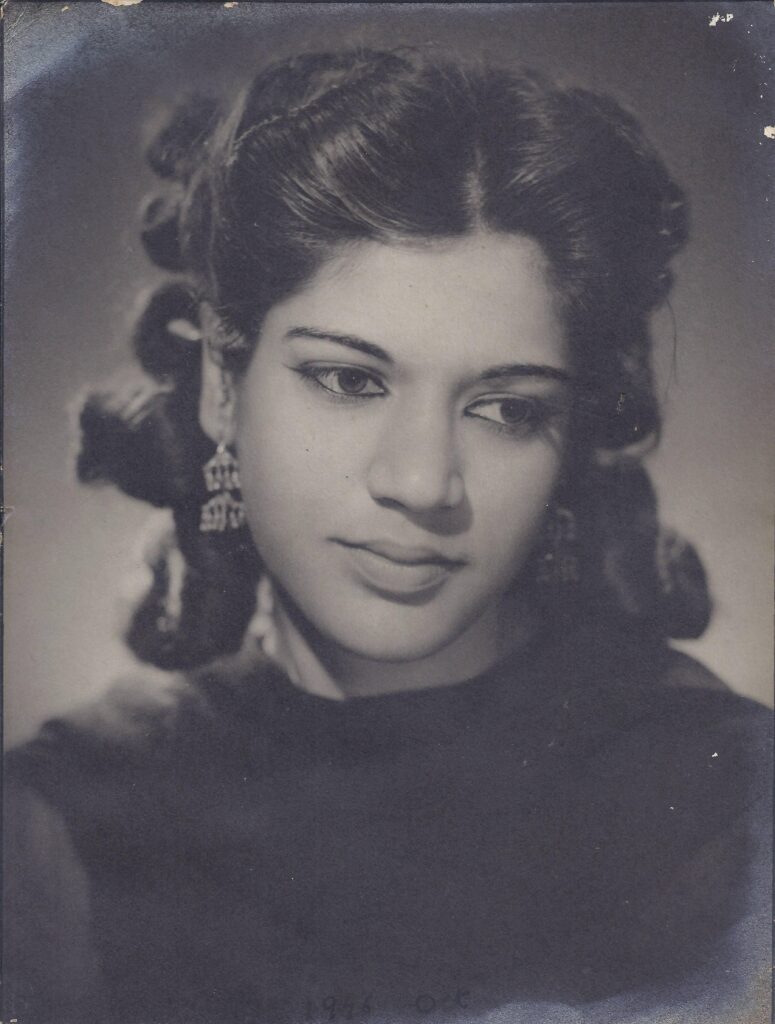
 (l-r): Suri’s mom, Prem Suri, in Bombay (date unknown), Prem in 1946, and Suri with Prem and his father, Ram, at Juhu Chowpatty Beach, Mumbai in 1961.
My mother passed away in 2013, and there was a big gap before I really got into writing the memoir. I needed that distance, since it would have been too much to have written it too close to her passing.
Q: Your mom had this intense love for you, which you wrote was sometimes overwhelming. How did that carry on through the room and through the rest of your life?
A: I think what happened with my mother was that my identity almost melded with hers when I was growing up. It’s only once I came to the U.S. that I was able to separate the two a little and move on. She would always say, “The U.S. has made you unemotional.” It was something I learned after coming here, to keep some distance, and move away from that merging of personalities.
Keeping boundaries is always hard, but it also tunes you to being more conscious of them. I don’t have any kids, so I don’t have to worry about that boundary.
Q: How did you feel coming to the United States?
A: When I first came to the U.S., I spent one week with a typical American family, and suddenly I had my own bedroom. That was exhilarating, but also a little weird. After that, I was in a dorm room with a roommate, so that was again a shared room for one year.
But after that year, I moved into an apartment where I had my own room. Since then, I’ve always had my own bedroom. Even though I’m married now, I need my own bedroom.
Q: A Room in Bombay centers around four families with very different backgrounds that often argue and have major disagreements. How does that tie into today’s world?
A: I think the book actually offers a lesson pertinent to our times. Although it was my Hindu family and three Muslim families sharing this apartment, the fights we had—and there were a lot of them—were really not about religion. They were about the shared bathroom, or the shared kitchen, or resources, or money, or space.
The same applies to most of the clashes going on in the world. Even though people try to put a religious spin on them, there are so many other reasons underlying all this strife. It’s property and boundaries, space, and resources.
Very rarely is it really religion. It’s not the cultural differences that are the cause of friction, it’s other things. Look deeper, and you’ll probably find an economic reason.
Q: Why did you choose to write the book as a memoir as opposed to an epistolary novel?
A: First of all, in terms of the letters, what I wrote are not letters to be treasured like Letters Between a Father and Son, a collection of intimate letters between Nobel laureate V.S. Naipaul and his son. Most of my letters are very ordinary and come with no claim of literary value. I was desperately trying to find things to say, and wrote three or four times a week just to keep my parents happy and engaged.
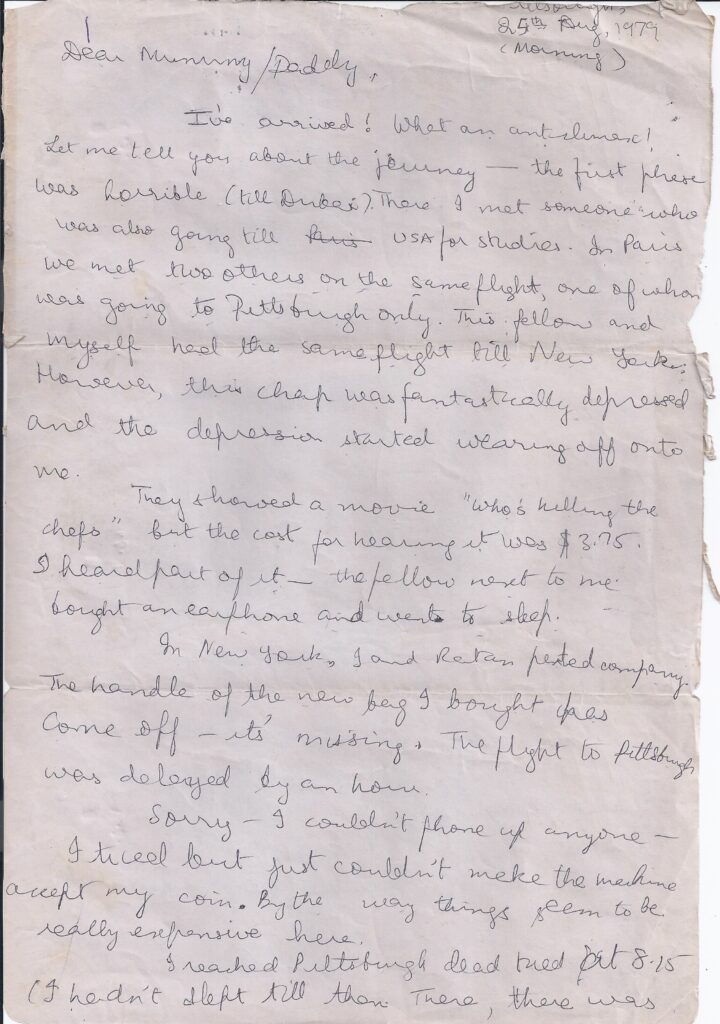 A letter Suri wrote to his father, Ram, in 1979.
There’s also so much more that happened that is not covered by the letters. I did keep some journals, especially once my mother came to the U.S. In fact, I had too much material. The first draft of this novel was about 50 percent longer, excess that I had to edit out.
Q: How do you choose what parts of the book to keep and what to cut?
A: That can be a painful decision, but fortunately, my editor helped by telling me what could be trimmed or shortened. Eventually, I had to get ruthless enough and ask myself: Is the story coming across? How much do I really need to put in for that? What examples have already been included to illustrate something—if there are two of them, let’s get rid of one.
A lot of nice, entertaining experiences had to be jettisoned in the interest of a story that keeps moving. You know, that’s what they say to writers: Kill your darlings. It’s a hard, murderous task to be a writer.
Q: There is a lot of stigma still in South Asian cultures around coming out. Did you intentionally want to address that?
A: Yes, the South Asian LGBTQ+ community is definitely one of the audiences I aimed for in this book, and in particular, their parents. Because even with my mother, who was so enlightened in many ways, there was this up and down that she went through after I came out to her. I think it really eats away at you if you cannot come out to your parents.
At the end of part two in the book, I talk about coming out to my dad. It happened after he took me to his friend’s house to introduce me to his 19-year-old daughter. Afterwards, my father said, “Well, what did you think of the daughter?” And I said, “You can’t be serious. First of all, she’s like half my age.” I ended up telling him about my relationship with my partner, to which he said, “I didn’t know, I didn’t know.” But then I noticed he was still looking expectantly at me. I realized then that he was still waiting for an answer to his question about whether I wanted to marry his friend’s daughter!
I always wanted to have a long conversation with him, which I thought I would have the next time I went back. But he passed away two months later, so that opportunity never came. I found out from my uncle that he had told all his brothers I was gay, even in that short period. So even though my mother always said, “He won’t be able to handle it. Don’t tell him,” as it turned out, he was fine with it.
As far as creating a supportive atmosphere for coming out in the South Asian LGBTQ+ community goes, I’d love to help in any way I could. It would be a good thing for members to give the book to their parents, “Here is someone else’s experience. It may help you.”
Q: Out of the twelve letters that you kept from the hundreds your mom wrote to you, is there one that really stands out to you?
A: The one that’s at the end of the book. It’s a full letter that really crystallizes a lot of things about how she viewed my coming out and how she was aware of losing some of her faculties in terms of memory and concentration. All those things are in that letter, which is why it’s probably the most poignant.
Read more about books from the humanities at UMBC.
]]>
Manil Suri moved to the United States after spending the first 20 years of his life living in a 400-square-foot room in Bombay, India, with his father, Ram, and mother, Prem, to whom he dedicated...
https://umbc.edu/stories/humanities-books-a-room-in-bombay/
https://my3.my.umbc.edu/api/v0/pixel/news/160556/guest@my.umbc.edu/9b67a293e9b6faf4fff6d4a7338ae592/api/pixel
arts-and-culture
cnms
humanitiesbooks
mathematics
news
retriever-authors
story
UMBC News & Magazine
https://my3.my.umbc.edu/groups/umbc-news-magazine
https://assets1-my.umbc.edu/system/shared/avatars/groups/000/001/943/24435aa6207c452e7bc15cc74b42c7bb/xsmall.png?1748556657
https://assets1-my.umbc.edu/system/shared/avatars/groups/000/001/943/24435aa6207c452e7bc15cc74b42c7bb/original.png?1748556657
https://assets2-my.umbc.edu/system/shared/avatars/groups/000/001/943/24435aa6207c452e7bc15cc74b42c7bb/xxlarge.png?1748556657
https://assets2-my.umbc.edu/system/shared/avatars/groups/000/001/943/24435aa6207c452e7bc15cc74b42c7bb/xlarge.png?1748556657
https://assets3-my.umbc.edu/system/shared/avatars/groups/000/001/943/24435aa6207c452e7bc15cc74b42c7bb/large.png?1748556657
https://assets1-my.umbc.edu/system/shared/avatars/groups/000/001/943/24435aa6207c452e7bc15cc74b42c7bb/medium.png?1748556657
https://assets2-my.umbc.edu/system/shared/avatars/groups/000/001/943/24435aa6207c452e7bc15cc74b42c7bb/small.png?1748556657
https://assets1-my.umbc.edu/system/shared/avatars/groups/000/001/943/24435aa6207c452e7bc15cc74b42c7bb/xsmall.png?1748556657
https://assets2-my.umbc.edu/system/shared/avatars/groups/000/001/943/24435aa6207c452e7bc15cc74b42c7bb/xxsmall.png?1748556657
UMBC News & Magazine
1
0
false
Thu, 04 Jun 2026 16:35:39 -0400
Thu, 04 Jun 2026 16:35:39 -0400
Seigar Named Dean of the College of Natural and Mathematical Sciences
Marc Seigar, Ph.D., has been appointed the next dean of the College of Natural and Mathematical Sciences (CNMS) at the University of Maryland, Baltimore County (UMBC), effective August 3, 2026. Seigar joins UMBC from the University of Toledo where he serves as the dean of the College of Natural Sciences and Mathematics.
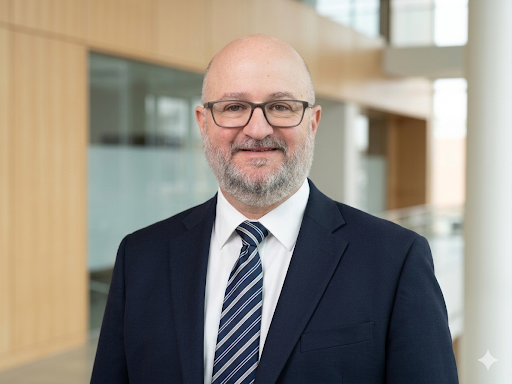
Seigar brings a strong background in academic leadership to his new role at UMBC. Prior to his leadership at the University of Toledo, he served as a rotating program director in the Division of Astronomical Sciences at the National Science Foundation and as an associate dean in the Swenson College of Science and Engineering and head of the Department of Physics and Astronomy at the University of Minnesota Duluth. His administrative work has focused on developing programs that attract new students, grow research, and promote engagement and academic success through student-centered systems.
Seigar earned his Ph.D. in astrophysics from the Liverpool Astrophysics Research Institute and his bachelor of science in physics from Imperial College London. He began his career as an assistant professor at the University of Arkansas at Little Rock.
An accomplished scholar, Seigar has published more than 100 articles on galaxy structure and dynamics, supermassive black holes, and dark matter distribution in galaxies. His articles are widely cited. Seigar is the author of two books. His work has been supported by federal funding agencies including NASA and NSF, as well as private foundations.
Seigar is a Fellow of the Royal Astronomical Society and an associate of the Royal College of Science. He is also a member of the American Astronomical Society and the Sigma Xi honors society. He has served in editorial roles for journals in his field and currently serves on the editorial board of the Effective Practices for Physics Programs project, a project that is led by the American Physical Society and the American Association of Physics Teachers.
Seigar succeeds William LaCourse, Ph.D., as dean of CNMS. LaCourse, who will return to the faculty following a research leave, served as CNMS dean for 15 years.
]]>
Marc Seigar, Ph.D., has been appointed the next dean of the College of Natural and Mathematical Sciences (CNMS) at the University of Maryland, Baltimore County (UMBC), effective August 3, 2026....
https://umbc.edu/stories/seigar-named-dean-of-the-college-of-natural-and-mathematical-sciences/
https://my3.my.umbc.edu/api/v0/pixel/news/160511/guest@my.umbc.edu/6be44d3757764ca076bc19bfae411897/api/pixel
cnms
news
science-and-tech
story
UMBC News & Magazine
https://my3.my.umbc.edu/groups/umbc-news-magazine
https://assets1-my.umbc.edu/system/shared/avatars/groups/000/001/943/24435aa6207c452e7bc15cc74b42c7bb/xsmall.png?1748556657
https://assets1-my.umbc.edu/system/shared/avatars/groups/000/001/943/24435aa6207c452e7bc15cc74b42c7bb/original.png?1748556657
https://assets2-my.umbc.edu/system/shared/avatars/groups/000/001/943/24435aa6207c452e7bc15cc74b42c7bb/xxlarge.png?1748556657
https://assets2-my.umbc.edu/system/shared/avatars/groups/000/001/943/24435aa6207c452e7bc15cc74b42c7bb/xlarge.png?1748556657
https://assets3-my.umbc.edu/system/shared/avatars/groups/000/001/943/24435aa6207c452e7bc15cc74b42c7bb/large.png?1748556657
https://assets1-my.umbc.edu/system/shared/avatars/groups/000/001/943/24435aa6207c452e7bc15cc74b42c7bb/medium.png?1748556657
https://assets2-my.umbc.edu/system/shared/avatars/groups/000/001/943/24435aa6207c452e7bc15cc74b42c7bb/small.png?1748556657
https://assets1-my.umbc.edu/system/shared/avatars/groups/000/001/943/24435aa6207c452e7bc15cc74b42c7bb/xsmall.png?1748556657
https://assets2-my.umbc.edu/system/shared/avatars/groups/000/001/943/24435aa6207c452e7bc15cc74b42c7bb/xxsmall.png?1748556657
UMBC News & Magazine
1
0
false
Tue, 02 Jun 2026 14:17:14 -0400
Tue, 02 Jun 2026 14:17:14 -0400
Inaugural “MyRCA” interdisciplinary faculty cohort empowers researchers to bring their work to life
UMBC’s new Make Your Research Come Alive (MyRCA) program is helping faculty translate their scholarship into compelling stories that resonate across disciplines, sectors, and audiences. Launched in November 2025, the program wrapped up its inaugural cohort with a May showcase.
“We created the MyRCA program to help faculty strengthen their research communication skills and effectively convey the significance and real-world impact of their work beyond traditional academic audiences and funding pathways,” says Christine Mallinson, assistant vice president for research and scholarly impact. “It also encourages faculty to think strategically and creatively about visibility, partnerships, collaboration, and long-term impact,” she adds.
Led by the Division of Research and Creative Achievement in partnership with the Office of Institutional Advancement, MyRCA brought together 14 faculty members for twice-monthly workshops and working group sessions, a January mini-retreat, and the culminating showcase. The program focused on identifying and articulating research impact, translating specialized scholarship for broad audiences, developing compelling narratives and pitches, understanding funding landscapes, exploring pathways for engagement with corporate, community, and philanthropic partners, and strengthening interdisciplinary collaboration.
“The value of this program is in connecting with each other,” cohort member Foad Hamidi, associate professor of information systems, shared at the showcase. “Strong research communication and collaboration can help our research come alive,” adds Dong Li, another cohort member and assistant professor of computer science and electrical engineering. Li added, “We are not just researchers, we are telling our story to our audience.”
The value of connection
The program intentionally grouped faculty into smaller interdisciplinary teams organized around broad themes such as health, youth, and the environment. These connections quickly sparked new ideas and collaborations.
For instance, Lauren Clay, professor and chair of emergency and disaster health systems, connected with Li, after learning about his work on wearable health-monitoring devices. Clay wondered how Li’s technology could support a colleague’s research on paramedic response during extreme heat events, including monitoring heat stroke risks for marathon runners.
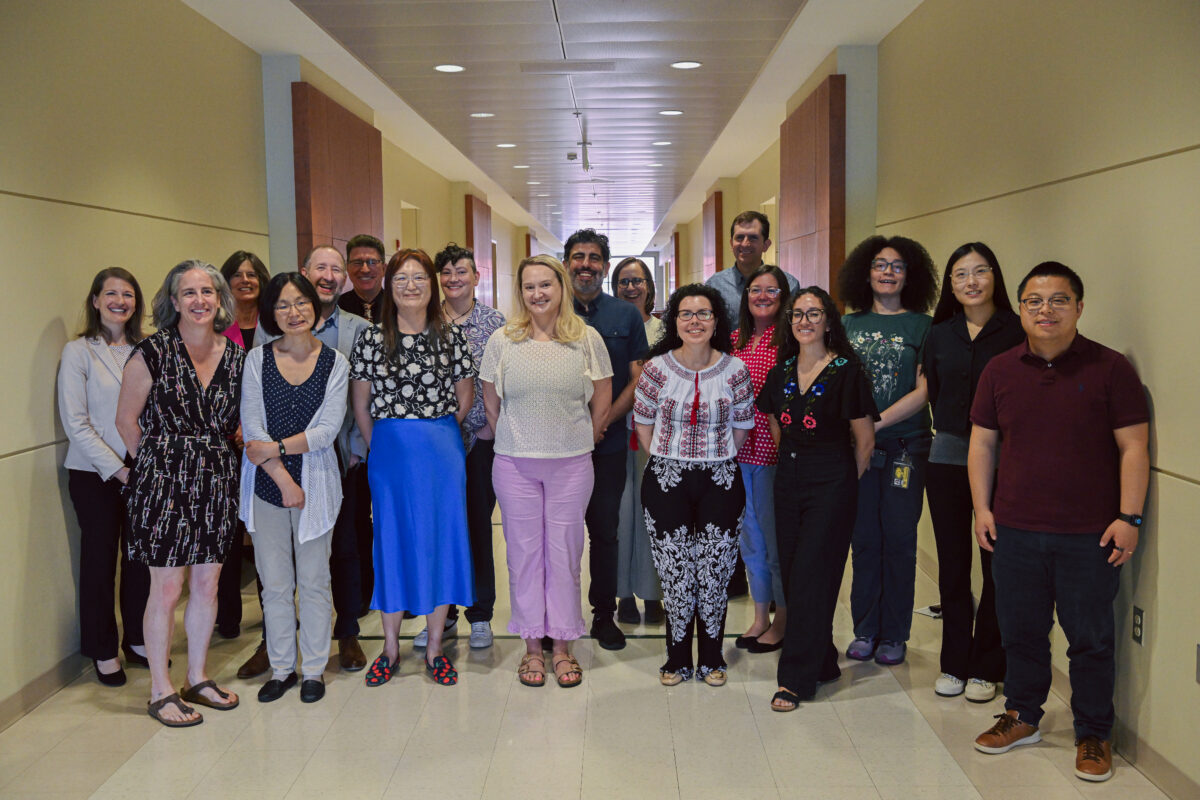 The inaugural MyRCA cohort and program organizers, left to right: Christine Mallinson, Ellen Kohl, Donna Ruginski, Karen Chen, Brian Kaufman, Karl Steiner, Shuling Yang, Sophie Comer-Warner, Amy Tondreau, Foad Hamidi, Linda Kidder Yarlott, Marie Christine-Daniel, Don Engel, Lauren Clay, Gabriella Weiss, Rebecca Williams, Yiwen Hu, Dong Li. Not pictured: Charissa Cheah.
A group including Gabriella Weiss, postdoctoral researcher with the Center for Spaces Sciences and Technology; Marie-Christine Daniel, associate professor of chemistry and biochemistry; and Sophie Comer-Warner, assistant professor of geography and environmental systems, examined remediation strategies for microplastics, heavy metals, and volatile organic compounds with a focus on wetlands. Their collaboration pointed to promising local funding opportunities with Maryland Sea Grant and Chesapeake Bay organizations.
Ellen Kohl, assistant professor of geography and environmental systems, strengthened a new science communication course with the skills she gained, and Shuling Yang, assistant professor of education, advanced her research using generative AI and Chinese pop music for biliteracy development. Brian Kaufman, professor of music, built on the UMBC Create Music Festival, which brings collaborative problem-solving into a typically performance-based discipline.
By the showcase, participants had developed polished pitches, public-facing materials, and broader impact narratives ready for funding proposals, donor outreach, and the media. Each received $500 in research support, along with new cross-campus and external connections.
MyRCA stretches faculty beyond their comfort zones
Mallinson has been excited to see the 14 faculty “stretch beyond their usual disciplinary comfort zones and immediately begin putting the skills and approaches they were learning into practice—developing cross-disciplinary proposals, crafting pitches, appearing in videos and podcasts, participating in panels, and bringing what they learned in the program back to their graduate students and colleagues.”
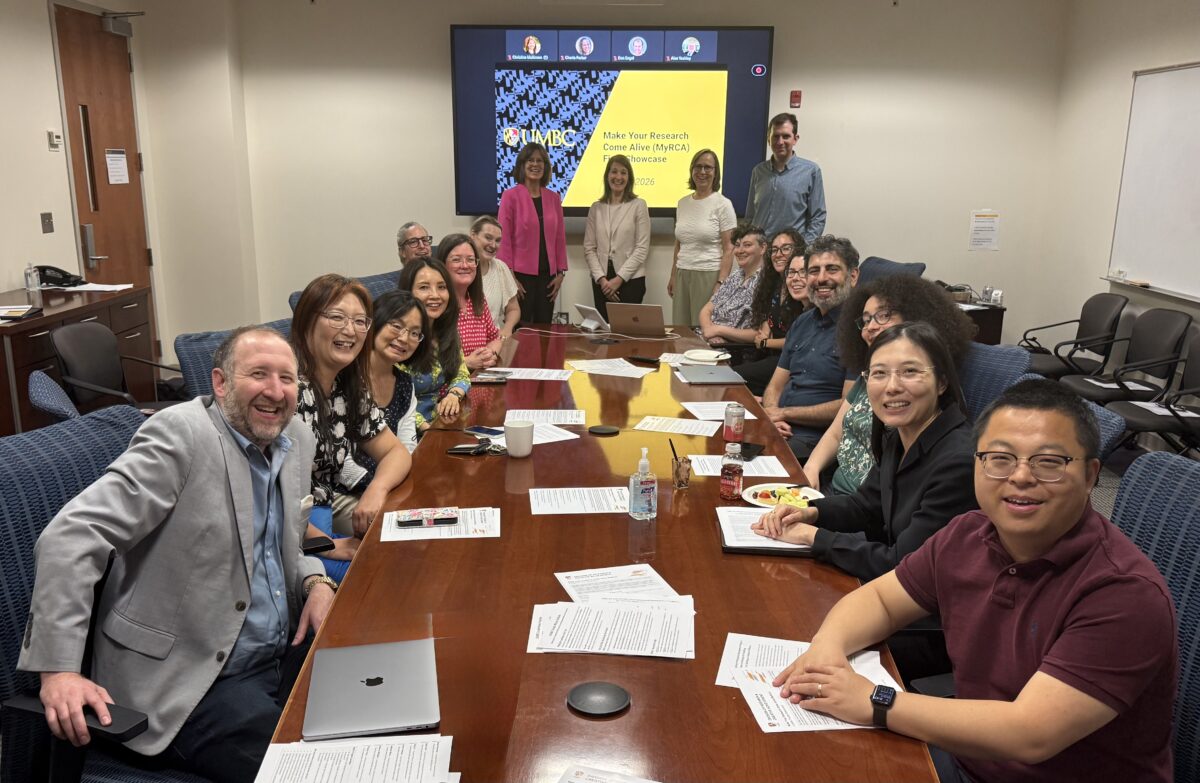 The inaugural MyRCA cohort shared progress and celebrated their accomplishments at a showcase event in May. (Photo by Karl Steiner)
Linda Kidder Yarlott, associate director for corporate research partnerships, highlighted the value of the partnership between the Division of Research and Creative Achievement and the Office of Institutional Advancement. “While federal funding agencies are looking for highly technical, methodology-driven proposals, it’s visionary, outcome-oriented narratives that clearly articulate the human impact and real-world return on investment that entice corporate and philanthropic partners,” Yarlott says.
Yarlott and Jocelyn Kehl, major gift officer for the College of Natural and Mathematical Sciences, worked with the cohort on practical skills—from strategic networking and optimizing LinkedIn profiles to crafting stories that resonate with donors and foundations. “Mentoring this cohort has been an incredibly rewarding experience, culminating in a spectacular program showcase where faculty teams powerfully demonstrated new communication skills that will help unlock new philanthropic pathways,” Yarlott shares.
For more information and to learn about the full 2025 – 2026 cohort, visit research.umbc.edu/myrca.
]]>
UMBC’s new Make Your Research Come Alive (MyRCA) program is helping faculty translate their scholarship into compelling stories that resonate across disciplines, sectors, and audiences. Launched...
https://umbc.edu/stories/myrca-empowers-interdisciplinary-researchers/
https://my3.my.umbc.edu/api/v0/pixel/news/160483/guest@my.umbc.edu/52d7d3b40ae47b848cd3806898a3a63d/api/pixel
cahss
chemistry-and-biochemistry
cnms
coeit
csee
edhs
education
ges
is
music
news
policy-and-society
rca
science-and-tech
story
UMBC News & Magazine
https://my3.my.umbc.edu/groups/umbc-news-magazine
https://assets1-my.umbc.edu/system/shared/avatars/groups/000/001/943/24435aa6207c452e7bc15cc74b42c7bb/xsmall.png?1748556657
https://assets1-my.umbc.edu/system/shared/avatars/groups/000/001/943/24435aa6207c452e7bc15cc74b42c7bb/original.png?1748556657
https://assets2-my.umbc.edu/system/shared/avatars/groups/000/001/943/24435aa6207c452e7bc15cc74b42c7bb/xxlarge.png?1748556657
https://assets2-my.umbc.edu/system/shared/avatars/groups/000/001/943/24435aa6207c452e7bc15cc74b42c7bb/xlarge.png?1748556657
https://assets3-my.umbc.edu/system/shared/avatars/groups/000/001/943/24435aa6207c452e7bc15cc74b42c7bb/large.png?1748556657
https://assets1-my.umbc.edu/system/shared/avatars/groups/000/001/943/24435aa6207c452e7bc15cc74b42c7bb/medium.png?1748556657
https://assets2-my.umbc.edu/system/shared/avatars/groups/000/001/943/24435aa6207c452e7bc15cc74b42c7bb/small.png?1748556657
https://assets1-my.umbc.edu/system/shared/avatars/groups/000/001/943/24435aa6207c452e7bc15cc74b42c7bb/xsmall.png?1748556657
https://assets2-my.umbc.edu/system/shared/avatars/groups/000/001/943/24435aa6207c452e7bc15cc74b42c7bb/xxsmall.png?1748556657
UMBC News & Magazine
1
0
false
Mon, 01 Jun 2026 15:17:46 -0400
Mon, 01 Jun 2026 15:17:46 -0400