Trump-endorsed candidates would generally win even without his support – and that’s usually the case with all political endorsements

Ian Anson, Associate Professor of Political Science, UMBC.
Over the past few months, many journalists and pundits have credited the power of Donald Trump’s endorsements with determining the winners of Republican primaries.
Trump has made 203 candidate endorsements in the 2022 election cycle so far, targeting state, congressional, gubernatorial and even local races.
Based on the numbers alone, receiving a “Trump bump” seems like a surefire way to win an election. So far, 94% of Trump’s favored candidates have won their Republican primaries.
But as a political scientist who studies voting and public opinion, I have my doubts about the true power of Trump’s endorsements. Instead, it is more likely that most of the candidates Trump has chosen to endorse were already on track to win their respective races.
Political science says that endorsements do occasionally matter for determining election outcomes. But in most cases, their effects are far less potent than commentators might expect.
This is because endorsements are not made in a vacuum. Much like the endorsements of interest groups and political parties, the so-called “Trump bump” is mostly a reflection of the attributes a candidate already had before the endorsement.
Backing the winners
Candidates’ electoral fortunes mostly stem from whether they’re incumbents, which political party they belong to, their ideology and their political savvy. In turn, these attributes also determine who gets endorsed by prominent groups and people.
For this reason, Trump’s endorsements are an excellent lesson in what scholars call “reverse causality.” This is what happens when people mistake a phenomenon’s effects for its cause, like thinking that people holding umbrellas have caused it to rain. In this case, reverse causality implies that Trump’s favorite candidates are not more likely to win because of his endorsement.
To be sure, candidate endorsements can act as valuable cues for voters seeking to make informed decisions. Voters might think to themselves, “If this person, whom I trust and like, supports a candidate, then I should trust and like the candidate too.” This is especially true in elections in which little is known about the contenders.
 Trump endorsed former Sen. David Purdue, seen here, in the 2022 GOP primary for governor in Georgia. But the incumbent, Brian Kemp, won the nomination.
AP Photo/John Bazemore
Such mental shortcuts allow voters with limited knowledge of the candidates to vote according to their preferences. But in most cases, endorsements do little to persuade voters to shift their support from one candidate to another.
The real sources of the ‘Trump bump’
There are at least three other reasons that many of Trump’s favored candidates are finding success in 2022.
First, most of Trump’s endorsed candidates already hold office. This gives them a distinct electoral advantage. Only one of the congressional incumbents whom Trump endorsed lost in the primary. That candidate, Rep. Madison Cawthorn in North Carolina, chose to run in a new congressional district, partially scuttling his incumbency advantage.
The stellar performance of Trump-backed incumbents is unsurprising, because incumbents already have a nearly 100% chance of winning primaries. The rare primary upset of an incumbent, like the one that elected New York Democratic Rep. Alexandria Ocasio-Cortez in 2018, normally sends shock waves through the political landscape.
Of course, Trump has also endorsed some challengers. Research shows that challengers raise more money if they receive high-profile endorsements. Trump’s endorsement might have had a similar effect.
But longtime incumbents often have even deeper pockets, making them difficult for challengers to defeat. The record reflects this reality: Of the nine Trump-endorsed challengers who have gone up against incumbents in primaries thus far, only three have managed to win.
Trump endorsements are also likely determined by a candidate’s quality, which can be defined as the extent to which a candidate possesses the skills, reputation and resources – including money – to win elections. High-quality candidates normally contest only those elections they know they can win. Key endorsers like Trump stake their reputation on their support for candidates, meaning they are probably choosy about whom to endorse. This helps to explain why not all vocally pro-Trump candidates have received his official blessing.
Finally, a candidate’s ideology plays an important role in determining winners, losers and support from endorsers. Trump is likely to endorse conservative candidates who align with his policy preferences – though not always. Successful conservative candidates run in districts and states with many conservative voters. Trump’s endorsement will merely clarify these voters’ affinity for the candidate, while reaffirming others’ decision to vote for someone else.
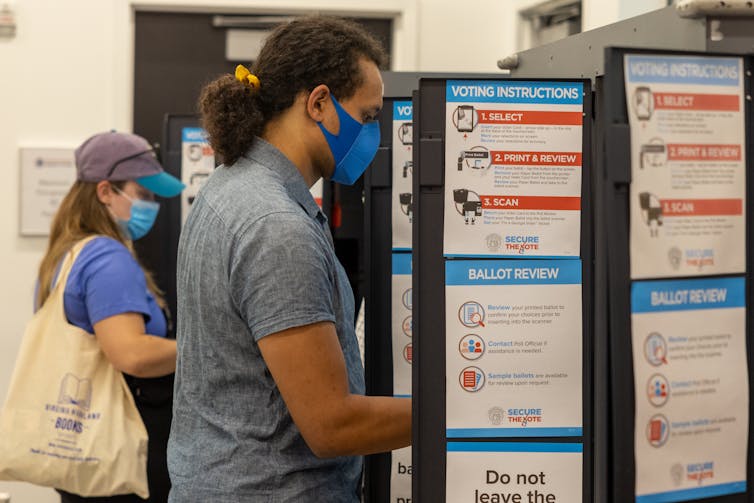 Many elements influence how a person votes, and an endorsement is not usually decisive. Here, voters in Atlanta, Ga., on primary election day, May 24, 2022.
Nathan Posner/Anadolu Agency via Getty Images
No endorsement, no problem for Republicans in ‘22
Before assigning Trump the credit for boosting candidates in the upcoming 2022 general election, observers should recognize the notorious difficulty of proving causation in the realm of electoral politics. 2022 is primed to be a banner year for Republican candidates, whether they receive a nod from Trump or not.
Midterm election years are almost always tough contests for the party of the incumbent president. Voters associate candidates down the ballot with the president’s performance in office. After an early honeymoon phase, presidential approval often slumps as midterm elections near, damaging the chances of congressional candidates.
A volatile economy is also bad news for the party of the incumbent. While presidents’ actions might not have much effect on national and global economic conditions, many voters blame the incumbent party anyway.
These factors combine to heavily favor Republican candidates this year. Trump’s endorsements are far less important for voting behavior than the political and economic context of this year’s elections.
Hopefully, when it comes time to discuss the reasons that some candidates won and others lost, commentators will keep these lessons from voting behavior research in mind.
Ian Anson, Associate Professor of Political Science, University of Maryland, Baltimore County
This article is republished from The Conversation under a Creative Commons license. Read the original article.
]]>
Ian Anson, Associate Professor of Political Science, UMBC. Over the past few months, many journalists and pundits have credited the power of Donald Trump’s endorsements with determining the...
https://umbc.edu/stories/trump-endorsed-candidates/
https://my3.my.umbc.edu/api/v0/pixel/news/125942/guest@my.umbc.edu/3d9f4596db0e46ad1149b3afaef4f8c5/api/pixel
cahss
cahssresearch
cs3
discovery
magazine
politicalscience
the-conversation
UMBC News & Magazine
https://my3.my.umbc.edu/groups/umbc-news-magazine
https://assets1-my.umbc.edu/system/shared/avatars/groups/000/001/943/24435aa6207c452e7bc15cc74b42c7bb/xsmall.png?1748556657
https://assets1-my.umbc.edu/system/shared/avatars/groups/000/001/943/24435aa6207c452e7bc15cc74b42c7bb/original.png?1748556657
https://assets2-my.umbc.edu/system/shared/avatars/groups/000/001/943/24435aa6207c452e7bc15cc74b42c7bb/xxlarge.png?1748556657
https://assets2-my.umbc.edu/system/shared/avatars/groups/000/001/943/24435aa6207c452e7bc15cc74b42c7bb/xlarge.png?1748556657
https://assets3-my.umbc.edu/system/shared/avatars/groups/000/001/943/24435aa6207c452e7bc15cc74b42c7bb/large.png?1748556657
https://assets1-my.umbc.edu/system/shared/avatars/groups/000/001/943/24435aa6207c452e7bc15cc74b42c7bb/medium.png?1748556657
https://assets2-my.umbc.edu/system/shared/avatars/groups/000/001/943/24435aa6207c452e7bc15cc74b42c7bb/small.png?1748556657
https://assets1-my.umbc.edu/system/shared/avatars/groups/000/001/943/24435aa6207c452e7bc15cc74b42c7bb/xsmall.png?1748556657
https://assets2-my.umbc.edu/system/shared/avatars/groups/000/001/943/24435aa6207c452e7bc15cc74b42c7bb/xxsmall.png?1748556657
UMBC News & Magazine
0
0
false
Fri, 17 Jun 2022 14:40:12 -0400
Fri, 17 Jun 2022 14:40:12 -0400
“Parenting in Privilege or Peril,” a new book by UMBC’s Pamela R. Bennett, explores barriers to the “American dream”

The notion of the “American dream”—that hard work can lead to social and economic mobility—has existed in the United States for centuries, and it has been disputed for almost as long. Pamela Bennett’s new book, Parenting in Privilege or Peril: How Social Inequality Enables or Derails the American Dream (Teachers College Press, 2021), takes on this idea. Bennett, associate professor of public policy, explores some of the social, educational, and economic factors that impact the decisions that middle- and working-class parents make in hopes that their children can attain the “American dream.”
Bennett co-authored the book with Amy Lutz, associate professor of sociology at Syracuse University, and Lakshmi Jayaram, founder of the Inquiry Research Group LLC and research associate with the University of Central Florida.
“We designed a research project to investigate the role that culture and social inequality play in the educationally relevant parenting strategies of working- and middle-class parents,” explains Bennett.
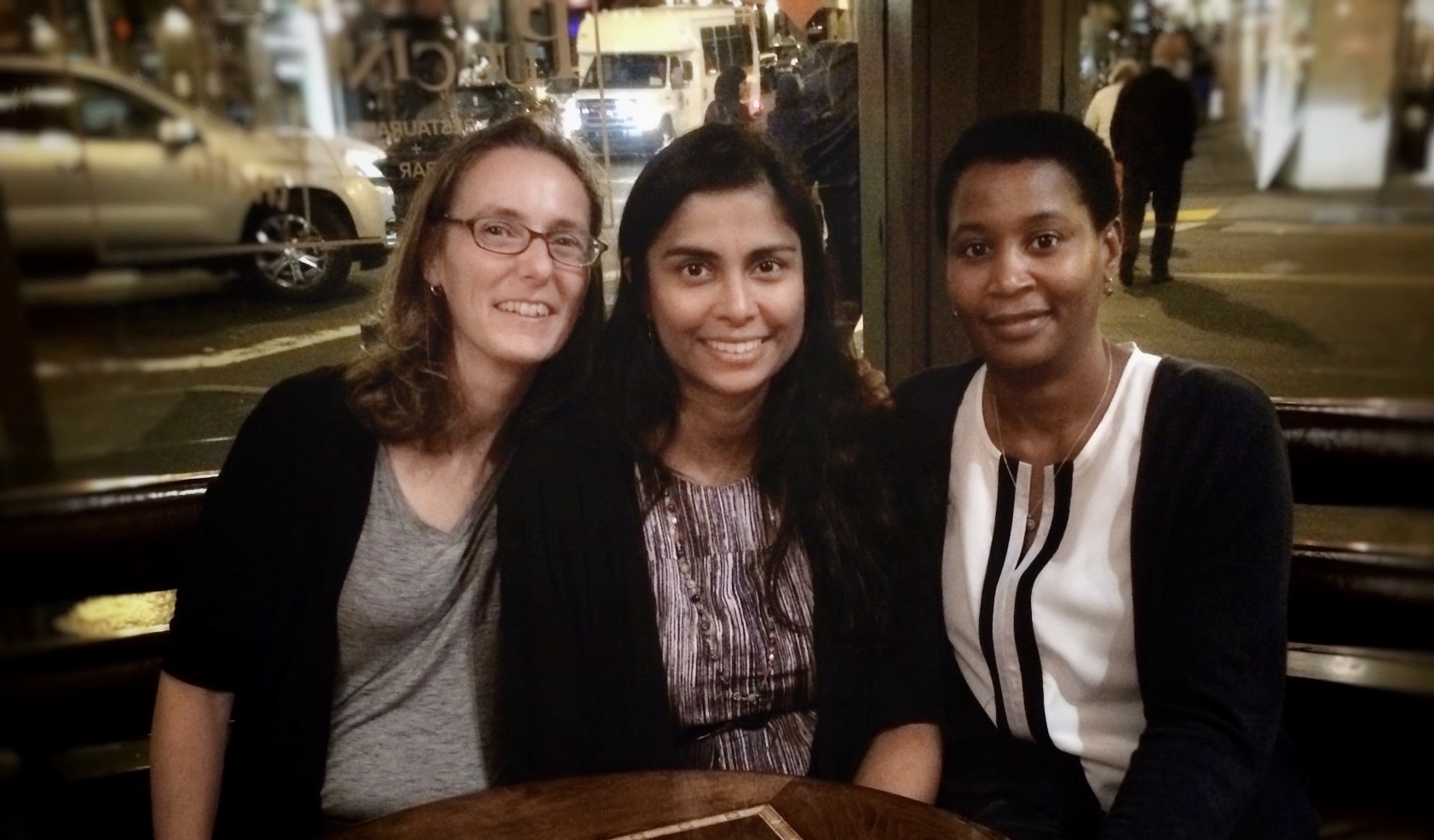
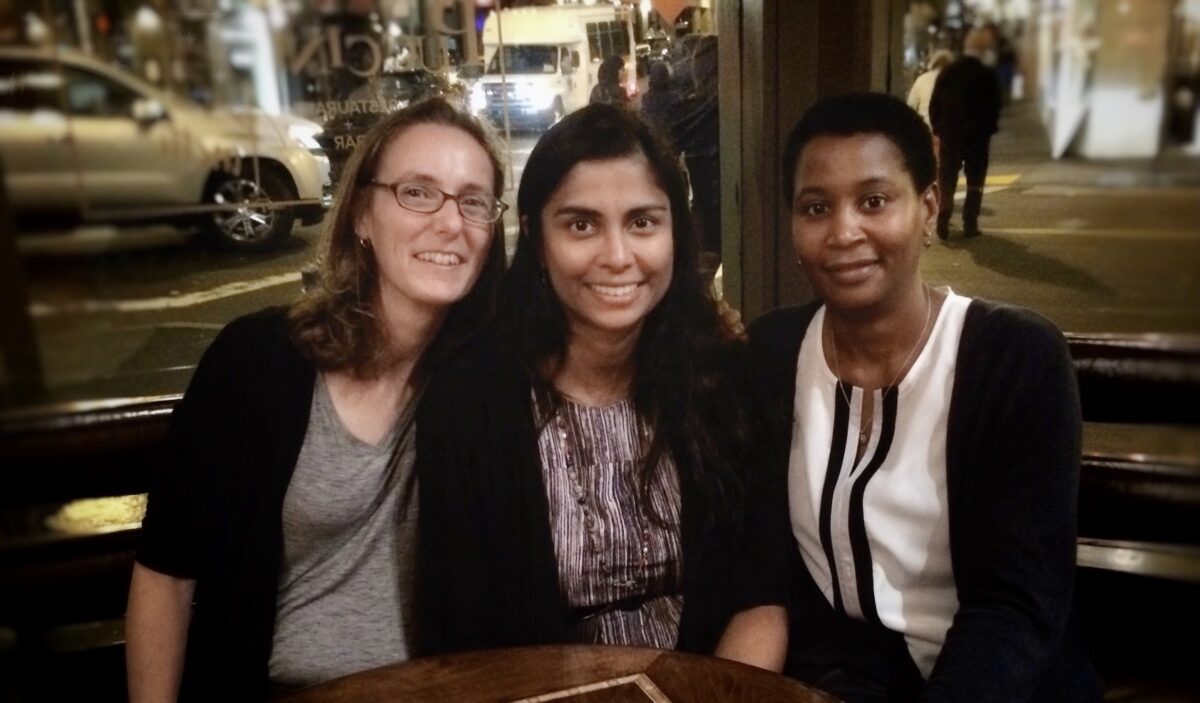 L-R: Amy Lutz, Lakshmi Jayaram, and Bennett at an American Sociological Association meeting. Photo courtesy of Bennett.
After interviewing 50 parents from two public schools in a northern U.S. city, they found that middle- and working-class parents generally engaged in two types of parenting: defensive and strategic parenting.
Beyond the parent interviews, family survey data, census data, local police data, school climate data, and social network data provided further details about the economic resources parents had access to and the social conditions that impacted their wellbeing.
Defensive and strategic parenting
These two parenting approaches emerged when the researchers explored parents’ “values, orientations, and expectations” for their children’s educational journey as a pathway to achieve the “American dream.” Parents shared their lived experiences within their neighborhoods and schools, as well as work, social, and educational networks.
The data show both middle- and working-class parents share a goal of having college-educated children. However, the resources accessible to each group vary widely, as do the social conditions in which they live, which ultimately influence how the parents approach this goal.
Middle-class families with large social networks and economic resources were more likely to practice “strategic parenting” by making key decisions leading to their child’s academic improvement, new skill development, and variety of extracurricular activities. Their decisions were influenced by access to many choices and to safe neighborhoods and schools that helped parents nurture their children. This social context encourages adolescent independence and the personal growth needed to attend college.
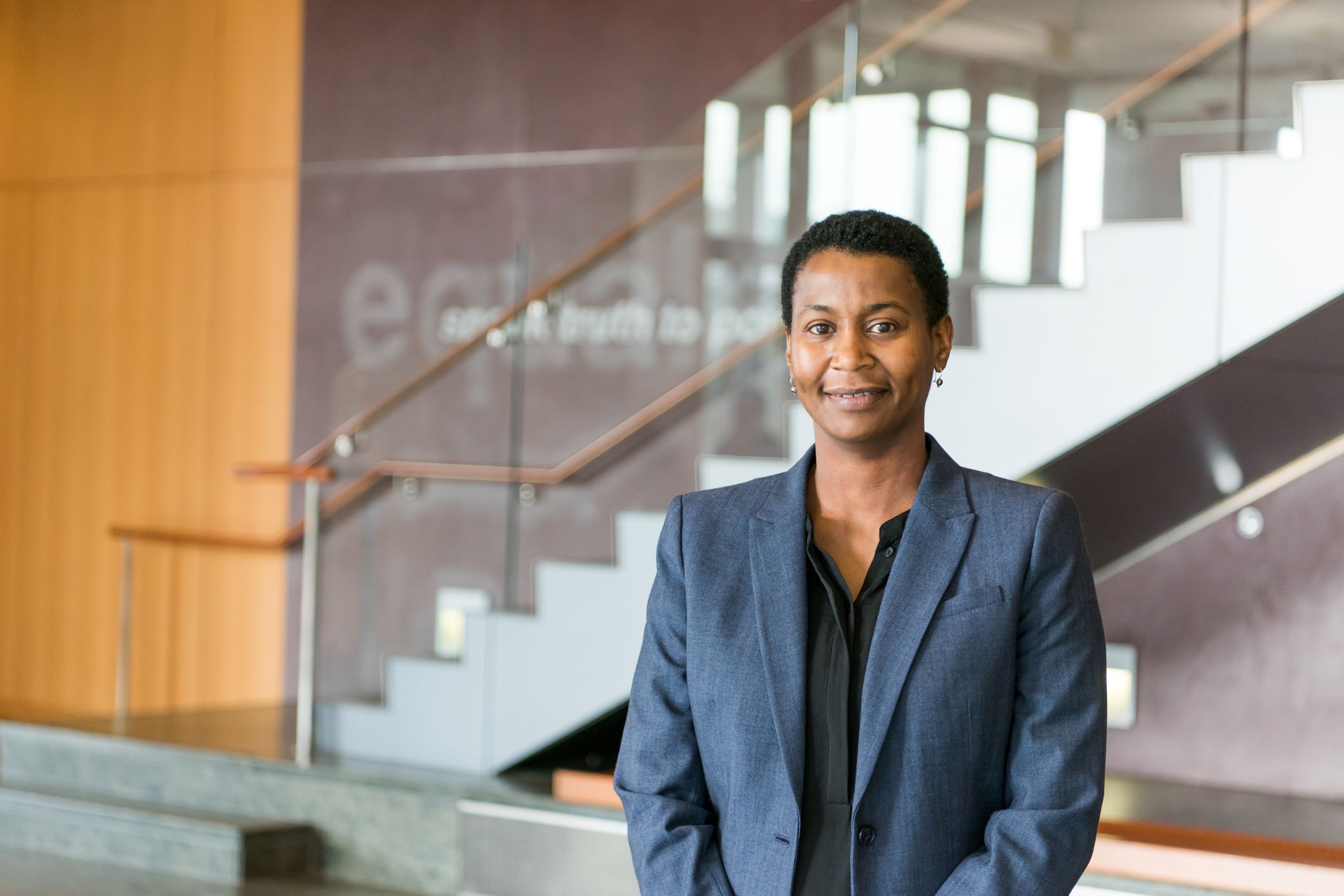
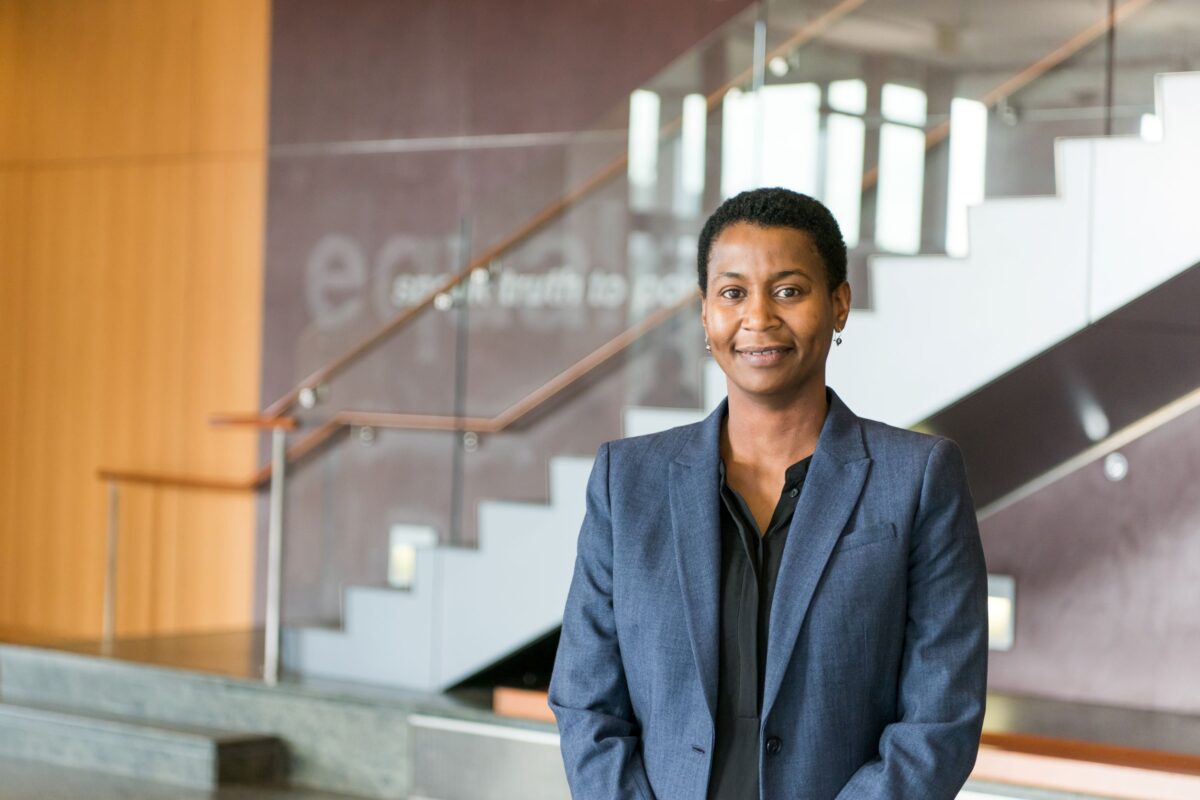 Pamela Bennett.
On the other hand, working-class parents in the study had more limited access to financial, social, and enrichment resources. They also had to consider how their child would engage in a world where neighborhoods and schools contain serious safety concerns. These safety concerns lead some parents to heavily monitor their teenagers’ interactions with peers and other adults and to shield them against actions that might limit their opportunities.
In this way, working-class parents generally practiced “defensive parenting,” making decisions that protected their children from harm while also working toward their social mobility.
Public impacts
The researchers hope this study can inform education policy designed to close the gap between working- and middle-class families’ access to the “American dream.” One key way to achieve this, Bennett suggests, is increasing neighborhood safety and access to academic enrichment activities.
Bennett’s work on social inequality in higher education and racial residential segregation spans two decades. This new book comes on the heels of several recent articles she has co-authored on topics related to affirmative action and collegiate outcomes, college entrance exams and academic performance, and talent loss among Blacks and Latinos following affirmative action bans. She and Amy Lutz will soon publish a new article, in Harvard Educational Review, on whether state bans differently affect the willingness of Black, White, Latinx, and Asian Americans to apply to selective colleges.
Recently, Bennett spoke about college access and affordability on Marketplace, a public radio show heard by more than 14 million listeners each week. She recommended hotlines for students and their families to ask questions about financial aid and direct support with completing FAFSA applications, particularly for first-generation college students. “The stakes are talent loss, frankly, for the country,” Bennett said.
Feature image: Pamela Bennett. All photos by Marlayna Demond ’11 unless otherwise indicated.
]]>
The notion of the “American dream”—that hard work can lead to social and economic mobility—has existed in the United States for centuries, and it has been disputed for almost as long. Pamela...
https://umbc.edu/stories/parenting-in-privilege-or-peril-a-new-book-by-umbcs-pamela-r-bennett-explores-barriers-to-the-american-dream/
https://my3.my.umbc.edu/api/v0/pixel/news/119441/guest@my.umbc.edu/7a4a624080d5c5f0d06f7033857bd28d/api/pixel
cahss
cahssresearch
cs3
news
policy-and-society
politicalscience
UMBC News & Magazine
https://my3.my.umbc.edu/groups/umbc-news-magazine
https://assets1-my.umbc.edu/system/shared/avatars/groups/000/001/943/24435aa6207c452e7bc15cc74b42c7bb/xsmall.png?1748556657
https://assets1-my.umbc.edu/system/shared/avatars/groups/000/001/943/24435aa6207c452e7bc15cc74b42c7bb/original.png?1748556657
https://assets2-my.umbc.edu/system/shared/avatars/groups/000/001/943/24435aa6207c452e7bc15cc74b42c7bb/xxlarge.png?1748556657
https://assets2-my.umbc.edu/system/shared/avatars/groups/000/001/943/24435aa6207c452e7bc15cc74b42c7bb/xlarge.png?1748556657
https://assets3-my.umbc.edu/system/shared/avatars/groups/000/001/943/24435aa6207c452e7bc15cc74b42c7bb/large.png?1748556657
https://assets1-my.umbc.edu/system/shared/avatars/groups/000/001/943/24435aa6207c452e7bc15cc74b42c7bb/medium.png?1748556657
https://assets2-my.umbc.edu/system/shared/avatars/groups/000/001/943/24435aa6207c452e7bc15cc74b42c7bb/small.png?1748556657
https://assets1-my.umbc.edu/system/shared/avatars/groups/000/001/943/24435aa6207c452e7bc15cc74b42c7bb/xsmall.png?1748556657
https://assets2-my.umbc.edu/system/shared/avatars/groups/000/001/943/24435aa6207c452e7bc15cc74b42c7bb/xxsmall.png?1748556657
UMBC News & Magazine
0
0
false
Tue, 26 Apr 2022 13:10:00 -0400
Tue, 26 Apr 2022 13:10:00 -0400
UMBC Responds to Putin’s War in Ukraine

On February 24, just one day after a Russian holiday celebrating the “defenders of the Fatherland,” Russian President Vladimir Putin ordered his military forces to invade Ukraine. The ensuing assault catalyzed a mass of destruction and action.
In the classroom of Kyiv-born Vira Zhdanovych, an instructor of Russian at UMBC, students are using their language skills to take in information from different perspectives. Zhdanovych notes that both her students and colleagues from the Department of Modern Languages, Linguistics, and Intercultural Communication (MLLI) reached out to her during the first days of the invasion and have been extremely supportive since.
“Like everyone, I have been very upset and confused by Putin’s invasion of Ukraine,” says Zhdanovych. “This was especially difficult for me because I am from Kyiv and have relatives who were forced to evacuate. Fortunately, my immediate family—my sister, niece and nephew—have made it out, though my brother-in-law remained behind to defend Kyiv. I also have many friends who are still in Kyiv and in surrounding areas and I worry about them each day.”
Additional faces and voices of those impacted have since risen to the surface through several virtual UMBC town halls that highlight Ukrainian American voices as well as faculty experts on the region.
UMBC professors and students share their expertise
In the early weeks following the initial invasion, UMBC’s Center for Social Sciences Scholarship, History Department, and the Political Science Department hosted a virtual discussion about the history leading up to the current crisis, as well as the political and economic impacts that it is having today on surrounding countries and globally. Present at the panel were Devin Hagerty and Brian Grodsky, professors of political science and affiliate faculty in Asian studies, and Mirjam Voerkelius, assistant professor of history. Joining them were three undergraduate students who shared their personal experiences and reactions to the current climate in Ukraine.
 Hagerty (standing) teaching a global studies course. All photos by Marlayna Demond ’11, unless otherwise noted.
Maria Kutishcheva ’24, political science and MLLI, shared that the conflict has had a devastating effect on her family. With relatives in both Ukraine and Russia, Kutishcheva talked about two sides of the crisis from a personal standpoint, mentioning the divisions that have been deepened by Russian propaganda. She ended her story on a compelling note: inaccurate portrayals of the war cannot keep up with reality, but Ukraine still needs our continued attention and support.
Although it can be difficult to absorb everything that has happened leading up to the crisis, the Retriever community is fortunate to have students and faculty who can provide insight on the subject. Many people, especially those with personal ties to the situation, have been deeply affected and wish to stay informed through their communities—a desire that was again met by UMBC’s second virtual discussion about Asia’s influence on the Russia-Ukraine War in mid-March.
Brian Carlson, head of the Global Security Team of the Think Tank at the Center for Security Studies, returning panelists Brian Grodsky and Devin Hagerty, and Meredith Oyen, associate professor of history and director of UMBC’s Asian studies program, led the discussion and helped answer attendees’ questions about global relations across Asia and Europe. Carlson opened up the discussion by describing Russia’s ties to China.
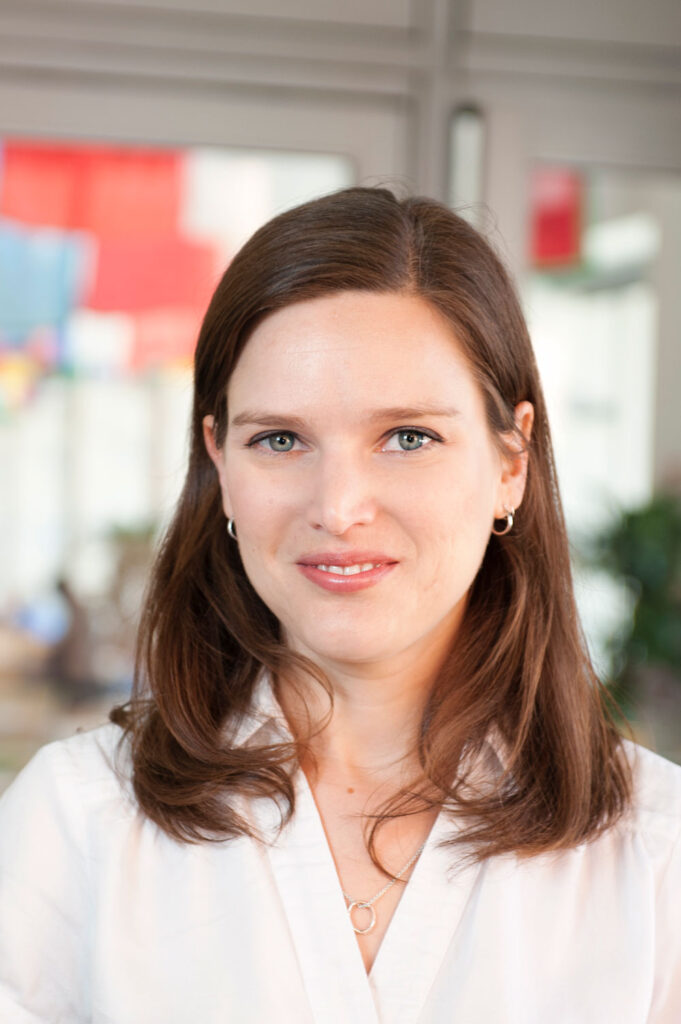 Meredith Oyen
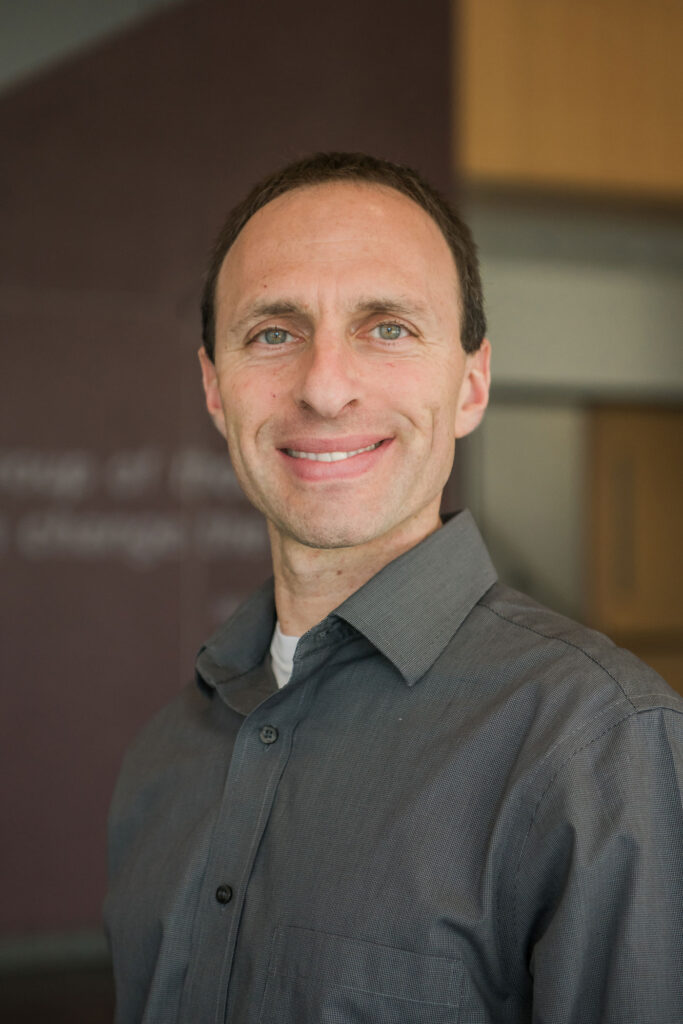 Brian Grodsky
“China has played an important, enabling role in Russia’s actions in Ukraine. China and Russia have built a close partnership based on a common desire to oppose the United States in aspects of the existing international order,” says Carlson. “In early February, just weeks before the invasion…they issued a joint declaration in which they said their partnership had no limits and there were no forbidden areas of cooperation.”
Although, he adds, “China has probably been surprised by the ineptitude of the invasion and by the fierceness of the Ukrainian resistance.”
Grodsky, the chair of the political science department, was next to share his expertise about Central Asia’s response, or lack thereof, to the Russian invasion of Ukraine. “Not surprisingly,” Grodsky notes, “Central Asia has been neutral in its reaction to the invasion. Russia expected a lot more support than it got, but this really reflects a long-standing foreign policy to balance stronger powers in the region.”
Grodsky, expanding on an earlier article he wrote about economic sanctions on Russia, added that economic links were becoming more difficult for Central Asian countries to maintain with Russia. These sanctions, he stated, would likely lead to political instability in the region.
Ongoing conversations provide support
Broad conversations about geographic implications of the Russian military aggression combined with personal stories of Ukrainian displacement and resistance are ongoing and they won’t end soon. Students, staff, and faculty, including Zhdanovych and those present at the panels, are speaking from personal and informational standpoints to put a face to the people who are struggling and fighting in Ukraine. But Zhdanovych points out that we also shouldn’t forget about those in Russia.
“I think that it is important to emphasize that not all Russians—particularly those in the U.S.—support this invasion. I know many, many Russians in the greater community and do not know of one who supports this invasion. I think of this as Putin’s invasion of Ukraine, rather than Russia’s invasion,” Zhdanovych says.
With this mindset moving forward, we can strive to build networks of support and to grow together as multiple communities all impacted by this crisis. Though the future ahead remains uncertain, there is strength in the voices and actions that stretch across and beyond UMBC.
UMBC supports Ukrainians: If you’re interested in supporting Ukrainian students, scholars, and artists at risk, UMBC’s Center for Global Engagement recommends giving to an established organization, like IIE.” In April, President Biden announced a new initiative to support Ukrainians. Welcome.us, an organization of which UMBC is a member, has created a new website that contains information about this initiative as well as various ways to help Ukrainians.
******
Header image: Photo on Pexel by Mathias P.R. Reding
]]>
On February 24, just one day after a Russian holiday celebrating the “defenders of the Fatherland,” Russian President Vladimir Putin ordered his military forces to invade Ukraine. The ensuing...
https://umbc.edu/stories/umbc-responds-to-putins-war-in-ukraine/
https://my3.my.umbc.edu/api/v0/pixel/news/119450/guest@my.umbc.edu/0e2495bac50e528fa14b7900a1369c39/api/pixel
asian-studies
campus-life
cge
cs3
history
magazine
mlli
political-science
russian
ukraine
webfeature
UMBC News & Magazine
https://my3.my.umbc.edu/groups/umbc-news-magazine
https://assets1-my.umbc.edu/system/shared/avatars/groups/000/001/943/24435aa6207c452e7bc15cc74b42c7bb/xsmall.png?1748556657
https://assets1-my.umbc.edu/system/shared/avatars/groups/000/001/943/24435aa6207c452e7bc15cc74b42c7bb/original.png?1748556657
https://assets2-my.umbc.edu/system/shared/avatars/groups/000/001/943/24435aa6207c452e7bc15cc74b42c7bb/xxlarge.png?1748556657
https://assets2-my.umbc.edu/system/shared/avatars/groups/000/001/943/24435aa6207c452e7bc15cc74b42c7bb/xlarge.png?1748556657
https://assets3-my.umbc.edu/system/shared/avatars/groups/000/001/943/24435aa6207c452e7bc15cc74b42c7bb/large.png?1748556657
https://assets1-my.umbc.edu/system/shared/avatars/groups/000/001/943/24435aa6207c452e7bc15cc74b42c7bb/medium.png?1748556657
https://assets2-my.umbc.edu/system/shared/avatars/groups/000/001/943/24435aa6207c452e7bc15cc74b42c7bb/small.png?1748556657
https://assets1-my.umbc.edu/system/shared/avatars/groups/000/001/943/24435aa6207c452e7bc15cc74b42c7bb/xsmall.png?1748556657
https://assets2-my.umbc.edu/system/shared/avatars/groups/000/001/943/24435aa6207c452e7bc15cc74b42c7bb/xxsmall.png?1748556657
UMBC News & Magazine
0
0
false
Tue, 12 Apr 2022 20:12:39 -0400
Tue, 12 Apr 2022 20:12:39 -0400
Smithsonian features Erle Ellis’s research on how humans have shaped ecology over millennia as a top discovery of 2021

The Smithsonian National Museum of Natural History (NMNH) has announced its top ten discoveries of 2021, featuring “attention-grabbing findings” by UMBC’s Erle Ellis, professor of geography. Ellis collaborated with an international team of researchers, which included Torben Rick, study co-author and curator of North American archaeology at the museum. Their analysis revealed that people have sustainably shaped Earth’s ecosystems for over 12,000 years.
The boundless curiosity of the researchers at @nmnh drives them to explore Earth, the species that depend upon it, the cultures that inhabit it, and the forces that alter it.
Here are some of our scientists’ top natural history discoveries of 2021.https://t.co/UUG0lWRq4q
— Smithsonian’s NMNH (@NMNH) December 31, 2021
“Our work shows that most areas depicted as ‘untouched,’ ‘wild,’ and ‘natural’ are actually areas with long histories of human inhabitation and use,” Ellis previously shared with UMBC News. They might be interpreted like this, he suggests, because in these areas, “societies used their landscapes in ways that sustained most of their native biodiversity and even increased their biodiversity, productivity, and resilience.”
The team found the current biodiversity crisis is due to the appropriation, colonization, and intensified use of lands previously managed sustainably.
“It is so exciting to see our work recognized by the Smithsonian,” says Ellis, in response to the NMNH coverage. “I hope that 2022 will mark a turning point in our understanding and care for nature—by learning from and empowering the Indigenous and traditional peoples and practices that have sustained nature across the planet for more than 12,000 years.”
Ellis will be speaking about this discovery on Wednesday, January 19, 2022 at the Global Land Programme Webinar: Prehistoric land use reshaped most of terrestrial nature – does that matter now?
Banner image: Erle Ellis. Photo by Marlayna Demond ’11 for UMBC.
]]>
The Smithsonian National Museum of Natural History (NMNH) has announced its top ten discoveries of 2021, featuring “attention-grabbing findings” by UMBC’s Erle Ellis, professor of geography. Ellis...
https://umbc.edu/stories/meet-umbc-people-13/
https://my3.my.umbc.edu/api/v0/pixel/news/119489/guest@my.umbc.edu/7591156274f673693b7fb2af6ee610b2/api/pixel
cahss
cahssresearch
cs3
ges
science-and-technology
UMBC News & Magazine
https://my3.my.umbc.edu/groups/umbc-news-magazine
https://assets1-my.umbc.edu/system/shared/avatars/groups/000/001/943/24435aa6207c452e7bc15cc74b42c7bb/xsmall.png?1748556657
https://assets1-my.umbc.edu/system/shared/avatars/groups/000/001/943/24435aa6207c452e7bc15cc74b42c7bb/original.png?1748556657
https://assets2-my.umbc.edu/system/shared/avatars/groups/000/001/943/24435aa6207c452e7bc15cc74b42c7bb/xxlarge.png?1748556657
https://assets2-my.umbc.edu/system/shared/avatars/groups/000/001/943/24435aa6207c452e7bc15cc74b42c7bb/xlarge.png?1748556657
https://assets3-my.umbc.edu/system/shared/avatars/groups/000/001/943/24435aa6207c452e7bc15cc74b42c7bb/large.png?1748556657
https://assets1-my.umbc.edu/system/shared/avatars/groups/000/001/943/24435aa6207c452e7bc15cc74b42c7bb/medium.png?1748556657
https://assets2-my.umbc.edu/system/shared/avatars/groups/000/001/943/24435aa6207c452e7bc15cc74b42c7bb/small.png?1748556657
https://assets1-my.umbc.edu/system/shared/avatars/groups/000/001/943/24435aa6207c452e7bc15cc74b42c7bb/xsmall.png?1748556657
https://assets2-my.umbc.edu/system/shared/avatars/groups/000/001/943/24435aa6207c452e7bc15cc74b42c7bb/xxsmall.png?1748556657
UMBC News & Magazine
0
0
false
Thu, 13 Jan 2022 17:54:53 -0500
After COVID halted global travel, UMBC’s newest Fulbright Scholars begin their journeys

Senior year ended with a surprising turn of events for Dominique Ross ‘21 and Yianni Karabatis ‘21. Both received prestigious Fulbright U.S. Student Program awards for 2021 – 2022. But, like many Fulbright recipients, their Fulbright experiences were initially stalled due to COVID-19. Now, with immunization and continued mask requirements, international travel is once again possible for Fulbright recipients. Karabatis has safely arrived in Greece and Ross will head to Brazil shortly after graduating in December.
Joining them in UMBC’s Fulbright class of 2021 – 2022 are Elijah Claggett ’21, computer science, Japan, research award; Elliott Eig, M.A. ’21, TESOL, Panama, English teaching assistant; and Bryce Moore ’19, modern languages, linguistics, and intercultural communication, Turkey, English teaching assistant.
The Fulbright Program is the U.S. government’s flagship international exchange program. UMBC was named a Fulbright Top Producing Institution in 2019 – 2020. In the last decade, UMBC has received over 60 Fulbright U.S. Student Program awards for research and teaching placements in Africa, Asia and the Pacific, South America, and Europe.
Answering big questions
Yianni Karabatis loves applying math to answer big questions and saw a natural fit in a computer science major. He found that the most difficult questions needed interdisciplinary answers, leading him to explore the design of neural and sensory systems, which draw from biology, mathematics, and computer science.
As a scholar in UMBC’s Louis Stokes Alliance for Minority Participation program, he learned about computer vision (a field of artificial intelligence) and its potential to help provide faster and more accurate information. In computer vision, computers are trained to recognize and analyze specific objects quickly and precisely.
 Yianni Karabatis in an olive tree grove in Crete, Greece. Photo courtesy of Karabatis.
Karabatis found himself inspired by the intersection of computer vision and robotics due to the fields’ collaborative potential to have a public impact, addressing large-scale, long-standing global problems.
Saving olive groves through AI
These interests came together a year ago when Karabatis heard concerning news from Greece. “I read in the news that there is a tree-killing bacterial outbreak disrupting the vascular system of olive trees, and causing them to become dehydrated—first in Southern Italy, then Spain—and it is expected to spread to Greece,” he says.
Having traveled to Greece many times to visit family, Karabatis knew that olive trees are an important part of Greece’s economy. Working with researchers at the Technical University of Crete in Chania, Greece, Karabatis is conducting a pilot study to test the ability of drone-based cameras to detect diseased olive groves using advanced computer imagery.

An aerial picture of a healthy olive tree grove in Crete, Greece.
Photo courtesy of Karabatis.
“Using computer vision techniques, I will create a set of convolutional neural networks to autonomously predict if certain olive trees from aerial images are healthy or unhealthy,” says Karabatis.
He will compare the accuracy of this information to farmers’ observations. The goal is to create a set of high-accuracy models that farmers all over Greece can use for free to determine the health of their groves from above.
“In some cases, all you can do is cut down the infected tree and the surrounding trees,” explains Karabatis. “Olive trees grow slowly, making it a very expensive solution. We can avoid this with early detection and demystify the use of robotics and computer vision in agriculture, benefiting farmers.”
Expanding access to quality healthcare
Dominique Ross has dreamed of living and working in Brazil most of her life. Before transferring to UMBC, she studied abroad in Rio de Janeiro, Brazil, and Cape Town, South Africa. In Cape Town, she shadowed doctors at a local clinic in a racially segregated township. In Rio, she worked with Brazilidade, a social impact business in the Santa Marta favela that seeks to deconstruct favela stereotypes through promoting favela culture and pride. These informally developed, underserved neighborhoods offer low-cost housing to predominantly Afro-Brazilian communities that do not have adequate access to public municipal services.
 Brazilidade at UMBC visiting an intercultural communication class. Photo courtesy of Ross.
“In both of these cities I noticed the connection between race, health, and power,” says Ross. “I realized how health could be a way to measure and understand the effects of oppression on a community and the body.”
Ross empathized. She shares that, as a Black person, she has also been dismissed by doctors. And she’s seen her grandparents, Haitian refugees who came to the U.S. in the 1960s, face the challenges of navigating the U.S. healthcare system.
 Ross (front) with friends on a ferry in Cape Town, South Africa while studying abroad.
Photo courtesy of Ross.
“I became acutely aware that health was not just a person’s biology, but also psychosocial wellbeing, impacted by the places where people lived, learned, and worked,” says Ross. “I decided not to study biomedicine because I wanted to be able to impact larger groups of people. Instead, UMBC made it possible for me to design a global health degree plan through the Individualized Study Program.”
Connecting with communities
When Felipe Filomeno, associate professor of political science and global studies and associate director of the Center for Social Science Research, met Dominique she was already fluent in Portuguese and had experience working in Rio. Filomeno helped Dominique stay fluent by holding their meetings in Portuguese to prepare her to join a research team he helped coordinate.
“I am a Fulbright alumnus,” says Filomeno, “and supporting Dominique has been a way for me to give back to Brazil, my home country, which will surely benefit from her research and community service.”
Ross will return to work in the favelas later this winter before her Fulbright experience begins in the spring in the northern border state of Roraima, Brazil. There Ross will continue a research project she began at UMBC. Her work will focus on the healthcare access, pre- and post-COVID, of Venezuelan migrants who fled to Brazil due to economic and political crisis.
“I want to do this work for my family, my community, and anyone who has ever been prevented from living the healthy life they deserve,” says Ross.
Faculty Fulbright in human-centered computing
Numerous UMBC faculty have also received Fulbright awards to pursue international research and teaching in recent years. Helena Mentis, professor of information systems and director of the Bodies in Motion Lab, received a 2021 Fulbright U.S. Scholar Award to work in Denmark with the University of Copenhagen’s Human-Centered Computing research group.
 Helena Mentis demonstrates gestural tools. Photo by Marlayna Demond ’11 for UMBC.
Mentis arrived in Denmark earlier this fall. She is examining how the profound differences in the public health systems of Denmark and the U.S. shape people’s privacy expectations in using telehealth, including government use of their personal health data. Mentis is working to understand the factors involved in ethical design of communication technology in healthcare. Research data from a very different healthcare system and culture will make her work more generalizable.
“My time in Denmark has been priceless in being able to think about my research in a new cultural context and forge relationships that will be extended to UMBC students in the future,” says Mentis. “This year is also the 75th anniversary of the Fulbright program and 70th anniversary of the program in Denmark. I feel honored to be here during this celebratory time and to reflect on the impact Fulbrighters can have in an intricately connected world.”
Banner image: An aerial photo of an olive grove in Crete, Greece processed to show olive tree health on a red to green scale. Photo courtesy of Yianni Karabatis.
]]>
Senior year ended with a surprising turn of events for Dominique Ross ‘21 and Yianni Karabatis ‘21. Both received prestigious Fulbright U.S. Student Program awards for 2021 – 2022. But, like many...
https://umbc.edu/stories/after-covid-halted-global-travel-umbcs-newest-fulbright-scholars-begin-their-journeys/
https://my3.my.umbc.edu/api/v0/pixel/news/119541/guest@my.umbc.edu/7a768f9436a67fef06d7ffa6dfab9694/api/pixel
cahss
cahssresearch
coeit
cs3
csee
education
inds
is
mlli
page1
policy-and-society
politicalscience
science-and-technology
UMBC News & Magazine
https://my3.my.umbc.edu/groups/umbc-news-magazine
https://assets1-my.umbc.edu/system/shared/avatars/groups/000/001/943/24435aa6207c452e7bc15cc74b42c7bb/xsmall.png?1748556657
https://assets1-my.umbc.edu/system/shared/avatars/groups/000/001/943/24435aa6207c452e7bc15cc74b42c7bb/original.png?1748556657
https://assets2-my.umbc.edu/system/shared/avatars/groups/000/001/943/24435aa6207c452e7bc15cc74b42c7bb/xxlarge.png?1748556657
https://assets2-my.umbc.edu/system/shared/avatars/groups/000/001/943/24435aa6207c452e7bc15cc74b42c7bb/xlarge.png?1748556657
https://assets3-my.umbc.edu/system/shared/avatars/groups/000/001/943/24435aa6207c452e7bc15cc74b42c7bb/large.png?1748556657
https://assets1-my.umbc.edu/system/shared/avatars/groups/000/001/943/24435aa6207c452e7bc15cc74b42c7bb/medium.png?1748556657
https://assets2-my.umbc.edu/system/shared/avatars/groups/000/001/943/24435aa6207c452e7bc15cc74b42c7bb/small.png?1748556657
https://assets1-my.umbc.edu/system/shared/avatars/groups/000/001/943/24435aa6207c452e7bc15cc74b42c7bb/xsmall.png?1748556657
https://assets2-my.umbc.edu/system/shared/avatars/groups/000/001/943/24435aa6207c452e7bc15cc74b42c7bb/xxsmall.png?1748556657
UMBC News & Magazine
0
0
false
Wed, 20 Oct 2021 16:18:24 -0400
International labor economist Tim Gindling is named UMBC’s 2021 – 2022 Liptz Professor

UMBC has named Tim Gindling, professor of economics, the 2021 – 2022 Lipitz Professor of the College of Arts, Humanities, and Social Sciences (CAHSS). This endowed professorship celebrates, acknowledges, and sponsors cutting-edge research and teaching. This honor recognizes Gindling’s international leadership in research to support the capacity of developing economies to meet populations’ long-term needs. During the award year, he will move forward on collaborative research in Latin America and China.
“This is a prestigious award within the UMBC community,” shares Gindling. “I feel especially honored given the impressive accomplishments of previous Lipitz professors.”
Lipitz professors from the prior three years include Gloria Chuku, chair and professor of Africana Studies (2020-21); Jessica Berman, professor of English and director of the Dresher Center for the Humanities (2019-20); and Dan Bailey, a professor of visual arts who focuses on animation and interactive media (2018-19).
“This professorship will help Tim continue his research in wages, work, poverty, and income distribution in Latin America and East Asia,” says UMBC’s David Mitch, chair and professor of economics. “It brings to the forefront the importance of his research and its impact at an international level, which is in large part due to his ability to foster successful research collaborations.” This includes research partnerships in Costa Rica, El Salvador, Nicaragua, Colombia, Canada, China, and Taiwan.
 David Mitch (right) with incoming fall 2021 economics students.
Gindling will work on two main projects during his professorship. First, he will collaborate with the United Nations University World Institute for Development Economics Research (UNU-WIDER) in Helsinki, Finland on a global research project on informal work. Then, in spring 2022, he will return to China to continue a research collaboration on income inequality. There he will work with Linxiang Ye, a professor of economics and dean at the Nanjing University of Economics and Finance.
Transforming informal work
In 2019, Gindling was invited by UNU-WIDER to collaborate with them and Gary Fields from Cornell University to direct the project Transforming Informal Work and Livelihoods. They are gathering research from more than 25 developing economies from every region of the world on how workers who are self-employed, or who work for others as informal employees, access government-sponsored health care benefits and other worker protections. The team will publish a series of peer-reviewed papers on the research. They will also produce an edited volume on their findings, published by Oxford University Press in 2022, and co-edited by Gindling, Fields, and Kunal Sen, director of the UNU-WIDER, and others.
“The pandemic has highlighted the very difficult circumstances that informal workers face in their working lives,” shares Sen. “UNU-WIDER’s project ‘Transforming Informal Work and Livelihoods’ sheds light on the livelihoods of informal workers, and the prospects they have for moving to better jobs.”
Latin American economics
In addition to helping to direct the project, reviewing papers from researchers around the world, and co-editing the book project, Gindling has also co-authored three articles to contribute to the project.
One of the papers, “Heterogeneous informality in Costa Rica and Nicaragua,” has been submitted for publication in a special issue of the Journal of Development Studies. It was co-authored with Enrique Alaniz, an economist and research director at the Fundación Internacional para el Desafío Económico Global in Nicaragua, as well as UMBC international public policy doctoral students Catherine Mata M.A. ‘28, economics and Diego Rojas. Both are former researchers at the Institute of Research in Economic Sciences at the Universidad de Costa Rica.
 (L to R) Maria Bernedo Del Carpio, assistant professor of economics, Rojas, Mata, and Gindling. Photo by Marlyana Demond for UMBC.
“This project has been a great vehicle for me to apply what I have learned in my master’s and doctoral programs at UMBC,” says Mata. “I’ve worked closely with a senior researcher and participated in high-level conferences with experts in the field—valuable preparation for my own dissertation and later job search after graduation.”
Mata is also working on education research as a research assistant for Jane Lincove, associate professor of public policy. Rojas is currently a consultant for the Office of the Chief Economist for Latin America and the Caribbean at the World Bank.
The other two papers will be published in the book. “Transforming informal work and livelihoods in Costa Rica and Nicaragua” is co-authored by the same four researchers. “Self-employment and labour market dynamics of men and women in El Salvador and Nicaragua” is written by Gindling, Alaniz, and Alma Espino, a professor of economics and a researcher at the Universidad de la República Uruguay.
Global partnerships
Gindling’s work has garnered significant international recognition, which has, in turn, opened doors to more collaborative research opportunities. Gindling has been a non-resident senior research fellow at UNU-WIDER since 2019. For over a decade, he has been a research fellow at the Institute for the Study of Labor in Bonn, Germany. He has also worked at the Institute for Research in Economic Science at the University of Costa Rica for thirty-three years as a non-resident researcher, where he also served as a Fulbright U.S. Scholar in 1992 and again from 2001 to 2003.
In addition to his research and teaching, Gindling has also served as a research consultant to the World Bank, the International Labour Office, the Canadian International Development Research Centre, the United Nations Development Programme, the United States Agency for International Development (USAID), and the governments of Costa Rica and Honduras.
The World Bank published his book Toward More Efficient and Effective Public Social Spending in Central America in 2017. Gindling co-authored itwith World Bank researchers Pablo Acosta, program leader for human development in Brazil; Rita Almeida, lead economist and human development program leader for Central America; and Christine Lao Pena, senior human development economist.
Economic effects of immigration policy
In addition to advancing international development economics, Gindling also studies the relationship between immigrants and education in the United States. As with his international projects, Gindling has joined forces with research partners to better understand the economic effects of U.S. immigration policy.
His policy brief “Private and Government Fiscal Costs and Benefits of the Maryland Dream Act” looked at how the Maryland Dream Act affects in-state tuition rates at Maryland state colleges and universities for undocumented immigrants. He co-authored this study with Marvin Mendel, emeritus professor of public policy and former director of UMBC’s Maryland Institute for Policy Analysis and Research.
Gindling received funding from the Spencer Foundation to expand the research nationally with Lisa Dickson, associate professor of economics at UMBC. He also worked with counselors at Northwest High School in Prince George’s County, Maryland, to assess how immigrant family separation affects students in the classroom. For that project, he partnered with Sara Poggio, associate professor of modern languages, linguistics, and intercultural communications, and founder and co-chair of the International Migration Section of the national Latin American Studies Association.
Advising future innovators
The lessons Gindling has learned through his international research and partnerships directly benefit his UMBC students. He has mentored and advised hundreds of students like Rojas and Mata, helping them build their careers, with a focus on innovatively addressing economic inequalities.
One of these students, Anna Gifty Opoku-Agyeman, M26, ‘19, mathematics, co-founded the first conference for Black women in economics: the Sadie T.M. Alexander Conference for Economics and Related Fields. The conference led her to co-found the Sadie Collective, the first non-profit focused on supporting Black women in economics, finance, data science, and policy at all phases of their careers. In 2020, the UN Convention on the Elimination of All Forms of Discrimination Against Women awarded Opoku-Agyeman a Women’s Rights Award in the Social Justice category. Previous recipients include U.S. Vice President Kamala Harris and Nancy Pelosi, Speaker of the U.S. House of Representatives. Opoku-Agyeman is currently a graduate student at the Harvard Kennedy School.
 Opoku-Agyeman (right) presenting Diane Herz, vice president, director of human services, and chief diversity officer of Mathematica Policy Research, with a plaque of appreciation for hosting the first Sadie T.M. Alexander Conference.
Gindling has great memories of advising Ruby Lu ‘94, economics and mentoring her as part of UMBC’s first cohort of McNair Summer Research scholars. Lu conducted research on discrimination against women and the wage gap between men and women in Taiwan. “At the time I was also conducting research on Taiwan and I shared my data with her for the project,” says Gindling, who has kept in touch with her since she left UMBC.
Lu earned a master’s degree in international economics at Johns Hopkins. In 2005, she co-founded the Beijing-based venture firm DCM China. In 2019, she started her own firm, Atypical Ventures, to fund “ambitious entrepreneurs who want to build lasting companies that have a positive impact on our society.” Her investment in China’s e-commerce, software, and healthcare industries has helped to grow companies and create over 300,000 skilled jobs.
Impact across UMBC
Since 1988, Gindling has also lent his support and expertise by serving on over twenty-five UMBC committees related to faculty searches and tenure, graduate and undergraduate admissions, and department and program needs in public policy, interdisciplinary studies, Africana studies, and global studies.
“The international scope of Tim’s work brings unique and important lessons in economics research and collaboration for UMBC students,” says Kimberly Moffitt, interim dean of CAHSS. “Students have applied this rigor and passion to create new paths in the field and support measures that can improve economic policy in developing countries through collaborative research. The Lipitz professorship celebrates his decades of dedication and his vision for economics at UMBC.”
Banner image: Tim Gindling. Photo courtesy of Gindling.
]]>
UMBC has named Tim Gindling, professor of economics, the 2021 – 2022 Lipitz Professor of the College of Arts, Humanities, and Social Sciences (CAHSS). This endowed professorship celebrates,...
https://umbc.edu/stories/international-labor-economist-tim-gindling-is-named-umbcs-2021-2022-liptz-professor/
https://my3.my.umbc.edu/api/v0/pixel/news/119557/guest@my.umbc.edu/2cf0c3abc38ec6f5f63bf3da68c2f4da/api/pixel
africanastudies
cahss
cahssresearch
cs3
dreshercenter
economics
english
international
policy-and-society
publicpolicy
UMBC News & Magazine
https://my3.my.umbc.edu/groups/umbc-news-magazine
https://assets1-my.umbc.edu/system/shared/avatars/groups/000/001/943/24435aa6207c452e7bc15cc74b42c7bb/xsmall.png?1748556657
https://assets1-my.umbc.edu/system/shared/avatars/groups/000/001/943/24435aa6207c452e7bc15cc74b42c7bb/original.png?1748556657
https://assets2-my.umbc.edu/system/shared/avatars/groups/000/001/943/24435aa6207c452e7bc15cc74b42c7bb/xxlarge.png?1748556657
https://assets2-my.umbc.edu/system/shared/avatars/groups/000/001/943/24435aa6207c452e7bc15cc74b42c7bb/xlarge.png?1748556657
https://assets3-my.umbc.edu/system/shared/avatars/groups/000/001/943/24435aa6207c452e7bc15cc74b42c7bb/large.png?1748556657
https://assets1-my.umbc.edu/system/shared/avatars/groups/000/001/943/24435aa6207c452e7bc15cc74b42c7bb/medium.png?1748556657
https://assets2-my.umbc.edu/system/shared/avatars/groups/000/001/943/24435aa6207c452e7bc15cc74b42c7bb/small.png?1748556657
https://assets1-my.umbc.edu/system/shared/avatars/groups/000/001/943/24435aa6207c452e7bc15cc74b42c7bb/xsmall.png?1748556657
https://assets2-my.umbc.edu/system/shared/avatars/groups/000/001/943/24435aa6207c452e7bc15cc74b42c7bb/xxsmall.png?1748556657
UMBC News & Magazine
0
0
false
Tue, 14 Sep 2021 16:04:52 -0400
Innovation and Social Impact
 Helena Mentis
Now more than ever, STEM careers are demanding their workforce keep the social impact of their work at the forefront. Interdisciplinary teams at UMBC are researching methods to support these efforts.
In the past five years, more than 14,000 students in the College of Engineering and Information Technology (COEIT) took courses in the College of Arts, Humanities, and Social Sciences (CAHSS), home to many courses that cultivate socially responsible thinking (SRT). At the same time, faculty in COEIT were also incorporating SRT concepts in their classes. This overlap was identified as an opportunity to collaborate, leveraging strengths of both colleges to imbue the STEM curriculum with an SRT approach.
“We want computing and engineering students to have a deeper understanding of the social impact of their work and how they are integrating SRT into their learning,” explains Helena Mentis, professor of information systems. Mentis is the lead investigator in the joint research project between COEIT and the Center for Social Science Scholarship (CS3) titled Identifying an Interdisciplinary Path to Social Responsibility Education Across the COEIT Curriculum.
 Felipe Filomeno
Felipe Filomeno, associate professor of political science and global studies and CS3 associate director and co-PI, says that the first step of the project is listening to faculty. “We are not imposing a preconceived approach to how social responsibility should be integrated into a STEM education.”
Mentis also emphasizes the importance of alumni in this process—their practical experience can provide students with insights into how industry leaders are implementing SRT. Kara Seidel ’18, psychology, now a language, literacy, and culture doctoral student, is a research assistant on the project. “This project is a great way to get my feet wet in all the fields at once,” shares Seidel. “I’m here to learn and help bring all the pieces together so the team can craft and integrate the research in a way that will be most beneficial in the long run.”
UMBC faculty are also working on addressing the negative social impact of existing technologies, such as the ethics in machine learning and data science.
Jordan Troutman ’21, M29, computer science and mathematics—and a valedictorian for the class of 2021—researches how to eliminate bias in algorithms. Troutman won the 2018 Rutgers RISE 5MP for his research, Fairness in Machine Learning, about how the COMPAS algorithm, which is used in the U.S. court system for recidivism prediction, is twice as likely to falsely classify Black men as more likely to reoffend compared to white men.
 James Foulds
Troutman notes that people inherently give power to computers when they start to depend on them to make very complex human decisions. He wants computer scientists “to understand the impact of how our program—discriminatory or not—can affect the world we live in.”
 Vandana Janeja
Troutman works with James Foulds, assistant professor of information systems, on identifying biases in machine learning technologies. Foulds received the National Science Foundation (NSF) CAREER Award in 2021 to develop technical solutions to resolve practical limitations of fair AI techniques.
Foulds also approaches ethical thinking from the data science perspective with his colleague Vandana Janeja, information systems professor and chair. “Ethics cannot be tacked onto one part of the data life cycle,” says Janeja. “It has to be integrated across the data life cycle and infused into each step of the process of discovering patterns in the data and in context of the data being considered.”
The goal of all this work, Mentis explains, is “to develop the next generation of technologists who have the framework and vocabulary to address the relationships between STEM and society.”
*****
Header image: Jordan Troutman ’21 on campus in spring 2021. All photos by Marlayna Demond ’11.
]]>
Helena Mentis Now more than ever, STEM careers are demanding their workforce keep the social impact of their work at the forefront. Interdisciplinary teams at UMBC are researching methods to...
https://umbc.edu/stories/innovation-and-social-impact/
https://my3.my.umbc.edu/api/v0/pixel/news/119602/guest@my.umbc.edu/eb6706d3ae7cc266cc20ac989836fe9c/api/pixel
cahss
coeit
cs3
discovery
information-systems
sidebar
spring-2021
UMBC News & Magazine
https://my3.my.umbc.edu/groups/umbc-news-magazine
https://assets1-my.umbc.edu/system/shared/avatars/groups/000/001/943/24435aa6207c452e7bc15cc74b42c7bb/xsmall.png?1748556657
https://assets1-my.umbc.edu/system/shared/avatars/groups/000/001/943/24435aa6207c452e7bc15cc74b42c7bb/original.png?1748556657
https://assets2-my.umbc.edu/system/shared/avatars/groups/000/001/943/24435aa6207c452e7bc15cc74b42c7bb/xxlarge.png?1748556657
https://assets2-my.umbc.edu/system/shared/avatars/groups/000/001/943/24435aa6207c452e7bc15cc74b42c7bb/xlarge.png?1748556657
https://assets3-my.umbc.edu/system/shared/avatars/groups/000/001/943/24435aa6207c452e7bc15cc74b42c7bb/large.png?1748556657
https://assets1-my.umbc.edu/system/shared/avatars/groups/000/001/943/24435aa6207c452e7bc15cc74b42c7bb/medium.png?1748556657
https://assets2-my.umbc.edu/system/shared/avatars/groups/000/001/943/24435aa6207c452e7bc15cc74b42c7bb/small.png?1748556657
https://assets1-my.umbc.edu/system/shared/avatars/groups/000/001/943/24435aa6207c452e7bc15cc74b42c7bb/xsmall.png?1748556657
https://assets2-my.umbc.edu/system/shared/avatars/groups/000/001/943/24435aa6207c452e7bc15cc74b42c7bb/xxsmall.png?1748556657
UMBC News & Magazine
0
0
false
Wed, 09 Jun 2021 19:06:42 -0400
UMBC’s Faith Davis is named a 2021 Newman Civic Fellow for work on healthcare, food, and housing insecurity

Faith Davis ‘22, M30, sociology and biological sciences, grew up in Mechanicsville, a small town in Maryland. Her family regularly welcomed people in need of temporary housing into their home. This shaped her sense of how housing and income insecurity affect people, but did not prepare her for the shock she felt at seeing the scale of people living without housing in Washington D.C. while visiting the capital as a teenager.
That was a deciding moment for Davis. She wanted to understand the underlying factors of why homelessness persists widely and at such high rates, and she was determined to find sustainable interventions. She has invested the last three years researching food and housing insecurity both on campus and in Baltimore City, as well as working with community organizations to implement interventions. In recognition of her engaged leadership and long-term commitment to this work, Campus Compact Mid-Atlantic (CCMA) has named Faith Davis a 2021 Newman Civic Fellow.

Faith Davis.
Photo courtesy of Davis.
“While I have spent a great deal of my time at UMBC conducting scientific research and taking advanced chemistry and biology coursework, I have also tried to engage with the campus community and the surrounding community,” shares Davis, who is a Meyerhoff Scholar. “Being selected as this year’s Newman Civic Fellow means UMBC recognizes my efforts to change the world in a positive way.”

Davis (first row on the right) volunteering at the Meyerhoff Scholars Program 30th Anniversary Celebration.
Photo courtesy of Davis.
Davis is the most recent in a long line of UMBC students who have earned Newman Civic Fellowships in recognition of their dedication to public service. They include Nihira Mugamba ‘21, political science and Africana studies; Maheen Haq ‘20, global studies and economics; Stephanie Milani ‘19, computer science and psychology; Sophia Lopresti ‘17, global studies; Maxwell Poole ‘18, computer science; economics; and Kelly Cyr ‘12, biological sciences, and M.S. ’13, applied molecular biology.
Civic action
Davis joined UMBC’s Center for Democracy and Civic Life’s (CDCL) Alternative Spring Break (ASB) program as a participant in her first year on campus and as a leader every year after. ASB is an immersive learning experience in which participants explore the systemic and human dimensions of complex social issues in Baltimore. Through UMBC’s Shriver Center, ASB students participate in a service-learning course to learn how to best foster sustainable, long-term connections with local communities.

Faith Davis (back row, first on the left) at a community organization in Baltimore City
during ASB 2019.
Photo courtesy of Davis.
Her first ASB project focused on housing insecurity in Baltimore. “I learned that the most common causes of death for people experiencing homelessness are conditions that could have been easily treatable,” explains Davis.
As an ASB leader her sophomore and junior years, she helped design projects focused on how structural barriers to the availability of nutritious food impact residents’ overall health, education, and well-being in Baltimore, as well as approaches to achieving nutritional equity. Davis has also facilitated several of CDCL’s programs such as the Change Makers Dinners, where she leads discussions addressing nutrition and food access and on women’s political empowerment.

ASB 2019 symposium (Davis is first on the right).
Photo courtesy of David Hoffman.
Research to address healthcare access
Davis’s work in ASB increased her awareness of the challenges that people experiencing homelessnes face in accessing preventative healthcare and basic information about chronic health issues. “I had the opportunity to survey the health resources available in Baltimore City,” shares Davis. “There was a noticeable gap when it came to providing basic health information.”
Davis designed a research project to develop a model that could both assess individuals’ current state of health and connect them with groups who could follow up with free medical services. She received an Undergraduate Research Award in 2019 to gather and analyze health information from shelter residents at two homeless shelters in Baltimore City who volunteered to participate.
The data revealed that the population she surveyed frequently lacked access to consistent primary medical care and regular health screenings, where preventative medicine could reduce the risk of life-threatening emergencies. She was able to present the initial phase of the project at UMBC’s 2019 Undergraduate Research and Creative Achievement Day. Unfortunately, the project could not continue to its next phase due to COVID-19.
Examining food insecurity
In the fall of 2020, Davis was invited to join the Retriever Essentials on a research project analyzing food and housing insecurity at UMBC. Retriever Essentials is an organization led by faculty, staff, and students that tackles food insecurity in the UMBC community. Davis worked alongside Fariha Khalidshe, a CCMA AmeriCorps VISTA member serving with UMBC Retriever Essentials.
Together they compiled and analyzed data from surveys of faculty, staff, and students to determine the prevalence of food and housing insecurity at UMBC, the effectiveness of UMBC’s efforts to address these issues, and the impact of the pandemic on people’s housing and food access.

Davis (left) with her mentor from the Meyerhoff Scholars Summer Bridge program,
Rebekah Rashford ’18, M26, biological sciences, (center), and Davis’s former roommate,
Ridhi Chaudhary ’21, M30, biological sciences (right).
Photo courtesy of Davis.
“Faith is an outstanding member of our research team,” says Khalidshe. “She is an avid advocate for understanding food and housing justice by looking at the statistics and hearing people’s stories about their lived experiences.”
The research team found that a decrease in access to public transportation due to COVID-19 restrictions has been a significant barrier to people’s ability to access food. Additionally, Davis notes that limited income due to unemployment has also affected food and housing security, especially “because government support is decreasing while many people are still unemployed.”
Many organizations that support local communities’ food and housing needs rely heavily on volunteers to function, and have been impacted significantly by COVID-related shutdowns. “As these organizations suffered, more mutual aid networks have taken hold or grown,” explains Davis. “The pandemic has also led to people growing in community and supporting their neighbors, both through formal mutual aid networks and informally.”
HIV research
In addition to her research in housing and health insecurity, Davis also has interests in biomedical research. She is both a U-RISE Scholar and a Howard Hughes Medical Institute Scholar. She has worked with Distinguished University Professor and HHMI Investigator Michael Summers, chemistry and biochemistry, for three years, helping to examine the structure of the HIV-1 5` leader.
“The lab work is focused on determining an unsolved piece of the structure of the 5` leader of HIV-1’s genome, which is important because this area is what makes HIV so infectious,” explains Davis. “If we can determine the structure of this area, it could possibly inform cures or better treatments for HIV.”

Davis (second from the right) at a ABRCMS workshop she helped to facilitate.
Photo courtesy of Davis.
She presented her research on the structure of the HIV-1 5` leader at the American Society of Microbiology Annual Biomedical Research Conference for Minority Students. She also won a poster presentation award at UMBC’s Undergraduate Research Symposium in the Chemical and Biological Sciences and came in 2nd place in the poster presentation at UMBC’s Summer Undergraduate Research Fest. Davis presented her latest research at this year’s 25th UMBC Undergraduate Research and Creative Achievement Day.

Davis (left) with her co-researchers tied for URCAD’s 2021 “Best Overall Selfie” award.
Photo courtesy of April Householder, director of undergraduate research and prestigious scholarships .
Above and beyond
Davis’s passion for being an agent of change in her community extends well beyond her campus work. Through UMBC’s Shriver Center service learning community partnerships, she was placed as a volunteer at the St. Agnes Hospital Stroke Center in Baltimore County, collecting and recording patients’ vital signs and helping with administrative tasks. She is active as a tutor for Arbutus Achievers, a mentoring and college readiness program for middle school students at Arbutus Middle School in Baltimore County.
Among her leadership roles, Davis is the president of UMBC’s Phi Delta Epsilon Medical Fraternity, the secretary of the Ethics Bowl and the Catholic Retrievers, and is a member of the Physical Chemistry Club. While at UMBC, Davis also served on the Volunteer Rescue Squad In her hometown of Mechanicsville.
“Faith is someone who truly walks her talk. She is committed to making a difference through collaboration and engagement over the long haul,” say CDCL’s director, David Hoffman, Ph.D. ‘13, language, literacy and culture (LLC), and assistant director, Romy Hübler ‘09, modern languages and linguistics, M.A. ‘11, intercultural communication, and Ph.D. ‘15, LLC. “We are proud to work with her.”
Social change network
This type of long-term commitment to social change is precisely what the Newman Civic Fellowship honors. The year-long fellowship supports each recipient in further developing their social change and leadership skills through regional and state gatherings. Fellows are paired with mentors and become part of a national network of peers. They support each other in finding solutions for challenges facing communities locally, nationally, and internationally.
Davis has already met other Newman Fellows through online events. She has begun to volunteer in some of the new social justice organizations they introduced her to. She is grateful to be able to learn from previous Newman Fellows and join peers who, like her, are ready to lend their energy and expertise to move social justice work forward. Davis plans to pursue an M.D.-Ph.D. after graduating next year. She hopes these experiences will help inform her future work developing community programs to improve health outcomes for people experiencing poverty.
“My greatest hope for this fellowship is to connect with a large network of change-makers who I can learn from and be inspired by throughout my life,” says Davis. “I hope to eventually work together to create a better world.”
Banner image: Faith Davis (second from the right) with fellow 2019 ASB participants. Photo courtesy of Davis.
]]>
Faith Davis ‘22, M30, sociology and biological sciences, grew up in Mechanicsville, a small town in Maryland. Her family regularly welcomed people in need of temporary housing into their home....
https://umbc.edu/stories/umbcs-faith-davis-is-named-a-2021-newman-civic-fellow-for-work-on-healthcare-food-and-housing-insecurity/
https://my3.my.umbc.edu/api/v0/pixel/news/119638/guest@my.umbc.edu/016c6d52d22f398664ced14812e3ce62/api/pixel
biology
cahss
chembiochem
civic
cnms
community
cs3
meyerhoffscholars
policy-and-society
saph
shrivercenter
undergradresearch
UMBC News & Magazine
https://my3.my.umbc.edu/groups/umbc-news-magazine
https://assets1-my.umbc.edu/system/shared/avatars/groups/000/001/943/24435aa6207c452e7bc15cc74b42c7bb/xsmall.png?1748556657
https://assets1-my.umbc.edu/system/shared/avatars/groups/000/001/943/24435aa6207c452e7bc15cc74b42c7bb/original.png?1748556657
https://assets2-my.umbc.edu/system/shared/avatars/groups/000/001/943/24435aa6207c452e7bc15cc74b42c7bb/xxlarge.png?1748556657
https://assets2-my.umbc.edu/system/shared/avatars/groups/000/001/943/24435aa6207c452e7bc15cc74b42c7bb/xlarge.png?1748556657
https://assets3-my.umbc.edu/system/shared/avatars/groups/000/001/943/24435aa6207c452e7bc15cc74b42c7bb/large.png?1748556657
https://assets1-my.umbc.edu/system/shared/avatars/groups/000/001/943/24435aa6207c452e7bc15cc74b42c7bb/medium.png?1748556657
https://assets2-my.umbc.edu/system/shared/avatars/groups/000/001/943/24435aa6207c452e7bc15cc74b42c7bb/small.png?1748556657
https://assets1-my.umbc.edu/system/shared/avatars/groups/000/001/943/24435aa6207c452e7bc15cc74b42c7bb/xsmall.png?1748556657
https://assets2-my.umbc.edu/system/shared/avatars/groups/000/001/943/24435aa6207c452e7bc15cc74b42c7bb/xxsmall.png?1748556657
UMBC News & Magazine
0
0
false
Tue, 11 May 2021 21:52:04 -0400
Academy for Gerontology in Higher Education honors UMBC’s innovative leadership in the field of aging

Dana Bradley, dean of UMBC’s Erickson School of Aging Studies, has presented President Freeman Hrabowski with a prominent honor from the nation’s preeminent organization devoted to research, education, and practice in the field of aging.
Bradley is incoming chair of the Gerontological Society of America (GSA). The 2020 Administrative Leadership Honor award she presented to Hrabowski is granted through the Academy for Gerontology in Higher Education (AGHE), a section of the GSA. The award recognizes twenty leaders in the field of gerontology across the United States, British Columbia, and Japan. Their outstanding work represents milestones in the history and development of gerontology.
“The award is about helping an international audience understand the impact that our scientific researchers and educators have in the field of aging,” shares Bradley.
She nominated Hrabowski for the award in collaboration with John Schumacher, associate professor of sociology, anthropology, and public health (SAHP), and Leslie Morgan, professor emerita of SAPH. Schumacher is the graduate program director of the gerontology Ph.D. program. The program is jointly offered by UMBC and the University of Maryland, Baltimore (UMB). It is complementary to the Erickson School’s bachelor’s and master’s degrees and certificate programs.

(L to R) Dana Bradley, Amy Berman,John Schumacher, and Nicole Brandt, executive director of the Lamy Center at UMB.
National leadership in aging studies
Bradley’s work in the gerontology community has created avenues and networks for scientists, educators, and students to investigate, advocate, research, and innovate in the fields of aging and longevity. This, in turn, has had a positive impact on housing, health services, community wellbeing, communication, and lifelong learning for older adults.
Bradley is a former GSA and AGHE fellow. She has long served as an elected leader within the GSA and Southern Gerontological Society. She was drawn to become dean of UMBC’s Erickson School in 2018 because of its focus “on leading and being on the edge through engaged scholarship with endless possibilities.” Hrabowski, she says, has cultivated and supported the Erickson School’s leadership in the field.
Over the last three years, Bradley has collaborated with Hrabowski, faculty, campus, and community partners to broaden and diversify UMBC’s aging services research. Last year she and Hrabowski served on a steering committee that built a partnership between UMBC and UMB to become Maryland’s first “age-friendly” universities.
They joined fifty-eight institutions worldwide that make up the Age-Friendly University Global Network, led by Dublin City University in Ireland. The “age-friendly” designation is a commitment to innovate advances in gerontology, health research, and community initiatives to support older adults in higher education.
A model for teaching, learning, and research
“Dr. Hrabowski has been at the forefront of creating and promoting a vision of how we think and talk about aging and longevity,” shares Bradley. And the inclusive, forward-looking vision that he and the Erickson School emphasize has had notable impacts, including on the student experience.
At the same time, Hrabowski shares that he sees his AGHE honor as “a reflection of the Erickson School’s innovative approach to teaching, learning, and research. I’m so proud of the work being done at the school. It has had great success preparing alumni who are now leaders in the field of aging.”
Erickson School alumni likeLauren Mortimer ‘19, and Malgorzata Bondyra ‘20, management of aging services, exemplify the innovation that UMBC fosters in their work to reach older adults in creative ways. Mortimer designed a comfort book. It provides tools for people with dementia to soothe themselves during periods of confusion and irritability. Bondyra’s internship experience in senior housing inspired her to create a virtual cooking class for the older members of her Polish community senior center.
The Erickson School has become a place where students equip themselves with the skills and knowledge to address issues in longevity care inclusively and holistically, and it continues to grow. The school is now developing a certificate in inclusion and diversity in aging services. Says Bradley, “Dr. Hrabowski inspires me to continue to envision possibilities for what the future of aging services can look like.”
Banner image: UMBC and UMB Age-Friendly University steering committee. All images by Matthew D’agostino for UMB.
]]>
Dana Bradley, dean of UMBC’s Erickson School of Aging Studies, has presented President Freeman Hrabowski with a prominent honor from the nation’s preeminent organization devoted to research,...
https://umbc.edu/stories/academy-for-gerontology-in-higher-education-honors-umbcs-innovative-leadership-in-the-field-of-aging/
https://my3.my.umbc.edu/api/v0/pixel/news/119753/guest@my.umbc.edu/c3234591b28cdd68df448bfb955e6697/api/pixel
cs3
ericksonschool
gerontology
graduateschool
hrabowski
policy-and-society
UMBC News & Magazine
https://my3.my.umbc.edu/groups/umbc-news-magazine
https://assets1-my.umbc.edu/system/shared/avatars/groups/000/001/943/24435aa6207c452e7bc15cc74b42c7bb/xsmall.png?1748556657
https://assets1-my.umbc.edu/system/shared/avatars/groups/000/001/943/24435aa6207c452e7bc15cc74b42c7bb/original.png?1748556657
https://assets2-my.umbc.edu/system/shared/avatars/groups/000/001/943/24435aa6207c452e7bc15cc74b42c7bb/xxlarge.png?1748556657
https://assets2-my.umbc.edu/system/shared/avatars/groups/000/001/943/24435aa6207c452e7bc15cc74b42c7bb/xlarge.png?1748556657
https://assets3-my.umbc.edu/system/shared/avatars/groups/000/001/943/24435aa6207c452e7bc15cc74b42c7bb/large.png?1748556657
https://assets1-my.umbc.edu/system/shared/avatars/groups/000/001/943/24435aa6207c452e7bc15cc74b42c7bb/medium.png?1748556657
https://assets2-my.umbc.edu/system/shared/avatars/groups/000/001/943/24435aa6207c452e7bc15cc74b42c7bb/small.png?1748556657
https://assets1-my.umbc.edu/system/shared/avatars/groups/000/001/943/24435aa6207c452e7bc15cc74b42c7bb/xsmall.png?1748556657
https://assets2-my.umbc.edu/system/shared/avatars/groups/000/001/943/24435aa6207c452e7bc15cc74b42c7bb/xxsmall.png?1748556657
UMBC News & Magazine
0
0
false
Mon, 16 Nov 2020 15:01:55 -0500
UMBC’s first virtual conference on inclusive language engages hundreds of education professionals from around the world

UMBC hosted “The Evolving World of Inclusive Language” on June 10, 2020, at a moment of intense focus on anti-racism and inclusion in higher education. The event was organized by Catalina Sofia Dansberger Duque of UMBC’s Office of Institutional Advancement in partnership with Montgomery College and supported by the CASE District II Venture Capital Fund.
The virtual inclusive language conference, UMBC’s first virtual conference, was initially planned as an in-person event for 50 higher education communicators from across the mid-Atlantic. Following COVID-19, the event moved online. And with increased recognition of the importance of the inclusive language, the number of participants quickly jumped.
By the day of the online event, nearly 800 people from across the U.S. and around the world had registered. They represented universities near UMBC, like Towson University and Morgan State University, and as far away as Canada and England. Around 250-300 participants joined each of the day’s six sessions.
A call to action

DàVida Plummer,
DàVida Plummer, dean of the Scripps Howard School of Journalism and Communications and assistant vice president for marketing and media at Hampton University, provided the conference keynote address. She spoke of the importance of this moment in history, reflecting on both the COVID-19 pandemic and increasing support for the Black Lives Matter movement. She noted the duty that communicators and media professionals have to not only evolve language, but to be agents of change by writing stories that reflect the lived experiences of the communities they want to represent.
“To acknowledge that Black lives matter, that abuse of power must be stopped” is paramount, shared Plummer, “and for journalists the world over, we must capture this reality, tell our stories, and maintain objectivity.”
She further noted that communicators must evolve the language they use by respecting how each person identifies themselves and speaking with and about each other with empathy and dignity. To accomplish this, Plummer explained, we must become vigilant of the everyday phrases that subtly perpetuate injustice and inequality. This includes common use of “white,” and “light” to describe positive things, and “black” or “dark” to describe negative things.
“I hope that the words that follow will help us change and make a change for the good for everyone who walks this earth in our time—every gender and every ethnicity,” said Plummer. “We should try to set a sustainable precedent.”
Leading by example
Candace Dodson-Reed ‘96, English, chief of staff in the Office of the President and executive director of the Office of Equity and Inclusion (OEI), and Ever Hanna, OEI training and case manager, provided the UMBC staff keynote. Dodson-Reed opened by bringing attention to the importance of language when speaking out against systemic racism. She then read the names of Black people recently killed by police: George Floyd, Breonna Taylor, Ahmaud Arbery, Tony McDade, and Sandra Bland.

Candace Dodson-Reed
Dodson-Reed focused her address on campus leaders’ responsibility to assure that university communications are responsive and speak to the needs of their communities. She pointed to the intentional and clear use of the words “social justice,” “inclusive excellence,” and “civic engagement” in UMBC’s own vision statement as a set of guiding principles for communications. She also encouraged participants to directly include the communities they wish to reach by listening and involving them in the communication process.
“Being collaborative, as you address such big societal challenges, is not simple,” said Dodson-Reed. “But the decision to use inclusive language in our vision helped guide our response as a campus community,” says Dodson-Reed.
Disrupting exclusivity
Ever Hanna’s remarks asked the audience to not just think about using inclusive language, but also make a conscious choice to disrupt entrenched processes that lead to exclusion. “If you have ever had to confront a privilege that you have, you may be familiar with the concept of being uncomfortable and learning to disrupt something that you thought was normal or easy,” said Hanna.

Ever Hanna
They reinforced that for inclusive language to continue to evolve it is essential to take into account intersectionality. Hanna, who identifies as a trans and non-binary person, provided examples of how gendered language, such as sister and brother, can exclude people because it is so entrenched in binary language norms.
Hanna also pointed out, “We sometimes communicate exclusivity by not giving information.” Having intentional conversations and sharing tools are necessary to gain a deeper understanding of practicing inclusive language.
Hanna says all of these efforts are necessary to create and sustain inclusive language practices. And more importantly, they empower people to disrupt and interrupt exclusive language. “In order to be in solidarity with the people in our lives we need to change the way we do those things,” they noted.
Watch the introduction and keynote presentations.
Inclusive language best practices
The conference continued with five sessions delving deeper into inclusive language practices within specific communities. Each session included a panel or a speaker, plus time for questions and answers. Participants used the Q&A opportunities to learn how to apply inclusive language best practices within their institutions.

Sharon Bland
Sharon Bland, chief equity and inclusion officer for Montgomery College, presented on “Creating Inclusive Communities Among Students, Employees, Alumni, and Trustee Boards through Equity Dialogues.”
UMBC faculty and staff led the four other sessions. “Inclusive Language for Students and Staff” was presented by Jasmine Lee, director of inclusive excellence for the Division of Student Affairs; Lisa M. Gray, associate director of diversity and inclusion for Campus Life; Carlos Turcios ’14, psychology, M.A. ’17, sociology, coordinator for student diversity and inclusion for Campus Life; and Vladimir Rodriguez, assistant director of Off-Campus Student Services.

J. Enscoe
Christine Mallinson, professor of language, literacy, and culture (LLC), and director of the Center for Social Science Scholarship, and J. Inscoe, LLC Ph.D. candidate in language, literacy, and culture, presented on “Gender-Inclusive Language and the LGBTQ Community” (video coming soon). Drew Holladay, assistant professor of English, led the “Disability, Neurodiversity, and Practicing Inclusion” session.
Randianne Leyshon ’09, modern languages and linguistics, assistant editor of UMBC Magazine, and Amelia Meman ’15, gender and women’s studies, assistant director of the Women’s Center, ended the day with a session on “How to Create and Maintain an Inclusive Language Style Guide.”
To access all presenter slide decks, session recordings, and additional information visit the inclusive language conference page.
Banner image: Bench on academic row dedicated to Walter Sondheim. All photos by Marlayna Demond ’11.
Videos will soon be available through YouTube.
]]>
UMBC hosted “The Evolving World of Inclusive Language” on June 10, 2020, at a moment of intense focus on anti-racism and inclusion in higher education. The event was organized by Catalina Sofia...
https://umbc.edu/stories/umbcs-first-virtual-conference-on-inclusive-language-engages-hundreds-of-education-professionals-from-around-the-world/
https://my3.my.umbc.edu/api/v0/pixel/news/119808/guest@my.umbc.edu/2eeb76cdf962ff40bf09299738283e42/api/pixel
cahss
community
cs3
diversityandinclusion
english
gwst
llc
policy-and-society
psychology
research
sociology
womenscenter
UMBC News & Magazine
https://my3.my.umbc.edu/groups/umbc-news-magazine
https://assets1-my.umbc.edu/system/shared/avatars/groups/000/001/943/24435aa6207c452e7bc15cc74b42c7bb/xsmall.png?1748556657
https://assets1-my.umbc.edu/system/shared/avatars/groups/000/001/943/24435aa6207c452e7bc15cc74b42c7bb/original.png?1748556657
https://assets2-my.umbc.edu/system/shared/avatars/groups/000/001/943/24435aa6207c452e7bc15cc74b42c7bb/xxlarge.png?1748556657
https://assets2-my.umbc.edu/system/shared/avatars/groups/000/001/943/24435aa6207c452e7bc15cc74b42c7bb/xlarge.png?1748556657
https://assets3-my.umbc.edu/system/shared/avatars/groups/000/001/943/24435aa6207c452e7bc15cc74b42c7bb/large.png?1748556657
https://assets1-my.umbc.edu/system/shared/avatars/groups/000/001/943/24435aa6207c452e7bc15cc74b42c7bb/medium.png?1748556657
https://assets2-my.umbc.edu/system/shared/avatars/groups/000/001/943/24435aa6207c452e7bc15cc74b42c7bb/small.png?1748556657
https://assets1-my.umbc.edu/system/shared/avatars/groups/000/001/943/24435aa6207c452e7bc15cc74b42c7bb/xsmall.png?1748556657
https://assets2-my.umbc.edu/system/shared/avatars/groups/000/001/943/24435aa6207c452e7bc15cc74b42c7bb/xxsmall.png?1748556657
UMBC News & Magazine
0
0
false
Wed, 26 Aug 2020 02:06:51 -0400
 Trump endorsed former Sen. David Purdue, seen here, in the 2022 GOP primary for governor in Georgia. But the incumbent, Brian Kemp, won the nomination.
 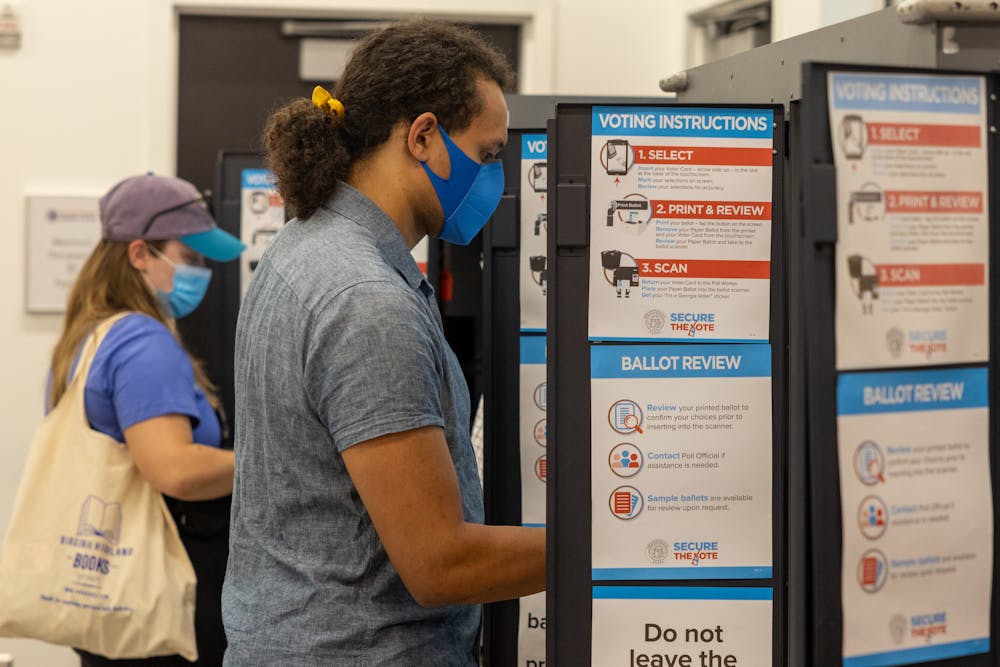 Many elements influence how a person votes, and an endorsement is not usually decisive. Here, voters in Atlanta, Ga., on primary election day, May 24, 2022.