UMBC researchers work to support first responders through NSF-funded stress-response technology
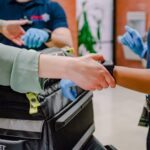
Researchers from UMBC’s departments of information systems (IS) and emergency health services (EHS) are joining forces to help improve the lives of first responders. Through a $370,000 grant from the National Science Foundation, they are using a wristband to collect stress level information from first responders during simulations that mimic on-call situations. The researchers are developing a visual display system for the data to aid first responders in understanding and reflecting on how they react to stressful situations.
This information will ultimately enable those who train and support firefighters, police officers, and paramedics to help these first responders manage highly stressful situations. Their goal is to reduce the stress-induced health challenges that professionals in these fields can experience.
Building a research team
Andrea Kleinsmith, principal investigator, and J. Lee Jenkins, co-principal investigator, are leading a team of researchers for this project. The core group also includes co-investigators Helena Mentis, and Gary Williams ‘04 and M.S. ‘19, emergency health services. Kleinsmith and Mentis are IS faculty and Jenkins and Williams are EHS faculty. Mentis is also an associate dean in UMBC’s College of Engineering and Information Technology, and Jenkins is the chair of the EHS department.
 UMBC researchers and instructors observing students in the emergency health services program as they complete a simulation. Photo by Raquel Hamner ’21, visual arts, for UMBC.
The initial phase of the project focuses on EHS juniors and seniors taking a course that includes emergency response simulations. The students on the project team collect physiological data that indicates the stress levels of simulation participants. The information they gather is informing the development of the system.
“One of the devices that we’re using to collect the data is an E4 wristband by Emaptica,” explains Kleinsmith. “It has sensors that collect data every quarter of a second, recording different physiological responses like heart rate, electrodermal activity, and skin temperature.”
Kleinsmith notes, “We collect this information along with the video of the simulation.” She hopes this will enable the team to develop a visual display for first-responder trainees to review their own stress-response information, to see how they work together as a team, and to see the connections between those two things. This will be an important first step in helping them limit and better manage on-the-job stress.
Clothilde Natividad ‘19, emergency health services, participated in the research program last year. She returns periodically to assist current students who are now enrolled in the class. “One of my best experiences as a student was being part of that research study,” shares Natividad. As a participant, she was impressed by seeing that researchers in the field are aware of the stress first responders experience and are working to do something about it.
Helping first-responders respond to their own stress levels
The project places UMBC researchers at the cutting edge of IS and EHS fields with a collaboration designed to improve health outcomes for first responders. “The innovation component is not that we don’t know how to track stress or give data back to people,” says Mentis. “The part that no one has brought together until now is about collaborative teamwork in a stressful environment, and the first responders being capable of recognizing their own stress reactions and understanding how to respond when in the field and afterward.”
The researchers aren’t just observing the paramedic trainees and their instructors. They are in continuous dialogue with them as they work to determine what the stress information display will look like and what features they would find most helpful.
The information gathered so far on the stress responses of simulation participants is still very raw, but it’s already proving useful. Program graduates have shared that “EHS simulation preparation is very close to the real world,” says Williams. Having experience completing these team-based simulations, and now receiving data about their bodies’ stress responses to the simulations, helps them to recognize stress, to “remain calm when they are on call,” and to work effectively on teams.
Williams notes, “Once trainees have graduated and are in the field with a real patient,” the goal is that “they know what to do and their stress levels are not as high.”
Innovating to save lives
The long-term impact of this project goes beyond the classroom and into the field, where high rates of stress can impact the health of first responders and their families.
“You can imagine the daily stress that EMTs, firefighters, and police officers have is tremendous. The effect that it has on their life, wellbeing, and health is enormous, with heart attacks, strokes, and suicide,” says Kleinsmith. “If we could find ways of improving their resilience by decreasing their stress response through education, that would enormously improve the health and lives of first responders.”
 Students in the emergency health services program complete a simulation. Photo by Raquel Hamner ’21, visual arts, for UMBC.
As the project continues through the rest of this academic year, the researchers will get ever closer to seeing that desired impact. Over the next several months, they will continue to run team-based simulations, gather data, and continue processing the data to inform the physical design of the system and to see how having stress response information can change the experience of EHS trainees, as individuals and teams.
Word of the project is already beginning to reach the EMS community. Kleinsmith and Williams recently spoke at the International EMS Research Symposium in Louisiana, where they received the Best Oral Presentation award for their talk on how paramedic team emotional intelligence impacts performance.
Banner image: Students in UMBC’s emergency health services program have the wearable sensors set up before a simulation. Photo by Raquel Hamner ’21, visual arts, for UMBC. Story written by Megan Hanks, and Catalina Dansberger Duque.
]]>
Researchers from UMBC’s departments of information systems (IS) and emergency health services (EHS) are joining forces to help improve the lives of first responders. Through a $370,000 grant from...
https://umbc.edu/stories/umbc-researchers-work-to-support-first-responders-through-nsf-funded-stress-response-technology/
https://my3.my.umbc.edu/api/v0/pixel/news/119972/guest@my.umbc.edu/b649b4645d102b5556ebbd2c59758d9c/api/pixel
cahss
coeit
ehs
is
policy-and-society
science-and-technology
UMBC News & Magazine
https://my3.my.umbc.edu/groups/umbc-news-magazine
https://assets1-my.umbc.edu/system/shared/avatars/groups/000/001/943/24435aa6207c452e7bc15cc74b42c7bb/xsmall.png?1748556657
https://assets1-my.umbc.edu/system/shared/avatars/groups/000/001/943/24435aa6207c452e7bc15cc74b42c7bb/original.png?1748556657
https://assets2-my.umbc.edu/system/shared/avatars/groups/000/001/943/24435aa6207c452e7bc15cc74b42c7bb/xxlarge.png?1748556657
https://assets2-my.umbc.edu/system/shared/avatars/groups/000/001/943/24435aa6207c452e7bc15cc74b42c7bb/xlarge.png?1748556657
https://assets3-my.umbc.edu/system/shared/avatars/groups/000/001/943/24435aa6207c452e7bc15cc74b42c7bb/large.png?1748556657
https://assets1-my.umbc.edu/system/shared/avatars/groups/000/001/943/24435aa6207c452e7bc15cc74b42c7bb/medium.png?1748556657
https://assets2-my.umbc.edu/system/shared/avatars/groups/000/001/943/24435aa6207c452e7bc15cc74b42c7bb/small.png?1748556657
https://assets1-my.umbc.edu/system/shared/avatars/groups/000/001/943/24435aa6207c452e7bc15cc74b42c7bb/xsmall.png?1748556657
https://assets2-my.umbc.edu/system/shared/avatars/groups/000/001/943/24435aa6207c452e7bc15cc74b42c7bb/xxsmall.png?1748556657
UMBC News & Magazine
0
0
false
Wed, 15 Jan 2020 14:26:56 -0500
UMBC broadens international learning opportunities: Stories from five continents

Heading into International Education Week, November 18 – 22, UMBC is celebrating the expansion of international learning opportunities and partnerships. UMBC is reaching beyond traditional study abroad frameworks to prepare students for global careers, including through virtual exchange programs. At the same time, UMBC continues to welcome talented scholars from around the world to join the campus community, honoring their contributions to UMBC and the relationships they grow during their time on campus.
 Graduate students from India officially become Retrievers during international student orientation.
Virtual international learning at home: Engineering with Portugal
Many college students pursuing STEM majors assume that international learning isn’t an option for them. This might be because they need to complete specific, sequential course requirements, or because they want to focus on internship and research opportunities. In recent years, however, many UMBC STEM students have taken advantage of international learning opportunities where they can fulfill course requirements, complete internships, or do research while abroad, or build international connections while on campus at UMBC.
Aliyah Smith’s experience shows one way to approach this. Smith ‘19, mechanical engineering, completed a nine-week research internship at the University of Oxford, followed by a semester studying in the United Arab Emirates. Some of her engineering classmates have taken a different approach: virtual international learning.
That virtual experience is the innovation of Marc Zupan, associate professor of mechanical engineering. Zupan’s Global Engineering course helps UMBC students prepare to solve complex, large-scale challenges by collaborating remotely with engineering students in Portugal. Students apply advanced technical knowledge as well as communication, teamwork, and cultural awareness skills to their projects. Teammates in the U.S. and Portugal connect through communication tools like Skype and Slack.
 Global Engineering UMBC class in Catonsville and Porto campuses. Photo courtesy of Zupan.
The Global Engineering class has been held with the University of Porto in Portugal for five years. Three years ago Zupan added to the course a collaboration with La Universidad de Los Andes in Colombia, and he’s working to expand it further.
The class is guided by one principle, Zupan says: “The answer to the planet’s environmental and social problems can be met and overcome through collaborative cross-cultural engineering.”
“This isn’t treated as a class project, but a simulated professional experience to prepare students for an international workplace,” Zupan explains. “The cross-cultural aspect of the course is crucial. By learning how to manage a project with classmates that have a completely different cultural and social framework, students must work through differences and learn how to solve a problem together. Cross-cultural engineering delivers a more unique creative solution to engineering challenges.”
Building empathy online through Spanish history
Ana Oscoz, professor of modern languages, linguistics, and intercultural communication, has created the virtual course Spanish Cultures and History, designed to provide a robust international experience for students who aren’t able to travel abroad.
Oscoz worked with colleagues at the Universitat de València and La Universidad Complutense de Madrid to create a Spanish-language course focused on how Spain’s past affects its current social and political climate. Students work in small groups and use a variety of digital communication tools to manage their collaborative class projects through different time zones.
“For me, the class is not only about history but about learning how to empathize with others who have different histories,” says Oskoz. “The greatest takeaway is having students in both countries say, ‘I didn’t know this could be looked at another way.’”
Learning from non-native English speakers in an online TESOL exchange
When Shannon Sauro, assistant professor of education, came to UMBC, she brought with her a virtual exchange program for Teachers of English to Speakers of Other Languages (TESOL) that she began in Sweden five years ago. The future educators she has worked with hail from countries around the globe, and many are not native English speakers. “For many students,” she says, “English was their third or fourth language,” and their perspectives have proved invaluable for classmates who are native English speakers.
 Students in Sweden corresponding with their virtual exchange partners in Israel and Spain. Photo courtesy of Shannon Sauro.
At UMBC, Sauro offers upper-level courses that integrate virtual exchange to challenge and build students’ critical thinking, teamwork, and cross-cultural skills. She also offers training in virtual collaboration to interested faculty across all fields.
“Teaching TESOL means working often with vulnerable populations and deepening the knowledge of the role of the teacher,” shares Sauro. “Virtual exchanges build empathy and emphasize the humanity in all of us.”
Refining language skills: Bilingual exchange with Japan
Virtual exchanges are also useful for students working to learn a second language, as they can enhance students’ pronunciation skills and their understanding of a language’s cultural context. Tomoko Hoogenboom, senior lecturer in modern languages, linguistics, and intercultural communication, worked with colleagues at Nanzan University in Japan to implement a bilingual virtual exchange for Nanzan students studying English and UMBC students studying Japanese.
The Collaborative Online International Learning (COIL) program is part of a partnership between the American Council of Education and Japan’s Ministry of Education, Culture, Sports, Science and Technology. The institutions have provided a combined $9.8 million to fund such collaborations between U.S. and Japanese institutions from 2018 through 2023.
Hoogenboom explains that UMBC students in this upper-level course work on group projects with Japanese students through tools like Slack. At the end of the course, participating UMBC students have an opportunity to study in Japan on a full scholarship.
“COIL is about a deep language and cultural learning experience. Through class projects students expand their understanding of Japanese/U.S. linguistic and cultural differences and similarities,” says Hoogenboom. “Students then leverage this knowledge to foster long-term bicultural and bilingual collaboration through their study abroad opportunity.”
Growing through shared interests: Health and athletics
Throughout the summer and fall 2019, UMBC’s partnerships with Japanese universities have continued to grow. In addition to developing a five-year agreement with Kogakuin University of Technology and Engineering, focused on research collaboration, UMBC established a new kind of partnership with Nippon Sport Science University that explores broader elements of the student experience.
 Jessica Hammond-Graf (left) walks around UMBC with representatives of Nippon Sport Science University.
UMBC has an existing collaboration with Nippon Sport Science University in the area of emergency health services education. For eight days, two faculty members and five students from Nippon Sport Science University visited UMBC to develop their knowledge of English-language medical terminology and to shadow emergency responders. During the visit, Kazumi Hasegawa, director of international marketing at UMBC’s English Language Institute, connected these guests with UMBC Athletics, to explore collaboration opportunities related to athletics, recreation, and the student experience.
“We are looking forward to the opportunity to collaborate with and learn from Nippon Sport Science University,” says Jessica Hammond-Graf, UMBC’s interim director of athletics. “Sport is a wonderful way to celebrate our shared values and it can and should serve as a great unifier between our cultures.”
 Kazumi Hasegawa (left), Jessica Hammond Graf (second from right), and Sarah Gardenghi (right) with representatives of Nippon Sport Science University.
Hosting professional development for visiting faculty through the Fulbright program
UMBC also regularly hosts faculty and students from other countries on campus for longer periods of time through international exchanges and through professional development opportunities. Recently, education instructors Doaa Rashed, M.A. ’08, ESOL and bilingual instructional systems development, and Ph.D. ’17, language, literacy and culture, and Mary Tabaa, M.A.‘00, ESOL and instructional development systems, hosted a Fulbright Junior Faculty Development Program professional development with TESOL and linguistics faculty from Egypt. This specific Fulbright program is a collaboration between the U.S. Department of State and AMIDEAST, a U.S. nonprofit that works to strengthen cooperation between Americans and the peoples of the Middle East and North Africa.
 Scott Casper, dean of the College of Arts, Humanities, and Social Sciences, speaking with a faculty member from Egypt. Photo courtesy of UMBC TESOL.
Visiting faculty represented Pharos University, the University of Modern Sciences and Arts, Minoufiya University, Zewail City of Science and Technology, Al-Azhar University, and the American University in Cairo. Each was paired with a UMBC faculty mentor for their ten-week stay, working together to conduct TESOL and linguistics research and examine best practices in those fields, as well as providing student support with diverse learning styles and internship and employment support. Their goal was to gather new insights to implement at their home campus.
“It is one thing for international partners to hear how UMBC is diverse and inclusive, it is another to actually see how it works in person,” reflects Rashed. “The success of this program, one we hope to continue, depends on the continued committed of the entire campus to the preparation of teachers from all over the world. This is where the real-life implementation of diversity and inclusion is invaluable.”
 Visiting Egyptian faculty with Tabaa (l) and Rashed (r).
Since the participants have returned to their home institutions, their joint research has continued through virtual collaboration. In December, the Egyptian faculty will present their work to Fulbright Egypt.
Combining science and cultural immersion in Spain
While UMBC continues to expand the range of available international learning experiences, some students are still looking for a more traditional study abroad, but don’t quite know how to access it in a way that works for them.
Like Marc Zupan, Ivan Erill, associate professor of biological sciences, wanted to help STEM students see international learning as a real possibility. Erill developed a STEM study abroad program at La Universitat Pompeu Fabra in his hometown of Barcelona, Spain. Students earn UMBC credit for biology and Spanish courses, while also being immersed in Spanish culture.
The six-week program ran for the first time in summer 2019. “I have learned that our students are very receptive to other cultures and ways of seeing life, and that being exposed to other cultures makes them both challenge and appreciate their own culture,” Erill says.
 Ivan Erill (center) at a study abroad fair in February 2019.
Erill’s goal for the program is to help students expand their sense of what is possible in their future careers as scientists. This includes the options of completing a graduate study abroad or collaborating with scientists in other countries. “I have witnessed a gradual change in students’ perception of the quality and breadth of scientific research outside the U.S.,” he shares.
Pauline Rozario ’20, biological sciences, says the program has expanded her vision of her future career. “I would love to travel abroad for my future career path in medicine after I graduate from UMBC,” she shares.
Jessica Kweon ’22, biological sciences, had a similar reaction after visiting the Institute for Research in Biomedicine in Barcelona, which she noted had “incredible image-processing capabilities.” In addition to thinking more deeply about a possible research career in biology, she’s increasingly reflecting on the cultural factors that shape her perspective, as a scientist and as a person.
Throughout International Education Week, UMBC is hosting a range of opportunities for all community members to connect with Retrievers with different cultural and linguistic backgrounds, and to learn about international learning and teaching programs.
This news story was reported in collaboration with Sarah Hansen, M.S.’15, biology, and Megan Hanks.
Banner image: UMBC Commons international flags. All images by Marlayna Demond ’11, unless otherwise noted.
]]>
Heading into International Education Week, November 18 – 22, UMBC is celebrating the expansion of international learning opportunities and partnerships. UMBC is reaching beyond traditional study...
https://umbc.edu/stories/umbc-broadens-international-learning-opportunities-stories-from-five-continents/
https://my3.my.umbc.edu/api/v0/pixel/news/120008/guest@my.umbc.edu/1e98c7ac1a2aa30ab8b6f1e743684ca5/api/pixel
arts-and-culture
athletics
biology
cahss
coeit
education
ehs
meche
mlli
page1
policy-and-society
science-and-technology
UMBC News & Magazine
https://my3.my.umbc.edu/groups/umbc-news-magazine
https://assets1-my.umbc.edu/system/shared/avatars/groups/000/001/943/24435aa6207c452e7bc15cc74b42c7bb/xsmall.png?1748556657
https://assets1-my.umbc.edu/system/shared/avatars/groups/000/001/943/24435aa6207c452e7bc15cc74b42c7bb/original.png?1748556657
https://assets2-my.umbc.edu/system/shared/avatars/groups/000/001/943/24435aa6207c452e7bc15cc74b42c7bb/xxlarge.png?1748556657
https://assets2-my.umbc.edu/system/shared/avatars/groups/000/001/943/24435aa6207c452e7bc15cc74b42c7bb/xlarge.png?1748556657
https://assets3-my.umbc.edu/system/shared/avatars/groups/000/001/943/24435aa6207c452e7bc15cc74b42c7bb/large.png?1748556657
https://assets1-my.umbc.edu/system/shared/avatars/groups/000/001/943/24435aa6207c452e7bc15cc74b42c7bb/medium.png?1748556657
https://assets2-my.umbc.edu/system/shared/avatars/groups/000/001/943/24435aa6207c452e7bc15cc74b42c7bb/small.png?1748556657
https://assets1-my.umbc.edu/system/shared/avatars/groups/000/001/943/24435aa6207c452e7bc15cc74b42c7bb/xsmall.png?1748556657
https://assets2-my.umbc.edu/system/shared/avatars/groups/000/001/943/24435aa6207c452e7bc15cc74b42c7bb/xxsmall.png?1748556657
UMBC News & Magazine
0
0
false
Tue, 19 Nov 2019 18:20:46 -0500
Learning from Ellicott City
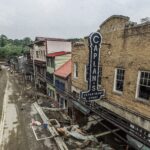
In the aftermath of two “1000-year” floods in three years, can experts, officials, and residents agree on a way to prevent the next big one while preserving this historic town?
By Sarah Hansen M.S. ’15
Ellicott City, Maryland, rests in a steep, narrow valley at the confluence of the Tiber River, its smaller unnamed tributaries, and the much larger Patapsco River. All that water power made it the perfect place to build a mill town—as brothers Jonathan and George Ellicott did beginning in 1772.
The mill town flourished in the 1800s and was the first stop on the Baltimore and Ohio Main Line railroad (the first railroad in the United States) beginning in 1831. Housing and shops quickly sprang up along the winding street to service residents and visitors.
Today, Wilkins Rogers Mills still processes flours and cornmeal on the old site, and the B&O rail station at Ellicott City is the oldest surviving rail station in the United States. It was designated a National Historical Landmark in 1968, and the Main Street area, which retains over 200 historic buildings, was listed on the National Register of Historic Places in 1978.
But while much has stayed the same, much has also changed since Ellicott Mills’ 19th-century heyday. Rather than workaday folk gathering sundries on Main Street, droves of tourists and preservation enthusiasts now stroll the charming byway to patronize boutique shops and cafés.
Or, they used to.
 Main Street in Ellicott City is seen from above the day after a flash flood devastated the historic city on the Patapsco River. Photo: Jerry Jackson, permission from Baltimore Sun Media. All rights reserved.
In 2016, and then, extraordinarily, again in the spring of 2018, Historic Ellicott City was ravaged by flash floods that trapped diners in restaurants’ upper stories, saw empty cars and trucks careening down Main Street, destroyed homes and businesses, left debris for miles downstream, and, in total, took three lives.
The events, both dubbed “1000-year floods” in the media, have left residents and business owners with the tough decision to stay or go. The Howard County government is faced with a dilemma, too: Ellicott City is a popular attraction and has been an economic powerhouse in the county for decades. But when storms come, as they inevitably do, it becomes very dangerous, very quickly.
The floods are changing
“Ellicott City was put there for a reason, to take advantage of water power,” says Andrew Miller, professor of geography and environmental systems. “Therefore, nobody should be surprised that water power is a potential hazard.”
Faculty in UMBC’s geography and environmental systems (GES) department have been studying the local watershed for years. Miller has a particular interest in the role floods play in shaping stream channels and the local ecosystem. Matthew Baker studies watershed ecology and has been deeply involved with the removal of a dam just downstream from Ellicott City. Jeffrey Halverson is a regular contributor to The Washington Post, where he explains the mechanics of regional storm systems for the general public.
Miller says the dam project and flooding studies provide unique opportunities to study aspects of stream ecology, such as sediment movement, from interesting angles. “It’s very rare to have a research project that falls into your lap that’s two miles from your office,” he says, “and to have multiple research projects within two miles of your office intersect with each other is even more unusual.”
Flooding in Ellicott City is nothing new. One of the worst floods was in 1972, when Hurricane Agnes caused the Patapsco River to overflow its banks by 14.5 feet and fill the lower end of Ellicott City’s Main Street. This was a flood “from the bottom up,” explains Halverson. Most of the town’s previous flooding events have happened in a similar fashion—a massive rainfall event deluges the entire region, and the river slowly rises until it can no longer contain the water. Crucially, residents have plenty of time to evacuate in these storms.
 Flood waters on Main Street in Ellicott City, 1972. Photo from the Howard County Historical Society.
But the 2016 and 2018 floods were different. Rather than heavy rain everywhere over an extended period, forecasters predicted potentially devastating, shorter-term rainfall at a hyper-local level in both storms. “But there was never any attempt to localize the storm down to the county or sub-county level,” wrote Halverson for Weatherwise. Why? “Our ability to do so is practically non-existent.”
As a result, when the deluges hit Ellicott City in 2016 and 2018, “people barely had time to get to the second floor of the restaurant,” Miller says.
[rara_call_to_action title=”” button_text=”Read More” button_url=”https://umbc.edu/a-timeline-of-resilience-in-flood-prone-town/” target=”_blank” button_align=”center”]A Brief History of Major Ellicott City Floods[/rara_call_to_action]
“It’s not just the rain that makes a flash flood, it’s also the terrain and the nature of the landscape,” Halverson wrote. Considering this, other changes since the 19th century come into play. Ellicott City has become a highly desirable place to live, and suburban development now sprawls in all directions from Main Street.
Development means more impervious surfaces—roads, rooftops, driveways, patios—and impervious surfaces make it harder for a landscape to absorb rainfall. So, in the 2018 flood, when the center of the storm was a bit upstream from Ellicott City, Halverson wrote, “the torrent of stormwater runoff cascaded downslope into the topographic bowl of the town, flooding it from the top down.”
The floods are “an example of effectively a small tributary watershed ‘wagging the dog,’ making the entire Patapsco River flood before the rest of the drainage area contributed,” says Baker.
In both floods, “upslope development undoubtedly made things worse,” Miller says, but isn’t fully to blame. These events “would have exceeded any kind of storm water management that you could have put in,” he says.
Because of the way heavy rainfall on a small section of the watershed can cause severe flash flood events, Baker says, “the Patapsco River is now behaving much more like an urban river…than its general land use would suggest.” Why is less clear. It could be increasing development, or it could be changes in rainfall patterns influenced by climate change. More likely, it’s a combination of both as well as other factors.
What to do?
The local government is grappling with what to do with this beloved—and sometimes deadly—section of town. They commissioned the McCormick Taylor Report to provide a menu of options that could keep the town safe in future events similar to 2016 and 2018 while keeping the town as-is. The recommendations included $35 million in immediate improvements, plus $60 to $85 million more for longer-term projects. It’s hard to imagine anyone being willing to spend that much to protect such a small parcel of property. The plans included everything from “pipe farms” underground to store storm water until it could be released more slowly, to tunneling through bedrock to create a pathway for water through town that wouldn’t disturb the street above.
In September 2018, the county government announced a plan that would involve removing up to 10 of the historic buildings to take people out of harm’s way and improve water flow for the next major flood. The public outcry was swift and powerful, and no demolition has occurred.
[rara_call_to_action title=”” button_text=”Read More” button_url=”https://umbc.edu/an-ounce-of-prevention/” target=”_blank” button_align=”center”]UMBC Experts Discuss Preventing Future Floods[/rara_call_to_action]
Most UMBC scientists prefer not to engage in local politics, but based on their work, they can inform conversations on what the county should consider as they’re making decisions. In the days immediately following both storms, Miller and Halverson were in high demand with the news media. One question that kept coming up was whether another storm of this strength could happen again, and when.
Miller is currently working on a paper using evidence to make the case that “it’s an extraordinary event, but it’s not as extraordinary as we think it is. There’s some evidence, although right now it’s not completely conclusive, that we are seeing greater frequency of large floods,” says Miller. “So you cannot assume something like this just won’t happen again.”
 Parts of Main Street have returned to life by summer 2019. Many stores remained shuttered. Photo by Marlayna Demond ’11.
In its current state, “There’s not enough room for Main Street and the river—that’s why the river flows underneath,” explains Miller. “It’s a pipe dream that you can just make this problem go away.” In fact, dealing with the danger of water is a challenge that will only get worse as climate change leads to more strong storms and rising seas. “This is a microcosm of the much bigger problem that we face on a massive scale in this century,” Miller says.
As a local and a hydrologist, Baker sees both sides of the argument. “I appreciate the historic nature of the community, and I think something would be lost if they tore all those buildings down. At the same time, I can understand why any administrator would want to minimize the risk of loss of life, so that’s totally reasonable as well,” Baker says. “I don’t think there’s a real clear solution here, it’s just a value judgment that people have to decide what is most important in this situation.”
And so, the debate rages on. In the meantime, visitors continue to stroll, shop, and snack at the bright and cheery storefronts along Main Street, albeit in reduced numbers. Some establishments, however, remain shuttered, and storm damage is still visible through dirty windows. The contrast reinforces the fragility of this charming historic oasis, reminding tourists, scientists, and public administrators alike what happened here, and what could happen again.
How the community chooses to proceed is still uncertain, but one hopes the expertise of elected officials, scientists, and the public will all be brought to bear in a way that keeps people safe and allows Ellicott City—in whatever form it eventually takes—to thrive for years to come.
****
Header photo by Mark Baxter @SkySightVIP
]]>
In the aftermath of two “1000-year” floods in three years, can experts, officials, and residents agree on a way to prevent the next big one while preserving this historic town? By Sarah Hansen...
https://umbc.edu/stories/learning-from-ellicott-city/
https://my3.my.umbc.edu/api/v0/pixel/news/120107/guest@my.umbc.edu/721adb1f75d2531e583e20b86efbbf42/api/pixel
discovery
ehs
ellicott-city
publicpolicy
spring-2019
UMBC News & Magazine
https://my3.my.umbc.edu/groups/umbc-news-magazine
https://assets1-my.umbc.edu/system/shared/avatars/groups/000/001/943/24435aa6207c452e7bc15cc74b42c7bb/xsmall.png?1748556657
https://assets1-my.umbc.edu/system/shared/avatars/groups/000/001/943/24435aa6207c452e7bc15cc74b42c7bb/original.png?1748556657
https://assets2-my.umbc.edu/system/shared/avatars/groups/000/001/943/24435aa6207c452e7bc15cc74b42c7bb/xxlarge.png?1748556657
https://assets2-my.umbc.edu/system/shared/avatars/groups/000/001/943/24435aa6207c452e7bc15cc74b42c7bb/xlarge.png?1748556657
https://assets3-my.umbc.edu/system/shared/avatars/groups/000/001/943/24435aa6207c452e7bc15cc74b42c7bb/large.png?1748556657
https://assets1-my.umbc.edu/system/shared/avatars/groups/000/001/943/24435aa6207c452e7bc15cc74b42c7bb/medium.png?1748556657
https://assets2-my.umbc.edu/system/shared/avatars/groups/000/001/943/24435aa6207c452e7bc15cc74b42c7bb/small.png?1748556657
https://assets1-my.umbc.edu/system/shared/avatars/groups/000/001/943/24435aa6207c452e7bc15cc74b42c7bb/xsmall.png?1748556657
https://assets2-my.umbc.edu/system/shared/avatars/groups/000/001/943/24435aa6207c452e7bc15cc74b42c7bb/xxsmall.png?1748556657
UMBC News & Magazine
0
0
false
Mon, 17 Jun 2019 19:32:40 -0400
An Ounce of Prevention
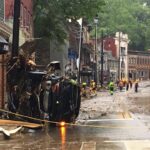
Recovery from the flooding in Ellicott City has been long and difficult, and communities have often been left with more questions than answers. UMBC Magazine sat down with experts in public policy and emergency health services for some insight into policy issues and options for flood hazard management. Included are Susan Sterett, director of the School of Public Policy, on the role of public policy in natural disasters; John Rennie Short, public policy, researcher of urban infrastructure; Ryan Miller’99, emergency health services (EHS), former director of emergency management director and deputy chief of fire and rescue for Howard County; and Matt Levy‘00, M.S. ‘08, emergency health services, medical director for EHS, and medical director of Howard County Fire and Rescue Services.
By Catalina Sofia Dansberger Duque
Could you tell us about your emergency response to the Ellicott City floods?
Levy: Our 911 operators and dispatchers are some of the biggest heroes of the Ellicott City Floods that most people won’t know about. They were the ones managing the phone lines and keeping people calm, giving them direction about what to do and not do as flood waters were rising and people were rightfully panicking and scared.
Once our responders received notification, they went into immediate response mode, which is to rescue and to get people out of harm’s way. We train for this. Our responders will risk their lives to try to affect rescues if it is technically feasible and capable. That is not just us but firefighters, police officers, sheriff deputies, and anyone who is responsible for getting people out of harm’s way. Rescuers from the lay public also help – neighbors helping neighbors.
We have the right equipment and use a variety of strategies and tactics to affect as many rescues as possible. Our responders have flotation devices on their apparatus to safely make entry into that environment as well as boats, rigging to remove people, and aerial ladders on trucks to reach people.There are also specially trained swift water rescue teams. The immediate response is to rescue everyone with as many strategies as possible. Once the immediate rescues are done, there is an ongoing process to try to determine that everyone is accounted for.
Eventually we shift to recovery. Once those rescues are made there is a methodical process of assessing the damage to structures after water has rescinded. We look for any potential survivors or casualties and provide a degree of stabilization of those structures to minimize the chance of secondary collapse while our personnel are in them until they can be safely turned over to private contractors who take over that work. Responder work is not as iconic as the media makes it to seem but the work is very important. We continuously train for this and are always looking for improvement to prepare for whatever may come.
What was your role in rescue operations? And how do you work with local government to create policy changes?
Miller: I have been part of three Ellicott City floods. The first one was in 2012. It was associated with Tropical Storm Lee. That is when I personally saw the hazards associated with Ellicott City and flash flooding. It was a relatively minor storm now that we have 2016 and 2018 in perspective. Tropical Storm Lee causes roadway flooding and set off a lot of planning and mitigation planning within the county. It was the predecessor to the 2016 and 2018 which were severe.
Our role in both storms was to set up the emergency operation center in Ellicott City and bring together all the county agencies toward a common response goal and lead the recovery. We also work with the State of Maryland and the Maryland Emergency Management Agency to pull in resources from outside of the region and outside the state and interact with the Federal Emergency Management Agency (FEMA) and all federal agencies that are brought in resources to assist us. After the initial response, we chart the recovery plan, which can be anywhere between six months to a year. Howard County is unique in that we had a similar disaster twice in a short period of time. Alot of our plans and systems that we created in 2016 helped in 2018.
During emergencies, the directors work side by side with the county executive who creates policy. The director then has delegated authority or direct authority to coalesce those county resources toward a response. We are appointed by the governor, so should there be a catastrophic event, the governor can then work through the 26 directors to affect statewide responses and recovery.
What is the impact of floods on local governments? And are there policies that can be implemented to help prevent flooding?
Sterett: It is a challenge for local governments to restrict development in flood-prone zones. Even if there is a potential for risk at the national level, local governments have reasons to want people to rebuild in flood-prone zones because they depend on property taxes. It is also an issue in areas that are fire risks like in California or Arizona where people build in areas where they don’t have access to the water that they need.
We need to be aware of changes in extreme weather events and rethink the National Flood Insurance program. The insurance models need to be reevaluated so that insurance can be priced accordingly.
Building codes would make a difference, but we need to evaluate overbuilding in areas that are at tremendous risk. Local governments need to work with developers to build communities that reduce risks. However, this is not simple. Implementing accurate government maps of flood levels would decrease property values drastically and local government taxes. There is no easy answer.
We also must think of renters and how they are affected by extreme weather. Owners have a range of choices in a devastating situation, but renters are not in control of whether their home will be rebuilt. It is also important to take into account how disasters can deepen existing racial and economic inequalities.
So much of this is about land-use planning. We don’t have a big national plan, and we are not getting rid of flood insurance. Local governments can help by developing adaptation plans as climate changes and more extreme weather occurs.
Is there a model in the U.S. to look towards?
Sterett: Many local governments have adaptation plans developed with the help of different city departments. The Rockefeller 100 Resilient Cities, a non-profit organization, brings people together to think systematically about environmental problems. They fund a resilience officer who provides support and guidance as cities recover from a disaster.
Norfolk, Virginia can also be an example even though it has a military base. The city has a committed local government that has a multipronged plan. It tries to take advantage of every opportunity to engage the community in its adaptation plan. They hold fun community celebrations like “Retain Your Rain,” to encourage rain barrel use, and bring the public into decisions on how they repave, where public housing is built, and how traffic is guided.
It is important to approach public problems with awareness of what the problems are, a bit of hope, and a commitment to try to work on various parts. There is no quick fix. Addressing flooding across different communities is a complicated issue that depends on collaboration between governments, residents, business owners, developers, and environmentalists.
Is there a connection between flooding and global climate change?
Short: It is impossible to discuss flooding without talking about global climate change. When you have two, one-in-a-thousand-year flood, 22 months apart, it creates a new normal. Higher frequency of extreme events like larger hurricanes, longer lasting storm seasons, and more snow make cities more vulnerable to flooding.
What is the relationship between development and long-term environmental impact?
Short: Suburban tracks are everywhere. Acres upon acres of roads, sidewalks, strip malls, housing, and parking lots, all create an impermeable surface leaving water nowhere to go. When you have a green field and it rains two to three inches, you can get some flooding, but it can get absorbed. Cement does not absorb large amounts of water— it just runs off.
This happens because developers push the envelope, local authorities want the revenue, and politicians want the notion of growth. There is so much growth without any sense of the long-term environmental impact. Research has shown that when more impermeable surfaces are built, there is a higher risk of flooding.
Ellicott City is very vulnerable because of its location. It originally was placed there because it was needed for hydraulic power for the mill. Over time, it became more vulnerable because of increased development in the watershed and ignored infrastructural deficits, which, when paired with larger, more frequent storms, created catastrophic events.
*****
Read more: Learning from Ellicott City
Read more: A Timeline of Resilience
Header image: EHS workers respond to the scene in Ellicott City. Permission from Baltimore Sun Media. All rights reserved.
]]>
Recovery from the flooding in Ellicott City has been long and difficult, and communities have often been left with more questions than answers. UMBC Magazine sat down with experts in public policy...
https://umbc.edu/stories/an-ounce-of-prevention/
https://my3.my.umbc.edu/api/v0/pixel/news/120108/guest@my.umbc.edu/1e1469d65b708f93da9e3c33595ccd3d/api/pixel
discovery
ehs
ellicott-city
publicpolicy
spring-2019
UMBC News & Magazine
https://my3.my.umbc.edu/groups/umbc-news-magazine
https://assets1-my.umbc.edu/system/shared/avatars/groups/000/001/943/24435aa6207c452e7bc15cc74b42c7bb/xsmall.png?1748556657
https://assets1-my.umbc.edu/system/shared/avatars/groups/000/001/943/24435aa6207c452e7bc15cc74b42c7bb/original.png?1748556657
https://assets2-my.umbc.edu/system/shared/avatars/groups/000/001/943/24435aa6207c452e7bc15cc74b42c7bb/xxlarge.png?1748556657
https://assets2-my.umbc.edu/system/shared/avatars/groups/000/001/943/24435aa6207c452e7bc15cc74b42c7bb/xlarge.png?1748556657
https://assets3-my.umbc.edu/system/shared/avatars/groups/000/001/943/24435aa6207c452e7bc15cc74b42c7bb/large.png?1748556657
https://assets1-my.umbc.edu/system/shared/avatars/groups/000/001/943/24435aa6207c452e7bc15cc74b42c7bb/medium.png?1748556657
https://assets2-my.umbc.edu/system/shared/avatars/groups/000/001/943/24435aa6207c452e7bc15cc74b42c7bb/small.png?1748556657
https://assets1-my.umbc.edu/system/shared/avatars/groups/000/001/943/24435aa6207c452e7bc15cc74b42c7bb/xsmall.png?1748556657
https://assets2-my.umbc.edu/system/shared/avatars/groups/000/001/943/24435aa6207c452e7bc15cc74b42c7bb/xxsmall.png?1748556657
UMBC News & Magazine
0
0
false
Mon, 17 Jun 2019 19:20:28 -0400
Ellicott City: A Timeline of Resilience
1772 ⬗ Since its founding in 1772, Ellicott City “has come in for an inordinate amount of disasters from floods, fires and railroad wrecks,” wrote Fred Rasmussen in The Baltimore Sun in 2012.
1868 ⬗ Known as the Great Flood, in 1868 the Patapsco rose more than 20 feet and 43 people were killed. “The sufferers by the flood are very numerous,” The Sun reported on July 27, 1868. Floods would come again in 1901, 1917, 1923, 1942, and 1952.
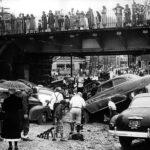
1972 ⬗ The next most memorable event was Hurricane Agnes in 1972. The Patapsco river flowed 14.5 feet above its banks. It took out a concrete bridge and destroyed the Jonathan Ellicott home and the 1910 Victor Blode water filtration plant. Eloise (1975), Hugo (1989), and Lee (2011) were other vicious storms of note.
1984 ⬗ From an editorial in The Sun from 1984 about Ellicott’s City’s resilience: “The town’s special charm lies in wear-and-tear, in improvisation over the decades, in workaday flavor more comparable to what might be found in a none too prosperous Old World community.”
2016 ⬗ Water again rushed down Main Street on July 30, 2016. The flash flood coursed through many historic buildings, washing away the town’s iconic clock, and ultimately killing two.
2017 ⬗ Originally donated in 2000 by the Ellicott City Kiwanis Club, the restored clock was put back in place in 2017.
 The 2017 restored clock before it was again washed away. Photo by Maryland GovPics on Flickr.
2018 ⬗ Less than two years later, on May 27, 2018, disaster struck again, days before the town’s new flood emergency alert system was to become operational. Homes and businesses were again destroyed, the newly erected clock disappeared, and a National Guardsman lost his life trying to rescue others.
In June and July 2018, the post and the face of the clock were found again, damaged in the Patapsco.
On July 20, 2018, Main Street was opened to cars and pedestrians and some shops reopened, although most continue to deal with the flood fallout.
Howard County Executive Calvin Ball revealed the second phase of the Ellicott City Safe and Sound plan in December 2018.
 Calvin Ball speaks at a community meeting. Photo by R. Scott Kramer, Howard County Government.
2019 ⬗ After considering community feedback, Ball announced his decision on May 13, 2019, to move forward with “3G.7.0,” a five-year, $140 million option to tear down four buildings—Phoenix Emporium, Discoveries, Bean Hollow, and Great Panes Art Glass Studio—and build a tunnel to carry future flood waters away.
2020 ⬗ The 2020 state capital budget includes $3.4 million in funds for Ellicott City’s Safe and Sound plan and a minimum of $8 million investment is planned over the next three years.
*****
Read More: Learning from Ellicott City
Read More: An Ounce of Prevention
Header image by Sun photographer Frank A. Miller.
]]>
1772 ⬗ Since its founding in 1772, Ellicott City “has come in for an inordinate amount of disasters from floods, fires and railroad wrecks,” wrote Fred Rasmussen in The Baltimore Sun in 2012....
https://umbc.edu/stories/a-timeline-of-resilience-in-flood-prone-town/
https://my3.my.umbc.edu/api/v0/pixel/news/120109/guest@my.umbc.edu/777d3e4850b0dc1439ccd1d51027a8de/api/pixel
discovery
ehs
ellicott-city
spring-2019
UMBC News & Magazine
https://my3.my.umbc.edu/groups/umbc-news-magazine
https://assets1-my.umbc.edu/system/shared/avatars/groups/000/001/943/24435aa6207c452e7bc15cc74b42c7bb/xsmall.png?1748556657
https://assets1-my.umbc.edu/system/shared/avatars/groups/000/001/943/24435aa6207c452e7bc15cc74b42c7bb/original.png?1748556657
https://assets2-my.umbc.edu/system/shared/avatars/groups/000/001/943/24435aa6207c452e7bc15cc74b42c7bb/xxlarge.png?1748556657
https://assets2-my.umbc.edu/system/shared/avatars/groups/000/001/943/24435aa6207c452e7bc15cc74b42c7bb/xlarge.png?1748556657
https://assets3-my.umbc.edu/system/shared/avatars/groups/000/001/943/24435aa6207c452e7bc15cc74b42c7bb/large.png?1748556657
https://assets1-my.umbc.edu/system/shared/avatars/groups/000/001/943/24435aa6207c452e7bc15cc74b42c7bb/medium.png?1748556657
https://assets2-my.umbc.edu/system/shared/avatars/groups/000/001/943/24435aa6207c452e7bc15cc74b42c7bb/small.png?1748556657
https://assets1-my.umbc.edu/system/shared/avatars/groups/000/001/943/24435aa6207c452e7bc15cc74b42c7bb/xsmall.png?1748556657
https://assets2-my.umbc.edu/system/shared/avatars/groups/000/001/943/24435aa6207c452e7bc15cc74b42c7bb/xxsmall.png?1748556657
UMBC News & Magazine
0
0
false
Mon, 17 Jun 2019 19:12:03 -0400
CS3 leads research summit on community-based violence prevention in Baltimore
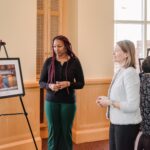
Lauren and Vibha sit in a conference room deep in the middle of the University of Maryland School of Medicine. They wait patiently as faculty and staff from UMBC; the University of Maryland, Baltimore (UMB); the University of Maryland, College Park; Baltimore City government officials; and staff from Baltimore-based non-profit organizations fill the round tables.
This is the Research Summit on Violence Prevention and Community Engagement hosted by UMBC and UMB. In a room of about fifty attendees ready to discuss the impact of violence prevention efforts in Baltimore, Lauren and Vibha look at each other, knowing they bring a different voice. Both recent UMBC alumni and graduate presidential fellows at UMB, they are here to speak as young Baltimore researchers, who care deeply about their communities and want to be involved in the research aimed at making their city safer.
 UMB graduate students discuss violence prevention in Baltimore with UMBC’s Lauren Edwards, public policy (right). Photo by Marlayna Demond ’11 for UMBC.
“I am the community”
Lauren Highsmith ‘15, education, introduces herself to the room after a conversation about the need to work with the community. “I am the community. Please remember me,” she says. “I am a master’s student in social work at the University of Maryland, Baltimore. I was born in West Baltimore and continue to live in the area. Don’t assume the community is just what you see on television. The community are also people like me who are working in the field and doing research.”
Vibha Rao ‘14, biological sciences, M22, claps after her friend’s statement. She is from Gaithersburg, Maryland, but lives, studies, and works in Baltimore. In the last decade, she has earned her undergraduate degree and a medical degree from the University of Maryland School of Medicine, and she is currently pursuing an M.S. in clinical research.
Rao has been deeply affected by the experiences of her undergraduate and graduate peers from Baltimore whose family members have been killed by gun violence. “Their experience having grown up and gone to college and medical school in Baltimore is starkly different than students outside of Baltimore,” she says. She worries about the normalization of gun violence and wants to be part of research to address it from a medical perspective. She shares, “I don’t want violence to be normal anymore.”
Human- and community-centered research
The research summit was organized by Christine Mallinson, director of UMBC’s Center for Social Science Scholarship (CS3) and professor of Language, Literacy, and Culture, and Kate Tracy ‘03 Ph.D. and ‘01 M.A., psychology and human services, who is associate professor of epidemiology and public health and director of The Richard and Jane Sherman Center for Health Care Innovation at the University of Maryland, Baltimore. As one focus for the day’s work, Mallinson and Tracy asked participants to explore both immediate and long-term supports for communities served through the UMB Community Engagement Center. During the breakout sessions, they asked attendees to identify how they might engage more undergraduate and graduate students from Baltimore, like Highsmith and Rao, in community-facing research on violence prevention.
 Mallinson (l) and Tracy (r) address the purpose of the summit. Photo courtesy of UMB.
“We wanted to purposefully use this summit to convene as many researchers as possible to examine, discuss, and share expertise and data,” Mallinson says. “Our intent is increasing collaboration and resources beyond this room, between institutions and the community, to create tangible, applicable and responsive human- and community-centered research in violence prevention with and for Baltimore.”
During the day-long event, UMBC faculty and staff representing the School of Public Policy, media and communication studies, visual arts, The Hilltop Institute, The Shriver Center, Division of Student Affairs, emergency health services, and psychology gathered for group discussion in different areas of violence prevention research. They met as cohorts focused on data, community involvement, K-12 and higher education, clinical interventions, and the intersection of the correctional and health systems.
Responding to the call from the morning discussion, the groups developed ideas for how to support the UMB Community Engagement Center through each of their focus areas, particularly building on existing work by community members. They also identified a timeline to continue the cohort work beyond the conference.
 UMBC President Freeman Hrabowski (l) speaks to summit participants. Photo courtesy of UMB.
“Collaboration between academic and community partners is key for successful violence prevention research, and developing the next generation of innovators by harnessing the talents of our undergraduate and graduate students in this process is essential,” shared Lucy Wilson, M.D., graduate program director of emergency health services at UMBC.
After the summit, the participants walked through two thought-provoking exhibitions, David Hess’s “Gun Show,” with life-size sculptures of assault rifles made from ordinary objects, and a photo series of homicide locations in Baltimore City by Amy Berbert’s ’17, visual arts. Both artists created the pieces to foster dialogue and awareness about guns and violence.
 Highsmith and Berbert discussing the photo exhibit. Photo by Marlayna Demond ’11, for UMBC.
As everyone spoke with the artists, and with each other, reflecting on the day, Mallinson took this opportunity to connect with Lauren Highsmith and Vibha Rao. She wanted to hear their perspectives, and their advice, on how to engage and include more undergraduate and graduate students from Baltimore in violence prevention work, to ensure it tackles the most pressing issues, recognizes community work already underway, and can have a lasting impact.
Banner image: Event organizer Christine Mallinson (r) speaks with summit participants. Photo by Marlayna Demond ’11 for UMBC.
]]>
Lauren and Vibha sit in a conference room deep in the middle of the University of Maryland School of Medicine. They wait patiently as faculty and staff from UMBC; the University of Maryland,...
https://umbc.edu/stories/cs3-leads-research-summit-on-community-based-violence-prevention-in-baltimore/
https://my3.my.umbc.edu/api/v0/pixel/news/120250/guest@my.umbc.edu/0c1a83adcf2fb9ee8ac4430723901b48/api/pixel
cahss
cec
cirsca
cs3
ehs
hilltopinstitute
mcs
policy-and-society
psychology
publicpolicy
shrivercenter
strategic-planning
visualarts
UMBC News & Magazine
https://my3.my.umbc.edu/groups/umbc-news-magazine
https://assets1-my.umbc.edu/system/shared/avatars/groups/000/001/943/24435aa6207c452e7bc15cc74b42c7bb/xsmall.png?1748556657
https://assets1-my.umbc.edu/system/shared/avatars/groups/000/001/943/24435aa6207c452e7bc15cc74b42c7bb/original.png?1748556657
https://assets2-my.umbc.edu/system/shared/avatars/groups/000/001/943/24435aa6207c452e7bc15cc74b42c7bb/xxlarge.png?1748556657
https://assets2-my.umbc.edu/system/shared/avatars/groups/000/001/943/24435aa6207c452e7bc15cc74b42c7bb/xlarge.png?1748556657
https://assets3-my.umbc.edu/system/shared/avatars/groups/000/001/943/24435aa6207c452e7bc15cc74b42c7bb/large.png?1748556657
https://assets1-my.umbc.edu/system/shared/avatars/groups/000/001/943/24435aa6207c452e7bc15cc74b42c7bb/medium.png?1748556657
https://assets2-my.umbc.edu/system/shared/avatars/groups/000/001/943/24435aa6207c452e7bc15cc74b42c7bb/small.png?1748556657
https://assets1-my.umbc.edu/system/shared/avatars/groups/000/001/943/24435aa6207c452e7bc15cc74b42c7bb/xsmall.png?1748556657
https://assets2-my.umbc.edu/system/shared/avatars/groups/000/001/943/24435aa6207c452e7bc15cc74b42c7bb/xxsmall.png?1748556657
UMBC News & Magazine
0
0
false
Fri, 14 Dec 2018 18:56:55 -0500
After the Storm – UMBC Community Volunteers Around the World

The fall of 2017 was marked by wildfires that burned most of Napa, Sonoma, and Mendocino counties in Northern California, and a hurricane season with 17 tropical storms — 10 of which became hurricanes and six that reached a category three or stronger. Millions of people dealt with and continue to face loss of power, as well as shortages in water, medical care, and food, through the fall and winter.
While media coverage of these events often focuses on the initial impact, rarely do we get to see what happens behind the scenes as first responders prepare or during the civilian disaster relief and the long haul to recovery that follows. Among these helpers were UMBC faculty, staff, and students who joined the relief efforts as first responders, fundraisers, and aids in navigating the social, legal, and political complexities of disaster relief and recovery.
Helping the Most Vulnerable
As Hurricane Harvey wreaked havoc in Texas in late August, Brian Grodsky, assistant professor of political science and a health technician with the U.S. Department of Health and Human Services, enlisted as a volunteer with the federal MD-1 Disaster Medical Assistance Team. Days later, when Irma, a Category 4 hurricane, roared towards Florida, he began working in emergency rooms to triage less critical patients so the hospital could focus on higher-risk patients.
“Being able to directly help people in the most vulnerable situations helps satisfy a need for more tangible outcomes that sometimes is hard to come by from research, teaching, and speaking,” says Grodsky. “There is always a way to give and to connect your professional skills to the many needs a disaster presents.”
He hesitantly returned to civilian life two weeks later while part of his team headed to Puerto Rico, where Maria, a Category 5 hurricane, shut down the entire power grid. Meanwhile, on campus, several of UMBC’s Puerto Rican volleyball players waited to hear from their families and figure out how they could help from afar.
Hometown Heroes
Claudia Lopez ’18, biology and psychology, a native of Puerto Rico, used a crowdfunding platform to raise more than $10,000 from friends in the UMBC community and beyond, which was split between two major foundations that focus on aid for Puerto Rico. Lopez also collected donations of water, toiletries, and clothing, which she delivered in person at the end of the fall semester.
“I felt helpless being here, but in Puerto Rico we always help each other. I knew I could do something,” says Lopez. “The response on campus was amazing. There was a staff member that donated every day. Student athletes and coaches donated the most in the first three days. I hope people remember the need even after the media leaves.”
Emergency services students like Charniece Johnson ’18, and Ian Hamilton M.S. ’20, served as FEMA reserve workers for more than a month and a half at the beginning of fall semester
“It was very emotional. I helped people feel heard and understood, and explain what they could expect from FEMA,” recalls Hamilton, who helped connect affected residents with financial and other services in Florida. “There are a lot of people that after you finish listening and talking with them, they give you a hug. I feel like I am making a difference and getting paid for it, more than just financially, in hundreds of ways.”
Johnson worked with Disaster Survival Assistance, helping people from the Virgin Islands with critical health care needs get the care they need. “I want to do something for people. I don’t want to be behind a desk,” said Johnson, who said she enjoys working in the field.
Examining Inequity
Susan Sterett, director of the School of Public Policy and a native of Sonoma County, California, used her personal blog to explore the social and political inequities that limit disaster response efforts as she saw her own hometown burn. Sonoma was and is a vacation spot for the wealthy that is surrounded by homelessness, poverty, and working class people, many immigrants.
“We need to build in equity before disaster strikes since disaster often makes already existing inequalities worse,” says Sterett, who analyzed the social, environmental, and psychological impact of what it means to be in a natural disaster when there already exists so much inequality, and how relief efforts that are often driven by policy — but removed from the everyday reality — can deepen trust issues between the lawmakers and the people they aim to protect.
Sterett added: “As we have seen, inequality is a complex, multi-dimensional problem and one that becomes more evident during the long aftermath of natural disasters.”
— Catalina Sofia Dansberger-Duque
U.S. Coast Guard photo by Senior Chief Petty Officer Kyle Niemi
]]>
The fall of 2017 was marked by wildfires that burned most of Napa, Sonoma, and Mendocino counties in Northern California, and a hurricane season with 17 tropical storms — 10 of which became...
https://umbc.edu/stories/after-the-storm-umbc-community-volunteers-around-the-world/
https://my3.my.umbc.edu/api/v0/pixel/news/120415/guest@my.umbc.edu/c2ba6f0c7ba70dfec5a53ae4345ec29c/api/pixel
ehs
emergency
impact
spring-2018
UMBC News & Magazine
https://my3.my.umbc.edu/groups/umbc-news-magazine
https://assets1-my.umbc.edu/system/shared/avatars/groups/000/001/943/24435aa6207c452e7bc15cc74b42c7bb/xsmall.png?1748556657
https://assets1-my.umbc.edu/system/shared/avatars/groups/000/001/943/24435aa6207c452e7bc15cc74b42c7bb/original.png?1748556657
https://assets2-my.umbc.edu/system/shared/avatars/groups/000/001/943/24435aa6207c452e7bc15cc74b42c7bb/xxlarge.png?1748556657
https://assets2-my.umbc.edu/system/shared/avatars/groups/000/001/943/24435aa6207c452e7bc15cc74b42c7bb/xlarge.png?1748556657
https://assets3-my.umbc.edu/system/shared/avatars/groups/000/001/943/24435aa6207c452e7bc15cc74b42c7bb/large.png?1748556657
https://assets1-my.umbc.edu/system/shared/avatars/groups/000/001/943/24435aa6207c452e7bc15cc74b42c7bb/medium.png?1748556657
https://assets2-my.umbc.edu/system/shared/avatars/groups/000/001/943/24435aa6207c452e7bc15cc74b42c7bb/small.png?1748556657
https://assets1-my.umbc.edu/system/shared/avatars/groups/000/001/943/24435aa6207c452e7bc15cc74b42c7bb/xsmall.png?1748556657
https://assets2-my.umbc.edu/system/shared/avatars/groups/000/001/943/24435aa6207c452e7bc15cc74b42c7bb/xxsmall.png?1748556657
UMBC News & Magazine
0
0
false
Wed, 30 May 2018 14:31:50 -0400
Wilderness Warriors
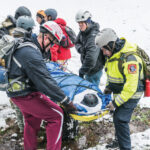
You’re hiking in the woods. A branch snaps…and suddenly you’re on the ground, immobilized by pain. As the sun begins to set, you wonder what you’ll do next, and who might come to your rescue…
Wilderness Warriors
It takes intense training to rescue and provide excellent medical care to patients under normal, predictable circumstances. To do the same thing in untamed wilderness? Well, that takes an extra layer of grit.
That’s why each spring for the last 33 years, UMBC’s Emergency Health Services (EHS) program has sent a group of hardy students deep into the forest to learn the finer points of search and rescue. Over the course of three days, in remote Garrett County, 17 students in this unique program will practice everything from orienteering to “dead reckoning” and learn to be a team – all under the careful watch of a community of alums and emergency volunteers.
No matter the weather, these Retrievers are ready for anything.
Story by Jenny O’Grady
Photographs by Marlayna Demond ’11
“Everybody Helps Everybody”
A fresh layer of snow covers Abbott’s Orchard, a small clearing near the lodge in New Germany State Park where students will spend their weekend training. The first challenge: pitching tents in less-than-optimal conditions. Later, as the teams gather at benches in units to compare notes and brace themselves for the weekend ahead, they meet the more than 30 alumni and friends from across the EHS program’s history and nearby rescue operations who will teach them everything they know – including bear safety.
“The biggest thing that draws them back is the camaraderie, and the fact that they overcome adversity together,” says Cole Brown ’88, EHS, who leads the training staff for the weekend. Through that, “they build friendships, and they learn how to put aside their personal views and from there come to be a team. So they go from being an I to a we.”
[nivoslider id=”4172″]
Spider Straps and Stokes Baskets
Emergency personnel refer to the “golden hour” as the all-too-limited time between the occurrence of an injury and the best window of opportunity for care to be given. Finding success as a rescuer means not only understanding how to use the best tools for the job – but how to do it quickly and carefully. To prepare for real-world rescue scenarios, EHS students practice everything from orienteering – using compass and paces to estimate locations in unknown terrain – to strapping victims with unknown injuries to back boards, to rolling them safely to care in a wheeled basket. They also study standardized lost person behaviors.
“This training is absolutely essential in wilderness medicine because you can’t always get a helicopter to the scene,” says Jeff Mitchell, a clinical professor in the department, who has run this exercise since its start in 1983.
[nivoslider id=”4259″]
Sweep and Clear
With tools and equipment skills at the ready, students take to the woods searching for clues – and hoping to find their patients in time to be helpful. Alumni like Raven Gronsbell ’15, EHS, who now works as a paramedic in Kent County, volunteer to act as “victims,” often sitting quietly for hours in the woods before being found by student rescuers.
“I will be out there sitting in the woods… waiting… and hoping they’re fast,” says Gronsbell, who in a nighttime search portrayed “Casey Wood,” a teen who wandered away from her family while exploring. Gronsbell spoke so highly of the class that her math major sister, Jessica, decided to take part this year. “I also really enjoy helping out with the training. That’s why I come back.”
[nivoslider id=”4281″]
Read more about the EHS program: Practicing What They Preach
]]>
[Video] You’re hiking in the woods. A branch snaps…and suddenly you’re on the ground, immobilized by pain. As the sun begins to set, you wonder what you’ll do next, and who might come to your...
https://umbc.edu/stories/ehs-slideshow/
https://my3.my.umbc.edu/api/v0/pixel/news/120749/guest@my.umbc.edu/d1c6a563eeca32e03ed21c4adc984223/api/pixel
cahss
discovery
ehs
spring-2017
UMBC News & Magazine
https://my3.my.umbc.edu/groups/umbc-news-magazine
https://assets1-my.umbc.edu/system/shared/avatars/groups/000/001/943/24435aa6207c452e7bc15cc74b42c7bb/xsmall.png?1748556657
https://assets1-my.umbc.edu/system/shared/avatars/groups/000/001/943/24435aa6207c452e7bc15cc74b42c7bb/original.png?1748556657
https://assets2-my.umbc.edu/system/shared/avatars/groups/000/001/943/24435aa6207c452e7bc15cc74b42c7bb/xxlarge.png?1748556657
https://assets2-my.umbc.edu/system/shared/avatars/groups/000/001/943/24435aa6207c452e7bc15cc74b42c7bb/xlarge.png?1748556657
https://assets3-my.umbc.edu/system/shared/avatars/groups/000/001/943/24435aa6207c452e7bc15cc74b42c7bb/large.png?1748556657
https://assets1-my.umbc.edu/system/shared/avatars/groups/000/001/943/24435aa6207c452e7bc15cc74b42c7bb/medium.png?1748556657
https://assets2-my.umbc.edu/system/shared/avatars/groups/000/001/943/24435aa6207c452e7bc15cc74b42c7bb/small.png?1748556657
https://assets1-my.umbc.edu/system/shared/avatars/groups/000/001/943/24435aa6207c452e7bc15cc74b42c7bb/xsmall.png?1748556657
https://assets2-my.umbc.edu/system/shared/avatars/groups/000/001/943/24435aa6207c452e7bc15cc74b42c7bb/xxsmall.png?1748556657
UMBC News & Magazine
0
0
false
Fri, 26 May 2017 20:46:00 -0400
Practicing What They Preach
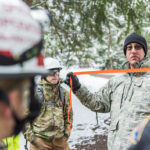
Students come to UMBC’s Emergency Health Services program for many reasons. Some already work as EMTs or as physicians, while others hope to get into health policy or disaster relief. What brings them together, says program chair and professor J. Lee Jenkins ’97, biological sciences and EHS, M.S. ’99, EHS, is a shared desire to help people in need.
“The students here are very altruistic, and they are the classic ‘Wanna change the world, wanna make it a better place,’ people with big ideas,” she said. “Being able to help people immediately and make a difference at a very stressful moment in their lives is really meaningful for us.”
Founded in 1980 at the request of Dr. R. Adams Cowley, a pioneer in the development of the trauma center concept and the namesake of Baltimore’s main shock trauma center, the EHS program at UMBC is one of the oldest emergency medical baccalaureate programs in the nation. Alumni of the program can be found all over the world, providing leadership in clinical and disaster settings, determining policy at all levels of government, and teaching the emergency health professionals of the future.
With an aging population and increasingly complicated primary care options, the emergency medical services community has diversified over the years to meet changing demands, Jenkins said. Partnerships with local rescue outfits allow EHS researchers and workers to integrate health units through better use of data and communication between parties, making service more efficient and targeted by client.
Looking ahead, the EHS department is also embarking on more interdisciplinary research, and recently launched a joint Ph.D. program with the department of public policy, which offers the choice of a concentration in emergency health services. With nearly a thousand EHS alumni currently in the field, Jenkins knows the department is making an impact across the globe.
“We really do have leaders and policy makers all over the world at this point. We have physicians. We have state EMS medical directors. We have people working in ASPR,” or assistant secretary for preparedness and response, at the federal level, she said. “It’s pretty incredible.”
Read about the EHS Search and Rescue excursion.
]]>
Students come to UMBC’s Emergency Health Services program for many reasons. Some already work as EMTs or as physicians, while others hope to get into health policy or disaster relief. What brings...
https://umbc.edu/stories/practicing-what-they-preach/
https://my3.my.umbc.edu/api/v0/pixel/news/120755/guest@my.umbc.edu/5b105e1c819e30df7f7d6ad0079831dd/api/pixel
alumni
cahss
discovery
ehs
spring-2017
UMBC News & Magazine
https://my3.my.umbc.edu/groups/umbc-news-magazine
https://assets1-my.umbc.edu/system/shared/avatars/groups/000/001/943/24435aa6207c452e7bc15cc74b42c7bb/xsmall.png?1748556657
https://assets1-my.umbc.edu/system/shared/avatars/groups/000/001/943/24435aa6207c452e7bc15cc74b42c7bb/original.png?1748556657
https://assets2-my.umbc.edu/system/shared/avatars/groups/000/001/943/24435aa6207c452e7bc15cc74b42c7bb/xxlarge.png?1748556657
https://assets2-my.umbc.edu/system/shared/avatars/groups/000/001/943/24435aa6207c452e7bc15cc74b42c7bb/xlarge.png?1748556657
https://assets3-my.umbc.edu/system/shared/avatars/groups/000/001/943/24435aa6207c452e7bc15cc74b42c7bb/large.png?1748556657
https://assets1-my.umbc.edu/system/shared/avatars/groups/000/001/943/24435aa6207c452e7bc15cc74b42c7bb/medium.png?1748556657
https://assets2-my.umbc.edu/system/shared/avatars/groups/000/001/943/24435aa6207c452e7bc15cc74b42c7bb/small.png?1748556657
https://assets1-my.umbc.edu/system/shared/avatars/groups/000/001/943/24435aa6207c452e7bc15cc74b42c7bb/xsmall.png?1748556657
https://assets2-my.umbc.edu/system/shared/avatars/groups/000/001/943/24435aa6207c452e7bc15cc74b42c7bb/xxsmall.png?1748556657
UMBC News & Magazine
0
0
false
Fri, 26 May 2017 18:25:14 -0400
Reimagined Graduate Research Conference focuses on clear communication across all fields

The 2017 Graduate Research Conference (GRC) at UMBC delivered on its theme, “diversity across disciplines,” with research talks, posters, and keynote speakers in areas from history to atmospheric physics. The event also celebrated and encouraged interdisciplinary research and creative achievement.
“The boundaries between traditional disciplines are dissolving as our human curiosity leads us to understand much more complex issues,” shared Provost Philip Rous. He pointed to UMBC’s emphasis on inclusion as a boon toward that end. “Advancing our research mission,” he said to the attendees, “is inextricably linked to our ability to bring together students, faculty, and staff of diverse backgrounds to work together on the most challenging social, scientific, and humanitarian problems we face today.”
 GRC attendees mingle during a poster session.
That’s exactly what happened at the GRC on March 29. In a panel highlighting work related to climate change, Marshall Washick, emergency health services, presented his proposed research on the relationship between tuberculosis and air pollution in South Africa, Alexandra St. Pé, geography and environmental systems, discussed her work on the under-performance of offshore wind farms, and Michael Battaglia, Jr., chemical, biochemical, and environmental engineering, addressed how urban heat islands affect the chemistry of tiny particles in the air.
In another panel, Shawntay Stocks, language, literacy, and culture, described research utilizing critical race theory just before Chrissie Reilly, media and communication studies, discussed how the film Jiro Dreams of Sushi demonstrates complex relationships with consumption, with both talks touching on the session’s “media manipulation” theme.
“Mechanical engineers and historians are here in the same room talking to one another,” said Dean Scott Casper, of the College of Arts, Humanities, and Social Sciences. “That is what is really exciting about today.” Casper encouraged students to use the opportunity to hone their communications skills, both by presenting their own work and observing techniques others use to share complex ideas in different fields.
In his featured talk, Casper discussed specific techniques to improve one’s presentation, such as knowing your audience and catering to what they want to get out of the experience. No matter how excited researchers are about their work, he said, it’s “translating that enthusiasm into a form that people who are not as immersed in the work as you will understand, appreciate, and enjoy that is really the key to great presentations.”
 Dean Scott Casper discusses the attributes of a great presentation during his featured talk.
In addition to the panels and microtalks, four students tested their communication skills by competing in the international Three Minute Thesis competition, where each presented a summary of her graduate thesis in three minutes. Janae Baptiste, chemistry and biochemistry, won second place from the judges and first place from the audience for her presentation on research in Michael Summers’ lab on Feline Immunodeficiency Virus, the cat version of HIV. Denise Williams, chemistry and biochemistry, took first place for her talk on the toxicity of quantum dots—luminescent nanomaterials with a wide range of potential applications—based on her research in Zeev Rosenzweig’s lab. She will represent UMBC at the Council of Southern Graduate Schools regional competition. Both Baptiste and Williams are Meyerhoff Graduate Fellows.
Onimi Jademi, vice president of the UMBC Graduate Student Association, chair of the GRC planning committee, and a Ph.D. student in information systems, shares, “The GRC provides a platform for all graduate students, across all disciplines and at all levels and stages of research, to discuss and exchange ideas.” Interactions with faculty, staff, and students from every corner of the university are a major advantage of the event, she explains, offering unique feedback to developing researchers, artists, and scholars.
“GRC is not just a melting pot,” Jademi says, it’s an opportunity for graduate students to try out, retest, and “mold ideas and communication styles” that will help them connect with fellow researchers and the public throughout their careers.
Banner image: Alexandra St. Pé answers a question about her research on wind turbines during a panel discussion. All photos by Marlayna Demond ’11 for UMBC.
]]>
The 2017 Graduate Research Conference (GRC) at UMBC delivered on its theme, “diversity across disciplines,” with research talks, posters, and keynote speakers in areas from history to atmospheric...
https://umbc.edu/stories/reimagined-graduate-research-conference-focuses-on-clear-communication-across-all-fields/
https://my3.my.umbc.edu/api/v0/pixel/news/120823/guest@my.umbc.edu/584b7c61be403a8afc85d69716855d19/api/pixel
cbee
chembiochem
coeit
community
ehs
ges
graduateschool
llc
mcs
research
UMBC News & Magazine
https://my3.my.umbc.edu/groups/umbc-news-magazine
https://assets1-my.umbc.edu/system/shared/avatars/groups/000/001/943/24435aa6207c452e7bc15cc74b42c7bb/xsmall.png?1748556657
https://assets1-my.umbc.edu/system/shared/avatars/groups/000/001/943/24435aa6207c452e7bc15cc74b42c7bb/original.png?1748556657
https://assets2-my.umbc.edu/system/shared/avatars/groups/000/001/943/24435aa6207c452e7bc15cc74b42c7bb/xxlarge.png?1748556657
https://assets2-my.umbc.edu/system/shared/avatars/groups/000/001/943/24435aa6207c452e7bc15cc74b42c7bb/xlarge.png?1748556657
https://assets3-my.umbc.edu/system/shared/avatars/groups/000/001/943/24435aa6207c452e7bc15cc74b42c7bb/large.png?1748556657
https://assets1-my.umbc.edu/system/shared/avatars/groups/000/001/943/24435aa6207c452e7bc15cc74b42c7bb/medium.png?1748556657
https://assets2-my.umbc.edu/system/shared/avatars/groups/000/001/943/24435aa6207c452e7bc15cc74b42c7bb/small.png?1748556657
https://assets1-my.umbc.edu/system/shared/avatars/groups/000/001/943/24435aa6207c452e7bc15cc74b42c7bb/xsmall.png?1748556657
https://assets2-my.umbc.edu/system/shared/avatars/groups/000/001/943/24435aa6207c452e7bc15cc74b42c7bb/xxsmall.png?1748556657
UMBC News & Magazine
0
0
false
Tue, 25 Apr 2017 13:54:28 -0400


