Today’s 18 to 24-year-old college students are expressing anxiety, depression, suicidal ideation, and other related disorders at rates higher than previous generations, according to recent studies. The number of students treated by college counseling centers, according to the 2015 Center for Collegiate Mental Health Annual Report, has grown by more than five times the rate of institutional enrollment. The number of attended appointments has grown at more than seven times the pace of institutional enrollment. To address these changes on our own campus the last several years, UMBC has responded with a holistic approach to its health services and additional preventative and support resources for its students.
“We’ve begun integrating health and counseling with the goal of treating the whole person,” says Kim Leisey, UMBC associate vice president for student affairs. “We know some mental health issues manifest physically and vice versa, so our University Health Services (UHS) and Counseling Center staff work together to help students who may need support from both a physical and emotional perspective.”
This means, for example, therapists ask students when they had their last physical, and nurse practitioners screen for alcohol and drug disorders. Psychiatrists consult with both UHS and counseling staff, while case managers in each department work together on referrals and the insurance process.
The integrated approach will continue to expand and be implemented in a new combined health and counseling building, scheduled to open in 2021. In both formal assessments and individual interactions, UMBC students expressed strong desires to create integrated health structures that reduce stigma and promote self care. Vice President for Student Affairs Nancy Young says, “The new building will allow us to streamline and enhance services supporting the physical, behavioral, and emotional well-being of our students as a foundation for academic success.”
In a step beyond the traditional offerings, UMBC became the fourth U.S. university to add a trained comfort dog to its list of holistic services for students when Chip, a floppy-eared brown Labrador, joined the UMBC Police Department in fall 2019. The University’s Community Resource Sergeant, Jamie Cheatem, serves as the dog’s handler and says that one of Chip’s roles is to provide comfort to students during times of crisis and also during stressful periods during the academic year such as midterms and finals.
UMBC also began offering new recovery and sober living services to students this fall. The Haven at UMBC is part of a partnership between the Division of Student Affairs and The Haven at College, the leading national provider of treatment services and recovery support for college students with substance use and co-occurring disorders. At UMBC, Haven includes a recovery residence and outpatient center in separate locations near campus as well as mentoring and monitoring programs.
In addition to their traditional services, UHS and the Counseling Center offer a variety of support groups, workshops, and screenings to provide students with tools to cope with the stress of college life and managing emotions and distress. “We’re paying attention to wellness programs as well as in-person and online services that can help us reach a broader range of students,” says Bruce Herman, UMBC’s director of health and counseling.
Student peer health educators also assist in educating fellow students on a variety of physical and mental health issues. “Being able to go into the UMBC community and talk with different student groups about various behaviors and topics that impact their health is incredibly meaningful,” says Olivia Hardy ’20, health administration and policy, who works as a peer health educator.
“I love being able to actively contribute in minimizing students’ knowledge gaps,” continues Hardy. “We’re by no means professors or graduate students or staff—and in that, I think that we aren’t daunting. We’re just people students see in their classes, excited to help in any way we can.”
UMBC students, faculty, and staff have an opportunity to play a role in supporting students and other community members by participating in mental health training workshops offered by UHS and the Counseling Center. In addition to its support groups and resources, the Women’s Center offers workshops on supporting survivors of sexual assault and misconduct, while Campus Life’s The Mosaic: Center for Culture and Diversity launched a wellness series for students who identify as LGBTQ+.
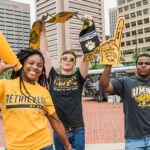
UMBC community members who need help addressing situations where a person is displaying disruptive or threatening behavior can contact the interdisciplinary Behavioral Risk Assessment and Consultation Team, which includes Herman along with representatives from student affairs, psychology, human resources, UMBC police, and general counsel. Athletics’ new #RetrieverProject will work closely with student-athletes and members of the UMBC and Catonsville communities to help break stigmas associated with mental health through education and support.
Herman adds that campuswide involvement is critical for the university to address the growing need for mental health support and student success and focus on stigma reduction. “We have to see this work as not just about treatment but instead about co-creating an environment that supports students and their health, including mental health.”
— Eleanor Lewis
****
Header image by Marlayna Demond ’11.
]]>
Today’s 18 to 24-year-old college students are expressing anxiety, depression, suicidal ideation, and other related disorders at rates higher than previous generations, according to recent...https://umbc.edu/stories/peace-of-mind/https://my3.my.umbc.edu/api/v0/pixel/news/120005/guest@my.umbc.edu/801c801bdcef9c0b973a0d5a1ddbe54c/api/pixelbractcampus-lifecounselingfall-2019newsretrieverprojectstudent-lifethe-mosaicthe-womens-centeruhsUMBC News & Magazinehttps://my3.my.umbc.edu/groups/umbc-news-magazinehttps://assets1-my.umbc.edu/system/shared/avatars/groups/000/001/943/24435aa6207c452e7bc15cc74b42c7bb/xsmall.png?1748556657https://assets1-my.umbc.edu/system/shared/avatars/groups/000/001/943/24435aa6207c452e7bc15cc74b42c7bb/original.png?1748556657https://assets2-my.umbc.edu/system/shared/avatars/groups/000/001/943/24435aa6207c452e7bc15cc74b42c7bb/xxlarge.png?1748556657https://assets2-my.umbc.edu/system/shared/avatars/groups/000/001/943/24435aa6207c452e7bc15cc74b42c7bb/xlarge.png?1748556657https://assets3-my.umbc.edu/system/shared/avatars/groups/000/001/943/24435aa6207c452e7bc15cc74b42c7bb/large.png?1748556657https://assets1-my.umbc.edu/system/shared/avatars/groups/000/001/943/24435aa6207c452e7bc15cc74b42c7bb/medium.png?1748556657https://assets2-my.umbc.edu/system/shared/avatars/groups/000/001/943/24435aa6207c452e7bc15cc74b42c7bb/small.png?1748556657https://assets1-my.umbc.edu/system/shared/avatars/groups/000/001/943/24435aa6207c452e7bc15cc74b42c7bb/xsmall.png?1748556657https://assets2-my.umbc.edu/system/shared/avatars/groups/000/001/943/24435aa6207c452e7bc15cc74b42c7bb/xxsmall.png?1748556657UMBC News & Magazine00falseMon, 25 Nov 2019 14:57:59 -0500The Driving Force of Chemistry
In a chemical engineering lab, students huddle around a bench layering aluminum foil and steel wool together to build a battery. Another group pipettes solutions into a pressure vessel to test various reactions. The end result of the students’ experimentations will be two autonomous shoebox-sized vehicles that are powered by chemical reactions. Think of your second-grade volcano project, but the baking soda and vinegar “eruption” is happening inside an enclosed vessel, propelling it forward down a track.
When the UMBC Chem-E-Car chapter launched in early spring 2019, there were 10 students who came together to grow the group. Today, less than one year after they became formally recognized by UMBC and the American Institute of Chemical Engineers, there are about 30 students working together to build vehicles powered by chemical reactions, putting the information and skills they learn in their classes into practice.
Students work in three groups on two vehicle projects. One team focuses on developing the stopping mechanism that uses a color changing reaction, the second team works on refining the car propelled by a pressure-generating reaction, and the third team develops a battery-driven vehicle.
“One car moves using a chemical reaction that produces a large volume of gas, and the gas is used to move a pneumatic motor, which is kind of like a water wheel for air,” explains Sammie Maygers’20, chemical engineering, who is leading the group in charge of developing the stopping mechanism. “The second car is powered by a battery. We are experimenting with different chemical reactions to optimize the amount of current and voltage that we can produce to run an electric motor.”
As the group was ramping up, the founding students spent the semester learning about the structure of the competitions and attended the regional competition as onlookers. Alex Von Gunten ’20, chemical engineering, current chair of the Chem-E-Car Project, says that it was helpful for UMBC students to experience the competitions and to take note of the vehicles that other teams built. An additional layer of pressure for competitors is that no one knows how far their car will need travel until a couple of hours before the race, when the judges release the specifications that the car must meet. Just before the car is set to race, the students work through a series of calculations to determine the amount of chemicals that are needed to propel the vehicle a specific distance.
Jason Ewart ’20, chemical engineering, who is a member of the pressure team, explains that safety is a very important component of the Chem-E-Car competitions. The students who are taking part rely on the knowledge they’ve learned in the courses they have taken at UMBC, including the safety course that all chemical, biochemical, and environmental engineering students must complete.
The Chem-E-Car group joins a rich history of student organizations on campus that design and build vehicles based on skills learned in the classroom. On a human scale, UMBC’s Baja SAE team builds vehicles that are driven by one student and are designed to withstand challenging terrain and weather while keeping budget, vehicle weight, and agility in mind. In the 2018–2019 season, the Baja team finished with the second highest total points in the program’s 30-year history.
The Chem-E-Car team has yet to test the mettle of their designs, but they plan on competing in the regional competition at Virginia Tech in April 2020, with their sights set on advancing to the national competition.
***
All photos, including header, by Marlayna Demond ’11.
]]>
In a chemical engineering lab, students huddle around a bench layering aluminum foil and steel wool together to build a battery. Another group pipettes solutions into a pressure vessel to test...https://umbc.edu/stories/mini-vehicles-powered-by-chemical-reactions/https://my3.my.umbc.edu/api/v0/pixel/news/120006/guest@my.umbc.edu/2574760c7d6a055cbaeaa01d50047c08/api/pixelat-playcampus-lifechemistrycoietfall-2019sae-bajaUMBC News & Magazinehttps://my3.my.umbc.edu/groups/umbc-news-magazinehttps://assets1-my.umbc.edu/system/shared/avatars/groups/000/001/943/24435aa6207c452e7bc15cc74b42c7bb/xsmall.png?1748556657https://assets1-my.umbc.edu/system/shared/avatars/groups/000/001/943/24435aa6207c452e7bc15cc74b42c7bb/original.png?1748556657https://assets2-my.umbc.edu/system/shared/avatars/groups/000/001/943/24435aa6207c452e7bc15cc74b42c7bb/xxlarge.png?1748556657https://assets2-my.umbc.edu/system/shared/avatars/groups/000/001/943/24435aa6207c452e7bc15cc74b42c7bb/xlarge.png?1748556657https://assets3-my.umbc.edu/system/shared/avatars/groups/000/001/943/24435aa6207c452e7bc15cc74b42c7bb/large.png?1748556657https://assets1-my.umbc.edu/system/shared/avatars/groups/000/001/943/24435aa6207c452e7bc15cc74b42c7bb/medium.png?1748556657https://assets2-my.umbc.edu/system/shared/avatars/groups/000/001/943/24435aa6207c452e7bc15cc74b42c7bb/small.png?1748556657https://assets1-my.umbc.edu/system/shared/avatars/groups/000/001/943/24435aa6207c452e7bc15cc74b42c7bb/xsmall.png?1748556657https://assets2-my.umbc.edu/system/shared/avatars/groups/000/001/943/24435aa6207c452e7bc15cc74b42c7bb/xxsmall.png?1748556657UMBC News & Magazine00falseThu, 21 Nov 2019 14:46:59 -0500Coaching Connections
Any new coach at any college will want to make changes. New UMBC women’s basketball coach Johnetta Hayes hopes to do just that—but not only on the basketball court.
Hayes comes to the Retrievers from Texas Southern, where she posted a 115-73 record in six seasons and led that team to four post-season appearances, including a trip to the NCAA Tournament in 2017. UMBC is coming off a difficult 10-20 season, and Hayes is looking to turn things around on the court while creating a new culture of family within the program.
On the court, the Retrievers under Hayes will play a faster-paced game than in recent years. That is going to be a big difference. Off the court, Hayes wants the student-athletes in the program to feel the team is a family and that they can turn to teammates and others for help in any situation—regarding basketball or life.
“It’s really, really important for me,” Hayes said. “From the day I walked in here until now, I can see the difference. They had each other already. It’s a bond they’ll have forever at UMBC, and we want the four seniors to leave out of here in [the spring] feeling like the way we started and the way we ended was definitely different. Once they leave, they can always come back home.”
Hayes said she wants to create an environment where those who played for UMBC in the past can mentor those currently playing at the school. If a student-athlete needs contacts for jobs or career advice upon graduation, they could turn to one of the former players for help in that area.
Building this, though, takes time and effort.
“They are their own sorority, and when they leave here, they [will] feel like they have something to come back to every year,” Hayes said. “I want the four seniors leaving to know every year in October, we come back. We celebrate with our families, and we mentor the young ladies who are on the team.”
Right now, the biggest type of change probably involves Hayes and her coaching staff as all 14 Retrievers return from last year’s team, which is unusual in collegiate athletics. So the new coaching and operations staff needed to get to know and understand the players.
Acting athletics director Jessica Hammond-Graf has noticed Hayes working hard to connect with the student-athletes, not always an easy task for a new coach.
“She’s spending a lot of time with them outside of practice to get to know them…to help them grow,” Hammond-Graf said. “It’s not just about basketball with her. It’s the larger picture and helping everybody grow and develop and become future leaders. She had to come in and recruit the players that are already here.”
Senior guard Tyler Moore said there’s no question that Hayes is driving this team and trying to adjust their outlooks on basketball and other things. Moore said the Retrievers definitely appreciate it.
“I think I can speak for my team in saying that we love how she pushes us to be better than we were the day before,” Moore said. “Standards are high and we have no choice but to rise to them.”
Hayes said her biggest change involved the move from Texas and getting her two young daughters (ages 7 and 4) situated. Now, they often come to where their mother works and are growing comfortable as Retrievers.
So, the new coach, staff and players all have spent the off-season working on changing the way they play and the culture around the team. Hayes wants the student-athletes to understand and deal with change in basketball and life—after all, the games don’t go on forever.
“You’re going to get a new boss,” Hayes said. “Things will change. How do you adjust? How do you adapt? Change is good. It may not feel good at first, [but] it can be [later on].”
– Jeff Seidel ’85
***
All photos, including header, by Marlayna Demond ’11.
]]>
Any new coach at any college will want to make changes. New UMBC women’s basketball coach Johnetta Hayes hopes to do just that—but not only on the basketball court. Hayes comes to the...https://umbc.edu/stories/coaching-connections/https://my3.my.umbc.edu/api/v0/pixel/news/120010/guest@my.umbc.edu/c6066bc02c9ebe9f3e190c8f5aba89f9/api/pixelat-playathleticscampus-lifefall-2019womens-basketballUMBC News & Magazinehttps://my3.my.umbc.edu/groups/umbc-news-magazinehttps://assets1-my.umbc.edu/system/shared/avatars/groups/000/001/943/24435aa6207c452e7bc15cc74b42c7bb/xsmall.png?1748556657https://assets1-my.umbc.edu/system/shared/avatars/groups/000/001/943/24435aa6207c452e7bc15cc74b42c7bb/original.png?1748556657https://assets2-my.umbc.edu/system/shared/avatars/groups/000/001/943/24435aa6207c452e7bc15cc74b42c7bb/xxlarge.png?1748556657https://assets2-my.umbc.edu/system/shared/avatars/groups/000/001/943/24435aa6207c452e7bc15cc74b42c7bb/xlarge.png?1748556657https://assets3-my.umbc.edu/system/shared/avatars/groups/000/001/943/24435aa6207c452e7bc15cc74b42c7bb/large.png?1748556657https://assets1-my.umbc.edu/system/shared/avatars/groups/000/001/943/24435aa6207c452e7bc15cc74b42c7bb/medium.png?1748556657https://assets2-my.umbc.edu/system/shared/avatars/groups/000/001/943/24435aa6207c452e7bc15cc74b42c7bb/small.png?1748556657https://assets1-my.umbc.edu/system/shared/avatars/groups/000/001/943/24435aa6207c452e7bc15cc74b42c7bb/xsmall.png?1748556657https://assets2-my.umbc.edu/system/shared/avatars/groups/000/001/943/24435aa6207c452e7bc15cc74b42c7bb/xxsmall.png?1748556657UMBC News & Magazine00falseMon, 18 Nov 2019 14:34:14 -0500How to Become an American Ninja WarriorPhoto courtesy of Eiskant.
With Dan Eiskant ’19, media and communication studies
Faster than a speeding bullet! More powerful than a locomotive! Able to leap tall buildings at a singlebound! It’s…a Mama’s Boy?
Most of us are guilty of saying “I could do that” while watching feats of strength on TV from the comfort of the couch (possibly with a snack in hand). But Dan Eiskant’19, media and communication studies, took the challenge head-on and started his journey to become the next American Ninja Warrior.
American Ninja Warrior is a competition where athletes race against the clock to conquer various obstacles. At each qualifying stage, the playing field is whittled down and competitors (often with larger-than-life personas) advance as they complete increasingly grueling courses. The pinnacle for any American Ninja Warrior is making it the final stage—a rope climb. But this is not your gym class rope climb. Competitors must claw their way to the top of a 75-foot rope within 30 seconds to take home the cash prize and bragging rights. So how do you even begin to train for something like this? We decided to ask the expert.
Tools of the Trade1. Determination and humility
2. Several gym memberships
3. Ability to rest
4. Vocal fans to cheer you on
5. Camera to capture these gravity-defying feats
Step 1 – Find someone who will catch you when you fall
Even though American Ninja Warrior is a solo competition, it’s impossible to do well without support from the sidelines. “It’s important to surround yourself with friends who will encourage you and push you to be your very best,” says Eiskant, whose entourage includes some pint-sized fans and campus crooners.
Eiskant works at a local Ninja gym teaching school-aged kids the ropes…and jumps…and climbs. “When I came back after the episode aired, I had a bunch of my students coming up saying they watched me on TV and they were so excited,” he says. “I love helping them develop these techniques early on because they’re good at it! They have no fear.”
In addition to this legion of little fans, Eiskant relies heavily the friends he made as part of UMBC’s all-male a capella group, the Mama’s Boys. On air, the group joined Eiskant at the starting line, sending him off with their own rendition of “Danny Boy.”
Photo courtesy of Eiskant.
“I actually had stage fright before I joined the group and they helped me get over that, so getting to sing with them like we normally do, but at the starting line of the qualifiers, just helped me get rid of all of my nerves,” says Eiskant.
Step 2 – Make the world your jungle gym
A lot of hard work goes a little way when it comes to training for American Ninja Warrior. Eiskant is in the gym up to six days a week training and the end result is running a course that sometimes is the length of a commercial break. But you still have to give it your all to get there, and that means thinking outside the box for fitness.
“More so than grip strength and finger strength, it’s a mental game,” explains Eiskant. “Rock climbing provides a lot of real-time problem solving skills that you don’t get in other workouts. It helps when you’re tackling a course you’re not familiar with.”
Since competitors don’t see the course until they get to qualifying, Eiskant suggests that ANW-hopefuls check out different gyms, pursue other athletic hobbies, and familiarize themselves with various challenges to improve their odds on the ever-changing course.
Step 3 – Sing for your supper
Now that you have the skills to run up a nearly vertical Warped Wall and propel your body up a Salmon Ladder, what do you do with them? Time to put it all in action and apply for American Ninja Warrior.
Eiskant has been a fan of the show since he was 15, but the rules require all contestants to be a certain age. He took his cues and started working out with an eye toward landing on a spot. He started rock climbing with a group and, once he turned 21, he felt like he was ready to compete.
It’s a highly selective process to be chosen to run on American Ninja Warrior. All hopefuls have to fill out an extensive questionnaire and submit a video showing their personality and what sets them apart. Eiskant kept it in the family and leaned on the Mama’s Boys to help out.
“I focused on my music and singing and being part of the Mama’s Boys. You have to be interesting and engaging and be sure you have a story to tell.”
Step 4 – Don’t let the odds deter you
Anyone applying for American Ninja Warrior has to be prepared for failure. Only a handful of athletes advance each during the final stage and only two have walked away with the million dollar prize.
Eiskant was one of the lucky ones selected the very first year he submitted in 2018 to run in Philadelphia. Even though he was eliminated, he tried out again and had his run featured in our own Baltimore backyard in 2019. He advanced to city finals and fell short but hasn’t let that discourage him.
“Watching everyone compete, you realize this person is no better than me just because they can do that. Anything can happen, you just have to keep pushing at it,” he reflects.
The Ninja community is a supportive one and Eiskant emphasizes that, even though it’s a competition, “it’s more like a family environment. Everyone is just helping each other be better versions of themselves.”
In fact, Eiskant has been so encouraging and determined, he’s even inspired someone very close to him to try out next year—his dad.
*****
If you missed it, catch Dan’s episode online now or check out the teaser clip below!
All photos by Marlayna Demond ’11 unless otherwise noted.
]]>
Photo courtesy of Eiskant. With Dan Eiskant ’19, media and communication studies Faster than a speeding bullet! More powerful than a locomotive! Able to leap tall buildings at a singlebound!...https://umbc.edu/stories/how-to-become-an-american-ninja-warrior/https://my3.my.umbc.edu/api/v0/pixel/news/120013/guest@my.umbc.edu/b0bb76673e5a3558050d4cd8a463d05b/api/pixelcahsscampus-lifefall-2019how-tomcsUMBC News & Magazinehttps://my3.my.umbc.edu/groups/umbc-news-magazinehttps://assets1-my.umbc.edu/system/shared/avatars/groups/000/001/943/24435aa6207c452e7bc15cc74b42c7bb/xsmall.png?1748556657https://assets1-my.umbc.edu/system/shared/avatars/groups/000/001/943/24435aa6207c452e7bc15cc74b42c7bb/original.png?1748556657https://assets2-my.umbc.edu/system/shared/avatars/groups/000/001/943/24435aa6207c452e7bc15cc74b42c7bb/xxlarge.png?1748556657https://assets2-my.umbc.edu/system/shared/avatars/groups/000/001/943/24435aa6207c452e7bc15cc74b42c7bb/xlarge.png?1748556657https://assets3-my.umbc.edu/system/shared/avatars/groups/000/001/943/24435aa6207c452e7bc15cc74b42c7bb/large.png?1748556657https://assets1-my.umbc.edu/system/shared/avatars/groups/000/001/943/24435aa6207c452e7bc15cc74b42c7bb/medium.png?1748556657https://assets2-my.umbc.edu/system/shared/avatars/groups/000/001/943/24435aa6207c452e7bc15cc74b42c7bb/small.png?1748556657https://assets1-my.umbc.edu/system/shared/avatars/groups/000/001/943/24435aa6207c452e7bc15cc74b42c7bb/xsmall.png?1748556657https://assets2-my.umbc.edu/system/shared/avatars/groups/000/001/943/24435aa6207c452e7bc15cc74b42c7bb/xxsmall.png?1748556657UMBC News & Magazine00falseWed, 13 Nov 2019 19:07:48 -0500Food for Thought
Most students come to college armed with the essential adult knowledge—make a dentist appointment every six months, don’t lose your social security card, and never wash a red sock with your whites. But Tim Dunn, UMBC’s executive chef, and Adam Sachs, UMBC’s dietitian, think we can do a little bit better. Enter: UMBC’s new Teaching Kitchen.
“Most students don’t have great cooking skills, so we want to help them out and teach them about how to construct a meal,” says Dunn.
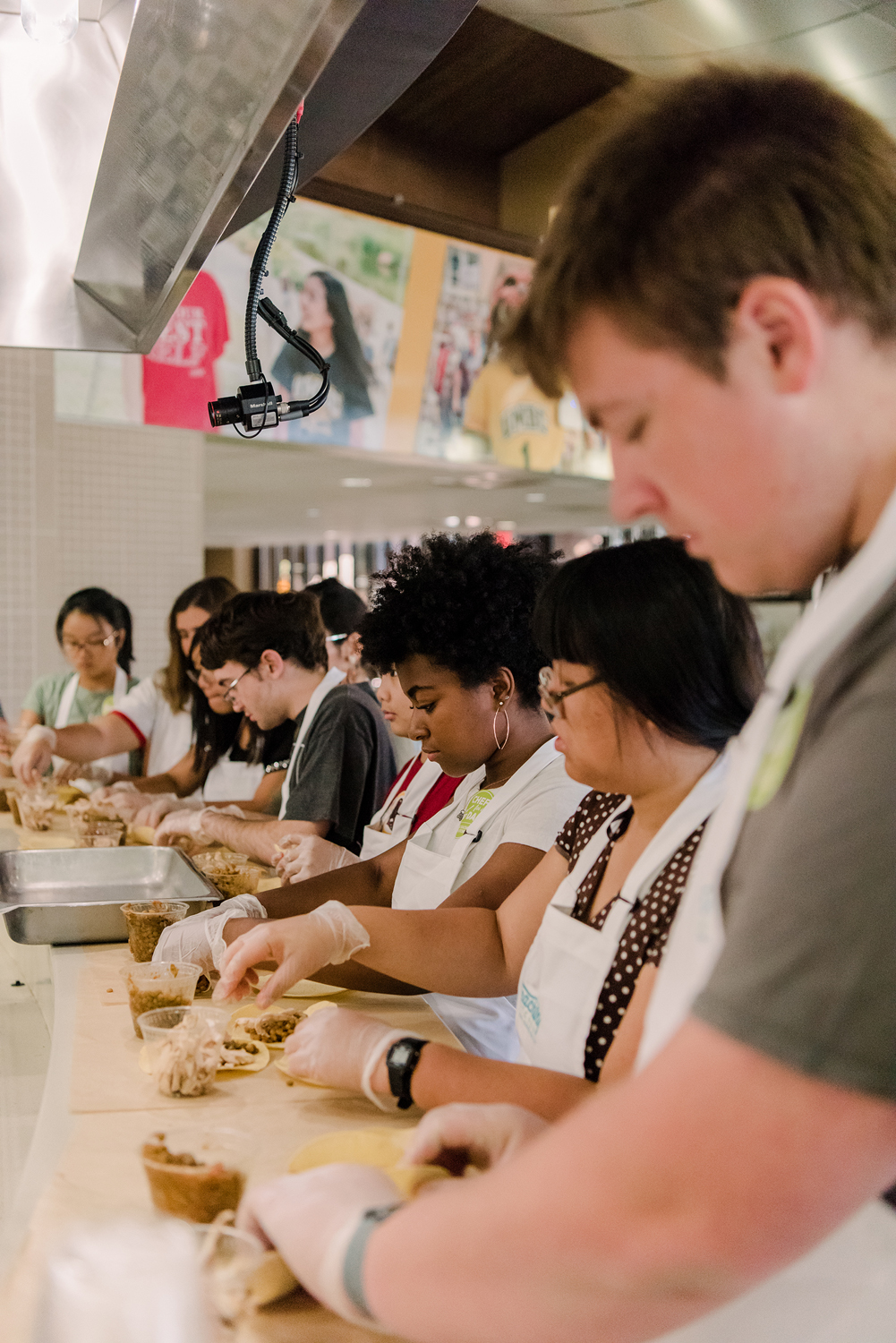
As part of a required Chartwells higher education initiative, UMBC spent the summer of 2019 making updates to True Grit’s Dining Hall to incorporate a Teaching Kitchen. Equipped with cameras and screens, the new addition aims to give students the skills they need to up their culinary game. Students are able to see the chef preparing meals in front of them, utilizing the screens to concentrate on the up-close action of chopping, dicing, and slicing. The scene is set with blazing lights and individual cooking stations so each student has the ability to put their own spin on the recipe.
“The method of using TVs to show the students the cooking process in real time was really helpful. I found it way more effective than if we were just being given verbal directions,” says Johanna Alonso ’20, English, of her first Teaching Kitchen experience. “We were able to look at what the chefs were doing—like how they were cutting the onion and garlic—and imitate it.”
The first meal students prepared at the inaugural Teaching Kitchen in September was chicken and lentil enchiladas. While the entree was fairly simple to create, students were able to produce a meal that both looked and felt more intensive. This was an introduction to lentils for some students, and the nutritional value and cooking process was a valuable kitchen skill.
“We want to help students create meals that are easy to cook, but also well-rounded and full of nutrients,” explains Sachs.
Easy to cook and nutritional value are definitely factors that Sachs and Dunn look at when deciding their menu for the Teaching Kitchens. But they also want to incorporate seasonal favorites and support local vendors. The October menu includes a pumpkin salsa, the designated campus superfood and a fall favorite.
Sachs and Dunn both went to culinary school at Johnson & Wales University in Rhode Island, so perhaps their close partnership was destined for success.
“During the Teaching Kitchen, it’s a lot of going back and forth. I talk about what ingredients we’re using and what the nutritional benefits are, and Tim demonstrates prep techniques and the execution,” Sachs explains. “We are helping students in real time as things constantly change.”
The duo doesn’t expect that students will show up ready to make their “Top Chef” appearance. To lay a proper foundation, they start with the basics—knife skills and technique.
As the program grows, Sachs and Dunn hope to add cooking competitions, visits from professionals in the food industry, and integration with various campus organizations. Students who were part of the pioneer Teaching Kitchen walked away eager to put their newly learned skills to the test— and like any good UMBC student, they’re even prepared to share.
“I’d definitely make these enchiladas for my roommates sometime. And really, I want to try to make some of the other recipes in the cookbook they gave us. I’m already looking forward to the next one,” says Alonso.
****
Sign up for the next Teaching Kitchen workshop on November 13.
All images by Marlayna Demond ’11.
]]>
Most students come to college armed with the essential adult knowledge—make a dentist appointment every six months, don’t lose your social security card, and never wash a red sock with your...https://umbc.edu/stories/food-for-thought/https://my3.my.umbc.edu/api/v0/pixel/news/120020/guest@my.umbc.edu/f3f47ebf2f901962a8b38e2e09635c62/api/pixelcampus-lifedining-hallfall-2019teaching-kitchentrue-gritsUMBC News & Magazinehttps://my3.my.umbc.edu/groups/umbc-news-magazinehttps://assets1-my.umbc.edu/system/shared/avatars/groups/000/001/943/24435aa6207c452e7bc15cc74b42c7bb/xsmall.png?1748556657https://assets1-my.umbc.edu/system/shared/avatars/groups/000/001/943/24435aa6207c452e7bc15cc74b42c7bb/original.png?1748556657https://assets2-my.umbc.edu/system/shared/avatars/groups/000/001/943/24435aa6207c452e7bc15cc74b42c7bb/xxlarge.png?1748556657https://assets2-my.umbc.edu/system/shared/avatars/groups/000/001/943/24435aa6207c452e7bc15cc74b42c7bb/xlarge.png?1748556657https://assets3-my.umbc.edu/system/shared/avatars/groups/000/001/943/24435aa6207c452e7bc15cc74b42c7bb/large.png?1748556657https://assets1-my.umbc.edu/system/shared/avatars/groups/000/001/943/24435aa6207c452e7bc15cc74b42c7bb/medium.png?1748556657https://assets2-my.umbc.edu/system/shared/avatars/groups/000/001/943/24435aa6207c452e7bc15cc74b42c7bb/small.png?1748556657https://assets1-my.umbc.edu/system/shared/avatars/groups/000/001/943/24435aa6207c452e7bc15cc74b42c7bb/xsmall.png?1748556657https://assets2-my.umbc.edu/system/shared/avatars/groups/000/001/943/24435aa6207c452e7bc15cc74b42c7bb/xxsmall.png?1748556657UMBC News & Magazine00falseFri, 01 Nov 2019 15:47:52 -0400A Doctor’s Dilemma
Decentering whiteness while working as a doctor abroad has made alumnus Matthew Loftus examine his medical methods and motivations again and again.
If you’re a foreign doctor practicing in an African country, there are important questions to keep asking yourself: How am I allowing my whiteness to shape my perception of my work and life here? Am I using my medical skills to equip the next generation of local doctors? Am I letting local leadership guide my steps?
In fact, if you’re Matthew Loftus ’07, chemistry, you started asking these questions earlier in your life, as a doctor in Baltimore City. They all still applied.
But for Loftus, the questions actually started before the medical license, before the move with his family to South Sudan, before getting displaced by a civil war that made its way to the hospital’s doorsteps, before visiting medical centers across East Africa to find a new location to serve, before spending nine months learning another new language, before his wife—a nurse—and three children settled in to a small house in Kenya, across the street from the hospital where he’s now still asking those questions.
“This is a continuous conversation,” Loftus says, sitting down for an interview over tea during a trip to Kenya’s capital, Nairobi. There is the way things have been done previously in medicine or in mission settings or in low-income American neighborhoods: “A sort of a very top-down, you know, people from outside making all the decisions,” says Loftus. “And that, that is ultimately unsustainable.”
Relocation, redistribution, and reconciliation
Loftus grew up attending a Presbyterian church with his parents and 14 siblings in Bel Air, Maryland. After graduating from UMBC and marrying his wife Maggie, Loftus moved to the Sandtown-Winchester neighborhood of West Baltimore to join another Presbyterian congregation, New Song Community Church—this one founded on the principles laid out by the Christian Community Development Association (CCDA). Author Lawrence Lanahan describes the practice in an article for Al-Jazeera called Downwardly Mobile for Jesus that profiled the Loftus family.
The Loftus family is based in Litein, a small town in western Kenya. Photo by Randianne Leyshon.
“The CCDA’s model is similar to asset-based community development, which tries to build out from a community’s strengths rather than fix its deficiencies. But the CCDA asks more of its practitioners across the nation: that they have something personally at stake in the development. Leaders at New Song talked to Loftus about the core of the CCDA’s philosophy, the three R’s—relocation, redistribution and reconciliation.”
Those three “R”s—which essentially ask white Christians to question their privilege and seek local leaders of color to work under—would grow to influence and define Loftus’s personal life and medical career.
Retriever roots
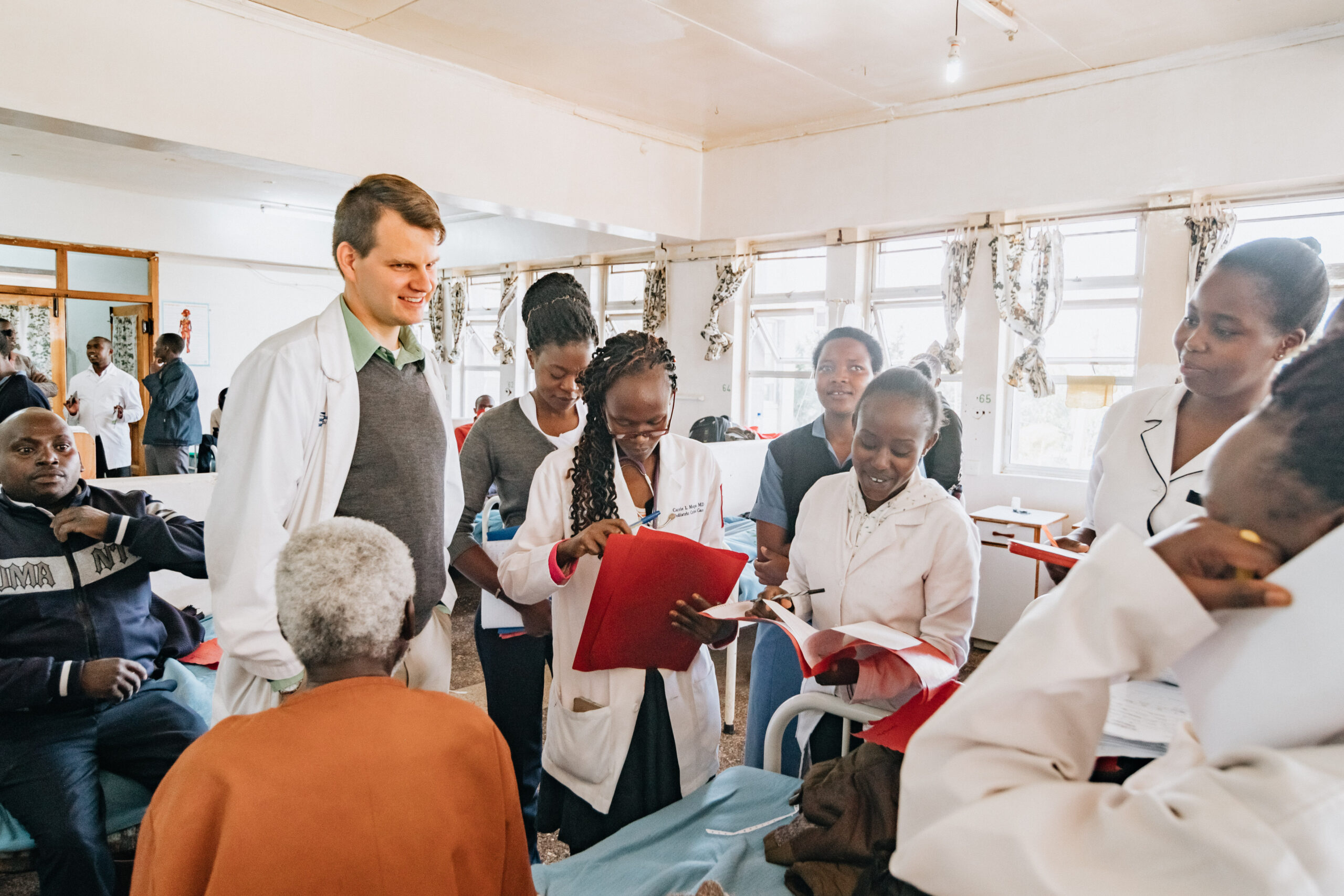
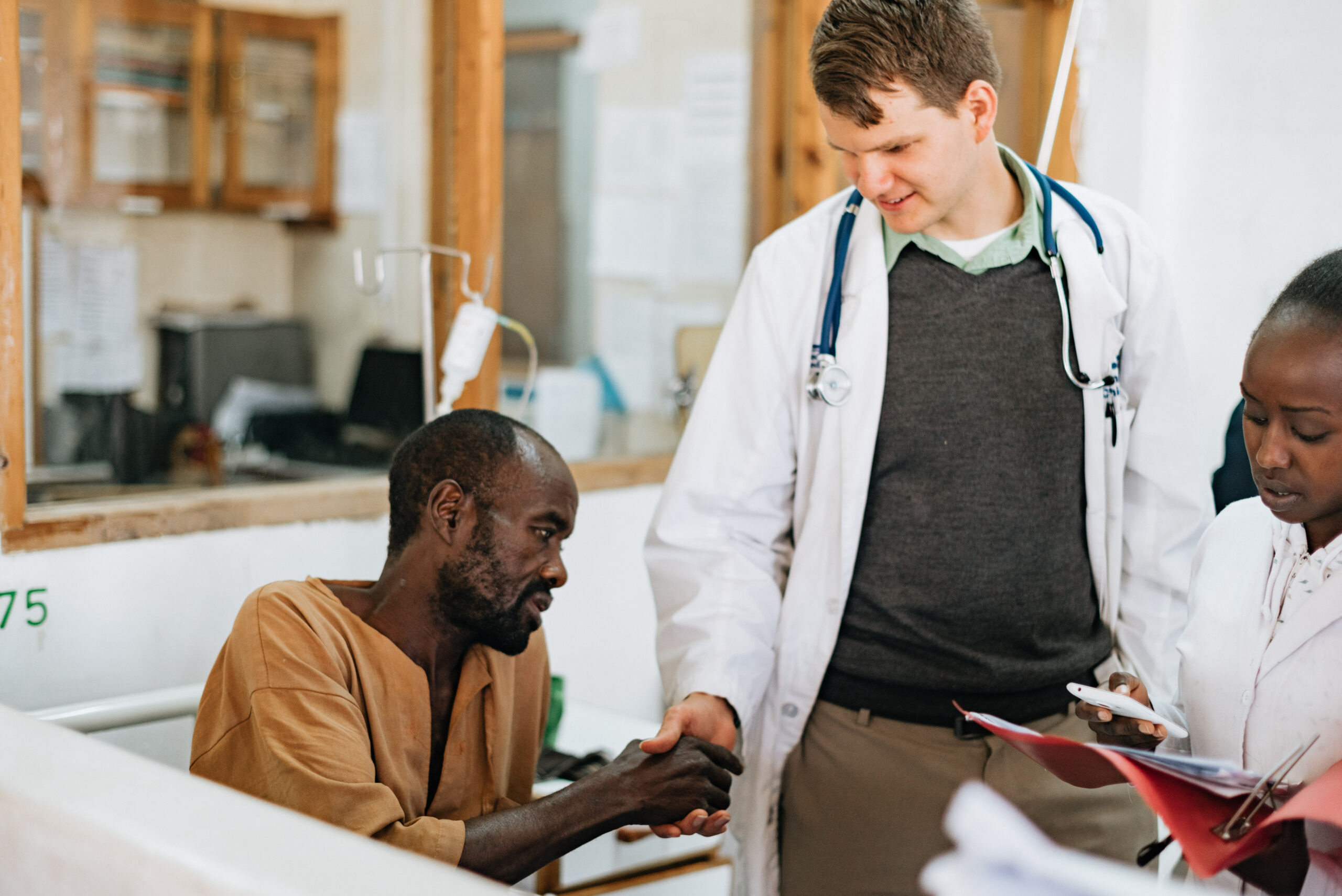
In Litein, Kenya, where he’s the family medicine consultant and program coordinator for the Kabarak University Family Medicine Residency, Loftus specializes in seeing patients with mental health problems and also supervises the medical residents’ time on the wards and in the clinics.
It was his time at UMBC that helped prepare him for many aspects of his life in Kenya, says Loftus. The personal reference letter he got from President Hrabowski for his admission to the University of Maryland School of Medicine didn’t hurt, but more specifically, Loftus points to his Arabic classes and his semester abroad in Egypt that helped in exposing him to new aspects of international life. UMBC’s Office of Pre-Professional advising also played a huge role, he says, in helping him get into medical school and graduate debt-free. His involvement, including a year as vice president, with UMBC’s chapter of InterVarsity Christian Fellowship gave him lasting ties to other Retrievers, but also taught him the importance of spiritual discipleship.
It’s been a year and a half since the Loftus family settled into their life in Litein, a high-altitude town in western Kenya that is most well known for its verdant tea fields. Loftus juggles his resident supervisor role with extended clinic hours, rounds, and spiritual development with the other medical professionals.
Photos of Litein and surrounding areas by Dixie Gaultney when visiting the Loftus family with her husband, Peter Gaultney, ’08.
“When I was at UMBC, I knew I wanted to do medicine. I wanted to serve people through health care,” says Loftus. But over the years, after listening to people who are on the field and learning about what the needs were—there was just too much that any one person could do, he discovered. The answer for him, was then to get involved in health care education.
It was under the guidance of Lisa Kelly in the Department of Chemistry and Biochemistry, “who was very patient with me,” says Loftus, “despite the fact that it was while working in her lab that I realized I was not cut out for a life of research. But I do appreciate all the work that she did on my behalf and helping me move in a good direction.”
While researching where he could join an existing health care education program that had opportunities for his wife, a perinatal nurse, to work and where his children (ages seven, four, and two) could also flourish, Loftus eventually found Litein. There, “health care education was already happening to some degree but they really wanted to ramp it up,” he says.
An additional aspect that appealed to Loftus, was that after supervising the residents for four years, they would then move on to other locations, using their advanced medical skills to treat and train people from all over East Africa.
Attending to growing needs
Phillip Blasto, a general surgeon who works closely with Loftus, grew up in the coastal region of Kenya but has worked at the hospital in Litein for the past four years.
The arrival of Loftus and another set of American doctors (Blasto refers to them as consultants, but in the States, they’re called attendings) has lifted a significant load from Blasto and the other physicians. Sitting at the table in the Loftus’s cozy living room, drinking local tea made sweet with milk and sugar, Blasto shares his thoughts on the addition of the medical missionaries. “He took a lot of weight,” Blasto says, taking care of “patients of mine and patients of the ICU…with Matthew here, the care of patients has improved, particularly in intensive care because he and the other consultants are available. If there was one biggest change, that would be that our intensive care patients now have someone to call and to see them anytime day or night or weekends.”
Ultimately, this elevates the reputation of Litein’s hospital and builds long term trust between the patients and medical practitioners, which has allowed the practice to grow, creating a new set of problems to manage. “We’ve grown in terms of patient numbers and people who trust us, which is significant,” says Blasto. “Nowadays bed space is an issue and theater space is an issue, so depending on some days, we have to put people in the corridors to be seen.”
The Loftus family lives across the street from the hospital, which has plans to grow in the near future. Photo by Dixie Gaultney.
The hospital—a long, bright green building situated on the highest ground in the town of around 2,500 people—is responding to the increased influx of patients by growing as well, increasing the number of respirators, adding new radiology equipment, and eventually expanding the building to include more bed space. The outside attendings have played a significant role in these changes by extending the consulting sessions by several hours each day and by taking turns for overnight on-call shifts. “That availability and the humbleness that people have seen have increased people’s faith in the facility,” Blasto concludes.
Forward progress requires humility
One of the questions Loftus sees as a critical aspect of his “continual conversation” involves asking himself how he can submit to local leadership—a tenet emphasized by CCDA and a foundational element of Loftus’s approach to the mission field. “I think submission is a hard word to think about, in our context, in the West,” says Loftus. “I think it’s such an important part of faith, of Christ’s life in us—of humility—that I think this sort of work is impossible without it.”
Loftus’s word choice of humility resonates with Sarah Fouts, assistant professor of American studies at UMBC. Fouts, whose research centers on accompaniment theory—a methodology for allies that supports movements led by people of color—guides her students to leverage their privilege in helping others navigate systemic barriers. “It’s really hard because you want to make yourself so important, so special. But you need to decenter yourself in those situations, and that’s really challenging,” says Fouts. “So how to create a sustainable project means exactly that, not making everything so reliant on you.”
Students and professors often have this I-want-to-do-it-all-mentality, continues Fouts, “but bringing other people into the project, as leaders, helping elevate not just your own research… maybe it takes more time and effort but ultimately, it’s going to be better for everyone involved. You know, it’s humbling.”
A continuous conversation
As a way to get more people involved in conversations about privilege and responsibility, Loftus collaborates with two other UMBC alumni and fellow InterVarsity members, Peter Gaultney ’08, computer science, and Timothy Milligan ’09, computer science, to create a weekly newsletter called Read In Case of Emergency, where they share articles and thoughts on ethics, policy, and society. Loftus has also published extensively, writing articles responding to people asking if it’s dangerous to take your children to live overseas, advocating for more than “good intentions” in thinking about solutions to poverty, and letting local communities speak for themselves in the wake of tragedy.
Two of the Loftus children play in the tea fields near Litein. Photo by Randianne Leyshon.
These articles and dozens more that Loftus has penned while living in West Baltimore and then in East Africa contrast sharply with a 2005 Retriever Weekly article that set the stage early on for how Loftus navigated the waters of being a privileged white doctor in under-resourced communities. As a teenager, Loftus participated in medical missionary trips to Kenya, and UMBC’s student paper wrote about his summers there. The resulting article—not written by Loftus—is, to say the least, not woke.
Correctly so, UMBC’s African Student Association responded strongly to the tone and vocabulary of the piece—it dripped with White Savior-ness. Loftus met with the ASA and listened to their reactions, opening himself up for more in depth dialogue than the article allowed. This experience added another layer to Loftus’s growing conviction that in order for him to continue pursuing a career in medical missionary work overseas, he would have to immerse himself in better ways of approaching his role in a field with a very troubled history of white supremacy and colonialism.
“I think, because there is still a default way that we think and talk about interventions in impoverished communities, oftentimes it does take a moment of ‘oh, I need to be doing it differently than the way that I would normally, as a white privileged, you know, wealthy outsider,’” says Loftus.
“But then once you get to that point, you have to be continuously assessing it and asking yourself and asking the people around you, like, ‘Are we doing this well? Are we involving the people that are, you know, that are most affected by this? Am I working to equip people with the skills that they need to lead themselves, and to serve themselves, to help themselves?’” Loftus trails off as the list of relevant questions mount. “So I think that’s a really big part of it, is the fact that that process is never done.”
*****
Header image: Loftus listens while on rounds with his residents. Photo by Dixie Gaultney.
]]>
Decentering whiteness while working as a doctor abroad has made alumnus Matthew Loftus examine his medical methods and motivations again and again. If you’re a foreign doctor practicing in an...https://umbc.edu/stories/a-doctors-dilemma/https://my3.my.umbc.edu/api/v0/pixel/news/120034/guest@my.umbc.edu/561a89ff8b2a681e01bc14c9af1e8ff2/api/pixelalumnialumni-profilechemistryfall-2019internationalUMBC News & Magazinehttps://my3.my.umbc.edu/groups/umbc-news-magazinehttps://assets1-my.umbc.edu/system/shared/avatars/groups/000/001/943/24435aa6207c452e7bc15cc74b42c7bb/xsmall.png?1748556657https://assets1-my.umbc.edu/system/shared/avatars/groups/000/001/943/24435aa6207c452e7bc15cc74b42c7bb/original.png?1748556657https://assets2-my.umbc.edu/system/shared/avatars/groups/000/001/943/24435aa6207c452e7bc15cc74b42c7bb/xxlarge.png?1748556657https://assets2-my.umbc.edu/system/shared/avatars/groups/000/001/943/24435aa6207c452e7bc15cc74b42c7bb/xlarge.png?1748556657https://assets3-my.umbc.edu/system/shared/avatars/groups/000/001/943/24435aa6207c452e7bc15cc74b42c7bb/large.png?1748556657https://assets1-my.umbc.edu/system/shared/avatars/groups/000/001/943/24435aa6207c452e7bc15cc74b42c7bb/medium.png?1748556657https://assets2-my.umbc.edu/system/shared/avatars/groups/000/001/943/24435aa6207c452e7bc15cc74b42c7bb/small.png?1748556657https://assets1-my.umbc.edu/system/shared/avatars/groups/000/001/943/24435aa6207c452e7bc15cc74b42c7bb/xsmall.png?1748556657https://assets2-my.umbc.edu/system/shared/avatars/groups/000/001/943/24435aa6207c452e7bc15cc74b42c7bb/xxsmall.png?1748556657UMBC News & Magazine00falseWed, 09 Oct 2019 18:19:39 -0400Unabashedly Inspirational
Throughout its history, UMBC has encouraged community members to take risks and make lasting changes to guide our institution to become the empowered University it is today.
UMBC is nothing if not unapologetically aspirational. From its earliest days, Retrievers have dreamed big dreams and punched far above their weight at every turn. We have grit to spare—and we’ll share it with anyone who wants to be a part of it.
So, how do we do it? Well, aspiration is nothing without follow through. At UMBC, that means digging into the details, thinking creatively, and working together as a community to make things actually happen—then digging in again to measure the results.
As they write in The Empowered University, published by Johns Hopkins University Press in November, co-authors UMBC President Freeman Hrabowski, Provost Philip Rous, and senior advisor to the president Peter Henderson, a broad history of people and bold moments have made UMBC what it is today. As Hrabowski often tells his Commencement audiences, “It’s choice, not chance” that defines us.
At a place like UMBC—where our community strives to make choice a possibility for all—those moments have made all the difference.
SEEING “PROBLEMS” AS OPPORTUNITIES
As diverse as UMBC is on paper, many students come to school never having stepped foot in an urban area. That’s where experiential learning opportunities like Tyson King-Meadows’ Problem- Solving in the Urban Black Community class come in. It’s a course where students can engage a subject from their own vantage point in conversation with partnering community organizations in ways that traditional classes cannot.
Experiential learning gives students a chance to engage in a subject in very personal ways. Students bring their own vantage points to the table but walk away having deeply considered topics as varied as loitering and vagrancy laws, public transportation policy, and crime in a way that forces them to examine their own blind spots and connects them to the world around them.
“UMBC students and community groups see their destinies linked rather than separate” and develop a deeper appreciation for the power of social science research and teaching in action, says King-Meadows, associate professor of political science. “If my students can take what they learned…and positively change the course of one life in one community, I am happy.”
THE CLUES ARE IN THE DATA
Even under the best circumstances, it isn’t always easy to tell when students are struggling with school. Some may stay after class to speak to a professor; others may fall through the cracks. That’s why, in 2016, UMBC added a new tool for uncovering the mystery of student success: data.
By using information already being collected—predictive analytics such as attendance, grades, tutoring use, test scores, etc.—members of a team in UMBC’s Department of Information Technology led by Bob Carpenter began identifying which students could benefit most from extra support and testing out possible solutions in the form of strategic digital nudges.
“The philosophy we’re using is trying to get the right information to the right person at the right time,” says Carpenter, associate provost and deputy CIO. In other words, early enough so that students can make adjustments.
For example, students who miss more than three classes are likely to have major trouble, so those students get emails reminding them to attend. Since one out of two students who retake a math class fail it, but those who take advantage of tutoring while doing so are nearly 20 percent more likely to pass, those students get targeted messages reminding them of tutoring dates.
In the end, of course, the students choose how to use the information. But, with student success rates going up in a variety of instances, Carpenter finds the results encouraging, and he’s already looking for additional paths to pursue. “Like everybody else here, I want to help people get across the finish line,” he says. “We want people to finish because we want them to have not just the keys to a higher salary, but the tools to a richer, more vibrant life.”
UPENDING MYTHS OF THE SURVEY COURSE
For years, Classical Mythology students gathered hundreds at a time for stadium lecture classes, quickly memorizing materials, then using Scantrons to measure their understanding of Greek and Latin. Not surprising, when it came to truly understanding the building blocks of Western Civilization, they were missing the mark. That’s how Tim Phin ’04, ancient studies, learned it when he was a student at UMBC—and that’s exactly why he jumped at the chance to flip the format on its head as senior lecturer in ancient studies.
Today, in his hybridized course, the work happens both in class and online. There’s much less lecturing, with Phin instead breaking difficult material into chunks and giving students ways to discuss in small groups together online. Not only does this make the work digestible—and get the students to actually read and write about the ancient texts—but it allows Phin to see in real- time whether they’re getting it or not.
“We live in a world that moves at a blistering pace. I believe that classics can slow us down, provide us with an opportunity for reflection, for introspection,” says Phin. “The study of antiquity reminds students that both human ingenuity and human frailty have long histories. I want students at UMBC to know that.”
STUDENT-BUILT SPACES
UMBC’s students have a long history of charting their own territory. The grit goes all the way back to 1970, for example, when the newly formed Student Union voted to establish a free and unscheduled hour three times a week for student assembly, organization, and advising. Today, it’s still a cherished part of students’ days and an indelible change to the official campus schedule.
So, when members of the Student Government Association came up with the idea of a 24-7, all-access study space, campus partners sat up and took notice. Opened in 2011, the Retriever Learning Center (RLC) is now one of the hottest spots on campus—a sea of movable seating and tables filled with students, laptops, whiteboard markers, and a buzz of ideas.
And it wouldn’t have happened without intense student work.
“This project taught me about the power of a small group of friends inspired to mold the architectural landscape in their intimate college neighborhood,” said Simmi Singh ’12, biological sciences, one of several student senators who spearheaded the project. “The importance of student-created spaces and initiatives at UMBC is the life-altering experience of holding fast to dreams, actualizing them, and being a positive agent for change for generations of the UMBC family in the years to follow.”
*****
Image by Marlayna Demond ’11.
]]>
Throughout its history, UMBC has encouraged community members to take risks and make lasting changes to guide our institution to become the empowered University it is today. UMBC is nothing...https://umbc.edu/stories/unabashedly-inspirational/https://my3.my.umbc.edu/api/v0/pixel/news/120236/guest@my.umbc.edu/d9c732b0c5cea43ebf876274bad8c045/api/pixelfall-2019impactthe-empowered-universityUMBC News & Magazinehttps://my3.my.umbc.edu/groups/umbc-news-magazinehttps://assets1-my.umbc.edu/system/shared/avatars/groups/000/001/943/24435aa6207c452e7bc15cc74b42c7bb/xsmall.png?1748556657https://assets1-my.umbc.edu/system/shared/avatars/groups/000/001/943/24435aa6207c452e7bc15cc74b42c7bb/original.png?1748556657https://assets2-my.umbc.edu/system/shared/avatars/groups/000/001/943/24435aa6207c452e7bc15cc74b42c7bb/xxlarge.png?1748556657https://assets2-my.umbc.edu/system/shared/avatars/groups/000/001/943/24435aa6207c452e7bc15cc74b42c7bb/xlarge.png?1748556657https://assets3-my.umbc.edu/system/shared/avatars/groups/000/001/943/24435aa6207c452e7bc15cc74b42c7bb/large.png?1748556657https://assets1-my.umbc.edu/system/shared/avatars/groups/000/001/943/24435aa6207c452e7bc15cc74b42c7bb/medium.png?1748556657https://assets2-my.umbc.edu/system/shared/avatars/groups/000/001/943/24435aa6207c452e7bc15cc74b42c7bb/small.png?1748556657https://assets1-my.umbc.edu/system/shared/avatars/groups/000/001/943/24435aa6207c452e7bc15cc74b42c7bb/xsmall.png?1748556657https://assets2-my.umbc.edu/system/shared/avatars/groups/000/001/943/24435aa6207c452e7bc15cc74b42c7bb/xxsmall.png?1748556657UMBC News & Magazine00falseWed, 02 Jan 2019 14:34:00 -0500