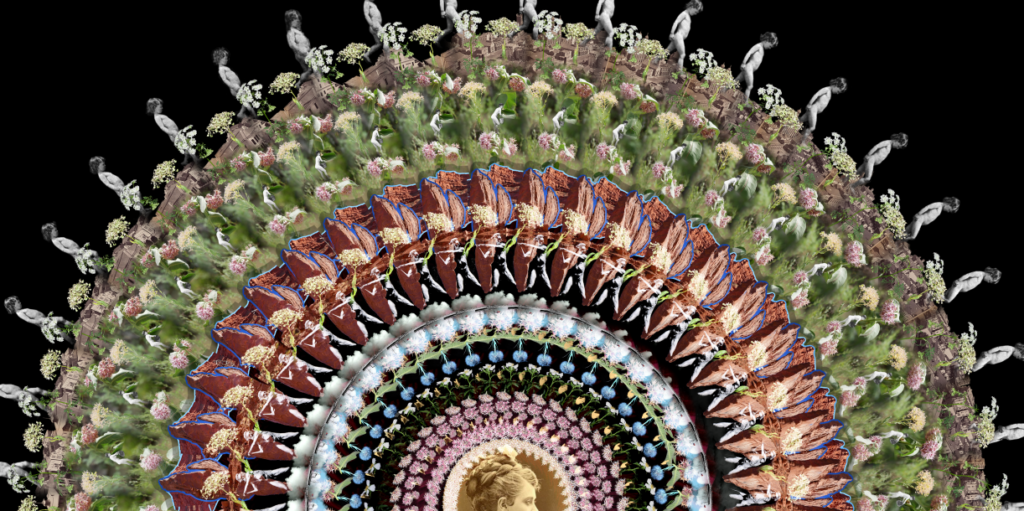
UMBC’s latest graduates in the arts forge new creative paths despite a challenging year
The past pandemic year saw arts communities unable to connect with audiences in traditional ways. Usually reliant on people gathering together to experience their work, creators and performers were thrust online. Some artistic experiences were rendered impossible, but the challenging situation didn’t slow the creative efforts of visual and performing artists of UMBC’s Class of 2021.
Lighting up the stage
“The pandemic took a toll on my ability to create and share my artwork,” shares Seth Kolbe ’21, theatre, who will graduate with a focus on design and production. “As a theatre technician, there are very few opportunities to showcase my talents outside of shows or projects.”
During the pandemic, Kolbe honed his leadership skills, serving as vice president of both the Theatre Council of Majors (TheatreCOM) and the department’s United States Institute for Theatre Technology chapter. Through the work of these two student organizations, he helped facilitate a closer bond between members of the department and helped support the creation of new policies to assist future students. In recognition of his efforts, the department awarded him the Theatre Student Honors Award.
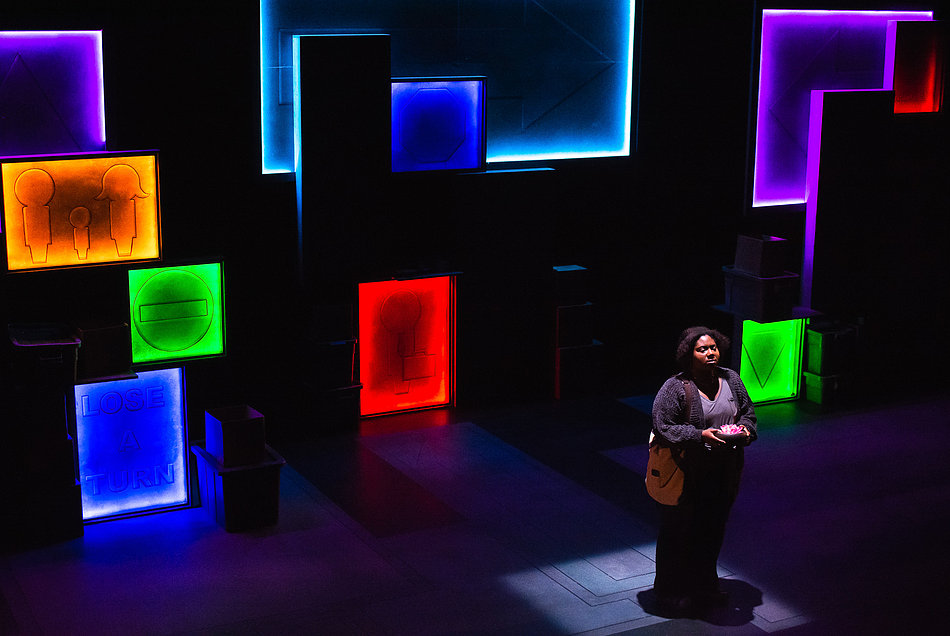 The set for the Department of Theatre production Hunting and Gathering, on which Seth Kolbe worked as head electrician. (Photo by Arionna Gonsalves ’19 for UMBC.)
Among Kolbe’s favorite classes were stage management, projection design, sound design, lighting design, rigging and welding, and scene design. During his four years at UMBC, he contributed to numerous theatrical productions, including Twelfth Night, The Turn of the Screw, Machinal, She Like Girls, Dead Man’s Cell Phone, Anon(ymous), Hunting and Gathering, Girls on a Dirt Pile, and Everybody.
Kolbe also gained skills working with the Annapolis Shakespeare Company and as a member of UMBC Retriever Robotics.
Like many UMBC students in the arts, Kolbe feels strongly about social justice, a particular focus of his leadership work over the past year. “I would like my art to make a difference in the world and in small ways it is already doing so,” he says. “I will continue to support underrepresented groups and use my privilege as white male to act against the inequality present in both this art form and our society.”
Kolbe shares, “My immediate future plans are to continue freelance stagehand and design work in the region before attending graduate school for my MFA.” Eventually, he hopes to teach theatre design and production.
Promoting empathy and connectivity
Kolbe’s theatre colleague Caitlyn Hooper ’21 will graduate with a BFA in acting. She notes that the pandemic “completely changed” how acting students were learning. “We were acting to our laptop cameras, a tough loss. But everyone found new ways to be creative, and I was so inspired by that creativity. I found a deeper connection to the research side of theatre, including the history of theatre and theatrical intimacy studies.”
Hooper joined UMBC as a freshman in 2017, and was cast in numerous productions on stage, including Everybody, Hunting and Gathering, Gwyneth, Dead Man’s Cell Phone, and Far Away. In addition to her acting studies, she worked in the scene shop beginning in her sophomore year and gained knowledge about technical production and carpentry.
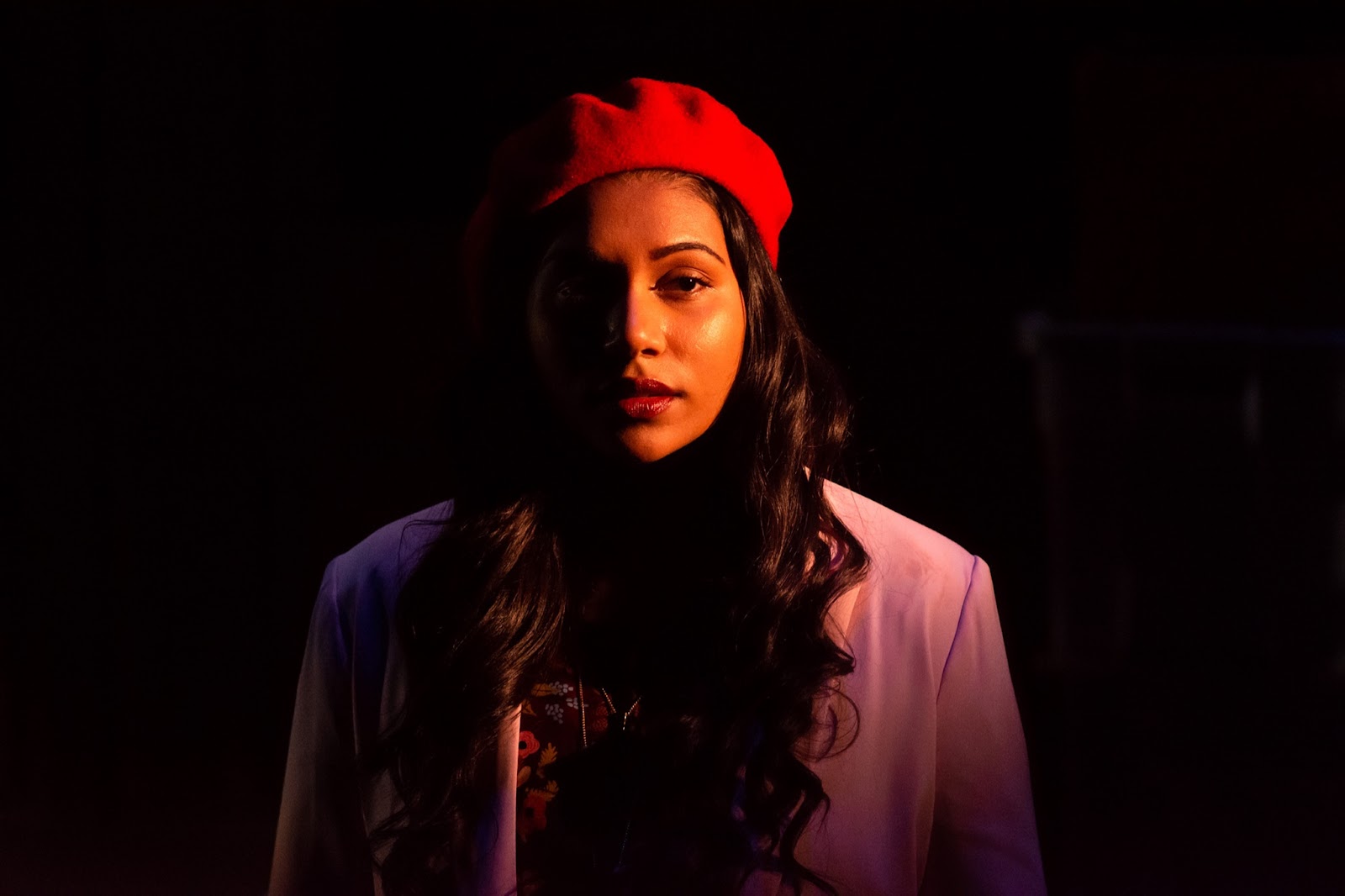 Caitlyn Hooper acting in the 2019 UMBC Theatre production of Hunting and Gathering by Brooke Berman, directed by Susan Stroupe. (Photo by Arionna Gonsalves ’19 for UMBC.)
The concern for equity and social justice factors significantly in Hooper’s work. “As a theatre artist, I’m passionate about creating work that promotes empathy and connectivity,” she says. “I’m inspired by Black theatre activists’ anti-racist work currently restructuring how we do theatre, and I’m committed to equality and justice of marginalized people.”
As president of TheatreCOM during her senior year, she advocated for equitable theatre practices within the department, and, like Kolbe, was a recipient of the Theatre Student Honors Award.
Hooper completed research focused on theatrical intimacy, mentored by Susan Stroupe. She presented her work at UMBC’s popular Undergraduate Research and Creative Achievement Day (URCAD) in 2021 and also published it in UMBC Review. She’s passionate about pursuing a career focused on theatrical intimacy and she plans to apply for a Fulbright award to gain a cross-cultural perspective on theatrical intimacy in another county.
For the immediate future, Hooper plans to return to the stage in local and regional productions. Longer-term, she plans to earn an MFA in acting or performance studies and pursue a career in higher education. She hopes to focus on consent-based practices and anti-racist action in theatrical education in order to make theatre more equitable and ethical.
One student, many interests
Meyerhoff Scholar and U-RISE Trainee Peter Bailer ’21 has equally pursued his interests in the arts and sciences at UMBC, and this week will graduate with a degree in biochemistry and molecular biology and a degree in music composition.
“Music is an essential part of my life; it is both my creative outlet and a powerful medium through which I can express myself,” he shares. “I feel that my experiences with music at UMBC have helped make me a holistic and well-rounded student. From analysis to creative problem solving, my music major has sharpened many skills relevant towards any career, but especially a career in research.”
On the science side of his interests, Bailer has worked in Erin Green’s lab, focused on examining a yeast protein through sequencing data and published structures of related organisms.
He participated in several summer research internships as an undergraduate. At the University of Virginia, he studied the toxicity and structure of peptides that have the potential to become new antimicrobial therapeutics. At the University of Pennsylvania he studied the nature of how a human mutator enzyme discriminates between DNA and RNA for potential gene editing applications. Bailer won a Chemistry and Biochemistry Faculty Award for Excellence for both academic and research performance.
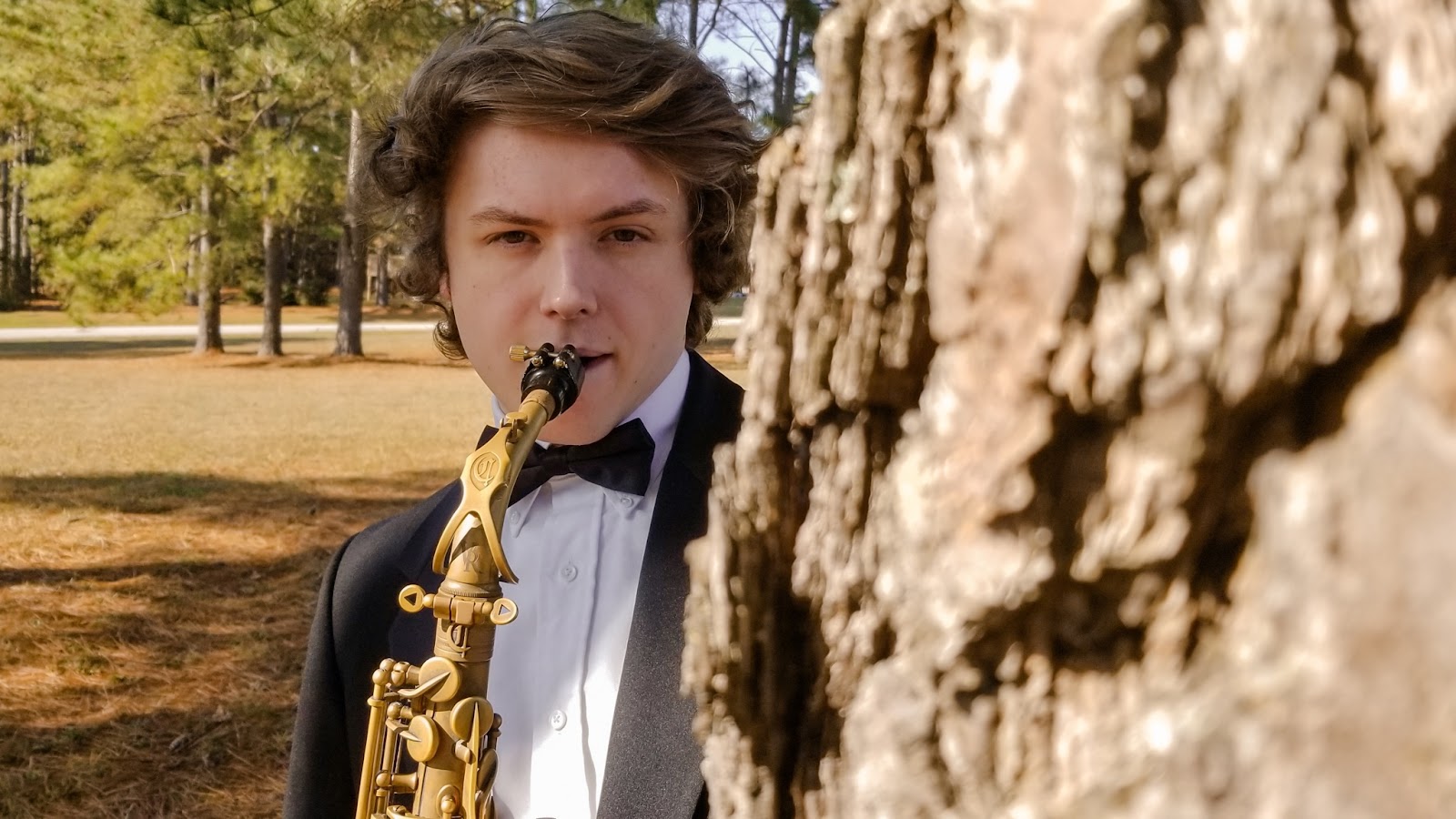 Photo of Peter Bailer by CJ Escobar ’21, music.
In music, Bailer has studied composition with Linda Dusman and Greg Kalember. His music reflects influences from the Romantic era, jazz, late impressionism, and contemporary classical music. He was commissioned by Jonathan Sotelo ’20 to write the percussion trio An Evolution of Congruence, and a marimba work entitled Pebbles. His recent saxophone sextet, The Lost Woods, was premiered by saxophonist and UMBC faculty member Matt Belzer in 2021, and Cognitive Dissonance was premiered by the Washington, D.C. new music ensemble Balance Campaign, also in 2021.
Bailer has performed with the UMBC Saxophone Ensemble, the UMBC New Music Ensemble, and was lead alto in the UMBC Jazz Ensemble. As a senior he received the Academic Achievement Award in Music.
Getting creative with creativity
“The pandemic had major impacts on my ability to create as a composer and musician,” says Bailer. “As a musician, I was no longer able to perform or create with others, and that really reduced my creativity throughout this pandemic.”
Bailer explains, “I was supposed to have my senior composition recital last spring. This ultimately had to be pushed back to this semester, resulting in a combination of some live performances and a lot of pre-recorded versions of pieces.” On the positive side, he notes that extra time at home provided an opportunity for him to study more techniques in music technology that will help his career in the long term.
“Following graduation, I will attend the University of Pennsylvania to pursue a Ph.D. in biochemistry and molecular biophysics,” says Bailer. “While pursuing this, I hope to continue practicing and growing as a composer, and I aspire to be performing ground-breaking research while continuing to compose for years to come.”
Finding a new voice
“As a musician, the pandemic forced me to make a big shift in my creative process,” says Kathryn “Katie” Blake ’21, a Linehan Artist Scholar who will graduate with a bachelor’s in music composition. “As a composer, I had to find quirky ways to inspire myself in my writings, because the isolation and being in the same environment for months on end is mentally taxing.”
“The dramatic change of being surrounded by creative musicians to being alone changed the way I approached composing,” says Blake. “Before, I’d constantly be asking my friends to try a little passage, or show me a technique—we would bounce ideas off each other. The isolation really made me focus and find the exact sounds I wanted in my pieces, and the exact sounds that my pieces needed.”
But Blake found strength in unexpected ways, adding, “I also transitioned to composing for the digital medium, as it is an easy form of artistic communication at the moment. I really honed in on my skills with electroacoustic works, and I found a voice in that sound realm that can only be accomplished by electroacoustic composition.”
Performances past and future
During Blake’s undergraduate studies, her compositions have been premiered by the Bergamot String Quartet, percussionist Jonathan Sotelo ’20, the Balance Campaign ensemble, and the Strata Trio. The 2019 Fresh Inc. Festival, District New Music Coalition’s 2020 fall conference, and T1International’s “Change Through Creativity” Project in 2020 all featured her work.
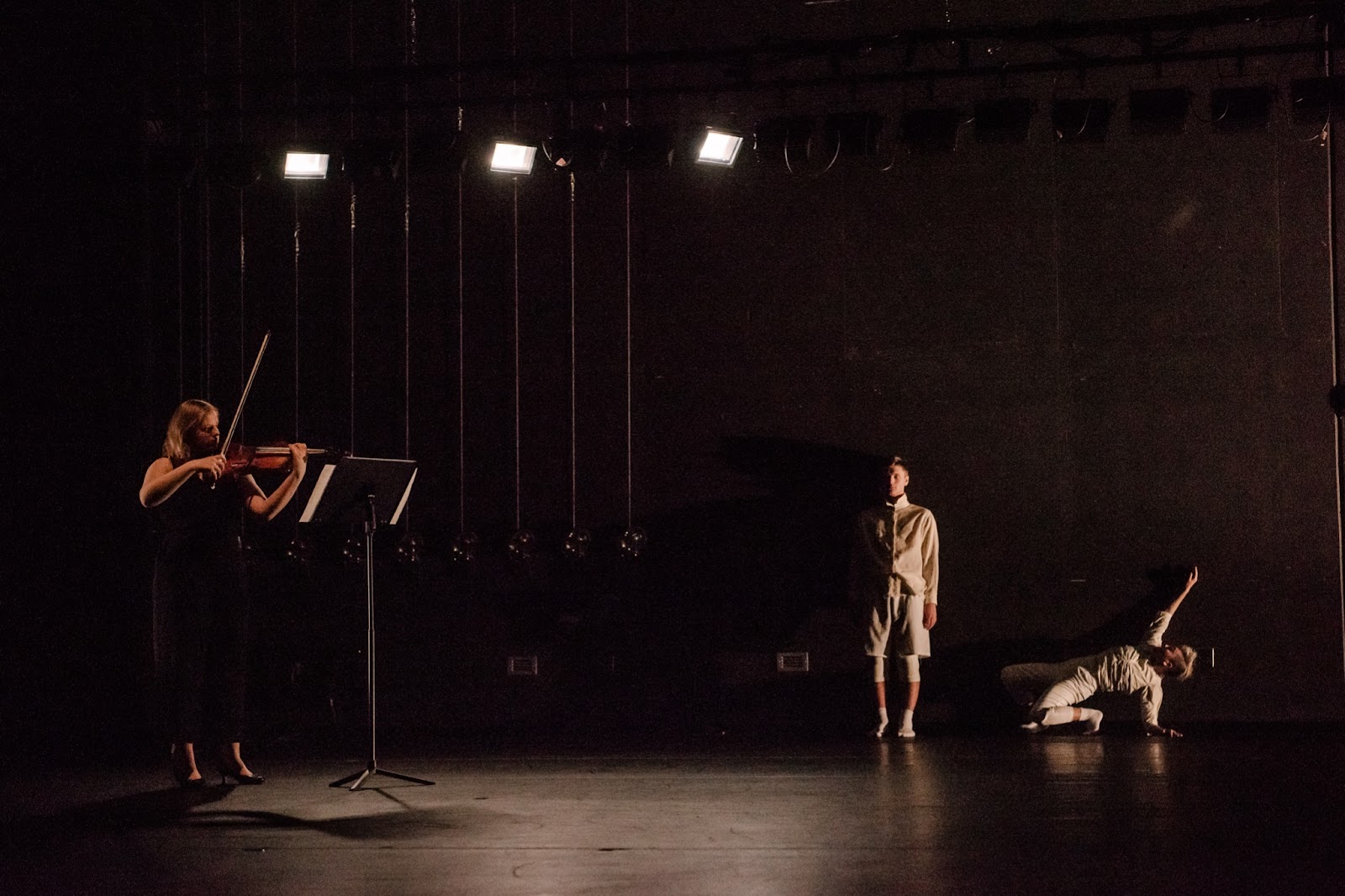 Katie Blake ’21, left, performs with Deven Fuller ’22, dance, and Emily Godfrey ’20, dance, in In To And Out Of by Ann Sofie Clemmensen. (Photo by Marlayna Demond ’11 for UMBC.)
Also active as a violist, Blake has performed with the UMBC Symphony Orchestra and in the UMBC Chamber Players. She premiered string quartets by Donte Speaks, Jr. and Eliza Triolo ’19, music. Featuring a role as both violist and composer, she was honored in fall 2019 to work with UMBC choreographer Ann Sofie Clemmensen, whose dance In To And Out Of was featured at the Kennedy Center. She has composed music for animator William Kraft ’21, visual arts, filmmaker Kelvin Thompson ’20, visual arts, and choreographers Teresa Whittemore ’20, dance and Kayla Massey ’22, dance. Like Bailer, she received the Academic Achievement Award in Music.
Outside of composing, Blake has interests in health advocacy, social justice, psychology, and mental health, and has found ways to connect her interests. “I do feel a large part of myself as an artist is to make a change,” she states. “Currently, I’ve had a focus on diabetes and insulin advocacy, tying my experience as a diabetic into my work. I have already delved into the insulin crisis with my work, but I plan to do so much more.”
Blake plans to pursue a master’s and then a D.M.A. in music composition, and looks forward to a career in higher education. “Composing and creating is what gave me the spark to keep going when I was younger,” she says, “and I want to help others find that spark as well.”
Transformation in quarantine
“My thesis show was totally transformed by quarantine,” shares Rahne Alexander M.F.A. ’21, intermedia and digital arts, of her recent participation in the spring M.F.A. visual arts thesis exhibition, Home Bodies. “What was intended to be a live performance transformed into an online experience, which set off a kind of domino effect on the various aspects of the project.” For instance, Alexander explains, “instead of creating a talk show set in the gallery, I recreated my home studio in which I produced the show, and ultimately I think that overall, my work was better as a result.”
The content of the show was also impacted by its shifting context, Alexander reflects. “A significant part of this piece was a meditation on the way that multiple sclerosis caused my mother to transform her own art practices, and the parallels I have experienced in my own career,” she says. “Quarantine really brought those parallel conditions into excruciatingly clear focus, in ways I’ll be considering for a long while.”
Alexander is already an accomplished essayist, contributing to anthologies such as the Lambda Literary Award-winning Take Me There: Trans and Genderqueer Erotica and the Lambda-nominated Resilience Anthology. Her first book of collected essays, Heretic to Housewife, was published by Neon Hemlock in 2019.
While at UMBC, Rahne has exhibited artworks both regionally and internationally. Her video art screened as part of the International Conference of Chinese Computer Human Interaction at Xiamen University, and at the Baltimore Museum of Art’s Necessity of Tomorrow(s) Screening Room. In 2020, her painted scroll triptych “I Am the End of the Patriarchy and So Can You” was commissioned by ‘sindikit and Tephra Institute of Contemporary Art for the Mary B. Howard Invitational: An Excellent Thought About a Quality Idea. These scrolls have subsequently shown at The Shed Space and as part of Spark IV: A New World? at Maryland Art Place.
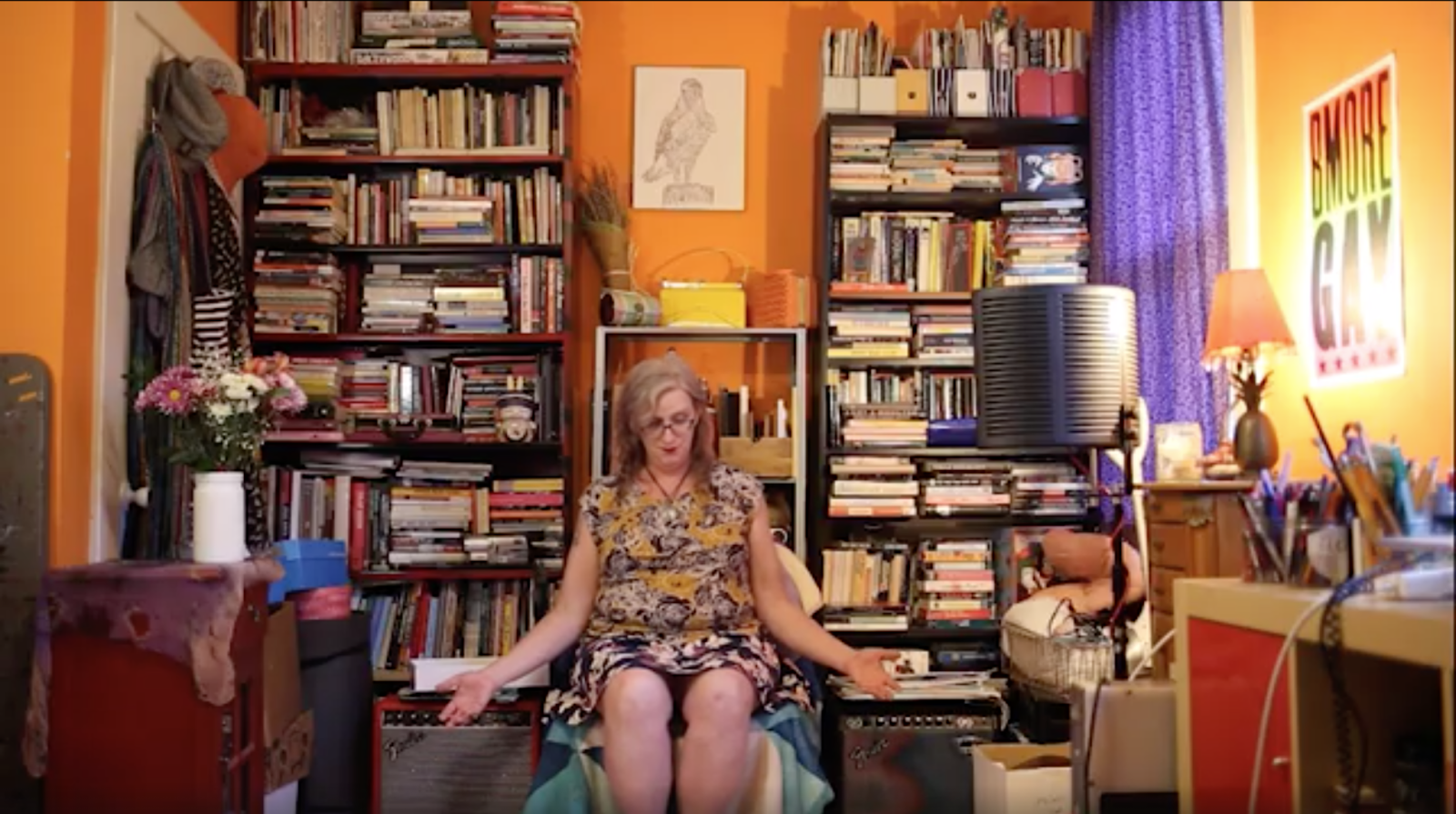 Rahne Alexander in her work Sick Transit, an exemplativist femmage, comprising a series of autobiographical monologic performances meditating on mobility, maternity, gender, feminism, and systems of healthcare in the relationship between two artists: the transsexual daughter of a devout Mormon who lived with multiple sclerosis for more than 30 years. (Image courtesy of Rahne Alexander.)
A leader and community connector
Also active in arts administration and advocacy, Alexander has been a leader at the Transmodern Festival and the Maryland Film Festival, where she served five years in charge of operations and development. She has since lent her organizational and development assistance to several groups, including the Baltimore Office of Promotion and the Arts, FORCE: Upsetting Rape Culture, Venus Theater, Wide Angle Youth Media, and Single Carrot Theatre.
“My work has always been about making connections between people, often with the specific political goal of destigmatizing trans and queer identities. I work to get audiences to reconsider their assumptions and epistemologies,” says Alexander.
“Trans people make up such a small minority of the population, yet there is this continued push to diminish and deny our civil rights. We can’t really secure those rights without the support of the majority, so a large part of my mission as an artist has been to make connections and open dialogue,” she notes. “And the same holds true for all marginalized people—disability rights, Indigenous rights, the rights of queer people and Black people and Brown people. As the saying goes, none of us are free until we are all free, and I see my work as a part of that larger project.”
Alexander will continue working as an artist. She currently has work on display at Spark IV: A New World? and she will be on the faculty at this summer’s Tulsa Glitterary Writer’s Conference.
Banner Image: Cailtlyn Hooper and other theatre students in the 2018 production of Dead Man’s Cell Phone by Sarah Ruhl, directed by Nyalls Hartman, for which Seth Kolbe served as assistant head electrician. Photo by Raquel Hammer ’20 for UMBC.
]]>
The past pandemic year saw arts communities unable to connect with audiences in traditional ways. Usually reliant on people gathering together to experience their work, creators and performers...
https://umbc.edu/stories/umbcs-latest-graduates-in-the-arts-forge-new-creative-paths-despite-a-challenging-year/
https://my3.my.umbc.edu/api/v0/pixel/news/119625/guest@my.umbc.edu/c15b5a1d7425b953927edeb280b175b6/api/pixel
arts-and-culture
cahss
chembiochem
classof2021
cnms
community
imda
linehanscholars
meyerhoffscholars
music
theatre
visualarts
UMBC News & Magazine
https://my3.my.umbc.edu/groups/umbc-news-magazine
https://assets1-my.umbc.edu/system/shared/avatars/groups/000/001/943/24435aa6207c452e7bc15cc74b42c7bb/xsmall.png?1748556657
https://assets1-my.umbc.edu/system/shared/avatars/groups/000/001/943/24435aa6207c452e7bc15cc74b42c7bb/original.png?1748556657
https://assets2-my.umbc.edu/system/shared/avatars/groups/000/001/943/24435aa6207c452e7bc15cc74b42c7bb/xxlarge.png?1748556657
https://assets2-my.umbc.edu/system/shared/avatars/groups/000/001/943/24435aa6207c452e7bc15cc74b42c7bb/xlarge.png?1748556657
https://assets3-my.umbc.edu/system/shared/avatars/groups/000/001/943/24435aa6207c452e7bc15cc74b42c7bb/large.png?1748556657
https://assets1-my.umbc.edu/system/shared/avatars/groups/000/001/943/24435aa6207c452e7bc15cc74b42c7bb/medium.png?1748556657
https://assets2-my.umbc.edu/system/shared/avatars/groups/000/001/943/24435aa6207c452e7bc15cc74b42c7bb/small.png?1748556657
https://assets1-my.umbc.edu/system/shared/avatars/groups/000/001/943/24435aa6207c452e7bc15cc74b42c7bb/xsmall.png?1748556657
https://assets2-my.umbc.edu/system/shared/avatars/groups/000/001/943/24435aa6207c452e7bc15cc74b42c7bb/xxsmall.png?1748556657
UMBC News & Magazine
0
0
false
Thu, 20 May 2021 01:04:03 -0400
SPARK IV: A New World?
With galleries and exhibition spaces off limits because of the pandemic, it’s been a tough year for artists and art lovers alike. But now, UMBC artists are once again in the limelight at the annual SPARK pop-up gallery, a joint project with Towson University that can be enjoyed in person through June 26 at Maryland Art Place in downtown Baltimore. The exhibition, entitled SPARK IV: A New World?, is made possible through the sponsorship of PNC Bank, and expands on the light-based themes of past SPARK exhibitions to embrace the power of art to illuminate and inspire reflection and dialogue.
Information on visiting the gallery is available on UMBC’s Arts & Culture Calendar. A virtual opening reception for SPARK IV: A New World? will be held on Thursday, May 6 at 6 p.m., and will include a tour of the gallery. To attend this free event, please register in advance here.
-
 I’m Sorry by Monique Crabb, which the artist describes as “a soft and unstable monument to the unavoidable nature of loss and turmoil.”
-
 Occam’s Frame by Evan Tedlock.
SPARK IV presents the work of 24 UMBC and Towson University faculty and student artists or collaborative pairs. Through their artistic creations, the past year of the pandemic and longer timelines impacting our future are considered. After experiencing the chaos, upheaval, and uncertainty that dominated this past year, these artists help us see the world and consider how to cope, adapt, and persevere through whatever lies ahead.
“The act of discovery—delving into the idea, reflection, or space an artist creates with their work—is always the most inspiring aspect of curating,” remarks gallery curator Catherine Borg. ”That has been the case with the exhibition of SPARK, and the challenge as I considered more than 80 works from faculty and students from both UMBC and Towson.” As she selected the work to be displayed, five themes emerged that provided a structure to the exhibition: altered time, imagined places, future focus, climate horizon and equitable future.
Participating faculty and staff from UMBC include Evan Tedlock, Irene Chan, Kelley Bell, M.F.A. ’06, intermedia and digital arts (IMDA), and Melissa Penley Cormier, M.F.A. ’17, (IMDA), Lynn Cazabon, Samantha Sethi, Sarah G. Sharp, and Stephen Bradley. UMBC IMDA graduate students whose work is represented in the exhibition include Foster Reynolds-Santiago, Monique Crabb, Rahne Alexander, and Safiyah Cheatam. The art project of Kelley Bell and Melissa Penley Cormier, The Yonder Cabinet, in turn features artwork by UMBC’s Beth Yashnyk, Jim Doran, and Jenny O’Grady.
-
 I Am The End Of The Patriarchy And So Can You (center panel) by Rahne Alexander.
Of her work I Am The End Of The Patriarchy And So Can You, Rahne Alexander M.F.A. ’21, IMDA, remarks, “It’s a manifesto of sorts, comprised of catalyzing concepts and conclusions that have driven me as an artist, citizen, and woman. In most cases, a manifesto is written for the author first, and this is no exception. It’s an early 21st-century transfeminist statement of purpose, a letter of encouragement for my past self, and a travelogue of how I have arrived where I am today.”
-
 Women Looking/Camerawoman by Sarah G. Sharp.
Women Looking/Camerawoman by Sarah G. Sharp, assistant professor of visual arts, is part of a series of custom wallpaper designs based on images found in early underground feminist publications. “Among the discourse I expected to encounter when researching this material (abortion rights, the passage of the Equal Rights Amendment, etc.), I found many conversations about the revolutionary potential of the newly created component of cable television: public access television channels,” she shares. “Public access TV represents the first TV-based examples of what media theorists call ‘the many speaking to the many,’ and, in some ways, it was a precursor to today’s social media.”
-
 \I-Ching Cards/ by Irene Chan.
Irene Chan, associate professor of visual arts, created \I-Ching Cards/, an artist book—a set of interactive cards inspired by the I Ching or Book of Changes. As she describes her work, “The I-Ching, the Book of Changes is a 3000-year-old oracle Chinese divination tool that does not tell you what to do, but inspires you to answer your own questions—the activity is interactive. One is able to ‘read’ in infinite directions as it guides one through life.”
On May 14, May 28, and June 25 at 7 p.m., SPARK will present performances by Anna Kroll, M.F.A. ’23, IMDA, and Chloe Engel. Their work, entitled I Want To Be, takes place by telephone. In each performance, Kroll and Engel navigate a score in which they co-imagine events in a room. These are improvisational, spoken performances that have developed out of their collaborative practice of negotiating and refining scores to create imaginary realities. To attend the performance, audience members will call a phone number at a specific time, hear a welcome message, and then enter the “space.” A live captioned version will also be simultaneously available. Information on additional performances and events, including a video gallery, is forthcoming.
-
 Sueños de Iguana, by Foster Reynolds-Santiago, is a multimedia installation “where a family’s shared iguana dreams go to converse and create form. It is a place where I go to speak with my mother on the things that go unsaid about my transition, in a language I hope to create through texture and color.”
-
 The Yonder Cabinet by Kelley Bell and Melissa Penley Cormier, featuring artworks (L-R) by Beth Yashnyk, Bell, Penley Cormier, Jim Doran, and Jenny O’Grady.
Presenting an exhibition like SPARK IV: A New World? is an expensive undertaking, and for the fourth consecutive year PNC Bank has generously invested in the collaborative UMBC-TU project. “PNC has a legacy of investing in the arts, as we understand the economic, social, and civic impacts that a thriving arts and culture community have on our city,” says Laura Gamble, PNC regional president for Greater Maryland. “There are few better ways to support our community, at a time when it’s never been more necessary, than by supporting the arts, and specifically, Maryland Arts Place’s SPARK exhibition, which features the thought-provoking works of local students and faculty.”
The SPARK gallery at Maryland Art Place may be visited in person from 12 p.m. through 4 p.m., Tuesday through Saturday, through June 26. MAP is located at 218 West Saratoga Street between Park and Howard Streets in downtown Baltimore, with nearby on-street and garage parking. The exhibition can also be experienced virtually at sparkbaltimore.org.
Header image by Joseph Hyde.
]]>
With galleries and exhibition spaces off limits because of the pandemic, it’s been a tough year for artists and art lovers alike. But now, UMBC artists are once again in the limelight at the...
https://umbc.edu/stories/spark-iv-a-new-world/
https://my3.my.umbc.edu/api/v0/pixel/news/119643/guest@my.umbc.edu/06768ab94d6ce4a56c9b19efb0ecf77b/api/pixel
discovery
graduateschool
imda
visual-arts
UMBC News & Magazine
https://my3.my.umbc.edu/groups/umbc-news-magazine
https://assets1-my.umbc.edu/system/shared/avatars/groups/000/001/943/24435aa6207c452e7bc15cc74b42c7bb/xsmall.png?1748556657
https://assets1-my.umbc.edu/system/shared/avatars/groups/000/001/943/24435aa6207c452e7bc15cc74b42c7bb/original.png?1748556657
https://assets2-my.umbc.edu/system/shared/avatars/groups/000/001/943/24435aa6207c452e7bc15cc74b42c7bb/xxlarge.png?1748556657
https://assets2-my.umbc.edu/system/shared/avatars/groups/000/001/943/24435aa6207c452e7bc15cc74b42c7bb/xlarge.png?1748556657
https://assets3-my.umbc.edu/system/shared/avatars/groups/000/001/943/24435aa6207c452e7bc15cc74b42c7bb/large.png?1748556657
https://assets1-my.umbc.edu/system/shared/avatars/groups/000/001/943/24435aa6207c452e7bc15cc74b42c7bb/medium.png?1748556657
https://assets2-my.umbc.edu/system/shared/avatars/groups/000/001/943/24435aa6207c452e7bc15cc74b42c7bb/small.png?1748556657
https://assets1-my.umbc.edu/system/shared/avatars/groups/000/001/943/24435aa6207c452e7bc15cc74b42c7bb/xsmall.png?1748556657
https://assets2-my.umbc.edu/system/shared/avatars/groups/000/001/943/24435aa6207c452e7bc15cc74b42c7bb/xxsmall.png?1748556657
UMBC News & Magazine
0
0
false
Tue, 04 May 2021 23:37:35 -0400
No Artist Stands Alone
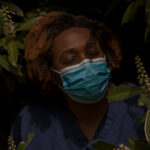
Lockdown, quarantine, shelter in place—a new vocabulary defines this period of our lives that requires us to maintain space to protect one another. Alone, we spend our time consuming or creating art and media, but many are also having to reinvent how we share that pleasure with others.
We see comedians attempting to navigate satire from living rooms; movie releases being delayed in hopeful anticipation of a less restrictive future; and book tours being curtailed for long awaited novels. For other artists, this public pause has engendered a more private creativity—a book of poems examining anti-Asian racism, lush and gentle photographs of essential medical personnel in their personal protective equipment, a step back from the stage to perform a play over Zoom.
In facing a pandemic that’s disrupted the normal rhythms of open mics and art exhibits, these Retrievers have continued their craft, carving out unique ways to then share their creations.
Can we shape and share art in community even during a global pandemic? The answer is continually a resounding yes.
An exhibit in unusual circumstances
 Headshot provided by Hannah Basher.
As Hannah Bashar ’20, art history and biology, worked to curate pieces for campus-adjacent coffee shop OCA Mocha’s Art During the Time of COVID-19 exhibit, she found herself inspired by the unique ways the contributing artists had drawn from the isolation and monotony of recent months to create impactful art.
“Some artists find inspiration in their new and changed landscapes and environments,” says Bashar, OCA Mocha’s former arts intern. She cites pieces by photographer Julie Miller, which depict the strikingly empty urban areas that the artist passed in her walks through Silver Spring.
Other works featured in the exhibit were influenced by changes in routine; during the pandemic, Miller picked up the practice of joomchi, a centuries-old Korean art medium that involves layering paper in order to create unique shapes and textures. Miller’s artist statement describes the process of joomchi as meditative and “perfect for a day of isolation.”
Bashar wasn’t necessarily seeking art that made deep philosophical arguments about the pandemic. Instead, she wanted to display works that she thought viewers could relate to. “OCA Mocha stands for the community and it’s a strong force within the Arbutus community, so I want people to walk in and feel as though they can relate to what is on the walls,” she explains.
 Artist Julie Miller picked up the practice of joomchi, a centuries-old Korean art medium that
 i
nvolves layering paper in order to create unique shapes and textures. Photo courtesy of OCA Mocha.
This means the exhibit ranges from powerful celebrations of Black women’s resiliency in textured acrylic paintings by Kathleen McPartland to playful textiles, like a diploma box filled with a yarn rug made to look like a pizza by April Berardi ’16, modern languages and linguistics.
Bashar, who plans to pursue a career not in curation but emergency medicine, says that the unusual circumstances of this show made it an especially meaningful one to end her two-semester-long internship. “My own experience curating this show paralleled the theme of the exhibition, which is about how COVID has caused us to adapt and change with the times,” she says. “I felt like my experience curating the show was, in fact, part of the show itself.”
— Johanna Alonso ’20
Comic relief
Umar Khan knew he had a chance with the crowd when he kicked off his stand-up comedy career a decade ago as a student—most of the faces in the audience were his friends and fellow Retrievers, gathered around the Sports Center stage on the second floor of The Commons. “I think there were like eight people there, and I remember walking away thinking it went well, although I’m sure if I watched it now…” Khan trails off.
“All comics will tell you this, but we have to be some of the most delusional people in the world,” laughs Khan ’10, psychology. “What person in their right mind thinks they can captivate an audience of strangers for a set amount of time and on top of that make them audibly laugh?”
-
 Khan performing at a backyard comedy show in August 2020. Photos courtesy of Khan.

Armed with a notebook full of jokes he cringes at now, Khan performed at UMBC a few more times during his senior year. He kept going after that, making inroads into the DC comedy scene, maturing his content and honing his stage presence, filming his own special, performing shows almost every night while pursuing his day job as an elementary/middle school psychologist in Baltimore City. Fast forward 10 years, and COVID-19 hit comedy like so many other arts and industries.
“Now with COVID, everyone is having to take steps back,” says Khan. “If you used to sell out theaters, well, when is anyone going to pack a theater again? So now you’re going into comedy clubs. And the people headlining comedy clubs are getting pushed down to the next level. And it just keeps going.”
“I’m so thankful I have a career—my immigrant parents were right,” Khan laughs, “dreams are stupid. You gotta get a government job with benefits and a pension.”
In August, Khan was able to return to the stage, in a backyard show following pandemic protocols. “People are so hungry for entertainment and there’s so much going on in the world right now, says Khan. “We were pushing the line and people were loving it. It was so fun.”
“You can tell people just want to feel some sense of community and a comedy show offers you that community because you’re all laughing at the same thing. And you can leave and talk about the show—sharing the experience. It will be one of those shows we’ll look back on and be like, ‘oh remember when we had to do that during COVID?’”
— Randianne Leyshon ’09
Chocopies for world peace
In an era where simply eating inside a restaurant is considered risky behavior, there was no way an art installation that invites thousands of guests to share in consuming a huge pile of South Korean snack cakes could go on as planned.
Thus, Mina Cheon’s Eat Chocopie Together project, which was shown physically at the Busan Biennale 2018 in South Korea and had been slated to open at the Lincoln Center in June 2020, had to be postponed. But Cheon, M.F.A. ’02, imaging and digital arts, and her collaborators knew that, as the pandemic raged on around the world, the installation’s themes of love, peace, and unity were more relevant than ever.
 Cheon shows a map of North and South Korea, where people in both countries participated in the art project. Photo courtesy of Cheon.
To safely bring the project into the age of COVID-19, Cheon created a website, EatChocopieTogether.com, that allows friends to email one another digital versions of the marshmallow-filled treat. The chocopies are represented by graphics modeled after real chocopie wrappers but newly designed by the artist and emblazoned with one of five words: love, peace, share, eat, or unite. The recipient can “eat” the snack by clicking the graphic, and each chocopie sent and received contributes $2 to the Korean American Community Foundation COVID-19 Action Fund.
“It’s an extended version of the original. It’s taking all the inspiration, the sentiment, the spirit of Eat Chocopie Together, but going virtual allowed us to explore the different packaging with the multiple themes” and to fundraise, Cheon says. As of September, the project reached its $5,000 goal.
The original meaning of the installation lies in the history of the chocopie; the confection is incredibly popular in both South Korea and North Korea, despite being banned in the latter country. Sharing chocopies is “meant to bring awareness of the two Koreas working towards peace and unification,” according to a press release published by Asia Society Triennal.
 Cheon stands in front of 100,000 chocopies at a 2018 exhibit in South Korea. Photo courtesy of Cheon.
The virtual version of the project emphasizes an even more global message, according to Cheon. “We are socially distanced and separated, but we can still connect,” she says. “That was such a big, empowering idea, that we could still heal through our virtual connection.”
— Johanna Alonso ’20
Art by appointment
Bonnie Crawford describes looking at art like a religious experience. So when COVID-19 interrupted her life, she realized that what she missed most was experiencing art with her friends. Over the course of a month, Crawford, M.F.A. ’08, imaging and digital arts, invited people by appointment to view her work of dental floss weavings in the shed in her backyard.
“There’s a unique mindset when someone is looking at art,” says Crawford, who didn’t want people to lose out on that opportunity during the various stages of lockdown.
 Bonnie Crawford’s dental floss weavings ranged in size from a quilt to a pocket
square. She displayed the art in her emptied out shed. Photo courtesy of Crawford.
Crawford was worried at the beginning of the pandemic that she would possibly never make art again; she was finding it meaningless. Her weavings had usually been a way for her to channel creative energy, so she reinvisioned how to share her work with others which gave her renewed purpose.
Crawford’s dental floss weavings grew from the work she does on her Instagram feed, @brushhouse, where she shares pictures of her family brushing their teeth, sometimes including a guest appearance from a friend. The weavings extended from her desire to do more formal work. They range from small enough to fit in a wallet to a tall floss weaving that hangs like a tapestry.
“I would go to my studio until I had to use the bathroom,” Crawford laughs. This meant driving across the city to go at home, wanting to err on the side of caution in the face of a novel virus. In this way, Crawford slowly made progress on her largest dental floss weaving. When she was finished, she asked her sons and boyfriend to clear out their things from the shed and then got to installing.
The exhibition was up for about a month, available for viewing on Thursdays, Fridays, and Saturdays. Using an app to schedule appointment slots, in total 90 people came to see her work. “I hoped that it fulfilled that spiritual need for others like it did for me,” she says.
— Imani Spence ’16
All the world’s a digital stage
Like most things that cannot be held in person due to the coronavirus pandemic, theater has found its virtual home on Zoom.
These digital performances can be quite similar to the existing practice of staged readings, in which actors deliver their lines with little to no sets or costumes, often while sitting. But to tell some uniquely 2020 stories, some actors, playwrights, and directors have taken this medium to a new level.
Among them is Jurdan “JC” Payne ’21, theatre, who has spent the past few months performing in virtual plays featuring casts located throughout the country. Most recently, in a ten-minute play called High, Low, Uh-Oh, Payne is one of two characters on a video chat. He calls to wish a friend happy birthday, unable to celebrate in person due to COVID-19.
 Payne looks forward to the return to a real stage, but is making most of the virtual options during the pandemic. Photo courtesy of Payne.
It was the first time Payne had ever used his own house as a set and his own possessions—ketchup mixed with water to simulate blood and a sock puppet through which he sang “Happy birthday,” for example—as props. Most of the props weren’t listed in the script; instead, Payne used whatever he had laying around the house to supplement the existing material.
(And yes, that does mean he already owned a sock puppet with googly eyes).
“It was kind of new territory for me,” he says. “It’s different from being on stage, but also really different from filming a short film or a commercial.”
 Pre-pandemic stage photo courtesy of Payne.
Another element of working in theater that has changed in recent months are auditions, says Payne. Whereas actors were once expected to dedicate 8- to 10-hour-long days to auditioning, the pandemic has solidified the fact that virtual auditions can be just as effective and informative as in-person ones, signaling a welcome shift from the traditional long audition days.
“I hope that eventually theaters will adopt that practice moving forward,” Payne says. Still, he notes that a self-tape, as they’re called in the industry, can be challenging because it requires the auditioner to act as lightning designer, cinematographer, and director, all while trying to perform.
“It’s like learning a new language,” he says.
— Johanna Alonso ’20
Community of poets
Calista Ogburn ’21, health administration and policy, began writing poetry as a way to orient herself in a new environment. As a high school sophomore in Seoul, South Korea—after moving from Vietnam—Ogburn was looking for community so she joined a public speaking club that introduced her to speech tournaments and poetry readings.
At UMBC, Ogburn has continued to use poetry as a means of making a home for herself. She credits Lia Purpura, writer in residence at UMBC, with helping her reimagine her poetry and her process as a writer. Ogburn, who is the communications director for the Student Government Association, also connected with other students in the Retriever Poets, a student group that encourages poetry through open mics and workshops. Ogburn’s first book of poetry, a splash of yellow, edited by fellow Retriever Morgan Mullings, media and communications studies, was published just for Ogburn and her friends; a project to prove to herself what she could accomplish.
 Ogburn poses with her books of poetry. Photo from calista-ogburn.com.
Ogburn’s second book of poetry was for a broader audience. Written in the beginning stages of COVID-19, this is it addresses racism towards Asian Americans, on personal and institutional levels as misunderstandings about the virus have influenced people. As a senior health administration and policy major watching a public health and political crisis, she felt called to action.
“My hope,” Ogburn shares, “is that these poems can touch those who are feeling loss, loneliness, or the combined grief and rage of experiencing racism.”
 Promotional book photo courtesy of Ogburn.
this is it was a group effort, says Ogburn, praising Mullings, who also edited this volume. Support from other Retriever Poets helped push Ogburn to truly confront the emotions that she was feeling, and gave confidence to her voice. Since her time in South Korea,Ogburn realizes that she’s “always had a community of poets.”
— Imani Spence ’16
Meant to be connected
To counter her anxiety in the time of COVID, Jill Fannon, M.F.A. ’11, imaging and digital arts, decided to photograph people who are responding to the pandemic directly—healthcare workers. Her collection, Care in the Garden, features these essential workers in quiet intimate moments outside of the hospital.
“We’re meant to be connected and we affect each other, deeply,” says Fannon, who doesn’t see this project about the art of photography as much as about capturing a moment. She has found herself asking “What will we want to know about COVID-19 50 years from now?”
When Fannon began her project in April 2020, many people didn’t expect that the country would still be facing a pandemic half a year later. Her work, Fannon says, has kept her from experiencing what many people are calling “quarantine fatigue.”
It’s been a special experience, Fannon shares, for her to meet these medical professionals in these intimate moments. While most people are working from home, healthcare workers are forced to do everything possible to keep their work from coming home with them, mentally and physically. For these healthcare workers, concerned about transmission to their families, this has transformed their spaces drastically. One of the subjects of the photo series described to Fannon how she would take all her clothes off outside her home, throw them in the laundry, and shower before touching her family.
Photography has always been a way Fannon expresses herself and finds joy, but in this moment, she wanted to use them for the greater good—showing the humanity of essential personnel even hidden behind their PPE. The contrast between their face shields, scrubs, and the lush scenery tells a powerful story about how people are finding stillness and peace during a health crisis.
— Imani Spence ’16
*****
Header image by Jill Fannon, M.F.A. ’11.
]]>
Lockdown, quarantine, shelter in place—a new vocabulary defines this period of our lives that requires us to maintain space to protect one another. Alone, we spend our time consuming or creating...
https://umbc.edu/stories/no-artist-stands-alone/
https://my3.my.umbc.edu/api/v0/pixel/news/119746/guest@my.umbc.edu/a58772c9b81c11ba276a05470da97423/api/pixel
fall-2020
feature
imda
impact
oca-mocha
photo-essay
UMBC News & Magazine
https://my3.my.umbc.edu/groups/umbc-news-magazine
https://assets1-my.umbc.edu/system/shared/avatars/groups/000/001/943/24435aa6207c452e7bc15cc74b42c7bb/xsmall.png?1748556657
https://assets1-my.umbc.edu/system/shared/avatars/groups/000/001/943/24435aa6207c452e7bc15cc74b42c7bb/original.png?1748556657
https://assets2-my.umbc.edu/system/shared/avatars/groups/000/001/943/24435aa6207c452e7bc15cc74b42c7bb/xxlarge.png?1748556657
https://assets2-my.umbc.edu/system/shared/avatars/groups/000/001/943/24435aa6207c452e7bc15cc74b42c7bb/xlarge.png?1748556657
https://assets3-my.umbc.edu/system/shared/avatars/groups/000/001/943/24435aa6207c452e7bc15cc74b42c7bb/large.png?1748556657
https://assets1-my.umbc.edu/system/shared/avatars/groups/000/001/943/24435aa6207c452e7bc15cc74b42c7bb/medium.png?1748556657
https://assets2-my.umbc.edu/system/shared/avatars/groups/000/001/943/24435aa6207c452e7bc15cc74b42c7bb/small.png?1748556657
https://assets1-my.umbc.edu/system/shared/avatars/groups/000/001/943/24435aa6207c452e7bc15cc74b42c7bb/xsmall.png?1748556657
https://assets2-my.umbc.edu/system/shared/avatars/groups/000/001/943/24435aa6207c452e7bc15cc74b42c7bb/xxsmall.png?1748556657
UMBC News & Magazine
0
0
false
Fri, 20 Nov 2020 16:24:12 -0500
Career Q&A: Melissa Penley Cormier, M.F.A. ’17
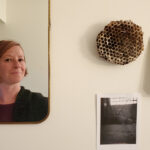
Every so often, we chat with an alum about what they do and how they got there. By day, Melissa Penley Cormier, M.F.A ’17, intermedia + digital arts (IMDA), helps faculty and students at UMBC create the graphic pieces they need for presenting their research. By night, she’s building an arts practice that draws from nature and scientific processes. Here, Cormier gives us a peek into her life as an artist.
Q: Can you tell us about the type of creative work you are doing these days?
A: I love exploring different forms and processes of photography while also mixing some of the finished results and presentation with digital media. Although the current situation makes it difficult to show work and create installations, I have a small studio in the newly renovated Long Reach Village Center in Columbia that I’ve been using for a few months to test out photography, drawings, and projected works. Finding virtual ways to show art work has been a new challenge, but also this time has made it fairly difficult to fully focus on creative endeavors. As hard as it has been, I often use my work as means of allowing myself to follow interests or take time out to just look closely. So recently, my photography has centered on my garden and nature because it has been important for me to get outside as much as possible.
 Paper wasp nest, 2019, digital photography-—one of a larger series of nests collected and imaged.
 Housefly, 2017—part of the Fret & Focus project.
Q: I know you’re also the manager of UMBC’s research graphics office. Can you talk about any ways that position and your creative life overlap?
A: My work with the sciences really fuels my curiosity in my personal work. It’s always amazing to me to see what students and faculty are researching, and talk to them about what drives them each day. The skills that I draw upon to make their work look its very best (either by printing their work for conferences, or helping with research figures and images for publications, or even taking professional portraits for announcements or lab websites) keeps my artistic skills sharp in a way that I’m truly thankful for.
 Snap-cap centrifuge tubes, 2020
Q: Could you tell us about your experience in the IMDA program? How did it help your work grow? Is there a particular professor who was especially helpful, and how?
A: The IMDA program gave me three years and the studio facilities to explore new work in an academic setting while forging new skills and professional relationships. I have a BFA in oil painting, but needed to delve deeper into more conceptual work. My thesis committee (Dan Bailey, Calla Thompson, and Timothy Nohe) were crucial in letting me fully realize my potential for the thesis project and helped support me during the intense writing, exhibition and defense process. Because my work and my writing tend to be about process and materials as much as the concepts driving the work, it can be a little difficult to nail down, and I think without their immense insight and understanding, it would have been difficult to have it be a successful direction.
 Details of installation of “Fret & Focus: worry explored through observation, projection, display, archive and documentation,” part of Cormier’s “Glass Oil Blood” 2017 MFA exhibition at the CADVC Gallery. The feather on the glass slide held by binder clips is being projected onto the long screen in the following image. Photo by Dan Bailey.
 Details of installation of “Fret & Focus”, 2017. Microscope slides of worries were collected for a year, then displayed in full on the lightbox in the center of the gallery, as well as large photographic prints, and projections from the installation found behind the long narrow screen.
Q: What would you tell prospective IMDA students about why they should join this community?
A: IMDA is sort of like being a part of this secret club of artists who really just want to make the best work they can possibly make in three years, even if they have no clue what that work is going to look like in the end. We draw such an eclectic crowd of creatives that it encourages everyone to see their own work differently while having critical discussions with faculty and fellow grads. Attending a creative MFA program at a research university certainly sets the bar high for the level of academic rigor as well as offers the opportunity for the work to truly be interdisciplinary.
* * * * * *
See more of Melissa Penley Cormier’s work at her website or on Instagram. Header image: Self portrait with test polaroids in small mirror in the Howard County Arts Council’s Long Reach Village Center Studios. All images courtesy of Cormier.
]]>
Every so often, we chat with an alum about what they do and how they got there. By day, Melissa Penley Cormier, M.F.A ’17, intermedia + digital arts (IMDA), helps faculty and students at UMBC...
https://umbc.edu/stories/career-qa-melissa-penley-cormier-m-f-a-17/
https://my3.my.umbc.edu/api/v0/pixel/news/119758/guest@my.umbc.edu/0f21efa62aab1f60af90c4e3422aad70/api/pixel
alumni
career-q-and-a
graduate-school
imda
UMBC News & Magazine
https://my3.my.umbc.edu/groups/umbc-news-magazine
https://assets1-my.umbc.edu/system/shared/avatars/groups/000/001/943/24435aa6207c452e7bc15cc74b42c7bb/xsmall.png?1748556657
https://assets1-my.umbc.edu/system/shared/avatars/groups/000/001/943/24435aa6207c452e7bc15cc74b42c7bb/original.png?1748556657
https://assets2-my.umbc.edu/system/shared/avatars/groups/000/001/943/24435aa6207c452e7bc15cc74b42c7bb/xxlarge.png?1748556657
https://assets2-my.umbc.edu/system/shared/avatars/groups/000/001/943/24435aa6207c452e7bc15cc74b42c7bb/xlarge.png?1748556657
https://assets3-my.umbc.edu/system/shared/avatars/groups/000/001/943/24435aa6207c452e7bc15cc74b42c7bb/large.png?1748556657
https://assets1-my.umbc.edu/system/shared/avatars/groups/000/001/943/24435aa6207c452e7bc15cc74b42c7bb/medium.png?1748556657
https://assets2-my.umbc.edu/system/shared/avatars/groups/000/001/943/24435aa6207c452e7bc15cc74b42c7bb/small.png?1748556657
https://assets1-my.umbc.edu/system/shared/avatars/groups/000/001/943/24435aa6207c452e7bc15cc74b42c7bb/xsmall.png?1748556657
https://assets2-my.umbc.edu/system/shared/avatars/groups/000/001/943/24435aa6207c452e7bc15cc74b42c7bb/xxsmall.png?1748556657
UMBC News & Magazine
0
0
false
Tue, 03 Nov 2020 19:38:25 -0500
Curating COVID-19
At times of momentous change some take solace in creating. The UMBC community is no exception, adding to a long history of artists and writers recording everyday life during pandemics. From writing diaries and journals to creating art books and developing archives, Retrievers are finding ways to continue to support and create community during the COVID-19 pandemic.
“We rely on scientists, policy makers, and government officials for information,” explains Amy Froide, professor of history, who researches 17th century Britain, including the last great plague epidemic of 1666.
“We need this information. However, it is artists, writers, painters, and musicians who help us understand and process our daily life during this unprecedented time.”
Historians turn to journals and diaries written during the plague of the 17th century in Britain because they painted a picture of everyday life. Artifacts that chronicle how people live, feel, and react to a catastrophic event on a daily basis help us understand the devastating effects across different sections of society. These mundane acts were as important to understanding the impact of a devastating time as were major headline stories.
Early on in the pandemic, Froide encouraged her students and colleagues to document the COVID-19 era through journals and diaries of their own to help future historians understand how daily life changed. Julia Arbutus ’20, English and financial economics, the editor of The Retriever, was inspired by Froide’s post and wrote, “‘The more mundane, the better’: Mass observation during the coronavirus.”
“The arts and the humanities are what we depend on to sustain us,” says Froide.
Paying homage
Jill Fannon, MFA ’11, intermedia and digital arts, is trying to balance the fine line between being a partner, mother, independent professional photographer, and a concerned citizen living within a global pandemic. At the beginning of the stay-at-home orders she took pictures of her family and of artists from a distance, but it didn’t feel quite right.
“These small projects weren’t clicking for me,” says Fannon. “I realized that during this historic moment capturing the experience of health care workers would be very meaningful both in the short and long term.”
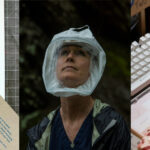
Fannon’s “Care In The Garden” is a series of photographic stories about women health care workers. Therapists, physician assistants, and nurses are captured in their uniforms with different types of personal protective equipment in nature. Capturing the workers in nature serves as a contrast between a sterile and structured medical environment with the natural blooming world of spring. It also serves as a reminder of places where we would usually enjoy breathing in the scents of new blooms but that now pose a threat with a virus that attacks the respiratory system.
The first set of images were compiled in Womanly Magazine, a Brooklyn, NY-based magazine dedicated to serving women and marginalized communities. The series also lives on Jill Fannon’s Photography website.
Pieces from Jill Fannon’s photo series “Care In The Garden.”
Another source of inspiration is Fannon’s family of first responders. Both parents served in Baltimore City and County. Her mother is a retired ICU nurse and her father a retired fire chief, while her brother is a Baltimore City fire chief.
“I wanted to document the people that were working really hard,” says Fannon. “It was a way to share the lives of workers whom the public was depending on and are taking extraordinary risks.” Fannon adds that growing up she remembers her mom taking nostalgic family portraits which she drew inspiration from as well.
In addition to documenting the pandemic, Fannon is also mobilizing fellow artists to give back to the community as a co-creator of Feral Kids – Benefits Maryland Food Bank. The project asks area artists to donate a print they created to sell online with 100 percent of the benefits going to the food bank. This endeavor is co-led by Nick Prevas ’03, visual arts, and has received support from Justin Plakas ’04, visual and performing arts, former student Kyle Hurley, Joseph Faura, M.F.A. ’11, intermedia and digital arts; and Carrie Rennolds, M.F.A. ’14, intermedia and digital arts.
Giving voice to the voiceless
Conor Donnan ’16, history, a doctoral student in history at the University of Pennsylvania, is taking a similar approach. He is the co-creator of the Coronavirus Chronicles: Sharing Stories Through Isolation, a large digital archive collecting diaries, stories, academic articles, video, photography, paintings, wall art, memes, lyrics, and social media from people who want to document and share their lives during the pandemic. The archive is managed by a team of historians and scholars from Singapore, China, the United Kingdom, Ireland, Hong Kong, Japan, and the United States.
Donnan researches the history of the relationship between Native Americans and Irish immigrants, a partnership that has typically not been included in history. “History is a dialogue,” says Donnan. “One of the main reasons for my academic career is diversifying the voices who are heard in these narratives.”
Donnan grew up in Northern Ireland during tumultuous times. After the conflict, he noticed that the history of Northern Ireland rarely included the accounts of everyday people who had to endure the violence, poverty, and famine. Donnan wanted to prevent this from happening during this COVID-19 pandemic.
“In the future, people are going to write about COVID-19 and they are going to analyze presidential speeches and CDC press releases,” explains Donnan. “This archive will be a place where people can now and later learn about what all kinds of people were thinking on the day-to-day. The ones the news and history books rarely document.”
Acknowledging the lost and found
Associate professor of media and communications studies, Rebecca A. Adelman, also took to the digital world, creating the Coronavirus Lost and Found archive. One of the topics that Adelman researches is the role of emotion in public culture, and the forms of suffering that often get overlooked in times of crisis.
“I am interested in non-spectacular forms of suffering. I wanted to capture the stories that would never make the news but still matter,” says Adelman.
The collection so far is as varied as its contributors. In “I Lost First Grade” a first grader talks about her sadness about missing math, her friends, and her beloved teacher. Another person shares their frustration about losing their most cherished “Alone Time;” and in “My [Health] Recovery, readers learn about the anger and hopelessness felt about losing access to doctors for ongoing recovery treatment. In Order and Time for Creativity, contributor Jason Tremblay writes about a “found”—time to be creative and embrace passions.
“I felt it was important to create a forum where people’s losses and finds could be recorded, shared, and acknowledged even if they seemed small in the greater scheme of things,” said Adelman.
Losing a conference, finding stories
Writing and reading stories to help us process what it’s like to live through a pandemic is a long-held practice. In 1348 during the Black Death, Giovanni Boccaccio, an Italian writer, wrote The Decameron, a story that tells of a group of people who told 10 stories a day for 10 days to pass the time during the bubonic plague. Kate McKinley, professor of English, explains how The Decameron revealed how different economic classes dealt with the Black Death in her article “How the rich reacted to the bubonic plague has eerie similarities to today’s pandemic.”
UMBC’s digital story working group in the humanities, led by Bill Shewbridge ’80, history, M.S. ’85, instructional technology, professor of the practice in media and communication studies, had originally planned a Digital Storytelling Conference in March with the University of Loughborough in the United Kingdom. When the conference was postponed, the group found an opportunity to start a Decameron of their own.
UMBC’s version is collecting 10 stories a week for 10 weeks during the COVID-19 pandemic. The stories in The Digital Decameron offer a space to document our current life through digital stories about any topic.
Charlotte Keniston, MFA ’14, intermedia and digital art, associate director of the Peaceworker Program, curated the second week. Over 7,000 Peace Corps volunteers had to be evacuated throughout the world and returned to their homes due to the pandemic, so Keniston used the platform to highlight the digital stories of returned UMBC Peace Corps Volunteers and the lessons their Peace Corps service taught them. All the videos record a meaningful event marking the first time they became truly aware of being a Peace Corps Volunteer either through a ritual they were invited to participate in, a meaningful conversation they had with local community members, or challenging experiences in a new culture.
Calling all artists
Visual artist Nicole Ringel ’19, M.F.A., intermedia and digital arts, and adjunct professor of visual arts, found herself in need of keeping and widening her artist community during the pandemic shelter-in-place orders. Ringel, who through her work investigates the layered historical and ecological nuances of shared landscapes, had one powerful tool to meet this goal—a risograph machine.
A cross between a silk screen press and a copy machine, the risograph is popular with artists for its ability to make high quality prints at low cost. She found herself equipped with a tool that could create a print book and serve as a platform for artists cut off from their creative communities. In the absence of being able to meet in person, the book would at least bring together their stories, poetry, and photography.
 Ringel and her risograph machine. Photo courtesy of Ringel.
COVID Landscapes is the inaugural book of Ringel’s small press Sense of Press. Over forty artists share their perspectives on how home, work, and social environments have changed as a result of COVID-19. Ringel was inspired by the changes she experienced in her own spaces. Her house is now a work, classroom, and home space. She says that even mundane spaces such as the grocery store have changed. They are now charged with anxiety and fear of contagion.
“The book is a way to bring mindfulness into the act of creating things in the wake of all the systemic problems we face every day,” says Ringel. “It is about an exchange of art and labor, a vehicle that brings something precious that we can touch and feel, to remind us of the power of purposeful connection and community especially during a time of isolation and uncertainty.”
Header images, L-R: Nicole Ringel’s Covid Landscapes project, Jill Fannon’s “Care In The Garden,” and class journaling from The Retriever newspaper.
Share your own stories of Retriever Resilience by using the #UMBCtogether hashtag, and read more at umbc.edu/together.
]]>
At times of momentous change some take solace in creating. The UMBC community is no exception, adding to a long history of artists and writers recording everyday life during pandemics. From...
https://umbc.edu/stories/curating-covid-19/
https://my3.my.umbc.edu/api/v0/pixel/news/119879/guest@my.umbc.edu/949a973b7baad9a40f1dca742cb28ca3/api/pixel
alumni
cahss
covidresearch
english
graduateschool
history
imda
impact
resilience
umbctogether
UMBC News & Magazine
https://my3.my.umbc.edu/groups/umbc-news-magazine
https://assets1-my.umbc.edu/system/shared/avatars/groups/000/001/943/24435aa6207c452e7bc15cc74b42c7bb/xsmall.png?1748556657
https://assets1-my.umbc.edu/system/shared/avatars/groups/000/001/943/24435aa6207c452e7bc15cc74b42c7bb/original.png?1748556657
https://assets2-my.umbc.edu/system/shared/avatars/groups/000/001/943/24435aa6207c452e7bc15cc74b42c7bb/xxlarge.png?1748556657
https://assets2-my.umbc.edu/system/shared/avatars/groups/000/001/943/24435aa6207c452e7bc15cc74b42c7bb/xlarge.png?1748556657
https://assets3-my.umbc.edu/system/shared/avatars/groups/000/001/943/24435aa6207c452e7bc15cc74b42c7bb/large.png?1748556657
https://assets1-my.umbc.edu/system/shared/avatars/groups/000/001/943/24435aa6207c452e7bc15cc74b42c7bb/medium.png?1748556657
https://assets2-my.umbc.edu/system/shared/avatars/groups/000/001/943/24435aa6207c452e7bc15cc74b42c7bb/small.png?1748556657
https://assets1-my.umbc.edu/system/shared/avatars/groups/000/001/943/24435aa6207c452e7bc15cc74b42c7bb/xsmall.png?1748556657
https://assets2-my.umbc.edu/system/shared/avatars/groups/000/001/943/24435aa6207c452e7bc15cc74b42c7bb/xxsmall.png?1748556657
UMBC News & Magazine
0
0
false
Wed, 20 May 2020 21:32:15 -0400
Perspective: An American Artist in Italy
Leah Clare Michaels is a Baltimore native, artist, activist, historian, and surfer. She earned her M.F.A. in Intermedia and Digital Arts from UMBC in 2019 and her B. A. in History from the University of Washington in Seattle.
* * * * *
It was five months after my graduation from UMBC’s M.F.A. program when I decided to fulfill a promise I made to myself years ago. When you finish your M.F.A. you can focus on languages again.
For months after graduation, I had worked on drafting proposals for every grant and research opportunity I could get my hands on – including a massive, time-consuming Fulbright application. I found myself caught in a limbo of countless freelance contracts, part-time gigs, and waiting tables. At first it was exciting, the idea of not knowing where I could be in the next month. But it soon turned into a series of disappointing holding patterns. I was too afraid to commit to anything long-term just in case I was awarded one of these opportunities. This became a slippery hope slope, and by October I was starting to feel…depressed.
One day, I was reviewing some old journals and a piece of advice from someone I love popped out at me. It read, “You don’t have to have it all figured out all the time, Leah.” I instantly felt a weight lift off my chest and thought, “That’s it. I’m going to Italy. I’m going to study Italian, and I’m going to start making art again.” With the small savings I had cobbled together from this array of jobs, I bought a one-way ticket to Italy.
 The Fountain of Neptune in Bologna.
IL DOLCE FARE NIENTE
By early January, I was lucky enough to be living with family friends – Angela and Antonio and their children Federico and Rebecca – in Bologna, a small Medieval city in the North of Italy. I was finally going to lean into Il Dolce Fare Niente (the art of doing nothing) and attempt to scurry out of the hamster wheel of this life.
In between taking the bus to my language lessons, wandering around the city, and sharing daily life with my family, the first whispers of the COVID-19 panic began to permeate the airwaves. We were listening to the news as we prepared for dinner one evening. I missed a sentence that the announcer reported. “What did she just say?” I asked Federico, the eldest son, who is twenty years old and currently in medical school.
“There is a new virus in China,” he replied to me. At that moment I thought, that’s strange. I hope it doesn’t harm a lot of people. We finished dinner and the whole family squeezed onto the couch to watch Angela’s favorite soap opera, Un Posto al Sole.
 Piazza Navona in Rome, Italy.
WHEN IN ROME
I considered hopping all around Italy after my language lessons were finished: Venice, Milan, Verona, Siena, Florence, Rome, Naples, but a little voice in my head said, Don’t do that, just go to Rome. There had been three cases of coronavirus in Rome by the end of January. However, contract tracing had been done, and the three patients, including two Chinese tourists, were isolated at the hospital; all three had recovered. I believe this was a major news point that led many Italians, and me, to believe that this virus would not have a large effect, and that if you did get sick you would most likely get better. There were no other reports of COVID-19 in Rome, yet, so I traveled to the Eternal City on February 10.
I love Rome, but I guess that would be no surprise knowing I received my undergraduate degree in history. I know this ancient city has its faults and complications, but loving something means loving all of it. Traffic there is horrible, it is difficult to navigate, and large portions of the busy sidewalks are currently overrun with trash. But despite all that, Rome is the most magical city. Time unfolds differently there; the ancient meets the contemporary and pours into the streets, and this coupling of lifetimes is embedded in the energy that floats through the urban landscape.
 The Colosseum in Rome, Italy.
I let myself wander for ten days, discovering new treasures and previous haunts. On Valentine’s Day, my favorite holiday, I visited the relic of Saint Valentine, climbed the hill to the orange grove of the Aventine, and wandered into the church of Santa Sabina where a group of students surprised fellow tourists by slowly flowing into song. I treated myself to cappuccinos in cafes in the morning and stumbled into bookstores in the evening. Ruins appeared in grand and simple ways, fountains glowed at night and lit my way as I roamed. I overheard conversations in Italian and felt proud of myself when I could understand half of it.
 Crowd at the glowing Trevi Fountain.
I made friends with a woman named Sabrina, who owned a small nail salon next to my apartment. At one point we discussed the virus. “Sei preoccupata? (Are you worried?),” I asked her. She paused for a minute and replied, “Un po’ (a little).”
A NEW WORLD IN BOLOGNA
After my final cappuccino at one of my favorite cafes, I packed my things, took the bus to Termini Station, and headed back to Bologna on Saturday the 22nd. That Sunday morning, I visited the MAMBO and discovered Daniela Comani’s work for the first time. She moved to Berlin in 1989 and kept a diary of her life. Wow, what a time to live in Berlin, I thought.
Around the dinner table that night, it was announced that all the schools, universities, cinemas, libraries, and museums of Bologna would be closed starting on Monday. Neighboring states were experiencing rapidly spreading outbreaks of COVID-19. In Milan, the police had barricaded the city, and the trains between Italy and Austria had been shut down. Davvero?! (Really?!)
Within the span of a few days, the energy around the coronavirus has shifted. One of my best friends from high school texted me. She and her husband were supposed to go to Milan the following week and she asked my opinion. “The city is police barricaded, everything is closed, La Scala is closed. You have to cancel,” I told her. It was hard for her to believe at first but after some convincing she conceded. I had already planned on coming home on Tuesday, February 25th, for another small trip planned with friends, and I am still shocked at the timing.
For my last day in Italy, I took a food tour of Bologna; there were only three people. Our tour guide shared with us that she hoped the closures would not affect small businesses, and she hoped they could still do tours. Bologna was not very busy that Monday and I thought about how the city had slowly been making its way into my heart with its painted ceiling porticos, talking walls, hidden canals, and frescos of hell.
When I came back from the tour, Federico and I watched the news. He told me he was worried. The hospitals in the North of Italy could handle this, he said, but if it spread to the south… We were both glued to the television for what felt like hours. “We have to stop,” I tell him. “This will make us crazy. There is nothing we can do right now.” He agreed with me and we turned it off.
After my final dinner with the family, I met some friends at a bar to say goodbye. Most of them were not worried. Everyone thought it would pass in a week or two. I called the airline that Monday night and they assured me that the flight would still be taking off in the morning.
SAYING GOODBYE
Tuesday morning, Angela and I sat together at the kitchen table, holding hands and holding back tears as we said our goodbyes. I hugged everyone and Antonio drove me to the airport. I was nervous for the entire two hours that I sat in the airport in Bologna.
I was shocked by what happened next: Nothing. At each check-in point in Bologna and Frankfurt, someone asked me if I had been to China in the last two weeks. My check-in point in Houston did not ask me any questions. There were no temperature checks, no hand sanitizers, no discussions of the growing outbreak in Italy.
I arrived home in Baltimore that Tuesday at midnight, glad to be home safely on one hand, but with an impending sense of worry and concern on the other. I knew what was coming; I could feel it in my body.
 Italian flag in the Campo de’ Fiori in Rome, Italy.
LOCKDOWN
On March 9, the entire country of Italy was put on lockdown. On March 12, I visited the Baltimore Museum of Art with a renewed sense of urgency. I knew that this would be the last time I would have a chance to see the work promised to the Baltimore community. The BMA vowed that 2020 would be a year dedicated to women artists, local and international.
I viewed Howardena Pindell’s Free White And 21, wandered inside Katharina Grosse’s Is It You?, felt moved by Valerie Maynard’s Lost and Found, and was mesmerized by Ana Mendieta’s Blood Inside Outside all over again. (Mendieta’s work has been an influence for years and I referenced her in my M.F.A. thesis.) I thought about how much she loved Rome, the pieces she created there, and that she also dreamed of building a life in the Eternal City.
We live our lives in layers, through time and space. I thought about how all these women used art as their medium to express their personal and political experiences. These works create spaces to reflect on pain, trauma, oppression, and offer to guide the viewer into sacred conversations on how to bear witness to these hurts and how to heal.
A deep sense of sadness filled me as I walked down the marble steps and left the museum. I knew that we would soon be living in a world without direct access to art, without shared spaces, and in a sense, without each other. I thought about how this would hurt the already disenfranchised more than most, and how our government is not prepared to handle this emergency. The BMA closed soon after, and one after another many institutions and businesses followed.
 Street art in Bologna encourages us to “Breathe.”
A TIME FOR REFLECTION
As I look back on my journey, these thoughts remain. May this unprecedented challenge lead us to a period of reflection. This is the time to take note of the national and international systems that have been broken – many have not sufficiently served their communities for centuries.
Perhaps this will lead to a new way, new leaders, and a new series of systems where the primary focus is the health, safety, and happiness of communities and not volatile markets which make the rich richer and the poor poorer. May we start revolutions from our bedrooms and living rooms, and imagine using the rubble of this time to build a world without poverty where everyone has equitable access for healthcare, knowledge, and art.
May there be creative work that comes out of this period, which gives ourselves time to mourn and also offers some solace. And may this time bring an awakening to just how connected we all truly are.
* * * * *
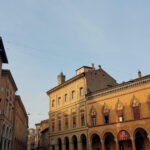
All images courtesy of Leah Clare Michaels. Header image: Piazza Santo Stefano in Bologna, Italy.
]]>
Leah Clare Michaels is a Baltimore native, artist, activist, historian, and surfer. She earned her M.F.A. in Intermedia and Digital Arts from UMBC in 2019 and her B. A. in History from the...
https://umbc.edu/stories/perspective-an-american-artist-in-italy/
https://my3.my.umbc.edu/api/v0/pixel/news/119925/guest@my.umbc.edu/97ed56f42902028b70ef4d4728134a3f/api/pixel
alumni
cahss
graduateschool
imda
resilience
UMBC News & Magazine
https://my3.my.umbc.edu/groups/umbc-news-magazine
https://assets1-my.umbc.edu/system/shared/avatars/groups/000/001/943/24435aa6207c452e7bc15cc74b42c7bb/xsmall.png?1748556657
https://assets1-my.umbc.edu/system/shared/avatars/groups/000/001/943/24435aa6207c452e7bc15cc74b42c7bb/original.png?1748556657
https://assets2-my.umbc.edu/system/shared/avatars/groups/000/001/943/24435aa6207c452e7bc15cc74b42c7bb/xxlarge.png?1748556657
https://assets2-my.umbc.edu/system/shared/avatars/groups/000/001/943/24435aa6207c452e7bc15cc74b42c7bb/xlarge.png?1748556657
https://assets3-my.umbc.edu/system/shared/avatars/groups/000/001/943/24435aa6207c452e7bc15cc74b42c7bb/large.png?1748556657
https://assets1-my.umbc.edu/system/shared/avatars/groups/000/001/943/24435aa6207c452e7bc15cc74b42c7bb/medium.png?1748556657
https://assets2-my.umbc.edu/system/shared/avatars/groups/000/001/943/24435aa6207c452e7bc15cc74b42c7bb/small.png?1748556657
https://assets1-my.umbc.edu/system/shared/avatars/groups/000/001/943/24435aa6207c452e7bc15cc74b42c7bb/xsmall.png?1748556657
https://assets2-my.umbc.edu/system/shared/avatars/groups/000/001/943/24435aa6207c452e7bc15cc74b42c7bb/xxsmall.png?1748556657
UMBC News & Magazine
0
0
false
Mon, 06 Apr 2020 19:00:51 -0400
UMBC Shines at Brilliant Baltimore

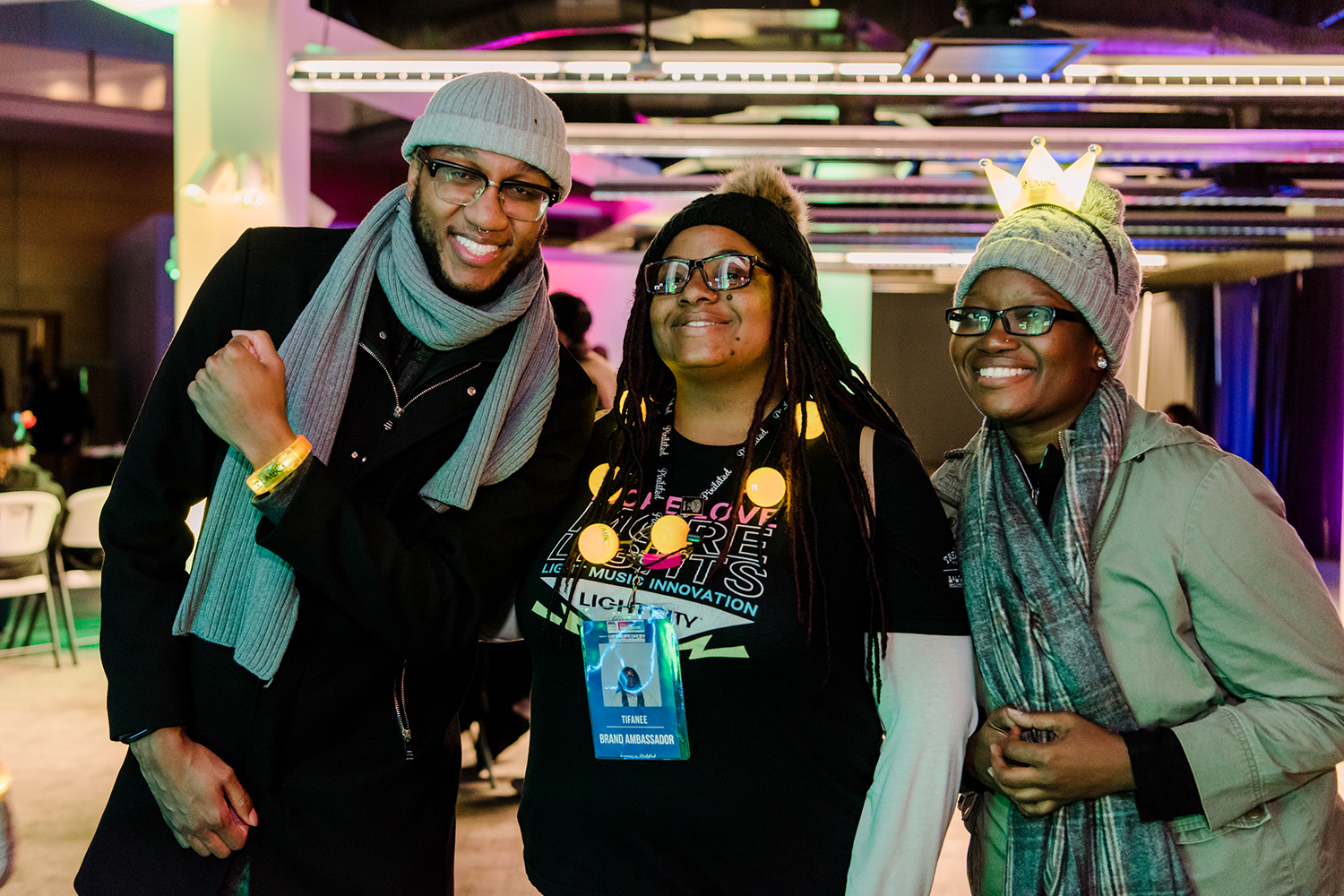
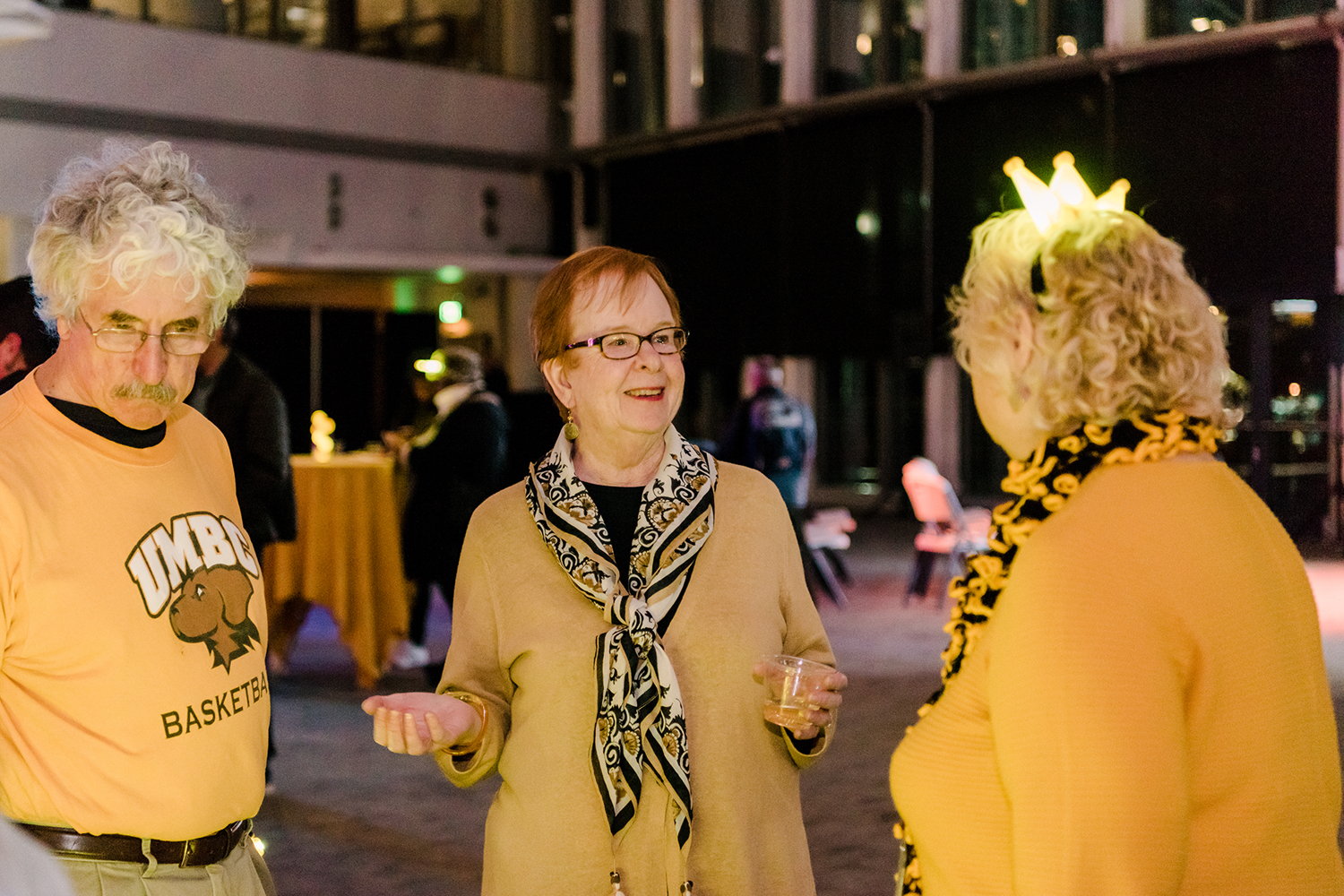
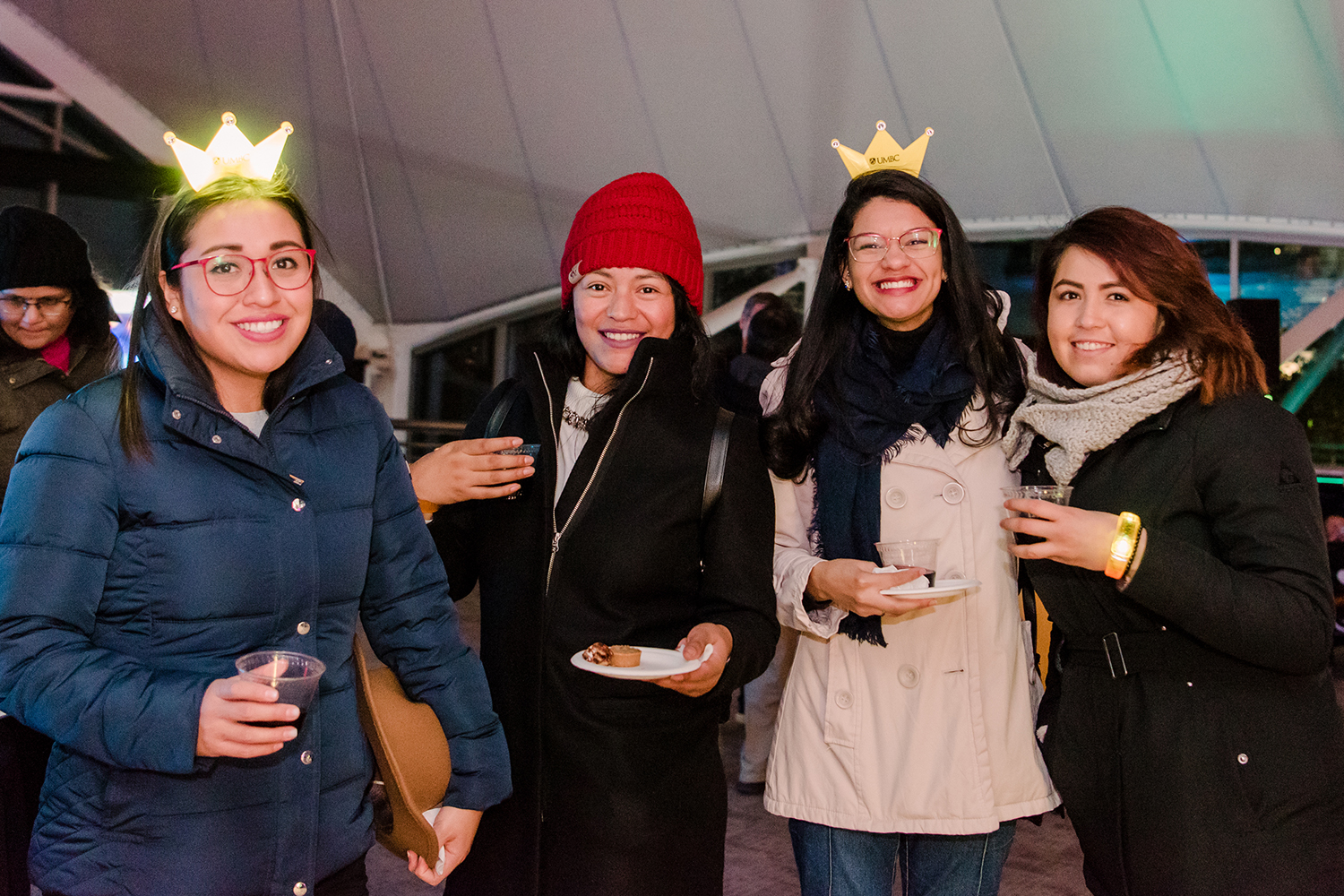
In this first year of Baltimore’s mash-up of eclectic and electric art festival Light City and the annual book festival—a hybrid called Brilliant Baltimore—UMBC shone brightly.
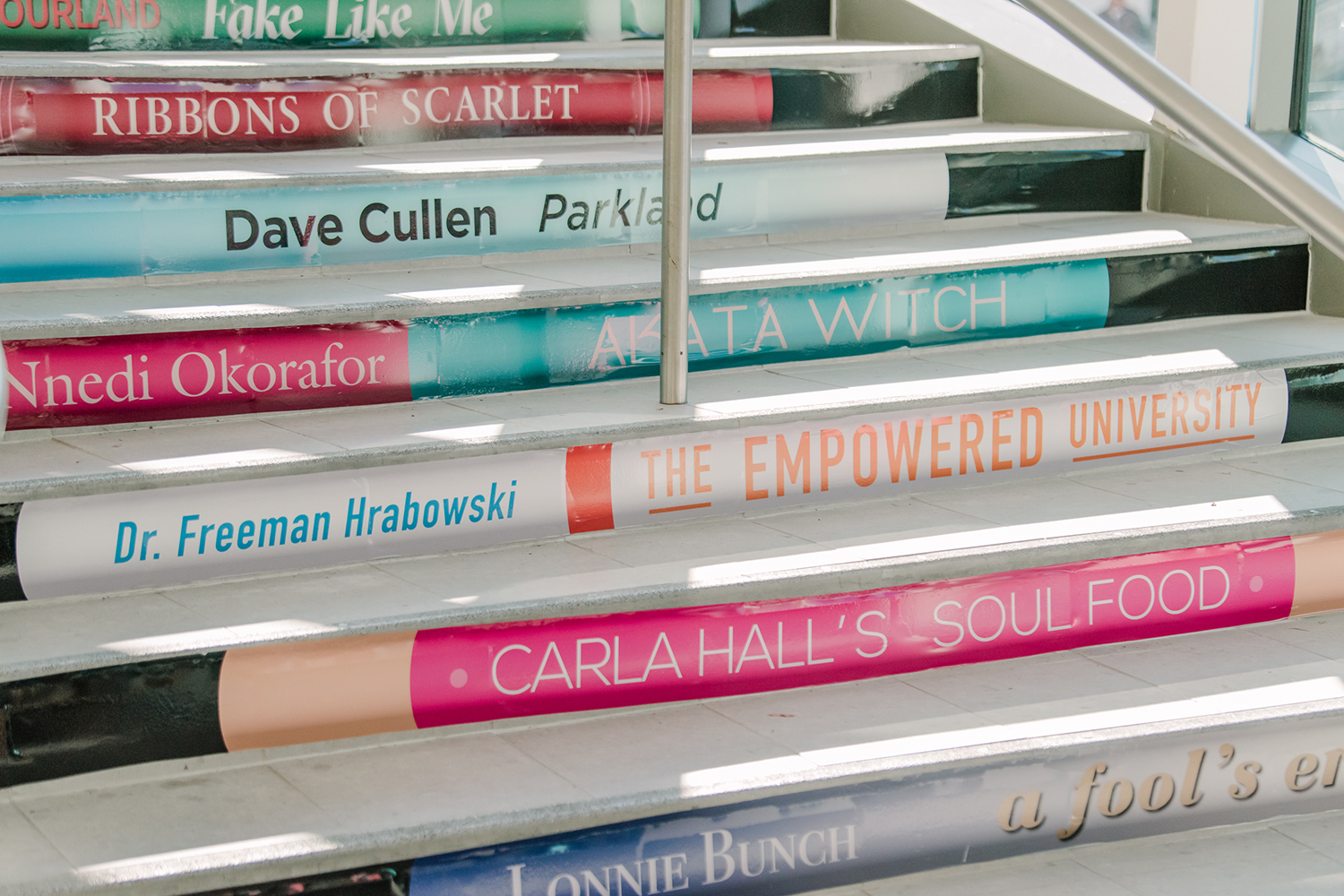
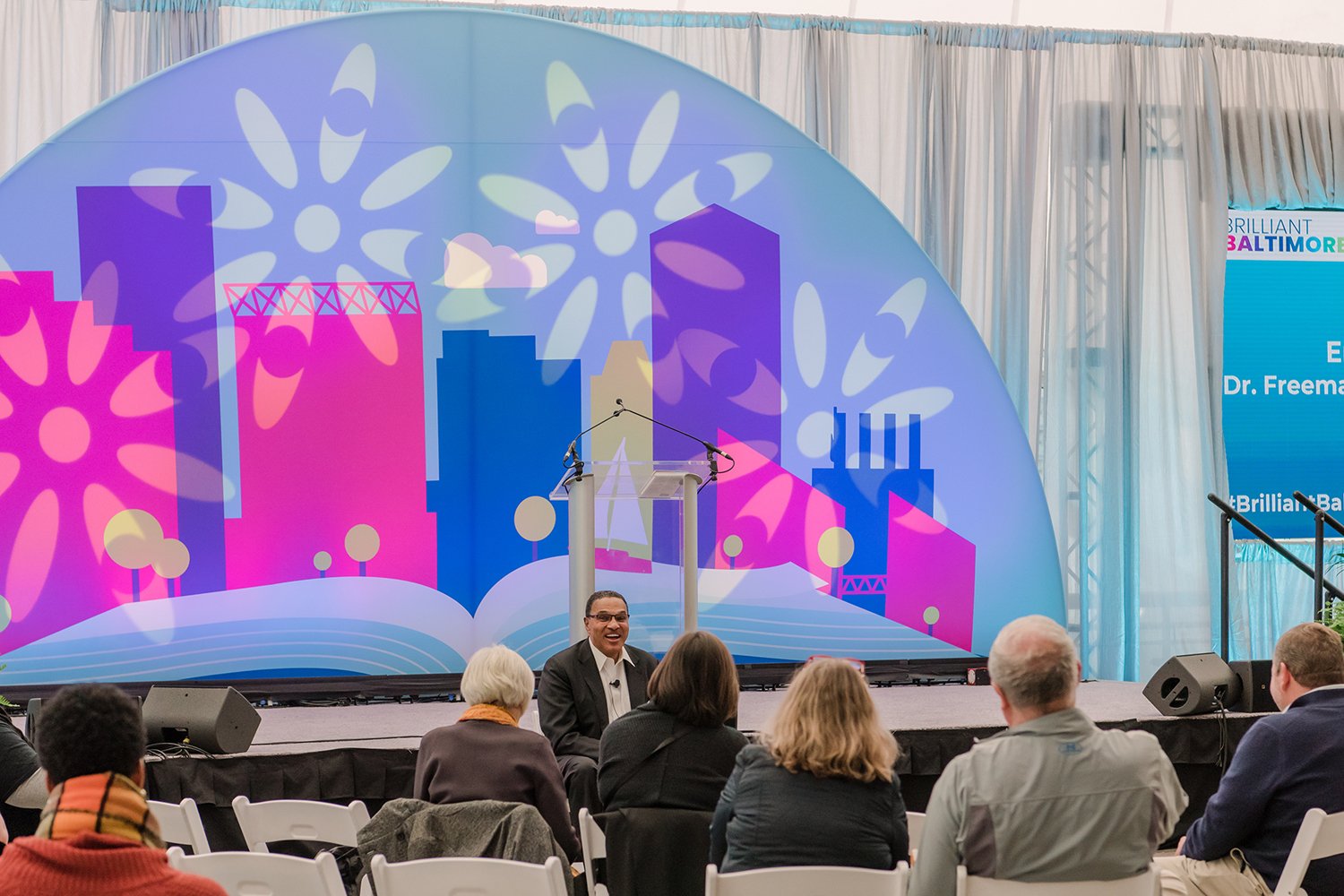
Several UMBC authors took to the stage, including our very own President Freeman Hrabowski, to promote the launch of his newest book. The Empowered University, co-authored with Provost Philip Rous and Peter Henderson, details how the UMBC community has come together to tackle some of higher education’s most intractable challenges and become a national model for inclusive excellence along the way.
Another literary panel included the editors of Baltimore Revisited: Stories of Inequality and Resistance in a U.S. City, a book of essays that reflects Baltimore’s complex history and efforts to address the city’s pervasive inequalities. In a panel with the editors—Nicole King, associate professor and chair of the Department of American Studies; Kate Drabinksi, lecturer in Gender, Women’s, + Sexuality Studies; along with Joshua Clark Davis, an assistant professor of history at the University of Baltimore—discussion ranged from community health, to the history of development, and protests throughout the years.
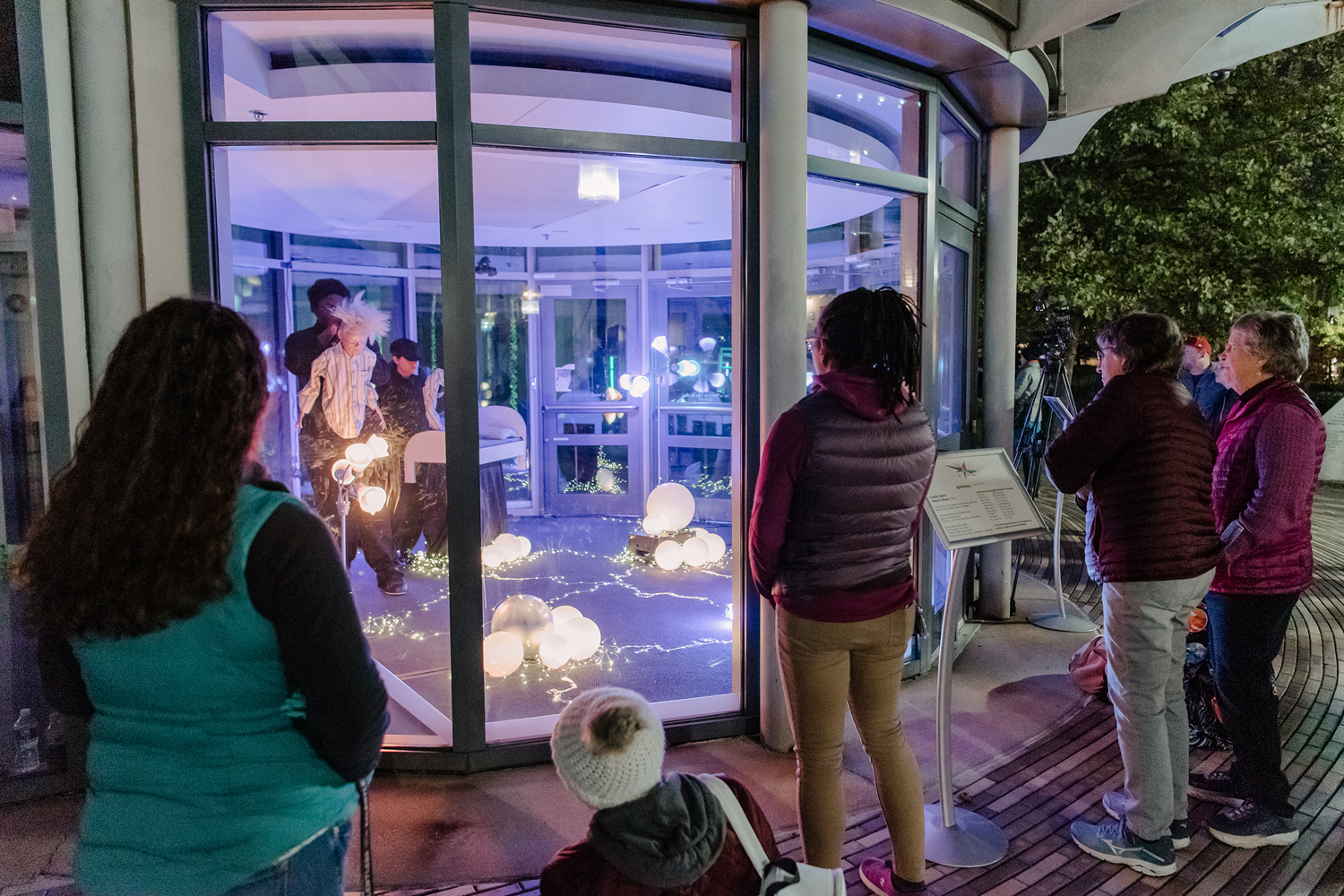
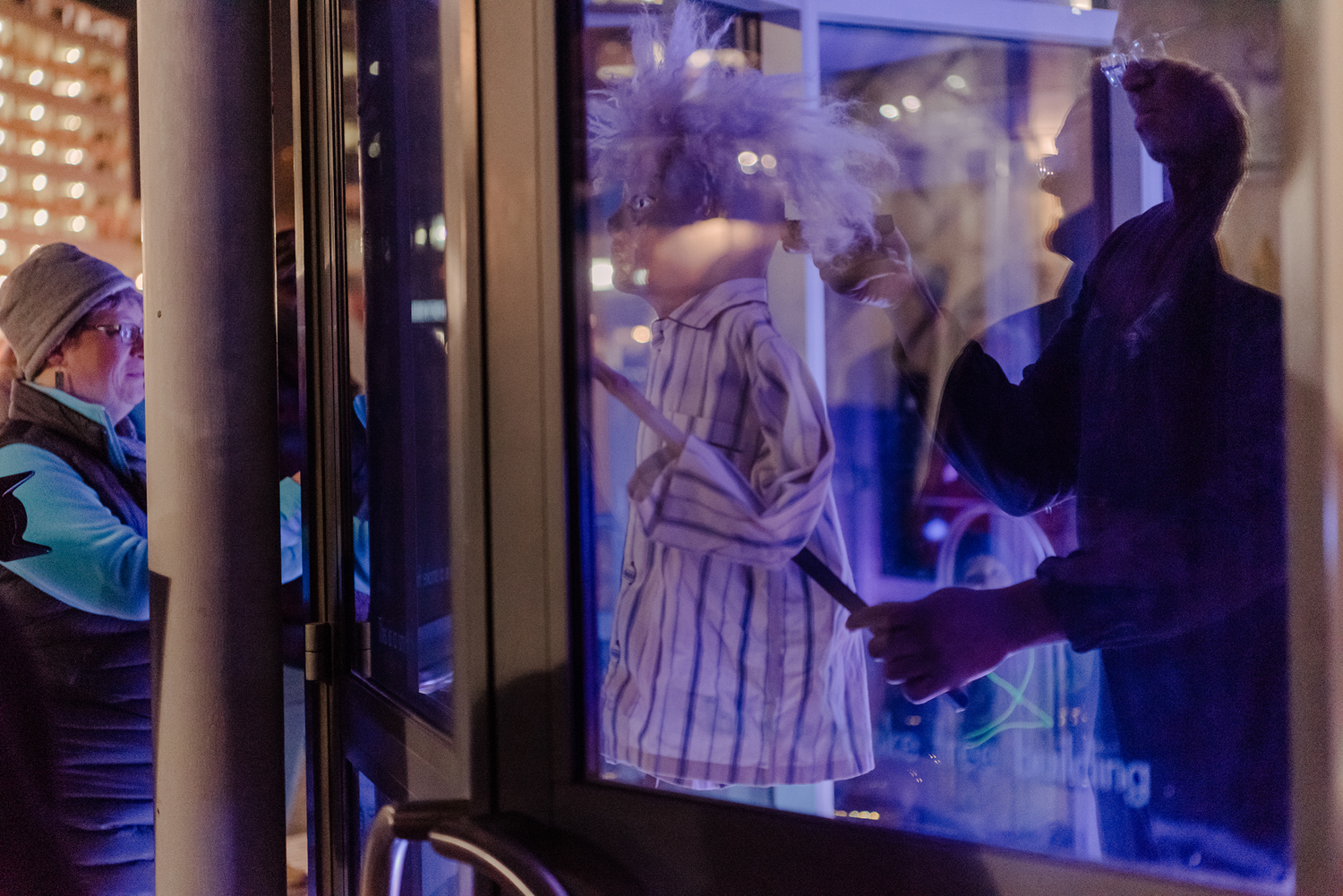
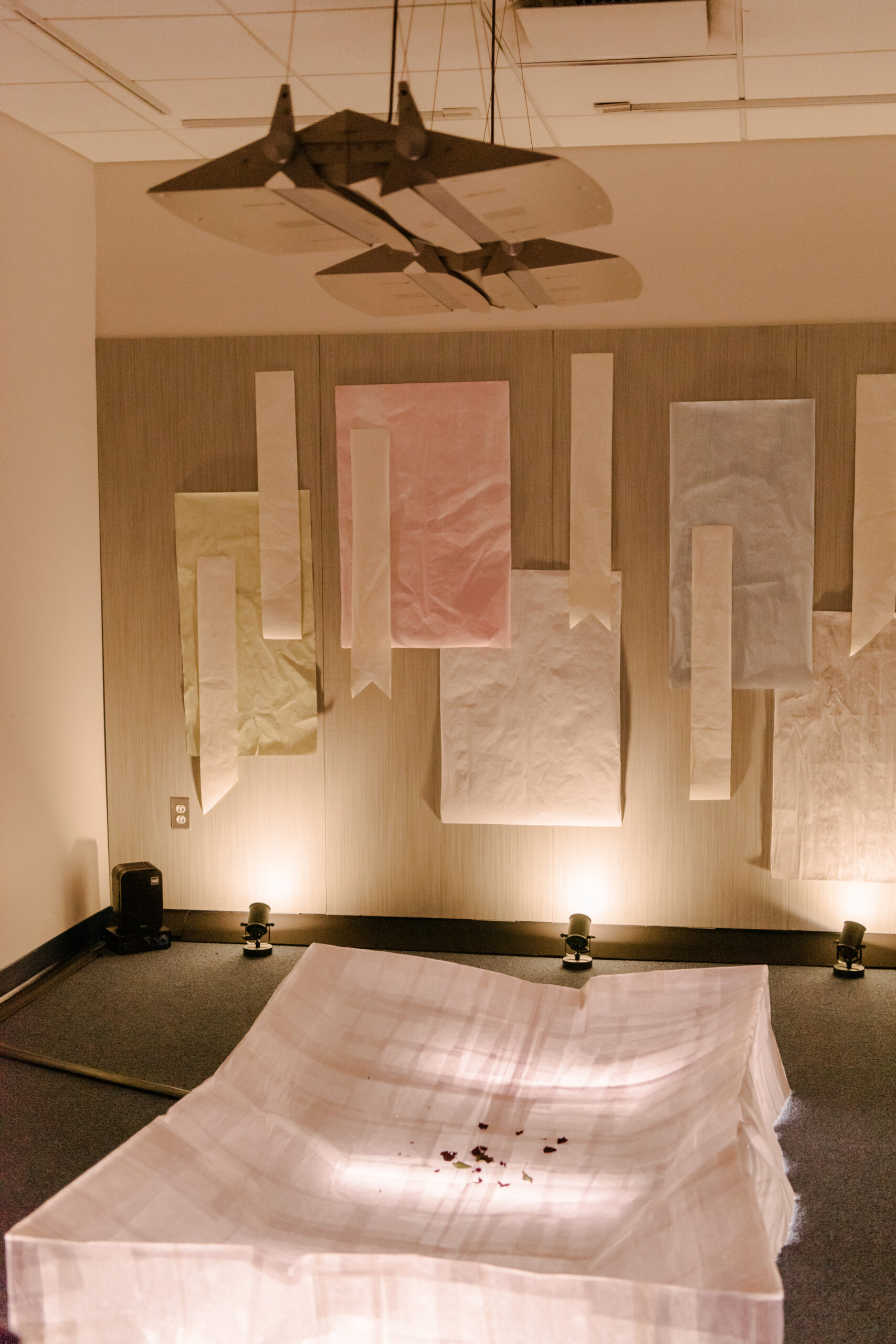
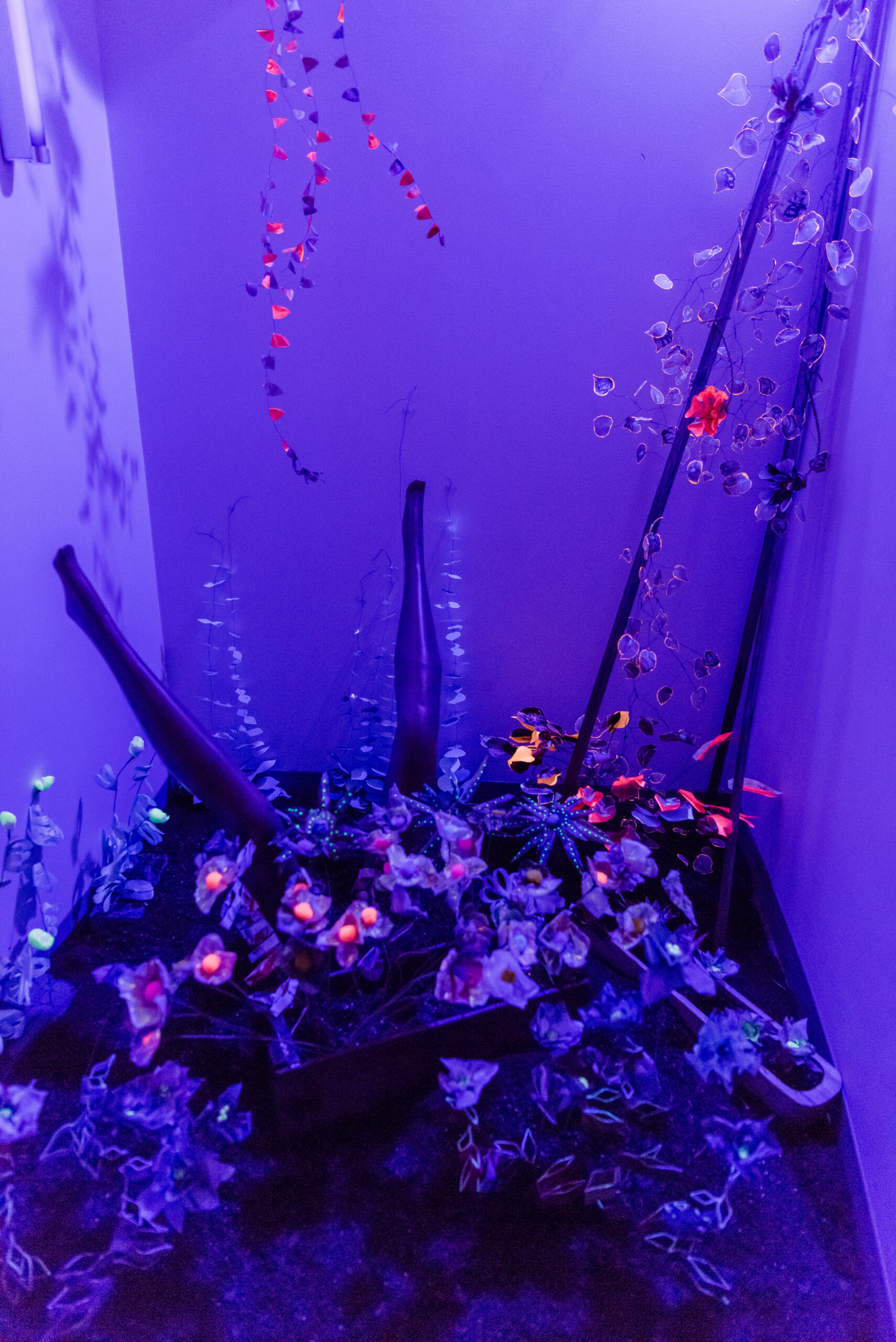
Other UMBC light and literary work was on display at the SPARK Gallery. Curated by UMBC’s Catherine Borg, a Baltimore artist tracing shifting narratives in American culture in photo and video based artworks and installations, the exhibit featured UMBC and Towson artists. A luminous, surreal puppet show, several musical scores, animated short films, and more populated this creative space that encouraged participants to interact with the installations.
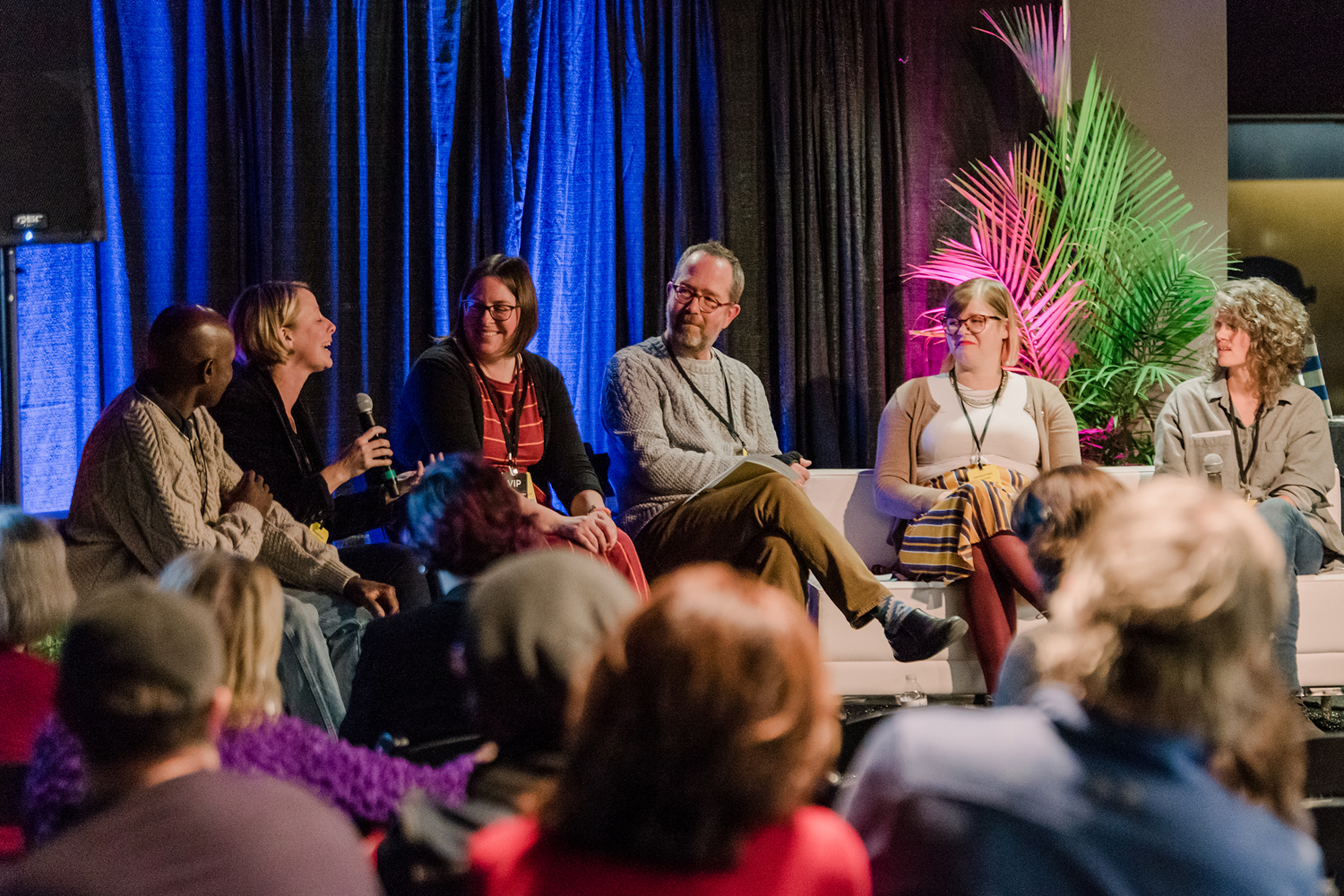
Additional UMBC events included a conversation with artists and writers who’ve collaborated with each other in the past 10 years of The Light Ekphrastic (TLE), a zine published by UMBC Magazine‘s own editor, Jenny O’Grady. Co-hosted with Timothy Nohe, professor visual arts at UMBC, the group discussed the method of responding to existing art to create something new, which is the mission of TLE.
Discussion with Hrabowski about his newest book
Baltimore Revisited panel

SPARK Gallery reception and performances



The Light Ekphrastic panel
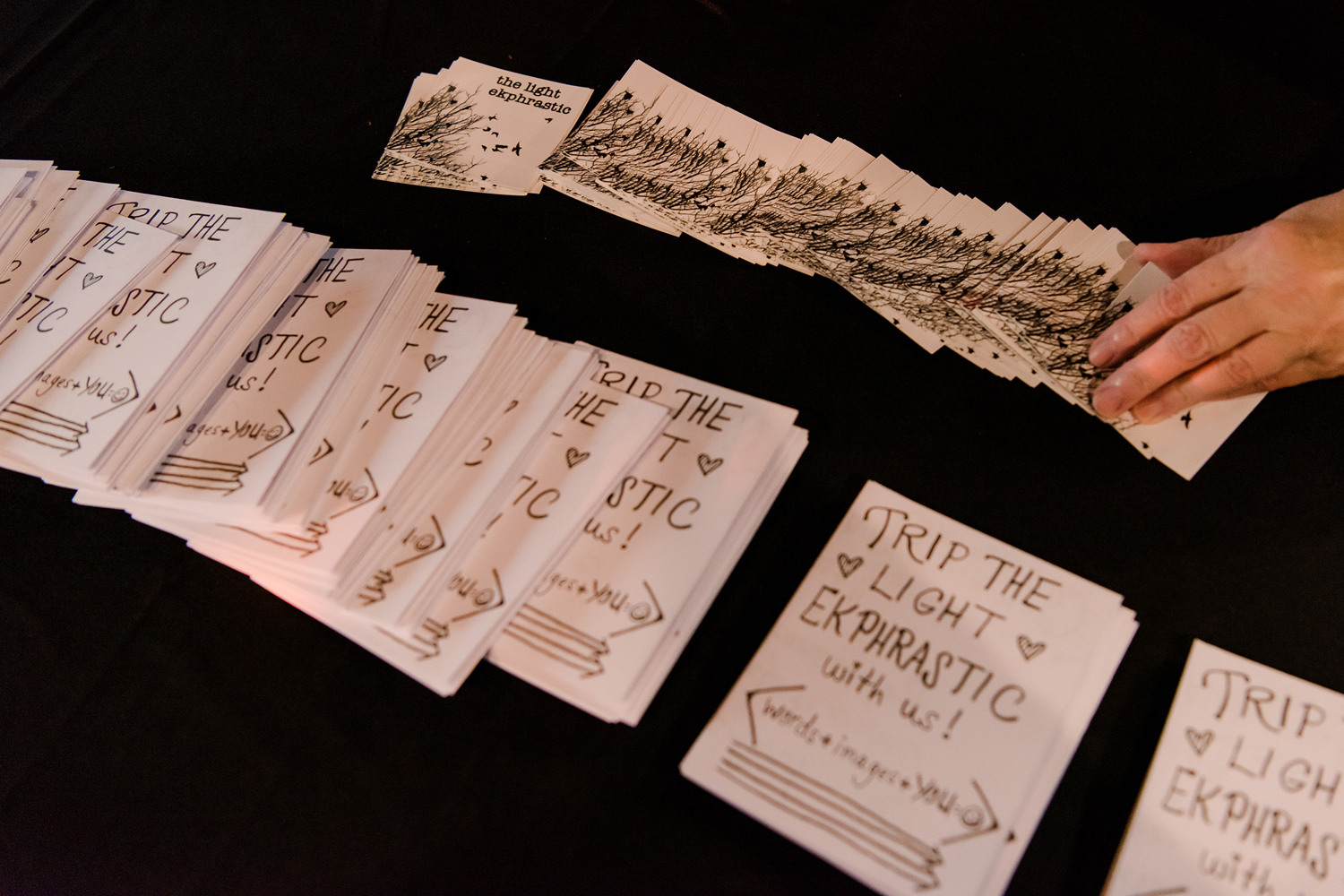
Brilliant Baltimore

****
All photos by Marlayna Demond ’11.
]]>
In this first year of Baltimore’s mash-up of eclectic and electric art festival Light City and the annual book festival—a hybrid called Brilliant Baltimore—UMBC shone brightly. Several UMBC...
https://umbc.edu/stories/umbc-shines-at-brilliant-baltimore/
https://my3.my.umbc.edu/api/v0/pixel/news/120011/guest@my.umbc.edu/c678bd7266877af5c6c78225714801e6/api/pixel
cahss
campus-life
graduateschool
imda
UMBC News & Magazine
https://my3.my.umbc.edu/groups/umbc-news-magazine
https://assets1-my.umbc.edu/system/shared/avatars/groups/000/001/943/24435aa6207c452e7bc15cc74b42c7bb/xsmall.png?1748556657
https://assets1-my.umbc.edu/system/shared/avatars/groups/000/001/943/24435aa6207c452e7bc15cc74b42c7bb/original.png?1748556657
https://assets2-my.umbc.edu/system/shared/avatars/groups/000/001/943/24435aa6207c452e7bc15cc74b42c7bb/xxlarge.png?1748556657
https://assets2-my.umbc.edu/system/shared/avatars/groups/000/001/943/24435aa6207c452e7bc15cc74b42c7bb/xlarge.png?1748556657
https://assets3-my.umbc.edu/system/shared/avatars/groups/000/001/943/24435aa6207c452e7bc15cc74b42c7bb/large.png?1748556657
https://assets1-my.umbc.edu/system/shared/avatars/groups/000/001/943/24435aa6207c452e7bc15cc74b42c7bb/medium.png?1748556657
https://assets2-my.umbc.edu/system/shared/avatars/groups/000/001/943/24435aa6207c452e7bc15cc74b42c7bb/small.png?1748556657
https://assets1-my.umbc.edu/system/shared/avatars/groups/000/001/943/24435aa6207c452e7bc15cc74b42c7bb/xsmall.png?1748556657
https://assets2-my.umbc.edu/system/shared/avatars/groups/000/001/943/24435aa6207c452e7bc15cc74b42c7bb/xxsmall.png?1748556657
UMBC News & Magazine
0
0
false
Mon, 18 Nov 2019 14:22:09 -0500
Depth of Field
By Tom Moore
Close your eyes and picture, if you will, something scientific. Perhaps your mind conjures up an image of space exploration, or a melting glacier affected by climate change, or the eyes of a mosquito enlarged by an electron microscope. Whatever you imagined, it was almost certainly influenced by the field of photography, which since its invention in the early 1800s has cast its eye on the world around us, allowing us to see, share, and interpret our surroundings in new ways.
The intersection of photography and science has long intrigued UMBC visiting senior research scholar Marvin Heiferman. “I’ve been fascinated by science photography for years—pictures of microbes too small to be detected by the human eye, of stars or galaxies too distant to be directly experienced, and of processes that unfold too quickly or slowly to be easily perceived,” he says.
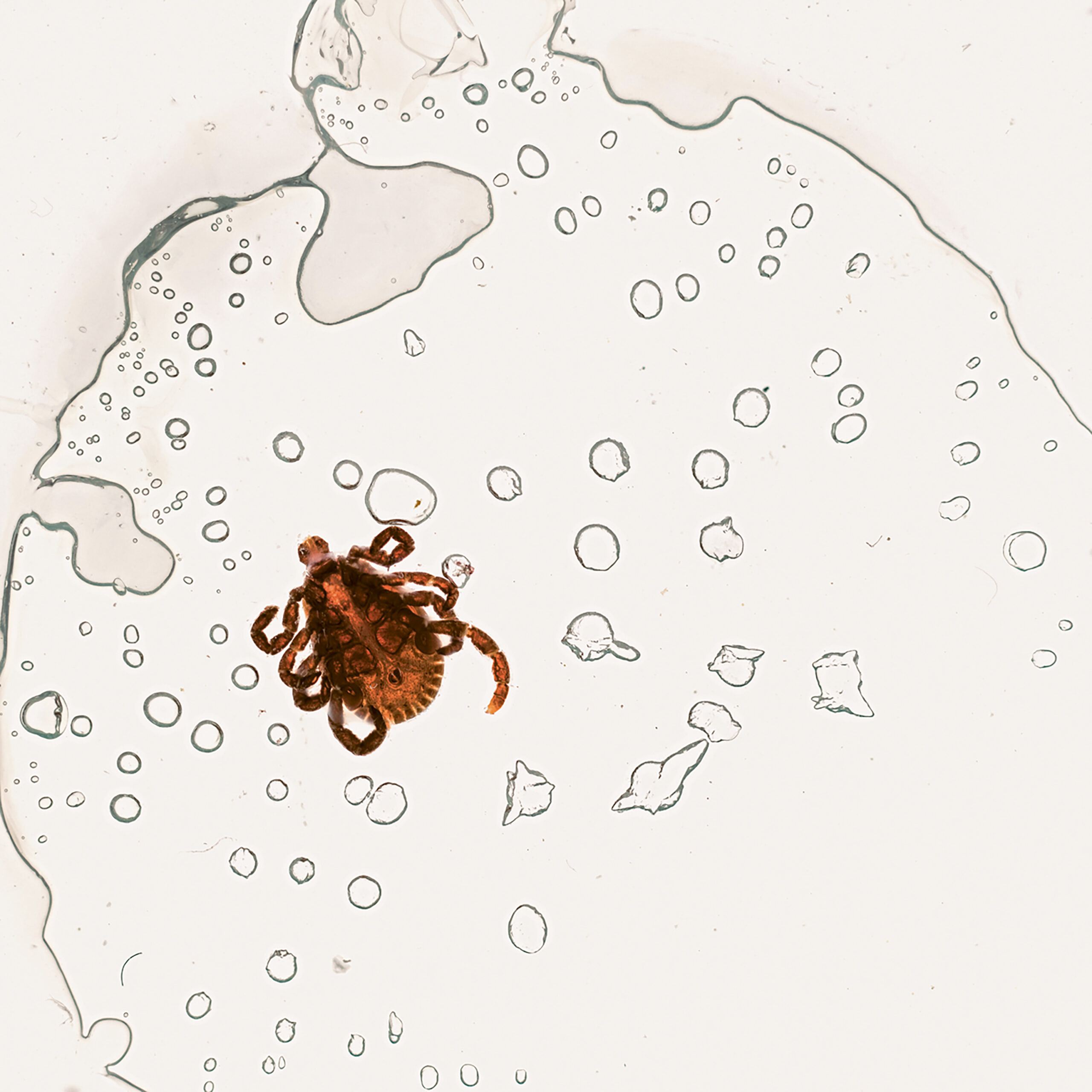
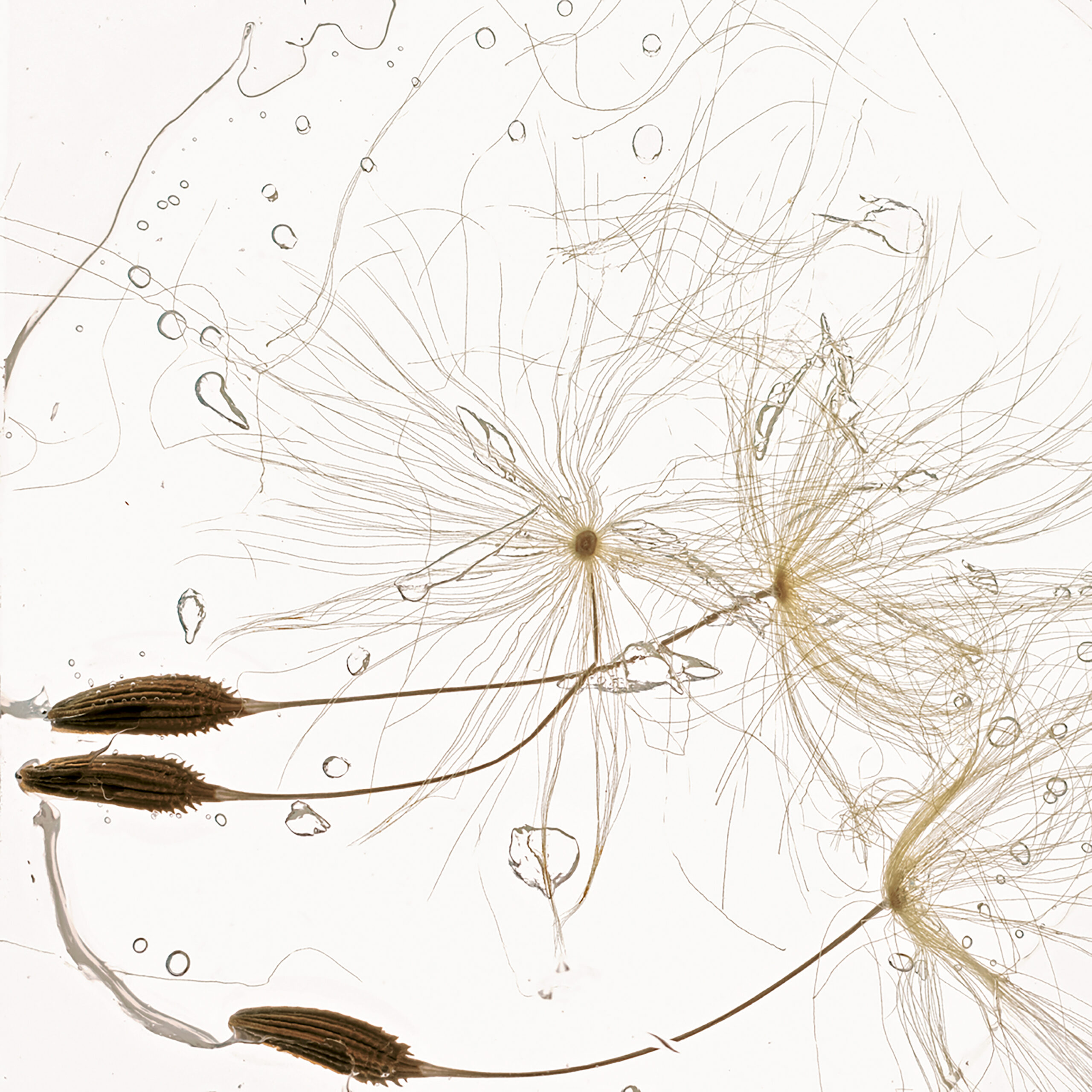
In 2016, Heiferman organized a multi-year project, Seeing Science, funded by the Office of Research and the Center for Art, Design, and Visual Culture. He engaged faculty, students, and alumni from across the disciplines (joined by other eminent scholars around the country) to explore how we see science via a series of public and online events, film screenings, an exhibition, and a website designed to spark interdisciplinary dialogue.
Now, Heiferman’s work has culminated in the publication of a book, Seeing Science: How Photography Reveals the Universe, released this spring as a partnership between UMBC and Aperture, a non-profit foundation and publisher dedicated to the advancement of photography. Replete with images from the dawn of photography through the present day, the handsome volume features dozens of essays—on subjects ranging from facial recognition to the discovery of x-rays to science fiction and more—and, of course, hundreds of photographs.
 Demonstration of site specific poster for transit shelter, North Avenue, Baltimore, 2011. Art by Lynn Cazabon from the series Uncultivated.
Retired astronaut Scott Kelly, who attended UMBC in the 1980s, provided the book’s foreword, in which he describes his year on the International Space Station, taking photographs of the cosmos, of Earth’s geography, of snowstorms, and of cities illuminated at night.
Two UMBC faculty contributed essays to Seeing Science: Mark Alice Durant, professor of visual arts, writes about “The Wonder of Evidence,” tracing a dance between knowledge and wonder, documentation and astonishment, and fact and fiction; and Joseph Tatarewicz, associate professor of history and director of the human context of science and technology program, penned “Science Fiction and Moving Images,” examining film from the time of Georges Méliès’ famous Le voyage dans la lune (A Trip to the Moon, 1902) to Walt Disney’s Man in Space (1955).
Rebecca Adelman, associate professor of media and communication studies, participated in several online discussions, and her perspectives on images are found throughout the book. Heiferman also explores the photography of Lynn Cazabon, professor of visual arts, and Melissa Penley Cormier, M.F.A. ’17, visual arts, program specialist in visual arts.
“Specialized images have become so ingrained in our everyday lives that we forget how profoundly they’re helping us understand the world around us,” shares Heiferman. “An MRI on an injured knee, a sonogram displayed on a refrigerator door, the facial recognition technology that lets you unlock your smartphone: they’re all are routine examples of the ways we use science photography as an everyday tool.”
 Wroclaw, Poland, 2016. From the series Uncultivated by Lynn Cazabon.
*****
Header image: Studio process of Fret & Focus project, a year of documenting worries using microscopic slides, 2016. Art by Melissa Penley Cormier.
]]>
By Tom Moore Close your eyes and picture, if you will, something scientific. Perhaps your mind conjures up an image of space exploration, or a melting glacier affected by climate change, or the...
https://umbc.edu/stories/depth-of-field/
https://my3.my.umbc.edu/api/v0/pixel/news/120079/guest@my.umbc.edu/2fe4487af832714074926a37bc609b05/api/pixel
discovery
graduateschool
imda
seeing-science
spring-19
UMBC News & Magazine
https://my3.my.umbc.edu/groups/umbc-news-magazine
https://assets1-my.umbc.edu/system/shared/avatars/groups/000/001/943/24435aa6207c452e7bc15cc74b42c7bb/xsmall.png?1748556657
https://assets1-my.umbc.edu/system/shared/avatars/groups/000/001/943/24435aa6207c452e7bc15cc74b42c7bb/original.png?1748556657
https://assets2-my.umbc.edu/system/shared/avatars/groups/000/001/943/24435aa6207c452e7bc15cc74b42c7bb/xxlarge.png?1748556657
https://assets2-my.umbc.edu/system/shared/avatars/groups/000/001/943/24435aa6207c452e7bc15cc74b42c7bb/xlarge.png?1748556657
https://assets3-my.umbc.edu/system/shared/avatars/groups/000/001/943/24435aa6207c452e7bc15cc74b42c7bb/large.png?1748556657
https://assets1-my.umbc.edu/system/shared/avatars/groups/000/001/943/24435aa6207c452e7bc15cc74b42c7bb/medium.png?1748556657
https://assets2-my.umbc.edu/system/shared/avatars/groups/000/001/943/24435aa6207c452e7bc15cc74b42c7bb/small.png?1748556657
https://assets1-my.umbc.edu/system/shared/avatars/groups/000/001/943/24435aa6207c452e7bc15cc74b42c7bb/xsmall.png?1748556657
https://assets2-my.umbc.edu/system/shared/avatars/groups/000/001/943/24435aa6207c452e7bc15cc74b42c7bb/xxsmall.png?1748556657
UMBC News & Magazine
0
0
false
Wed, 24 Jul 2019 20:26:36 -0400
Invested in the Arts — Grants Help Alumni Artists Thrive
As UMBC artists interpret the world around them through photography, music, and other media, the world is taking notice. In the last few months alone, a number of alumni artists have won prestigious awards to celebrate and nurture their work. Here, we take a look at three of them: Baker Artist Award-winning musician Lafayette Gilchrist ‘92, Africana studies; Julia Margaret Cameron Award-winning photographer Diana Nicholette Jeon, M.F.A. ‘06, IMDA; and UMBC professor Eric Dyer ‘95, visual and performing arts, an inaugural Merriweather District Artist-in-Residence.
Lafayette Gilchrist ‘92
As pianist and composer Lafayette Gilchrist plays, his fingers glide up and down the keyboard. As he tells Maryland Public Television in an interview celebrating the announcement of his Baker Artist Award this spring, “When it’s working, and when it all comes together, it is a transcendent experience.” Gilchrist, who in addition to his solo work leads two bands, has been wowing audiences near and far with his work for years, and was delighted to learn of the Baker honor, as it will help him continue to compose, perform, and record.
“I was surprised and honored,” he said, “as a Baltimore-based artist laboring in the vineyards for quite a few years, often taking more losses than wins in order to keep the band afloat and get the music out. The award means a great deal to me because it’s confirmation in many ways that it’s been worth it.”
Diana Nicholette Jeon, M.F.A. ’06
When she learned she had won the Julia Margaret Cameron Award for photography this summer, Diana Nicholette Jeon said she was pleasantly surprised, but pleased to see her work among that of so many other fine women photographers (the focus of the award). Working from her home in Hawaii, she credits her time in the IMDA program at UMBC — and the professors she learned from — for broadening her skills and pushing her to explore new facets of her work. She describes her photography this way:
I use my work to process my emotions about a specific event or series of events, to give voice to those emotions so that others may “hear” them, too. Some comes directly from negative experiences in my personal life, such as my I, Orfeo project. Others comment on social, political and/or cultural issues, such as war, women’s issues, or issues arising from living in a island paradise living off tourism and suffering from how others romanticize the islands and our peoples. Some of my work is considered more straight photo, and others are heavily manipulated, both on the iPad and with encaustic and traditional media on top of the print (the latter would be best represented by my Self-Exposure series.)
I believe the most interesting space in photography today is where the artist can combine digital techniques with hand-worked processes to produce one-of-a-kind works. I work in multiple kinds of media. I believe that materials have mana, so whenever possible I use the media that I feel lends the most meaning to any given project.

Nights as Inexorable as the Sea, Volume 3. (2017) Sculptural Book Object – iPhone photos, archival pigment prints on Hanhemuhle Baryta paper, Altoids tins bottoms, cold wax
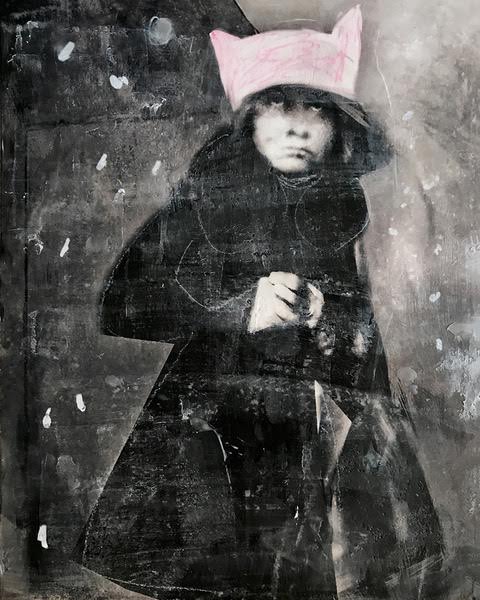
Resistance Girl (Self-Exposure series.) (2017) composited iPhoneography with iPad painting and drawing, pigment print on Hahnemuhle Photo rag Ultrasmooth, traditional drawing and painting with oils and pastels, encaustic media, cradled wood panel.
Eric Dyer ‘95
Through his work as a professor at UMBC, artist Eric Dyer helps budding artists understand that “animation is a young art form — there is so much more to explore and discover beyond traditional forms.” And over the years — as well as recently with his Merriweather District Artist-in-Residence work — he has delighted and inspired people with his colorful multimedia zoetropes.
“I bring animation into the real world with my interactive sculptures. I’ve been collaging sequences of images and forms that are spun and come to animated life with the aid of a synchronized strobe light. I explore topics related to the history of the moving image, our relationship with technology, kinetics as a form of artistic expression, and the relevance of physical presence in an increasingly digital world.”
Detail from Flora – a work-in-progress from Dyer’s Merriweather District Artist Residency. It’s a motion portrait of Flora Muybridge, the wife of Eadweard Muybridge, widely known as the Grandfather of Motion Pictures.

Implant (2015) 104”x56”x54”, rotating sculpture covered in fabric, 3D prints, and laser-cut acrylic, viewable with handheld strobe-flashlight.
* * * * *
Learn more about arts and culture at UMBC.
Header image by Eric Dyer. All images pictured are the property of the artists.
]]>
As UMBC artists interpret the world around them through photography, music, and other media, the world is taking notice. In the last few months alone, a number of alumni artists have won...
https://umbc.edu/stories/invested-in-the-arts-alumni-receive-major-grants/
https://my3.my.umbc.edu/api/v0/pixel/news/120353/guest@my.umbc.edu/44fce2679d1e7654340e220e5ac71df8/api/pixel
alumni
imda
music
visarts
UMBC News & Magazine
https://my3.my.umbc.edu/groups/umbc-news-magazine
https://assets1-my.umbc.edu/system/shared/avatars/groups/000/001/943/24435aa6207c452e7bc15cc74b42c7bb/xsmall.png?1748556657
https://assets1-my.umbc.edu/system/shared/avatars/groups/000/001/943/24435aa6207c452e7bc15cc74b42c7bb/original.png?1748556657
https://assets2-my.umbc.edu/system/shared/avatars/groups/000/001/943/24435aa6207c452e7bc15cc74b42c7bb/xxlarge.png?1748556657
https://assets2-my.umbc.edu/system/shared/avatars/groups/000/001/943/24435aa6207c452e7bc15cc74b42c7bb/xlarge.png?1748556657
https://assets3-my.umbc.edu/system/shared/avatars/groups/000/001/943/24435aa6207c452e7bc15cc74b42c7bb/large.png?1748556657
https://assets1-my.umbc.edu/system/shared/avatars/groups/000/001/943/24435aa6207c452e7bc15cc74b42c7bb/medium.png?1748556657
https://assets2-my.umbc.edu/system/shared/avatars/groups/000/001/943/24435aa6207c452e7bc15cc74b42c7bb/small.png?1748556657
https://assets1-my.umbc.edu/system/shared/avatars/groups/000/001/943/24435aa6207c452e7bc15cc74b42c7bb/xsmall.png?1748556657
https://assets2-my.umbc.edu/system/shared/avatars/groups/000/001/943/24435aa6207c452e7bc15cc74b42c7bb/xxsmall.png?1748556657
UMBC News & Magazine
0
0
false
Thu, 16 Aug 2018 14:26:01 -0400
IMDA Alumnae in the News: Cheon, Ferrera
UMBC’s master of fine arts program in intermedia and digital arts (formerly imaging and digital arts) has stood out for over twenty years as one of the only ones like it in the country. Here’s what two of our MFA alumnae are doing now.
 Mina Cheon ’02, M.F.A. imaging and digital arts, along with her husband, Gabriel Kroiz, will install 15 diamond-shaped sculptures along Pier 5 for Light City in an exhibit called “Diamonds Light Baltimore.” Cheon, who teaches at the Maryland Institute College of Art, says that she and Kroiz “wanted to participate in the healing aspect of our city [after last spring’s unrest]…There’s so many different ways that artists, architects, and culturists could be really active in participating in community development and progress.”
 Christine Ferrera ’10, M.F.A. imaging and digital arts, recently talked to BmoreArt about the trajectory of her artistic career from painting and printmaking to performance art. Ferrera’s best-known performance piece, Starbux Diary, comes from of a decade’s worth of notes Ferrera wrote on Starbucks’ corporate comment cards, and the notes the coffee chain would write back. They were recently compiled into a book.
What have you been doing since graduation? Tell us in a class note!
]]>
UMBC’s master of fine arts program in intermedia and digital arts (formerly imaging and digital arts) has stood out for over twenty years as one of the only ones like it in the country. Here’s...
https://umbc.edu/stories/imda-alumnae-in-the-news-cheon-ferrera/
https://my3.my.umbc.edu/api/v0/pixel/news/121396/guest@my.umbc.edu/cbf22146edb782bff46266181bb98b2d/api/pixel
alumni
christine-ferrera
imaging-and-digital-arts
imaging-research-center
imda
intermedia-and-digital-arts
mina-cheon
UMBC News & Magazine
https://my3.my.umbc.edu/groups/umbc-news-magazine
https://assets1-my.umbc.edu/system/shared/avatars/groups/000/001/943/24435aa6207c452e7bc15cc74b42c7bb/xsmall.png?1748556657
https://assets1-my.umbc.edu/system/shared/avatars/groups/000/001/943/24435aa6207c452e7bc15cc74b42c7bb/original.png?1748556657
https://assets2-my.umbc.edu/system/shared/avatars/groups/000/001/943/24435aa6207c452e7bc15cc74b42c7bb/xxlarge.png?1748556657
https://assets2-my.umbc.edu/system/shared/avatars/groups/000/001/943/24435aa6207c452e7bc15cc74b42c7bb/xlarge.png?1748556657
https://assets3-my.umbc.edu/system/shared/avatars/groups/000/001/943/24435aa6207c452e7bc15cc74b42c7bb/large.png?1748556657
https://assets1-my.umbc.edu/system/shared/avatars/groups/000/001/943/24435aa6207c452e7bc15cc74b42c7bb/medium.png?1748556657
https://assets2-my.umbc.edu/system/shared/avatars/groups/000/001/943/24435aa6207c452e7bc15cc74b42c7bb/small.png?1748556657
https://assets1-my.umbc.edu/system/shared/avatars/groups/000/001/943/24435aa6207c452e7bc15cc74b42c7bb/xsmall.png?1748556657
https://assets2-my.umbc.edu/system/shared/avatars/groups/000/001/943/24435aa6207c452e7bc15cc74b42c7bb/xxsmall.png?1748556657
UMBC News & Magazine
0
0
false
Wed, 06 Jan 2016 17:15:16 -0500