Inaugural UMBC Paw Poll reveals high levels of student civic engagement

During the November 2022 election, students in Ian Anson’s Public Opinion class had a unique opportunity to examine just how civically engaged UMBC students are, and they found the answers remarkable. The students designed and ran the first UMBC Paw Poll, a survey that gathered information about UMBC undergraduates’ voting behavior and voter registration status, as well as numerous other factors.
“My guiding philosophy is to create applied-learning projects that have legs—that go beyond the classroom context,” says Ian Anson, associate professor of political science. “I want students to experience how political science theories and applications impact communities—in this case, the UMBC community.”
The Paw Poll found UMBC undergraduate students exceed national averages along measures of civic engagement. “UMBC students are the future leaders of our democracy. The Paw Poll is statistical evidence that Retrievers’ civic engagement overwhelmingly outpaces other higher learning institutions in Maryland and beyond,” says Anson.
“Our students are fantastically thoughtful and understand the consequences of their actions for politics,” he reflects. “This is one of UMBC’s most important legacies.”
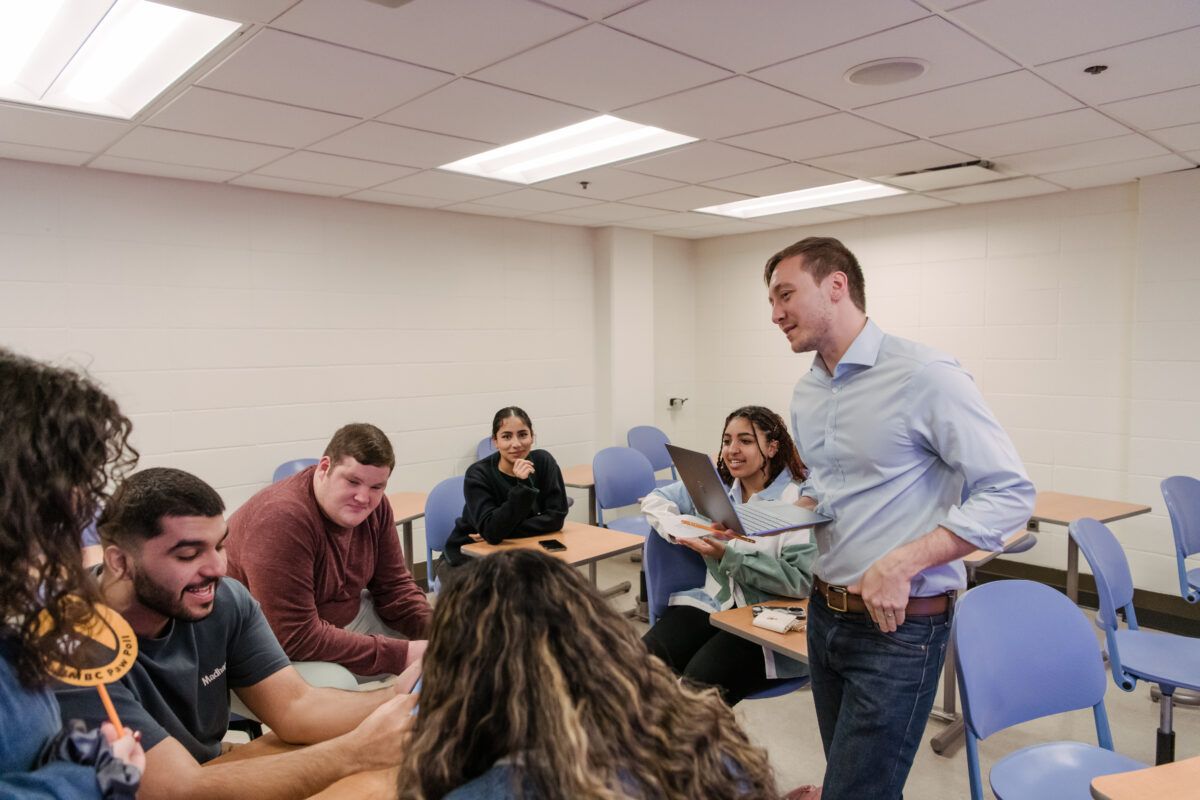 Ian Anson with students in his political science class. (Marlayna Demond ’11/UMBC)
Exceeding national averages
Over 450 undergraduate Retrievers responded to the Paw Poll, a response rate of 15.9%. The survey data (available through the Paw Poll app) reveal that UMBC undergraduate students are highly engaged in the electoral process.
Anson’s Paw Poll report showed that in the 2022 general election (a midterm rather than presidential election year), UMBC registered voters participated at a rate of 53%. This rate is 13% higher than the Institute for Democracy and Higher Educations’ National Study of Learning, Voting, and Engagement (NSLVE) estimate for voting rates among all college students in the 2018 midterm election—the best available comparison. The NSLVE is the nation’s largest study of college and university student voting. It includes nearly 1,200 colleges and universities in all 50 states and the District of Columbia.
Voting in the 2020 presidential election was also higher among UMBC students than the national average of 66% provided by NSLVE. Among students who were at least 20 years old in November 2022 (therefore exceeding the minimum voting age of 18 years old in 2020), all age groups report having voted more often than the national average. Even the subgroup that was 18-19 in 2020 reports having voted at a rate of 78.9%, which is more than 12% higher than the national average. Again, the higher voting rate among UMBC students relative to the national average is statistically significant.
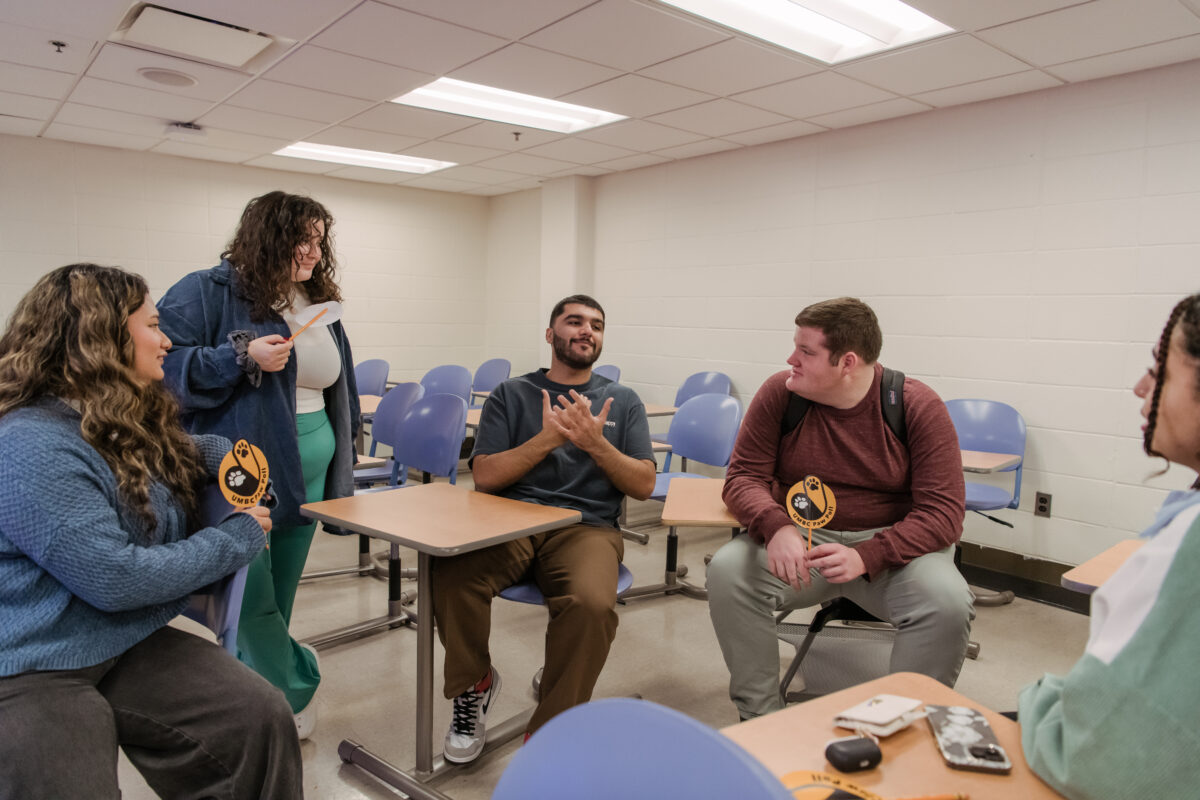 UMBC political science students. (Marlayna Demond ’11/UMBC)
While the Paw Poll shows strong evidence of voter engagement among UMBC students, some groups had higher engagement rates than others. The poll used students’ major designation to distinguish them based on their College or School within UMBC. Registered undergraduates in the College of Engineering and Information Technology and the College of Natural and Mathematical Sciences showed lower rates of participation in the 2022 election than students in the College of Arts, Humanities and Social Sciences and social work programs, indicating an opportunity for greater engagement in the future.
The science of polling
Anson’s Public Opinion class immersed students in the process of exit polling for the first time in 2018. Students surveyed voters in person at Baltimore County voting sites. They logged and analyzed the data in real-time, leading the class to accurately call the race for former Governor Larry Hogan well before the official announcement. Anson wrote about the process in “Who are the Hogan Democrats? UMBC knows” for The Baltimore Sun.
Four years later, voting behaviors had changed dramatically due to COVID-19, with a sharp increase in mail-in ballots. Anson saw this as an opportunity to teach students how to pivot when circumstances change and how to work with a variety of partners to create something new. Together, Anson’s students, the political science department, the Center for Social Science Scholarship, and the Center for Democracy and Civic Life created the new virtual polling project.
Irene Otunla ‘23, political science and media and communication studies, a student in Anson’s Political Opinion class, enjoyed the multifaceted project. Otunla learned about the theories behind polling, how to design a poll item, the grammar of good survey questions, how to encode the responses into software, and how to analyze survey results. She was particularly excited to explore the relationship between believing that voting is a choice or a duty and traits like race, age, gender, and political affiliation.
“I hope UMBC is able to use the data to create more courses like this unique course,” says Otunla, “and find new ways of encouraging students and staff, outside of the political science department, to participate in voting or at least have a greater awareness of politics in general.”
Poised for leadership
The quest to understand student perspectives on civic engagement and to encourage greater levels of it continues among the Paw Poll partners. For example, David Hoffman, Ph.D. ’13, language, literacy, and culture, and the director of UMBC’s Center for Democracy and Civic Life, is working with intern Musa Jafri ’24, political science, and others to gain further insights that will inform future Center programming.
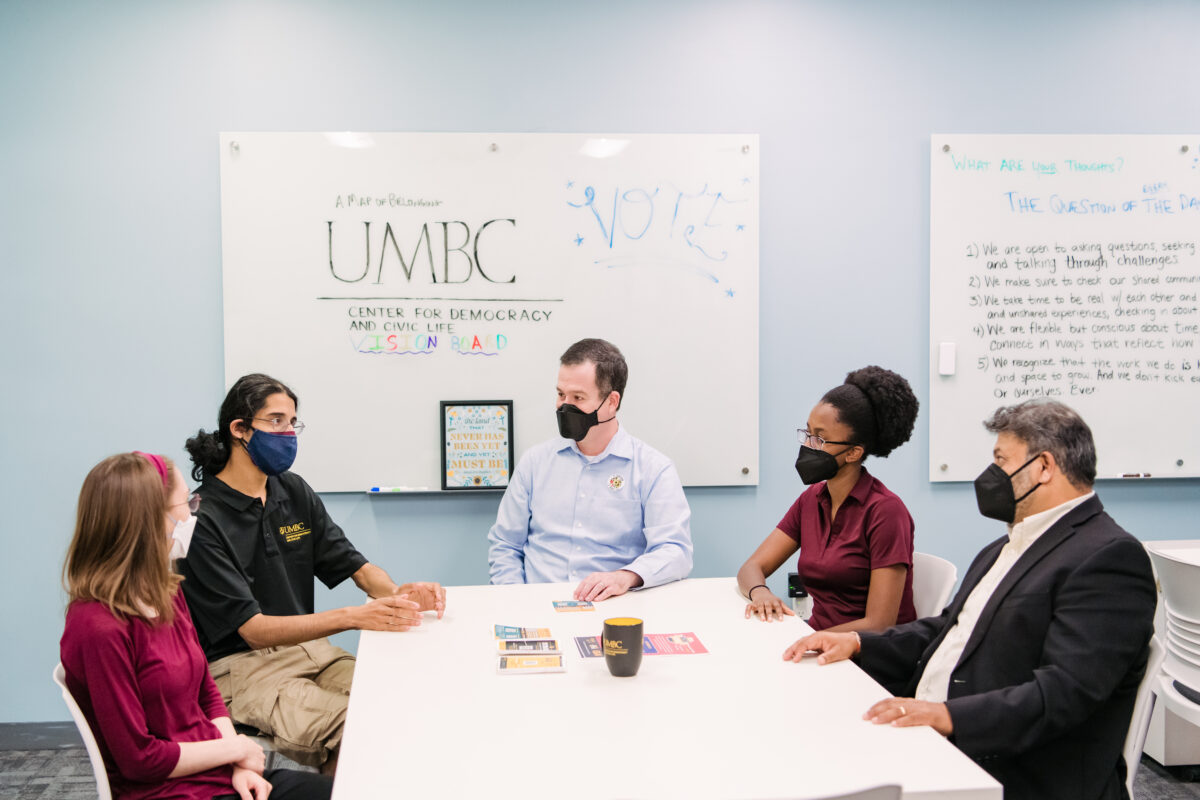 (l-r): Tess McRae ’22, individualized study, coordinator for Civic Design at the Center for Democracy and Civic Life, Jafri, Hoffman, Markya Reed ’18, M.S. ’23, psychology, a graduate assistant at the Center for Democracy and Civic Life, and Sunil Dasgupta, professor of political science. (Marlayna Demond ’11/UMBC)
And the Paw Poll itself will likely continue to grow as well. “In future iterations of the Paw Poll, we hope to further examine the various forms of political activism and engagement that characterize the UMBC student body,” says Anson.
“For now,” he shares, “we remain optimistic that UMBC students are well equipped to become leaders in their communities and to remain engaged with the political process.”
]]>
During the November 2022 election, students in Ian Anson’s Public Opinion class had a unique opportunity to examine just how civically engaged UMBC students are, and they found the answers...
https://umbc.edu/stories/stronginaugural-umbc-student-paw-poll-strong/
https://my3.my.umbc.edu/api/v0/pixel/news/131110/guest@my.umbc.edu/0b659774c2ac91705ad12127a4ac2c55/api/pixel
cahss
cahssresearch
center-for-democracy-and-civic-life
language-literacy-and-culture
mcs
policy-and-society
politicalscience
research
UMBC News & Magazine
https://my3.my.umbc.edu/groups/umbc-news-magazine
https://assets1-my.umbc.edu/system/shared/avatars/groups/000/001/943/24435aa6207c452e7bc15cc74b42c7bb/xsmall.png?1748556657
https://assets1-my.umbc.edu/system/shared/avatars/groups/000/001/943/24435aa6207c452e7bc15cc74b42c7bb/original.png?1748556657
https://assets2-my.umbc.edu/system/shared/avatars/groups/000/001/943/24435aa6207c452e7bc15cc74b42c7bb/xxlarge.png?1748556657
https://assets2-my.umbc.edu/system/shared/avatars/groups/000/001/943/24435aa6207c452e7bc15cc74b42c7bb/xlarge.png?1748556657
https://assets3-my.umbc.edu/system/shared/avatars/groups/000/001/943/24435aa6207c452e7bc15cc74b42c7bb/large.png?1748556657
https://assets1-my.umbc.edu/system/shared/avatars/groups/000/001/943/24435aa6207c452e7bc15cc74b42c7bb/medium.png?1748556657
https://assets2-my.umbc.edu/system/shared/avatars/groups/000/001/943/24435aa6207c452e7bc15cc74b42c7bb/small.png?1748556657
https://assets1-my.umbc.edu/system/shared/avatars/groups/000/001/943/24435aa6207c452e7bc15cc74b42c7bb/xsmall.png?1748556657
https://assets2-my.umbc.edu/system/shared/avatars/groups/000/001/943/24435aa6207c452e7bc15cc74b42c7bb/xxsmall.png?1748556657
UMBC News & Magazine
0
0
false
Wed, 15 Feb 2023 15:50:27 -0500
Wed, 15 Feb 2023 15:50:27 -0500
UMBC humanities faculty receive NEH fellowships for research into “the why and how of our past”

The National Endowment for the Humanities (NEH) has announced that George Derek Musgrove ‘97, associate professor of history, and Elizabeth Patton, associate professor of media and communication studies, have received the highly competitive 2023 NEH fellowship.
Only 70 scholars out of 1,029 applicants nationwide received the coveted fellowship this year. The one-year award supports individual scholars pursuing projects that embody exceptional humanistic research, rigorous analysis, and clear writing. Each scholar will receive $60,000 to support a current book project. Musgrove and Patton have received multiple fellowships supporting their prior and current work, affirming the importance of their scholarship.
Black political and cultural mobilizations
Musgrove, a 2022 Andrew Carnegie fellow, will be working on “We must take to the streets again:” The Black Power Resurgence in Conservative America, 1980–1997. The book aims to provide an in-depth history of the years between the Civil Rights movement and today’s Black Lives Matter movement. This new work will also further Musgrove’s highly acclaimed research on African American history in the nation’s capital, completed over the past decade.
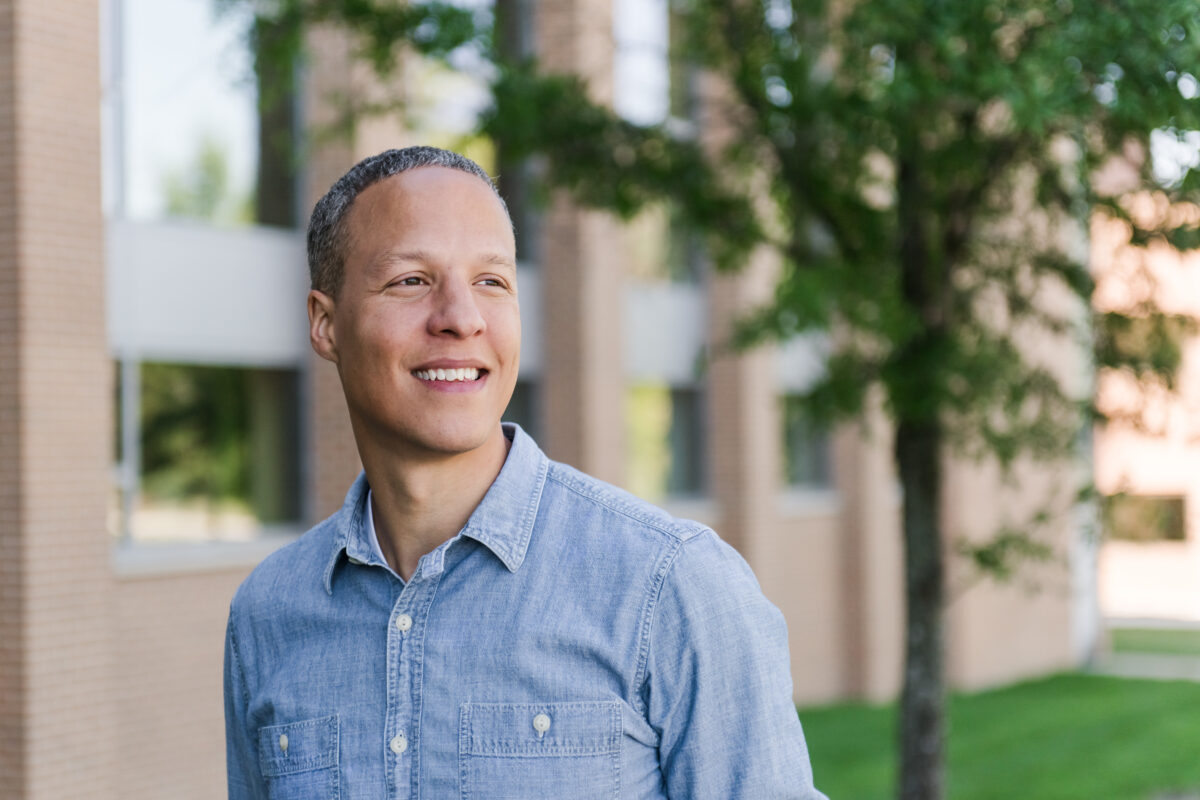 Derek Musgrove. (Marlayna Demond ’11/UMBC)
“The NEH Fellowship is one of the most prestigious awards granted in the humanities and I am honored that the selection committee deemed my forthcoming project worthy of support,” shares Musgrove. “That I was selected is a testament to my colleagues in the history department and Rachel Brubaker, who encouraged me to apply and shared essential feedback. UMBC’s generous, collaborative culture allows those of us who are lucky enough to work here to do amazing things.”
UMBC’s Dresher Center for the Humanities provides key support to faculty engaging in major scholarly and public projects. Rachel Brubaker, director of program administration at the Dresher Center, works with faculty one on one to identify and successfully apply for research funding.
After receiving the Carnegie Fellowship, Musgrove shared that the support his scholarship has garnered is “a powerful endorsement of the importance of exploring the Black political and cultural mobilizations of the 1980s and ‘90s.” He noted, “We continue to live in the world those activists helped make and to fight the battles that those activists fought.”
Black leisure and tourism
Patton, who was also a 2022 NEH summer fellow, will advance research for her forthcoming book Representation as a Form of Resistance: Documenting African American Spaces of Leisure during the Jim Crow Era. The book will examine the history of Black leisure and tourism in the U.S. through the perspective of photography and home movies. She seeks to put into context lingering forms of racism that still affect Black tourism on platforms like Airbnb.
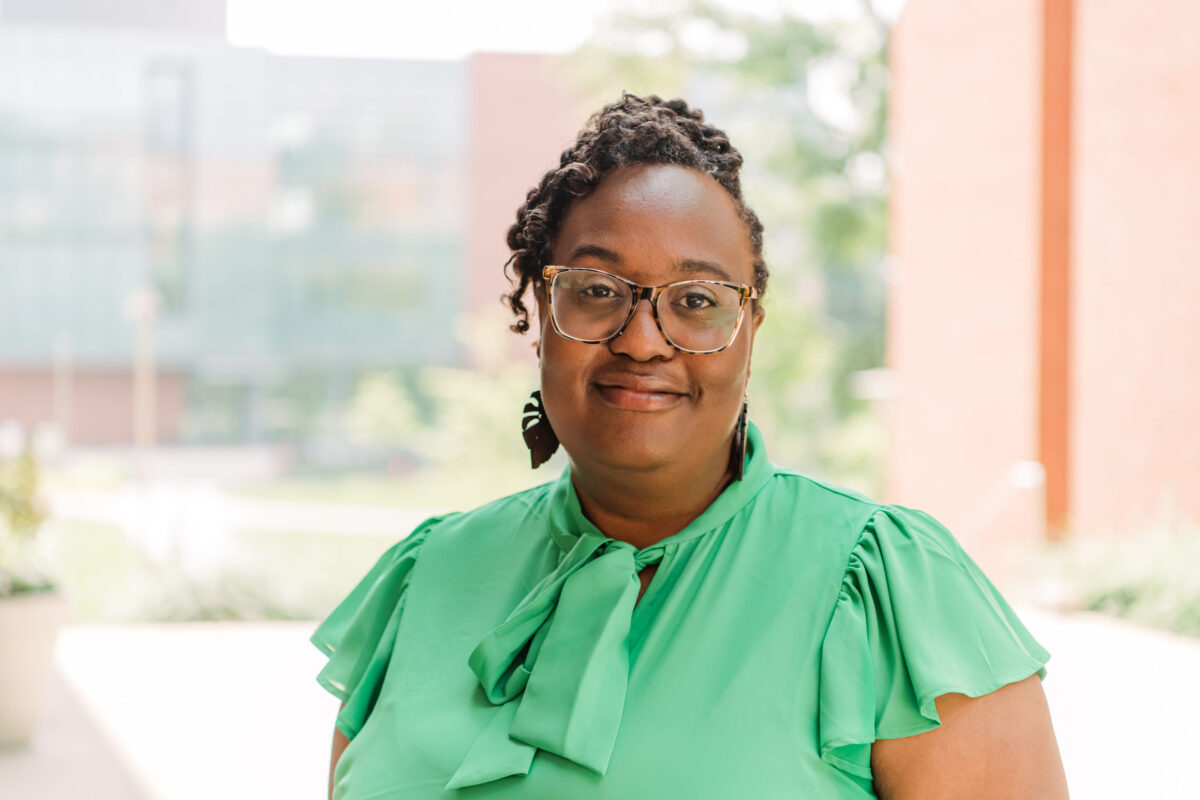 Elizabeth Patton. (Marlayna Demond ’11/UMBC)
The 2023 NEH award will further Patton’s archival research, begun in 2022 with combined funding from Duke University’s John W. Hartman Center for Sales, Advertising & Marketing History, the John Hope Franklin Research Center for African American History and Culture, and UMBC’s CAHSS Research Fund.
“I have found hundreds of examples of spaces where there is a history of people of color using those spaces, desegregating those spaces, or creating their own spaces for leisure and travel,” Patton said, after receiving her 2022 NEH summer fellowship. “These rich data sources will help me tell the invisible history of African American leisure through historical methods, discourse analysis, semiotics, and oral history.”
Humanities at work
Preminda Jacob, associate professor of visual arts and associate dean of the College of Arts, Humanities, and Social Sciences is thrilled the NEH continues to support UMBC’s leading humanities research. “Humanities scholarship at UMBC pursues the why and how of our past, present, and future with painstaking rigor,” says Jacob. “The NEH fellowship acknowledges our faculty’s innovative and relentless pursuit of answers to these questions.”
Musgrove and Patton join several previous UMBC NEH Fellows. A few of the university’s prior recipients include Anne Sarah Rubin, professor of history; Susan McDonough, associate professor of history; and Whitney Schwab, associate professor of philosophy.
]]>
The National Endowment for the Humanities (NEH) has announced that George Derek Musgrove ‘97, associate professor of history, and Elizabeth Patton, associate professor of media and communication...
https://umbc.edu/stories/neh-fellowships-2023/
https://my3.my.umbc.edu/api/v0/pixel/news/130994/guest@my.umbc.edu/2ef5d7d3b8be707d1d65f3be61292544/api/pixel
arts-and-culture
cahss
cahssresearch
history
majoraward
mcs
news
policy-and-society
rca-2
research
UMBC News & Magazine
https://my3.my.umbc.edu/groups/umbc-news-magazine
https://assets1-my.umbc.edu/system/shared/avatars/groups/000/001/943/24435aa6207c452e7bc15cc74b42c7bb/xsmall.png?1748556657
https://assets1-my.umbc.edu/system/shared/avatars/groups/000/001/943/24435aa6207c452e7bc15cc74b42c7bb/original.png?1748556657
https://assets2-my.umbc.edu/system/shared/avatars/groups/000/001/943/24435aa6207c452e7bc15cc74b42c7bb/xxlarge.png?1748556657
https://assets2-my.umbc.edu/system/shared/avatars/groups/000/001/943/24435aa6207c452e7bc15cc74b42c7bb/xlarge.png?1748556657
https://assets3-my.umbc.edu/system/shared/avatars/groups/000/001/943/24435aa6207c452e7bc15cc74b42c7bb/large.png?1748556657
https://assets1-my.umbc.edu/system/shared/avatars/groups/000/001/943/24435aa6207c452e7bc15cc74b42c7bb/medium.png?1748556657
https://assets2-my.umbc.edu/system/shared/avatars/groups/000/001/943/24435aa6207c452e7bc15cc74b42c7bb/small.png?1748556657
https://assets1-my.umbc.edu/system/shared/avatars/groups/000/001/943/24435aa6207c452e7bc15cc74b42c7bb/xsmall.png?1748556657
https://assets2-my.umbc.edu/system/shared/avatars/groups/000/001/943/24435aa6207c452e7bc15cc74b42c7bb/xxsmall.png?1748556657
UMBC News & Magazine
1
0
false
Wed, 15 Feb 2023 14:59:43 -0500
Wed, 15 Feb 2023 14:59:43 -0500
Community-building in Baltimore through public humanities
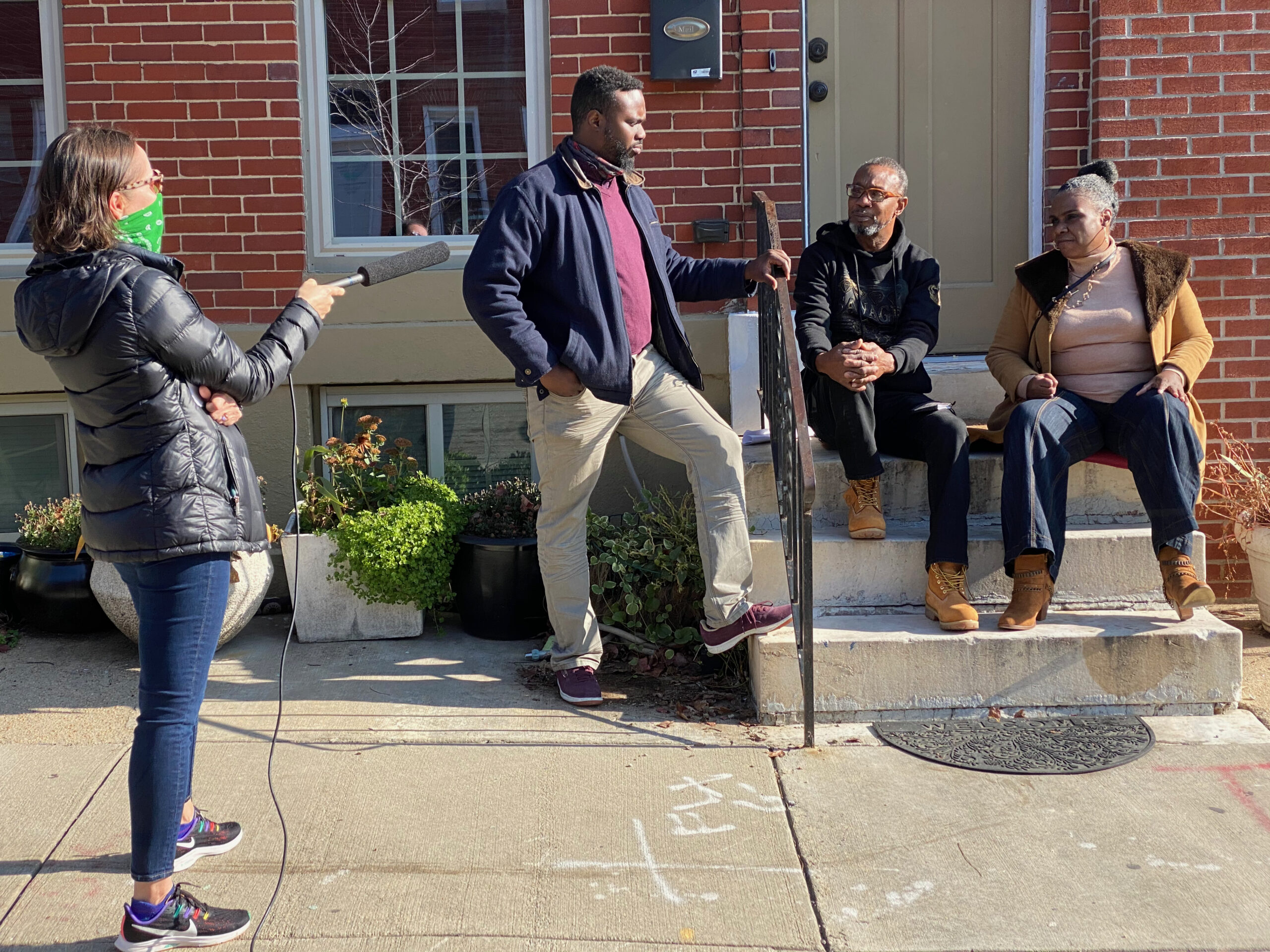
Over the last decade Nicole King, professor of American studies and director of the Orser Center for the Study of Place, Community, and Culture, has worked with colleagues to develop public humanities research methods that address disconnections, misrepresentation, and inequalities in Baltimore City and in the classroom. King helps students actively listen to and partner with Baltimore communities in research to create multimedia narratives as a vehicle of community-building and advocacy.
“Place-based public history projects demonstrate that students and scholars can engage and collaborate with communities to identify, analyze, and respond to pressing social problems,” says King. “Public history methods can create dynamic social spaces in which scholars and residents work together to frame questions, conduct research, and preserve urban places.”
King’s work has reached a broad range of academic and public audiences, from the recent co-authored article “Building Together” in Baltimore? Corporate Megadevelopment and Coalitions for Community Power in Urban Affairs Review to media coverage of A Place Called Poppleton, documenting a fight for community-led development as part of the Baltimore Traces project.
A Place Called Poppleton
In July 2022, Sonia and Curtis Eaddy celebrated as Baltimore’s mayor announced their home in the historic Poppleton neighborhood of West Baltimore, dating back to the late 1800s, would not be demolished for redevelopment as previously planned. Among those whom Sonia thanked for support were King and her students.
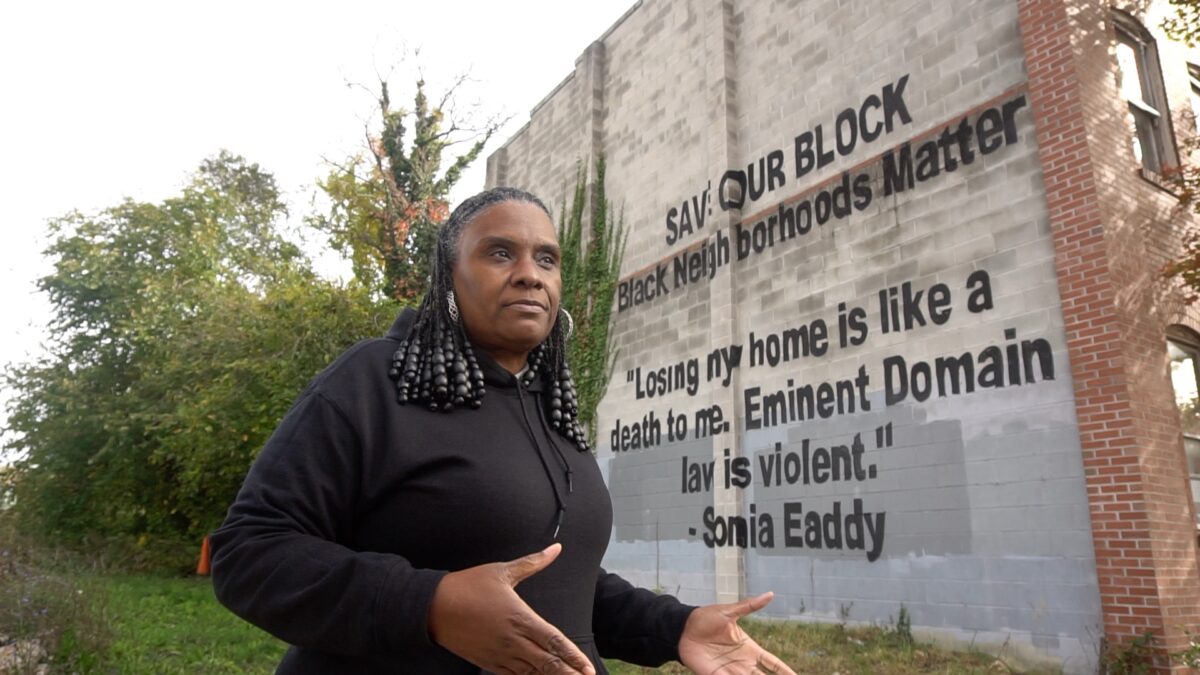 Sonia Eaddy. (Image courtesy of King)
King originally connected with the Eaddy family through their son, Curtis Eaddy II, who shared his story as a third-generation Poppleton resident in 2019 for the storytelling series Baltimore Traces: West Baltimore. He became a strong partner in leading walking tours of West Baltimore through UMBC’s Baltimore Field School before interviewing his parents for A Place Called Poppleton, which King co-created in 2020 with students, residents, and Bill Shewbridge, media and communication studies professor of the practice.
Curtis Eaddy II shares his story for Baltimore Traces: West Baltimore, produced by Shewbridge.
Through A Place Called Poppleton, UMBC students listened to residents who live, work, and are connected to Poppleton. They shared their voices through media like films, a digital walking tour and historical timeline, a zine, and a brochure. These materials have documented, analyzed, and raised awareness about Poppleton’s history and present community advocacy.
We Are You and You Are Us produced by María Morte, M.A. ’23, intercultural communication, Fulbright U.S. Student Scholar from Spain.
The project Baltimore Traces: Communities in Transition, which began in 2015, is a collaborative teaching initiative that brings together students from a variety of disciplines in the arts and humanities to create media focused on Baltimore neighborhoods. The project has produced the Telly Award-winning documentary Mill Stories: Remembering Sparrows Point Steel Mill as well as short films, digital maps, and podcasts such as the Baltimore Green Space and A Walk Down West Baltimore Street. This included the radio series Stories of Deindustrialization, produced in partnership with the Center for Emerging Media—a Baltimore non-profit, and aired on the Marc Steiner Show.
“Getting out, showing up, listening to people, and meeting people where they are is so important to building the Baltimore Traces project,” King explains. “It’s something that organically grows to educate students…to do work that matters on the ground.”
Baltimore Field School
It’s no accident that King first connected with Curtis Eaddy II through Baltimore Traces, and then the Baltimore Field School, a project specifically designed to support innovation in the public humanities through collaboration with Baltimore residents.
The Andrew W. Mellon Foundation awarded King and Dean Kimberly Moffitt $125,000 to establish the Baltimore Field School in 2020, to enhance the understanding and visibility of communities in South and Southwest Baltimore. The project accomplishes these objectives through methods centered in community partnership. In this way, it works to build a national model of effective, ethical humanities research, teaching, and learning about Baltimore and cities like it.
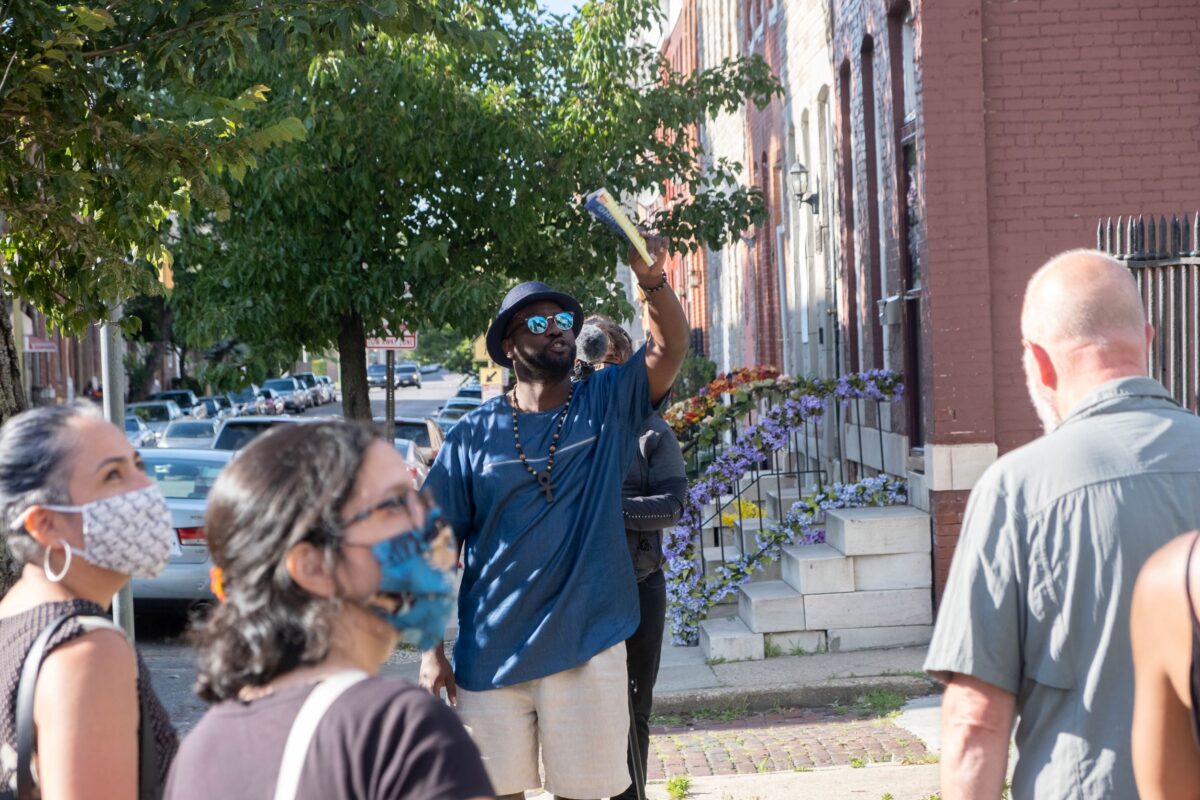 Curtis Eaddy II (center) leading a walking tour of West Baltimore for the Baltimore Field School.
The work continues to evolve. In 2022, the American Council of Learned Societies awarded King; Sarah Fouts, assistant professor of American studies; and Tahira Mahdi, adjunct professor of psychology, an NEH-supported public engagement grant totaling more than $150,000 for “Baltimore Field School 2.0: Undoing & Doing Anew in Public Humanities.”
Fouts, King, and Mahdi will work with community members, UMBC graduate students, and faculty to continue to develop frameworks for ethical and sustainable community-engaged research between local communities and academia, around topics such as public information, racial equity, and food and land justice.
The “public” in public humanities
These are some of the same core themes explored inBaltimore Revisited(Rutgers University Press, 2019), the leading contemporary anthology on the city’s complex history and efforts to address longstanding inequalities, written by experts both within and outside of academia. King co-edited the book with long-time collaborators Kate Drabinski, principal lecturer of gender, women’s, and sexuality studies, and the University of Baltimore’s Joshua Clark Davis.
“We hope the book raises questions about how history can inform the present to understand the roots of the city’s many inequalities,” said Drabinski, when it was published. “We wish readers to imagine new ways of being in and organizing for Baltimore now and in the future.”
Thinking of the anthology and all that has followed it, King reflects, “We can not forget the ‘public’ in public humanities.”
]]>
Over the last decade Nicole King, professor of American studies and director of the Orser Center for the Study of Place, Community, and Culture, has worked with colleagues to develop public...
https://umbc.edu/stories/community-building-in-baltimore-through-public-humanities/
https://my3.my.umbc.edu/api/v0/pixel/news/128592/guest@my.umbc.edu/75d853f2693ffa86fb3610b7278880c5/api/pixel
americanstudies
cahss
cahssresearch
gwst
intercultural-communications
mcs
news
policy-and-society
psychology
UMBC News & Magazine
https://my3.my.umbc.edu/groups/umbc-news-magazine
https://assets1-my.umbc.edu/system/shared/avatars/groups/000/001/943/24435aa6207c452e7bc15cc74b42c7bb/xsmall.png?1748556657
https://assets1-my.umbc.edu/system/shared/avatars/groups/000/001/943/24435aa6207c452e7bc15cc74b42c7bb/original.png?1748556657
https://assets2-my.umbc.edu/system/shared/avatars/groups/000/001/943/24435aa6207c452e7bc15cc74b42c7bb/xxlarge.png?1748556657
https://assets2-my.umbc.edu/system/shared/avatars/groups/000/001/943/24435aa6207c452e7bc15cc74b42c7bb/xlarge.png?1748556657
https://assets3-my.umbc.edu/system/shared/avatars/groups/000/001/943/24435aa6207c452e7bc15cc74b42c7bb/large.png?1748556657
https://assets1-my.umbc.edu/system/shared/avatars/groups/000/001/943/24435aa6207c452e7bc15cc74b42c7bb/medium.png?1748556657
https://assets2-my.umbc.edu/system/shared/avatars/groups/000/001/943/24435aa6207c452e7bc15cc74b42c7bb/small.png?1748556657
https://assets1-my.umbc.edu/system/shared/avatars/groups/000/001/943/24435aa6207c452e7bc15cc74b42c7bb/xsmall.png?1748556657
https://assets2-my.umbc.edu/system/shared/avatars/groups/000/001/943/24435aa6207c452e7bc15cc74b42c7bb/xxsmall.png?1748556657
UMBC News & Magazine
0
0
false
Wed, 19 Oct 2022 10:52:25 -0400
Wed, 19 Oct 2022 10:52:25 -0400
UMBC humanities faculty pursue groundbreaking archival research through over $135,000 in prestigious fellowships

Humanities faculty Elizabeth Patton, Mirjam Voerkelius, and Amy Froide have received prestigious research fellowships totaling over $135,000 to explore archives and reveal new findings about unique historical events in the United States, Soviet Union, and United Kingdom. Their research will help further book manuscripts that will share new perspectives on African American leisure travel during Jim Crow, Darwinism in the Soviet Union, and financial fraud in the early stock market involving women investors in 18th-century England.
As an art historian, Preminda Jacob, an associate professor and associate dean of the College of Arts, Humanities, and Social Sciences, compares scholarship in the humanities to detective work. “Humanities research requires painstaking, patient piecing together of clues to develop narratives that have the power to subvert, or challenge accepted knowledge about a historical period or contemporary phenomenon,” says Jacob.
“The work is vastly time-consuming,” she explains. “It might require proficiency in one or more foreign languages, and entail years spent on a research site. Furthermore, the ‘evidence’ housed in archives, related by informants, or gathered from research sites, is often incomplete or biased. It is the scholar’s task to imaginatively reconstruct what was undocumented or left unsaid and to shine a light on the parts that were hidden, ignored, or missing.”
Cutting-edge humanities research
Over the past five years alone, UMBC’s cutting-edge humanities research has garnered funding from major sponsors that include the American Council of Learned Societies, the Carnegie Corporation of New York, the Institute of Advanced Study, the Institute of Citizens & Scholars (Mellon Foundation), Harvard’s Loeb Classical Library Foundation, the National Endowment for the Humanities (NEH), and the Whiting Foundation.
UMBC’s Dresher Center for the Humanities provides key support to faculty engaging in major scholarly and public projects. Rachel Brubaker, director of program administration at the Dresher Center, works with faculty one on one to identify and successfully apply for research funding.
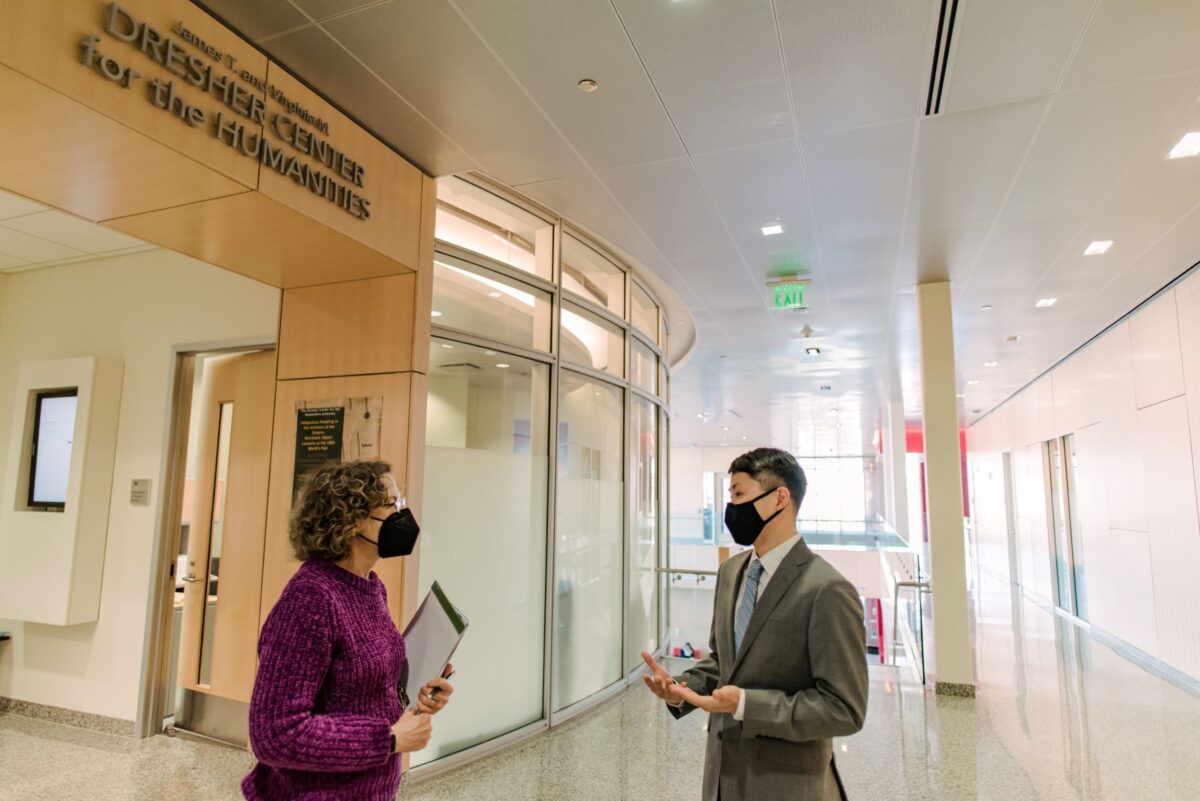 (l-r:) Brubaker and Christopher K. Tong, an assistant professor of modern languages, linguistics, and intercultural communication, discuss the Henry Luce Foundation and the American Council of Learned Societies Early Career Fellowship in China Studies, which Tong received in 2021. Brubaker provided support and guidance during the application process. (Marlayna Demond ’11/UMBC)
“The Dresher Center directs faculty to funding sources that further important humanities research,” says Patton, an associate professor of media and communication studies. “They get to know you and your interests and provide essential feedback—that has been an indispensable source of support and encouragement to me.”
Segregated leisure
Patton’s current research started with a picture found among her grandmother’s family photos. In the stack was a picture of her uncle at the 1964 New York World’s Fair. Patton was surprised because he lived in Philadelphia—a long way to travel at that time and a risky journey. This image defied the dangers, risks, and humiliation that were not limited to Southern states for African Americans traveling during Jim Crow.
Patton’s mother shared details of their trip to the World’s Fair, opening a door into a world where African American families and individuals enjoyed travel, counter to the media’s portrayal of vacations and other leisure trips as experiences exclusively for white Americans.
She developed a new research project: “Representation as a Form of Resistance: Documenting African-American Spaces of Leisure during the Jim Crow Era.” This research examines the history of Black leisure and tourism in the U.S. through the perspective of marketing and advertising to put into context lingering forms of racism that still affect Black tourism on platforms like Airbnb.
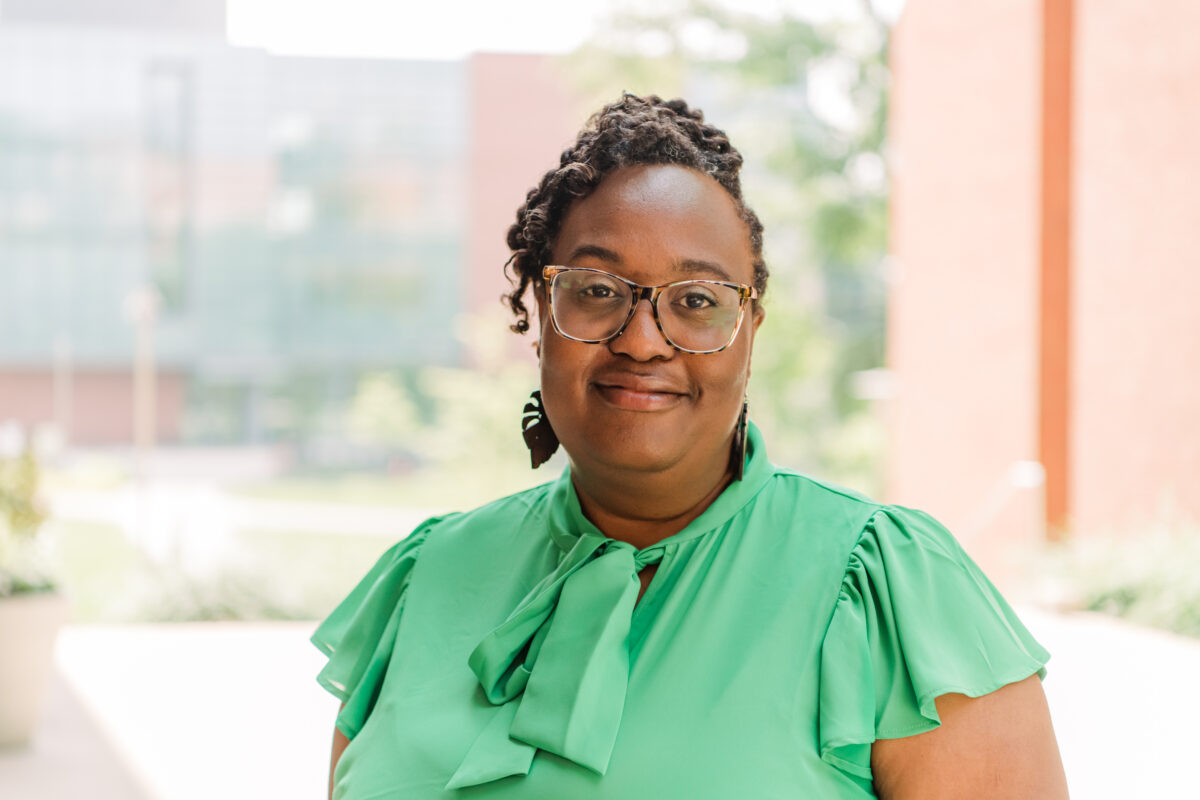 Elizabeth Patton. (Marlayna Demond ’11/UMBC)
“This research focuses on how media—such as advertisements, guidebooks, newspapers, magazines, film, photographs, home videos, and social media—have been used to document and promote leisure practices as a form of covert resistance,” says Patton. “It provides a counter-narrative to consumption-based and white-washed popular representations of tourism.”
Archival research
Patton has already begun traveling to archives with funding from the NEH, joint funding from Duke University’s John W. Hartman Center for Sales, Advertising & Marketing History and the John Hope Franklin Research Center for African American History and Culture, and UMBC’s CAHSS Research Fund. In collaboration with an archivist at the National Museum of American History Archives Center, Patton has reviewed the museum’s cold storage for photographic negatives from the 1920s and 1930s to view photographs of African Americans engaging in leisure activities and early advertising featuring African Americans. She has also reviewed Langston Hughes’s travel memoirs during Jim Crow and his time with Zora Neale Hurston at Yale University’s Beinecke Library.
The Smithsonian National Museum of African American History’s Great Migration Home Movie Project and African American Home Movie Archive have presented Patton with an opportunity to look through an extensive collection of home movies as well, offering another kind of personal perspective. Patton has also explored papers on city planning and major events like the World’s Fair, to understand how spaces were shaped by race and class and how leisure in New York became segregated, using the African American Studies collections at the Schomburg Center for Research in Black Culture and at the New York Public Library Rare Books Division, Manuscripts and Archives Division.
“I have found hundreds of examples of spaces where there is a history of people of color using those spaces, desegregating those spaces, or creating their own spaces for leisure and travel,” says Patton. “These rich data sources will help me tell the invisible history of African American leisure through historical methods, discourse analysis, semiotics, and oral history.”
The Soviet Union and Darwinism
Voerkelius’s book project, “Evolution in Times of Revolution: Darwinism, Nature and Society,” explores Soviet attitudes towards nature through the conflicted history of Darwinism in the Soviet Union. Voerkelius, assistant professor of history, explores this history through the lens of the State Darwin Museum in Russia.
Established in 1907, the museum has survived revolutions, political upheavals, world wars, polarizing schools of thought about Darwinism, and now a pandemic. Through it all, the museum has been a pillar of research, dissemination of science, and education pivotal to the Soviet Union’s theories, beliefs, discourse, and actions around evolution.
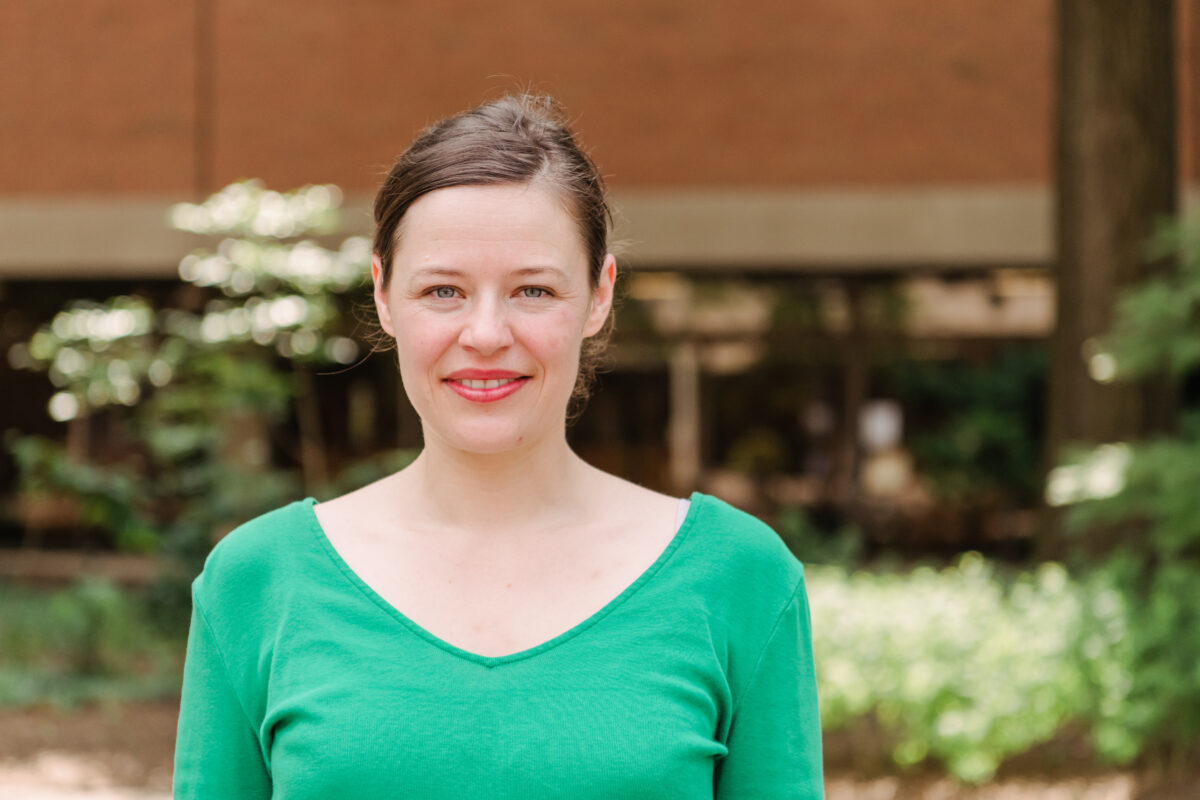 Mirjam Voerkelius. (Marlayna Demond ’11/UMBC)
“The Darwin Museum offers a comprehensive case study on attitudes towards the natural world in the Soviet Union and the underlying vision of the place of humankind within nature,” says Voerkelius.
This project builds on research completed in Russia at the State Archive of the Russian Federation, the archive of the State Darwin Museum, the Central Archive of the City of Moscow, and the Russian State Archive of the Economy, as well as the Jena University Archives in Germany.
Voerkelius was scheduled to return to Russia to further her archival research and complete her book. Due to the current war between Ukraine and Russia, Voerkelius cannot access these archives. To further her work, Voerkelius has received a $55,000 Kluge Fellowship from the John W. Kluge Center at the Library of Congress. As one of twelve fellows from around the world, she will have direct access to the Library’s extensive collection on the Soviet Union
“Working with the Library of Congress’s Russian Collection will allow me to consult published primary sources, which is essential for the completion of my manuscript,” says Voerkelius. With the help of these sources, she will place the Moscow State Darwin Museum’s research and narrative about Darwinism in a broader context.
“I hope to contribute to scholarly debate on the Soviet Union’s approach to science, evolutionary theory, and its broader impact on the environment,” she says.
Following the money
The idea for Froide’s new research project came from an unexpected find during eight years of research for her third book, Silent Partners: Women as Public Investors during Britain’s Financial Revolution, 1690-1750 (Oxford University Press, 2016).
Silent Partners focused on the role of women investors in England’s financial revolution and how women played a critical role in Britain’s rise to economic, military, and colonial dominance in the 18th century. Within the newspapers, government documents, and bookkeeping records she examined, Froide, professor and chair of history, found another story: a rare account of a stock market crash in 1732, wrought with fraud, embezzlement, forgery, and thievery.
Her new project, “The Charitable Corporation: A Cautionary Tale of Financial Fraud in Eighteenth-Century Britain,” will be a research-based narrative aimed at a wide audience about a group of investors, largely women, who invested in the microlending Charitable Corporation and the events around its collapse.
In her visit to England’s National Archives and Parliamentary Archives, Froide found lists of the Charitable Corporation shareholders petitioning the House of Lords and the House of Commons for a bailout. Some of the first petitioners were women, indicating they were active participants in seeking retribution politically and socially.
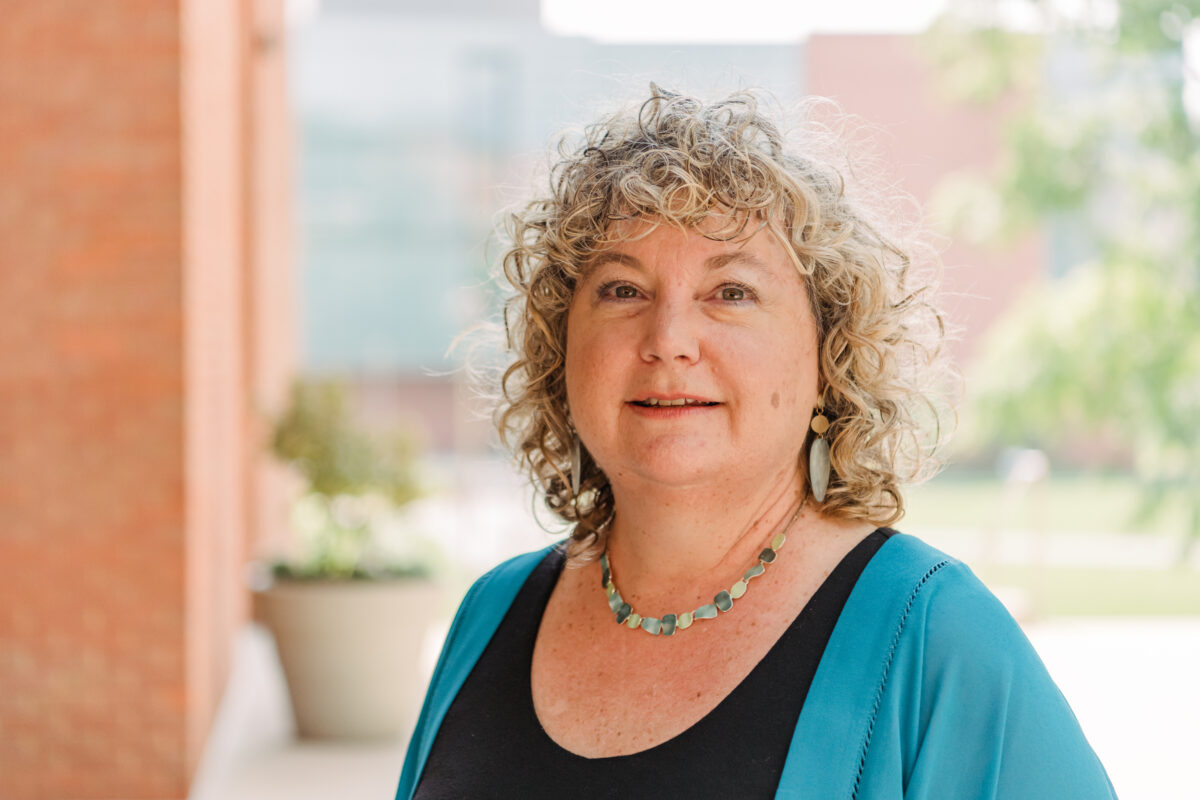 Amy Froide. (Marlayna Demond ’11/UMBC)
“This bailout doesn’t look much different from what we see in the 20th and 21st centuries,” says Froide. “Investors felt capitalism had not worked and wanted the government to step in. The various records from the parliamentary investigation found that the directors were committing fraud and because corporations and individual stockholders were equally liable at the time they both had to pay.”
“This story is interesting economically and will provide a lot of historical background for economic historians and economists,” she notes. “Much of what we think is so modern was actually happening three centuries ago in the early days of the stock market.”
Secrets without borders
Froide’s search through the Royal Archives led to a surprising discovery. She found evidence of a long-held suspicion by historians that the Charitable Corporation was funneling money to the Jacobites, a religious and political group that wanted to restore King James III to the British throne after the Glorious Revolution of 1688-89 toppled the Roman Catholic Stuarts.
“I began searching through the Stuart Papers in the British Library, which holds the personal and official correspondence of British monarchs,” says Froide. “I uncovered proof that the Jacobite ‘Pretender,’ James III, knew of the company and that he made contacts with officers of the Charitable Corporation who seem to have promised monetary support to fund his return to the throne and other acts of rebellion.”
Now, the story has led her to the largest repository of British documents outside of England—the Huntington Library in San Marino, California—as a research fellow. The Huntington Library Fellowship program is one of the largest and most distinguished fellowship programs for the support of humanities scholarship in the United States. Every year approximately 200 fellows from all over the world conduct advanced humanities research using The Huntington’s collections.
As a Huntington Library Fletcher Jones Foundation Fellow, Froide has received $50,000 to support a year at the Huntington Library archives to research and analyze documents and begin writing her book about the Charitable Corporation. The Huntington Library documents will allow Froide to reconstruct contemporary views of the financial scandal. She hopes the papers will lend further insights into the politicians, revolutionaries, investors, royalty, smugglers, and everyday people whose lives, willingly or not, were a part of creating and dismantling the business.
“My challenge is to write a story that shows you the political and economic context of the late 18th century in a way that is appealing to everyone. You can only do that if you have really good stories,” says Froide. “This is very labor-intensive work. There isn’t a specific file with all the answers in one language or in one country. But if you are a library or archive rat like me, you pursue all the threads to that great story.”
]]>
Humanities faculty Elizabeth Patton, Mirjam Voerkelius, and Amy Froide have received prestigious research fellowships totaling over $135,000 to explore archives and reveal new findings about...
https://umbc.edu/stories/umbc-humanities-faculty-pursue-groundbreaking-research/
https://my3.my.umbc.edu/api/v0/pixel/news/128409/guest@my.umbc.edu/7d56864c9bbdffe3e42d4b86a51c7309/api/pixel
arts-and-culture
cahss
cahssresearch
dreshercenter
history
international
majoraward
mcs
news
policy-and-society
rca-2
UMBC News & Magazine
https://my3.my.umbc.edu/groups/umbc-news-magazine
https://assets1-my.umbc.edu/system/shared/avatars/groups/000/001/943/24435aa6207c452e7bc15cc74b42c7bb/xsmall.png?1748556657
https://assets1-my.umbc.edu/system/shared/avatars/groups/000/001/943/24435aa6207c452e7bc15cc74b42c7bb/original.png?1748556657
https://assets2-my.umbc.edu/system/shared/avatars/groups/000/001/943/24435aa6207c452e7bc15cc74b42c7bb/xxlarge.png?1748556657
https://assets2-my.umbc.edu/system/shared/avatars/groups/000/001/943/24435aa6207c452e7bc15cc74b42c7bb/xlarge.png?1748556657
https://assets3-my.umbc.edu/system/shared/avatars/groups/000/001/943/24435aa6207c452e7bc15cc74b42c7bb/large.png?1748556657
https://assets1-my.umbc.edu/system/shared/avatars/groups/000/001/943/24435aa6207c452e7bc15cc74b42c7bb/medium.png?1748556657
https://assets2-my.umbc.edu/system/shared/avatars/groups/000/001/943/24435aa6207c452e7bc15cc74b42c7bb/small.png?1748556657
https://assets1-my.umbc.edu/system/shared/avatars/groups/000/001/943/24435aa6207c452e7bc15cc74b42c7bb/xsmall.png?1748556657
https://assets2-my.umbc.edu/system/shared/avatars/groups/000/001/943/24435aa6207c452e7bc15cc74b42c7bb/xxsmall.png?1748556657
UMBC News & Magazine
0
0
false
Wed, 12 Oct 2022 08:33:07 -0400
Wed, 12 Oct 2022 08:33:07 -0400
A dancer’s discipline and dedication
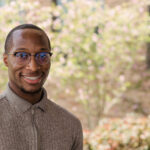
Joshua Gray
Degree: B.A., Dance and Media and Communication Studies
Minor: Political Science
Hometown: Hyattsville, MD
Plans: Public affairs mass communications specialist in the U.S. Army
“I am driven by knowing that I can help future generations of my family explore what the world has to offer. My work can open up opportunities for them and help them look at the world and their experiences in a different way.”
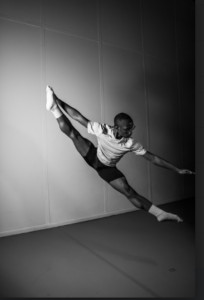
Joshua Gray dancing for the Association of Black Artists, (Image courtesy of Gray)
Dance is at the core of Joshua Gray’s life. Trained in different techniques of tap, ballet, modern, African diaspora styles, and jazz, Gray ’22, a Linehan Artist Scholar, finds that the discipline and dedication a dancer’s life demands have given him energy and purpose.
Gray is currently president of UMBC’s Student Government Association (SGA) and has served as a leader in other SGA roles including as vice president for student organizations, chief of staff, and executive vice president.
He has also led UMBC’s Dance Council of Majors and created a new student organization, UMBC’s Association of Black Artists.
Gray is interested in expanding access to the arts and high-quality communications to marginalized communities. He will graduate with majors in both dance and media and communication studies, and a minor in political science. While this is an uncommon combination, he thrives on pushing the boundaries of his passions.
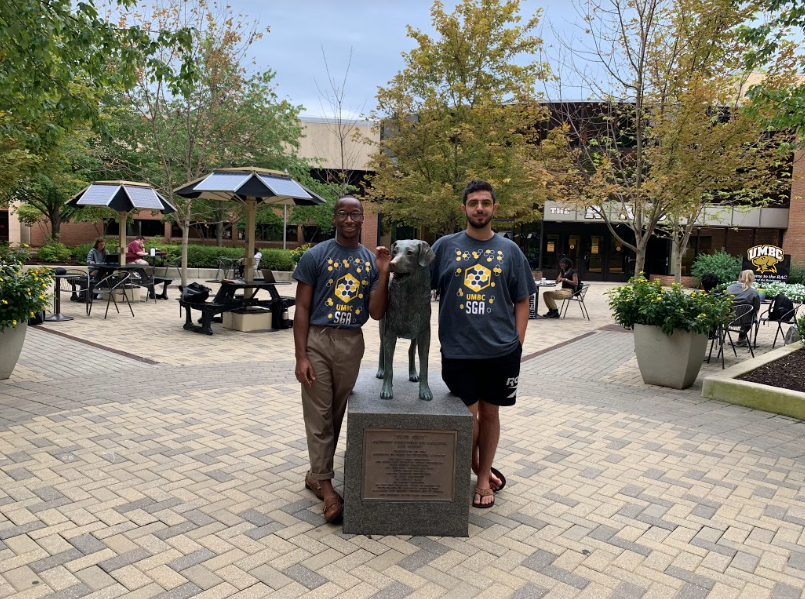
Gray (l) with prior SGA President,
Mehrshad Devin ’21, biology, and M.P.S ’22, entrepreneurship, innovation, and leadership. (Image courtesy of Gray)
This is one of the reasons he enlisted in the U.S. Army as a crisis communications specialist. He wants to travel to places and do work that connects him to the world stage through service.
]]>
Joshua Gray Degree: B.A., Dance and Media and Communication Studies Minor: Political Science Hometown: Hyattsville, MD Plans: Public affairs mass communications specialist in the U.S. Army...
https://umbc.edu/stories/a-dancers-discipline-and-dedication/
https://my3.my.umbc.edu/api/v0/pixel/news/119421/guest@my.umbc.edu/01f40a293f2295c7027259e63ae9b6c7/api/pixel
baltimorecommunities
cahss
class-of-2022
dance
linehanscholars
mcs
news
politicalscience
sga
UMBC News & Magazine
https://my3.my.umbc.edu/groups/umbc-news-magazine
https://assets1-my.umbc.edu/system/shared/avatars/groups/000/001/943/24435aa6207c452e7bc15cc74b42c7bb/xsmall.png?1748556657
https://assets1-my.umbc.edu/system/shared/avatars/groups/000/001/943/24435aa6207c452e7bc15cc74b42c7bb/original.png?1748556657
https://assets2-my.umbc.edu/system/shared/avatars/groups/000/001/943/24435aa6207c452e7bc15cc74b42c7bb/xxlarge.png?1748556657
https://assets2-my.umbc.edu/system/shared/avatars/groups/000/001/943/24435aa6207c452e7bc15cc74b42c7bb/xlarge.png?1748556657
https://assets3-my.umbc.edu/system/shared/avatars/groups/000/001/943/24435aa6207c452e7bc15cc74b42c7bb/large.png?1748556657
https://assets1-my.umbc.edu/system/shared/avatars/groups/000/001/943/24435aa6207c452e7bc15cc74b42c7bb/medium.png?1748556657
https://assets2-my.umbc.edu/system/shared/avatars/groups/000/001/943/24435aa6207c452e7bc15cc74b42c7bb/small.png?1748556657
https://assets1-my.umbc.edu/system/shared/avatars/groups/000/001/943/24435aa6207c452e7bc15cc74b42c7bb/xsmall.png?1748556657
https://assets2-my.umbc.edu/system/shared/avatars/groups/000/001/943/24435aa6207c452e7bc15cc74b42c7bb/xxsmall.png?1748556657
UMBC News & Magazine
0
0
false
Thu, 12 May 2022 11:09:08 -0400
Thu, 12 May 2022 11:09:08 -0400
Playing at the Next Level—Retriever Rises to MLS Star

“New England goes back in front 2-1, and it’s the center back Jon Bell who gets forward and gets his first MLS goal! …Jon Bell creeps in between, it’s a beautiful delivery, and how about that for a header? Fabulous placement…. It’s a great goal!”
Even the rival New York City FC commentary team couldn’t deny the special nature of former UMBC men’s soccer left-back Jon Bell’s first professional career goal which aided his New England Revolution side to a nail-biting 3-2 away victory at Red Bull Arena in New Jersey in June 2021.
 New England Revolution defender Jon Bell (23) celebrates his goal against New York City FC during the second half at Red Bull Arena. Vincent Carchietta-USA TODAY Sports
A capstone achievement, on just his fifth appearance for his team, it’s a moment that millions of soccer players and fans around the world dream of, but will never realize. Bell channeled his Retriever roots to make a name for himself on the highest playing field.
MLS bound, but college first
Described by UMBC men’s soccer head coach Pete Caringi Jr. as “one of the best-attacking collegiate left-backs in the country,” Bell, media and communication studies, realized the first part of his lifelong dream of playing professional soccer when he was selected at the 2020 Major League Soccer (MLS) SuperDraft before he even graduated from UMBC.Soon, he would join a new team, enter a new locker room, and have a new set of expectations in front of him.
Fortunately, he already experienced that during his first days at UMBC. “I was just trying to fit in with the guys… knowing that Coach Caringi was really excited and happy to have me on the team helped,” says Bell.
“I was an advocate of his through his first year here,” says Caringi, who has coached at UMBC for more than 30 years.
 Jon Bell during his playing days at Retriever Soccer Park. Credit Gail Burton UMBC Athletics.
A Maryland native, Bell was originally committed to play out of state before complications arose, extinguishing that prospect. Coach Caringi, catching wind of this, knew he wanted Bell’s qualities on his roster, which would require only a little convincing at first.
“In the recruiting process he saw the fact that we were just coming off the Final Four appearance—from a soccer standpoint we’d done really well. Also, I think he knew that pursuing a college degree from UMBC is a really valuable thing…. It’s not a hard sell to be honest,” says Caringi.
“I remember telling a lot of people here that Jon is going to have the opportunity to play at the next level and it’s just a matter of how hard he continues to work at it,” Caringi continues. “But he kept working at it and getting better and better, but there were glimpses of a guy who has all the tools to play at the next level in MLS.”
But the nature of college athletics ensured that Bell had challenges beyond soccer, including the expectation to keep up academically. “It was hard, especially at first. When you had exams and papers at the same time, you had to go to practice every day, two and a half hours at a time. So it was just about being responsible, managing your time well, knowing that we couldn’t stay up late. You just had to come in ready for class or training the next morning,” says Bell.
Student-athletes across the country face this challenge, but according to Bell, at UMBC, “it’s not like what you might see at other colleges where you have someone leaning over your shoulder helping you every time. We weren’t guided to our desks and given paper and a pencil—no one did the work for us.” Instead, Bell says, UMBC and Athletics gave him and the others motivation to embrace their studies. The academic support for student-athletes shows as the 17 varsity UMBC teams repeatedly increase their average grade point average, topping 3.19 in fall 2019. “Everything that we had to do academically, we did ourselves.”
After the fall 2019 semester when Bell was drafted to the MLS, he took a hiatus from school to give professional soccer his full attention, but Bell knows his time at UMBC isn’t over. He still plans to finish his degree virtually.
Getting picked in the MLS SuperDraft
Much like other professional sports leagues, MLS uses a college draft system, called the MLS SuperDraft when college soccer players are selected by teams in a pick-by-pick format. It’s the clearest path for a college soccer player to play at the highest national level.
But getting selected in the SuperDraft is by no means the same thing as being a MLS player with a professional contract, Caringi explains. “The MLS draft is growing increasingly tougher to end up on the first team. You can get drafted, but to sign for the first team on most of these MLS teams is very difficult.”
“Even in my first year of college, my number one goal was to work really hard to get the opportunity to get drafted into MLS. Each year, my goal was the same, just to build up my portfolio [for that],” says Bell.
-
 Bell in pre-season training with the New England Revolution. Credit New England Revolution
-
 Jon Bell dribbles up field in an MLS match. Credit New England Revolution
When Bell’s moment at the SuperDraft arrived, his former head coach was watching the proceedings. “I was really excited,” says Caringi.“We spoke to the MLS coaches before the SuperDraft, so we knew there was a really good chance of Jon getting drafted. I’ve been a fan of Jon as a player, as a person, as a student—he was the whole package.”
Bell would experience a range of post-draft trials. He was selected in the second round by the San Jose Earthquakes, who ultimately didn’t offer him a place on the team. Instead, his rights were traded to the New England Revolution, where he started out playing for their B-team—New England Revolution Ⅱ in the third division United Soccer League One (USL1). But challenges and setbacks are just as welcome as successes to Bell.
Finding a place on the first team
He never doubted that he would make the first team. “My coaches were telling me that the first team coaches were watching me and for me, hearing that was motivation to continue to push harder,” says Bell. “It was just a battle of mental fortitude with myself to continue to pursue even though there were times where things weren’t going my way, just keeping that focus and mentality throughout training sessions when I was with the first team for preseason.”
After playing a season with the New England Revolution Ⅱ, Bell’s mentality paid off when he signed a contract with the Revolution’s first team.
Playing alongside teammates who have participated at the highest levels of professional soccer has been “a great experience,” says Bell. “I can use their work ethic as a blueprint as to what I need to do to play at that level. It’s a cool experience to have not only with them but also with [head coach] Bruce Arena who’s been in this for a long time and has a long list of accolades and respect in the world of soccer.” As Bell adjusted to his new surroundings, he was also getting used to a new position on the field.
 New England Revolution defender Jon Bell (23) celebrates his goal with midfielder Carles Gil (22). Vincent Carchietta-USA TODAY Sports
“He started playing center-back which he never played here at UMBC,” explains Caringi. “I’m not surprised that he’s playing there, I think Jon can play anywhere on the field. I have to give him a lot of credit for transitioning to center-back which isn’t easy in general but at that level, it’s particularly challenging,” he continued.
After a pair of months with the first team, Bell made his debut for the Revolution, where he played the full duration of the match, a few games later, he got his goal. A perfectly placed header that whizzed past the New York City FC goalkeeper.
“It’s just a blessing. I can’t put it into words because at the moment when you score, that first second you don’t know if it really happened or not… It was late in the game at that stage where your legs are tired but scoring that goal refueled me to finish off that game,” Bell says, ultimately leading his team to victory.
The future of UMBC Men’s Soccer
UMBC’s men’s soccer program has produced its share of professional soccer players over the years, including five previous MLS SuperDraft picks, but Bell is the only Retriever actively playing in MLS.
Nevertheless, both Bell, and Caringi see a bright future for the UMBC men’s soccer program, suggesting that Bell may have some former teammates joining him in MLS before long.
“Quantrell Jones had a lot of accolades and a lot of people watching him… His future is bright. If he decides to pursue going pro he has everything in his toolbox to do it,” notes Bell on his former teammate who still plays for the Retrievers.
Caringi agrees. “I’ve been saying that Quantrell is a MLS goalkeeper. When the time comes, Quantrell is going to get drafted, he’s going to get his opportunity…. Now it’s just a matter of how hard he works at it, and if he does, then we’ll be talking about him in a couple of years.”
Beyond Jones, Caringi sees several potential stars in the making. “Just like I told Jon when he was a freshman that ‘someday you’re gonna be a pro.’ I’m looking at some of these guys right now and seeing as they continue to develop, one day they’re going to have the same opportunity. It goes back to your love, your drive, your determination, but clearly, they can get there…. We’re not dry of players who could play at the next level,” says Caringi, who cites former Retriever Sam Solomon who recently signed for the Richmond Kickers in the USL, among others.
Meanwhile, Bell hopes his rise to MLS “opens doors for other people. If I continue to play consistently at this level, not only can it help the coaches bring in new players, but it can help the players that are there now. When pro teams are looking at them, they can look at me as a kid who came from that school, so they know that there are players at UMBC who have the potential to play at the next level.”
*****
Header image: Jun 19, 2021; Harrison, New Jersey, USA; New England Revolution defender Jon Bell (23) celebrates his goal against New York City FC during the second half at Red Bull Arena. Vincent Carchietta-USA TODAY Sports.
]]>
“New England goes back in front 2-1, and it’s the center back Jon Bell who gets forward and gets his first MLS goal! …Jon Bell creeps in between, it’s a beautiful delivery, and how about that for...
https://umbc.edu/stories/playing-at-the-next-level-retriever-rises-to-mls-star/
https://my3.my.umbc.edu/api/v0/pixel/news/119564/guest@my.umbc.edu/85e5478fbc03cb639a3b099b222f1fa8/api/pixel
campus-life
mcs
mens-soccer
mls
umbc-athletics
UMBC News & Magazine
https://my3.my.umbc.edu/groups/umbc-news-magazine
https://assets1-my.umbc.edu/system/shared/avatars/groups/000/001/943/24435aa6207c452e7bc15cc74b42c7bb/xsmall.png?1748556657
https://assets1-my.umbc.edu/system/shared/avatars/groups/000/001/943/24435aa6207c452e7bc15cc74b42c7bb/original.png?1748556657
https://assets2-my.umbc.edu/system/shared/avatars/groups/000/001/943/24435aa6207c452e7bc15cc74b42c7bb/xxlarge.png?1748556657
https://assets2-my.umbc.edu/system/shared/avatars/groups/000/001/943/24435aa6207c452e7bc15cc74b42c7bb/xlarge.png?1748556657
https://assets3-my.umbc.edu/system/shared/avatars/groups/000/001/943/24435aa6207c452e7bc15cc74b42c7bb/large.png?1748556657
https://assets1-my.umbc.edu/system/shared/avatars/groups/000/001/943/24435aa6207c452e7bc15cc74b42c7bb/medium.png?1748556657
https://assets2-my.umbc.edu/system/shared/avatars/groups/000/001/943/24435aa6207c452e7bc15cc74b42c7bb/small.png?1748556657
https://assets1-my.umbc.edu/system/shared/avatars/groups/000/001/943/24435aa6207c452e7bc15cc74b42c7bb/xsmall.png?1748556657
https://assets2-my.umbc.edu/system/shared/avatars/groups/000/001/943/24435aa6207c452e7bc15cc74b42c7bb/xxsmall.png?1748556657
UMBC News & Magazine
0
0
false
Tue, 07 Sep 2021 14:10:58 -0400
The Show Must Go On

Dimmed lights, Twizzlers, and a big bowl of popcorn. Most of us may not have had the traditional movie theatre experience this year, but in living rooms across the country this year, many have found much-needed solace and escape through television and movies. Behind the scenes, Retrievers working in Hollywood as writers, producers, and directors have embraced the challenges of the moment—and remained ever-thankful for their audiences and creative roots. UMBC Magazine editor Jenny O’Grady sat down with five alumni working in entertainment to hear more about how they got their start, and what has kept them going creatively during this unusual time.
UMBC Magazine: What has it been like to continue working during the pandemic in order to keep up with demand for entertainment? What does that look like?
 Name: Kara Corthron ’99, theatreJob: Author, playwright, and TV writerAbout:
 Author of
The Truth of Right Now and
Daughters of Jubilation. Plays include
What Are You Worth?,
Welcome to Fear City,
AliceGraceAnon, and
Holly Down in Heaven. Writes for the TV drama-thrillers
You (Netflix),
The Flight Attendant (HBO-Max), and M. Night Shyamalan’s
Servant (Apple TV+). A multiyear MacDowell Fellow and resident playwright at New Dramatists.
Where do you turn for inspiration? Toni Morrison, Shirley Jackson, and Octavia Butler. Korean horror films.
Your favorite creative spot at UMBC? AOK Library’s “colorful Alice in Wonderland chairs”
Fave pandemic entertainment? Search Party, Schitt’s Creek, Gilmore Girls
Kara Corthron: Well, I’ll just say, I feel really fortunate that I’ve been able to work, because 40 percent of our country is experiencing food insecurity. But, the biggest shift for me in TV writing was that everything became Zoom meetings…and I still am not in love with it. We’ve found a way to make it work and be productive, but I still would much rather be with humans, and I miss that a lot.
Brandon Spells: On the network side, making that transition from our office on Sunset Boulevard, to taking pitches on Zoom, it’s just a different energy when you’re in the room with talent, and taking pitches and getting excited about things…it’s just different. Initially we stopped all productions, so that was tough. Once we got the green light, we first started productions in countries overseas, and then slowly, during the summer, we started picking up back in America. Last fall we were going nonstop, trying to catch up, because there was a gap from when we stopped. This year, you’re probably going to see that things kind of slow down, as far as the launch cadence. But maybe that’s not a bad thing, because we come out with something every week, and maybe we don’t need to launch a million things in one weekend.
Brian Dannelly: For me, when the virus came on, we were writing all the scripts, prepping everything, trying to figure out the COVID situation and trying to be ahead of it, so that when we were able to get back on set we’d be ready to go. We had no idea when we were going back, and so during that time period I had a physical, and my doctor didn’t want me flying, so I had to give up the show (In the Dark), which was terrible and sad…and really scary, too. I went into the pandemic with the hopes of coming out a better person, a better creator. We’re so lucky because there are so many people who are really struggling, so you’re trying to balance that with how you can use this time for good. And so I helped In the Dark transition to the third season, and then I just started writing like a crazy person. I became a whole food plant-based vegan, I learned how to cook. I’m adopted, so I found all my brothers and sisters—there’s nine of them. And I just really tried to kind of reconnect with who I was when I started the business, who I was when I was at UMBC, and what got me into the business, and I feel like so far I’ve come out in a place that’s really good.
Cat Mihos: For me, it’s been fascinating watching the budgets balloon for COVID compliance. We have two shows in pre-production for Amazon right now that are going to be filmed in Scotland, so we were trying to share things, like catering, so we have one bubble, also trying to make new workarounds so we use the same COVID compliance officers—we’re trying to work smarter. It’s been a year. Brandon, I get it, Netflix has definitely been our biggest supporter, and we love working with them. It comes down to Zoom meetings, our writer rooms are all remote, so if there’s any technical glitch…where you’re just frozen on a screen, ugh. It’s learning to cope, that’s the best skill on any set that you can have. I did work on Brian’s first couple films when he was in AFI (American Film Institute), so we have quite an old friendship. We’re old. But it’s lovely to have that support just right down the street.
UMBC Magazine: Is there anyone who particularly influenced you, or some other takeaway from your time at UMBC, that you still look to now in your careers?
 Name: Brian Dannelly ’97, visual arts
Job: Writer, director, and producerAbout: Executive producer and the producing director on The CW’s sleeper hit,
In the Dark. Directed shows for Netflix, Hulu, Showtime, MTV, ABC, and CBS, including
Scream, Sweet Vicious, Haters Back Off, Pushing Daisies, United States of Tara, and
Weeds. Co-wrote and directed the cult teen film,
Saved, and directed
Struck by Lightning. Currently co-creating an animated series called
Humperdinck.
Where do you turn for inspiration? Whatever personal crisis I’m going through at the moment.
Your favorite creative spot at UMBC? Kathy O’Dell’s office.
Fave pandemic entertainment? GENERA+ION on HBO Max
Dannelly: You know, I was a little broken when I got there, which is interesting because UMBC really put me back together again. My first college was Morgan State University, so it was there I made my first film at a satellite program that they had in Towson. I went from being vice president of my class to failing out because I was so freaked out about making this film. And so I struggled for like two years. It didn’t make sense that I could do this, because at the time we didn’t have internet, and we weren’t connected all over the world. It was like, I’m in this small town, how do I go from here to Hollywood?
I knew that John Waters edited his early films at UMBC, and I knew they had a lot of film equipment. I went to a meeting there, I was so scared. And so UMBC said come on in, come do this. And I had teachers like Kathy O’Dell, Holly Rubenstein, Jill Johnson—these women carried me. In fact, I was so broken when I went there, when it came to applying for a master’s degree, I applied to all of the film schools that I thought I could get into, and Kathy O’Dell sat me down and said, “You apply to the best schools.” And I applied to AFI (the American Film Institute) literally running to the train station in Washington, D.C., to put my application in the mail, because I was late and it had to be in by that night. And I never thought in a million years that I would get into that school. So, not only did they help me tap into my creativity and be who I am, but they helped put me back together again.
McKenzie Chinn: For me, part of my identity as a creative person is working in multiple spaces, in multiple disciplines. I’m still an actor, but I’ve forged more space for my own projects, my own writing. I have a poetry collective. And all of these things I do in equal measure. When I was at UMBC, I was an actor, in a very conservatory-like program. And I think the thing that I learned the most, was a level of discipline that allowed me to succeed as much as I have thus far, and that work ethic was reinforced by all my instructors in the Theatre Department. But I think it has been applying that discipline to carving out space for my own ideas and my own stories, and taking my own agency as an artist, especially as a Black person and a woman in this world, that have really benefited me as an artist and advanced my career beyond what I imagined it could be. And it has been that rebellion, frankly, that I think has allowed me to be able to pivot in the ways that I have during the pandemic. Theater is on pause right now, and so we’re all finding ways to do what we do in a different space.
Corthron: In my senior year, I was part of a group that just started writing, and were kind of performing our own works and listening. And we’re like it would be really cool to have a playwriting class, but we don’t have one. So we went to the department head who was Wendy Salkind at that time, who is lovely. We told her we were really interested in writing, and she created a class for us. She found a teacher, and they added it to the curriculum. It was really cool. I feel like she saw that what we were getting wasn’t quite enough, so she thought let’s try and figure out a way to make it enough.
I’ve never thought of myself as one thing, either, which is hard, because people really want you to do your one thing, stay in your lane. And eventually I realized I’m a writer, so I write. But whether that’s playwriting, whether that’s novels—I write young adult fiction—or it’s TV or film, I finally got to a place that’s taken a long time, to realize I can do all of it, it’s my choice if I want to be exhausted. It’s really up to me. So I think that some of that was instilled in me at UMBC.
 Name: Brandon Spells ’14, media and communication studies
Job: Creative assistant at Netflix, unscripted content
About: Worked on BET’s “106 & Park” in New York City and on productions with Nat Geo, Sirens Media, and E! In L.A., produced shows like
The Doctors,
Who Wants to Be a Millionaire?, and
The Bachelor. Today, develops and produces impactful global content for Netflix.
Where do you turn for inspiration? My mom! She is the reason I never gave up on my goals.
Your favorite creative spot at UMBC? Professor Kimberly Moffitt’s “Baltimore in Film” classroom
Fave pandemic entertainment? My favorite reality show
The Real World
Spells:So my freshman year, I was a graphic design major, and I was supposed to do this portfolio, but of course being a freshman, I procrastinated and I threw something together and submitted it to the program. And I didn’t get in. I wanted to be a cartoonist, graphic design—that was always what I was going to do. And so when I didn’t get into the program, it was a crossroads moment.What other things do I like to do? What are my other passions?
And I remembered me and my friends would shoot and edit YouTube videos and stuff, and so I was like I kind of like entertainment, but I don’t know anyone who is in the entertainment industry. I don’t even know how you get into making films, or any of that stuff. Nobody in my family ever did that. And so I started going into media communications. And the first class that I took was Baltimore Film with Kimberly Moffitt. I enjoyed it, but I just wasn’t looking at film or television in a very analytical way. Professor Moffitt, she broke things down in such a creative way, it really helped me see things I hadn’t thought of before. And I literally use those techniques today. Giving notes on a cut, and kind of using the analytical eye to look at things creatively, I use that everyday. And I honestly think it started with that class, because watching The Wire, watching Crybaby, she was breaking each scene down and why this led to this, and I’m like how? I would never have thought of something like that. And so it was really a full circle moment for me.
Mihos: I was a photography major. I worked in the darkroom at UMBC, and Alan Rutberg was one of my teachers, and I was very sad to hear we lost him two years ago. When I was 12; I built a darkroom with my dad. So it was always about analog film, and poor Alan, really I put him through the paces. I was adamant, why do I have to learn digital, there’s still going to be film. He said nope, and he pulled me into the digital age. He was great, he was challenging. Chris Peregoy, as well, was excellent. Very different teachers, but they both contributed important parts of my photographic life, which I do still use. I’ve done photo shows, I need to return to that. Digital is still not my true love. I had sort of two dads telling me digital is the future, get with it, forget complaining about it, just go. And Peregoy was like no, keep your analog film love, because it is still there, it’s just almost gone.
UMBC Magazine: Why do you think entertainment has been such a unifying force during the pandemic, and what are you hearing from people that keeps you going creatively?
Spells:I feel like some of our stuff has definitely provided people with escapism, because everyone’s cooped up in their house, they’re not traveling, not experiencing things. And so being able to just get out of your little box and put yourself somewhere else for a little bit is always helpful. Love is Blind, for instance, people loved that show. And I feel like people were unified in people’s misery, craziness, misfortune. They’re like this is so crazy, this is so wild. But having that connectivity with people, especially when you feel so far away from them, is always nice.
Corthron: Yeah, I totally agree, I think we’d all love a little bit of a vacation from what’s going on. These shows have helped a lot. I also think not only is it giving us something to connect about, because of the past year, it was giving people a reason to connect over something that wasn’t politics. I feel like there was so much going on that was painful, that it was a way not to have to, at least for like a moment, to have a conversation that wasn’t about how stressed we should be. It was a stressful year.
 Name: McKenzie Chinn ’06, theatreJob: Filmmaker, actor, and poetAbout:
 Writer, producer, and lead actor of
Olympia. Acted in the FOX pilot
The Big Leap, Empire, CBS’s
The Red Line, and onstage with Goodman and Steppenwolf Theatres, The Second City, and others. Part of Growing Concerns Poetry Collective whose releases include two albums—
Big Dark Bright Futures and
We Here: Thank You For Noticing.
Where do you turn for inspiration? Currently, ideas around Afrofuturism.
Your favorite creative spot while at UMBC? Room 318 of the theatre building, which acting students shared with the Registrar.
Fave pandemic entertainment? I’ve been very drawn to cult documentaries.
Chinn: I agree with both of you, Brandon and Kara, the world is a lot right now. Even now, if I just think too hard about it, I get really overwhelmed. And I think as creative people we have sensitivity, where we are deeply impacted by things going on around us, and the suffering of others. But in order to be able to show up for ourselves and our families, we need to be able to dispel some of that anxiety, some of that sorrow, some of that tension, because it is so strong.
And so having these various forms of entertainment from prestige television to the trashiest of the trash, has been, I think, for me, been a lifesaver…. I’ve had this really amazing experience over the last year, where my movie, Olympia, got distributed and hit streaming platforms in 2019. And then everything stopped, and so people were watching more media than they ever had. And so I think smaller indie films that maybe would not have gotten as much attention were suddenly being watched by a lot of people, mine included. And my movie is mostly Black people and people of color, and it’s a comedy. It’s got some heavier moments, some heartfelt moments, but it is a lighter movie….I remember thinking, does anybody need this movie right now? Little did I know, that was exactly what people would need during this time. And I got an experience I’m so grateful for, where I’ve had just so many Black people, specifically Black women sliding in my DMs just to thank me for the movie, from all over. And every time it happens, I’m just beside myself with gratitude.
Dannelly: One thing I don’t think people realize is that people making film and TV, they work 16 hours a day. Everyone works so hard, they’re away from their families….The other thing I always say to people, is that Hollywood is just a bunch of people from small towns and cities. It’s not like a bunch of people from L.A. Cat and I came from a little small town, and we didn’t go there as Hollywood people, and I’m sure you guys have the same experience—you go there because that’s where you go to make films and TV.
Mihos:Well, I wanted to add on that note, my dad came from Greece, he came over when he was 16. I went home to see him recently with great concern, because I thought I don’t want to get him sick, he’s 90, and he’s like, please come home. I asked him, “Dad, should I be doing this? Should I be doing this with my life?” He said, “You know what, we need to laugh, we need entertainment!” His 90-year-old wisdom just kind of turned my brain around, because I was thinking, what really is this? Is this going to matter in the big picture? Shouldn’t I be out there fighting for people, healing people, doing something more important? I really appreciated that from my dad, because you never know what you’re giving back to the world.
Dannelly: This is what I love about our business. Yes, we entertain people, that’s part of our job. I think hopefully we’re doing it for good, even if it’s a laugh. But also, we have the ability to affect every single person we work with. We have the ability to change culture by inclusiveness, by who we choose to hire. So it’s like this sort of weird external thing, where we entertain people on many different levels, and it’s also this very active, internal mechanism for change, which I love. I’m always going into a project with an agenda, always, always.
UMBC Magazine: So, what advice would you give a student or recent grad who’s trying to get into this business?
 Name: Cat Mihos ’00, visual and performing arts (photography)Job: Producer/writer, photographer, former roadieAbout:
 Met author Neil Gaiman while on tour with Tori Amos in 2002. Toured full time with bands like Tool, Mötley Crüe, Soundgarden, and Gaga until 2016 when she set up Gaiman’s production company, which she currently manages on the Jim Henson Studio lot. Worked on
American Gods,
Good Omens, and managed several book tours. Authored
Comic Book Tattoo Tales Inspired by Tori Amos. Writing a graphic novel for Z2 Comics about Vikings titled
Lore of the Havamal.
Where do you turn for inspiration? I flip through old comics.
Your favorite creative spot while at UMBC? Fells Point, where I opened my little shop 9th Life.
Fave pandemic entertainment? The Wire, X Files,
30 Rock
Mihos: I think what’s really important in life is you come up with your people. The other assistants, the people working with you on the ground. It’s important to keep checking in with people, even if you have nothing to say, no news, just be like, “how are you doing?” I do so many little mentorships, because I didn’t have much of that, and I didn’t know how to find it. There’s no rule book, and I think the younger kids, they do seem to be fine with asking. I just never thought you were supposed to ask. So please, be generous with your time.
Dannelly: While you’re there at school, understand who you are and what kind of stories you want to tell. Really connect with why you’re at UMBC. Take a lot of different classes outside of the arts department, because no one wants to make projects with people who only have a theater degree. Whatever other interests you have, spend time doing that. Create as much content as you can. Short films, Tik Toks, YouTube. I can’t tell you how many people I discover on Tik Tok and I’m like, that person is interesting, I wonder what they would be like in a film or show.
And then the other thing that’s hugely important, and I think McKenzie and Kara, you touched on this so well, is write. The fastest way to have a career is to have something that you’ve written that somebody wants. You don’t have to do anything but have this thing that you’ve written that you want to direct. And I guess the final thing I would say is don’t sell yourself short, like I did.
Chinn: This year, what I come back to is what a wonderful opportunity this was to enrich yourself as an artist, as a creative person. Before things got surprisingly busy again, I was just like, oh my gosh, I’m going to read so many books. I’m going to watch so many movies that have been on my list. I’m going to grow things in my apartment. I was actually quite excited for the opportunity to connect with the other parts of myself that feed my artistry, that give me something to even talk about, that give me a perspective to have in the world that I bring with me when I sit down at my laptop, or when I walk onto a set. I feel like I need space. I need literal time and space in the world, and also in my head and my heart, to realize what it is that I have to say. And I think if there’s an opportunity like one the pandemic has presented for some people to have that time and space. Or, rest, right? We don’t always have to be productive. We don’t always have to be in making mode. We can also just take a nap, that’s also important work.
Corthron: I’m just going to go with what everybody said, particularly Brian. Write, and write scripts that cannot be ignored.
Mihos: And a P.S. on that, hold onto your intellectual property. Don’t give it away, be careful with that. Starting out, especially. I see it happen so often.
Spells:And like Cat said, relationships are just so important, not only in this industry, but obviously in every industry. A lot of it is about what you can do, but it’s also about who you are and how you connect with the people around you and work with the people around you. And then networking, it’s also not bad to ask for help. When I was just graduating, I quickly found out that no one has made it on their own. And the moment I started connecting with other people, and asking for help, is the moment that they saw how genuine I was, and I saw how genuine they were, and we made those connections. And I was able to help them along the way, and they helped me. And so it’s all a collaborative effort.
]]>
Dimmed lights, Twizzlers, and a big bowl of popcorn. Most of us may not have had the traditional movie theatre experience this year, but in living rooms across the country this year, many have...
https://umbc.edu/stories/the-show-must-go-on/
https://my3.my.umbc.edu/api/v0/pixel/news/119598/guest@my.umbc.edu/85c1dc582c50d7de29602531cf1a7daa/api/pixel
alumni
feature
mcs
spring-2021
theatre
visual-arts
UMBC News & Magazine
https://my3.my.umbc.edu/groups/umbc-news-magazine
https://assets1-my.umbc.edu/system/shared/avatars/groups/000/001/943/24435aa6207c452e7bc15cc74b42c7bb/xsmall.png?1748556657
https://assets1-my.umbc.edu/system/shared/avatars/groups/000/001/943/24435aa6207c452e7bc15cc74b42c7bb/original.png?1748556657
https://assets2-my.umbc.edu/system/shared/avatars/groups/000/001/943/24435aa6207c452e7bc15cc74b42c7bb/xxlarge.png?1748556657
https://assets2-my.umbc.edu/system/shared/avatars/groups/000/001/943/24435aa6207c452e7bc15cc74b42c7bb/xlarge.png?1748556657
https://assets3-my.umbc.edu/system/shared/avatars/groups/000/001/943/24435aa6207c452e7bc15cc74b42c7bb/large.png?1748556657
https://assets1-my.umbc.edu/system/shared/avatars/groups/000/001/943/24435aa6207c452e7bc15cc74b42c7bb/medium.png?1748556657
https://assets2-my.umbc.edu/system/shared/avatars/groups/000/001/943/24435aa6207c452e7bc15cc74b42c7bb/small.png?1748556657
https://assets1-my.umbc.edu/system/shared/avatars/groups/000/001/943/24435aa6207c452e7bc15cc74b42c7bb/xsmall.png?1748556657
https://assets2-my.umbc.edu/system/shared/avatars/groups/000/001/943/24435aa6207c452e7bc15cc74b42c7bb/xxsmall.png?1748556657
UMBC News & Magazine
0
0
false
Thu, 10 Jun 2021 14:59:49 -0400
Special Edition

Under normal circumstances, print news like UMBC’s student newspaper The Retriever binds the campus community together. College students reach for the paper because they know their friend wrote a feature on the front page, or they spot one of their favorite professor’s research on the second page. In a world that has morphed into a socially distanced, spaced-out reality, it turns out that we’re all still yearning for community.
That was my focus as the editor-in-chief of The Retriever during the 2020 – 2021 school year. Every staff member had to make the UMBC community the priority while reporting on all sorts of serious topics. It was learning on the go. Jokes have roamed Twitter about “BC,” or before coronavirus. “BC” for The Retriever was filled with staff meetings twice a week, production meetings to roll out the paper every other week, and continuous in-person interfacing. When we were forced to scatter up and down the East Coast, our editors continued publishing online and in print. We all worked diligently to produce relevant and informative articles. The staff is filled with resilient and strong people, and I am very proud to have had the opportunity to lead them through this tumultuous time.
Newspaper life is frenetic in general, though, so I was excited to be able to connect with two editors from The Retriever’s past—Juan Carlos Ordóñez ’91, philosophy, and Alex Pyles ’09, English—to get their perspectives. Ordóñez shared his experience leading The Retriever while the paper was daily and production days were filled with all-nighters and lively conversation. Pyles described the impact of the internet and the recession on the paper. Our conversation was filled with friendly anecdotes and plenty of shared experiences even given the 32-year gap between our times of leadership. And though our challenges varied, as did our staffs, we all shared one thing in common: our love for The Retriever and our love for the UMBC community.
 DasSarma in front of the A.O.K. Library. Photo by Marlayna Demond ’11.
Where are they now?
Anjali DasSarma: Hi, everyone, I’m Anjali and I’m about to hand off the editorship at The Retriever, but I’ve been the editor in chief since last April so I had the pandemic year….I’m going to Brown University in the fall and I’m going to be studying journalism and inequity and community distrust. I majored in media communication studies. Can you tell me about your careers and how you got there?
Juan Carlos Ordóñez: I was editor of the paper in ’89 and ’90, so quite a while ago. It’s before the paper was in any sort of digital form, which is kind of interesting. After leaving UMBC, I attended law school. I went to Harvard and practiced law for about seven years in New York City, where I did commercial litigation. I got tired of the rat race. I left New York City, left the practice of law and moved back to Guatemala, where I was born. I did some freelance journalism; I volunteered in a number of community organizations; and I met my wife who was from Oregon. So, around 12 years ago, I moved to Oregon and I ended up getting a job at a think tank. We do tax and budget economic policy at the state level. And I’m the communications director, a position I’ve held ever since I got to Oregon, so it’s been over 10 years now. And I have to say that each of those steps—since I left UMBC, my experience from the paper, especially writing—has been invaluable.
Alex Pyles: I’m Alex, and I was the editor of the paper in ’08 and ’09, which was the recession year, which is not a pandemic year, so I’m not comparing the two. But I went from there, and started working in journalism immediately. I was a freelancer for the Wilmington Delaware News Journal and then I went to the University of Maryland to start my master’s degree in journalism. While I was there, I started working for patch.com as a sports editor [and later on] local editor and city editor roles with the same company. I spent a couple of years with Patch and went from there to the Maryland Daily Record where I covered the Maryland State House for two years. I then spent four years at the Baltimore Sun—two years in the sports department, two years in Metro covering as the political editor for Maryland state government in Baltimore City Hall. I left the paper in 2017 to go back to where I got my master’s degree, the Philip Merrill College of Journalism at UMD, where I was the communications director for about two years. And then I joined the faculty and now lecture in the college teaching audience engagement and digital design and editing investigative projects for the Howard Center for investigative journalism.
Deadlines and all nighters
DasSarma: It’s really helpful to see the framework of where you guys went after the paper. Now, I’d like you both to think back on some of your achievements, or things that really stuck out to you, during your time as an editor.
 Ordóñez, tutoring a school child in a 1987 issue of
 The Retriever.
Ordóñez: This may sound sort of mundane, but I don’t think we ever missed a deadline in terms of publishing the paper or getting the paper out on time. I don’t know how often the paper comes out these days, back then we were weekly.
DasSarma: Well it was bi-weekly before the pandemic and in print, and then I had to make some adjustments given that no one was on campus.
Ordóñez: I can only imagine the obstacles. I just remember we would pull all nighters. Back then we would have to lay it out by hand. We would have to cut it and lay out the whole thing on these big boards because it was a broadsheet. And I remember all nighters on weekends and we would get the paper to the printer early Monday morning and, yeah, I don’t think we ever missed a deadline. So that was kind of an achievement, I would say.
Pyles: I had been the sports editor for two years before I became the editor in 2008. And my memory is a little bit foggy, and I don’t want to take credit for something that I didn’t do, but I remember us more or less redesigning and relaunching the website sometime during my years. When I was editor of the paper we were thinking a lot more about putting more things online but we were still thinking about the website as this place where we just sort of dumped the stories that were in the paper, and we more or less just did it whenever the paper went to production.
DasSarma: I definitely built off of what you guys built, especially with digital. Obviously during the pandemic I had grand plans for cultural changes and inviting people to gather more as a group, but obviously that all disappeared when the pandemic hit. But during the summer, I worked at the Baltimore Sun as the editorial intern and then in the evenings I worked on a contingency plan for Retriever to sort of move to digital and how we would [meet as a staff]. In January the pandemic started getting wild, so we created these regularly branded social media channels to share the things that you really need now. And we publish digitally every day now. And I also created the advisory board, which has some local journalists and local media experts and then we also hired a media lawyer. I think if you’re doing good journalism you’re going to make some people angry. So I wanted to have a lawyer on our side especially as we covered some more sensitive topics.
Challenges faced
DasSarma: So that sort of segues into my next leading question, which is, what are some of the biggest challenges that you all faced? And then how did you overcome them?
Ordóñez: I was managing editor my junior year and I had sort of a fallout with the then-editor. And so I ended up leaving and then at the end of my junior year I applied to be the editor against the incumbent and I prevailed. So I came in and some people left, but I actually managed to retain most of the existing staff. But one of the challenges was that they had ordered this new machine… this massive computer. I mean, it was like three big desks put together where you would sort of type in your stories and it would sort of print out these sheets that you would actually cut out and then lay it out…I was sort of handed the keys and given the password for this brand new machine and it was like, here you go, go figure it out. And fortunately I had a brother who was very tech savvy and helped me through it.
DasSarma: Where was The Retriever located at that point? Has it always been in the University Center for you all?
Ordóñez: I mean, I don’t know if the University Center has changed since then, but we were where there was a cafeteria down below and upstairs were some administrative offices, and we were just right on the very end. And there was kind of a big open space. We had a dark room back then, I mean, that’s not something that you would need these days. So I don’t know what happened to that space.
 Pyles in front of M&T Bank Stadium in Baltimore. Photo by Marlayna Demond ’11.
Pyles: I can tell you what happened to the dark room because I was there when we took it out. It became the business office. Is it still the business office?
DasSarma: Yes it is.
Pyles: And technology is still right next door?
DasSarma: Yes.
Pyles: All right. And then production sort of down the hall to the right, if you’re walking out of one of those offices?
DasSarma: Yes. So I didn’t even get to have the editor in chief office; our ceiling fell down actually. There was water damage and some of it went into the editor in chief office. I imagine it would have been nice to have an office.
Pyles: It was pretty cool at 21 to have an office, like oh, ‘I’m an adult now with the rickety torn chair.’ So I mentioned I was editor as the recession started. In the years when I was the sports editor, the editor in chief at the time said, “My goal is that the Retriever can be independent from the university, accept no SGA funding.” We weren’t close at the time, but working toward it. And the fall of my senior year when I was the editor, there was still national advertising coming in from Verizon and large companies. And we were getting large print advertising in the newspaper and then it just dried up, just like that, it was just gone. And I remember really arguing over a $100 here and there in the budget when we went to submit the next budget to the SGA. I know the paper struggled financially for years after that. So I didn’t solve that problem, and I just got to walk away. But it was stressful and it was sad because it felt like we were moving toward independence and it was taken away.
DasSarma: Yeah. I mean, if it makes you feel any better, we’re definitely on better financial standing, I mean, guess it’s bittersweet, right? Because we’re nowhere near being independent. I don’t know Juan Carlos, if you guys ever discussed anything on those lines.
Ordóñez: Our finances were in pretty good shape. I mean, it’s kind of funny that on paper we were doing great, with a lot of advertising. As editor in chief you’re both responsible for the content and managing staff and then you’re ultimately responsible for the business end of it. So you’re handling all these responsibilities for which you were never really trained and you’re sort of learning as you go. And my strength was definitely as the news editor and then managing editor for a time, and so it was really on the content side where my strengths were. And then on the business side on paper, wow, it looks great. And then only towards the end of the year did it really dawn on me, well, we just haven’t been collecting a lot of that revenue, I mean on paper, it’s supposed to be coming in. So it was more of a shortcoming, I guess, on my end of not staying on top of it.
DasSarma: We haven’t been able to have advertising similar to Alex. People haven’t been spending money right now and especially local businesses; it would have been nice. And I think our advertising has not been our priority. The previous editor in chief trained me as much as she could but also I was inheriting a completely different world. I could go on and on about the challenges, but I also feel really lucky that my staff has been super self-sufficient. I gave them a lot of autonomy in terms of meetings. We do weekly editorial meetings on Zoom but I don’t ever really see the writers anymore. I did one general body meeting at the beginning of the year, last semester, and then one during this semester. But it doesn’t make sense to have everyone in the same room anymore because it’s kind of a waste of time for them.
Ordóñez: Yeah. It must be tough because I mean, one of the things that I remember most about the paper was sort of that social aspect of being in the same room and that sort of comradery, it’s hard to replicate it online.
DasSarma: A lot of our staff is very new and so all they know is the Zoom newsroom. But there is camaraderie. I remember we were even sitting in the newsroom when the WHO declared it a global pandemic. And we were all like, oh no, because I sort of sniffed it out early on and I had been working with administration and requesting our pandemic plan and everything and then we got sent home and the previous editor in chief had to sort of clean up. And then I took over in April and then I was like, oh no, we’re not ready for the next year. But all negatives aside, I want to hear your favorite part of the job or favorite parts.
The bright side
 Ordóñez’s headshot courtesy of the Oregon Center for Public Policy.
Ordóñez: I mentioned it already, but those all nighters that we would pull together, I still remember them really fondly because I was with some of my closest friends in college working together on a deadline so it was work but it was fun at the same time. And that’s really one of the things that I most remember from college actually and I look back fondly. I mean, the Retriever office was where we got our work done but it was also the place we would hang out between classes.
Pyles: When I was a senior the men’s basketball team went to the NCAA tournament for the first time and we covered that. I drove two sports writers and a photographer to Raleigh, North Carolina, to cover the game and the tournament and it’s a memory that I’ll never forget. There was just something about knowing that you have that place to go and to learn and to be around people who talk seriously about how to tell stories. That was really fun and I think that experience helped me realize what I wanted to do for a career.
DasSarma: I’ve always loved talking to people and journalism makes a lot of sense, for people who want to listen to other people and hear their stories. And I think one of my favorite parts is just talking to my editors. I think that they’re the most brilliant people in the world. And when I say I’m editor in chief of this paper, I think so much of this role is so managerial and delegating and talking to everyone.
Lessons learned
DasSarma: What are some lessons that you learned as editor in chief and how have you taken those with you where you’ve gone?
Pyles: I think this is where I really learned how to be a good manager, to be able to work with people and get them to work with me. I remember very early on losing my temper with a writer who had missed deadline after deadline. They happened to be a friend and I lost my temper with them and the story got filed but then we had a conversation later on and he said something that is probably pretty obvious, but I couldn’t see it in my anger. I felt betrayed—how could a friend be missing a deadline? And he said, you’re going to be able to work with people much more effectively if you don’t lose your cool. If you’re able to lead with understanding and kindness and ask more questions than make statements.
Ordóñez: I would share something similar. I think it’s sort of learning from the mistakes I made back then. As a news editor I dealt with just a few reporters; I would give them assignments and then we would talk about the edits and whatnot. But really managing a staff was a whole other ball game for which I was not trained and sort of had to figure out on my own and I made a lot of mistakes in that process. I remember not doing it well, not communicating it well at all, and that was a real learning experience for me. And then another positive experience was just learning how to stick with it. Sometimes it really seemed impossible that we were actually going to get the paper out and as a team we really pushed forward and we always got the paper out on time.
DasSarma: I feel like resiliency is something that I’ve learned in addition to understanding. I think I hold myself to extremely high standards and I learned that people have things going on in their personal lives that are outside of the newsroom, and you have to learn to be more understanding, which is just echoing what you guys are saying. And then of course resiliency and understanding people’s limitations….And responsibility, too, like learning how to stay organized for 40-something people and making sure that things get done on time. And when things go wrong, I take responsibility for everything.
Ordóñez: Well, when I look back at my time in college…without a doubt, my experience at the Retriever was by far the most enriching part of my college experience. I mean I loved my classes, I had a great time and did well. But what I learned for the paper, that practical experience and learning how to write, has carried through my whole life.
Pyles: We talked about some of it certainly, but going through the adversity, not only of the business issues, and you’re trying to think about what a budget looks like, and how to adapt to changing circumstances that are beyond your control, and how to deal with different kinds of people while still putting out a good product. And I think one of my favorite parts of the job was getting to talk to Christopher Corbett—he was faculty advisor—every week. I just loved doing that.
DasSarma: The paper really connects you to the campus, too, in a way that I think it’s totally unique. Having to keep track of everything that’s happening. I think this will probably be my favorite part about being at UMBC.
]]>
Under normal circumstances, print news like UMBC’s student newspaper The Retriever binds the campus community together. College students reach for the paper because they know their friend wrote a...
https://umbc.edu/stories/retrievereditors/
https://my3.my.umbc.edu/api/v0/pixel/news/119603/guest@my.umbc.edu/79865cde62358520838999135b09aef4/api/pixel
alumni
english
mcs
philosophy
spring-2021
the-retriever
then-and-now
UMBC News & Magazine
https://my3.my.umbc.edu/groups/umbc-news-magazine
https://assets1-my.umbc.edu/system/shared/avatars/groups/000/001/943/24435aa6207c452e7bc15cc74b42c7bb/xsmall.png?1748556657
https://assets1-my.umbc.edu/system/shared/avatars/groups/000/001/943/24435aa6207c452e7bc15cc74b42c7bb/original.png?1748556657
https://assets2-my.umbc.edu/system/shared/avatars/groups/000/001/943/24435aa6207c452e7bc15cc74b42c7bb/xxlarge.png?1748556657
https://assets2-my.umbc.edu/system/shared/avatars/groups/000/001/943/24435aa6207c452e7bc15cc74b42c7bb/xlarge.png?1748556657
https://assets3-my.umbc.edu/system/shared/avatars/groups/000/001/943/24435aa6207c452e7bc15cc74b42c7bb/large.png?1748556657
https://assets1-my.umbc.edu/system/shared/avatars/groups/000/001/943/24435aa6207c452e7bc15cc74b42c7bb/medium.png?1748556657
https://assets2-my.umbc.edu/system/shared/avatars/groups/000/001/943/24435aa6207c452e7bc15cc74b42c7bb/small.png?1748556657
https://assets1-my.umbc.edu/system/shared/avatars/groups/000/001/943/24435aa6207c452e7bc15cc74b42c7bb/xsmall.png?1748556657
https://assets2-my.umbc.edu/system/shared/avatars/groups/000/001/943/24435aa6207c452e7bc15cc74b42c7bb/xxsmall.png?1748556657
UMBC News & Magazine
0
0
false
Wed, 09 Jun 2021 18:38:00 -0400
Building Back Baltimore

“Baltimore has so much amazing energy and people in it, doing good for it,” says Robbin Lee ’13, visual arts and media and communication studies. “It’s a shame that people don’t know more about that side of it.”
As executive director of Baltimore Homecoming, Lee gives back to the city that shaped her college years and has come to be her community. Launched in 2017 as an “alumni network” for Baltimore City, the organization brings back former Baltimoreans to spark connections with people currently doing work to better the city. The nonprofit has connected alumni like Food Network chef (and Retriever) Duff Goldman ’97, history, and WNBA All-star Angel McCoughtry with community leaders like Pastor Heber Brown of the Black Church Food Security Network and Founder and Executive Director of ¡Adelante Latina! Leonor Blum.
Keep moving forward
 Lee working an event in Baltimore. Photo courtesy of Lee.
As a student at UMBC, Lee didn’t foresee herself helping direct a non-profit organization. Focusing on her passion for graphic design and art history, Lee expected to work in galleries and museums. So she began her career as the executive assistant for Maryland Art Place (MAP) after graduating.
However, after a cut to city arts funding forced MAP to let her go and she was struck by a car while riding her bike to her second job, Lee says she hit rock bottom. She turned to UMBC Associate Dean of the College of Arts, Humanities, and Social Sciences Preminda Jacob for guidance on how to pick herself back up. Jacob gave Lee advice she still lives by today: keep moving forward, whatever moving forward means to you at that moment.
“I vividly recall Robbin’s keen focus, her bright mind and her unswerving determination to work hard and succeed,” says Jacob, associate professor of art history and museum studies.
Jacob and Jason Loviglio, founding chair and associate professor of media and communication studies, emphasized Lee’s work ethic and success at UMBC in a 2019 recommendation letter. The pair called Lee “one of the most impressive and tireless advocates for the city of Baltimore and for UMBC that we have had the honor to know” and that she “epitomizes the very best of what a UMBC education means.”
Strengthening her identity
It was Lee’s UMBC experience that led her to her community-centered work at Baltimore Homecoming. After her experience at a small town high school in Montgomery County, Maryland, UMBC was the first time Lee experienced a diverse community with different perspectives
“That’s when I actually started to care about my own Asian identity,” says Lee, a board member of UMBC’s Alumni Association. “So, I took that into how I build community around myself now.”
 Lee with Academy Award-winning director Barry Levinson at the 2019 Baltimore Homecoming. Photo by Brian O’Doherty.
Lee further strengthened her ties to her identity through her senior capstone project on contemporary Chinese art produced by Millennial Chinese artists. This research won Lee the Undergraduate Research Award and allowed her to further her research studying abroad in Nanjing, China.
Besides strengthening her own identity, Lee’s time at UMBC fostered her connection with Baltimore City. While captaining and playing on the UMBC women’s volleyball team, Lee picked up shifts at the Inner Harbor’s Cheesecake Factory, where her relationship with Baltimore started.
Baltimore bound
 Headshot by Perri Brierley-Bowers.
Following Jacob’s advice to keep moving forward, in 2014 Lee took on the position of event director for Emporiyum, a food market that features local chefs, artisans, and more in D.C. and Baltimore. Then, she joined Capitol Riverfront Business Improvement District (BID), one of only two BIDs in D.C. to manage festival grounds within its jurisdiction.
Lee enjoyed her work but felt like it was becoming unsustainable—in 2017 alone, she planned and ran around 300 events. During this time, the co-founders of Baltimore Homecoming launched the nonprofit and asked Lee to join as deputy director. Lee jumped at the opportunity to return to Baltimore full time.
“I took it as a homecoming for myself,” says Lee. “I wanted to give back to the city that shaped me.”
Returning to Baltimore in 2017, Lee searched for a community of her peers like the ones she fostered at UMBC, both in the Asian American and Pacific Islander (AAPI) community and Black and brown communities. This search led her to become an advisor to the Baltimore Legacy Builders Collective, a Thread volunteer, and an organizing member of the Chinatown Collective. The collective holds events like the Charm City Night Market that highlight Baltimore’s AAPI’s voices through art, food, and education programs. Lee also became a founding member of the Baltimore Chapter of the National Association of Asian American Professionals, a nonprofit that uplifts and empowers Baltimore’s AAPI communities.
She sees this work as only increasing in importance with the rise in hate speech and hate crimes directed towards the AAPI community in the United States.
“It’s really strengthened my resolve to do the things I do both in work and outside of work,” says Lee. “People constantly tell me to take a break or to take a nap and I say ‘No!’ because I’m busy doing the things I want to be doing.”
*****
Header image: Lee (center) with the other founders of the Chinatown Collective / Charm City Night Market. Photo by Perri Brierley-Bowers.
]]>
“Baltimore has so much amazing energy and people in it, doing good for it,” says Robbin Lee ’13, visual arts and media and communication studies. “It’s a shame that people don’t know more about...
https://umbc.edu/stories/building-back-baltimore/
https://my3.my.umbc.edu/api/v0/pixel/news/119617/guest@my.umbc.edu/99b50f49a0d09f66557d358e12472aa6/api/pixel
alumni
alumni-profile
communityimpact
mcs
spring-2021
visual-arts
UMBC News & Magazine
https://my3.my.umbc.edu/groups/umbc-news-magazine
https://assets1-my.umbc.edu/system/shared/avatars/groups/000/001/943/24435aa6207c452e7bc15cc74b42c7bb/xsmall.png?1748556657
https://assets1-my.umbc.edu/system/shared/avatars/groups/000/001/943/24435aa6207c452e7bc15cc74b42c7bb/original.png?1748556657
https://assets2-my.umbc.edu/system/shared/avatars/groups/000/001/943/24435aa6207c452e7bc15cc74b42c7bb/xxlarge.png?1748556657
https://assets2-my.umbc.edu/system/shared/avatars/groups/000/001/943/24435aa6207c452e7bc15cc74b42c7bb/xlarge.png?1748556657
https://assets3-my.umbc.edu/system/shared/avatars/groups/000/001/943/24435aa6207c452e7bc15cc74b42c7bb/large.png?1748556657
https://assets1-my.umbc.edu/system/shared/avatars/groups/000/001/943/24435aa6207c452e7bc15cc74b42c7bb/medium.png?1748556657
https://assets2-my.umbc.edu/system/shared/avatars/groups/000/001/943/24435aa6207c452e7bc15cc74b42c7bb/small.png?1748556657
https://assets1-my.umbc.edu/system/shared/avatars/groups/000/001/943/24435aa6207c452e7bc15cc74b42c7bb/xsmall.png?1748556657
https://assets2-my.umbc.edu/system/shared/avatars/groups/000/001/943/24435aa6207c452e7bc15cc74b42c7bb/xxsmall.png?1748556657
UMBC News & Magazine
0
0
false
Mon, 24 May 2021 19:27:08 -0400
Strong finish: UMBC student-athletes discuss support and resilience in “one of the toughest years”
Due to the pandemic, the NCAA has offered senior college athletes around the country a waiver to compete for an extra year. Many fourth-year student-athletes at UMBC and around the country will take advantage of this opportunity, but others decided to press forward with making the most of an unusual senior year before shifting gears to the next phase of their lives.
Among that group in Retriever Nation are a pair of lacrosse players, a swimmer, and a diver who will earn undergraduate degrees this month. All four are recognized for outstanding achievements during a very challenging time for student-athletes. And all four share that support from UMBC Athletics staff was instrumental in helping them reach their goals and move forward along their paths.
From sports to sports journalism
Nick Doyle ‘21, media and communication studies, has been a steady contributor for men’s lacrosse, including during UMBC’s America East championship run and NCAA Tournament win over Marist in 2019. He’s also a voice of UMBC Athletics, both on air and behind the scenes.
Doyle assisted with player interviews on “The Ryan Odom Report,” provided on-air analysis on women’s soccer’s streamed game broadcasts, and led social media takeovers for the men’s lacrosse Instagram account, among other projects. He also wrote game recaps, gained experience behind the camera, shadowed on-air talent, and learned how to construct a sports broadcast.
 UMBC lacrosse player Nick Doyle. Photo by John McCreary for UMBC Athletics.
“UMBC’s partnership with ESPN+ allowed me to receive hands-on experience inside the tech truck with producers, directors, replay personnel, and graphics,” says Doyle. The San Diego native worked for his hometown Padres’ flagship station in the summer of 2019 and put those recap writing skills to good use.
“UMBC Athletics has been an invaluable source of support, guidance, and confidence for me,” Doyle shares. “Since I introduced myself to Steve Levy [‘85, interdisciplinary studies], he has taken me under his wing and has done an amazing job getting me into positions of opportunity and experience.”
He also noted that Zach Seidel ‘12, media and communication studies, M.S. ‘15, human-centered computing; Dustin Roddy ‘14, American studies; and Shanna Moser have “all played instrumental roles in advancing my experience at UMBC, not just as a student-athlete, but in sports journalism.”
Doyle will pursue his master’s degree at the University of Maryland, College Park’s Philip Merrill School of Journalism in the fall.
Community leadership
Like Doyle, Cassie Evans ‘21, biological sciences and psychology, is a defender on the lacrosse field. She has started in all 33 UMBC’s women’s lacrosse contests since 2019 and earned America East All-Academic Team honors in 2020 and 2021. She’s also a 4.0 student who earned the UMBC psychology department’s 2020-21 Distinguished Achievement Award. And she got there, she says, thanks to the support of a caring advisor.
Evans serves on the executive board of the Student-Athlete Advisory Committee, for which former UMBC Athletics’ Academic Advisor Kristin Ferris served as staff advisor. “Kristin has always believed in me,” Evans shares. “I always went to her when I was stressed or struggling and she actively worked to create a plan of action that helped me approach problems with ease. She advocated for me in so many settings.”
 UMBC’s Cassie Evans (left) competes against Hartford. Photo by Gail Burton.
Ferris shared that Evans “has been tremendously effective as a community leader despite challenges faced by the COVID-19 pandemic.” In summer 2020, Evans coordinated a virtual 5k that raised over $2,000 for Baltimore’s Living Classrooms organization in support of anti-racism and social justice. She later organized an equipment drive for the Children’s Home, collecting over $3,300 of sports equipment and art supplies for displaced children.
Evans shares that Ferris introduced her to leadership opportunities she didn’t know existed, such as serving as the student-athlete representative on UMBC’s Athletics Policy Committee. Of Ferris, Evans says, “I respect her so much and have learned so much from her. She has taught me through her own actions the importance of work ethic, persistence, reliability, accountability, and determination.”
Currently studying for the MCAT, Evans will continue volunteer work in Baltimore and El Salvador prior to medical school. Her long-term career goal is to support those who do not have access to affordable medical treatment.
Team support
As a men’s swimming team captain for two years, Jeremy Gates ‘21, mechanical engineering, has spent a lot of time thinking about how to support his teammates in connecting with and taking care of each other and competing at a high level during a pandemic. Part of his approach was hosting outdoor, small-group team-building activities that met COVID-19 protocols. Another major piece was being present for other swimmers who needed one-on-one support.
“I have tried to make myself available for my teammates whenever they need it,” says Gates. While he doesn’t always know the perfect thing to say, he shares, “I have found that simply lending an ear as a friend is a good start.”
Gates also found it was important to reach out to others for support, and to make sure he was managing his own stress. “I am no help to anyone if I don’t take care of myself first,” he says. “The great thing about this team is that there are numerous people I can go to if I need someone to lean on.”
One person that Gates and his teammates leaned on was Brian Amenta, director of strength and conditioning. Amenta, a six-year UMBC veteran, completely revamped all 17 UMBC Athletics’ teams training regimens to meet COVID health and safety guidelines, and understood the pressures Gates was experiencing.
 UMBC swimmer Jeremy Gates. Photo by Ian Feldmann.
Amenta became a fixture in the lives of Gates and his teammates. Starting in fall 2020, Amenta worked with the team twice each week twice each week at 6 a.m., with dry land training. He provided Gates with a model for working effectively with a large group of student-athletes while supporting team members’ individual needs.
After graduation, Gates will reconnect with family in California before starting as a systems engineer through Northrop Grumman’s Pathways Program.
“One of the toughest years”
After injury-plagued sophomore and junior campaigns, diver Isabel Rayner ‘21, biological sciences, was looking forward to a strong finish to her UMBC career as team captain. Then came the COVID-19 pandemic. Rayner helped her team feel connected and supported at a time of great uncertainty. The cancellation of a meet in fall 2020, just three days before it was scheduled, was a particularly challenging setback.

UMBC diver Isabel Rayner. Photo courtesy of UMBC Athletics.
“My biggest goal in being captain is to make everyone feel that there is support all around them,” said Rayner. Her greatest challenge was taking care of herself. “I was so focused on making sure that everyone else was okay that I struggled to find a balance,” she says.
Rayner’s injuries started in her sophomore year—chronic bicep and shoulder strains and a sprained ankle in 2018-19. That same year, athletic trainer Meghan Sullivan (at UMBC since 2011) was assigned to the team. “Meghan has been there for me without fail,” says Rayner. “These injuries were never severe enough to keep me out of diving, but they did require physical therapy. I was in the training room every day with Meghan. And she was always there for emotional support.”
Last season, Rayner suffered a wrist injury when entering the water and was back in the training room daily. She was able to compete in the 2020 championships and climbed the ladder for the final time as a Retriever in an April 2021 meet, placing second on the three-meter board.
She’s grateful to Sullivan for helping her get to the podium one more time in her senior year. “Meghan has been invaluable to me and others as a support system while we’ve gone through one of the toughest years of our lives,” Rayner says.
After graduation, Rayner will work as a diving coach prior to graduate school.
Article written by Steve Levy, associate athletic director for athletic communications. Featured image: UMBC lacrosse player Nick Doyle. Photo by John McCreary for UMBC Athletics.
]]>
Due to the pandemic, the NCAA has offered senior college athletes around the country a waiver to compete for an extra year. Many fourth-year student-athletes at UMBC and around the country will...
https://umbc.edu/stories/strong-finish-umbc-student-athletes-discuss-support-and-resilience-in-one-of-the-toughest-years/
https://my3.my.umbc.edu/api/v0/pixel/news/119634/guest@my.umbc.edu/4946dc3754a64fa9e1940bc1027c50ea/api/pixel
athletics
biology
cahss
classof2021
cnms
coeit
community
mcs
meche
psychology
UMBC News & Magazine
https://my3.my.umbc.edu/groups/umbc-news-magazine
https://assets1-my.umbc.edu/system/shared/avatars/groups/000/001/943/24435aa6207c452e7bc15cc74b42c7bb/xsmall.png?1748556657
https://assets1-my.umbc.edu/system/shared/avatars/groups/000/001/943/24435aa6207c452e7bc15cc74b42c7bb/original.png?1748556657
https://assets2-my.umbc.edu/system/shared/avatars/groups/000/001/943/24435aa6207c452e7bc15cc74b42c7bb/xxlarge.png?1748556657
https://assets2-my.umbc.edu/system/shared/avatars/groups/000/001/943/24435aa6207c452e7bc15cc74b42c7bb/xlarge.png?1748556657
https://assets3-my.umbc.edu/system/shared/avatars/groups/000/001/943/24435aa6207c452e7bc15cc74b42c7bb/large.png?1748556657
https://assets1-my.umbc.edu/system/shared/avatars/groups/000/001/943/24435aa6207c452e7bc15cc74b42c7bb/medium.png?1748556657
https://assets2-my.umbc.edu/system/shared/avatars/groups/000/001/943/24435aa6207c452e7bc15cc74b42c7bb/small.png?1748556657
https://assets1-my.umbc.edu/system/shared/avatars/groups/000/001/943/24435aa6207c452e7bc15cc74b42c7bb/xsmall.png?1748556657
https://assets2-my.umbc.edu/system/shared/avatars/groups/000/001/943/24435aa6207c452e7bc15cc74b42c7bb/xxsmall.png?1748556657
UMBC News & Magazine
0
0
false
Fri, 14 May 2021 13:39:55 -0400


