Alumna Leads Team to Breakthrough Coronavirus Vaccine Results
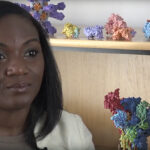
Clinical trials seeking a vaccine to prevent COVID-19 are galloping forward around the world, and Kizzmekia Corbett and Barney Graham’s research team at the National Institute of Allergy and Infectious Diseases (NIAID) continues to lead the pack.
In a study of non-human primates published in the prestigious New England Journal of Medicinelast week, the team became the first to demonstrate that their vaccine successfully stopped viral replication in both the lungs and nose. The findings were a significant advance compared to previous studies, which only showed protection in the lungs. The day after Corbett’s results were published, Johnson & Johnson published similar results for their vaccine, although the animals in the Johnson & Johnson trial were exposed to a lower amount of the virus.
“Protection in the upper airway is something that’s hard to come by, so it’s a big deal,” says Corbett ’08, M16, biological sciences and sociology, scientific lead for the Coronavirus Vaccines Team at the NIAID Vaccine Research Center. “We were very excited when we saw it.”
Next steps
The next step is a phase III human trial, which began with 30,000 participants on July 27. The participants will either receive the vaccine or a placebo, “and then they will go live their lives, and either be exposed to the coronavirus or not,” Corbett says. Over time, enough of the participants will be exposed so that researchers can measure the efficacy of the vaccine.
Our (co-inventors @McLellan_Lab) COVID-19 vaccine (spike delivered by @moderna_tx's mRNA) was just injected into the 1st human in phase 1 trial, only 66 days after viral sequence release… a testament to rapid vaccine development for emerging diseases
]]>
Clinical trials seeking a vaccine to prevent COVID-19 are galloping forward around the world, and Kizzmekia Corbett and Barney Graham’s research team at the National Institute of Allergy and...https://umbc.edu/stories/alumna-leads-team-to-breakthrough-coronavirus-vaccine-results/https://my3.my.umbc.edu/api/v0/pixel/news/119819/guest@my.umbc.edu/7d46675ead141ff9b930480daa11b9f2/api/pixelbiologychemistrycnmscovidresearchdiscoverymeyerhoffmeyerhoffscholarsmhoffresilienceUMBC News & Magazinehttps://my3.my.umbc.edu/groups/umbc-news-magazinehttps://assets1-my.umbc.edu/system/shared/avatars/groups/000/001/943/24435aa6207c452e7bc15cc74b42c7bb/xsmall.png?1748556657https://assets1-my.umbc.edu/system/shared/avatars/groups/000/001/943/24435aa6207c452e7bc15cc74b42c7bb/original.png?1748556657https://assets2-my.umbc.edu/system/shared/avatars/groups/000/001/943/24435aa6207c452e7bc15cc74b42c7bb/xxlarge.png?1748556657https://assets2-my.umbc.edu/system/shared/avatars/groups/000/001/943/24435aa6207c452e7bc15cc74b42c7bb/xlarge.png?1748556657https://assets3-my.umbc.edu/system/shared/avatars/groups/000/001/943/24435aa6207c452e7bc15cc74b42c7bb/large.png?1748556657https://assets1-my.umbc.edu/system/shared/avatars/groups/000/001/943/24435aa6207c452e7bc15cc74b42c7bb/medium.png?1748556657https://assets2-my.umbc.edu/system/shared/avatars/groups/000/001/943/24435aa6207c452e7bc15cc74b42c7bb/small.png?1748556657https://assets1-my.umbc.edu/system/shared/avatars/groups/000/001/943/24435aa6207c452e7bc15cc74b42c7bb/xsmall.png?1748556657https://assets2-my.umbc.edu/system/shared/avatars/groups/000/001/943/24435aa6207c452e7bc15cc74b42c7bb/xxsmall.png?1748556657UMBC News & Magazine00falseThu, 06 Aug 2020 18:03:03 -0400Thu, 06 Aug 2020 18:03:03 -0400President Hrabowski Awarded Medal for Career Advancing Diversity, Inclusion
President Freeman Hrabowski’s powerful personal story is well known in the UMBC community. At the age of 12, seeking equal access to a quality education, he marched with Dr. Martin Luther King, Jr. in his home state of Alabama. He and other Black children were then jailed for five days. He has held steadfast to commitment to educational equity in the years since.
Under President Hrabowski’s leadership for nearly three decades, UMBC has grown into a national and global leader in undergraduate and graduate education, innovation, and social impact. He has also fostered UMBC’s unique campus culture of shared, collaborative leadership and community support.
On July 10, President Hrabowski was awarded a 2020 UCSF Medal, the University of California San Francisco’s highest honor. He was one of three national leaders recognized for a career advancing diversity and inclusion, specifically through mentorship programs that support underrepresented people in the sciences. For example, UMBC now produces more Black students who go on to complete M.D.-Ph.D. degrees than any other institution in the country, and UMBC is one of the top institutions for producing Black students who go on to complete Ph.D. degrees in any STEM fields.
Video produced by UCSF, with content contributed by Corey Jennings ’10.
“What we’ve been doing for decades now,” Hrabowski shares, “is identifying students from a range of backgrounds, of every race and different income levels, and saying, ‘We want to work with you to help you reach your goals, and reaching your goals should not be about simply surviving.’”
Thank you for all you do for the UMBC community, President Hrabowski! Congratulations.
*****
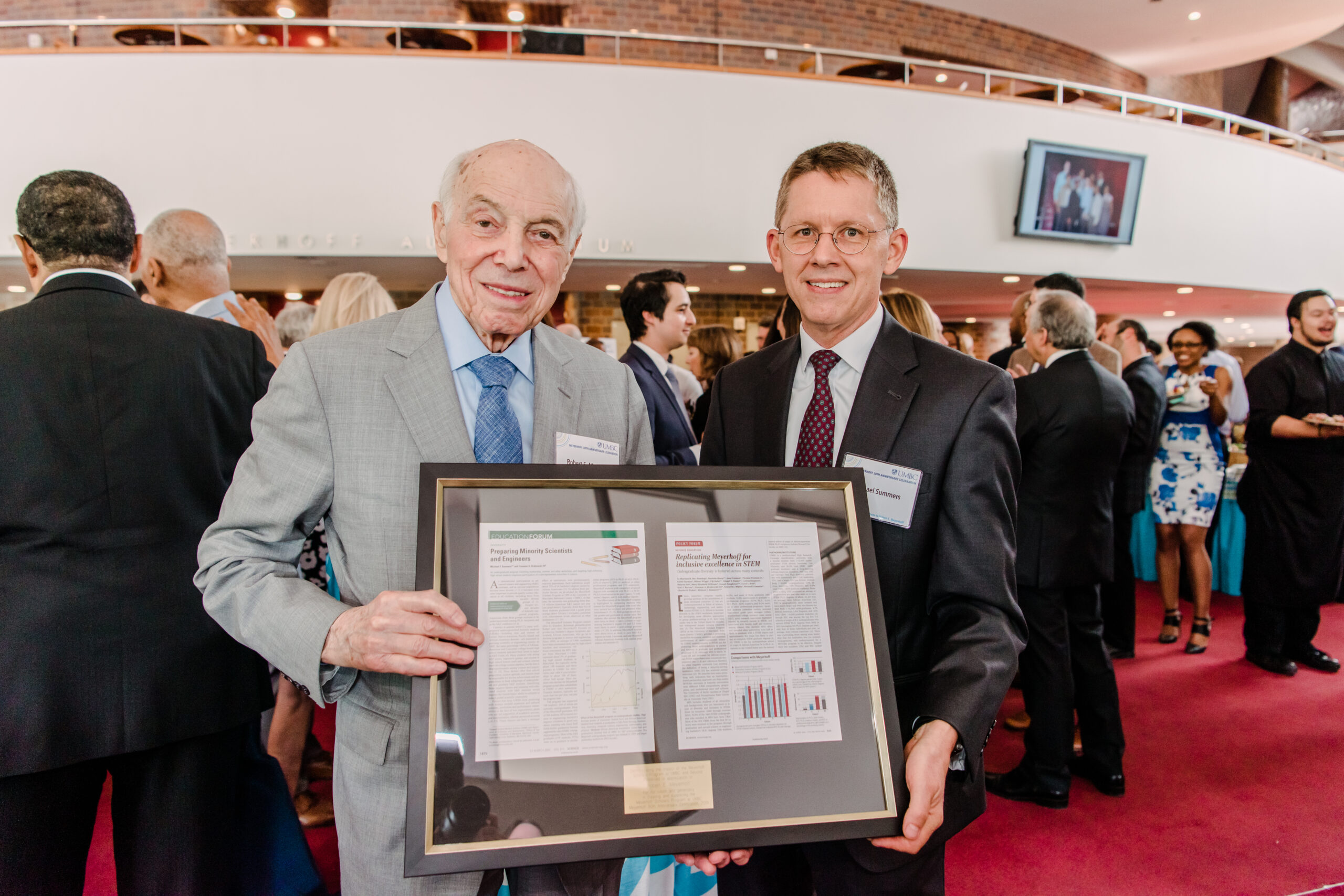
Header image: President Hrabowski celebrates the Meyerhoff Scholars Program’s 30th anniversary with philanthropist Robert Meyerhoffin May 2019.Photo by Marlayna Demond ’11.
]]>
President Freeman Hrabowski’s powerful personal story is well known in the UMBC community. At the age of 12, seeking equal access to a quality education, he marched with Dr. Martin Luther King,...https://umbc.edu/stories/president-hrabowski-awarded-medal-for-career-advancing-diversity-inclusion/https://my3.my.umbc.edu/api/v0/pixel/news/119838/guest@my.umbc.edu/029bcf0060ae8c8d8af35897673ec08c/api/pixelimpactmeyerhoffpresident-hrabowskiUMBC News & Magazinehttps://my3.my.umbc.edu/groups/umbc-news-magazinehttps://assets1-my.umbc.edu/system/shared/avatars/groups/000/001/943/24435aa6207c452e7bc15cc74b42c7bb/xsmall.png?1748556657https://assets1-my.umbc.edu/system/shared/avatars/groups/000/001/943/24435aa6207c452e7bc15cc74b42c7bb/original.png?1748556657https://assets2-my.umbc.edu/system/shared/avatars/groups/000/001/943/24435aa6207c452e7bc15cc74b42c7bb/xxlarge.png?1748556657https://assets2-my.umbc.edu/system/shared/avatars/groups/000/001/943/24435aa6207c452e7bc15cc74b42c7bb/xlarge.png?1748556657https://assets3-my.umbc.edu/system/shared/avatars/groups/000/001/943/24435aa6207c452e7bc15cc74b42c7bb/large.png?1748556657https://assets1-my.umbc.edu/system/shared/avatars/groups/000/001/943/24435aa6207c452e7bc15cc74b42c7bb/medium.png?1748556657https://assets2-my.umbc.edu/system/shared/avatars/groups/000/001/943/24435aa6207c452e7bc15cc74b42c7bb/small.png?1748556657https://assets1-my.umbc.edu/system/shared/avatars/groups/000/001/943/24435aa6207c452e7bc15cc74b42c7bb/xsmall.png?1748556657https://assets2-my.umbc.edu/system/shared/avatars/groups/000/001/943/24435aa6207c452e7bc15cc74b42c7bb/xxsmall.png?1748556657UMBC News & Magazine00falseWed, 15 Jul 2020 19:33:38 -0400Change Agent Behind #BlackBirdersWeek
Before she graduated from UMBC, Anna Gifty Opoku-Agyeman’19, M26, mathematics, founded the Sadie Collective. Opoku-Agyeman describes it on her website as, “the first and only organization to date dedicated to addressing the pipeline and pathway problem for Black women in economics and related fields.” Since the Collective’s inception in 2018, membership has expanded to nearly 500 members across 30 states, 120 institutions, and four continents.
This is a woman who is making change.
One of the Collective’s first orders of business was toorganize the Sadie Tanner Mossell Alexander Conference for Economics and Related Fields. The conference and the Sadie Collective offer resources, networking, and support to a community—in this case, Black women in economics—that has been historically under-resourced, -networked, and -supported.
As it happens, some members of the Sadie Collective’s leadership team are also birders.
So, when news of a White woman calling 911 on Christian Cooper, a Black birder in Central Park who asked her to follow the rules and leash her dog, made national headlines in May, the Collective leaped into action. Below, Opoku-Agyeman shares how #BlackBirdersWeek (May 31 – June 5, 2020)came to be, its extensive impact, and what’s next.
UMBC Magazine: What was your goal in creating #BlackBirdersWeek?
Anna Gifty Opoku-Agyeman: I want to first and foremost share that #BlackBirdersWeek was a joint effort with members of the BlackAFinSTEM Collective. I co-founded the initiative alongside Sheridan Alford, Danielle Belleny, Chelsea Connor, Joseph Saunders, and Tykee James, all wonderful people who, alongside others, stepped up to make the week possible.
#BlackBirdersWeek was a direct response to Christian Cooper’s unfortunate encounter with a White woman in Central Park. Although I am not a birder, many individuals in the Collective are, and each of them echoed similar experiences to Cooper’s. The conversations sparked an idea in me to amplify and prioritize the voices of Black birders, naturalists, and explorers similar to what I have done alongside my co-founder, Fanta Traore, at the Sadie Collective.
UMBC Magazine: Can you describe some of the components of the week’s programming, and how it came together?
Opoku-Agyeman: I suggested a Black Birders Day, and Tykee James suggested a week, as a way to celebrate Black people in the birding space similar to how running was used to celebrate the late Ahmaud Arbery. I did a little bit of brainstorming and came back with a pitch: a potential week-long digital campaign to amplify the experiences and expertise of Black birders, especially those within the group. The Collective loved the idea and offered suggestions to improve how we could roll out the campaign. We have well-known birders and natural scientists within our group, such as Jason Ward and Corina Newsome, and many of us had a couple thousand followers. So we knew that between all of us, this could be huge.
We were intentional about ensuring that there was a hashtag for each day, which led the wonderful Danielle Belleny, Sheridan Alford, and Chelsea Connor to create these amazing flyers that reflected our vision.
Every day had a theme and corresponding date. A brief description of what we highlighted includes:
● #BlackinNature—Showcasing Black people in nature. Black people typically don’t get to be in nature because we are viewed as a threat. This part of the campaign was intentional in that it normalized Black people in nature and also encouraged it.
● #PostABird Challenge—Posting a fun bird picture/fact/etc. This was really a campaign to get people involved regardless of race so that we could get the world talking about birds!
● #AskABlackBirder—Twitter and Instagram Q&A with Black birders. Folks submitted questions on Twitter and Instagram using the hashtag. It gave Black birders an opportunity to talk more about their own work and research.
● #BirdingWhileBlack—Live stream discussions with Christian Cooper (yes, that Christian Cooper) and Drew Laham. I actually co-moderated this session with Tykee James. To date, those streams together drew in over 1 million views. At the time we went live, nearly 60,000 people tuned in. Apparently we broke an average day record or something.
● #BlackWomenWhoBird—Amplifying Black women birders and LGBTQ+ birders, who are significantly underrepresented. Many of these individuals had an opportunity to work with national organizations such as the National Aquarium to talk about their work. It was truly awesome.
Christian Cooper saw #BlackBirdersWeek as an encouraging step towards greater diversity amongst birders as well as something that is crucial to the future survival of the birds themselves.
UMBC Magazine: What was your reaction to the huge response the campaign got?
Opoku-Agyeman: It’s funny, because when I told my mom about this idea, she kept saying we’d go global. It’s actually one of the first things I told the group: “If we do this right, this could go global,” and I am so glad it did. All of the individuals involved with the group have now been featured widely and are still being pursued for opportunities by prominent science organizations such as the National Aquarium and national agencies in the nature space. It was interesting, too, because simultaneously nationwide protests over senseless Black death at the hands of police were happening.
As a result of the campaign, the National Wildlife Federation launched a fellowship for minorities in the field, specifically with Black people in mind. The movement literally shifted power structures, something that we love to see.
At the same time, you had Black joy paralleling Black pain, which is oftentimes the experience of Black people in America.We have to balance these incredibly joyous moments with very real and deep-seated pain. While we were celebrating Black birders, our people were also being murdered. It’s a juxtaposition that is our daily lives.
UMBC Magazine: Do you have any plans to build on the success of #BlackBirdersWeek? Have you organized similar campaigns?
Opoku-Agyeman: We are currently working on building structure around the successful campaign as well as pushing forward our mission to be unapologetically Black in the STEM space. Recent campaigns that have been inspired by us include #BlackinAstro, which highlights Black people in astronomy, and #BlackHikersWeek, which aims to normalize Black people hiking outdoors. The offshoot campaigns are not ones we specifically organized, but we definitely support them!
UMBC Magazine: How does your work on #BlackBirdersWeek relate to your role as co-founder and CEO of the Sadie Collective?
Opoku-Agyeman: Both initiatives uplift Black people who are often among those marginalized in their space. The strikingly similar under-representation between birding and economics with respect to Black people is just more evidence that campaigns like #BlackBirdersWeek and additional advocacy is needed to push institutional change that allows for diverse voices to break through.
What I love about both initiatives is that they’re disruptive, political, and moving. Many people didn’t see the Sadie Collective coming when we officially announced like they didn’t see #BlackBirdersWeek coming. Both initiatives are led by young Black people who are incredibly passionate about this work, whatever it may be, and by existing in our respective spaces, we are protesting our right to be seen, heard, and celebrated. Quite literally embracing the idea of being unapologetically Black and unapologetically ourselves, encompassing our Blackness.
Header image of Opoku-Agyeman on campus by Marlayna Demond ’11.
]]>
Before she graduated from UMBC, Anna Gifty Opoku-Agyeman’19, M26, mathematics, founded the Sadie Collective. Opoku-Agyeman describes it on her website as, “the first and only organization to date...https://umbc.edu/stories/change-agent-behind-blackbirdersweek/https://my3.my.umbc.edu/api/v0/pixel/news/119850/guest@my.umbc.edu/251f6add42af5583395e6823a6b61af8/api/pixelalumnicnmsmeyerhoffmeyerhoff-scholarUMBC News & Magazinehttps://my3.my.umbc.edu/groups/umbc-news-magazinehttps://assets1-my.umbc.edu/system/shared/avatars/groups/000/001/943/24435aa6207c452e7bc15cc74b42c7bb/xsmall.png?1748556657https://assets1-my.umbc.edu/system/shared/avatars/groups/000/001/943/24435aa6207c452e7bc15cc74b42c7bb/original.png?1748556657https://assets2-my.umbc.edu/system/shared/avatars/groups/000/001/943/24435aa6207c452e7bc15cc74b42c7bb/xxlarge.png?1748556657https://assets2-my.umbc.edu/system/shared/avatars/groups/000/001/943/24435aa6207c452e7bc15cc74b42c7bb/xlarge.png?1748556657https://assets3-my.umbc.edu/system/shared/avatars/groups/000/001/943/24435aa6207c452e7bc15cc74b42c7bb/large.png?1748556657https://assets1-my.umbc.edu/system/shared/avatars/groups/000/001/943/24435aa6207c452e7bc15cc74b42c7bb/medium.png?1748556657https://assets2-my.umbc.edu/system/shared/avatars/groups/000/001/943/24435aa6207c452e7bc15cc74b42c7bb/small.png?1748556657https://assets1-my.umbc.edu/system/shared/avatars/groups/000/001/943/24435aa6207c452e7bc15cc74b42c7bb/xsmall.png?1748556657https://assets2-my.umbc.edu/system/shared/avatars/groups/000/001/943/24435aa6207c452e7bc15cc74b42c7bb/xxsmall.png?1748556657UMBC News & Magazine00falseThu, 02 Jul 2020 16:08:47 -0400Treasured Moments
In his more than a decade of service to UMBC through the Alumni Association Board of Directors, outgoing president John Becker ’01, information systems, has seen a little bit of everything. As he passes the torch of leadership, Becker thinks back to some of the moments—and the people of our community—that have meant the most to him.
I’m writing this column from my dining room table, while my wife leads my two children in a home-schooling session on peregrine falcons. There are no pressing activities. There is nowhere to be—in fact, we are not allowed to be anywhere else. (I can’t say “gotta run” at the end of phone calls anymore.) This is strange for us, and I’m sure some of you have also felt a sense of surrealism. We’re sheltered in place, waiting for the seemingly inevitable house call we will be receiving from the novel coronavirus.
While our inability to work during this lock-down is a dark cloud on the horizon, I am finding silver linings. We are spending more time (and more meaningful time) together. We are closer now than ever with our neighbors and we are in touch daily with our out-of-state parents. I have also had time to pause and reflect on the past several years in a way that I rarely can when we are rushing around with daily routines and extra curriculars.
The 10 years that I have served on the UMBC Alumni Association Board of Directors have been among the most rewarding years of my life. Some of that reward comes from a sense of debt repayment—a sense of fulfilling an obligation for the many gifts I was given while I was a student here in the late ’90s. But in thinking about it more deeply, I realize it is something else— Retriever pride—that feeds the beast.
Reaching Together
Our UMBC has been accomplishing great things for decades socially, academically and athletically. There are bread crumbs trailing all the way back to 1966 that a nostalgic alum or prospective Board member could discover or remember that would kindle that fire—that pride—within them. Among my fellow Board members, I found a common interest in recalling formative years, assisting those students we recognize so clearly as a reflection of ourselves, and planning for an enduring legacy.
The highlights of my time on the Board could fill this magazine, but one thread that shines through is that the alumni have become increasingly involved over time. This truth reflects the hard work of our Director of Alumni Engagement, Stanyell Odom, and her team, the acknowledgement of the role we play in the university by Vice President of Institutional Advancement, Greg Simmons, M.P.P. ’04, and of course the curiosity of our great alumni, which often foments into a desire to return and help in a meaningful way.
Exceptional by Example
I vividly recall meeting Naomi Mburu ’18, M26, chemical engineering, UMBC’s first Rhodes Scholar at our Annapolis Alumni Reception, learning her story and being inspired by her determination. This reception, held in winter each year and hosted by the Board of Directors has allowed us to meet our state’s leaders who are UMBC alumni themselves, learn their perspectives, and find common interests through our ties to UMBC.
Naomi Mburu ’18, M26, chemical engineering, UMBC’s first Rhodes Scholar speaks at the 2018 Annapolis Alumni Reception.
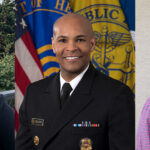
Jerome Adams ’97, M4, biochemistry and molecular biology, the Surgeon General of the United States speaks at the 2019 Alumni Awards.
The growth of the annual Alumni Awards gala has been another source of pride for me. What began for me as an intimate affair in our library’s gallery has blossomed into a spectacle with hundreds of guests held in the Linehan Concert Hall in the Performing Arts and Humanities Building. I’m stunned every year by the unique, inspirational alumni I meet across all disciplines and from all walks of life. Last year I had a chance to speak with Jerome Adams ’97, M4, biochemistry and molecular biology, the Surgeon General of the United States, who is now at the tip of the spear in handling the COVID-19 pandemic. What struck me about Dr. Adams was how down to earth and family-oriented he was. He demonstrated a sense of perspective that was refreshing to see in a person in his position of national leadership.
And I am proud of leading the effort to develop and successfully reach an audacious fundraising campaign for the Alumni Endowed Scholarship, doubling our market value in four years and allowing the funds raised by the Board to leave an enduring legacy of scholarship on generations of deserving students.
A Proud Legacy
The thread linking these events and milestones is the people. UMBC is ripe with talented alumni, faculty, staff and, of course, talented students and student-athletes. My engagement with bright, energetic, and driven individuals is what keeps me coming back for more. If you haven’t been back to campus lately, please accept this invitation. I want you to see the intelligence, diversity, passion, grit, and greatness that I have enjoyed, and maybe in the process find something you left behind.
Dr. Hrabowski likes to remind us every year at Commencement that “success is never final.” As we embark on a new fundraising campaign for the Alumni Endowed Scholarship and I pass the torch to Brian Frazee ’11, M.P.P. ’12, I am at ease knowing that our success will continue and our future is bright. Thank you for the opportunity to serve you.
***** Learn more about ways of engaging with UMBC at alumni.umbc.edu.
Header image: John Becker with President Hrabowski and the U.S. Surgeon General, Jerome Adams. All photos by Marlayna Demond ’11.
]]>
In his more than a decade of service to UMBC through the Alumni Association Board of Directors, outgoing president John Becker ’01, information systems, has seen a little bit of everything. As he...https://umbc.edu/stories/alumni-association-president-passes-the-retriever-torch/https://my3.my.umbc.edu/api/v0/pixel/news/119885/guest@my.umbc.edu/a4b7546227914666bcd5100af528dbd7/api/pixelalumnialumni-essaymeyerhoffspring-2020UMBC News & Magazinehttps://my3.my.umbc.edu/groups/umbc-news-magazinehttps://assets1-my.umbc.edu/system/shared/avatars/groups/000/001/943/24435aa6207c452e7bc15cc74b42c7bb/xsmall.png?1748556657https://assets1-my.umbc.edu/system/shared/avatars/groups/000/001/943/24435aa6207c452e7bc15cc74b42c7bb/original.png?1748556657https://assets2-my.umbc.edu/system/shared/avatars/groups/000/001/943/24435aa6207c452e7bc15cc74b42c7bb/xxlarge.png?1748556657https://assets2-my.umbc.edu/system/shared/avatars/groups/000/001/943/24435aa6207c452e7bc15cc74b42c7bb/xlarge.png?1748556657https://assets3-my.umbc.edu/system/shared/avatars/groups/000/001/943/24435aa6207c452e7bc15cc74b42c7bb/large.png?1748556657https://assets1-my.umbc.edu/system/shared/avatars/groups/000/001/943/24435aa6207c452e7bc15cc74b42c7bb/medium.png?1748556657https://assets2-my.umbc.edu/system/shared/avatars/groups/000/001/943/24435aa6207c452e7bc15cc74b42c7bb/small.png?1748556657https://assets1-my.umbc.edu/system/shared/avatars/groups/000/001/943/24435aa6207c452e7bc15cc74b42c7bb/xsmall.png?1748556657https://assets2-my.umbc.edu/system/shared/avatars/groups/000/001/943/24435aa6207c452e7bc15cc74b42c7bb/xxsmall.png?1748556657UMBC News & Magazine00falseMon, 18 May 2020 23:54:20 -0400UMBC Alumnae Racing to Develop Coronavirus Vaccine
Kizzmekia Corbett ’08, M16, biological sciences, says it feels like she’s “living in a constant adrenaline rush.” Maybe that’s because she and her team at the Vaccine Research Center at the National Institute of Allergy and Infectious Diseases have been working around the clock for weeks. They’re racing to develop a vaccine for the coronavirus faster than it can race across the globe.
“To be living in this moment where I have the opportunity to work on something that has imminent global importance…it’s just a surreal moment for me,” Corbett says.
Despite it feeling surreal, the advances Corbett and her team are making are very real, and they’re setting records. “We are making better progress than I could have ever hoped for,” she says. After three months of studies in test tubes and in animals, the vaccine her team developed is about to enter a phase I clinical trial, a crucial hurdle on the way to FDA approval.
“Focus, focus, focus”
Corbett says her experience as a Meyerhoff Scholar at UMBC helped prepare her and another core team member, post-baccalaureate researcher OlubukolaAbiona ‘17, M25, biochemistry and molecular biology, for a moment like this. “Discipline is one of the biggest things that Meyerhoff taught us,” Corbett says. “And it matters—a lot—in these instances of being pulled in multiple directions and really trying to understand what the priorities are.”
Corbett, who came to UMBC from North Carolina, and Abiona, who attended Eleanor Roosevelt High School in Prince George’s County, also draw on UMBC President Freeman Hrabowski’s consistent exhortation to “Focus, focus, focus,” Corbett says. “The UMBC connection and the training we received there, for both of us, has been instrumental in how we are operating right now,” she adds.
A couple of years ago, Corbett and Abiona were the only members of their team. It’s since grown, but their relationship remains special. “Essentially we started out being the team alone, and as a result, there is this level of trust and understanding that we have with each other,” Corbett says. “It’s extremely rewarding to watch someone exponentially grow into a scientist in the course of a few years,” Corbett reflects. “I think next to getting data, mentoring young scientists is the most exciting and rewarding part of what I do here.”
As an African American woman in STEM, Corbett says she has also experienced people thinking she’s only there because of diversity initiatives. “That’s been a cloud around my movement in science,” she shares. So, she says, “showing up, particularly in a moment like this, and setting a standard about what people from different backgrounds can contribute” is just as important as mentoring the next generation of scientists.
“Hopefully we will open people’s eyes to the credibility of people who look like us as real scientists.”
Corbett, Abiona, and team at NIH.
Setting the standard
While that message is always in the back of their minds, right now, Corbett and Abiona are deeply focused on the work at hand. “For me, I’m very interested in looking ahead to the kinds of data we’ll get from human trials,” Corbett says. “Yes, we have tons of data that will support this vaccine being a fruitful one and a protective one, but it’s always just a hypothesis until we get some real human data.”
If the phase I trials are successful, that will be a huge step toward an FDA-approved vaccine for the coronavirus—and also set a new benchmark for future disease outbreaks.
“I’m really excited about fulfilling this proof-of-concept for pandemic preparedness, where we can literally go from receiving the genetic sequence of a virus all the way through to a vaccine clinical trial in less than three months,” Corbett says. “I think that’s somewhat of an unprecedented standard to set, and I’m looking forward to helping to standardize it. I hope that it will get even shorter.”
]]>
Kizzmekia Corbett ’08, M16, biological sciences, says it feels like she’s “living in a constant adrenaline rush.” Maybe that’s because she and her team at the Vaccine Research Center at the...https://umbc.edu/stories/umbc-alumnae-racing-to-develop-coronavirus-vaccine/https://my3.my.umbc.edu/api/v0/pixel/news/119943/guest@my.umbc.edu/2484ad6ce05702d67cb5feb2d391e875/api/pixelalumnibiologychemistrycnmscovidresearchmeyerhoffmeyerhoffscholarsmhoffresilienceUMBC News & Magazinehttps://my3.my.umbc.edu/groups/umbc-news-magazinehttps://assets1-my.umbc.edu/system/shared/avatars/groups/000/001/943/24435aa6207c452e7bc15cc74b42c7bb/xsmall.png?1748556657https://assets1-my.umbc.edu/system/shared/avatars/groups/000/001/943/24435aa6207c452e7bc15cc74b42c7bb/original.png?1748556657https://assets2-my.umbc.edu/system/shared/avatars/groups/000/001/943/24435aa6207c452e7bc15cc74b42c7bb/xxlarge.png?1748556657https://assets2-my.umbc.edu/system/shared/avatars/groups/000/001/943/24435aa6207c452e7bc15cc74b42c7bb/xlarge.png?1748556657https://assets3-my.umbc.edu/system/shared/avatars/groups/000/001/943/24435aa6207c452e7bc15cc74b42c7bb/large.png?1748556657https://assets1-my.umbc.edu/system/shared/avatars/groups/000/001/943/24435aa6207c452e7bc15cc74b42c7bb/medium.png?1748556657https://assets2-my.umbc.edu/system/shared/avatars/groups/000/001/943/24435aa6207c452e7bc15cc74b42c7bb/small.png?1748556657https://assets1-my.umbc.edu/system/shared/avatars/groups/000/001/943/24435aa6207c452e7bc15cc74b42c7bb/xsmall.png?1748556657https://assets2-my.umbc.edu/system/shared/avatars/groups/000/001/943/24435aa6207c452e7bc15cc74b42c7bb/xxsmall.png?1748556657UMBC News & Magazine00falseMon, 02 Mar 2020 22:41:26 -0500Excerpt: The Empowered University
By UMBC President Freeman Hrabowski, Provost Philip Rous, and Peter Henderson
It is challenging to understand fully the culture of an institution. It is even more challenging to change that culture. At UMBC, we have focused our attention and resources on work that is critical to improving our administrative operations, building our research, and supporting student learning and achievement. We were guided in this work by questions that reflected our shared values: Are we putting people first? Are we providing students who come to our campus with the best experience possible? Are we doing the very best we can in all aspects of institutional operations given our mission and resources? Are we then taking that extra step, “above and beyond,” to do more, to do things differently, and to do our work better?
Photo by Marlayna Demond ’11.
When I started at UMBC as vice provost in the late 1980s, our chancellor [Michael Hooker] had just articulated a new vision that asked us to improve our academics, grow our research, and be a more engaged partner with our community. Hooker had set UMBC on a new trajectory toward a new future. Yet, in my first years, if something went wrong, people would often say, “That’s UMBC.” That’s just the way it is, and the way it is just isn’t so great. It is unlikely that an institution with such a negative prevailing attitude could encourage and enable behavior that would lead to sustained excellence. To move toward the vision articulated by our leadership, something had to change. But how?
The larger vision that Hooker articulated was important, yet there was also a new and different feel at a more granular level. We began to take ourselves much more seriously. We created the Meyerhoff program, and it was a success. We became known as a destination for talented students. We built a research park, without which the state would not have taken us seriously as a research university. We evolved rapidly from a commuter school to a residential research university. We upgraded our admissions standards. We looked carefully at our performance on state audits and how to improve our financial and administrative structures. We celebrated as a community our commitment, hard work, and accomplishments (what we now call “grit and greatness”).
It is a cliché, but every journey does begin with a single step and a single success that can demonstrate for others what could be. With each success and subsequent success, more and more members of the community began to look at our goals, values, and work in a different way. Culture change can be imperceptible at times, yet at other times one can recognize that the institution has reached a tipping point. One day, you realize that your campus has changed, the paradigm has shifted, the culture is now perceptibly different. It was in this manner that our campus transformed itself from “That’s UMBC” to “unabashedly aspirational.”
In 2017, our campus was named one of the nation’s top academic workplaces in Great Colleges to Work For by the Chronicle of Higher Education for the ninth year in a row.We were just one of ten four-year institutions with more than 10,000 students featured on an “honor roll” of those with outstanding marks across nearly every measured category.
During this same period, when we went from “that’s UMBC” to “great college to work for,” our six-year graduation rate also climbed from 35 percent to more than 65 percent (more if you include the 10% who transfer out of UMBC and earn a degree at another institution and the 10% still enrolled after six years). So, how did we get from being perceived by some as mediocre to “unabashedly aspirational”? We’ll talk about particular programs and initiatives [later in the book]. Here it suffices to say that small innovations and initiatives can lead to big changes. Eventually, over a period of time, the organization is transformed.
Serious, sustainable change is hard work. It is often far harder than we would like to think it will be. When the change we want to see involves race, diversity, differences, and inclusion, it can be even more challenging, as these are topics most Americans are not comfortable discussing. But when change is the right thing to do, we must nevertheless engage and persist.
At UMBC, we are hungry for change. The imperative to evolve rapidly arises from our collective commitment to do all we can to better serve our students and their families; support student learning, persistence, and completion; connect our students and faculty to opportunities in the Baltimore-Washington region; and work to address our region’s social and economic needs. At just over fifty years of age, we are yet a young, growing institution, and to advance these goals, we must innovate, continually addressing new needs as they arise while simultaneously laying the foundation of a new model of the public university. Our mantra is “success is never final.”
As a campus, we are also a healthy community. This quality is expressed in our ability to be reflective; we can look in the mirror and be honest about what we see, good, bad, or challenging. When issues arise, our culture of reflection leads us to collect data that can inform our decision-making and to have respectful conversations that identify problems and possible solutions. We can acknowledge openly both our strengths and weaknesses, recognize the challenges we face and opportunities we can embrace, and understand how a well-considered response can lead to the desired outcomes. We structure our conversations so that they are inclusive and open to differing perspectives, using our shared governance structures or focus groups with stakeholders for a specific issue.
Change requires grit—commitment and resilience—because it does not happen overnight. Change that matters only succeeds because of long, organized, and sometimes expensive commitments. It requires the engagement of many individuals as leaders and change agents in order to persuade others, and that can require, from time to time, difficult conversations. This can be daunting for some.
Change requires courage, because it requires us to see things differently from the way they are at present. It requires us to recognize our failures as well as successes. For change to be possible, you first have to see the world and the lens through which you view it. Only then can you observe what could be and understand what the possibilities are. To make progress, you need to ask different and often difficult questions of yourself and others and then set different expectations so that others begin to see the world from a different perspective too.
Change necessitates courage because, so often, it requires a leap of faith and an acceptance of substantial risk—believing that a goal is achievable even if the outcome is, as yet, unseen: “No one believed it could be done, because it hadn’t been done before. And then we did it.”
* * * * *
Note: This excerpt is from chapter three of The Empowered University, co-written by UMBC President Freeman Hrabowski, Provost Philip Rous, and Peter Henderson, in Hrabowski’s voice. The excerpt has been modified for length and clarity. The Empowered University is available in the UMBC Bookstore, as well as Holding Fast to Dreams (2016) and President Hrabowski’s earlier books.
]]>
By UMBC President Freeman Hrabowski, Provost Philip Rous, and Peter Henderson It is challenging to understand fully the culture of an institution. It is even more challenging to change that...https://umbc.edu/stories/excerpt-the-empowered-university/https://my3.my.umbc.edu/api/v0/pixel/news/120021/guest@my.umbc.edu/0df4a31712cb6b768f8905814043b357/api/pixelhrabowskiimpactmeyerhoffUMBC News & Magazinehttps://my3.my.umbc.edu/groups/umbc-news-magazinehttps://assets1-my.umbc.edu/system/shared/avatars/groups/000/001/943/24435aa6207c452e7bc15cc74b42c7bb/xsmall.png?1748556657https://assets1-my.umbc.edu/system/shared/avatars/groups/000/001/943/24435aa6207c452e7bc15cc74b42c7bb/original.png?1748556657https://assets2-my.umbc.edu/system/shared/avatars/groups/000/001/943/24435aa6207c452e7bc15cc74b42c7bb/xxlarge.png?1748556657https://assets2-my.umbc.edu/system/shared/avatars/groups/000/001/943/24435aa6207c452e7bc15cc74b42c7bb/xlarge.png?1748556657https://assets3-my.umbc.edu/system/shared/avatars/groups/000/001/943/24435aa6207c452e7bc15cc74b42c7bb/large.png?1748556657https://assets1-my.umbc.edu/system/shared/avatars/groups/000/001/943/24435aa6207c452e7bc15cc74b42c7bb/medium.png?1748556657https://assets2-my.umbc.edu/system/shared/avatars/groups/000/001/943/24435aa6207c452e7bc15cc74b42c7bb/small.png?1748556657https://assets1-my.umbc.edu/system/shared/avatars/groups/000/001/943/24435aa6207c452e7bc15cc74b42c7bb/xsmall.png?1748556657https://assets2-my.umbc.edu/system/shared/avatars/groups/000/001/943/24435aa6207c452e7bc15cc74b42c7bb/xxsmall.png?1748556657UMBC News & Magazine00falseWed, 30 Oct 2019 22:32:35 -0400Empathy and Compassion — Alumni Award Winners Take on Public Health Challenges
Health is one of the many things we take for granted until we don’t have it. Like a software glitch, you don’t notice the apparatus providing you a service until it fails to follow a command.
Three of UMBC’s 2019 Alumni Award winners play a role in smoothing out the flaws in health care access—designing apps to create an easier pathway to medical care, serving the United States as the “nation’s doctor,” and on a global scale, improving the medical supply chain for remote locations.
The way they overlap in their missions stems from their shared Retriever roots and a common empathy for the people they serve, ultimately influencing millions of lives at home and abroad.
Design with empathy in mind
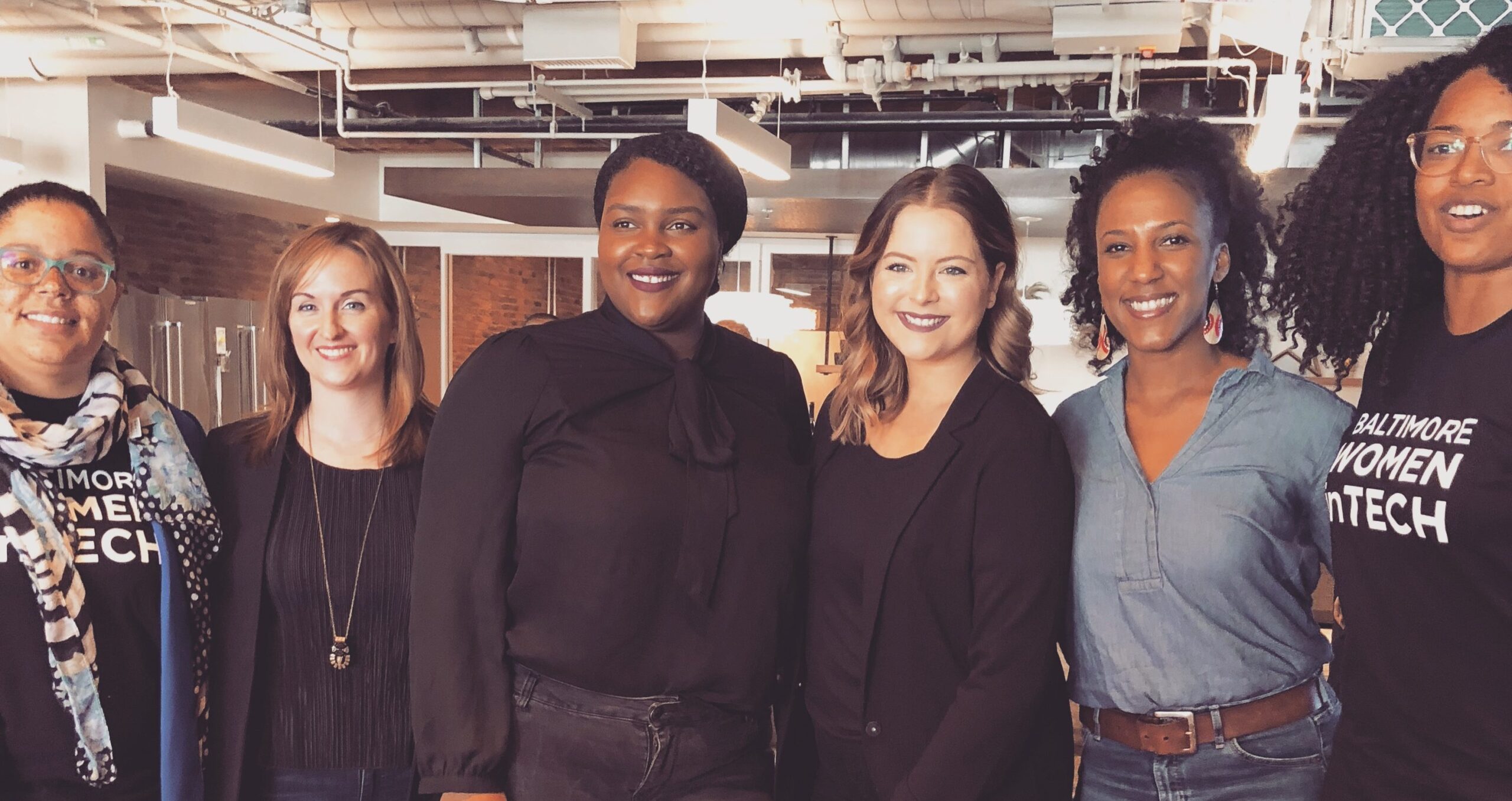
Kelsey Krach ’14, anthropology, recipient of the 2019 Rising Star award, leans heavily on her background as a Sondheim Public Affairs scholar when thinking about designing information so that it’s accessible to people—creating a seamless software experience through research, so that users achieve their end goal without frustration. Currently she works for Fearless, a UMBC alumni-founded digital services firm, a job that started with “really loving to understand what people need and want,” she says. As someone in the tech world with an anthropology major, Krach says that her degree allows her “to look at critical problems that people and cultures and societies interact with, and critically think about what it means to approach those problems.”
Kelsey Krach guest lecturing on human-centered design at a local university. Photo courtesy of Krach.
Krach underwent a personal health crisis shortly before leaving for Spain to pursue her master’s in visual and digital media at IE Business School—one that made her reexamine the American health system with a critical lens. Grappling with the consequences of her health issues, she was left with a question after studying in Madrid: “What are the ethical obligations that we have as designers to ensure that we’re doing good stuff in the world?” When she returned to the States after completing her master’s program, Krach took a position through Baltimore Corps and was able to start addressing that question through her work with the Baltimore City Health Department.
One of her projects included approaching public health challenges in the city using human-centric design methodology—designing information in a way that is accessible to people. This involved partnering with tech companies to create prototypes that would address issues like the opioid epidemic. “Right then, I realized that this is the power that technology has to elevate what’s happening for citizens, to provide better solutions for citizens, provide better services. It was just pure civic tech engagement.”
Subsequently she worked on the launch of an app for LifeBridge Health by researching patient experience, specifically those suffering from heart failure. Krach interviewed more than 40 patients while shadowing doctors and nurses and listening in on emergency room conversation. She says she recognized the fear on the patients’ faces because it mirrored her own fear when her health failed her. “I think at the end of the day, the empathy that a designer needs to have for the people they’re designing for is so powerful.”
Compassion as part of the cure
For Jerome Adams ’97, M4, biochemistry and molecular biology and psychology, that empathy also forms the bedrock of his mission as the 20th U.S. Surgeon General. This year’s recipient of the Outstanding Alumni of the Year award for natural and mathematical sciences, Adams has often shared his personal story about his younger brother, who suffers from substance use disorders. “Even as the surgeon general, I’m not immune to this,” Adams says. “I was not able to prevent my family from going down the pathway of addiction.”
Far from just being a political talking point, Adams has plans on how to address the opioid crisis with methods that more effectively reach those suffering from addiction. As a graduate of one of the early Meyerhoff Scholar Program cohorts, Adams intimately knows the benefits and necessity of relying on your community for accountability and support. The mandatory six-week Meyerhoff Summer Bridge program builds close-knit connections between the young scholars through a “we rise together” mentality.
That reliance on one another is a building block of medication-assisted treatment (MAT) programs. Increasing access to this type of treatment is among Adams’ proposed steps toward addressing the opioid crisis in America. MAT combines medication with behavioral support and is often referred to as “whole-patient” treatment. Community organizations like churches are encouraged to step in and build relationships with the participants in the program to further strengthen their ties to the community and available support options. Adams is working to increase the number of MAT programs in the country.
“We know that the only way we’re going to turn this thing around is by everyone owning their part of it and not pointing fingers,” Adams told Mediaplanet. “One of the things I’ve tried to help people understand is that addiction touches all of us. People with opioid use disorder are our friends, our neighbors, our family.”
While compassion is not a cure-all, he says, it’s the right step toward valuing those struggling with substance use disorders.
A good reason to go to work in the morning
Projecting that empathy even further afield is Kim Shelsby ’85, geography. While at UMBC, the 2019 recipient of the Outstanding Alumni of the Year award for social sciences decided that he wanted to travel the world. He just needed a good reason to do so.
Shelsby cycled through several majors before taking a class with Sandy Parker, former chair of the department of geography and environmental systems. “Parker made the first and most lasting impression on me,” says Shelsby. “I recall him describing his work with a tribe in the Amazon, and I was hooked.” And what Shelsby ultimately took away from UMBC is that “geographers study everything from anthropology to zoology but their primary question is about the distribution—why things happen where they happen.”
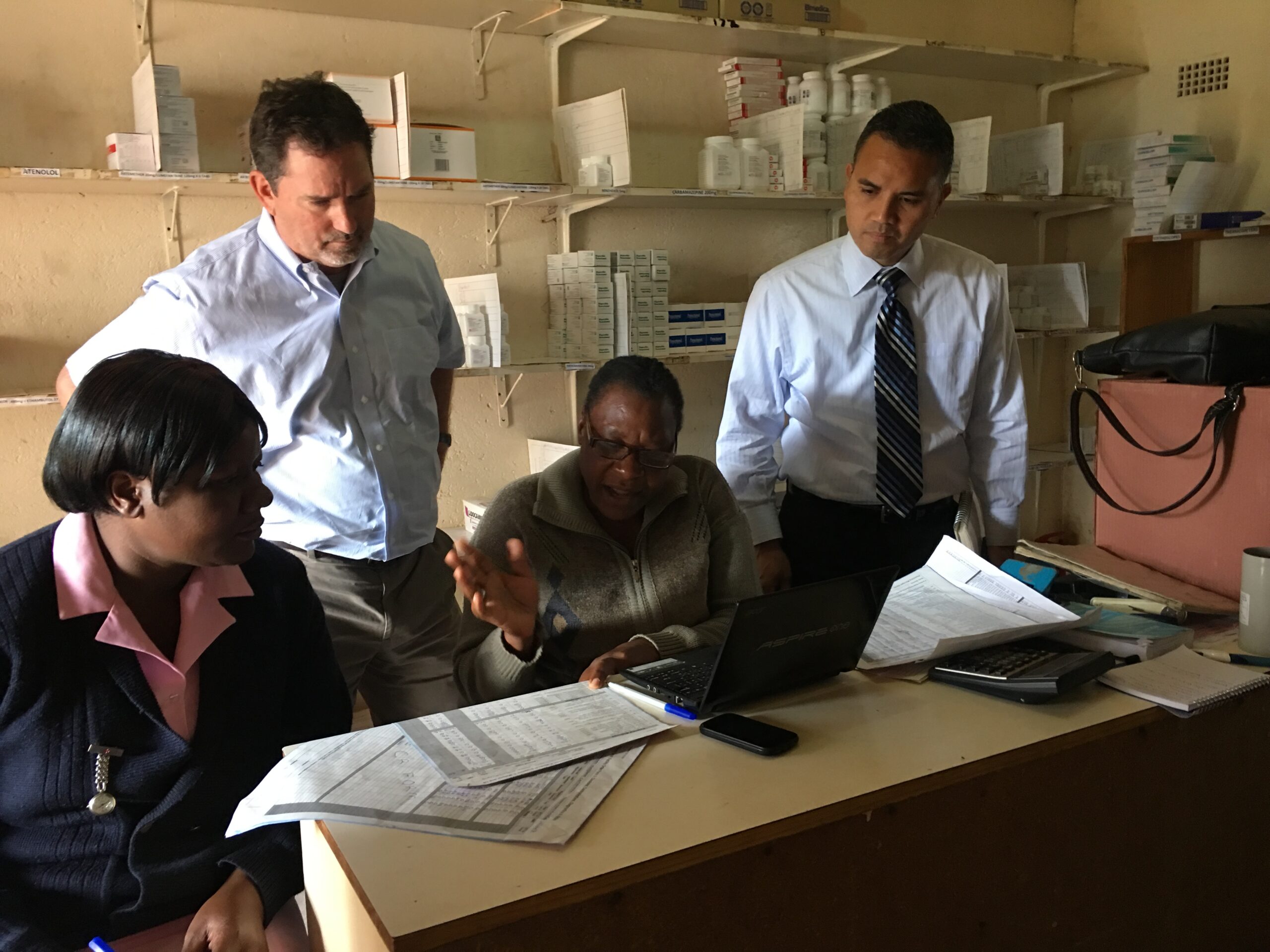
This focus on distribution would shape Shelsby’s career. In his current position with Chemonics International, his team focuses on improving supply chains, mostly for medicine reaching remote health facilities. “Our job is to get the right medicine to the right patient, anywhere in the world, as efficiently as possible.”
His role in an international development organization has allowed him to fulfill his goal of traveling the world for the right reasons. “My company’s mission is to help people live healthier, more productive and independent lives. That’s a good reason to go to work in the morning.”
As manager director on the largest U.S. Agency for International Development (USAID) project ever—an eight-year, $9.5 billion Global Health Supply Chain Procurement and Supply Management program—Shelsby helped provide medicine and health commodities to more than 60 countries. “It was a massive undertaking,” he put it bluntly. “The first few years were crazy, and it had some rough times, but it is now delivering with about 90 percent on-time delivery.”
Making the mundane meaningful
Shelsby admits that even though traveling abroad for his job is exciting and fulfills many of his wishes as a student, the day-to-day program management can grow humdrum even while producing so many positive health outcomes. And this is where his advice for students who want to change the world comes in: “Even the mundane tasks can be meaningful when it serves a greater purpose.”
Krach builds on that theme for students looking to make a difference through their work. “I really hate saying, ‘make the world a better place,’ because that’s so subjective to everybody—but at least do things in a way that you can analyze and try to work with other people to make their situations better toward the collective betterment for our society.”
Adams representing his UMBC pride from one of his social media accounts.
Using your voice to promote and protect others’ health is a platform Adams has embraced. After his 2017 appointment to the position of surgeon general, Adams spoke out about the change from being the health commissioner for the state of Indiana to his current role. “I don’t have a lot of programs under me, I don’t have a lot of funding to go out there and fund different grants or programs. What I do have is the bully pulpit.”
Adams has accepted that national microphone through his natural repartee on Twitter as well as through issuing the first Surgeon General’s Advisory in 13 years, urging more Americans to carry naloxone, an FDA-approved medication that can reverse the effects of opioid overdoses.
While there are no quick fixes for most major health problems, the different roles Krach, Adams, and Shelsby play in designing healthier communities make evident that faithful work in service of those suffering from disease and addiction combined with empathy and compassion will be the bedrock of positive changes in the future.
In recognition of their service to others and giving back to UMBC with their time and skills, the UMBC community will honor these alumni and others at an award ceremony on October 2 at 6:30 p.m. Admission is free, but please register in advance.
]]>
Health is one of the many things we take for granted until we don’t have it. Like a software glitch, you don’t notice the apparatus providing you a service until it fails to follow a command. ...https://umbc.edu/stories/empathy-and-compassion-alumni-award-winners-take-on-public-health-challenges/https://my3.my.umbc.edu/api/v0/pixel/news/120039/guest@my.umbc.edu/7c195a38f78faf643687b39c400fa020/api/pixelalumnialumni-awards-2019anthropologygeographymeyerhoffsurgeon-generalUMBC News & Magazinehttps://my3.my.umbc.edu/groups/umbc-news-magazinehttps://assets1-my.umbc.edu/system/shared/avatars/groups/000/001/943/24435aa6207c452e7bc15cc74b42c7bb/xsmall.png?1748556657https://assets1-my.umbc.edu/system/shared/avatars/groups/000/001/943/24435aa6207c452e7bc15cc74b42c7bb/original.png?1748556657https://assets2-my.umbc.edu/system/shared/avatars/groups/000/001/943/24435aa6207c452e7bc15cc74b42c7bb/xxlarge.png?1748556657https://assets2-my.umbc.edu/system/shared/avatars/groups/000/001/943/24435aa6207c452e7bc15cc74b42c7bb/xlarge.png?1748556657https://assets3-my.umbc.edu/system/shared/avatars/groups/000/001/943/24435aa6207c452e7bc15cc74b42c7bb/large.png?1748556657https://assets1-my.umbc.edu/system/shared/avatars/groups/000/001/943/24435aa6207c452e7bc15cc74b42c7bb/medium.png?1748556657https://assets2-my.umbc.edu/system/shared/avatars/groups/000/001/943/24435aa6207c452e7bc15cc74b42c7bb/small.png?1748556657https://assets1-my.umbc.edu/system/shared/avatars/groups/000/001/943/24435aa6207c452e7bc15cc74b42c7bb/xsmall.png?1748556657https://assets2-my.umbc.edu/system/shared/avatars/groups/000/001/943/24435aa6207c452e7bc15cc74b42c7bb/xxsmall.png?1748556657UMBC News & Magazine00falseThu, 26 Sep 2019 00:40:47 -0400The Power of Community
One student’s story could appear to inspired onlookers as a meteoric rise: excelling from private school to lauded scholarship programs and landing an ivy school opportunity post-graduation. But Anna Gifty Opoku-Agyeman M26 ’19, mathematics, is clear that her success is firmly grounded in a support network formed early on—and hard fought for—when circumstances seemed to isolate her from the community she knew was necessary in order for her to thrive.
In kindergarten, her principal, Anna Puma, took special notice of her skills and ability and funded a scholarship that helped Opoku-Agyeman’s family keep her in a small private elementary school. The additional support helped her prepare and be accepted to a private school in the area for middle through high school, which would later give Opoku-Agyeman access to unique academic opportunities that would not otherwise have been available. She flourished during her years in her small, supportive school and was excited about college.
However, before Opoku-Agyeman would ultimately create the first conference for Black women in economics, graduate from UMBC surrounded by peers and mentors, and join The Research Scholar Initiative (RSI) program at Harvard University, she would have to learn to keep creating support networks along the way.
“My success is not mine, it is the work of many who saw my potential before I saw it in myself,” she says.
Creating a supportive network
At the first institution Opoku-Agyeman attended—a large campus near Washington, D.C.—she found it difficult to navigate the size and make relationships. Fear, anxiety, and loneliness quickly engulfed her. Attending her classes became difficult. Thinking about her future was overwhelming. Opoku-Agyeman’s elementary school principal, with whom she retained a close relationship, was one of many who helped her see through the clouds. Her family, faith community, and various mentors all listened to the obstacles Opoku-Agyeman was facing, gave her advice, and cheered her on as she figured out her path.
Opoku-Agyeman ultimately transferred to UMBC for its diversity, community, and academic support. Within her first year on campus, she began building critical connections with staff and students. She gained the support of Simon Stacey, director of UMBC Honors College, who referred her to Jacqueline King, assistant director of the MARC U*STAR Program and Meyerhoff team member.
“I’ve witnessed Anna’s metamorphosis from a student who was unsure of her academic capabilities to a young woman who is positioning herself to impact the economic and public policy field,” King says. “Her superpower is her ability to foster connections and collaborations to make a difference.”
Opoku-Agyeman meets with Dr. Jacqueline King. Photo by Marlayna Demond ’11.
With newfound supports in place, Opoku-Agyeman quickly transitioned from feeling lonely and lost to being part of both program communities. She tapped into the drive she had in high school, created strong friendships, and built a professional network.
As she embarks on her graduate studies, Opoku-Agyeman is now aware of how important it is to embrace and learn from the fear, anxiety, and confusion that sometimes occurs with new experiences. “Don’t let the temporary absence of community deter you from pursuing your goals’” says Opoku-Agyeman. “Being alone helped me to build coping skills, value my family and friends, and develop humility in my achievements.”
A family foundation
In pursuing her goals, Opoku-Agyeman conducted research on the impact of malaria on educational achievement in Ghana, pioneered the first Sadie T.M. Alexander Conference for Economics and Related Fields, and tutored middle and high school students in math throughout Howard County. Opoku-Agyeman shines her way through life with a steadfast dedication for creating opportunities for others. To balance the demands of her many pursuits, she fosters strong relationships, a method modeled by her father, she says.
“I encouraged Anna to study hard from kindergarten through college,” says Ernest Opoku- Agyeman, a registered nurse who holds his Ph.D. in epidemiology. “I wanted her to equip herself for the future and vowed to support her with anything she needed to excel in college and finish debt-free. It has been a pleasure being partners in her education and seeing her present her work widely.”
Anna with her father. Photo courtesy of the Opoku-Agyeman family.
Reciprocating kindness
As a Meyerhoff and MARC*U*Star Scholar and Honors College student, Opoku-Agyeman was able to depend on a network of faculty and staff to help navigate academic decisions and responsibilities. Her friends, Olanike Awotunde M26 ’18, biochemistry and molecular biology, Naomi Mburu M26’18, chemical engineering, and Brandon Enriquez M25 ’17, economics and mathematics, listened to her concerns, celebrations and, at times, served as her role models. Most importantly, her peers have provided a supportive community sharing joy, adventures, and prayer.
After Opoku-Agyeman transferred to UMBC, Awotunde was able to repay a kindness her friend had shown her in high school. “Anna approached me on my first day bubbling with excitement. She immediately introduced me to her friends making me feel welcome,” Awotunde remembers. Awontude introduced the new Retriever to Mburu and her welcoming community. ”I was impressed by her ability to lead. She voiced her opinions even when they were not popular amongst our peers in a high school with little diversity,” says Awotunde.
Throughout college, the two balanced the pressures of rigorous academic and professional paths by having fun. “We prayed together, brainstormed career ideas, and unwound by eating out, shopping, attending on-campus events, and going to the movies,” says Awotunde. A friendship they fostered even after Awotunde graduated and transitioned into a post-baccalaureate fellowship at the National Eye Institute, a part of the National Institute of Health, in preparation for a career as a physician-scientist.
Faith in friendship
Opoku-Agyeman’s strong faith is also something she shares with Mburu. “I am incredibly proud of her achievements and inspired by her discipline to stay humble and point to God throughout all of her success,” says Mburu. Their bond has grown stronger over the last year. Mburu has enjoyed cheering for Opoku-Agyeman as she inaugurated the Sadie T.M. Alexander conference for Black women in economics. “It has been beautiful to see Anna focus her energy on creating spaces for Black women and empowering other women of color to pursue and thrive in economics,” shares Mburu.
Opoku-Agyeman, Mburu, and Awotunde have retained their close friendship even as post-graduate opportunities have taken them around the world. Photo by Marlayna Demond ’11.
Opoku-Agyeman has also been there for Mburu, helping prepare possible interview questions on a wide array of topics for her Rhodes scholarship interview, providing support on her road to being the first Rhodes Scholar in UMBC’s history. “Our relationship is based on mutual respect for our goals. We learn actively from each other’s experiences and habits,” says Mburu.
Sharing is caring
Opoku-Agyeman also learns from her friends who, like her, are often pursuing paths unfamiliar to them. When she began to think of switching her major from biological sciences to economics she had concerns. She wanted to find a way to combine education and health research to improve economic mobility for underrepresented groups. After Opoku-Agyeman learned about human capital in macroeconomics class, she found that education and health had a high correlation on social and economic mobility.
Her vast network encouraged her to reach out to Enriquez, who is currently a doctoral student in economics at MIT. “We talked about how economists study more than finance, banking, and insurance,” recalls Enriquez. “I was able to share with her how economists also study strategic behavior in labor markets, public health, political systems, and other socially relevant contexts.”
Opoku-Agyeman with Brandon Enriquez and Terry Bridget Long, dean of the Graduate School for Education at Harvard. Photo courtesy of Opoku-Agyeman.
In addition to questions about economics, Opoku-Agyeman had questions about life post-graduation. Topics that Enriquez could answer. “Anna was strongly leaning towards going down the Ph.D. economics route. She was especially interested in my experience during my Harvard summer research program.” Together they discussed research and classes that would help her prepare for a Ph.D. program. “I was beyond thrilled when Anna shared she will be completing a post-baccalaureate research program at Harvard.”
Strength in community
Over the summer, she will be participating in the prestigious American Economic Association’s Summer Program for Minorities, at Michigan State University, which has been a major pipeline for underrepresented people groups in economics.
Opoku-Agyeman, front row, center, with her summer cohort at Anna at Michigan State University. Photo courtesy of Opoku-Agyeman.
In fall of 2019, Opoku-Agyeman will join Harvard’s Research Scholar Initiative (RSI) program. Over the next two years, she will have the opportunity to conduct mentored research and enroll in graduate level courses in preparation for doctoral studies.
“As a high achieving student, many people have erroneously perceived my path to this moment as one without twists and turns,” reflects Opoku-Agyeman. “I have struggled greatly. I transferred after my first semester in college, changed my major several times, and dealt with mental health challenges.”
By way of these obstacles, she discovered a network of supporters who care about her well being and success in all facets of her life.
“I hope that my journey shows people that in order to achieve, you must surround yourself with unconditional love, joy, and laughter.”
After graduation, Opoku-Agyeman is congratulated by Anna Puma, her elementary school principal and longtime mentor. Photo by Catalina Sofia Dansberger Duque.
*****
Header image by Marlayna Demond ’11.
]]>
One student’s story could appear to inspired onlookers as a meteoric rise: excelling from private school to lauded scholarship programs and landing an ivy school opportunity post-graduation. But...https://umbc.edu/stories/the-power-of-community/https://my3.my.umbc.edu/api/v0/pixel/news/120104/guest@my.umbc.edu/b678e04a5bd1bd19f806c12560564d1c/api/pixelalumnihonorscollegemarcustarmeyerhoffmeyerhoffscholarsreachtogetherUMBC News & Magazinehttps://my3.my.umbc.edu/groups/umbc-news-magazinehttps://assets1-my.umbc.edu/system/shared/avatars/groups/000/001/943/24435aa6207c452e7bc15cc74b42c7bb/xsmall.png?1748556657https://assets1-my.umbc.edu/system/shared/avatars/groups/000/001/943/24435aa6207c452e7bc15cc74b42c7bb/original.png?1748556657https://assets2-my.umbc.edu/system/shared/avatars/groups/000/001/943/24435aa6207c452e7bc15cc74b42c7bb/xxlarge.png?1748556657https://assets2-my.umbc.edu/system/shared/avatars/groups/000/001/943/24435aa6207c452e7bc15cc74b42c7bb/xlarge.png?1748556657https://assets3-my.umbc.edu/system/shared/avatars/groups/000/001/943/24435aa6207c452e7bc15cc74b42c7bb/large.png?1748556657https://assets1-my.umbc.edu/system/shared/avatars/groups/000/001/943/24435aa6207c452e7bc15cc74b42c7bb/medium.png?1748556657https://assets2-my.umbc.edu/system/shared/avatars/groups/000/001/943/24435aa6207c452e7bc15cc74b42c7bb/small.png?1748556657https://assets1-my.umbc.edu/system/shared/avatars/groups/000/001/943/24435aa6207c452e7bc15cc74b42c7bb/xsmall.png?1748556657https://assets2-my.umbc.edu/system/shared/avatars/groups/000/001/943/24435aa6207c452e7bc15cc74b42c7bb/xxsmall.png?1748556657UMBC News & Magazine00falseMon, 17 Jun 2019 23:29:03 -0400Q&A: Dr. Michael Summers on the Meyerhoff Scholars Program
Dr. Michael Summers is the Robert E. Meyerhoff Chair for Excellence in Research and Mentoring; a Distinguished University Professor; and an Investigator with the Howard Hughes Medical Institute. Over the years, he has worked with dozens of Meyerhoff scholars in his lab. UMBC Magazine sat down with Summers to talk about his history with the Meyerhoff Scholars Program, now celebrating its 30th year.
UMBC Magazine: Can you tell us what your involvement has been with the Meyerhoff Scholars Program over the years?
Mike Summers: Well, I have no administrative role with the Meyerhoff program. I got started when [UMBC President] Freeman [Hrabowski] was vice provost, and I was an assistant professor. He called me up, and we talked about general things, like my life, my background. He said, “Thanks for meeting with me, and I remember leaving, thinking, “What was that about?” Then maybe a couple of months later, a young student, Chianna Paschall, came into my office and wanted to do research. I said, “What’s your GPA?” She said, “Well, I have a 4.0, and I’m a Meyerhoff Scholar.” And I said, “Oh, tell me. What is Meyerhoff?”
Then she ended up doing some very high-profile work that was published on the cover of a journal and now it’s in a lot of textbooks. The next year, there were about four Meyerhoff scholars who wanted to work in my lab. And, now there are typically 20 or so undergraduates in my lab, including not only Meyerhoff Scholars, but MARC and BUILD scholars as well, along with UMBC students who aren’t in any particular program.
UMBC Magazine: How do you make sure students are on the right track with their research?
Mike Summers: What I try to do is get students to start talking to faculty about research after their first semester at UMBC. I encourage them to meet with different faculty, learn about their research, talk to students in the lab, find out if it’s an environment and the kind of research that they’re interested in. Do they think they could have a good rapport with a faculty member? I always say there are no bad mentors. There are just poor mentor-student dyads.
There are some faculty who probably would be terrific mentors to only a few students who need a certain type of mentoring. I think our best mentors are those that can adjust to a broader range of student needs. UMBC is fortunate because we’ve got lots of really terrific mentors and research labs, so students can choose from a multitude of really good opportunities. If a student comes and says they want to work in my lab, I first make sure that they’re on good academic footing because I tell them, “No matter what you want to do when you graduate, people are going to look at your GPA first.”
UMBC Magazine: How would you describe the effects of the Meyerhoff Scholars Program on the way you and others teach? And how has that changed over time?
Mike Summers: Think about what happens when you intentionally put a group of 20 or 25 high-achieving minority students shoulder to shoulder in the front row of a classroom of 350 students. They are in their seats 10 minutes before class, asking good questions and typically doing extremely well on exams. It causes you to change the way you think about the abilities of minorities in science. Prior to Meyerhoff, the well prepared minorities would be sprinkled around the class or sitting in the back. They didn’t stand out, and we tended not to notice or pay attention to them even when they did do well. As a white male who was raised in the South, I had my own set of prejudices and misconceptions when I started at UMBC. But I believe that people who go into academics typically do so because they want to do something good for society. They generally want to do the right thing. So it’s a natural thing for us to see that kind of performance among minorities in our classrooms and laboratory, and then go home and look in the mirror and say, “Wow, I couldn’t have been more wrong in my thinking.” When that happens, faculty like me begin reaching out and communicating in different ways. Our expectations just naturally go up, for all students.
And I think the high visibility of the Meyerhoff Scholars also raises expectations among minorities who are not in the program. Consider a non-Meyerhoff who earns a C on their first entry-level chemistry exam; it’s not that they haven’t studied hard, but they don’t know how to study for a college-level exam. For me, it took years to figure out how to go from a C/B average to a B/A average. They get their first test back, and because they weren’t asked to just recite what they’ve been taught, as happens often in high school, they were asked to take what they’ve been taught and apply it in a way they’ve never seen before, and they don’t know how to do that yet. Now, the sense of imposter syndrome creeps in.
So, I believe that the Meyerhoff program directly addresses imposter syndrome because these students look up in that front row and there are those Meyerhoff Scholars who are making As. Rather than thinking, “I don’t belong here. Society was right. I’ve been hearing this message my whole life,” they instead think, “Okay, what do I have to do differently?” They might go to the tutorial center and be tutored by somebody who looks like them and has common life experiences. What our studies show is that the number of minorities who aren’t even in the program and graduate with science degrees has increased dramatically since Meyerhoff started, even for students who are not in the program. As the saying goes, a rising tide raises all the boats up.
UMBC Magazine: Have you seen these changes happen beyond UMBC?
Mike Summers: Fortunately, yes! Over the years, lots of schools have visited UMBC and learned about our program, but they tended to pick and choose what they wanted to do. They had some success, but nothing like our success. A few years ago, the Howard Hughes Medical Institute funded a partnership experiment between UMBC, UNC, and Penn State. The leadership at those schools expressed a willingness to “go all in.” It was a risky thing for HHMI to support: Freeman has shown what can be done at a majority school by a dynamic, charismatic black leader. The chief diversity officer at Penn State said, “This will never work here because parents of high-achieving black children will not trust us with their kids. They are so isolated. Their minority population is much, much lower than UMBC’s as a percentage, and they don’t have the history.” The question was, can it be done at different institutions with majority leadership and with different histories and different geographies?
Penn State and UNC agreed to try to replicate Meyerhoff as faithfully as they possibly could, and they got help not only from UMBC administrators, faculty, and staff, but even from Meyerhoff Scholars who visited their campuses and helped them recruit their first cohorts.
The best news is that their outcomes dramatically exceeded expectations — reaching Meyerhoff-like academic performance, retention, and matriculation to Ph.D. and/or M.D./Ph.D. programs in their very first year. Both programs are now institutionalized and supported by major endowments, and both continue to share ideas and outcomes with UMBC as we work together to strengthen our programs and show the rest of the nation how true inclusive excellence can be achieved.
]]>
Dr. Michael Summers is the Robert E. Meyerhoff Chair for Excellence in Research and Mentoring; a Distinguished University Professor; and an Investigator with the Howard Hughes Medical...https://umbc.edu/stories/qa-dr-michael-summers-on-the-meyerhoff-scholars-program/https://my3.my.umbc.edu/api/v0/pixel/news/120113/guest@my.umbc.edu/14426f64ed04c88f7475dc44484bb9b0/api/pixelmeyerhoffstoriesUMBC News & Magazinehttps://my3.my.umbc.edu/groups/umbc-news-magazinehttps://assets1-my.umbc.edu/system/shared/avatars/groups/000/001/943/24435aa6207c452e7bc15cc74b42c7bb/xsmall.png?1748556657https://assets1-my.umbc.edu/system/shared/avatars/groups/000/001/943/24435aa6207c452e7bc15cc74b42c7bb/original.png?1748556657https://assets2-my.umbc.edu/system/shared/avatars/groups/000/001/943/24435aa6207c452e7bc15cc74b42c7bb/xxlarge.png?1748556657https://assets2-my.umbc.edu/system/shared/avatars/groups/000/001/943/24435aa6207c452e7bc15cc74b42c7bb/xlarge.png?1748556657https://assets3-my.umbc.edu/system/shared/avatars/groups/000/001/943/24435aa6207c452e7bc15cc74b42c7bb/large.png?1748556657https://assets1-my.umbc.edu/system/shared/avatars/groups/000/001/943/24435aa6207c452e7bc15cc74b42c7bb/medium.png?1748556657https://assets2-my.umbc.edu/system/shared/avatars/groups/000/001/943/24435aa6207c452e7bc15cc74b42c7bb/small.png?1748556657https://assets1-my.umbc.edu/system/shared/avatars/groups/000/001/943/24435aa6207c452e7bc15cc74b42c7bb/xsmall.png?1748556657https://assets2-my.umbc.edu/system/shared/avatars/groups/000/001/943/24435aa6207c452e7bc15cc74b42c7bb/xxsmall.png?1748556657UMBC News & Magazine00falseFri, 07 Jun 2019 23:09:50 -0400Dreams Realized: Celebrating 30 Years of UMBC’s Meyerhoff Scholars Program
Thirty years ago, Baltimore philanthropist Robert E. Meyerhoff came to then-UMBC vice provost Freeman Hrabowski with the seed of an idea: to create a program that would enable all students, regardless of background, access to the highest levels of science.
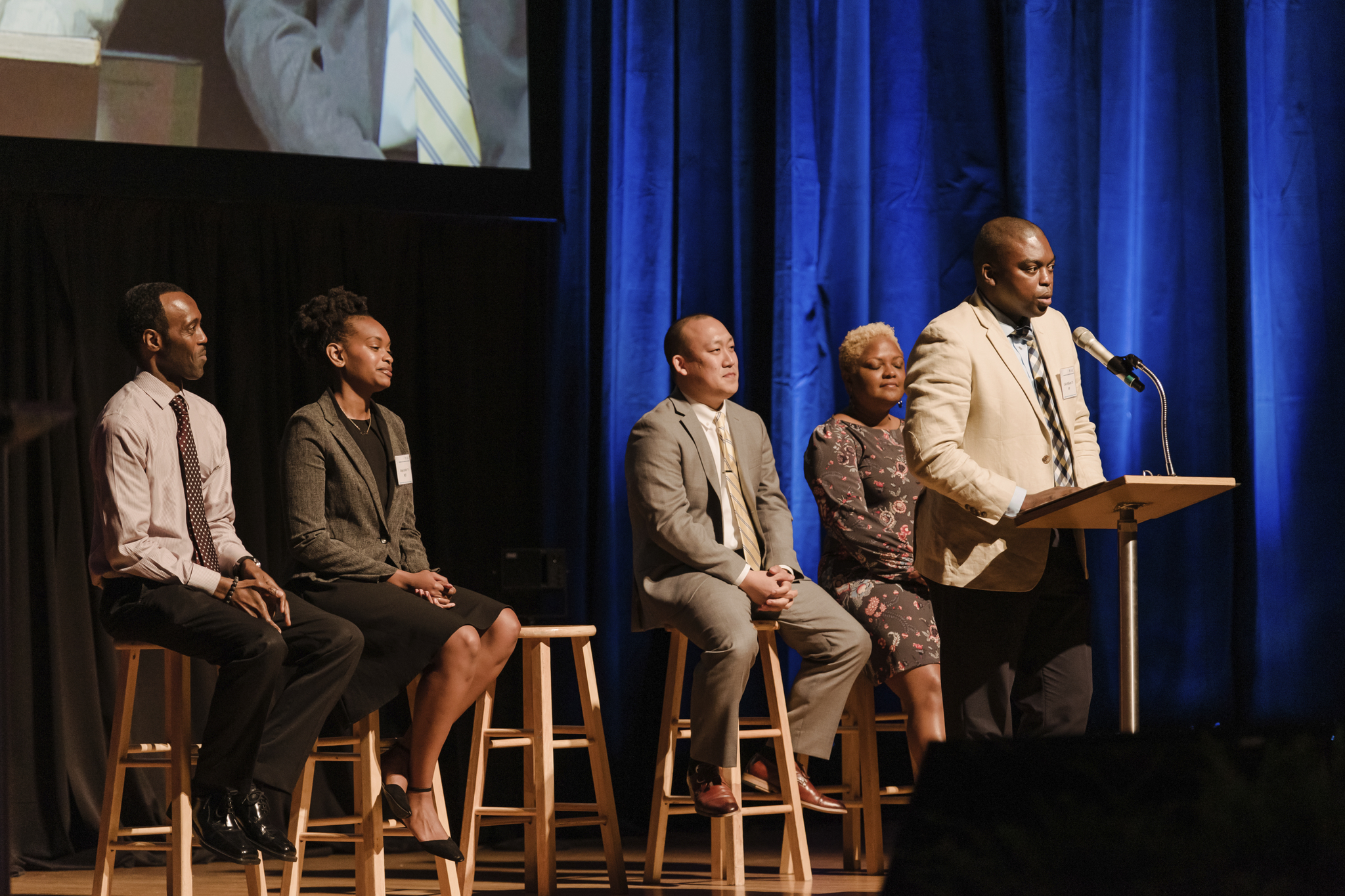
Last week, hundreds of Meyerhoff Scholars Program alumni filled an auditorium stage to thank Meyerhoff for his bold vision. They also came to share their own experiences as proof that he was right to believe in their potential and invest in their futures so many years ago.
Standing on the shoulders of giants
The night of gratitude kicked off an emotional weekend of fellowship and reflection celebrating the Meyerhoff Scholars Program’s 30th anniversary. Over the course of Friday evening, alumni and supporters shared stories of the successes they attribute to a community that believed in them from the start—one that in the words of poet Langston Hughes let them “hold fast to dreams.”
“Meyerhoffs are ‘all in’ types,” said Keith Harmon, director of the program. “Now as alumni, they are distinguishing themselves as STEM professionals, changing the face of the STEM workforce, and showing the world how right Bob Meyerhoff was to believe in them in the first place.”
Setting a national example
The first of its kind in the country, the Meyerhoff Scholars Program launched in 1989 with a small cohort of African American men interested in pursuing graduate degrees in science, engineering, and related fields. In the years that followed, the program expanded to include women and students of all backgrounds who were committed to increasing the representation of minorities in science and engineering.
A post shared by UMBC (@umbclife) on May 30, 2019 at 10:19am PDT
Today, more than 1,100 Meyerhoff alumni are changing the face of science across the country. The program is a national leader on the forefront of efforts to increase diversity in STEM fields, and UMBC is the nation’s number one producer of African American undergraduates who go on to earn M.D./Ph.D.s.
As alumni lined up on stage to share their stories, Kamili Jackson Shaw M5, ’97, M.S. ’99, mechanical engineering, talked about her first impressions of the program as an entering student.
“The Meyerhoff Scholars Program was the first time I had ever been around a critical mass of high-achieving African Americans, and it was extremely important to my growth as an individual,” said Shaw. Today, she leads the safety, quality, and management systems division for the NASA Stennis Space Center. “It gave me confidence and humility at the same time,” she says. “For the first time, I was able to simply ‘be.’”
Paying it forward
The night ended with what program alumni called a “Gesture of Gratitude”—the announcement of a $500,000 gift made by alums from across the decades to support the program. As impactful as the gift will be, it was also symbolic, matching Robert Meyerhoff’s original gift to UMBC. And they have no intention of stopping there.
“Sometimes you don’t understand legacy until you see the fruit of it, and 25 years later, I see the magnitude of the program,” says Felicia Sanders M4, ’96, chemical engineering. Sanders, a, leadership-level supporter of the program, says giving back “is a responsibility. It’s a necessity.”
“If someone hadn’t given to us,” she asks, “where would we be?”
Kellie McCants-Price M2, ’95, interdisciplinary studies, was in the first Meyerhoff class that included women, one year after its founding. “I didn’t realize how significant it was until about 10 years out,” says McCants-Price, who holds her Ph.D. in psychology. “I saw how prolific it was—how many women were graduating—and realized that we held the door open for them.”
Alums took to social media to share their memories and thoughts on the celebration, including U.S. Surgeon General Jerome M. Adams M4, ‘97, biochemistry and molecular biology.
I’ve shared that the first time I met a black doctor was when I was in college at @UMBC. That’s why I was so proud to attend the 30th anniversary celebration of the Meyerhoff program tonight. A ballroom packed full of minorities with MDs and PhDs. #RepresentationMatterspic.twitter.com/M8AcSwzQea
— U.S. Surgeon General (@Surgeon_General) June 2, 2019
The family connection
After Friday’s formal event, alumni gathered in the Event Center on Saturday for a family-style reunion. Many of them brought their children to enjoy a day of food, cohort cluster game competitions, networking, and campus tours. Later that evening, many also enjoyed a dance party hosted by the Meyerhoff Alumni Advisory Board.
Alumni left feeling re-connected as friends, as scholars—and ultimately, as part of a family.
Kafui Dzirasa M8, ’01, chemical engineering, summed up this sentiment as he thanked Robert Meyerhoff on Friday night. “What has increasingly become obvious to us—which you have known all along—is that the power of this community is us, working together as a family.”
]]>
Thirty years ago, Baltimore philanthropist Robert E. Meyerhoff came to then-UMBC vice provost Freeman Hrabowski with the seed of an idea: to create a program that would enable all students,...https://umbc.edu/stories/dreams-realized-celebrating-30-years-of-umbcs-meyerhoff-scholars-program/https://my3.my.umbc.edu/api/v0/pixel/news/120114/guest@my.umbc.edu/85afae7e027cc2b93188c92a444f767c/api/pixelalumnimeyerhoffmeyerhoffscholarsmhoffvideosUMBC News & Magazinehttps://my3.my.umbc.edu/groups/umbc-news-magazinehttps://assets1-my.umbc.edu/system/shared/avatars/groups/000/001/943/24435aa6207c452e7bc15cc74b42c7bb/xsmall.png?1748556657https://assets1-my.umbc.edu/system/shared/avatars/groups/000/001/943/24435aa6207c452e7bc15cc74b42c7bb/original.png?1748556657https://assets2-my.umbc.edu/system/shared/avatars/groups/000/001/943/24435aa6207c452e7bc15cc74b42c7bb/xxlarge.png?1748556657https://assets2-my.umbc.edu/system/shared/avatars/groups/000/001/943/24435aa6207c452e7bc15cc74b42c7bb/xlarge.png?1748556657https://assets3-my.umbc.edu/system/shared/avatars/groups/000/001/943/24435aa6207c452e7bc15cc74b42c7bb/large.png?1748556657https://assets1-my.umbc.edu/system/shared/avatars/groups/000/001/943/24435aa6207c452e7bc15cc74b42c7bb/medium.png?1748556657https://assets2-my.umbc.edu/system/shared/avatars/groups/000/001/943/24435aa6207c452e7bc15cc74b42c7bb/small.png?1748556657https://assets1-my.umbc.edu/system/shared/avatars/groups/000/001/943/24435aa6207c452e7bc15cc74b42c7bb/xsmall.png?1748556657https://assets2-my.umbc.edu/system/shared/avatars/groups/000/001/943/24435aa6207c452e7bc15cc74b42c7bb/xxsmall.png?1748556657UMBC News & Magazine00falseFri, 07 Jun 2019 23:02:09 -0400

 Drawn by @/nina.draws.scientists on IG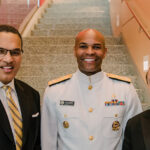

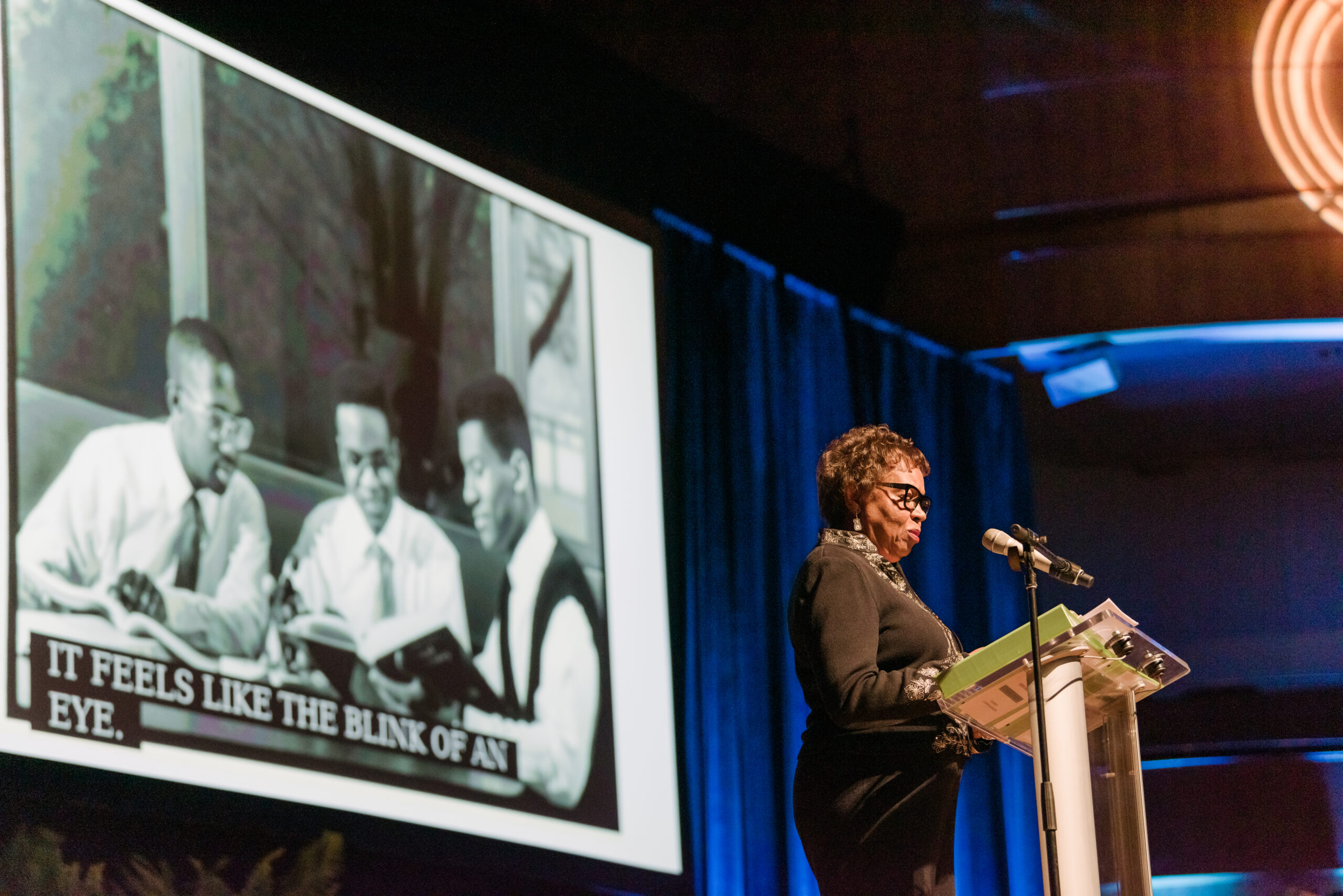
 Naomi Mburu ’18, M26, chemical engineering, UMBC’s first Rhodes Scholar speaks at the 2018 Annapolis Alumni Reception.
 Jerome Adams ’97, M4, biochemistry and molecular biology, the Surgeon General of the United States speaks at the 2019 Alumni Awards.