How To Spot Maryland’s State Bird
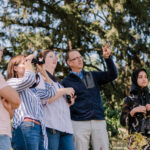
With Kevin Omland, professor of biological sciences
UMBC is teeming with wildlife—the infamous frenzied squirrels, the occasional wandering deer, a curious woodchuck or two, and lots and lots of birds. Melodic chirping can be heard from the wee hours of the morning all the way until the last night classes let out. And not just any birds; the areas surrounding UMBC and campus alike are home to a special species, one that is widely revered around the entire state—the Baltimore Oriole.
Having researched orioles and ravens for decades, it’s not surprising that Kevin Omland, a biological sciences professor, calls himself the mascot biologist for the state of Maryland. Since joining UMBC in 2000, Omland’s work has almost exclusively centered on orioles. Along with members of his lab, the Presidential Research Professor studies a range of topics in avian evolution, behavior, and conservation. We asked the life-long ornithophilehow to spot the Baltimore Oriole, our state bird, in its natural habitat.

Tools of the Trade
- A good pair of binoculars
- A smartphone or tablet to access the website “All About Birds”
- A device to play an imitation of the Oriole’s song
- Patience—and lots of it!
Step One – Pick a Park
Baltimore Orioles can be found all around suburban parks in Baltimore County and City. Omland estimates that there are at least 100 oriole territories between the Inner Harbor and the Pennsylvania/Maryland border.
“The Baltimore Oriole loves hanging out in local suburban parks,” he notes. “I’ve even seen them in the trees near the entrance to the Maryland Zoo in Druid Park. You have a good chance of seeing them in Patapsco State Park, too.”
To find a Baltimore Oriole on UMBC’s campus Omland suggests scoping out Pig Pen Pond and the Conservation Environmental Research Area (CERA) located south of bwtech, UMBC’s business park. Omland notes that it may be harder to spot Baltimore Orioles on campus due to an increase of construction here in the past twenty years, but it is still possible to find the occasional oriole flying near the green spaces on campus.
Step Two: Look (and Listen!) High in the Sky
After you’ve picked your park, it’s important to know how to find the elusive bird. According to Omland, the state bird may be harder to spot than you think. He recommends looking and listening up toward the treeline.
“You’ll never see a Baltimore Oriole on the ground to save your life,” he joked, noting that he is also known to be the worst exaggerator in the world. “But in all seriousness, it is very rare to see [them] on the ground. Some particularly adventurous orioles may forage for food on the ground, but it’s rare.”

Omland says that your best bet is to grab a pair of binoculars and look in the tops of tall trees near rivers, ponds, and even golf courses.
As for the signature colors, Omland says that there’s no other bird around that boasts the bright orange coloring complemented by the jet black feathers—it’s unmistakable. He notes that adult males will have vibrant, discernible colors, while females and adolescents will be a bit more muted, but still identifiable.
“You’re sure to recognize the colors. It’s the same ones on the baseball caps for the O’s team,” Omland says. “Historically speaking, it’s called Lord Baltimore’s Orange, and there’s no other bird that carries that indisputable color. If you know that color, you’re on the right track!”
Step Three: Work on Your Whistle
No less important than the distinct colorings of the Baltimore Oriole is the sound that it makes—a low, loud, clear whistle that can often be heard from far distances.
“It is difficult for humans to imitate the sounds of many other birds,” says Omland, “but for the Baltimore Oriole, it can be fairly easy to imitate if you practice. If you get really good at their whistle, there’s a chance that they will answer back!”
Step Four: Take Your Skills Farther Afield
The Baltimore Oriole is just one of more than 30 different species of orioles found all over the world, and Omland doesn’t limit himself to studying just one kind.
Omland’s research also includes the Bahama Oriole, a critically endangered species native only to Andros Island. Thanks to an International Research Experience for Students grant funded by the National Science Foundation, Omland has been taking students to the remote island in the Bahamas since 2016 to study how climate change is impacting weather patterns and creating natural disasters that have nearly decimated the species.
“It gives students the chance to be on the front lines of climate change,” Omland says. “This is where climate change is killing people, destroying homes, and eliminating ecosystems…the students care about what happens to these islands and want to make a difference.”
Omland extends the invitation to his students and beyond to participate in what he calls “adventure biology”—getting outdoors and sharing intimate opportunities with the surrounding wildlife, especially in readily accessible areas. “The Baltimore Orioles are one of the many spectacular birds that are here in our forests,” he said. “If people stop, look up, and start paying attention, Maryland has a lot of wonderful diversity to offer us.”
*****
Photos of Omland and his class by Marlayna Demond ’11. Oriole image courtesy of Kevin Omland.
]]>
With Kevin Omland, professor of biological sciences UMBC is teeming with wildlife—the infamous frenzied squirrels, the occasional wandering deer, a curious woodchuck or two, and lots and lots...
https://umbc.edu/stories/how-to-spot-marylands-state-bird/
https://my3.my.umbc.edu/api/v0/pixel/news/119892/guest@my.umbc.edu/b55c7a7d32bdb62ca5cab51b0b7f456d/api/pixel
cnms
discovery
how-to
professorsnottomiss
spring-2020
UMBC News & Magazine
https://my3.my.umbc.edu/groups/umbc-news-magazine
https://assets1-my.umbc.edu/system/shared/avatars/groups/000/001/943/24435aa6207c452e7bc15cc74b42c7bb/xsmall.png?1748556657
https://assets1-my.umbc.edu/system/shared/avatars/groups/000/001/943/24435aa6207c452e7bc15cc74b42c7bb/original.png?1748556657
https://assets2-my.umbc.edu/system/shared/avatars/groups/000/001/943/24435aa6207c452e7bc15cc74b42c7bb/xxlarge.png?1748556657
https://assets2-my.umbc.edu/system/shared/avatars/groups/000/001/943/24435aa6207c452e7bc15cc74b42c7bb/xlarge.png?1748556657
https://assets3-my.umbc.edu/system/shared/avatars/groups/000/001/943/24435aa6207c452e7bc15cc74b42c7bb/large.png?1748556657
https://assets1-my.umbc.edu/system/shared/avatars/groups/000/001/943/24435aa6207c452e7bc15cc74b42c7bb/medium.png?1748556657
https://assets2-my.umbc.edu/system/shared/avatars/groups/000/001/943/24435aa6207c452e7bc15cc74b42c7bb/small.png?1748556657
https://assets1-my.umbc.edu/system/shared/avatars/groups/000/001/943/24435aa6207c452e7bc15cc74b42c7bb/xsmall.png?1748556657
https://assets2-my.umbc.edu/system/shared/avatars/groups/000/001/943/24435aa6207c452e7bc15cc74b42c7bb/xxsmall.png?1748556657
UMBC News & Magazine
0
0
false
Thu, 14 May 2020 00:10:11 -0400
First Light—UMBC-Developed Satellite Successfully Launches

AFTER YEARS IN DEVELOPMENT, AND MONTHS OF WAITING, A UMBC-DEVELOPED MINI SATELLITE LAUNCHED INTO SPACE STUDIES CLIMATE AND AIR QUALITY, PROVING PERSISTENCE PAYS OFF.
In the early morning hours of Saturday, November 2, 2019, a few hundred guests at the NASA Wallops Flight Facility gathered at the VIP launch viewing site—a grassy pad near a large tent. Sitting on metal bleachers and in camping chairs, they gazed upward. The NASA Antares rocket and the Northrop Grumman Cygnus capsule stared back at them from two miles away, more than 14 stories high and loaded with supplies for the International Space Station (ISS). Also on board were more than 30 “cubesats”—small satellites no bigger than large loaves of bread—all of them containing scientific instruments their makers hoped would contribute to a better understanding of our world.
One cubesat, the Hyper-Angular Rainbow Polarimeter (HARP), has been a labor of love for a small group of dedicated UMBC scientists and engineers for the last five years. There were times when they weren’t sure if HARP would ever get to space, but the big moment had finally arrived. Today, HARP was headed up. Way up.
Around 9:55 a.m., the crowd quieted. Their thoughtful silence spoke to years of late nights, early mornings, sighs and tears, hugs and high-fives. They thought back to team meetings with frantic napkin scribbling, spacecraft models made of children’s toys when an idea struck at home, and big dreams.
UMBC’s Roberto Borda, one of the core engineers for HARP, stood at the front of the viewing area, his arms around his wife. “It’s happening, it’s happening!” he whispered excitedly in her ear. Other team members stood nearby with their spouses, children, and friends.
The crowd collectively held its breath and squinted across open fields at the rocket, which was backed almost directly by the low morning sun. And then, finally, it got loud. Really loud. The silent guests watched as Antares and Cygnus roared to life, 440,000 pounds of oxygen fueling eight massive explosions generating upwards of a million pounds of thrust.
 The Antares rocket, with Cygnus resupply spacecraft onboard, launches from NASA’s Wallops Flight Facility. Photo Credit: (NASA/Bill Ingalls)
At exactly 9:59:37, right on schedule, the rocket burst from its restraints and bolted upward into the sky. Cheers erupted, and the nervous tension dissipated as the rocket rose ever higher. Within four minutes, it was 100 miles above the Earth, headed to the space station at 17,000 miles per hour.
A few minutes later, champagne bottles popped and the celebration began.
Observing particles in Earth’s atmosphere
The HARP satellite’s unique sensors will collect new kinds of information about clouds and tiny particles in Earth’s atmosphere, such as wildfire smoke, desert dust, and human-generated pollutants. These particles, collectively known as aerosols, have a multitude of effects on the global climate and the health of organisms. For example, rain droplets condense around the particles, so they play a role in global precipitation. The particles can also reflect light away from Earth as well as trap energy inside Earth’s atmosphere, which both affect climate. And pollutants can lead to various respiratory ailments in humans and other animals.
With its innovative design, HARP is able to observe the particles from many angles at once to give scientists a more comprehensive view of what’s going on in the atmosphere. The new data will equip scientists with information they need to better understand climate and air quality concerns.
“HARP is really a technology demonstration mission,” explains Vanderlei Martins, the lead researcher on HARP and director of UMBC’s Earth and Space Institute, “but our goal is to also do some science with the data.”
-
 The stripes on this image HARP collected of the Mediterranean represent the many wavelengths of light, from near infrared to blue, that HARP’s sensors can detect. The HARP team will combine hundreds of images like these to create smooth depictions of areas all around the world.
-
 The bright white stripes in these minimally-processed images HARP collected represent an operational test. They indicate that the three sensors on HARP are all working and that they are properly aligned.
The team includes engineers, physicists, and mathematicians from UMBC and Space Dynamics Laboratory (SDL) in Utah—which designed the exterior parts of the satellite that would carry the UMBC instrument into space. “As an engineer, I’m looking to develop technology that can make the science happen,” says Dominik Cieslak, an assistant research scientist with the Joint Center for Earth Systems Technology (JCET), a UMBC partnership with NASA.
Other UMBC team members are developing algorithms to effectively analyze the data that will eventually be arriving in huge quantities. Cieslak notes that the data could be used in new ways for years to come as researchers develop new algorithms and computing power continues to grow.
Awaiting “first light”
“We’re going to celebrate every step,” Martins said on the morning of the rocket launch. He was careful to note that the launch was just one step—a particularly exciting one—in a lengthy sequence. Only when the satellite was safely orbiting Earth and sending back data would he and his team know whether HARP was working the way they intended.
Despite the additional steps to come, the launch was “a big milestone,” said Brent McBride ’14, physics, a current Ph.D. student in atmospheric physics. With the setbacks the project had experienced over five years, to arrive at launch day was “a wonderful thing.”
 Roberto Borda, one of the core engineers on the HARP project, anticipates the launch with his wife, Carolina Napp Avelli. Photo by Sarah Hansen, M.S. ’15.
Cieslak acknowledged that going forward, “there are many ways for things to go wrong—but there is only one way for everything to go right.”
To increase the likelihood of things going right, before the rocket launch the team tested HARP many times on two different kinds of aircraft that fly at high and low altitudes, to ensure the instrument was working properly. But still, says Borda, “It’s a different beast going in a plane versus going to space.”
If every step in HARP’s journey went perfectly, it would be sending back images from space—the first of which the team calls “first light”—within a few months. “I’ll really, really celebrate when we get the first light,” Martins said.
A hero’s journey
Two days after it launched from Wallops, on Monday, November 4, the Cygnus capsule made it safely to the ISS—another step completed. Then, the team waited with anticipation until astronauts were available to release it into orbit. Finally, after multiple delays, on February 19, 2020, UMBC community members gathered in the Physics Building to watch a live stream of the release.
“We are 55 seconds from jettison,” came the voice over the internet. Once again, the crowd fell silent as the clock ticked down. At the prescribed moment, the group witnessed a small blob silently exit the launch tube and float slowly into space. HARP was the 100th cubesat ever launched by NASA. The successful ISS release was another necessary step—if less dramatic than the rocket launch—along HARP’s journey.
Then, more waiting. Even if HARP was collecting data, if it couldn’t send that data back to scientists on Earth, all would have been for naught. Thankfully, a little over a week after HARP’s release, Earth-bound instrumentation at Wallops successfully established a connection with the satellite.
 Vanderlei Martins, Roberto Borda, and Dominik Cieslak with HARP at UMBC. Photo by Marlayna Demond ’11.
Still, the team didn’t know then if HARP was actually working. Under normal circumstances, the team would have gotten an answer to that question within a few more weeks, by mid-March. But that was just as COVID-19 began to wreak widespread havoc in the United States. So, more waiting for the HARP team. NASA, UMBC, and Space Dynamics Laboratory employees scrambled to figure out how to operate the satellite from their homes, and competition for data transfer time on ground-based instruments became ever steeper, as NASA’s capacity dwindled.
Finally, on April 15, 2020, a full nine weeks after HARP’s release from the ISS, almost six months after its launch on the Antares rocket, and nine months since anyone on the HARP team had actually laid hands on the instrument—not to mention the years and years of research, design, and construction of HARP itself—it came. First light. And it was perfect.
Moment of Truth
A week later, Martins perused the first fully-processed image, which happened to be of the Mediterranean region. The outline of Italy was clearly visible. He started out as any scientist would, making careful, objective observations: “There are no defects. So far, there are zero issues with the UMBC payload. It is working as designed, and so far, it has exactly the same performance as we had in the lab.”
Slowly, it started to sink in. Every setback, every time he and his team had put off celebrating, every time he had tempered his enthusiasm in anticipation of first light… Well, here it was. First light. Then, it came out in a rush:
“You know, the last time we touched the sensor was last September. It has been shipped, it has been transported, it was launched in a rocket to the space station, it was released from the space station…All those things happened and we had no idea how people were treating it… is it contaminated? Is it broken? And so far… everything is perfect.” His smile grew broader.
“Now, it is operating in space. HARP is a demonstration of a new technology that was completely developed at UMBC, and it is now operating in space. It’s working, it’s performing, it’s showing everything we expected and that we’ve been working toward for the last 10 years…So it’s fantastic.”
True Teamwork
Karl Steiner, UMBC’s vice president for research, was thrilled to witness his first NASA rocket launch as HARP leapt into the sky on November 2. “To have seen Vanderlei and his team work on this as long as I’ve known them, and know the amount of work and sacrifice they’ve put in, the chance to be with them on this important day…” He trailed off, brimming with emotion. “It’s a very special day for the team and for UMBC.”
Steiner’s pride only grew as HARP continued its journey. “This successful launch of the HARP CubeSat is the latest achievement in a long string of impactful scientific and technical milestones from UMBC and its Earth and Space Institute,” he shared. “We can’t wait to explore the scientific data that HARP will make accessible.”
 Even though they couldn’t get VIP passes for the special launch viewing area, a number of Martins’ undergraduates came along to Virginia for the experience. Photo by Sarah Hansen, M.S. ’15.
No team deserves this success more than Martins’. After every setback, they never gave up. Even when the instrument was damaged during testing, Cieslak brought it back to UMBC from Space Dynamics Laboratory in Utah, completely deconstructed it, cleaned it, and put it back together. “It turned out that after that operation, the instrument was working better than before,” Martins said. “To me, that’s a testament to my team.” Always rising to the occasion. Always coming back stronger.
Persistence pays off
Yet, even after achieving first light, and proving that this technology—which is unlike any ever deployed in space—can work, the team isn’t resting on its laurels. HARP2 is well underway, and is scheduled for launch on NASA’s PACE mission in 2021. HARP2 will have bigger scientific goals, and even better optical, electrical, and mechanical systems.
Much of HARP2’s infrastructure is being designed by UMBC students, who have dubbed themselves “the space coders.” The HARP2 team includes three Ph.D. students, one master’s student, and eight undergraduate students—seven from UMBC and one from Towson University. The HARP team also included two high school students.
 The team toasts the successful launch with bottles of Harp. Photo courtesy of Sarah Hansen, M.S., ’15.
All this looking forward provides powerful motivation for a dedicated team. But looking back is important, too. At a pizza party after the rocket launch, the team members reminisced about the time they’ve spent together—some as many as 15 years on other projects and five years on HARP.
“Life can surprise you. Even five years ago I couldn’t have imagined I’d be here today. So keep dreaming,” said Cieslak. “Keep dreaming.”
******
Header image designed by Dusten Wolff ’13.
]]>
AFTER YEARS IN DEVELOPMENT, AND MONTHS OF WAITING, A UMBC-DEVELOPED MINI SATELLITE LAUNCHED INTO SPACE STUDIES CLIMATE AND AIR QUALITY, PROVING PERSISTENCE PAYS OFF. In the early morning...
https://umbc.edu/stories/umbc-developed-satellite-is-successfully-launched-into-space/
https://my3.my.umbc.edu/api/v0/pixel/news/119896/guest@my.umbc.edu/882c395cb2a76bade619dee42994a380/api/pixel
cnms
discovery
spring-2020
UMBC News & Magazine
https://my3.my.umbc.edu/groups/umbc-news-magazine
https://assets1-my.umbc.edu/system/shared/avatars/groups/000/001/943/24435aa6207c452e7bc15cc74b42c7bb/xsmall.png?1748556657
https://assets1-my.umbc.edu/system/shared/avatars/groups/000/001/943/24435aa6207c452e7bc15cc74b42c7bb/original.png?1748556657
https://assets2-my.umbc.edu/system/shared/avatars/groups/000/001/943/24435aa6207c452e7bc15cc74b42c7bb/xxlarge.png?1748556657
https://assets2-my.umbc.edu/system/shared/avatars/groups/000/001/943/24435aa6207c452e7bc15cc74b42c7bb/xlarge.png?1748556657
https://assets3-my.umbc.edu/system/shared/avatars/groups/000/001/943/24435aa6207c452e7bc15cc74b42c7bb/large.png?1748556657
https://assets1-my.umbc.edu/system/shared/avatars/groups/000/001/943/24435aa6207c452e7bc15cc74b42c7bb/medium.png?1748556657
https://assets2-my.umbc.edu/system/shared/avatars/groups/000/001/943/24435aa6207c452e7bc15cc74b42c7bb/small.png?1748556657
https://assets1-my.umbc.edu/system/shared/avatars/groups/000/001/943/24435aa6207c452e7bc15cc74b42c7bb/xsmall.png?1748556657
https://assets2-my.umbc.edu/system/shared/avatars/groups/000/001/943/24435aa6207c452e7bc15cc74b42c7bb/xxsmall.png?1748556657
UMBC News & Magazine
0
0
false
Tue, 12 May 2020 01:06:25 -0400
Rewriting the Rules of Academia in the Age of COVID-19

Some classes translate better to remote learning than others. There was no way for students in Adam Mendelson’s advanced lighting design class to emulate the experience of programming and running massive lighting rigs from their homes. But, as it turns out, there are lessons about lighting design to be learned even in one’s own bedroom.
Mendelson, a senior lecturer in the Theatre Department, and his students discovered this after one of their projects—design lights to accompany a reading of a poem—had to be transferred to online. Students were given the option to complete the project using online simulation software or take a hands-on approach by using the lights sources available in their house.
The DIY students used whatever materials they had on hand, from Christmas lights to flashlights to simply opening or closing the blinds of a window. About half of the class went this route, enlisting the help of family members and housemates to flip switches or plug lights in on cue, one even used their dog as a lighting model.
This experimental assignment has proven successful; Mendelson was pleased with the creativity and innovation his students have shown. “One person used three or four different desk lamps that they put different colored light bulbs in,” he says. Another student used t-shirts and papers to change the colors of flashlights. “He took apart a shoebox and he put five chess pieces in it and that was the surface he was lighting,” Mendselson says. “It was really beautiful.”
-
 Created by Adeayo Adenusi ’20.
-
 Created by Carrie Edick ’21.
“As a lighting designer for a theatrical or a live event, every single thing that lights up is in your purview,” says Mendelson as a takeaway from the at-home version of this assignment. “Sometimes it’s something you can control and sometimes it’s not,” he explains, using green “exit” signs in a space as an example of something that the lighting designer might have to account for. “The key to lighting design is controlling the light and putting the light where you want it to go.”
Other assignments have been more challenging to translate to a distance-learning format; traditionally, students in the class have the opportunity to light a live dance performance, but those shows were canceled. Nothing can replace that live experience, says Mendelson. “That objective of being in the room and having to make quick decisions and all of that is practically impossible to recreate.” Instead, he is asking students to attend a supplemental webinar or online class to help fill in the knowledge gaps left behind by the sudden pivot to online learning.
Testing the Waters
Suzanne Braunschweig, a senior lecturer in the department of Geography and Environmental Systems and director of the Interdisciplinary Science Program, has also faced the challenge of transferring hands-on lessons into a digital space. Science 100: Water, An Interdisciplinary Study, the GEP lab science course she teaches, usually involves traveling to the creeks and streams on campus to collect data, but, because of the dangers of COVID-19, many students can no longer even go into their backyards to collect data.
The solution, Braunschweig has found, is to give her students virtual lab assignments that mirror the course’s in-person labs as closely as possible. One assignment, for instance, typically involves going to a nearby stream to find and identify benthic macroinvertebrates—small organisms that live in the bottoms of lakes and streams. In the virtual lab, students will still go through the same steps of identification that they would in person, albeit using high-quality photographs rather than real organisms.
 In a typical Science 100 class, like this one in Spring 2018, students test the water in the Library and Pig Pen ponds. Photo by Marlayna Demond ’11.
According to Braunschweig, the analysis aspect of the lab will also be essentially the same as it would be in a traditional classroom setting: “Based on the assemblage of critters that you find, you can then make conclusions about the quality of the stream from which they would’ve come.” Usually, she notes, students are excited to find that the streams on campus are “in good shape.”
Transitioning to running online labs has been far from a solo project—Braunschweig’s colleague Susan Schreier and several teaching assistants have assisted with finding virtual materials and making sure the labs run smoothly. She has also utilized a number of invaluable online resources, such as data collected by local nonprofit Blue Water Baltimore.
As part of its mission to restore the quality of Baltimore’s waterways, Blue Water Baltimore maintains a database of information about the health of Baltimore’s rivers and streams. This data has proven to be a “godsend,” says Braunschweig, replacing data students would have sampled from streams around the Baltimore area.
“It’s not doing hands-on work, but they still have the ability to analyze data, and put things in context for the greater Baltimore area in terms of water quality,” Braunschweig says.
Braunschweig knows that most of her students take Science 100 to fulfill a general education requirement, but she’s found that they are still giving their all, even remotely.
“They show up, they stick around, they actually try to work through the lab material during their lab time,” Braunschweig says. “I really admire them for sticking to that because it’s hard, under the current circumstances.”
Lending a (Virtual) Hand
While instructors of hands-on courses knew from the start how difficult this pivot would be, Kate Drabinski, lecturer of Gender, Women’s, + Sexuality Studies, never could have anticipated how much she still had to learn about online teaching. After all, she had years of experience with teaching online and hybrid courses, and had even signed up to help train her fellow professors how to use various distance learning technologies.

But the technical side of things didn’t turn out to be the biggest challenge for faculty to navigate, Drabinski says. “The faculty I worked with needed to know that what they were planning to do was a good idea and would work,” she explains. “They needed to hear that we could do this, that we were all unsure of what our new classrooms would look like, and that we would be able to find strategies that would work to keep us and our students moving forward in a time of great uncertainty.”
For Drabinski’s own classes, the strategy has been to decrease the amount of work students have to complete. “We don’t all have equal access to technology, workspaces, time, or other resources to learn best, and my workload has to respect those differences,” she says. She also knows that it can be difficult for students to give schoolwork their full attention when they are contending with the realities of the COVID-19 pandemic, such as losing their jobs or having to take care of sick family members.
She has also opted to use a synchronous learning approach paired with recorded lectures. That way, she meets with her students in Blackboard Collaborate during her regularly scheduled class times but each student can decide whether they prefer to come to class or watch the video later.
“This approach builds structure for those who need it while recognizing that others have different needs,” Drabinski explains.
Continuing Connections
UMBC professors aren’t the only ones leading the charge into remote learning. Atom Zerfas ’13, mathematics, M.A., ’14, education and teaching, a math teacher at Pikesville High School, played a pivotal role in introducing the students at PHS to how the final quarter of the school year would play out. He created a video to help guide students through what their new class schedule would look like, how they would access online materials, and how they would get in contact with their instructors.
He decided to make the video after seeing how stressful the transfer to remote learning was on the teachers’ end. “It was extremely overwhelming for us, functioning adults who are supposed to be able to ‘be the calm’ for our students,” he explains. “I couldn’t imagine what it would have been like to be a student in any grade, wondering what this means for them. I wanted to provide as many answers that I could, as soon as I could.”
 A screen grab from Zerfas’s remote learning instructional video.
Zerfas originally made the three-and-a-half minute video for the students in his classes, but then restructured it so that the entire school could use it as a resource. Later, he found out that teachers at other high schools were using his video, despite it being tailored to how PHS, specifically, was restructuring its curriculum.
Online teaching isn’t entirely new to Zerfas. He has been uploading recorded lectures for a few years now in an effort to support students who missed class or just need a refresher on the material. The videos he is making now, however, have a purpose beyond education; he wants them to be a beacon for his students.
Video lectures give Zerfas the chance to say “Hi,” he says, and “let my students know that I’m thinking about them, and show them that I’m here if they need me for anything. I know a number of other teachers are dressing up, wearing wigs, or trying to make it as fun as they can. It really comes down to use trying to reconnect with our students, support them, and restore a sense of normalcy and joy.”
In addition to keeping in contact with his students, Zerfas has also been making sure to maintain another important connection these past few weeks: “I’m lucky to have been part of UMBC’s Sherman program because I’ve been connecting with a lot of my cohort members recently, and we’ve just been checking in with each other and being as supportive as we can.”
Making Permanent Change
Though distance learning will not always be necessary, instructors at UMBC and beyond are proving that they are capable of delivering online lessons that are compelling, stimulating, and sometimes even fun for students. Perhaps this unusual semester will give way to lasting, innovative teaching practices, from providing recorded lectures to maintaining more open lines of communication between professors and students.
Ultimately, though, the biggest takeaway lies not in any particular teaching strategy or technological tool. Rather, what we all must learn from this pandemic is that the UMBC community is strong enough to overcome great adversity—but only when we are able to be patient and understanding of each other’s unique challenges and circumstances.
“Not all students have the ability to study or do their [homework] in peace. It’s just more noticeable now,” Zerfas says. “That doesn’t mean to stop offering resources or to stop pushing your kids to do more, but to differentiate lessons more and not to penalize the kids who couldn’t do it.”
*****
Header image: Pig Pen Pond, a common Science 100 site, sits between campus and bwtech@UMBC.
]]>
Some classes translate better to remote learning than others. There was no way for students in Adam Mendelson’s advanced lighting design class to emulate the experience of programming and running...
https://umbc.edu/stories/rewriting-the-rules-of-academia-in-the-age-of-covid-19/
https://my3.my.umbc.edu/api/v0/pixel/news/119899/guest@my.umbc.edu/34d838f3ae7ce9f377261ec30ecaaf2b/api/pixel
campus-life
covid-19
covidresearch
professorsnottomiss
spring-2020
umbctogether
UMBC News & Magazine
https://my3.my.umbc.edu/groups/umbc-news-magazine
https://assets1-my.umbc.edu/system/shared/avatars/groups/000/001/943/24435aa6207c452e7bc15cc74b42c7bb/xsmall.png?1748556657
https://assets1-my.umbc.edu/system/shared/avatars/groups/000/001/943/24435aa6207c452e7bc15cc74b42c7bb/original.png?1748556657
https://assets2-my.umbc.edu/system/shared/avatars/groups/000/001/943/24435aa6207c452e7bc15cc74b42c7bb/xxlarge.png?1748556657
https://assets2-my.umbc.edu/system/shared/avatars/groups/000/001/943/24435aa6207c452e7bc15cc74b42c7bb/xlarge.png?1748556657
https://assets3-my.umbc.edu/system/shared/avatars/groups/000/001/943/24435aa6207c452e7bc15cc74b42c7bb/large.png?1748556657
https://assets1-my.umbc.edu/system/shared/avatars/groups/000/001/943/24435aa6207c452e7bc15cc74b42c7bb/medium.png?1748556657
https://assets2-my.umbc.edu/system/shared/avatars/groups/000/001/943/24435aa6207c452e7bc15cc74b42c7bb/small.png?1748556657
https://assets1-my.umbc.edu/system/shared/avatars/groups/000/001/943/24435aa6207c452e7bc15cc74b42c7bb/xsmall.png?1748556657
https://assets2-my.umbc.edu/system/shared/avatars/groups/000/001/943/24435aa6207c452e7bc15cc74b42c7bb/xxsmall.png?1748556657
UMBC News & Magazine
0
0
false
Thu, 07 May 2020 01:04:13 -0400
Tough Times, Smart Planning

As the magnitude of the COVID-19 pandemic first began to reach headlines in March, many peoples’ first thoughts were of their and their loved ones’ health. But, in the days that followed, another shock wave hit, revealing drops in world markets that threatened the savings of young and old alike.
As a financial advisor, Bryan Kelly ’92, economics, took the news very personally. But then he quickly jumped to action, setting up a series of web-based “fireside chats” to keep people informed in a way that only he could.
For financially-savvy Retrievers like Kelly, helping their community get through this latest challenge just makes good sense. Here are a few examples of how our community is reaching together to offer sound advice on money, careers, and more.
Share your own stories of Retriever Resilience by using #UMBCTogether on social media, and read more at umbc.edu/together.
A Matter of Trust
Kelly grew up in a small town where everyone knew their neighbors, including the beloved local doctor. Think Norman Rockwell, and you’ll get the picture.
“I went from painting his fences and tending to his flower beds to being his financial advisor and planner. I told him I wanted to be him, but in financial planning,” says Kelly, who wound up becoming founding partner at The Kelly Group, a family-focused financial planning business.
And so, when the pandemic hit, Kelly did what he did during the October 2008 recession—he offered “a reassuring voice” and delivered an hour-long financial chat to almost 300 clients and friends from his Darlington home. “And no, I’m not in my pajamas,” he joked, lightening the mood before getting into some very serious advice.
“It is at times like these that people under tremendous pressure are overcome with fear and tend to make mistakes that can affect them for years,” he told the group as he also wrote in his hometown paper, the Aegis.
Kelly credits UMBC economics professor emeritus Chuck Peake for “teaching me what investing means,” and for being “one of my pillars.”
“We want to serve as a guiding light to help prevent these mistakes, and perhaps even help you find opportunities in this adversity,” he says.
Building Blocks
Under normal circumstances, the prospect of managing one’s finances and getting a job out of college is stressful enough. Add to that a global pandemic, and college students are understandably nervous. That’s why campus experts are doubling down and going virtual to make sure students have the best footing possible.
UMBC’s FinancialSmarts program, a financial literacy education program, offers students the chance to participate in online and virtual courses and workshops, earn digital badges, and engage with alumni coaches who can help them practice their skills.
“We know that if our students are to realize the full benefit of their UMBC degrees, they will need to make good, sound financial decisions along the way,” says Hannah Sadollah ’19, psychology, program specialist for financial literacy and education. “FinancialSmarts was developed to give students the tools necessary to make informed and effective decisions about their finances. Our goal is to provide students with timely and relevant resources so that they are as well-prepared to manage their budgets, bank accounts, assets, and debt as they are to master their academic pursuit.”
In April, more than 180 students took part in Money Smart Week, an interactive series of online workshops offering everything from a Jeopardy!-style financial wellness game to “Adulting 101” and a “Credit Cafe.” Knowing that almost 70 percent of Americans have less than $1,000 in savings, and understanding the nervousness about meeting basic financial needs during the pandemic, Sadollah and her colleagues are passionate about helping students become financially literate.
“With the rise in unemployment claims due to the pandemic we are reminded of the importance of saving at least three months living expenses if you are salaried, and at least six monthsif you are self-employed,” she says. “Financial literacy is an important and necessary life skill. In a time where we are hyper focused on our health, it’s important for us to recognize the effect our finances have on mental, emotional, and physical health.”
Meanwhile, as an unsteady job market looms, the Career Center has been proactively working with students to brush up their search skills and find internships and full-time employment. Even from afar, the center is offering plenty of one-on-one advising, as well as a full calendar of virtual career-related events, including alumni panels, employer recruiting sessions, and workshops on everything from acing remote interviews, moving from internships into full-time employment, and personal branding, says center director Christine Routzahn.
“Some students are naturally concerned about their internship and career plans,” says Routzahn. “Our Career Center team is committed to making sure that students know we are available and are here to help when ready.”
Routzahn and her colleagues are actively encouraging students to reflect on their values and career aspirations while also taking time to practice self care and find opportunities to sharpen skills that will make them stand out to employers. Later this summer, the Career Center will offer a virtual career fair in collaboration with other Maryland Career Consortium institutions, offering direct connections to organizations looking to hire.
Washington Post columnist and UMBC Parent Michelle Singletary gives a shout out to the UMBC Career Center around the three-minute mark.
“During these uncertain times, you may naturally have concerns about your career plans. Remember that you are not alone and that many students are sharing a similar experience,” advises Routzahn. “We are all in this together and the Career Center team is here for you. Even though the road ahead may not be easy, there are still a lot of opportunities out there to gain great experience.”
Connections Matter
As the owner of 3 Pillars Co., a events and business consulting firm, Lois Sarfo-Mensah ’15, emergency health services, is used to working hard to stay afloat—and helping other businesses do the same. In her side gig as ambassador of the Baltimore chapter of Ladies Get Paid (LGP), she extends even further, creating networks for advocacy and support for working women, many of whom are understandably concerned right now.
“The greatest concern is what is next,” she says. “It is such an unsettling time and there is hesitation on pivoting to careers or businesses, staying put until it is over, or focusing on development during this time at home. Each having their own implications—especially financially.”
While there has been hope among many small business owners about federal and state grant and loan programs, the processes have not been easy to navigate. Going forward, coming together as a community will be more important than ever, says Sarfo-Mensah, who through LGP is working on creating events such as community conversations and virtual happy hours to allow for connection and discussion of grief and trauma brought on by the pandemic.
“From the onset of this virus and the news of the slowdown to shutdown of many industries, I have been steadfast with anyone I have spoken to about this change that we need to be on the side of solution and support rather than reaction,” she says.
“We have to support each other… whether it is referring business owners, supporting local, keeping engaged with community efforts such as PPE production, and sharing out the information you receive to any one who may need it…. This way everyone can be starting from the same place or be as equitable as possible.”
* * * * * *
Header image by bruce mars on Unsplash
]]>
As the magnitude of the COVID-19 pandemic first began to reach headlines in March, many peoples’ first thoughts were of their and their loved ones’ health. But, in the days that followed, another...
https://umbc.edu/stories/tough-times-smart-planning/
https://my3.my.umbc.edu/api/v0/pixel/news/119904/guest@my.umbc.edu/cd20deb6277c18a7c78f69d92e953a5c/api/pixel
impact
resilience
spring-2020
umbctogether
UMBC News & Magazine
https://my3.my.umbc.edu/groups/umbc-news-magazine
https://assets1-my.umbc.edu/system/shared/avatars/groups/000/001/943/24435aa6207c452e7bc15cc74b42c7bb/xsmall.png?1748556657
https://assets1-my.umbc.edu/system/shared/avatars/groups/000/001/943/24435aa6207c452e7bc15cc74b42c7bb/original.png?1748556657
https://assets2-my.umbc.edu/system/shared/avatars/groups/000/001/943/24435aa6207c452e7bc15cc74b42c7bb/xxlarge.png?1748556657
https://assets2-my.umbc.edu/system/shared/avatars/groups/000/001/943/24435aa6207c452e7bc15cc74b42c7bb/xlarge.png?1748556657
https://assets3-my.umbc.edu/system/shared/avatars/groups/000/001/943/24435aa6207c452e7bc15cc74b42c7bb/large.png?1748556657
https://assets1-my.umbc.edu/system/shared/avatars/groups/000/001/943/24435aa6207c452e7bc15cc74b42c7bb/medium.png?1748556657
https://assets2-my.umbc.edu/system/shared/avatars/groups/000/001/943/24435aa6207c452e7bc15cc74b42c7bb/small.png?1748556657
https://assets1-my.umbc.edu/system/shared/avatars/groups/000/001/943/24435aa6207c452e7bc15cc74b42c7bb/xsmall.png?1748556657
https://assets2-my.umbc.edu/system/shared/avatars/groups/000/001/943/24435aa6207c452e7bc15cc74b42c7bb/xxsmall.png?1748556657
UMBC News & Magazine
0
0
false
Fri, 01 May 2020 16:38:51 -0400
Holding Down the Fort to Keep Students Connected
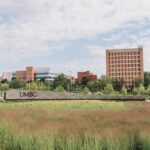
UMBC has begun planning for the fall and a gradual return to campus. See the Retrievers Return Roadmap here for the latest.
Many things came up to an abrupt end on March 12. At UMBC, students began leaving campus and their dorms for an early start to spring break, student-athletes saw a sudden stop to their season, and employees were figuring out plans to work from home for the foreseeable future.
Stacy Carone, associate athletic director for sports medicine, summed up the Retriever community’s feelings succinctly: “We felt as if our identities were challenged and we…lost a big part of our ‘why.’”
In the wake of so many life-defining activities suddenly curtailed, many other things continued nevertheless—namely the indomitable UMBC spirit showcased in the grit of students whose academic plans now looked dramatically different and by campus decision makers who had to make quick, tough calls to elevate the safety and health of our Retriever Nation.
As many campus activities transitioned to online formats, it’s fair to mourn what was lost: Commencement, final championship games, shaking your professor’s hand at the end of the semester, the last hug with suitemates before move out day, the final nostalgic meal at True Grit’s. Yet, it’s also important to celebrate the folks behind the scenes making these transitions for the community as smooth as possible.
The necessity of being nimble
When it became clear that UMBC would transition to distance learning for at least two weeks after spring break, John Fox, director of Residential Life, and his team immediately started brainstorming how to serve the students who, for a variety of reasons, would not be able to make a trip home. With an exceptions process in place, around 200 students stayed through the first few weeks, and when Maryland Governor Larry Hogan’s stay-at-home order came, 65 students continued to remain on the nearly empty campus.
“Dealing with the unknown as a college student is a unique experience,” says Fox ’91, information systems management. “There’s a lot students have to juggle on a day-to-day basis, so they react well to knowing the knowns and the constants. Right now, we’re trying to guide them through this process as smoothly as we can, but, of course, they have a lot of questions, and we’ve been trying to respond to each student’s needs.”
On a case-by-case basis, this means letting students access their rooms to retrieve medicine or class notes left behind. On a wider scale, it involves considering safe ways to allow the residents to return to collect their belongings without compromising their health. “The important thing for us,” says Fox, “is to be nimble and pivot as information comes down from the governor, to the University System of Maryland, then to individual campuses.”

A small group of students and staff remain living in campus housing during COVID-19.
That flexibility involves reaching out to—and listening to—the students. This outreach Fox sees as vital to serving the student population, but also invaluable as students were pulled from their communities so suddenly. “Residential advisors are still connecting with their floors, trying to give students some closure to an unusual semester,” shares Fox.
Resident advisor for Chester apartments, Rileigh Matson ’21, psychology and visual arts, is checking in with her residents on a weekly basis. “In comparison to the conversations that occurred before COVID-19 closed campus, not much has changed,” says Matson, but the importance of staying connected feels much more weighty. Matson, who hopes she can return as an RA next semester, says that students are coping fairly well by staying busy with pre-pandemic activities, like school and pop culture, although some have taken up new hobbies or make taking walks a bigger priority during this time of isolation.
For Fox’s part, the phone calls and emails with students serve to show him that even during pandemics, UMBC students are still exemplary. “I’m constantly reminded that we have thoughtful, understanding students who ask good questions. It reminds me that UMBC is a place that puts value on the individual and that each student feels attended to and that their individual circumstances matter.”
Provisions in a pandemic
Dining Services staff, like Residential Life, needed essential staff to stay and continue to serve the remaining student population. Tim Dunn, campus executive chef talks through the game plans his team created in discussions with UMBC leadership. “UMBC was incredibly proactive with action plans of all essential associates,” says Dunn. “So early on we worked through potential scenarios, and how we would respond.”

The inside of True Grit’s before the transition to a contact-free food pick-up process.
This included modifying their offerings to comply with the necessary physical distancing, which happened in stages. First, they strongly encouraged taking food in to-go containers; this quickly turned into a total grab-and-go operation. In late April, remaining students and staff on campus select their meals online and pick them up at the door.
After resolving how to continue feeding the dwindling campus population, Dunn also needed a plan to distribute the semester’s worth of overstocked food. “We found a home for most of our products at St. Agnes Hospital,” he says, “and donated some other perishables and non-perishables to Catonsville Emergency Assistance.”

Tim Dunn, campus executive chef, delivers food to Catonsville Emergency Assistance. Photo courtesy of UMBC Dining.
Despite the unexpected upheaval of COVID-19 to campus operations, Dunn says that their “staff is building even stronger relationships with the students who are remaining on campus.”
Be purposeful in all you do
As a member of UMBC’s Incident Management Team, Carone in Athletics had a sneak peek of what was coming, “but I could not possibly prepare emotionally for that day.” She’s referring to March 12, when Athletic Director Brian Barrio got in front of the students to explain that in order to stall the spread of a lethal virus, spring sport seasons were canceled.
Despite this decision coming at the expense of students’ athletic careers, what Carone remembers “is an overwhelming sense of pride; looking at the faces of our UMBC student athletes as they processed the gravity of what was happening in the world around us; watching them not hang their heads in defeat, but do what Dogs always do, come together, have heart, show grit, and do what is right, not what is easy.”

The UMBC Event Center, home to sports teams and Commencement activities, is closed.
Carone, who supervises seven athletic trainers and strength coaches, outlined the resources Athletics would continue to provide via telemedicine and encouraged the students to remain connected to one another and to reach out for help in these unprecedented times.
“We usually interact with student athletes on a daily basis for four hours a day,” says Carone. “Replacing that time with screen time interactions has been challenging.” As a result, Carone and her staff are encouraging the student athletes to find routines. “Their days are usually extremely structured from morning to evening… so they’re trying to adjust to this new normal with lack of structure and without sports, which are usually a huge outlet for them.”
Currently all workouts are completely voluntary for student athletes, according to the NCAA. UMBC coaches are posting training videos mainly as a way to keep in touch with their teams and give the athletes a sense of normalcy that practicing might give them. In response to COVID-19, the NCAA has extended an additional season of eligibility to seniors playing spring sports, and Carone says that at this time, 10 student athletes have committed to returning next year.
Carone’s biggest piece of advice to her staff and students as they adjust to this time away from “normal” is to continue to live life with intention, be purposeful in all they do. As well as engaging in weekly wellness check ups with staff and distance workouts with coaches, Carone suggests students can always use “more time to be slow and still.” Her final piece of advice: “Stay connected as much as possible; be good to yourself and one another.”
Recreating essential in-person resources
In the Academic Success Center, it was clear that tutoring and supplemental instruction would be more important than ever if UMBC did move to a distant learning model. In early March, preparing for news that could come at any time, Amanda Knapp, associate vice provost and assistant dean, Undergraduate Academic Affairs, and others in ASC began gathering tools to help their staff of nearly 200 student tutors transition to online services.
As a testament to their efforts, says Delana Gregg, director of Academic Learning Resources, Assessment, and Analysis, ASC’s complete catalog of services was available online the day after spring break. To lighten the load on students seeking help and mimic the one-stop-shop of services that ASC offers, a new website compiled the list of available resources and how to access them.

The Academic Success Center has made the most of the University’s transition to remote learning. Photo courtesy of Delana Gregg.
“So far,” shares Gregg, Ph.D. ’19, language, literacy, and culture, “students tell us that having a staff member who they can talk to—who can help them develop a plan for success—makes all of this so much better.”
International Education Services (IES), which serves a population of students uniquely affected by COVID-19, has also seen an increase in webinar attendance and online traffic to their Town Halls and a new website with resources for UMBC’s current and incoming international students.
These resources are the result of a series of surveys IES proactively sent out to international students and scholars before spring break, asking what resources they needed and how IES could best serve their needs during the COVID-19 disruption. International students face strict restrictions when it comes to working and supporting themselves in the United States, says Michelle Massey, associate director of International Student and Scholar Services. With many businesses closing or furloughing employees, international students are increasingly uncertain about their student status, while also carrying the burden of worrying about their families in other countries, some of which have closed their borders.
“It’s very difficult to know that so many of our international students are suffering financially, and not have more solutions to offer,” says Massey. “We encourage students, and each other within our team, to focus first and foremost on taking care of yourself, so we can still do our best work and contribute to the community as best we can.”
Hope on the horizon
One day, campus will reopen. No one knows what that will look like yet, but Michael Pound, director of Environmental Safety and Health and logistics chief for UMBC’s Incident Management team, is excited to think about it. Pound and his team led the charge to safely shut down campus and think through closing buildings where ongoing research occurs.

UMBC leaders are working through what step are necessary to eventually re-open campus.
With graduation being the priority, some students were able to complete their experiments in time, others had to find alternative ways to finish. “That was the toughest part,” says Pound. “Telling students about to graduate, who only needed six more experiments to complete their work or graduate students not able to finish their dissertation research, ‘I’m sorry, you can’t keep doing this here.’”
After Pound’s team successfully closed down most campus infrastructure, while providing for the skeleton crew of staff and students remaining, he was relieved to be able to focus on what it will take to gradually re-open campus and bring back high levels of research.
“We know the mission of UMBC,” says Pound. “We’re all here to support students, and we’re excited to think about what that will look like when campus can reopen.”
*****
All photographs, unless otherwise noted, by Marlayna Demond ‘11.
]]>
UMBC has begun planning for the fall and a gradual return to campus. See the Retrievers Return Roadmap here for the latest. Many things came up to an abrupt end on March 12. At UMBC, students...
https://umbc.edu/stories/holding-down-the-fort-to-keep-students-connected/
https://my3.my.umbc.edu/api/v0/pixel/news/119909/guest@my.umbc.edu/1b77c36ee452b8f360f9df4e7ac44af4/api/pixel
campus-life
covid-19
resilience
spring-2020
umbctogether
UMBC News & Magazine
https://my3.my.umbc.edu/groups/umbc-news-magazine
https://assets1-my.umbc.edu/system/shared/avatars/groups/000/001/943/24435aa6207c452e7bc15cc74b42c7bb/xsmall.png?1748556657
https://assets1-my.umbc.edu/system/shared/avatars/groups/000/001/943/24435aa6207c452e7bc15cc74b42c7bb/original.png?1748556657
https://assets2-my.umbc.edu/system/shared/avatars/groups/000/001/943/24435aa6207c452e7bc15cc74b42c7bb/xxlarge.png?1748556657
https://assets2-my.umbc.edu/system/shared/avatars/groups/000/001/943/24435aa6207c452e7bc15cc74b42c7bb/xlarge.png?1748556657
https://assets3-my.umbc.edu/system/shared/avatars/groups/000/001/943/24435aa6207c452e7bc15cc74b42c7bb/large.png?1748556657
https://assets1-my.umbc.edu/system/shared/avatars/groups/000/001/943/24435aa6207c452e7bc15cc74b42c7bb/medium.png?1748556657
https://assets2-my.umbc.edu/system/shared/avatars/groups/000/001/943/24435aa6207c452e7bc15cc74b42c7bb/small.png?1748556657
https://assets1-my.umbc.edu/system/shared/avatars/groups/000/001/943/24435aa6207c452e7bc15cc74b42c7bb/xsmall.png?1748556657
https://assets2-my.umbc.edu/system/shared/avatars/groups/000/001/943/24435aa6207c452e7bc15cc74b42c7bb/xxsmall.png?1748556657
UMBC News & Magazine
0
0
false
Fri, 24 Apr 2020 21:29:30 -0400
Emergency Funds Help UMBC Students Stay Black and Gold
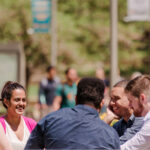
 UMBC Senior Karina Martinez
Last July, UMBC senior Karina Martinez’s world crashed down around her when an auto accident left her with two broken arms and a totaled car.
In a matter of moments, reality set in. Surgery and recovery would take at least three weeks. And even after that, without a car, she couldn’t get to school or her part-time server job, much less the required field placement she needed to complete to graduate. Her manager gave her a less physically-taxing hostess position, but losing a month’s work and switching from tip wages to hourly left Martinez in a real bind.
“I had bills I had to pay, I had a balance with UMBC on a summer course I took that summer, and I was looking to see if I could somehow buy a car for my commutes,” says Martinez, a social work and psychology major set to graduate from UMBC’s Shady Grove campus this spring.
“I thought about dropping some classes so I could work more to be able to pay off my UMBC balance but then my sister told me I should look into seeing if UMBC has an emergency fund for students.”
Addressing Emergency Needs
UMBC’s Stay Black and Gold Emergency Fund is an initiative of the Student Government Association that provides emergency funding in awards ranging from $1,000 to $8,000 depending on needs arising from unexpected crises ranging from accidents to house fires, deaths of parents, loss of jobs and other sudden losses of income that could prevent the continuation of classes.
In the past year, five students have received funding, but as the world confronts the COVID-19 pandemic, this fund will become even more important for student success, explains Vice President for Institutional Advancement Greg Simmons, M.P.P. ’04, public policy.
“The Stay Black and Gold Emergency Fund acknowledges that sometimes we are faced with circumstances we could not have predicted and we need help from others,” he says. “Donors who give to this fund are committed to helping us do all we can to help students finish their degrees in the face of challenges they hadn’t expected, and in some cases hadn’t even imagined could be true.”
Last week, longtime UMBC supporters George and Betsy Sherman made a pledge of $25,000 to reinforce the fund, and other individual donations have been coming in steadily, including gifts from more than 40 new donors since a call went out for help yesterday.
Supporters have also been making donations to support UMBC’s Retriever Essentials Food Pantry, which offers dry goods and toiletries to students with those ongoing needs. Going forward, both of these funds will be crucial in helping UMBC students affected by the COVID-19 crisis. Like many universities across the country creating similar support systems for their students, UMBC will continue to try to grow its resources to respond to its community’s needs.
A Much-Needed Helping Hand
“When the committee approved me for the scholarship it was a relief off my shoulders knowing that I would not have to drop my classes in order to work more to pay off my balance and that most importantly that I would be able to graduate this year,” said Martinez, who has been accepted into the University of Maryland Baltimore’s advanced standing master’s of social work program in the fall.
As someone who hopes to eventually work in child welfare, she keenly appreciates what it means to be on the other end of the helping hand.
“Unfortunately, sometimes unexpected things happen not to just students but, to people in general, so having funds like this available to them really makes a difference,” she says. “For me it was allowing me to graduate on time with my class. So, thank you so much for donating, it is much appreciated.”
Support UMBC’s Stay Black and Gold Emergency Fund here.
]]>
UMBC Senior Karina Martinez Last July, UMBC senior Karina Martinez’s world crashed down around her when an auto accident left her with two broken arms and a totaled car. In a matter of moments,...
https://umbc.edu/stories/emergency-funds-help-umbc-students-stay-black-and-gold/
https://my3.my.umbc.edu/api/v0/pixel/news/119926/guest@my.umbc.edu/5b53e289eaaaa7efda577256808bb10a/api/pixel
giving
impact
resilience
spring-2020
UMBC News & Magazine
https://my3.my.umbc.edu/groups/umbc-news-magazine
https://assets1-my.umbc.edu/system/shared/avatars/groups/000/001/943/24435aa6207c452e7bc15cc74b42c7bb/xsmall.png?1748556657
https://assets1-my.umbc.edu/system/shared/avatars/groups/000/001/943/24435aa6207c452e7bc15cc74b42c7bb/original.png?1748556657
https://assets2-my.umbc.edu/system/shared/avatars/groups/000/001/943/24435aa6207c452e7bc15cc74b42c7bb/xxlarge.png?1748556657
https://assets2-my.umbc.edu/system/shared/avatars/groups/000/001/943/24435aa6207c452e7bc15cc74b42c7bb/xlarge.png?1748556657
https://assets3-my.umbc.edu/system/shared/avatars/groups/000/001/943/24435aa6207c452e7bc15cc74b42c7bb/large.png?1748556657
https://assets1-my.umbc.edu/system/shared/avatars/groups/000/001/943/24435aa6207c452e7bc15cc74b42c7bb/medium.png?1748556657
https://assets2-my.umbc.edu/system/shared/avatars/groups/000/001/943/24435aa6207c452e7bc15cc74b42c7bb/small.png?1748556657
https://assets1-my.umbc.edu/system/shared/avatars/groups/000/001/943/24435aa6207c452e7bc15cc74b42c7bb/xsmall.png?1748556657
https://assets2-my.umbc.edu/system/shared/avatars/groups/000/001/943/24435aa6207c452e7bc15cc74b42c7bb/xxsmall.png?1748556657
UMBC News & Magazine
0
0
false
Fri, 03 Apr 2020 18:32:19 -0400
Chronicling history’s unsung heroes – Kristina Gaddy ’09
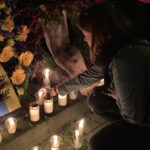
Venturing into a Gestapo interrogation cell is not the way many people would choose to do research.
Nevertheless, Kristina R. Gaddy ’09, history and modern languages and linguistics, felt it was crucial to the process of writing her first book, Flowers in the Gutter. The book tells the true account of the Edelweiss Pirates, German teenagers who resisted the Nazi regime with acts from playing forbidden music to disseminating anti-Nazi flyers.
The kind of stories we need
 “There’s a lot of dystopian fiction out there of kids living in an awful world and trying to resist and I always imagine this is the real-life story of kids living in dystopia. What would you actually be doing?” says Gaddy.
Sadly, these stories often ended up in interrogation cells like the preserved one Gaddy visited in Cologne, Germany. “It was really important for me to go to those spaces and experience them as they would have experienced them,” says Gaddy. She also used the trip to dive deep into archives from the time, all in German. It was a chilling and often depressing experience, she says, but it was also part of understanding the pirates’ little-known movement.
While “there’s been so much written about World War II,” Gaddy says that “there are still things that are needed to be written.” Many people know about the White Rose resistance movement, she says, but much of Edelweiss Pirates’ story has remained untold. “We think it’s just natural that you do something heroic and people are going to just say that it’s wonderful [but] that’s not the reality,” she says.
In documenting the teens’ rebellious acts, Gaddy also highlights just how relatable they are. They wore strange clothes and played their own kind of music and had an irreverence that Gaddy says she found appealing.
“It just felt like alright, this is so compelling, this is the kind of stories that we need,” says Gaddy.
Honing her skills
 Figuring out how to tell those stories was a process that started at UMBC. Gaddy graduated in 2009 with degrees in history and modern languages and linguistics before going on to an MFA degree from Goucher College in creative nonfiction writing. Her work has been published in a variety of places including The Washington Post, The Baltimore Sun, Bitch Magazine, and for her first paid publication, UMBC Magazine.
“The type of writing I am interested in doing wouldn’t be possible without the background in history at UMBC,” says Gaddy. “All the research, that’s 100% something I learned to do at UMBC, in terms of writing research papers, getting primary sources, and going in the archives.” All her primary sources being in German called for language skills she honed during her undergraduate years both at UMBC and during a semester abroad in Berlin.
To look critically at history, Gaddy found she also needed to recall her lessons in historiography, or the study of why and how historical stories are told. She says that UMBC history professors Denise Meringolo and Kate Brown helped her ask the questions of “how do we remember this? What is it we are looking at and how is it that different people experience that differently or the same? If we’re then presenting what we know about it, how are we changing the perception as we’re doing that?”
Meringolo says Gaddy distinguished herself early on as a student through her talents in writing and her creative thinking.
“I fully expected that Kristina would pursue a career as a public historian after graduation,” says Meringolo. “Arguably, by becoming a writer of creative non-fiction, she is working as a public historian. Her book tells a true story, and she has worked to identify its most provocative and meaningful core. She has also thought carefully about her intended audience, seeking to understand what they care about and how this story might help transform the ‘foreign country’ of the past into a familiar and meaningful landscape. I am proud of her and I am enormously proud to have played a small role in her life.”
“This is real life”
Gaddy’s book is coming at a time when these questions are more relevant than ever. In fact, she started to work on it during the summer of 2016, when “it felt incredibly timely in terms of political climate and what’s going on. As I was working on it, it was almost like it can’t get any timelier, but it kept getting timelier.”
Her target audience of today’s young adults includes everyone from those protesting in the streets to those who are using racial epithets. She hopes that teachers might use her book in their classes.
“I really feel strongly about non-fiction that it’s a really compelling way to tell stories – this is not a fantasy, this is real life, this is what really happened,” she says. “I hope people feel a little bit inspired by what these kids did and what kind of lessons we can take from their actions and put it into our lives.”
by Karen Stysley
* * * * *
Header image: Gaddy places a candle at the memorial to the Edelweiss Pirates, November 2019.
]]>
Venturing into a Gestapo interrogation cell is not the way many people would choose to do research. Nevertheless, Kristina R. Gaddy ’09, history and modern languages and linguistics, felt it...
https://umbc.edu/stories/chronicling-historys-unsung-heroes-kristina-gaddy-09/
https://my3.my.umbc.edu/api/v0/pixel/news/119941/guest@my.umbc.edu/e59659de33ef265a77a787506a166f55/api/pixel
alumni
alumni-profile
cahss
history
mlli
spring-2020
UMBC News & Magazine
https://my3.my.umbc.edu/groups/umbc-news-magazine
https://assets1-my.umbc.edu/system/shared/avatars/groups/000/001/943/24435aa6207c452e7bc15cc74b42c7bb/xsmall.png?1748556657
https://assets1-my.umbc.edu/system/shared/avatars/groups/000/001/943/24435aa6207c452e7bc15cc74b42c7bb/original.png?1748556657
https://assets2-my.umbc.edu/system/shared/avatars/groups/000/001/943/24435aa6207c452e7bc15cc74b42c7bb/xxlarge.png?1748556657
https://assets2-my.umbc.edu/system/shared/avatars/groups/000/001/943/24435aa6207c452e7bc15cc74b42c7bb/xlarge.png?1748556657
https://assets3-my.umbc.edu/system/shared/avatars/groups/000/001/943/24435aa6207c452e7bc15cc74b42c7bb/large.png?1748556657
https://assets1-my.umbc.edu/system/shared/avatars/groups/000/001/943/24435aa6207c452e7bc15cc74b42c7bb/medium.png?1748556657
https://assets2-my.umbc.edu/system/shared/avatars/groups/000/001/943/24435aa6207c452e7bc15cc74b42c7bb/small.png?1748556657
https://assets1-my.umbc.edu/system/shared/avatars/groups/000/001/943/24435aa6207c452e7bc15cc74b42c7bb/xsmall.png?1748556657
https://assets2-my.umbc.edu/system/shared/avatars/groups/000/001/943/24435aa6207c452e7bc15cc74b42c7bb/xxsmall.png?1748556657
UMBC News & Magazine
0
0
false
Thu, 05 Mar 2020 14:00:32 -0500
Sharing a Love of Green Chemistry – Ram Mohan, Ph.D. ’92
According to recent statistics, approximately 6,000 people in the United States apply for Fulbright awards yearly. Fewer than 800 are awarded and rarely does one person win two.
Nevertheless, Ram Mohan, who received his Ph.D. from UMBC in 1992, was awarded a Fulbright Teacher-Scholar Grant in 2012, and a second Fulbright Teacher-Scholar Grant in 2020 to teach Green Chemistry in India, where he was born and raised, before moving to Baltimore at the age of 21 to attend UMBC.
Now a professor of chemistry at Illinois Wesleyan University, Mohan fondly remembers the people who inspired him as a student at UMBC.
Finding a Research Family at UMBC
Mohan graduated with honors in chemistry from a Hansraj College in New Delhi, and, like many of his friends, he says, wanted to pursue higher education in the United States. His interests were in organic chemistry but he really wanted to focus on the relationship between the environment and cancer. The incidence of cancer, often caused by environmental pollution, is increasing worldwide, especially in India.
Through his research, in the 1980s, Mohan discovered that the work of UMBC’s Dale Whalen, now professor emeritus of chemistry, matched his own interests. “Simply put,” he relates, “I would not be where I [am] professionally without the kind and caring faculty at UMBC,” adding, “from the day I arrived, [Professor Whalen] took me under his wing . . . whether taking me to the Social Security office or showing me lab techniques.”
“The faculty at UMBC,” explains Mohan, “not only did cutting-edge research, but its members also cared about the success of each and every student.” Whalen was not the only UMBC professor he remembers fondly. He also mentions Professors Creighton, Hosmane and Pollack. In fact, Mohan says, the entire Chemistry Department “hung out together,” including the staff, Anne Geffert, Patty Gagne, and Audrey Mahoney. He stays in touch with many of them.
After graduating from UMBC, Mohan pursued postdoctoral work at the University of Illinois Urbana Champaign. He began his teaching career in 1994 as a visiting professor at Coker College in Hartsville, South Carolina. After two years, he moved back to Central Illinois as an Assistant Professor at Illinois Wesleyan University (IWU), a small selective liberal arts college, where he remains today. Again, Mohan claims his current passion for teaching stems from being a teaching assistant at UMBC for many semesters.
 Mohan (center back) with students at a workshop conducted at Shantou University, China.
Raising Awareness
His research is inspired by green chemistry—principles and application—and he has traveled to Hong Kong, Malaysia, China and throughout India, lecturing and conducting workshops, which is what he now is doing in India as a Fulbright-Nehru scholar.
He is especially passionate about taking green chemistry to small, undergraduate colleges in rural areas where most students come from a farming background. “Raising awareness for environmental problems in such areas,” he explains, “will help to solve India’s overall environmental problems.”
For example, a typical workshop consists of 10 lectures on various green chemistry topics and includes interesting case studies that highlight environmental problems and solutions, using green chemistry concepts.
Mohan also has introduced green chemistry into the curriculum at Illinois Wesleyan University and made significant strides in “greening” organic chemistry laboratory experiments. His course at IWU especially highlights environmental problems in the United States. Undergraduate students at IWU take this enthusiasm for green chemistry on to graduate school and beyond into their professional careers.
Giving Back
Green chemistry, or sustainable chemistry, is the design of chemical processes and products that use nontoxic chemicals. The goal of green chemistry is to minimize the impact of chemicals on human health and the environment.
What Mohan finds especially rewarding is “the chance to give back to [his] country of birth while representing the United States as a cultural ambassador.”
Although Mohan enjoys his work—both teaching and research—at Illinois Wesleyan, and he likes to travel by train between Bloomington and Chicago, he says that even after 28 years he still misses UMBC. “Maryland and Baltimore always will remain my first home in America,” he says proudly.
– By Lynne Agress
* * * * *
Header Image: Ram Mohan (second from right) and his Illinois Wesleyan University undergraduate students at The Great Lakes Regional Meeting (May 2019, Lisle, IL).
]]>
According to recent statistics, approximately 6,000 people in the United States apply for Fulbright awards yearly. Fewer than 800 are awarded and rarely does one person win two. Nevertheless,...
https://umbc.edu/stories/sharing-a-love-of-green-chemistry-ram-mohan-ph-d-92/
https://my3.my.umbc.edu/api/v0/pixel/news/119948/guest@my.umbc.edu/db24544806a9e5e11c29462706906ee1/api/pixel
alumni
alumni-profile
chemistry
cnms
graduateschool
spring-2020
UMBC News & Magazine
https://my3.my.umbc.edu/groups/umbc-news-magazine
https://assets1-my.umbc.edu/system/shared/avatars/groups/000/001/943/24435aa6207c452e7bc15cc74b42c7bb/xsmall.png?1748556657
https://assets1-my.umbc.edu/system/shared/avatars/groups/000/001/943/24435aa6207c452e7bc15cc74b42c7bb/original.png?1748556657
https://assets2-my.umbc.edu/system/shared/avatars/groups/000/001/943/24435aa6207c452e7bc15cc74b42c7bb/xxlarge.png?1748556657
https://assets2-my.umbc.edu/system/shared/avatars/groups/000/001/943/24435aa6207c452e7bc15cc74b42c7bb/xlarge.png?1748556657
https://assets3-my.umbc.edu/system/shared/avatars/groups/000/001/943/24435aa6207c452e7bc15cc74b42c7bb/large.png?1748556657
https://assets1-my.umbc.edu/system/shared/avatars/groups/000/001/943/24435aa6207c452e7bc15cc74b42c7bb/medium.png?1748556657
https://assets2-my.umbc.edu/system/shared/avatars/groups/000/001/943/24435aa6207c452e7bc15cc74b42c7bb/small.png?1748556657
https://assets1-my.umbc.edu/system/shared/avatars/groups/000/001/943/24435aa6207c452e7bc15cc74b42c7bb/xsmall.png?1748556657
https://assets2-my.umbc.edu/system/shared/avatars/groups/000/001/943/24435aa6207c452e7bc15cc74b42c7bb/xxsmall.png?1748556657
UMBC News & Magazine
0
0
false
Mon, 24 Feb 2020 14:28:01 -0500
Who Cares for the Caregivers?

Sarah Christa Butts ’07, social work, is used to battling society’s biggest problems, from ending homelessness to stopping family violence.
Now, the licensed master social worker is taking her advocacy straight to the top of the policymaking world on Capitol Hill. Her next-level challenge? Making sure that professionals working to protect society’s most vulnerable populations are themselves adequately protected.
“I’ve always been driven by social work values,” says Butts, Director of Public Policy for the National Association of Social Workers, for whom the work is incredibly personal. “We’re advocating for the needs of our clients and the social workers serving those clients.”
Education and Advocacy
In her new role, she educates and advocates among members of Congress and their staffs, federal agency officials, lobbyists, and political candidates, working to advance the goals of the world’s largest organization of social workers.
Her issue portfolio includes pay equity and adequate compensation for social workers and access to mental health and behavioral health care services, including substance use disorder treatment and workplace safety.
“UMBC has a special commitment to support
students like me and I am grateful.”
– Sarah Butts
For example, the “Protecting Social Workers and Health Professionals from Workplace Violence Act,” a recently introduced bipartisan bill, would direct federal grants to states to improve facility safety, provide safety training to staff, and purchase safety equipment for social workers and health professionals.
“Sometimes clients are in crisis. We are a lot like first responders,” says Butts. “Social workers work in a number of settings, including visiting clients in their homes. Unfortunately, we are disproportionately the victims of violence. Some social workers have died on the job, but this risk doesn’t stop us in our mission to help others.”
Butts also works to reduce student loans for social workers, who are required to have a high level of education but who are among the lowest-paid professionals in the workforce.
All of these issues address “what attracts and retains social workers,” says Robyn Golden, Associate Vice President of Population Health and Aging at Rush University Medical Center in Chicago. “More hard-to-reach populations will be better served as a result.”
Making Her Mark
Golden has worked with Butts on policy issues such as Medicare beneficiary’s access to social work services, and describes her as “a critical thinker and strategist.” “She balances her clinical knowledge with policy, and listens so well to both the client and constituent voice,” Golden says.
Social work students often follow one of two paths: policy work or clinical practice. Even as an undergraduate, Butts chose both.
“I was interested in the large systemic issues—managing the policy implications—but also in one-on-one practice,” she says.
As part of UMBC’s Title IV-E Education for Public Child Welfare Program, a collaboration with the Maryland Department of Human Resources to prepare social work students for public child welfare practice, Butts spent a year as a caseworker, providing services and going to court with children who had been removed from their homes.
Life’s Work
After receiving her bachelor’s of social work from UMBC, Butts earned a master’s of social work from the University of Maryland, Baltimore, and she is now pursuing a Ph.D. in public policy at UMBC.
“I’ve had such a great experience at UMBC. Grit and Greatness… I see myself in that slogan,” says Butts, who was a Pell Grant recipient. “I identify with being resilient, persistent, passionate about my work and striving for excellence and impact. I had to overcome a lot of complicated life circumstances, including losing my dad at nine years old, my mom’s substance use disorder and returning to college with a young daughter… UMBC has a special commitment to support students like me and I am grateful.”
Butts has held roles in state and local government, as well as nonprofits, including positions in Maryland’s Department of Human Services, Social Services Administration and the Family League of Baltimore. Prior to joining NASW, Butts served as the first executive director of the Grand Challenges for Social Work, a national initiative to collaborate on 12 of the United States’ most deep-rooted and pressing social problems. She’s also the founding administrator of the American Academy of Social Work and Social Welfare, an honorific society for the profession.
“She has always been able to make the connection between what social workers do, for who, and for how long with the larger policies,” says Carolyn Tice, Associate Dean and Professor in the School of Social Work. “She’s absolutely committed to equity and social justice and that permeates her work.”
– Laura Cech
]]>
Sarah Christa Butts ’07, social work, is used to battling society’s biggest problems, from ending homelessness to stopping family violence. Now, the licensed master social worker is taking her...
https://umbc.edu/stories/who-cares-for-the-caregivers/
https://my3.my.umbc.edu/api/v0/pixel/news/119955/guest@my.umbc.edu/fb74b71fb923b751dbf849c9ac5fc881/api/pixel
alumni
alumni-profile
cahss
graduateschool
publicpolicy
social-work
spring-2020
UMBC News & Magazine
https://my3.my.umbc.edu/groups/umbc-news-magazine
https://assets1-my.umbc.edu/system/shared/avatars/groups/000/001/943/24435aa6207c452e7bc15cc74b42c7bb/xsmall.png?1748556657
https://assets1-my.umbc.edu/system/shared/avatars/groups/000/001/943/24435aa6207c452e7bc15cc74b42c7bb/original.png?1748556657
https://assets2-my.umbc.edu/system/shared/avatars/groups/000/001/943/24435aa6207c452e7bc15cc74b42c7bb/xxlarge.png?1748556657
https://assets2-my.umbc.edu/system/shared/avatars/groups/000/001/943/24435aa6207c452e7bc15cc74b42c7bb/xlarge.png?1748556657
https://assets3-my.umbc.edu/system/shared/avatars/groups/000/001/943/24435aa6207c452e7bc15cc74b42c7bb/large.png?1748556657
https://assets1-my.umbc.edu/system/shared/avatars/groups/000/001/943/24435aa6207c452e7bc15cc74b42c7bb/medium.png?1748556657
https://assets2-my.umbc.edu/system/shared/avatars/groups/000/001/943/24435aa6207c452e7bc15cc74b42c7bb/small.png?1748556657
https://assets1-my.umbc.edu/system/shared/avatars/groups/000/001/943/24435aa6207c452e7bc15cc74b42c7bb/xsmall.png?1748556657
https://assets2-my.umbc.edu/system/shared/avatars/groups/000/001/943/24435aa6207c452e7bc15cc74b42c7bb/xxsmall.png?1748556657
UMBC News & Magazine
0
0
false
Tue, 11 Feb 2020 00:31:24 -0500


