UMBC’s Danyelle Ireland is named a national Rising Star as champion for transfer students

The National Institute for the Study of Transfer Students has named UMBC’s Danyelle Tauryce Ireland a 2021 Transfer Champion Rising Star. The award honors her years mentoring and advocating for UMBC transfer students in information technology and engineering fields.
Ireland is associate director of the Center for Women in Technology (CWIT). She is also a research assistant professor in the Engineering and Computing Education Program within UMBC’s College of Engineering and Information Technology (COEIT).
“My professional background has been in K-12 education and some of my first experiences supporting students in higher education have been with the Transfer Scholars in IT and Engineering (T-SITE) program at UMBC,” says Ireland. “I identify as an educational scholar-practitioner, so to be recognized for my impact in service of students, and to have a former T-SITE Scholar contribute to the nomination process, was especially validating.”
 Danyelle Ireland
Partnership to support students
Ireland arrived at UMBC in 2016 with a Ph.D. in educational psychology from Howard University, having focused her research on the achievement motivation and retention of Black undergraduate women in computing fields. At UMBC, she began working on a new five-year National Science Foundation grant to examine pathways for computing and engineering students who transferred to UMBC from other institutions.
This was her first opportunity to work specifically on the needs and experiences of transfer students, grounded in her expertise on computing and engineering education, culturally responsive pedagogy, academic motivation, and social identity.
“The grant proposal was led by my predecessor, Susan Martin, but was awarded after she left UMBC and began the same day I started in the role, so I got to make this project my own,” Ireland says.
Ireland led the integration and implementation of two nationally validated survey instruments, examining pre- and post-transfer student success. She also worked with campus partners to establish transfer-focused interventions in COEIT.
 Danyelle Ireland (second from right) with CWIT students in February 2020.
“I quickly learned a tremendous amount about the institutional structures that facilitate successful student supports. I also learned the benefit of good relationships with colleagues to carry out this important work,” she says.
Ireland collaborated closely with six area community colleges and the team was granted an additional year to implement their findings at UMBC. Always focused on the student experience, she is particularly eager to institutionalize UMBC’s enhanced academic advising approach for COEIT transfer students. She has also explored how COVID-19 has impacted faculty and staff participants in the transfer learning community.
Visibility for the work
In a time full of challenges, Ireland says, “Receiving this award this year was a nice boost to my morale and motivation in my role.” In addition to honoring her work, the award brings greater visibility to UMBC’s transfer student population and to how the university can most effectively support their success.
“I’m really excited about how we can leverage all of the lessons and experiences gained through CWIT’s work around transfer success in computing and engineering,” says Ireland. “The response from colleagues and partners committed to supporting UMBC transfer students has been so encouraging.”
Featured image: Danyelle Ireland, associate director of CWIT and research assistant professor, with CWIT students. All photos by Marlayna Demond ’11 for UMBC, February 2020.
]]>
The National Institute for the Study of Transfer Students has named UMBC’s Danyelle Tauryce Ireland a 2021 Transfer Champion Rising Star. The award honors her years mentoring and advocating for...
https://umbc.edu/stories/umbcs-danyelle-ireland-is-named-a-national-rising-star-as-champion-for-transfer-students/
https://my3.my.umbc.edu/api/v0/pixel/news/119699/guest@my.umbc.edu/64f1e97bf8deba8089b2e36dbb58da6a/api/pixel
coeit
community
cwit
page1
research
science-and-technology
UMBC News & Magazine
https://my3.my.umbc.edu/groups/umbc-news-magazine
https://assets1-my.umbc.edu/system/shared/avatars/groups/000/001/943/24435aa6207c452e7bc15cc74b42c7bb/xsmall.png?1748556657
https://assets1-my.umbc.edu/system/shared/avatars/groups/000/001/943/24435aa6207c452e7bc15cc74b42c7bb/original.png?1748556657
https://assets2-my.umbc.edu/system/shared/avatars/groups/000/001/943/24435aa6207c452e7bc15cc74b42c7bb/xxlarge.png?1748556657
https://assets2-my.umbc.edu/system/shared/avatars/groups/000/001/943/24435aa6207c452e7bc15cc74b42c7bb/xlarge.png?1748556657
https://assets3-my.umbc.edu/system/shared/avatars/groups/000/001/943/24435aa6207c452e7bc15cc74b42c7bb/large.png?1748556657
https://assets1-my.umbc.edu/system/shared/avatars/groups/000/001/943/24435aa6207c452e7bc15cc74b42c7bb/medium.png?1748556657
https://assets2-my.umbc.edu/system/shared/avatars/groups/000/001/943/24435aa6207c452e7bc15cc74b42c7bb/small.png?1748556657
https://assets1-my.umbc.edu/system/shared/avatars/groups/000/001/943/24435aa6207c452e7bc15cc74b42c7bb/xsmall.png?1748556657
https://assets2-my.umbc.edu/system/shared/avatars/groups/000/001/943/24435aa6207c452e7bc15cc74b42c7bb/xxsmall.png?1748556657
UMBC News & Magazine
0
0
false
Wed, 20 Jan 2021 16:45:59 -0500
CWIT Scholar Sammie Maygers ’20 finds, and builds, a community of support at UMBC

When her courses moved online in mid-March due to the coronavirus pandemic, Sammie Maygers ‘20, chemical engineering, knew staying connected with her UMBC community would need to be a top priority. In some ways, her experience changed substantially. But it was also a continuation of the same UMBC journey, powered by community support.
When Maygers was looking at colleges, she knew that UMBC was the place for her as soon as she heard about the Center for Women in Technology (CWIT) from a high school classmate. When she visited campus, she says that it instantly felt like a family. “UMBC feels like home,” she says. “It’s inclusive.”
 Sammie Maygers, fourth from left in front row, with her fellow CWIT scholars. Photo courtesy of CWIT.
CWIT appealed to Maygers because it meant having a network of peers to work with and rely on. Her connections with new friends and mentors started the summer before her freshman year and continue as she heads toward graduation.
“One thing that CWIT does that is really fantastic is they send you on a retreat before the school year starts, with all of the new scholars,” she explains. “So when you move in, you’ve pretty much met all of the people who live on your floor. Even once people got busy, we were always doing work together and I had people who I could really trust.”
Growing as a leader
Working to build and strengthen this community are dedicated CWIT staff. Maygers shares that Erica D’Eramo, assistant director for the CWIT Scholars Program, has been especially impactful on her UMBC experience, including helping her grow and develop as a leader.
“Sammie has an enthusiasm and passion that is contagious,” says D’Eramo. “She has been a mentor to many students—as a ‘Big Wit’ peer mentor in CWIT, and in her Frisbee family, too. So many times I have heard students tell me how amazing it has been to have Sammie as a guide and, more importantly, as a close friend they can rely on.”
 Sammie Maygers, fifth from right, with fellow CWIT Scholars, and Erica D’Eramo, left, at the Society of Women Engineers Conference in 2019. Photo courtesy of CWIT.
Each incoming CWIT scholar is paired with an older student who is also a part of the program. As students move through the program, they become mentors to incoming scholars. Now a graduating senior, Maygers now has a “family” of younger scholars as well as alumni, and they connect regularly.
To sustain and grow these relationships during the pandemic, Maygers says that it is more important than ever to connect with her CWIT community outside of online classes. She intentionally sets aside time to virtually hang out with her mentees, friends, Chem-E-Car teammates, and classmates, including game nights.
Community through student orgs
The format of her classes this semester is helping Maygers stay connected during this difficult time. Most of her current courses are presentation-based. She and her classmates had previously been meeting virtually to develop their presentations, so that work has held steady.
Other changes have been harder to adjust to. Maygers is a member of UMBC’s Chem-E-Car team, which builds and races vehicles powered by precise chemical reactions. The team was heading to a regional competition at Virginia Tech this month, but that’s no longer happening.
“I’ve put a year and a half of work into the Chem-E-Car team, and I’ll never see it through,” Maygers says. She finds herself “mourning the things I was expecting to come.”
 Sammie Maygers, left, playing ultimate frisbee. Photo courtesy of Maygers.
Another activity that has proven challenging for Maygers to carry on with is ultimate frisbee, but her close connections to teammates remain strong. In high school, she was a three-sport athlete, and it was important to her to find a way to stay active in college. Soon after arriving at UMBC, she learned about the ultimate frisbee club team from an older student in CWIT. Although practices are cancelled, UMBC’s ultimate frisbee team has held informal virtual meetups every week.
Virtual connections
Intentionally maintaining all these connections has helped Maygers stay centered and motivated. One day that could be an online coffee with a friend. Another day it could be an online board meeting of the American Institute of Chemical Engineers, UMBC chapter.
 Sammie Maygers, center, with members of the Chem-E-Car team. Maygers holds the team’s first prototype at the 2019 COEIT Celebration. Photo courtesy of Maygers.
Maygers is also continuing her work as a teaching fellow in Mark Marten’s chemical engineering kinetics course. “Being a teaching fellow has given me the opportunity to support students academically and personally. The course load of a student taking this level of chemical engineering courses can really be overwhelming, and I love helping students realize that making mistakes and failing helps them grow as an engineer.”
Maygers has conducted research alongside Marten, professor and chair of chemical, biochemical, and environmental engineering, since fall 2016. One of the most powerful lessons she’s learned from working with him is to be unafraid of learning new skills and making mistakes. This is one of the core messages she works to pass along to both students in the course and younger CWIT scholars.
Thoughtful engineering solutions
Maygers now has her eye on her steps after graduation, and who will be walking those steps with her. She will have a unique opportunity to continue working closely with friends from UMBC after she graduates this spring.
As she has moved through the chemical engineering program, Maygers has become passionate about developing thoughtful engineering solutions. For her, this means solutions that are environmentally conscious and energy efficient. She looks forward to pursuing this passion as an engineer at the Naval Surface Warfare Center (NSWC) near Bethesda, Maryland.
 Sammie Maygers, center, after a networking evening with her CWIT LittleWit Courtney Cavin ’21, chemical engineering, and Cavin’s LittleWit Catherine Wraback ’23, chemical engineering. Photo courtesy of Maygers.
She and classmates Laina Colony ‘20, chemical engineering, and Zach Voelkel ‘20, mechanical engineering, learned about opportunities at the NSWC through a trip organized by UMBC’s Career Center. Not only were they all offered positions at the NSWC, but Colony and Maygers will have a chance to work together on the same team and be roommates, along with Voelkel.
A community of support welcomed Maygers to UMBC before she started classes freshman year. She thoughtfully grew that community during her time as a Retriever. Now, she’ll carry it with her to the next stage of her life and career.
Banner image: Sammie Maygers, right, with her roommates on campus. Photo courtesy of Maygers.
]]>
When her courses moved online in mid-March due to the coronavirus pandemic, Sammie Maygers ‘20, chemical engineering, knew staying connected with her UMBC community would need to be a top...
https://umbc.edu/stories/cwit-scholar-sammie-maygers-20-finds-and-builds-a-community-of-support-at-umbc/
https://my3.my.umbc.edu/api/v0/pixel/news/119918/guest@my.umbc.edu/e18b3b84244822a02c525caa2a28b954/api/pixel
cbee
classof2020
coeit
community
cwit
science-and-technology
UMBC News & Magazine
https://my3.my.umbc.edu/groups/umbc-news-magazine
https://assets1-my.umbc.edu/system/shared/avatars/groups/000/001/943/24435aa6207c452e7bc15cc74b42c7bb/xsmall.png?1748556657
https://assets1-my.umbc.edu/system/shared/avatars/groups/000/001/943/24435aa6207c452e7bc15cc74b42c7bb/original.png?1748556657
https://assets2-my.umbc.edu/system/shared/avatars/groups/000/001/943/24435aa6207c452e7bc15cc74b42c7bb/xxlarge.png?1748556657
https://assets2-my.umbc.edu/system/shared/avatars/groups/000/001/943/24435aa6207c452e7bc15cc74b42c7bb/xlarge.png?1748556657
https://assets3-my.umbc.edu/system/shared/avatars/groups/000/001/943/24435aa6207c452e7bc15cc74b42c7bb/large.png?1748556657
https://assets1-my.umbc.edu/system/shared/avatars/groups/000/001/943/24435aa6207c452e7bc15cc74b42c7bb/medium.png?1748556657
https://assets2-my.umbc.edu/system/shared/avatars/groups/000/001/943/24435aa6207c452e7bc15cc74b42c7bb/small.png?1748556657
https://assets1-my.umbc.edu/system/shared/avatars/groups/000/001/943/24435aa6207c452e7bc15cc74b42c7bb/xsmall.png?1748556657
https://assets2-my.umbc.edu/system/shared/avatars/groups/000/001/943/24435aa6207c452e7bc15cc74b42c7bb/xxsmall.png?1748556657
UMBC News & Magazine
0
0
false
Wed, 15 Apr 2020 12:08:17 -0400
UMBC graduates create their own paths to excellence, focused on succeeding together

Each graduating student’s path looks different. For many Retrievers, UMBC offers an opportunity to develop not just knowledge and skills, but also self-awareness that enables them to pursue personal passions. That self-awareness often means understanding what kinds of support made an impact on their experiences, and how they can lend support to those coming up behind them. Excellence for these seniors is about more than accolades; it is about succeeding together.
Supporting student-athletes’ mental health
As a volleyball player, Taylor Dunn ‘19 is very familiar with stereotypes of athletes as powerful, invulnerable, and self-assured. This media and communications studies major with minors in psychology and entrepreneurship has worked hard to help her fellow student-athletes become more comfortable discussing mental health concerns.
 Dunn on the court. Photo courtesy of Dunn.
Dunn is a co-lead in UMBC’s #RetrieverProject, a student-led mental health initiative for athletes. She helps others open up about challenges they might be facing, and shares with them how they can access support. “Athletes have many demands on them and are far away from home,” says Dunn, “Managing all those demands when you are playing regularly is hard, but when you are injured or not playing as much it can actually be a greater challenge.”
Dunn has also excelled in the classroom and on the court. This fall as she became the first player in conference history to be named America East Setter and Defensive Specialist of the Week in the same week. She also applied her communications and marketing skills to an internship working on social media campaigns for nonprofits—skills she hopes to integrate with a master’s degree in psychology that she’ll soon start at UMBC.
“I see all that is possible in helping organizations manage their communications to promote their mission and vision,” shares Dunn. “A master’s in psychology will allow me to understand the social behavior that drives communications and combine it with work similar to the #RetrieverProject.”
Bridging anthropology and genetics
Zachary Nicholas ‘19, anthropology, with a biology minor, remembers encountering genetics for the first time in his eighth-grade biology class, then learning about gene function and individual differences in high school anthropology. By the time he got to UMBC, these fledgling interests grew into a passion for human genetics—a passion he has explored through broad-ranging research.
 Zachary Nicholas. Photo courtesy of UMBC.
This past year Nicholas earned an Undergraduate Research Award and a Distinctive Undergraduate Experience and Research Award from his department for his research project “Deciphering Cultural Roles and Social Pressure on Parents of Children with Special Needs.” At the same time, he’s also completed research in the biology lab of Michelle Starz-Gaiano, where he examined cell migration in fruit flies to track development, wound healing, and disease progression.
 Nicholas at UMBC’s Undergraduate Research and Creative Achievement Day (URCAD). Photo courtesy of Nicholas.
How has he been able to bridge these varied interests? “I work two jobs,” Nicholas explains, “one as a physical therapy technician and another as a youth counselor at an organization helping young people with mental health needs.” This work helps him gain a broader sense of the experiences of people facing physical and mental health challenges, which has shaped his perspective on scientific research.
Nicholas looks forward to pursuing a Ph.D. in human genetics. For students at the start of their UMBC careers, he shares, “This is a really tight-knit community. You have to take advantage of how much professors want to help you. It makes all the difference in what you get out of college and what your next right step is.”
Academic rigor meets community impact
Shiona Wijesekara ‘19, economics, with a minor in statistics, chose UMBC for its rigor but fell in love with the university for the ways UMBC empowers students to impact communities. Wijesekara served as a mentor through the REACH initiative for two years, eventually taking on the roles of assistant director, fundraising chair, and assistant research chair.
Through REACH, she supported young women in high school who were interested in STEM careers. “Many of the young women were scared of the college-level STEM college classes,” initially, she explains. When her team focused on demystifying college STEM, and explaining some of the major concepts in accessible ways, she says, “they became more confident in what they were capable of doing.”
 Shiona Wijesekara (at left) with fellow 2018-19 UMBC France-Merrick Scholars. Photo by Raquel Hammer ’20.
Wijesekara also completed internships running data for a financial intelligence start-up in Baltimore called Ortus Academy and helping with research in education psychology at AIR. Combined, these two experiences have inspired her to pursue a career that will continue to improve the gaps in education with her knowledge in data analysis. She looks forward to supporting future students on a larger scale through quantitative education research.
“Creating a community of doers”
Arif Abdul Kareem’s path toward a career in education and tech has taken unique twists and turns. “After high school, I went to New York to work for five years. I wasn’t ready to go on to college,” shares Kareem. “I returned to Baltimore and enrolled in Baltimore City Community College and, eventually, at UMBC for its computer science engineering program.”
Part-way through his UMBC degree, Kareem took two years off to launch his business, which focuses on K-12 STEM educational technology. He returned to UMBC as a Cyber Scholar, through a program of the Center for Women in Technology that focuses on increasing the participation of women and other underrepresented groups in the cybersecurity field.
 Arif Abdul Kareem with Bianca Monge ’19, receiving CWIT honors cords. Photo courtesy of CWIT.
“UMBC helped me strengthen the foundation I came with,” says Kareem. It also “reflected my passion for a STEM-minded business whose intent, like UMBC’s CWIT, is to create access in STEM fields for as many underrepresented students in the earliest stages of education,” he shares. “This isn’t just about me, it’s about creating a community of doers.”
Banner image: UMBC volleyball team. Photo courtesy of Dunn.
]]>
Each graduating student’s path looks different. For many Retrievers, UMBC offers an opportunity to develop not just knowledge and skills, but also self-awareness that enables them to pursue...
https://umbc.edu/stories/umbc-graduates-create-their-own-paths-to-excellence-focused-on-succeeding-together/
https://my3.my.umbc.edu/api/v0/pixel/news/119984/guest@my.umbc.edu/31bb9ce76d5edebc77705b067affb01d/api/pixel
campus
class-of-2019
community
cwit
english
philosophy
politicalscience
psychology
UMBC News & Magazine
https://my3.my.umbc.edu/groups/umbc-news-magazine
https://assets1-my.umbc.edu/system/shared/avatars/groups/000/001/943/24435aa6207c452e7bc15cc74b42c7bb/xsmall.png?1748556657
https://assets1-my.umbc.edu/system/shared/avatars/groups/000/001/943/24435aa6207c452e7bc15cc74b42c7bb/original.png?1748556657
https://assets2-my.umbc.edu/system/shared/avatars/groups/000/001/943/24435aa6207c452e7bc15cc74b42c7bb/xxlarge.png?1748556657
https://assets2-my.umbc.edu/system/shared/avatars/groups/000/001/943/24435aa6207c452e7bc15cc74b42c7bb/xlarge.png?1748556657
https://assets3-my.umbc.edu/system/shared/avatars/groups/000/001/943/24435aa6207c452e7bc15cc74b42c7bb/large.png?1748556657
https://assets1-my.umbc.edu/system/shared/avatars/groups/000/001/943/24435aa6207c452e7bc15cc74b42c7bb/medium.png?1748556657
https://assets2-my.umbc.edu/system/shared/avatars/groups/000/001/943/24435aa6207c452e7bc15cc74b42c7bb/small.png?1748556657
https://assets1-my.umbc.edu/system/shared/avatars/groups/000/001/943/24435aa6207c452e7bc15cc74b42c7bb/xsmall.png?1748556657
https://assets2-my.umbc.edu/system/shared/avatars/groups/000/001/943/24435aa6207c452e7bc15cc74b42c7bb/xxsmall.png?1748556657
UMBC News & Magazine
0
0
false
Tue, 17 Dec 2019 21:16:59 -0500
UMBC students confront ethical challenges through new computing curriculum
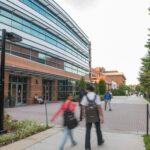
When UMBC’s Helena Mentis is teaching, her students often bring up ethical challenges in computing, and they are hungry to learn about how to address them. “We want to capitalize on this curiosity and diversity of perspectives,” says Mentis, associate dean for academic programs and learning and associate professor of information systems. “Alongside technical skill development, every week we want to introduce challenges around ethics, equality, human behavior, and societal impact, reiterating that a fundamental component of development is thinking through implications.”
Incorporating ethics into computing curriculum is crucial to ensure that today’s graduates are well prepared to address the complex challenges of the future, Mentis explains. Recently, she and colleagues in UMBC’s College of Engineering and Information Technology received funding from the Mozilla Foundation to support implementing ethics components in their courses.
Research to improve teaching
UMBC was one of 17 universities from across the country that received funding as part of Mozilla’s Responsible Computer Science Challenge. Through this project, UMBC faculty have restructured an introductory computing course, building into it regular opportunities for students to discuss ethical issues in depth. The course framework is team-based and peer-led. The faculty are also examining the efficacy of these course updates to assess student learning and continue to improve their approach.
 Helena Mentis. Photo by Marlayna Demond ’11 for UMBC.
Mentis is the principal investigator of this research. Colleagues leading other aspects of the research and implementation include Anupam Joshi, professor and chair of computer science and electrical engineering; Carolyn Seaman, associate professor of information systems, and interim director of the Center for Women in Technology; and Maria Sanchez, director of education and outreach, and professor of practice in mechanical engineering.
Facilitating conversations in the classroom
Mentis explains that discussions about ethics related to computing often occur organically between students as they work to understand their peers’ perspectives. This initiative takes those discussions to the next level, making them an integral part of the course. More broadly, it is also part of a new course structure for first-year engineering and computing students that emphasizes how technology will impact society. The goal, she explains, is “to develop the next generation of technologists who have the framework and vocabulary to address the relationships between STEM and society.”
Lecturer Mark Berczynski taught the introductory computing course this semester. Through facilitated discussions, he helped his first-year students learn to more effectively explore and evaluate the potential negative impacts of technologies.
Team-based learning focused on peer-to-peer connections also played a major role in the pilot course. “Our concept of peer-led team learning has shown that peer-to-peer engagement with material leads to better understanding, better encoding, and longer retention,” Mentis shares.
Mentis and her collaborators will assess whether their approach for teaching ethics in introductory computing is effective both in the short and longer term. They’ll compare the ethics awareness of students in the original computing course with students in the updated course. One year later, students will be asked to complete a survey about how they have applied their knowledge of ethics in other computing classes that they have taken.
Mentis also hopes this new approach will interest a broader range of students in computing fields. She suggests, “Grounding the introduction to computing within ethics and societal implications of technology design has the potential to excite and engage a more diverse student population.”
Banner image: ITE building. Photo by Marlayna Demond ’11 for UMBC.
]]>
When UMBC’s Helena Mentis is teaching, her students often bring up ethical challenges in computing, and they are hungry to learn about how to address them. “We want to capitalize on this curiosity...
https://umbc.edu/stories/umbc-students-confront-ethical-challenges-through-new-computing-curriculum/
https://my3.my.umbc.edu/api/v0/pixel/news/119988/guest@my.umbc.edu/98a1edd774cef18a25c90e9f52213b69/api/pixel
coeit
csee
cwit
is
science-and-technology
UMBC News & Magazine
https://my3.my.umbc.edu/groups/umbc-news-magazine
https://assets1-my.umbc.edu/system/shared/avatars/groups/000/001/943/24435aa6207c452e7bc15cc74b42c7bb/xsmall.png?1748556657
https://assets1-my.umbc.edu/system/shared/avatars/groups/000/001/943/24435aa6207c452e7bc15cc74b42c7bb/original.png?1748556657
https://assets2-my.umbc.edu/system/shared/avatars/groups/000/001/943/24435aa6207c452e7bc15cc74b42c7bb/xxlarge.png?1748556657
https://assets2-my.umbc.edu/system/shared/avatars/groups/000/001/943/24435aa6207c452e7bc15cc74b42c7bb/xlarge.png?1748556657
https://assets3-my.umbc.edu/system/shared/avatars/groups/000/001/943/24435aa6207c452e7bc15cc74b42c7bb/large.png?1748556657
https://assets1-my.umbc.edu/system/shared/avatars/groups/000/001/943/24435aa6207c452e7bc15cc74b42c7bb/medium.png?1748556657
https://assets2-my.umbc.edu/system/shared/avatars/groups/000/001/943/24435aa6207c452e7bc15cc74b42c7bb/small.png?1748556657
https://assets1-my.umbc.edu/system/shared/avatars/groups/000/001/943/24435aa6207c452e7bc15cc74b42c7bb/xsmall.png?1748556657
https://assets2-my.umbc.edu/system/shared/avatars/groups/000/001/943/24435aa6207c452e7bc15cc74b42c7bb/xxsmall.png?1748556657
UMBC News & Magazine
0
0
false
Tue, 17 Dec 2019 17:08:45 -0500
“Appreciate the differences”: How study abroad shaped four UMBC student experiences

Many students come to UMBC with the goal of leaving the familiar behind to take on new challenges and gain a fresh perspective. Once they’re on campus, that’s also what inspires some Retrievers to explore international learning opportunities.
Balancing course requirements, activities, research, and other responsibilities, while also pursuing study abroad, can prove challenging. But for these four UMBC students earning undergraduate degrees this month, it’s also been transformative.
Building self-confidence for any situation
When Aliyah Smith ’19, mechanical engineering, started at UMBC as a Meyerhoff Scholar in 2015, she knew right away that she wanted to study abroad in her first year. She was also worried that it would be a challenge to graduate on time in an engineering major if she pursued study abroad, so she took a very strategic approach: an international summer internship. It worked out seamlessly, with Smith enjoying a nine-week mechanical engineering internship at the University of Oxford. That summer also left her with an intense travel bug.
Smith became determined to find a semester-long study abroad opportunity that could fit her degree plan, and that could immerse her in a culture different from others she had experienced before. She spent the spring 2018 semester studying at American University of Sharjah, in the United Arab Emirates. With help from her department and UMBC’s Education Abroad Office, she coordinated her course plan to make all the pieces fit together.
 Aliyah Smith at her study abroad program’s farewell dinner in downtown Sharjah. Photo courtesy of Smith.
“As an engineering student and future engineer, I believe gaining a global perspective is imperative,” Smith says. “My goal as an engineer is to help solve the world’s problems and studying abroad has helped me view problems through a different lens.”
“Studying abroad has taught me how to connect and form relationships with people that are different from myself. It has allowed me to see the similarities and differences among cultures and more particularly, appreciate the differences,” Smith says.
 Aliyah Smith (front right) at her study abroad program’s farewell dinner in downtown Sharjah. Photo courtesy of Smith.
From a practical, professional angle, she notes, “Most research groups are comprised of engineers from around the world. It is very important that I know how to collaborate with the people in these groups.”
Smith’s international experiences have also helped her grow in ways that apply to aspects of her life beyond academics. “At eighteen, I had to figure out how to travel from country to country and problem solve on my own, forcing me to be more outgoing and self-reliant,” she shares. Through study abroad she grew her self-confidence and fine-tuned skills “that I can apply to any situation and in any job, such as interpersonal skills, diligence, and persistence.”
 Aliyah Smith working in lab at the University of Oxford. Photo courtesy of Smith.
In the fall, Smith will attend Stanford University’s Ph.D. program in aeronautics and astronautics. She also recently shared her experience as a Meyerhoff Scholar in a special segment on WYPR, Baltimore’s NPR station.
Growing international experience
As a 14 year old, Gabriela “Gabi” Salas ’19 traveled to Ecuador for a service trip and was troubled by inequalities experienced by young women in the community where she worked. That trip “solidified my commitment to service” she says. It also led her to apply to UMBC’s Sondheim Public Affairs Scholar program and to major in global studies and gender and women’s studies, to prepare her to have an impact through her career.
 Gabi Salas in UMBC’s Public Policy Building, where the Shriver Center is located. Photo by Marlayna Demond ’11 for UMBC.
On campus, Salas became actively involved with the Hispanic Latino Student Union and with the Global Brigades and Human Rights Brigade programs. An alternative spring break program with Global Brigades took her to Panama. “It did so much for me in terms of adding to my experience of working with Latin American women.” That trip also confirmed for her that working on reproductive health research and policy in relationship to Latinx women was the path she wanted to follow.
Salas earned an Undergraduate Research Award to develop a project on the use and accessibility of contraception for women students at UMBC, mentored by Amy Bhatt, associate professor of gender and women’s studies. She evaluated what contraception women at UMBC access through surveys and interviews. Her goal was to explore whether or not stratified reproduction is embedded in our society enough to impact the reproductive rights of college-aged women.
 Gabi Salas presenting at URCAD 2018. Photo by Marlayna Demond ’11 for UMBC.
Salas also had the opportunity to spend a summer researching Mexican-American women’s reproductive health with a faculty member at Columbia University. This work furthered her interest in the field and her commitment to earning a Ph.D. to pursue sociological research on reproductive health. Along the way, she says, UMBC’s Sondheim Scholars and Shriver Center communities have supported her vision and goals, and helped her pursue her passions.
Seeing global challenges from different perspectives
Emily Duan ‘19, mechanical engineering, had always been intrigued by German design and engineering and longed to experience an extended stay in a country where she did not speak the language.
The Center for Women in Technology Scholar got to do just that through the International Winter University program at the University of Kassel in 2018. During the three-week intensive study, language, and cultural immersion program, Duan completed an environmental engineering course on renewable energy sources, an intensive German language course, and lived with a host family in Kassel, Germany.
 Emily Duan in Germany in 2018. Photo courtesy of Duan.
Duan noted that she studied in Germany with students from around the world and that doing so allowed her to “view global challenges from different perspectives.” She shares, “It taught me to approach problems cautiously to avoid making erroneous assumptions, as well as appreciate the value of diversity in a group.”
Duan was especially happy to find the winter program in Kassel as she devoted her college career summers to internship experiences. She worked in automotive and energy research at Oakland University in 2016, at Baltimore Gas and Electric with the Distribution Systems Operations Support Group in 2017, and as a Robotics Institute Summer Scholar at Carnegie Mellon University in 2018.
In the fall, Duan will attend North Carolina State University’s Ph.D. program in mechanical engineering program.
Bridging multiple fields and approaches
With a double major in applied mathematics and mechanical engineering, Lucas McCullum ’19 worried that study abroad would simply be out of reach. But he wasn’t willing to give up on the dream. He had a feeling that an immersive and boundary-breaking international learning experience could have a big impact on his perspective and his sense of life and career possibilities.
McCullum found a way to fulfill this goal through Public Health in the Netherlands, an intensive international learning opportunity conducted through the Council on International Educational Exchange in Amsterdam. The course “allowed me to take a step outside my comfort zone and tackle challenges outside of my traditional academic path,” he shares. It also complemented his core research interest: using medical imaging to improve health outcomes.
As it turned out, McCullum was the only engineering student in the cohort. Although he initially felt uncertain, he says, “I used this as an opportunity to grow as a person and student.” In the end, he says, “it increased my self-confidence and sense of individuality.”
McCullum built off that experience and continued to grow his sense of confidence in collaborative problem-solving as a member of UMBC’s Kinetic Sculpture Race Team.
 McCullum and a kinetic sculpture teammate. Photo by Marlayna Demond ’11 for UMBC.
McCullum further pursued his interest in advancing medical imaging through research. He earned an Undergraduate Research Award to study the use of piezoelectric materials (which generate electrical charge in response to mechanical stress) for more cost-effective tumor screening. He has already presented this research at the 2018 conference for Smart Materials, Adaptive Structures, and Intelligent Systems (SMASIS), and it will soon be published in UMBC Review.
Mark Zupan, associate professor of mechanical engineering and a mentor of McCullum’s, sees tremendous value in his drive to explore diverse learning experiences. Zupan, a strong proponent of international learning opportunities, reflects that McCullum “has truly had an enriched experience at UMBC while completing an immensely difficult double major and actively and successfully performing multiple types of research.”
 Lucas McCullum (left) with his fellow presenters at URCAD 2019. Photo by Marlayna Demond ’11 for UMBC.
After commencement, McCullum will complete a summer internship with the National Renewable Energy Laboratory in Boulder, Colorado, where he will work with a supercomputer to simulate fluid flow around a wind turbine. Next, he will begin Stanford University’s interdisciplinary master’s program in computational and mathematical engineering, with a focus on imaging sciences.
McCullum looks forward to pursuing every new opportunity with a sense of anticipation and possibility. As he shared in 2017, when highlighted for his work as a student researcher, “I believe that when we open ourselves up to new experiences, we allow new doors to open and new lights to shine.”
Learn more about UMBC students’ international learning experiences and plans for the coming months through this feature on the fourteen UMBC students and recent alumni just selected for the Fulbright U.S. Student program—a new university record.
Featured image: Aliyah Smith visiting India during spring break while studying abroad in the UAE. Photo courtesy of Smith.
]]>
Many students come to UMBC with the goal of leaving the familiar behind to take on new challenges and gain a fresh perspective. Once they’re on campus, that’s also what inspires some Retrievers to...
https://umbc.edu/stories/appreciate-the-differences-how-study-abroad-shaped-four-umbc-student-experiences/
https://my3.my.umbc.edu/api/v0/pixel/news/120131/guest@my.umbc.edu/8fd8428cff4969fcb6c19fb57b64a327/api/pixel
cahss
class-of-2019
cnms
coeit
cwit
globalstudies
gwst
international
mathstat
meche
meyerhoffscholars
page1
sondheimscholars
UMBC News & Magazine
https://my3.my.umbc.edu/groups/umbc-news-magazine
https://assets1-my.umbc.edu/system/shared/avatars/groups/000/001/943/24435aa6207c452e7bc15cc74b42c7bb/xsmall.png?1748556657
https://assets1-my.umbc.edu/system/shared/avatars/groups/000/001/943/24435aa6207c452e7bc15cc74b42c7bb/original.png?1748556657
https://assets2-my.umbc.edu/system/shared/avatars/groups/000/001/943/24435aa6207c452e7bc15cc74b42c7bb/xxlarge.png?1748556657
https://assets2-my.umbc.edu/system/shared/avatars/groups/000/001/943/24435aa6207c452e7bc15cc74b42c7bb/xlarge.png?1748556657
https://assets3-my.umbc.edu/system/shared/avatars/groups/000/001/943/24435aa6207c452e7bc15cc74b42c7bb/large.png?1748556657
https://assets1-my.umbc.edu/system/shared/avatars/groups/000/001/943/24435aa6207c452e7bc15cc74b42c7bb/medium.png?1748556657
https://assets2-my.umbc.edu/system/shared/avatars/groups/000/001/943/24435aa6207c452e7bc15cc74b42c7bb/small.png?1748556657
https://assets1-my.umbc.edu/system/shared/avatars/groups/000/001/943/24435aa6207c452e7bc15cc74b42c7bb/xsmall.png?1748556657
https://assets2-my.umbc.edu/system/shared/avatars/groups/000/001/943/24435aa6207c452e7bc15cc74b42c7bb/xxsmall.png?1748556657
UMBC News & Magazine
0
0
false
Mon, 20 May 2019 18:25:21 -0400
Moving the Needle

With their hearts in the work and their ears to the ground, the people behind some of UMBC’s longest-standing homegrown programs are solving big societal problems. But the work is never done.
By Jenny O’Grady
On the wall of the office, in bright Retriever gold, hangs UMBC’s vision statement, a bold call to action for any and all who happen to wander past. A call to “connect innovative teaching and learning, research across disciplines, and civic engagement.” A call to “advance knowledge, economic prosperity, and social justice.” No simple task, indeed.
There’s a quote from late Baltimore civic leader Walter Sondheim, as well. Christopher Steele keeps them here as a reminder that we’re all here to serve as well as learn. It can be messy work, he says, but worth the pursuit.
“Look at our vision statement. This notion of social justice and civic engagement are clearly stated…it’s in our values,” said Steele, Vice Provost, Division of Professional Studies, and Executive Director of the Shriver Center.
Founded in 1966, during a time of great civil unrest, UMBC is rooted in a type of service-learning that cuts across disciplines and traditional social structures. And the backbone of that work is programs like those of the Shriver Center, and many others homegrown on the UMBC campus, that over the last several decades have worked to address major societal problems of their time — from inclusivity in the workplace, to social justice in our cities — in collaboration with community partners.
Time passes, and successes come hard earned, because moving the needle takes both persistence and patience. Challenges change over time, forcing student learners and their instructors to bend and re-learn as they go.
The vision statement doesn’t precisely define the “why” of it all, but that’s not necessary. The answer is woven through everything these programs do.
Leveling the Playing Field
 More than 200 CWIT Scholar Alumni are bringing new perspectives to the tech industry.
Imagine having a passion for technology or science, and the desire to make a difference with your talents. Now imagine encountering multiple locked doors before you as you attempt to enter the field of your choice — or even to pursue the study that drives you. Imagine hearing over and over again that this is “just the way it is,” or worse, the silence of no one noticing.
Decades after their founding, issues of accessibility in learning and industry still exist in the STEM fields. But, UMBC’s Meyerhoff Scholars Program and the Center for Women in Technology (CWIT) forge on, as they have for 30 and 20 years, respectively, working to open doors for underrepresented groups both as they learn, and as they move into the workforce.
“This is what drives us…increasing the number of women, and the participation of women, as well as other underrepresented groups in computing and engineering,” says Carolyn Seaman, associate professor of information systems and interim director for CWIT, not only because of the principal of fairness, but because the industry needs it.
“Better design requires a diverse set of perspectives, a diverse set of life experiences, a diverse set of requirements,” that can only be improved through diversification of these traditionally male dominated work spaces, she says.
As one of the nation’s leading sources of African Americans who get Ph.D.s in science and engineering, UMBC’s Meyerhoff Scholars Program does its work for similar reasons. Many academic doors haven’t traditionally been open to these students — not just at the college level, but far before that.
“There’s so much potential, and there are so many problems in the world. We need as many hands in the work as possible,” says Keith Harmon, director of the Meyerhoff program.
Both Meyerhoff and CWIT have evolved over time, as industry and societal needs revealed themselves. CWIT, for one, broadened its scope to include not just women, but male allies who could contribute to a shared vision. The program has also branched out to cover study areas that map directly to industry needs with the creation of its Cyber Scholars group, and worked to expand the program to students who need them most.
“We had people saying, ‘Well, you’re serving the best of the best, which is fantastic, but there are more than 3,000 other students in the [College of Engineering and IT]. How can you serve them?’” said Danyelle Ireland, associate director of CWIT. “We’ve done great things for our scholars, so there’s now more demand.”
Even if his program could double in size, however, Harmon believes that pushing the numbers too far could hurt the one-on-one attention his students receive, and, ultimately take away from the experience. Students in both programs graduate among tightly-knit groups who often refer to their cohorts as families.
T-SITE Scholar Kiante Brantley ’15, M.S. ’16, computer science, recalls a fellow CWIT Scholar found time to personally tutor him in a class he was struggling in even though he was working 20 hours a week with a full course load.
“Being a minority in STEM is hard, but you have a support system of other minority students, faculty, and alumni, then the struggle becomes easier,” says Brantley, now a Ph.D. student at College Park. “CWIT created a family that provided students like myself with the encouragement to make it through…tough times.”
For CWIT, the family means living on a residence hall together, eating together, doing Zumba together, and celebrating life’s victories. The same happens with the Meyerhoffs, where new students begin school the summer before fall semester — in a Summer Bridge program, an academic and social immersion that helps students quickly establish solid study habits — as cohorts that stick together long after graduation.
Rockford “Rocky” Foster ’13, mathematics, a member of the 21st Meyerhoff cohort who is nearing completion of a Ph.D. in mathematics at UC Berkeley, says he was embraced by the community immediately. Because of what he learned, he has started a “mini- Meyerhoff” system on the west coast, seeking out mentors and mentees as a solid support system. The Meyerhoff program’s “secret sauce,” he says, is the strength of those bonds; 30 years in, those bonds can be found across the country.
“So now, when a Meyerhoff undergrad is facing a challenge, chances are there’s a Meyerhoff who can empathize and provide guidance. When they identify an institution or professor they want to work with, there’s someone who can put them in touch or put in a good word,” says Foster.
“The truth is there are many people who are born with such networks in place; their families have accumulated a sort of academic wealth. But other people, historically disadvantaged people, have been denied the ability to accumulate this wealth. The incredible thing about Meyerhoff is that they built it in less than thirty years.”
 Meyerhoff Scholars frequently work in the lab with professor Mike Summers.
As a Cyber Scholar, Priyanka Ranade ‘18, information systems, participated on an all-woman team in a cyber engineering competition sponsored by Northrop Grumman. The team won first place, and today Ranade works at Northrop as a cyber software engineer and serves as a mentor to a current Cyber Scholar team.
“We are not taught to solely invest in our own dreams,” she said, but “to use our strengths in helping others in their journeys, too.”
Filling a Teaching Need
Studies show that students in high-needs schools who are taught by teachers who come from similar backgrounds — and who can understand their specific needs and challenges — are more likely to succeed. And yet, filling those teaching spots presents a perpetual challenge, because teaching in those areas often carries stigmas that scare away potential candidates.
“The biggest challenges, we find, is just finding enough students who want to be teachers, whose families support that career path, and who want to teach in Baltimore,” said Rehana Shafi, director of the Sherman STEM Teacher Scholars Program, which for the past decade has worked to fulfill the mission of “for every Baltimore student an exceptional STEM educator.”
Today, the program has more than 90 alumni teaching and leading in schools all over the state, including in Baltimore city and Baltimore County, and 64 current students. Getting students interested in the first place may be difficult, but the program works to help them understand why this is such a special — and important — calling.
“We’ve shifted how we talk about teaching,” said Shafi. “We talk about social justice and equity. STEM is an integral part of our mission, but at the end of the day, we want people who are approaching teaching from those two lenses…especially when you’re working with kids — and with families and communities — who are the most underresourced.”
 Sherman Scholars teach at Lakeland Elementary School and beyond.
Knowing the challenges their students are facing as they student teach, the Sherman program in the last few years made shifts to offer higher levels of support, with the addition of staff who offer dedicated professional coaching for students. It also targets recruitment efforts in city schools because people often want to return to their home community to teach. And the program now requires annual applied learning experiences (an increase) in city schools or with programs that support kids from city schools.
This includes major work at Lakeland Elementary/Middle School in Baltimore city, where for the last six years the Sherman program has partnered on teacher professional development with math teachers, afterschool enrichment programs, and (along with elbow grease from the UMBC Peaceworker Fellows Program and financial support from the Northrop Grumman Foundation) the launch of a new Lakeland Community and STEAM Center.
Elizabeth “Rosie” Plitt ’14, psychology, M.A.T. ’16, education, who is in her second year of teaching kindergarten at Lakeland currently, says the professional coaching specifically regarding community and cultural responsiveness she received through Sherman is what sets the program apart.
“The program has opened my eyes to my passion for teaching in urban schools,” she said. “The community, the connection, and the reward outweigh the many challenging aspects that occur throughout the year.”
Joseph Skowronski ’18, biochemistry and molecular biology, joined Sherman “on a whim,” he said, “but it was a decision that I will be proud of for the rest of my life. I knew immediately that I was in the company of dedicated professionals who wanted nothing more than for each and every one of us to succeed and be the best teachers we could be.”
Currently completing both his master’s of arts in teaching and a year-long student teaching internship at Baltimore Polytechnic Institute, Skowronski said he “loves walking into a class and seeing a fellow Sherman in the room. An instant connection is made in that moment, and I have a friend and partner in the class on day one.”
For Shafi, though pushing the numbers of students working in high-need schools is a goal, the real mark of success is a shift in thinking among them.
“We really want our students to deeply understand who they are and what they walk into the room with, and who their students are. That takes time,” said Shafi. “And then, when people ask, ‘What do you teach?’ that the first thing they say is ‘I teach students.’ It might be math. It might be chemistry. It be elementary, but ‘I teach students.’”
A Community That Cares
Dealing directly with critical social challenges can be messy, but for the past 25 years the Shriver Center has moved and changed to keep up with the challenge, connecting thousands of students and faculty to partner with people and communities to address their needs. Alongside them, the Sondheim Public Affairs Scholars have also contributed to service-learning, internships, activism, and research to enact social change since 1999.
Named in honor of Eunice Kennedy Shriver and Sargent Shriver with the mission of “addressing critical social challenges by bridging campus and community through engaged scholarship and applied learning,” UMBC’s Shriver Center serves as an umbrella organization with numerous spokes and broadly sweeping goals. The center runs programs covering everything from service-learning and community engagement (including the Shriver Living Learning Community, and service and leadership scholarships) and Public Service Scholars programs for students, to orchestrating engaged scholarship by faculty, to advocacy, academic support, and work experience for youth offered by the Choice Program, and intense community engagement via the Shriver Peaceworker Program.
“We’re trying to move toward social justice and increased equity across the board in society,” through approaches that involve students, faculty and communities, said Shriver Director Michele Wolff ’89, sociology.
“On the student side, we want to create spaces in which they feel empowered to become change agents to tackle issues identified by the community…and with faculty, we want to collaborate to connect their research and creative work with community-based activity. And then, we work directly with the community to help them address their identified needs, usually with students as the resource that helps build their capacity to lead positive change.”
 Many Shriver Center staff are alumni of their own programs.
Studies by members of the Shriver staff have shown that in addition to helping surrounding communities, applied learning of this sort also improves GPAs and graduation rates among participating students, while nurturing skills in leadership, public speaking, personal growth, and career exploration.
The center’s Choice Program offers community-based case management services and aims to foster healthy development and resiliency among youth from under resourced schools and communities. It served nearly 1,000 youth and their families in 2017, resulting in lower recidivism rates and a reduction in out of home placements.
When she came to UMBC, MaryBeth Hyland ’06, social work, wanted to become an orthodontist. But, her experiences working as a site coordinator with the Choice Program and living in the Shriver Living Learning Community put her on track for an entirely different career. In one case, she helped a youth with serious dental issues get pro-bono treatment with an orthodontist with whom she had previously interned.
“It was in that experience that I realized that I wanted to help people to get the support they needed to live better lives,” said Hyland. Today she runs SparkVision, an organization that helps individuals and companies to live in alignment with their values. “And I changed my major to social work and began to thrive.”
Many Shriver alumni maintain their connections long after they graduate. Peaceworker alumna Katie Long, M.A. ’10, intercultural communication, who currently works as program director and Hispanic liaison for the Friends of Patterson Park in Baltimore, still calls upon her Peaceworker family for support and camaraderie.
“I think the practical idealism that is instilled by the Peaceworker Program is much of the reason why many of us are able to continue with the fight for social justice and betterment of our city,” she said.
 Sondheim Scholars help with a variety of programs, including UMBC’s community garden.
Service is also a core value of the Sondheim Public Affairs Scholars, who often collaborate with Shriver Center programs. By working closely on problems like poverty, inadequate education, or services for immigrants or disabled people, students broaden their horizons, build empathy, and become exposed to people they might not otherwise, says Laura Hussey, director of the program and associate professor of political science.
“When students learn about problems through direct encounters with the people they affect most keenly, the problems start to look a little different, and perhaps also more complex, than they might have looked from a set of statistics or ideological arguments,” says Hussey. “It’s a great learning exercise to balance and weigh these types of evidence — what students witness at their service sites, what they read in their textbooks, what they hear in the news or from their favorite political sources.”
During his years as a Sondheim Scholar, Evan Leiter-Mason ’17, economics and political science, started a student-run volunteer tax service for people in need of assistance. Today, he continues that work via the CASH Campaign of Maryland, driven by a desire to create a world free from poverty and financial hardship.
“The Sondheim program affirmed my existing desire to be involved in public service by connecting it to the legacy of Walter Sondheim and his work to make Baltimore a better place to live for its citizens,” said Leiter-Mason, who said he found mentors and friends who share his values and drive to help. “I believe we all have a responsibility, in our own way, to imagine and work toward a better world than the one we have.”
]]>
With their hearts in the work and their ears to the ground, the people behind some of UMBC’s longest-standing homegrown programs are solving big societal problems. But the work is never done....
https://umbc.edu/stories/moving-the-needle/
https://my3.my.umbc.edu/api/v0/pixel/news/120257/guest@my.umbc.edu/56fc4958c228b64f22d4baa0eaec92f1/api/pixel
cwit
fall-2018
impact
meyerhoff
mhoff
sherman
shriver
sondheim
UMBC News & Magazine
https://my3.my.umbc.edu/groups/umbc-news-magazine
https://assets1-my.umbc.edu/system/shared/avatars/groups/000/001/943/24435aa6207c452e7bc15cc74b42c7bb/xsmall.png?1748556657
https://assets1-my.umbc.edu/system/shared/avatars/groups/000/001/943/24435aa6207c452e7bc15cc74b42c7bb/original.png?1748556657
https://assets2-my.umbc.edu/system/shared/avatars/groups/000/001/943/24435aa6207c452e7bc15cc74b42c7bb/xxlarge.png?1748556657
https://assets2-my.umbc.edu/system/shared/avatars/groups/000/001/943/24435aa6207c452e7bc15cc74b42c7bb/xlarge.png?1748556657
https://assets3-my.umbc.edu/system/shared/avatars/groups/000/001/943/24435aa6207c452e7bc15cc74b42c7bb/large.png?1748556657
https://assets1-my.umbc.edu/system/shared/avatars/groups/000/001/943/24435aa6207c452e7bc15cc74b42c7bb/medium.png?1748556657
https://assets2-my.umbc.edu/system/shared/avatars/groups/000/001/943/24435aa6207c452e7bc15cc74b42c7bb/small.png?1748556657
https://assets1-my.umbc.edu/system/shared/avatars/groups/000/001/943/24435aa6207c452e7bc15cc74b42c7bb/xsmall.png?1748556657
https://assets2-my.umbc.edu/system/shared/avatars/groups/000/001/943/24435aa6207c452e7bc15cc74b42c7bb/xxsmall.png?1748556657
UMBC News & Magazine
0
0
false
Thu, 06 Dec 2018 23:41:54 -0500
UMBC’s 6th Critical Social Justice Week focuses on passion and pathways to have an impact

The UMBC Women’s Center has planned this year’s Critical Social Justice Week (CSJ) around the core idea that “a single light can’t illuminate a city or a nation, but it can ignite a movement that changes the world.”
CSJ: Ignite takes place October 22 – 26, 2018. The week’s programs have been designed both to tap into the passion people already feel for issues that matter to them and to provide pathways for people who haven’t been engaged in traditional forms of activism to see opportunities to have an impact.
“It’s about being able to share your strengths and skills for activism and social change, and being able to share the message with others,” says Jess Myers, director of UMBC’s Women’s Center.

Building connections, finding a niche
Now in its sixth year, CSJ continues to focus on broad themes of inclusion, equity, engagement, and community. This year’s events will also focus on building new connections and empowering people to explore new ways to do social justice work, whatever that looks like for them.
“It’s really about helping people feel comfortable doing activism and finding their own niche,” says Amelia Meman ’15, UMBC Women’s Center coordinator.
This year’s keynote speaker is Deanna Zandt, a media and technology expert, who will present her talk on Tuesday, October 23, 6:30 – 9 p.m. in Fine Arts 118. Zandt will focus on “how technology can move social justice forward, and what our roles may be in that effort.”
In response to the current campus conversation about sexual assault response and prevention, Myers says, Zandt will also explore what the university community “can do as a whole to make UMBC better.” Additionally, an introductory panel will precede her talk, featuring alumnae Yoo-Jin Kang ‘15, interdisciplinary studies, and Susie Hinz ‘14, gender and women’s studies, speaking about survivor activism.
Events for all
The technology focus of this year’s keynote reflects a goal of CSJ organizers to engage new participants, including more students in STEM programs. To move this vision forward, the Center for Women in Technology has joined CSJ as a core partner this year, and has planned the workshop “Women in Engineering and Igniting Change,” for Friday, October 26, 12 – 1 p.m. in ITE 456.
The Graduate Student Association (GSA) provided insight on programming that would be useful and engaging for graduate students, including a new graduate student panel scheduled for Thursday, October 25, 2:30 – 3:30 p.m. in ITE 456. GSA Vice President Adam Harvey, a physics Ph.D. student, will participate in a discussion on the interconnections of activism and research, and how graduate students whose research doesn’t connect with activism can also work toward “social change or supporting the campus community,” Myers explains.
Additional CSJ events include a Community Art Project (October 23, 11:30 a.m. – 2:30 p.m., Academic Row), Wikipedia Edit-a-Thon (October 24, 3 – 5:30 p.m., Library 259), and knowledge exchange on social media and elections (October 25, 4 – 5 p.m., Women’s Center). Faculty and staff can attend a training session on Disability as Diversity on the Job (October 23, noon – 1 p.m., Engineering 023), and a staff panel on October 25 will explore activism in the workplace (1 – 2 p.m., ITE 456). Kate Drabinski, senior lecturer in gender and women’s studies, will also reprise her popular CSJ Walking Tour on October 26 (meeting in the Women’s Center at noon).
Myers encourages all UMBC community members to view the full CSJ schedule for information on the events of most interest to them. “What I’m hoping is our participants will realize that their work does matter,” regardless of what issue they are focusing on or how they are approaching it, says Myers. “Our events are accessible for everyone, including those who are just beginning this journey.”
Featured image: UMBC students, faculty, and staff participate in group discussions during a CSJ 2017 workshop. Photo by Marlayna Demond ’11 for UMBC.
]]>
The UMBC Women’s Center has planned this year’s Critical Social Justice Week (CSJ) around the core idea that “a single light can’t illuminate a city or a nation, but it can ignite a movement that...
https://umbc.edu/stories/umbcs-6th-critical-social-justice-week-focuses-on-passion-and-pathways-to-have-an-impact/
https://my3.my.umbc.edu/api/v0/pixel/news/120296/guest@my.umbc.edu/69163709717054391743158f3d393ca7/api/pixel
community
cwit
graduateschool
gwst
womenscenter
UMBC News & Magazine
https://my3.my.umbc.edu/groups/umbc-news-magazine
https://assets1-my.umbc.edu/system/shared/avatars/groups/000/001/943/24435aa6207c452e7bc15cc74b42c7bb/xsmall.png?1748556657
https://assets1-my.umbc.edu/system/shared/avatars/groups/000/001/943/24435aa6207c452e7bc15cc74b42c7bb/original.png?1748556657
https://assets2-my.umbc.edu/system/shared/avatars/groups/000/001/943/24435aa6207c452e7bc15cc74b42c7bb/xxlarge.png?1748556657
https://assets2-my.umbc.edu/system/shared/avatars/groups/000/001/943/24435aa6207c452e7bc15cc74b42c7bb/xlarge.png?1748556657
https://assets3-my.umbc.edu/system/shared/avatars/groups/000/001/943/24435aa6207c452e7bc15cc74b42c7bb/large.png?1748556657
https://assets1-my.umbc.edu/system/shared/avatars/groups/000/001/943/24435aa6207c452e7bc15cc74b42c7bb/medium.png?1748556657
https://assets2-my.umbc.edu/system/shared/avatars/groups/000/001/943/24435aa6207c452e7bc15cc74b42c7bb/small.png?1748556657
https://assets1-my.umbc.edu/system/shared/avatars/groups/000/001/943/24435aa6207c452e7bc15cc74b42c7bb/xsmall.png?1748556657
https://assets2-my.umbc.edu/system/shared/avatars/groups/000/001/943/24435aa6207c452e7bc15cc74b42c7bb/xxsmall.png?1748556657
UMBC News & Magazine
0
0
false
Mon, 22 Oct 2018 21:16:22 -0400
UMBC students win top prize at Maryland Cyber Challenge
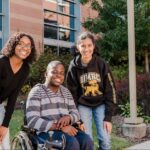
Busy teams of students clustered around laptops in a room overlooking Baltimore’s Inner Harbor on Tuesday, focused on solving as many challenges as possible during a “capture-the-flag” style competition. After hours of intense competition in cyberspace, UMBC’s team emerged victorious, named champions of the college division of the 2018 Maryland Cyber Challenge.
Started in 2011, the competition is part of the annual CyberMaryland Conference. UMBC’s team included Niara Richards ‘22, computer science; Nithya Prakash ‘22, information systems; Josh Mpere ‘19, computer science; Seamus Burke ‘20 computer science; and Swathi Krithivasan ‘22, computer science. They worked together to test their skills in a series of real-world cybersecurity challenges over the course of two virtual qualifying rounds and then the final competition, beating talented teams from the U.S. Air Force Academy and University of Maryland, University College.
 Nithya Prakash, Swathi Krithivasan, and Josh Mpere being recognized at the award ceremony. Photo by Mike Lackner, computer science and informatics, and technology instructor at Loyola Blakefield High School.
“It was my first time competing in the Maryland Cyber Challenge, although I have a pretty extensive competition background,” said Burke. “I am especially proud of my freshman teammates who put in a ton of effort, solved challenges, and didn’t get discouraged when the challenges got more difficult.”
Burke is a Center for Women in Technology (CWIT) Scholar and Mpere is a Cyber affiliate. Richards, Prakash, and Krithivasan all participate in UMBC’s Cyber Scholars Program, which works to prepare the next generation of cybersecurity professionals.
All five members of the winning team will receive a monetary award and an offer to complete a summer internship to continue growing their experience and skills. Additionally, the university will receive new technologies (including software) to support more UMBC students in developing their cybersecurity skills.
“The competition was a fantastic experience and gave me a lot of exposure into topics that I otherwise would not have gained, especially as a freshman,” said Krithivasan. “We had a mix of both upper and underclassmen on our team, which really enabled us to learn and grow from working with each other.”
Banner image: Niara Richards, left, Josh Mpere, and Nithya Prakash. Photo by Marlayna Demond ’11 for UMBC.
]]>
Busy teams of students clustered around laptops in a room overlooking Baltimore’s Inner Harbor on Tuesday, focused on solving as many challenges as possible during a “capture-the-flag” style...
https://umbc.edu/stories/umbc-students-win-top-prize-at-maryland-cyber-challenge/
https://my3.my.umbc.edu/api/v0/pixel/news/120311/guest@my.umbc.edu/25dff770eb6b36d90077c19063f4ea70/api/pixel
coeit
csee
cwit
cyberscholars
cybersecurity
is
science-and-technology
UMBC News & Magazine
https://my3.my.umbc.edu/groups/umbc-news-magazine
https://assets1-my.umbc.edu/system/shared/avatars/groups/000/001/943/24435aa6207c452e7bc15cc74b42c7bb/xsmall.png?1748556657
https://assets1-my.umbc.edu/system/shared/avatars/groups/000/001/943/24435aa6207c452e7bc15cc74b42c7bb/original.png?1748556657
https://assets2-my.umbc.edu/system/shared/avatars/groups/000/001/943/24435aa6207c452e7bc15cc74b42c7bb/xxlarge.png?1748556657
https://assets2-my.umbc.edu/system/shared/avatars/groups/000/001/943/24435aa6207c452e7bc15cc74b42c7bb/xlarge.png?1748556657
https://assets3-my.umbc.edu/system/shared/avatars/groups/000/001/943/24435aa6207c452e7bc15cc74b42c7bb/large.png?1748556657
https://assets1-my.umbc.edu/system/shared/avatars/groups/000/001/943/24435aa6207c452e7bc15cc74b42c7bb/medium.png?1748556657
https://assets2-my.umbc.edu/system/shared/avatars/groups/000/001/943/24435aa6207c452e7bc15cc74b42c7bb/small.png?1748556657
https://assets1-my.umbc.edu/system/shared/avatars/groups/000/001/943/24435aa6207c452e7bc15cc74b42c7bb/xsmall.png?1748556657
https://assets2-my.umbc.edu/system/shared/avatars/groups/000/001/943/24435aa6207c452e7bc15cc74b42c7bb/xxsmall.png?1748556657
UMBC News & Magazine
0
0
false
Thu, 11 Oct 2018 16:51:12 -0400
UMBC offers a national model for cyber workforce development, says new report

Cybersecurity is one of the fastest growing industries in the United States and a recent Business-Higher Education Forum report calls Maryland the “epicenter of national cybersecurity.” The report, Building a Diverse Cybersecurity Talent Ecosystem to Address National Security Needs, found that University System of Maryland (USM) efforts to increase the number of students who earn degrees in cyber-related fields has made progress in meeting the needs of the region. It also emphasized that more growth is needed, through programs like those UMBC offers, to meet increasing industry demand for cyber professionals.
In a USM press release, Chancellor Robert L. Caret says, “The University System of Maryland has been committed to growing cybersecurity programs at universities across the state to serve the needs of students and employers in this burgeoning field.” USM highlights programs across the five universities “leading the way” in cybersecurity, including UMBC’s Cyber Scholars program, launched with support from the Northrop Grumman Foundation, and a new cyber apprenticeship program, created through a partnership between UMBC Training Centers, the Maryland Department of Labor, and Gov. Larry Hogan.
In its coverage of the report, The Daily Record focuses on two core findings: the need for students to gain work experience and demand for a diverse cybersecurity workforce. It highlights the work of USM institutions to grow “undergraduate pathways into cybersecurity that attract students with diverse backgrounds and interests, engage them in meaningful learning experiences that reflect the cutting edge of the field and encourage them to stay in the region to build their careers.”
The highlights a UMBC program to explain this idea, noting, “UMBC’s Meyerhoff Scholars program is viewed as a national model for increasing diversity in STEM fields, and the university drew on lessons learned from that model when it launched the Cyber Scholars program in 2013.” As illustration, the report profiles Lauren Mazzoli ’15, computer science and mathematics, M.S. ’17, computer science, a systems engineer in the Future Technical Leaders Program at Northrop Grumman. It showcases her experience as one of UMBC’s first Cyber Scholars and the value she found in UMBC’s Center for Women in Technology and an internship at the Department of Defense.
Graduates from UMBC computing programs continue to have an impact through work with government agencies and top companies in cybersecurity fields. From the Class of 2018, Cyber Scholar Priyanka Ranade ‘18, information systems, is now a cyber software engineer at Northrop Grumman and T-SITE Scholar Bryan Vanek ‘18, computer science is participating in the Computer Network Operations Development Program at the Department of Defense.
Banner image: Mobile technology. Photo by WOCinTechChat, CC BY 2.0.
]]>
Cybersecurity is one of the fastest growing industries in the United States and a recent Business-Higher Education Forum report calls Maryland the “epicenter of national cybersecurity.” The...
https://umbc.edu/stories/umbc-offers-a-national-model-for-cyber-workforce-development-says-new-report/
https://my3.my.umbc.edu/api/v0/pixel/news/120382/guest@my.umbc.edu/2d86b5f84f0ec2a8e5df5718b06d64ba/api/pixel
csee
cwit
cyberscholars
cybersecurity
is
mathstat
meyerhoffscholars
science-and-technology
trainingcenters
tsite
UMBC News & Magazine
https://my3.my.umbc.edu/groups/umbc-news-magazine
https://assets1-my.umbc.edu/system/shared/avatars/groups/000/001/943/24435aa6207c452e7bc15cc74b42c7bb/xsmall.png?1748556657
https://assets1-my.umbc.edu/system/shared/avatars/groups/000/001/943/24435aa6207c452e7bc15cc74b42c7bb/original.png?1748556657
https://assets2-my.umbc.edu/system/shared/avatars/groups/000/001/943/24435aa6207c452e7bc15cc74b42c7bb/xxlarge.png?1748556657
https://assets2-my.umbc.edu/system/shared/avatars/groups/000/001/943/24435aa6207c452e7bc15cc74b42c7bb/xlarge.png?1748556657
https://assets3-my.umbc.edu/system/shared/avatars/groups/000/001/943/24435aa6207c452e7bc15cc74b42c7bb/large.png?1748556657
https://assets1-my.umbc.edu/system/shared/avatars/groups/000/001/943/24435aa6207c452e7bc15cc74b42c7bb/medium.png?1748556657
https://assets2-my.umbc.edu/system/shared/avatars/groups/000/001/943/24435aa6207c452e7bc15cc74b42c7bb/small.png?1748556657
https://assets1-my.umbc.edu/system/shared/avatars/groups/000/001/943/24435aa6207c452e7bc15cc74b42c7bb/xsmall.png?1748556657
https://assets2-my.umbc.edu/system/shared/avatars/groups/000/001/943/24435aa6207c452e7bc15cc74b42c7bb/xxsmall.png?1748556657
UMBC News & Magazine
0
0
false
Thu, 21 Jun 2018 14:40:29 -0400
Kourtney Rutkowski pursues a unique international path in mechanical engineering

Kourtney Rutkowski
B.S., Mechanical Engineering
Minor: Psychology
Cum Laude
Hometown: Bel Air, Maryland
Plans: M.S., mechanical engineering, UMBC
UMBC has also helped to grow my leadership skills, my confidence, and has opened my mind in so many ways.
Kourtney Rutkowski enjoys being the first, particularly when it comes to unique learning experiences. As an engineer with an interest in cross-cultural exchange, she was UMBC’s first student to participate in a semester-long study abroad at the University of Porto in Portugal, and one of the two first students to participate in a winter study abroad at the University of Kassel in Germany, after UMBC initiated research and education partnerships with both institutions.
Home at UMBC, Rutkowski has participated in the Grand Challenge Scholars Program and Center for Women in Technology (CWIT) Scholars Program. She is a member of the Honors College and Tau Beta Pi, the honors society for engineering. She has held leadership positions on the CWIT student council, in Tau Beta Pi, and as a UMBC Eco-Ambassador, and she currently serves as the inaugural student president for the Grand Challenge Scholars Program Student Organization. Additionally, she has worked as a teaching fellow for multiple courses, most recently as a lead teaching fellow for statics.
 Kourtney Rutkowski’s international learning experience shaped her time at UMBC by exposing her to diversity of thought. Photo courtesy of Kourtney Rutkowski.
Rutkowski shares that mentors across campus have provided her with valuable guidance related to research, career options, and pursuing opportunities abroad. She worked most closely with Anne Spence, former professor of practice at UMBC; Jamie Gurganus, associate director for engineering education initiatives; Marc Zupan, associate professor of mechanical engineering; and Neil Rothman, professor of practice in mechanical engineering.
As a student in the integrated B.S./M.S. mechanical engineering program, Rutkowski will remain at UMBC after graduation to complete her graduate degree, before moving on to opportunities in industry and, perhaps, a Ph.D. and mechanical engineering teaching career of her own.
Portrait by Marlayna Demond ’11 for UMBC.
]]>
Kourtney Rutkowski B.S., Mechanical Engineering Minor: Psychology Cum Laude Hometown: Bel Air, Maryland Plans: M.S., mechanical engineering, UMBC UMBC has also helped to grow my...
https://umbc.edu/stories/kourtney-rutkowski-pursues-a-unique-international-path-in-mechanical-engineering/
https://my3.my.umbc.edu/api/v0/pixel/news/120468/guest@my.umbc.edu/c2f1a2a79ecab88c3470cab412223cd0/api/pixel
class-of-2018
coeit
cwit
honorscollege
international
meche
undergradresearch
UMBC News & Magazine
https://my3.my.umbc.edu/groups/umbc-news-magazine
https://assets1-my.umbc.edu/system/shared/avatars/groups/000/001/943/24435aa6207c452e7bc15cc74b42c7bb/xsmall.png?1748556657
https://assets1-my.umbc.edu/system/shared/avatars/groups/000/001/943/24435aa6207c452e7bc15cc74b42c7bb/original.png?1748556657
https://assets2-my.umbc.edu/system/shared/avatars/groups/000/001/943/24435aa6207c452e7bc15cc74b42c7bb/xxlarge.png?1748556657
https://assets2-my.umbc.edu/system/shared/avatars/groups/000/001/943/24435aa6207c452e7bc15cc74b42c7bb/xlarge.png?1748556657
https://assets3-my.umbc.edu/system/shared/avatars/groups/000/001/943/24435aa6207c452e7bc15cc74b42c7bb/large.png?1748556657
https://assets1-my.umbc.edu/system/shared/avatars/groups/000/001/943/24435aa6207c452e7bc15cc74b42c7bb/medium.png?1748556657
https://assets2-my.umbc.edu/system/shared/avatars/groups/000/001/943/24435aa6207c452e7bc15cc74b42c7bb/small.png?1748556657
https://assets1-my.umbc.edu/system/shared/avatars/groups/000/001/943/24435aa6207c452e7bc15cc74b42c7bb/xsmall.png?1748556657
https://assets2-my.umbc.edu/system/shared/avatars/groups/000/001/943/24435aa6207c452e7bc15cc74b42c7bb/xxsmall.png?1748556657
UMBC News & Magazine
0
0
false
Sun, 15 Apr 2018 20:24:53 -0400


