March in the United States is reserved for college basketball. Fans don their team’s colors as they root for them in the NCAA Division I basketball tournaments. For those without a team close to heart, they cheered as fifteenth seed Oral Roberts University beat powerhouse Ohio State University in the men’s tournament.
However, Dustin Fisher, ’98, visual and performing arts, was not only preoccupied with underdog basketball wins. While cheering on Villanova, Fisher rooted for The Night Before Christmas to take down Hamilton and for Inside Out to lose to Stand by Me. While watching March Madness, he took to his Movie Madness Facebook page to debate with fellow group members about whether Hamilton should even be considered a movie. Fisher’s March Madness is not about finding this year’s best basketball team; it’s about finding the best movie of all-time.
The Origin Story
Movie Madness is rooted in the early days of the internet, says Fisher, who founded the group based on an email column from 1998 and a blog he kept in 2003. Fisher would write about two movies he would watch back-to-back, comparing them and determining the best one. This led to his idea of pitting them against one another in an NCAA-style bracket. As former UMBC intramural sports assistant director, Fisher was always involved in athletics and felt it was natural to combine his passions for sports and movies through Movie Madness.
In 2013, 19 of Fisher’s friends filled out his first Movie Madness bracket on Facebook. Today, the Movie Madness community is over 2,000 strong, bringing UMBC and non-Retrievers together over a common passion.
The NCAA of Movies
Like the NCAA’s different conferences (most college sports fanatics are familiar with the Big Ten, the Atlantic Coast Conference, the Big Twelve, and the Southeastern Conference), Movie Madness uses genres as its different conference tournaments. While genres like action, horror, and romance are staples of Movie Madness, Fisher and other committee members add genres as the film industry becomes more diverse.
“Eight years ago, there were no conferences for LGBTQ and Civil Rights movies. These are things that I’ve seen the need for and have added,” says Fisher. “As the world grows, the group grows with it.”
Movies competing for the conference title are nominated by Movie Madness group members. As with the selection of the 68 teams for the NCAA tournament, the Movie Madness bracket features the winners of the 32 conferences and the next 34 most competitive movies determined by the group’s committee. This year’s tournament features movies like Thor: Ragnarok, Get Out, and Spider-Man: Into the Spider-verse, as well as recurring competitors like Jaws and Alien.
The 2021 Movie Madness VII bracket with The Lord of the Rings: The Fellowship of the Ring named this year’s winner. Screenshot provided by Fisher.
To ensure that the bracket and conversation change from year to year, any movies that make it to the Final Four are retired. “Otherwise Empire Strikes Back will play Star Wars: A New Hope in every single tournament, and it would be very boring,” explains Fisher.
While all movies are taken into consideration, Fisher acknowledges the group’s slight bias towards superhero movies, recent movies, and movies from the 80s and 90s.
“Many people seem to vote for movies that they’ve seen in the last couple years. This is why I figure Spider-Man: Into the Spider-verse, Hamilton, Hidden Figures, and Mad Max: Fury Road were the number one seeds in the tournament this year,” says Fisher. “But there’s also the ‘Oh my God, I remember this from my childhood!’ feeling that gives The Goonies and Field of Dreams probably more popularity than they deserve.”
Building Friendships One Debate at a Time
Conversation is essential to Movie Madness. For Movie Madness committee member Corey Johns’11, American studies, media and communications, English, talking about movies in the group is a way to destress from his workday.
“It’s a tremendous way to just have fun online and to talk about things we like. We like movies, and this is a great way to just enjoy another aspect of them,” says Johns.
The Movie Madness Board (from left to right and top to bottom) of Brett McKenzie, Fisher, Greg Stryker, Chris Mondichak, Justin West, and Johns wore costumes in one of their filmed meetings. Screenshot provided by Fisher.
Johns explains that Movie Madness, at least the active members of it, created such a tight-knit community that it has inside jokes. Johns stated that The Goonies is a running joke in the group as the most divisive movie. UMBC community and Movie Madness members could not help but use memes from UMBC’s win against the University of Virginia in 2018 after sixteenth seed Clue beat number one seed John Wick in one year’s tournament.
“We can immediately identify who the UMBC crowd is because we’re all tied together,” says Johns.
While the group is public to all and many active members are not affiliated with UMBC in any way, Johns and Fisher have met many UMBC alumni from different eras of UMBC through the group. The group is how Johns and Fisher met and how the pair met Movie Madness committee member Brett Mckenzie’04, English.
“[Fisher and I] never knew each other at UMBC, but we throw out a lot of UMBC jokes that bring us together,” explains Johns. “We share the UMBC bond.”
“If I listed off my top 10 friends, Corey’s definitely on the list. We’ve spent so much time together. We’ve gotten to know each other so well,” says Fisher. “The group has definitely fostered some friendships that I would not have otherwise made.”
Beyond a Bracket
Fisher adds that, while the group started as a game, it has grown into a community of movie lovers spanning across generations of UMBC alumni and non-UMBC community members. As more people joined, Fisher, Johns, Mckenzie, and other committee members created ways to discuss movies on the page asides from the bracket to keep the community active.
“It’s very hard finding creative ways to spark a conversation,” said Fisher, but they still managed to create some buzz. Whether it be their spin on the game “You Don’t Know Jack” or videos debating who would win in a fight between characters like Thor from the Marvel series or Jack-Jack from The Incredibles, Fisher and Johns said that people engaged with the new content.
In one video debate, Johns did 15 costume changes in three minutes to argue that the Genie from Disney’s Aladdin would win. In another, Mckenzie wore a Captain Marvel costume to prove that she was the best superhero.
“[Those videos] really exploded our growth this year,” says Johns. “There was so much more activity. Instead of just the poll and voting, which is fun, but now you can have a conversation.”
As with most online groups, Movie Madness experienced growing pains as its membership increased. With more people outside his and his friends’ circles joining the group, Fisher had to assign admins to moderate conversations and prevent discussions from getting out of hand. Despite some struggles, Fisher and Johns said they are excited for the future of Movie Madness. While Fisher does not actively promote it on Facebook, he is happy to see new members.
“If people find this group, awesome,” said Fisher. “We’ll happily welcome you with open arms.” Just be prepared to have strong opinions about The Goonies.
]]>
March in the United States is reserved for college basketball. Fans don their team’s colors as they root for them in the NCAA Division I basketball tournaments. For those without a team close to...https://umbc.edu/stories/movie-madness-films-big-dance/https://my3.my.umbc.edu/api/v0/pixel/news/119647/guest@my.umbc.edu/67755f85a8d652c55eab52ffc591d668/api/pixelalumniamerican-studiesenglishfilmmcsvisual-and-performing-artsUMBC News & Magazinehttps://my3.my.umbc.edu/groups/umbc-news-magazinehttps://assets1-my.umbc.edu/system/shared/avatars/groups/000/001/943/24435aa6207c452e7bc15cc74b42c7bb/xsmall.png?1748556657https://assets1-my.umbc.edu/system/shared/avatars/groups/000/001/943/24435aa6207c452e7bc15cc74b42c7bb/original.png?1748556657https://assets2-my.umbc.edu/system/shared/avatars/groups/000/001/943/24435aa6207c452e7bc15cc74b42c7bb/xxlarge.png?1748556657https://assets2-my.umbc.edu/system/shared/avatars/groups/000/001/943/24435aa6207c452e7bc15cc74b42c7bb/xlarge.png?1748556657https://assets3-my.umbc.edu/system/shared/avatars/groups/000/001/943/24435aa6207c452e7bc15cc74b42c7bb/large.png?1748556657https://assets1-my.umbc.edu/system/shared/avatars/groups/000/001/943/24435aa6207c452e7bc15cc74b42c7bb/medium.png?1748556657https://assets2-my.umbc.edu/system/shared/avatars/groups/000/001/943/24435aa6207c452e7bc15cc74b42c7bb/small.png?1748556657https://assets1-my.umbc.edu/system/shared/avatars/groups/000/001/943/24435aa6207c452e7bc15cc74b42c7bb/xsmall.png?1748556657https://assets2-my.umbc.edu/system/shared/avatars/groups/000/001/943/24435aa6207c452e7bc15cc74b42c7bb/xxsmall.png?1748556657UMBC News & Magazine00falseFri, 23 Apr 2021 19:23:12 -0400UMBC-Montgomery College collaboration expands with digital storytelling humanities internship for transfer students
In September of 2020, UMBC’s Camee Maddox-Wingfield, assistant professor of anthropology, wanted to introduce her Anthropology 211 students to the process of digital storytelling and the tools of the Smithsonian Learning Lab. She reached out to Sarah Jewett who had just launched a new digital storytelling collaboration with the Montgomery College (MC) Digital Storytelling Internship program at the Paul Peck Humanities Institute. The internship places MC students with UMBC faculty who need help with their digital story projects.
Jewett, director of innovations in transfer research and practice at UMBC, knew about MC’s long-standing partnership with the Smithsonian Center for Learning and Digital Access, of which the lab is part. She collaborated with MC’s Digital Storytelling Internship to place Mark Siegrist, who was an intern in the lab, with Maddox-Wingfield.
Camee Maddox-Wingfield.
Siegrist was the perfect fit. He produced the digital story Maddox-Wingfield needed and had the opportunity to learn about the resources UMBC offers for transfer students.
“I’ve had a really good experience working with Mark Siegrist,” shares Maddox-Wingfield. “He was so helpful. I am so grateful that this sort of collaboration was made possible between the two institutions by Sarah Jewett.”
Building relationships
This growing, humanities-centered digital stories internship is a collaboration nourished by Jewett and MC’s Jamie Gillan and Mathew Decker. The two English faculty serve as co-coordinators of MC’s Digital Stories Internship, and Gillan is also a Ph.D. student in UMBC’s language, literacy, and culture (LLC) program. Jewett and Gillan initially connected through Gillan’s doctoral research at UMBC, on story work as a way to build empathy. This storytelling project was a natural extension of that work.
Together they built the structures necessary for MC students to work alongside UMBC faculty on digital storytelling projects. MC considers these UMBC collaborations to be Level 2 internships, completed after MC students gain initial experience with digital storytelling.
Participants enroll as non-degree students at UMBC during their internships to complete a service-learning course through UMBC’s Shriver Center. This provides them with additional support and guidance in completing their collaborative projects and reflecting on their internship experiences.
“Level 2 interns are expected to bring their own ideas to the table, to be leaders as well as collaborators,” explains Gillan. These learning and teaching partnerships between students and faculty are at the core of how UMBC fosters a culture of intellectual curiosity and relationship-building.
The faculty team for the digital stories partnership in fall 2020 included: Bill Shewbridge, professor of the practice in media and communications studies; Tania Lizarazo, assistant professor in modern languages, linguistics, and intercultural communication (MLLI) and the global studies program; and Beverly Bickel, M.A. ’94, instructional development systems, Ph.D. ’05, LLC, clinical assistant professor of LLC.
Great chemistry
UMBC and MC’s strong working relationship has deep roots. Ten years ago UMBC partnered with three other community colleges in Maryland to develop and implement the STEM Transfer Student Success Initiative (t-STEM). Jewett, the executive director of this initiative, worked with community college counterparts to develop the systems necessary to better support transfer students in STEM as they transitioned to UMBC.
The seven-year initiative was a great success and inspired Jewett to extend this same model to other fields. She began with a summer environmental science research experience organized in collaboration with Howard Community College and UMBC’s departments of geography and environmental science and biological sciences.
UMBCs Kevin Omland (center), professor of biological sciences, birdwatching with students in 2019.
Rather than focus on expanding a single program, or even an array of STEM-focused programs, “We are working to scale horizontally to different disciplines,” Jewett explains. This includes the social sciences and humanities.
Finding a path
Like Mark Siegrist, MC student Ahmad Al-Olabi was also a Level 2 digital stories intern. The experience had a significant impact on his college experience.
In his Level 1 internship, Al-Olabi produced “The Journey: Swim or Die,” about his journey as a Syrian refugee fleeing to Greece. His powerful work was one of eight digital stories MC featured during UMBC’s first Digital Decameron.
“I was hesitant to share my experience,” explains Al-Olabi. But the feedback he received encouraged him to continue forward. “In the second internship,” he says, “I realized everyone empathized with my journey and valued my skills.”
As a Level 2 intern, Al-Olabi worked with Shewbridge’s digital stories class in collaboration with 20 students at Hong Kong University. He provided his fellow students with script feedback and technical support for the “Global Voices in a Time of Pandemic” project. The project fosters intercultural dialog about COVID-19.
Ahmad Al-Olabi in the atrium of UMBC’s Performing Arts and Humanities Building. Photo by Azigza Hussen, 2019
Al-Olabi appreciated working with Shewbridge, whose filmmaking career and expertise have opened a new career option for him to explore. This experience has made him feel more prepared for the next step of his academic career. “Before this program, I wasn’t sure I was ready for an American university,” explains Al-Olabi. “Now that I know Professor Shewbridge and Ms. Jewett, and having been on campus, I feel I can be successful.”
Reflection through storytelling
A third Montgomery College student, Stephanie Palencia, produced the personal story “Stand Up.” She addresses the importance of self-care while grappling with the pressures of cultural expectations and responsibilities.
Palencia worked with Lizarazo and Charlotte Keniston, an LLC doctoral student and associate director of UMBC’s Peaceworker Program, on Lizarazo’s Migration Stories project. They organized audio, text, and images to create a story map that reflects the migration stories of some of the members of Maryland’s Latinx community. Palencia also assisted Lizarazo in a digital stories workshop she facilitated at The Universities at Shady Grove.
“I’ve been grateful to have been invited to work on digital stories with Montgomery College students since 2019,” shares Lizarazo. She continued to work with these students on digital story projects through the pandemic. Of the partnership, she says, “This is truly an initiative in community-building beyond institutions.”
Building bridges to the future
Jewett notes that the internship engages students in critical thinking to refine their technical, communication, and storytelling skills. However, she explains, “The heart is about building meaningful relationships between MC students and UMBC faculty and staff as a bridge to university life.” It’s a mentoring process that reveals all that is possible at UMBC and beyond.
Mark Siegrist. Photo courtesy of Siegrist.
“These relationships are invaluable,” shares Siegrist. He notes that the UMBC internship gave him access to a network of professors. Should he transfer, he will understand and know the community, where to access resources, and whom to ask for help.
“This internship will have a big impact on my academic journey,” Siegrist says. “It showed me how I could leverage my skills to design new opportunities.”
Jewett hopes to bring more support and new opportunities to even more students. The spring internship is already underway with three new MC students.
She and Amy Froide, a professor of history, also just received matching funding from Bringing Theory to Practice. It’s an organization that works to link the engaged learning, well-being, and civic development of students. This grant will help fund a new summer experience in public history with Howard Community College.
“The impact increases for all involved,” Jewett says, “when students have learning opportunities to explore the different disciplines, networks, and resources UMBC offers, and to connect with mentors.”
Banner image: Al-Olabi visiting UMBCs Imaging Resource Center photogrammetry 3D and motion capture scanning rig in December 2019. Photo by Azigza Hussen, a Montgomery College digital student intern visiting UMBC with Al-Olabi. All photos by Marlayna Demond unless otherwise noted.
]]>
In September of 2020, UMBC’s Camee Maddox-Wingfield, assistant professor of anthropology, wanted to introduce her Anthropology 211 students to the process of digital storytelling and the tools of...https://umbc.edu/stories/umbc-montgomery-college-collaboration-expands-with-digital-storytelling-humanities-internship-for-transfer-students/https://my3.my.umbc.edu/api/v0/pixel/news/119666/guest@my.umbc.edu/e0e4b833713f70748335c22edb63c527/api/pixelarts-and-culturecahssgeshistoryllcmcsmllipage1policy-and-societysaphshrivercenterUMBC News & Magazinehttps://my3.my.umbc.edu/groups/umbc-news-magazinehttps://assets1-my.umbc.edu/system/shared/avatars/groups/000/001/943/24435aa6207c452e7bc15cc74b42c7bb/xsmall.png?1748556657https://assets1-my.umbc.edu/system/shared/avatars/groups/000/001/943/24435aa6207c452e7bc15cc74b42c7bb/original.png?1748556657https://assets2-my.umbc.edu/system/shared/avatars/groups/000/001/943/24435aa6207c452e7bc15cc74b42c7bb/xxlarge.png?1748556657https://assets2-my.umbc.edu/system/shared/avatars/groups/000/001/943/24435aa6207c452e7bc15cc74b42c7bb/xlarge.png?1748556657https://assets3-my.umbc.edu/system/shared/avatars/groups/000/001/943/24435aa6207c452e7bc15cc74b42c7bb/large.png?1748556657https://assets1-my.umbc.edu/system/shared/avatars/groups/000/001/943/24435aa6207c452e7bc15cc74b42c7bb/medium.png?1748556657https://assets2-my.umbc.edu/system/shared/avatars/groups/000/001/943/24435aa6207c452e7bc15cc74b42c7bb/small.png?1748556657https://assets1-my.umbc.edu/system/shared/avatars/groups/000/001/943/24435aa6207c452e7bc15cc74b42c7bb/xsmall.png?1748556657https://assets2-my.umbc.edu/system/shared/avatars/groups/000/001/943/24435aa6207c452e7bc15cc74b42c7bb/xxsmall.png?1748556657UMBC News & Magazine00falseMon, 29 Mar 2021 05:25:20 -0400New UMBC grads honor parents’ immigrant journeys by forging their own paths
Graduating seniors Anthony Cano, Renato Zanelli, and Maya Scheirer came to UMBC with pride and hunger instilled by their immigrant parents’ work ethic. They brought rich cultures, languages, and hearts full of dreams and aspirations with the goal of forging futures of their own.
At UMBC they found faculty and staff who nurtured their curiosity, and a campus committed to learning from and working with local and international communities. Most importantly, they were embraced by a community who welcomed and celebrated them wholeheartedly for who they are and who they wanted to be.
Cano, Zanelli, and Scheirer lean on their friendships and faculty mentors as they end their time at UMBC, under an unprecedented global pandemic, via a virtual commencement ceremony. Together they face a changing world, knowing that their transformative years at UMBC have given them a solid foundation to hope, dream, and achieve.
Global citizen
Anthony Cano fondly recalls walking with his mom to school in the mornings. “We would part ways at the bus stop as she headed to work as a janitor,” a job she had to take after the market crash of 2008. “I would continue walking to my school,” shares Cano.
He watched his family lose everything and then rebuild their lives by working seven days a week. “They learned everything and anything to make ends meet,” explains Cano. “That work ethic—that unbreakable faith—is my moral structure. I connect it to everything I do.”
Cano wants to make sure everyone knows the real story behind his success. “My story does not begin with what I have achieved or my research,” he shares. “When I tell my story I want it to start and end by honoring my struggle as a student and as an immigrant. It is what made and continues to make my success happen.”
Mapping an interdisciplinary future
As a first-generation college student, Cano did not take his opportunities for granted. Instead, he invested time in and out of class to explore his wide interests in journalism, photography, and business. He also found ways to help his community, which he defines as global. “I think everything is connected,” shares Cano. “I identify as a global citizen more than any other identity.”
Cano eating a typical Cartagenian dish. Photo courtesy of Cano.
Eager to learn, Cano transferred to UMBC immediately after earning an associate’s degree in broadcast and media production from Montgomery Community College. He planned to add a bachelor’s in computer science to facilitate his pathway to entrepreneurship. Cano began his general computer science courses while also enrolling in political science and human geography classes.
After learning about global political systems and internally displaced people (IDP), Cano immediately felt a sense of responsibility. He wanted to bring awareness to the political and social forces that displace people from their homes into dangerous and precarious living conditions.
“In some ways, my life was like a bubble,” explains Cano. These classes introduced him to the complexities of migration. “I have people in my social network that have experienced similar situations, but not to the extent that I learned about,” he shares. He decided to follow his interests and declared a double major in media and communications studies and political science.
Cano in Cartagena. Photo courtesy of Cano.
Afro-Colombian stories
Felipe Filomeno, associate professor of political science, became his mentor and advisor. With his support, Cano developed strong skills in mixed research methods. He used social science, humanities, and visual research methods to continue to understand IDP.
“Tony is a unique and truly interdisciplinary student,” says Filomeno. “I advised his research on internally displaced people and urban development in Cartagena, Colombia. It combined oral history and visual research methods.”
Cano received a 2019-2020 Undergraduate Research Award to conduct field research in South America. His project focused on the relationship between internally displaced people as a result of violence and urban development in Cartagena.
Cano drew on his background in journalism and his fluent Spanish language skills to better understand the experiences of Afro-Colombians in a neighborhood named after Nelson Mandela. It’s located only a few minutes from a walled-in, tourism-focused urban center.
Nelson Mandela neighborhood. Photo courtesy of Cano.
“Tony wanted his project to result not only in an academic paper. He also wanted to create a short virtual reality film to document the living conditions in Nelson Mandela,” shares Filomeno. Cano was careful and curious while analyzing data. Filomeno advised him on how to verify different sources of data and how to ensure his work reflected the community respectfully.
Afro-Colombian women selling fruit in Cartagena. Photo courtesy of Cano.
Cano also served as a fellow in the Partnerships for Listening and Action by Communities (PLACE) program, an affiliate of UMBC’s Center for Democracy and Civic Life. There he received additional training in humanities methods and community organizing to support residents of Baltimore City’s Brooklyn neighborhood in building greater community cohesion and providing enriching opportunities for young people.
Cano walking in downtown Baltimore. Photo courtesy of Cano.
In January, Cano will begin working at Morgan Stanley as an operations analyst. The multinational investment bank and financial services company found his humanities background invaluable to creating a strong finance team.
“I am a learner. My family always said there is nothing wrong with constantly wanting to learn,” shares Cano. “They taught me to set goals, and that through a lot of hard work, sacrifice, deep faith, and positivity, you can achieve your goals and break barriers.”
A home away from home
Renato Zanelli remembers how hard his mother worked and how much she sacrificed when she moved to the United States from Peru. “There are times I feel like giving up because some people assume that if you are Hispanic, you cannot do something,” shares Zanelli. “I want to prove that Hispanics can do anything. I want to make sure everything my mom sacrificed was not in vain.”
Like Cano, family and culture are also the founding blocks of Zanelli’s undergraduate life. He came to the United States from Peru when he was ten. He was raised in Anne Arundel County by his mom and grandparents. While he did well in school, it was at times isolating because of the lack of diversity. After a year in Anne Arundel Community College, he realized that what he was seeking the most was a community that embraced his language, culture, and interests.
Life-long friendships
Zanelli transferred to UMBC and was delighted to find a welcoming community. “One day, I saw a flyer for the Hispanic Latino Student Union. I went,” he remembers. Even though most of the people were not from Peru, he felt at home. “I was finally meeting people with similar immigration journeys and who spoke Spanish. It was amazing,” explains Zanelli. The HLSU members became his best friends.
Although most of the students he met in HSLU were years ahead of him, they guided him in understanding college life and included him in campus events. He had been worried about missing out on these experiences as a commuter, but their generous spirit made him feel like he belonged. “Instead of going straight home, I participated more in student activities,” shares Zanelli.
The HLSU also provided comfort and support when his cousin, who is like a brother, passed away and he could not travel to Peru. Later, Renato became part of the HLSU executive board, supporting the next generation of HLSU members.
Building confianza (trust)
Ana Maria Schwartz Caballerro. Photo by Marlayna Demond.
Zanelli also found joy and support from UMBC’s faculty. His schedule included STEM and humanities classes, including a Spanish class for heritage Spanish speakers. The class helped him be more comfortable in a predominantly English environment and learn more about his first language. He met Ana Maria Schwartz Caballero, associate professor in modern languages, linguistics, and intercultural communication (MLLI), who teaches the course. Similar to his experience with HSLU, meeting professor Schwartz Caballero became one of the most important moments at UMBC.
“She advocated for me and encouraged me,” says Zanelli. Schwartz Caballero inspired him to take higher-level Spanish courses. They opened up an entirely new way to engage with his language, literature, and culture. He also began working as a Spanish language translator in the local hospitals, revealing a professional opportunity made possible with an MLLI major.
Professor Schwartz Caballero became his advisor and mentor. Regularly meeting with her created the structure and focus he needed. She also provided support on a personal level, checking how he was doing and asking about his mom and grandparents. “I have a huge amount of respect and love for her. We have a lot of confianza (trust),” explains Zanelli. “She understands who I am.”
Soccer love
Grounded in who he was and what he wanted out of his undergraduate experience, Zanelli had confidence to pursue an outside interest. He is a soccer aficionado both on the field and in the world of soccer gaming where he is better known as Renatogz05. In 2019, Zanelli became D.C. United’s first-ever official professional eEports athlete to play Electronic Arts SPORTS FIFA and compete in the 2019 Electronic MLS League Series. He came in second place in the last chance qualifier bracket at the Eastern Conference finals.
Zanelli’s experience at UMBC has been life-changing. “This isn’t just about me,” he explains. “As a first-generation college student, I can now be a role model for my younger cousins. I can help and inspire them. They will not have to do it alone.”
“100% me”
“I grew up in Kensington, Maryland, surrounded by people from all over the world,” says Maya Isabella Peiris Scheirer. “As a first-generation Sri Lankan American and a second-generation German American, I am proud of my immigrant roots.”
Her parents encouraged her to be curious about everything, she says. “They taught me to ask questions and find creative solutions when challenges arose.”
Scheirer first saw UMBC when her cousin Hashani Hettiarachchi ’14, biological sciences, invited her to campus events. When it came time to pick a college, she found UMBC an obvious fit thanks to its diversity, proximity to home, and biology program. She immediately moved onto campus and jumped into her science classes. Like Cano and Zanelli, Scheirer also chose to explore courses outside of her major.
A global state of mind
Scheirer found her global studies classes to be particularly fascinating, but fitting them into her biology-heavy course schedule proved challenging. She decided to explore new possibilities, including majors where she could use her French, Sinhala, and German language skills.
“I researched interdisciplinary majors. I attended the Career Center workshops and filled out career interest questionnaires,” remembers Scheirer. While searching for a different academic path, she gained insight into the skills and interests she had been developing most of her life. She was an avid reader, making her a strong writer, and she loved multilingual and multicultural communities.
“When I found global studies, it seemed 100% me,” shares Scheirer. “The study abroad requirement as well as the writing component and interdisciplinary research were what I had been looking for.”
Opening doors
In the spring of 2020, Scheirer traveled to Germany to study German at Leuphana University of Lüneburg. The language study program also gave her a deeper understanding of her father’s German culture. Unfortunately, like many students studying abroad this spring, Scheirer had to fly back home early due to COVID-19. She hopes to return soon.
Scheirer in Germany during her study abroad. Photo courtesy of Scheirer.
Scheirer also chose to minor in gender, women’s, and sexuality studies after taking courses that expanded her perspective. “I was a feminist, but I had not viewed feminism through these theories,” she explains. “It opened a door for me.” Scheirer analyzed different feminists’ points of view through her writing while learning about how people occupy spaces differently.
Beyond her coursework, Scheirer put her writing skills to work covering arts and culture for The Retriever. She also found a community of close friends from different backgrounds through UMBC’s Equestrian Club, serving two terms as president. “Being president of the Equestrian Club taught me a lot about responsibility, collaboration, and motivating people,” she says, and it “gave me a sense of community.”
Scheirer (kneeling from the right) with UMBC’s equestrian club. Photo courtesy of Scheirer.
Be Your Best Self
Scheirer is waiting to find out what her next global adventure will be. She hopes to be an English teaching assistant in Andorra through the Fulbright U.S. Student Program. If accepted, Scheirer will move to Andorra, where her French skills will come in handy, in the fall of 2021.
As she looks back on her last four years, she is grateful for making UMBC the place where she has not just earned her degree, but also learned more about herself. Scheirer remembers receiving a UMBC t-shirt with the phrase, “Be Your Best Self.” “I know it’s on a t-shirt, but it’s true,” she laughs. She says her peers were all working hard to become their best selves regardless of the field they were studying.
“UMBC allowed me to stop worrying about what I ‘should’ be doing,” says Scheirer. “Being a Retriever gave me the confidence to know that what I ‘should’ be doing is being myself.”
Banner image: Maya Scheirer visiting Barcelona, Spain while studying abroad in Lüneburg, Germany.
]]>
Graduating seniors Anthony Cano, Renato Zanelli, and Maya Scheirer came to UMBC with pride and hunger instilled by their immigrant parents’ work ethic. They brought rich cultures, languages, and...https://umbc.edu/stories/new-umbc-grads-honor-parents-immigrant-journeys-by-forging-their-own-paths/https://my3.my.umbc.edu/api/v0/pixel/news/119723/guest@my.umbc.edu/1ff2c6df89886b196e62888f4a4252ec/api/pixelalumnicahsscareercentercivicclassof2020diversityandinclusionglobalstudiesgwstinterdisciplinaryinternationalmcsmllipolicy-and-societyUMBC News & Magazinehttps://my3.my.umbc.edu/groups/umbc-news-magazinehttps://assets1-my.umbc.edu/system/shared/avatars/groups/000/001/943/24435aa6207c452e7bc15cc74b42c7bb/xsmall.png?1748556657https://assets1-my.umbc.edu/system/shared/avatars/groups/000/001/943/24435aa6207c452e7bc15cc74b42c7bb/original.png?1748556657https://assets2-my.umbc.edu/system/shared/avatars/groups/000/001/943/24435aa6207c452e7bc15cc74b42c7bb/xxlarge.png?1748556657https://assets2-my.umbc.edu/system/shared/avatars/groups/000/001/943/24435aa6207c452e7bc15cc74b42c7bb/xlarge.png?1748556657https://assets3-my.umbc.edu/system/shared/avatars/groups/000/001/943/24435aa6207c452e7bc15cc74b42c7bb/large.png?1748556657https://assets1-my.umbc.edu/system/shared/avatars/groups/000/001/943/24435aa6207c452e7bc15cc74b42c7bb/medium.png?1748556657https://assets2-my.umbc.edu/system/shared/avatars/groups/000/001/943/24435aa6207c452e7bc15cc74b42c7bb/small.png?1748556657https://assets1-my.umbc.edu/system/shared/avatars/groups/000/001/943/24435aa6207c452e7bc15cc74b42c7bb/xsmall.png?1748556657https://assets2-my.umbc.edu/system/shared/avatars/groups/000/001/943/24435aa6207c452e7bc15cc74b42c7bb/xxsmall.png?1748556657UMBC News & Magazine00falseMon, 14 Dec 2020 21:29:36 -0500UMBC’s Elizabeth Patton dives into history of remote work with “Easy Living: The Rise of the Home Office”
Elizabeth Patton’s new book Easy Living: The Rise of the Home Office (2020, Rutgers University Press) explores how Americans think about the modern home office and why. Patton’s book is a historical view of how marketing and popular media have shaped how mostly white, heterosexual, upper-middle-class families in the United States have talked about working from home. Due to COVID-19, remote work has hit unprecedented highs, but Patton’s scholarship reveals that it’s far from a new idea.
“I was interested in learning about how people talked about working from home from the early 19th century to today,” says Patton, an assistant professor of media and communication studies at UMBC. “I wanted to understand how certain public figures, technology and real estate companies, film and TV contributed to these conversations and shaped today’s idea of working from home.”
Patton explains this phenomenon, as her family redefines work spaces during COVID-19, in her latest article: “In the work-from-home battle for space, women are the reluctant nomads.” Originally published by The Conversation, the article has been republished by CNN, Fast Company, and others, reaching nearly 140,000 reads so far.
The gendered home office
Patton’s research reveals how early-19th century advertising and media portrayed women in two traditionally private spaces: the kitchen and the bedroom. This shifted during WWII as ads encouraged women to work jobs men had to leave behind. However, by the 1950s many women were expected to leave careers and return to domesticity.
Patton found advertising campaigns from phone companies motivating women to work more efficiently by having a phone line installed in the kitchen and in the bedroom. “Typewriter ads also encouraged women to work as typists from their kitchen office,” shares Patton. “This work was not to advance a career but to support their household economy.”
Men, on the other hand, occupied the public space in the home—the living room or den—to work, relax, or entertain. Patton’s research also describes how advertising and media discussed the work men brought home from the office as a way for them to maintain a work-life balance, especially with the rise of long commutes. Real estate and furniture ads lured urban families to the suburbs with the promise of a garage or a home office to give men more family time and bigger kitchens to help women more efficiently run their household.
Hollywood’s influence
Patton made a particularly compelling, unexpected discovery during her research at the Library of Congress: evidence of the influence of Hugh Hefner, the founder and editor-in-chief of Playboy magazine. Hefner played a significant role in conceptualizing the modern work-from-home lifestyle, the bachelor pad, and the “man cave.”
“While he is an extremely problematic figure, there is no denying his influence in this area,” explains Patton. Research shows how Hefner used advances in phone, computer, television, and architecture to conceptualize private and public home spaces for a successful work-life balance, making commutes irrelevant.
Family life on TV
Bill Cosby, a disgraced public figure, helped transform the portrayal of men and women having successful careers and a thriving family life on television, says Patton.
“The Cosby Show was a primetime family show that created an aspirational lifestyle,” shares Patton. “It was a very purposeful portrayal of how men, working as doctors, lawyers, or writers, could have a successful and fulfilling work-life balance while at the same time supporting their wives in leaving the home to pursue similar careers.”
Patton also shares how it wasn’t until the 1980s and early 1990s, with second-wave feminism, that women were more frequently portrayed in advertising and popular media as having a career outside of the home or having a home office. Still, these portrayals were seen as controversial, especially when central female characters were single working mothers. And if women had to bring work home, their office was still the kitchen.
COVID-19 and the home office evolution
Patton’s book comes at an unprecedented time when many adults and children have had to shift their work and learning spaces from the public office and school to the private home. This change has reopened questions about private and public work spaces and work-life balance, as well as class, equity, and access.
“I’m always thinking about who is missing or left out in the conversation. I’m telling this history, but this history is not possible without depending on people of color and people working in service jobs,” explains Patton. “This is where class and race intersect. And it is necessary to keep this idea of working from home going, even more so now with a pandemic.”
Banner image: Patton on campus in academic row. Photo by Marlayna Demond ’11.
]]>
Elizabeth Patton’s new book Easy Living: The Rise of the Home Office (2020, Rutgers University Press) explores how Americans think about the modern home office and why. Patton’s book is a...https://umbc.edu/stories/umbcs-elizabeth-patton-dives-into-history-of-remote-work-with-easy-living-the-rise-of-the-home-office/https://my3.my.umbc.edu/api/v0/pixel/news/119799/guest@my.umbc.edu/25ba035472c5b4b2bddab492d808deb4/api/pixelcahssmcspage1policy-and-societyresearchUMBC News & Magazinehttps://my3.my.umbc.edu/groups/umbc-news-magazinehttps://assets1-my.umbc.edu/system/shared/avatars/groups/000/001/943/24435aa6207c452e7bc15cc74b42c7bb/xsmall.png?1748556657https://assets1-my.umbc.edu/system/shared/avatars/groups/000/001/943/24435aa6207c452e7bc15cc74b42c7bb/original.png?1748556657https://assets2-my.umbc.edu/system/shared/avatars/groups/000/001/943/24435aa6207c452e7bc15cc74b42c7bb/xxlarge.png?1748556657https://assets2-my.umbc.edu/system/shared/avatars/groups/000/001/943/24435aa6207c452e7bc15cc74b42c7bb/xlarge.png?1748556657https://assets3-my.umbc.edu/system/shared/avatars/groups/000/001/943/24435aa6207c452e7bc15cc74b42c7bb/large.png?1748556657https://assets1-my.umbc.edu/system/shared/avatars/groups/000/001/943/24435aa6207c452e7bc15cc74b42c7bb/medium.png?1748556657https://assets2-my.umbc.edu/system/shared/avatars/groups/000/001/943/24435aa6207c452e7bc15cc74b42c7bb/small.png?1748556657https://assets1-my.umbc.edu/system/shared/avatars/groups/000/001/943/24435aa6207c452e7bc15cc74b42c7bb/xsmall.png?1748556657https://assets2-my.umbc.edu/system/shared/avatars/groups/000/001/943/24435aa6207c452e7bc15cc74b42c7bb/xxsmall.png?1748556657UMBC News & Magazine00falseFri, 04 Sep 2020 21:33:24 -0400In the Work-From-Home Battle for Space, Women Are the Reluctant Nomads
It’s just past 10 a.m. and my partner, on his third virtual meeting today, is working non-stop in our home office. My son has taken over the family room to attend a virtual science camp and video-editing classes and to play video games. I now realize that this will be his work space to attend distance learning classes in the fall.
For this reason, each morning, I find myself carrying my laptop and tea around my house trying to find a quiet place to work. Before the pandemic, I never needed a dedicated space at home for work. But now I’m faced with teaching online this fall and won’t have access to my campus office, which closed in March.
With Google announcing that its 200,000 employees can work from home until June 2021 – and Twitter, Square and Slack announcing that employees could still continue working remotely after the pandemic ends – I’m sure others find themselves in the same boat of not having their own dedicated professional workspace.
To better understand the makeshift nature of workspaces in the home – and why the spaces are often gendered – it’s important to look at how the home office first emerged as a distinct space.
In the 18th century, three separate spheres of domestic activity started to appear in middle-class and wealthy single-family homes. There was a social area for hosting guests, such as dining and living rooms; a service zone, which included the kitchen, cellar and laundry areas; and a sleeping area, which was the most private part of the house.
What we now call the home office emerged from generically named “chamber” rooms used by both men and women prior to the 19th century. The majority of the chamber rooms were later simply labeled “bedrooms” on builders’ floor plans. However, beginning in the 19th century, some of these spaces depicted on floor plans were interchangeably referred to as the library, den or study.
By the late 19th century, the study became primarily a space reserved for male professionals to conduct business at home, indulge in scholarly pursuits and entertain friends. For example, clergy, merchants and doctors needed a study or “interview room” because their work was more likely to be conducted at home.
The study was often separated from the private zones of the house and placed as close to the front door as possible – in the home’s social zone – to maintain family privacy.
But then, in the early 20th century, the study largely disappeared from standard, middle-class homes, which were getting smaller, remaining only in houses built for upper-middle-class professionals, creative professionals and the wealthy.
Selling the idea of working from home
Even though the study was a male space for leisure and occasional work, the home was largely seen – and championed – as a place that fostered family life.
Yet companies that sold office supplies saw the home as an untapped market. All they needed to do was convince Americans that being able to work from home was a form of convenience. Through advertisements, these companies encouraged Americans to create distinct spaces for work that needed to be properly outfitted with office equipment.
An early ad for the portable typewriter. Remington Rand Papers: Advertising and Sales Promotion Department—Typewriter Division; Hagley Museum, Wilmington, Del., Author provided
When PCs replaced typewriters, computer companies such as Apple and IBM geared their ads towards professionals, depicting their products as tools that would allow them to telecommute, run a business out of the home or make it easier for their kids to complete homework.
Separate but unequal spaces
As these technologies started appearing in more and more homes, families started to wonder where to put them.
Popular culture offered some models. In the sitcom “Leave It to Beaver,” the study of the father, Ward Cleaver, is equipped with bookshelves, a globe, two leather chairs, a desk and a telephone. It’s a place where Ward occasionally works from home in the evening and relaxes during the weekend.
By then, however, most middle-class homes lacked studies.
Furthermore, during the postwar period, typewriter and telephone companies didn’t just advertise their products to men. They also sought to entice middle-class women into using their products to better manage tasks like corresponding with schools, insurance brokers and doctors, as well as keeping family records and paying bills. However, unlike men, women’s workspaces in advertisements, newspapers and on television were often depicted as a planning desk in the kitchen or as a little desk in the master bedroom. Rarely, if ever, did they have their own space.
Where to put office equipment was another issue. Placing it in the master bedroom interfered with the perceived functions of the bedroom: intimacy and relaxation. A PC in the living room competed with the television, while office equipment in the kitchen or dining room impeded the ability to work uninterrupted by other family members. For these reasons, advertisements and computing magazines in the 1980s began to recommend new spaces dedicated exclusively to PCs, such as the home office or a “hobby room.”
The home office works well as a quiet room to concentrate and work, but in homes that do have one – and when both partners are at home, as is increasingly the case – that space often defaults to the man.
In the end, all those companies’ advertising dollars paid off. We were working from home in greater numbers before the pandemic, and the number has since risen as offices around the country shuttered. But we’re still stuck with the same issues of too much work and not enough space to do it – with women often getting the short end of the stick.
Header image: Ward Cleaver of the popular sitcom ‘Leave It to Beaver’ in his study. Universal Pictures
]]>
By Elizabeth Patton, assistant professor, Media and Communication Studies, UMBC It’s just past 10 a.m. and my partner, on his third virtual meeting today, is working non-stop in our home...https://umbc.edu/stories/in-the-work-from-home-battle-for-space-women-are-the-reluctant-nomads/https://my3.my.umbc.edu/api/v0/pixel/news/119813/guest@my.umbc.edu/1ee34487211b3eb257ada6cfe7a2639a/api/pixelcovidresearchdiscoverymcsmedia-and-communication-studiesthe-conversationUMBC News & Magazinehttps://my3.my.umbc.edu/groups/umbc-news-magazinehttps://assets1-my.umbc.edu/system/shared/avatars/groups/000/001/943/24435aa6207c452e7bc15cc74b42c7bb/xsmall.png?1748556657https://assets1-my.umbc.edu/system/shared/avatars/groups/000/001/943/24435aa6207c452e7bc15cc74b42c7bb/original.png?1748556657https://assets2-my.umbc.edu/system/shared/avatars/groups/000/001/943/24435aa6207c452e7bc15cc74b42c7bb/xxlarge.png?1748556657https://assets2-my.umbc.edu/system/shared/avatars/groups/000/001/943/24435aa6207c452e7bc15cc74b42c7bb/xlarge.png?1748556657https://assets3-my.umbc.edu/system/shared/avatars/groups/000/001/943/24435aa6207c452e7bc15cc74b42c7bb/large.png?1748556657https://assets1-my.umbc.edu/system/shared/avatars/groups/000/001/943/24435aa6207c452e7bc15cc74b42c7bb/medium.png?1748556657https://assets2-my.umbc.edu/system/shared/avatars/groups/000/001/943/24435aa6207c452e7bc15cc74b42c7bb/small.png?1748556657https://assets1-my.umbc.edu/system/shared/avatars/groups/000/001/943/24435aa6207c452e7bc15cc74b42c7bb/xsmall.png?1748556657https://assets2-my.umbc.edu/system/shared/avatars/groups/000/001/943/24435aa6207c452e7bc15cc74b42c7bb/xxsmall.png?1748556657UMBC News & Magazine00falseMon, 17 Aug 2020 14:52:04 -0400UMBC students complete internships virtually amid COVID-19 pandemic
Each summer, hundreds of UMBC students complete summer internships to get hands-on experience related to their majors and career goals. The COVID-19 pandemic has moved many networking opportunities and jobs online, including some internships. Still, undergraduate and graduate students from across the University have spent the summer developing their skills and connections virtually.
UMBC’s Career Center continues to offer students a range of services for each stage of their journey. This includes virtual career coaching appointments to discuss topics such as possible career paths and how to gain work experience or prep for an interview. Students are invited to participate in ongoing events and programs including UMBC’s Virtual Fall Career & Internship Fair, Industry Inside Scoop Panels, online networking opportunities with companies, and skill-building webinars about branding, virtual interviews, and the job search process.
“Although life is different in this economy, our UMBC students are continuing to engage in various applied learning experiences and remaining proactive in their job and internship searches,” says Christine Routzahn, director of the UMBC Career Center. “We, as a UMBC community, are all committed to students’ career success. Our team is looking forward to the fall semester start and working with amazing employer partners and alumni to connect UMBC student talent to opportunities to support their career journeys ahead.”
Kacie Lawrence, associate director of internships and employment in UMBC’s Career Center, says that it’s always important for students to have experiences related to their specific career goals, but that it’s becoming even more so during the pandemic. “Now more than ever, it’s crucial that recent graduates enter the job market with career-relevant experience,” she says. “Employers are getting creative as they adapt their internship, co-op, and research programs to online platforms. The Career Center is here to help students make the most of these virtual opportunities.”
UMBC News sat down with students completing internships in the arts, business, tech, law, and elsewhere to learn more about how embracing new formats is allowing them to learn and connect with mentors and peers in creative ways.
Sharing expertise with local businesses
Thomas Southerland ‘22, financial economics, was eager to pursue an internship at JPMorgan Chase & Co. after he came across several opportunities there while exploring his options last year. This summer, Southerland is working virtually as an apprentice in JPMorgan’s Advancing Black Pathways Apprenticeship Program, which he learned about through the company’s website. After graduation, he plans to work in consulting or in the financial service industry.
Thomas Southerland. Photo courtesy of Southerland.
UMBC News: Can you talk about what your internship experience has been like?
Southerland: My internship program was designed to keep us engaged and informed regardless of if it was virtual or not. Although it is incredibly difficult to sit in front of a screen for eight hours a day, the program managers have done an excellent job keeping us busy and engaged. The on-boarding process was also simple; we needed to get acclimated to the new JPMorgan system and the desktop we would be working on. Due to the pandemic, I wasn’t able to work in their Plano, Texas location and I wasn’t able to meet the rest of the apprentices in person.
UMBC News:What has been the most rewarding part of your internship so far?
Southerland: During these last four weeks, we have worked on a business case project where we served as consultants for The Harbor Bank of Maryland to give them recommendations on how they could increase adoption for their electronic banking products. After our research, we presented in front of a panel of judges from JPMorgan and Harbor Bank. My group and I spent a lot of time working on the project and making sure we were ready to present in front of the judges. It took hours after work and time on the weekends to prepare, and we did very well. Seeing everything come together after all of our hard work was incredibly rewarding. I was also given the opportunity to speak about my experience with the project manager during our virtual celebration at the end of the program.
Using learned skills in industry settings
Themi Cologer ‘20, computer science, completed an internship at T. Rowe Price last summer, and was eager to complete another internship to advance his skills in data science. This summer, he finds himself interning virtually for T. Rowe Price, which he found out about and applied to through UMBCworks. As an intern, Cologer is relying on his knowledge of C#, SQL, and React Javascript to build a website that creates an interface and environment that is easy for T. Rowe Price employees to access.
Themi Cologer. Photo courtesy of Cologer.
UMBC News: How does this internship connect to your major and career goals?
Cologer: I am a computer science major with a focus in data science. Being able to do front-end development in a professional setting really is sharpening my coding skills and teaching me how to present code in a corporate environment.
UMBC News: What’s it been like to intern virtually? Cologer: My experience so far has been excellent! It can be a little harder to communicate effectively in a virtual environment. Networking is definitely different as it’s harder to coordinate a time to meet over email then being able to ask someone to grab lunch or coffee in person. Luckily, I am in a field where I am able to work effectively in a telework environment.
UMBC News: What has been the most rewarding part of your internship so far?
Cologer: I’m enjoying being able to work for a great company, and learn more about the world of software development.
Fostering connections in Baltimore’s art community
Amelia Torres ‘22, media and communications studies, is interning at Maryland Art Place (MAP) in Baltimore, where she is helping with everything from communications and web upkeep, to assisting with the behind-the-scenes organization of virtual exhibits. Torres is responsible for helping draft social media posts, which are important for keeping local artists aware of opportunities that MAP and other galleries in Baltimore offer.
Amelia Torres working at her virtual internship from her grandparents’ house. Photo courtesy of Torres.
Her internship is entirely virtual, but she says that her supervisor has made community-building a priority among the interns. Torres learned about the internship at MAP from Kacie Lawrence. After graduation, Torres plans to combine her passion for organization and communication in a career in public health policy. She is considering pursuing a master’s degree in social work.
UMBC News: What kinds of projects did you work on during your internship?
Torres: The task of creating and organizing Google documents and folders was very important because it helped MAP keep track of all the artists that have participated in exhibitions during 2020. I also was able to help my fellow interns, and Caitlin Gill, program manager and registry coordinator at MAP, with cross-checking artist information for [MAP’s] “Out of Order” online auction. It was important to make sure that artists’ names were spelled correctly and that there were dimensions for their artwork so people bidding online knew exactly where they could put their newly purchased artwork! Lastly, I was also able to research artist opportunities to keep the Resource Bulletin on the MAP website updated for August.
UMBC News:How has completing your internship virtually impacted the connections that you’ve been able to establish?
Torres: This internship was conducted entirely online, which left out the opportunity to meet my fellow interns, but Gill utilized Google Chat, which allowed us to help each other and to communicate whenever we needed. The on-boarding process included watching training videos that helped me learn how to edit and update our website, and how to link external sources when posting on the Resource Bulletin. I find that the pandemic changed this internship slightly because if I was physically at MAP, I would have been able to help greet guests and even help Gill when she was taking photos of the exhibits.
The lobby of the Maryland Art Place (MAP). Photo courtesy of Torres.
UMBC News: What was the most rewarding part of your internship?
Torres: I find the most rewarding part of this internship was being a part of an organization that is diverse and inclusive. MAP is creative in the kinds of exhibitions it presents such as “Merkin Dream” or the “SEEN: 20 Years of Baltimore Music Photography” exhibition. MAP shares history in a modern way and I was totally psyched to be a part of that. It’s also an organization that supports Baltimore artists and other art galleries in Baltimore. I also feel it is important to mention that Gill really helped modify the internship to my interests…[like] looking into opportunities that local artists can participate in.
Exploring the machine learning industry
As a graduate student, Hao Chen, Ph.D. ‘20, electrical engineering, is spending the summer interning at Intel Corporation. He was supposed to be in California, but due to COVID-19 he is working remotely from Baltimore. At UMBC, Chen’s research focuses on machine learning and signal processing. The internship at Intel appealed to Chen because he wanted to see what machine learning looks like in the industry.
Hao Chen. Photo courtesy of Chen.
UMBC News: What tasks and projects are you working on during your internship? Chen: During the internship, I have two tasks: one is building the data generation model related to radar, wireless sensing, and signal processing systems; the other one is doing some research on developing state-of-the-art deep learning algorithms and implementing them. In other words, math and coding are important to this position.
UMBC News: Can you talk about what your internship has been like? How has completing the internship virtually impacted the connections that you’ve been able to establish with folks where you’re interning?
Chen: The most valuable experience is, when I fell behind in the schedule, I learned how to get better teamwork to make up the lost time. Because of this remote-working situation, I did not communicate well with my mentor at the beginning.
Not only my mentor, but the whole team, is very supportive and gives me suggestions. That is very surprising and encouraging to me. In this virtual internship, I learned the importance of contacting the mentor more frequently. There would be very little interaction, and they cannot see you, if you are quiet.
UMBC News: What has been the most rewarding part of your internship so far?
Chen: This internship helped me understand industrial teamwork better and cowork with others better. The managers/team leaders in the industry play an important role in the team. They need to be strict with the results and give a clear direction on how to get the product. The team members cooperate with each other and make the most of the time.
Exploring both sides of the courtroom
For the past two semesters, Rehman Liaqat ‘23, political science and global studies, interned at the Baltimore City State’s Attorney’s Office. This experience, Liaqat says, allowed him to understand the judicial system from one perspective, but he also wanted to get a more well-rounded experience in the courtroom.
“As I am a member of [UMBC’s] ‘community of inquiring minds,’ I wanted to know more and to do more,” he explains, which led him to his current internship with the Maryland Office of the Public Defender (OPD) in Salisbury, MD. The Office of the Public Defender has jurisdiction in four counties and manages cases from felonies to misdemeanors, and also provides counsel for people who are unable to afford private services.
Liaqat plans to pursue a law career, and hopes to make a difference by working against social injustice.
Rehman Liaqat. Photo courtesy of Liaqat.
UMBC News: What have you been working on during your internship? How has working virtually changed the experience?
Liaqat: Part of the daily routine at the office includes following assistant public defenders through dockets, which are multiple scheduled court hearings at a certain time in the district court, and observing trials for more serious offenses in the circuit court. Along with experiencing how real cases are conducted and proceeded, I am also working on confidential projects, and am an acting research assistant for case briefings and [I am] assisting with ongoing trials.
My first few days were beyond overwhelming. Somehow, it felt like the “good” kind of overwhelming. Time would fly by, and I would still be motivated to think about future cases and ongoing trials that I could assist with. Along with the experience, I’ve met individuals who I’d now call my mentors as they are not just helping me understand and interpret the law but actually practice it.
Rehman Liaqat outside the State of Maryland courthouse.. Photo courtesy of Liaqat.
UMBC News: Can you talk about how the pandemic has impacted your experience?
Liaqat: Although some resources for the office have been restored, many ongoing trials and proceedings have been postponed until October or mid-November due to the outbreak and employees are encouraged to impose minimum contact, wear masks, and try to not stay in the office for too long. My first few weeks at the office involved work that was mostly virtual due to COVID-19 restrictions, but things are improving and we’re staying optimistic.
UMBC News: What has been the most rewarding part of your internship so far?
Liaqat: The most rewarding aspect of the internship has been the clients I meet every day while working with public defenders. I’m not just learning about their stories and what’s going on in their lives, but also helping them through some of their darkest days. It’s an honor and a privilege to be involved and to make a difference every day.
Expanding skills to prepare for a career in medicine
Sarron Seyoum ‘21, biological sciences, is eager to learn as much as she can about research. Over the summer, she interned at the Institute of Marine and Environmental Technology (IMET), a University System of Maryland research institute that includes faculty from UMBC, the University of Maryland, Baltimore, and the University of Maryland Center for Environmental Science.
Seyoum learned about this internship opportunity during a meeting with Susan Hindle, assistant director of internships and employment at the UMBC Career Center. After graduation, Seyoum plans to pursue a career in medicine.
Sarron Seyoum. Photo courtesy of Seyoum.
UMBC News: What tasks and projects are you working on during your internship?
Seyoum: Right now we are working on determining the biodiversity of both prokaryotic and eukaryotic species in Baltimore’s Inner Harbor by using both sequence and video data. I was using COXI DNA barcodes to determine the biodiversity of the metazoic population within the Baltimore Harbor in hopes of learning their role in the harbor. The general practical use of determining biodiversity would be to better understand the harbor and its ecological problems so, in the long run, we could come up with solutions to clean up the harbor using natural means.
UMBC News: How did your internship change due to the pandemic?
Seyoum: Due to the pandemic our internship has been moved online which means we do not get to experience sequencing or data collection in the wet labs, so instead we get to do bioinformatics. We perform most of our work through daily Zoom meetings along with various websites that help us determine the taxonomy of our sequences.
UMBC News: What has been the most rewarding part of your internship so far?
Seyoum: Our mentors have especially been extremely patient and considerate of the different levels of education everyone has. I’m hoping to continue working alongside them during the fall and maybe spring semester as this has been a great experience and I believe I can learn more.
Banner image: A person typing on a computer. Photo by Marlayna Demond ’11 for UMBC.
]]>
Each summer, hundreds of UMBC students complete summer internships to get hands-on experience related to their majors and career goals. The COVID-19 pandemic has moved many networking...https://umbc.edu/stories/umbc-students-complete-internships-virtually-amid-covid-19-pandemic/https://my3.my.umbc.edu/api/v0/pixel/news/119814/guest@my.umbc.edu/f8070f487a6777b20c44ca2f46fcf8af/api/pixelbiologycahsscareercentercnmscoeitcommunitycseeeconomicsglobalstudiesmcspage1politicalscienceUMBC News & Magazinehttps://my3.my.umbc.edu/groups/umbc-news-magazinehttps://assets1-my.umbc.edu/system/shared/avatars/groups/000/001/943/24435aa6207c452e7bc15cc74b42c7bb/xsmall.png?1748556657https://assets1-my.umbc.edu/system/shared/avatars/groups/000/001/943/24435aa6207c452e7bc15cc74b42c7bb/original.png?1748556657https://assets2-my.umbc.edu/system/shared/avatars/groups/000/001/943/24435aa6207c452e7bc15cc74b42c7bb/xxlarge.png?1748556657https://assets2-my.umbc.edu/system/shared/avatars/groups/000/001/943/24435aa6207c452e7bc15cc74b42c7bb/xlarge.png?1748556657https://assets3-my.umbc.edu/system/shared/avatars/groups/000/001/943/24435aa6207c452e7bc15cc74b42c7bb/large.png?1748556657https://assets1-my.umbc.edu/system/shared/avatars/groups/000/001/943/24435aa6207c452e7bc15cc74b42c7bb/medium.png?1748556657https://assets2-my.umbc.edu/system/shared/avatars/groups/000/001/943/24435aa6207c452e7bc15cc74b42c7bb/small.png?1748556657https://assets1-my.umbc.edu/system/shared/avatars/groups/000/001/943/24435aa6207c452e7bc15cc74b42c7bb/xsmall.png?1748556657https://assets2-my.umbc.edu/system/shared/avatars/groups/000/001/943/24435aa6207c452e7bc15cc74b42c7bb/xxsmall.png?1748556657UMBC News & Magazine00falseMon, 17 Aug 2020 13:46:53 -0400Baltimore Field School: The Andrew W. Mellon Foundation supports UMBC’s inclusive approach to community-based research
UMBC’s College of Arts, Humanities, and Social Sciences (CAHSS) is pleased to announce the launch of a fourteen-month initiative to promote diversity, inclusion, and social justice in the public humanities, supported by a $125,000 grant from The Andrew W. Mellon Foundation. The project, Strengthening UMBC’s Public Humanities Infrastructure: The Baltimore Field School,will create a framework for faculty to collaborate with community organizations in building ethical and sustainable research and teaching projects focused on public humanities.
A new view of public humanities
The Baltimore Field School is coordinated by UMBC’s Orser Center for the Study of Place, Community, and Culture and led by Nicole King, associate professor of American Studies and director of the Orser Center,and CAHSS Dean Scott Casper. It aims to advance UMBC’s humanistic scholarship and teaching, rooted in deep and meaningful engagement with communities and neighborhoods.
“We want to think differently about how public humanities work can be done by reflecting on what ethical community-university partnerships look like,” says King.
King’s 2017 Learning from Lexington students hosted their Zine Launch + Open Mic at Lexington Market. Image by Kimberly Zerfas. Photo by Marlayna Demond ’11 for UMBC.
“This collaborative process takes a great deal of time, listening, and building trust,” King explains. “The people living and working in city neighborhoods and building grassroots organizations should be centered in the process of defining challenges and ways to address them in Baltimore and cities like it.”
UMBC students interview a local business owner.
The field school’s three pillars
This new initiative is rooted in three pillars. First, it seeks to enhance the understanding and visibility of communities in South and Southwest Baltimore, including their cultures and the challenges they face, from a variety of humanities-centered methods. Second, it will cultivate a national model of effective ethical humanities research, teaching, and learning about Baltimore and cities like it. Finally, it will expand UMBC’s infrastructure of engagement for public humanities research and teaching based in Baltimore.
This project builds on previous innovative humanities work at UMBC, supported by The Mellon Foundation. In 2017, The Mellon Foundation provided a five-year, $750,000 grant for UMBC’s Dresher Center for the Humanities and CAHSS to create the Inclusion Imperative. The project was designed to grow a regional community of scholars committed to diversity in the humanities. It has also sought to expand community-engaged humanities research and teaching around issues of race, equity, inclusion, and justice.
An arabber sells produce form a horse-drawn cart in Baltimore.
“Faculty, staff, and students in the humanities have for many years been at the forefront of UMBC’s engagement with communities in and around Baltimore,” says Casper. “Thanks to this support from The Mellon Foundation, we look forward to deepening our work and strengthening its foundations across disciplines and beyond individual projects.”
To meet these goals, the Orser Center’s advisory committee and graduate students will convene, listen to, and plan with community organizations on an ongoing basis. They will also work with community partners to develop ethical principles for public humanities research and teaching. This information will be used to develop and execute a planning pilot of the Field School in summer 2020 and a Community Fellows Program in public humanities in fall 2020.
“The Baltimore Field School is a powerful standard for our community-focused work across campus and part of UMBC’s vision to Extend Beyond,” shared President Freeman Hrabowski,in voicing his support for the project. “It is rooted in UMBC’s proud history of diversity, inclusion, and social justice, and it helps us put those commitments into action in our local communities.”
Banner image: Discover Baltimore group tour of historic Lexington Market, UMBC summer session 2017, by Marylana Demond ’11 for UMBC. All other photos are courtesy of Bill Shewbridge, media and communications studies, from the Baltimore Traces project, unless otherwise noted.
]]>
UMBC’s College of Arts, Humanities, and Social Sciences (CAHSS) is pleased to announce the launch of a fourteen-month initiative to promote diversity, inclusion, and social justice in the public...https://umbc.edu/stories/baltimore-field-school-the-andrew-w-mellon-foundation-supports-umbcs-inclusive-approach-to-community-based-research/https://my3.my.umbc.edu/api/v0/pixel/news/119965/guest@my.umbc.edu/0a9266acdb7cc0563cb4217401e2ef28/api/pixelamericanstudiescahssdreshercentermajorawardmcspage1policy-and-societyresearchUMBC News & Magazinehttps://my3.my.umbc.edu/groups/umbc-news-magazinehttps://assets1-my.umbc.edu/system/shared/avatars/groups/000/001/943/24435aa6207c452e7bc15cc74b42c7bb/xsmall.png?1748556657https://assets1-my.umbc.edu/system/shared/avatars/groups/000/001/943/24435aa6207c452e7bc15cc74b42c7bb/original.png?1748556657https://assets2-my.umbc.edu/system/shared/avatars/groups/000/001/943/24435aa6207c452e7bc15cc74b42c7bb/xxlarge.png?1748556657https://assets2-my.umbc.edu/system/shared/avatars/groups/000/001/943/24435aa6207c452e7bc15cc74b42c7bb/xlarge.png?1748556657https://assets3-my.umbc.edu/system/shared/avatars/groups/000/001/943/24435aa6207c452e7bc15cc74b42c7bb/large.png?1748556657https://assets1-my.umbc.edu/system/shared/avatars/groups/000/001/943/24435aa6207c452e7bc15cc74b42c7bb/medium.png?1748556657https://assets2-my.umbc.edu/system/shared/avatars/groups/000/001/943/24435aa6207c452e7bc15cc74b42c7bb/small.png?1748556657https://assets1-my.umbc.edu/system/shared/avatars/groups/000/001/943/24435aa6207c452e7bc15cc74b42c7bb/xsmall.png?1748556657https://assets2-my.umbc.edu/system/shared/avatars/groups/000/001/943/24435aa6207c452e7bc15cc74b42c7bb/xxsmall.png?1748556657UMBC News & Magazine00falseThu, 23 Jan 2020 19:44:57 -0500NPR Is Still Expanding the Range of What Authority Sounds Like After 50 Years
By Jason Loviglio, founding chair and associate professor of media and communication studies, UMBC
From its start half a century ago, National Public Radio heralded a new approach to the sound of radio in the United States.
NPR “would speak with many voices and many dialects,” according to “Purposes,” its founding document.
Written in 1970, this blueprint rang with emotional immediacy. NPR would go on the air for the first time a year later, on April 20, 1971.
NPR is sometimes mocked, perhaps most memorably in a 1998 “Saturday Night Live” sketch starring actor Alec Baldwin, for its staid sound production and its hosts’ carefully modulated vocal quality. But the nonprofit network’s commitment to including “many voices” hatched a small sonic revolution on the airwaves.
Saturday Night Live‘s “Schweddy Balls” sketch spoofed NPR.
This is NPR
One of the first voices to become associated with NPR’s flagship evening news program was Susan Stamberg. Hired in 1971, she soon became the first woman to co-anchor a national nightly newscast on radio or television in U.S. history.
William Siemering, the network’s first program director and the author of “Purposes,” wanted the voice of the network to communicate curiosity rather than authority.
Stamberg, 31 when she was hired, brought youthful exuberance to the job. And, in another departure from newscasting’s baritones, with their supposedly neutral midwestern accents, Stamberg’s voice was “nasal, quizzical, and unashamedly female,” as Lisa Phillips put it. It came she said, “with a hometown – New York – and an ethnicity – Jewish.”
The decision to stick with young and relatively unproven voices came at a cost, according to Jack Mitchell, the original director of the “All Things Considered” evening newscast.
In his account of NPR’s beginnings, “Listener Supported,” Mitchell later recalled how Siemering passed up Ford Foundation funding tied to hiring the proven and respected newscaster Edward P. Morgan, a white man originally from Walla Walla, Washington. Instead, NPR stood by the less “authoritative” and more engaging voices of Stamberg and her peers, even if they sometimes sounded “less than professional.”
“Masculine, commanding” voices were “exactly how we DON’T want to sound,” Siemering told his staff, as Stamberg later recalled in “This Is NPR: The First Forty Years.”
Early feedback on Stamberg from station managers around the country wasn’t encouraging. She sounded too New York, too Jewish, too off-putting, Mitchell wrote.
Siemering hid these negative reviews from Stamberg as she found her own broadcast voice, which helped her win many prestigious awards in broadcast and digital journalism. The network regards her as one of its “founding mothers.”
NPR has kept speaking with many voices that would sound out of place on the air anywhere else. Many, if not most, have been female. As hosts and anchors, correspondents and reporters, women have played a key role in giving NPR its distinctive sound.
Nina Totenberg, Linda Wertheimer and Cokie Roberts brought hard-nosed journalism and inside-the-Beltway sensibility to the fledgling network in the 1970s. In the process, these white women changed what the news sounded like.
By the time Wertheimer took over as an “All Things Considered” co-anchor in 1989, it was no longer controversial to hear women deliver the news of the day.
But on network television, most of the early stints for the women who were the first to anchor daily news programs were short-lived. Barbara Walters lasted two years in the mid-1970s as an “ABC Evening News” co-anchor. Diane Sawyer co-anchored the “CBS Morning News,” from 1981 to 1984 and Katie Couric spent five years, starting in 2006, as the sole “CBS Evening News” anchor.
Curating distinctive voices “rich with the rhythms and accents of their regions” was another explicit way in which “All Things Considered” initially sought to sonically mark its difference from what had come before, according to Stamberg.
A wider range?
NPR’s commitment to many voices included those who brought regional, as well as gender, diversity to the airwaves.
Occasional commentators Baxter Black, a cowboy poet from Texas; Vertamae Grosvenor, a culinary anthropologist born in the Gullah community of North Carolina; and Kim Williams, a naturalist, checked in during the late 1970s and early 1980s, with field reports from their corners of the country. Andrei Codrescu, a Romanian-American artist living in New Orleans, began to bring his thickly accented English and droll humor to NPR in 1983.
Putting these folks on air seemed to address the network’s vision of speaking in many voices and accents. The intent, Mitchell wrote, was explicitly democratic, to be “representative of the nation. That meant white, black, Hispanic, Asian and as many women as men.”
NPR’s growth led to the opening of foreign bureaus, even as print publications hemorrhaged these expensive positions. International coverage further expanded its vocal range.
Some of the women now working as the network’s anchors got their start as foreign correspondents. Doualy Xaykaothao spent years reporting from Asia and Lulu Garcia-Navarro covered Latin America and the Middle East for NPR.
Other women with nonconventional news voices, including Eleanor Beardsley in Paris, Sylvia Poggioli in Rome and Ofeabia Quist-Arcton in Dakar, are still overseas. Their signature approach to signing off with their name and locale is a sonic pleasure for many NPR fans.
Critics denounced a sense that the voices of NPR’s female journalists sounded “alike in their sober nasal condescension,” as the writer and actor Sarah Vowell put it – hinting at a class-related critique, along with a gendered one.
NPR’s women, some of these naysayers contend, have low-pitched voices that sound too much like men and that NPR voices in general sound more like each other than everyone else. Writer Scott Sherman calls it the “NPR drone.”
Even Stamberg said in a 2010 interview that one price of NPR’s success was that listeners weren’t “hearing great voices anymore.”
Another round of criticism, this one aimed primarily at young women, identified “vocal fry,” a low creaky way of speaking, as an irritating feature of public radio voices. The critique, which came mostly from men and older folks, suggested that despite what the critics were saying, NPR’s sound was not static but evolving.
NPR’s sonic palette and its range of voices has broadened in recent years, especially through its podcasts and on weekends – when Navarro, who is Latina, and Michel Martin, an African American woman, are two of the network’s main three news anchors.
Sam Sanders, an openly gay African American man, hosts a cultural talk show branded with his own name. Programs like “Alt.Latino” and “Radio Ambulante,” which are either in Spanish or in English punctuated with Spanish words, indicate that the network aims to serve new listeners.
As NPR looks forward to the next 50 years, its decisions over whose voices belong on the air will determine how well it lives up to its founding commitment to sound like America. And it is likely that criticism of how those voices sound will reflect dominant attitudes about who gets to speak.
]]>
By Jason Loviglio, founding chair and associate professor of media and communication studies, UMBC From its start half a century ago, National Public Radio heralded a new approach to the sound...https://umbc.edu/stories/npr-is-still-expanding-the-range-of-what-authority-sounds-like-after-50-years/https://my3.my.umbc.edu/api/v0/pixel/news/119998/guest@my.umbc.edu/5940376cf5a637fdb5161ba72c21fe5a/api/pixelcahssdiscoveryjason-lovigliomcsnprthe-conversationUMBC News & Magazinehttps://my3.my.umbc.edu/groups/umbc-news-magazinehttps://assets1-my.umbc.edu/system/shared/avatars/groups/000/001/943/24435aa6207c452e7bc15cc74b42c7bb/xsmall.png?1748556657https://assets1-my.umbc.edu/system/shared/avatars/groups/000/001/943/24435aa6207c452e7bc15cc74b42c7bb/original.png?1748556657https://assets2-my.umbc.edu/system/shared/avatars/groups/000/001/943/24435aa6207c452e7bc15cc74b42c7bb/xxlarge.png?1748556657https://assets2-my.umbc.edu/system/shared/avatars/groups/000/001/943/24435aa6207c452e7bc15cc74b42c7bb/xlarge.png?1748556657https://assets3-my.umbc.edu/system/shared/avatars/groups/000/001/943/24435aa6207c452e7bc15cc74b42c7bb/large.png?1748556657https://assets1-my.umbc.edu/system/shared/avatars/groups/000/001/943/24435aa6207c452e7bc15cc74b42c7bb/medium.png?1748556657https://assets2-my.umbc.edu/system/shared/avatars/groups/000/001/943/24435aa6207c452e7bc15cc74b42c7bb/small.png?1748556657https://assets1-my.umbc.edu/system/shared/avatars/groups/000/001/943/24435aa6207c452e7bc15cc74b42c7bb/xsmall.png?1748556657https://assets2-my.umbc.edu/system/shared/avatars/groups/000/001/943/24435aa6207c452e7bc15cc74b42c7bb/xxsmall.png?1748556657UMBC News & Magazine00falseFri, 06 Dec 2019 15:41:48 -0500How to Become an American Ninja WarriorPhoto courtesy of Eiskant.
With Dan Eiskant ’19, media and communication studies
Faster than a speeding bullet! More powerful than a locomotive! Able to leap tall buildings at a singlebound! It’s…a Mama’s Boy?
Most of us are guilty of saying “I could do that” while watching feats of strength on TV from the comfort of the couch (possibly with a snack in hand). But Dan Eiskant’19, media and communication studies, took the challenge head-on and started his journey to become the next American Ninja Warrior.
American Ninja Warrior is a competition where athletes race against the clock to conquer various obstacles. At each qualifying stage, the playing field is whittled down and competitors (often with larger-than-life personas) advance as they complete increasingly grueling courses. The pinnacle for any American Ninja Warrior is making it the final stage—a rope climb. But this is not your gym class rope climb. Competitors must claw their way to the top of a 75-foot rope within 30 seconds to take home the cash prize and bragging rights. So how do you even begin to train for something like this? We decided to ask the expert.
Tools of the Trade1. Determination and humility
2. Several gym memberships
3. Ability to rest
4. Vocal fans to cheer you on
5. Camera to capture these gravity-defying feats
Step 1 – Find someone who will catch you when you fall
Even though American Ninja Warrior is a solo competition, it’s impossible to do well without support from the sidelines. “It’s important to surround yourself with friends who will encourage you and push you to be your very best,” says Eiskant, whose entourage includes some pint-sized fans and campus crooners.
Eiskant works at a local Ninja gym teaching school-aged kids the ropes…and jumps…and climbs. “When I came back after the episode aired, I had a bunch of my students coming up saying they watched me on TV and they were so excited,” he says. “I love helping them develop these techniques early on because they’re good at it! They have no fear.”
In addition to this legion of little fans, Eiskant relies heavily the friends he made as part of UMBC’s all-male a capella group, the Mama’s Boys. On air, the group joined Eiskant at the starting line, sending him off with their own rendition of “Danny Boy.”
Photo courtesy of Eiskant.
“I actually had stage fright before I joined the group and they helped me get over that, so getting to sing with them like we normally do, but at the starting line of the qualifiers, just helped me get rid of all of my nerves,” says Eiskant.
Step 2 – Make the world your jungle gym
A lot of hard work goes a little way when it comes to training for American Ninja Warrior. Eiskant is in the gym up to six days a week training and the end result is running a course that sometimes is the length of a commercial break. But you still have to give it your all to get there, and that means thinking outside the box for fitness.
“More so than grip strength and finger strength, it’s a mental game,” explains Eiskant. “Rock climbing provides a lot of real-time problem solving skills that you don’t get in other workouts. It helps when you’re tackling a course you’re not familiar with.”
Since competitors don’t see the course until they get to qualifying, Eiskant suggests that ANW-hopefuls check out different gyms, pursue other athletic hobbies, and familiarize themselves with various challenges to improve their odds on the ever-changing course.
Step 3 – Sing for your supper
Now that you have the skills to run up a nearly vertical Warped Wall and propel your body up a Salmon Ladder, what do you do with them? Time to put it all in action and apply for American Ninja Warrior.
Eiskant has been a fan of the show since he was 15, but the rules require all contestants to be a certain age. He took his cues and started working out with an eye toward landing on a spot. He started rock climbing with a group and, once he turned 21, he felt like he was ready to compete.
It’s a highly selective process to be chosen to run on American Ninja Warrior. All hopefuls have to fill out an extensive questionnaire and submit a video showing their personality and what sets them apart. Eiskant kept it in the family and leaned on the Mama’s Boys to help out.
“I focused on my music and singing and being part of the Mama’s Boys. You have to be interesting and engaging and be sure you have a story to tell.”
Step 4 – Don’t let the odds deter you
Anyone applying for American Ninja Warrior has to be prepared for failure. Only a handful of athletes advance each during the final stage and only two have walked away with the million dollar prize.
Eiskant was one of the lucky ones selected the very first year he submitted in 2018 to run in Philadelphia. Even though he was eliminated, he tried out again and had his run featured in our own Baltimore backyard in 2019. He advanced to city finals and fell short but hasn’t let that discourage him.
“Watching everyone compete, you realize this person is no better than me just because they can do that. Anything can happen, you just have to keep pushing at it,” he reflects.
The Ninja community is a supportive one and Eiskant emphasizes that, even though it’s a competition, “it’s more like a family environment. Everyone is just helping each other be better versions of themselves.”
In fact, Eiskant has been so encouraging and determined, he’s even inspired someone very close to him to try out next year—his dad.
*****
If you missed it, catch Dan’s episode online now or check out the teaser clip below!
All photos by Marlayna Demond ’11 unless otherwise noted.
]]>
Photo courtesy of Eiskant. With Dan Eiskant ’19, media and communication studies Faster than a speeding bullet! More powerful than a locomotive! Able to leap tall buildings at a singlebound!...https://umbc.edu/stories/how-to-become-an-american-ninja-warrior/https://my3.my.umbc.edu/api/v0/pixel/news/120013/guest@my.umbc.edu/b0bb76673e5a3558050d4cd8a463d05b/api/pixelcahsscampus-lifefall-2019how-tomcsUMBC News & Magazinehttps://my3.my.umbc.edu/groups/umbc-news-magazinehttps://assets1-my.umbc.edu/system/shared/avatars/groups/000/001/943/24435aa6207c452e7bc15cc74b42c7bb/xsmall.png?1748556657https://assets1-my.umbc.edu/system/shared/avatars/groups/000/001/943/24435aa6207c452e7bc15cc74b42c7bb/original.png?1748556657https://assets2-my.umbc.edu/system/shared/avatars/groups/000/001/943/24435aa6207c452e7bc15cc74b42c7bb/xxlarge.png?1748556657https://assets2-my.umbc.edu/system/shared/avatars/groups/000/001/943/24435aa6207c452e7bc15cc74b42c7bb/xlarge.png?1748556657https://assets3-my.umbc.edu/system/shared/avatars/groups/000/001/943/24435aa6207c452e7bc15cc74b42c7bb/large.png?1748556657https://assets1-my.umbc.edu/system/shared/avatars/groups/000/001/943/24435aa6207c452e7bc15cc74b42c7bb/medium.png?1748556657https://assets2-my.umbc.edu/system/shared/avatars/groups/000/001/943/24435aa6207c452e7bc15cc74b42c7bb/small.png?1748556657https://assets1-my.umbc.edu/system/shared/avatars/groups/000/001/943/24435aa6207c452e7bc15cc74b42c7bb/xsmall.png?1748556657https://assets2-my.umbc.edu/system/shared/avatars/groups/000/001/943/24435aa6207c452e7bc15cc74b42c7bb/xxsmall.png?1748556657UMBC News & Magazine00falseWed, 13 Nov 2019 19:07:48 -0500Jessica Berman is named the 2019 UMBC Lipitz Professor for her global radio research
UMBC has named Jessica Berman, professor of English and director of the Dresher Center for the Humanities, the 2019 – 2020 Lipitz Professor. This prestigious endowed professorship is awarded to one UMBC faculty member each year in recognition of innovative and distinguished teaching and/or research in the College of Arts, Humanities and Social Sciences (CAHSS). Berman has been selected for both her original research in global radio and her impactful work leading the Dresher Center.
Global radio research
The Lipitz professorship will support Berman’s travel to research different cultural approaches to producing radio. It will also provide time for her to write about the complex collection of voices, languages, literatures, and music that are interconnected through radio programming.
“I will now have the opportunity to research and outline my book’s third chapter as well as shape my existing archival resources,” explains Berman. “I hope to delve deeper into research about global radio environments and the power of media to create complex transnational and often interlinguistic relationships in Latin America, which will inform later research in West Africa.”
Jason Loviglio, founding chair and associate professor of media and communication studies, primarily researches media history and radio studies. As part of the selection committee, Loviglio saw Berman’s research as pathbreaking work in understanding this transnational movement.
Loviglio speaking on boosting diversity in podcasting.
“Berman’s new book will be an important contribution to the growing academic literature on a previously ignored medium,” shares Loviglio, “pushing radio studies and modernist studies in important new directions.”
The value of sharing research
For faculty in CAHSS, the Lipitz professorship doesn’t only mean an opportunity to focus extra time on research. It is also an opportunity for scholars to share their work with the campus community. The Lipitz Lecture is the culminating event of the professorship. Each spring the selected faculty member shares their work with faculty, staff, and students as part of the Humanities Forum lecture series hosted by the Dresher Center for the Humanities.
Dan Bailey, a professor of visual arts who focuses on animation and interactive media, was the 2018 – 2019 recipient. In the spring of 2019, he presented his work about human scale, perception, and natural landscapes.
Bailey continues to work on projects involving long-duration photography of landscapes and reconstruction of Baltimore’s geographic past. “Research requires time,” he reflects. Through the Lipitz professorship, he says, “I was able to focus on my research and collaborate with professors in history and visual arts, and work with UMBC’s Imaging Research Center and student interns.”
Berman will share her work with the campus community in the spring of 2020 Humanities Forum.
Banner image: Berman at the Dresher Center for the Humanities faculty book celebration. All images by Marlayna Demond ’11 for UMBC. Lipitz lecture video by UMBC New Media Studio.
]]>
UMBC has named Jessica Berman, professor of English and director of the Dresher Center for the Humanities, the 2019 – 2020 Lipitz Professor. This prestigious endowed professorship is awarded to...https://umbc.edu/stories/jessica-berman-is-named-the-2019-umbc-lipitz-professor-for-her-global-radio-research/https://my3.my.umbc.edu/api/v0/pixel/news/120082/guest@my.umbc.edu/21132d5b267f97e7f46b77a74ef6c977/api/pixelcahssdreshercentermcspolicy-and-societyvisualartsUMBC News & Magazinehttps://my3.my.umbc.edu/groups/umbc-news-magazinehttps://assets1-my.umbc.edu/system/shared/avatars/groups/000/001/943/24435aa6207c452e7bc15cc74b42c7bb/xsmall.png?1748556657https://assets1-my.umbc.edu/system/shared/avatars/groups/000/001/943/24435aa6207c452e7bc15cc74b42c7bb/original.png?1748556657https://assets2-my.umbc.edu/system/shared/avatars/groups/000/001/943/24435aa6207c452e7bc15cc74b42c7bb/xxlarge.png?1748556657https://assets2-my.umbc.edu/system/shared/avatars/groups/000/001/943/24435aa6207c452e7bc15cc74b42c7bb/xlarge.png?1748556657https://assets3-my.umbc.edu/system/shared/avatars/groups/000/001/943/24435aa6207c452e7bc15cc74b42c7bb/large.png?1748556657https://assets1-my.umbc.edu/system/shared/avatars/groups/000/001/943/24435aa6207c452e7bc15cc74b42c7bb/medium.png?1748556657https://assets2-my.umbc.edu/system/shared/avatars/groups/000/001/943/24435aa6207c452e7bc15cc74b42c7bb/small.png?1748556657https://assets1-my.umbc.edu/system/shared/avatars/groups/000/001/943/24435aa6207c452e7bc15cc74b42c7bb/xsmall.png?1748556657https://assets2-my.umbc.edu/system/shared/avatars/groups/000/001/943/24435aa6207c452e7bc15cc74b42c7bb/xxsmall.png?1748556657UMBC News & Magazine00falseFri, 12 Jul 2019 19:42:08 -0400
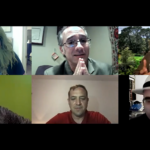
 The 2021 Movie Madness VII bracket with The Lord of the Rings: The Fellowship of the Ring named this year’s winner. Screenshot provided by Fisher.
 The Movie Madness Board (from left to right and top to bottom) of Brett McKenzie, Fisher, Greg Stryker, Chris Mondichak, Justin West, and Johns wore costumes in one of their filmed meetings. Screenshot provided by Fisher.
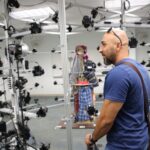



 Cano eating a typical Cartagenian dish.
  Cano in Cartagena. Photo courtesy of Cano.
 Nelson Mandela neighborhood. Photo courtesy of Cano.
 Afro-Colombian women selling fruit in Cartagena. Photo courtesy of Cano.
 Cano walking in downtown Baltimore. Photo courtesy of Cano.
 Ana Maria Schwartz Caballerro. Photo by Marlayna Demond.
 Scheirer in Germany during her study abroad. Photo courtesy of Scheirer.
 Scheirer (kneeling from the right) with UMBC’s equestrian club.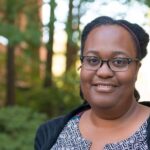

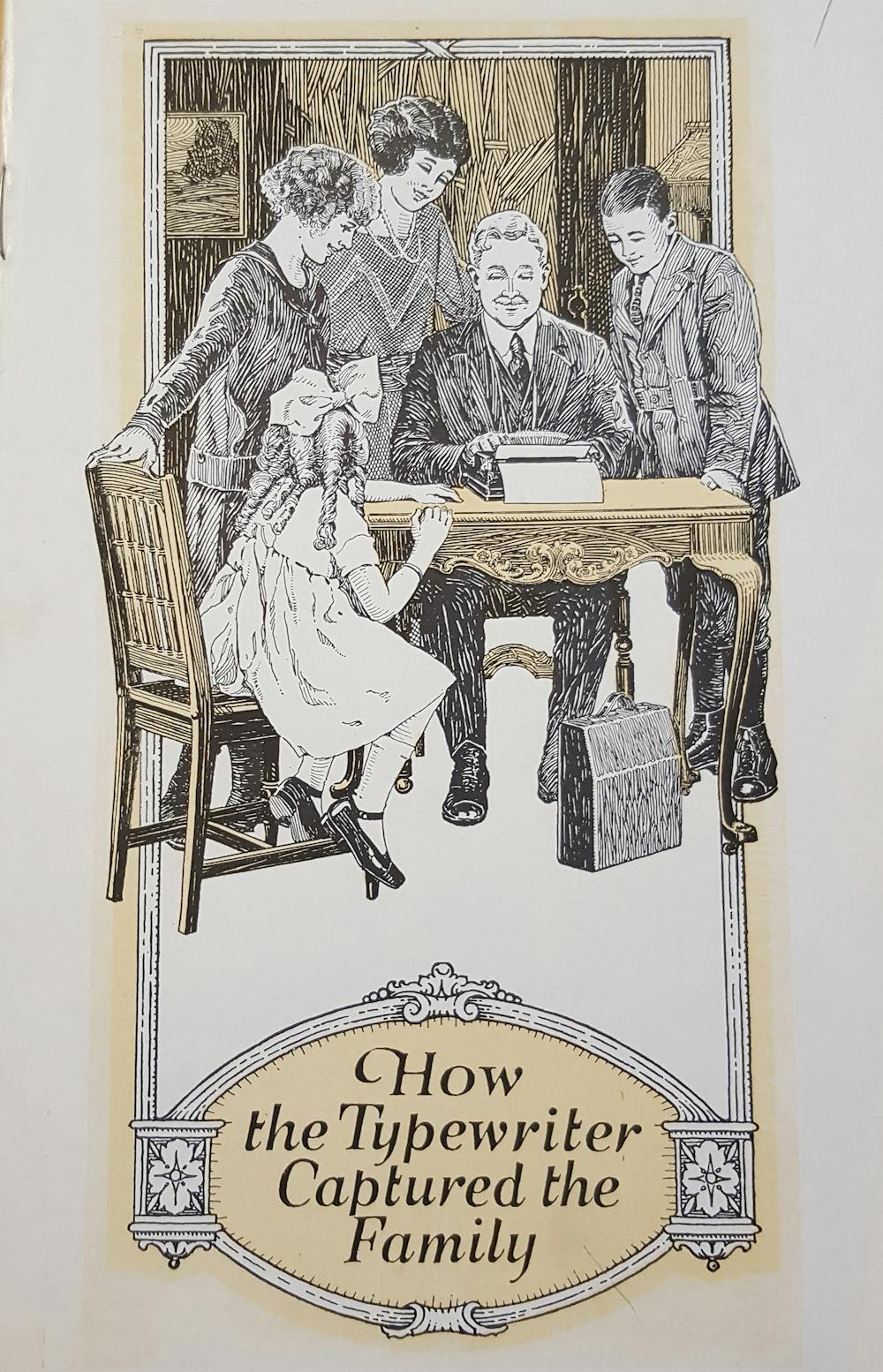

 Thomas Southerland. Photo courtesy of Southerland.
 Themi Cologer. Photo courtesy of Cologer.
 Amelia Torres working at her virtual internship from her grandparents’ house. Photo courtesy of Torres.
 The lobby of the Maryland Art Place (MAP). Photo courtesy of Torres.
 Hao Chen. Photo courtesy of Chen.
 Rehman Liaqat. Photo courtesy of Liaqat.
 Rehman Liaqat outside the State of Maryland courthouse.. Photo courtesy of Liaqat.
 Sarron Seyoum. Photo courtesy of Seyoum.