Leaving a Legacy: Inaugural Toliver Scholar Named

 LaMont Toliver, former director of the Meyerhoff Scholars Program.
UMBC has named its inaugural LaMont Toliver Scholar — graduating senior chemical engineering major Adrian Davey ’18, a member of the 26th Meyerhoff Scholars cohort.
Named for Meyerhoff Scholars Program director and Assistant Dean of Undergraduate Education LaMont Toliver, who passed away in 2012, the scholarship has been supported overwhelmingly by alumni and friends.
While at UMBC, Davey served as president of the National Society of Black Engineers as well as a teaching assistant and peer advisor while also completing research internships at UC Berkeley and the University of Texas at Austin.
Davey “embodies many of the qualities LaMont Toliver epitomized: integrity; spirit of service to our community; grit and tenacity of purpose; and, most of all, an unwavering instinct to treat others with compassion and respect,” wrote current Meyerhoff Director Keith Harmon in a letter to scholarship donors.
Davey plans to enter a Ph.D. program at the University of California, Berkeley, in chemical engineering in the fall.
“I am tremendously grateful to have been selected for this award,” he said. “Mr. Toliver was an incredibly inspirational figure for the Meyerhoff Scholars Program and beyond. I am immensely honored to be likened to him in any measure.”
— Jenny O’Grady
Learn more about the Meyerhoff Scholars Program
]]>
LaMont Toliver, former director of the Meyerhoff Scholars Program. UMBC has named its inaugural LaMont Toliver Scholar — graduating senior chemical engineering major Adrian Davey ’18, a member of...
https://umbc.edu/stories/meyerhoff-program-names-toliver-scholr/
https://my3.my.umbc.edu/api/v0/pixel/news/120379/guest@my.umbc.edu/6daa3ae1bdec4e8dd811088afa98e9a8/api/pixel
impact
meyerhoff
mhoff
UMBC News & Magazine
https://my3.my.umbc.edu/groups/umbc-news-magazine
https://assets1-my.umbc.edu/system/shared/avatars/groups/000/001/943/24435aa6207c452e7bc15cc74b42c7bb/xsmall.png?1748556657
https://assets1-my.umbc.edu/system/shared/avatars/groups/000/001/943/24435aa6207c452e7bc15cc74b42c7bb/original.png?1748556657
https://assets2-my.umbc.edu/system/shared/avatars/groups/000/001/943/24435aa6207c452e7bc15cc74b42c7bb/xxlarge.png?1748556657
https://assets2-my.umbc.edu/system/shared/avatars/groups/000/001/943/24435aa6207c452e7bc15cc74b42c7bb/xlarge.png?1748556657
https://assets3-my.umbc.edu/system/shared/avatars/groups/000/001/943/24435aa6207c452e7bc15cc74b42c7bb/large.png?1748556657
https://assets1-my.umbc.edu/system/shared/avatars/groups/000/001/943/24435aa6207c452e7bc15cc74b42c7bb/medium.png?1748556657
https://assets2-my.umbc.edu/system/shared/avatars/groups/000/001/943/24435aa6207c452e7bc15cc74b42c7bb/small.png?1748556657
https://assets1-my.umbc.edu/system/shared/avatars/groups/000/001/943/24435aa6207c452e7bc15cc74b42c7bb/xsmall.png?1748556657
https://assets2-my.umbc.edu/system/shared/avatars/groups/000/001/943/24435aa6207c452e7bc15cc74b42c7bb/xxsmall.png?1748556657
UMBC News & Magazine
0
0
false
Wed, 27 Jun 2018 22:37:04 -0400
Rhodes to Success
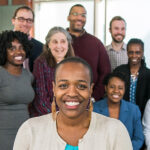
Becoming an academic superstar doesn’t happen overnight. It takes grit, character, and a community of true believers. Luckily for Naomi Mburu ’18 — UMBC’s very first Rhodes Scholar — she has all three.
by Jenny O’Grady
To read her resume, and to sense the shining future ahead of her, it would be easy to guess that Naomi Mburu was born an academic star. And, to a certain extent that is true.
In her senior year of studying chemical engineering, UMBC’s first Rhodes Scholar is predictably a whiz in the classroom and the lab. She’s also generous and patient, serving as a mentor to fellow engineering students and Meyerhoff Scholars, and a natural leader, exuding a quiet confidence beyond her years.
But, what makes Mburu special — and what has made her successful — is not some innate key to knowledge unattainable to others, but a deep desire to question the world around her, and the support system of family, professors, and friends at UMBC and elsewhere who have stoked and nurtured that flame from her earliest years.
As Mburu finishes out her final semester at UMBC, her packed schedule reflects the magnitude of her academic achievements — from an invitation to Washington, D.C., to hear the State of the Union Address, to a standing ovation at UMBC’s first basketball game in its new Event Center.
Amid all of the attention and interviews about the Rhodes, she and her family also continue to mourn the loss of her older brother, Nicholas, who unexpectedly passed away following a car accident just after the winter holiday. The loss shook them all, while also strengthening the bonds of her family and their local Kenyan community.
To handle so much takes strength, poise, and a true sense of self. One of her biggest fans, UMBC President Freeman Hrabowski — who told the Washington Post he cried upon hearing the news of her award in November — has watched her adjust these past months.
“What’s so impressive about Naomi is that she is as grounded as ever,” he said. “One senses her humility and authenticity in that great smile. She talks comfortably about the research that she’s done, about her future in England in nuclear engineering. She shows us the true Renaissance spirit.”
And in so many ways, this is just the beginning.
* * * * *
Over in the student apartments, Naomi Mburu ruins a pot of noodles.
It’s true: UMBC’s very first winner of “the oldest and most celebrated international fellowship awards in the world,” as defined by Rhodes, is still a bit wobbly with her cooking. She’s working on it, though, especially since hearing mixed reactions about the food options in England.
In the fall, she’ll continue her education in the Oxford lab of Dr. Peter Ireland studying heat transfer applications for nuclear fusion reactors. Over the summer, she’ll visit family in Kenya, and travel to Lindau, Germany, for an invitation-only Nobel conference. And in this, her final semester, where in addition to taking a full course load, she’s also TA-ing and coaching Lakeland Elementary students in math, and traveling many weekends for the National Society of Black Engineers, she’s also fielding media interviews, giving speeches — the whole nine yards.
Amid it all, she knows her weaknesses, and works to strengthen herself. Amid it all, she’s figuring out the noodles.
* * * * *
 “She had to find herself. I think she knew she was intelligent, but she had to dig deep and see how much potential she had. Funny enough, sometimes it takes a math class for you to see it.” — Douraine Donaldson (left), with Naomi and fellow Mount Hebron High School teacher Mary Ann Sankey.
The Early Bird
As a kid, Mburu struggled with math. Like so many, she just “didn’t get it.” But instead of complaining, and instead of letting her studies lag, she got up extra early each day to meet with her teacher Mary Ann Sankey, who was in at 6 a.m. to start setting up for class.
Together, they hashed out the numbers. Even though she had no idea of what she’d be studying five years later, Mburu somehow already knew that math would be the key to so much more. In her teachers at Mount Hebron High School and beyond, she found people who not only believed in her, but pushed her to challenge herself.
“Naomi came in before school started, and she was into it, wholeheartedly,” said Sankey. “She didn’t just want to know what the answer was, but how and why it was working. It’s a wonderful thing to see in a student.”
As a little girl, Mburu had a few jobs in mind for herself: inventor, spy, or pediatrician (although she ditched the last idea when she realized she hated blood). As her teachers broadened her view of what was possible, they also helped her shape her questions and her study habits.
When Douraine Donaldson, Mburu’s AP Calculus teacher recently heard President Hrabowski mention the word “grit” in a speech, she immediately thought of her former student, who she recalls never shied away from asking anything.
“I saw that level of determination as it was starting to emerge…you know, the no-fear attitude, the ability to question and wonder why, and push the boundaries,” said Donaldson, who described Mburu as a center of inquiry, drawing other students in to discuss a range of topics. “I think it really started to emerge in her junior year. And by the time Naomi graduated, she was just ready to take it on and challenge things even more.”
 “One of the great things about Naomi is that she’s going to be a person that a lot of other young women and young black women look at as a role model and success story. I think she’s going to inspire a lot of people.” — Lee Blaney, associate professor of chemical, biochemical and environmental engineering
As she began to figure out what types of work she enjoyed, Mburu knew she wanted to get into a lab environment. As a junior in high school, she attended an admissions event at UMBC where she met now-retired professor of biological sciences Lasse Lindahl, who offered her a position in his lab that summer.
“There were a ton of freshmen in the lab and juniors, and they didn’t treat me any differently” as a high schooler, she said. “I had to read a lot for the first couple of weeks to understand what was going on, but after I had my grounding, they let me run experiments.” By the end of the summer, she was invited to present at the Summer Undergraduate Research Festival with her college-level colleagues — an experience that helped her get over a fear of talking about her work, she said.
It wasn’t long before Mburu was a freshman at UMBC, figuring out her next steps with the help of a new cast of teachers.
Unsure of her major choice and looking for more hands-on experience, she approached Gymama Slaughter, associate professor of computer science and electrical engineering, during her freshman year, and left the meeting with a permanent spot on Slaughter’s team. In that role, the lone undergraduate chemical engineer among graduate-level researchers, Mburu learned quickly to stretch herself as a questioner and communicator.
“She’s a go-getter, she always hits the ground running, and she’s never afraid of whatever you’re going to give her…she’s excited and ready to do it,” said Slaughter, who has encouraged Mburu to follow her imagination in terms of what she studies, and has watched her student learn as much from her missteps as her successes.
“We all do fail miserably at times,” laughed Slaughter. “It’s important to allow students to fail rather than give them the answer all time…or they’re not really learning. It’s nice when a student like Naomi comes to you and says, ‘I read this, and I think this will work for us’…and I say: ‘Sure. Let’s try it.’”
Even in college, some old habits die hard. When she had trouble wrapping her head around a concept in Lee Blaney’s class on chemical manufacturing type processes, Mburu showed up early for office hours — and stayed for a full hour and a half, he said.
“I could tell that if I had to call the office hours closed and not get to that closure point with her, that it would drive her crazy,” said Blaney, an associate professor of chemical, biochemical and environmental engineering. “She wouldn’t give up on it.”
Both professors agreed she has the spark to take her work far — both as a researcher and as someone who can change the face of science.
“It’s a wonderful and a fulfilling feeling to see somebody that works with you is able to make such huge leaps in their own academic career, and I think that having the Rhodes and having the opportunity to go to Oxford and work with people from all around the world is wonderful,” said Slaughter. “I am simply overjoyed.”
 “She has great relationships with other students in the lab. We all joke that we want to be like Naomi. It’s true.” — Gymama Slaughter, associate professor of computer science and electrical engineering
* * * * *
Last year, Naomi willingly enlisted in a 10-mile race called the Tough Mudder — an obstacle course filled with pits to cross, walls to climb, and mud as far as the eye can see. She and her friends came out of it covered from head to toe in dirt, tired but smiling like crazy.
If life is a race, Naomi is cool with it. She’s one of those people who genuinely loves the rush of air into the lungs. Running clears the mind, and keeps her level.
And if life is an obstacle course, she’s more than prepared for whatever challenges may come.
* * * * *
Keys To Success
The process of applying for the Rhodes Scholarship is nothing close to easy. It involves writing multiple essays, asking for up to eight letters of recommendation, and participating in a series of increasingly pressure-filled interviews spanning a range of knowledge beyond one’s chosen field.
 On the roof of the Administration Building with Dr. April Householder ’95, director of undergraduate research.
So, last August, when Mburu told April Householder ’95, director of undergraduate research and head of UMBC’s then-brand-new office of prestigious scholarships, she wanted to apply for all three of the UK’s top prizes (the Rhodes, the Gates Cambridge, and the Marshall), Householder admits her first thought was, “You’re crazy.”
But Mburu pushed on, taking Householder’s challenge to think it over seriously. The following week, she returned to the office, paperwork in hand, ever more determined to get it done. In the weeks that followed, Mburu worked with Householder and staff in other campus offices to get her applications ready, practice mock interviews, and — in short — train for the marathon that is prestigious scholarship competition.
“One of the things that made her successful in this whole process is that she took every opportunity that UMBC had on offer and she followed through on it,” said Householder. And she did it so well that she actually won all three awards (though she could accept only one).
“She knows her worth, she knows herself, she’s taken the time to really get to know what she’s capable of,” said Jackie King, associate director of the MARC*U*STAR Program, in which Mburu participates. “So I was not surprised when she said, ‘I won the Rhodes.’ I said, ‘Of course you did.’”
Outside of the Rhodes, and despite the newness of UMBC’s specialized office, the university has a solid history of success with prestigious scholarships. In previous years, staff in the Honors College and elsewhere have coached applicants, many of whom have gone on to win the top UK prizes, as well as Fulbrights, Goldwaters, and others. (See “Serious Scholarship”.)
Simon Stacy, director of the Honors College, who has worked with a number of them over the years says that while many applicants to these top scholarships nationwide come from the Ivies — and with years of grooming for just such situations — UMBC students come to the table with grit and the willingness to quickly learn how to play the game.
“Naomi is open and self-confident, which I think is absolutely crucial for the Rhodes process because everybody is accomplished by the time they get to an interview, and an awful lot depends on the ability of an applicant to connect with the interviewers and to represent themselves as effective leaders — as someone like Naomi can,” he said. “Her ability to make herself known in a way that does her credit without seeming self-aggrandizing is such a striking thing.”
Add to that the four years of support and fellowship she’s received as part of the acclaimed Meyerhoff Scholars Program — which stands at the forefront of efforts to increase diversity among future leaders in science, technology, engineering, and related fields — and you can see how the community has truly stood behind her efforts. It’s a place where “we are all looking out for each other,” Mburu says.
“We always tell students there’s no limit to what they can do if they work hard, as long as they do their part to hold up a high personal standard of excellence,” said Keith Harmon, director of the Meyerhoff program. “The talent is here.”
* * * * *
Where do you find your strength?
For Naomi, it’s a combination of things: It’s her family and friends, who keep her grounded, who bring her joy. It’s the Kenyan community in and around her neighborhood experiencing the highs and lows of life together. And — above all — it’s her spirituality, her faith in God, that pushes her through the tough times.
“It’s a big part of who I am,” she says of her Christianity, her parents nodding beside her.
* * * * *
 “We all have a mission in this world, and it’s great when you can find yours.” — Joyce
Mburu (center), at home with Naomi and father, Joseph.
Those Most Dear
At the very beginning of Mburu’s journey are Joseph and Joyce Mburu, her parents, who emigrated from Kenya in the 1980s. Kind and hardworking, they fell in love while students at the University of Baltimore, both earning multiple graduate degrees as they built a family with Naomi and her older brother, Nicholas, a 2016 financial economics alumnus.
In their comfortable home, mother and daughter wear matching bracelets woven to spell the word “Kenya.” As the parents have infused a love of their heritage and spirituality in their daughter, so have they nurtured a deep desire to learn.
Joyce’s parents were both teachers, and her father was a pastor; Joseph’s father was a businessman who wasn’t able to go to college, so “going to college was very important to him, and he did the best he could to send us to the best schools,” he said.
 A family photo with brother Nicholas,
who passed away in January.
They try to be supportive without babying her, they laugh. When she started exploring prestigious scholarship options, they stood by her — even giving her a subscription to The Economist for Christmas to expand her world view — knowing full well a win would take their daughter to the other side of the Atlantic.
“You have to step away, but keep a watchful eye,” said Joseph. “You let her find her way — because that’s how they grow. That’s how they develop.”
“We are so proud of her,” agreed Joyce, who for years worked in the business office at UMBC and was able to be close to both of her children as they attended school.
When her brother, Nicholas, passed away in January, the family was comforted by the close-knit Kenyan community, both in Maryland and afar. But Naomi found herself dealing with an uncomfortable imbalance between the best and worst pieces of news of her life.
“I was flipping between those two emotions all the time — the extreme happiness about winning the scholarship, and then the sadness of him not being here,” she said, adding that he had looked forward to being interviewed for this article.
Through it all, Mburu’s friends have also proven a powerful positive force in her life, offering emotional support, laughter, late night snacks, and unflinching love. Her friend Anna Gifty Opoku-Agyeman, a math and econ major, uses the words of King Solomon to describe their friendship: “As iron sharpens iron, so does one sharpen another.”
The night Mburu found out she won the Rhodes, Anna and friends scooped her up and took her for her favorite meal — Kabab Hut — and some delicious Korean bakery treats. As they chowed down, her roommates and neighbors in the Hillside Apartments pulled together a surprise party for when she returned, complete with confetti, cake, and about a thousand hugs.
“They have all been just super, super, super supportive of everything I’ve done,” Mburu said of her friends. “We’re not competing necessarily against each other; we’re more so trying to make sure we’re getting better together.”
In fact, many of them played key roles in her Rhodes journey, providing serious feedback on her essays, and tossing potential interview questions back and forth between them. One of those people was Adrian Davey, who befriended Mburu the summer before their freshman year.
“I jumped with joy and yelled in my room,” he said, out of joy for his friend.
“The icing on the cake is that through it all, she remains humble,” said Olanike Awotunde, another friend from the Meyerhoff program.
 “My friends have all been super, super, super supportive of everything I’ve done, helping me all the way.” – Naomi Mburu. Above, Naomi with Anna Gifty Opoku-Agyeman and Olanike Awotunde. Below left: With friend Adrian Davey at the 2017 National Society of Black Engineers Fall Regional Conference in Greensboro, NC. At right: With friend Olanike Awotunde at the surprise party following Naomi’s Rhodes announcement.
* * * * *
The night UMBC opened its new Event Center, the seats were packed with fans. On the sidelines, behind the video cameras, Naomi stood waiting for her cue, decked out in a black t-shirt with gold paws across the front.
“Ladies and Gentlemen, UMBC Athletics would like to offer a special welcome to Naomi Mburu, the first Rhodes Scholar in UMBC History!” As she walks to the center of the court, the crowd erupts in applause and a full-on standing ovation, cheering wildly.
This is a very UMBC moment, and Naomi is very much a UMBC star.
* * * * *
The Big Picture
Speaking to a group of high schoolers from Baltimore City this spring, Mburu fields a common question: “Have you ever felt like you couldn’t do something?
“I guess sometimes it seems like, ‘Oh, this person’s never failed at anything, but I fail at things all the time,’” she reflects. “I really enjoy talking to them at their level and explaining that I struggle with things all the time. I’ve failed tests before…I still fail tests.”
This one-on-one is a huge part of who Mburu is, and who she hopes to be for others. Besides studying nuclear fission and trying to solve the energy crisis for future generations — no biggie, right? — she’s also hoping to act as a positive role model, just as so many of her teachers have for her.
“There are so many people who have helped me along the way,” she says. “I think it’s really important for people who aren’t in science to understand what’s going on in the scientific world — especially young people who are deciding what they want to do, because sometimes it can seem like a hurdle that they can’t surpass if they’ve never even had anyone to talk to about science in a way that they understood.”
Speaking of relatability, Mburu found out some exciting news about her new lab at Oxford: She’ll actually be the second Kenyan woman Rhodes there.
“I sent her an email and she emailed me back instantly,” she said, smiling. “I’m so excited.”
Soon she will be packing for her summer travels, and figuring out a new life in England. As she reflects on the last half a year, and thinks about all that lies ahead, she feels good. She’s on the right track.
“Sometimes it’s been exhausting having to go from thing to thing to thing, but I really enjoy what I’m doing,” she says. “I get excited to think that someone would think that my story is inspirational, and they could do the same thing, it it makes it all worth it.”
]]>
Becoming an academic superstar doesn’t happen overnight. It takes grit, character, and a community of true believers. Luckily for Naomi Mburu ’18 — UMBC’s very first Rhodes Scholar — she has all...
https://umbc.edu/stories/rhodes/
https://my3.my.umbc.edu/api/v0/pixel/news/120403/guest@my.umbc.edu/78800ccb9a09fcbaf5ca93ac167259c0/api/pixel
discovery
meyerhoff
mhoff
rhodes-scholar
spring-2018
UMBC News & Magazine
https://my3.my.umbc.edu/groups/umbc-news-magazine
https://assets1-my.umbc.edu/system/shared/avatars/groups/000/001/943/24435aa6207c452e7bc15cc74b42c7bb/xsmall.png?1748556657
https://assets1-my.umbc.edu/system/shared/avatars/groups/000/001/943/24435aa6207c452e7bc15cc74b42c7bb/original.png?1748556657
https://assets2-my.umbc.edu/system/shared/avatars/groups/000/001/943/24435aa6207c452e7bc15cc74b42c7bb/xxlarge.png?1748556657
https://assets2-my.umbc.edu/system/shared/avatars/groups/000/001/943/24435aa6207c452e7bc15cc74b42c7bb/xlarge.png?1748556657
https://assets3-my.umbc.edu/system/shared/avatars/groups/000/001/943/24435aa6207c452e7bc15cc74b42c7bb/large.png?1748556657
https://assets1-my.umbc.edu/system/shared/avatars/groups/000/001/943/24435aa6207c452e7bc15cc74b42c7bb/medium.png?1748556657
https://assets2-my.umbc.edu/system/shared/avatars/groups/000/001/943/24435aa6207c452e7bc15cc74b42c7bb/small.png?1748556657
https://assets1-my.umbc.edu/system/shared/avatars/groups/000/001/943/24435aa6207c452e7bc15cc74b42c7bb/xsmall.png?1748556657
https://assets2-my.umbc.edu/system/shared/avatars/groups/000/001/943/24435aa6207c452e7bc15cc74b42c7bb/xxsmall.png?1748556657
UMBC News & Magazine
0
0
false
Thu, 07 Jun 2018 16:36:32 -0400
Path to Success: Psychiatrist Chinedu Varma ’04, M12, serves Retrievers at UMBC Counseling Center

When asked what kind of advice she has for first-year students as an alumna, Chinedu Onyedike Varma ’04, M12, interdisciplinary studies, has a simple answer: find your passion, get involved, and have fun – “as long as it’s safe,” she’s quick to add.
As a consulting psychiatrist at the UMBC Counseling Center, keeping students safe is a big part of her job, along with giving them the mental health support they need to have the best college experience possible.
Students seek out Counseling Center services for a whole range of concerns, whether they’re grappling with anxiety and depression, questioning aspects of their identity, or dealing with the myriad stresses that come from both college life and the daily news cycle. Last year, more than 1,000 individual students visited the center, according to its director, Bruce Herman.
“I think there’s starting to [be] better recognition of how important mental health is, but despite this, there’s still this huge stigma,” says Varma. To her, her role is not just to treat students, but to educate them on how to navigate their formative years.
Varma knew from a very young age that she wanted to be a doctor: “My mom was a nurse, and she often had her stethoscope, and I would play with it. That’s where I got the idea.” When she got to UMBC, she forwent the traditional pre-med route to design an INDS major in biomedical ethics, which she figured would set her apart from the crowd when application time came. Like many students do, she re-evaluated her career goals throughout her time at UMBC. After graduation, she returned to her home state of Virginia to serve a year with the AmeriCorps VISTA program, and became a certified mediator for family and small-claims court cases, which helped her hone her skills as a communicator.
 At the end of her year of service, Varma enrolled at the Johns Hopkins University School of Medicine, where she started out in internal medicine, but wound up enjoying her pediatrics rotation a lot better. It was a sub-internship in the pediatric HIV clinic, where she worked weekly with a psychiatrist who treated children facing unimaginable circumstances, that convinced her to go in another direction entirely.
“The patients would come in, and they were predominantly born with HIV. [They] would be depressed or anxious…like, ‘I’m not going to have a life, what’s the point, why did my mother do this to me…I’m not going to be able to get married, I’m not going to be able to have kids.’ And in that depressed state, in that anxious state, they were not really making the best decisions.”
For Varma, the experience was “heartbreaking and fascinating,” and spoke to her interest in public health, along with working with young people. She went on to earn an M.D./M.P.H. and complete an adult psychiatry residency at Hopkins before serving as chief resident in her child and adolescent psychiatry fellowship at New York Presbyterian Hospital and Cornell University.
In 2015, Varma returned to Baltimore to start a career in community mental health, working with youth in Baltimore City Public Schools and in juvenile detention centers. When she started looking for work that would allow her to spend more time with her newborn daughter, she came across a part-time position at the counseling center at another university in Maryland.
While some child and adolescent psychiatry fellowships offer clinical rotations at colleges, hers did not, and when she started her new position, surrounded by students and trainees, she fell in love with being on a campus again.
“I really like academics in general,” she says. “I enjoyed training at Hopkins, I enjoyed those university settings, and that was the pull for me. […] When I got there, I was like…this. Is. Awesome. This is so great. I want to do this all the time.”
Varma enjoyed the new job so much that she wrote to the counseling center at UMBC, asking if there were any open positions for a consulting doctor. Now, she works part of the week in a small, unassuming practicum office in the portable building across from Erickson Hall, dividing the rest of her time between two other colleges.
It’s an interesting time to be a mental health professional, no less a mental health professional in a university setting. At UMBC, many of Varma’s patients are international or immigrant students who face an uncertain future under the current presidential administration.
“For a lot of reasons, this is an emotionally trying time for a lot of people,” she says. “Especially on this campus, I have a greater appreciation for those students that are coming from other countries…[regarding] their concerns about ‘Where am I going to be next semester? Am I going to be allowed to be in this country?’” She has also met with several students concerned about their fellow Retrievers in light of the current political climate.
No matter their concerns, Varma wants students to know the Counseling Center is open to them all.
“Someone that’s struggling…wants to be able to know that there are treatments that work, there are people that can help, that the Counseling Center is there on campus and accessible,” she said. “Students are … incredibly grateful for the dedication and support that the counseling center staff provides…[and] being able to set them up for success is a big motivating factor for me.”
— Julia Celtnieks ’13
photos by Marlayna Demond ’11
]]>
When asked what kind of advice she has for first-year students as an alumna, Chinedu Onyedike Varma ’04, M12, interdisciplinary studies, has a simple answer: find your passion, get involved, and...
https://umbc.edu/stories/path-to-success-psychiatrist-chinedu-varma-04-m12-serves-retrievers-at-umbc-counseling-center/
https://my3.my.umbc.edu/api/v0/pixel/news/120604/guest@my.umbc.edu/bfa3d9c3768b7b3b7751a379ebc566a3/api/pixel
alumni
meyerhoff
meyerhoff-scholars
mhoff
UMBC News & Magazine
https://my3.my.umbc.edu/groups/umbc-news-magazine
https://assets1-my.umbc.edu/system/shared/avatars/groups/000/001/943/24435aa6207c452e7bc15cc74b42c7bb/xsmall.png?1748556657
https://assets1-my.umbc.edu/system/shared/avatars/groups/000/001/943/24435aa6207c452e7bc15cc74b42c7bb/original.png?1748556657
https://assets2-my.umbc.edu/system/shared/avatars/groups/000/001/943/24435aa6207c452e7bc15cc74b42c7bb/xxlarge.png?1748556657
https://assets2-my.umbc.edu/system/shared/avatars/groups/000/001/943/24435aa6207c452e7bc15cc74b42c7bb/xlarge.png?1748556657
https://assets3-my.umbc.edu/system/shared/avatars/groups/000/001/943/24435aa6207c452e7bc15cc74b42c7bb/large.png?1748556657
https://assets1-my.umbc.edu/system/shared/avatars/groups/000/001/943/24435aa6207c452e7bc15cc74b42c7bb/medium.png?1748556657
https://assets2-my.umbc.edu/system/shared/avatars/groups/000/001/943/24435aa6207c452e7bc15cc74b42c7bb/small.png?1748556657
https://assets1-my.umbc.edu/system/shared/avatars/groups/000/001/943/24435aa6207c452e7bc15cc74b42c7bb/xsmall.png?1748556657
https://assets2-my.umbc.edu/system/shared/avatars/groups/000/001/943/24435aa6207c452e7bc15cc74b42c7bb/xxsmall.png?1748556657
UMBC News & Magazine
0
0
false
Tue, 07 Nov 2017 19:32:18 -0500
Alumni Awards 2017: Kafui Dzirasa ’01, M8, Chemical Engineering

In the weeks leading up to the Alumni Awards Ceremony, we’ll be profiling each honoree in more detail here on our blog. Today, meet Kafui Dzirasa ’01, M8, chemical engineering, associate professor at the Duke University School of Medicine and this year’s Outstanding Alumnus in Engineering and Information Technology.
As an associate professor of psychiatry, behavioral science, neurobiology, and neurosurgery at the Duke University School of Medicine, Kafui Dzirasa ’01, M8, chemical engineering, has dedicated his career to creating a kind of “pacemaker for the brain,” a device that can effectively rewire neurological signals in patients with bipolar disorder, schizophrenia, and other illnesses. His research has earned him, among other accolades, the 2013 Sidney R. Baer Prize for Innovative and Promising Schizophrenia Research, as well as a 2016 Presidential Early Career Award for Scientists and Engineers (PECASE), the highest award given to young scientists by the U.S. government. According to Dalton Hughes ’14, M21, chemical engineering, now an M.D./Ph.D. student working in Dzirasa’s lab at Duke, he is not only “a powerhouse in the fields of engineering, neuroscience, and medicine,” but a “phenomenal research mentor, captivating speaker, compassionate physician, and exceptional educator.”
“[Dr. Dzirasa’s] demonstrated commitment to UMBC and its students is truly special,” writes Keith Harmon, director of the Meyerhoff Scholars Program, “is truly special, and an inspiring example of a selfless spirit determined to ‘pay forward’ all that was poured into him at UMBC.”
Join us for the Alumni Awards Ceremony on Thursday, October 5!
Dr. Dzirasa will also be giving a Grit-X Talk on Saturday, October 14…sign up to reserve your seat today!
]]>
In the weeks leading up to the Alumni Awards Ceremony, we’ll be profiling each honoree in more detail here on our blog. Today, meet Kafui Dzirasa ’01, M8, chemical engineering, associate professor...
https://umbc.edu/stories/alumni-awards-2017-kafui-dzirasa-01-m8-chemical-engineering/
https://my3.my.umbc.edu/api/v0/pixel/news/120664/guest@my.umbc.edu/4550921b349b578150ccb8f1b11914a4/api/pixel
alumni
alumni-awards-2017
chemical-engineering
kafui-dzirasa
meyerhoff
meyerhoff-scholars
UMBC News & Magazine
https://my3.my.umbc.edu/groups/umbc-news-magazine
https://assets1-my.umbc.edu/system/shared/avatars/groups/000/001/943/24435aa6207c452e7bc15cc74b42c7bb/xsmall.png?1748556657
https://assets1-my.umbc.edu/system/shared/avatars/groups/000/001/943/24435aa6207c452e7bc15cc74b42c7bb/original.png?1748556657
https://assets2-my.umbc.edu/system/shared/avatars/groups/000/001/943/24435aa6207c452e7bc15cc74b42c7bb/xxlarge.png?1748556657
https://assets2-my.umbc.edu/system/shared/avatars/groups/000/001/943/24435aa6207c452e7bc15cc74b42c7bb/xlarge.png?1748556657
https://assets3-my.umbc.edu/system/shared/avatars/groups/000/001/943/24435aa6207c452e7bc15cc74b42c7bb/large.png?1748556657
https://assets1-my.umbc.edu/system/shared/avatars/groups/000/001/943/24435aa6207c452e7bc15cc74b42c7bb/medium.png?1748556657
https://assets2-my.umbc.edu/system/shared/avatars/groups/000/001/943/24435aa6207c452e7bc15cc74b42c7bb/small.png?1748556657
https://assets1-my.umbc.edu/system/shared/avatars/groups/000/001/943/24435aa6207c452e7bc15cc74b42c7bb/xsmall.png?1748556657
https://assets2-my.umbc.edu/system/shared/avatars/groups/000/001/943/24435aa6207c452e7bc15cc74b42c7bb/xxsmall.png?1748556657
UMBC News & Magazine
0
0
false
Mon, 25 Sep 2017 13:30:39 -0400
Creating a “Pacemaker” for the Brain
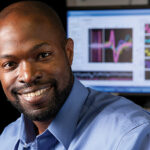
Kafui Dzirasa ’01, chemical engineering, is only 38, but is already emerging as a national leader in brain science. His research – which posits that some of the most common mental illnesses might be explained by unexpected connections between electrical patterns in different parts of the brain – could lead to more targeted and effective ways to treat conditions from schizophrenia to autism to depression.
The former Meyerhoff Scholar has also drawn national attention. Last October, as part of a White House panel on research, he found himself explaining to the leader of the free world what it means to think about the brain as an engineered electrical system.
Dzirasa started out at UMBC as a chemistry major but switched to chemical engineering so he could continue using math and computer science, subjects he enjoyed in high school. As graduation approached, he found himself gravitating toward health-related fields, so he stayed on for a fifth year to take pre-med courses and serve as student body president. “I realized it would be useful to learn as much about the body as I could,” he says.
Dzirasa then headed to Duke University to earn his M.D./Ph.D. in bioengineering, with the goal of designing neuroprosthetics—devices that interface with and augment the brain’s abilities and functions. But a stint in Duke’s schizophrenia ward realigned Dzirasa’s plans, awakening him to the huge need for better mental health treatments. “It was not until I got to the clinic that I realized mental illness was a real thing,” he says. “It was tremendous wake-up call.” Instead of giving healthy people additional capabilities, he realized he could help sick people live fuller lives by creating neuroprosthetics for mental illness.
While scientists believe that psychiatric symptoms should map onto underlying physical conditions in the brain, identifying those conditions has been challenging. Scientists still have a limited understanding of the neural basis of most illnesses or why treatments such as antidepressant drugs and electroshock therapy are effective.
Dzirasa, now an assistant professor in Duke’s biomedical engineering and neurobiology departments, hopes to change that by studying the brain’s electrical signals. Though we hear a lot about brain chemicals, the brain is also electrical: Like the information-processing transistors in your computer or phone, each of the roughly 100 billion neurons in your brain transmits information using electrical impulses. Dzirasa takes advantage of this by inducing various conditions—stress, bipolar disorder, even drug addiction—in mice and using tiny implanted electrodes to measure how electrical activity changes.
He uses mathematical and computational tools to find connections between recorded electrical patterns in different brain areas. In the prestigious journal Neuron, he recently reported an instance in which communication between two regions in a mouse’s brain was influenced by activity in a third, seemingly unrelated, one. When he exposed the mice to stress, the communication broke down. “It’s almost like parents sitting in the front seat of a car and kids sitting in the back,” he says. “When the parents are controlling the kids’ communication, everything is fine. But if you tell the kids to stop talking and they don’t, then you’ve got problems. We found that the parent lost the ability to control the kids’ communication.”
Dzirasa’s ultimate goal is to make a “pacemaker” for the human brain. Like the heart implant that restores a regular heartbeat, his dream device would correct faulty electrical signals that underlie debilitating conditions such as schizophrenia and bipolar disorder. “If mental disorders are problems with electricity, we should be able to treat them using electricity,” he says. “I could see a future in which people sleep in a hat” wired with electrodes to stimulate healthy brain function.
A recent discovery may be a step in that direction: Dzirasa and colleagues have figured out a way to not just read but write electrical information from one part of the brain to another. He has a paper coming out and a patent pending on the technique. But challenges remain. For obvious reasons, he cannot stick wires into a living human the way he can in a mouse, and there are significant differences between how mouse and human brains work that need to be accounted for. Translating his findings from mice to humans is “the next step,” he says.
Dzirasa credits UMBC’s Meyerhoff Scholarship program with shaping his career ambitions. And he is now giving back to the program that helped him, returning to campus once or twice a month to mentor scholars in “everything from career advice to life advice, decision-making advice—all the things that go along with helping college students figure out their place in the world.”
It’s yet another set of connections through which Dzirasa is making the world a better, more caring place.
— Gabriel Popkin
Image: Les Todd, Duke Photography
Read more about brain research at UMBC in “Staking Our Claim.”
]]>
Kafui Dzirasa ’01, chemical engineering, is only 38, but is already emerging as a national leader in brain science. His research – which posits that some of the most common mental illnesses might...
https://umbc.edu/stories/creating-a-pacemaker-for-the-brain/
https://my3.my.umbc.edu/api/v0/pixel/news/120746/guest@my.umbc.edu/2c9ef4a272437f88ceea30b03315d1c0/api/pixel
alumni
brain
duke
kafui-dzirasa
meyerhoff
mhoff
spring-2017
umbc
UMBC News & Magazine
https://my3.my.umbc.edu/groups/umbc-news-magazine
https://assets1-my.umbc.edu/system/shared/avatars/groups/000/001/943/24435aa6207c452e7bc15cc74b42c7bb/xsmall.png?1748556657
https://assets1-my.umbc.edu/system/shared/avatars/groups/000/001/943/24435aa6207c452e7bc15cc74b42c7bb/original.png?1748556657
https://assets2-my.umbc.edu/system/shared/avatars/groups/000/001/943/24435aa6207c452e7bc15cc74b42c7bb/xxlarge.png?1748556657
https://assets2-my.umbc.edu/system/shared/avatars/groups/000/001/943/24435aa6207c452e7bc15cc74b42c7bb/xlarge.png?1748556657
https://assets3-my.umbc.edu/system/shared/avatars/groups/000/001/943/24435aa6207c452e7bc15cc74b42c7bb/large.png?1748556657
https://assets1-my.umbc.edu/system/shared/avatars/groups/000/001/943/24435aa6207c452e7bc15cc74b42c7bb/medium.png?1748556657
https://assets2-my.umbc.edu/system/shared/avatars/groups/000/001/943/24435aa6207c452e7bc15cc74b42c7bb/small.png?1748556657
https://assets1-my.umbc.edu/system/shared/avatars/groups/000/001/943/24435aa6207c452e7bc15cc74b42c7bb/xsmall.png?1748556657
https://assets2-my.umbc.edu/system/shared/avatars/groups/000/001/943/24435aa6207c452e7bc15cc74b42c7bb/xxsmall.png?1748556657
UMBC News & Magazine
0
0
false
Wed, 31 May 2017 13:43:47 -0400
Legends of Excellence 2017: The Rev. Dr. Jamie Washington, Former Assistant Vice President of Student Affairs
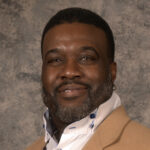
Hosted every five years by the UMBC Chapter of Black and Latino Alumni (CBLA), the Legends of Excellence Awards Brunch honors the achievements and contributions of faculty and staff who have made a significant impact on the lives of UMBC’s black and Latino students. In the weeks leading up to this year’s event, we’ll be profiling each of this year’s honorees here on our blog. Read on for today’s bio…
 The Rev. Dr. Jamie Washington arrived at UMBC in 1986 as the Assistant Director of Residential Life, and at first, he says, he “wasn’t sure how [he] would be received” by the campus community. “As an openly gay, African-American, Christian man,” he writes, “I had experienced my share of people not being willing to engage fully.” However, he inspired a generation of students by being his most authentic self, and “[showing] up in truth, compassion…and excellence.”
Given his background in social justice work, the Rev. Dr. Washington was initially hired to help improve diversity training for resident assistants and professional staff in ResLife. Over his 16-year career at UMBC, he played several key roles in the administration, serving as Multicultural Affairs Coordinator, Assistant to the Vice President for Student Affairs, Director of Student Life, and, finally, Assistant Vice President for Student Affairs. Washington also taught as an affiliate faculty member in the Departments of American Studies, Gender and Women’s Studies, and Social Work.
The Rev. Dr. Washington left UMBC in 2002 to answer a call to ministry and attend Howard University School of Divinity. During his time in divinity school, the Washington Consulting Group (WCG), his diversity consulting firm, began to grow. In 2015, WCG was named one of the top 10 global diversity consulting groups in the world. Dr. Washington serves as the company’s president and CEO, as well as the co-pastor of Unity Fellowship Church of Baltimore and the President and Co-Founder of the Social Justice Training Institute. In addition to his M.Div. from Howard, he holds a B.S. in therapeutic recreation and music therapy from Slippery Rock State College, an M.S. in higher education and student affairs and a second M.S. in counseling and counselor education from Indiana University, and a Ph.D. in counseling and personnel services from the University of Maryland.
Washington’s former students remember him as a man of integrity, who was “instrumental in developing leaders at UMBC.” Washington, for his part, counts them as his “greatest success.”
“They taught me what it means to be a servant leader, [and] that authenticity would, in fact, lead to deeper and more impactful relationships,” he writes. He remains connected to campus today by working with the Meyerhoff Summer Bridge Program, as well as through Residential and Student Life, the departments where he made his mark on the university.
Register NOW for the Legends of Excellence Awards Brunch on Saturday, May 6!
]]>
Hosted every five years by the UMBC Chapter of Black and Latino Alumni (CBLA), the Legends of Excellence Awards Brunch honors the achievements and contributions of faculty and staff who have made...
https://umbc.edu/stories/legends-of-excellence-2017-the-rev-dr-jamie-washington-former-assistant-vice-president-of-student-affairs/
https://my3.my.umbc.edu/api/v0/pixel/news/120828/guest@my.umbc.edu/ed1639f2fac5ec9c4805fcab204cc3f4/api/pixel
alumni
legends-of-excellence-2017
meyerhoff
UMBC News & Magazine
https://my3.my.umbc.edu/groups/umbc-news-magazine
https://assets1-my.umbc.edu/system/shared/avatars/groups/000/001/943/24435aa6207c452e7bc15cc74b42c7bb/xsmall.png?1748556657
https://assets1-my.umbc.edu/system/shared/avatars/groups/000/001/943/24435aa6207c452e7bc15cc74b42c7bb/original.png?1748556657
https://assets2-my.umbc.edu/system/shared/avatars/groups/000/001/943/24435aa6207c452e7bc15cc74b42c7bb/xxlarge.png?1748556657
https://assets2-my.umbc.edu/system/shared/avatars/groups/000/001/943/24435aa6207c452e7bc15cc74b42c7bb/xlarge.png?1748556657
https://assets3-my.umbc.edu/system/shared/avatars/groups/000/001/943/24435aa6207c452e7bc15cc74b42c7bb/large.png?1748556657
https://assets1-my.umbc.edu/system/shared/avatars/groups/000/001/943/24435aa6207c452e7bc15cc74b42c7bb/medium.png?1748556657
https://assets2-my.umbc.edu/system/shared/avatars/groups/000/001/943/24435aa6207c452e7bc15cc74b42c7bb/small.png?1748556657
https://assets1-my.umbc.edu/system/shared/avatars/groups/000/001/943/24435aa6207c452e7bc15cc74b42c7bb/xsmall.png?1748556657
https://assets2-my.umbc.edu/system/shared/avatars/groups/000/001/943/24435aa6207c452e7bc15cc74b42c7bb/xxsmall.png?1748556657
UMBC News & Magazine
0
0
false
Thu, 20 Apr 2017 13:00:52 -0400
Hurdles & Healing
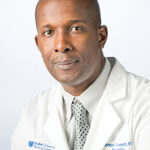
Damon Tweedy ’96, biological science, graduated from UMBC in 1996 with a 4.0 grade point average – the first participant in the Meyerhoff Scholars Program to achieve that mark. And when he entered Duke Medical School, he excelled in the classroom there as well.
But when Tweedy began his clinical rotations and his residency after taking his M.D., he faced the task of translating that knowledge into effective care for real human beings. He also found his transition carried special challenges. He was one of the few African American students in his medical-school cohort, and he was training in a state with enormous racial, class, and regional disparities in health care access. Patients turned to Tweedy with expectations – and occasional open hostility – that his non-black colleagues didn’t experience.
Tweedy’s bestselling book, Black Man in a White Coat: A Doctor’s Reflections on Race and Medicine (Picador, 2015), subtly explores several types of bias commonly experienced by both patients and health professionals.
“One of the first things I noticed in residency was the custom of naming patients’ races when they’re presented in rounds,” says Tweedy, who is now an assistant professor of psychiatry at Duke. “‘So-and-so is a 55-year-old African American male.’ I thought: Why mention race? Occasionally it’s genuinely significant, but often it seems that the patient gets typecast before you even get to the rest of the story.”
Tweedy was raised in a working-class suburb of Washington, D.C., where his father worked as a grocery-store meat cutter for many years. UMBC recruited Tweedy on two fronts. First, he was spotted by UMBC President Freeman A. Hrabowski, III in the science-and-mathematics magnet program at Eleanor Roosevelt High School in Greenbelt. But he was also on the radar of the university’s basketball coaches.
“When I visited campus,” Tweedy recalls, “I got to know other current and prospective Meyerhoff students. I just remember that for so many years I’d felt out of place – being an African-American student who was doing well in science and math – and feeling like here at UMBC there was a space where I could be myself and succeed.”
Earnestine Baker, who directed the Meyerhoff program after Hrabowski became UMBC’s president, remembers Tweedy as a compelling student in the program’s early years.
“Damon had a quiet demeanor,” Baker says. “But he had this spark about him that made you want to know him, and to know more about him.” She recalls long conversations when Tweedy made the decision to leave the basketball team after his sophomore year. He realized that he had a chance at graduating with a perfect GPA, and he didn’t want anything to distract from that goal.
“One of the great things about the Meyerhoff program,” Tweedy says, “was that they not only paid close attention to how you were doing in the classroom, but they also encouraged you to get into summer research programs, to get exposed to people in the field and to the life of the laboratory.”
One summer placement in a National Institute on Aging lab in Baltimore led Tweedy to consider medical school. “One of the researchers there was a cardiologist who had trained at Johns Hopkins,” Tweedy says. “That was one of the first times I’d met a young male African-American physician…. He kind of took me under his wing, and he introduced me to other doctors and med students. The idea of becoming a doctor was really foreign to me. In terms of knowing people in my own life who’d traveled that road, I had no frame of reference at all.”
At Duke, Tweedy gravitated toward psychiatry, a field with acute disparities in access to care. “Depending on your insurance,” he says, “you might have access to 30 days of inpatient treatment, or you might have access to two days.”
Today Tweedy divides his time between clinical practice at Durham’s Veterans Affairs hospital and training medical students and residents at Duke. He leads a course for first-year students on the doctor-patient relationship, and tries to draw students’ attention to the many kinds of conscious and unconscious bias that can complicate that relationship.
“I try not to beat them over the head with it,” Tweedy says. “But I try to show them the subtle ways in which these issues can come up in different encounters. You may have all the knowledge in the world, but if you can’t communicate with the patient and understand where they’re coming from, you really can’t deliver optimal care.”
—David Glenn
]]>
Damon Tweedy ’96, biological science, graduated from UMBC in 1996 with a 4.0 grade point average – the first participant in the Meyerhoff Scholars Program to achieve that mark. And when he entered...
https://umbc.edu/stories/hurdles-healing/
https://my3.my.umbc.edu/api/v0/pixel/news/121069/guest@my.umbc.edu/9fcdf9f834b3c159fba7f57fc0cc5237/api/pixel
alumni
damon-tweedy
meyerhoff
summer-2016
UMBC News & Magazine
https://my3.my.umbc.edu/groups/umbc-news-magazine
https://assets1-my.umbc.edu/system/shared/avatars/groups/000/001/943/24435aa6207c452e7bc15cc74b42c7bb/xsmall.png?1748556657
https://assets1-my.umbc.edu/system/shared/avatars/groups/000/001/943/24435aa6207c452e7bc15cc74b42c7bb/original.png?1748556657
https://assets2-my.umbc.edu/system/shared/avatars/groups/000/001/943/24435aa6207c452e7bc15cc74b42c7bb/xxlarge.png?1748556657
https://assets2-my.umbc.edu/system/shared/avatars/groups/000/001/943/24435aa6207c452e7bc15cc74b42c7bb/xlarge.png?1748556657
https://assets3-my.umbc.edu/system/shared/avatars/groups/000/001/943/24435aa6207c452e7bc15cc74b42c7bb/large.png?1748556657
https://assets1-my.umbc.edu/system/shared/avatars/groups/000/001/943/24435aa6207c452e7bc15cc74b42c7bb/medium.png?1748556657
https://assets2-my.umbc.edu/system/shared/avatars/groups/000/001/943/24435aa6207c452e7bc15cc74b42c7bb/small.png?1748556657
https://assets1-my.umbc.edu/system/shared/avatars/groups/000/001/943/24435aa6207c452e7bc15cc74b42c7bb/xsmall.png?1748556657
https://assets2-my.umbc.edu/system/shared/avatars/groups/000/001/943/24435aa6207c452e7bc15cc74b42c7bb/xxsmall.png?1748556657
UMBC News & Magazine
0
0
false
Wed, 03 Aug 2016 19:54:35 -0400
Firm Foundations – Earnestine Baker
Earnestine “Ernie” Baker
UMBC’s Meyerhoff Scholars Program, created in 1988, is one of the landmark contributions to student success at the university – and has become a national and international model for creating greater diversity in STEM disciplines through concentrated cohort learning. Earnestine Baker, served as director and later executive director of the program before turning over the reins to her successor, the late Lamont Tolliver, who was succeeded by Keith Harmon.
What follows are edited excerpts from a recent UMBC Magazine interview with Baker.
Read our full story about how staff built UMBC’s infrastructure for student success.
On transition from UMBC’s associate director for scholarships to The Meyerhoff Scholars Program:
I was working as the associate director of scholarships, and at the same time was working with [Freeman A. Hrabowski, III] and [former Meyerhoff director] Susan Boyer on the Meyerhoff concept. I was a part of that very first meeting in July in 1988 that Dr. Hrabowski had with the staff.
In the first conversation I had with Dr. Hrabowski, he mentioned that he was going to develop the Program, I don’t know why, but I never felt it was a risk. He wanted to develop a Program where our students would have the type of experience he and I had as undergraduates at Hampton Institute (now Hampton University). So, I knew immediately what he was looking for and how the Program should be modeled.
From the very beginning, I knew it would work. I can’t explain my feelings then, but I knew it would work and my duty was to help make it happen.
On the Meyerhoff Revolution:
I was aware, having worked with students in admissions, and with the scholarship program, that we had capable students who were not working consistently at their highest level. I did not have the opportunity to work with large numbers of students; but the students with whom I had close relationships, I could see that they needed to study more. They needed a more supportive environment.
I also thought of the students’ need to have an enriching experience that would better enable them to work in a diverse group and be successful. These experiences, I knew should be developed, monitored, and evaluated, to know if we were using the best academic approach. If we use these components, it would create the environment and culture that would inspire and encourage students to be successful.
Also I kept thinking about the need to create an environment on campus with a high level of student expectations. Sometimes students would come and say, “I got a 95 on an exam.” And we would say, “What happened to the other five?” And continue to say that over and over and over. We were talking about creating an environment where we expect the students to work at the highest level.
The faculty was extremely helpful in that they also had this expectation. It changed the climate in the classroom when the faculty encouraged students to work at their highest level.
On what’s special about UMBC:
Prior to coming to UMBC, I worked at two other universities and one college. In my early days at UMBC, (as you know I started in 1983), I experienced a high level of excitement that I had not witnessed before, even at the other big institutions. It was because people felt and understood the importance of our work as it pertained to establishing a new campus in the Maryland system.
The faculty and the staff, in particular, were innovative and they had a high energy level, and they seemed devoted and dedicated to the students. UMBC was young, but people were very proud. They would defend the best practices that we knew we had on campus. For me, coming into that environment was very exciting. I understood the energy and I just felt so much a part of developing new programs, having new ideas, and exploring them. And so for me that was what I felt across campus.
I hear this from students. I hear it from parents. I hear it from other universities. UMBC is a place that truly cares about its students. It’s not just publicity in our magazines and on our websites. That it is a reality. Students at UMBC feel that they can do anything they want in terms of preparing for their academic career and in their professional careers.
In terms of the Meyerhoff program, I can’t say enough about what UMBC and the Program has done, not just for the university but for a number of universities. We get about 40 universities a semester coming to visit the Meyerhoff program…I am still connected with UMBC contractually, and I collaborate with other universities who are interested in implementing that model. I’m giving talks internationally and nationally to groups of presidents and deans wanting to know more about the Meyerhoff model and its success. I think that it has to be said that the program is successful.
]]>
Earnestine “Ernie” Baker UMBC’s Meyerhoff Scholars Program, created in 1988, is one of the landmark contributions to student success at the university – and has become a national and...
https://umbc.edu/stories/firm-foundations-earnestine-baker/
https://my3.my.umbc.edu/api/v0/pixel/news/121354/guest@my.umbc.edu/a7ae5eba05f2ed09164ae6161bcbf8b2/api/pixel
meyerhoff
umbc-history
winter-2016
UMBC News & Magazine
https://my3.my.umbc.edu/groups/umbc-news-magazine
https://assets1-my.umbc.edu/system/shared/avatars/groups/000/001/943/24435aa6207c452e7bc15cc74b42c7bb/xsmall.png?1748556657
https://assets1-my.umbc.edu/system/shared/avatars/groups/000/001/943/24435aa6207c452e7bc15cc74b42c7bb/original.png?1748556657
https://assets2-my.umbc.edu/system/shared/avatars/groups/000/001/943/24435aa6207c452e7bc15cc74b42c7bb/xxlarge.png?1748556657
https://assets2-my.umbc.edu/system/shared/avatars/groups/000/001/943/24435aa6207c452e7bc15cc74b42c7bb/xlarge.png?1748556657
https://assets3-my.umbc.edu/system/shared/avatars/groups/000/001/943/24435aa6207c452e7bc15cc74b42c7bb/large.png?1748556657
https://assets1-my.umbc.edu/system/shared/avatars/groups/000/001/943/24435aa6207c452e7bc15cc74b42c7bb/medium.png?1748556657
https://assets2-my.umbc.edu/system/shared/avatars/groups/000/001/943/24435aa6207c452e7bc15cc74b42c7bb/small.png?1748556657
https://assets1-my.umbc.edu/system/shared/avatars/groups/000/001/943/24435aa6207c452e7bc15cc74b42c7bb/xsmall.png?1748556657
https://assets2-my.umbc.edu/system/shared/avatars/groups/000/001/943/24435aa6207c452e7bc15cc74b42c7bb/xxsmall.png?1748556657
UMBC News & Magazine
0
0
false
Mon, 15 Feb 2016 20:37:35 -0500
Lift Off

Kamili Jackson ’97, M.S. ’99, mechanical engineering, has witnessed one NASA space launch in person during her nine years at th e agency: the Hubble Servicing Mission 4 in 2009.
Jackson was a contracted materials engineer at NASA for that mission, helping the team make decisions on what metals, plastics and ceramics should be used for the craft. And as she watched her hard work blast off and enter orbit, she was filled with satisfaction.
That same year, Jackson co-founded a project that helps high school students take off into careers in engineering – the Future Innovative Rising Engineers (FIRE), National Society of Black Engineers (NSBE), Junior Chapter in Greenbelt.
“We wanted to have a consistent impact on a set of kids,” says Jackson. The FIRE students come from all over Maryland and even Virginia, and they often stay on the team until they graduate from high school and find a college or university. (In 2013, the program began accepting middle school students as well.)
The competition and mentoring in the program is intense. Professional engineers and parents coach participating students through four national competitions in robotics, model rocketry and math. They also teach them coding, software and building techniques, and also facilitate discussions throughout the process. The goal is for the students to design and build their own robots and rockets.
“We get them to learn by doing,” says Jackson. “We want them to take ownership of what they’re learning.”
Her passion for community service blossomed during her undergraduate years at UMBC, where she was a member of the fourth class of the Meyerhoff Scholars Program. (She has also served on that program’s alumni advisory board.) Among her long list of extracurricular activities at that time were day-long service projects in Baltimore City and mentoring elementary school kids. She also participated in campus governance in the Student Government Association.
“Vice president of student government was a big one as far as starting to figure out my leadership style,” recalls Jackson, who was elected to the position in her senior year. “Student leadership was one of the best things I did in college because you can be a leader, mess up, experiment, and at the same time make things happen.”
She completed a Ph.D. at The Johns Hopkins University and a postdoctoral research fellowship at the University of Cape Town. Jackson began working for NASA in 2005. After five years of consulting on space missions, she was hired as a civil servant to work in Safety and Mission Assurance.
Last year, Jackson was promoted to chief safety and mission assurance officer, and she leads a team that includes experts in reliability, safety, materials, electronic parts, radiation, and contamination. “This is the first time I have a team at work, which is cool because I am able to use all the skills I have been building up outside of work as a leader,” she says.
Leadership is one of the values she is imparting to her FIRE students. One former program participant who enrolled at UMBC, junior Markus-Allen Proctor, mechanical engineering, won third place in the NSBE Science Fair in 2012 as a senior in high school. Now he serves as the vice president of the UMBC NSBE chapter. As a sophomore, his Proctor’s team took third place in the 2014 Cangialosi Business Innovation Competition for creating EduPal – an online time management tool designed for student success.
Jackson wants her students to “catch the bug of winning” so they can push each other to soar even higher each year.
And winning is what they are doing. At the 2014 FIRST LEGO League Robotics competition, Jackson’s FIRE students built a robot designed to rescue people during a natural disaster. At the Awards Luncheon, her students were presented with the First Place Robot Design Award, and before they’d even finished taking photos for that, they heard their team’s name announced again for achieving the Overall Individual Highest Performance in the competition’s Try-Math-A-Lon “Points Race.”
As future engineers and competitors, they had achieved lift off.
— Salma Sparklin ’11
]]>
Kamili Jackson ’97, M.S. ’99, mechanical engineering, has witnessed one NASA space launch in person during her nine years at the agency: the Hubble Servicing Mission 4 in 2009. Jackson was a...
https://umbc.edu/stories/lift-off/
https://my3.my.umbc.edu/api/v0/pixel/news/122367/guest@my.umbc.edu/484e7d201262b2be1f5a5ca94551dcc4/api/pixel
alumni
future-innovation-rising-engineers-fire
hubble-space-station
jackson
lego
mechanical-engineering
meyerhoff
nasa
national-society-of-black-engineers
robotics
UMBC News & Magazine
https://my3.my.umbc.edu/groups/umbc-news-magazine
https://assets1-my.umbc.edu/system/shared/avatars/groups/000/001/943/24435aa6207c452e7bc15cc74b42c7bb/xsmall.png?1748556657
https://assets1-my.umbc.edu/system/shared/avatars/groups/000/001/943/24435aa6207c452e7bc15cc74b42c7bb/original.png?1748556657
https://assets2-my.umbc.edu/system/shared/avatars/groups/000/001/943/24435aa6207c452e7bc15cc74b42c7bb/xxlarge.png?1748556657
https://assets2-my.umbc.edu/system/shared/avatars/groups/000/001/943/24435aa6207c452e7bc15cc74b42c7bb/xlarge.png?1748556657
https://assets3-my.umbc.edu/system/shared/avatars/groups/000/001/943/24435aa6207c452e7bc15cc74b42c7bb/large.png?1748556657
https://assets1-my.umbc.edu/system/shared/avatars/groups/000/001/943/24435aa6207c452e7bc15cc74b42c7bb/medium.png?1748556657
https://assets2-my.umbc.edu/system/shared/avatars/groups/000/001/943/24435aa6207c452e7bc15cc74b42c7bb/small.png?1748556657
https://assets1-my.umbc.edu/system/shared/avatars/groups/000/001/943/24435aa6207c452e7bc15cc74b42c7bb/xsmall.png?1748556657
https://assets2-my.umbc.edu/system/shared/avatars/groups/000/001/943/24435aa6207c452e7bc15cc74b42c7bb/xxsmall.png?1748556657
UMBC News & Magazine
0
0
false
Thu, 04 Sep 2014 13:00:23 -0400
Meyerhoff Alums Featured in “Where Are They Now”
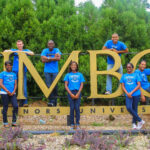
 Photo by Meyerhoff Scholar Tolu Omokehinde ’16
Now celebrating its 25th year, the Meyerhoff Scholars Program boasts more than 800 graduates, many of whom have gone on to pursue careers as scientists, researchers, engineers and doctors. In a story entitled “Where Are They Now?” in the August issue of Diverse: Issues in Higher Education, the magazine highlights the successes of six Meyerhoff alumni.
“The true strength of the Meyerhoff program is that we identify students who have a fire in the belly for sicence, who can’t see themselves doing anything else, who have a passion for inquiry and discovery,” the program’s director, Keith Harmon, told Diverse.
Among the alumni noted in the story:
-
Isaac Kinde ’05 (M13), a graduate student at the Johns Hopkins School of Medicine, who was the lead author of research on a new version of the Pap smear;
-
Gerald Lopez ’01 (M9), who earned his Ph.D. in computer engineering at the Georgia Institute of Technology, and who now is in charge of support for a computer company with clients as diverse as Intel, government and university labs;
-
Crystal Watkins ’95 (M3), an assistant professor of psychiatry and behavioral sciences at the Johns Hopkins University, where she earned her master’s and Ph.D.;
-
Rabiah Mayas ’00 (M8), director of science and integrated strategies in the Center for the Advancement of Science Education at the Museum of Science and Industry in Chicago;
-
Kyla McMullen ’05 (M13), the first African-American woman to earn a Ph.D. in computer science from the University of Michigan, and who now is an assistant professor at Clemson University, and;
-
Nwokedi C. Idika ’05 (M13), the first African-American male to earn a Ph.D. in computer science from Purdue, who now works on the staff of MIT Lincoln Labs.
As Lopez told Diverse magazine: “Meyerhoff meant a lot to me. It’s support for a lifetime. I use it as a resource even now. We help each other out a lot.”
]]>
Photo by Meyerhoff Scholar Tolu Omokehinde ’16 Now celebrating its 25th year, the Meyerhoff Scholars Program boasts more than 800 graduates, many of whom have gone on to pursue careers as...
https://umbc.edu/stories/meyerhoff-alums-featured-in-where-are-they-now/
https://my3.my.umbc.edu/api/v0/pixel/news/123152/guest@my.umbc.edu/03ef9b8a7c9153248d35853cd31b1fe9/api/pixel
alumni
meyerhoff
UMBC News & Magazine
https://my3.my.umbc.edu/groups/umbc-news-magazine
https://assets1-my.umbc.edu/system/shared/avatars/groups/000/001/943/24435aa6207c452e7bc15cc74b42c7bb/xsmall.png?1748556657
https://assets1-my.umbc.edu/system/shared/avatars/groups/000/001/943/24435aa6207c452e7bc15cc74b42c7bb/original.png?1748556657
https://assets2-my.umbc.edu/system/shared/avatars/groups/000/001/943/24435aa6207c452e7bc15cc74b42c7bb/xxlarge.png?1748556657
https://assets2-my.umbc.edu/system/shared/avatars/groups/000/001/943/24435aa6207c452e7bc15cc74b42c7bb/xlarge.png?1748556657
https://assets3-my.umbc.edu/system/shared/avatars/groups/000/001/943/24435aa6207c452e7bc15cc74b42c7bb/large.png?1748556657
https://assets1-my.umbc.edu/system/shared/avatars/groups/000/001/943/24435aa6207c452e7bc15cc74b42c7bb/medium.png?1748556657
https://assets2-my.umbc.edu/system/shared/avatars/groups/000/001/943/24435aa6207c452e7bc15cc74b42c7bb/small.png?1748556657
https://assets1-my.umbc.edu/system/shared/avatars/groups/000/001/943/24435aa6207c452e7bc15cc74b42c7bb/xsmall.png?1748556657
https://assets2-my.umbc.edu/system/shared/avatars/groups/000/001/943/24435aa6207c452e7bc15cc74b42c7bb/xxsmall.png?1748556657
UMBC News & Magazine
0
0
false
Mon, 12 Aug 2013 18:23:43 -0400


