UMBC researchers listed among the world’s top 2% of most-cited scientists and engineers
More than 40 active UMBC researchers are listed among the top 2% of the world’s most-cited scientists and engineers in an analysis recently published by Elsevier.
These researchers include faculty across all three of UMBC’s academic colleges as well as UMBC’s NASA-funded centers, such as the Goddard Earth Sciences Technology and Research (GESTAR II) Center. Their work covers an incredibly diverse array of topics. Represented academic departments include:
- biological sciences
- chemical, biochemical, and environmental engineering
- chemistry and biochemistry
- computer science and electrical engineering
- geography and environmental systems
- information systems
- mathematics and statistics
- mechanical engineering
- physics
- psychology
“We perform research to further our understanding of how the various aspects of our world function,” says Karl V. Steiner, vice president for research and creative achievement. “One of the highest recognitions in the scientific community is when other members of this community cite our work.”
He notes, “The Elsevier analysis shows that our researchers are truly impacting the scientific community in a significant way.”
History of citation honors
The list includes faculty researchers who have also received other “highly cited” researcher accolades. In 2022, Erle Ellis, professor of geography and environmental systems (GES), was featured on Clarivate’s Highly Cited Researchers list, which includes papers ranked in the top 1% of citations within Clarivate’s Web of Science database. About 0.1% of the world’s researchers have received this distinction. Ellis is known for his transformational work on human-managed ecosystems, with his research described as top discovery of 2021 by the Smithsonian National Museum of Natural History.
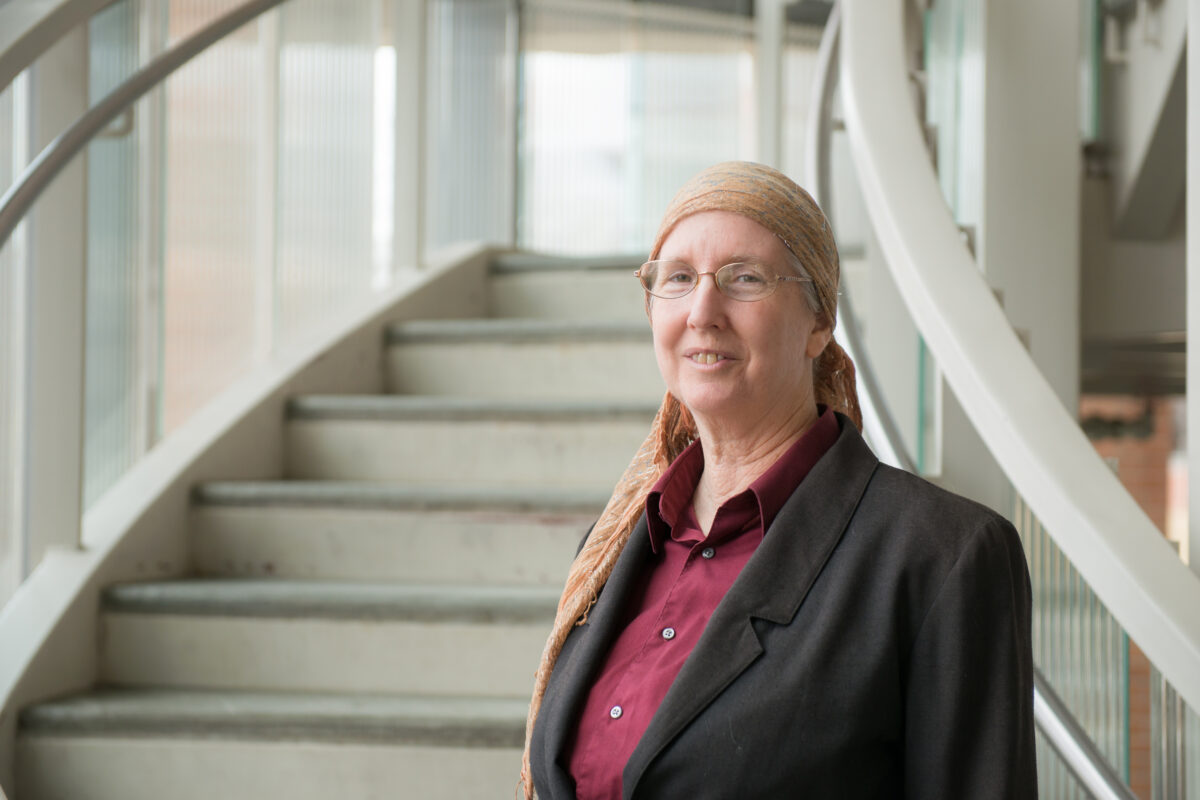 Lorraine Remer (Marlayna Demond ’11/UMBC)
Lorraine Remer, research professor for the Joint Center for Earth Systems Technology, who is affiliated with both GES and physics, is frequently honored for her geophysics publications. She received the 2019 UMBC Research Faculty Excellence Award following her recognition as one of “The Most Influential Scientific Minds” on the Thomson Reuters highly cited researchers list.
Anupam Joshi, director of UMBC’s Center for Cybersecurity and professor and chair of computer science and electrical engineering, was also included on Elsevier’s highly-cited list. His career trajectory demonstrates how UMBC faculty balance high-impact research with other forms of leadership. He has published more than 275 papers, has been granted nine patents, and has obtained research support from a variety of federal and industrial sources. At the same time, he is now serving as a 2022–23 American Council on Education (ACE) Fellow, an intensive program focused on agility and innovative problem solving among higher education leaders.
Measuring impact
This latest most-cited researchers list is based on data annually compiled from author profiles in Elsevier’s abstract and citation database, Scopus.
Elsevier’s 2022 database of standardized citation indicators classifies researchers into 22 fields and 174 subfields. Those with a composite indicator (c-score) within the top 2% of each subfield are included in the most-cited list. The list’s authors indicate that c-score is used because it “focuses on impact (citations) rather than productivity (number of publications)” and because it includes granular information on authorship, including co-authorship and author position (e.g., single, first, or last author).
]]>
More than 40 active UMBC researchers are listed among the top 2% of the world’s most-cited scientists and engineers in an analysis recently published by Elsevier. These researchers include...
https://umbc.edu/stories/most-cited-scientists-2022/
https://my3.my.umbc.edu/api/v0/pixel/news/130830/guest@my.umbc.edu/0a8209cd9947fb4136c6c8893cdbfae1/api/pixel
cahss
cbee
cnms
coeit
csee
cybersecurity
ges
gestar
is
jcet
meche
news
physics
rca-1
research
science-and-tech
UMBC News & Magazine
https://my3.my.umbc.edu/groups/umbc-news-magazine
https://assets1-my.umbc.edu/system/shared/avatars/groups/000/001/943/24435aa6207c452e7bc15cc74b42c7bb/xsmall.png?1748556657
https://assets1-my.umbc.edu/system/shared/avatars/groups/000/001/943/24435aa6207c452e7bc15cc74b42c7bb/original.png?1748556657
https://assets2-my.umbc.edu/system/shared/avatars/groups/000/001/943/24435aa6207c452e7bc15cc74b42c7bb/xxlarge.png?1748556657
https://assets2-my.umbc.edu/system/shared/avatars/groups/000/001/943/24435aa6207c452e7bc15cc74b42c7bb/xlarge.png?1748556657
https://assets3-my.umbc.edu/system/shared/avatars/groups/000/001/943/24435aa6207c452e7bc15cc74b42c7bb/large.png?1748556657
https://assets1-my.umbc.edu/system/shared/avatars/groups/000/001/943/24435aa6207c452e7bc15cc74b42c7bb/medium.png?1748556657
https://assets2-my.umbc.edu/system/shared/avatars/groups/000/001/943/24435aa6207c452e7bc15cc74b42c7bb/small.png?1748556657
https://assets1-my.umbc.edu/system/shared/avatars/groups/000/001/943/24435aa6207c452e7bc15cc74b42c7bb/xsmall.png?1748556657
https://assets2-my.umbc.edu/system/shared/avatars/groups/000/001/943/24435aa6207c452e7bc15cc74b42c7bb/xxsmall.png?1748556657
UMBC News & Magazine
0
0
false
Wed, 25 Jan 2023 11:47:33 -0500
Fri, 10 Feb 2023 17:01:24 -0500
UMBC and UMSOM work to more effectively reverse opioid overdose in real time through $500,000+ NIH award
Opioid-related deaths have risen sharply in the U.S. in recent years. In 2017, the Department of Health and Human Services declared the opioid crisis to be a public health emergency—one disproportionately affecting historically marginalized communities—and the crisis has worsened since then.
In response to the rising epidemic, UMBC researchers have partnered with the University of Maryland School of Medicine (UMSOM) to develop a device that could help prevent opioid overdose deaths. The device is a non-invasive CO2 monitor designed to more effectively detect and reverse an opioid overdose in real time. It was recently awarded a one-year grant of more than $500,000 from the National Institutes of Health (NIH).
“Opioid-related death is a serious problem for the country. We hope this new device will help to directly address this issue,” said the study’s co-PI Xudong Ge, research professor of chemical, biochemical, and environmental engineering (CBEE).
Meeting an urgent need
The Centers for Disease Control and Prevention’s (CDC) National Center for Health Statistics reported that during a 12-month period ending in April 2021, more than 100,000 drug overdoses were recorded in the U.S., with nearly 76,000 deaths attributed to opioid usage. In a separate 2022 report, the CDC noted the severity of this impact among underserved communities of color. Between 2019 and 2020 alone, overdose death rates increased 44 percent amongst Black populations and 39 percent in American Indian and Alaska Native populations.
“If you look at the statistics, the people who are dying from opioid overdoses largely come from underserved minority communities. They are the ones that need the most help,” said Thelma Wright, associate professor of pain medicine at UMSOM, who developed the idea for the study.
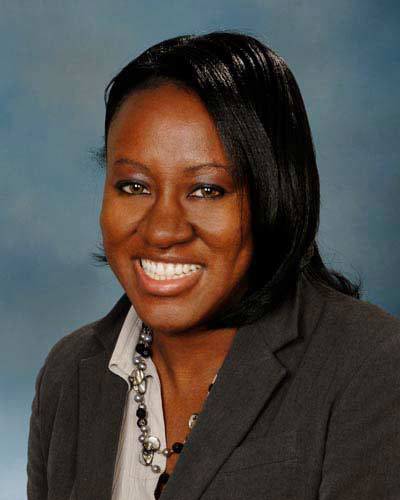 Thelma Wright (Image courtesy of UMSOM)
As a pain medicine physician, she said she was aware of how medically-prescribed opioids have contributed to the rise in overdose death rates. In 2016, Wright began to conceptualize a way to non-invasively monitor if a patient is about to die from an opioid overdose and ways to immediately administer naloxone, an opioid antagonist that can quickly reverse an overdose.
Despite administering naloxone to people experiencing opioid overdose, to reverse their respiratory depression, many overdose cases are fatal because the naloxone was not administered in time, Wright shared.
“When someone is dying from an overdose, they cannot get the antidote from their medicine cabinet to administer it to themselves. I asked around if there was a sensitive monitor that could immediately detect an opioid overdose, and there was nothing,” said Wright. “I needed to find some sort of parameter that would signal respiratory depression due to an overdose, and the most accurate parameter happened to be a carbon dioxide (CO2) monitor.”
Evolving CO2 monitoring research
Opioids stimulate receptors in the brain and can cause a decrease in pain perception. When brain receptors are overstimulated, the brainstem can then become desensitized to rises in CO2 levels. As a result, the opioid user could experience respiratory depression, loss of protective airway reflexes, and respiratory arrest.
Ge, who serves as the assistant director of UMBC’s Center for Advanced Sensor Technology (CAST), has spent more than a decade researching and developing non-invasive CO2 sensor systems. During the pandemic, Ge, along with Govind Rao, a professor of CBEE and the director of CAST, co-authored a study published in Medical Engineering & Physics analyzing the effects of face coverings on transdermal CO2 levels. The study demonstrated the potential effectiveness of monitoring CO2 levels through the use of wearable transdermal CO2 sensors.
“The original CO2 monitoring device is large, about the size of a suitcase,” said Ge. Wright approached Ge and Rao to develop a miniaturized, wearable version that could address some of the shortcomings of other devices available today.
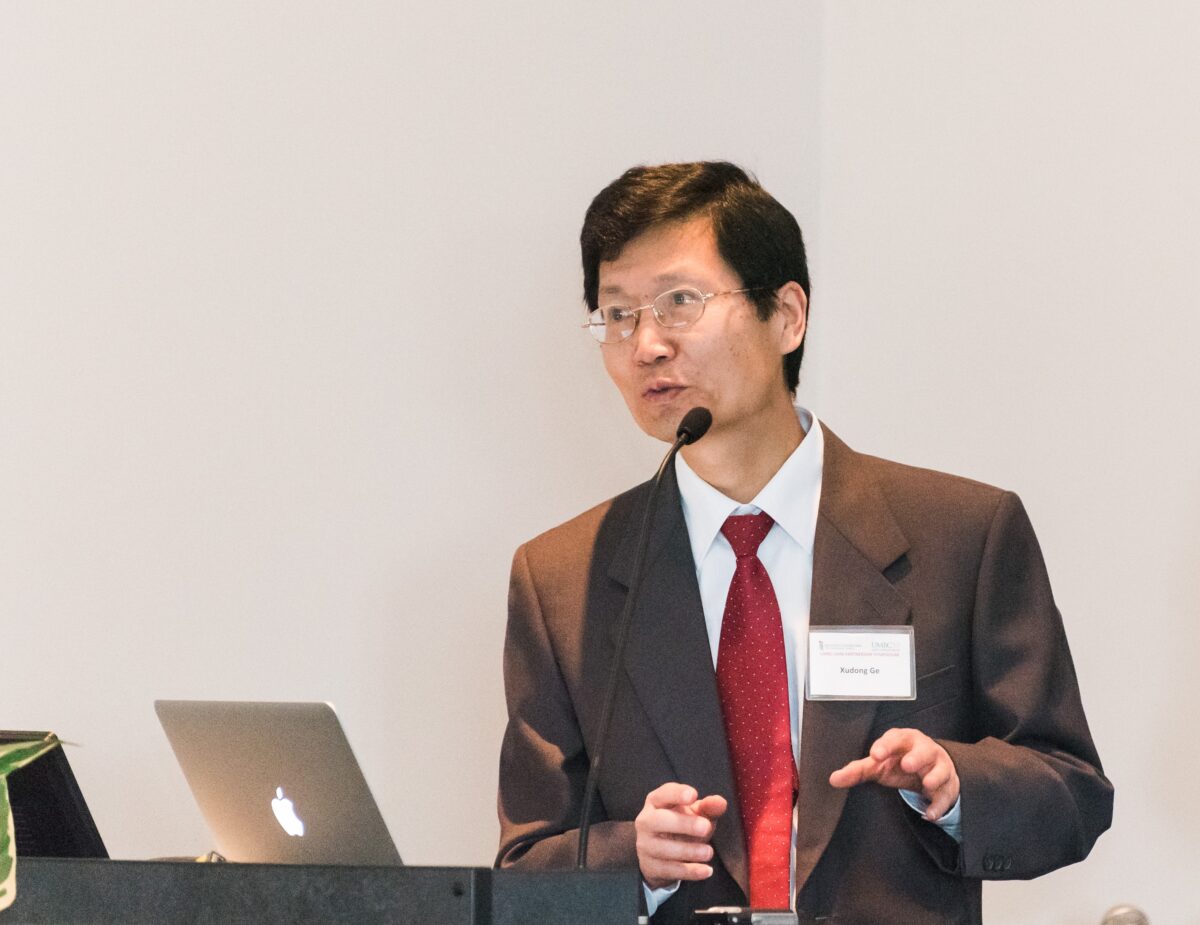 Xudong Ge (Marlayna Demond ’11/UMBC)
Ge explains that traditional non-invasive CO2 monitors that are used on the skin heat up to about 42 degrees Celsius, or more than 107 degrees Fahrenheit. Because of the high heat, they can leave burns on skin and cannot be worn for an extended amount of time. The monitors tend to work at a slower speed and can come with a price tag averaging about $25,000.
Along with miniaturizing the device, Ge aims to create a monitor that is safer and more comfortable, delivers data more efficiently, and is more affordable for the average consumer.
Developing the device
When a patient wears the CO2 device and experiences respiratory depression due to an overdose, the device will trigger an alarm that will automatically inject naloxone. In order to validate the study’s proof of principle, the initial phases of the study will start with developing and testing CO2 sensor prototypes. The test results will then be compared to data from a similar FDA-approved device that they are hoping to improve on.
“We will run side by side tests to see how accurate our device is and then do challenge studies, like holding your breath, breathing into a bag, or exercising to get the subjects’ CO2 levels up in the body to see if we are able to detect it,” says Rao. “We will incorporate some elements of machine learning to detect the signal accurately, to make sure that there are no false positives or false negatives.”
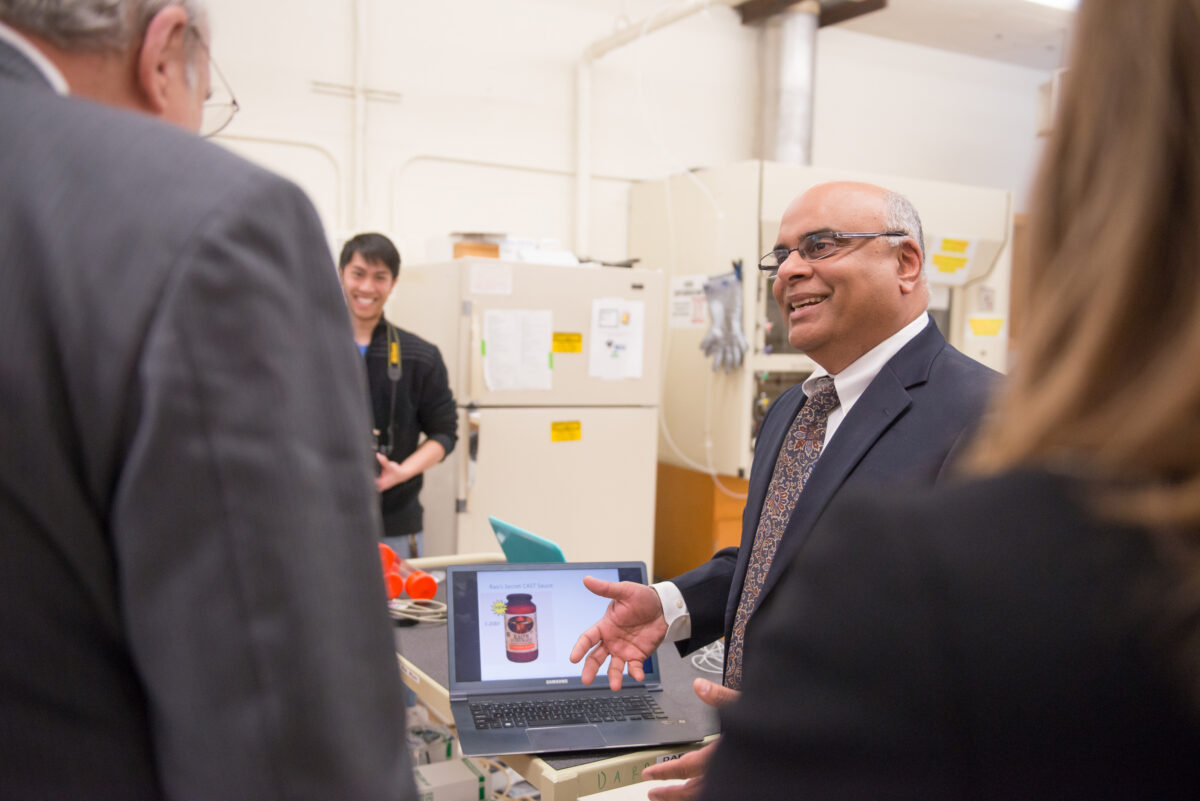 Govind Rao (Marlayna Demond ’11/UMBC)
The investigators have hired UMBC postdoctoral researcher Preety Ahuja to work on the prototyping. If the study is granted additional funding, Wright and her team of researchers will test the sensor on animal subjects to validate whether the wearable transdermal CO2 alarm will be effective. The researchers also intend to develop a mobile app to gather and share the data provided by the monitor.
Rao looks forward to collaborating closely with Wright through this UMBC-UMSOM partnership, noting the significance of her work with underserved populations in Baltimore. He shares, “Dr. Wright is very keen and passionate about finding solutions and our UMBC team is very excited to be working with her.”
]]>
Opioid-related deaths have risen sharply in the U.S. in recent years. In 2017, the Department of Health and Human Services declared the opioid crisis to be a public health emergency—one...
https://umbc.edu/stories/reverse-opioid-overdoses-in-real-time/
https://my3.my.umbc.edu/api/v0/pixel/news/129710/guest@my.umbc.edu/b903201bcdb55aa185c720f758b62002/api/pixel
cast
cbee
coeit
news
rca-2
research
science-and-tech
UMBC News & Magazine
https://my3.my.umbc.edu/groups/umbc-news-magazine
https://assets1-my.umbc.edu/system/shared/avatars/groups/000/001/943/24435aa6207c452e7bc15cc74b42c7bb/xsmall.png?1748556657
https://assets1-my.umbc.edu/system/shared/avatars/groups/000/001/943/24435aa6207c452e7bc15cc74b42c7bb/original.png?1748556657
https://assets2-my.umbc.edu/system/shared/avatars/groups/000/001/943/24435aa6207c452e7bc15cc74b42c7bb/xxlarge.png?1748556657
https://assets2-my.umbc.edu/system/shared/avatars/groups/000/001/943/24435aa6207c452e7bc15cc74b42c7bb/xlarge.png?1748556657
https://assets3-my.umbc.edu/system/shared/avatars/groups/000/001/943/24435aa6207c452e7bc15cc74b42c7bb/large.png?1748556657
https://assets1-my.umbc.edu/system/shared/avatars/groups/000/001/943/24435aa6207c452e7bc15cc74b42c7bb/medium.png?1748556657
https://assets2-my.umbc.edu/system/shared/avatars/groups/000/001/943/24435aa6207c452e7bc15cc74b42c7bb/small.png?1748556657
https://assets1-my.umbc.edu/system/shared/avatars/groups/000/001/943/24435aa6207c452e7bc15cc74b42c7bb/xsmall.png?1748556657
https://assets2-my.umbc.edu/system/shared/avatars/groups/000/001/943/24435aa6207c452e7bc15cc74b42c7bb/xxsmall.png?1748556657
UMBC News & Magazine
3
0
false
Fri, 09 Dec 2022 13:43:21 -0500
Fri, 09 Dec 2022 13:43:21 -0500
UMBC chemical engineering students win ChemE Jeopardy national championship
UMBC is again a national champion, now in ChemE Jeopardy. A UMBC student team of chemical engineering majors emerged victorious last weekend at the national competition in Phoenix, Arizona, hosted by the American Institute of Chemical Engineers (AIChE), besting fellow finalists University of Iowa and University of Southern California.
This was a long-sought victory for the team, which won second place in both 2020 and 2021, narrowly missing the title. This ascent is particularly remarkable considering that UMBC only began competing in 2019.
The ChemE Jeopardy competition experience
Members of the 2022 national champion team include Catherine Wraback ’23, president of the UMBC chapter of AIChE; Max Bobbin ’23, vice president of the group; Colin Jones ’25; and Pavan Umashankar ’24. Supporting the team are Jeopardy Chair Taylor DeSilva ‘23, chemical engineering, and AIChE chapter advisor Mariajosé Castellanos, undergraduate program director and principal lecturer in chemical biochemical, and environmental engineering (CBEE).
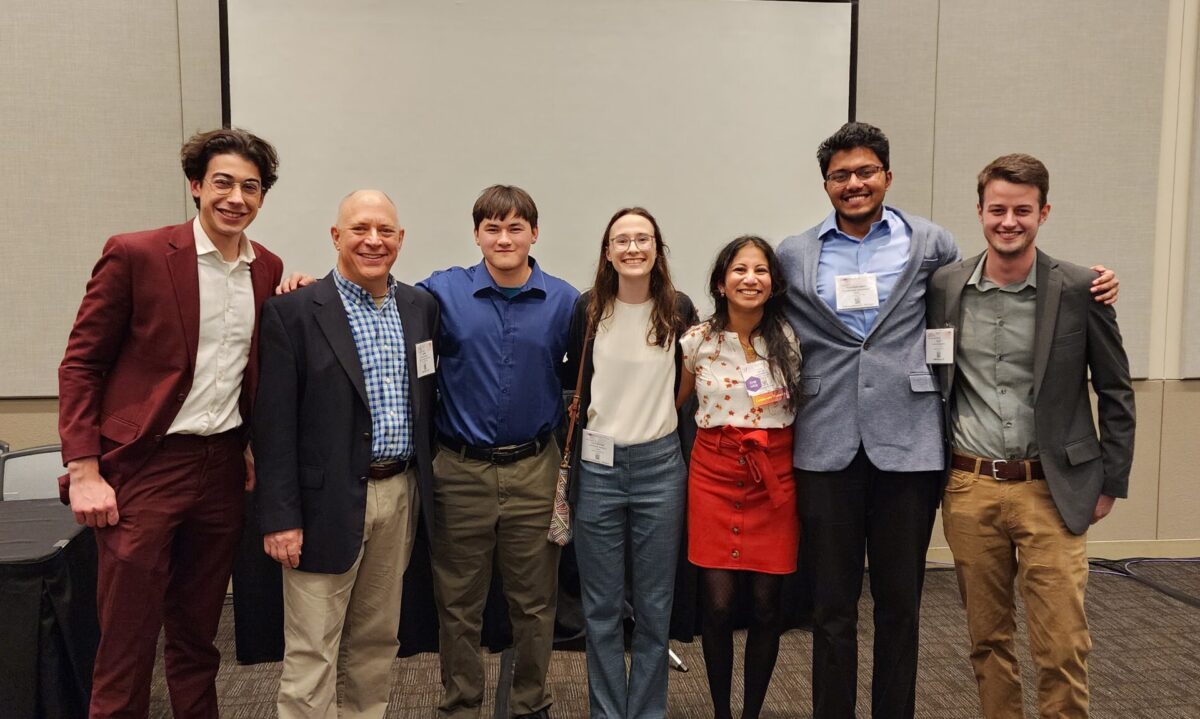 UMBC’s Chemical Engineering Jeopardy National Championship team and supporters (l-r): Max Bobbin, CBEE Professor and Chair Mark Marten, Colin Jones, Catherine Wraback, Lecturer Neha Raikar (team advisor), Pavan Umashankar, and Alex Von Gunten ’20, chemical engineering (prior team member). (Image courtesy of CBEE)
“This was my first time attending the national competition,” says Wraback. “Walking into the room and seeing three tables set-up (one for each team) with all the buzzers and scratch paper and pencil, was an unparalleled feeling.” Wraback explains that each competition board consists of six categories, drawing from core engineering courses (such as thermodynamics and heat and mass transfer), general science and math (such as organic chemistry and linear algebra), and general knowledge.
“You can feel the energy in the room with the other teams and it is contagious,” she says. In particular, she appreciated the support her team had in the packed competition room, from UMBC faculty to students she had met at the conference who came with their classmates to cheer for the team.
And UMBC students who couldn’t join them in Phoenix were supporting them through well wishes in their Discord server. “It made us feel supported and empowered,” says Wraback.
Road to the finals
“The students practiced extensively in preparation for the finals,” says team advisor Neha Raikar, lecturer in CBEE. This included not just studying technical content, but also building trust, bonding as a team, and prioritizing communication with each other.
“The team is well-balanced,” Raikar notes. “Members range from second-year students to seniors, representing all three CBEE tracks: traditional, biotechnology and bioengineering, and environmental engineering and sustainability. They play to each other’s strengths.”
Wraback agrees, sharing, “The most challenging part of being on the team has been understanding that it is okay not to know everything. I never want to let any of my team members down, but I also know that we all have our unique strengths, which overall makes us an incredibly strong team.”
That team’s sense of connection came through in the final round of competition. “As the answers were revealed, we found out we were the only team to get the question right so it really came down to the wagers we put,” Wraback recalls.
“I remember grabbing the hands of my teammates as we waited for the wagers to be revealed,” she says. “In an instant we saw the final scores and that we won by 200 points—such a close game. We all cheered and screamed and were just in absolute shock. It was so exciting, especially since we have been working so hard for this for so long.”
Making a name for themselves
On the path to victory, UMBC at one point bested Virginia Tech with a score of 7,100 to 63. “We compete against top schools at both regional and national levels, which shows the strength of UMBC’s chemical engineering program and our students’ fighting spirit,” says Raikar. “Even though we are a relatively small department, we pose a challenge to bigger schools.”
That’s in large part thanks to UMBC’s supportive community, says Wraback, who, after graduation, will help develop next-generation flight technology and aerospace systems at GE Aerospace, while also pursuing a master’s degree in materials science and engineering. She notes, “I truly believe that behind every successful person and team there is a community that is lifting them up and supporting them.”
In just a few years of national competition, the team has already made a name for itself. The competition’s organizing committee projected UMBC to be a finalist, and other universities are now reaching out to collaborate.
]]>
UMBC is again a national champion, now in ChemE Jeopardy. A UMBC student team of chemical engineering majors emerged victorious last weekend at the national competition in Phoenix, Arizona, hosted...
https://umbc.edu/stories/umbc-chemical-engineering-students-win-cheme-jeopardy-national-championship/
https://my3.my.umbc.edu/api/v0/pixel/news/129275/guest@my.umbc.edu/57814825f9301be8f2856a1608d66a32/api/pixel
cbee
coeit
news
science-and-tech
UMBC News & Magazine
https://my3.my.umbc.edu/groups/umbc-news-magazine
https://assets1-my.umbc.edu/system/shared/avatars/groups/000/001/943/24435aa6207c452e7bc15cc74b42c7bb/xsmall.png?1748556657
https://assets1-my.umbc.edu/system/shared/avatars/groups/000/001/943/24435aa6207c452e7bc15cc74b42c7bb/original.png?1748556657
https://assets2-my.umbc.edu/system/shared/avatars/groups/000/001/943/24435aa6207c452e7bc15cc74b42c7bb/xxlarge.png?1748556657
https://assets2-my.umbc.edu/system/shared/avatars/groups/000/001/943/24435aa6207c452e7bc15cc74b42c7bb/xlarge.png?1748556657
https://assets3-my.umbc.edu/system/shared/avatars/groups/000/001/943/24435aa6207c452e7bc15cc74b42c7bb/large.png?1748556657
https://assets1-my.umbc.edu/system/shared/avatars/groups/000/001/943/24435aa6207c452e7bc15cc74b42c7bb/medium.png?1748556657
https://assets2-my.umbc.edu/system/shared/avatars/groups/000/001/943/24435aa6207c452e7bc15cc74b42c7bb/small.png?1748556657
https://assets1-my.umbc.edu/system/shared/avatars/groups/000/001/943/24435aa6207c452e7bc15cc74b42c7bb/xsmall.png?1748556657
https://assets2-my.umbc.edu/system/shared/avatars/groups/000/001/943/24435aa6207c452e7bc15cc74b42c7bb/xxsmall.png?1748556657
UMBC News & Magazine
0
0
false
Thu, 17 Nov 2022 10:15:50 -0500
Thu, 17 Nov 2022 10:15:50 -0500
UMBC to co-lead new Baltimore Social-Environmental Collaborative with $2.3M grant
American cities face environmental challenges that are exacerbated by climate change, from air and water quality issues to flooding and heat. Low-income neighborhoods and areas that were previously subject to racial redlining often experience these effects more intensely.
A new program supported by the U.S. Department of Energy (DoE) has funded Urban Integrated Field Laboratories in three American cities (including Baltimore) to generate resilience-enhancing solutions to urban climate challenges in collaboration with community organizations. The Baltimore-centered consortium, named the Baltimore Social-Environmental Collaborative (BSEC), will receive $24.5 million through the program. UMBC will receive $2.3 million of this larger grant.
Leading UMBC’s work on the project is Claire Welty, professor of chemical, biochemical, and environmental engineering and director of the Center for Urban Environmental Research and Education (CUERE). Johns Hopkins University leads the overall project, which also includes collaborators at the Pennsylvania State University, Morgan State University, the National Renewable Energy Laboratory, Drexel University, and the University of Virginia.
“This Baltimore Social-Environmental Collaborative is an important program during a critical time for our region, for our state, and for our planet,” says Karl V. Steiner, vice president for research at UMBC. “I am pleased that Baltimore was selected to serve as a representative metropolitan area for the climate challenges faced by many mid-sized industrial cities across the U.S.”
Listening to the community
Welty and UMBC colleagues such as Andrew Miller, professor of geography and environmental systems, bring decades of expertise in environmental monitoring to the project through their individual research and the Baltimore Ecosystem Study (BES). Originally funded as one of only two urban Long-Term Ecological Research (LTER) sites in the U.S., the BES has compiled massive datasets on the Baltimore region’s watershed, ecology, and sociological issues related to the environment for more than 20 years. The new BSEC will bring opportunities to expand this work in fresh directions.
“The exciting thing is leading from the needs of the community. To me, that’s what’s different about this,” Welty says. “What we want to try to do is partner with the communities to come up with solutions to these climate impact problems, and then what we’re bringing to the table are our tools to implement that.”
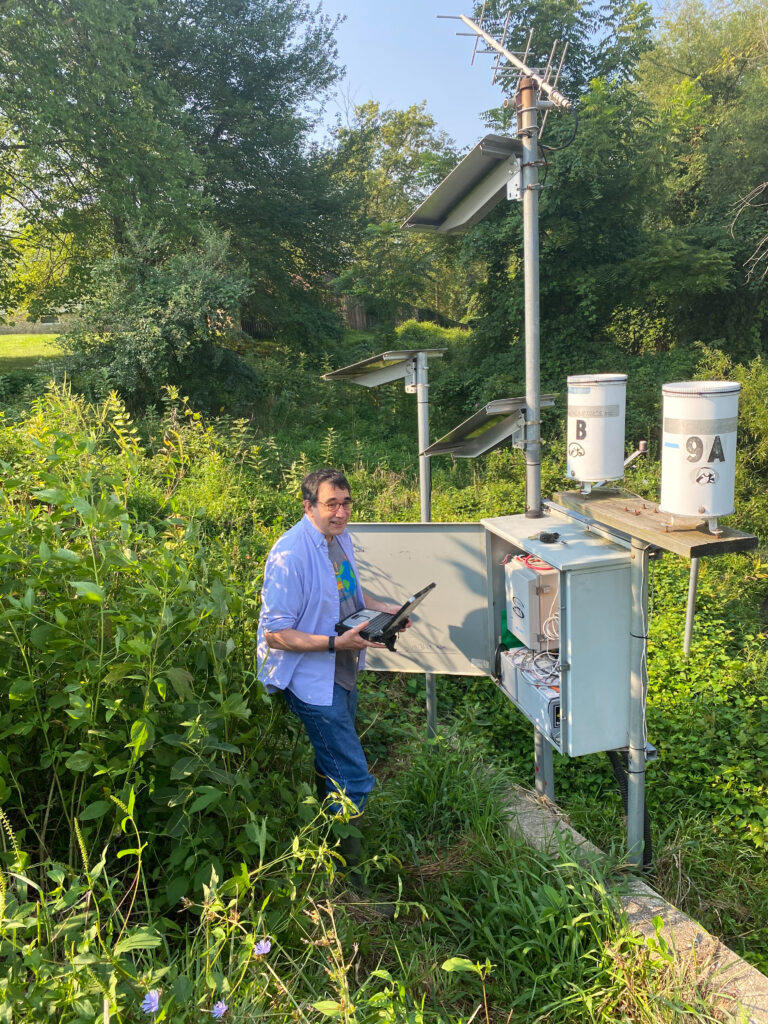 Andrew Miller checks on a water sampling station in Catonsville, MD. (Victor Fulda/UMBC)
Welty and Miller bring expertise in understanding patterns of water quality, flood and groundwater modeling, and rainfall patterns and how they are changing. UMBC also brings experience interacting with local agencies, such as the Baltimore City Department of Public Works and Maryland Department of the Environment. Other institutions in the consortium bring complementary expertise, such as overall climate forecasting, an understanding of how climate impacts intersect with issues of public health, and experience building trust with community groups.
“Among us, we think we have tools that can be applied to solve these problems,” Welty says. “We’re not imposing our tools on community groups, though, or telling them what their problems are. They’re telling us, and we’re responding with support and resources.”
Adding nuance
Welty, Miller, and others have spent decades generating models and collecting on-the-ground (and sometimes underground) observations of water quality, flow, and more in the Baltimore region. They will continue that work with the BSEC, and with input from communities, prioritize certain issues or geographic areas.
The BSEC will also fund deployment of new sensors at existing Baltimore Ecosystem Study stream sampling stations in the Gwynns Falls watershed . These stations have a 22-year record of weekly water quality sampling, and the new sensors will add data on other parameters at 15-minute intervals, 24 hours a day, seven days a week. The data will be accessible in near- real time, on only about a one-hour delay.
The BES data is “the best urban water quality data set in the world. This is not meant to replace that, but to add nuance,” Welty says. For example, Baltimore streams have struggled with inundation from road salt in the winter. “You might miss the peak of a salt event with weekly sampling,” Welty says, but finer scale sampling would easily identify it in the data.
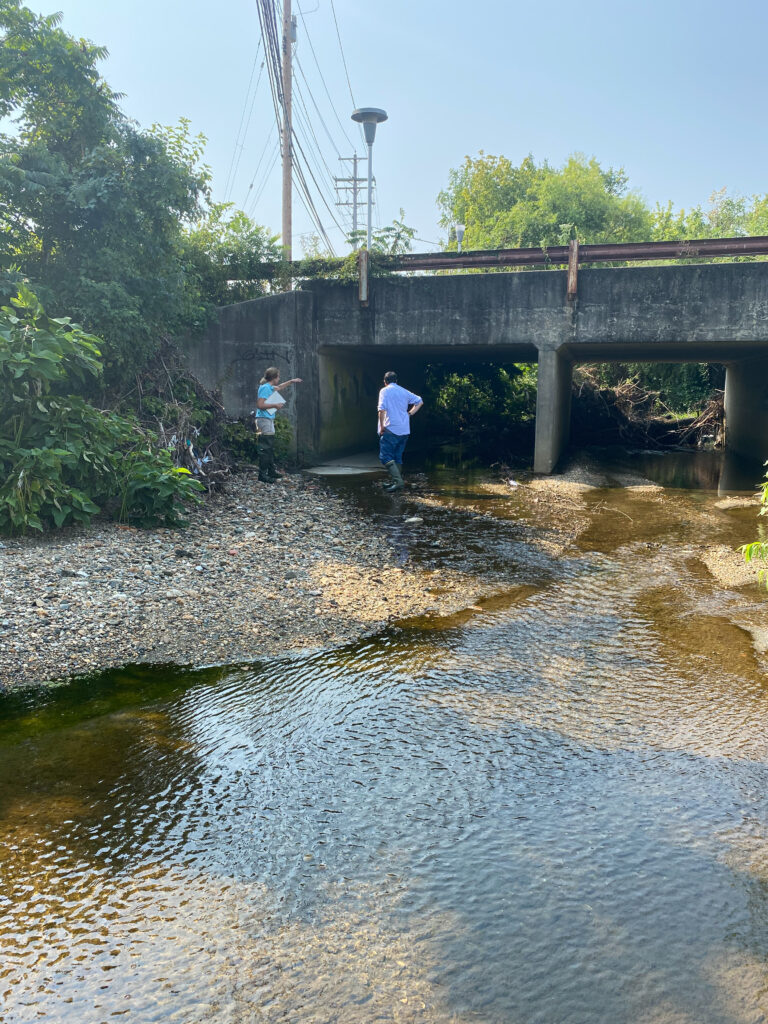 Claire Welty (left) and Andrew Miller check out one of their study sites in Woodlawn, MD. (Victor Fulda/UMBC)
A giant puzzle to put together
The BSEC is a unique project that brings together wide-ranging expertise to address pressing urban needs. “The guiding objective of the BSEC process is to produce the urban climate science needed to inform community-guided, equitable pathways for climate action,” says Ben Zaitchik, professor of Earth and planetary sciences at Johns Hopkins and the overall project lead. “In doing so, we address a number of fundamental urban science questions from across natural science and social science disciplines.”
UMBC’s Steiner adds, “This partnership with John Hopkins University and other research institutions is building upon our strong and long-term record of environmental research and educational initiatives here at UMBC. It will both challenge and enable us to explore equitable climate solutions.”
While the exact priorities and concerns that local communities will bring to the forefront are unknown, the BSEC group plans to bring their tools to bear in a way that best serves the people of Baltimore. Building coalitions with researchers and community members, learning the communities’ needs, and then finding the best ways to address them “is like a giant puzzle to put together,” Welty says. “It’s going to be exciting to see how it all unfolds.”
]]>
American cities face environmental challenges that are exacerbated by climate change, from air and water quality issues to flooding and heat. Low-income neighborhoods and areas that were...
https://umbc.edu/stories/social-environmental-collab-wins-2-3m-grant/
https://my3.my.umbc.edu/api/v0/pixel/news/128185/guest@my.umbc.edu/ff69f44dc2b56dfdfa416165651d0253/api/pixel
cahss
cahssresearch
cbee
cuere
ges
news
policy-and-society
rca-1
research
science-and-tech
UMBC News & Magazine
https://my3.my.umbc.edu/groups/umbc-news-magazine
https://assets1-my.umbc.edu/system/shared/avatars/groups/000/001/943/24435aa6207c452e7bc15cc74b42c7bb/xsmall.png?1748556657
https://assets1-my.umbc.edu/system/shared/avatars/groups/000/001/943/24435aa6207c452e7bc15cc74b42c7bb/original.png?1748556657
https://assets2-my.umbc.edu/system/shared/avatars/groups/000/001/943/24435aa6207c452e7bc15cc74b42c7bb/xxlarge.png?1748556657
https://assets2-my.umbc.edu/system/shared/avatars/groups/000/001/943/24435aa6207c452e7bc15cc74b42c7bb/xlarge.png?1748556657
https://assets3-my.umbc.edu/system/shared/avatars/groups/000/001/943/24435aa6207c452e7bc15cc74b42c7bb/large.png?1748556657
https://assets1-my.umbc.edu/system/shared/avatars/groups/000/001/943/24435aa6207c452e7bc15cc74b42c7bb/medium.png?1748556657
https://assets2-my.umbc.edu/system/shared/avatars/groups/000/001/943/24435aa6207c452e7bc15cc74b42c7bb/small.png?1748556657
https://assets1-my.umbc.edu/system/shared/avatars/groups/000/001/943/24435aa6207c452e7bc15cc74b42c7bb/xsmall.png?1748556657
https://assets2-my.umbc.edu/system/shared/avatars/groups/000/001/943/24435aa6207c452e7bc15cc74b42c7bb/xxsmall.png?1748556657
UMBC News & Magazine
0
0
false
Tue, 04 Oct 2022 16:22:06 -0400
Tue, 04 Oct 2022 16:22:06 -0400
UMBC’s new AAAS Science & Technology Policy Fellows focus on STEM workforce inclusion, youth justice
Erin Lavik, professor of chemical, biochemical, and environmental engineering at UMBC, is an innovator in developing nanoparticles to stop internal bleeding. She’s also hard at work on a very different challenge: building STEM workforce development programs that are more inclusive and equitable.
Lavik and Erika Fountain, assistant professor of psychology, will serve as 2022-23 Science & Technology Policy Fellows (STPF) with the American Association for the Advancement of Science (AAAS), in the prestigious program’s 50th class.
“AAAS policy fellows have been demonstrating excellence in science policy for the past half-century—defining what it means to be a scientist and engineer in the policymaking realm,” said STPF Director Rashada Alexander.
The 300 fellows chosen for the 2022-23 class will serve in a range of government offices, working to inform actionable, science-based policies. Lavik will be based in the Advanced Manufacturing Office of the National Institute of Standards and Technology, known as Manufacturing USA. Fountain will be hosted by the American Psychological Association (APA), serving as a Congressional Fellow.
The 2022-23 fellowship class is supported by variety of bodies including the U.S. Government, AAAS, partner societies, and the Gordon and Betty Moore Foundation, with an eye on both the value of this experience for participating fellows and the impact fellows will have throughout their careers.
Inclusive high-tech workforce
“With the CHIPS Act passing, I’ll be focusing on building workforce development programs that are equitable, inclusive, diverse, and accessible,” says Lavik.
“CHIPS” stands for Creating Helpful Incentives to Produce Semiconductors—legislation that will provide nearly $53 billion to support semiconductor production in the U.S., supporting both research and high-tech jobs. The goal of CHIPS, the White House notes, is “to sustain U.S. leadership in the sciences and engineering as the engine for American innovation.”
Lavik, who is also associate dean for research and faculty development in UMBC’s College of Engineering and Information Technology (COEIT), will play an important role at NIST in shaping the programs that will generate these high-tech jobs, maximizing their benefit. At the same time, she will learn about federal policymaking and implementation first-hand.
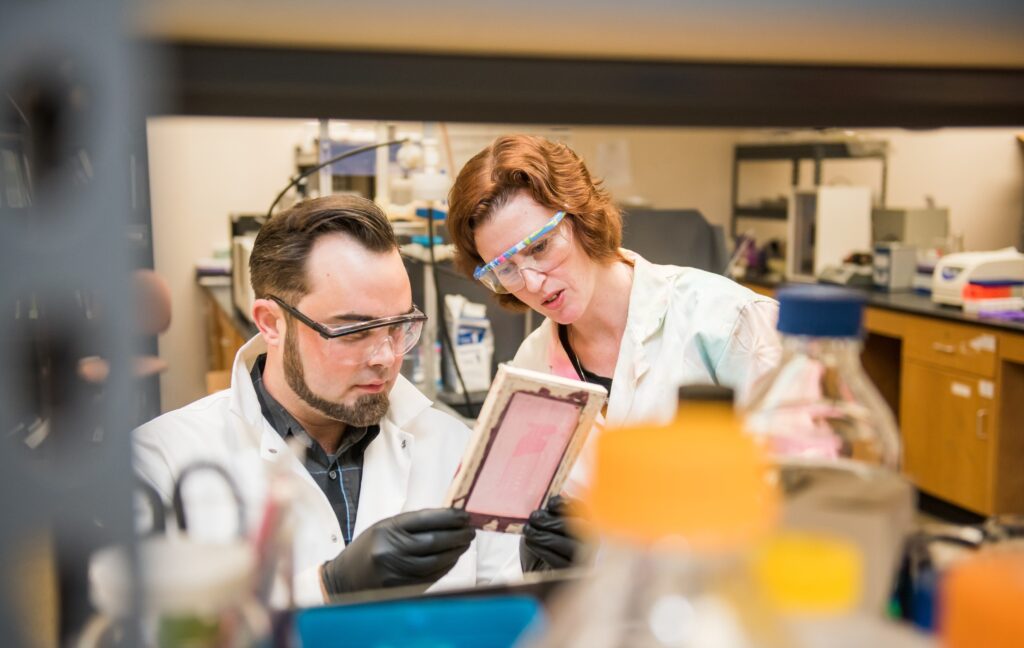 Erin Lavik (right) works in her lab with then-graduate student Adam Day (left) in 2018. Lavik’s lab works to develop new therapies through polymer synthesis and processing, drug delivery, and stem cell biology.
“Dr. Lavik has worked as both a researcher and as an associate dean elevating research and advancing faculty development. This combination has given her a broad insight into product development,” says COEIT Dean Keith J Bowman. “I am certain that expertise will serve her well in supporting advancement of our nation’s manufacturing enterprises. I know from direct experience that Manufacturing USA has changed how we think about and carry out manufacturing, and Dr. Lavik’s strategic and innovative mindset is a great match for this opportunity.”
Research-based youth justice policy
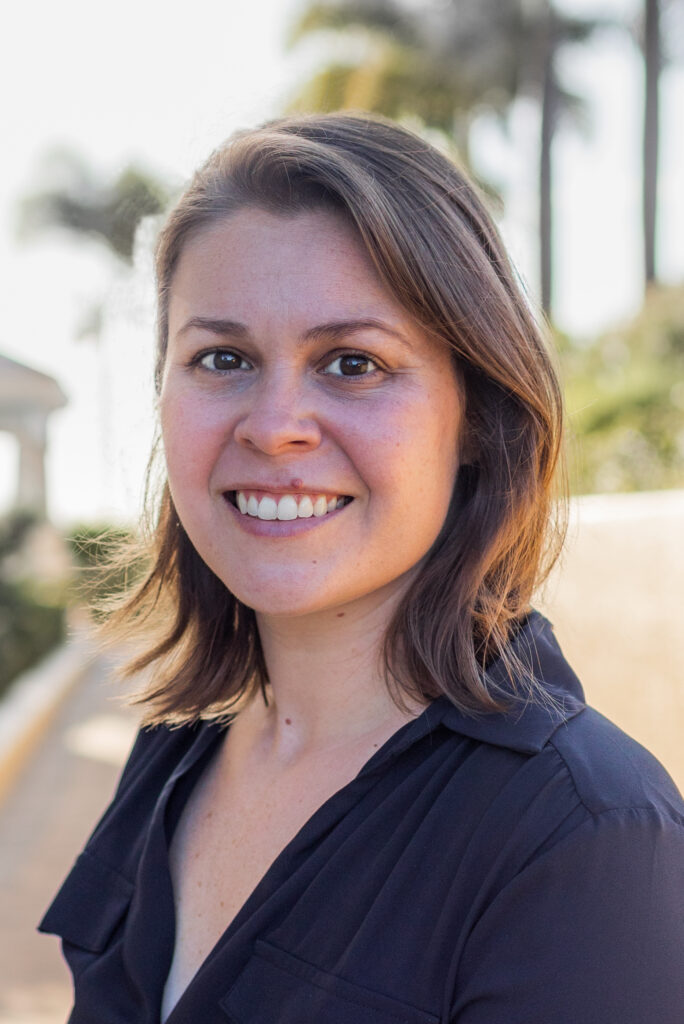 Erika Fountain (Image courtesy of Fountain)
Fountain leads UMBC’s interdisciplinary Youth Justice Lab, which focuses on the intersection of adolescent development and the legal system, combining psychology, law, and policy. Her research focuses on how adolescents and their families navigate the justice system, with the goal of developing evidence-based youth justice policy. She and her team explore how youth experience legal decision making, court processes, and working with attorneys.
Fountain’s APA Congressional Fellowship is specifically designed for psychologists seeking unique public policy learning experiences to prepare them for careers connecting with and impacting the federal government. She has already provided scientific testimony to Maryland legislators considering changes to policies involving youth justice—from confidentiality of records to legal protections in youth interrogation—and looks forward to working at the federal level.
“This fellowship gives scientists an opportunity to learn about the policy process and ultimately inform work being done to create and implement policies,” says Fountain. “As someone who has been conducting research on youth justice and justice policy for years, I am thrilled to be able to step into this role and work directly with policy makers to inform policies that benefit youth and their families.”
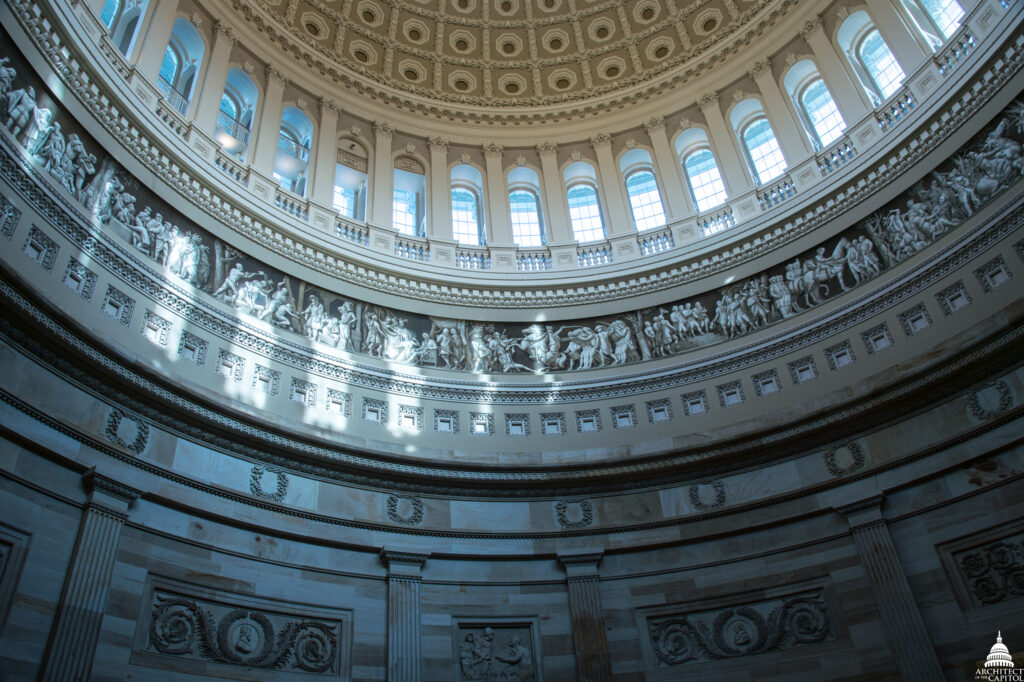 U.S. Capitol Rotunda interior. (Image courtesy of the Architect of the Capitol)
“In awarding Dr. Fountain this fellowship, APA and AAAS have recognized the high quality and impact of her scholarship and policy work to date,” says Anne E. Brodsky, professor and chair of psychology. “Through this high-level experience, she’ll gain valuable expertise that will further advance her contributions to our mission: elevating our students and surrounding communities through important and socially relevant applied scholarship.”
]]>
Erin Lavik, professor of chemical, biochemical, and environmental engineering at UMBC, is an innovator in developing nanoparticles to stop internal bleeding. She’s also hard at work on a very...
https://umbc.edu/stories/umbcs-new-aaas-science-and-technology-policy-fellows/
https://my3.my.umbc.edu/api/v0/pixel/news/127416/guest@my.umbc.edu/3a9ddf2057c4940f31382165613ffd69/api/pixel
cahss
cbee
coeit
majoraward
news
policy-and-society
psychology
research
science-and-tech
UMBC News & Magazine
https://my3.my.umbc.edu/groups/umbc-news-magazine
https://assets1-my.umbc.edu/system/shared/avatars/groups/000/001/943/24435aa6207c452e7bc15cc74b42c7bb/xsmall.png?1748556657
https://assets1-my.umbc.edu/system/shared/avatars/groups/000/001/943/24435aa6207c452e7bc15cc74b42c7bb/original.png?1748556657
https://assets2-my.umbc.edu/system/shared/avatars/groups/000/001/943/24435aa6207c452e7bc15cc74b42c7bb/xxlarge.png?1748556657
https://assets2-my.umbc.edu/system/shared/avatars/groups/000/001/943/24435aa6207c452e7bc15cc74b42c7bb/xlarge.png?1748556657
https://assets3-my.umbc.edu/system/shared/avatars/groups/000/001/943/24435aa6207c452e7bc15cc74b42c7bb/large.png?1748556657
https://assets1-my.umbc.edu/system/shared/avatars/groups/000/001/943/24435aa6207c452e7bc15cc74b42c7bb/medium.png?1748556657
https://assets2-my.umbc.edu/system/shared/avatars/groups/000/001/943/24435aa6207c452e7bc15cc74b42c7bb/small.png?1748556657
https://assets1-my.umbc.edu/system/shared/avatars/groups/000/001/943/24435aa6207c452e7bc15cc74b42c7bb/xsmall.png?1748556657
https://assets2-my.umbc.edu/system/shared/avatars/groups/000/001/943/24435aa6207c452e7bc15cc74b42c7bb/xxsmall.png?1748556657
UMBC News & Magazine
0
0
false
Thu, 08 Sep 2022 16:57:25 -0400
Thu, 08 Sep 2022 16:57:25 -0400
From the Soil to the Stars, Internships Take Students’ Futures to the Next Level

UMBC students are known for the strength of their diversity: not just in their personal backgrounds, but in the breadth of their academic interests and professional goals.
Accordingly, Retrievers’ summer 2022 internships spanned a vast array of subjects and disciplines, from history to mechanical engineering, and working in fields ranging from groundwater all the way up to outer space.
The four UMBC students profiled below vividly embody this wide spectrum, but they all have two things in common. Each completed their internship before starting their junior year, and each has the same advice to new students: Visit the Career Center sooner rather than later.
“It is never too early to start,” agreed Christine Routzahn, the Career Center’s director. “Internships offer students an opportunity to gain experience, build their career readiness skills, and develop professional connections that can help them succeed in competitive career paths and graduate programs.”
Up and Away
“I found the Career Center’s resources really helpful in crafting and perfecting my resume,” said Madelyn Pollack ’24, a history major with public history and Judaic studies minors in the Honors College and Humanities Scholars programs whose internship was at—of all places—NASA.
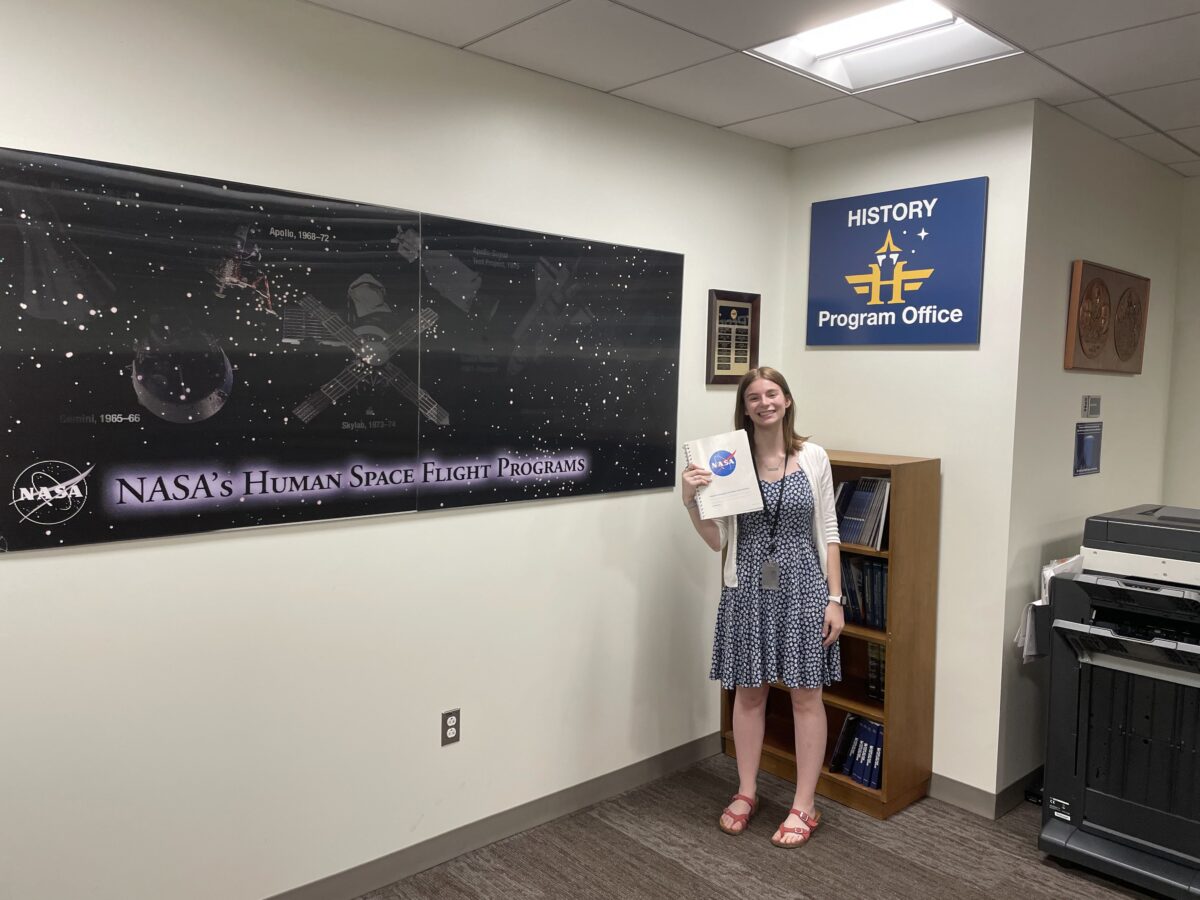 Madelyn Pollack. (Photo courtesy of Pollack)
“I had an interest in space,” Pollack explained, “But when I applied, I wasn’t expecting a call back—I wasn’t expecting to get to do this.”
It turned out that her internship’s responsibilities included a rich variety of opportunities to apply her passion for history: Pollack had a seat at the table in publishing meetings, she got to research and publish key moments of aerospace-related history on the space agency’s official social media outlets, and she was even able to create a research-based presentation on orbital debris and public opinion.
 Madelyn Pollack. (Photo courtesy of Pollack)
Pollack said that taking an internship early in her college career helped her further focus her academic interests and refine her idea of what kind of historian she wants to be.
“As a history major, I didn’t have an idea of a specific focus I wanted to take” within the field, she said. But, “if you ask me now what my dream job is, I would say if a job opens up [at NASA] in the next three years or so, it would be really nice to be a historian over there.”
Pollack already has a start on that goal: Based on her success as a summer intern, NASA recently hired her as a continuing intern part-time starting this fall.
First Things First
Ian Nana ’24, mechanical engineering, said one of the biggest misconceptions his fellow students seem to have is that there’s no point in doing an internship until you know exactly what your academic and professional goals are.
“I definitely recommend to any new student: Even if you’re not sure exactly what you want to do, go to the Career Center your freshman year,” said Nana. “You might try one internship and be like, ‘Okay, I like this—I might do this.’ Or, ‘I don’t like this.’”
Even if it’s the latter, Nana said, just having that first experience on your resume makes you a much better candidate for the next internship or job opportunity.
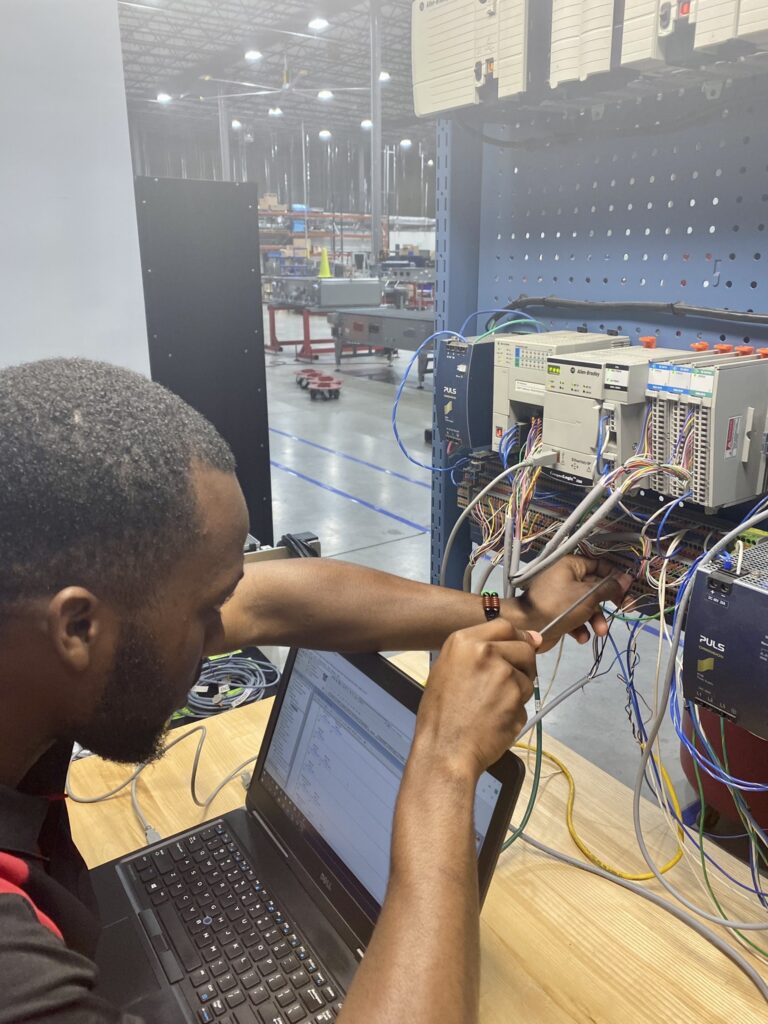 Ian Nana. (Photo courtesy of Nana)
“When I came [to UMBC] for my first semester, I went to the Career Center,” Nana said. And although he didn’t immediately see exactly what he was looking for, he reminded himself that an internship that strengthens general work skills can be just as valuable as field-specific experience, so he applied for a broad spectrum of internships.
“When I applied to other ones, even though they weren’t related to engineering, they showed teamwork. They showed collaboration—how I deal with people,” Nana said. “College is great, but what [employers also] want is experience, because that’s really what is going to make you valuable.”
Nana also encourages students to start looking for opportunities where he did: at UMBC’s Fall Career and Internship Fair. This year, the fair—held on Sept. 21—will host 140 organizations, many of whom are seeking a wide spectrum of summer 2023 interns, from first-year undergraduates to advanced graduate students.
Routzahn highly recommends that all students participate in upcoming Career Center events and activate and upload their resumes to Handshake,UMBC’s new job and internship platform. Top employers are posting incredible internships, part-time, and full-time jobs daily.
Nana, who worked this summer as an engineering intern at Intralox—a global firm that specializes in designing and creating computer-controlled conveyor-belt systems—should know: Though he had to overcome steep technical challenges, including learning a whole new programming language, his success speaks for itself.
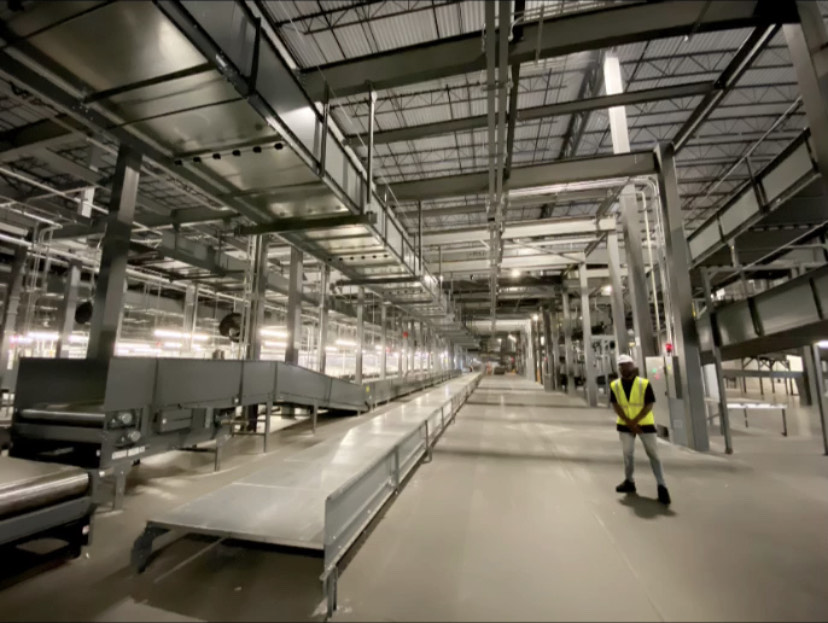 Ian Nana. (Photo courtesy of Nana)
“My manager told me to definitely come back,” he said. “When you see your skills actually being applied and you do something and it works, that’s the best feeling.”
All in the Details
Alexander Bauserman ’24, history, echoed his fellow 2022 interns’ recommendation to visit the Career Center early, often, and with an open mind.
 Alexander Bauserman. (Photo courtesy of Bauserman)
“I would say go as soon as you have the opportunity,” Bauserman said. Even if there’s not an obviously perfect alignment between a given internship opening and your major, he added, “The value of these internships is that sometimes they offer unexpected skills.”
Bauserman spoke from recent experience: He was able to tap into a longstanding personal interest, strengthen his core skills, and develop new ones in his virtual internship at the Maryland Pesticide Education Network, which gathers and disseminates information on the harmful effects of various pesticides and advocates for organic and other alternative agricultural land uses.
“I’m actually a history major, and even though this [internship was] environmental, I actually had an interest in environmental science in my high school years,” he said.
That passion served him well as he dove into the highly detail-intensive work of reformatting environmental science abstracts, checking links on the organization’s website, and learning how to leverage search engine optimization.
“They’ve all been new skills that I’ve gained, because I didn’t really work in any of these areas directly before, but they’re very useful, and I’ve been able to add them to my resume, so I’m very pleased with that,” Bauserman said.
Learning While Doing
Terra Miley ’25, chemical engineering, definitely didn’t waste any time looking for internships: She started as a first-year student. “I’d definitely heard from upperclassmen about how helpful the Career Center is,” she said. “Once you make your first appointment, you realize how helpful it is.”
Miley interned at Potomac Photonics, Inc., a digital and micro-manufacturing firm based at the UMBC Technology Center, “basically learning how to do everything.”
“I was doing a digital workspace for the company, so I was able to get exposed to a lot of different projects and machines and pretty much all of the work they do,” she said.
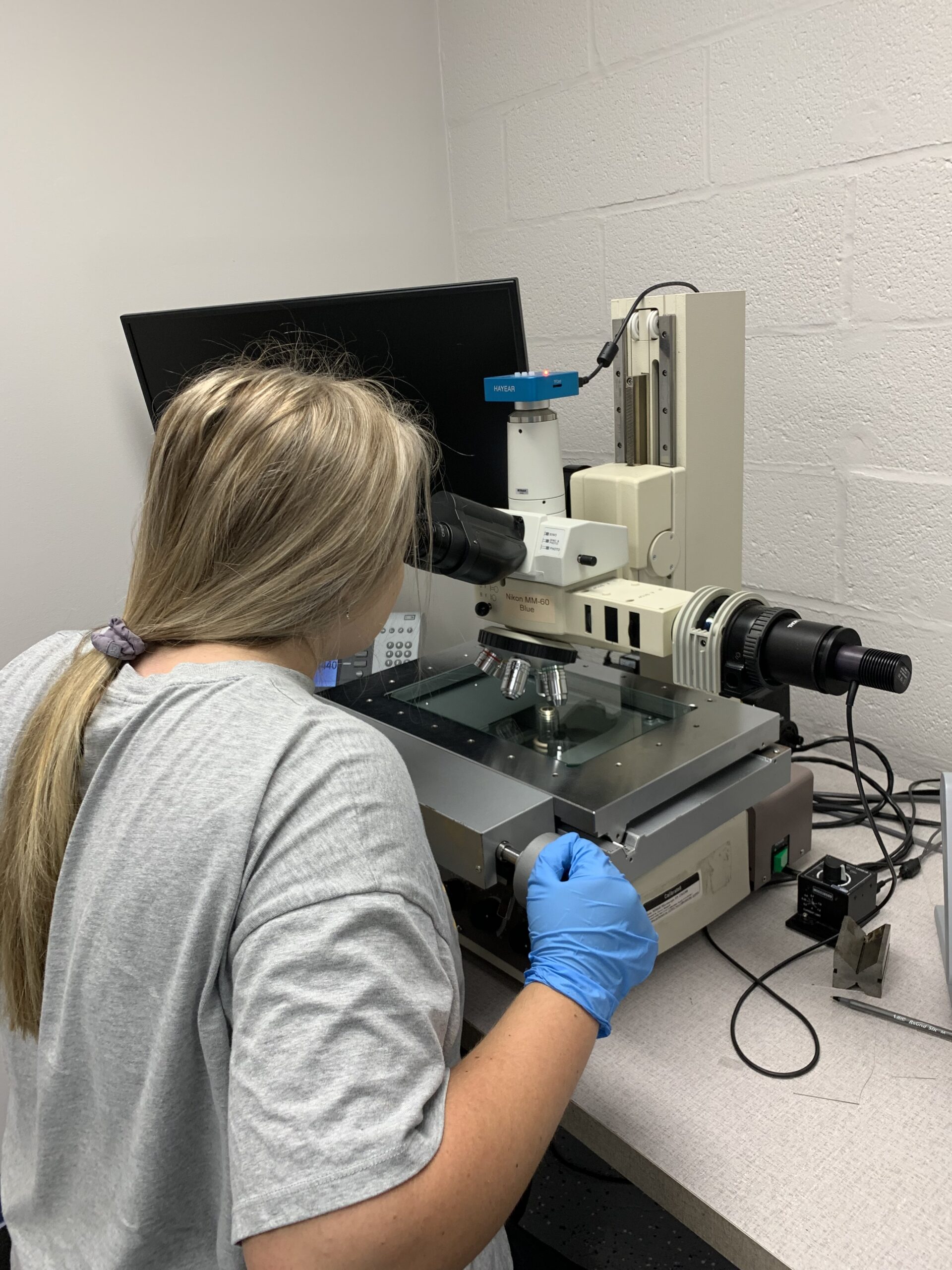 Terra Miley. (Photo courtesy of Miley)
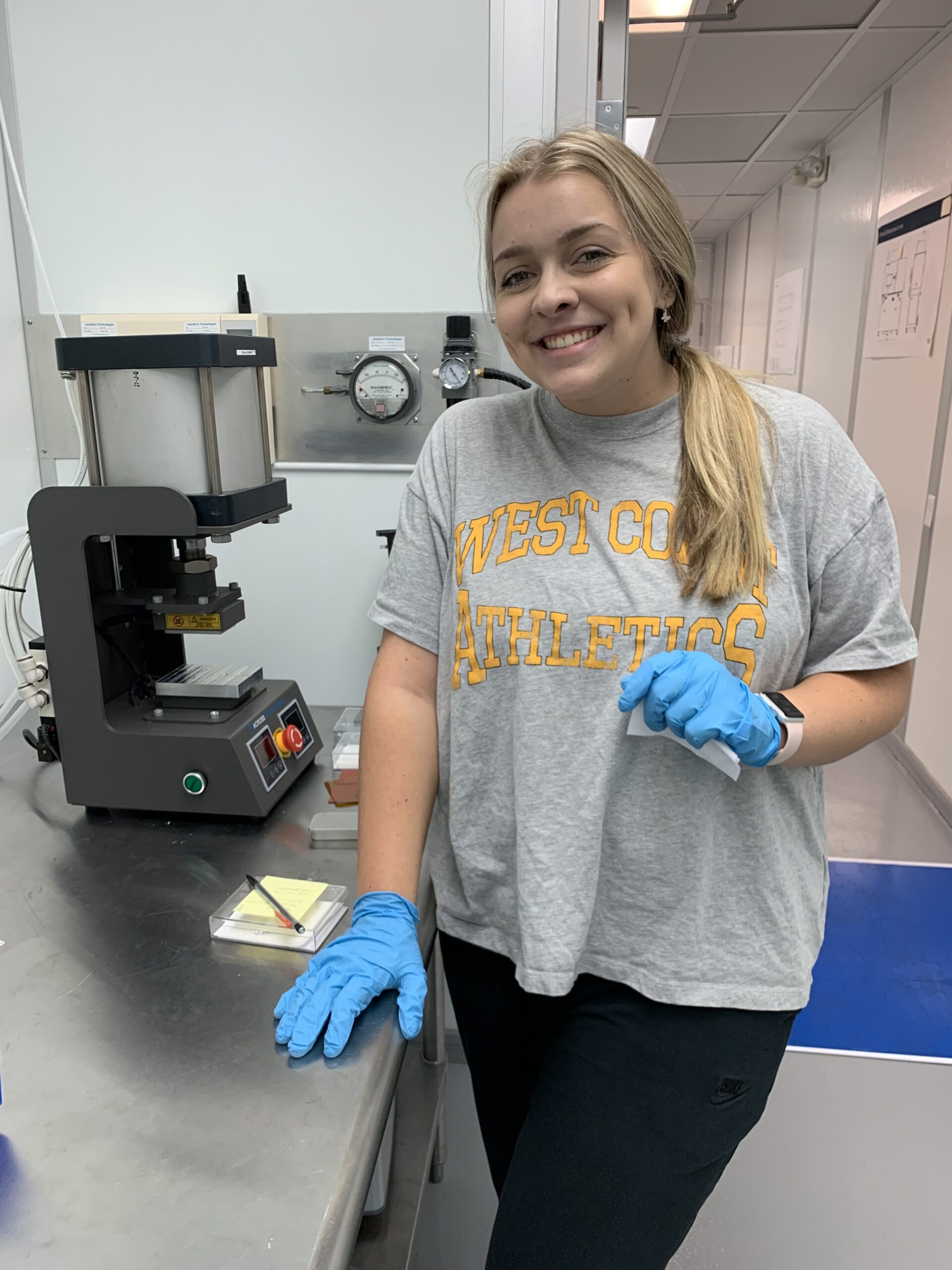
Miley added that the internship also boosted her confidence that her academic journey—she’s on a bio-technology/bio-engineering track—is the right one for her.
“A lot of the parts that [Potomac Photonics] made were for medical companies, which is kind of what I want to get into. And it made me realize: I am definitely interested in that.”
So interested, in fact, that she’s already made an appointment with the Career Center to get set up with an internship for next summer. “I wanted to try to get an actual research opportunity for next summer and they gave me a giant list of opportunities … that I can look at,” Miley said.
Such resources, Miley said, make the Career Center ”super helpful.”
Routzahn said student success stories such as Miley’s, Bauserman’s, Nana’s, and Pollack’s are happily the norm at UMBC.
“Most employers use internships as a recruiting tool to find their future full-time employees,” she noted, adding that “55 percent of our recent graduates who were employed at graduation indicated that they accepted full-time offers with an organization that they interned or worked for while at UMBC.”
]]>
UMBC students are known for the strength of their diversity: not just in their personal backgrounds, but in the breadth of their academic interests and professional goals. Accordingly,...
https://umbc.edu/stories/from-the-soil-to-the-stars-internships-take-students-futures-to-the-next-level/
https://my3.my.umbc.edu/api/v0/pixel/news/127097/guest@my.umbc.edu/7700e8cdc74eca0622dd96938fa1a35e/api/pixel
campus-life
career-center
cbee
coeit
history
internships
magazine
meche
UMBC News & Magazine
https://my3.my.umbc.edu/groups/umbc-news-magazine
https://assets1-my.umbc.edu/system/shared/avatars/groups/000/001/943/24435aa6207c452e7bc15cc74b42c7bb/xsmall.png?1748556657
https://assets1-my.umbc.edu/system/shared/avatars/groups/000/001/943/24435aa6207c452e7bc15cc74b42c7bb/original.png?1748556657
https://assets2-my.umbc.edu/system/shared/avatars/groups/000/001/943/24435aa6207c452e7bc15cc74b42c7bb/xxlarge.png?1748556657
https://assets2-my.umbc.edu/system/shared/avatars/groups/000/001/943/24435aa6207c452e7bc15cc74b42c7bb/xlarge.png?1748556657
https://assets3-my.umbc.edu/system/shared/avatars/groups/000/001/943/24435aa6207c452e7bc15cc74b42c7bb/large.png?1748556657
https://assets1-my.umbc.edu/system/shared/avatars/groups/000/001/943/24435aa6207c452e7bc15cc74b42c7bb/medium.png?1748556657
https://assets2-my.umbc.edu/system/shared/avatars/groups/000/001/943/24435aa6207c452e7bc15cc74b42c7bb/small.png?1748556657
https://assets1-my.umbc.edu/system/shared/avatars/groups/000/001/943/24435aa6207c452e7bc15cc74b42c7bb/xsmall.png?1748556657
https://assets2-my.umbc.edu/system/shared/avatars/groups/000/001/943/24435aa6207c452e7bc15cc74b42c7bb/xxsmall.png?1748556657
UMBC News & Magazine
3
0
false
Mon, 29 Aug 2022 13:07:08 -0400
Mon, 29 Aug 2022 13:07:08 -0400
Four UMBC students receive Goldwater Scholarship for STEM research, tying prior record

Four UMBC students have been named 2022-23 Goldwater Scholars, tying the university’s past record, set just last year. This year’s recipients are Christopher Slaughter ‘23, computer engineering; Rachel Myers ‘23, chemical engineering; Tobi Majekodunmi ‘23, mechanical engineering; and D’Juan Moreland ‘23, biological sciences and music. UMBC had more winners this year than any other institution in the state of Maryland.
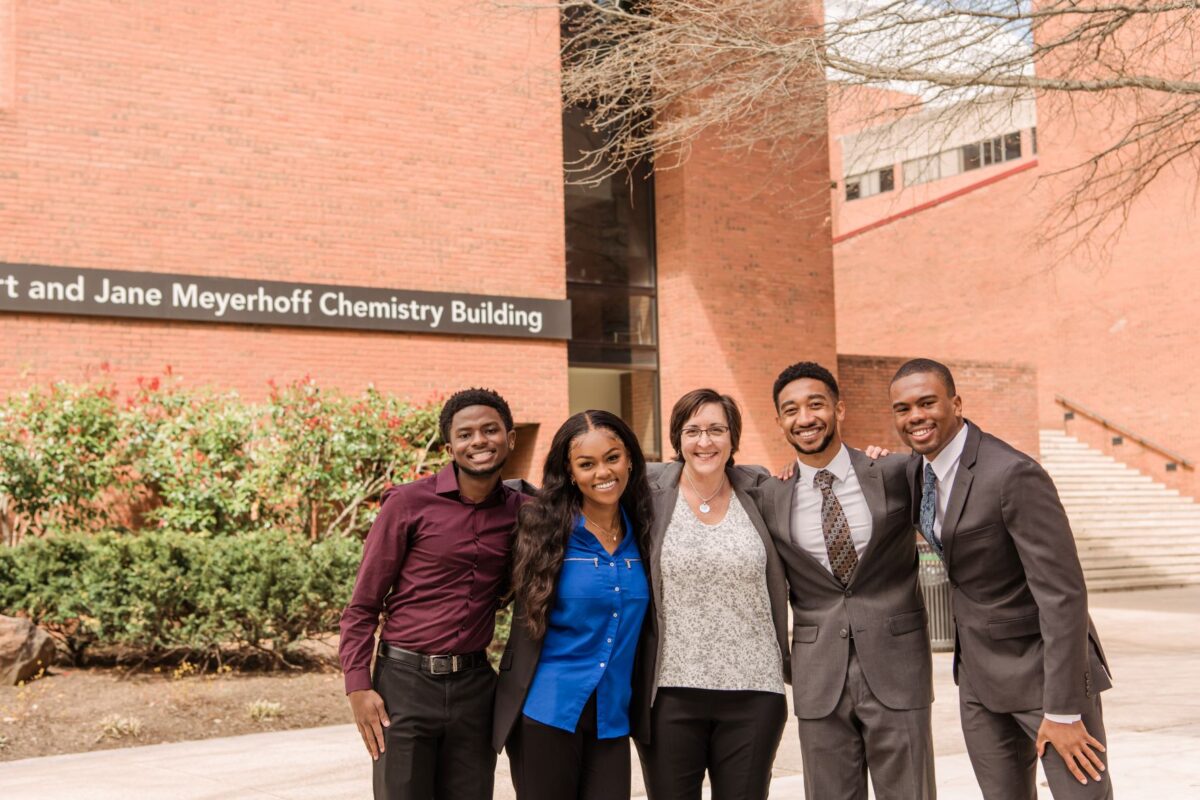 Moreland, Myers, April Householder, Slaughter, and Majekodunmi.
“Having a full slate of four Goldwater Scholars selected for the second year in a row is an incredible achievement for the student-scholars, the faculty and staff who support them, and the university as a whole,” says April Householder, director of Undergraduate Research and Prestigious Scholarships. “It means that STEM education at UMBC is preparing our students to be the best in the nation.”
The Barry Goldwater Scholarship and Excellence in Education Program is designed to provide the United States with “a continuing source of highly qualified scientists, mathematicians, and engineers” to move the nation forward. More than 1,200 students applied from over 425 institutions across the country this year. The program selected a total of 417 scholars to receive Goldwater scholarships for 2022-23.
Aspiring minds
Goldwater Scholars each receive substantial scholarship funding that advances their undergraduate work and educational paths. The program focuses on students pursuing research, and many past scholars have published and presented their work as early as their undergraduate years.
This was a major draw for Slaughter, who has been involved in UMBC research since high school. He currently is working with Govind Rao, professor of chemical, biochemical, and environmental engineering, to develop an automatic glucose monitoring system using an optical biosensor. “Research has always played a huge role in my life,” Slaughter says. “That’s why I find myself in the position that I’m in today, because I fell in love with research and bioengineering. Receiving the Goldwater is so affirming—it means that I am recognized as one of most promising aspiring minds in STEM.”
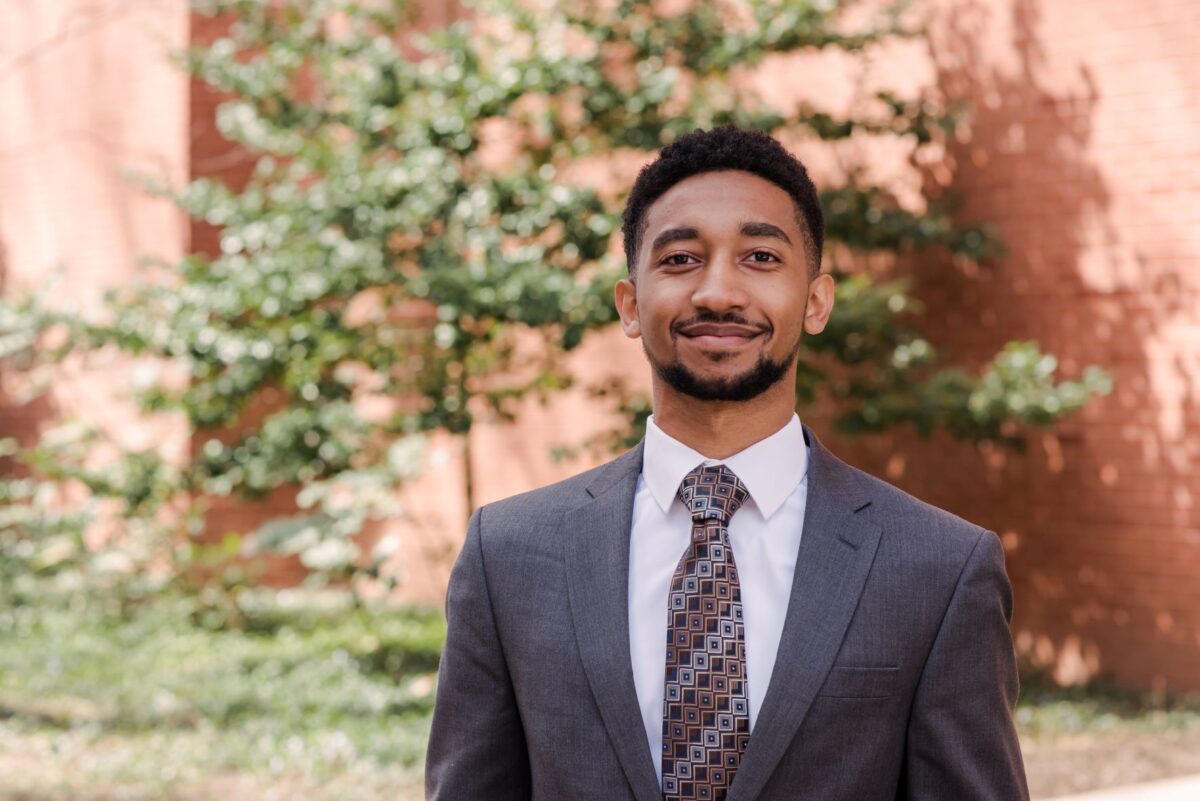 Christopher Slaughter.
When Slaughter learned that he had been selected for the scholarship, it brought tears to his eyes, he shares. It has renewed his commitment to pursuing research, even when presented with obstacles. And he can’t wait to meet the Goldwater community that will help him surpass those obstacles. “I am looking forward to connecting with other Goldwater Scholars and joining their network, and to meeting other scholars who are in similar fields,” he says.
Importance of mentorship
The process of applying for and receiving a Goldwater Scholarship was more than two years in the making for UMBC’s recipients. Majekodunmi applied to be nominated for the Goldwater during his sophomore year, but it wasn’t until his junior year that he was formally nominated by UMBC. Leading up to the deadline, Majekodunmi spent several hours each night developing and refining his application.
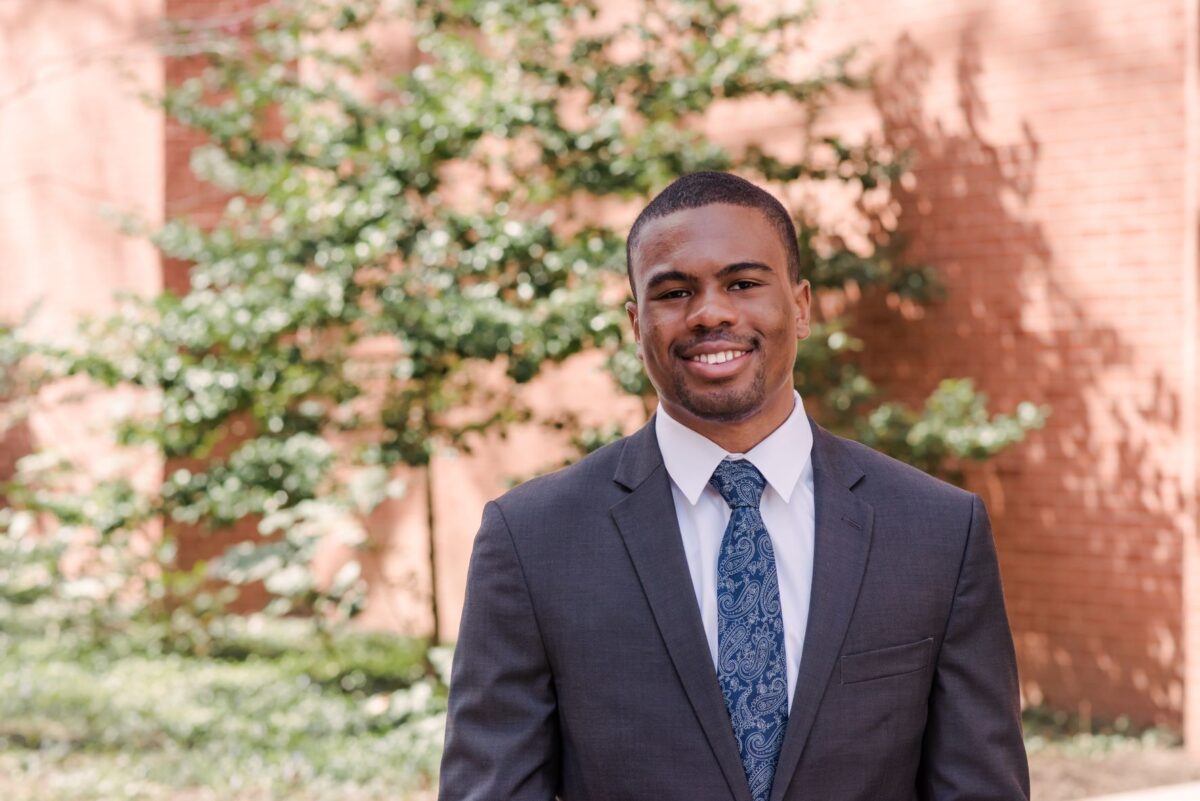 Tobi Majekodunmi.
“The most pivotal contributions to my essays came from several of my mentors, some of whom were previous Goldwater awardees. They took time out of their busy schedules to review my work and provide helpful feedback,” he says. “Although arduous and filled with many late nights, participating in this process has strengthened and increased my confidence in my technical writing skills.”
All four of this year’s recipients say their respective mentors played an important role in supporting them during the application process and preparing them to compete for the award. And those mentors are now sharing in the students’ excitement. Moreland says that the first people he reached out to after hearing the news of his Goldwater Scholars were his mentor and research advisors.
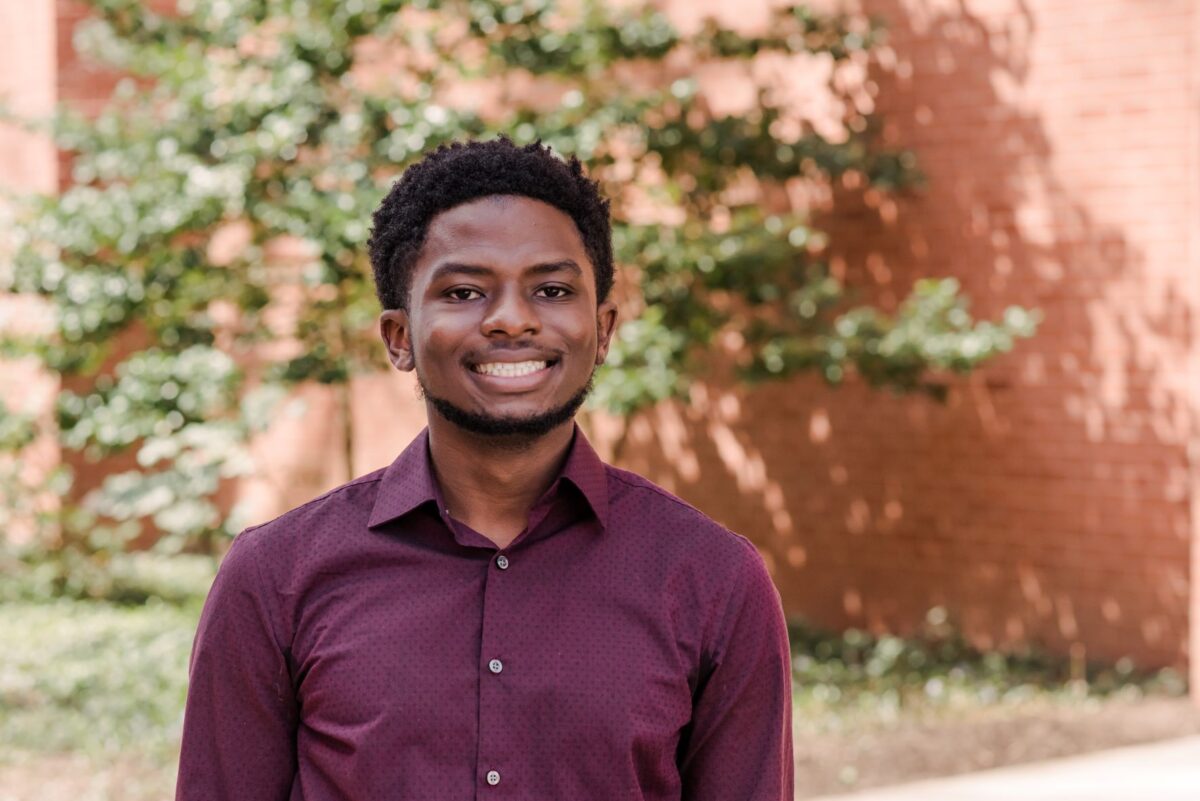 D’Juan Moreland.
Representation matters
Like Majekodunmi and Moreland, Myers shares that she was supported by mentors, family, advisors, and fellow students throughout the Goldwater application. She was at the National Society of Black Engineers Convention with Majekodunmi and Slaughter when she received the email announcing that she received the award.
“I was absolutely elated and felt so honored,” she recalls. “All I could think was, ‘Wow, what I represent matters. What my fellow awardees represent matters,’” Myers says.
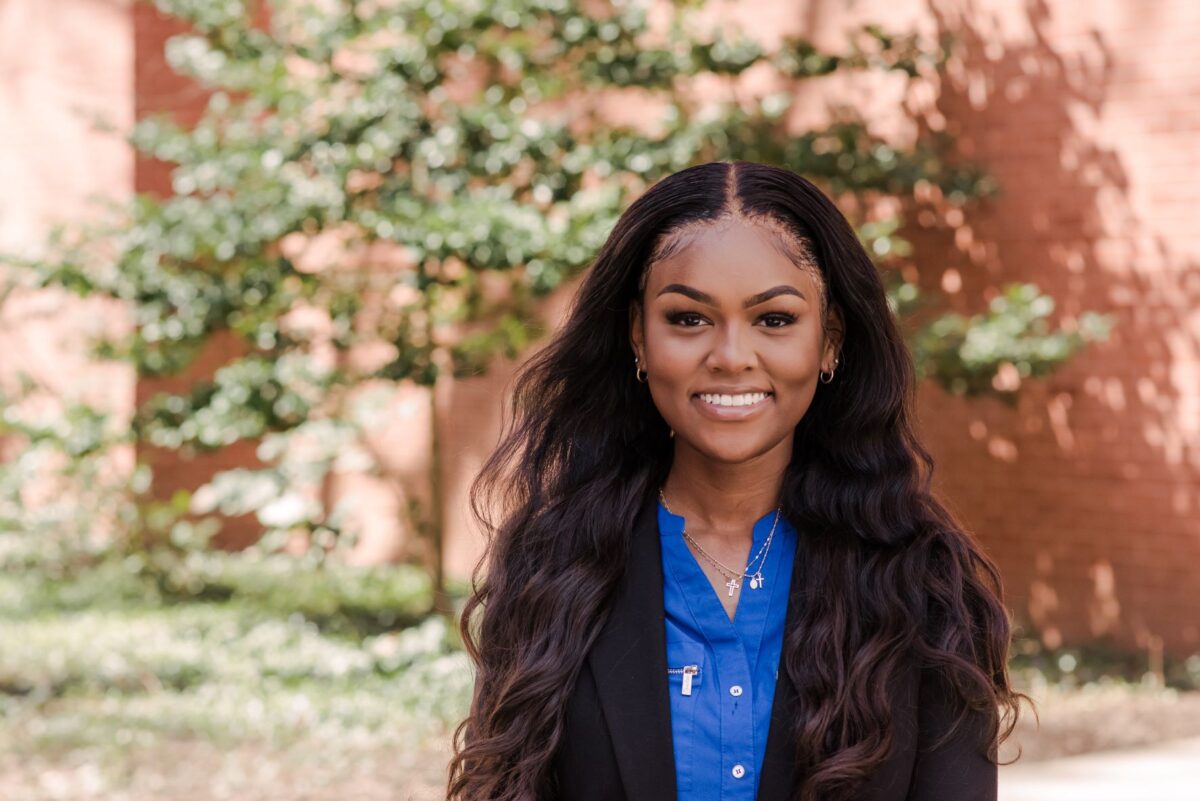 Rachel Myers.
Reflecting on the power of that moment, she shares, “I just imagined a young black girl from a community like mine, seeing me in this position and saying to herself, ‘So I can definitely do that too,’ just as I’ve said when I met women like Dr. Kizzmekia Corbett in high school or Dr. Lola Eniola-Adefeso during my freshman year at UMBC.”
Both Corbett ‘08, biological sciences and sociology, and Eniola-Adefeso ‘99, chemical engineering, are alumni of UMBC and the Meyerhoff Scholars Program who have made enormous contributions to biomedical research at a global scale. “I’m just excited to be another catalyst for other people’s dreams becoming a reality,” says Myers, “just as Dr. Corbett and Dr. Eniola-Adefeso have been for me.”
Majekodunmi similarly shares, “Becoming a Goldwater Scholar awardee is a celebration of the many influences in my life that have contributed to my development and success. To name a few, there are my family, teachers, mentors, and the Meyerhoff Scholars Program.”
He reflects, “My success is made possible because of their support, inspiration, and wisdom.”
Banner image: UMBC’s 2022 Goldwater Scholars. From left, Tobi Majekodunmi, Christopher Slaughter, D’Juan Moreland, and Rachel Myers. All photo by Marlayna Demond ’11 for UMBC.
]]>
Four UMBC students have been named 2022-23 Goldwater Scholars, tying the university’s past record, set just last year. This year’s recipients are Christopher Slaughter ‘23, computer engineering;...
https://umbc.edu/stories/four-umbc-students-receive-goldwater-scholarship-for-stem-research-tying-prior-record/
https://my3.my.umbc.edu/api/v0/pixel/news/119451/guest@my.umbc.edu/888a2851bae907004eb12d9bfde10483/api/pixel
biology
cahss
cbee
cnms
coeit
csee
majoraward
meche
meyerhoffscholars
music
news
page1
science-and-tech
UMBC News & Magazine
https://my3.my.umbc.edu/groups/umbc-news-magazine
https://assets1-my.umbc.edu/system/shared/avatars/groups/000/001/943/24435aa6207c452e7bc15cc74b42c7bb/xsmall.png?1748556657
https://assets1-my.umbc.edu/system/shared/avatars/groups/000/001/943/24435aa6207c452e7bc15cc74b42c7bb/original.png?1748556657
https://assets2-my.umbc.edu/system/shared/avatars/groups/000/001/943/24435aa6207c452e7bc15cc74b42c7bb/xxlarge.png?1748556657
https://assets2-my.umbc.edu/system/shared/avatars/groups/000/001/943/24435aa6207c452e7bc15cc74b42c7bb/xlarge.png?1748556657
https://assets3-my.umbc.edu/system/shared/avatars/groups/000/001/943/24435aa6207c452e7bc15cc74b42c7bb/large.png?1748556657
https://assets1-my.umbc.edu/system/shared/avatars/groups/000/001/943/24435aa6207c452e7bc15cc74b42c7bb/medium.png?1748556657
https://assets2-my.umbc.edu/system/shared/avatars/groups/000/001/943/24435aa6207c452e7bc15cc74b42c7bb/small.png?1748556657
https://assets1-my.umbc.edu/system/shared/avatars/groups/000/001/943/24435aa6207c452e7bc15cc74b42c7bb/xsmall.png?1748556657
https://assets2-my.umbc.edu/system/shared/avatars/groups/000/001/943/24435aa6207c452e7bc15cc74b42c7bb/xxsmall.png?1748556657
UMBC News & Magazine
0
0
false
Fri, 08 Apr 2022 13:25:19 -0400
Fri, 08 Apr 2022 13:25:19 -0400
UMBC faculty and staff award recipients place community at the core of their success

At UMBC’s 2022 Presidential Faculty and Staff Awards (PFASA), Tamra Mendelson, professor of biological sciences and recipient of the 2022 – 2025 Presidential Teaching Professor Award, said she loves “getting to the core of a concept” in her research and teaching. In her large introductory biology courses, which Mendelson has been teaching with humor, creativity, and enthusiasm since her arrival on campus in 2006, the concept might be an idea like natural selection. But as awardee after awardee addressed the audience, both in person and online, it became clear that all shared the same “core concept” of UMBC: community.
“Teaching and research make me want to come to work every day, but it’s the community here, and Dr. Hrabowski in particular, who’ve made me want to come to UMBC every day,” Mendelson said.
Yonathan Zohar, professor and chair of marine biotechnology and the 2022 – 2025 Presidential Research Professor, added, “This recognition is not about me, it’s about us,” adapting the opening quote from President Hrabowski’s book, The Empowered University. Zohar’s work, nurtured diligently over more than three decades, has in the last few years brought in more than $10 million dollars of research funding, earned international awards, and is poised to reimagine the seafood industry as we know it.
And yet, Zohar says, “None of my research accomplishments would have been possible without the ‘about us’ spirit at UMBC—the spirit that together we can make everything and anything happen.”
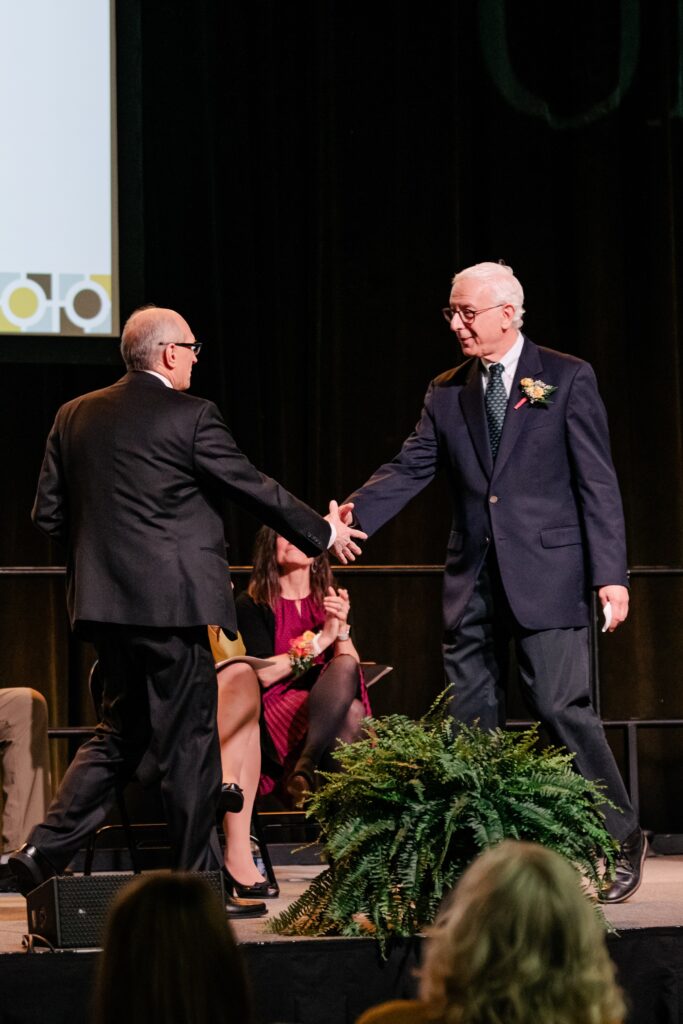 Yonathan Zohar, right, accepts his award from Bill LaCourse, dean of the College of Natural and Mathematical Sciences.
Supporting each other
Helena Dahlen, executive administrative assistant in the Division of Information Technology and the 2022 – 2023 Presidential Distinguished Staff Award for Non-exempt Staff recipient, recalled becoming an active member of the community when she started at UMBC in 2015. She joined book clubs, participated in wellness events, attended lectures, and more.
“It felt like I had moved into a small community,” she says. “Almost like a village, surrounded by brilliant people of all ages.” The supportive environment has allowed Dahlen to do her best work at UMBC and to give back. She generously contributes her energy to programs like Retriever Essentials and the Maryland Charity Campaign, and she serves as president of the Non-exempt Staff Senate.
Finally, Michael Pound, director of environmental safety and health and the 2022 – 2023 Presidential Distinguished Staff Award recipient, got to the heart of the matter. Recalling the challenges of managing the university’s response to the pandemic with a team of dedicated colleagues, he says, “I just couldn’t be prouder to work with these great folks.”
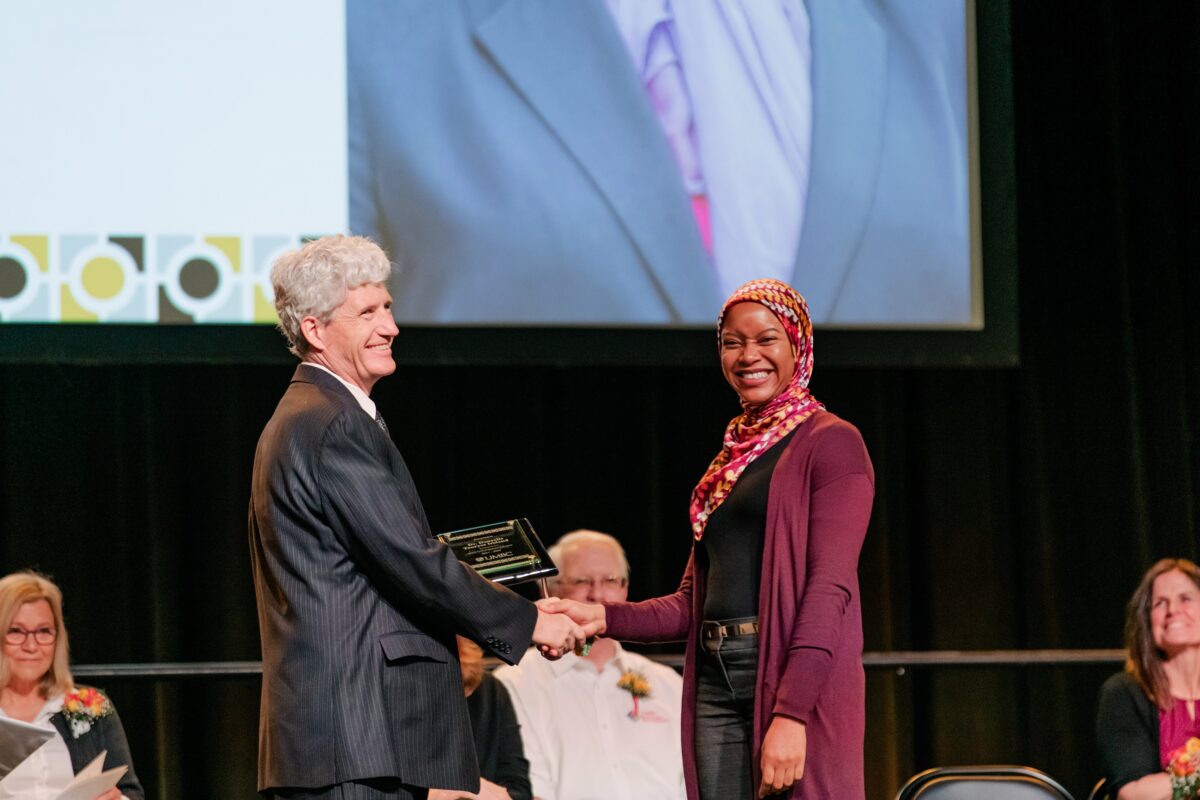 Danyelle Ireland, right, accepts her award from Marc Olano, associate dean of academic programs and learning in the College of Engineering and IT.
Beyond imagination
The UMBC community, all of the awardees emphasized, has grown through years of thoughtful care and collaboration. It’s taken decades to cultivate the UMBC ethos of community support and shared leadership.
“It’s hard to express how far we’ve come,” reflected President Hrabowski, as he offered remarks at his final PFASA as UMBC president. “Growing up, I could never have imagined the concept of UMBC—people from all over the world coming to study, to seek the truth, to get to know people different from themselves.”
UMBC’s newest awardees highlighted how that vision has become a reality, and Pres. Hrabowski honored all that they have contributed. “Leadership isn’t about one person at the top; it’s about what we all do,” Hrabowski said. “When we say we care about UMBC, what we’re saying is we care about each other.”
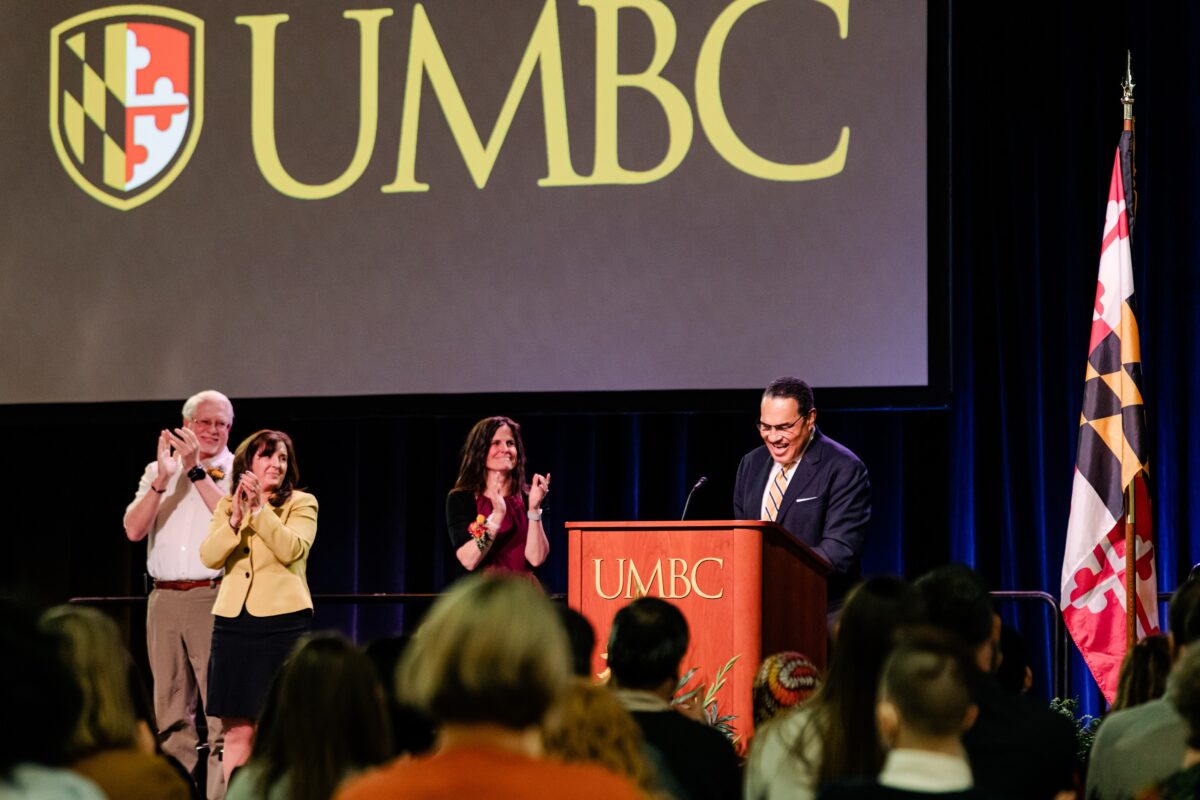 The audience applauds President Hrabowski as he makes remarks at his final Presidential Faculty and Staff Awards.
Honoring excellence
UMBC’s other named awards honor members of the UMBC community who embody the university’s ethos, such as Diane Lee, retired vice provost and dean of undergraduate education; Marilyn E. Demorest, professor emerita of psychology and former vice provost for faculty affairs; and Teresa Lupinek, the late former executive administrative assistant to the president. This year’s recipients include:
Mark Berczynski, M.S. ’17, lecturer, engineering and computing education program
Diane M. Lee Teaching Award
Danyelle Tauryce Ireland, associate director, Center for Women in Technology
Jakubik Family Endowment Staff Award
Nichole Zang Do, M.A. ’15, program management specialist, biological sciences
Karen L. Wensch Endowment Award for Outstanding Non-exempt Staff
C. Jill Randles, assistant vice provost and assistant dean, Academic Engagement and Transition Programs
Teresa Lupinek Endowment Award
Tamara Bhalla, associate professor, American studies
Marilyn E. Demorest Award for Faculty Advancement
Margaret Holland, associate professor, geography and environmental systems
Marilyn E. Demorest Award for Faculty Advancement
Narsingh B. Singh, research professor, chemistry and biochemistry, and affiliate faculty, computer science and electrical engineering
UMBC Research Faculty Excellence Award
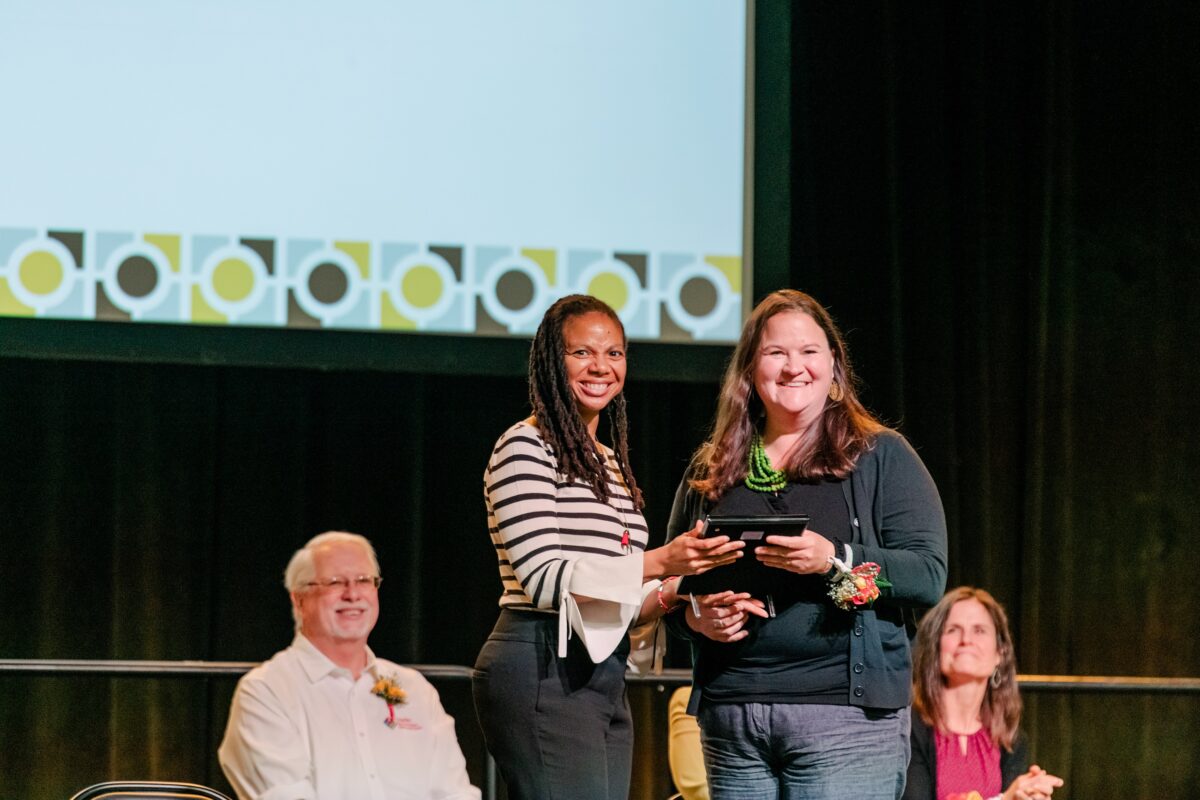 Margaret Holland, right, accepts her award from Kimberly Moffitt, dean of the College of Arts, Humanities, and Social Sciences.
USM Board of Regents awardees
This year, UMBC also had two University System of Maryland (USM) Board of Regents Award recipients. These awards represent the highest honor bestowed on faculty and staff across the USM by the Board of Regents. Awardees are selected by the Council of University System Staff and approved by the Board. The awards recognize faculty and staff for excellence in teaching; research, scholarship, and creative activity; public service; mentoring; or innovation.
UMBC has received an outsize share of these awards over the years, demonstrating the strength of our faculty and staff across all areas of achievement. This year, Marjoleine Kars, professor of history, received the 2022 USM Board of Regents Award for Excellence in Scholarship. Her latest book, Blood on the River: A Chronicle of Mutiny and Freedom on the Wild Coast, has received widespread acclaim for its discussion of a nearly successful rebellion of enslaved African and Indigenous people in the Dutch colony of Berbice in the 1860s.
Lee Blaney, associate professor of chemical, biochemical, and environmental engineering, received the 2022 USM Board of Regents Award for Excellence in Teaching. Blaney has received awards previously for exceptional mentoring and for engaging his students in high-impact research. His laboratory focuses on contaminants of emerging concern, such as compounds found in pharmaceuticals and personal care products, in waterways such as Chesapeake Bay.
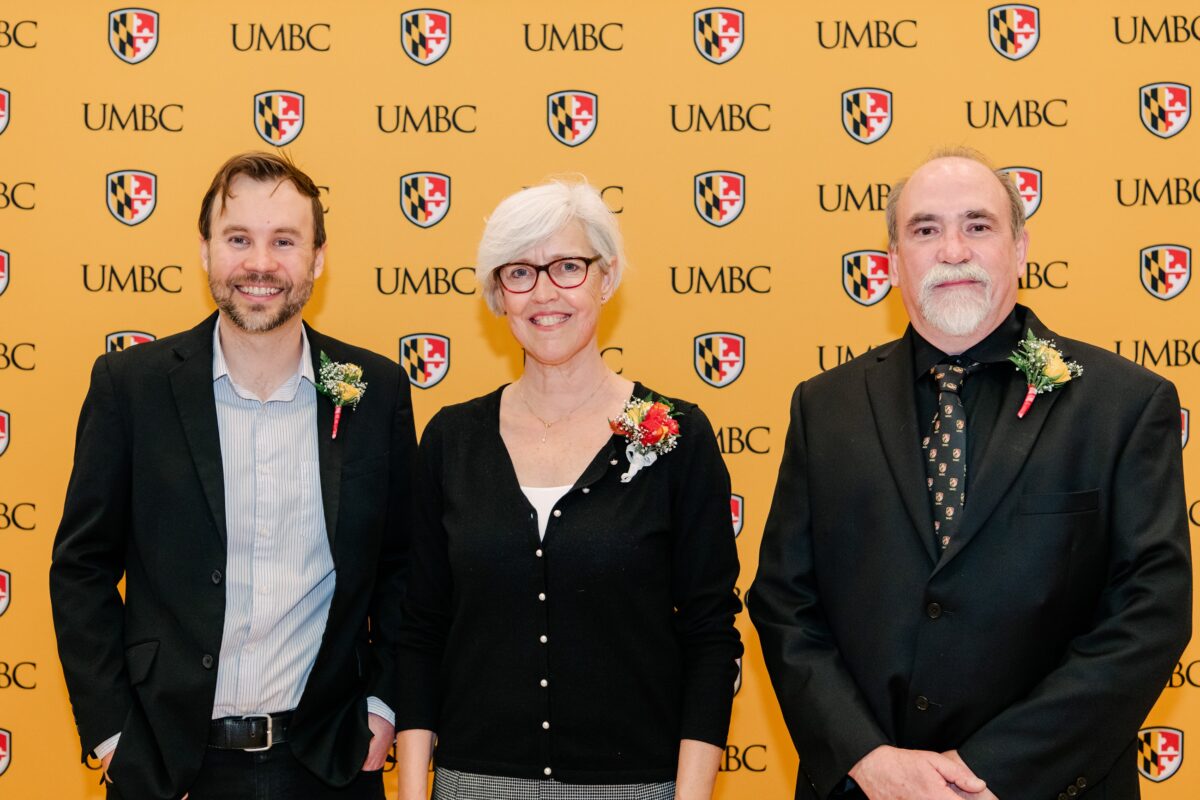 From left to right: Lee Blaney, Marjoleine Kars, and Victor Fulda.
Celebrating together
This year’s ceremony was the first in-person PFASA event since 2019. With that in mind, the ceremony also honored awardees from 2020 and 2021.
Victor Fulda, engineering technician, chemical, biochemical, and environmental engineering
2021 University System of Maryland Board of Regents Award for Exceptional Contribution to the Institution or Unit to which the Person Belongs
Jamie Gurganus ‘04, M.S. ‘11, Ph.D. ‘20; faculty, mechanical engineering; associate director, engineering education initiatives; and director, Center for the Integration of Research, Teaching, and Learning
2020 – 2021 Diane M. Lee Teaching Award
Jonathan Zwi, instructor and affiliate artist, music
2020 – 2021 Diane M. Lee Teaching Award
Header image: Recipients of awards who accepted them in person at this year’s PFASA. From left to right: Marjoleine Kars, Michael Pound, Jamie Gurganus, Maggie Holland, Nichole Zang Do, Jill Randles, Danyelle Ireland, Tamra Mendelson, Yonathan Zohar, Helena Dahlen, Freeman Hrabowski, Tamara Bhalla, Victor Fulda, Jonanthan Zwi, Narsingh Singh, Lee Blaney, Philip Rous.
All photos by Marlayna Demond ’11 for UMBC.
]]>
At UMBC’s 2022 Presidential Faculty and Staff Awards (PFASA), Tamra Mendelson, professor of biological sciences and recipient of the 2022 – 2025 Presidential Teaching Professor Award, said she...
https://umbc.edu/stories/umbc-faculty-and-staff-award-recipients-place-community-at-the-core-of-their-success/
https://my3.my.umbc.edu/api/v0/pixel/news/119452/guest@my.umbc.edu/f95ae1b8548d27f329239aad427f3da5/api/pixel
americanstudies
biology
cahss
cbee
chemistry
cnms
coeit
community
csee
cwit
ges
history
marinebiotech
music
news
UMBC News & Magazine
https://my3.my.umbc.edu/groups/umbc-news-magazine
https://assets1-my.umbc.edu/system/shared/avatars/groups/000/001/943/24435aa6207c452e7bc15cc74b42c7bb/xsmall.png?1748556657
https://assets1-my.umbc.edu/system/shared/avatars/groups/000/001/943/24435aa6207c452e7bc15cc74b42c7bb/original.png?1748556657
https://assets2-my.umbc.edu/system/shared/avatars/groups/000/001/943/24435aa6207c452e7bc15cc74b42c7bb/xxlarge.png?1748556657
https://assets2-my.umbc.edu/system/shared/avatars/groups/000/001/943/24435aa6207c452e7bc15cc74b42c7bb/xlarge.png?1748556657
https://assets3-my.umbc.edu/system/shared/avatars/groups/000/001/943/24435aa6207c452e7bc15cc74b42c7bb/large.png?1748556657
https://assets1-my.umbc.edu/system/shared/avatars/groups/000/001/943/24435aa6207c452e7bc15cc74b42c7bb/medium.png?1748556657
https://assets2-my.umbc.edu/system/shared/avatars/groups/000/001/943/24435aa6207c452e7bc15cc74b42c7bb/small.png?1748556657
https://assets1-my.umbc.edu/system/shared/avatars/groups/000/001/943/24435aa6207c452e7bc15cc74b42c7bb/xsmall.png?1748556657
https://assets2-my.umbc.edu/system/shared/avatars/groups/000/001/943/24435aa6207c452e7bc15cc74b42c7bb/xxsmall.png?1748556657
UMBC News & Magazine
0
0
false
Thu, 07 Apr 2022 22:12:22 -0400
Thu, 07 Apr 2022 22:12:22 -0400
UMBC’s Lavik and Bieberich develop new approach to nanoparticles that stop internal bleeding
When a person experiences a trauma that leads to significant bleeding, the first few minutes are critical. It’s important that they receive intravenous medication quickly to control the bleeding, but delivering the medication at the right rate can prove challenging. Slower infusions can cause fewer negative reactions, but the medication might not work fast enough, particularly in the case of a serious trauma.
Four UMBC researchers have developed a unique way of modifying the surfaces of nanoparticles within these life-saving medications to provide infusions that can be delivered more quickly, but with a reduced risk of negative reactions. Infusion reactions can cause a range of symptoms, such as rashes and inflammatory responses. This can include anaphylaxis, a life-threatening respiratory failure. Up until this point, the seriousness of these reactions has limited the use of promising nanomedicines, and reducing the likelihood of adverse reactions could be game-changing.
 Erin Lavik (right) working in the lab with a student in 2018.
The core of the issue
In a paper recently published in Nano Letters, Erin Lavik, professor of chemical, biochemical, and environmental engineering; Chuck Bieberich, professor of biological sciences; Nuzhat Maisha, Ph.D. ‘21, chemical engineering; and Michael Rubenstein, M.S. ‘14, Ph.D. ‘22, biological sciences, discuss their novel approach to the research. They focused on the core material of the nanoparticles delivered to patients.
“We found that using a polyurethane core reduced the markers associated with infusion reactions,” explains Lavik, who is also the associate dean for research and faculty development in UMBC’s College of Engineering and Information Technology.
Currently, 7% of people experience infusion reactions, the authors note in their paper. “These reactions…limit the treatments available in a substantial portion of patients,” they explain.
 Chuck Bieberich.
“We, like most of the field, have spent a lot of time trying to modify the surfaces of nanoparticles to modulate the reaction,” says Lavik. She shares that while that approach does help to a degree, going a step further by changing the core material appears to have a greater impact.
The research conducted by Lavik, Bieberich, and their colleagues lays the groundwork for future testing of preclinical models using nanocapsules to stop internal bleeding. Lavik explains that collaboration was an important element of this work, especially being able to conduct the research in UMBC’s Interdisciplinary Life Sciences Building.
 The ILSB (at left) in the fall.
Banner image: Erin Lavik, left, working in the lab in 2018. All photos by Marlayna Demond ’11 for UMBC.
]]>
When a person experiences a trauma that leads to significant bleeding, the first few minutes are critical. It’s important that they receive intravenous medication quickly to control the bleeding,...
https://umbc.edu/stories/umbcs-lavik-and-bieberich-develop-new-approach-to-nanoparticles-that-stop-internal-bleeding/
https://my3.my.umbc.edu/api/v0/pixel/news/119519/guest@my.umbc.edu/7d0b5ba777e0a55b8dabf79f5cd9dfc4/api/pixel
cbee
coeit
science-and-technology
UMBC News & Magazine
https://my3.my.umbc.edu/groups/umbc-news-magazine
https://assets1-my.umbc.edu/system/shared/avatars/groups/000/001/943/24435aa6207c452e7bc15cc74b42c7bb/xsmall.png?1748556657
https://assets1-my.umbc.edu/system/shared/avatars/groups/000/001/943/24435aa6207c452e7bc15cc74b42c7bb/original.png?1748556657
https://assets2-my.umbc.edu/system/shared/avatars/groups/000/001/943/24435aa6207c452e7bc15cc74b42c7bb/xxlarge.png?1748556657
https://assets2-my.umbc.edu/system/shared/avatars/groups/000/001/943/24435aa6207c452e7bc15cc74b42c7bb/xlarge.png?1748556657
https://assets3-my.umbc.edu/system/shared/avatars/groups/000/001/943/24435aa6207c452e7bc15cc74b42c7bb/large.png?1748556657
https://assets1-my.umbc.edu/system/shared/avatars/groups/000/001/943/24435aa6207c452e7bc15cc74b42c7bb/medium.png?1748556657
https://assets2-my.umbc.edu/system/shared/avatars/groups/000/001/943/24435aa6207c452e7bc15cc74b42c7bb/small.png?1748556657
https://assets1-my.umbc.edu/system/shared/avatars/groups/000/001/943/24435aa6207c452e7bc15cc74b42c7bb/xsmall.png?1748556657
https://assets2-my.umbc.edu/system/shared/avatars/groups/000/001/943/24435aa6207c452e7bc15cc74b42c7bb/xxsmall.png?1748556657
UMBC News & Magazine
0
0
false
Tue, 23 Nov 2021 14:13:20 -0500
UMBC students take second place in national ChemE Jeopardy competition for second year in a row

Last weekend, a team of four UMBC students earned second place in a national Jeopardy competition hosted by the American Institute of Chemical Engineers (AIChE). This year, the national competition took place in Boston at the 2021 AIChE Annual Student Conference.
UMBC’s team includes John Laporte ‘22, Sumana Peddibhotla ‘22, Erin Huber ‘22, and Max Bobbin ‘23, all chemical engineering majors. Laporte is the captain of the UMBC AIChE Jeopardy team, and Huber is the president of the UMBC chapter of AIChE.
 The UMBC AIChE Jeopardy team with one of their advisors, Neha Raikar.
A competitive atmosphere
Huber explains that when she competed for the first time last year, the AIChE Jeopardy contest was completely virtual. “While it was fun participating virtually, getting to compete in-person this year was a lot more exciting,” she says. “There is definitely more of a competitive atmosphere when you are in the same room as all the people you are competing against.”
The UMBC team made it to the national competition after an intense round at the semi-final national competition against the University of Southern California (USC).
Huber says that she enjoyed connecting with students on other teams during the competition. “The semi-final was a super intense game, and both teams were competitive. Even after we won, both teams were so in awe of each other’s skills that we ended up hanging out and grabbing dinner together,” she shares. “The camaraderie among the students that attended both the competition and the conference is something that I will always remember.”
Earning their spot
Leading up to the national competition, the UMBC team regularly practiced virtually and in-person with fellow chemical, biochemical, and environmental engineering students. Laporte says that the team practices at least once a week, and as the competition approached, the team increased practices to three times each week, meeting twice in person and once online. They earned a spot at the national competition after winning the Mid-Atlantic Regional Competition in spring 2021. Approximately fifty teams competed from across the country this year, organized into nine AIChE student chapter regions.
In the national competition finals, UMBC competed against Iowa State University and the University of Iowa, which won the event. The UMBC ChemE Jeopardy team will continue practicing at least once a week to begin preparing for next year’s competition in January 2022.
The team is advised by Neha Raikar, lecturer of chemical, biochemical, and environmental engineering (CBEE), and Mariajose Castellanos, principal lecturer of CBEE.
Banner image: The UMBC AIChE Jeopardy team at the national competition in Boston. Photos courtesy of Huber.
]]>
Last weekend, a team of four UMBC students earned second place in a national Jeopardy competition hosted by the American Institute of Chemical Engineers (AIChE). This year, the national...
https://umbc.edu/stories/umbc-students-take-second-place-in-national-cheme-jeopardy-competition-for-second-year-in-a-row/
https://my3.my.umbc.edu/api/v0/pixel/news/119528/guest@my.umbc.edu/760720a5d1b37ce88939f69eb7190066/api/pixel
cbee
coeit
community
science-and-technology
UMBC News & Magazine
https://my3.my.umbc.edu/groups/umbc-news-magazine
https://assets1-my.umbc.edu/system/shared/avatars/groups/000/001/943/24435aa6207c452e7bc15cc74b42c7bb/xsmall.png?1748556657
https://assets1-my.umbc.edu/system/shared/avatars/groups/000/001/943/24435aa6207c452e7bc15cc74b42c7bb/original.png?1748556657
https://assets2-my.umbc.edu/system/shared/avatars/groups/000/001/943/24435aa6207c452e7bc15cc74b42c7bb/xxlarge.png?1748556657
https://assets2-my.umbc.edu/system/shared/avatars/groups/000/001/943/24435aa6207c452e7bc15cc74b42c7bb/xlarge.png?1748556657
https://assets3-my.umbc.edu/system/shared/avatars/groups/000/001/943/24435aa6207c452e7bc15cc74b42c7bb/large.png?1748556657
https://assets1-my.umbc.edu/system/shared/avatars/groups/000/001/943/24435aa6207c452e7bc15cc74b42c7bb/medium.png?1748556657
https://assets2-my.umbc.edu/system/shared/avatars/groups/000/001/943/24435aa6207c452e7bc15cc74b42c7bb/small.png?1748556657
https://assets1-my.umbc.edu/system/shared/avatars/groups/000/001/943/24435aa6207c452e7bc15cc74b42c7bb/xsmall.png?1748556657
https://assets2-my.umbc.edu/system/shared/avatars/groups/000/001/943/24435aa6207c452e7bc15cc74b42c7bb/xxsmall.png?1748556657
UMBC News & Magazine
0
0
false
Tue, 16 Nov 2021 13:42:05 -0500