Upal Ghosh appointed to D.C. mayor’s Leadership Council for a Cleaner Anacostia River
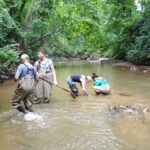
On September 12, UMBC’s Upal Ghosh, from the Department of Chemical, Biochemical, and Environmental Engineering, was sworn in as a member of the Washington, D.C., mayor’s Leadership Council for a Cleaner Anacostia River (LCCAR). The council consists of 25 high-level government officials, community leaders, and environmental experts who support the vision of a swimmable and fishable Anacostia River. The members meet quarterly to advise the D.C. government on ongoing restoration projects.
The Anacostia River, which runs from Prince George’s County in Maryland into Washington, D.C., before joining the Potomac River and ultimately flowing into the Chesapeake Bay, has historically suffered from high levels of industrial pollution and contamination from sewage overflow. In recent years, government officials have been making concerted efforts to clean up the river. UMBC was invited to sit on the council, with Ghosh as the representative, based on the university’s key contributions to these clean-up efforts.
 On Sept. 12, Upal Ghosh (top left) and other members of the LCCAR were sworn in during a virtual meeting of the council. (Image courtesy of Ghosh)
Since 2016, Ghosh and his UMBC colleagues and students have developed innovative methods of measuring contaminants in the river and created models to elucidate where the contaminants come from and how they travel through and accumulate in the water, sediment, and aquatic life, such as fish. Nathalie Lombard, a research assistant professor at UMBC who has played a significant role in the projects, will serve as the alternate representative on the LLCAR when Ghosh cannot attend.
In addition to his work on the Anacostia, Ghosh and his students have studied and contributed to the cleanup of the waterways throughout Maryland, Delaware, and across the country. “Students learn a lot from being out in the field,” Ghosh says. “They learn how the science and engineering we do helps guide major decisions. Our ultimate goal is making a positive difference in the health of the river, lake, or bay. That gives me a lot of excitement, and it really motivates the students too.”
]]>
On September 12, UMBC’s Upal Ghosh, from the Department of Chemical, Biochemical, and Environmental Engineering, was sworn in as a member of the Washington, D.C., mayor’s Leadership Council for a...
https://umbc.edu/quick-posts/upal-ghosh-leadership-council-for-a-cleaner-anacostia-river/
https://my3.my.umbc.edu/api/v0/pixel/news/144004/guest@my.umbc.edu/ac662dc7012625b15c1987a82fdf6c04/api/pixel
cbee
coeit
news
quick-post
research
science-and-tech
UMBC News & Magazine
https://my3.my.umbc.edu/groups/umbc-news-magazine
https://assets1-my.umbc.edu/system/shared/avatars/groups/000/001/943/24435aa6207c452e7bc15cc74b42c7bb/xsmall.png?1748556657
https://assets1-my.umbc.edu/system/shared/avatars/groups/000/001/943/24435aa6207c452e7bc15cc74b42c7bb/original.png?1748556657
https://assets2-my.umbc.edu/system/shared/avatars/groups/000/001/943/24435aa6207c452e7bc15cc74b42c7bb/xxlarge.png?1748556657
https://assets2-my.umbc.edu/system/shared/avatars/groups/000/001/943/24435aa6207c452e7bc15cc74b42c7bb/xlarge.png?1748556657
https://assets3-my.umbc.edu/system/shared/avatars/groups/000/001/943/24435aa6207c452e7bc15cc74b42c7bb/large.png?1748556657
https://assets1-my.umbc.edu/system/shared/avatars/groups/000/001/943/24435aa6207c452e7bc15cc74b42c7bb/medium.png?1748556657
https://assets2-my.umbc.edu/system/shared/avatars/groups/000/001/943/24435aa6207c452e7bc15cc74b42c7bb/small.png?1748556657
https://assets1-my.umbc.edu/system/shared/avatars/groups/000/001/943/24435aa6207c452e7bc15cc74b42c7bb/xsmall.png?1748556657
https://assets2-my.umbc.edu/system/shared/avatars/groups/000/001/943/24435aa6207c452e7bc15cc74b42c7bb/xxsmall.png?1748556657
UMBC News & Magazine
0
0
false
Wed, 18 Sep 2024 07:09:17 -0400
Wed, 18 Sep 2024 07:09:17 -0400
New study increases understanding of HIV drug’s negative effects on the brain
Efavirenz is an important drug for treating HIV infection, but it has negative effects that can significantly impact patients’ quality of life over time. It causes neuropsychiatric disorders and neurocognitive impairment in roughly 50 percent of patients. The drug is associated with abnormal lipid levels in blood plasma, but the molecular mechanisms responsible for negative clinical observations are unknown.
 Nav Raj Phulara (courtesy of Phulara)
A new study in ACS Pharmacology & Translational Science led by chemistry Ph.D. student Nav Raj Phulara, used a novel combination approach to increase understanding of the relevant mechanisms. First, tissue imaging showed that Efavirenz alters lipid metabolism in mouse brains. Next, the researchers investigated all of the proteins present in the mouse brain sections and found that Efavirenz downregulates certain enzymes. All of these changes could be responsible for the drug’s negative neuropsychiatric effects. If proven so, new drugs could potentially be developed to block the negative activity of Efavirenz while allowing its positive effects to continue.
“Lipid abnormalities in the brain can lead to adverse effects like brain disorders and neurodegenerative diseases, and the brain is rich in lipids overall,” says Herana Kamal Seneviratne, assistant professor of chemistry and biochemistry and senior author on the new paper. “That formed the basis for investigating lipids in this study.”
The new combination approach could also be applied to investigate lipid metabolism in other systems, such as the heart and kidney. Two other students in Seneviratne’s group, chemistry Ph.D. student Nimalee Jayasekera and junior biochemistry and molecular biology major Anderson Rivas, are already examining lipid metabolism in heart tissue. The results could eventually lead to reduced tissue damage in people taking drugs with known cardiac toxicity, such as some chemotherapy drugs.
Novel approach, new perspectives
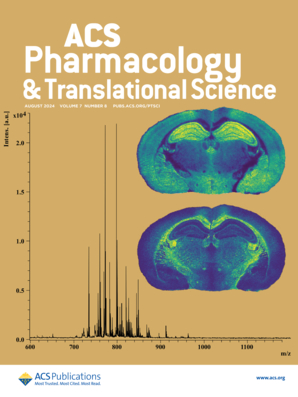 Pharmacology & Translational Science featured the study on its cover. The two images on the right show the results from mass spectrometry performed on the mouse brain samples. The different colors represent the abundance of a particular lipid at each precise location.
The approach employed in the new study improves on traditional methods. Previously, researchers were forced to grind up tissue samples into a homogeneous slurry before analyzing them. The mass spectrometry method Phulara and Seneviratne used to image the samples maintains their integrity, and therefore retains spatial information. The results indicate which lipids are present, their abundance, and precisely where each lipid is located in a heat map for each tissue section.
Comparing the results of these studies between mice who had and had not been treated with Efavirenz showed that the drug altered the abundance of multiple lipids, particularly in the hippocampus, thalamus, and corpus callosum regions.
Then, when the researchers investigated the proteins present in the samples (their “proteome”), they found that 12 enzymes were much less abundant in treated mice. That list includes proteins involved in energy metabolism and lipid production and metabolism. The enzymes associated with the lipid changes will guide further investigation into the molecular mechanisms behind the changes.
“Combining tissue imaging with proteomics is extremely powerful, and that is one of the novel aspects of this work,” Seneviratne says. Top-of-the-line instrumentation available in Seneviratne’s lab and UMBC’s Interdisciplinary Life Sciences Building made the work possible, as well as collaboration with UMBC cancer biologists Charles Bieberich and Apurv Rege, who supported the drug treatment studies and are co-authors on the paper.
Digging deeper
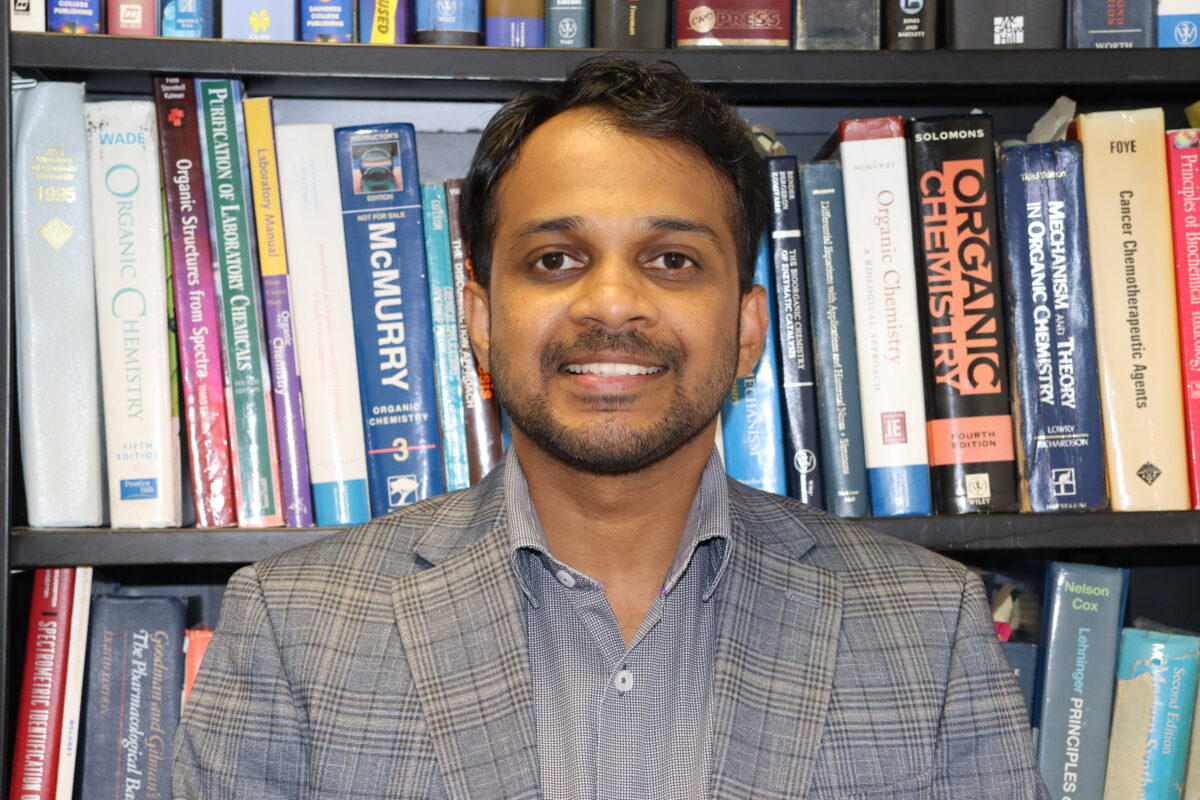 Herana Kamal Seneviratne (courtesy of Seneviratne)
Now Phulara is homing in on how the enzymes identified in the current study affect lipid metabolism. To do that, he’ll manipulate the enzymes’ expression in different brain cell types and observe the effects. Some of the cells will receive Efavirenz and some will not. Observing the effects on lipid metabolism in the two groups will help reveal how the enzymes regulate lipid metabolism under normal conditions and how the drug disrupts that process.
Phulara has started by growing mouse astrocytes, a type of brain cell. He’ll collaborate with neurologists at the Johns Hopkins School of Medicine for analyses of human cells. Seneviratne’s group is also working on developing proteomic techniques that retain spatial information, similar to the lipid mass spectrometry imaging methods the team used.
“The overall goal is, ‘How can we target the lipid metabolism in order to minimize the side effects associated with this drug?’” Seneviratne says.
Earlier detection for better outcomes
For drugs that cause heart damage, such as the common chemotherapy drug doxorubicin, looking at lipid metabolism might help discover new mechanisms by which the damage occurs and help clinicians recognize the damage earlier. Typically, damage is not detected until it is quite advanced and irreversible, Seneviratne explains.
“We want to know the earliest molecular signatures of the damage. We think lipid metabolism will give us early molecular markers,” Seneviratne says. He adds, “The approaches that we developed in this study could be broadly applicable to kidney toxicities or cardio toxicities or any toxicities, and neurodegenerative diseases as well.”
“It’s really exciting. We can even find novel molecular targets for different diseases using this approach,” Phulara says. “If we see altered lipid metabolism in response to a specific drug, then we can target that altered lipid metabolism by supplementing with another drug, so hopefully that can help combat the disease.”
]]>
Efavirenz is an important drug for treating HIV infection, but it has negative effects that can significantly impact patients’ quality of life over time. It causes neuropsychiatric disorders and...
https://umbc.edu/stories/study-hiv-drug-negative-brain-effects/
https://my3.my.umbc.edu/api/v0/pixel/news/143960/guest@my.umbc.edu/d8f8f5a01c2b5ec281498c49278f6523/api/pixel
chemistry-and-biochemistry
cnms
gradresearch
news
research
science-and-tech
story
UMBC News & Magazine
https://my3.my.umbc.edu/groups/umbc-news-magazine
https://assets1-my.umbc.edu/system/shared/avatars/groups/000/001/943/24435aa6207c452e7bc15cc74b42c7bb/xsmall.png?1748556657
https://assets1-my.umbc.edu/system/shared/avatars/groups/000/001/943/24435aa6207c452e7bc15cc74b42c7bb/original.png?1748556657
https://assets2-my.umbc.edu/system/shared/avatars/groups/000/001/943/24435aa6207c452e7bc15cc74b42c7bb/xxlarge.png?1748556657
https://assets2-my.umbc.edu/system/shared/avatars/groups/000/001/943/24435aa6207c452e7bc15cc74b42c7bb/xlarge.png?1748556657
https://assets3-my.umbc.edu/system/shared/avatars/groups/000/001/943/24435aa6207c452e7bc15cc74b42c7bb/large.png?1748556657
https://assets1-my.umbc.edu/system/shared/avatars/groups/000/001/943/24435aa6207c452e7bc15cc74b42c7bb/medium.png?1748556657
https://assets2-my.umbc.edu/system/shared/avatars/groups/000/001/943/24435aa6207c452e7bc15cc74b42c7bb/small.png?1748556657
https://assets1-my.umbc.edu/system/shared/avatars/groups/000/001/943/24435aa6207c452e7bc15cc74b42c7bb/xsmall.png?1748556657
https://assets2-my.umbc.edu/system/shared/avatars/groups/000/001/943/24435aa6207c452e7bc15cc74b42c7bb/xxsmall.png?1748556657
UMBC News & Magazine
0
0
false
Mon, 16 Sep 2024 16:30:21 -0400
Mon, 16 Sep 2024 16:30:21 -0400
Hrabowski Fund for Innovation awardees announced
UMBC’s Faculty Development Center has announced the projects selected to receive grants in the 2023 – 2024 rounds of the Hrabowski Fund for Innovation competition. The Fund supports initiatives to enhance teaching and learning at UMBC, with specific emphasis on innovative approaches to increase student success.
“These high-profile awards emphasize the university’s ongoing commitment to support faculty and staff efforts in innovation in teaching and learning,” says Kerrie Kephart, interim director, Faculty Development Center. “Projects funded from the Hrabowski Fund are often catalysts for the broader adoption of innovative teaching and student success initiatives across campus.”
Proposals for the next round are due by October 25, 2024. For more information and to apply, visit UMBC’s Faculty Development Center website. Many awardees will be sharing their work during the poster/demo session at the Eighth Annual Provost’s Teaching and Learning Symposium (PT&LS) on Friday, September 27. Please see the PT&LS myUMBC post for more information and to register for the symposium.
]]>
UMBC’s Faculty Development Center has announced the projects selected to receive grants in the 2023 – 2024 rounds of the Hrabowski Fund for Innovation competition. The Fund supports initiatives...
https://umbc.edu/quick-posts/hrabowski-fund-for-innovation-award-announced/
https://my3.my.umbc.edu/api/v0/pixel/news/143946/guest@my.umbc.edu/5e826cc3c15171cd067932f0262c1f07/api/pixel
quick-post
UMBC News & Magazine
https://my3.my.umbc.edu/groups/umbc-news-magazine
https://assets1-my.umbc.edu/system/shared/avatars/groups/000/001/943/24435aa6207c452e7bc15cc74b42c7bb/xsmall.png?1748556657
https://assets1-my.umbc.edu/system/shared/avatars/groups/000/001/943/24435aa6207c452e7bc15cc74b42c7bb/original.png?1748556657
https://assets2-my.umbc.edu/system/shared/avatars/groups/000/001/943/24435aa6207c452e7bc15cc74b42c7bb/xxlarge.png?1748556657
https://assets2-my.umbc.edu/system/shared/avatars/groups/000/001/943/24435aa6207c452e7bc15cc74b42c7bb/xlarge.png?1748556657
https://assets3-my.umbc.edu/system/shared/avatars/groups/000/001/943/24435aa6207c452e7bc15cc74b42c7bb/large.png?1748556657
https://assets1-my.umbc.edu/system/shared/avatars/groups/000/001/943/24435aa6207c452e7bc15cc74b42c7bb/medium.png?1748556657
https://assets2-my.umbc.edu/system/shared/avatars/groups/000/001/943/24435aa6207c452e7bc15cc74b42c7bb/small.png?1748556657
https://assets1-my.umbc.edu/system/shared/avatars/groups/000/001/943/24435aa6207c452e7bc15cc74b42c7bb/xsmall.png?1748556657
https://assets2-my.umbc.edu/system/shared/avatars/groups/000/001/943/24435aa6207c452e7bc15cc74b42c7bb/xxsmall.png?1748556657
UMBC News & Magazine
1
0
false
Mon, 16 Sep 2024 13:28:40 -0400
Mon, 16 Sep 2024 13:28:40 -0400
Creative, scientifically accurate eclipse animation selected for screening at Iron Mule Film Festival
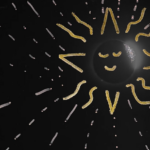
An animated short co-directed by UMBC’s Robin Corbet, senior research scientist in the Center for Space Sciences and Technology, and Laurence Arcadias, an animation professor at the Maryland Institute College of Art, will screen at the Iron Mule Film Festival—a short comedy film fest—in New York City on October 7. Corbet and Arcadias will attend the screening and take questions from the audience about science, art, and how they can complement each other.
The playful and zany short film features animations representing the 2024 total eclipse. The soundtrack showcases a delightful and scientifically accurate track, “The Sun Song,” performed by The Chromatics, an a cappella group consisting primarily of NASA scientists.
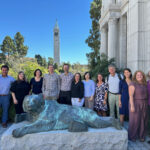
A large group of astronomy researchers attending a meeting of the American Astronomical Society took part in a collaborative art and science workshop where they developed the animations just before viewing the eclipse.
“The Eclipse”
The final product “uses the first film ever made of an eclipse, produced by magician Nevil Maskelyne in 1900, as a basis,” Corbet explains, “but the astronomers and artists added quite a few of their own wild embellishments.”
The eclipse workshop was a project of AstroAnimation, an ongoing collaboration led by Corbet and Arcadias. AstroAnimation brings together art students at MICA and NASA scientists to produce animations based on cutting-edge science. The eclipse film represents AstroAnimation’s effort to expand its impact beyond the classroom.
]]>
An animated short co-directed by UMBC’s Robin Corbet, senior research scientist in the Center for Space Sciences and Technology, and Laurence Arcadias, an animation professor at the Maryland...
https://umbc.edu/quick-posts/eclipse-animation-at-iron-mule-film-fest/
https://my3.my.umbc.edu/api/v0/pixel/news/143936/guest@my.umbc.edu/a623c047818cfa719f6ef0d19ac34f9f/api/pixel
arts-and-culture
csst
news
quick-post
science-and-tech
UMBC News & Magazine
https://my3.my.umbc.edu/groups/umbc-news-magazine
https://assets1-my.umbc.edu/system/shared/avatars/groups/000/001/943/24435aa6207c452e7bc15cc74b42c7bb/xsmall.png?1748556657
https://assets1-my.umbc.edu/system/shared/avatars/groups/000/001/943/24435aa6207c452e7bc15cc74b42c7bb/original.png?1748556657
https://assets2-my.umbc.edu/system/shared/avatars/groups/000/001/943/24435aa6207c452e7bc15cc74b42c7bb/xxlarge.png?1748556657
https://assets2-my.umbc.edu/system/shared/avatars/groups/000/001/943/24435aa6207c452e7bc15cc74b42c7bb/xlarge.png?1748556657
https://assets3-my.umbc.edu/system/shared/avatars/groups/000/001/943/24435aa6207c452e7bc15cc74b42c7bb/large.png?1748556657
https://assets1-my.umbc.edu/system/shared/avatars/groups/000/001/943/24435aa6207c452e7bc15cc74b42c7bb/medium.png?1748556657
https://assets2-my.umbc.edu/system/shared/avatars/groups/000/001/943/24435aa6207c452e7bc15cc74b42c7bb/small.png?1748556657
https://assets1-my.umbc.edu/system/shared/avatars/groups/000/001/943/24435aa6207c452e7bc15cc74b42c7bb/xsmall.png?1748556657
https://assets2-my.umbc.edu/system/shared/avatars/groups/000/001/943/24435aa6207c452e7bc15cc74b42c7bb/xxsmall.png?1748556657
UMBC News & Magazine
0
0
false
Mon, 16 Sep 2024 11:19:20 -0400
Mon, 16 Sep 2024 11:19:20 -0400
Lee Blaney assumes presidency of the Association of Environmental Engineering and Science Professors
Professor Lee Blaney, in the Department of Chemical, Biochemical, and Environmental Engineering, formally assumed the role of president of the Association of Environmental Engineering and Science Professors (AEESP) at a board of directors meeting in early September.
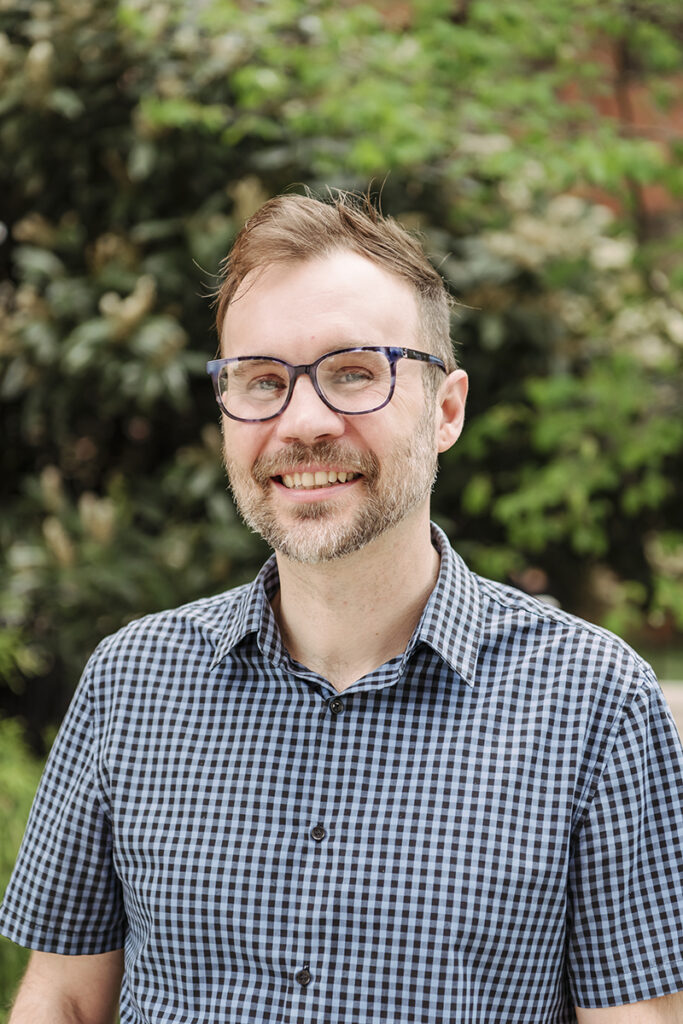 Lee Blaney (Marlayna Demond ’11/UMBC)
AEESP is a nonprofit organization founded in 1963 to foster inclusive connections between environmental engineering and science researchers and educators. It provides programs for members to develop the academic networks and career skills needed for professional success, increase equitable societal impact of environmental engineering and science scholarship and creative expression, and reimagine the skills necessary for environmental engineers and scientists to provide solutions that benefit regional, national, and global communities.
The association currently has more than 1000 members from universities around the world. AEESP assists its members in improving education and research programs, encourages graduate education, and provides information to government agencies and the public. The biennial AEESP Research and Education Conference brings the field together to share research, teaching, and outreach outcomes. Blaney’s term as president will include the next conference, which is scheduled to occur in May 2025 at Duke University.
“We’re excited about Dr. Blaney’s new role as president of AEESP,” says Mark Marten, the chair of the Department of Chemical, Biochemical, and Environmental Engineering. “His deep involvement with this organization not only makes a positive impact in our discipline, but also raises awareness of our department and UMBC in this influential community.”
Blaney and his research group study environmental contaminants of emerging concern, such as per- and polyfluoroalkyl substances, or PFAS, which are sometimes called “forever chemicals” because of the way they persist in the environment. They also research how to recover vital resources, such as nitrogen and phosphorus, from waste streams to improve water quality and ensure sustainable development. Blaney was a winner of the 2021 James J. Morgan Early Career Award from the American Chemical Society, and has also been recognized for the quality of his teaching and mentorship.
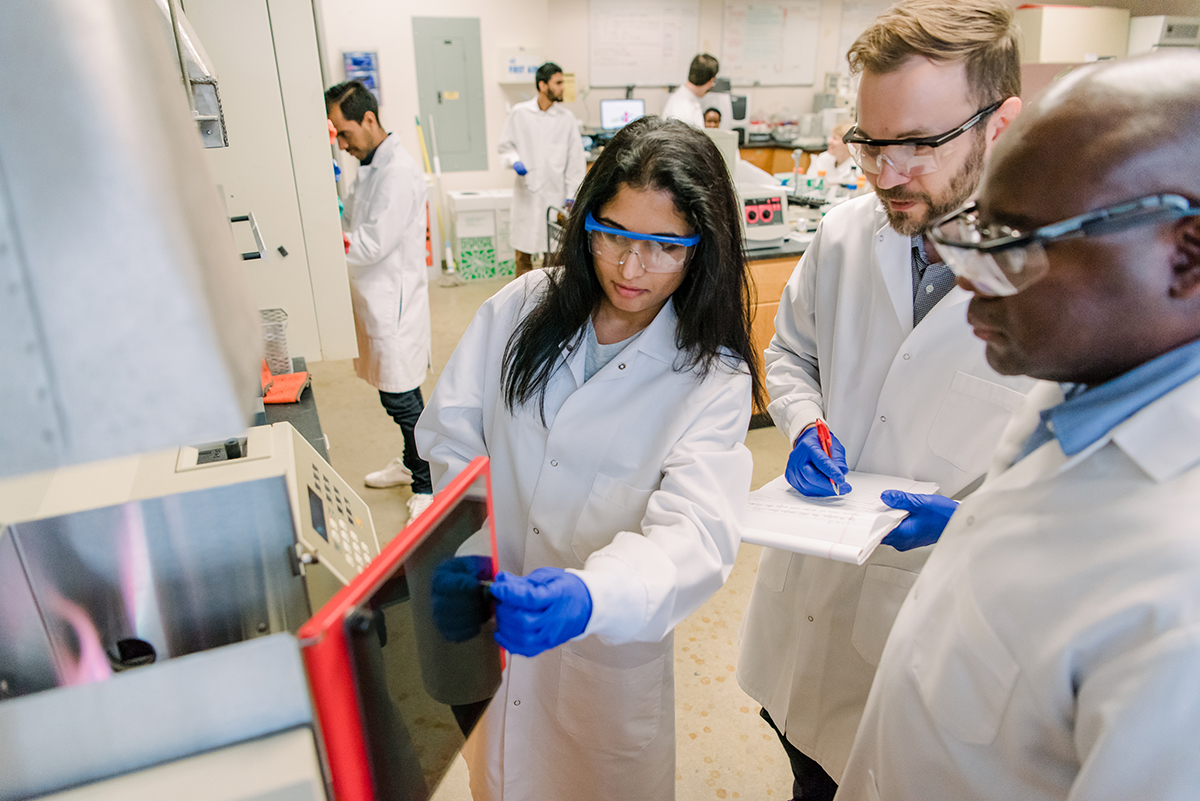 Lee Blaney (center) in his UMBC lab in 2019. (Marlayna Demond ’11/UMBC)
Blaney joined AEESP in 2012 after starting as an assistant professor at UMBC. He quickly joined and became chair of the AEESP Membership & Demographics Committee, through which he led efforts to initiate a student video competition (check out this winning video from UMBC). He also led efforts to document the demographics of environmental engineering faculty and students in reports such as “Trends in Population and Demographics of U.S. Environmental Engineering Students and Faculty from 2005 to 2013” and “Another Grand Challenge: Diversity in Environmental Engineering.”
In 2021, Blaney was elected to the AEESP board of directors. Since that time, he has led a number of initiatives aimed at improving inclusion. During his one-year term as president, he will lead the board and executive committee, provide new charges to standing committees, correspond with members, represent AEESP at conferences and meetings, and drive new initiatives to grow the organization and support its members.
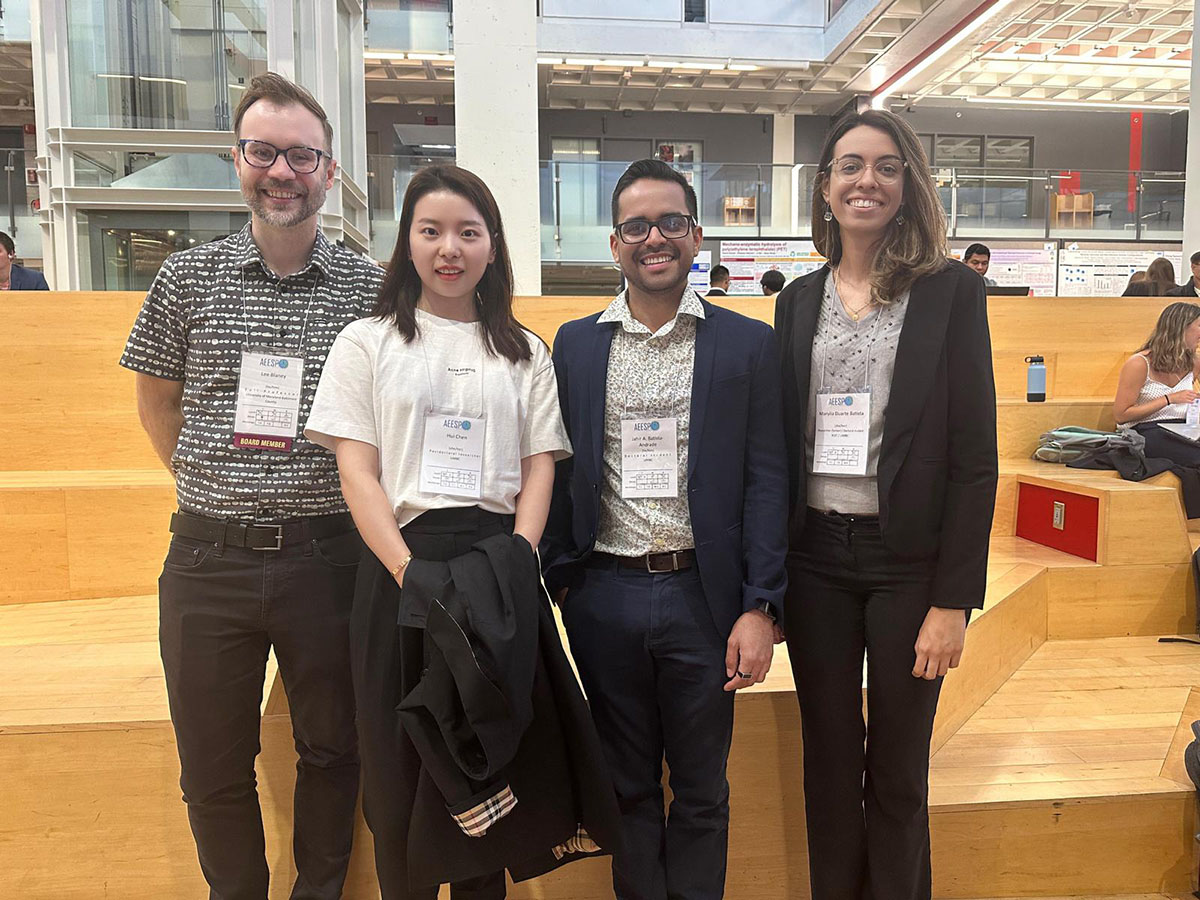 Lee Blaney (left) and his group members (left to right), Hui Chen (completed postdoc in 2024, now assistant professor at James Madison University), Jahir Batista Andrade, Ph.D. ’23, (now postdoc at University of Minnesota), and Marylia Duarte Batista (current Ph.D. student), at the 2023 AEESP Research and Education Conference in Boston. (Photo courtesy of Blaney)
In his first presidential address to AEESP, given in June, Blaney told members of how he found direction as an undergraduate student after attending a talk by environmental engineer Arup SenGupta, who spoke of efforts to remove arsenic from contaminated groundwater in rural villages in India.
“His passion and dedication to helping those without other resources inspired me, set me on the path to becoming an environmental engineer, and helped me to become a better person,” Blaney said. He hopes to bring these same values to AEESP and its members.
As president of AEESP, Blaney plans to develop an “AEESP Experts” program, which will connect environmental experts with reporters, and also an “AEESP Communities of Practice” initiative, which will gather small groups of AEESP members to develop new resources, such as new course material on climate change or best practices for graduate student recruitment, which can be shared with the whole community.
]]>
Professor Lee Blaney, in the Department of Chemical, Biochemical, and Environmental Engineering, formally assumed the role of president of the Association of Environmental Engineering and Science...
https://umbc.edu/stories/lee-blaney-president-association-environmental-engineering-science-professors/
https://my3.my.umbc.edu/api/v0/pixel/news/143932/guest@my.umbc.edu/dd5db9ca439079ef32846a71c3572613/api/pixel
cbee
coeit
community
environmental-engineering
news
story
UMBC News & Magazine
https://my3.my.umbc.edu/groups/umbc-news-magazine
https://assets1-my.umbc.edu/system/shared/avatars/groups/000/001/943/24435aa6207c452e7bc15cc74b42c7bb/xsmall.png?1748556657
https://assets1-my.umbc.edu/system/shared/avatars/groups/000/001/943/24435aa6207c452e7bc15cc74b42c7bb/original.png?1748556657
https://assets2-my.umbc.edu/system/shared/avatars/groups/000/001/943/24435aa6207c452e7bc15cc74b42c7bb/xxlarge.png?1748556657
https://assets2-my.umbc.edu/system/shared/avatars/groups/000/001/943/24435aa6207c452e7bc15cc74b42c7bb/xlarge.png?1748556657
https://assets3-my.umbc.edu/system/shared/avatars/groups/000/001/943/24435aa6207c452e7bc15cc74b42c7bb/large.png?1748556657
https://assets1-my.umbc.edu/system/shared/avatars/groups/000/001/943/24435aa6207c452e7bc15cc74b42c7bb/medium.png?1748556657
https://assets2-my.umbc.edu/system/shared/avatars/groups/000/001/943/24435aa6207c452e7bc15cc74b42c7bb/small.png?1748556657
https://assets1-my.umbc.edu/system/shared/avatars/groups/000/001/943/24435aa6207c452e7bc15cc74b42c7bb/xsmall.png?1748556657
https://assets2-my.umbc.edu/system/shared/avatars/groups/000/001/943/24435aa6207c452e7bc15cc74b42c7bb/xxsmall.png?1748556657
UMBC News & Magazine
0
0
false
Mon, 16 Sep 2024 10:12:17 -0400
Mon, 16 Sep 2024 10:12:17 -0400
UMBC hosts “NASA Days” event series with Goddard Space Flight Center
UMBC is collaborating with the NASA Goddard Space Flight Center (GSFC) to host an interactive, three-day event series that takes a closer look into the center’s current research activity, with insight into how faculty and students can engage with Goddard scientists and engineers.
NASA-UMBC Interaction Days launched on September 9 and continues on September 16 and September 30, highlighting a range of topics on the diverse research and technological advancements in space exploration from leading scientists and engineers at GSFC. The series also provides an overview of the extensive research activity happening in collaboration between UMBC and NASA, a partnership that began nearly 30 years ago.
Astrophysicist Sibasish Laha, an associate research scientist with UMBC’s Center for Space Sciences and Technology who works out of GSFC, organized the series in response to an influx of students inquiring about the work that happens at NASA and ways to get involved.
“I started this interaction day series to help UMBC students better understand what NASA scientists and engineers do on a day-to-day basis,” says Laha. Students get a behind-the-scenes look into the research happening at GSFC, across an array of disciplinary fields such as earth science, data science and AI, astrobiology, and more.
Student opportunities at NASA
Day one of the event series included lectures focused on earth science, exoplanets, and laboratory astrophysics with featured speakers Maurice Leutenegger of GSFC’s x-ray astrophysics laboratory; Wayne Yu, an senior engineer in astrobiology; and planetary scientist Ravi Kopparap. A packed room of more than 90 attendees learned about the inquiring minds behind the GSFC’s research activity.
Day two of the event series (happening on September 16) will feature discussions on data science and AI, x-ray astrophysics, and astrobiology. The event will conclude on September 30 with lectures on the habitable worlds observatory, payload systems and engineering, and NASA’s long term goals with featured speaker Robert Petre, director of GSFC’s astrophysics science division.
Some Retrievers at the event were there out of general curiosity and some were looking for jobs and internship experiences. Brad Cenko, research scientist at GSFC, shared about the wide array of experiential learning opportunities happening at NASA’s research centers across the country.
“NASA has one of the largest internship programs in the state of Maryland, and students can apply to internships year-round,” said Cenko. This summer, UMBC students secured internship placements with NASA, which included senior Leah Narat, business technology administration, who worked at GSFC as a business intelligence intern.
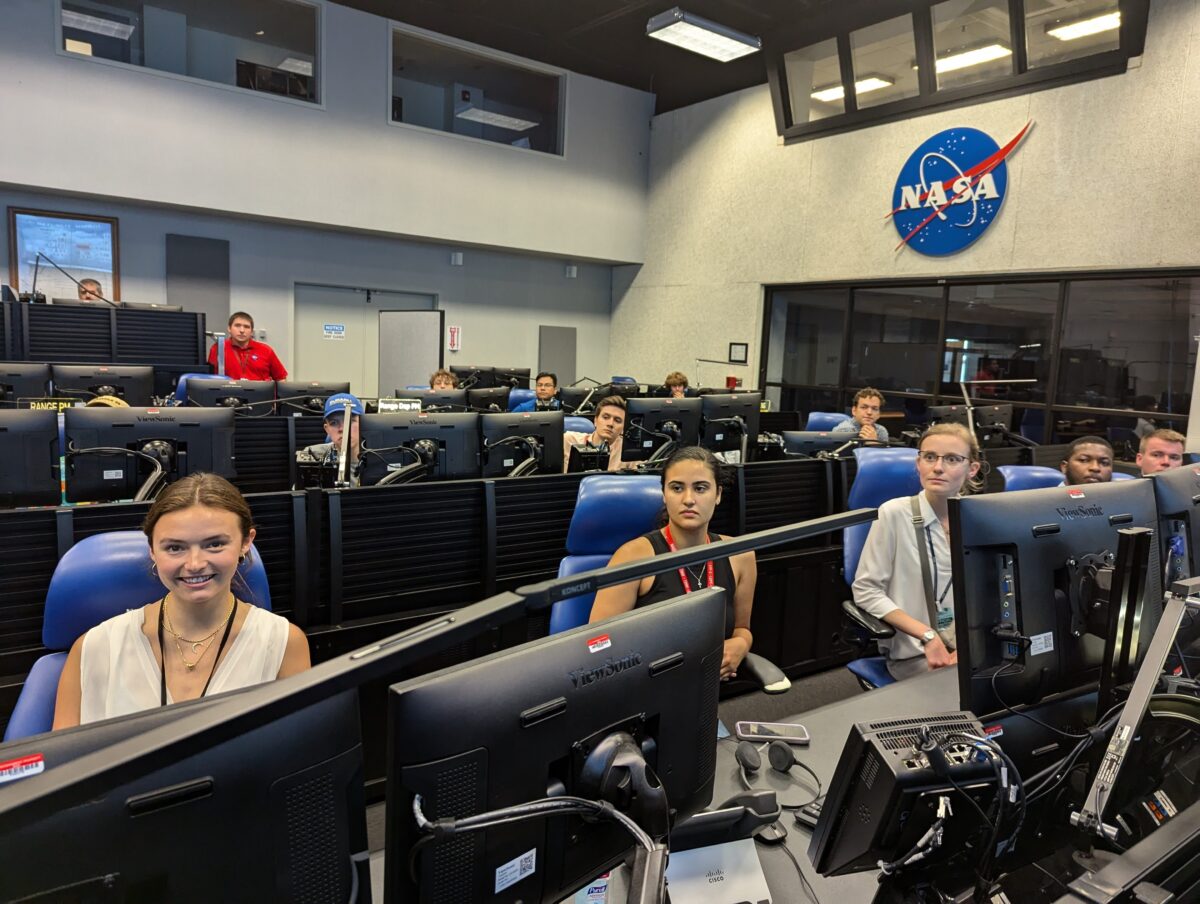 Interns from the Flight Projects Directorate at NASA Goddard, including Leah Narat, center, tour the Wallops Flight Facility in Virginia. (Image courtesy of Narat)
Narat created and updated databases to track awards given to NASA employees. The agency will use the information to maximize employees’ recognition and success and guide them toward career paths that best take advantage of their strengths.
“Honestly, being at NASA was something that I never thought I would achieve, but I put my application out there, and here I am,” says Narat, who worked as a business intelligence intern at the NASA Goddard Space Flight Center in Greenbelt, Maryland, this past summer. “It’s been wonderful.”
A 30-year partnership
While a large majority of students made up the attendee list for day one, the event also brought in many faculty and staff interested in collaborating with the agency. “Faculty are an integral part in these collaborative efforts and our goal is to connect them directly with NASA’s scientists and engineers,” said event organizer Laha.
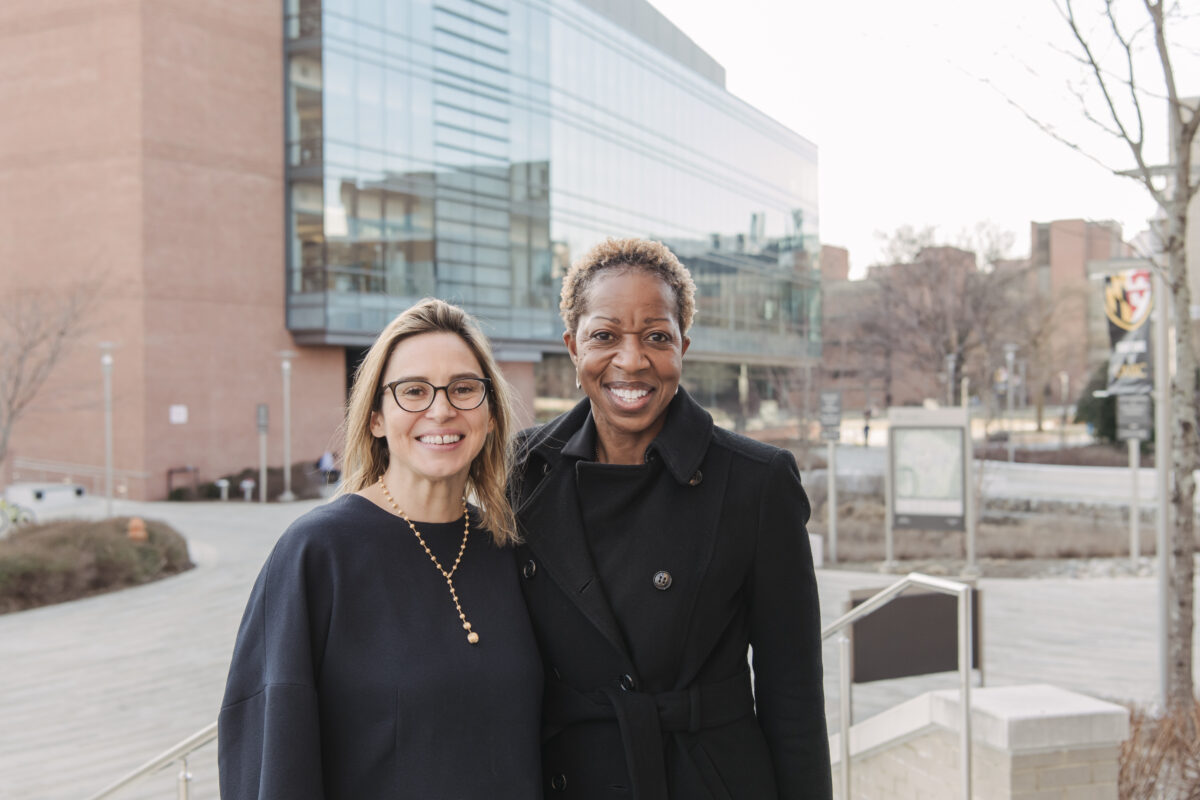 Makenzie Lystrup, director of NASA’s Goddard Space Flight Center, and UMBC President Valerie Sheares Ashby during Lystrup’s visit to UMBC in February 2024. (Marlayna Demond ’11/UMBC)
Currently, more than 250 UMBC scientists and research faculty members are partnering with NASA civil servants and are employed under three major cooperative agreements, of which includes the Goddard Earth Sciences Technology and Research II center (GESTAR II); the Center for Space Sciences and Technology (CSST); and the Goddard Planetary Heliophysics Institute (GPHI). The university also is home to the NASA-affiliated Earth and Space Institute based out of UMBC’s Physics Building.
Additionally, nearly 30 of the university’s scientists and research faculty are working on active NASA space missions. That includes the UMBC-developed Lunar Environment Monitoring Station, which was selected as one of the first three instruments to be a part of Artemis III, NASA’s mission that will send astronauts back to the lunar surface after more than 50 years, and UMBC’s Hyper-Angular Rainbow Polarimeter wide-angle imaging polarimeter instrument on board NASA’s Plankton, Aerosol, Cloud, ocean Ecosystem spacecraft mission.
“NASA is providing half of UMBC’s federal contract funding—on a national scale, this is really unusual,” says Don Engel, director of the CSST and assistant professor of computer science and electrical engineering. “Our NASA partnerships are so cross-disciplinary. All three of UMBC’s colleges are represented with these centers, and that’s extremely significant.”
Register for the remaining NASA-UMBC Interaction Days events here.
]]>
UMBC is collaborating with the NASA Goddard Space Flight Center (GSFC) to host an interactive, three-day event series that takes a closer look into the center’s current research activity, with...
https://umbc.edu/stories/nasa-days-event-series/
https://my3.my.umbc.edu/api/v0/pixel/news/143892/guest@my.umbc.edu/e03c952bb42087e2a28c0c06cd19474e/api/pixel
community
csst
esi
gestar
gestar2
gphi
nasa
nasa-goddard-space-flight-center
news
science-and-tech
story
UMBC News & Magazine
https://my3.my.umbc.edu/groups/umbc-news-magazine
https://assets1-my.umbc.edu/system/shared/avatars/groups/000/001/943/24435aa6207c452e7bc15cc74b42c7bb/xsmall.png?1748556657
https://assets1-my.umbc.edu/system/shared/avatars/groups/000/001/943/24435aa6207c452e7bc15cc74b42c7bb/original.png?1748556657
https://assets2-my.umbc.edu/system/shared/avatars/groups/000/001/943/24435aa6207c452e7bc15cc74b42c7bb/xxlarge.png?1748556657
https://assets2-my.umbc.edu/system/shared/avatars/groups/000/001/943/24435aa6207c452e7bc15cc74b42c7bb/xlarge.png?1748556657
https://assets3-my.umbc.edu/system/shared/avatars/groups/000/001/943/24435aa6207c452e7bc15cc74b42c7bb/large.png?1748556657
https://assets1-my.umbc.edu/system/shared/avatars/groups/000/001/943/24435aa6207c452e7bc15cc74b42c7bb/medium.png?1748556657
https://assets2-my.umbc.edu/system/shared/avatars/groups/000/001/943/24435aa6207c452e7bc15cc74b42c7bb/small.png?1748556657
https://assets1-my.umbc.edu/system/shared/avatars/groups/000/001/943/24435aa6207c452e7bc15cc74b42c7bb/xsmall.png?1748556657
https://assets2-my.umbc.edu/system/shared/avatars/groups/000/001/943/24435aa6207c452e7bc15cc74b42c7bb/xxsmall.png?1748556657
UMBC News & Magazine
0
0
false
Fri, 13 Sep 2024 16:04:17 -0400
Fri, 13 Sep 2024 16:04:17 -0400
Recipients of UMBC’s 2024 – 25 START, SURFF grant awards announced
UMBC’s Division of Research and Creative Achievement recently announced the recipients of the 2025 Strategic Awards for Research Transitions (START) award,and the 2024 Summer Research Faculty Fellowship (SURFF) award—two of the university’s internal funding opportunities that support faculty research and creative scholarship.
For fiscal year 2025, 13 faculty members across all of UMBC’s colleges and researchers with the university’s research centers were individually awarded up to $25,000 in START funding to advance their research and creative achievement endeavors. The award assists recipients in competing more effectively for external support and pursuing new areas of inquiry.
In summer 2024, 14 faculty members received a SURFF award. The SURFF award supports non-tenured, tenure-track faculty members in pursuing research and creative achievement projects during the summer. Recipients are awarded up to $8,000 in funding.
View the full list of this year’s START and SURFF recipients.
]]>
UMBC’s Division of Research and Creative Achievement recently announced the recipients of the 2025 Strategic Awards for Research Transitions (START) award,and the 2024 Summer Research Faculty...
https://umbc.edu/quick-posts/2024-25-start-surff-faculty-awards/
https://my3.my.umbc.edu/api/v0/pixel/news/143890/guest@my.umbc.edu/94faaa88bc8339810383b46163b39dc4/api/pixel
cahss
cnms
coeit
quick-post
research
UMBC News & Magazine
https://my3.my.umbc.edu/groups/umbc-news-magazine
https://assets1-my.umbc.edu/system/shared/avatars/groups/000/001/943/24435aa6207c452e7bc15cc74b42c7bb/xsmall.png?1748556657
https://assets1-my.umbc.edu/system/shared/avatars/groups/000/001/943/24435aa6207c452e7bc15cc74b42c7bb/original.png?1748556657
https://assets2-my.umbc.edu/system/shared/avatars/groups/000/001/943/24435aa6207c452e7bc15cc74b42c7bb/xxlarge.png?1748556657
https://assets2-my.umbc.edu/system/shared/avatars/groups/000/001/943/24435aa6207c452e7bc15cc74b42c7bb/xlarge.png?1748556657
https://assets3-my.umbc.edu/system/shared/avatars/groups/000/001/943/24435aa6207c452e7bc15cc74b42c7bb/large.png?1748556657
https://assets1-my.umbc.edu/system/shared/avatars/groups/000/001/943/24435aa6207c452e7bc15cc74b42c7bb/medium.png?1748556657
https://assets2-my.umbc.edu/system/shared/avatars/groups/000/001/943/24435aa6207c452e7bc15cc74b42c7bb/small.png?1748556657
https://assets1-my.umbc.edu/system/shared/avatars/groups/000/001/943/24435aa6207c452e7bc15cc74b42c7bb/xsmall.png?1748556657
https://assets2-my.umbc.edu/system/shared/avatars/groups/000/001/943/24435aa6207c452e7bc15cc74b42c7bb/xxsmall.png?1748556657
UMBC News & Magazine
0
0
false
Fri, 13 Sep 2024 15:07:19 -0400
Fri, 13 Sep 2024 15:07:19 -0400
5 steps for success as a student in the natural sciences
Having trouble settling into your major? Wishing you had some useful tips to rely on as you navigate your science classes on campus? We asked five experts in the College of Natural and Mathematical Sciences (CNMS) for their best tips to succeed in majors in CNMS. We took notes, so you don’t have to—here is what they said:
1. Ask for help
A common refrain from these experts is to ask for help earlier than you think you need it. Emma Barnaby, a student success coach in the CNMS advising office, says, “Learn how to ask for help when you need it. Use UMBC resources like the tutoring center and drop-in tutoring BEFORE you think you need them!” William R. LaCourse, dean, adds, “You are not alone. If you are feeling overwhelmed, talk to someone and seek help early. Your well-being is important to us.”
David Eisenmann, thebiological sciences undergraduate program director, underscores how many options there are for students looking for assistance: “If you are struggling, do not be shy about taking advantage of all the resources available to you: TAs, office hours, SI PASS leaders, review sessions, tutoring, and CNMS staff!”
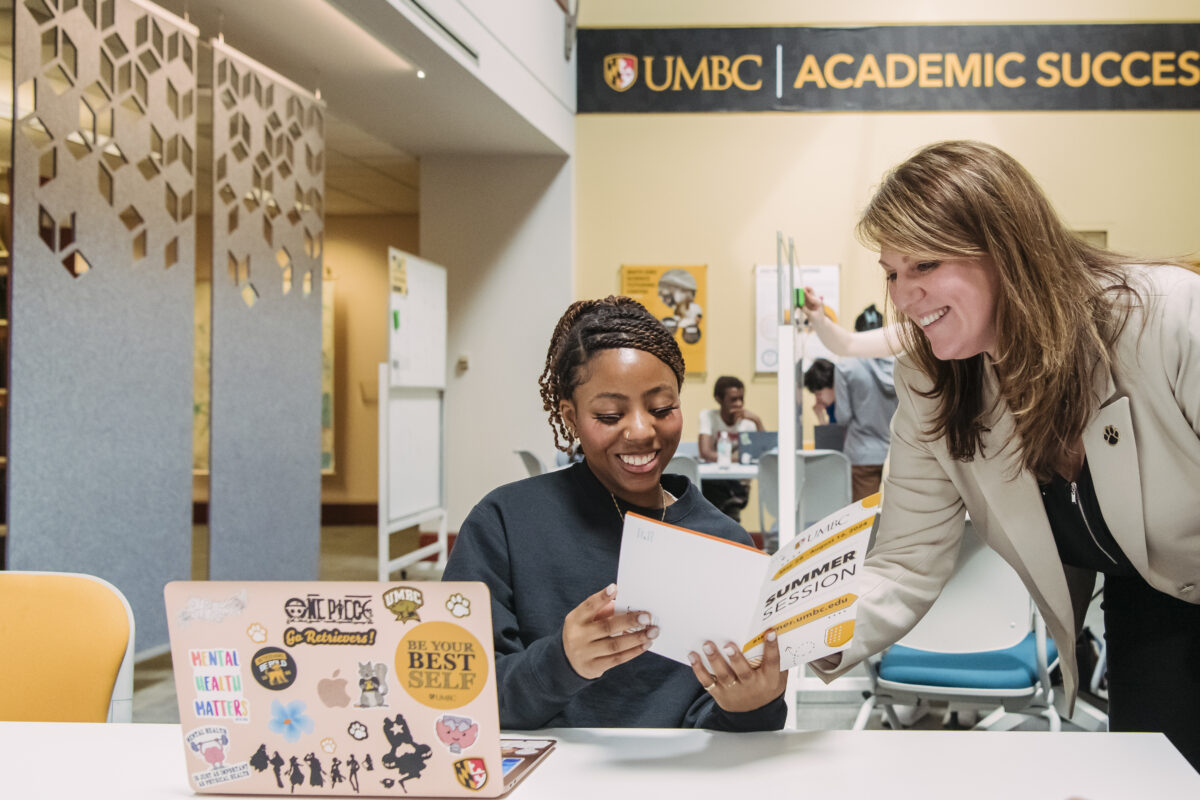 Amanda Knapp (right) leads UMBC’s Academic Success Center, which offers a range of supports to students. (Marlayna Demond ’11/UMBC)
2. Take control
Our experts also encouraged students to take measurable steps and track their progress. For example, “If you want to get good at something, commit to spending 30 minutes a day working on it,” Barnaby says. “Give yourself a phone reminder and cross off that day on a calendar when you’ve completed it—it’s super motivating!”
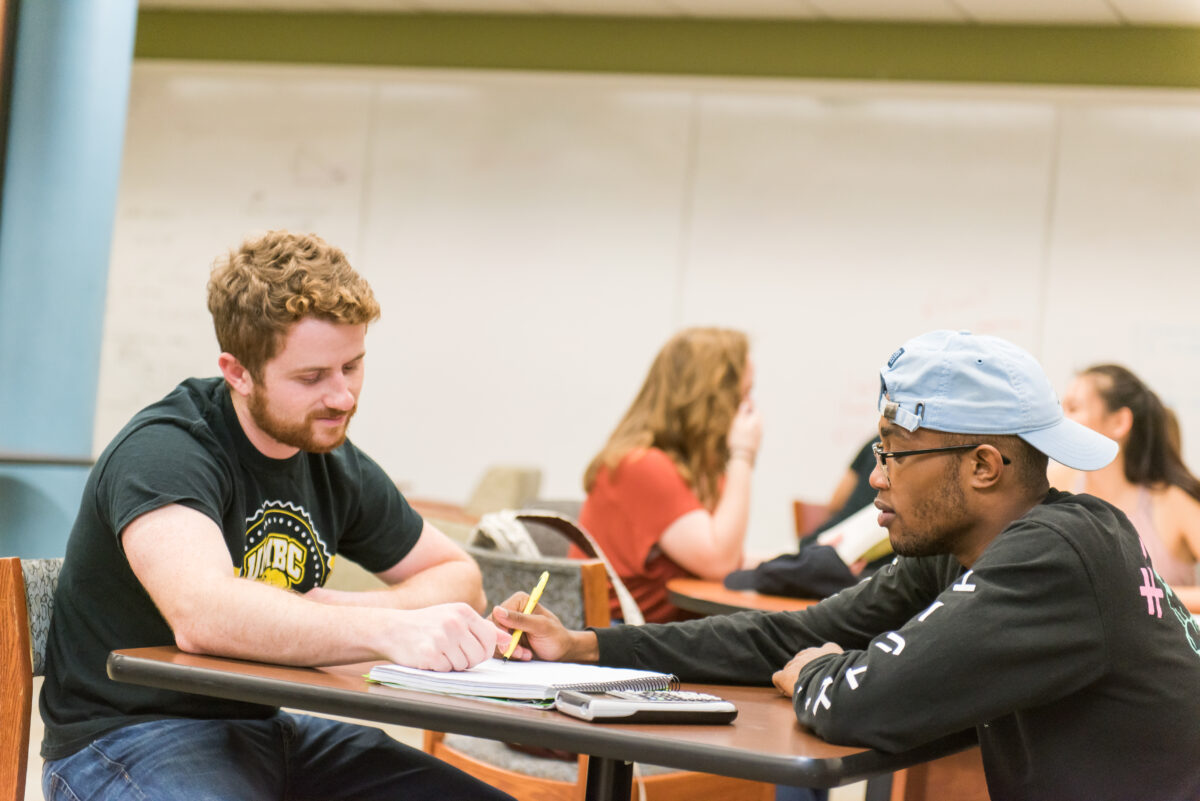
Eisenmann suggested a few other strategies. “My advice about how to succeed in a STEM course is based on things I have heard from my own students over the years. Students who have succeeded in my courses say they a) do assigned readings ahead of time so they are not clueless walking into lecture, b) take notes during lecture, c) go over their notes afterwards to fill in any areas they were unsure of, and d) work in a study group with other students.”
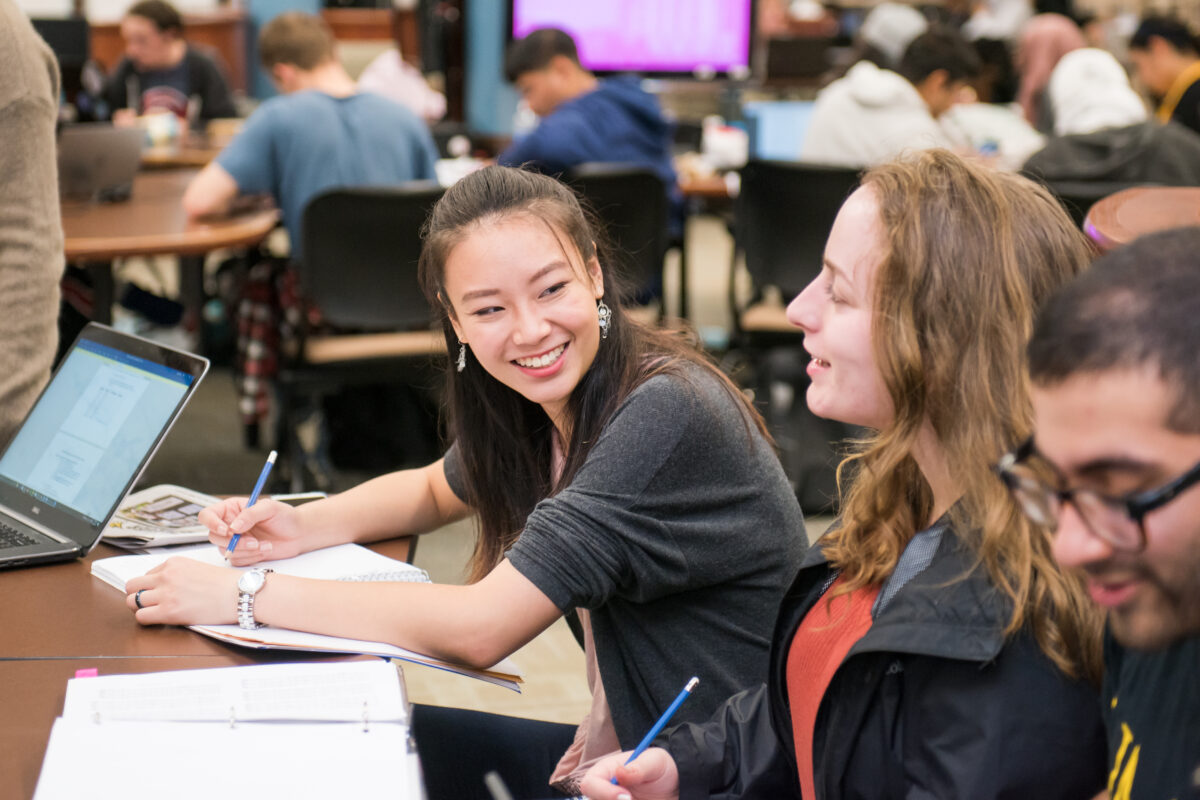
 Students study together in the Retriever Learning Center, a 24-hour study space attached to the Albin O. Kuhn Library & Gallery at UMBC. (Marlayna Demond ’11/UMBC)
3. Build connections
“FIND YOUR PEOPLE!” That’s how Michelle Bulger, director of the Science and Mathematics Advising Resource Team (SMART), sums up her advice. “One of the best resources a student can create for themselves is to form a group of supportive people who can lift each other up when things are difficult and celebrate together when everything is going great,” she says. “If introducing yourself to your neighbors in the residence halls or your classmates in your courses sounds a little daunting, try joining a student organization for an activity or career that you are passionate about. Knowing that the people you are about to meet have an interest in common with you can make those introductions easier!”
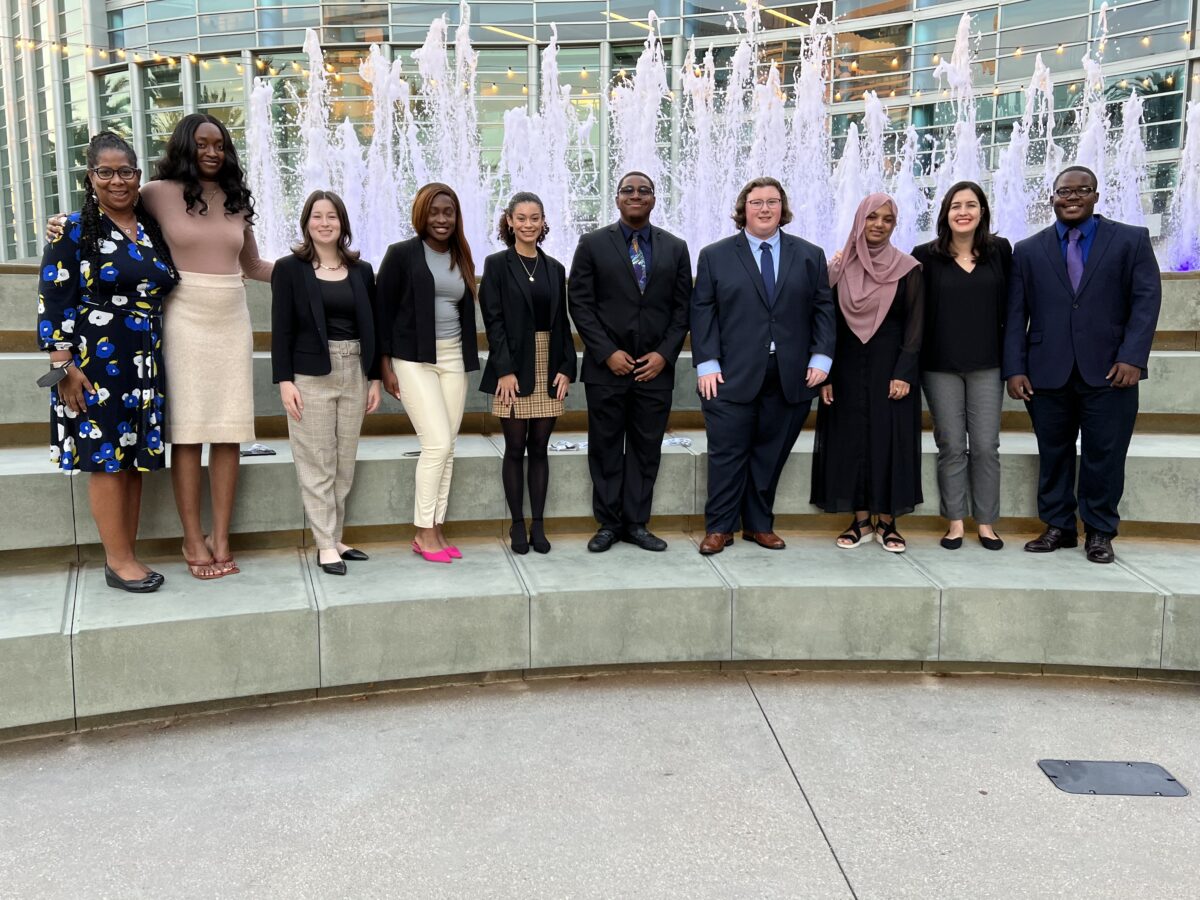 CNMS staff Justine Johnson (far left) and Maria Cambraia (second from right) with students in the UMBC STEM BUILD program attending a research conference in 2022. (courtesy of Cambraia)
The same principle applies to your interactions with staff and faculty. “Connect with your instructors, teaching assistants, and older students on campus. Stay after class and ask questions that go beyond the class material,” recommends Maria Cambraia, assistant director for research and international affairs. “Share your interests and goals with them. You’ll be surprised to see how much people at UMBC care about you and are willing to help connect you with opportunities related to your interests once they know what you are looking for.”
4. Take the initiative
The experts agree: Go for your gold! “Don’t be afraid to ask for what you want, and be persistent,” Cambraia says. “Many students are so afraid to try something new, when the worst thing that can happen is receiving a ‘no.’ It can be hard to deal with that at first, but a ‘no’ should not stop you. Keep trying; sometimes, you’ll find something much better than your initial plan.” Eisenmann concurs that taking a risk is worth it—it can also help with step number three, above. “Do not be afraid to ask questions in lecture, after lecture, or in office hours,” he says. “Make yourself known to the professor as an engaged student trying to learn.”
 (Marlayna Demond ’11/UMBC)
5. Find balance
Creating balance in how you spend your time and energy is key, our experts say. “Do not put all your energy into just classes and exams. You need to develop stronger roots, and part of this is finding your community,” Cambraia shares. “Dedicate time and energy to connecting with friends, family, and mentors. A sense of belonging is crucial for happiness and success. Focus on your classes for sure, but also put your energy on yourself, your mental health, staying healthy, and cultivating your hobbies. Finding an initial balance can be challenging, but you will get there!”
For Dean LaCourse, balance means embracing your uniqueness and also respecting input from people with more experience. “There is no one right way to go to college. Chart your own path and be yourself. Do not let others define you or distract you from your goals and dreams,” he says. “At the same time, it’s important to listen to your advisors and mentors. They have the experience of numerous students to guide you, and the heart to care about you as an individual.”
Learn more about our experts and what they do on campus:
 Emma Barnaby
Emma Barnaby, Student Success Coach
Barnaby works with students who are struggling in their STEM courses: She focuses on time management, motivation, and study skills. If you come to her office, she hopes that you leave feeling better than when you arrived!
David Eisenmann, Professor and Undergraduate Program Director (UPD), Biological Sciences
In addition to conducting research here for 25 years, Eisenmann has taught a number of large and small upper-level biology courses. As UPD, he is in charge of making sure the department’s degree programs are rigorous and modern, and that they prepare students for careers and meet their educational goals. Wearing that hat, he also interfaces with the university administration, other departments, and individual students having issues progressing through their major.
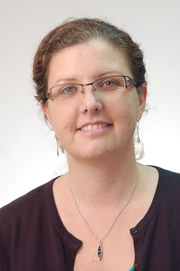 Michelle Bulger
Michelle Bulger, Director, Science and Mathematics Advising Resource Team (SMART)
Bulger oversees a group of advisors representing two offices: CNMS Advising/CNMS Student Success (which serves CNMS students) and the Pre-medical and Pre-dental Advising Office (which serves any student who plans to pursue a career in medicine, dentistry, optometry, podiatric medicine, or veterinary medicine). In addition, she works with CNMS departments on class scheduling, with university admissions on recruitment for the college, and on events for the college.
Maria Cambraia, Assistant Director for Research and International Affairs
Cambraia oversees pipeline research training programs, scholarship programs, and science education research initiatives, and she provides support and insight into international affairs within the college. Over the past five years, she’s mentored approximately 100 students on campus, including students in the CNMS Scholars and STEM BUILD programs. Her primary objective is to demonstrate the beauty of science to them and instill confidence in their abilities to become successful undergraduate scientists, allowing them to transition to new research experiences. One of the most rewarding aspects of her role is collaborating with different departments and centers to create more opportunities for UMBC students.
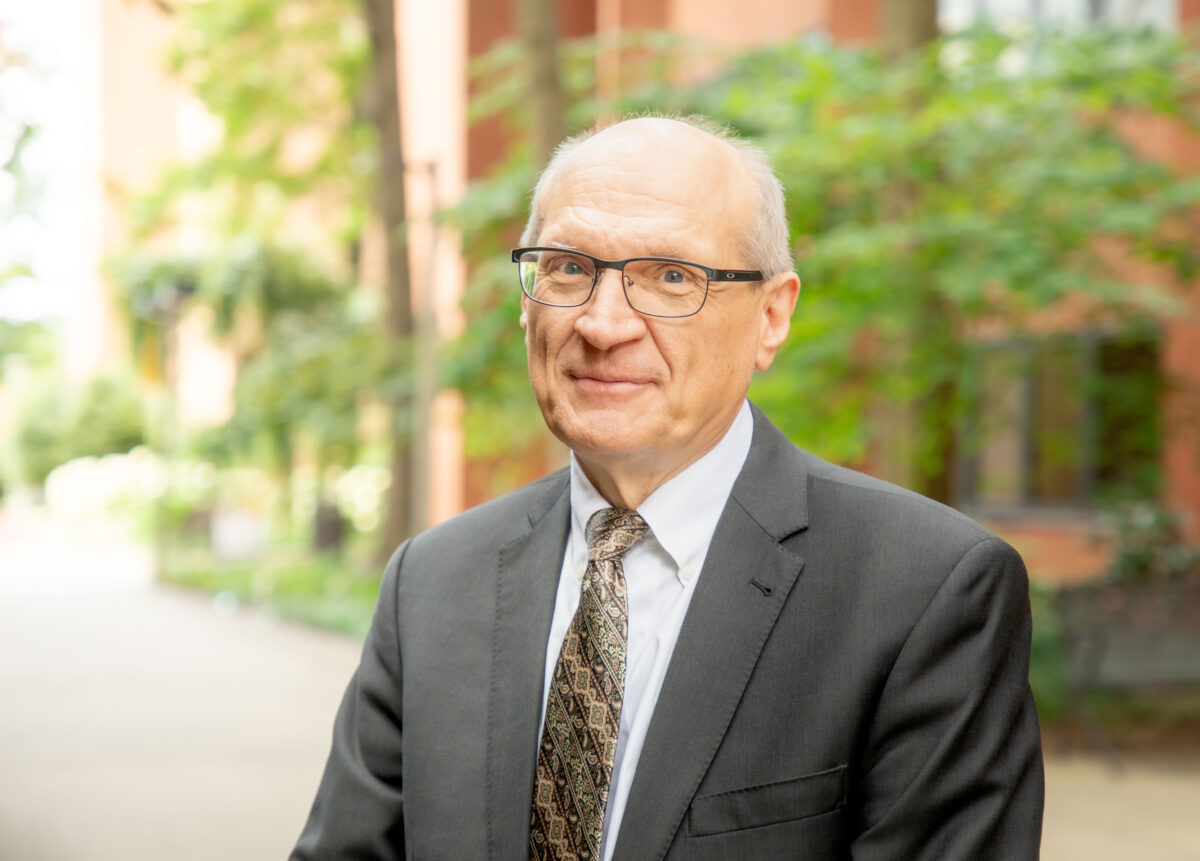 Dean LaCourse (Marlayna Demond ’11/UMBC)
William R. LaCourse, Dean
The dean’s role is to ensure that the departments under the college have the resources to provide students with both a rigorous education and the support needed to be academically successful. The dean’s office and its staff work to help students avoid common mistakes and overcome personal and academic challenges. Dean LaCourse also teaches an introductory chemistry course for non-chemistry majors, where he empowers students by helping them understand how chemistry affects their everyday lives.
]]>
Having trouble settling into your major? Wishing you had some useful tips to rely on as you navigate your science classes on campus? We asked five experts in the College of Natural and...
https://umbc.edu/stories/5-steps-for-success-in-science/
https://my3.my.umbc.edu/api/v0/pixel/news/143862/guest@my.umbc.edu/df66de60b8f712ae01f4892f3576d9cf/api/pixel
campus-life
cnms
magazine
story
UMBC News & Magazine
https://my3.my.umbc.edu/groups/umbc-news-magazine
https://assets1-my.umbc.edu/system/shared/avatars/groups/000/001/943/24435aa6207c452e7bc15cc74b42c7bb/xsmall.png?1748556657
https://assets1-my.umbc.edu/system/shared/avatars/groups/000/001/943/24435aa6207c452e7bc15cc74b42c7bb/original.png?1748556657
https://assets2-my.umbc.edu/system/shared/avatars/groups/000/001/943/24435aa6207c452e7bc15cc74b42c7bb/xxlarge.png?1748556657
https://assets2-my.umbc.edu/system/shared/avatars/groups/000/001/943/24435aa6207c452e7bc15cc74b42c7bb/xlarge.png?1748556657
https://assets3-my.umbc.edu/system/shared/avatars/groups/000/001/943/24435aa6207c452e7bc15cc74b42c7bb/large.png?1748556657
https://assets1-my.umbc.edu/system/shared/avatars/groups/000/001/943/24435aa6207c452e7bc15cc74b42c7bb/medium.png?1748556657
https://assets2-my.umbc.edu/system/shared/avatars/groups/000/001/943/24435aa6207c452e7bc15cc74b42c7bb/small.png?1748556657
https://assets1-my.umbc.edu/system/shared/avatars/groups/000/001/943/24435aa6207c452e7bc15cc74b42c7bb/xsmall.png?1748556657
https://assets2-my.umbc.edu/system/shared/avatars/groups/000/001/943/24435aa6207c452e7bc15cc74b42c7bb/xxsmall.png?1748556657
UMBC News & Magazine
0
0
false
Thu, 12 Sep 2024 15:31:08 -0400
Thu, 12 Sep 2024 15:31:08 -0400
The Passing of Professor Emeritus Thomas Seidman (1935 – 2024)
The Department of Mathematics and Statistics along with Dr. William LaCourse, Dean of the College of Natural and Mathematical Sciences, join the entire UMBC community in mourning the passing of Professor Emeritus Thomas Seidman on August 14, 2024.
A native of New York, Dr. Seidman earned a B.A. from the University of Chicago, an M.A. from Columbia University Teachers College, and an M.S. and Ph.D. from New York University. He worked at Boeing Scientific Research Laboratories and Lawrence Livermore Lab in the 1960s, and held positions at UCLA, the University of Wisconsin, Wayne State University, and Carnegie Mellon University. He joined the UMBC faculty as an associate professor in 1972. In January 2017, he retired after 45 years of distinguished scholarship and service to UMBC, with wide-ranging contributions to the mathematics community.
During his time at UMBC, Tom was an esteemed and omnipresent entity in the department. In addition to his extensive contributions to the intellectual life of the department, Tom also played a strong role in the department. He wrote the departmental bylaws on the chair election procedure and was the promotion and tenure (P&T) committee chair for a long time. In 1992, he served as the acting Chair of the Department of Mathematics and Statistics.
He was a prolific mathematician with well over a hundred publications (169 with 69 co-authors from MathSciNet) and a Google Scholar citation count of over 4000. His area of research was “all things applied analysis,” which included partial differential equations, control theory and semigroup theory, and was often applied to various mathematical modeling problems. He also contributed to the field of operations research. It was almost customary for him to kick off the math colloquium series, as well as the differential equations seminar series every semester, by being the first person to volunteer to speak. There was a special seat reserved for him in the front row of MP401 from where he would dim and brighten the room lights during seminars and colloquia. His colleagues remarked that they could always count on Tom to pose insightful questions to the speaker after the talk.
Despite his mathematical stature, Tom was a very friendly and unassuming colleague. Conversations with him always wound up centering around an interesting mathematical problem, whether from first year calculus or advanced functional analysis. Tom was also an enthusiastic mentor to many junior faculty. He collaborated with multiple colleagues in the department and also with many others from North America, Europe, Australia, and South America. He spent the 1980-81 school year as a visiting professor at the University of Nice, and during one sabbatical, he visited seven countries on five continents. Tom had an Erdős number of three.
Tom married his late wife, Dr. Marjorie Shriro, in 1969. He is survived by his son, Gregory, daughter-in-law, Carrie, and grandchildren, Ren and Avery. He will be greatly missed. Services for Dr. Seidman will be held at the Owen Brown Interfaith Center in Columbia, MD on Saturday, January 11, 2025.
]]>
The Department of Mathematics and Statistics along with Dr. William LaCourse, Dean of the College of Natural and Mathematical Sciences, join the entire UMBC community in mourning the passing of...
https://my3.my.umbc.edu/groups/announcements/posts/143814
https://my3.my.umbc.edu/api/v0/pixel/news/143818/guest@my.umbc.edu/6c0d4ec92d0138b67493a0994daf4990/api/pixel
in-memoriam
rss
story
UMBC News & Magazine
https://my3.my.umbc.edu/groups/umbc-news-magazine
https://assets1-my.umbc.edu/system/shared/avatars/groups/000/001/943/24435aa6207c452e7bc15cc74b42c7bb/xsmall.png?1748556657
https://assets1-my.umbc.edu/system/shared/avatars/groups/000/001/943/24435aa6207c452e7bc15cc74b42c7bb/original.png?1748556657
https://assets2-my.umbc.edu/system/shared/avatars/groups/000/001/943/24435aa6207c452e7bc15cc74b42c7bb/xxlarge.png?1748556657
https://assets2-my.umbc.edu/system/shared/avatars/groups/000/001/943/24435aa6207c452e7bc15cc74b42c7bb/xlarge.png?1748556657
https://assets3-my.umbc.edu/system/shared/avatars/groups/000/001/943/24435aa6207c452e7bc15cc74b42c7bb/large.png?1748556657
https://assets1-my.umbc.edu/system/shared/avatars/groups/000/001/943/24435aa6207c452e7bc15cc74b42c7bb/medium.png?1748556657
https://assets2-my.umbc.edu/system/shared/avatars/groups/000/001/943/24435aa6207c452e7bc15cc74b42c7bb/small.png?1748556657
https://assets1-my.umbc.edu/system/shared/avatars/groups/000/001/943/24435aa6207c452e7bc15cc74b42c7bb/xsmall.png?1748556657
https://assets2-my.umbc.edu/system/shared/avatars/groups/000/001/943/24435aa6207c452e7bc15cc74b42c7bb/xxsmall.png?1748556657
UMBC News & Magazine
1
0
false
Wed, 11 Sep 2024 13:42:18 -0400
Quantum photonics expertise earns UMBC spot in DOE Frontiers in Energy Research Center
UMBC has been selected to participate in the Quantum Photonics Integrated Design Center (QuPIDC), which is led by Purdue University and also includes Los Alamos National Laboratory, Stanford University, Northwestern University, the University of Chicago, the University of Oklahoma, and Virginia Tech. The collaboration is one of 10 new Frontiers in Energy Research Centers recently funded by the U.S. Department of Energy. The centers support top-tier interdisciplinary teams as they pursue transformative basic research that will advance energy technologies. The quantum optics center will receive $13.9 million overall, and UMBC will receive $570,000.
QuPIDC aims to develop ways to generate states of light and matter with the property of “entanglement,” a unique phenomenon that was the subject of the 2022 Nobel Prize in Physics. The goal is to simultaneously entangle many photons and/or many electrons, which enables technologies like extremely precise measurement, faster-than-ever communication and computing, and much more.
UMBC’s partnership in the center leverages the university’s longstanding strength in quantum photonics and quantum information. In particular, Matthew Pelton, professor of physics and UMBC lead for the center, has expertise in developing quantum light sources and integrating them into photonic structures at the nanometer scale.
In addition, UMBC is well known for including many undergraduates from a wide range of backgrounds in hands-on research. The new center will only increase the number of students who can participate in the groundbreaking field of quantum technology.
“I’m very excited to have this opportunity to work with some of the world-leading researchers in quantum photonics,” Pelton says, “and I’m especially excited about the collaboration and networking opportunities that the center will provide for UMBC students.”
]]>
UMBC has been selected to participate in the Quantum Photonics Integrated Design Center (QuPIDC), which is led by Purdue University and also includes Los Alamos National Laboratory, Stanford...
https://umbc.edu/quick-posts/quantum-photonics-research-center/
https://my3.my.umbc.edu/api/v0/pixel/news/143804/guest@my.umbc.edu/4b8686000aa0668381d72f7f9e2a91cb/api/pixel
cnms
news
physics
quick-post
research
science-and-tech
UMBC News & Magazine
https://my3.my.umbc.edu/groups/umbc-news-magazine
https://assets1-my.umbc.edu/system/shared/avatars/groups/000/001/943/24435aa6207c452e7bc15cc74b42c7bb/xsmall.png?1748556657
https://assets1-my.umbc.edu/system/shared/avatars/groups/000/001/943/24435aa6207c452e7bc15cc74b42c7bb/original.png?1748556657
https://assets2-my.umbc.edu/system/shared/avatars/groups/000/001/943/24435aa6207c452e7bc15cc74b42c7bb/xxlarge.png?1748556657
https://assets2-my.umbc.edu/system/shared/avatars/groups/000/001/943/24435aa6207c452e7bc15cc74b42c7bb/xlarge.png?1748556657
https://assets3-my.umbc.edu/system/shared/avatars/groups/000/001/943/24435aa6207c452e7bc15cc74b42c7bb/large.png?1748556657
https://assets1-my.umbc.edu/system/shared/avatars/groups/000/001/943/24435aa6207c452e7bc15cc74b42c7bb/medium.png?1748556657
https://assets2-my.umbc.edu/system/shared/avatars/groups/000/001/943/24435aa6207c452e7bc15cc74b42c7bb/small.png?1748556657
https://assets1-my.umbc.edu/system/shared/avatars/groups/000/001/943/24435aa6207c452e7bc15cc74b42c7bb/xsmall.png?1748556657
https://assets2-my.umbc.edu/system/shared/avatars/groups/000/001/943/24435aa6207c452e7bc15cc74b42c7bb/xxsmall.png?1748556657
UMBC News & Magazine
0
0
false
Wed, 11 Sep 2024 10:57:41 -0400
Wed, 11 Sep 2024 10:57:41 -0400