UMBC alumnus Kafui Dzirasa is named an HHMI Investigator, elected to the National Academy of Medicine

Kafui Dzirasa ‘01, M8, chemical engineering, recently earned two highly prestigious honors distinctive even among leaders in the medical and life sciences: an HHMI Investigator award and election to the National Academy of Medicine.
Dzirasa is the K. Ranga Rama Krishnan Associate Professor of psychiatry and behavioral sciences at Duke University. He earned both his MD and his PhD in neurobiology and neurosciences at Duke. Today, he examines the role of the brain’s electrical activity in psychiatric illness, including depression, bipolar disorder, and addiction, with the goal of creating mechanisms to disrupt these disorders.
Achievement and service
Dzirasa is one of 100 new members elected to the National Academy of Medicine this year. The announcement recognizes his “seminal contributions to the neuroscience of emotion and mental illness” as well as his pioneering research methods. It also honors his “contributions to society through science policy and advocacy, a commitment to mentoring, and support for efforts to build a diverse and inclusive scientific workforce,” carrying forward the values of UMBC’s Meyerhoff Scholars Program.
Election to the National Academy of Medicine recognizes leaders in health and medicine who have demonstrated both outstanding professional achievement and a commitment to service. The National Academy of Medicine has more than 2,200 elected members worldwide, with new members limited to 100 per year.
 Kafui Dzirasa presents a GRIT-X talk at UMBC, 2017.
Answering tough questions
Last month, Dzirasa was also named a Howard Hughes Medical Institute (HHMI) Investigator. He joins a cohort of 33 new Investigators from across the U.S. Each was selected for their ability to “dive deep into tough questions” and address some of the most challenging issues in biomedical research.
HHMI is investing about $300 million in Dzirasa and the other members of the new cohort. The institute also recently announced a plan to invest $2 billion in work to accelerate inclusion and equity throughout the academic science pipeline—a goal championed by Dzirasa, other Meyerhoff alumni, and UMBC President Freeman Hrabowski.
There are approximately 250 HHMI Investigators across the U.S., including UMBC’s Michael Summers, Robert E. Meyerhoff Chair for Excellence in Research and Mentoring and Distinguished University Professor. His chemistry lab focuses on understanding how HIV-1 and other retroviruses assemble and how they package their genetic material. The long-term goal is to make possible new therapeutic approaches to treat AIDS and other diseases.
————
Kafui Dzirasa received the award for UMBC Outstanding Alumnus in Engineering and Information Technology in 2017. Meet UMBC’s newest alumni award winners, celebrated earlier this month.
Header image: Kafui Dzirasa at the UMBC Alumni Awards, 2017. Photos by Marlayna Demond ’11 for UMBC.
]]>
Kafui Dzirasa ‘01, M8, chemical engineering, recently earned two highly prestigious honors distinctive even among leaders in the medical and life sciences: an HHMI Investigator award and election...
https://umbc.edu/stories/umbc-alumnus-kafui-dzirasa-is-named-an-hhmi-investigator-elected-to-the-national-academy-of-medicine/
https://my3.my.umbc.edu/api/v0/pixel/news/119537/guest@my.umbc.edu/2e9f3cb261c9c3b91733d0ed5948916f/api/pixel
alumni
cbee
coeit
community
science-and-technology
UMBC News & Magazine
https://my3.my.umbc.edu/groups/umbc-news-magazine
https://assets1-my.umbc.edu/system/shared/avatars/groups/000/001/943/24435aa6207c452e7bc15cc74b42c7bb/xsmall.png?1748556657
https://assets1-my.umbc.edu/system/shared/avatars/groups/000/001/943/24435aa6207c452e7bc15cc74b42c7bb/original.png?1748556657
https://assets2-my.umbc.edu/system/shared/avatars/groups/000/001/943/24435aa6207c452e7bc15cc74b42c7bb/xxlarge.png?1748556657
https://assets2-my.umbc.edu/system/shared/avatars/groups/000/001/943/24435aa6207c452e7bc15cc74b42c7bb/xlarge.png?1748556657
https://assets3-my.umbc.edu/system/shared/avatars/groups/000/001/943/24435aa6207c452e7bc15cc74b42c7bb/large.png?1748556657
https://assets1-my.umbc.edu/system/shared/avatars/groups/000/001/943/24435aa6207c452e7bc15cc74b42c7bb/medium.png?1748556657
https://assets2-my.umbc.edu/system/shared/avatars/groups/000/001/943/24435aa6207c452e7bc15cc74b42c7bb/small.png?1748556657
https://assets1-my.umbc.edu/system/shared/avatars/groups/000/001/943/24435aa6207c452e7bc15cc74b42c7bb/xsmall.png?1748556657
https://assets2-my.umbc.edu/system/shared/avatars/groups/000/001/943/24435aa6207c452e7bc15cc74b42c7bb/xxsmall.png?1748556657
UMBC News & Magazine
0
0
false
Tue, 26 Oct 2021 13:53:56 -0400
UMBC’s GRIT-X talks return for Homecoming 2021, highlighting research with a public impact

A hush fell over the excited audience in UMBC’s Proscenium Theatre last weekend, as Baltimore City Health Commissioner Letitia Dzirasa ‘03, biological sciences, stepped into the spotlight to present the first GRIT-X talk after a year hiatus for the event. Her topic particularly resonated in this moment: how data analysis is essential to addressing healthcare inequities.
Dzirasa was one of eight UMBC community members, including faculty and alumni, who spoke about their work, providing online and in-person audiences a glimpse of UMBC’s local, national, and global impact.
“We have such a diverse set of expertise within our UMBC community, with direct relevance to some of the most pressing issues within today’s society, including the impact of climate change on the environment, UMBC’s contribution to understanding and fighting the COVID-19 pandemic, and the importance of interpersonal human-to human interactions,” explains Karl V. Steiner, vice president for research at UMBC.
“We were especially thrilled to bring this showcase back to campus as part of this year’s homecoming activities, since last year the pandemic forced us to cancel the event,” Steiner shared. “It was great to be in the Performing Arts and Humanities Building.”
Watch the GRIT-X talks
More than a dashboard: The heightened role of data in driving equity
Dzirasa’s talk emphasized the interdisciplinary nature of her work, and how statistics and biological sciences play an important role in answering public health questions. She also described how data inform her work as a public health leader guiding Baltimore through the COVID-19 pandemic.
Nature needs culture: Conservation in the age of humans
Erle Ellis, professor of geography and environmental systems, discussed how human activity has transformed the world, and how the active human management of ecosystems is a defining feature of the past 12,000 years, not just the present. His talk dove into research he published earlier this year, with an international team, in the Proceedings of the National Academy of Sciences. The article and his talk emphasized the importance of empowering the environmental stewardship of Indigenous and local communities globally.
Fleximers: Bending over backwards for a cure
Kathie Seley-Radtke, professor of chemistry and biochemistry, has been studying coronaviruses since the early 2010s. Her GRIT-X presentation focused on her work to develop fleximers—distinctive compounds that interfere with virus replication, and whose flexible structure allows them to adjust shape and remain effective as viral variants evolve over time.
Stressing connections: Designing for affective awareness
Andrea Kleinsmith, associate professor of information systems, discussed her work to develop systems that support stress awareness and reflection, including with emergency responders. She shared a personal experience to illustrate the importance of addressing the effects and emotional impact of high stress situations.
Start small but start: The story behind a unique climate-observing site in Maryland
Belay Demoz, professor of physics, talked about an observation station in Beltsville, Maryland that conducts climate-related research. Demoz is known for his leadership in cultivating a diverse generation of climate scientists and prioritizing a culture of mentorship. He explained that who collects the data can impact research findings, which highlights the importance of collaboration among diverse researchers.
The math that explains the pandemic
Zoë McLaren, associate professor of public policy, is a health economist who uses statistical data analysis to inform health and economic policy, particularly related to combating infectious disease epidemics. In her GRIT-X talk, McLaren discussed “exponential growth” and “flattening the curve”—two concepts unfamiliar to much of the public prior to the COVID-19 pandemic, but which are now commonly used terms. These two concepts highlight the important role that mathematics and statistics play in understanding policies related to the pandemic.
Parenting: Looking for answers within and across cultural borders
Charissa Cheah, professor of psychology, presented her work understanding how parents around the world care for their children and teach them about culture. Culture is both big and abstract, as well as small and personal, Cheah explained, and parents have an important role in helping their children develop cultural competencies. Cheah is known for her research on how Chinese American parents and children have witnessed, experienced, and coped with discrimination due to COVID-19.
Saving our environment from the past: A story of chemicals and fish
Upal Ghosh, professor of chemical, biochemical, and environmental engineering, talked about his work understanding toxic pollutants and how they impact the environment. Even though some of the pollutants were banned from use 50 years ago, these contaminants can still be found in fish and wildlife today. Ghosh’s work also includes creative approaches to removing dangerous pollutants from waterways so they can’t cause further harm.
Learn more about past and future GRIT-X talks through UMBC’s Research and Creative Achievement site.
Banner image: Letitia Dzirasa presenting at GRIT-X. Photo by Kiirstn Pagan.
]]>
A hush fell over the excited audience in UMBC’s Proscenium Theatre last weekend, as Baltimore City Health Commissioner Letitia Dzirasa ‘03, biological sciences, stepped into the spotlight to...
https://umbc.edu/stories/umbcs-grit-x-talks-return-for-homecoming-2021-highlighting-research-with-a-public-impact/
https://my3.my.umbc.edu/api/v0/pixel/news/119544/guest@my.umbc.edu/976859d86fd533e50b43827aea37bfb5/api/pixel
cahss
cbee
chembiochem
cnms
coeit
community
ges
is
page1
physics
psychology
publicpolicy
research
UMBC News & Magazine
https://my3.my.umbc.edu/groups/umbc-news-magazine
https://assets1-my.umbc.edu/system/shared/avatars/groups/000/001/943/24435aa6207c452e7bc15cc74b42c7bb/xsmall.png?1748556657
https://assets1-my.umbc.edu/system/shared/avatars/groups/000/001/943/24435aa6207c452e7bc15cc74b42c7bb/original.png?1748556657
https://assets2-my.umbc.edu/system/shared/avatars/groups/000/001/943/24435aa6207c452e7bc15cc74b42c7bb/xxlarge.png?1748556657
https://assets2-my.umbc.edu/system/shared/avatars/groups/000/001/943/24435aa6207c452e7bc15cc74b42c7bb/xlarge.png?1748556657
https://assets3-my.umbc.edu/system/shared/avatars/groups/000/001/943/24435aa6207c452e7bc15cc74b42c7bb/large.png?1748556657
https://assets1-my.umbc.edu/system/shared/avatars/groups/000/001/943/24435aa6207c452e7bc15cc74b42c7bb/medium.png?1748556657
https://assets2-my.umbc.edu/system/shared/avatars/groups/000/001/943/24435aa6207c452e7bc15cc74b42c7bb/small.png?1748556657
https://assets1-my.umbc.edu/system/shared/avatars/groups/000/001/943/24435aa6207c452e7bc15cc74b42c7bb/xsmall.png?1748556657
https://assets2-my.umbc.edu/system/shared/avatars/groups/000/001/943/24435aa6207c452e7bc15cc74b42c7bb/xxsmall.png?1748556657
UMBC News & Magazine
0
0
false
Fri, 15 Oct 2021 18:16:16 -0400
Ocean exploration to environmental justice: UMBC students seize on unique summer opportunities
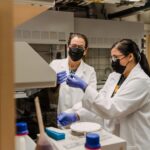
When COVID struck, students, families, and educators nationwide worried about the impact it would have on learning experiences and career opportunities. Throughout summer 2021, UMBC students have proven that with tenacity and support they can still access meaningful internships.
“We, as a UMBC community, are committed to the career success of our students,” says Christine Routzahn, director of the UMBC Career Center. “Internships provide students with opportunities to apply the skills, theories, and concepts they learn in the classroom while gaining valuable connections and career readiness. Working with our incredible employer partners and alumni, we’ve connected UMBC student talent with valuable, career-building experiences across industries.”
Goal #1: Secure that internship

Sandra Naylor. Photo courtesy of Naylor.
When Sandra Naylor ‘21, financial economics, was looking to transfer from community college to a four-year university, she had her sights set on securing an internship at a well-known company where she could gain hands-on experience in finance. She knew that UMBC had a strong Career Center that could connect her with these opportunities and she jumped at every chance to get her name in front of hiring managers.
“I came to UMBC specifically because I knew that they have really good connections,” says Naylor. Her two top priorities were her grades and accessing career opportunities. She shares, “I started going to meet and greets, and coffee chats to get my face out there as much as possible.”
Naylor attended a workshop at Morgan Stanley, which highlighted the company’s core values, including diversity, and she knew it was a company that could be a great fit for her. With the Career Center’s support, she secured an internship.
Her experience has largely been online, but that hasn’t limited her chances to build skills and network. “I am constantly in meetings and connecting with people,” she says. That includes regular meetings with her mentor, who is an executive director at Morgan Stanley. Senior management has also invited interns to meet at the company’s Baltimore offices.

Sandra Naylor’s photo appears on the Morgan Stanley building in Times Square, New York City. Photo courtesy of Naylor.
As she’d hoped, Naylor says that her internship has expanded her understanding of the finance industry. She particularly enjoyed deep dives designed to help interns understand how their work connects to the firm’s larger goals and initiatives—the kinds of work she might pursue in a finance career.
Find mentors who help you shine
Monika Arumalla, M.P.S,‘21, data science, has spent more than six months interning at BGE in Baltimore, and she will continue her internship through the fall. Like Naylor, Arumalla was eager to utilize the UMBC Career Center’s strong connections. She uploaded her résumé to UMBCworks during her first semester.

Monika Arumalla. Photo courtesy of Arumalla.
The energy company BGE approached Arumalla, inviting her to interview for a co-op—a type of work-based opportunity popular in engineering and technical fields, that’s often full-time, with hands-on projects. A committee interviewed Arumalla, asking her technical questions to assess her knowledge and approach to data science.
After hiring Arumalla, BGE onboarded her virtually, due to COVID. Still, “I’ve had constant interactions with my supervisor,” she says. “From day one, they made sure I was getting what I needed,” including helping her learn the company’s systems and processes.
Arumalla has been impressed with BGE’s office culture, which she describes as prioritizing safety, diversity, and inclusion. She has been able to connect with managers and leaders on her team, who have given her a sense of support and access to the tools she needs to complete her work.
That work included one particular project where she had a major impact. BGE call center agents are currently scattered across the region, primarily working remotely. Arumalla was asked to help determine how to support these agents in the event that they are affected by power outages in their home areas. The BGE team wanted fresh eyes on the project, and Arumalla came up with a solution that impressed her team.

Monika Arumalla working in her office space at home. Photo courtesy of Arumalla.
A few weeks later, she presented her idea to senior leadership at BGE. “My supervisor gave me an opportunity to showcase the work, something I’ll cherish,” she says. “Even as an intern, they always help me shine.”
See the impact of your work
Grace Tugado ‘23, chemical engineering, has spent her summer interning at SeeTrue Technology, which develops microcapillary needles for a range of biomedical needs, from IVF therapy to stem cell research. SeeTrue Technology is located on the UMBC campus, and is supporting Tugado’s internship through the Maryland Technology Internship Program.
Tugado learned about the internship from a professor and was excited by the opportunity to expand her biotech skills. For the first few days at SeeTrue she shadowed her mentor through the process of making the needles, and asked questions along the way.

Grace Tugado working in the SeeTrue Technology lab. Photo by Marlayna Demond ’11 for UMBC.
“There was a little bit of a learning curve,” says Tugado, who will also be a McNair Scholar this fall. Thanks to her prior research through UMBC’s STEM BUILD Program, she was able to make the most of each new challenge as a learning experience, without feeling discouraged.
One of the most rewarding parts of her internship at SeeTrue has been connecting with scientists, including her mentor Kinneret Rand-Yadin, founder and CEO of SeeTrue Technology. She’s also had the opportunity to connect with people who are using the needles. Receiving their feedback has impacted how she sees her work.
“It’s rewarding to think that labs around the world could potentially use the needles I’ve created,” she says. Tugado plans to continue interning at SeeTrue Technology through the fall semester.
Learn from people who have been there
Leaving nothing to chance Chi-Chi Onyekonwu ‘22, economics, worked with the UMBC Career Center team to apply for several summer opportunities. She was thrilled to be placed in her top choice, an economics research internship through the University of Chicago’s Leadership Alliance Summer Research Early Identification Program (held virtually this year).

Chi-Chi Onyekonwu. Photo courtesy of Onyekonwu.
The program helps students prepare for a Ph.D. in economics, explains Onyekonwu. It fosters interns’ connections with economics Ph.D.s, supports their research, and organizes lectures and other events.
Onyekonwu has worked with a group of six other economics research interns, including Seth Thomas ‘22, financial economics and global studies, and Lexi Smith ‘23, history and economics, on a project about global economies. Onyekonwu’s group studied global corporate transparency, and she also pursued an individual project focused on Italy’s economy. In addition to writing a research paper, she presented her work at a national symposium in July.
One of Onyekonwu’s favorite aspects of the program was connecting with 40 other economics students from around the world who were research interns at the University of Chicago this summer. Onyekowu plans to pursue a Ph.D. in economics after graduating from UMBC, and she valued the chance to grow her network.
“The first-hand accounts from people who have already gone through the process of getting their Ph.D., and hearing the mistakes they have made and what things have worked for them, has been the best part of the program,” she says.
Jump on a good opportunity
Terence Lesigues ‘23, biological sciences, first heard about interning at the Johns Hopkins University Applied Physics Laboratory (APL) through an email from UMBC’s Career Center in January. He’s glad he clicked on it. Within a few months, Lesigues was accepted into the program and identified a few particularly interesting projects to work on—not just during the summer, but for the coming year as well.
As a pre-med student with an interest in neuroscience, Lesigues joined a research group focused on brain analytics using machine learning. “We’re developing a deep learning algorithm to segment the brain at a micro level, including blood vessels and axons. With this, we can better understand the etiologies of neurological diseases, such as Alzheimer’s and schizophrenia,” he explains.

Terence Lesigues in front of the Johns Hopkins Applied Physics Lab. Photo courtesy of Lesigues.
“My lab at UMBC focuses on the neurobiological aspects of chemical sensory systems in the nose,” he notes. “This internship has allowed me to branch out and explore additional topics.”
While his internship is primarily virtual, Lesigues goes into APL once a week to meet with his cohort in person. Working remotely has not hindered his ability to make meaningful connections with professionals and his peers. Lesigues explains that he meets with his mentors each day, including for team-building activities, and also connects regularly with other interns.
Looking back, Lesigues says that he is grateful that he responded when the APL opportunity hit his inbox, and that he took the chance on applying. He encourages other students to keep an eye on Career Center messages and reach out to as many people as they can to get their foot in the door.
Gain experience in something you care about
Jaden Burke ‘24, political science, and Samara Pyfrom ‘24, M32, environmental science and geography both interned with the Chesapeake Bay Foundation, which focuses on conserving and protecting the Chesapeake Bay.
Pyfrom is the foundation’s diversity, equity, inclusion, and justice intern—a position she found on UMBCworks. Within the department of human resources, she works to provide data to the Chesapeake Bay Foundation’s board to support their planning and decision-making. She has also developed events that allow her fellow interns to network and has traveled to engage with interns across the organization.

Samara Pyfrom and Jaden Burke in front of oyster shells. Photo courtesy of Pyfrom.
Pyfrom is interested in scientific and environmental justice. She notes that climate change disproportionately impacts communities of color in the United States.
“My mentor has really centered this internship around my passions and helping me grow,” she says. “I’ve met with some litigation lawyers at the Chesapeake Bay Foundation and learned about how they approach environmental justice and work with corporations that misuse communities.”

Jaden Burke and Samara Pyfrom. Photo courtesy of Pyfrom.
Burke has supported community environmental education programs through his internship, including facilitating a trip for high school teachers to learn about oysters. He spent one week at the foundation’s Clagatt Farm, which he describes as the most physically challenging week of his internship.
Clagatt Farm has a community-supported agriculture program offering produce baskets each week of the summer. The organic farm connects community members to the local environment in meaningful ways, and Burke valued the chance to contribute to their work. Plus, he shares, “The networking opportunities have been valuable.”
Dive into unique opportunities
Adam Lees ‘21, biological sciences, remembers the day that he received an email from Routzahn about a highly unique opportunity to intern aboard the OceanX marine research vessel while it traveled from Portugal to Norway. “This program definitely jumped to the top of my list,” Lees says.

Adam Lees aboard the OceanX marine research vessel. Photo courtesy of Lees.
Fast forward a few months later, and Lees found out that he was one of about 15 interns selected for the research voyage. “I couldn’t believe it,” he says. The international group of interns—half from the U.S.—included students focused on biology as well as science communications.

Adam Lees, right, and his fellow interns. Photo courtesy of Lees.
Aboard the OceanX, Lees supported marine biologists and other scientists conducting research. Each day, he would have breakfast with the other interns before heading to lectures and shadowing scientists. He particularly enjoyed hands-on opportunities to send cameras and data collection tools deep into the ocean to gather samples.
Lees found most rewarding the friendships and connections that he made with others aboard the OceanX, from institutions all around the world. “Talking to scientists on OceanX and seeing what they do, how long it took them to get here, and what they do day to day was so helpful for me,” Lees explains.

A water sample collected by OceanX. Photo courtesy of Lees.
The OceanX has three dry labs filled with computers and servers, and one large wet lab that scientists use to study live samples. In addition to the students and scientists, the boat included a crew of about 35, from a person in charge of the computers and servers to a chef.

The OceanX vessel. Photo courtesy of Lees.
“The internship was inspiring and motivating,” Lees says, particularly having a front-row seat to science being conducted for the first time. “I can’t wait to be in school again now that I know what’s out there and what I can continue to work toward.”
Banner image: Grace Tugado, right, working in the SeeTrue Technology lab with her mentor Kinneret Rand-Yadin. Photo by Marlayna Demond ’11 for UMBC.
]]>
When COVID struck, students, families, and educators nationwide worried about the impact it would have on learning experiences and career opportunities. Throughout summer 2021, UMBC students have...
https://umbc.edu/stories/ocean-exploration-to-environmental-justice-umbc-students-seize-on-unique-summer-opportunities/
https://my3.my.umbc.edu/api/v0/pixel/news/119572/guest@my.umbc.edu/8648de9c519f0ec73297773038d6cdf2/api/pixel
biology
cahss
careercenter
cbee
cnms
coeit
community
datascience
economics
ges
globalstudies
history
mcnairscholars
page1
politicalscience
UMBC News & Magazine
https://my3.my.umbc.edu/groups/umbc-news-magazine
https://assets1-my.umbc.edu/system/shared/avatars/groups/000/001/943/24435aa6207c452e7bc15cc74b42c7bb/xsmall.png?1748556657
https://assets1-my.umbc.edu/system/shared/avatars/groups/000/001/943/24435aa6207c452e7bc15cc74b42c7bb/original.png?1748556657
https://assets2-my.umbc.edu/system/shared/avatars/groups/000/001/943/24435aa6207c452e7bc15cc74b42c7bb/xxlarge.png?1748556657
https://assets2-my.umbc.edu/system/shared/avatars/groups/000/001/943/24435aa6207c452e7bc15cc74b42c7bb/xlarge.png?1748556657
https://assets3-my.umbc.edu/system/shared/avatars/groups/000/001/943/24435aa6207c452e7bc15cc74b42c7bb/large.png?1748556657
https://assets1-my.umbc.edu/system/shared/avatars/groups/000/001/943/24435aa6207c452e7bc15cc74b42c7bb/medium.png?1748556657
https://assets2-my.umbc.edu/system/shared/avatars/groups/000/001/943/24435aa6207c452e7bc15cc74b42c7bb/small.png?1748556657
https://assets1-my.umbc.edu/system/shared/avatars/groups/000/001/943/24435aa6207c452e7bc15cc74b42c7bb/xsmall.png?1748556657
https://assets2-my.umbc.edu/system/shared/avatars/groups/000/001/943/24435aa6207c452e7bc15cc74b42c7bb/xxsmall.png?1748556657
UMBC News & Magazine
0
0
false
Fri, 20 Aug 2021 15:09:30 -0400
UMBC researchers advance accessible COVID-19 testing technologies
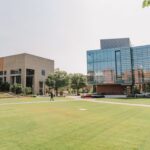
Two research teams led by UMBC engineering faculty are transforming COVID-19 testing technologies. Rather than making users choose either the fastest or most affordable COVID-19 test, or the most accurate test, they seek to offer tests that are rapid, accessible, and highly accurate, all in one.
One of these new innovations focuses on testing individuals for the virus causing COVID-19. The other focuses on collecting air samples in large spaces at risk for enabling COVID-19 transmission. Both teams behind this public impact research hope their innovations will help limit the spread of the disease as many U.S. and international jurisdictions rescind COVID-19 restrictions.
Bringing tech innovation to the public
A group of researchers led by Dipanjan Pan, professor of chemical, biochemical, and environmental engineering, developed two diagnostic tests that can rapidly, accurately, and affordably detect SARS-CoV-2 (the virus causing COVID-19) in individual patients.

Dipanjan Pan. Photo courtesy of Pan.
The nano-amplified colorimetric test does not require RNA extraction, which many other tests rely on, making it much more accessible. Pan’s other testing technology works on the principle of electrochemical detection that can be used even at home by applying a simple hand-held device for the read-out. Both of these technologies were recently licensed by RNA Disease Diagnostics, Inc.
“I’m delighted to know that my lab has received FDA registration and certification as a development site for the electrochemical AntiSENSE COVID-19 Test. A leading global molecular diagnostic company, RNA Disease Diagnostics, Inc. has received a worldwide exclusive license from UMBC and the University of Maryland, Baltimore (UMB) to commercialize the test,” explains Pan. He notes that the results of this work have been published in several high-impact journals, including May 2020 and October 2020 articles in ACS Nano andan April 2021 article in Nature Protocol.
Pan’s multidisciplinary team includes Maha Alafeef, a graduate research assistant at the University of Maryland School of Medicine (UMSOM); Parikshit Moitra, a UMSOM faculty member; and Ketan Dighe, a faculty research assistant at UMBC.
“This commercialization is a significant achievement and testament to my team’s hard work and dedication,” Pan adds. “While the high impact publications confirm the quality of our science, the licensing agreement and FDA certification attests the translational value of this technology.”
Rapid diagnosis with gold nanoparticles
In fall 2020, Pan and his collaborators received two grants from the National Institutes of Health (NIH) to improve testing to detect SARS-CoV-2, supporting the development of this technology. From there, the research progressed rapidly.
A chief benefit of Pan’s plasmonic technology is that the test results can be detected qualitatively by the naked eye at the point of care, without special technologies. This is made possible due to highly specific antisense oligonucleotides, which are synthetic DNA fragments that bind to RNA molecules from the virus, and aggregate gold nanoparticles.
“For our electrochemical test the ultimate goal is to develop a tiny handheld device for determining the presence of the viral RNA in the nasal swab or saliva samples. Our early prototype involves a disposable test strip that the meter uses to calculate the viral load and then displays the level,” Pan explains.
Pan has a dual appointment at UMBC and UMB, where he serves as professor of diagnostic radiology and nuclear medicine and pediatrics at the University of Maryland School of Medicine. At UMBC, Pan is also affiliated with the department of computer science and electrical engineering (CSEE).
Detecting COVID-19 using readily available tools
A second group of interdisciplinary researchers created a simple way to determine whether SARS-CoV-2 is present in the air. This group is led by Govind Rao, professor of chemical, biochemical, and environmental engineering (CBEE) and director of the Center for Advanced Sensor Technology (CAST). The journal Biotechnology and Bioengineering published their findings last month.

Govind Rao. Photo by Marlayna Demond ’11 for UMBC.
The researchers found that they could collect samples of SARS-CoV-2 by using a simple portable dehumidifier. They successfully tested their collection process in several locations within a hospital, where people reported experiencing flu-like symptoms.
This unique way of identifying SARS-CoV-2 allows hospitals to use readily-available dehumidifiers to detect the virus, rather than buy new scientific equipment to capture air samples for analysis.
“This technology could find widespread use, as it is analogous to a smoke detector,” says Rao. “Once fully developed, it could potentially be deployed everywhere and empower people by giving them a direct readout of viruses and other biological threats in the air around them.”
Rao worked alongside Pan, Douglas Frey, Xudong Ge, and Dighe, all CBEE and CAST faculty. Also working on the research are Michael Tolosa, staff member in CAST; Aaron Thole, a graduate student in CBEE; Priyanka Ray, a postdoctoral researcher in CBEE; and Benjamin Punshon Smith, a graduate student in computer science and electrical engineering. Moitra is also contributing to this work. The UMBC team collaborated with Jim Chang, director of the University of Maryland Medical Center’s department of safety and environmental health, who arranged for deployment of the dehumidifiers at various locations in the hospital.
The research team also is developing a rapid and sensitive test for detecting pathogen signatures in minutes, to pair with the dehumidifier.
Banner image: UMBC’s Interdisciplinary Life Sciences Building. Photo by Marlayna Demond ’11 for UMBC.
]]>
Two research teams led by UMBC engineering faculty are transforming COVID-19 testing technologies. Rather than making users choose either the fastest or most affordable COVID-19 test, or the most...
https://umbc.edu/stories/umbc-researchers-advance-accessible-covid-19-testing-technologies/
https://my3.my.umbc.edu/api/v0/pixel/news/119590/guest@my.umbc.edu/522ccc9acd36ffef1fe9106e8f7fde4a/api/pixel
cbee
coeit
research
science-and-technology
UMBC News & Magazine
https://my3.my.umbc.edu/groups/umbc-news-magazine
https://assets1-my.umbc.edu/system/shared/avatars/groups/000/001/943/24435aa6207c452e7bc15cc74b42c7bb/xsmall.png?1748556657
https://assets1-my.umbc.edu/system/shared/avatars/groups/000/001/943/24435aa6207c452e7bc15cc74b42c7bb/original.png?1748556657
https://assets2-my.umbc.edu/system/shared/avatars/groups/000/001/943/24435aa6207c452e7bc15cc74b42c7bb/xxlarge.png?1748556657
https://assets2-my.umbc.edu/system/shared/avatars/groups/000/001/943/24435aa6207c452e7bc15cc74b42c7bb/xlarge.png?1748556657
https://assets3-my.umbc.edu/system/shared/avatars/groups/000/001/943/24435aa6207c452e7bc15cc74b42c7bb/large.png?1748556657
https://assets1-my.umbc.edu/system/shared/avatars/groups/000/001/943/24435aa6207c452e7bc15cc74b42c7bb/medium.png?1748556657
https://assets2-my.umbc.edu/system/shared/avatars/groups/000/001/943/24435aa6207c452e7bc15cc74b42c7bb/small.png?1748556657
https://assets1-my.umbc.edu/system/shared/avatars/groups/000/001/943/24435aa6207c452e7bc15cc74b42c7bb/xsmall.png?1748556657
https://assets2-my.umbc.edu/system/shared/avatars/groups/000/001/943/24435aa6207c452e7bc15cc74b42c7bb/xxsmall.png?1748556657
UMBC News & Magazine
0
0
false
Thu, 24 Jun 2021 19:41:56 -0400
MUTUAL FLOURISHING

In music, science, and theatre classes, in research labs, in conservation efforts, and almost every corner of academia, there’s a growing awareness and dedication to community-engaged scholarship. How are different disciplines training up social justice-minded students to do no harm to the communities they work in? With one thriving relationship at a time.
A tree grows in Baltimore. Its roots push against the surface, its newly budding canopy blocks some of the dreary rain on this last day in March. The aphorism promises flowers soon, but the daffodils are already here, lush and golden against the wet grass. Rooted in this environment, the tree struggles to absorb water in a heavily-paved area. It faces possible invasive species, the whims of developers, a strike of lightning or disease.
These outside influences affect the flourishing of this tree, and the flourishing of the neighborhood it’s rooted in is just as interconnected. A tension, a balance, a system of reciprocity.
In Franklin Square Park, on a parcel of land donated by developers to the southwest Baltimore neighborhood in 1839, this tree and 96 others were recently surveyed by UMBC students at the request of the Franklin Square Neighborhood Association. They wanted a catalog of their natural resources, but also a record of what they’ve lost—only seven of the original 149 trees on a 1916 map of the park remain.
Working with members of the neighborhood, Mariya Shcheglovitova, Ph.D. ’20, geography and environmental systems, and Bee Brown ’21, environmental science, and other UMBC student researchers began their work. Their project would rapidly expand from an arboreal park survey to a community-focused project that invited local kids to participate in a scavenger hunt and other activities to build on the students’ existing connection to the park. As Shcheglovitova and Brown discovered, “understanding park quality is dynamic and can only be partially captured in a survey of the park features. Historic accounts and a focus on what happens in a park can enrich our understanding of park quality.”
What began in Franklin Square as an effort to catalog trees—separate trunks with roots and canopies equally intermingling—broadened to encompass the community who interacts with the park the most. Acknowledging this interconnectedness in research of all types at UMBC is not new to academia but is becoming a more prominent approach to research as different disciplines wrestle with ways to train up social justice-minded students and do no harm to the communities they work in.
Bridging campus and community
Community-engaged research gives a name to this method. At UMBC, most service-learning and community engagement experiences are facilitated through The Shriver Center, which was founded nearly 30 years ago. Director Michele Wolff explains that in the early days, the Center emphasized “that higher ed institutions shouldn’t tell communities what they need. The partnership should be one of mutuality and reciprocity. So our focus should be listening to community partners, hearing where their gaps are and then being a resource to work with them to fill the gaps.”
This is still the Center’s primary mission, and in January 2020, the Carnegie Foundation for the Advancement of Teaching honored UMBC with its distinguished Carnegie Community Engagement Classification, acknowledging UMBC faculty, staff, students, and partners for their deep commitment to strengthening the bonds between campus and community.
As part of the application process, more than 120 campus partners and dozens of community partners underwent a rigorous self-study. Along the way, they found that in music, science, and theatre classes, in research labs, in conservation efforts, and almost every corner of academia, there’s a growing awareness and dedication to community-engaged scholarship. Wolff sees this movement come alongside “an increased appreciation of disparities, racial inequities, and other social justice issues. At the same time, people have been working on increasing appreciation and inclusion of community members as experts, or thinking about what counts as scholarly work.”
Some departments are working on ways to adopt these methods, and others have this ethos baked into their core. American studies, one of the original majors at UMBC, calls community-based research and engagement one of the “signatures” of the major. With its joint focus on “coupled natural and human systems,” geography and environmental systems (GES) is another department that recognizes the necessity and power of community-engaged scholarship.
Slow scholarship
“In the field of environmental justice, it’s absolutely assumed and expected that you’re going to do community-engaged research,” says Dawn Biehler, a GES professor who first became aware of the concept as a graduate student. “More and more people are realizing that this is important and a good way of doing research, but to do it really well takes so much time and you have to be brave, in a way.”
As an academic, says Biehler, you have to honestly assess if your career—the timing of publications and tenure-track expectations—will suffer from this process. “It takes time to build genuine relationships with the community,” she continues. After engagement and research, then you still need to publish, and all of this takes more time than many instructors have allotted in their balance of research and teaching. “The other thing you have to recognize is that the people in the community you’re working with, they’re exposed to risks all the time, just a different set of risks,” says Biehler.
Institutionally, UMBC is changing to reflect community-engaged research as a priority. In May 2019, the Faculty Senate successfully proposed new language to include evaluation of community-engaged scholarship in the promotion and tenure policy for all departments, says Donald Snyder, chair of the committee that spearheaded the policy change and a lecturer in media and communications studies.
Still, even with the university’s acknowledgement of this methodology, why would professors or students voluntarily choose the inherently riskier, if not just slower, approach to research?
Wolff highlights two affective or social emotional competencies she hopes students take from their time in community work—perspective taking and shared humanness. “What better place to develop and grow (those competencies) than in experiences where you have the opportunity to work with others who are different from yourself and in contexts that are different from the ones you’re used to?” asks Wolff.
Intersectional research
As a doctoral student, Shcheglovitova was known as “the person who cared about trees and social justice in the city,” so she wasn’t surprised when undergraduate student Bee Brown approached her to collaborate on a research project that interwove those topics.
Biehler’s multi-year connection with the Franklin Square community, says Shcheglovitova, gave neighborhood folks someone to approach who was willing to listen and respond about local environmental issues and allowed her and Brown to more easily gain the trust of the people involved.
Scott Kashnow, vice president of the Franklin Square Neighborhood Association, wanted an updated survey of the park’s trees that could inform future plantings in the park. Looking at historical photos and a 1916 map of the park, it’s clear a lot has changed in the past 100 years. Park features have disappeared or degraded—the once bubbling fountain is planted over, the park bathroom is boarded shut, and many of the area’s ash trees were decimated by an invasive insect species.
After the survey was completed, Kashnow came up with the idea to invite students from a local school to celebrate the work and take part in the ongoing research. Shcheglovitova, Brown, and Biehler took the opportunity to gain a deeper understanding into community relationships with the park space.
“This is a way research can actually be helpful to the community,” says Kashnow, a Franklin Square resident for 14 years. “Through various organizations, we’ve been studied so much and oftentimes the studies don’t make any tangible difference in people’s lives. And people are still very happy to participate, you know, everybody has opinions, they love to talk about them. But does the research actually translate to some difference in people’s lives?”
Orchestrating social change
Regardless of the discipline, successful community-engaged scholarship depends on sustained relationships over time. Brian Kaufman, associate professor of music, sees grade school music teachers as great examples of this practice. Unlike other academic subjects in grade school where students have new instructors each year, music teachers interact with the same student musicians year after year. So it naturally follows for Kaufman that his music education students at UMBC should commit to a school for longer than a semester.

Through the Baltimore Symphony Orchestra initiative OrchKids (and with the support of The Shriver Center), UMBC students work with Kaufman at Booker T. Washington Middle School in West Baltimore for two years at a time. “It’s unusual for student teachers to spend four semesters at the same school, but to really build relationships with students, to see them develop, this is necessary,” Kaufman says, not just for the middle school students, but his UMBC students as well.
Pre-COVID, (although they have continued the program virtually) this would mean seven to 10 site visits to the school per semester. UMBC students spend the first half of the visit observing the teacher or engaging with the class, and the last hour spent in guided reflection.
“To me,” shares Kaufman, “that’s where the juicy part comes in.” Before heading back to campus in a Shriver Center van, Kaufman says, “we sit down and talk about what we learned. And we really try to unpack our experience and make connections to some bigger issues—issues of equity, and these larger discussions about teaching in the field and service-learning in the city and how these things tie together. That’s where the real richness comes in for the students.”
Science on the stage
If music education lends itself naturally to following a community-engaged process, what about cross-disciplinary initiatives like Erin Lavik and Lynn Watson’s project Theatre Arts and Communicating Science? Lavik, professor in the department of chemical, biochemical, and environmental engineering, and Watson, a theatre professor, collaborated with Arbutus Middle School science teachers to use theatre skills—playwriting, improvisation, and voice/speech—to help their young students tell stories about their capstone science projects.
Lavik had personally experienced the powerful interplay between STEM and theatre in her own studies, she says, “So I wanted to create a program that helped college students tell the story of their science and let them engage with students in middle school who were vulnerable to losing their passion in science.” When she approached Watson about the idea, the theatre professor was thrilled. “We shared an understanding of the power of theatrical storytelling that can bring communities of people together,” says Watson.
Prior to the program, the UMBC undergraduate and graduate engineering and theatre students spent a preparatory weekend workshopping with science teachers at Arbutus Middle School. Lavik and Watson saw the Retrievers’ confidence and community-building efforts gain steam over the weekend which led to a more successful outcome when they worked with the middle schoolers.
The students ultimately used a playwriting exercise to understand the plight of endangered species and improv scenarios to demonstrate the real world effects of Newton’s Laws of Motion—all of this performed with joy, says Watson. She noticed that the experience also “had a tremendous impact on the UMBC students in terms of confidence in their abilities as leaders and their ability to take action in contributing to the wider community, including outside the university.”
Before their joint project in January 2020, Lavik and Watson were both interested in the concept of community-engaged programming, but they attribute the successful launch of their vision to The Shriver Center. After the fact, Lavik observed that community-engaged scholarship can increase student retention—the stipends attached to the program, made possible by a Charlesmead Initiative for Arts Education grant, afforded students the time to participate. “I hope that over time, we will be able to show that programs that integrate arts and science can help students thrive at UMBC, and bringing these programs to our communities can increase the number of students, particularly from underrepresented populations, who can begin to see themselves as scientists and engineers with joy.”
Changing university culture
UMBC’s Center for Democracy and Civic Life has been instrumental in creating a campus culture of an engaged community—promoting equitable off-campus partnerships while emphasizing the importance of starting that process within the communities at UMBC. The Center’s Director David Hoffman, Ph.D. ’13, language, literacy, and culture, and Assistant Director Romy Hübler ’09, MLL, M.A. ’11, intercultural communications, Ph.D. ’15, LLC, say that an initiative that precedes the formalization of the Center is the BreakingGround grant program.
The origins of BreakingGround came from an effort to organize a UMBC Civic Year in 2012, says Hoffman, when “we discovered all of these people who were doing amazing things.” Greg Simmons, M.P.P. ’04, vice president of institutional advancement, challenged the group to think bigger, remembers Hoffman. “He said, ‘you know, you’re talking about this as a year, but this really is about UMBC’s identity. This is a place where we come together because we want to change the world and we want to change it in particular ways that align with values like inclusive excellence.’”
Hoffman, along with Wolff and others, recognized that community-engaged work was happening in classrooms, at service-learning sites, and in other campus settings, but there wasn’t a unifying structure for like-minded people to find each other easily. Through a sustaining grant from the provost’s office, BreakingGround has offered grants to 80 applicants to infuse courses and programs with opportunities for students to develop civic agency, and to shape their experiences so they’re not “just a one-off community service project, but an opportunity for lasting community engagement,” says Hoffman.
Hübler joined the BreakingGround working group in 2012 as the community liaison for the Graduate Student Association, and as a result of her involvement changed the topic of her dissertation. “I noticed among graduate students from all these different disciplines that many of us were drawn to our topics of study because we either had personal experience with them or we lived in communities where we would observe the effects of bad policy on people and centuries of oppression and marginalization.”
In 2013, UMBC began sending delegations to the Imagining America conference, which, according to the group’s mission, brings together people in higher education, non profit organizations, and activists to “imagine, study, and enact a more just and liberatory ‘America’ and world.” Imagining America’s leaders were struck by the holistic vision described by UMBC participants. “They saw how we were changing the university’s culture,” says Hübler. “Like this was not just one faculty member doing this in this discipline and another one over here, and they’re not communicating, but they could see that this was an organized effort.”
As a result, UMBC was asked to bring the 2015 conference to Baltimore. Hübler and others began to reach out to partners to co-organize workshops around the city. “What is the story that we want to tell of Baltimore?” Hübler would ask. “We didn’t want it to be UMBC saying, ‘this is the story,’ right? But we came up with the story together.” In between planning the conference and the actualization of the work, Freddie Gray died in police custody in April 2015. Uprisings shook the city and caused UMBC to conduct a campus-wide inventory of Baltimore-based engagement, and that accounting ultimately strengthened the intentionality to focus community-based activities on racial equity. One of the most significant outcomes of that reckoning would come in 2017, with the establishment of the Truth, Racial Healing, & Transformation Campus Center at UMBC, which works to break down racial hierarchies with a focus on the university’s service-learning and community-engagement partnerships in Baltimore City.
Importantly, Hübler notes that UMBC is, in fact, its own community and should apply the same community-engaged best practices internally. “There are challenges we have,” she says, “and UMBC can be better. We are constantly making and co-creating UMBC. Students are not just customers floating through to get a degree, but we all have responsibility for our own community. And if we want to co-create our space, there are skills, knowledge, and dispositions that we need that are pretty much the same as what we need when we work with communities elsewhere.”
Good stewardship
Alumna Briana Yancy always envisioned herself following a typical research path, as she thought of it, a scientist in a lab. So she was surprised when she found herself on her third trip to the Bahamas as a part of biological sciences Professor Kevin Omland’s lab studying the Bahama Oriole. Yancy and the other students working with Omland partnered with The Bahamas National Trust, and she says the local community was always excited to talk about their orioles, showing them nests and asking insightful questions.

“I started to see how important this community connection is,” says Yancy, now the diversity work group staffer at the Chesapeake Bay Program, a collective of organizations whose shared mission is to protect the Chesapeake Bay. “It’s important that scientists and researchers learn how to work with local communities and how to talk about the things that they’re working on, especially for the environmental field, because it impacts everybody. If you can’t articulate that, people aren’t going to care and they’re not going to try to make a difference or get involved.”
Yancy ’19, M27, environmental science, says Omland set an example in the Bahamas that she’s tried to emulate since in her own work. “He always made sure to invite people along, to take the time to explain things to people, and also stop to get their insight,” says Yancy. As an intern at the National Aquarium checking water quality in the harbor, Yancy remembers, “people would always come up to me and be like, ‘Oh, what are you doing?’ And I would take the time to explain to them, ‘I’m doing this. This is what this machine is called. And this is how I do it, the numbers I’m looking for, and why it’s important.’”

In her current position, Yancy sees an increased attention toward community-engaged research as organizations like the Chesapeake Bay Program ask themselves how they can reach a more diverse audience. “If we keep getting engagement from the same people from the same walks of life, we’re going to miss things,” says Yancy. “And we really can’t afford to miss anything. Climate change is now and the environment is struggling. And I think that, especially with COVID, we’re seeing more clearly the intricate connection between environmental health and public health.”
Moving toward the ideal
What does it mean to engage in relationships that encourage mutual flourishing? How can the roots and the canopy both benefit and nourish the good of the one tree? This is a question The Shriver Center and their partners at UMBC have been asking themselves and the thousands of students who use the Center’s service-learning structure to engage with the surrounding Baltimore County and City communities for the past 30 years.
Wolff sees community-engaged scholarship as a step away from transactional partnerships to transformational ones. The ideal, she says, should be to include the community from start to finish so everyone benefits.
“We’re recognizing community members as experts and moving forward with a goal of reciprocity and mutuality in our work,” says Wolff. “Part of the ideal is having community members be a part of every aspect of the activity. That’s where we want to get to. I think we’re moving toward that ideal.”
*****
Illustrations by Rebecca Bradley.
]]>
In music, science, and theatre classes, in research labs, in conservation efforts, and almost every corner of academia, there’s a growing awareness and dedication to community-engaged scholarship....
https://umbc.edu/stories/mutual-flourishing/
https://my3.my.umbc.edu/api/v0/pixel/news/119597/guest@my.umbc.edu/f54618ef01ea93bb68525f057a032028/api/pixel
cahss
cbee
center-for-democracy-and-civic-life
discovery
environmental-systems
feature
ges
music
professorsnottomiss
spring-2021
the-shriver-center
theatre
UMBC News & Magazine
https://my3.my.umbc.edu/groups/umbc-news-magazine
https://assets1-my.umbc.edu/system/shared/avatars/groups/000/001/943/24435aa6207c452e7bc15cc74b42c7bb/xsmall.png?1748556657
https://assets1-my.umbc.edu/system/shared/avatars/groups/000/001/943/24435aa6207c452e7bc15cc74b42c7bb/original.png?1748556657
https://assets2-my.umbc.edu/system/shared/avatars/groups/000/001/943/24435aa6207c452e7bc15cc74b42c7bb/xxlarge.png?1748556657
https://assets2-my.umbc.edu/system/shared/avatars/groups/000/001/943/24435aa6207c452e7bc15cc74b42c7bb/xlarge.png?1748556657
https://assets3-my.umbc.edu/system/shared/avatars/groups/000/001/943/24435aa6207c452e7bc15cc74b42c7bb/large.png?1748556657
https://assets1-my.umbc.edu/system/shared/avatars/groups/000/001/943/24435aa6207c452e7bc15cc74b42c7bb/medium.png?1748556657
https://assets2-my.umbc.edu/system/shared/avatars/groups/000/001/943/24435aa6207c452e7bc15cc74b42c7bb/small.png?1748556657
https://assets1-my.umbc.edu/system/shared/avatars/groups/000/001/943/24435aa6207c452e7bc15cc74b42c7bb/xsmall.png?1748556657
https://assets2-my.umbc.edu/system/shared/avatars/groups/000/001/943/24435aa6207c452e7bc15cc74b42c7bb/xxsmall.png?1748556657
UMBC News & Magazine
0
0
false
Thu, 10 Jun 2021 17:57:01 -0400
UMBC’s 2021 grads advance research with public impact—from disaster response to assistive tech

Students from across all of UMBC’s colleges and schools are graduating this week having taken advantage of the unique undergraduate research opportunities and supportive mentorship UMBC offers. They’re poised to take their research to the next level and move on to new challenges through graduate school and careers.
For example, Davis Cappabianca ’21 is recommending reforms to better coordinate multi-agency disaster relief efforts. Hana Flores ’21is conducting cutting-edge HIV studies. Keren Herrán ’21, M29, is incorporating environmental science to improve public health. Ali Abdolrahmani, Ph.D. ’21, is developing innovative assistive technologies for the blind community, and Briscoe Turner ’21 is reimagining public safety with an eye to community empowerment.
Big breakthroughs
Cappabianca took advantage of UMBC’s individualized study program (INDS) to tailor his degree around his interests. As a U.S. Navy veteran, Cappabianca knows that coordination between the military and civilian relief groups in the aftermath of disasters is often clumsy. He also expects, as an aspiring Navy medical doctor, that he will be involved in these situations in the future. He wanted to find a way to improve outcomes in these situations, because, he says, “The end goal [is] helping the most people possible in the most effective way.”

Davis Cappabianca ’21 in his U.S. Navy uniform. Photo courtesy of Cappabianca.
“I realized that my background in the U.S. Navy provided me with a lot of unique experiences,” he shares, “and what I found in INDS was a way for me to bring those experiences into my education and claim my own degree.” His two degree mentors, Stephen Kosloski, joint director of Naval ROTC at UMBC and University of Maryland, College Park and Joby Taylor, director of the Peaceworker Program at UMBC, brought very different perspectives to his research.
“More often than not, the melding of their ideas was what got me to major breakthroughs in my research,” Cappabianca says. Learning to always consider multiple perspectives was one of the most valuable takeaways from his INDS degree, he adds. “I think it will fundamentally change the way you approach problems, even if it’s subconsciously.” He plans to pursue medical school or a master’s degree in emergency management.
Environmental science meets public health
Herrán also designed her degree around her experiences. Answering a call for more Spanish-speaking participants, she spent spring break of her first year at UMBC in Nicaragua with the UMBC chapter of Global Medical Brigades, a student-run organization committed to implementing sustainable health systems worldwide.
She noticed the relationship between water quality and community health in Nicaragua, and reflected on similar challenges she observed during her childhood summers in Puerto Rico and El Salvador (the birthplaces of her parents). “Coming back to UMBC, I thought, this is what I want to dedicate my life to,” she says.
 Keren Herrán ’21, right, In Honduras while participating in the Honduras Leadership Institute. Photo courtesy of Herrán.
Her degree has included courses in environmental science, sociology, research methods, and writing—even cartography. Why? Herrán sees significant overlap between study of the environment and public health, but, in practice, doesn’t see the fields as very connected in today’s world. She says, “I want to be in that overlap.”
“I think INDS has been crucial to my acceptance to graduate school, because it’s given me the opportunity to be intentional in my choice of classes, and to claim my education,” Herrán notes. “I knew that I wanted to pursue research and partner with communities, not just come in and tell them what to do,” she says. She has had the opportunity to take that approach in her undergraduate work.
This fall, Herrán will begin a Ph.D. at University of South Carolina as a Presidential Fellow in health promotion, education, and behavior.

Keren Herrán in her graduation regalia, spring 2021. Photo courtesy of Herrán.
Asking challenging questions
Turner and Abdolrahmani also focused on issues close to their hearts. As a Sondheim Public Affairs Scholar and psychology major, Turner has studied community building in the context of reimagining public safety and justice.
“I’m really interested in the community aspect, alternatives to policing, and understanding how you build as a community and solve these problems without the use of force—with understanding and restorative practices,” she says. “I’ve grown in that way, and thought about, ‘What does abolition look like? How do we expand our thinking and make sure that we’re tapping into new ideas of how we operate with each other, and how we communicate with each other, and how we treat each other, rather than sticking to historical practices?’”
 Briscoe Turner ’21, rear, second from right, with other members of the UMBC Black Lives Matter Club in 2019. Photo courtesy of Turner.
Her current research with Bronwyn Hunter, assistant professor of psychology, focuses on college students who have had parents incarcerated or struggle with substance use, and understanding the students’ ideas of what justice looks like. In addition to her work with Hunter, a Public Policy and International Affairs Junior Summer Institute at Princeton University “opened my eyes to how public policy works,” Turner says. Now, she’s asking big questions: “I’m trying to understand what the world could look like, and how do we get there?”
This summer, Turner is headed to Brown University to pursue a master’s of public affairs. “I’ve really enjoyed my UMBC experience. That’s why I picked Brown,” she says. “I felt like it had a lot of similar aspects to it as UMBC, so I want to continue that community feel and the support that I got here.”
 Briscoe Turner ’21, left front, with UMBC’s Black Lives Matter Club in the UMBC Commons. Photo courtesy of Turner.
Inclusive design
Abdolrahmani has spent the last seven years investigating and developing assistive technologies for the blind community in the human-centered computing Ph.D. program. He decided to pursue a Ph.D. after being exposed to the field of assistive technology while working in his home country to improve the internet banking experience for blind customers. Intrigued and wanting to make a bigger contribution to the field, Abdolrahmani, who is legally blind, moved to the U.S. with his wife at age 36 to study with UMBC faculty in information systems.
“I wanted to understand how I could develop technologies to improve the independent living of the blind community or other people with disabilities,” Abdolrahmani says. He first worked on a project to develop a wearable indoor navigation assistive device. Later, he worked to enhance the user experience of mainstream voice assistants such as Amazon Alexa and Google assistant for the blind. And, finally, he brought the two together for his thesis project, which focused on the use of mainstream voice assistants for navigating airports.
Along the way, he learned that not only did blind people appreciate the technologies he was developing, but so did sighted people and members of other groups. His research “shows that these technologies have great potential for future use for different groups of users in different contexts,” he explains.
Now, Abdolrahmani is looking for roles where he can have an even more direct impact as a member of a product design team, “so that I can inspire more accessibility and inclusive design in products, to see that products are designed in such a way that people with different abilities can use them right away out of the box.”
Becoming a scientist
A culture of supportive mentorship has helped sustain all of these students on their path to commencement. For Hana Flores, her first mentor on campus was none other than President Freeman Hrabowski.

Hana Flores ’21, center, with Phyllis Robinson, right, and Ernestine Baker, after Floes received an award for her presentation at the Annual Biomedical Research Conference for Minority Students in 2019. Photo courtesy of Flores.
The CEO of Prince George’s County Public Schools connected Flores with Hrabowski after hearing her deliver the valedictorian address at Bowie High School and learning that she would attend UMBC. On the day of their meeting, when Flores heard Hrabowski’s booming voice from the anteroom to his office, she was nervous. “But once he entered the room, any nerves I had went away,” she recalls. “He was so interested, and genuinely wanted to know what my goals and aspirations were.”
Soon thereafter, she joined the lab of Michael Summers, Distinguished University Professor of chemistry and biochemistry and Howard Hughes Medical Institute investigator. And she’s been conducting research with his team on the structure of HIV since.
 Hana Flores ’21, left, Pengfei Ding, center, and Ridhi Chaudry ’22, right, at UMBC’s Summer Undergraduate Research Fest in 2019. Photo courtesy Flores.
Postdoc Pengfei Ding, in particular, spurred her growth by encouraging his mentees to contribute to the intellectual direction of the research, rather than simply teaching them specific laboratory techniques. “Dr. Pengfei Ding essentially was a catalyst for me to grow into a more independent researcher,” Flores says.
Her many professors in chemical engineering also had a role to play. “They are really focused on students being able to achieve. I felt comfortable going to office hours,” she says. “And I feel like they didn’t just care about me accomplishing in my classes, they also cared about how I was as a person.”
Flores has presented at national conferences, conducted summer research at MIT, and joined the UMBC Honors College and U-RISE Program. Shes also a contributing author for one published and two pending research articles. This fall, she’ll begin a Ph.D. at MIT as a Dean of Science Fellow, where she hopes to pursue interests in protein engineering and regeneration.

Hana Flores ’21. Photo courtesy Flores.
The power of mentoring
Herrán had support from research mentor Dawn Biehler, associate professor of geography and environmental systems, as well as her INDS and Meyerhoff Scholar communities. Biehler “is invested in her mentees and their growth and development, and she’s just incredibly kind and supportive,” Herrán says.
On her Meyerhoff experience, Herrán reflects, “I’m a minority in many aspects, and Meyerhoff is so beautiful, because it’s so rare to be in a cohort of more than 50 other students who are also minorities, who are also trailblazers within their families and their cultural communities. You relate to one another, you support one another—it’s a family for life.”
Abdolrahmani also received support from multiple angles. Stacey Branham, formerly of UMBC and now on the faculty at University of California, Irvine, “had a very deep trust in me and my abilities and my creativity for different research projects that we collaborated on together,” he says. Ravi Kuber, associate professor of information systems, was his primary advisor and “the first one who trusted me when I arrived in 2014.”

Keren Herrán ’21, right, at the University of Pennsylvania, where she gave a poster presentation on research completed during the Leadership Alliance Summer Research – Early Identification Program in 2018. Photo courtesy Herrán.
A strong believer in peer mentoring, Abdolrahmani thinks back to the supportive relationships he developed with both graduate and undergraduate students. With the undergrads, in particular, “I trained them academically, but also how to interact with me as a blind person, what kind of support I need,” Abdolrahmani says, “so I had the support that Ph.D. students need through the collaboration of my mentors and colleagues in the team.”
Circle of support
Turner’s research mentor, Hunter, offered valuable insights beyond their specific research project, supporting Turner as a whole person. “I’ve learned a lot from her about criminal justice and research and just about life,” Turner says of Hunter.
That support included walking her through the graduate school application process and providing an emotional anchor point. “I really appreciated her and the graduate students sharing their experiences,” Turner says. “She would also check in with me during our one-on-one meetings to see how I was doing throughout the process, given how difficult this past year has been.”

Briscoe Turner ’21 in graduation regalia. Photo courtesy Turner.
Faculty in the Sondheim Scholars and Honors College programs completed Turner’s circle of support. “All of them have been there for me, which I really appreciate, for personal growth and also my career goals,” she reflects.
Connections and pathways
Other graduating students, too, have benefited from strong mentorship and rich research experiences. Caleb Robelle ’21, M29, mathematics and computer science, had the opportunity to connect with research mentors across UMBC, Rutgers, Texas A&M, and Johns Hopkins, and was accepted into all 17 of the Ph.D. programs he applied to. He will pursue his Ph.D. in theoretical computer science at MIT. Olumide Fagboyegun ’21, M29, biochemistry, will pursue a Ph.D. in neuroscience at Harvard as a Herchel Smith and NSF Graduate Research Fellow after completing neurological research with Erin Green, assistant professor of biological sciences.
Jordan Troutman ’21, M29, computer science and mathematics, is UMBC’s first Knight-Hennessy Scholar. He will pursue a Ph.D. in computer science at Stanford. And Samuel Patterson ’21, economics and mathematics, will attend Oxford as the second Rhodes Scholar in UMBC’s history, with a focus on transportation economics.
Thinking ahead
In UMBC tradition, on the eve of their graduation these students are already thinking about how they can support those coming after them. Flores, for example, benefited from being paired with a graduate student as part of her summer research experience at MIT. She’s planning to become a mentor once she arrives on campus to begin her Ph.D.
They all agree that community connections matter. “It’s powerful to give people the platform to share their stories, their lives, their hopes, their dreams,” Turner says. “There’s a lot of power in community—building with each other and climbing as you go.”
Banner image: Hana Flores, left, and Keren Herrán, right, on campus. Photo by Marlayna Demond ’11 for UMBC.
]]>
Students from across all of UMBC’s colleges and schools are graduating this week having taken advantage of the unique undergraduate research opportunities and supportive mentorship UMBC offers....
https://umbc.edu/stories/umbcs-2021-grads-advance-research-with-public-impact-from-disaster-response-to-assistive-tech/
https://my3.my.umbc.edu/api/v0/pixel/news/119624/guest@my.umbc.edu/6e9d91d1885cc087c2aaa37d2c9da9ee/api/pixel
cahss
cbee
chembiochem
civic
classof2021
cnms
coeit
community
csee
economics
ges
gradresearch
honorscollege
inds
is
marcustar
mathstat
meyerhoffscholars
naval
policy-and-society
psychology
research
science-and-technology
shrivercenter
sondheimscholars
undergradresearch
UMBC News & Magazine
https://my3.my.umbc.edu/groups/umbc-news-magazine
https://assets1-my.umbc.edu/system/shared/avatars/groups/000/001/943/24435aa6207c452e7bc15cc74b42c7bb/xsmall.png?1748556657
https://assets1-my.umbc.edu/system/shared/avatars/groups/000/001/943/24435aa6207c452e7bc15cc74b42c7bb/original.png?1748556657
https://assets2-my.umbc.edu/system/shared/avatars/groups/000/001/943/24435aa6207c452e7bc15cc74b42c7bb/xxlarge.png?1748556657
https://assets2-my.umbc.edu/system/shared/avatars/groups/000/001/943/24435aa6207c452e7bc15cc74b42c7bb/xlarge.png?1748556657
https://assets3-my.umbc.edu/system/shared/avatars/groups/000/001/943/24435aa6207c452e7bc15cc74b42c7bb/large.png?1748556657
https://assets1-my.umbc.edu/system/shared/avatars/groups/000/001/943/24435aa6207c452e7bc15cc74b42c7bb/medium.png?1748556657
https://assets2-my.umbc.edu/system/shared/avatars/groups/000/001/943/24435aa6207c452e7bc15cc74b42c7bb/small.png?1748556657
https://assets1-my.umbc.edu/system/shared/avatars/groups/000/001/943/24435aa6207c452e7bc15cc74b42c7bb/xsmall.png?1748556657
https://assets2-my.umbc.edu/system/shared/avatars/groups/000/001/943/24435aa6207c452e7bc15cc74b42c7bb/xxsmall.png?1748556657
UMBC News & Magazine
0
0
false
Thu, 20 May 2021 15:02:24 -0400
New UMBC grads find entrepreneurial ways to positively impact communities

Kiaron Bailey will soon become the very first graduate of UMBC’s new master’s degree program in community leadership, a path she hadn’t envisioned for herself while working in finance just a few years ago. “From a very young age, my parents instilled in me the importance of giving back. I just didn’t realize that I could pursue that passion and actually sustain myself,” Bailey says. In deciding to make the career shift, “I kind of had a heart-to-heart with myself,” and she realized that entrepreneurship and community impact can go hand in hand.
Bailey learned about the program when she connected with Sonya Crosby at her place of worship. Today, Crosby is assistant vice provost for applied and off-campus programs, but at the time she was director of the Office of Professional Programs, which offered the new master’s degree. Crosby told Bailey about the practical emphasis of the program—how it combined coursework community-based service-learning—and Bailey knew it was what she was looking for.
 Bailey, second from left in second row, and her classmates in a virtual class. Photo courtesy of Bailey.
Appreciating the nuances
As someone who studied finance as an undergraduate—where one plus one equals two—Bailey found the nuanced world of community leadership a bit shocking, she says, laughing. She particularly enjoyed connecting with nonprofits in Baltimore City, using her skills to support their missions while learning more about running community-based organizations.
Next One Up helps Black male youth in their academics, including preparing for the SATs and other college prep. The nonprofit did not yet have a physical space, and Bailey researched possible locations, preparing them to strengthen their services and community connections post-pandemic.
 Bailey, second from right, with her classmates in Baltimore. Photo courtesy of Bailey.
She also worked with The Lazarus Rite, which helps formerly incarcerated people prepare for jobs, obtain gainful employment, learn about budgeting, and develop soft skills to support their success. Bailey developed a survey to help the organization prepare to apply for a grant, and analyzed the survey data.
UMBC’s community leadership program, “definitely helped me get a holistic perspective of what it actually takes to run an organization and the type of tenacity and creativity you need,” she says. Bailey currently works for the Interagency Commission on School Construction for the State of Maryland, and also serves as an administrator of programs and finance, and the liaison for the Maryland Board of Education. She plans to continue that while starting to build a nonprofit supporting physical, mental, and financial wellness.
Creative problem solver
When Princess Sara Njemanze ‘21, chemical engineering, came to UMBC as a freshman, she knew that she wanted to find opportunities to build and to support communities. She started by joining the Shriver Center’s Living Learning Community, a residential floor bringing together students focused on meaningful social change. The experience proved so significant that she remained connected to the group for four years, transitioning through roles as a peer mentor and then as a resident assistant. “It’s my life,” she says, smiling.
 Njemanze, second from right in second row, with her fellow Orientation Peer Advisors in 2018. Photo by Marlayna Demond ’11 for UMBC.
As she explored possibilities for her degree and career paths, Njemanze knew she enjoyed fixing problems through science and engineering and that she loved connecting with people. After meeting Vivian Armor ‘73, American studies, director of the Alex. Brown Center for Entrepreneurship, Njemanze decided to register for an entrepreneurship class. There, she got a chance to partner with students from all different majors and to come up with a product to pitch for a Shark Tank-style presentation. Before long, she added minors in both computer science and entrepreneurship to her degree.
As a France-Merrick Fellow, Njemanze worked with a group of her peers to create initiatives that work to address challenges in Baltimore City and Baltimore County. “Something that I’m really proud of that we worked on and saw the fruits was hosting a leadership program for high school students at Lansdowne High School,” she explains, adding that they asked the students to envision their ideal communities.
 Njemanze, fifth from right, and the France-Merrick 2018-2019 cohort. Photo by Raquel Hamner ’20.
The high school students came to UMBC for a day-long leadership training and created art that was displayed at OCA Mocha, a coffee shop and community gathering space in downtown Arbutus. Njemanze says the opportunity to connect with younger students was meaningful to her and impacted her UMBC experience.
 Njemanze, second from right in front row, with her classmates in Introduction to Intercultural Communication class. Photo courtesy of Njemanze.
During her time at UMBC, Njemanze interned at the Naval Surface Warfare Center, where she was offered a job that will begin after graduation, combining her passion for engineering and creative problem solving. Her long-term vision is creating a nonprofit to support underserved communities gain access to knowledge and skills such as financial literacy, college readiness, and leadership development.
Supporting mental health through tech
Tristan King ‘21, individualized studies, created his own path at UMBC after transferring from Howard Community College (HCC), where he earned an associates degree in computer science. While King was at HCC, he met Joshua Massey ‘14, individualized studies, who was teaching an entrepreneurship course. By talking with Massey during his office hours King learned that at UMBC he could design his own major, and he began to explore the possibilities.
King shares that his personal mental health struggles led him to create a major at UMBC that focused on how technology could support mental health and wellbeing. Through an emerging field called digital therapeutics, he explains, some health care providers are prescribing apps and websites to provide support and resources to people with depression and other mental health challenges.
 King testing the UMBC-UCI-Toyota research prototype. Photo by Sarah King.
At UMBC, King began learning more about tech and accessibility. He worked with Ravi Kuber, associate professor of information systems, on creating obstacle-detection tools so that blind runners could complete their runs independently and safely (research supported by Toyota). King also worked with Lee Boot, director of UMBC’s Imaging Research Center, on data visualization research.
In 2020, he participated in UMBC’s annual Idea Competition through the Alex. Brown Center for Entrepreneurship. His team earned second place for the Sproutful System, which includes a plant container outfitted with sensors that transmit to a phone app, helping the user know what their plant needs to thrive. The app also features daily guided meditations. The idea is that a person will care for themselves and their plant in a daily meditative practice that is both relaxing and rewarding.
 King, top, and his collaborator Andrew Park ’21, individualized studies, presenting at the Idea Competition in 2020.
King’s senior capstone project uses virtual reality to translate metaphor therapy to an immersive environment. “It looks at how people describe depression and anxiety, and sort of visualizes it,” he says. The project combined what he learned through health psychology coursework with his computer science skills, interest in supporting mental health, creativity, and ingenuity to yield a thought-provoking tool.
Energy and commitment
When Amina Mahmood ‘21, computer science, was younger, she would routinely get viruses on her family’s desktop computer while playing online games. Her computing skill set has certainly grown and changed over the years, but her passion for the field remains the same.
As she was applying to colleges, Mahmood focused on institutions with strong resources for students pursuing computer science. She felt elated when offered a spot in UMBC’s Cyber Scholars program, housed within the Center for Women in Technology. She wanted to make the most of each and every opportunity that came her way.
 Mahmood, right, at a CWIT event. Photo courtesy of Mahmood.
That is how Mahmood, as a new freshman at UMBC, found herself at the UMBC Career Center’s campus career fair, 10 copies of her resume in hand. She didn’t yet have work experience in computing, and wasn’t quite sure of the protocol, but she committed to handing out each one of those resumes before she left.
Before the end of the day, Mahmood connected with Huntress Labs, a start-up company based in bwtech@UMBC. Huntress Labs offered her an internship, and she worked there part-time through her sophomore year.
She also went on to complete internships at Parsons, a company that develops digital solutions in the security, defense, and infrastructure industries; Systems and Tech Research; and the Johns Hopkins University Applied Physics Lab. There, she will soon begin a full-time job as a cyber engineer, where she will focus on reverse engineering, one of her computing-related passions.
A world of opportunities
While completing her courses and interning, Mahmood took advantage of unique learning opportunities. She received a scholarship to attend the Grace Hopper Celebration, the world’s largest gathering of women in technology. She also studied abroad in the United Kingdom in spring 2020, traveling to Paris and London before the program ended early due to the emergence of COVID-19.
 Mahmood in Paris. Photo courtesy of Mahmood.
Mahmood’s approach of taking on new challenges with energy and commitment extended to other aspects of her life at UMBC. When she found that UMBC offered limited on-campus halal dining options, she worked with the Student Dining Advisory Committee to expand those options. In her junior year her tenacity paid off. UMBC opened Halal Shack as a permanent halal dining option in The Commons, also popular with vegetarian and vegan diners.
 Mahmood, third from right, at the ribbon cutting event opening Halal Shack in The Commons. Photo by UMBC Dining.
Knowing the potential of her organizing to positively impact other people motivated Mahmood to push forward the work until it became a reality. “I’m the youngest in my family, but what if I have a daughter or a nephew and they come to UMBC, what would I want them to experience?” she asked herself. “I just want to use my skill set and whatever I can do to be beneficial to other people.”
Gaining confidence as entrepreneur
Jason Jozwiak, M.S. ‘21, information systems, came to UMBC with a bachelor’s degree in fine arts, a decade working as a software developer, and two years teaching English in Ukraine through the Peace Corps. As a Peaceworker Fellow with UMBC’s Shriver Center, he had an opportunity to pursue his master’s degree in information systems while working part-time with Baltimore City’s Department of General Services, and completing a social change leadership program.
 Jozwiak (in blue hat) and fellow Peaceworkers in Baltimore, 2020. Photo by Charlotte Keniston.
Jozwiak began working with the City of Baltimore before the COVID-19 pandemic began, developing software to help his department digitize records. During the pandemic, the City began using that same software to record COVID-19 data to support contact tracing efforts.
That experience broadened his sense of the kinds of community impacts he could have through a career in computing. After graduation, he plans to expand his software development work in partnership with another emerging entrepreneur.
 Jozwiak giving a presentation related to his work with Baltimore City. Photo by James Trimarco of the Department of General Services.
“UMBC helped open my eyes to the possibilities and opportunities that are available,” says Jozwiak. “Entrepreneurship is something that I’ve been interested in for a long time. There are inherent risks involved and it’s kind of scary trying to piece it together. But I learned that I know what I’m doing. It helped give me the confidence.”
Finding community
Jameka Wiggins ‘21, chemical engineering, remembers when representatives from UMBC’s Center for Women in Technology (CWIT) visited her high school in Prince George’s County, Maryland. They offered a glimpse into the kind of experience she might have as a CWIT Scholar, including a tight-knit community of mutual support. She was accepted into the scholars program and says, simply, “CWIT was my community coming into UMBC. They always made sure we had a community of supporters, that we were engaged in the program, and that we felt welcome at the university.”
That community proved particularly important when Wiggins struggled with the transition to college life, worrying that she didn’t belong. Working through that challenging time motivated her to shift from focusing on lab research to engineering education itself as a career path.
 Wiggins, second from left, with Elfreda Atoe ’19, political science; Krystal Ogun, ’19, information systems; Alayla Stone-Abernathy ’20, health administration and policy; and Cheyenne Oliver ’20, biological sciences, at an event for The Lambda Phi Chapter of Alpha Kappa Alpha Sorority, Incorporated. Photo courtesy of Wiggins.
During her sophomore year, Wiggins, who is also a member of the UMBC chapter of the National Society of Black Engineers, decided that she wanted to gain research experience. She applied to the NSF’s Louis Stokes Alliance for Minority Participation (LSAMP) program, which supported her summer research on optimizing oleaginous yeast cell factories in UMBC’s chemical, biochemical, and environmental engineering department.
The next year she accessed a very different kind of experience as a Shattuck Fellow through the UMBC Career Center and as a participant in the Maryland Technology Internship Program for Entrepreneurship. These initiatives allowed her to intern multiple semesters for the start-up Athena Environmental Sciences, with Sheldon Broedel, associate director of UMBC’s master’s in professional studies in biotechnology program.
As she was exploring these opportunities, Wiggins realized that she was not the only student who would benefit from academic support outside of the classroom. She and a group of her peers worked with the UMBC Academic Success Center to provide tutors for upper-level engineering courses. And she also began looking at career pathways in engineering that were focused on community and belonging.
Change agent
In fall 2020, Wiggins, also a McNair Scholar, began working with Jamie Gurganus, associate director of engineering education, on a project that would shape her trajectory. They conducted research on the engineering mindset and experiences of Black first-year students, including those who are and are not in scholars programs.
Wiggins and Gurganus explored how to foster a sense of community among these students, which has been demonstrated to support resilience and degree attainment. Their study found that participants experienced particular challenges during the COVID-19 pandemic, such as isolation and difficulty finding their footing in classes.
 Wiggins, second from right, with Delegate Samuel Rosenberg, second from left, in Annapolis as a bill hearing. Photo courtesy of Wiggins.
In addition to her interest in supporting college students, Wiggins committed time to supporting younger students as well. She volunteered for the Refugee Youth Project’s College Journey Upward Mentoring Program (College JUMP), where she mentored a high school student in Baltimore City and helped her with the college admissions process. This experience led Wiggins to become a leader in the program, creating curricula for students and supporting mentors.
She also worked with some of her peers to create the LIFT Mentoring Program, which connects upper-level students with underclassmen in the same or similar majors to support informal mentorship and guidance outside of the classroom.
And along the way, she took on other leadership roles through UMBC’s Truth, Racial Healing, and Transformation Center and UMBC’s Inclusion Council.
These research, mentoring, and leadership experiences have inspired Wiggins to pursue a Ph.D. in engineering education. Her emphasis will be on developing undergraduate student support services to increase the retention and representation of underrepresented populations in engineering. “I will serve as a change agent,” she says.
Banner image: Kiaron Bailey, second from right, with her classmates in Baltimore. Photo courtesy of Bailey.
]]>
Kiaron Bailey will soon become the very first graduate of UMBC’s new master’s degree program in community leadership, a path she hadn’t envisioned for herself while working in finance just a few...
https://umbc.edu/stories/new-umbc-grads-find-entrepreneurial-ways-to-positively-impact-communities/
https://my3.my.umbc.edu/api/v0/pixel/news/119629/guest@my.umbc.edu/b5d4e100348ac4461677fa8df30efc6b/api/pixel
alexbrowncenter
bwtech-at-umbc
careercenter
cbee
classof2021
coeit
community
csee
entrepreneurship
inds
irc
is
shrivercenter
UMBC News & Magazine
https://my3.my.umbc.edu/groups/umbc-news-magazine
https://assets1-my.umbc.edu/system/shared/avatars/groups/000/001/943/24435aa6207c452e7bc15cc74b42c7bb/xsmall.png?1748556657
https://assets1-my.umbc.edu/system/shared/avatars/groups/000/001/943/24435aa6207c452e7bc15cc74b42c7bb/original.png?1748556657
https://assets2-my.umbc.edu/system/shared/avatars/groups/000/001/943/24435aa6207c452e7bc15cc74b42c7bb/xxlarge.png?1748556657
https://assets2-my.umbc.edu/system/shared/avatars/groups/000/001/943/24435aa6207c452e7bc15cc74b42c7bb/xlarge.png?1748556657
https://assets3-my.umbc.edu/system/shared/avatars/groups/000/001/943/24435aa6207c452e7bc15cc74b42c7bb/large.png?1748556657
https://assets1-my.umbc.edu/system/shared/avatars/groups/000/001/943/24435aa6207c452e7bc15cc74b42c7bb/medium.png?1748556657
https://assets2-my.umbc.edu/system/shared/avatars/groups/000/001/943/24435aa6207c452e7bc15cc74b42c7bb/small.png?1748556657
https://assets1-my.umbc.edu/system/shared/avatars/groups/000/001/943/24435aa6207c452e7bc15cc74b42c7bb/xsmall.png?1748556657
https://assets2-my.umbc.edu/system/shared/avatars/groups/000/001/943/24435aa6207c452e7bc15cc74b42c7bb/xxsmall.png?1748556657
UMBC News & Magazine
0
0
false
Tue, 18 May 2021 14:36:51 -0400
UMBC celebrates U.S. News Best Grad School rankings in engineering, public affairs
Announced today, 2022 U.S. News Best Graduate School Rankings name several UMBC programs in engineering and public affairs as among the best in the nation.
U.S. News bases these rankings on a combination of quantitative data about over 2,125 programs and expert opinions on program reputations. This feedback is provided through surveys to more than 23,000 deans, program directors, senior faculty, and other leaders.
UMBC has top-100 programs in public affairs and several engineering fields. Engineering is one of a few areas where rankings also reflect the opinions of professionals who hire or work with new graduates.
 UMBC’s ITE (Information Technology and Engineering) building
A growing leader in engineering
UMBC’s engineering programs, overall, tied with engineering colleges at the flagships University of Missouri and University of Kansas at 108th. The ranking has steadily climbed from 111th in the 2019 rankings. This year, UMBC is ranked ahead of both the University of Georgia and Utah State University.
UMBC engineering programs were recognized in five separate categories. For environmental engineering UMBC moved from #58 to #56, and for mechanical engineering UMBC rose from #105 to #101. UMBC’s graduate programs in chemical engineering experienced the most rankings growth, from #84 to #68.
“I am not at all surprised by the higher rankings we see for our chemical, biochemical, and environmental engineering (CBEE) graduate programs,” says Keith J Bowman, dean of the College of Engineering and Information Technology (COEIT). “We have expanded a fantastic team by hiring outstanding new faculty and we have been successful in recruiting extraordinary graduate students.”
 Dean Keith Bowman delivers remarks at the 2019 COEIT Celebration. Photo by Chris Ferenzi Photography.
CBEE Professor Erin Lavik, COEIT’s associate dean for research and faculty development, shares, “Whether it is technologies to enable better, more accessible treatments for diseases or developing solutions to make environmental justice a reality, our CBEE programs prepare students for the future as socially responsible engineers.”
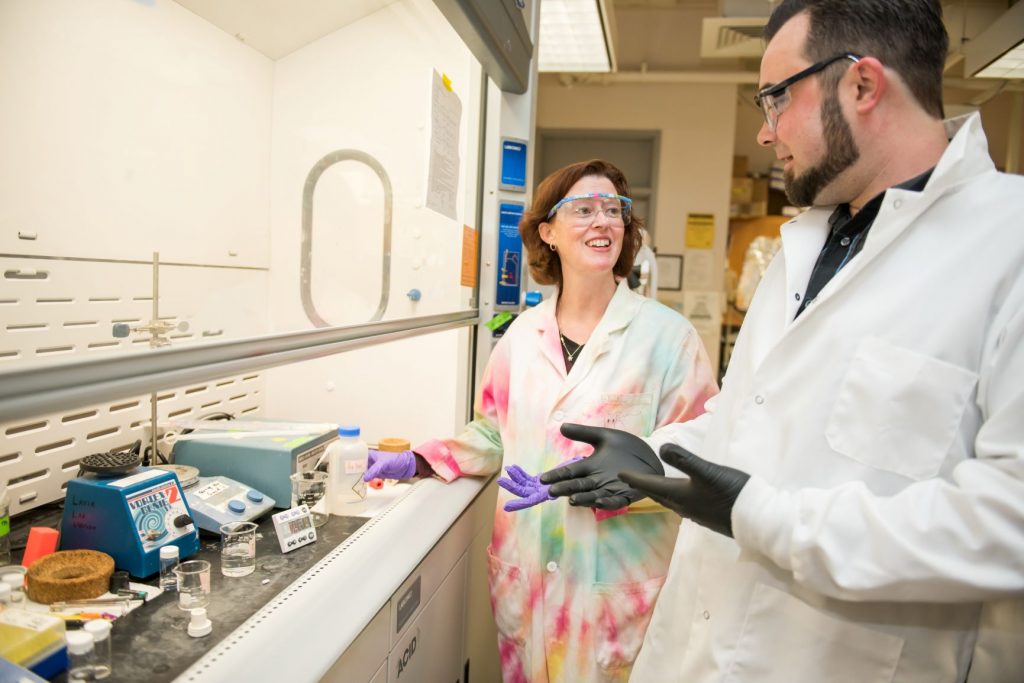 Erin Lavik (left) with graduate student Adam Day (right) in her lab, which works to develop new therapies through polymer synthesis and processing, drug delivery, and stem cell biology, 2018.
Groundbreaking computer engineering research
UMBC also ranked #92 in computer engineering and had a strong ranking in electrical engineering. Highly robust research opportunities for graduate students are a key reason why UMBC has a top-100 ranking in computer engineering.
Tinoosh Mohsenin, computer engineering, leads the Energy Efficient High-Performance Computing Lab (EEHPC), at the forefront of research in the new field of human-autonomy.
 Tinoosh Mohsenin, 2017
Brain activity monitoring is a growing field with medical applications in detection, diagnosis, prevention, and rehabilitation related to brain disorders. Human-autonomy is one of those applications, where people can potentially use brain signals to remotely guide devices. Mohsenin and her students have also worked on a variety of low power artificial intelligence processors that use electroencephalogram (EEG) signals to identify brain artifacts, detect seizures, and monitor stress and an individual’s attention.
“The UMBC graduate school experience has been very rewarding as it encourages graduate students to express and broaden their outlook while also allowing them time to establish these ideas towards a realistic platform,” says Arnab Mazumder, a computer engineering Ph.D. student who works with Mohsenin.

Arnab Mazumder. Photo by Hasib Al Rashid.
“Working in the Energy Efficient High-Performance Computing Lab has been the highlight of my experience at UMBC,” Mazumder says. He and fellow Ph.D. student Hasib Al-Rashid, electrical engineering, have already published several papers and two book chapters on their research. They focus on developing deep learning models and low power wearables to detect brain EEG artifacts and recognizing activity and gestures from people’s physiological data.
“This opportunity has given me a stage to expand and articulate my vision,” says Mazumder. “My goal is to help the public figure out an end-to-end artificial intelligence solution for detection and recognition-related problems, especially in the area of human health monitoring.”
Producing leaders in public affairs
UMBC has offered robust graduate programs in policy sciences for more than four decades and formally established the School of Public Policy in 2014. Today, the school is best known for research in government performance, health disparities, and improving educational outcomes. UMBC also has expertise at the intersection of economics and public policy.

Nancy Miller
“The School of Public Policy draws a diverse and exceptional group of graduate students,” says Nancy Miller, professor and director of the School of Public Policy. “They go on to exciting leadership careers in the public sector, academia, and non-profit sectors.”
Among the School’s prominent alumni is Rear Admiral Sylvia Trent-Adams, Ph.D. ’06, public policy, former principal deputy assistant secretary for health for the United States and now chief strategy officer for the University of North Texas.
 Sylvia Trent-Adams Ph.D. ’06, public policy, accepted UMBC’s Outstanding Alumni Award in Social and Behavioral Sciences in 2017.
Other Ph.D. alumni include Nathaniel Jones, III ’87, mechanical engineering, Ph.D. ’02, health policy, president of College of Alameda; John A. Olszewski Jr., Ph.D. ’17, public policy, Baltimore County executive; and Deborah Trautman, Ph.D. ‘04, public policy, CEO of the American Association of Colleges of Nursing.
The School’s many notable master’s degree alumni include leaders like Qubilah Huddleston, M.P.P. ’17, education policy, who is education policy analyst at the DC Policy Fiscal Institute, and Steve Sharkey, M.P.P. ’06, public policy, director of the Baltimore City Department of Transportation.
Excellence across disciplines
“UMBC has outstanding Ph.D., master’s, and certificate programs across engineering, computing, natural and mathematical sciences, social sciences and education, and the arts and humanities,” says Janet Rutledge, dean of The Graduate School at UMBC. “We are proud of how U.S. News and others recognize the accomplishments of our faculty, students, and alumni.”
 Janet Rutledge at UMBC’s Graduate School commencement, spring 2016.
Banner image: Graduate student Adam Day (left) works with Erin Lavik (right) in her lab, 2018. All photos by Marlayna Demond ’11 for UMBC unless otherwise noted.
]]>
Announced today, 2022 U.S. News Best Graduate School Rankings name several UMBC programs in engineering and public affairs as among the best in the nation. U.S. News bases these rankings on a...
https://umbc.edu/stories/umbc-celebrates-u-s-news-best-grad-school-rankings-in-engineering-public-affairs/
https://my3.my.umbc.edu/api/v0/pixel/news/119664/guest@my.umbc.edu/f97cc3a6bc723f6388b37b60b64b805c/api/pixel
cahss
cbee
coeit
csee
page1
policy-and-society
publicpolicy
rankings
science-and-technology
UMBC News & Magazine
https://my3.my.umbc.edu/groups/umbc-news-magazine
https://assets1-my.umbc.edu/system/shared/avatars/groups/000/001/943/24435aa6207c452e7bc15cc74b42c7bb/xsmall.png?1748556657
https://assets1-my.umbc.edu/system/shared/avatars/groups/000/001/943/24435aa6207c452e7bc15cc74b42c7bb/original.png?1748556657
https://assets2-my.umbc.edu/system/shared/avatars/groups/000/001/943/24435aa6207c452e7bc15cc74b42c7bb/xxlarge.png?1748556657
https://assets2-my.umbc.edu/system/shared/avatars/groups/000/001/943/24435aa6207c452e7bc15cc74b42c7bb/xlarge.png?1748556657
https://assets3-my.umbc.edu/system/shared/avatars/groups/000/001/943/24435aa6207c452e7bc15cc74b42c7bb/large.png?1748556657
https://assets1-my.umbc.edu/system/shared/avatars/groups/000/001/943/24435aa6207c452e7bc15cc74b42c7bb/medium.png?1748556657
https://assets2-my.umbc.edu/system/shared/avatars/groups/000/001/943/24435aa6207c452e7bc15cc74b42c7bb/small.png?1748556657
https://assets1-my.umbc.edu/system/shared/avatars/groups/000/001/943/24435aa6207c452e7bc15cc74b42c7bb/xsmall.png?1748556657
https://assets2-my.umbc.edu/system/shared/avatars/groups/000/001/943/24435aa6207c452e7bc15cc74b42c7bb/xxsmall.png?1748556657
UMBC News & Magazine
0
0
false
Tue, 30 Mar 2021 12:00:00 -0400
UMBC ranks in the top 100 public universities to receive federal research funding
In the latest Higher Education Research and Development (HERD) survey, UMBC has ranked among the United States’ top 100 public institutions in federal research support.
The annual survey aggregated federal research and development expenditures for fiscal year 2019. UMBC reported more than $80 million in research and development expenditures in 2019, the highest reported amount since 2012.
“It is an area of pride for us to make it into the top 100,” says Karl V. Steiner, vice president for research at UMBC. “We’ve now had year-over-year growth in the last six years. We grew our expenditures by 24 percent during that time—a very significant increase.”
 Karl Steiner (left) and Aryya Gangopadhyay at the Pi Squared opening in 2018.
Within the HERD rankings, UMBC is now #122 in overall research and development expenditures among public institutions, #145 in federal research and development expenditures among all institutions, and #169 overall in expenditures among all institutions. UMBC’s funding sources include NASA, the National Science Foundation (NSF), the Department of Health and Human Services, and many others.
“The expenditures are one key method to get a sense of our faculty and students’ research productivity,” Steiner notes. “These rankings also help us see how UMBC is progressing in meeting our public impact research goals.”
NASA-UMBC connection
UMBC continues to fortify its relationship with NASA, ranking #15 overall in NASA funding (#11 amongst public universities). Currently, more than 170 researchers who are UMBC faculty members and research scientists collaborate with NASA Goddard.

Zhibo Zhang discusses an image collected via satellite with his lab group.
Funding from NASA has contributed to many UMBC-led scientific ventures, including the work of Zhibo Zhang, associate professor of physics.His Aerosol, Cloud, Radiation, Observation, and Simulation (ACROS) research group analyzed data collected from instruments on aircrafts and NASA’s orbiting satellites such as CALIPSO, CloudSat, and MODIS.
They sought to better understand how tiny particles in the atmosphere, such as aerosols and cloud droplets, interact with each other and the radiations from the Sun and Earth, and how these interactions influence our weather and climate systems.
 Zhibo Zhang (at right) with students (clockwise from lower left) Qianqian Song, Chamara Raja, Kevin Zheng, and Olivia Norman in 2019.
Explorations in the urban environment
In geosciences, atmospheric, and ocean sciences, UMBC ranked #39 in federal funding. Amongst UMBC’s federally-funded projects is Claire Welty’s study exploring Earth’s “critical zone”—from treetops to weathered bedrock—in urban centers along the Eastern Seaboard. NSF awarded Welty and her team a $4.8 million Critical Zone Collaborative Network grant to execute this project over five years.
Welty is director of UMBC’s Center for Urban Environment Research and Education (CUERE) and a professor of chemical, biochemical, and environmental engineering (CBEE). She is collaborating with Andrew Miller, professor of geography and environmental systems, and researchers in four other East Coast cities.
 Claire Welty (left) and Andy Miller (right) at a field site in Catonsville. Photo by Victor Fulda.
Human influence on groundwater is one of the many issues they are exploring. “Groundwater is a hidden resource that feeds streams and rivers. In cities, people are typically not using wells for water consumption but groundwater is part of the hydrologic cycle that affects ecosystems,” Welty explains. “Streams lead to rivers and rivers go to potable water intakes for cities, so it’s all connected.”
Despite the COVID-19 pandemic slowing down many research initiatives, Welty and Miller have continued to move their work forward. The team has begun conducting field research that has included subsurface imaging of project field sites, collecting water samples from each of the targeted sites, and deploying water quality sensors. Welty is expecting to bring her first Ph.D. student onto the research team by this fall.
Interdisciplinary approach to environmental problem-solving
Tamra Mendelson, professor of biological sciences, received a $2.8 million NSF Research Traineeship (NRT) grant in 2019 as principal investigator for the Interdisciplinary Consortium for Applied Research in the Environment (ICARE). The training program is designed to broaden participation in the environmental workforce and empower the next generation of scientists to apply research to environmental problem-solving.
 Tamra Mendelson at a research field site. Photo courtesy Mendelson.
ICARE will focus on the socio-ecological challenges facing the Baltimore Harbor. “The health of the Baltimore Harbor is improving, and I am hopeful that the work of ICARE will bolster ongoing efforts to make the Baltimore Harbor a model for the whole country,” says project partner Lee Blaney, associate professor of CBEE.
“It is my hope that the research focus on the Baltimore Harbor will set up ICARE and UMBC to make lasting, sustainable, and positive impacts in our city,” he notes.
 Lee Blaney (left) with two students in his lab, 2019.
“ICARE was originally conceived as a way for ecologists and evolutionary biologists on campus to get together. The NRT added this component of engaging the community in our research,” Mendelson explains.
“At UMBC we are all so invested in this mission of inclusive excellence,” she says. “The racial and ethnic diversity is really low in the environmental sciences, so we wanted to make a difference there as well.”
UMBC partners across five disciplines and three colleges used the time amid the pandemic to organize the program, which will be funded until 2024. Over the next few years, they expect that 30 students will participate. Each student will receive full funding toward a master’s degree. They will also have a chance to collaborate with UMBC faculty, community stakeholders, and scientists and engineers in government, non-profit organizations, and industry careers.
Social science research in action
In the social sciences, UMBC ranks #60 in overall funding sources and #30 in federal funding. Among public universities specifically, UMBC is #37 in overall funding and #20 in federal funding for the social sciences.
Since 2019, the NIH’s National Institute of Aging (NIA) has awarded Laura Girling, director of UMBC’s Center for Aging Studies, more than $750,000 to examine the experiences of people with dementia who live alone in community settings. Recently, Girling has used this funding to research how COVID-19 social distancing guidelines impact people with dementia. She also examines the ethics of including people living with dementia as research participants.
 Laura Girling, director of UMBCs Center for Aging Studies. Photo courtesy of Girling.
“The social sciences are a hallmark of the UMBC experience, and this is reflected in the funding,” says Steiner. “The excellence and national competitiveness of all of our research programs allows us to grow our research portfolio and pursue more funding for it.”
Photos by Marlayna Demond ’11 for UMBC, unless otherwise noted.
Article written by Adriana Fraser for UMBC.
]]>
In the latest Higher Education Research and Development (HERD) survey, UMBC has ranked among the United States’ top 100 public institutions in federal research support. The annual survey...
https://umbc.edu/stories/umbc-ranks-in-the-top-100-public-universities-to-receive-federal-research-funding/
https://my3.my.umbc.edu/api/v0/pixel/news/119665/guest@my.umbc.edu/233707aa30a28f694e706b7770facb97/api/pixel
biology
cahss
cbee
cnms
coeit
ges
physics
policy-and-society
research
saph
science-and-technology
UMBC News & Magazine
https://my3.my.umbc.edu/groups/umbc-news-magazine
https://assets1-my.umbc.edu/system/shared/avatars/groups/000/001/943/24435aa6207c452e7bc15cc74b42c7bb/xsmall.png?1748556657
https://assets1-my.umbc.edu/system/shared/avatars/groups/000/001/943/24435aa6207c452e7bc15cc74b42c7bb/original.png?1748556657
https://assets2-my.umbc.edu/system/shared/avatars/groups/000/001/943/24435aa6207c452e7bc15cc74b42c7bb/xxlarge.png?1748556657
https://assets2-my.umbc.edu/system/shared/avatars/groups/000/001/943/24435aa6207c452e7bc15cc74b42c7bb/xlarge.png?1748556657
https://assets3-my.umbc.edu/system/shared/avatars/groups/000/001/943/24435aa6207c452e7bc15cc74b42c7bb/large.png?1748556657
https://assets1-my.umbc.edu/system/shared/avatars/groups/000/001/943/24435aa6207c452e7bc15cc74b42c7bb/medium.png?1748556657
https://assets2-my.umbc.edu/system/shared/avatars/groups/000/001/943/24435aa6207c452e7bc15cc74b42c7bb/small.png?1748556657
https://assets1-my.umbc.edu/system/shared/avatars/groups/000/001/943/24435aa6207c452e7bc15cc74b42c7bb/xsmall.png?1748556657
https://assets2-my.umbc.edu/system/shared/avatars/groups/000/001/943/24435aa6207c452e7bc15cc74b42c7bb/xxsmall.png?1748556657
UMBC News & Magazine
0
0
false
Mon, 29 Mar 2021 21:40:05 -0400
Low-cost infant incubator developed at UMBC completes successful clinical trial in India

Innovative technologies don’t have to be expensive or complicated.
UMBC’s Govind Rao, professor of chemical, biochemical, and environmental engineering and director of the Center for Advanced Sensor Technology, has been developing a low-cost solution to improve the care of babies born prematurely.
A standard incubator found in a newborn intensive care unit costs between $1,500 and $35,000—beyond the means of many hospitals in low- and middle-income countries. Public impact research initiated by Rao and UMBC students has culminated in the successful clinical trial of an incubator that costs only $200.
 Govind Rao, center, presents a prototype incubator to then-Maryland Secretary of Commerce Mike Gill in 2017. Photo by Marlayna Demond ’11 for UMBC.
“This will be a game-changer,” says Rajeev Seth, managing trustee of BUDS, a nonprofit that advocates for the health and welfare of children in India.
Student project beginnings
The low-cost incubator traces its roots to a UMBC course on sensors in 2011. There, Rao asked students to come up with solutions for real-world problems. Kevin Tran ’12, chemical engineering, was part of a team that designed a low-cost infant incubator. He continued on the project that summer.
“As an engineer, [when] you start something, you can’t leave it half-finished,” Tran says. He and his teammates tested out prototypes built with different materials, like wood and PVC. The team ultimately took a trip to India to visit various healthcare settings and receive feedback on their design.

Govind Rao, third from left, with UMBC students and research partners, during a trip to India.
Photo courtesy of Kevin Tran.
The students encountered facilities that faced frequent power outages and lacked resources they’d taken for granted in the U.S. One healthcare center had broken incubators that sat unused, Tran says, because they couldn’t be maintained, even if it was a simple fix.
The team was accompanied by Geetha Mohanram, a retired elementary school teacher who acted as a translator. Mohanram now lives in the U.S. but is from Karnataka, one of the areas the team visited. She bridged the gap between the engineers and the nurses and doctors, not only through fluency with the local dialect, but also because of familiarity with the local culture. This helped the UMBC team access the medical staff’s observations and insights.
Feedback gathered during the trip guided updates to the design, such as smaller dimensions and cardboard construction for single use. The design work culminated in a paper published in the Journal of Laboratory Automation in 2014. It provided recommendations for a prototype suited to a clinical trial.
Cardboard incubator in action
An updated version of the cardboard incubator has now proven successful in a clinical setting. In an EClinicalMedicine study, published by The Lancet, the low-cost incubator maintained the body temperatures of premature babies as well as a more expensive, standard incubator over 48 hours.
The low-cost incubator is made up of a cardboard chamber, designed to be disposed of after use by one infant, and a reusable heating unit. The cardboard packs down flat, so it can be easily transported. It is straightforward to assemble—almost like a pop-up book, Rao says.
Careful monitoring
The clinical trial was a collaborative effort supported by the U.S. Food and Drug Administration. Subawards supported Phoenix Medical Systems, which provided the cardboard incubators, and researchers at Sri Ramachandra Institute of Higher Education and Research (SRIHER), who conducted the study.
The study involved 96 preterm babies, ranging from 32 to 36 weeks old, without health complications. By limiting the clinical trial to babies that were relatively well, the researchers were able to focus on the performance of the incubators, says Ashok Chandrasekaran, associate professor of neonatology at SRIHER.
The babies spent 48 hours in either a standard or cardboard incubator, with continued monitoring by medical staff. Skin sensors tracked the babies’ temperatures. They raised alarms if temperatures deviated over half a degree Celsius (0.9 degrees Fahrenheit) from 37 degrees Celsius (98.6 degrees Fahrenheit). Nurses also checked the infants using underarm thermometers every four hours and adjusted the incubator temperature as needed.
 A prototype of Rao’s cardboard incubator. Photos courtesy of V. Sashi Kumar.
There were cases where the babies’ temperatures were slightly low with both incubators, as well as several instances of mild hypothermia. But, overall, the performance of the low-cost incubator was on par with the standard incubator.
Avoiding hospital-acquired infections
The surfaces of the low-cost and standard incubators were disinfected daily, but in two cases the standard incubator harbored bacteria responsible for hospital-acquired infections. None of the low-cost incubators were positive for surface bacteria. The disposable nature of the cardboard incubator would also prevent infectious outbreaks, since each chamber would only be used by a single infant.
“One of the major killers of preterm babies in developing countries is infection,” Chandrasekaran says. “Especially hospital-acquired infections.”
Future studies will assess how well the low-cost incubator performs over longer periods of time and whether premature babies continue to gain weight, says Binu Ninan, director and professor of neonatology at SRIHER. Future iterations of the incubator could include sensors to track babies’ weight and cameras to monitor babies more closely.
“You don’t necessarily need to have very expensive interventions to improve outcomes,” Rao says. “You can come up with something simple that works, that can have a huge impact.”
Banner image: “Happy Foot” by Natesh Ramasamy, Flickr CC BY-NC 2.0.
Article written by Jack J. Lee for UMBC News
]]>
Innovative technologies don’t have to be expensive or complicated. UMBC’s Govind Rao, professor of chemical, biochemical, and environmental engineering and director of the Center for...
https://umbc.edu/stories/low-cost-infant-incubator-developed-at-umbc-completes-successful-clinical-trial-in-india/
https://my3.my.umbc.edu/api/v0/pixel/news/119682/guest@my.umbc.edu/36a5869ee2cc363f1bf2d7a6b0f129dd/api/pixel
alumni
cast
cbee
coeit
international
page1
research
science-and-technology
UMBC News & Magazine
https://my3.my.umbc.edu/groups/umbc-news-magazine
https://assets1-my.umbc.edu/system/shared/avatars/groups/000/001/943/24435aa6207c452e7bc15cc74b42c7bb/xsmall.png?1748556657
https://assets1-my.umbc.edu/system/shared/avatars/groups/000/001/943/24435aa6207c452e7bc15cc74b42c7bb/original.png?1748556657
https://assets2-my.umbc.edu/system/shared/avatars/groups/000/001/943/24435aa6207c452e7bc15cc74b42c7bb/xxlarge.png?1748556657
https://assets2-my.umbc.edu/system/shared/avatars/groups/000/001/943/24435aa6207c452e7bc15cc74b42c7bb/xlarge.png?1748556657
https://assets3-my.umbc.edu/system/shared/avatars/groups/000/001/943/24435aa6207c452e7bc15cc74b42c7bb/large.png?1748556657
https://assets1-my.umbc.edu/system/shared/avatars/groups/000/001/943/24435aa6207c452e7bc15cc74b42c7bb/medium.png?1748556657
https://assets2-my.umbc.edu/system/shared/avatars/groups/000/001/943/24435aa6207c452e7bc15cc74b42c7bb/small.png?1748556657
https://assets1-my.umbc.edu/system/shared/avatars/groups/000/001/943/24435aa6207c452e7bc15cc74b42c7bb/xsmall.png?1748556657
https://assets2-my.umbc.edu/system/shared/avatars/groups/000/001/943/24435aa6207c452e7bc15cc74b42c7bb/xxsmall.png?1748556657
UMBC News & Magazine
0
0
false
Mon, 22 Feb 2021 18:16:28 -0500
 Kafui Dzirasa presents a GRIT-X talk at UMBC, 2017.


