Where math and medicine meet: Jeremy Rubin is one of UMBC’s nine new NSF Graduate Research Fellows
When he was 16, Jeremy Rubin ’20, M28, mathematics and statistics, tagged along to one of his sister’s doctor appointments. Six years his senior and a 2014 UMBC alumna, she was recovering from a complete spinal fusion to treat her scoliosis. Doctors had been monitoring her condition for years before the surgery, and she had worn a brace for 18 months in preparation. At the appointment, Rubin’s mother suggested the doctor examine his back as well, just in case.
“And then, right there in the doctor’s office, they said I should have the same surgery in a month,” Rubin recalls. “What’s really fascinating, I think, is that we both needed the surgery, yet we had very different diagnosis and pre-treatment experiences. So it made me think, how can I use my interest in statistics to help the field of precision medicine? How can we tailor diagnoses and treatments to the individual?”
The contrast between Rubin’s and his sister’s experiences with scoliosis, and his skill and passion for statistics, have driven Rubin to success in his UMBC coursework and in several research experiences on and off campus. This year, he applied for the National Science Foundation (NSF) Graduate Research Fellowship, which he, Danilo Symonette ’20, computer science, and seven UMBC alumni received this year. These prestigious fellowships offer full funding for three years of graduate study at any accredited institution in the U.S.
Piecing it together
Rubin began his research career during his first year at UMBC with Bradford Peercy, professor of mathematics and statistics. They used math to better model cell migration in fruit flies. “That was really exciting,” Rubin says, “because it gave me my first hands-on experience using theoretical math techniques, but applying it to a real-world biological situation.”
The Green lab is a family. Here, they celebrate a birthday. Erin Green is at the far left; Jeremy Rubin is second from right in the back row.
That summer, he pursued an internship at the National Institute of Standards and Technology. There, he worked to develop better methods to process images generated by virtual reality environments.
Back at UMBC the next fall, he contributed to efforts using statistical techniques to analyze genetic data related to the structure of DNA. The project was a collaboration between Erin Green, assistant professor of biological sciences, and DoHwan Park, assistant professor of mathematics and statistics.
All of these experiences led Rubin to a project at the University of Pennsylvania’s Perleman School of Medicine in 2018. The project combines his mathematical skill, desire to use math to address biological questions, and image processing background. He’s still working on it today, and plans to continue to pursue it as a Ph.D. student at Penn’s Perleman School this fall.
“We’re interested in seeing if we can make an association between certain brain regions and the onset of mild cognitive impairment in patients with Alzheimer’s. That’s the end goal,” Rubin says. “It’s a really nice combination of my previous work with imaging and also looking at biological data.”
Support from every angle
Rubin attributes his success, especially in obtaining research opportunities such as the NSF fellowship, in part to the incredible support he’s received from the Meyerhoff and MARC U*STAR Scholars programs.
Jeremy Rubin (back row, light gray t-shirt) with the MARC U*STAR 2019 – 2020 cohort in front of the UMBC Interdisciplinary Life Sciences Building.
“Maybe the single greatest thing I’m thankful for is the individual coaching,” Rubin says. As an example, he was in the Meyerhoff office when he found out that he would have a graduate school interview in less than 72 hours. When he told Jackie King, associate director of the MARC U*STAR program, she gave him a mock interview on the spot.
The intensive peer mentoring offered through the programs has also had a major impact on Rubin. “I like that I can now pay it forward,” Rubin says, by advising two younger Meyerhoff Scholars.
As his career progresses, Rubin plans to stay connected to teaching and advising. “I really want to combine my passion for teaching with doing research,” he says. As a result, he plans to pursue a path in academia. “I think an academic setting would best balance the ability to teach and mentor students while also doing research.”
Contributions across the country
Even once he’s in Philadelphia, Rubin plans to stay connected to UMBC. “The MARC and Meyerhoff programs encourage you to not just be a good student, but also be an academic leader in any way you can—to give back to your community, and really show excellence in all aspects of your career,” Rubin says.
After four years at UMBC, “I feel well-equipped to go to Penn,” Rubin says. At the same time, his advisor, Elizabeth Stanwyck, senior lecturer in mathematics and statistics, suggested he might give a department seminar back at UMBC sometime during his graduate study. “I want to stay connected and tell the students anything I can to help them out for the future,” he says.
Jeremy Rubin (seated) makes smoothies with his Math 390 students.
While Rubin is at Penn, UMBC’s other Graduate Research Fellowship recipients will be earning doctorates across the country, including two other alumni at Penn’s Perelman School: Maya Hale ’18, biological sciences and psychology, and Sam Giannakoulias ’18, biochemistry and molecular biology and mathematics.
The other recipients are also conducting research as Ph.D. students at top-tier institutions. Stephanie Korenic ’12, media and communication studies and psychology, is working to improve the way neuroimaging is used in the study of psychosis at Temple University. Jason Hughes ’18, M26, chemical engineering, and Ann Cirincione ‘18, M26, bioinformatics and computational biology, are studying biological systems using big data. Hughes is pursuing his Ph.D. at Vanderbilt University, and Cirincione is at Princeton. Shannon Clancy ‘19, mechanical engineering, is focusing on internal combustion engines at the University of Michigan, and Fatima Touma ’09, anthropology, is at University of North Carolina at Chapel Hill, studying health disparities with a focus on immigrant communities
Whether examining biological systems or human-designed machines, UMBC alumni are making important contributions everywhere they go. Their new NSF Graduate Research Fellowships will help them do even more and go even farther.
Banner image: Jeremy Rubin with the Penn Statistics in Imaging and Visualization Endeavor (PennSIVE) lab group during his summer internship there in 2018. This fall, he’ll embark on a Ph.D. with the same team.
All photos courtesy of Jeremy Rubin.
]]>
When he was 16, Jeremy Rubin ’20, M28, mathematics and statistics, tagged along to one of his sister’s doctor appointments. Six years his senior and a 2014 UMBC alumna, she was recovering from a...https://umbc.edu/stories/where-math-and-medicine-meet-jeremy-rubin-is-one-of-umbcs-nine-new-nsf-graduate-research-fellows/https://my3.my.umbc.edu/api/v0/pixel/news/119886/guest@my.umbc.edu/0cc1b6cd1bc31d8a7ddeaee5bcc7135c/api/pixelclassof2020cnmsmathstatscience-and-technologyundergradresearchUMBC News & Magazinehttps://my3.my.umbc.edu/groups/umbc-news-magazinehttps://assets1-my.umbc.edu/system/shared/avatars/groups/000/001/943/24435aa6207c452e7bc15cc74b42c7bb/xsmall.png?1748556657https://assets1-my.umbc.edu/system/shared/avatars/groups/000/001/943/24435aa6207c452e7bc15cc74b42c7bb/original.png?1748556657https://assets2-my.umbc.edu/system/shared/avatars/groups/000/001/943/24435aa6207c452e7bc15cc74b42c7bb/xxlarge.png?1748556657https://assets2-my.umbc.edu/system/shared/avatars/groups/000/001/943/24435aa6207c452e7bc15cc74b42c7bb/xlarge.png?1748556657https://assets3-my.umbc.edu/system/shared/avatars/groups/000/001/943/24435aa6207c452e7bc15cc74b42c7bb/large.png?1748556657https://assets1-my.umbc.edu/system/shared/avatars/groups/000/001/943/24435aa6207c452e7bc15cc74b42c7bb/medium.png?1748556657https://assets2-my.umbc.edu/system/shared/avatars/groups/000/001/943/24435aa6207c452e7bc15cc74b42c7bb/small.png?1748556657https://assets1-my.umbc.edu/system/shared/avatars/groups/000/001/943/24435aa6207c452e7bc15cc74b42c7bb/xsmall.png?1748556657https://assets2-my.umbc.edu/system/shared/avatars/groups/000/001/943/24435aa6207c452e7bc15cc74b42c7bb/xxsmall.png?1748556657UMBC News & Magazine00falseMon, 18 May 2020 21:29:05 -0400Three UMBC student researchers receive prestigious Goldwater Scholarships
Three UMBC students have been named Barry Goldwater Scholars for the 2020 – 2021 academic year, earning one of the most prestigious scholarships available to U.S. undergraduates. This is the second time that three UMBC students have received Goldwater Scholarships in the same year.
The Barry Goldwater Scholarship and Excellence in Education Program seeks to provide the United States with “a continuing source of highly qualified scientists, mathematicians, and engineers.” UMBC’s Goldwater Scholars include Jordan Troutman ‘21, M29, computer science and mathematics; Dominique Brooks ‘21, M29, biological sciences; and Olumide Fagboyegun ‘21, M29, biochemistry. They will receive substantial scholarship funding that advances their undergraduate work and supports their educational paths.
“We are so proud of UMBC’s Goldwater Scholars. Each student will make significant contributions to their respective fields, as future Ph.D.s,” says April Householder, director of undergraduate research and prestigious scholarships at UMBC.
“Their research—in neuroscience, genetics, and machine learning bias—is timely and important,” Householder says. “We can’t wait to see where they will take it with the help of this scholarship.”
Brooks, Fagboyegun, and Troutman are among the 396 winners selected this year. More than 1,300 students applied from 461 institutions across the country.
This year, the Goldwater Scholarship modified their nomination guidelines and allowed each institution to send forward up to five nominees, with one spot specifically designated for a transfer student. Fagboyegun is the first UMBC transfer student to receive a Goldwater.
Jordan Troutman: Eliminating biases in computer algorithms
Jordan Troutman. Photo by Marlayna Demond ’11 for UMBC.
Troutman explains that artificial intelligence and machine learning have changed how the world operates in complex ways. Those impacts aren’t uniformly positive or equitable. Built by people, these technologies can include discriminatory biases that can impact how people are treated and cared for.
“It is so exciting to see a student who is such a strong scientist doing work that has extensive applications in everything from how banks determine home loan acceptance to recidivism rates for prisoners of color,” says Householder.
At UMBC, Troutman works alongside James Foulds, assistant professor of information systems. He has also completed research experiences at Rutgers University and the University of California, Berkeley, and is passionate about using his work to improve society.
“Receiving the Barry Goldwater Scholarship provides me with a stronger sense of confidence in my ability to research topics that have a significant impact on all people,” he says. “Being a Goldwater Scholar reminds me that I will always and forever be a curious scientist.”
Outside of the classroom, Troutman has been involved with UMBC’s chapter of the National Society of Black Engineers (NSBE), where he serves as the conference planning chair. UMBC’s NSBE chapter supports the NSBE Jr. chapter in Howard County. Troutman and the chapter support middle school and high school students through tutoring, workshops, tours, and other activities. He also helps Baltimore City College students prepare for the SATs.
Additionally, Troutman serves on UMBC’s Undergraduate Student Advisory Council, where he advises the vice president for Undergraduate Academic Affairs on important university decisions that affect students.
Support from the UMBC community, including fellow students applying for the Goldwater, has been important to Troutman throughout the process. “Dr. Householder has been pivotal in encouraging me to apply for scholarships like the Goldwater,” he shares. He adds that the Honors College and Meyerhoff Scholars Program encouraged him to apply for the scholarship and helped him refine his career goals.
The application process for the Goldwater Scholarship enabled Troutman to push himself beyond his comfort zone and what he thought he could achieve. “Eventually, after I got comfortable with my uncertainty, I understood that I had nothing to lose. It is better to try and not win than not try at all,” he says, adding, “When one UMBC student wins, I think we all win. And when three students win, that says something powerful about UMBC.”
Dominique Brooks: Developmental biology research and developing as a researcher
Dominique Brooks developed an interest in genes from a young age. She shares that growing up as a light-skinned African American child, she felt different than her mostly dark-skinned classmates. She wondered how that physical difference came to be, which led to a curiosity about how genes worked.
Dominique Brooks. Photo courtesy of Dominique Brooks.
At UMBC, Brooks’s curiosity about genes and gene expression led her to the developmental biology lab of Rachel Brewster, professor of biological sciences. She has worked with Brewster for the last two years and intends to earn a Ph.D. in genetics. Her goal is to launch a career as a researcher in gene therapy or genetic engineering.
“My mentors, Dr. Brewster and UMBC graduate student Maki Negesse, push me to exceed beyond my own expectations,” she shares. “They challenge me to take on various projects while encouraging me to overcome moments of failure in the lab.”
Brooks is involved in research through the Meyerhoff, MARC U*STAR, and HHMI Scholars programs. For Brooks, the community generated through these scholars programs has been critical to her success.
“My peers will forever keep me motivated and focused on achieving my academic and career goals,” Brooks says. “I would also like to thank the staff members of these programs for caring about my future and providing a nurturing environment for me to seek guidance.”
Brooks has received awards for her research posters at the Annual Biomedical Research Conference for Minority Students and UMBC’s Undergraduate Research Symposium in the Chemical and Biological Sciences. She is also highly engaged in leadership, service, and mentoring through several organizations.
Brooks serves as a student justice in UMBC’s Office of Student Conduct and Community Standards and tutors for UMBC’s introductory biology courses. She also volunteers with the Global Brigades international service organization and the student-led STAR STEM outreach program.
When selecting potential Goldwater Scholar candidates, “Dominique emerged because of her strong academic record, impressive research, international service, and community engagement,” Householder says. “She is a STEM leader who will definitely go on to give back to the community and represent Goldwater, and UMBC, well.”
Brooks is already successful by any measure. But “being named a Goldwater Scholar signifies my potential to become a successful researcher in the STEM field,” she says, “which has given me confidence in my ability to be a leader in the field of genetics.”
Olumide Fagboyegun: Tackling neurological disorders and impostor syndrome
Olumide Fagboyegun came to UMBC after graduating from Anne Arundel Community College as its valedictorian in 2018, and has focused his research on how the brain works.
Olumide Fagboyegun at his graduation from Anne Arundel Community College. Photo by Larry Canner.
Fagboyegun has worked with both Erin Green, assistant professor of biological sciences at UMBC, and John Cirrito, associate professor of neurology at Washington University in St. Louis (WashU). Doing research has fueled his desire to pursue basic science on brain function, in hopes of contributing to improved therapies for neurological disorders such as Parkinson’s and Alzheimer’s diseases.
Through research and the other opportunities he has pursued, Fagboyegun has also always kept top of mind supporting other underrepresented students in STEM. He shares that as an African American, he is all too familiar with the challenges that underrepresented minority students can face in STEM and in broader U.S. culture.
Fagboyegun talks about struggling with impostor syndrome, but the research he has done at UMBC and WashU has helped build his confidence. Now, he wants to pass that on to others through his career as a researcher and mentor—and he’s already putting that plan into action.
Fagboyegun served as a STEM Ambassador and supplemental instruction leader for general chemistry at Anne Arundel Community College. He participates in the STAR STEM outreach program at UMBC. He is also a member of the Sigma Lambda Alpha Honor Society, a Meyerhoff and MARC U*STAR Scholar, and part of the LSAMP program.
Participating in formal and informal mentorship roles “gave me a significant appreciation for mentorship and the influence a single individual can have on a person’s success,” Fagboyegun shares. “I’ve rarely felt greater joy than when students would email me or come to me in person talking about their success on an exam or their interest in science.”
With the Goldwater Scholarship, Fagboyegun is well-aware of his capacity to serve as a role model for other underrepresented minority students in STEM, and especially transfer students from all backgrounds. “This [scholarship] is a sign to other community college transfer students that such an accomplishment is definitely within reach,” he says, “and that UMBC has the ability to help them achieve it.”
That UMBC support has included mentors such as Peter DeCrescenzo, who coordinatesLSAMP; Keith Harmon, director of the Meyerhoff Scholars Program; Jackie King, associate director of MARC U*STAR; and Fagboyegun’s research mentors.
“All of these individuals have been instrumental in helping me understand that I have the ability to pursue whatever goals I set my mind to,” Fagboyegun shares. “They’ve given me opportunities to grow and succeed, and have helped me paint an image of the kind of mentor I will tirelessly work to become.”
From artificial intelligence to human brain function and development, undergraduate scholars at UMBC make meaningful contributions to research. With support from mentors across campus, and now as Goldwater Scholars, Troutman, Brooks, and Fagboyegun will continue to make scientific advances.
Just as importantly, they will also advance the cultures of their disciplines to be more inclusive. They aim to produce a ripple effect, encouraging future talented students from underrepresented groups to pursue STEM research careers.
Banner image: UMBC’s library and pond.
Story written by Sarah Hansen and Megan Hanks.
]]>
Three UMBC students have been named Barry Goldwater Scholars for the 2020 – 2021 academic year, earning one of the most prestigious scholarships available to U.S. undergraduates. This is the...https://umbc.edu/stories/three-umbc-student-researchers-receive-prestigious-goldwater-scholarships/https://my3.my.umbc.edu/api/v0/pixel/news/119931/guest@my.umbc.edu/79fe7fdce0721ed82d8a00c659633d1f/api/pixelbiologychemistrycnmscoeitcseemathstatpage1science-and-technologyUMBC News & Magazinehttps://my3.my.umbc.edu/groups/umbc-news-magazinehttps://assets1-my.umbc.edu/system/shared/avatars/groups/000/001/943/24435aa6207c452e7bc15cc74b42c7bb/xsmall.png?1748556657https://assets1-my.umbc.edu/system/shared/avatars/groups/000/001/943/24435aa6207c452e7bc15cc74b42c7bb/original.png?1748556657https://assets2-my.umbc.edu/system/shared/avatars/groups/000/001/943/24435aa6207c452e7bc15cc74b42c7bb/xxlarge.png?1748556657https://assets2-my.umbc.edu/system/shared/avatars/groups/000/001/943/24435aa6207c452e7bc15cc74b42c7bb/xlarge.png?1748556657https://assets3-my.umbc.edu/system/shared/avatars/groups/000/001/943/24435aa6207c452e7bc15cc74b42c7bb/large.png?1748556657https://assets1-my.umbc.edu/system/shared/avatars/groups/000/001/943/24435aa6207c452e7bc15cc74b42c7bb/medium.png?1748556657https://assets2-my.umbc.edu/system/shared/avatars/groups/000/001/943/24435aa6207c452e7bc15cc74b42c7bb/small.png?1748556657https://assets1-my.umbc.edu/system/shared/avatars/groups/000/001/943/24435aa6207c452e7bc15cc74b42c7bb/xsmall.png?1748556657https://assets2-my.umbc.edu/system/shared/avatars/groups/000/001/943/24435aa6207c452e7bc15cc74b42c7bb/xxsmall.png?1748556657UMBC News & Magazine00falseMon, 30 Mar 2020 17:35:03 -0400UMBC places ninth at 2019 Pan-Am Team Chess Championship
UMBC Chess has continued its strong performance with another high-ranking finish at the leading intercollegiate team championship in the Americas. The Retrievers placed ninth out of 63 teams at the 2019 Pan-American Intercollegiate Team Chess Championship, held in Charlotte, North Carolina, December 27 – 30.
To reach this ranking, the UMBC Chess A team earned victories over the A team from the University of Pennsylvania as well as the B teams from the University of Toronto, University of Texas at Austin, and University of Pennsylvania. After tying Harvard in round five, UMBC had its sights on a spot in the Final Four, but didn’t quite reach that coveted status this year. UMBC finished ahead of Harvard, Princeton, and MIT. The Texas Tech University A team won the competition overall.
Mai Narva (left), Ewa Harazinska (center), and Tanguy Ringoir (right) practicing chess outside. Photo by Marlayna Demond ‘11 for UMBC.
Tanguy Ringoir ‘18, financial economics, M.A. ‘22, economic policy analysis, the captain of UMBC’s A team, ranked 29th in individual competitor performance.
The UMBC Chess B team finished in 29th place overall, and earned victories over Western Washington University, UCLA, and the University of Texas Rio Grande Valley D team.
“While we didn’t quite make it into the Final Four, we are happy with our overall performance,” says Ringoir. He shared that the team enjoyed preparing for the competition by recently participating in a tournament closer to home, in Rockville, Maryland.
UMBC’s 2019 A team includes grandmaster Ringoir; international master Rohan Ahuja ‘21, computer science; woman international master Mai Narva ‘22, psychology; international master Matyas Marek ‘22, computer science; and woman international master Ewa Harazinska ‘20, chemistry, as an alternate.
The UMBC Chess B team includes Maor Leker Locker ’20, biological sciences; Nathan Sukhyun Janus ‘20, mathematics; Danielle Sharp ‘22, mechanical engineering; and Douglas Malcolm ‘23, computer science.
Alan Sherman, professor of computer science and electrical engineering, serves as director for UMBC Chess. Joel DeWyer, associate director for campus life operations, is the team’s business manager, and Igor Epshteyn coaches UMBC’s Chess B team.
For the past 28 years, UMBC has participated in the Pan-American Intercollegiate Team Chess Championship, and has won or tied for first place at the championship ten times. UMBC Chess has also advanced to the President’s Cup, known as the Final Four, each year between 2001 – 2015, winning six times.
Banner image: Members of the UMBC Chess team. Photo by Marlayna Demond ’11 for UMBC.
]]>
UMBC Chess has continued its strong performance with another high-ranking finish at the leading intercollegiate team championship in the Americas. The Retrievers placed ninth out of 63 teams at...https://umbc.edu/stories/umbc-places-ninth-at-2019-pan-am-team-chess-championship/https://my3.my.umbc.edu/api/v0/pixel/news/119978/guest@my.umbc.edu/9da197a2a6bffe49924ba6b2383431cf/api/pixelbiologycampuschembiochemchesscommunitycseeeconomicsmathstatmechepsychologyUMBC News & Magazinehttps://my3.my.umbc.edu/groups/umbc-news-magazinehttps://assets1-my.umbc.edu/system/shared/avatars/groups/000/001/943/24435aa6207c452e7bc15cc74b42c7bb/xsmall.png?1748556657https://assets1-my.umbc.edu/system/shared/avatars/groups/000/001/943/24435aa6207c452e7bc15cc74b42c7bb/original.png?1748556657https://assets2-my.umbc.edu/system/shared/avatars/groups/000/001/943/24435aa6207c452e7bc15cc74b42c7bb/xxlarge.png?1748556657https://assets2-my.umbc.edu/system/shared/avatars/groups/000/001/943/24435aa6207c452e7bc15cc74b42c7bb/xlarge.png?1748556657https://assets3-my.umbc.edu/system/shared/avatars/groups/000/001/943/24435aa6207c452e7bc15cc74b42c7bb/large.png?1748556657https://assets1-my.umbc.edu/system/shared/avatars/groups/000/001/943/24435aa6207c452e7bc15cc74b42c7bb/medium.png?1748556657https://assets2-my.umbc.edu/system/shared/avatars/groups/000/001/943/24435aa6207c452e7bc15cc74b42c7bb/small.png?1748556657https://assets1-my.umbc.edu/system/shared/avatars/groups/000/001/943/24435aa6207c452e7bc15cc74b42c7bb/xsmall.png?1748556657https://assets2-my.umbc.edu/system/shared/avatars/groups/000/001/943/24435aa6207c452e7bc15cc74b42c7bb/xxsmall.png?1748556657UMBC News & Magazine00falseFri, 03 Jan 2020 21:31:50 -0500MHEC selects UMBC’s Jordan Troutman, who bridges technology and policy, as student commissioner
UMBC’s Jordan Troutman ‘21, M29, enjoys challenging assumptions. Recently named the student commissioner for the Maryland Higher Education Commission (MHEC), Troutman isn’t studying public policy or political science, like many students involved in governance. He’s a computer science and mathematics major passionate about applying his work at the intersection of technology and policy to improve society.
Troutman’s research focuses on eliminating biases in algorithms that can lead to unfair outcomes and even impact life-changing decisions. Now, he’s turning his analytical approach and commitment to equity to work representing Maryland college students at the state level.
Representing students across Maryland
Troutman is a thoughtful, organized student whose energy and excitement for tackling new challenges shines through his beaming smile. He will serve as a voting member of MHEC for the 2019-2020 academic year, and sees his role as essential to “provide perspective on what it’s like to be a student right now,” he shares.
Jordan Troutman. Photo by Marlayna Demond ’11 for UMBC.
MHEC is responsible for establishing policies for public and private colleges and universities across the state of Maryland. Troutman explains that he learned about the opportunity to apply for the student commissioner role from Dan Barnhart, director of campus life at UMBC. The application process included a recommendation from Barnhart and a nomination letter from President Freeman Hrabowski.
Making an impact as a leader
Troutman served as a senator on UMBC’s Student Government Association during his freshman and sophomore years. It was through SGA that he learned about how groups like MHEC can impact the experiences of Maryland students at a high level.
As a senator, “Jordan has taken on such issues as academic conduct, more representative information technology, and more activity space for undergraduate students,” says Barnhart. “He communicates well with his peers, models outstanding leadership skills, and is a consummate team player.”
Troutman’s effective leadership style is what inspired Barnhart to recommend him for the MHEC role. “He understands the political system of a campus and works well in that system to accomplish his goals,” Barnhart explains. “All of the work he does in shared governance helps the student leaders, and the campus life department in co-creating amazing experiences for students at UMBC and beyond.”
Identifying biases in technology
Troutman is a Meyerhoff Scholar and a member of the Honors College who has been engaged in both research and student groups throughout his UMBC years. He conducts research with James Foulds, assistant professor of information systems, on identifying biases in machine learning technologies. Troutman received an Undergraduate Research Award to pursue a new line of research and will present his work at the annual Undergraduate Research and Creative Achievement Day in the spring.
Jordan Troutman, far left, attends a lab meeting with Professor James Foulds and fellow student researchers. Photo by Marlayna Demond ’11 for UMBC.
After he graduates, Troutman plans to pursue a Ph.D. in computer science, with his sights set on working in both higher education as a professor and in industry research settings. He hopes to build collaborations among computer scientists, educators, and policymakers to develop technologies that do social good and benefit people around the world.
As MHEC’s student commissioner, Troutman looks forward to learning more about the challenges and issues that higher education institutions are facing today, particularly affordability and accessibility. “My role and intention is that when I’m speaking, I’m not speaking for me,” he says, “I’m speaking for students across Maryland.”
Banner image: Jordan Troutman, left, and Dan Barnhart. Photo by Marlayna Demond ’11 for UMBC.
]]>
UMBC’s Jordan Troutman ‘21, M29, enjoys challenging assumptions. Recently named the student commissioner for the Maryland Higher Education Commission (MHEC), Troutman isn’t studying public policy...https://umbc.edu/stories/mhec-selects-umbcs-jordan-troutman-who-bridges-technology-and-policy-as-student-commissioner/https://my3.my.umbc.edu/api/v0/pixel/news/120032/guest@my.umbc.edu/2da11741da2f786eecc95bc48f5db53b/api/pixelcnmscoeitcommunitycseehonorscollegeismathstatmeyerhoffscholarspage1science-and-technologyUMBC News & Magazinehttps://my3.my.umbc.edu/groups/umbc-news-magazinehttps://assets1-my.umbc.edu/system/shared/avatars/groups/000/001/943/24435aa6207c452e7bc15cc74b42c7bb/xsmall.png?1748556657https://assets1-my.umbc.edu/system/shared/avatars/groups/000/001/943/24435aa6207c452e7bc15cc74b42c7bb/original.png?1748556657https://assets2-my.umbc.edu/system/shared/avatars/groups/000/001/943/24435aa6207c452e7bc15cc74b42c7bb/xxlarge.png?1748556657https://assets2-my.umbc.edu/system/shared/avatars/groups/000/001/943/24435aa6207c452e7bc15cc74b42c7bb/xlarge.png?1748556657https://assets3-my.umbc.edu/system/shared/avatars/groups/000/001/943/24435aa6207c452e7bc15cc74b42c7bb/large.png?1748556657https://assets1-my.umbc.edu/system/shared/avatars/groups/000/001/943/24435aa6207c452e7bc15cc74b42c7bb/medium.png?1748556657https://assets2-my.umbc.edu/system/shared/avatars/groups/000/001/943/24435aa6207c452e7bc15cc74b42c7bb/small.png?1748556657https://assets1-my.umbc.edu/system/shared/avatars/groups/000/001/943/24435aa6207c452e7bc15cc74b42c7bb/xsmall.png?1748556657https://assets2-my.umbc.edu/system/shared/avatars/groups/000/001/943/24435aa6207c452e7bc15cc74b42c7bb/xxsmall.png?1748556657UMBC News & Magazine00falseThu, 17 Oct 2019 13:22:08 -0400Wind, solar, and…flutter? UMBC’s Justin Webster is using math to move this emerging tech forward
When Justin Webster sees a flag rippling in the breeze, he thinks about equations. Webster, assistant professor of mathematics, studies “flutter”—a physical phenomenon caused by interactions between a fluid, such as air or water, and a flexible structure, such as a flag, a sail, or even an airplane wing. A small group of engineers and mathematicians has been working for years on how to extract usable energy from fluttering objects as an alternative means of energy production. Now, they have a chance to take flutter technology to the next level.
“There’s no such thing as free energy, but there are lots of situations where there’s ambient energy available,” like a flapping flag, Webster says. “You just have to find an efficient mechanism for turning it into meaningful, useful energy.”
Currently, prototypes exist for doing just that. You start with a narrow flap of material 50 to 100 cm long and coated with piezoelastic material, which can convert mechanical energy (like flapping) into electrical energy. Next, you attach the flap to a pole in a field that tends to get a lot of wind, and voilá, you can generate electric current. If you can efficiently store that energy, you could potentially help power homes and businesses in remote locales, such as the desert or mountains, which also tend to be windy, Webster says.
Justin Webster teaches a class at UMBC.
Moving the needle
In their current form, these devices are far from optimal. Part of the challenge is that “the mathematical models that we currently have don’t make predictions that are consistent with what engineers see during experiments,” Webster explains.
Without accurate predictions, it can take many experimental attempts to make progress—and the experiments are often difficult and costly to carry out. With a more accurate model, not only would progress be faster, but more research groups might take up this work.
A new grant from the National Science Foundation will help Webster, Jason Howell at Carnegie Mellon University, and Earl Dowell at Duke University move their field closer to making efficient, fluttering energy-harvesters a reality.
Webster is an applied mathematician, Howell is a computational mathematician, and Dowell is an engineer and one of the world’s leading experts on flutter. Over the next three years, they will work together to refine existing mathematical models of “flag” flutter and produce new models that more accurately reflect what engineers like Dowell actually see in their experiments.
Their new model will need to include elements such as wind speed, how many times an object flaps per second, and how much energy is stored in an hour. Each element must be represented in the model by its own equation, and all those individual equations must somehow be connected to each other mathematically. To succeed, it will take analytical acuity plus a degree of finesse.
Webster’s goal is a more accurate model that will help engineers ask and answer questions about the materials used to collect energy from flutter. What is the best size and shape for the flaps? What should they be made of? How should the piezoelastic material be arranged on the flap to optimally capture the energy? “All of these are open—and very difficult—questions,” he says.
Justin Webster meets with a student in his office.
Problem-solving from every angle
It’s actually fairly unusual for applied mathematicians and engineers to work directly together in this way. Webster explains, “We’re often working on the same problems, but typically from different angles.”
The opportunity to move the renewable energy field forward through collaboration is what drew him to this project. By learning each others’ languages and debating approaches to tackling such a complex problem, he’s confident their research will achieve more than would be possible for a math or engineering team alone. “There’s a myriad of interesting and challenging problems here, as we’re learning from each other every day,” says Webster of his collaboration.
The team will also benefit from the fresh perspectives of student researchers. “I’m excited that the students in my project, as well as other projects in the department recently funded by NSF, can get involved in some really interesting and difficult mathematics,” Webster shares.
So, while charging your cell phone with the streamers on your bicycle may be a ways off, Webster, his colleagues, and his students are hoping to get us one step closer.
Banner Image: Justin Webster. All photos by Marlayna Demond ’11 for UMBC.
]]>
When Justin Webster sees a flag rippling in the breeze, he thinks about equations. Webster, assistant professor of mathematics, studies “flutter”—a physical phenomenon caused by interactions...https://umbc.edu/stories/wind-solar-andflutter-umbcs-justin-webster-is-using-math-to-move-this-emerging-tech-forward/https://my3.my.umbc.edu/api/v0/pixel/news/120065/guest@my.umbc.edu/6f52f6eec6ee81b2d39e9e8bca8638ec/api/pixelcnmsmathstatpage1researchscience-and-technologyUMBC News & Magazinehttps://my3.my.umbc.edu/groups/umbc-news-magazinehttps://assets1-my.umbc.edu/system/shared/avatars/groups/000/001/943/24435aa6207c452e7bc15cc74b42c7bb/xsmall.png?1748556657https://assets1-my.umbc.edu/system/shared/avatars/groups/000/001/943/24435aa6207c452e7bc15cc74b42c7bb/original.png?1748556657https://assets2-my.umbc.edu/system/shared/avatars/groups/000/001/943/24435aa6207c452e7bc15cc74b42c7bb/xxlarge.png?1748556657https://assets2-my.umbc.edu/system/shared/avatars/groups/000/001/943/24435aa6207c452e7bc15cc74b42c7bb/xlarge.png?1748556657https://assets3-my.umbc.edu/system/shared/avatars/groups/000/001/943/24435aa6207c452e7bc15cc74b42c7bb/large.png?1748556657https://assets1-my.umbc.edu/system/shared/avatars/groups/000/001/943/24435aa6207c452e7bc15cc74b42c7bb/medium.png?1748556657https://assets2-my.umbc.edu/system/shared/avatars/groups/000/001/943/24435aa6207c452e7bc15cc74b42c7bb/small.png?1748556657https://assets1-my.umbc.edu/system/shared/avatars/groups/000/001/943/24435aa6207c452e7bc15cc74b42c7bb/xsmall.png?1748556657https://assets2-my.umbc.edu/system/shared/avatars/groups/000/001/943/24435aa6207c452e7bc15cc74b42c7bb/xxsmall.png?1748556657UMBC News & Magazine00falseWed, 14 Aug 2019 20:19:01 -0400CNMS celebrates a year of growth in partnerships to support student success
When Bill LaCourse became dean of UMBC’s College of Natural and Mathematical Sciences (CNMS) in 2012, he had three top priorities in mind: innovate undergraduate science education to boost learning outcomes, forge new partnerships, and develop and support a diverse group of faculty. This year, the college took several steps forward in realizing this vision.
“The college has laid the foundation, and now is really in a strong position for growth,” LaCourse says. “It’s all about paying attention to the people and their needs,” he explains, so faculty, staff, and students can do their best work and create a thriving community together.
Student success at the center
This year, CNMS received a$1.4 million grant from the National Science Foundation for Improving Undergraduate Science Education. Faculty at UMBC and community college partners will use the funding to improve the undergraduate experience in biology—the major of one in six UMBC students. This includes focus areas like enhancing the alignment of curriculum across institutions and making sure advising meets the needs of transfer students, both before and after they come to UMBC.
The CNMS Active Science Teaching and Learning Environment (CASTLE) is a classroom designed for team-based instruction. It has tables to facilitate group work, devices set up for screen sharing with large screens at the front and back of the room, and walls covered with whiteboards.
“We’re building community, trust, and relationships with the community colleges,” LaCourse says, and that has huge benefits for students.
The Active Learning Inquiry Teaching (ALIT) certificate offered to UMBC STEM faculty is another growing partnership focused on supporting students. It includes CNMS, the College of Engineering and Information Technology, the Faculty Development Center, and CNMS’s Building Infrastructure Leading to Diversity (BUILD) program. To earn the ALIT certificate, faculty attend a series of workshops on teaching in an active learning style, which has been shown to more effectively engage students and boost performance. They also participate in a teaching observation and other activities.
Initiatives like the Science and Mathematics Advising Resource Team (SMART) are also coming into full swing now. “The program formalizes the relationship between pre-professional advisors, CNMS advisors, and faculty advisors,” explains SMART director Michelle Bulger. “Everyone knows a little about everything,” so no matter which resource they start with, students get the support they need to find their best path through UMBC and into a career.
Celebrating student pioneers
The UMBC STEM BUILD program reached an exciting milestone this academic year: graduating its first program participant, Alexis Waller, in December 2018. Additional BUILD students earned their degrees in May 2019.
BUILD Trainees Ashley Majekodunmi ’21 (center left) and Avantika Krishna ’21 (center right) work in the lab with their faculty mentor, Weihong Lin (right).
BUILD is a CNMS initiative funded by the National Institutes of Health. It is designed to help UMBC learn best practices for engaging large numbers of students in mentored research and other practices that support student success in STEM. At some institutions, mentored research experiences are reserved for a select few, often in scholars programs. At UMBC, faculty and staff are actively working to make research accessible to all students.
Three students just became the first to complete another new path through UMBC. Just one day after graduating from UMBC, they were commissioned as officers in the U.S. military. CNMS administers UMBC’s Naval science department, which supports the Naval Reserve Officer Training Corps (NROTC) program. UMBC’s NROTC program was the first of its kind in Maryland when it was launched in 2015.
This spring, ENS Ghazi Nazzal ’19, business technology administration, and ENS Ryan Simpson ’19, environmental science, were commissioned as officers in the U.S. Navy. 2nd Lt Benjamin Dunlap, modern languages, linguistics, and intercultural communication, was commissioned as an officer in the U.S. Marine Corps.
“We’re proud to have them on campus,” says LaCourse, who has a family history of Navy service.
Ghazi Nazzal ’19 (right) assists another midshipman in using UMBC’s state-of-the-art virtual reality naval training system.
Connecting every angle
One of the most exciting CNMS partnerships emerging this year—with the potential to significantly impact students and employers in the region—has a complex name: the Translational Life Science Technology (TLST) program. The program focuses on preparing UMBC students at the Universities at Shady Grove for careers in Montgomery County’s rapidly growing biotech industry. TLST is UMBC’s first undergraduate STEM program at Shady Grove, and this year welcomed its first students.
“With this program as well as the professional master’s degree in biotechnology, CNMS is pioneering UMBC’s expansion at the Shady Grove campus to serve the over one million people in Montgomery County,” saysAnnica Wayman ’99, M6, mechanical engineering, the new associate dean for Shady Grove affairs for CNMS.
Dean Bill LaCourse (left), Annica Wayman ’99 (right), and some of the first students in the TLST program.
LaCourse sees the new program as the beginning of “a new way of working with Shady Grove.” He shares, “It puts us in a position to bring applied STEM programs to the doorstep of businesses in Montgomery County.”
Constructing collaboration
Perhaps the most visible representation of the college’s commitment to forging partnerships is theInterdisciplinary Life Sciences Building (ILSB), now in the final phases of construction. It will open for classes in fall 2019.
The building includes spacious and bright teaching labs, open faculty laboratory space that promotes collaboration, and classrooms designed for active teaching and learning. Unlike other buildings on campus, faculty who wish to conduct research in the ILSB must propose interdisciplinary projects to be completed there, and the lab spaces are designed to facilitate a variety of kinds of work equally well, from genetics to environmental engineering.
An artist’s rendering of the completed Interdisciplinary Life Sciences Building.
The new building will also house UMBC’s second Maryland Public Art installation: a colorful sculpture that emerges from a large wall and features abstractions of elements found in UMBC research, from bird flight to microscope images of individual cells.
The ILSB is open for use by any department on campus, and is administered by CNMS. “It’s exciting for me to be involved in the operations of the ILSB,” says building manager Dennis Cuddy. “It will be a transformative facility and allow UMBC scientists and students to do important work and cutting edge research in a flexible, state-of-the-art facility.”
Josh Wilhide, manager of UMBC’s Molecular Characterization and Analysis Complex, is particularly excited about new research equipment in the ILSB. One instrument will streamline the process of generating information about the proteins in a sample. It will be “used for drug discovery and genetic exploration for researchers ranging in fields from chemistry to biology to engineering,” Wilhide says. “The ILSB truly is a building designed to drive multi-discipline research.”
Faculty forward
CNMS has also made significant structural changes in the last year to better recruit and support a diverse faculty, and to enhance advancement opportunities and research support for faculty at every level. In addition to Wayman’s new role as associate dean, Kathleen Hoffman, professor of mathematics, now also serves as the CNMS associate dean for faculty advancement. Chuck Bieberich, professor of biological sciences, serves as the associate dean for research.
CNMS Associate Dean for Research Chuck Bieberich
“Our college has a strong history of performing cutting-edge research. However, in recent years, the federal funding climate has created new challenges for even the most seasoned researchers,” Bieberich says. “So one dimension of my role as associate dean is to connect our faculty, both newly hired and long-serving, with resources that can increase the likelihood of funding success.”
Hoffman has been supporting faculty advancement, particularly for women in science, for years. She was a key player in developing UMBC’s ADVANCE program, an initiative funded by an NSF Institutional Transformation Grant in 2003 that has led to a 60 percent increase in the number of women faculty in STEM. At a more granular level, ADVANCE has led to a 75 percent increase in women at the associate professor level and a 140 percent increase at full professor.
CNMS Associate Dean for Faculty Advancement Kathleen Hoffman
As of fall 2018, 24 percent of faculty in STEM at UMBC are women, which shows both how much progress has been made and how much growth is still needed.
“In this position, I will support CNMS faculty through college-wide workshops and initiatives focused on faculty success,” Hoffman says. She adds that she and Bieberich “will ensure that CNMS faculty have the support they need to fulfill their potential as faculty members in their departments, in the college, and as members of the university community.”
Diversity drives success
This year, CNMS hired two more pre-professoriate fellows. The fellows program is designed to enhance the diversity of CNMS faculty to better reflect the college’s diverse student body and actively welcome faculty who prioritize the value of diversity. Adriana Lima will join physics, and Joseph Bennett will join chemistry and biochemistry.
The biological sciences department led the way with this program, having previously hired Fernando Vonhoff and assistant professor Mercedes Burns. Mathematics and statistics followed with the hire of Yehenew Kifle, who had previously spent a year at UMBC as a visiting professor. Vonhoff and Kifle will successfully convert to assistant professors in August 2019.
Arachnologist and evolutionary biologist Mercedes Burns (right) and her postdoc, Sarah Stellwagen, transfer a harvestman (commonly known as daddy-long-legs) between them.
“We want to make sure that UMBC can be a good home for faculty from all backgrounds,” says LaCourse. The pre-professoriate program offers incoming faculty two-year appointments as research assistant professors, with structured mentoring and other scaffolds for success. There is the option to convert the fellowship to an assistant professor position.
This year UMBC also partnered in thelaunch of the PROMISE Academy. This new initiative will draw on the expertise of universities around the nation and evidence-based best practices to recruit and retain a diverse group of faculty members in STEM fields.
With the 15th anniversary of its formation just one year away, “CNMS is coming into its own,” LaCourse says. “We’re ready to move to the next level.”
Banner image: CNMS pre-professoriate fellow Fernando Vonhoff works in the lab with Abby Cruz ’18.
All photos by Marlayna Demond ’11 for UMBC unless otherwise noted.
]]>
When Bill LaCourse became dean of UMBC’s College of Natural and Mathematical Sciences (CNMS) in 2012, he had three top priorities in mind: innovate undergraduate science education to boost...https://umbc.edu/stories/cnms-celebrates-a-year-of-growth-in-partnerships-to-support-student-success/https://my3.my.umbc.edu/api/v0/pixel/news/120110/guest@my.umbc.edu/aed9a2081712dfe5aef364009d5e324c/api/pixelbiologycnmscoeitcommunityismathstatnavalscience-and-technologyshadygrovestembuildUMBC News & Magazinehttps://my3.my.umbc.edu/groups/umbc-news-magazinehttps://assets1-my.umbc.edu/system/shared/avatars/groups/000/001/943/24435aa6207c452e7bc15cc74b42c7bb/xsmall.png?1748556657https://assets1-my.umbc.edu/system/shared/avatars/groups/000/001/943/24435aa6207c452e7bc15cc74b42c7bb/original.png?1748556657https://assets2-my.umbc.edu/system/shared/avatars/groups/000/001/943/24435aa6207c452e7bc15cc74b42c7bb/xxlarge.png?1748556657https://assets2-my.umbc.edu/system/shared/avatars/groups/000/001/943/24435aa6207c452e7bc15cc74b42c7bb/xlarge.png?1748556657https://assets3-my.umbc.edu/system/shared/avatars/groups/000/001/943/24435aa6207c452e7bc15cc74b42c7bb/large.png?1748556657https://assets1-my.umbc.edu/system/shared/avatars/groups/000/001/943/24435aa6207c452e7bc15cc74b42c7bb/medium.png?1748556657https://assets2-my.umbc.edu/system/shared/avatars/groups/000/001/943/24435aa6207c452e7bc15cc74b42c7bb/small.png?1748556657https://assets1-my.umbc.edu/system/shared/avatars/groups/000/001/943/24435aa6207c452e7bc15cc74b42c7bb/xsmall.png?1748556657https://assets2-my.umbc.edu/system/shared/avatars/groups/000/001/943/24435aa6207c452e7bc15cc74b42c7bb/xxsmall.png?1748556657UMBC News & Magazine00falseFri, 14 Jun 2019 21:18:44 -0400“Appreciate the differences”: How study abroad shaped four UMBC student experiences
Many students come to UMBC with the goal of leaving the familiar behind to take on new challenges and gain a fresh perspective. Once they’re on campus, that’s also what inspires some Retrievers to explore international learning opportunities.
Balancing course requirements, activities, research, and other responsibilities, while also pursuing study abroad, can prove challenging. But for these four UMBC students earning undergraduate degrees this month, it’s also been transformative.
Building self-confidence for any situation
When Aliyah Smith ’19, mechanical engineering, started at UMBC as a Meyerhoff Scholar in 2015, she knew right away that she wanted to study abroad in her first year. She was also worried that it would be a challenge to graduate on time in an engineering major if she pursued study abroad, so she took a very strategic approach: an international summer internship. It worked out seamlessly, with Smith enjoying a nine-week mechanical engineering internship at the University of Oxford. That summer also left her with an intense travel bug.
Smith became determined to find a semester-long study abroad opportunity that could fit her degree plan, and that could immerse her in a culture different from others she had experienced before. She spent the spring 2018 semester studying at American University of Sharjah, in the United Arab Emirates. With help from her department and UMBC’s Education Abroad Office, she coordinated her course plan to make all the pieces fit together.
Aliyah Smith at her study abroad program’s farewell dinner in downtown Sharjah. Photo courtesy of Smith.
“As an engineering student and future engineer, I believe gaining a global perspective is imperative,” Smith says. “My goal as an engineer is to help solve the world’s problems and studying abroad has helped me view problems through a different lens.”
“Studying abroad has taught me how to connect and form relationships with people that are different from myself. It has allowed me to see the similarities and differences among cultures and more particularly, appreciate the differences,” Smith says.
Aliyah Smith (front right) at her study abroad program’s farewell dinner in downtown Sharjah. Photo courtesy of Smith.
From a practical, professional angle, she notes, “Most research groups are comprised of engineers from around the world. It is very important that I know how to collaborate with the people in these groups.”
Smith’s international experiences have also helped her grow in ways that apply to aspects of her life beyond academics. “At eighteen, I had to figure out how to travel from country to country and problem solve on my own, forcing me to be more outgoing and self-reliant,” she shares. Through study abroad she grew her self-confidence and fine-tuned skills “that I can apply to any situation and in any job, such as interpersonal skills, diligence, and persistence.”
Aliyah Smith working in lab at the University of Oxford. Photo courtesy of Smith.
In the fall, Smith will attend Stanford University’s Ph.D. program in aeronautics and astronautics. She also recently shared her experience as a Meyerhoff Scholar in a special segment on WYPR, Baltimore’s NPR station.
Growing international experience
As a 14 year old, Gabriela “Gabi” Salas ’19 traveled to Ecuador for a service trip and was troubled by inequalities experienced by young women in the community where she worked. That trip “solidified my commitment to service” she says. It also led her to apply to UMBC’s Sondheim Public Affairs Scholar program and to major in global studies and gender and women’s studies, to prepare her to have an impact through her career.
Gabi Salas in UMBC’s Public Policy Building, where the Shriver Center is located. Photo by Marlayna Demond ’11 for UMBC.
On campus, Salas became actively involved with the Hispanic Latino Student Union and with the Global Brigades and Human Rights Brigade programs. An alternative spring break program with Global Brigades took her to Panama. “It did so much for me in terms of adding to my experience of working with Latin American women.” That trip also confirmed for her that working on reproductive health research and policy in relationship to Latinx women was the path she wanted to follow.
Salas earned an Undergraduate Research Award to develop a project on the use and accessibility of contraception for women students at UMBC, mentored by Amy Bhatt, associate professor ofgender and women’s studies. She evaluated what contraception women at UMBC access through surveys and interviews. Her goal was to explore whether or not stratified reproduction is embedded in our society enough to impact the reproductive rights of college-aged women.
Gabi Salas presenting at URCAD 2018. Photo by Marlayna Demond ’11 for UMBC.
Salas also had the opportunity to spend a summer researching Mexican-American women’s reproductive health with a faculty member at Columbia University. This work furthered her interest in the field and her commitment to earning a Ph.D. to pursue sociological research on reproductive health. Along the way, she says, UMBC’s Sondheim Scholars and Shriver Center communities have supported her vision and goals, and helped her pursue her passions.
Seeing global challenges from different perspectives
Emily Duan ‘19, mechanical engineering, had always been intrigued by German design and engineering and longed to experience an extended stay in a country where she did not speak the language.
The Center for Women in Technology Scholar got to do just that through the International Winter University program at the University of Kassel in 2018. During the three-week intensive study, language, and cultural immersion program, Duan completed an environmental engineering course on renewable energy sources, an intensive German language course, and lived with a host family in Kassel, Germany.
Emily Duan in Germany in 2018. Photo courtesy of Duan.
Duan noted that she studied in Germany with students from around the world and that doing so allowed her to “view global challenges from different perspectives.” She shares, “It taught me to approach problems cautiously to avoid making erroneous assumptions, as well as appreciate the value of diversity in a group.”
Duan was especially happy to find the winter program in Kassel as she devoted her college career summers to internship experiences. She worked in automotive and energy research at Oakland University in 2016, at Baltimore Gas and Electric with the Distribution Systems Operations Support Group in 2017, and as a Robotics Institute Summer Scholar at Carnegie Mellon University in 2018.
In the fall, Duan will attend North Carolina State University’s Ph.D. program in mechanical engineering program.
Bridging multiple fields and approaches
With a double major in applied mathematics and mechanical engineering, Lucas McCullum ’19 worried that study abroad would simply be out of reach. But he wasn’t willing to give up on the dream. He had a feeling that an immersive and boundary-breaking international learning experience could have a big impact on his perspective and his sense of life and career possibilities.
McCullum found a way to fulfill this goal through Public Health in the Netherlands, an intensive international learning opportunity conducted through the Council on International Educational Exchange in Amsterdam. The course “allowed me to take a step outside my comfort zone and tackle challenges outside of my traditional academic path,” he shares. It also complemented his core research interest: using medical imaging to improve health outcomes.
As it turned out, McCullum was the only engineering student in the cohort. Although he initially felt uncertain, he says, “I used this as an opportunity to grow as a person and student.” In the end, he says, “it increased my self-confidence and sense of individuality.”
McCullum built off that experience and continued to grow his sense of confidence in collaborative problem-solving as a member of UMBC’s Kinetic Sculpture Race Team.
McCullum and a kinetic sculpture teammate. Photo by Marlayna Demond ’11 for UMBC.
McCullum further pursued his interest in advancing medical imaging through research. He earned an Undergraduate Research Award to study the use of piezoelectric materials (which generate electrical charge in response to mechanical stress) for more cost-effective tumor screening. He has already presented this research at the 2018 conference for Smart Materials, Adaptive Structures, and Intelligent Systems (SMASIS), and it will soon be published in UMBC Review.
Mark Zupan, associate professor of mechanical engineering and a mentor of McCullum’s, sees tremendous value in his drive to explore diverse learning experiences. Zupan, a strong proponent of international learning opportunities, reflects that McCullum “has truly had an enriched experience at UMBC while completing an immensely difficult double major and actively and successfully performing multiple types of research.”
Lucas McCullum (left) with his fellow presenters at URCAD 2019. Photo by Marlayna Demond ’11 for UMBC.
After commencement, McCullum will complete a summer internship with the National Renewable Energy Laboratory in Boulder, Colorado, where he will work with a supercomputer to simulate fluid flow around a wind turbine. Next, he will begin Stanford University’s interdisciplinary master’s program in computational and mathematical engineering, with a focus on imaging sciences.
McCullum looks forward to pursuing every new opportunity with a sense of anticipation and possibility. As he shared in 2017, when highlighted for his work as a student researcher, “I believe that when we open ourselves up to new experiences, we allow new doors to open and new lights to shine.”
Featured image: Aliyah Smith visiting India during spring break while studying abroad in the UAE. Photo courtesy of Smith.
]]>
Many students come to UMBC with the goal of leaving the familiar behind to take on new challenges and gain a fresh perspective. Once they’re on campus, that’s also what inspires some Retrievers to...https://umbc.edu/stories/appreciate-the-differences-how-study-abroad-shaped-four-umbc-student-experiences/https://my3.my.umbc.edu/api/v0/pixel/news/120131/guest@my.umbc.edu/8fd8428cff4969fcb6c19fb57b64a327/api/pixelcahssclass-of-2019cnmscoeitcwitglobalstudiesgwstinternationalmathstatmechemeyerhoffscholarspage1sondheimscholarsUMBC News & Magazinehttps://my3.my.umbc.edu/groups/umbc-news-magazinehttps://assets1-my.umbc.edu/system/shared/avatars/groups/000/001/943/24435aa6207c452e7bc15cc74b42c7bb/xsmall.png?1748556657https://assets1-my.umbc.edu/system/shared/avatars/groups/000/001/943/24435aa6207c452e7bc15cc74b42c7bb/original.png?1748556657https://assets2-my.umbc.edu/system/shared/avatars/groups/000/001/943/24435aa6207c452e7bc15cc74b42c7bb/xxlarge.png?1748556657https://assets2-my.umbc.edu/system/shared/avatars/groups/000/001/943/24435aa6207c452e7bc15cc74b42c7bb/xlarge.png?1748556657https://assets3-my.umbc.edu/system/shared/avatars/groups/000/001/943/24435aa6207c452e7bc15cc74b42c7bb/large.png?1748556657https://assets1-my.umbc.edu/system/shared/avatars/groups/000/001/943/24435aa6207c452e7bc15cc74b42c7bb/medium.png?1748556657https://assets2-my.umbc.edu/system/shared/avatars/groups/000/001/943/24435aa6207c452e7bc15cc74b42c7bb/small.png?1748556657https://assets1-my.umbc.edu/system/shared/avatars/groups/000/001/943/24435aa6207c452e7bc15cc74b42c7bb/xsmall.png?1748556657https://assets2-my.umbc.edu/system/shared/avatars/groups/000/001/943/24435aa6207c452e7bc15cc74b42c7bb/xxsmall.png?1748556657UMBC News & Magazine00falseMon, 20 May 2019 18:25:21 -0400UMBC labs share four essentials for undergraduate research success
Undergraduate research at UMBC is booming. As Undergraduate Research and Creative Achievement Day (URCAD) approaches, students across campus are preparing talks and posters on their projects with the support of faculty and graduate student mentors. Some have presented before at national and international conferences. For others, URCAD (on April 24, 2019) will be their debut on the scientific stage.
So, what creates a culture where undergraduate research thrives? Here, students and mentors across different UMBC labs share four factors they think shape the student research experience.
#1 Encourage independence to build identity as a researcher
In collaboration with their mentors, UMBC students design and implement creative and challenging research projects that directly contribute to the research mission of the lab. That independence, and the trust their mentors and labmates place in their work, contributes to the students’ development of an identity as scientific researchers.
Building confidence
Caroline Larkin ’18, M26, bioinformatics, has been working with Daniel Lobo, assistant professor of biological sciences, since April 2016. When they first met, they discussed their research interests and created a project for her that merged them together. Since then, she’s been using machine learning to define how different kinds of cells in cancerous tumors interact, because some of those interactions can lead to tumor collapse.
Left to right: Joy Roy ’19, bioinformatics and mathematics, Daniel Lobo, Caroline Larkin, and Eric Cheung. They’re looking at images of planaria. Lobo lab members use machine learning to study its gene expression patterns and regeneration ability.
At first, Larkin found herself darting across the hall to ask Lobo questions frequently, but he eventually advised her to sit with her challenges for a bit first. While Lobo is still available for the tough questions, “Now I believe in myself more,” Larkin says. “I know I’m capable of fixing something in my code, for example. I give it time before I ask for help.”
“It’s my philosophy to give the undergrads an independent project that they can own,” says Lobo, with the eventual goal being that they each become first authors on a scientific paper.
Larkin is a Meyerhoff and MARC Scholar, and those programs “have really shaped my identity as a scientist, and Dr. Lobo has fueled the validation of that feeling,” she says. “I’ve always been told I was going to become a scientist, but actually doing research with Dr. Lobo has really made me feel like one.”
This fall, Larkin will continue her scientific career as a Ph.D. student in the joint computational biology program at Carnegie Mellon University and Pittsburgh University.
Tackling impostor syndrome
Ruben Delgado, assistant research scientist in the Joint Center for Earth Systems Technology at UMBC, instills the same kind of independence in his students. Meredith Sperling ’19, mechanical engineering and mathematics, says, “Every undergraduate has a project that they can define when they first start and then fine tune it as they move along. Graduate students and Ruben are great at providing guidance, pointing out possible pitfalls, etc., but at the end of the day it’s really our research and where we want to take it.”
Members of the Delgado research group discuss a data set. Left to right: Jenna Westfall, Wambugu Kironji, Ruben Delgado, Meredith Sperling.
Sperling’s labmate Julianna Posey ’19, mechanical engineering, says she has dealt with impostor syndrome as a female engineer, but in the Delgado lab, “both your peers and your professors take you seriously,” Posey says. “And that’s pretty uplifting.”
Jenna Westfall ’20, computer science, has enjoyed the opportunity to apply her coding skills to environmental science questions. “Looking at a problem in the real world and having to come up with my own way to tackle it has helped me professionally,” she says, “and I’m grateful to be able to work on something that benefits the lab directly.”
“This really is my project”
Kevin Chen ’19, M27, biological sciences, and Jeffrey Inen ’18, biological sciences, have become experts on their projects in Chuck Bieberich’s lab. After being mentored by Ph.D. student Apurv Rege, Chen is now the resident authority on some of the mouse lines the lab needs for its cancer research.
“When people started asking me about what’s going on with a mouse line, instead of asking the graduate student, it made me think, ‘Wow, this really is my project, and people are asking me for knowledge about it because I’m the primary source for that knowledge,” Chen shares. “I think the independence we’re given in the laboratory gives you that ownership and that feeling of being a researcher.”
Jeffrey Inen works in the lab with mentor Michelle Starz-Gaiano.
This fall, Chen will take that expertise to Emory University. He’s committed to their Ph.D. program in cancer biology, where he’ll expand upon his work with Bieberich.
“He gives us a lot of independence, and I think that’s where I’ve been able to learn the most,” Inen adds. “When Dr. Bieberich starts to come to us for the answers on projects and what he needs to know for his next presentation, it makes me feel like I really belong in the lab.”
For Bieberich, investing time in his undergraduate researchers is a win-win. “As our research program has grown, it’s opened up opportunities to bring undergrads into key roles,” he says. “Having undergraduates in the lab has extended our capability to ask more complex questions than we would otherwise take on.”
#2 Support from every angle enables students to shine
Mentors who are available when you need them, understand the rigorous demands of an undergraduate science career, and can be flexible and supportive when life happens are invaluable for students deciding whether they want to start or continue in research. At UMBC, mentors proactively extend a hand to ensure their students’ success.
Jeff Inen (center) with Chuck Bieberich and Michelle Starz-Gaiano.
Investing time and care
“What I really like about Dr. Lobo is that he’s invested a lot of time into me and my project,” Larkin shares. “I know I can have an honest conversation with him when I’m struggling with something.” For Larkin, that’s included an unexpected diagnosis that left her bedridden for months. Uncertain when she would be able to return to research, Lobo was understanding and welcomed her back when she was ready.
Chen and Inen have had similar experiences with Bieberich. During a serious rough patch, “Dr. B. sat down with me and asked, ‘How can I help you?’ and we worked out a plan for him to help me through that tough time,” Chen shares. And when Inen was in the hospital for almost a week, “Dr. B. came to visit me every day,” Inen remembers. “He definitely goes above and beyond.”
On a more regular basis, “Whenever I need anything, I can just go to Dr. Bieberich and ask,” Inen says. “He’s very open to [students] coming up to him at any time, whether it’s about something in the lab or outside of the lab.” Chen agrees, sharing, “Dr. B is very supportive of everything in my personal life and in the laboratory.”
Exposure to new possibilities
Support can also come in the form of encouraging students to pursue interests beyond what they would normally consider. “The thing that I’ve always appreciated about this lab is that it’s an outlet for me to explore things outside of my engineering program,” Posey, in the Delgado lab, shares. “I’ve always been interested in meteorology and the atmosphere, and I feel like I’ve developed more of a passion for protecting the Earth.”
Meredith Sperling (left) and Jenna Westfall (center) work together in the Delgado lab.
Delgado sees expanding students’ horizons as a major part of his role. “It’s about making them aware that they have the capacity to go beyond their own expectations and imagination,” he says. “From my own personal experience, I’m where I am because during my undergrad others provided me opportunities to conduct research. Now I’m paying it forward.”
And while he pushes them toward their potential, Westfall, Posey, and Sperling all agree that Delgado understands the demands of undergraduate life. If they need to take a short break due to a spate of exams or a family situation, there’s understanding in the lab. Between being there for emergencies and supporting students through the routine challenges of being an undergrad, UMBC mentors like Lobo, Delgado, and Bieberich create an environment where expectations are high, but flexibility exists as well.
#3 It’s all about communication
As mentors help students prepare to share their work in venues like URCAD, they also help them understand why the ability to explain research is essential for a successful career in science.
Keeping your eye on the goal
In Delgado’s lab, the message has gotten through to Julianna Posey. “The communication part of research is one of the most important parts,” she says. “You should be able to explain your research to somebody as if they’re your younger sibling. And if you can’t do that, then why are you doing it?”
With Delgado’s guidance, Posey has presented at the American Meteorological Society’s annual conference, the National Ambient Air Monitoring Conference sponsored by the EPA, and URCAD. Next year she’ll continue her atmospheric research in UMBC’s master’s program in mechanical engineering.
Meredith Sperling agrees on the benefits of communicating one’s research. “When you work on a project every day, it’s easy to get lost in the numbers,” she says. “But to be able to take a step back and succinctly present your project on a poster within ten minutes, that really keeps you on the path to achieving something that’s ultimately worthwhile, because it forces you to keep your eye on the end goal.” In particular, she says, “URCAD is important because we get to show our work to the community here at UMBC and show how we fit in.”
Julianna Posey and Wambugu Kironji ’19, computer science, work with an instrument that measures concentrations of particles in liquids and gases in the Delgado lab.
Getting past the fear factor
As valuable as it is, making a first presentation can be intimidating. That’s why Lobo has his students practice at weekly lab meetings. An opportunity to get feedback from trusted colleagues in a supportive setting builds confidence. So, “By the time URCAD arrives,” Lobo says, “they have presented their research ten times already, and they are not so afraid of presenting.”
It’s worked for Eric Cheung ’19, biochemistry and molecular biology, who works with Lobo. “Presenting is not really a foreign thing to me now,” he says. Plus, Lobo requires all lab members to ask at least one question following presentations. “That drove my research,” Cheung says, “to always ask one more question.”
Caroline Larkin, working in Lobo’s lab, has also benefited from gaining experience sharing her work. She and Jamshaid Shahir ‘18, mathematics and statistics, were the only two undergraduates to present at the international Winter Q-Bio conference in 2018.
#4 Diversity makes lab groups more effective
By welcoming students from all backgrounds and encouraging open communication among lab members, mentors set the stage for a research environment that is open to questions from all perspectives. That diversity in the lab benefits both students’ individual development and the research progress a lab can make.
Same questions, different tools
Lobo’s lab group includes computer scientists, biologists, and mathematicians, among other majors. That diversity benefits the work. “It’s not like the computer scientist is doing computer science, and the mathematician is doing math. Everybody is trying to answer a biological question, with different tools.”
Members of the Lobo research group connect in the lab. From left to right: Eric Cheung, Joy Roy, Daniel Lobo, and Caroline Larkin.
Also, one of Lobo’s goals as a mentor is “to help students understand how science is made.” By working in an interdisciplinary team, they get a flavor for research as teamwork and the importance of approaching scientific questions from different perspectives. As a result, Lobo says, “They are going to be people who know how science works, and that can only benefit science.”
Valuing diversity
Chen and Inen both shared how much they value the diversity among the students in Bieberich’s lab, across gender, race and ethnicity, religion, language, and hometown (or country). For example, Inen is Catholic, and has valued a friendship and conversations he’s had with a female Muslim student in the lab, even attending her mosque for services. Chen identifies as atheist and feels equally comfortable in the lab.
“I look for undergraduates who are eager, bright, dedicated, and willing to put their heart and soul into a project,” Bieberich says. The makeup of the lab “just shows that those characteristics come from everywhere.”
“People from diverse backgrounds are drawn to this lab, because everyone knows Dr. B. is so friendly and kind,” says Chen. “It’s created this environment in the lab where we all learn from each other.” Inen agrees, saying, “We can talk about our differences, and it brings us all together.”
“If everyone recognizes that they’re all doing an essential part of a project that’s addressing a much larger problem, then it’s easy to step up to help each other out,” Bieberich says. “The only way we will succeed is as a team.”
For information about when these students, their labmates, and students from across all departments at UMBC are presenting at URCAD, see the full URCAD schedule.
Banner image: Undergraduate members of the Delgado research group at work. All photos by Marlayna Demond ’11 for UMBC.
]]>
Undergraduate research at UMBC is booming. As Undergraduate Research and Creative Achievement Day (URCAD) approaches, students across campus are preparing talks and posters on their projects with...https://umbc.edu/stories/umbc-labs-share-four-essentials-for-undergraduate-research-success/https://my3.my.umbc.edu/api/v0/pixel/news/120159/guest@my.umbc.edu/43617fe1aed5d4075594c04e608efcef/api/pixelbiologycnmscoeitcommunitycseejcetmathstatmechescience-and-technologyundergradresearchUMBC News & Magazinehttps://my3.my.umbc.edu/groups/umbc-news-magazinehttps://assets1-my.umbc.edu/system/shared/avatars/groups/000/001/943/24435aa6207c452e7bc15cc74b42c7bb/xsmall.png?1748556657https://assets1-my.umbc.edu/system/shared/avatars/groups/000/001/943/24435aa6207c452e7bc15cc74b42c7bb/original.png?1748556657https://assets2-my.umbc.edu/system/shared/avatars/groups/000/001/943/24435aa6207c452e7bc15cc74b42c7bb/xxlarge.png?1748556657https://assets2-my.umbc.edu/system/shared/avatars/groups/000/001/943/24435aa6207c452e7bc15cc74b42c7bb/xlarge.png?1748556657https://assets3-my.umbc.edu/system/shared/avatars/groups/000/001/943/24435aa6207c452e7bc15cc74b42c7bb/large.png?1748556657https://assets1-my.umbc.edu/system/shared/avatars/groups/000/001/943/24435aa6207c452e7bc15cc74b42c7bb/medium.png?1748556657https://assets2-my.umbc.edu/system/shared/avatars/groups/000/001/943/24435aa6207c452e7bc15cc74b42c7bb/small.png?1748556657https://assets1-my.umbc.edu/system/shared/avatars/groups/000/001/943/24435aa6207c452e7bc15cc74b42c7bb/xsmall.png?1748556657https://assets2-my.umbc.edu/system/shared/avatars/groups/000/001/943/24435aa6207c452e7bc15cc74b42c7bb/xxsmall.png?1748556657UMBC News & Magazine00falseThu, 18 Apr 2019 18:38:59 -0400UMBC’s Meyerhoff Scholars model heads to UC Berkeley and UCSD through a $6.9M investment from the Chan Zuckerberg Initiative
“The key to accelerating discoveries in science or the next tech breakthrough will be dependent on our ability to bring fresh perspectives to STEM fields,” says Priscilla Chan, co-founder of the Chan Zuckerberg Initiative (CZI). Now, CZI has turned to UMBC for a model of how to make that happen.
CZI announced today that it has awarded $6.9 million to support a unique partnership to replicate UMBC’s Meyerhoff Scholars Program at UC San Diego and UC Berkeley.
“California’s openness to new ways of thinking is what has made this state an innovation engine for the world,” says Chan. “With these new grants, we hope to help bring even more diversity of perspective and experience to our state—and to Silicon Valley.”
The UMBC Meyerhoff program, founded in 1989, is recognized as one of the most effective models in the nation to help engage and retain underrepresented students pursuing undergraduate and graduate degrees in STEM fields. Program participants have already earned 300 Ph.D. degrees, 130 M.D. degrees, 54 M.D.-Ph.D. degrees, and 253 master’s degrees. Hundreds more are currently pursuing graduate degrees.
Abby Cruz ‘18, a Meyerhoff affiliate and MARC U*STAR Scholar, works in Fernando Vonhoff’s biology lab.
These achievements are particularly striking in a national context. UMBC graduates more African American students who go on to earn dual M.D.-Ph.D. degrees than any other college in the U.S.—a credit to the Meyerhoff program model. UMBC is also second in the nation when it comes to graduating African American students who go on to earn a Ph.D. in any STEM field.
A thrilling combination
“It is truly thrilling to think about the national and global impact the Meyerhoff Scholars Program will have through partnerships like this,” says Michael Summers, Robert E. Meyerhoff Chair for Excellence in Research and Mentoring and Distinguished University Professor at UMBC. “By working together we can help shape the future of our national Ph.D. pipeline, with inclusive excellence as a core shared value of our work.”
Michael Summers (left) with two of the students who have worked in his lab, which focuses 3D structures of protein components that make up HIV-1.
The University of California system is the largest undergraduate and graduate educator of underrepresented and low-income students in the country within the Association of American Universities, and UC Berkeley and UC San Diego are major sources of top talent for Silicon Valley and STEM fields more broadly.
The CZI support announced today will enable UC San Diego and UC Berkeley to apply many of the strategies successfully used at UMBC. These include outreach to high achieving underrepresented high school students, robust research experiences, team learning, peer counseling, intensive advising, preparation in the summer before matriculation, and engagement with students’ families.
Informed by UMBC’s own approach to measuring the impact of student support initiatives, UC San Diego and UC Berkeley will provide rigorous data to measure the effects of their new programs over the five-year grant period. In this way, they hope to determine what approaches work best to create a welcoming and supportive environment for underrepresented groups, and ultimately to improve education for all in STEM fields.
As UMBC recognizes, these findings can also help a university support students beyond STEM, in any field, as they work to discover and fulfill their potential.
Extending community
UMBC Meyerhoff alumni pursuing graduate degrees at UC Berkeley and UC San Diego are particularly excited to see this new partnership grow.
President Hrabowski congratulates Meyerhoff Scholar and valedictorian Eudorah Vital after she delivers commencement remarks, May 2018.
“Seeing a version of the program come to Berkeley is exciting because it means there is another initiative to increase the support for students of color. It means building and extending the community that wants to see us in academic spaces,” says Robyn Jasper ‘17, M25, biological sciences, who is currently a Ph.D. student at UC Berkeley in plant and microbial biology.
“Being a Meyerhoff Scholar has connected me and continues to connect me with advocates for my personal growth and institutional change,” she shares.
Rockford “Rocky” Sison ‘13, M21, mathematics, a current Ph.D. candidate in applied mathematics at Berkeley, feels similarly. “As an alum of the Meyerhoff Scholars Program, I’m so excited to see other programs spring up across the country,” they share. “It means a lot to me that more students will receive the type of financial, professional, and emotional support I received as an undergraduate. Ideally, every student would get this level of support.”
For Sison, “being a Meyerhoff Scholar meant that I hit the ground running in college.” The Summer Bridge program before their first year and subsequent programming meant “I knew what internships were, office hours weren’t as scary because I knew a couple faculty members, and I was friends with a bunch of people that would also be in my classes.”
Rocky Sison ’13, M21, speaks at a press conference in California announcing the Chan Zuckerberg Initiative support for replication of the Meyerhoff Scholars in the University of California system. Photo courtesy Chan Zuckerberg Initiative.
Sison carries on that legacy of support, sharing, “When I graduated from UMBC, being a Meyerhoff Scholar meant that I was dedicated to paying it forward, and I had a sprawling network of people with the same commitment.”
Now, UMBC’s Meyerhoff Scholars Program model will reach more people than ever before, reshaping the future of STEM in California and the nation, and unlocking new opportunities for students.
Featured image: Naomi Mburu ’18, chemical engineering, a Meyerhoff Scholar and UMBC’s first Rhodes Scholar. She is now studying nuclear engineering at Oxford. All photos by Marlayna Demond ’11 for UMBC.
]]>
“The key to accelerating discoveries in science or the next tech breakthrough will be dependent on our ability to bring fresh perspectives to STEM fields,” says Priscilla Chan, co-founder of the...https://umbc.edu/stories/meyerhoff-czi/https://my3.my.umbc.edu/api/v0/pixel/news/120170/guest@my.umbc.edu/3ff8a8acefca38207471570c65051c3e/api/pixelalumnibiologychembiochemcnmscoeitcommunityicpmathstatmeyerhoffscholarspage1science-and-technologysestrategic-planningUMBC News & Magazinehttps://my3.my.umbc.edu/groups/umbc-news-magazinehttps://assets1-my.umbc.edu/system/shared/avatars/groups/000/001/943/24435aa6207c452e7bc15cc74b42c7bb/xsmall.png?1748556657https://assets1-my.umbc.edu/system/shared/avatars/groups/000/001/943/24435aa6207c452e7bc15cc74b42c7bb/original.png?1748556657https://assets2-my.umbc.edu/system/shared/avatars/groups/000/001/943/24435aa6207c452e7bc15cc74b42c7bb/xxlarge.png?1748556657https://assets2-my.umbc.edu/system/shared/avatars/groups/000/001/943/24435aa6207c452e7bc15cc74b42c7bb/xlarge.png?1748556657https://assets3-my.umbc.edu/system/shared/avatars/groups/000/001/943/24435aa6207c452e7bc15cc74b42c7bb/large.png?1748556657https://assets1-my.umbc.edu/system/shared/avatars/groups/000/001/943/24435aa6207c452e7bc15cc74b42c7bb/medium.png?1748556657https://assets2-my.umbc.edu/system/shared/avatars/groups/000/001/943/24435aa6207c452e7bc15cc74b42c7bb/small.png?1748556657https://assets1-my.umbc.edu/system/shared/avatars/groups/000/001/943/24435aa6207c452e7bc15cc74b42c7bb/xsmall.png?1748556657https://assets2-my.umbc.edu/system/shared/avatars/groups/000/001/943/24435aa6207c452e7bc15cc74b42c7bb/xxsmall.png?1748556657UMBC News & Magazine00falseTue, 09 Apr 2019 22:05:54 -0400Want to Fix Gerrymandering? Then the Supreme Court Needs to Listen to Mathematicians
“Are we in Maryland’s third congressional district?” Karen asked on a recent visit to the UMBC campus. Despite zooming into the district’s map on Wikipedia, neither of us could tell. With good reason – “the praying mantis,” as the third has been called, has one of the most flagrantly gerrymandered boundaries in the country. (The university sits just outside, as we later found.)
Welcome to Democrat-controlled Maryland. The state, along with Republican-controlled North Carolina, defended its congressional districting against the charge of unlawful partisan gerrymandering in hearings at the U.S. Supreme Court on March 26.
One might think that a map that confounds two mathematicians must be in clear violation of the law. Indeed, political scientists and mathematicians have worked together to propose several geometrical criteria for drawing voting districts of logical contiguous shapes, which are now in use in various U.S. states.
But here’s the rub: Gerrymandering in itself is not unconstitutional. For the Supreme Court to rule against a particular map, plaintiffs need to establish that the map infringes on some constitutional right, such as their right to equal protection or free expression. This creates a problem. Geometrical criteria don’t detect partisanship. Other traditional criteria, like ensuring each district has the same population, can also be easily satisfied in an otherwise unfairly designed state map.
How then to define a standard to identify partisan gerrymandering that is egregious enough to be illegal? Mathematical scientists have already come up with promising solutions, but we are concerned that the Supreme Court may not take their advice when it issues its decision in June.
Searching for answers
The Supreme Court has grappled with the question of manageable standards at least since 1986 – long enough for Justice Antonin Scalia to declare in a 2004 ruling that since one hadn’t emerged yet, the issue of partisan gerrymandering was not legally decidable, and therefore, no further appeals should be considered.
It was only Justice Anthony Kennedy’s separate concurrence that kept the door open. He cautioned against abandoning the search for a standard too soon, saying that “technology is both a threat and a promise.” In other words, technological advances would probably exacerbate the gerrymandering problem, but they could also provide a solution.
The problem has worsened, just as Kennedy predicted. Computer programs can now generate a profusion of redistricted maps, all of which satisfy traditional constraints such as contiguity and equal population across districts. Then, the majority party can just pick the map most favorable to it.
This was demonstrated in Wisconsin’s 2018 elections. Computer-boosted gerrymandered maps supersized the Republicans’ 13-seat edge to a 25-seat majority, even though Democrats won 53 percent of the total statewide vote.
We expect new congressional districts drawn countrywide after the 2020 census will be subject to even more ferocious computer-driven gerrymandering.
Math to the rescue
But the second part of Kennedy’s prediction has also come true. The same tools that produce drastically gerrymandered maps can be used to draw fair maps.
The first step is to generate – without partisan intent – a vast number of maps that adhere to traditional redistricting criteria. This creates a database against which any proposed map can be compared, by using a suitable mathematical formula that measures partisanship. Through this process, maps with extreme bias will appear as clear outliers, much like data points near the outer ends of a bell curve.
The “efficiency gap” is one such mathematical formula. It measures how efficiently one party’s votes get used and how much the other party’s votes get wasted. For example, a map might pack voters together to minimize their influence in other districts, or spread them out so they don’t form an effective bloc.
Alternative formulas exist as well. In fact, we recommend using a collection of formulas, rather than just one, to compensate for the limitations of each.
Recent conferences on redistricting have seen the mathematics and statistics communities coalesce around this “outlier approach.”
Overcoming skepticism
Getting the Supreme Court to accept this approach, however, will require overcoming the skepticism some conservative justices have expressed toward the use of mathematics and statistics in setting legal standards.
During October 2017 oral arguments for a challenge to the Wisconsin maps, for instance, Chief Justice John Roberts characterized the efficiency gap as “sociological gobbledygook,” while Justice Neil Gorsuch said that the idea of using multiple formulas for measuring gerrymandering was like adding “a pinch of this, a pinch of that” to his steak rub. Roberts also fretted that the country would dismiss statistical formulas as “a bunch of baloney” and suspect the court of political favoritism in adopting them.
At the March 26 hearings for the North Carolina challenge, conservative justices were more measured and mathematically savvy in expressing their reservations. This time, the “outlier approach” took center stage. Affirmed in the lower court decision and explained in an amicus brief, it was also endorsed in oral arguments by Justices Elena Kagan and Sonia Sotomayor. The key doubts came from Justices Samuel Alito, Gorsuch and Brett Kavanaugh, who questioned the feasibility of defining an “outlier” in practice – in particular, setting a range of numerical parameters that would demarcate permissible maps from nonpermissible ones.
The answer to such objections, adeptly addressed in an amicus brief by MIT’s Eric Lander, is twofold. First, the maps being challenged are so biased that they are extreme outliers. They would show up as anomalies under any test for partisanship. So there is no need for the Supreme Court to set a numerical cutoff level at this stage – though a threshold may, indeed, evolve in the future. Secondly, such an extreme outlier approach is already an indispensable tool in several areas of national importance. For example, it is used to test nuclear safety, predict hurricanes and assess the health of financial institutions.
Moreover, this approach has already been shown to work smoothly in gerrymandering cases as well, such as in one from Pennsylvania. Moon Duchin, a Tufts University math professor, used it to analyze – in a report requested by Governor Tom Wolf – newly proposed maps for fairness. A map drawn by the GOP state legislature clearly stood out as an extreme outlier among over a billion maps generated, both when evaluated using the efficiency gap and under another measure of partisanship called the mean-median score. Based on Duchin’s report, the governor rejected the map proposed by the GOP.
We expect that, pushed by citizen groups, an increasing number of states will incorporate math into redistricting procedures. Last year, for instance, Missouri approved Amendment 1, prescribing detailed mathematical rules that must be followed to ensure the fairness of redrawn districts. Although the rules rely heavily on just the efficiency gap – and lawmakers may try to altogether annul them – the fact that ordinary citizens voted overwhelmingly (62 percent to 38 percent) in favor of such a math-incorporating measure is truly precedent-setting.
Such developments were noted in the March 26 oral arguments, when some justices wondered whether, in light of state initiatives, the Supreme Court really had to step in. As the citizens’ attorneys pointed out, however, there are very few states east of the Mississippi where such citizen initiatives are allowed. (North Carolina is not one of them.) It behooves the court to take the lead nationally.
Enhanced by computer power, partisan gerrymandering poses a burgeoning threat to the American way of democracy. Workable standards based on sound mathematical principles may be the only tools to counter this threat. We urge the Supreme Court to be receptive to such standards, thereby enabling citizens to protect their right to fair representation.
]]>
By Manil Suri, Professor of Mathematics and Statistics, UMBC, and Karen Saxe, Macalester College “Are we in Maryland’s third congressional district?” Karen asked on a recent visit to the UMBC...https://umbc.edu/stories/want-to-fix-gerrymandering-then-the-supreme-court-needs-to-listen-to-mathematicians/https://my3.my.umbc.edu/api/v0/pixel/news/120177/guest@my.umbc.edu/b6aa46a78019b518a2489987e3c2b4f3/api/pixeldiscoverymathstatthe-conversationUMBC News & Magazinehttps://my3.my.umbc.edu/groups/umbc-news-magazinehttps://assets1-my.umbc.edu/system/shared/avatars/groups/000/001/943/24435aa6207c452e7bc15cc74b42c7bb/xsmall.png?1748556657https://assets1-my.umbc.edu/system/shared/avatars/groups/000/001/943/24435aa6207c452e7bc15cc74b42c7bb/original.png?1748556657https://assets2-my.umbc.edu/system/shared/avatars/groups/000/001/943/24435aa6207c452e7bc15cc74b42c7bb/xxlarge.png?1748556657https://assets2-my.umbc.edu/system/shared/avatars/groups/000/001/943/24435aa6207c452e7bc15cc74b42c7bb/xlarge.png?1748556657https://assets3-my.umbc.edu/system/shared/avatars/groups/000/001/943/24435aa6207c452e7bc15cc74b42c7bb/large.png?1748556657https://assets1-my.umbc.edu/system/shared/avatars/groups/000/001/943/24435aa6207c452e7bc15cc74b42c7bb/medium.png?1748556657https://assets2-my.umbc.edu/system/shared/avatars/groups/000/001/943/24435aa6207c452e7bc15cc74b42c7bb/small.png?1748556657https://assets1-my.umbc.edu/system/shared/avatars/groups/000/001/943/24435aa6207c452e7bc15cc74b42c7bb/xsmall.png?1748556657https://assets2-my.umbc.edu/system/shared/avatars/groups/000/001/943/24435aa6207c452e7bc15cc74b42c7bb/xxsmall.png?1748556657UMBC News & Magazine00falseWed, 03 Apr 2019 12:53:16 -0400
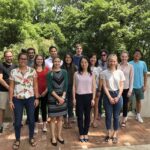
 The Green lab is a family. Here, they celebrate a birthday. Erin Green is at the far left; Jeremy Rubin is second from right in the back row.
 Jeremy Rubin (back row, light gray t-shirt) with the MARC U*STAR 2019 – 2020 cohort in front of the UMBC Interdisciplinary Life Sciences Building.
 Jeremy Rubin (seated) makes smoothies with his Math 390 students.
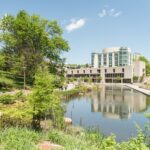
 Jordan Troutman. Photo by Marlayna Demond ’11 for UMBC.
 Dominique Brooks. Photo courtesy of Dominique Brooks.
 Olumide Fagboyegun at his graduation from Anne Arundel Community College. Photo by Larry Canner.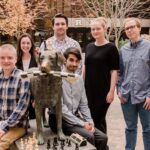







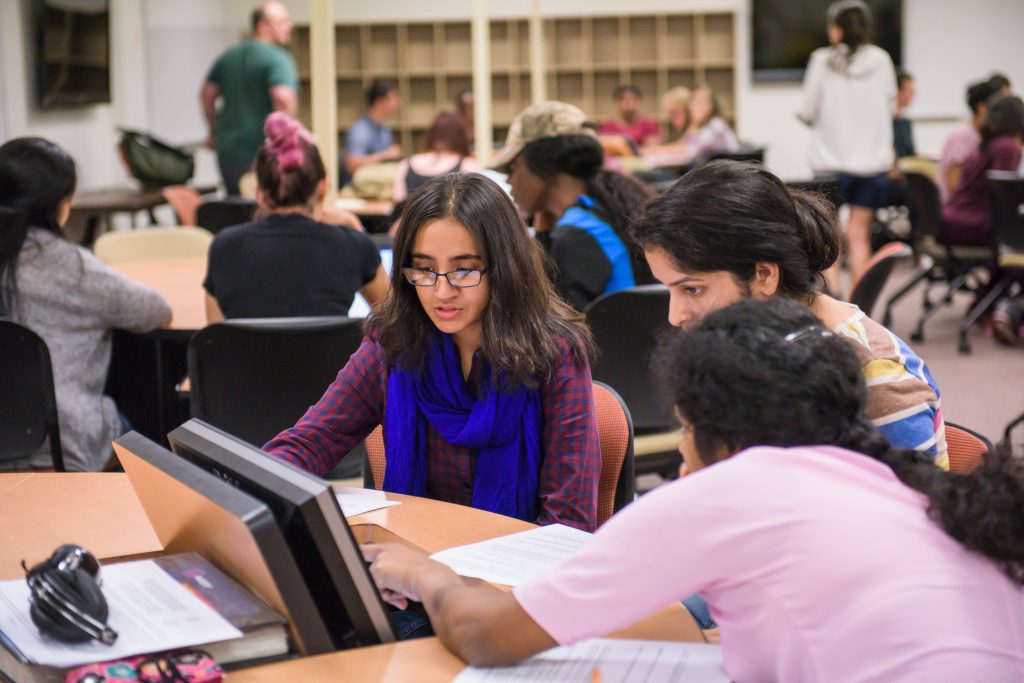 The CNMS Active Science Teaching and Learning Environment (CASTLE) is a classroom designed for team-based instruction. It has tables to facilitate group work, devices set up for screen sharing with large screens at the front and back of the room, and walls covered with whiteboards.
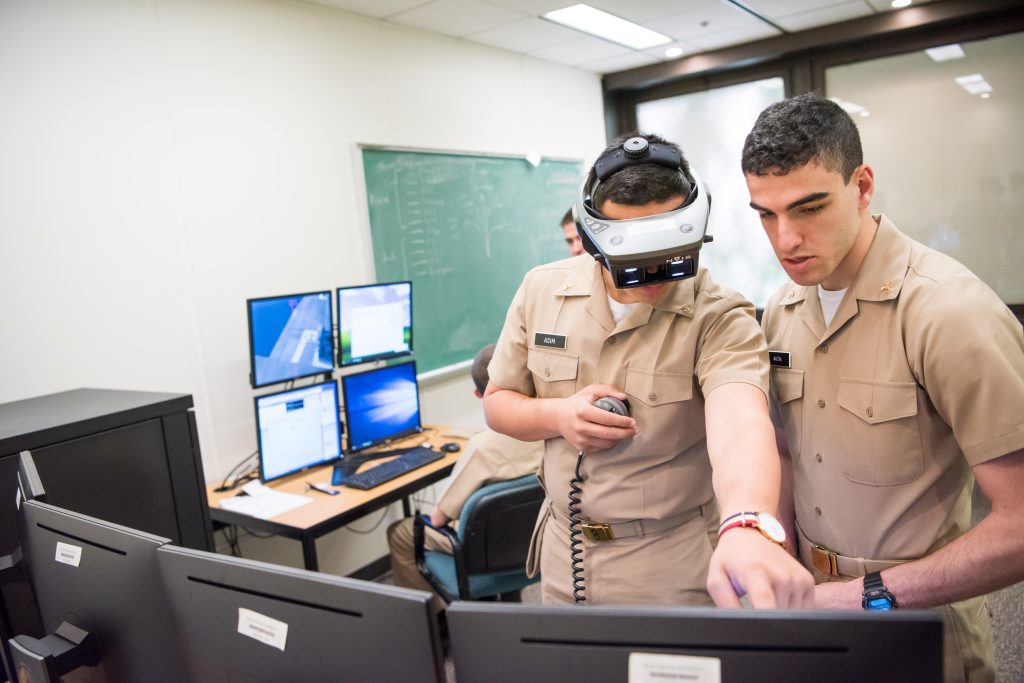 Ghazi Nazzal ’19 (right) assists another midshipman in using UMBC’s state-of-the-art virtual reality naval training system.
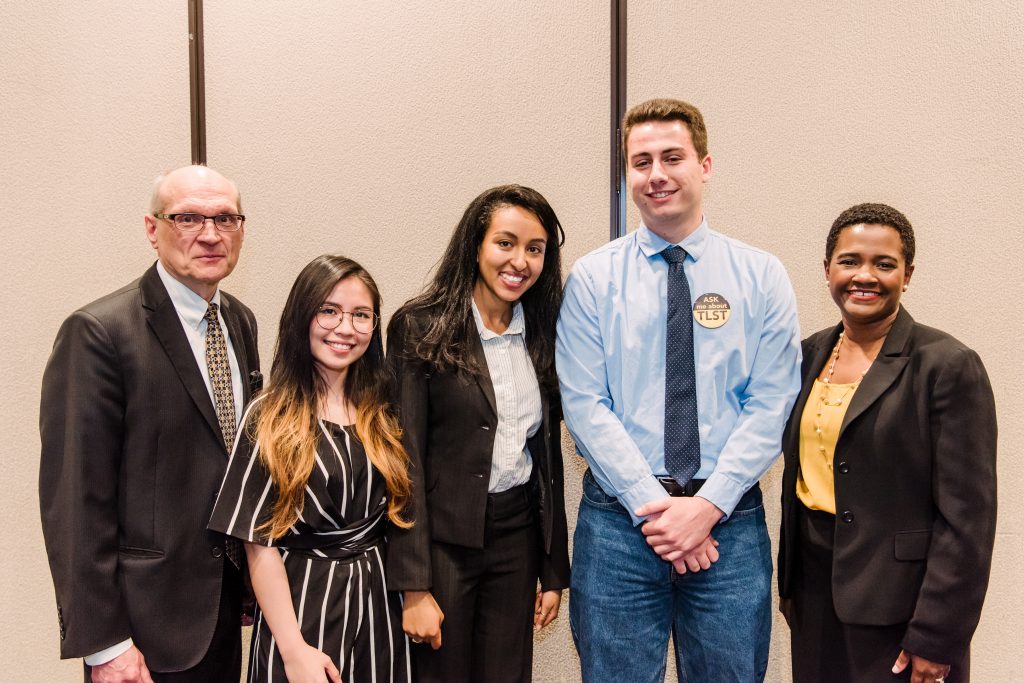 Dean Bill LaCourse (left), Annica Wayman ’99 (right), and some of the first students in the TLST program.
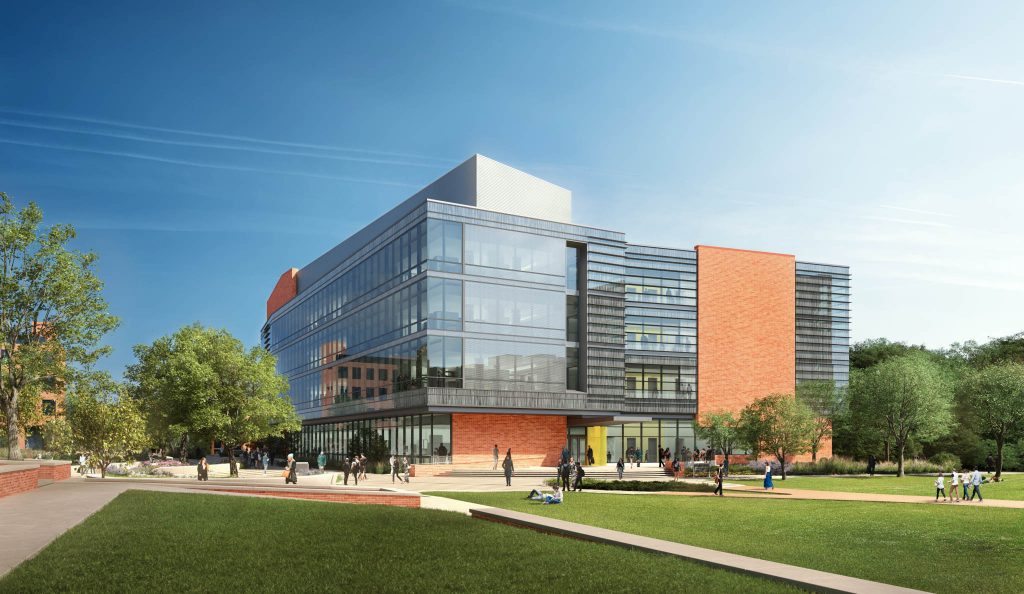 An artist’s rendering of the completed Interdisciplinary Life Sciences Building.
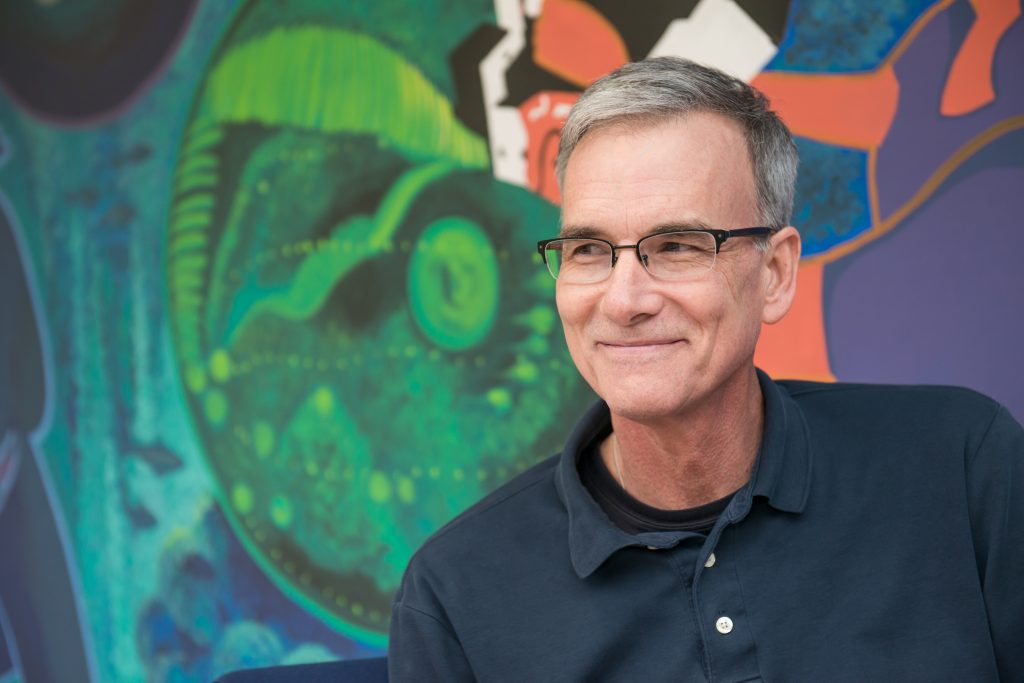 CNMS Associate Dean for Research Chuck Bieberich
 CNMS Associate Dean for Faculty Advancement Kathleen Hoffman
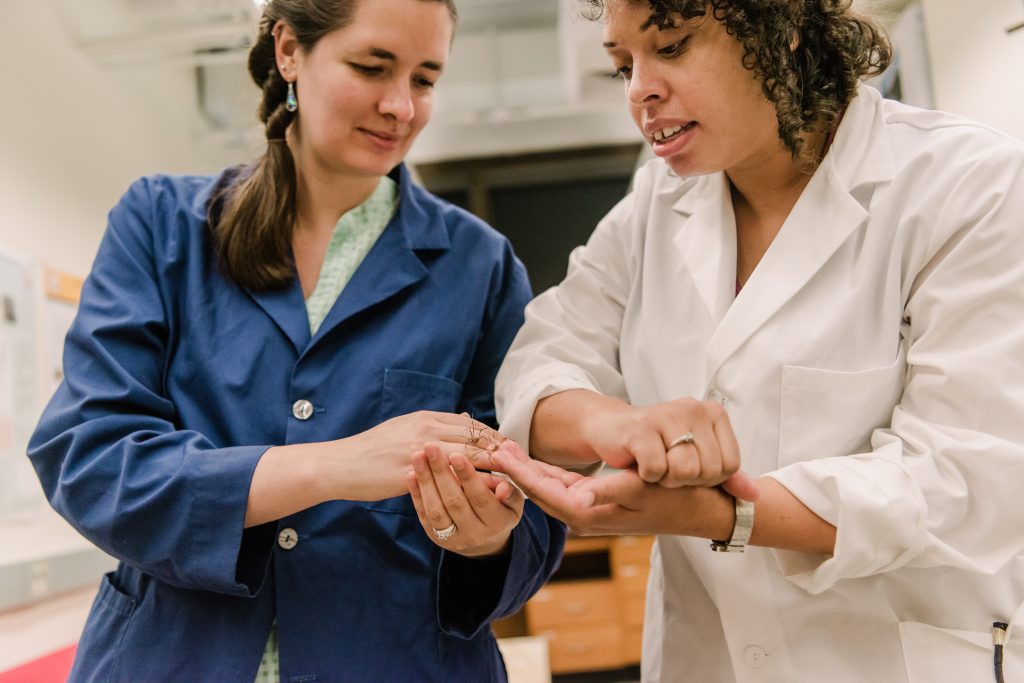 Arachnologist and evolutionary biologist Mercedes Burns (right) and her postdoc, Sarah Stellwagen, transfer a harvestman (commonly known as daddy-long-legs) between them.




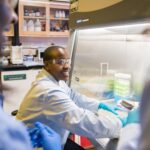


 President Hrabowski congratulates Meyerhoff Scholar and valedictorian Eudorah Vital after she delivers commencement remarks, May 2018.