Humanities Scholar and service leader Morgan Zepp will travel to Lithuania as a Fulbright Scholar

Morgan Zepp
B.A., English; B.A., Global Studies
Minor: Spanish and Writing
Magna Cum Laude
Hometown: Catonsville, Maryland
Plans: Fulbright English Teaching Assistant, Lithuania
UMBC has given me tremendous opportunity to explore my own values and take the initiative to help my community. I have felt like I am able to make change, be valuable, and commit myself to hands-on action, but I have also been given access to an amazing education.
Morgan Zepp grew up in Catonsville, just down the street from UMBC, but she wasn’t always sure UMBC would be the place where she would thrive. Now, as she is ready to receive her degree, she reflects, “Every day I am grateful I came here.”
Once she stepped onto campus four years ago, Zepp immediately got to work. She excelled in UMBC’s Honors College and took on two majors: English and global studies. She entered the university as a Humanities Scholar, and became a writing tutor and writing fellow, as well as editor of Bartleby, UMBC’s creative arts journal for students. Jessica Berman, director of the Dresher Center for the Humanities and professor of English, shares, “I think she incorporates all of best qualities of UMBC students and is someone we’d want to honor.”
 Morgan Zepp exploring ruins in Peru during a semester studying abroad; photo courtesy of Morgan Zepp.
Perhaps the largest responsibility Zepp has taken on is serving as president of UMBC’s Reach Initiative, launched by fellow UMBC student Isabel Geisler ‘17, global studies. The Reach Initiative offers support to high school girls who are interested in STEM, informing them about available opportunities, connecting them with research experiences, and linking them with supportive mentors. Zepp was recognized for her service, leadership, and work to achieve meaningful change through a France-Merrick Scholarship.
While firmly grounded in supporting communities in the Baltimore region, Zepp also has a keen interest in learning about the world, which led her to study abroad in Cuzco, Peru for a semester. Next, she will travel to Lithuania to teach English as a Fulbright Scholar.
Portrait by Marlayna Demond ‘11 for UMBC.
]]>
Morgan Zepp B.A., English; B.A., Global Studies Minor: Spanish and Writing Magna Cum Laude Hometown: Catonsville, Maryland Plans: Fulbright English Teaching Assistant, Lithuania UMBC has...
https://umbc.edu/stories/humanities-scholar-and-service-leader-morgan-zepp-will-travel-to-lithuania-as-a-fulbright-scholar/
https://my3.my.umbc.edu/api/v0/pixel/news/120491/guest@my.umbc.edu/f740fb289e64beae13a57165c4ff411c/api/pixel
cahss
class-of-2018
english
globalstudies
honorscollege
humanitiesscholars
mlli
UMBC News & Magazine
https://my3.my.umbc.edu/groups/umbc-news-magazine
https://assets1-my.umbc.edu/system/shared/avatars/groups/000/001/943/24435aa6207c452e7bc15cc74b42c7bb/xsmall.png?1748556657
https://assets1-my.umbc.edu/system/shared/avatars/groups/000/001/943/24435aa6207c452e7bc15cc74b42c7bb/original.png?1748556657
https://assets2-my.umbc.edu/system/shared/avatars/groups/000/001/943/24435aa6207c452e7bc15cc74b42c7bb/xxlarge.png?1748556657
https://assets2-my.umbc.edu/system/shared/avatars/groups/000/001/943/24435aa6207c452e7bc15cc74b42c7bb/xlarge.png?1748556657
https://assets3-my.umbc.edu/system/shared/avatars/groups/000/001/943/24435aa6207c452e7bc15cc74b42c7bb/large.png?1748556657
https://assets1-my.umbc.edu/system/shared/avatars/groups/000/001/943/24435aa6207c452e7bc15cc74b42c7bb/medium.png?1748556657
https://assets2-my.umbc.edu/system/shared/avatars/groups/000/001/943/24435aa6207c452e7bc15cc74b42c7bb/small.png?1748556657
https://assets1-my.umbc.edu/system/shared/avatars/groups/000/001/943/24435aa6207c452e7bc15cc74b42c7bb/xsmall.png?1748556657
https://assets2-my.umbc.edu/system/shared/avatars/groups/000/001/943/24435aa6207c452e7bc15cc74b42c7bb/xxsmall.png?1748556657
UMBC News & Magazine
0
0
false
Sun, 15 Apr 2018 16:16:57 -0400
American Democracy Project honors UMBC’s Philip Rous for leadership in civic engagement

The Civic Learning and Democratic Engagement Meeting (CLDE17) held in Baltimore this month offered an opportunity for students, faculty, and staff from colleges and universities across the nation to discuss forward-looking community-building and civic engagement strategies. UMBC participants played a major role in organizing and presenting numerous sessions, tours, and special events held during the meeting, which was cosponsored by the American Democracy Project (ADP), The Democracy Commitment, and the student affairs administrators group NASPA. Additionally, UMBC’s Craig Berger, coordinator of student life for campus and civic engagement, served as the chair of the ADP’s own annual meeting, held as part of the larger gathering.
 UMBC community members at the 2017 Civic Learning and Democratic Engagement Meeting.
During that annual meeting, the ADP honored Philip Rous, UMBC’s provost and senior vice president for academic affairs, with the William M. Plater Award for Leadership in Civic Engagement. This meaningful award recognizes the commitment of a provost to advancing civic engagement on their campus.
Michael Vaughan, provost at Weber State University, presented Rous with the award in recognition of his support for creating new courses at UMBC that foster civic engagement and help students rethink their power to envision and enact change in the world. Vaughan mentioned, for example, a mechanical engineering class that partnered with Baltimore City to identify failing water pipes and a class on race, poverty, and gender where UMBC students helped local refugee high school students prepare for the college admissions process.
Upon accepting the award, Rous shared with the crowd a story from his days as a student at Cambridge University, to explain his approach as UMBC provost. He noted that the entrance of Cambridge University is a very large wooden door, which itself contains a smaller wooden door, and said, “As you step through that door, it is as if you step into a completely different world.” On one side of the door he found the world was quiet, beautiful, and secluded, and on the other side it was the opposite, creating the immediate effect of excluding the broader city from the Cambridge experience and isolating the university from the dynamism of the city. As a university leader, Rous reflected, he wanted to challenge such barriers.
President Freeman Hrabowski delivered the opening remarks during the CLDE17 plenary session, discussing the importance of involving everyone on campus in shaping community. “Any institution that is truly about ethos, inquiry, and looking at agency and action will want the entire institution to be involved,” said Hrabowski. “To make a difference in communities, it is so important to have faculty, staff, students, and academic and student affairs all on the same page and understanding that we are in this together.”
 Dr. Hrabowski delivering the opening remarks during the CLDE17 plenary session.
David Hoffman, assistant director of student life for civic agency, facilitated the session “Our Stories Can Light the Way Forward,” focused on collecting and documenting stories from community engagement efforts to empower participants. Collin Sullivan ‘19, information systems; Manisha Vepa ‘19, fine arts; and Berger led the roundtable discussion “Ethos Matters: Creating Empowering Messages and Environments.”
Romy Hübler ‘09, modern languages and linguistics, M.A. ‘11, intercultural communication, and Ph.D. ‘15, language, literacy and culture, who now serves as UMBC’s coordinator of student life for student organizations and involvement, worked with Jason Loviglio, associate professor of media and communication studies, to lead Tell Me What Collective Action Looks Like. This discussion session focused on how educators can help students feel inspired to take action as engaged citizens.
Emily Melluso ‘17, biological sciences, shared her experiences during the session “Cultivating College Campus Leaders: A Story of Collaboration with U.S. Holocaust Memorial Museum and Citizen University.” Corinne Janet, coordinator of student life for leadership; Simon Stacey, interim vice provost and dean of undergraduate education; Berger; Hoffman; and Hübler facilitated the methods-focused session “Congruent Democratic Pedagogies: Teaching Democracy as a Way of Life.”
In addition to kicking off the meeting, UMBC community members also brought it to a productive conclusion, with Hoffman and Vepa presenting for the closing plenary session “The Theory of Our Work, Today and Tomorrow; What’s Next?”
UMBC is a leading member of the ADP, which was founded in 2003 through a collaboration between the American Association of State Colleges and Universities and The New York Times. Through innovative initiatives, ADP member institutions work to provide students with the skills and opportunities needed to put their ideas into action, on and off campus.
Banner image: Dr. Rous accepting the William M. Plater Award for Leadership in Civic Engagement at the 2017 Civic Learning and Democratic Engagement Meeting in Baltimore. All photos by Marlayna Demond ’11 for UMBC.
]]>
The Civic Learning and Democratic Engagement Meeting (CLDE17) held in Baltimore this month offered an opportunity for students, faculty, and staff from colleges and universities across the nation...
https://umbc.edu/stories/american-democracy-project-honors-umbcs-philip-rous-for-leadership-in-civic-engagement/
https://my3.my.umbc.edu/api/v0/pixel/news/120722/guest@my.umbc.edu/7943e094c5760824c0856494d2cb146b/api/pixel
biology
breakingground
community
is
majoraward
mcs
mlli
policy-and-society
UMBC News & Magazine
https://my3.my.umbc.edu/groups/umbc-news-magazine
https://assets1-my.umbc.edu/system/shared/avatars/groups/000/001/943/24435aa6207c452e7bc15cc74b42c7bb/xsmall.png?1748556657
https://assets1-my.umbc.edu/system/shared/avatars/groups/000/001/943/24435aa6207c452e7bc15cc74b42c7bb/original.png?1748556657
https://assets2-my.umbc.edu/system/shared/avatars/groups/000/001/943/24435aa6207c452e7bc15cc74b42c7bb/xxlarge.png?1748556657
https://assets2-my.umbc.edu/system/shared/avatars/groups/000/001/943/24435aa6207c452e7bc15cc74b42c7bb/xlarge.png?1748556657
https://assets3-my.umbc.edu/system/shared/avatars/groups/000/001/943/24435aa6207c452e7bc15cc74b42c7bb/large.png?1748556657
https://assets1-my.umbc.edu/system/shared/avatars/groups/000/001/943/24435aa6207c452e7bc15cc74b42c7bb/medium.png?1748556657
https://assets2-my.umbc.edu/system/shared/avatars/groups/000/001/943/24435aa6207c452e7bc15cc74b42c7bb/small.png?1748556657
https://assets1-my.umbc.edu/system/shared/avatars/groups/000/001/943/24435aa6207c452e7bc15cc74b42c7bb/xsmall.png?1748556657
https://assets2-my.umbc.edu/system/shared/avatars/groups/000/001/943/24435aa6207c452e7bc15cc74b42c7bb/xxsmall.png?1748556657
UMBC News & Magazine
0
0
false
Fri, 30 Jun 2017 14:54:54 -0400
Seven new UMBC grads to pursue Fulbright fellowships around the globe
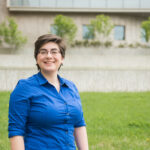
Seven recent UMBC graduates will travel around the globe to teach and conduct research as Fulbright fellows for the 2017 – 18 academic year, setting a new record for the university. The UMBC fellowships range from teaching English in Colombia to using animation to recreate Viking Age artifacts in Norway. All will provide the graduates opportunities for transformative cultural exchanges.
More than 11,000 applicants across the United States apply to the program, sponsored by the U.S. Department of State, each year. The Fulbright U.S. Student Program recommends recipients based on academic or professional achievement and demonstrated leadership potential.
“A record number of UMBC students have been given a life-changing year of research or teaching as part of the Fulbright U.S. Student Program this year,” says Brian Souders, interim director of International Education Services and UMBC’s Fulbright Program advisor. The students “started their journey to the award a year ago, attending information meetings and Fulbright Boot Camps,” he explains. They also worked closely with Souders and faculty advisors to hone their research proposals and participated in on-campus interviews as part of the application process.
 Fulbright recipients Michael Wolfe, William Klotz, and Kirsten Clark chat in the UMBC Commons. Photo by Sarah Hansen ’15 for UMBC.
Kirsten Clark ’17, Spanish, is looking forward to teaching English at EAN University in Bogotá, Colombia. “I have been dreaming of Fulbright since before I transferred to UMBC,” Clark says, “so I am beyond excited to finally take this next step in my career.”
Clark’s work with UMBC’s Shriver Center and English Language Institute have prepared her to take this next step. “I have not only vastly increased my Spanish proficiency, but I have been challenged to question my own assumptions about language and culture,” she says, “ultimately broadening my perspective to the diversity and complexity of the Spanish-speaking world.”
After returning from Colombia, Clark plans to pursue a master’s in Teaching English to Speakers of Other Languages so she can effectively “teach in a bilingual program and advocate for language and education access for immigrant youth in the D.C./Maryland area.”
Michael Wolfe ’17, physics, expects his research experience at RWTH Aachen University in Germany to bring out the best in his work as a scientist. “In my opinion, science thrives when faced with a multitude of interpretations and explanations,” he says. “Effectively exchanging ideas with scientists on an international scale is an essential skill the Fulbright Program will equip me with as a future physicist.”
Wolfe also shares, “The diversity of UMBC’s student body and faculty provided me with a unique perspective on the importance of intercultural exchange in the scientific community.”
William Klotz ’14, MLLI (Spanish/German), M.A.T. ’17, will teach English at the Secretaría de Educación Pública in Mexico during his Fulbright experience. “I plan on working in education as a language teacher,” Klotz says, “and the Fulbright will further prepare me in my own language education and give me valuable classroom experience outside of the U.S.”
Klotz thanks his UMBC mentors for pushing him to pursue this opportunity, saying they “are the ones who helped me get to where I am today.” Klotz is also featured in among UMBC’s exceptional graduates in the Class of 2017.
 Fulbright recipient William Klotz. Photo by Marlayna Demond ’11 for UMBC.
Jacqueline Wojcik ’17, visual arts, will combine her interests in digital animation and history in a unique research project in Oslo, Norway, creating 3D digital models of Viking Age ship burials. “This project aims to connect people with history through technology, and will explore the intersection of games, learning, and archaeological visualization,” Wojcik shares.
“UMBC fostered an interdisciplinary approach to learning, allowing me to develop the skill set to combine my love of animation, history, and programming,” says Wojcik, who was also highlighted in UMBC’s Class of 2017 feature. She anticipates her Fulbright experience will nurture these passions and support her future goal of developing a game exploring gender roles in Viking society.
Aaron Kennet ’16, political science, returned to the U.S. from a year of teaching in Russia driven to learn more, and through his Fulbright will travel back to Eastern Europe to teach English in Ukraine. He is thankful for the opportunity “to explore the territories of the Former Soviet Union, and enhance mutual understanding between the United States and Ukraine.”
Kennet is also grateful for the encouragement of UMBC mentors. Without these mentors, he explains, “I wouldn’t have had the support or confidence to move forward with my ambition of exploring and understanding the cultural nuances of Eurasia.”
Jacob Hippert ’17, cultural anthropology, will teach English in Malaysia, and Brian Shouse ’17, political science, will teach English in Bulgaria for their Fulbright fellowships. Kritika Chugh ’17, biological sciences, was selected for a fellowship in the Czech Republic, but was unable to accept the invitation. Justine Lottermoser ’17, biochemistry; Laura Riddering, Ph.D. candidate in geography and environmental systems; and Christina Smith ’15, global studies, were selected as alternates for the program.
The Fulbright Program is the flagship international educational exchange program sponsored by the U.S. government and is designed to increase mutual understanding among people of different nations. The program operates in more than 160 nations and receives support from governments, host institutions, corporations, and foundations across the globe. Participating in Fulbright fellowships will extend these emerging scholars’ interdisciplinary, culturally diverse experiences and allow them, as Souders says, to “go on to serve as cultural ambassadors of the United States.”
Banner image: Jacqueline Wojcik ’17; photo by Marlayna Demond ’11 for UMBC.
]]>
Seven recent UMBC graduates will travel around the globe to teach and conduct research as Fulbright fellows for the 2017 – 18 academic year, setting a new record for the university. The UMBC...
https://umbc.edu/stories/seven-new-umbc-grads-to-pursue-fulbright-fellowships-around-the-globe/
https://my3.my.umbc.edu/api/v0/pixel/news/120735/guest@my.umbc.edu/ec7a4747236fefa2c8637302a929231f/api/pixel
arts-and-culture
cahss
chembiochem
cnms
community
education
ges
globalstudies
international
mlli
physics
politicalscience
saph
shrivercenter
visualarts
UMBC News & Magazine
https://my3.my.umbc.edu/groups/umbc-news-magazine
https://assets1-my.umbc.edu/system/shared/avatars/groups/000/001/943/24435aa6207c452e7bc15cc74b42c7bb/xsmall.png?1748556657
https://assets1-my.umbc.edu/system/shared/avatars/groups/000/001/943/24435aa6207c452e7bc15cc74b42c7bb/original.png?1748556657
https://assets2-my.umbc.edu/system/shared/avatars/groups/000/001/943/24435aa6207c452e7bc15cc74b42c7bb/xxlarge.png?1748556657
https://assets2-my.umbc.edu/system/shared/avatars/groups/000/001/943/24435aa6207c452e7bc15cc74b42c7bb/xlarge.png?1748556657
https://assets3-my.umbc.edu/system/shared/avatars/groups/000/001/943/24435aa6207c452e7bc15cc74b42c7bb/large.png?1748556657
https://assets1-my.umbc.edu/system/shared/avatars/groups/000/001/943/24435aa6207c452e7bc15cc74b42c7bb/medium.png?1748556657
https://assets2-my.umbc.edu/system/shared/avatars/groups/000/001/943/24435aa6207c452e7bc15cc74b42c7bb/small.png?1748556657
https://assets1-my.umbc.edu/system/shared/avatars/groups/000/001/943/24435aa6207c452e7bc15cc74b42c7bb/xsmall.png?1748556657
https://assets2-my.umbc.edu/system/shared/avatars/groups/000/001/943/24435aa6207c452e7bc15cc74b42c7bb/xxsmall.png?1748556657
UMBC News & Magazine
0
0
false
Mon, 12 Jun 2017 16:42:34 -0400
Austin Gabel to continue developmental biology research through M.D./Ph.D.
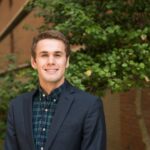
Austin Gabel
B.S. Biological Sciences
Summa Cum Laude
Hometown: Clarksville, Maryland
Plans: M.D./Ph.D., University of Washington
Dr. Brewster and other lab members have helped encourage and teach me to become a confident scientist over the past four years, and my minors in Spanish and sociology helped refine my interests to focus on links between basic biology and social determinants of health.
As a Meyerhoff, MARC U*STAR, and HHMI Scholar, Austin Gabel’s time at UMBC has been highly research-driven. He has worked in Rachel Brewster’s developmental biology lab since his freshman year, seeking to learn more about how zebrafish embryos can survive in low-oxygen environments. This work has numerous potential applications, from organ transplant technology to stroke and heart attack treatment.
 An image of a zebrafish embryo Austin Gabel produced as part of his research in Rachel Brewster’s lab.
“One thing I enjoy about the Brewster lab is that I’m in charge of my own projects,” Gabel shares. “I really like this work and want to continue with research along these lines.” He plans to do that as he pursues combined M.D./Ph.D. degrees at the University of Washington. He hopes to eventually apply his research in clinical settings, to see directly how it benefits patients.
In addition to working in Brewster’s lab, Gable gained research experience at Johns Hopkins University. He also served as president of UMBC’s Food Recovery Network, a student organization that seeks to reduce food waste by recovering surplus perishable food and donating it to people in need.
Portrait by Marlayna Demond ’11 for UMBC.
]]>
Austin Gabel B.S. Biological Sciences Summa Cum Laude Hometown: Clarksville, Maryland Plans: M.D./Ph.D., University of Washington Dr. Brewster and other lab members have helped encourage...
https://umbc.edu/stories/austin-gabel/
https://my3.my.umbc.edu/api/v0/pixel/news/120778/guest@my.umbc.edu/4ff599b27c14885a7daa4848cca7b7c7/api/pixel
biology
cahss
class-of-2017
cnms
marcustar
meyerhoffscholars
mlli
saph
science-and-technology
undergradresearch
UMBC News & Magazine
https://my3.my.umbc.edu/groups/umbc-news-magazine
https://assets1-my.umbc.edu/system/shared/avatars/groups/000/001/943/24435aa6207c452e7bc15cc74b42c7bb/xsmall.png?1748556657
https://assets1-my.umbc.edu/system/shared/avatars/groups/000/001/943/24435aa6207c452e7bc15cc74b42c7bb/original.png?1748556657
https://assets2-my.umbc.edu/system/shared/avatars/groups/000/001/943/24435aa6207c452e7bc15cc74b42c7bb/xxlarge.png?1748556657
https://assets2-my.umbc.edu/system/shared/avatars/groups/000/001/943/24435aa6207c452e7bc15cc74b42c7bb/xlarge.png?1748556657
https://assets3-my.umbc.edu/system/shared/avatars/groups/000/001/943/24435aa6207c452e7bc15cc74b42c7bb/large.png?1748556657
https://assets1-my.umbc.edu/system/shared/avatars/groups/000/001/943/24435aa6207c452e7bc15cc74b42c7bb/medium.png?1748556657
https://assets2-my.umbc.edu/system/shared/avatars/groups/000/001/943/24435aa6207c452e7bc15cc74b42c7bb/small.png?1748556657
https://assets1-my.umbc.edu/system/shared/avatars/groups/000/001/943/24435aa6207c452e7bc15cc74b42c7bb/xsmall.png?1748556657
https://assets2-my.umbc.edu/system/shared/avatars/groups/000/001/943/24435aa6207c452e7bc15cc74b42c7bb/xxsmall.png?1748556657
UMBC News & Magazine
0
0
false
Sat, 13 May 2017 18:36:18 -0400
William Klotz, double alumnus of UMBC, earns Fulbright to teach in Mexico
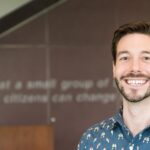
William Klotz
M.A.T., Foreign Language Education
Magna Cum Laude
Hometown: Baltimore, Maryland
Plans: Teaching in Mexico, Fulbright Program
My “weaknesses” of coming from poverty, having a single mother, having a disability, and being a member of the LGBTQIA community have and always will be my strengths. UMBC helped me realize that.
Coming from a single parent family living under the poverty line, William Klotz often felt like he “wasn’t meant to be in college and…couldn’t succeed,” but at UMBC Klotz came to see his personal experiences and identity as strengths, drawing from them a sense of resilience and drive, and recognizing the value of his unique perspective. Now, Klotz—who earned his bachelor’s degree from UMBC in 2014—is not only graduating with an advanced degree, but also planning to teach abroad through the prestigious Fulbright program.
 William Klotz says he came to UMBC without a clear path, but is “leaving ready to take on anything.” Photos courtesy of Klotz.
In his years at UMBC, Klotz has excelled as a student leader as well as in his studies. He has taught Introduction to an Honors University seminars for freshmen, received research grants, choreographed a major dance piece, and served as a STRiVE student leadership coach.
In addition to being a Fulbright-Garcia Robles finalist, he is a Homer and Martha Gudelsky Scholar, completed a summer research fellowship in comparative literature at UC-Irvine, and received an Alliance for Language Learning and Exchange grant in Chinese at Washington University in St. Louis.
After graduation, Klotz plans to move to Mexico to teach for the Secretaría de Educación Pública for the 2017-18 academic year.
Portrait by Marlayna Demond ’11 for UMBC.
]]>
William Klotz M.A.T., Foreign Language Education Magna Cum Laude Hometown: Baltimore, Maryland Plans: Teaching in Mexico, Fulbright Program My “weaknesses” of coming from poverty, having a...
https://umbc.edu/stories/william-klotz/
https://my3.my.umbc.edu/api/v0/pixel/news/120789/guest@my.umbc.edu/85546ffcc40c96c89801dad7e1c7f8e4/api/pixel
alumni
arts-and-culture
cahss
class-of-2017
education
mlli
UMBC News & Magazine
https://my3.my.umbc.edu/groups/umbc-news-magazine
https://assets1-my.umbc.edu/system/shared/avatars/groups/000/001/943/24435aa6207c452e7bc15cc74b42c7bb/xsmall.png?1748556657
https://assets1-my.umbc.edu/system/shared/avatars/groups/000/001/943/24435aa6207c452e7bc15cc74b42c7bb/original.png?1748556657
https://assets2-my.umbc.edu/system/shared/avatars/groups/000/001/943/24435aa6207c452e7bc15cc74b42c7bb/xxlarge.png?1748556657
https://assets2-my.umbc.edu/system/shared/avatars/groups/000/001/943/24435aa6207c452e7bc15cc74b42c7bb/xlarge.png?1748556657
https://assets3-my.umbc.edu/system/shared/avatars/groups/000/001/943/24435aa6207c452e7bc15cc74b42c7bb/large.png?1748556657
https://assets1-my.umbc.edu/system/shared/avatars/groups/000/001/943/24435aa6207c452e7bc15cc74b42c7bb/medium.png?1748556657
https://assets2-my.umbc.edu/system/shared/avatars/groups/000/001/943/24435aa6207c452e7bc15cc74b42c7bb/small.png?1748556657
https://assets1-my.umbc.edu/system/shared/avatars/groups/000/001/943/24435aa6207c452e7bc15cc74b42c7bb/xsmall.png?1748556657
https://assets2-my.umbc.edu/system/shared/avatars/groups/000/001/943/24435aa6207c452e7bc15cc74b42c7bb/xxsmall.png?1748556657
UMBC News & Magazine
0
0
false
Sat, 13 May 2017 12:37:44 -0400
START and SFF awards support UMBC faculty pursuing research in new directions

The Office of the Vice President for Research has awarded Strategic Awards for Research Transitions (START) and Summer Faculty Fellowship (SFF) awards to 24 UMBC faculty representing a broad range of departments across all UMBC colleges. START awards offer up to $25,000, beginning in July 2017, to faculty who wish to pursue new areas of research and compete more effectively for external funding and support. SFF awards offer up to $6,000 to non-tenured, tenure-track faculty pursuing research and projects during the summer.
Chris Swan, professor of geography and environmental systems, was awarded START funding to study the role of plant diversity in ecosystem services on urban vacant land. He is interested in understanding which native plants existed in Baltimore before modern seeding practices in the City began, and how plants native to Maryland can thrive in urban settings.
“Resources from the START award will go a long way in supporting our research into answering questions about how best to green vacant land in Baltimore City in order to meet sustainability action goals,” says Swan.
 Michael Lane.
Michael Lane, assistant professor of ancient studies, will use START funding to study Mycenaean Northeast Kopaïs stratigraphy, adding to a body of research on the chronology of mainland Greece, the Greek islands, and the west coast of Turkey during the Late Bronze Age in the Aegean period. Lane will collaborate with the Hellenic Ministry of Culture and Sports in Greece.
Aaron Smith, assistant professor of chemistry and biochemistry, received START and SFF funding to study how infectious bacteria gain iron, which is essential for the organisms to grow in the human body. His research may have impacts for people with gingivitis and cystic fibrosis.
“The UMBC START and SFF awards are invaluable to myself and my laboratory, as it provides us with funding for additional lab equipment necessary to decipher the atomic-level details of iron-transport proteins that are utilized by pathogenic bacteria to establish infection within human hosts,” Smith explains. He adds, “the return on investment to UMBC of this award should ultimately prove high, as the START funding mechanism will allow us to generate a critical mass of results necessary to bring in greater external funding to support our research program for the long term.”
Ed Larkey, professor of modern languages, linguistics and intercultural communication, was awarded START funding to study the transcultural orbit of Israeli television through the adaptation of a comedy series. Larkey will use a combination of quantitative and qualitative data to study that ways heterosexual couples’ private interactions are depicted in modern Israeli society.
Corrie Parks, assistant professor of visual arts, will use START funding to create Black Butterfly, a multi-media work of art that will help viewers visualize the impact violent crime can have on communities. She will use statistics from a Baltimore City homicide map from 2017, and develop an animated portrait of a single grain of sand to represent each point on the map.
 Sarah Shin
Sarah Shin, professor of education and special assistant to the provost for academic initiatives, was awarded START funding to study student and volunteer success through an intergenerational partnership. Volunteers from the Charlestown Retirement Community will tutor students at Lakeland Elementary/Middle School who are struggling with learning English. Shin will assess whether the students show gains in their literacy skills, and will examine what the tutors gain through the partnership.
Deepa Madan, assistant professor of mechanical engineering, will use START and SFF funding to design and produce “a flexible generator that runs on waste heat and generates enough power to replace batteries used in wireless sensor networks.” She explains that the funding will allow her to enhance the properties of the thermoelectric materials.
“An important objective of my current research is to generate necessary data to demonstrate my readiness for undertaking externally funded major projects,” says Madan. “With the support of START and SFF awards, it now appears realistic that I will start writing these grant applications as soon as this summer.”
Brian Kaufman, assistant professor of music, received START funding to conduct research on and release recordings of three pieces composed by newer artists in wind ensemble music. Kaufman will work with each composer, a recording team, and the UMBC Wind Ensemble to complete the project.
Tom Cronin, professor of biological sciences, will study the brains of mantis shrimp, known for their highly complex sense of vision and unique behaviors.
Peggy Re, associate professor of visual arts, will use START funding to support a portion of “A Designed Life,” an exhibition that re-creates and interprets three Cold War-era traveling displays of
contemporary American designed and manufactured goods that were commissioned by the U.S. Department of State in the early 1950s. The displays were presented in West German venues as part of a propaganda campaign to showcase the superior lifestyle choices, built environments and affluence of the United States.
associate professor of visual arts, will use START funding to create “A Designed Life,” an exhibit made out of containers and packaging materials. The exhibit, which will open at UMBC’s Center for Art Design and Visual Culture in October 2018, will show the possible political connections to people and their activities, experiences, needs, desires and attitudes.
Bedrich Sousedik, assistant professor of mathematics and statistics, will use SFF funding to develop algorithms to address problems in physical sciences and engineering that can be modeled by partial differential equations. Sousedik works to develop new methods that use computers to solve the equations using computers.
Christopher Tong, assistant professor of modern languages, linguistics and intercultural communication, received SFF funding for the project “Torrents of Revolution: The Writing of Environmental Disasters in Modern China, 1930-1949.” Tong will study highly complex environmental disasters in early 20th-century China through literature, environmental history, and disaster studies.
 Keisha Allen
Keisha Allen, assistant professor of education, received SFF funding to examine the racial literacy of teacher candidates and high school youth. She will design curricula and study how storytelling can support the racial literacy of teacher candidates.
Daniel Lobo, assistant professor of biological sciences, will use SFF funding to create computational framework to improve the production of biofuels and chemicals. The optimized design will be part of a comprehensive pipeline for biofuel production using bacterial and yeast species.
Greg Szeto, assistant professor of chemical, biochemical and environmental engineering, was awarded SFF funding to develop self-engineering drugs that can quickly break into the outer surface of immune cells to enhance the function of these cells in patients who are using immunotherapy to combat cancer.
Jane Arnold Lincove, associate professor of public policy, will use SFF funding to study how charter schools affect student achievement and teacher retention rates in Maryland. This will be the first study of charter schools in Maryland, where traditional public schools with unionized faculty and charter schools coexist by state law.
Jennifer Callaghan-Koru, assistant professor of health administration and policy, will study the validity of client exit interviews to assess programs. The SFF funding will allow Callaghan-Koru to develop methodologies for monitoring programs.
Jules Rosskam, assistant professor of visual arts, will use SFF funding to create “Paternal Rites,” an essay film that explores the unique challenges facing American families through personal narrative. The film will explore addiction, abuse, and mental illness through some of Rosskam’s historical family narratives and will incorporate the context of the interstate highway system as a factor impacting family and community structure and access to resources.
Maria Bernedo Del Carpio, assistant professor of economics, will use SFF funding to study the long-term effects of water conserving technologies.
 Mejdulene Shomali
Mejdulene Shomali, assistant professor of gender and women’s studies, was awarded SFF funding to study how femininity and sexuality is represented in Arab and Arab American literature and art. She is interested in how Arab and Arab American writers and artists are struggling against racism and Orientalism to represent Arab cultures in their work.
Naghmeh Karimi, assistant professor of computer science and electrical engineering, was awarded SFF funding to study the stability and aging resiliency of physical systems that can be evaluated but are challenging to predict.
Nianshen Song, assistant professor history, will use SFF funding to continue researching the histories of the Sino-Korean boundary and the Korean diaspora community in China for his book project, “Transforming Frontier in East Asia: the Tumen River Demarcation, 1880-1919.”
Nkiru Nnawulezi, assistant professor of psychology, was awarded SFF funding to research the health and resource needs of intimate partner violence survivors whose partners are in abuser intervention programs.
Shimei Pan, assistant professor of information systems, received SFF funding to study self control and impulsiveness of people by using social media analytics to monitor their behavior on social media, such as Facebook posts and likes.
For more information about UMBC’s START and SFF programs, visit the UMBC Research website.
Banner image: Daniel Lobo. All photos by Marlayna Demond ’11 for UMBC.
]]>
The Office of the Vice President for Research has awarded Strategic Awards for Research Transitions (START) and Summer Faculty Fellowship (SFF) awards to 24 UMBC faculty representing a broad range...
https://umbc.edu/stories/start-and-sff-awards-support-umbc-faculty-pursuing-research-in-new-directions/
https://my3.my.umbc.edu/api/v0/pixel/news/120818/guest@my.umbc.edu/121cf56ac98ed03b9ca865a3eff3be82/api/pixel
ancientstudies
arts-and-culture
biology
cahss
cbee
chembiochem
cnms
coeit
csee
economics
education
ges
gwst
is
mathstat
meche
mlli
music
policy-and-society
psychology
publicpolicy
research
saph
science-and-technology
visualarts
UMBC News & Magazine
https://my3.my.umbc.edu/groups/umbc-news-magazine
https://assets1-my.umbc.edu/system/shared/avatars/groups/000/001/943/24435aa6207c452e7bc15cc74b42c7bb/xsmall.png?1748556657
https://assets1-my.umbc.edu/system/shared/avatars/groups/000/001/943/24435aa6207c452e7bc15cc74b42c7bb/original.png?1748556657
https://assets2-my.umbc.edu/system/shared/avatars/groups/000/001/943/24435aa6207c452e7bc15cc74b42c7bb/xxlarge.png?1748556657
https://assets2-my.umbc.edu/system/shared/avatars/groups/000/001/943/24435aa6207c452e7bc15cc74b42c7bb/xlarge.png?1748556657
https://assets3-my.umbc.edu/system/shared/avatars/groups/000/001/943/24435aa6207c452e7bc15cc74b42c7bb/large.png?1748556657
https://assets1-my.umbc.edu/system/shared/avatars/groups/000/001/943/24435aa6207c452e7bc15cc74b42c7bb/medium.png?1748556657
https://assets2-my.umbc.edu/system/shared/avatars/groups/000/001/943/24435aa6207c452e7bc15cc74b42c7bb/small.png?1748556657
https://assets1-my.umbc.edu/system/shared/avatars/groups/000/001/943/24435aa6207c452e7bc15cc74b42c7bb/xsmall.png?1748556657
https://assets2-my.umbc.edu/system/shared/avatars/groups/000/001/943/24435aa6207c452e7bc15cc74b42c7bb/xxsmall.png?1748556657
UMBC News & Magazine
0
0
false
Fri, 28 Apr 2017 15:43:26 -0400
First-ever Grand Challenge Symposium focuses on value of interdisciplinary collaboration

The Grand Challenge Scholars Program (GCSP) hosted its inaugural symposium in February, featuring lightning talks by faculty who described their research in relation to the program’s 14 global challenge topics in just two minutes. The program highlights the need to combine different perspectives and expertise to solve the world’s most intractable problems, and faculty from all three UMBC colleges reflected on the range of disciplines that play a role in their work.
Collaboration across disciplines is a core lesson for students in the GCSP, now closing in on the end of its first year. Scholars are increasingly appreciating, in a very tangible way, how essential it is to have diverse perspectives around the table to tackle a shared challenge, says Marie desJardins, COEIT associate dean and professor of computer science, and director of UMBC’s Grand Challenge Scholars Program.
“UMBC’s Grand Challenge Scholars Program is open to undergraduate students across all colleges and departments on campus, but sometimes knowing how various disciplines can contribute to the challenges can be difficult to imagine,” explains desJardins. The faculty presentations, combined with the students’ own teamwork throughout the semester, offered scholars a clearer understanding of how interdisciplinary project-based work actually functions.
Nilanjan Banerjee, associate professor of computer science and electrical engineering (CSEE), spoke about his research on developing sustainable homes powered by solar energy. He explained how he hopes to increase demand for solar energy by developing a simple, affordable sensor system for homes that changes human behavior related to energy use. Also relating to energy, Carlos Romero-Talamas, assistant professor of mechanical engineering, shared how his lab is working to create renewable energy from fusion in response to the high global consumption of electricity from sources that pollute the environment. His research, using rotating mirrors, requires collaboration with physicists and other scientists.
Lee Blaney, assistant professor of chemical, biochemical and environmental engineering (CBEE), discussed water quality issues around the world, and how the UMBC chapter of Engineers Without Borders has helped develop infrastructure to ensure clean water is accessible. He also discussed his own water safety research, which focuses on contaminants of emerging concern, including pharmaceuticals and other health and beauty products.
Two other faculty focused on environmental issues interconnected with public policy discussions. David Lansing, associate professor of geography and environmental systems (GES), shared his soil research, which encourages farmers to create buffer zones to prevent excess nitrogen from running off the land and into waterways. This work is made more complex by local variations in soil and water protection guidelines. Maggie Holland, assistant professor of GES, works to protect Latin American forests by asking how local and national policies and practices encourage or prevent deforestation. Advancing this work, Holland says requires policymakers, social scientists, engineers, and conservation biologists to closely collaborate.
 Attendees at the Grand Challenge Scholars Program Symposium.
Several faculty focused on medical research, including Erin Lavik, professor of CBEE, who shared her work developing targeted treatments for traumatic brain injuries. Helena Mentis, assistant professor of information systems, described how physicians and surgeons in the operating room can use wearable telemedicine devices to interact with remote colleagues while ensuring a safe, sterile operating environment. Tim Oates, professor of CSEE, explained how his work enables him to learn about the building blocks of the brain through reverse engineering. Gymama Slaughter, associate professor of computer science and electrical engineering, spoke about developing novel technologies to monitor blood glucose internally without using batteries that require replacement.
Seung-Jun Kim, assistant professor of CSEE explained how urban power grids could be improved through machine learning, and how new sensors and large-scale analysis of power grid data could help detect threats and prevent cyberattacks. Nagmeh Karimi, assistant professor of CSEE, discussed how circuits in computers age just as people do, and that using trusted hardware and protecting hardware as it ages are important ways to protect technology from malicious threats and attacks.
Simon Stacey, interim vice provost and dean of undergraduate education, discussed nuclear weapons and three core factors that protect against nuclear proliferation: controlling the weapons themselves, controlling the materials needed to create nuclear weapons, and controlling transport of the weapons. Work in this arena requires people with a broad range of expertise across science, engineering, public policy, and international relations fields.
From the arts and humanities, Lee Boot, research associate professor of visual arts and director of the Imaging Research Center, spoke about using virtual reality technologies as research tools, and Omar Ka, associate professor of modern languages, linguistics and intercultural communication, discussed the complexity of studying language, how the mind processes it, and its role in society, and how the mind process studies language as an element of society and as a complex structure. He said that collaboration in this area is important to understand how the mind works and processes language.
desJardins urged the students in the audience to encourage their friends, no matter what major they’re in, to get involved with the program. “We really want broad diversity, to bring in people with different backgrounds,” she said. “If you’re not sure if you belong in this program, trust me, you belong in this program, because it is created by the students who are in it.”
Photos by Marlayna Demond ’11 for UMBC. The Grand Challenge Scholars Program Symposium presentations are available on YouTube.
]]>
The Grand Challenge Scholars Program (GCSP) hosted its inaugural symposium in February, featuring lightning talks by faculty who described their research in relation to the program’s 14 global...
https://umbc.edu/stories/first-ever-grand-challenge-symposium-focuses-on-value-of-interdisciplinary-collaboration/
https://my3.my.umbc.edu/api/v0/pixel/news/120850/guest@my.umbc.edu/a3dbe107018cfca5c5f16ba6ae04e2c1/api/pixel
cahss
cbee
coeit
csee
ges
is
meche
mlli
policy-and-society
science-and-technology
visualarts
UMBC News & Magazine
https://my3.my.umbc.edu/groups/umbc-news-magazine
https://assets1-my.umbc.edu/system/shared/avatars/groups/000/001/943/24435aa6207c452e7bc15cc74b42c7bb/xsmall.png?1748556657
https://assets1-my.umbc.edu/system/shared/avatars/groups/000/001/943/24435aa6207c452e7bc15cc74b42c7bb/original.png?1748556657
https://assets2-my.umbc.edu/system/shared/avatars/groups/000/001/943/24435aa6207c452e7bc15cc74b42c7bb/xxlarge.png?1748556657
https://assets2-my.umbc.edu/system/shared/avatars/groups/000/001/943/24435aa6207c452e7bc15cc74b42c7bb/xlarge.png?1748556657
https://assets3-my.umbc.edu/system/shared/avatars/groups/000/001/943/24435aa6207c452e7bc15cc74b42c7bb/large.png?1748556657
https://assets1-my.umbc.edu/system/shared/avatars/groups/000/001/943/24435aa6207c452e7bc15cc74b42c7bb/medium.png?1748556657
https://assets2-my.umbc.edu/system/shared/avatars/groups/000/001/943/24435aa6207c452e7bc15cc74b42c7bb/small.png?1748556657
https://assets1-my.umbc.edu/system/shared/avatars/groups/000/001/943/24435aa6207c452e7bc15cc74b42c7bb/xsmall.png?1748556657
https://assets2-my.umbc.edu/system/shared/avatars/groups/000/001/943/24435aa6207c452e7bc15cc74b42c7bb/xxsmall.png?1748556657
UMBC News & Magazine
0
0
false
Tue, 04 Apr 2017 14:27:59 -0400
New app Valuable Voices builds awareness of linguistic and cultural diversity in the classroom

A new iPhone app developed at UMBC is poised to change how students and teachers think about language in the classroom. Valuable Voices provides 12 ready-to-implement exercises for students and teachers to build linguistic awareness and English language skills.
Christine Mallinson, an associate professor of language, literacy, and culture (LLC), created the app with her longtime collaborator Anne Charity Hudley, an associate professor of linguistics at William & Mary. Aureanna Hakenson ’15, modern languages, linguistics, and intercultural communication, provided development assistance.

The app provides monthly exercises that can be adapted for elementary, middle, and high school classrooms, as well as higher ed, in a range of content areas and disciplines. Examples of exercises include analyzing the language of poetry, Shakespearean innovations, and linguistic heritage. Teachers can follow instructions for how to incorporate each exercise into their lesson plans.
Valuable Voices also highlights the importance of linguistic diversity, showing teachers and students alike the rich variation within even a single language, such as English. From word choice to sentence structure, different populations may use the same language in different ways, reflecting different social networks, regions, age groups, life experiences, and the ongoing evolution of language.
“Students don’t leave their language patterns at the door when they get to their classroom—any classroom, from English to biology,” says Mallinson. “This project really exemplifies applied research. With this app, teachers have tools at their disposal and can incorporate their own language background and those of their students. As a result, students are more engaged, and this is really applicable across all fields.”
Hakenson, who minored in computer science and now works as a cyber threat and intelligence analyst, built the app to share the positive impact linguistic awarness can have on students and educators.
“The goal was to make something that would be both interesting and easy to use,” explains Hakenson. “I also know that linguistics isn’t a very widely understood discipline, so being able to share that with students and teachers and possibly help to inspire a student to take in interest in linguistics is really exciting.”
Mallinson has showcased Valuable Voices on the national stage and its visibility continues to grow. She presented the app at the “Language and Educational Justice” symposium sponsored by the Linguistic Society for America and the Society for Linguistic Anthropology, held in January in Austin, Texas. On February 19, Valuable Voices will be featured at the American Association for the Advancement of Science (AAAS) annual meeting in Boston as part of the symposium “Leveraging Linguistics to Broaden Participation in STEM,” invited by the Linguistics and Language Science Section. Mallinson also presented Valuable Voices through a panel focused on linguistic diversity in education at the Maryland Language Science Center.
Since it launched, the free app has been well-received by educators, and downloaded nearly 200 times.
“Teachers and students thrive when they all have a deeper understanding of linguistic and cultural diversity, and this app is a natural extension of our efforts to bring that message into the classroom,” shares Mallinson.
“The value of using an app for this kind of project is that you’re presenting the new concepts to educators in a format that is not only familiar and convenient, but also fun,” adds Hakenson. “This means that the app format could be used across areas of study and with students of all ages, in addition to educators.”
Later this spring, Mallinson’s team will conduct a study with K-12 teachers who have used exercises from the app in their classrooms. Teachers who are interested in participating can contact Mallinson at mallinson@umbc.edu.
Update (2/10): Mallinson was featured in a Baltimore Sun article and video about language variations in Baltimore. “Language changes and develops for a lot of different reasons, and some of those are your social networks, your family networks, your mobility, residential patterns and migration,” Mallinson told the Sun. She is working to publish her research on Baltimore speech in the Journal of English Linguistics later this year.
Header image: Christine Mallinson uses the Valuable Voices app in her office. Photos by Marlayna Demond ’11 for UMBC.
]]>
A new iPhone app developed at UMBC is poised to change how students and teachers think about language in the classroom. Valuable Voices provides 12 ready-to-implement exercises for students and...
https://umbc.edu/stories/new-app-valuable-voices-builds-awareness-of-linguistic-and-cultural-diversity-in-the-classroom/
https://my3.my.umbc.edu/api/v0/pixel/news/120892/guest@my.umbc.edu/787af19f9c38018fc6c18ba8dc4fdc4f/api/pixel
arts-and-culture
cahss
diversityandinclusion
engage
innovation
llc
mlli
policy-and-society
UMBC News & Magazine
https://my3.my.umbc.edu/groups/umbc-news-magazine
https://assets1-my.umbc.edu/system/shared/avatars/groups/000/001/943/24435aa6207c452e7bc15cc74b42c7bb/xsmall.png?1748556657
https://assets1-my.umbc.edu/system/shared/avatars/groups/000/001/943/24435aa6207c452e7bc15cc74b42c7bb/original.png?1748556657
https://assets2-my.umbc.edu/system/shared/avatars/groups/000/001/943/24435aa6207c452e7bc15cc74b42c7bb/xxlarge.png?1748556657
https://assets2-my.umbc.edu/system/shared/avatars/groups/000/001/943/24435aa6207c452e7bc15cc74b42c7bb/xlarge.png?1748556657
https://assets3-my.umbc.edu/system/shared/avatars/groups/000/001/943/24435aa6207c452e7bc15cc74b42c7bb/large.png?1748556657
https://assets1-my.umbc.edu/system/shared/avatars/groups/000/001/943/24435aa6207c452e7bc15cc74b42c7bb/medium.png?1748556657
https://assets2-my.umbc.edu/system/shared/avatars/groups/000/001/943/24435aa6207c452e7bc15cc74b42c7bb/small.png?1748556657
https://assets1-my.umbc.edu/system/shared/avatars/groups/000/001/943/24435aa6207c452e7bc15cc74b42c7bb/xsmall.png?1748556657
https://assets2-my.umbc.edu/system/shared/avatars/groups/000/001/943/24435aa6207c452e7bc15cc74b42c7bb/xxsmall.png?1748556657
UMBC News & Magazine
0
0
false
Thu, 02 Feb 2017 20:52:16 -0500
Alumni Awards highlight profound impact, drive, and commitment of UMBC alumni and faculty
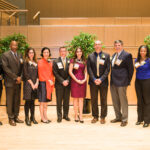
The UMBC community gathered in the Linehan Concert Hall on October 6 for a moving ceremony to honor the profound impacts and achievements of nine outstanding Retrievers at the 2016 UMBC Alumni Awards.
“This year’s awardees truly capture the depth of our community,” said John Becker ’01, president of the alumni association. Irina Vishnevetsky ’99, chair of the alumni awards committee, shared, “Each year the number of submitted nominations grows, and each year I am amazed by the incredible accomplishments of UMBC alumni.”
Tulay Adlai, electrical engineering, introduced awardee Vincent Calhoun ’02, Ph.D. electrical engineering, as an excellent teacher and mentor, cutting-edge brain researcher, and “a truly genuine human being.”
 Vince Calhoun, Ph.D. ’02, accepts the award for Outstanding Alumnus in Engineering and Information Technology.
Today, Calhoun serves as one of the youngest distinguished professors at the University of New Mexico. His primary appointment is in electrical and computer engineering, and, known for his interdisciplinary work, he maintains affiliate appointments with biology, computer science, neuroscience, and psychiatry. In accepting the award, Calhoun emphasized the importance of imagination in scientific research and told the students in the audience, “honesty and integrity in your work will make it endure over the long term.”
Award recipient Ian Ralby ’02, modern languages, linguistics, and intercultural communication (MLLI) and M.A. intercultural communication, was a Humanities Scholar and varsity diver at UMBC, and graduated as valedictorian. He went on to earn a law degree at the College of William and Mary and M.Phil. and Ph.D. degrees at the University of Cambridge, before founding I.R. Consilium, a consultancy that advises governments on international law and policy.
Ralby credits his UMBC humanities education for much of his success in international negotiation, remarking, “I learned to pick up on the subtleties of human interaction, in my own culture and across cultures.” He noted that those skills have “frequently been the deciding factor in whether my work has been merely technically proficient or truly successful.” Thomas Field, MLLI, presented Ralby’s remarks, as he was in Finland at an international maritime security conference and unable to return to the U.S. for the ceremony.
Philip Farabaugh, biological sciences, introduced natural sciences awardee Henry Baker ’78, Ph.D. ’84, biological sciences, who serves as Hazel Kitzman Professor of Genetics, professor of surgery, and chair of molecular genetics and microbiology at the University of Florida College of Medicine, and associate director of the University of Florida Genetics Institute. Farabaugh praised Baker for making the “courageous decision” to change the course of his research when “he recognized the clue to understanding human disease lay in determining how people’s genes change during disease.”
Baker, a Catonsville native, has been proud to watch UMBC grow over the years. “UMBC has truly excelled since its beginning in 1966 up to today, and is headed on to an even higher trajectory,” he shared. “From UMBC, you can get anywhere.”
 Left to right: President Hrabowski, Ruby Lu ’94, David Mitch, John Becker ’01.
Social and behavioral sciences awardee Ruby Lu ’94, economics, traveled from Beijing to attend the awards ceremony. After earning a master’s degree in international economics from Johns Hopkins, she co-founded DCM China, a Beijing-based venture capital firm. She has been named one of the top 50 venture capitalists in China by Forbes magazine, 2011–15. Her approach to venture capital is “to invest in companies she thinks will use technology to bring about positive change to society,” shared her nominator, David Mitch, professor and chair of economics. Lu, who came to study at UMBC from China, was a member of the university’s first class of McNair Scholars and reflected on how faculty profoundly impacted her life as teachers, mentors, and friends, at a time when she was far from home and working hard to learn English while preparing for a career.
LaMar Davis, director of The Choice Program at UMBC, referred to this year’s alumni award winner in social work as “a legend.” “If you don’t know who Joe Jones is,” he said, “you’re likely from out of town.”
 Joe Jones ’06 (right), recipient of the award for Outstanding Alumnus in Social Work, shakes hands with LaMar Davis.
Joseph Jones, Jr., ’06, social work, founded the Center for Urban Families in Baltimore City in 1999. The organization has served more than 26,000 Baltimore residents through workforce development and other initiatives, and has placed more than 6,400 in full-time jobs. Jones didn’t intend to get a college degree, but that changed when he met President Hrabowski. At UMBC, Jones shared, he developed “the ability to think about how do we create institutions, how do we move systems forward, how do we agitate in a way that creates change?” That reflection has dramatically benefited the people of Baltimore, shard Davis, noting that through his “steadfast belief and unrelenting drive” Jones has “transformed tens of thousands of lives with impacts that will be felt for generations.”
Tiffany Holmes, MFA ’99, this year’s awardee in visual and performing arts, is now the dean of undergraduate studies at the School of the Art Institute of Chicago. Holmes began her career as a middle school art teacher in Baltimore City and brought her students to tour UMBC’s Imaging Research Center. There, she recalled, “I quickly realized that I was interested in using technology to make art.” After over a decade in the field, she has made a “permanent mark on the canon of this once marginalized and little-understood discipline” and she is known for her “commitment to art that poses unique social challenges,” shared her nominator, Lisa Moren, professor of visual arts.
 Tiffany Holmes, MFA ’99, receives the award in visual and performing arts.
Ellen Hemmerly, executive director of bwtech@UMBC, was thrilled to introduce Tom Sadowski ’89, political science, as the 2016 Distinguished Service awardee. Sadowski, vice chancellor for economic development for the University System of Maryland, “has always valued relationships and supported partnerships, and has a knack for bringing people together and making things happen,” says Hemmerly. “I believe with Tom at the helm, UMBC and other system campuses will lead the nation in supporting innovation and creating knowledge jobs of the future.”
Accepting his award, Sadowski shared that he’s “just a guy who likes to…help solve problems, help people work as a team and achieve collective goals, or simply help people find that better part of themselves and grow.” Sadowski said that he’s particularly valued his relationship with the university over the past three decades because “UMBC leads its students to believe in themselves, and further, to believe there is nothing they cannot accomplish within themselves and within their communities by working together, with passion, and a deep, heartfelt purpose.”
 Galina Madjaroff ’08, M.A. ’11, accepts the Rising Star award from Judah Ronch.
Judah Ronch, dean of the Erickson School, introduced Galina Madjaroff ’08, psychology, M.A. ’11, aging studies, as the Rising Star awardee. Madjaroff serves as undergraduate program director and clinical assistant professor in the Erickson School, whose undergraduate program has grown from almost 400 in 2011 to almost 1,900 today. Ronch noted, “This is really due to the passion, hard work, leadership, and vision that Galina has brought to the program.” In particular, “Her passion is to help society and our students understand the major issues in cybersecurity and tech use for older people,” which has led her to pursue a Ph.D. in human-centered computing at UMBC. Madjaroff says UMBC is special because of the “faculty who are so nurturing, who reach out and take that extra step,” and she is driven to be that supportive mentor to current and future students.
The alumni association honored Kimberly Moffitt, professor of American studies, with the outstanding faculty award for 2016. “Everyone deserves a Dr. Moffitt—someone who shows them the goodness of the world while asking essential follow-up questions to ensure that they never get complacent,” shared her student, Ngeri Nnachi ’11, American studies. “I consider myself blessed to have such a strong, gifted, beautiful woman as my role model.” Accepting her award, Moffit emphasized, “I want to make sure my students know they have voice. And no matter what space they walk into, their voice matters. They matter.”
 Kimberly Moffitt, American studies, accepts the Outstanding Faculty Award.
This focus on impact, commitment, and connection emerged again and again throughout the evening, and for good reason, shared President Freeman Hrabowski. “One measures the impact of a university by the research it produces, the questions it asks, the people who are graduates, and what they do,” Hrabowski said. “People you see on this stage are not just amazingly talented, they are good people who have done great work. I can’t think of anything an educator would want more than that: People who care about others, who strive for excellence, and who never, never, never give up.”
Banner image: From left to right: Freeman Hrabowski, Joseph Jones, Tiffany Holmes, Ruby Lu, Tom Sadowski, Galina Madjaroff, Vince Calhoun, Henry Baker, Kimberly Moffitt, John Becker; all photos by Marlayna Demond ’11 for UMBC.
]]>
The UMBC community gathered in the Linehan Concert Hall on October 6 for a moving ceremony to honor the profound impacts and achievements of nine outstanding Retrievers at the 2016 UMBC Alumni...
https://umbc.edu/stories/alumni-awards-highlight-profound-impact-drive-and-commitment-of-umbc-alumni-and-faculty/
https://my3.my.umbc.edu/api/v0/pixel/news/120983/guest@my.umbc.edu/4c516aaec7dfa6c6826615366831aef1/api/pixel
alumni
americanstudies
arts-and-culture
biology
bwtech
cahss
choiceprogram
cnms
coeit
community
csee
economics
ericksonschool
gerontology
hrabowski
mlli
policy-and-society
psychology
science-and-technology
visualarts
UMBC News & Magazine
https://my3.my.umbc.edu/groups/umbc-news-magazine
https://assets1-my.umbc.edu/system/shared/avatars/groups/000/001/943/24435aa6207c452e7bc15cc74b42c7bb/xsmall.png?1748556657
https://assets1-my.umbc.edu/system/shared/avatars/groups/000/001/943/24435aa6207c452e7bc15cc74b42c7bb/original.png?1748556657
https://assets2-my.umbc.edu/system/shared/avatars/groups/000/001/943/24435aa6207c452e7bc15cc74b42c7bb/xxlarge.png?1748556657
https://assets2-my.umbc.edu/system/shared/avatars/groups/000/001/943/24435aa6207c452e7bc15cc74b42c7bb/xlarge.png?1748556657
https://assets3-my.umbc.edu/system/shared/avatars/groups/000/001/943/24435aa6207c452e7bc15cc74b42c7bb/large.png?1748556657
https://assets1-my.umbc.edu/system/shared/avatars/groups/000/001/943/24435aa6207c452e7bc15cc74b42c7bb/medium.png?1748556657
https://assets2-my.umbc.edu/system/shared/avatars/groups/000/001/943/24435aa6207c452e7bc15cc74b42c7bb/small.png?1748556657
https://assets1-my.umbc.edu/system/shared/avatars/groups/000/001/943/24435aa6207c452e7bc15cc74b42c7bb/xsmall.png?1748556657
https://assets2-my.umbc.edu/system/shared/avatars/groups/000/001/943/24435aa6207c452e7bc15cc74b42c7bb/xxsmall.png?1748556657
UMBC News & Magazine
0
0
false
Fri, 14 Oct 2016 20:36:06 -0400
Delegation from the University of Kassel in Germany visits UMBC to grow interdisciplinary exchange program
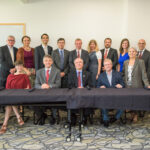
Eight administrators and faculty members from the University of Kassel in central Germany visited UMBC from August 29 to September 2 to build on a thriving university partnership between the two schools by continuing to cultivate broader research collaborations and student exchange programs.
Both UMBC and Kassel are young, innovative institutions known for promoting interdisciplinary programs and with particular strengths in STEM fields and the arts. “This visit is very important for us, as Kassel recognizes UMBC to be an international partner of strategic importance,” shares David diFuccia, professor of chemistry education at Kassel, at a lunch celebrating the partnership. “I hope our cooperation will grow and deepen, and that with every meeting we will take a step further.”
The partnership began when Matthias Gobbert, professor of mathematics at UMBC and a Kassel native, spent his sabbatical at Kassel during the 2011–2012 academic year. A memorandum of understanding (MOU) between the two universities’ math departments grew out of that visit, leading to fruitful exchanges of graduate students and faculty. In 2014, the MOU expanded to the university level, and undergraduate students have been studying abroad at each institution since fall 2015.
Karl Steiner, UMBC vice president for research, and Antonio Moreira, vice provost for academic affairs, have visited Kassel and discussed ways to grow the relationship, including development of a streamlined study abroad program. Now, Moreira says, “It’s truly expanding to the whole campus here at UMBC and at Kassel.”
Fields of study where UMBC and Kassel teams are already conducting complementary research and which are rife for collaboration include renewable energy, cybersecurity, nanoscience, remote sensing, and education. Other departments such as visual arts; economics; modern languages, linguistics, and intercultural communication (MLLI); and computer science are also exploring opportunities to partner.
Ellen Hemmerly, executive director of the bwtech@UMBC Research and Technology Park, discussed potential future business collaborations with the German guests. “We think global opportunities are really significant for companies,” she says, “so we’re always looking for natural ways to form partnerships.”
Both universities also see student academic exchange, beyond language classes, as a major priority in the partnership. Given course and lab research requirements, many students with majors in the hard sciences and engineering perceive study abroad as unrealistic—an option not truly available to them. However, UMBC and Kassel are committed to making it a clear and accessible process for students of any major. Julie Ross, dean of the College of Engineering and Information Technology, notes, “The things they’ll be working on in engineering and IT are global issues,” so it’s important for students to gain international exposure.

Susanne Sutton, coordinator of German in MLLI at UMBC, adds, “We have many STEM majors in our German classes. This is a tremendous opportunity for them to study abroad, as well as for students who are less familiar with the language and culture of Germany but have an interest in exploring it.”
Scott Casper, dean of the College of Arts, Humanities, and Social Sciences, is particularly excited to see his global studies students and Humanities Scholars travel abroad. “The problems our students are tackling are not limited to the U.S.,” he says.
Students in UMBC’s teacher education program, including those in the Sherman STEM Teacher Scholars Program, will also have opportunities to visit German schools and learn about teaching methods in Germany through collaboration with Kassel. In this digital age, “the students they will be teaching are global students,” says Casper, so it’s important teachers come to the classroom with a global perspective. The delegation also met with leaders of the Meyerhoff Scholars Program, who see excellent opportunities for their students to study abroad at Kassel.
The next step for the burgeoning UMBC–Kassel relationship is to expand the undergraduate exchange component. Already, many courses at the German university are taught in English, expanding the number of UMBC students who are able to complete discipline-specific coursework through an international exchange experience.
UMBC and Kassel are growing their cooperation steadily in many directions, with over a dozen faculty and staff working to make productive international exchanges possible for faculty and students on each side of the Atlantic. “When something comes together and it seems effortless,” says UMBC Provost Philip Rous, “you know that means a tremendous amount of effort has gone into it.”
UMBC students interested in learning more about study abroad should attend a Study Abroad 101 seminar offered twice a week by the Study Abroad Office, 2nd floor Administration building. Apply by October 10 to study abroad in the following spring semester.
Images: The University of Kassel delegation and UMBC representatives, August 30, 2016; students at UMBC’s Study Abroad Fair, September 2, 2016, interact with University of Kassel representatives. Photos by Marlayna Demond ’11 for UMBC.
]]>
Eight administrators and faculty members from the University of Kassel in central Germany visited UMBC from August 29 to September 2 to build on a thriving university partnership between the two...
https://umbc.edu/stories/delegation-from-the-university-of-kassel-in-germany-visits-umbc-to-grow-interdisciplinary-exchange-program/
https://my3.my.umbc.edu/api/v0/pixel/news/121019/guest@my.umbc.edu/8c0ff283e59ba516370ba66abf403179/api/pixel
bwtech
cahss
cnms
coeit
community
cybersecurity
education
international
mathstat
meyerhoffscholars
mlli
science-and-technology
shermanscholars
UMBC News & Magazine
https://my3.my.umbc.edu/groups/umbc-news-magazine
https://assets1-my.umbc.edu/system/shared/avatars/groups/000/001/943/24435aa6207c452e7bc15cc74b42c7bb/xsmall.png?1748556657
https://assets1-my.umbc.edu/system/shared/avatars/groups/000/001/943/24435aa6207c452e7bc15cc74b42c7bb/original.png?1748556657
https://assets2-my.umbc.edu/system/shared/avatars/groups/000/001/943/24435aa6207c452e7bc15cc74b42c7bb/xxlarge.png?1748556657
https://assets2-my.umbc.edu/system/shared/avatars/groups/000/001/943/24435aa6207c452e7bc15cc74b42c7bb/xlarge.png?1748556657
https://assets3-my.umbc.edu/system/shared/avatars/groups/000/001/943/24435aa6207c452e7bc15cc74b42c7bb/large.png?1748556657
https://assets1-my.umbc.edu/system/shared/avatars/groups/000/001/943/24435aa6207c452e7bc15cc74b42c7bb/medium.png?1748556657
https://assets2-my.umbc.edu/system/shared/avatars/groups/000/001/943/24435aa6207c452e7bc15cc74b42c7bb/small.png?1748556657
https://assets1-my.umbc.edu/system/shared/avatars/groups/000/001/943/24435aa6207c452e7bc15cc74b42c7bb/xsmall.png?1748556657
https://assets2-my.umbc.edu/system/shared/avatars/groups/000/001/943/24435aa6207c452e7bc15cc74b42c7bb/xxsmall.png?1748556657
UMBC News & Magazine
0
0
false
Fri, 09 Sep 2016 17:07:46 -0400
 Morgan Zepp exploring ruins in Peru during a semester studying abroad; photo courtesy of Morgan Zepp.


