UMBC faculty, alumni entrepreneurs receive record number of MIPS awards for tech collaborations

Six UMBC faculty members have just received grants from the Maryland Industrial Partnerships (MIPS) program to develop new technologies with potential to grow the state’s economy. This is UMBC’s largest number of winning proposals within a single proposal round since MIPS began in 1987.
The program connects University System of Maryland (USM) faculty and students with Maryland businesses. UMBC’s latest MIPS grantees include computer science and electrical engineering faculty Tim Oates, Chein-I Chang, and Anupam Joshi; Soobum Lee, mechanical engineering; Dipanjan Pan, chemical, biochemical, and environmental engineering; and Vikram Vakharia, marine biotechnology. Among their industry partners are UMBC alumni entrepreneurs who are building businesses in Maryland.
Advances in aquaculture technology
Vakharia partnered with Mary Larkin, founder and CEO of Gaskiya Diagnostics, on a high-impact aquaculture project. The pair worked to develop a proposal for rapid, low-cost, easy-to-use diagnostic tests to protect and support aqua-farm production.
Larkin received her Ph.D. in marine biotechnology from UMBC in 2018. She was supported by research funding through MIPS as a graduate student at the Institute of Marine and Environmental Technology. She now serves as an industry partner through the program.
 Institute of Marine and Environmental Technology
According to Larkin, “Low-cost, on-site tests enable aqua-farms to rapidly identify pathogens, allowing them to monitor disease and take actions to protect their crop.” Gaskiya’s initial focus for this testing is Whiteleg shrimp production facilities, which have an average of more than $4.5 billion in losses annually from disease.
“Farmers need to test their ponds and get instant information so that they can quickly take action and mitigate disease,” says Larkin.
What faster, simpler tests look like
Larkin describes Vakharia as a “perfect match” for her collaborator on this research. Vakharia’s background is in viruses that impact organisms important to aquaculture, including shrimp.
For this project, Vakharia notes, “I first had to identify the target. With the target, I can make a protein that Larkin can use to detect those pathogens in shrimp.” He explains, “This protein is a critical first step in making a non-animal-based binder that detects the pathogen.”
The team plans to incorporate the proteins and binders into a paper-based test. The test will provide results in minutes, similar to a pregnancy test.
Aqua-farms’ current tests for similar pathogens must be done through a lab. This results in an elongated turn-around time and average cost of $50 per sample. Gaskiya Diagnostics hopes to price the new diagnostic test at $5 to $10. The test results will be available in as quickly as 10 minutes. No expertise or additional equipment are required to perform or interpret the results.
Next generation cybersecurity
Joshi, professor and chair of computer science and electrical engineering, received a MIPS grant for a cybersecurity collaboration with the startup CyDeploy. They are developing a platform that automates the quality assurance process for cybersecurity updates made to IT and “internet of things” (IoT) devices like Amazon Alexa, Google Home, and health and medical devices.
CyDeploy CEO Tina Williams-Koroma ‘02, computer science, presented Joshi with the idea to develop a “cybersecurity-driven change management system.” The technology is based in and leverages the use of artificial intelligence and machine learning to create a cloud-based replica of a company’s systems.
 Tina Williams-Koroma. Photo courtesy of Williams-Koroma
From prototype to launch
Williams-Koroma and Joshi’s group at UMBC developed a conceptual prototype. It shows the infrastructure and technology that would make the system feasible, combining off-the-shelf tools with novel research.
“Increasingly, the government is now beginning to mandate security requirements around IoT devices. The longer-term vision that CyDeploy has is capturing the state of these systems, virtually recreating them and then running the security changes against virtual versions to see how the changes would affect those systems,” Joshi adds.

Anupam Joshi
Williams-Koroma, who is also an adjunct instructor at UMBC, projects that the initial development of the platform will be complete in late spring 2021. They anticipate launching a free pilot version for businesses to test their IT systems. IoT pilots will come in a later phase.
Funding that matters
Joseph Naft, director of the MIPS program, is excited about the tremendous potential of these projects. The long-term vision is creating additional high-quality jobs in Maryland. “We do this,” he says, “by bringing the expertise of faculty and students to bear on technology issues in product development for companies within the state.”
Since its inception, the MIPS grant program has had a $42 billion economic impact on the state of Maryland and has created nearly 22,000 jobs. UMBC’s incredibly strong results “speak well to the engagement of UMBC’s faculty with commercially viable products and technologies,” says Naft.
Dean Drake, associate vice president for research at UMBC, credits these results to the “expansive pool of talent” at UMBC and across all of the University System of Maryland.
“Helping our industry partners solve their challenges is a great strength of both UMBC and USM institutions more broadly,” says Drake. “Our talented faculty, students, staff, and alumni have expertise in every discipline that’s out there.”
These results also demonstrate UMBC’s “interest in working with companies in the state” for the benefit of all Marylanders, Naft notes, and UMBC’s robust potential for future growth.
Banner image: IMET entrance. All photos by Marlayna Demond’ 11 unless otherwise noted.
Article by Adriana Fraser for UMBC News.
]]>
Six UMBC faculty members have just received grants from the Maryland Industrial Partnerships (MIPS) program to develop new technologies with potential to grow the state’s economy. This is UMBC’s...
https://umbc.edu/stories/umbc-faculty-alumni-entrepreneurs-receive-record-number-of-mips-awards-for-tech-collaborations/
https://my3.my.umbc.edu/api/v0/pixel/news/119686/guest@my.umbc.edu/d04d87810bfbfd8566d3937a837118b7/api/pixel
alumni
cbee
cnms
coeit
csee
cybersecurity
imet
majoraward
marinebiotech
meche
page1
research
science-and-technology
UMBC News & Magazine
https://my3.my.umbc.edu/groups/umbc-news-magazine
https://assets1-my.umbc.edu/system/shared/avatars/groups/000/001/943/24435aa6207c452e7bc15cc74b42c7bb/xsmall.png?1748556657
https://assets1-my.umbc.edu/system/shared/avatars/groups/000/001/943/24435aa6207c452e7bc15cc74b42c7bb/original.png?1748556657
https://assets2-my.umbc.edu/system/shared/avatars/groups/000/001/943/24435aa6207c452e7bc15cc74b42c7bb/xxlarge.png?1748556657
https://assets2-my.umbc.edu/system/shared/avatars/groups/000/001/943/24435aa6207c452e7bc15cc74b42c7bb/xlarge.png?1748556657
https://assets3-my.umbc.edu/system/shared/avatars/groups/000/001/943/24435aa6207c452e7bc15cc74b42c7bb/large.png?1748556657
https://assets1-my.umbc.edu/system/shared/avatars/groups/000/001/943/24435aa6207c452e7bc15cc74b42c7bb/medium.png?1748556657
https://assets2-my.umbc.edu/system/shared/avatars/groups/000/001/943/24435aa6207c452e7bc15cc74b42c7bb/small.png?1748556657
https://assets1-my.umbc.edu/system/shared/avatars/groups/000/001/943/24435aa6207c452e7bc15cc74b42c7bb/xsmall.png?1748556657
https://assets2-my.umbc.edu/system/shared/avatars/groups/000/001/943/24435aa6207c452e7bc15cc74b42c7bb/xxsmall.png?1748556657
UMBC News & Magazine
0
0
false
Thu, 11 Feb 2021 20:41:47 -0500
UMBC students help create richer online courses for peers in engineering and computing fields
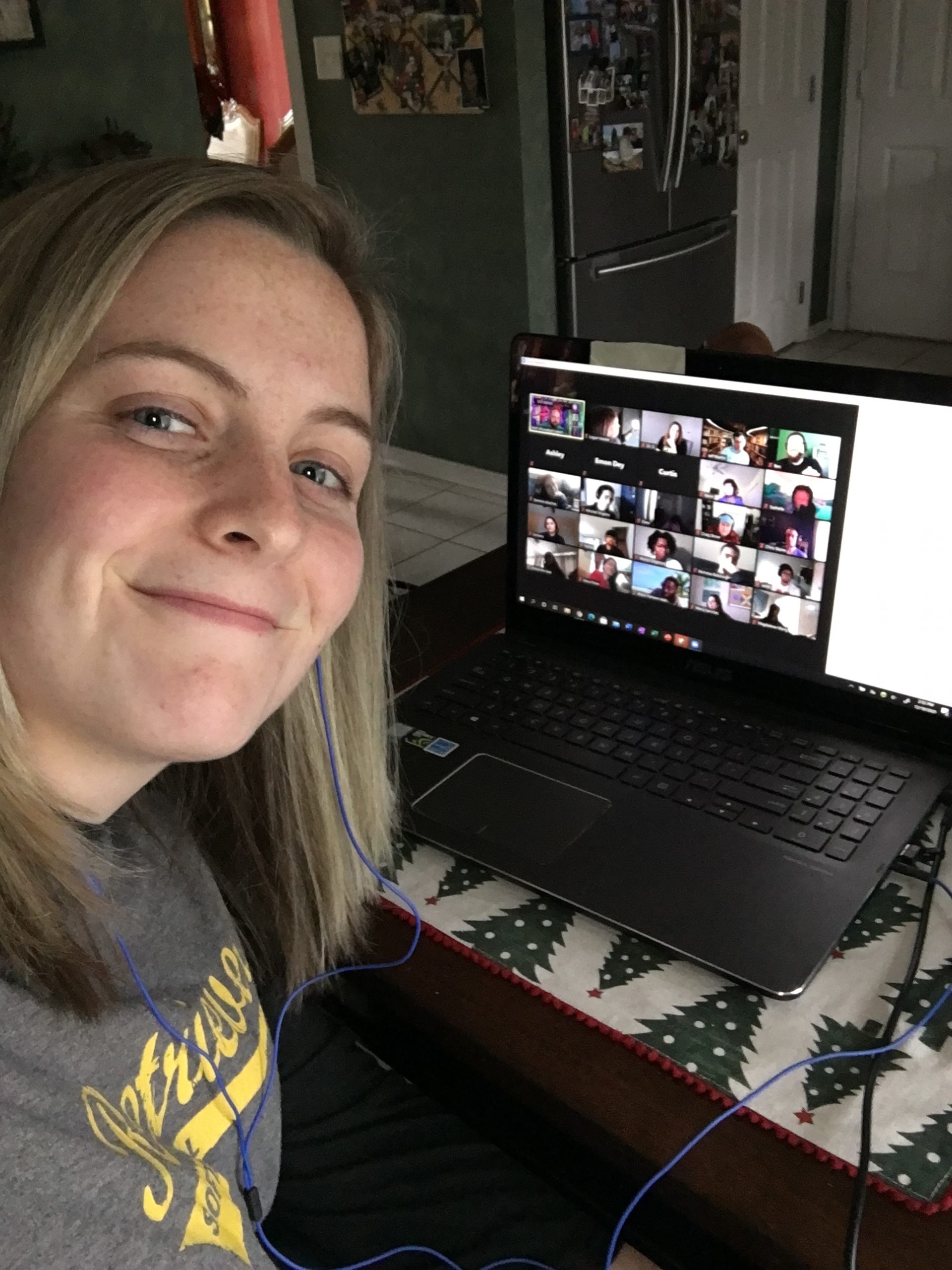
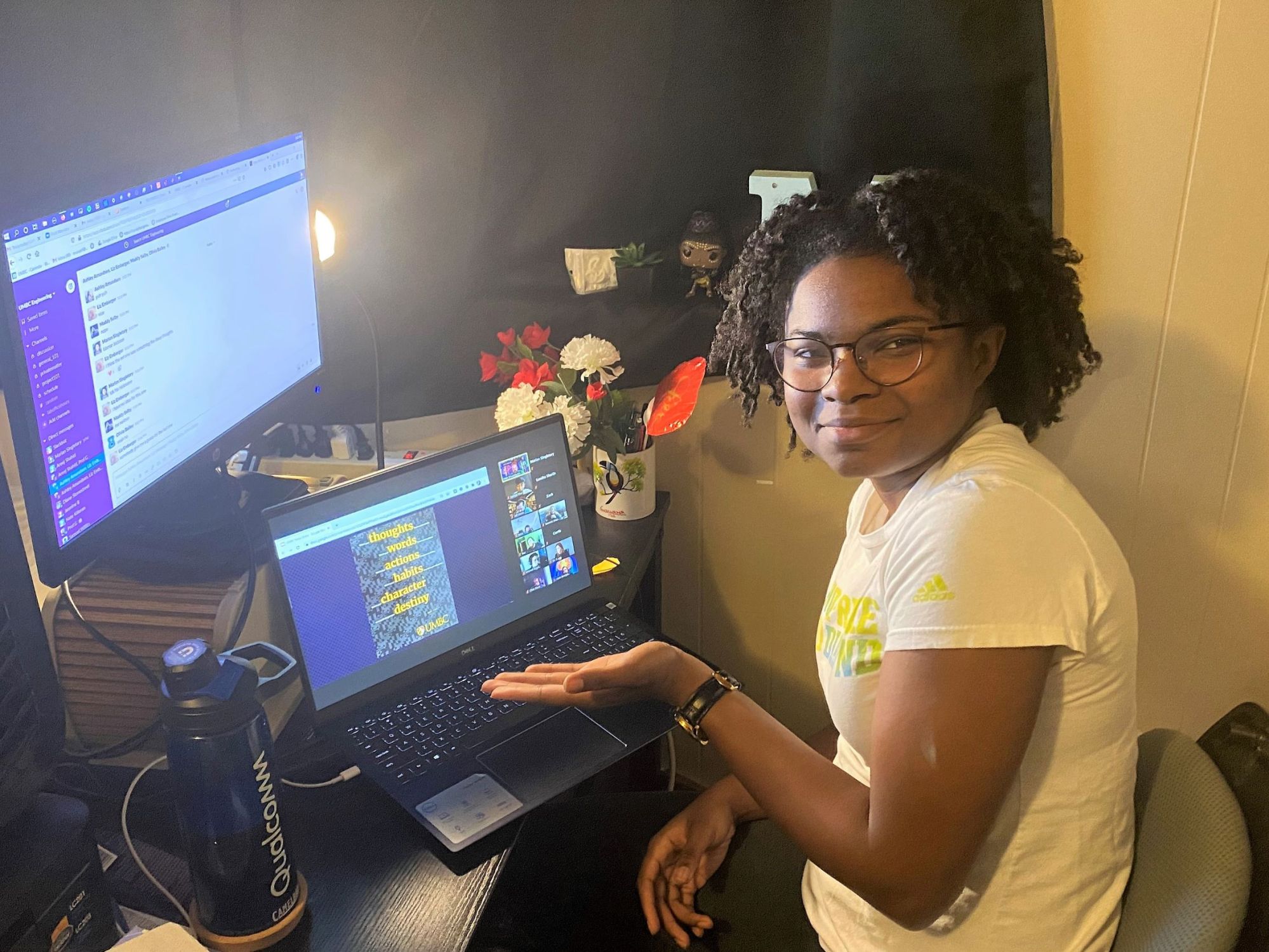
As UMBC faculty prepare for spring, they are reflecting on lessons learned from a primarily online fall 2020 semester. In UMBC’s College of Engineering and Information Technology (COEIT), this means honoring teaching fellows and teaching assistants for their role in making sure courses met student needs.
Essential perspective
“I think anybody’s goal, in any sort of class, is to provide the highest quality, most optimal experience to our students,” said Jamie Gurganus, COEIT’s associate director of engineering education initiatives, in an interview last summer. Along with colleagues across the university, she worked through the summer and fall to help faculty provide students with “safe, thriving online environments” to learn.
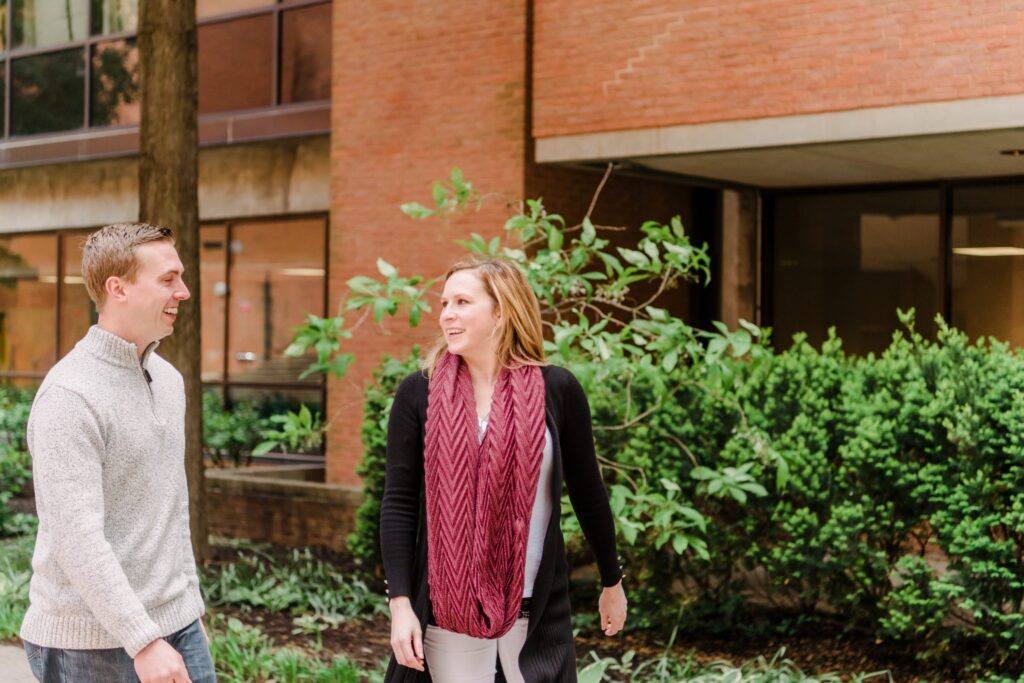 Jamie Gurganus (right) walks with Randy Deinlein ’19, mechanical engineering, on campus, May 2019. Photo by Marlayna Demond ’11 for UMBC.
The centerpiece of this work was the Planning Instructional Variety for Online Teaching (PIVOT) program. PIVOT, PIVOT+, and more specialized webinars helped faculty design truly engaging online courses. COEIT hired several rising UMBC juniors and seniors to participate in the workshops and offer feedback to faculty.
These undergraduate teaching fellows “brought an essential perspective,” Gurganus shares. They continued to provide feedback throughout the fall, and many are continuing the work in spring 2021.
Creativity and community
Hana Flores ’21, chemical engineering, served as a teaching fellow. She shares, “It was unlike anything we have done before, but it was special due to the creativity and strong community of COEIT.”
Flores sees her experience as emblematic of a culture of community support. “I’m grateful for continuing the legacy of support from upperclassmen to underclassmen as a teaching fellow,” she says. “It is what makes engineering classes exceptional.”
Celebrating together
COEIT invited Flores and dozens of other teaching fellows and teaching assistants to a celebration to honor their work in late December. After a busy and intense semester, they took time to enjoy each others’ company, with Flores’s team, the ChemiE Cuties, winning the celebration’s trivia contest.
 Hana Flores (center row, left, in red shirt) with her winning team, the ChemiE Cuties. Image courtesy of COEIT.
“Watching our students celebrate allowed my mind to forget for a moment the challenges that we face,” says Mariajose Castellanos, senior lecturer and undergraduate program director of chemical engineering. “It was important to me that we could come together and remind them of how much we appreciate them. They make our classes better and provide invaluable help.”
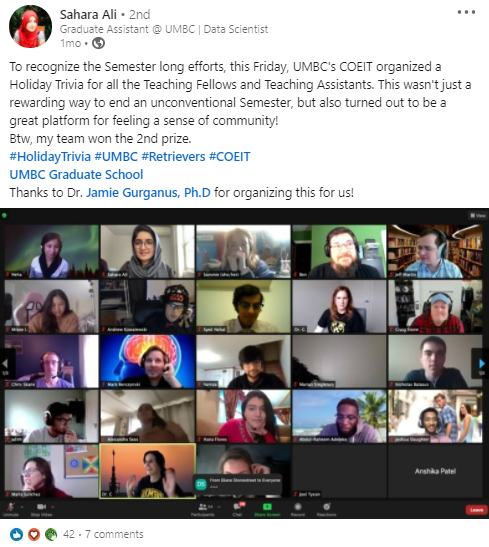
LinkedIn post by
Sahara Ali, PhD student in information systems.
A more meaningful experience
“When it comes to delivering a class, it’s a collaboration effort between the instructors, teaching fellows, and teaching assistants,” says Gurganus. “They go beyond the scope of grading papers and holding office hours. These students provide a unique perspective that gives our classes a richer and more meaningful experience.”
Often, these students have recently completed the class they are now supporting, so they are able to identify and relate to its challenges in a unique way.
“These students’ insights enhance our courses in so many ways,” Gurganus shares, “and they have such a positive impact on the learning experience we can provide.”
Although some COEIT teaching fellows and teaching assistants graduated in fall 2020, Gurganus says a majority will continue their work in spring 2021, as UMBC courses remain largely online.
Tiled gallery images above: Logan Hawker ’22, mechanical engineering, at left, and CWIT CyberScholar Marian Singletary ’21, computer engineering, at right, compete in the trivia game. Images courtesy of Hawker and Singletary.
Featured image: Hand clicking laptop mouse. Photo by Flickr user Marco Verch, CC BY 2.0.
]]>
As UMBC faculty prepare for spring, they are reflecting on lessons learned from a primarily online fall 2020 semester. In UMBC’s College of Engineering and Information Technology (COEIT), this...
https://umbc.edu/stories/umbc-students-help-create-richer-online-courses-for-peers-in-engineering-and-computing-fields/
https://my3.my.umbc.edu/api/v0/pixel/news/119700/guest@my.umbc.edu/94411753e91458ec08f7d6f6fbc4938f/api/pixel
cbee
coeit
community
csee
is
meche
page1
science-and-technology
UMBC News & Magazine
https://my3.my.umbc.edu/groups/umbc-news-magazine
https://assets1-my.umbc.edu/system/shared/avatars/groups/000/001/943/24435aa6207c452e7bc15cc74b42c7bb/xsmall.png?1748556657
https://assets1-my.umbc.edu/system/shared/avatars/groups/000/001/943/24435aa6207c452e7bc15cc74b42c7bb/original.png?1748556657
https://assets2-my.umbc.edu/system/shared/avatars/groups/000/001/943/24435aa6207c452e7bc15cc74b42c7bb/xxlarge.png?1748556657
https://assets2-my.umbc.edu/system/shared/avatars/groups/000/001/943/24435aa6207c452e7bc15cc74b42c7bb/xlarge.png?1748556657
https://assets3-my.umbc.edu/system/shared/avatars/groups/000/001/943/24435aa6207c452e7bc15cc74b42c7bb/large.png?1748556657
https://assets1-my.umbc.edu/system/shared/avatars/groups/000/001/943/24435aa6207c452e7bc15cc74b42c7bb/medium.png?1748556657
https://assets2-my.umbc.edu/system/shared/avatars/groups/000/001/943/24435aa6207c452e7bc15cc74b42c7bb/small.png?1748556657
https://assets1-my.umbc.edu/system/shared/avatars/groups/000/001/943/24435aa6207c452e7bc15cc74b42c7bb/xsmall.png?1748556657
https://assets2-my.umbc.edu/system/shared/avatars/groups/000/001/943/24435aa6207c452e7bc15cc74b42c7bb/xxsmall.png?1748556657
UMBC News & Magazine
0
0
false
Tue, 19 Jan 2021 15:56:33 -0500
UMBC chemical engineering students take second place in national Jeopardy competition

Last weekend, four UMBC students earned second prize in the national Jeopardy competition hosted virtually by the American Institute of Chemical Engineers (AIChE). The team competed against 12 other teams at the national level after winning the Mid-Atlantic regional competition in October.
UMBC’s team included Cameron Sloan ‘21, Nicholas Balasus ‘21, Ellie Vonderhorst ‘22, and Chris Ashby ‘21, all chemical engineering majors. Sloan is chair of the Jeopardy project in UMBC’s student chapter of AIChE, the professional organization for chemical engineers. He explains that participating in the competition was an important moment for the group, though the move to an online format wasn’t ideal.
 Members of the AIChE team preparing for the virtual competition with faculty advisors and peers. Photo courtesy of Mariajose Castellanos.
“Competing virtually had its challenges, for sure, but all in all it was a fantastic experience,” says Sloan. “I wish we would have had the opportunity to meet our competitors and be able to speak to them, rather than just seeing their digitized faces on our screens.”
Preparing for virtual competition
To prepare for the national competition, each team member created a board featuring unique chemical engineering questions. Their goal was to get exposure to a diverse range of question types on a broad range of topics. Faculty in chemical, biochemical, and environmental engineering (CBEE) also submitted questions to help the team practice.
Mariajose Castellanos, senior lecturer in CBEE, is the faculty advisor for the UMBC chapter of AIChE. She calls UMBC’s second-place finish at the national level “an extraordinary accomplishment” and also notes that this was actually UMBC’s first time at the national competition. They competed against both the University of Southern California (2019 winner) and Iowa State University (2019 finalist).
“I am rejoicing in the grit and greatness shown by our chemical engineering students,” says Castellanos, “during a semester that has challenged us at many different levels.”
Banner image: The UMBC campus in the fall. Photo by Marlayna Demond ’11 for UMBC.
]]>
Last weekend, four UMBC students earned second prize in the national Jeopardy competition hosted virtually by the American Institute of Chemical Engineers (AIChE). The team competed against 12...
https://umbc.edu/stories/umbc-chemical-engineering-students-take-second-place-in-national-jeopardy-competition/
https://my3.my.umbc.edu/api/v0/pixel/news/119743/guest@my.umbc.edu/9ad27167acb10a2976a450d23a4a4c13/api/pixel
cbee
coeit
science-and-technology
UMBC News & Magazine
https://my3.my.umbc.edu/groups/umbc-news-magazine
https://assets1-my.umbc.edu/system/shared/avatars/groups/000/001/943/24435aa6207c452e7bc15cc74b42c7bb/xsmall.png?1748556657
https://assets1-my.umbc.edu/system/shared/avatars/groups/000/001/943/24435aa6207c452e7bc15cc74b42c7bb/original.png?1748556657
https://assets2-my.umbc.edu/system/shared/avatars/groups/000/001/943/24435aa6207c452e7bc15cc74b42c7bb/xxlarge.png?1748556657
https://assets2-my.umbc.edu/system/shared/avatars/groups/000/001/943/24435aa6207c452e7bc15cc74b42c7bb/xlarge.png?1748556657
https://assets3-my.umbc.edu/system/shared/avatars/groups/000/001/943/24435aa6207c452e7bc15cc74b42c7bb/large.png?1748556657
https://assets1-my.umbc.edu/system/shared/avatars/groups/000/001/943/24435aa6207c452e7bc15cc74b42c7bb/medium.png?1748556657
https://assets2-my.umbc.edu/system/shared/avatars/groups/000/001/943/24435aa6207c452e7bc15cc74b42c7bb/small.png?1748556657
https://assets1-my.umbc.edu/system/shared/avatars/groups/000/001/943/24435aa6207c452e7bc15cc74b42c7bb/xsmall.png?1748556657
https://assets2-my.umbc.edu/system/shared/avatars/groups/000/001/943/24435aa6207c452e7bc15cc74b42c7bb/xxsmall.png?1748556657
UMBC News & Magazine
0
0
false
Mon, 23 Nov 2020 17:32:35 -0500
American Chemical Society honors UMBC’s Lee Blaney for commitment to mentoring student researchers
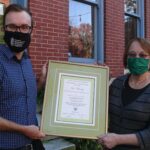
Last Thursday, UMBC’s Lee Blaney was honored for his impact as a chemistry educator and mentor who closely involves students of all levels in collaborative research.
Blaney is an associate professor of chemical, biochemical, and environmental engineering. He received the 2020 George L. Braude Award from the Maryland section of the American Chemical Society. Blaney was nominated for the award by Mark Marten, chair of chemical, biochemical, and environmental engineering at UMBC. During the virtual meeting of the society, Blaney presented his research on the occurrence of contaminants of emerging concern in the Chesapeake Bay.
Past and future mentors
Blaney shared that he was honored and humbled to receive the Braude Award for his efforts to mentor undergraduate and graduate students in research. During his lecture, he emphasized the impact of his own mentors on his mentoring approach.
Arup SenGupta (Lehigh University), Desmond Lawler (University of Texas at Austin), and Lynn Katz (University of Texas at Austin) changed his life through their mentorship, Blaney said. He has incorporated their advice and his own experiences into his mentoring approach at UMBC.
“Seeing my students succeed is the most gratifying aspect of being a professor,” he reflects.
Although the event could not be held in person due to the COVID-19 pandemic, many of Blaney’s students were able to attend the virtual lecture. He noted that the presence of his students made the celebration even more special. Upon receiving the Braude Award, Blaney emphasized to his students, “This is our award.”
 Lee Blaney, left, receiving his award from Louise Hellwig of Morgan State University. Photo courtesy of Hellwig.
Mamatha Hopanna Ph.D. ‘22, environmental engineering, conducts research in Blaney’s lab and attended the virtual lecture. “I am amazed by how much he cares to support each student’s learning style and needs, she said. “I have always felt his sincerity, commitment, and enthusiasm towards his students’ success”
She continued, “It is so encouraging to see Dr. Blaney celebrate each of his achievements as our achievements. I, personally, aspire to be a mentor to inspire and motivate other students in the same way as Dr. Blaney has inspired me.”
Combining research and student success
The Braude Award honors professors from institutions in Maryland who involve students and postdoctoral fellows in exceptional research in particularly notable ways. The award was created in memory of George Braude, who served as chair of the Maryland section of the ACS.
This latest award follows several other honors which have enabled Blaney to further his innovative research. In 2017, Blaney received an NSF CAREER Award, which focuses on how contaminants of emerging concern impact the environment. Later that year, he was recognized by the Maryland Science Center with the 2017 Outstanding Young Engineer Award.
Blaney is the third UMBC faculty member to receive the Braude Award. In 2006, then-UMBC professor Catherine Fenselau, former chair of chemistry and biochemistry, received the award. Michael Summers, distinguished professor of chemistry and biochemistry and Robert E. Meyerhoff Chair for Excellence in Research and Mentoring, received the award in 2010. Summers is internationally known for his HIV research and his work with UMBC’s Meyerhoff Scholars Program.
Update: James J. Morgan Award
In December 2020, Blaney also received the 2021 James J. Morgan Environmental Science & Technology Early Career Award from the ACS. The award is one of the most prestigious honors in environmental engineering, recognizing early-career scholars who are leading the field.
An editorial announcing Blaney’s award notes, “He is considered a leading researcher with a broad vision, innovative research ideas, and an outstanding commitment to developing a sustainable research program that is diverse and focused on grand challenges.”
Banner image: Lee Blaney. Photo by Marlayna Demond ’11 for UMBC.
]]>
Last Thursday, UMBC’s Lee Blaney was honored for his impact as a chemistry educator and mentor who closely involves students of all levels in collaborative research. Blaney is an associate...
https://umbc.edu/stories/american-chemical-society-honors-umbcs-lee-blaney-for-commitment-to-mentoring-student-researchers/
https://my3.my.umbc.edu/api/v0/pixel/news/119764/guest@my.umbc.edu/510cf49115ff0a295c945fde1c1c0941/api/pixel
cbee
coeit
science-and-technology
UMBC News & Magazine
https://my3.my.umbc.edu/groups/umbc-news-magazine
https://assets1-my.umbc.edu/system/shared/avatars/groups/000/001/943/24435aa6207c452e7bc15cc74b42c7bb/xsmall.png?1748556657
https://assets1-my.umbc.edu/system/shared/avatars/groups/000/001/943/24435aa6207c452e7bc15cc74b42c7bb/original.png?1748556657
https://assets2-my.umbc.edu/system/shared/avatars/groups/000/001/943/24435aa6207c452e7bc15cc74b42c7bb/xxlarge.png?1748556657
https://assets2-my.umbc.edu/system/shared/avatars/groups/000/001/943/24435aa6207c452e7bc15cc74b42c7bb/xlarge.png?1748556657
https://assets3-my.umbc.edu/system/shared/avatars/groups/000/001/943/24435aa6207c452e7bc15cc74b42c7bb/large.png?1748556657
https://assets1-my.umbc.edu/system/shared/avatars/groups/000/001/943/24435aa6207c452e7bc15cc74b42c7bb/medium.png?1748556657
https://assets2-my.umbc.edu/system/shared/avatars/groups/000/001/943/24435aa6207c452e7bc15cc74b42c7bb/small.png?1748556657
https://assets1-my.umbc.edu/system/shared/avatars/groups/000/001/943/24435aa6207c452e7bc15cc74b42c7bb/xsmall.png?1748556657
https://assets2-my.umbc.edu/system/shared/avatars/groups/000/001/943/24435aa6207c452e7bc15cc74b42c7bb/xxsmall.png?1748556657
UMBC News & Magazine
0
0
false
Wed, 28 Oct 2020 18:57:44 -0400
Research team led by UMBC’s Mark Marten studies how fungal cells respond to stress, repair broken cell walls

Mark Marten, professor and chair of chemical, biochemical, and environmental engineering, is collaborating with researchers at the University of Connecticut and the University of Manitoba to study how fungal cells respond to stress and repair their cell walls. Marten and his collaborators identified three coordinated pathways involved in the response to cell wall stress in filamentous fungi.
Numerous species of filamentous fungi are pathogens that can make people sick, especially people who are immunocompromised. Different species of fungi play an important role in the development of pharmaceuticals and enzymes, and agriculture, where fungi can help improve the quality of soil and make nutrients more readily available for crops, explains Marten. By understanding how cells work and respond to stress, researchers can reverse-engineer processes that could have a broad range of applications.
 A photo of Marten’s lab in fall 2019. Photo by Melissa Penley Cormier.
Understanding how cells respond to stress
Marten and his collaborators Ranjan Srivastava, University of Connecticut, and Steven Harris, University of Manitoba, recently received over $1.2 million in grant funding from the National Science Foundation (NSF) to further explore how filamentous fungi repair their cell walls when exposed to stressors. This work will build upon previous NSF-supported research completed by the team. Molecular and Cellular Proteomicshas just published their findings on critical cellular processes triggered when cells respond to environmental stress. Cynthia Chelius, Ph.D. ‘19, chemical engineering, is the first author on the paper.

Mark Marten. Photo courtesy of Marten.
To understand how the fungal cell walls respond to environmental stressors, Marten and his team studied what he describes as the cell’s “software”—rules that control how the cell behaves. When fungi experience stress, Marten’s team found an increase in the number of septa created. Like bulkheads in a ship, septa prevent catastrophic loss of cellular cytoplasm if there’s a break in the cell wall. “When you stress cells, they sense it and try to protect themselves,” Marten explains. He adds that fungi try to repair damage to their cell walls so that they can resume normal growth and function.
The study used a multi-omic methodology, which researchers say can be applied to studying how signaling networks in cells work in general. The methodology allowed researchers to get a more detailed understanding of how cells respond to stressors. They found that when cell walls experience stress, there is a coordinated response through various pathways. By combining short time-scale phosphoproteomic sampling and longer scale transcriptomic sampling, the researchers were able to see a broader view of how cells respond to stress.
Gene regulation
Moving forward, the team looks forward to examining how the parts of the fungal cell are assembled and how fungal gene regulatory networks function. They hope to understand how proteins in cells interact with each other, and how cells can turn on and off certain parts of their DNA to respond to stress.
“We were excited to see the results from this paper, as they both revealed a novel connection between different aspects of gene regulation in fungi and served as the basis for a new hypothesis regarding gene regulation in our most recent NSF Collaborative Research Award,” says Marten.
Banner image: UMBC’s Engineering building, left, and ITE building. Photo by Marlayna Demond ’11 for UMBC.
]]>
Mark Marten, professor and chair of chemical, biochemical, and environmental engineering, is collaborating with researchers at the University of Connecticut and the University of Manitoba to study...
https://umbc.edu/stories/research-team-led-by-umbcs-mark-marten-studies-how-fungal-cells-respond-to-stress-repair-broken-cell-walls/
https://my3.my.umbc.edu/api/v0/pixel/news/119784/guest@my.umbc.edu/09636d8c2e01f4f04345095cdcd13c72/api/pixel
cbee
coeit
science-and-technology
UMBC News & Magazine
https://my3.my.umbc.edu/groups/umbc-news-magazine
https://assets1-my.umbc.edu/system/shared/avatars/groups/000/001/943/24435aa6207c452e7bc15cc74b42c7bb/xsmall.png?1748556657
https://assets1-my.umbc.edu/system/shared/avatars/groups/000/001/943/24435aa6207c452e7bc15cc74b42c7bb/original.png?1748556657
https://assets2-my.umbc.edu/system/shared/avatars/groups/000/001/943/24435aa6207c452e7bc15cc74b42c7bb/xxlarge.png?1748556657
https://assets2-my.umbc.edu/system/shared/avatars/groups/000/001/943/24435aa6207c452e7bc15cc74b42c7bb/xlarge.png?1748556657
https://assets3-my.umbc.edu/system/shared/avatars/groups/000/001/943/24435aa6207c452e7bc15cc74b42c7bb/large.png?1748556657
https://assets1-my.umbc.edu/system/shared/avatars/groups/000/001/943/24435aa6207c452e7bc15cc74b42c7bb/medium.png?1748556657
https://assets2-my.umbc.edu/system/shared/avatars/groups/000/001/943/24435aa6207c452e7bc15cc74b42c7bb/small.png?1748556657
https://assets1-my.umbc.edu/system/shared/avatars/groups/000/001/943/24435aa6207c452e7bc15cc74b42c7bb/xsmall.png?1748556657
https://assets2-my.umbc.edu/system/shared/avatars/groups/000/001/943/24435aa6207c452e7bc15cc74b42c7bb/xxsmall.png?1748556657
UMBC News & Magazine
0
0
false
Wed, 30 Sep 2020 12:44:04 -0400
Dipanjan Pan demonstrates new method to produce gold nanoparticles directly in cancer cells with possible applications in x-ray imaging, cancer treatment

Dipanjan Pan, professor of chemical, biochemical, and environmental engineering at UMBC, and collaborators have published a seminal study in Nature Communications that demonstrates for the first time a method of biosynthesizing plasmonic gold nanoparticles within cancer cells, without the need for conventional bench-top lab methods. It has the potential to notably expand biomedical applications.
Conventional laboratory-based synthesis of gold nanoparticles require ionic precursors and reducing agents subjected to varying reaction conditions such as temperature, pH, and time. This leads to variation in nanoparticle size, morphology and functionalities that are directly correlated to their internalization in cells, their residence time in vivo, and clearance. In order to avoid these uncertainties, this work demonstrates that biosynthesis of gold nanoparticles can be achieved efficiently and directly inside cancer cells without requiring conventional laboratory methods.
The researchers examined how various cancer cells responded to the introduction of chloroauric acid to their cellular microenvironment by forming gold nanoparticles. These nanoparticles generated within the cell can potentially be used for various biomedical applications, including in x-ray imaging and in therapy by destroying abnormal tissue or cells.
Expanding biomedical applications
In the paper, Pan and his team describe their new method of producing these plasmonic gold nanoparticles within cells in minutes, within a cell’s nucleus, using polyethylene glycol as a delivery vector for ionic gold. “We have developed a unique system where gold nanoparticles are reduced by cellular biomolecules and those are able to retain their functionality, including the capacity to guide the remaining cluster to the nucleus,” says Pan.
They also worked to further demonstrate the biomedical potential of this approach by inducing in-situ biosynthesis of gold nanoparticles within a mouse tumor, followed by photothermal remediation of the tumor. Pan explains that the mouse study exemplified how “the intracellular formation and nuclear migration of these gold nanoparticles presents a highly promising approach for drug delivery application.”
“Gold is the quintessential noble element that has been used in biomedical applications since its first colloidal synthesis more than three centuries ago,” Pan notes. “To appreciate its potential for clinical application, however, the most challenging research ahead of us will be to find new methods of producing these particles with uncompromised reproducibility with functionalities that can promote efficient cellular binding, clearance, and biocompatibility and to assess their long-term term effects on human health. This new study is a small but important step toward that overarching goal.”
In addition to his appointment at UMBC, Pan is a professor of diagnostic radiology and nuclear medicine and pediatrics at the University of Maryland School of Medicine (UMSOM) as part of his dual appointment with the University of Maryland, Baltimore. Coauthors on the paper are affiliated with the University of Illinois, Urbana-Champaign; UMSOM; and Cytoviva, Inc.
Banner image: UMBC’s Interdisciplinary Life Sciences Building. Photo by Marlayna Demond ’11 for UMBC.
]]>
Dipanjan Pan, professor of chemical, biochemical, and environmental engineering at UMBC, and collaborators have published a seminal study in Nature Communications that demonstrates for the first...
https://umbc.edu/stories/dipanjan-pan-demonstrates-new-method-to-produce-gold-nanoparticles-directly-in-cancer-cells-with-possible-applications-in-x-ray-imaging-cancer-treatment/
https://my3.my.umbc.edu/api/v0/pixel/news/119795/guest@my.umbc.edu/8f80409b547aa8d616e0ed6e909a6d69/api/pixel
cbee
coeit
science-and-technology
UMBC News & Magazine
https://my3.my.umbc.edu/groups/umbc-news-magazine
https://assets1-my.umbc.edu/system/shared/avatars/groups/000/001/943/24435aa6207c452e7bc15cc74b42c7bb/xsmall.png?1748556657
https://assets1-my.umbc.edu/system/shared/avatars/groups/000/001/943/24435aa6207c452e7bc15cc74b42c7bb/original.png?1748556657
https://assets2-my.umbc.edu/system/shared/avatars/groups/000/001/943/24435aa6207c452e7bc15cc74b42c7bb/xxlarge.png?1748556657
https://assets2-my.umbc.edu/system/shared/avatars/groups/000/001/943/24435aa6207c452e7bc15cc74b42c7bb/xlarge.png?1748556657
https://assets3-my.umbc.edu/system/shared/avatars/groups/000/001/943/24435aa6207c452e7bc15cc74b42c7bb/large.png?1748556657
https://assets1-my.umbc.edu/system/shared/avatars/groups/000/001/943/24435aa6207c452e7bc15cc74b42c7bb/medium.png?1748556657
https://assets2-my.umbc.edu/system/shared/avatars/groups/000/001/943/24435aa6207c452e7bc15cc74b42c7bb/small.png?1748556657
https://assets1-my.umbc.edu/system/shared/avatars/groups/000/001/943/24435aa6207c452e7bc15cc74b42c7bb/xsmall.png?1748556657
https://assets2-my.umbc.edu/system/shared/avatars/groups/000/001/943/24435aa6207c452e7bc15cc74b42c7bb/xxsmall.png?1748556657
UMBC News & Magazine
0
0
false
Fri, 11 Sep 2020 16:18:12 -0400
Bedrock to treetops: NSF awards $4.8M to urban environment study led by UMBC’s Claire Welty
There is an essential resource constantly flowing beneath our feet: groundwater. Urban denizens may not think about it often, or at all, because they don’t rely on wells, “but it’s still there,” says hydrologist Claire Welty, and it’s critical to understanding the health of urban ecosystems.
Welty is director of UMBC’s Center for Urban Environmental Research and Education (CUERE) and a professor of chemical, biochemical, and environmental engineering. Groundwater is just one piece of a complicated puzzle that she and her team will work to put together over the next five years. A $4.8 million Critical Zone Collaborative Network grant from the National Science Foundation will make the large-scale project possible. The grant will support researchers at UMBC and eight other institutions that are part of the UMBC-led Urban Critical Zone Cluster.
Welty’s team will explore Earth’s critical zone, which extends from the tops of trees to the base of weathered bedrock, in urban centers along the Eastern Seaboard. In particular, they’re interested in how natural, geological processes occurring below the Earth’s surface and human-driven processes interact. Human influences include road salt application, polluted stormwater runoff, and soil-disturbing construction. These factors can all significantly influence urban water quality, water chemistry, and weathering processes.
Most Critical Zone grants are for work in more pristine wilderness areas, because the added effects of urban processes make the research more complicated. But, Welty says, “that’s the most interesting part.”
 The Earth’s critical zone extends from the treetops down to bedrock below ground. Image by the National Science Foundation.
Focus on the Fall Zone
The research will take place in four East Coast cities: Philadelphia, Baltimore, Washington, and Raleigh. The researchers strategically selected these urban centers because they align in a north-to-south corridor along what geologists call the “Fall Zone.” The Fall Zone exists at the transition from the Piedmont to the Coastal Plain, and is an area of intense interest for geologists.
“We think of this landscape as ancient, but recent research has led to a different understanding about how the Fall Zone in our region has evolved,” says geomorphologist Andrew Miller, UMBCprofessor of geography and environmental systems and a collaborator on the new grant. Glaciers to the region’s north played a role, and “human activity has also caused profound changes,” Miller says. “All of this forms the background for the work we are planning to do on this project.”
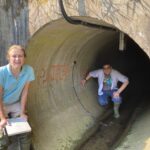
 Miller (left) and Welty in Catonsville at one of their research field sites. Photo by Victor Fulda.
Philadelphia to Raleigh: An urban corridor
The Fall Zone’s unique topography made it a natural place for some of the first American cities to emerge. Dramatic elevation changes characterize the Fall Zone, “so that’s where waterfalls formed, providing hydropower, so mills were set up,” Welty explains. Population centers grew up around the mills. Elevation changes at the Fall Zone boundary also limited water transport further inland, making it the natural place to build port cities. Today’s I-95 corridor links these urban centers.
The north-south corridor also gives the researchers an opportunity to examine how climate affects the movement of substances, such as sediment and dissolved materials, through the natural and built environments. Natural and human-introduced substances can affect everything from water quality to how quickly the bedrock wears away over time.
Of the four cities, Raleigh is distinct in ways that offer unique opportunities. As a younger city, it’s laid out differently. It may also have newer water, sewer, and other systems that could affect its underground properties in ways that differ from older, industrial cities like Baltimore and Philadelphia.
 The U.S. Northeast and mid-Atlantic at night, showing the urban corridor. Image courtesy NASA Earth Observatory, by Joshua Stevens.
Long-term legacy
Baltimore, in particular, is well-suited to host this research, because scientists have collected environmental data on the region for over twenty years through the Baltimore Ecosystem Study Long-Term Ecological Research Project (BES). The BES team has installed scientific instruments all over the region. Students, faculty, and sensors have been recording data consistently for decades, painting a picture of Baltimore’s watershed, ecology, and social issues related to the environment.
However, “the subsurface has for the most part been ignored,” Welty says. With funding from other sources, she and her field assistants have drilled 35 monitoring wells—but there’s more to be learned.
“We’ve got all this incredible science that’s been going on for 20 years of the BES,” Welty says. With the Critical Zone grant, “Now we want to look at the subsurface to complement all the data and information and instrumentation—you name it, we have it,” Welty says. “We think it’s really important to marry these two together.”
In addition to adding more and different data to an already huge archive, the Baltimore-based team also plans to leverage their existing data in new ways. “We’re going to use stream chemistry as a window into the subsurface,” Welty says. The researchers will also examine land use patterns and analyze bedrock and soil cores. Tools that act like an x-ray or MRI will enable them to visualize the structure and properties of the subsurface that are impossible to observe directly.
 Baltimore skyline. Photo by Adam Lindquist, used under CC-BY-NC 2.0.
Putting science into practice
Urban groundwater processes fascinate Welty. She’s driven by a fundamental desire to better understand what’s going on underneath cities in the Fall Zone. And there are practical reasons why this work is important, too.
“At UMBC, we’re always interested in informing policy with the scientific projects we do,” she says. “We have strong relationships with partners in Baltimore, and folks in the other cities do as well. They pay attention to what we do.”
Those relationships work in both directions. Sometimes the research informs new policies around development, water treatment, or salt use. Other times, questions from regional leaders inspire additional research, including student projects.
Some public concerns have involved hazards to the urban drinking water supply and salinization of streams, which could be detrimental to wildlife. “We’re making connections and providing a foundation of knowledge,” Welty says, so policymakers can make decisions grounded in science.
In addition, Alan Berkowitz from the Cary Institute is on the team to help bring these important ideas to K-12 students. Berkowitz will work with the researchers to develop an Earth science module for local schools, which will eventually be available to educators nationwide. Berkowitz will also work with the team to develop a citizen science program focused on the urban critical zone theme.
“Alan has his ear to the ground on what the schools are interested in, and he knows how to make that translation from the scientific project to this kind of outreach,” Welty says. This work will bring the project full circle, inspiring another generation of minds to explore the world beneath their feet.
Banner image: Claire Welty (left) and Andrew Miller at a field research site in Catonsville. The site is a buried stream that doubles as a storm drain and is part of a restoration project. Photo by Victor Fulda, an engineering technician in UMBC’s chemical, biochemical, and environmental engineering department.
]]>
There is an essential resource constantly flowing beneath our feet: groundwater. Urban denizens may not think about it often, or at all, because they don’t rely on wells, “but it’s still there,”...
https://umbc.edu/stories/bedrock-to-treetops-nsf-awards-4-8m-to-urban-environment-study-led-by-umbcs-claire-welty/
https://my3.my.umbc.edu/api/v0/pixel/news/119801/guest@my.umbc.edu/178c230cb8be7e31515048d7b62f7845/api/pixel
cahss
cbee
coeit
cuere
ges
research
science-and-technology
UMBC News & Magazine
https://my3.my.umbc.edu/groups/umbc-news-magazine
https://assets1-my.umbc.edu/system/shared/avatars/groups/000/001/943/24435aa6207c452e7bc15cc74b42c7bb/xsmall.png?1748556657
https://assets1-my.umbc.edu/system/shared/avatars/groups/000/001/943/24435aa6207c452e7bc15cc74b42c7bb/original.png?1748556657
https://assets2-my.umbc.edu/system/shared/avatars/groups/000/001/943/24435aa6207c452e7bc15cc74b42c7bb/xxlarge.png?1748556657
https://assets2-my.umbc.edu/system/shared/avatars/groups/000/001/943/24435aa6207c452e7bc15cc74b42c7bb/xlarge.png?1748556657
https://assets3-my.umbc.edu/system/shared/avatars/groups/000/001/943/24435aa6207c452e7bc15cc74b42c7bb/large.png?1748556657
https://assets1-my.umbc.edu/system/shared/avatars/groups/000/001/943/24435aa6207c452e7bc15cc74b42c7bb/medium.png?1748556657
https://assets2-my.umbc.edu/system/shared/avatars/groups/000/001/943/24435aa6207c452e7bc15cc74b42c7bb/small.png?1748556657
https://assets1-my.umbc.edu/system/shared/avatars/groups/000/001/943/24435aa6207c452e7bc15cc74b42c7bb/xsmall.png?1748556657
https://assets2-my.umbc.edu/system/shared/avatars/groups/000/001/943/24435aa6207c452e7bc15cc74b42c7bb/xxsmall.png?1748556657
UMBC News & Magazine
0
0
false
Wed, 02 Sep 2020 16:23:32 -0400
UMBC’s Dipanjan Pan receives two NIH grants to continue rapid COVID-19 testing research

Dipanjan Pan, professor of chemical, biochemical, and environmental engineering, has received two new grants from the National Institutes of Health to support research poised to improve COVID-19 testing.
Pan and his team recently developed an experimental diagnostic test to rapidly detect the novel coronavirus causing COVID-19, potentially as early as the first day of infection. The test shows results visually, through a color change visible with the naked eye when the virus is present. Their preliminary results were published in the journal ACS Nano, and the biosensors behind this work have generated substantial academic and commercial interest.
Pan received funding from the National Institute of Biomedical Imaging and Bioengineering (NIBIB) to support the development of a mediated colorimetric biosensor. This technology greatly reduces the possibility of misinterpreting the results of COVID-19 sensing tests.
“These awards are very timely. Two back-to-back grants from NIBIB will help me to further develop and optimize the technology and help cover the cost for conducting a clinical study for validation purposes,” says Pan. “The key here is the fine balance between the accuracy of the results and the ability of the testing platform to provide a rapid response.”
The second grant will support Pan’s work to develop a COVID-19 diagnostic platform that will work like a home-based glucometer. Currently, with limitations in sample collection and transportation, it often takes several days for patients to receive their COVID-19 test results. The delay between when the test is taken and when the results are available can lead to the continued spread of the virus.
To reduce the time between when a person takes a COVID-19 test and receives their results, Pan will develop a test that includes an electrochemical biosensor that can detect the virus in about 3 minutes. If patients can receive their results within minutes of taking the test, Pan notes, they can quickly self-isolate and avoid exposing others to the virus.
Pan explains that the test will limit the possibility for inaccurate results. “We adopted a molecularly targeted approach to detect RNA from the virus. Since every living organism has unique RNA, targeting a distinctive genetic material of COVID-19 causative virus SARS-CoV-2 ensures remarkable accuracy and specificity,” he says.
In addition to his appointment at UMBC, Pan is a professor of diagnostic radiology and nuclear medicine and pediatrics at the University of Maryland School of Medicine as part of his dual appointment with the University of Maryland, Baltimore.
Banner image: UMBC’s Interdisciplinary Life Sciences Building. Photo by Marlayna Demond ’11 for UMBC.
]]>
Dipanjan Pan, professor of chemical, biochemical, and environmental engineering, has received two new grants from the National Institutes of Health to support research poised to improve COVID-19...
https://umbc.edu/stories/umbcs-dipanjan-pan-receives-two-nih-grants-to-continue-rapid-covid-19-testing-research/
https://my3.my.umbc.edu/api/v0/pixel/news/119833/guest@my.umbc.edu/7a9f6b5c2f8473c4c809c63ce05064a5/api/pixel
cbee
coeit
covidresearch
science-and-technology
UMBC News & Magazine
https://my3.my.umbc.edu/groups/umbc-news-magazine
https://assets1-my.umbc.edu/system/shared/avatars/groups/000/001/943/24435aa6207c452e7bc15cc74b42c7bb/xsmall.png?1748556657
https://assets1-my.umbc.edu/system/shared/avatars/groups/000/001/943/24435aa6207c452e7bc15cc74b42c7bb/original.png?1748556657
https://assets2-my.umbc.edu/system/shared/avatars/groups/000/001/943/24435aa6207c452e7bc15cc74b42c7bb/xxlarge.png?1748556657
https://assets2-my.umbc.edu/system/shared/avatars/groups/000/001/943/24435aa6207c452e7bc15cc74b42c7bb/xlarge.png?1748556657
https://assets3-my.umbc.edu/system/shared/avatars/groups/000/001/943/24435aa6207c452e7bc15cc74b42c7bb/large.png?1748556657
https://assets1-my.umbc.edu/system/shared/avatars/groups/000/001/943/24435aa6207c452e7bc15cc74b42c7bb/medium.png?1748556657
https://assets2-my.umbc.edu/system/shared/avatars/groups/000/001/943/24435aa6207c452e7bc15cc74b42c7bb/small.png?1748556657
https://assets1-my.umbc.edu/system/shared/avatars/groups/000/001/943/24435aa6207c452e7bc15cc74b42c7bb/xsmall.png?1748556657
https://assets2-my.umbc.edu/system/shared/avatars/groups/000/001/943/24435aa6207c452e7bc15cc74b42c7bb/xxsmall.png?1748556657
UMBC News & Magazine
0
0
false
Thu, 23 Jul 2020 15:42:12 -0400
UMBC’s Dipanjan Pan develops rapid diagnostic test for virus causing COVID-19
A team led by UMBC’s Dipanjan Pan has developed an experimental diagnostic test to rapidly detect the novel coronavirus causing COVID-19, potentially as early as the first day of infection. Researchers designed the test to show results visually, through a color change visible with the naked eye when the virus is present. Unlike other tests, it does not require advanced laboratory techniques or tools. The American Chemical Society recently published their paper on the technique in the journal ACS Nano.

Dipanjan Pan. Photo courtesy of the University of Illinois at Urbana-Champaign.
Pan is both a professor of chemical, biochemical, and environmental engineering at UMBC and professor of diagnostic radiology and nuclear medicine and pediatrics at the University of Maryland School of Medicine (UMSOM). His co-authors included UMSOM Pan Lab researchers Parikshit Moitra and Maha Alafeef, and UMBC faculty research assistant Ketan Dighe. The work also included Matthew B. Frieman, a UMSOM faculty member from the Virology Institute.
From sample to results in ten minutes
Like some other diagnostic tests, this one starts with a nasal swab or saliva sample. After the sample is retrieved, a technician extracts RNA from it through a 10-minute process. This process then uses a biosensor molecule attached to gold nanoparticles to detect a particular protein unique to the virus. When the molecule attaches to the protein, the gold nanoparticles respond by causing a chemical used in the test to turn blue.
As recent media reports have revealed, current tests that are used to diagnose COVID-19 are not always reliable, with high rates of false negatives and false positives. Pan hopes the design of this new diagnostic test will avoid some of these pitfalls.
“Many of the diagnostic tests currently on the market cannot detect the virus until several days after infection. For this reason, they have a significant rate of false negative results,” he explains. A test that can detect the presence of the virus sooner after infection would avoid this issue.
Holistic approach
“We are taking a holistic approach for sensing COVID-19 virus,” says Pan. “My lab is developing highly specific technologies for rapid sensing of the virus. A different variant of such can be deployed in the hospital settings, community-based centers, and even at home.”
Pan notes, “Our immediate goal is to continue to analyze clinical samples to confirm the laboratory-based sensitivity results with the clinical cases. If successful, this rapid detection technology will be a significant advancement in early detection of the virus.”
Pan is now pursuing emergency use authorization for the test through the U.S. Food and Drug Administration, as he develops it for commercial application.
Pan is the chief technology officer and co-founder of KaloCyte, Inc., a biotechnology company that is developing a synthetic substitute for red blood cells. KaloCyte, Inc. recently received a $300,000 investment from the University System of Maryland Momentum Fund. Pan is also a co-founder of Innsight Tech, Inc. an Illinois spin-off for developing technologies for ocular disease. His third start-up company, VitruVian Bio, has recently been formed to translate COVID-19-based biosensing technologies.
Banner image: UMBC’s Interdisciplinary Life Sciences Building, right. Photo by Marlayna Demond ’11 for UMBC.
]]>
A team led by UMBC’s Dipanjan Pan has developed an experimental diagnostic test to rapidly detect the novel coronavirus causing COVID-19, potentially as early as the first day of infection....
https://umbc.edu/stories/umbcs-dipanjan-pan-develops-rapid-diagnostic-test-for-virus-causing-covid-19/
https://my3.my.umbc.edu/api/v0/pixel/news/119866/guest@my.umbc.edu/6e22cf69dac9d55e61a50e682b2104ff/api/pixel
cbee
coeit
covidresearch
page1
science-and-technology
UMBC News & Magazine
https://my3.my.umbc.edu/groups/umbc-news-magazine
https://assets1-my.umbc.edu/system/shared/avatars/groups/000/001/943/24435aa6207c452e7bc15cc74b42c7bb/xsmall.png?1748556657
https://assets1-my.umbc.edu/system/shared/avatars/groups/000/001/943/24435aa6207c452e7bc15cc74b42c7bb/original.png?1748556657
https://assets2-my.umbc.edu/system/shared/avatars/groups/000/001/943/24435aa6207c452e7bc15cc74b42c7bb/xxlarge.png?1748556657
https://assets2-my.umbc.edu/system/shared/avatars/groups/000/001/943/24435aa6207c452e7bc15cc74b42c7bb/xlarge.png?1748556657
https://assets3-my.umbc.edu/system/shared/avatars/groups/000/001/943/24435aa6207c452e7bc15cc74b42c7bb/large.png?1748556657
https://assets1-my.umbc.edu/system/shared/avatars/groups/000/001/943/24435aa6207c452e7bc15cc74b42c7bb/medium.png?1748556657
https://assets2-my.umbc.edu/system/shared/avatars/groups/000/001/943/24435aa6207c452e7bc15cc74b42c7bb/small.png?1748556657
https://assets1-my.umbc.edu/system/shared/avatars/groups/000/001/943/24435aa6207c452e7bc15cc74b42c7bb/xsmall.png?1748556657
https://assets2-my.umbc.edu/system/shared/avatars/groups/000/001/943/24435aa6207c452e7bc15cc74b42c7bb/xxsmall.png?1748556657
UMBC News & Magazine
0
0
false
Tue, 09 Jun 2020 15:23:31 -0400
Graduating CNMS Scholars carry on a commitment to support women in STEM
UMBC has made great strides in increasing its number of women faculty members in STEM through the ADVANCE program. Now, through the CNMS Scholars Program, these women are serving as mentors to the next generation of scientists and engineers committed to the advancement of women in STEM. The CNMS Scholars program is specifically designed to boost the representation of women in STEM fields that haven’t reached gender parity, from physics and bioinformatics to chemical engineering.
This spring, five women will graduate from UMBC as CNMS Scholars, including Olivia Norman ’20, physics, and Jada Damond ’20, chemical engineering. The financial support, mentorship, and sense of community the program offered created an environment that helped them thrive. Importantly, “CNMS Scholars are paired with our most experienced faculty, who go beyond mentoring to act as champions of these promising future leaders,” says Bill LaCourse, dean of the College of Natural and Mathematical Sciences (CNMS).
Norman’s CNMS Scholars mentor was Theodosia Gougousi, professor of physics and a member of UMBC’s Women in Science and Engineering (WISE) group, affiliated with the ADVANCE program. Damond worked with Jennie Leach, an associate professor of chemical, biochemical, and environmental engineering (CBEE), and a member of UMBC’s 4th ADVANCE cohort.
A nudge in the right direction
The coming weeks will hold excitement for new beginnings and also poignant goodbyes for Olivia Norman, as she prepares to leave UMBC and Maryland. After graduation, she will head to a Ph.D. program in atmospheric science at MIT—a goal realized through research opportunities during her time as a Retriever.
Norman chose to transfer to UMBC as a sophomore specifically to access UMBC’s unique research opportunities. She has been working with Zhibo Zhang, associate professor of physics, on a project involving “polluted dust”—dust particles mixed with pollutants in the atmosphere. They are working to understand how this dust affects cloud formation and climate.
 Olivia Norman ’20 (center, rear) participates in a lab group meeting with Zhibo Zhang (far right) and other lab members.
Zhang and Norman have found their work together rewarding. “He always pushes you to ask questions and seek out things that you’re interested in to inform your research, while also helping nudge you in the right direction if you are feeling a little lost,” Norman shares.
Zhang suggested that Norman join the lab when he noticed her performing exceptionally well in one of his courses. Since then she has made significant contributions to the group’s progress. Now she is participating in the NSF-funded Cyber Training program, which brings together researchers from data science, atmospheric physics, and high-performance computing—a program initially designed for graduate students and early-career faculty.
While it is bittersweet for Zhang to see Norman leave UMBC for her graduate studies, “I have no doubt that Olivia will soon rise as a young star in my field who will lead us to new and exciting scientific discoveries,” he says.
Growth and discovery
CNMS Scholar Jada Damond is also heading to an exceptional Ph.D. program—UMBC’s program in environmental engineering. This offers her a chance to continue research she is committed to moving forward.
Through the CNMS Scholars program, Damond realized the value of mentorship and a community of support. “I gained a really powerful network, and I learned a lot more about the opportunities the campus has to offer,” she shares. In particular, she’s grateful to her program mentor, Jennie Leach, who has offered her both professional and personal support.
“Dr. Leach facilitated my transition to UMBC’s Ph.D. program by offering advice about the program and sharing her own experiences with getting a Ph.D.,” Damond says.
 Jennie Leach works with a student in her lab.
“It’s been really fun to know Jada first as a sophomore, new to engineering, and now, as a senior entering graduate school,” Leach says. “I am so excited to witness all the great things she will accomplish in her career ahead.”
Damond looks forward to continuing research with Upal Ghosh, professor of CBEE, and collaborators at the Smithsonian Environmental Research Center on methods for better measuring mercury levels in water. She’s passionate about the work, she explains, because measuring mercury is a difficult problem and also an important one to solve to protect human health.
She’s also grateful for Ghosh’s ongoing support. At the numerous national and regional conferences Damond has attended with the lab, “Dr. Ghosh always makes sure to introduce his students to other professionals in the field relevant to the specific work that they do, so I have been able to broaden my network,” she says.
 Jada Damond ’20, chemical engineering, introduces herself at the CNMS Scholars opening reception in 2017.
On the academic side, Ghosh “is always making sure his students are on track in their studies,” she says. “He was eager to spend time reviewing concepts that were new to me, and would give me resources to point me in the right direction.”
Damond’s goal is to pursue environmental consulting work. She enjoyed tutoring chemical engineering courses and mentoring younger CNMS Scholars so much that she also hopes to find a way to teach throughout her career.
“Tutoring helped to improve my communication skills, as I had to explain concepts in a way that the students would understand, while making sure that they could replicate those explanations,” she says. “It was very rewarding when they left a tutoring session feeling more confident about the subject than they did going in.”
 Upal Ghosh (right) and Kevin Sowers, professor of marine biotechnology, at the Institute of Marine and Environmental Technology.
Building a network
In addition to supporting young women on their way toward success in STEM fields, the CNMS Scholars program is also all about building a community among the scholars. Caitlin Kowalewski, assistant director of undergraduate initiatives in CNMS, coordinates regular activities for the group. This helps the scholars build relationships with each other and with others members of the UMBC community, such as potential research mentors, leading administrators, and alumni in STEM careers.
“I think the main thing I’ve gained from being a CNMS Scholar was this ability to build a network with people in different levels of their education and professional careers, both in and outside of my department,” Norman shares. “That has been a major plus of being in the program.”
Regular lunches and informal activities like craft projects with just the scholars “allowed us to connect with each other over shared experiences,” Damond says. “Caitlin was really good about getting us together,” adds Norman. “It gave us that opportunity to reach out to other people in a low-key setting.”
Representation in STEM
Both Norman and Damond feel strongly that the program has shaped their futures. Damond wasn’t sure about pursuing a Ph.D. until Leach helped her see the career options the degree could offer her, even if academia is not her goal. For Norman, the program has made her want to do more than make advances in atmospheric science.
 Caitlin Kowalewski, center, at the launch event for the CNMS Scholars program in 2017.
“Being a CNMS Scholar has made me interested in not just doing research, but making sure that where I do research and how I do research is reflective of the scholars program itself,” Norman shares. “I want where I am to have an ongoing conversation about progress being made toward fair representation in STEM.”
Kowalewski is confident Norman and the other scholars will make a difference wherever they go. “I could not be more proud of all that these bright, engaging young women have accomplished during their time at UMBC,” she says. “I have no doubt they will help to pave a stronger path for the advancement of women in STEM in their future careers.”
Additional graduating CNMS Scholars include Ashley Mitchell ’20, biochemistry and molecular biology; Alida Hartwell ’20, bioinformatics and computational biology; and Laina Colony ’20, chemical engineering. To support UMBC’s CNMS Scholars program visit giving.umbc.edu.
Banner image: Olivia Norman ’20 (left of center) relaxes with Zhibo Zhang (center) and other members of the lab group. All photos by Marlayna Demond ’11 for UMBC.
]]>
UMBC has made great strides in increasing its number of women faculty members in STEM through the ADVANCE program. Now, through the CNMS Scholars Program, these women are serving as mentors to the...
https://umbc.edu/stories/graduating-cnms-scholars-carry-on-a-commitment-to-support-women-in-stem/
https://my3.my.umbc.edu/api/v0/pixel/news/119888/guest@my.umbc.edu/7dc89c471b2b6a1d2526a8119bff3e8a/api/pixel
cbee
classof2020
cnms
coeit
physics
science-and-technology
undergradresearch
UMBC News & Magazine
https://my3.my.umbc.edu/groups/umbc-news-magazine
https://assets1-my.umbc.edu/system/shared/avatars/groups/000/001/943/24435aa6207c452e7bc15cc74b42c7bb/xsmall.png?1748556657
https://assets1-my.umbc.edu/system/shared/avatars/groups/000/001/943/24435aa6207c452e7bc15cc74b42c7bb/original.png?1748556657
https://assets2-my.umbc.edu/system/shared/avatars/groups/000/001/943/24435aa6207c452e7bc15cc74b42c7bb/xxlarge.png?1748556657
https://assets2-my.umbc.edu/system/shared/avatars/groups/000/001/943/24435aa6207c452e7bc15cc74b42c7bb/xlarge.png?1748556657
https://assets3-my.umbc.edu/system/shared/avatars/groups/000/001/943/24435aa6207c452e7bc15cc74b42c7bb/large.png?1748556657
https://assets1-my.umbc.edu/system/shared/avatars/groups/000/001/943/24435aa6207c452e7bc15cc74b42c7bb/medium.png?1748556657
https://assets2-my.umbc.edu/system/shared/avatars/groups/000/001/943/24435aa6207c452e7bc15cc74b42c7bb/small.png?1748556657
https://assets1-my.umbc.edu/system/shared/avatars/groups/000/001/943/24435aa6207c452e7bc15cc74b42c7bb/xsmall.png?1748556657
https://assets2-my.umbc.edu/system/shared/avatars/groups/000/001/943/24435aa6207c452e7bc15cc74b42c7bb/xxsmall.png?1748556657
UMBC News & Magazine
0
0
false
Mon, 18 May 2020 15:30:23 -0400
 Institute of Marine and Environmental Technology
 Anupam Joshi