New UMBC study shows powerful effects of road salt and urban infrastructure on waterways
Increasing development worldwide, driven by urbanization and a growing human population, is having significant effects on our waterways. Baltimore is no exception to this trend. Because of its location on the Chesapeake Bay and its proximity to the Patapsco and Gwynns Falls rivers, Baltimore, like many coastal urban areas, has an outsize effect on water quality in the region.
Matthew Baker, professor of geography and environmental systems, has just published new results in Water Resources Research on the relationship between urbanization and water chemistry in Baltimore. At a basic level, his findings were not surprising: as urbanization increases, water chemistry changes in a way that diminishes biodiversity in streams and threatens human health. However, when he looked a little deeper, Baker says, “We found it was more complex than we thought.”
Going to extremes
Baker, Matt Schley ‘13, environmental science, and their industry colleague Joseph Sexton used two 30-year data sets to tease out the complex relationship between urbanization and water chemistry.
One data set included maps of impervious surface within 12 local watersheds developed annually from satellite images collected from 1985 to 2015. Using the annual information, the authors were able to track urbanization in each watershed through time.
Baker and his collaborators compared that information with another 30-year data set collected by the Maryland Department of Natural Resources that measured the monthly specific conductivity in the same dozen watersheds. Conductivity is a proxy for the amount of dissolved solids in the water, because most dissolve as conductive ions.
Matt Schley ’13 in his current role with the National Park Service. Photo courtesy Matt Schley.
The team wasn’t surprised to find that as impervious surfaces expanded, more dissolved material ended up in streams and rivers. Instead of rainwater soaking into the ground and being filtered by plants, it would flow quickly into waterways, picking up contaminants from asphalt and concrete along the way. However, that wasn’t the full story.
“What really ticks up is the variability,” says Baker. In the watersheds that urbanized the most during the study period, short-term changes in water chemistry became much more extreme.
This is one clue as to why aquatic organisms may be struggling. “Because unlike invertebrates such as worms, snails, and crustaceans, many aquatic insects are adapted to a very narrow range of water chemistry,” Baker says, “they’re not able to withstand the erratic changes.”
A big villain
The researcher’s findings pointed to a particular culprit: road salt. Wintertime conductivity values spiked in more urbanized watersheds, and the spikes were markedly worse in years with extreme winter weather events, when more road salt was applied.
“When watersheds become increasingly connected to streams through storm sewers, road salting and other kinds of salt accumulation have a much more immediate and more extreme impact,” says Baker. And for highly developed areas with a lot of impervious cover, the impact lasts, because it accumulates through time.
“Once you get above a certain level of development, you start to see the signal of a particular winter event show up in a stream and then echo for up to a year,” Baker explains. When an area surpasses around 12 percent impervious cover, he notes, sensitive insects are almost totally eliminated—insects that are essential for an ecosystem to thrive.
“We definitely have to lower the amount of road salt we’ve been applying, and we’re seeing some signs of that now,” Baker says, pointing to recent changes in the way the Maryland State Highway Administration preps for winter storms. “The problem is, many others have yet to adjust,” such as local jurisdictions and private landowners, he adds.
A truck being loaded with salt near Hampton Roads, Virginia. Photo courtesy Virginia Department of Transportation, used under CC BY-NC-ND 2.0.
Even with less than five percent impervious cover—a relatively small amount of development—Baker’s results show there’s still a chemical signal in the water that may be enough to harm sensitive species. Only at higher levels of development, where the road salt effect is more pronounced, do hardier species also suffer.
“So road salt is a big villain here, but it’s the big villain of getting rid of more tolerant organisms,” Baker says. “There’s something else contributing to the elimination of sensitive organisms from dilute waters.”
Baker says weathering infrastructure, such as concrete culverts, may be to blame. “We need to pay closer attention to the materials we’re using in and on infrastructure,” he says, “because it’s the constant leaching of those materials that seems closely associated with species loss at lower levels of development.”
Doing things differently
The winter spikes also suggest that the way data is collected to study water chemistry and its effects on aquatic life may be inadequate.
Invertebrate and water chemistry data tend to be collected together in the spring. According to the long-term data set, streams that were saltier in the spring were also saltier in winter, but a small change in spring conductivity translated to a huge change in winter concentrations. So, Baker says, “Measuring water quality in the spring is a misleading way of appreciating how bad it can be at other times of the year.”
Overall, “monitoring efforts need to be expanded,” says Schley, who today is a hydrologist for the U.S. National Park Service—a career path he credits in part to his experience working with Baker on this research. “The results of the study suggest that more continuous monitoring efforts would be a welcome change,” particularly if data were collected across a broad range of locations, he says. “Understanding trends in stream chemistry on a site-by-site basis would allow for more effective management of our critical stream ecosystems.”
Although there are certainly challenges ahead for documenting and mitigating the detrimental effects of urbanization on waterways, the new results provide powerful information that policymakers can use to inform their decisions affecting the environment, such as salt usage and regulating new development.
Baker and his colleagues are currently working on describing relationships between salts and aquatic life in greater detail to make the potential consequences of policy decisions clearer. They hope to inspire more scientifically-informed policies and planning throughout the region.
Image: Matthew Baker; photo by Marlayna Demond ’11 for UMBC.
]]>
Increasing development worldwide, driven by urbanization and a growing human population, is having significant effects on our waterways. Baltimore is no exception to this trend. Because of its...https://umbc.edu/stories/new-umbc-study-shows-powerful-effects-of-road-salt-and-urban-infrastructure-on-waterways/https://my3.my.umbc.edu/api/v0/pixel/news/120043/guest@my.umbc.edu/17b9462264390817b880ff6af5fcdd30/api/pixelalumnicahssgespolicy-and-societyresearchscience-and-technologyUMBC News & Magazinehttps://my3.my.umbc.edu/groups/umbc-news-magazinehttps://assets1-my.umbc.edu/system/shared/avatars/groups/000/001/943/24435aa6207c452e7bc15cc74b42c7bb/xsmall.png?1748556657https://assets1-my.umbc.edu/system/shared/avatars/groups/000/001/943/24435aa6207c452e7bc15cc74b42c7bb/original.png?1748556657https://assets2-my.umbc.edu/system/shared/avatars/groups/000/001/943/24435aa6207c452e7bc15cc74b42c7bb/xxlarge.png?1748556657https://assets2-my.umbc.edu/system/shared/avatars/groups/000/001/943/24435aa6207c452e7bc15cc74b42c7bb/xlarge.png?1748556657https://assets3-my.umbc.edu/system/shared/avatars/groups/000/001/943/24435aa6207c452e7bc15cc74b42c7bb/large.png?1748556657https://assets1-my.umbc.edu/system/shared/avatars/groups/000/001/943/24435aa6207c452e7bc15cc74b42c7bb/medium.png?1748556657https://assets2-my.umbc.edu/system/shared/avatars/groups/000/001/943/24435aa6207c452e7bc15cc74b42c7bb/small.png?1748556657https://assets1-my.umbc.edu/system/shared/avatars/groups/000/001/943/24435aa6207c452e7bc15cc74b42c7bb/xsmall.png?1748556657https://assets2-my.umbc.edu/system/shared/avatars/groups/000/001/943/24435aa6207c452e7bc15cc74b42c7bb/xxsmall.png?1748556657UMBC News & Magazine00falseTue, 17 Sep 2019 20:57:23 -0400UMBC’s Erle Ellis crowdsources global archaeological research to trace the history of human impacts on Earth
For decades, UMBC’s Erle Ellis, professor of geography and environmental systems, has examined the history of humanity’s impact on the planet, but he’s had lingering questions about just how far back in time scientists can trace that impact. To answer these questions, he and a team of colleagues from all over the world created ArchaeoGLOBE, an international collaborative for archaeologists to document the history of human impacts on the environment. Their crowdsourced findings, dating back thousands of years, now appear in Science and the New York Times.
Archaeological perspective
The ArchaeoGLOBE crowdsourcing project brought together research from over 250 archaeologists from around the world. The experts shared their historical knowledge on how humans have used land across 146 regions, spanning all continents except Antarctica, through a questionnaire.
“Archaeologists have unrivaled tools for investigating human changes in environments over the long term,” explains Ellis. “The ArchaeoGLOBE project brought this expertise together at global scale.”
The results represent the first global inventory of archaeological research about how humans have impacted the Earth through hunting and gathering, raising livestock, and cultivating crops for millennia. Findings suggest that foraging was common around the world 10,000 years ago, raising livestock began 8,000 years ago (originating in Southwest Asia), and by 6,000 years ago agriculture was practiced in some form across nearly half of the world, becoming common by 3,000 years ago.
ArchaeoGLOBE world map of hunting and gathering from 10,000 to 100 years ago. (Click to view GIF)
From this data the first global archaeological map of long-term changes in land use was created. “Human use of land created the transformed planet of the Anthropocene that we live in now, by driving species extinct, deforesting the planet, tilling Earth’s soils, and releasing carbon into the atmosphere, changing Earth’s climate,” explains Ellis.
Importantly, the research team found that these changes began earlier than other studies have reported. ArchaeoGLOBE brings clarity to this transformation by using archaeological expertise to map global land use, the underlying cause of these changes, past, present, and future.
Collaborative approach to research
Ellis and former UMBC post-doctoral fellow Lucas Stephens, current senior research analyst at the Environmental Law & Policy Center, led the process of analyzing data from the 250 archaeologists, with critical support from three undergraduate researchers. Alexa Thornton ‘18, environmental science and geography; Santiago Munevar Garcia ‘18,environmental science and geography; and Jeremy Powell ‘18, geography, made essential contributions to the work, focusing on geospatial analysis and mapping the data set.
(L to R) Thorton, Ellis, and Powell working in the GES lab. Image courtesy of Erle Ellis.
Stephens recollects how challenging it was to collect a data set that would be a first approximation of the global history of land use. “Figuring out how to split the world up into analytical regions was a big challenge in and of itself. Clicking through an unsolicited email to participate in someone else’s project is a very generous act, so to receive over 700 contributions from over 250 archaeologists was fantastic,” remembers Stephens.
He notes that the response from the scholarly community was, “surprising and uplifting,” and he hopes this example will spur more synthetic research in the future.
ArchaeoGLOBE map on the growth of urban centers 10,000 to 100 years ago. (Click GIF to view)
“Our hope is that this is only the first achievement of what will become a new, massively collaborative scientific approach to understanding the global environmental changes caused by humans over the long term,” shares Ellis.
The ArchaeoGLOBE project was conducted in collaboration with theGlobal Land Programme. The Programme is scientific community promoting the study of land systems and the co-design of solutions for global sustainability. ArchaeoGLOBE is also an extension of the NSF-fundedGLOBE (Global Collaboration Engine) project. GLOBE is a platform for researchers to share, compare, and integrate local and regional studies with global data, and to measure the global relevance of their research.
The Conversation published an article by Ellis and Stephens, as well as Ben Marwick of the University of Washington and Nicole Boivin of the Max Planck Institute, which reviews different points of view on the history of human impacts on the Earth. This piece has surpassed 120,000 views and has been republished by Popular Science, EcoWatch, ScienceAlert, EarthSky, and Live Science. (Click here for a complete list of media coverage.)
Banner image: Val de Navarrés, País Valenciano, Spain with permission from Michael Barton. All maps courtesy of Lucas Stephens.
]]>
For decades, UMBC’s Erle Ellis, professor of geography and environmental systems, has examined the history of humanity’s impact on the planet, but he’s had lingering questions about just how far...https://umbc.edu/stories/umbcs-erle-ellis-crowdsources-global-archaeological-research-to-trace-the-history-of-human-impacts-on-earth/https://my3.my.umbc.edu/api/v0/pixel/news/120049/guest@my.umbc.edu/e3e76e9fc484dc2878a090eedac839d7/api/pixelcahssgespolicy-and-societyresearchundergradresearchUMBC News & Magazinehttps://my3.my.umbc.edu/groups/umbc-news-magazinehttps://assets1-my.umbc.edu/system/shared/avatars/groups/000/001/943/24435aa6207c452e7bc15cc74b42c7bb/xsmall.png?1748556657https://assets1-my.umbc.edu/system/shared/avatars/groups/000/001/943/24435aa6207c452e7bc15cc74b42c7bb/original.png?1748556657https://assets2-my.umbc.edu/system/shared/avatars/groups/000/001/943/24435aa6207c452e7bc15cc74b42c7bb/xxlarge.png?1748556657https://assets2-my.umbc.edu/system/shared/avatars/groups/000/001/943/24435aa6207c452e7bc15cc74b42c7bb/xlarge.png?1748556657https://assets3-my.umbc.edu/system/shared/avatars/groups/000/001/943/24435aa6207c452e7bc15cc74b42c7bb/large.png?1748556657https://assets1-my.umbc.edu/system/shared/avatars/groups/000/001/943/24435aa6207c452e7bc15cc74b42c7bb/medium.png?1748556657https://assets2-my.umbc.edu/system/shared/avatars/groups/000/001/943/24435aa6207c452e7bc15cc74b42c7bb/small.png?1748556657https://assets1-my.umbc.edu/system/shared/avatars/groups/000/001/943/24435aa6207c452e7bc15cc74b42c7bb/xsmall.png?1748556657https://assets2-my.umbc.edu/system/shared/avatars/groups/000/001/943/24435aa6207c452e7bc15cc74b42c7bb/xxsmall.png?1748556657UMBC News & Magazine00falseWed, 11 Sep 2019 19:54:03 -0400Surveying archaeologists across the globe reveals deeper and more widespread roots of the human age, the Anthropocene
Examples of how human societies are changing the planet abound – from building roads and houses, clearing forests for agriculture and digging train tunnels, to shrinking the ozone layer, driving species extinct, changing the climate and acidifying the oceans. Human impacts are everywhere. Our societies have changed Earth so much that it’s impossible to reverse many of these effects.
Some researchers believe these changes are so big that they mark the beginning of a new “human age” of Earth history, the Anthropocene epoch. A committee of geologists has now proposed to mark the start of the Anthropocene in the mid-20th century, based on a striking indicator: the widely scattered radioactive dust from nuclear bomb tests in the early 1950s.
But this is not the final word.
Not everyone is sure that today’s industrialized, globalized societies will be around long enough to define a new geological epoch. Perhaps we are just a flash in the pan – an event – rather than a long, enduring epoch.
Others debate the utility of picking a single thin line in Earth’s geological record to mark the start of human impacts in the geological record. Maybe the Anthropocene began at different times in different parts of the world. For example, the first instances of agriculture emerged at different places at different times, and resulted in huge impacts on the environment, through land clearing, habitat losses, extinctions, erosion and carbon emissions, forever changing the global climate.
If there are multiple beginnings, scientists need to answer more complicated questions – like when did agriculture begin to transform landscapes in different parts of the world? This is a tough question because archaeologists tend to focus their research on a limited number of sites and regions and to prioritize locations where agriculture is believed to have appeared earliest. To date, it has proved nearly impossible for archaeologists to put together a global picture of land use changes throughout time.
Human practices like burning the landscape – as in this night bush fire outside Kabwe, Zambia – have been affecting the Earth since long before the nuclear era.Andrea Kay, CC BY-SA
Global answers from local experts
To tackle these questions, we pulled together a research collaboration among archaeologists, anthropologists and geographers to survey archaeological knowledge on land use across the planet.
We asked over 1,300 archaeologists from around the world to contribute their knowledge on how ancient people used the land in 146 regions spanning all continents except Antarctica from 10,000 years ago right up to 1850. More than 250 responded, representing the largest expert archaeology crowdsourcing project ever undertaken, though some priorprojects have worked with amateur contributions.
Our work has now mapped the current state of archaeological knowledge on land use across the planet, including parts of the world that have rarely been considered in previous studies.
We used a crowdsourcing approach because scholarly publications don’t always include the original data needed to allow global comparisons. Even when these data are shared by archaeologists, they use many different formats from one project to another, making it difficult to combine for large-scale analysis. Our goal from the beginning was to make it easy for anyone to check our work and reuse our data – we’ve put all our research materials online where they can be freely accessed by anyone.
Earlier and more widespread human impacts
Though our study acquired expert archaeological information from across the planet, data were more available in some regions – including Southwest Asia, Europe, northern China, Australia and North America – than in others. This is probably because more archaeologists have worked in these regions than elsewhere, such as parts of Africa, Southeast Asia and South America.
Animation showing the spread of intensive agriculture across the globe over the past 10,000 years, based on ArchaeoGLOBE Project results. (Nicolas Gauthier, 2019, CC-BY-SA)
Our archaeologists reported that nearly half (42%) of our regions had some form of agriculture by 6,000 years ago, highlighting the prevalence of agricultural economies across the globe. Moreover, these results indicate that the onset of agriculture was earlier and more widespread than suggested in the most common global reconstruction of land-use history, the History Database of the Global Environment. This is important because climate scientists often use this database of past conditions to estimate future climate change; according to our research it may be underestimating land-use-associated climate effects.
Our survey also revealed that hunting and foraging was generally replaced by pastoralism (raising animals such as cows and sheep for food and other resources) and agriculture in most places, though there were exceptions. In a few areas, reversals occurred and agriculture did not simply replace foraging but merged with it and coexisted side by side for some time.
View of the Kopaic Plain in Boeotia, Greece. People first partially drained the area 3,300 years ago to claim land for agriculture and it’s still farmed today.Lucas Stephens, CC BY-SA
The deep roots of the Anthropocene
Global archaeological data show that human transformation of environments began at different times in different regions and accelerated with the emergence of agriculture. Nevertheless, by 3,000 years ago, most of the planet was already transformed by hunter-gatherers, farmers and pastoralists.
To guide this planet toward a better future, we need to understand how we got here. The message from archaeology is clear. It took thousands of years for the pristine planet of long ago to become the human planet of today.
Ben Marwick receives funding from the Australian Research Council, the Wenner-Gren Foundation, and the National Geographic Society
Erle C. Ellis received funding from the National Science Foundation for this project under grant CNS 1125210. He is a fellow of the Global Land Program, a member of the Anthropocene Working Group of the International Commission on Stratigraphy, and a senior fellow of the Breakthrough Institute. He is a member of the American Association of Geographers.
Lucas Stephens receives funding from the American Council of Learned Societies. He is a Mellon/ACLS Public Fellow and Senior Research Analyst at the Environmental Law and Policy Center and a Research Affiliate at the Max Planck Institute for the Science of Human History.
Nicole Boivin receives funding from the Max Planck Society. She is Director at the Max Planck Institute for the Science of Human History, an Honorary Professor at the University of Queensland, and a Research Affiliate at the Smithsonian Institution and University of Calgary.
]]>
By Erle C. Ellis, professor of geography and environmental systems, UMBC; Ben Marwick, associate professor of archaeology, University of Washington; Lucas Stephens, research affiliate in...https://umbc.edu/stories/surveying-archaeologists-across-the-globe-reveals-deeper-and-more-widespread-roots-of-the-human-age-the-anthropocene/https://my3.my.umbc.edu/api/v0/pixel/news/120060/guest@my.umbc.edu/ca46829a8c4b1dfc0a591345ca8299a8/api/pixeldiscoverygesthe-conversationUMBC News & Magazinehttps://my3.my.umbc.edu/groups/umbc-news-magazinehttps://assets1-my.umbc.edu/system/shared/avatars/groups/000/001/943/24435aa6207c452e7bc15cc74b42c7bb/xsmall.png?1748556657https://assets1-my.umbc.edu/system/shared/avatars/groups/000/001/943/24435aa6207c452e7bc15cc74b42c7bb/original.png?1748556657https://assets2-my.umbc.edu/system/shared/avatars/groups/000/001/943/24435aa6207c452e7bc15cc74b42c7bb/xxlarge.png?1748556657https://assets2-my.umbc.edu/system/shared/avatars/groups/000/001/943/24435aa6207c452e7bc15cc74b42c7bb/xlarge.png?1748556657https://assets3-my.umbc.edu/system/shared/avatars/groups/000/001/943/24435aa6207c452e7bc15cc74b42c7bb/large.png?1748556657https://assets1-my.umbc.edu/system/shared/avatars/groups/000/001/943/24435aa6207c452e7bc15cc74b42c7bb/medium.png?1748556657https://assets2-my.umbc.edu/system/shared/avatars/groups/000/001/943/24435aa6207c452e7bc15cc74b42c7bb/small.png?1748556657https://assets1-my.umbc.edu/system/shared/avatars/groups/000/001/943/24435aa6207c452e7bc15cc74b42c7bb/xsmall.png?1748556657https://assets2-my.umbc.edu/system/shared/avatars/groups/000/001/943/24435aa6207c452e7bc15cc74b42c7bb/xxsmall.png?1748556657UMBC News & Magazine00falseFri, 30 Aug 2019 15:47:41 -0400Open spaces nurture open minds in UMBC’s new Interdisciplinary Life Sciences Building
This fall, hundreds of Retrievers will set foot in UMBC’s new Interdisciplinary Life Sciences Building for the first time. They may be inspired by the vibrant art installation, find a quiet nook to study, or work together in research labs with floor-to-ceiling windows overlooking pocket gardens and curving pathways. The new facility offers features that set it apart as a space for learning, and set up students and faculty for transformative moments of discovery.
“New things will brew”
Each research floor in the ILSB is connected along its entire length and bounded by glass on all sides. Inside the labs, benches are configurable so that instrumentation can go in and out as needed. Neon-colored glass surfaces double as marker boards for quick sketches of lab protocols, equations, or encouraging doodles. Just outside the lab are spaces, overlooking an airy atrium, where graduate students can write and undergraduates can meet with mentors.
It’s a research environment that looks toward the future. These shared, open spaces are designed to help anyone who enters sense that they have a role to play in addressing big challenges, discovering more about the world, and developing the next generation of scientists.
Greg Szeto, right, and Shirin Parsa ’20, biological sciences, conduct research in one of the ILSB’s open-concept labs.
“The ILSB provides an unprecedented opportunity to have researchers who are intellectually next to each other also be physically next to each other,” shares Greg Szeto, assistant professor of chemical, biochemical, and environmental engineering (CBEE). “When you share a kitchenette with a biologist, a chemist, an engineer and somebody from public policy, it’s inevitable that new things will brew.”
Szeto is part of the new Translational Center for Age-Related Disease and Disparities (TCARD2), an initiative made possible by the ILSB. The initiative is led by Chuck Bieberich, professor of biological sciences, and also includes faculty from CBEE and psychology. Bieberich’s lab focuses on cancer biology, especially prostate cancer, while Szeto works on cancer therapies that leverage the immune system. “When we bring our two approaches together, hopefully it will lead to new research, new papers, new grants,” and new cancer treatments, Szeto says.
Faculty and students relax in one of the ILSB’s break areas. A spiral staircase reminiscent of DNA swirls up to the next floor in the background.
On top of the collaborative advantage, the ILSB offers all the equipment labs need in one place. Szeto’s students were already collaborating with biologists, but that used to mean carrying samples to instruments in other buildings. Not anymore. “Now everything is going to be in the ILSB,” Szeto says. “Being able to centralize the operation both intellectually and logistically is so critical.”
Bringing the outside in
Faculty in the new Interdisciplinary Consortium for Applied Research in Ecology and Evolution (ICARE2) are also taking up residence in the ILSB. Tamra Mendelson, professor of biological sciences, and Chris Swan, professor of geography and environmental systems (GES) co-lead the initiative. It also includes faculty in CBEE and marine biotechnology.
“The collaboration is designed to bring together evolutionary biologists, ecologists, conservationists, social scientists, and engineers,” says Swan. “We want to build a powerful network of people to collaborate on training graduate students, solving environmental problems relevant to Baltimore, and building out UMBC’s focus on ecology.” The ILSB will offer ICARE2researchers the opportunity to work in a shared space for the first time.
The ISLB atrium offers spaces to study or just relax. The art installation and a floating staircase add a whimsical, creative feel.
A new, state-of-the-art environmental science lab in the ILSB will also open up the possibilities for these researchers. It’s a space “devoted to environmental work,” which often means, “It’s dirty!” Swan says. The lab will enable larger-scale controlled experiments that can be hard to manage in the field and that would be incompatible with a lab focused on molecular work, where the slightest bit of stray DNA could ruin an experiment.
“A total game-changer”
Chris Hawn, assistant professor of GES, is excited to move to the ILSB because of the doors it will open for their environmental research. Hawn runs chemical analyses on spiderwebs to measure local air quality. They are collaborating with an advocacy group for houseless people that will train them to collect webs in spaces where they are living to send to Hawn for analysis. The goal is that they can use the findings to advocate locally for their health and make the best possible choices about where to stay.
Hawn also studies how pollutants in waterways are passed through the food chain from small aquatic insects, to spiders, to birds.
The ILSB “is a total game-changer for me,” Hawn says. With the instrumentation available at the ILSB, “There are protocols where I can get ‘level unlocked.’ It just opens things up for me and my students.”
Chris Hawn (center) and their students in the ILSB, backed by the INFLIGHT art installation.
Hawn is the first researcher assigned to their floor of the new building. They note, “I’m excited to make the space my own, but also excited that it will be a shared space very soon. It will be interesting to see how we can work together.”
Even if they aren’t working together directly, having other researchers nearby is a good thing, Hawn adds. “Working simultaneously and having people around you is important, especially for graduate students who are spending a lot of their time in the lab.”
Coming to life
Sarah Leupen, senior lecturer in biological sciences, has been looking forward to teaching in the ILSB—and not just because it’s a new space, but because it’s a new kind of space. Even the building’s largest learning spaces are designed to help students connect with each other and the material in an engaged, intimate, collaborative way.
Undergraduate researchers gather outside one of the labs in the ILSB. These spaces are designated as writing and meeting space for student researchers.
One of Leupen’s favorite rooms is filled with small round tables that seat six students. Screens and whiteboards appear all around the room and there is plenty of open space. “It’s this kind of flipped classroom that makes possible truly active learning, the kind of teaching that is most well-supported by research.”
Bill LaCourse, dean of the College of Natural and Mathematical Sciences, which administers the building, is thrilled to see it come to life. “For me, it’s been a decade of planning, design and construction to create this building that can serve the needs of our community in essential ways.”
“The process really epitomized the ethos of UMBC, involving the input and collaboration of so many people across the university,” he shares. “To see it evolve from a germ of an idea to the magnificent building we see today is a tribute to UMBC’s strength in the life sciences and commitment to student and faculty success.”
Banner image: Undergraduate researchers outside the TCARD2 lab. All photos by Marlayna Demond ’11 for UMBC.
]]>
This fall, hundreds of Retrievers will set foot in UMBC’s new Interdisciplinary Life Sciences Building for the first time. They may be inspired by the vibrant art installation, find a quiet nook...https://umbc.edu/stories/open-spaces-nurture-open-minds-in-umbcs-new-interdisciplinary-life-sciences-building/https://my3.my.umbc.edu/api/v0/pixel/news/120064/guest@my.umbc.edu/25ade5f53340901a658cd6a78e1112ce/api/pixelbiologycahsscbeecnmscoeitcommunitygesinterdisciplinarypage1psychologypublicpolicyresearchscience-and-technologyUMBC News & Magazinehttps://my3.my.umbc.edu/groups/umbc-news-magazinehttps://assets1-my.umbc.edu/system/shared/avatars/groups/000/001/943/24435aa6207c452e7bc15cc74b42c7bb/xsmall.png?1748556657https://assets1-my.umbc.edu/system/shared/avatars/groups/000/001/943/24435aa6207c452e7bc15cc74b42c7bb/original.png?1748556657https://assets2-my.umbc.edu/system/shared/avatars/groups/000/001/943/24435aa6207c452e7bc15cc74b42c7bb/xxlarge.png?1748556657https://assets2-my.umbc.edu/system/shared/avatars/groups/000/001/943/24435aa6207c452e7bc15cc74b42c7bb/xlarge.png?1748556657https://assets3-my.umbc.edu/system/shared/avatars/groups/000/001/943/24435aa6207c452e7bc15cc74b42c7bb/large.png?1748556657https://assets1-my.umbc.edu/system/shared/avatars/groups/000/001/943/24435aa6207c452e7bc15cc74b42c7bb/medium.png?1748556657https://assets2-my.umbc.edu/system/shared/avatars/groups/000/001/943/24435aa6207c452e7bc15cc74b42c7bb/small.png?1748556657https://assets1-my.umbc.edu/system/shared/avatars/groups/000/001/943/24435aa6207c452e7bc15cc74b42c7bb/xsmall.png?1748556657https://assets2-my.umbc.edu/system/shared/avatars/groups/000/001/943/24435aa6207c452e7bc15cc74b42c7bb/xxsmall.png?1748556657UMBC News & Magazine00falseMon, 26 Aug 2019 18:49:05 -0400Video Extra: Lifespan of a Dragonfly
In the spring 2019 issue of UMBC Magazine, writer Sarah Hansen, M.S. ’15, shares the research of Colin Studds, assistant professor of geography and environmental systems, senior author of a recent paper detailing the full life cycle of the dragonfly for the very first time. (Read the full story here.)
To celebrate this exciting discovery, UMBC designer Layla Thompson-Koch created this web extra to show the full cycle. Enjoy!
]]>
In the spring 2019 issue of UMBC Magazine, writer Sarah Hansen, M.S. ’15, shares the research of Colin Studds, assistant professor of geography and environmental systems, senior author of a recent...https://umbc.edu/stories/video-extra-lifespan-of-a-dragonfly/https://my3.my.umbc.edu/api/v0/pixel/news/120097/guest@my.umbc.edu/4dcbddd4e694cdee23b57cdb80560dc7/api/pixeldiscoverygesvideosweb-extrasUMBC News & Magazinehttps://my3.my.umbc.edu/groups/umbc-news-magazinehttps://assets1-my.umbc.edu/system/shared/avatars/groups/000/001/943/24435aa6207c452e7bc15cc74b42c7bb/xsmall.png?1748556657https://assets1-my.umbc.edu/system/shared/avatars/groups/000/001/943/24435aa6207c452e7bc15cc74b42c7bb/original.png?1748556657https://assets2-my.umbc.edu/system/shared/avatars/groups/000/001/943/24435aa6207c452e7bc15cc74b42c7bb/xxlarge.png?1748556657https://assets2-my.umbc.edu/system/shared/avatars/groups/000/001/943/24435aa6207c452e7bc15cc74b42c7bb/xlarge.png?1748556657https://assets3-my.umbc.edu/system/shared/avatars/groups/000/001/943/24435aa6207c452e7bc15cc74b42c7bb/large.png?1748556657https://assets1-my.umbc.edu/system/shared/avatars/groups/000/001/943/24435aa6207c452e7bc15cc74b42c7bb/medium.png?1748556657https://assets2-my.umbc.edu/system/shared/avatars/groups/000/001/943/24435aa6207c452e7bc15cc74b42c7bb/small.png?1748556657https://assets1-my.umbc.edu/system/shared/avatars/groups/000/001/943/24435aa6207c452e7bc15cc74b42c7bb/xsmall.png?1748556657https://assets2-my.umbc.edu/system/shared/avatars/groups/000/001/943/24435aa6207c452e7bc15cc74b42c7bb/xxsmall.png?1748556657UMBC News & Magazine00falseFri, 21 Jun 2019 15:53:24 -0400Five UMBC students see their degrees as a step toward community impact
Many students see graduation as an opportunity to embark on entirely new and different experiences. For others, graduation is one more step forward on an already clear path—a chance to delve wholeheartedly into passions they fostered while at UMBC. These five students fit firmly in that second group, committed to applying their talents to specific community-centered initiatives that have shaped their UMBC journeys and that strengthen their local ties.
Transforming research into activism
Being a valedictorian for me is about honoring South Asian women feminists whose achievements were not as visible when I was growing up. It is also about the need to transform research and community service skills into direct activism.
—Samiksha Manjani
During her two years as a student staff member at the UMBC Women’s Center Samiksha Manjani ‘19 has connected with and provided support for many people who have experienced sexual violence. Inspired by their courageous living, she sought to understand the roots and effects of gender-based violence. Her research, through her political science and sociology majors, has focused on inequitable sentencing of sex offenders.
In addition to research, internships have provided Manjani extensive insights into the legal field. This includes work with the Maryland State Attorney’s Office, Police Integrity and Public Trust Unit in Baltimore City, Montgomery County Police Financial Crimes Section, and Office of the Attorney General for the District of Columbia Family Division.
These experiences prepared Manjani to be active in UMBC’s Retriever Courage initiative, focusing on improving the university’s prevention of and response to sexual violence and other forms of sexual misconduct. Manjani served as a member of the student accountability committee and leader of the police reform subcommittee. Both experiences revealed to her the need to improve integration between the law and social work in working with vulnerable populations, something she plans to pursue through a combined J.D. and M.S.W. degree.
Human trafficking is the byproduct of so many other inequalities. Bringing together artists to create art and community in the name of awareness is one way to help dismantle inequalities at all levels.
—Mia Rickenbach
Mia Rickenbach ‘19, theatre, is the founder of Create Freedom, a new Baltimore City non-profit that combines her love of the arts and commitment to increasing public awareness of human trafficking. Rickenbach became aware of the scale of human trafficking through reading Half the Sky: Turning Oppression into Opportunity for Women Worldwide as part of UMBC’s New Student Book Experience. The book informed her of the many industries that create and sustain a demand for human trafficking around the world.
Rickenbach was able to explore her next steps through an Entrepreneurship Undergraduate Research Award, granted by UMBC’s Alex. Brown Center for Entrepreneurship. It was an opportunity to combine both her passions through a community arts organization. The award helped her research the idea, complete a feasibility study, develop a business plan, and map out a timeline for implementation.
Rickenbach working on theatre set models.
Create Freedom is now home to artists committed to creating community and awareness. Throughout the year, the organization will host events where local artists and community members can gather to create and sell art to build awareness about human trafficking and build a network of like-minded people.
Mindful education
Today is a moment. I don’t have to judge it. I just accept it. Being open to the present opens you to a world of peaceful possibilities that help to manage great challenges.
—Phillip McKnight
After two years walking through the UMBC campus, Phillip McKnight ‘19will walk across the stage this May to receive his master’s degree in instructional systems design and then walk along the Appalachian Trail for five months. The trek is part of his lifelong practice to live a mindful life.
McKnight leading a mindfulness practice for the Department of Public Works in Baltimore City. Photo courtesy of McKnight.
McKnight, a fellow in UMBC’s Shriver Peaceworker Program, strengthened his practice through guided meditation during his time in Jamaica as a Peace Corps volunteer. Meditation helped him overcome challenges that came with being away from home and engage meaningfully with the community he was placed in.
During his graduate studies, McKnight helped connect Baltimore youth to urban green spaces through the Patterson Park Audubon Center. On his return from the Appalachian Trail, he plans to work with children in Baltimore City to further develop their mindfulness skills as an additional strategy for lifelong success.
Science is everywhere and for everyone
Science is everywhere, but it is also personal. The power of science comes from understanding how it applies to the communities we live in.
—Olivia Grimes
Olivia Grimes ‘19 has crafted her own individualized major around improving children’s access to science education using culturally and geographically relevant teaching practices. While sharpening her teaching skills in Baltimore City through the Sherman STEM Scholars Program, she realized science was not covered in the same depth as state-tested subjects. Seizing the opportunity, Grimes began to develop place-based science lessons that students would find fun, engaging, and relevant to their lives.
Grimes at Lakeland during the Sherman Center for Early Childhood Learning and Families diverse books event.
Grimes adapted environmental science lessons relevant to students’ neighborhoods and lives through an afterschool program at Lakeland. She also brought her passion for place-based science to her student teaching placement at Maree G. Ferring Elementary/Middle School. She plans to continue to adapt more science curriculum to support teachers in implementing lessons into tested subjects through fun experiments as a Baltimore City early childhood educator after earning her UMBC degree this month.
Science has always been my happy place, but as a first-generation college student from Dundalk/Essex, Maryland, I didn’t know how I could afford college. Through a lot of hard work, with the support of my family, and the UMBC community, I was able to find my place as a gay scientist in the geosciences.
—Zachary Hunter-Lee Little
Zachary Hunter-Lee Little’s life as a scientist began while playing on the Ocean City shoreline. As he let the current take him down the shore he became aware of how the sand and water interacted. He began to ask questions about how the natural world worked, and years later, this curiosity led to him to major in geography and environmental science (GES).
To support his UMBC education, Little ’19 worked as a maintenance assistant in Residential Life and as a lab proctor. During the summers, he took advantage of unique research experiences. The National Science Foundation’s Research Experiences in Solid Earth Science for Students (RESESS) program enabled him to work in Boulder with UNAVCO, a university consortium that supports Earth science research. The next summer, the scholars program connected him with a research opportunity at Duke University.
Zachary Little, a 2018 RESESS intern, discusses his summer research with CU Boulder’s Greg Tucker on August 2, 2018. Photo by Daniel Zietlow, UNAVCO.
Those experiences helped Little sharpen his research skills and develop his identity and confidence as a scientist. Before long, he was presenting his own research at geoscience conferences across the country.
Back at UMBC, he grew his science communication and advocacy skills as an eco-ambassador and Blue Water Baltimore volunteer. And he’s always supporting more students along his journey, encouraging them to apply for research opportunities and internships that can help them reach their goals.
Little in the field. Photo courtesy of GES department.
Little’s hard work is paying off. He recently learned that he’s been awarded a highly competitive three-year National Science Foundation Graduate Research Fellowship. He’ll soon begin an M.S. at North Carolina State University in biological and agricultural engineering.
As Little looks toward the future, his mind goes back to that moment on the Ocean City shoreline and knows his heart will remain with local waterways and communities.
Banner Image: Photo of Samiksha Manjani at Take Back the Night, courtesy of the UMBC Women’s Center.All photos by Marlayna Demond ’11 unless otherwise noted.
]]>
Many students see graduation as an opportunity to embark on entirely new and different experiences. For others, graduation is one more step forward on an already clear path—a chance to delve...https://umbc.edu/stories/five-umbc-students-see-their-degrees-as-a-step-toward-community-impact/https://my3.my.umbc.edu/api/v0/pixel/news/120132/guest@my.umbc.edu/1fb0cc9807f32a026bfdbc62682b9666/api/pixelcahssclass-of-2019gesindspolicy-and-societypoliticalsciencesaphscience-and-technologyshermanscholarsshrivercentertheatrewomenscenterUMBC News & Magazinehttps://my3.my.umbc.edu/groups/umbc-news-magazinehttps://assets1-my.umbc.edu/system/shared/avatars/groups/000/001/943/24435aa6207c452e7bc15cc74b42c7bb/xsmall.png?1748556657https://assets1-my.umbc.edu/system/shared/avatars/groups/000/001/943/24435aa6207c452e7bc15cc74b42c7bb/original.png?1748556657https://assets2-my.umbc.edu/system/shared/avatars/groups/000/001/943/24435aa6207c452e7bc15cc74b42c7bb/xxlarge.png?1748556657https://assets2-my.umbc.edu/system/shared/avatars/groups/000/001/943/24435aa6207c452e7bc15cc74b42c7bb/xlarge.png?1748556657https://assets3-my.umbc.edu/system/shared/avatars/groups/000/001/943/24435aa6207c452e7bc15cc74b42c7bb/large.png?1748556657https://assets1-my.umbc.edu/system/shared/avatars/groups/000/001/943/24435aa6207c452e7bc15cc74b42c7bb/medium.png?1748556657https://assets2-my.umbc.edu/system/shared/avatars/groups/000/001/943/24435aa6207c452e7bc15cc74b42c7bb/small.png?1748556657https://assets1-my.umbc.edu/system/shared/avatars/groups/000/001/943/24435aa6207c452e7bc15cc74b42c7bb/xsmall.png?1748556657https://assets2-my.umbc.edu/system/shared/avatars/groups/000/001/943/24435aa6207c452e7bc15cc74b42c7bb/xxsmall.png?1748556657UMBC News & Magazine00falseFri, 17 May 2019 13:02:45 -0400Restoring tropical forests isn’t meaningful if those forests only stand for 10 or 20 years
Tropical forests globally are being lost at a rate of 61,000 square miles a year. And despite conservation efforts, the global rate of loss is accelerating. In 2016 it reached a 15-year high, with 114,000 square miles cleared.
At the same time, many countries are pledging to restore large swaths of forests. The Bonn Challenge, a global initiative launched in 2011, calls for national commitments to restore 580,000 square miles of the world’s deforested and degraded land by 2020. In 2014 the New York Declaration on Forests increased this goal to 1.35 million square miles, an area about twice the size of Alaska, by 2030.
Ecological restoration is a process of helping damaged ecosystems recover. It produces many benefits for both wildlife and people – for example, better habitat, erosion control, cleaner drinking water and jobs.
That’s why the Bonn Challenge is so exciting for geographers and ecologists like us. It brings restoration into the center of global discussions about combating climate change, preventing species extinctions and improve farmers’ lives. It connects governments, organizations, companies and communities, and is catalyzing substantial investments in forest restoration.
However, a closer look shows that a struggle remains to fully realize the Bonn Challenge vision. Some reforestation efforts provide only limited benefits, and studies have shown that maintaining these forests for decades is critical to maximize the economic and ecological benefits of establishing them.
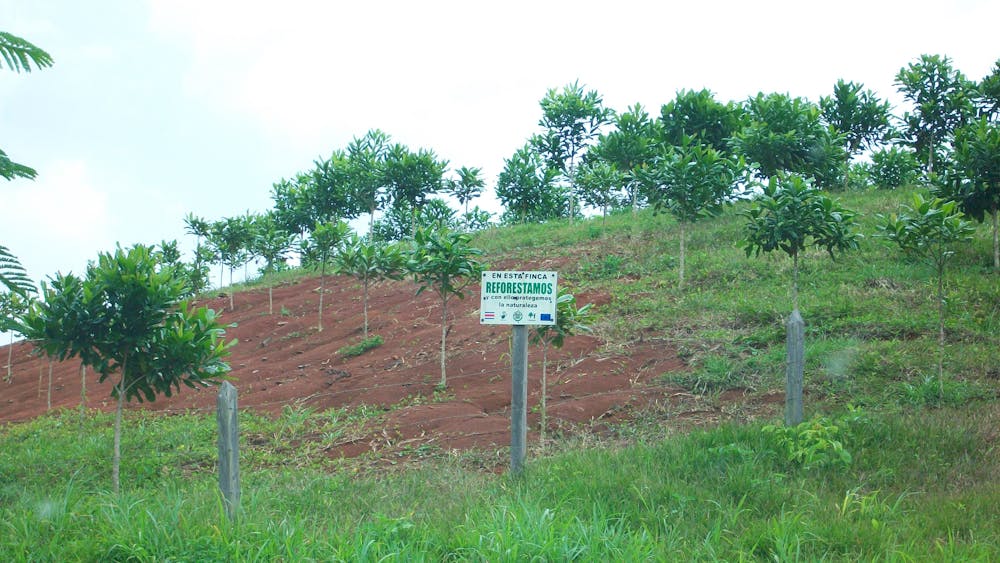
Reforestation project in northern Costa Rica: a plantation of native trees with valuable wood. Matthew Fagan, CC BY-ND
Putting trees back on the land
So far, 48 nations and 10 states and companies have made Bonn Challenge commitments to restore 363,000 square miles by 2020 and another 294,000 square miles by 2030. The United States and a Pakistani province have already fulfilled their commitments, restoring a total of 67,000 square miles.
Restoring forests poses political and economic challenges for national governments. Letting forests grow back inevitably means pulling land out of farming. Natural forest regeneration mainly occurs where farmers have abandoned poor quality land, or where governments discourage poor farming practices – for example, near wetlands or on steep slopes. Opportunities for natural regeneration elsewhere are limited.
As a result, much forest landscape restoration under the Bonn Challenge focuses on improving existing landscapes using trees. Restoration activities may include creating timber or fruit plantations; agroforestry, or planting rows of trees in and around agricultural fields; and silviculture, or improving the condition of degraded forests.
The U.N. Decade of Ecosystem Restoration seeks to restore some 5 billion acres of deforested and degraded landscapes and seascapes between 2021 and 2030.
One early success, the “Billion Tree Tsunami” in Pakistan’s Khyber Pakhtunkhwa province, has exceeded its 350,000-hectare pledge through a combination of protecting forest regeneration and planting trees. Similarly, Rwanda has restored 700,000 of the 2 million hectares it pledged, primarily through agroforestry and reforesting erosion-prone areas, and created thousands of green jobs.
Green deserts
However, these “restored forests” are often poor replacements for natural habitat. For animals dwelling in tropical forests, agroforestry and tree plantations can look more like green deserts than forests.
Many tropical forest wildlife species are only found in mature tropical forests and cannot survive in open agroforests, monoculture tree plantations or young natural regeneration. Truly restoring tropical forest habitat takes a diversity of forest species, and time.
Nonetheless, these working “forests” do have ecological value for some species, and can spare remaining natural forests from axes, fire and plows. In addition, scientists have estimated that restored forests could sequester up to 16 percent of the carbon needed to limit global warming to less than 2 degrees Celsius above pre-industrial levels, while generating some US$84 billion in assets such as timber and erosion control.
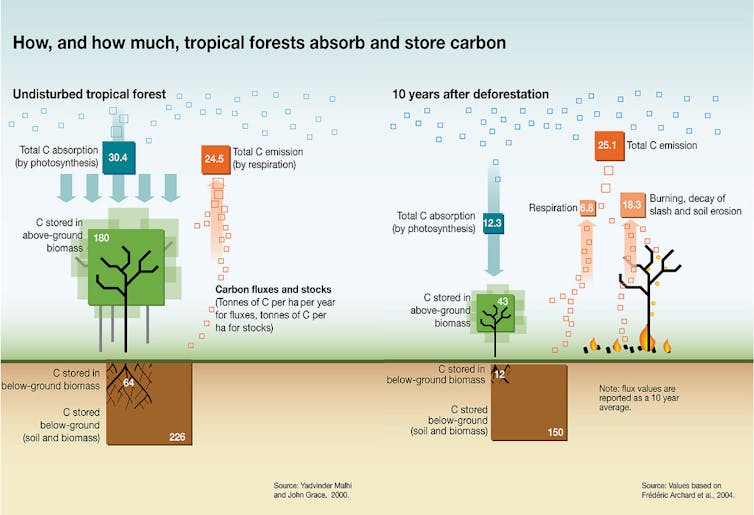
Logging and degradation of tropical forests is the main reason why forestry and land use account for 10–15 percent of the world’s total human-induced CO2 emissions. GRID-Arendal, CC BY-NC-SA
Restored, but for how long?
Benefits for wildlife and Earth’s climate from forest restoration accrue over decades. However, many forests are unlikely to remain protected for this long.
In a 2018 study we showed that forests that naturally regenerated in Costa Rica between 1947 and 2014 had only a 50 percent chance of enduring for 20 years. Most places where forests regrew were subsequently re-cleared for farming. Twenty years represents about a quarter of the time needed for forest carbon stocks to fully recover, and less than one-fifth of the time required for many forest-dwelling plants and animals to return.
Unfortunately, 20 years may be more than most new forests get. Studies in Brazil and Peru show that regenerating forests there are re-cleared even faster, often after just a few years.
This problem is not limited to natural forests. Agroforests worldwide are under pressure. For example, until recent decades, coffee and cocoa farmers in the tropics raised their crops in agroforests under a shady canopy of trees, which mimicked the way these plants grow in nature and maximized their health. Today, however, many of them grow their crops in the sun. This method can improve yield, but requires pesticides and fertilizer to compensate for added stress on the plants.
Poor management of coffee and cacao farming is a leading cause of deforestation in Peru. Local and international organizations are working to conserve and restore forests through better farming practices.
And although timber plantations sequester additional carbon with every harvest and replanting, their replanting is dependent on shifting market demand for wood. Once they are harvested after six to 14 years of growth, tropical timber plantations can be abandoned as a bad investment and replaced with higher-yielding row crops or pasture.
Solid foundations for recovery
If the Bonn Challenge is to achieve its goals, nations will have to find ways of converting short-term restoration pledges into long-term ecosystem recovery. This may require tightening the rules.
Some countries have pledged to protect unrealistically large areas. For example, Rwanda committed to restore 77 percent of its national territory, and Costa Rica and Nicaragua pledged to restore 20 percent of their territories apiece. Another flaw is that the Bonn Challenge does not prevent countries from deforesting some areas even as they are restoring others.
It will be impossible to track overall progress without an international commitment to monitor and sustain restoration successes. International organizations need to invest in satellite and local monitoring networks. We also believe they should consider how large international investments in sectors such as agriculture, mining and infrastructure drive forest loss and regrowth.
Countries like Indonesia that may be considering a Bonn Challenge pledge should be encouraged to focus on long-term impacts. Instead of restoring 10,000 square miles of one-year-old forest by 2020, why not restore 5,000 square miles of 100-year-old forest by 2120? Countries like Costa Rica that have already pledged can lock in those gains by protecting regrown forests.
The U.N. General Assembly recently approved a resolution designating 2021 to 2030 as the U.N. Decade of Ecosystem Restoration. We hope this step will help motivate nations to keep their promises and invest in restoring Earth’s deforested and degraded ecosystems.
Header image: A regenerating stand of rainforest in northern Costa Rica. Matthew Fagan, CC BY-ND
]]>
By Matthew Fagan, UMBC; Leighton Reid, University of Missouri-St. Louis, and Margaret Buck Holland, UMBC Tropical forests globally are being lost at a rate of 61,000 square miles a year. And...https://umbc.edu/stories/restoring-tropical-forests-isnt-meaningful-if-those-forests-only-stand-for-10-or-20-years/https://my3.my.umbc.edu/api/v0/pixel/news/120185/guest@my.umbc.edu/c3ca4332da5a337b1d2a262fe84ca19d/api/pixeldiscoverygesUMBC News & Magazinehttps://my3.my.umbc.edu/groups/umbc-news-magazinehttps://assets1-my.umbc.edu/system/shared/avatars/groups/000/001/943/24435aa6207c452e7bc15cc74b42c7bb/xsmall.png?1748556657https://assets1-my.umbc.edu/system/shared/avatars/groups/000/001/943/24435aa6207c452e7bc15cc74b42c7bb/original.png?1748556657https://assets2-my.umbc.edu/system/shared/avatars/groups/000/001/943/24435aa6207c452e7bc15cc74b42c7bb/xxlarge.png?1748556657https://assets2-my.umbc.edu/system/shared/avatars/groups/000/001/943/24435aa6207c452e7bc15cc74b42c7bb/xlarge.png?1748556657https://assets3-my.umbc.edu/system/shared/avatars/groups/000/001/943/24435aa6207c452e7bc15cc74b42c7bb/large.png?1748556657https://assets1-my.umbc.edu/system/shared/avatars/groups/000/001/943/24435aa6207c452e7bc15cc74b42c7bb/medium.png?1748556657https://assets2-my.umbc.edu/system/shared/avatars/groups/000/001/943/24435aa6207c452e7bc15cc74b42c7bb/small.png?1748556657https://assets1-my.umbc.edu/system/shared/avatars/groups/000/001/943/24435aa6207c452e7bc15cc74b42c7bb/xsmall.png?1748556657https://assets2-my.umbc.edu/system/shared/avatars/groups/000/001/943/24435aa6207c452e7bc15cc74b42c7bb/xxsmall.png?1748556657UMBC News & Magazine00falseWed, 20 Mar 2019 00:15:05 -0400UMBC’s Chris Swan contributes to landmark global stream ecology study
A single leaf dropping into a stream has just a tiny impact, but, together, the billions of leaves that drop into waterways every year help keep global ecosystems going. How this works and why it’s so important are two questions addressed in a massive,new study in Science Advancesco-authored by UMBC’s Chris Swan and over 150 researchers across all seven continents.
Leaves are mostly made of carbon, a primary building block for all living things. As leaves fall, organisms that live in or near rivers and streams are “supported by this pulse of carbon,” either directly or indirectly, says Swan, professor of geography and environmental systems.
“At any one point in time there’s not a lot of carbon there,” Swan explains, “but rivers serve as the plumbing system of the planet when it comes to how much carbon flows through.” So what factors drive how all that carbon is processed?
The new landmark study reveals how environmental factors drive the flow of carbon through the world’s waterways. “The study looked across the globe to learn what drives the rate of carbon decay in rivers and streams,” Swan says. “How is it transformed into energy as it travels up through the food web or transported downstream?”
Shifting patterns
The researchers first determined the overall carbon flow in waterways “across all continents and across a serious range of latitudes,” Swan says. They found that temperature was the biggest driver of carbon flow.
“That’s important because of climate change,” Swan says. “This study suggests that if temperature goes up, the rate at which carbon degrades will also go up.” This means that temperature change could reshape how carbon flows “either up the food chain or downstream.”
For example, bacteria, fungi, and aquatic invertebrates (like crayfish) are all responsible for breaking down some of the carbon in rivers. With climate change, “Bacteria and fungi that consume carbon are probably going to be more responsible for degrading it than invertebrates, because invertebrates aren’t able to evolve as fast” to adapt to the changing temperature, Swan explains. As some species succeed and others struggle, that could eventually lead to shifts in the makeup of aquatic ecosystems.
Chris Swan checks on plants at the UMBC greenhouses for use in restoration projects. Photo by Marlayna Demond ’11 for UMBC.
Development and dead zones
Increasing human development near waterways may also play an important role in carbon flow. Development “snips off” the smallest streams, but it’s at those abundant small streams where there’s an “intimate connection between streams and the forest,” Swan says. Those small streams are “part of the water purification process,” he explains.
Without as many small streams to break down the carbon, it ends up on pavement and runs off into larger streams and rivers. That creates higher than normal carbon concentrations, which can lead to low-oxygen “dead zones” in those larger waterways that are dangerous, even lethal, to aquatic life.
The value of partnership
The results of this study provide an important baseline for research on carbon flow in waterways moving forward. The experimental design at each site was simple, “but to manage and deploy it across the globe to all seven continents was a Herculean task that could only be done with a network of colleagues,” says Swan. “The key here is true partnerships and global coverage.”
To come to their conclusions, the scientists all used the same protocol: They each placed identical cotton squares provided by the lead author, Scott Tiegs at Oakland University, in a nearby stream. Then they carefully measured variables like the temperature, chemical makeup, flow rate, and width of the stream, plus the percentage canopy cover (how shaded the stream is). Everyone sent their cotton squares back to Tiegs, and he measured the cotton’s integrity at the end of the experiment.
Leaf chemistry can play a significant role in how quickly leaves decay—oak leaves are very slow, and ash leaves are fast, for example. But by using the cotton squares instead of real leaves, “we held all of that leaf chemistry constant and just looked at the environmental drivers,” Swan says.
“What I’m most proud about is being part of a group that was able to document the patterns on such a large scale using a consistent approach,” Swan says. Because of its extensive scope and scale, Swan expects the paper to be used in classrooms for a long time to come. As a benchmark study, it could teach generations of ecology students the fundamentals of carbon processing in waterways.
“The study is a lesson in stream ecology,” Swan says, “but the bigger lesson is that if you have partnerships you can do big things, and come up with big patterns.”
Image: Chris Swan. Photos by Marlayna Demond ’11 for UMBC.
]]>
A single leaf dropping into a stream has just a tiny impact, but, together, the billions of leaves that drop into waterways every year help keep global ecosystems going. How this works and why...https://umbc.edu/stories/umbcs-chris-swan-contributes-to-landmark-global-stream-ecology-study/https://my3.my.umbc.edu/api/v0/pixel/news/120202/guest@my.umbc.edu/a6df6252adc84cd63ac4a22a1d0bdb64/api/pixelcahssgespage1researchscience-and-technologyUMBC News & Magazinehttps://my3.my.umbc.edu/groups/umbc-news-magazinehttps://assets1-my.umbc.edu/system/shared/avatars/groups/000/001/943/24435aa6207c452e7bc15cc74b42c7bb/xsmall.png?1748556657https://assets1-my.umbc.edu/system/shared/avatars/groups/000/001/943/24435aa6207c452e7bc15cc74b42c7bb/original.png?1748556657https://assets2-my.umbc.edu/system/shared/avatars/groups/000/001/943/24435aa6207c452e7bc15cc74b42c7bb/xxlarge.png?1748556657https://assets2-my.umbc.edu/system/shared/avatars/groups/000/001/943/24435aa6207c452e7bc15cc74b42c7bb/xlarge.png?1748556657https://assets3-my.umbc.edu/system/shared/avatars/groups/000/001/943/24435aa6207c452e7bc15cc74b42c7bb/large.png?1748556657https://assets1-my.umbc.edu/system/shared/avatars/groups/000/001/943/24435aa6207c452e7bc15cc74b42c7bb/medium.png?1748556657https://assets2-my.umbc.edu/system/shared/avatars/groups/000/001/943/24435aa6207c452e7bc15cc74b42c7bb/small.png?1748556657https://assets1-my.umbc.edu/system/shared/avatars/groups/000/001/943/24435aa6207c452e7bc15cc74b42c7bb/xsmall.png?1748556657https://assets2-my.umbc.edu/system/shared/avatars/groups/000/001/943/24435aa6207c452e7bc15cc74b42c7bb/xxsmall.png?1748556657UMBC News & Magazine00falseWed, 27 Feb 2019 15:19:49 -0500Three generations, thousands of miles: Scientists unlock the mystery of a dragonfly’s migration
Thanks to photos and films featuring clouds of stunning orange and black monarch butterflies flying across North America, many people today are familiar with how monarchs migrate. The migration patterns of other insects, however, remain more mysterious, for both the public and scientists alike. A new paper in Biology Letters describes a dragonfly’s full life cycle for the first time, in compelling detail.
The researchers explain how the common green darner—a large, abundant dragonfly found across North America—takes three generations to complete its annual cycle. One generation migrates north in spring, the second south in fall, and the third is resident in the southern part of the species’ range over winter. These insects have a wingspan of just 7.5 cm (3 inches), but they migrate an average of over 600 km (373 miles), with some individuals covering more than 2,500 km (1,553 miles).
“We know that a lot of insects migrate, but we have full life history and full migration data for only a couple. This is the first dragonfly in the Western Hemisphere for which we know this,” says Colin Studds, assistant professor of geography and environmental systems at UMBC and senior author on the paper. “We’ve solved the first piece of a big mystery.”
The common green darner is indeed very common, and not currently a threatened species. Understanding their life cycle is important, though, because of the global context. “There are massive insect declines going on around the world,” says Peter Marra, director of the Smithsonian Migratory Bird Center and second author on the paper, “so understanding these complex biological phenomena is essential to determine why different populations might be declining.”
Insects are a critical driver of food webs, so figuring out why their populations are falling dramatically is important for the future success of a wide range of species, from rodents to raptors.
The research team used a combination of data sets, including 21 years of citizen science data, more than 800 dragonfly wing specimens from museums going back 140 years, and specimens caught in the wild. Collaborators Kent McFarland and Sara Zahendra of the Vermont Center for Ecostudies spent nearly two years collecting dragonflies from Florida to Ontario, Canada, and working with museums to get permission to analyze their specimens.
The team’s creative analysis included looking at the prevalence of different forms of hydrogen in the dragonflies. The ratio of three forms of hydrogen in the atmosphere shifts with latitude. Dragonflies pick up an imprint of the hydrogen ratio at their birthplace, so a scientist can determine where a dragonfly came from by looking at how much of each hydrogen type is present in a tiny piece of the dragonfly’s wing. That information enabled the team to discern the three-generation migration system.
The citizen science data—information collected by members of the general public—helped the scientists learn what factors cue the dragonflies to migrate or to emerge as flying adults after their aquatic juvenile stage. It turns out temperature plays a big role: the dragonflies both emerge and initiate migration at around 9 degrees Celsius (48 degrees Fahrenheit).
“With climate change we could see dragonflies migrating north earlier and staying later in the fall, which could alter their entire biology and life history,” says Michael Hallworth, postdoctoral fellow at the Smithsonian Migratory Bird Center and first author on the paper. Studds adds, “Climate change is a threat to all kinds of migration systems, and this could be one of them.”
Studds emphasizes that this discovery is the beginning of a long path toward better understanding insect migrations. Revealing the three-generation process, with two migratory generations and one resident, was, itself, “remarkable,” he says. “How it actually happens is a tremendous new mystery that brings together ecology and evolution,” Studds reflects, “and there’s a lot more to understand.”
Image: A common green darner in flight. Photo by Mark Chappell.
]]>
Thanks to photos and films featuring clouds of stunning orange and black monarch butterflies flying across North America, many people today are familiar with how monarchs migrate. The migration...https://umbc.edu/stories/three-generations-thousands-of-miles-scientists-unlock-the-mystery-of-a-dragonflys-migration/https://my3.my.umbc.edu/api/v0/pixel/news/120242/guest@my.umbc.edu/c705517ab1775e2c3ae7330494a2cb81/api/pixelcahssgesresearchscience-and-technologyUMBC News & Magazinehttps://my3.my.umbc.edu/groups/umbc-news-magazinehttps://assets1-my.umbc.edu/system/shared/avatars/groups/000/001/943/24435aa6207c452e7bc15cc74b42c7bb/xsmall.png?1748556657https://assets1-my.umbc.edu/system/shared/avatars/groups/000/001/943/24435aa6207c452e7bc15cc74b42c7bb/original.png?1748556657https://assets2-my.umbc.edu/system/shared/avatars/groups/000/001/943/24435aa6207c452e7bc15cc74b42c7bb/xxlarge.png?1748556657https://assets2-my.umbc.edu/system/shared/avatars/groups/000/001/943/24435aa6207c452e7bc15cc74b42c7bb/xlarge.png?1748556657https://assets3-my.umbc.edu/system/shared/avatars/groups/000/001/943/24435aa6207c452e7bc15cc74b42c7bb/large.png?1748556657https://assets1-my.umbc.edu/system/shared/avatars/groups/000/001/943/24435aa6207c452e7bc15cc74b42c7bb/medium.png?1748556657https://assets2-my.umbc.edu/system/shared/avatars/groups/000/001/943/24435aa6207c452e7bc15cc74b42c7bb/small.png?1748556657https://assets1-my.umbc.edu/system/shared/avatars/groups/000/001/943/24435aa6207c452e7bc15cc74b42c7bb/xsmall.png?1748556657https://assets2-my.umbc.edu/system/shared/avatars/groups/000/001/943/24435aa6207c452e7bc15cc74b42c7bb/xxsmall.png?1748556657UMBC News & Magazine00falseWed, 19 Dec 2018 13:03:23 -0500Faculty receive START and SURFF awards to pursue new research and creative work
UMBC’s Office of the Vice President for Research recently presented awards to support the work of two dozen UMBC faculty examining topics from health disparities among people with diabetes to natural language processing.
UMBC offers a range of research awards to help faculty launch new research projects, advance ongoing work, and effectively compete for external funding as their projects progress and grow. Strategic Awards for Research Transitions (START) offer up to $25,000. These awards allow faculty to pursue new areas of research and compete for external funding. Summer Research Faculty Fellowship (SURFF) awards offer up to $6,000 in summer funding to non-tenured, tenure-track faculty. Current SURFF awardees received funding for summer 2018, and START awardees will begin their funding cycle in July 2019.
Health and aging
Christine Mair, associate professor of sociology, anthropology, and health administration policy, and a faculty member in the gerontology Ph.D. program, received START funding to complete foundational research visits in global regions that are underrepresented in aging research, across Eastern Europe, Southern Europe, South America, and Asia. She is working to clarify research questions and strengthen relationships with potential research collaborators for a proposal to the National Institute of Aging (NIA).
Christine Mair, second from left, at the UMB-UMBC Partnership Symposium. Photograph by Marlayna Demond ’11 for UMBC.
With START funding, Sarah Chard, associate professor of sociology, anthropology, and health administration policy, is studying the activity levels of older African-American adults in Baltimore who have diabetes. She is conducting interviews and observing patients to better understand how they experience and manage their illness, their social and physical environments, and how they maintain physical activity routines. This work is helping Chard to develop more effective programs to address health disparities among people with diabetes.
“The aim of my START-funded project is to identify how belief systems and social processes work together to inform physical activity routines among older adult African Americans with diabetes. The project builds on my earlier research on diabetes, which identified many barriers to physical activity for older adults living in Baltimore,” Chard says. “Through START funding, I’m able to shift my focus to look at persons who are engaging in physical activity to see how they create support systems and navigate local barriers. The findings will help address a critical gap in the literature regarding successful community-based physical activity.” Chard will use data from this research for an NIA grant proposal.
Tasneem Khambaty. Photo courtesy of psychology department.
Tasneem Khambaty, assistant professor of psychology, is using her SURFF award to continue research studying the symptoms and biomarkers of type 2 diabetes, which disproportionately affects African Americans. Khambaty examined how depressive symptoms and executive function impact these biomarkers in the long term, utilizing data from the Healthy Aging in Neighborhoods of Diversity across the Life Span (HANDLS) study, which was conducted in Baltimore. Khambaty is using this research to build a proposal for an NIH Mentored Patient-Oriented Research Career Development Award.
Jiaqi Gong, assistant professor of information systems, is developing innovative ways to understand cognitive and neural systems, specifically in people with multiple sclerosis and ACL injuries. Wearable sensors don’t all work equally well for all people. Previously, Gong developed wearable sensors that perform better in people with multiple sclerosis at different stages. Through his SURFF-funded work, he is utilizing those sensors to study brain mechanisms that control automatic and unconscious motor action, to inform his teaching and further research.
Jiaqi Gong, right, connects with colleagues at campus event. Photo by Kait McCaffrey.
Drew Holladay, assistant professor of English, utilized SURFF funding to continue revisions of his 2017 dissertation “Articulating the New Normal(s): Mental Disability, Medical Discourse, and Rhetorical Action” for publication as a book. Holladay studies online discussion board posts written by people diagnosed with autism, post-traumatic stress disorder, and schizophrenia. He is expanding his earlier writing to include more linguistic analysis, analyzing how the medical community talks about these diagnoses, as well as adding in illustrations to complement the text.
Drew Holladay, third from right, participating on UMBC’s Public Humanities and Health Justice Research Forum. Photo by Kait McCaffrey.
Cynthia Matuszek, assistant professor of computer science and electrical engineering (CSEE), was granted START funding to advance her work on robots that assist senior citizens in daily life and enable them to continue to live independently. She is collaborating with eldercare professionals to develop a library that will outline specific examples of how seniors can utilize assistive robots in daily life. Matuszek also received SURFF funding to develop a networking event at the Robotics: Science and Systems conference, to connect junior faculty and postdoctoral researchers with mentors in robotics.
Art, history, and society
Kathryn Bell, associate professor of visual arts, is using START funding to create Metempsychosis, a series of interactive digital video installations that combine art with science, technology, engineering, and math. She is shifting her work from project mapping art to art that is more accessible and less expensive to stage in galleries. Bell will travel to the United Kingdom to study under automata artist Matt Smith, who has exhibited at museums around the world.
Anne Rubin, professor of history, was awarded START funding to visualize the landscape of slavery and freedom in Early Baltimore. Rubin is building a virtual 3D prototype of early Baltimore between 1815 and 1820, in collaboration with UMBC’s Imaging Research Center.
Kathy Marmor, associate professor of visual arts, received START funding to create two new art installations called Mid-Life, inspired by the practice of compiling a book based personal knowledge, which has been common from the seventeenth century through modern times, and is based on one’s “habit of mind.” She is collaborating with faculty in UMBC’s English and computer science and electrical engineering departments. The installations will bring together digital and computer-based imagery, and analog drawings and fiber art to depict women facing mid-life challenges.
A photo from The Glass Knife exhibition, by Kathy Marmor and Stephen Bradley, which ran in 2016. Image by Stephen Bradley.
Sarah Sharp, assistant professor of visual arts, is using START funding for her new project Off the Press. Sharp will look at small presses and self-published media from the women’s, gay rights, and environmental movements in the 1970s. She will examine the differences and similarities between common practices of that period and contemporary self-publishing practices, such as through social media and other online platforms. Sharp is combining traditional art practices, like quiltmaking and embroidery, with digital video, augmented reality, and 3D modeling.
Earl Brooks, assistant professor of English, utilized a SURFF award to continue his project Black Sonority: Rhetoric and Black Music. This work examines the intersections of Black music, life, and culture. Brooks explores the rhetorical nature of Black music and the various roles it had has in shaping public discussion.
Cross-cultural understanding
Kindel Nash, associate professor of early childhood education, has received SURFF funding to study the relationship between culture, language, and literacy development for young children in the United States and Peru. Nash is examining highly effective literacy practices in U.S. and Peruvian primary schools, which both include populations that are historically underserved in educational settings. She will work to determine the practices’ commonalities and underlying principles, and whether the approaches would be transferable across cultures.
Salem Abo-Zaid, assistant professor of economics, studied attitudes toward immigrant and minority populations in a sample of European countries between 2002 and 2016. He used longitudinal data from the European Social Survey to understand how economic conditions have impacted tolerance toward people in these groups. Abo-Zaid found that economic conditions, in addition to security, political, and cultural tensions, impacted countries’ tolerance of immigrant and minority populations.
Melissa Bailey Kutner, assistant professor of ancient studies, used SURFF funding to complete her book about economics in the Roman Empire. As a part of this work, Kutner studied coins, measured instruments, and wrote accounts of documents found at specific archaeological sites. She looked at how communities used these tools to trace how they shared information and negotiated economic value. Kutner found that how Romans represented value depended on social context, and she developed a model to examine related historical changes across multiple regions.
Technology and environment
Dillon Mahmoudi, assistant professor of geography and environmental systems, used SURFF funding to create a machine-learning algorithm to identify spaces for urban agriculture on single family tax lots. Mahmoudi will study whether urban agriculture plots are more frequently located in richer or poorer neighborhoods. This work focuses on the food production potential of lots in Seattle and Baltimore, expanding on prior research that analyzed lots through satellite images of Portland.
Tim Nohe, professor of visual arts and director of UMBC’s Center for Innovative Research in the Creative Arts, received START funding to use 360 degree immersive video and surround-sound technology to give people a deeper look into the environment through his project “Water Flowing Underground: Immersive Sound and Immersive Video Imaging.” His work will allow viewers to understand sources of pollution that impact Baltimore’s watershed. The research will reveal streams that have been used to collect raw sewage, or have been paved over, impacting the flow of water.
Tim Nohe at Light City in 2017. Photo by Marlayna Demond ’11 for UMBC.
“This grant has allowed me to begin fieldwork and research on the fractured interface of Baltimore’s watershed and its sanitary sewer system. That breakdown is evident in my neighborhood, and throughout the city,” explains Nohe. “When the sewer system was nearing completion in 1909 it was called an ‘unexcelled marvel of the engineering world,’ but today sanitary sewers routinely spew waste into our streams, the bay, and city basements.”
“I’m forging partnerships with journalists, water quality scientists and nonprofit groups like Blue Water Baltimore to hunt down and expose these breakdowns,” says Nohe, “using the tools of archival research, and documentary immersive video and surround sound.”
Data and computing
Frank Ferraro, assistant professor of CSEE, used SURFF funding to advance his work in natural language processing. He studied how information extraction systems can help deconstruct and summarize highly complex documents. Over the summer, Ferraro developed, trained, and evaluated these systems to determine how they can be effectively used to can help people understand themes within dense and complicated texts.
Haibin Zhang, assistant professor of CSEE, developed an efficient, secure and scalable system that helps prevent compromised sensors from shifting aggregated data results based on polluted data. The system that Zhang designed and put in place helps solve the problem by keeping individual sensor inputs private.
Sisi Duan, assistant professor of information systems, used SURFF funding to study the scalability of blockchains—blocks of data linked using cryptography, that are resistant to tampering. She identified challenges that blockchain researchers sometimes face, and then redesigned and reimplemented a blockchain protocol called BChain, which she developed. Duan implemented BChain as part of the Hyperledger project, a global collaborative project aimed at advancing blockchain technologies across industries.
Curtis Menyuk, professor of CSEE, is working with collaborators at Bangladesh University of Engineering and Technology and at the Maryland Psychiatric Research Center to develop a model that can help explain what contributes to white matter deficits in the brain.
New directions in science
Theodosia Gougousi, professor of physics, received funding to address the shortage of semiconductor-compatible nonlinear optical materials. She will investigate the nonlinear properties of dielectric thin films and nanolaminates formed by atomic layer deposition. Her project is interdisciplinary, bridging the fields of electronics materials and nonlinear optics, with the goal of developing a broader materials toolkit that could be utilized for optoelectronic applications.
Gougousi explains that the funding will support the collaboration of her research group and that of Anthony Johnson, professor of physics. “Our groups have been working together for over a year,” she says. “We expect the award will enable us to complete the characterization of the structure and composition of these films, which is required for competitive proposals to national funding agencies.
Mercedes Burns, assistant professor of biological sciences, studied sexual reproduction in Japanese harvestman, an arachnid with long legs compared to other species. This work, supported by SURFF funding, allowed Burns to collect female Japanese harvestman in order to conduct genotyping analysis. During the summer, she attended the Society of Molecular Biology and Evolution scientific meeting to collaborate with fellow biologists from around the world.
Kathleen Cusick, assistant professor of biological sciences, received SURFF funding to characterize the role of an intracellular signaling molecule in bacteria that regulates cellular function, cell movement, intracellular communication, and how cells respond to the environment. The molecule (called c-di-GMP) has unique trails that make it a particularly good fit for this research into signaling networks.
For more information about UMBC’s START and SURFF programs, visit the UMBC Research website.
Banner image: Anne Rubin, standing, during the 2018 Frederick Douglass transcribe-a-thon. Banner image by Marlayna Demond ’11 for UMBC.
]]>
UMBC’s Office of the Vice President for Research recently presented awards to support the work of two dozen UMBC faculty examining topics from health disparities among people with diabetes to...https://umbc.edu/stories/faculty-receive-start-and-surff-awards-to-pursue-new-research-and-creative-work/https://my3.my.umbc.edu/api/v0/pixel/news/120243/guest@my.umbc.edu/714811ac2a01d4a647e7e1503f70268a/api/pixelancientstudiesbiologycahsscirscacnmscoeitcseeeconomicseducationenglishgeshistoryisphysicsresearchsaphscience-and-technologystrategic-planningvisualartsUMBC News & Magazinehttps://my3.my.umbc.edu/groups/umbc-news-magazinehttps://assets1-my.umbc.edu/system/shared/avatars/groups/000/001/943/24435aa6207c452e7bc15cc74b42c7bb/xsmall.png?1748556657https://assets1-my.umbc.edu/system/shared/avatars/groups/000/001/943/24435aa6207c452e7bc15cc74b42c7bb/original.png?1748556657https://assets2-my.umbc.edu/system/shared/avatars/groups/000/001/943/24435aa6207c452e7bc15cc74b42c7bb/xxlarge.png?1748556657https://assets2-my.umbc.edu/system/shared/avatars/groups/000/001/943/24435aa6207c452e7bc15cc74b42c7bb/xlarge.png?1748556657https://assets3-my.umbc.edu/system/shared/avatars/groups/000/001/943/24435aa6207c452e7bc15cc74b42c7bb/large.png?1748556657https://assets1-my.umbc.edu/system/shared/avatars/groups/000/001/943/24435aa6207c452e7bc15cc74b42c7bb/medium.png?1748556657https://assets2-my.umbc.edu/system/shared/avatars/groups/000/001/943/24435aa6207c452e7bc15cc74b42c7bb/small.png?1748556657https://assets1-my.umbc.edu/system/shared/avatars/groups/000/001/943/24435aa6207c452e7bc15cc74b42c7bb/xsmall.png?1748556657https://assets2-my.umbc.edu/system/shared/avatars/groups/000/001/943/24435aa6207c452e7bc15cc74b42c7bb/xxsmall.png?1748556657UMBC News & Magazine00falseTue, 18 Dec 2018 20:22:13 -0500
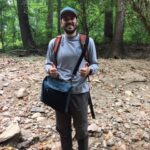
 Matt Schley ’13 in his current role with the National Park Service. Photo courtesy Matt Schley.
 A truck being loaded with salt near Hampton Roads, Virginia. Photo courtesy Virginia Department of Transportation, used under CC BY-NC-ND 2.0.
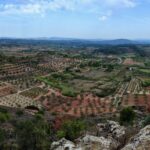



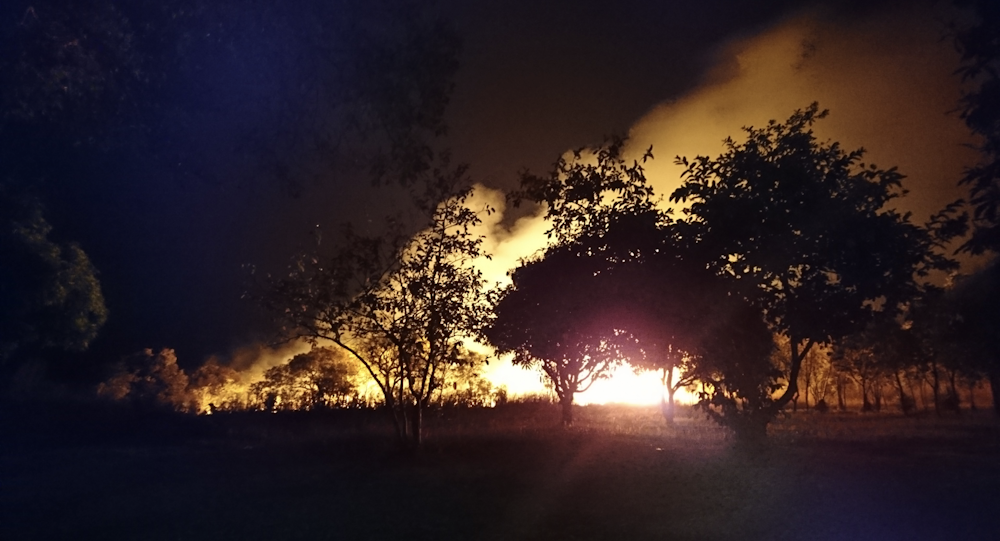
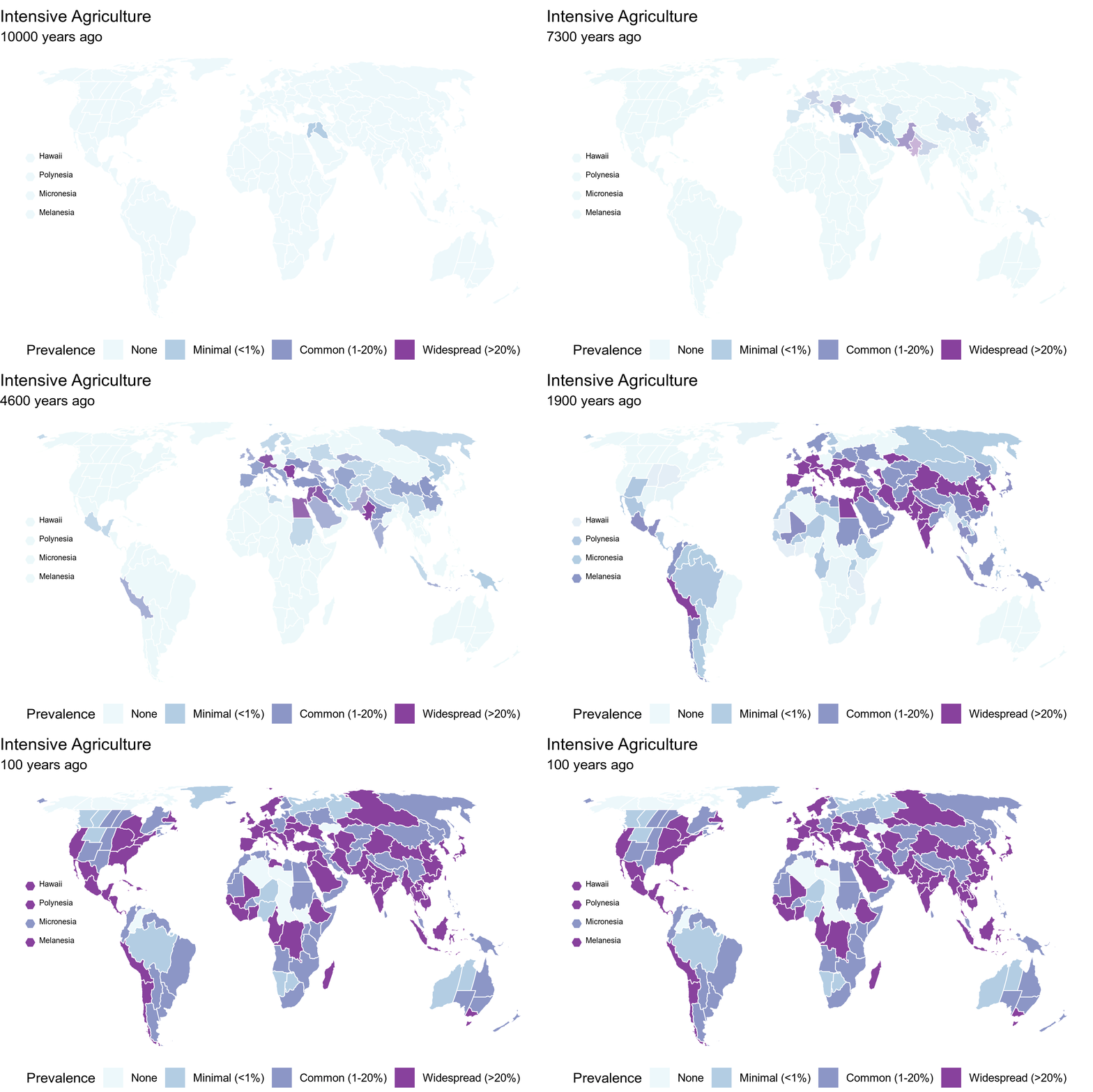 Animation showing the spread of intensive agriculture across the globe over the past 10,000 years, based on ArchaeoGLOBE Project results. (Nicolas Gauthier, 2019, CC-BY-SA)