START and SFF awards support UMBC faculty pursuing research in new directions

The Office of the Vice President for Research has awarded Strategic Awards for Research Transitions (START) and Summer Faculty Fellowship (SFF) awards to 24 UMBC faculty representing a broad range of departments across all UMBC colleges. START awards offer up to $25,000, beginning in July 2017, to faculty who wish to pursue new areas of research and compete more effectively for external funding and support. SFF awards offer up to $6,000 to non-tenured, tenure-track faculty pursuing research and projects during the summer.
Chris Swan, professor of geography and environmental systems, was awarded START funding to study the role of plant diversity in ecosystem services on urban vacant land. He is interested in understanding which native plants existed in Baltimore before modern seeding practices in the City began, and how plants native to Maryland can thrive in urban settings.
“Resources from the START award will go a long way in supporting our research into answering questions about how best to green vacant land in Baltimore City in order to meet sustainability action goals,” says Swan.
 Michael Lane.
Michael Lane, assistant professor of ancient studies, will use START funding to study Mycenaean Northeast Kopaïs stratigraphy, adding to a body of research on the chronology of mainland Greece, the Greek islands, and the west coast of Turkey during the Late Bronze Age in the Aegean period. Lane will collaborate with the Hellenic Ministry of Culture and Sports in Greece.
Aaron Smith, assistant professor of chemistry and biochemistry, received START and SFF funding to study how infectious bacteria gain iron, which is essential for the organisms to grow in the human body. His research may have impacts for people with gingivitis and cystic fibrosis.
“The UMBC START and SFF awards are invaluable to myself and my laboratory, as it provides us with funding for additional lab equipment necessary to decipher the atomic-level details of iron-transport proteins that are utilized by pathogenic bacteria to establish infection within human hosts,” Smith explains. He adds, “the return on investment to UMBC of this award should ultimately prove high, as the START funding mechanism will allow us to generate a critical mass of results necessary to bring in greater external funding to support our research program for the long term.”
Ed Larkey, professor of modern languages, linguistics and intercultural communication, was awarded START funding to study the transcultural orbit of Israeli television through the adaptation of a comedy series. Larkey will use a combination of quantitative and qualitative data to study that ways heterosexual couples’ private interactions are depicted in modern Israeli society.
Corrie Parks, assistant professor of visual arts, will use START funding to create Black Butterfly, a multi-media work of art that will help viewers visualize the impact violent crime can have on communities. She will use statistics from a Baltimore City homicide map from 2017, and develop an animated portrait of a single grain of sand to represent each point on the map.
 Sarah Shin
Sarah Shin, professor of education and special assistant to the provost for academic initiatives, was awarded START funding to study student and volunteer success through an intergenerational partnership. Volunteers from the Charlestown Retirement Community will tutor students at Lakeland Elementary/Middle School who are struggling with learning English. Shin will assess whether the students show gains in their literacy skills, and will examine what the tutors gain through the partnership.
Deepa Madan, assistant professor of mechanical engineering, will use START and SFF funding to design and produce “a flexible generator that runs on waste heat and generates enough power to replace batteries used in wireless sensor networks.” She explains that the funding will allow her to enhance the properties of the thermoelectric materials.
“An important objective of my current research is to generate necessary data to demonstrate my readiness for undertaking externally funded major projects,” says Madan. “With the support of START and SFF awards, it now appears realistic that I will start writing these grant applications as soon as this summer.”
Brian Kaufman, assistant professor of music, received START funding to conduct research on and release recordings of three pieces composed by newer artists in wind ensemble music. Kaufman will work with each composer, a recording team, and the UMBC Wind Ensemble to complete the project.
Tom Cronin, professor of biological sciences, will study the brains of mantis shrimp, known for their highly complex sense of vision and unique behaviors.
Peggy Re, associate professor of visual arts, will use START funding to support a portion of “A Designed Life,” an exhibition that re-creates and interprets three Cold War-era traveling displays of
contemporary American designed and manufactured goods that were commissioned by the U.S. Department of State in the early 1950s. The displays were presented in West German venues as part of a propaganda campaign to showcase the superior lifestyle choices, built environments and affluence of the United States.
associate professor of visual arts, will use START funding to create “A Designed Life,” an exhibit made out of containers and packaging materials. The exhibit, which will open at UMBC’s Center for Art Design and Visual Culture in October 2018, will show the possible political connections to people and their activities, experiences, needs, desires and attitudes.
Bedrich Sousedik, assistant professor of mathematics and statistics, will use SFF funding to develop algorithms to address problems in physical sciences and engineering that can be modeled by partial differential equations. Sousedik works to develop new methods that use computers to solve the equations using computers.
Christopher Tong, assistant professor of modern languages, linguistics and intercultural communication, received SFF funding for the project “Torrents of Revolution: The Writing of Environmental Disasters in Modern China, 1930-1949.” Tong will study highly complex environmental disasters in early 20th-century China through literature, environmental history, and disaster studies.
 Keisha Allen
Keisha Allen, assistant professor of education, received SFF funding to examine the racial literacy of teacher candidates and high school youth. She will design curricula and study how storytelling can support the racial literacy of teacher candidates.
Daniel Lobo, assistant professor of biological sciences, will use SFF funding to create computational framework to improve the production of biofuels and chemicals. The optimized design will be part of a comprehensive pipeline for biofuel production using bacterial and yeast species.
Greg Szeto, assistant professor of chemical, biochemical and environmental engineering, was awarded SFF funding to develop self-engineering drugs that can quickly break into the outer surface of immune cells to enhance the function of these cells in patients who are using immunotherapy to combat cancer.
Jane Arnold Lincove, associate professor of public policy, will use SFF funding to study how charter schools affect student achievement and teacher retention rates in Maryland. This will be the first study of charter schools in Maryland, where traditional public schools with unionized faculty and charter schools coexist by state law.
Jennifer Callaghan-Koru, assistant professor of health administration and policy, will study the validity of client exit interviews to assess programs. The SFF funding will allow Callaghan-Koru to develop methodologies for monitoring programs.
Jules Rosskam, assistant professor of visual arts, will use SFF funding to create “Paternal Rites,” an essay film that explores the unique challenges facing American families through personal narrative. The film will explore addiction, abuse, and mental illness through some of Rosskam’s historical family narratives and will incorporate the context of the interstate highway system as a factor impacting family and community structure and access to resources.
Maria Bernedo Del Carpio, assistant professor of economics, will use SFF funding to study the long-term effects of water conserving technologies.
 Mejdulene Shomali
Mejdulene Shomali, assistant professor of gender and women’s studies, was awarded SFF funding to study how femininity and sexuality is represented in Arab and Arab American literature and art. She is interested in how Arab and Arab American writers and artists are struggling against racism and Orientalism to represent Arab cultures in their work.
Naghmeh Karimi, assistant professor of computer science and electrical engineering, was awarded SFF funding to study the stability and aging resiliency of physical systems that can be evaluated but are challenging to predict.
Nianshen Song, assistant professor history, will use SFF funding to continue researching the histories of the Sino-Korean boundary and the Korean diaspora community in China for his book project, “Transforming Frontier in East Asia: the Tumen River Demarcation, 1880-1919.”
Nkiru Nnawulezi, assistant professor of psychology, was awarded SFF funding to research the health and resource needs of intimate partner violence survivors whose partners are in abuser intervention programs.
Shimei Pan, assistant professor of information systems, received SFF funding to study self control and impulsiveness of people by using social media analytics to monitor their behavior on social media, such as Facebook posts and likes.
For more information about UMBC’s START and SFF programs, visit the UMBC Research website.
Banner image: Daniel Lobo. All photos by Marlayna Demond ’11 for UMBC.
]]>
The Office of the Vice President for Research has awarded Strategic Awards for Research Transitions (START) and Summer Faculty Fellowship (SFF) awards to 24 UMBC faculty representing a broad range...
https://umbc.edu/stories/start-and-sff-awards-support-umbc-faculty-pursuing-research-in-new-directions/
https://my3.my.umbc.edu/api/v0/pixel/news/120818/guest@my.umbc.edu/121cf56ac98ed03b9ca865a3eff3be82/api/pixel
ancientstudies
arts-and-culture
biology
cahss
cbee
chembiochem
cnms
coeit
csee
economics
education
ges
gwst
is
mathstat
meche
mlli
music
policy-and-society
psychology
publicpolicy
research
saph
science-and-technology
visualarts
UMBC News & Magazine
https://my3.my.umbc.edu/groups/umbc-news-magazine
https://assets1-my.umbc.edu/system/shared/avatars/groups/000/001/943/24435aa6207c452e7bc15cc74b42c7bb/xsmall.png?1748556657
https://assets1-my.umbc.edu/system/shared/avatars/groups/000/001/943/24435aa6207c452e7bc15cc74b42c7bb/original.png?1748556657
https://assets2-my.umbc.edu/system/shared/avatars/groups/000/001/943/24435aa6207c452e7bc15cc74b42c7bb/xxlarge.png?1748556657
https://assets2-my.umbc.edu/system/shared/avatars/groups/000/001/943/24435aa6207c452e7bc15cc74b42c7bb/xlarge.png?1748556657
https://assets3-my.umbc.edu/system/shared/avatars/groups/000/001/943/24435aa6207c452e7bc15cc74b42c7bb/large.png?1748556657
https://assets1-my.umbc.edu/system/shared/avatars/groups/000/001/943/24435aa6207c452e7bc15cc74b42c7bb/medium.png?1748556657
https://assets2-my.umbc.edu/system/shared/avatars/groups/000/001/943/24435aa6207c452e7bc15cc74b42c7bb/small.png?1748556657
https://assets1-my.umbc.edu/system/shared/avatars/groups/000/001/943/24435aa6207c452e7bc15cc74b42c7bb/xsmall.png?1748556657
https://assets2-my.umbc.edu/system/shared/avatars/groups/000/001/943/24435aa6207c452e7bc15cc74b42c7bb/xxsmall.png?1748556657
UMBC News & Magazine
0
0
false
Fri, 28 Apr 2017 15:43:26 -0400
UMBC voices at Light City connect visitors with new ideas

Baltimore’s second annual Light City festival featured numerous vibrant art installations and performances by UMBC faculty, students, staff, and alumni, as well as thought-provoking talks by UMBC researchers during the Labs@LightCity companion innovation conferences.
Interactive artworks by Eric Dyer, associate professor of visual arts, and Timothy Nohe, professor of visual arts and director of the Center for Innovative Research in the Creative Arts, drew crowds throughout the festival week, March 31 – April 8. Dyer discussed his piece, “Shabamanetica,” with the Baltimore Sun just ahead of Light City, and Voice of America featured Nohe’s work in story recapping highlights from the festival [see video at 1:30].
A sneak peek of the UMBC SPARK pop-up gallery drew a crowd on its opening night, and audiences throughout the week, for installations by several UMBC faculty and students and performances by UMBC’s Baltimore Dance Project, percussion ensemble, and others, as well as an animation workshop by Corrie Parks, assistant professor of visual arts.
 Preminda Jacob, chair and associate professor of visual arts, speaks at the SPARK gallery.
The Black and Gold Lounge was also a major draw throughout the evening on Saturday, April 1, as the UMBC community gathered, with family and friends, to enjoy a 180-degree panoramic view of Light City, right on the path of the BGE Art Walk.
 View of Baltimore’s Inner Harbor from the Black and Gold Lounge.
Light City’s HealthLab on April 3 featured Gymama Slaughter, associate professor of computer science and electrical engineering. Slaughter works to develop biosensors that are powered by the human body and do not require batteries. Her talk, “The Body as a Battery,” focused on how the body’s chemical energy can be channeled to power wearable and implantable medical devices.
 Gymama Slaughter speaking at Light City’s HealthLab.
Slaughter’s work examines novel ways to use the human body’s natural ability “to reboot and recharge your energy reservoir” by eating food and breaking it down. “What we’re doing in my lab is taking energy-rich blood sugar and converting it into electricity to power implantable devices such as the pacemaker, or wearable devices such as the continuous glucose monitor,” she explained.
Current technologies are dependent on battery power, and failing to recharge or replace batteries when needed can pose health risks. Creating devices that utilize the body’s own energy reservoir could remove those risks and also “allow us to eliminate repeated surgery” for battery replacement.
The following day, Chris Swan, professor of geography and environmental systems, shared his perspective on the GreenLab panel, “New Thinking: Greening Baltimore at the Grassroots.” Swan’s research over the past six years has focused on re-greening vacant lots in Baltimore with native species. He asks cutting-edge ecological questions, and at the same time, works with communities to improve the health and safety of underserved Baltimore neighborhoods.
 Chris Swan (r) speaking at Light City’s GreenLab.
“We were very surprised at how quickly we got results,” Swan said, noting that robust populations of native plants, pollinators, and other wildlife returned within two years of the start of the study, despite terrible soil conditions. Following this success, his project is now expanding from an original 25 lots to nearly 100.
Swan also shared his previous collaborative work with incarcerated men in Baltimore. “We had master gardeners providing education to inmates about how to do urban agriculture,” he detailed, describing how the inmates were able to contribute to the ecological research and gained useful gardening skills they could leverage after their release.
Based on his experiences with creative partnerships, Swan is optimistic about the future of Baltimore. “There’s tons of potential,” he says, in all kinds of areas.
On April 5, President Freeman Hrabowski kicked off Light City’s EduLab in a conversation with Johns Hopkins University-affiliated entrepreneur Alec Ross titled “The Path to the Future.” President Hrabowski discussed what education might look like in the years ahead, emphasizing the interconnections among different fields, the increasingly prominent role of data and data science, and the possibility of more personalized education pathways.
 President Freeman Hrabowski (r) at Light City’s EduLab.
Hrabowski particularly emphasized the need for students to embrace both STEM and the humanities. “We have to get away from thinking some kids are going to be good at math and science, and some kids are good at history, arts, and English,” he said.
“I want everyone in the room thinking about how we teach young people and ourselves to connect both with the humanities and with the technology side.” Why? Careers of the future will require skills in many areas, not one narrow topic, Hrabowski suggested. Plus, he shared, even in fields they find initially challenging, “students can learn much more than they think,” and knowledge across disciplines can expand the possibilities for their futures.
Light City, with its artworks inspired by technology and society, and talks by experts across a diversity of fields, gave visitors a glimpse of that future.
Header image: Eric Dyer with his piece “Shabamanetica” at Light City 2017. All photos by Marlayna Demond ’11 for UMBC.
]]>
Baltimore’s second annual Light City festival featured numerous vibrant art installations and performances by UMBC faculty, students, staff, and alumni, as well as thought-provoking talks by UMBC...
https://umbc.edu/stories/umbc-voices-at-light-city-connect-visitors-with-new-ideas/
https://my3.my.umbc.edu/api/v0/pixel/news/120834/guest@my.umbc.edu/c19d258bb03808e1ff614bbb3f6c9d13/api/pixel
arts-and-culture
cahss
coeit
community
visualarts
UMBC News & Magazine
https://my3.my.umbc.edu/groups/umbc-news-magazine
https://assets1-my.umbc.edu/system/shared/avatars/groups/000/001/943/24435aa6207c452e7bc15cc74b42c7bb/xsmall.png?1748556657
https://assets1-my.umbc.edu/system/shared/avatars/groups/000/001/943/24435aa6207c452e7bc15cc74b42c7bb/original.png?1748556657
https://assets2-my.umbc.edu/system/shared/avatars/groups/000/001/943/24435aa6207c452e7bc15cc74b42c7bb/xxlarge.png?1748556657
https://assets2-my.umbc.edu/system/shared/avatars/groups/000/001/943/24435aa6207c452e7bc15cc74b42c7bb/xlarge.png?1748556657
https://assets3-my.umbc.edu/system/shared/avatars/groups/000/001/943/24435aa6207c452e7bc15cc74b42c7bb/large.png?1748556657
https://assets1-my.umbc.edu/system/shared/avatars/groups/000/001/943/24435aa6207c452e7bc15cc74b42c7bb/medium.png?1748556657
https://assets2-my.umbc.edu/system/shared/avatars/groups/000/001/943/24435aa6207c452e7bc15cc74b42c7bb/small.png?1748556657
https://assets1-my.umbc.edu/system/shared/avatars/groups/000/001/943/24435aa6207c452e7bc15cc74b42c7bb/xsmall.png?1748556657
https://assets2-my.umbc.edu/system/shared/avatars/groups/000/001/943/24435aa6207c452e7bc15cc74b42c7bb/xxsmall.png?1748556657
UMBC News & Magazine
0
0
false
Fri, 14 Apr 2017 19:56:54 -0400
Stanley B. Burns donates daguerreotype collection to UMBC
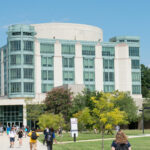
A recent gift by Stanley B. Burns, M.D. substantially increases the holdings of daguerreotypes at UMBC. Dr. Burns, historian, collector, and physician, donated 252 daguerreotypes from his large photography collection, continuing his long relationship with UMBC.
Tom Beck, chief curator of UMBC’s Albin O. Kuhn Library notes that the donated works are both signed and unsigned daguerreotypes:
More than seventy different photographers are represented among the signed works, including recognized daguerreotypists such as Charles Deforest Fredericks, Rufus Anson, John Plumbe, Jr., Samuel Broadbent, and Jessie Whitehurst. The unsigned works are unattributable to any specific artist but hold significant value for the uniqueness of the imagery, the interesting representations of nineteenth century people, and the material culture characteristics.
 Having acquired his first photograph in 1975 (a medical image), Burns founded the “Burns Archive” in 1977 at his New York City home. The Archive began receiving recognition in 1978 by such prominent publications as New York magazine, Aperture magazine, and the New York Times. Art& Antiques Magazine labeled Burns “one of America’s Top 100 Collectors.”
As an historian, Burns has written over 1,100 articles and over forty books on subjects ranging from Victorian funeral portraits to early oncology. His books Sleeping Beauty: Memorial Photography In America, and Forgotten Marriage: The Painted Tintype & The Decorative Frame, 1860-1910, A Lost Chapter in American Portraiture both received American Photographic Historical Society awards for best publications, and Sleeping Beauty was praised by Pulitzer Prize winning author John Updike in American Heritage magazine. Images from the Burns Archive have been utilized for such nationally and internationally distributed television programs and motion pictures as The American Experience, Hannibal, The Knick, and Silence of the Lambs.
Images: Header image is UMBC Library, by Marlayna Demond ’11 for UMBC. Daguerreotype is “Sea Captain in Typical Distinguished Pose,” by J. H. Young, 1850s. Photography Collections, Albin O. Kuhn Library & Gallery.
]]>
A recent gift by Stanley B. Burns, M.D. substantially increases the holdings of daguerreotypes at UMBC. Dr. Burns, historian, collector, and physician, donated 252 daguerreotypes from his large...
https://umbc.edu/stories/stanley-b-burns-donates-collection-to-umbc/
https://my3.my.umbc.edu/api/v0/pixel/news/120839/guest@my.umbc.edu/89263423b1f0c4493dd5e15389971f1e/api/pixel
arts-and-culture
engage
history
library
research
visualarts
UMBC News & Magazine
https://my3.my.umbc.edu/groups/umbc-news-magazine
https://assets1-my.umbc.edu/system/shared/avatars/groups/000/001/943/24435aa6207c452e7bc15cc74b42c7bb/xsmall.png?1748556657
https://assets1-my.umbc.edu/system/shared/avatars/groups/000/001/943/24435aa6207c452e7bc15cc74b42c7bb/original.png?1748556657
https://assets2-my.umbc.edu/system/shared/avatars/groups/000/001/943/24435aa6207c452e7bc15cc74b42c7bb/xxlarge.png?1748556657
https://assets2-my.umbc.edu/system/shared/avatars/groups/000/001/943/24435aa6207c452e7bc15cc74b42c7bb/xlarge.png?1748556657
https://assets3-my.umbc.edu/system/shared/avatars/groups/000/001/943/24435aa6207c452e7bc15cc74b42c7bb/large.png?1748556657
https://assets1-my.umbc.edu/system/shared/avatars/groups/000/001/943/24435aa6207c452e7bc15cc74b42c7bb/medium.png?1748556657
https://assets2-my.umbc.edu/system/shared/avatars/groups/000/001/943/24435aa6207c452e7bc15cc74b42c7bb/small.png?1748556657
https://assets1-my.umbc.edu/system/shared/avatars/groups/000/001/943/24435aa6207c452e7bc15cc74b42c7bb/xsmall.png?1748556657
https://assets2-my.umbc.edu/system/shared/avatars/groups/000/001/943/24435aa6207c452e7bc15cc74b42c7bb/xxsmall.png?1748556657
UMBC News & Magazine
0
0
false
Tue, 11 Apr 2017 20:04:14 -0400
First-ever Grand Challenge Symposium focuses on value of interdisciplinary collaboration

The Grand Challenge Scholars Program (GCSP) hosted its inaugural symposium in February, featuring lightning talks by faculty who described their research in relation to the program’s 14 global challenge topics in just two minutes. The program highlights the need to combine different perspectives and expertise to solve the world’s most intractable problems, and faculty from all three UMBC colleges reflected on the range of disciplines that play a role in their work.
Collaboration across disciplines is a core lesson for students in the GCSP, now closing in on the end of its first year. Scholars are increasingly appreciating, in a very tangible way, how essential it is to have diverse perspectives around the table to tackle a shared challenge, says Marie desJardins, COEIT associate dean and professor of computer science, and director of UMBC’s Grand Challenge Scholars Program.
“UMBC’s Grand Challenge Scholars Program is open to undergraduate students across all colleges and departments on campus, but sometimes knowing how various disciplines can contribute to the challenges can be difficult to imagine,” explains desJardins. The faculty presentations, combined with the students’ own teamwork throughout the semester, offered scholars a clearer understanding of how interdisciplinary project-based work actually functions.
Nilanjan Banerjee, associate professor of computer science and electrical engineering (CSEE), spoke about his research on developing sustainable homes powered by solar energy. He explained how he hopes to increase demand for solar energy by developing a simple, affordable sensor system for homes that changes human behavior related to energy use. Also relating to energy, Carlos Romero-Talamas, assistant professor of mechanical engineering, shared how his lab is working to create renewable energy from fusion in response to the high global consumption of electricity from sources that pollute the environment. His research, using rotating mirrors, requires collaboration with physicists and other scientists.
Lee Blaney, assistant professor of chemical, biochemical and environmental engineering (CBEE), discussed water quality issues around the world, and how the UMBC chapter of Engineers Without Borders has helped develop infrastructure to ensure clean water is accessible. He also discussed his own water safety research, which focuses on contaminants of emerging concern, including pharmaceuticals and other health and beauty products.
Two other faculty focused on environmental issues interconnected with public policy discussions. David Lansing, associate professor of geography and environmental systems (GES), shared his soil research, which encourages farmers to create buffer zones to prevent excess nitrogen from running off the land and into waterways. This work is made more complex by local variations in soil and water protection guidelines. Maggie Holland, assistant professor of GES, works to protect Latin American forests by asking how local and national policies and practices encourage or prevent deforestation. Advancing this work, Holland says requires policymakers, social scientists, engineers, and conservation biologists to closely collaborate.
 Attendees at the Grand Challenge Scholars Program Symposium.
Several faculty focused on medical research, including Erin Lavik, professor of CBEE, who shared her work developing targeted treatments for traumatic brain injuries. Helena Mentis, assistant professor of information systems, described how physicians and surgeons in the operating room can use wearable telemedicine devices to interact with remote colleagues while ensuring a safe, sterile operating environment. Tim Oates, professor of CSEE, explained how his work enables him to learn about the building blocks of the brain through reverse engineering. Gymama Slaughter, associate professor of computer science and electrical engineering, spoke about developing novel technologies to monitor blood glucose internally without using batteries that require replacement.
Seung-Jun Kim, assistant professor of CSEE explained how urban power grids could be improved through machine learning, and how new sensors and large-scale analysis of power grid data could help detect threats and prevent cyberattacks. Nagmeh Karimi, assistant professor of CSEE, discussed how circuits in computers age just as people do, and that using trusted hardware and protecting hardware as it ages are important ways to protect technology from malicious threats and attacks.
Simon Stacey, interim vice provost and dean of undergraduate education, discussed nuclear weapons and three core factors that protect against nuclear proliferation: controlling the weapons themselves, controlling the materials needed to create nuclear weapons, and controlling transport of the weapons. Work in this arena requires people with a broad range of expertise across science, engineering, public policy, and international relations fields.
From the arts and humanities, Lee Boot, research associate professor of visual arts and director of the Imaging Research Center, spoke about using virtual reality technologies as research tools, and Omar Ka, associate professor of modern languages, linguistics and intercultural communication, discussed the complexity of studying language, how the mind processes it, and its role in society, and how the mind process studies language as an element of society and as a complex structure. He said that collaboration in this area is important to understand how the mind works and processes language.
desJardins urged the students in the audience to encourage their friends, no matter what major they’re in, to get involved with the program. “We really want broad diversity, to bring in people with different backgrounds,” she said. “If you’re not sure if you belong in this program, trust me, you belong in this program, because it is created by the students who are in it.”
Photos by Marlayna Demond ’11 for UMBC. The Grand Challenge Scholars Program Symposium presentations are available on YouTube.
]]>
The Grand Challenge Scholars Program (GCSP) hosted its inaugural symposium in February, featuring lightning talks by faculty who described their research in relation to the program’s 14 global...
https://umbc.edu/stories/first-ever-grand-challenge-symposium-focuses-on-value-of-interdisciplinary-collaboration/
https://my3.my.umbc.edu/api/v0/pixel/news/120850/guest@my.umbc.edu/a3dbe107018cfca5c5f16ba6ae04e2c1/api/pixel
cahss
cbee
coeit
csee
ges
is
meche
mlli
policy-and-society
science-and-technology
visualarts
UMBC News & Magazine
https://my3.my.umbc.edu/groups/umbc-news-magazine
https://assets1-my.umbc.edu/system/shared/avatars/groups/000/001/943/24435aa6207c452e7bc15cc74b42c7bb/xsmall.png?1748556657
https://assets1-my.umbc.edu/system/shared/avatars/groups/000/001/943/24435aa6207c452e7bc15cc74b42c7bb/original.png?1748556657
https://assets2-my.umbc.edu/system/shared/avatars/groups/000/001/943/24435aa6207c452e7bc15cc74b42c7bb/xxlarge.png?1748556657
https://assets2-my.umbc.edu/system/shared/avatars/groups/000/001/943/24435aa6207c452e7bc15cc74b42c7bb/xlarge.png?1748556657
https://assets3-my.umbc.edu/system/shared/avatars/groups/000/001/943/24435aa6207c452e7bc15cc74b42c7bb/large.png?1748556657
https://assets1-my.umbc.edu/system/shared/avatars/groups/000/001/943/24435aa6207c452e7bc15cc74b42c7bb/medium.png?1748556657
https://assets2-my.umbc.edu/system/shared/avatars/groups/000/001/943/24435aa6207c452e7bc15cc74b42c7bb/small.png?1748556657
https://assets1-my.umbc.edu/system/shared/avatars/groups/000/001/943/24435aa6207c452e7bc15cc74b42c7bb/xsmall.png?1748556657
https://assets2-my.umbc.edu/system/shared/avatars/groups/000/001/943/24435aa6207c452e7bc15cc74b42c7bb/xxsmall.png?1748556657
UMBC News & Magazine
0
0
false
Tue, 04 Apr 2017 14:27:59 -0400
UMBC adds spark to Light City Baltimore

With art, ideas, and entertainment, UMBC will add spark to the second annual Light City Baltimore festival, running from March 31 through April 8 in the Inner Harbor and throughout the city. The evening celebration of light and its companion series of daytime innovation conferences — the Labs@LightCity — will prominently feature UMBC faculty, staff, students and alumni as artists and thought leaders.
Launched by the Baltimore Office of Promotion and the Arts in 2016, Light City Baltimore is the first large-scale international light festival in the United States, and last year attracted more than 400,000 visitors.
Members of the UMBC community (alumni, faculty, staff, students, and friends) are invited to visit the Black and Gold Lounge on Saturday, April 1, from 8 to 11 p.m. at the Harbor Club at Pier V, right on the path of the BGE Art Walk, offering an incredible elevated 180-degree panoramic view of Light City. Attendees to this free event will enjoy complimentary food and drink, and can pick up glow-in-the-dark swag (first come, first served).
 Guests in UMBC’s Black and Gold alumni lounge at Light City 2016. / Marlayna Demond
Featured Artists
Two visual arts faculty — associate professor Eric Dyer and professor Timothy Nohe — are among the major artists on the BGE Light Art Walk, which will feature large-scale artworks that were selected through an international competition.

Dyer’s work, Shabamanetica (detail above), which will be located on Pier 5, “takes the form of two large spinning sculptures that evoke ships’ wheels,” explains the artist.
Spin a sculpture, and images on its face come to life with the aid of an over-arching strobe light. The animations combine imagery from Shanghai, Panama, and Baltimore: three places connected anew by the recent expansion of the Panama Canal and dredging of the Port of Baltimore in preparation for the gigantic Super Neopanamax container ships. One sculpture considers industrial heydays — Baltimore’s past versus China’s young and blossoming — with umbrellas as the common thread, set over a landscape of Panamanian highland waterfalls. The other presents the awe-inspiring ‘machine’ of canal operations and questions what it’s all for.
Nohe’s creation is also interactive and will be positioned near the National Aquarium. Entitled Electron Drawing — Visual Music (top image), the artwork will be “projected on a big LED screen mixes live electronic drawing with the ‘switched-on’ synthesizer music of the 1960s,” he describes. “Audiences sculpt the live ‘electron drawings’ and music with a wave of their hands.”
The Labs@LightCity
The daytime Labs@Light City, a series of six innovation conferences dedicated to sparking social change, will explore topics such as education, health, and design. The Labs will be held at the University System of Maryland (USM) Columbus Center on Pratt Street. USM will sponsor EduLab on Wednesday, April 5, at which UMBC President Freeman Hrabowski will discuss “The Path to the Future” with author Alec Ross, exploring how we look to the education system, business, and government to help cities like Baltimore tap into the promise of the industries of the future.

At HealthLab on Monday, April 3, Gymama Slaughter, associate professor of computer science and electrical engineering, will speak on “The Body as a Battery,” in which she will discuss how the body’s chemical energy can be harnessed to power wearable and implantable sensors that diagnose and monitor diseases. Additional UMBC faculty who will speak at the Labs include Chris Swan, associate professor of geography and environmental systems; Lee Boot, director of the Imaging Research Center; and Kimberly R. Moffitt, associate professor of American studies and affiliate assistant professor of Africana studies and language, literacy, and culture. Lab attendees will also hear from UMBC alumni Maritha Gay ‘84, health science and policy; Greg Cangialosi ‘96, English; and Joseph T. Jones ‘06, social work.
UMBC SPARK Gallery
 UMBC SPARK, a pop-up gallery of engaging, projection-based artworks, will be open at Calvert and Water streets nightly, 5 – 10 p.m.
Made possible through the vision and generosity of PNC, the gallery is produced by the Downtown Partnership of Baltimore and features the work of UMBC faculty (including Kelley Bell, Cathy Cook, Symmes Gardner, Lisa Moren, Jules Rosskam and Sarah G. Sharp) and graduate students. The gallery is curated by Joe Reinsel, a Baltimore based artist who uses new media, video, and sound to explore ideas about architectural space, time, and touch.
UMBC SPARK also features a schedule of special events, including performances by UMBC’s Baltimore Dance Project and the UMBC Percussion Ensemble, a special showing of films by Stan VanDerBeek (former chair of visual arts), an animation workshop by assistant professor Corrie Parks, and a visiting artist talk by Elizabeth Daggar.
“We’re very excited that film, video, animation, and projection art works by visual arts faculty, alumni, and graduate students are prominently featured in UMBC SPARK,” says Preminda Jacob, chair of visual arts. “Some highlights include an animation workshop for the public on Wednesday, April 5, that will be conducted by our talented undergraduate students in the UMBC Visual Arts Club. On Thursday, April 6, we will welcome visual arts alumni to the exhibition with a special hospitality event.”
On Demand
Artworks by UMBC faculty, staff, and students (including Cathy Cook, associate professor of visual arts; Corrie Parks, assistant professor of visual arts; and Catherine Borg, arts publicity coordinator) will be featured in “On Demand,” a Light City celebration of digital content along the BGE Light Art Walk.
For complete information on UMBC’s presence at the 2017 Light City Baltimore festival, visit UMBC’s Light City webpage.
Images: Where not specified, images are courtesy of the artists.
]]>
With art, ideas, and entertainment, UMBC will add spark to the second annual Light City Baltimore festival, running from March 31 through April 8 in the Inner Harbor and throughout the city. The...
https://umbc.edu/stories/umbc-adds-spark-to-light-city-baltimore/
https://my3.my.umbc.edu/api/v0/pixel/news/120854/guest@my.umbc.edu/0b151ba7562fb7922aa54824afa7ee28/api/pixel
alumni
americanstudies
arts-and-culture
cahss
coeit
csee
engage
english
ges
research
socialwork
visualarts
UMBC News & Magazine
https://my3.my.umbc.edu/groups/umbc-news-magazine
https://assets1-my.umbc.edu/system/shared/avatars/groups/000/001/943/24435aa6207c452e7bc15cc74b42c7bb/xsmall.png?1748556657
https://assets1-my.umbc.edu/system/shared/avatars/groups/000/001/943/24435aa6207c452e7bc15cc74b42c7bb/original.png?1748556657
https://assets2-my.umbc.edu/system/shared/avatars/groups/000/001/943/24435aa6207c452e7bc15cc74b42c7bb/xxlarge.png?1748556657
https://assets2-my.umbc.edu/system/shared/avatars/groups/000/001/943/24435aa6207c452e7bc15cc74b42c7bb/xlarge.png?1748556657
https://assets3-my.umbc.edu/system/shared/avatars/groups/000/001/943/24435aa6207c452e7bc15cc74b42c7bb/large.png?1748556657
https://assets1-my.umbc.edu/system/shared/avatars/groups/000/001/943/24435aa6207c452e7bc15cc74b42c7bb/medium.png?1748556657
https://assets2-my.umbc.edu/system/shared/avatars/groups/000/001/943/24435aa6207c452e7bc15cc74b42c7bb/small.png?1748556657
https://assets1-my.umbc.edu/system/shared/avatars/groups/000/001/943/24435aa6207c452e7bc15cc74b42c7bb/xsmall.png?1748556657
https://assets2-my.umbc.edu/system/shared/avatars/groups/000/001/943/24435aa6207c452e7bc15cc74b42c7bb/xxsmall.png?1748556657
UMBC News & Magazine
0
0
false
Wed, 29 Mar 2017 16:04:17 -0400
Carla Viviana Coleman highlights how a virtual reality tool is changing work and play
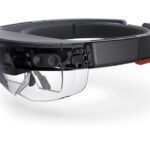
 Carla Viviana Coleman, assistant professor of design, is one of five experts who contributed to a special feature on the best-designed products of all time, published by the The Conversation.
Coleman’s essay focuses on Microsoft HoloLens virtual reality glasses. “The product was designed with ergonomics in mind,” Coleman notes, distinguishing it from “heavy, cumbersome” predecessors and increasing its potential impact on our everyday lives.
“While one could easily imagine a new generation of video games being designed for the HoloLens, a number of employers have realized the glasses can improve workplace productivity and ease the burdens of certain jobs,” Coleman writes. She describes how the glasses are being used to improve efficiency and create new opportunities in technical and medical workplaces:
For example, the company ThyssenKrupp, which manufactures elevators and escalators, has begun giving HoloLenses to its elevator technicians, with the idea that the glasses will allow them to access data much more efficiently. The employees can multitask, choosing either to lift up the spherical visor or to keep it in front of their eyes as needed – all while working in a cramped elevator shaft.
Coleman also highlights how some medical schools are using the HoloLens to train doctors in anatomy without using cadavers, and Volvo is using it as a tool in car design.
The article originally appeared in The Conversation, and has also been published in Scientific American, Salon, and the Christian Science Monitor.
Header image: Microsoft HoloLens, by Ramadhanakbr Wikimedia (CC BY-SA)
]]>
Carla Viviana Coleman, assistant professor of design, is one of five experts who contributed to a special feature on the best-designed products of all time, published by the The Conversation....
https://umbc.edu/stories/carla-viviana-coleman-highlights-how-a-virtual-reality-tool-is-changing-work-and-play/
https://my3.my.umbc.edu/api/v0/pixel/news/120863/guest@my.umbc.edu/de1307e22c2b6a5f532c36af87eaacea/api/pixel
arts-and-culture
cahss
visualarts
UMBC News & Magazine
https://my3.my.umbc.edu/groups/umbc-news-magazine
https://assets1-my.umbc.edu/system/shared/avatars/groups/000/001/943/24435aa6207c452e7bc15cc74b42c7bb/xsmall.png?1748556657
https://assets1-my.umbc.edu/system/shared/avatars/groups/000/001/943/24435aa6207c452e7bc15cc74b42c7bb/original.png?1748556657
https://assets2-my.umbc.edu/system/shared/avatars/groups/000/001/943/24435aa6207c452e7bc15cc74b42c7bb/xxlarge.png?1748556657
https://assets2-my.umbc.edu/system/shared/avatars/groups/000/001/943/24435aa6207c452e7bc15cc74b42c7bb/xlarge.png?1748556657
https://assets3-my.umbc.edu/system/shared/avatars/groups/000/001/943/24435aa6207c452e7bc15cc74b42c7bb/large.png?1748556657
https://assets1-my.umbc.edu/system/shared/avatars/groups/000/001/943/24435aa6207c452e7bc15cc74b42c7bb/medium.png?1748556657
https://assets2-my.umbc.edu/system/shared/avatars/groups/000/001/943/24435aa6207c452e7bc15cc74b42c7bb/small.png?1748556657
https://assets1-my.umbc.edu/system/shared/avatars/groups/000/001/943/24435aa6207c452e7bc15cc74b42c7bb/xsmall.png?1748556657
https://assets2-my.umbc.edu/system/shared/avatars/groups/000/001/943/24435aa6207c452e7bc15cc74b42c7bb/xxsmall.png?1748556657
UMBC News & Magazine
0
0
false
Wed, 15 Mar 2017 20:29:30 -0400
Lisa Moren receives $70,000 award to develop augmented reality app

Lisa Moren, professor of visual arts, has received a production fund award from the from Johns Hopkins University’s Saul Zaentz Innovation Fund in Film and Media for the collaborative project NONUMENT 01::The McKeldin Fountain. The award includes $70,000 of funding to develop an augmented reality app.
“The Nonument app is a virtual memorial to the demolished McKeldin Fountain” says Moren. “The spirit of Nonument is to validate public spaces that are important to real people, making stimulating places full of rich textures.”
[youtube https://www.youtube.com/watch?v=qxFh2oofleM]
As the project website explains:
Viewers will hold up a smartphone or tablet like a protest sign in order to see the lost fountain, hear the waterfalls and nearly forgotten stories from the past 35 years. Sound scores and first-hand stories will remember Occupy Baltimore, the Black Lives Matter movement and protests in the wake of the death of Freddie Gray in the hands of Baltimore Police, the National Guard on the site, the activists group Women in Black, controversial comedians, a marriage proposal, artists using soap bubbles, mermaid performances and many other personal, poetic and political stories imbued with frailty in this tenuous free speech zone.
Videos and animations further illustrate the history of the site in the app.
[youtube https://www.youtube.com/watch?v=0cOLZ3VOPvY]
NONUMENT 01 is part of a larger NONUMENT research project conceived by the Museum of Transitory Art (MoTA) in Lubljana, Slovenia. It addresses the perception of public space and its role in urban everyday life. NONUMENT was developed within the ARTECITYA network co-financed by Creative Europe, devoted to artistic and technological innovations with the aim of improving the quality of life in cities.
The NONUMENT 01::The McKeldin Fountain website further explains that NONUMENT is “an international initiative that seeks to honor hidden urban spaces that carry symbolic value for ordinary people.” Rather than using bronze or stone, the project “installs new and emerging media forms in order to capture the transitory nature of everyday experiences.”
NONUMENT01::The McKeldin Fountain is the first implementation of the project in collaboration with Baltimore artists Lisa Moren and Jaimes Mayhew ’10 M.F.A., intermedia and digital arts, and Martin Bricelj Baraga and Neja Tomšič (artist-in residence in UMBC’s department of visual arts in fall 2014). The NONUMENT01::The McKeldin Fountain website, project videos, 3D model, and animations were produced with support from the Imaging Research Center at UMBC, the Saul Zaentz Innovation Fund, LABStudios, and CEC ArtsLink.
The McKeldin Fountain, plaza area, and walkways were built in 1982 and designed to serve as public space at the corners of Pratt and Light Streets, adjacent to the Baltimore Inner Harbor. The redevelopment of the Inner Harbor was the culmination of a period of transformation for the area from an industrial space to a tourist and residential district, envisioned in the 1960s by Mayor Theodore McKeldin.
The plaza was often a public gathering spot for tourists, residents, and workers. It was designated a free speech zone and was a gathering point in the city for demonstrations and protests. The decision by former Mayor of Baltimore Stephanie Rawlings Blake and the Downtown Partnership to demolish the fountain without concrete future plans was controversial among city residents. The City of Baltimore’s plans for the site remain unknown.
Moren was named among the first cohort of Saul Zaentz Innovation Fund Bold Voice, New Paradigms Incubator Fellows in October 2016 to develop the Nonument app concept. Johns Hopkins founded the fund in March 2016 through a $1 million grant from the Saul Zaentz Charitable Foundation. Zaentz was an Oscar-winning producer who died in 2014. The incubator supports Baltimore artists by networking them with others to develop and realize their ideas in Baltimore. The deadline for applications for the third incubator program, which begins in late April, is March 31.
Image and video: Courtesy of the NONUMENT 01::The McKeldin Fountain artists.
See coverage in the Baltimore Sun: Baltimore artists to receive funding for film, media projects from Johns Hopkins fund
]]>
Lisa Moren, professor of visual arts, has received a production fund award from the from Johns Hopkins University’s Saul Zaentz Innovation Fund in Film and Media for the collaborative project...
https://umbc.edu/stories/lisa-moren-receives-70000-award-to-develop-augmented-reality-app/
https://my3.my.umbc.edu/api/v0/pixel/news/120866/guest@my.umbc.edu/9e2bd9e4ed580cec19e76d91d33fef61/api/pixel
alumni
arts-and-culture
cahss
engage
research
visualarts
UMBC News & Magazine
https://my3.my.umbc.edu/groups/umbc-news-magazine
https://assets1-my.umbc.edu/system/shared/avatars/groups/000/001/943/24435aa6207c452e7bc15cc74b42c7bb/xsmall.png?1748556657
https://assets1-my.umbc.edu/system/shared/avatars/groups/000/001/943/24435aa6207c452e7bc15cc74b42c7bb/original.png?1748556657
https://assets2-my.umbc.edu/system/shared/avatars/groups/000/001/943/24435aa6207c452e7bc15cc74b42c7bb/xxlarge.png?1748556657
https://assets2-my.umbc.edu/system/shared/avatars/groups/000/001/943/24435aa6207c452e7bc15cc74b42c7bb/xlarge.png?1748556657
https://assets3-my.umbc.edu/system/shared/avatars/groups/000/001/943/24435aa6207c452e7bc15cc74b42c7bb/large.png?1748556657
https://assets1-my.umbc.edu/system/shared/avatars/groups/000/001/943/24435aa6207c452e7bc15cc74b42c7bb/medium.png?1748556657
https://assets2-my.umbc.edu/system/shared/avatars/groups/000/001/943/24435aa6207c452e7bc15cc74b42c7bb/small.png?1748556657
https://assets1-my.umbc.edu/system/shared/avatars/groups/000/001/943/24435aa6207c452e7bc15cc74b42c7bb/xsmall.png?1748556657
https://assets2-my.umbc.edu/system/shared/avatars/groups/000/001/943/24435aa6207c452e7bc15cc74b42c7bb/xxsmall.png?1748556657
UMBC News & Magazine
0
0
false
Fri, 10 Mar 2017 21:07:01 -0500
UMBC students participate in 2017 National Campus Leaders Summit
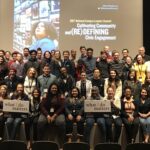
A group of five UMBC students recently made the trip to Washington, D.C. to serve as leaders and collaborators during the 2017 National Campus Leaders Summit. The event, held at the United States Holocaust Memorial Museum, was centered around the themes of cultivating community and redefining civic engagement.
UMBC was consulted during the planning of the summit after David Hoffman, assistant director of student life for civic agency, Corrine Janet, coordinator of student life for leadership, and Emily Melluso ’17, interdisciplinary studies, made a connection with the summit’s principal organizer at last year’s Civic Learning and Democratic Engagement meeting.
The leadership summit was co-presented with Citizen University, and a description of the program provided by the Holocaust Memorial Museum explains that the event was designed to bring together students to explore how, “In these turbulent times, civic leadership and an understanding of history are more important than ever.” They note, “The Museum is pleased to collaborate with Citizen University and to welcome student leaders and change-makers from ten universities to dive deeply into the history of the Holocaust and explore its relevance for today’s college students.”
Jasir Qiydaar ’18, media and communication studies, is one of the UMBC students who attended the event. He became interested in it after participating in the Imagining America National Conference in Milwaukee last fall.
“I thought having another opportunity to discuss the social issues that affect so many of us with people from other institutions would be valuable,” Qiydaar explains.
The students participated in a two-hour guided tour of the museum and engaged in discussions about the fragility of democracy and the role of civic engagement during the Holocaust. They also examined how the social and psychological dynamics that influenced people’s decisions during the Holocaust can continue to be relevant in the world today.
Qiydaar says that the event served as a powerful learning experience and it provided important historical context for many contemporary issues.
“My key takeaway from the event was a reinforcement for the need for an intersectional approach to solving social problems. The atrocities of the Holocaust were an escalation of Jewish marginalization perpetuated by inaction while their rights were being violated. Today the same issues of ‘othering’ people who are different still exist, and it’s important to understand that this is largely allowed to continue through the inaction of people who aren’t personally affected by it. Collectively people have the power to combat this othering by speaking out against all oppression, especially when it doesn’t harm them personally.”
Qiydaar attended the summit along with Emily Melluso, Andrew Thompson ’19, gender and women’s studies, Hannah Aris ’18, chemical engineering, and Gerardo Herrera-Cortes ’19, visual arts. The other universities that participated in the summit include: Case Western University, Fort Hays State University, George Mason University, Mount St. Mary’s University, New York University, University of Florida, Valdosta State University, Weber State University, and Yale University.
Image: Students from ten universities attended the 2017 National Campus Leaders Summit. Photo courtesy of Corinne Janet.
]]>
A group of five UMBC students recently made the trip to Washington, D.C. to serve as leaders and collaborators during the 2017 National Campus Leaders Summit. The event, held at the United States...
https://umbc.edu/stories/several-umbc-students-participate-in-2017-national-campus-leaders-summit/
https://my3.my.umbc.edu/api/v0/pixel/news/120872/guest@my.umbc.edu/596dd3d9e224f226c292199dd9a00833/api/pixel
cahss
cbee
coeit
engage
gwst
inds
mcs
policy-and-society
visualarts
UMBC News & Magazine
https://my3.my.umbc.edu/groups/umbc-news-magazine
https://assets1-my.umbc.edu/system/shared/avatars/groups/000/001/943/24435aa6207c452e7bc15cc74b42c7bb/xsmall.png?1748556657
https://assets1-my.umbc.edu/system/shared/avatars/groups/000/001/943/24435aa6207c452e7bc15cc74b42c7bb/original.png?1748556657
https://assets2-my.umbc.edu/system/shared/avatars/groups/000/001/943/24435aa6207c452e7bc15cc74b42c7bb/xxlarge.png?1748556657
https://assets2-my.umbc.edu/system/shared/avatars/groups/000/001/943/24435aa6207c452e7bc15cc74b42c7bb/xlarge.png?1748556657
https://assets3-my.umbc.edu/system/shared/avatars/groups/000/001/943/24435aa6207c452e7bc15cc74b42c7bb/large.png?1748556657
https://assets1-my.umbc.edu/system/shared/avatars/groups/000/001/943/24435aa6207c452e7bc15cc74b42c7bb/medium.png?1748556657
https://assets2-my.umbc.edu/system/shared/avatars/groups/000/001/943/24435aa6207c452e7bc15cc74b42c7bb/small.png?1748556657
https://assets1-my.umbc.edu/system/shared/avatars/groups/000/001/943/24435aa6207c452e7bc15cc74b42c7bb/xsmall.png?1748556657
https://assets2-my.umbc.edu/system/shared/avatars/groups/000/001/943/24435aa6207c452e7bc15cc74b42c7bb/xxsmall.png?1748556657
UMBC News & Magazine
0
0
false
Fri, 24 Feb 2017 19:32:00 -0500
Student Amy Berbert remembers victims of violence through photography

An ambitious and moving photography project by UMBC student Amy Berbert ’17, visual arts, has captured the media’s attention for its powerful impact on audiences across the Baltimore-Washington D.C. region.
Berbert began taking photographs at crime scenes in Baltimore City last year with the goal of bringing visibility to the traumatic impacts of violence on people and communities. After exhibiting some of these photographs in the Montgomery County suburbs around Washington D.C., just 40 miles from the Baltimore neighborhoods she was photographing but distant in many ways, she gained a greater understanding of the potential of her images to tell powerful stories and build connections. She soon set out with a new, much larger, vision: to use photography to memorialize every single person who was a victim of homicide in 2016 in Baltimore.
Berbert has been posting photographs of the project on the Instagram feed @stainsonthesidewalk, describing it as, “An Exploration of Homicide in Baltimore City. Same Day. Same Time. Same Place. One Year Later.”
 #19 Eric Dorsey, 41. February 5, 2016 at 8:54 a.m. 3900 block of Penhurst Avenue. Image courtesy of Amy Berbert.
It is her Instagram sharing that launched a recent flurry of media attention on the project. Though just begun at the start at 2017, the series has been featured by SPIN, the Baltimore Sun, and ABC2 News in the past week.
The photographs “are respectful of the people involved,” she told Mary Carole McCauley in the Baltimore Sun. “They don’t judge anyone. It’s just a moment of silence to remember these people, and the fact that they lived and died in that place.”
In an interview with Skyler Henry from ABC2 News, she explained, “I want to give them more of a legacy than just a couple lines in an article.”
“Amy’s project places her right in the middle of a very real and pressing issue in Baltimore, namely, its high murder rate. The media attention will I think lead to more awareness and dialogue about the issue, as well as paying tribute to the individuals who were killed,” says her professor Lynn Cazabon.
She noted, “The media coverage also shines a light on a great example of the type of unique…work that UMBC visual arts undergraduates are engaged in.”
As her undergraduate thesis project, Berbert’s photography will be displayed in the 2017 Visual Arts Senior Exhibition at the Center for Art, Design and Visual Culture (CADVC) from May 23 through June 9. That exhibit will conclude her college career, but she is dedicated to continuing the rigorous project through the end of the year, planning her life in 2017 around the lives that were lost in Baltimore in 2016.
“I personally prefer to stay behind the camera, so the media attention has been a bit overwhelming but it is worth it,” says Berbert. “I hope that the victims I am memorializing are the ones who get the attention rather than myself,” she continues, explaining her goal to inspire both empathy and action.
By focusing on increasing awareness of lives lost through violence, Berbert hopes to encourage others to engage with and support communities facing challenges. She shares, “As a community we need to educate ourselves and others about the root causes of violence…and then we need to take action. We need to volunteer with programs that are working to make a difference in these communities.”
The broader impacts of Berbert’s work aren’t yet fully realized, but she’s already felt the project’s effects on herself. As she told the Baltimore Sun, “Before I started working on this project, I knew I had stereotypes. But, every time I go out I’m faced with them. I don’t know if this project is going to change anyone else. But, I think it’s changing me.”
Image: Amy Berbert photographing in Baltimore on February 6, 2017. Photo by Skyer Henry, courtesy of WMAR/ABC2NEWS.
See coverage in the Baltimore Sun and SPIN, and on WMAR/ABC2NEWS.
]]>
An ambitious and moving photography project by UMBC student Amy Berbert ’17, visual arts, has captured the media’s attention for its powerful impact on audiences across the Baltimore-Washington...
https://umbc.edu/stories/student-amy-berbert-remembers-victims-of-violence-through-photography/
https://my3.my.umbc.edu/api/v0/pixel/news/120887/guest@my.umbc.edu/2afce4153a5d08df75c55f97a763f120/api/pixel
arts-and-culture
cadvc
cahss
engage
research
visualarts
UMBC News & Magazine
https://my3.my.umbc.edu/groups/umbc-news-magazine
https://assets1-my.umbc.edu/system/shared/avatars/groups/000/001/943/24435aa6207c452e7bc15cc74b42c7bb/xsmall.png?1748556657
https://assets1-my.umbc.edu/system/shared/avatars/groups/000/001/943/24435aa6207c452e7bc15cc74b42c7bb/original.png?1748556657
https://assets2-my.umbc.edu/system/shared/avatars/groups/000/001/943/24435aa6207c452e7bc15cc74b42c7bb/xxlarge.png?1748556657
https://assets2-my.umbc.edu/system/shared/avatars/groups/000/001/943/24435aa6207c452e7bc15cc74b42c7bb/xlarge.png?1748556657
https://assets3-my.umbc.edu/system/shared/avatars/groups/000/001/943/24435aa6207c452e7bc15cc74b42c7bb/large.png?1748556657
https://assets1-my.umbc.edu/system/shared/avatars/groups/000/001/943/24435aa6207c452e7bc15cc74b42c7bb/medium.png?1748556657
https://assets2-my.umbc.edu/system/shared/avatars/groups/000/001/943/24435aa6207c452e7bc15cc74b42c7bb/small.png?1748556657
https://assets1-my.umbc.edu/system/shared/avatars/groups/000/001/943/24435aa6207c452e7bc15cc74b42c7bb/xsmall.png?1748556657
https://assets2-my.umbc.edu/system/shared/avatars/groups/000/001/943/24435aa6207c452e7bc15cc74b42c7bb/xxsmall.png?1748556657
UMBC News & Magazine
0
0
false
Wed, 08 Feb 2017 18:25:09 -0500
UMBC choreographers present innovative new works in Baltimore Dance Project performances

Baltimore Dance Project returns to UMBC’s Performing Arts and Humanities Proscenium Theatre for its 33nd year with a dynamic program. The company will premiere several new works: Doug Hamby’s Square Breath for six women with an interactive sound score performed by Eliza Triolo and Christian Hartman; Hamby’s Letting Go, a meditative solo on loss and memory performed by Maia Schechter; Hamby’s Two Songs by John Cage with music performed live by mezzo-soprano Janice Jackson and percussionists Tom Bryant and Josh Miller; Carol Hess’ vibrant LightForest featuring five dancers, colorful projections and score by Timothy Nohe via wearable sound devices; and a new duet by Desiree Koontz-Nachtrieb.
The program also includes encore performances of 2016 favorites Lost, Sandra Lacy’s mysterious solo, and Image in Red, Carol Hess’ reconstruction of Janet Soares’ sumptuously beautiful solo choreographed on Hess in 1980. Hess re-constructed Image in Red and set it on Franki Trout. Trout ’13, dance, now teaches dance in Anne Arundel County’s first Performing and Visual Arts Magnet Program at Annapolis High School.
These works will appear on stage February 9–11. Integrating innovative sound and visuals through collaborations with artists such as Nohe, professor of visual arts, they reflect the company’s deep commitment to an interdisciplinary approach.
Baltimore Dance Project is a professional modern dance company dedicated to presenting the creative work of Doug Hamby and Carol Hess, professors of dance at UMBC who are described as “two of the most exciting choreographers in Maryland.” Formed in 1982 under the name Phoenix Dance Company, the company is known for its edgy collaborations with composers, directors, sound artists and visual artists, and for infusing visual media and technology into riveting dance performance. The company features outstanding professional dancers and has been honored with numerous grants and awards. Hamby, Hess, and company veteran Sandra Lacy have received a total of twelve individual artist awards from the Maryland State Arts Council, and their work has appeared in theaters and film festivals across the United States.
Complete performance information and tickets are available through the UMBC Arts & Culture Calendar.
Image: Franki Trout ’13 performing Image in Red in 2016. Photo by Marlayna Demond ’11 for UMBC.
]]>
Baltimore Dance Project returns to UMBC’s Performing Arts and Humanities Proscenium Theatre for its 33nd year with a dynamic program. The company will premiere several new works: Doug Hamby’s...
https://umbc.edu/stories/umbc-choreographers-present-innovative-new-works-in-baltimore-dance-project-performances/
https://my3.my.umbc.edu/api/v0/pixel/news/120888/guest@my.umbc.edu/f2786ebcb295ed30fe3a308e07b6944e/api/pixel
arts-and-culture
cadvc
cahss
dance
engage
visualarts
UMBC News & Magazine
https://my3.my.umbc.edu/groups/umbc-news-magazine
https://assets1-my.umbc.edu/system/shared/avatars/groups/000/001/943/24435aa6207c452e7bc15cc74b42c7bb/xsmall.png?1748556657
https://assets1-my.umbc.edu/system/shared/avatars/groups/000/001/943/24435aa6207c452e7bc15cc74b42c7bb/original.png?1748556657
https://assets2-my.umbc.edu/system/shared/avatars/groups/000/001/943/24435aa6207c452e7bc15cc74b42c7bb/xxlarge.png?1748556657
https://assets2-my.umbc.edu/system/shared/avatars/groups/000/001/943/24435aa6207c452e7bc15cc74b42c7bb/xlarge.png?1748556657
https://assets3-my.umbc.edu/system/shared/avatars/groups/000/001/943/24435aa6207c452e7bc15cc74b42c7bb/large.png?1748556657
https://assets1-my.umbc.edu/system/shared/avatars/groups/000/001/943/24435aa6207c452e7bc15cc74b42c7bb/medium.png?1748556657
https://assets2-my.umbc.edu/system/shared/avatars/groups/000/001/943/24435aa6207c452e7bc15cc74b42c7bb/small.png?1748556657
https://assets1-my.umbc.edu/system/shared/avatars/groups/000/001/943/24435aa6207c452e7bc15cc74b42c7bb/xsmall.png?1748556657
https://assets2-my.umbc.edu/system/shared/avatars/groups/000/001/943/24435aa6207c452e7bc15cc74b42c7bb/xxsmall.png?1748556657
UMBC News & Magazine
0
0
false
Mon, 06 Feb 2017 15:15:11 -0500


