Should AI be permitted in college classrooms? 4 scholars weigh in

Written by Nicholas Tampio, Fordham University; Asim Ali, Auburn University; Patricia A. Young, professor of education UMBC, and Shital Thekdi, University of Richmond
One of the most intense discussions taking place among university faculty is whether to permit students to use artificial intelligence in the classroom. To gain perspective on the matter, The Conversation reached out to four scholars for their take on AI as a learning tool and the reasons why they will or won’t be making it a part of their classes.
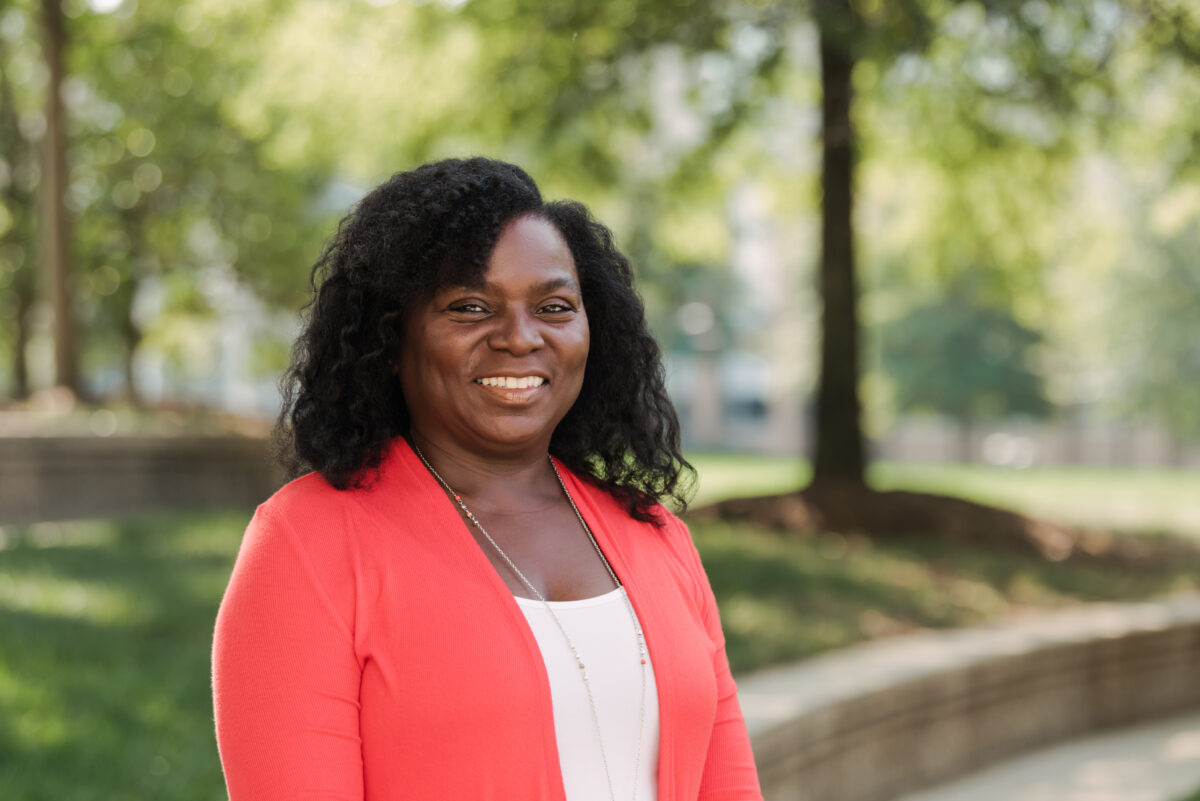
Nicholas Tampio, professor of political science: Learn to think for yourself
 Nicholas Tampio, Fordham University.
As a professor, I believe the purpose of a college class is to teach students to think: to read scholarship, ask questions, formulate a thesis, collect and analyze data, draft an essay, take feedback from the instructor and other students, and write a final draft.
One problem with ChatGPT is that it allows students to produce a decent paper without thinking or writing for themselves.
In my American political thought class, I assign speeches by Martin Luther King Jr. and Malcolm X and ask students to compose an essay on what King and X might say about a current American political debate, such as the Supreme Court’s recent decision on affirmative action.
Students could get fine grades if they used ChatGPT to “write” their papers. But they will have missed a chance to enter a dialogue with two profound thinkers about a topic that could reshape American higher education and society.
The point of learning to write is not simply intellectual self-discovery. My students go on to careers in journalism, law, science, academia and business. Their employers often ask them to research and write about a topic.
Few employers will likely hire someone to use large language models that rely on an algorithm scraping databases filled with errors and biases. Already, a lawyer has gotten in trouble for using ChatGPT to craft a motion filled with fabricated cases. Employees succeed when they can research a topic and write intelligently about it.
Artificial intelligence is a tool that defeats a purpose of a college education – to learn how to think, and write, for oneself.
Patricia A. Young, professor of education: ChatGPT doesn’t promote advanced thinking
 Patricia Young. (Marlayna Demond ’11/UMBC)
College students who are operating from a convenience or entitlement mentality – one in which they think, “I am entitled to use whatever technology is available to me” – will naturally gravitate toward using ChatGPT with or without their professor’s permission. Using ChatGPT and submitting a course assignment as your own creation is called AI-assisted plagiarism.
The proliferation of free AI means students won’t have to think much while writing – just engage in a high level of copy and paste. We used to call that plagiarism. With AI-assisted plagiarism, this brings in the potential for a new era of academic misconduct.
Some professors allow the use of ChatGPT as long as students cite ChatGPT as the source. As a researcher who specializes in the use of technology in education, I believe this practice needs to be thought through. Does this mean that ChatGPT would need to cite its sources, so that students could cite ChatGPT as a type of secondary source according to APA style, a standard academic style of citing papers? What Pandora’s box are we opening? Some users report that ChatGPT never reveals its sources anyway.
The concern will come when students take higher-level courses or land a job and lack the literacy skills to perform on an exceptional level. We will have created a generation of functionally illiterate adults who lack the capacity to engage in advanced thinking – like critiquing, comparing or contrasting information.
Yes, students can and should use smart tools, but we need to hypothesize and measure the costs to human ingenuity and the future of the human race.
Asim Ali, instructor of information systems management: AI is another teacher
I teach information systems management, and in the spring of 2023, I had students use ChatGPT for an essay assignment and then record a video podcast discussing how AI will impact their careers. This semester I am being more intentional by providing guidance on the possibilities and limitations of AI tools for each assignment. For example, students learn that using generative AI on a self-reflection assignment may not help, but using AI to analyze a case study is potentially a great way to find insights they may have overlooked. This emulates their future jobs in which they may use AI tools to enhance the quality of their work product.
 Asim Ali, Auburn University
My experience with adapting to AI for my own course inspired me to create a resource for all my colleagues. As executive director of the Biggio Center for the Enhancement of Teaching and Learning, I oversee the instructional design and educational development teams at Auburn University. We created a self-paced, online course called Teaching With AI.
Now there are over 600 faculty at Auburn and hundreds of faculty at almost 35 institutions engaging with the content and each other through discussion boards and practical exercises.
I receive messages from faculty sharing ways they are changing their assignments or discussing AI with their students. Some see AI as a threat to humans, but discussing AI with my students and with colleagues across the country has actually helped me develop human connections.
Shital Thekdi, associate professor of analytics & operations: What can you do that AI can’t?
This semester, I will ask students in my Statistics for Business and Economics course to discuss the question, “What is your value beyond the AI tools?” I want them to reframe the conversation beyond one of academic integrity and instead as a challenge. I believe students must recognize that the jobs they imagine will exist for them could be eliminated because of these new technologies. So the pressure is on students to understand not only how to use these tools but also how to be better than the tools.
 Shital Thekdi. University of Richmond.
I hope my students will consider ethical reasoning and the role of human connections. While AI can be trained to make value-based decisions, individuals and groups have their own values that can differ considerably from those used by AI. And AI tools do not have the capacity to form human connections and experiences.
Students will remain vital contributors to business and society as AI tools develop. I believe it’s our responsibility as educators to prepare our students for a rapidly evolving cultural and technological landscape.
This article is republished from The Conversation under a Creative Commons license. Read the original article and see more than 250 UMBC articles available in The Conversation.
]]>
Written by Nicholas Tampio, Fordham University; Asim Ali, Auburn University; Patricia A. Young, professor of education UMBC, and Shital Thekdi, University of Richmond One of the most intense...
https://umbc.edu/stories/should-ai-be-permitted-in-college-classrooms/
https://my3.my.umbc.edu/api/v0/pixel/news/135176/guest@my.umbc.edu/c693314229ef43bad5161dd2bea488a5/api/pixel
cahssresearch
discovery
education
magazine
research
the-conversation
UMBC News & Magazine
https://my3.my.umbc.edu/groups/umbc-news-magazine
https://assets1-my.umbc.edu/system/shared/avatars/groups/000/001/943/24435aa6207c452e7bc15cc74b42c7bb/xsmall.png?1748556657
https://assets1-my.umbc.edu/system/shared/avatars/groups/000/001/943/24435aa6207c452e7bc15cc74b42c7bb/original.png?1748556657
https://assets2-my.umbc.edu/system/shared/avatars/groups/000/001/943/24435aa6207c452e7bc15cc74b42c7bb/xxlarge.png?1748556657
https://assets2-my.umbc.edu/system/shared/avatars/groups/000/001/943/24435aa6207c452e7bc15cc74b42c7bb/xlarge.png?1748556657
https://assets3-my.umbc.edu/system/shared/avatars/groups/000/001/943/24435aa6207c452e7bc15cc74b42c7bb/large.png?1748556657
https://assets1-my.umbc.edu/system/shared/avatars/groups/000/001/943/24435aa6207c452e7bc15cc74b42c7bb/medium.png?1748556657
https://assets2-my.umbc.edu/system/shared/avatars/groups/000/001/943/24435aa6207c452e7bc15cc74b42c7bb/small.png?1748556657
https://assets1-my.umbc.edu/system/shared/avatars/groups/000/001/943/24435aa6207c452e7bc15cc74b42c7bb/xsmall.png?1748556657
https://assets2-my.umbc.edu/system/shared/avatars/groups/000/001/943/24435aa6207c452e7bc15cc74b42c7bb/xxsmall.png?1748556657
UMBC News & Magazine
0
0
false
Wed, 06 Sep 2023 10:16:33 -0400
Wed, 06 Sep 2023 10:16:33 -0400
School’s in Session

The feel of a pen as it clicks open and closed, pointed for note taking (or probably more likely the feel of an electronic stylus). The sound of pages rustling in a notebook during the first class of the day (or more likely the sound of keys clacking on a laptop). The smell of a new textbook as it opens for the first time (or probably more likely still the laptop thing). No matter what it looks like, the start of a new school year is officially here! This year, UMBC welcomes a pack of over 3,800 new Retrievers as they embark on the black and gold journey of a lifetime.
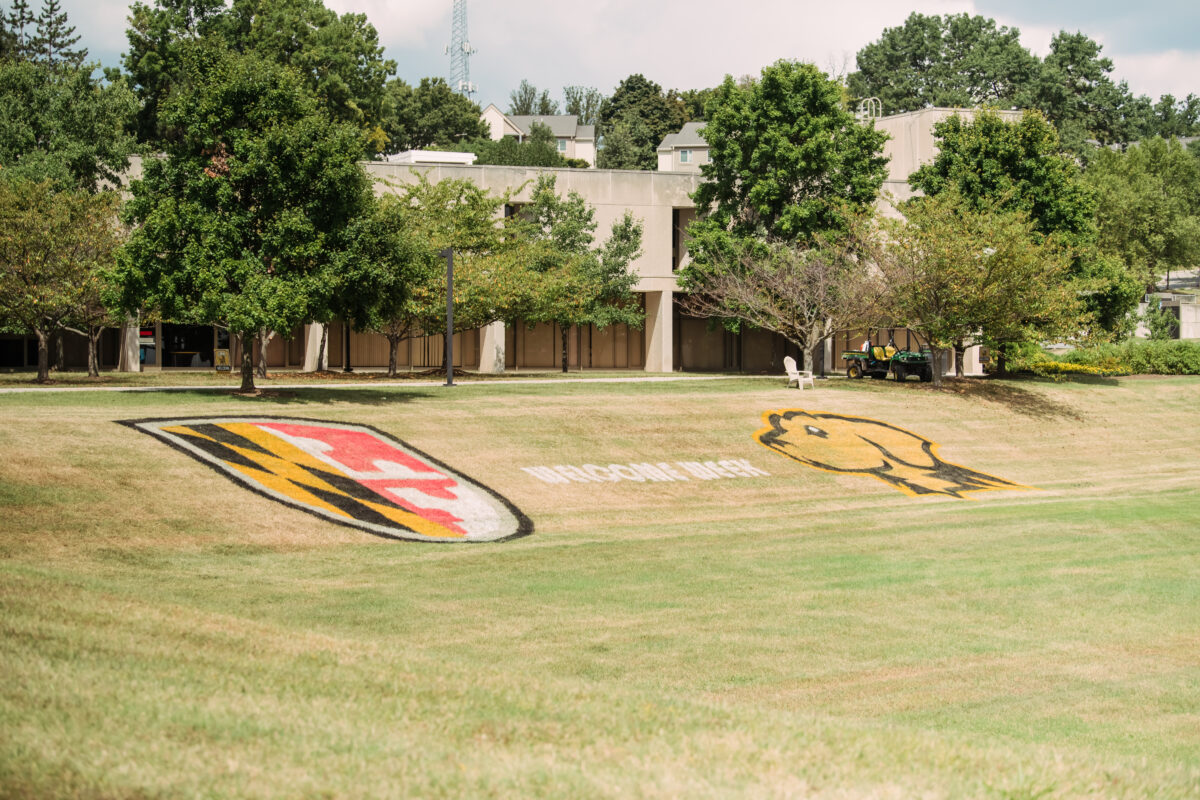
Last weekend, new Retrievers bundled up their belongings and arrived on campus to unpack in their new home. Once clothes were in drawers, posters were hung, and minifridges were stocked, students and families headed to Retriever Fest to learn more about campus resources and departments…and maybe pet a farm animal or two. After saying goodbye to families, students settled into their rooms and then got to know one another over games and a fireworks display.
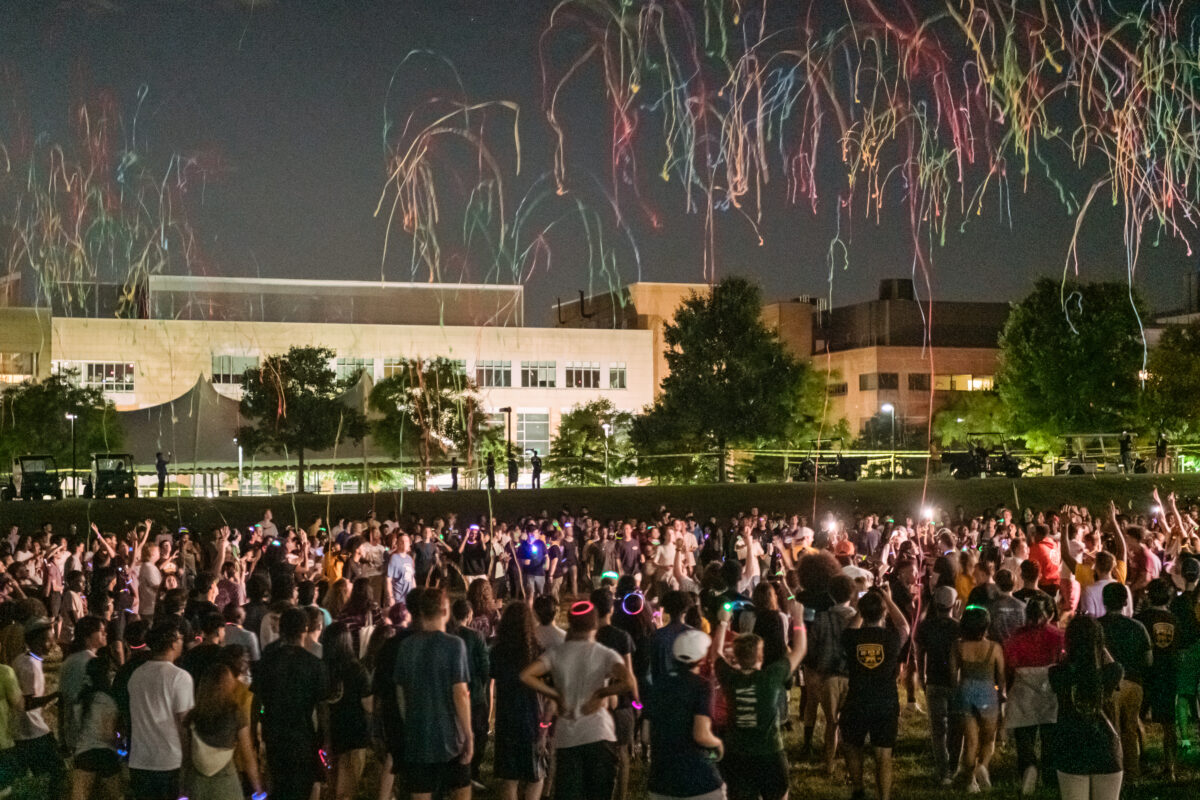
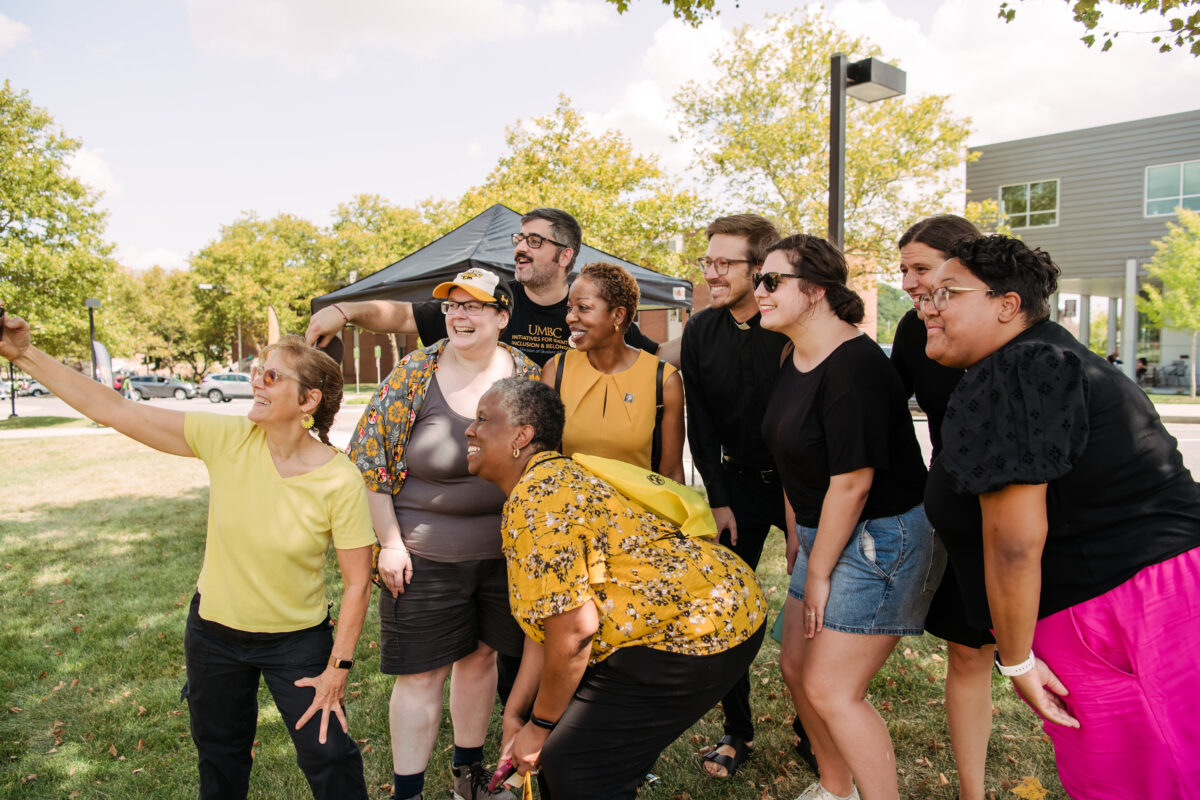

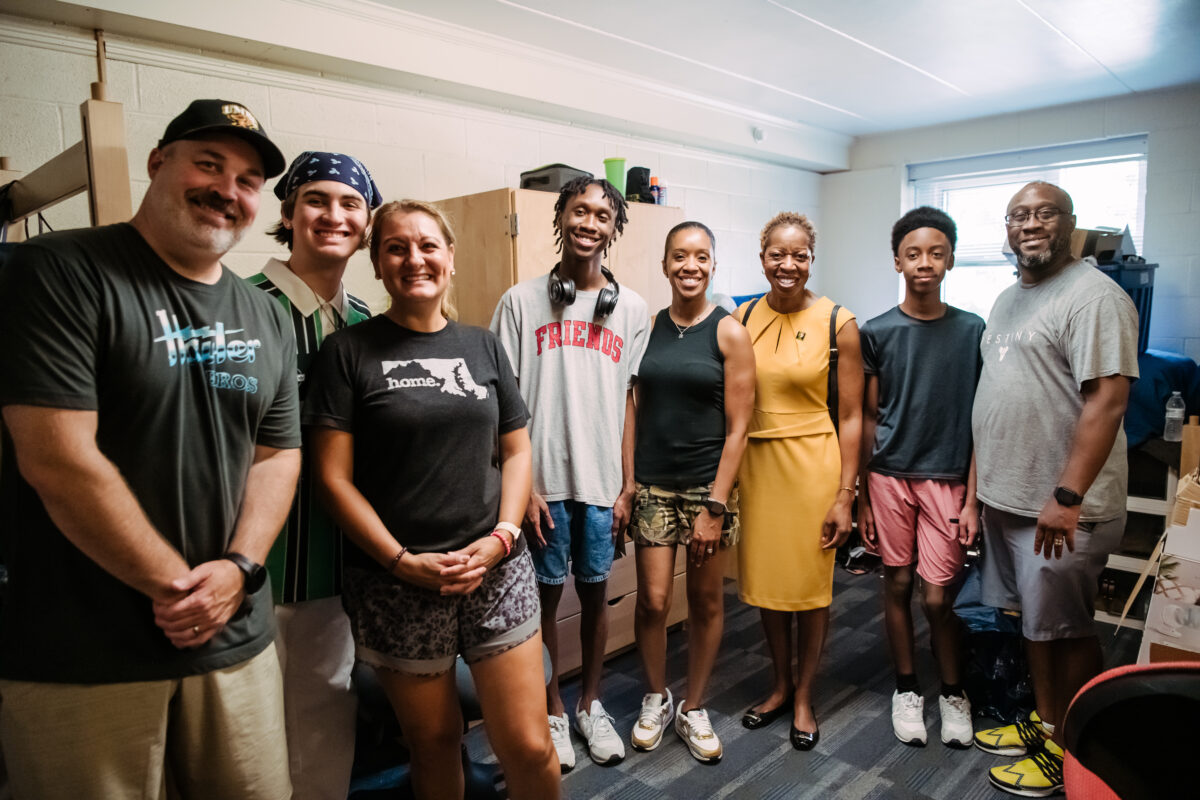


During Convocation on Tuesday, new Retrievers received a UMBC pin, officially signifying the start of their UMBC career. Incoming UMBC Student Government Association (SGA) president Musa Jafri ’24, political science, assured the attendees saying, “I know being a new student can be overwhelming at times. Remember that it is okay to ask for help. You are part of this community, and we want you to know that you belong here, and we want you to succeed.”
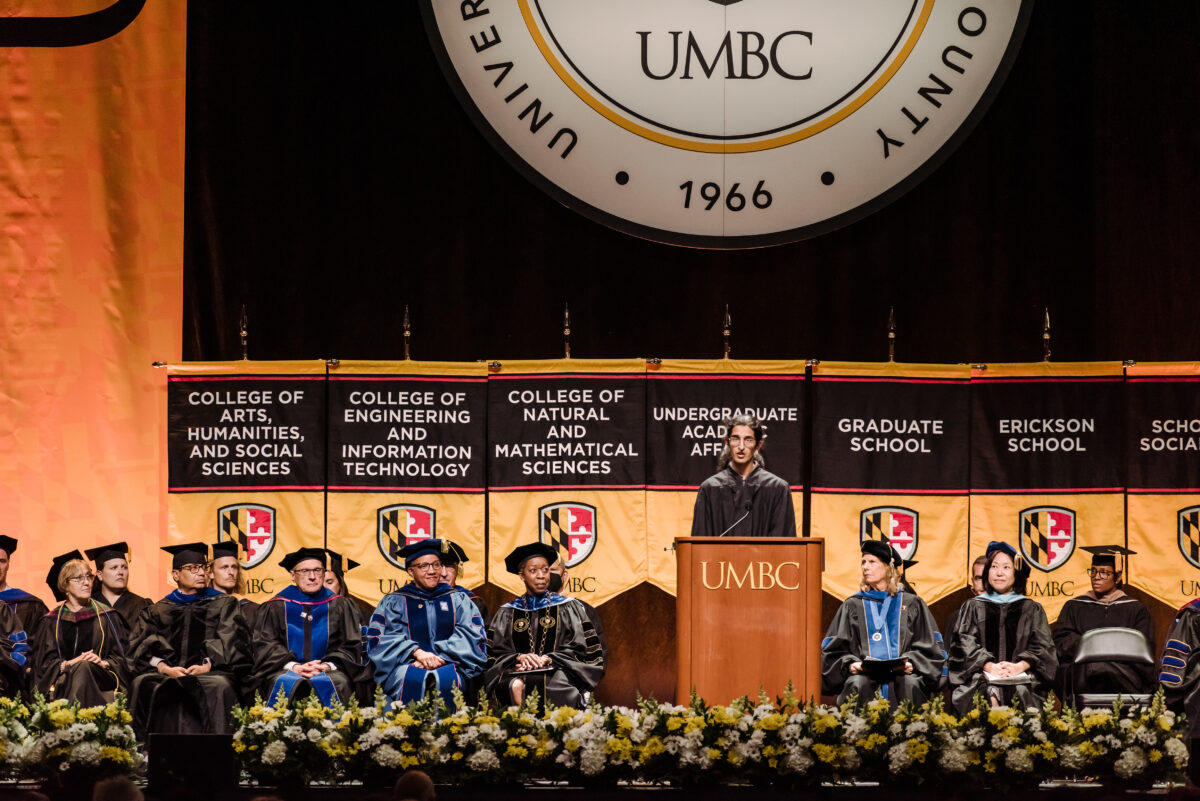

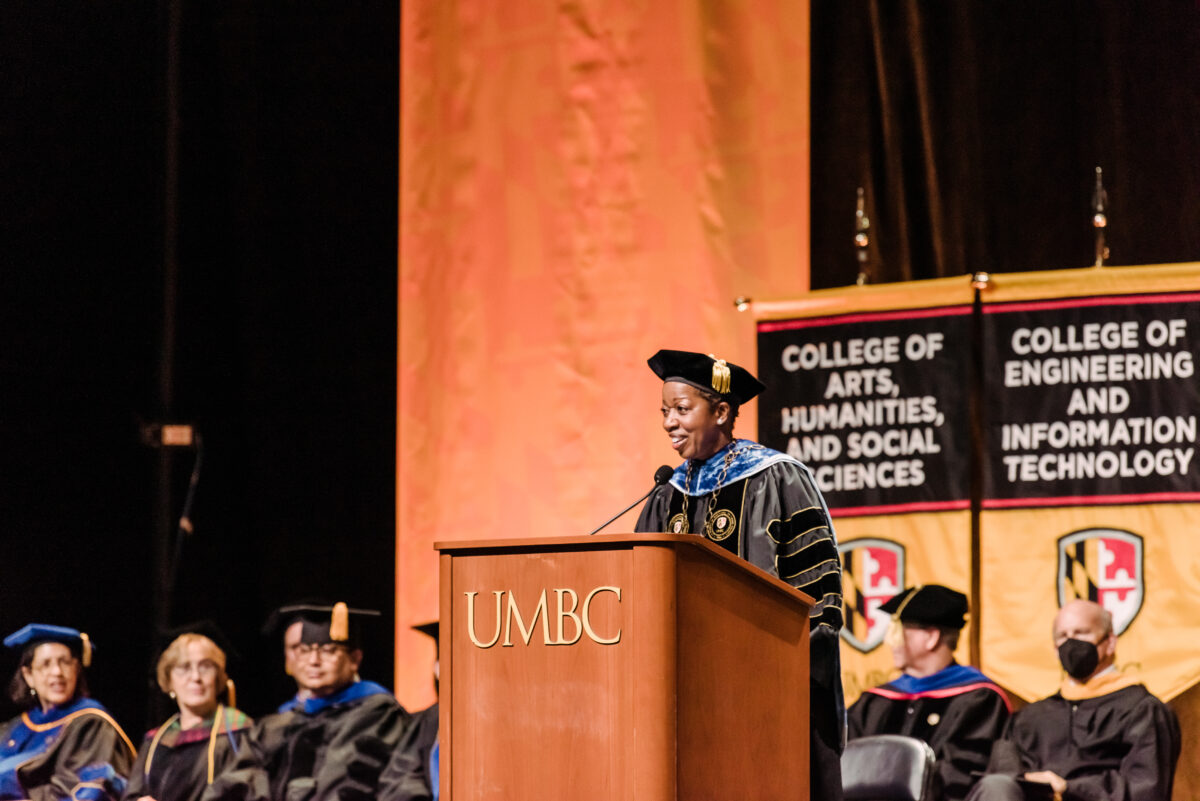
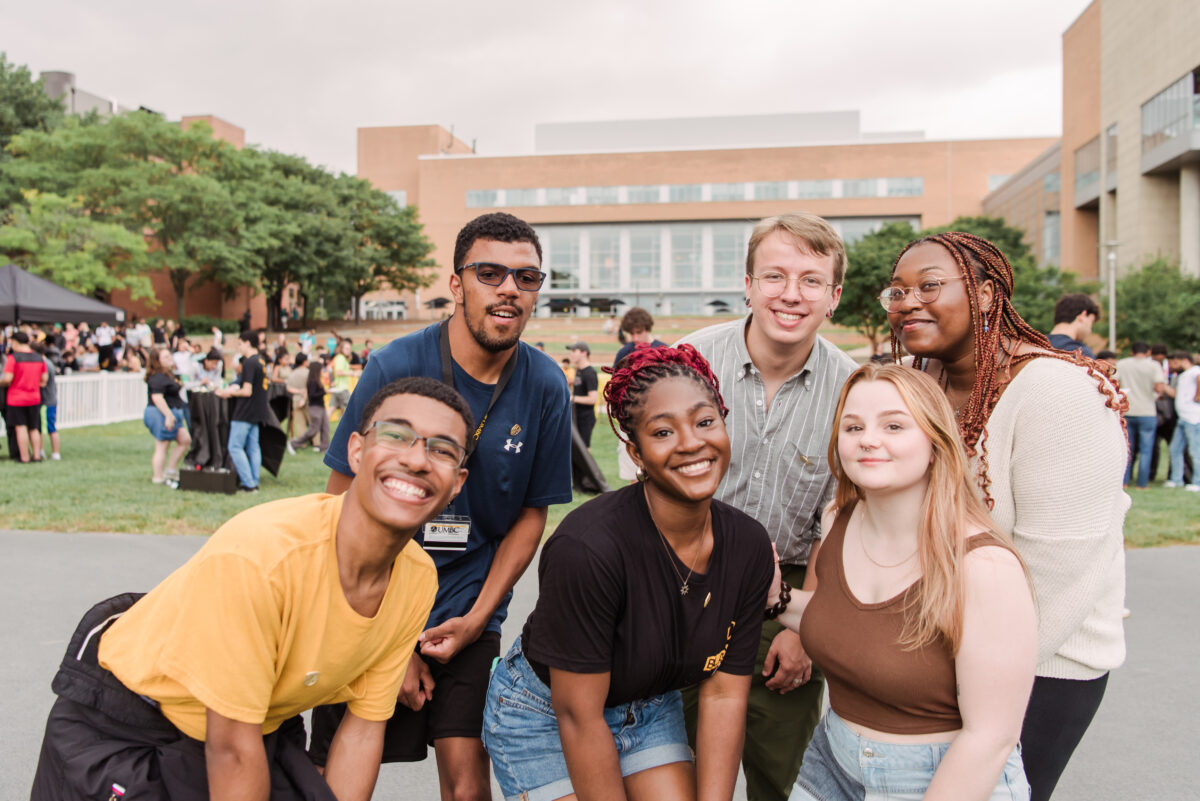
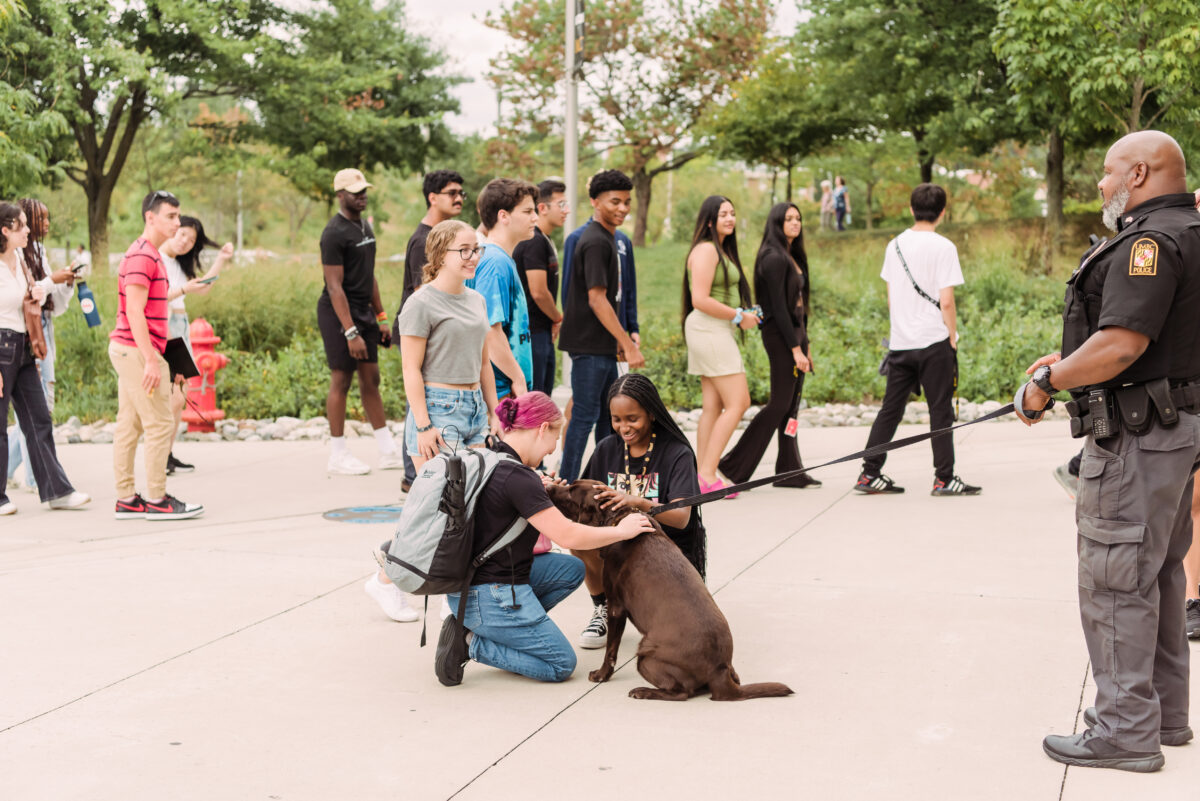
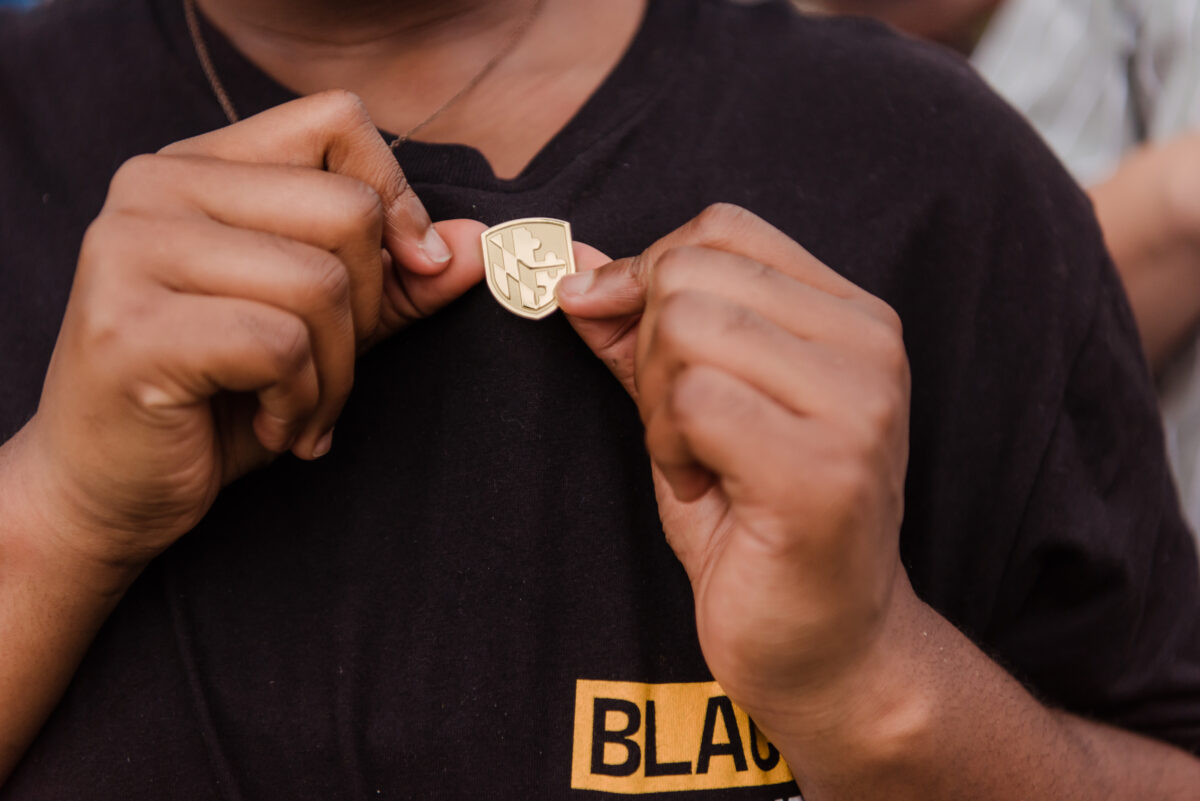
As the first day of classes dawned on Wednesday, the entire campus came to life with new and returning students filling sidewalks, classrooms, and the Starbucks line (the real sign that school is officially back in session).
Happy first day @UMBC!!! My black
]]>
The feel of a pen as it clicks open and closed, pointed for note taking (or probably more likely the feel of an electronic stylus). The sound of pages rustling in a notebook during the first class...
https://umbc.edu/stories/schools-in-session/
https://my3.my.umbc.edu/api/v0/pixel/news/135016/guest@my.umbc.edu/a012440d45aa857aa61c18c354f1c139/api/pixel
cahss
campus-life
cnms
coeit
magazine
UMBC News & Magazine
https://my3.my.umbc.edu/groups/umbc-news-magazine
https://assets1-my.umbc.edu/system/shared/avatars/groups/000/001/943/24435aa6207c452e7bc15cc74b42c7bb/xsmall.png?1748556657
https://assets1-my.umbc.edu/system/shared/avatars/groups/000/001/943/24435aa6207c452e7bc15cc74b42c7bb/original.png?1748556657
https://assets2-my.umbc.edu/system/shared/avatars/groups/000/001/943/24435aa6207c452e7bc15cc74b42c7bb/xxlarge.png?1748556657
https://assets2-my.umbc.edu/system/shared/avatars/groups/000/001/943/24435aa6207c452e7bc15cc74b42c7bb/xlarge.png?1748556657
https://assets3-my.umbc.edu/system/shared/avatars/groups/000/001/943/24435aa6207c452e7bc15cc74b42c7bb/large.png?1748556657
https://assets1-my.umbc.edu/system/shared/avatars/groups/000/001/943/24435aa6207c452e7bc15cc74b42c7bb/medium.png?1748556657
https://assets2-my.umbc.edu/system/shared/avatars/groups/000/001/943/24435aa6207c452e7bc15cc74b42c7bb/small.png?1748556657
https://assets1-my.umbc.edu/system/shared/avatars/groups/000/001/943/24435aa6207c452e7bc15cc74b42c7bb/xsmall.png?1748556657
https://assets2-my.umbc.edu/system/shared/avatars/groups/000/001/943/24435aa6207c452e7bc15cc74b42c7bb/xxsmall.png?1748556657
UMBC News & Magazine
0
0
false
Thu, 31 Aug 2023 14:11:42 -0400
Thu, 31 Aug 2023 14:11:42 -0400
Deepak Koirala to explore how RNA viruses hijack cellular machinery, with eye to future drug treatments
Viruses must hijack their hosts’ cellular machinery to make more viruses, so preventing this hijacking could lead to a host of new treatments for viral diseases. However, much is unknown about how the viruses actually accomplish their takeover. Scientific understanding is especially murky for RNA viruses, which use RNA as their genetic material, rather than DNA like animals. These viruses’ RNA serves as their genome and also codes directly for viral proteins.
With support from an NSF CAREER Award, Deepak Koirala, assistant professor of chemistry and biochemistry, has been working on figuring out how enteroviruses, a large group of RNA viruses, replicate their RNA genomes. Enteroviruses include viruses that cause polio, the common cold, and many more diseases that affect humans and other animals. Now Koirala has received a five-year, $1.8 million grant from the National Institutes of Health to solve another part of this puzzle: How do these viruses commandeer proteins in the host cell to produce viral proteins? The cell must build these viral proteins before the virus can replicate.
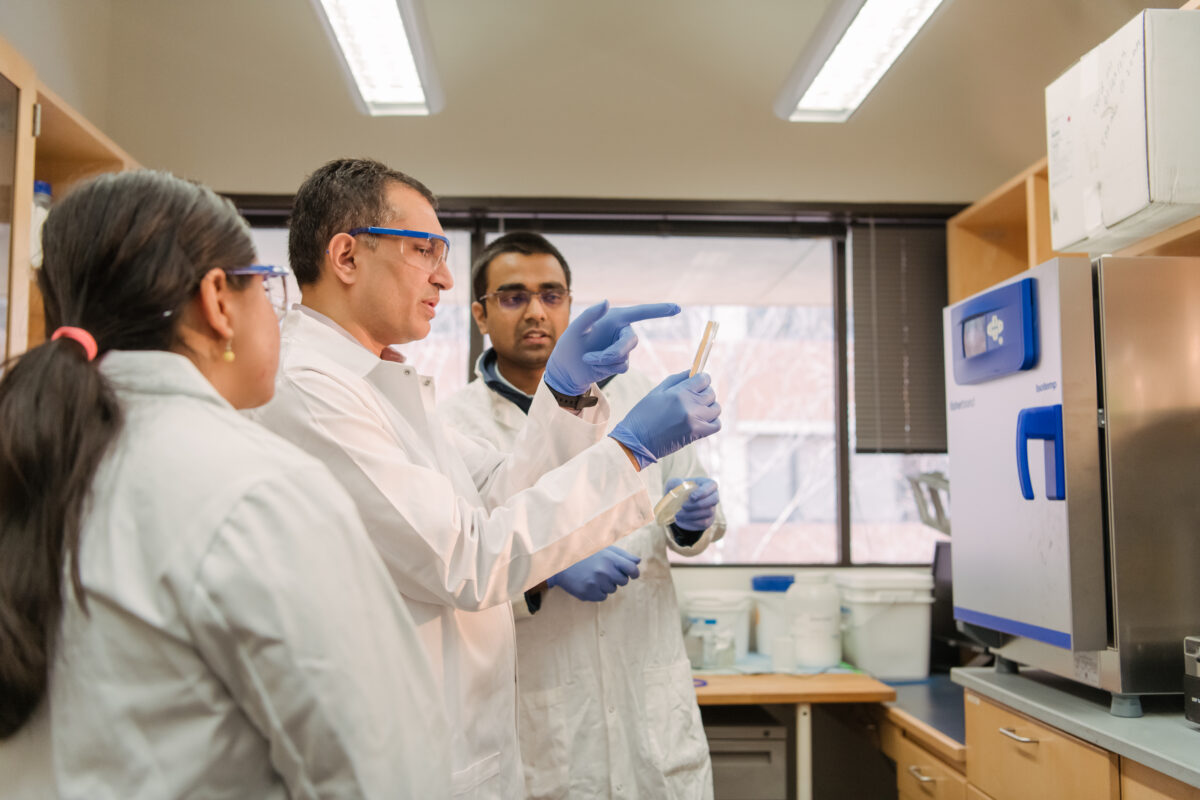 Deepak Koirala (pointing at petri dish) uses a wide range of techniques to answer scientific questions about RNA viruses. Naba Krishna Das (right), a Ph.D. student in Koirala’s lab, is a key contributor to the group’s viral replication research. (Marlayna Demond ’11/UMBC)
A new biological mechanism?
When a cell makes its own proteins, the cellular mRNA, a type of RNA that carries the instructions for building proteins, interacts with the protein-building machinery via a special structure at one end called a “cap,” Koirala explains. Enteroviral mRNAs lack this cap—and yet they are still perfectly capable of forcing the cell to do their bidding. Koirala is trying to figure out how.
Koirala has been studying unique structures at the ends of viral RNAs for their role in replication, but they may be doing double duty by initiating protein production as well, he believes. Koirala and his team, which includes undergraduate and graduate students, will use a technique called X-ray crystallography to deduce the precise molecular makeup of these special RNA structures.
At the same time, they will run experiments to learn how the structures interact with the cellular machinery. These two lines of investigation complement one another. “If we have the structure, that would allow us to pinpoint the critical nucleotide or amino acid that is important for the interaction,” Koirala says. “And then we can mutate that one, to see how that changes the interaction.”
By using a range of techniques, the team seeks to determine what the structures look like and how they work in the cell. “It could be a new biological mechanism we’ve never seen before,” Koirala says.
The team already has some early data supporting their goals, Koirala says. A related publication is under review at a top-tier academic journal. Several lab members are authors on the paper—including three undergraduates. “We are really excited about that,” Koirala says.
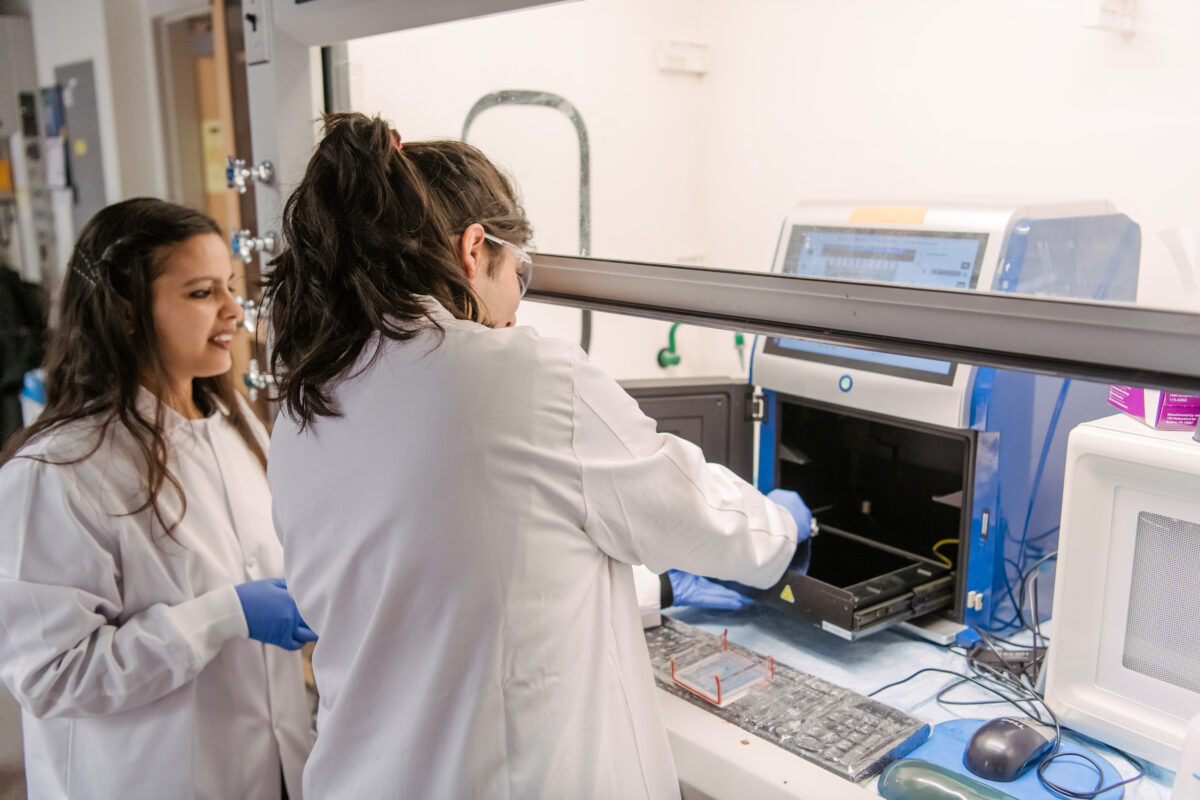 Manju Ojha, a Ph.D. student in Koirala’s lab, mentors undergraduate Zohra Mian. Ojha will have a leading role in the work related to viral protein production for the new grant. (Image by Marlayna Demond ’11/UMBC)
One drug, many targets
The project is likely to end up supporting other researchers, as well. In the course of the team’s work, “We are developing tools that facilitate our understanding of these RNA structures,” Koirala says. “The tools we develop may be useful not only for the particular system we are working on, but they could be useful in general for many other RNA structures in other fields of research.”
In addition, RNA structures found in one species of enterovirus are very similar to those found in other enteroviruses that cause different diseases—even some that infect very different kinds of organisms, Koirala discovered. That opens the door to developing antiviral treatments that are able to target many different viruses.
With the RNA structures in hand, the next step might be to use artificial intelligence to screen for other molecules that bind to the structures, preventing the viruses from taking over the cell and causing illness. Scientists could then take steps to develop new drugs using these molecules.
“Once we understand the structure, and we have a better understanding of the mechanism, we can better design drugs,” Koirala says. “But right now we are at the fundamental level of how these things even work.”
]]>
Viruses must hijack their hosts’ cellular machinery to make more viruses, so preventing this hijacking could lead to a host of new treatments for viral diseases. However, much is unknown about how...
https://umbc.edu/stories/research-on-rna-viruses-may-lead-to-future-drugs/
https://my3.my.umbc.edu/api/v0/pixel/news/134966/guest@my.umbc.edu/112a48703f85194c24ad1fc2c7225fe5/api/pixel
chembiochem
cnms
news
rca-2
research
science-and-tech
UMBC News & Magazine
https://my3.my.umbc.edu/groups/umbc-news-magazine
https://assets1-my.umbc.edu/system/shared/avatars/groups/000/001/943/24435aa6207c452e7bc15cc74b42c7bb/xsmall.png?1748556657
https://assets1-my.umbc.edu/system/shared/avatars/groups/000/001/943/24435aa6207c452e7bc15cc74b42c7bb/original.png?1748556657
https://assets2-my.umbc.edu/system/shared/avatars/groups/000/001/943/24435aa6207c452e7bc15cc74b42c7bb/xxlarge.png?1748556657
https://assets2-my.umbc.edu/system/shared/avatars/groups/000/001/943/24435aa6207c452e7bc15cc74b42c7bb/xlarge.png?1748556657
https://assets3-my.umbc.edu/system/shared/avatars/groups/000/001/943/24435aa6207c452e7bc15cc74b42c7bb/large.png?1748556657
https://assets1-my.umbc.edu/system/shared/avatars/groups/000/001/943/24435aa6207c452e7bc15cc74b42c7bb/medium.png?1748556657
https://assets2-my.umbc.edu/system/shared/avatars/groups/000/001/943/24435aa6207c452e7bc15cc74b42c7bb/small.png?1748556657
https://assets1-my.umbc.edu/system/shared/avatars/groups/000/001/943/24435aa6207c452e7bc15cc74b42c7bb/xsmall.png?1748556657
https://assets2-my.umbc.edu/system/shared/avatars/groups/000/001/943/24435aa6207c452e7bc15cc74b42c7bb/xxsmall.png?1748556657
UMBC News & Magazine
0
0
false
Wed, 30 Aug 2023 12:03:15 -0400
Wed, 30 Aug 2023 12:03:15 -0400
UMBC’s Steve Freeland co-leads $1.8 million research grant to predict the biochemical foundations of life beyond Earth

Every living thing on Earth, from bacteria to humans, uses the same set of 20 amino acids to build all of its proteins, called our “amino acid alphabet.” But why that particular set of 20? If other amino acids are possible, what makes a good alphabet? And how might we recognize life beyond Earth that’s using an alphabet other than our own?
These are all questions that Stephen Freeland, professor of biological sciences, has been asking for over a decade in his theoretical research at UMBC. Now he and colleagues at the Tokyo Institute of Technology, Charles University in the Czech Republic, and Johns Hopkins University will take this work into the laboratory for the first time.
 Stephen Freeland has been studying the origins of life for decades; now he’s taking the work into a new realm with international colleagues. (Image courtesy of UMBC Individualized Study Program)
The team seeks to marry Freeland’s theoretical work with his colleagues’ unique laboratory expertise to link together known alternative amino acids to form proteins. The Human Frontier Science Program (HFSP) is supporting the work with a new three-year, $1.8 million grant. The HFSP is a major international funding agency for basic life science research that specializes in supporting collaborations across continents.
The overarching question the project seeks to answer, Freeland says, is “What can we learn about how life could be different at the most fundamental level of biochemistry?” It’s a daunting question, with significant implications from biomedical applications to increasing our chances of detecting life on other planets.
Researchers have already created alternative amino acids in the lab and added individual alternative amino acids to proteins otherwise made of standard ones. However, no one has built entire proteins from scratch using nothing but a set of alternative amino acids. “This work is genuinely novel,” Freeland says. “Nobody knows what will happen. This is a first.”
Finding the essence
Freeland’s prior work has focused on determining what characteristics are necessary for a set of amino acids to function well as a basis for life. He and his students determined what differentiates our set of 20 amino acids from other random sets of 20 taken from a digital library of about 4,000 mathematically-generated amino acid structures.
That work led to a group of four equations that can be used to describe any set of 20 amino acids. “So it’s almost as if conceptually we boiled it and got the essence of it,” Freeland says, “We identified really unusual, simple characteristics that distinguish life on Earth’s set of 20 amino acids from random.”
With those factors in hand—what Freeland calls “design principles”—his team is now using a powerful computer program they developed to look at other sets of 20 amino acids and find examples that meet the same criteria. And this time around, they are taking the amino acids from a catalog of about 300 that can be obtained commercially—so any “good” set they find can be tested in the lab.
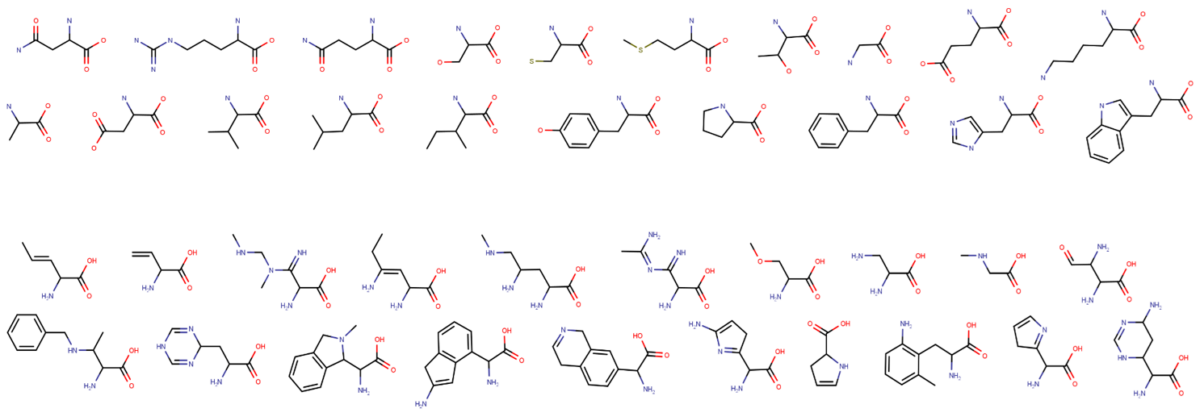 The top row includes molecular structures of the 20 amino acids found in all life on Earth. The bottom row is Xeno-ꞵ, an amino acid alphabet of 20 amino acids unlike any found within the genetic code of life on Earth. Yet, Xeno-ꞵ matches unusual mathematical properties of the chemical structures found in life’s alphabet. (Figure adapted from a 2022 paper published in Astrobiology and co-authored by UMBC Ph.D. candidate Sean Brown, collaborator Václav Voráček, and Stephen Freeland, courtesy of Freeland)
Going back in time to leap forward
This summer, the work entered a new phase. Sean Brown, a UMBC Ph.D. candidate in biological sciences working with Freeland, traveled to the Czech Republic to work in Klara Hlouchova’s lab, where they are preparing the technology to produce proteins with proposed alternative amino acid alphabets. “Basically, we’re asking, ‘Do our design principles work’?” Freeland says.
In some ways, this work will be like going back in time to the mid-20th century, when researchers were first discovering how life behaves at the molecular level. Since then, techniques for building and analyzing proteins have come to rely on everything we’ve learned about life’s amino acid alphabet. As such, these tools cannot be applied to alternative amino acid alphabets. For this project, the team will return to older approaches and techniques, in which the Czech researchers have retained expertise, to see if their alternative amino acids can actually form proteins.
If the experiments are successful, the team will be able to further hone the design principles for a generic life-producing amino acid alphabet, rather than basing the principles solely on the characteristics of life on Earth.
“If we can show that unusual, abstract properties of life as we know it are necessary, it helps us to understand why evolution on Earth went the path it did,” Freeland says. “It’s part of our own history, and it answers the question, ‘Why those 20?’”

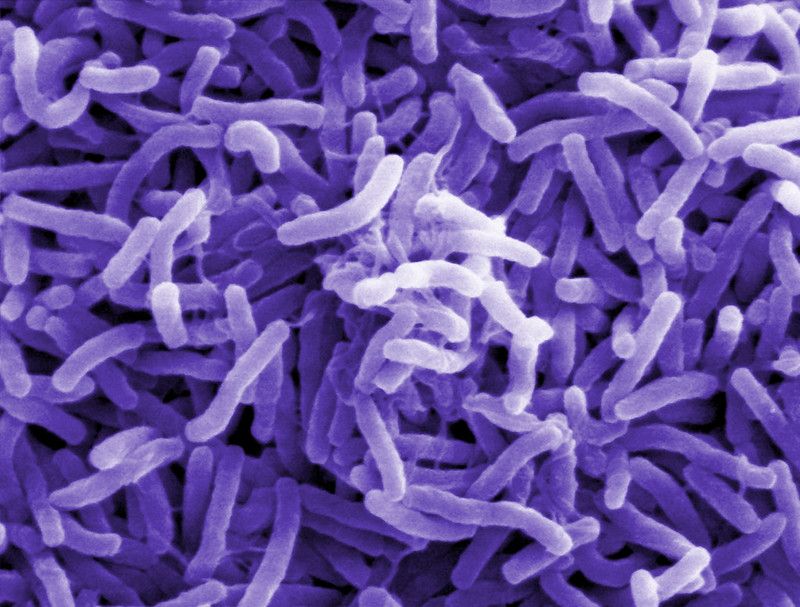


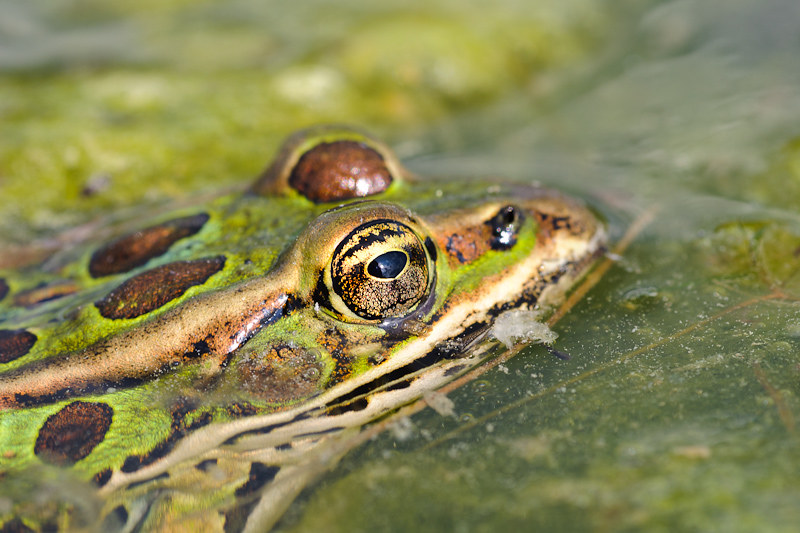 Organisms on Earth display remarkable diversity—but all of them without exception use the same set of 20 amino acids to build proteins. Stephen Freeland is part of team trying to figure out why those 20, and possibly help humans discover life that operates on a different basis elsewhere. (Frog by Breic, CC BY 2.0; sunflower by r44flyer, CC BY-NC-ND 2.0; tropicbird by Doug Greenberg, CC BY-NC 2.0; cholera bacteria by Sanofi, CC BY-NC-ND 2.0; koala by Azri, CC BY-NC-ND 2.0)
Knowing what to look for around the universe
Beyond understanding our own history, refining the design principles would better inform our approach to seeking life on other planets, Freeland says. Scientists generally agree that other life forms are most likely to be microbial, but “most of the ways we currently detect microbes absolutely rely on the molecules in use for life on Earth,” Freeland adds. This work could help researchers know how to detect a “molecular signature” of amino acids that are most likely to show up in life forms that originated independent of Earth.
Like all technologies, these developments come with great promise alongside risk. Freeland isn’t particularly concerned about individual synthetic proteins getting into the wild in the current stage of research, because proteins can’t replicate on their own. But he notes that there are important questions to ask about future, more advanced research. For example, there is potential for scientists working with DNA to build programmable genetic codes. Once this technology merges with fully synthetic proteins, he says, “is where the story takes a really interesting turn.”
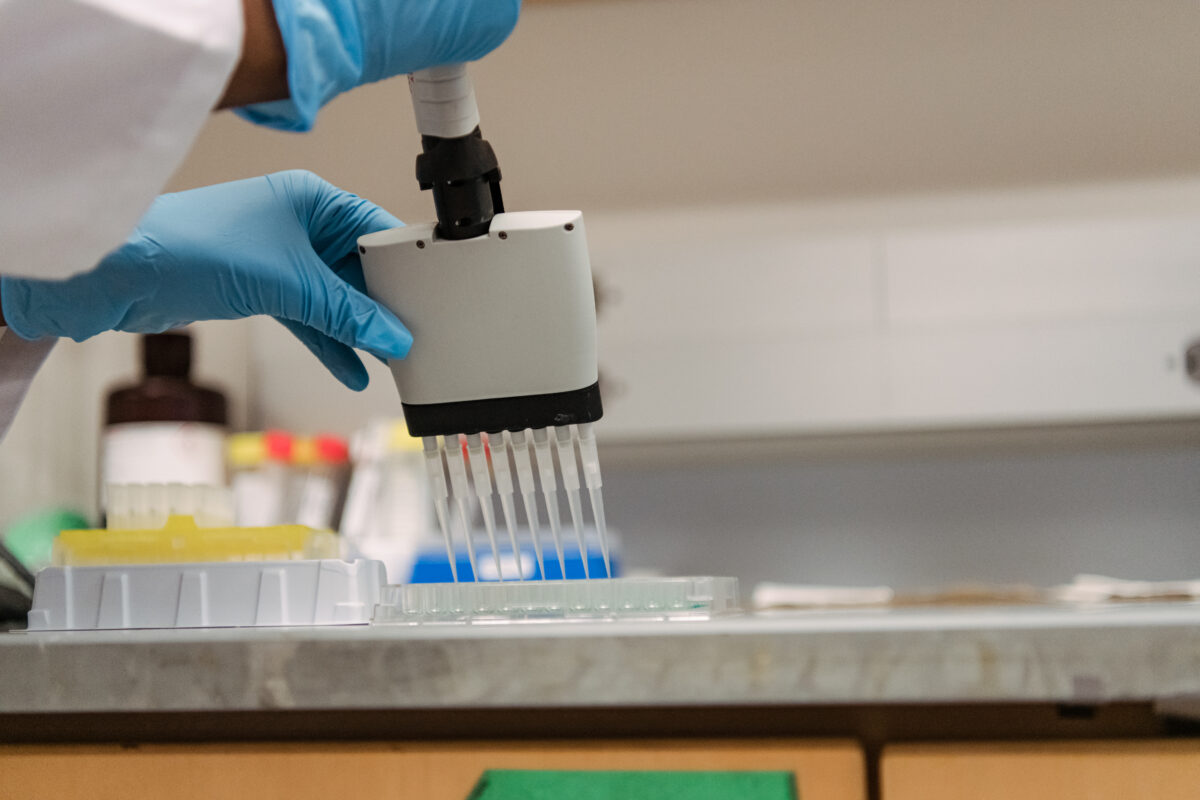 Synthetic DNA and proteins have many potential beneficial applications. But they also come with a host of ethical concerns. By putting their work in the public domain, Freeland and his team are working hard to make possible a transparent, public debate about whether and how these technologies should be used. (Image by Marlayna Demond ’11/UMBC)
Open-source proteins
Possible beneficial applications of synthetic proteins abound, and could include medical treatments or removing toxins from the environment. But without proper oversight, the technology could potentially also lead to harm, Freeland cautions.
Freeland is hoping to avoid the synthetic protein field following in the footsteps of synthetic DNA research. That field is much further ahead, but has mostly been carried out by private companies out of public view, “lending itself to patents and commercial ownership rather than to healthy, transparent debate and legislation,” Freeland says.
To create the best chance for responsible regulation around the use of synthetic proteins, Freeland and his colleagues are trying to quickly get their research into the public domain, he says, to make as robust as possible “what I think will be one of the more important debates of the 21st century when it comes to biotechnology: What are the laws, what are the ethics guiding our use of synthetic proteins and DNA?”
“Life on Earth is an example”
As Freeland and his colleagues lead the way into a new era of synthetic protein research, questions abound. Will proteins form from the amino acid combinations recommended by the algorithm? How can and should we use synthetic proteins, and who will decide? Will the research help us discover life on other planets? As the work develops and more researchers join this burgeoning field, researchers and the public will be constantly reminded of what Freeland describes as “one of the deepest principles of astrobiology.”
“Life on Earth is an example,” he says. “It would seem surprising to think it’s the only example.”
]]>
Every living thing on Earth, from bacteria to humans, uses the same set of 20 amino acids to build all of its proteins, called our “amino acid alphabet.” But why that particular set of 20? If...
https://umbc.edu/stories/predicting-the-foundations-of-life-beyond-earth/
https://my3.my.umbc.edu/api/v0/pixel/news/134872/guest@my.umbc.edu/4dd2628185b3257a1eab6158046be8a6/api/pixel
biology
cnms
news
rca-2
research
science-and-tech
UMBC News & Magazine
https://my3.my.umbc.edu/groups/umbc-news-magazine
https://assets1-my.umbc.edu/system/shared/avatars/groups/000/001/943/24435aa6207c452e7bc15cc74b42c7bb/xsmall.png?1748556657
https://assets1-my.umbc.edu/system/shared/avatars/groups/000/001/943/24435aa6207c452e7bc15cc74b42c7bb/original.png?1748556657
https://assets2-my.umbc.edu/system/shared/avatars/groups/000/001/943/24435aa6207c452e7bc15cc74b42c7bb/xxlarge.png?1748556657
https://assets2-my.umbc.edu/system/shared/avatars/groups/000/001/943/24435aa6207c452e7bc15cc74b42c7bb/xlarge.png?1748556657
https://assets3-my.umbc.edu/system/shared/avatars/groups/000/001/943/24435aa6207c452e7bc15cc74b42c7bb/large.png?1748556657
https://assets1-my.umbc.edu/system/shared/avatars/groups/000/001/943/24435aa6207c452e7bc15cc74b42c7bb/medium.png?1748556657
https://assets2-my.umbc.edu/system/shared/avatars/groups/000/001/943/24435aa6207c452e7bc15cc74b42c7bb/small.png?1748556657
https://assets1-my.umbc.edu/system/shared/avatars/groups/000/001/943/24435aa6207c452e7bc15cc74b42c7bb/xsmall.png?1748556657
https://assets2-my.umbc.edu/system/shared/avatars/groups/000/001/943/24435aa6207c452e7bc15cc74b42c7bb/xxsmall.png?1748556657
UMBC News & Magazine
10
0
false
Fri, 25 Aug 2023 12:04:42 -0400
Fri, 25 Aug 2023 12:04:42 -0400
STEM BUILD interns shine at UMBC’s Summer Undergraduate Research Fest
At Summer Undergraduate Research Fest (SURF) on August 9, 132 students presented posters and six gave short oral presentations, called “lightning talks,” about research projects covering topics from “forever” chemicals to prostate cancer to alcohol addiction. The University Center Ballroom buzzed with students, mentors, and guests as students shared their progress, interacted with other student researchers, and received feedback. The annual event, sponsored by the College of Natural and Mathematical Sciences (CNMS) since 2005, gives students who are often in the early stages of their research careers an important opportunity to feel like part of a scholarly community.
“We are proud of all that our students accomplished this summer. Now they are more knowledgeable, experienced, and skilled—they are better scientists,” shares CNMS Dean William R. LaCourse. “Their discoveries, their effort, and their willingness to explore have added to the vault of scientific knowledge, which in the end benefits society through empowerment—an empowerment of understanding, prediction, and invention.”
Undergraduate research boosts confidence, opens doors
Community college students who participated in the BUILD a Bridge to STEM Internship, a component of STEM BUILD at UMBC, presented research they conducted in small groups under the mentorship of Maria Cambraia, assistant director of research and international affairs in CNMS. Each group developed a different research question about the earthworm C. elegans, a common model organism, and then designed and carried out experiments to answer that question. The internship operates as a course-based undergraduate research experience, or CURE, a structure designed to create opportunities for more students to gain authentic research experience.
Emily Paz ’25, biological sciences, studied how high sugar diets affected the worms. It was Paz’s first time conducting quantitative research, and the BUILD internship created opportunities to make mistakes and learn from them, she says. “It expanded my career choices, and made me see I really have an interest in this field,” says Paz, a transfer student from Howard Community College.
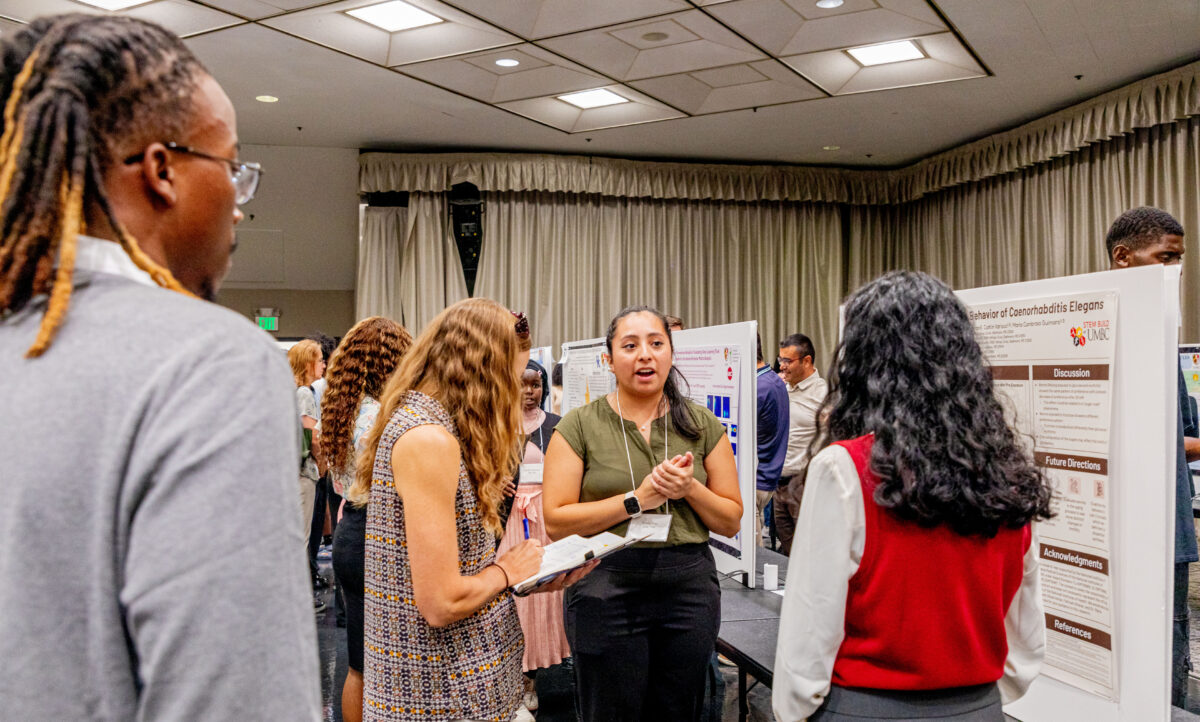 Emily Paz ’25 (center), biological sciences, explains her research to SURF attendees. (Image by Melissa Penley Cormier, M.F.A. ’17/UMBC)
In addition to work in the lab, the process of preparing for SURF and completing the Introduction to Research Badge as part of the internship was valuable for BUILD intern Emily Molnar, a Montgomery College student whose project focused on the relationship between stress and alcohol in C. elegans. Interns completed the badge, a sequence of activities designed to help them get ready to find and pursue undergraduate research opportunities, under the guidance of Caitlin Varisco, assistant director of undergraduate initiatives in CNMS.
“The internship gave me experience with abstracts, posters, and skills to get future opportunities, which boosted my confidence,” Molnar says.
Belonging in science
Student research at UMBC is frequently student driven, which was the experience of Samuel Barnett ’25, biochemistry and molecular biology, another Howard Community College transfer. His project looked at how nicotine influenced the appetite of C. elegans. “You have so much freedom in this program, which I love,” he says. “That really made me feel involved in the research process.”
Third- and fourth-year UMBC students, some of them former STEM BUILD Trainees, mentored the interns along with Cambraia. “I found it uplifting,” says mentor Courtney De Leon ’25, biological sciences. “I’m so proud of the students I mentored.” De Leon also presented her own project at SURF on how long-term nicotine consumption affected growth and reproduction in C. elegans.
 Andrew Opincar ’25, biological sciences and a STEM BUILD Trainee, presents a “lightning talk” at SURF. (Image by Melissa Penley Cormier, M.F.A. ’17/UMBC)
Cambraia notes that after the eight-week internship, the interns identified much more with being scientists than they had at the outset. “Science identity” is documented to increase the chances that students will complete STEM degrees and then continue in related careers.
“That’s why mentoring and peer mentoring are so important in this program,” Cambraia says. “We are not just mentoring them in wet lab techniques, experimental design, and data analysis skills. Our main goal is to help them see and feel that they belong in science and that they can be future leaders in this field.”
“A grand scholarly community”
BUILD a Bridge to STEM is just one example of a student research program that participated in SURF. Students in an array of programs supported by the likes of the National Institutes of Health, Howard Hughes Medical Institute, and the Louis Stokes Alliance for Minority Participation participated, as well as those who arranged their research projects individually.
“These projects all depend on mentors supporting undergraduate research with their time, energy, and resources,” LaCourse notes. UMBC faculty have shown time and again that they are happy to work with students to help them reach their goals, as evidenced by the huge number of students presenting original work at SURF. For many students, SURF is their first time presenting research—but LaCourse hopes it won’t be the last.
“This may be the first of many scientific talks you give,” he told the participants at the end of the day. “By practicing and applying the skills of performing research this summer, you are following in the footsteps of great scientists and researchers—making each of you a part of a grand scholarly community.”
]]>
At Summer Undergraduate Research Fest (SURF) on August 9, 132 students presented posters and six gave short oral presentations, called “lightning talks,” about research projects covering topics...
https://umbc.edu/stories/summer-undergraduate-research-fest-2023/
https://my3.my.umbc.edu/api/v0/pixel/news/134869/guest@my.umbc.edu/bf6ed568dee408d3b3b781a24d8e3346/api/pixel
biology
chemistry-and-biochemistry
cnms
news
rca-2
science-and-tech
stembuild
UMBC News & Magazine
https://my3.my.umbc.edu/groups/umbc-news-magazine
https://assets1-my.umbc.edu/system/shared/avatars/groups/000/001/943/24435aa6207c452e7bc15cc74b42c7bb/xsmall.png?1748556657
https://assets1-my.umbc.edu/system/shared/avatars/groups/000/001/943/24435aa6207c452e7bc15cc74b42c7bb/original.png?1748556657
https://assets2-my.umbc.edu/system/shared/avatars/groups/000/001/943/24435aa6207c452e7bc15cc74b42c7bb/xxlarge.png?1748556657
https://assets2-my.umbc.edu/system/shared/avatars/groups/000/001/943/24435aa6207c452e7bc15cc74b42c7bb/xlarge.png?1748556657
https://assets3-my.umbc.edu/system/shared/avatars/groups/000/001/943/24435aa6207c452e7bc15cc74b42c7bb/large.png?1748556657
https://assets1-my.umbc.edu/system/shared/avatars/groups/000/001/943/24435aa6207c452e7bc15cc74b42c7bb/medium.png?1748556657
https://assets2-my.umbc.edu/system/shared/avatars/groups/000/001/943/24435aa6207c452e7bc15cc74b42c7bb/small.png?1748556657
https://assets1-my.umbc.edu/system/shared/avatars/groups/000/001/943/24435aa6207c452e7bc15cc74b42c7bb/xsmall.png?1748556657
https://assets2-my.umbc.edu/system/shared/avatars/groups/000/001/943/24435aa6207c452e7bc15cc74b42c7bb/xxsmall.png?1748556657
UMBC News & Magazine
0
0
false
Thu, 24 Aug 2023 15:50:30 -0400
Thu, 24 Aug 2023 15:50:30 -0400
NEXUS Institute for Quantitative Biology celebrates student success, community college partnerships
In 2018, faculty at UMBC and four of its top-sending community colleges embarked on a project with an ambitious mission: improve students’ quantitative skills in biological contexts, and eliminate the achievement gap between transfer and direct-entry students in courses requiring these skills. The urgent need for students in the life sciences to be proficient in a range of mathematical concepts has been made clear again and again by various national reports. The project, dubbed the NEXUS Institute for Quantitative Biology (NIQB), arose to address that need.
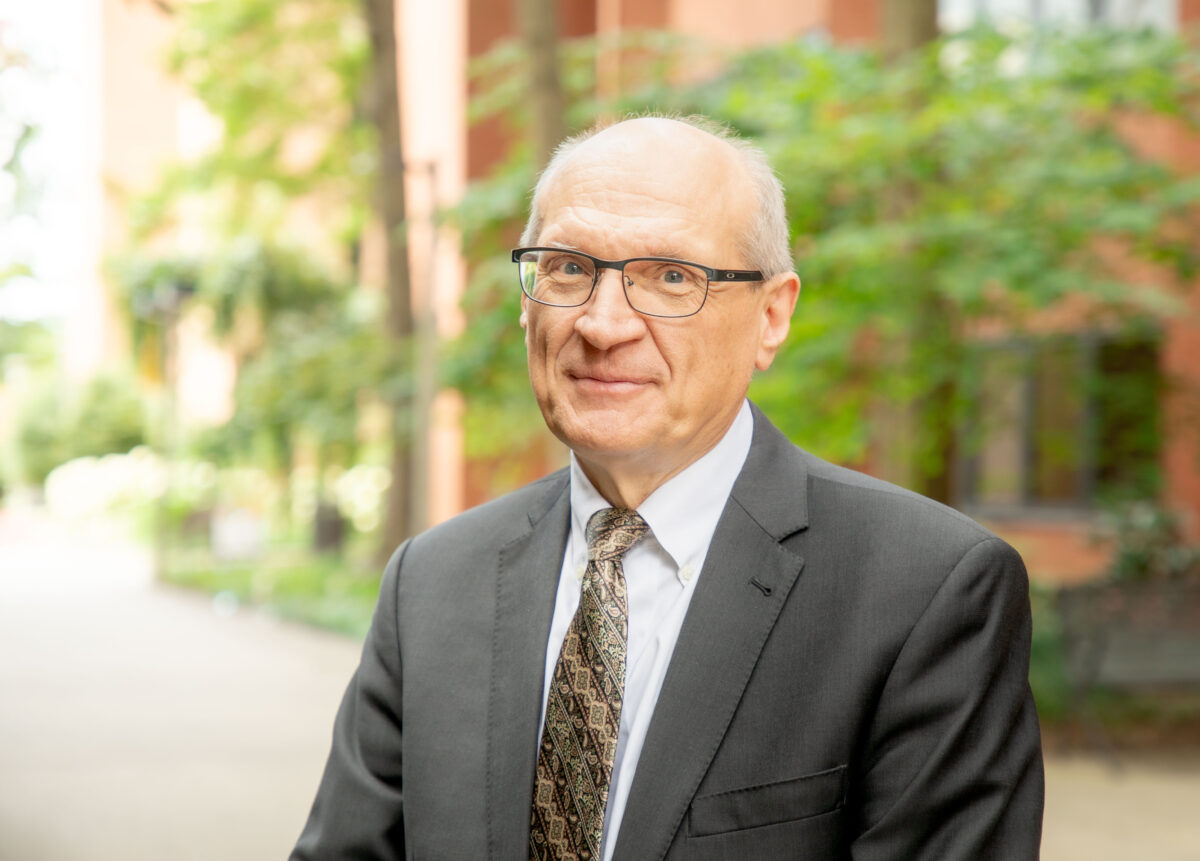 Dean William R. LaCourse has led numerous projects designed to increase student success in STEM at UMBC. (Image by Melissa Penley Cormier/UMBC)
“The world is quantitative,” says William R. LaCourse, dean of the College of Natural and Mathematical Sciences at UMBC. “To do science, and even to make informed decisions in your everyday life, you need to be able to interpret graphs, understand statistics, and more. Having the knowledge to make decisions on your own, and interpret information, empowers you to be successful.”
The NIQB is an arm of the $1.4 million Improving Undergraduate Science Education (IUSE) grant funded by the National Science Foundation that involves UMBC, Howard Community College, Montgomery College, Anne Arundel Community College, and Community College of Baltimore County. At UMBC, the project is led by LaCourse and Jeff Leips, professor of biological sciences. The grant formally concludes in September, and feedback at the group’s fifth annual symposium held in June made clear that it has been a resounding success. Many of its outcomes will continue to benefit students and the partner institutions moving forward.
Promising results
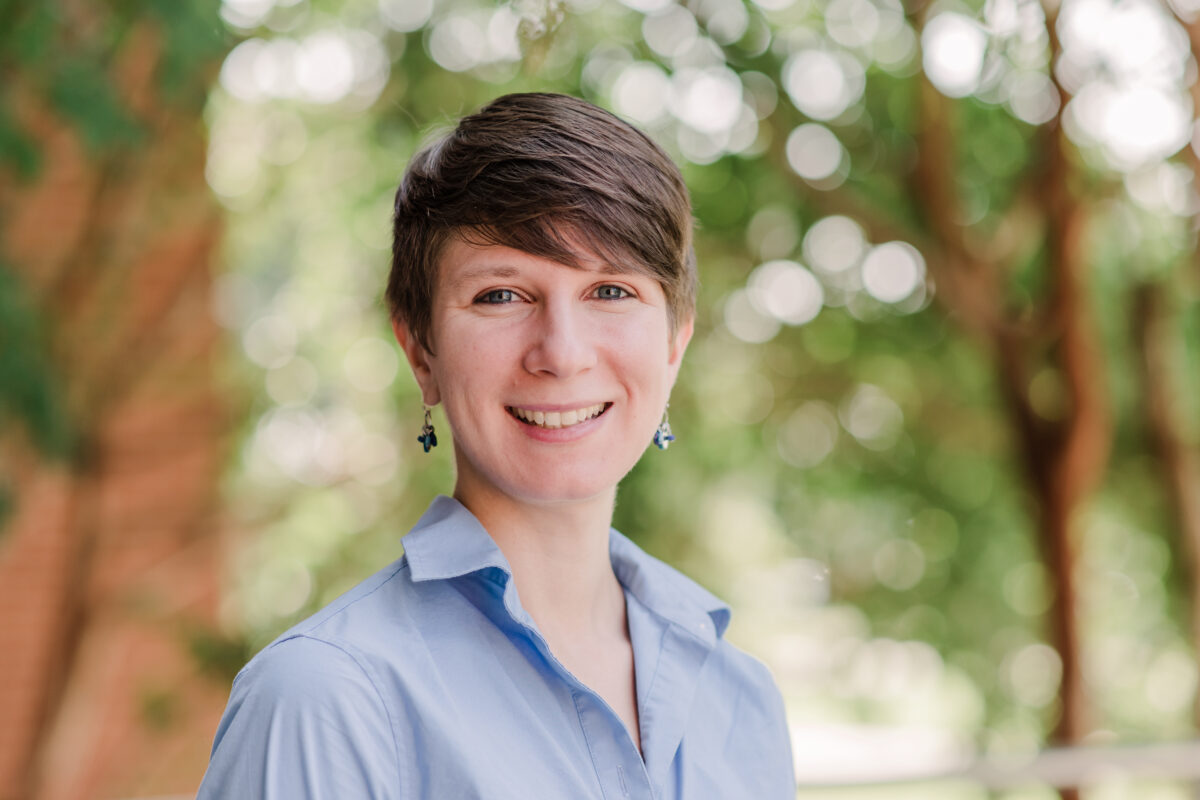 Tory Williams leads the evaluation effort for NIQB. In her role at the UMBC Faculty Development Center, she conducts research that supports teaching innovation across UMBC. (Image by Marlayna Demond ’11/UMBC)
Over the five years of the NIQB project, faculty teams comprised of math and biology instructors and administrators from multiple institutions developed 21 new curricular modules that teach quantitative skills through exploring biological concepts. For example, students studied exponential change through a “Rat Attack” module about population growth. Other modules covered cell division, natural selection, concentration and saturation, and the immune response.
An analysis by Tory Williams, assistant director for pedagogical research in UMBC’s Faculty Development Center, found that after participating in the modules, students showed statistically significant improvement on the desired skills, such as working with algorithms and using quantitative language.
“Our students have really gained a lot in their quantitative skills. It not only helped them better understand the math side of things, but it helped them better understand the biology,” shares Hannah Pie, a biology instructor at Howard Community College.
Growing skills, changing minds
Students at all of the institutions performed at the same level on nine of the modules. On four other modules, performance across institutions only differed on a few items. These are promising signs that the performance gap between transfer and direct entry students is likely to shrink as these students transfer to four-year institutions. The remaining modules were implemented later in the project and require additional analysis from spring 2023 to get meaningful results.
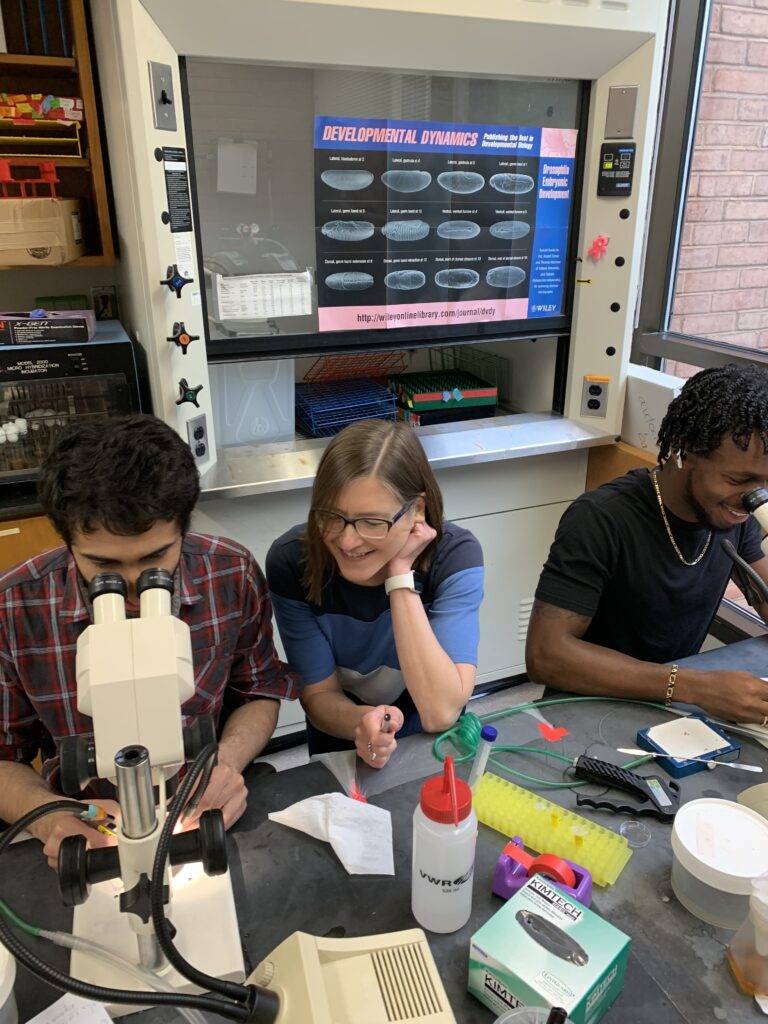 Michelle Starz-Gaiano (center), professor of biological sciences, has been involved with integrating quantitative skills into biology courses at UMBC through NIQB and other efforts. (Image courtesy of Starz-Gaiano)
In spring 2021, some faculty began teaching the modules in their courses. Each semester, new modules became available, and more faculty adopted the new and existing modules in their curricula. By spring 2023, the modules were being taught at five different institutions.
A large majority of faculty said that given the choice, they would use the modules again, according to Williams’ analysis. The students also reported changes in their attitudes toward using math in biology after taking courses using the modules. Their ratings of how intriguing, fun, and appealing they found using math for biology increased, and worry and intimidation decreased.
“Math and biology fit really well together—who would have known?” joked Sybille Clayton, a math instructor at Anne Arundel Community College. “The STEM field has so much to offer, and our math students are still starving for applications at their level. I have always been a proponent of that, and now we have wonderful biology examples.”
Rewarding relationships
In addition to introducing the modules, some institutions made larger curriculum modifications as a result of the NIQB faculty teams’ work, such as shifting content between courses or altering course sequencing or prerequisite requirements. All the changes were in service of optimizing student learning and preparing community college students to succeed at UMBC or another four-year institution.
A committee with similar goals was formed in years prior to the NIQB project, “but it was really a one way street,” reflects Stephen Miller, associate professor of biological sciences at UMBC. Rather than community colleges solely adapting to UMBC’s curriculum, “It was much better to make it a two-way conversation with NIQB,” he says.
The faculty teams discussed everything from different class period lengths to different methods of assessment across institutions in their regular meetings. Addressing challenges together helped the team members build rewarding relationships that they plan to continue to nurture.
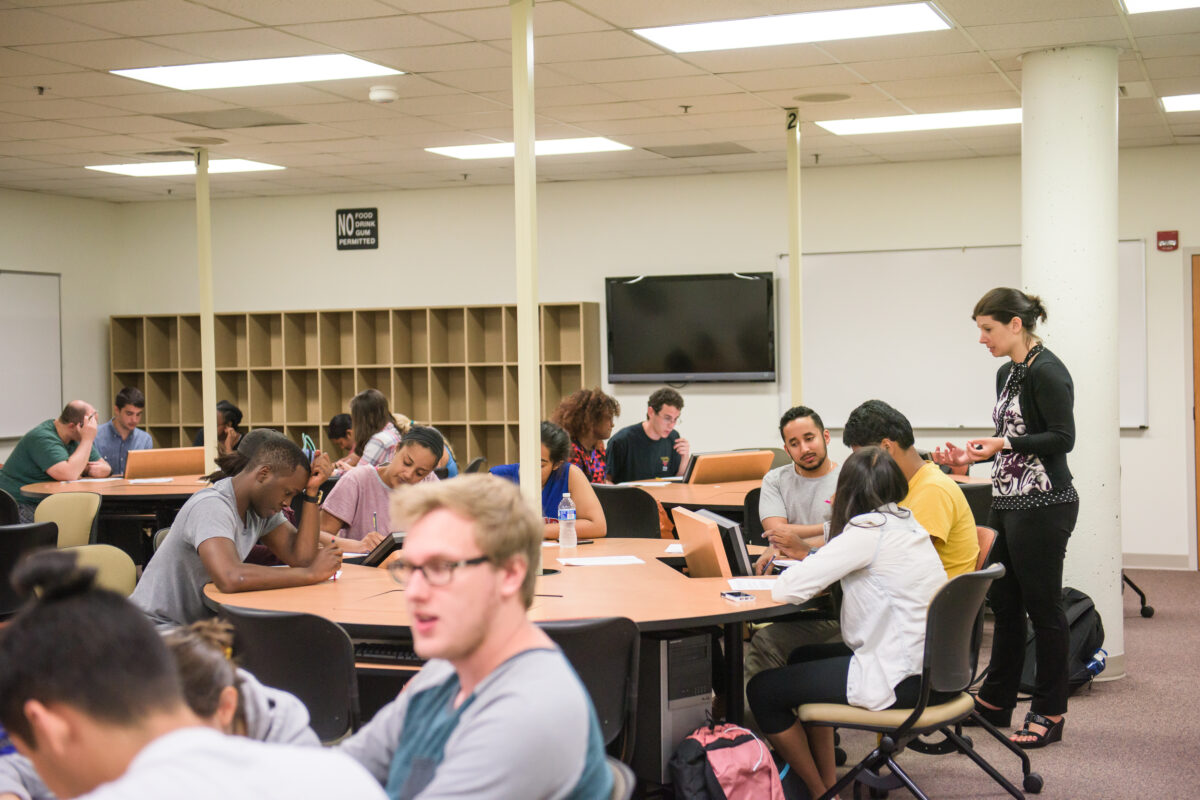 Tracy Smith (standing, right), senior lecturer of biological sciences, teaches in UMBC’s CNMS Active Science Teaching and Learning Environment (CASTLE). Faculty at UMBC have been increasingly adopting innovative active learning techniques for several years, which are known to help students more effectively take ownership of their learning. (Image by Marlayna Demond ’11/UMBC)
“I would like to continue to have these rich collaborations, and meet with other faculty teaching the same courses that I am,” Pie says. “It’s really rewarding to bounce ideas off other people and make your course the best that it can be.”
“It was interesting to see what other topics would come up in our team meetings not related directly to this project,” adds Rebecca Thomas, professor of biology at Montgomery College. “It’s opening up those bigger conversations about how we teach and what are our practices,” which benefits students and faculty alike.
Engaging students in the work
Laura Ott, former IUSE director at UMBC and now teaching assistant professor in biology at the University of North Carolina at Chapel Hill, gave the keynote address at the annual symposium in June. She has taken module development a step farther: She included curriculum design in one of her undergraduate courses.
Students create modules in Ott’s course and later analyze their success when other courses use them. The process creates independent research opportunities beyond typical lab research. Participating in what Ott calls disciplinary-based education research led to “huge gains in research self-efficacy, even more so than in traditional research experiences,” Ott says.
Faculty at the symposium were intrigued, and some started brainstorming ways to implement similar ideas at their institutions, such as in honors projects.
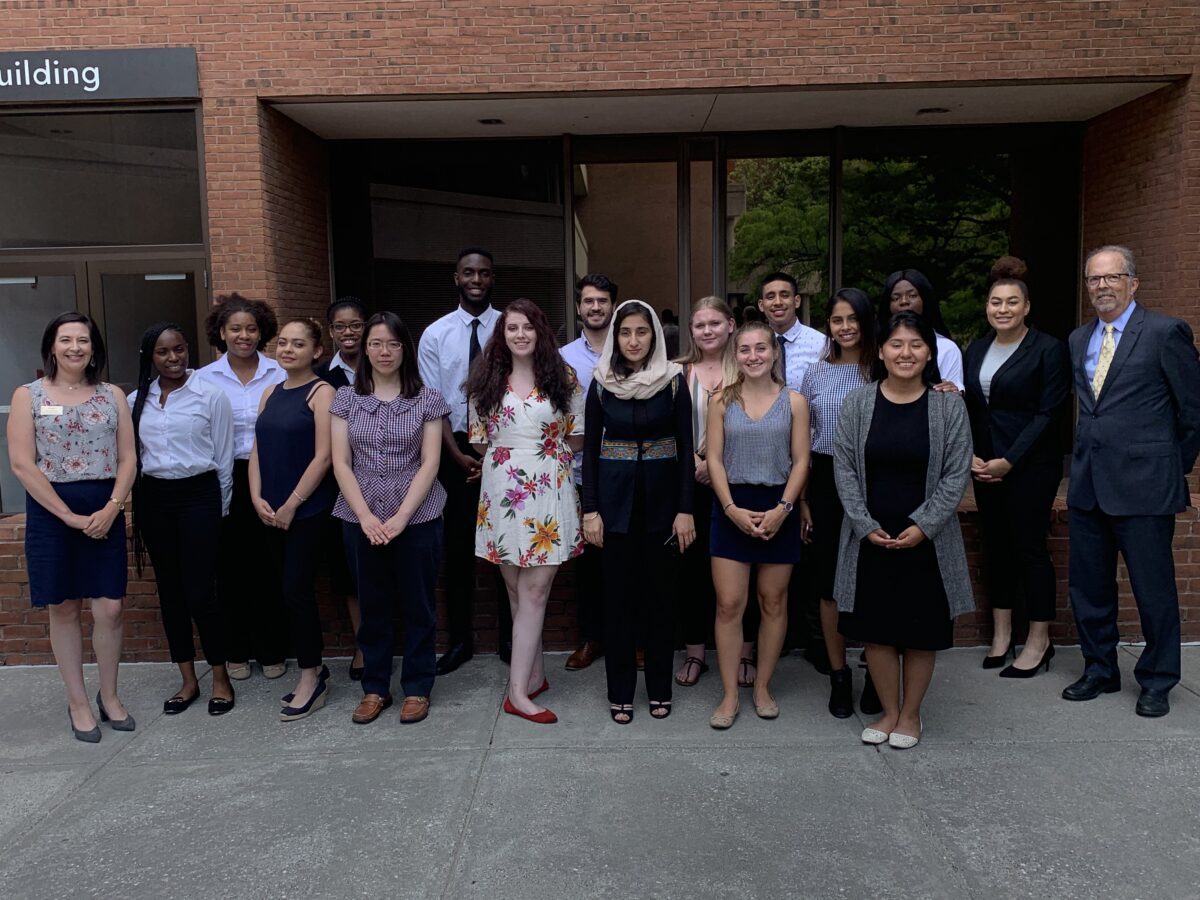 Laura Ott (far left) and Philip Farabaugh (far right), professor of biological sciences, with students in the UMBC STEM BUILD program in 2019. Ott was a lead staff member in the program, which is designed to support student success in STEM, from 2014 – 2019.
Spreading the word
Moving forward, the partner institutions are determined to find ways to keep the connections they’ve built alive and to continue to innovate their teaching to support student success. The faculty will also focus on sharing their results and the modules more broadly through publications, presentations, and word of mouth.
To start, Leips plans to share the modules with Carroll Community College, where he serves as a STEM advisor. Already, the modules are spreading to instructors at the partner institutions who are not directly involved in NIQB. In addition, the NIQB is disseminating their modules worldwide through the Quantitative Undergraduate Biology Education and Synthesis (QUBES) website.
“The faculty involved in this project have really taken this work back and disseminated it at our institution. The modules have become a part of the culture of our teaching,” Thomas says. Given the success of the modules in supporting student learning, “That’s a huge benefit for the faculty and for the students.”
]]>
In 2018, faculty at UMBC and four of its top-sending community colleges embarked on a project with an ambitious mission: improve students’ quantitative skills in biological contexts, and eliminate...
https://umbc.edu/stories/quantitative-biology-initiative-celebrates-success/
https://my3.my.umbc.edu/api/v0/pixel/news/134757/guest@my.umbc.edu/0fecc319d773dd07eac49a1fe1fef7c7/api/pixel
biology
cnms
mathstat
news
science-and-tech
UMBC News & Magazine
https://my3.my.umbc.edu/groups/umbc-news-magazine
https://assets1-my.umbc.edu/system/shared/avatars/groups/000/001/943/24435aa6207c452e7bc15cc74b42c7bb/xsmall.png?1748556657
https://assets1-my.umbc.edu/system/shared/avatars/groups/000/001/943/24435aa6207c452e7bc15cc74b42c7bb/original.png?1748556657
https://assets2-my.umbc.edu/system/shared/avatars/groups/000/001/943/24435aa6207c452e7bc15cc74b42c7bb/xxlarge.png?1748556657
https://assets2-my.umbc.edu/system/shared/avatars/groups/000/001/943/24435aa6207c452e7bc15cc74b42c7bb/xlarge.png?1748556657
https://assets3-my.umbc.edu/system/shared/avatars/groups/000/001/943/24435aa6207c452e7bc15cc74b42c7bb/large.png?1748556657
https://assets1-my.umbc.edu/system/shared/avatars/groups/000/001/943/24435aa6207c452e7bc15cc74b42c7bb/medium.png?1748556657
https://assets2-my.umbc.edu/system/shared/avatars/groups/000/001/943/24435aa6207c452e7bc15cc74b42c7bb/small.png?1748556657
https://assets1-my.umbc.edu/system/shared/avatars/groups/000/001/943/24435aa6207c452e7bc15cc74b42c7bb/xsmall.png?1748556657
https://assets2-my.umbc.edu/system/shared/avatars/groups/000/001/943/24435aa6207c452e7bc15cc74b42c7bb/xxsmall.png?1748556657
UMBC News & Magazine
1
0
false
Thu, 17 Aug 2023 15:23:33 -0400
Thu, 17 Aug 2023 15:23:33 -0400
Putting the principles of education to work

There are some people who you meet, and it’s obvious: They’re natural leaders—seemingly born to the role. Derek Anderson ’03, interdisciplinary studies, is one of those people.
He went right from UMBC to the front of the classroom as a teacher in the highly regarded Howard County Public School System, earning a master’s degree in school administration and supervision from Johns Hopkins University at the same time.
But in talking with Anderson, it becomes apparent that he wasn’t born a leader—he became one. And he says UMBC was a big reason why he did.
After nearly a decade of classroom leadership, Anderson became an assistant principal, then principal at Longfellow Elementary School in Columbia, Maryland, winning recognition as Howard County’s 2023 Principal of the Year.
And now he’s been tapped by Maryland’s state superintendent of schools to be the state’s new executive director of community schools, overseeing more than 450 schools with the goal of better connecting schools with the families they serve.
From imposter syndrome to educator
As improbable as it sounds, this rising star in education leadership remembers that as a first-year student, he wasn’t sure at first that he even belonged in college.
“I struggled mightily in my first semester,” he remembers—in large part because his secondary school hadn’t fully prepared him for college-level academics. “There was a point where I said to myself, ‘Am I cut out for this? This is a lot.’”
Anderson says UMBC’s academic advising and his own inner determination to persevere helped, but what set him firmly on the path to his future was The Shriver Center, an organization at UMBC that connects students with applied learning, civic engagement, and community-based service opportunities. He began volunteering weekly at a local elementary school not too far from campus.
“I really realized how excited the kids were when we came to visit,” Anderson says. “And it was mutual—I would start looking forward to that particular day of the week. That was the first time I really started to consider a career in education.”
Building a major to match his passion
That realization, he says, galvanized him: It not only gave him a career goal to help shape his studies, it motivated him to work toward the day when he could help students prepare better than he had been for postsecondary academics.
“I thought about my own experience, and I questioned: Could I have been better prepared?” Anderson says. “What would have better prepared me so that I did not struggle the way I did in college? So that really reinforced the idea of, ‘I want to go into education so that I can help and support [students] so that they don’t have some of those experiences.’”
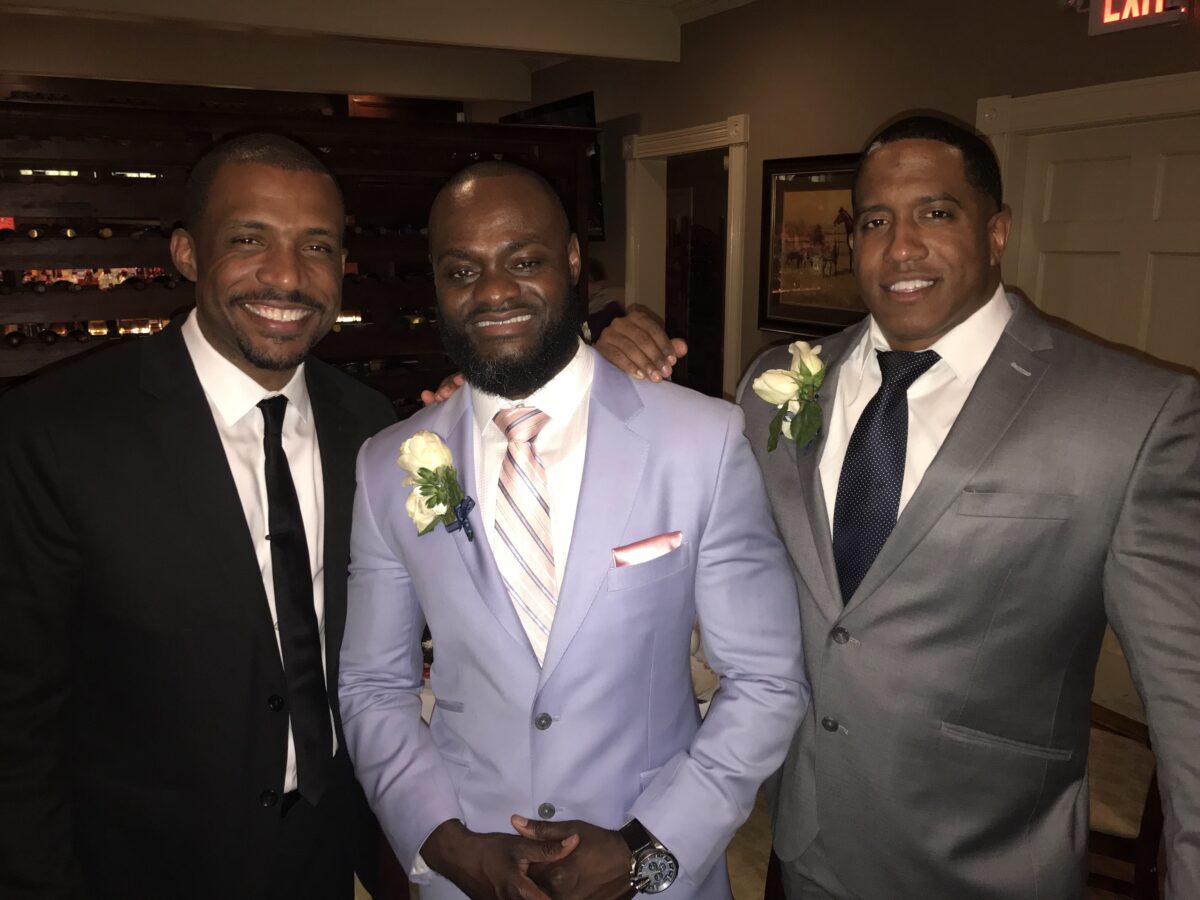
Anderson, on the left, with two of his closest UMBC friends, Eddie Freeman ’03, M.S. ’06, and Marc Haskins ’01 at Freeman’s wedding.
UMBC didn’t offer an education major at the time, but Anderson followed his inspiration, juggling a steady load of challenging coursework with his athletic obligations as captain of the track and field team, responsibilities as a dorm resident advisor, and eventually student teaching in Baltimore City schools as he pursued his teaching certificate.
Along with his teacher-certification track, Anderson’s interdisciplinary studies focused on psychology and Africana studies, and one of his professors in the latter field gave him first-hand insight into the power of effective teaching.
He remembers vividly the classes he took with Christel N. Temple, then an assistant professor of Africana studies at UMBC.
“She’s an African American woman, and I believe at the time she was relatively new to the position, but she was very good—not just in disseminating the content, but in the passion she showed for it. That was a big motivator for me,” Anderson says.
Because of that passion for teaching, he remembers: “I really enjoyed her class. I wanted to learn. I wanted to grow. I wanted to enhance my knowledge for no other reason than to become brighter and better.”
Temple, now a full professor of Africana studies at the University of Pittsburgh, isn’t surprised that her former student’s leadership qualities have attracted attention.
“I am so proud of his career,” she says. “His success is a reminder of the contribution that Africana studies makes—not just our field’s orientation to subjects such as culture, communication and sociology, but also to education studies.”
Understanding the personal dimensions of education
Anderson landed a job in Howard County Public Schools soon after graduation by way of his teaching certification and graduation from UMBC. He taught at an elementary school for seven years, then served as an elementary school instructional team leader before becoming an assistant principal. He served in that role for four years before becoming principal at Longfellow Elementary School in 2017.
Kathy Nuemann ’06, American studies, remembers meeting Anderson the year before he became principal. Neumann, a math specialist at Longfellow, was excited to meet another Retriever at her school and struck by his genuine personality. For the next six years, as they worked together, she says, “Derek was always available. Whether I was seeking advice, sharing an idea, or just needed someone to lend an ear. His sincerity extended to students as well.”
She recounts a recent story where her students wrote a proposal to Anderson as part of a social studies project. After identifying a problem (trash on the recess field), the students brainstormed a solution by requesting a recycling bin out on the playground. Neumann invited Anderson to visit her class and the students read the proposal to him. “Not only did Derek listen to the proposal, but he fulfilled the request within a week. My students were thrilled!”
All told, Anderson served nearly 20 years in Howard County’s elementary schools—long enough to see two of his three his own children pass through Longfellow Elementary while he was principal there. (He met his wife of 16 years, Jonae Anderson ’02, psychology, M.P.P. ’05, at UMBC.)
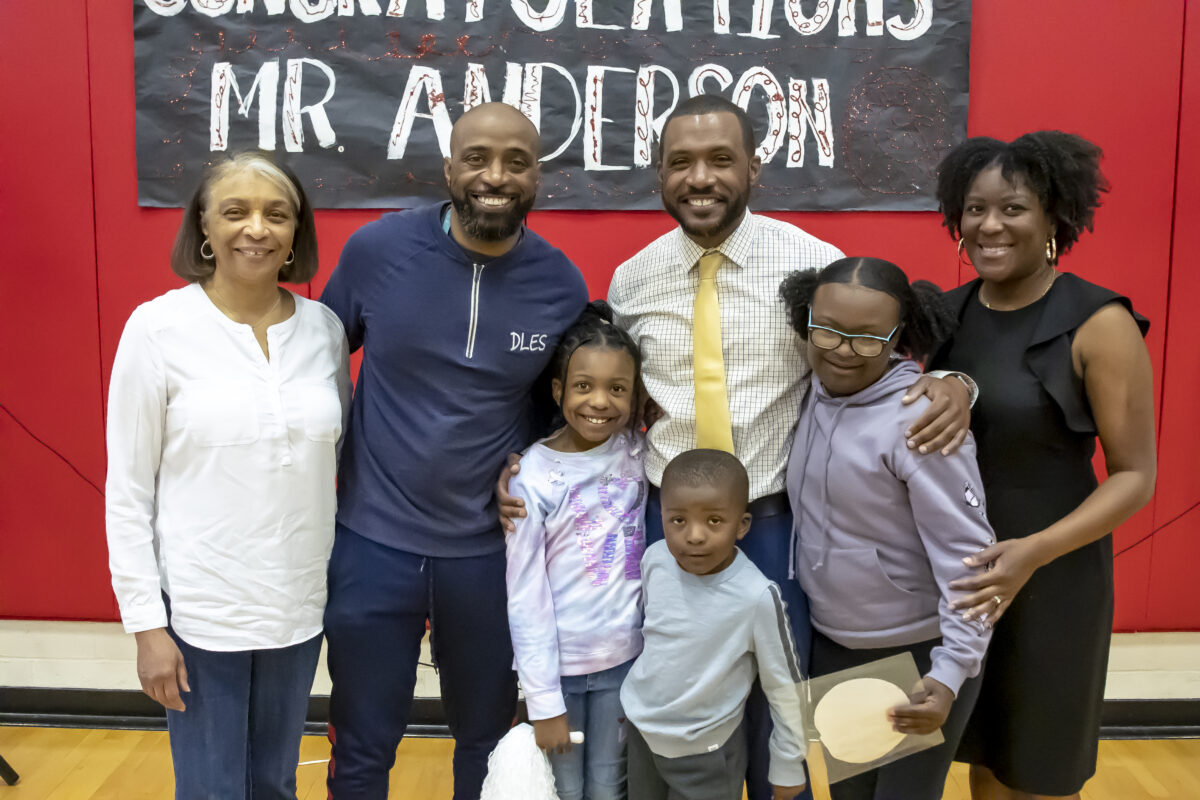
Anderson was named 2023 Principal of the Year for Howard County Public Schools. He’s pictured here with his wife and children, and mother and brother.
Indeed, Anderson says, parenthood helped underline the personal dimension of education, and not just for the obvious reasons.
“It makes me that much more passionate about the work” of education, he says. “Parents send us their kids—they send us the best they have, Monday through Friday, with the expectation that they’re going to come back safely, happy and enjoying that [school] experience. That is a responsibility I carry with me every day.”
Bringing energy to the executive position
In fact, it turned out that that sense of greater responsibility made him the perfect candidate for his new role as executive director of Maryland’s growing portfolio of community schools.
The expansion is part of the state’s 2019 Blueprint for Maryland’s Future legislation, which dedicates almost $4 billion per year in state and local funding over the next decade to a set of reforms aimed at improving public schools in the state.
The intent of community schools is to better connect schools with the families they serve. Particulars of that connection can include addressing daycare deficiencies in schools that educate a disproportionate proportion of teenage mothers, or creating a weekend food pantry with fresh groceries at a school situated in a food desert.
“Leadership has always been something that I’ve aspired to,” Anderson says. “For a long time, I never thought past the principalship,” and he admits that there’s a special energy to being in a school building that he may well miss in his new job as executive director.
But when he weighed the one school he was leaving against the difference he could make in overseeing more than 450 schools, he says he found himself thinking about his own educational journey.
“I went from, ‘I’m not confident about being a student in college’ to ‘This is something I want to pursue,’ because along the way people were providing opportunities, providing guidance, providing insight, and it’s led to a very fulfilling career for me,” Anderson says.
And with his new role’s wider scope, he has the opportunity to be just such a helping hand in the lives and education of many more students.
“I still get up excited about coming to work [in education] because I know it’s meaningful work,” Anderson says. “What better way to serve kids?”
]]>
There are some people who you meet, and it’s obvious: They’re natural leaders—seemingly born to the role. Derek Anderson ’03, interdisciplinary studies, is one of those people. He went right...
https://umbc.edu/stories/putting-the-principles-of-education-to-work/
https://my3.my.umbc.edu/api/v0/pixel/news/134703/guest@my.umbc.edu/14bdc2b3afd109b607e9e561d1091dc2/api/pixel
africana-studies
alumni
american-studies
cahss
feature
inds
magazine
the-shriver-center
UMBC News & Magazine
https://my3.my.umbc.edu/groups/umbc-news-magazine
https://assets1-my.umbc.edu/system/shared/avatars/groups/000/001/943/24435aa6207c452e7bc15cc74b42c7bb/xsmall.png?1748556657
https://assets1-my.umbc.edu/system/shared/avatars/groups/000/001/943/24435aa6207c452e7bc15cc74b42c7bb/original.png?1748556657
https://assets2-my.umbc.edu/system/shared/avatars/groups/000/001/943/24435aa6207c452e7bc15cc74b42c7bb/xxlarge.png?1748556657
https://assets2-my.umbc.edu/system/shared/avatars/groups/000/001/943/24435aa6207c452e7bc15cc74b42c7bb/xlarge.png?1748556657
https://assets3-my.umbc.edu/system/shared/avatars/groups/000/001/943/24435aa6207c452e7bc15cc74b42c7bb/large.png?1748556657
https://assets1-my.umbc.edu/system/shared/avatars/groups/000/001/943/24435aa6207c452e7bc15cc74b42c7bb/medium.png?1748556657
https://assets2-my.umbc.edu/system/shared/avatars/groups/000/001/943/24435aa6207c452e7bc15cc74b42c7bb/small.png?1748556657
https://assets1-my.umbc.edu/system/shared/avatars/groups/000/001/943/24435aa6207c452e7bc15cc74b42c7bb/xsmall.png?1748556657
https://assets2-my.umbc.edu/system/shared/avatars/groups/000/001/943/24435aa6207c452e7bc15cc74b42c7bb/xxsmall.png?1748556657
UMBC News & Magazine
2
0
false
Tue, 15 Aug 2023 13:19:02 -0400
Tue, 15 Aug 2023 13:19:02 -0400
Why does your hair curl in the summer? A chemist explains the science behind hair structure

Written by Tara S. Carpenter, principal lecturer of chemistry and biochemistry, UMBC
If you have curly hair, you know that every day is a new adventure. What will my hair do today? Why does it curl better on some days than others? And even those without naturally curly hair might notice their hair curling – or, let’s be honest, frizzing – a bit on humid summer days.
As a person with curly hair, I’m always looking for the best way to care for and understand my hair. As a chemist, I’m interested in the science behind how my hair behaves at the molecular level. There are different hair types, from straight to curly, and they behave differently depending on their structure. But what hairs are made up of at the molecular level is the same.
Hair structure
Hair begins growing under the skin’s surface, but it’s what happens after it pokes through the skin that determines whether you have a good hair day or a bad one.
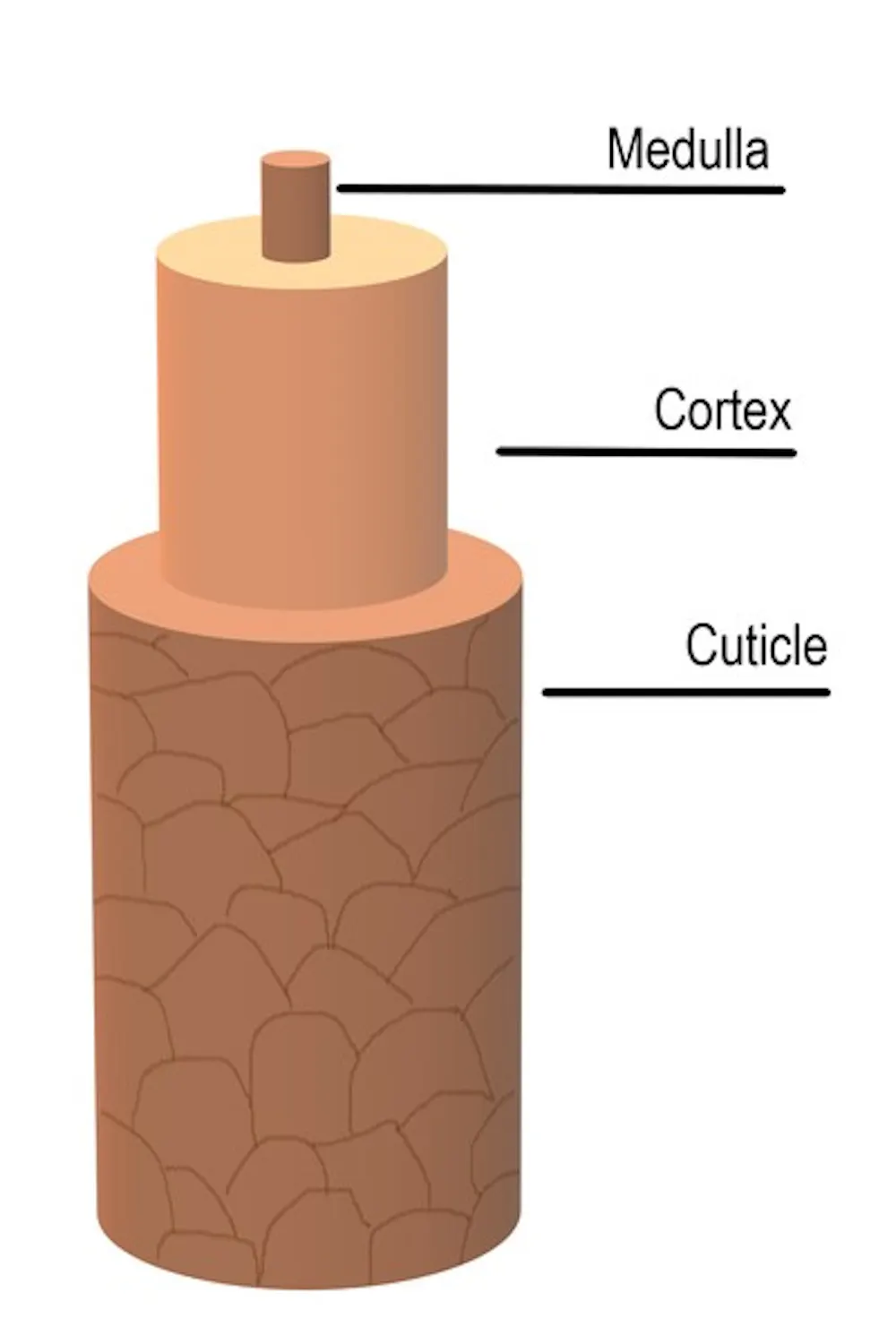
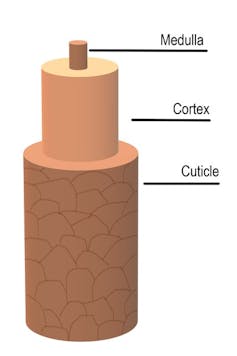 The three layers of hair. (Image by Christinelmiller/Wikimedia Commons, CC BY-SA)
Each hair can have three layers – the medulla, the cortex and the cuticle. You can think of each hair like a tiny tree trunk.
The innermost, or core layer, is the medulla. This layer holds moisture, much like the pith in the center of a tree trunk. This layer is also very fragile, but only thick or coarse hairs contain this part – so those with thin or blond hair typically don’t have the medulla layer in their hairs.
Next is the cortex, which makes up most of a hair and is analogous to the wood of a tree. The cortex is made up of spring-shaped protein molecules that lie in parallel rows in a cylindrical bundle. The exact shape of that bundle is determined by the hair follicle, which is a pore on the skin from where the hair grows.
How the hair grows out of the follicle influences the distribution of its proteins. So a straight follicle produces straight hair and a curved follicle produces curly hair. The less evenly distributed the squiggly proteins are, the curlier the hair. Your genetic code also plays a role in the shape of the cortex and, therefore, the shape and thickness of your hair.
Lastly, the outermost layer of a hair is called the cuticle. The cuticle is like the bark of a tree – and it even looks like bark under a microscope.
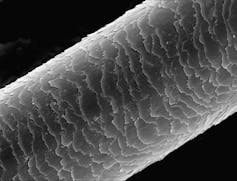 A hair’s cuticle under a microscope. (Image by Lauren Holden, CC BY-SA)
It’s the cuticle’s job to protect the cortex, but the cuticle is very easily damaged. Imagine lifting or removing the bark from a tree. Doing so would leave the wood inside susceptible to moisture loss, exposure to the environment and damage.
The same is true for each hair. When the cuticle is damaged from brushing, chemicals, wind or heat, the proteins of the cortex have a much more difficult time lying smoothly together. This means they can lose moisture, gain moisture, fray like a rope – this causes split ends – and even break. All these factors can influence how your hair looks at any given moment.
Hair in the summer
So what does all of this have to do with humidity? Well, hair proteins contain many permanent chemical bonds. Only chemical treatments like perms or straightening can change these bonds. But there’s another natural phenomenon that keeps the protein molecules in the cortex in line – something called hydrogen bonding.
The long, stringy protein molecules in the cortex contain tiny positive and negative charges throughout their structure. Because opposite charges attract each other, entire rows of proteins can be attracted to each other like tiny, weak magnets.
Heating or wetting your hair breaks the magnetlike attraction between these rows of proteins. So, heat and water can rearrange the proteins in your hair by breaking the hydrogen bonds that keep their structure together.
How hydrogen bonds form.
Water is one of the best molecules at hydrogen bonding. So when a molecule of water has the opportunity to hydrogen bond with something, it will.
In your hair, water can form hydrogen bonds between the rows of proteins in your hair’s cortex. It is the extent to which this happens that determines your hair’s fate.
When just a little water enters the hair, like it might in lower humidity conditions or when the cuticle is healthy and able to keep too much water out of the cortex, your hair may curl. When humidity is high, or the cuticle is damaged, more water enters the hair. Too much water can swell and crack the cuticle, making hair look frizzy.
Many people consider high humidity to be the problem behind frizzy hair, but styling your hair under high humidity and then entering a less humid environment can also be an issue. Water molecules leaving the hair’s cortex can also lead to a change in hair behavior.
Treating summer hair
A damaged cuticle layer leaves the cortex more susceptible to water molecules creeping in or out and wreaking havoc on your hair. Anytime water molecules travel in or out, your hair’s structure suffers and your hairstyle may be ruined. When the cuticle is healthy, it can protect the cortex, making your hair less susceptible to changes in the weather or environment. The bottom line is that a healthy hair cuticle helps keep proper moisture in the cortex.
Heat from styling tools is the most common culprit behind damaged cuticles, but chemical treatments, brushing, sun and wind can also cause damage. Avoiding these activities can help, but some things, such as exposure to the sun, can’t be avoided.
You can also take care of your scalp – a clean, healthy scalp leads to healthy hair cuticles. Using moisturizing products on your hair can help maintain cuticle health as well. Oils and moisturizing treatments can even restore damaged cuticles. The good news is that by understanding your hair and treating it well, you can help prevent the undesired effects of humidity
This article is republished from The Conversation under a Creative Commons license. Read the original article and see more than 250 UMBC articles available in The Conversation.
]]>
Written by Tara S. Carpenter, principal lecturer of chemistry and biochemistry, UMBC If you have curly hair, you know that every day is a new adventure. What will my hair do today? Why does...
https://umbc.edu/stories/why-does-your-hair-curl-in-the-summer/
https://my3.my.umbc.edu/api/v0/pixel/news/134647/guest@my.umbc.edu/aab24994e577bb6db156241f6a476b7a/api/pixel
chemistry
cnms
discovery
magazine
the-conversation
UMBC News & Magazine
https://my3.my.umbc.edu/groups/umbc-news-magazine
https://assets1-my.umbc.edu/system/shared/avatars/groups/000/001/943/24435aa6207c452e7bc15cc74b42c7bb/xsmall.png?1748556657
https://assets1-my.umbc.edu/system/shared/avatars/groups/000/001/943/24435aa6207c452e7bc15cc74b42c7bb/original.png?1748556657
https://assets2-my.umbc.edu/system/shared/avatars/groups/000/001/943/24435aa6207c452e7bc15cc74b42c7bb/xxlarge.png?1748556657
https://assets2-my.umbc.edu/system/shared/avatars/groups/000/001/943/24435aa6207c452e7bc15cc74b42c7bb/xlarge.png?1748556657
https://assets3-my.umbc.edu/system/shared/avatars/groups/000/001/943/24435aa6207c452e7bc15cc74b42c7bb/large.png?1748556657
https://assets1-my.umbc.edu/system/shared/avatars/groups/000/001/943/24435aa6207c452e7bc15cc74b42c7bb/medium.png?1748556657
https://assets2-my.umbc.edu/system/shared/avatars/groups/000/001/943/24435aa6207c452e7bc15cc74b42c7bb/small.png?1748556657
https://assets1-my.umbc.edu/system/shared/avatars/groups/000/001/943/24435aa6207c452e7bc15cc74b42c7bb/xsmall.png?1748556657
https://assets2-my.umbc.edu/system/shared/avatars/groups/000/001/943/24435aa6207c452e7bc15cc74b42c7bb/xxsmall.png?1748556657
UMBC News & Magazine
6
0
false
Fri, 11 Aug 2023 11:22:00 -0400
Fri, 11 Aug 2023 11:22:00 -0400
Preserving history’s mark—one tree, one brick, one story at a time

Artillery booms in the distance as men hurriedly button up their scratchy wool uniforms and grab their muskets. The smell of campfires and horses intertwine with shouts, neighs, and gunfire.
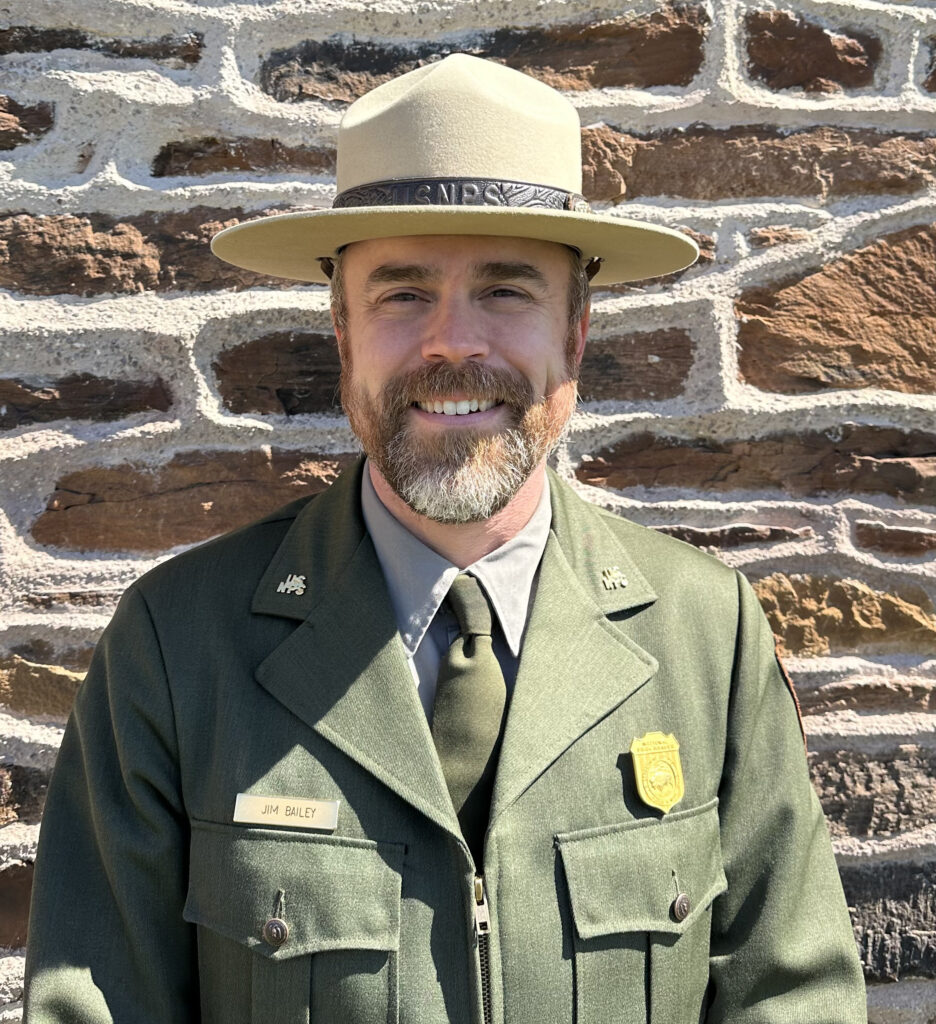
“It was a sensory overload,” remembers Jim Bailey ’03, M.A. ’07, history, of the recreated battles and camps he saw during 125th anniversary Civil War events. “At the age of eight, it wasn’t that I was reading books and studying history. It was something I could see. Smell. Hear. Feel.”
Exactly what Bailey would do with his early love for immersive history, however, wasn’t clear until a class during his first year at UMBC, when a park ranger from nearby Fort McHenry National Monument & Historic Shrine in Baltimore City gave a guest talk on volunteering for the National Park Service. By December of 1998, 18-year-old Bailey—a Humanities Scholar—was signed up as a Volunteer-in-Parks, the first step in a long career that has led him to his current position as superintendent of both Appomattox Court House National Historical Park and Booker T. Washington National Monument.
Balancing natural and cultural resources
The United States National Park System (NPS) is 424 units strong, and always expanding. If this number seems large—aren’t there 63 national parks?—it’s because NPS includes everything from national battlefields and lakeshores to historical parks and monuments, as well as marquee parks like Yellowstone.
Bailey explains that the two parks now under his jurisdiction—although 65 miles apart—tell similar narratives about the end of one story and the beginning of another. Appomattox Courthouse was the site of the April 9, 1865, surrender of the Army of Northern Virginia, marking the beginning of the end of the Civil War and the start of a new era of freedom fraught with uncertainty for newly freed people.
The Booker T. Washington monument tells the story of a nine-year-old boy who had to carry school books for the children of his enslavers, but was not himself allowed to learn to read and write. Washington eventually made the 500-mile trek to Hampton University, becoming an influential early African American leader. (Another influential Black leader would follow in his footsteps to Hampton, President Emeritus Freeman Hrabowski, who received his undergraduate degree there.)
The national parks are hugely important because they show us that as a people, we continue to define freedom, civil rights, and civil liberty. We can’t take that for granted.
Jim Bailey ’03, M.A. ’07, history
“As a nation, we for years have been having an open discussion on Civil War memory and monumentation in public places. Who gets remembered? And that is something that as an agency, we’ve always done,” says Bailey.
“We’ve always been expanding the cultural sites that we maintain and the stories that we tell. We recognize that all of these stories make up the tapestry that is our nation. It’s not just for George Washington or Francis Scott Key. It’s also people like Booker T. Washington and Hannah Reynolds.” (Reynolds, an enslaved woman, was mortally wounded during the Battle of Appomattox Court House—and is the only known civilian casualty of the battle—but was free for the three days between the Confederate surrender and her tragic death.)
As superintendent, Bailey leads a team that works on preserving historic structures, keeping up with the latest research on the stories told in those structures, and maintaining natural resources, including water quality, wildlife surveys, wildlife management, and controlled burns.
Conflicts can arise, however, when working to balance both natural and cultural resources.
“How do you do that when you also have to provide access to the public today and you have to do that in a way that doesn’t impact the ability of their children or grandchildren or great grandchildren to come to this park and see all the same things?” asks Bailey. “But that’s the mission of the National Park Service: To preserve and protect these parks for both this generation and future generations.”
Cultural landscapes as classrooms
Unsurprisingly, perhaps, Bailey makes a point of getting out of the office to walk through the parks, greeting staff and talking to visitors. He says that his leadership style is heavily influenced by an early mentor: Hrabowski.
“As an undergraduate, I was shocked to see Dr. Hrabowski out there, talking with students. And you saw it all the time,” explains Bailey. “He said that he can wander through campus and easily be looking down and be thinking about the next meeting or issue, but had to remind himself not to do that. As a young man, hearing that from someone like Dr. Hrabowski was very powerful. And I’ve always tried to emulate that.”
Sometimes, Bailey will seek solitude and hike a trail, maintaining a regular connection to the park—walking where Booker T. Washington spent his childhood, or experiencing the Appomattox River where the Monacan people settled— separate from his administrative role. He describes this as “the power of place.” You can experience history outside of books and classrooms because, “You’re there and you can see it.”
“We call it the cultural landscape,” adds Bailey. “The national parks are hugely important because they show us that as a people, we continue to define freedom, civil rights, and civil liberty. We can’t take that for granted. It’s something that each generation has to define and defend and decide—What do these things mean?”
For current Retrievers, Bailey recommends being willing to step outside of your comfort zone.
“Listen and open a dialogue with people who think differently. Engage with other disciplines than your own. Consider different perspectives. UMBC provides that space, both literally and figuratively.”
Bailey says his favorite national park is “the next one” he visits. But just in case you need another reason to visit one of the 424 National Parks Service sites: “The value of these national parks is that they are open classrooms where all Americans are welcome to think and to contemplate.”
Want to see where a degree in history might take you? Explore UMBC’s history program today.
]]>
Artillery booms in the distance as men hurriedly button up their scratchy wool uniforms and grab their muskets. The smell of campfires and horses intertwine with shouts, neighs, and gunfire. ...
https://umbc.edu/stories/preserving-history-mark-on-a-place/
https://my3.my.umbc.edu/api/v0/pixel/news/134565/guest@my.umbc.edu/0881b135f71034dfa1465084b84980a1/api/pixel
alumni
cahss
history
humanities-scholars
magazine
UMBC News & Magazine
https://my3.my.umbc.edu/groups/umbc-news-magazine
https://assets1-my.umbc.edu/system/shared/avatars/groups/000/001/943/24435aa6207c452e7bc15cc74b42c7bb/xsmall.png?1748556657
https://assets1-my.umbc.edu/system/shared/avatars/groups/000/001/943/24435aa6207c452e7bc15cc74b42c7bb/original.png?1748556657
https://assets2-my.umbc.edu/system/shared/avatars/groups/000/001/943/24435aa6207c452e7bc15cc74b42c7bb/xxlarge.png?1748556657
https://assets2-my.umbc.edu/system/shared/avatars/groups/000/001/943/24435aa6207c452e7bc15cc74b42c7bb/xlarge.png?1748556657
https://assets3-my.umbc.edu/system/shared/avatars/groups/000/001/943/24435aa6207c452e7bc15cc74b42c7bb/large.png?1748556657
https://assets1-my.umbc.edu/system/shared/avatars/groups/000/001/943/24435aa6207c452e7bc15cc74b42c7bb/medium.png?1748556657
https://assets2-my.umbc.edu/system/shared/avatars/groups/000/001/943/24435aa6207c452e7bc15cc74b42c7bb/small.png?1748556657
https://assets1-my.umbc.edu/system/shared/avatars/groups/000/001/943/24435aa6207c452e7bc15cc74b42c7bb/xsmall.png?1748556657
https://assets2-my.umbc.edu/system/shared/avatars/groups/000/001/943/24435aa6207c452e7bc15cc74b42c7bb/xxsmall.png?1748556657
UMBC News & Magazine
0
0
false
Tue, 08 Aug 2023 14:55:29 -0400
Harnessing AI to improve healthcare: Sanjay Purushotham wins $590,000+ NSF CAREER award

Today, a plethora of technologies, from image recognition tools to chatbots, are powered by machine learning. A key component to the technique’s success is data—and lots of it. For doctors and hospitals who hope to use machine learning to improve healthcare, that need for copious data presents a problem: medical data is protected by privacy laws and often exists in incomplete or diverse forms—from doctor’s notes to medical scans—that make it difficult for machine learning models to use it effectively.
“Using data better to aid medical decisions is a grand challenge of the 21st century,” says Sanjay Purushotham, an assistant professor in information systems at UMBC. “We need innovations in existing techniques to take full advantage of artificial intelligence in healthcare.”
Together with his students, Purushotham is tackling that challenge. He recently received a prestigious NSF CAREER award to support his team’s efforts to develop new ways to train health-focused machine learning models.
Purushotham has been contributing his expertise in computer science to collaborations with doctors and hospitals for almost ten years. The NSF CAREER award will help Purushotham further that research in a new direction, and ultimately, his team hopes their work will improve medical treatments and reduce costs, benefiting patients around the world.
The need for data-driven healthcare
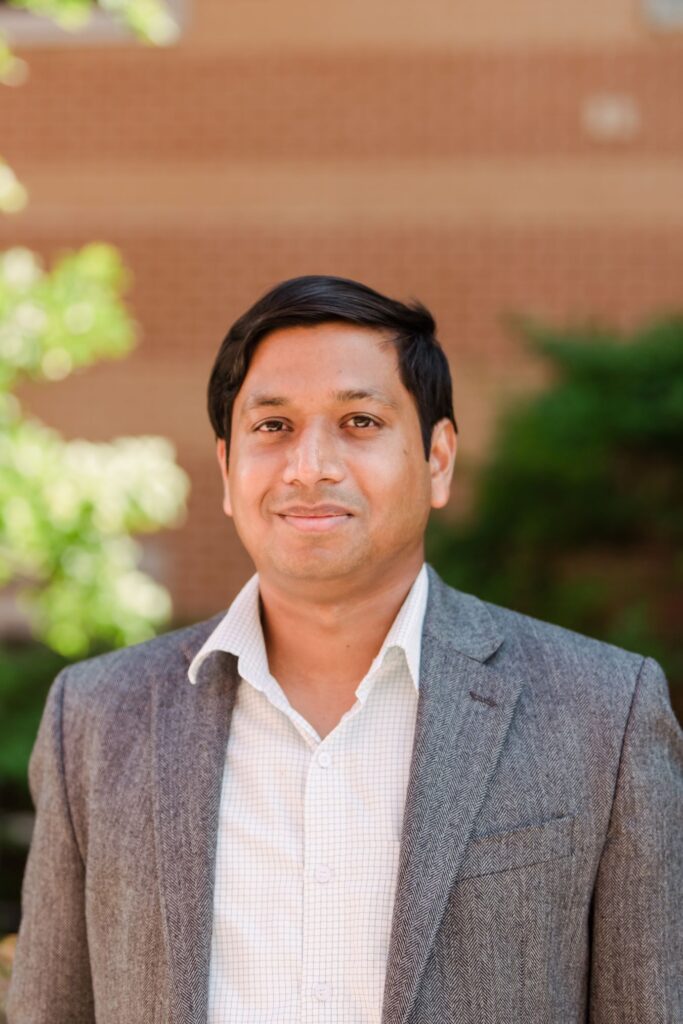
Sanjay Purushotham (Marlayna Demond ’11/UMBC)
When you visit the doctor, you may be asked about your general health, your family medical history, and your current symptoms. The doctor may order a series of tests and scans. All of this data could yield valuable insights into your health and the best course of medical treatment.
Bringing the data together in ways that make it accessible and illuminating is an ongoing challenge in health care. Synthesizing and presenting health information in new ways could improve individual medical care. Computer systems could ensure busy doctors see the most relevant information at the right time, aiding their decision making. It could also prove valuable for addressing public health challenges, such as the spread of infectious diseases.
“During the COVID pandemic, the health community realized the importance of having access to good data,” says Purushotham. Better data could help public officials make better decisions about when to take precautions, such as closing schools. It could also help individuals better understand the risks when choosing to partake in activities like attending large social gatherings or traveling.
Over the next five years, the award will support Purushotham and his students as they investigate ways to advance a technique called federated learning, which could allow hospitals and doctors to jointly build and evaluate a machine learning model without sharing sensitive medical data.
A new way to collaborate
Most machine learning models are trained centrally, on vast quantities of data that are often scrapped from the internet. However, a lot of data exists that cannot be sent to a central processing facility, for cost or privacy reasons. The term ‘federated learning’ was coined in 2016 to describe a decentralized machine learning technique that could train on data that never leaves users’ mobile phones. Instead, individual devices would take turns downloading the model, training it on their own data, and then sending the updated model parameters back to a central location.
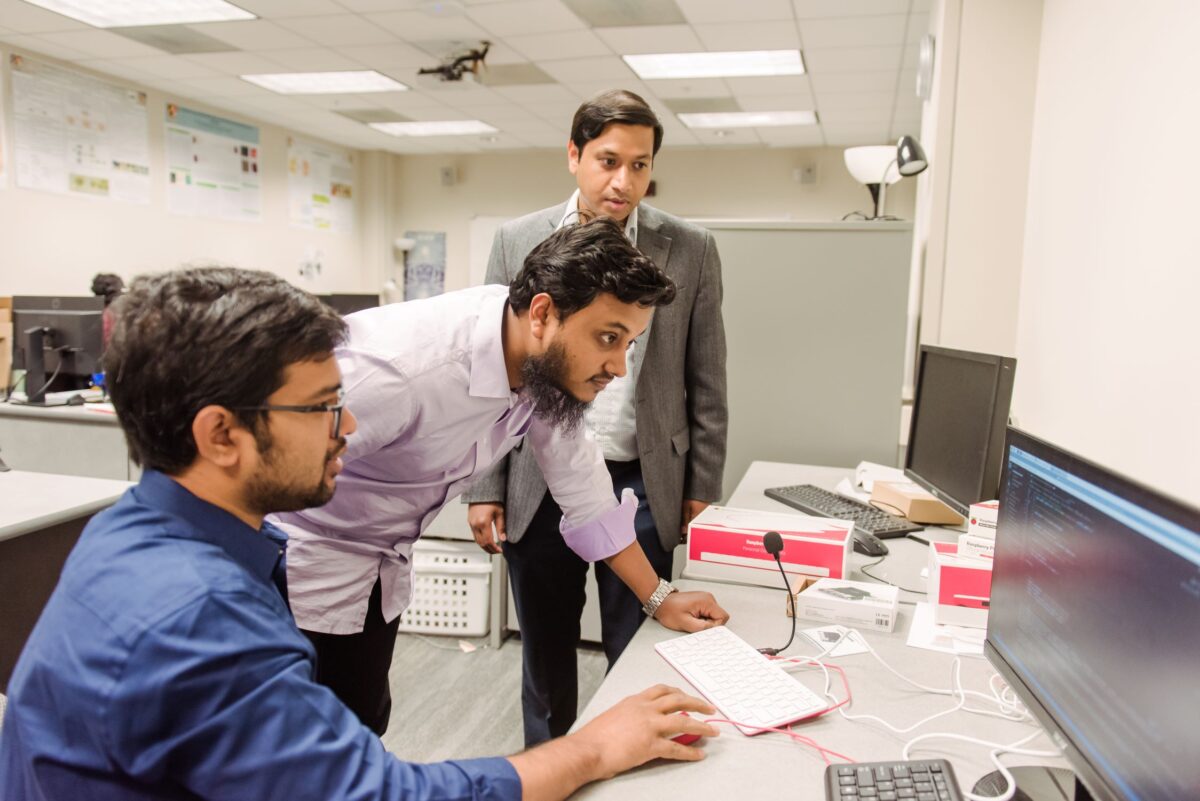
Students Sultan Ahmed (left) and Zahid Hassan Tushar (center) work in the lab with Sanjay Purushotham (right). (Marlayna Demond ’11/UMBC)
The general approach could be beneficial in many industries, from finance to manufacturing. In health care, federated learning has clear appeal because privacy laws strictly limit how health data can be shared.
For example, federated learning could allow hospitals to train a joint model on their medical data, such as CT scans, without sharing the scans with each other. The jointly trained model might reveal new ways to detect disease.
Yet, many hurdles remain to successfully deploying the technique, including the non-uniformity and limited nature of some patient data, the varying computational resources available to different medical practitioners, and the threat of bad actors seeking access to private information.
Advancing federated learning
In the coming years, Purushotham and his team will pursue three main avenues of research to address the obstacles of deploying federated learning in healthcare. The project will develop new algorithms, methodologies, and software to make data-driven federated learning for healthcare more robust and trustworthy.
The first focus of the team will be to develop new ways to handle the diversity of health data. The team will then study potential methods of attacks on the federated learning systems, and develop defenses against such attacks. The researchers will also investigate ways that the system can “un-learn” in situations where users request the influence of their data be removed from the model. In all cases, the researchers will focus on developing fair and interpretable algorithms. Finally, the researchers will study ways to generate synthetic health data, which can be used to augment or replace real data to improve the AI models.
The scope of the work is ambitious, but Purushotham is confident in his team.
“I have great students and collaborators,” he says. “I’m really excited to make federated learning in healthcare work.”
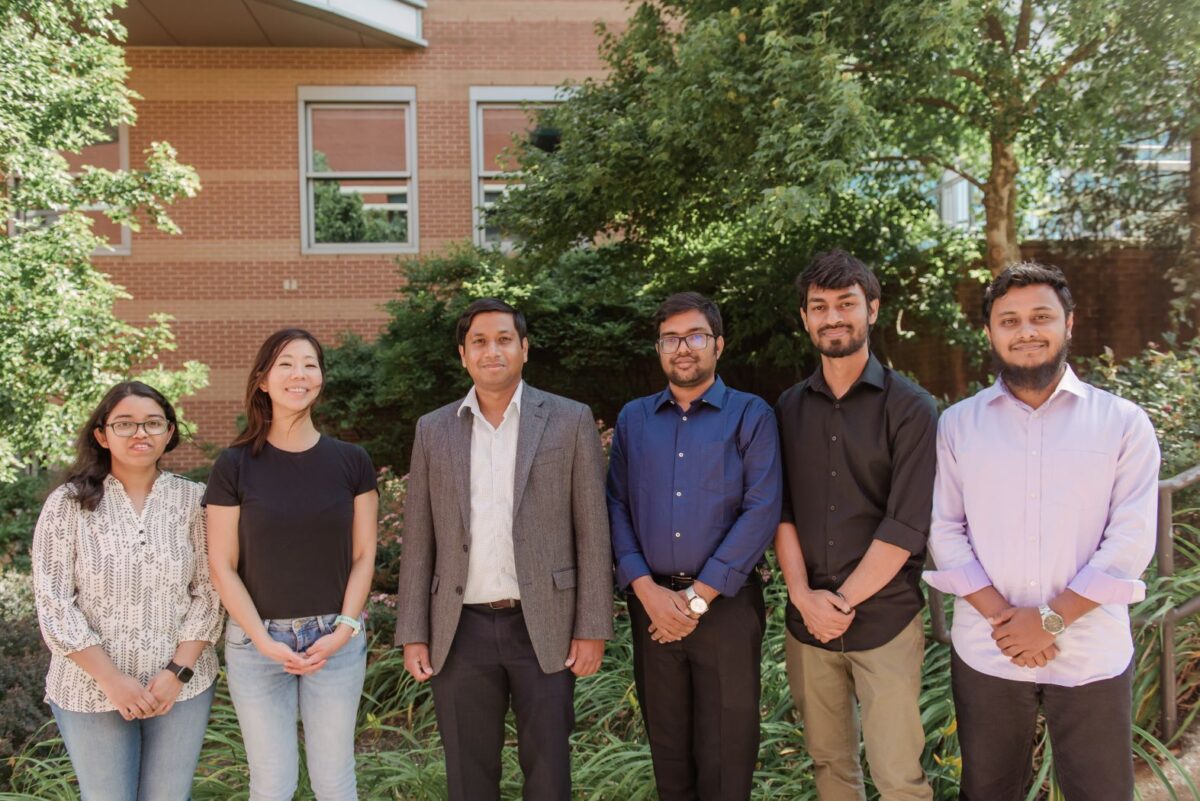
Sanjay Purushotham (third from left) with members of his research team (from left to right): Shaswati Shah, Catherine Ordun, Sultan Ahmed, Md Mahmudur Rahman, and Zahid Hassan Tushar. (Marlayna Demond ’11/UMBC)
]]>
Today, a plethora of technologies, from image recognition tools to chatbots, are powered by machine learning. A key component to the technique’s success is data—and lots of it. For doctors and...
https://umbc.edu/stories/ai-to-improve-healthcare/
https://my3.my.umbc.edu/api/v0/pixel/news/134528/guest@my.umbc.edu/ac292788575b7521e503c80a5c66de03/api/pixel
coeit
is
news
rca-1
research
science-and-tech
UMBC News & Magazine
https://my3.my.umbc.edu/groups/umbc-news-magazine
https://assets1-my.umbc.edu/system/shared/avatars/groups/000/001/943/24435aa6207c452e7bc15cc74b42c7bb/xsmall.png?1748556657
https://assets1-my.umbc.edu/system/shared/avatars/groups/000/001/943/24435aa6207c452e7bc15cc74b42c7bb/original.png?1748556657
https://assets2-my.umbc.edu/system/shared/avatars/groups/000/001/943/24435aa6207c452e7bc15cc74b42c7bb/xxlarge.png?1748556657
https://assets2-my.umbc.edu/system/shared/avatars/groups/000/001/943/24435aa6207c452e7bc15cc74b42c7bb/xlarge.png?1748556657
https://assets3-my.umbc.edu/system/shared/avatars/groups/000/001/943/24435aa6207c452e7bc15cc74b42c7bb/large.png?1748556657
https://assets1-my.umbc.edu/system/shared/avatars/groups/000/001/943/24435aa6207c452e7bc15cc74b42c7bb/medium.png?1748556657
https://assets2-my.umbc.edu/system/shared/avatars/groups/000/001/943/24435aa6207c452e7bc15cc74b42c7bb/small.png?1748556657
https://assets1-my.umbc.edu/system/shared/avatars/groups/000/001/943/24435aa6207c452e7bc15cc74b42c7bb/xsmall.png?1748556657
https://assets2-my.umbc.edu/system/shared/avatars/groups/000/001/943/24435aa6207c452e7bc15cc74b42c7bb/xxsmall.png?1748556657
UMBC News & Magazine
0
0
false
Fri, 04 Aug 2023 15:00:09 -0400
Fri, 04 Aug 2023 15:00:09 -0400