From dream to drive to degree: Five UMBC journeys

Earning a degree isn’t just a milestone, it’s a special kind of growth experience full of challenges and doubts, inspiration and opportunity. Depending on their path, some students face particular challenges. They may be the first in their family to attend college, or need to work full-time or more to make ends meet while pursuing their degree. Some students are raising a family while working and taking classes.
At UMBC, students from all backgrounds are finding strength in community. They are building networks of support with peers and mentors to reach toward goals together, whether that goal is making a difference in Baltimore City, pursuing graduate school, or setting a powerful example for younger generations.
“You really have no idea what you’re capable of, until you do it.”
Vanessa Gonzalez ’19, American studies, has been completely independent since age 17 and is the first member of her family to graduate from college.
Gonzalez has worked several jobs at once since she left home, and has struggled with health challenges. And still, she’s earned an associate’s degree from Anne Arundel Community College (AACC) and is now poised to graduate from UMBC as a Sherman STEM Teacher Scholar with a 4.0 GPA. She has big dreams that she’s on the path to achieving: to teach math in Baltimore City and one day travel with the Peace Corps. And she’s happy.
 Vanessa Gonzalez ’19, American studies, works on a project with Lakeland Elementary School students. Photo by Marlayna Demond ’11 for UMBC.
Gonzalez worked at the YMCA of Central Maryland while she was at AACC. That experience “helped me find my passion for child care and educating children,” Gonzalez says. Since then, she’s continued to grow in confidence and in her commitment to her work.
“Every now and then there are hiccups, but I went from never believing that I would make it past 18 years old to being 24 and accomplishing so much…And I’m pursuing exactly what I love,” she says. “I’m excited every day. It’s just nice having happiness.”
How did Gonzalez accomplish this? “Embrace the hard times,” she says. “Accept the tears. Because you’re going to think: I’m dropping out. I give up. I quit. But the important thing is to not get to that point.”
She tells other students facing challenges: “You’ve gotta push through when you really don’t want to, so you can be where you want to be in the future. You really have no idea what you’re capable of, until you do it, and then you have this overwhelming sense of accomplishment.”
In addition to focusing on a powerful inner drive, Gonzalez notes the importance of being able to access support. Josh Michael, assistant director of the Sherman Scholars, has been one of her greatest champions. Michael juggles a busy schedule, including working one-on-one with several students in the scholars program, “but then he’s still coming in to observe me teach, and giving me feedback, and working with me through my struggles,” Gonzalez shares.
 Vanessa Gonzalez ’19 teaches a math lesson with Lakeland Elementary School students. Photo by Marlayna Demond ’11 for UMBC.
When she suffered a concussion and couldn’t use a computer for weeks, faculty members printed class materials for her and worked with her to create a long-term make-up schedule.
Another faculty member “has been exactly where I am,” shares Gonzalez. “Everything she says and she’s done for me is just to make me better and help me achieve my goals.” Seeing her mentor’s success has been encouraging for Gonzalez, especially in the most challenging moments.
Now that she’s made it this far, with the support of the Sherman Scholars staff and her American studies mentors, Gonzalez wants to give back to the community. In Baltimore, she says, “I see homelessness. I see hungry people. I see a lot of struggle. And it hurts.”
“My goal is to be a part of the change that I’d like to see,” says Gonzalez, voicing the goal of so many UMBC students graduating alongside her. “I want to be part of helping lift up a community that deserves more.”
“[My] parents came here to give me a better life, and I’m living it.”
Ashley Batista ’19, biological sciences, is the first member of her family to graduate from college. Her parents emigrated from the Dominican Republic in search of new opportunities, and Batista was determined to make the most of her college experience. She chose to attend UMBC after hearing a woman of color speak at a UMBC event about the opportunities she was able to access as a UMBC alumna.
“I felt like she represented me,” Batista says. “I just felt really empowered, and I enjoyed how rigorous the coursework would be here. I thought it would challenge me but also prepare me well for whatever I choose to do after.”
 Ashley Batista ’19, biological sciences, presents her first research poster at SURF 2018. Fernando Vonhoff (left) is her research mentor. Photo courtesy Ashley Batista.
Once on campus, Batista was particularly excited to hear about the Louis Stokes Alliance for Minority Participation summer research fellowship—a program that supports students in historically underrepresented groups in STEM. But because she didn’t have a faculty mentor or research project lined up, she put the application aside. That was until Peter DeCrescenzo, project coordinator in the Office of Academic Opportunity Programs, reached out to encourage her to apply, offering to help connect her with a mentor.
That summer, Batista started working on Alzheimer’s research with biology professor Fernando Vonhoff, and it’s changed her life.
Being in the lab “opened a lot of doors for me to network and to figure out opportunities and programs I could be involved in after graduation,” she shares. She notes that the research itself “was really gratifying. It changed my whole perspective and my goals.” A reproductive health-focused Alternative Spring Break also helped Batista identify her path forward toward an obstetrics or pediatrics career.
On top of her research experience, Batista began organizing multicultural learning events for the UMBC community as a sister in the Zeta Sigma Chi Multicultural Sorority, Inc. That work “helped me understand and teach others about different perspectives, and create an environment where people can be open to discussion, respectful, and nonjudgmental,” she shares. “ I think that’s something that I can transfer wherever I go.”
She adds that her sorority sisters have been a huge source of support during her time at UMBC.
Batista says that while it adds challenges, being a first-generation college student has been motivating. “Whenever I’m feeling overwhelmed, I remember that my parents came here to give me a better life, and I’m living it,” she says. “It motivates me to keep going and make them proud—and to make myself proud, because I know it will be rewarding in the end.”
 Ashley Batista ’19 (standing, second from right) and sorority sisters from across the East Coast volunteer at the non-profit Share Baby. Photo courtesy Ashley Batista.
“I’m not alone in the struggles…or alone in my successes.”
Damarius Johnson ’19, Africana studies, is also a first-generation college student as well as a transfer student from the Community College of Baltimore County. Like Batista and her sorority, for Johnson, finding close-knit communities within UMBC has been the key to success. “UMBC has supportive communities that have helped me see college graduation as feasible,” he shares, “and then allowed me to go through the ups and downs that happen as a college student.”
“The McNair Scholars Program has been instrumental as far as focusing my attention on what I’d be pursuing after graduation,” says Johnson. That attention has paid off—he’ll begin a Ph.D. in history at the Ohio State University this fall.
The Transfer Engagement and Achievement Mentoring (TEAM) Program has connected Johnson with mentors and peers who have had experiences he can relate to, such as being the first in their family to attend college, transitioning from community college to a four-year school like UMBC, or experiencing college as a young black man, he says.
Johnson shares, “Having that support has been really helpful in knowing that I’m not alone in the struggles that I have, or alone in my successes. These are people I celebrate with, too.”
Several mentors have helped Johnson through his UMBC journey, and determining his next steps, including Michael Hunt, assistant director of the McNair Scholars Program; Gloria Chuku, professor and chair of the Africana studies department; and James Hamilton, an academic advisor in the College of Arts, Humanities, and Social Sciences. He started at UMBC not knowing what he might do afterward. But now, Johnson says, “I’m most excited about my transition from being an undergraduate to being a scholar in history. I’m excited for what that journey will be like, and to be learning in a new environment.”
“Hopefully it’s the beginning of something good for my family,” says Johnson, who has younger siblings. “I’m really happy to be able to honor them by getting to this point, because they’ve done a lot to support me.”
At UMBC “you can get to where you want to go.”
Like Johnson, Blake Hipsley ‘19, a dual degree recipient in physics and mathematics, was a McNair Scholar. Since his sophomore year, Hipsley has pursued research through the program with Michael Hayden, professor of physics. “Research helped me open up to what I want to do in the future,” Hipsley says. “I had the chance to see if it was something I wanted to do, and I decided it is.” This fall, he’ll begin a Ph.D. in physics at the University of Michigan.
Hipsley’s parents didn’t graduate from college, but always encouraged him to pursue higher education. “My mom always encouraged us to do our best and work hard,” he shares. “I think that’s why I have this drive to always be doing so much, and I put it on myself to pay for my own school.” By applying for a multitude of scholarships and working as a tutor, Hipsley was able fund his UMBC education on his own.
Without family members who had attended college, “The only people I really could talk to about graduate school were my professors,” he says. “They really helped me a lot with getting funding, writing a personal statement, and preparing for the GRE.”
 Blake Hipsley ’19, physics and mathematics, talks about his research at URCAD 2019. Photo by Marlayna Demond ’11 for UMBC.
Hipsley also served as the McNair Scholars Program’s inaugural teaching fellow, a role where he advises other McNair students and provides feedback to program leadership. “McNair has helped me not only get into graduate school,” he says, “but also help others who may be struggling.”
The McNair Scholars also supported Hipsley’s personal growth. “One of the benefits of the program is that you get to meet people from all different backgrounds,” he says. As a result, he tried his first sushi and watched his first Bollywood film.
With such a caring community of support, Hipsley says, at UMBC, “If you work hard and keep at it, no matter where you’re from you can get to where you want to go.”
“They’re going to see you finish what you started.”
Nicole Katsikides, Ph.D. ’19, public policy, began her doctoral journey 12 years ago while working full-time for the Maryland Department of Transportation on highway freight transport efficiency. During her Ph.D. studies, she’s had two children, now 6 and 8, and her husband was deployed with the Air Force to the Middle East several times. Two years ago, based on the skills she’s gained through her graduate studies, she was also recruited for a demanding new job with the Texas A&M Transportation Institute (TTI), which she’ll continue after officially earning her doctorate this month.
“There were many times along the journey that I truly didn’t think it would happen,” Katsikides reflects. “I think the way I got through was with very gracious support from my advisor and my committee.” John Rennie Short, public policy; Tim Brennan, public policy; and Scott Farrow, economics, “wanted to see me succeed,” she shares, “and that really helped.”
 Nicole Katsikides, Ph.D. ’19, public policy, says by “continuing to plug away” and with the support of “my boss, my family, and my committee, I’ve been able to make it.” She’s pictured here with her husband and children. Photo courtesy Nicole Katsikides.
For Katsikides, the public policy program’s active effort to be accessible to working professionals made all the difference. “Under Dr. [Susan] Sterrett’s leadership, the program has evolved to be something that’s really helpful for people in public positions like I had to succeed,” she says, “and to bring Ph.D. level knowledge into the public sector working environment.” Katsikides also notes that her TTI supervisor, Bill Eisele, was very supportive, especially as she approached the finish line.
Still, Katsikides struggled to balance motherhood with pursuing her career and her education. “It’s very easy for people to say, ‘Why are you doing that?’ or ‘You should be spending more time with your kids.’ There’s still a lot of cultural norms,” she says. She stayed motivated by remembering how her own parents pursued advanced degrees when she was a child.
“I hope that when my kids think about this as they grow up, that they saw what it takes to achieve something. That it’s an example for them,” she shares. “So block out the noise, and keep going—the kids are gonna be alright. They’re going to see you finish what you started.”
Banner image: Vanessa Gonzalez ’19 works with a student at Lakeland Elementary School. Photo by Marlayna Demond ’11 for UMBC.
]]>
Earning a degree isn’t just a milestone, it’s a special kind of growth experience full of challenges and doubts, inspiration and opportunity. Depending on their path, some students face particular...
https://umbc.edu/stories/from-dream-to-drive-to-degree-five-umbc-journeys/
https://my3.my.umbc.edu/api/v0/pixel/news/120137/guest@my.umbc.edu/0f88f0bf669c7934c0f818f4e0b36f22/api/pixel
africanastudies
americanstudies
biology
cahss
class-of-2019
cnms
community
economics
graduateschool
mcnairscholars
page1
physics
policy-and-society
publicpolicy
science-and-technology
shermanscholars
UMBC News & Magazine
https://my3.my.umbc.edu/groups/umbc-news-magazine
https://assets1-my.umbc.edu/system/shared/avatars/groups/000/001/943/24435aa6207c452e7bc15cc74b42c7bb/xsmall.png?1748556657
https://assets1-my.umbc.edu/system/shared/avatars/groups/000/001/943/24435aa6207c452e7bc15cc74b42c7bb/original.png?1748556657
https://assets2-my.umbc.edu/system/shared/avatars/groups/000/001/943/24435aa6207c452e7bc15cc74b42c7bb/xxlarge.png?1748556657
https://assets2-my.umbc.edu/system/shared/avatars/groups/000/001/943/24435aa6207c452e7bc15cc74b42c7bb/xlarge.png?1748556657
https://assets3-my.umbc.edu/system/shared/avatars/groups/000/001/943/24435aa6207c452e7bc15cc74b42c7bb/large.png?1748556657
https://assets1-my.umbc.edu/system/shared/avatars/groups/000/001/943/24435aa6207c452e7bc15cc74b42c7bb/medium.png?1748556657
https://assets2-my.umbc.edu/system/shared/avatars/groups/000/001/943/24435aa6207c452e7bc15cc74b42c7bb/small.png?1748556657
https://assets1-my.umbc.edu/system/shared/avatars/groups/000/001/943/24435aa6207c452e7bc15cc74b42c7bb/xsmall.png?1748556657
https://assets2-my.umbc.edu/system/shared/avatars/groups/000/001/943/24435aa6207c452e7bc15cc74b42c7bb/xxsmall.png?1748556657
UMBC News & Magazine
0
0
false
Tue, 14 May 2019 13:42:42 -0400
UMBC international students find connection on campus, from day one to degree
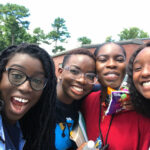
When Angel Badewole ’19, chemical engineering, began as a first-year student at UMBC, it was her first time living apart from her family in Lagos, Nigeria. Early on, she knew her success attending college in another country would depend on finding multiple places to plug in and connect. She would need to find or build a home away from home make it through her four years abroad.
Just looking at Badewole’s résumé tells a story of connection. She lists community-building and academic excellence as her two intentional goals. She built a self-made family through Residential Life—“It pulls together people that are so different”—and with the faith-based Bethel Campus Fellowship—“It’s a great place, it has the best connections.” Badewole also discovered a distant aunt who lives in Frederick, who would quickly become her “Maryland mom.”
 Angel Badewole, left, and her chemical engineering capstone group project members at a UMBC men’s lacrosse game. Photo courtesy of Angel Badewole.
Badewole’s story resonates with many international students at UMBC. Maybe they heard about the institution through friends of the family, a lucky Google search, or UMBC’s reputation in their field of study. Then, often without having visited the United States, they arrived on campus, determined to make the most of their time here, both in the classroom and through connecting with people.
For doctoral students, that time is often much longer than four years.
Finding support in a time of transition
Amrita Anam, Ph.D. ’19, information systems, began her seven years at UMBC in a spring semester, meaning she moved from Bangladesh to Baltimore in January. “What is happening? Is this how I die?” laughs Anam, remembering the chilly weather in those first few weeks of adjustment.
She found her welcome in the information systems department, with professor and chair Aryya Gangopadhyay. “When I spoke to Dr. Gangopadhyay, I really liked how warm he was. There was no way I could do this without the support I got from my department.”
Sitting now on the patio in front of the campus Starbucks, Anam explains the research interests that drew her to UMBC. “I use social media data, Twitter particularly, and I use it for disaster response, but the interesting thing is that instead of using text analytics, I use signal processing.”
 Anam and her teammates made the finals of the 2017 UMBC Hackathon. Photo courtesy of Amrita Anam.
With her background in electrical engineering, Anam wanted to attend a school on the East Coast to be near her sister in New York. She also knew she’d need funding to see her through a Ph.D. program. She found that through her assistantship at UMBC.
“If you come here directly to a very tough Ph.D. research scenario, it takes some time to even understand what’s happening,” says the cheerful data scientist. She appreciated that her department understood how to support her during her first months at UMBC. “School is not the same in my country, people are not the same, research is not the same, so I feel like those are the things that I needed some time to cope with,” says Anam.
 Amrita Anam in a green space on UMBC’s campus. Photo courtesy of Amrita Anam.
While she was finding her feet in the information systems world, Anam connected with the Indian Student Association, as there was no formal group yet for Bangladeshi students. As the number of Bangladeshi students grew, she co-founded the Bangladesh Student Association to celebrate Bengali holidays, serving up delicious street food and showcasing regional dance styles.
 Amrita Anam, right, participates in a dance with the Bangladesh Student Association. Photo courtesy of Amrita Anam.
Anam’s time at UMBC has been fruitful academically and socially, but a personal tragedy recently shook her to her core. Both her parents had always encouraged her to continue pursuing her education, pushing her out of her comfort zone when she needed it. But, as she came close to finishing her Ph.D., her father—“a film director, very artsy, very nerdy”—passed away suddenly.
 Amrita Anam’s father, mother, and sister joined her on campus to celebrate her M.S. graduation.
Anam says she felt completely supported by her department during this upheaval and, with their encouragement, was able to finish the degree she had been working so hard to earn for so many years. On a warm spring morning, the day after defending her dissertation, Anam shared, “They’ve seen me grow in all these years, so they were also very proud and happy.” She is now looking forward to her upcoming position at Amazon as a business intelligence engineer.
Keep knocking on doors. It works.
Tobi Odunsi, M.S.’19, cybersecurity, first found himself in Maryland in 2017 for the wedding of his godbrother. He wasn’t originally looking at graduate schools in the United States, but decided to visit the UMBC campus since he was in the area.
Interested in cybersecurity, Odunsi met with Toby Gouker, a faculty member in technical management, on a warm summer day. The Tobi-Toby meeting went well. “They didn’t have to do much convincing,” says Odunsi. After digging through the UMBC website, he already knew it would be a good fit. “As soon as I stepped into the school, I knew, ‘I like this.’”
 Odunsi, right, troubleshooting a network issue with Tim Boyle, a network engineer in the Division of Information Technology. Photo courtesy of Tobi Odunsi.
Like Badewole, Odunsi is from Lagos, Nigeria, and also found comfort with a faith community near campus, attending Christ Apostolic Church and the International Friends Club. Those connections helped ease his transition, but another key component to his comfort was staying with his godmother until he found a job and a community of friends on campus. “She was my home away from home,” he says.
 Odunsi and a group gathered to celebrate Easter with the International Friends Club. Photo courtesy of Tobi Odunsi.
Before coming to UMBC, Odunsi already had a strong interest in The Internet of Things—everyday devices that connect online with users and each other, like the smartphone app that pings your coffee maker to start brewing. Odunsi knew that for his graduate degree, he needed to find an unique niche in the broad field. He eventually decided on software defined networking, an approach to cloud computing.
On campus, Odunsi was ready to hit the ground running, and to knock on a lot of doors to find the right opportunity. “It’s better to be prepared for an opportunity when you don’t have it, than for you to have an opportunity and not be prepared for it,” he says.
 Tobi Odunsi setting up a next-generation firewall in one of the main data centers on campus. Photo courtesy of Tobi Odunsi.
Before long, Odunsi knocked on just the right door. When he reached Damian Doyle, assistant vice president of enterprise infrastructure in UMBC’s Division of Information Technology and told him about his research interests, Doyle responded, “Wow, we’ve been looking for someone to actually do something like that,” describes Odunsi. “So it’s like, the stars were aligned. And now UMBC is the first school in the University System of Maryland to implement that type of technology in their data center.”
 Odunsi with Damian Doyle, right, and Ray Soellner, left, the associate director of telecommunications. Photo courtesy of Tobi Odunsi.
“Damian is a very great guy—his door is always open. There’s no time I’ve tried to schedule a meeting with him that he turned me down. He’s mentored me not just on work, but also given me guidance on how to proceed with my career, family, and likes of that sort,” says Odunsi, who will begin his position as a technology development program associate at Geico after graduation in May.
When Odunsi’s mother visited campus and met Dr. Hrabowski, he told her that her son had “a good head on his shoulders,” and she began to tear up. “She was so appreciative of how far I’ve come and the support they’ve given me.”
The office that makes it possible
Odunsi attributes the ease of his academic experience to the team in UMBC’s office of International Education Services (IES). “For international students…you need to always make sure you’re in the right standing,” says Odunsi. “I don’t know if it’s just me, but whenever I go there, it feels like home.”
Anam agrees wholeheartedly. “Studies are stressful,” she says, but thanks to IES, “I never have to stress about anything else.” She’s grateful to Michelle Massey, IES associate director, and other IES staff for their dedication to making sure international students can focus on their academic programs rather than spending all of their time worrying about visa paperwork.
Haixu Leng, Ph.D. ’19, physics, remembers that Massey was one of the first people to greet him on campus, and to welcome him to the United States. Whenever he thinks about UMBC, he thinks about the helpful and patient team at IES.
A Google search can change everything
Leng owes his time at UMBC to an internet search for quantum optics programs. He was then drawn to UMBC from China because “the UMBC physics department is a relatively small department, in which you can get the attention that you may not get in a very large department. I really liked it.”
As Leng settled into the physics department, he found a place in associate professor Matthew Pelton’s lab. There, using a home-built single-particle microscope, he studied the interaction between light and materials at the nanometer scale.
 Haixu Leng works in the lab with his advisor Matthew Pelton. Photo by Marlayna Demond ’11 for UMBC.
Over his five years on campus, “the physics building became my favorite place,” says Leng. “It almost felt like home to me.” His other favorite place on campus is the library. There, he formed a friendship with Henan Zhao, a current Ph.D. student in computer science, over long study sessions. They have since married.
 Haixu Leng at his PhD candidacy event with Henan Zhao. Photo courtesy of Haixu Leng.
Opening UMBC to the world
International students who make their home at UMBC find many ways to continue celebrating their own cultures while taking part in the wealth of communities campus has to offer. It’s a two-way exchange that Badewole appreciates.
“There are so many different people here,” says Badewole, “and that’s good in two ways. One, you will find people who are like you in many different respects: a community in your academic area, a community in whatever you believe in, a community in your interests; and two, you get to find a lot of people who are different than you and who you can then learn from.”
Odunsi sees the campus’s welcoming atmosphere as a trickle-down effect from the values of UMBC leadership. “There’s this community of international students at UMBC—it keeps growing—and Dr. Hrabowski has been monumental in that effort to bring international students here,” says Odunsi. “He’s opening the school to not just a few set of people, but to the world at large.”
Featured imaged: Angel Badewole, right, with friends from Bethel Christian Fellowship. Photo courtesy of Angel Badewole.
This article was written by Randianne Leyshon ’09, assistant editor of UMBC Magazine.
]]>
When Angel Badewole ’19, chemical engineering, began as a first-year student at UMBC, it was her first time living apart from her family in Lagos, Nigeria. Early on, she knew her success attending...
https://umbc.edu/stories/umbc-international-students-find-connection-on-campus-from-day-one-to-degree/
https://my3.my.umbc.edu/api/v0/pixel/news/120143/guest@my.umbc.edu/6520168b6c4fc1b1a11b020476ef558d/api/pixel
chembiochem
class-of-2019
cnms
coeit
cybersecurity
gradresearch
graduateschool
international
is
page1
physics
science-and-technology
UMBC News & Magazine
https://my3.my.umbc.edu/groups/umbc-news-magazine
https://assets1-my.umbc.edu/system/shared/avatars/groups/000/001/943/24435aa6207c452e7bc15cc74b42c7bb/xsmall.png?1748556657
https://assets1-my.umbc.edu/system/shared/avatars/groups/000/001/943/24435aa6207c452e7bc15cc74b42c7bb/original.png?1748556657
https://assets2-my.umbc.edu/system/shared/avatars/groups/000/001/943/24435aa6207c452e7bc15cc74b42c7bb/xxlarge.png?1748556657
https://assets2-my.umbc.edu/system/shared/avatars/groups/000/001/943/24435aa6207c452e7bc15cc74b42c7bb/xlarge.png?1748556657
https://assets3-my.umbc.edu/system/shared/avatars/groups/000/001/943/24435aa6207c452e7bc15cc74b42c7bb/large.png?1748556657
https://assets1-my.umbc.edu/system/shared/avatars/groups/000/001/943/24435aa6207c452e7bc15cc74b42c7bb/medium.png?1748556657
https://assets2-my.umbc.edu/system/shared/avatars/groups/000/001/943/24435aa6207c452e7bc15cc74b42c7bb/small.png?1748556657
https://assets1-my.umbc.edu/system/shared/avatars/groups/000/001/943/24435aa6207c452e7bc15cc74b42c7bb/xsmall.png?1748556657
https://assets2-my.umbc.edu/system/shared/avatars/groups/000/001/943/24435aa6207c452e7bc15cc74b42c7bb/xxsmall.png?1748556657
UMBC News & Magazine
0
0
false
Thu, 02 May 2019 21:38:26 -0400
U.S. News recognizes UMBC graduate programs as among nation’s best in new 2020 rankings
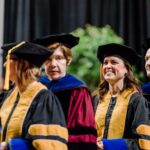
According to U.S. News rankings released today, UMBC graduate programs are some of the best in the nation for 2020. The rankings are developed based on expert opinions and statistical indicators for quality. Over 2,000 programs and more than 22,000 individuals were polled to determine this year’s honorees. While some programs have been newly recognized on 2020 rankings lists, others continue to lead on lists developed in prior cycles.
It was another strong year for the graduate programs in UMBC’s College of Natural and Mathematical Sciences (CNMS). Five CNMS fields are recognized in U.S. News graduate program rankings, including mathematics, statistics, biological sciences, chemistry, and physics.
 Graduate and undergraduate students work in the lab of Weihong Lin, biological sciences.
“The breadth of programs recognized in CNMS is a testament to the dedication and extraordinary effort of the faculty and staff across the college,” says Bill LaCourse, dean of CNMS. “I gratefully appreciate their commitment to setting high standards and providing a quality education for all our students.”
As a whole, UMBC’s College of Engineering and Information Technology (COEIT) stands as one of the best engineering colleges in the nation. Just three other Maryland institutions appear on the overall 2020 list of best engineering programs. COEIT remains on the lists of the country’s best electrical, mechanical, and environmental engineering graduate programs, and is featured on the new 2020 list for chemical engineering.
 Engineering students work to create a motorized swing.
“All of our researchers, faculty, staff, postdocs, and especially graduate students, contribute to an environment that enables innovations that help keep UMBC at the forefront of engineering and computing,” says COEIT Dean Keith J. Bowman.
UMBC’s School of Public Policy welcomed new director Susan Sterett in 2017. Since then, the school’s graduate programs in public policy have continued to thrive. Their success is evident with a 2020 U.S. News ranking in the top 100 of all public affairs graduate programs across the nation.
“UMBC’s School of Public Policy is proud of our excellent faculty and students, who contribute every day to informing the public about health and education policy, equity in cities, and public management and regulation,” says Sterett. “With such excellent scholars in publicly significant fields, we look forward to growing and continuing to contribute to the field in a way that rivals our larger, older peers.”
Graduate programs in fine arts, psychology, and clinical psychology also continue to be recognized as among the best. Earlier this year, U.S. News heralded UMBC’s online master’s degree in information systems as one of the top 20 in the nation, up four spots from last year.
Banner image: UMBC graduates at May 2018 Commencement. Photo by Catherine Borg for UMBC. All other photos by Marlayna Demond ’11 for UMBC.
]]>
According to U.S. News rankings released today, UMBC graduate programs are some of the best in the nation for 2020. The rankings are developed based on expert opinions and statistical indicators...
https://umbc.edu/stories/u-s-news-recognizes-umbc-graduate-programs-as-among-nations-best-in-new-2020-rankings/
https://my3.my.umbc.edu/api/v0/pixel/news/120193/guest@my.umbc.edu/27bd05aa3ae608dba39c79f4556255eb/api/pixel
biology
cahss
chembiochem
cnms
coeit
community
csee
graduateschool
mathstat
meche
page1
physics
psychology
publicpolicy
rankings
UMBC News & Magazine
https://my3.my.umbc.edu/groups/umbc-news-magazine
https://assets1-my.umbc.edu/system/shared/avatars/groups/000/001/943/24435aa6207c452e7bc15cc74b42c7bb/xsmall.png?1748556657
https://assets1-my.umbc.edu/system/shared/avatars/groups/000/001/943/24435aa6207c452e7bc15cc74b42c7bb/original.png?1748556657
https://assets2-my.umbc.edu/system/shared/avatars/groups/000/001/943/24435aa6207c452e7bc15cc74b42c7bb/xxlarge.png?1748556657
https://assets2-my.umbc.edu/system/shared/avatars/groups/000/001/943/24435aa6207c452e7bc15cc74b42c7bb/xlarge.png?1748556657
https://assets3-my.umbc.edu/system/shared/avatars/groups/000/001/943/24435aa6207c452e7bc15cc74b42c7bb/large.png?1748556657
https://assets1-my.umbc.edu/system/shared/avatars/groups/000/001/943/24435aa6207c452e7bc15cc74b42c7bb/medium.png?1748556657
https://assets2-my.umbc.edu/system/shared/avatars/groups/000/001/943/24435aa6207c452e7bc15cc74b42c7bb/small.png?1748556657
https://assets1-my.umbc.edu/system/shared/avatars/groups/000/001/943/24435aa6207c452e7bc15cc74b42c7bb/xsmall.png?1748556657
https://assets2-my.umbc.edu/system/shared/avatars/groups/000/001/943/24435aa6207c452e7bc15cc74b42c7bb/xxsmall.png?1748556657
UMBC News & Magazine
0
0
false
Tue, 12 Mar 2019 20:45:27 -0400
UMBC ranks among top 150 U.S. universities in federal research funding
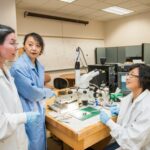
The National Science Foundation (NSF) recently released its latest Higher Education Research and Development (HERD) survey, including UMBC among the top 150 U.S. universities in federal research and development expenditures for fiscal year 2017. The annual HERD survey combines total funding from all federal agencies, including NSF and others, as well as research funding from non-federal and non-governmental sources.
UMBC is ranked #146 in federal funding for the 2017 fiscal year and #169 in total funding from all sources. The federal research investment figure includes funding sources such as the U.S. Department of Agriculture, Department of Defense, and Department of Health and Human Services (DHHS), among many others.
Partnering with NASA
The university is a strong national leader when it comes to NASA funding, where UMBC ranks #12 across all U.S. colleges and universities. This leadership also applies broadly to the overall category of research in the geosciences, atmospheric sciences, and ocean sciences, where UMBC ranks #28 nationwide.
The Center for Research and Exploration in Space Science and Technology (CRESST II) is one core research partnership UMBC maintains with NASA. UMBC and the University of Maryland, College Park, are leading partners in the consortium, which received a commitment of $87.5 million over five years from NASA’s Goddard Space Flight Center beginning in 2017 (following a successful 10-year agreement that launched in 2006).
The partnership supports cutting edge research in high energy astrophysics, gravitational waves, and other areas. Jane Turner, professor of physics, directs the Center for Space Sciences and Technology (CSST), which is the UMBC arm of CRESST. She explains that this research collaboration also creates important teaching and learning opportunities that benefit faculty, graduate, and undergraduate students.
 Jane Turner, director of CSST, at GRIT-X 2017.
The Joint Center for Earth Systems Technology (JCET) is another particularly active and robust UMBC-NASA partnership. NASA renewed JCET in 2015 at a level of $46 million over five years, affirming its commitment to this ongoing, highly productive research collaboration.
“UMBC has a terrific relationship with NASA,” says Susan Hoban, JCET’s associate director. “The UMBC-Goddard JCET is in its third decade, conducting research that advances our understanding of the Earth’s changing climate. NASA scientists, as well as UMBC faculty and students, benefit from this ongoing collaboration.”
Reflecting and informing society
The arts, humanities, and social sciences at UMBC regularly receive funding from a range of federal sources including the DHHS, USDA, National Endowment for the Humanities (NEH), and National Endowment for the Arts (NEA). The latest HERD rankings include projects in a broad range of fields in these areas, such as education, the environment, health disparities, and design. For fiscal year 2017, UMBC ranked #36 in social science research expenditures from federal sources, above institutions such as Princeton University (#48) and Brown University (#52).
Chris Curran, assistant professor of public policy, received a two-year $620,000 National Institute of Justice grant to study the role of law enforcement officers in public schools. Curran, has shared, “Law enforcement have become an increasingly common presence in school settings, particularly after high profile events like the tragedy at Sandy Hook. Our work seeks to understand the role of these officers in promoting safety, managing student behavior, and facilitating relationships with students.”
 F. Chris Curran
Also during the 2017 HERD survey period, Margaret Re, associate professor of visual arts, received a major Art Works grant from the NEA to develop the exhibition and catalog for “A Designed Life.” The project explores how the U.S. government sponsored exhibits of modern American textiles, wallpapers, containers, and packaging in the 1950s to promote American culture abroad. It’s now on display at UMBC’s Center for Art, Design, and Visual Culture.
Computing, information, and engineering
UMBC also has very strong federal support for research in computing, information sciences, and engineering disciplines. In all three areas, UMBC ranked in the top 125 U.S. universities in funding received from federal sources.
In the 2017 HERD period, UMBC received an NSF Major Research Instrumentation award to expand the university’s High Performance Computing Facility. Also in computing, Ting Zhu, assistant professor of computer science and electrical engineering, received a prestigious NSF CAREER Award for his work to develop “Internet of Things” technology.
Faculty also received numerous awards for innovative medical research. Erin Lavik, professor of chemical, biochemical, and environmental engineering, received funding from the National Eye Institute to develop a “living model of the human retina.”
Liang Zhu, professor of mechanical engineering, was PI on an NSF grant to study how applying heat to drug-carrying nanoparticles can cause tumors to shrink. Her research with UMBC colleagues in mechanical engineering, biological science, and chemistry and biochemistry could lead to a more targeted, non-surgical approach to treating tumors in cancer patients. “Not every patient can have surgery,” explained Zhu, “so this is an alternative treatment option.”
Karl V. Steiner, UMBC’s vice president for research, notes that these most recent research funding rankings highlight UMBC’s strength across disciplines. “I could not be more proud of the efforts of our faculty and students as we build our research community together. The HERD Rankings are one measurement of our scholarly impact, and represent a key method of national comparison,” he says.
Steiner continues, “Our top ranking is in NASA support, and the related research highlights areas of remarkable strength built over several decades. We are also thrilled about the strength of our social sciences research community and growing recognition for our important engineering and information sciences programs.”
Banner image: Marie Christine Daniel-Onuta, right, Liang Zhu, and Ronghui Ma working in the lab. All photo by Marlayna Demond ’11 for UMBC.
]]>
The National Science Foundation (NSF) recently released its latest Higher Education Research and Development (HERD) survey, including UMBC among the top 150 U.S. universities in federal research...
https://umbc.edu/stories/umbc-ranks-among-top-150-u-s-universities-in-federal-research-funding/
https://my3.my.umbc.edu/api/v0/pixel/news/120237/guest@my.umbc.edu/4c44aecd364e8e4e93001311bed63c8b/api/pixel
arts-and-culture
cahss
cbee
cnms
coeit
csee
meche
physics
policy-and-society
publicpolicy
research
science-and-technology
visualarts
UMBC News & Magazine
https://my3.my.umbc.edu/groups/umbc-news-magazine
https://assets1-my.umbc.edu/system/shared/avatars/groups/000/001/943/24435aa6207c452e7bc15cc74b42c7bb/xsmall.png?1748556657
https://assets1-my.umbc.edu/system/shared/avatars/groups/000/001/943/24435aa6207c452e7bc15cc74b42c7bb/original.png?1748556657
https://assets2-my.umbc.edu/system/shared/avatars/groups/000/001/943/24435aa6207c452e7bc15cc74b42c7bb/xxlarge.png?1748556657
https://assets2-my.umbc.edu/system/shared/avatars/groups/000/001/943/24435aa6207c452e7bc15cc74b42c7bb/xlarge.png?1748556657
https://assets3-my.umbc.edu/system/shared/avatars/groups/000/001/943/24435aa6207c452e7bc15cc74b42c7bb/large.png?1748556657
https://assets1-my.umbc.edu/system/shared/avatars/groups/000/001/943/24435aa6207c452e7bc15cc74b42c7bb/medium.png?1748556657
https://assets2-my.umbc.edu/system/shared/avatars/groups/000/001/943/24435aa6207c452e7bc15cc74b42c7bb/small.png?1748556657
https://assets1-my.umbc.edu/system/shared/avatars/groups/000/001/943/24435aa6207c452e7bc15cc74b42c7bb/xsmall.png?1748556657
https://assets2-my.umbc.edu/system/shared/avatars/groups/000/001/943/24435aa6207c452e7bc15cc74b42c7bb/xxsmall.png?1748556657
UMBC News & Magazine
0
0
false
Thu, 20 Dec 2018 21:01:09 -0500
Faculty receive START and SURFF awards to pursue new research and creative work
UMBC’s Office of the Vice President for Research recently presented awards to support the work of two dozen UMBC faculty examining topics from health disparities among people with diabetes to natural language processing.
UMBC offers a range of research awards to help faculty launch new research projects, advance ongoing work, and effectively compete for external funding as their projects progress and grow. Strategic Awards for Research Transitions (START) offer up to $25,000. These awards allow faculty to pursue new areas of research and compete for external funding. Summer Research Faculty Fellowship (SURFF) awards offer up to $6,000 in summer funding to non-tenured, tenure-track faculty. Current SURFF awardees received funding for summer 2018, and START awardees will begin their funding cycle in July 2019.
Health and aging
Christine Mair, associate professor of sociology, anthropology, and health administration policy, and a faculty member in the gerontology Ph.D. program, received START funding to complete foundational research visits in global regions that are underrepresented in aging research, across Eastern Europe, Southern Europe, South America, and Asia. She is working to clarify research questions and strengthen relationships with potential research collaborators for a proposal to the National Institute of Aging (NIA).
 Christine Mair, second from left, at the UMB-UMBC Partnership Symposium. Photograph by Marlayna Demond ’11 for UMBC.
With START funding, Sarah Chard, associate professor of sociology, anthropology, and health administration policy, is studying the activity levels of older African-American adults in Baltimore who have diabetes. She is conducting interviews and observing patients to better understand how they experience and manage their illness, their social and physical environments, and how they maintain physical activity routines. This work is helping Chard to develop more effective programs to address health disparities among people with diabetes.
“The aim of my START-funded project is to identify how belief systems and social processes work together to inform physical activity routines among older adult African Americans with diabetes. The project builds on my earlier research on diabetes, which identified many barriers to physical activity for older adults living in Baltimore,” Chard says. “Through START funding, I’m able to shift my focus to look at persons who are engaging in physical activity to see how they create support systems and navigate local barriers. The findings will help address a critical gap in the literature regarding successful community-based physical activity.” Chard will use data from this research for an NIA grant proposal.
 Tasneem Khambaty. Photo courtesy of psychology department.
Tasneem Khambaty, assistant professor of psychology, is using her SURFF award to continue research studying the symptoms and biomarkers of type 2 diabetes, which disproportionately affects African Americans. Khambaty examined how depressive symptoms and executive function impact these biomarkers in the long term, utilizing data from the Healthy Aging in Neighborhoods of Diversity across the Life Span (HANDLS) study, which was conducted in Baltimore. Khambaty is using this research to build a proposal for an NIH Mentored Patient-Oriented Research Career Development Award.
Jiaqi Gong, assistant professor of information systems, is developing innovative ways to understand cognitive and neural systems, specifically in people with multiple sclerosis and ACL injuries. Wearable sensors don’t all work equally well for all people. Previously, Gong developed wearable sensors that perform better in people with multiple sclerosis at different stages. Through his SURFF-funded work, he is utilizing those sensors to study brain mechanisms that control automatic and unconscious motor action, to inform his teaching and further research.
 Jiaqi Gong, right, connects with colleagues at campus event. Photo by Kait McCaffrey.
Drew Holladay, assistant professor of English, utilized SURFF funding to continue revisions of his 2017 dissertation “Articulating the New Normal(s): Mental Disability, Medical Discourse, and Rhetorical Action” for publication as a book. Holladay studies online discussion board posts written by people diagnosed with autism, post-traumatic stress disorder, and schizophrenia. He is expanding his earlier writing to include more linguistic analysis, analyzing how the medical community talks about these diagnoses, as well as adding in illustrations to complement the text.
 Drew Holladay, third from right, participating on UMBC’s Public Humanities and Health Justice Research Forum. Photo by Kait McCaffrey.
Cynthia Matuszek, assistant professor of computer science and electrical engineering (CSEE), was granted START funding to advance her work on robots that assist senior citizens in daily life and enable them to continue to live independently. She is collaborating with eldercare professionals to develop a library that will outline specific examples of how seniors can utilize assistive robots in daily life. Matuszek also received SURFF funding to develop a networking event at the Robotics: Science and Systems conference, to connect junior faculty and postdoctoral researchers with mentors in robotics.
Art, history, and society
Kathryn Bell, associate professor of visual arts, is using START funding to create Metempsychosis, a series of interactive digital video installations that combine art with science, technology, engineering, and math. She is shifting her work from project mapping art to art that is more accessible and less expensive to stage in galleries. Bell will travel to the United Kingdom to study under automata artist Matt Smith, who has exhibited at museums around the world.
Anne Rubin, professor of history, was awarded START funding to visualize the landscape of slavery and freedom in Early Baltimore. Rubin is building a virtual 3D prototype of early Baltimore between 1815 and 1820, in collaboration with UMBC’s Imaging Research Center.
Kathy Marmor, associate professor of visual arts, received START funding to create two new art installations called Mid-Life, inspired by the practice of compiling a book based personal knowledge, which has been common from the seventeenth century through modern times, and is based on one’s “habit of mind.” She is collaborating with faculty in UMBC’s English and computer science and electrical engineering departments. The installations will bring together digital and computer-based imagery, and analog drawings and fiber art to depict women facing mid-life challenges.
 A photo from The Glass Knife exhibition, by Kathy Marmor and Stephen Bradley, which ran in 2016. Image by Stephen Bradley.
Sarah Sharp, assistant professor of visual arts, is using START funding for her new project Off the Press. Sharp will look at small presses and self-published media from the women’s, gay rights, and environmental movements in the 1970s. She will examine the differences and similarities between common practices of that period and contemporary self-publishing practices, such as through social media and other online platforms. Sharp is combining traditional art practices, like quiltmaking and embroidery, with digital video, augmented reality, and 3D modeling.
Earl Brooks, assistant professor of English, utilized a SURFF award to continue his project Black Sonority: Rhetoric and Black Music. This work examines the intersections of Black music, life, and culture. Brooks explores the rhetorical nature of Black music and the various roles it had has in shaping public discussion.
Cross-cultural understanding
Kindel Nash, associate professor of early childhood education, has received SURFF funding to study the relationship between culture, language, and literacy development for young children in the United States and Peru. Nash is examining highly effective literacy practices in U.S. and Peruvian primary schools, which both include populations that are historically underserved in educational settings. She will work to determine the practices’ commonalities and underlying principles, and whether the approaches would be transferable across cultures.
Salem Abo-Zaid, assistant professor of economics, studied attitudes toward immigrant and minority populations in a sample of European countries between 2002 and 2016. He used longitudinal data from the European Social Survey to understand how economic conditions have impacted tolerance toward people in these groups. Abo-Zaid found that economic conditions, in addition to security, political, and cultural tensions, impacted countries’ tolerance of immigrant and minority populations.
Melissa Bailey Kutner, assistant professor of ancient studies, used SURFF funding to complete her book about economics in the Roman Empire. As a part of this work, Kutner studied coins, measured instruments, and wrote accounts of documents found at specific archaeological sites. She looked at how communities used these tools to trace how they shared information and negotiated economic value. Kutner found that how Romans represented value depended on social context, and she developed a model to examine related historical changes across multiple regions.
Technology and environment
Dillon Mahmoudi, assistant professor of geography and environmental systems, used SURFF funding to create a machine-learning algorithm to identify spaces for urban agriculture on single family tax lots. Mahmoudi will study whether urban agriculture plots are more frequently located in richer or poorer neighborhoods. This work focuses on the food production potential of lots in Seattle and Baltimore, expanding on prior research that analyzed lots through satellite images of Portland.
Tim Nohe, professor of visual arts and director of UMBC’s Center for Innovative Research in the Creative Arts, received START funding to use 360 degree immersive video and surround-sound technology to give people a deeper look into the environment through his project “Water Flowing Underground: Immersive Sound and Immersive Video Imaging.” His work will allow viewers to understand sources of pollution that impact Baltimore’s watershed. The research will reveal streams that have been used to collect raw sewage, or have been paved over, impacting the flow of water.
 Tim Nohe at Light City in 2017. Photo by Marlayna Demond ’11 for UMBC.
“This grant has allowed me to begin fieldwork and research on the fractured interface of Baltimore’s watershed and its sanitary sewer system. That breakdown is evident in my neighborhood, and throughout the city,” explains Nohe. “When the sewer system was nearing completion in 1909 it was called an ‘unexcelled marvel of the engineering world,’ but today sanitary sewers routinely spew waste into our streams, the bay, and city basements.”
“I’m forging partnerships with journalists, water quality scientists and nonprofit groups like Blue Water Baltimore to hunt down and expose these breakdowns,” says Nohe, “using the tools of archival research, and documentary immersive video and surround sound.”
Data and computing
Frank Ferraro, assistant professor of CSEE, used SURFF funding to advance his work in natural language processing. He studied how information extraction systems can help deconstruct and summarize highly complex documents. Over the summer, Ferraro developed, trained, and evaluated these systems to determine how they can be effectively used to can help people understand themes within dense and complicated texts.
Haibin Zhang, assistant professor of CSEE, developed an efficient, secure and scalable system that helps prevent compromised sensors from shifting aggregated data results based on polluted data. The system that Zhang designed and put in place helps solve the problem by keeping individual sensor inputs private.
Sisi Duan, assistant professor of information systems, used SURFF funding to study the scalability of blockchains—blocks of data linked using cryptography, that are resistant to tampering. She identified challenges that blockchain researchers sometimes face, and then redesigned and reimplemented a blockchain protocol called BChain, which she developed. Duan implemented BChain as part of the Hyperledger project, a global collaborative project aimed at advancing blockchain technologies across industries.
Curtis Menyuk, professor of CSEE, is working with collaborators at Bangladesh University of Engineering and Technology and at the Maryland Psychiatric Research Center to develop a model that can help explain what contributes to white matter deficits in the brain.
New directions in science
Theodosia Gougousi, professor of physics, received funding to address the shortage of semiconductor-compatible nonlinear optical materials. She will investigate the nonlinear properties of dielectric thin films and nanolaminates formed by atomic layer deposition. Her project is interdisciplinary, bridging the fields of electronics materials and nonlinear optics, with the goal of developing a broader materials toolkit that could be utilized for optoelectronic applications.
Gougousi explains that the funding will support the collaboration of her research group and that of Anthony Johnson, professor of physics. “Our groups have been working together for over a year,” she says. “We expect the award will enable us to complete the characterization of the structure and composition of these films, which is required for competitive proposals to national funding agencies.
Mercedes Burns, assistant professor of biological sciences, studied sexual reproduction in Japanese harvestman, an arachnid with long legs compared to other species. This work, supported by SURFF funding, allowed Burns to collect female Japanese harvestman in order to conduct genotyping analysis. During the summer, she attended the Society of Molecular Biology and Evolution scientific meeting to collaborate with fellow biologists from around the world.
Kathleen Cusick, assistant professor of biological sciences, received SURFF funding to characterize the role of an intracellular signaling molecule in bacteria that regulates cellular function, cell movement, intracellular communication, and how cells respond to the environment. The molecule (called c-di-GMP) has unique trails that make it a particularly good fit for this research into signaling networks.
For more information about UMBC’s START and SURFF programs, visit the UMBC Research website.
Banner image: Anne Rubin, standing, during the 2018 Frederick Douglass transcribe-a-thon. Banner image by Marlayna Demond ’11 for UMBC.
]]>
UMBC’s Office of the Vice President for Research recently presented awards to support the work of two dozen UMBC faculty examining topics from health disparities among people with diabetes to...
https://umbc.edu/stories/faculty-receive-start-and-surff-awards-to-pursue-new-research-and-creative-work/
https://my3.my.umbc.edu/api/v0/pixel/news/120243/guest@my.umbc.edu/714811ac2a01d4a647e7e1503f70268a/api/pixel
ancientstudies
biology
cahss
cirsca
cnms
coeit
csee
economics
education
english
ges
history
is
physics
research
saph
science-and-technology
strategic-planning
visualarts
UMBC News & Magazine
https://my3.my.umbc.edu/groups/umbc-news-magazine
https://assets1-my.umbc.edu/system/shared/avatars/groups/000/001/943/24435aa6207c452e7bc15cc74b42c7bb/xsmall.png?1748556657
https://assets1-my.umbc.edu/system/shared/avatars/groups/000/001/943/24435aa6207c452e7bc15cc74b42c7bb/original.png?1748556657
https://assets2-my.umbc.edu/system/shared/avatars/groups/000/001/943/24435aa6207c452e7bc15cc74b42c7bb/xxlarge.png?1748556657
https://assets2-my.umbc.edu/system/shared/avatars/groups/000/001/943/24435aa6207c452e7bc15cc74b42c7bb/xlarge.png?1748556657
https://assets3-my.umbc.edu/system/shared/avatars/groups/000/001/943/24435aa6207c452e7bc15cc74b42c7bb/large.png?1748556657
https://assets1-my.umbc.edu/system/shared/avatars/groups/000/001/943/24435aa6207c452e7bc15cc74b42c7bb/medium.png?1748556657
https://assets2-my.umbc.edu/system/shared/avatars/groups/000/001/943/24435aa6207c452e7bc15cc74b42c7bb/small.png?1748556657
https://assets1-my.umbc.edu/system/shared/avatars/groups/000/001/943/24435aa6207c452e7bc15cc74b42c7bb/xsmall.png?1748556657
https://assets2-my.umbc.edu/system/shared/avatars/groups/000/001/943/24435aa6207c452e7bc15cc74b42c7bb/xxsmall.png?1748556657
UMBC News & Magazine
0
0
false
Tue, 18 Dec 2018 20:22:13 -0500
UMBC’s Sebastian Deffner receives FQXi support for pioneering work to define laws of the universe
Sebastian Deffner plans to spend his career expanding on the work of physics giants to refine our understanding of the fundamental laws of nature, from the inner workings of the tiniest cells to the dynamics of the largest cosmic phenomena. Deffner, an assistant professor of physics at UMBC, recently moved forward in this work through a pioneering paper in Physical Review X with CalTech collaborator Anthony Bartolotta, and now has a new grant to push the envelope even further.
As their paper describes, Deffner and Bartolotta have developed more accurate ways to determine how energy is used, released, and transformed in very small systems with very high energy, which had previously been poorly understood. Deffner’s new grant from the Foundational Questions Institute (FQXi) will enable him to further develop a new field of physics that focuses on energy and information processing.
The origin of intelligence
The FQXi sought research projects that would address the question of agency in the physical world. It’s common to think about actions as being caused by some external force—flipping a switch, pushing a lever—but those levers and switches “are all part of the same universe,” Deffner explains. “We don’t have any scientific idea that there could be something acting on the universe from the outside, which means that anything that happens within the universe actually arises from interaction of different parts of the universe. Nothing comes for free.”
“Now, if this is true, how does something like intelligence or agency actually arise from the very fundamental laws of physics that describe the universe?” he asks. To address that question, Deffner has turned to a new field of physics known as the thermodynamics of information. Classic thermodynamics considers how energy in the forms of heat and work is transformed in physical systems. But Deffner thinks there’s more to it.
Including information
“We don’t get a complete thermodynamic picture if we neglect information. If we only think about heat and work, we will always end up with statements that seem to violate the axioms of thermodynamics,” Deffner says. “Only if we include information processing, and understand what that actually means, do we get a complete thermodynamic picture.”
The idea is that writing and erasing information in a system involves energy, so evaluations of the overall energy in a system must consider information processing. Understanding energy and information processing is important for describing the universe, but it’s also important for more practical applications.
Scientists and engineers are working to develop the next generation of information storage, and it may take the form of “quantum memory”—systems that rely on quantum mechanics and the stability of extremely cold groups of atoms (near absolute zero) to store information.
“If you want to build a quantum memory out of these ultra-cold atoms,” Deffner explains, “you have to understand how information actually is written and how you can stabilize the information content of these systems.”
A universe in flux
Current theories, such as thermodynamics, work well when a system is in equilibrium. However, “if you look at the universe, it’s not in thermal equilibrium. It’s not even close,” Deffner says. For example, think of a star like our Sun constantly releasing heat and light through extremely high-energy reactions.
So, “What I want to do is to take stochastic thermodynamics that we’ve developed for small quantum systems and small biological systems, and apply these concepts and notions to cosmology to get a better understanding of the extremes of the universe,” Deffner says. He’ll be charting new territory in the extraordinarily complex math that describes, at a fundamental level, how the world works.
Following the dream
As his career progresses, Deffner hopes to help generate “a better, more concise understanding of the universe,” he says, “but for that we need a lot of bits and pieces, and almost nothing like this has been done yet.”
The Physical Review X paper took the first baby steps toward developing the basis to move forward with this work. Now, Deffner is off and running, but he recognizes the journey will be a marathon, not a sprint.
“We know which direction we’re going now, and we know which steps to take,” he says, “but we will not be able to describe the universe in 2020. If we’re lucky, that’s something for 2050.”
One thing Deffner does know is that he’s committed to the marathon. “If you don’t dream big, what are you going to do?” he asks. “Sometimes you have to take a risk and follow the dream.”
]]>
Sebastian Deffner plans to spend his career expanding on the work of physics giants to refine our understanding of the fundamental laws of nature, from the inner workings of the tiniest cells to...
https://umbc.edu/stories/umbcs-sebastian-deffner-receives-fqxi-support-for-pioneering-work-to-define-laws-of-the-universe/
https://my3.my.umbc.edu/api/v0/pixel/news/120309/guest@my.umbc.edu/a620e55eb13dc2be42e72b47d08b05c5/api/pixel
cnms
physics
research
science-and-technology
UMBC News & Magazine
https://my3.my.umbc.edu/groups/umbc-news-magazine
https://assets1-my.umbc.edu/system/shared/avatars/groups/000/001/943/24435aa6207c452e7bc15cc74b42c7bb/xsmall.png?1748556657
https://assets1-my.umbc.edu/system/shared/avatars/groups/000/001/943/24435aa6207c452e7bc15cc74b42c7bb/original.png?1748556657
https://assets2-my.umbc.edu/system/shared/avatars/groups/000/001/943/24435aa6207c452e7bc15cc74b42c7bb/xxlarge.png?1748556657
https://assets2-my.umbc.edu/system/shared/avatars/groups/000/001/943/24435aa6207c452e7bc15cc74b42c7bb/xlarge.png?1748556657
https://assets3-my.umbc.edu/system/shared/avatars/groups/000/001/943/24435aa6207c452e7bc15cc74b42c7bb/large.png?1748556657
https://assets1-my.umbc.edu/system/shared/avatars/groups/000/001/943/24435aa6207c452e7bc15cc74b42c7bb/medium.png?1748556657
https://assets2-my.umbc.edu/system/shared/avatars/groups/000/001/943/24435aa6207c452e7bc15cc74b42c7bb/small.png?1748556657
https://assets1-my.umbc.edu/system/shared/avatars/groups/000/001/943/24435aa6207c452e7bc15cc74b42c7bb/xsmall.png?1748556657
https://assets2-my.umbc.edu/system/shared/avatars/groups/000/001/943/24435aa6207c452e7bc15cc74b42c7bb/xxsmall.png?1748556657
UMBC News & Magazine
0
0
false
Mon, 15 Oct 2018 14:16:57 -0400
UMBC physicist Can Ataca developing quicker, cheaper way to create novel, one-atom-thick materials
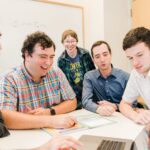
Imagine a sheet that’s only one atom thick. It won’t keep you very warm, but single-atom-thick materials under development might soon do extraordinary things, like filter salt from water, collect and store solar energy, or protect you from a poisonous gas. These sheets are referred to as two-dimensional materials, and they’re Can Ataca’s specialty.
Ataca, a computational physicist at UMBC, and his collaborator Brenda Rubenstein, a physical chemist at Brown University, have just received a three-year National Science Foundation grant to develop new methods to speed up and reduce the cost of developing new 2D materials. Ataca and his lab members use supercomputers to model possible new 2D materials and predict their properties—magnetic, mechanical, electrical, optical, chemical, and more.
“We can predict the material’s properties before experimentalists can even synthesize it,” says Ataca.
That’s a good thing, because generating a single sample of one of these cutting-edge materials can cost up to $1 million and require highly advanced technical skills and equipment.
New tech, new methods
Modeling 2D materials is not entirely new. In the 1990s, researchers started with models that treated the chemical bonds between atoms like simple springs and completely ignored quantum mechanics, which become very important at small scales—like a one-atom-thick structure.
Why did those early models make assumptions that ignored quantum mechanics? Limited computing power was the culprit, but “even though these assumptions make life easier computationally, they come with lower accuracy,” Ataca explains.
Computers today are vastly more powerful than in the 1990s, and Ataca is taking advantage of that to develop more accurate methodology that accounts for quantum mechanics. Methods that incorporate quantum mechanics are currently available, but the new methodological framework Ataca’s lab is developing, called Quantum Monte Carlo, is an order of magnitude more accurate than existing quantum methods. Its results get extremely close to what experimental physicists would find in the lab with the real material.
The older methods are currently easier to implement because the computer code to run tests with them already exists: Enter a handful of parameters, click a button, and come back a day later to collect your results. The newer techniques that Ataca, Ph.D. students Daniel Wines and Gracie Chaney, and postdoctoral researcher Fatih Ersan are working to develop “are a much more hands-on process,” Ataca says. “In order to reach one result, you need to do around 100 different calculations, which require rigorous processing after each step.”
Next stop, applications
The current project is a proof-of-concept to show that the new methods work. “First, we are going to show the world that Quantum Monte Carlo is doing a better job. We’re trying to come up with a kind of recipe,” Ataca says. After that, they may collaborate with researchers seeking materials for specific applications.
Scientists who physically create these materials in their labs will rely on the results of models like Ataca’s to make major investment decisions in their labs, so it’s critical that the new method’s predictions can be trusted. To verify that results generated with the new code are accurate, the research team will compare them against existing experimental data for 2D materials.
“After we’ve done lots of this, and get the same results as the experiments, we are going to make these codes available to anyone,” Ataca says. He hopes that their work will eventually be used to create a wide variety of novel materials.
“With this methodology we can get the optimal properties of these materials with a very high accuracy,” Ataca explains, “so we can definitely say, ‘Hey, this material is good for photovoltaics [solar cells], that material is good for hydrogen generation, this material can bind this kind of poisonous gas.’”
By shortcutting the discovery process, the new methods could be a game-changer for developing not only 2D materials, but also any crystal structures or molecules. As Ataca says, “This could be the beginning of a new computational era.”
Image: Can Ataca, second from left, meets with some of his students. Photo by Marlayna Demond ’11 for UMBC.
]]>
Imagine a sheet that’s only one atom thick. It won’t keep you very warm, but single-atom-thick materials under development might soon do extraordinary things, like filter salt from water, collect...
https://umbc.edu/stories/umbc-physicist-can-ataca-developing-quicker-cheaper-way-to-create-novel-one-atom-thick-materials/
https://my3.my.umbc.edu/api/v0/pixel/news/120328/guest@my.umbc.edu/c3215db734e25ef488aae21d96f3d997/api/pixel
cnms
gradresearch
physics
research
science-and-technology
UMBC News & Magazine
https://my3.my.umbc.edu/groups/umbc-news-magazine
https://assets1-my.umbc.edu/system/shared/avatars/groups/000/001/943/24435aa6207c452e7bc15cc74b42c7bb/xsmall.png?1748556657
https://assets1-my.umbc.edu/system/shared/avatars/groups/000/001/943/24435aa6207c452e7bc15cc74b42c7bb/original.png?1748556657
https://assets2-my.umbc.edu/system/shared/avatars/groups/000/001/943/24435aa6207c452e7bc15cc74b42c7bb/xxlarge.png?1748556657
https://assets2-my.umbc.edu/system/shared/avatars/groups/000/001/943/24435aa6207c452e7bc15cc74b42c7bb/xlarge.png?1748556657
https://assets3-my.umbc.edu/system/shared/avatars/groups/000/001/943/24435aa6207c452e7bc15cc74b42c7bb/large.png?1748556657
https://assets1-my.umbc.edu/system/shared/avatars/groups/000/001/943/24435aa6207c452e7bc15cc74b42c7bb/medium.png?1748556657
https://assets2-my.umbc.edu/system/shared/avatars/groups/000/001/943/24435aa6207c452e7bc15cc74b42c7bb/small.png?1748556657
https://assets1-my.umbc.edu/system/shared/avatars/groups/000/001/943/24435aa6207c452e7bc15cc74b42c7bb/xsmall.png?1748556657
https://assets2-my.umbc.edu/system/shared/avatars/groups/000/001/943/24435aa6207c452e7bc15cc74b42c7bb/xxsmall.png?1748556657
UMBC News & Magazine
0
0
false
Fri, 21 Sep 2018 14:51:41 -0400
UMBC, NASA, and partners mount intensive Chesapeake Bay air-quality study
This summer, students and faculty from UMBC and three additional universities teamed up with NASA researchers and Maryland’s Department of the Environment to collect huge amounts of data that will provide a snapshot of air quality in the Baltimore-Washington metropolitan area and over the Chesapeake Bay. The study measures factors ranging from wind speed to ozone concentration.
“In trying to understand air quality near the coast, it’s critical to obtain measurements over the water and over the land simultaneously with as wide of a variety of instruments as possible,” says John Sullivan, Ph.D. ’15, atmospheric physics, and the lead NASA researcher on the project.
UMBC serves as the primary land-based site, and equipment placed on remote Hart Miller Island in the Bay collects data over water. “With two sites, you can begin to really answer questions pertaining to differences in air pollution and understand the mechanisms driving these differences,” Sullivan explains.
 The UMBC research trailer on Hart Miller Island in Chesapeake Bay, one of two “super sites” for OWLETS and OWLETS-2 data collection. The other super site is the UMBC campus. Photo: Peninsula Drone Services, LLC
Ozone in the forecast
This summer’s work is an extension of the Ozone Water-Land Environmental Transition Study (OWLETS), dubbed OWLETS-2, and it is particularly focused on tracking the presence of ozone in coastal cities. Ozone in the upper atmosphere helps maintain Earth’s temperature and absorbs harmful UV rays.
However, near ground level, breathing in ozone causes inflammation in the respiratory system, which can be dangerous for young children, the elderly, and those with asthma or other respiratory conditions. Plants also take up ozone, which can reduce crop yields.
Chemical reactions between sunlight and emissions from vehicles and industry generate smog-like ozone episodes, so one would expect the highest concentrations at midday, when the sun is at its brightest. However, wind over the Bay changes that.
“The Bay breeze is like a wall that doesn’t allow normal west to east airflow to happen,” explains Ruben Delgado, assistant professor at the Joint Center for Earth Systems Technology (a UMBC-NASA partnership) and the lead UMBC OWLETS-2 researcher. That means the midday ozone heading out to sea comes back in during the late afternoon, causing a spike just as local residents are heading home from work and school. Other factors, such as smoke blowing over the city from wildfires in the West, can also have a real impact.
Better understanding how these issues influence the presence of ozone in Baltimore can help improve air quality forecasts and protect sensitive populations from ozone’s ill effects. “The National Weather Service is interested in this kind of data, because it allows them to push their models to a new frontier,” Delgado explains.
Students step up
Working with Delgado are students from UMBC, Howard University, City University of New York, and Hampton University. The students and their home-institution faculty mentors are all members of the NOAA-funded Center for Earth System Sciences and Remote Sensing Technologies and Center for Atmospheric Sciences and Meteorology.
Delgado finds mentoring these emerging researchers to be both personally rewarding and essential to the success of the project. “My favorite part of this project is giving the students hands-on experience,” Delgado says. “They get to contribute to the process from start to finish.”
Kat Ball ’21, chemical engineering, is one of those student researchers, and her experience has been transformative. “I feel so fortunate to have had the opportunity to participate in meaningful scientific research so early on in my academic career,” she shares. “I’ve only just completed my freshman year, and will be one of the authors on the publications that result from all the data we received, which is something I thought I would only be dreaming about for quite some time.”
Ball learned that field and lab research differ in important ways. “Not everything is easy to deal with when you’re miles away from an actual lab where you have all of the necessary parts, chemicals, and even just clean water that you need to deal with problems that arise,” she says.
Working with much more experienced team members, Ball was intimidated at first, but soon felt at home on Hart Miller Island. “Hearing from people with such impressive qualifications that your input on the situation truly matters expanded the confidence I had in myself as a researcher,” she shares.
Paying it forward
John Sullivan, the lead NASA researcher, was once in Ball’s shoes, and now he’s paying it forward. “As I moved toward planning larger-scale campaigns, I knew that I wanted to involve UMBC any way I could,” he says. “It wasn’t until I got to NASA that I realized how much of a leg up I had coming from UMBC, as some of my classes were taught by leading researchers in the atmospheric physics community.”
Under Sullivan and Delgado’s leadership, the participating students all took a very active role in the research. “They have been busy taking LiDAR measurements, launching weather balloons, taking mobile samples of pollution, and outfitting research vessels,” Sullivan says. He adds, “There is something very rewarding about bringing together active and engaged researchers to make a difference in public health, and training the next generation of scientists along the way.”
]]>
This summer, students and faculty from UMBC and three additional universities teamed up with NASA researchers and Maryland’s Department of the Environment to collect huge amounts of data that will...
https://umbc.edu/stories/umbc-nasa-and-partners-mount-intensive-chesapeake-bay-air-quality-study/
https://my3.my.umbc.edu/api/v0/pixel/news/120351/guest@my.umbc.edu/70135c77061408fac547466cf218e61e/api/pixel
cbee
cnms
coeit
graduateschool
physics
research
science-and-technology
undergradresearch
UMBC News & Magazine
https://my3.my.umbc.edu/groups/umbc-news-magazine
https://assets1-my.umbc.edu/system/shared/avatars/groups/000/001/943/24435aa6207c452e7bc15cc74b42c7bb/xsmall.png?1748556657
https://assets1-my.umbc.edu/system/shared/avatars/groups/000/001/943/24435aa6207c452e7bc15cc74b42c7bb/original.png?1748556657
https://assets2-my.umbc.edu/system/shared/avatars/groups/000/001/943/24435aa6207c452e7bc15cc74b42c7bb/xxlarge.png?1748556657
https://assets2-my.umbc.edu/system/shared/avatars/groups/000/001/943/24435aa6207c452e7bc15cc74b42c7bb/xlarge.png?1748556657
https://assets3-my.umbc.edu/system/shared/avatars/groups/000/001/943/24435aa6207c452e7bc15cc74b42c7bb/large.png?1748556657
https://assets1-my.umbc.edu/system/shared/avatars/groups/000/001/943/24435aa6207c452e7bc15cc74b42c7bb/medium.png?1748556657
https://assets2-my.umbc.edu/system/shared/avatars/groups/000/001/943/24435aa6207c452e7bc15cc74b42c7bb/small.png?1748556657
https://assets1-my.umbc.edu/system/shared/avatars/groups/000/001/943/24435aa6207c452e7bc15cc74b42c7bb/xsmall.png?1748556657
https://assets2-my.umbc.edu/system/shared/avatars/groups/000/001/943/24435aa6207c452e7bc15cc74b42c7bb/xxsmall.png?1748556657
UMBC News & Magazine
0
0
false
Tue, 21 Aug 2018 14:26:00 -0400
New UMBC initiative celebrates exceptional faculty dedication to teaching and scholarship
UMBC’s Office of the Provost has launched a university-wide initiative to celebrate faculty who go above and beyond as educators, scholars, and leaders on campus and in their fields. This initiative strives to highlight tenure-track junior faculty, lecturers, and adjunct, research, and clinical faculty whose work is essential to UMBC’s success. The first recipients were announced last month, and represent a broad range of disciplines.
 Chris Hennigan.
In the College of Engineering and Information Technology, recipients were announced during a special celebration marking the end of the academic year. Chris Hennigan, assistant professor of chemical, biochemical, and environmental engineering, received the Early Career Faculty Excellence Award. Gunes Koru, associate professor of information systems, received the Mid-Career Faculty Excellence Award. Chuck LaBerge, professor of practice of computer science and electrical engineering (CSEE), was awarded the Excellence in Teaching Award.
In the College of Natural and Mathematical Sciences, Pengwang Zhai, assistant professor of physics, received the 2018 Early Career Faculty Excellence Award. Tamra Mendelson, professor of biological sciences, was awarded the Mid-Career Faculty Excellence Award. Tiffany Gierasch, senior lecturer in chemistry and director of the Chemistry Tutorial Center, received the Excellence in Teaching Award.
The College of Arts, Humanities, and Social Sciences also presented awards to three faculty. The Early Career Faculty Excellence Award was presented to Corrie Parks, assistant professor of visual arts. The Mid-Career Faculty Excellence Award was awarded to Susan McDonough, associate professor of history. Andrew Nolan, senior lecturer of history and director of the UMBC history program at the Universities at Shady Grove, received the Excellence in Teaching Award.
 Susan McDonough.
UMBC’s Office of the Vice President for Research presented its inaugural Research Faculty Excellence Award to Milt Halem, research professor of CSEE. Halem came to UMBC following a highly successful career at the NASA Goddard Space Flight Center, serving as founding director of a UMBC center focused on big-data computation and next-generation computing.
“UMBC is the academic home to over 180 research faculty who contribute their expertise and personal commitment to making UMBC a destination for cutting-edge research while providing our students with remarkable insights and opportunities,” said Karl Steiner, vice president for research, shared. He noted that Milt Halem’s “energy and expertise have been a major factor in UMBC being recognized as a major contributor to high performance computation and data analytics.”
Banner image: Library pond. All photos by Marlayna Demond ’11 for UMBC.
]]>
UMBC’s Office of the Provost has launched a university-wide initiative to celebrate faculty who go above and beyond as educators, scholars, and leaders on campus and in their fields. This...
https://umbc.edu/stories/new-umbc-initiative-celebrates-exceptional-faculty-dedication-to-teaching-and-scholarship/
https://my3.my.umbc.edu/api/v0/pixel/news/120383/guest@my.umbc.edu/8785877b4131b492087c3dabd3a0e642/api/pixel
biology
cahss
cbee
chembiochem
cnms
coeit
csee
history
is
physics
policy-and-society
research
science-and-technology
visualarts
UMBC News & Magazine
https://my3.my.umbc.edu/groups/umbc-news-magazine
https://assets1-my.umbc.edu/system/shared/avatars/groups/000/001/943/24435aa6207c452e7bc15cc74b42c7bb/xsmall.png?1748556657
https://assets1-my.umbc.edu/system/shared/avatars/groups/000/001/943/24435aa6207c452e7bc15cc74b42c7bb/original.png?1748556657
https://assets2-my.umbc.edu/system/shared/avatars/groups/000/001/943/24435aa6207c452e7bc15cc74b42c7bb/xxlarge.png?1748556657
https://assets2-my.umbc.edu/system/shared/avatars/groups/000/001/943/24435aa6207c452e7bc15cc74b42c7bb/xlarge.png?1748556657
https://assets3-my.umbc.edu/system/shared/avatars/groups/000/001/943/24435aa6207c452e7bc15cc74b42c7bb/large.png?1748556657
https://assets1-my.umbc.edu/system/shared/avatars/groups/000/001/943/24435aa6207c452e7bc15cc74b42c7bb/medium.png?1748556657
https://assets2-my.umbc.edu/system/shared/avatars/groups/000/001/943/24435aa6207c452e7bc15cc74b42c7bb/small.png?1748556657
https://assets1-my.umbc.edu/system/shared/avatars/groups/000/001/943/24435aa6207c452e7bc15cc74b42c7bb/xsmall.png?1748556657
https://assets2-my.umbc.edu/system/shared/avatars/groups/000/001/943/24435aa6207c452e7bc15cc74b42c7bb/xxsmall.png?1748556657
UMBC News & Magazine
0
0
false
Thu, 21 Jun 2018 14:28:55 -0400
The next big discovery in astronomy?

Scientists probably found it years ago – but they don’t know it yet
Eileen Meyer, University of Maryland, Baltimore County
Earlier this year, astronomers stumbled upon a fascinating finding: Thousands of black holes likely exist near the center of our galaxy.
The X-ray images that enabled this discovery weren’t from some state-of-the-art new telescope. Nor were they even recently taken – some of the data was collected nearly 20 years ago.
No, the researchers discovered the black holes by digging through old, long-archived data.
Discoveries like this will only become more common, as the era of “big data” changes how science is done. Astronomers are gathering an exponentially greater amount of data every day – so much that it will take years to uncover all the hidden signals buried in the archives.
The evolution of astronomy
Sixty years ago, the typical astronomer worked largely alone or in a small team. They likely had access to a respectably large ground-based optical telescope at their home institution.
Their observations were largely confined to optical wavelengths – more or less what the eye can see. That meant they missed signals from a host of astrophysical sources, which can emit non-visible radiation from very low-frequency radio all the way up to high-energy gamma rays. For the most part, if you wanted to do astronomy, you had to be an academic or eccentric rich person with access to a good telescope.
Old data was stored in the form of photographic plates or published catalogs. But accessing archives from other observatories could be difficult – and it was virtually impossible for amateur astronomers.
Today, there are observatories that cover the entire electromagnetic spectrum. No longer operated by single institutions, these state-of-the-art observatories are usually launched by space agencies and are often joint efforts involving many countries.
With the coming of the digital age, almost all data are publicly available shortly after they are obtained. This makes astronomy very democratic – anyone who wants to can reanalyze almost any data set that makes the news. (You too can look at the Chandra data that led to the discovery of thousands of black holes!)
These observatories generate a staggering amount of data. For example, the Hubble Space Telescope, operating since 1990, has made over 1.3 million observations and transmits around 20 GB of raw data every week, which is impressive for a telescope first designed in the 1970s. The Atacama Large Millimeter Array in Chile now anticipates adding 2 TB of data to its archives every day.
 The Hubble Space Telescope. NASA
Data firehose
The archives of astronomical data are already impressively large. But things are about to explode.
Each generation of observatories are usually at least 10 times more sensitive than the previous, either because of improved technology or because the mission is simply larger. Depending on how long a new mission runs, it can detect hundreds of times more astronomical sources than previous missions at that wavelength.
For example, compare the early EGRET gamma ray observatory, which flew in the 1990s, to NASA’s flagship mission Fermi, which turns 10 this year. EGRET detected only about 190 gamma ray sources in the sky. Fermi has seen over 5,000.
The Large Synoptic Survey Telescope, an optical telescope currently under construction in Chile, will image the entire sky every few nights. It will be so sensitive that it will generate 10 million alerts per night on new or transient sources, leading to a catalog of over 15 petabytes after 10 years.
The Square Kilometre Array, when completed in 2020, will be the most sensitive telescope in the world, capable of detecting airport radar stations of alien civilizations up to 50 light-years away. In just one year of activity, it will generate more data than the entire internet.
These ambitious projects will test scientists’ ability to handle data. Images will need to be automatically processed – meaning that the data will need to be reduced down to a manageable size or transformed into a finished product. The new observatories are pushing the envelope of computational power, requiring facilities capable of processing hundreds of terabytes per day.
The resulting archives – all publicly searchable – will contain 1 million times more information that what can be stored on your typical 1 TB backup disk.
Unlocking new science
The data deluge will make astronomy become a more collaborative and open science than ever before. Thanks to internet archives, robust learning communities and new outreach initiatives, citizens can now participate in science. For example, with the computer program Einstein@Home, anyone can use their computer’s idle time to help search for rapidly-rotating neutron stars.
It’s an exciting time for scientists, too. Astronomers like myself often study physical phenomena on timescales so wildly beyond the typical human lifetime that watching them in real-time just isn’t going to happen. Events like a typical galaxy merger – which is exactly what it sounds like – can take hundreds of millions of years. All we can capture is a snapshot, like a single still frame from a video of a car accident.
However, there are some phenomena that occur on shorter timescales, taking just a few decades, years or even seconds. That’s how scientists discovered those thousands of black holes in the new study. It’s also how they recently realized that the X-ray emission from the center of a nearby dwarf galaxy has been fading since first detected in the 1990s. These new discoveries suggest that more will be found in archival data spanning decades.
 A black-hole-powered jet of hot gas in the giant elliptical galaxy M87.
NASA, ESA, E. Meyer, W. Sparks, J. Biretta, J. Anderson, S.T. Sohn, and R. van der Marel (STScI), C. Norman (Johns Hopkins University), and M. Nakamura (Academia Sinica)
In my own work, I use Hubble archives to make movies of “jets,” high-speed plasma ejected in beams from black holes. I used over 400 raw images spanning 13 years to make a movie of the jet in nearby galaxy M87. That movie showed, for the first time, the twisting motions of the plasma, suggesting that the jet has a helical structure.
This kind of work was only possible because other observers, for other purposes, just happened to capture images of the source I was interested in, back when I was in kindergarten. As astronomical images become larger, higher resolution and ever more sensitive, this kind of research will become the norm.
This article has been updated to correct what Einstein@Home searches for.
Eileen Meyer, Assistant Professor of Physics, University of Maryland, Baltimore County
This article was originally published on The Conversation. Read the original article.
Header image: An artist’s illustration of a black hole “eating” a star. NASA/JPL-Caltech
]]>
Scientists probably found it years ago – but they don’t know it yet Eileen Meyer, University of Maryland, Baltimore County Earlier this year, astronomers stumbled upon a fascinating finding:...
https://umbc.edu/stories/the-next-big-discovery-in-astronomy/
https://my3.my.umbc.edu/api/v0/pixel/news/120389/guest@my.umbc.edu/0abd5ed5a8f1a05a71dcccd14deda2d6/api/pixel
perspectives
physics
the-conversation
UMBC News & Magazine
https://my3.my.umbc.edu/groups/umbc-news-magazine
https://assets1-my.umbc.edu/system/shared/avatars/groups/000/001/943/24435aa6207c452e7bc15cc74b42c7bb/xsmall.png?1748556657
https://assets1-my.umbc.edu/system/shared/avatars/groups/000/001/943/24435aa6207c452e7bc15cc74b42c7bb/original.png?1748556657
https://assets2-my.umbc.edu/system/shared/avatars/groups/000/001/943/24435aa6207c452e7bc15cc74b42c7bb/xxlarge.png?1748556657
https://assets2-my.umbc.edu/system/shared/avatars/groups/000/001/943/24435aa6207c452e7bc15cc74b42c7bb/xlarge.png?1748556657
https://assets3-my.umbc.edu/system/shared/avatars/groups/000/001/943/24435aa6207c452e7bc15cc74b42c7bb/large.png?1748556657
https://assets1-my.umbc.edu/system/shared/avatars/groups/000/001/943/24435aa6207c452e7bc15cc74b42c7bb/medium.png?1748556657
https://assets2-my.umbc.edu/system/shared/avatars/groups/000/001/943/24435aa6207c452e7bc15cc74b42c7bb/small.png?1748556657
https://assets1-my.umbc.edu/system/shared/avatars/groups/000/001/943/24435aa6207c452e7bc15cc74b42c7bb/xsmall.png?1748556657
https://assets2-my.umbc.edu/system/shared/avatars/groups/000/001/943/24435aa6207c452e7bc15cc74b42c7bb/xxsmall.png?1748556657
UMBC News & Magazine
0
0
false
Thu, 14 Jun 2018 19:56:52 -0400
 Vanessa Gonzalez ’19, American studies, works on a project with Lakeland Elementary School students. Photo by Marlayna Demond ’11 for UMBC.
 Vanessa Gonzalez ’19 teaches a math lesson with Lakeland Elementary School students. Photo by Marlayna Demond ’11 for UMBC.
 Ashley Batista ’19, biological sciences, presents her first research poster at SURF 2018. Fernando Vonhoff (left) is her research mentor. Photo courtesy Ashley Batista.
 Ashley Batista ’19 (standing, second from right) and sorority sisters from across the East Coast volunteer at the non-profit Share Baby. Photo courtesy Ashley Batista.
 Blake Hipsley ’19, physics and mathematics, talks about his research at URCAD 2019. Photo by Marlayna Demond ’11 for UMBC.


