Meet a Retriever—Tanzila Malik, gender and women’s studies major, and multi-semester on-campus intern
Meet Tanzila Malik, a senior majoring in gender and women’s studies and minoring in political science and anthropology. Tanzila is an intern with UMBC’s University Communications and Marketing team and a former intern of the Women’s, Gender, and Equity Center.
Q: Tell us about someone in the UMBC community who has inspired you or supported you, and how they did it.
A: It’s hard to pick just one. I’ve had the honor of meeting many people in the UMBC community who have made a lifelong impact on my journey here. In particular, Lauren Allen, director, and Zoe Brown, program coordinator, of UMBC’s Women’s, Gender, and Equity Center (WGEC) consistently supported me in my academic and career goals. They challenged me to move out of my comfort zone and gave me the confidence to pursue incredible opportunities that I’d never thought possible.
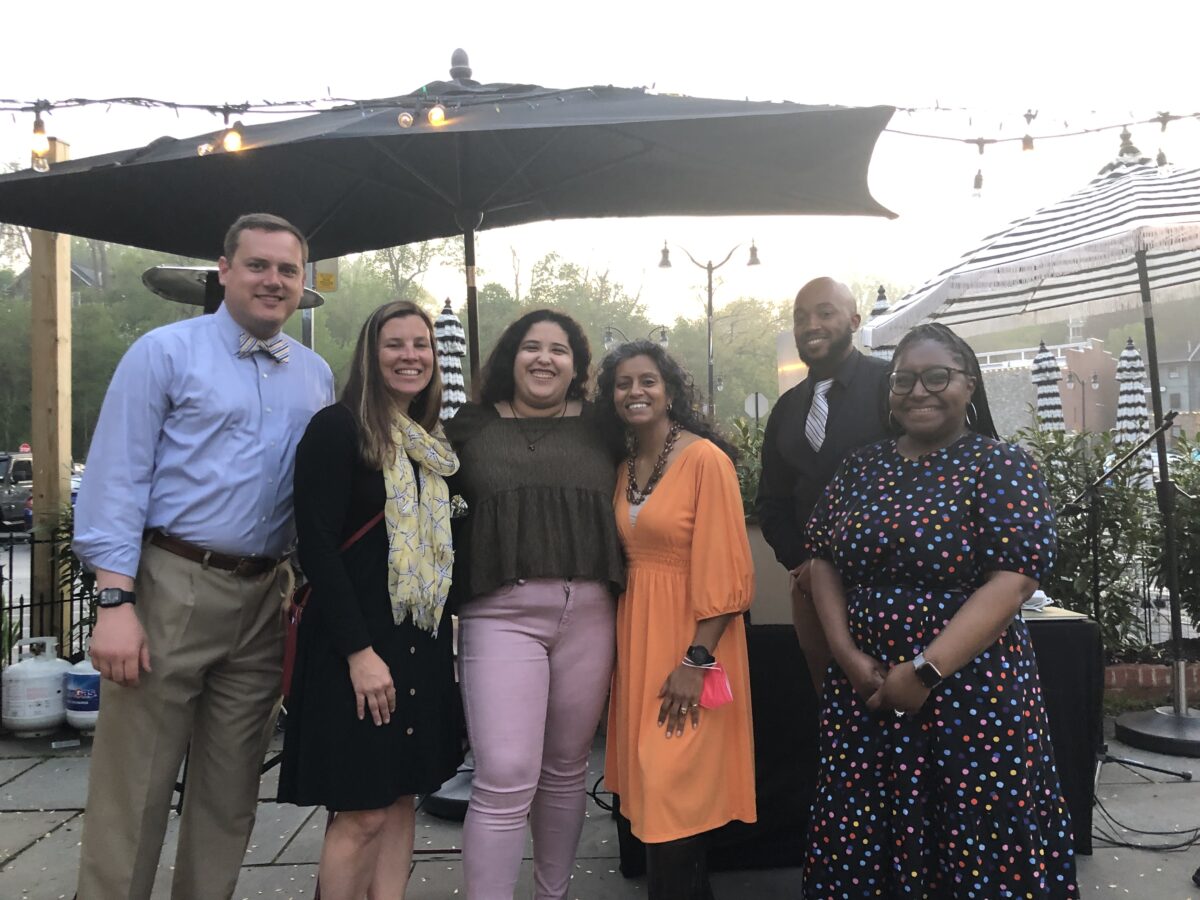
 WGEC staff members and panelists of the Women of Color Reception hosted by the WGEC (Lauren Allen/UMBC)
Q: What’s the one thing you’d want someone who hasn’t joined the UMBC community to know about the support you find here?
A: You are never alone at UMBC. There is something/someone for everyone here. From the students to the faculty and staff, UMBC is truly a supportive place to grow and explore new possibilities.
Q: What part of your job do you enjoy the most and why?
A: As an intern at the WGEC, I loved meeting new people and building community. It was fulfilling to be involved in initiatives where I saw firsthand the impact we were making. From hosting panels and discussion circles centered on the experiences of women of color to organizing a campus-wide student activism blog, among many other initiatives, the WGEC takes on. I learned how, even as students, we hold so much power to enact change and make a difference in our communities.
Q: What brought you to UMBC in the first place?
A: After applying to and touring several schools in the DMV area, I ultimately committed to UMBC because it felt like a true “community,” something I hadn’t seen anywhere else. As I spent more time on campus, engaging with my professors, taking part in student organizations, and working on campus, it became clear that UMBC was so much more than “just a school.” I’ve met students and staff with an eagerness to learn and a genuine passion for their work, which goes beyond the classroom.
As I spent more time on campus, it became clear that UMBC was so much more than “just a school.”
Tanzila Malik
gender, women's and sexuality studies senior
Q: Since you’ve been a part of the UMBC community, how have you found support of your WHY? Tell us about the people who have helped you at UMBC, and why it has made such a difference to you.
A: As a student, I tend to get trapped in the merry-go-round of school. Not stopping to think about my “why.” As a participant and later a leader for the Alternative Spring Break (ASB) trip through the Center for Democracy and Civic Life, I got to build a deeper connection with Baltimore through learning about various social issues impacting it.

 (l-r): ASB 2024 Improving Life After Prison cohort, ASB 2025 Environmental Justice and Sustainability cohort, cleaning oyster cages in Baltimore’s Inner Harbor. (Farrell Kimble/UMBC, Bianca Canales/UMBC)
I was part of the 2024 ASB cohort focusing on improving life after prison, and later was a co-leader for the environmental justice and sustainability group. Through meeting with city officials, local nonprofits, and community members, ASB gave me a chance to apply what I was learning in the classroom to the “real world.” This was a really impactful experience for me, as it reminded me of why it is I’m doing what I’m doing.
UMBC’s greatest strength is its people. When people meet Retrievers and hear about the passion they bring, the relationships they create, the ways they support each other, and the commitment they have to inclusive excellence, they truly get a sense of our community. That’s what “Meet a Retriever” is all about.
]]>
Meet Tanzila Malik, a senior majoring in gender and women’s studies and minoring in political science and anthropology. Tanzila is an intern with UMBC’s University Communications and Marketing...
https://umbc.edu/stories/meet-a-retriever-tanzila-malik-gwst/
https://my3.my.umbc.edu/api/v0/pixel/news/152573/guest@my.umbc.edu/841e378548e3e1920022f552d0ae77db/api/pixel
anthropology
cahss
gwst
magazine
meetaretriever
perspectives
politicalscience
story
UMBC News & Magazine
https://my3.my.umbc.edu/groups/umbc-news-magazine
https://assets1-my.umbc.edu/system/shared/avatars/groups/000/001/943/24435aa6207c452e7bc15cc74b42c7bb/xsmall.png?1748556657
https://assets1-my.umbc.edu/system/shared/avatars/groups/000/001/943/24435aa6207c452e7bc15cc74b42c7bb/original.png?1748556657
https://assets2-my.umbc.edu/system/shared/avatars/groups/000/001/943/24435aa6207c452e7bc15cc74b42c7bb/xxlarge.png?1748556657
https://assets2-my.umbc.edu/system/shared/avatars/groups/000/001/943/24435aa6207c452e7bc15cc74b42c7bb/xlarge.png?1748556657
https://assets3-my.umbc.edu/system/shared/avatars/groups/000/001/943/24435aa6207c452e7bc15cc74b42c7bb/large.png?1748556657
https://assets1-my.umbc.edu/system/shared/avatars/groups/000/001/943/24435aa6207c452e7bc15cc74b42c7bb/medium.png?1748556657
https://assets2-my.umbc.edu/system/shared/avatars/groups/000/001/943/24435aa6207c452e7bc15cc74b42c7bb/small.png?1748556657
https://assets1-my.umbc.edu/system/shared/avatars/groups/000/001/943/24435aa6207c452e7bc15cc74b42c7bb/xsmall.png?1748556657
https://assets2-my.umbc.edu/system/shared/avatars/groups/000/001/943/24435aa6207c452e7bc15cc74b42c7bb/xxsmall.png?1748556657
UMBC News & Magazine
1
0
false
Wed, 17 Sep 2025 09:22:26 -0400
Wed, 17 Sep 2025 09:22:26 -0400
Meet a Retriever—Emma Swartling ’10, prenatal and pediatric chiropractor
Meet Emma Swartling ‘10, anthropology, prenatal and pediatric chiropractor and owner of Lumos Chiropractic in Tacoma, Washington. She was drawn to UMBC to experience the East Coast after being raised on the West Coast. Emma combined her interests in cultural and biological anthropology, pre-medicine, and working with children to shape her career as a chiropractor. Take it away, Emma!
Q: What’s one essential thing you’d want another Retriever to know about you?
A: Born and raised in the Pacific Northwest (PNW), I started college with the intent to major in pre-medicine but ended up falling in love with anthropology. I was fortunate to find a career that allowed me to combine many of my multiple interests by following the path to chiropractic. Chiropractic has allowed me to use many of the skills in empathy and understanding that cultural anthropology teaches, and biological anthropology offers insights into human anatomy and function. It was the Chesapeake Bay Retriever that initially sparked my interest into learning more about UMBC. I love dogs and spent my childhood involved with dog training and showing, as well as teaching younger children involved in the same program. This is how I learned I enjoy working with children.
Q: Tell us about your current job. What do you enjoy most about it?
A: I am a prenatal and pediatric chiropractor and own my practice in Washington state. The best part about my work is being part of the village that supports people during the huge transition periods of pregnancy, postpartum, and childhood.
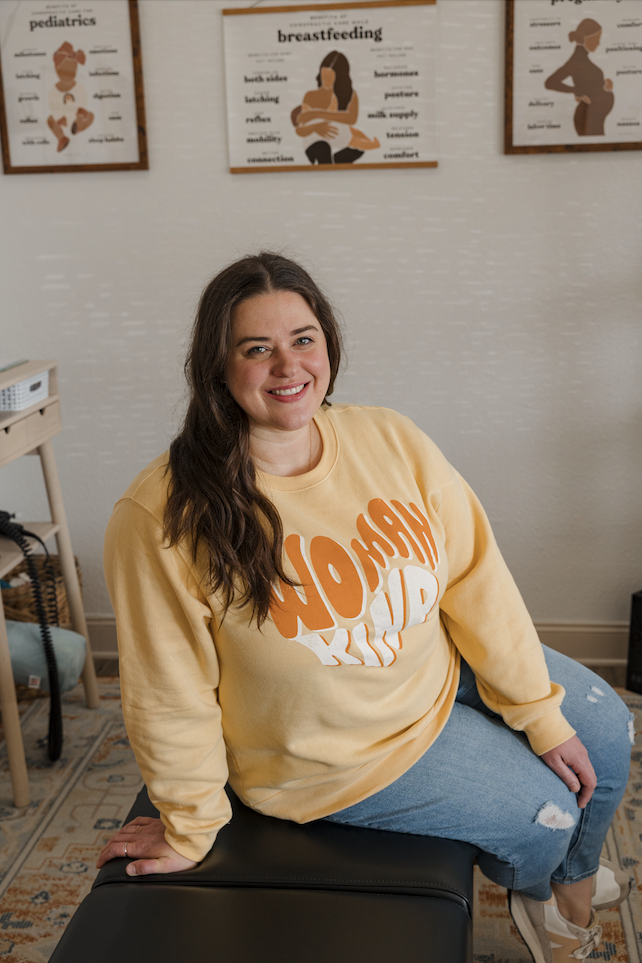
Q: Tell us about your primary WHY, and how it led you to UMBC.
A: What brought me to UMBC was the beginning of my love to travel and explore. After finishing the first two years of college in my home state, I decided to transfer to the East Coast to visit a part of our country that I had never seen. The initial reasons UMBC stood out are superficial: Maryland was a central location to explore north and south along the East Coast; the Maryland State flag is amazing; and most importantly, I wanted to say I went to a school where the mascot is a unique dog breed like the Chesapeake Bay Retriever!
I wanted an adventure and to try something new. I can honestly say, when my airplane landed at BWI in the dead of winter, I started to question my decision. Coming from the lush, always green PNW it looked like I was about to land in a brown and desolate land. I grew to appreciate the seasons while in Maryland and was awed by the abruptness of changes in weather. My first semester was timid—I was finding my footing and trying to discover my place. There were other students and professors who helped me make the most of the next three semesters, who helped me step out of my comfort zone and learn more about myself. I love the small community of UMBC, the ease in moving around a campus that felt both big and compact.
Pictured left: Emma in a treatment room at her chiropractic practice, Lumos Chiropractic
Q: Tell us about the people who helped you grow at UMBC and how they helped shape your next steps.
A: UMBC helped to shape “my why.” I really enjoyed learning from many of the professors in the anthropology department, in particular a former professor, Seth Messinger, who taught many of my favorite courses including a course on Medical Anthropology. Anthropology courses that combined the study of other cultures and their medicinal practices were particularly engaging to me. I began to imagine my future career—what direction would anthropology take me?
My first semester was timid—I was finding my footing and trying to discover my place. There were other students and professors who helped me make the most of the next three semesters, who helped me step out of my comfort zone and learn more about myself.
Emma Swartling ’10
After graduating from UMBC, I took some time to travel and consider my career opportunities. It was when my chiropractor cousin suggested I come listen to a talk hosted by a chiropractic school that I began to consider it as a career. The presenters shared about their unique experience opening a chiropractic clinic abroad, living in a country other than their own, and interacting with and helping a small community that I started to put the pieces together. I could combine my many interests: cultural anthropology and working with different people, cultures, populations, pre-medicine, and biological anthropology by working with bodies, studying the human form and its function, and be able to work with children, support childhood development, and help to grow a healthier community.
Q: What’s your favorite part of being a part of Retriever Nation?
A: I really appreciated UMBC’s focus on academics and on inclusion. Also, I found an amazing group of people at UMBC who were kind, generous, and fun in the fraternity of Phi Mu. Some of those friendships led to future travel and experiences that helped to shape my career choice.
* * * * *
UMBC’s greatest strength is its people. When people meet Retrievers and hear about the passion they bring, the relationships they create, the ways they support each other, and the commitment they have to inclusive excellence, they truly get a sense of our community. That’s what “Meet a Retriever” is all about.
]]>
Meet Emma Swartling ‘10, anthropology, prenatal and pediatric chiropractor and owner of Lumos Chiropractic in Tacoma, Washington. She was drawn to UMBC to experience the East Coast after being...
https://umbc.edu/stories/meet-a-retriever-emma-swartling-chiropractor/
https://my3.my.umbc.edu/api/v0/pixel/news/145291/guest@my.umbc.edu/fef18060bb3c130fef64b2f8be92df5b/api/pixel
alumni
anthropology
cahss
impact
magazine
meet-a-retriever
phi-mu
story
UMBC News & Magazine
https://my3.my.umbc.edu/groups/umbc-news-magazine
https://assets1-my.umbc.edu/system/shared/avatars/groups/000/001/943/24435aa6207c452e7bc15cc74b42c7bb/xsmall.png?1748556657
https://assets1-my.umbc.edu/system/shared/avatars/groups/000/001/943/24435aa6207c452e7bc15cc74b42c7bb/original.png?1748556657
https://assets2-my.umbc.edu/system/shared/avatars/groups/000/001/943/24435aa6207c452e7bc15cc74b42c7bb/xxlarge.png?1748556657
https://assets2-my.umbc.edu/system/shared/avatars/groups/000/001/943/24435aa6207c452e7bc15cc74b42c7bb/xlarge.png?1748556657
https://assets3-my.umbc.edu/system/shared/avatars/groups/000/001/943/24435aa6207c452e7bc15cc74b42c7bb/large.png?1748556657
https://assets1-my.umbc.edu/system/shared/avatars/groups/000/001/943/24435aa6207c452e7bc15cc74b42c7bb/medium.png?1748556657
https://assets2-my.umbc.edu/system/shared/avatars/groups/000/001/943/24435aa6207c452e7bc15cc74b42c7bb/small.png?1748556657
https://assets1-my.umbc.edu/system/shared/avatars/groups/000/001/943/24435aa6207c452e7bc15cc74b42c7bb/xsmall.png?1748556657
https://assets2-my.umbc.edu/system/shared/avatars/groups/000/001/943/24435aa6207c452e7bc15cc74b42c7bb/xxsmall.png?1748556657
UMBC News & Magazine
0
0
false
Thu, 31 Oct 2024 14:12:25 -0400
Thu, 31 Oct 2024 14:12:25 -0400
Handle with care—students help digitize and rehouse thousands of historical photos
A nine-year-old stands at the mouth of a coal mine covered in coal dust, wearing a small headlamp. A woman holds her baby on her lap as she packs boxes in a warehouse along with her 5-, 8-, and 12-year-olds. These are just two of thousands of evocative black-and white historical photographs handled by Special Collections interns Meredith Power ’21, history, a public history graduate student, and Gabe Morrison ’23, anthropology. Along with library staff members, these two worked diligently to ensure that the images of the families and children who lived through these harrowing work conditions are accessible to the public for research and learning.
Fine motor skills
“Photos from the early 1900s were developed on fine photographic paper that is prone to crinkling around the edges, ripping, and fading,” Power says. Wearing blue nitrile medical gloves, they rehouse photos from their cellophane sleeves to museum-grade mylar sleeves, keeping them from further discoloration, tears, wrinkles, and sticking to the sleeves.
“They’re very delicate,” Power says. “You need good eye-hand coordination to pick up the photos from the corners, remove them from whatever packaging they are in, and slide them into the mylar sleeve.”
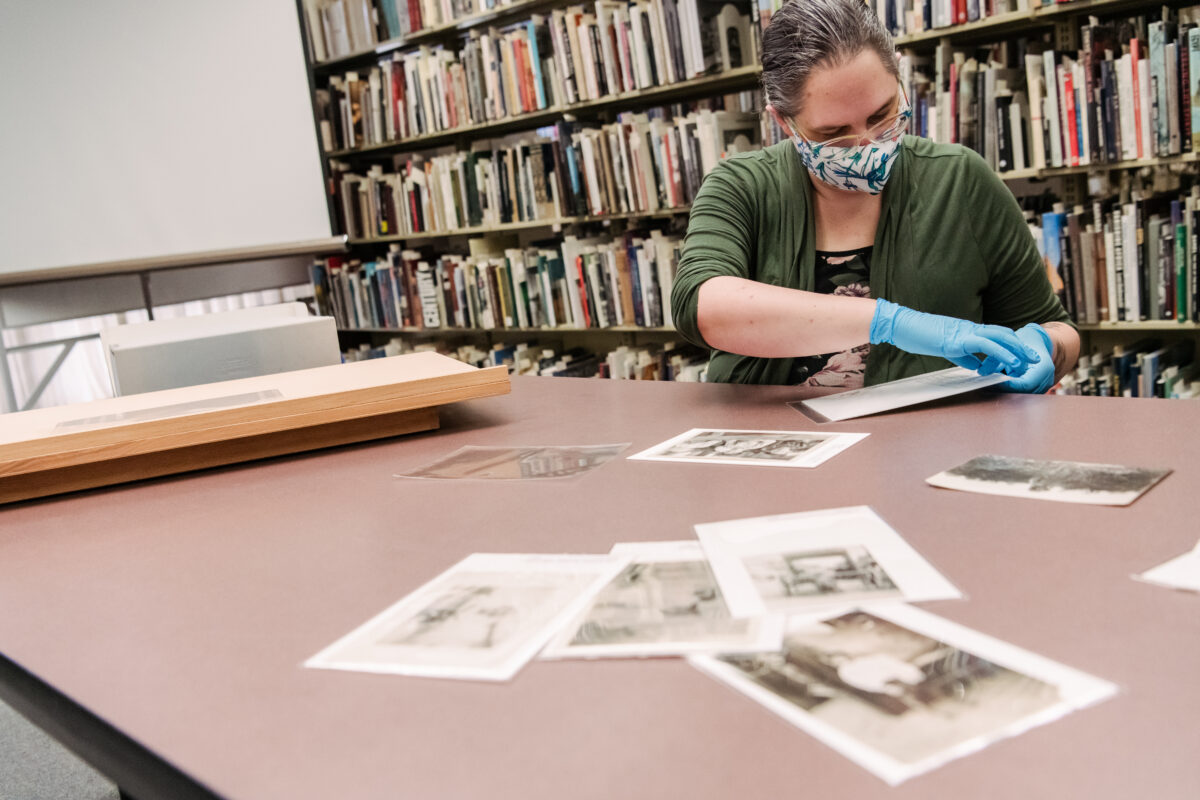 Power puts the historical photos into a mylar sleeve. (Marlayna Demond ’11/UMBC)
This process is second nature for Morrison, who has been working at Special Collections for over a year. He has worked with securing the Lewis Hine photos as part of his public humanities minor, as well as the Maryland Folklife Program Collection, the Coslet-Sapienza Fantasy and Science Fiction Fanzine Collection, and the George Cruikshank illustrations and papers.
“I had to learn how to properly handle photographs and manuscripts and how to catalog them according to the Library of Congress classification system,” Morrison says. For both Power and Morrison, developing greater patience and manual dexterity and embracing working through hundreds of documents alone in a quiet space surrounded by stacks of materials was well worth the effort to broaden access to these historic documents.
“The value of this project is ensuring people understand that this resource exists,” says Power, “to help these photos live beyond a heavily controlled and restricted space on campus into a digital space where more people are able to access the information.”
Digital accessibility
Protecting delicate, historic documents includes digitizing them. The digitizing process is another lesson in precision and patience. Power begins the process by taking a photo out of the mylar sleeve—making sure to only touch the corners—along with a small rectangular white piece of paper describing the photo. They gently place the photo underneath a camera, delicately straightening the image before the camera snaps the picture and sends it to a computer where Power edits it using Adobe Lightroom.
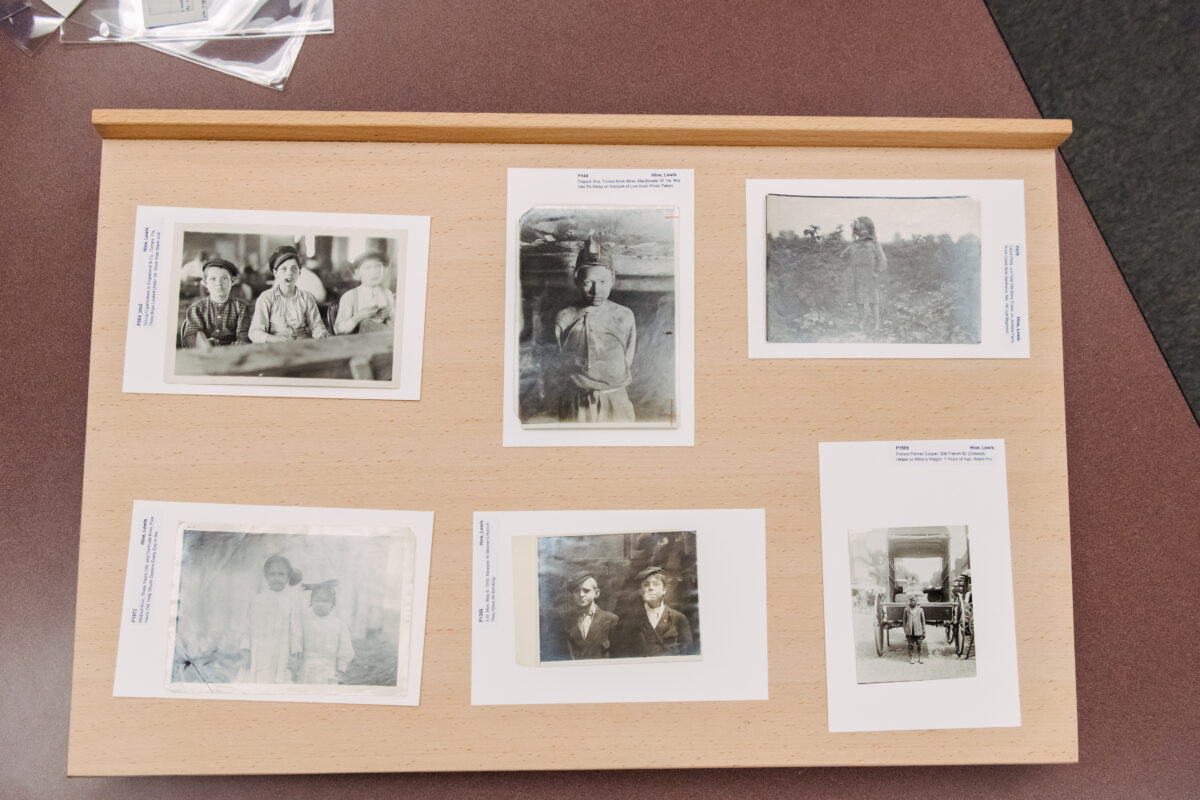 A small collection of the 5,400 photographs that were digitized and rehoused in more protective plastic sleeves. (Marlayna Demond ’11/UMBC)
“It’s an elaborate setup with lights at 45-degree angles, and the camera pointed straight down at a small white stand where I place the image,” explains Power, who would work on digitizing for six to eight hours at a time. “Once I take the image, I edit the size and angle of the photo. The metadata is then added into an Excel spreadsheet, which includes noting if there was a corner missing or if the photo had adhesive stuck to it.”
Digitizing rare books, something Morrison has spent months working on, requires using a special book scanning machine with raised sides, like hands cradling the book open, and small snakelike bean bag weights to keep the pages flat without using his fingers. “I make sure I’m not blocking any text or any important image. And then I press a button, flip a page, press a button, flip a page for hours on end until I finish digitizing that book,” Morrison says, smiling. “So, it’s not the most exciting work, but I find digitization specifically important because it’s a process that helps preserve documents too fragile to be in public circulation. Digitally, you can share it with a broader audience.”
Workforce skills
Both Power and Morrison brought many special collections skills to their public humanities internships. Archaeology camp inspired Morrison to learn about how to study and take care of important and fragile objects. He worked at the Montgomery Parks Archeology Program throughout high school, where he met a friend who introduced him to UMBC’s Special Collections. “I’ve always had an interest in historic things, in the preservation of artifacts,” Morrison says, who plans to apply to a master’s program in library and museum studies after graduation. “I think Special Collections has helped me realize I want to do archival work.”
Power found their footing working full time in the conservation rooms at Baltimore’s Walters Art Museum. “I was the administrative assistant in the Conservation Division and was around a lot of conversations on handling art objects and special collections materials, but I did not work with the materials directly,” says Power. “Working with the Hine Collection was a great opportunity for hands-on experience working with physical items and digitization.” These skills have also come in handy for Power, whose master’s degree focuses on 14th-century religious women hermits in Yorkshire, England. In 2022, Power had the opportunity to visit parish archives in Yorkshire to read through medieval-primary source documents.
For Power, history isn’t just books, dates, and lists of events. They say that there are a lot of living materials out there, whether that’s parish churches or photographs from the early 20th century, like the Hine collection. There is a connection between public history work and the people who lived before us. “It’s important to continue to help students remember that history is not dead and dusty. It’s alive,” says Power. They feel that the connection element is essential, and sometimes it gets lost. “Special Collections prove that these events really happened. They can inspire students to visit those places. To stand in that space where it happened and say, ‘Yeah, I was here too.’ I love that.”
]]>
A nine-year-old stands at the mouth of a coal mine covered in coal dust, wearing a small headlamp. A woman holds her baby on her lap as she packs boxes in a warehouse along with her 5-, 8-, and...
https://umbc.edu/stories/handle-with-care-preserving-historical-photos/
https://my3.my.umbc.edu/api/v0/pixel/news/137604/guest@my.umbc.edu/9c59b0ed09326ab14e553d046e7794b9/api/pixel
anthropology
campus-life
fall-2023
feature
history
magazine
special-collections
UMBC News & Magazine
https://my3.my.umbc.edu/groups/umbc-news-magazine
https://assets1-my.umbc.edu/system/shared/avatars/groups/000/001/943/24435aa6207c452e7bc15cc74b42c7bb/xsmall.png?1748556657
https://assets1-my.umbc.edu/system/shared/avatars/groups/000/001/943/24435aa6207c452e7bc15cc74b42c7bb/original.png?1748556657
https://assets2-my.umbc.edu/system/shared/avatars/groups/000/001/943/24435aa6207c452e7bc15cc74b42c7bb/xxlarge.png?1748556657
https://assets2-my.umbc.edu/system/shared/avatars/groups/000/001/943/24435aa6207c452e7bc15cc74b42c7bb/xlarge.png?1748556657
https://assets3-my.umbc.edu/system/shared/avatars/groups/000/001/943/24435aa6207c452e7bc15cc74b42c7bb/large.png?1748556657
https://assets1-my.umbc.edu/system/shared/avatars/groups/000/001/943/24435aa6207c452e7bc15cc74b42c7bb/medium.png?1748556657
https://assets2-my.umbc.edu/system/shared/avatars/groups/000/001/943/24435aa6207c452e7bc15cc74b42c7bb/small.png?1748556657
https://assets1-my.umbc.edu/system/shared/avatars/groups/000/001/943/24435aa6207c452e7bc15cc74b42c7bb/xsmall.png?1748556657
https://assets2-my.umbc.edu/system/shared/avatars/groups/000/001/943/24435aa6207c452e7bc15cc74b42c7bb/xxsmall.png?1748556657
UMBC News & Magazine
0
0
false
Thu, 07 Dec 2023 12:15:38 -0500
Embarking on ‘Happily Ever After’

By Roni Rosenthal
For those who grew up—or still are—spellbound by movies like Beauty and the Beast, Toy Story, and The Lion King, you are part of what some historians dub the “Disney Generation.” Your childhood joins forces with a collective nostalgia that weaves Disney’s enchanting tales into our very own identities. In a country with many competing cultural icons, Disney—for better or worse—remains a singular unifying brand for anyone who spent their childhood in the U.S.
Smithsonian museum specialist and curator Bethanee Bemis ’09, history and anthropology, M.A. ’11, history, is an expert in weaving narratives with identity and a storyteller at heart. Her work shines best when married to her earliest passion—Disney.
Where the magic all started
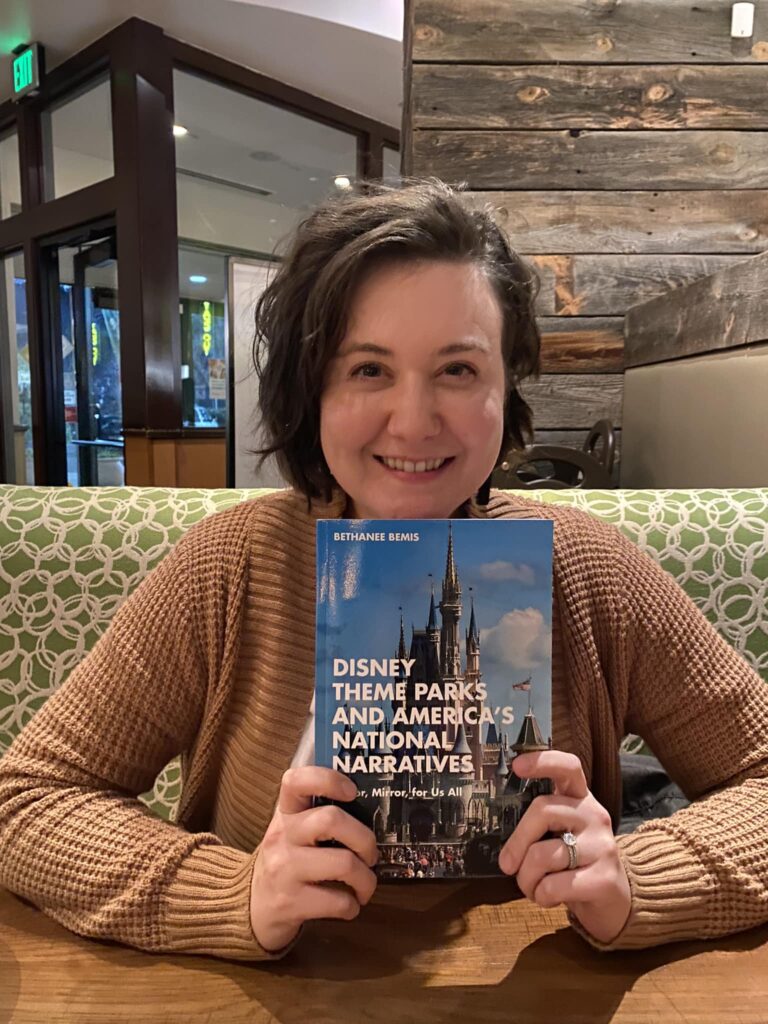 Bethanee Bemis holds up a copy of her book “Disney Theme Parks and America’s National Narratives.”
In her newly published book Disney Theme Parks and America’s National Narratives: Mirror, Mirror for Us All, Bemis shares her journey with Disney. She was brought home from the hospital to a Disney-themed nursery, went to Disney World at age two, and around that age, watched The Little Mermaid for the first time, marking her enchantment. Bemis acknowledges her mother’s infatuation with Disney World in the 1970s as the catalyst for her own passion and appreciation of the imaginary world.
This profound connection with Disney would eventually shape Bemis’ academic and then career path. During a recent installation of a Smithsonian exhibition on American democracy, Bemis recalls, “The central inquiry revolved around who holds the authority to narrate America’s tales. Must our collective narrative be uniform for national unity? Can such unity even exist? That’s when it hit me—Disney! Disney is the narrator of American stories.”
As the curator of the exhibit “Mirror, Mirror: Reflections of America in Disney Parks” at the National Museum of American History, Bemis explores Disney’s impact on American culture and reminds us of the significance of cultural artifacts like movies, dolls, and historical items. These artifacts can inspire conversations, challenge assumptions, and even drive change.
“A great way to launch”
Bemis used her time at UMBC to fuse her early fascination with storytelling and her dedication to exploring the intricate threads of history.
Reflecting on her UMBC days, she remembers the transformative role of Seth Messinger, then an associate professor of sociology and anthropology at UMBC. “Initially, I wasn’t sure what I wanted to do. Dr. Messinger, my undergraduate advisor, believed in me,” says Bemis. “He was convinced that I could achieve success with a little extra effort. He pushed me to go outside my comfort zone and grow, which I appreciated….Well, later on, not in the moment.”
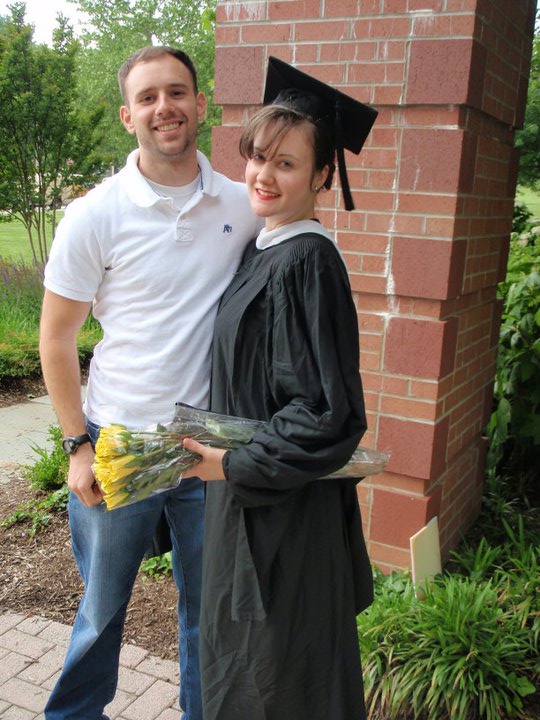 Bemis at graduation with her now husband, Benjamin D’Alessio ’10, M.S. ’11.
On campus, Bemis felt that she could unfold her wings and explore her interests. “I really appreciated how the community at UMBC was a safe space to experiment and think about the person I wanted to be when I finished college,” says Bemis, who met her husband Benjamin D’Alessio ’10, M.S. ’11, chemical engineering, when they were both grad students on campus. “It’s a lifetime community if you want it to be,” she smiles. “It’s not just a school.” Though only seven years old, her daughter already talks about being a Retriever someday.
With mentors like Messinger, Denise Meringolo, associate professor of history, and Amy Froide, professor and chair of history, Bemis found herself propelled beyond her comfort zone, guided to embrace challenges and expand her horizons. The influence of these educators was not confined to her university years; it stretched into the present day, with continued support and advice shaping her path.
Messinger, who has kept in touch with Bemis after they both moved on from UMBC, says Bemis has made him so proud. “In addition to taking my classes, she served as a research assistant for me. She’s very detail oriented and organized, as well as warm and kind as a person. I’ve loved watching her family and career flourish.”
Bemis’s journey through academia led her to a pivotal connection with the Smithsonian’s National Museum of American History. What began as an internship at the Smithsonian’s National Museum of American History grew into a career mission to uncover stories hidden within the museum’s vast collections. Over the years, she moved from intern to curator, specializing in political history and weaving narratives that resonate with the pulse of the nation.
In fact, she says, “I think that the key to finding success in my chosen field was internships and taking advantage of all the opportunities that UMBC provided as a student. Finding a job is often about who you know, and UMBC offers a safe space to grow your network. It is a great way to launch.”
Keep telling stories and making space
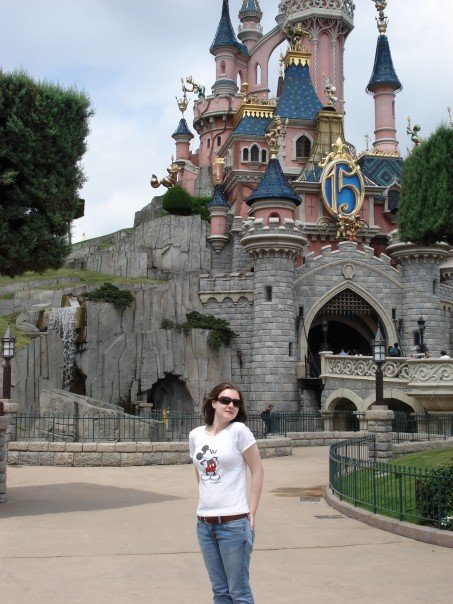 Bemis visited Disneyland, Paris, when she studied abroad.
In an era when entertainment is not just about escapism but also about challenging norms, forming identities, and prompting thought-provoking conversations, the Barbie movie emerges as a recent and unifying testament to the evolving storytelling landscape.
Although Barbie isn’t a Disney creation, Bemis says, “I think that our pop culture has always held the story of us. It isn’t just about entertainment; it’s a reflection of societal values, norms, and aspirations.”
Bemis is proud of her achievements but reminds us that “there’s so much more that needs to be done.” She plans to continue working in the public history field and to tell untold and uninvestigated stories, especially stories that are underrepresented in the public history field.
“We must keep telling the stories and make space in the museum for people to tell their own stories,” says Bemis. “I hope that whatever I do will contribute to that somehow.”
]]>
By Roni Rosenthal For those who grew up—or still are—spellbound by movies like Beauty and the Beast, Toy Story, and The Lion King, you are part of what some historians dub the “Disney...
https://umbc.edu/stories/embarking-on-happily-ever-after-disney-book/
https://my3.my.umbc.edu/api/v0/pixel/news/136487/guest@my.umbc.edu/310f3d20fafb2b6ad410a77a98f45bc9/api/pixel
alumni
alumni-profile
anthropology
cahss
fall-2023
history
magazine
UMBC News & Magazine
https://my3.my.umbc.edu/groups/umbc-news-magazine
https://assets1-my.umbc.edu/system/shared/avatars/groups/000/001/943/24435aa6207c452e7bc15cc74b42c7bb/xsmall.png?1748556657
https://assets1-my.umbc.edu/system/shared/avatars/groups/000/001/943/24435aa6207c452e7bc15cc74b42c7bb/original.png?1748556657
https://assets2-my.umbc.edu/system/shared/avatars/groups/000/001/943/24435aa6207c452e7bc15cc74b42c7bb/xxlarge.png?1748556657
https://assets2-my.umbc.edu/system/shared/avatars/groups/000/001/943/24435aa6207c452e7bc15cc74b42c7bb/xlarge.png?1748556657
https://assets3-my.umbc.edu/system/shared/avatars/groups/000/001/943/24435aa6207c452e7bc15cc74b42c7bb/large.png?1748556657
https://assets1-my.umbc.edu/system/shared/avatars/groups/000/001/943/24435aa6207c452e7bc15cc74b42c7bb/medium.png?1748556657
https://assets2-my.umbc.edu/system/shared/avatars/groups/000/001/943/24435aa6207c452e7bc15cc74b42c7bb/small.png?1748556657
https://assets1-my.umbc.edu/system/shared/avatars/groups/000/001/943/24435aa6207c452e7bc15cc74b42c7bb/xsmall.png?1748556657
https://assets2-my.umbc.edu/system/shared/avatars/groups/000/001/943/24435aa6207c452e7bc15cc74b42c7bb/xxsmall.png?1748556657
UMBC News & Magazine
0
0
false
Mon, 23 Oct 2023 13:09:17 -0400
Mon, 23 Oct 2023 13:09:17 -0400
UMBC’s 2023-2024 Fulbright Student Program recipients announced
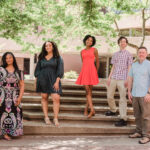
This year, the U.S. Fulbright Student Program, the U.S. government’s flagship international exchange program, has awarded nine UMBC students and alumni top research and teaching placements in countries such as Japan, Taiwan, and North Macedonia.
Each year, more than 10,000 students apply with just over 2,000 selected from hundreds of colleges and universities across the U.S. In the last decade, UMBC students and alumni have received more than 85 Fulbright U.S. Student Program awards for research and teaching placements in Africa, Asia and the Pacific, the Middle East, South America, and Europe. UMBC was named a Fulbright Top Producing Institution in 2019 – 2020.
This year’s class includes research award recipient Paul Ocone ’22, individualized study, who will be conducting research at Meiji University School of Global Japanese Studies in Japan. Fulbright research awards provide funding for research and training efforts overseas with a focus on non-Western foreign languages and area studies. Additionally, there are eight UMBC recipients of the English Teaching Assistant (ETA) award. ETA’s develop their own language skills and knowledge of their host country while working with student in elementary through college to strengthen their English-language abilities and knowledge of the U.S.
Three alumni will be headed to Taiwan to further their passion for global languages and communities: Nailah-Benā Chambers ’23, global studies, Kara Gavin ’20, English, and Milan Richardson ’23, bioinformatics.
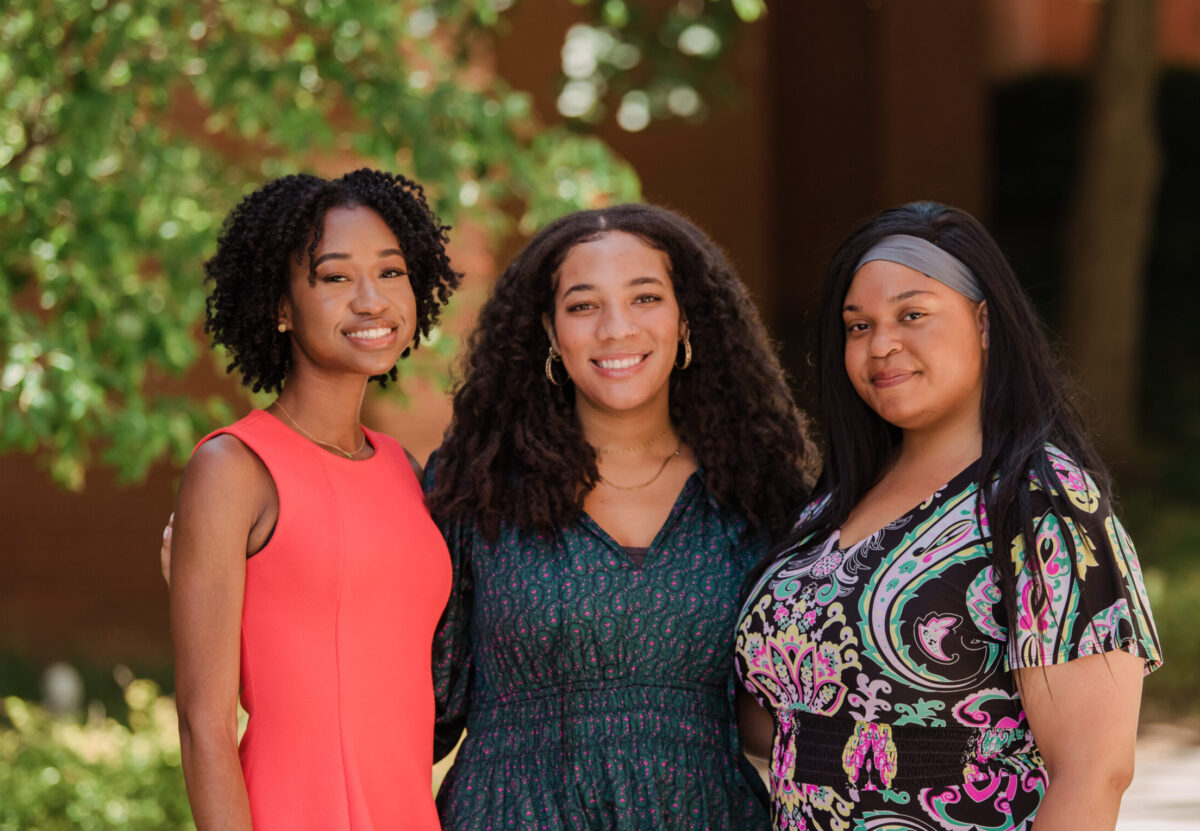 Kara Gavin, Nailah-Benā Chambers, and Milan Richardson. (Marlayna Demond ’11/UMBC)
Gavin brings experience as a Teaching of English as a Second Language (TESOL) volunteer which she completed during her study abroad program at the University of Brighton in the U.K. Chambers began learning how to move between different languages early in life as a student in a Chinese-language skills course. She later became a tutor, a skill she continued at UMBC’s English Language Institute (ELI). Teaching Baltimore Public City School’s diverse student population inspired Richardson to apply to the Fulbright program where she will continue working with students from all backgrounds.
David Bullman ’22, ancient studies, served in the U.S. Army as a musician and public diplomat. He will be returning to North Macedonia, one of the countries he previously served in.
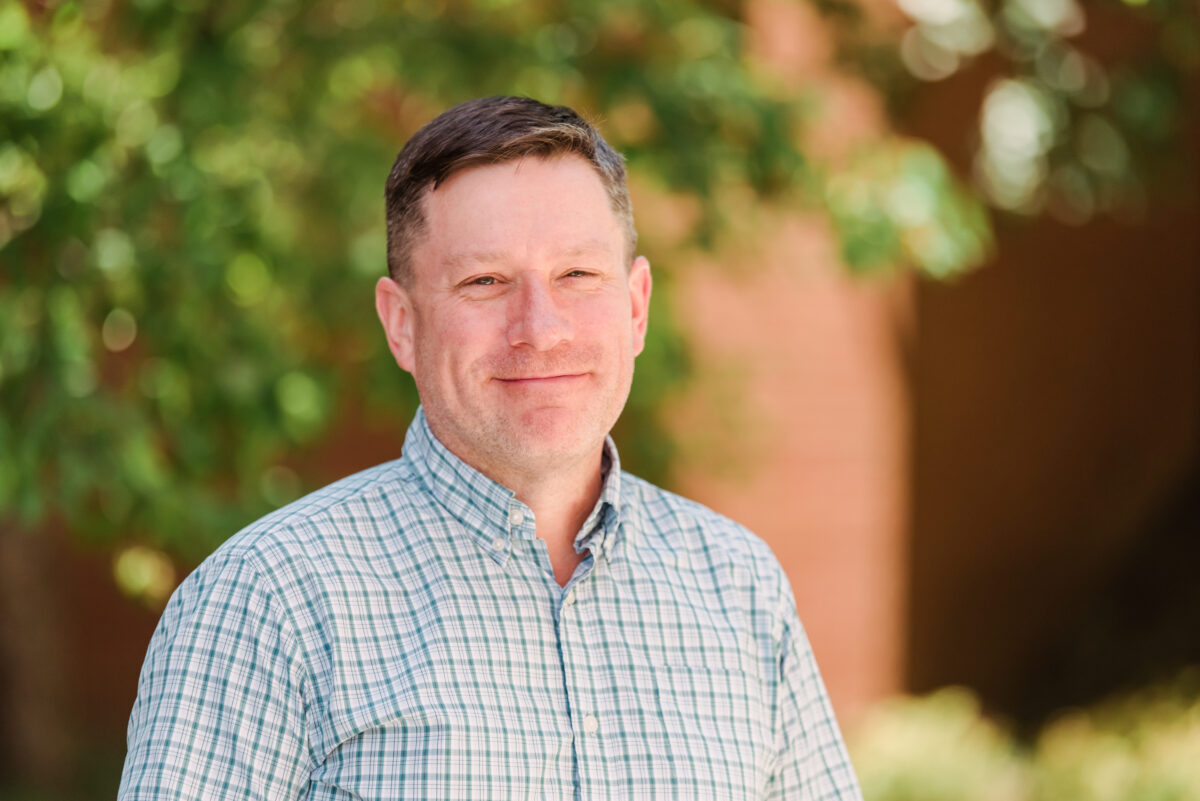 David Bullman. (Marlayna Demond ’11/UMBC)
In addition to teaching English, Leah Michaels, M.F.A ’21, intermedia and digital arts, will be conducting research for two films and teaching film workshops for the community in Piła, Poland.
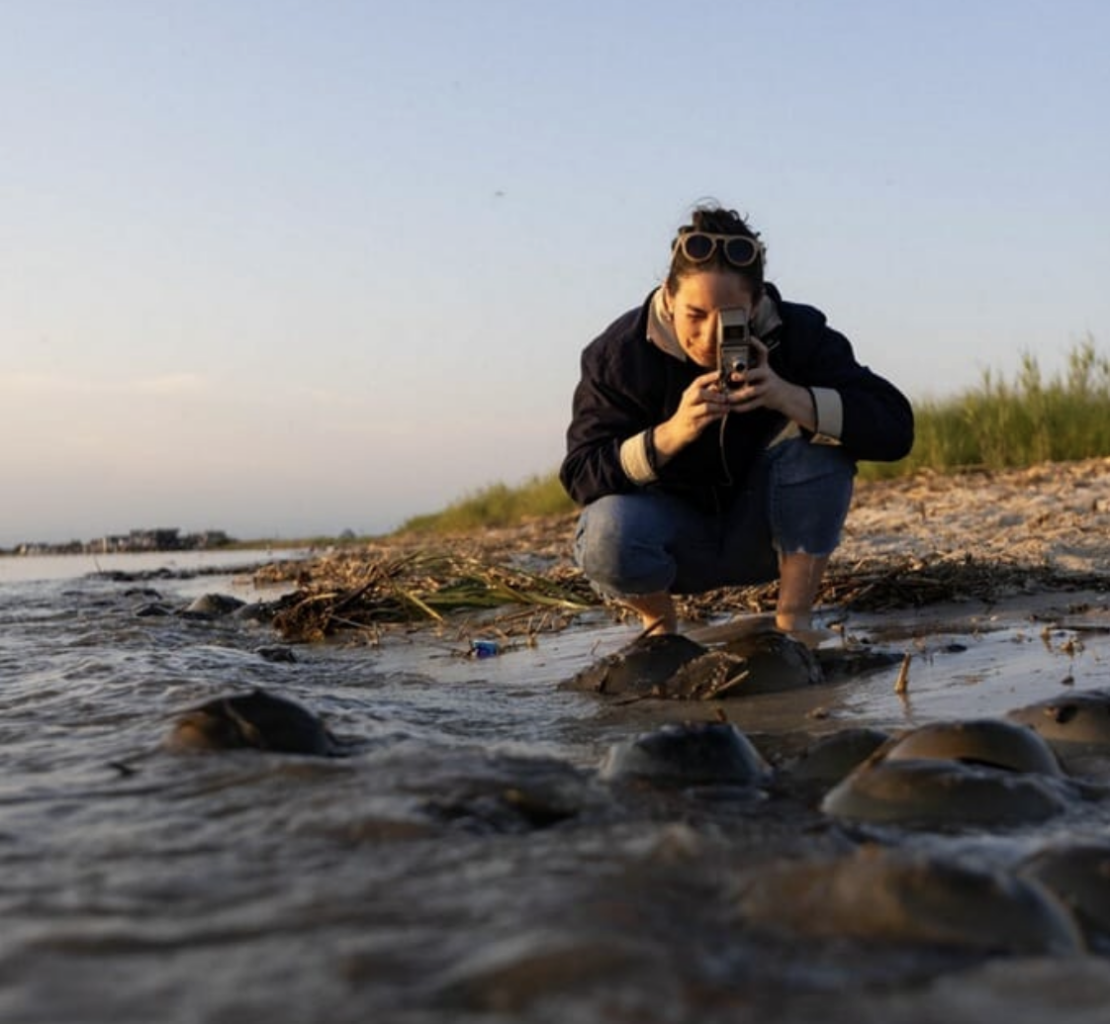 Leah Michaels in Cape May shooting the horseshoe crab mating period for a film she’s working on. (Image courtesy of Leah Michaels)
Tiffany Powell ’23, TESOL, spent three years teaching English in Seoul, Korea and will continue teaching in Romania after she graduates in December.
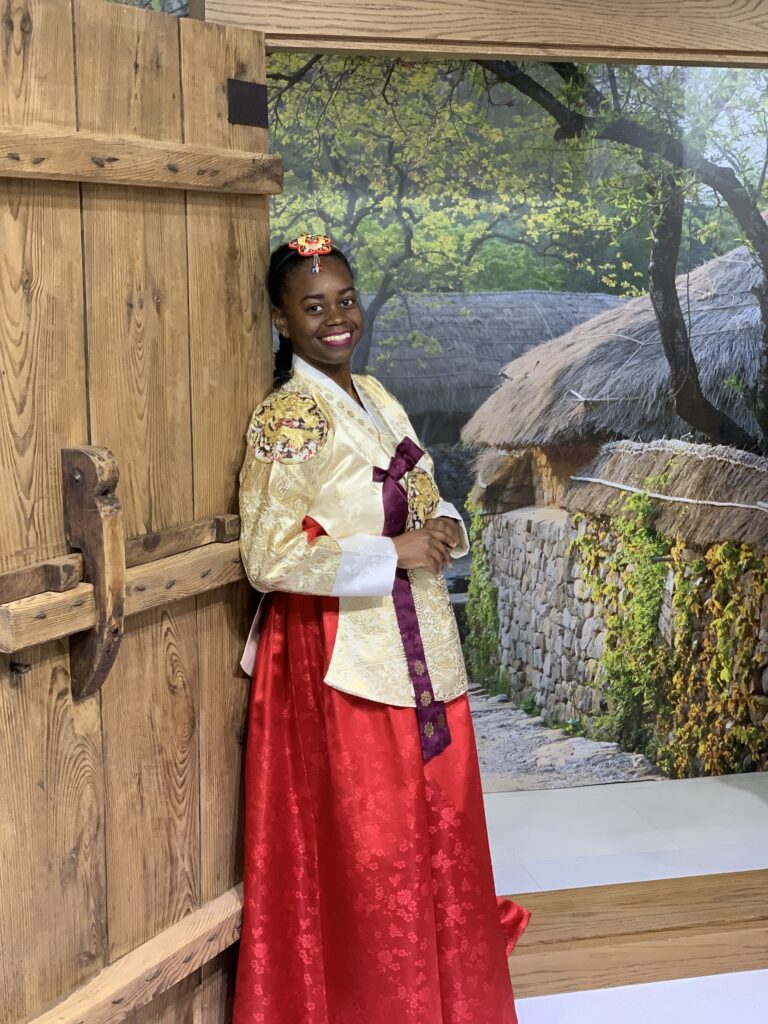 Tiffany Powell in Seoul wearing a hanbok, South Korean traditional clothing. (Image courtesy of Tiffany Powell)
Sianna Serio ’23, computer science, who studied abroad in France, Spain, and the U.K., will head to the Slovak Republic to teach high school students.
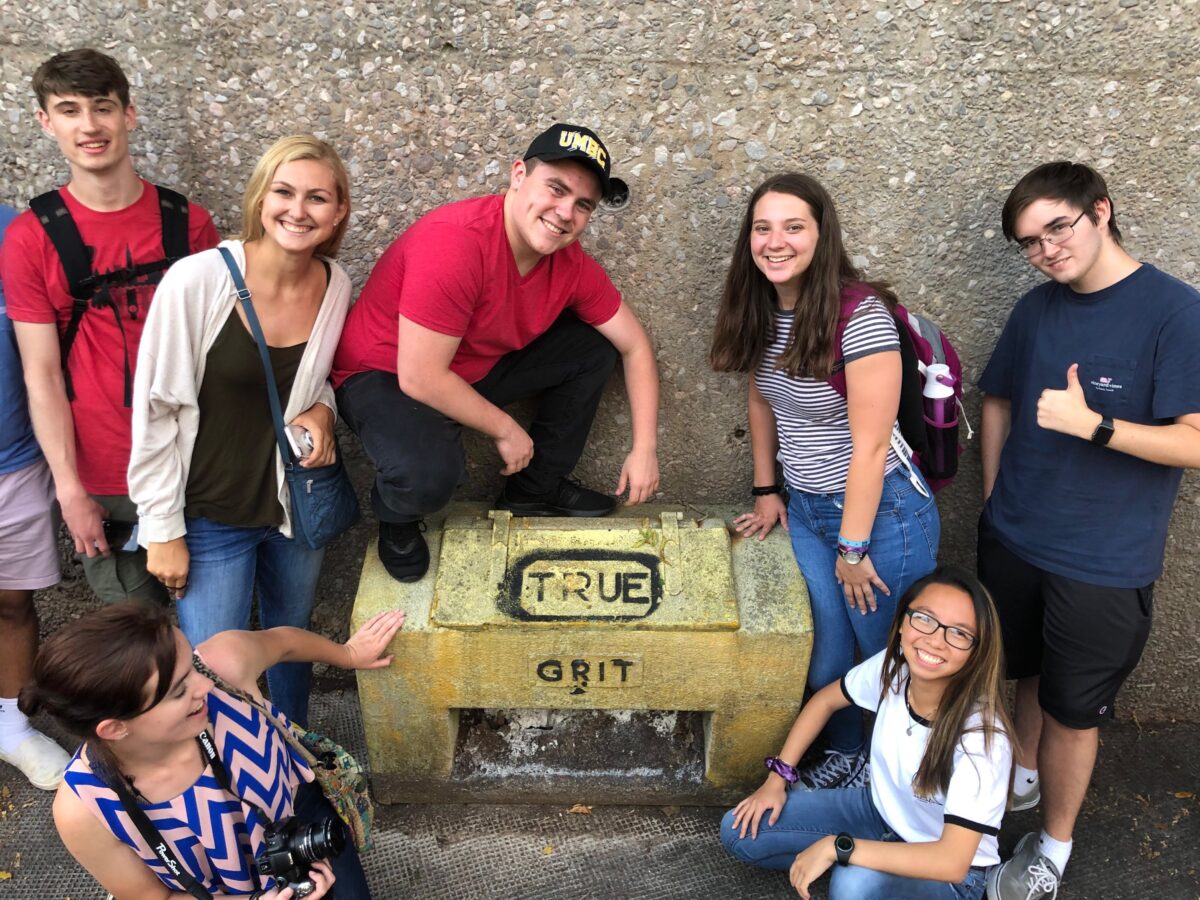 Sianna Serio, kneeling on right, in Bristol, U.K. (Image courtesy of Sianna Serios)
As a former marketing assistant at the ELI, Tasneem Mansour ’20, modern languages, linguistics and intercultural communication, supported visiting students from Peru, Nagoya and Tokyo, Japan. Mansour will head to South Korea.
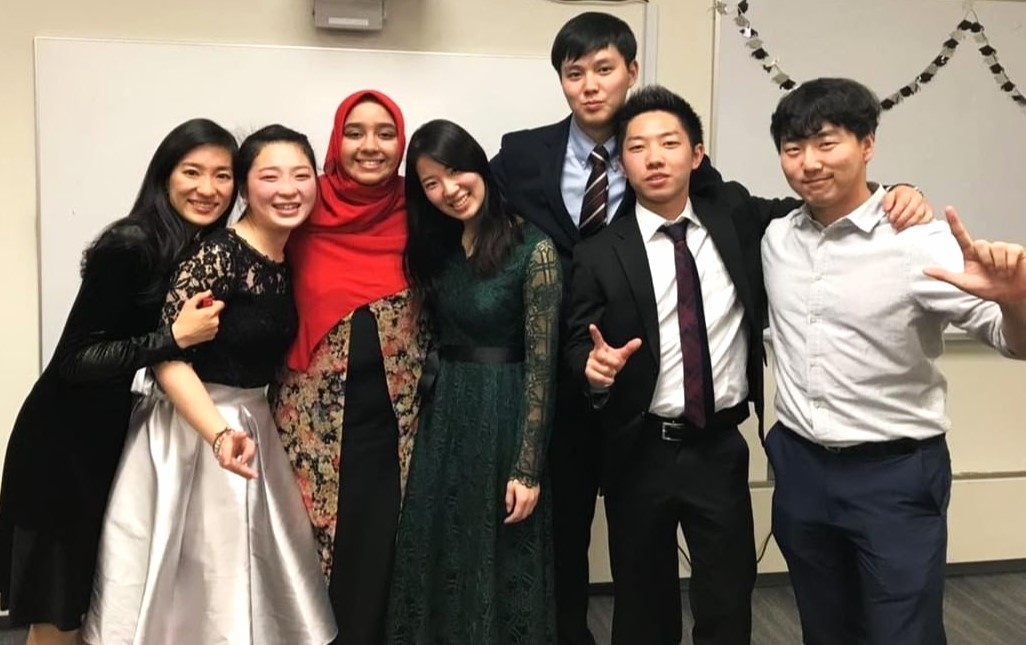
Tasneem Mansour, third from the left, with students from Nippon Sport-Science University in Tokyo, Japan. (Image courtesy of Tasneem Mansour)
UMBC’s global outlook
UMBC’s commitment to international collaboration and research begins at the Center for Global Engagement, which connects students and faculty from the U.S. with students and distinguished faculty from more than 100 countries with unique international academic opportunities. Together, they further the research and skills needed to address long-standing and new global challenges.
Brian Souders, M.A.’19, TESOL and Ph.D. ’09, language, literacy and culture, the associate director of global learning of the Center for Global Engagement, has led students through the Fulbright application process, as UMBC’s Fulbright Program advisor, for the last decade. “Our students are high achievers, the application process is a place for them to share their story,” says Souders. “Faculty and staff are there to ensure each student’s application reflects their years of hard work and the skills they have developed to collaborate with partners across the world.”
Research at home and abroad
With the vast network of Fulbright alumni at UMBC and across the U.S., it’s always helpful to get tips on how to conduct research in a new country and in a new language. Fulbright recipient Ocone, a long time fan of all things anime, began developing his ethnographic research skills with the support of Bambi Chapin, associate professor of anthropology. Chapin, a 1999 – 2000 Fulbright recipient, taught Ocone the theoretical and practical aspects of ethnographic research which he will now use to research the politics of inclusion and exclusion in otaku (anime/manga fan) spaces.
Chapin, along with Julie Christ Oakes, the assistant director of curriculum and retention of the Honors College and a 2001 – 2002 Fulbright research award recipient to Japan, also workshopped Ocone’s research proposal and Fulbright application. Oakes also shared her insights on the Fulbright experience.
“I went to Japan to do research for my dissertation research,” says Oakes. “I have a good idea of what [Ocone] will face as a relative “newbie” abroad and a non-native Japanese speaker and reader.”
The Fulbright experience is also about nurturing relationships with faculty abroad. Ocone said he feels honored for the opportunity to further his research with Kaichiro Morikawa, an associate professor at Meiji University and author of one of the foundational books on otaku spaces. Morikawa will help Ocone navigate the various resources on otaku culture. He wrote in Ocone’s recommendation letter that his “research is highly original as well as effectively focused,” and says he looks forward to supporting Ocone during his time at the university and in Japan.
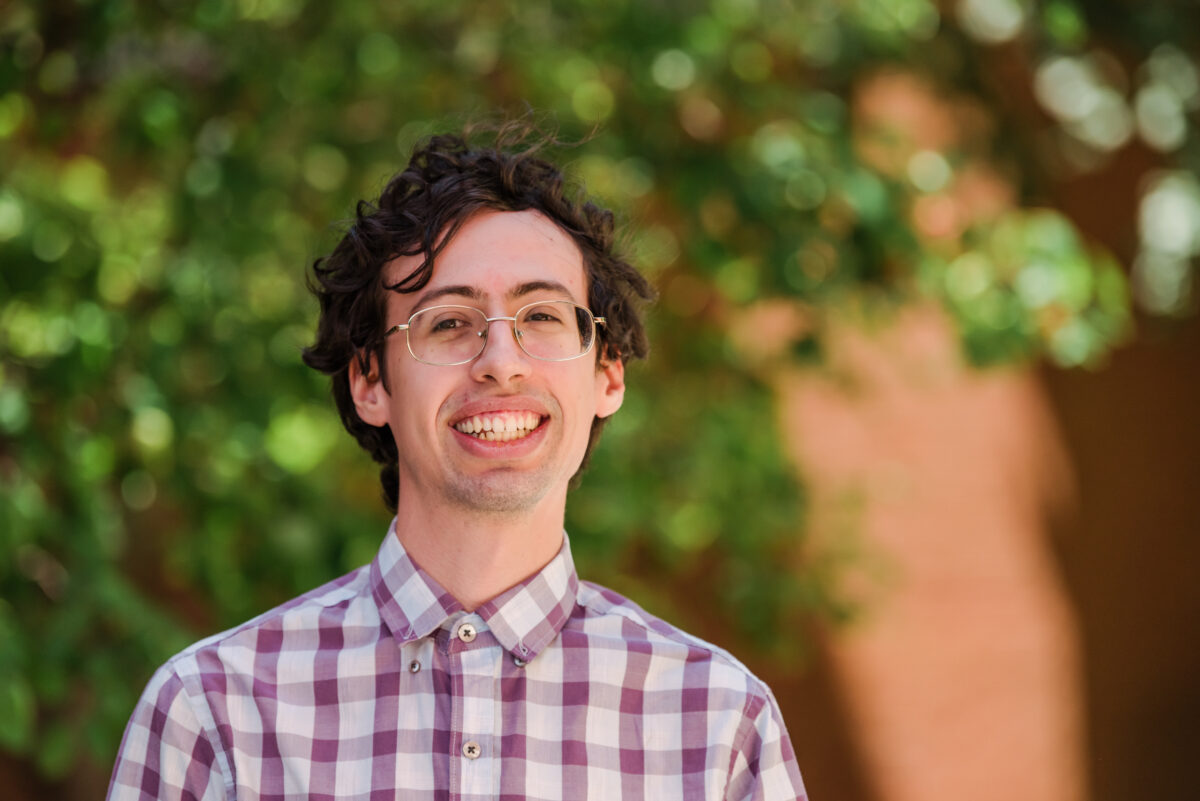 Paul Ocone. (Marlayna Demond ’11/UMBC)
“I am immensely grateful to all of my mentors for guiding me on my journey through my undergraduate degree—from my earliest fuzzy and broad ideas of what I wanted to do, to the more specific research plans, and to the rewarding thesis that eventually emerged,” says Ocone. “I’ll be continuing research on topics that I care deeply about, research that I will likely build upon in graduate school and beyond.”
Fulbright support network
The road to being a Fulbright recipient begins day one students’ UMBC experience as they explore majors, create a network of mentors, and hone their research skills. At the end of their junior year, students develop their initial application at the Fulbright Base Camp led by Souders, who is a 2023 – 2024 Fulbright International Education Administrator award recipient. “The camp helps elevate and support students to reach their Fulbright goals,” says Souders. “Students share drafts of their essays with me for feedback prior to the campus deadline, the first day of the fall semester. They participate in a campus evaluation process with UMBC faculty and staff to receive feedback on their applications.”
Souders, Chapin, and Maryam Elhabashy ’21, anthropology, a research assistant at Rutgers University and a 2022 Fulbright recipient to Kuwait City, discuss this process on the Retrieving the Social Science podcast, produced by UMBC’s Center for Social Science Scholarship.
“The panel gives students advice about how to craft a project, like how to take it apart and re-put it back together, what we see as strengths,” says Chapin. “We support them and encourage them as they go through that really difficult intellectual work, emotional work of figuring out how to make their strong projects even stronger.”
Learn more about the UMBC’s international education opportunities.
]]>
This year, the U.S. Fulbright Student Program, the U.S. government’s flagship international exchange program, has awarded nine UMBC students and alumni top research and teaching placements in...
https://umbc.edu/stories/2023-fulbright-recipients/
https://my3.my.umbc.edu/api/v0/pixel/news/134370/guest@my.umbc.edu/516ede6d25c349e81ae689cbf97868dc/api/pixel
ancientstudies
anthropology
cahss
coeit
computer-science
english
globalstudies
honorscollege
inds
intermedia-and-digital-arts
international-stories
llc
mlli
news
policy-and-society
rca-2
tesol
UMBC News & Magazine
https://my3.my.umbc.edu/groups/umbc-news-magazine
https://assets1-my.umbc.edu/system/shared/avatars/groups/000/001/943/24435aa6207c452e7bc15cc74b42c7bb/xsmall.png?1748556657
https://assets1-my.umbc.edu/system/shared/avatars/groups/000/001/943/24435aa6207c452e7bc15cc74b42c7bb/original.png?1748556657
https://assets2-my.umbc.edu/system/shared/avatars/groups/000/001/943/24435aa6207c452e7bc15cc74b42c7bb/xxlarge.png?1748556657
https://assets2-my.umbc.edu/system/shared/avatars/groups/000/001/943/24435aa6207c452e7bc15cc74b42c7bb/xlarge.png?1748556657
https://assets3-my.umbc.edu/system/shared/avatars/groups/000/001/943/24435aa6207c452e7bc15cc74b42c7bb/large.png?1748556657
https://assets1-my.umbc.edu/system/shared/avatars/groups/000/001/943/24435aa6207c452e7bc15cc74b42c7bb/medium.png?1748556657
https://assets2-my.umbc.edu/system/shared/avatars/groups/000/001/943/24435aa6207c452e7bc15cc74b42c7bb/small.png?1748556657
https://assets1-my.umbc.edu/system/shared/avatars/groups/000/001/943/24435aa6207c452e7bc15cc74b42c7bb/xsmall.png?1748556657
https://assets2-my.umbc.edu/system/shared/avatars/groups/000/001/943/24435aa6207c452e7bc15cc74b42c7bb/xxsmall.png?1748556657
UMBC News & Magazine
3
0
false
Sat, 22 Jul 2023 01:43:12 -0400
Sat, 22 Jul 2023 01:43:12 -0400
Bird Brainiac
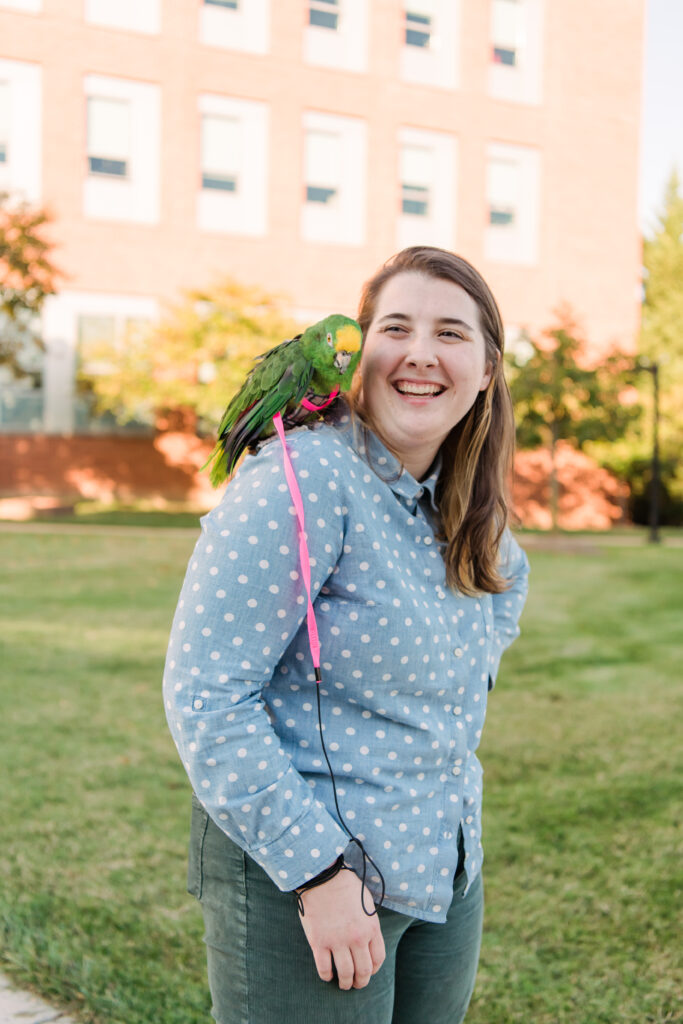 Elle Kreiner and Chicken. (Marlayna Demond ’11/UMBC)
At UMBC, we welcome Retrievers of all stripes… and feathers. Spotted on campus recently enjoying student life is an 87-year-old yellow crowned amazon parrot named Chicken. Yes, you read that right, Chicken.
Elle Kreiner ’20, anthropology, a current master’s student in applied sociology, rescued the bird in 2017 after his long-term caretaker passed away and the family wasn’t able to keep him. Despite coming to campus to spread his wings (metaphorically—Chicken doesn’t enjoy flying), Kreiner doesn’t believe their parrot would make a great student, although he does speak three languages.
Prior to his time with Kreiner, Chicken lived in pre–World War II Germany and then spent most of his years in Florida. As a result, he is prone to colorful language in German, Spanish, and English, says Kreiner, but his favorite word? “Definitely ‘cracker.’”
“If I had to personify him, he’d be a really old crotchety professor, who should have retired 20 years ago but is still here because everyone likes him,” says Kreiner. Like many octogenarians, Chicken doesn’t enjoy the cold, so if you see him on campus on a sunny day, be sure to say Guten Tag!
]]>
Elle Kreiner and Chicken. (Marlayna Demond ’11/UMBC) At UMBC, we welcome Retrievers of all stripes… and feathers. Spotted on campus recently enjoying student life is an 87-year-old yellow...
https://umbc.edu/stories/bird-brainiac/
https://my3.my.umbc.edu/api/v0/pixel/news/129685/guest@my.umbc.edu/bd49c91e9528ee4154b73823e246a196/api/pixel
anthropology
campus-life
fall-2022
magazine
uncategorized
wild-card
UMBC News & Magazine
https://my3.my.umbc.edu/groups/umbc-news-magazine
https://assets1-my.umbc.edu/system/shared/avatars/groups/000/001/943/24435aa6207c452e7bc15cc74b42c7bb/xsmall.png?1748556657
https://assets1-my.umbc.edu/system/shared/avatars/groups/000/001/943/24435aa6207c452e7bc15cc74b42c7bb/original.png?1748556657
https://assets2-my.umbc.edu/system/shared/avatars/groups/000/001/943/24435aa6207c452e7bc15cc74b42c7bb/xxlarge.png?1748556657
https://assets2-my.umbc.edu/system/shared/avatars/groups/000/001/943/24435aa6207c452e7bc15cc74b42c7bb/xlarge.png?1748556657
https://assets3-my.umbc.edu/system/shared/avatars/groups/000/001/943/24435aa6207c452e7bc15cc74b42c7bb/large.png?1748556657
https://assets1-my.umbc.edu/system/shared/avatars/groups/000/001/943/24435aa6207c452e7bc15cc74b42c7bb/medium.png?1748556657
https://assets2-my.umbc.edu/system/shared/avatars/groups/000/001/943/24435aa6207c452e7bc15cc74b42c7bb/small.png?1748556657
https://assets1-my.umbc.edu/system/shared/avatars/groups/000/001/943/24435aa6207c452e7bc15cc74b42c7bb/xsmall.png?1748556657
https://assets2-my.umbc.edu/system/shared/avatars/groups/000/001/943/24435aa6207c452e7bc15cc74b42c7bb/xxsmall.png?1748556657
UMBC News & Magazine
1
0
false
Thu, 08 Dec 2022 15:19:09 -0500
Thu, 08 Dec 2022 15:19:09 -0500
UMBC’s 2022 Fulbright student scholars will travel the world to explore difficult questions
Eight recent UMBC graduates and alumni will soon travel to countries across three continents as 2022 Fulbright U.S. Student scholars. They include emerging leaders in education, astrophysics, cybersecurity, human rights, and more, and they are excited to explore difficult questions through fresh perspectives.
The Fulbright Program is the U.S. government’s flagship international exchange program. UMBC was named a Fulbright Top Producing Institution in 2019 – 2020. In the last decade, UMBC has received over 60 Fulbright U.S. Student Program awards for research and teaching placements in Africa, Asia and the Pacific, the Middle East, South America, and Europe.
Creating new paths
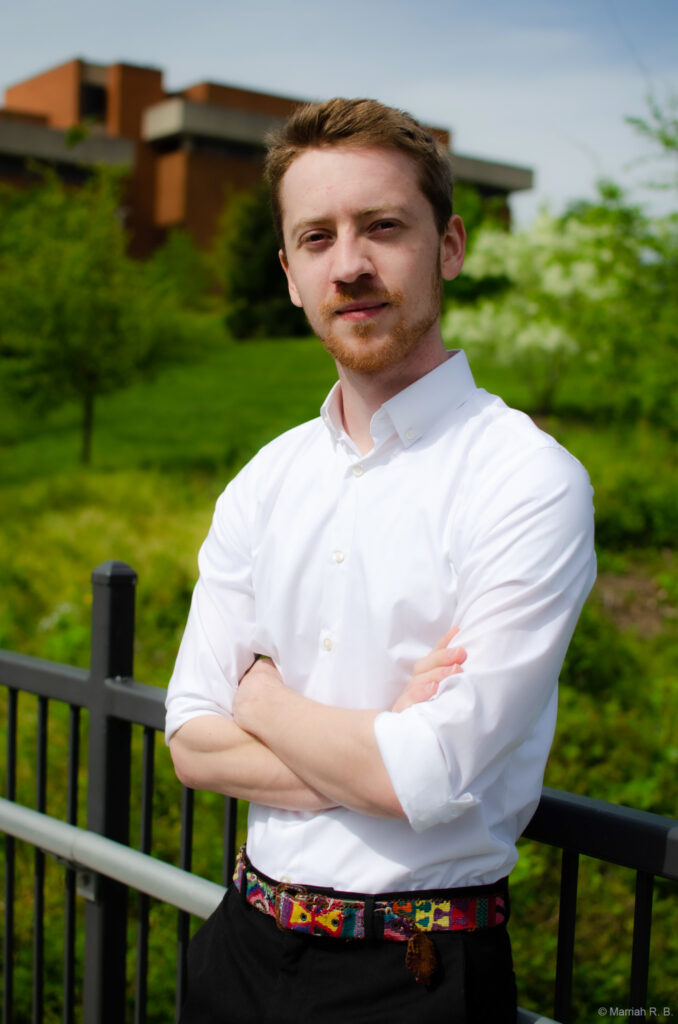 Caleb Jacobson.
(Image courtesy of Jacobson)
This year marks UMBC’s first Fulbright awards to El Salvador and to the UK. Caleb Jacobson ’21, global studies, and M.A. ’23, sociology, will research human rights and the transition to peace in post-conflict El Salvador. Kaitlyn Keaton ’22, computer engineering, a Cyber Scholar in the Center for Women In Technology, will head to Newcastle University (NU) in North East England to complete a master’s in cybersecurity. NU is recognized jointly by the UK’s National Cyber Security Center and the Engineering and Physical Sciences Research Council as an Academic Centre of Excellence in cyber security research.
Keaton has focused on making the most of her college education by pursuing a wide range of learning experiences. She has held competitive software engineering internships at General Dynamics Mission and Systems and Northrop Grumman Mission Systems, and has participated in Capture the Flags cybersecurity competitions, but this will be her first learning experience abroad.
As a Cyber Scholar and Tau Beta Pi Engineering Honors Society member, Keaton is determined to further develop the skills necessary to be on the cutting edge of cybersecurity research. She is also committed to creating new pathways for more women and girls to be leaders in engineering.
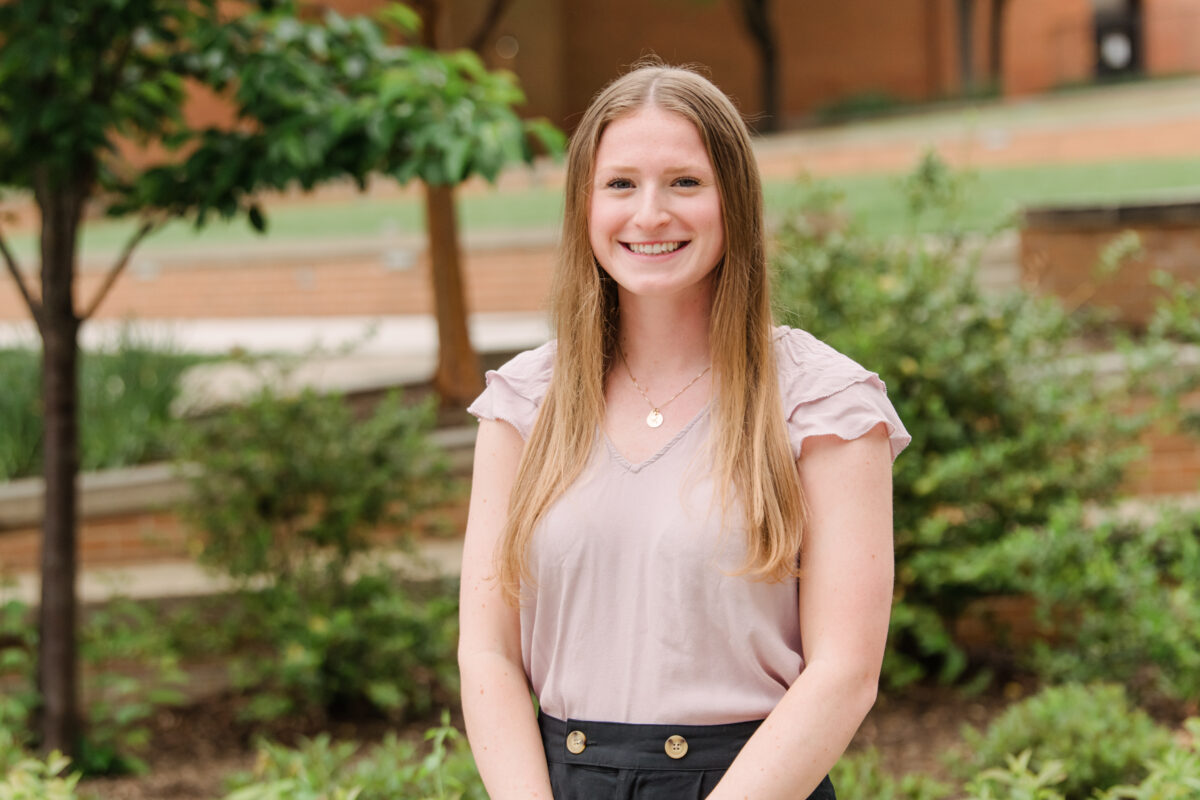 Kaitlyn Keaton. (Marlayna Demond ’11/UMBC)
“I want to inspire and encourage even more girls and young women to join the cybersecurity world,” says Keaton. “There is a critical need to get girls interested at younger ages to show them they can do it too.”
Intercultural understanding in medicine
Maryam Elhabashy ’21, anthropology, developed an interest in the process of healing early in her life while surrounded by a family of physicians. In high school, she shadowed a physician at a hospital and saw instances where patients’ cultural backgrounds sometimes conflicted with the physician’s concerns. She wondered if a lack of intercultural understanding in medicine can get in the way of good medical care, leading to health disparities.
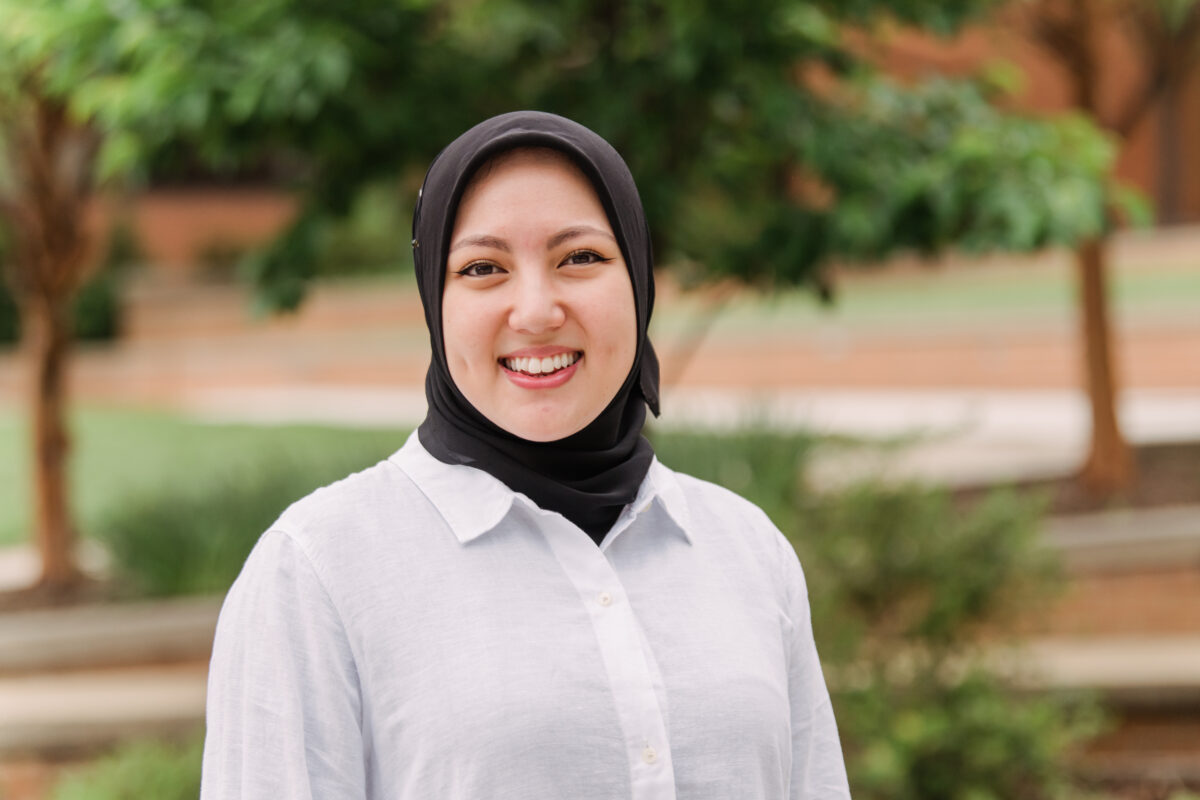 Maryam Elhabashy. (Marlayna Demond ’11/UMBC)
Elhabashy found an answer in listening to culturally diverse perspectives. As a student of anthropology with a focus on medical anthropology, she found that listening to people’s stories can help physicians develop empathy. This is one way to ensure patients feel heard, understood, and are able to navigate medical processes that can give them access to the best care possible.
While at UMBC, Elhabashy received an Undergraduate Research Award to research “Cupping and Wellness Among Muslims In the Baltimore-Washington Area.” She also served as a research assistant in sociology, anthropology, and public health (SAPH), studying physical activity among older African Americans in Baltimore.
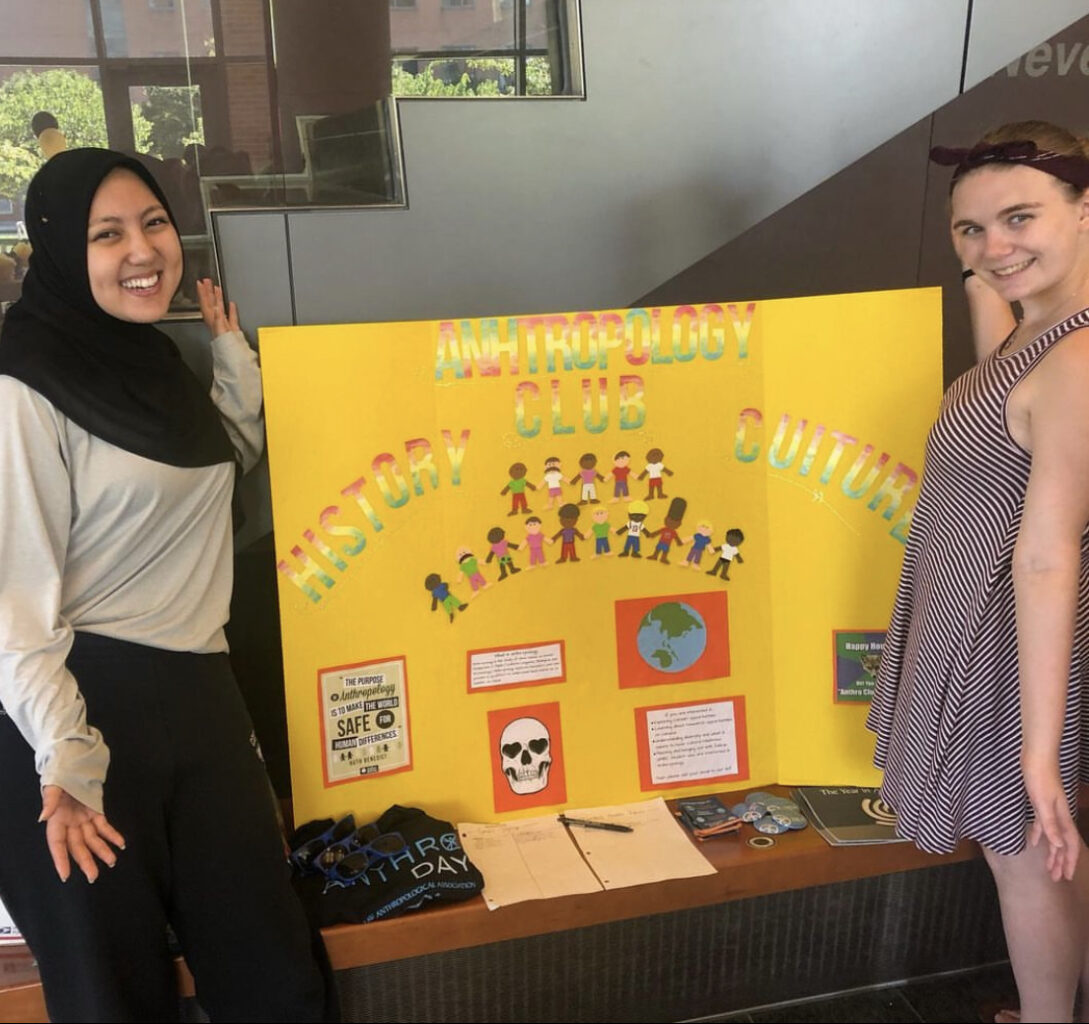 Elhabashy presenting with the Anthropology Club at SAPH’s Welcome Week Open House. (Image courtesy of Elhabashy)
After graduating, Elhabashy worked at Rutgers University as a research assistant studying tobacco and e-cigarette use among minority populations. In the past year, she interned at the Amgen Scholar Program at the National Institute of Health, working with leading biomedical scientists to identify and address health disparities as a potential result of societal, cultural, and environmental influences.
During her Fulbright year, Elhabashy will live in Kuwait City to work on her research project at Kuwait University titled, “Faith, Family, Food, and Fitness: Exploring Trends of Obesity Amongst Kuwaiti Women.”
“I hope to one day be at the forefront of a movement towards truly personalized medicine that embraces individuality and intercultural communication as a foundational tenet of the field,” she notes. “I hope my experience in Kuwait will serve as a strong foundation for this work.”
Latine teachers needed
Adrianna-Marie Urbina-Ruiz ’21, mathematics, and M.A.T., secondary education, was raised in Montgomery County, Maryland, but her roots are in Venezuela. She remembers only having four Hispanic teachers growing up. All were Spanish language teachers and supported her academic and personal growth. However, Urbina-Ruiz felt some of her other teachers had lower expectations of her, limiting her opportunities, and she saw other Hispanic students struggle with this same experience.
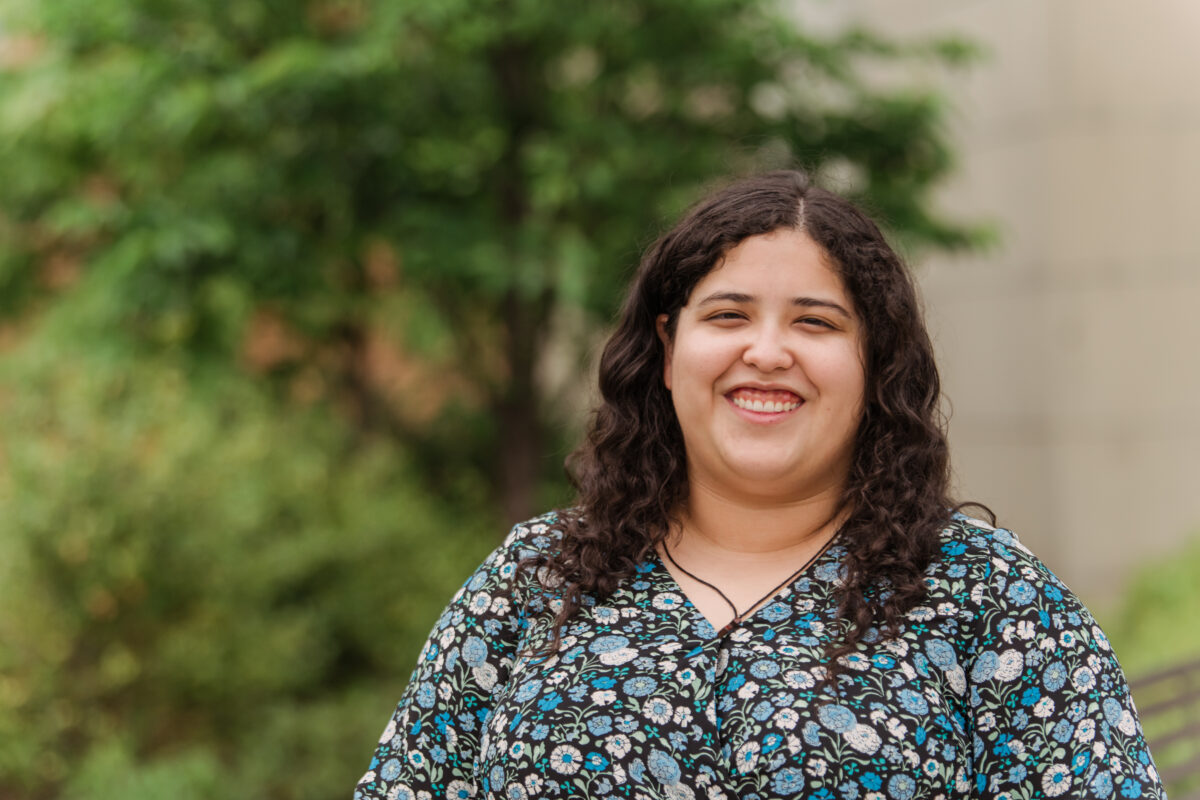 Adrianna-Marie Urbina-Ruiz. (Marlayna Demond ’11/UMBC)
“Many Hispanic students learning English and those who are bilingual have been seen as having limited academic knowledge, limited potential,” says Urbina-Ruiz. “I want to stop that narrative.”
At UMBC, Urbina-Ruiz met Bonny Tighe, a senior lecturer of mathematics, who encouraged her to become a math major and a math teacher through the Sherman STEM Teacher Scholars Program.
 Urbina-Ruiz (in pink) with the Sherman STEM Teacher Scholar Program staff. (Image courtesy of Urbina-Ruiz)
“I will never forget walking into her office hours for the first time. She recognized me as having one of the highest grades in her Calculus I class,” says Urbina-Ruiz. “She and the Sherman staff had confidence that I would rise to any challenge. They built a strong foundation for my success.”
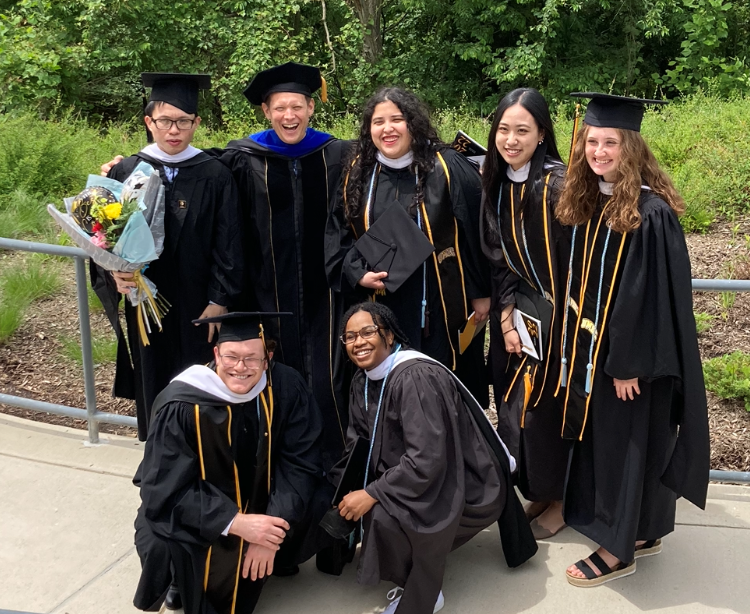 Urbina-Ruiz (standing row, center).
(Image courtesy of Urbina-Ruiz)
Urbina-Ruiz also completed a master’s in teaching and earned a certificate in teaching English to Speakers of Other Languages while student-teaching at Lakeland Elementary/Middle School in Baltimore City, which serves many Hispanic families. “I want to have as many tools at my disposal to make my classroom as accessible as possible,” says Urbina-Ruiz. “I want to be the Latine STEM teacher I never had.”
Urbina-Ruiz will work towards creating her first Collaborative Online International Learning program during her Fulbright year. She will connect college students at the Universidad Industrial de Santander in Colombia with students in Maryland while teaching English. “Latine teachers are needed around the world,” says Urbina-Ruiz.
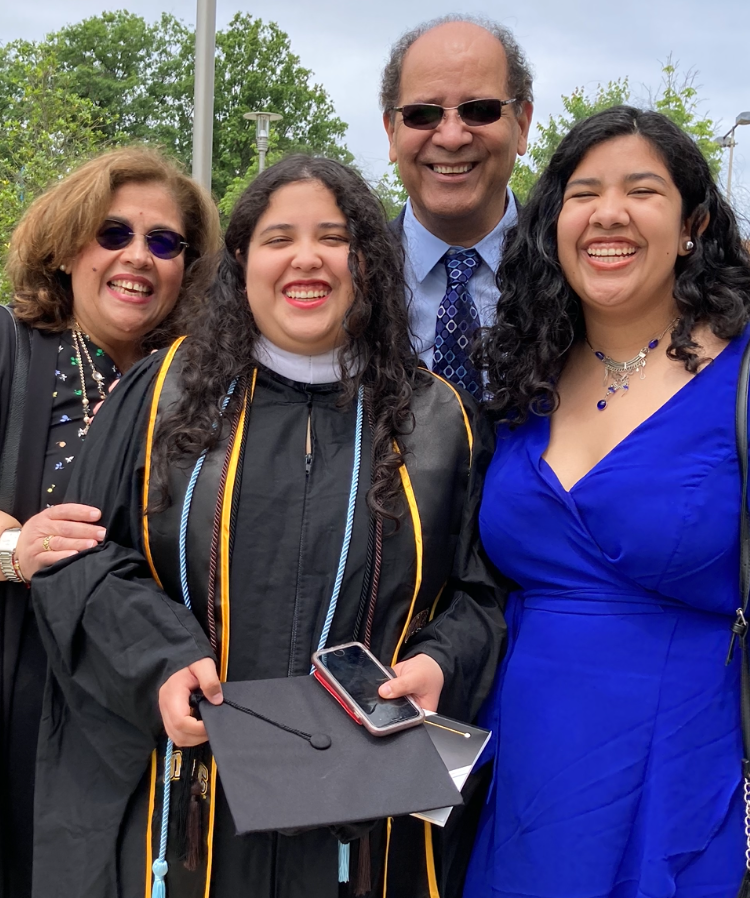 Urbina-Ruiz (wearing cap and gown) with her family at her master’s graduation. (Image courtesy of Urbina-Ruiz)
Urbina-Ruiz plans to return to teach in Baltimore City Public Schools where there is a high demand for bilingual Hispanic teachers.
Representation in science
Similar to Elhabashy, Maithily Diana Díaz ’21, biology and modern languages, linguistics, and intercultural communication, is pursuing a career focused on health equity. As a first-generation student, Díaz encourages other Latinos to go to college and to be ambitious even if it means they are in spaces where they are the only Latino, something she has experienced as a Latina in STEM.
“I’m usually the only Latina, but now it means something more,” says Díaz. “Now, it’s just the jump of saying Latinos can be scientists, researchers, physicians. If we believe in ourselves then someone else will too. And once that door is opened, then who knows how far we can go.”
Díaz recently moved to Tijuana, Mexico to work at a non-profit health clinic serving a largely refugee and migrant population. For the past school year she has been teaching science and medicine to predominantly Hispanic and African American K-12 students for Refugee Health Alliance in Harlem, while completing remote research in mental health at the Johns Hopkins School of Public Health.
During her Fulbright year, Díaz will complete a master’s in immunology and work on cancer research at the French National Institute of Health while mentoring undergraduate students at Sorbonne University. .
“It’s a dream come true that someone like me received a Fulbright at such prestigious institutions. My students were shocked,” says Díaz. “I want more and I intend to achieve it. But at the end of the day, this is for my community.”
While in France, Díaz will work with researchers seeking to identify more effective means of treating soft tissue sarcomas. The findings may reveal potentially novel immunotherapy targets for a variety of cancers.
As a linguist with proficiency in English, Spanish, French, Portuguese, and Russian, Díaz knows her ability to successfully communicate across multiple cultures and languages can lead to greater opportunities. She wants to show Latinos what can happen when they value their multicultural and multilingual lives as assets.
Following her Fulbright, Díaz plans to pursue an M.D., promoting equity in both research and healthcare.
Global education and disability
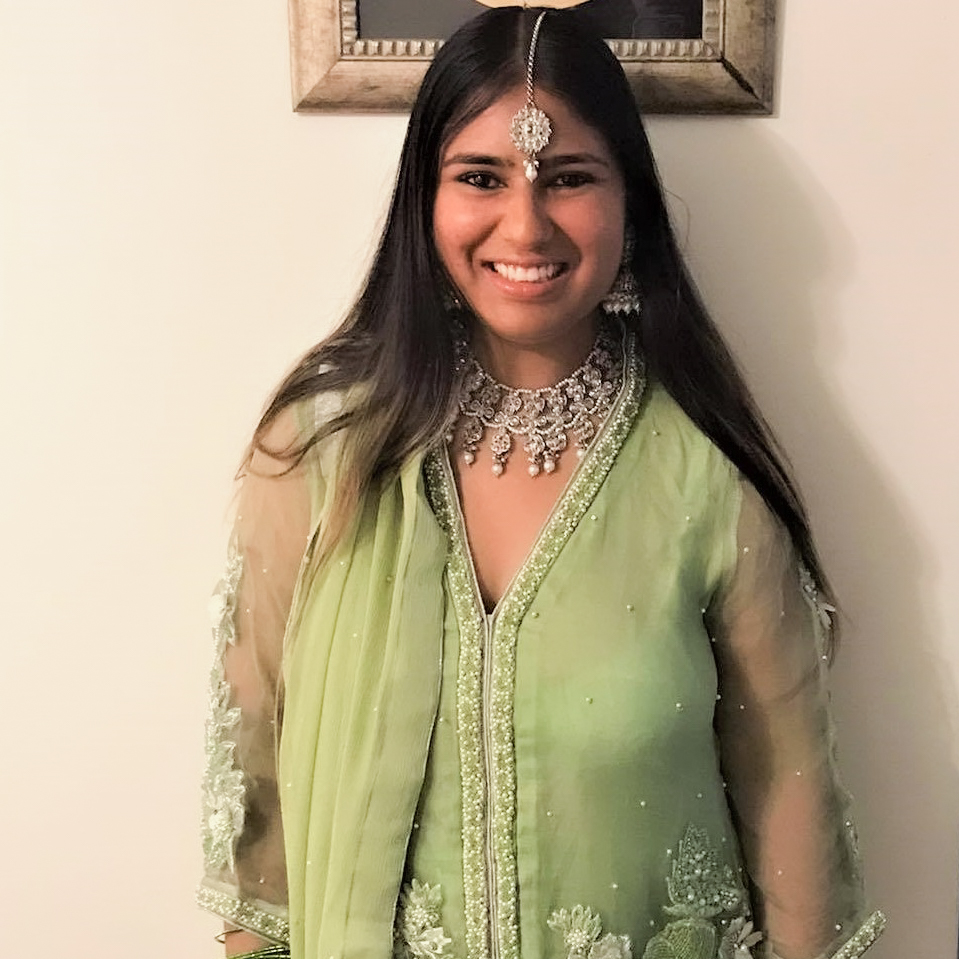 Mimi Yaldram in traditional Pakistani dress. (Image courtesy of Yaldram)
Mimi Yaldram ’20, history, is very familiar with the process of acclimating to a new culture and country. When she was seven years old, her family left their home in Karachi, Pakistan for the United States to seek better mental health services.
“We came in 1999 right before 9/11,” says Yaldram. “It was a lot to manage the racism towards my Muslim family while learning how to live, study, access services, and work in the U.S.”
This experience inspired Yaldram’s passion for living and learning within multiple cultures, religions, and languages, which she began to explore at Montgomery College. There she held numerous executive student leadership roles and traveled abroad to Ethiopia, where she researched the influence of India on ancient trade routes and currency.
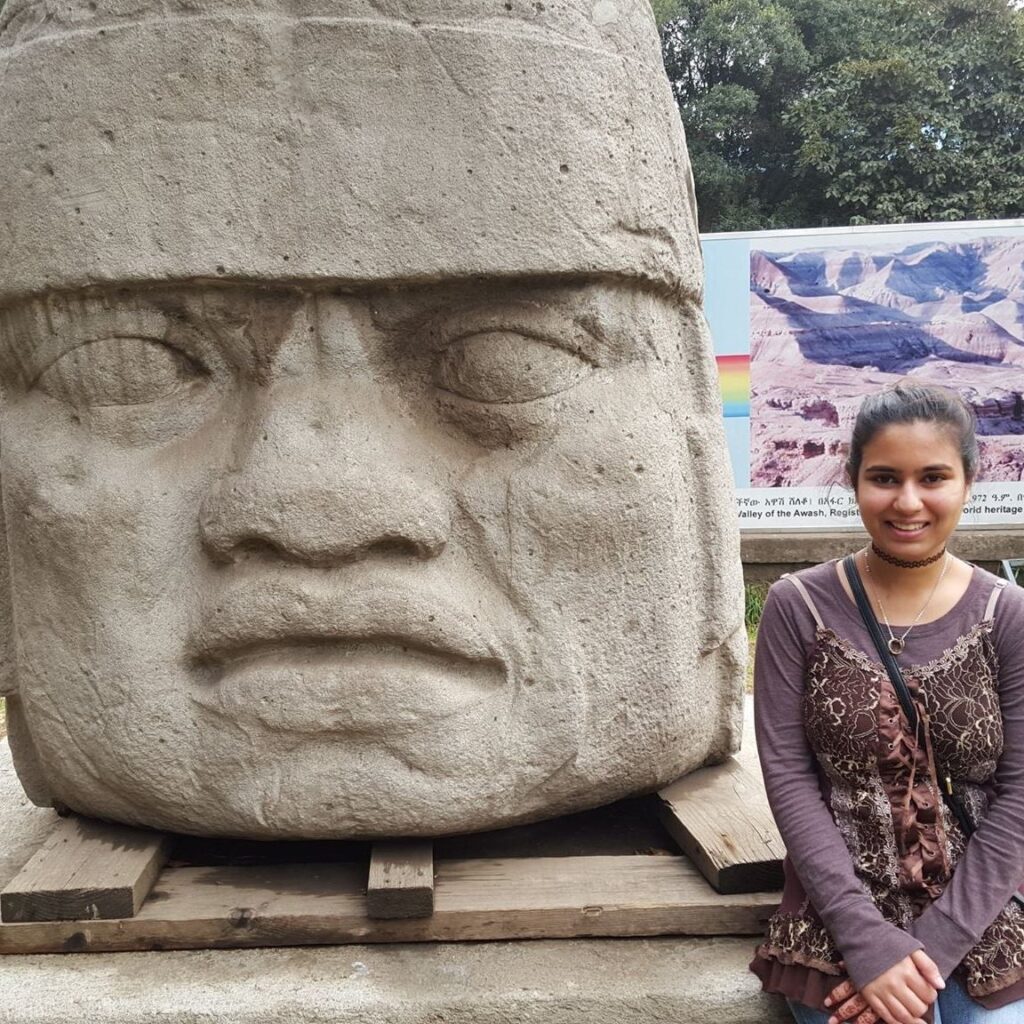 Yaldram in Ethiopia next to an ancient stone head sculpture of the Olmec civilization of Mexico. (Image courtesy of Yaldram)
In 2017, Yaldram joined UMBC’s Shady Grove campus, embarking on new student leadership opportunities, including serving as president of the Student History Association and studying abroad in Denmark. She learned about Viking history and participated in a dance project focusing on Danish pop dances and Pakistani Bollywood dances.
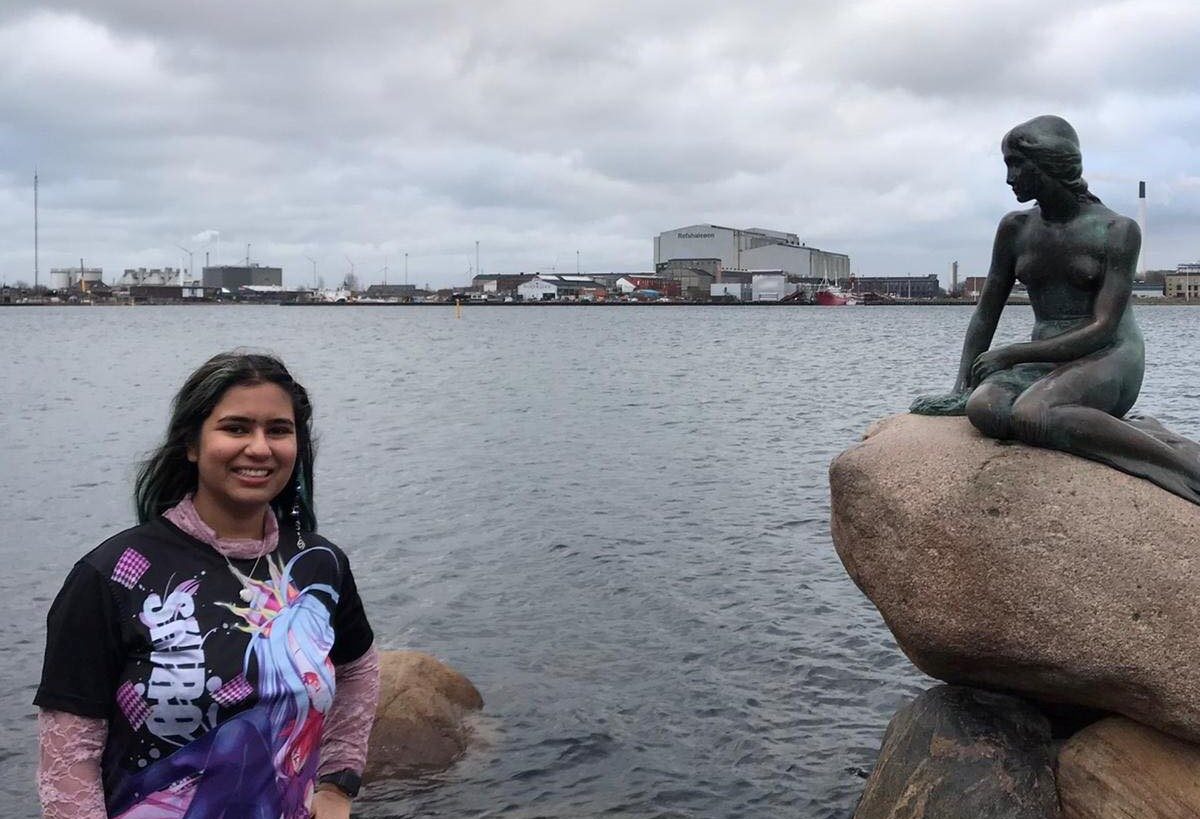 Yaldram next to a sculpture of the Little Mermaid in Copenhagen, Denmark. (Image courtesy of Yaldram)
Yaldram identifies as a student with a mental health disability, and she is passionate about advocating for and teaching other students with disabilities and neurological differences. For the past two years, she has tutored students with autism spectrum disorder on strengthening their writing, communication, and social skills.
Now that she has earned her both her Teaching English as a Second Language and mental health first-aid certifications, she is ready to spend her Fulbright year teaching English in Taiwan. She is excited to be part of Taiwan’s goal to become a bilingual nation by 2030 by raising English proficiency. She also looks forward to sharing her skills in disability education and services while teaching.
“My dream is to make a positive impact on immigrant communities by utilizing my own experiences and education,” says Yaldram. “I hope to make a difference and bring that to the Fulbright program in Taiwan.”
Yaldram plans on a career at the intersection of global education, social justice, and disability beginning with humanitarian work in Pakistan after her Fulbright experience.
Korean world influence
Chemutai Wangui Nganga ’21, global studies, comes from a Kenyan family in the United States. During elementary school, she lived in Kenya for four years where she improved her Swahili skills and learned more about her Kenyan culture. When she moved back to the U.S., her family settled in Howard County, Maryland, home to numerous international communities, especially a thriving Korean community. Nganga learned about the influence the Korean economy, cuisine, music, art, and technology have had on the world.
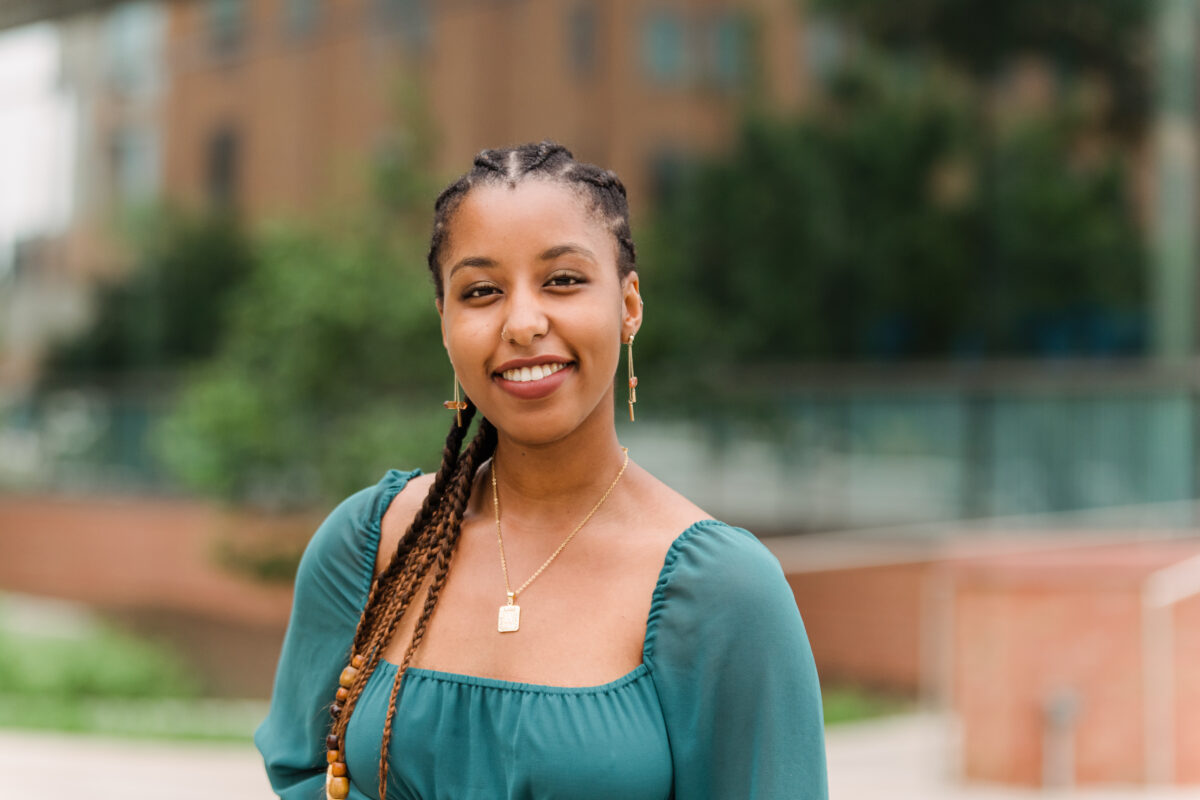 Chemutai Wangui Nganga. (Marlayna Demond ’11/UMBC)
Living in a diverse community, led Nganga to major in global studies at UMBC. She gained a greater understanding of the opportunities and conflicts of globalization and decided to focus on international politics and French. Her Asian studies courses increased her interest in Korean culture, which led her to pursue a Fulbright year in South Korea.
“For me, Korea is a full step into a new world,” says Nganga, who will be teaching English. “It is another chance to push the boundaries of my worldview as well as serve others.” She plans to explore a career path in foreign service on her return to the U.S.
Stellar research
As a burgeoning astrophysicist, Kaitlyn Szekerczes ’22, physics, lives and breathes for exploring the infinite universe. She didn’t know that all those nights stargazing on her deck with her dad and discussing the plausibility of science fiction shows would lead her to pursue a career in space science research.
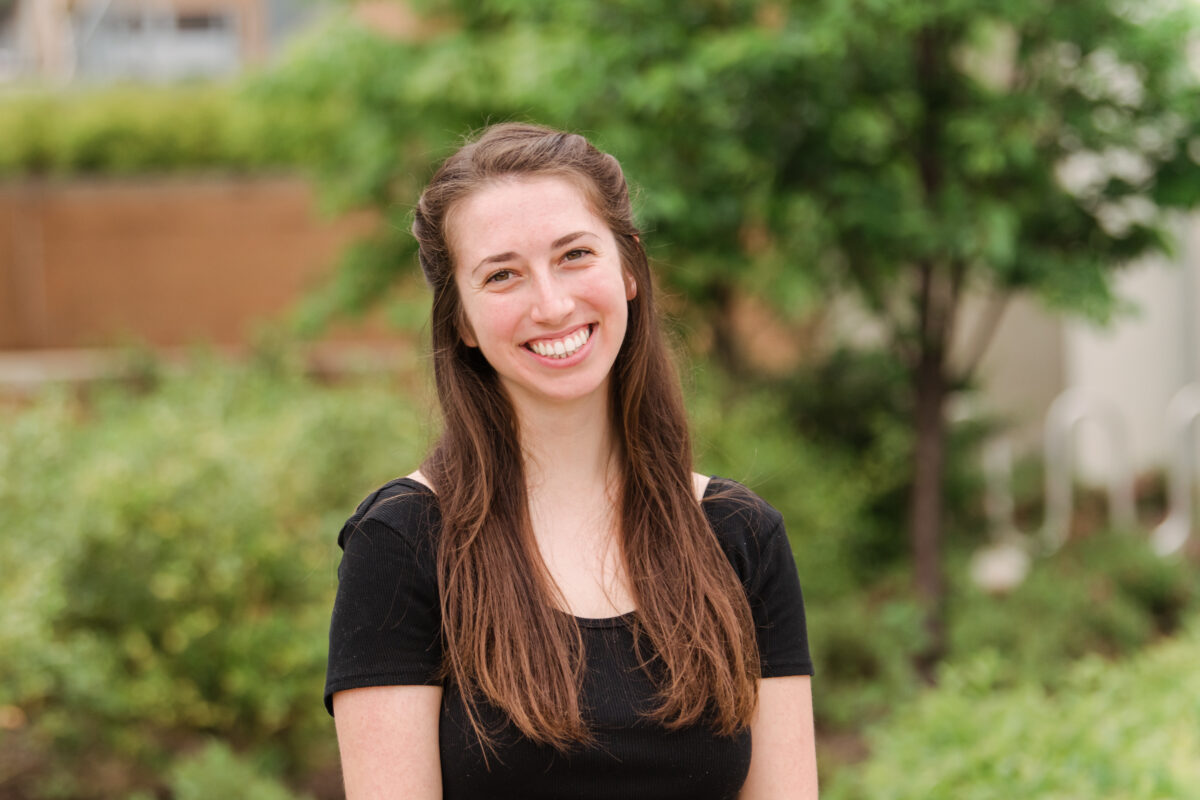 Kaitlyn Szekerczes. (Marlayna Demond ’11/UMBC)
“I was always fascinated by the questions we were not able to answer. We are not even close to knowing nearly everything when it comes to astronomy,” says Szekerczes. “My goal is to contribute to answering lesser-known big and challenging research questions.”
 Szekerczes (l) with her dad.
(Image courtesy of Szekerczes)
Szekerczes will lead a project on gravitational lensing of tidal disruption events at the Max-Planck Institute for Astrophysics in Garching, Germany. It will be the first study to apply the technique of gravitational lensing—the bending of light by gravity—to researching tidal disruption events, which are events that happen when a supermassive black hole tidally disrupts a star.
“My dream job is to work as an astrophysicist for NASA,” says Szekerczes. “UMBC was the perfect fit for me because I was encouraged to pursue my passion for tackling challenging unanswered questions. I was also given the resources and support to piece together the puzzle of how to work towards my goals.”
After returning from Germany, Szekerczes will begin a Ph.D. program in astrophysics at Penn State University in fall 2023.
]]>
Eight recent UMBC graduates and alumni will soon travel to countries across three continents as 2022 Fulbright U.S. Student scholars. They include emerging leaders in education, astrophysics,...
https://umbc.edu/stories/umbc-2022-fulbright-student-scholars/
https://my3.my.umbc.edu/api/v0/pixel/news/125930/guest@my.umbc.edu/ba2dfd241a4dc3b3530386c46cc83d0a/api/pixel
anthropology
biology
cahss
cahssresearch
cnms
coeit
community
computer-engineering
cwit
education
globalstudies
history
international-stories
mathematics
mlli
news
physics
policy-and-society
research
saph
science-and-tech
shermanscholars
UMBC News & Magazine
https://my3.my.umbc.edu/groups/umbc-news-magazine
https://assets1-my.umbc.edu/system/shared/avatars/groups/000/001/943/24435aa6207c452e7bc15cc74b42c7bb/xsmall.png?1748556657
https://assets1-my.umbc.edu/system/shared/avatars/groups/000/001/943/24435aa6207c452e7bc15cc74b42c7bb/original.png?1748556657
https://assets2-my.umbc.edu/system/shared/avatars/groups/000/001/943/24435aa6207c452e7bc15cc74b42c7bb/xxlarge.png?1748556657
https://assets2-my.umbc.edu/system/shared/avatars/groups/000/001/943/24435aa6207c452e7bc15cc74b42c7bb/xlarge.png?1748556657
https://assets3-my.umbc.edu/system/shared/avatars/groups/000/001/943/24435aa6207c452e7bc15cc74b42c7bb/large.png?1748556657
https://assets1-my.umbc.edu/system/shared/avatars/groups/000/001/943/24435aa6207c452e7bc15cc74b42c7bb/medium.png?1748556657
https://assets2-my.umbc.edu/system/shared/avatars/groups/000/001/943/24435aa6207c452e7bc15cc74b42c7bb/small.png?1748556657
https://assets1-my.umbc.edu/system/shared/avatars/groups/000/001/943/24435aa6207c452e7bc15cc74b42c7bb/xsmall.png?1748556657
https://assets2-my.umbc.edu/system/shared/avatars/groups/000/001/943/24435aa6207c452e7bc15cc74b42c7bb/xxsmall.png?1748556657
UMBC News & Magazine
0
0
false
Thu, 16 Jun 2022 15:23:06 -0400
Thu, 16 Jun 2022 15:23:06 -0400
The Martinican bèlè dance – a celebration of land, spirit and liberation
Camee Maddox-Wingfield, Assistant Professor of Sociology, Anthropology, and Public Health, UMBC
On May 22 each year, when the eastern Caribbean island of Martinique observes Emancipation Day, drums beat from sunrise until the break of dawn the next day.
Participants at open-air, starlit gatherings dance, sing, play drums and feast for ancestors who fought to break the chains of bondage. The uprising that eventually led to the abolition of slavery on the island in 1848 was sparked by the arrest of Romain, an enslaved man who refused to comply with his master’s ban on beating drums.
Today, drums are still a symbol of rebellion and freedom. The traditional dances that span the island each May 22, at performances called “swaré bèlè,” are filled with an electrifying aura of reverence and honor.
But the bèlè is not only a genre of ancestral Afro-Caribbean drum-dance practices. Rather, it is “an mannyè viv:” a lifestyle and worldview through which many people find healing and empowerment for themselves and their communities.
My first encounter with bèlè occurred when I was a graduate student in anthropology, conducting fieldwork in Martinique. As a former dancer, I was drawn to how bèlè drummers, dancers and singers experience spiritual and cultural freedom. Performers tell me their participation feels transformative, sacred and otherworldly.
Bèlè linò
Martinique is an overseas region of France in the Lesser Antilles islands. Most of the 400,000 people living there are descended from Africans brought to the islands by the slave trade, whose traditions have left a deep imprint on Martinican culture.
Centuries of history have given bèlè a complex set of symbols, only understood by those deeply immersed in the practice.
Swaré bèlè gatherings typically begin with a few matches of “ladja/danmyé,” a martial art tradition between two combatants in the center of a circle, which warms up the energy of the space as guests are arriving.
The remainder of the event involves an improvised rotation of performers playing and dancing sets from the “Bèlè Linò” repertoire. These square dances use the quadrille configuration, with four pairs of female and male dancers. After the opening sequences, each pair takes turns dancing in a playful exchange in the center of the circle, then dances toward the drummers to salute them.
Bèlè traditions use the “tanbou,” a goat-skinned conical drum. There is also the “tibwa”: two wooden sticks beaten on the side of the drum with a steady tempo.
The ensemble of dancers, drummers and singers is normally encircled by a crowd of spectators who clap their hands, sway their bodies and join in the song’s refrain.
All dancers master the base repertoire. Yet the order and style of interactions between partners is improvised – making it remarkable that the drummers can match their rhythm to the dancers’ intricate footwork.
In the playful, flirtatious and at times competitive game of certain bèlè styles, the woman is the object of her male partner’s pursuit, and she ultimately decides if she will welcome his affections. This aspect of bèlè performance, whereby women are admired and praised for their sensual dance prowess, brings female performers a sense of affirmation.
Repressed, then embraced
Martinique has been under French control since 1635. Even during the post-colonial era, many Black Martinican folk traditions faced repression, as leaders imposed mainland French culture on the population. For example, bèlè practices were often denigrated as “bagay vyé nèg,” “bagay djab” and “bagay ki ja pasé”: primitive, indecent and outdated, in the Martinican Creole language. To many in the church, traditional drumming and dance symbolized heathenism. In a country where the vast majority of people belong to the church, it was difficult for devout Catholics to support bèlè.
Many practitioners see bèlè as a dance of the earth that reinforces human connections with the land, divine spirits and ideals of freedom. Touted as a fertility ritual for both humans and the land, the dance reflects sensuality between partners. Other symbolism suggests sacred connections with the soil, vegetation and water on which Martinicans’ enslaved ancestors labored and survived. Many dance movements represent agricultural labor.
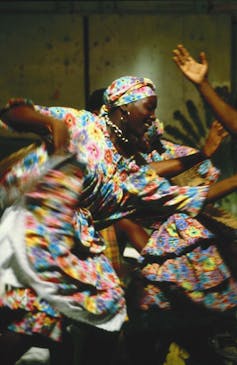 The history of folk dances in Martinique stretches back centuries. Sylvain Grandadam/Gamma-Rapho via Getty Images
During the 1980s, student activists and youth groups led initiatives to revive traditions that had nearly dissolved as a result of French pressure to assimilate. Today an ever-growing community has embraced bèlè as they challenge the legacy of colonialism and racism in Martinique.
Bèlè performance is increasingly visible in the Catholic Church. “Bèlè légliz” or “Church bèlè” fuses the liturgy with references to Martinicans’ African and diasporic heritage.
Some bèlè activists weave in symbols of ancestor reverence and land stewardship, which are also found in Caribbean religious traditions such as Haitian Vodou, Cuban Santería, Brazilian Candomblé and Quimbois, Martinique’s tradition of folk healing.
An increasing number of practitioners assert that bèlè is a “secular spirituality,” viewing it as a form of social healing from subjugation. Many of the people I have interviewed speak about bèlè as an “otherworldly” experience with unique energy that helps them cope with their society’s shadows of colonialism and slavery, and the post-colonial transition.
Solidarity and hope
The bèlè drum and its associated dances have become the rallying cry around which many bèlè cultural activists organize daily life, such as by teaching classes and participating in mutual aid projects.
Swaré bèlè gatherings are often associated with community, and have become key opportunities for attendees to express cultural pride, political solidarity and hopes for change. These events often pay homage to historical figures who made contributions to struggles for Black liberation, such as poet and politician Aimé Césaire and philosopher Frantz Fanon.
Over the last 13 years, my research has probed how traditional dance expresses resistance, emotions, spirituality and even feelings of transcendence. I have also explored how bèlè complicates black-and-white ideas about what is “sacred” versus what is “secular.”
Bèlè dances on the line between the two, reflecting the complex legacy of colonialism that continues to shape life in the Caribbean.
* * * * *
Camee Maddox-Wingfield, Assistant Professor of Sociology, Anthropology, and Public Health, University of Maryland, Baltimore County
This article is republished from The Conversation under a Creative Commons license. Read the original article.
]]>
Camee Maddox-Wingfield, Assistant Professor of Sociology, Anthropology, and Public Health, UMBC On May 22 each year, when the eastern Caribbean island of Martinique observes Emancipation Day,...
https://umbc.edu/stories/the-martinican-bele-dance-a-celebration-of-land-spirit-and-liberation/
https://my3.my.umbc.edu/api/v0/pixel/news/125490/guest@my.umbc.edu/004680779e235c56d4ab4929b3f6904b/api/pixel
anthropology
discovery
magazine
public-health
sociology
the-conversation
UMBC News & Magazine
https://my3.my.umbc.edu/groups/umbc-news-magazine
https://assets1-my.umbc.edu/system/shared/avatars/groups/000/001/943/24435aa6207c452e7bc15cc74b42c7bb/xsmall.png?1748556657
https://assets1-my.umbc.edu/system/shared/avatars/groups/000/001/943/24435aa6207c452e7bc15cc74b42c7bb/original.png?1748556657
https://assets2-my.umbc.edu/system/shared/avatars/groups/000/001/943/24435aa6207c452e7bc15cc74b42c7bb/xxlarge.png?1748556657
https://assets2-my.umbc.edu/system/shared/avatars/groups/000/001/943/24435aa6207c452e7bc15cc74b42c7bb/xlarge.png?1748556657
https://assets3-my.umbc.edu/system/shared/avatars/groups/000/001/943/24435aa6207c452e7bc15cc74b42c7bb/large.png?1748556657
https://assets1-my.umbc.edu/system/shared/avatars/groups/000/001/943/24435aa6207c452e7bc15cc74b42c7bb/medium.png?1748556657
https://assets2-my.umbc.edu/system/shared/avatars/groups/000/001/943/24435aa6207c452e7bc15cc74b42c7bb/small.png?1748556657
https://assets1-my.umbc.edu/system/shared/avatars/groups/000/001/943/24435aa6207c452e7bc15cc74b42c7bb/xsmall.png?1748556657
https://assets2-my.umbc.edu/system/shared/avatars/groups/000/001/943/24435aa6207c452e7bc15cc74b42c7bb/xxsmall.png?1748556657
UMBC News & Magazine
1
0
false
Fri, 20 May 2022 09:40:46 -0400
Fri, 20 May 2022 09:40:46 -0400
Rising Together—Software that Empowers the Community

Since 2009, as part of its Alumni Awards celebration, the UMBC Alumni Association names one “Rising Star” recipient each year who exemplifies early career and professional achievement. In the coming weeks, we will spend some time with awardees from the past decade to see where they are now—and how they’ve grown in their fields while maintaining ties to UMBC. In this installment, UMBC Rising Stars and Fearless coworkers Delali Dzirasa and Kelsey Krach discuss their Retriever networks and the responsibility of working in the civic tech space.
When Delali Dzirasa ’04, computer engineering, founded Fearless 12 years ago, he ran it out of his mother’s basement. A year later, when Dzirasa joined forces with John Foster ’04, computer engineering, their first proper office was a shared cubicle at bwtech, UMBC’s business and technology research park. Their vision for the software company was to provide digital services, but specifically tools that empower communities and create good change. “Software with a soul,” Dzirasa, CEO, says.
And their methods caught the attention of the Retriever community. In 2011, Dzirasa won the Rising Star award from the UMBC Alumni Association, and in 2019 Fearless project manager and designer Kelsey Krach ’14, anthropology, won the same award for her contributions to human centered design. Krach, now based in California, joined Dzirasa virtually to discuss the fulfillment of working on technology in co-creation with the community who will use it, and how the Fearless culture is changed and strengthened with each added team member. Reflecting on the years since their respective awards, Dzirasa and Krach see their professional and personal growth as possible only through the support they received from their UMBC communities.
Here’s a little secret they both share—as members of Retriever-filled families, neither Dzirasa nor Krach initially saw themselves going to UMBC, but the campus won them over as high schoolers and the pair can’t help but hype their alma mater.
So much more than software
Delali Dzirasa: Some folks might ask, “Well, what in the world does a software company have to do with community partnerships and service?”
Kelsey Krach: Fearless is so much more than a digital services firm. Honestly, it’s one of the reasons I was drawn to come work there, because we do so much in the Baltimore community, like partnering with the Downtown [Partnership’s] BOOST Program and some other community organizations.
Dzirasa: Fearless is actually based in Baltimore because of the Downtown Partnership, so they’re very much a part of our story. Black-Owned and Occupied Storefront Tenancy (BOOST) is a program of the Downtown Partnership where they’re looking to increase Black-owned founders and entrepreneurs. I think it just really speaks to entrepreneurs that might have the passion, might have the energy, but need a little bit of support to get going.
Krach: What type of help did you receive in your early stages? I feel like that’s one of the reasons why you spend time doing this work.
 Dzirasa, standing second from left, and Foster, right, with members of the Fearless team. Photo courtesy of Fearless.
Dzirasa: Fearless started off at UMBC, and so UMBC is always going to be part of our story. My brothers and I had a bunch of little side hustles and businesses growing up but never really knew the formal side of entrepreneurship, and UMBC started a fantastic entrepreneurship program while I was there, so I attended those courses.
When Fearless was born, our first cube—not even an office, but our first cubicle—was at UMBC in the bwtech Incubator on campus. So UMBC has been there, whether we needed advice, whether we needed partners, whether we needed someone to be able to get direction from.
I don’t know that I feared it not working, right? I think entrepreneurs have to have a healthy dose of delusion. I think if there was a fear it was—will we be like everybody else? Or would we have the courage to stand out and try to do things a little bit differently?
A Fearless culture
Krach: I’ve been at Fearless for three years, and I’ve seen a lot of growth happening, especially over the past couple of years. I think what’d be really interesting to talk about are maybe two things, how do we keep this community camaraderie as we continue to grow and how do we make sure that as people come into the company we are maintaining excitement around the community work that we do?
Dzirasa: I don’t think that we will keep the culture, and I don’t think that’s a bad thing. Every time we add a new person into Fearless, the culture is different. That’s because new people bring new ideas and new interests and new energy, and they create something that wasn’t here before that we all get to benefit from. What I think will remain consistent are the values, our internal culture code, like “create belonging, take initiative, open dialogue, make impact.”
 Fearless team members at a company picnic wearing their signature purple. Photo courtesy of Fearless.
Krach: I think that’s a great way to explain it, and I think when we talk about the community aspect of Fearless, what I really love, too, is that we have things built into our work, like our community hours, a certain number of hours a year we get compensated for doing some of this community-based work. I remember even before we had those community hours, a group of people at Fearless went out to serve breakfast at a local food shelter in Baltimore. I thought, “Wow, these are amazing people who want to wake up with me at 5 o’clock in the morning.”
Dzirasa: A question I ask myself often is have we done a good job as a company giving space for people to do community work, or have we just done a good job of attracting people that already care about humanity and the world and just get out of their way? I think it’s a little bit of both but probably more the latter.
Kelsey, in your case and all you’ve done, whether it be serving food or supporting mental health institutions and initiatives or Code for Baltimore—we didn’t create or enable that. That’s you. You were going to do those things anyway. So I think we’ve been able to do a good job of getting a collection of great humans and just kind of getting out of the way and helping them to amplify their message and what it is that they’re doing.
 Women in Tech panel that Krach, third from right, spoke on. Photo courtesy of Krach.
Krach: I think this topic leads into our role in the civic tech space. People are like, “Well, let’s just build this piece of technology and that will fix problems.” But we know you need to have communal co-creation from the people it’s going to affect. We can’t just assume that they’ll want to use the thing that’s created.
Dzirasa: That’s right. What civic tech is—is you’ve got civic and you’ve got tech and they come together and they co-create and they solve problems together. I think that’s something that allows us to both bring an air of authenticity in what we’re doing, but it also ensures that there is accountability for everyone to solve the problem together.
Keeping Retriever ties
Krach: UMBC has had such a fundamental effect on me and…I’m at a loss for words, actually, to talk about what UMBC has done for me. I couldn’t even imagine having another type of university experience.
Dzirasa: UMBC means a lot. I mean, not just from personal and professional, but it’s a bit of a family thing. I met my wife at UMBC. Both my brothers went to UMBC, so our whole family went there. Then there are the personal relationships I made on campus, Dr. Freeman Hrabowski, Greg Simmons, Kim Leisey, and so many people that are at UMBC who were instrumental in my journey, like Vivian Armor, who directs the Alex. Brown Center for Entrepreneurship. Any time there’s an opportunity to participate or give a talk or support students, I jump at the opportunity.
 Dzirasa accepting his Rising Star award in 2011.
Krach: I laughed when you said your whole family went to UMBC. My mom and dad went to UMBC. My younger sister went to UMBC at the same time I was there. My aunt went to UMBC and works there, so I definitely get that family feeling. In fact, I did not want to go to UMBC because of that.
Dzirasa: We share that.
Krach: I was a very rebellious younger person, and I was just like, “No, I’m not going to go to UMBC.” I wanted to go as far away as possible. Then my mom was just like, “Just please visit and then you can say definitively.” I shadowed a friend of mine from high school who was going to UMBC, and I totally fell in love.
 Krach in front of the A.O.K. Library. Photo courtesy of Krach.
Dzirasa: We’re like the same person. Same thing, I resisted it. It was the last place on earth I wanted to go to. But then I absolutely loved it, and I couldn’t have imagined a different world for myself.
Krach: My liberal arts education set me up to be a critical thinker going into the tech space. My job is to think about the big picture. How is what we’re doing with our piece of technology actually solving the problem for whomever we’re trying to help?
I’ve been able to go back to the Sondheim Scholars Program and teach them about human-centered design and how that can be applied in policy and how technology is related to the policies that we implement. It’s all so connected in my brain. It’s funny because I’m like, “How do people not see all of these things are connected?”
How have you grown since receiving the Rising Star award?
Dzirasa: All right, let me set the stage. I received the award about 10 years ago. My guess is that every single person in our company could fit in the first row or two in the Library Gallery, where they held the ceremony. That’s certainly not the case now!
A less visible area I’ve seen growth is in something I’m not inherently good at, so it’s something that I’m continuing to work at, which is how to build systems. But at Fearless, we’ve been able to bring along amazing people that are really smart—a heck of a lot smarter than I am in their respective areas—who contribute so much to the organization. So it’s really finding what am I uniquely gifted at, leaning into that lane, but really trusting other people to do what it is that they do so well.
 When the company was at their original bwtech location, they were called Fearless Solutions. Photo courtesy of Fearless.
Kelsey, you received your Rising Star award more recently in 2019. Can you talk about what has changed in your own life personally and professionally?
Krach: I had a big shift personally with moving from Baltimore to California right before I got that award—our ceremony was in the Linehan Concert Hall. I’ve been so lucky to continue working with Fearless in a remote capacity, so a big piece for me has been growth around building a new life here. One of the most beautiful parts of this move is that Oakland reminds me a lot of Baltimore in the sense of the people and community.
Professionally, I’ve been able to dig in more to being a product manager and thinking more about what is the value we’re providing. What problems are we focusing on with our technology, and how are we helping the government make smart decisions about what they want to implement. I want to make sure that we’re not just putting Band-aids on stuff but instead we’re ripping off the Band-aids and getting to these deep wounds that exist.
 Krach accepts her Rising Star award in 2019. Photo by Marlayna Demond ’11.
Delali, one last question—what was something you learned at UMBC that you still use in your daily life?
Dzirasa: I feel like UMBC taught me how to build community, how to help put some of the pieces in place that build culture. What about you?
Krach: For me, it’s like what have I not used? But, really, one person who stands out for me is Vivian Armor, who you mentioned earlier, and the entrepreneurship classes that I took while at UMBC. That combined with my cultural anthropology background took me to this level of thinking about structure and agency and what it means to build the technology in order to help individuals accomplish their goals. And to ask ourselves, is our tech creating a foundation for equitable spaces?
Dzirasa: For me, it goes back to what we talked about: how do we empower people like you who already care about humanity and are awesome humans and let them just do amazing things? Even through the lens of equity, if you’re a woman founder or a founder of color or whatever it is who has a particular experience that traditionally isn’t in the marketplace, if we help those companies to be really successful, they then have a lived experience of how to do that. They become a story…an example that people can point to and say, “Oh, I can do that, too.”
Do you know a UMBC alum who should be recognized for the great work they’re doing? Nominate them for an Alumni Award by filling out this form by May, 3, 2021.
]]>
Since 2009, as part of its Alumni Awards celebration, the UMBC Alumni Association names one “Rising Star” recipient each year who exemplifies early career and professional achievement. In the...
https://umbc.edu/stories/rising-together-software-that-empowers-the-community/
https://my3.my.umbc.edu/api/v0/pixel/news/119660/guest@my.umbc.edu/7f722479695c8d3aa90a772e825ac521/api/pixel
alumni
alumni-awards
anthropology
computer-engineering
rising-star
UMBC News & Magazine
https://my3.my.umbc.edu/groups/umbc-news-magazine
https://assets1-my.umbc.edu/system/shared/avatars/groups/000/001/943/24435aa6207c452e7bc15cc74b42c7bb/xsmall.png?1748556657
https://assets1-my.umbc.edu/system/shared/avatars/groups/000/001/943/24435aa6207c452e7bc15cc74b42c7bb/original.png?1748556657
https://assets2-my.umbc.edu/system/shared/avatars/groups/000/001/943/24435aa6207c452e7bc15cc74b42c7bb/xxlarge.png?1748556657
https://assets2-my.umbc.edu/system/shared/avatars/groups/000/001/943/24435aa6207c452e7bc15cc74b42c7bb/xlarge.png?1748556657
https://assets3-my.umbc.edu/system/shared/avatars/groups/000/001/943/24435aa6207c452e7bc15cc74b42c7bb/large.png?1748556657
https://assets1-my.umbc.edu/system/shared/avatars/groups/000/001/943/24435aa6207c452e7bc15cc74b42c7bb/medium.png?1748556657
https://assets2-my.umbc.edu/system/shared/avatars/groups/000/001/943/24435aa6207c452e7bc15cc74b42c7bb/small.png?1748556657
https://assets1-my.umbc.edu/system/shared/avatars/groups/000/001/943/24435aa6207c452e7bc15cc74b42c7bb/xsmall.png?1748556657
https://assets2-my.umbc.edu/system/shared/avatars/groups/000/001/943/24435aa6207c452e7bc15cc74b42c7bb/xxsmall.png?1748556657
UMBC News & Magazine
0
0
false
Wed, 07 Apr 2021 12:57:31 -0400
Empathy and Compassion — Alumni Award Winners Take on Public Health Challenges
Health is one of the many things we take for granted until we don’t have it. Like a software glitch, you don’t notice the apparatus providing you a service until it fails to follow a command.
Three of UMBC’s 2019 Alumni Award winners play a role in smoothing out the flaws in health care access—designing apps to create an easier pathway to medical care, serving the United States as the “nation’s doctor,” and on a global scale, improving the medical supply chain for remote locations.
The way they overlap in their missions stems from their shared Retriever roots and a common empathy for the people they serve, ultimately influencing millions of lives at home and abroad.
Design with empathy in mind
Kelsey Krach ’14, anthropology, recipient of the 2019 Rising Star award, leans heavily on her background as a Sondheim Public Affairs scholar when thinking about designing information so that it’s accessible to people—creating a seamless software experience through research, so that users achieve their end goal without frustration. Currently she works for Fearless, a UMBC alumni-founded digital services firm, a job that started with “really loving to understand what people need and want,” she says. As someone in the tech world with an anthropology major, Krach says that her degree allows her “to look at critical problems that people and cultures and societies interact with, and critically think about what it means to approach those problems.”
 Kelsey Krach guest lecturing on human-centered design at a local university. Photo courtesy of Krach.
Krach underwent a personal health crisis shortly before leaving for Spain to pursue her master’s in visual and digital media at IE Business School—one that made her reexamine the American health system with a critical lens. Grappling with the consequences of her health issues, she was left with a question after studying in Madrid: “What are the ethical obligations that we have as designers to ensure that we’re doing good stuff in the world?” When she returned to the States after completing her master’s program, Krach took a position through Baltimore Corps and was able to start addressing that question through her work with the Baltimore City Health Department.
One of her projects included approaching public health challenges in the city using human-centric design methodology—designing information in a way that is accessible to people. This involved partnering with tech companies to create prototypes that would address issues like the opioid epidemic. “Right then, I realized that this is the power that technology has to elevate what’s happening for citizens, to provide better solutions for citizens, provide better services. It was just pure civic tech engagement.”
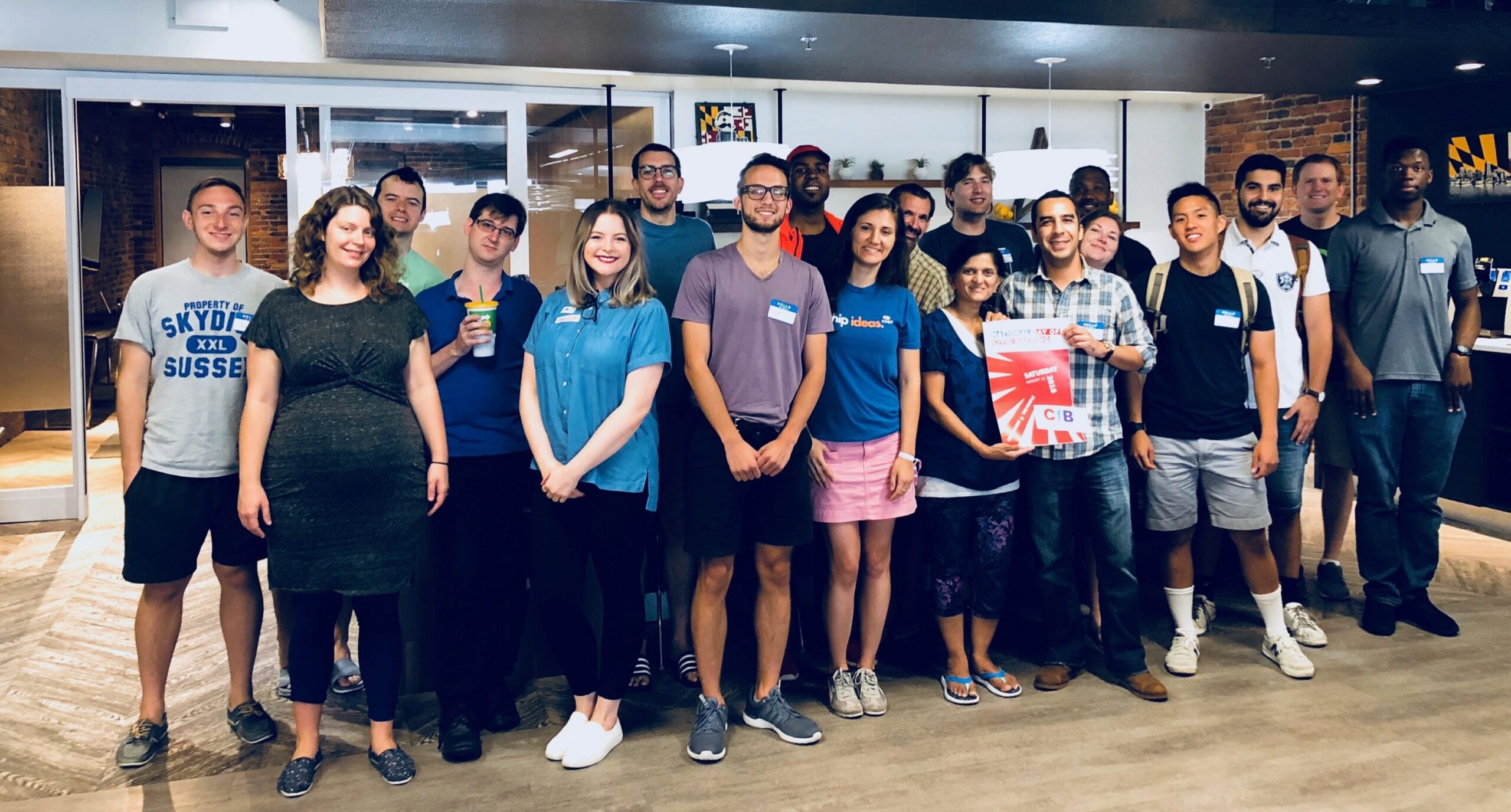
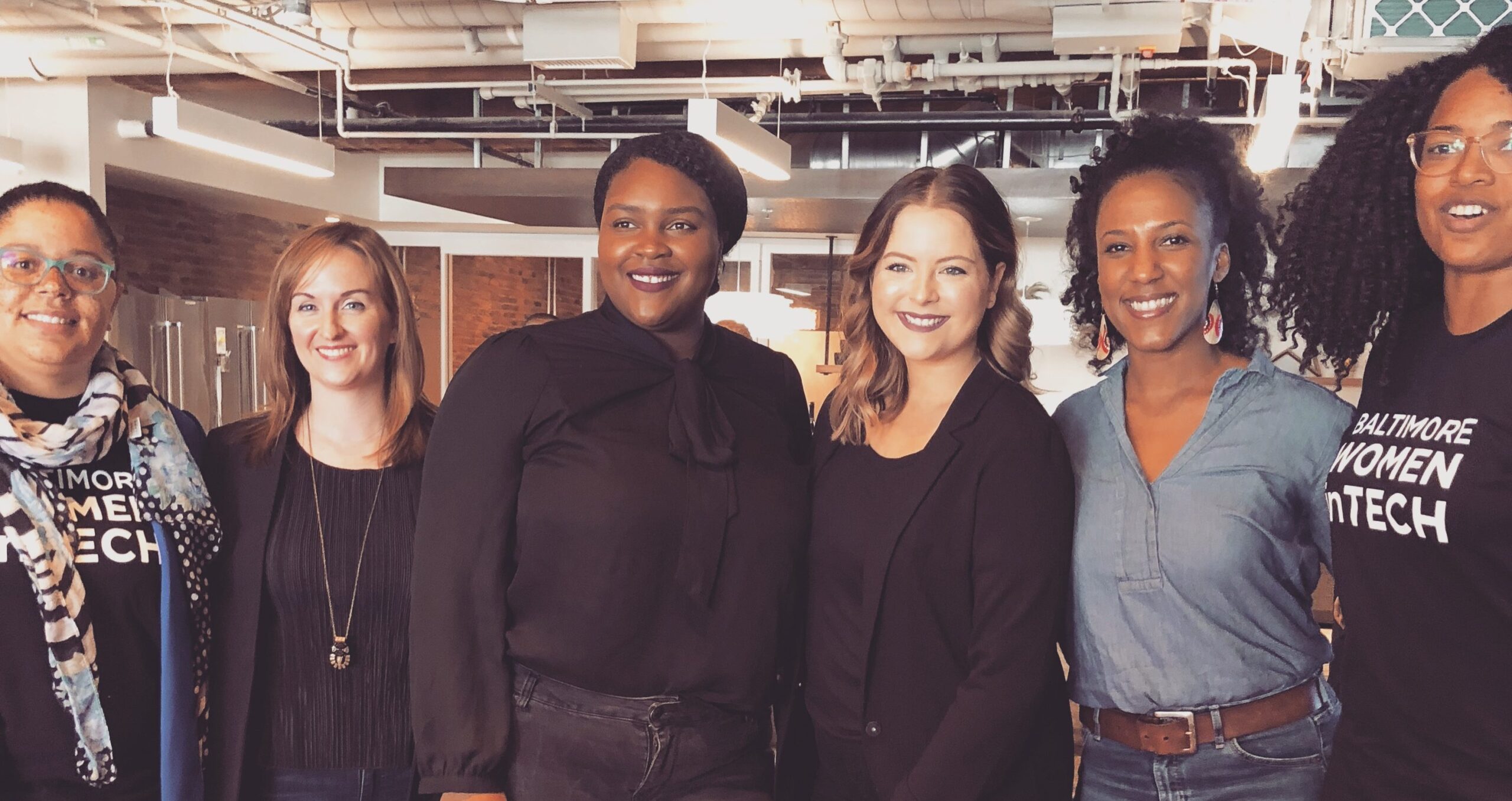
Subsequently she worked on the launch of an app for LifeBridge Health by researching patient experience, specifically those suffering from heart failure. Krach interviewed more than 40 patients while shadowing doctors and nurses and listening in on emergency room conversation. She says she recognized the fear on the patients’ faces because it mirrored her own fear when her health failed her. “I think at the end of the day, the empathy that a designer needs to have for the people they’re designing for is so powerful.”
Compassion as part of the cure
For Jerome Adams ’97, M4, biochemistry and molecular biology and psychology, that empathy also forms the bedrock of his mission as the 20th U.S. Surgeon General. This year’s recipient of the Outstanding Alumni of the Year award for natural and mathematical sciences, Adams has often shared his personal story about his younger brother, who suffers from substance use disorders. “Even as the surgeon general, I’m not immune to this,” Adams says. “I was not able to prevent my family from going down the pathway of addiction.”
 Far from just being a political talking point, Adams has plans on how to address the opioid crisis with methods that more effectively reach those suffering from addiction. As a graduate of one of the early Meyerhoff Scholar Program cohorts, Adams intimately knows the benefits and necessity of relying on your community for accountability and support. The mandatory six-week Meyerhoff Summer Bridge program builds close-knit connections between the young scholars through a “we rise together” mentality.
That reliance on one another is a building block of medication-assisted treatment (MAT) programs. Increasing access to this type of treatment is among Adams’ proposed steps toward addressing the opioid crisis in America. MAT combines medication with behavioral support and is often referred to as “whole-patient” treatment. Community organizations like churches are encouraged to step in and build relationships with the participants in the program to further strengthen their ties to the community and available support options. Adams is working to increase the number of MAT programs in the country.
“We know that the only way we’re going to turn this thing around is by everyone owning their part of it and not pointing fingers,” Adams told Mediaplanet. “One of the things I’ve tried to help people understand is that addiction touches all of us. People with opioid use disorder are our friends, our neighbors, our family.”
While compassion is not a cure-all, he says, it’s the right step toward valuing those struggling with substance use disorders.
A good reason to go to work in the morning
Projecting that empathy even further afield is Kim Shelsby ’85, geography. While at UMBC, the 2019 recipient of the Outstanding Alumni of the Year award for social sciences decided that he wanted to travel the world. He just needed a good reason to do so.
Shelsby cycled through several majors before taking a class with Sandy Parker, former chair of the department of geography and environmental systems. “Parker made the first and most lasting impression on me,” says Shelsby. “I recall him describing his work with a tribe in the Amazon, and I was hooked.” And what Shelsby ultimately took away from UMBC is that “geographers study everything from anthropology to zoology but their primary question is about the distribution—why things happen where they happen.”
This focus on distribution would shape Shelsby’s career. In his current position with Chemonics International, his team focuses on improving supply chains, mostly for medicine reaching remote health facilities. “Our job is to get the right medicine to the right patient, anywhere in the world, as efficiently as possible.”
His role in an international development organization has allowed him to fulfill his goal of traveling the world for the right reasons. “My company’s mission is to help people live healthier, more productive and independent lives. That’s a good reason to go to work in the morning.”
As manager director on the largest U.S. Agency for International Development (USAID) project ever—an eight-year, $9.5 billion Global Health Supply Chain Procurement and Supply Management program—Shelsby helped provide medicine and health commodities to more than 60 countries. “It was a massive undertaking,” he put it bluntly. “The first few years were crazy, and it had some rough times, but it is now delivering with about 90 percent on-time delivery.”
Making the mundane meaningful
Shelsby admits that even though traveling abroad for his job is exciting and fulfills many of his wishes as a student, the day-to-day program management can grow humdrum even while producing so many positive health outcomes. And this is where his advice for students who want to change the world comes in: “Even the mundane tasks can be meaningful when it serves a greater purpose.”
Krach builds on that theme for students looking to make a difference through their work. “I really hate saying, ‘make the world a better place,’ because that’s so subjective to everybody—but at least do things in a way that you can analyze and try to work with other people to make their situations better toward the collective betterment for our society.”
 Adams representing his UMBC pride from one of his social media accounts.
Using your voice to promote and protect others’ health is a platform Adams has embraced. After his 2017 appointment to the position of surgeon general, Adams spoke out about the change from being the health commissioner for the state of Indiana to his current role. “I don’t have a lot of programs under me, I don’t have a lot of funding to go out there and fund different grants or programs. What I do have is the bully pulpit.”
Adams has accepted that national microphone through his natural repartee on Twitter as well as through issuing the first Surgeon General’s Advisory in 13 years, urging more Americans to carry naloxone, an FDA-approved medication that can reverse the effects of opioid overdoses.
While there are no quick fixes for most major health problems, the different roles Krach, Adams, and Shelsby play in designing healthier communities make evident that faithful work in service of those suffering from disease and addiction combined with empathy and compassion will be the bedrock of positive changes in the future.
In recognition of their service to others and giving back to UMBC with their time and skills, the UMBC community will honor these alumni and others at an award ceremony on October 2 at 6:30 p.m. Admission is free, but please register in advance.
]]>
Health is one of the many things we take for granted until we don’t have it. Like a software glitch, you don’t notice the apparatus providing you a service until it fails to follow a command. ...
https://umbc.edu/stories/empathy-and-compassion-alumni-award-winners-take-on-public-health-challenges/
https://my3.my.umbc.edu/api/v0/pixel/news/120039/guest@my.umbc.edu/7c195a38f78faf643687b39c400fa020/api/pixel
alumni
alumni-awards-2019
anthropology
geography
meyerhoff
surgeon-general
UMBC News & Magazine
https://my3.my.umbc.edu/groups/umbc-news-magazine
https://assets1-my.umbc.edu/system/shared/avatars/groups/000/001/943/24435aa6207c452e7bc15cc74b42c7bb/xsmall.png?1748556657
https://assets1-my.umbc.edu/system/shared/avatars/groups/000/001/943/24435aa6207c452e7bc15cc74b42c7bb/original.png?1748556657
https://assets2-my.umbc.edu/system/shared/avatars/groups/000/001/943/24435aa6207c452e7bc15cc74b42c7bb/xxlarge.png?1748556657
https://assets2-my.umbc.edu/system/shared/avatars/groups/000/001/943/24435aa6207c452e7bc15cc74b42c7bb/xlarge.png?1748556657
https://assets3-my.umbc.edu/system/shared/avatars/groups/000/001/943/24435aa6207c452e7bc15cc74b42c7bb/large.png?1748556657
https://assets1-my.umbc.edu/system/shared/avatars/groups/000/001/943/24435aa6207c452e7bc15cc74b42c7bb/medium.png?1748556657
https://assets2-my.umbc.edu/system/shared/avatars/groups/000/001/943/24435aa6207c452e7bc15cc74b42c7bb/small.png?1748556657
https://assets1-my.umbc.edu/system/shared/avatars/groups/000/001/943/24435aa6207c452e7bc15cc74b42c7bb/xsmall.png?1748556657
https://assets2-my.umbc.edu/system/shared/avatars/groups/000/001/943/24435aa6207c452e7bc15cc74b42c7bb/xxsmall.png?1748556657
UMBC News & Magazine
0
0
false
Thu, 26 Sep 2019 00:40:47 -0400

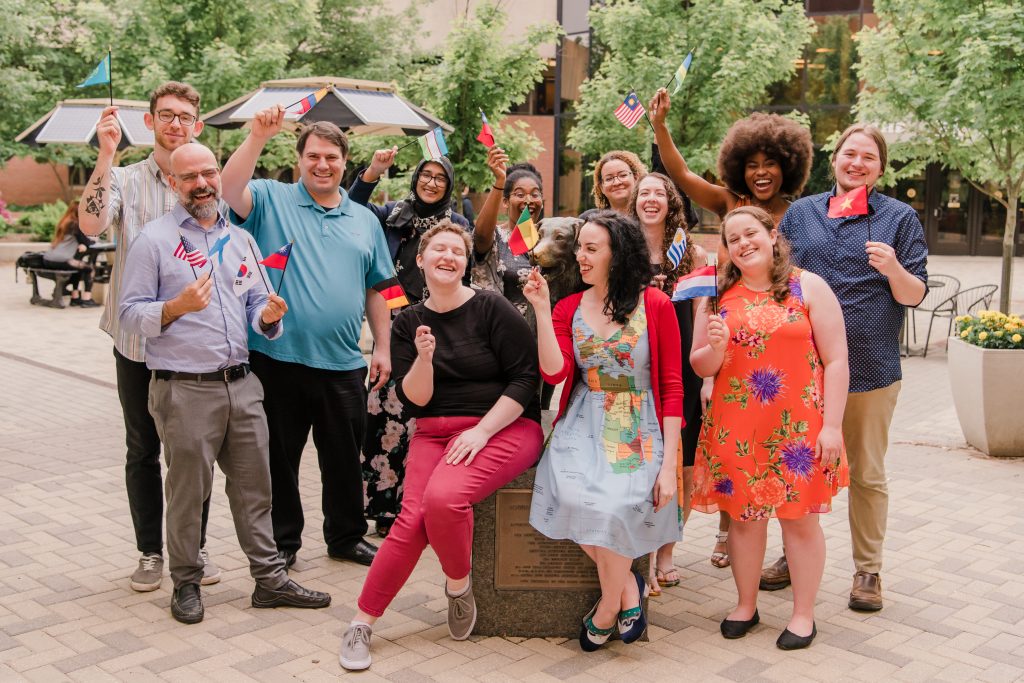 Souders (front left)with UMBC’s


