Bartleby is more than golden—50+ years with UMBC’s creative arts journal
 Quinn shows his poem published in the 1979 – 1980 Bartleby edition. (Catalina Dansberger Duque/UMBC)
“Bartleby NEEDS YOU!” This was the handwritten call to arms in 1979, for writers and poets to submit their work to Bartleby, UMBC’s creative arts journal. The sentiment of this flyer is not that different from its first publication in 1972 and from today’s social media posts alerting students to upcoming submission deadlines.
This unwavering spirit brought Howard Quinn ’80, English, back to campus in fall 2025 for the Bartleby 50+ celebration. He shared his memories as one of six editors of the 1979 – 1980 edition and reveled at the Bartleby covers and works, displayed in showcases at the Albin O. Kuhn Library and Gallery, some with typed-up poems printed on newsprint or cardstock and stapled together like the edition with 35 pieces that he helped edit—including his own poem, “Wind Down Wind” about loss.
In 2026, Bartleby—under the recently chartered Student Media Collective—editors read 200 art submissions, 120 poetry submissions, 60 fiction submissions, and 23 creative nonfiction submissions. The ensuing 160-page publication is book-bound and printed on glossy paper. Over five decades, Retrievers have continued to creatively express the personal and political events that have defined their lives, including war and national identity, rebellion, women’s rights, LGBTQ+ identity, social isolation, and joy and love.
Quinn came to Bartleby’s retrospective to celebrate the publication’s ongoing impact and to share a message from his friend Martha Campbell ’82, American studies, a Bartleby editor for three and a half years.
“I know that Bartleby has endured because people showed up to create art, give voice, share ideas, and they did that work year after year,” wrote Campbell, perhaps inadvertently echoing a line from her poem published during her tenure: “And the clock moves on, slow, but certain in its ways.”
 Left to right: Howard Quinn, Andrew Coulbourne, current editor (middle), and Sean McNutt ’24, anthropology, editor of volume 43, at the Bartleby 50+ exhibit. (Brad Ziegler/UMBC)
Read more Spring 2026 UMBC Magazine stories.
]]>
Quinn shows his poem published in the 1979 – 1980 Bartleby edition. (Catalina Dansberger Duque/UMBC) “Bartleby NEEDS YOU!” This was the handwritten call to arms in 1979, for writers and poets...
https://umbc.edu/stories/bartleby-is-more-than-golden-50-years-with-umbcs-creative-arts-journal/
https://my3.my.umbc.edu/api/v0/pixel/news/160278/guest@my.umbc.edu/fc04b276cb66c7fac1085ab5f5bf83f9/api/pixel
aok-library-gallery
cahss
community
english
magazine
story
UMBC News & Magazine
https://my3.my.umbc.edu/groups/umbc-news-magazine
https://assets1-my.umbc.edu/system/shared/avatars/groups/000/001/943/24435aa6207c452e7bc15cc74b42c7bb/xsmall.png?1748556657
https://assets1-my.umbc.edu/system/shared/avatars/groups/000/001/943/24435aa6207c452e7bc15cc74b42c7bb/original.png?1748556657
https://assets2-my.umbc.edu/system/shared/avatars/groups/000/001/943/24435aa6207c452e7bc15cc74b42c7bb/xxlarge.png?1748556657
https://assets2-my.umbc.edu/system/shared/avatars/groups/000/001/943/24435aa6207c452e7bc15cc74b42c7bb/xlarge.png?1748556657
https://assets3-my.umbc.edu/system/shared/avatars/groups/000/001/943/24435aa6207c452e7bc15cc74b42c7bb/large.png?1748556657
https://assets1-my.umbc.edu/system/shared/avatars/groups/000/001/943/24435aa6207c452e7bc15cc74b42c7bb/medium.png?1748556657
https://assets2-my.umbc.edu/system/shared/avatars/groups/000/001/943/24435aa6207c452e7bc15cc74b42c7bb/small.png?1748556657
https://assets1-my.umbc.edu/system/shared/avatars/groups/000/001/943/24435aa6207c452e7bc15cc74b42c7bb/xsmall.png?1748556657
https://assets2-my.umbc.edu/system/shared/avatars/groups/000/001/943/24435aa6207c452e7bc15cc74b42c7bb/xxsmall.png?1748556657
UMBC News & Magazine
1
0
false
Thu, 21 May 2026 17:07:56 -0400
Thu, 21 May 2026 17:07:56 -0400
Seeing with fresh eyes—50 years of the UMBC Photography Collections

Walking into the Albin O. Kuhn Library Gallery, you always know you’re going to see some well-curated photos and works of art, but the trove of images currently on the walls for Revisions: Celebrating 50 Years of the UMBC Photography Collections (closes December 15) are assembled as an remarkable representational sample of the nearly 3 million images that make up the UMBC archive.
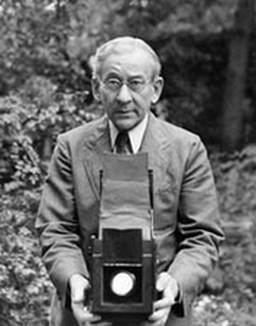
Known today as one of the country’s premiere university collections of photographs, the Photography Collections had a modest but auspicious beginning. In 1974, the Baltimore lithographer and photographer Edward Bafford donated to UMBC Special Collections a remarkable early image by Arthur Stieglitz (1864–1946), a photographer widely credited with helping transform photography into a serious art form. Bafford’s gift coincided with the foundational purchase of more than 5,400 photographs by labor activist Lewis Hine that documented horrific child labor practices.
Over time, the Photography Collections at UMBC have expanded through purchases and gifts. One special acquisition stands out for its regional importance: In 2014, the collection received the photo archives of the Baltimore Sun, including more than 750,000 prints, negatives, and transparencies from the 1930s through the 1980s.
Housed in the Special Collections department of the Library, the collections are open to the public, and are widely used by scholars and photographers. An increasing number of images have been digitized for online viewing, available through the Library’s website.
Looking back at a half-century of collecting, the exhibition offered thematic groupings and visual juxtapositions of photographs from the nineteenth century to the present. Co-curated by Beth Saunders, curator and head of Special Collections, and Emily Hauver ’06, curator of the Albin O. Kuhn Library Gallery, Revisions asked viewers to approach the history of photography with fresh eyes. In this photo essay, Hauver offers her thoughts on a few stand-out images in the show.
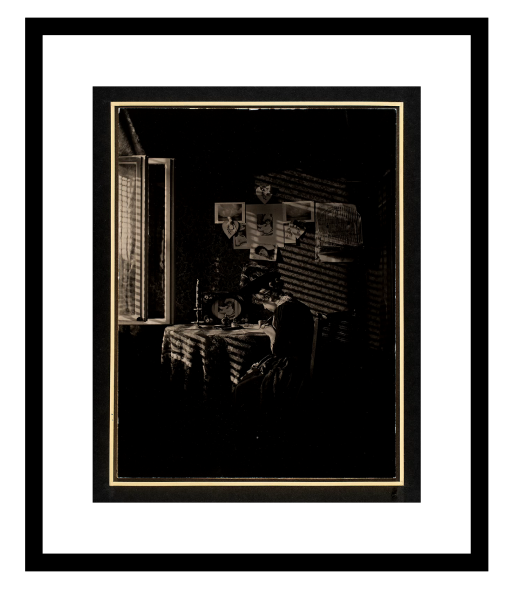
Sun Rays—Paula, Berlin, 1889
Sun Rays-Paula, Berlin is a particularly apt founding image for a university collection; it was made when the great Steiglitz was himself a student, and could thus be viewed as a symbol of the endurance of formative educational experiences on the making of an individual’s personal and professional identity. UMBC’s Photography Collections were conceived of as a teaching tool through which budding photographers enrolled at the university can contemplate the elements of successful photographs through the close study of master prints.
Alfred Stieglitz (American, 1864–1946), Sun Rays—Paula, Berlin, 1889. Gelatin silver print, 1929. Gift of Edward Bafford, P74-07-001.
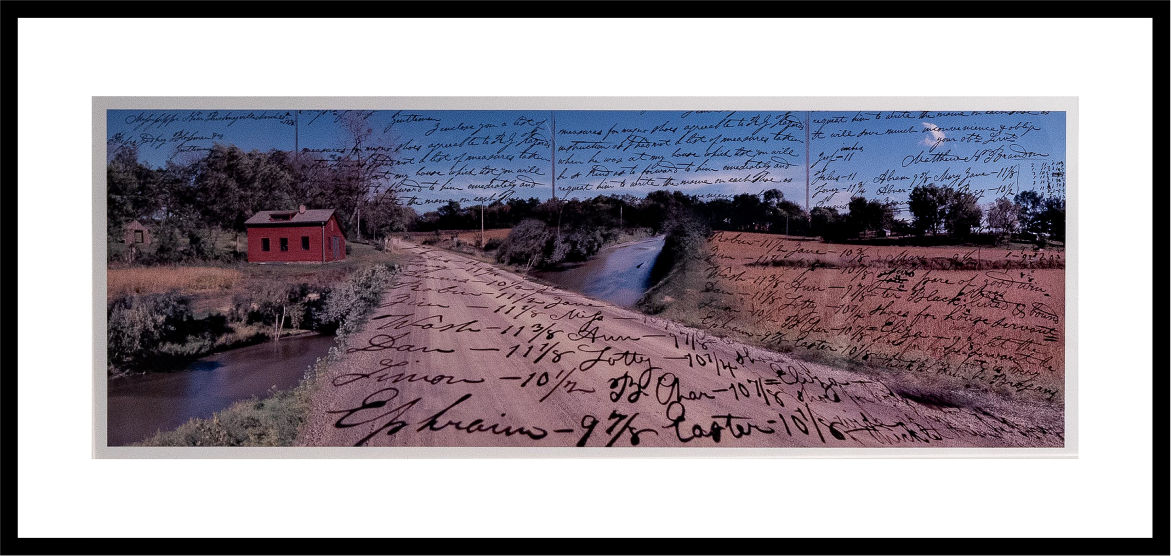
[Nishnabotna Ferry House], ca. 2001–2008
Stephen Marc, American, born 1954, [Nishnabotna Ferry House], ca. 2001–2008. Inkjet print. Stephen Marc Collection, Coll353-P001.
Bringing the past palpably into the present, this photograph by Stephen Marc utilizes digital montage to weave together elements from the landscape of slavery—in this case a site associated with the Underground Railroad, the Nishnabotna Ferry House, and an 1836 letter from a Mississippi slaveholder ordering shoes for the people he enslaved. The names of the enslaved, which appear to be marching along the path to freedom and a better future, memorialize both the individuals held captive and those who succeeded in escaping.
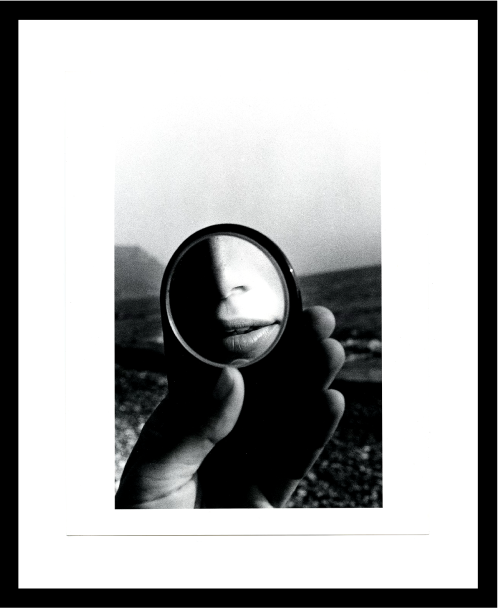
Ralph Gibson (American, born 1939), Elba, c.1983. Gelatin silver print. Gift of Carol A. Merritt, P93-14-004.
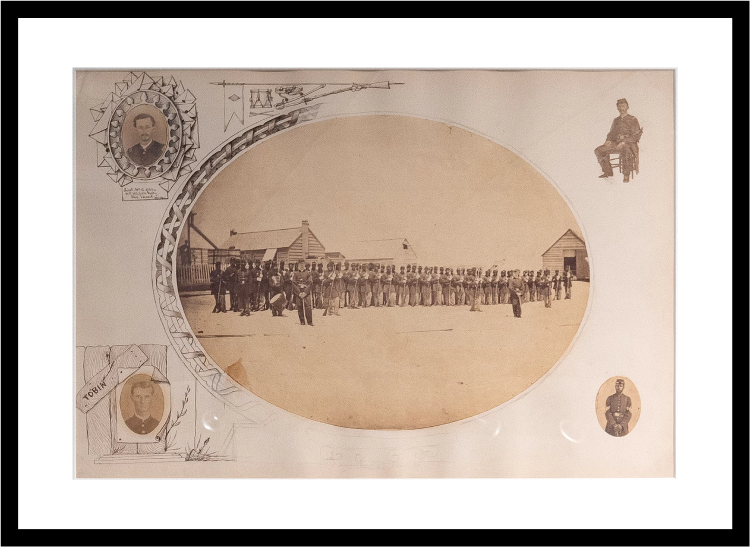
Ship Island, Miss. & 74th U.S. Colored Infantry, c. 1864
This composition comprises several photographs of Black Union soldiers and white officers and is embellished with hand-drawn elements. Posing for portraits during the Civil War— the first major conflict to be extensively documented through photography—allowed Black men to assert their newfound identity and freedom as soldiers. The person who made this composition sought to memorialize the patriotism of Black soldiers through the visual image, showcasing the commitment of these men to fight for their own liberation. The fact that the embellishments are incomplete draw a poignant, if unintentional, parallel to the unfinished business of achieving true racial equality in this country.
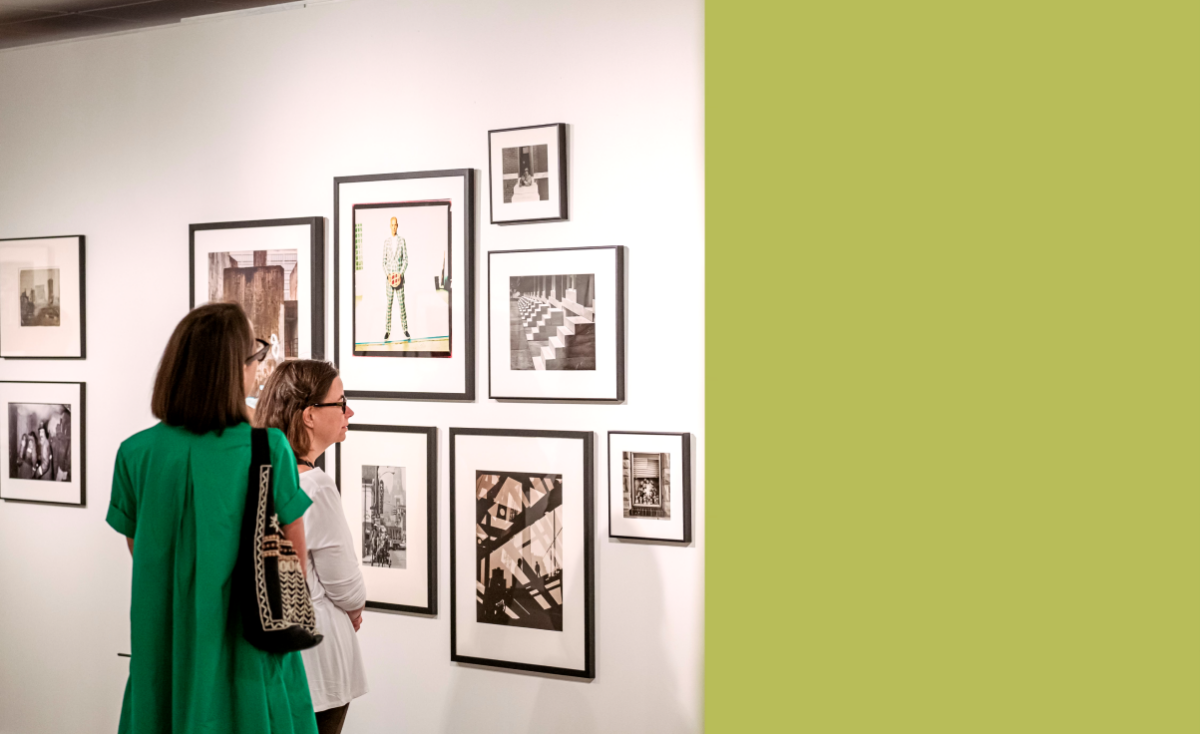

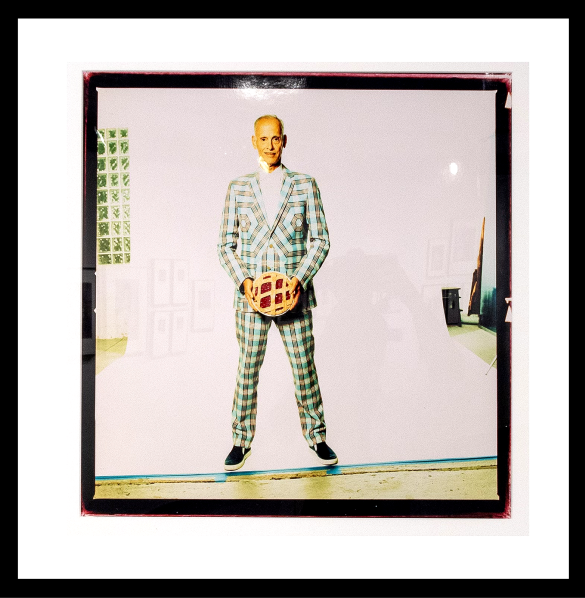
John Waters, 2013
What could be more “Baltimore” than John Waters? In this image, taken by Sam Holden, a Baltimore-based photographer who tragically passed away at the age of 44 in 2019, the filmmaker grins impishly at the camera while posing with a cherry pie.
Sam Holden (American, 1970–2014), John Waters, 2013. Cross processed chromogenic print. Sam Holden Collection, Coll255_IA-001.
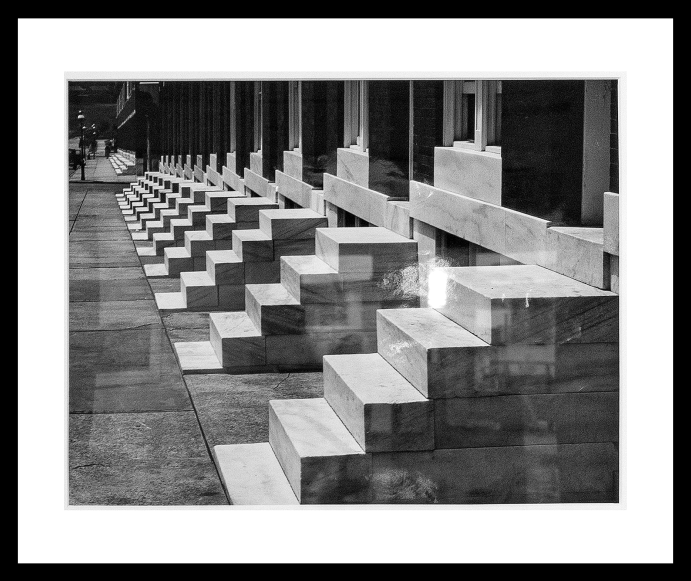
Marble Steps, 1954
Row after row of white marble steps for which the city of Baltimore is famous are seen in this photograph by Aubrey Bodine, one of Maryland’s best-known photographers. The geometry and contrasting tones of the steps pair with Bodine’s meticulous composition to manipulate the viewer’s perception by drawing the eye down the block and giving the impression of depth that defies the flat surface of this photograph.
A. Aubrey Bodine (American, 1906–1970), Marble Steps, 1954. Gelatin silver print. Gift of Mrs. A. Aubrey Bodine, P86-19-032.
Ward 81, Oregon State Hospital, Salem, Oregon, 1976
This photograph by Mary Ellen Mark flips the typical script of looking at a photograph wherein the observer looks upon a passive subject. Here, the photograph appears to be looking back. Despite the visual distortion caused by the screen covering the door’s small window, the power of this woman’s gaze implores us to make a connection, challenging us to engage on a deeper level with her and, perhaps, with ourselves. It’s made all the more compelling knowing that it was taken on Ward 81, a women’s security ward of the Oregon State Mental Institution.
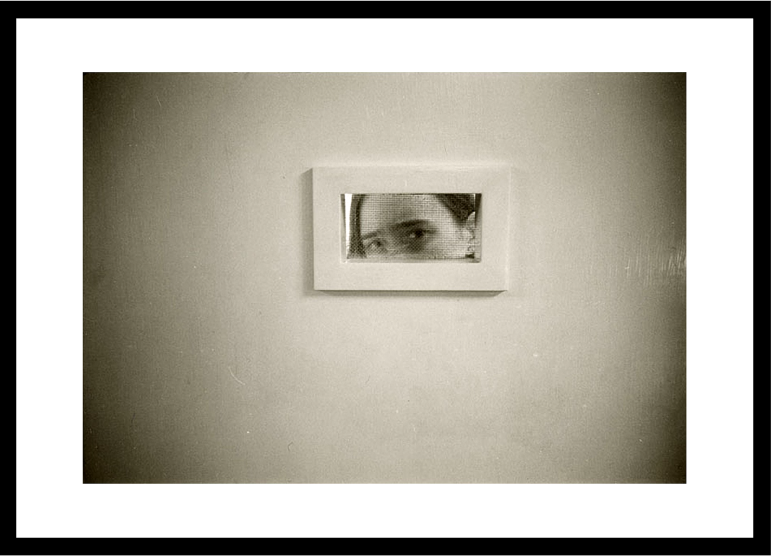
Mary Ellen Mark (American, 1940–2015), Ward 81, Oregon State Hospital, Salem, Oregon, 1976. Gelatin silver print. Gift of Andrew Cahan, P2013-32-001.
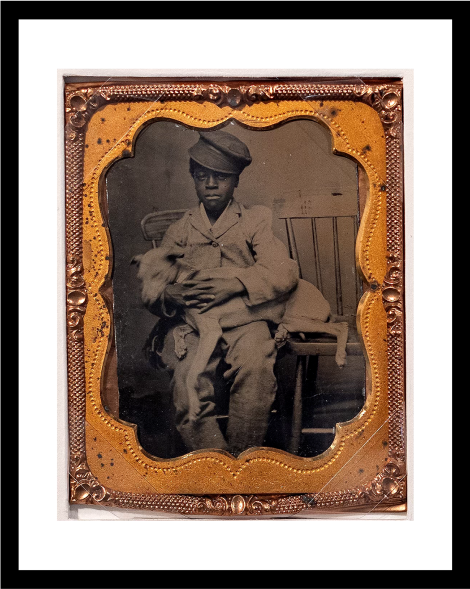
Boy and dog, c. 1870s
Our collections hold thousands of images of anonymous people. Here, a small tintype shows an unusual pairing—a Black boy with a dog—framed in a case. We don’t know his name or where the photo was taken, but we can date this image to the 1870s. As we gaze back into his eyes, we wonder: Who was he? What was his story?
Unidentified photographer, Boy and dog, c. 1870s. Tintype. Library purchase, P78-120-006.
Elba, c.1983
Mirrors, with which photographs have long been metaphorically compared, offer opportunities to extend the narrative possibilities of a photograph beyond what is in front of the camera to what is behind, beside and beyond. This photograph by Ralph Gibson is compelling because it elicits conflicting reactions at once: comfort with the familiarity of the subjects (a nose, mouth, hand, landscape) and unease with the disjointed way they have been assembled.
Unidentified photographer, Boy and dog, c. 1870s. Tintype. Library purchase, P78-120-006
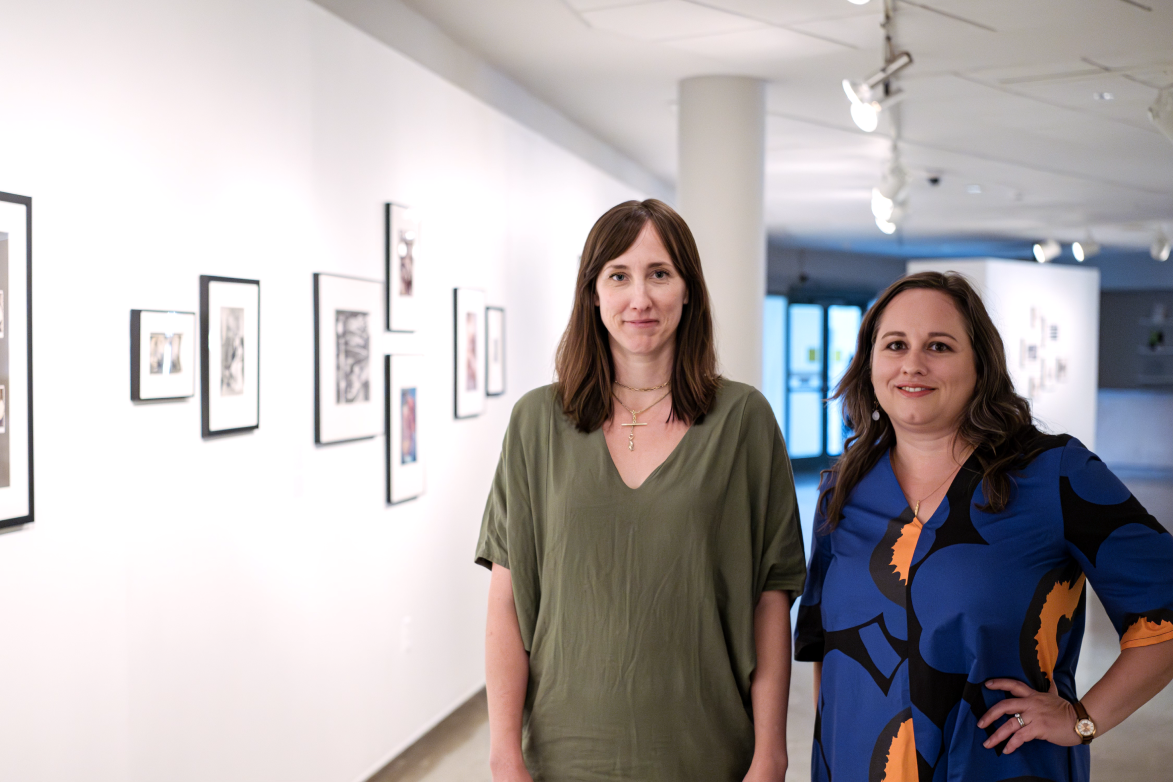
Emily Hauver ’06, curator of the Albin O. Kuhn Library Gallery, and Beth Saunders, curator and head of Special Collections, worked together to comb through the university’s extensive collections to display a stunning representation of what is available in the archives.
By Emily Hauver ’06 and Thomas Moore
]]>
Walking into the Albin O. Kuhn Library Gallery, you always know you’re going to see some well-curated photos and works of art, but the trove of images currently on the walls for Revisions:...
https://umbc.edu/stories/seeing-with-fresh-eyes-photography-collection/
https://my3.my.umbc.edu/api/v0/pixel/news/146083/guest@my.umbc.edu/26572da6ad6205c415540b7d7441f9eb/api/pixel
aok-library-gallery
campus-life
fall-2024
feature
magazine
photography-collections
story
UMBC News & Magazine
https://my3.my.umbc.edu/groups/umbc-news-magazine
https://assets1-my.umbc.edu/system/shared/avatars/groups/000/001/943/24435aa6207c452e7bc15cc74b42c7bb/xsmall.png?1748556657
https://assets1-my.umbc.edu/system/shared/avatars/groups/000/001/943/24435aa6207c452e7bc15cc74b42c7bb/original.png?1748556657
https://assets2-my.umbc.edu/system/shared/avatars/groups/000/001/943/24435aa6207c452e7bc15cc74b42c7bb/xxlarge.png?1748556657
https://assets2-my.umbc.edu/system/shared/avatars/groups/000/001/943/24435aa6207c452e7bc15cc74b42c7bb/xlarge.png?1748556657
https://assets3-my.umbc.edu/system/shared/avatars/groups/000/001/943/24435aa6207c452e7bc15cc74b42c7bb/large.png?1748556657
https://assets1-my.umbc.edu/system/shared/avatars/groups/000/001/943/24435aa6207c452e7bc15cc74b42c7bb/medium.png?1748556657
https://assets2-my.umbc.edu/system/shared/avatars/groups/000/001/943/24435aa6207c452e7bc15cc74b42c7bb/small.png?1748556657
https://assets1-my.umbc.edu/system/shared/avatars/groups/000/001/943/24435aa6207c452e7bc15cc74b42c7bb/xsmall.png?1748556657
https://assets2-my.umbc.edu/system/shared/avatars/groups/000/001/943/24435aa6207c452e7bc15cc74b42c7bb/xxsmall.png?1748556657
UMBC News & Magazine
1
0
false
Tue, 03 Dec 2024 14:07:51 -0500
Tue, 03 Dec 2024 14:07:51 -0500
The US has a child labor problem – recalling an embarrassing past that Americans may think they’ve left behind
Written by Beth Saunders, Curator and Head of Special Collections and Gallery, UMBC.
At the University of Maryland, Baltimore County’s Special Collections, where I am head curator, we’ve recently completed a major digitization and rehousing project of our collection of over 5,400 photographs made by Lewis Wickes Hine in the early 20th century.
Traveling the country with his camera, Hine captured the often oppressive working conditions of thousands of children – some as young as 3 years old.
As I’ve worked with this collection over the past two years, the social and political implications of Hine’s photographs have been very much on my mind. The patina of these black-and-white photographs suggests a bygone era – an embarrassing past that many Americans might imagine they’ve left behind.
But with numerous reports of child labor violations, many involving immigrants, occurring in the U.S., along with an uptick in state legislation rolling back the legal working age, it’s clear that Hine’s work is as relevant today as it was a century ago.
‘An investigator with a camera’
A sociologist by training, Hine began making photographs in 1903 while working as a teacher at the progressive Ethical Culture School in New York City.
Between 1903 and 1908, he and his students photographed migrants at Ellis Island. Hine believed that the future of the U.S. rested in its identity as an immigrant nation – a position that contrasted with escalating xenophobic fears.
Based on this work, the National Child Labor Committee, which advocated for child labor laws, hired Hine to document the living and working conditions of American children.
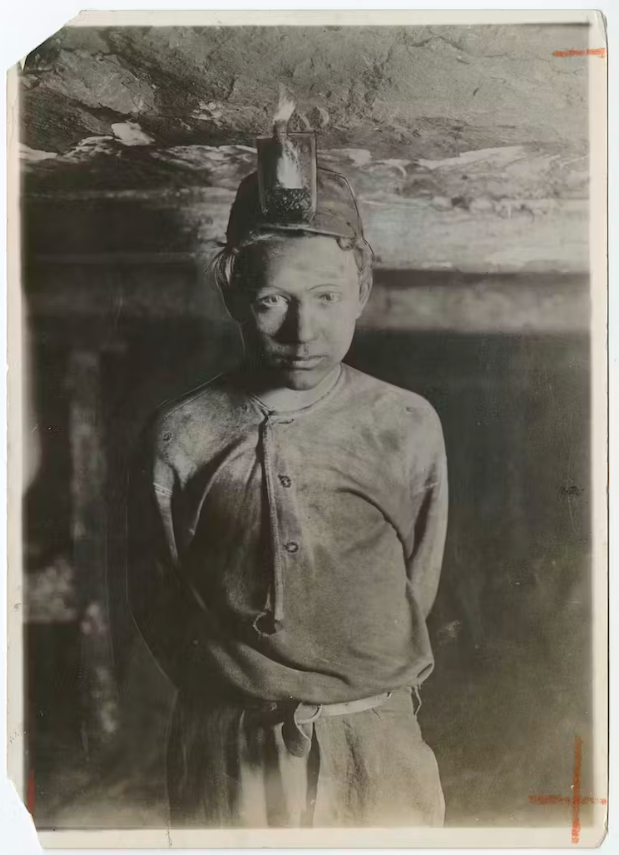 Lewis Wickes Hine, ‘Trapper Boy, Turkey Knob Mine, MacDonald, West Virginia, 1908.’ Gelatin silver print. 5 x 7 in. The Photography Collections, University of Maryland, Baltimore County (P148), CC BY-SA
By the late 19th century, several states had passed laws limiting the age of child laborers and establishing maximum working hours. But at the turn of the century, the number of working kids soared – between 1890 and 1910, 18% of children ages 10 to 15 were employed.
In his work for the National Child Labor Committee, Hine journeyed to farms and mills in the industrializing South and the streets and factories of the Northeast. He used a Graflex camera with 5-by-7-inch glass plate negatives and employed flash powder for nighttime and interior shots, hauling upward of 50 pounds of equipment on his slight frame.
To gain entry into factories and other facilities, Hine sometimes disguised himself as a Bible, postcard or insurance salesman. Other times he’d wait outside to catch workers arriving for or departing from their shifts.
Along with photographic records, Hine collected his subjects’ personal stories, including their ages and ethnicities. He documented their working lives, such as their typical hours and any injuries or ailments they incurred as a result of their labor.
Hine, who considered himself “an investigator with a camera,” used this information to create what he termed “photo stories” – combinations of images and text that could be used on posters, in public lectures and in published reports to help the organization advance its mission.
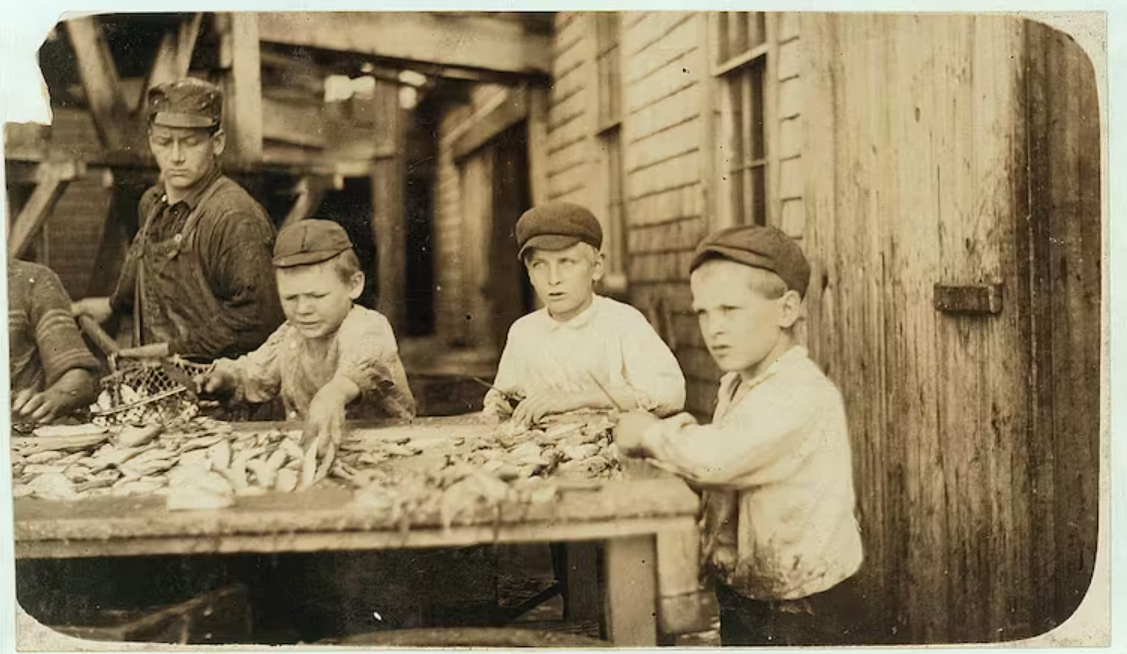 Lewis Wickes Hine’s photograph of three young fish cutters working at the Seacoast Canning Co. in Eastport, Maine. National Child Labor Committee collection, Library of Congress, Prints and Photographs Division
Legislation follows
Hine’s muckraking photographs exemplify the genre of documentary photography, which relies upon the perceived truthfulness of photography to make a case for social change.
The camera serves as an eyewitness to a societal ill, a problem that needs a solution. Hine portrayed his subjects in a direct manner, typically frontally and looking straight into the camera, against the backdrop of the very factories, farmland or cities where they worked.
By capturing details of his sitters’ bare feet, tattered clothes, soiled faces and hands, and diminutive stature against hulking industrial equipment, Hine made a direct statement about the poor conditions and precarity of these children’s lives.
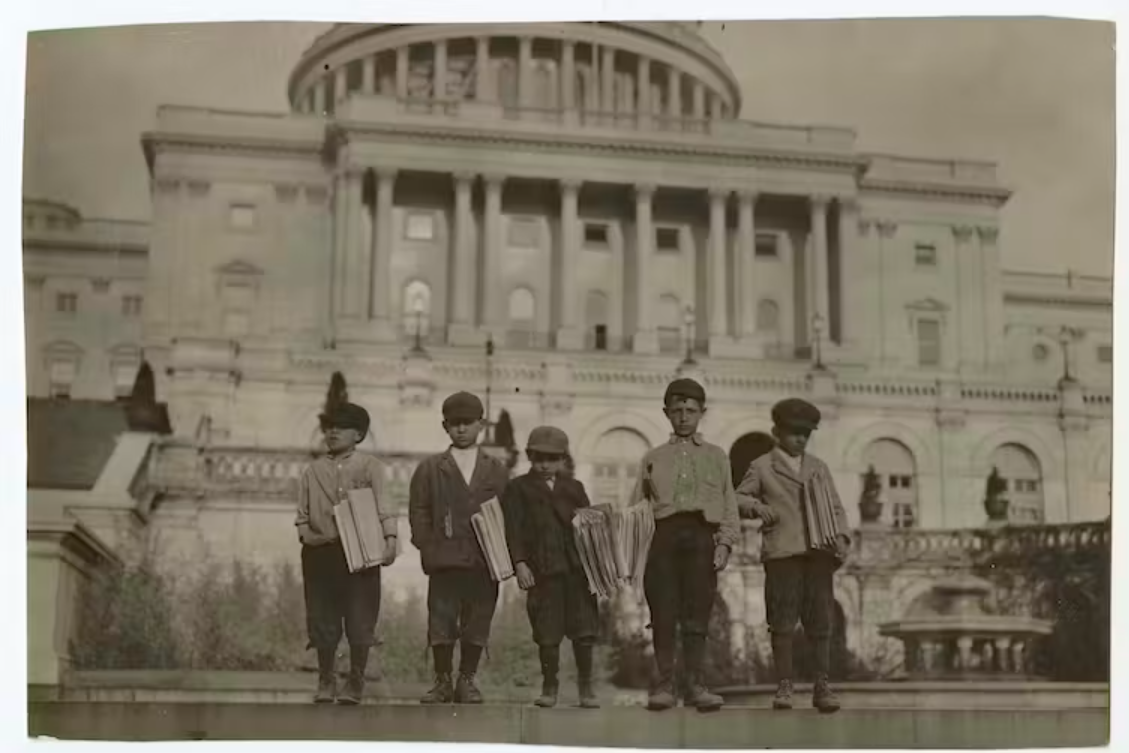 Lewis Wickes Hine, ‘Group of newsies selling on Capitol steps, April 11, 1912.’ The Photography Collections, University of Maryland, Baltimore County (P2904), CC BY-SA
Hine’s photographs made a successful case for child labor reform.
Notably, the National Child Labor Committee’s efforts resulted in Congress establishing the Children’s Bureau in 1912 and passing the Keating-Owen Act in 1916, which limited working hours for children and prohibited the interstate sale of goods produced by child labor.
Although the Supreme Court later ruled it and a subsequent Child Labor Tax Law of 1919 unconstitutional, momentum for enshrining protections for child workers had been created. In 1938, Congress passed the Fair Labor Standards Act, which established restrictions and protections on employing children.
The National Child Labor Committee’s project also included advocacy for the enforcement of existing child labor regulations, a regulatory problem reemerging today as the Department of Labor – the agency tasked with enforcing labor laws – comes under fire for failing to protect child workers.
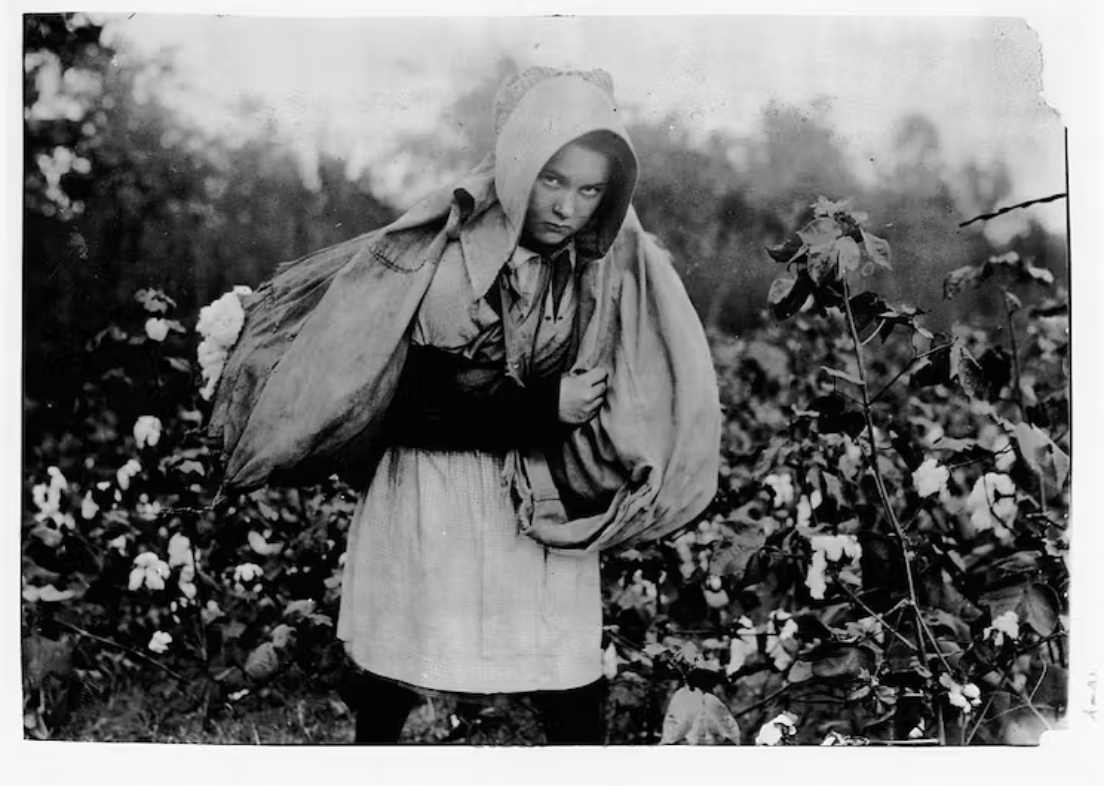 A young picker carries a large sack of cotton on her back. Lewis Wickes Hine/Library of Congress via Getty Images
The ethics of picturing child labor
A recent surge of unaccompanied minors, primarily from Central America, has brought new attention to America’s old problem of child labor and has threatened the very laws Hine and the National Child Labor Committee worked to enact.
Some estimates suggest that one-third of migrants under 18 are working illegally, whether it’s laboring more hours than current laws permit, or working without the proper authorizations. Many of them perform hazardous jobs similar to those of Hine’s subjects: handling dangerous equipment and being exposed to noxious chemicals in factories, slaughterhouses and industrial farms.
While the content of Hine’s photographs remains pertinent to today’s child labor crisis, a key distinction between the subject of Hine’s photographs and working children today is race.
Hine focused his camera almost exclusively on white children who arrived in the country during waves of immigration from Europe during the late-19th and early-20th centuries. As art historian Natalie Zelt argues, Hine’s pictorial treatment of Black children – either ignored or forced to the margins of his images – implied to viewers that the face of childhood in America was, by default, white.
The perceived racial hierarchies of Hine’s era reverberate into the present, where underage migrants of color live and work at the margins of society.
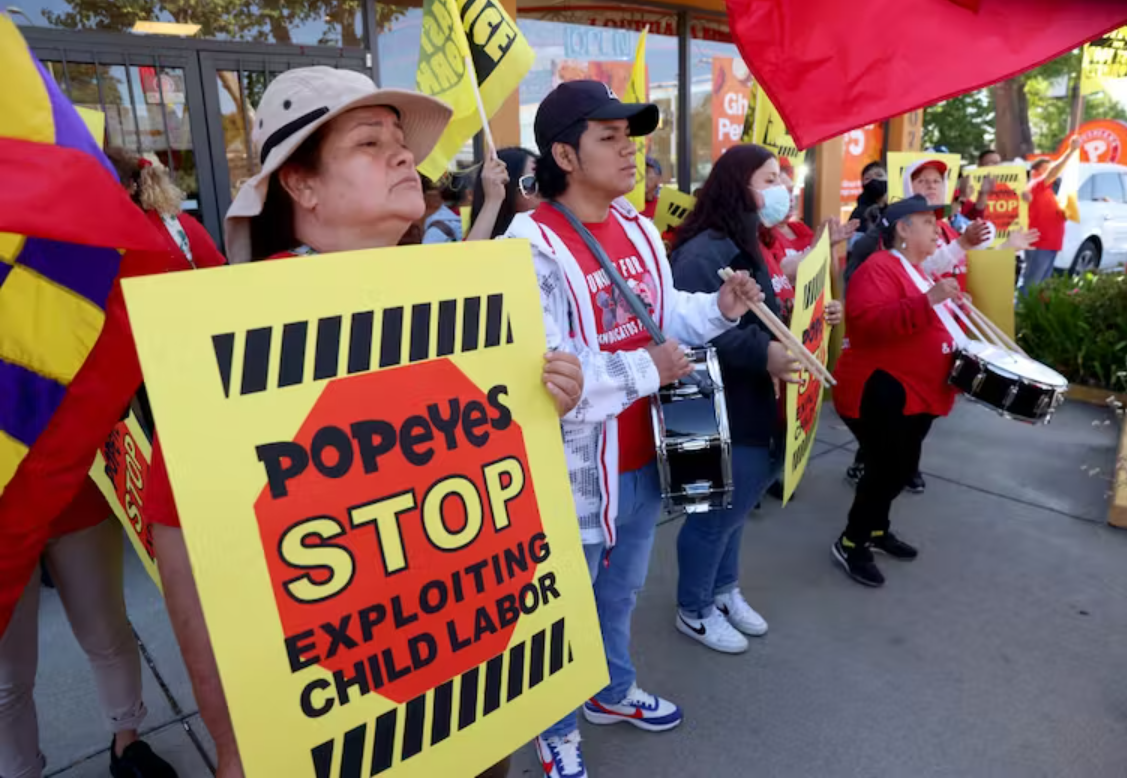 Workers protest outside a Popeye’s restaurant in Oakland, Calif., on May 18, 2023, after reports emerged of the franchise exploiting child labor. Jane Tyska/Digital First Media/East Bay Times via Getty Images
Contemporary reports of child labor violations offer few images to accompany their texts, graphs and statistics. There are legitimate reasons for this. By not including identifying personal information or portraits, news outlets protect a vulnerable population. Ethical guidelines frown upon revealing private details of the lives of children interviewed. And, as Hine’s experience demonstrates, it can be difficult to infiltrate the sites of these labor violations, since they are typically kept secure.
Digital cameras and smartphones offer a workaround. Beginning in 2015, the International Labor Organization urged child laborers in Myanmar to become “young activists” and use their own images and words to create “photo stories” – echoing Hine’s use of the term – that the organization could then disseminate.
Photographs of child labor in foreign countries are far more common than those made in the U.S., which leaves the impression that child labor is someone else’s problem, not ours. Perhaps it’s too hard for Americans to look at this domestic issue square in the eyes.
A similar effect is at work when viewing Hine’s photographs today. While they were originally valued for their immediacy, they can seem to belong to a distant past.
But if Hine’s photographic archive of child laborers is evidence of the power of photography to sway public opinion, does the lack of images in today’s reporting – even if nobly intended – create a disconnect?
Is the public capable of understanding the harmful consequences of lack of labor enforcement when the faces of the people affected are missing from the picture?
This article is republished from The Conversation under a Creative Commons license. Read the original article and see more than 250 UMBC articles available in The Conversation.
]]>
Written by Beth Saunders, Curator and Head of Special Collections and Gallery, UMBC. At the University of Maryland, Baltimore County’s Special Collections, where I am head curator, we’ve...
https://umbc.edu/stories/the-conversation-us-child-labor-problem/
https://my3.my.umbc.edu/api/v0/pixel/news/134034/guest@my.umbc.edu/900a55b9775015504e5a594fcc4fc295/api/pixel
aok-gallery
aok-library
aok-library-gallery
discovery
magazine
special-collections
the-conversation
UMBC News & Magazine
https://my3.my.umbc.edu/groups/umbc-news-magazine
https://assets1-my.umbc.edu/system/shared/avatars/groups/000/001/943/24435aa6207c452e7bc15cc74b42c7bb/xsmall.png?1748556657
https://assets1-my.umbc.edu/system/shared/avatars/groups/000/001/943/24435aa6207c452e7bc15cc74b42c7bb/original.png?1748556657
https://assets2-my.umbc.edu/system/shared/avatars/groups/000/001/943/24435aa6207c452e7bc15cc74b42c7bb/xxlarge.png?1748556657
https://assets2-my.umbc.edu/system/shared/avatars/groups/000/001/943/24435aa6207c452e7bc15cc74b42c7bb/xlarge.png?1748556657
https://assets3-my.umbc.edu/system/shared/avatars/groups/000/001/943/24435aa6207c452e7bc15cc74b42c7bb/large.png?1748556657
https://assets1-my.umbc.edu/system/shared/avatars/groups/000/001/943/24435aa6207c452e7bc15cc74b42c7bb/medium.png?1748556657
https://assets2-my.umbc.edu/system/shared/avatars/groups/000/001/943/24435aa6207c452e7bc15cc74b42c7bb/small.png?1748556657
https://assets1-my.umbc.edu/system/shared/avatars/groups/000/001/943/24435aa6207c452e7bc15cc74b42c7bb/xsmall.png?1748556657
https://assets2-my.umbc.edu/system/shared/avatars/groups/000/001/943/24435aa6207c452e7bc15cc74b42c7bb/xxsmall.png?1748556657
UMBC News & Magazine
0
0
false
Thu, 15 Jun 2023 18:35:31 -0400
Q&A: View from the End of the Road
When the pandemic first hit, many of us found ourselves looking closely at what surrounded us and what confined us. For Brea Souders ’01, visual arts, however, the circumstances drove her to look outward through the screen of her upstate New York window, and to wonder deeply about the lives happening beyond her driveway. End of the Road, the latest in the Albin O. Kuhn Library Gallery’s spring online exhibits, pairs Souders’ images with the poetry of UMBC writer-in-residence Lia Purpura, to create tender appreciations of the details that connect us all, even when we’re apart.
We sat down with Souders and Purpura to learn more about the making of End of the Road, on display now through the end of April.
* * * * *
UMBC Magazine: So, Brea, how did the idea for this series come about for you?
Brea Souders: In late March 2020, I moved from New York City to rural upstate New York. This was the beginning of the pandemic when contact with the outside world was abruptly cut off for many people and would be for the foreseeable future. The house is situated just before the gravel cul-de-sac of a country road and I began to observe people through my window as they wandered back and forth to the end of the road.
So it started in a space of stillness and solitude, which led to focused daily observation. I began to wonder about the people I saw; what brought them to the end of the road and what their stories were. As a photographer it’s second nature to pick up a camera and photograph something that has captured and sustained my attention, especially if it mystifies me in some way, if there is something hidden or unknowleable in what I see. Even if it’s an illusion, the camera draws a line connecting you and your subject and shortens the distance between you.
 Brea Souders, End of the Road 7, 2020. Courtesy of the artist.
UMBC Magazine: What was your mindset at that time, making them, versus where you are now?
Souders: There is solid evidence now that the world will begin to open back up and there are already some signs of that happening, but we’re still very much in this emotional and physical space of isolation and stillness. I’ve been making these pictures for a year now, and the trees are beginning to bud again just the way they did when this all started. It’s reassuring to witness some things just carrying on as they do.
UMBC Magazine: And Lia, you were brought into this exhibit by curator Beth Saunders. What did you feel when you saw Brea’s images for the first time? What was your first impression?
Lia Purpura: When I saw Brea’s photos, immediately they seemed like micro-dramas, these brief moments that enacted a form of inward reflection that’s also a part of the way many people are experiencing COVID times. Artists are able to find the under-seen, under-noticed ways of being and Brea’s work does that.
I love is the way Brea sees, and the different postures of these photos. And by “postures” I mean the place from which the eye is seeing. Postures of discovery. The intimacy, the solitude of the space, the stillness the viewer inhabits. That quiet felt inhabited by a presence, a curious eye.
UMBC Magazine: What was it like to collaborate in this way, pairing Brea’s new images with Lia’s poems from her 2015 book,It Shouldn’t Have Been Beautiful?
Souders: I love the way Lia thinks. She categorized the initial list of poems for our collaboration according to the photographer’s point of view, the subject’s point of view, the seasons, the feeling of walking, and sense of place. That approach deepened the connection between the poems and pictures and informed the selection and sequencing of both.
It was Beth’s idea to organize the images loosely by seasons. As you scroll through, you have a general sense of the seasons, although the window screen and distance impart a greyness to the images and you have the feeling of where am I? What day is it? Which of course is the way many people would describe this past year. The human condition and the seasons are so finely articulated in Lia’s poems. I love her exquisite attention to detail and the quiet observation felt in her work. In some of her poems, it feels as if she is looking through a small window just the way that I am.
Hope
To feel the slightest
breeze come on
but not expect it
to last, though
it is a lifting,
relief
that’s been scarce —
you can’t help
noting
the drop in degrees,
but it might not
be a real change
in weather,
you might overheat it,
or scare it
by speaking its name, so
hold back, learn to say
not just yet,
I won’t rush it
and no, I’m not dying
for a very small sip of
whatever that was
in the trees.
— Lia Purpura
UMBC Magazine: There’s a lot of trust involved in the process, I’m sure.
Purpura: Yes, absolutely! We didn’t know each other at all. I mean, I think Brea had read some of my work, but at the outset is the decision to trust in many things. A person’s aesthetic, their sense of good will, their collaborative ego—with this relationship in place, you can launch all kinds of thoughts and know the other will receive it in open ways.
Souders: Definitely. I felt it immediately, too. Kindred art souls.
UMBC Magazine: Brea, I understand you have a book coming out in June from Saint Lucy Books, and there are even more UMBC connections there (designer Guenet Abraham and publisher/editor Mark Alice Durant, both visual arts professors). What does it mean to see your work embraced so strongly within the UMBC community?
Souders: I’m floored by all the support. It’s a wonderful thing to be able to collaborate with a network of kind people doing exciting, interesting work in their fields. I’m truly honored to be a part of that.
* * * * *
The Albin O. Kuhn Library Gallery will host a Virtual Artist’s Talk: Brea Souders and Lia Purpura in Conversation on April 22 at noon. Visit the Albin O. Kuhn Library Gallery’s website to register for the free talk, and to see End of the Road in its entirety.
Learn more about Brea Souders: eleven years at Saint Lucy Books.
Header image: Brea Souders, End of the Road 5, 2020. Courtesy of the artist.
]]>
When the pandemic first hit, many of us found ourselves looking closely at what surrounded us and what confined us. For Brea Souders ’01, visual arts, however, the circumstances drove her to look...
https://umbc.edu/stories/qa-view-from-the-end-of-the-road/
https://my3.my.umbc.edu/api/v0/pixel/news/119656/guest@my.umbc.edu/8431c3f0305764eb233af6ae20445e46/api/pixel
alumni
aok-library-gallery
discovery
english
spring-2021
visual-arts
UMBC News & Magazine
https://my3.my.umbc.edu/groups/umbc-news-magazine
https://assets1-my.umbc.edu/system/shared/avatars/groups/000/001/943/24435aa6207c452e7bc15cc74b42c7bb/xsmall.png?1748556657
https://assets1-my.umbc.edu/system/shared/avatars/groups/000/001/943/24435aa6207c452e7bc15cc74b42c7bb/original.png?1748556657
https://assets2-my.umbc.edu/system/shared/avatars/groups/000/001/943/24435aa6207c452e7bc15cc74b42c7bb/xxlarge.png?1748556657
https://assets2-my.umbc.edu/system/shared/avatars/groups/000/001/943/24435aa6207c452e7bc15cc74b42c7bb/xlarge.png?1748556657
https://assets3-my.umbc.edu/system/shared/avatars/groups/000/001/943/24435aa6207c452e7bc15cc74b42c7bb/large.png?1748556657
https://assets1-my.umbc.edu/system/shared/avatars/groups/000/001/943/24435aa6207c452e7bc15cc74b42c7bb/medium.png?1748556657
https://assets2-my.umbc.edu/system/shared/avatars/groups/000/001/943/24435aa6207c452e7bc15cc74b42c7bb/small.png?1748556657
https://assets1-my.umbc.edu/system/shared/avatars/groups/000/001/943/24435aa6207c452e7bc15cc74b42c7bb/xsmall.png?1748556657
https://assets2-my.umbc.edu/system/shared/avatars/groups/000/001/943/24435aa6207c452e7bc15cc74b42c7bb/xxsmall.png?1748556657
UMBC News & Magazine
0
0
false
Thu, 15 Apr 2021 12:17:57 -0400
Depth of Field showcases UMBC’s spectacular photo collections
UMBC’s photography collection includes more than two million works, including rare and historic prints showcasing a range of formats, processes, genres, and technologies. Among these are the approximately one hundred images chosen for Depth of Field, an exhibit showcasing work acquired over the past decade.
Featured artists in the exhibition at the Albin O. Kuhn Library Gallery through December 19 include Albert Arthur Allen, Laurie Brown, Kristin Capp, Clarence Carvell BFA ’93, Chim (David Seymour), William Eggleston, Donna Ferrato, Robert Fichter, Todd Forsgren, Peggy Fox, Sally Gall, Ralph Gibson, Penny Harris, Sam Holden, Irina Ionesco, Walter Iooss, Lotte Jacobi, N. Jay Jaffee, Brian Jones, Nate Larson, David S. Lavine, Alen MacWeeney, Mary Ellen Mark, Fred McDarrah, Dorothy Norman, David Seltzer, Steve Szabo, Barbara Traub, Peter Turnley, and Robert VonSternberg. Additionally, the exhibition features daguerreotypes, painted photographs, and post-mortem photographs. Depth of Field is curated by Emily Hauver, curator of exhibitions for the Albin O. Kuhn Library Gallery.
 Robert Fichter, Dürer with Red Flowers, from the series Florida Photogenesia, 1984, silver-dye bleach print. Collection 132, © Robert Fichter, used with permission
“The photography collections are really a treasure trove,” says Beth Saunders, the new curator and head of special collections and the gallery at the Albin O. Kuhn Library & Gallery. “I can’t think of another university collection with the depth and breadth of UMBC’s; it is truly remarkable.” Saunders, previously assistant curator in the Department of Photographs at the Metropolitan Museum of Art, oversees the management, preservation, and exhibition of UMBC’s photography, rare book, and archival collections.
An Enviable Collection
The Photography Collections at UMBC were established in the early 1970s, propelled by the purchase of over 5,000 photographs by pioneering social documentary photographer Lewis Hine. Today the collections contain more than two million photographs by Ansel Adams, Diane Arbus, Berenice Abbott, A. Aubrey Bodine, Bill Brandt, Eileen Cowin, Barbara Crane, Judy Dater, William Eggleston, Robert Frank, Roland Freeman, Lotte Jacobi, Alfred Cheney Johnston, Stephen Marc, David Plowden, Albert Renger-Patzsch, Walter Rosenblum, Jaromir Stephany (professor of visual arts, deceased), Steve Szabo, James Van Der Zee, Edward Weston, Minor White, members of the Photo-Secession, and hundreds of other artists.
 Steve Szabo, Interior, Christ M. E. Church, 1976, from the series Eastern Shore, platinum print. Collection 254 © Steve Szabo, used with permission
“I’m really looking forward to working with and promoting UMBC’s Special Collections, and hope to increase engagement among students as well as the local Baltimore and wider scholarly communities,” says Saunders.
Depth of Field will continue on display through December 19. The Library Gallery is open Monday through Friday from 10 a.m. to 4:30 p.m., with extended hours on Thursday until 8 p.m., and Saturday and Sunday from noon to 5 p.m. Admission is free. Additional information about the exhibition can be found here.
 Lotte Jacobi, Marlene Dietrich, 1929, Platinum print, Accession no. P2013-31-014, gift of Louis Klaitman
 Todd Forsgren, Adelaide’s Warbler (Setophaga adelaidae), 2009, from the series Ornithological Photographs, Inkjet print, Accession no. P2016-07-001, gift of the artist
![Sam Holden, [Iggy Pop], 2001, chromogenic color print, gelatin silver negatives, cross processed. Collection 255, © Sam Holden Archive, UMBC; Mina and Todd Holden, and Donna Sherman, used with permission](/wp-content/uploads/2018/11/iggy.jpg) Sam Holden, [Iggy Pop], 2001, chromogenic color print, gelatin silver negatives, cross processed. Collection 255, © Sam Holden Archive, UMBC; Mina and Todd Holden, and Donna Sherman, used with permission
Sam Holden, [Iggy Pop], 2001, chromogenic color print, gelatin silver negatives, cross processed. Collection 255, © Sam Holden Archive, UMBC; Mina and Todd Holden, and Donna Sherman, used with permission
 Studio of R. Yamamoto, Yokohama, Japan, U.S. Sailor Earnest Estens, of the U.S.S. South Dakota, early 20th Century Cabinet card, Accession no. P2016-01-014
* * * * *
Header Image: Barbara Traub, Twin Peaks, 1994, gelatin silver print. Accession no. 2013-02-022, © Barbara Traub, used with permission
* * * * *
Related Stories
UMBC welcomes Beth Saunders as the new curator and head of Special Collections
Library Gallery displays recent acquisitions in “Depth of Field” exhibition
]]>
UMBC’s photography collection includes more than two million works, including rare and historic prints showcasing a range of formats, processes, genres, and technologies. Among these are the...
https://umbc.edu/stories/depth-of-field-showcases-umbcs-spectacular-photo-collections/
https://my3.my.umbc.edu/api/v0/pixel/news/120264/guest@my.umbc.edu/cbee16dedc52751e6aeaeceae4aa65bb/api/pixel
aok-library-gallery
discovery
photography
UMBC News & Magazine
https://my3.my.umbc.edu/groups/umbc-news-magazine
https://assets1-my.umbc.edu/system/shared/avatars/groups/000/001/943/24435aa6207c452e7bc15cc74b42c7bb/xsmall.png?1748556657
https://assets1-my.umbc.edu/system/shared/avatars/groups/000/001/943/24435aa6207c452e7bc15cc74b42c7bb/original.png?1748556657
https://assets2-my.umbc.edu/system/shared/avatars/groups/000/001/943/24435aa6207c452e7bc15cc74b42c7bb/xxlarge.png?1748556657
https://assets2-my.umbc.edu/system/shared/avatars/groups/000/001/943/24435aa6207c452e7bc15cc74b42c7bb/xlarge.png?1748556657
https://assets3-my.umbc.edu/system/shared/avatars/groups/000/001/943/24435aa6207c452e7bc15cc74b42c7bb/large.png?1748556657
https://assets1-my.umbc.edu/system/shared/avatars/groups/000/001/943/24435aa6207c452e7bc15cc74b42c7bb/medium.png?1748556657
https://assets2-my.umbc.edu/system/shared/avatars/groups/000/001/943/24435aa6207c452e7bc15cc74b42c7bb/small.png?1748556657
https://assets1-my.umbc.edu/system/shared/avatars/groups/000/001/943/24435aa6207c452e7bc15cc74b42c7bb/xsmall.png?1748556657
https://assets2-my.umbc.edu/system/shared/avatars/groups/000/001/943/24435aa6207c452e7bc15cc74b42c7bb/xxsmall.png?1748556657
UMBC News & Magazine
0
0
false
Fri, 30 Nov 2018 17:20:02 -0500
Our People, Our Land, Our Images: AOK Library Gallery Through March 18
Above image: Erica Lord, Athabaskan/Inupiaq (b. 1978), Untitled (I Tan to Look More Native) from the series Tanning Project, 2006, Inkjet C-print.
Opportunities to view indigenous peoples through the eyes of indigenous photographers are rare and recent. Through March 18, UMBC’s Albin O. Kuhn Library Gallery presents Our People, Our Land, Our Images, a landmark exhibition bringing together 26 indigenous photographers from throughout the United States, Canada, Peru, and New Zealand.
Distinctive in its historical reach, the exhibition includes newly discovered 19th-century trailblazers, members of the next generation of emerging photographers, and well established contemporary practitioners varying in style, from straightforward documentary accounts to aesthetically altered images combining overlays and collage. The variety found in the exhibition conveys the plurality of the indigenous voices and their concerns. The photographs are united, however, in how they convey their makers’ connections to the land, community, and traditions.
Learn more about this exhibit and others happening at UMBC at artscalendar.umbc.edu.
Will Wilson, Dine (B. 1969), Auto Immune Response #4, 2005, inkjet print

Shelley Niro, Mohawk (b. 1954), GIRLS, 2006, digital print

Larry McNeil, Tlingit (b. 1955), Yéil, 2006, digital print

Lee Marmon, Laguna Pueblo (b. 1925), Laguna Eagle Dancers, 1962, black-and-white print

Shan Goshorn, Cherokee (b. 1957), Pawnee Woman in Field from the series Earth Renewal, c. 2002, hand-tinted, double-exposed, black-and-white photograph

Peña Bonita, Apache/Seminole (b. 1948), Skywalker, 2006, color print

Sama Alshaibi, Iraqi/Palestinian (b. 1973), Olives from Gaza: The Bitter Dream, 2004, digital print

Erica Lord, Athabaskan/Inupiaq (b. 1978), Untitled (I Tan to Look More Native) from the series Tanning Project, 2006, inkjet c-print
]]>
Above image: Erica Lord, Athabaskan/Inupiaq (b. 1978), Untitled (I Tan to Look More Native) from the series Tanning Project, 2006, Inkjet C-print. Opportunities to view indigenous peoples...
https://umbc.edu/stories/our-people-our-land-our-images-aok-library-gallery-through-march-18/
https://my3.my.umbc.edu/api/v0/pixel/news/120569/guest@my.umbc.edu/70d52f7d6d36eae020c7febd599e197e/api/pixel
aok-library-gallery
artsandculture
discovery
UMBC News & Magazine
https://my3.my.umbc.edu/groups/umbc-news-magazine
https://assets1-my.umbc.edu/system/shared/avatars/groups/000/001/943/24435aa6207c452e7bc15cc74b42c7bb/xsmall.png?1748556657
https://assets1-my.umbc.edu/system/shared/avatars/groups/000/001/943/24435aa6207c452e7bc15cc74b42c7bb/original.png?1748556657
https://assets2-my.umbc.edu/system/shared/avatars/groups/000/001/943/24435aa6207c452e7bc15cc74b42c7bb/xxlarge.png?1748556657
https://assets2-my.umbc.edu/system/shared/avatars/groups/000/001/943/24435aa6207c452e7bc15cc74b42c7bb/xlarge.png?1748556657
https://assets3-my.umbc.edu/system/shared/avatars/groups/000/001/943/24435aa6207c452e7bc15cc74b42c7bb/large.png?1748556657
https://assets1-my.umbc.edu/system/shared/avatars/groups/000/001/943/24435aa6207c452e7bc15cc74b42c7bb/medium.png?1748556657
https://assets2-my.umbc.edu/system/shared/avatars/groups/000/001/943/24435aa6207c452e7bc15cc74b42c7bb/small.png?1748556657
https://assets1-my.umbc.edu/system/shared/avatars/groups/000/001/943/24435aa6207c452e7bc15cc74b42c7bb/xsmall.png?1748556657
https://assets2-my.umbc.edu/system/shared/avatars/groups/000/001/943/24435aa6207c452e7bc15cc74b42c7bb/xxsmall.png?1748556657
UMBC News & Magazine
0
0
false
Fri, 19 Jan 2018 19:03:56 -0500