UMBC researchers to study digital twinning technology, AI use in neurodegenerative diseases with NSF grant

A multidisciplinary team of UMBC researchers was recently awarded a National Science Foundation (NSF) grant to expand the use of digital twinning technology to diagnose, treat, and increase the understanding of neurodegenerative diseases.
The use of digital twinning—a virtual model of a physical object—was developed by scientists and engineers at NASA as early as the 1960s. Within the last decade, the technology has grown in popularity across a range of industries and has more recently been implemented to advance healthcare diagnostics and treatments, explains Snigdhansu (Ansu) Chatterjee, professor of mathematics and statistics.
Chatterjee, the principal investigator of the UMBC-led study, is taking a closer look into the use of digital twinning to examine neurodegenerative diseases, supported by a nearly $900,000 grant from the NSF’s Foundations for Digital Twins as Catalyzers of Biomedical Technological Innovation (FDT-BioTech) program. The program, in collaboration with the National Institutes of Health and the FDA, was created to foster advances in mathematics, statistics, computational sciences, and engineering required to develop responsive digital twin models that incorporate the abilities of artificial intelligence. UMBC was one of seven institutions awarded research funding to explore the development and use of digital twins in health care and biomedical research. The Washington Post mentioned the FDT-BioTech program in a recent article on the evolution of digital twin technology and its potential to transform healthcare.
The UMBC team will work to develop a prototype of their digital twin model for possible use for neuroscience researchers. The study will also address the ethical, legal, and social implications of using digital twin models in the context of healthcare and in studying neurodegenerative diseases using magnetic resonance-technology driven images (MRI) in particular.
“There are various issues relating to the ethics of AI models and how you use the data, which is especially important when it comes to biological sciences and healthcare,” says Chatterjee. “All good scientists stay within ethical guardrails, and we’re defining what those guardrails are when it comes to using this technology to study neurodegenerative diseases like Alzheimer’s, Parkinson’s disease, and multiple sclerosis.”
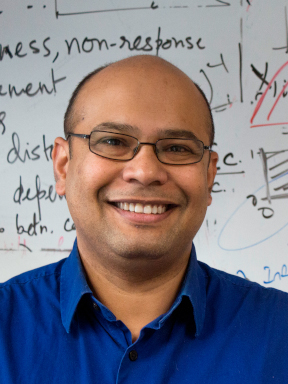

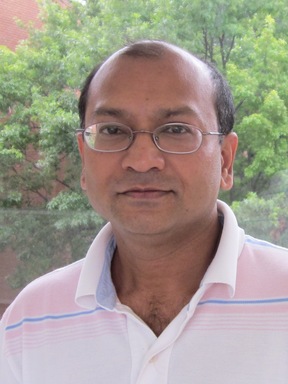 Principal investigator Snigdhansu (Ansu) Chatterjee (left) and co-investigators Karuna Joshi and Animikh Biswas are the leads of the“FDT-BioTech: Aspects of Digital Twin Studies for Neuroimages” study, funded by the National Science Foundation.
The study, which will run until 2027, includes co-investigators Karuna Joshi, professor of information systems, and Animikh Biswas, professor and chair of mathematics and statistics. Additional partners include researchers from the University of Minnesota and the University of Texas at El Paso. The project will also provide funding to support two graduate students and a postdoctoral researcher at UMBC who specialize in engineering, math, or statistics.
Joshi, who is the director of UMBC’s Center for Accelerated Real Time Analytics, explains that there has been an increase in the use of AI models in health prediction, diagnostics, and determining treatment options.
“The explainability and the replicability elements of digital twinning are very critical to why the technology is becoming popular,” says Joshi. “We are looking to develop a ‘meta model’ of all of the various models that’s going to run the neuroimages we’ll study so that it can be explained, archived, and audited.”
Joshi adds that the study will allow for “a cross-pollination of ideas,” where engineering meets science, math, statistics, and healthcare in a very unique way.
More on artificial intelligence research at UMBC.
]]>
A multidisciplinary team of UMBC researchers was recently awarded a National Science Foundation (NSF) grant to expand the use of digital twinning technology to diagnose, treat, and increase the...
https://umbc.edu/stories/digital-twinning-nsf-study/
https://my3.my.umbc.edu/api/v0/pixel/news/144906/guest@my.umbc.edu/70a855afdefe0651942e3e7739cf041e/api/pixel
artificial-intelligence
cnms
coeit
information-systems
mathematics-and-statistics
news
research
science-and-tech
story
UMBC News & Magazine
https://my3.my.umbc.edu/groups/umbc-news-magazine
https://assets1-my.umbc.edu/system/shared/avatars/groups/000/001/943/24435aa6207c452e7bc15cc74b42c7bb/xsmall.png?1748556657
https://assets1-my.umbc.edu/system/shared/avatars/groups/000/001/943/24435aa6207c452e7bc15cc74b42c7bb/original.png?1748556657
https://assets2-my.umbc.edu/system/shared/avatars/groups/000/001/943/24435aa6207c452e7bc15cc74b42c7bb/xxlarge.png?1748556657
https://assets2-my.umbc.edu/system/shared/avatars/groups/000/001/943/24435aa6207c452e7bc15cc74b42c7bb/xlarge.png?1748556657
https://assets3-my.umbc.edu/system/shared/avatars/groups/000/001/943/24435aa6207c452e7bc15cc74b42c7bb/large.png?1748556657
https://assets1-my.umbc.edu/system/shared/avatars/groups/000/001/943/24435aa6207c452e7bc15cc74b42c7bb/medium.png?1748556657
https://assets2-my.umbc.edu/system/shared/avatars/groups/000/001/943/24435aa6207c452e7bc15cc74b42c7bb/small.png?1748556657
https://assets1-my.umbc.edu/system/shared/avatars/groups/000/001/943/24435aa6207c452e7bc15cc74b42c7bb/xsmall.png?1748556657
https://assets2-my.umbc.edu/system/shared/avatars/groups/000/001/943/24435aa6207c452e7bc15cc74b42c7bb/xxsmall.png?1748556657
UMBC News & Magazine
0
0
false
Fri, 18 Oct 2024 15:25:12 -0400
Fri, 18 Oct 2024 15:25:12 -0400
Study Shows AI-Generated Fake Reports Fool Experts

By Priyanka Ranade, doctoral student in Computer Science and Electrical Engineering (CSEE), UMBC; Anupam Joshi, professor, CSEE, UMBC; and Tim Finin, professor, CSEE, UMBC
Takeaways
· AIs can generate fake reports that are convincing enough to trick cybersecurity experts.
· If widely used, these AIs could hinder efforts to defend against cyberattacks.
· These systems could set off an AI arms race between misinformation generators and detectors.
If you use such social media websites as Facebook and Twitter, you may have come across posts flagged with warnings about misinformation. So far, most misinformation – flagged and unflagged – has been aimed at the general public. Imagine the possibility of misinformation – information that is false or misleading – in scientific and technical fields like cybersecurity, public safety and medicine.
There is growing concern about misinformation spreading in these critical fields as a result of common biases and practices in publishing scientific literature, even in peer-reviewed research papers. As a graduate student and as faculty members doing research in cybersecurity, we studied a new avenue of misinformation in the scientific community. We found that it’s possible for artificial intelligence systems to generate false information in critical fields like medicine and defense that is convincing enough to fool experts.
General misinformation often aims to tarnish the reputation of companies or public figures. Misinformation within communities of expertise has the potential for scary outcomes such as delivering incorrect medical advice to doctors and patients. This could put lives at risk.
To test this threat, we studied the impacts of spreading misinformation in the cybersecurity and medical communities. We used artificial intelligence models dubbed transformers to generate false cybersecurity news and COVID-19 medical studies and presented the cybersecurity misinformation to cybersecurity experts for testing. We found that transformer-generated misinformation was able to fool cybersecurity experts.
Transformers
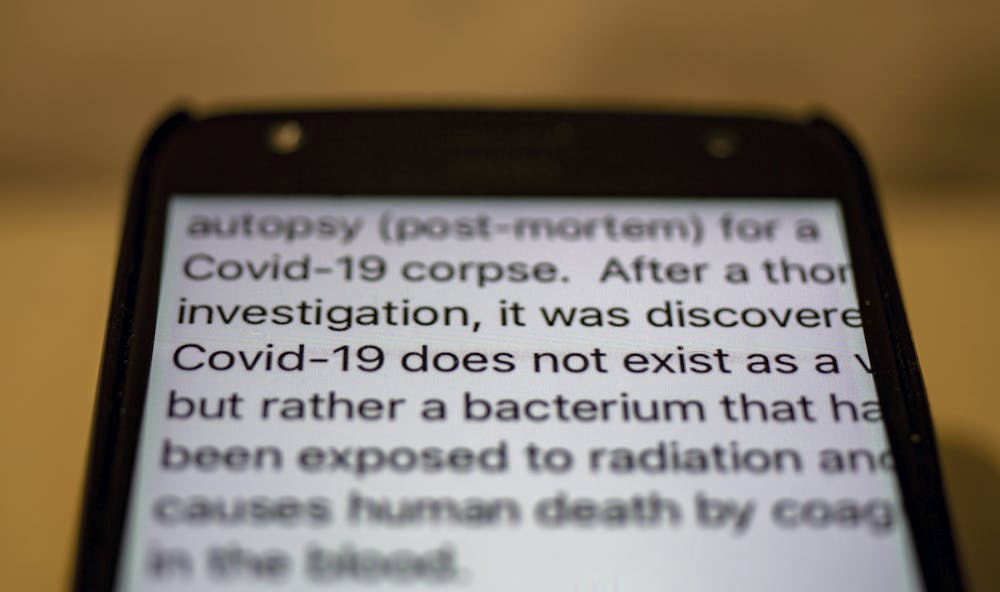
 AI can help detect misinformation like these false claims about COVID-19 in India – but what happens when AI is used to generate the misinformation? AP Photo/Ashwini Bhatia
Much of the technology used to identify and manage misinformation is powered by artificial intelligence. AI allows computer scientists to fact-check large amounts of misinformation quickly, given that there’s too much for people to detect without the help of technology. Although AI helps people detect misinformation, it has ironically also been used to produce misinformation in recent years.
Transformers, like BERT from Google and GPT from OpenAI, use natural language processing to understand text and produce translations, summaries and interpretations. They have been used in such tasks as storytelling and answering questions, pushing the boundaries of machines displaying humanlike capabilities in generating text.
Transformers have aided Google and other technology companies by improving their search engines and have helped the general public in combating such common problems as battling writer’s block.
Transformers can also be used for malevolent purposes. Social networks like Facebook and Twitter have already faced the challenges of AI-generated fake news across platforms.
Critical misinformation
Our research shows that transformers also pose a misinformation threat in medicine and cybersecurity. To illustrate how serious this is, we fine-tuned the GPT-2 transformer model on open online sources discussing cybersecurity vulnerabilities and attack information. A cybersecurity vulnerability is the weakness of a computer system, and a cybersecurity attack is an act that exploits a vulnerability. For example, if a vulnerability is a weak Facebook password, an attack exploiting it would be a hacker figuring out your password and breaking into your account.
We then seeded the model with the sentence or phrase of an actual cyberthreat intelligence sample and had it generate the rest of the threat description. We presented this generated description to cyberthreat hunters, who sift through lots of information about cybersecurity threats. These professionals read the threat descriptions to identify potential attacks and adjust the defenses of their systems.
We were surprised by the results. The cybersecurity misinformation examples we generated were able to fool cyberthreat hunters, who are knowledgeable about all kinds of cybersecurity attacks and vulnerabilities. Imagine this scenario with a crucial piece of cyberthreat intelligence that involves the airline industry, which we generated in our study.
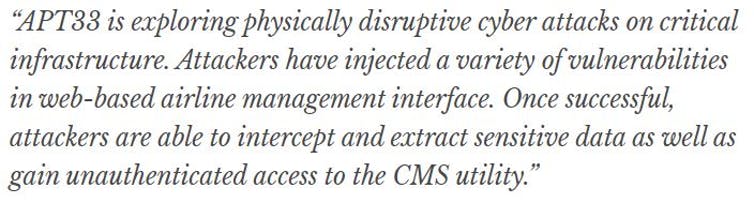 An example of AI-generated cybersecurity misinformation. The Conversation, CC BY-ND
This misleading piece of information contains incorrect information concerning cyberattacks on airlines with sensitive real-time flight data. This false information could keep cyber analysts from addressing legitimate vulnerabilities in their systems by shifting their attention to fake software bugs. If a cyber analyst acts on the fake information in a real-world scenario, the airline in question could have faced a serious attack that exploits a real, unaddressed vulnerability.
A similar transformer-based model can generate information in the medical domain and potentially fool medical experts. During the COVID-19 pandemic, preprints of research papers that have not yet undergone a rigorous review are constantly being uploaded to such sites as medrXiv. They are not only being described in the press but are being used to make public health decisions. Consider the following, which is not real but generated by our model after minimal fine-tuning of the default GPT-2 on some COVID-19-related papers.
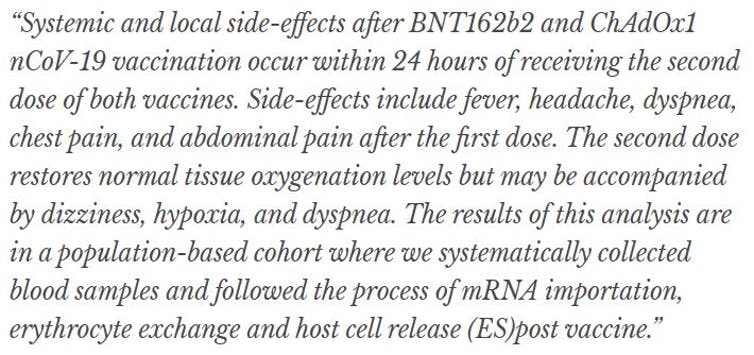 An example of AI-generated health care misinformation. The Conversation, CC BY-ND
The model was able to generate complete sentences and form an abstract allegedly describing the side effects of COVID-19 vaccinations and the experiments that were conducted. This is troubling both for medical researchers, who consistently rely on accurate information to make informed decisions, and for members of the general public, who often rely on public news to learn about critical health information. If accepted as accurate, this kind of misinformation could put lives at risk by misdirecting the efforts of scientists conducting biomedical research.
An AI misinformation arms race?
Although examples like these from our study can be fact-checked, transformer-generated misinformation hinders such industries as health care and cybersecurity in adopting AI to help with information overload. For example, automated systems are being developed to extract data from cyberthreat intelligence that is then used to inform and train automated systems to recognize possible attacks. If these automated systems process such false cybersecurity text, they will be less effective at detecting true threats.
We believe the result could be an arms race as people spreading misinformation develop better ways to create false information in response to effective ways to recognize it.
Cybersecurity researchers continuously study ways to detect misinformation in different domains. Understanding how to automatically generate misinformation helps in understanding how to recognize it. For example, automatically generated information often has subtle grammatical mistakes that systems can be trained to detect. Systems can also cross-correlate information from multiple sources and identify claims lacking substantial support from other sources.
Ultimately, everyone should be more vigilant about what information is trustworthy and be aware that hackers exploit people’s credulity, especially if the information is not from reputable news sources or published scientific work.
*****
Header image: It doesn’t take a human mind to produce misinformation convincing enough to fool experts in such critical fields as cybersecurity. iLexx/iStock via Getty Images
Priyanka Ranade, PhD Student in Computer Science and Electrical Engineering, University of Maryland, Baltimore County; Anupam Joshi, Professor of Computer Science & Electrical Engineering, University of Maryland, Baltimore County, and Tim Finin, Professor of Computer Science and Electrical Engineering, University of Maryland, Baltimore County
This article is republished from The Conversation under a Creative Commons license. Read the original article.
]]>
By Priyanka Ranade, doctoral student in Computer Science and Electrical Engineering (CSEE), UMBC; Anupam Joshi, professor, CSEE, UMBC; and Tim Finin, professor, CSEE, UMBC Takeaways · AIs...
https://umbc.edu/stories/study-shows-ai-generated-fake-reports-fool-experts/
https://my3.my.umbc.edu/api/v0/pixel/news/119608/guest@my.umbc.edu/5dae4c8e8073cdf9c0c22421e580e2b5/api/pixel
artificial-intelligence
csee
cybersecurity
discovery
the-conversation
UMBC News & Magazine
https://my3.my.umbc.edu/groups/umbc-news-magazine
https://assets1-my.umbc.edu/system/shared/avatars/groups/000/001/943/24435aa6207c452e7bc15cc74b42c7bb/xsmall.png?1748556657
https://assets1-my.umbc.edu/system/shared/avatars/groups/000/001/943/24435aa6207c452e7bc15cc74b42c7bb/original.png?1748556657
https://assets2-my.umbc.edu/system/shared/avatars/groups/000/001/943/24435aa6207c452e7bc15cc74b42c7bb/xxlarge.png?1748556657
https://assets2-my.umbc.edu/system/shared/avatars/groups/000/001/943/24435aa6207c452e7bc15cc74b42c7bb/xlarge.png?1748556657
https://assets3-my.umbc.edu/system/shared/avatars/groups/000/001/943/24435aa6207c452e7bc15cc74b42c7bb/large.png?1748556657
https://assets1-my.umbc.edu/system/shared/avatars/groups/000/001/943/24435aa6207c452e7bc15cc74b42c7bb/medium.png?1748556657
https://assets2-my.umbc.edu/system/shared/avatars/groups/000/001/943/24435aa6207c452e7bc15cc74b42c7bb/small.png?1748556657
https://assets1-my.umbc.edu/system/shared/avatars/groups/000/001/943/24435aa6207c452e7bc15cc74b42c7bb/xsmall.png?1748556657
https://assets2-my.umbc.edu/system/shared/avatars/groups/000/001/943/24435aa6207c452e7bc15cc74b42c7bb/xxsmall.png?1748556657
UMBC News & Magazine
0
0
false
Mon, 07 Jun 2021 13:38:59 -0400