Putin’s visit to Mongolia defies ICC warrant and tests neutral nation’s ‘third neighbor’ diplomacy
Written by Christopher K. Tong, associate professor of Asian studies at UMBC and Charles Krusekopf, professor of business Royal Roads University
Vladimir Putin arrived in Mongolia on Sept. 2, 2024, the first time the Russian president has visited an International Criminal Court (ICC) member country since the body issued a warrant for his arrest in 2023. While officially commemorating a Soviet-Mongolian military victory in World War II, Putin’s visit will test the small central Asian country’s policy of neutrality and the reach of international institutions.
Mongolia, a country of just 3.3 million people but with huge geographical territory, has long navigated its foreign policy in the shadow of Russia and China, with whom it has extensive historical and economic ties.
The country has attempted to bolster its independence from its more powerful neighbors by developing cordial relations with so-called third neighbor countries that include the United States, Germany, Japan and South Korea.
Through this approach, Mongolia has attempted to carve out a niche on the international stage, presenting itself as a neutral diplomatic meeting ground. Its annual Ulaanbaatar Dialogue, for example, is an opportunity for regional countries and other invited nations, including from the U.S. and EU member states, to discuss issues ranging from climate change to regional security and critical minerals.
As scholars of Mongolia and China, we attended the last such dialogue in June 2024 and witnessed Mongolia’s diplomatic efforts firsthand. It is a strategy that has worked for the country, but as events like Putin’s visit highlight, it can be a tough balancing act.
A closely watched visit
The timing of Putin’s trip is officially linked to history. It marks both the 85th anniversary of the Battle of Khalkhin Gol – in which joint Soviet-Mongolian forces defeated Japanese troops in World War II – and the founding of Mongolia’s national railway operator by the two countries 75 years ago.
Yet it is a third historical marker, the fifth anniversary of a comprehensive Russian-Mongolian strategic partnership, that highlights the visit’s significance from a modern geopolitical perspective.
Alongside its friendly relations with “third neighbors,” Mongolia has maintained a close relationship with Moscow despite Putin’s pariah status in much of the international community. Most recently, in July, Mongolian President Ukhnaagiin Khurelsukh met with Putin at the Shanghai Cooperation Organization summit.
Yet Putin’s visit now – the first he has made to the country since 2019 – poses a challenge for Mongolia as it seeks to balance its obligations and alliances with the Western-led international order, of which the ICC is a part, and its desire to remain friendly with its powerful neighbors.
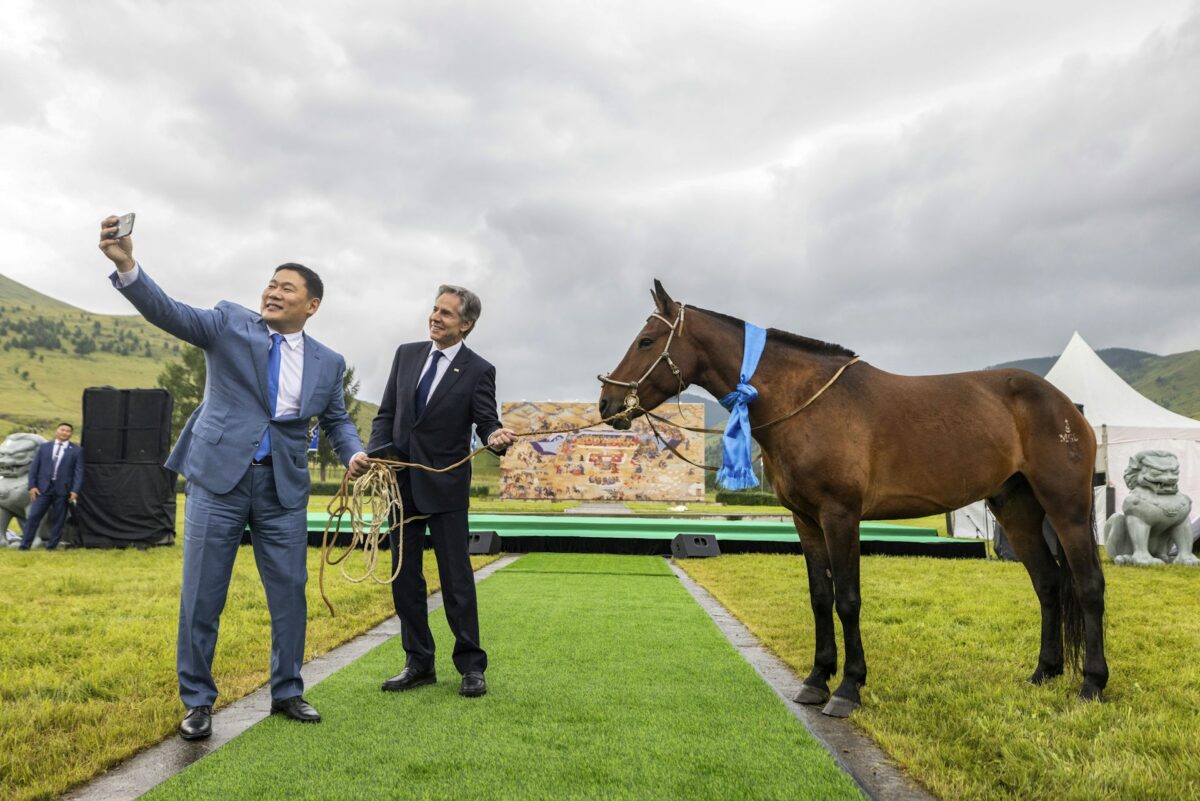 US Secretary of State Antony Blinken off to see a Mongolian man about a horse. Byambasuren Byamba-Ochir/Pool Photo via AP
Few things demonstrate this diplomatic tightrope walk like Mongolia’s membership in the ICC, which issued an arrest warrant for Putin over his alleged role in the unlawful deportation and transfer of Ukrainian children to Russia. Ukraine has urged Mongolia to detain Putin, citing the ICC’s founding treaty, the Rome Statute, which instructs member countries to take action if subjects to a court warrant enter their territory.
However, the ICC lacks an effective enforcement mechanism, and member states may also be exempt from carrying out arrests if doing so conflicts with certain treaty obligations or diplomatic immunity offered to another party.
Putin’s visit is expected to demonstrate how little can be done to rein in Moscow. Given the power imbalance between the states, Mongolia will likely show just how far it is willing to go to accommodate its powerful neighbor.
Mongolia’s ‘Third Neighbor’ policy
For almost 70 years, Mongolia was closely allied with the Soviet Union. But the fall of communism and subsequent geopolitical reorientation of the post-Cold War order forced the country to alter its economic and political relations.
In so doing, Mongolia became the only former communist state in Asia to adopt a democratic political system and open economy. It won favor with the U.S. and other Western countries who embraced the country as a role model for the region.
Putin’s expected trip is but the latest in a series of recent high-profile state visits as Mongolia seeks to maintain close relations with its neighbors, while also expanding partnerships with other nations.
So far in 2024, Mongolia has received heads of state or foreign ministers from the U.S., Slovenia, the Philippines, Belarus, the United Kingdom and Germany. In 2023, Mongolian Prime Minister Luvsannamsrain Oyun-Erdene traveled to the U.S. and met with Vice President Kamala Harris, and to China to see President Xi Jinping and Premier Li Qiang.
Both French President Emmanuel Macron and Pope Francis have recently visited Ulaanbaatar.
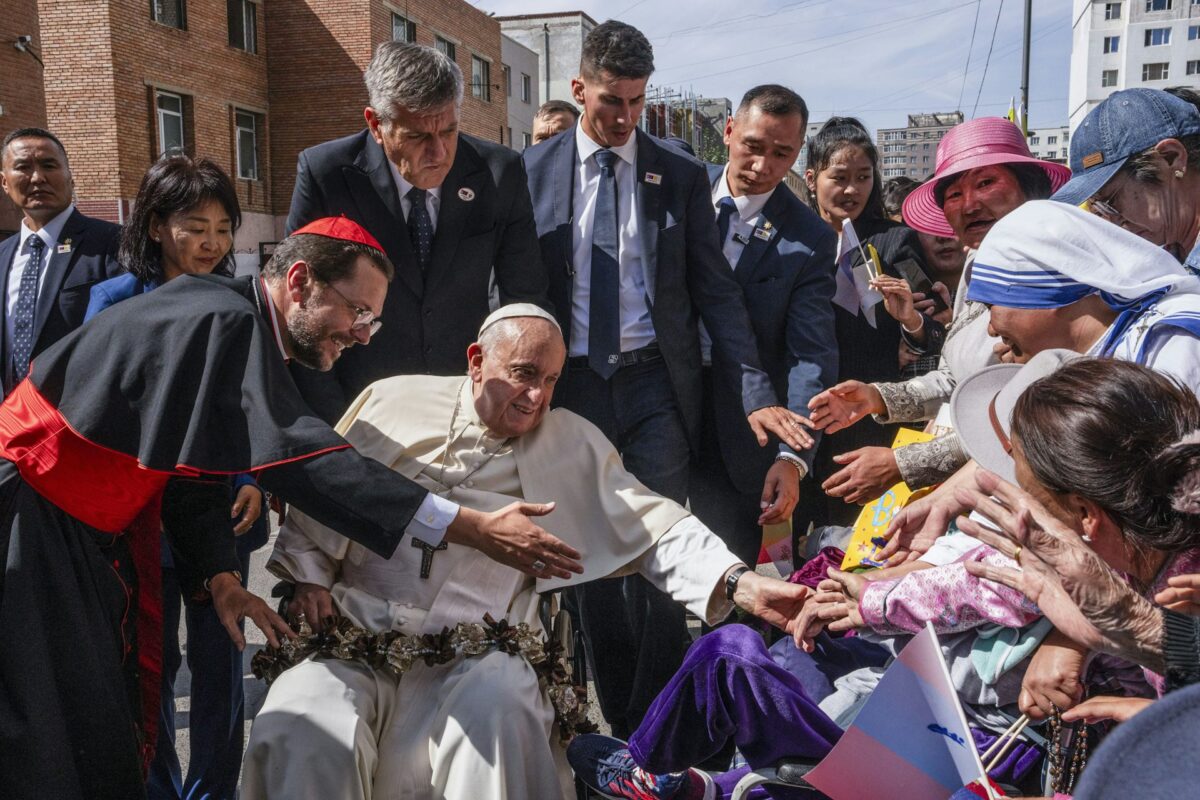 Pope Francis meets the faithful gathered outside the Apostolic Prefecture in Ulaanbaatar. AP Photo/Louise Delmotte)
Mongolia can’t escape geography
While soft power efforts have won Ulaanbaatar goodwill and friends around the globe, they do not trump geography. Landlocked between Russia and China, Mongolia remains vulnerable to the whims of its two giant neighbors.
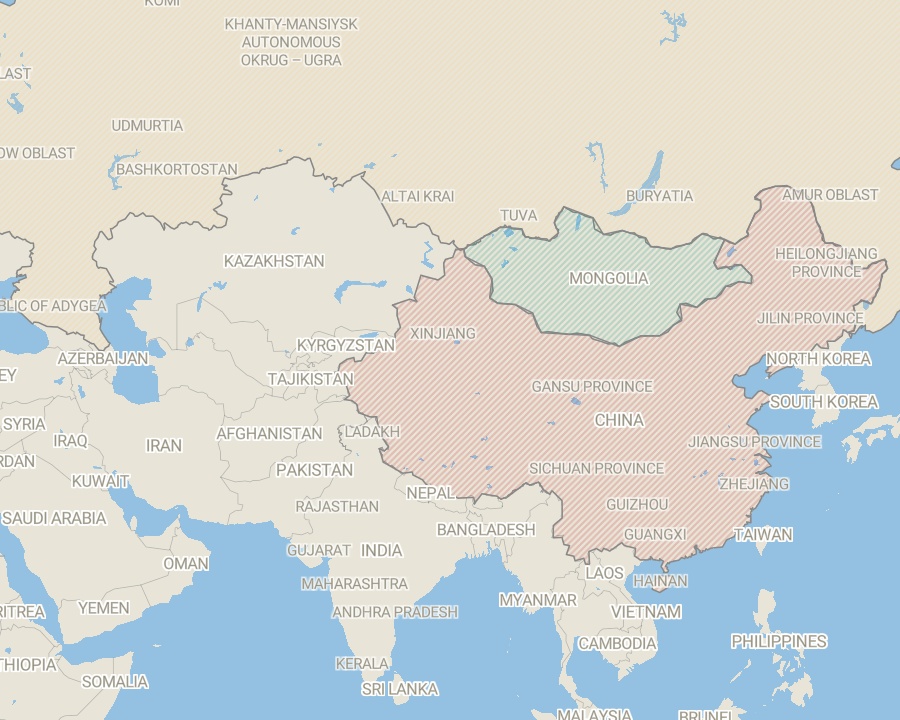 Map: The Conversation, CC-BY-NDCreated with Datawrapper
Mongolia is dependent on Russia for almost all its gasoline and diesel supplies and a substantial part of its electricity. Further, due to a legacy agreement from the Soviet era, Russia retains 50% ownership in several key infrastructure and mining projects in Mongolia. In particular, Russia is a partner in the Mongolian railway system, which has grown in importance as a trade corridor between China and Russia, and China and Europe.
Mongolia fears that its fuel supplies and transportation network will be disrupted if Russia prioritizes its own energy needs in the midst of war over the interests of its neighbors, however deep those ties may be.
Similarly, Mongolia is dependent on China for the majority of its non-energy imports, including food, consumer and industrial products. And China is the destination for 90% of Mongolia’s exports, primarily coal and copper.
Both Russia and China have used their economic and political muscle as leverage over Mongolia in the past due to perceived slights, such as China’s disruption of trade and a key loan in 2016 in protest of a visit to Mongolia by the Dalai Lama.
Mongolia and the new China-Russia alignment
Mongolia and other states in Central Asia face new challenges as Russia and China grow closer politically and economically.
Mongolia played the role of a buffer state between the Soviet Union and China for much of the 20th century, and counted on the rivalry between the two superpowers to gain and maintain its independent status.
But the growing friendship between China and Russia – highlighted by Putin and Xi’s declaration of a “no limits” partnership in February 2022, just days before Russian troops invaded Ukraine – raises the question whether China and Russia will begin to act in concert to gain even more leverage over Mongolia and other smaller states in region.
It is these geopolitical concerns that Ulaanbaatar may be fixated upon during Putin’s visit. Even as Mongolia has been affected by the sanctions placed on Russia, seeing transportation and business links disrupted, the country has steered clear of confrontations with Moscow in international settings.
Along with China, Mongolia routinely abstains from United Nations resolutions condemning Russia’s invasion of Ukraine. But in a sign that Mongolia remains committed to its third neighbor policy, it has also been careful not to violate the sanctions imposed on Russia by the U.S. and its allies.
While Mongolia recognizes the importance of Putin’s visit to maintain good ties and the flow of fuel to the country, it will also be concerned with how the visit and its anticipated non-enforcement of ICC sanctions will hurt the country’s standing with global institutions and powers outside the region.
In a shifting world order, Mongolia is working hard to maintain independence by emphasizing its role as a neutral state and friend to all. But visits such as Putin’s show how difficult that endeavor can be.
This article is republished from The Conversation under a Creative Commons license. Read the original article and see more than 250 UMBC articles available in The Conversation.
]]>
Written by Christopher K. Tong, associate professor of Asian studies at UMBC and Charles Krusekopf, professor of business Royal Roads University Vladimir Putin arrived in Mongolia on Sept. 2,...
https://umbc.edu/stories/putins-visit-to-mongolia-defies-icc-warrant-and-tests-neutral-nations-third-neighbor-diplomacy/
https://my3.my.umbc.edu/api/v0/pixel/news/143527/guest@my.umbc.edu/427f0514a26e83b4de2c2e6766cf6c0c/api/pixel
asian-studies
cahss
discovery
international
magazine
research
story
UMBC News & Magazine
https://my3.my.umbc.edu/groups/umbc-news-magazine
https://assets1-my.umbc.edu/system/shared/avatars/groups/000/001/943/24435aa6207c452e7bc15cc74b42c7bb/xsmall.png?1748556657
https://assets1-my.umbc.edu/system/shared/avatars/groups/000/001/943/24435aa6207c452e7bc15cc74b42c7bb/original.png?1748556657
https://assets2-my.umbc.edu/system/shared/avatars/groups/000/001/943/24435aa6207c452e7bc15cc74b42c7bb/xxlarge.png?1748556657
https://assets2-my.umbc.edu/system/shared/avatars/groups/000/001/943/24435aa6207c452e7bc15cc74b42c7bb/xlarge.png?1748556657
https://assets3-my.umbc.edu/system/shared/avatars/groups/000/001/943/24435aa6207c452e7bc15cc74b42c7bb/large.png?1748556657
https://assets1-my.umbc.edu/system/shared/avatars/groups/000/001/943/24435aa6207c452e7bc15cc74b42c7bb/medium.png?1748556657
https://assets2-my.umbc.edu/system/shared/avatars/groups/000/001/943/24435aa6207c452e7bc15cc74b42c7bb/small.png?1748556657
https://assets1-my.umbc.edu/system/shared/avatars/groups/000/001/943/24435aa6207c452e7bc15cc74b42c7bb/xsmall.png?1748556657
https://assets2-my.umbc.edu/system/shared/avatars/groups/000/001/943/24435aa6207c452e7bc15cc74b42c7bb/xxsmall.png?1748556657
UMBC News & Magazine
0
0
false
Tue, 03 Sep 2024 11:12:58 -0400
Tue, 03 Sep 2024 11:12:58 -0400
Christopher K. Tong, MLLI, returns from a research award in Mongolia to inform his work in Asian studies
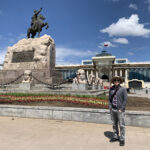
Christopher K. Tong, an associate professor of modern languages, linguistics, and intercultural communication, has taught Asian studies for years. This fall, Tong brings a fresh perspective to his classes after spending two weeks in Mongolia as part of an award from the Council of American Overseas Research Centers (CAORC) to participate in the Overseas Faculty Development Seminar: Climate Change and Public Health—What Does Climate Change Mean for the People of Mongolia? Tong used this opportunity to advance research for his forthcoming book on the emergence of modern science and ecological consciousness in Asian and Western societies.
“Despite the grandeur of this country’s history, Mongolia as a modern nation is often understudied in Asian studies. Within China, Mongolians are an ethnic minority struggling to preserve their language and culture,” explains Tong. “Historically, the Mongolian empire stretched from Asia to Europe, so there is intrinsic value to studying Mongolia from a humanistic perspective. It was also interesting to see how present-day Mongolians understand and represent this history, for example, the life and legacy of Genghis Khan.”
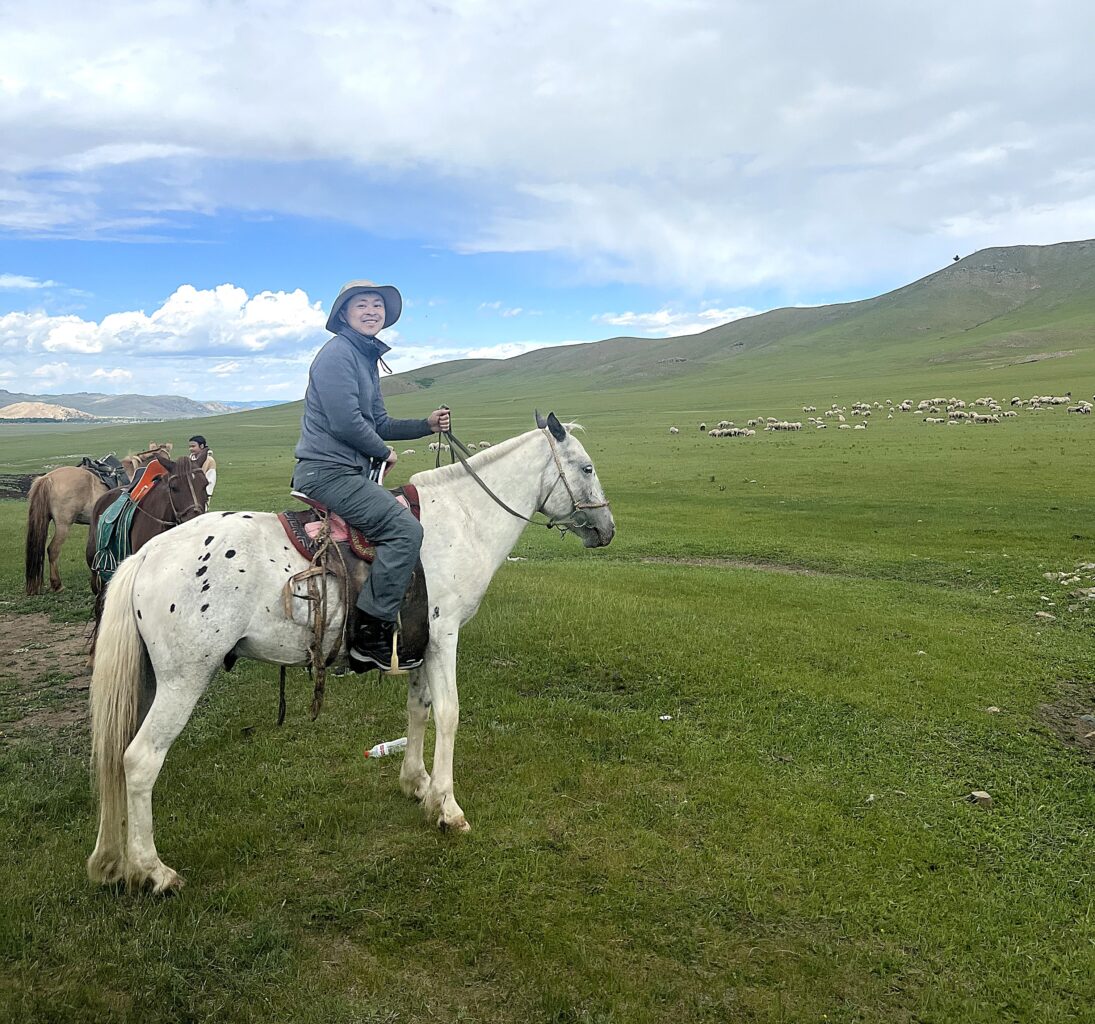 Tong rides a Mongolian horse during a visit to a nomadic family in the countryside near Ikh-Tamir in central Mongolia. (Image courtesy of Tong)
CAORC is a private, nonprofit federation of independent overseas research centers that promotes advanced research with an emphasis on the humanities and social sciences, the conservation and recording of cultural heritage, and the understanding and interpretation of modern societies. Tong was one of 44 faculty members from community colleges and minority-serving institutions, like UMBC, placed in one of three seminars that aimed to help faculty and administrators gain first-hand experience needed to develop and improve international courses, curricula, and teaching materials.
Learning from Mongolians
The seminar took place at the American Center for Mongolian Studies (ACMS) in Ulaanbaatar, the capital city of Mongolia. The 14 faculty assigned to the seminar in Mongolia visited Ulaanbaatar; the rural communities at Kharkhorin, the historic capital of the Mongol Empire; Erdene Zuu Monastery—the oldest Buddhist monastery in Mongolia; and Hustai National Park, home to the rare and endangered Przewalski’s horses. They also gained first-hand knowledge of the impact of hotter days, increasing wildfires, storms, colder winters, and drought on Mongolia’s communities and environment.
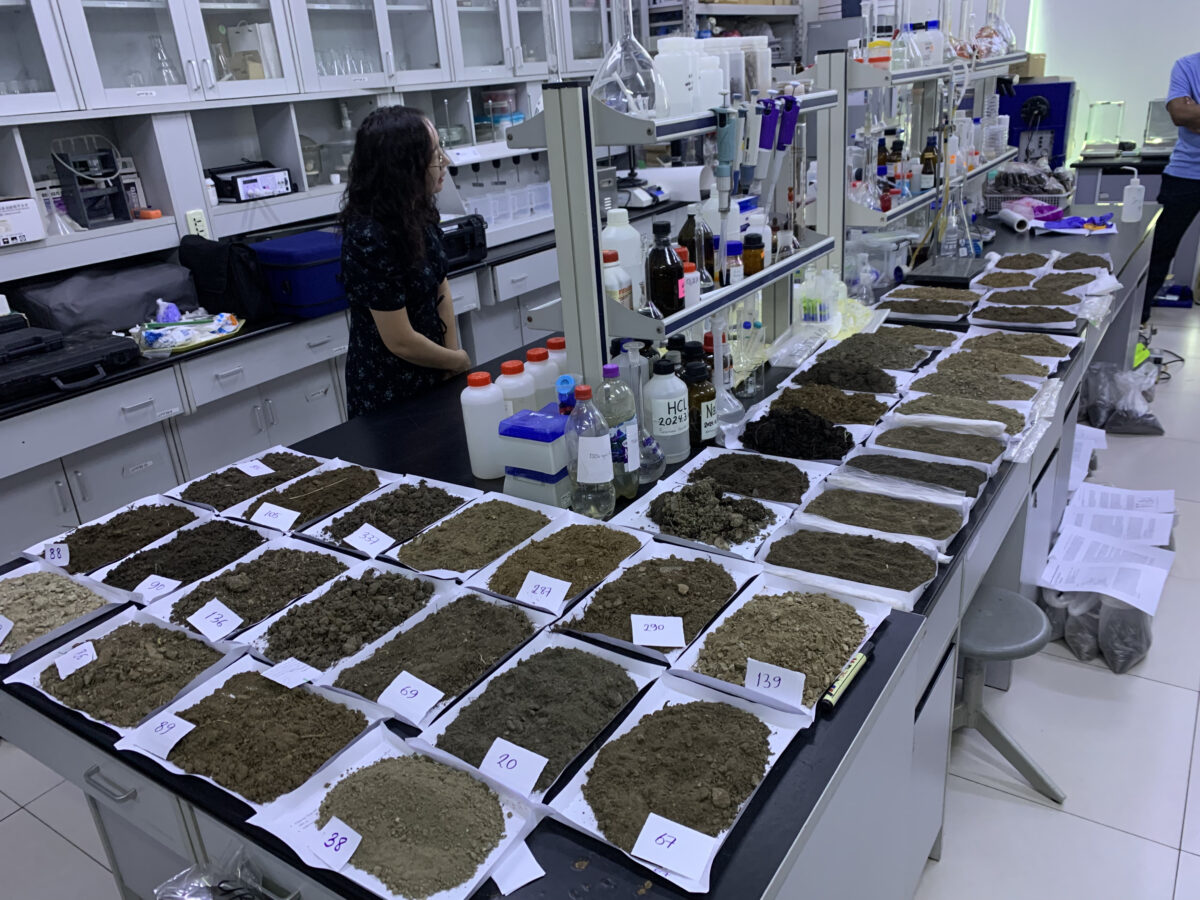 A soil scientist at the National University of Mongolia explains the different types of soil collected in the city of Ulaanbaatar and its vicinities. (Image courtesy of Tong)
“It was an eye-opening experience visiting Mongolia—meeting its people and experiencing the landscape. I have read novels and research about Mongolia,” shares Tong, “but visiting in person enriched my understanding and challenged my preconceptions.” He notes that Mongolia’s unusually cold winter this year wiped out entire herds of livestock, the primary source of income for nomadic families. Meanwhile, the use of low-grade coal for heating in Ulaanbaatar has increased air pollution and negatively impacted public health. “The effects of climate change are particularly noticeable to the people of Mongolia.”
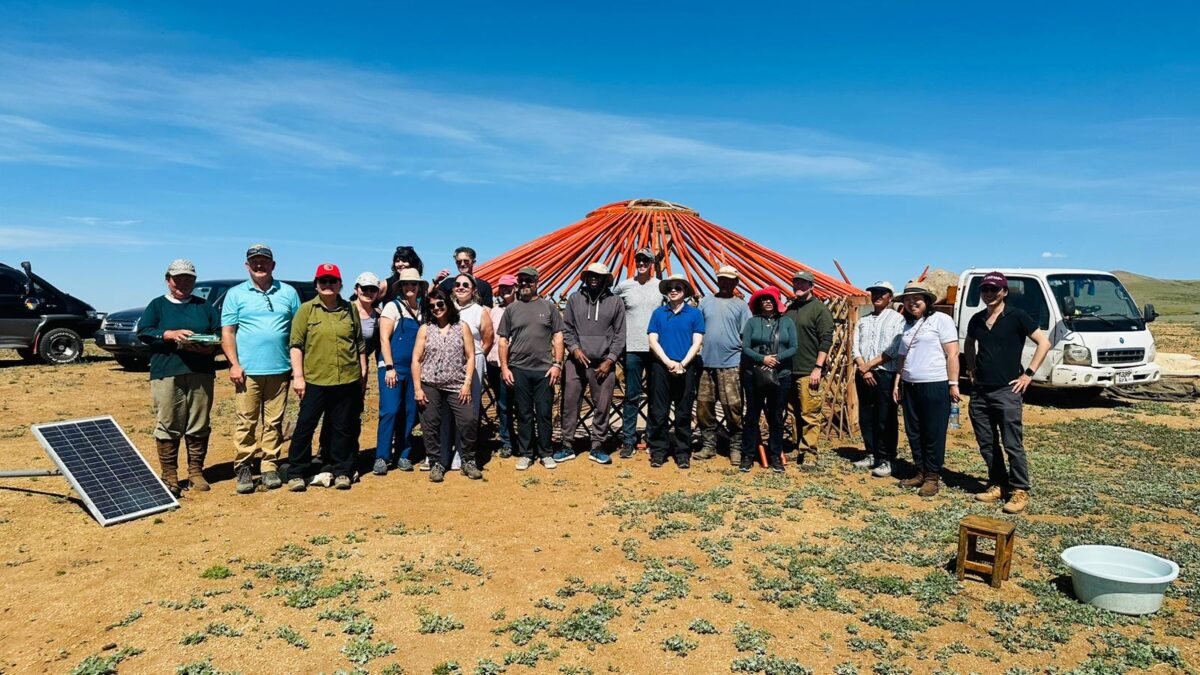 Tong (center with a blue polo and hat) stands with his CAORC colleagues and the nomadic family the team assisted in constructing their ger, a traditional Mongolian yurt. (Image courtesy of Tong)
The faculty met local officials, health specialists, climate scientists, and nomadic pastoralists to learn about their country and way of life from them. The scholars also assisted a nomadic family in constructing their ger, a traditional Mongolian yurt. These interactions and collaborations helped Tong better understand the Mongolian people’s perspectives on development and its relationship with China and the U.S. “My experience in Mongolia will inform my research in Asian studies and help me connect with Mongolian Americans back in the U.S.,” says Tong. “I’m very grateful that CAORC and ACMS allowed me to visit Mongolia.”
Bringing Mongolia to the classroom
This transformative experience will also benefit UMBC students. Tong has been teaching a course on China’s ethnic minorities, MLLI 335: Modern China: Culture, Society, and Environment, for many years. “A part of the traditional Mongolian homeland is in present-day China, an autonomous region known as Inner Mongolia,” says Tong. He teaches the novel Wolf Totem by Jiang Rong, which tells the story of a student from Beijing who travels to Inner Mongolia to live among the Mongols in the 1960s.
“Of course, the country of Mongolia is different from the Chinese region of Inner Mongolia. The field trip made these differences clear,” says Tong, who will develop new course materials on Mongolia as a modern nation and contextualize it within the broader field of Asian studies.
In addition to the CAORC award, Tong received a 2023 – 2024 short-term residential research fellowship from the American Philosophical Society to conduct research at the society’s library and museum in Philadelphia. During this time, Tong researched the history of evolutionary science in the U.S., including the contributions of Asian and African American scientists. He also helped launch UMBC’s new Mellon-funded Global Asias Initiative. The initiative supports rethinking Asian American issues on campus in a global, diasporic, and collaborative framework through community-engaged, public-facing scholarship, and teaching.
These work and research awards, along with a 2021 Early Career Fellowship in China Studies from the American Council of Learned Societies and a 2018 – 2019 Fulbright U.S. Scholar Program grant to China, have given Tong the time and resources to contribute new research to the field and new approaches to the teaching and learning of Asian studies.
Learn more about UMBC’s Asian Studies program and the Global Asias Initiative.
]]>
Christopher K. Tong, an associate professor of modern languages, linguistics, and intercultural communication, has taught Asian studies for years. This fall, Tong brings a fresh perspective to his...
https://umbc.edu/stories/christopher-tong-returns-from-mongolia-2024/
https://my3.my.umbc.edu/api/v0/pixel/news/142900/guest@my.umbc.edu/3a0919dba2696309e62ee8ca7517086e/api/pixel
asian-studies
cahss
cahss-research
international
mlli
news
policy-and-society
research
story
UMBC News & Magazine
https://my3.my.umbc.edu/groups/umbc-news-magazine
https://assets1-my.umbc.edu/system/shared/avatars/groups/000/001/943/24435aa6207c452e7bc15cc74b42c7bb/xsmall.png?1748556657
https://assets1-my.umbc.edu/system/shared/avatars/groups/000/001/943/24435aa6207c452e7bc15cc74b42c7bb/original.png?1748556657
https://assets2-my.umbc.edu/system/shared/avatars/groups/000/001/943/24435aa6207c452e7bc15cc74b42c7bb/xxlarge.png?1748556657
https://assets2-my.umbc.edu/system/shared/avatars/groups/000/001/943/24435aa6207c452e7bc15cc74b42c7bb/xlarge.png?1748556657
https://assets3-my.umbc.edu/system/shared/avatars/groups/000/001/943/24435aa6207c452e7bc15cc74b42c7bb/large.png?1748556657
https://assets1-my.umbc.edu/system/shared/avatars/groups/000/001/943/24435aa6207c452e7bc15cc74b42c7bb/medium.png?1748556657
https://assets2-my.umbc.edu/system/shared/avatars/groups/000/001/943/24435aa6207c452e7bc15cc74b42c7bb/small.png?1748556657
https://assets1-my.umbc.edu/system/shared/avatars/groups/000/001/943/24435aa6207c452e7bc15cc74b42c7bb/xsmall.png?1748556657
https://assets2-my.umbc.edu/system/shared/avatars/groups/000/001/943/24435aa6207c452e7bc15cc74b42c7bb/xxsmall.png?1748556657
UMBC News & Magazine
0
0
false
Tue, 23 Jul 2024 13:21:46 -0400
Tue, 23 Jul 2024 13:21:46 -0400
China turns to private hackers as it cracks down on online activists on Tiananmen Square anniversary
Written by Christopher K. Tong, associate professor of Asian studies at UMBC
Every year ahead of the June 4 commemoration of the Tiananmen Square massacre, the Chinese government tightens online censorship to suppress domestic discussion of the event.
Critics, dissidents and international groups anticipate an uptick in cyber activity ranging from emails with malicious links to network attacks in the days and weeks leading up to the anniversary.
Much of this cyber activity by Beijing is done covertly. But a recent restructuring of China’s cyberforce and a document leak exposing the activities of Chinese tech firm i-Soon have shed some light on how Beijing goes about the business of hacking.
As a China expert and open-source researcher, I believe the latest revelations draw the curtain back on a contractor ecosystem in which government officials and commercial operators are increasingly working together. In short, Beijing is outsourcing its cyber operations to a patchwork army of private-sector hackers who offer their services out of a mix of nationalism and profit.
From censorship to cyberattacks
Chinese authorities restrict the flow of information online by banning search terms, scanning social media for subversive messages and blocking access to foreign media and applications that may host censored content. Control of online activity is particularly stringent around the anniversary of the protests at Tiananmen Square in 1989 that ended with a bloody crackdown on demonstrators by troops on June 4 of that year.
Since then pro-democracy activists have sought to commemorate the massacre on its anniversary – and Beijing has sought to counter mention of the crackdown. Chinese internet users note more restrictions and censorship in the run-up to the anniversary, with more words being banned and even certain emojis – like candles, denoting vigils – disappearing.
In 2020, Chinese authorities ordered Zoom, an American tech firm with a development team in China, to suspend the accounts of U.S.-based activists commemorating June 4 and to cancel online vigils hosted on the platform. Zoom complied, stating that it was following local laws.
Beyond censorship, cyberattacks on dissident groups and Chinese-language media in the diaspora have also occurred on or around the anniversary.
On June 4, 2022, Media Today, a Chinese-language media group in Australia, experienced an unattributed cyberattack against its user accounts. And earlier this year, the U.S. Department of Justice charged seven China-based hackers with sending malicious tracking emails to members of the Inter-Parliamentary Alliance on China, a group set up in 2020 on the anniversary of the Tiananmen Square massacre.
China’s cyberforce
The increasing sophistication of online attacks on dissident and international groups comes as China has been restructuring the agencies responsible for its cyber operations.
Today, much of China’s malicious cyber activities are carried out by the Ministry of State Security, or MSS, the country’s main intelligence agency and secret police. But prior to the MSS expanding into this role, the People’s Liberation Army, or PLA, was responsible for the earliest cyberattacks attributed to the Chinese government. In 2015, the PLA dedicated a new service to cyberwarfare and network security, the Strategic Support Force.
But in April 2024, the PLA abruptly announced the Strategic Support Force’s disbandment and the creation of three new forces: the Aerospace Force, the Cyberspace Force and the Information Support Force. They, along with the existing Joint Logistics Support Force, report directly to the Chinese Communist Party.
This restructuring comes at a time of political uncertainty for China’s leadership. In 2023, Defense Minister Li Shangfu was removed just months into his new role, along with Foreign Minister Qin Gang and Li Yuchao, commander of the Rocket Force.
While Beijing has yet to offer details on the military reorganization, its timing appears to send a message. President Xi Jinping personally presided over the inauguration of the Information Support Force, telling members of the force that they must “listen to the party’s orders” and be “absolutely loyal, absolutely pure, absolutely reliable.”
Hackers: Patriots, pirates or profiteers?
The restructuring of China’s cyberforces coincides with a trend that has seen the outsourcing of malicious cyber operations to private sector contractors acting with the state’s explicit or tacit approval.
In February 2024, a document leak exposed an underground network of Chinese cyber contractors hacking for profit.
Cyber experts have long suspected that hackers may collaborate with the Chinese government, but the leak shows how operators working for Chinese firm i-Soon sold services and products to Chinese government entities and state-sponsored threat groups. The company was founded in 2010 by Wu Haibo, a former member of the Green Army, often described as China’s earliest hacker community.
The Green Army was formed in 1997 for hackers to learn and exchange hacking techniques. By 1998, patriotic Chinese hackers began organizing cyberattacks. For example, when riots in Indonesia triggered by the Asian financial crisis gave rise to racial violence against Chinese Indonesians, Chinese hackers targeted Indonesian government websites.
In 1999, Chinese hackers vandalized U.S. government websites following NATO’s accidental bombing of the Chinese embassy in Belgrade. The term “honker,” meaning “red hacker” in Chinese, emerged around this time to designate Chinese hackers motivated by ideology and nationalism.
Yet, Chinese hackers have had an uneasy relationship with the authorities. While they offer cyber skills as well as plausible deniability for the Chinese government, they tend to muddle Beijing’s foreign policy when their actions go too far and draw criticism.
They are also prone to commit cybercrimes such as fraud and theft of intellectual property alongside state-sponsored espionage.
The Chinese government and prominent “patriotic” hackers have previously tried to rein in the community and promote legitimate work such as cybersecurity.
The i-Soon leak, however, documents how Chinese state-sponsored contractors engage in bribery and other illicit activities.
Exploiting security flaws
China’s cyber capabilities have grown through the control and exploitation of cyber professionals, state-sponsored or otherwise. But it’s a complicated relationship.
To phase out the criminal behavior of hackers, Beijing has developed a pipeline to train its cyber workforce. And in part to keep them from sharing expertise with foreigners, Chinese cyber professionals are generally banned from international hacking competitions.
While cybersecurity is improved when security professionals share newly discovered security flaws, Chinese regulations limit the flow of such information. By law, software vulnerabilities discovered in China must be immediately reported to the Chinese government. Experts believe the Ministry of State Security subsequently exploits this data to develop cyber offensive capabilities.
Still, the i-Soon leak points to corruption in at least one corner of China’s growing network of commercial hacking. Internal correspondence shows contractors bribing government officials with money, alcohol and other favors. Messages also show contractors failing to generate sales, delivering subpar work and complaining about their working-class salary.
With local governments in China struggling to pay for basic services in a weak economy, companies such as i-Soon that support Beijing’s cyber operations face not only political but also financial headwinds. Despite Beijing’s intention to implement an online crackdown every year on June 4, the cyberforces it employs to do so face their own issues that invite scrutiny and rectification by the Chinese Communist Party.
This article is republished from The Conversation under a Creative Commons license. Read the original article and see more than 250 UMBC articles available in The Conversation.
]]>
Written by Christopher K. Tong, associate professor of Asian studies at UMBC Every year ahead of the June 4 commemoration of the Tiananmen Square massacre, the Chinese government tightens...
https://umbc.edu/stories/china-private-hackers-tiananmen-square-anniversary/
https://my3.my.umbc.edu/api/v0/pixel/news/142369/guest@my.umbc.edu/adec3fc5c60c1be9c9f3b7824baf49e9/api/pixel
asian-studies
cahss
cahss-research
discovery
magazine
research
story
UMBC News & Magazine
https://my3.my.umbc.edu/groups/umbc-news-magazine
https://assets1-my.umbc.edu/system/shared/avatars/groups/000/001/943/24435aa6207c452e7bc15cc74b42c7bb/xsmall.png?1748556657
https://assets1-my.umbc.edu/system/shared/avatars/groups/000/001/943/24435aa6207c452e7bc15cc74b42c7bb/original.png?1748556657
https://assets2-my.umbc.edu/system/shared/avatars/groups/000/001/943/24435aa6207c452e7bc15cc74b42c7bb/xxlarge.png?1748556657
https://assets2-my.umbc.edu/system/shared/avatars/groups/000/001/943/24435aa6207c452e7bc15cc74b42c7bb/xlarge.png?1748556657
https://assets3-my.umbc.edu/system/shared/avatars/groups/000/001/943/24435aa6207c452e7bc15cc74b42c7bb/large.png?1748556657
https://assets1-my.umbc.edu/system/shared/avatars/groups/000/001/943/24435aa6207c452e7bc15cc74b42c7bb/medium.png?1748556657
https://assets2-my.umbc.edu/system/shared/avatars/groups/000/001/943/24435aa6207c452e7bc15cc74b42c7bb/small.png?1748556657
https://assets1-my.umbc.edu/system/shared/avatars/groups/000/001/943/24435aa6207c452e7bc15cc74b42c7bb/xsmall.png?1748556657
https://assets2-my.umbc.edu/system/shared/avatars/groups/000/001/943/24435aa6207c452e7bc15cc74b42c7bb/xxsmall.png?1748556657
UMBC News & Magazine
0
0
false
Fri, 07 Jun 2024 13:05:43 -0400
Fri, 07 Jun 2024 13:05:43 -0400
Mellon Foundation grants CAHSS $750K to establish Global Asias Initiative
Kimberly Moffitt, dean of the College of Arts, Humanities, and Socials Sciences, and co-pi Tamara Bhalla, associate professor of American studies and director of the Asian American studies minor, have been awarded a $750,000 grant from the Mellon Foundation to establish the Global Asias Initiative. The initiative will support the rethinking of Asian American issues on campus in a global, diasporic, and collaborative framework through community-engaged, public-facing scholarship and teaching.
“The impact and influence of the Asian diaspora in this region makes it clear that our world has more to offer in providing valuable opportunities for our students, while also creating additional partnerships with the greater Baltimore community,” says Moffitt.
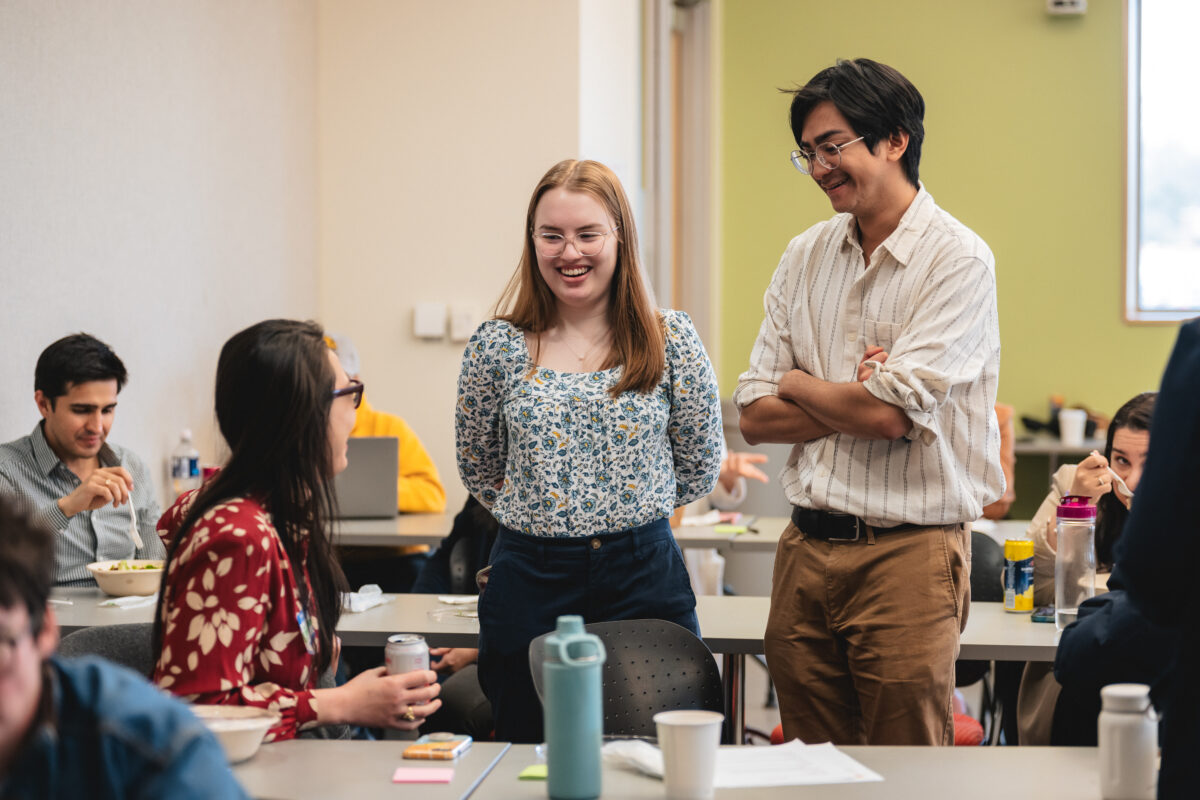 (l-r) Emily Yoon and students at the Global Asias Initiative launch workshop.
(Abnet Shiferaw)
UMBC’s existing Asian studies program and Asian American studies minor will grow into a more expansive Global Asias program that better serves and represents UMBC’s Asian American community, interested students, and beyond. This includes launching an undergraduate community-based research fellowship in Global Asias and the conversation series “Reframing Global Asias,” which invites prominent leaders, scholars, and community members in the field to present and discuss key issues, possibilities, challenges, and new research.
“Together,” says Bhalla, “we will create a forum for engaging in difficult yet productive intellectual conversations in Asian American studies, Asian diaspora studies, and Asian studies.”
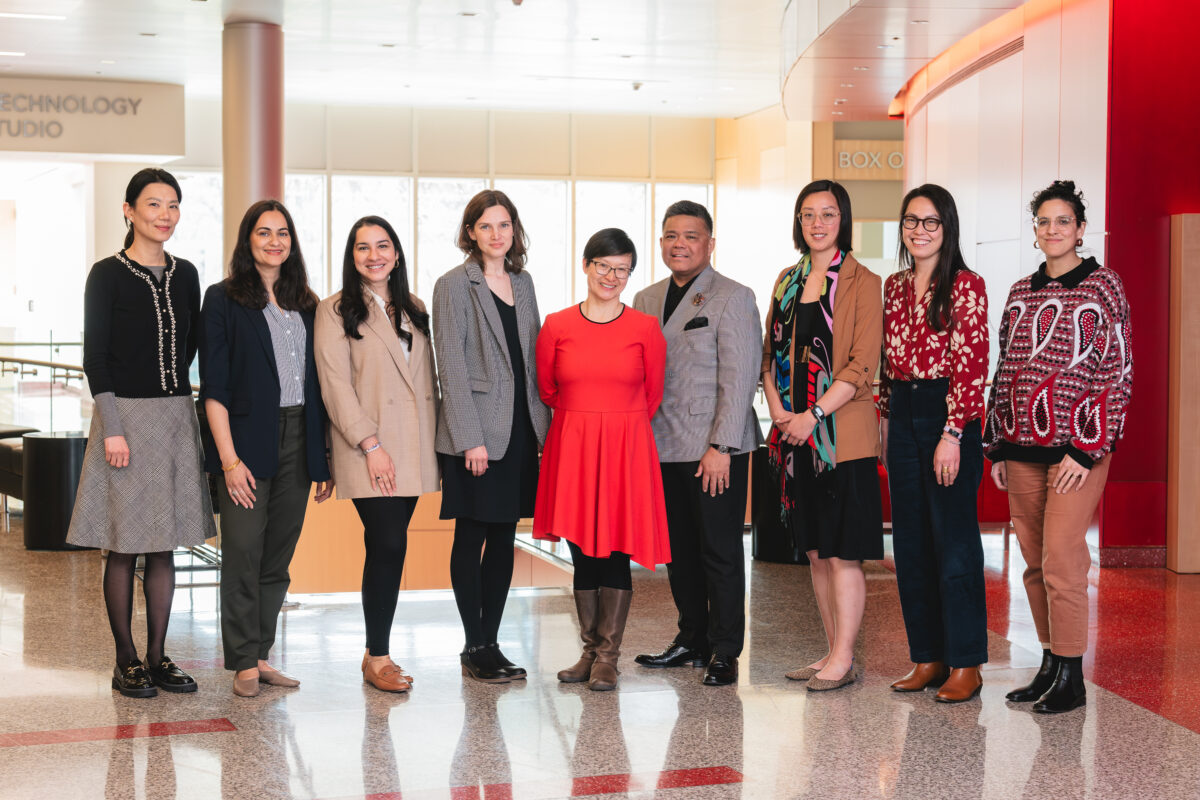 Global Asias Advisory Board, AY2023-2024. (l-r) Tamara Bhalla, Noor Zaidi, Meredith Oyen, Fan Yang, Theo Gonzalvez, Emily Yoon, and Priya Bhayana, project manager for the Global Asias Initiative. (Abnet Shiferaw)
Faculty across UMBC are collaborating to bring the Global Asia Initiative to fruition along with community partners:
-
Meredith Oyen, associate professor of history and director of the Asian studies program
-
Shin Yon Kim, Asian studies lecturer
-
Fan Yang, associate professor of media and communication studies
-
Emily Yoon, assistant professor of English
-
Noor Zaidi, assistant professor of history
-
Christopher Tong, associate professor of modern languages, linguistics, and intercultural communication
-
Theo Gonzalves, former American studies chair and professor, curator of Asian-Pacific American history at the Smithsonian National Museum of American History
-
Robbin Lee ’13, visual arts and media and communications studies, director of partnerships and mobilization at UpSurge Baltimore
Learn more about the Global Asias Iniatiave and Asian studies program.
]]>
Kimberly Moffitt, dean of the College of Arts, Humanities, and Socials Sciences, and co-pi Tamara Bhalla, associate professor of American studies and director of the Asian American studies minor,...
https://umbc.edu/quick-posts/umbc-to-establish-global-asias-initiative/
https://my3.my.umbc.edu/api/v0/pixel/news/140528/guest@my.umbc.edu/32bd2a6ff02002d0cfa31ee10d13251e/api/pixel
american-studies
asian-studies
cahss
english
history
mcs
mlli
news
policy-and-society
quick-post
quick-posts
research
visual-arts
UMBC News & Magazine
https://my3.my.umbc.edu/groups/umbc-news-magazine
https://assets1-my.umbc.edu/system/shared/avatars/groups/000/001/943/24435aa6207c452e7bc15cc74b42c7bb/xsmall.png?1748556657
https://assets1-my.umbc.edu/system/shared/avatars/groups/000/001/943/24435aa6207c452e7bc15cc74b42c7bb/original.png?1748556657
https://assets2-my.umbc.edu/system/shared/avatars/groups/000/001/943/24435aa6207c452e7bc15cc74b42c7bb/xxlarge.png?1748556657
https://assets2-my.umbc.edu/system/shared/avatars/groups/000/001/943/24435aa6207c452e7bc15cc74b42c7bb/xlarge.png?1748556657
https://assets3-my.umbc.edu/system/shared/avatars/groups/000/001/943/24435aa6207c452e7bc15cc74b42c7bb/large.png?1748556657
https://assets1-my.umbc.edu/system/shared/avatars/groups/000/001/943/24435aa6207c452e7bc15cc74b42c7bb/medium.png?1748556657
https://assets2-my.umbc.edu/system/shared/avatars/groups/000/001/943/24435aa6207c452e7bc15cc74b42c7bb/small.png?1748556657
https://assets1-my.umbc.edu/system/shared/avatars/groups/000/001/943/24435aa6207c452e7bc15cc74b42c7bb/xsmall.png?1748556657
https://assets2-my.umbc.edu/system/shared/avatars/groups/000/001/943/24435aa6207c452e7bc15cc74b42c7bb/xxsmall.png?1748556657
UMBC News & Magazine
0
0
false
Wed, 03 Apr 2024 11:06:07 -0400
Wed, 03 Apr 2024 11:06:07 -0400
UMBC Responds to Putin’s War in Ukraine
On February 24, just one day after a Russian holiday celebrating the “defenders of the Fatherland,” Russian President Vladimir Putin ordered his military forces to invade Ukraine. The ensuing assault catalyzed a mass of destruction and action.
In the classroom of Kyiv-born Vira Zhdanovych, an instructor of Russian at UMBC, students are using their language skills to take in information from different perspectives. Zhdanovych notes that both her students and colleagues from the Department of Modern Languages, Linguistics, and Intercultural Communication (MLLI) reached out to her during the first days of the invasion and have been extremely supportive since.
“Like everyone, I have been very upset and confused by Putin’s invasion of Ukraine,” says Zhdanovych. “This was especially difficult for me because I am from Kyiv and have relatives who were forced to evacuate. Fortunately, my immediate family—my sister, niece and nephew—have made it out, though my brother-in-law remained behind to defend Kyiv. I also have many friends who are still in Kyiv and in surrounding areas and I worry about them each day.”
Additional faces and voices of those impacted have since risen to the surface through several virtual UMBC town halls that highlight Ukrainian American voices as well as faculty experts on the region.
UMBC professors and students share their expertise
In the early weeks following the initial invasion, UMBC’s Center for Social Sciences Scholarship, History Department, and the Political Science Department hosted a virtual discussion about the history leading up to the current crisis, as well as the political and economic impacts that it is having today on surrounding countries and globally. Present at the panel were Devin Hagerty and Brian Grodsky, professors of political science and affiliate faculty in Asian studies, and Mirjam Voerkelius, assistant professor of history. Joining them were three undergraduate students who shared their personal experiences and reactions to the current climate in Ukraine.
 Hagerty (standing) teaching a global studies course. All photos by Marlayna Demond ’11, unless otherwise noted.
Maria Kutishcheva ’24, political science and MLLI, shared that the conflict has had a devastating effect on her family. With relatives in both Ukraine and Russia, Kutishcheva talked about two sides of the crisis from a personal standpoint, mentioning the divisions that have been deepened by Russian propaganda. She ended her story on a compelling note: inaccurate portrayals of the war cannot keep up with reality, but Ukraine still needs our continued attention and support.
Although it can be difficult to absorb everything that has happened leading up to the crisis, the Retriever community is fortunate to have students and faculty who can provide insight on the subject. Many people, especially those with personal ties to the situation, have been deeply affected and wish to stay informed through their communities—a desire that was again met by UMBC’s second virtual discussion about Asia’s influence on the Russia-Ukraine War in mid-March.
Brian Carlson, head of the Global Security Team of the Think Tank at the Center for Security Studies, returning panelists Brian Grodsky and Devin Hagerty, and Meredith Oyen, associate professor of history and director of UMBC’s Asian studies program, led the discussion and helped answer attendees’ questions about global relations across Asia and Europe. Carlson opened up the discussion by describing Russia’s ties to China.
 Meredith Oyen
 Brian Grodsky
“China has played an important, enabling role in Russia’s actions in Ukraine. China and Russia have built a close partnership based on a common desire to oppose the United States in aspects of the existing international order,” says Carlson. “In early February, just weeks before the invasion…they issued a joint declaration in which they said their partnership had no limits and there were no forbidden areas of cooperation.”
Although, he adds, “China has probably been surprised by the ineptitude of the invasion and by the fierceness of the Ukrainian resistance.”
Grodsky, the chair of the political science department, was next to share his expertise about Central Asia’s response, or lack thereof, to the Russian invasion of Ukraine. “Not surprisingly,” Grodsky notes, “Central Asia has been neutral in its reaction to the invasion. Russia expected a lot more support than it got, but this really reflects a long-standing foreign policy to balance stronger powers in the region.”
Grodsky, expanding on an earlier article he wrote about economic sanctions on Russia, added that economic links were becoming more difficult for Central Asian countries to maintain with Russia. These sanctions, he stated, would likely lead to political instability in the region.
Ongoing conversations provide support
Broad conversations about geographic implications of the Russian military aggression combined with personal stories of Ukrainian displacement and resistance are ongoing and they won’t end soon. Students, staff, and faculty, including Zhdanovych and those present at the panels, are speaking from personal and informational standpoints to put a face to the people who are struggling and fighting in Ukraine. But Zhdanovych points out that we also shouldn’t forget about those in Russia.
“I think that it is important to emphasize that not all Russians—particularly those in the U.S.—support this invasion. I know many, many Russians in the greater community and do not know of one who supports this invasion. I think of this as Putin’s invasion of Ukraine, rather than Russia’s invasion,” Zhdanovych says.
With this mindset moving forward, we can strive to build networks of support and to grow together as multiple communities all impacted by this crisis. Though the future ahead remains uncertain, there is strength in the voices and actions that stretch across and beyond UMBC.
UMBC supports Ukrainians: If you’re interested in supporting Ukrainian students, scholars, and artists at risk, UMBC’s Center for Global Engagement recommends giving to an established organization, like IIE.” In April, President Biden announced a new initiative to support Ukrainians. Welcome.us, an organization of which UMBC is a member, has created a new website that contains information about this initiative as well as various ways to help Ukrainians.
******
Header image: Photo on Pexel by Mathias P.R. Reding
]]>
On February 24, just one day after a Russian holiday celebrating the “defenders of the Fatherland,” Russian President Vladimir Putin ordered his military forces to invade Ukraine. The ensuing...
https://umbc.edu/stories/umbc-responds-to-putins-war-in-ukraine/
https://my3.my.umbc.edu/api/v0/pixel/news/119450/guest@my.umbc.edu/0e2495bac50e528fa14b7900a1369c39/api/pixel
asian-studies
campus-life
cge
cs3
history
magazine
mlli
political-science
russian
ukraine
webfeature
UMBC News & Magazine
https://my3.my.umbc.edu/groups/umbc-news-magazine
https://assets1-my.umbc.edu/system/shared/avatars/groups/000/001/943/24435aa6207c452e7bc15cc74b42c7bb/xsmall.png?1748556657
https://assets1-my.umbc.edu/system/shared/avatars/groups/000/001/943/24435aa6207c452e7bc15cc74b42c7bb/original.png?1748556657
https://assets2-my.umbc.edu/system/shared/avatars/groups/000/001/943/24435aa6207c452e7bc15cc74b42c7bb/xxlarge.png?1748556657
https://assets2-my.umbc.edu/system/shared/avatars/groups/000/001/943/24435aa6207c452e7bc15cc74b42c7bb/xlarge.png?1748556657
https://assets3-my.umbc.edu/system/shared/avatars/groups/000/001/943/24435aa6207c452e7bc15cc74b42c7bb/large.png?1748556657
https://assets1-my.umbc.edu/system/shared/avatars/groups/000/001/943/24435aa6207c452e7bc15cc74b42c7bb/medium.png?1748556657
https://assets2-my.umbc.edu/system/shared/avatars/groups/000/001/943/24435aa6207c452e7bc15cc74b42c7bb/small.png?1748556657
https://assets1-my.umbc.edu/system/shared/avatars/groups/000/001/943/24435aa6207c452e7bc15cc74b42c7bb/xsmall.png?1748556657
https://assets2-my.umbc.edu/system/shared/avatars/groups/000/001/943/24435aa6207c452e7bc15cc74b42c7bb/xxsmall.png?1748556657
UMBC News & Magazine
0
0
false
Tue, 12 Apr 2022 20:12:39 -0400
Tue, 12 Apr 2022 20:12:39 -0400
Why Is Taiwan Competing in the Olympics Under ‘Chinese Taipei’?
By Meredith Oyen, associate professor, History and Asian Studies, UMBC
When the Beijing Olympics opens with a glitzy ceremony on Feb. 4, 2022, a tiny contingent of Taiwanese athletes will be in attendance. But they won’t be marching under the Taiwanese flag. And they will be announced as the team from “Chinese Taipei.”
They almost weren’t going to be there at all. Officials from the island had intended their athletes to be absent from the opening or closing ceremony, citing the complexity of pandemic travel. But on Feb. 1, at the behest of the International Olympic Committee (IOC), Taiwanese authorities reversed course.
COVID-19 isn’t the main issue. Behind the changing plans is a dispute over the name of the Taiwanese delegation in Olympic competition. It has its roots in the long history of contention over the status of Taiwan.
As a scholar of relations between the United States and East Asia, I also know that it is a particularly sensitive time. World attention on the Beijing Games comes amid heightened tension over Taiwan’s status, with warnings of “military conflict” if the contested island moves toward formal independence.
Competing Chinas
The status of Taiwan has been disputed since the founding of modern Communist China.
The Chinese Communist Party won its civil war against the Nationalist Party then governing as the “Republic of China” in 1949. The latter fled across the approximately 100-mile strait to the island of Taiwan, which was then still transitioning from decades of Japanese colonization.
There, the exiled Republic of China enjoyed two decades of international support as the government of “Free China.”
Led by the United States, many countries and the United Nations recognized this government on Taiwan as “China,” while refusing to recognize the new People’s Republic of China controlling the far larger mainland.
The IOC similarly only recognized the Taiwan-based government. As a result, the mainland was not represented at the Olympics throughout the 1950s and 1960s. The only Chinese team competing came from Taiwan.
In the 1970s, however, the tide began to shift. Until then, recognition of Communist China had been limited to Soviet bloc countries and newly decolonized nations in Asia and Africa.
First, in 1971, the U.N shifted recognition from the Republic of China to the People’s Republic of China. Nation after nation followed suit over the course of the decade, with the U.S. switching diplomatic recognition from Taiwan to Beijing in 1979.
Throughout this period, both the People’s Republic of China and the Republic of China on Taiwan agreed on the principle of “one China.” Both governments argued that Taiwan was part of China, and neither would allow countries or organizations to recognize both.
When the UN chose to admit the People’s Republic of China, the government in Taiwan ceased membership in the international body.
When Beijing sought admission into the IOC, it was clear that any formula that allowed athletes from both territories to compete would have to take into account the commitment to the principle of “one China.”
In 1979, the executive committee of the IOC passed a resolution that both governments ultimately agreed to follow. It admitted the People’s Republic of China under the name “Chinese Olympic Committee” and the government of Taiwan as the “Chinese Taipei Olympic Committee.”
This arrangement allowed Beijing to accept Taiwan’s inclusion in the Games by framing the island contingent as a regional branch of its national team, even though their medal counts were separate.
Taiwanese athletes would be required to compete under an alternate anthem and flag to that used by Taiwan, so as not to display Republic of China emblems.
The Republic of China in Taiwan finally agreed to compete under these terms in 1981. It had few other options, given its own past recalcitrance on the issue of allowing both governments in any formal organization. A similar formula was later adopted to allow an independent Olympic team from Hong Kong to compete after the British handed its former colony back to China in 1997.
Pushback to independence
Over the last four decades, the Republic of China on Taiwan has transformed from a colonial authoritarian regime to a democracy.
But at the same time, its international recognition as an independent government has dwindled. From 2000 to 2008 and again starting in 2016, political parties advocating Taiwan’s independence achieved electoral success at the highest levels. But this served to trigger a pushback from Beijing as it seeks to stave off what it views as growing separatism.
These tensions have spilled out into the Olympic arena.
Just last year, during the opening ceremony of the Tokyo Games, a Japanese announcer referred to the “Chinese Taipei” Olympic team as “the team from Taiwan,” lining up in the opening ceremony under “Taipei” instead of “Chinese.”
This angered mainland Chinese officials concerned about a shift away from the one China principle.
And in the run-up to the 2022 Beijing Olympics, Beijing’s Taiwan Affairs Office used a slight variation in the Chinese name for the team from “Chinese Taipei” to stress that it considered Taiwan to be a part of China. They used “zhongguo” (China) instead of “zhonghua” (Chinese). While “Zhonghua” is a broad term that refers to anything Chinese by ethnicity or heritage, “Zhongguo” refers to the country itself.
The Taiwan government vehemently opposed the altered name.
Because Taiwan is a subtropical island, it does not have a significant presence at the Winter Olympics – only four of its athletes have qualified for the forthcoming competition.
Regardless of the team’s size, Chinese authorities will be keen not to allow the issue to be a media distraction during the Beijing Games.
*****
Meredith Oyen, Associate Professor of History and Asian Studies, University of Maryland, Baltimore County
This article is republished from The Conversation under a Creative Commons license. Read the original article.
Header image: Taiwanese independence activists call for a boycott of the Beijing Games. Walid Berrazeg/Anadolu Agency via Getty Images
]]>
By Meredith Oyen, associate professor, History and Asian Studies, UMBC When the Beijing Olympics opens with a glitzy ceremony on Feb. 4, 2022, a tiny contingent of Taiwanese athletes will be...
https://umbc.edu/stories/why-is-taiwan-competing-in-the-olympics-under-chinese-taipei-3/
https://my3.my.umbc.edu/api/v0/pixel/news/119479/guest@my.umbc.edu/f5f93958630cc1c162407f72d94bd73b/api/pixel
asian-studies
discovery
history
magazine
the-conversation
UMBC News & Magazine
https://my3.my.umbc.edu/groups/umbc-news-magazine
https://assets1-my.umbc.edu/system/shared/avatars/groups/000/001/943/24435aa6207c452e7bc15cc74b42c7bb/xsmall.png?1748556657
https://assets1-my.umbc.edu/system/shared/avatars/groups/000/001/943/24435aa6207c452e7bc15cc74b42c7bb/original.png?1748556657
https://assets2-my.umbc.edu/system/shared/avatars/groups/000/001/943/24435aa6207c452e7bc15cc74b42c7bb/xxlarge.png?1748556657
https://assets2-my.umbc.edu/system/shared/avatars/groups/000/001/943/24435aa6207c452e7bc15cc74b42c7bb/xlarge.png?1748556657
https://assets3-my.umbc.edu/system/shared/avatars/groups/000/001/943/24435aa6207c452e7bc15cc74b42c7bb/large.png?1748556657
https://assets1-my.umbc.edu/system/shared/avatars/groups/000/001/943/24435aa6207c452e7bc15cc74b42c7bb/medium.png?1748556657
https://assets2-my.umbc.edu/system/shared/avatars/groups/000/001/943/24435aa6207c452e7bc15cc74b42c7bb/small.png?1748556657
https://assets1-my.umbc.edu/system/shared/avatars/groups/000/001/943/24435aa6207c452e7bc15cc74b42c7bb/xsmall.png?1748556657
https://assets2-my.umbc.edu/system/shared/avatars/groups/000/001/943/24435aa6207c452e7bc15cc74b42c7bb/xxsmall.png?1748556657
UMBC News & Magazine
0
0
false
Wed, 02 Feb 2022 17:43:08 -0500
Round Up: UMBC in the News, 12/12
One of the things that makes UMBC great is how wonderful our alumni, students, faculty, and staff are. Because of these amazing people, UMBC often finds itself “in the news,” so each week, we’ll be sharing with you a round-up of the most newsworthy achievements from our community.
]]>
One of the things that makes UMBC great is how wonderful our alumni, students, faculty, and staff are. Because of these amazing people, UMBC often finds itself “in the news,” so each week, we’ll...
https://umbc.edu/stories/round-up-umbc-in-the-news-1212/
https://my3.my.umbc.edu/api/v0/pixel/news/122113/guest@my.umbc.edu/f854a0ac2f4c91cbfc93cd2de933a1c8/api/pixel
alumni
asian-studies
dale-bittinger
dan-rodricks
house-of-grit
insights
jeffrey-davis
julie-rosenthal
new-york-times
political-science
serial
the-baltimore-sun
the-guardian
umbc
university-of-maryland-baltimore-county
UMBC News & Magazine
https://my3.my.umbc.edu/groups/umbc-news-magazine
https://assets1-my.umbc.edu/system/shared/avatars/groups/000/001/943/24435aa6207c452e7bc15cc74b42c7bb/xsmall.png?1748556657
https://assets1-my.umbc.edu/system/shared/avatars/groups/000/001/943/24435aa6207c452e7bc15cc74b42c7bb/original.png?1748556657
https://assets2-my.umbc.edu/system/shared/avatars/groups/000/001/943/24435aa6207c452e7bc15cc74b42c7bb/xxlarge.png?1748556657
https://assets2-my.umbc.edu/system/shared/avatars/groups/000/001/943/24435aa6207c452e7bc15cc74b42c7bb/xlarge.png?1748556657
https://assets3-my.umbc.edu/system/shared/avatars/groups/000/001/943/24435aa6207c452e7bc15cc74b42c7bb/large.png?1748556657
https://assets1-my.umbc.edu/system/shared/avatars/groups/000/001/943/24435aa6207c452e7bc15cc74b42c7bb/medium.png?1748556657
https://assets2-my.umbc.edu/system/shared/avatars/groups/000/001/943/24435aa6207c452e7bc15cc74b42c7bb/small.png?1748556657
https://assets1-my.umbc.edu/system/shared/avatars/groups/000/001/943/24435aa6207c452e7bc15cc74b42c7bb/xsmall.png?1748556657
https://assets2-my.umbc.edu/system/shared/avatars/groups/000/001/943/24435aa6207c452e7bc15cc74b42c7bb/xxsmall.png?1748556657
UMBC News & Magazine
0
0
false
Fri, 12 Dec 2014 22:13:58 -0500
Round-Up: UMBC in the News 8/22
One of the things that makes UMBC great is how wonderful our alumni, students, faculty, and staff are. Because of these amazing people, UMBC often finds itself “in the news,” so each week, we’ll be sharing with you a round-up of the most newsworthy achievements from our community.
- Linda Dusman, music, and Eric Smallwood, visual arts, Awarded TEDCO MII Grant
- Maurice Berger, CADVC, Latest “Race Story” in The New York Times
- Irene Chan, visual arts and Asian studies, in Women’s Studio Workshop Spotlight
- Amanda Knapp, Assistant Vice-Provost, in American Motorcyclist
See more great UMBC news at UMBC Insights!
]]>
One of the things that makes UMBC great is how wonderful our alumni, students, faculty, and staff are. Because of these amazing people, UMBC often finds itself “in the news,” so each week, we’ll...
https://umbc.edu/stories/round-up-umbc-in-the-news-822/
https://my3.my.umbc.edu/api/v0/pixel/news/122390/guest@my.umbc.edu/f6e719b8a8b39796057bcc3b43bb88ef/api/pixel
alumni
amanda-knapp
american-motorcyclist
asian-studies
cadvc
eric-smallwood
irene-chan
linda-dusman
maurice-berger
music
new-york-times
tedco-mii-grant
visual-arts
womens-studio-workshop
UMBC News & Magazine
https://my3.my.umbc.edu/groups/umbc-news-magazine
https://assets1-my.umbc.edu/system/shared/avatars/groups/000/001/943/24435aa6207c452e7bc15cc74b42c7bb/xsmall.png?1748556657
https://assets1-my.umbc.edu/system/shared/avatars/groups/000/001/943/24435aa6207c452e7bc15cc74b42c7bb/original.png?1748556657
https://assets2-my.umbc.edu/system/shared/avatars/groups/000/001/943/24435aa6207c452e7bc15cc74b42c7bb/xxlarge.png?1748556657
https://assets2-my.umbc.edu/system/shared/avatars/groups/000/001/943/24435aa6207c452e7bc15cc74b42c7bb/xlarge.png?1748556657
https://assets3-my.umbc.edu/system/shared/avatars/groups/000/001/943/24435aa6207c452e7bc15cc74b42c7bb/large.png?1748556657
https://assets1-my.umbc.edu/system/shared/avatars/groups/000/001/943/24435aa6207c452e7bc15cc74b42c7bb/medium.png?1748556657
https://assets2-my.umbc.edu/system/shared/avatars/groups/000/001/943/24435aa6207c452e7bc15cc74b42c7bb/small.png?1748556657
https://assets1-my.umbc.edu/system/shared/avatars/groups/000/001/943/24435aa6207c452e7bc15cc74b42c7bb/xsmall.png?1748556657
https://assets2-my.umbc.edu/system/shared/avatars/groups/000/001/943/24435aa6207c452e7bc15cc74b42c7bb/xxsmall.png?1748556657
UMBC News & Magazine
0
0
false
Fri, 22 Aug 2014 14:00:53 -0400


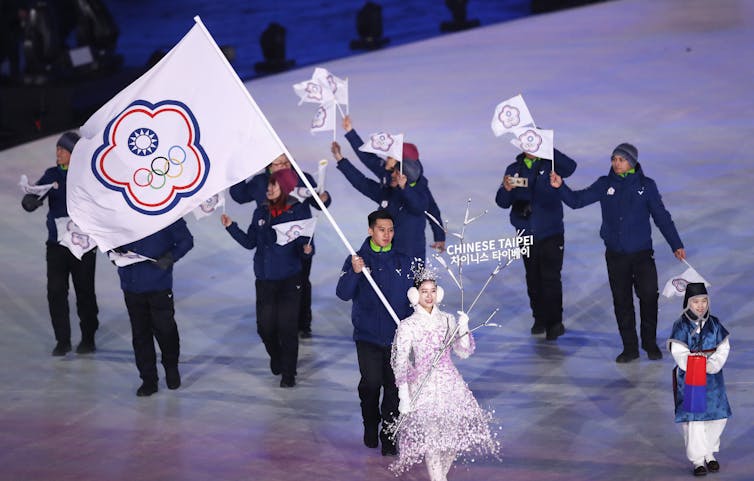 Flying the flag of Chinese Taipei.