Meet a Retriever—Sara Krauss, building bridges between Baltimore and UMBC through the Sherman Center
Meet Sara Krauss, director of Sherman School Partnerships in the George and Betsy Sherman Center. Before coming to UMBC in 2021, Sara served in the Baltimore City Public Schools as a classroom teacher, math lead, and an Assistant Principal. She is a National Board Certified Teacher (NBCT) and also an adjunct professor for teacher preparation programs. Sara is an advocate for educational equity, has a love for developing budding and experienced educators, and aspires to convert everyone she meets into a lover of math. Take it away, Sara!
Q: What is your WHY? What brought you to UMBC?
A: Prior to UMBC, I was an educator and school administrator in Baltimore City Public Schools. I LOVE teaching, I LOVE the energy of a school building and interacting daily with families. However, after 15 years, I was ready to stretch myself in new ways and ready to make a greater impact.
Coming to UMBC and the Sherman Center, I was able to do all the things I loved in one job. I am an adjunct professor, I work in schools by providing academic programs in areas that I love (math and early childhood), and I support new teachers. Through my position, I have found my home living in the K-12 and higher education world, supporting communities and helping to bridge connections with UMBC and the Baltimore community.
What I love about UMBC is that they encourage diversity, new ideas, and making new connections in everything they do.
Sara Krauss
Director of Sherman School Partnerships
Q: Where have you found support in the UMBC community?
A: My team at the Sherman Center has supported my why since day one. It’s so special to work among colleagues who have similar whys, but bring different experiences. I feel like we are accepting of each other every day, while we also push each other to be better and encourage each other to think about new ways of approaching the work.
Q: What do you love most about working in the Sherman Center?
A: My colleagues in the Sherman Center are stellar. As a team, we get to elevate students, families, and communities in the greater Baltimore area. I love building relationships with other people and organizations and finding ways to make connections to help strengthen the greater Baltimore ecosystem.
Last year, I had the opportunity to travel to Bulgaria for the International Step by Step Association (ISSA) conference, focused on improving early childhood education and development. I presented on “Why Universities Matter in Communities.” That experience was amazing to share the incredible work that UMBC is doing.
Pictured right: Krauss standing by a digital display announcing her presentation at the 2024 ISSA Conference in Bulgaria, “Why Universities Matter in Communities.”
Q: What would you tell someone who is considering a career at UMBC?
A: UMBC is one of the most diverse places I have ever worked, and what I love specifically about UMBC is that they encourage diversity, new ideas, and making new connections in everything they do.

Learn more about the George and Betsy Sherman Center
Established by a visionary gift to UMBC from George and Betsy Sherman, the George and Betsy Sherman Center is committed to excellent urban schools that transform lives in the communities they serve.
We believe that in every community, public schools have an extraordinary and unique capacity to offer opportunity and change lives. Within each school, committed teachers are the most important factor in whether the transformational power of education becomes real for students and families. Surrounding each school, community and family partners are essential for children to thrive, particularly in a child’s formative early years.
What we do:
- Support excellent teaching with an emphasis on STEM and Early Childhood;
- Build deep and transformative educational partnerships with schools and communities;
- Expand community and school capacity to provide strong early childhood experiences;
- Support pathways connecting students in partner communities with educational opportunities at UMBC;
- Apply engaged research to guide and assess our work.
Learn more about the George and Betsy Sherman Center.
* * * * *
UMBC’s greatest strength is its people. When people meet Retrievers and hear about the passion they bring, the relationships they create, the ways they support each other, and the commitment they have to inclusive excellence, they truly get a sense of our community. That’s what “Meet a Retriever” is all about.
Learn more about how UMBC can help you achieve your goals.
]]>
Meet Sara Krauss, director of Sherman School Partnerships in the George and Betsy Sherman Center. Before coming to UMBC in 2021, Sara served in the Baltimore City Public Schools as a classroom...
https://umbc.edu/stories/meet-sara-krauss-sherman-center-staff/
https://my3.my.umbc.edu/api/v0/pixel/news/154056/guest@my.umbc.edu/56c4ebc23e2c25acba3c8e53ddcc3ecf/api/pixel
baltimore
betsy-sherman
campus-life
magazine
sherman-center
story
UMBC News & Magazine
https://my3.my.umbc.edu/groups/umbc-news-magazine
https://assets1-my.umbc.edu/system/shared/avatars/groups/000/001/943/24435aa6207c452e7bc15cc74b42c7bb/xsmall.png?1748556657
https://assets1-my.umbc.edu/system/shared/avatars/groups/000/001/943/24435aa6207c452e7bc15cc74b42c7bb/original.png?1748556657
https://assets2-my.umbc.edu/system/shared/avatars/groups/000/001/943/24435aa6207c452e7bc15cc74b42c7bb/xxlarge.png?1748556657
https://assets2-my.umbc.edu/system/shared/avatars/groups/000/001/943/24435aa6207c452e7bc15cc74b42c7bb/xlarge.png?1748556657
https://assets3-my.umbc.edu/system/shared/avatars/groups/000/001/943/24435aa6207c452e7bc15cc74b42c7bb/large.png?1748556657
https://assets1-my.umbc.edu/system/shared/avatars/groups/000/001/943/24435aa6207c452e7bc15cc74b42c7bb/medium.png?1748556657
https://assets2-my.umbc.edu/system/shared/avatars/groups/000/001/943/24435aa6207c452e7bc15cc74b42c7bb/small.png?1748556657
https://assets1-my.umbc.edu/system/shared/avatars/groups/000/001/943/24435aa6207c452e7bc15cc74b42c7bb/xsmall.png?1748556657
https://assets2-my.umbc.edu/system/shared/avatars/groups/000/001/943/24435aa6207c452e7bc15cc74b42c7bb/xxsmall.png?1748556657
UMBC News & Magazine
1
0
false
Thu, 30 Oct 2025 09:27:05 -0400
Thu, 30 Oct 2025 09:27:05 -0400
Meet Corey Carter ’08, M.A.T. ’10—Cultivating community and supporting teachers through the Sherman Scholars Program
Meet Corey Carter ’08, M.A.T. ’10, an award-winning educator, lifelong learner, and the director of the Sherman Scholars Program in the George and Betsy Sherman Center. He takes pride in meeting student needs through servant leadership and holistic mentorship that centers on the needs of scholars as developing teachers. Corey’s goals include diversifying the teaching profession, particularly increasing the representation of highly-skilled Black male educators. Outside of his work supporting culturally responsive educators, Corey loves exploring his interests in hip hop, technology, and science. Take it away, Corey!
Q: What is your WHY? What brought you to UMBC?
A: My family was coming home one day, and my dad stopped the car to introduce us all to the new neighbor. When I told LaMont Toliver that I was a high school junior and wanted to major in biology, he told me all about the Meyerhoff Scholars Program at UMBC. I knew I had to apply and was excited about the chance to continue exploring my passion for science amongst so many other brilliant young people. During selection weekend, my parents shared the table with another couple whose daughter was also applying to the program. That night, I met my future wife and best friend, Brittney Carter ’07, psychology.
Pictured right: Corey and Brittney Carter attending the wedding of one of their college friends. The couple has been married for 15 years and have three kids.
Q: Where have you found support in the UMBC community?
A: The support at UMBC has significance for me because it was also a place of consequential challenges. My academic and pre-professional identity was formed, broken down, and reformed over the years as I learned more of my truths. When I first began to accept that I might have a different career calling than a Ph.D. in biology research, it wasn’t without signs. The support I received from mentors, advisors, and tutoring centers helped me get out of the shame and disillusionment. Connecting again with the community in different aspects of my identity (Gospel choir, Meyerhoff Scholars, Sherman Scholars) was the key to me reclaiming my story and writing the next chapters of my life.

Q: Who, in particular, has supported you throughout your journey?
It’s hard to name just one person. I’m fortunate to have known the late Mr. Toliver, as he was my bridge to UMBC and then to the Sherman Scholars Program, which led to my current career. Mr Toliver’s influence on Rehana Shafi, who would serve as a mentor and support for me through teacher preparation, was an anchoring force of courageous truth and unwavering belief in potential. More recently, I’ve stayed connected to Mr. Toliver’s legacy through another pillar, cut from the same cloth, Sunji Jangha, M.P.P ’18, Ph.D. ’25.
UMBC is a big community with many intersecting circles. There is not only space for you here, but there is space for the person you have yet to become.
Corey Carter ’08, M.A.T. '10
Q: What do you love most about the Sherman Scholars program?
A: I’ve been involved with the Sherman Program since 2007. I love that we stand for centering students as whole people, that we live the values of social justice through education, and that we do this work with joy, love, and passion.
Q: What part of your job do you enjoy the most
A: I love seeing our Sherman Scholars in the classroom and talking with them about teaching. Connecting with brilliant, passionate educators is so fulfilling because I am always stretched by the conversations. In this job, I’ve continued to grow intellectually, spiritually, and emotionally. I’m grateful for the tears, the laughter, and the righteous anger—it’s all so valuable to me.
 Alumni Voices, an annual Sherman Scholars event where current students hear from Sherman Scholars alumni who are current teachers. Corey remembers attending as an alum and sharing his story. Now, he gets to see the scholars he supported come back and speak to current students in the program.
Q: What would you tell someone who is considering a career at UMBC?
A: UMBC is a special place. If you align with the mission and values, I have no doubt there is good work and community for you here!
Learn more about the George and Betsy Sherman Center
Established by a visionary gift to UMBC from George and Betsy Sherman, the George and Betsy Sherman Center is committed to excellent urban schools that transform lives in the communities they serve.
We believe that in every community, public schools have an extraordinary and unique capacity to offer opportunity and change lives. Within each school, committed teachers are the most important factor in whether the transformational power of education becomes real for students and families. Surrounding each school, community and family partners are essential for children to thrive, particularly in a child’s formative early years.
What we do:
- Support excellent teaching with an emphasis on STEM and Early Childhood;
- Build deep and transformative educational partnerships with schools and communities;
- Expand community and school capacity to provide strong early childhood experiences;
- Support pathways connecting students in partner communities with educational opportunities at UMBC;
- Apply engaged research to guide and assess our work.
Learn more about the George and Betsy Sherman Center.
]]>
Meet Corey Carter ’08, M.A.T. ’10, an award-winning educator, lifelong learner, and the director of the Sherman Scholars Program in the George and Betsy Sherman Center. He takes pride in meeting...
https://umbc.edu/stories/meet-corey-carter-sherman-scholars/
https://my3.my.umbc.edu/api/v0/pixel/news/154057/guest@my.umbc.edu/c823d639625ed48c0f2855c386caa37c/api/pixel
baltimore
betsy-sherman
biology
campus-life
cnms
graduate-school
magazine
mat
meetaretriever
sherman-center
sherman-scholars
story
teaching
UMBC News & Magazine
https://my3.my.umbc.edu/groups/umbc-news-magazine
https://assets1-my.umbc.edu/system/shared/avatars/groups/000/001/943/24435aa6207c452e7bc15cc74b42c7bb/xsmall.png?1748556657
https://assets1-my.umbc.edu/system/shared/avatars/groups/000/001/943/24435aa6207c452e7bc15cc74b42c7bb/original.png?1748556657
https://assets2-my.umbc.edu/system/shared/avatars/groups/000/001/943/24435aa6207c452e7bc15cc74b42c7bb/xxlarge.png?1748556657
https://assets2-my.umbc.edu/system/shared/avatars/groups/000/001/943/24435aa6207c452e7bc15cc74b42c7bb/xlarge.png?1748556657
https://assets3-my.umbc.edu/system/shared/avatars/groups/000/001/943/24435aa6207c452e7bc15cc74b42c7bb/large.png?1748556657
https://assets1-my.umbc.edu/system/shared/avatars/groups/000/001/943/24435aa6207c452e7bc15cc74b42c7bb/medium.png?1748556657
https://assets2-my.umbc.edu/system/shared/avatars/groups/000/001/943/24435aa6207c452e7bc15cc74b42c7bb/small.png?1748556657
https://assets1-my.umbc.edu/system/shared/avatars/groups/000/001/943/24435aa6207c452e7bc15cc74b42c7bb/xsmall.png?1748556657
https://assets2-my.umbc.edu/system/shared/avatars/groups/000/001/943/24435aa6207c452e7bc15cc74b42c7bb/xxsmall.png?1748556657
UMBC News & Magazine
1
0
false
Thu, 30 Oct 2025 09:26:15 -0400
Thu, 30 Oct 2025 09:26:15 -0400
Arts+ initiative at UMBC uplifts the arts and creates new avenues for student showcases
Moments after the final notes of a Mozart flute concerto resounded from the walls of UMBC’s Linehan Concert Hall, the sold-out audience rose to their feet to applaud Martha Long, principal flutist of the Baltimore Symphony Orchestra. Beside her, conductor Jonathon Heyward beamed in admiration, letting the applause linger before signaling the start of the next piece.

 The Baltimore Symphony Orchestra performing at the Linehan Concert Hall at UMBC. (Brad Ziegler/UMBC)
The BSO’s concert on September 17 served as a fitting kick off for Arts+ at UMBC, a new initiative created to uplift the visual and performing arts at UMBC and to bring the surrounding community to campus to enjoy a vibrant celebration of creativity.
“As the inaugural performing arts event of our 2025 – 26 season, the BSO’s performance perfectly exemplified the power of the arts to bring together a diverse community—students, alumni, faculty, staff, donors, and the general public—for a marvelous shared experience,” says Tom Moore, co-chair of the Arts+ initiative and director of arts and culture. “As we build on the momentum of the BSO, it’s our intention that Arts+ events across the disciplines create similar opportunities to build a more vibrant campus community, to raise awareness of the excellence in our arts programs, and to establish UMBC as a renowned destination point for exhibitions, performances, lectures, and more.”
Impact of the arts
 One part of the Fine Arts Building window mural created by the Cheeky Magpie Collective with Arts+ funding at UMBC. (Photo courtesy of Tom Moore)
Throughout the year, Arts+ will explore a number of thematic areas, including Trailblazers; The Harlem Renaissance; Space, Place, and Justice; Connecting the Arts; and Artful Stories. Programming will celebrate not only work produced by faculty, departments, and centers, but also highlight student-produced pieces. Through a partnership with the Division of Student Affairs, more than 40 student events ranging from film festivals to exhibitions to music theater will celebrate the impact of the arts on the lives of our students, regardless of major.
With the support of the Arts+ initiative, alumni and student organizations are adding their artistic endeavors and passion for creativity to the campus landscape. For Jayden Rhodes ’25, design leader of the Cheeky Magpie Collective, that means helping transform the Fine Arts Building with window art on all five levels with playful shapes and colors. “We wanted to create a vibrant and energetic composition that called attention to the creativity contained within the university’s walls while also encouraging the emerging artists at UMBC,” says Rhodes, a Linehan Artist Scholar. The Cheeky Magpie Collective is made up of fellow class of 2025 design majors Gwen Knott, Jalen Boyd, Thomas Hammond, and Ni Truong.
On December 5, there will be a campus celebration of the Arts+ programming, says Linda Dusman, co-chair of the Arts+. “This is our pilot year—we’ve never done anything this big,” says Dusman, music professor, who looks forward to seeing the interdisciplinary success of the initiative, threading all of UMBC’s arts programming together more seamlessly. The end-of-fall celebration will feature collaborative performances and exhibits from each art department and center on campus. In one night, the festival atmosphere will highlight all the possibilities the arts possess. “Especially in dark times, art can bring things into focus that allow for reflecting, enjoyment, and processing,” says Dusman. She adds: “Everyone is going to be shining that night.”
Kayla Logue ’27 is a 2025 UCM intern and Linehan Scholar who is majoring in dance.
]]>
Moments after the final notes of a Mozart flute concerto resounded from the walls of UMBC’s Linehan Concert Hall, the sold-out audience rose to their feet to applaud Martha Long, principal flutist...
https://umbc.edu/stories/arts-initiative-umbc-baltimore-symphony-orchestra/
https://my3.my.umbc.edu/api/v0/pixel/news/152703/guest@my.umbc.edu/b65f0c1a1afbf84a255b7b0f229e0bbf/api/pixel
arts
arts-and-culture
baltimore
cahss
feature
linehanscholars
news
pahb
story
visualarts
UMBC News & Magazine
https://my3.my.umbc.edu/groups/umbc-news-magazine
https://assets1-my.umbc.edu/system/shared/avatars/groups/000/001/943/24435aa6207c452e7bc15cc74b42c7bb/xsmall.png?1748556657
https://assets1-my.umbc.edu/system/shared/avatars/groups/000/001/943/24435aa6207c452e7bc15cc74b42c7bb/original.png?1748556657
https://assets2-my.umbc.edu/system/shared/avatars/groups/000/001/943/24435aa6207c452e7bc15cc74b42c7bb/xxlarge.png?1748556657
https://assets2-my.umbc.edu/system/shared/avatars/groups/000/001/943/24435aa6207c452e7bc15cc74b42c7bb/xlarge.png?1748556657
https://assets3-my.umbc.edu/system/shared/avatars/groups/000/001/943/24435aa6207c452e7bc15cc74b42c7bb/large.png?1748556657
https://assets1-my.umbc.edu/system/shared/avatars/groups/000/001/943/24435aa6207c452e7bc15cc74b42c7bb/medium.png?1748556657
https://assets2-my.umbc.edu/system/shared/avatars/groups/000/001/943/24435aa6207c452e7bc15cc74b42c7bb/small.png?1748556657
https://assets1-my.umbc.edu/system/shared/avatars/groups/000/001/943/24435aa6207c452e7bc15cc74b42c7bb/xsmall.png?1748556657
https://assets2-my.umbc.edu/system/shared/avatars/groups/000/001/943/24435aa6207c452e7bc15cc74b42c7bb/xxsmall.png?1748556657
UMBC News & Magazine
0
0
false
Fri, 19 Sep 2025 17:18:31 -0400
Fri, 19 Sep 2025 17:18:31 -0400
Baltimore-based international animation festival Sweaty Eyeballs returns with a visual feast
“Sweaty Eyeballs” was born out of a Baltimore summer. The humid words hung in the air when animator Phil Davis, M.F.A. ’07, imaging and digital arts, was putting his plans into place in summer 2012 for the first edition of the animated film festival that now bears the moniker.
“I liked how they sounded, they felt like a memorable name,” Davis says. “And after watching 92 animated shorts in a weekend, your eyes will feel like they’ve been through a workout!”
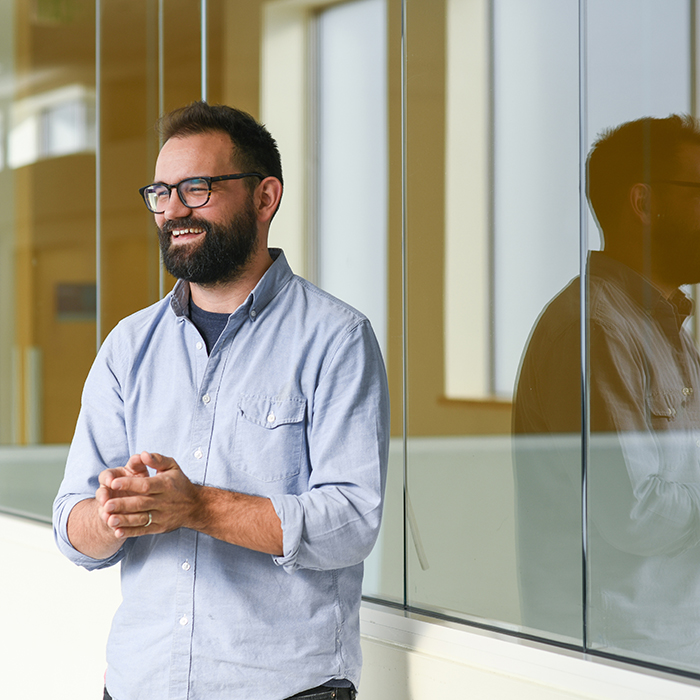 Headshot of Phil Davis, M.F.A. ’07, courtesy of Towson University.
Davis, now a professor at Towson University’s Department of Art + Design, is an animator whose own hand-drawn, stop motion and digital animations have screened around the world. “Animation has the ability to tap into so many human emotions, it’s part of why I love it so much—its expressive potential is boundless,” he says.
The 13th edition of Sweaty Eyeballs runs October 18 – 20 at several Baltimore venues, including MICA’s Falvey Hall and Towson’s Van Bokkelen Hall Theatre. The festival showcases 92 short films from around the world, featuring four international competition blocks, as well as a Baltimore showcase that runs on the opening night, which will feature numerous works from UMBC creators.
From its inception through 2018, the Sweaty Eyeballs Animation Festival existed as a one-night-only invitational offering a diverse array of animated narrative, documentary, music video, and experimental work that pushed the boundaries of art, craft, and technology. Over the years, the festival partnered with theaters across Baltimore, including the Creative Alliance, The Charles and The Parkway, as well as theaters run by local Baltimore universities. In 2019, Sweaty Eyeballs emerged as a full-fledged film festival in its own right, and its steady growth continues.
A platform for world-class programming
While submissions to the festival span the continents, many of them originate close to home. From UMBC’s visual arts program, recent graduate Carter Gray ’24 and senior Mariel Chavez are featured in the Baltimore Showcase Competition, among many other faculty and staff. “Carter Gray’s film Tempus is a really cool short animation that has an environmental bent, and it’s basically the history of the world and how humans are kind of destroying the earth,” says Davis. “Mariel Chavez’s The Beautiful Pain of Trichotillomania is very short, beautifully animated drawings on paper.”

Left: a still from Carter Gray’s animated “Tempus.” Right: a still from Mariel Chavez’s “The Beautiful Pain of Trichotillomania.”
UMBC faculty and staff with work featured in the 2024 Sweaty Eyeballs lineup include Tima Aflitunov (Earthlings), Jim Doran (Magus Incognito), Eric Millikin (The Dance of the Nain Rouge), and SKRFF by Corrie Francis Parks and Daniel Nuderscher. (Parks, an associate professor of visual arts, also serves this year as curator of a concurrent gallery exhibition, Sweaty Eyeballs: Animation Adjacent).
“Corrie’s new film is amazing,” says Davis, “It’s sort of deconstructing graffiti art on this wall that’s had graffiti on it for years and years and years. And Eric Milliken’s is a really mesmerizing piece utilizing these custom-made AI training sets to create imagery.”
Expanding animation
Festival programming will also include a young audiences program featuring kid-appropriate animation, as well as an animation workshop for kids.
Los Angeles-based animator and production designer Miguel Jiron, who worked as head-of-story on the Spider-Man: Into the Spider-Verse movies, will give an industry talk at the festival on October 19. Jiron will also offer a Story Development Masterclass at UMBC on October 18.
In addition to the more traditional theatrical screenings presented, this year Sweaty Eyeballs has expanded to include a cornucopia of free events and exhibitions.
Sweaty Eyeballs: Animation Adjacent, the exhibition curated by Corrie Francis Parks, opened September 13 and runs through October 20, features artists from the Baltimore, Philadelphia, and Washington, D.C., metropolitan areas, spanning aspects of animation from the earliest forms of animation such as praxinoscopes and zoetropes—mechanical devices that created the illusion of motion—through modern digital techniques.
 A still from UMBC production coordinator Tima Aflitunov’s animation “Earthlings.”
“I wanted to highlight the ways that animation can stand outside the picture and in different formats, and show the approaches of different artists who incorporate animation into their practice,” Parks says. ”There are a lot of artists practicing ‘expanded animation,’ that expands outward in different modes and mediums, work that necessarily needs to be in a different space.”
An animator who has exhibited her work around the globe, Parks notes that Sweaty Eyeballs stands out as a unique event in U.S. film programming. “I’ve really been thankful for Sweaty Eyeballs,” she says. “There are few other cities in the United States where you would get such good animation programming in an actual festival devoted to animation.”
Numerous UMBC-affiliated artists are featured in Animation Adjacent’s programming, including Jim Doran, an AOK Library staff member who presents an assemblage of fragmental stories contained in small containers, and Kelley Bell, associate professor of visual arts, whose installation Enchanted Jangle is the epic cardboard fort your five-year-old self dreamed of. Adjunct professor Kat Navarro taps family history and diasporic longing to present The view from my childhood window.
 Jiayin Shen and Eric Dyer as Duo Kinetica. They combine zoetropes with a live piano score.
The show includes two interactive, generative installations by Timothy Nohe, visual arts professor, and McCoy Chance ’19, music technology and media and communication studies. “Both artists use sound translated into electronic signals as the catalyst for animation,” says Parks, “and invite the viewer to be the ‘animator’ by activating the works with their voice.”
On October 11, Area 405 will host a free Animation Adjacent Variety Show and Film Screening, featuring eclectic performances and short animations by exhibition artists pushing the boundaries of animation as an artform. One featured act will include Baltimore musicians Bonnie Lander and Shelly Purdy interacting with Nohe’s Entr’acte-Interact.
Closing the festival on October 20, UMBC visual arts professor Eric Dyer—named by Creative Capital as “The Modern Master of the Zoetrope”—will offer a live performance with Jiayin Shen as Duo Kinetica, combining zoetropes with a live piano score.
]]>
“Sweaty Eyeballs” was born out of a Baltimore summer. The humid words hung in the air when animator Phil Davis, M.F.A. ’07, imaging and digital arts, was putting his plans into place in summer...
https://umbc.edu/stories/animation-festival-sweaty-eyeballs-returns/
https://my3.my.umbc.edu/api/v0/pixel/news/144668/guest@my.umbc.edu/bdb2ff04103afea38fec7a4885017897/api/pixel
alumni
baltimore
cahss
magazine
story
visualarts
UMBC News & Magazine
https://my3.my.umbc.edu/groups/umbc-news-magazine
https://assets1-my.umbc.edu/system/shared/avatars/groups/000/001/943/24435aa6207c452e7bc15cc74b42c7bb/xsmall.png?1748556657
https://assets1-my.umbc.edu/system/shared/avatars/groups/000/001/943/24435aa6207c452e7bc15cc74b42c7bb/original.png?1748556657
https://assets2-my.umbc.edu/system/shared/avatars/groups/000/001/943/24435aa6207c452e7bc15cc74b42c7bb/xxlarge.png?1748556657
https://assets2-my.umbc.edu/system/shared/avatars/groups/000/001/943/24435aa6207c452e7bc15cc74b42c7bb/xlarge.png?1748556657
https://assets3-my.umbc.edu/system/shared/avatars/groups/000/001/943/24435aa6207c452e7bc15cc74b42c7bb/large.png?1748556657
https://assets1-my.umbc.edu/system/shared/avatars/groups/000/001/943/24435aa6207c452e7bc15cc74b42c7bb/medium.png?1748556657
https://assets2-my.umbc.edu/system/shared/avatars/groups/000/001/943/24435aa6207c452e7bc15cc74b42c7bb/small.png?1748556657
https://assets1-my.umbc.edu/system/shared/avatars/groups/000/001/943/24435aa6207c452e7bc15cc74b42c7bb/xsmall.png?1748556657
https://assets2-my.umbc.edu/system/shared/avatars/groups/000/001/943/24435aa6207c452e7bc15cc74b42c7bb/xxsmall.png?1748556657
UMBC News & Magazine
1
0
false
Thu, 10 Oct 2024 10:59:55 -0400
Thu, 10 Oct 2024 10:59:55 -0400
Rethinking collaborative public humanities research in New Orleans and Baltimore

If you were looking for Sarah Fouts in New Orleans, chances are you would find her at one of the many taco trucks or pop-up food vendors across the city, chatting with locals. Relationship-building is at the core of her work, which focuses on the experiences of Black, Central American, and Mexican food industry workers in post-Katrina New Orleans.
Fouts is an assistant professor of American studies at UMBC who earned her Ph.D. in Latin American studies at Tulane University. For more than a decade, she has volunteered for, collaborated with, and supported the work of grassroots organizations in New Orleans. Now, she is working with long-time partners there on an exciting new project.
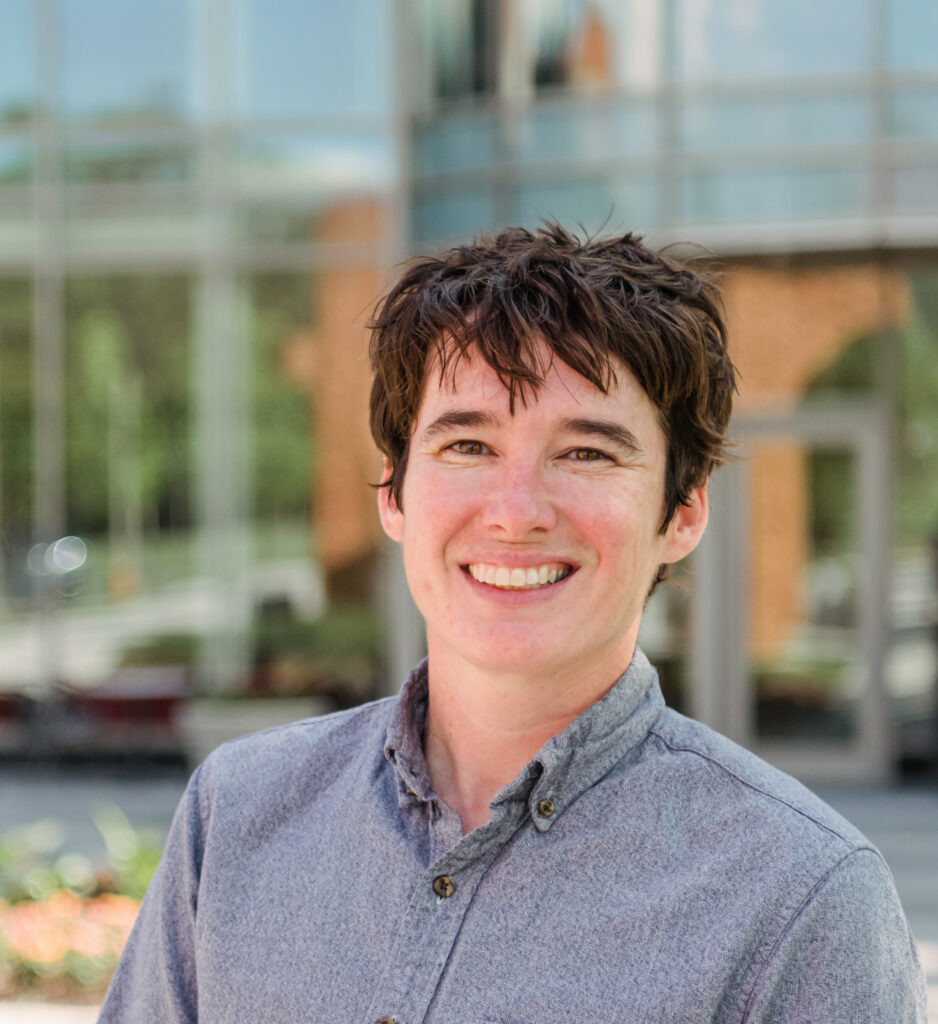 Sarah Fouts. (Marlayna Demond ’11/UMBC)
The Whiting Foundation has awarded a $50,000 Public Engagement Fellowship to Fouts along with local organizers Toya Ex Lewis and Fernando López to implement Project Neutral Grounds: At the Intersection of People, Street Food, and the Hustle. Lewis is the organizer of Project Hustle, born in New Orleans, and López is a Mexican-born documentarian. The three partners have worked together since 2013. Their latest collaboration will bring together Black, Brown, LGBTQ+, and immigrant food vendors in New Orleans to celebrate, share, and document their experiences and histories.
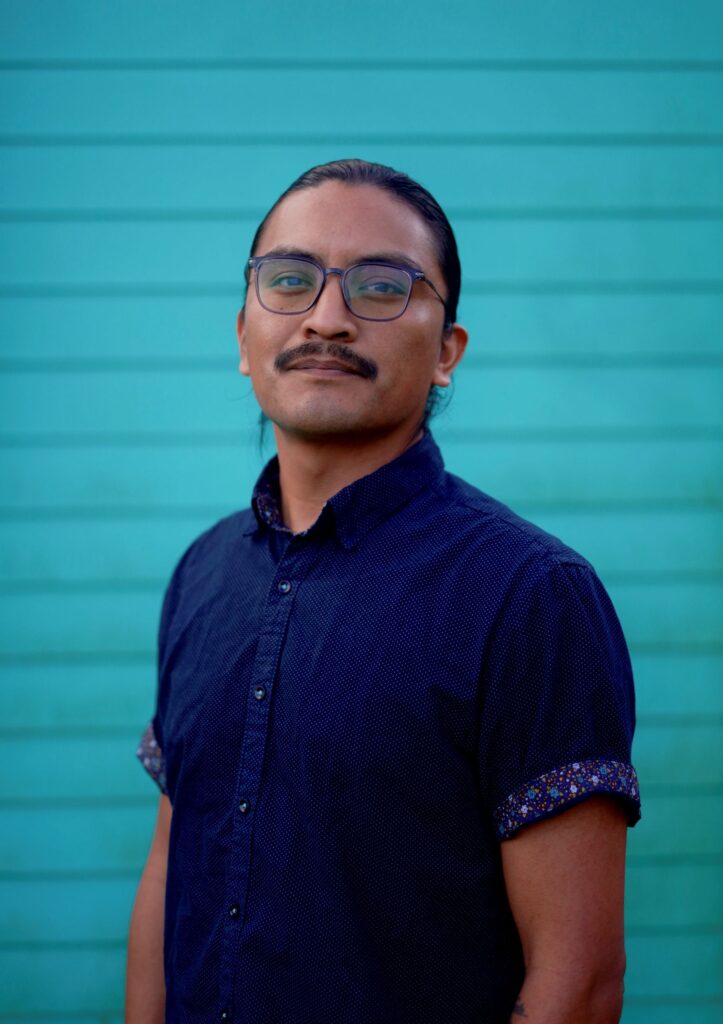 Fernando López. (Photo by López)
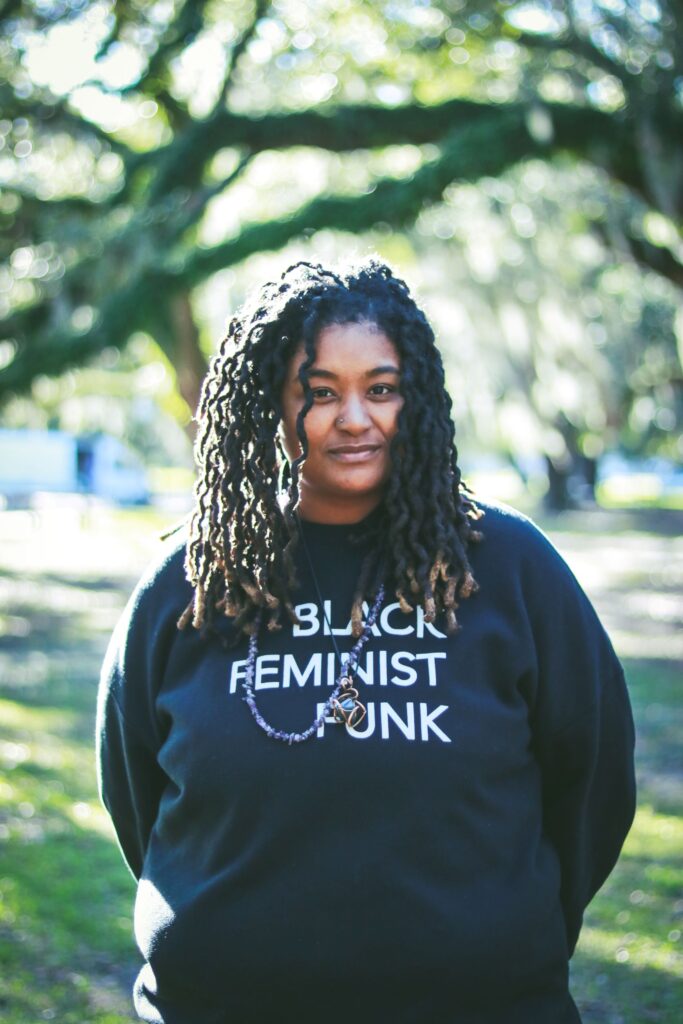 Toya Ex Lewis. (Photo by López)
“In collaboration with Black and Brown food vendors, Project Neutral Ground will showcase the culture, complexities, and potential futures of post-disaster economies,” says Fouts. “We seek to dismantle barriers and foster dialogue to build networks across factors like race, gender, and class in order to foment an understanding of these vendors as they occupy and vie for city spaces.”
Sharing community history
New Orleans has a rich history and culture of street food vendors, particularly led by the city’s Black community. In 2005, Hurricane Katrina devastated New Orleans with wind speeds of over 100 miles per hour and a monumental storm surge that flooded 80% of the city. Many Black and Brown vendors were forced to leave their homes and businesses or find new ways to continue to live and work. Central American food vendors migrated to the city to help fill the void.
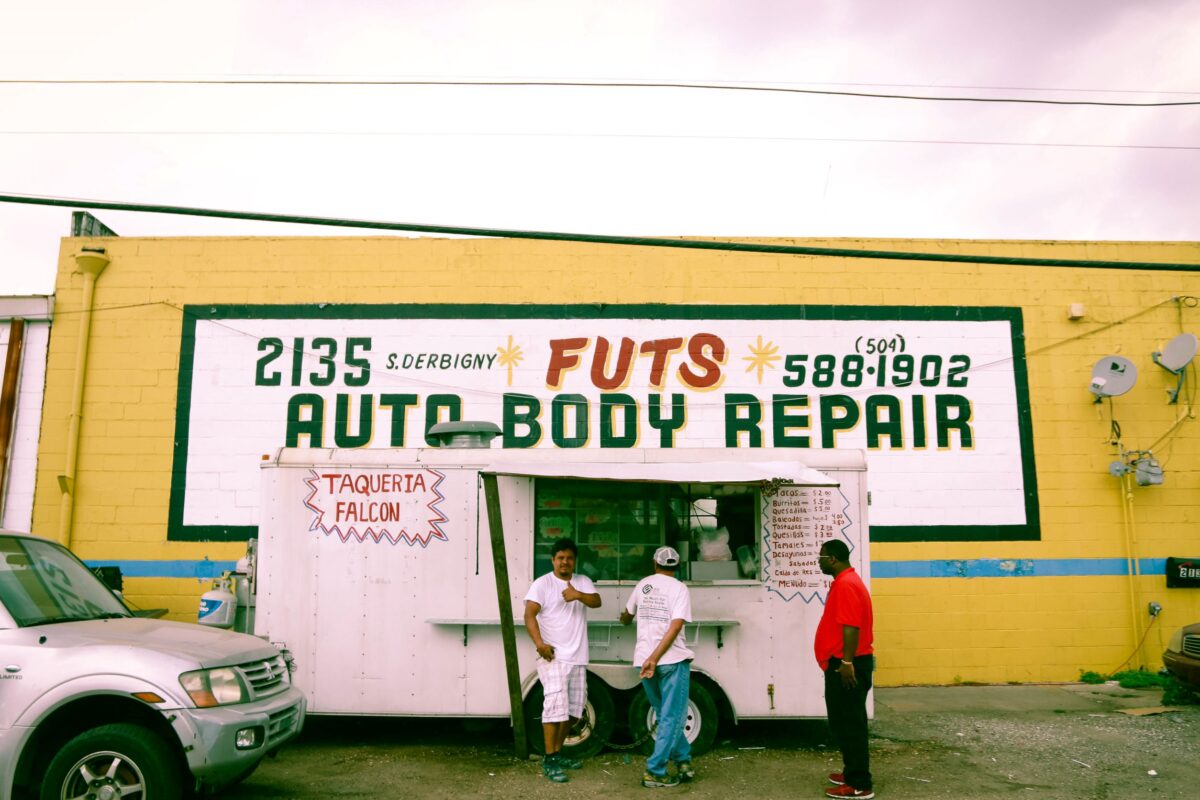 New Orleans taco truck. (Photo by Fernando López)
Now, almost 20 years after Katrina, New Orleans street vendor culture is a mixture of traditional and modern takes on Soul Food and Latin food representative of its burgeoning Black and Brown communities. The success of taco trucks and Soul Food pop-ups has raised complex questions about food truck regulation, worker rights, immigration issues, and local vs. tourist experiences that often pit these communities against each other.
The Whiting Foundation funding will help Fouts, the project director; Lewis, the organizing director; and López, the creative director, work in collaboration with the Southern Food and Beverage Museum to document and share the history, culture, cuisine, and personal journeys of ten food vendors in post-Katrina New Orleans food culture.
Collaborative storytelling
The team will first film and photograph the vendors cooking a dish of their choice at the Southern Food and Beverage Museum. A follow-up filming will document a “day in the life” of each food vendor. Finally, an audio recording will capture personal oral history interviews. Over the course of the year, López and Lewis will use the footage to develop ten mini-documentaries showcasing each vendor’s story.
 (l-r): López with food vendor and Fouts filming at the Southern Food and Beverage Museum. (Photo by Fernando López)
Fouts, Lewis, and local artist SheRa Phillips will work with students in Fouts’s UMBC Public Humanities course in fall 2022 to convert these stories into a zine that highlights historic and contemporary vendor stories, maps of where street food vendors are, a historical timeline of street vending in New Orleans, and recipes. Vendors will also be able to give the zine to their customers, helping to share this important part of New Orleans history with new audiences.
“This is a way for native New Orleanians to have opportunities to tell our own stories,” says Lewis, “instead of the usual extractive way our stories get taken and told for us.”
The Project Neutral Grounds digital and physical collection of stories will be on exhibit and archived at the Southern Food and Beverage Museum to share with future generations of locals, vendors, visitors, and public humanities scholars.
Public humanities in Baltimore
Since joining the faculty of UMBC, Fouts has also connected with Baltimore communities. The American Council of Learned Societies has awarded Fouts; Nicole King, professor and chair of American studies; and Tahira Mahdi, adjunct professor of psychology, a public engagement grant of over $150,000 to support their innovative public humanities work. The award, supported by the National Endowment for the Humanities, will fund the development and implementation of the project Baltimore Field School (BFS) 2.0: Undoing & Doing Anew in Public Humanities at UMBC 2022 – 2023.
Fouts, King, and Mahdi will work with community members, UMBC graduate students, and faculty to continue developing frameworks for community engagement between local communities and academia that have long-term benefits for local communities in particular.
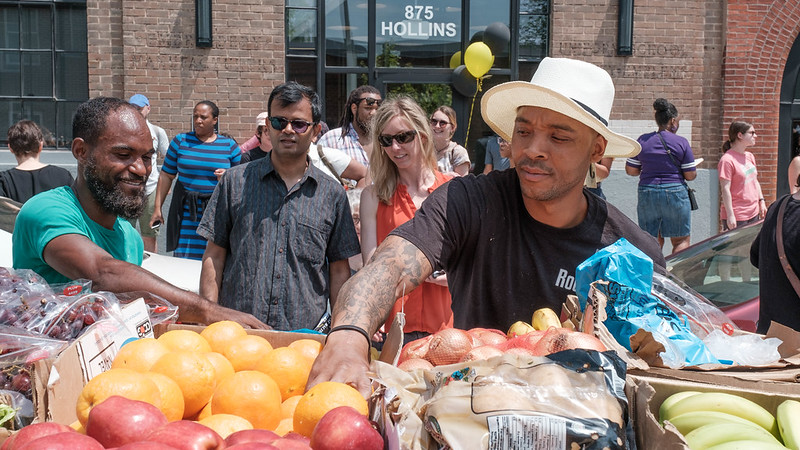 An arabber sells produce form a horse-drawn cart in Baltimore. (Bill Shewbridge/UMBC, Baltimore Traces project)
“This collaborative process takes a great deal of time, listening, and building trust,” King explains. “The people living and working in city neighborhoods and building grassroots organizations should be centered in the process of defining challenges and ways to address them in Baltimore and cities like it.”
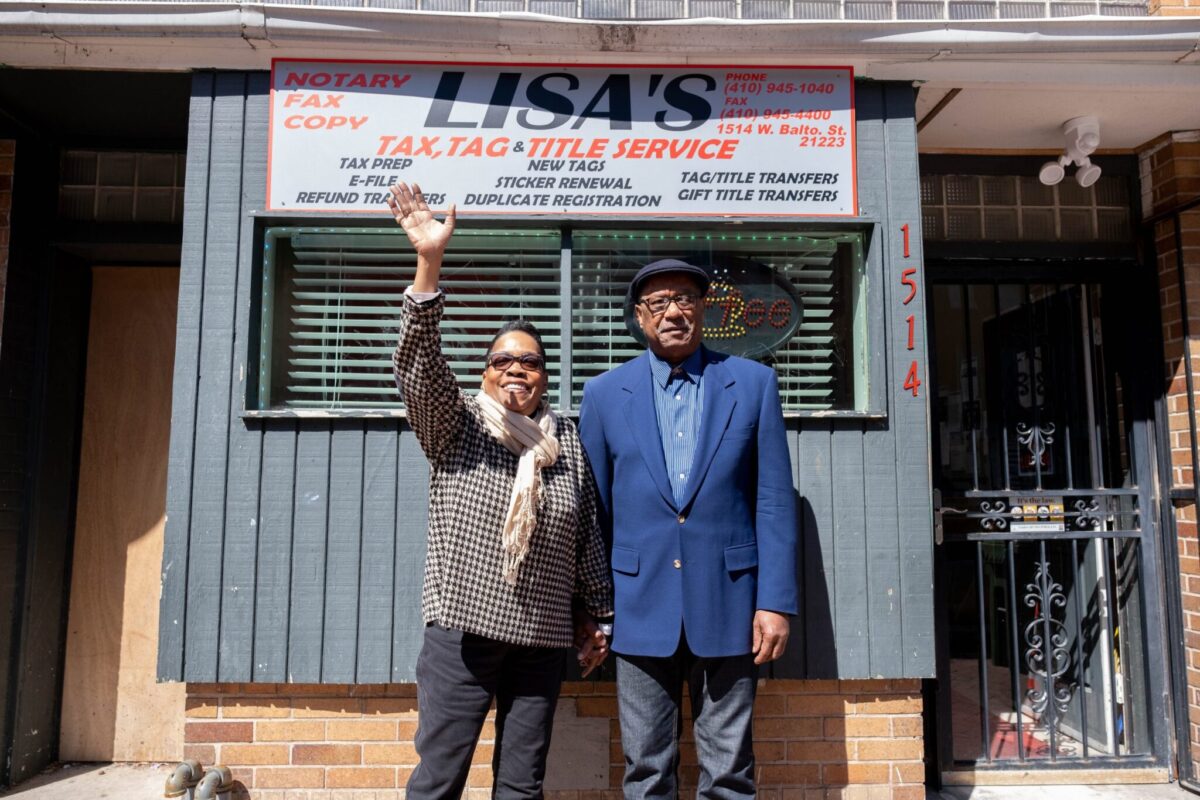 West Baltimore street walking tour with Curtis Eaddy. (Bill Shewbridge/UMBC, Baltimore Traces project)
The award will broaden the reach of the Baltimore Field School (BFS), launched through a $125,000 grant from the Andrew W. Mellon Foundation in 2020. BFS creates a framework for faculty to collaborate with community organizations in building ethical and sustainable research and teaching projects focused on public humanities.
“ACLS is proud to support these outstanding examples of publicly engaged, community-centered scholarship,” says ACLS President Joy Connolly. “Direct engagement with communities beyond the walls of academia is essential to the continued creation of knowledge for the public good. At the same time, these programs will help in expanding our definitions of humanistic scholarship and in contributing to solutions for a brighter future for all.”
]]>
If you were looking for Sarah Fouts in New Orleans, chances are you would find her at one of the many taco trucks or pop-up food vendors across the city, chatting with locals....
https://umbc.edu/stories/strong-public-humanities-in-new-orleans-strong/
https://my3.my.umbc.edu/api/v0/pixel/news/125939/guest@my.umbc.edu/bce533f66624f9128a426aff09b16c6b/api/pixel
americanstudies
baltimore
cahss
cahssresearch
community
news
policy-and-society
psychology
public-humanities
UMBC News & Magazine
https://my3.my.umbc.edu/groups/umbc-news-magazine
https://assets1-my.umbc.edu/system/shared/avatars/groups/000/001/943/24435aa6207c452e7bc15cc74b42c7bb/xsmall.png?1748556657
https://assets1-my.umbc.edu/system/shared/avatars/groups/000/001/943/24435aa6207c452e7bc15cc74b42c7bb/original.png?1748556657
https://assets2-my.umbc.edu/system/shared/avatars/groups/000/001/943/24435aa6207c452e7bc15cc74b42c7bb/xxlarge.png?1748556657
https://assets2-my.umbc.edu/system/shared/avatars/groups/000/001/943/24435aa6207c452e7bc15cc74b42c7bb/xlarge.png?1748556657
https://assets3-my.umbc.edu/system/shared/avatars/groups/000/001/943/24435aa6207c452e7bc15cc74b42c7bb/large.png?1748556657
https://assets1-my.umbc.edu/system/shared/avatars/groups/000/001/943/24435aa6207c452e7bc15cc74b42c7bb/medium.png?1748556657
https://assets2-my.umbc.edu/system/shared/avatars/groups/000/001/943/24435aa6207c452e7bc15cc74b42c7bb/small.png?1748556657
https://assets1-my.umbc.edu/system/shared/avatars/groups/000/001/943/24435aa6207c452e7bc15cc74b42c7bb/xsmall.png?1748556657
https://assets2-my.umbc.edu/system/shared/avatars/groups/000/001/943/24435aa6207c452e7bc15cc74b42c7bb/xxsmall.png?1748556657
UMBC News & Magazine
0
0
false
Fri, 17 Jun 2022 07:52:00 -0400
Fri, 17 Jun 2022 07:52:00 -0400
Exploring Pathways to Social Change
In a large room, around 30 participants sat in two semi-circles of foldable chairs facing a panel of people invested in Baltimore and connected to UMBC. Despite the perfect spring break weather, these UMBC students weren’t on vacation. Instead, they gathered around three blue coffee-stained rugs of different shades and sizes with brightly marked poster paper on the walls depicting the community standards like “Take space when you need it,” “Listen non-judgmentally,” and “Don’t be afraid to ask questions.” Pens move steadily across the pages of students’ decorated notebooks.
It was the first day of Alternative Spring Break (ASB), a week-long program hosted by the Center for Democracy and Civic Life and coordinated by Faith Davis ’22, sociology and biological sciences, the Center’s community civic engagement intern. “Our program is student-led, so it evolves and takes new forms every year,” explains Davis. “By staying in Baltimore, we are able to equip participants with the tools and knowledge to contribute to sustainable change regarding the social issue their group focuses on. We believe that students are capable contributors to a better world, and ASB orients them to become aware of that.”
“Alternative Spring Break is about opening the door to sustained engagement in Baltimore,” said David Hoffman, Ph.D. ’13, language, literacy, and culture (LLC), and Romy Hübler ’09, modern languages and linguistics, M.A. ’11, intercultural communications, Ph.D. ’15, LLC, director and associate director ofthe Center, respectively.“Participants learn about the systemic and human dimensions of issues affecting the city, make connections with people doing creative and important work, and discover opportunities to make their own meaningful contributions.”
Learning to ask good questions
This year ASB consisted of three student-led groups: Immigrant Health Equity, K-12 Education Equity, and Transformative Justice. The first session of the week: “Contextualizing Baltimore,” allowed for all of the students to engage with the content together. Campus and community leaders discussed the reality of Baltimore City as separate from the negative stereotypes that are sometimes associated with it.
“Baltimore has a very rich history… the persistence of the negative narratives are by design,” Eric Ford, director of the Choice Program shared. “When you hear stuff you should always question what people mean and who it’s coming from. Ask questions not just of people with the title, but also with the people who don’t.”
 David Hoffman introduces panelists, from l-r: Eric Ford, and UMBC professors Jodi Kelber-Kaye, Kate Drabinski, and Felipe Filomeno.
Throughout the week, UMBC students in each of the ASB groups would follow Ford’s exhortation and ask hard questions—of their community guides and also of themselves, ultimately using the week to begin building relationships with organizations focused on education, provision of services, and advocacy.
Approaching education critically
As Retrievers know, learning is a continuous process, and the Immigrant Health Equity group exemplified that by seeking more in-depth knowledge of the immigrant communities in Baltimore. They traveled to a small museum situated next to a beautiful little church to hear a speech about immigrant trends from the beginning of America to current times.
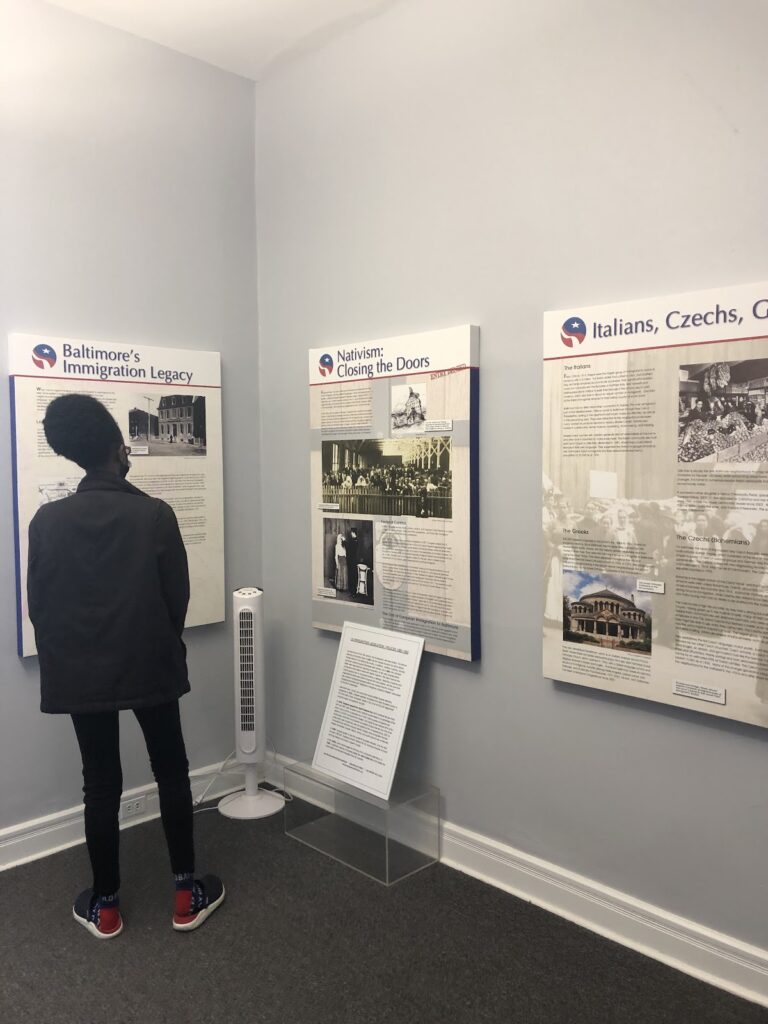
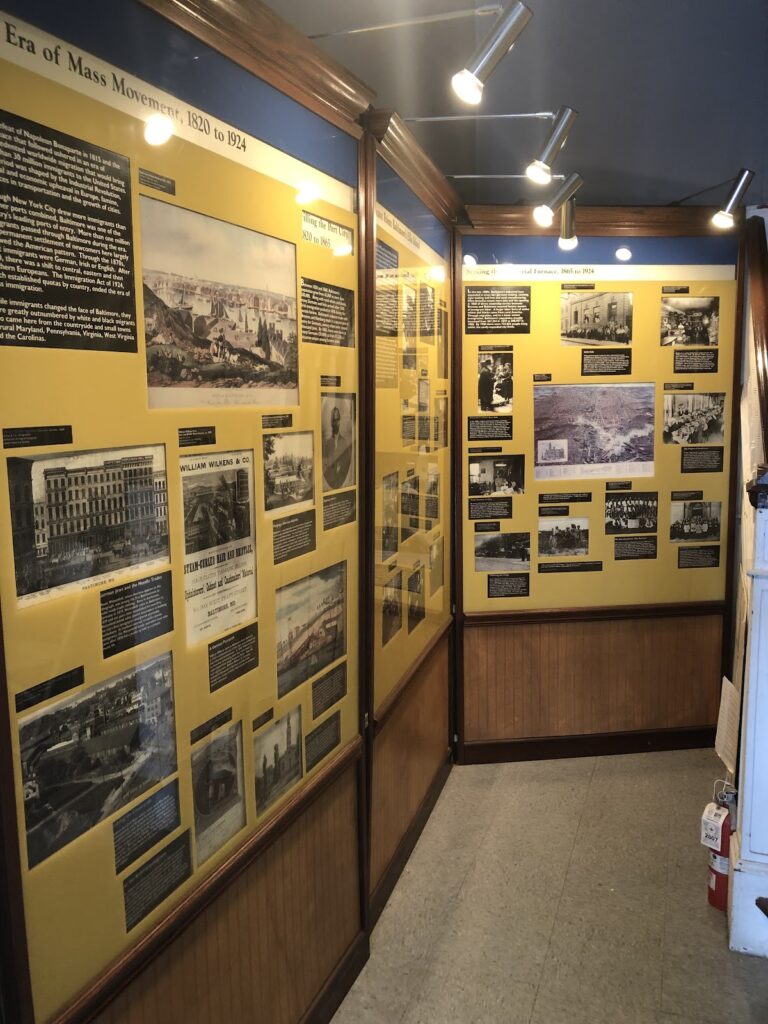
 Inside the museum, students gather around the different stations before heading into the city.
At the end of the lecture, Mokeira Nyakoe ’23, health administration and policy—one of the student leaders—shot her hand up, inspiring others to follow. Students raised critical questions about the information they were given and continued to interact with the docent as they queried for more in-depth information on Black immigrant experiences and the historical context and impact on current immigrant restrictions. After the facilitation ended, students actively reflected on the history they heard—and didn’t hear—by traveling to different parts of Baltimore with immigrant communities and supporting local businesses.
New ways to dream
Learning in many ways is a foundation for bringing about the changes you want to see. The Transformative Justice group went to meet with H.O.P.E (Helping Oppressed People Excel) an organization dedicated to providing relief and advocacy for previously incarcerated individuals.
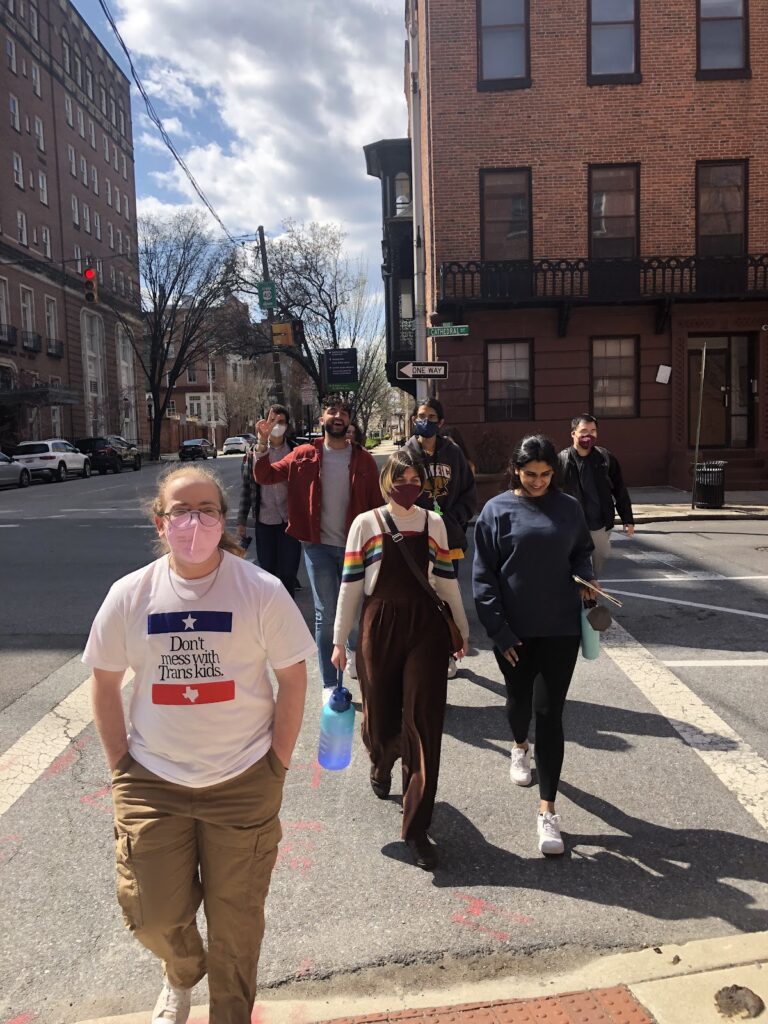
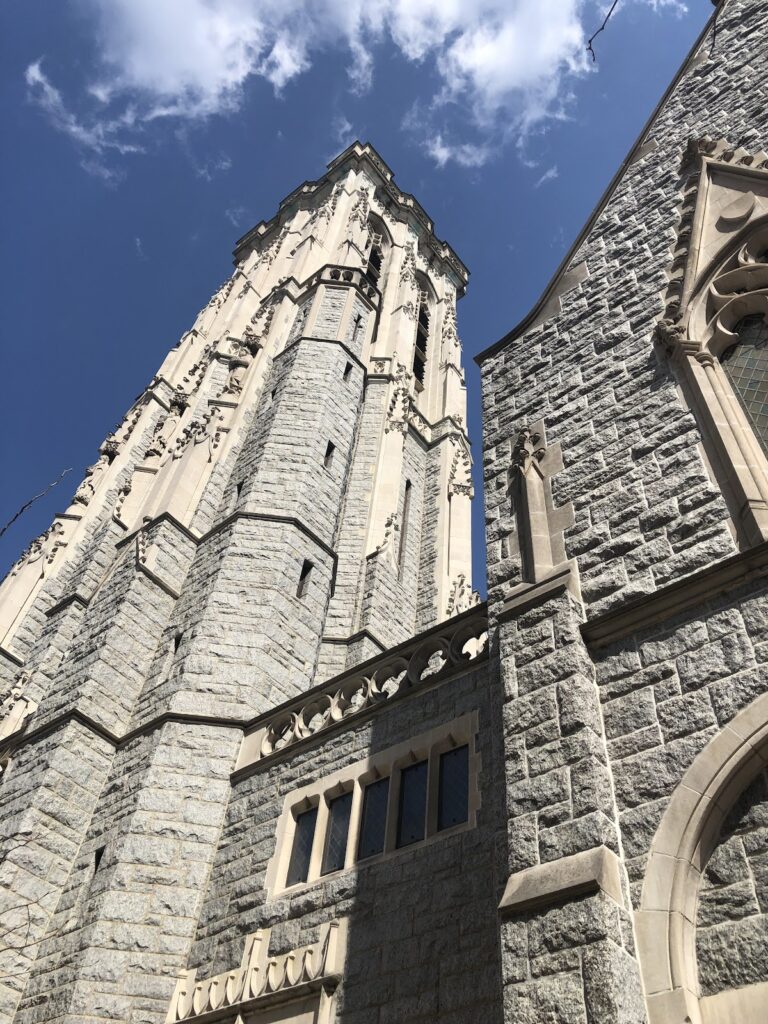 Students walk to Emmanuel Episcopal Church where H.O.P.E operates.
Antoin Quarles, the founder of H.O.P.E, met with the students in midtown Baltimore, guiding them through an ornate building that reached for the heavens. Inside, the walls held both the solemn faces of long-dead church leaders and colorful Black Lives Matter flyers with pictures of Quarles standing side-by-side with Maryland leaders.
Quarles started the session by sharing his past. What started as a heartbreaking story—the result of generational trauma and systemic racism which had transformed the streets of Baltimore into “a battleground” and left Quarles in prison multiple times—eventually evolved into a story of direct advocacy, when Quarles founded H.O.P.E. “Whether it be finding housing, auto insurance, or a job, prison puts a noose around your neck which you can never escape from,” Quarles relayed.
 The Transformative Justice group poses with Quarles in the center.
While also assisting with resources like expungements, clothes, and backpacks, the organization’s main focus is advocacy. Spearheaded by Quarles, the organization fights for changes in housing, insurance, job market, and hospitals relating to the treatment of formerly incarcerated individuals. “Before, I wouldn’t ask myself, ‘Did I like prison? Did I consider [going to prison] normal? Was I scared?’ Those were questions I didn’t ask myself,” says Quarles. “But now, I would lose my mind because of the freedom I have learned to have for myself. Before, I felt comfortable living terribly.” Quarles sees it as his life’s work to support other released folks in walking down a different path.
As UMBC students listened to Quarles’ overview of what H.O.P.E has accomplished, ASB student leader Wendy Zhang ’23, psychology and economics, immediately inquired on how students could get more involved. “The way you dream is determined by what you are exposed to,” reflected Shaniah Reece ’23, information systems, as the students sat arranged in a semicircle around Quarles.
A need-based community approach
Meanwhile, the K-12 Educational Equity group toured Lakeland Elementary and Middle School. Colorful artwork decorated almost every inch of the school and the students conversed freely in Spanish and English. The school was described by the ASB students as a “happy and inviting” place.
Ramona Dowdell, the community school coordinator, explained the importance of a community school. Lakeland Elementary and Middle is interwoven with the surrounding neighborhoods, which largely are home to an underserved Central American immigrant population. On top of the academic work that a school usually does, Lakeland—in partnership with UMBC and other organizations—also provides bilingual education, a food pantry, communal baby showers, college advising, giveaways of backpacks, uniforms, and more. Because the school is connected to the parents and guardians of their students in multiple ways, Lakeland can provide programs and resources based on their unique needs.
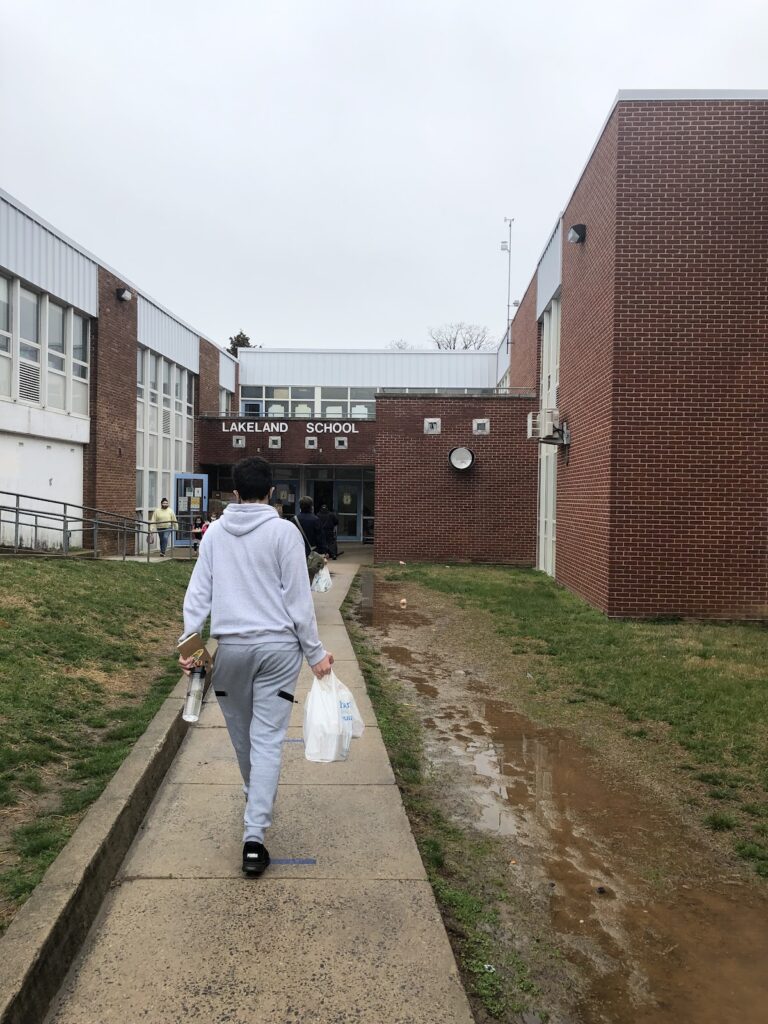
 ASB students tour Lakeland.
During the tour, ASB participants walked past the MedStar mobile health center to unload a van full of grocery bags to a table set up right outside the school, where people from the community could grab what they needed. UMBC students saw the patch of dirt that come spring would transform into a garden, a soundproof studio where kids could record songs, and space for residents of the area to do their laundry.
Throughout their time there, students were warmly welcomed and given more information from the principal, Dowdell, and Brian Francoise, project director of Lakeland Community and the STEAM Center, one of the many members of UMBC tied to the community of Lakeland.
While reflecting on the group’s experience, Karen Griffin ’23, biology, began to ask more questions like, “Why is there not a push to have more community schools around Baltimore? What would my childhood, as someone who grew up low-income in Baltimore City, have looked like if my neighborhood had a community school?”
Investing in the communities around you
 ASB participants, leaders, and staff from the Center for Democracy and Civic Life pose together at the end of the week.
UMBC’s 2022 ASB took the first steps of building and maintaining long-term relationships with Baltimore organizations and deconstructing the idea of the city that often finds its way to the front pages. Together, participants unpacked ways to build trust with the respective communities their groups worked with, while not assuming what those needs are.
“The idea of an ‘Alternative Spring Break’ on college campuses has been around since the 1980s and was meant to provide students with a meaningful alternative to going to the beach all week” explains Davis, the student organizer. “The idea has since been commercialized, and many schools travel to a location, hours away, do service with an organization, and then return to their home campus. The ASB program at UMBC is unique because the goal is not to find something to fill your spring break but to use your spring break as an introduction to how meaningful change is made in Baltimore City.”
*****
Header image provided by the Center for Democracy and Civic Life.
All other photos by Charis Lawson ’20.
]]>
In a large room, around 30 participants sat in two semi-circles of foldable chairs facing a panel of people invested in Baltimore and connected to UMBC. Despite the perfect spring break weather,...
https://umbc.edu/stories/deconstructing-ideas-about-service/
https://my3.my.umbc.edu/api/v0/pixel/news/119446/guest@my.umbc.edu/a2f6cb794a7dfd6978d9b774584035e2/api/pixel
alternative-spring-break
asb
baltimore
campus-life
center-for-democracy-and-civic-life
magazine
UMBC News & Magazine
https://my3.my.umbc.edu/groups/umbc-news-magazine
https://assets1-my.umbc.edu/system/shared/avatars/groups/000/001/943/24435aa6207c452e7bc15cc74b42c7bb/xsmall.png?1748556657
https://assets1-my.umbc.edu/system/shared/avatars/groups/000/001/943/24435aa6207c452e7bc15cc74b42c7bb/original.png?1748556657
https://assets2-my.umbc.edu/system/shared/avatars/groups/000/001/943/24435aa6207c452e7bc15cc74b42c7bb/xxlarge.png?1748556657
https://assets2-my.umbc.edu/system/shared/avatars/groups/000/001/943/24435aa6207c452e7bc15cc74b42c7bb/xlarge.png?1748556657
https://assets3-my.umbc.edu/system/shared/avatars/groups/000/001/943/24435aa6207c452e7bc15cc74b42c7bb/large.png?1748556657
https://assets1-my.umbc.edu/system/shared/avatars/groups/000/001/943/24435aa6207c452e7bc15cc74b42c7bb/medium.png?1748556657
https://assets2-my.umbc.edu/system/shared/avatars/groups/000/001/943/24435aa6207c452e7bc15cc74b42c7bb/small.png?1748556657
https://assets1-my.umbc.edu/system/shared/avatars/groups/000/001/943/24435aa6207c452e7bc15cc74b42c7bb/xsmall.png?1748556657
https://assets2-my.umbc.edu/system/shared/avatars/groups/000/001/943/24435aa6207c452e7bc15cc74b42c7bb/xxsmall.png?1748556657
UMBC News & Magazine
0
0
false
Fri, 15 Apr 2022 18:16:54 -0400
Fri, 15 Apr 2022 18:16:54 -0400
Dawg Days Abroad: The scoop on UMBC’s newest summer program
Most new students can’t wait to get their college careers started. This group of dedicated Retrievers really couldn’t wait. Through UMBC’s new Dawg Days Abroad program, nearly 30 incoming students had the chance to travel to Bristol, England as part of a two-week international excursion. Students were able to gain college credits and start making lasting memories before classes even began.
Developing the pilot program, navigating piles of paperwork, coordinating travel logistics, and wrangling a few dozen college students in a foreign country…seems easy, right? Caylie Middleton ‘08, associate director of international education, told us just how this exciting new adventure unfolded.
This is the first time UMBC has offered a program like this. What was the process for getting Dawg Days Abroad off the ground?
This program has been in the works for about three years and has been a personal dream of mine. I’ve always wanted to reach newly-admitted students because oftentimes once students come to our office, they don’t have as much time to think about studying abroad amidst their other responsibilities and priorities.
Dawg Days Abroad is a really rare type of study abroad program that few universities in the United States offer. To start, I met with campus partners such as Admissions, the Office Academic Engagement and Transition Programs, and potential faculty leaders. I also had to start to identify external providers to map our logistic support and explore possible locations for the program.
Once everyone was on board with the program, we identified the faculty whose courses would be the best fit for potential students. Then we had to narrow down the location options to one that fit within our anticipated budget.
That’s all the easy part. The hard part comes when you start to promote the program. We had to get enough students to make our minimum enrollment. We were aiming for at least 20 students and we ended up with 29.
This program had many moving pieces and so many different parties involved. I couldn’t have done it without the collaborative effort of everyone who was a part of it.
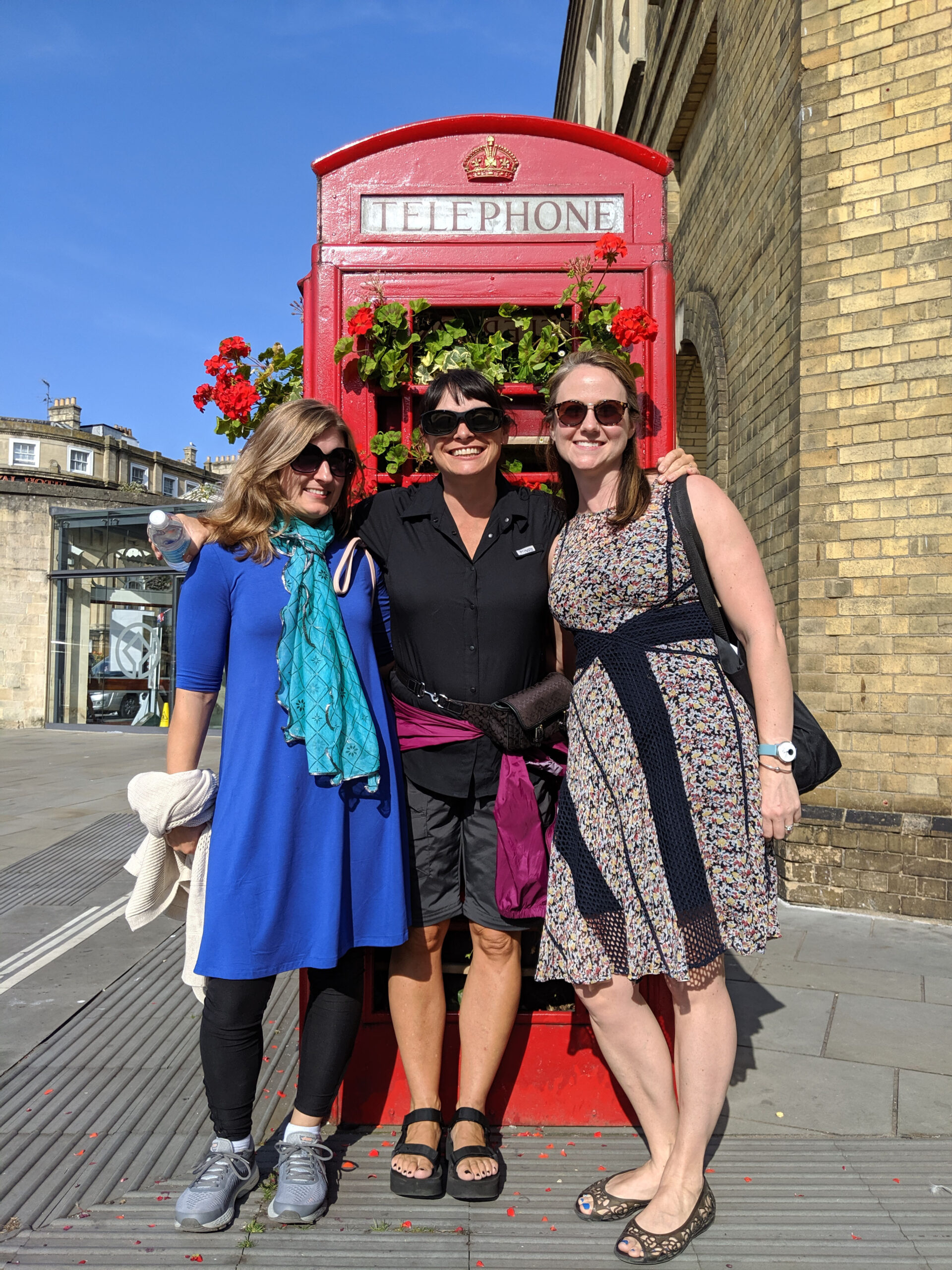
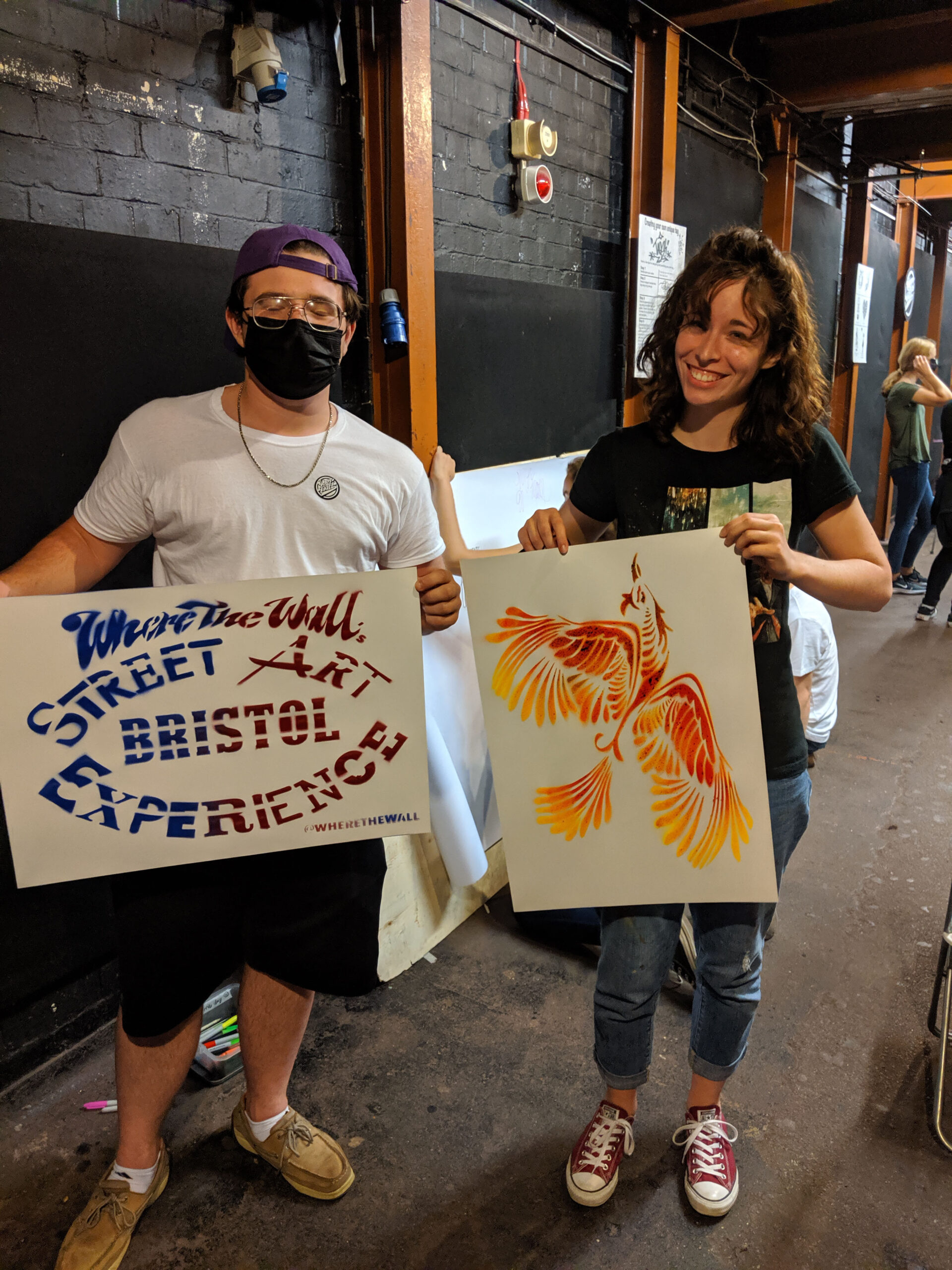
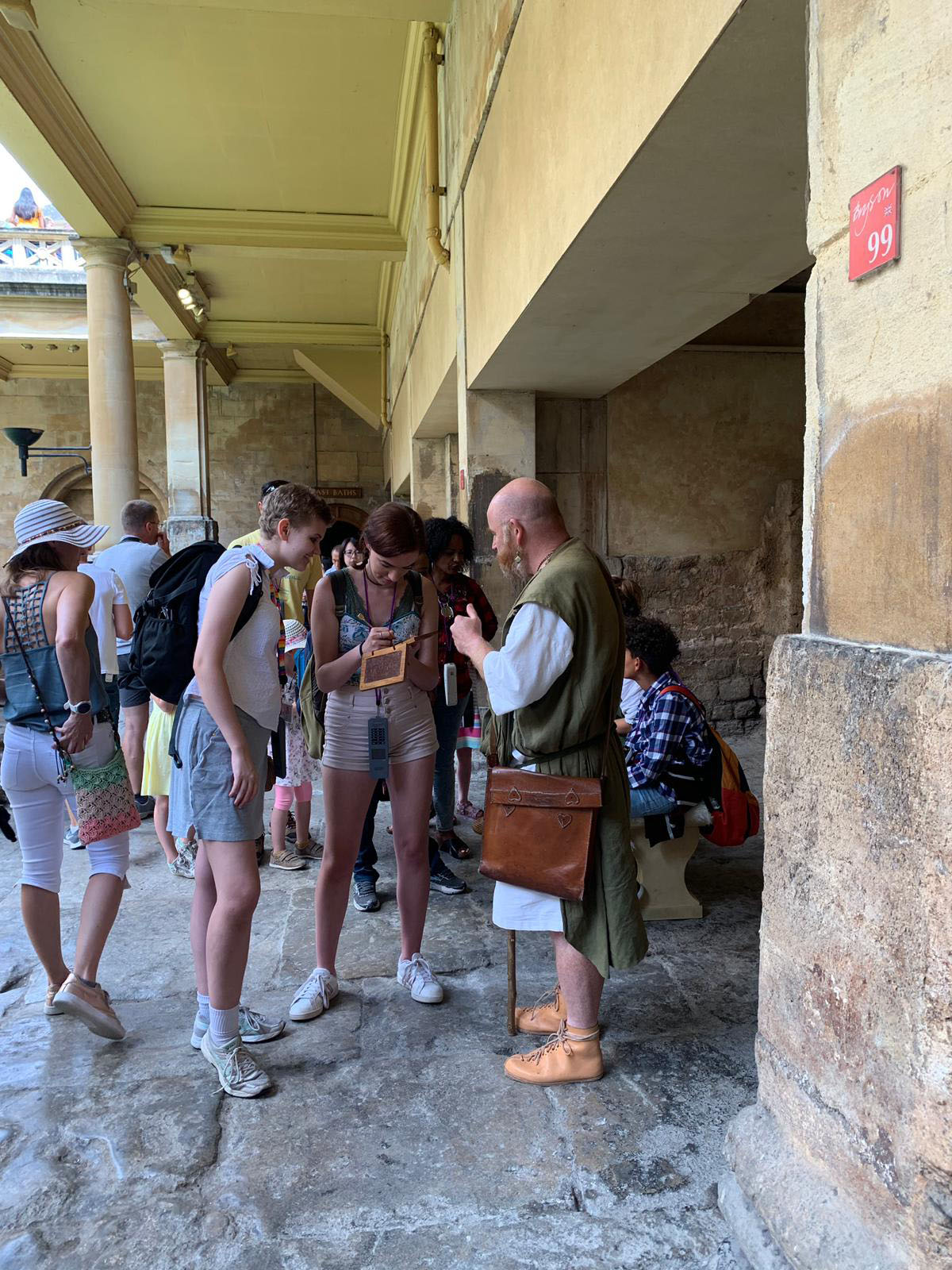
You mentioned that not many universities are doing this type of program. What makes it so unique?
This is a study abroad program that UMBC students complete before they start their first semester on campus. Most students don’t study abroad until their junior year, so Dawg Days students got international experience well before most others.
During their two weeks abroad, students earn four credits and get a chance to complete research, which makes this program particularly unique and valuable. Students have guided instruction on selecting a research topic and mentor, creating a poster presentation, and presenting a poster in a professional setting. Those four credits also include a one-credit “Introduction to an Honors University” component, which I taught to help students develop the skills to become successful Retrievers.
Our goals for this program are to give the students a snapshot and head start into university life and the potential they can reach. We want students to get an international and intercultural experience, form a group of friends before they start their time on campus, develop relationships with mentor on UMBC staff, and learn about the resources available to them.
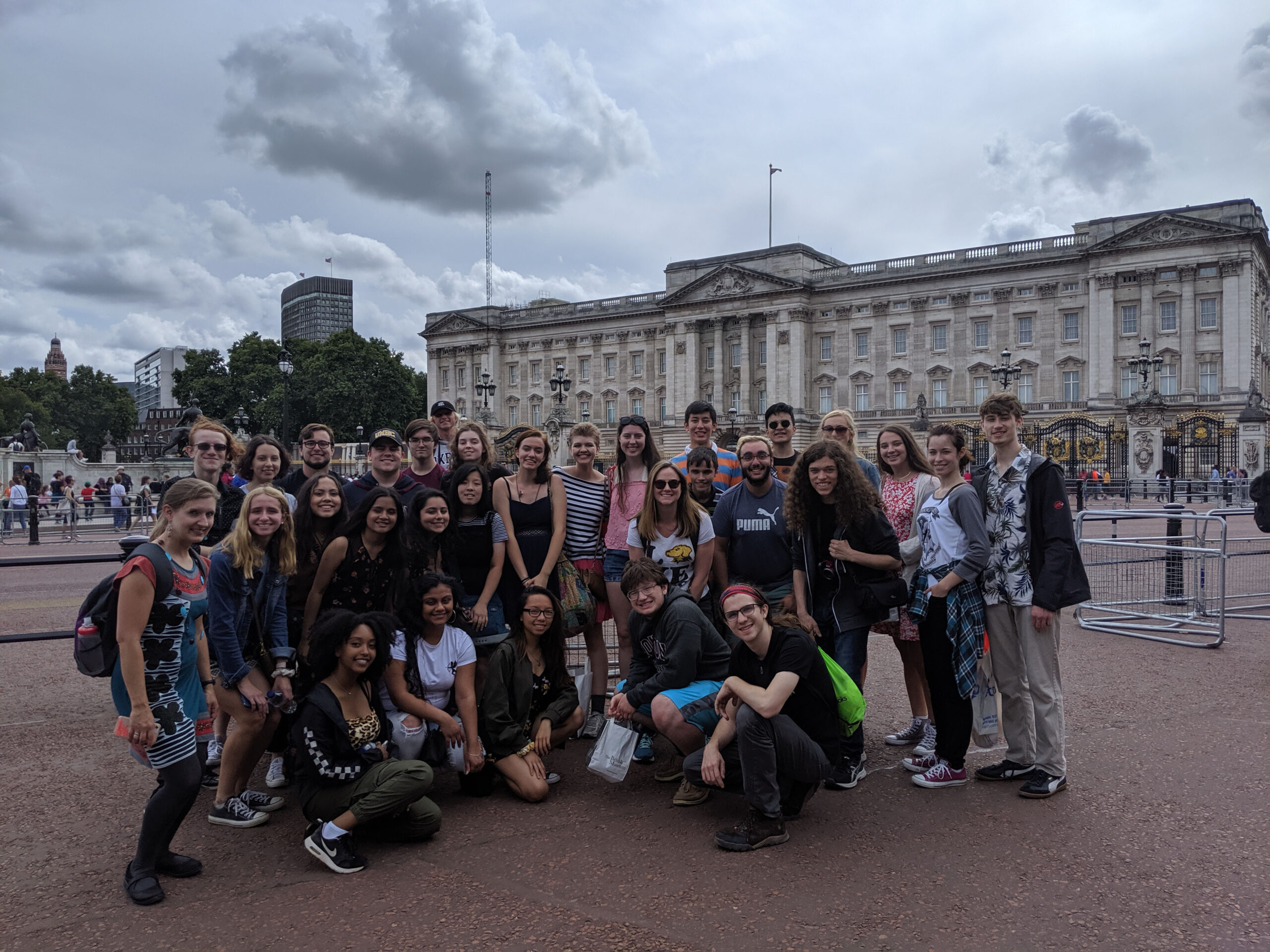
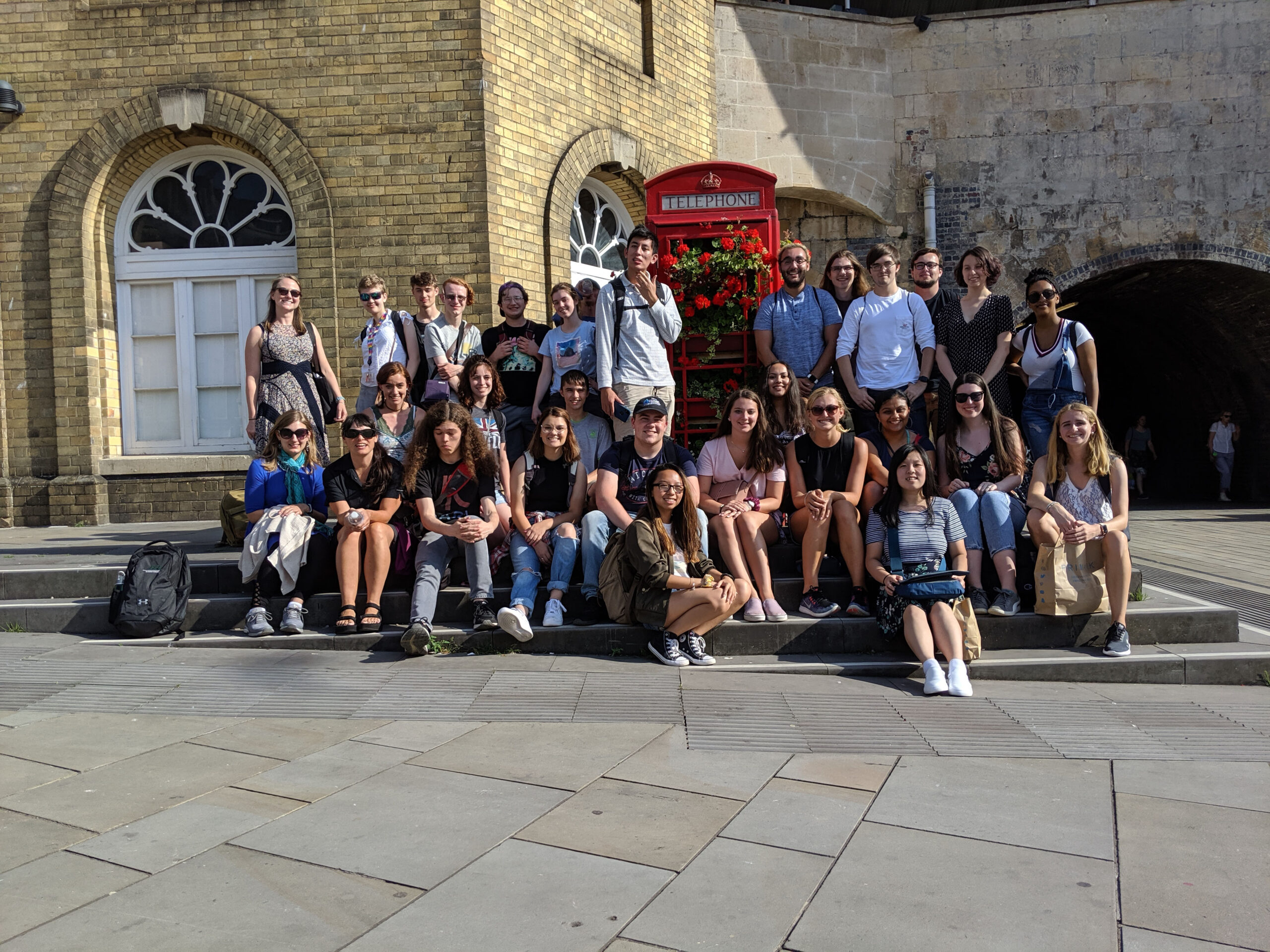
The big question: What did students actually do while they were abroad?
The program started with a day and a half on campus so students could develop some rapport with each other, get the pre-departure safety information, and do introductory coursework. We all left together to go to the airport and then flew together to London.
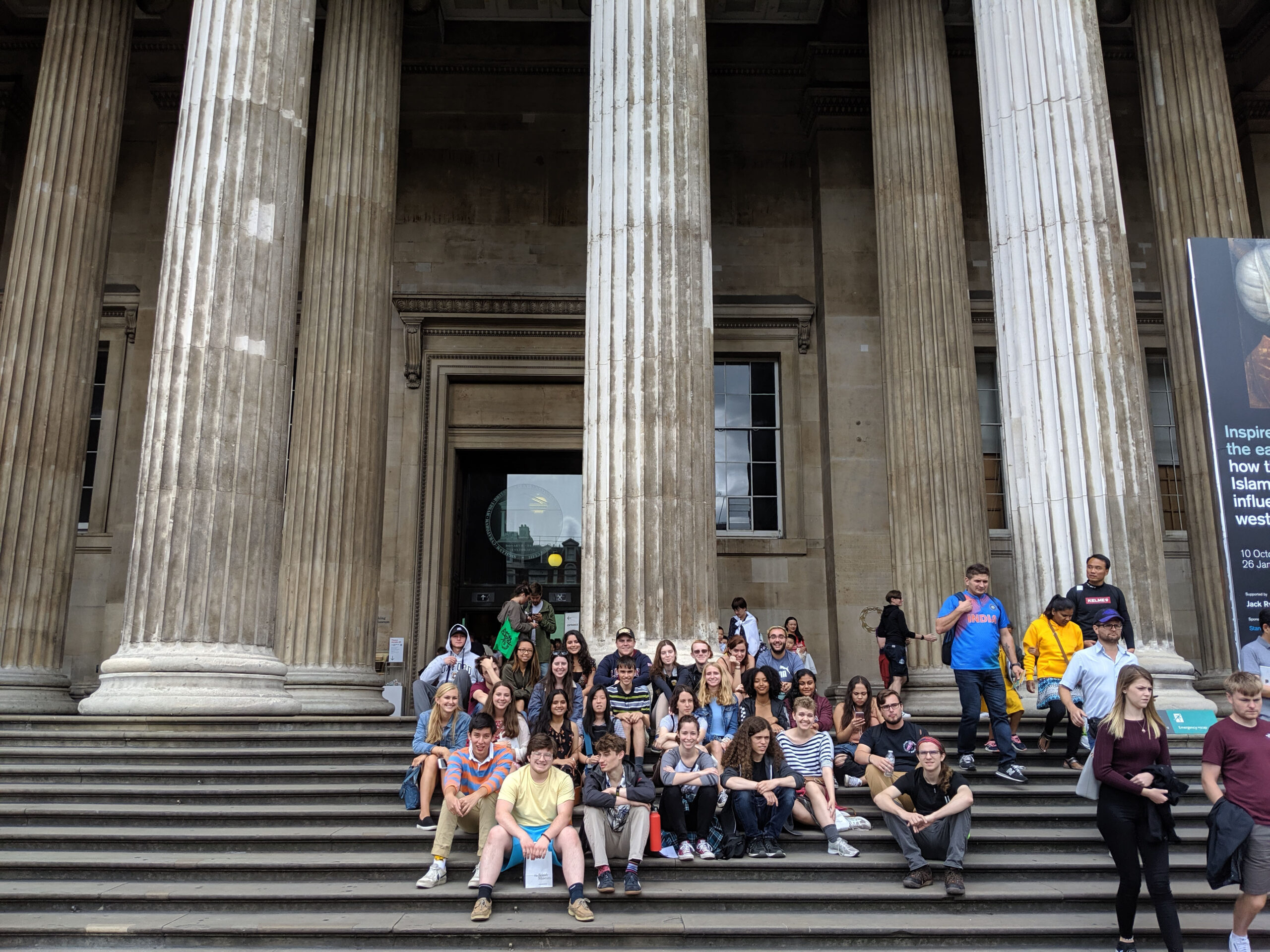
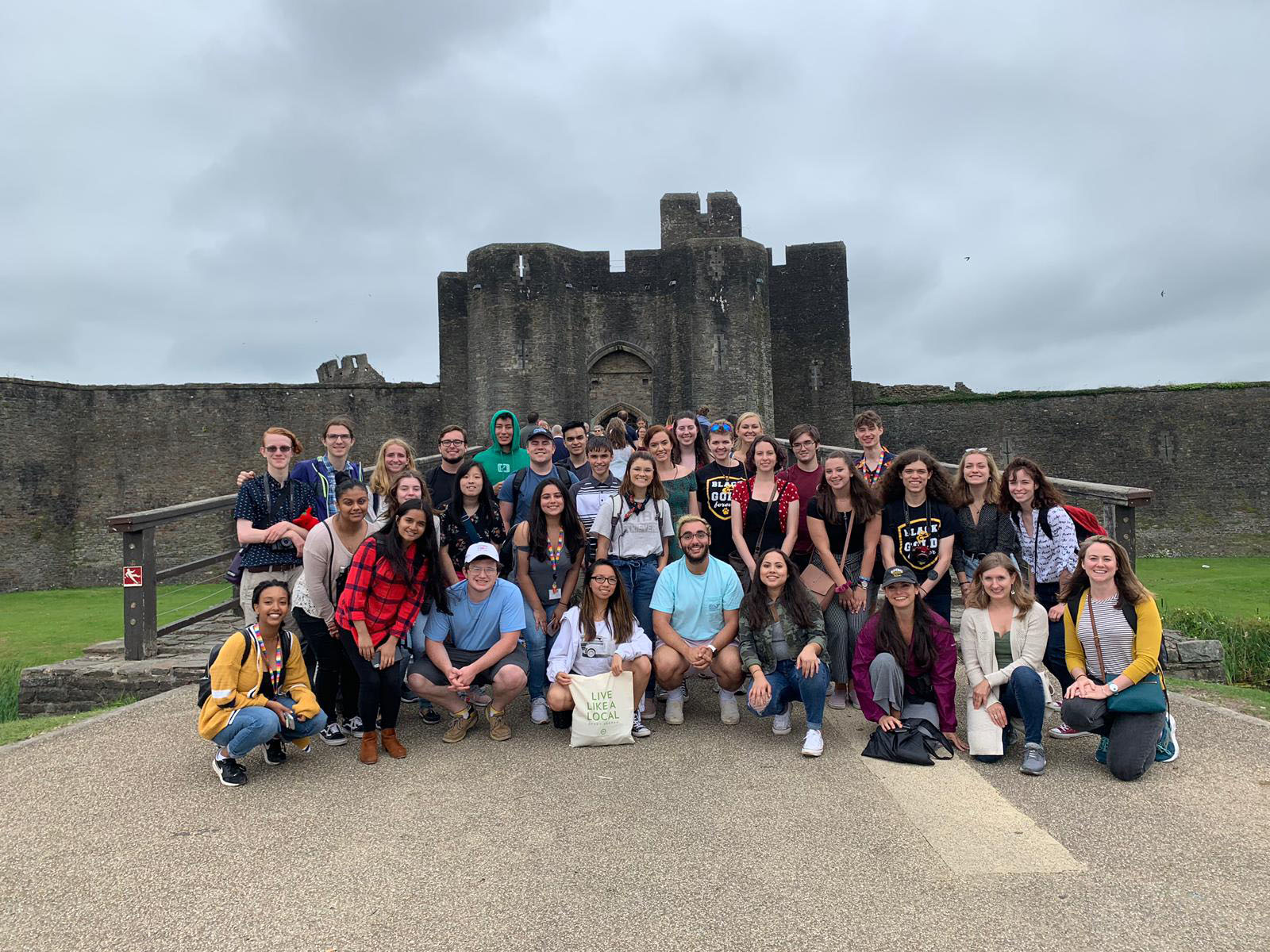
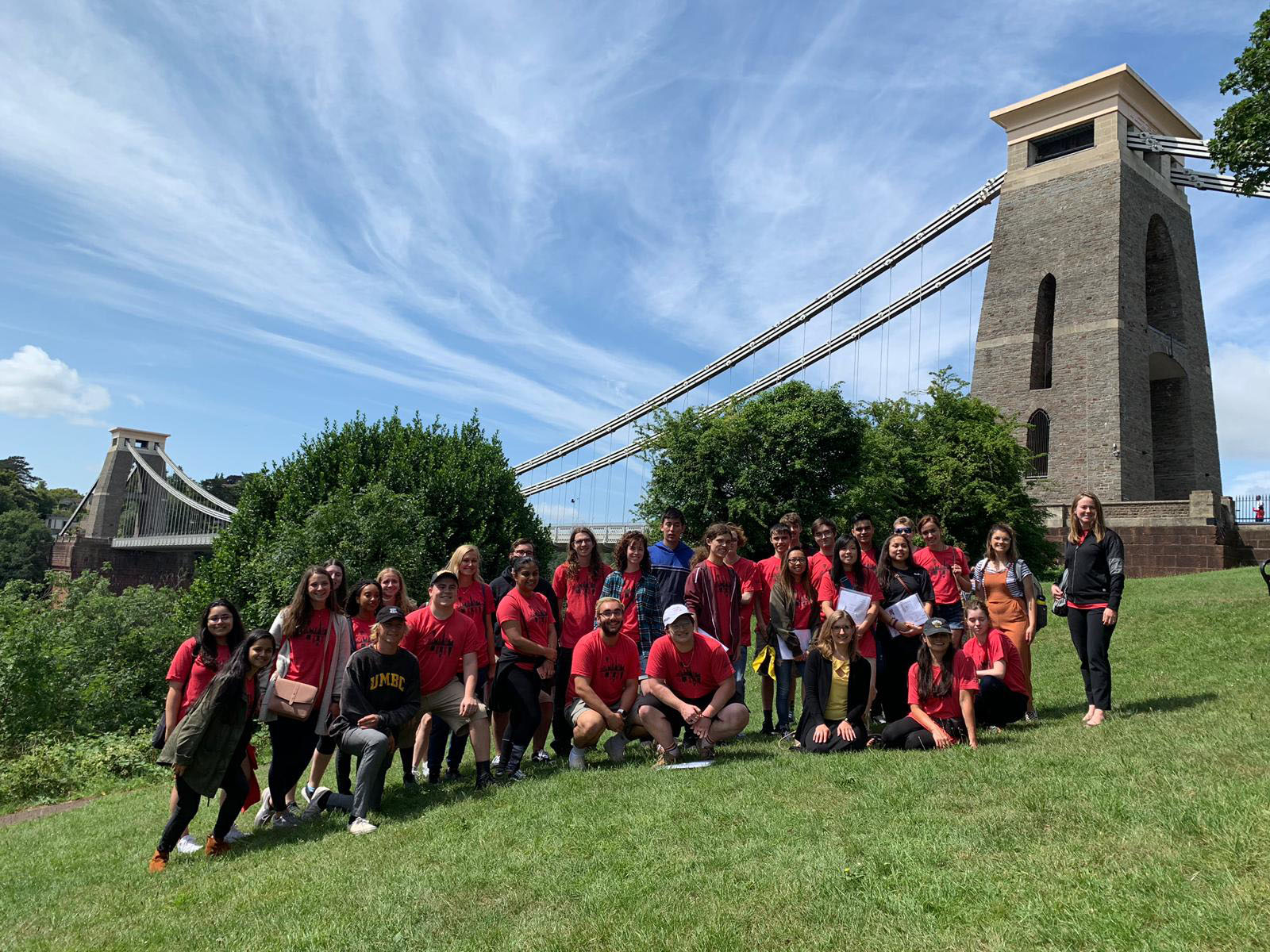
Once we arrived, we spent the majority of the time in Bristol, a city about two hours west of London. From there, students attended class daily and we enjoyed excursions every few days. We visited Bath to see the Roman Baths, went into the Welsh countryside, saw the Big Pit National Coal Museum, and explored social and political history on a tour of a coal mine. We did get to see a few traditional English castles while we were in the neighborhood, but most of our activities tied directly to the course content.
Other excursions included The National Gallery in London, the British Museum (to see the Rosetta Stone and explore representations of Orientalism), the National Assembly for Wales, and the Palestine Museum and Cultural Centre in Bristol. The students’ days were packed with activities and classes.
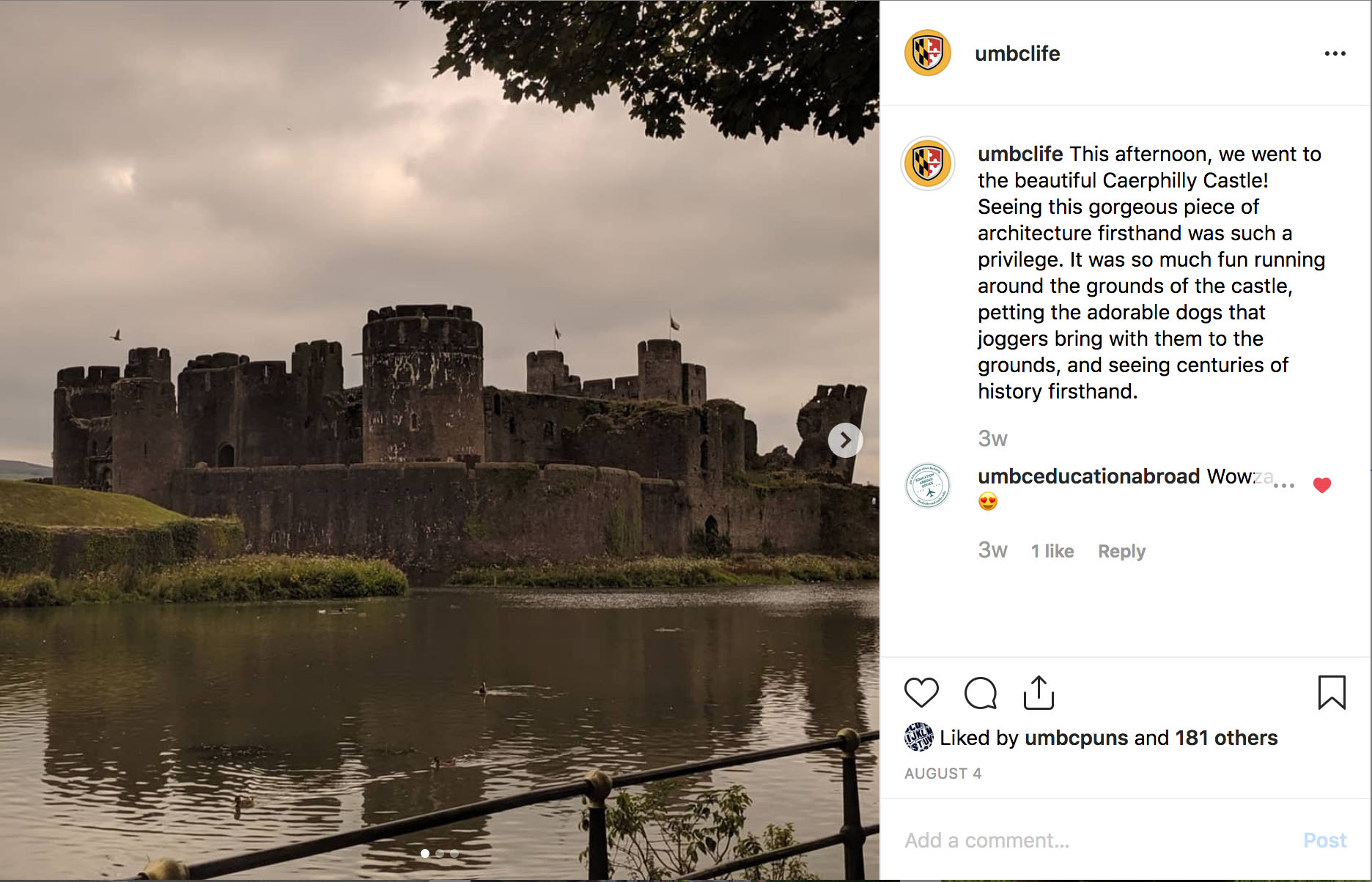
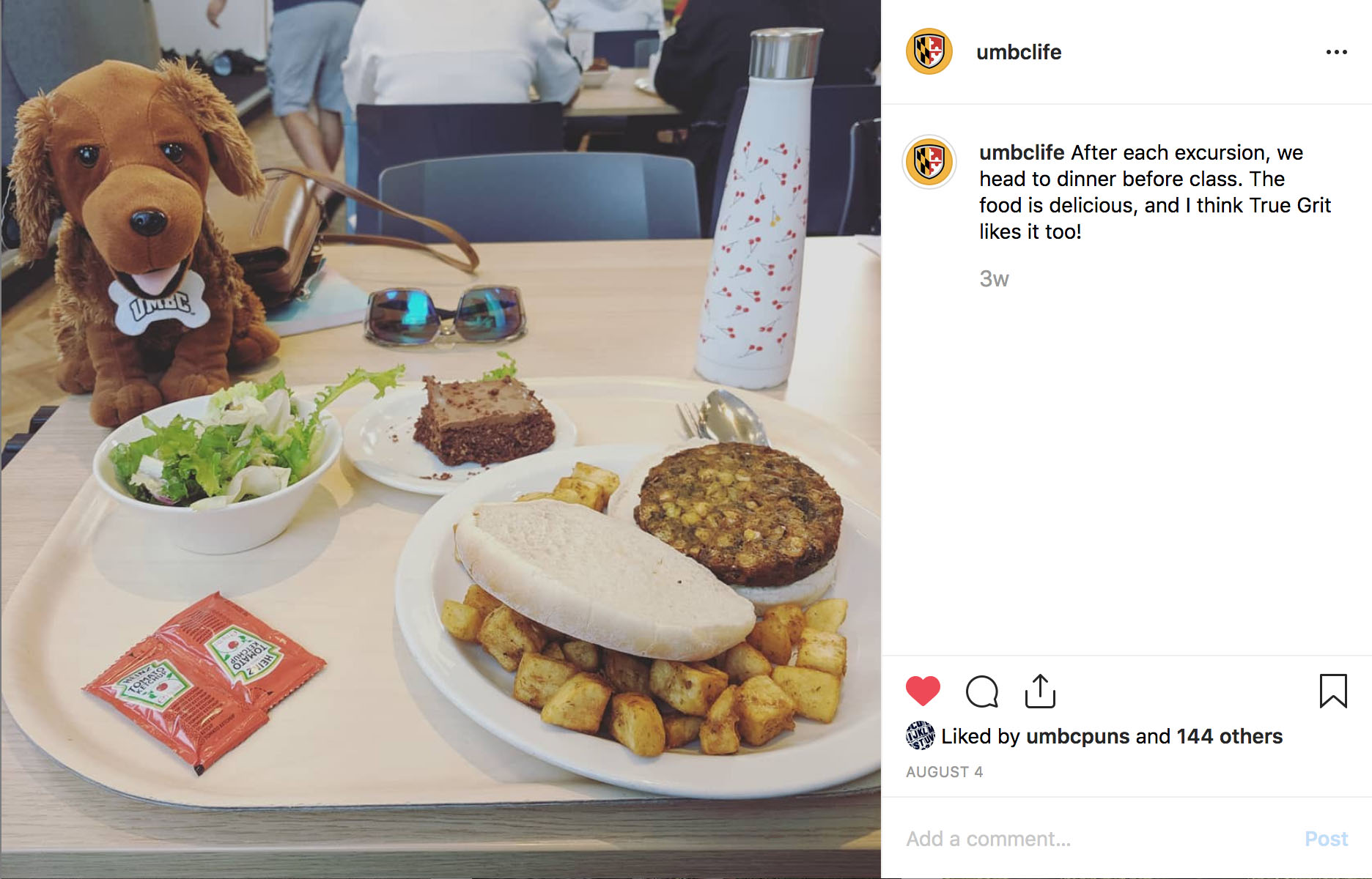
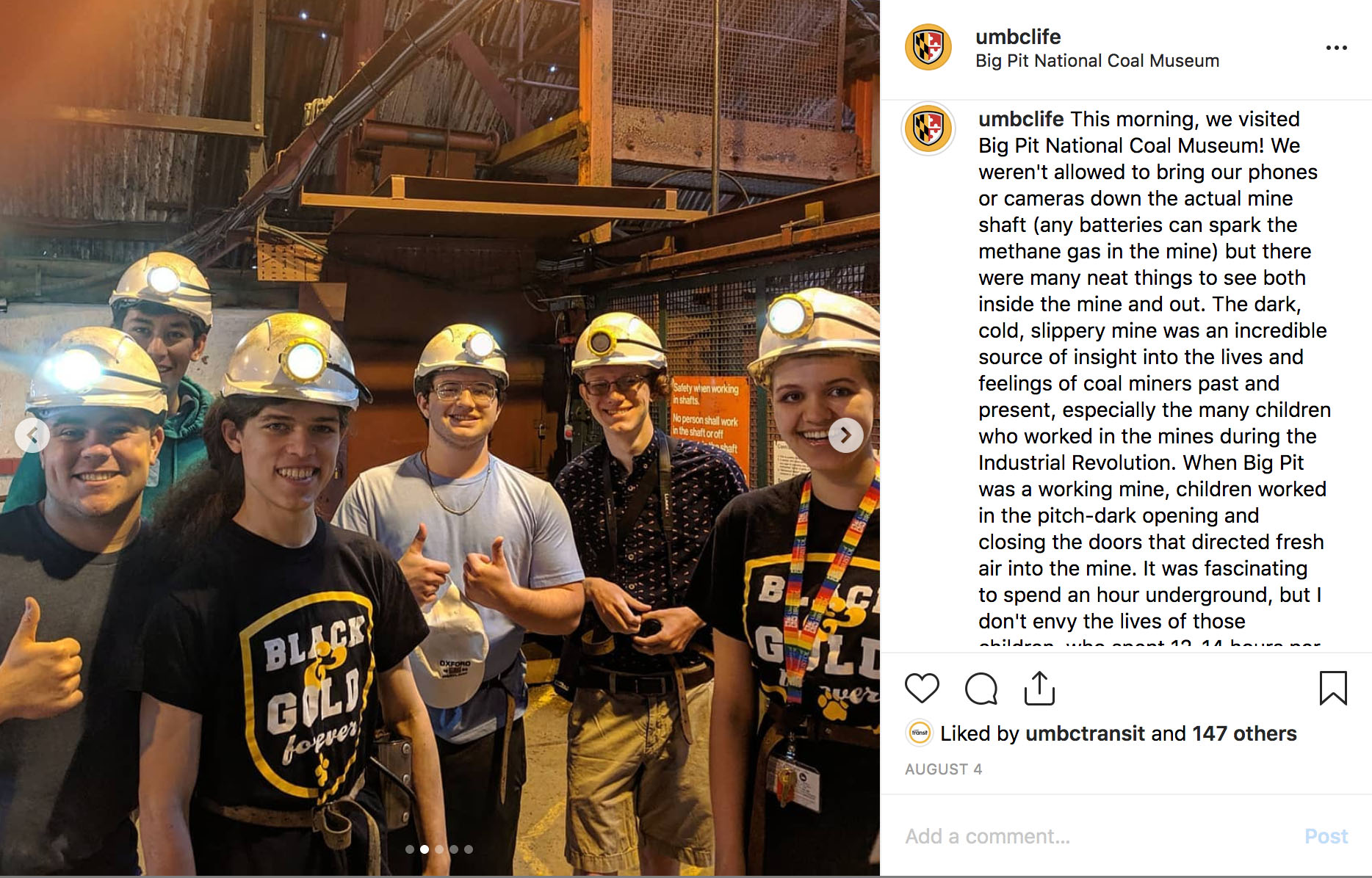
After such a successful first venture, what are your hopes for the future of the program?
Seeing this program come to fruition was so exciting. My next steps are to continue to improve and run it for the next few years. In the long term, I hope we can offer a few different pre-freshman/transfer study abroad programs in different locations for students to choose from. I believe this experience is so beneficial for both the students and our university. At least two students who participated who said they chose UMBC because we offered this study abroad program. It’s a great way to introduce future Retrievers to the fun and fascinating experiences they can access as a UMBC student.
All photos courtesy of Caylie Middleton ’08.
]]>
Most new students can’t wait to get their college careers started. This group of dedicated Retrievers really couldn’t wait. Through UMBC’s new Dawg Days Abroad program, nearly 30 incoming students...
https://umbc.edu/stories/dawg-days-abroad-the-scoop-on-umbcs-newest-summer-program/
https://my3.my.umbc.edu/api/v0/pixel/news/120055/guest@my.umbc.edu/17cbf7b21fe82f0173e38791a098e158/api/pixel
baltimore
campus-life
colleges-and-universities
UMBC News & Magazine
https://my3.my.umbc.edu/groups/umbc-news-magazine
https://assets1-my.umbc.edu/system/shared/avatars/groups/000/001/943/24435aa6207c452e7bc15cc74b42c7bb/xsmall.png?1748556657
https://assets1-my.umbc.edu/system/shared/avatars/groups/000/001/943/24435aa6207c452e7bc15cc74b42c7bb/original.png?1748556657
https://assets2-my.umbc.edu/system/shared/avatars/groups/000/001/943/24435aa6207c452e7bc15cc74b42c7bb/xxlarge.png?1748556657
https://assets2-my.umbc.edu/system/shared/avatars/groups/000/001/943/24435aa6207c452e7bc15cc74b42c7bb/xlarge.png?1748556657
https://assets3-my.umbc.edu/system/shared/avatars/groups/000/001/943/24435aa6207c452e7bc15cc74b42c7bb/large.png?1748556657
https://assets1-my.umbc.edu/system/shared/avatars/groups/000/001/943/24435aa6207c452e7bc15cc74b42c7bb/medium.png?1748556657
https://assets2-my.umbc.edu/system/shared/avatars/groups/000/001/943/24435aa6207c452e7bc15cc74b42c7bb/small.png?1748556657
https://assets1-my.umbc.edu/system/shared/avatars/groups/000/001/943/24435aa6207c452e7bc15cc74b42c7bb/xsmall.png?1748556657
https://assets2-my.umbc.edu/system/shared/avatars/groups/000/001/943/24435aa6207c452e7bc15cc74b42c7bb/xxsmall.png?1748556657
UMBC News & Magazine
0
0
false
Thu, 05 Sep 2019 16:04:53 -0400
Fish out of Water

The challenges of building a human-powered amphibious sculpture include working with nary a blueprint in sight, avoiding flying sparks from your professor’s power tools, returning to the theatre department’s dumpster again and again seeking out items to upcycle into an ever-changing design, and—oh yeah—not sinking in Baltimore’s Inner Harbor when all is said and done.
By Randianne Leyshon ’09
Race day photos by Poulomi Banerjee ’16, all other images by Marlayna Demond ’11, unless otherwise noted.
A dismembered hammerhead shark takes up most of the office space.
Professor Steven McAlpine proudly holds up the dorsal fin and other grey body parts to demonstrate the ingenuity of his student team, which plans to work with the specimen in piecemeal. “It’s like a pile of sushi in here,” laughs McAlpine.
Previously on display in the National Aquarium and then donated for this project, the “shark” in question has skin made of plastic bags from Lowes, melted together to form the exterior of this beast of recycled materials. McAlpine and his students are giving the shark a second life by building it a three-tricycle chassis, complete with pontoons and three pilots to careen 14 miles through the streets of Baltimore—including a stint in the harbor—to compete in Baltimore’s 21st annual Kinetic Sculpture race.
This—in all its fishy, gear-filled glory—is what interdisciplinary learning looks like at UMBC.
Creating jaws from scratch
Working outside under the Fine Arts portico this spring, with a portable speaker blasting “Can’t Touch This,” in homage to the class’s name for their project—MC Hammerhead, the students are engaged in a variety of hands-on tasks: creating a skeleton of two-by-fours to hold up the shark’s wire mesh head and sawing jagged teeth from fiberboard from the theatre’s trash to fill its mouth with double rows.
Two of the three teal trikes sit nearby, connected by a homemade metal apparatus, and with pontoons made of old recycling containers welded on. In December, the team tested out the pontoons’ effectiveness in UMBC’s Pig Pen Pond. As the test pilot (in swimming trunks) prepared to sink or float, Cody Thomas ’19, mechanical engineering, described watching his classmate go down into the water with “hopeful pessimism.”
“I was like, ‘okay, we’ve done the math and we definitely have the right volume in these pontoons’ and then he hit the water. The wheels broke through the ice and then the pontoons sat there and I thought, ‘wow, this is working really, really well.’”
 David Thompson breaks through the ice of Pig Pen Pond. In swim trunks. In December. Photo courtesy of Steven McAlpine.
Not all, but many of the students’ ad hoc solutions would turn out to work really well. To demonstrate the biomimicry of the structure, Lucas McCullum ’19, mechanical engineering, and Lorraine Dell’Acqua ’19, psychology, two students in McAlpine’s class, jump on the swivel-combined tricycles and pedal around campus, the second rider’s direction depending on the steering of the first. The effect is successfully serpentine.
McAlpine says the students identified the design challenge and decided to tackle it head on. “They really get fundamentally why it’s important to take time to design. Design means really coming up with a product that’s appropriate for the context…so if it’s a shark, you want it to have that kind of dynamic fish movement, to move differently from anything we’ve built before. So I credit the capstone team for having the courage to see that like a very generally defined engineering problem: ‘We want it to move like a fish.’”
There’s no textbook for this
This spring marks UMBC’s fifth entry into this wacky, very Baltimore race, and UMBC’s second structure (the first was the squid-shaped Kracken Upcycle, which won Grand Mediocre East Coast Championship in 2015). With detailed rules down to the required homemade sock creature that must be displayed on board, the funky race is the perfect platform for art and engineering to meld together, or in this case, literally weld together.
It’s a project, McAlpine says, that fits perfectly into the UMBC ethos.
“I’ve never before encountered this kind of cross-disciplinary problem-solving,” explains McAlpine, “when actually your strengths in another area can help you tackle the problem in a new way.” The interdisciplinary studies seminar guided by McAlpine also includes a consulting team of mechanical engineering students completing their capstone project under the guidance of Neil Rothman in the College of Engineering and Information Technology. The interplay between the two groups has refined the shark into a well-engineered piece of art.

When a steering or hitch issue stumps the engineers, it’s the psychology and political science students in the class who start doodling on the whiteboard, using their non-traditional sets of knowledge to work out the kinks. “UMBC students allow students of other majors to solve problems for them,” adds McAlpine.
There’s no pre-existing manual for how to create such a beast, so McAlpine and his team of students are learning from the successes and failures of their original Kraken sculpture, which survived in various iterations to run four kinetic sculpture races previously and is currently living out its retirement in front of Fine Arts. They’ve also sought guidance from Arbutus Middle School’s long-standing kinetic sculpture team, as well as from the UMBC Baja design lab, a racing club on campus.
“I was really excited that we were working with an interdisciplinary team,” says Alliana Warner ’19, one of the mechanical engineering capstone consultants. “We provided a lot of mentorship, which I don’t think we expected to do at first.”
“Like our mechanical side, we can do that,” says David Thompson ’19, another of the capstone students. “But we have to connect their art to our mechanical side. So we had to have a lot of communication.” And when their vocabularies didn’t overlap, they turned to art to convey their ideas.
“It was just like a no-barriers way of communicating when everybody picked up the markers and started drawing on the board, and it was cool to see the whole class have their own ideas that they were sketching from stick figures to really elaborate art majors just making these beautiful drawings,” Thompson explains.
The end result of their collaboration is a 20-foot, seven-wheeled, 1,000 pound (with three human pilots on board) upcycled kinetic sculpture that would hopefully mimic the undulating sashay of a shark as they pedaled it through the city.

Quality design on a budget
The challenges of building a human-powered amphibious sculpture that is safe to drive but also stands out in a field that includes local favorites like Tick Tock the Croc, Cowsmic Moobeams, and Platypus Lost is textbook Individualized Study course material. (In fact, the textbook they used was Cradle to Cradle. Remaking the Way We Make Things, an interdisciplinary collaboration between a chemist and an architect.)
McAlpine added to the already complicated rules for entry an additional goal of using 80% upcycled materials, raiding the theater department’s trash after productions and going to facilities management to scrounge for pontoon-like barrels.
Using upcycled materials created additional challenges for the capstone consultants. “We would come up with what we thought was the most sound design,” says Thomas. The class would then push back on their prototypes, asking them to find a cheaper or more sustainable solution. “And we’d be thinking to ourselves, oh, like now I have to use not the best materials but still create something that’s just as quality in design.”
One hurdle was the ball-and-socket hitch that the mechanical engineering students proposed to connect the trikes. After looking at the price and weight of the hitches they’d need, the individualized study students balked. As they sat on their swivel chairs thinking, the motions inspired a new idea.
After some prototyping, the capstone students were able to take the swivel from barstool-like chairs and play with the orientation on the sculpture to make it work as a replacement for their original idea. “I think it made us more proud of it at the end,” adds Brianna Scarpulla ’19, the fourth member of the mechanical engineering group, “by doing something different than what we were going to do.”
Race day dawns
On May 4, MC Hammerhead and 23 other creations lined up to compete in the American Visionary Arts Museum’s Kinetic Sculpture Race. The UMBC pilots and their pit crew gathered all their necessary provisions, including water bottles, life vests, and granola bars. And even though the engineers triple-checked their calculations and crowd sourced their prototypes, they still cross their fingers.
Their gear is tested from the very start. After the gun and a Le Mans-style running start, the human-powered sculptures make their way up Battery Avenue in Federal Hill Park. This daunting climb sets the tone of the race as many other obstacles lay in MC Hammerhead’s way—including cobblestones, water entry and exit, a sand pile, and a mud pit—before the team’s anticipated conclusion six hours later.
Early into the race on Key Highway, MC Hammerhead’s tail fell off, but this was nothing a roll of duct tape couldn’t fix as the team waited for their turn to enter the water. Going into the Chesapeake Bay at full speed blasting “Can’t Touch This” really hyped up the onlookers, but McAlpine held his breath. “I was expecting pontoons to break off,” says McAlpine. “But it was so well engineered. It made a big splash and kind of accordioned, but it was designed to be flexible, so it was fine.”

When the shark emerged from the water, the “kinetic kops” tried to slap the team with several time penalties, but the threats were quickly resolved by some lemon-flavored shark cookies made by McAlpine’s 12-year-old daughter, Lily. Graft is not only encouraged at the race, but there’s even a prize for best bribe.
Through “mysterious mathematical means,” as the race rules nebulously explain, MC Hammerhead came away in 14th place, and while the production is not about the medals, McAlpine didn’t see a single sculpture make it through the mud and sand as well as UMBC’s.
“The shark was light and fast, which attests to Neil Rothman’s engineering capstone class—they really engineered a strong and light pontoon system,” says McAlpine. “Because that’s really something that keeps me up at night: Are they going to capsize? And they didn’t do that even at full speed.”
Looking back on the experience, even the hectic last two weeks before the big day, McAlpine only sees the success of his students. “Probably the biggest interdisciplinary challenge is that you have to take a sculpture that’s meant to be static—not moving and bouncing around—and make that sculpture strong enough to have enough integrity to survive constant vibration for 14 miles of potholes and cobblestones. Given that, I thought the sculpture did remarkably well…the combination of engineering and art was a real crowd pleaser.”

*****
Header image by Poulomi Banerjee ’16.
]]>
The challenges of building a human-powered amphibious sculpture include working with nary a blueprint in sight, avoiding flying sparks from your professor’s power tools, returning to the theatre...
https://umbc.edu/stories/fish-out-of-water/
https://my3.my.umbc.edu/api/v0/pixel/news/120099/guest@my.umbc.edu/ff427de978cc28c1f2ac2378c50cc929/api/pixel
baltimore
campus-life
inds
kinetic-sculpture-race
mcalpine
spring-2019
UMBC News & Magazine
https://my3.my.umbc.edu/groups/umbc-news-magazine
https://assets1-my.umbc.edu/system/shared/avatars/groups/000/001/943/24435aa6207c452e7bc15cc74b42c7bb/xsmall.png?1748556657
https://assets1-my.umbc.edu/system/shared/avatars/groups/000/001/943/24435aa6207c452e7bc15cc74b42c7bb/original.png?1748556657
https://assets2-my.umbc.edu/system/shared/avatars/groups/000/001/943/24435aa6207c452e7bc15cc74b42c7bb/xxlarge.png?1748556657
https://assets2-my.umbc.edu/system/shared/avatars/groups/000/001/943/24435aa6207c452e7bc15cc74b42c7bb/xlarge.png?1748556657
https://assets3-my.umbc.edu/system/shared/avatars/groups/000/001/943/24435aa6207c452e7bc15cc74b42c7bb/large.png?1748556657
https://assets1-my.umbc.edu/system/shared/avatars/groups/000/001/943/24435aa6207c452e7bc15cc74b42c7bb/medium.png?1748556657
https://assets2-my.umbc.edu/system/shared/avatars/groups/000/001/943/24435aa6207c452e7bc15cc74b42c7bb/small.png?1748556657
https://assets1-my.umbc.edu/system/shared/avatars/groups/000/001/943/24435aa6207c452e7bc15cc74b42c7bb/xsmall.png?1748556657
https://assets2-my.umbc.edu/system/shared/avatars/groups/000/001/943/24435aa6207c452e7bc15cc74b42c7bb/xxsmall.png?1748556657
UMBC News & Magazine
0
0
false
Wed, 19 Jun 2019 15:00:30 -0400
Hackers Seek Ransoms from Baltimore and Communities Across the US

By Richard Forno, assistant director, UMBC Center for Cybersecurity, director, cybersecurity graduate program
The people of Baltimore are beginning their fifth week under an electronic siege that has prevented residents from obtaining building permits and business licenses – and even buying or selling homes. A year after hackers disrupted the city’s emergency services dispatch system, city workers throughout the city are unable to, among other things, use their government email accounts or conduct routine city business.
In this attack, a type of malicious software called ransomware has encrypted key files, rendering them unusable until the city pays the unknown attackers 13 bitcoin, or about US$76,280. But even if the city were to pay up, there is no guarantee that its files would all be recovered; many ransomware attacks end with the data lost, whether the ransom is paid or not.
Similar attacks in recent years have crippled the United Kingdom’s National Health Service, shipping giant Maersk and local, county and state governments across the U.S. and Canada. Map: The Conversation, CC-BY-ND Source: Recorded Future: Get the data
These types of attacks are becoming more frequent and gaining more media attention. Speaking as a career cybersecurity professional, the technical aspects of incidents like this are but one part of a much bigger picture. Every user of technology must consider not only threats and vulnerabilities, but also operational processes, potential points of failure and how they use technology on a daily basis. Thinking ahead, and taking protective steps, can help reduce the effects of cybersecurity incidents on both individuals and organizations.
Understanding cyberattack tools
Software designed to attack other computers is nothing new. Nations, private companies, individual researchers and criminals continue developing these types of programs, for a wide range of purposes, including digital warfare and intelligence gathering, as well as extortion by ransomware.
Many malware efforts begin as a normal and crucial function of cybersecurity: identifying software and hardware vulnerabilities that could be exploited by an attacker. Security researchers then work to close that vulnerability. By contrast, malware developers, criminal or otherwise, will figure out how to get through that opening undetected, to explore and potentially wreak havoc in a target’s systems.
Sometimes a single weakness is enough to give an intruder the access they want. But other times attackers will use multiple vulnerabilities in combination to infiltrate a system, take control, steal data and modify or delete information – while trying to hide any evidence of their activity from security programs and personnel. The challenge is so great that artificial intelligence and machine learning systems are now also being incorporated to help with cybersecurity activities.
There’s some question about the role the federal government may have played in this situation, because one of the hacking tools the attackers reportedly used in Baltimore was developed by the U.S. National Security Agency, which the NSA has denied. However, hacking tools stolen from the NSA in 2017 by the hacker group Shadow Brokers were used to launch similar attacks within months of those tools being posted on the internet. Certainly, those tools should never have been stolen from the NSA – and should have been better protected.
But my views are more complicated than that: As a citizen, I recognize the NSA’s mandate to research and develop advanced tools to protect the country and fulfill its national security mission. However, like many cybersecurity professionals, I remain conflicted: When the government discovers a new technology vulnerability but doesn’t tell the maker of the affected hardware or software until after it’s used to cause havoc or disclosed by a leak, everyone is at risk.
Chart: The Conversation, CC-BY-ND Source: CyberEdge Group Cyberthreat Defense Report 2019 Get the data
Baltimore’s situation
The estimated $18 million cost of recovery in Baltimore is money the city likely doesn’t have readily available. Recent research by some of my colleagues at the University of Maryland, Baltimore County, shows that many state and local governments remain woefully underprepared and underfunded to adequately, let alone proactively, deal with cybersecurity’s many challenges.
It is concerning that the ransomware attack in Baltimore exploited a vulnerability that has been publicly known about – with an available fix – for over two years. NSA had developed an exploit (code-named EternalBlue) for this discovered security weakness but didn’t alert Microsoft about this critical security vulnerability until early 2017 – and only after the Shadow Brokers had stolen the NSA’s tool to attack it. Soon after, Microsoft issued a software security update to fix this key flaw in its Windows operating system.
Admittedly, it can be very complex to manage software updates for a large organization. But given the media coverage at the time about the unauthorized disclosure of many NSA hacking tools and the vulnerabilities they targeted, it’s unclear why Baltimore’s information technology staff didn’t ensure the city’s computers received that particular security update immediately. And while it’s not necessarily fair to blame the NSA for the Baltimore incident, it is entirely fair to say that the knowledge and techniques behind the tools of digital warfare are out in the world; we must learn to live with them and adapt accordingly.
Chart: The Conversation, CC-BY-ND Source: Recorded Future: Get the data
Compounding problems
In a global society where people, companies and governments are increasingly dependent on computers, digital weaknesses have the power to seriously disrupt or destroy everyday actions and functions.
Even trying to develop workarounds when a crisis hits can be challenging. Baltimore city employees who were blocked from using the city’s email system tried to set up free Gmail accounts to at least get some work done. But they were initially blocked by Google’s automated security systems, which identified them as potentially fraudulent.
Making matters worse, when Baltimore’s online services went down, parts of the city’s municipal phone system couldn’t handle the resulting increase in calls attempting to compensate. This underscores the need to not only focus on technology products themselves but also the policies, procedures and capabilities needed to ensure individuals and/or organizations can remain at least minimally functional when under duress, whether by cyberattack, technology failures or acts of nature.
Protecting yourself, and your livelihood
The first step to fighting a ransomware attack is to regularly back up your data – which also provides protection against hardware failures, theft and other problems. To deal with ransomware, though, it’s particularly important to keep a few versions of your backups over time – don’t just rewrite the same files on a backup drive over and over.
That’s because when you get hit, you’ll want to determine when you were infected and restore files from a backup made before that time. Otherwise, you’ll just be recovering infected data, and not actually fixing your problem. Yes, you might lose some data, but not everything – and presumably only your most recent work, which you’ll probably remember and recreate easily enough.
And of course, following some of cybersecurity’s best practices – even just the basics – can help prevent, or at least minimize, the possibility of ransomware crippling you or your organization. Doing things like running current antivirus software, keeping all software updated, using strong passwords and multifactor authentication, and not blindly trusting random devices or email attachments you encounter are just some of the steps everyone should take to be a good digital citizen.
It’s also worth making plans to work around potential failures that might befall your email provider, internet service provider and power company, not to mention the software we rely on. Whether they’re attacked or simply fail, their absence can disrupt your life.
In this way, ransomware incidents serve as an important reminder that cybersecurity is not just limited to protecting digital bits and bytes in cyberspace. Rather, it should force everyone to think broadly and holistically about their relationship with technology and the processes that govern its role and use in our lives. And, it should make people consider how they might function without parts of it at both work and home, because it’s a matter of when, not if, problems will occur.
******
Richard Forno, Senior Lecturer, Cybersecurity & Internet Researcher, University of Maryland, Baltimore County
Header image: Many of Baltimore’s city services are crippled by a cyberattack.
The Conversation from City of Baltimore and Love Silhouette/Shutterstock.com, CC BY-SA
This article is republished from The Conversation under a Creative Commons license. Read the original article.
]]>
By Richard Forno, assistant director, UMBC Center for Cybersecurity, director, cybersecurity graduate program The people of Baltimore are beginning their fifth week under an electronic siege...
https://umbc.edu/stories/hackers-seek-ransoms-from-baltimore-and-communities-across-the-us/
https://my3.my.umbc.edu/api/v0/pixel/news/120117/guest@my.umbc.edu/4a372df9e936a9caaef1b45e7a2d6bce/api/pixel
baltimore
cybersecurity
malware
nsa
perspectives
ransomware
the-conversation
UMBC News & Magazine
https://my3.my.umbc.edu/groups/umbc-news-magazine
https://assets1-my.umbc.edu/system/shared/avatars/groups/000/001/943/24435aa6207c452e7bc15cc74b42c7bb/xsmall.png?1748556657
https://assets1-my.umbc.edu/system/shared/avatars/groups/000/001/943/24435aa6207c452e7bc15cc74b42c7bb/original.png?1748556657
https://assets2-my.umbc.edu/system/shared/avatars/groups/000/001/943/24435aa6207c452e7bc15cc74b42c7bb/xxlarge.png?1748556657
https://assets2-my.umbc.edu/system/shared/avatars/groups/000/001/943/24435aa6207c452e7bc15cc74b42c7bb/xlarge.png?1748556657
https://assets3-my.umbc.edu/system/shared/avatars/groups/000/001/943/24435aa6207c452e7bc15cc74b42c7bb/large.png?1748556657
https://assets1-my.umbc.edu/system/shared/avatars/groups/000/001/943/24435aa6207c452e7bc15cc74b42c7bb/medium.png?1748556657
https://assets2-my.umbc.edu/system/shared/avatars/groups/000/001/943/24435aa6207c452e7bc15cc74b42c7bb/small.png?1748556657
https://assets1-my.umbc.edu/system/shared/avatars/groups/000/001/943/24435aa6207c452e7bc15cc74b42c7bb/xsmall.png?1748556657
https://assets2-my.umbc.edu/system/shared/avatars/groups/000/001/943/24435aa6207c452e7bc15cc74b42c7bb/xxsmall.png?1748556657
UMBC News & Magazine
0
0
false
Wed, 05 Jun 2019 16:59:06 -0400
A Quest to Reconstruct Baltimore’s American Indian ‘Reservation’
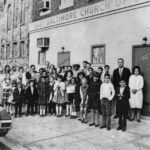
By Ashley Minner, Lecturer, UMBC
A few years ago, I invited a group of students to go on a short walking tour of the Lumbee Indian community of East Baltimore.
Lumbee are indigenous to North Carolina but have been present in Baltimore since at least as early as the 1930s. My grandparents moved here in 1963 with their three children, one of whom was my mother. I was born here, and that makes me a first-generation Baltimore Lumbee. I grew up to be a community-based visual artist and a folklorist. I’m currently a doctoral candidate at University of Maryland College Park, where I’m finishing my dissertation on the changing relationship of Lumbee people to the neighborhood in Baltimore where they settled.
I had given such tours informally many times before, and had developed a familiar route and narrative along the way: South Broadway Baptist Church, the Baltimore American Indian Center, the Vera Shank Daycare and Native American Senior Citizens building.
This particular time, an elder of the community had come along with us. Naturally, I ceded the responsibility of leading the tour to her.
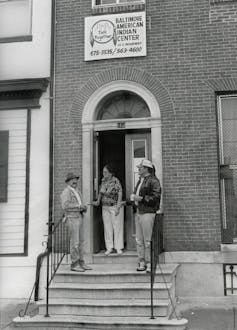 The Baltimore American Indian Center, 113 S. Broadway, is the hub of cultural activities for area Indians.Photo by John Davis, The News American, October 24, 1985. Baltimore News American Photo Archive, Special Collections and University Archives, University of Maryland College Park. Permission granted by the Hearst Corporation, author provided.
We started out on my usual route, but, to my surprise, she stopped us just outside South Broadway Baptist Church to talk about an Indian jewelry store that used to be next door. This was news to me. I didn’t remember the store because it was gone before my time.
I started to wonder: How much more don’t I know about the places and spaces Lumbee people once had here?
Drawing on the memories of our elders, the annals of local newspapers and other archival materials, I am now mapping and reconstructing East Baltimore’s historic Lumbee Indian community.
With the neighborhood being redeveloped and the Lumbee population shifting, I see this as an urgent project of reclamation – of history, of space and of belonging.
The birth of Baltimore’s ‘reservation’
The Lumbee Tribe of North Carolina is the largest tribe east of the Mississippi River, and the ninth-largest in the United States.
Our homeland is in southeastern North Carolina, with members residing primarily in Robeson, Hoke, Cumberland and Scotland counties. We take our name from the Lumbee River that winds through tribal territory, which is mostly rural and otherwise characterized by pines, farmland and swamps.
Following World War II, thousands of Lumbee Indians migrated from North Carolina to Baltimore seeking jobs and a better quality of life. They settled on the east side of town, in an area that bridges the neighborhoods of Upper Fells Point and Washington Hill, 64 blocks mostly comprising brick row houses with marble steps.
To many Lumbee newcomers, the buildings all looked identical. It was a world apart from the farm houses, tobacco barns, fields and swamps of home.
In this urban landscape, Lumbee people stood out – neither looking like the Indians on TV, nor neatly fitting into any of the races or ethnicities already living in Baltimore.
Today, most Baltimoreans would be surprised to learn that the area was once so densely populated by Indians that it was known as “the reservation.” An anthropologist who did fieldwork in the community during its heyday wrote that it was “perhaps the single largest grouping of Indians from the same tribe in an American urban area.”
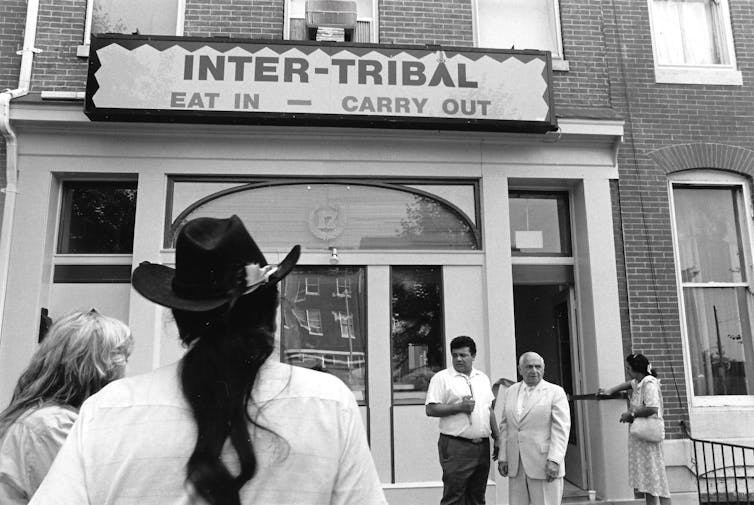 The Inter-Tribal Restaurant was owned and operated by the Baltimore American Indian Center in the unit block of South Broadway. Photo courtesy of the Baltimore American Indian Center, author provided.
The Lumbee community has gradually spread out in years since, so my own generation never experienced “the reservation” as such. But even within our own lifetimes – and especially over the last 15 years – we’ve seen the Lumbee population in the city sharply decline. The majority of our people have moved out to Baltimore County and beyond. Others have returned to North Carolina.
The old neighborhood is now being rapidly redeveloped. Historic buildings have been retrofitted. New luxury apartments abound. With the closure and sale of the former Vera Shank Daycare and Native American Senior Citizens building, the sole real estate that the Baltimore Indian Center owns is the building it occupies. The remaining elders are now in their 70s and 80s.
I know that I have arrived at this work in a crucial moment.
The neighborhood as it once was
In order to learn more about the historic community, I went to the elders first.
I was completely floored by what I learned. I had known about the places I already mentioned, along with a couple of much-fabled bars. But they talked about other restaurants, shops, more churches, more bars, investment properties and even a dance hall that were all Lumbee community-owned or frequented.
Nearly all of the sites described to me by the elders have been repurposed several times since the 1950s, if not demolished and utterly wiped from the landscape. Entire city blocks have disappeared.
How, then, could I even begin to pinpoint where things used to be?
This question prompted a spree of digging and plundering through many local institutional archives in search of clues that would help me reconstruct “the reservation.”
At the downtown branch of the Enoch Pratt Free Library, I was able to leaf through many historic newspaper clippings about the community and the early endeavors of the Baltimore American Indian Center, founded in 1968 as the “American Indian Study Center.” I even held original copies of the American Indian Study Center’s first newsletters, mailed directly from the center to the library.
I got a cartography lesson at the Johns Hopkins University’s Eisenhower Library, which led me to visit the Baltimore City Archives, where I was able to handle original Sanborn maps. These maps provide extremely detailed aerial views of the neighborhood, including footprints of buildings that no longer exist.
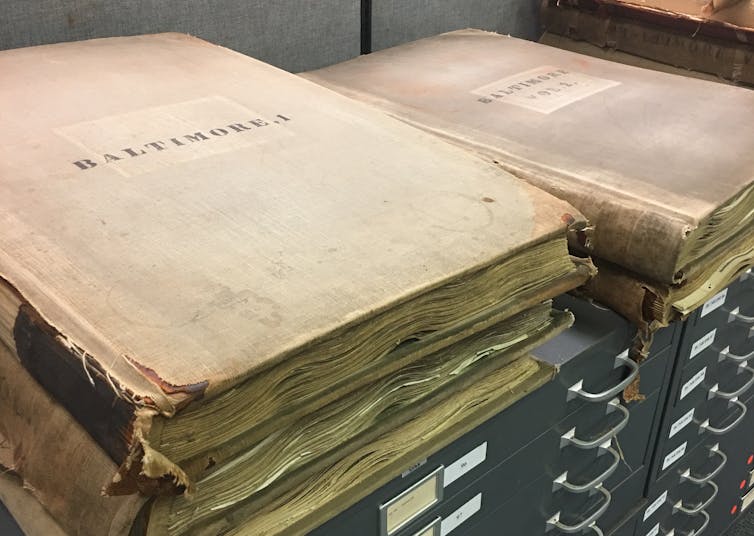 The Sanborn Map Company published detailed maps of U.S. cities and towns in the 19th and 20th centuries for fire insurance companies. Since they contain so much detailed information, they’re invaluable resources that show how American cities have changed over many decades. Photo by the author, Baltimore City Archives, author provided.
Later, at the Baltimore City Department of Planning’s Commission for Historical and Architectural Preservation, I was thrilled to find actual street-level photographs of many of the buildings, which, ironically, were documented as a result of urban renewal.
In the Hornbake Library at University of Maryland College Park, I was able to consult several volumes of Polk Baltimore City Directories. I had presumed these were no more than old phone books. Instead, these volumes detail the individuals and businesses that occupied every building in Baltimore, street by street, block by block, in a given year. Not only was I able to confirm addresses of the community sites the elders had described, but in many instances, I was also able to see where they, themselves, had lived.
 In his youth, Clyde Oxendine was a boxer and the bouncer at The Volcano, a bar frequented by Lumbee Indians. Photo by C. Cullison, The News American, September 30, 1963. Baltimore News American Photo Archive, Special Collections and University Archives, University of Maryland College Park. Permission granted by the Hearst Corporation, author provided.
The Hornbake Library also houses the Baltimore News American photo archive, where I found portraits of community legends. There were Elizabeth Locklear, Herbert Locklear and Rosie Hunt – all founders of the Center. There was Clyde Oxendine, a boxer and the bouncer of the infamous Volcano, the meanest of mean Indian bars. And in the first folder of unprocessed photos I opened, I found, of all people, Alme Jones, the maternal grandmother of my fiance.
Preserving the past for future generations
So far, we have mapped 27 Lumbee-owned or frequented sites in and around the neighborhood.
After identifying materials from these many far-flung institutional archives, it seems imperative to establish a new collection so that these treasures can live together, alongside personal archival materials that would never have been accessible to an outside researcher. Our community needs easy access to its history.
Naturally, the Baltimore American Indian Center is the prime repository for this new collection. The Special Collections of the Albin O. Kuhn Library at UMBC is another. This amazing, publicly accessible resource already houses the Maryland Folklife Archives and the research of several Maryland folklorists. It will one day house my research as well.
Younger generations of Lumbee people should be able to see and know that our people’s history in Baltimore runs much deeper and wider than it seems.
All cities are steeped in stories. Whether we realize it or not, we are always walking in the footsteps of those who came before.
As Baltimore’s neighborhoods continue to change, its residents would do well to realize that Lumbee people have been here for a long time – and we’re still here.
*****
Ashley Minner, Lecturer, Folklorist, University of Maryland, Baltimore County
Header Image: Members of East Baltimore Church of God, which was founded by Lumbee Indians, and was once located in the heart of ‘the reservation,’ in the 1700 block of E. Baltimore Street. Photo courtesy of Rev. Robert E. Dodson Jr., Pastor, East Baltimore Church of God, author provided.
This article is republished from The Conversation under a Creative Commons license. Read the original article.
]]>
By Ashley Minner, Lecturer, UMBC A few years ago, I invited a group of students to go on a short walking tour of the Lumbee Indian community of East Baltimore. Lumbee are indigenous to North...
https://umbc.edu/stories/a-quest-to-reconstruct-the-heritage-and-history-of-baltimores-american-indian-population/
https://my3.my.umbc.edu/api/v0/pixel/news/120155/guest@my.umbc.edu/27efb708260c2acfa8d7f01c905cbfea/api/pixel
american-indian
baltimore
folklore
perspectives
UMBC News & Magazine
https://my3.my.umbc.edu/groups/umbc-news-magazine
https://assets1-my.umbc.edu/system/shared/avatars/groups/000/001/943/24435aa6207c452e7bc15cc74b42c7bb/xsmall.png?1748556657
https://assets1-my.umbc.edu/system/shared/avatars/groups/000/001/943/24435aa6207c452e7bc15cc74b42c7bb/original.png?1748556657
https://assets2-my.umbc.edu/system/shared/avatars/groups/000/001/943/24435aa6207c452e7bc15cc74b42c7bb/xxlarge.png?1748556657
https://assets2-my.umbc.edu/system/shared/avatars/groups/000/001/943/24435aa6207c452e7bc15cc74b42c7bb/xlarge.png?1748556657
https://assets3-my.umbc.edu/system/shared/avatars/groups/000/001/943/24435aa6207c452e7bc15cc74b42c7bb/large.png?1748556657
https://assets1-my.umbc.edu/system/shared/avatars/groups/000/001/943/24435aa6207c452e7bc15cc74b42c7bb/medium.png?1748556657
https://assets2-my.umbc.edu/system/shared/avatars/groups/000/001/943/24435aa6207c452e7bc15cc74b42c7bb/small.png?1748556657
https://assets1-my.umbc.edu/system/shared/avatars/groups/000/001/943/24435aa6207c452e7bc15cc74b42c7bb/xsmall.png?1748556657
https://assets2-my.umbc.edu/system/shared/avatars/groups/000/001/943/24435aa6207c452e7bc15cc74b42c7bb/xxsmall.png?1748556657
UMBC News & Magazine
0
0
false
Tue, 23 Apr 2019 21:17:01 -0400