With great scientific powers comes great responsibility: Mercedes Burns, arachnid researcher, reviews “Spider-Man: Brand New Day”
Spoiler alert!
The first Spider-Man movie with Tom Holland as Peter Parker, “Homecoming,” was released almost a decade ago in 2017. Mercedes Burns, associate professor of biological sciences and Spider-Man fan, has been studying arachnids for double that. This summer’s blockbuster, “Spider-Man: Brand New Day,” shows Peter Parker slowly becoming an actual spider as the result of hormonal imbalances triggered by extreme stress, trauma, and long-term social isolation. He produces organic webbing, his eyes turn pitch-black, his “Spidey senses” are enhanced, and biological web slingers develop in his wrists for close-quarters combat. Burns, who wore her spider taxonomy t-shirt to the movie, will tell us if these upgrades have any scientific merit.
Q: What was your first reaction to the movie, particularly from a scientific perspective?
A: I enjoyed the movie, though I preferred 2021’s “Spider-Man: No Way Home.” I thought the new movie was a little uneven scientifically. Some things were extremely technical and accurate, while other things were vague. I did some research on the vague hormone discussion, to try to understand why that aspect was much less specific than some of the other science in the movie.
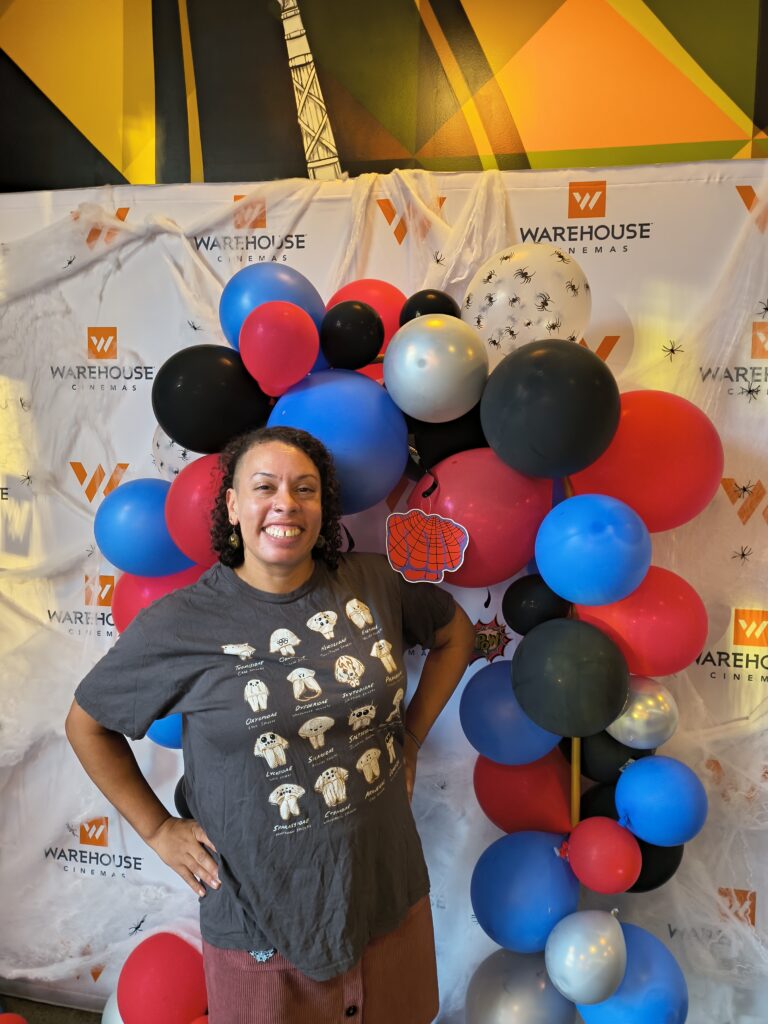 Mercedes Burns wore her spider taxonomy t-shirt to the new Spider-Man movie. (Courtesy of Burns)
There was a piece in the trailer where Bruce Banner, the Hulk—portrayed as a physics professor at the fictional Empire State University—explains the life cycle of the spider that did not make it into the movie. So there was no clear reason for why the changes were happening. It made it seem as though Spider-Man was becoming more spidery simply because he was getting really upset or sad.
Q: Was there anything scientifically inaccurate about Bruce Banner’s explanation of Spider-Man’s DNA changes?
A: There was an extremely complicated discussion of how short non-coding RNAs were being used to limit the Hulk’s and Spider-Man’s powers by binding proteins involved in their abilities. This therapy is based on RNA interference, which was discovered in the late 1990s. It is only very recently that any short-interfering RNA (siRNA) drugs have been FDA-approved, though, such as for certain forms of hemophilia—so this is very recent technology. Overall, I was impressed by how much detail they put into how the DNA limiter worked.
There was one important mistake, though. Professor Banner talked about needing to destroy mRNA before it is transcribed, when the correct terminology is translation. DNA is transcribed into mRNA, and mRNA is then translated into proteins. If they were talking about destroying mRNA before it is used to make a protein, they should have said translated, not transcribed.
Q: What about the explanation about the surge in arachnid hormones?
A: The hormone description was extremely vague compared to the RNA discussion. One arachnid hormone that we know something about is a steroid called ecdysone, which triggers molting and increased body size. Ecdysone opposes the action of juvenile hormone, which has been studied extensively in insects, because it can be used in biological control to prevent insects from maturing.
We know what spiders look like when they are under stress and that some species are very resilient to stress. But we do not know as much about how spiders physiologically deal with stress or whether stress might impact hormone levels, which may be why that aspect of the movie was so vague.
Q: Are these hormones what makes Parker’s new webs stronger?
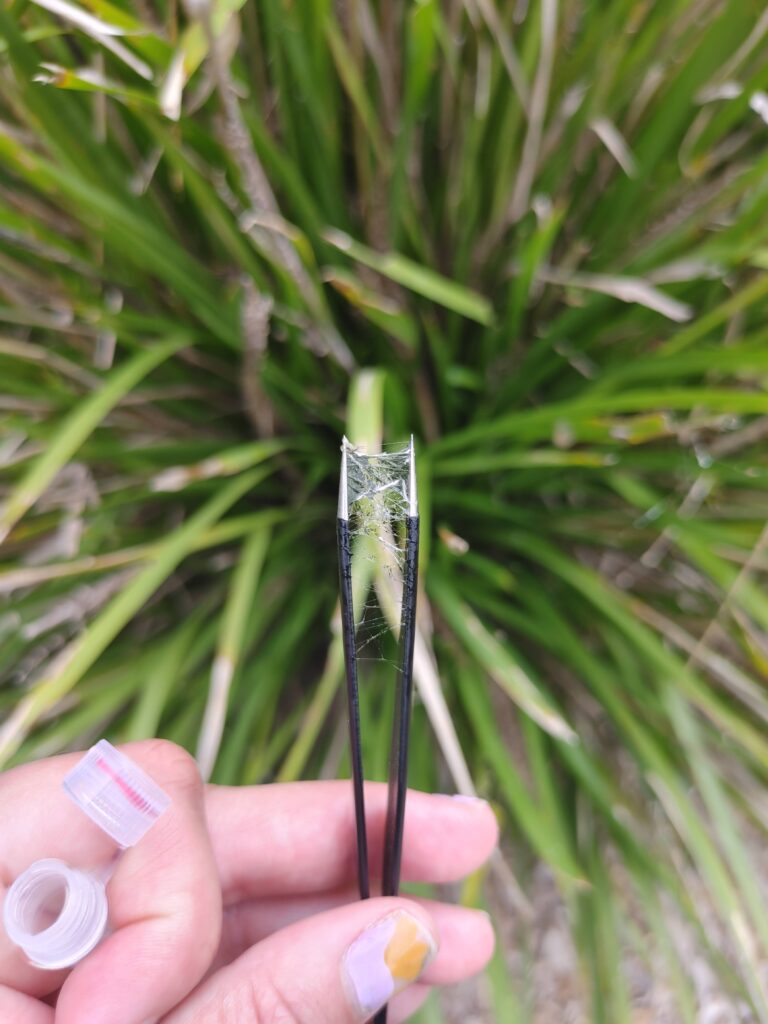 Mercedes Burns collects silk from a Saint Andrew’s cross spider in Australia. (Photo by Mercedes Burns)
A: Probably not. Spider-Man producing silk from his wrists is weird from a biological perspective. It would make more sense if the silk came from his feet, because spinnerets in spiders develop somewhat like a leg, but humans really do not have an equivalent to the spinnerets.
I know a lot about silks, because one of my research projects is focused on sticky proteins that arthropods, including spiders, produce to capture prey. The proteins that spiders make to produce their webs are a unique class of proteins called spidroins.
Spidroins are made up of proteins that form chains. Spiders make these building blocks, which have to align with each other as they are extruded through the spinnerets. The spinnerets contain many little glands where spiders can press out the particular protein that the silk glands produce.
Hypothetically, if you were trying to control the translation of silk proteins in a spider, one way you could do that would be with siRNAs, which could bind to the mRNA and keep the protein from being made—although this would be extremely difficult to do in practice.
Q: Why would it be so difficult to replicate Spider-Man’s web?
A: The silk Spider-Man produces from his wrists is a really sticky, stretchy mass that is also strong. He uses it to stick to surfaces, swing, wrap enemies so that they are restrained without being harmed, and perform other functions. It would be difficult to replicate this material because of how many functions it has.
In reality, spiders make many kinds of silk: some make more than 10 types. Each type has a particular job, such as for wrapping eggs or producing a covering around the eggs. The silks that are probably most important to Spider-Man are flagelliform silk and aggregate spidroin. Flagelliform silk is really stretchy. In a spider web, it forms the capture spiral, the circular part of an orb-weaver’s web. Aggregate spidroin is the sticky part of the capture spiral.
Q: What was scientifically accurate about the explanation Ned Leeds, Spider-Man’s best friend, gave of the mechanical web shooters?
A: Ned asks Spider-Man what material is in Spider-Man’s web shooters. Ned suggests that if it is a synthetic biomaterial, it is probably a liquid polymer inside the web shooters that becomes a fiber. He also suggests that the shearing forces from pressing the material out of the web shooter cause the liquid to become a polymer.
That was spot on.
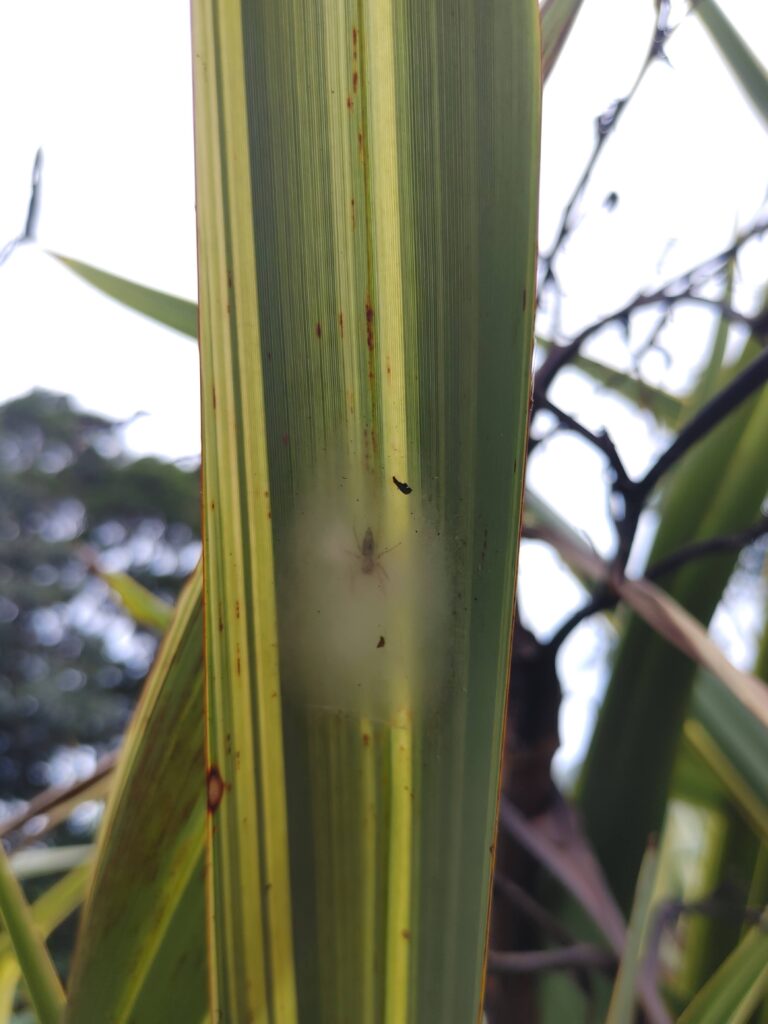
 Spiders use their silk for many purposes. Left: A nursery web spider in its silk hideaway. Right: A fishing spider carries a silk-wrapped egg sac. (Photos by Mercedes Burns)
Inside the glands, the building blocks for spider silk exist as a liquid called dope. The glands’ pH becomes more acidic, which triggers the protein building blocks to start lining up. The dope is also physically pressed through spigots within the spinnerets, and the mechanical force gets the protein into the appropriate conformation. What comes out is a fiber made of blocks of protein.
The web shooters work in a way that could provide the necessary mechanical force to allow a liquid to become a fiber. Ned’s reasoning about a liquid becoming a polymer and then becoming a fiber was remarkably similar to how these biomaterials are described in the scientific literature.
The mystery is the actual material. They know it would be some sort of molecule that polymerizes—that has units that join together as they leave the device. The specific molecule used by Spider-Man remains fictional and proprietary to the story.
Q: How do Spider-Man’s web shooters relate to the way he uses his powers?
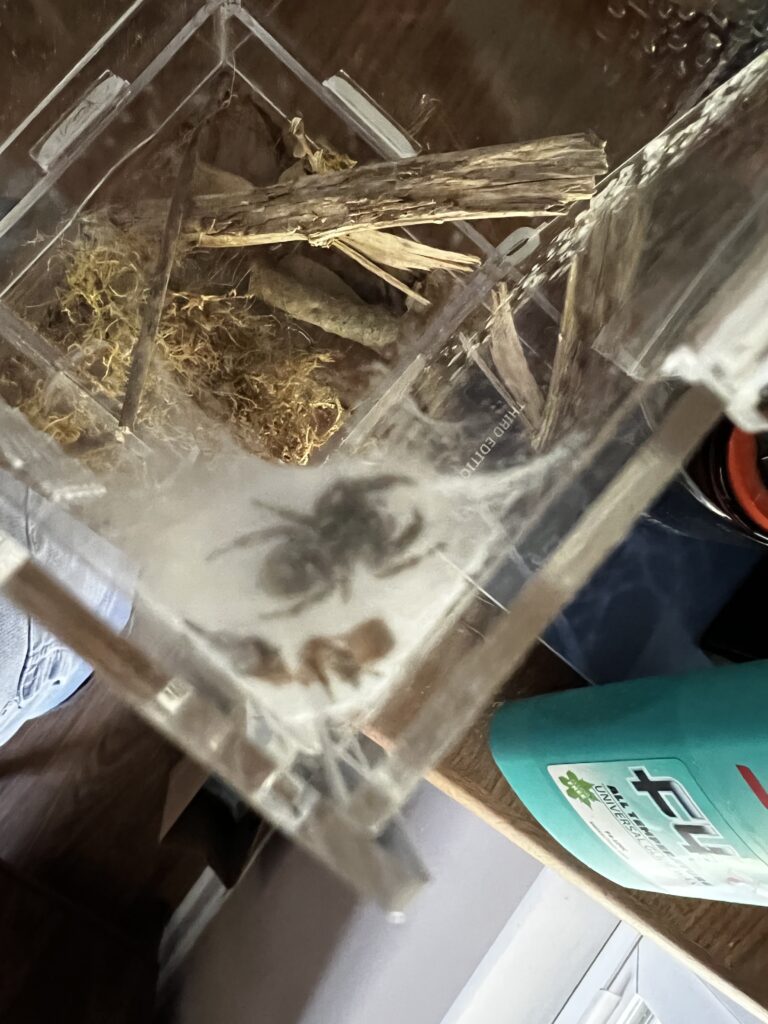 This jumping spider has spun itself a silk hammock in preparation for molting. (Photo by Ryan Bacon, Ph.D. ’26)
A: I am impressed with how Spider-Man learns his own body and his unique way of using his powers in this iteration. His web shooters allow him to work with the police to apprehend criminals without killing them. He can hold people up, restrain them, and throw things in their path. The ingenuity of his use of silk is really cool, because he is using it for good. Spiders are also an example of animals creating structures for good. They live in our houses and feed on pests that we do not like, so they are providing a service for us. In Spider-Man’s case, a human is using similar abilities to protect others.
Q: Is there anything real about the scene where Spider-Man wakes up in a spider cocoon, particularly his black eyes?
A: Yes, there are spiders that produce silk cocoons, such as jumping spiders. When they are getting ready to molt and grow larger, they will often create a little sling or hammock for themselves and surround themselves with silk for protection.
The black eyes, however, are probably a visual effect intended to make Spider-Man look more spider-like. Most spiders probably have poor vision. Their eyes do not have a pupil that focuses in the same way human eyes do.
Q: The trailer hints that Spider-Man is going through the life cycle of a spider. Does this mean Spider-Man will die?
A: I hope not, because for Peter Parker it would be a very short life. There is a lot of variation among spiders. The order of arachnids that includes spiders is vast, with roughly 70,000 species. Some are very long-lived, especially compared to other arthropods like insects and crustaceans. For species that live a long time, such as tarantulas and trapdoor spiders, females typically live longer than males, sometimes up to 30 years.
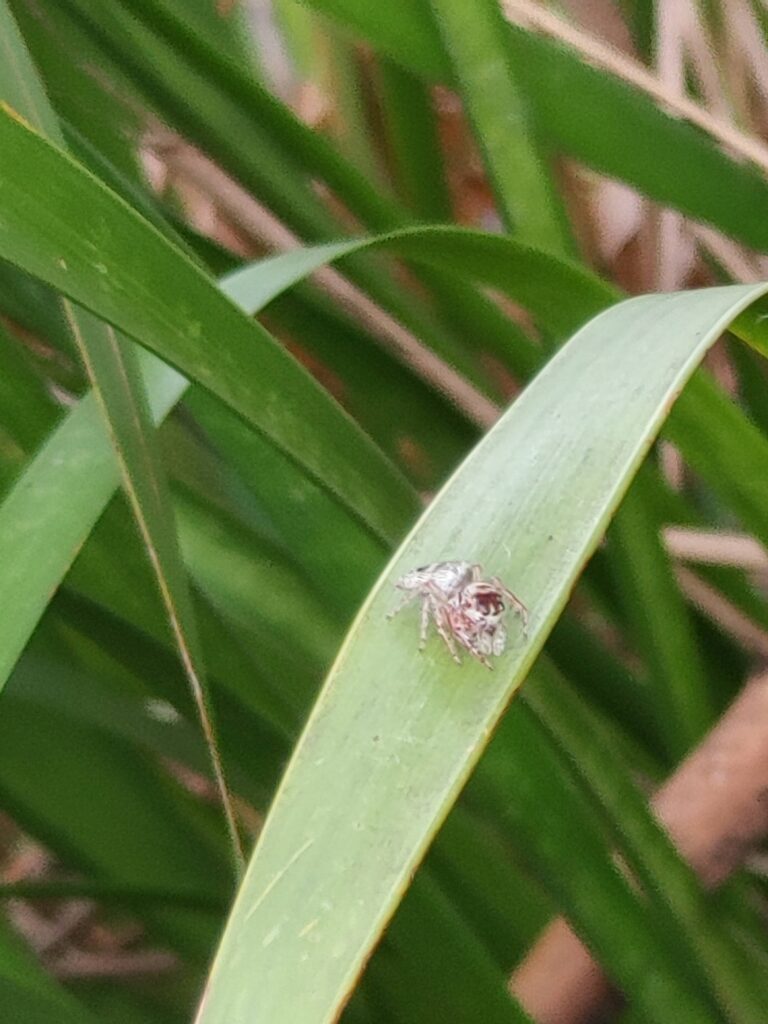 Jumping spiders like this one lay out a “dragline” of silk as they move about, to catch themselves in case of an unexpected fall. (Photo by Mercedes Burns)
Peter Parker is male, however, and many male spiders have incredibly short lives. In many species, males do not survive a mating encounter. A female may eat a male if she is not reproductively mature or if she is hungry. To the degree that a spider’s life cycle involves periods of seclusion, molting, and getting larger, though, there is some similarity.
Q: Is Spider-Man a jumping spider?
A: Spider-Man seems like a combination of different spiders. The art and emblems on his suit would suggest an orb weaver. Spider-Man does have characteristics that are similar to those of a jumping spider, such as cocooning in response to stress. However, jumping spiders always produce a dragline when they are moving through the environment so they can survive a sudden fall, and Spider-Man fires webs to keep himself from falling. So, Spider-Man’s overall appearance may be more like a garden spider, but some of his capabilities better match a jumping spider.
Q: Why did you like “Spider-Man: No Way Home” better?
A: There was more interaction between Peter and his friends. I really enjoy Zendaya’s version of MJ, Spider-Man’s girlfriend. I also really like Ned as a supporting character. They are extremely intelligent in their own right and are curious about things. I like the depiction of three scientifically curious young people working together.
Some of the other Marvel superheroes have AI, magic, or something else that provides them with insight. Spider-Man has his friends. I like this version of Spider-Man because he gets advice from other superheroes here and there, but he is also figuring things out himself and getting some help from his friends. I think it is cool to have your high school friends as your superhero support group.
Learn more about arachnid research in the Burns Arthropod Evolution Lab.
]]>
Spoiler alert! The first Spider-Man movie with Tom Holland as Peter Parker, “Homecoming,” was released almost a decade ago in 2017. Mercedes Burns, associate professor of biological sciences...
https://umbc.edu/stories/mercedes-burns-spider-man/
https://my3.my.umbc.edu/api/v0/pixel/news/162086/guest@my.umbc.edu/4a2ee996b41ea10ccfdb2dca8dd5732f/api/pixel
biology
cnms
science-and-tech
stories
story
UMBC News & Magazine
https://my3.my.umbc.edu/groups/umbc-news-magazine
https://assets1-my.umbc.edu/system/shared/avatars/groups/000/001/943/24435aa6207c452e7bc15cc74b42c7bb/xsmall.png?1748556657
https://assets1-my.umbc.edu/system/shared/avatars/groups/000/001/943/24435aa6207c452e7bc15cc74b42c7bb/original.png?1748556657
https://assets2-my.umbc.edu/system/shared/avatars/groups/000/001/943/24435aa6207c452e7bc15cc74b42c7bb/xxlarge.png?1748556657
https://assets2-my.umbc.edu/system/shared/avatars/groups/000/001/943/24435aa6207c452e7bc15cc74b42c7bb/xlarge.png?1748556657
https://assets3-my.umbc.edu/system/shared/avatars/groups/000/001/943/24435aa6207c452e7bc15cc74b42c7bb/large.png?1748556657
https://assets1-my.umbc.edu/system/shared/avatars/groups/000/001/943/24435aa6207c452e7bc15cc74b42c7bb/medium.png?1748556657
https://assets2-my.umbc.edu/system/shared/avatars/groups/000/001/943/24435aa6207c452e7bc15cc74b42c7bb/small.png?1748556657
https://assets1-my.umbc.edu/system/shared/avatars/groups/000/001/943/24435aa6207c452e7bc15cc74b42c7bb/xsmall.png?1748556657
https://assets2-my.umbc.edu/system/shared/avatars/groups/000/001/943/24435aa6207c452e7bc15cc74b42c7bb/xxsmall.png?1748556657
UMBC News & Magazine
1
0
false
Thu, 27 Aug 2026 14:16:23 -0400
Thu, 27 Aug 2026 14:16:23 -0400
More than skills: Four CNMS interns on mentorship, belonging, and the gift of opportunity
Every morning this summer, junior biological sciences major Magdalen Ruth made her way to the National Institutes of Health in Bethesda—a dense hub of biomedical research. There, at the National Institute of Arthritis and Musculoskeletal and Skin Diseases, she helped investigate a genetic mutation in a patient with a rare form of juvenile arthritis known as Still’s disease, connecting her UMBC training to work that could improve patients’ lives. She is one of four CNMS students whose recent internships at Maryland-based companies and agencies show how local opportunities are helping Retrievers build skills, find mentors, and advance discoveries that matter here and beyond.
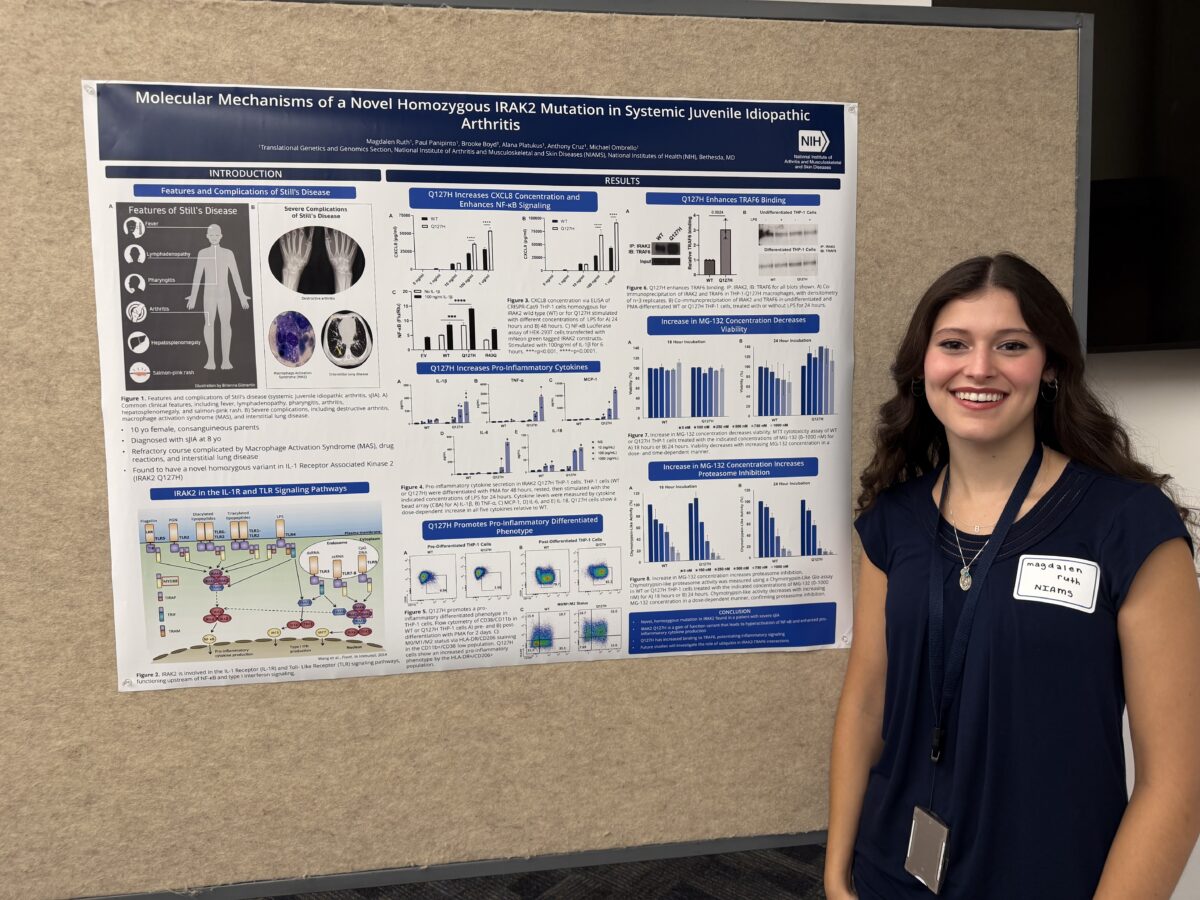 At the conclusion of her NIH internship, Magdalen Ruth presented her summer research on the role of a particular genetic mutation in a rare form of juvenile arthritis. (Courtesy of Ruth)
“I feel like I’m doing really important work,” Ruth, a Meyerhoff and U-RISE scholar, says. “Getting to know the patient’s diagnosis and being able to see that what I’m working on is affecting an actual person in real time has been awesome.” The internship has confirmed her interest in pursuing a career in pharmacology. It’s also stretched her communication skills. While familiar with presenting her work to colleagues in Deepak Koirala’s lab group at UMBC, communicating her research to a mix of researchers and clinicians—who don’t all share the same jargon and expertise—taught her the nuance of communicating with technical and non-technical audiences.
The Meyerhoff community helped make the opportunity possible. “I would not be in the place I am without Meyerhoff,” she notes. On campus, Ruth balances research and leadership as vice president of the STEM Ph.D. Society, a student-run organization designed to help students connect with scholarships, internships, graduate schools, and more. She also takes dance classes, is pursuing a music minor, and volunteers at her family’s Catholic parish—nurturing connections that ground her amid rigorous academic work.
Protecting lives, growing a career
Mark Harrison, a senior biological sciences major who started in chemical engineering, is in his third summer at Aberdeen Proving Ground (APG), a U.S. Army installation in Aberdeen, Maryland. His work involves designing and testing gas masks, bridging his early engineering training and his understanding of physiology. “I’m able to bring an understanding of what a warfighter may be experiencing in their body while wearing a gas mask in a way that others at APG may not,” Harrison says.
His mentors at APG, Jon Sampson ’03, mechanical engineering, and Edward Parshley ’06, chemical engineering, value the perspective Harrison brings and have supported his growth. “They made it clear that they want to reach back and offer opportunities to those coming behind them,” he says. They are making good on that commitment: Harrison will stay on board at APG this fall, and the plan is to transition him into a full-time position after he graduates in December. “They were always asking me what I wanted to learn and then giving me related opportunities,” Harrison says. “I could ask anyone how something worked, and they’d take the time to explain it to me. I’m so grateful for the way they’ve invested in me.”
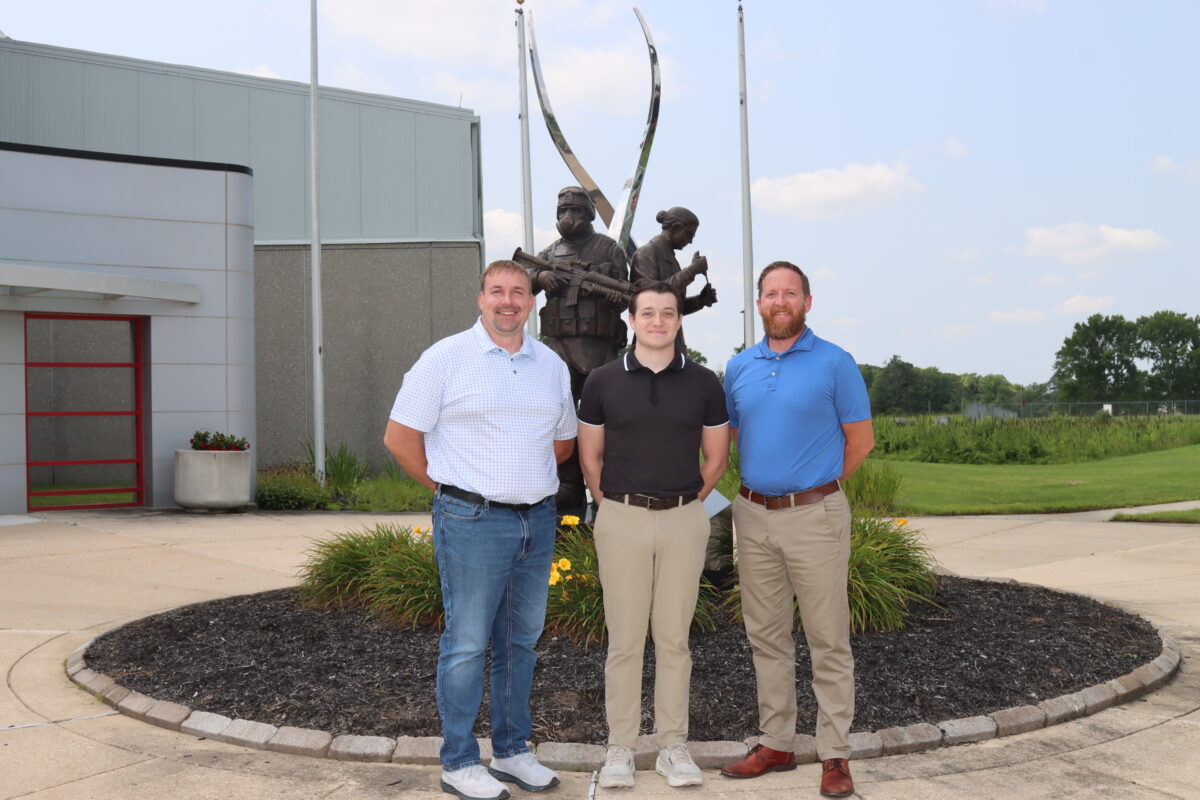 UMBC alumni Jonathan Sampson (right) and Ed Parshley (left) have mentored Mark Harrison (center) over the last two-plus years as he completed three internships at Aberdeen Proving Ground. (Courtesy of Harrison)
Interning in a fast-paced, interdisciplinary environment has also changed how Harrison operates in the classroom. “I learned how to learn at APG,” he says. “Now I don’t have to spend as much time studying, because when I leave class I already have a good understanding of the material. I’m connecting the dots so much better than before.” For Harrison, the work has taken on personal meaning, as well. “I’m fighting right now to try to protect American lives—that’s why I’m here.”
Translating discovery into treatment
Zainab Idowu, a senior biochemistry and molecular biology major and a Meyerhoff Scholar, interned at pharmaceutical giant AstraZeneca in Gaithersburg, Maryland, joining a robust group of Retrievers who’ve grown their skills there. Her project involved testing flow cytometers, which count and characterize individual cells and are used in manufacturing cell therapy treatments. Her goal was to determine the instrument and protocols that would be simplest and most effective for manufacturing teams to implement. The experience shifted Idowu’s focus toward translational medicine and reinforced her plans for an M.D./Ph.D. after UMBC. But the people around her made the biggest impression.
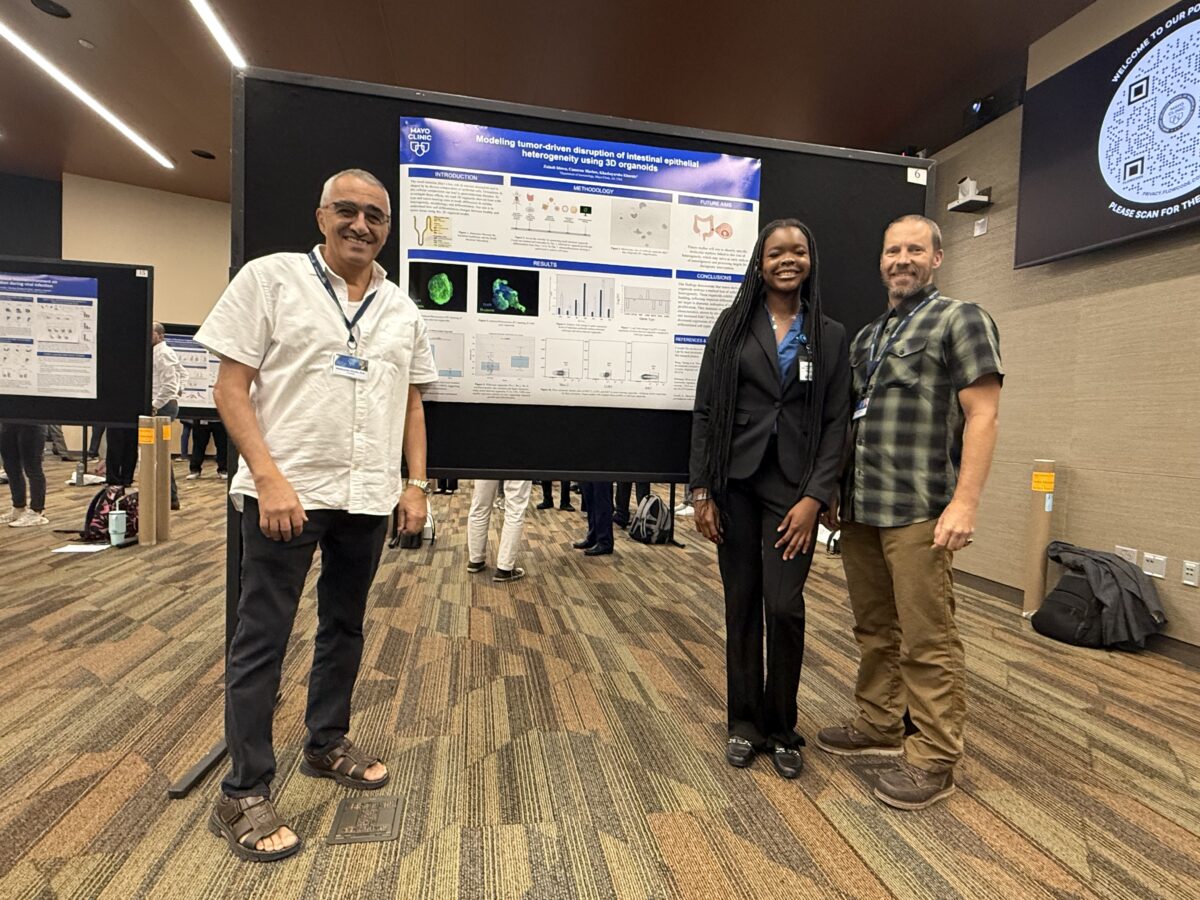
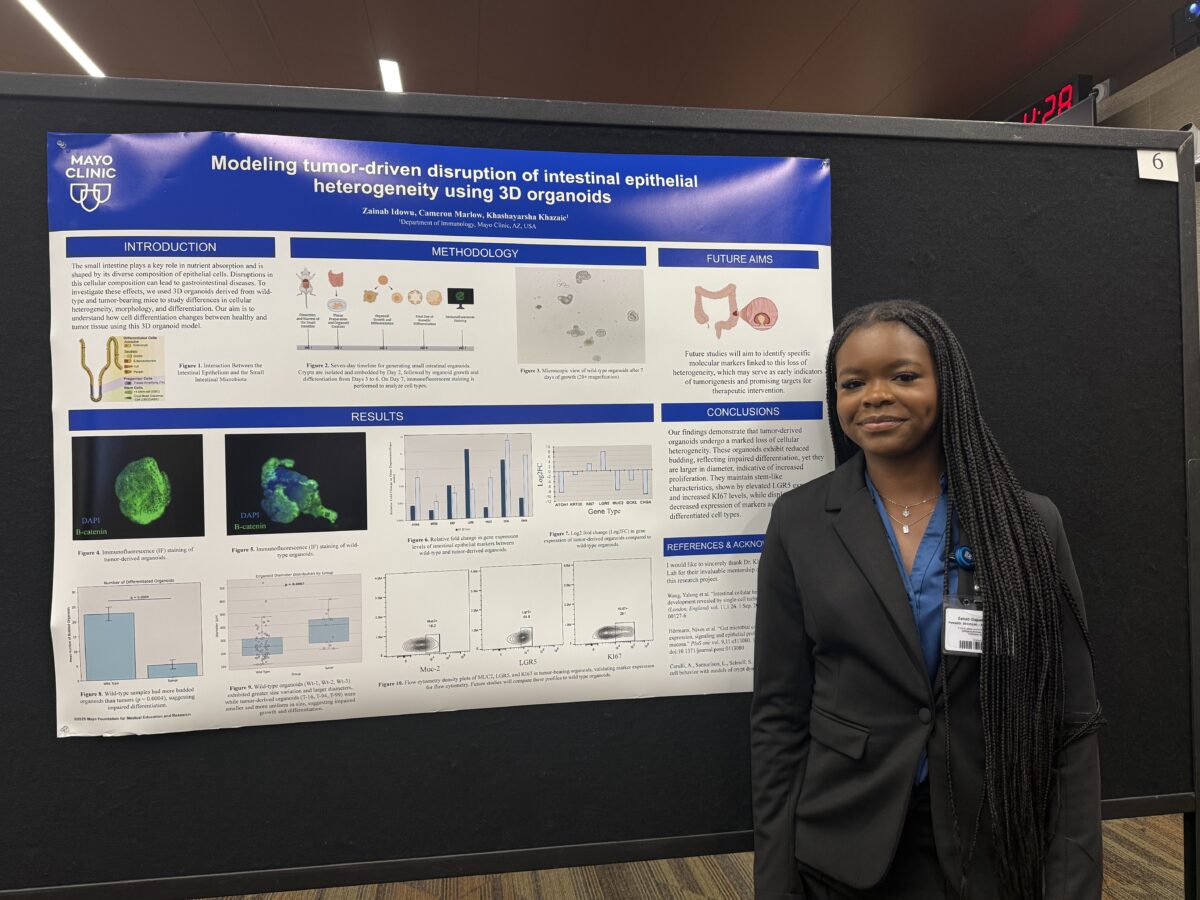 Zainab Idowu presented a research poster at the conclusion of a previous internship at the Mayo Clinic. She was supported by two mentors at the Mayo Clinic, Khashayarsha Khazaie (far left) and Cameron Marlow. (Courtesy of Idowu)
“I love everyone on my team,” Idowu says. “My managers, Ashley Ruddy and Jen Fox, were really insightful—giving me advice on what I want to do post-grad and what I should do my senior year to make sure I’m well-positioned for after graduation.” And when she had questions, the collaborative atmosphere showed her how scientists work together. “They were able to give recommendations and point me to scientific literature to help me along,” she says.
Opportunities through Meyerhoff gave her the chance to connect with AstraZeneca staff, which helped her secure the internship. “I was able to talk to them about my passions for research,” she says. Roles with UMBC’s chapters of the Society of Women Engineers, the international professional medical fraternity Phi Delta Epsilon, the National Society of Black Engineers, and the African Students Association have also enriched her UMBC experience. These organizations, she says, offered “a place to be ourselves, find new friends, and really build a home here at UMBC.”
The benefit of seeing both sides
 Saeed Damadi (left) and his wife Sepideh Hematian at her graduation from UMBC’s master’s program in data science.
Saeed Damadi recently defended his Ph.D. thesis in applied mathematics after beginning in electrical engineering. This summer at the FDA, he developed a mathematical model for how illicit drugs taken during pregnancy transfer to the developing baby through the placenta—increasing important understanding in a situation where human testing would be profoundly unethical.
While the math was familiar, Damadi welcomed the new challenge of jumping into biology. “I learned so many things, and I am still learning,” he says. Yet he found that his interest in how to describe randomness mathematically, which led him to complete a master’s in statistics on the way to his Ph.D., was highly relevant to studying the quirks of the human body. Looking ahead, he wants to continue work at the interface of biology and mathematics.
“Hopefully in the future I can make a contribution by bridging fields,” Damadi says, “because you can computationally simulate millions of parameters and patients at once, which makes the rate of iteration and discovery much faster.” The work Damadi and colleagues do with simulations can help effectively target limited resources for expensive and lengthy clinical studies, he explains.
Damadi and his wife, Sepideh Hematian, M.S. ’23, data science, and a former data scientist at the Maryland Department of Human Services, are planning to build their lives in California. They are both thriving, but “sometimes I get emotional thinking about UMBC,” Damadi says, “because after I arrived nine years ago from Iran, it became like a home to me and my wife.”
 Saeed Damadi (center) with his wife Sepideh Hematian (third from right), Ph.D. advisor Jinglai Shen (third from left), and the rest of his thesis committee and other members of the UMBC math faculty at his Ph.D. defense. (Courtesy of Damadi)
Damadi has given back through his teaching. As an engineer, “I just learned how to use the mathematical tools without understanding what was going on behind the scenes,” he says. Whereas, in math, “you learn the origins of all the theorems and how they work, but not necessarily how to apply them. I feel super lucky to get to see both sides.” So, in undergraduate calculus and linear algebra courses, “I just wanted to explain to my students, ‘Why do you need these equations? Why are they important?’ and give them a feeling of gratitude.”
Gratitude threads through all four of these journeys—for mentors who reach back, for teams that invest in their members, for communities that feel like home, and for the chance to do work that matters. As Magdalen Ruth at NIH puts it, “I’ve just found myself in a great spot with UMBC. I feel really blessed to have had all the opportunities I’ve had. Being able to do these internships has seriously been great.”
]]>
Every morning this summer, junior biological sciences major Magdalen Ruth made her way to the National Institutes of Health in Bethesda—a dense hub of biomedical research. There, at the National...
https://umbc.edu/stories/cnms-interns-mentorship-belonging-opportunity/
https://my3.my.umbc.edu/api/v0/pixel/news/161797/guest@my.umbc.edu/dacd98bb3662b16e6b4733ee94746d77/api/pixel
alumni
biology
career-center
chemical-biochemical-and-environmental-engineering
chemistry-and-biochemistry
cnms
coeit
community
data-science
internships
mathstat
meche
meyerhoff-scholars
science-and-tech
stories
story
undergraduate-research
urise
UMBC News & Magazine
https://my3.my.umbc.edu/groups/umbc-news-magazine
https://assets1-my.umbc.edu/system/shared/avatars/groups/000/001/943/24435aa6207c452e7bc15cc74b42c7bb/xsmall.png?1748556657
https://assets1-my.umbc.edu/system/shared/avatars/groups/000/001/943/24435aa6207c452e7bc15cc74b42c7bb/original.png?1748556657
https://assets2-my.umbc.edu/system/shared/avatars/groups/000/001/943/24435aa6207c452e7bc15cc74b42c7bb/xxlarge.png?1748556657
https://assets2-my.umbc.edu/system/shared/avatars/groups/000/001/943/24435aa6207c452e7bc15cc74b42c7bb/xlarge.png?1748556657
https://assets3-my.umbc.edu/system/shared/avatars/groups/000/001/943/24435aa6207c452e7bc15cc74b42c7bb/large.png?1748556657
https://assets1-my.umbc.edu/system/shared/avatars/groups/000/001/943/24435aa6207c452e7bc15cc74b42c7bb/medium.png?1748556657
https://assets2-my.umbc.edu/system/shared/avatars/groups/000/001/943/24435aa6207c452e7bc15cc74b42c7bb/small.png?1748556657
https://assets1-my.umbc.edu/system/shared/avatars/groups/000/001/943/24435aa6207c452e7bc15cc74b42c7bb/xsmall.png?1748556657
https://assets2-my.umbc.edu/system/shared/avatars/groups/000/001/943/24435aa6207c452e7bc15cc74b42c7bb/xxsmall.png?1748556657
UMBC News & Magazine
1
0
false
Thu, 20 Aug 2026 12:10:24 -0400
Thu, 20 Aug 2026 12:10:24 -0400
Hands-on science, lasting confidence: Student researchers impress at Summer Undergraduate Research Fest
Izabella Maria Marzano, a senior biological sciences major who transferred to UMBC from Anne Arundel Community College, was one of more than 120 undergraduate and high school student presenters who packed the University Center Ballroom on August 5 for UMBC’s 29th annual Summer Undergraduate Research Fest (SURF). Marzano was presenting work she completed with Diana Elizondo, assistant professor of biological sciences, on certain enzymes involved in metabolic dysfunction resulting from a poor diet. The experience had been transformative.
“In the short time I’ve been here, Dr. Elizondo has shown more faith in what I can achieve and given me more confidence than anyone else ever has, and I’m incredibly grateful,” Marzano says. She was one of four undergraduates from Elizondo’s research group who presented their summer work at SURF, which included two poster sessions and six short oral presentations.
Marzano joined the lab after taking Elizondo’s cell biology course, drawn to the group by the far-reaching impact of diabetes research, Elizondo’s approachability, and her desire to gain research experience to support her goal of becoming an orthodontist. In addition to Elizondo, Marzano says graduate students Marveline Akinola and Benjamin Cole have supported her growth.
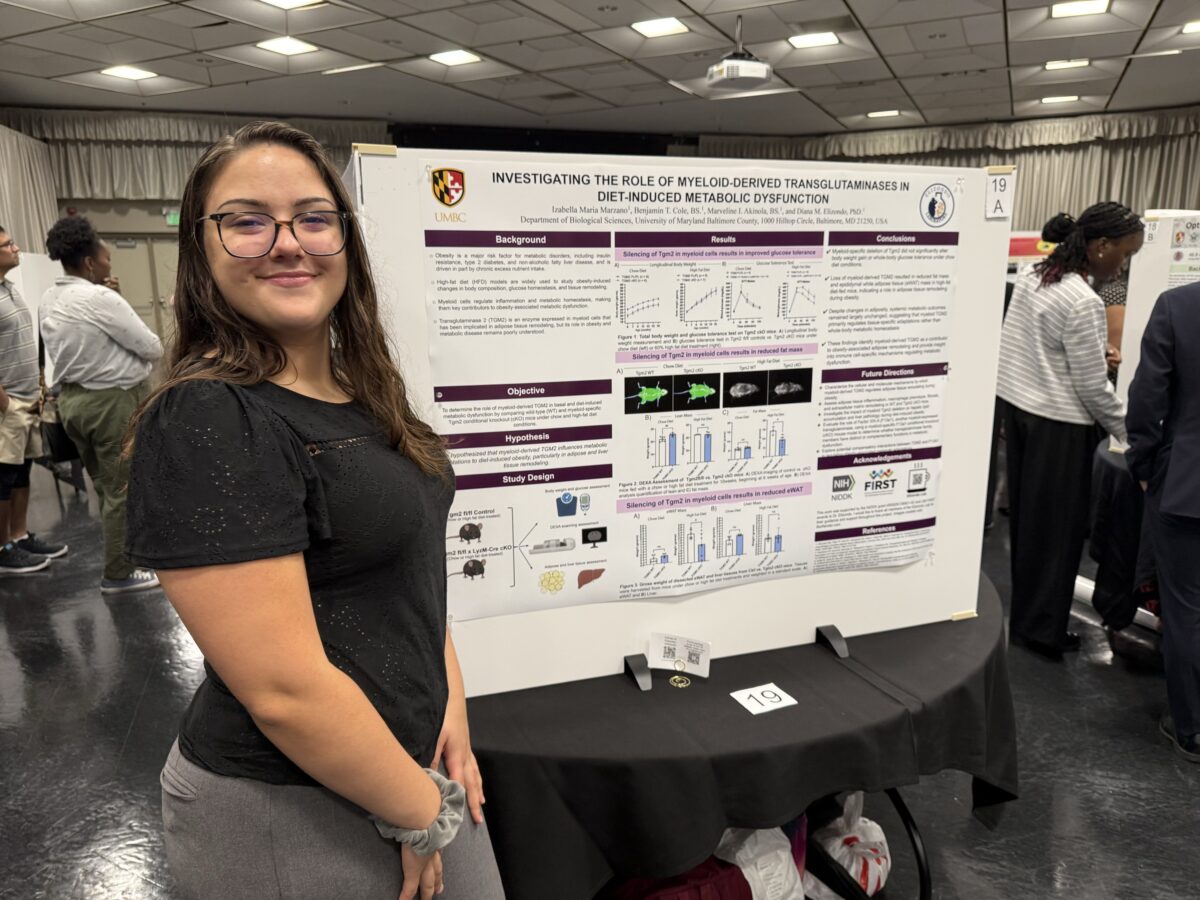
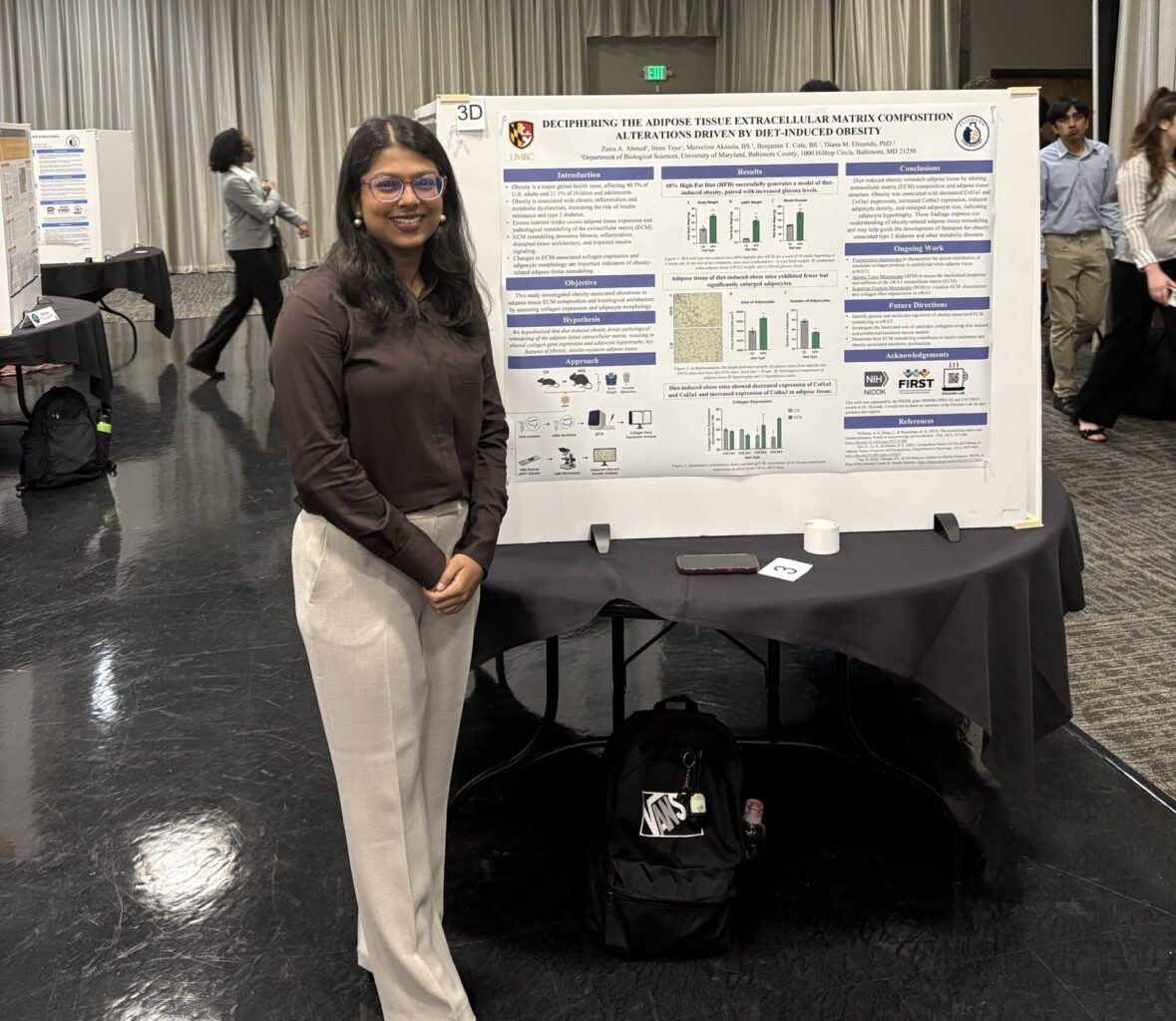 Izabella Marzano (left) and Zaira Ahmed (right) have steadily gained skills and confidence as scientists with the support of their research mentor, Diana Elizondo. Presenting at SURF was an important chance to share their work publicly. (Photos by Diana Elizondo)
Supported independence
Across the room, junior biochemistry and molecular biology major Zaira Ahmed, who began at UMBC this spring after transferring from Prince George’s Community College (PGCC), presented findings on how diet-induced obesity alters the composition of fat tissue’s extracellular matrix—a complex network of proteins, sugars, and other molecules surrounding cells. Ahmed first conducted research at PGCC, and she sought out Elizondo’s lab after taking the same cell biology course as Marzano, motivated in part by family members living with diabetes.
“Dr. Elizondo has been an amazing mentor. She explains everything so clearly and has been hands-on in teaching me different laboratory techniques,” Ahmed says. “But then once she sees I’ve got it, she lets me move forward independently.”
Irene Teye, a junior biological sciences major who started in Elizondo’s lab in January 2025, focused on the three-dimensional structural changes that obesity drives in the extracellular matrix. She worked with Tagide deCarvalho, manager of the Keith R. Porter Imaging Facility at UMBC, to generate and digitally analyze microscopy images of the matrix.
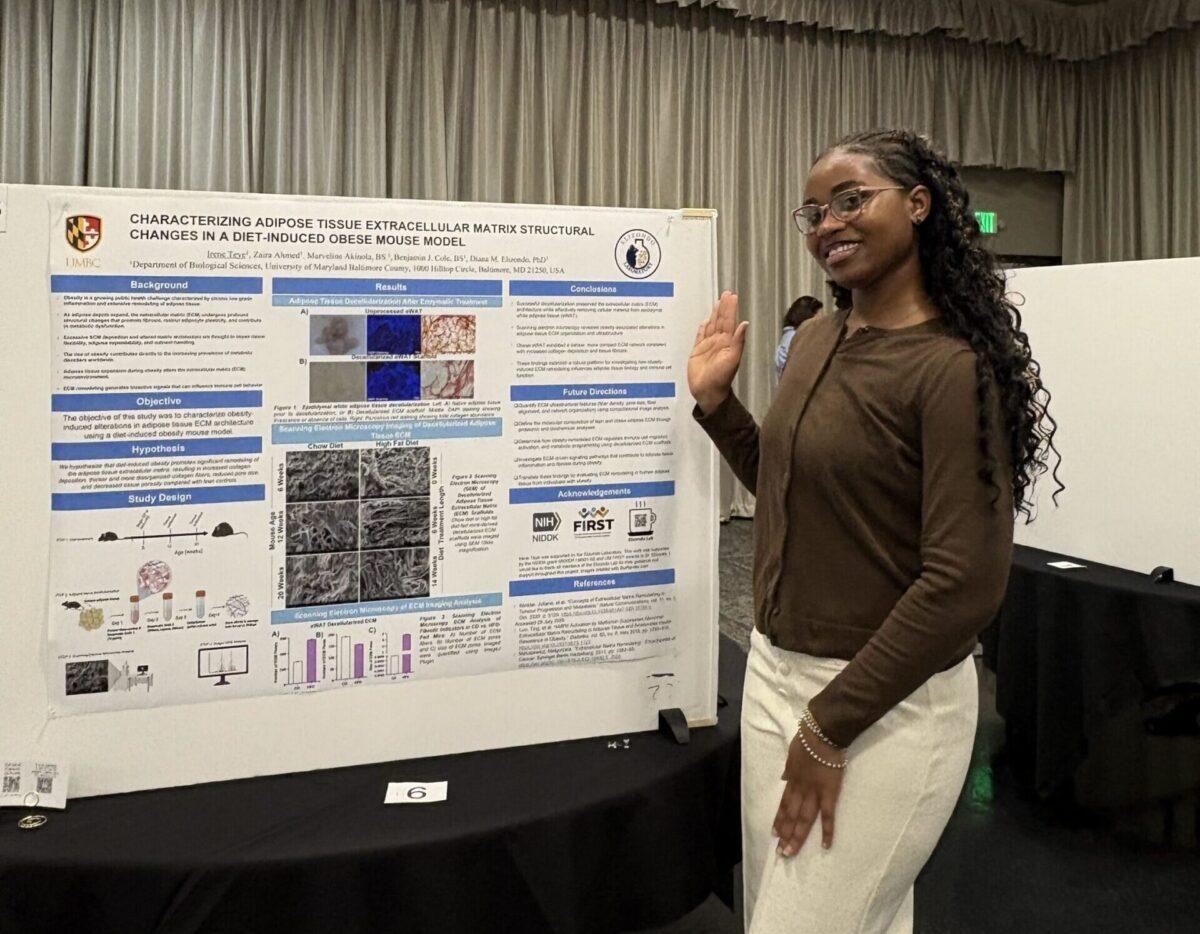
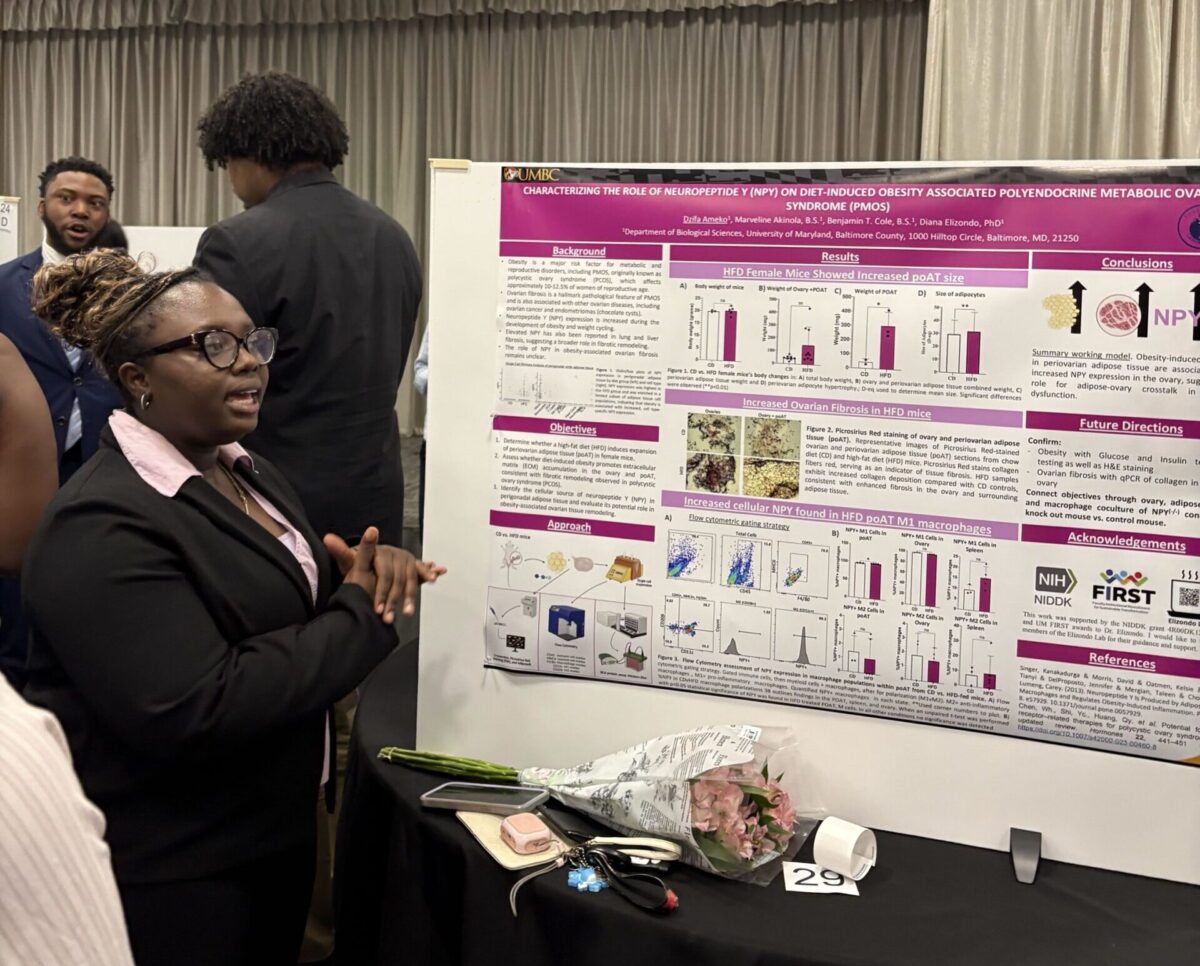 Irene Teye (left) loves working in Diana Elizondo’s research group, for both the sense of accomplishment she experiences doing the science and the closeness of the relationships she’s formed. Dzifa Ameko (right) is passionate about her research with Elizondo for its potential impact on women worldwide. (Photos by Diana Elizondo)
“It took three weeks to analyze the microscopy data to get just two images for my research poster, but it felt like such an accomplishment when I finished,” Teye says. She’s found a home in the Elizondo group, sharing that given how close the members are, “You’d think we’re all related.”
Dzifa Ameko, a junior biological sciences major, began with Elizondo in March 2025 after another faculty member recommended the lab based on Ameko’s interests. Long intrigued by endocrinology and gynecology, she investigated the role of neuropeptide Y, a small signaling molecule released by neurons, in an understudied hormonal and metabolic disorder that affects up to 170 million women worldwide.
“Dr. Elizondo’s door is always open,” Ameko said. “I can also always send her a Slack message and she is so responsive, whether it’s about research or a personal challenge.”
Students at the heart of research
Elizondo, who joined the UMBC faculty in January 2025, sees supporting student researchers as the heart of her work. “One of the most rewarding parts of starting my lab has been watching these students grow in confidence and independence,” she said. “Many of them joined with little or no prior research experience, and it has been incredibly exciting to see them develop into scientists who can think critically, troubleshoot experiments, and communicate their work so effectively. I strongly believe that the best way to learn science is by doing science. My goal is to create an environment where students are genuine contributors to the research, not just assistants.”
 Ben Bazarsuren, a senior mechanical engineering major, was one of six students who gave five-minute “lightning talks” to kick off SURF 2026. (Melissa Penley Cormier, M.F.A. ’17/UMBC)
SURF gave those contributions a public stage. Outgoing dean of the College of Natural and Mathematical Sciences, William R. LaCourse, welcomed participants to the event, highlighting the mix of student researchers from UMBC, regional community colleges, and other institutions. “SURF is one of the highlights of summer each year, because it celebrates the curiosity, perseverance, and excellence of our students and the faculty who guide them,” he said.
For transfer students like Marzano and Ahmed, and for first-time researchers across the university, the combination of hands-on projects, responsive mentoring, and a forum like SURF turns their motivation and potential into tangible results.
“You are ending this summer more knowledgeable, more experienced, more skilled, and a better scientist. Remember that the full benefits of your research may never be known to you. Science is not for those who seek glory—it’s not for me today, it’s for others tomorrow,” LaCourse reflected in his opening remarks. “Your spirit is an inspiration to us all. We hope that UMBC will always be a part of you.”
]]>
Izabella Maria Marzano, a senior biological sciences major who transferred to UMBC from Anne Arundel Community College, was one of more than 120 undergraduate and high school student presenters...
https://umbc.edu/stories/summer-undergraduate-research-fest-2026/
https://my3.my.umbc.edu/api/v0/pixel/news/161750/guest@my.umbc.edu/c89f30e2171cc66e40795d964d59e02f/api/pixel
biology
cnms
coeit
meche
research
science-and-tech
stories
story
transfer-students
undergraduate-research
UMBC News & Magazine
https://my3.my.umbc.edu/groups/umbc-news-magazine
https://assets1-my.umbc.edu/system/shared/avatars/groups/000/001/943/24435aa6207c452e7bc15cc74b42c7bb/xsmall.png?1748556657
https://assets1-my.umbc.edu/system/shared/avatars/groups/000/001/943/24435aa6207c452e7bc15cc74b42c7bb/original.png?1748556657
https://assets2-my.umbc.edu/system/shared/avatars/groups/000/001/943/24435aa6207c452e7bc15cc74b42c7bb/xxlarge.png?1748556657
https://assets2-my.umbc.edu/system/shared/avatars/groups/000/001/943/24435aa6207c452e7bc15cc74b42c7bb/xlarge.png?1748556657
https://assets3-my.umbc.edu/system/shared/avatars/groups/000/001/943/24435aa6207c452e7bc15cc74b42c7bb/large.png?1748556657
https://assets1-my.umbc.edu/system/shared/avatars/groups/000/001/943/24435aa6207c452e7bc15cc74b42c7bb/medium.png?1748556657
https://assets2-my.umbc.edu/system/shared/avatars/groups/000/001/943/24435aa6207c452e7bc15cc74b42c7bb/small.png?1748556657
https://assets1-my.umbc.edu/system/shared/avatars/groups/000/001/943/24435aa6207c452e7bc15cc74b42c7bb/xsmall.png?1748556657
https://assets2-my.umbc.edu/system/shared/avatars/groups/000/001/943/24435aa6207c452e7bc15cc74b42c7bb/xxsmall.png?1748556657
UMBC News & Magazine
0
0
false
Wed, 19 Aug 2026 11:48:37 -0400
Wed, 19 Aug 2026 11:48:37 -0400
From single cells to the systems shaping science: Mayank Chugh pursues dual passions at UMBC
What does it take for a single cell to become a functioning organism—and what does it take for a scientist to thrive amid the systems that govern the research enterprise? Mayank Chugh is exploring both questions at once. As an assistant teaching professor in biological sciences and director of UMBC’s Applied Molecular Biology (AMB) accelerated master’s program, he is entering his second year in a role that blends hands-on teaching, program leadership, and research that extends beyond the lab.
In developmental biology, Chugh investigates how organs take shape, focusing on the inner ear in zebrafish and the role physical forces play in its development. Through his ReForm Lab, launched during his postdoc at Harvard Medical School, he turns the same careful eye toward the institutional policies and hidden costs that influence who gets to do science. A new paper published in Nature Biotechnology led by Chugh examines the real-world burdens international postdocs face to maintain their visas and continue their work.
In the conversation below, Chugh talks about the unusual mix of responsibilities that defines his position, the students and skills at the heart of the AMB program, what drew him to science policy, the collaborations and community he has found at UMBC, and how others might begin expanding their own work beyond traditional research.
Q: What are the components of your role at UMBC, and how is it unique?
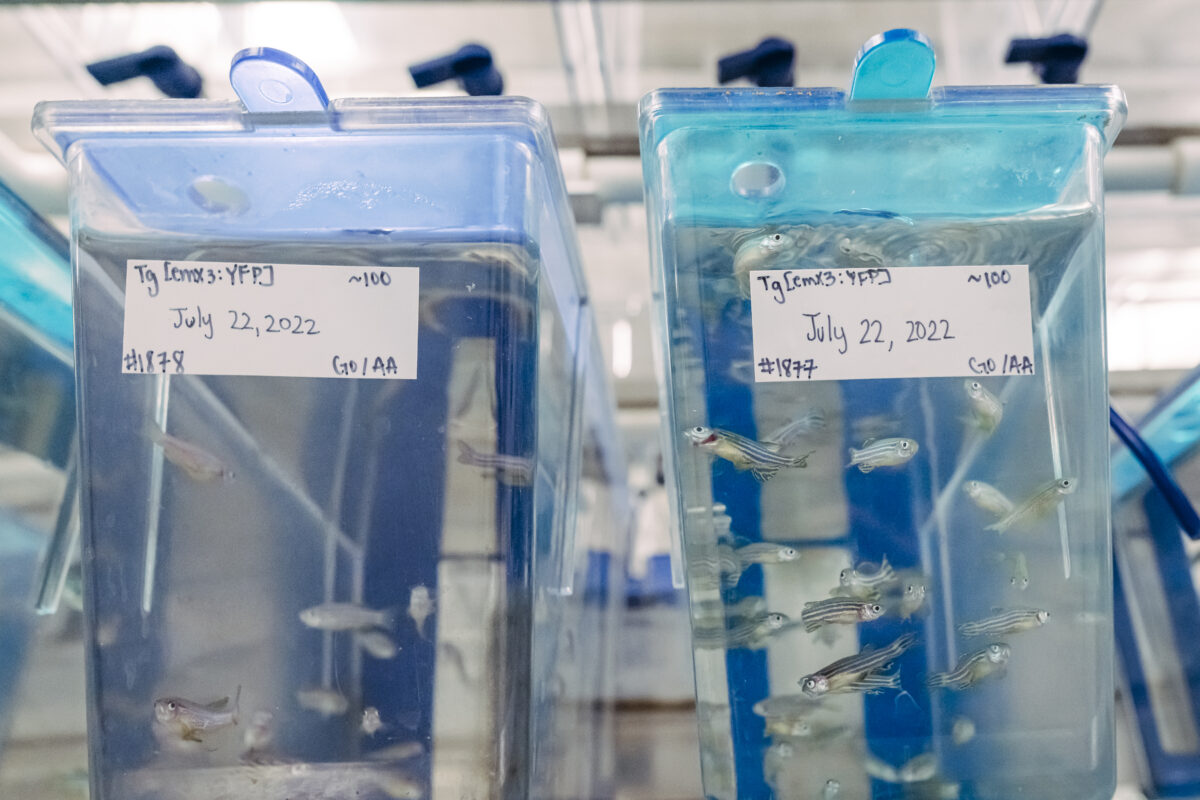 Mayank Chugh studies developmental biology using zebrafish like these as a model organism. (Marlayna Demond ’11/UMBC)
A: My primary role is director of the Applied Molecular Biology program, our department’s accelerated one-year master’s. I lead everything from recruitment through teaching and collaborations with other faculty, taking the students from when they apply all the way to graduation. It’s primarily a teaching position, but it’s unusual because I also have access to the teaching lab for my own developmental biology research. So in addition to teaching, I can recruit students to pursue research with me. Right now I have two high school students, one undergraduate, and one recent graduate working in the lab with me. We’re studying how the inner ear forms in zebrafish and how mechanical forces shape organ development and influence cell decisions. I collaborate with UMBC developmental biologist Rachel Brewster on the fish work. We share microscopy resources and she’s generously offered me space in the fish facility.
Q: Can you explain the purpose of the AMB program and who could benefit from it?
A: I believe the program is underrated. It’s an intensive one-year master’s that combines coursework with rigorous research and builds skills that can transfer anywhere. The students practice communication through weekly presentations, develop their writing skills through reports, and improve their time and project management out of necessity as they design and run experiments—all skills useful within and beyond science.
The program is great for undergrads with strong grades who lack substantial lab experience to gain a sense of what graduate-level science is like, so they can decide from an informed place whether a Ph.D. is right for them. A part-time option also serves working professionals who want to advance their skills. UMBC undergraduates can transfer up to 12 credits from their bachelor’s program if they plan ahead, which saves them time and money. AMB graduates head onto a range of next steps including jobs in industry, medical school, academic positions, and more.
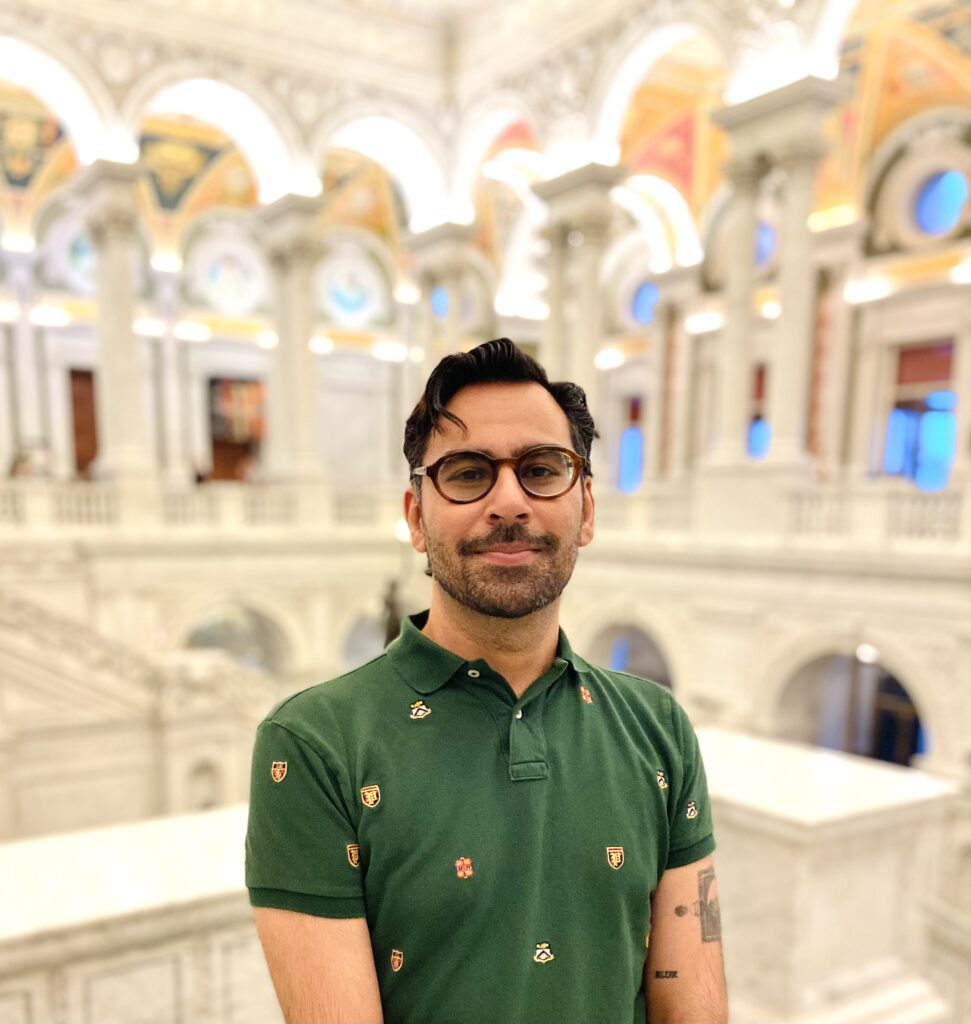 Mayank Chugh directs UMBC’s Applied Molecular Biology program and also conducts research in developmental biology and science policy. (Courtesy of Chugh)
Q: Why did you branch into science policy alongside developmental biology? What do you find most meaningful about that work?
A: I love basic research, but I’ve always cared about how science integrates into society. During my postdoc at Harvard I realized I did not want a traditional tenure-track path. I launched the ReForm Lab to examine the institutional structures and policies that govern who gets to do science, how we do it, and how it is evaluated. It’s highly interdisciplinary—today I collaborate with social scientists and others I never expected to work with.
My first ReForm Lab paper looked at postdoctoral compensation in the Boston area and showed how NIH salary guidelines ignore cost-of-living disparities across the country. Within two months of it being published, several institutions changed their policies. I got so many emails saying “thank you.” That tangible impact felt different from anything I’d experienced in basic research.
My new paper expands on that work. We surveyed hundreds of postdocs and quantified the often-invisible time, money, and psychological costs international scholars face, like having to travel back to their home country to renew their visas. We frame it as an administrative burden with real consequences for well-being and opportunity. The paper focuses solely on the data, but my personal opinion is that institutions could simply start with greater sensitivity toward scholars facing these challenges and offer practical support, like greater flexibility.
I’m also formally affiliated with the Human Context of Science and Technology program at UMBC. I love being part of that program; it gives me the chance to teach topics like the future of science and talk about race and gender in STEM. I recently organized a movie screening and discussion about Henrietta Lacks, whose local story is ongoing. Johns Hopkins is now constructing a Henrietta Lacks building in collaboration with her family.
Q: What do you appreciate about the UMBC community?
A: UMBC hits a Goldilocks size—neither too small nor too large. People are approachable and kind, and the department has been welcoming from day one. I’ve already begun collaborations and feel supported in doing interdisciplinary work. And the students are exceptional. Even those who arrive with limited lab experience repeatedly surprise me with how quickly they grow. The small size of the AMB program gives me the chance to connect with each student on a deeper level and continue to mentor them after they graduate, if they choose. I’ve helped students with their CVs, run mock interviews, and helped them make connections for opportunities. I’d say that has been one of the most rewarding parts of the role.
Q: What advice would you give others interested in expanding into science-policy work?
A: Use existing professional appointments as platforms. Join groups like the Scholars Strategy Network that connect scholars with policymakers and community builders. And for anyone at UMBC, feel free to just email me—maybe we could get a science and policy interest group started. The expertise is already here to engage in that way and benefit society with our work; we should put it to good use.
]]>
What does it take for a single cell to become a functioning organism—and what does it take for a scientist to thrive amid the systems that govern the research enterprise? Mayank Chugh is exploring...
https://umbc.edu/stories/mayank-chugh-qa/
https://my3.my.umbc.edu/api/v0/pixel/news/161545/guest@my.umbc.edu/5beb24b8f9f95b5a70f4944762bccb77/api/pixel
biology
cnms
community
research
science-and-tech
stories
story
UMBC News & Magazine
https://my3.my.umbc.edu/groups/umbc-news-magazine
https://assets1-my.umbc.edu/system/shared/avatars/groups/000/001/943/24435aa6207c452e7bc15cc74b42c7bb/xsmall.png?1748556657
https://assets1-my.umbc.edu/system/shared/avatars/groups/000/001/943/24435aa6207c452e7bc15cc74b42c7bb/original.png?1748556657
https://assets2-my.umbc.edu/system/shared/avatars/groups/000/001/943/24435aa6207c452e7bc15cc74b42c7bb/xxlarge.png?1748556657
https://assets2-my.umbc.edu/system/shared/avatars/groups/000/001/943/24435aa6207c452e7bc15cc74b42c7bb/xlarge.png?1748556657
https://assets3-my.umbc.edu/system/shared/avatars/groups/000/001/943/24435aa6207c452e7bc15cc74b42c7bb/large.png?1748556657
https://assets1-my.umbc.edu/system/shared/avatars/groups/000/001/943/24435aa6207c452e7bc15cc74b42c7bb/medium.png?1748556657
https://assets2-my.umbc.edu/system/shared/avatars/groups/000/001/943/24435aa6207c452e7bc15cc74b42c7bb/small.png?1748556657
https://assets1-my.umbc.edu/system/shared/avatars/groups/000/001/943/24435aa6207c452e7bc15cc74b42c7bb/xsmall.png?1748556657
https://assets2-my.umbc.edu/system/shared/avatars/groups/000/001/943/24435aa6207c452e7bc15cc74b42c7bb/xxsmall.png?1748556657
UMBC News & Magazine
0
0
false
Tue, 11 Aug 2026 11:57:43 -0400
Tue, 11 Aug 2026 11:57:43 -0400
Mentorship and momentum: How UMBC support propelled six students into HHMI’s first Cech Fellows cohort
This summer, six rising juniors from UMBC are among the 176 undergraduates nationwide selected for the inaugural cohort of the Howard Hughes Medical Institute’s (HHMI) Cech Fellows program. Named for Nobel laureate Thomas R. Cech, the nine-week research experience pairs promising students with HHMI scientists at top institutions across the country. For these Retrievers, the fellowship is more than a prestigious opportunity: It’s a culmination of support, community, and hands-on experiences at UMBC that have opened doors.
Amir Walton-Irvin, a computer engineering major and an Undergraduate Research Training Initiative for Student Enhancement (U-RISE), HHMI, Meyerhoff, and Goldwater Scholar, is spending his summer at MIT as a Cech Fellow and an MIT Summer Research Program in Biology intern. As a member of Steven Flavell’s research group, he’s developing deep learning methods to analyze brain imaging data from C. elegans—a microscopic roundworm with just 302 neurons used as a model organism in research. The work builds directly on Walton-Irvin’s research at UMBC with Tulay Adali, professor of computer science and electrical engineering, where he uses fMRI to investigate how environmental factors affect the brains of neurologically healthy adults. “This jump allows me to explore how contextual and physiological factors reshape the functional organization of the nervous system,” he explains.
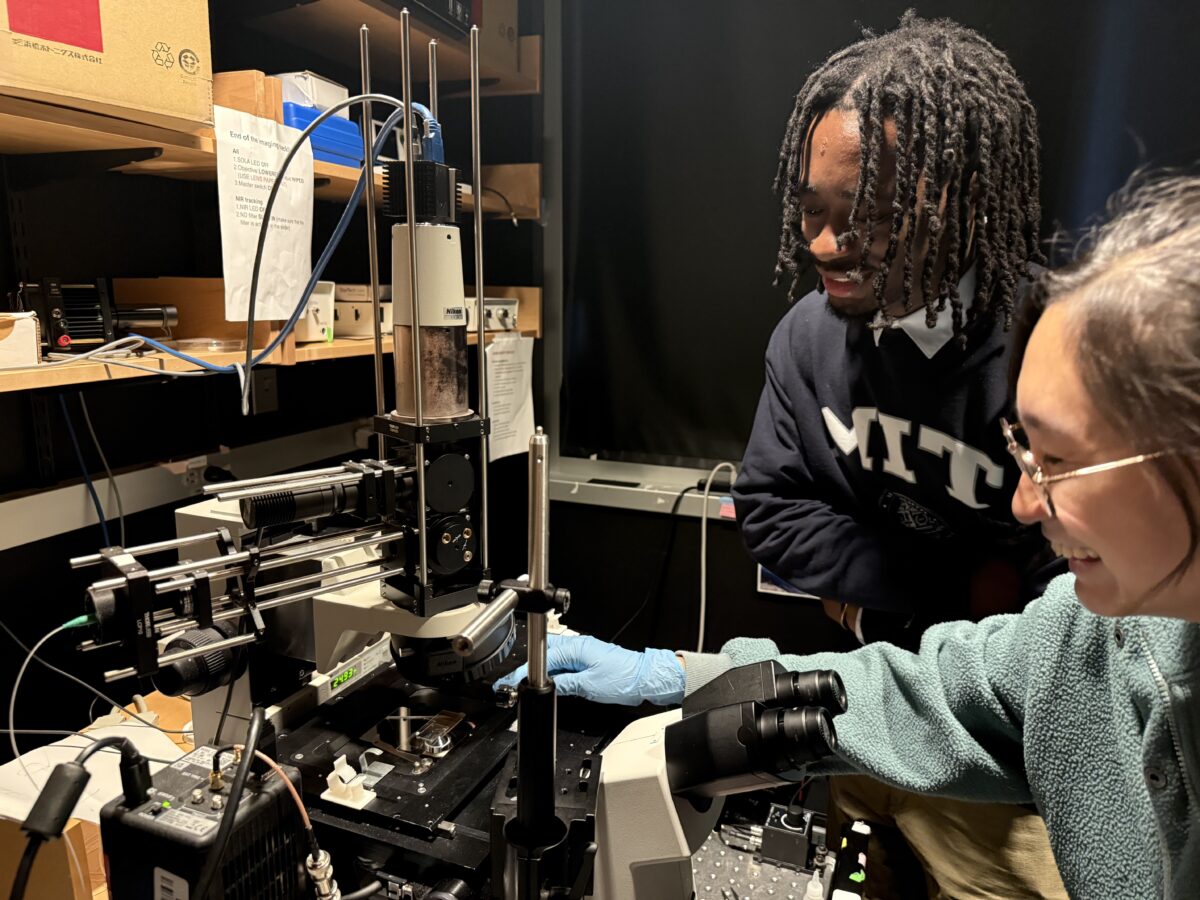 Amir Walton-Irvin (left), and a Ph.D. student in the Flavell Laboratory perform confocal microscopy. (Courtesy of Walton-Irvin)
Walton-Irvin’s path to Flavell’s lab started with the Quantitative Methods Workshop (QMW) at MIT, a seven-day professional development program that the Meyerhoff Scholars Program nominated him for. There, group lunches with faculty and sessions on machine learning in neuroscience, protein folding, and genomic sequencing sparked lasting connections. In particular, a lunch with Flavell led to ongoing conversations that aligned with the Cech opportunity, which is now creating fresh networking opportunities. Walton-Irvin’s leadership roles in the National Society of Black Engineers and UMBC’s chapter of the Institute of Electrical and Electronics Engineers have created further opportunities for networking with peers and mentors.
Shared ambition supports success
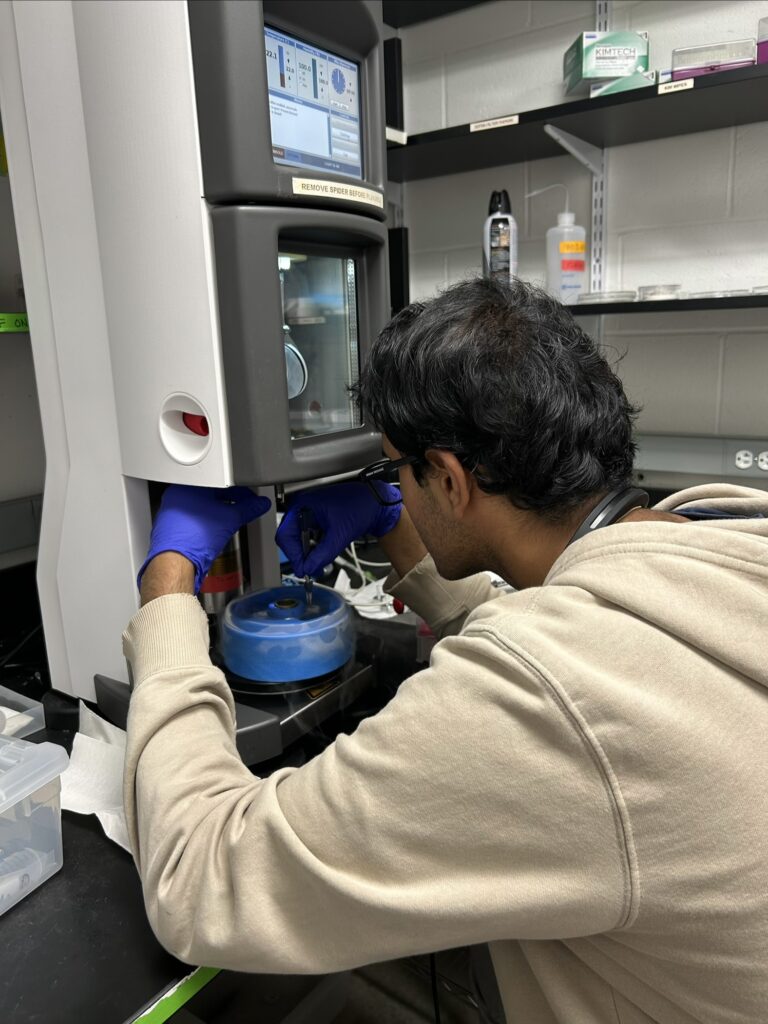 Aryan Srivastava is pursuing virology research
in the Harrison Lab at Harvard.
(Courtesy of Srivastava)
Aryan Srivastava, a dual degree student in biochemistry and molecular biology and bioinformatics and computational biology, is diving into structural virology in Stephen C. Harrison’s lab at Harvard. As president of both the Honors College Council and the Bioinformatics and Computational Biology Association, and a Meyerhoff, HHMI, and U-RISE scholar, Srivastava has built a strong scientific identity at UMBC: In his first year, he began conducting research with Michael Summers, HHMI Investigator and professor of chemistry and biochemistry.
A talk Harrison gave at an HHMI Science Meeting inspired Srivastava; financial support from his scholars programs had made his attendance possible. That encounter combined with his ongoing structural HIV research in the Summers Lab positioned him to pursue the Cech Fellowship. With Harrison, he will further explore the complex ways viruses enter cells that Harrison discussed at the meeting.
“Meeting peers who share your ambitions is one of the most important things an undergraduate can do,” Srivastava says. He also participated in the QMW at MIT, and roles in student organizations have connected him with program directors at federal grantmaking agencies, graduate students, and even Nobel laureates. Those relationships continue to pay dividends in Boston, where he’s reconnected with UMBC alumni like Arjun Kanjarpane ’24, biochemistry and molecular biology, a Ph.D. student at Harvard.
From participation to leadership
Silvi Shah, a Meyerhoff Scholar studying biochemistry and molecular biology, is in Elizabeth Engle’s lab at Boston Children’s Hospital, affiliated with Harvard Medical School and the Broad Institute. Shah’s neuroscience research with Weihong Lin at UMBC, where she is examining the effects of e-cigarette vapor on the olfactory system and behavior in mice, sparked her interest in deepening her mechanistic understanding of the brain by focusing on biomarkers for neurodevelopmental disorders.
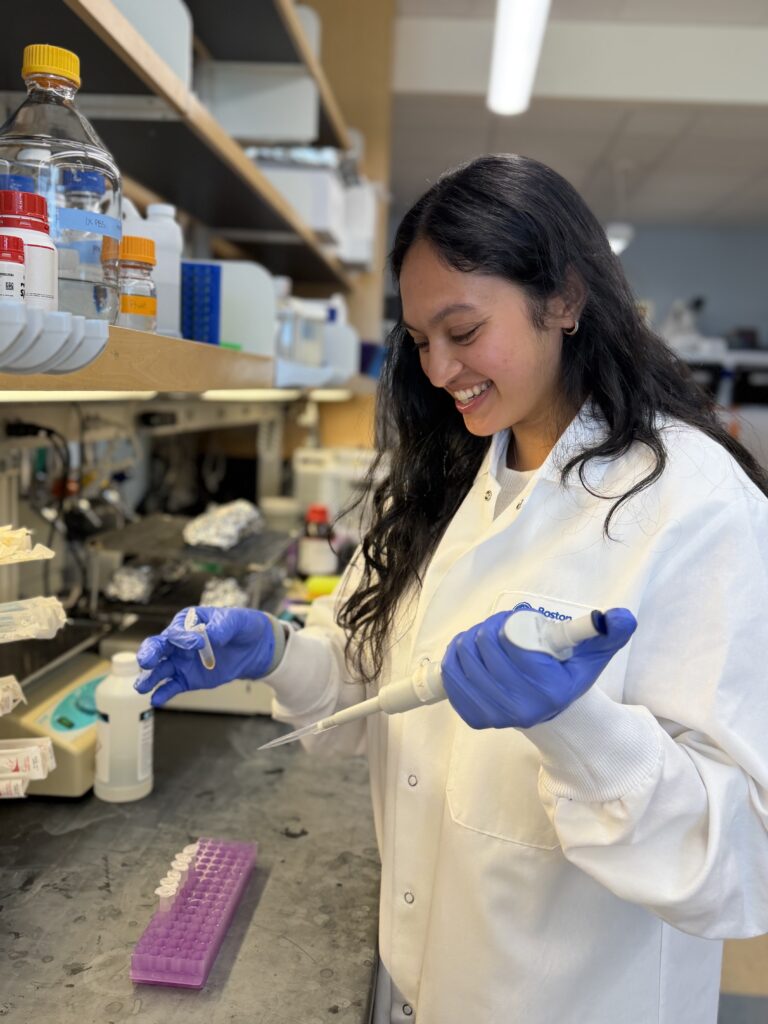 Silvi Shah is conducting neuroscience research with Elizabeth Engle at the Harvard Medical School. (Courtesy of Shah)
Being a member of the Meyerhoff, HHMI, and U-RISE scholars programs, and taking on leadership roles in Meyerhoff and the Phi Delta Epsilon Medical Fraternity, built Shah’s confidence and supplied community and mentorship. She connected with Harvard neuroscientist Beth Stevens at an HHMI Science Meeting, who introduced her to the Engle Lab. Award-winning presentations at the Annual Biomedical Research Conference for Minoritized Students (ABRCMS) and interactions with Nobel laureates, renowned faculty, graduate program directors, and alumni have broadened her perspective, she says.
In Boston, she’s reconnecting with scientists from the HHMI meeting and tapping into the Meyerhoff alumni network. “I am developing advanced research techniques and approaches that I would not have otherwise had the opportunity to learn at this stage of my education. These experiences have strengthened my commitment to an M.D./Ph.D. and a career in pediatric neuroscience research,” she shares.
Meanwhile, Nina-Simone Hunter, a biological sciences major, Meyerhoff, HHMI, and U-RISE Scholar, is at Cornell University in Liz Johnson’s lab. The group’s integration of microbiology, biochemistry, genomics, and molecular biology perfectly matches her interests and future Ph.D. plans, she says.
Preparation for the national stage
Nahom Getachew, a biochemistry and molecular biology major, Meyerhoff and HHMI Scholar, and Ethiopian immigrant, initially doubted research was for him, but opportunities at UMBC changed that, he says. Getachew attended an HHMI Science Meeting and ABRCMS with support from the Meyerhoff program. Squire Booker, a University of Pennsylvania biochemist and HHMI Investigator, spoke at both events, and Getachew asked follow-up questions about his work and the opportunity to contribute—which is now being realized through the Cech Fellows program.
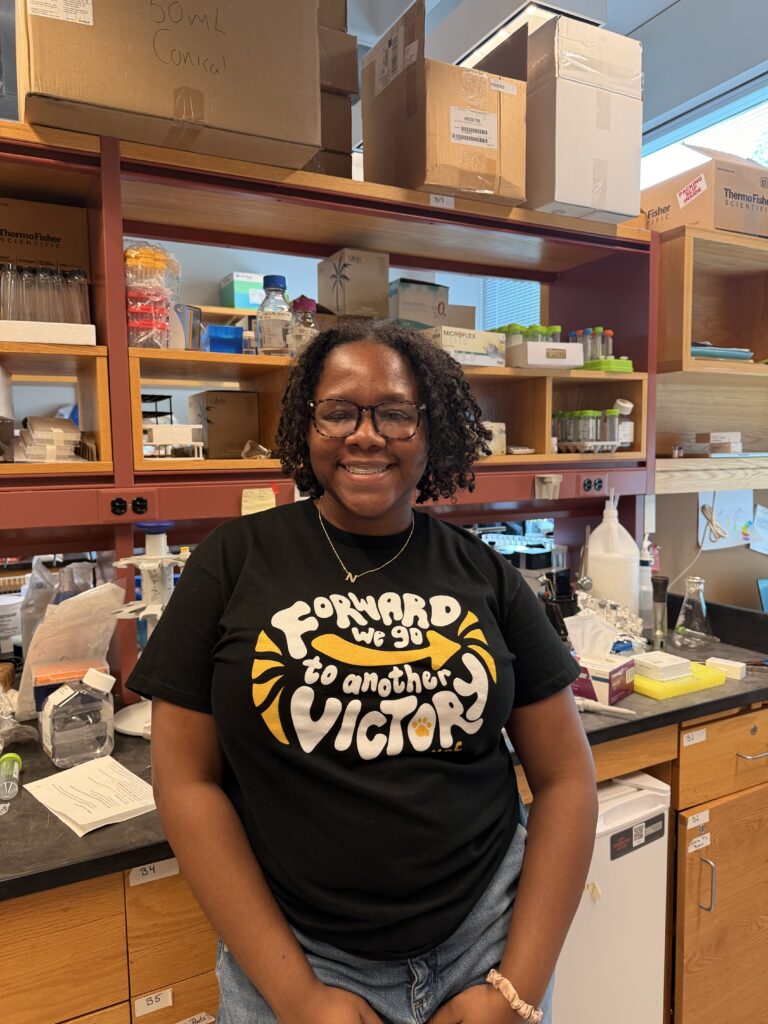 Nina-Simone Hunter is integrating microbiology, biochemistry, genomics, and molecular biology in Liz Johnson’s lab at Cornell. (Courtesy of Hunter)
“Networking is one of the most important skills for finding summer research opportunities,” Getachew notes. In addition to Booker, he connected with a Cech program coordinator at ABRCMS. Getachew prepared for national conferences by practicing communicating his work under Marcin Ptsazek, associate professor of chemistry and biochemistry, at UMBC’s Summer Undergraduate Research Fest and Undergraduate Research and Creative Achievement Day.
Now in the Booker Lab, he’s mastering new techniques in a drug discovery project, presenting results at the Cech Fellows Research Symposium at HHMI’s Janelia Research Campus, and connecting with peers who share similar goals, including fellow UMBC Cech Fellow Djina Awungnjia, a biological sciences major and McNair Scholar. All six UMBC fellows will present at the culminating symposium at HHMI Janelia, further expanding their national network.
As these Cech Fellows advance ambitious projects—from neural imaging analysis and virus structures to drug discovery and neurodevelopment—they carry forward skills, relationships, and confidence cultivated at UMBC through scholars programs, faculty mentorship, student organizations, and more.
Getachew says that the experience has reinforced his pursuit of an M.D./Ph.D. in translational clinical research: “This program has shown me what I am capable of.”
Learn more about UMBC’s premier scholars programs.
]]>
This summer, six rising juniors from UMBC are among the 176 undergraduates nationwide selected for the inaugural cohort of the Howard Hughes Medical Institute’s (HHMI) Cech Fellows program. Named...
https://umbc.edu/stories/six-umbc-students-hhmis-first-cech-fellows-cohort/
https://my3.my.umbc.edu/api/v0/pixel/news/161437/guest@my.umbc.edu/855db29b67be4bceb38339e83e52dbd3/api/pixel
biochemistry-and-molecular-biology
bioinformatics-and-computational-biology
biology
cnms
coeit
community
computer-engineering
csee
feature
honors-college
mcnair-scholars
meyerhoff-scholars
science-and-tech
stories
story
UMBC News & Magazine
https://my3.my.umbc.edu/groups/umbc-news-magazine
https://assets1-my.umbc.edu/system/shared/avatars/groups/000/001/943/24435aa6207c452e7bc15cc74b42c7bb/xsmall.png?1748556657
https://assets1-my.umbc.edu/system/shared/avatars/groups/000/001/943/24435aa6207c452e7bc15cc74b42c7bb/original.png?1748556657
https://assets2-my.umbc.edu/system/shared/avatars/groups/000/001/943/24435aa6207c452e7bc15cc74b42c7bb/xxlarge.png?1748556657
https://assets2-my.umbc.edu/system/shared/avatars/groups/000/001/943/24435aa6207c452e7bc15cc74b42c7bb/xlarge.png?1748556657
https://assets3-my.umbc.edu/system/shared/avatars/groups/000/001/943/24435aa6207c452e7bc15cc74b42c7bb/large.png?1748556657
https://assets1-my.umbc.edu/system/shared/avatars/groups/000/001/943/24435aa6207c452e7bc15cc74b42c7bb/medium.png?1748556657
https://assets2-my.umbc.edu/system/shared/avatars/groups/000/001/943/24435aa6207c452e7bc15cc74b42c7bb/small.png?1748556657
https://assets1-my.umbc.edu/system/shared/avatars/groups/000/001/943/24435aa6207c452e7bc15cc74b42c7bb/xsmall.png?1748556657
https://assets2-my.umbc.edu/system/shared/avatars/groups/000/001/943/24435aa6207c452e7bc15cc74b42c7bb/xxsmall.png?1748556657
UMBC News & Magazine
0
0
false
Tue, 04 Aug 2026 16:06:03 -0400
Tue, 04 Aug 2026 16:06:03 -0400
Darter detective: Ph.D. student Payton Barry on ecosystems, outreach, and grant hunting
Payton Barry, a fourth-year Ph.D. candidate in biological sciences, is diving into the world of Maryland’s streams. Under Tamra Mendelson’s mentorship, he studies how introduced species of darters, a family of freshwater fish, are affecting native ones. Equal parts dedicated researcher and enthusiastic science communicator, Payton has creatively pieced together funding from organizations like The Explorers Club while sharing his work with the public through outreach events and his engaging Instagram account, @barrybiome.
Q: Why did you choose UMBC for graduate school, and how is it going?
A: I completed my undergrad at the University of Missouri and applied to UMBC specifically to work with Dr. Tamra Mendelson. I discovered her research on Twitter and thought, “This is really cool.” I sensed her great energy in our first virtual meeting, and I knew I could work with her. I moved from Missouri, and it’s been incredible ever since.
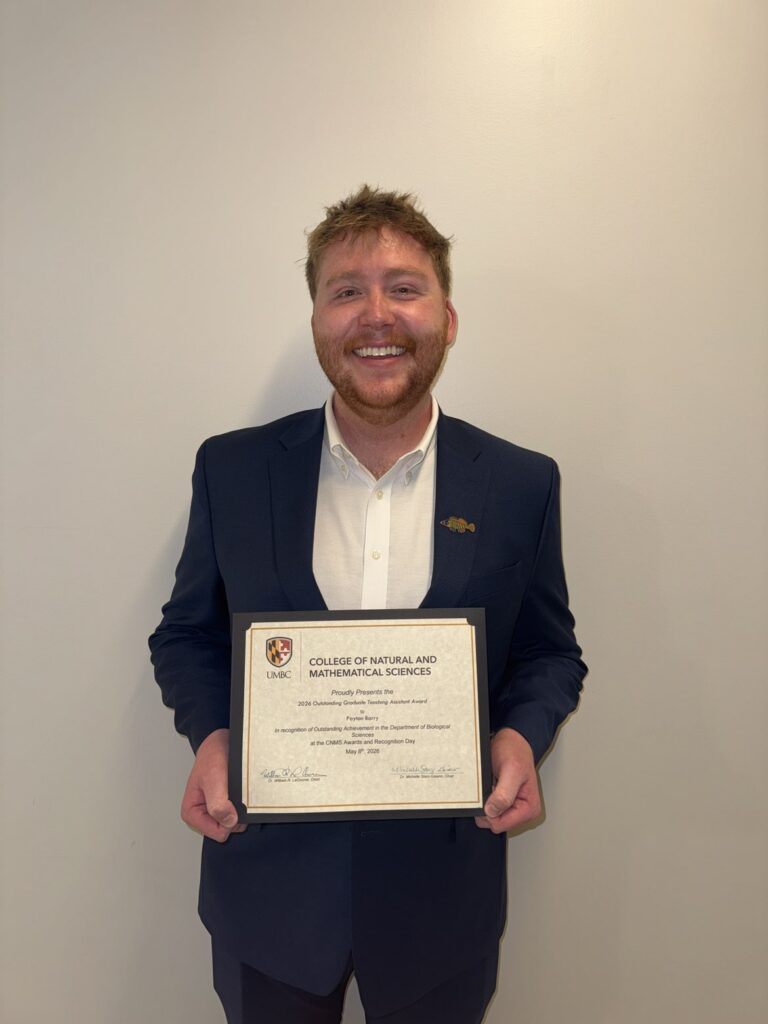
My project is pretty independent, but Tamra is always supportive. She is an awesome mentor—super approachable, really relaxed, and incredibly knowledgeable. Anything I have an issue with or a question about, she’s got an answer or knows who to direct me to. I’m one of three grad students in the lab, including Ph.D. students Georgie Puffer and Shea Buczkowski. Plenty of undergrads are involved in our work, too—sophomore James Keller has been especially helpful with my research. I was humbled to be selected as an Outstanding TA of the Year after nominations from Kevin Omland, Tamra, and Cheng-Yu Li for teaching introductory biology and evolution.
At right: Payton Barry holds the 2026 Outstanding Graduate Teaching Assistant Award presented at the CNMS Awards and Recognition Day. (Courtesy of Barry)
Q: What are the primary goals of your research, and why is this work important to you?
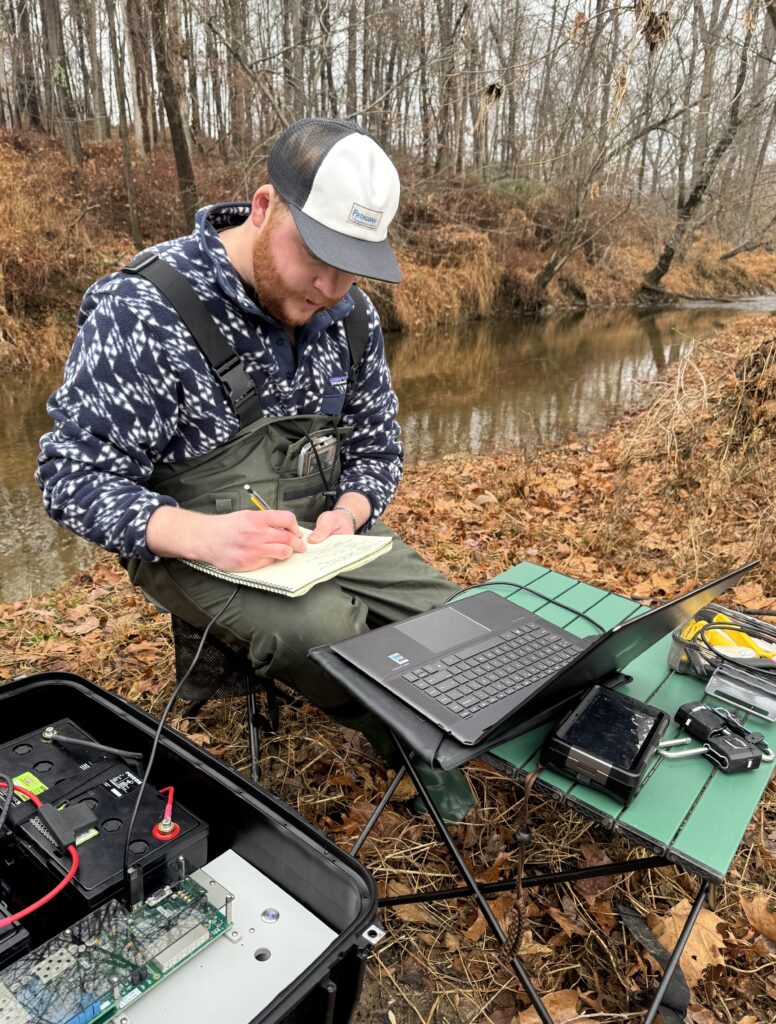
A: Darters are small freshwater fish common in streams. They primarily eat macroinvertebrates—little bugs—and reproduce in spring. My research evaluates how introduced darter species might affect native darter species in Maryland. We study two native species and two that were introduced in the late 1950s and 1970s, likely unintentionally by anglers using them for bait.
One of my projects focuses on habitat use. Native darters provide paternal care, with the males guarding eggs, so they need specific microhabitats to reproduce. We found a large degree of overlap between one introduced species and the native species, especially during the reproductive season—that added competition could hamper native reproduction.
We’re also studying what darters are eating, including whether introduced species prey on native eggs. We sample streams to compare how their diet matches or doesn’t with what’s available across the seasons.
This work matters because these little fish play important roles in stream ecosystems. Losing natives through competitive exclusion could affect Maryland’s biodiversity and even impact recreational fisheries.
At left: Payton Barry conducts fieldwork to monitor the seasonal movement behavior of native and introduced darter species. (Courtesy of Barry)
Q: What does a day in the field look like?
A: It’s mostly me, though Dr. Mendelson joins when she can, and it’s a lot of fun. We drive about an hour to sites near Frederick, Maryland at Little Bennett Creek and the Little Monocacy River; in Montgomery County near Rock Creek; and in the Monocacy River area, plus closer sites on the Anacostia River.
First we catch the darters, and then we survey macroinvertebrates in the stream to measure food availability. We use a nonlethal technique called “gastric lavage” to wash out the fishes’ gut contents. We prep the gut samples and then send them out for genetic sequencing to identify what the fish are eating. We sampled six populations in spring, summer, and winter—when biodiversity is lowest.
Q: To support your work, you’ve sought a range of funding sources. Can you talk about that process and offer any advice?
A: With recent changes to the federal funding landscape, smaller grants from nonprofits have been crucial. I rely on racking up these small awards to support big projects. This project is funded by four or five grants combined. Our newest grant from The Explorers Club covers our genetic sequencing costs. Other support comes from the North American Native Fishes Association (NANFA), the Society for Freshwater Science, and Fly Fishers International.
I just search online for terms like “native fish research grants” or “stream fish restoration.” I tailor my applications and projects for the funders’ priorities—for example, I tied my work to the health of stocked fish populations for Fly Fishers. If you can find an organization focused on your research niche, you might have a greater chance of success, because fewer people are applying.
 Payton Barry presents on introduced freshwater fish species in the Potomac River at the Baltimore Underground Science Space Science Slam . (Courtesy of Barry)
Q: You’ve made an effort to share your research with members of the broader community. Can you describe some of that work?
A: I’m involved with the graduate student outreach group in UMBC’s biology department. For example, last fall, we hosted an event called Science on Tap at Checkerspot Brewing in Baltimore, where we invited UMBC graduate student researchers in biology and geography and environmental systems to give talks about what they do. We’ve also presented at events run by the Baltimore Underground Science Space. Plus, I run the Instagram account @barrybiome, where I post research updates and a weekly Fieldwork Friday series in collaboration with undergrads in the lab.
A lot of times researchers present only to specific audiences, which makes science less accessible. It is really fun for me to share my passion for what I do. I love getting questions about how my work relates to people. It really makes an impression when I’m able to tell them how important these little guys are and their role in the ecosystem—everybody’s got a part to play.
]]>
Payton Barry, a fourth-year Ph.D. candidate in biological sciences, is diving into the world of Maryland’s streams. Under Tamra Mendelson’s mentorship, he studies how introduced species of...
https://umbc.edu/stories/darter-detective-payton-barry/
https://my3.my.umbc.edu/api/v0/pixel/news/160575/guest@my.umbc.edu/364c90b8c15dfe8e03bf510300a1edf2/api/pixel
biology
cnms
community
graduate-research
news
research
science-and-tech
story
UMBC News & Magazine
https://my3.my.umbc.edu/groups/umbc-news-magazine
https://assets1-my.umbc.edu/system/shared/avatars/groups/000/001/943/24435aa6207c452e7bc15cc74b42c7bb/xsmall.png?1748556657
https://assets1-my.umbc.edu/system/shared/avatars/groups/000/001/943/24435aa6207c452e7bc15cc74b42c7bb/original.png?1748556657
https://assets2-my.umbc.edu/system/shared/avatars/groups/000/001/943/24435aa6207c452e7bc15cc74b42c7bb/xxlarge.png?1748556657
https://assets2-my.umbc.edu/system/shared/avatars/groups/000/001/943/24435aa6207c452e7bc15cc74b42c7bb/xlarge.png?1748556657
https://assets3-my.umbc.edu/system/shared/avatars/groups/000/001/943/24435aa6207c452e7bc15cc74b42c7bb/large.png?1748556657
https://assets1-my.umbc.edu/system/shared/avatars/groups/000/001/943/24435aa6207c452e7bc15cc74b42c7bb/medium.png?1748556657
https://assets2-my.umbc.edu/system/shared/avatars/groups/000/001/943/24435aa6207c452e7bc15cc74b42c7bb/small.png?1748556657
https://assets1-my.umbc.edu/system/shared/avatars/groups/000/001/943/24435aa6207c452e7bc15cc74b42c7bb/xsmall.png?1748556657
https://assets2-my.umbc.edu/system/shared/avatars/groups/000/001/943/24435aa6207c452e7bc15cc74b42c7bb/xxsmall.png?1748556657
UMBC News & Magazine
2
0
false
Fri, 05 Jun 2026 14:10:50 -0400
Fri, 05 Jun 2026 14:10:50 -0400
Katie King ’26, biology and dance double major, Admissions Grit Guide, and UMBC Dance Team co-captain, pursues a future that engages her passions
Katie King ’26, biology and dance, completed an ambitious double degree, and not only thrived but also became co-captain of the UMBC Dance Team and worked for the admissions office as a Grit Guide. Looking forward, she plans to become a physician assistant, and hopes to find ways to combine her love of both dance and biology.
Q: What attracted you to UMBC?
A: I knew I wanted to double major in biology and dance. I’m planning to go into the medical field, so biology was the route I needed to take, but I have been dancing since I was three. When looking at colleges, a lot of them told me I had to choose, but UMBC allowed me to do both. I was accepted into the Linehan Artist Scholars Program, so that also drew me here—I really love the possibilities and experiences that the program gives.
Q: How did the Linehan Artist Scholars Program impact your time at UMBC?
A: My experience began with the first-year seminar, and that class really helped me get more exposure and awareness to the other arts. As a dancer of many years, I really only stuck to dance, so I never really dove into the music or the theatre sides, and I didn’t know a lot about visual arts at all. That class really helped open my eyes—we did skits, we had to learn how to play music. In the second year, we had to do service hours, and that was rewarding. I did service hours within the dance department, and it was nice to feel like I was giving back to a bigger cause. The different trips that we got to go on with the Linehan program were super fun—twice to New York and once to Philly, to visit art museums and see performances. I was also in the Living-Learning Community in Harbor Hall, living right next to everyone in my cohort.
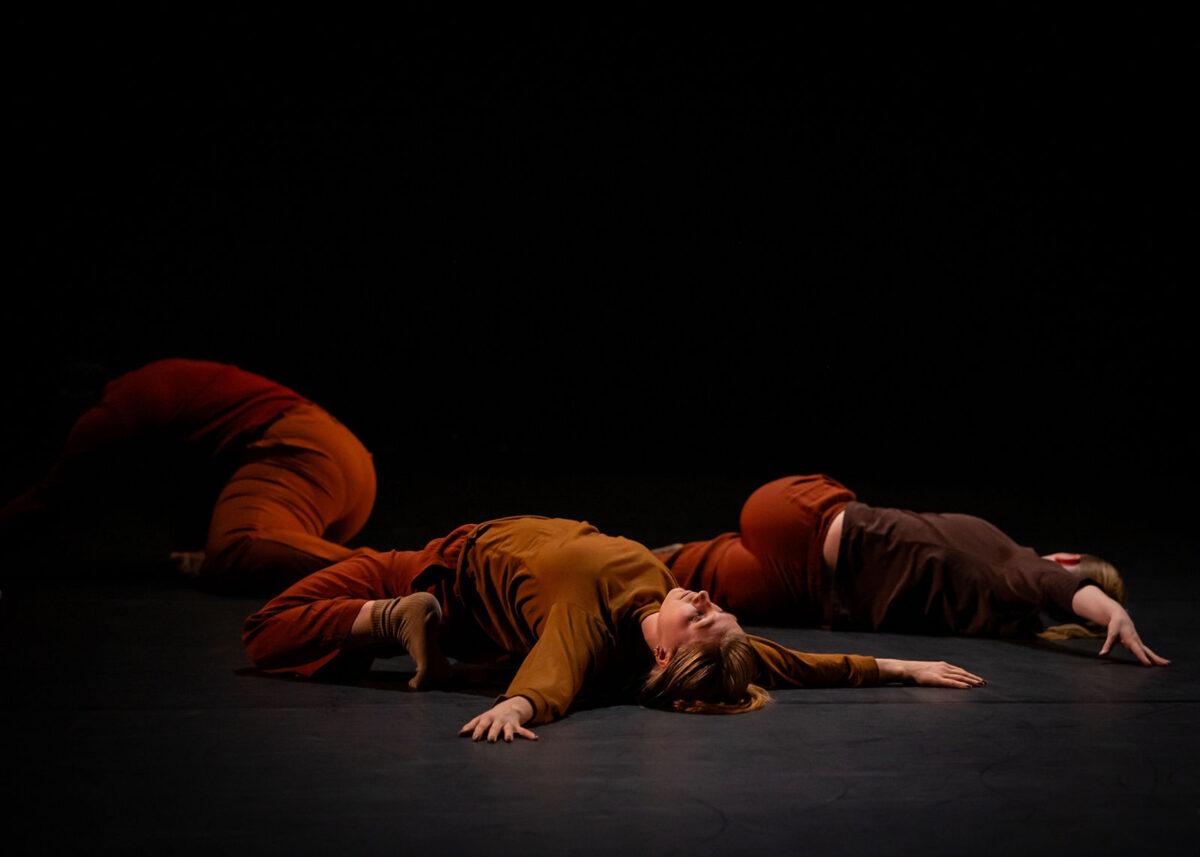 Katie King and two colleagues perform in the 2025 Fall Dance Showcase. (Photo by Kiirstn Pagan ’11.)
Q: Can you share more about your dance and biology double major?
A: I knew I wanted to be in the medical field since I was little. My dolls would be wrapped in casts, and I bought my own crutches when I was 7 at the pharmacy! At the same time, I’ve been dancing since I can remember. For a while, I thought of going into physical therapy, combining my dance and biology backgrounds. Now, I’m thinking of becoming a physician assistant. Both dance and biology have been passions, and I haven’t wanted to give up either one. I worked in a physical therapy office for 5 or 6 years, and there I got the idea to specialize in dancers. So that was the route I thought for a while until I switched to physician’s assistant, but I’m hoping at some point those fields intercross.
Q: How did being a Grit Guide impact your experience?
A: During my freshman year, I joined the UMBC Dance Team to get more involved on campus, and the coach said that the admissions office was hiring. I was brought on as a visual and performing arts tour guide for dance, but later became a general tour guide, and it shaped my entire experience at UMBC. I’ve done it for four years now. Working with professional staff, I gained skill sets that I’ll be able to use in the future, especially if I go into the medical field or work with the public again.
 Katie King, third from right, poses UMBC’s comfort dog, Chip, her handler, Sergeant Jamie Cheatem, and other friends. (Image courtesy of King.)
Q: What motivated you to join the UMBC Dance Team?
A; At the start of my freshman year, I didn’t join anything—I thought I needed to get acclimated. But by November, I was bored! I’ve never been the kind of person who isn’t involved—I have to be going all the time. So I decided to try out for the Dance Team, and I was accepted. It was a super fun experience. During my last two years, I was co-captain for the team and built so many friendships. I love basketball and used to play, but had to give it up for dance. With the Dance Team, I could both dance and watch basketball, and this year they won championships—life was good! It was probably my favorite part of college.
Q: How did you maintain a work-life balance?
A: I prioritize sleep, and get eight hours every night. My calendar is my best friend, truthfully. A lot of my shifts for tour guides were in the mornings, and then I had classes, and then rehearsals at night, and then a 3 or 4-hour block at the end of the night where I would do homework. I didn’t do a lot of hanging out in general besides those things—my social time was being at those events and at work.
 Katie King, left, poses with other members of the UMBC Dance Team on the basketball court.
Q: Were there faculty or staff who made a difference for you?
A: Definitely Ann Sofie Clemmensen—I call her my school mom! She was my dance advisor, but also became my unintentional biology advisor. At the start of my freshman year, we sat down, and she helped me plan out all four years, saying, “We’re going to get you out in four years, both degrees done.” We planned everything out. We met all the time, and I text and call her all the time. She’s always been there.
Q: What are your post-graduation plans?
A: I’m applying to physician assistant school and hope to start somewhere in January. Over the summer, though, I’ll be visiting Portugal, Spain, England, France, and Switzerland. I’m so excited—I haven’t been to Europe.
 Katie King, bottom right, poses with Grit Guide colleagues. (Image courtesy of King.)
Q: What advice would you give to new students?
A: My advice would be to stay true to yourself and always go after what you want. I was told many times that I couldn‘t do both degrees, and then I found a way. Get involved. That changed my whole trajectory here at UMBC. It’s hard to get out of your shell sometimes, and hard to put yourself out there, but it’s so rewarding, especially here. Step out of your comfort zone!
]]>
Katie King ’26, biology and dance, completed an ambitious double degree, and not only thrived but also became co-captain of the UMBC Dance Team and worked for the admissions office as a Grit...
https://umbc.edu/stories/katie-king-26-biology-and-dance-double-major-admissions-grit-guide-and-umbc-dance-team-co-captain-pursues-a-future-that-engages-her-passions/
https://my3.my.umbc.edu/api/v0/pixel/news/160254/guest@my.umbc.edu/d74fc3f9c7b7a6fc508207e7e3529d15/api/pixel
biology
cahss
class-of-2026
cnms
dance
linehan
news
science-and-tech
story
UMBC News & Magazine
https://my3.my.umbc.edu/groups/umbc-news-magazine
https://assets1-my.umbc.edu/system/shared/avatars/groups/000/001/943/24435aa6207c452e7bc15cc74b42c7bb/xsmall.png?1748556657
https://assets1-my.umbc.edu/system/shared/avatars/groups/000/001/943/24435aa6207c452e7bc15cc74b42c7bb/original.png?1748556657
https://assets2-my.umbc.edu/system/shared/avatars/groups/000/001/943/24435aa6207c452e7bc15cc74b42c7bb/xxlarge.png?1748556657
https://assets2-my.umbc.edu/system/shared/avatars/groups/000/001/943/24435aa6207c452e7bc15cc74b42c7bb/xlarge.png?1748556657
https://assets3-my.umbc.edu/system/shared/avatars/groups/000/001/943/24435aa6207c452e7bc15cc74b42c7bb/large.png?1748556657
https://assets1-my.umbc.edu/system/shared/avatars/groups/000/001/943/24435aa6207c452e7bc15cc74b42c7bb/medium.png?1748556657
https://assets2-my.umbc.edu/system/shared/avatars/groups/000/001/943/24435aa6207c452e7bc15cc74b42c7bb/small.png?1748556657
https://assets1-my.umbc.edu/system/shared/avatars/groups/000/001/943/24435aa6207c452e7bc15cc74b42c7bb/xsmall.png?1748556657
https://assets2-my.umbc.edu/system/shared/avatars/groups/000/001/943/24435aa6207c452e7bc15cc74b42c7bb/xxsmall.png?1748556657
UMBC News & Magazine
1
0
false
Wed, 20 May 2026 16:14:49 -0400
Wed, 20 May 2026 16:14:49 -0400
Four UMBC student researchers receive prestigious Goldwater Scholarships
Four UMBC students have been named Barry Goldwater Scholars this year. The Barry Goldwater Scholarship and Excellence in Education Foundation supports talented college sophomores and juniors who aspire to become leading researchers in science, engineering, and mathematics in the U.S. The award is one of the most prestigious for undergraduates in STEM.
UMBC juniors Deeya Mistry, biological sciences, Jessica Slaughter, computer engineering, Phoenix Bryant, biological sciences, and sophomore Amir Walton-Irvin, computer engineering, are among the 454 scholars selected nationwide in 2026. They competed with nearly 1,500 students majoring in science, engineering, and mathematics who were nominated by their academic institutions for the award.
This is the third time that a record four UMBC students have received Goldwater Scholarships in the same year.
“I’m always so impressed by the caliber of students at UMBC,” says April Householder ’95, director of undergraduate research and prestigious scholarships, who works with students each year to prepare their Goldwater application materials. “And I’m excited to see what they do next, because this is also a springboard to even bigger and better opportunities.”
Personal stories propel curiosity
The road to a successful scientific career can be arduous, and each of this year’s UMBC Goldwater Scholars have tapped deep curiosity, a drive to make a difference, as well as nurturing family and school support, to take them to this prestigious milestone on their journeys.
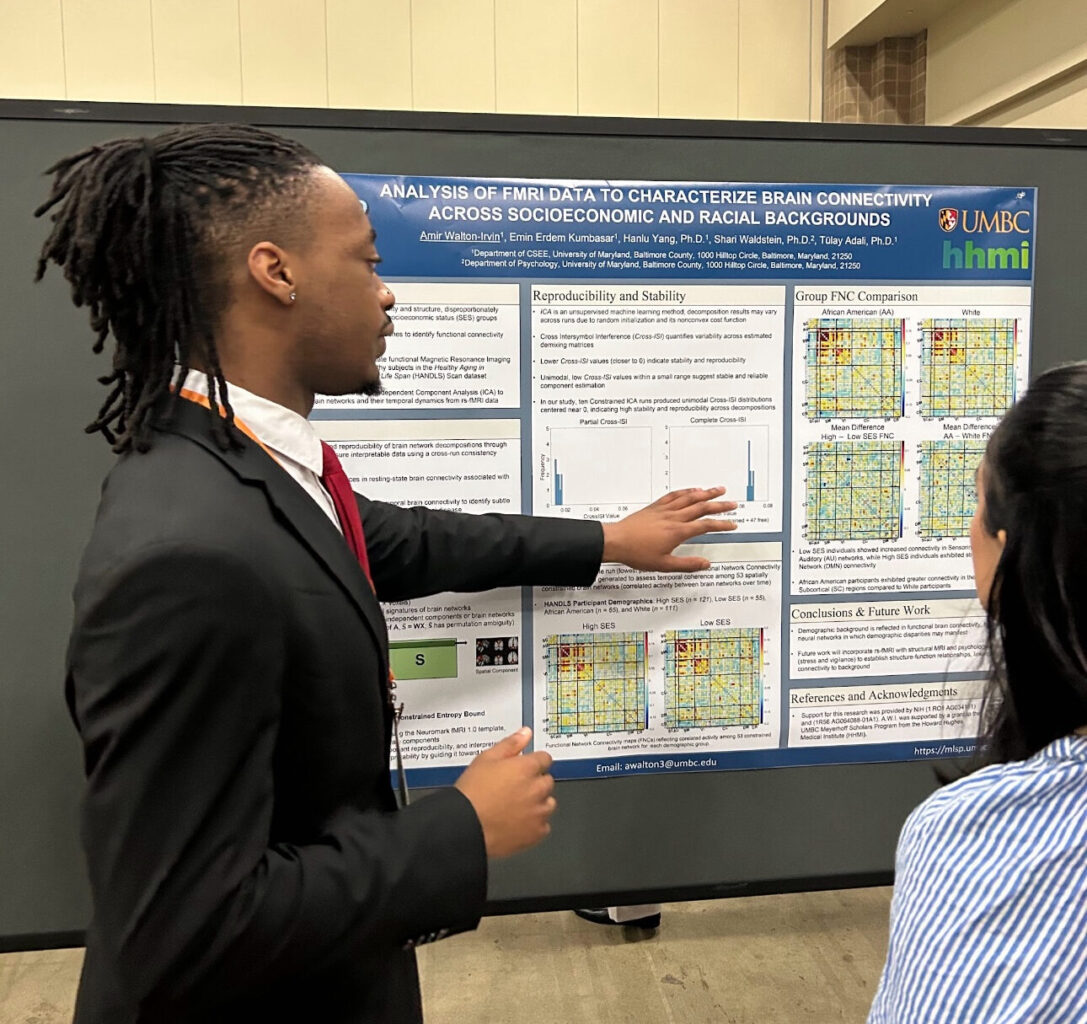 Amir Walton-Irvin presents his research at the 2025 Biomedical Research Conference for Minoritized Scientists. (Photo courtesy of Amir Walton-Irvin)
“I grew up in a household with my mom and my grandmother, who were both mathematics teachers,” Walton-Irvin says. “They both helped nurture my interest in STEM from an early age. My grandmother taught me how to solve math problems, code, and take things apart and put them back together, while my mom encouraged that curiosity by exposing me to engineering camps and science museums.”
Later, when his grandmother started showing signs of dementia, Walton-Irvin found himself facing a host of hard-to-answer questions. “She went from someone who had an answer to every question to not knowing who I was anymore. It was heartbreaking, but it also made me start asking bigger questions: Why did this happen to her, like it has to so many others before her? How does disease change brain function?” He plans to pursue a career at the intersection of machine learning and neuroscience, developing novel neuroimaging analysis methods to investigate neurological disease and health disparities.
 Jessica Slaughter working in Polina Anikeeva’s lab at MIT during a summer internship. (Photo courtesy of Jessica Slaughter)
Bryant experienced a similar personal connection to unanswered scientific questions when her dad was diagnosed with schizoaffective disorder. “I remember asking my mom: ‘Why is he like this?’ And sometimes she’d say: ‘We don’t know that yet.’ And I really wanted to know the answer,” Bryant says. She plans to enter an M.D.-Ph.D. program, and would like to study how environmental factors influence how genes are expressed and may contribute to the development of psychiatric diseases.
Mistry found herself drawn to science since grade school, working to get ever closer to that scientific frontier where new knowledge is created. “Since not everything is known yet, there’s the possibility to uncover more,” she says. “Doing scientific research is an amazing way to pursue my curiosity.” She plans to pursue an M.D.-Ph.D. with a clinical focus in emergency medicine and a Ph.D. studying the molecular makeup of individualized stroke recovery.
“While my clinical and research focuses are different from one another, I was really inspired to study this when I shadowed in the Emergency Department in downtown Baltimore,” she says. “Stroke patients usually come to the Emergency Department first, and everyone’s experience truly is different, because timing is crucial for strokes.”
Slaughter says the possibility of combining new knowledge with helping people drew her to the field of engineering, where she hopes to make a difference by improving global health, especially in disadvantaged areas where resources are limited.
Coming from a family of immigrants, Slaughter watched her grandmother travel over 5,000 miles to the U.S. for surgery, even as her health made the journey difficult. “That experience gave me a window into global healthcare disparities, especially in access to diagnostics and effective treatment, and showed me how engineering can be part of the solution,” she says. It is what drives her to develop low-cost, accessible medical devices and incorporate machine learning.
A supportive family—at home and at school
All the new scholars emphasize how much mentorship, connections, and support have helped them as they worked toward their dreams.
“One of the reasons winning this scholarship is so meaningful to me is because it was only two generations ago when women in my family did not get past a high school education,” says Mistry. She credits her parents with instilling in her a strong work ethic and the confidence to overcome challenges. “My dreams were built on the sacrifice and hard work of my parents and grandparents,” she says.
She also credits the many mentors she met at UMBC. Mistry, Slaughter, Bryant and Walton-Irvin are all part of the Meyerhoff Scholarship Program, which aims to increase diversity among future leaders in science, technology, engineering, and related fields.
“The Meyerhoff program and the COEIT community, particularly Dr. LaBerge and Dr. Marten, have been instrumental to my career,” Slaughter says.
“The advisors in the Meyerhoff program really helped me, and they’re always so supportive,” Bryant echoed.


On left, Deeya Mistry (right) with Mitsue Wiggs, associate director of the Meyerhoff program. (Photo courtesy of Deeya Mistry). On right, Jessica Slaughter (with braids) celebrates winning the limbo contest at the annual Meyerhoff Family Retreat at Centennial Park. “The Meyerhoff program isn’t just a scholarship, but also a family that celebrates every win, big or small,” she says. (Photo courtesy of Jessica Slaughter)
The students also credit their mentors in the labs where they do research on campus. Mistry is investigating the molecular mechanisms that underlie the sex differences in chronic stress susceptibility to understand why females have a higher susceptibility to chronic stress-induced psychiatric disorders such as depression and anxiety in the lab of Tara LeGates. Bryant is studying the biomechanical properties of a protein involved in chromatin regulation in the lab of Erin Green. Slaughter is applying statistical principles to develop bioinformatics applications to facilitate the analysis of dynamic, system-scale “-omics” data in the lab of Mark Marten. And Walton-Irvin is applying machine learning and signal processing methods to investigate functional brain connectivity and health disparities in the lab of Tülay Adali.
On the right path
For the four UMBC students, winning a Goldwater Scholarship is both a validation of the work they have put in so far, and a stepping stone to their next achievement.
“When I saw the email letting me know I’d been selected, I literally screamed, I was so excited,” Slaughter says. “I FaceTimed my family. I FaceTimed all my friends who helped me through this journey. I immediately sent thank you emails to all my mentors.”
Mistry messaged LeGates, her research advisor, and sprinted to her office to celebrate.
Walton-Irvin’s first response was to call his mom, as the news felt both emotional and affirming. “It meant a lot to know that the path I’m trying to build, one rooted in both personal experience and a desire to empower others, was being recognized,” he says. “Awards like this are meaningful, but I see them as part of a much larger journey of doing impactful work.”
 The Goldwater Scholars and some of their mentors strike a fun pose. Back row, from left to right, Ph.D. student Emin Erdem Kumbasar, Amir Walton-Irvin, and Professor Charles Laberge. Middle row, from left to right, Assistant Professor Tara LeGates, Deeya Mistry, Jessica Slaughter, Phoenix Bryant, and Associate Professor Erin Green; front row, April Householder. (Brad Ziegler/UMBC)
Come meet all four Goldwater Scholars at the Undergraduate Research and Creative Achievement Day on April 22 in the RAC, where they will be presenting their research alongside more than 400 other student presenters:
Deeya Mistry: “Investigation of the Circadian Rhythm on Blood Brain Barrier Permeability,” RAC 050, 9:20 – 9:35 a.m.
Phoenix Bryant: “Investigating the Function of the PHD Finger in Chromatin Regulator Set4,” RAC Arena, 10 – 11 a.m., Poster #20
Amir Walton-Irvin: “Analysis of FMRI Data to Characterize Brain Connectivity Across Socioeconomic and Racial Backgrounds,” RAC 230, 11:20 – 11:35 a.m.
Jessica Slaughter: “Open-Source Software Suite of Bioinformatic Tools for Dynamic Omics Data,” RAC Arena, 2 – 3 p.m., Poster #65
]]>
Four UMBC students have been named Barry Goldwater Scholars this year. The Barry Goldwater Scholarship and Excellence in Education Foundation supports talented college sophomores and juniors who...
https://umbc.edu/stories/umbc-goldwater-2026/
https://my3.my.umbc.edu/api/v0/pixel/news/158732/guest@my.umbc.edu/3c3d3b8609cf3cedec6939ce5b5a34a2/api/pixel
biology
cnms
coeit
community
csee
meyerhoff-scholars
news
science-and-tech
story
undergraduate-research
UMBC News & Magazine
https://my3.my.umbc.edu/groups/umbc-news-magazine
https://assets1-my.umbc.edu/system/shared/avatars/groups/000/001/943/24435aa6207c452e7bc15cc74b42c7bb/xsmall.png?1748556657
https://assets1-my.umbc.edu/system/shared/avatars/groups/000/001/943/24435aa6207c452e7bc15cc74b42c7bb/original.png?1748556657
https://assets2-my.umbc.edu/system/shared/avatars/groups/000/001/943/24435aa6207c452e7bc15cc74b42c7bb/xxlarge.png?1748556657
https://assets2-my.umbc.edu/system/shared/avatars/groups/000/001/943/24435aa6207c452e7bc15cc74b42c7bb/xlarge.png?1748556657
https://assets3-my.umbc.edu/system/shared/avatars/groups/000/001/943/24435aa6207c452e7bc15cc74b42c7bb/large.png?1748556657
https://assets1-my.umbc.edu/system/shared/avatars/groups/000/001/943/24435aa6207c452e7bc15cc74b42c7bb/medium.png?1748556657
https://assets2-my.umbc.edu/system/shared/avatars/groups/000/001/943/24435aa6207c452e7bc15cc74b42c7bb/small.png?1748556657
https://assets1-my.umbc.edu/system/shared/avatars/groups/000/001/943/24435aa6207c452e7bc15cc74b42c7bb/xsmall.png?1748556657
https://assets2-my.umbc.edu/system/shared/avatars/groups/000/001/943/24435aa6207c452e7bc15cc74b42c7bb/xxsmall.png?1748556657
UMBC News & Magazine
1
0
false
Tue, 14 Apr 2026 16:29:33 -0400
Tue, 14 Apr 2026 16:29:33 -0400
Unlocking motivation: Grad student leads discovery of how two hippocampus regions team up to fuel goal-driven behavior
New UMBC research reveals how two different parts of the hippocampus—the brain’s memory center—team up in a key reward region to help mice, and likely humans, combine memories of places and contexts with the drive to pursue rewards.
 Tara LeGates’ research group works at the intersection of neuroscience and behavior. (Brad Ziegler)
The findings offer fresh insight into how the brain integrates information about “where” and “what feels good” to guide everyday decisions, such as heading to a favorite restaurant to meet friends or seeking out rewarding experiences. Specifically, this discovery, published in the Journal of Neuroscience, shows that inputs from the dorsal and ventral hippocampus converge on the same individual neurons in another brain region, the nucleus accumbens, where they interact in ways that amplify each other’s effects.
“The connection between the hippocampus and nucleus accumbens is where the brain’s map of where to go meets a sense of why it’s worth going,” explains senior author Tara LeGates,assistant professor in UMBC’s Department of Biological Sciences.
For years, scientists viewed the connections from the dorsal hippocampus, which is more closely tied to spatial memory and navigation, and the ventral hippocampus, which is linked more strongly to emotions and motivation, as mostly separate. This paper challenges that understanding.
“A single neuron can receive inputs from different brain regions, and figuring out how it integrates them is crucial for understanding what drives goal-directed actions,” LeGates says.
While the current study focuses on individual cells, the implications reach further. Better knowledge of how these reward-related circuits process and combine information could shed light on conditions where motivation is disrupted, such as depression, addiction, or anxiety disorders.
A close-up on convergence
The research team used advanced methods including using light to stimulate specific pathways (a technique called optogenetics), precise recordings of electrical activity in neurons, and detailed microscope imaging to identify a group of neurons in a specific part of the accumbens that receives direct input from both the dorsal and ventral hippocampus.
Importantly, the synapses involved in these two pathways sit very close together—often within a couple of microns (thousandths of a millimeter)—on the same branches of the neurons’ dendrites, which look like tree roots on nerve cells. That proximity allows them to influence each other quickly. The team found that when both inputs are active at the same time, they produce a stronger combined response than either one alone.
 Tara LeGates (right) discusses hippocampus cell images with Ph.D. student Nick Anderson (left) and undergraduate Branwen She. (Brad Ziegler)
The researchers collaborated with Tagide deCarvalho, director of UMBC’s Keith Porter Imaging Facility, to obtain the high-resolution imaging that confirmed these close partnerships. Upgraded software at the facility allowed the team to capture ultra-thin digital slices (0.2 microns thick) and create 3D reconstructions of neuron branches, clearly demonstrating the close proximity of the synapses that would allow them to interact.
The study’s first author, Ashley Copenhaver ’20, mathematics and biological sciences, Ph.D. ’25, neuroscience and cognitive sciences, led much of the hands-on work in recordings and imaging while mentoring undergraduate team members.
 Tara LeGates’ research group includes a number of graduate and undergraduate students who are gaining experience in techniques like electrophysiology and dissection. (Brad Ziegler)
“One of the most exciting parts of this technically challenging project was performing dual-color optogenetics during electrophysiology—I was literally shining tiny beams of red and blue light onto brain tissue, which was activating the dorsal or ventral hippocampus neurons, so that I could record the electrical responses in the nucleus accumbens neurons. It was magical,” Copenhaver says. “Beyond loving the technique, in my opinion, we identified some really critical and fundamental mechanisms of signal integration within the brain. I’m super excited to see where this work heads next.”
From cells to behavior
Understanding how a single neuron handles signals from different brain areas is key to grasping complex behaviors, says LeGates, who has a secondary appointment in the Department of Pharmacology and Physiology at the University of Maryland School of Medicine. Signals from the dorsal and ventral hippocampus are “probably converging more than we’ve previously appreciated, which could change how people approach questions about motivation and learning,” she adds.
That kind of convergence likely helps animals form associations between rewarding outcomes and the environments where they occur—an essential capability for survival. Similar convergence has been seen in other brain areas involved in emotional learning, LeGates says, suggesting the brain may use this strategy widely to link a particular context with feeling and action.
 Kaela Befano ’24, biological sciences (left), is now a staff researcher in the LeGates laboratory. (Brad Ziegler)
LeGates’ lab is already building on this paper’s foundation by exploring how stress and substances like food, medications, and illicit drugs affect these same connections, with the long-term aim of informing more targeted treatments for various mental health conditions. In the immediate future, the team hopes to record activity from these specially connected neurons during real behaviors to directly link the newly discovered crosstalk between the ventral and dorsal hippocampus to actions.
By uncovering this hidden layer of cooperation between hippocampal pathways, the LeGates lab has advanced our understanding of how the brain weaves together memory and motivation—a fundamental process that shapes the decisions driving daily life.
]]>
New UMBC research reveals how two different parts of the hippocampus—the brain’s memory center—team up in a key reward region to help mice, and likely humans, combine memories of places and...
https://umbc.edu/stories/unlocking-motivation-hippocampus-regions-team-up/
https://my3.my.umbc.edu/api/v0/pixel/news/158537/guest@my.umbc.edu/b6550c10304ec0473895a6317fad8e18/api/pixel
biology
cnms
graduate-research
news
research
science-and-tech
story
UMBC News & Magazine
https://my3.my.umbc.edu/groups/umbc-news-magazine
https://assets1-my.umbc.edu/system/shared/avatars/groups/000/001/943/24435aa6207c452e7bc15cc74b42c7bb/xsmall.png?1748556657
https://assets1-my.umbc.edu/system/shared/avatars/groups/000/001/943/24435aa6207c452e7bc15cc74b42c7bb/original.png?1748556657
https://assets2-my.umbc.edu/system/shared/avatars/groups/000/001/943/24435aa6207c452e7bc15cc74b42c7bb/xxlarge.png?1748556657
https://assets2-my.umbc.edu/system/shared/avatars/groups/000/001/943/24435aa6207c452e7bc15cc74b42c7bb/xlarge.png?1748556657
https://assets3-my.umbc.edu/system/shared/avatars/groups/000/001/943/24435aa6207c452e7bc15cc74b42c7bb/large.png?1748556657
https://assets1-my.umbc.edu/system/shared/avatars/groups/000/001/943/24435aa6207c452e7bc15cc74b42c7bb/medium.png?1748556657
https://assets2-my.umbc.edu/system/shared/avatars/groups/000/001/943/24435aa6207c452e7bc15cc74b42c7bb/small.png?1748556657
https://assets1-my.umbc.edu/system/shared/avatars/groups/000/001/943/24435aa6207c452e7bc15cc74b42c7bb/xsmall.png?1748556657
https://assets2-my.umbc.edu/system/shared/avatars/groups/000/001/943/24435aa6207c452e7bc15cc74b42c7bb/xxsmall.png?1748556657
UMBC News & Magazine
0
0
false
Thu, 09 Apr 2026 15:18:29 -0400
Thu, 09 Apr 2026 15:18:29 -0400
Celebrating the misunderstood: Mercedes Burns featured in new book on North America’s overlooked critters
GRIZZLED: Love Letters to 50 of North America’s Least Understood Animals spotlights the quirky, often-misunderstood inhabitants of our backyards and beyond. It hits bookstores this week, and Mercedes Burns, associate professor of biological sciences, is featured in an essay that dives into the world of harvesters—better known as daddy longlegs.
The essay debunks the common myth that harvesters are the most venomous spiders in the world, but only harmless because their mouthparts are too small to bite a human. In fact, rather than being spiders at all, Burns shares that they are intriguing arachnid relatives. She unpacks their survival tactics, like shedding legs to escape predators, and other eccentric behaviors that make these gangly denizens more endearing than eerie.
“I’ve studied arachnids for over a decade, and learning about them has opened my eyes to the diversity of less-appreciated and absolutely fascinating species that occur in North America,” Burns shares. “I am excited to join the league of researchers who contributed to this book, and I hope that readers find a new local species to love.”
Burns’ passion for arachnids isn’t new—and it’s been weaving its way into public consciousness for years. In a 2020 New York Times piece, she demystified the fuzzy clusters of daddy longlegs that sometimes “grow” on buildings, turning a gross-out moment into a lesson on their harmless, communal nature. She’s also weighed in on arachnid feats, such as spiders devouring snakes up to 30 times their size, as featured in a 2021 Smithsonian article.
 Mercedes Burns handles one of her study organisms in the lab. (Marlayna Demond ’11/UMBC)
At UMBC, Burns’ impact extends beyond the page. Her 2023 NSF CAREER Award funds research on arachnid evolution in Japan, blending fieldwork with student mentorship to nurture the next generation of scientists and champion arachnid appreciation. There is even a trapdoor spider species named Ummidia mercedesburnsae in her honor.
Burns’ work reminds us that even tiny creatures deserve our attention and care. Dive into science journalist Jason Bittel’s GRIZZLED to discover your own “local species to love.”
]]>
GRIZZLED: Love Letters to 50 of North America’s Least Understood Animals spotlights the quirky, often-misunderstood inhabitants of our backyards and beyond. It hits bookstores this week, and...
https://umbc.edu/quick-posts/celebrating-misunderstood-critters/
https://my3.my.umbc.edu/api/v0/pixel/news/157157/guest@my.umbc.edu/d791c07bbc9e763ecff1fb84e8dc9937/api/pixel
biology
cnms
quick-post
science-and-tech
UMBC News & Magazine
https://my3.my.umbc.edu/groups/umbc-news-magazine
https://assets1-my.umbc.edu/system/shared/avatars/groups/000/001/943/24435aa6207c452e7bc15cc74b42c7bb/xsmall.png?1748556657
https://assets1-my.umbc.edu/system/shared/avatars/groups/000/001/943/24435aa6207c452e7bc15cc74b42c7bb/original.png?1748556657
https://assets2-my.umbc.edu/system/shared/avatars/groups/000/001/943/24435aa6207c452e7bc15cc74b42c7bb/xxlarge.png?1748556657
https://assets2-my.umbc.edu/system/shared/avatars/groups/000/001/943/24435aa6207c452e7bc15cc74b42c7bb/xlarge.png?1748556657
https://assets3-my.umbc.edu/system/shared/avatars/groups/000/001/943/24435aa6207c452e7bc15cc74b42c7bb/large.png?1748556657
https://assets1-my.umbc.edu/system/shared/avatars/groups/000/001/943/24435aa6207c452e7bc15cc74b42c7bb/medium.png?1748556657
https://assets2-my.umbc.edu/system/shared/avatars/groups/000/001/943/24435aa6207c452e7bc15cc74b42c7bb/small.png?1748556657
https://assets1-my.umbc.edu/system/shared/avatars/groups/000/001/943/24435aa6207c452e7bc15cc74b42c7bb/xsmall.png?1748556657
https://assets2-my.umbc.edu/system/shared/avatars/groups/000/001/943/24435aa6207c452e7bc15cc74b42c7bb/xxsmall.png?1748556657
UMBC News & Magazine
0
0
false
Wed, 04 Mar 2026 12:07:19 -0500
Wed, 04 Mar 2026 12:07:19 -0500