Mentorship and momentum: How UMBC support propelled six students into HHMI’s first Cech Fellows cohort
This summer, six rising juniors from UMBC are among the 176 undergraduates nationwide selected for the inaugural cohort of the Howard Hughes Medical Institute’s (HHMI) Cech Fellows program. Named for Nobel laureate Thomas R. Cech, the nine-week research experience pairs promising students with HHMI scientists at top institutions across the country. For these Retrievers, the fellowship is more than a prestigious opportunity: It’s a culmination of support, community, and hands-on experiences at UMBC that have opened doors.
Amir Walton-Irvin, a computer engineering major and an Undergraduate Research Training Initiative for Student Enhancement (U-RISE), HHMI, Meyerhoff, and Goldwater Scholar, is spending his summer at MIT as a Cech Fellow and an MIT Summer Research Program in Biology intern. As a member of Steven Flavell’s research group, he’s developing deep learning methods to analyze brain imaging data from C. elegans—a microscopic roundworm with just 302 neurons used as a model organism in research. The work builds directly on Walton-Irvin’s research at UMBC with Tulay Adali, professor of computer science and electrical engineering, where he uses fMRI to investigate how environmental factors affect the brains of neurologically healthy adults. “This jump allows me to explore how contextual and physiological factors reshape the functional organization of the nervous system,” he explains.
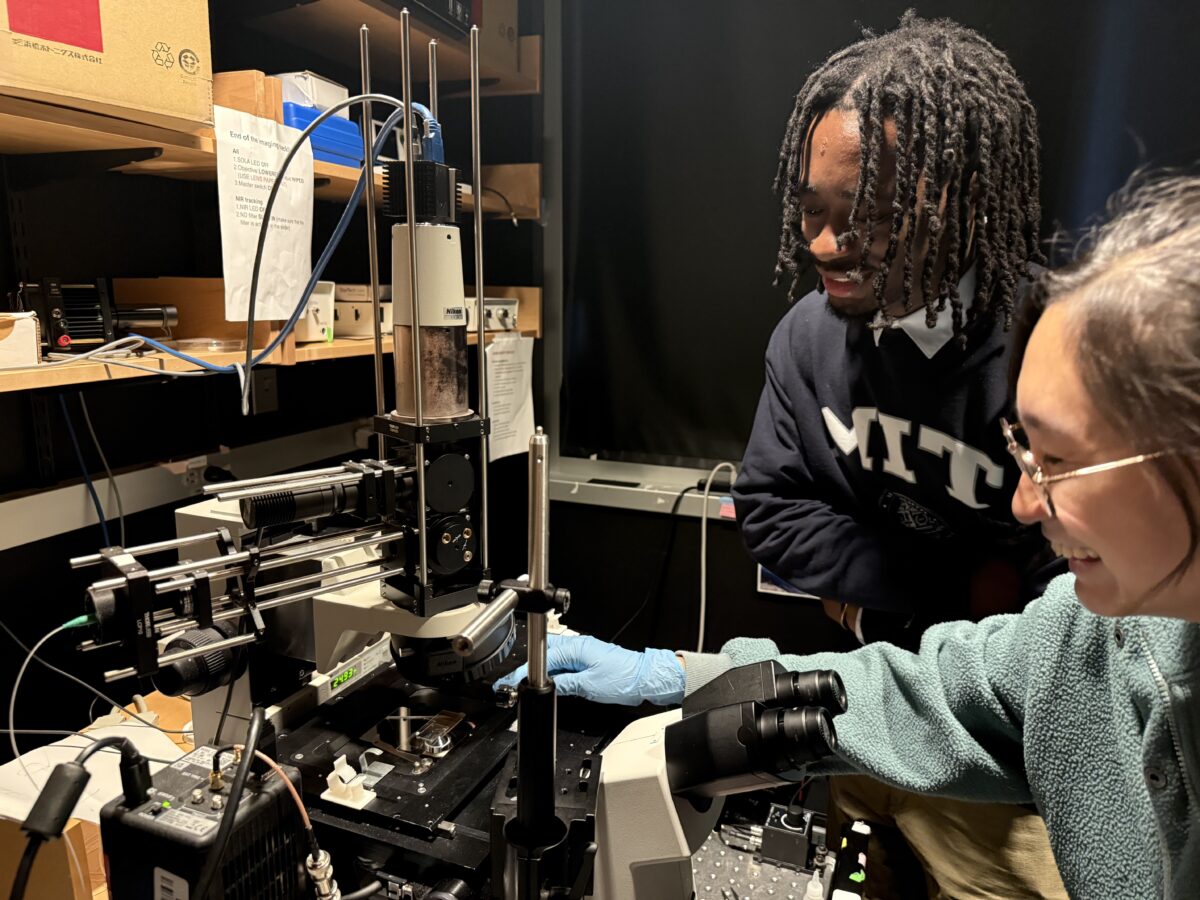 Amir Walton-Irvin (left), and a Ph.D. student in the Flavell Laboratory perform confocal microscopy. (Courtesy of Walton-Irvin)
Walton-Irvin’s path to Flavell’s lab started with the Quantitative Methods Workshop (QMW) at MIT, a seven-day professional development program that the Meyerhoff Scholars Program nominated him for. There, group lunches with faculty and sessions on machine learning in neuroscience, protein folding, and genomic sequencing sparked lasting connections. In particular, a lunch with Flavell led to ongoing conversations that aligned with the Cech opportunity, which is now creating fresh networking opportunities. Walton-Irvin’s leadership roles in the National Society of Black Engineers and UMBC’s chapter of the Institute of Electrical and Electronics Engineers have created further opportunities for networking with peers and mentors.
Shared ambition supports success
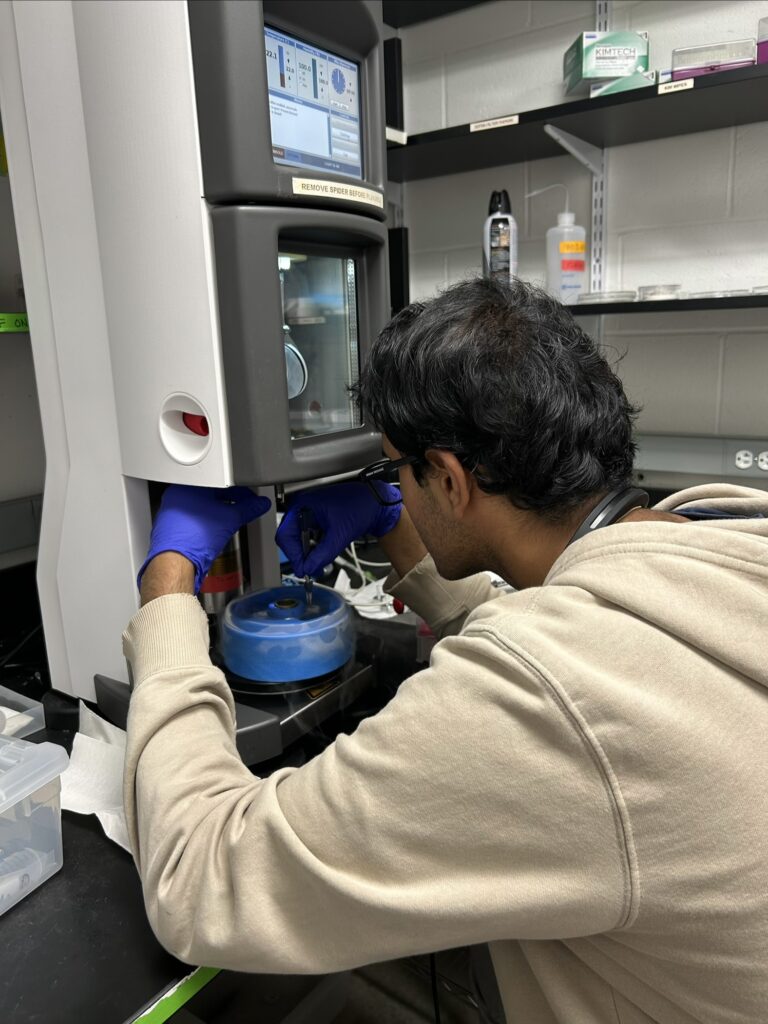 Aryan Srivastava is pursuing virology research
in the Harrison Lab at Harvard.
(Courtesy of Srivastava)
Aryan Srivastava, a dual degree student in biochemistry and molecular biology and bioinformatics and computational biology, is diving into structural virology in Stephen C. Harrison’s lab at Harvard. As president of both the Honors College Council and the Bioinformatics and Computational Biology Association, and a Meyerhoff, HHMI, and U-RISE scholar, Srivastava has built a strong scientific identity at UMBC: In his first year, he began conducting research with Michael Summers, HHMI Investigator and professor of chemistry and biochemistry.
A talk Harrison gave at an HHMI Science Meeting inspired Srivastava; financial support from his scholars programs had made his attendance possible. That encounter combined with his ongoing structural HIV research in the Summers Lab positioned him to pursue the Cech Fellowship. With Harrison, he will further explore the complex ways viruses enter cells that Harrison discussed at the meeting.
“Meeting peers who share your ambitions is one of the most important things an undergraduate can do,” Srivastava says. He also participated in the QMW at MIT, and roles in student organizations have connected him with program directors at federal grantmaking agencies, graduate students, and even Nobel laureates. Those relationships continue to pay dividends in Boston, where he’s reconnected with UMBC alumni like Arjun Kanjarpane ’24, biochemistry and molecular biology, a Ph.D. student at Harvard.
From participation to leadership
Silvi Shah, a Meyerhoff Scholar studying biochemistry and molecular biology, is in Elizabeth Engle’s lab at Boston Children’s Hospital, affiliated with Harvard Medical School and the Broad Institute. Shah’s neuroscience research with Weihong Lin at UMBC, where she is examining the effects of e-cigarette vapor on the olfactory system and behavior in mice, sparked her interest in deepening her mechanistic understanding of the brain by focusing on biomarkers for neurodevelopmental disorders.
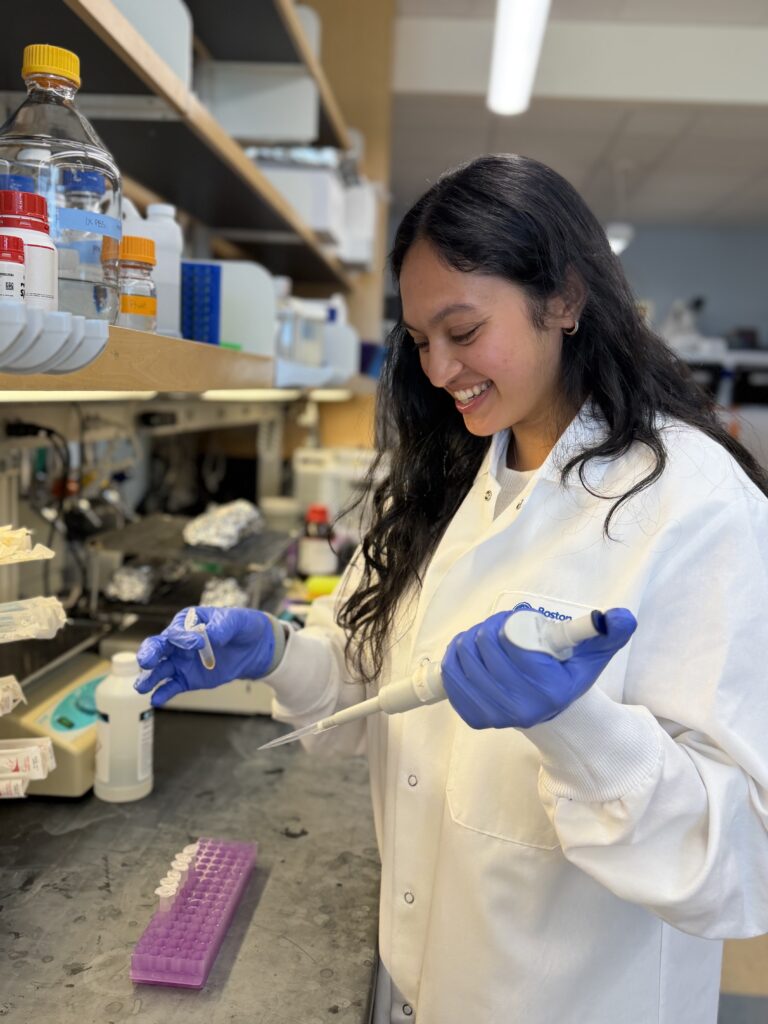 Silvi Shah is conducting neuroscience research with Elizabeth Engle at the Harvard Medical School. (Courtesy of Shah)
Being a member of the Meyerhoff, HHMI, and U-RISE scholars programs, and taking on leadership roles in Meyerhoff and the Phi Delta Epsilon Medical Fraternity, built Shah’s confidence and supplied community and mentorship. She connected with Harvard neuroscientist Beth Stevens at an HHMI Science Meeting, who introduced her to the Engle Lab. Award-winning presentations at the Annual Biomedical Research Conference for Minoritized Students (ABRCMS) and interactions with Nobel laureates, renowned faculty, graduate program directors, and alumni have broadened her perspective, she says.
In Boston, she’s reconnecting with scientists from the HHMI meeting and tapping into the Meyerhoff alumni network. “I am developing advanced research techniques and approaches that I would not have otherwise had the opportunity to learn at this stage of my education. These experiences have strengthened my commitment to an M.D./Ph.D. and a career in pediatric neuroscience research,” she shares.
Meanwhile, Nina-Simone Hunter, a biological sciences major, Meyerhoff, HHMI, and U-RISE Scholar, is at Cornell University in Liz Johnson’s lab. The group’s integration of microbiology, biochemistry, genomics, and molecular biology perfectly matches her interests and future Ph.D. plans, she says.
Preparation for the national stage
Nahom Getachew, a biochemistry and molecular biology major, Meyerhoff and HHMI Scholar, and Ethiopian immigrant, initially doubted research was for him, but opportunities at UMBC changed that, he says. Getachew attended an HHMI Science Meeting and ABRCMS with support from the Meyerhoff program. Squire Booker, a University of Pennsylvania biochemist and HHMI Investigator, spoke at both events, and Getachew asked follow-up questions about his work and the opportunity to contribute—which is now being realized through the Cech Fellows program.
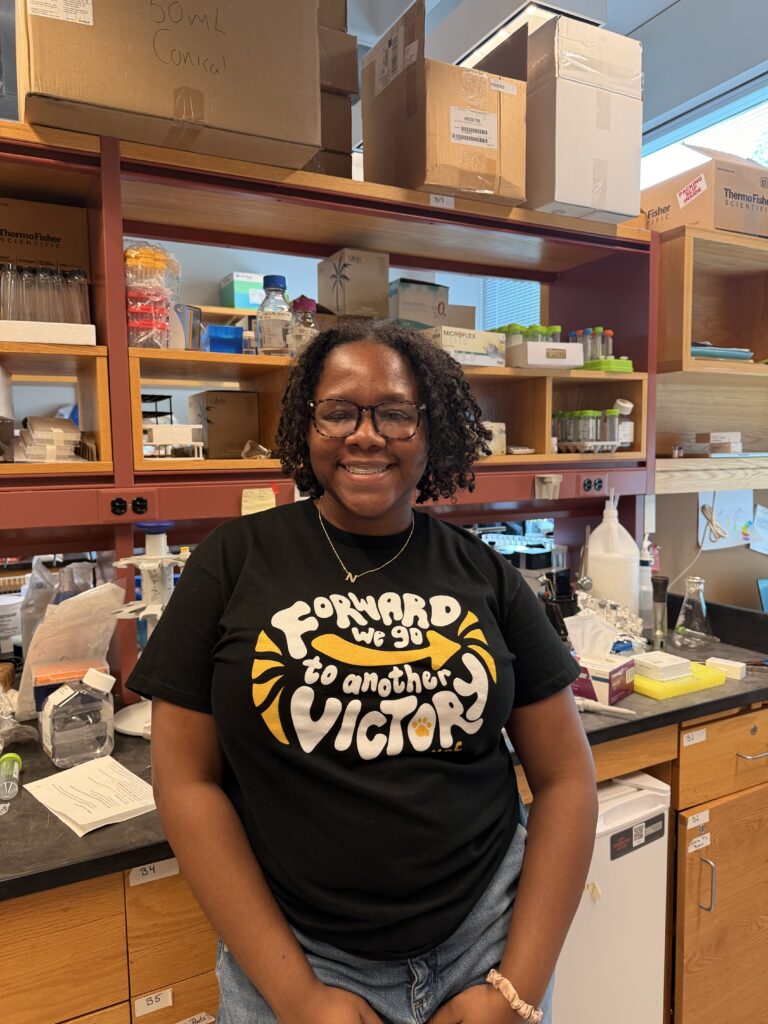 Nina-Simone Hunter is integrating microbiology, biochemistry, genomics, and molecular biology in Liz Johnson’s lab at Cornell. (Courtesy of Hunter)
“Networking is one of the most important skills for finding summer research opportunities,” Getachew notes. In addition to Booker, he connected with a Cech program coordinator at ABRCMS. Getachew prepared for national conferences by practicing communicating his work under Marcin Ptsazek, associate professor of chemistry and biochemistry, at UMBC’s Summer Undergraduate Research Fest and Undergraduate Research and Creative Achievement Day.
Now in the Booker Lab, he’s mastering new techniques in a drug discovery project, presenting results at the Cech Fellows Research Symposium at HHMI’s Janelia Research Campus, and connecting with peers who share similar goals, including fellow UMBC Cech Fellow Djina Awungnjia, a biological sciences major and McNair Scholar. All six UMBC fellows will present at the culminating symposium at HHMI Janelia, further expanding their national network.
As these Cech Fellows advance ambitious projects—from neural imaging analysis and virus structures to drug discovery and neurodevelopment—they carry forward skills, relationships, and confidence cultivated at UMBC through scholars programs, faculty mentorship, student organizations, and more.
Getachew says that the experience has reinforced his pursuit of an M.D./Ph.D. in translational clinical research: “This program has shown me what I am capable of.”
Learn more about UMBC’s premier scholars programs.
]]>
This summer, six rising juniors from UMBC are among the 176 undergraduates nationwide selected for the inaugural cohort of the Howard Hughes Medical Institute’s (HHMI) Cech Fellows program. Named...
https://umbc.edu/stories/six-umbc-students-hhmis-first-cech-fellows-cohort/
https://my3.my.umbc.edu/api/v0/pixel/news/161437/guest@my.umbc.edu/855db29b67be4bceb38339e83e52dbd3/api/pixel
biochemistry-and-molecular-biology
bioinformatics-and-computational-biology
biology
cnms
coeit
community
computer-engineering
csee
feature
honors-college
mcnair-scholars
meyerhoff-scholars
science-and-tech
stories
story
UMBC News & Magazine
https://my3.my.umbc.edu/groups/umbc-news-magazine
https://assets1-my.umbc.edu/system/shared/avatars/groups/000/001/943/24435aa6207c452e7bc15cc74b42c7bb/xsmall.png?1748556657
https://assets1-my.umbc.edu/system/shared/avatars/groups/000/001/943/24435aa6207c452e7bc15cc74b42c7bb/original.png?1748556657
https://assets2-my.umbc.edu/system/shared/avatars/groups/000/001/943/24435aa6207c452e7bc15cc74b42c7bb/xxlarge.png?1748556657
https://assets2-my.umbc.edu/system/shared/avatars/groups/000/001/943/24435aa6207c452e7bc15cc74b42c7bb/xlarge.png?1748556657
https://assets3-my.umbc.edu/system/shared/avatars/groups/000/001/943/24435aa6207c452e7bc15cc74b42c7bb/large.png?1748556657
https://assets1-my.umbc.edu/system/shared/avatars/groups/000/001/943/24435aa6207c452e7bc15cc74b42c7bb/medium.png?1748556657
https://assets2-my.umbc.edu/system/shared/avatars/groups/000/001/943/24435aa6207c452e7bc15cc74b42c7bb/small.png?1748556657
https://assets1-my.umbc.edu/system/shared/avatars/groups/000/001/943/24435aa6207c452e7bc15cc74b42c7bb/xsmall.png?1748556657
https://assets2-my.umbc.edu/system/shared/avatars/groups/000/001/943/24435aa6207c452e7bc15cc74b42c7bb/xxsmall.png?1748556657
UMBC News & Magazine
0
0
false
Tue, 04 Aug 2026 16:06:03 -0400
Tue, 04 Aug 2026 16:06:03 -0400
Four Retrievers selected for this summer’s Key Bridge rebuilding internship
This summer, four UMBC students are getting hands-on experience contributing to efforts to rebuild the Francis Scott Key Bridge over the Patapsco River, which collapsed in March 2024 after a cargo ship collided with one of its supports. This is the second year in a row that the Maryland Transportation Authority has partnered with the Maryland Higher Education Commission to run the program.
Last year, three out of nine students in the program hailed from UMBC. This year, four out of the 10 interns are Retrievers. Mechanical engineering students Bilal Faizullah and Katelyn Prasad and geography and environmental systems students James Keller and Megan (Em) Schumacher ’26 will get the opportunity to learn about topics such as project management, environmental analysis, construction oversight, and community outreach. They will also get the chance to be a part of an iconic infrastructure project for Maryland, an experience that last year’s student interns found particularly meaningful.
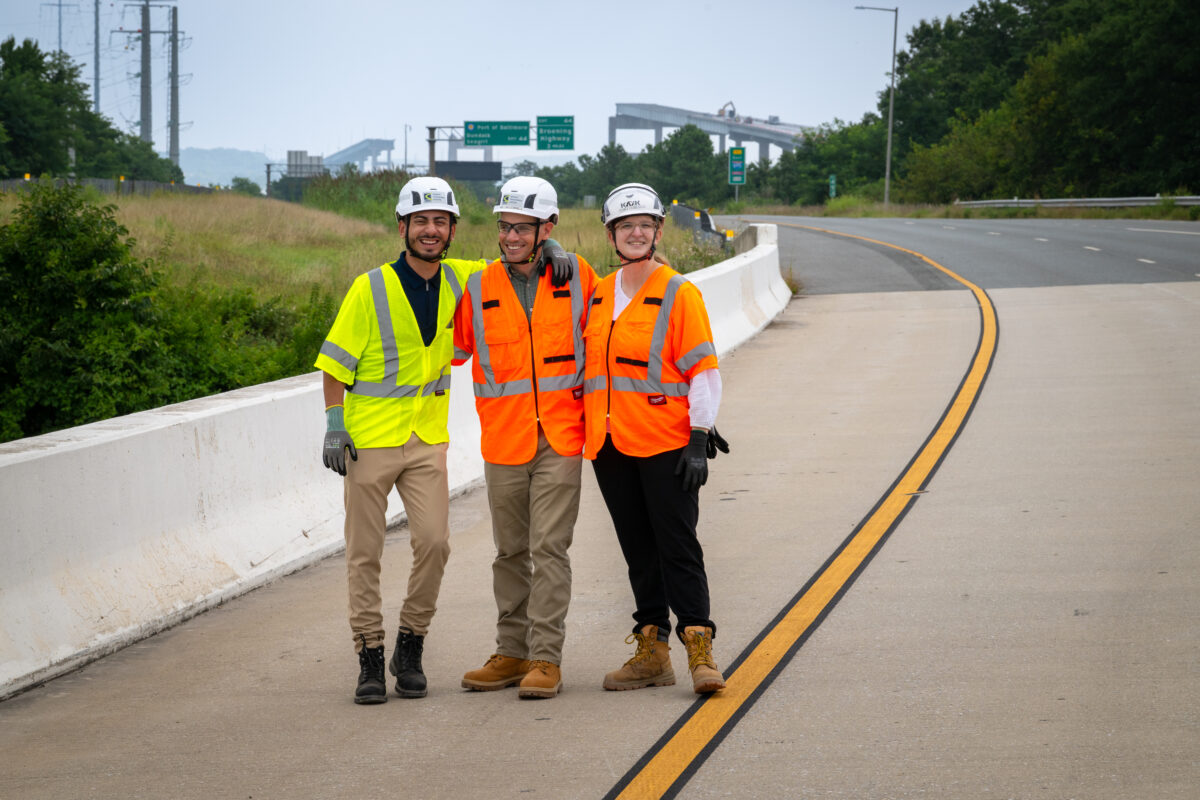 From left to right, Cristian Mena, William McConnell, and Emily DiMarzio pose for a photo near the site of the collapsed Key Bridge. The three worked on the bridge rebuilding project as interns with the Maryland Transportation Authority in summer 2025. (Brad Ziegler/UMBC)
“The Key Bridge Internship Program represents the very best of career-connected learning by giving students the opportunity to contribute to a project that will have a lasting impact on Maryland,” says Christine Routzahn, director of UMBC’s Career Center. “We’re incredibly proud that four UMBC students were selected for this prestigious program. Their selection reflects not only their talent and dedication, but also the strength of the partnerships that make opportunities like this possible. We are grateful to the Maryland Transportation Authority, Maryland Higher Education Commission, and its partners for investing in our students and in the state’s future workforce.”
]]>
This summer, four UMBC students are getting hands-on experience contributing to efforts to rebuild the Francis Scott Key Bridge over the Patapsco River, which collapsed in March 2024 after a cargo...
https://umbc.edu/stories/key-bridge-rebuilding-internship-summer-2026/
https://my3.my.umbc.edu/api/v0/pixel/news/161314/guest@my.umbc.edu/56fca8c62f428a6e6cff12abb2ccee1e/api/pixel
cahss
coeit
ges
impact
internship
meche
science-and-tech
stories
story
UMBC News & Magazine
https://my3.my.umbc.edu/groups/umbc-news-magazine
https://assets1-my.umbc.edu/system/shared/avatars/groups/000/001/943/24435aa6207c452e7bc15cc74b42c7bb/xsmall.png?1748556657
https://assets1-my.umbc.edu/system/shared/avatars/groups/000/001/943/24435aa6207c452e7bc15cc74b42c7bb/original.png?1748556657
https://assets2-my.umbc.edu/system/shared/avatars/groups/000/001/943/24435aa6207c452e7bc15cc74b42c7bb/xxlarge.png?1748556657
https://assets2-my.umbc.edu/system/shared/avatars/groups/000/001/943/24435aa6207c452e7bc15cc74b42c7bb/xlarge.png?1748556657
https://assets3-my.umbc.edu/system/shared/avatars/groups/000/001/943/24435aa6207c452e7bc15cc74b42c7bb/large.png?1748556657
https://assets1-my.umbc.edu/system/shared/avatars/groups/000/001/943/24435aa6207c452e7bc15cc74b42c7bb/medium.png?1748556657
https://assets2-my.umbc.edu/system/shared/avatars/groups/000/001/943/24435aa6207c452e7bc15cc74b42c7bb/small.png?1748556657
https://assets1-my.umbc.edu/system/shared/avatars/groups/000/001/943/24435aa6207c452e7bc15cc74b42c7bb/xsmall.png?1748556657
https://assets2-my.umbc.edu/system/shared/avatars/groups/000/001/943/24435aa6207c452e7bc15cc74b42c7bb/xxsmall.png?1748556657
UMBC News & Magazine
6
0
false
Mon, 27 Jul 2026 13:01:27 -0400
Mon, 27 Jul 2026 13:01:27 -0400
A $1M alumni gift expands graduate student success and inclusive excellence in tech
In 2022, when Pam Offutt ’82, computer science, visited campus 40 years after graduating, she was taken aback by two things: how much the university had changed and how much it had stayed the same.
“While I can still see the bones of what we knew, it is almost unrecognizable,” says Pam, who loved seeing the new buildings and how much the campus had physically grown since she and her husband, Jay Offutt ’82, computer science, graduated. However, Pam was shocked to see that the percentage of women majoring in computer science had not changed much since 1982.
“We were part of the first graduating class in computer science at UMBC. It was brand new,” says Pam. “Back then, 18 percent of the computer science population was women. When I came back to campus and looked it up, the percentage was around 20 percent. And that just doesn’t sit right after 40 years.”
Determined to be part of the solution, Pam and Jay established the Pam and Jay Offutt Graduate Student Endowment in May 2026 with a transformational $1,040,000 gift. This significant investment will expand the Center for Women in Technology (CWIT) model at the graduate level, helping CWIT Scholars pursue advanced degrees at UMBC—a primary driver for moving into senior management and executive leadership roles after graduation.
While Pam’s personal experience has centered on gender equity, the Offutt endowment is designed to support any CWIT Scholar as they pursue graduate education in computing or technology, reflecting CWIT’s broader mission of inclusive excellence.
“We are tremendously grateful for Pam and Jay’s vision, which supports our commitment to inclusive excellence,” says Jeanne van Briesen, dean of the College of Engineering and Information Technology. “The endowment will help strengthen the pipeline of talent prepared for leadership in computing and technology careers.”
UMBC’s CWIT program is committed to developing community members who are prepared and empowered to be change agents in creating technology workplaces that are diverse, equitable, and inclusive. The program encourages the participation and success of all students, especially those from underrepresented groups, with a nurturing and challenging community, transformative leadership experiences, and professional development opportunities.
 CWIT Scholars, Cyber Scholars, and affiliates before UMBC’s spring 2026 Commencement ceremony. (Cindy Greenwood, M.P.S. ’21/UMBC)
“The CWIT office is buzzing with happy plans for recruiting and supporting the first cohort of Offutt Scholars this fall,” says Carolyn Seaman, director of CWIT. “We are grateful for this opportunity to support so many more of our students in taking the next step toward being the tech leaders we know they can be.”
Going beyond the gift
Pam and Jay knew the problem they wanted to solve, but they took time to discuss the issue with Seaman, van Briesen, and Kim Robinson, director of major gifts in the Office of Institutional Advancement, to come up with a plan that felt like it could make a difference.
“Maybe some people find value in giving money for the sake of giving money, but if it’s not going to solve a problem, what’s the point?”
Pam Offutt ’82
computer science
Simply funding scholarships wasn’t enough. Pam and Jay realized that in order to truly make a difference, they needed to find a way to support students throughout their academic journey. To the Offutts, the solution was simple—mentoring and leadership development.
Offutt Scholars will receive a financial award for two years to defray school expenses, participate in leadership development, mentor undergraduate CWIT Scholars, and be mentored by more senior alumni with similar professional interests. The endowment will also support staff and programming for Offutt Scholars through the CWIT Program. This investment extends beyond financial support to build a connected community across undergraduate students, graduate students, and professional mentors.
“What stands out to me about Pam and Jay’s vision is that they are not just investing in financial support for students—they are investing in a model that builds community, mentorship, and leadership that will shape how our students persist, succeed, and lead,” says van Briesen. “They asked us to think beyond access and to focus on what it takes for students to grow into leaders in the computing field.”
 CWIT Scholars alumni, UMBC alumni, and industry partners come together for Fall Career Networking, a signature CWIT event. Many featured alumni also mentor in CWIT’s industry mentor program. (Jess Myers/UMBC)
Pam believes deeply in mentorship. She served on the UMBC Alumni Association Board of Directors from 1998 to 2004, and, most recently, served as a CWIT industry mentor.
“What makes this gift so meaningful is the journey behind it,” says Robinson, who assisted in cultivating the relationship with the Offutts throughout their engagement with UMBC. “Pam has been engaged with UMBC in so many ways—through the Alumni Association Board, as a CWIT industry mentor, at career fairs—and that connection is exactly what led her and Jay to see this gap and want to help close it.”
For Pam and Jay, it comes back to the experiences they had as undergraduate students at UMBC and how their careers unfolded after graduation.
Computer science pioneers
Pam and Jay both started UMBC as math majors—computer science was not yet an option—and met in Calculus 101. Boy meets girl. Boy and girl both become teaching assistants. Boy and girl form a close bond by terrorizing professors.
“As TAs, Jay and I both had keys to the same office and we used to torture the same professors that were right across the hall from us, flipping bottle caps and stuff into their room while they were teaching,” says Pam. “So, that got the door slammed on us at least a couple of times.”
It’s the classic UMBC love story.
One semester before Pam and Jay were set to graduate, UMBC launched the B.S. in computer science. Knowing what it could mean for their job prospects and earning potential, both switched majors.
“I took a couple of extra classes and finished the B.S.,” says Pam.
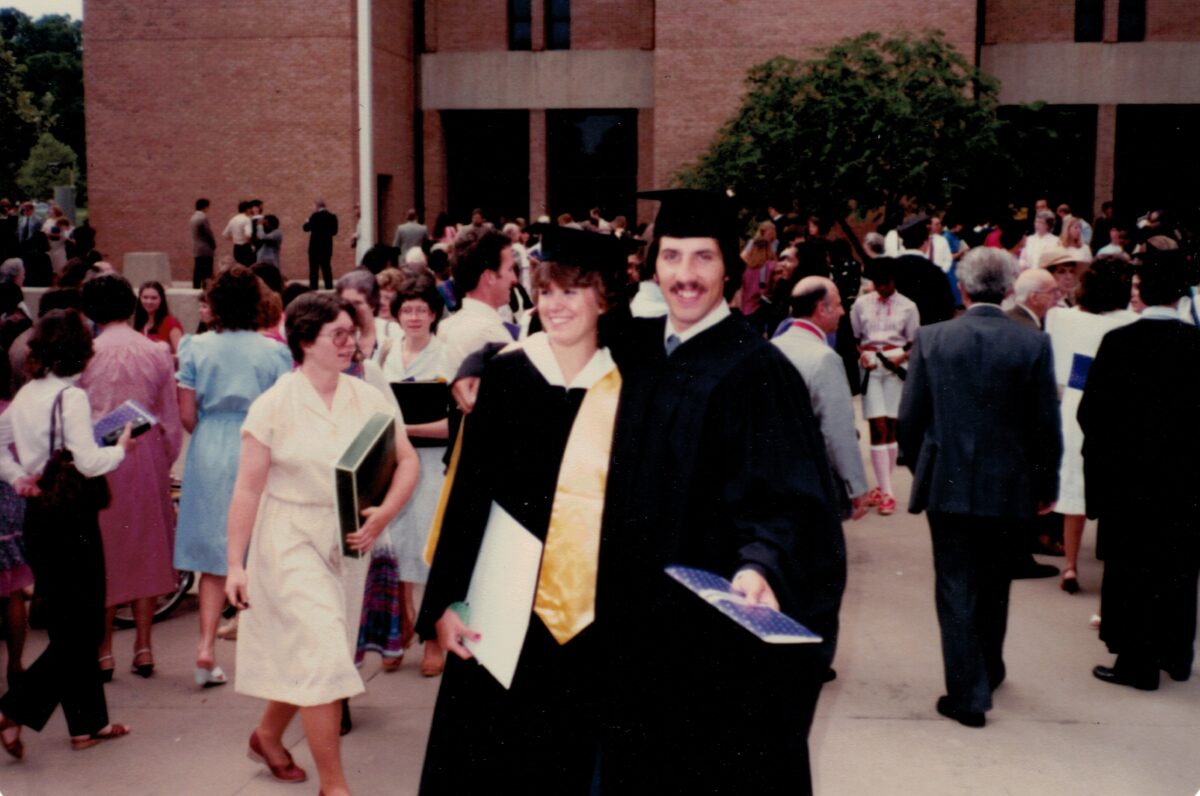
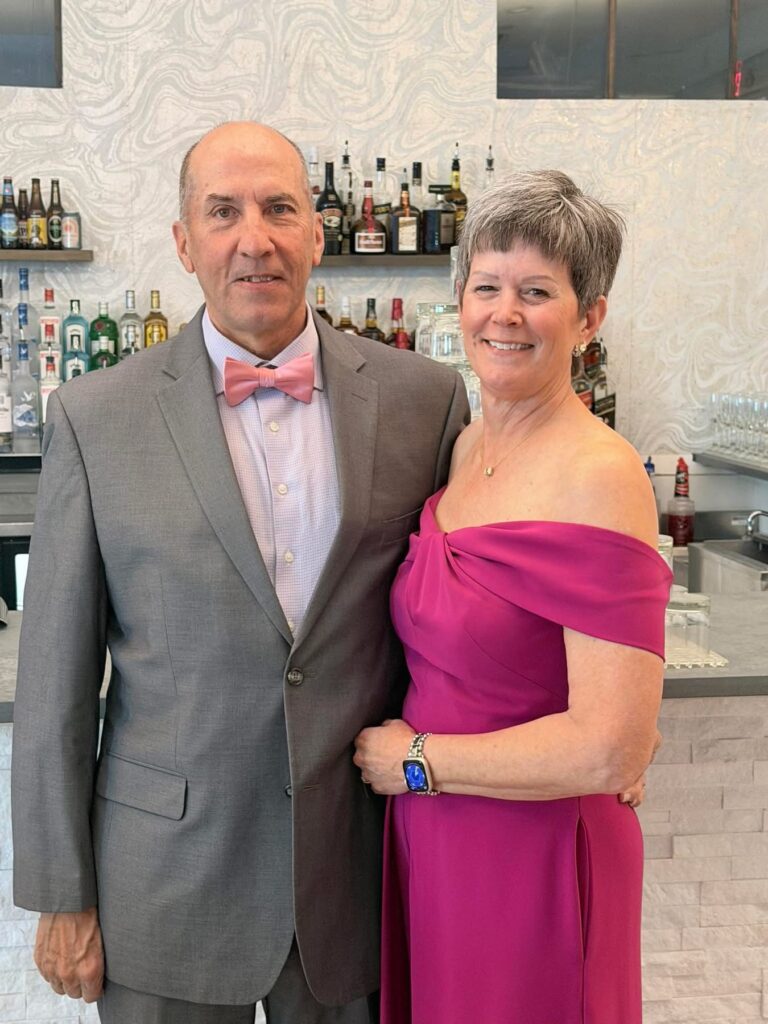 Left: Pam and Jay after their 1982 UMBC graduation. Right: The Offutts today. (Photos courtesy Pam and Jay Offutt)
After UMBC, Pam and Jay went on to Loyola University and earned master’s degrees.
In 1988, Jay founded Offutt Associates, which later folded into Interface and Control Systems, Inc. (ICS). Serving public and private sectors, ICS provided end-to-end autonomous command and control software for satellites, operational centers, testing setups, and digital business systems. Notably, ICS technology was integrated into major aerospace and defense initiatives, including NASA’s Constellation project and the Department of Defense’s TAC-SAT tactical satellite program. Jay and his partners sold ICS to SRA International in 2008, and Jay retired a few years later.
Meanwhile, Pam took on management and leadership roles in various companies, including COO at Edaptive Systems, LLC (acquired by ManTech) and CEO at MDMeta. In 2009, Pam and fellow UMBC alumnus John duClos ’90, information systems, founded Bellese Technologies, which engineers large-scale, human-centered digital products and data solutions that improve the quality, equity, and efficiency of public health systems. As CEO, Pam made a concerted effort to hire and promote women—successfully building a workforce that was 25 to 30 percent female. It was a stark contrast to the male-dominated workspaces she had experienced throughout her career, though still not the parity she envisioned. The problem, however, was not in the motivation, but in the small pool of potential female hires.
“You can’t find women to hire because women aren’t going into tech,” says Pam. “So it’s a difficult thing.”
Pam sold the company in 2022, and now serves on its Board of Directors. Around the same time, she had that inspirational visit to UMBC where she realized that she and Jay could be part of the solution, leading to the establishment of the Pam and Jay Offutt Graduate Student Endowment.
“I want to see that needle move,” says Pam.
]]>
In 2022, when Pam Offutt ’82, computer science, visited campus 40 years after graduating, she was taken aback by two things: how much the university had changed and how much it had stayed the...
https://umbc.edu/stories/inclusive-excellence-in-tech/
https://my3.my.umbc.edu/api/v0/pixel/news/161186/guest@my.umbc.edu/df6e441b7cb09e030249aa065efa7ab6/api/pixel
alumni
coeit
cwit
impact
stories
story
UMBC News & Magazine
https://my3.my.umbc.edu/groups/umbc-news-magazine
https://assets1-my.umbc.edu/system/shared/avatars/groups/000/001/943/24435aa6207c452e7bc15cc74b42c7bb/xsmall.png?1748556657
https://assets1-my.umbc.edu/system/shared/avatars/groups/000/001/943/24435aa6207c452e7bc15cc74b42c7bb/original.png?1748556657
https://assets2-my.umbc.edu/system/shared/avatars/groups/000/001/943/24435aa6207c452e7bc15cc74b42c7bb/xxlarge.png?1748556657
https://assets2-my.umbc.edu/system/shared/avatars/groups/000/001/943/24435aa6207c452e7bc15cc74b42c7bb/xlarge.png?1748556657
https://assets3-my.umbc.edu/system/shared/avatars/groups/000/001/943/24435aa6207c452e7bc15cc74b42c7bb/large.png?1748556657
https://assets1-my.umbc.edu/system/shared/avatars/groups/000/001/943/24435aa6207c452e7bc15cc74b42c7bb/medium.png?1748556657
https://assets2-my.umbc.edu/system/shared/avatars/groups/000/001/943/24435aa6207c452e7bc15cc74b42c7bb/small.png?1748556657
https://assets1-my.umbc.edu/system/shared/avatars/groups/000/001/943/24435aa6207c452e7bc15cc74b42c7bb/xsmall.png?1748556657
https://assets2-my.umbc.edu/system/shared/avatars/groups/000/001/943/24435aa6207c452e7bc15cc74b42c7bb/xxsmall.png?1748556657
UMBC News & Magazine
18
0
false
Mon, 20 Jul 2026 08:09:08 -0400
Mon, 20 Jul 2026 08:09:08 -0400
UMBC launching M.S. in AI program this fall
AI is poised to reshape nearly every sector of the economy in the coming years and UMBC is adapting its curricular offerings in a variety of ways. One specific change: The university is launching a new master’s degree program to prepare students to lead the AI transformation. The new M.S. in AI program, designed for students with some computing background, offers a focused, rigorous pathway into AI research, development, and deployment.
“Within the state of Maryland and our region, there are a number of national labs and industries that are really focused on AI. This program is responding to workforce demands and really preparing students for the world of AI,” says Dmitri Perkins, a professor and director of graduate programs in the Department of Computer Science and Electrical Engineering at UMBC.
The first cohort of students will start classes this coming fall. The new program joins these existing UMBC AI degrees: B.S. in computer science with a specialized track in AI/machine learning and M.S. in information systems with a specialized track in AI.
]]>
AI is poised to reshape nearly every sector of the economy in the coming years and UMBC is adapting its curricular offerings in a variety of ways. One specific change: The university is launching...
https://umbc.edu/stories/umbc-ms-in-ai/
https://my3.my.umbc.edu/api/v0/pixel/news/161058/guest@my.umbc.edu/4738a2c7a81b14963076d8651da1690c/api/pixel
ai
coeit
csee
science-and-tech
stories
story
UMBC News & Magazine
https://my3.my.umbc.edu/groups/umbc-news-magazine
https://assets1-my.umbc.edu/system/shared/avatars/groups/000/001/943/24435aa6207c452e7bc15cc74b42c7bb/xsmall.png?1748556657
https://assets1-my.umbc.edu/system/shared/avatars/groups/000/001/943/24435aa6207c452e7bc15cc74b42c7bb/original.png?1748556657
https://assets2-my.umbc.edu/system/shared/avatars/groups/000/001/943/24435aa6207c452e7bc15cc74b42c7bb/xxlarge.png?1748556657
https://assets2-my.umbc.edu/system/shared/avatars/groups/000/001/943/24435aa6207c452e7bc15cc74b42c7bb/xlarge.png?1748556657
https://assets3-my.umbc.edu/system/shared/avatars/groups/000/001/943/24435aa6207c452e7bc15cc74b42c7bb/large.png?1748556657
https://assets1-my.umbc.edu/system/shared/avatars/groups/000/001/943/24435aa6207c452e7bc15cc74b42c7bb/medium.png?1748556657
https://assets2-my.umbc.edu/system/shared/avatars/groups/000/001/943/24435aa6207c452e7bc15cc74b42c7bb/small.png?1748556657
https://assets1-my.umbc.edu/system/shared/avatars/groups/000/001/943/24435aa6207c452e7bc15cc74b42c7bb/xsmall.png?1748556657
https://assets2-my.umbc.edu/system/shared/avatars/groups/000/001/943/24435aa6207c452e7bc15cc74b42c7bb/xxsmall.png?1748556657
UMBC News & Magazine
0
0
false
Fri, 10 Jul 2026 14:41:38 -0400
UMBC supports promising internal research and creative endeavors with 2026 – 27 START, SURFF awards
UMBC’s Division of Research and Creative Achievement recently announced the recipients of the 2027 Strategic Awards for Research Transitions (START) and the 2026 Summer Research Faculty Fellowship (SURFF) awards, two of the university’s primary, internal funding opportunities that support faculty-led research and creative work.
The latest awards cover diverse projects, including exploring the genetic origins of a neurologic disorder in Siberian huskies, securing smartphones against voice scams, building novel animated sculpture, and exploring the legacy of Argentine-born American cellist Ennio Bolognini.
In total for fiscal year 2027, 12 faculty members and researchers across UMBC’s three colleges and the university’s research centers were awarded up to $25,000 in START funding to advance their research and creative projects. The awards help recipients build research momentum early in their careers and hone their research pitches to pursue external funding. They can also help faculty pivot to new fields of inquiry later in their careers.
For summer 2026, 21 faculty members received a SURFF award, which supports non-tenured, tenure-track faculty members in pursuing research and creative achievement projects during the summer. Recipients are awarded $8,000 in funding.
“Each year when we review applications, we find we have so many faculty who are being very creative and really pushing the edge of what’s known in their various disciplines,” says Don Engel, associate vice president for strategic research initiatives at UMBC, who coordinates the faculty committee that reviews prospective awards. “The proposals really illustrate the breadth of achievement that goes on across the university.”
]]>
UMBC’s Division of Research and Creative Achievement recently announced the recipients of the 2027 Strategic Awards for Research Transitions (START) and the 2026 Summer Research Faculty Fellowship...
https://umbc.edu/stories/umbc-2026-27-start-surff-awards/
https://my3.my.umbc.edu/api/v0/pixel/news/160970/guest@my.umbc.edu/3135e22beb3f1d1bead291c5198c4080/api/pixel
cahss
cnms
coeit
discovery
research
stories
story
UMBC News & Magazine
https://my3.my.umbc.edu/groups/umbc-news-magazine
https://assets1-my.umbc.edu/system/shared/avatars/groups/000/001/943/24435aa6207c452e7bc15cc74b42c7bb/xsmall.png?1748556657
https://assets1-my.umbc.edu/system/shared/avatars/groups/000/001/943/24435aa6207c452e7bc15cc74b42c7bb/original.png?1748556657
https://assets2-my.umbc.edu/system/shared/avatars/groups/000/001/943/24435aa6207c452e7bc15cc74b42c7bb/xxlarge.png?1748556657
https://assets2-my.umbc.edu/system/shared/avatars/groups/000/001/943/24435aa6207c452e7bc15cc74b42c7bb/xlarge.png?1748556657
https://assets3-my.umbc.edu/system/shared/avatars/groups/000/001/943/24435aa6207c452e7bc15cc74b42c7bb/large.png?1748556657
https://assets1-my.umbc.edu/system/shared/avatars/groups/000/001/943/24435aa6207c452e7bc15cc74b42c7bb/medium.png?1748556657
https://assets2-my.umbc.edu/system/shared/avatars/groups/000/001/943/24435aa6207c452e7bc15cc74b42c7bb/small.png?1748556657
https://assets1-my.umbc.edu/system/shared/avatars/groups/000/001/943/24435aa6207c452e7bc15cc74b42c7bb/xsmall.png?1748556657
https://assets2-my.umbc.edu/system/shared/avatars/groups/000/001/943/24435aa6207c452e7bc15cc74b42c7bb/xxsmall.png?1748556657
UMBC News & Magazine
0
0
false
Mon, 06 Jul 2026 15:17:16 -0400
Baltimore City hometown recruits shine bright
The Best of Baltimore Grant, a UMBC initiative started in fall 2025, is changing how students from Baltimore City imagine college: not as a distant possibility overshadowed by debt, but as a tangible, financially supported path forward, and right in their backyard.
For first-year student Essence Jones, who went to Baltimore City College, a high school in east Baltimore, “that financial freedom really pushed me towards UMBC,” she says, describing the moment she learned the grant would cover what other aid could not—including room and board. A double major in biological sciences and psychology, Jones is already thinking ahead to a future in forensics, drawn by what she calls “the puzzle problem-solving aspect” of analyzing crime scenes. But her present focus is simpler: adjusting, learning, and finding her place and people.
Embracing the ‘B’ in UMBC
The Best of Baltimore grant grew out of President Valerie Sheares Ashby’s desire to see a greater number of Baltimore City high school students become Retrievers. And the grant is just one part of a bigger initiative, says Yvette Mozie-Ross ’88, vice provost for enrollment management and planning: “This year, we have been more intentional with our outreach efforts—partnering with community based organizations such as CollegeBound and College Track to continue to help us get the word out about the many benefits of a UMBC education and specifically how the Best of Baltimore grant can make a UMBC education attainable for all Baltimore City residents.”
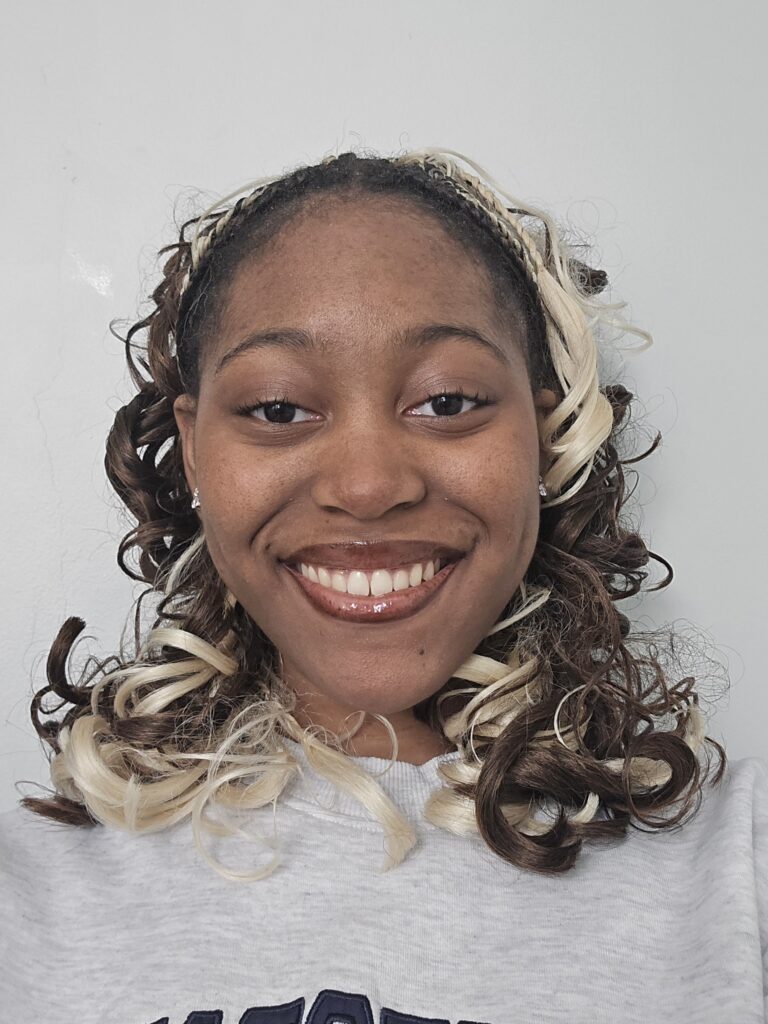 Essence Jones
The grant is designed to cover remaining billed costs after federal grants, subsidized loans, and other scholarships are applied—closing gaps that often prevent students with demonstrated financial need from enrolling.
Early results suggest momentum. In its first year, the program offered awards to nearly 140 students, with dozens ultimately enrolling and receiving grants ranging from $1,100 to $22,000. Just as importantly, Mozie-Ross notes, the early promise of financial support helped families make confident decisions about college. And the increased outreach methods are paying off—applications from city residents grew by 20 percent for fall 2026.
UMBC, Jones says, meets her at her pace and provides lots of student support. She points to spaces like the Learning Collaboratory, where students gather to work through complex chemistry problems together. “You’re both teaching and learning,” she explains. “That helps solidify the information.”
That sense of shared effort—of not struggling alone—has defined her early college experience. Whether studying with friends from her STEM courses or working quietly on the sixth floor of the library, Jones has found community. Her path to science was shaped before UMBC. At Baltimore City College, she was inspired by teachers who looked like her—women of color leading classrooms in biology and chemistry. “Being able to see them in that space… really helped me enjoy science,” she says. Now, she hopes to carry that sense of belonging forward.
Support fosters success
Deylon Moy Joseph, a mechanical engineering first-year student and another Best of Baltimore awardee, echoes Jones’ observations about support and community at UMBC. Originally from Trinidad and Tobago, he arrived in the United States in 2022 and enrolled at Mergenthaler Vocational-Technical High School—a mile north of Jones’ school. From the start, financial reality shaped his college search. “It was necessary for me to get some type of college funding,” he says. “I didn’t want to be stuck with really heavy student loans.”
At UMBC, he found a layered support system: the prestigious Meyerhoff Scholars Program, and unexpectedly, the Best of Baltimore grant. “We didn’t have to apply, but when we were accepted to UMBC, we received letters saying, ‘Congratulations,’” he recalls. “It was amazing.”
For Moy Joseph, that confidence extends into the classroom. He describes his technical coursework as demanding but manageable—especially with the right support. He credits faculty like Joseph Washington ’97, mechanical engineering, an assistant teaching professor whose open-door approach allows students to work through complex problems in real time. “Having the professor right there to give pointers… it really made retention much easier,” he says.
Outside class, in spaces like the Retriever Learning Center, students gather around whiteboards filled with equations, working through concepts together. “It’s so easy to study with someone,” Moy Joseph says. “And it’s satisfying to help people, too.”
That reciprocity—learning, then teaching—is central to many Retrievers’ experiences. It reflects a broader culture at UMBC, one that merges academic rigor with connection, starting in our very own neighborhood.
]]>
The Best of Baltimore Grant, a UMBC initiative started in fall 2025, is changing how students from Baltimore City imagine college: not as a distant possibility overshadowed by debt, but as a...
https://umbc.edu/stories/baltimore-city-recruits-shine-bright/
https://my3.my.umbc.edu/api/v0/pixel/news/160819/guest@my.umbc.edu/f96cc653dbc18a3b7081fca1134b9df1/api/pixel
baltimore-city
cahss
cnms
coeit
impact
spring-2026
stories
story
UMBC News & Magazine
https://my3.my.umbc.edu/groups/umbc-news-magazine
https://assets1-my.umbc.edu/system/shared/avatars/groups/000/001/943/24435aa6207c452e7bc15cc74b42c7bb/xsmall.png?1748556657
https://assets1-my.umbc.edu/system/shared/avatars/groups/000/001/943/24435aa6207c452e7bc15cc74b42c7bb/original.png?1748556657
https://assets2-my.umbc.edu/system/shared/avatars/groups/000/001/943/24435aa6207c452e7bc15cc74b42c7bb/xxlarge.png?1748556657
https://assets2-my.umbc.edu/system/shared/avatars/groups/000/001/943/24435aa6207c452e7bc15cc74b42c7bb/xlarge.png?1748556657
https://assets3-my.umbc.edu/system/shared/avatars/groups/000/001/943/24435aa6207c452e7bc15cc74b42c7bb/large.png?1748556657
https://assets1-my.umbc.edu/system/shared/avatars/groups/000/001/943/24435aa6207c452e7bc15cc74b42c7bb/medium.png?1748556657
https://assets2-my.umbc.edu/system/shared/avatars/groups/000/001/943/24435aa6207c452e7bc15cc74b42c7bb/small.png?1748556657
https://assets1-my.umbc.edu/system/shared/avatars/groups/000/001/943/24435aa6207c452e7bc15cc74b42c7bb/xsmall.png?1748556657
https://assets2-my.umbc.edu/system/shared/avatars/groups/000/001/943/24435aa6207c452e7bc15cc74b42c7bb/xxsmall.png?1748556657
UMBC News & Magazine
0
0
false
Tue, 23 Jun 2026 16:18:32 -0400
Tue, 23 Jun 2026 16:18:32 -0400
The Class of 2026 found communities to help tackle big challenges
If you surveyed UMBC’s Class of 2026 and generated a word cloud, the word “community” would instantly dominate the screen. You might be tempted to dismiss it as a buzzword until you see how many graduating students highlight the communities they found and the communities they made as their defining experience of being a student at UMBC. “I can be myself here and I’m not going to be judged. Community is truly the word to describe UMBC,” says Shawn Bearam, Jr., computer science.
Who are the graduates of the Class of 2026?
It’s safe to say they contain multitudes: There’s an engineering management graduate student from India who devoted time to helping Marylanders complete their taxes; an English and political science student who volunteered as an educational and workforce advocate for Baltimore City youth; a mathematician—and Survivor hopeful—teaching game theory and disease modeling to students in Rwanda while also helping them understand the U.S. college admissions process.
What do they have in common? If you meet a Retriever from the Class of 2026, you will walk away from the encounter feeling hopeful for the future. These leaders and educators and entertainers and researchers are making room in the world for each person’s voice to be heard and heeded. We can’t wait to see where they take it from here!
“It’s the people”
If community is the key takeaway from the Class of 2026, where are students finding their niche groups? Vunnathi Ankem, psychology, saw a way to bridge multiple areas together. As a resident assistant, a researcher, and a multifaceted student leader, she has spent her four years both building community and studying its impact on the human experience. From hosting public-service retreats in Baltimore to interviewing members of the South Asian diaspora for her thesis, Ankem’s work bridges the gap between community- centered research and heartfelt advocacy.
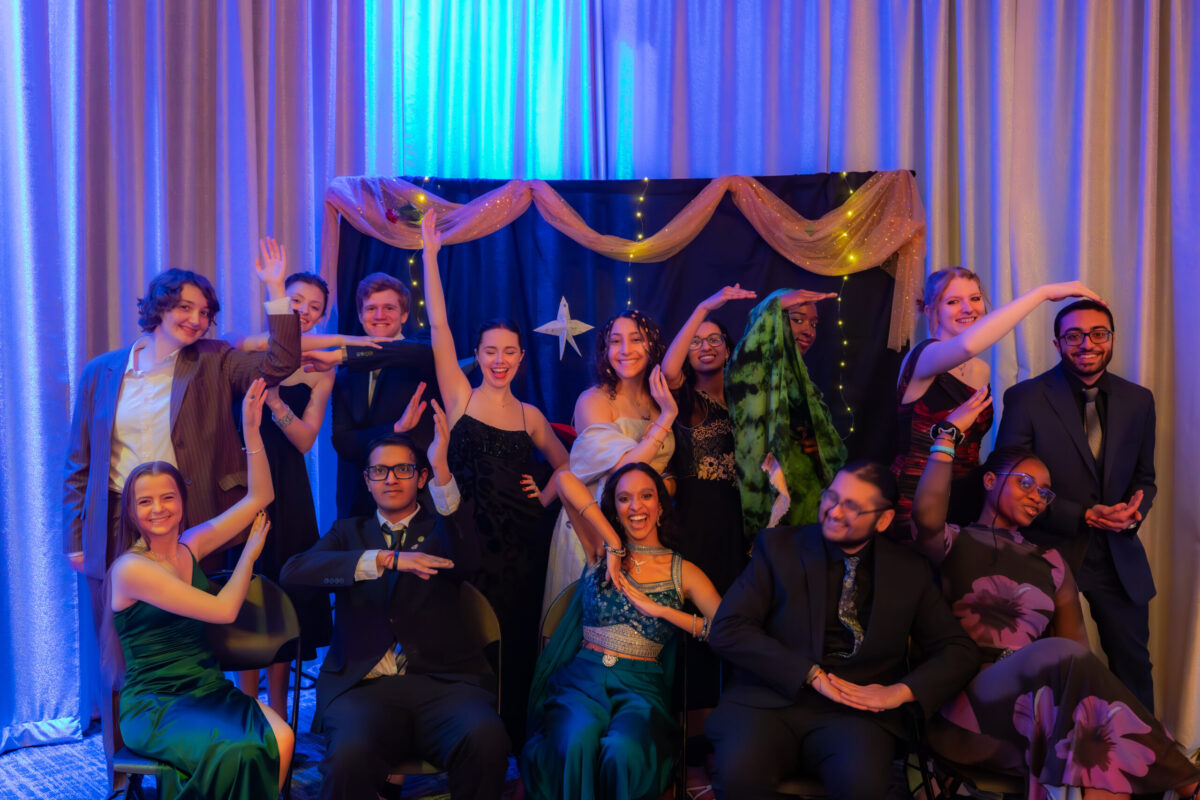
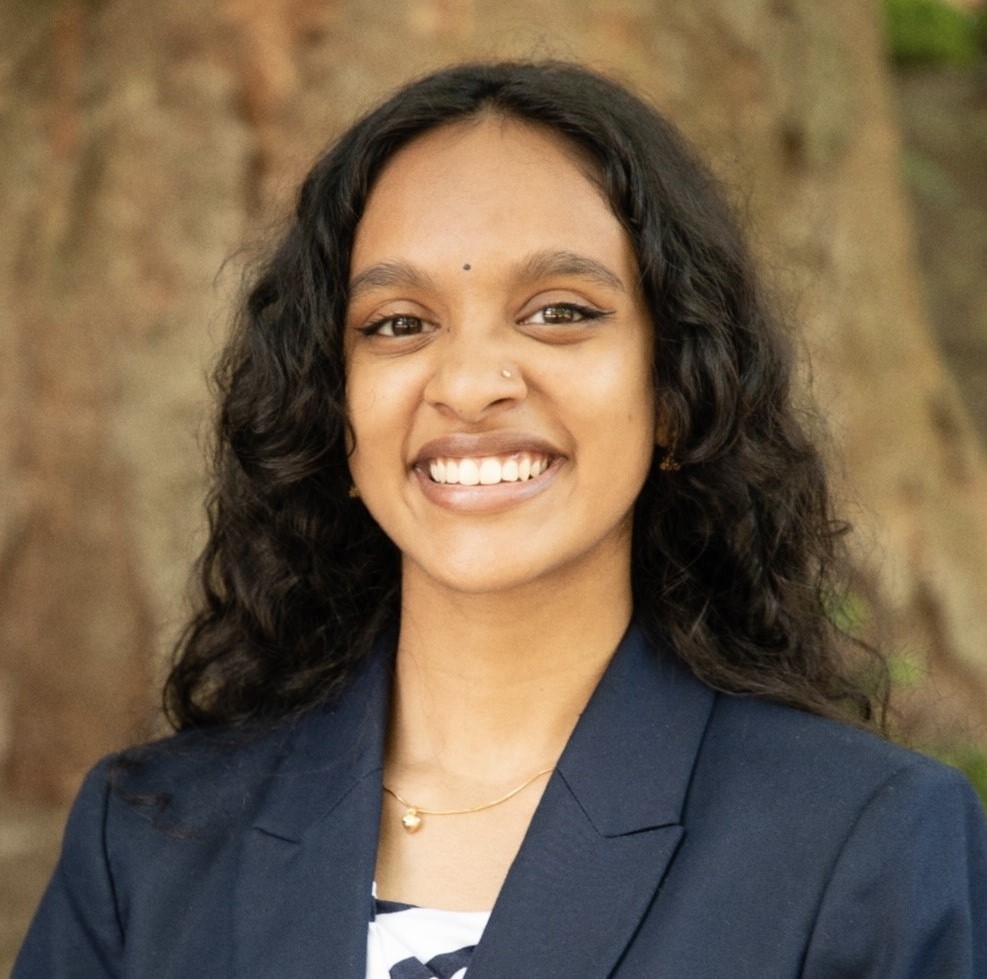
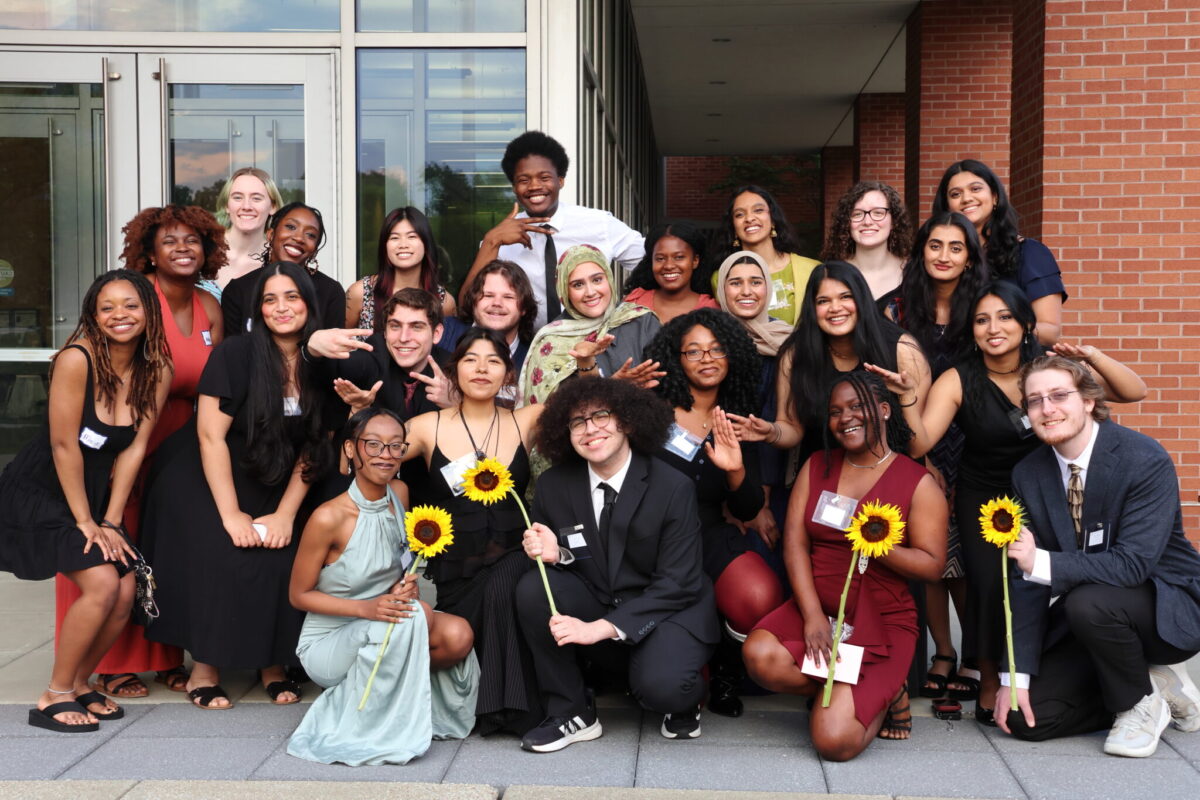 Vunnathi Ankem, psychology, looks forward to returning to her classical dancing roots as she heads to India for a nine-month research project through a Fulbright Scholarship.
As a newly awarded Fulbright Scholar to India, Ankem leaves behind a campus made stronger by her leadership and a personal roadmap focused on healing, mentorship, and global research. “When I think about what I’m proud of, it’s not the awards, it’s the people,” says Ankem. “I remember all the people who were there when I needed support—those people meant more to me than any accomplishment. My advice would be to think about what you’ll look back on. It will most likely be community—the people who were there when you weren’t at your best.”
Bearam in computer science was not content to confine himself to one campus community. He puts it plainly: “I found communities where it seemed that everyone was having fun together, and I wanted to be a part of that,” he says. He had roles with the events staff in Athletics, at UMBC’s research and technology park, bwtech@UMBC, and working as a lead
office assistant for the vice president of student affairs. If that wasn’t enough, he also served as a lead resident assistant and a first-year ambassador for the Student Government Association.
“I started to see that I was able to learn so much here,” says Bearam. “I saw people who looked like me in different spaces, and I knew they would be able to understand me, so I wanted to get involved.”


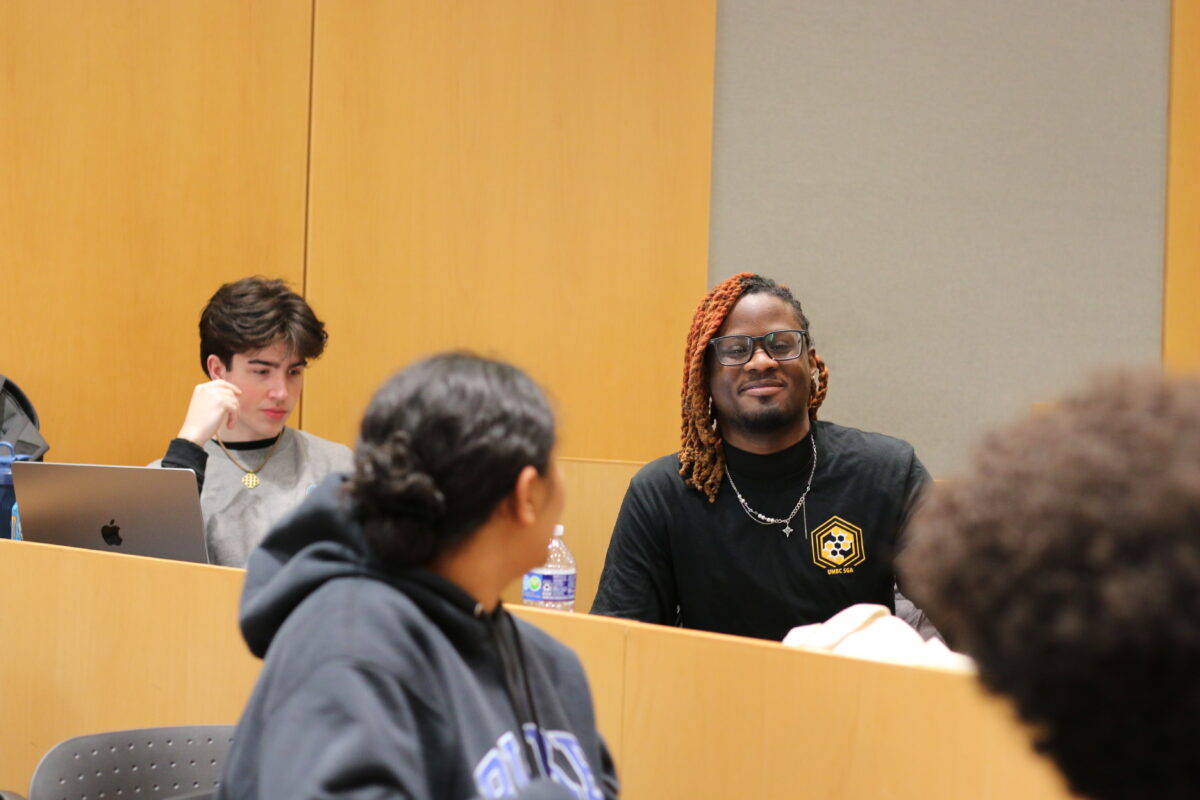 Using the skills he gained in his computer science major, Shawn Bearam, Jr., computer science, will be working as a project analyst for the State of Maryland within the Division of Information and Technology.
Rileigh Mansfield, mathematics, also made it her goal to build connections across a variety of UMBC communities. As a Meyerhoff Scholar, she served as a peer advisor and conducted research with multiple math professors, “but honestly,” she shares, “some of my most meaningful involvement has been more informal. Last spring, I was having a tough semester when I got invited to join a group from the math lounge to play the board game Catan on Tuesdays. It became a little community and something to look forward to every week—a much-needed step back from school and work. I actually play in competitive Catan tournaments now, and I’m even hosting an official tournament this spring through the math honors society.”
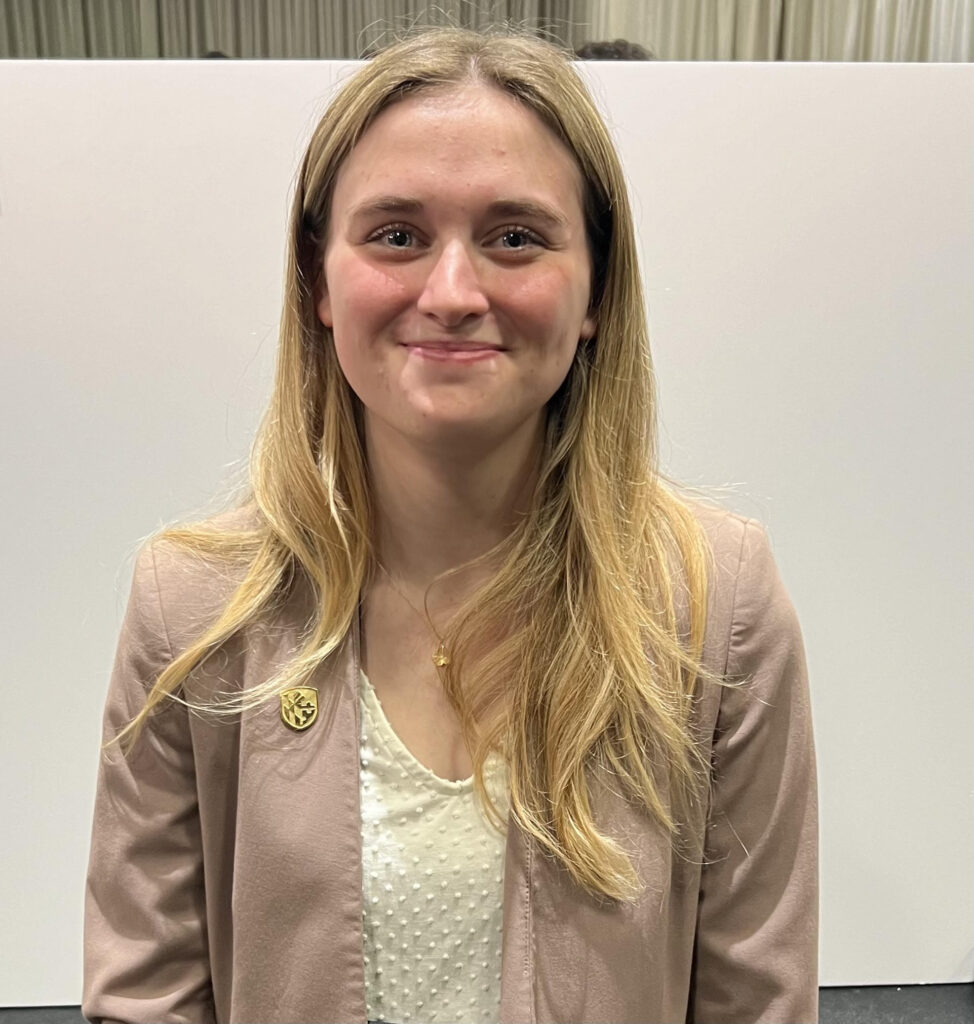
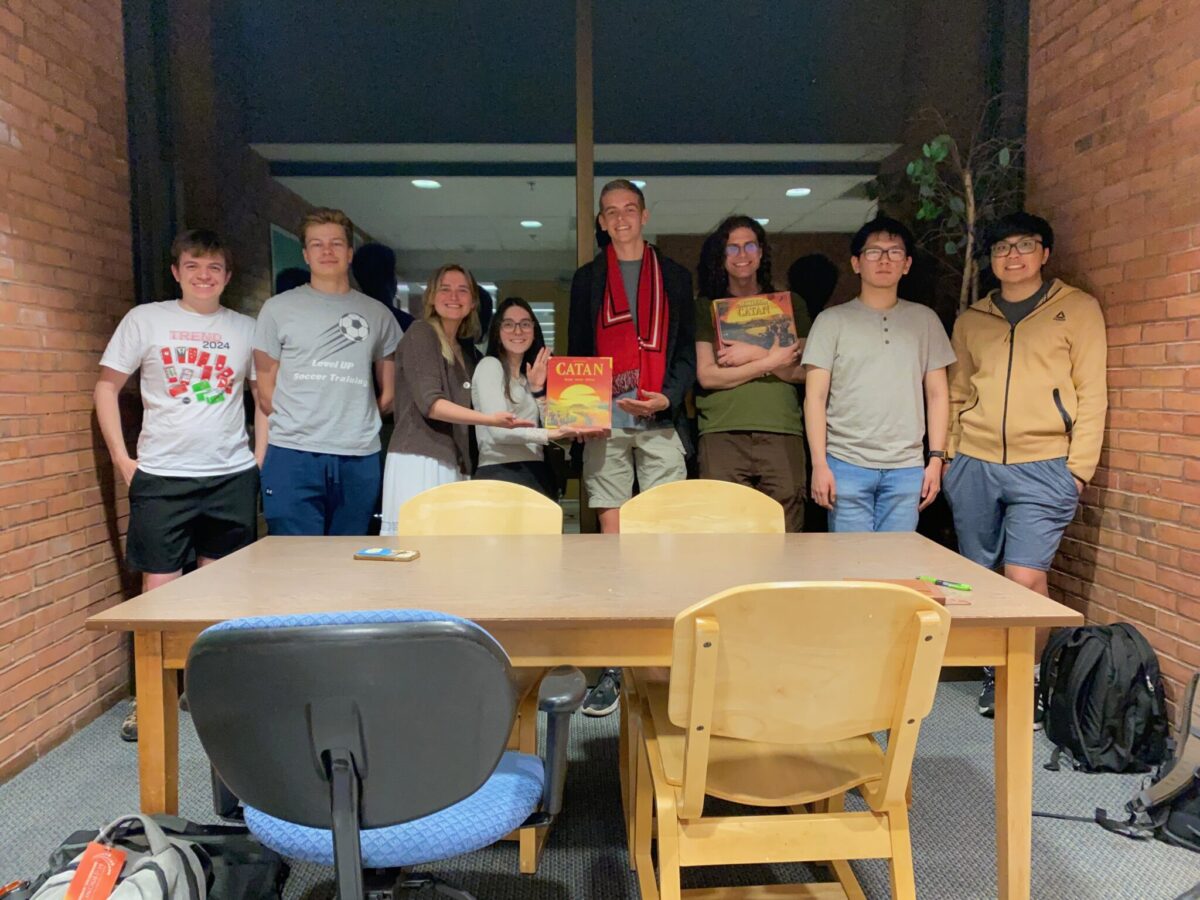
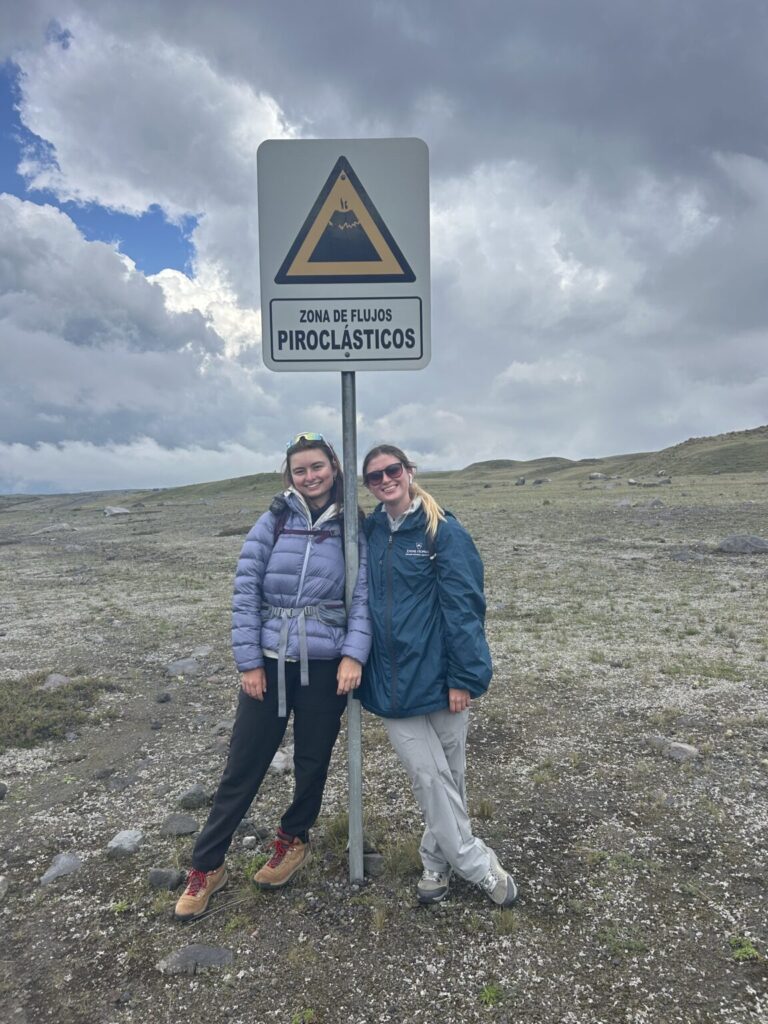 Looking toward sunny California skies, Rileigh Mansfield, mathematics, will start her Ph.D.at Stanford University in geophysics this fall.
“Just see it through”
Often, the defining moment in a student’s successful academic trajectory is a challenge that they can point back to. When Chinonso Ezeobi decided to pack up his life in Nigeria and come to the United States to pursue his Ph.D. in electrical engineering at UMBC, he was thrilled at the prospect of finding a program that would bring him fulfillment. However, financial struggles and the impact of the COVID-19 pandemic quickly threatened Ezeobi’s plans for the future.
“Once I navigated through one challenge, another one came in,” he says. “But at the end of the day, it was worth it. I was able to pull through all of those challenges. I was also able to transition from being an international student to having a green card through self-petition and self-advocacy, so I’m able to graduate without the additional pressure of thinking about my visa status while looking for jobs. My faith and the community at UMBC were essential in navigating through all challenges. The motivation was that I had a community of people who wanted my success, people who I felt would advocate for me even when I’m not in the room.”
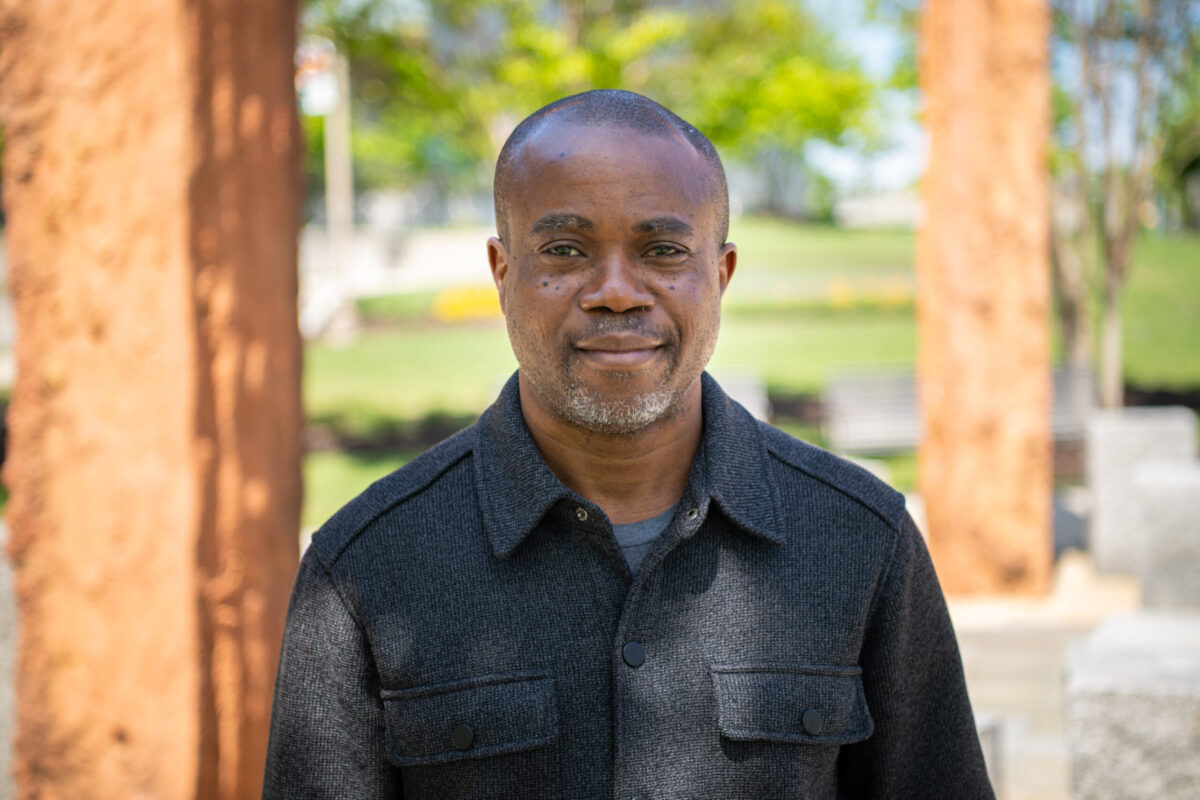 Whenever Chinonso Ezeobi, Ph.D., electrical engineering, helps students solve their problems, he says, “I feel that the struggles I have experienced throughout my UMBC journey have given me this capacity to help others.”
Never one to be derailed, Ezeobi found mentors across campus who made it their mission to keep him on the path to his Ph.D. Ezeobi recognized how invaluable their support was and found his own ways to give back to the place and people who gave him so much, including keeping his door open to any students who may need an advocate on their side.
At one point, Maia Turman Cooke, English and political science, was thinking about backing out of her scholar’s program opportunity. In the end, though, she was surprised by how the McNair Scholars Program changed her life. “At the beginning of the application process, it seemed like a lot, and I wanted to quit—I didn’t want to join. The director of the McNair Scholars Program, Dr. Michael Hunt [’06, Ph.D. ’25], called me and said, ‘Just see it through, see it out. If you don’t like it when you get more involved, then you can leave.’”


 Maia Turman Cooke, English and political science, will continue to pursue her passions this fall as she embarks on her journey toward a Ph.D. in English at the University of Maryland, College Park.
Turman Cooke processed the expectations of the programs—like pursuing graduate school—while recognizing she had so much to learn about how research worked. “I was so overwhelmed because I thought I had to solve every world problem. But my peers convinced me to stay. Soon, that work became a normal part of my schedule. I had no idea what research was, and now it’s something I’m super passionate about,” says Turman Cooke, who starts her Ph.D. in English at the University of Maryland, College Park this fall.
“A person who needs a path”
Sometimes the way forward is clearly marked, and other times Retrievers forge their own way. Kayla Nemirovsky, mathematics and financial economics, had a love for international travel and a scholarship with the Sondheim Public Affairs Scholars Program but wasn’t sure how those interests combined with her majors.
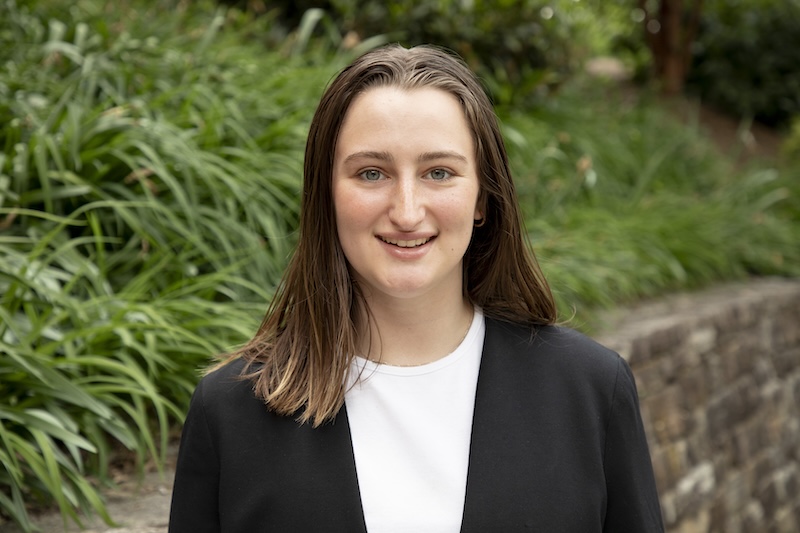

 For once, Kayla Nemirovsky, mathematics and financial economics, won’t be traveling far after graduation. She’ll be staying at UMBC to pursue her master’s in teaching.
Nemirovsky, who is staying at UMBC to pursue her master’s degree in teaching, charted her own route at UMBC as an Education Abroad ambassador, sharing widely with her peers the importance (and accessibility) of studying abroad for any major. Her Sondheim mentors connected her with an internship at the Maryland State Department of Education, and this experience helped her solidify her interest in math education curriculum and policy.
“I’m a person who needs a path,” says Nemirovsky, who has traveled to more than 30 countries and counting. “I realized once I got to college that there’s kind of no more path—I have to make my own. At was really scary to me, so having mentors who can help me make this path…give
me advice and offer suggestions, that was extremely helpful. I really believe you have to choose the people you look up to and kind of aspire to be them.”
Over his two years of graduate study at UMBC, Yash Bhatt, M.S., engineering management, saw his time at UMBC as much bigger than “just earning a degree.” He charted a path to contribute meaningfully to both the university and the greater Baltimore community. As a graduate student, Bhatt arrived at UMBC with an undergraduate degree and professional experience, but he says he was not yet the confident leader he is today.
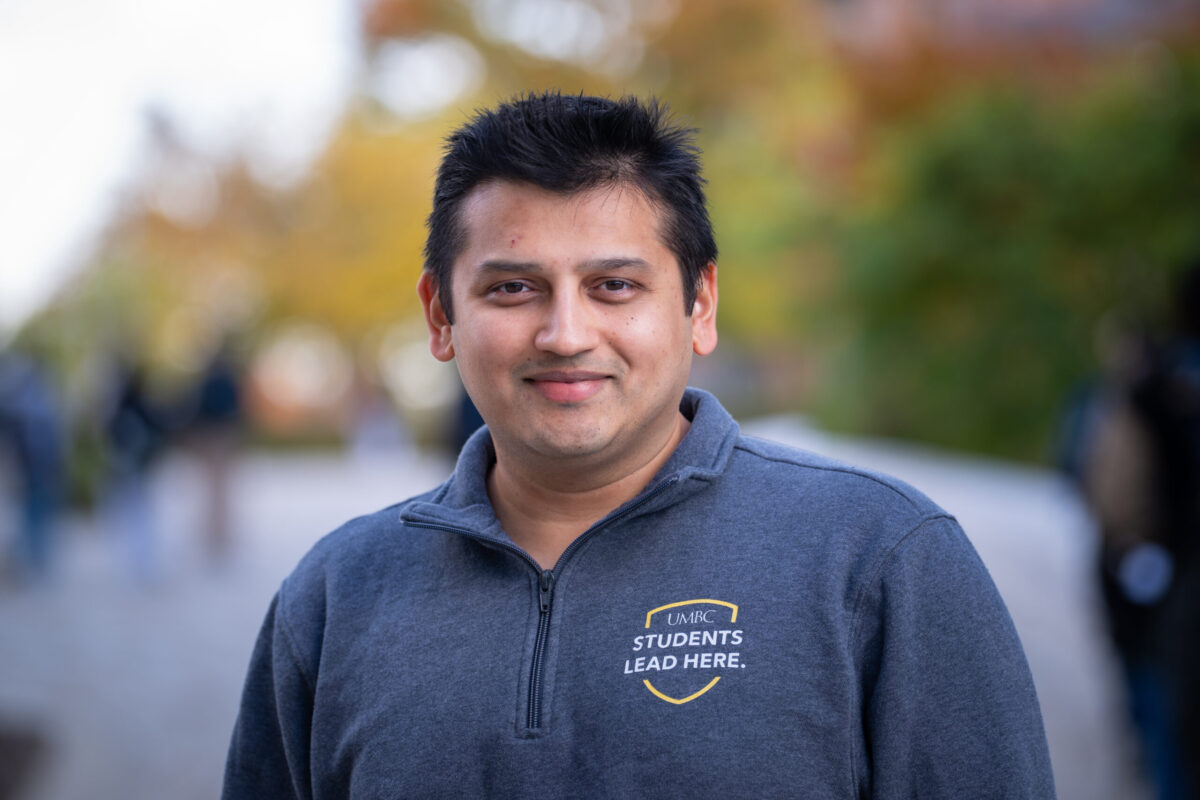

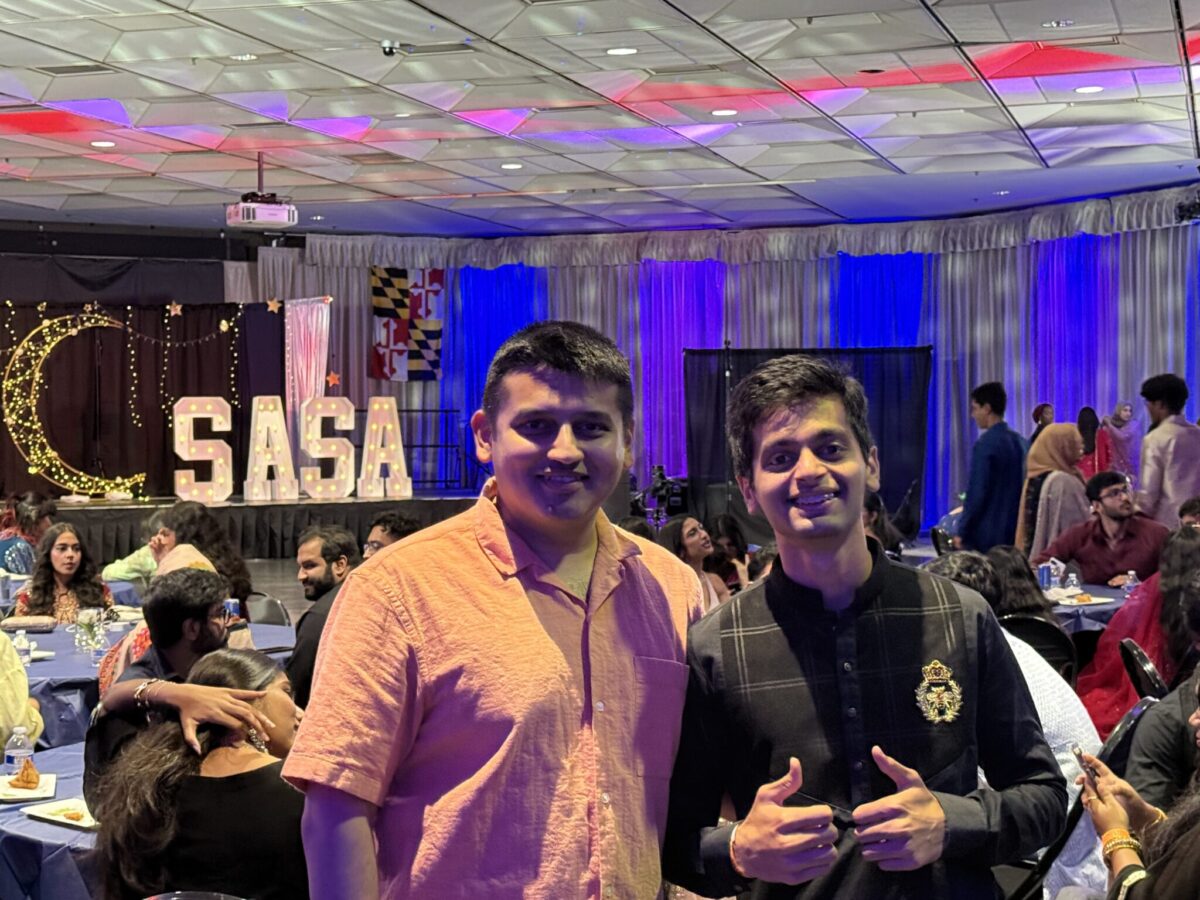 Building on the experience and relationships he has poured into at UMBC, Yash Bhatt, M.S., engineering management, is exploring career options that will allow him to find impactful work in the United States.
Outside of the classroom, Bhatt dedicated himself to enhancing student life for his classmates. As a member of the Indian Graduate Student Association and the Black and Gold Student Advisory Board, he advocated for international students and contributed to university decision-making. Bhatt also joined two Alternative Spring Break experiences. Starting as a participant and returning as a program leader, Bhatt immersed himself in what he considers a genuine “American student experience,” building local friendships and making connections within local government and community organizations, in addition to the service the participants provided to the community.
“The best part of my UMBC experience has been the people and the sense of community,” says Bhatt. “UMBC has this unique balance—it’s diverse and full of opportunity like a larger university yet still close-knit enough that you truly feel seen and supported.”
Read about more members of the Class of 2026.
]]>
If you surveyed UMBC’s Class of 2026 and generated a word cloud, the word “community” would instantly dominate the screen. You might be tempted to dismiss it as a buzzword until you see how many...
https://umbc.edu/stories/the-class-of-2026-found-communities/
https://my3.my.umbc.edu/api/v0/pixel/news/160816/guest@my.umbc.edu/cf04ba1651301975b30808841d7317ae/api/pixel
cahss
class-of-2026
cnms
coeit
community
feature
spring-2026
stories
story
UMBC News & Magazine
https://my3.my.umbc.edu/groups/umbc-news-magazine
https://assets1-my.umbc.edu/system/shared/avatars/groups/000/001/943/24435aa6207c452e7bc15cc74b42c7bb/xsmall.png?1748556657
https://assets1-my.umbc.edu/system/shared/avatars/groups/000/001/943/24435aa6207c452e7bc15cc74b42c7bb/original.png?1748556657
https://assets2-my.umbc.edu/system/shared/avatars/groups/000/001/943/24435aa6207c452e7bc15cc74b42c7bb/xxlarge.png?1748556657
https://assets2-my.umbc.edu/system/shared/avatars/groups/000/001/943/24435aa6207c452e7bc15cc74b42c7bb/xlarge.png?1748556657
https://assets3-my.umbc.edu/system/shared/avatars/groups/000/001/943/24435aa6207c452e7bc15cc74b42c7bb/large.png?1748556657
https://assets1-my.umbc.edu/system/shared/avatars/groups/000/001/943/24435aa6207c452e7bc15cc74b42c7bb/medium.png?1748556657
https://assets2-my.umbc.edu/system/shared/avatars/groups/000/001/943/24435aa6207c452e7bc15cc74b42c7bb/small.png?1748556657
https://assets1-my.umbc.edu/system/shared/avatars/groups/000/001/943/24435aa6207c452e7bc15cc74b42c7bb/xsmall.png?1748556657
https://assets2-my.umbc.edu/system/shared/avatars/groups/000/001/943/24435aa6207c452e7bc15cc74b42c7bb/xxsmall.png?1748556657
UMBC News & Magazine
0
0
false
Tue, 23 Jun 2026 14:41:14 -0400
Tue, 23 Jun 2026 14:41:14 -0400
Office Hours—President Sheares Ashby talks with a graduating senior about rootedness and change
Manav Narendra’s story has been shaped by constant motion. A math and computer science double major, who graduated from UMBC this spring, Narendra grew up moving frequently between India and the United States, adapting to new schools, cultures, and environments every few years. Raised by a single mother who was always striving to create a better life for them, Narendra grew accustomed to change—but also to the challenges that come with it.
Coming to UMBC marked a turning point. Narendra sought out a smaller, close-knit academic environment where he could build community, form lasting friendships, and explore what it means to belong somewhere. In this Office Hour, President Valerie Sheares Ashby—who has also been at UMBC for four years—and Narendra reflect on growing rooted to a place and what effect those lasting connections can have.
UMBC Magazine: Manav, tell us about your background and what brought you to UMBC.
Manav Narendra: I’m originally from India, and I’ve spent about half my life there and half in the U.S. Growing up, I moved a lot because my mom would switch jobs for better opportunities. By my senior year of high school, we had just moved to Maryland. I applied to a vast array of colleges, but I ultimately chose UMBC because I wanted a smaller, more personal environment where I wouldn’t feel lost.
And here, I’ve met people in so many different ways—through classes, the Honors College, tutoring, tennis, even the Career Fair. It’s been really meaningful.
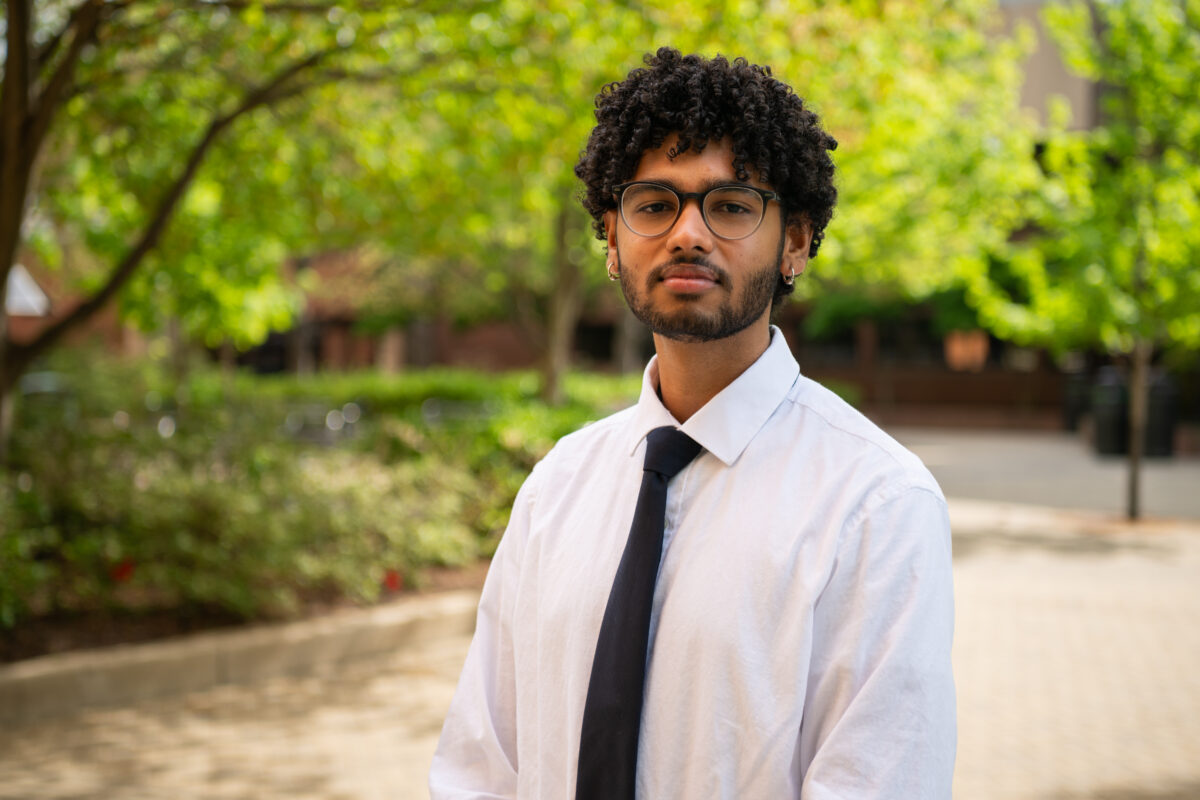 Narendra on campus in spring 2026.
President Valerie Sheares Ashby: You wanted a place where you could feel seen—that is powerful. And these smaller communities within UMBC can really shape your experience.
UMBC Magazine: How did moving so often affect your ability to build relationships?
Narendra: It was difficult. I became more introverted over time because you don’t really get the chance to build lasting friendships when you’re always leaving. I just didn’t realize how much I was missing in terms of long-term connections until I got here. Nevertheless, I’m forever grateful to have met so many incredible people from such beautifully different walks of life—they’ve all shaped who I am today.
President Sheares Ashby: I understand that. I am an introvert, too, and I think those kinds of experiences can really shape how you connect with people. It is not always easy to keep starting over. When I moved to Baltimore, I did not know anyone here, but from experience, I knew what I needed to put in place in order to feel like I am grounded and rooted in community. I learned how to do that when I was your age. In college and in graduate school, I started to ask myself: “What is it that I need to feel grounded?” And then I would go get it—I do not wait for it to happen.
UMBC Magazine: How has UMBC shaped your conception of community?
Narendra: I’ve made friendships that have lasted all four years, which still surprises me. I’ll see someone on campus and think, “Wow, I’ve known you for so long.”
President Sheares Ashby: That is such a special realization. I always tell students that those relationships are one of the most important parts of college. You learn so much in the classroom, but those connections—those are what stay with you.
UMBC Magazine: What does “home” mean to you now, after having moved so much?
Narendra: Growing up, home was my mom. Wherever she was, that’s where home was. She was the only constant in my life. I was diagnosed with cancer when I was 13, and my mom and I went through it together. I dealt with the physical pain, but she carried the brunt of the emotional and mental burden. She quit her job to take care of me. I couldn’t have done it without her. Now, I feel like I have another home here. I have a place where I belong, where I feel valued. It’s comforting to be in one place and not have everything constantly changing.
UMBC Magazine: How did that experience influence your future goals?
Narendra: It’s made me want to give back. I’m looking at various roles, ranging from data and actuarial science to software and astrophysics—seeing where I can best utilize my skills to make a difference: something that helps people and advances our collective understanding of the world. I feel like I’ve been given a second chance at life, and I want to use it well.
President Sheares Ashby: Often, our experiences guide us toward that sense of purpose. There is this idea of finding where your talents meet the greatest need—that is where meaningful work happens.
]]>
Manav Narendra’s story has been shaped by constant motion. A math and computer science double major, who graduated from UMBC this spring, Narendra grew up moving frequently between India and the...
https://umbc.edu/stories/office-hours-rootedness-and-change/
https://my3.my.umbc.edu/api/v0/pixel/news/160751/guest@my.umbc.edu/9430445fa9c6f071aa889ed9b10c3a72/api/pixel
alumni
campus-life
cnms
coeit
computer-science
mathematics
office-hours
spring-2026
story
UMBC News & Magazine
https://my3.my.umbc.edu/groups/umbc-news-magazine
https://assets1-my.umbc.edu/system/shared/avatars/groups/000/001/943/24435aa6207c452e7bc15cc74b42c7bb/xsmall.png?1748556657
https://assets1-my.umbc.edu/system/shared/avatars/groups/000/001/943/24435aa6207c452e7bc15cc74b42c7bb/original.png?1748556657
https://assets2-my.umbc.edu/system/shared/avatars/groups/000/001/943/24435aa6207c452e7bc15cc74b42c7bb/xxlarge.png?1748556657
https://assets2-my.umbc.edu/system/shared/avatars/groups/000/001/943/24435aa6207c452e7bc15cc74b42c7bb/xlarge.png?1748556657
https://assets3-my.umbc.edu/system/shared/avatars/groups/000/001/943/24435aa6207c452e7bc15cc74b42c7bb/large.png?1748556657
https://assets1-my.umbc.edu/system/shared/avatars/groups/000/001/943/24435aa6207c452e7bc15cc74b42c7bb/medium.png?1748556657
https://assets2-my.umbc.edu/system/shared/avatars/groups/000/001/943/24435aa6207c452e7bc15cc74b42c7bb/small.png?1748556657
https://assets1-my.umbc.edu/system/shared/avatars/groups/000/001/943/24435aa6207c452e7bc15cc74b42c7bb/xsmall.png?1748556657
https://assets2-my.umbc.edu/system/shared/avatars/groups/000/001/943/24435aa6207c452e7bc15cc74b42c7bb/xxsmall.png?1748556657
UMBC News & Magazine
0
0
false
Wed, 17 Jun 2026 14:49:56 -0400
Wed, 17 Jun 2026 14:49:56 -0400
Meet a Retriever—Michael Cook ’20, senior business intelligence analyst and author
Meet Michael Cook ’20. While at UMBC, Michael majored in information systems with a minor in statistics. Outside of the classroom, he was a member of UMBC’s improv troupe, Dog-Collar Comedy, eventually serving as the group’s president. Today, Michael is a senior business intelligence analyst for Johns Hopkins University. But recently, Michael put his improv skills to good use once again when he turned a Dungeons & Dragons mistake into the idea behind his first book, He Who Speaks Out Of Turn, which the author published in May 2026. Take it away, Michael!
Q: What initially brought you to UMBC?
A: The big drivers for me were cost, convenience, and reputation. Of all the schools I applied to, UMBC gave me the best scholarship (in the sense that I had the least amount of tuition left over to pay myself), so it was the most affordable. In terms of convenience, UMBC was actually a shorter drive from my house than my high school was. This meant I could keep my part-time job and visit home whenever I wanted, which was most weekends, if nothing else than for the free laundry. Finally, I knew UMBC had a great reputation. I knew people, such as my own older brother, who had graduated from the school and gone on to successful jobs right out of college.
UMBC is full of opportunities. Take them and try something new!
Michael Cook ’20
information systems
Q: Who in the UMBC community has inspired you or supported you?
A: While at UMBC, I worked in the Admissions Office as a tour guide (now called Grit Guides). One of the most valuable lessons I learned there was to communicate through stories rather than facts. Prospective students typically don’t care about statistics; they’re more interested in hearing things like, “In my second semester, I met my best friend at Salsarita’s.”
So, without realizing it, the Admissions Office trained me to think narratively and to look for the story in everyday events and present it in a way that would engage an audience. While I was never inspired to author a fantasy story specifically, my time in that position helped storytelling become second nature. That mindset probably helped me turn my D&D accident into a story in the first place. Which reminds me, I should shout out the Dungeon Master (DM) for that session: Thanks, Skip!
Q: Tell us about what you love about your academic program or an organization you were involved in at UMBC.
A: Other than the Admissions Office, I was also involved in UMBC’s improv team, Dog-Collar Comedy. We practiced once or twice a week and put on a show each semester, but it never felt like work. It felt like I was just hanging out with friends, which is really what it became over the years. One of the things I love most about the group is how we’ve maintained a strong community, even after graduation. We still keep in touch and get together as we can. In fact, many improv alumni were among the first people to order copies of my book!
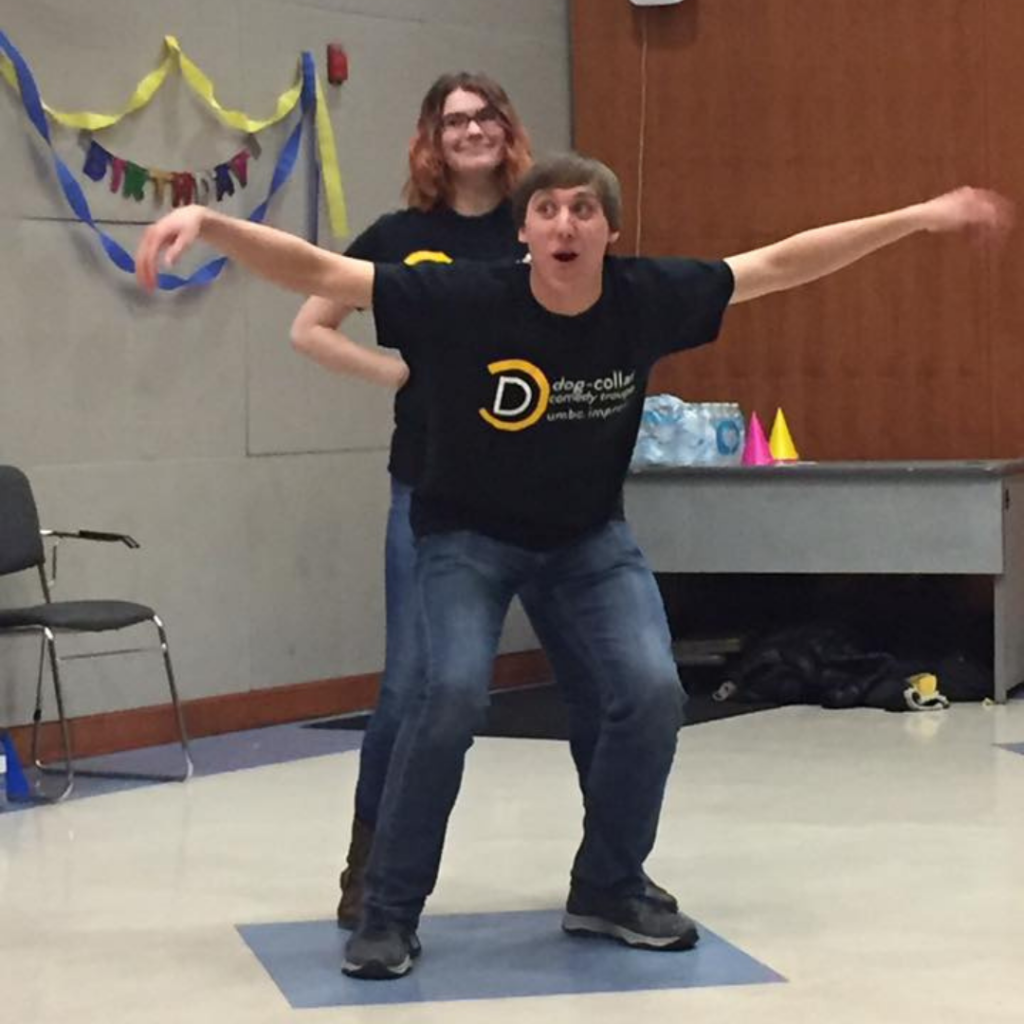
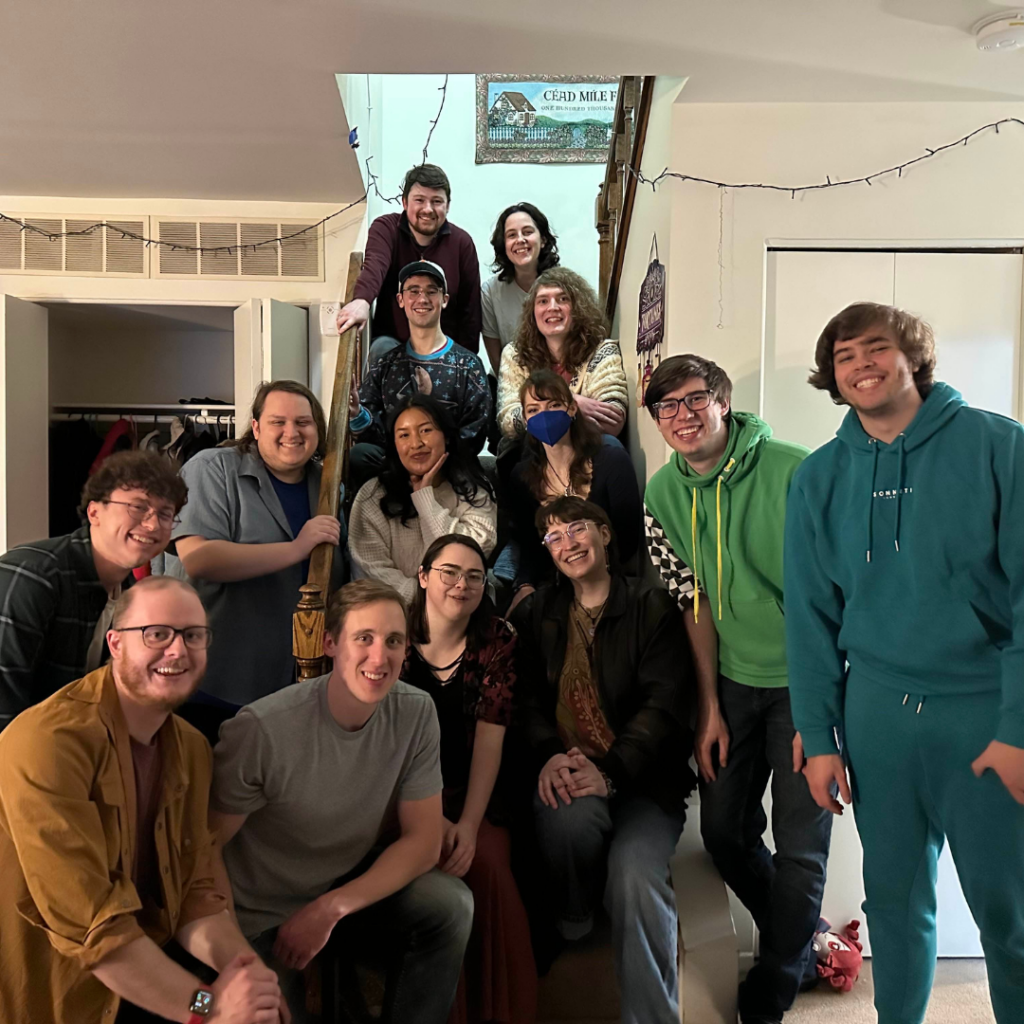
Pictured above: Cook during an improv show when he was a student (left). Cook at a recent Dog-Collar Comedy alumni Christmas party (right).
Q: How did UMBC help prepare you for your next steps after graduation?
A: My coursework directly prepared me for the kind of technical work I do for Johns Hopkins now. The information systems program places a strong emphasis on SQL, which I use daily in my work. Even subjects that don’t directly apply to my current role, such as networking, gave me a broader understanding of how technology systems fit together. Just as important were the professional skills or “soft skills.” UMBC taught me how to manage my time, communicate effectively, and take ownership of my work. In my current position, I’m expected to work independently, balance multiple projects, and speak directly with customers. Because of the habits and skills I honed at UMBC, the transition from student to professional felt natural from the start.
Q: Can you tell us about your journey as an author?
A: He Who Speaks Out Of Turn began with a mistake. During Covid, I had participated in a D&D campaign virtually, where I accidentally created a typical medieval-era wizard character for a futuristic campaign. That sparked the idea of a time-traveling wizard who accidentally strands himself far in the future. Of course, the story morphed to be much more than that, but that is where it began.
In the intervening five years, I worked on the story with no intention to publish; I wrote 500 words here and there as I got spare time. I’ve always enjoyed stories, and when I was younger, I wanted to be an author, so it was a natural hobby for me. I moved multiple times and got married, and the story followed me through these different phases of life and grew as I did. One day last summer (2025), I typed the final word and finished the story. It was one of those moments where I paused and felt like, “Well, now what?” I had an entire story written, so I decided to look into publishing it. I worked with an editor to clean up the story and some friends to design the cover and map. By this spring, five years of writing, revising, and collaboration had transformed that hobby into a published novel.
People have asked me if the characters are based on people I know. The truth is, the core characters are just different aspects of my own personality; some of them are the best of me, some the worst, some who I aspire to be, and some who I never want to be. While I’ve never traveled through time or slain a dragon, I’ve felt the same loss they have, given into the same impulses, and made the same mistakes. I learned a lot about myself while I wrote this story, and I had a lot of fun with it. I hope people enjoy reading it as well.
Pictured right: Author Michael Cook holding a copy of his debut novel, He Who Speaks Out of Turn.

* * * * *
UMBC’s greatest strength is its people. When people meet Retrievers and hear about the passion they bring, the relationships they create, the ways they support each other, and the commitment they have to inclusive excellence, they truly get a sense of our community. That’s what “Meet a Retriever” is all about.
Learn more about how UMBC can help you achieve your goals.
]]>
Meet Michael Cook ’20. While at UMBC, Michael majored in information systems with a minor in statistics. Outside of the classroom, he was a member of UMBC’s improv troupe, Dog-Collar Comedy,...
https://umbc.edu/stories/author-michael-cook/
https://my3.my.umbc.edu/api/v0/pixel/news/160716/guest@my.umbc.edu/22f9f039d1b347f9b032124a745dcd5a/api/pixel
alumni
coeit
is
meet-a-retriever
retriever-authors
story
UMBC News & Magazine
https://my3.my.umbc.edu/groups/umbc-news-magazine
https://assets1-my.umbc.edu/system/shared/avatars/groups/000/001/943/24435aa6207c452e7bc15cc74b42c7bb/xsmall.png?1748556657
https://assets1-my.umbc.edu/system/shared/avatars/groups/000/001/943/24435aa6207c452e7bc15cc74b42c7bb/original.png?1748556657
https://assets2-my.umbc.edu/system/shared/avatars/groups/000/001/943/24435aa6207c452e7bc15cc74b42c7bb/xxlarge.png?1748556657
https://assets2-my.umbc.edu/system/shared/avatars/groups/000/001/943/24435aa6207c452e7bc15cc74b42c7bb/xlarge.png?1748556657
https://assets3-my.umbc.edu/system/shared/avatars/groups/000/001/943/24435aa6207c452e7bc15cc74b42c7bb/large.png?1748556657
https://assets1-my.umbc.edu/system/shared/avatars/groups/000/001/943/24435aa6207c452e7bc15cc74b42c7bb/medium.png?1748556657
https://assets2-my.umbc.edu/system/shared/avatars/groups/000/001/943/24435aa6207c452e7bc15cc74b42c7bb/small.png?1748556657
https://assets1-my.umbc.edu/system/shared/avatars/groups/000/001/943/24435aa6207c452e7bc15cc74b42c7bb/xsmall.png?1748556657
https://assets2-my.umbc.edu/system/shared/avatars/groups/000/001/943/24435aa6207c452e7bc15cc74b42c7bb/xxsmall.png?1748556657
UMBC News & Magazine
0
0
false
Tue, 16 Jun 2026 12:09:03 -0400
Tue, 16 Jun 2026 12:09:03 -0400
How to make a (really) strong magnet
Magnets often attract curious minds. Einstein told of his profound sense of hidden order after witnessing the invisible forces of the Earth’s magnetic field guide the needle of a compass. For Ethan Bowers, it was the wonder of learning Maxwell’s laws—equations developed by 19th-century Scottish physicist James Clerk Maxwell that unite magnetism, electricity, and light—that really pulled him in.
Now a Ph.D. student in mechanical engineering, Bowers is building a massive, one-of-a-kind research magnet. It weighs more than 2,300 pounds and will be capable of generating a magnetic field of 7 tesla (roughly 140,000 times stronger than the Earth’s magnetic field and more than twice as strong as the field in most MRI machines).
Making the magnet has been the labor of multiple researchers over more than a decade, led by mechanical engineering associate professor Carlos Romero Talamás, who plans to use the magnet to conduct experiments on plasma, the superheated soup of particles found in stars, lighting, and the Aurora Borealis, and which makes up more than 99 percent of the visible universe.
An initial magnet design and analysis was completed by Evan Bates, M.S. ’15, Ph.D. ’18, mechanical engineering. In 2023, Bowers, who had returned as a student to UMBC following a stint in industry, joined the project. He redesigned key aspects of the magnet and began the meticulous work of assembling and testing it. In the coming months, Bowers plans to run the magnet up to full strength. Then the real fun begins: Unleashing the new tool to help answer the questions curious minds dream up.
Tools of the trade
- Mechanical and electrical know-how
- Perseverance
- Heavy-lifting equipment (custom designed)
- A serious power source and some chilled water (things are going to get hot)
Step 1: Brush up on your magnet basics
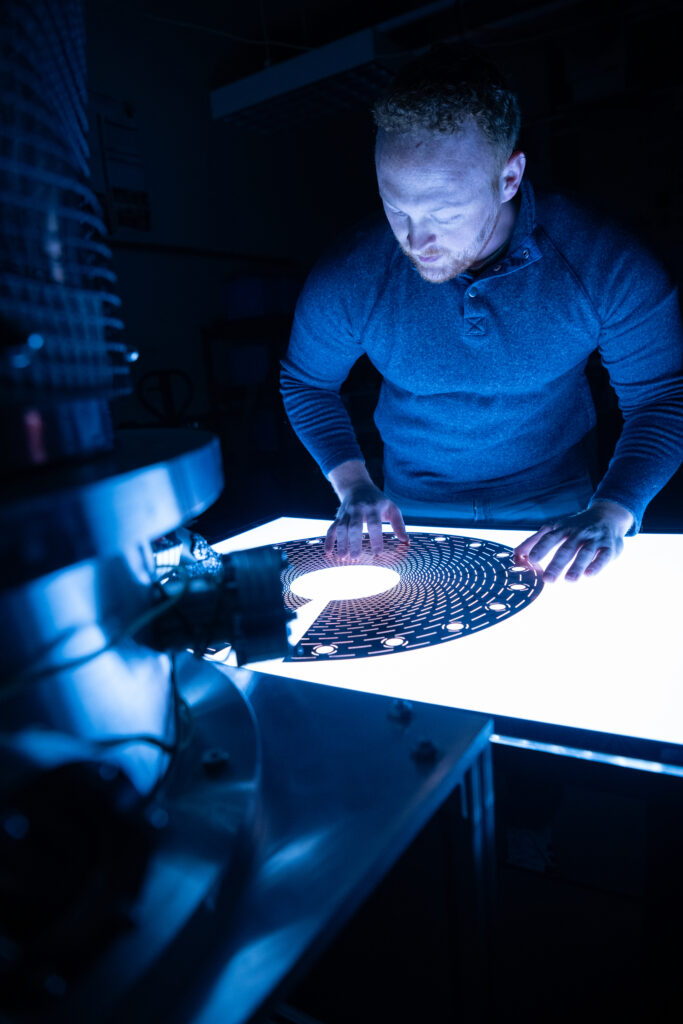 Bowers illuminates a Bitter disk with a backlight. (Brad Ziegler/UMBC)
Say “magnet,” and many people think first of the objects affixing their kids’ artwork to the fridge. Refrigerator magnets are an example of permanent magnets: materials in which the electrons permanently align in a way that generates a magnetic field. Permanent magnets can get quite strong—such as the rare earth neodymium magnets used in some maglev trains—but they top out at about 2 tesla.
To get an even stronger magnet, engineers can turn to a phenomenon that’s captured in the Maxwell equations that captivated Bowers: Electricity and magnetism are intrinsically linked.
Electrons flowing through a wire generate a magnetic field. Coil the wire and you can create a field similar in shape to a permanent bar magnet, with distinct north and south poles. This is the electromagnet. Higher current and more coils make a stronger magnet. However, high current also risks melting your magnet into a puddle and mangling it with the enormous pressure from the magnetic field pushing on the moving electrons (called Lorentz forces).
Superconducting electromagnets, which use material with the almost magical property of showing virtually zero electrical resistance when cooled with liquid helium, can eliminate the melting risk, but are expensive and finicky to operate, and have other limitations.
Another (more old-school) solution is called the Bitter electromagnet, invented in the 1930s by American physicist Francis Bitter. In place of coiled wires, circular metal disks separated with insulating spacers create a helical path that concentrates the current. The disks are shot through with holes for circulating water to whisk away heat and the structural design counteracts the mechanical stresses. “We chose a Bitter magnet because it offered the right combination of features for the tasks we wanted to perform,” Bowers says.
Step 2: Design, test, refine, repeat
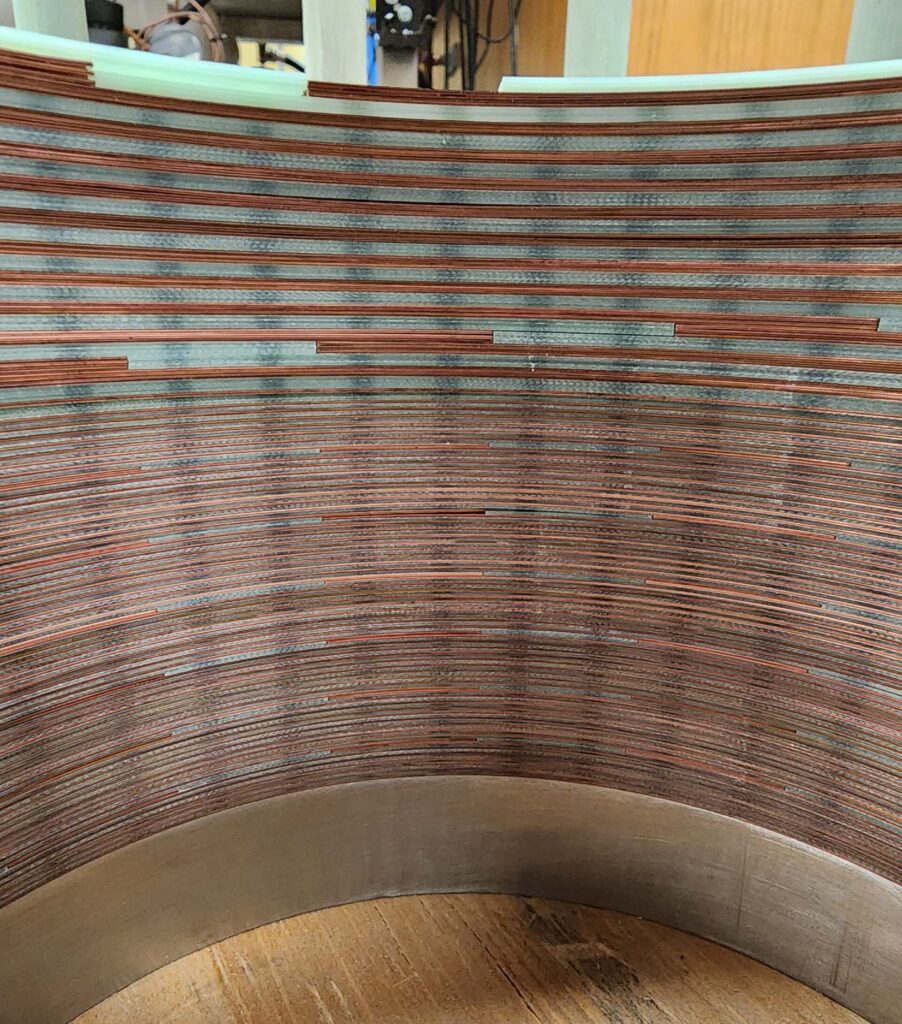 The turn density for the magnet is higher at the ends than at the middle. (Photo courtesy of Bowers)
The UMBC team’s initial vision was to create a 10-tesla Bitter magnet, with space in the center for a relatively large vacuum chamber to hold plasma. The magnet could generate either a steady or pulsed magnetic field, depending on the needs of the experiment. Bates analyzed the disk shape, stacking methods, cooling hole geometry, heat transfer, mechanical stress, and electrical properties of the magnet to optimize the design. He validated it by constructing and testing a 1-tesla prototype.
In 2023, the team decided to change the desired magnetic field profile, making it slightly higher on the ends of the magnet than in the middle, so that charged particles would be pushed toward the center. They didn’t want to redesign the Bitter disks, so they had to lower the maximum field strength to 7 tesla. They also had to vary the coil density, making tighter turns at the ends to get the stronger field.
Bowers analyzed the new field profile and worked out a clever trick of adding a tapered insulating disk to seamlessly transition between the areas of tighter and looser turns. He also performed a structural analysis of the whole assembly.
Step 3: Pallets, cranes, and painstaking planning
The final design called for 439 copper Bitter disks, four insulating transition disks, and 434 regular insulating disks housed inside a pressure vessel. Outside companies manufactured the disks, but Bowers personally inspected every single one, removing any with defects, and cleaning the copper ones with isopropyl alcohol. He built a custom pallet to hold the cylindrical assembly in place in the lab, and started stacking.
The process took about a month, and near the end “I was so sick of the monotony,” Bowers says. To push it across the finish line, he worked straight through the weekend, stacking the last disk on a Sunday afternoon in February. “It happened to be my friend’s birthday so I celebrated that completion and their birthday together,” he says.
Next up was moving the approximately 2-foot-high stack of disks to a movable swing set, created by a UMBC mechanical engineering capstone team to serve as a mobile and rotatable platform for the magnet. Bowers built a custom crane fixture to lift the assembly onto the platform and spent weeks planning every step of the move. “It was the last major place the structure could fail before we power the magnet,” he says. After one stressful day, Bowers says he was elated when it all went according to plan. “I felt genuinely grateful for all I had been given the chance to work on, and grateful that God had given me the ability to succeed.”
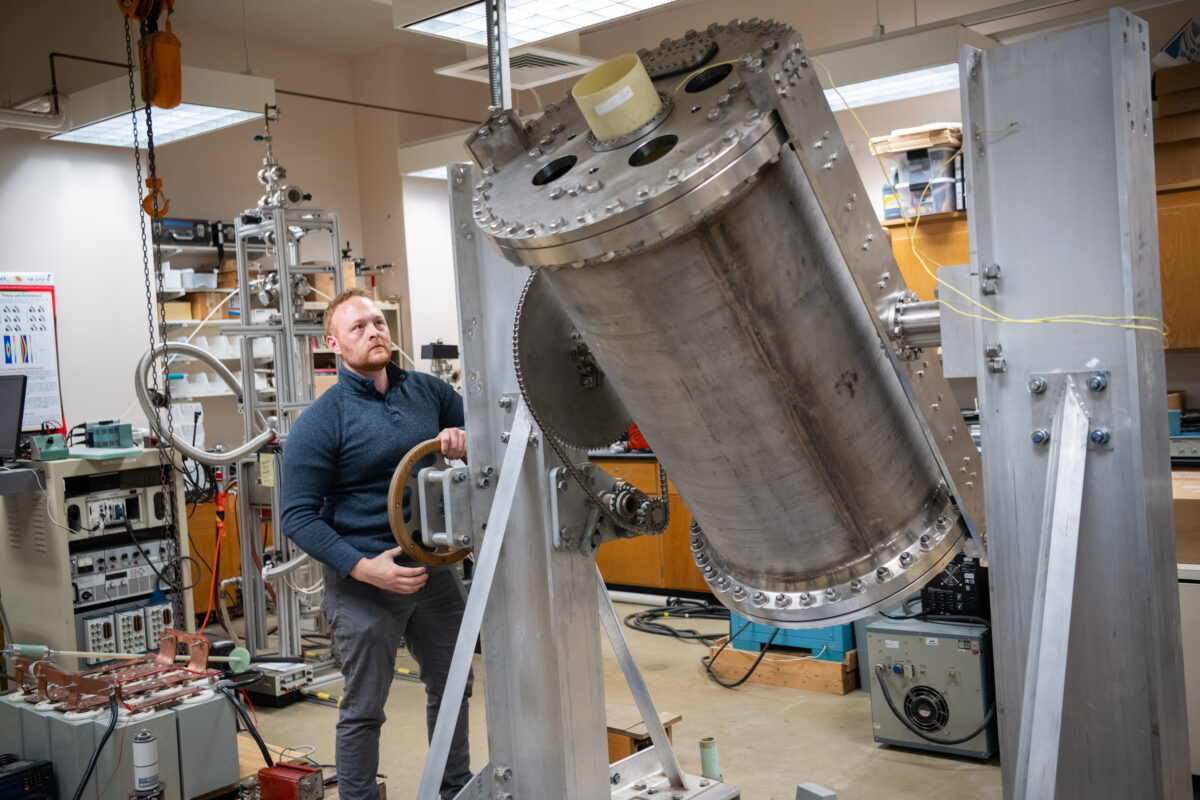 Bowers shows how the magnet core can be rotated. (Brad Ziegler/UMBC)
Step 4: Test some more
With the core of the magnet assembled, Bowers has also begun the detailed process of testing its electrical properties, using a host of measurement equipment.
At first, he is powering the magnet with lower currents, but eventually he will send 15,000 amps through the disks, about half the current that flows in an average lightning bolt. The voltage will be about five times the voltage in a wall socket.
Safety is of paramount concern to the team when working with such high power. When the magnet is operating at full strength, the energy in two cubic feet of the magnetic field alone will be more than the energy of a small SUV zooming by at 60 miles per hour.
Bowers is working on a set of detailed instructions to address all conceivable operating, maintenance, and failure scenarios. “We’re safe. We do all our due diligence,” he says.
Step 5: Serve up some science
Once the magnet is fully up and running, the science experiments can start. Bowers and Romero Talamás have a few ideas for initial experiments, including investigating how a high magnetic field affects when a gas will suddenly switch from being an insulator to a conductor, allowing current to arc through it. They are also interested in how the magnet might be used to separate different forms of hydrogen—particularly two forms that may form the fuel for future fusion reactors to supply clean and near limitless energy.
 Stars—nature’s original fusion reactors—show how plasma and magnetic fields can interact in spectacular fashion. In this image of our sun, taken in July 2012, million-degree plasma in the sun’s atmosphere began to cool and fall to the surface. Because the plasma is charged, it condensed along twisted magnetic field lines close to the surface and formed giant streaming arcs, some as tall as five Earths stacked high. (NASA Solar Dynamics Observatory)
Bowers grew up in rural Hagarstown, Maryland, a kid who enjoyed exploring everything from the rocks on the side of a path to the electrical motors his grandfather would wind. Research has offered him the chance to constantly challenge himself. After graduation, he’ll move on to new questions at the scientific frontiers, perhaps working at a fusion energy start-up or a national lab. But the 7T Bitter magnet will remain at UMBC, a gift to curious students who come after him.
]]>
Magnets often attract curious minds. Einstein told of his profound sense of hidden order after witnessing the invisible forces of the Earth’s magnetic field guide the needle of a compass. For...
https://umbc.edu/stories/how-to-make-a-really-strong-magnet/
https://my3.my.umbc.edu/api/v0/pixel/news/160699/guest@my.umbc.edu/daf60158f49bee7547aece6f2687d891/api/pixel
coeit
discovery
graduate-research
how-to
meche
research
science-and-tech
spring-2026
story
UMBC News & Magazine
https://my3.my.umbc.edu/groups/umbc-news-magazine
https://assets1-my.umbc.edu/system/shared/avatars/groups/000/001/943/24435aa6207c452e7bc15cc74b42c7bb/xsmall.png?1748556657
https://assets1-my.umbc.edu/system/shared/avatars/groups/000/001/943/24435aa6207c452e7bc15cc74b42c7bb/original.png?1748556657
https://assets2-my.umbc.edu/system/shared/avatars/groups/000/001/943/24435aa6207c452e7bc15cc74b42c7bb/xxlarge.png?1748556657
https://assets2-my.umbc.edu/system/shared/avatars/groups/000/001/943/24435aa6207c452e7bc15cc74b42c7bb/xlarge.png?1748556657
https://assets3-my.umbc.edu/system/shared/avatars/groups/000/001/943/24435aa6207c452e7bc15cc74b42c7bb/large.png?1748556657
https://assets1-my.umbc.edu/system/shared/avatars/groups/000/001/943/24435aa6207c452e7bc15cc74b42c7bb/medium.png?1748556657
https://assets2-my.umbc.edu/system/shared/avatars/groups/000/001/943/24435aa6207c452e7bc15cc74b42c7bb/small.png?1748556657
https://assets1-my.umbc.edu/system/shared/avatars/groups/000/001/943/24435aa6207c452e7bc15cc74b42c7bb/xsmall.png?1748556657
https://assets2-my.umbc.edu/system/shared/avatars/groups/000/001/943/24435aa6207c452e7bc15cc74b42c7bb/xxsmall.png?1748556657
UMBC News & Magazine
0
0
false
Mon, 15 Jun 2026 14:54:55 -0400
Mon, 15 Jun 2026 14:54:55 -0400