<?xml version="1.0"?>
<News hasArchived="false" page="1" pageCount="1" pageSize="10" timestamp="Mon, 31 Aug 2026 12:04:06 -0400" url="https://my3.my.umbc.edu/groups/coeit-news-events/posts.xml?tag=compsci">
<NewsItem contentIssues="false" id="153361" important="false" status="posted" url="https://my3.my.umbc.edu/groups/coeit-news-events/posts/153361">
<Title>hackUMBC draws hundreds to campus for a weekend of snack-fueled, tech-inspired problem solving</Title>
<Body>
<![CDATA[
    <div class="html-content">
    <p>On a late September weekend, hundreds of people converged on the UMBC Catonsville campus for the <a href="https://hackumbc.tech/" rel="nofollow external" class="bo">11th annual hackUMBC</a>, a 24-hour competition where teams of students create creative solutions to problems that matter to them. Under a tight deadline that fosters camaraderie and quick thinking, teams tackle a range of challenges, some proposed by industry sponsors and others that are personally meaningful to students. </p>


    <img width="1200" height="800" src="https://umbc.edu/wp-content/uploads/2025/10/hackUMBC_Snack-and-drink-table-1200x800.jpg" alt="people surround a table that is stocked with energy drinks and snacks" style="max-width: 100%; height: auto;">hackUMBC participants visit the snacks and drinks table. (Photo by Angel Pham)


    <p>“What makes hackUMBC great is the display of growth, innovation, and teamwork,” says <strong>Isabella Goltser</strong>, the president of hackUMBC and a junior computer science major who has been part of hackUMBC since her first year on campus. “Participants from across different universities and high schools come together for 24 hours to create amazing projects, connect with each other, and really grow as individuals over the course of a weekend.”</p>


    <p>The competition itself has also grown <a href="https://umbc.edu/stories/randi-williams-ai-technologist/" rel="nofollow external" class="bo">over the years</a>, from under 100 participants in the first year to 600 participants this year, including increasing numbers of high school students who get to witness and participate in the vibrant UMBC community. This year, the organizers added more opportunities for students to network and learn new skills through activities such as workshops and guest panels of tech industry professionals, Goltser says.</p>


    <p>The event culminated with the judging expo in the afternoon of the second day, where teams presented their projects and competed for prizes. Teams were recognized for the best overall “hacks,” as well as in specific categories, such as best games, best AI/machine learning hack, best health/environment hack, and more.  </p>


    <img width="1200" height="800" src="https://umbc.edu/wp-content/uploads/2025/10/hackUMBC_Judging-1200x800.jpg" alt="Groups of people sit and stand around tables in a large, open ballroom for hackUMBC judging." style="max-width: 100%; height: auto;">hackUMBC teams gather in the UC Ballroom for the judging part of the competition. (Photo by Angel Pham)


    <p>“Seeing everyone present their projects and the proud look on their faces makes it worth spending so much time organizing,” Goltser says.</p>


    <p>Twenty-seven UMBC students worked together for the past 10 months to pull off the event. The students divided themselves into teams that dealt with specific tasks such as securing sponsorships, marketing, designing the website and more. The student organizing team was also supported by faculty and staff throughout the College of Engineering and Information Technology (COEIT) and the university as a whole. <strong>Renique Kersh</strong>, vice president for student affairs, and <strong>Marc Olano</strong>, associate dean for academic programs and learning in COEIT served as keynote speakers at the event. </p>


    <p>“This hackathon would not have been possible without teamwork and I want to thank everyone involved,” Goltser says.</p>
    </div>
]]>
</Body>
<Summary>On a late September weekend, hundreds of people converged on the UMBC Catonsville campus for the 11th annual hackUMBC, a 24-hour competition where teams of students create creative solutions to...</Summary>
<Website>https://umbc.edu/stories/hackumbc-2025-draws-hundreds-of-students/</Website>
<TrackingUrl>https://my3.my.umbc.edu/api/v0/pixel/news/153361/guest@my.umbc.edu/b17b90df9a70cb95a9619da830397b24/api/pixel</TrackingUrl>
<Tag>coeit</Tag>
<Tag>compsci</Tag>
<Tag>dosa</Tag>
<Tag>hackumbc</Tag>
<Tag>news</Tag>
<Tag>science-and-tech</Tag>
<Tag>story</Tag>
<Group token="umbc-news-magazine">UMBC News &amp;amp; Magazine</Group>
<GroupUrl>https://my3.my.umbc.edu/groups/umbc-news-magazine</GroupUrl>
<AvatarUrl>https://assets1-my.umbc.edu/system/shared/avatars/groups/000/001/943/24435aa6207c452e7bc15cc74b42c7bb/xsmall.png?1748556657</AvatarUrl>
<AvatarUrl size="original">https://assets1-my.umbc.edu/system/shared/avatars/groups/000/001/943/24435aa6207c452e7bc15cc74b42c7bb/original.png?1748556657</AvatarUrl>
<AvatarUrl size="xxlarge">https://assets2-my.umbc.edu/system/shared/avatars/groups/000/001/943/24435aa6207c452e7bc15cc74b42c7bb/xxlarge.png?1748556657</AvatarUrl>
<AvatarUrl size="xlarge">https://assets2-my.umbc.edu/system/shared/avatars/groups/000/001/943/24435aa6207c452e7bc15cc74b42c7bb/xlarge.png?1748556657</AvatarUrl>
<AvatarUrl size="large">https://assets3-my.umbc.edu/system/shared/avatars/groups/000/001/943/24435aa6207c452e7bc15cc74b42c7bb/large.png?1748556657</AvatarUrl>
<AvatarUrl size="medium">https://assets1-my.umbc.edu/system/shared/avatars/groups/000/001/943/24435aa6207c452e7bc15cc74b42c7bb/medium.png?1748556657</AvatarUrl>
<AvatarUrl size="small">https://assets2-my.umbc.edu/system/shared/avatars/groups/000/001/943/24435aa6207c452e7bc15cc74b42c7bb/small.png?1748556657</AvatarUrl>
<AvatarUrl size="xsmall">https://assets1-my.umbc.edu/system/shared/avatars/groups/000/001/943/24435aa6207c452e7bc15cc74b42c7bb/xsmall.png?1748556657</AvatarUrl>
<AvatarUrl size="xxsmall">https://assets2-my.umbc.edu/system/shared/avatars/groups/000/001/943/24435aa6207c452e7bc15cc74b42c7bb/xxsmall.png?1748556657</AvatarUrl>
<Sponsor>UMBC News &amp; Magazine</Sponsor>
<PawCount>6</PawCount>
<CommentCount>0</CommentCount>
<CommentsAllowed>false</CommentsAllowed>
<PostedAt>Tue, 07 Oct 2025 16:17:13 -0400</PostedAt>
<EditAt>Tue, 07 Oct 2025 16:17:13 -0400</EditAt>
</NewsItem>

<NewsItem contentIssues="false" id="139627" important="false" status="posted" url="https://my3.my.umbc.edu/groups/coeit-news-events/posts/139627">
<Title>Meet a Retriever&#8212;Nathan Wooddell &#8217;23, graduate student specializing in Russian and cybersecurity&#160;</Title>
<Body>
<![CDATA[
    <div class="html-content">
    <img width="150" height="150" src="https://umbc.edu/wp-content/uploads/2024/02/Vira-Nathan-Russian-Cyber24-4141-150x150.jpg" alt="Man and woman sitting at a desk in a classroom in front of a whiteboard with Russian words, focused on the papers in front of them." style="max-width: 100%; height: auto;">
    <h6>
    <strong><em>Meet </em></strong><em>Nathan Wooddell ’<strong>23,</strong></em><strong><em> <a href="https://www.csee.umbc.edu/undergraduate/computer-science-bs/" rel="nofollow external" class="bo">computer science</a>. Nathan is a member of UMBC’s  CyberCorps: Scholarship for Service cohort, and is getting his master’s in cybersecurity as a graduate researcher at the <a href="https://www.energy.gov/nnsa/national-nuclear-security-administration" rel="nofollow external" class="bo">National Nuclear Security Agency</a></em>.<em> Nathan attributes much of his success to the connections he’s made with the staff and faculty at UMBC who have helped him to discover his true passions. During his time as an undergraduate at UMBC, Nathan also completed a Russian language certificate, and has found a way to combine his interests of both cybersecurity and the Russian language in the professional world. Take it away, Nathan.  </em></strong>
    </h6>


    <h4>Q: What’s one thing you’d want someone to know about the support you find at UMBC?</h4>


    <p><strong>A: </strong>In many classes, casual visits to professors during office hours, polite interactions during class, and expressing interest in the subject matter can go a long way. Such interactions help with all aspects of student life. Too many students fail to take proper advantage of the fantastic support that the university faculty can offer. The best way to do this in my experience is simply to speak with your professors after class or outside of class.</p>


    <p>Such interactions help with all aspects of student life. The faculty can offer support in the form of academic resources, scholarship recommendations, professional guidance, and even letters of recommendation for work or graduate programs.</p>


    <h4>Q: Tell us about someone in the community who has inspired you or supported you, and how they did it.</h4>


    <p><strong>A: </strong>I want to give special thanks to Russian instructor <strong>Vira Zhdanovych</strong>. Since I first transferred to UMBC, I have taken Russian language courses with Professor Zhdanovych. It was through her guidance that I got my first research experience when she advised me on my 2022 Undergraduate Research and Creative Achievement Day presentation <em>Analyzing the Russian Federation’s Impact on Global Cyber Security</em>. This was also the first time that I was able to merge my interest in cybersecurity and Russian language. </p>


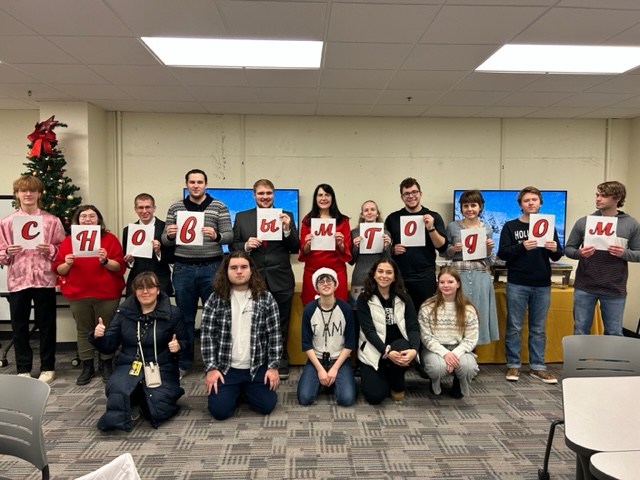
    <img width="640" height="480" src="https://umbc.edu/wp-content/uploads/2024/02/IMG_0536.jpg" alt='Students learning Russian pose for a photo with their professor, holding up different Russian letters to spell out the phrase "Happy New Year!" in the language.' style="max-width: 100%; height: auto;">At the MLLI winter and New Year celebration, hosted by the Russian Area in December 2023, Zhdanovych stands in the center holding an “M” and Wooddell is to her right holding the Russian letter “ы.” The full sign reads “Happy New Year!” (Photo courtesy of Zhdanovych)


    <p>I have worked extensively with Professor Zhdanovych to study and research the impact of the Russian-speaking world on the cybersecurity and intelligence communities—I owe so much of my professional and academic success to her.</p>


    <h4>Q: Tell us what you love about your academic program or an organization you’re involved in.</h4>


    <p><strong>A:</strong> I am a participant and former officer in UMBC’s Russian Club. The meetings of this club are especially good for learning about contemporary Russian culture, as well as the geopolitical history, which still shapes the diplomacy of the Russo-American relationship.</p>


    <div>
    	<blockquote>
    		
    		<div>	
    			<div>
    				<div>“</div>
    			</div>
    
    			<div>
    				<p>“Had I known then what I know now about the university’s programs, rigor, faculty, and opportunities, UMBC would have been a shoo-in. Ultimately, I am so grateful that I applied to, and attended UMBC.”</p>


    									<div>
    						
    	
    						<div>
    				
    				<p>Nathan Wooddell ’23, current master’s student</p>
    										
    											</div>
    					</div> 
    								</div>
    
    		</div>		
    	</blockquote>
    </div>


    <h4>Q: What is your WHY? What brought you to UMBC?</h4>


    <p><strong>A:</strong>I came to UMBC in my sophomore year as a transfer student. Admittedly when I was accepted I toyed around with the idea of going to a variety of different schools, but eventually decided on UMBC for the price, and the relative vicinity to my home in northern Maryland.</p>


    <p>Had I known then what I know now about the university’s programs, rigor, faculty, and opportunities, UMBC would have been a shoo-in. Ultimately, I am so grateful that I applied to, and attended UMBC.</p>


    <h4>Q: Tell us about the people who are helping you grow at UMBC, and why their HOW made such a difference to you.</h4>


    <p><strong>A: </strong>In addition to Professor Zhdanovych’s support with my Russian language and research, Professor <strong>RJ Joyce</strong> in computer science encouraged me to become invested in cybersecurity. It’s because of him that I’ve become involved in many of the clubs and organizations I am currently enrolled in. Such interest in security was able to earn me recipient status in UMBC’s Scholarship for Service cohort. </p>


    <div>
    <div>
    <h4>Q: What clubs, teams, or organizations are you a part of? What do you love about them?</h4>


    <p><strong>A:</strong> First and foremost, I am a member of UMBC’s National Science Foundation-funded<a href="https://cybersecurity.umbc.edu/scholarship-for-service-sfs/" rel="nofollow external" class="bo">CyberCorps: Scholarship of Service</a> (SFS). This program has allowed me to pursue my interest in security outside of the traditional academic venues. Thanks to SFS, I was able to attend and present at DEFCON 31 in Las Vegas, one of the largest cybersecurity conventions in the world [Photo: Wooddell, left, at DEFCON 31 with a fellow student]. </p>


    <p>I am also a member of the UMBC Cyberdawgs. I never miss an opportunity to compete in the annual competitions they hold on campus. Beyond this, I attend the bi-weekly Cyber Defense Lab meetings, which allow me to keep up to date with all sorts of security research projects being conducted on campus.</p>


    <h4>Q: Are you a student leader? Tell us about it! </h4>


    <p><strong>A:</strong> Through SFS, related organizations, and clubs on campus, I have been lucky enough to meet and work with some of the most amazing and intelligent people I have ever met. From these associated labs, clubs, and programs I have met and been influenced by more people than I could ever hope to list here.</p>
    </div>
    <img width="768" height="1024" src="https://umbc.edu/wp-content/uploads/2024/02/IMG_1864-Nathan-Wooddell-768x1024.jpg" alt="Two men (one is a Russian speaker) take a smiling selfie in front of a lot of lit up billboards in Las Vegas at a cybersecurity conference" style="max-width: 100%; height: auto;">
    </div>


    <p>I am incredibly honored to have been able to lead these organizations, as they have provided me with opportunities to give back to my university and community.</p>


    <p>* * * * *</p>


    <p><em>UMBC’s greatest strength is its people. When people meet Retrievers and hear about the passion they bring, the relationships they create, the ways they support each other, and the commitment they have to inclusive excellence, they truly get a sense of our community. That’s what “Meet a Retriever” is all about.</em></p>


    <p><a href="http://umbc.edu/how" rel="nofollow external" class="bo"><em>Learn more about how UMBC can help you achieve your goals.</em></a></p>
    </div>
]]>
</Body>
<Summary>Meet Nathan Wooddell ’23, computer science. Nathan is a member of UMBC’s  CyberCorps: Scholarship for Service cohort, and is getting his master’s in cybersecurity as a graduate researcher at the...</Summary>
<Website>https://umbc.edu/stories/meet-a-retriever-wooddell-russian-cybersecurity/</Website>
<TrackingUrl>https://my3.my.umbc.edu/api/v0/pixel/news/139627/guest@my.umbc.edu/2095dac00bc9311ee2df369ee54e38f3/api/pixel</TrackingUrl>
<Tag>alumni</Tag>
<Tag>coeit</Tag>
<Tag>compsci</Tag>
<Tag>cybersecurity</Tag>
<Tag>impact</Tag>
<Tag>magazine</Tag>
<Tag>meet-a-retriever</Tag>
<Tag>mll</Tag>
<Tag>perspectives</Tag>
<Tag>russian</Tag>
<Tag>story</Tag>
<Group token="umbc-news-magazine">UMBC News &amp;amp; Magazine</Group>
<GroupUrl>https://my3.my.umbc.edu/groups/umbc-news-magazine</GroupUrl>
<AvatarUrl>https://assets1-my.umbc.edu/system/shared/avatars/groups/000/001/943/24435aa6207c452e7bc15cc74b42c7bb/xsmall.png?1748556657</AvatarUrl>
<AvatarUrl size="original">https://assets1-my.umbc.edu/system/shared/avatars/groups/000/001/943/24435aa6207c452e7bc15cc74b42c7bb/original.png?1748556657</AvatarUrl>
<AvatarUrl size="xxlarge">https://assets2-my.umbc.edu/system/shared/avatars/groups/000/001/943/24435aa6207c452e7bc15cc74b42c7bb/xxlarge.png?1748556657</AvatarUrl>
<AvatarUrl size="xlarge">https://assets2-my.umbc.edu/system/shared/avatars/groups/000/001/943/24435aa6207c452e7bc15cc74b42c7bb/xlarge.png?1748556657</AvatarUrl>
<AvatarUrl size="large">https://assets3-my.umbc.edu/system/shared/avatars/groups/000/001/943/24435aa6207c452e7bc15cc74b42c7bb/large.png?1748556657</AvatarUrl>
<AvatarUrl size="medium">https://assets1-my.umbc.edu/system/shared/avatars/groups/000/001/943/24435aa6207c452e7bc15cc74b42c7bb/medium.png?1748556657</AvatarUrl>
<AvatarUrl size="small">https://assets2-my.umbc.edu/system/shared/avatars/groups/000/001/943/24435aa6207c452e7bc15cc74b42c7bb/small.png?1748556657</AvatarUrl>
<AvatarUrl size="xsmall">https://assets1-my.umbc.edu/system/shared/avatars/groups/000/001/943/24435aa6207c452e7bc15cc74b42c7bb/xsmall.png?1748556657</AvatarUrl>
<AvatarUrl size="xxsmall">https://assets2-my.umbc.edu/system/shared/avatars/groups/000/001/943/24435aa6207c452e7bc15cc74b42c7bb/xxsmall.png?1748556657</AvatarUrl>
<Sponsor>UMBC News &amp; Magazine</Sponsor>
<PawCount>3</PawCount>
<CommentCount>0</CommentCount>
<CommentsAllowed>false</CommentsAllowed>
<PostedAt>Wed, 28 Feb 2024 13:31:03 -0500</PostedAt>
</NewsItem>

<NewsItem contentIssues="false" id="139053" important="false" status="posted" url="https://my3.my.umbc.edu/groups/coeit-news-events/posts/139053">
<Title>UMBC scientists and engineers celebrate launch of HARP2 instrument on NASA&#8217;s PACE mission</Title>
<Body>
<![CDATA[
    <div class="html-content">
    <img width="150" height="150" src="https://umbc.edu/wp-content/uploads/2024/02/pace-nasa-mission-ht-lv-240206-2_1707255450360_hpEmbed_3x2-150x150.jpg" alt='large vertical white cylinder inside a large white room, labeled with "PACE," "NASA," "UMBC" and "SRON/Airbus NL"' style="max-width: 100%; height: auto;">
    <p><em>By Anne Wainscott-Sargent</em></p>


    <p>The third time’s the charm. Against a calm and crisp dark night sky on Florida’s Cape Canaveral last Thursday, February 8, just after 1:30 a.m., the Plankton, Aerosol, Cloud, Ocean Ecosystem (PACE) spacecraft rocketed to orbit carrying on board Hyper-Angular Rainbow Polarimeter (HARP2)―UMBC’s wide-angle imaging polarimeter.  The launch marked the first time NASA deployed a university payload on a large operational Earth science space mission.</p>


    <p>Following two scrubbed night launches on Tuesday and Wednesday due to strong winds, Thursday’s successful takeoff was well worth the wait for the core team of <a href="https://esi.umbc.edu/" rel="nofollow external" class="bo">UMBC Earth and Space Institute</a> researchers, graduate students, and their family and friends who journeyed from Baltimore to watch the historic launch.</p>


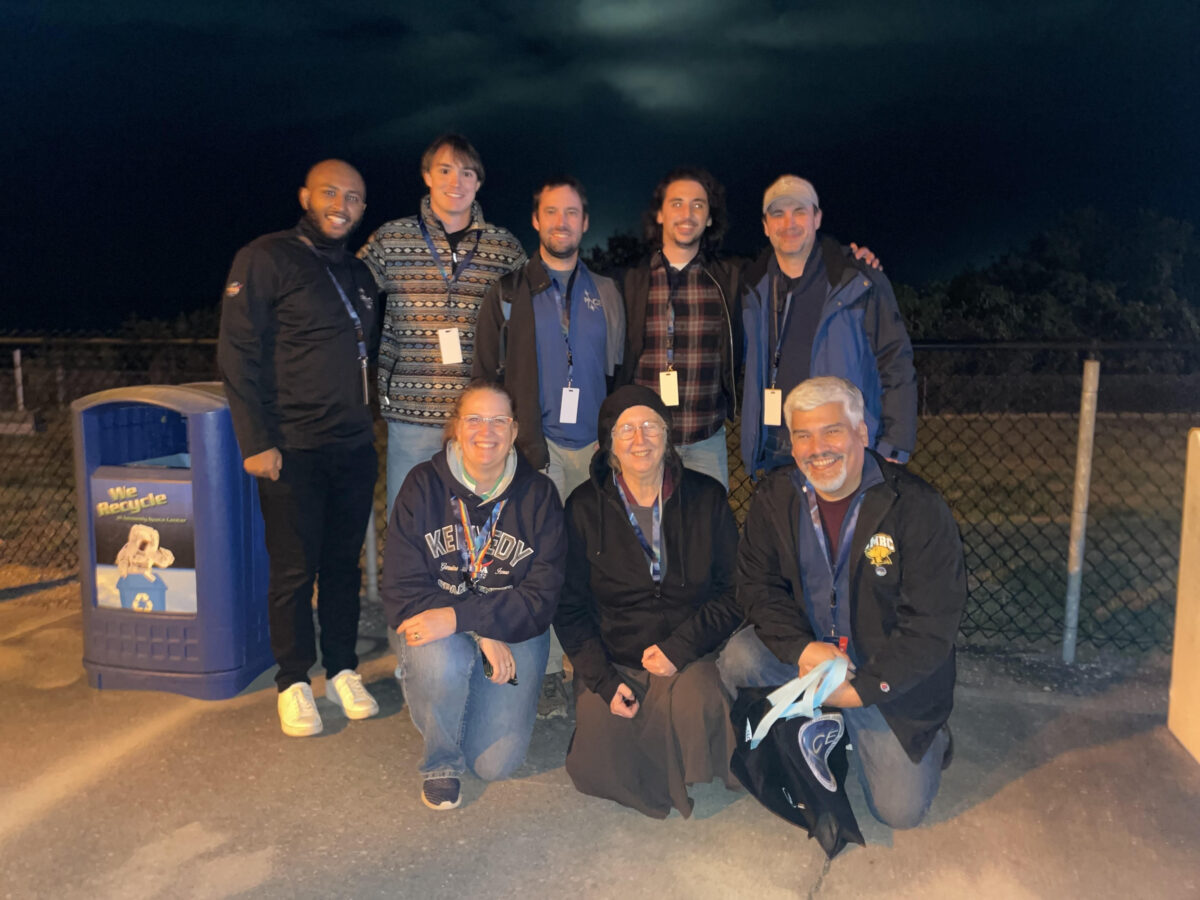
    <p>Arriving by bus a little before midnight to the Banana Creek Launch Viewing Area at Kennedy Space Center, just over six miles from Space Launch Complex-40, the close-knit UMBC entourage huddled together waiting for the final countdown.</p>


    <p>When it came, they—along with hundreds of other space launch watchers—held their breath and then yelled and clapped as SpaceX’s Falcon 9 rocket blasted off and propelled PACE 400 miles above Earth into sun-synchronous orbit. Minutes later the Falcon 9’s first stage—SpaceX’s reusable rocket booster—successfully landed at Landing Zone 1. The crowd gasped audibly at the sonic boom, caused when the spacecraft broke the sound barrier.</p>


    <div>
    <div><div class="embed-container"><iframe src="https://www.youtube.com/embed/TONpBd6Z6lE?feature=oembed" frameborder="0" webkitallowfullscreen="webkitAllowFullScreen" mozallowfullscreen="mozallowfullscreen" allowfullscreen="allowFullScreen">[Video]</iframe></div></div>
    </div>


    <p>“It still doesn’t quite feel real,” said <strong>Noah Christian Sienkiewicz</strong>, a calibration scientist who earned his master’s degree in atmospheric physics from UMBC in 2019 and expects to complete his physics doctorate this summer. “I grew up watching Carl Sagan and dreamed of going into astrophysics. I never thought I’d be the person making the instruments that will go up and do the measurements.”</p>


    <p>“It’s so exciting—I’m going to cry,” uttered <strong>Margo Young</strong> from the upper bleacher. “I don’t always see the pieces and parts put together, so this is really historic.” </p>


    <p>Young serves as UMBC’s HARP program administrator, where she has overseen procurement and other back-end support for HARP since the program’s inception in 2013. “I get to see students come full circle—working in the lab and then graduating and becoming civil servants where they continue to be involved because it’s such an amazing project,” she explained.     </p>


    <h4><strong>On the path to PACE</strong></h4>


    <p>The UMBC HARP team’s remarkable journey from idea to mission reality spanned over 15 years, and involved countless hours of design, modeling, testing, and validation. Earlier iterations of HARP flew first on private aircraft over the Maryland countryside and then <a href="https://esto.nasa.gov/25years/harp/#:~:text=In%202020%2C%20the%203%2Dunit,Institute%20of%20Aeronautics%20and%20Astronautics." rel="nofollow external" class="bo">an award-winning “cubesat”</a> version launched into orbit from the International Space Station (ISS), all stepping stones on the path to PACE.</p>


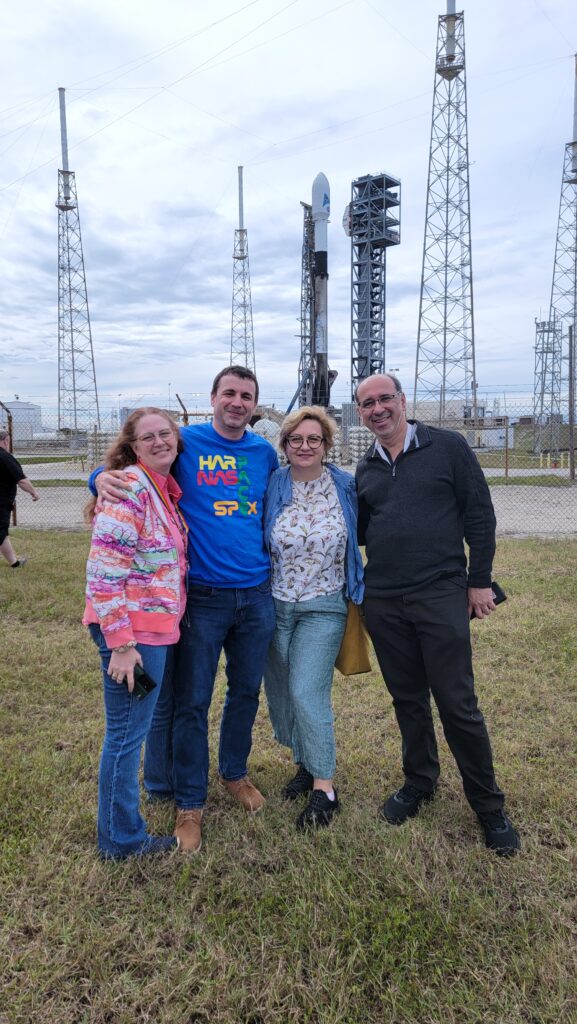
    <img width="577" height="1024" src="https://umbc.edu/wp-content/uploads/2024/02/Dominik-20240205_134247-577x1024.jpg" alt="four people stand in front of a launch area" style="max-width: 100%; height: auto;">Left to right: Margo Young, Dominik Cieslak, Magdalena Kuzmicz-Cieslak, and Vanderlei Martins stand in front of the PACE spacecraft the day before its launch. (Image courtesy of Margo Young)


    <p>For the three multidisciplinary HARP2 physics, optics, and research engineering leads, <strong>Vanderlei Martins</strong>, <strong>Roberto Borda,</strong> and <strong>Dominik Cieslak</strong>, HARP2’s launch represents a career-defining moment that at times seemed against all odds for a mid-size public university. UMBC’s strong partnerships with NASA, such as the <a href="https://gestar2.umbc.edu/" rel="nofollow external" class="bo">Goddard Earth Science Technology and Research (GESTAR) Center II</a> that supports Borda’s and Cieslak’s roles, help enable milestones like this.  </p>


    <p>“I feel like I’m still dreaming,” said a visibly emotional Cieslak, research engineer, who captured the launch on his long-range camera. </p>


    <p>Transfixed by the sight of live satellite footage of the PACE spacecraft heading to orbit, he added, “This is the last time we will physically see it [HARP2],” before hugging his long-time colleague, Borda. </p>


    <p>“We’re very proud to have UMBC in space,” added Martins, professor of physics, who watched the big moment from a VIP viewing area three miles from the launch site. “We dreamed big from the beginning. The team persevered and just kept going.” </p>


    <p>“I never despaired of having HARP2 on the PACE satellite,” admitted UMBC’s HARP2 manager, <strong>Lorraine Remer</strong>, research professor in the Joint Center for Earth Systems Technology. Her bigger worry wasn’t HARP2’s viability, but whether PACE would ever launch. “PACE was canceled four times and reinstated four times,” she recalled, noting that the program “survived a lengthy government shutdown and a global pandemic that destroyed our supply chains.” </p>


    <p>Immediately after launch, Remer had to return to Maryland and the Goddard Space Flight Center to oversee HARP2 being turned on within 36 hours of launch. “It would be nice to bask in the successful launch, but I haven’t had much time to contemplate the success. There is just more work to do all the time,” she said.</p>


    <h4><strong>An international effort</strong></h4>


    <p>NASA’s PACE mission clears the path for revolutionary new measurements of Earth’s oceans and atmosphere. HARP2 measures aerosol particles and clouds, as well as properties of land and water surfaces. By analyzing particles like dust, wildfire smoke, or urban pollution, the science community gains deeper insights into air quality as well as global warming and its impacts. Scientists will be able see through things like sun glint to ascertain patterns never before possible.</p>


    <img width="1200" height="900" src="https://umbc.edu/wp-content/uploads/2024/02/Anne-WS-6-1200x900.jpeg" alt="outdoor group photo of eight people, dark night sky in background" style="max-width: 100%; height: auto;">Members of the HARP team eagerly await the PACE launch at Kennedy Space Center’s Banana Creek Launch Viewing Area before the final countdown. Top, left to right: Yomiyu Fekadu, Ian Decker, Ben Cramer, Noah Sienkiewicz, Dominik Cieslak. Bottom, left to right: Margo Young, Lorraine Remer, Roberto Borda. (Image by Anne Wainscott-Sargent)


    <p>A second polarimeter on PACE, the Spectro-polarimeter for Planetary Exploration (SPEXone), developed through a Dutch consortium consisting of SRON Netherlands Institute for Space Research and Airbus Defence and Space Netherlands, will measure sunlight reflected from Earth’s atmosphere, land surface and ocean.</p>


    <p>These two companion polarimeter instruments are important because the interaction between aerosols and clouds is the biggest unknown factor in atmospheric temperature change, according to reports from the <a href="https://www.ipcc.ch/report/ar6/wg1/" rel="nofollow external" class="bo">U.N.’s Intergovernmental Panel on Climate Change.</a> </p>


    <p>“I have watched Dr. Martins and his team work toward this moment for about a decade, and have been aware of the trials and tribulations along the way. Seeing the smiles on their faces in the control station after the launch made it all worthwhile,” shared UMBC Vice President for Research<strong> Karl V. Steiner</strong>. “The HARP2 mission as an integral part of PACE is making all of us proud here on the UMBC campus. We cannot wait to see the science that will come from this engineering masterpiece conceptualized and created right here in Maryland.”</p>


    <h4><strong>Waiting game</strong></h4>


    <p>In the days leading up to the PACE launch, the HARP2 team knew there might be delays because of the weather so they rented a large Airbnb in neighboring Cocoa Beach for the full week. Earlier in the week, over grilled food at the shared house, the team reflected on their journey.</p>


    <p>According to Martins, a key strategy was bringing together engineering and physics students, who typically don’t communicate well across disciplines.  </p>
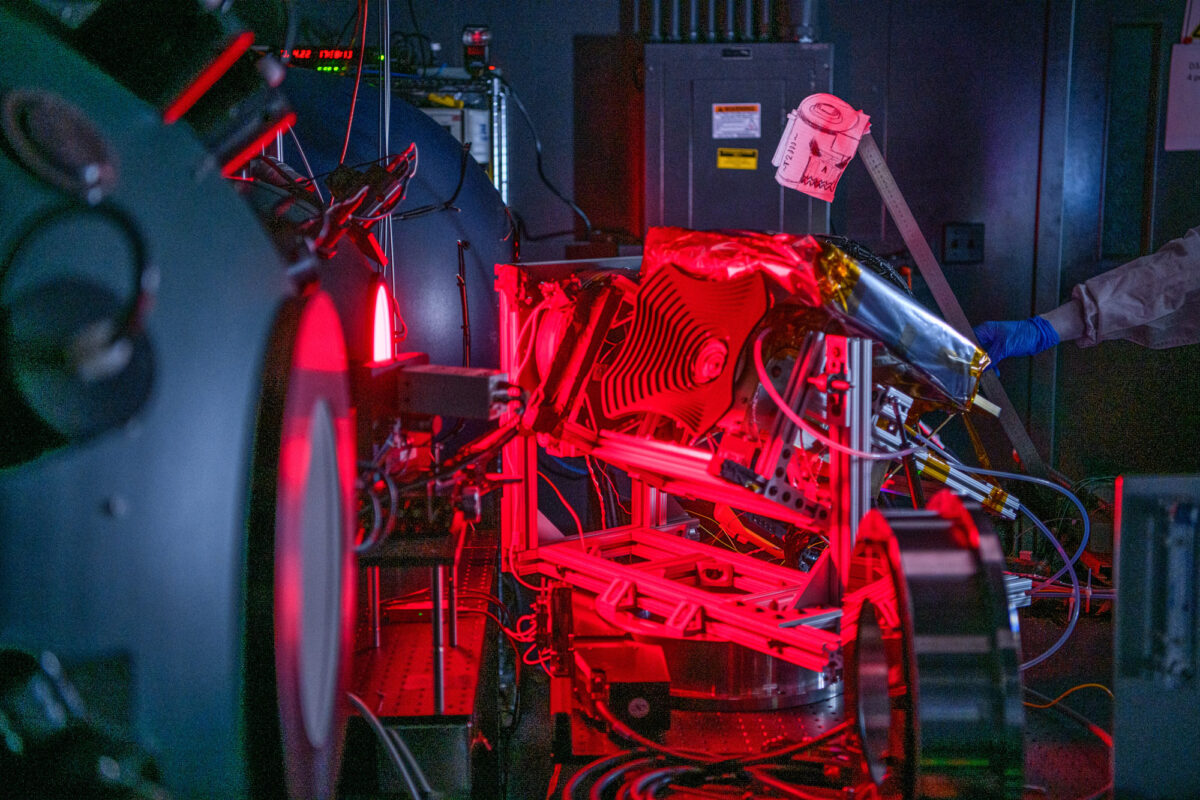


    <img width="1200" height="800" src="https://umbc.edu/wp-content/uploads/2024/02/Testing-1200x800.jpg" alt="image of a technical instrument flooded in red light during a test" style="max-width: 100%; height: auto;">The HARP2 instrument undergoes calibration testing with red light. (Image by NASA)


    <p>“We introduced engineering students to the physics students and made them work together very quickly so they spoke the same language,” he said, crediting this multidisciplinary collaboration to the team’s ability to rapidly iterate and problem solve.</p>


    <p>Borda, senior research engineer overseeing HARP2’s optical design, said a key technical challenge was determining how to best compensate for the effects of polarized light waves inside the instrument.</p>


    <p>“It’s continuous work and you cannot do it alone. We needed a fantastic team with not only the staff but also students working at different levels,” Borda said. “There are undergraduate students and Ph.D.s integrated into the team who put in a lot of effort to make this real. We’re really thankful for the environment at this university—we’re able to work with students who find a career in this industry and field of research.”</p>


    <h4><strong>Nurturing future career scientists</strong></h4>


    <p>Martins echoed Borda’s pride in the broad level of participation in the HARP program, from high school students to senior scientists.</p>


    <p>“We’ve had people from our team who now work in all levels of industry—at NASA, at NOAA, or in private industry. We’ve even had some students start their own company.”</p>


    <p>Young, the program administrator, estimates that the cooperative agreements between UMBC and NASA have resulted in 20 UMBC graduates finding roles with NASA.</p>


    <div>
    	<blockquote>
    		
    		<div>	
    			<div>
    				<div>“</div>
    			</div>
    
    			<div>
    				<p>“It was everything I could have asked for. No other place would have let me be involved in the entire process, including making parts for HARP2 in the machine shop. Not only did I get to do hands-on stuff, but I also was part of the design and saw it all come together on a NASA mission.”</p>


    									<div>
    						
    	
    						<div>
    				
    				<p>Yomiyu Fekadu ’20, mechanical engineering, M.S. ’23, engineering management</p>
    										
    											</div>
    					</div> 
    								</div>
    
    		</div>		
    	</blockquote>
    </div>


    <p>UMBC alumna <strong>Elissa Ogburn</strong> is one such graduate. She began working on HARP2 as a computer science major, tasked with creating a database that supported ground communications so researchers could communicate with the instrument when it was in space.</p>


    <p>After graduating from UMBC in 2021, Ogburn joined NASA on the PACE project as a test conductor (TC)―responsible for integrating and testing the instruments onto the PACE spacecraft. During launch, she was one of five TCs in the PACE Control Room in Titusville, Florida, who powered up the spacecraft for the last time and configured it for launch. </p>


    <p>“I never imagined having a job at NASA or working with people who were this smart, helpful, and kind. Every single person I’ve worked with was so fun. It’s also cool to have seen the whole process beginning as a student at UMBC. PACE is my first mission, so I’m learning everything as I go,” Ogburn said.</p>


    <h4><strong>Close collaboration</strong></h4>


    <p>The partnership between NASA and UMBC goes back over two decades. NASA Goddard Space Flight Center and UMBC are located just up the road from one another.</p>


    <p>Jeremy Werdell, PACE project scientist at Goddard, recalled how initial calls to industry and academia for a polarimetry instrument for PACE were not promising due to cost and other factors.</p>


    <p>However, Martins immediately suggested to Werdell that his lab develop a polarimeter, given his team’s experience with airborne instruments and the HARP cubesat, and the rest is history. In the end, NASA selected two polarimeters—HARP2 and SPEXone. </p>
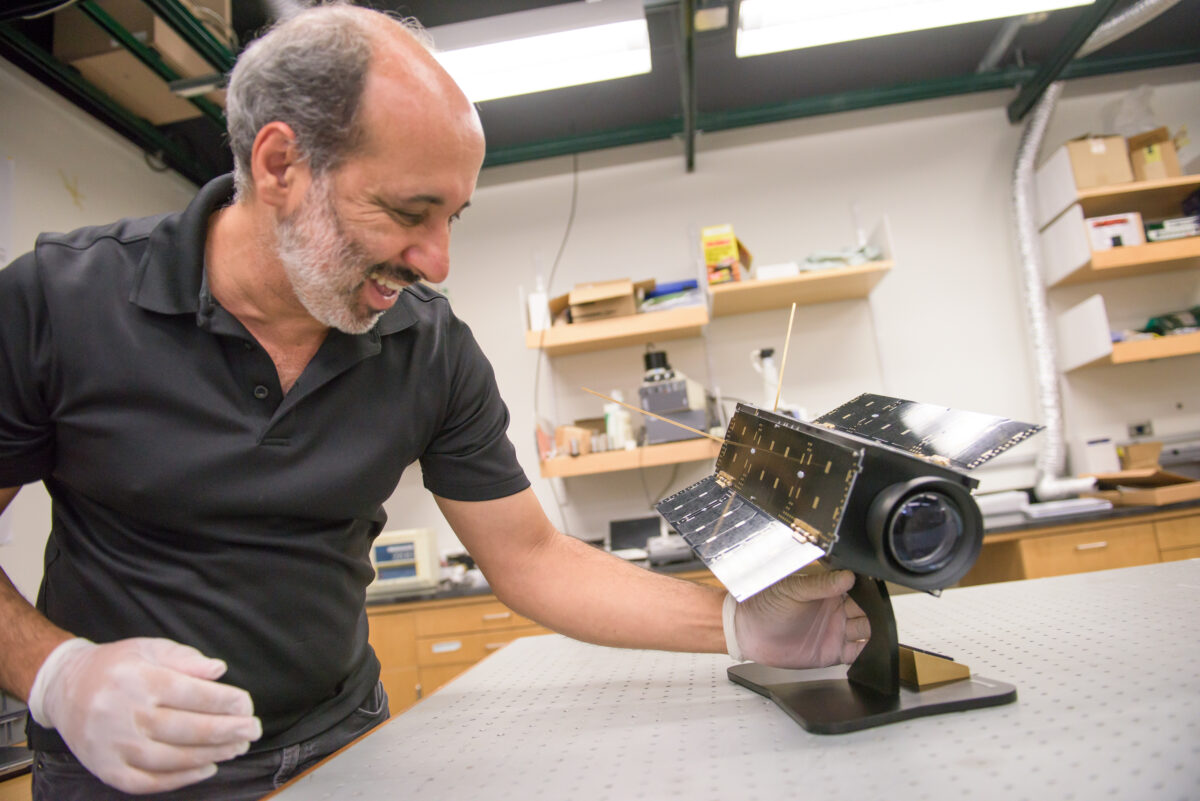


    <img width="1200" height="801" src="https://umbc.edu/wp-content/uploads/2024/02/Vanderlei-Satellite-7884-1200x801.jpg" alt="a man smiles with a small cubesat instrument" style="max-width: 100%; height: auto;">Vanderlei Martins inspects the HARP cubesat, which launched in 2019. (Image by Marlayna Demond ’11/UMBC)


    <p>Each instrument measures polarization differently: HARP2 is multispectral (measuring only four wavelengths of light) and  hyperangular, so it looks at the same piece of real estate multiple times from dozens of different viewing directions. Its wide swath coverage means HARP2 will cover the globe every two days. SPEXone, on the other hand, is hyperspectral (measuring a continuous spectrum of light from the ultraviolet to near-infrared) but only views Earth at five angles. It has a narrower swath, meaning it will take almost a month to cover the globe. </p>


    <p>“They’re small and mighty and miraculously complement each other very, very well,” said Werdell. “Having multi-band, multi-angle polarimetry is going to open up a lot of really interesting opportunities for discovery, because we can see clouds and aerosols in very different ways.”</p>


    <p>HARP2 provides daily views that will help scientists understand how aerosols and clouds interact and their role in warming and cooling in the atmosphere. </p>
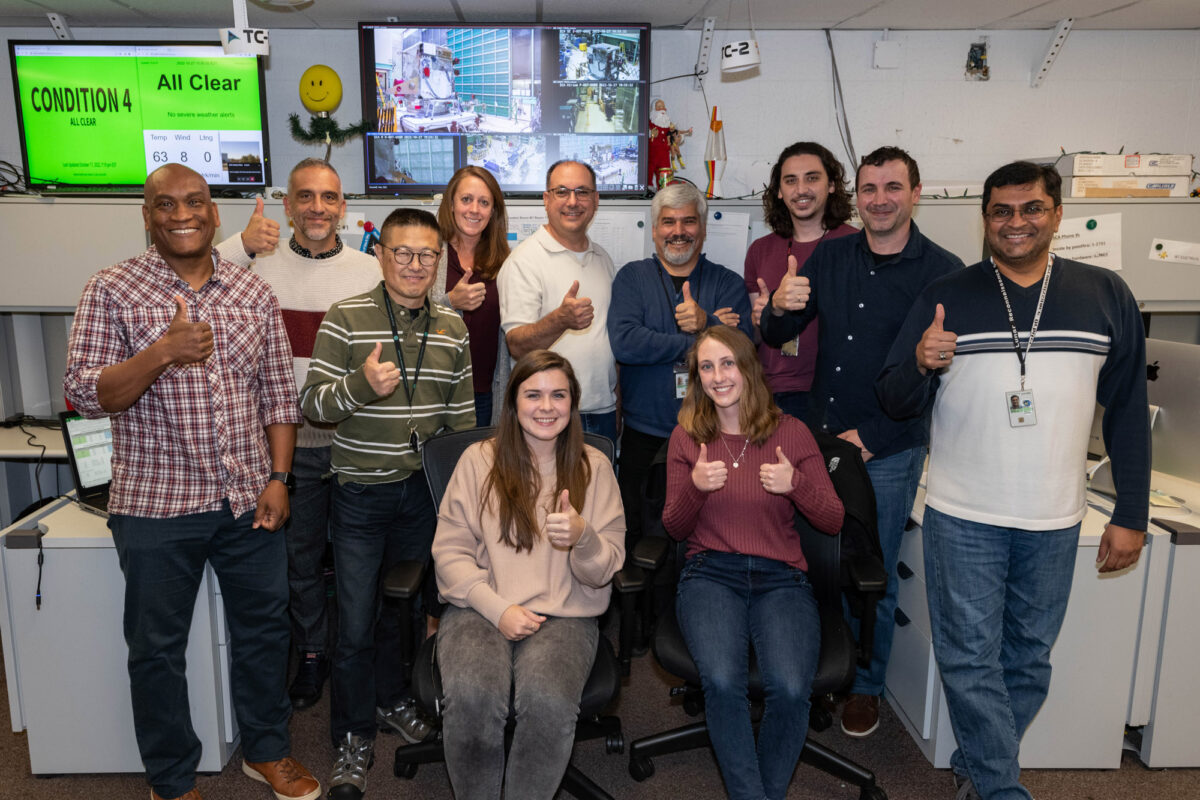


    <img width="1200" height="800" src="https://umbc.edu/wp-content/uploads/2024/02/GSFC_20221027_PACE_076428_2000w-1200x800.jpg" alt='group photo, everyone giving a thumbs up. Several webcam scenes of the spacecraft on a screen behind the group; also a bright green screen that reads "All Clear"' style="max-width: 100%; height: auto;">Some members of the HARP2 team successfully test HARP2’s electrical Integration to the  Spacecraft. (Image by NASA)


    <p>“Understanding where aerosols are, how they’re transported, how they interact with clouds, and whether they absorb or reflect radiation is important to everybody because those characteristics are what drive warming of the atmosphere.” Werdell said.</p>


    <h4><strong>Better air quality models </strong></h4>


    <p>Onsite at the Cape for the first launch attempts, <strong>Nirandi Jayasinghe </strong>and <strong>Rachel Smith</strong>, both physics graduate research assistants at UMBC, shared their excitement for the PACE mission and HARP2’s potential to help modelers predict air quality, rain, or if the atmosphere is warming or cooling. </p>
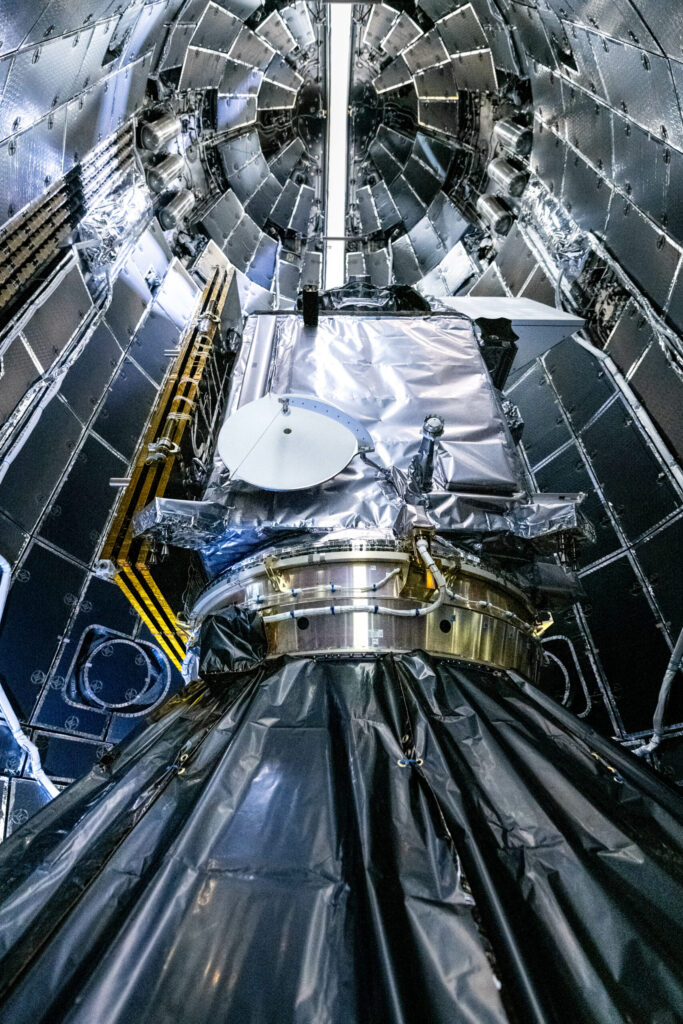


    <img width="683" height="1024" src="https://umbc.edu/wp-content/uploads/2024/02/payload-inside-fairing_NASA-683x1024.jpg" alt="Roughly box-shaped silver object sits atop a black cone-shaped object inside a large metal dome, with various attachments coming out all sides of the box." style="max-width: 100%; height: auto;">NASA and SpaceX technicians safely encapsulated NASA’s PACE spacecraft in SpaceX’s Falcon 9 payload fairings–a protective shell for the instruments on PACE during launch. (Image by NASA)


    <p>Jayasinghe is a data modeler who comes up with different methods to retrieve information from HARP2. Originally from Sri Lanka, Jayasinghe notes that her hometown used to be one of her country’s cleanest cities, and now due to development in Sri Lanka’s dominant neighbor, India, the air quality is extremely bad. She said HARP2 can help close the gap that exists in understanding the twilight zone—where a cloud starts and where it stops—by providing more accurate measurements. </p>


    <p>Smith adds that this will go a long way in understanding cloud formation processes, weather patterns, forecasting, and climate modeling—information important for agriculture, transportation, disaster preparedness, and infrastructure planning. </p>


    <p>“Even simple things like weather forecasting are impacted by how much dust is in the air,” said Smith, a 2026 doctoral candidate who earned her M.S. in atmospheric physics from UMBC in 2023. HARP2 will help address whether clouds have a net cooling effect or a net warming effect, which will allow for more accurate models of where Earth’s climate is headed. Smith notes that during events like the Canadian wildfires in 2023 no one could accurately predict rainfall, because the forecasting models were not accounting for the number of airborne aerosols.</p>


    <p>“I’m really excited to see what new science questions come out of the instruments that we’re putting up in space,” she concluded.</p>


    <h4><strong>Bouncing back from disaster </strong></h4>


    <p>The HARP2 team has come a long way from initial concept to PACE. What impresses Werdell the most is the UMBC team’s resilience in the face of setbacks.</p>


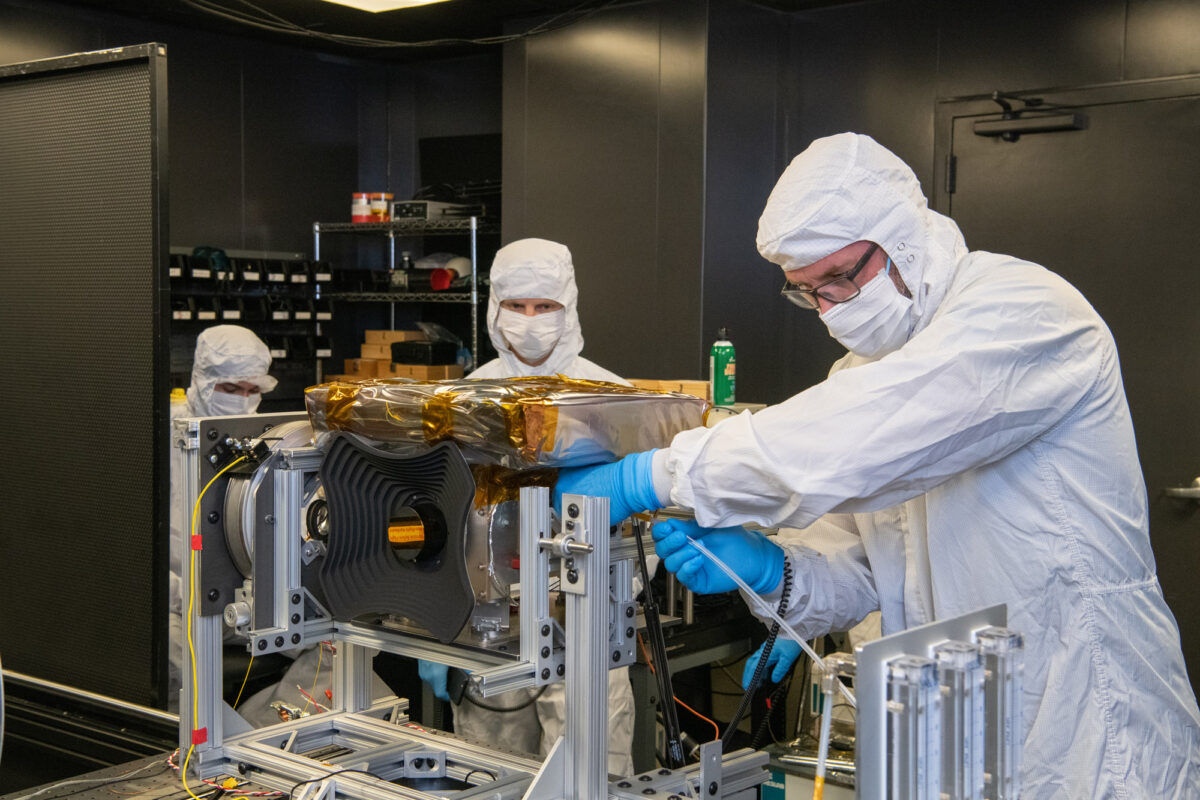
    <p>The most devastating moment came in February 2022, one month before the team was set to deliver HARP2 to NASA for integration on the spacecraft. As the instrument was in the last few seconds of vibration tests, the bonding on one of the prisms loosened and shattered. </p>


    <p>“It tactically put us to point zero,” recalled Cieslak, who was shocked and humbled when so many NASA scientists volunteered their time and expertise to help the HARP2 team get back on track. </p>


    <p>“We got an extension, and within two months we had built a new engineering model and were able to prove the new solution worked. By September, we were back to where we were before the incident,” he added.</p>


    <img width="1200" height="800" src="https://umbc.edu/wp-content/uploads/2024/02/GSFC_20220921_PACE_071380_2000w-1200x800.jpg" alt='two technicians in clean room "bunny suits" and blue gloves inspect the HARP instrument.' style="max-width: 100%; height: auto;">HARP2 calibration testing at Goddard Space Flight Center in Maryland, before the instrument was delivered to NASA. (Image by NASA)


    <p>First-time NASA launch attendee <strong>Yomiyu Fekadu </strong>’20, mechanical engineering, M.S. ’23, engineering management, recalled that time well, as he helped assemble HARP2 as an intern under <strong>Benjamin Cramer</strong> ’17, M.S. ’20, mechanical engineer on the program.  </p>


    <p>“Especially after the failure, and the review board assessment, I helped put everything back together and do the test plans for construction and other documentation so NASA could give us the go-ahead to move on,” Fekadu said. </p>


    <p>The experience was pivotal to his career. “It was everything I could have asked for,” said Fekado, now a systems engineer at Northrop Grumman. “No other place would have let me be involved in the entire process, including making parts for HARP2 in the machine shop. Not only did I get to do hands-on stuff, but I also was part of the design and saw it all come together on a NASA mission.”</p>


    <p>As the HARP2 group left the viewing platform to line up for bus rides back to the Space Center, the smiles and easy camaraderie conveyed a collective sense of pride, relief, and excitement. </p>


    <p>“I‘m now just anxious to see the first bytes of data,” said Cieslak, echoing the feeling of his colleagues.</p>


    <hr>


    <p><em>In addition to the HARP team, several additional GESTAR II scientists and engineers were instrumental in their contributions  to the overall PACE mission, including </em><strong><em>Ivona Cetinić</em></strong><em>, </em><strong><em>Andrew Sayer</em></strong><em>, </em><strong><em>Violeta Sanjuan Calzado</em></strong><em>, </em><strong><em>Bridget Seegers</em></strong><em>, </em><strong><em>Susanne Craig</em></strong><em>, </em><strong><em>Dirk Aurin</em></strong><em>, </em><strong><em>Meng Gao</em></strong><em>, <strong>Inia Soto Ramos</strong></em>, <em>and </em><strong><em>Ian Carroll</em></strong><em>.</em></p>


    <p><em>Update: On February 10, HARP2 successfully connected with instrumentation on the ground and all of its systems appear to be working as intended. </em></p>


    <p><a href="https://esi.umbc.edu/harp2-project/" rel="nofollow external" class="bo"><em>Follow along</em></a><em> with what’s learned from the HARP2 project.</em></p>
    </div>
]]>
</Body>
<Summary>By Anne Wainscott-Sargent      The third time’s the charm. Against a calm and crisp dark night sky on Florida’s Cape Canaveral last Thursday, February 8, just after 1:30 a.m., the Plankton,...</Summary>
<Website>https://umbc.edu/stories/harp2-launches-on-nasa-pace-mission/</Website>
<TrackingUrl>https://my3.my.umbc.edu/api/v0/pixel/news/139053/guest@my.umbc.edu/e0dbaea402ea1a164a7f168d63631a1e/api/pixel</TrackingUrl>
<Tag>cnms</Tag>
<Tag>coeit</Tag>
<Tag>compsci</Tag>
<Tag>engineering-management</Tag>
<Tag>esi</Tag>
<Tag>feature</Tag>
<Tag>gestar</Tag>
<Tag>gestar2</Tag>
<Tag>meche</Tag>
<Tag>news</Tag>
<Tag>physics</Tag>
<Tag>rca</Tag>
<Tag>research</Tag>
<Tag>science-and-tech</Tag>
<Tag>story</Tag>
<Group token="umbc-news-magazine">UMBC News &amp;amp; Magazine</Group>
<GroupUrl>https://my3.my.umbc.edu/groups/umbc-news-magazine</GroupUrl>
<AvatarUrl>https://assets1-my.umbc.edu/system/shared/avatars/groups/000/001/943/24435aa6207c452e7bc15cc74b42c7bb/xsmall.png?1748556657</AvatarUrl>
<AvatarUrl size="original">https://assets1-my.umbc.edu/system/shared/avatars/groups/000/001/943/24435aa6207c452e7bc15cc74b42c7bb/original.png?1748556657</AvatarUrl>
<AvatarUrl size="xxlarge">https://assets2-my.umbc.edu/system/shared/avatars/groups/000/001/943/24435aa6207c452e7bc15cc74b42c7bb/xxlarge.png?1748556657</AvatarUrl>
<AvatarUrl size="xlarge">https://assets2-my.umbc.edu/system/shared/avatars/groups/000/001/943/24435aa6207c452e7bc15cc74b42c7bb/xlarge.png?1748556657</AvatarUrl>
<AvatarUrl size="large">https://assets3-my.umbc.edu/system/shared/avatars/groups/000/001/943/24435aa6207c452e7bc15cc74b42c7bb/large.png?1748556657</AvatarUrl>
<AvatarUrl size="medium">https://assets1-my.umbc.edu/system/shared/avatars/groups/000/001/943/24435aa6207c452e7bc15cc74b42c7bb/medium.png?1748556657</AvatarUrl>
<AvatarUrl size="small">https://assets2-my.umbc.edu/system/shared/avatars/groups/000/001/943/24435aa6207c452e7bc15cc74b42c7bb/small.png?1748556657</AvatarUrl>
<AvatarUrl size="xsmall">https://assets1-my.umbc.edu/system/shared/avatars/groups/000/001/943/24435aa6207c452e7bc15cc74b42c7bb/xsmall.png?1748556657</AvatarUrl>
<AvatarUrl size="xxsmall">https://assets2-my.umbc.edu/system/shared/avatars/groups/000/001/943/24435aa6207c452e7bc15cc74b42c7bb/xxsmall.png?1748556657</AvatarUrl>
<Sponsor>UMBC News &amp; Magazine</Sponsor>
<PawCount>4</PawCount>
<CommentCount>0</CommentCount>
<CommentsAllowed>false</CommentsAllowed>
<PostedAt>Fri, 16 Feb 2024 10:36:17 -0500</PostedAt>
<EditAt>Fri, 16 Feb 2024 10:36:17 -0500</EditAt>
</NewsItem>

<NewsItem contentIssues="true" id="138486" important="false" status="posted" url="https://my3.my.umbc.edu/groups/coeit-news-events/posts/138486">
<Title>Meet a Retriever&#8212;Kevin Yang &#8217;07, Alumni Association Executive Vice President</Title>
<Body>
<![CDATA[
    <div class="html-content">
    <img width="150" height="150" src="https://umbc.edu/wp-content/uploads/2024/01/20231014_Homecoming_2023-150x150.jpg" alt="Kevin Yang '07, Katelyn Niu '05, and their son holding up their Homecoming 2023 nametags." style="max-width: 100%; height: auto;">
    <h6><em><strong>Meet </strong>Kevin Yang ’07<strong>, computer science and financial economics. Kevin is a real estate entrepreneur, the current executive vice president and vice president of finance of the <a href="https://www.alumni.umbc.edu/s/1325/21/interior.aspx?sid=1325&amp;gid=1&amp;pgid=344" rel="nofollow external" class="bo">UMBC Alumni Association Board of Directors</a>, and one half of an alumni power couple. Kevin met his wife, </strong>Katelyn Niu ’05<strong>, biochemistry, when the pair found themselves in the same physics study group as undergrads (because where else do you find love at UMBC?). They both share a passion for UMBC that runs deep. Take it away, Kevin!</strong></em></h6>


    <h4>Q: What is your WHY? What brought you to UMBC? </h4>


    <p><strong>A. </strong>I grew up in an immigrant family and witnessed the sacrifices that my parents made to give me an opportunity to achieve the American dream. Although they never had the chance to finish high school, my parents firmly believed in the importance of higher education. I came to UMBC for a quality STEM education and found it to be a perfect fit. UMBC offered the resources of a larger university and the individualized attention of a smaller college.</p>


    <h4>Q: What’s your favorite part of Retriever Nation?</h4>


    <div>
    <div>
    <p><strong>A. </strong>I love UMBC’s commitment to inclusive excellence. Retriever Nation welcomes students from diverse backgrounds and provides them with the necessary support to succeed at UMBC and beyond. I am forever grateful for the amazing experience that I had at UMBC! In addition to receiving a quality education, I made many lifelong friends, including my wife. I have stayed engaged since graduation, and I am proud of UMBC’s commitment to inclusive excellence.</p>


    <h4>Q: Tell us what you love about your academic program or an organization you’re involved in.</h4>
    </div>
    <img width="768" height="1024" src="https://umbc.edu/wp-content/uploads/2024/01/20070524_Graduation_2007_02-768x1024.jpg" alt="" style="max-width: 100%; height: auto;">
    </div>


    <p><strong>A. </strong>I had an excellent experience with the <a href="https://www.csee.umbc.edu/undergraduate/computer-science-bs/" rel="nofollow external" class="bo">computer science</a> program, which offered many opportunities beyond the classroom. As a tutor, teaching assistant, and research assistant in the computer science department, I learned valuable written and verbal communication skills, which was a highlight of my UMBC education.</p>


    <div>
    	<blockquote>
    		
    		<div>	
    			<div>
    				<div>“</div>
    			</div>
    
    			<div>
    				<p>UMBC community members work together to help our students achieve their academic and professional goals.</p>


    									<div>
    						
    	
    						<div>
    				
    				<p>Kevin Yang ’07</p>
    										
    											</div>
    					</div> 
    								</div>
    
    		</div>		
    	</blockquote>
    </div>


    <p>Today, I am a real estate entrepreneur, the Founder of KRY Properties. As a business owner, I love the ability to chart my own path. I often have to assume multiple roles, which is both challenging and rewarding. The analytical, problem-solving, and communication skills that I developed at UMBC gave me the confidence to pursue entrepreneurship.</p>


    <h4>Q: Where did you find support? </h4>


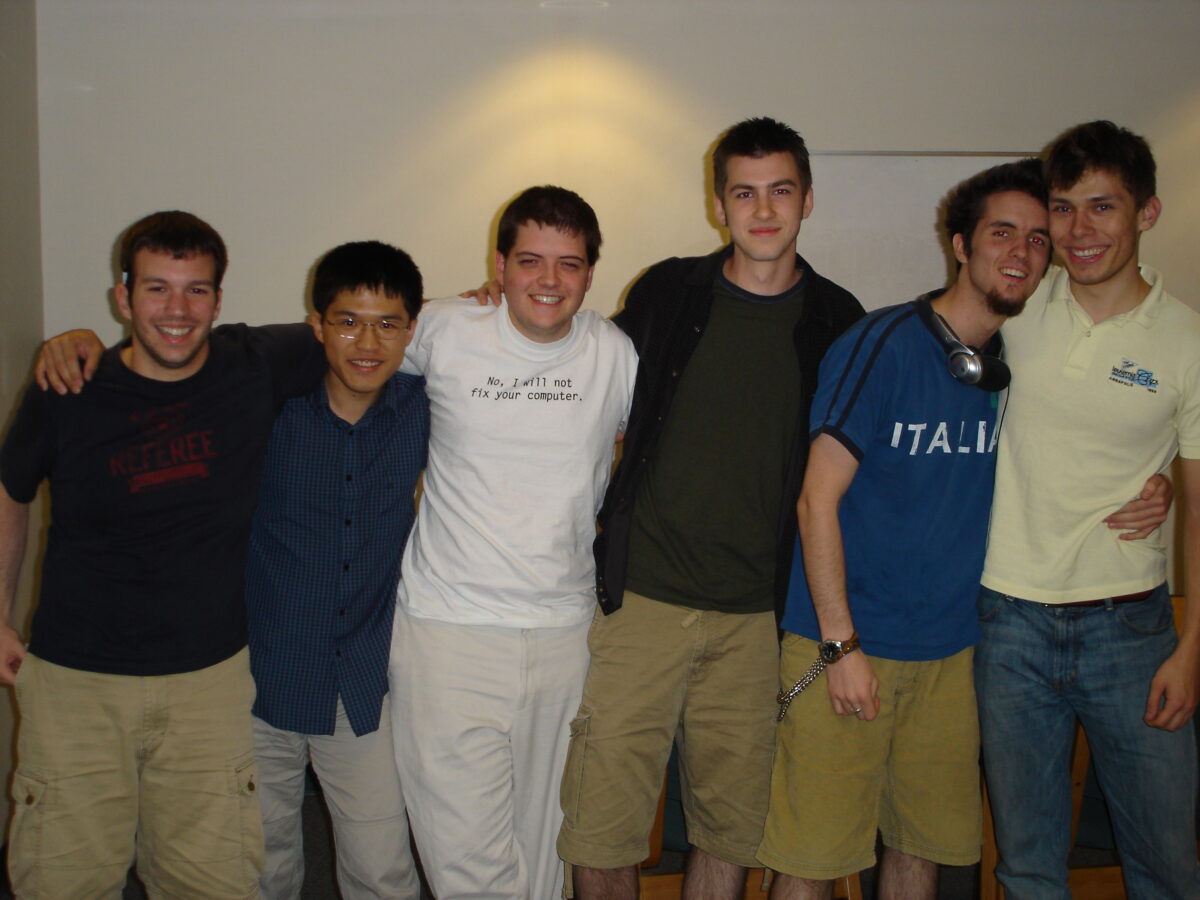
    <p><strong>A. </strong>I built meaningful and long-lasting relationships at UMBC. I attribute much of my personal growth and academic achievements to my peers. We struggled together in challenging engineering courses, contemplated our futures from late night into early morning, and celebrated our birthdays at the local Olive Garden. We strengthened our bonds through highs and lows, and I will forever cherish those special memories.</p>


    <img width="1200" height="900" src="https://umbc.edu/wp-content/uploads/2024/01/20050515_CMSC441H_Study_Group-1200x900.jpg" alt="CMSC 441H, Algorithms with Professor Richard Chang, study group in Harbor Hall with fellow UMBC alumni JC Montminy, Kevin Yang, Donald Miner, Corey Weidenhammer, Alessandro Ferrucci, and Brandon Wilson." style="max-width: 100%; height: auto;">CMSC 441H, Algorithms with Professor Richard Chang, study group in Harbor Hall with fellow UMBC alumni JC Montminy, Kevin Yang, Donald Miner, Corey Weidenhammer, Alessandro Ferrucci, and Brandon Wilson.


    <h4>Q: Tell us about someone in the community who has inspired you.</h4>


    <p><strong>A. </strong>I received substantial financial and academic support from the Meyerhoff Scholars Program, which laid the foundation for my personal and professional successes. As a Meyerhoff Scholar, I learned about and took advantage of many incredible opportunities, such as summer internships at Georgia Tech and MIT. The Meyerhoff Scholars Program and its co-founder, Dr. Freeman A. Hrabowski, III, have inspired me to give back to the community that gave me so much.</p>


    <h4>Q: As alumni, how have you and Katelyn given back?</h4>


    <p><strong>A. </strong>“To whom much is given, much is required.” I have been a donor every year since I graduated in 2007. My support focuses on scholarships, including the <a href="https://meyerhoff.umbc.edu/" rel="nofollow external" class="bo">Meyerhoff Scholars Program</a> and the <a href="https://www.alumni.umbc.edu/s/1325/21/interior.aspx?sid=1325&amp;gid=1&amp;pgid=451" rel="nofollow external" class="bo">Alumni Endowed Scholarship Fund</a>. My wife, Katelyn, and I established an endowed scholarship in 2014 to support undergraduate students. Katelyn and I were fortunate to receive scholarships at UMBC. We are giving back so students who come after us can continue to have the same extraordinary experience that shaped our future.</p>


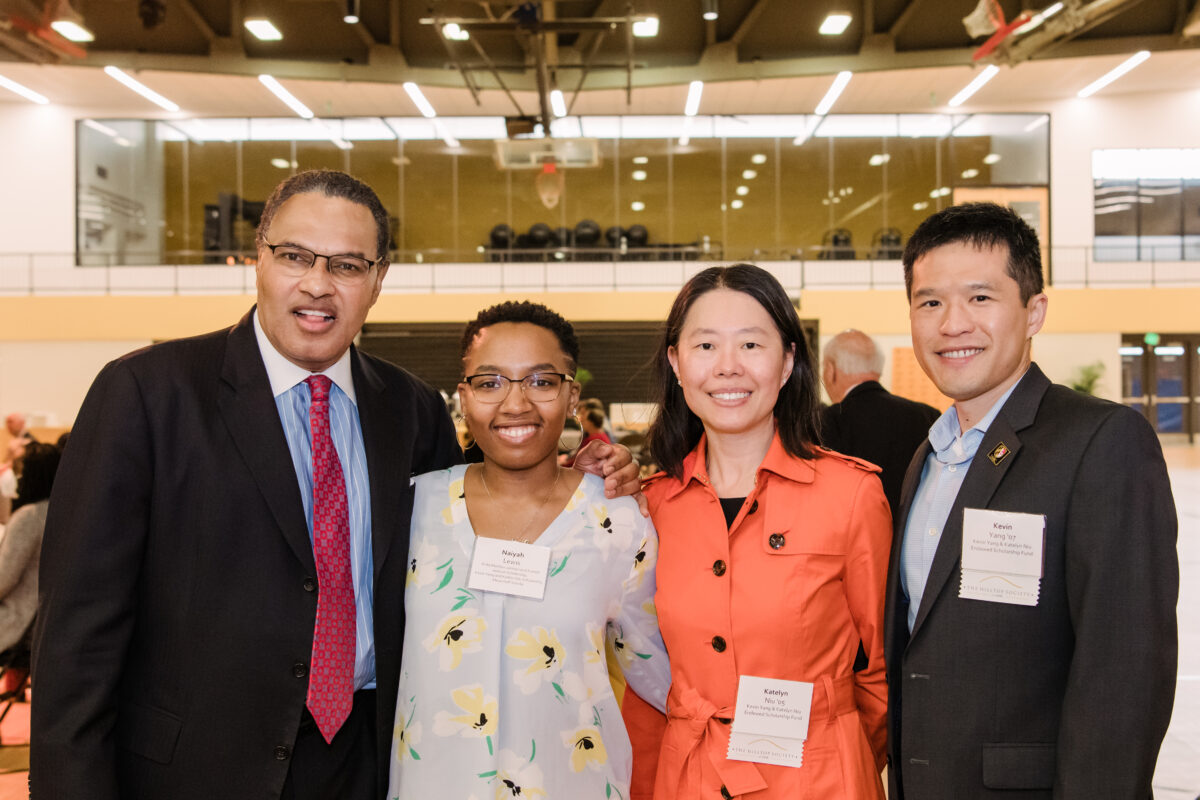
    <img width="1200" height="800" src="https://umbc.edu/wp-content/uploads/2024/01/20220401_Endowed_Scholarship_Luncheon_2022-1200x800.jpg" alt="Katelyn Niu and Kevin Yang pose for a photo with Naiyah Lewis, one of their scholars, and UMBC President Emeritus Dr. Freeman A. Hrabowski, III at the 2022 Endowed Scholars Luncheon." style="max-width: 100%; height: auto;">Katelyn Niu and Kevin Yang pose for a photo with Naiyah Lewis, one of their scholars, and UMBC President Emeritus Dr. Freeman A. Hrabowski, III, at the 2022 <a href="https://flickr.com/photos/umbcalumni/albums/72177720297906024/" rel="nofollow external" class="bo">Endowed Scholars Luncheon</a>.


    <h4>Q: What’s the one thing you’d want someone who hasn’t joined the UMBC community to know about the support you find here?</h4>


    <p><strong>A. </strong>UMBC community members work together to help our students achieve their academic and professional goals. We are proud of our collaborative culture!</p>


    <p>* * * * *</p>


    <p><em>UMBC’s greatest strength is its people. When people meet Retrievers and hear about the passion they bring, the relationships they create, the ways they support each other, and the commitment they have to inclusive excellence, they truly get a sense of our community. That’s what “Meet a Retriever” is all about.</em></p>


    <p><a href="http://umbc.edu/how" rel="nofollow external" class="bo"><em>Learn more about how UMBC can help you achieve your goals.</em></a></p>
    </div>
]]>
</Body>
<Summary>Meet Kevin Yang ’07, computer science and financial economics. Kevin is a real estate entrepreneur, the current executive vice president and vice president of finance of the UMBC Alumni...</Summary>
<Website>https://umbc.edu/stories/meet-kevin-yang-alumni-association-vice-president/</Website>
<TrackingUrl>https://my3.my.umbc.edu/api/v0/pixel/news/138486/guest@my.umbc.edu/a3688e5e3b57ddc1135a96deb38440d4/api/pixel</TrackingUrl>
<Tag>alumni</Tag>
<Tag>alumni-association</Tag>
<Tag>alumni-endowed-scholarship</Tag>
<Tag>biochemistry</Tag>
<Tag>coeit</Tag>
<Tag>compsci</Tag>
<Tag>financial-economics</Tag>
<Tag>impact</Tag>
<Tag>magazine</Tag>
<Tag>meet-a-retriever</Tag>
<Tag>meyerhoff-scholars</Tag>
<Tag>story</Tag>
<Group token="umbc-news-magazine">UMBC News &amp;amp; Magazine</Group>
<GroupUrl>https://my3.my.umbc.edu/groups/umbc-news-magazine</GroupUrl>
<AvatarUrl>https://assets1-my.umbc.edu/system/shared/avatars/groups/000/001/943/24435aa6207c452e7bc15cc74b42c7bb/xsmall.png?1748556657</AvatarUrl>
<AvatarUrl size="original">https://assets1-my.umbc.edu/system/shared/avatars/groups/000/001/943/24435aa6207c452e7bc15cc74b42c7bb/original.png?1748556657</AvatarUrl>
<AvatarUrl size="xxlarge">https://assets2-my.umbc.edu/system/shared/avatars/groups/000/001/943/24435aa6207c452e7bc15cc74b42c7bb/xxlarge.png?1748556657</AvatarUrl>
<AvatarUrl size="xlarge">https://assets2-my.umbc.edu/system/shared/avatars/groups/000/001/943/24435aa6207c452e7bc15cc74b42c7bb/xlarge.png?1748556657</AvatarUrl>
<AvatarUrl size="large">https://assets3-my.umbc.edu/system/shared/avatars/groups/000/001/943/24435aa6207c452e7bc15cc74b42c7bb/large.png?1748556657</AvatarUrl>
<AvatarUrl size="medium">https://assets1-my.umbc.edu/system/shared/avatars/groups/000/001/943/24435aa6207c452e7bc15cc74b42c7bb/medium.png?1748556657</AvatarUrl>
<AvatarUrl size="small">https://assets2-my.umbc.edu/system/shared/avatars/groups/000/001/943/24435aa6207c452e7bc15cc74b42c7bb/small.png?1748556657</AvatarUrl>
<AvatarUrl size="xsmall">https://assets1-my.umbc.edu/system/shared/avatars/groups/000/001/943/24435aa6207c452e7bc15cc74b42c7bb/xsmall.png?1748556657</AvatarUrl>
<AvatarUrl size="xxsmall">https://assets2-my.umbc.edu/system/shared/avatars/groups/000/001/943/24435aa6207c452e7bc15cc74b42c7bb/xxsmall.png?1748556657</AvatarUrl>
<Sponsor>UMBC News &amp; Magazine</Sponsor>
<PawCount>0</PawCount>
<CommentCount>0</CommentCount>
<CommentsAllowed>false</CommentsAllowed>
<PostedAt>Fri, 26 Jan 2024 15:34:40 -0500</PostedAt>
<EditAt>Fri, 26 Jan 2024 15:34:40 -0500</EditAt>
</NewsItem>

</News>