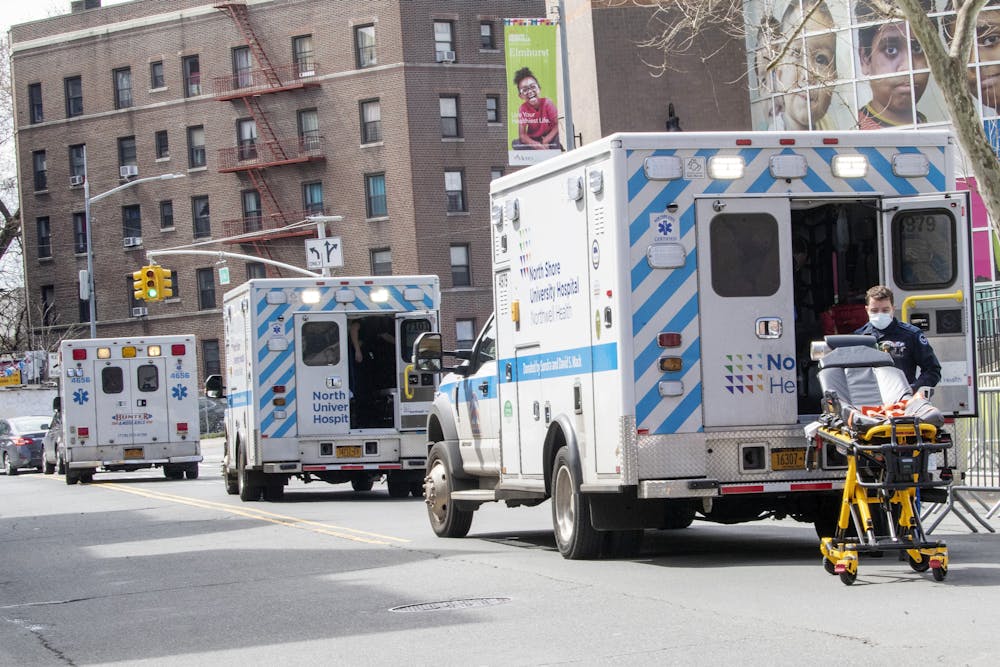
The Hilltop Institute at UMBC revolutionizes data analytics to advance health and wellbeing

Two researchers from The Hilltop Institute at UMBC just received a National Science Foundation (NSF) grant to investigate hospital price transparency. With the nearly $300,000 award funded by the Build and Broaden initiative, Morgan Henderson, principal data scientist and affiliate professor of economics, and Morgane Mouslim, policy analyst, will collect and synthesize prices for common health services now being posted by hospitals in response to a 2021 federal mandate intended to help patients “shop” for lower-priced care. Henderson and Mouslim will use the data to study hospital pricing behavior, and they will also make the data available to other researchers.
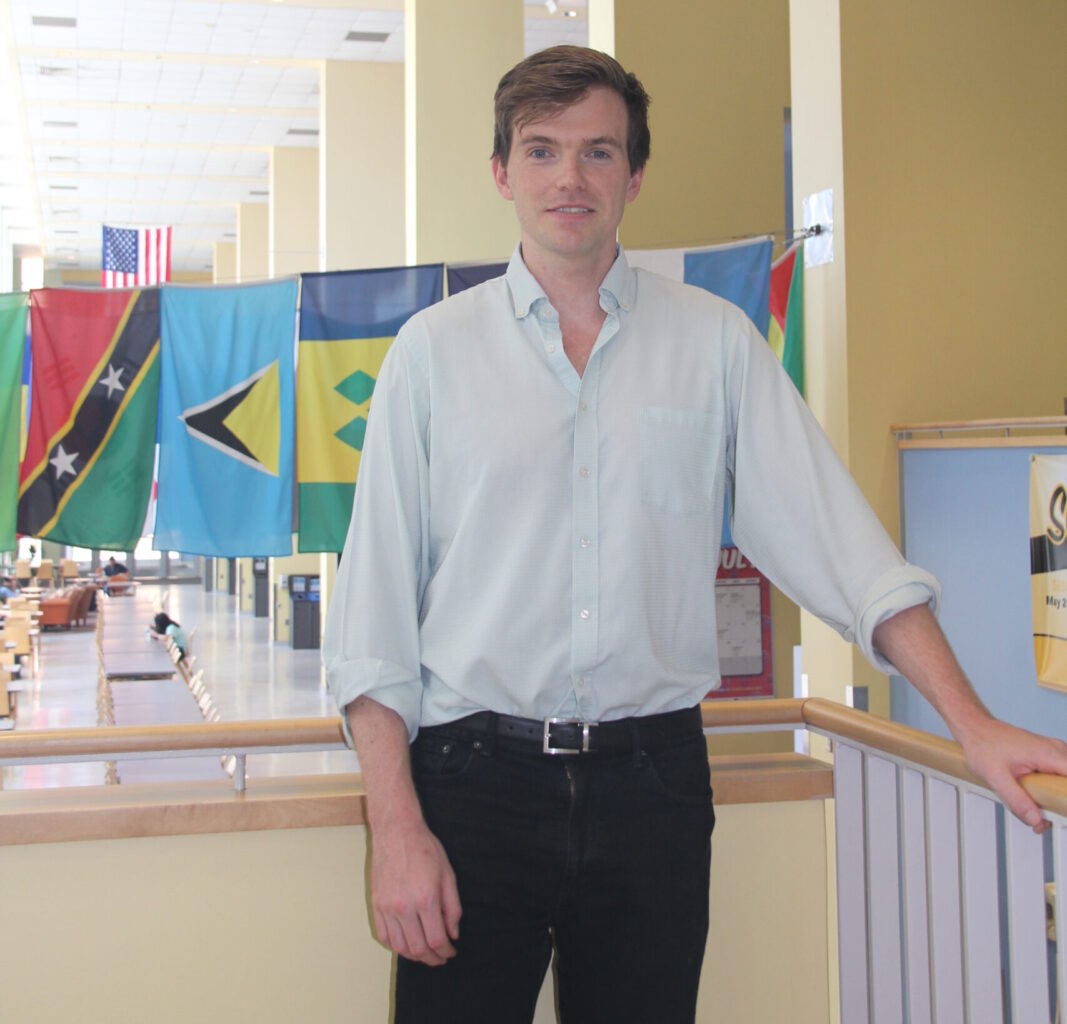 Morgan Henderson. (Image courtesy of Hilltop)
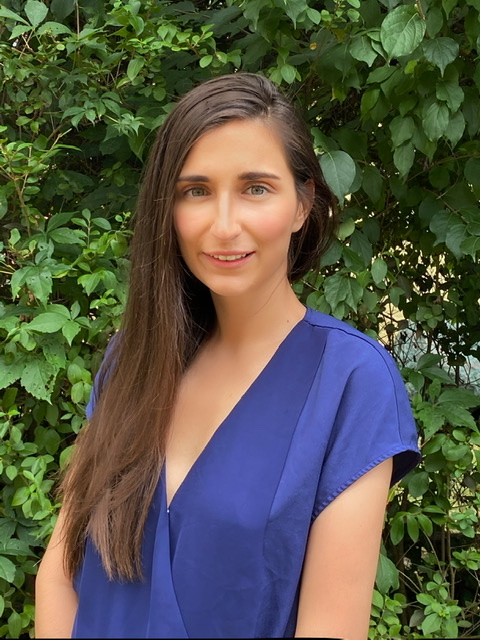 Morgane Mouslim. (Image courtesy of Hilltop)
Hospital care is a major driver of spiraling health care costs and this work has the potential to refocus the conversation among policymakers, practitioners, and consumers. It’s also just one of Hilltop’s numerous high-impact research projects from a nearly 30-year history at UMBC. A hallmark of that research is partnership.
Collaboration from day one
Hilltop launched at UMBC in 1994, in partnership with the Maryland Department of Health. One of Hilltop’s first tasks was to design HealthChoice, the state’s Medicaid managed care program that now serves more than 1.7 million Marylanders.
More than a quarter of a century later, the partnership has grown to advance access to high-quality health care by providing Maryland policymakers and state agencies with the information they need to make well-informed, evidence-based decisions about health care delivery and financing.
This collaborative work has garnered Hilltop national recognition as a model public university-state agency partnership. State officials and university researchers from across the country turn to Hilltop for advice on forming productive partnerships. Hilltop is also a founding member of a national network of partnerships representing 27 states that are a leading force in advancing sophisticated analytics to inform state health policy.
Advancing Medicaid
Hilltop pairs novel problem-solving and big data to address pressing issues related to access to health care and the delivery and financing of services. A major piece of this involves working with the Maryland Department of Health to advance the health of Marylanders with low incomes and disabilities in the Medicaid program. Hilltop’s interagency agreement with the Department for policy analysis and analytical support for the Medicaid program—renewed annually since 1994—topped $10 million in 2022.
Hilltop maintains an extensive data repository to house Maryland Medicaid data. Using this data, Hilltop calculates the fixed monthly payments the state pays to health plans for each of its members participating in HealthChoice, totaling more than $7 billion in 2022. The repository also houses Maryland hospital discharge data, Medicare data, nursing home assessment data, data on commercially insured individuals, and more. Hilltop is building interactive data dashboards and visualizations that the Department can use daily to guide decision-making on programs and services.
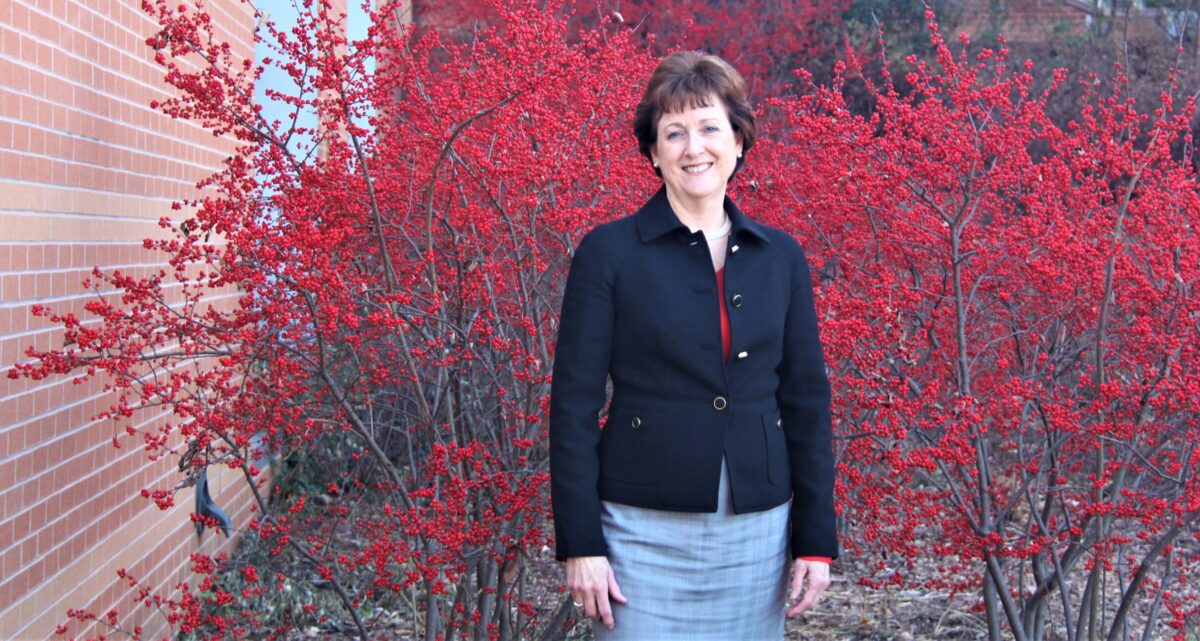 Cynthia Woodcock. (Image courtesy of Hilltop)
“Hilltop has expanded and solidified its role as a vital resource for high-quality data analytics for Maryland’s Medicaid program,” says Cynthia H. Woodcock, executive director of Hilltop and an adjunct professor at UMBC’s Erickson School of Aging Studies.
Tools for the health system
In addition to its Medicaid-related work, Hilltop has developed a series of innovative analytical tools that are supporting Maryland’s state-of-the-art health care system, called the Total Cost of Care Model.
Maryland hospitals use Hilltop’s web-based tool to report community benefit activities and expenditures. The tool streamlines data collection and enables statewide longitudinal analysis of community benefit data. The findings inform efforts to improve population health under the Total Cost of Care Model.
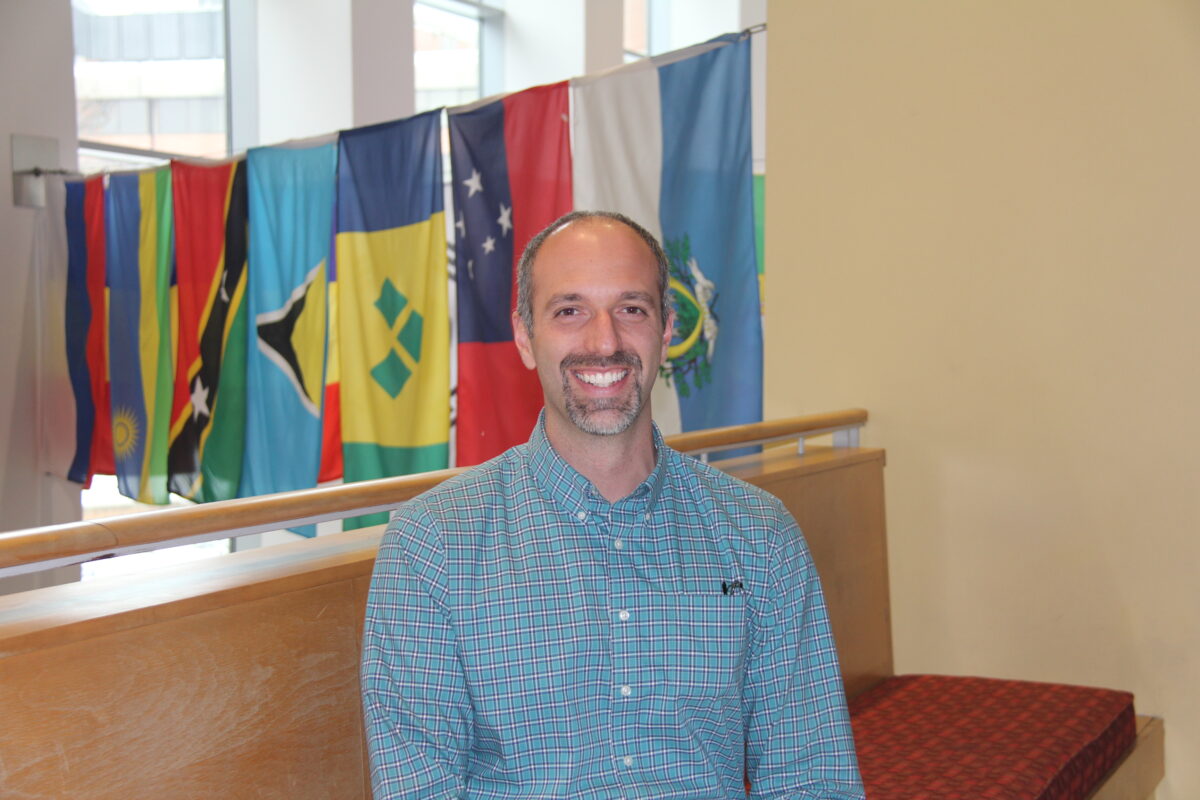 Ian Stockwell, an associate professor in information systems and former chief data scientist at Hilltop, worked with Hilltop senior data scientists Fei Han and Morgan Henderson for over a year. Then, in October 2019, they launched the Hilltop Pre-AH Model
 . (Image courtesy of Hilltop)
Hilltop launched the Hilltop Pre-AH Model to help identify patients in the Maryland Primary Care Program—part of Maryland’s Total Cost of Care Model—who would benefit most from intensive primary care coordination, which can help to prevent unnecessary hospitalizations. Innovations like these are designed to simultaneously improve the health care patients receive and decrease unnecessary costs to the health care system.
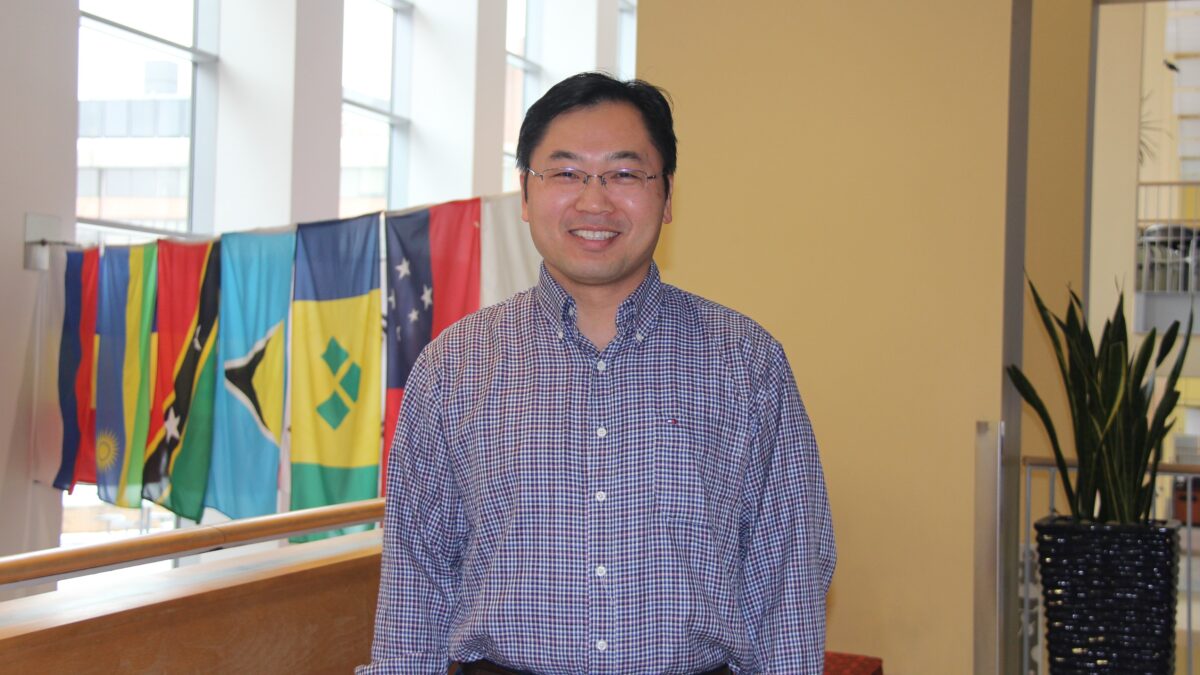 Fei Han, principal data scientist at Hilltop and affiliate assistant professor of computer science and electrical engineering, received a COVID-19 Accelerated Translational Incubator Pilot (ATIP) award to further develop the Hilltop Pre-AH Model, to help predict and reduce patients’ risk of being hospitalized due to COVID-19. (Image courtesy of Hilltop)
Rapid response to COVID-19
Thanks to its strong relationships with the Department of Health and other state agencies, when the coronavirus pandemic began, Hilltop was able to quickly respond to requests for data on COVID-19 testing, hospitalizations, and vaccinations. They also provided daily support to the Department on implementing data-informed emergency measures and guidance for health care providers.
Now in the third year of the pandemic, Hilltop continues to support the state with COVID-related analytics to inform a wide range of infrastructure and service needs. Hilltop researchers also expanded the groundbreaking Pre-AH Model to predict a patient’s risk of being hospitalized for COVID-19, funded by a COVID-19 Accelerated Translational Incubator Pilot (ATIP).
Public health impact
Hilltop continues to address long-standing critical public health concerns, from HIV to tobacco use to the opioid epidemic.
Hilltop is a member of the Maryland HIV Medicaid Affinity Group and the Greater Baltimore HIV Health Services Planning Committee and provides technical support and analytics for HIV services offered to Medicaid participants.
In collaboration with the Center for Mississippi Health Policy, Hilltop researchers quantified the financial impact of tobacco use on Mississippi’s Medicaid program and estimated the economic impact on the state budget and hospitals if the state were to expand Medicaid as the Affordable Care Act allows.
With funding from the National Institute on Drug Abuse, Hilltop and twelve other states’ university partners are assessing the quality of opioid use disorder treatment and its outcomes for Medicaid participants.
Another project includes researchers at Virginia Commonwealth University. This study examines the effect of new Medicaid programs in Maryland and Virginia that increase access to the full continuum of addiction treatment services, seeking to reduce overdose deaths.
Hilltop’s visionary work continues to set the bar for health care data analytics. It illustrates how the emerging field of data science can tangibly improve health care access and affordability and can reshape the understanding of the social determinants of health.
Woodcock reflects, “The Hilltop Institute epitomizes the spirit of UMBC’s mission to integrate teaching, research and engaged scholarship, and service to benefit communities in Maryland and beyond.”
]]>
Two researchers from The Hilltop Institute at UMBC just received a National Science Foundation (NSF) grant to investigate hospital price transparency. With the nearly $300,000 award funded by the...
https://umbc.edu/stories/the-hilltop-institute-at-umbc-revolutionizes-data-analytics/
https://my3.my.umbc.edu/api/v0/pixel/news/127155/guest@my.umbc.edu/d7fc2d1860b6d439d3f0c7bf2226c77e/api/pixel
computer-science
covidresearch
economics
electrical-engineering
ericksonschool
hilltopinstitute
information-systems
majoraward
news
policy-and-society
rca-2
research
science-and-tech
UMBC News & Magazine
https://my3.my.umbc.edu/groups/umbc-news-magazine
https://assets1-my.umbc.edu/system/shared/avatars/groups/000/001/943/24435aa6207c452e7bc15cc74b42c7bb/xsmall.png?1748556657
https://assets1-my.umbc.edu/system/shared/avatars/groups/000/001/943/24435aa6207c452e7bc15cc74b42c7bb/original.png?1748556657
https://assets2-my.umbc.edu/system/shared/avatars/groups/000/001/943/24435aa6207c452e7bc15cc74b42c7bb/xxlarge.png?1748556657
https://assets2-my.umbc.edu/system/shared/avatars/groups/000/001/943/24435aa6207c452e7bc15cc74b42c7bb/xlarge.png?1748556657
https://assets3-my.umbc.edu/system/shared/avatars/groups/000/001/943/24435aa6207c452e7bc15cc74b42c7bb/large.png?1748556657
https://assets1-my.umbc.edu/system/shared/avatars/groups/000/001/943/24435aa6207c452e7bc15cc74b42c7bb/medium.png?1748556657
https://assets2-my.umbc.edu/system/shared/avatars/groups/000/001/943/24435aa6207c452e7bc15cc74b42c7bb/small.png?1748556657
https://assets1-my.umbc.edu/system/shared/avatars/groups/000/001/943/24435aa6207c452e7bc15cc74b42c7bb/xsmall.png?1748556657
https://assets2-my.umbc.edu/system/shared/avatars/groups/000/001/943/24435aa6207c452e7bc15cc74b42c7bb/xxsmall.png?1748556657
UMBC News & Magazine
0
0
false
Wed, 31 Aug 2022 10:23:51 -0400
Wed, 31 Aug 2022 10:23:51 -0400
Over-the-counter rapid antigen tests for COVID-19 can help slow the spread of the delta variant
By Zoë McLaren, associate professor of Public Policy, UMBC
The rise of the highly transmissible delta variant around the U.S. has increased demand for rapid antigen COVID-19 tests that can be purchased from a pharmacy without a prescription, used at home, school or work and that give results in 15 minutes.
On Sept. 9, 2021, the White House announced several initiatives to improve access to rapid antigen tests: It will use the Defense Production Act to boost the production of tests, require retailers to sell rapid tests at cost, distribute free rapid tests to community health centers and food banks and expand free testing in pharmacies.
Rapid antigen testing makes it much easier to get tested for COVID-19, which helps detect infectious cases before they spread. But many people are still unsure of how best to use these tests and whether they are accurate enough to be useful.
There are several FDA-approved rapid tests on the market including Abbott BinaxNow, Ellume and Quidel QuickVue. These cost as little as $7-12 each and can be used to test adults and children aged 2 and up, regardless of whether they have symptoms.
Rapid antigen tests have a big advantage over lab-based PCR testing in terms of speed and convenience. Getting results in 15 minutes rather than waiting a day or more for PCR test results means it’s possible to identify COVID-19 cases right away and take precautions to prevent transmission. Having rapid testing available over-the-counter means that a lot more people will get tested since the test is easy to perform and far more convenient than PCR testing. So rapid tests can catch a lot more COVID-19 cases overall than relying only on PCR testing.
As a health economist who studies public health policy to combat infectious disease epidemics, I know that making COVID-19 testing accessible, accurate and fast is critical to slowing transmission of the virus and helping everyone resume normal activities safely.
How accurate are rapid antigen tests?
Two types of rapid tests are used for detecting an active COVID-19 infection: rapid antigen tests that detect viral proteins using a paper strip and rapid molecular tests – including PCR – that detect viral genetic material using a medical device.
It’s important to remember that rapid antigen tests serve a different purpose than PCR testing, which is considered the gold standard even though it isn’t 100% accurate. Rapid tests are designed to identify cases with a high enough viral load in the nasal passage to be transmissible – not to diagnose all COVID-19 cases. The Abbott BinaxNOW rapid antigen test may only detect 85% of the positive cases detected by PCR tests. But the key is that published studies found that they detect over 93% of cases that pose a transmission risk, which is what matters most for getting the pandemic under control. Ellume correctly identifies 95% of all positive cases, and Quidel QuickVue accurately identifies 85%. All three tests correctly identify upwards of 97% of all negative cases, regardless of symptoms.
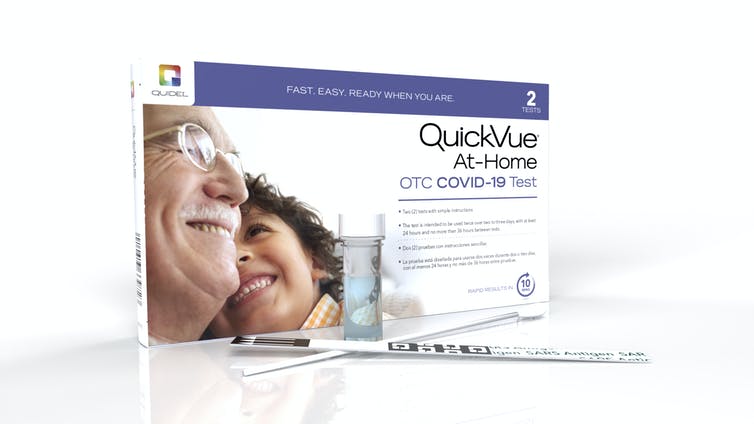 One of the FDA-approved rapid antigen test kits, which can be used by adults and children age 2 and up. AP Photo/Business Wire
How should rapid tests be used?
Rapid antigen testing can be used in three ways to slow transmission. First, people can perform a rapid test when there is a suspected or known COVID-19 exposure. Second, rapid testing can provide an extra precaution before any activity with a higher risk of transmission, such as gatherings or travel. Third, it’s also possible to test on a regular basis – weekly, for instance, if enough tests are available – to catch cases that otherwise might go undetected.
It’s important to have a plan for what to do based on the test results. If you get a positive result, immediately take precautions to slow transmission such as self-isolating, letting close contacts know about the test result and reporting the case to health authorities. Less than 3% of positive results are false positives, but a second rapid test the following day or a PCR test can provide further confirmation if needed.
If you get a negative result from a rapid test, it means you are currently very unlikely to be infectious. A viral load that is too low to be detected by rapid antigen tests is almost surely too low to be transmissible. But it’s important not to let your guard down completely. The tests don’t detect 100% of infectious cases, so it’s possible for a small number to evade detection or for some cases to become infectious within hours after the test. For this reason, it may be a good idea to maintain other precautions. And, if you have symptoms or a known exposure, it’s a good idea to do a follow-up rapid antigen or PCR test just in case the first test was a false negative.
Think of the rapid antigen test as a snapshot in time: A negative test doesn’t necessarily mean you don’t have COVID-19. COVID-19 is most transmissible when the viral load peaks, which is estimated to be within a week after infection. Those who are infected but who take a rapid test before or after the viral load peak will get a negative rapid test result – meaning that even though they are infected, they are not currently infectious. One way to reduce the risk of false negatives is with “serial testing,” where a second rapid test is performed 24-36 hours later to help catch any infectious cases that were missed with the first test.
Will the new initiatives be enough?
The White House initiatives to increase access to rapid testing are a critical step towards curbing case numbers. But one free test per person isn’t sufficient to help people resume normal activities safely. Authorizing additional inexpensive rapid tests through the Food and Drug Administration would further expand supply and reduce prices.
Making the COVID-19 vaccine free and easily accessible brought cases down quickly in the spring of 2021. Putting frequent rapid testing within reach for all could do the same now.
*****
Zoë McLaren, Associate Professor of Public Policy, University of Maryland, Baltimore County
This article is republished from The Conversation under a Creative Commons license. Read the original article.
Header image: Rapid antigen COVID-19 tests, designed for use at home, can show results in 15 minutes. Ellen Moran via Getty Images
]]>
By Zoë McLaren, associate professor of Public Policy, UMBC The rise of the highly transmissible delta variant around the U.S. has increased demand for rapid antigen COVID-19 tests that can be...
https://umbc.edu/stories/over-the-counter-rapid-antigen-tests-for-covid-19-can-help-slow-the-spread-of-the-delta-variant/
https://my3.my.umbc.edu/api/v0/pixel/news/119562/guest@my.umbc.edu/9a0cf2cc1fae4f40744027f5273fdbeb/api/pixel
covidresearch
discovery
professorsnottomiss
public-policy
UMBC News & Magazine
https://my3.my.umbc.edu/groups/umbc-news-magazine
https://assets1-my.umbc.edu/system/shared/avatars/groups/000/001/943/24435aa6207c452e7bc15cc74b42c7bb/xsmall.png?1748556657
https://assets1-my.umbc.edu/system/shared/avatars/groups/000/001/943/24435aa6207c452e7bc15cc74b42c7bb/original.png?1748556657
https://assets2-my.umbc.edu/system/shared/avatars/groups/000/001/943/24435aa6207c452e7bc15cc74b42c7bb/xxlarge.png?1748556657
https://assets2-my.umbc.edu/system/shared/avatars/groups/000/001/943/24435aa6207c452e7bc15cc74b42c7bb/xlarge.png?1748556657
https://assets3-my.umbc.edu/system/shared/avatars/groups/000/001/943/24435aa6207c452e7bc15cc74b42c7bb/large.png?1748556657
https://assets1-my.umbc.edu/system/shared/avatars/groups/000/001/943/24435aa6207c452e7bc15cc74b42c7bb/medium.png?1748556657
https://assets2-my.umbc.edu/system/shared/avatars/groups/000/001/943/24435aa6207c452e7bc15cc74b42c7bb/small.png?1748556657
https://assets1-my.umbc.edu/system/shared/avatars/groups/000/001/943/24435aa6207c452e7bc15cc74b42c7bb/xsmall.png?1748556657
https://assets2-my.umbc.edu/system/shared/avatars/groups/000/001/943/24435aa6207c452e7bc15cc74b42c7bb/xxsmall.png?1748556657
UMBC News & Magazine
0
0
false
Fri, 10 Sep 2021 17:46:43 -0400
As Urban Life Resumes, Can US Cities Avert Gridlock?
By John Rennie Short, professor, School of Public Policy, UMBC
Traffic is so ubiquitous in U.S. cities that until recently, imagining urban life without it meant looking to other nations for examples. Then, in 2020, COVID-19 closures and lockdowns took drivers off the roads. The thought experiment became real.
The main impacts are clear. First, public transit ridership plummeted by 80%, leaving mainly lower-income workers in jobs declared essential riding buses, subways and commuter trains.
Second, private vehicular traffic declined by more than 50% in most metro areas, and by more than 75% in some tech-oriented cities such as San Francisco, where more people could work from home. With less traffic, cities became quieter, less polluted. People could hear birdsong for the first time. Air quality improved. Skies were clearer.
Surprisingly, however, traffic accidents did not lessen. Though fewer people were driving, average speed levels increased with emptier roads. Distracted driving also increased, with more drivers texting, emailing and shopping while behind the wheel. Overconfidence, speed and distraction led to an increase in accidents.
Third, quiet roads provided an opportunity to reimagine and create less car-centric cities. From Boston to Los Angeles, street eateries blossomed. Diners, pedestrians and cyclists reclaimed outdoor spaces.
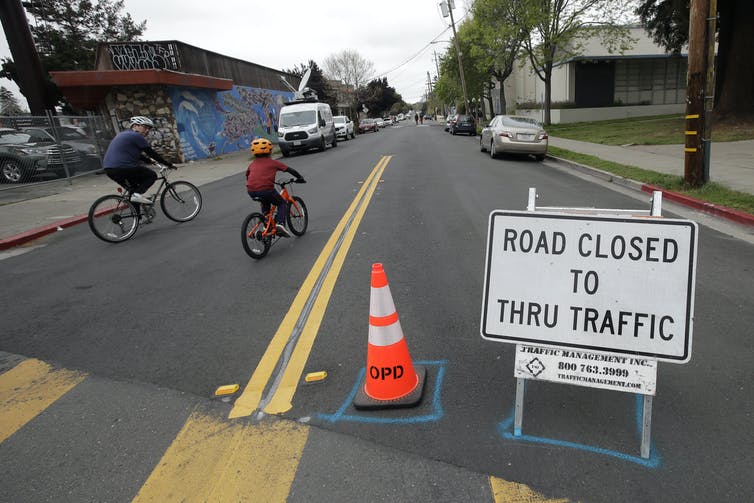
Oakland, California, closed 74 miles of streets in the spring of 2020 to give people safe spaces to get outdoors and exercise.
AP Photo/Jeff Chiu
As states lift pandemic restrictions and workers debate whether to return to office settings, will these trends continue? As a scholar who researches cities, I expect the following key factors to shape what post-pandemic traffic looks like.
Public transit in crisis
Public transportation finances took a big hit during the pandemic as ridership shrank. Many cities responded by reducing bus and train service, eliminating routes and laying off employees. Whether urban public transportation can recover over the longer term is a critical question.
So far, surveys suggest that more affluent riders are less willing to return, especially if they can work productively from home. There is still a lingering sense that public transportation, and indeed all ride-sharing, is riskier than walking, cycling or personal auto travel.
Any longer-term declines in the quality of public transportation will be disproportionately shouldered by lower-income workers, who have less choice and will be forced to navigate more expensive, less reliable services. The ripple effects on access to employment opportunities, commuting times and general quality of life could be severe, adding yet another layer to mounting inequality in U.S. society.
Public transportation already was chronically underfunded in the U.S. before 2020, and the pandemic only added to these fiscal woes. However, the scale of the current crisis may be changing attitudes, especially at the federal level.
Public transportation received a fiscal boost from the Coronavirus Aid, Relief, and Economic Security Act, known as the CARES Act, that Congress passed in March 2020. And President Joe Biden has proposed US$85 billion for capital investments in public transit in his infrastructure plan.
The details of potential investments are still taking shape, and much depends on congressional negotiations. But although the traditional American road and car mentality remains strong, the pandemic may have finally made clear that urban public transportation has a vital social and economic role in making cities fairer, as well as more efficient.
Traffic is rebounding
The increase in walking and bicycling during the pandemic was good news for many reasons. With less surface traffic, cities became quieter and less polluted. People could hear birds singing in many places for the first time and walk on streets free from busy traffic.
Cities traditionally plagued with gridlock, such as Boston, Dallas, Houston, Los Angeles and Washington, D.C., all saw less congested roads. But it’s not clear whether this will be a lasting change or a short-term response.
By mid-June 2020, while many states and cities were still under COVID-19 restrictions, traffic had rebounded across the country to almost 90% of pre-pandemic levels. Washington, D.C., was at 70% of its normal level, New York City was at 82%, and Los Angeles was at 85%. Now, as vaccines and the end of pandemic controls make people freer to move around, many cities are quickly returning to prior traffic levels.
Somewhat counterintuitively, having more cars on the road could actually improve safety. With more traffic, average speed may decline to safer levels.
However, distracted driving could offset this trend. We live in an age of distraction, where many people feel it is OK to drive while texting and tweeting. As traffic returns to pre-pandemic levels, cities and states will need to refocus attention on measures such as restricting cellphone use in cars.
Making city streets more people-friendly
Perhaps the most encouraging traffic-related news is that many cities are forging ahead with plans to reduce car travel and make streets safer for pedestrians and cyclists.
The pandemic offered a unique opportunity to reimagine the city as a place where drivers had to share space with others. This also was a trend that predated COVID-19 but accelerated in 2020 when streets were relatively empty.
Many cities are now implementing initiatives like free public transportation, protected bike lanes, bike-sharing initiatives, congestion pricing, regular street closures, priority bus lanes, quiet streets and reduced traffic speeds. These cities include Boston, Chicago, Los Angeles, New York, Seattle, San Francisco and Washington, D.C.
But there are competing interests and political counterpressures. One survey of mayors found that many endorsed changes to street space, but relatively few were planning to make them permanent. City leaders realize that powerful economic interests want consumers and workers to have downtown access by private car.
The coming months could well be a key pivotal point. The pandemic gave Americans a tantalizing glimpse of what less car-oriented cities would look like. The pandemic saw the reclamation of urban streets for public use, the emergence of a less car-centric city and the reimagining of a safer, slower, quieter city with streets shared among a variety of users. But many interests want a quick return to the status quo.
The outcome will depend on how effectively urban dwellers and advocacy groups make their case for more people-centered city streets.
*****
Header image: Rush-hour traffic in Los Angeles on June 15, 2021. Carolyn Cole / Los Angeles Times via Getty Images
John Rennie Short, Professor, School of Public Policy, University of Maryland, Baltimore County
This article is republished from The Conversation under a Creative Commons license. Read the original article.
]]>
By John Rennie Short, professor, School of Public Policy, UMBC Traffic is so ubiquitous in U.S. cities that until recently, imagining urban life without it meant looking to other nations for...
https://umbc.edu/stories/as-urban-life-resumes-can-us-cities-avert-gridlock/
https://my3.my.umbc.edu/api/v0/pixel/news/119594/guest@my.umbc.edu/3ab843242a87d84767a0333a1b29ffcf/api/pixel
cahss
covidresearch
perspectives
public-policy
the-conversation
UMBC News & Magazine
https://my3.my.umbc.edu/groups/umbc-news-magazine
https://assets1-my.umbc.edu/system/shared/avatars/groups/000/001/943/24435aa6207c452e7bc15cc74b42c7bb/xsmall.png?1748556657
https://assets1-my.umbc.edu/system/shared/avatars/groups/000/001/943/24435aa6207c452e7bc15cc74b42c7bb/original.png?1748556657
https://assets2-my.umbc.edu/system/shared/avatars/groups/000/001/943/24435aa6207c452e7bc15cc74b42c7bb/xxlarge.png?1748556657
https://assets2-my.umbc.edu/system/shared/avatars/groups/000/001/943/24435aa6207c452e7bc15cc74b42c7bb/xlarge.png?1748556657
https://assets3-my.umbc.edu/system/shared/avatars/groups/000/001/943/24435aa6207c452e7bc15cc74b42c7bb/large.png?1748556657
https://assets1-my.umbc.edu/system/shared/avatars/groups/000/001/943/24435aa6207c452e7bc15cc74b42c7bb/medium.png?1748556657
https://assets2-my.umbc.edu/system/shared/avatars/groups/000/001/943/24435aa6207c452e7bc15cc74b42c7bb/small.png?1748556657
https://assets1-my.umbc.edu/system/shared/avatars/groups/000/001/943/24435aa6207c452e7bc15cc74b42c7bb/xsmall.png?1748556657
https://assets2-my.umbc.edu/system/shared/avatars/groups/000/001/943/24435aa6207c452e7bc15cc74b42c7bb/xxsmall.png?1748556657
UMBC News & Magazine
0
0
false
Mon, 21 Jun 2021 18:57:03 -0400
Her Science Is the World’s

 Corbett in the Interdisciplinary Life Sciences Building on campus in April 2021. Photo by Marlayna Demond ’11.
Everyone who’s ever met Kizzmekia Corbett ’08, M16, biological sciences and sociology, gets it.
Sue Florence, one of the few Black teachers in the Hillsborough, North Carolina, school district where Corbett went to elementary and middle school, got it. Rhonda Brooks, Corbett’s mother, remembers Florence saying, when Corbett was in third grade, “She’s got a gift. You’d better seek into it.”
Florence’s comments pushed Brooks to make sure expectations were high for Corbett in school, and to encourage—no, require—15-year-old “Kizzy” to find a scholarly internship rather than a position in retail when she wanted a summer job in high school.
So, at her mother’s behest, Corbett got involved in Project SEED, a program that offers research experiences to talented high school students from underrepresented groups in STEM. Her first program mentor was James Morken, who was on the chemistry faculty at University of North Carolina at Chapel Hill at the time.
He got it, too.
“When Kizzy started in my laboratory, she didn’t have much hands-on research experience, but she had loads of curiosity, a drive to learn what she didn’t know, and a very strong work ethic,” Morken says. “It was abundantly clear she would be successful in whatever she chose to do.”
Today, Corbett is an assistant professor of immunology and infectious diseases at the Harvard T.H. Chan School of Public Health, after leading the team behind the successful effort to create a vaccine for COVID-19 at the National Institutes of Health (NIH). Working with the pharmaceutical company Moderna, Corbett’s achievements on the global stage benefit all of us. Now, we get it, too.
“She can do anything”
As a Meyerhoff Scholar and NIH Scholar at UMBC, Corbett worked in Barney Graham’s lab at the Vaccine Research Center at the NIH. He’s also her boss today.
“Kizzmekia’s spirit was noticeable even from a young age,” Graham says. “New people who come into the lab have always quickly realized that she was a person who had bigger things in her future.”
Corbett met Jessica Kelley, a UMBC assistant professor of sociology at the time, when Corbett took her Introduction to Sociology course. “She was a standout in that large lecture class from the beginning,” Kelley recalls. Later, Corbett took Kelley’s course on applied community research, and conducted research with Kelley as part of a National Institute on Aging study on healthy aging in diverse neighborhoods.
 Photos kindly provided by Kizzmekia Corbett, unless otherwise noted.
The work with Kelley inspired Corbett’s double major and her approach to all of her future work. Corbett even became the only undergraduate enrolled in one of Kelley’s graduate-level courses. “She kept the graduate students on their toes,” Kelley says.
“When she’s got her mind set on something, it’s set,” Brooks says. “She can do anything.”
A leading role
Today, Corbett has proven them all right. As the scientific lead of the Vaccine Research Center’s coronavirus team at the NIH, she developed a new technology for the Moderna COVID-19 vaccine and others, and as a result, she has played a leading role in one of the most important measures to end the pandemic. She has also become the first Black woman in the world to create a vaccine.
Anthony Fauci, head of the National Institute of Allergy and Infectious Diseases (NIAID) and one of the most trusted voices about the pandemic around the world, described Corbett as “widely recognized in the immunology community as a rising star,” when he nominated her for TIME magazine’s TIME100 Next list. Based on her leadership of COVID-19 vaccine development at NIAID, he added, “Her work will have a substantial impact on ending the worst respiratory-disease pandemic in more than 100 years.”
People drive the research
Perhaps just as important as her scientific accomplishments, Corbett has burst onto the public stage as the face of a diverse and rising generation of talented scientists who will transform the world. She is a stellar science communicator, explaining the vaccine and the virus in highly accessible ways to media outlets, her family, two U.S. presidents, and more. She is an inspiration to children who may now imagine becoming scientists.
 Corbett visits a lab on campus in April 2021. Photo by Marlayna Demond ’11.
“Dr. Corbett’s voice has been particularly important this year,” Graham says, “and going forward, her ability to inspire and to educate and motivate young people to see science as something feasible and even to see science as something fun will be part of her legacy.”
And yet, amid her newfound celebrity status and her vast scientific acumen, somehow she has managed to remain unabashedly human.
“I am still Kizzy. I’m still the little girl you met when I was 17 and being recruited into the Meyerhoff program,” she told UMBC President Freeman Hrabowski during a conversation in February 2021, when they were both being recognized at the Kaiser Permanente and Reginald F. Lewis Museum 2nd Annual African American Health Care Awards.
“Actually, before a scientist, I’m a Christian, and I’m sassy, and I’m bright, and I’m fashionable…” she says, “and I’m Southern, and I’m empathetic, and I’m all of these things that make me into this person, that make me a better scientist. I think that is the most important part of the story—that people drive the research.”
The genuine thing
First there was Sue Florence. Then there was James Morken and others with the SEED Project. All through her childhood, there was her mother, Rhonda Brooks, cheering her on. Combine that support structure with Corbett’s own deep-seated determination to succeed, and by the time she was looking at colleges, Corbett had lots of options. But when she, her parents, and her grandmother visited UMBC, it felt like home. The first reason? The grain silo along UMBC Boulevard.
“It reminded me of being back at home in the country,” Brooks remembers. When they began touring campus, Brooks thought, “Oh man, this is really her,” but, “I needed her to see it was her. So I didn’t even say anything.” There was no need. By the end of Meyerhoff Selection Weekend in 2004, Kizzy was glowing.
Beyond the welcoming silo were all the welcoming faces. “Everybody was so friendly,” Brooks says. “You think when you go visit campuses that people have to be this way because they’re trying to get students to come, but as a person who’s been in the education field for so long, I can weed out who’s genuine and who isn’t.” And, Brooks says, despite the emphasis on Meyerhoff cohort numbers, of which Kizzy belonged to M16, “it just felt like she would be not just a number.”
Equaling the playing field
In the February conversation with Hrabowski, Corbett recalls her father telling her that she should “go where she would be loved.” UMBC became that place.
Asked to describe the value of the Meyerhoff Scholars Program, she said, “It is simply one word: resources. It is equaling the playing field for people who have generally been under-resourced, and those are communities of color and people from underrepresented minority groups. And the Meyerhoff Program does that.”
 Corbett with fellow Meyerhoff alumni at a 2017 on-campus event. Photo courtesy of Keith Harmon, director, Meyerhoff Scholars Program.
The Meyerhoff Scholars Program, founded in 1989, is considered the gold standard of programs designed to support students from underrepresented groups in STEM. Hundreds of alumni have gone on to standout careers, including U.S. Surgeon General, Baltimore City health commissioner, and professorships at the nation’s top-tier universities.
The Meyerhoff Scholars Program “is a place where every single person was special and would be loved. The goal is not to fail you out, but to lift you up,” Corbett says. And for underrepresented students in STEM, living in a world that too often still doesn’t expect people who look like them to excel as researchers, the Meyerhoff Program “provided a niche for us to just be, to be comfortable, and to just thrive.”
A mother’s touch
It wasn’t always easy, though. Brooks remembers when Kizzy received her first C. “Being on the phone with her just didn’t help,” Brooks remembers. “So I got in my car, and I drove all the way to Maryland. I was trying to tell her it was going to be alright, but it was just heartbreaking, because she never had that C. I told her, it’s gonna be tough—you might get more than one C.”
Even world-class, world-saving scientists sometimes get Cs and need their moms.
And even now, Brooks is ready to support Corbett as she navigates this new chapter in her life. “If she needs me now, if she’s feeling stressed,” Brooks says, “if she picks up the phone, I don’t care what time of night it is, I pick it up.”
On Corbett’s college bedside also sat a Bible—another lasting connection to her family and her faith, which Corbett brings up often in her interviews. Brooks gave each of her children a Bible as they left for college. “I say take this Bible with you. Even if you don’t look at it, keep it next to your bed. I don’t care if you don’t open it. But if you touch it, it will make you feel a whole lot better.”
Corbett and her mother, though apart during the pandemic, have stayed connected by attending online services from the same church in Texas. Their first travel plans post-pandemic? A trip to attend the service in person.
Lifting others up
Whether it’s her faith, an innate empathy, 35 years of experience as a Black woman in the U.S., or other factors, Corbett’s dedication to lifting people up goes far beyond her work in the laboratory. Her commitment to equity has demanded that she speak out to address vaccine hesitancy, especially in communities hit hardest by the virus, and champion the participation of minorities in science and research, both as scientists and as participants in clinical trials.
“She has always, even as a young student, brought an energy and curiosity and love of science that made our lab a better place,” Graham says. “She has also always been very devoted to making things better for people around her, particularly younger people coming behind her.”
Brooks says that Corbett has always had a selfless nature. One day she brought home a classmate who had no place to go after school and asked if she could stay with the family. Brooks was uncertain at first, “but we did it,” she says. “And we’ve been taking kids in ever since.”
Fighting for the public good
Corbett’s study of sociology at UMBC enhanced and sharpened her innate desires to help people and promote fairness into a commitment to consider social factors throughout her scientific career. For example, when the Moderna vaccine was in clinical trials, Corbett pushed hard to make sure that there were more people of color among the study population.
 Corbett at a Rally for Medical Research event in Washington, D.C.
“You have to start things equitably to finish them that way,” she told Hrabowski at the February event. “We slowed down the phase three clinical trial until we got to a point where we felt the numbers were respectable. We wanted 13 percent, to represent the proportion of Black people in the country,” she said, but they didn’t quite make it. Still, she says, “I have other vaccines heading into trials, so we will take care of it then.”
Kelley, her sociology instructor and research mentor at UMBC, reflects on how Corbett has developed over time. “Kizzmekia’s training in both biology and sociology has helped her become both a scientist working at the cutting-edge of vaccine development to provide a universal public good and a humanist who understands that historically and structurally not all groups have had access to these public goods,” she says.
Corbett has faced her own challenges throughout her career, some of which have predictably intensified since she became more of a public figure.
Kizzmekia, whose name is a combination of “Kizzy” from the character in Alex Haley’s Roots and “-mekia” from Brooks’s own imagination, has been teased since childhood and continues to be harassed about her name. When Kizzy showed her mother a particularly hurtful social media post, “I told her, tell them to call your mama,” Brooks recalls, “because your mama chose your name for a reason, because you’re a gift from God to me.”
As a child, even Kizzy’s strong interest in academic success was sometimes looked down upon by her peers, but “she just went beyond,” Brooks says.
 Corbett (center, front) with her NIAID research team, including Olubukola Abiona ’17, M25, biochemistry and molecular biology (center, back).
Corbett has also experienced sexism and racism as a scientist. Brooks says sometimes men have skipped over Corbett and instead approached her boss, but “that’s why I like her boss, [Barney Graham] so much, because he’s always been behind her back,” she says—pointing people right back to Corbett.
Finding your champions
Corbett has taken her mother’s message to heart. “You just have to believe in yourself and believe in your work,” she says. Important, too, is having your own champions. “I always had someone in the space who was looking out for me,” she said—people like Sue Florence, Freeman Hrabowski, and Barney Graham. “Find those people and seek them out. You want someone to be as invested in you, as you are in you.”
High expectations and support from all those people who “got it,” cheering for her and setting the bar high from elementary school onward, combined with Corbett’s inner determination—and a dash of spunk—have fueled her success. If you had met a childhood Kizzy, she would have said, “Hi, I’m Kizzmekia Corbett, and I’m going to be the first Black woman to win the Nobel Prize in Medicine.”
Verbalizing one’s goals is a risk, because people will know if you fail. But it’s also a critical step toward turning them into reality. Little Kizzy knew it as a kid. “It speaks to putting yourself where you want to be, and really speaking the words to the universe,” she told Hrabowski. Even if she hasn’t reached her childhood goal yet, she’s happy with what she’s been able to accomplish so far.
“I haven’t won a Nobel prize, and I don’t know if I will,” she says, “but I think helping to ‘save the world,’ so to speak, is good enough.”
For now.
Read more about other ways Retrievers are giving their time and efforts to help others access the vaccine.
*****
Header image of Corbett on campus in April 2021 by Marlayna Demond ’11.
]]>
Corbett in the Interdisciplinary Life Sciences Building on campus in April 2021. Photo by Marlayna Demond ’11. Everyone who’s ever met Kizzmekia Corbett ’08, M16, biological sciences and...
https://umbc.edu/stories/her-science-is-the-worlds/
https://my3.my.umbc.edu/api/v0/pixel/news/119599/guest@my.umbc.edu/7ce5d4efc33fbc01db43592b40e066b3/api/pixel
biological-sciences
communityimpact
covidresearch
discovery
feature
meyerhoffscholars
mhoff
sociology
spring-2021
UMBC News & Magazine
https://my3.my.umbc.edu/groups/umbc-news-magazine
https://assets1-my.umbc.edu/system/shared/avatars/groups/000/001/943/24435aa6207c452e7bc15cc74b42c7bb/xsmall.png?1748556657
https://assets1-my.umbc.edu/system/shared/avatars/groups/000/001/943/24435aa6207c452e7bc15cc74b42c7bb/original.png?1748556657
https://assets2-my.umbc.edu/system/shared/avatars/groups/000/001/943/24435aa6207c452e7bc15cc74b42c7bb/xxlarge.png?1748556657
https://assets2-my.umbc.edu/system/shared/avatars/groups/000/001/943/24435aa6207c452e7bc15cc74b42c7bb/xlarge.png?1748556657
https://assets3-my.umbc.edu/system/shared/avatars/groups/000/001/943/24435aa6207c452e7bc15cc74b42c7bb/large.png?1748556657
https://assets1-my.umbc.edu/system/shared/avatars/groups/000/001/943/24435aa6207c452e7bc15cc74b42c7bb/medium.png?1748556657
https://assets2-my.umbc.edu/system/shared/avatars/groups/000/001/943/24435aa6207c452e7bc15cc74b42c7bb/small.png?1748556657
https://assets1-my.umbc.edu/system/shared/avatars/groups/000/001/943/24435aa6207c452e7bc15cc74b42c7bb/xsmall.png?1748556657
https://assets2-my.umbc.edu/system/shared/avatars/groups/000/001/943/24435aa6207c452e7bc15cc74b42c7bb/xxsmall.png?1748556657
UMBC News & Magazine
0
0
false
Thu, 10 Jun 2021 14:54:22 -0400
Vaccine Victories
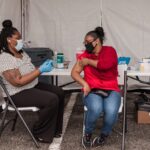
UMBC students and staff have shown their resilience in myriad ways during the pandemic, but maybe nothing showcases the Retriever spirit more than the volunteer hours put in to assist in the region-wide vaccination challenge.
Vaccine hunters Jen Dress, associate director of Campus Life, and Candace Martinez-Doane, assistant director of Leadership and Government, started their journeys by finding appointments for people within their immediate circles. As more people became eligible for vaccines, those circles widened to include more than 600 people they’ve helped register.
Part of their efforts focused on frontline UMBC community members, including over 30 ABM staff, who help maintain and clean UMBC facilities and residential buildings. Dress and Martinez-Doane partnered with UMBC Transit to organize UMBC coach buses to transport the ABM workers to and from their vaccine appointments. Next up on their list is helping 60 Chartwells dining staff members be successfully vaccinated to prepare for fall 2021 operations on campus.
UMBC co-sponsored a pop-up vaccine event with the Lakeland community in south Baltimore. Photos by Marlayna Demond ’11.
UMBC students are also going above and beyond to volunteer their time. Of students in the University System of Maryland, Retrievers led the way attending 30 volunteer shifts at the M&T Bank Stadium mass vaccination site, giving approximately 175 hours of their time. According to Chris Bankert of the State of Maryland’s COVID-19 response team, “UMBC has been doing fantastic work at M&T Bank Stadium, and I have been hearing great feedback from the management staff on site.”
In mid-April, UMBC leveraged its long term partnership with the Lakeland community in south Baltimore to co-sponsor a pop-up vaccine event to serve 100 members of the community. “With deep community connections and strong partners like Casa de Maryland, we were ready to bring health resources to the community,” says Joshua Michael ’10, political science, director of the Baltimore School Partnerships and the Sherman Scholars Program,.
In other ways, Michael notes, Retrievers have adapted to meet the opportunity of the moment. In summer 2020, 15 Sherman Scholars taught math online to 150 Lakeland students. And this fall, 30 UMBC students will provide additional support in mathematics through evening tutoring. “At UMBC,” says Michael, “our humanity has guided us to meet this moment.”
— Morgan Casey ’22 and Randianne Leyshon ’09
A version of this story was originally published by The Retriever.
]]>
UMBC students and staff have shown their resilience in myriad ways during the pandemic, but maybe nothing showcases the Retriever spirit more than the volunteer hours put in to assist in the...
https://umbc.edu/stories/vaccine-victories/
https://my3.my.umbc.edu/api/v0/pixel/news/119604/guest@my.umbc.edu/57081189deeb5db09166d940cd92ef7d/api/pixel
campus-life
covidresearch
sidebar
spring-2021
umbctogether
UMBC News & Magazine
https://my3.my.umbc.edu/groups/umbc-news-magazine
https://assets1-my.umbc.edu/system/shared/avatars/groups/000/001/943/24435aa6207c452e7bc15cc74b42c7bb/xsmall.png?1748556657
https://assets1-my.umbc.edu/system/shared/avatars/groups/000/001/943/24435aa6207c452e7bc15cc74b42c7bb/original.png?1748556657
https://assets2-my.umbc.edu/system/shared/avatars/groups/000/001/943/24435aa6207c452e7bc15cc74b42c7bb/xxlarge.png?1748556657
https://assets2-my.umbc.edu/system/shared/avatars/groups/000/001/943/24435aa6207c452e7bc15cc74b42c7bb/xlarge.png?1748556657
https://assets3-my.umbc.edu/system/shared/avatars/groups/000/001/943/24435aa6207c452e7bc15cc74b42c7bb/large.png?1748556657
https://assets1-my.umbc.edu/system/shared/avatars/groups/000/001/943/24435aa6207c452e7bc15cc74b42c7bb/medium.png?1748556657
https://assets2-my.umbc.edu/system/shared/avatars/groups/000/001/943/24435aa6207c452e7bc15cc74b42c7bb/small.png?1748556657
https://assets1-my.umbc.edu/system/shared/avatars/groups/000/001/943/24435aa6207c452e7bc15cc74b42c7bb/xsmall.png?1748556657
https://assets2-my.umbc.edu/system/shared/avatars/groups/000/001/943/24435aa6207c452e7bc15cc74b42c7bb/xxsmall.png?1748556657
UMBC News & Magazine
0
0
false
Wed, 09 Jun 2021 15:08:12 -0400
NIA grants UMBC’s Laura Girling $750K for research on living with dementia, including the impacts of COVID-19
Laura Girling, director of UMBC’s Center for Aging Studies, breaks down stereotypes of people living with dementia through innovative research. Since 2019, the NIH’s National Institute of Aging (NIA) has awarded her more than $750,000. The funding helped her examine how people with dementia live alone in community settings. This includes research focused on how COVID-19 social distancing guidelines impact this vulnerable population and how to ethically include people living with dementia as research participants.
“Persons with dementia are often portrayed as bedridden,” shares Girling, Ph.D. ’15, gerontology. “When I show clips of people living with dementia leading active lives, there is a realization that people with dementia can do many of the same activities others can.”
In-home assessment
Girling began studying people living alone with dementia two years ago. The project launched under the title Aging at Home Alone with Alzheimer’s and Related Dementias. She began to assess how people experiencing dementia manage their day to day living. Girling noted their interactions with their caregivers and community, and how they navigate and negotiate their physical and social environments.
To gather such detailed information Girling completes in-home neuropsychometric assessments and in-depth in-person interviews. These in-person interviews have helped her observe the cognition and behavior of people with dementia who live alone in community settings in Maryland.
As COVID-19 spread and in-home visits became impossible, the project had to pause. Virtual visits didn’t allow for the same kind of assessment, Girling explains. But the situation did draw her attention to important new research questions.
Living with dementia during a crisis
As social distancing guidelines were implemented, Girling wanted to know how community-dwelling persons with dementia and their informal and formal supports were managing during a pandemic.
She began a new research project, Exploring COVID-19’s Impact on the Care and Well-being of Community Dwelling Persons with Dementia, with supplemental funding from her main NIA grant. This research evaluates the impact of social distancing guidelines on the health and wellbeing of community-dwelling persons with dementia.

Mary Nemec. Photo courtesy of Nemec.
Girling’s local COVID-19 research team includes research assistant Amber Zurn ‘21, sociology; Michael Allison, assistant director of the Adult Intensive Care Unit at Saint Agnes Hospital; and Mary Nemec, geriatric social worker and senior ethnographer. Nemec worked at UMBC’s Center for Aging Studies for more than 20 years and came out of retirement to lend her expertise to this project.
“Working with Dr. Girling I have learned how to code and systematically sort through research narratives,” shares Zurn. She is enrolled in UMBC’s health and public policy program and holds a certificate in social dimensions of health. “This has been an insightful process. It shows the nuances of qualitative data collection, a skillset I will be able to use in future career fields.”
Preliminary findings, from virtual and phone interviews, indicate that community-dwelling persons with dementia are experiencing more periods of isolation. This is due to the disruption in the supports and structures that allow them to successfully engage in daily living activities. And it puts their health and ongoing independence at risk.
Creating inclusive research
Girling notes that there is still so much that is unknown about improving the health and wellbeing of people with dementia in times of crisis and daily living. Expanding who is included in dementia research will help improve our understanding of the early stages of dementia. It will also give us insight on how to support people experiencing it.
One obstacle in pursuing dementia research, she explains, is the frequent exclusion of people with dementia in human subject research broadly. She is working with Nancy Berlinger, a bioethics research scholar at the Hastings Center, as well as Kate de Medeiros from Miami University, to address this issue.
Berlinger researches health care ethics and social ethics in aging societies. Girling has received supplemental NIA funding to research the bioethical implications of including people with dementia as participants in dementia research. Together, they will develop best practices relating to logistical and other challenges of working with this vulnerable population.
“These guidelines will help the research community support inclusion of people with dementia in future social research,” says Girling.
Banner image: Laura Girling. Photo courtesy of Girling.
]]>
Laura Girling, director of UMBC’s Center for Aging Studies, breaks down stereotypes of people living with dementia through innovative research. Since 2019, the NIH’s National Institute of Aging...
https://umbc.edu/stories/nia-grants-umbcs-laura-girling-750k-for-research-on-living-with-dementia-including-the-impacts-of-covid-19/
https://my3.my.umbc.edu/api/v0/pixel/news/119690/guest@my.umbc.edu/82ffd2b3bdf677f72493dedf955a3430/api/pixel
cahss
cahssresearch
covidresearch
page1
policy-and-society
saph
undergradresearch
UMBC News & Magazine
https://my3.my.umbc.edu/groups/umbc-news-magazine
https://assets1-my.umbc.edu/system/shared/avatars/groups/000/001/943/24435aa6207c452e7bc15cc74b42c7bb/xsmall.png?1748556657
https://assets1-my.umbc.edu/system/shared/avatars/groups/000/001/943/24435aa6207c452e7bc15cc74b42c7bb/original.png?1748556657
https://assets2-my.umbc.edu/system/shared/avatars/groups/000/001/943/24435aa6207c452e7bc15cc74b42c7bb/xxlarge.png?1748556657
https://assets2-my.umbc.edu/system/shared/avatars/groups/000/001/943/24435aa6207c452e7bc15cc74b42c7bb/xlarge.png?1748556657
https://assets3-my.umbc.edu/system/shared/avatars/groups/000/001/943/24435aa6207c452e7bc15cc74b42c7bb/large.png?1748556657
https://assets1-my.umbc.edu/system/shared/avatars/groups/000/001/943/24435aa6207c452e7bc15cc74b42c7bb/medium.png?1748556657
https://assets2-my.umbc.edu/system/shared/avatars/groups/000/001/943/24435aa6207c452e7bc15cc74b42c7bb/small.png?1748556657
https://assets1-my.umbc.edu/system/shared/avatars/groups/000/001/943/24435aa6207c452e7bc15cc74b42c7bb/xsmall.png?1748556657
https://assets2-my.umbc.edu/system/shared/avatars/groups/000/001/943/24435aa6207c452e7bc15cc74b42c7bb/xxsmall.png?1748556657
UMBC News & Magazine
0
0
false
Mon, 01 Feb 2021 21:15:21 -0500
Engineering can contribute to a reimagining of the US public health system
By Woodrow W. Winchester III, Graduate Program Director, Professional Engineering Programs, UMBC
Of the many things that COVID-19 has made abundantly clear to us, surely one of them is a newfound realization that public health has become increasingly complex. Understanding the challenges to public health – that is, the task of guarding the well-being of the U.S. population – is essential now more than ever.
As an engineer, design futurist and graduate program director, I have seen how COVID-19 has transformed how public health preparedness is viewed and understood. Some say the pandemic has delivered an urgency for a reimagining of public health.
From problems in producing PPE that demonstrate the vulnerabilities in critical supply chains to solutions in vaccine distribution challenges that leverage innovative public-private partnerships, new perspectives and approaches to public health are necessary.
A way to accomplish this: using health care engineering, or more specifically, the application of systems engineering in health care. Systems engineering is defined as an interdisciplinary approach and means to enable the realization of successful systems. These could include such complex systems as aircraft and spacecraft systems. Already, this concept is flourishing. Research centers throughout the U.S., including those at the Mayo Clinic and Northeastern University’s Healthcare Systems Engineering, suggest challenges such as patient safety could be made better by applying systems engineering principles and techniques through more holistic and human-centered approaches to systems design.
These efforts have proven helpful to health care delivery in response to COVID-19. But more is required, particularly in the use of systems engineering in informing public health responses and interventions. A field of public health systems engineering is needed.
Its intent: to develop and apply systemic and integrated approaches to understanding and solving public health problems. Formalizing a field of public health systems engineering – focused on health care at the population level – offers the needed research and educational pathways to advance this work.
The systems engineering imperative
Examples of this include designing and developing personal protective equipment, repairing the vulnerabilities in the food supply chain, and grappling with vaccine logistics. COVID-19 has made clear the growing interconnected, interdisciplinary and multifaceted nature of public health’s future. In partnering with public health, systems engineering can mature mindsets (systems thinking) and practices that can aid in meeting this future.
Illustrating this notion are efforts by Pinar Keskinocak, the co-founder and director of the Center for Health and Humanitarian Systems at Georgia Institute of Technology, and her colleagues. In a recent interview, Keskinocak said: “Whenever there is a complex problem, it needs serious analysis or technology and that’s where an engineer comes in. This is exactly the situation now, very complex, dynamic and uncertain. It’s difficult to understand what’s going on or make decisions just by sitting around a table and discussing. We need expertise in engineering.”
And it’s not just technical or technological concerns. Human systems integration or human factors considerations are equally central in systems engineering approaches. For example, building trust with Black Americans is vital to the success of contact tracing. Public health systems engineering could advance efforts to develop more equitable practices that could improve Black participation. An example is works that further the development of requirements elicitation techniques such as storytelling that provide a more comprehensive understanding of users and their context of use. These more inclusive practices would consider historical context and support more community-led public health design engagements.
A ‘test we cannot fail’
COVID-19 has often been called a stress test for public health. COVID-19 will not be our last or worst pandemic; our emerging understanding of the public health implications of climate change further spotlights this growing need. “What is true for COVID is true for climate change,” says a recent Scientific American opinion piece. “We’re not prepared. Part of the gap is a knowledge gap: We haven’t done the needed research, and we lack critical information.”
As the future of public health is likely to become increasingly digital, the technical understanding and holistic approach offered by systems engineering will begin to fill this critical public health knowledge gap. Fortunately, efforts are emerging in meeting these needs. Emory University’s Health DesignED, the Design Institute for Health at the Dell Medical School, Vanderbilt’s Medical Innovators Development Program and recent initiatives such as those at Johns Hopkins are examples. The time is ripe for evolving the field of public health systems engineering. It is something the U.S. public health system desperately needs.
*****
Woodrow W. Winchester III, Graduate Program Director, Professional Engineering Programs, University of Maryland, Baltimore County
This article is republished from The Conversation under a Creative Commons license. Read the original article.
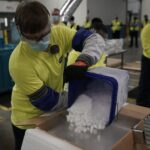
Header image: A worker pours dry ice into boxes containing Pfizer’s COVID-19 vaccine. Morry Gash/Pool/AFP via Getty Images
]]>
By Woodrow W. Winchester III, Graduate Program Director, Professional Engineering Programs, UMBC Of the many things that COVID-19 has made abundantly clear to us, surely one of them is a...
https://umbc.edu/stories/engineering-can-contribute-to-a-reimagining-of-the-us-public-health-system/
https://my3.my.umbc.edu/api/v0/pixel/news/119698/guest@my.umbc.edu/3c1d2443905badfb34e8aa697542ae62/api/pixel
covidresearch
perspectives
public-health
systems-engineering
the-conversation
UMBC News & Magazine
https://my3.my.umbc.edu/groups/umbc-news-magazine
https://assets1-my.umbc.edu/system/shared/avatars/groups/000/001/943/24435aa6207c452e7bc15cc74b42c7bb/xsmall.png?1748556657
https://assets1-my.umbc.edu/system/shared/avatars/groups/000/001/943/24435aa6207c452e7bc15cc74b42c7bb/original.png?1748556657
https://assets2-my.umbc.edu/system/shared/avatars/groups/000/001/943/24435aa6207c452e7bc15cc74b42c7bb/xxlarge.png?1748556657
https://assets2-my.umbc.edu/system/shared/avatars/groups/000/001/943/24435aa6207c452e7bc15cc74b42c7bb/xlarge.png?1748556657
https://assets3-my.umbc.edu/system/shared/avatars/groups/000/001/943/24435aa6207c452e7bc15cc74b42c7bb/large.png?1748556657
https://assets1-my.umbc.edu/system/shared/avatars/groups/000/001/943/24435aa6207c452e7bc15cc74b42c7bb/medium.png?1748556657
https://assets2-my.umbc.edu/system/shared/avatars/groups/000/001/943/24435aa6207c452e7bc15cc74b42c7bb/small.png?1748556657
https://assets1-my.umbc.edu/system/shared/avatars/groups/000/001/943/24435aa6207c452e7bc15cc74b42c7bb/xsmall.png?1748556657
https://assets2-my.umbc.edu/system/shared/avatars/groups/000/001/943/24435aa6207c452e7bc15cc74b42c7bb/xxsmall.png?1748556657
UMBC News & Magazine
0
0
false
Thu, 21 Jan 2021 14:53:06 -0500
FDA authorized first over-the-counter COVID-19 test – useful but not a game changer
By Zoë McLaren, associate professor, Public Policy UMBC
Soon, people in the U.S. will be able to pick up a rapid antigen test for COVID-19 from their local drugstore without a prescription, test themselves and process the results at home.
The Ellume COVID-19 Home Test that was granted an emergency use authorization from the Food and Drug Administration is expected to cost US$30, is easy to use and produces results within 20 minutes.
How does the test work?
The Ellume test is currently the most versatile rapid antigen test because it is authorized for testing anyone age 2 or over, whether they have symptoms or not. It is an antigen test that detects viral proteins, as opposed to the gold-standard PCR tests that detect viral genetic material.
The Ellume test includes a smartphone app that provides step-by-step instructions explaining how to take a nasal swab and place it into the small analyzer that processes the sample. The app connects to the analyzer via Bluetooth to display the test results on the user’s phone. It is also possible to transmit test results securely and anonymously to public health authorities via the app, which helps provide data to guide COVID-19 policy decisions.
How does the Ellume test compare to other rapid tests?
Independent testing by the National Institutes of Health confirmed that the Ellume COVID-19 Home Test successfully identified 96% of PCR-confirmed COVID-19 positive cases in people with symptoms and 91% of PCR-confirmed cases in people without symptoms. This is comparable to the Abbott BinaxNOW rapid test, another commonly used rapid antigen test, that reported agreement with PCR testing for 97.1% of COVID-19 positive cases with symptoms.
Health care providers have been using the Abbott BinaxNOW test for months, and it was also authorized for home use this week. However, it is less versatile than the Ellume test since the Abbot test requires a prescription and is currently only authorized for home use in people within seven days of the onset of COVID-19 symptoms.
How can this test be useful?
Widespread rapid antigen testing to slow COVID-19 transmission remains an important goal even though the FDA has already authorized a COVID-19 vaccine. At-home tests could boost testing rates by offering a quick and convenient alternative to testing at a doctor’s office or public testing site. Since the Ellume test is authorized for everyone, it should help identify COVID-19 cases in people without symptoms, which might otherwise go undetected.
Are there enough tests to make a difference?
Home-based antigen testing is one way to improve access to testing. While this test will help identify COVID-19 cases, the planned production of 20 million Ellume tests by mid-2021 still falls far short of meeting the overall need for testing in the U.S. to bring the pandemic under control. Some experts estimate that number could be as high as 14 million tests per day.
Additionally, the $30 cost of the test poses a potential barrier to widespread and frequent use. Ideally, screening tests should cost $1-$5 to achieve the high testing rates needed to control the spread of the virus. Ultimately, the FDA may need to authorize more rapid screening tests if the U.S. is to meet the demand for testing.
Even though there aren’t enough of these tests to dramatically change the testing landscape, rapid testing can still help identify contagious cases early so infected people can avoid spreading the virus. This type of easy-to-use rapid antigen testing could also be used to screen travelers entering the U.S.
It will take months for the U.S. to reach the vaccine-driven herd immunity threshold. In the meantime, rising vaccination rates and rapid antigen testing can work together to slow transmission and suppress the virus. The Ellume test is not a game changer, but every little bit helps.
*****
Header image: The new rapid test is available without a prescription, but only 20 million are set to be sold by the middle of next year. Ellume/AP
Zoë McLaren, Associate Professor of Public Policy, University of Maryland, Baltimore County
This article is republished from The Conversation under a Creative Commons license. Read the original article.
]]>
By Zoë McLaren, associate professor, Public Policy UMBC Soon, people in the U.S. will be able to pick up a rapid antigen test for COVID-19 from their local drugstore without a prescription,...
https://umbc.edu/stories/fda-authorized-first-over-the-counter-covid-19-test-useful-but-not-a-game-changer/
https://my3.my.umbc.edu/api/v0/pixel/news/119714/guest@my.umbc.edu/6652168ce78be74d9b2178d78d557318/api/pixel
covidresearch
perspectives
public-policy
the-conversation
UMBC News & Magazine
https://my3.my.umbc.edu/groups/umbc-news-magazine
https://assets1-my.umbc.edu/system/shared/avatars/groups/000/001/943/24435aa6207c452e7bc15cc74b42c7bb/xsmall.png?1748556657
https://assets1-my.umbc.edu/system/shared/avatars/groups/000/001/943/24435aa6207c452e7bc15cc74b42c7bb/original.png?1748556657
https://assets2-my.umbc.edu/system/shared/avatars/groups/000/001/943/24435aa6207c452e7bc15cc74b42c7bb/xxlarge.png?1748556657
https://assets2-my.umbc.edu/system/shared/avatars/groups/000/001/943/24435aa6207c452e7bc15cc74b42c7bb/xlarge.png?1748556657
https://assets3-my.umbc.edu/system/shared/avatars/groups/000/001/943/24435aa6207c452e7bc15cc74b42c7bb/large.png?1748556657
https://assets1-my.umbc.edu/system/shared/avatars/groups/000/001/943/24435aa6207c452e7bc15cc74b42c7bb/medium.png?1748556657
https://assets2-my.umbc.edu/system/shared/avatars/groups/000/001/943/24435aa6207c452e7bc15cc74b42c7bb/small.png?1748556657
https://assets1-my.umbc.edu/system/shared/avatars/groups/000/001/943/24435aa6207c452e7bc15cc74b42c7bb/xsmall.png?1748556657
https://assets2-my.umbc.edu/system/shared/avatars/groups/000/001/943/24435aa6207c452e7bc15cc74b42c7bb/xxsmall.png?1748556657
UMBC News & Magazine
0
0
false
Thu, 17 Dec 2020 21:04:07 -0500
Leadership in Action – The Hrabowskis Participate in Vaccine Trial
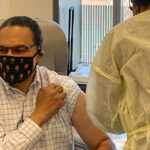
UMBC President Freeman Hrabowski and his wife Jackie recently volunteered to take part in a 25-month clinical trial of the COVID-19 vaccine invented by alumna Kizzmekia Corbett ’08, M16, biological sciences, with her team at the Vaccine Research Center at the National Institute of Allergy and Infectious Diseases. We talked with the Hrabowskis to learn more about why being a part of this historic trial is so important to them both.
UMBC Magazine: Why did you decide to volunteer for this trial?
Jackie Hrabowski: Well, it’s for a couple of reasons, starting with the fact that this pandemic has affected minorities, and African Americans specifically, more directly than most. And so, it’s important for us to be represented in the solution. If we’re looking for cures, we need to be involved and to be able to step up to that, despite all of the fears. The second reason, of course, is that the person who is developing this vaccine is a UMBC alum, and we’re very proud of her. And we always believe in supporting our students. We know that they’re the best at whatever it is that they decide to do. So those are the primary reasons…but I also think we need to be role models and walk the talk. If we say it’s important to do this, we need to be able to demonstrate it through our actions, not just with our words.
 Kizzmekia Corbett ’08, M16, biological sciences, calls out UMBC as her best career decision yet.
Freeman Hrabowski: Exactly. We’re seeing people of color and particularly African Americans dying at higher proportions, higher rates than anyone from this disease right now. And we need to help find the solutions. And right now the vaccine our alumna Kizzmekia Corbett has developed is very promising. And, as Jackie says, of those to whom much is given much should be required. And we feel very fortunate to be in that position right now. I have been the beneficiary of so much support from so many people that we want to do our part during this time.
And of course many Black people will say, yeah, but we know about these studies. I grew up with Tuskegee study. So, I recognize the prejudice that was shown and the abuse by the medical and scientific community towards Blacks in the past. But the question is, what do we do now? Right now we need this vaccine for everyone. And the encouraging news is that we can see people of all races involved in the development and the implementation of this plan for this vaccine.
UMBC Magazine: You both clearly understand how important it is to set a good example.
Jackie Hrabowski: It’s like the story of my dad growing up in rural Virginia. He and my mom were always out in the community helping people. We didn’t have a lot of money, but it was about giving our time and our effort…and supporting people as much as we can. And growing up, I was always there in the background, running with him, taking somebody somewhere, giving them something. And so as I got to be a little older…I asked my dad, why do we have to always be the ones going and taking people and doing things for people? And he looked at me, and he just quietly said, “Because we can.”
Freeman Hrabowski: I just love that…. It just gives me goosebumps. And you know, there are certainly a lot of limitations about things that we can’t do. We often don’t do as much as we can…but this is a time when we, as human beings, have a responsibility to step up to the plate for the public good, for the common good. This is the time when we need to be focused on people beyond ourselves.
*****
Retrievers are on the front lines of COVID-19 research.
UMBC faculty and alumni have been putting their expertise to use since the beginning of the pandemic. In addition to Kizzmekia Corbett’s vaccine work, Kaitlyn Sadtler ’11, biological sciences, is orchestrating a 10,000-participant study at the National Institutes of Health to look for antibodies to SARS-CoV-2 in volunteers’ blood, allowing the research team to estimate just how many people have been infected across the country—whether they had symptoms or not.
Zoë McLaren, associate professor of public policy, writes about how COVID-19 cases are surging upward around the U.S. but rapid testing might allow a turnaround by a massive scale-up of testing. Katherine Seley-Radtke, professor of chemistry and biochemistry, chimes in her expertise to explain what makes some drugs work against viruses and how others aren’t effective treatment of SARS-CoV-2.
Header image and video courtesy of the University of Maryland School of Medicine. Learn more about volunteering for the clinical trial.
]]>
UMBC President Freeman Hrabowski and his wife Jackie recently volunteered to take part in a 25-month clinical trial of the COVID-19 vaccine invented by alumna Kizzmekia Corbett ’08, M16,...
https://umbc.edu/stories/vaccine-trial/
https://my3.my.umbc.edu/api/v0/pixel/news/119749/guest@my.umbc.edu/9858ff8adf334f614a467762bcade868/api/pixel
covidresearch
fall-2020
perspectives
up-on-the-roof-meyerhoff
UMBC News & Magazine
https://my3.my.umbc.edu/groups/umbc-news-magazine
https://assets1-my.umbc.edu/system/shared/avatars/groups/000/001/943/24435aa6207c452e7bc15cc74b42c7bb/xsmall.png?1748556657
https://assets1-my.umbc.edu/system/shared/avatars/groups/000/001/943/24435aa6207c452e7bc15cc74b42c7bb/original.png?1748556657
https://assets2-my.umbc.edu/system/shared/avatars/groups/000/001/943/24435aa6207c452e7bc15cc74b42c7bb/xxlarge.png?1748556657
https://assets2-my.umbc.edu/system/shared/avatars/groups/000/001/943/24435aa6207c452e7bc15cc74b42c7bb/xlarge.png?1748556657
https://assets3-my.umbc.edu/system/shared/avatars/groups/000/001/943/24435aa6207c452e7bc15cc74b42c7bb/large.png?1748556657
https://assets1-my.umbc.edu/system/shared/avatars/groups/000/001/943/24435aa6207c452e7bc15cc74b42c7bb/medium.png?1748556657
https://assets2-my.umbc.edu/system/shared/avatars/groups/000/001/943/24435aa6207c452e7bc15cc74b42c7bb/small.png?1748556657
https://assets1-my.umbc.edu/system/shared/avatars/groups/000/001/943/24435aa6207c452e7bc15cc74b42c7bb/xsmall.png?1748556657
https://assets2-my.umbc.edu/system/shared/avatars/groups/000/001/943/24435aa6207c452e7bc15cc74b42c7bb/xxsmall.png?1748556657
UMBC News & Magazine
0
0
false
Wed, 18 Nov 2020 20:39:18 -0500
No, soaring COVID-19 cases are not due to more testing – they show a surging pandemic

By Zoë McLaren, associate professor, public policy, UMBC
COVID-19 cases are surging upward around the U.S., reaching 100,000 daily cases for the first time on Nov. 4 and 150,000 only eight days later. Some believe this increase in reported is a result of increases in testing, as more than 1.5 million tests are performed every day in the U.S. But the evidence is clear that these high numbers reflect a true increase in the number of COVID-19 infections.
Hospitalizations, deaths and test-positivity rates are going up. Taken together, this means that serious COVID-19 illness is on the rise and cases are being undercounted.
Steep increases in hospitalizations and deaths
Rather than being an artifact of changes in testing policy, the rise in cases reflects ongoing transmission and serious illness.
Even as COVID-19 treatments have improved and death rates have fallen, record-breaking levels of hospitalizations are already overwhelming ICUs in many parts of the country. Hospitalizations and deaths will continue to climb even if the surge in new cases abates because the majority of cases are diagnosed before serious illness develops. Today’s new infections will add to the death toll for weeks to come.
These hospitalizations and deaths represent confirmed COVID-19 infections. A COVID-19 diagnosis for hospitalized cases must be justified based on symptoms and test results. COVID-19 is simply the only plausible explanation for ongoing high hospitalization and death rates.
High and rising test positivity
High and rising test-positivity rates provide more evidence that COVID-19 is spreading uncontrollably around the country.
Test positivity is the percentage of all COVID-19 tests for active infection that come back positive. For example, Iowa’s test-positivity rate of 51.7% as of Nov. 17 means that for every 100 COVID-19 tests performed, 51 are positive.
Test positivity tells public health officials whether a testing program is casting a wide enough net to catch the majority of COVID-19 cases.
A high test-positivity rate indicates that the people getting tested are mostly those who have symptoms or think they’ve been exposed to someone with COVID-19. But people can be infected or contagious even if they aren’t showing symptoms. A low test-positivity rate means that access to testing is wide enough to reach large numbers of people who may not know they have the coronavirus. This greatly increases the chances of diagnosing people without symptoms or known exposure who may nonetheless be infected.
The World Health Organization recommends a goal of 5% test positivity or less, but test-positivity rates in many parts of the U.S. are well above that. As of Nov. 17, 44 states had test-positivity rates above 5%, meaning their testing programs were not casting a broad enough net and were likely missing many undiagnosed cases.
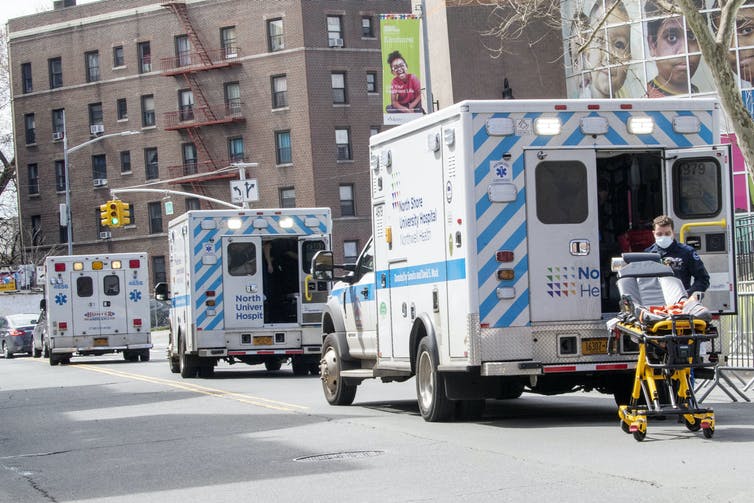 Hospitalizations and deaths are also rising, though they lag behind increases in diagnoses. AP Photo/Mary Altaffer
Things are worse than they seem
The data on hospitalizations, deaths and test positivity clearly show that the worst of the surge is yet to come. High test-positivity rates mean the current confirmed case numbers are undercounting total cases.
A test-positivity rate above 25%, as is the case in several states, implies there may be more than 10 times as many cases in the population as have been diagnosed. Many of these undetected cases may be contagious even though they have no symptoms, which further contributes to the spread of the virus. Considering the lag between new cases and hospitalization or death, the current surge does not bode well for the coming winter.
Overstretched testing programs
The record-breaking surge in COVID-19 cases and hospitalizations around the U.S. represents a true increase in infections and serious illness rather than an increase in testing. In fact, high test-positivity rates show that cases are undercounted because of limited access to testing. Hospitalizations and deaths will continue to rise in the weeks ahead.
Overstretched testing programs remain a weak link in the U.S. pandemic response. Diagnosing cases – and catching them as early as possible – will help cut off transmission chains of the deadly virus. When people learn they’re infected, they’re more likely to take necessary precautions to avoid exposing family, friends and others to the virus. Contrary to what some ill-informed people may be saying, the U.S. should be expanding access to testing to curb the spread of COVID-19. More testing would actually be a crucial step toward finally getting the virus under control.
*****
Zoë McLaren, Associate Professor of Public Policy, University of Maryland, Baltimore County
This article is republished from The Conversation under a Creative Commons license. Read the original article.
Header image: Access to testing had been improving across the U.S., but as cases increase, more testing is needed. AP Photo/Bebeto Matthews
]]>
By Zoë McLaren, associate professor, public policy, UMBC COVID-19 cases are surging upward around the U.S., reaching 100,000 daily cases for the first time on Nov. 4 and 150,000 only eight...
https://umbc.edu/stories/no-soaring-covid-19-cases-are-not-due-to-more-testing-they-show-a-surging-pandemic/
https://my3.my.umbc.edu/api/v0/pixel/news/119750/guest@my.umbc.edu/9a5eb8b104ec8e127ae127847b4976e3/api/pixel
covidresearch
perspectives
the-conversation
UMBC News & Magazine
https://my3.my.umbc.edu/groups/umbc-news-magazine
https://assets1-my.umbc.edu/system/shared/avatars/groups/000/001/943/24435aa6207c452e7bc15cc74b42c7bb/xsmall.png?1748556657
https://assets1-my.umbc.edu/system/shared/avatars/groups/000/001/943/24435aa6207c452e7bc15cc74b42c7bb/original.png?1748556657
https://assets2-my.umbc.edu/system/shared/avatars/groups/000/001/943/24435aa6207c452e7bc15cc74b42c7bb/xxlarge.png?1748556657
https://assets2-my.umbc.edu/system/shared/avatars/groups/000/001/943/24435aa6207c452e7bc15cc74b42c7bb/xlarge.png?1748556657
https://assets3-my.umbc.edu/system/shared/avatars/groups/000/001/943/24435aa6207c452e7bc15cc74b42c7bb/large.png?1748556657
https://assets1-my.umbc.edu/system/shared/avatars/groups/000/001/943/24435aa6207c452e7bc15cc74b42c7bb/medium.png?1748556657
https://assets2-my.umbc.edu/system/shared/avatars/groups/000/001/943/24435aa6207c452e7bc15cc74b42c7bb/small.png?1748556657
https://assets1-my.umbc.edu/system/shared/avatars/groups/000/001/943/24435aa6207c452e7bc15cc74b42c7bb/xsmall.png?1748556657
https://assets2-my.umbc.edu/system/shared/avatars/groups/000/001/943/24435aa6207c452e7bc15cc74b42c7bb/xxsmall.png?1748556657
UMBC News & Magazine
0
0
false
Wed, 18 Nov 2020 15:46:04 -0500
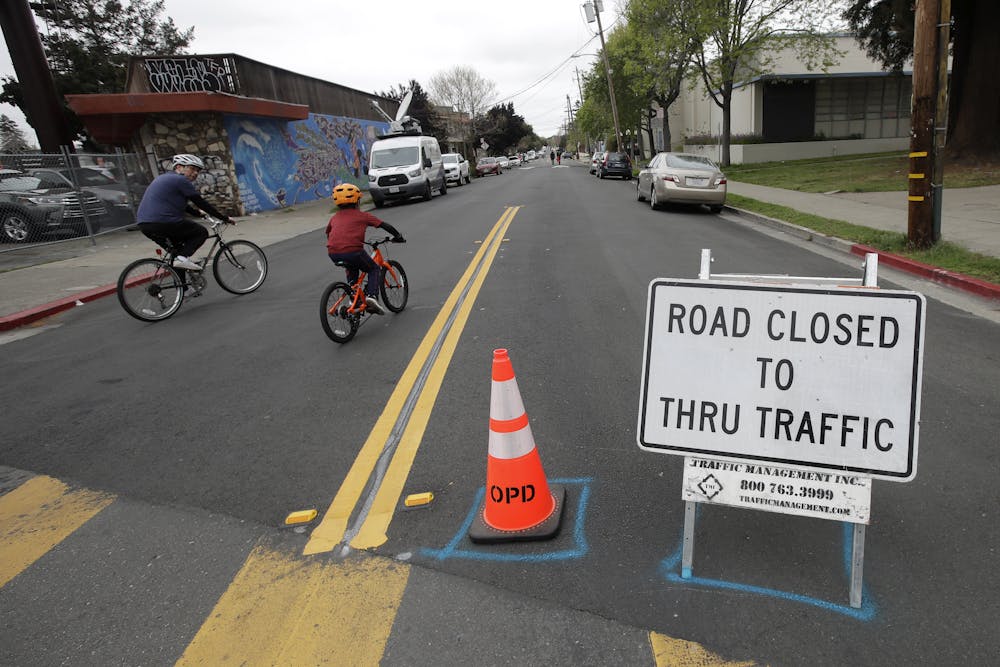


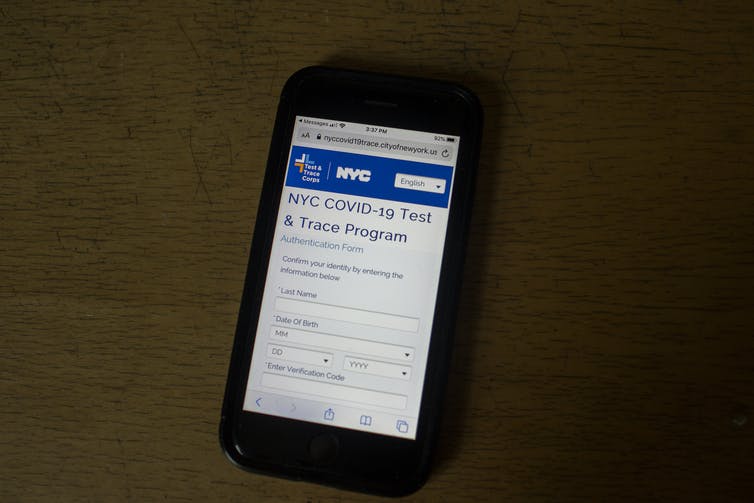 Effective contact tracing is critical to reducing the impact of the pandemic.
 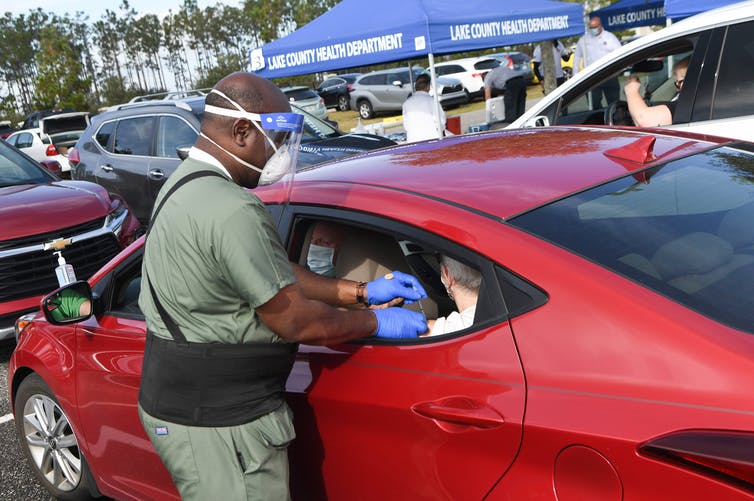 COVID-19 has demonstrated the difficulties in the mass production and distribution of a vaccine.