Community starts in the kitchen—Q&A with Ekiben’s Steve Chu ’12 and professor and author Mark Padoongpatt
The tantalizing aroma of food from everyone’s favorite UMBC alumni-founded restaurant, Ekiben, wafts through the air of the Albin O. Kuhn Library and Gallery. People are drawn in by the steamed buns and tofu nuggets and stay for the community, including a Q&A with Ekiben co-owner Steve Chu ’12, economics, and Mark Padoongpatt, associate professor and director of the Asian and Asian American Studies Program at the University of Nevada, Las Vegas. The discussion, part of the Reframing Global Asias Conversation Series and led by UMBC’s Global Asias Initiatives postdoctoral fellow Mika Thornburg, dives into Padoongpatt’s book, Flavors of Empire, with Chu providing support using his own experience creating community through food.
Mika Thornburg: Tell us a little about your personal history and how you came to work with food.
Steve Chu: When my family immigrated from Taiwan to the U.S., most decided to go into the restaurant business. All my aunts and uncles had restaurants at one point in time, so I grew up with it. I understood the work hours behind it, the work ethic. When I was 13, I read Anthony Bourdain’s Kitchen Confidential. I told my mom that this is what I wanted to do, and she was like, “No, you’re going to college.”
So I came to UMBC, studied economics, and every paper I did was about food. I did a paper on Taco Bell, did a paper on Chipotle, and around sophomore year I was like, alright, this is getting kind of silly. So I decided to get my first job in a restaurant and work and go to school full time. That’s when I started diving into this industry and I haven’t really looked back since.
Mark Padoongpatt: Growing up as a Thai American, you get associated with food even if you have no professional relationship to food at all. I didn’t want to perpetuate that stereotype, so I avoided even thinking about food until graduate school. And that’s when I realized Thai people are so visible through food. Thai food comes to stand in for Thai people and there’s really nothing else we know about Thai people.
So instead of talking about the community outside of food, I thought maybe I should just think about that. How did we come to this point where Thai food comes to stand in for Thai people? Since then, I’ve been thinking about food as a very dynamic way to study communities.
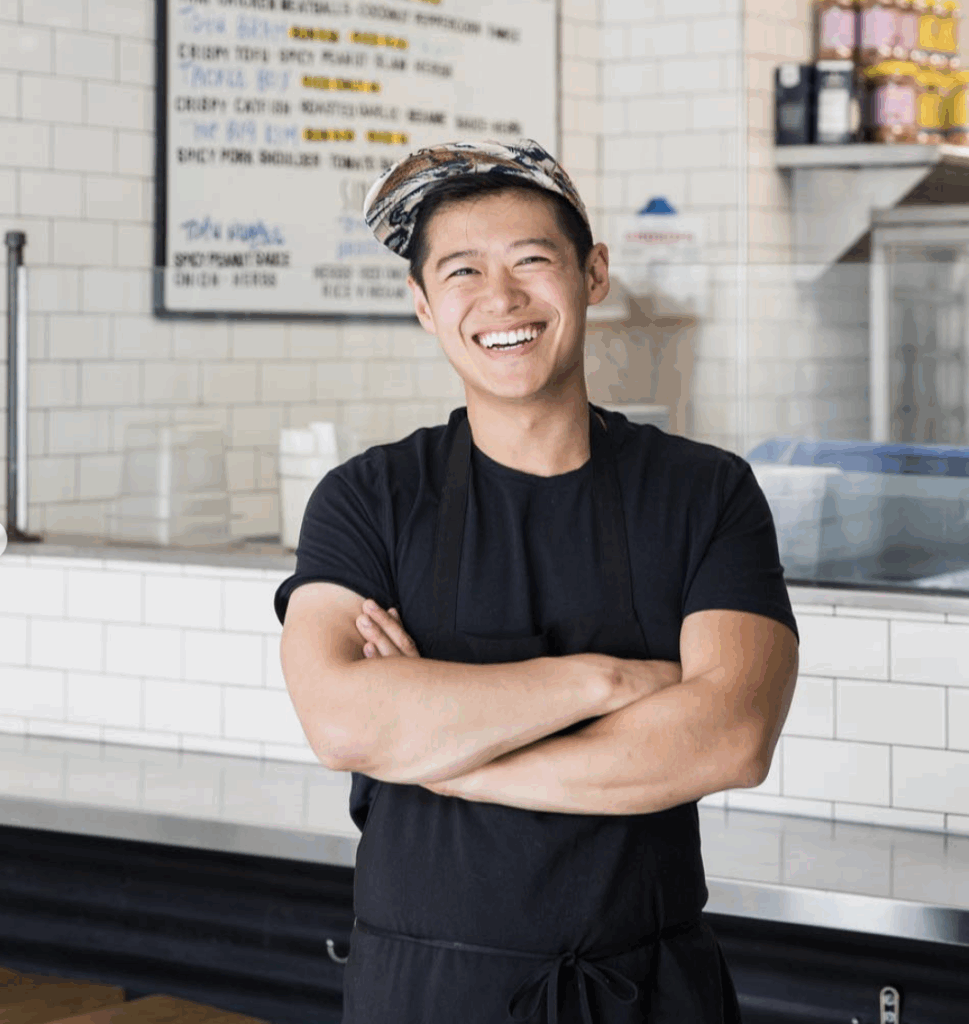
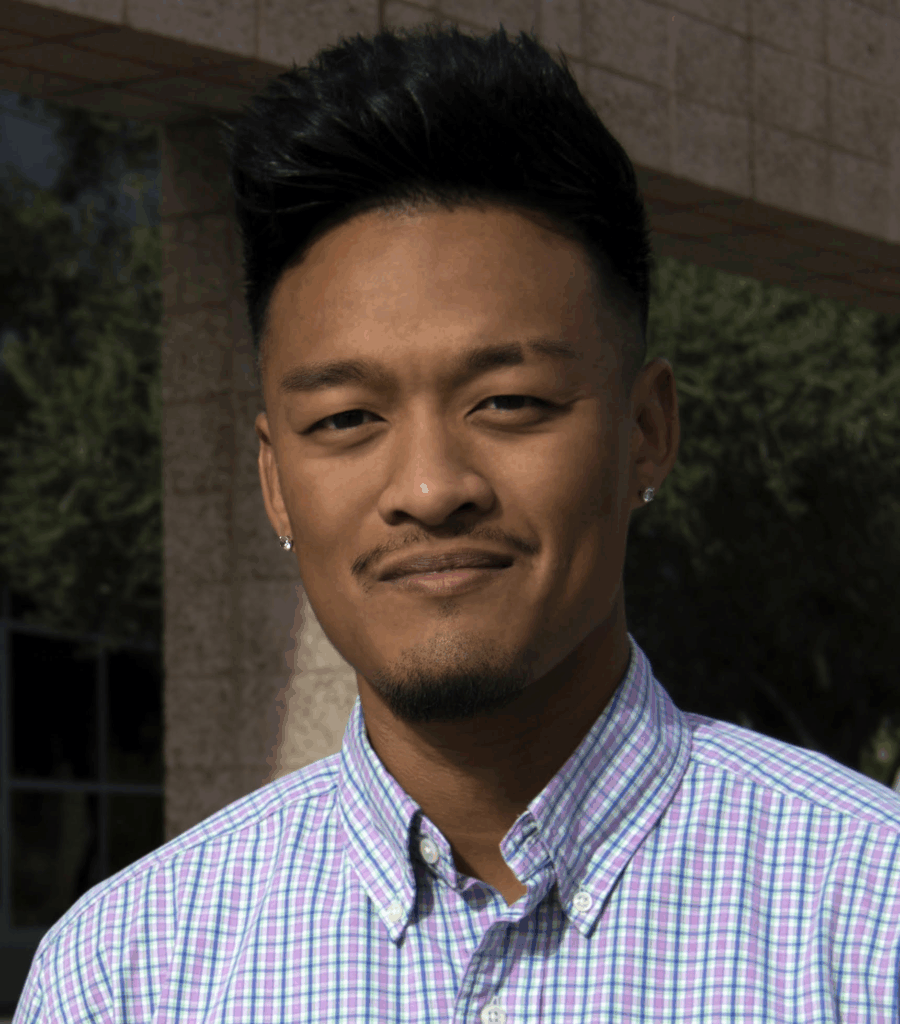
Steve Chu ’12, left, and Mark Padoongpatt, right.
Thornburg: Our event theme is about food and community. Can you speak a little bit about your perspective on the relationship between these two things from your respective position?
Chu: Food brings people together. You see that at this event, you see that at Costco with the free sample line. When we opened Ekiben in Baltimore City, we realized that it was a very polarized city, so we built a space where people from all walks of life could come, afford the food, and sit next to someone that they typically wouldn’t be sitting next to. On any Saturday, you’ll have a squeegee kid sitting next to a Jewish grandmother listening to Cardi B on the speakers, eating some fried chicken. It’s things that you normally wouldn’t put together. Food is a really, really powerful tool to build a community.
 Chu and Ekiben co-owner Ephrem Abebe ’13, information systems, chat with a customer in their original Fells Point location. Photo by Marlayna Demond ’11/UMBC.
Thornburg: What role can food play in changing culture and relationships between different groups of people, whether they be individuals, local communities or entire nations?
Padoongpatt: Food culture is incredibly transformative. Just look at European empires. How did they grow? Through food commodities. They created political and economic systems that were around food and food production. And so in terms of nation building, the evidence is all there in terms of the significance of food and the role that food can play.
The Thai government for the last 15 years has been pouring a lot of effort, time, and energy into this through a kind of gastro diplomacy so that more people will come to Thailand. I think it is a great way to stimulate curiosity and human connection, but just the eating of the food itself is not enough.
Chu: What I find really cool is if you grew up in a very diverse community, chances are you’ve had a very diverse group of friends and you’ve tried a very diverse group of foods. And that helps break down walls and allow for understanding and the building of community. One of the coolest things about coming to UMBC was how diverse a group of friends I was able to meet.
After UMBC, I went to New York and worked as a line cook, and I brought back a lot of creativity with me. I sat down with my two future business partners, [Ephrem Abebe ’13, information systems, and Nikhil Yesurpriya ’13, M.S. ’16, biological sciences]. I said, “Hey, bring me all these random ingredients that your moms aren’t using in the pantry.” And so they bring me all this stuff, and over time we just learned how to incorporate it into our core menu. Honestly, there wasn’t a lot of thought behind it—except, “that tastes good.”
Learn more about the Global Asias Initiative and follow along with their events.
]]>
The tantalizing aroma of food from everyone’s favorite UMBC alumni-founded restaurant, Ekiben, wafts through the air of the Albin O. Kuhn Library and Gallery. People are drawn in by the steamed...
https://umbc.edu/stories/community-starts-in-the-kitchen/
https://my3.my.umbc.edu/api/v0/pixel/news/150232/guest@my.umbc.edu/ffba7d4ce69f531b7e1004153f991fa3/api/pixel
alumni
at-play
baltimore-city
cahss
campus-life
coeit
economics
ekiben
global-asias
information-systems-management
magazine
story
UMBC News & Magazine
https://my3.my.umbc.edu/groups/umbc-news-magazine
https://assets1-my.umbc.edu/system/shared/avatars/groups/000/001/943/24435aa6207c452e7bc15cc74b42c7bb/xsmall.png?1748556657
https://assets1-my.umbc.edu/system/shared/avatars/groups/000/001/943/24435aa6207c452e7bc15cc74b42c7bb/original.png?1748556657
https://assets2-my.umbc.edu/system/shared/avatars/groups/000/001/943/24435aa6207c452e7bc15cc74b42c7bb/xxlarge.png?1748556657
https://assets2-my.umbc.edu/system/shared/avatars/groups/000/001/943/24435aa6207c452e7bc15cc74b42c7bb/xlarge.png?1748556657
https://assets3-my.umbc.edu/system/shared/avatars/groups/000/001/943/24435aa6207c452e7bc15cc74b42c7bb/large.png?1748556657
https://assets1-my.umbc.edu/system/shared/avatars/groups/000/001/943/24435aa6207c452e7bc15cc74b42c7bb/medium.png?1748556657
https://assets2-my.umbc.edu/system/shared/avatars/groups/000/001/943/24435aa6207c452e7bc15cc74b42c7bb/small.png?1748556657
https://assets1-my.umbc.edu/system/shared/avatars/groups/000/001/943/24435aa6207c452e7bc15cc74b42c7bb/xsmall.png?1748556657
https://assets2-my.umbc.edu/system/shared/avatars/groups/000/001/943/24435aa6207c452e7bc15cc74b42c7bb/xxsmall.png?1748556657
UMBC News & Magazine
0
0
false
Fri, 16 May 2025 10:51:47 -0400
Fri, 16 May 2025 10:51:47 -0400
Creating Community Through Food

If you’ve ever searched online for a place to eat in Baltimore, chances are Ekiben has popped up as a top destination again and again. Or, if you followed along with this year’s fried chicken sandwich feud between two fast food joints, you’ll have seen plenty of Baltimoreans resolving the issue by pointing to Ekiben’s classic Neighborhood Bird steamed bun. Yelp, Buzzfeed, and other national outlets reaffirm that this small storefront serving eclectic pan-Asian fare is worth the trip to Fells Point (with a second location in Hampden to open soon). Steve Chu ’12, economics, co-owner of the restaurant along with two other UMBC alumni, writes how the store owes its origins to UMBC and Baltimore City, and why these Retriever chefs care so much about the communities they serve.
Food has always been about community to me. My father worked endless hours running his Chinese restaurant, but on Mondays, he closed the restaurant and the whole family—aunts, uncles, grandparents—would go out to eat dim sum for breakfast. There’s be like 50 plates on the table. My relatives would urge me, eat, eat, try everything.
When Ephrem Abebe ’13, web development and information systems, Nikhil Yesurpriya ’13, M.S., ’16, biological science, and I started Ekiben in 2013 we wanted other people to enjoy food together, specifically this weird combination of Chinese/Taiwanese/Indian/Ethiopian cuisine. It was completely natural to us, coming from the food-focused cultures we came from, that food could unite disparate groups of people. The fact that Ekiben has been such a hit in Baltimore blows our minds, but is exactly what we hoped would happen.
 Abebe chats with a regular customer who brought some out-of-town friends.
When we met at UMBC—Nikhil and I through suitemates and Ephrem and I while volunteering for Habitat for Humanity in Baltimore City—I was studying financial economics, but it was so heavily focused on crunching numbers. I switched to a straight economics major early on after I realized that I wanted to learn more about how people thought and behaved with money. My background from UMBC has helped me tremendously in my career.
Gib Mason ’95, economics, taught a course on entrepreneurship that gave me the confidence that we could take this leap, buy a hot dog cart, and sell meatballs or spicy tofu at farmers markets, which is how we started out. He steered the class away from traditional homework assignments and asked us for our reasoning behind our answers instead. That still resonates with me as a business owner.
 Chu and Abebe in their Fells Point storefront.
Gathering community around us has come as naturally as combining our love of food into affordable and delicious dishes. Fells Point has been like home to us, and Baltimore has supported us every step of the way. Even in unusual ways—getting the original food license for the hot dog cart as a couple of 20-somethings was so much easier than we anticipated. The licensing board was so supportive after we explained our vision, but that came as a complete surprise to us.
What came next could be surprising to some in the restaurant business, but in Baltimore, this seems par for the course. After struggling with our hot dog cart-turned eclectic Asian fare cart for about a year, we got invaluable support from other local chefs. Ekiben wouldn’t exist without the guys behind Black Sauce, Damian Mosley and Michael Singleton, and Ben Lefenfeld from La Cuchara. Our friendships with other local chefs led naturally into collaboration and guest chef takeovers.
The best example of that communal approach to food in the city is the Charm City Night Market—think of an Asian open air market, tons of people and amazing food—organized by Stephanie Hsu and the rest of the local Chinatown Collective. We were really proud to be a part of the inaugural year and subsequent events. It does what we want for the city. It brings people of all demographics together, and it’s always so densely packed, and there’s so much great energy in it.
We’ve partnered with so many excellent chefs from Baltimore and beyond, and this is another way we get to cross-pollinate with talented craftspeople. There’s this push for food to be “traditional” or “authentic” but at it’s best, food is art. And ultimately, we just want to make food that tastes good and build up the community while doing so. We start that goal in the restaurant, investing a lot of energy into developing leaders in the company. We have staff that’s been with us since the beginning. I hope the supportive culture that we built really just kind of oozes out, and it spreads.
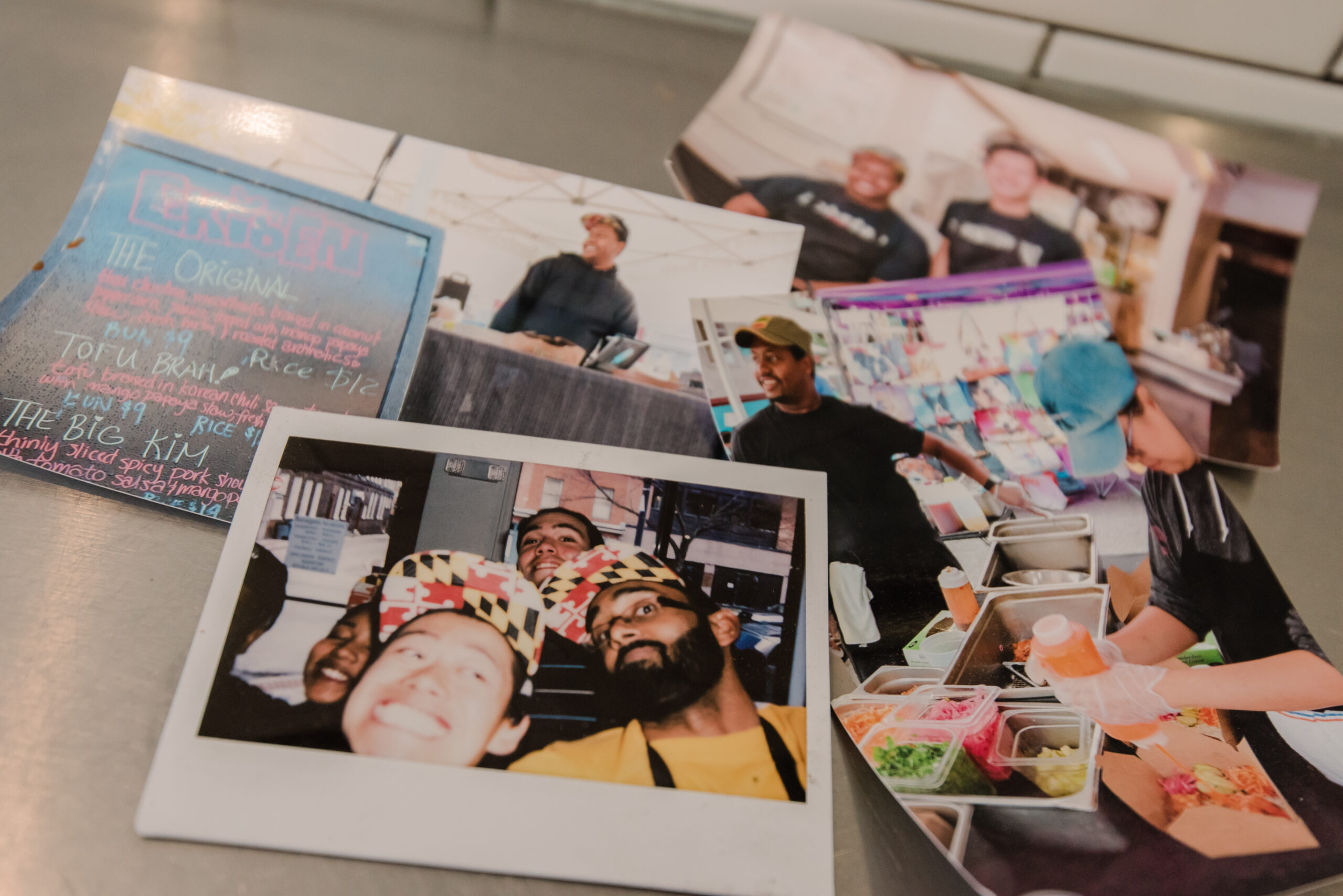
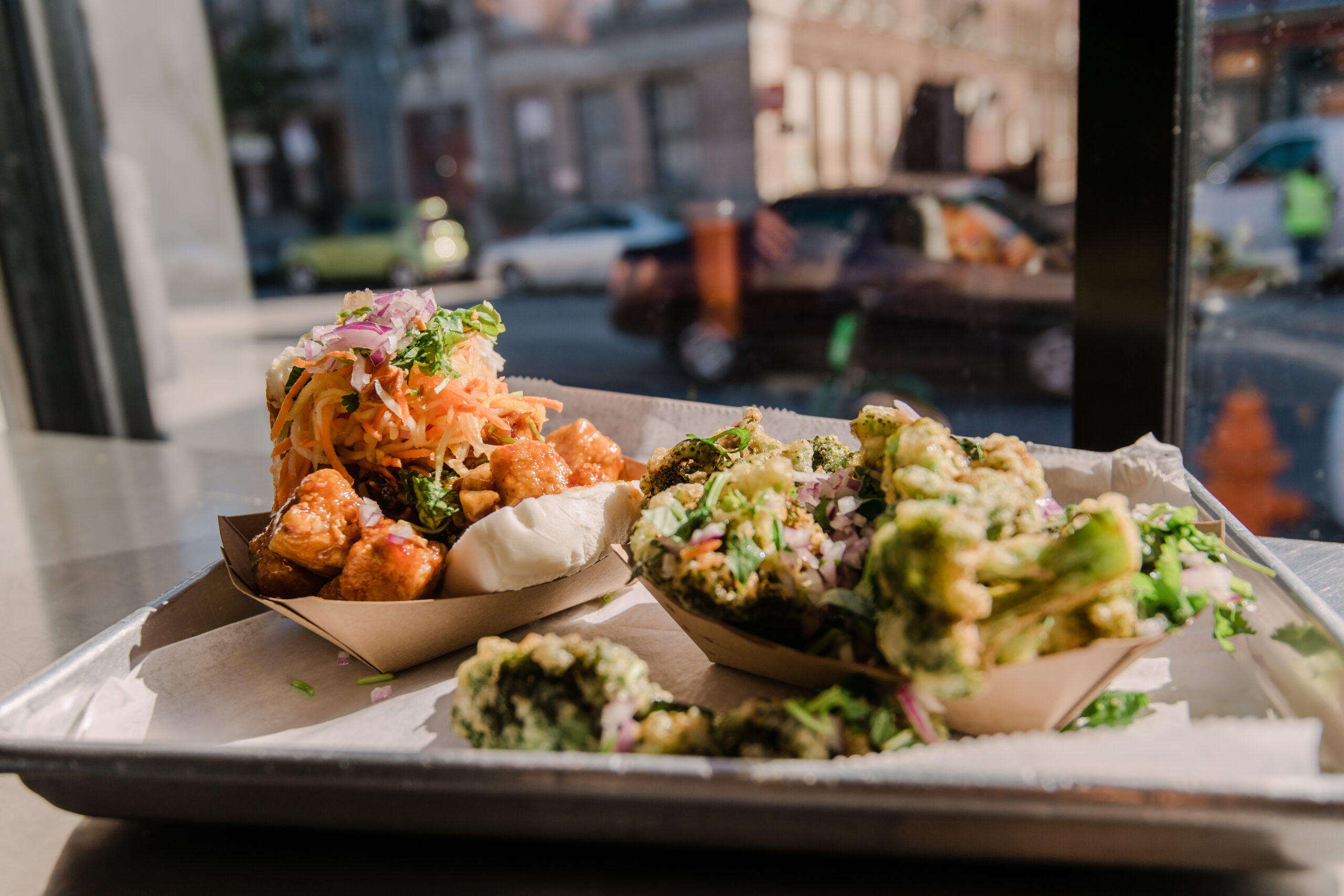
And Baltimore has supported us every step of the way. Baltimore has raised us. Literally, this restaurant was built on every $7 meal we served at any market that would let us sell there. We didn’t have a Kickstarter page, we just had Baltimore showing up to buy our food.
At those family dim sum breakfasts, as communal as they were, my relatives were not encouraging me to start my own restaurant. They actually loudly and emphatically (to put it politely) tried to steer me in the opposite direction. They, like so many other immigrants, had come here with very little and worked so hard to break away from that poverty. They didn’t want to see me take that same road, I guess. But in the end, their harsh words really spurred me to succeed. How could I fail when they had given so much to make a successful life here?
—Steve Chu ’12
*****
Header image: Abebe and Chu work together in the small prep space where customers can watch their orders being created. All photos by Marlayna Demond ’11.
]]>
If you’ve ever searched online for a place to eat in Baltimore, chances are Ekiben has popped up as a top destination again and again. Or, if you followed along with this year’s fried chicken...
https://umbc.edu/stories/creating-community-through-food/
https://my3.my.umbc.edu/api/v0/pixel/news/119980/guest@my.umbc.edu/8f902d5d1939ddc2c6f4e52373bbc4ee/api/pixel
alumni
alumni-essay
baltimore-city
economics
ekiben
fall-2019
UMBC News & Magazine
https://my3.my.umbc.edu/groups/umbc-news-magazine
https://assets1-my.umbc.edu/system/shared/avatars/groups/000/001/943/24435aa6207c452e7bc15cc74b42c7bb/xsmall.png?1748556657
https://assets1-my.umbc.edu/system/shared/avatars/groups/000/001/943/24435aa6207c452e7bc15cc74b42c7bb/original.png?1748556657
https://assets2-my.umbc.edu/system/shared/avatars/groups/000/001/943/24435aa6207c452e7bc15cc74b42c7bb/xxlarge.png?1748556657
https://assets2-my.umbc.edu/system/shared/avatars/groups/000/001/943/24435aa6207c452e7bc15cc74b42c7bb/xlarge.png?1748556657
https://assets3-my.umbc.edu/system/shared/avatars/groups/000/001/943/24435aa6207c452e7bc15cc74b42c7bb/large.png?1748556657
https://assets1-my.umbc.edu/system/shared/avatars/groups/000/001/943/24435aa6207c452e7bc15cc74b42c7bb/medium.png?1748556657
https://assets2-my.umbc.edu/system/shared/avatars/groups/000/001/943/24435aa6207c452e7bc15cc74b42c7bb/small.png?1748556657
https://assets1-my.umbc.edu/system/shared/avatars/groups/000/001/943/24435aa6207c452e7bc15cc74b42c7bb/xsmall.png?1748556657
https://assets2-my.umbc.edu/system/shared/avatars/groups/000/001/943/24435aa6207c452e7bc15cc74b42c7bb/xxsmall.png?1748556657
UMBC News & Magazine
0
0
false
Fri, 20 Dec 2019 20:53:29 -0500
Fusion: Ekiben takes an interdisciplinary approach to the restaurant biz
[wpvideo aHnk3EIN]
On a typical Saturday, in the wee hours of the morning — we’re talking two or three a.m. — Nikhil Yesupriya ’13, biological sciences, Steve Chu ’12, economics, and Ephrem Abebe ’13, information systems, are in the kitchen of Chu’s father’s restaurant in Pikesville, chopping, mixing, steaming. By 7:30, they’ve set up shop at the Fells Point Farmers Market, serving up their take on Asian fusion cuisine at the Ekiben food stand.
Ekiben got its start slinging steamed buns and rice bowls at the farmers’ market, and now, roughly a year and a half later, they’re opening a brick-and-mortar location at 1622 Eastern Avenue in Fells. The name refers to the elegant boxed lunches served on Japanese bullet trains, and on the morning we visited, the stand was serving up chicken meatballs seasoned with soy and five-spice powder, pork vindaloo with local veggie salsa, and tofu curry dotted with green peas.
They’ve made a few other notable appearances in the region since they started, in places like DC’s Emporiyum festival, TEDx Baltimore, and UMBC’s own Homecoming carnival. Their story — three college guys getting together on Friday nights to cook for Habitat for Humanity bake sales before combining their unique talents and interests to start a successful business — is a uniquely UMBC tale of entrepreneurship.
Ekiben’s cuisine was inspired, in part, by the many cultural events they were able to attend as undergrads. “We’d go to all these cultural shows, any dinner that SASA [South Asian Student Association] or FASA [Filipino American Student Association] or the Asian Student Association was having, and we just loved eating their food,” says Yesupriya.
“It sounds like kind of a college thing to do…you want free food, you go to wherever there is free food. But we really enjoyed going to these places and experiencing the food and making friends with these people and cooking with them,” he adds.
Combining their experiences cooking for themselves, for their friends, and in real restaurants, the three incorporated a business and opened the stand in August 2014. Chu, in addition to being the son of a restaurateur, used to manage a Chipotle, and worked for a time for a chef in New York. He’s now Ekiben’s executive chef. Abebe is the logistics guy, making sure the booth is set up and running properly at the farmers’ market and other venues. Yesupriya is responsible for marketing the stand and engaging with customers.
With two out of the three pursuing graduate study at UMBC, and with their permanent location set to open soon, the guys have been running the stand with the help of a small cadre of interns, including Bona Lee ’09, psychology and sociology, one of their old friends from Habitat for Humanity. Lee works full time at a payroll office and helps out at Ekiben in her spare time, drawing the day’s specials on the chalkboard and helping to prep, plate, and serve the food. “[It’s a] labor of love,” she says.
Love for the food, love for the customers, and love for the city of Baltimore.
—Julia Celtnieks ’13
Video by Elena DeBold ’10
]]>
[wpvideo aHnk3EIN] On a typical Saturday, in the wee hours of the morning — we’re talking two or three a.m. — Nikhil Yesupriya ’13, biological sciences, Steve Chu ’12, economics, and Ephrem...
https://umbc.edu/stories/fusion-ekiben-takes-an-interdisciplinary-approach-to-the-restaurant-biz/
https://my3.my.umbc.edu/api/v0/pixel/news/121302/guest@my.umbc.edu/07a8048f793aa180d88e847ec9d64da6/api/pixel
alumni
baltimore
bona-lee
ekiben
ephrem-abebe
fells-point
nikhil-yesupriya
steve-chu
UMBC News & Magazine
https://my3.my.umbc.edu/groups/umbc-news-magazine
https://assets1-my.umbc.edu/system/shared/avatars/groups/000/001/943/24435aa6207c452e7bc15cc74b42c7bb/xsmall.png?1748556657
https://assets1-my.umbc.edu/system/shared/avatars/groups/000/001/943/24435aa6207c452e7bc15cc74b42c7bb/original.png?1748556657
https://assets2-my.umbc.edu/system/shared/avatars/groups/000/001/943/24435aa6207c452e7bc15cc74b42c7bb/xxlarge.png?1748556657
https://assets2-my.umbc.edu/system/shared/avatars/groups/000/001/943/24435aa6207c452e7bc15cc74b42c7bb/xlarge.png?1748556657
https://assets3-my.umbc.edu/system/shared/avatars/groups/000/001/943/24435aa6207c452e7bc15cc74b42c7bb/large.png?1748556657
https://assets1-my.umbc.edu/system/shared/avatars/groups/000/001/943/24435aa6207c452e7bc15cc74b42c7bb/medium.png?1748556657
https://assets2-my.umbc.edu/system/shared/avatars/groups/000/001/943/24435aa6207c452e7bc15cc74b42c7bb/small.png?1748556657
https://assets1-my.umbc.edu/system/shared/avatars/groups/000/001/943/24435aa6207c452e7bc15cc74b42c7bb/xsmall.png?1748556657
https://assets2-my.umbc.edu/system/shared/avatars/groups/000/001/943/24435aa6207c452e7bc15cc74b42c7bb/xxsmall.png?1748556657
UMBC News & Magazine
0
0
false
Fri, 26 Feb 2016 13:30:00 -0500