Wow Moments

Who inspired YOU most as a student at UMBC? We asked, and you answered! #UMBCwow
 “Ilsa Lottes pulled me into Sociology, and Leslie Morgan convinced me to pursue a Ph.D. Both women were amazing mentors! So many great professors…a lot of fun was had in Rudy Storch’s Latin classes and I find myself still referring back to Jay Freyman’s word roots class.”
— Connie Krach Pierson ’90, economics, M.A. ’92, sociology
“Professor Schaller. He not only pushed me harder than any other professor, but he intensified my interest in politics and government. I still can’t believe he gave a quiz on my 21st birthday though. I’m pretty sure I aced it.”
– Sarah Candell Clifford ’10, political science
“Marjorie Herman, inspired me to go into the music profession. I ended up as a board certified music therapist. She was Margy Kleiman then in the early ’70s. This was before UMBC even had a music major. I majored in psych but took a lot of music courses …”
– Elizabeth Gardiner Myers ’75, psychology
“Dr. Jodi Kelber was such an important part of my UMBC life. I learned so much about evaluating life through critical lenses from her, but I learned just as much about leading an authentic and ethical life. I wouldn’t be the person I am today without her generous guidance and loving spirit.”
– Sarah Pevner ’08, English
“Almost every professor has been an inspiration… Narrowing it down to just one? Improbable. I was an Ancient Studies major, and it was the department as a whole which inspired me to push harder in my studies.”
– Deirdre Lohrmann ’16, ancient studies
 “Sally Shivnan who taught me how to really tell a story with the written word in any medium. Christopher Corbett who taught generations of journalists the importance of chasing a story with a moral compass in hand, whom I think of whenever I read a really great piece of investigative journalism. Jason Loviglio who honed the lens through which his students view popular culture and politics and media, and whose course should be a requirement for every freshman. Christoph Irmscher who was my mentor and who taught me by example how to build consensus among peers which is a skill I rely on daily in my corporate career. I wouldn’t trade the UMBC professors I had for anything, not for admission to any other university in the world. I loved every minute in their classrooms and have such a deep-abiding nostalgia for my entire learning experience at UMBC.”
– Brett McKenzie Wood ’04, English
“Dr. Lumpkin who taught Thermodynamics around 94 or so. Sadly she passed after giving birth to her daughter. She truly exemplified a professor that cared about her students learning the material and having understanding. Dr. Lumpkin solidified my understanding of it taking a village sometimes to be successful. Because of her not giving up on me or allowing me to give up on myself and studying Chem. E., I make it a point to put the same into others that cross my path.”
– Gwen Blackwell ’97, chemical engineering
“Jason Rhodes. He was only an adjunct but he changed my way of thinking back in 2011 and I still remember what a great experience his class was. He taught me that for anything to change, it takes time, energy, and effort. I’m forever grateful for how he opened up my perspective on the outside world.”
– Jerrica Stanley ’14, psychology
“I loved my boss, Frank Tyminski, when I worked in Chem Prep. He was smart, dedicated to his students, and knew how to give us tough love. I used to go back to visit every few months when I was in grad school and could call him up any time I had a chemistry question. Frank was definitely one of the biggest influences in my college career.”
– Aimee Iannacci ’05, biological sciences and psychology
 “Dr. Stephen Freeland was one of the professors who played an important role in my undergrad journey. He taught us how to bring disciplines together to maximize the results and taught us so much about effective skills and behaviors! No need to say the astrobiology class he taught was a great experience and the energy and effort he put toward teaching us was honorable.”
– Melorin Shahri ’17, biological sciences
“Dr. Osman Güler introduced me to operations research. He’s tough but fair, and always wants to make sure you truly get the concepts. When I was applying to grad schools, he pushed me beyond what I thought I was capable of, as he did with his courses.”
– Emily Conley ’14, mathematics
“Ed Orser took over when Joel Jons left the American Studies Dept. to go to the U of New Mexico. Joel Jones recruited me into American Studies and Ed Orser took the reins and opened my mind to the concept of intellectual synthesis, taking disparate parts of society and beginning t understand the interplay of various disciplines on the realities of the world.”
– Jerry Kerr ’71, American studies
“Dr. JoAnn Argersinger. She was my advisor and helped to guide me through my years as a history major. She was a fascinating lecturer and I still use things she taught me as I teach my students!”
– Sheila Reed Magin ’88, history
“It is a tie for me.
- Dr. John Starr who was my fraternity (Lambda Chi Alpha) academic advisor and guided me to pursue IFSM when I had little to no understanding of what the future could be in IT.
- Dr. Scott Rickard who asked me, an undergrad, to register for a joint undergrad/grad school class (Policy Science 615) on Leadership. He stoked the fire inside of me to go onto graduate school.
Thanks UMBC #UMBCwow”
– Bill Glover ’90, information systems
“Dr. Andrea Kalfoglou taught me in the HAPP/SOCY Qualitative Research Methods course in 2009. It was life changing and showed me research comes in many forms. Thanks to UMBC, I use what I learned in my BA and MA programs in my job as a healthcare market researcher every single day. :)”
– Mary Faith James ’10, health administration and policy, M.A. ’12, sociology
“Dr. Michelle Stefano in American Studies. When I first signed up for her class, I just wanted to fulfill a requirement. I had no interest in the subject whatsoever, but she had so much passion that she made me care about and love the work we did in class. It ended up being one my favorite classes, and I ended up taking another class with her. She has so much passion that she can make anyone care about her topic. She is clearly in it for all the right reasons and she taught me that as long as you do what you love, you’ll be alright.”
– Hesham Hassanein ’16, political science
“Jim Thomas. Enough said.”
– Jen Joanna (Muston) ’04, American studies
]]>
Who inspired YOU most as a student at UMBC? We asked, and you answered! #UMBCwow “Ilsa Lottes pulled me into Sociology, and Leslie Morgan convinced me to pursue a Ph.D. Both women were amazing...
https://umbc.edu/stories/wowmoments/
https://my3.my.umbc.edu/api/v0/pixel/news/120627/guest@my.umbc.edu/b492d6b82b293ed35cb030a59302c092/api/pixel
fall-2017
perspectives
web-extras
UMBC News & Magazine
https://my3.my.umbc.edu/groups/umbc-news-magazine
https://assets1-my.umbc.edu/system/shared/avatars/groups/000/001/943/24435aa6207c452e7bc15cc74b42c7bb/xsmall.png?1748556657
https://assets1-my.umbc.edu/system/shared/avatars/groups/000/001/943/24435aa6207c452e7bc15cc74b42c7bb/original.png?1748556657
https://assets2-my.umbc.edu/system/shared/avatars/groups/000/001/943/24435aa6207c452e7bc15cc74b42c7bb/xxlarge.png?1748556657
https://assets2-my.umbc.edu/system/shared/avatars/groups/000/001/943/24435aa6207c452e7bc15cc74b42c7bb/xlarge.png?1748556657
https://assets3-my.umbc.edu/system/shared/avatars/groups/000/001/943/24435aa6207c452e7bc15cc74b42c7bb/large.png?1748556657
https://assets1-my.umbc.edu/system/shared/avatars/groups/000/001/943/24435aa6207c452e7bc15cc74b42c7bb/medium.png?1748556657
https://assets2-my.umbc.edu/system/shared/avatars/groups/000/001/943/24435aa6207c452e7bc15cc74b42c7bb/small.png?1748556657
https://assets1-my.umbc.edu/system/shared/avatars/groups/000/001/943/24435aa6207c452e7bc15cc74b42c7bb/xsmall.png?1748556657
https://assets2-my.umbc.edu/system/shared/avatars/groups/000/001/943/24435aa6207c452e7bc15cc74b42c7bb/xxsmall.png?1748556657
UMBC News & Magazine
0
0
false
Thu, 05 Oct 2017 17:30:08 -0400
Picture Perfect

Patrick Rife ’10, visual arts
As an undergraduate student of art history at UMBC, Patrick Rife ’10, visual arts, paid homage to obsolescent technology by building a sculpture out of 9,000 vinyl records. Today, as the co-founder of Baltimore-based Pixilated, Rife spends his days figuring out the key to staying on the cutting edge of a technology that calls to another throwback technology – photo booths.
If you’ve been to a major party in Baltimore in the last few years, you’ve probably seen the heavy rotation of guests posing in front of one of Pixilated’s trademark photo boxes. But Rife’s team has moved far beyond where it started in 2012, with a team of three. The Pixilated of today consists of 36 full and part-time employees with 24 booths working family and sporting events, festivals, conferences and corporate meetings in Baltimore, Washington, DC, and Philadelphia, as well as installing permanent, wall-mounted kiosks in businesses.
In short, Pixilated has left its mom-and-pop one-photo-booth rivals in the dust.
Rife and his partner, Nicolas China, started Pixilated after Rife was inspired by a watching wedding guests jumping in front of a professional photographer and acting crazy. This was Rife’s first exposure to the concept of an “open air” photo booth and occurred before the proliferation of digital photography. Years later, he remarked on it to a friend who’d had a similar experience and they realized the business potential given the digital technology then available.
Within a year after graduating from UMBC, Rife went from a low-wage job transporting high-end art pieces around the country to starting Pixilated. With his first child on the way, Rife, who is also a musician, said he viewed Pixilated as a small side business that “would buy me a little more time to make my next record.”
While there was a nascent photo booth industry at the time, Pixilated planned to improve on existing models.
“The original concept of Pixilated was to do something … that was a little more sculptural and with a sexier silhouette, instead of a traditional booth and to take higher quality photos, produce really high quality prints, and make an experience of it,” Rife explains. To heighten the experience element, they added themed props and green screens, and more recently, “GIF booths,” with stop motion photography that allow customers to take home a short animation of their memories.
After about two years serving weddings and other private functions, Rife was ready to take it to a higher level – bigger events such as trade shows, expos and state fairs. Since then, Pixilated has successfully marketed their services to large corporations, setting up photo booths for Under Armour at the Chicago Marathon, and traveling with Sony Records and Pandora, among others. They’ve also become incredibly savvy at marketing and brand engagement.
Pixilated photo booth customers become stars, posing with or wearing company logos and brandishing products, then posting the slick, ad-like images of themselves on social media. The client company’s exposure and recognition multiplies. Pixilated’s logo also appears in every shot. Everyone wins.
Next up, Rife foresees the business becoming more “nimble” with the proprietary software they’re launching, using the cloud for file sharing and social media integration.
“The industry has been going pretty heavily for four years now…but when it comes to bigger companies doing brand engagement, there aren’t a ton in the Baltimore market,” Rife reflects. “At the moment it’s still a little bit of an arms race to see who can build the exceptional technology and combine that with business development.”
— Cait James ’01
]]>
Patrick Rife ’10, visual arts As an undergraduate student of art history at UMBC, Patrick Rife ’10, visual arts, paid homage to obsolescent technology by building a sculpture out of 9,000 vinyl...
https://umbc.edu/stories/picture-perfect/
https://my3.my.umbc.edu/api/v0/pixel/news/120628/guest@my.umbc.edu/3ad9bda53c242c7149ce9da4c96deea5/api/pixel
alumni
fall-2017
UMBC News & Magazine
https://my3.my.umbc.edu/groups/umbc-news-magazine
https://assets1-my.umbc.edu/system/shared/avatars/groups/000/001/943/24435aa6207c452e7bc15cc74b42c7bb/xsmall.png?1748556657
https://assets1-my.umbc.edu/system/shared/avatars/groups/000/001/943/24435aa6207c452e7bc15cc74b42c7bb/original.png?1748556657
https://assets2-my.umbc.edu/system/shared/avatars/groups/000/001/943/24435aa6207c452e7bc15cc74b42c7bb/xxlarge.png?1748556657
https://assets2-my.umbc.edu/system/shared/avatars/groups/000/001/943/24435aa6207c452e7bc15cc74b42c7bb/xlarge.png?1748556657
https://assets3-my.umbc.edu/system/shared/avatars/groups/000/001/943/24435aa6207c452e7bc15cc74b42c7bb/large.png?1748556657
https://assets1-my.umbc.edu/system/shared/avatars/groups/000/001/943/24435aa6207c452e7bc15cc74b42c7bb/medium.png?1748556657
https://assets2-my.umbc.edu/system/shared/avatars/groups/000/001/943/24435aa6207c452e7bc15cc74b42c7bb/small.png?1748556657
https://assets1-my.umbc.edu/system/shared/avatars/groups/000/001/943/24435aa6207c452e7bc15cc74b42c7bb/xsmall.png?1748556657
https://assets2-my.umbc.edu/system/shared/avatars/groups/000/001/943/24435aa6207c452e7bc15cc74b42c7bb/xxsmall.png?1748556657
UMBC News & Magazine
0
0
false
Thu, 05 Oct 2017 17:22:43 -0400
Wild Card – Fall 2017
 Henge
Henge
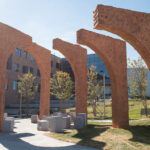
After a sculpture titled, Forum, by Thomas Sayre
Outside the glass wall
That separates us
From the cold and below,
Covered with an icing
Of melting snow,
Are the half arches
Formed of earth-colored stone
Placed so no two can
Connect, an almost row
Of almost arches
Among the broken gray
Of stunted columns left
As if to the wind on some acropolis;
A henge whose shadows
Rotate across the grass,
Slant across squares of paving
To remind us
That time is told
By the movement of suns,
By melting ice,
The shattered rock
Of a ruined forum which
The Gods in their irony
Destroyed, and now preserve
As warning, a monument
To vanishings
Michael Fallon, senior lecturer in English, was inspired to write this poem about Thomas Sayre’s 2014 sculpture, Forum, while gazing upon it from the Dresher Center for the Humanities’ second-floor conference room. Fallon’s fourth book of poems, House of Forgotten Names, will be published by Salmon Press of Ireland in late 2017 or early 2018. He has taught at UMBC for 30 years.
]]>
Henge After a sculpture titled, Forum, by Thomas Sayre Outside the glass wall That separates us From the cold and below, Covered with an icing Of melting snow, Are the half arches...
https://umbc.edu/stories/wild-card-fall-2017/
https://my3.my.umbc.edu/api/v0/pixel/news/120629/guest@my.umbc.edu/bc4cab33b72d682f64cc2bb966bba53d/api/pixel
fall-2017
perspectives
wild-card
UMBC News & Magazine
https://my3.my.umbc.edu/groups/umbc-news-magazine
https://assets1-my.umbc.edu/system/shared/avatars/groups/000/001/943/24435aa6207c452e7bc15cc74b42c7bb/xsmall.png?1748556657
https://assets1-my.umbc.edu/system/shared/avatars/groups/000/001/943/24435aa6207c452e7bc15cc74b42c7bb/original.png?1748556657
https://assets2-my.umbc.edu/system/shared/avatars/groups/000/001/943/24435aa6207c452e7bc15cc74b42c7bb/xxlarge.png?1748556657
https://assets2-my.umbc.edu/system/shared/avatars/groups/000/001/943/24435aa6207c452e7bc15cc74b42c7bb/xlarge.png?1748556657
https://assets3-my.umbc.edu/system/shared/avatars/groups/000/001/943/24435aa6207c452e7bc15cc74b42c7bb/large.png?1748556657
https://assets1-my.umbc.edu/system/shared/avatars/groups/000/001/943/24435aa6207c452e7bc15cc74b42c7bb/medium.png?1748556657
https://assets2-my.umbc.edu/system/shared/avatars/groups/000/001/943/24435aa6207c452e7bc15cc74b42c7bb/small.png?1748556657
https://assets1-my.umbc.edu/system/shared/avatars/groups/000/001/943/24435aa6207c452e7bc15cc74b42c7bb/xsmall.png?1748556657
https://assets2-my.umbc.edu/system/shared/avatars/groups/000/001/943/24435aa6207c452e7bc15cc74b42c7bb/xxsmall.png?1748556657
UMBC News & Magazine
0
0
false
Thu, 05 Oct 2017 17:17:29 -0400
Fearless Entrepreneur
Delali Dzirasa ’04, computer engineering
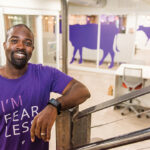
With two Retriever brothers before him, UMBC was the last place Delali Dzirasa wanted to be during college. But it turned out to be a key part of his future as president and founder of Fearless Solutions, a shining star in Baltimore’s software scene, not to mention the place where he met his wife, an officer in their company.
“There’s always going to be a connection between me, Fearless, and UMBC. UMBC’s part of the story, right?” says Dzirasa.
Earlier this year, Fearless was named Maryland Minority-Owned Small Business of the Year by the U.S. Small Business Administration, and last year took home the Design/Dev Firm of the Year prize at Baltimore Innovation Week.
Since 2009, Fearless has taken on a diverse array of high-profile work, including everything from projects that support national security, to creating an online platform for middle school students in New York to use to track oyster habits, to building a dashboard for Baltimore City’s health department to view and track death certificates from across the city.
For Dzirasa, the common thread is using technology to change the planet. He says his employees feel likewise, indicating to him that “‘I want to feed my family but I want to do something that matters.’ That’s good, that’s part of our DNA, and it’s part of the DNA of the people that are here.”
UMBC is contributing to that team, with alumni making up 35% of the staff. Dzirasa’s wife, Letitia Dzirasa ’03, biological sciences, is among them. She is the company’s health innovation officer.
Dzirasa’s copious connections with UMBC might have come as a surprise to him two decades ago, when the Silver Spring native had to be “muscled” into applying by his mom. He had no initial desire to follow in his two older (and successful) brothers’ footsteps as UMBC students. But it didn’t take long for him to chart his own path as he advanced in his degree in computer engineering.
“I was always interested early on in really three things: tech, business, and people. I had no idea how all this would come together,” he says.
Dzirasa started building his business acumen early on by taking “every job or business known to man,” including dog walking, car washing, and even starting a barbershop in his basement. UMBC let him hone his business skills further. “I had a lot of really good opportunities while at UMBC, not just from a technical background, but also the entrepreneurship program opened a lot of doors for me,” he says.
After graduation in 2004, UMBC’s President Freeman A. Hrabowski, III, gave him his first job connection through alumnus Rob Baruch ’89, computer science. Five years later, Dzirasa took the leap of starting his own company, housing his first office in the incubator at bwtech@umbc Business Park.
Today Fearless’ downtown Baltimore office is full of people working hard for his vision, some at treadmill desks, and many wearing the purple of the company brand. For anyone who wants to join their ranks or simply succeed in their business goals, Dzirasa says “you’ve got to have some sort of ‘why’ that drives you. Absolute pun intended, you’ve got to be fearless.”
Dzirasa’s fearlessness has earned him a company that continues to quickly grow and change, a process he says is not unlike the childhood of his sons (ages 15 years and 6 months).
“There’s things you love about every stage and there’s things you hate about every stage, but you love to watch them grow,” he says.
— Karen Stysley
]]>
Delali Dzirasa ’04, computer engineering With two Retriever brothers before him, UMBC was the last place Delali Dzirasa wanted to be during college. But it turned out to be a key part of his...
https://umbc.edu/stories/fearless-entrepreneur/
https://my3.my.umbc.edu/api/v0/pixel/news/120630/guest@my.umbc.edu/bbc475bcacd68a6a6b75f8c2a8822e91/api/pixel
alumni
fall-2017
UMBC News & Magazine
https://my3.my.umbc.edu/groups/umbc-news-magazine
https://assets1-my.umbc.edu/system/shared/avatars/groups/000/001/943/24435aa6207c452e7bc15cc74b42c7bb/xsmall.png?1748556657
https://assets1-my.umbc.edu/system/shared/avatars/groups/000/001/943/24435aa6207c452e7bc15cc74b42c7bb/original.png?1748556657
https://assets2-my.umbc.edu/system/shared/avatars/groups/000/001/943/24435aa6207c452e7bc15cc74b42c7bb/xxlarge.png?1748556657
https://assets2-my.umbc.edu/system/shared/avatars/groups/000/001/943/24435aa6207c452e7bc15cc74b42c7bb/xlarge.png?1748556657
https://assets3-my.umbc.edu/system/shared/avatars/groups/000/001/943/24435aa6207c452e7bc15cc74b42c7bb/large.png?1748556657
https://assets1-my.umbc.edu/system/shared/avatars/groups/000/001/943/24435aa6207c452e7bc15cc74b42c7bb/medium.png?1748556657
https://assets2-my.umbc.edu/system/shared/avatars/groups/000/001/943/24435aa6207c452e7bc15cc74b42c7bb/small.png?1748556657
https://assets1-my.umbc.edu/system/shared/avatars/groups/000/001/943/24435aa6207c452e7bc15cc74b42c7bb/xsmall.png?1748556657
https://assets2-my.umbc.edu/system/shared/avatars/groups/000/001/943/24435aa6207c452e7bc15cc74b42c7bb/xxsmall.png?1748556657
UMBC News & Magazine
0
0
false
Thu, 05 Oct 2017 16:46:56 -0400
Shared Strengths

Carol Anne Huff ’93, economics, and Julie A. Gillespie ’93, economics
On a rainy day in Chicago, the sisters cross town to meet up for lunch. They greet each other, laughing, and proceed to order their food with similar cadence and tastes. When the plates come, they split the dishes – an octopus salad, a crab cake – with the precision that comes from a lifetime of practice and shared biology.
Let’s get the obvious points about Carol Anne Huff and Julie A. Gillespie (both formerly Sennello) out of the way. Yes, they are identical twins. Yes, they often finish each other’s sentences. They’re also both fiercely smart women who motivate each other in everything from their careers to triathlon training.
“We are really close friends, so it’s always great to be together,” says Gillespie, as Huff nods in agreement.
The sisters made it into the local paper when they graduated first at the top of their class at Bel Air High School in 1989, and then again as co-valedictorians of UMBC’s class of 1993. They followed their Retriever years by attending Duke together, both earning law degrees, and then moving to Chicago – where they spent their earliest years – to lay down permanent roots and pursue their careers.
Today, both work as transactional lawyers in firms across the Chicago River from each other – Huff as a partner in the Capital Markets group at Kirkland & Ellis LLP, and Gillespie as a partner in the Securitization group at Mayer Brown – helping clients such as banks, private equity funds, and other institutions issuing securities and completing deals.
Coming out of high school, the sisters had a world of options ahead of them. UMBC offered them full scholarships and full room and board, a package too attractive to ignore, they said.
“I do think it would have been strange to go to separate colleges,” says Gillespie. The idea of living in a new place excited them, so they began their freshman year living apart – “an experiment,” they called it. By sophomore year, they were ready to room together again.
Together, they joined Phi Sigma Sigma, and participated in various student organizations, but for the most part, they studied. As emeritus economics professor Chuck Peake told the Baltimore Sun at their graduation, “They’re quiet and modest, self-confident but not at all flashy, and any time I ask a question, they know what’s going on.”
The work paid off.
“I feel like we learned a lot at UMBC. We crammed a lot into our four years,” says Huff. “Everyone was very good to us. I felt very at home there, and that people were very interested and encouraging about what we were doing.”
The confidence Peake mentioned shines through as they talk over lunch – as does the support system they’ve created for themselves over the years. Both mothers, they share the ups and downs of parenting while living blocks away from each other. They compare reading lists – Gillespie leaning toward science fiction, Huff more to fantasy.
They even talked themselves into training for a triathlon together. Which begs the question: As supportive as they are of each other, are they also secretly competitive?
“I don’t think I am,” says Huff, though her smile gives her away.
“A little bit,” chimes in Gillespie. “I think we’re competitive with ourselves.”
— Jenny O’Grady
]]>
Carol Anne Huff ’93, economics, and Julie A. Gillespie ’93, economics On a rainy day in Chicago, the sisters cross town to meet up for lunch. They greet each other, laughing, and proceed to...
https://umbc.edu/stories/shared-strengths/
https://my3.my.umbc.edu/api/v0/pixel/news/120632/guest@my.umbc.edu/971bbd5ef4064c504167a49b27d929a6/api/pixel
alumni
fall-2017
UMBC News & Magazine
https://my3.my.umbc.edu/groups/umbc-news-magazine
https://assets1-my.umbc.edu/system/shared/avatars/groups/000/001/943/24435aa6207c452e7bc15cc74b42c7bb/xsmall.png?1748556657
https://assets1-my.umbc.edu/system/shared/avatars/groups/000/001/943/24435aa6207c452e7bc15cc74b42c7bb/original.png?1748556657
https://assets2-my.umbc.edu/system/shared/avatars/groups/000/001/943/24435aa6207c452e7bc15cc74b42c7bb/xxlarge.png?1748556657
https://assets2-my.umbc.edu/system/shared/avatars/groups/000/001/943/24435aa6207c452e7bc15cc74b42c7bb/xlarge.png?1748556657
https://assets3-my.umbc.edu/system/shared/avatars/groups/000/001/943/24435aa6207c452e7bc15cc74b42c7bb/large.png?1748556657
https://assets1-my.umbc.edu/system/shared/avatars/groups/000/001/943/24435aa6207c452e7bc15cc74b42c7bb/medium.png?1748556657
https://assets2-my.umbc.edu/system/shared/avatars/groups/000/001/943/24435aa6207c452e7bc15cc74b42c7bb/small.png?1748556657
https://assets1-my.umbc.edu/system/shared/avatars/groups/000/001/943/24435aa6207c452e7bc15cc74b42c7bb/xsmall.png?1748556657
https://assets2-my.umbc.edu/system/shared/avatars/groups/000/001/943/24435aa6207c452e7bc15cc74b42c7bb/xxsmall.png?1748556657
UMBC News & Magazine
0
0
false
Wed, 04 Oct 2017 20:54:45 -0400
Things Worth Saving
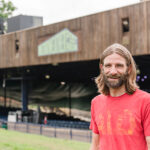
Although his thoughts often take him to the faraway national monuments of Utah and beyond, Ian Kennedy ’00, interdisciplinary studies, works every day to make his long-time community, Columbia, Maryland, a better place. Before becoming a Retriever, he was a Rouse Scholar at Howard Community College; upon transferring to UMBC, he found a way to make his interests in writing and environmental preservation work together as a scholar. Kennedy has worked as a newspaper reporter, a community organizer, and – most recently – as executive director of The Downtown Columbia Arts and Culture Commission, which oversees the health and well-being of the historic Merriweather Post Pavilion, which – like UMBC – recently celebrated its 50th anniversary.
I have never been to southern Utah, but it was a critical stop in my life’s journey.
When I came to UMBC after two years at Howard Community College, I had no idea what major I’d pursue and certainly no clear aspirations for a career. To the extent I had a focus for my academic pursuits it was, simply, to finish with a degree.
 Merriweather Post Pavilion is a concert venue located within the 40-acre Symphony Woods of Columbia, MD. The main stage has featured everyone from Jimi Hendrix and Janis Joplin, to Green Day, to Tom Jones.
UMBC’s diverse and expansive catalogue of classes delighted my curious mind, and I signed up for courses in philosophy, English, American studies, Africana studies, geography, anthropology, and whatever else seemed interesting. I ultimately ended up with a self-made degree in interdisciplinary studies titled “environmental writing”.
It wasn’t intentional, but my interdisciplinary education prepared me for life and a career more than I could’ve imagined. And with the benefit of almost two decades of perspective, there was one class in particular that exemplified this fact.
The class, taught by Dr. Eugene “Sandy” Parker, focused on one, seemingly narrow problem: what to do with some federal land in southern Utah.
The debate about the Grand Staircase-Escalante National Monument had raged in southern Utah and beyond for years among groups divided by competing visions for access and use of this land. As a young environmentalist, I went into the class with a strong bias in favor of preserving it as much as possible from human intervention. The problem, in my mind, was relatively simple.
But the class was far more than a lesson on land management and government policy; it was a case study on how communities work through disagreements.
During the semester, we studied the local context, poring over newspapers and advocacy websites, as well as the national and historical context of land preservation in the United States. It was complicated, like life, and in order to appreciate the depth of the topic, we had to look past our biases, explore matters outside our own narrow frame, and embrace the messy complexity of it all.
For me, the course ultimately taught me about how we collectively work to shape our future, despite sometimes competing visions for it.
After completing my studies at UMBC, I took a job as a reporter for a small newspaper in Carroll County and saw firsthand how communities evolve. While the details were vastly different, the dynamics and mechanics of the community’s progress mirrored those I had studied in Dr. Parker’s class. This experience ignited my own desire to participate actively in such matters and compelled me to return to school to pursue a graduate degree in public policy.
During the summer between my two years as a graduate student, the chance to shape my future—and that of my community—presented itself when the owners of Merriweather Post Pavilion, a beloved and acclaimed concert venue in Columbia, Maryland, announced their intentions to close it. With the help of a friend, I started a grassroots advocacy campaign to fight this closure, starting me on a journey that continues today.
For the last 14 years, I’ve been heavily involved in the complex, messy, and often contentious discussions about the future of a community I know far more intimately than southern Utah—Columbia, Maryland—and the amphitheater at its heart. Our fight to “save” Merriweather was successful, and today I have the honor of running the nonprofit organization that now owns the venue and is charged with expanding artistic, cultural, and civic programming at Merriweather and beyond.
Along the way, I’ve had to untangle complex problems, confront my own biases, develop a better understanding of the concerns of those with whom I’ve worked, and learn all sorts of details about all sorts of subjects that I never expected I’d have to understand. To say my work is interdisciplinary is to put it mildly.
But it is also work that, at first, seemed obvious. Of course, Merriweather Post Pavilion should be saved, just like our dwindling wilderness areas.
But what that means, and how it’s accomplished, is far more complicated. And, also, far more interesting. And that’s a lesson I learned in Utah, by way of UMBC.
]]>
Although his thoughts often take him to the faraway national monuments of Utah and beyond, Ian Kennedy ’00, interdisciplinary studies, works every day to make his long-time community, Columbia,...
https://umbc.edu/stories/things-worth-saving/
https://my3.my.umbc.edu/api/v0/pixel/news/120633/guest@my.umbc.edu/f88138f874e74b6933a1e5358aaeaaab/api/pixel
fall-2017
perspectives
UMBC News & Magazine
https://my3.my.umbc.edu/groups/umbc-news-magazine
https://assets1-my.umbc.edu/system/shared/avatars/groups/000/001/943/24435aa6207c452e7bc15cc74b42c7bb/xsmall.png?1748556657
https://assets1-my.umbc.edu/system/shared/avatars/groups/000/001/943/24435aa6207c452e7bc15cc74b42c7bb/original.png?1748556657
https://assets2-my.umbc.edu/system/shared/avatars/groups/000/001/943/24435aa6207c452e7bc15cc74b42c7bb/xxlarge.png?1748556657
https://assets2-my.umbc.edu/system/shared/avatars/groups/000/001/943/24435aa6207c452e7bc15cc74b42c7bb/xlarge.png?1748556657
https://assets3-my.umbc.edu/system/shared/avatars/groups/000/001/943/24435aa6207c452e7bc15cc74b42c7bb/large.png?1748556657
https://assets1-my.umbc.edu/system/shared/avatars/groups/000/001/943/24435aa6207c452e7bc15cc74b42c7bb/medium.png?1748556657
https://assets2-my.umbc.edu/system/shared/avatars/groups/000/001/943/24435aa6207c452e7bc15cc74b42c7bb/small.png?1748556657
https://assets1-my.umbc.edu/system/shared/avatars/groups/000/001/943/24435aa6207c452e7bc15cc74b42c7bb/xsmall.png?1748556657
https://assets2-my.umbc.edu/system/shared/avatars/groups/000/001/943/24435aa6207c452e7bc15cc74b42c7bb/xxsmall.png?1748556657
UMBC News & Magazine
0
0
false
Wed, 04 Oct 2017 20:42:44 -0400
How To be a Critical Consumer of Media

 With Jason Loviglio, Founding Chair and Associate Professor, Media and Communication Studies
The phrase “ fake news” may sound current, but as long as there have been written and visual media, readers and audiences have puzzled and debated over how to interpret what is true. With The War of the Worlds, Orson Welles created one of the best-known early examples of broadcast audiences mistaking fiction for fact, when a small fraction of listeners tuning in to the 1938 radio broadcast reacted with panic, certain that aliens, or Germans, were invading.
Today’s media consumers must filter input from various sources quickly and be cautious of acting without verifying the validity of what they are seeing. Now, more than ever, we are asking questions like: Has the photo been manipulated? Is the headline overblown? Is this article opinion or reporting? Thankfully, we now also have more tools to help us understand what is real, commentary, or entertainment. And, we have Jason Loviglio, who teaches a “Media Literacy” course on this very topic, here with tips to make sense of it all.
— Catalina Sofia Dansberger-Duque
STEP 1. KEEP CALM AND FOLLOW THE MONEY
First things first. You are reading, watching, or listening to news because it is in someone’s economic interest to have you do so. Understanding the corporate interests that own the media outlets and produce the media content you consume will help you understand the limits of their perspective.
So “breaking news” happens 24/7. “Crises” will be uncovered daily. And a general atmosphere of immediacy, urgency, and even panic are now part of the genre of electronic news media. Take a deep breath. Keeping us in crisis mode is great for ratings, click rates, and newsstand purchases, but it’s not that good for us.
 New York Daily News Archive via Getty Images
STEP 2. CHECK YOUR FACTS
We hear a lot about “fake news” from all quarters. Do your sleuthing. Using the resources listed below, check out news sources to better understand their biases and their journalistic credentials.
A quick way to determine what is dominating mainstream media’s national attention is to check out what stories are trending on Twitter, CNN, Washington Post, and The New York Times. These sources will give you a sense of what is being talked about, but may not provide a great deal of insight into why.
STEP 3. CHECK YOUR PRIORITIES
Humans have used stories, songs, and images to instruct, entertain, influence, and inform for thousands of years. Be aware of your own motives and priorities. Are you looking to be entertained or informed? If you’re truly interested in learning deeply about an unfolding news story, your best bet is to find long, well-reported articles from non-profit journalistic outlets like ProPublica, watch coverage of hearings and debates on C-SPAN, or read critical journalistic analysis from the Columbia Journalism Review.
If you simply want to quickly find out what is the big story of the day, then a quick scan of the CNN, Washington Post, and New York Times websites, and the “trending” list on Twitter, will suffice. For a more international perspective, see sources listed below. For news-related entertainment, any number of blogs, tv shows, and podcasts can fit the bill. John Oliver’s Last Week Tonight is probably the most sophisticated in its research. The Federalist Radio Hour is a conservative podcast that rises above the bombast, conspiracy theories, and partisanship of most right-wing talk radio.
STEP 4. TALK IT OUT
News stories can often leave us feeling overwhelmed and isolated. Ground your media consumption in larger social networks and community relationships.
The radio listeners most likely to panic when listening to the infamous War of the Worlds broadcast were those who were most isolated from other listeners. Critical media literacy works best when you are able to integrate your media use within the rest of your social world. Community ties, especially those which involve face-to-face social relationships, can be a powerful antidote to media overload and to media distortions.
* * * * *
THE MORE YOU KNOW
As confusing as the Web can sometimes be, newswise, it can also be a terrific source of tools to help you separate what’s real from what isn’t. Check out these recommended sites whenever you feel unsure of what you’re reading or seeing.
Columbia Journalism Review
archives.cjr.org/resources/
Detailed list of media companies, who chairs them, and the outlets they manage.
Pressbooks Web Literacy for Student Fact Checkers
webliteracy.pressbooks.com/chapter/fact-checking-sites/
Links to reputable national, international, and niche fact checking sites.
International News Coverage
]]>
With Jason Loviglio, Founding Chair and Associate Professor, Media and Communication Studies The phrase “ fake news” may sound current, but as long as there have been written and visual media,...
https://umbc.edu/stories/how-to-be-a-critical-consumer-of-media/
https://my3.my.umbc.edu/api/v0/pixel/news/120634/guest@my.umbc.edu/72b13ef924abedc6f33eeca56d1a8d0b/api/pixel
discovery
fall-2017
professorsnottomiss
UMBC News & Magazine
https://my3.my.umbc.edu/groups/umbc-news-magazine
https://assets1-my.umbc.edu/system/shared/avatars/groups/000/001/943/24435aa6207c452e7bc15cc74b42c7bb/xsmall.png?1748556657
https://assets1-my.umbc.edu/system/shared/avatars/groups/000/001/943/24435aa6207c452e7bc15cc74b42c7bb/original.png?1748556657
https://assets2-my.umbc.edu/system/shared/avatars/groups/000/001/943/24435aa6207c452e7bc15cc74b42c7bb/xxlarge.png?1748556657
https://assets2-my.umbc.edu/system/shared/avatars/groups/000/001/943/24435aa6207c452e7bc15cc74b42c7bb/xlarge.png?1748556657
https://assets3-my.umbc.edu/system/shared/avatars/groups/000/001/943/24435aa6207c452e7bc15cc74b42c7bb/large.png?1748556657
https://assets1-my.umbc.edu/system/shared/avatars/groups/000/001/943/24435aa6207c452e7bc15cc74b42c7bb/medium.png?1748556657
https://assets2-my.umbc.edu/system/shared/avatars/groups/000/001/943/24435aa6207c452e7bc15cc74b42c7bb/small.png?1748556657
https://assets1-my.umbc.edu/system/shared/avatars/groups/000/001/943/24435aa6207c452e7bc15cc74b42c7bb/xsmall.png?1748556657
https://assets2-my.umbc.edu/system/shared/avatars/groups/000/001/943/24435aa6207c452e7bc15cc74b42c7bb/xxsmall.png?1748556657
UMBC News & Magazine
0
0
false
Tue, 03 Oct 2017 19:52:51 -0400
Grit, Greatness…and Beyond

Throughout our 50th anniversary year, the UMBC community celebrated like it’s never celebrated before. We shared memories and images of our earliest years, and of our pioneering professors and students. We embraced the research and the relationships that make this place great. And, we tied it all up in a black and gold bow – with music and fireworks that lit up the campus night.
So, what’s next for UMBC? Well, as President Freeman Hrabowski likes to say, “Success is never final.”
That’s why in late spring, UMBC launched Grit & Greatness: The Campaign for UMBC, and made public a challenge to raise $150 million to make UMBC’s next 50 years just as amazing as its founding ones. Driven by our most distinctive traits – inclusive excellence and innovation – UMBC has already raised nearly $98 million* towards its campaign goals.
The stories that follow exemplify the values this campaign champions: making big breakthroughs, forging new partnerships, and transforming lives. We look forward to telling many more, as our community comes together to support UMBC – and Retrievers of the future.
“America needs its universities now more than ever. We live in a time of huge challenges and breathtaking discoveries. We live in a nation that is divided. We live in a time when too many young people are shut out of life-changing opportunities,” says Hrabowski.
“The UMBC community does not shy away from hard work. We show up. We show our grit. I’ve never been more excited about this University and what we can do.”
Support UMBC Today
* Total as of 11/30/17
MAKING BIG BREAKTHROUGHS
 We all know that teaching is the cornerstone of what makes UMBC such a great place to grow and learn. In fact, UMBC most recently made the 2017 U.S. News list of top 20 national universities with a particularly strong commitment to undergraduate teaching, alongside Princeton, Yale, Dartmouth, and UC Berkeley.
The proof of this commitment lies not only in the breakthroughs made by students when they are touched by good teaching, but also in the fact that so many alumni, families, corporations – and faculty themselves – make teaching innovation possible through gifts supporting and honoring those who have inspired them.
As a Ph.D. student in statistics in the ’80s and early ’90s, Kevin Drummey Ph.D. ’93, statistics, and his cohort met with founding professor Bimal Sinha every Sunday afternoon to discuss their progress. As tough as it was to go to school while holding down a full-time government job, Drummey was encouraged by Sinha it was worth the sacrifice to finish.
 “The emphasis on teaching…may be a lost art at some schools – but not here,” said Drummey, operations researcher/technical director at the NSA, who also taught as an adjunct in statistics at UMBC for more than a dozen years, and who in recent years has supported, along with Sinha’s family, the launch of an endowed professorship in his honor.
“He was a very good at telling the story of the data,” said Drummey. “He would put things into context…and make it very interesting. He was very good at that, and I think I do emulate that in my own teaching.”
For years, John Jeffries, professor emeritus, history, and former dean of the College of Arts, Humanities, and Social Sciences, espoused the importance of bringing a global perspective to his lessons. When he retired in 2013, professors in the college created The John Jeffries International Fellowship, with the goal of supporting faculty in “internationalizing curriculum.”
“He was an exemplary dean of our college with the strongest possible commitment to students, to excellence, to inclusion, and so we wanted to create something and invite our colleagues to contribute to it that would honor him and his values,” said Carole McCann, professor and chair of gender and women’s studies, who launched the project along with Marjoleine Kars and Jason Loviglio, who chair history and media and communications studies, respectively.
 “We wanted to give faculty the resources to think about how they could bring a global perspective into whatever it is they’re teaching because we honestly believe that the goal of a liberal arts education is to build good citizens, and good citizens need to have an understanding of the nation and the world and their connections to it.”
Collaborations with corporations also demonstrate the faith outside groups have in UMBC teaching. A partnership with IBM enabled the creation of the Accelerated Cognitive Cybersecurity Lab (ACCL), which gives teachers and students a place to advance scientific frontiers in cybersecurity and machine learning.
“A big part of teaching students cutting edge topics is giving them the opportunity to push boundaries and work with advanced-level tools, and the IBM grant is making that possible, both for graduate students and undergraduates,” said Anupam Joshi, director of UMBC’s Center for Cybersecurity and chair of computer science and electrical engineering, who leads the ACCL.
— Jenny O’Grady
Wow Moments
Who inspired YOU most as a student at UMBC? We asked, and you answered. Read about “Wow Moments” from alumni recalling their favorite professors at UMBC.
FORGING TRUE PARTNERSHIPS
You can see the spires of Downtown Baltimore from many of the windows of UMBC’s Performing Arts and Humanities Building. So when the city announced Light City, the new innovation and art festival in 2016, UMBC knew it wanted, and needed, to be involved.
 Mina Cheon and Gabriel Kroiz, artist and architect collaborative, “Diamonds Light Baltimore,” Light City 2016. Photo by Philip Laubner.
The project started off like many UMBC-community partnerships, small and quiet, with an eye towards collaboration. Faculty and student artists dreamed up concepts with their signature blend of visual appeal and technological innovation applied to the present. When the announcements were made, the campus community was thrilled to see familiar names in the call – among them alumna donor Mina Cheon, M.F.A. ’02, IMDA. Designed with her partner and husband Gabriel Kroiz, Diamonds lit up Harbor East and Little Italy. A technological marvel both interactive and thought provoking, who could resist the temptation to climb in and out of them? They reflected a hope for prosperity for the city but each night turned blue at 10 p.m. to honor the death of Freddie Gray and the light it shone on the ongoing struggles endured by much of the city’s population.
“UMBC has always cheered me on. I felt so supported during Light City,” said Cheon, who appreciated seeing former professors and alumni stop by during the installation. Cheon even designed a special gold diamond – affectionately known as “Kathy” after a beloved professor – that was installed on campus during UMBC’s 50th anniversary celebrations.
When Light City returned to Baltimore in 2017, UMBC wanted to do something bigger and better – but the “something” wasn’t so clear at first. UMBC booked a space to host alumni gatherings, and even more artists started preparing their works, hoping to be chosen to display. One day, Will Backstrom ’88, political science, who works in community relations at long-time partner PNC Bank, called. Working with the Downtown Partnership, he envisioned using empty storefronts to house art and performances and expand the footprint of the festival, helping tourists and city natives alike access and patronize the businesses just north of the Harbor. From there, UMBC Spark was born.
“Combining the awesome creative energy that UMBC brings with the empty space and other businesses around it was surely the makings of a great Light City experience,” said Backstrom.
 Visitors enjoy the Spark Gallery.
Spark ultimately became a gallery space highlighting art by UMBC students and faculty, as well as community partners like the Refugee Youth Project (headed by alumna Brooke Savage ’16), drawing almost 1,000 visitors each night. Visitors had the chance to rub elbows with artists, participate in animation workshops led by students, and watch musical and dance performances. Each piece was unique but tied into the larger Light City theme.
“Spark created a vital connection between our internationally acclaimed faculty, talented graduate and undergraduate students and the innovative, entrepreneurial arts groups in Baltimore city,” said Preminda Jacob, department chair of visual arts. “We introduced the Baltimore public to the exciting experimentation and creativity that is ongoing at UMBC.”
The team and PNC are already abuzz about next year. How do we go bigger? What more can we do? Who else can we involve? While the exact details are unknown, this they know for sure about Spark: Many Retrievers will be working together to light up Baltimore one block at a time.
— Marie Lilly
Pipeline Partners
UMBC works with many organizations on initiatives to strengthen the workforce and communities across the state.
- T. Rowe Price Foundation: UMBC Career Month
- Northrop Grumman: Cyber Scholars Program
- Andrew W. Mellon Foundation: Science of conservation at the Walters Art Museum
- The Cangialosi Business Innovation Competition: Preparing students to be entrepreneurs
Read about more UMBC partnerships at corporaterelations.umbc.edu.
TRANSFORMING LIVES
For any student, college is an adjustment. There’s figuring out what you’ll study, where your niche is on campus, and how you’ll pay for it. This is especially true for mature students, who arrive with more life experience…and the obligations that come along with it.
 Current Returning Women Scholars met with Dr. Hrabowski at the start of the semester. Photo by Michael Mower.
But thanks to the Charlotte W. Newcombe Foundation, UMBC has become a place where returning women students thrive. Since 1981, the foundation has donated upwards of $500,000 to UMBC, both in annual scholarships for students and matching gifts to create three endowed scholarships: the Jodi Mister/Charlotte W. Newcombe Endowment; the Charlotte W. Newcombe Scholarship for Mature Students in STEM; and the Susan Bernstein/Charlotte W. Newcombe Memorial Endowment Scholarship.
Newcombe Scholars access supplemental programming and resources through the Women’s Center, and it is here that they find a campus home. As a transfer student with a young son, Maureen Evans Arthurs ’14, gender and women’s studies, heard about the program while interning at the American Association of University Women. She “immediately [felt] at home” at the Women’s Center, and was encouraged to apply for a Newcombe scholarship by Jess Myers, the center’s director.
“I really loved that there was a component of meeting other women, who really ended up being a support system,” she says. “We may not have ever met because we all had different majors, but we all had the common denominator of being returning women students.” Through the scholars program and the Women’s Center, Arthurs felt empowered to pursue leadership positions on campus, and she’s carried that mentality to her current role as a legislative director for a Maryland state delegate.
“Being a part of that network and that community helped me really thrive at UMBC,” she says.
Carrie Cleveland ’16, social work, a fellow Newcombe scholarship recipient, was equally drawn to that sense of community. She explains that while social work draws students from a variety of backgrounds, her gen-ed classes had a decidedly different feel: “When you’re sitting in a biology class, everybody’s 18 or 19 years old, and you really feel like you don’t belong, or you stick out.”
Like Arthurs, Cleveland found her niche, and worked in the Women’s Center to help with mature student programming. She recently finished her master’s in social work, and as she begins a full-time position at Kennedy Krieger, she hopes to continue helping women like her pursue their educational goals.
“So many women are in positions like I [was], where they don’t know how they’re going to get back to school, and they don’t know how they’re going to pay for it, and it just really seems impossible,” she says. “The support that I got through the Newcombe Foundation, and through the Women’s Center, was what really got me through my time at UMBC.”
Richard Bernstein partnered with the Newcombe Foundation two years ago to establish the Susan Bernstein/Charlotte W. Newcombe Memorial Endowment Scholarship to honor his late wife, Susan Bernstein ’03, social work, who returned to college in her forties to pursue a career as a therapist. UMBC’s Newcombe students are a part of her “living legacy,” he says, adding that he’s proud of what they’ve accomplished.
“Now that we’ve [gotten] to meet with the different students…and see what remarkable people they are, and what they have to contribute to society, we want to…basically expand what the scholarship can give, so that we can help more people,” he says.
His son, Jeff Bernstein, agrees: “We’re just continuing to hope that [we can] provide opportunities to good people that really want to be involved, and do some really special things with their degrees.”
— Julia Celtnieks ’13
Crowdsourcing Champs
- With the help of their famously close-knit alumni community, the UMBC swimming and diving team raised nearly $40,000 on their giving day earlier this year.
- The UMBC Mock Trial team raised more than double their semester goal through crowdfunding, for a season that saw them through to the national championship in Los Angeles.
See more examples of UMBC student crowdfunding at gritstarter.umbc.edu.
]]>
Throughout our 50th anniversary year, the UMBC community celebrated like it’s never celebrated before. We shared memories and images of our earliest years, and of our pioneering professors and...
https://umbc.edu/stories/grit-greatness-and-beyond/
https://my3.my.umbc.edu/api/v0/pixel/news/120635/guest@my.umbc.edu/fa88bbd1f6517f08bfcb89c836bbc419/api/pixel
fall-2017
impact
UMBC News & Magazine
https://my3.my.umbc.edu/groups/umbc-news-magazine
https://assets1-my.umbc.edu/system/shared/avatars/groups/000/001/943/24435aa6207c452e7bc15cc74b42c7bb/xsmall.png?1748556657
https://assets1-my.umbc.edu/system/shared/avatars/groups/000/001/943/24435aa6207c452e7bc15cc74b42c7bb/original.png?1748556657
https://assets2-my.umbc.edu/system/shared/avatars/groups/000/001/943/24435aa6207c452e7bc15cc74b42c7bb/xxlarge.png?1748556657
https://assets2-my.umbc.edu/system/shared/avatars/groups/000/001/943/24435aa6207c452e7bc15cc74b42c7bb/xlarge.png?1748556657
https://assets3-my.umbc.edu/system/shared/avatars/groups/000/001/943/24435aa6207c452e7bc15cc74b42c7bb/large.png?1748556657
https://assets1-my.umbc.edu/system/shared/avatars/groups/000/001/943/24435aa6207c452e7bc15cc74b42c7bb/medium.png?1748556657
https://assets2-my.umbc.edu/system/shared/avatars/groups/000/001/943/24435aa6207c452e7bc15cc74b42c7bb/small.png?1748556657
https://assets1-my.umbc.edu/system/shared/avatars/groups/000/001/943/24435aa6207c452e7bc15cc74b42c7bb/xsmall.png?1748556657
https://assets2-my.umbc.edu/system/shared/avatars/groups/000/001/943/24435aa6207c452e7bc15cc74b42c7bb/xxsmall.png?1748556657
UMBC News & Magazine
0
0
false
Tue, 03 Oct 2017 19:37:19 -0400
Shining a Light

In the face of a harrowing national epidemic, UMBC researchers and alumni work to break through the darkness of opioid addiction and the stigma that surrounds its victims.
By Jenny O’Grady
On a recent rainy morning, a steady stream of men and women enters and exits Riverside Treatment Services in Rosedale. They look like anyone and everyone – a neighbor, a schoolmate, a grandparent – wandering in on their way to work, leaving with steaming paper cups of coffee. They are purposeful, upbeat.
 “For many of them, we’re the one positive part of their day,” says center director Chuck Watson ’12, social work, who sees his clients at their lowest points, but also as they make life-changing breakthroughs through treatment. Trying to put a face on opioid addiction is impossible; it’s a disease that can strike anyone. With recent attention from legislators at the national and local levels, the race is on to stop the deadly effects of both legal and illegal opioid abuse.
At UMBC, researchers across disciplines are answering the call to help figure out unique approaches to studying the epidemic. Together, they are working to understand its causes, to tell stories of its effects, and to offer routes to early detection and treatment.
It’s emotionally grueling work with no real endpoint in sight, but all agree – it’s important work that has to happen. Lives depend on it.
Read more about Chuck Watson: “A Second Chance at Life”

When you think about how much data is floating around about each of us, it makes sense to guess that the right combinations of it – collected, sorted, and interpreted in just the right way – might help paint a picture of victory against substance abuse. But where do you start? How do you cut through it? And how can you package it so the people who want to help – legislators, first responders, and others – have the tools to make the best decisions?
For the last decade, behavioral health researcher Michael Abrams Ph.D. ’16, public policy, has combed data collected by public health systems with these precise questions in mind. As director of special research studies for The Hilltop Institute at UMBC, a non-partisan health research organization dedicated to improving the health and well-being of vulnerable populations, Abrams and others have helped entities such as the City of Baltimore Behavioral Health Authority crunch the numbers in a way that allows them to develop meaningful policy. Working with data from hospital admissions records, Medicaid, and the Maryland Department of Health’s Behavioral Health Administration, Abrams and his Hilltop colleagues have produced several reports related to opioid – use disorders and their effects on people and the systems that treat them.
 “At Hilltop we do our best to use administrative data – that is, data designed to facilitate billing and payment – and other supplemental information to discern what is truly happening in the publicly financed health care marketplace,” says Abrams, who stays carefully objective in his work. “Our mission is very public service-oriented.”
In July, he and University of Maryland Baltimore School of Pharmacy professor Fadia T. Shaya, received a $50,000 Innovation Seed Grant from the UMB-UMBC Research and Innovation Partnership Grant Program to conduct a 15-month case control study of Medicaidaided youths aged 13 to 24 to explore whether prior exposure to prescription opioids is associated with subsequent opioid dependence.
“There are so many variables that go into…understanding what’s going on with something like addiction or with mental disorders more generally,” he says. “There are so many dimensions to these problems. It’s not just about biology, though biology is a big part of what makes these issues so compelling. But, addressing these problems has to consider many other factors including: income and economics, crime control, the practice of medicine, pharmaceutical marketing, interpersonal dynamics, education, and politics. This seed grant project lets us explore the medical antecedents to addiction, an important focus because many believe prescription overuse is a key driver of the overdose epidemic we are experiencing.”
Simultaneously, a UMBC-based group of interdisciplinary researchers – The Big GUI (Graphical User Interface) Data Group – has recently come together to tackle the specific problem of how to present the constellation of data related to opioid use, overdoses, and treatment in meaningful ways. Lead by Lee Boot, director of UMBC’s Imaging Research Center (IRC), and joined by researchers from computer science, electrical engineering, and elsewhere, the group is figuring out how a three-dimensional digital visualization might include data on overdoses responders contribute to on the spot, and to allow for the inclusion of contextual data – such as holidays, weather, or importantly, social factors that affect people’s lives – to give users a full picture of what addiction and recovery actually entail.
“Considering all the relevant factors makes it such a complicated problem that no one can wrap their brains around it,” says Boot, whose evolving software MapTu could help in that regard. In its current format, the software takes in pieces of data and projects them as floating shapes that can be pulled together to create meaning, and modified by collaborating users who can add narratives and video to tell the story of the data.
“[With this group,] we’re changing our pursuit from getting more information to figuring out what to do with it,” says Boot, who notes that as important as it is for practitioners to focus on the here and now, it is also useful to step back and ask what might be done to avoid another similar human tragedies in the future. Asks Boot: “What if you could visualize and actually make sense of all of it in one place? Imagine what we might learn.”

Deborah Rudacille is at the very start of her research journey, but it’s already piling up noticeably on her desk.
She calls it “the fishing expedition:” the Xeroxed pile of articles, the sifting through of factoids, the hand-written notes that might or might not pay off later. Over the coming year, thanks to the Guggenheim grant she won for her science writing, Rudacille will be neck deep in the studies and personal stories that will – she hopes – turn into a book or series of articles about substance use disorders as heritable diseases that affect the whole family, not just those who are addicted to alcohol or drugs.
“I never do seem to pick cheerful topics,” admits Rudacille, an otherwise upbeat professor of the practice in the English department, who has written about everything from the use of animals in research and testing, to autism, to the history of sex and gender revolution, and the ways technology contributed to the rise and fall of the steel industry in Sparrow’s Point.
 “Each one of these has been sort of a subject, a topic, something that I was really just interested in, if not obsessed with, for a time or for my whole lifetime…things that I was curious about and needed for myself to learn more about, and at one point, realized that probably other people really needed more information about, too,” says Rudacille, whose personal interest in addiction has dug at her intellectually for years.
With this new pursuit, she will interview families across the country dealing with addictions of all sorts – including opioids – to pursue a growing list of questions. Do personality traits – like impulsivity, risk taking, novelty seeking, and stress response – have genetic, or inherited, components? What role does a “family culture” play in recovery?
“It’s so very clear that this is a brain disease, that this is a family disease,” she says. “And that’s, I think, as much as anything else, the point that I would like to make and support by talking to researchers, by talking to affected people, by talking to family members, that we should not be conceptualizing addiction as a moral failing or a failure of individual control. It’s a disease.”
Although she’s just beginning her research, she’s already found some incredible statistics to jump-start her exploration. Sifting through the papers on her desk, she finds the one she’s looking for: an estimate that for every one addict, there are at least seven other people affected.
“And that makes sense to me…it’s in the family,” says Rudacille. “Because we’ve got parents, we’ve got children, we’ve got siblings, we’ve got spouses. And again, as I know from experience, it’s not just those relatives that are affected, but also aunts, uncles, cousins.”
Like Abrams, Rudacille doesn’t veer into the politics of her subjects. In the case of writing about opioids, so much of that has already been covered by other authors. But, she’s excited to contribute to a tradition of journalism that helps to shine a careful light on this particular piece of the puzzle, and the people who live it.
“I would say the big issue here is shame and stigma,” she says. “As a reporter, you feel an incredible responsibility to treat their stories with the respect and the dignity they deserve, especially when you are dealing with people who have been marginalized.”

Psychology professor Carlo DiClemente tells the story of a heroin addict who, upon hearing about a rash of people dying from fentanyl-laced heroin in Baltimore, asks, “Where can I get that? It must be good sh*t.”
In his more than 25 years of studying substance abuse and the motivations behind addictive behaviors, DiClemente has found one thing to be consistently true: If you’re not ready to change – really, truly ready – it’s just not going to happen.
“Every entry into and exit out of addiction is a personal journey,” says DiClemente, co-founder of the “Transtheoretical Model” of behavior change, and author of several books on the subject, including Addiction and Change: How Addictions Develop and Addicted People Recover. Understanding and addressing the addict’s motivations can mean the difference between success and failure.
 DiClemente has seen this first hand in the substance abuse treatment programs he has run. Without knowledge of the addict’s mindset and motivation – in DiClemente’s model, he breaks motivation into the stages into pre-contemplation, contemplation, preparation, action, maintenance – a treatment provider can’t know where to begin.
“The problem is, with tobacco, and with the opiate addiction, people find it almost impossible to quit. It changes the brain. It impairs individual self-regulation, and it takes over their life,” making it difficult to know all that is really going on, he says.
“Some of the research is looking at people who are in different stages, so we can look at personal and even epidemiological data and try to understand where people are, if we ask the right questions.”
With the recent increase in opioid use, and knowing how many potential ways an addict might enter into care (or evade it), DiClemente has been developing and offering training for people in various jobs – medical providers, front desk employees at agencies and hospitals, social workers who make home visits, etc. – who could spot signs of substance abuse, and offer information about treatment as they come across it.
“A big thing is to really empower a variety of providers who come across addiction but aren’t really addiction specialists, on how to recognize and how to refer, and how to help motivate people to take the next step,” says DiClemente.
“If we can prevent someone from getting into the last stages of addiction, that’s really what we should be doing,” he says. “Early intervention is the best intervention.”
Info graphic information source: The National Institute on Drug Abuse: drugabuse.gov
* * * * *
More on this Topic:
]]>
In the face of a harrowing national epidemic, UMBC researchers and alumni work to break through the darkness of opioid addiction and the stigma that surrounds its victims. By Jenny O’Grady On...
https://umbc.edu/stories/shining-a-light/
https://my3.my.umbc.edu/api/v0/pixel/news/120636/guest@my.umbc.edu/7af211722c56f666aa60e6bec2905c63/api/pixel
fall-2017
impact
UMBC News & Magazine
https://my3.my.umbc.edu/groups/umbc-news-magazine
https://assets1-my.umbc.edu/system/shared/avatars/groups/000/001/943/24435aa6207c452e7bc15cc74b42c7bb/xsmall.png?1748556657
https://assets1-my.umbc.edu/system/shared/avatars/groups/000/001/943/24435aa6207c452e7bc15cc74b42c7bb/original.png?1748556657
https://assets2-my.umbc.edu/system/shared/avatars/groups/000/001/943/24435aa6207c452e7bc15cc74b42c7bb/xxlarge.png?1748556657
https://assets2-my.umbc.edu/system/shared/avatars/groups/000/001/943/24435aa6207c452e7bc15cc74b42c7bb/xlarge.png?1748556657
https://assets3-my.umbc.edu/system/shared/avatars/groups/000/001/943/24435aa6207c452e7bc15cc74b42c7bb/large.png?1748556657
https://assets1-my.umbc.edu/system/shared/avatars/groups/000/001/943/24435aa6207c452e7bc15cc74b42c7bb/medium.png?1748556657
https://assets2-my.umbc.edu/system/shared/avatars/groups/000/001/943/24435aa6207c452e7bc15cc74b42c7bb/small.png?1748556657
https://assets1-my.umbc.edu/system/shared/avatars/groups/000/001/943/24435aa6207c452e7bc15cc74b42c7bb/xsmall.png?1748556657
https://assets2-my.umbc.edu/system/shared/avatars/groups/000/001/943/24435aa6207c452e7bc15cc74b42c7bb/xxsmall.png?1748556657
UMBC News & Magazine
0
0
false
Tue, 03 Oct 2017 18:22:14 -0400
The Big Build

Seniors in Neil Rothman’s capstone mechanical engineering class experience the ups and downs of designing for real-life clients.
By Megan Hanks
In the real world, the more projects and problems an engineer works on, the better they get at coming up with solutions that actually work. That’s why, during the final year of UMBC’s mechanical engineering curriculum, students spend a semester working through the “hard knock design experiences” they need to succeed as engineers.
 Olusola Jegede ’17, mechanical engineering, makes modifications to the tricycle that his capstone group designed and built for Calvin, a young boy with curvature of the joints and mobility challenges.
The projects are presented to the class at the beginning of each semester by Neil Rothman, professor of practice of mechanical engineering, and come from a variety of places, including private companies, local nonprofit organizations, and some UMBC-affiliated teams and groups. Throughout the semester, students work in groups of three or four to design, create, test and deliver nearly a dozen high quality products – everything from a calming swing for a boy with disabilities, to a GPS-guided robot, to a machine that automatically shuffles and deals a deck of cards.
Rothman hopes the course helps students recognize how little they know, and encourages them to seek guidance from experienced engineers. “The more times you design engineer something, the better you get,” he says.
Several projects, including a swing for a boy named Brennon’s happened through a collaboration with V-LINC, a Baltimore-based organization that creates customized technological solutions for people with disabilities. Brennon, a young boy who has Type 1 lissencephaly, which causes developmental delays, seizures, and abnormal muscle tone, is calmed by the swinging motion. Swinging also helps reduce the frequency of the seizures that he experiences.
Many students face challenges and setbacks throughout the semester, including some groups who simply run out of time to complete the project. Brennon’s swing, for instance, is still in progress as of press time, so the group continues to put the final touches on the swing so that it will meet the needs of their client. Rothman says that “the design engineer’s best friend is experience.”
Ciara Davis ’17, mechanical engineering, who worked on Brennon’s swing, knew that she wanted to work on a V-LINC project. “I liked that the project we would be doing would be going to someone to help them in some way,” she says.
 For Danny Joh ’17, mechanical engineering, who worked with Davis, meeting Brennon was a pivotal moment. “Every single thing I did, I had to think about Brennon. A single thing I did wrong could affect his life,” he says.
Another group developed a GPS-guided robot for the Aberdeen Test Center. The project was proposed to Jay Gordon ’17, mechanical engineering, who interned at the Aberdeen Test Center, and combined mechanical engineering with software engineering skills. The goal of the project is for the robot to be able to follow a soldier in a field and maneuver itself around obstacles, and stop and start at specific points in the field. One requirement was that the robot needs be waterproof so that it can be used outside.
Emily Casto ’17, mechanical engineering, one of the group members, explains that the project allowed her to participate in experiences that helped her grow as an engineer. “I think from this project specifically, I think the biggest takeaway is that being pushed out of your comfort zone is really scary, but it really pushes you to learn and to understand something new,” she says. “This is what engineering is. It’s never the same thing over and over again.”
[nivoslider id=”8509″]
Use the arrow buttons to the right to scroll through the slide show.
Photos by Marlayna Demond ’11 and Dusten Wolff ’13
]]>
Seniors in Neil Rothman’s capstone mechanical engineering class experience the ups and downs of designing for real-life clients. By Megan Hanks In the real world, the more projects and...
https://umbc.edu/stories/the-big-build/
https://my3.my.umbc.edu/api/v0/pixel/news/120637/guest@my.umbc.edu/24c1267c64ae18201833aa7753b0aa48/api/pixel
discovery
fall-2017
UMBC News & Magazine
https://my3.my.umbc.edu/groups/umbc-news-magazine
https://assets1-my.umbc.edu/system/shared/avatars/groups/000/001/943/24435aa6207c452e7bc15cc74b42c7bb/xsmall.png?1748556657
https://assets1-my.umbc.edu/system/shared/avatars/groups/000/001/943/24435aa6207c452e7bc15cc74b42c7bb/original.png?1748556657
https://assets2-my.umbc.edu/system/shared/avatars/groups/000/001/943/24435aa6207c452e7bc15cc74b42c7bb/xxlarge.png?1748556657
https://assets2-my.umbc.edu/system/shared/avatars/groups/000/001/943/24435aa6207c452e7bc15cc74b42c7bb/xlarge.png?1748556657
https://assets3-my.umbc.edu/system/shared/avatars/groups/000/001/943/24435aa6207c452e7bc15cc74b42c7bb/large.png?1748556657
https://assets1-my.umbc.edu/system/shared/avatars/groups/000/001/943/24435aa6207c452e7bc15cc74b42c7bb/medium.png?1748556657
https://assets2-my.umbc.edu/system/shared/avatars/groups/000/001/943/24435aa6207c452e7bc15cc74b42c7bb/small.png?1748556657
https://assets1-my.umbc.edu/system/shared/avatars/groups/000/001/943/24435aa6207c452e7bc15cc74b42c7bb/xsmall.png?1748556657
https://assets2-my.umbc.edu/system/shared/avatars/groups/000/001/943/24435aa6207c452e7bc15cc74b42c7bb/xxsmall.png?1748556657
UMBC News & Magazine
0
0
false
Tue, 03 Oct 2017 17:57:23 -0400


