How To Become a Fanzine Fan
With Susan Graham ’98, VPA & Anthropology, Special Collections Librarian at UMBC
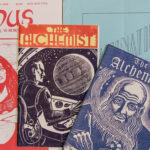
Since the early 1900s, fans of science fiction and fantasy have produced thousands upon thousands of “fanzines” to showcase writing and art, discuss literature and politics of the era, and build community among fellow fans. Often produced by amateur editors, they have titles like Janus and Mirage and If!, and many are stapled together, copied by mimeograph, or even colored by hand. Many are filled with in jokes and turns of phrase meant to delight and engage a very specific — and passionate — readership.
These publications are unique, fun, and meant to be enjoyed. But, if you’ve never tried reading one, much less becoming an honest to goodness fanzine fan, where do you begin? Well, it just so happens that the Special Collections department of the Albin O. Kuhn Library houses the Coslet-Sapienza Fantasy and Science Fiction Fanzine Collection, which contains tens of thousands of amateur press science fiction and fantasy magazines produced from 1937 to 72. Among the collection you can find early works by famous authors like Ray Bradbury and Isaac Asimov, as well as undiscovered talents from across the genres.
Special Collections librarian Susan Graham ’98, is here to walk us through a few easy steps anyone can take to blast warp speed ahead into this exciting new (old, really) universe of literature. The key, of course, is knowing what to ask.
TOOLS OF THE TRADE
- A friendly librarian — like Susan!
- A section of great zines — like UMBC’s Coslet-Sapienza Fantasy and Science Fiction Collection.
- A bookish sense of adventure!
STEP 1: WHAT IS A FANZINE ANYWAY?

Fanzines are amateur publications that are created by fans of a particular genre of work for other fans of that genre. Work of this sort spans not only science fiction and fantasy, but also horror, mystery, crime, and other genres. The first American fanzine was called The Comet and published in May 1930, and the first use of the word “fanzine” was in the October 1940 issue of Detours, a hand-written mimeographed publication on hand in Special Collections.
So, what’s inside?
“They often had letters to the editor with fans discussing the works of other established writers…but they were also a venue for aspiring writers to write their own stories and artists who contributed artwork. There were poems, inside jokes,” as well as plans for get-togethers and conventions, Graham says. “Sometimes authors would even write in and have this sort of relationship with the fans” that kept them reading issue after issue.
STEP 2: HOW CAN I FIND FANZINES TO LOOK AT, AND WHAT KINDS ARE AVAILABLE?
Because their history is so deep and interesting, much is to be found online about fanzines and their background. Many titles from the Coslet-Sapienza collection are digitized and available via the UMBC Library website, where it’s easy to quickly learn about a range of titles and topics — from war to feminism — and even find out how to see them first-hand on campus.
Over the summer, a group of students new to fanzines spent several weeks exploring the collection through the CoLab program, digging deep into titles that interested them, and ultimately creating an online resource for people interested in the literature.
“They produced a great online exhibit that talks all about fanzines and how they were created,” says Graham. “If you’re just starting out, it’s a great place to begin.”
STEP 3: HOW CAN I LEARN MORE ABOUT THE FANZINE COMMUNITY?
Much like immersing oneself in the language of an undiscovered country, learning the ins and outs of fanzines can take some deep study. Much like travel, you can also easily lose yourself in the splendor of fanzine culture.
One great doorway in is through the library’s collections of Fantasy Amateur Press Association (FAPA) materials. A quick flip through some of their newsletters can give you a host of details about what readers enjoyed, and how they communicated with each other, Graham says.

Another is The Fillostrated Fan Dictionary by Elliot Weinstein, also on hand at the library, which offers definitions for hundreds of fandom-specific terms you didn’t even know you didn’t know. (Like “Bolega,” a “mythical fannish liquor,” or “Helicopter Beanie,” the “stereotyped head gear worn by all neo type fans,” to name just a couple.)
But, nothing quite compares to holding a fanzine in your hands and imagining who made it, says Graham.
“One thing that’s really special about fanzines is that some of them can look really homemade,” with original drawings and hand bindings that show the depth of commitment of the publisher, says Graham. “This was somebody’s passion, they loved it, they wanted to get work out there. They wanted to be a part of this community.”
The More You Know
Ready to get started? Here are some resources to get you on your way to fanzine fandom.
- Fanzine Lib Guide: Visit this guide online for history of fanzines, links to searches within the Coslet-Sapienza collection, digital copies of fanzines, and information on how to visit the collection in person. lib.guides.umbc.edu/fanzines
- CoLab Student Project: Dig in deeper to several specific titles in the Coslet-Sapienza collection through this in-depth student summer research project. umbcspecialcollections.omeka.net/exhibits/show/cosletsapienzafancoll
- Zine Wiki: Use this open-source encyclopedia devoted to zines and independent media to find out about a larger swath of zines, including history, production, distribution, and culture of the small press. Zinewiki.com
- Learn more about UMBC Special Collections and all of its wonderful holdings! library.umbc.edu/speccoll/
— Jenny O’Grady
]]>
With Susan Graham ’98, VPA & Anthropology, Special Collections Librarian at UMBC Since the early 1900s, fans of science fiction and fantasy have produced thousands upon thousands of...
https://umbc.edu/stories/how-to-become-a-fanzine-fan/
https://my3.my.umbc.edu/api/v0/pixel/news/120247/guest@my.umbc.edu/bf6b7018b308884b594af6bc37b7e555/api/pixel
aok-library
discovery
fall-2018
how-to
UMBC News & Magazine
https://my3.my.umbc.edu/groups/umbc-news-magazine
https://assets1-my.umbc.edu/system/shared/avatars/groups/000/001/943/24435aa6207c452e7bc15cc74b42c7bb/xsmall.png?1748556657
https://assets1-my.umbc.edu/system/shared/avatars/groups/000/001/943/24435aa6207c452e7bc15cc74b42c7bb/original.png?1748556657
https://assets2-my.umbc.edu/system/shared/avatars/groups/000/001/943/24435aa6207c452e7bc15cc74b42c7bb/xxlarge.png?1748556657
https://assets2-my.umbc.edu/system/shared/avatars/groups/000/001/943/24435aa6207c452e7bc15cc74b42c7bb/xlarge.png?1748556657
https://assets3-my.umbc.edu/system/shared/avatars/groups/000/001/943/24435aa6207c452e7bc15cc74b42c7bb/large.png?1748556657
https://assets1-my.umbc.edu/system/shared/avatars/groups/000/001/943/24435aa6207c452e7bc15cc74b42c7bb/medium.png?1748556657
https://assets2-my.umbc.edu/system/shared/avatars/groups/000/001/943/24435aa6207c452e7bc15cc74b42c7bb/small.png?1748556657
https://assets1-my.umbc.edu/system/shared/avatars/groups/000/001/943/24435aa6207c452e7bc15cc74b42c7bb/xsmall.png?1748556657
https://assets2-my.umbc.edu/system/shared/avatars/groups/000/001/943/24435aa6207c452e7bc15cc74b42c7bb/xxsmall.png?1748556657
UMBC News & Magazine
0
0
false
Mon, 17 Dec 2018 18:31:00 -0500
Windows to the Past
When Scott Casper, dean of the College of Arts, Humanities, and Social Sciences, was asked to lend his expertise in 19th-century U.S. history to help understand a unique artifact found during the Walters Art Museum renovation of the 1850s mansion at 1 West Mount Vernon Place (known to many as the Hackerman House), he was intrigued.
The item in question was a letter dated December 6,1861, and written by Sybby Grant, a highly skilled cook enslaved at the house, to her owner John Hanson Thomas. Casper joined the exhibition’s academic advisory committee – including experts from Morgan State University, Maryland Institute College of Art, and independent researchers – in studying the letter within the contexts of enslaved people, 19th-century Baltimore, and domestic spaces.
“We also looked at approaches to telling the stories of enslaved and employed people and how to connect particular works and artifacts in the Walters collection with the lived history of the house,” explains Casper, whose previous research includes examining the lives and experiences of enslaved African Americans in domestic settings, as well as the uses of historical evidence and memory in excavating and interpreting the lesser-known stories of historic homes.
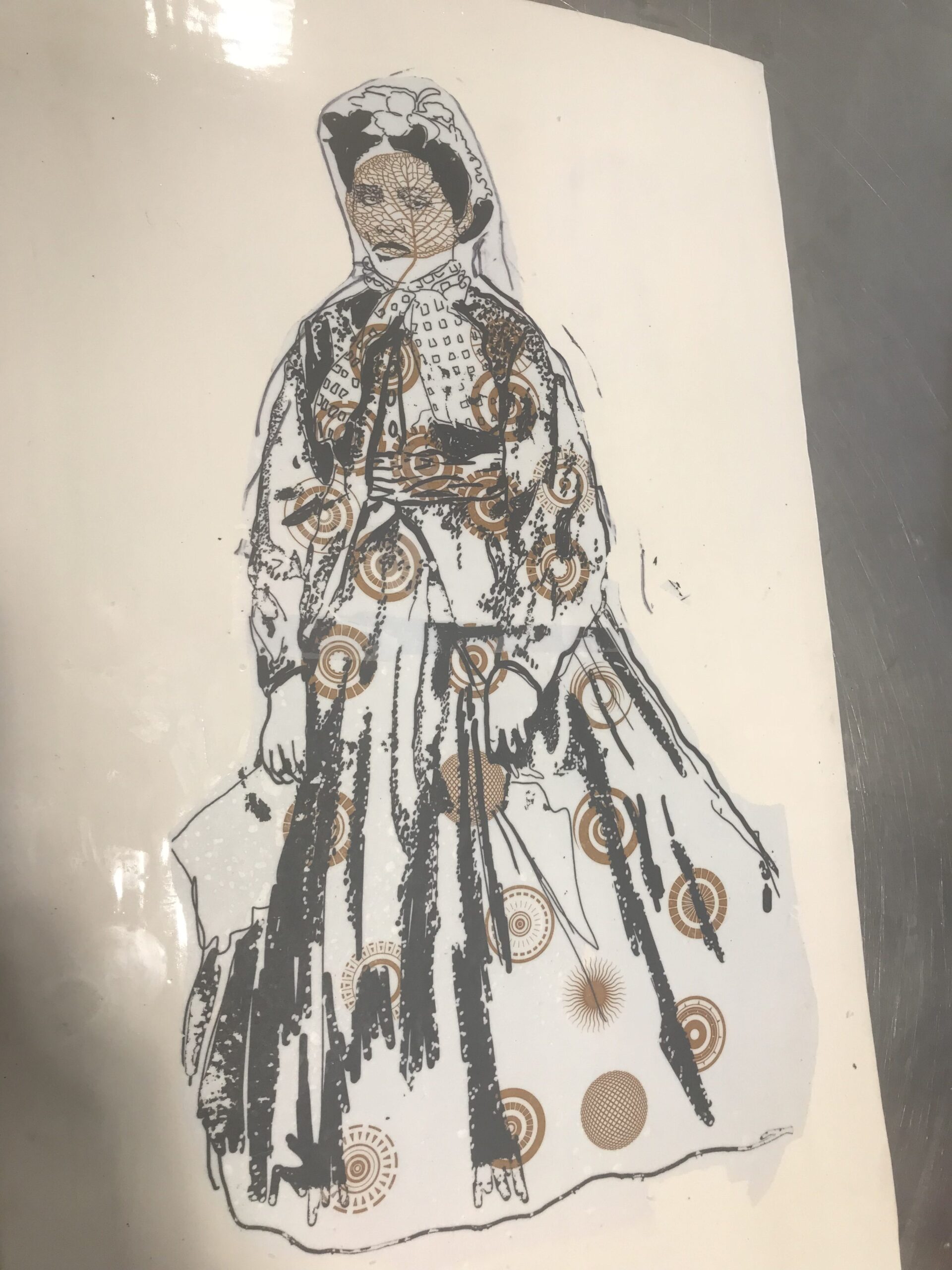
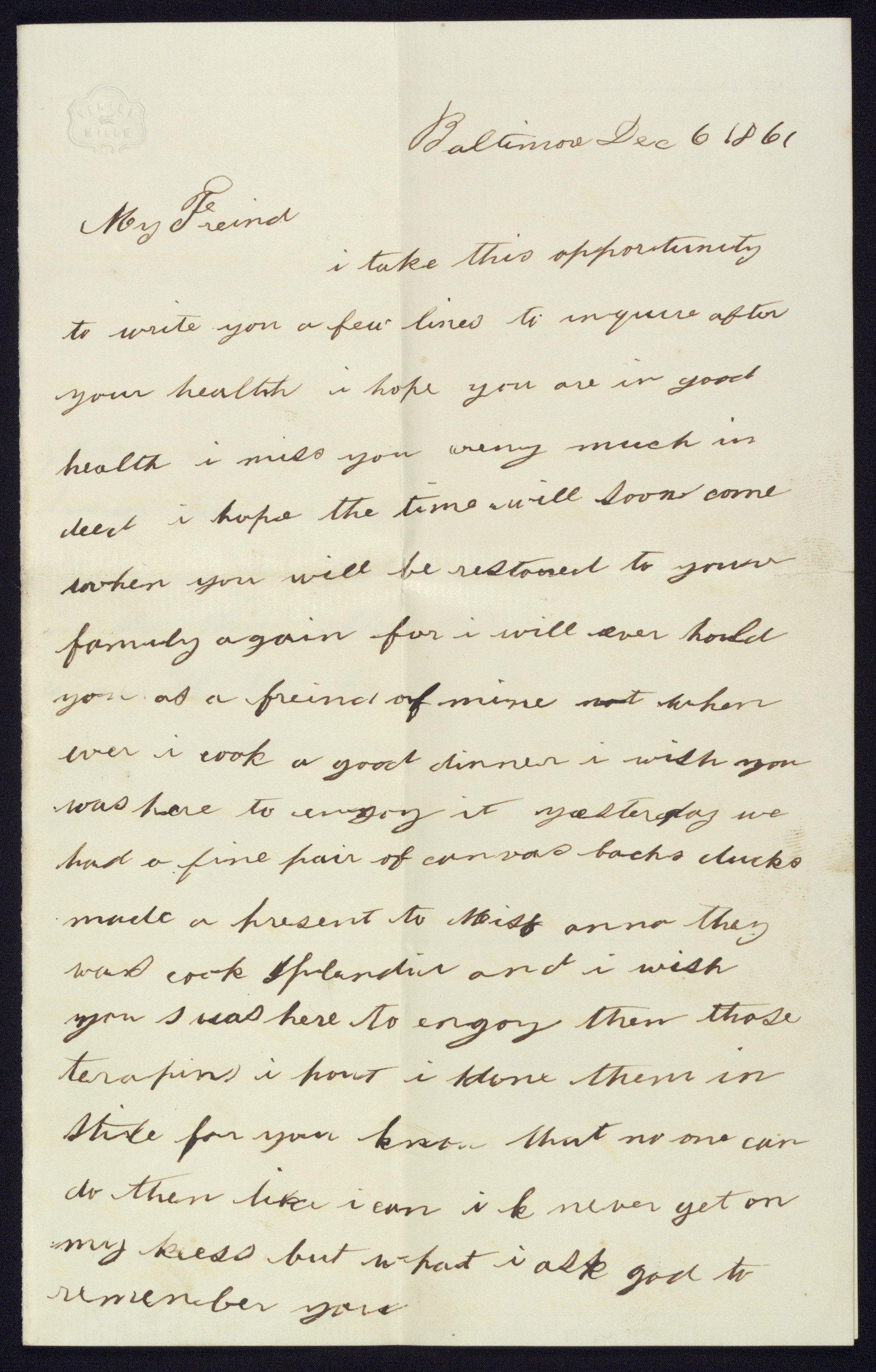
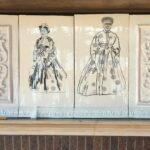
Grant’s letter paved the way for the Walters to shift the way they present not only the history of the house but also the stories that are subtly and directly represented by the art displayed at the museum. The letter is now part of a larger exhibit by ceramicist Roberto Lugo, who is known for creating fine art ceramics using traditional techniques and incorporating portraits of people of color in history to help the world remember their contribution to society and become accustomed to seeing people of color’s faces in fine art. Grant’s letter inspired Lugo to create a series of works about working women of color.
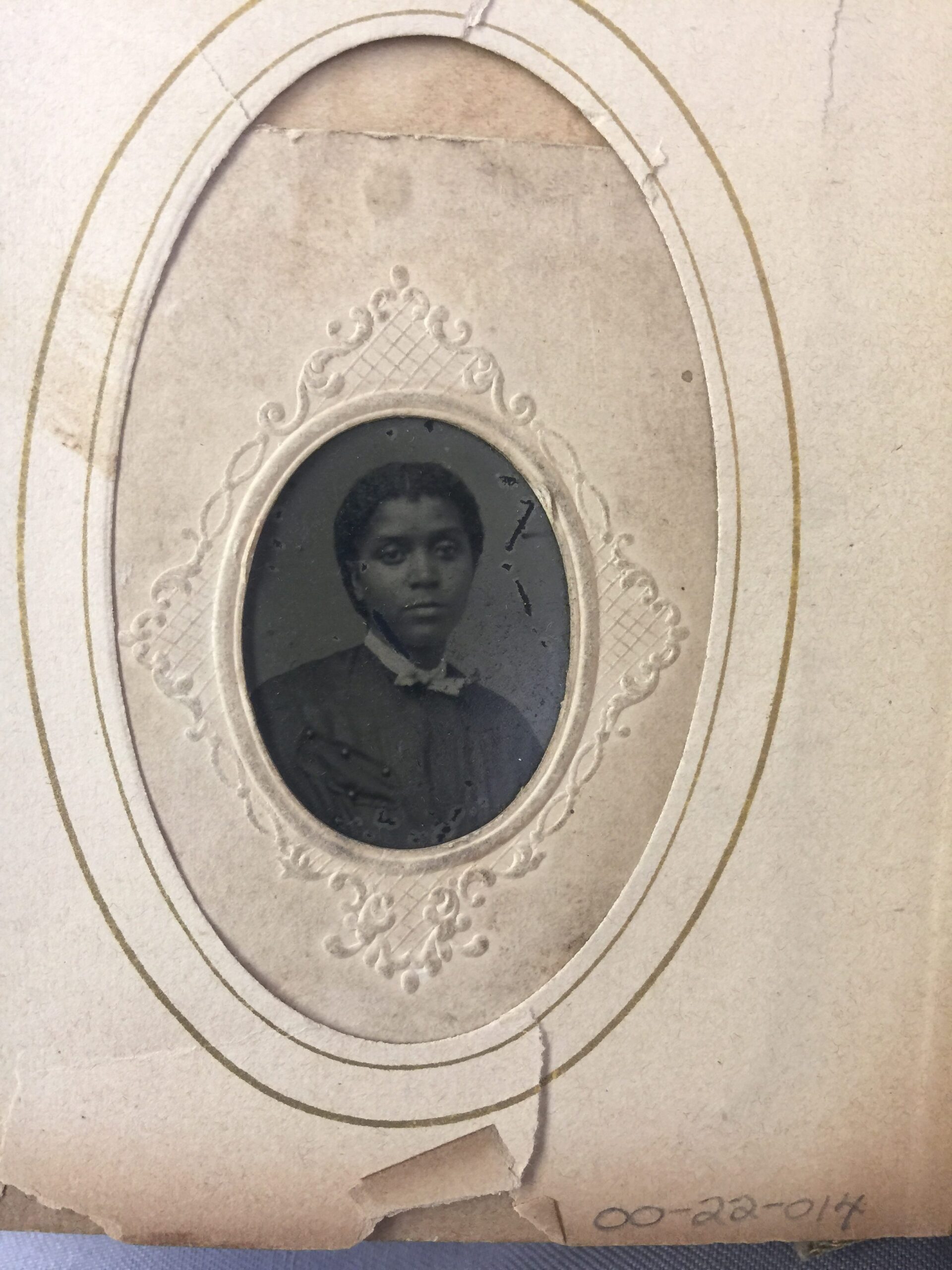
The Walters researchers once again found a partner in UMBC at the Albin O. Kuhn Library Special Collections, which houses photography, books, and archival collections, as they searched for images of freed, working class, Black women in Baltimore.
“Researchers from all over the world work with us to use digital copies of our collections,” said archivist Lindsey Loeper ’04, American studies, who helped with the request. “Our original works are also available for exhibit and have been displayed at the Metropolitan Museum of Art in NY and the Maison Européenne de la Photographie in Paris. The Walters request was a challenge because in the 1800’s even working class white women were not being photographed or documented.”
The answer was found in The Baltimore African American Family Album, which contains professional portraits of African Americans from the 1860s and 1870s. The people are unidentified, and most of the photographers are also unidentified, as well. One in particular caught the eye of the Walters researchers: a portrait of a woman in a dress. The photograph inspired two fine arts ceramic tiles that now hang above the fireplace at 1 West, in what used to be the main dining room, as a tribute to Baltimore’s working women of color.
“Although I don’t know these women’s names, I know the history of my own family and they, too, are nameless, as we only have records going back a few generations, because my family used to be property,” shares Lugo. “My work in ceramics is an effort to include a community that has yet to find a place of prominence in ceramics. I’m thankful to UMBC for having such an important collection and being such an asset to our community culture and history.”
*****
Artwork by Roberto Lugo and Sybby’s letter, courtesy of the Walter’s Art Museum. Archived photography, UMBC Special Collections.
]]>
When Scott Casper, dean of the College of Arts, Humanities, and Social Sciences, was asked to lend his expertise in 19th-century U.S. history to help understand a unique artifact found during the...
https://umbc.edu/stories/windows-to-the-past/
https://my3.my.umbc.edu/api/v0/pixel/news/120249/guest@my.umbc.edu/dfbf62c75b97a17296c0d86f1aea2479/api/pixel
cahss
discovery
fall-2018
UMBC News & Magazine
https://my3.my.umbc.edu/groups/umbc-news-magazine
https://assets1-my.umbc.edu/system/shared/avatars/groups/000/001/943/24435aa6207c452e7bc15cc74b42c7bb/xsmall.png?1748556657
https://assets1-my.umbc.edu/system/shared/avatars/groups/000/001/943/24435aa6207c452e7bc15cc74b42c7bb/original.png?1748556657
https://assets2-my.umbc.edu/system/shared/avatars/groups/000/001/943/24435aa6207c452e7bc15cc74b42c7bb/xxlarge.png?1748556657
https://assets2-my.umbc.edu/system/shared/avatars/groups/000/001/943/24435aa6207c452e7bc15cc74b42c7bb/xlarge.png?1748556657
https://assets3-my.umbc.edu/system/shared/avatars/groups/000/001/943/24435aa6207c452e7bc15cc74b42c7bb/large.png?1748556657
https://assets1-my.umbc.edu/system/shared/avatars/groups/000/001/943/24435aa6207c452e7bc15cc74b42c7bb/medium.png?1748556657
https://assets2-my.umbc.edu/system/shared/avatars/groups/000/001/943/24435aa6207c452e7bc15cc74b42c7bb/small.png?1748556657
https://assets1-my.umbc.edu/system/shared/avatars/groups/000/001/943/24435aa6207c452e7bc15cc74b42c7bb/xsmall.png?1748556657
https://assets2-my.umbc.edu/system/shared/avatars/groups/000/001/943/24435aa6207c452e7bc15cc74b42c7bb/xxsmall.png?1748556657
UMBC News & Magazine
0
0
false
Sat, 15 Dec 2018 17:28:54 -0500
Moments of Truth
We’ve all had these moments.
Moments of wondering aloud. Moments of principled argument over sandwiches in The Commons. Moments of listening and believing as someone’s personal truth unfolds before you. Moments of examining our ideals and acting upon them.
Humanity strives for truth, but it’s not such an easy thing to achieve. Barriers can keep us from it. (Sometimes we are our own worst barriers, in fact.) But we persist in breaking through, in not shying away. And we nurture each other as we figure things out.
In his State of the University address this fall, UMBC President Freeman Hrabowski noted, “We are a community that believes in the importance of having respect for each other and seeking the truth. Nothing we do at UMBC is more important than the search for truth, and our role in teaching students how to think critically.”
You can’t have truth without light. This is a community where that light burns brightly.
These are but a few of our community’s ways of approaching tough questions. These are our
MOMENTS OF TRUTH.
Moment #1: Questioning Everything — Math + Philosophy = Doubt
Moment #2: Committing to Print — Beyond Black & White
Moment #3: Examining Our Biases — Seeking Honesty in Collections
Moment #4: Seeking the Truth — Science and Faith
Moment #5: Creating Safe Spaces — Seen and Believed
Moments #6-11: Walking the Talk — Words Become Actions
Moment #12: Listening to Our Instincts — The Computer is (Not) Always Right
Moment #13: All Voices Welcome — Conversations We Avoid Over Thanksgiving Dinner
Moment #14: Being Ourselves, for Ourselves and Strangers — Our (Secret) Truths
Moment #1.
Questioning Everything
MATH + PHILOSOPHY = DOUBT
For those who think college is just about sitting in a lecture hall, listening to a professor profess, absorbing what they hear, and leaving with a brain full of absolutes, we humbly turn your attention to the far corner of the room.
As a mathematician, professor, and novelist Manil Suri wants his students to question everything they hear; as a philosopher, instructor Jim Thomas desires the same. So, when they talk with their classes about representations of truth in their fields — proofs, axioms, facts, and the like — they sometimes bend it a bit just for the sake of argument.
Suri likes to start his 301 class with a proof that seems right…until it suddenly doesn’t. The students realize they’re trying earnestly to prove that any whole number, like 1, 2, 3, etc., equals any other possible whole number.
“And I say, ‘Do you know what this is saying? Do you think there might be something wrong with it?’ And so then they scramble to try and find what could be wrong,” he says.
Thomas approaches his intro students in similar fashion, telling them a series of truths about himself when he first meets them, then building into statements that could or could not be believable, and then laying it on a bit thicker. He’ll say he’s in his 70s, for instance (which he most certainly is not), but with a truly double take-inducing deadpan.
It’s all part of how they teach their students to think deeply about two subjects known for building off of deceptively simple ideas. One plus one equals two, but it can take hundreds of pages to prove that equation. Philosophy hopes to create a truthful description of the world, but anyone studying it long enough eventually realizes how naive the pursuit is, Thomas says: there’s so much standing in the way of answers.
“I say, ‘Of course, it’s a word. I wrote it on the board, so that’s a word.’
And so now they’re thinking, ‘Why am I trusting this?’”
— Jim Thomas, philosophy instructor
The best way of moving forward is to doubt everything, the two agree, discussing it upon meeting for the first time.
“Any kind of proposition that’s given to you, the only way you can actually get to a proof — even when it’s true — is to try and think how it might be false and to hurl all these possibilities at it, and try to see if there’s a chink somewhere that things don’t work out,” says Suri. “And that’s a super-concentrated version of the same kind of skepticism we increasingly need in day-to-day life.”
And so Thomas’s way of purposely misspelling words on the whiteboard to see if anyone calls him out on it isn’t just some kooky professor trick, but a way of kickstarting that doubt in his students.
“I say, ‘Of course, it’s a word. I wrote it on the board, so that’s a word.’ And so now they’re thinking, ‘Why am I trusting this?’” says Thomas. “I want them to doubt whether or not they know the truth, and I want them to doubt it so they understand that the truth is something that is worth the trouble.”
— Jenny O’Grady
Jump to Moment #1 #2 #3 #4 #5 #6-11 #12 #13 #14 Back to Top
Moment #2.
Committing to Print
BEYOND BLACK & WHITE
The Retriever, UMBC’s student newspaper since 1966, has always had something to say. Above the fold, the very first paper of this fall semester declared its intentions in bold inch-high type:
We Commit.
To Truth. To Community. To You.
“We decided we needed to make a statement and re-commit to what we stand for as an organization,” said current editor-in-chief Julia Arbutus ’20, a double major in English and financial economics.
People noticed. And as the semester has progressed, with all of the twists and turns of news on campus, the student reporters have stretched themselves to learn and grow — a process repeated many times over since the paper first published in its original form as UMBC News in September 1966.
Joseph Howley ’06, ancient studies, served as a reporter and editor during a period of time that included upsets in fraternity leadership, a murder case involving a former student, and the beginnings of the war in Iraq. During that time, he and his staff strove to create a publication that helped students understand what was going on in the world around them, he said.
“An independent student press may be the only organization on campus equipped and motivated to challenge those institutions and make sure that students know what they need to about how they are or are not looking out for them,” said Howley, now an associate professor of classics at Columbia University.
“I hoped for this type of impact, but I didn’t know how
widespread it would be.” — Julia Arbutus ’20
Former news editor Tyler Lewis ’18, political science, learned skills during his years at The Retriever that are serving him now as an intern on Capitol Hill.
“Working as a student journalist provided the perfect opportunity to sit down with important members of the community,” he said. “The more I networked, the more scoops I received, and consequently I was able to better fulfill my goal of writing meaningful stories that mattered to my audience.”
As a scholar and a budding journalist, Arbutus takes the job of telling the truth very seriously. When that first issue hit the stands, she got an immediate rush of support from students, as well as alums of the paper, she said.
“I hoped for this type of impact, but I didn’t know how widespread it would be,” she said. “[This is] a movement to channel our journalism into more student-focused stories and to find a more active place within the student body on campus. We really want students to be proud of and engage with their community newspaper.”
— Jenny O’Grady
Jump to Moment #1 #2 #3 #4 #5 #6-11 #12 #13 #14 Back to Top
Moment #3.
Examining Our Biases
SEEKING HONESTY IN COLLECTIONS
The tagline for the television show The X-Files proclaimed that “the truth is out there.” Once a week, true-believer Fox Mulder and sceptic Dana Scully probed the possibility of hidden realms of the paranormal and conspiratorial lurking beneath the surface of American society. Faced with current cultural debates, the tagline seems less a tongue-in-cheek credo than a desperate plea to restore a once verifiable truth that is now elusive; the truth is out there, somewhere, surely, but where? While it is easier than ever to access information, it seems harder to decipher the significant fact from the extraneous detail.
“We must also interrogate how these objects came together in a collection
in the first place, since what is excluded can tell us just as
much as what is included.” — Beth Saunders
I come from the world of museums, where provenance is a major key to unlocking information about an object. Knowing where something came from and who else may have viewed, valued, or owned it tells us a great deal about objects, but also about history. I would argue that we could all benefit from thinking more about the provenance of the information we encounter. Museum and library collections make it possible to trace information to its origin by providing access to primary sources. Evaluating subsequent interpretations against the original text illuminates the biases that each researcher necessarily brings to the material. However, we must also interrogate how these objects came together in a collection in the first place, since what is excluded can tell us just as much as what is included. The truth is indeed out there, if you are willing to look for it.
— Beth Saunders, curator and head of Special Collections and Gallery
Jump to Moment #1 #2 #3 #4 #5 #6-11 #12 #13 #14 Back to Top
Moment #4.
Seeking the Truth
SCIENCE AND FAITH
“Science is a systematic process that seeks to understand the inner workings of the universe, our world, and ourselves,” says Bill LaCourse, dean of the College of Natural and Mathematical Sciences at UMBC. In other words, it is a process that seeks the truth — not a static body of facts. Scientists rely on observations and experiments to reveal and then repeatedly confirm truths about the world, but no conclusions they draw are ever guaranteed to be the last word.
It’s that uncertainty, the apparent fleeting nature of what is true, that may lead some people to toss science aside as unreliable or even misleading. That’s why it’s so important that the practice of science be communicated in a way that helps people understand its strengths alongside its limitations.
One of those limitations is that science is a human endeavor. As such, it is not as pure or objective as we might like to believe. “Science is a search for truth that relies on observations by humans and all their inherent qualities, whether righteous or flawed,” says LaCourse. Steve Freeland, an astrobiologist and director of the Individualized Study Program (formerly known as Interdisciplinary Studies) at UMBC, adds, “Scientists are partly responsible for creating what they observe in ways we still do not fully understand.” In other words, who does the science, despite their best intentions to be objective, influences what truths are discovered.
But the scientific method is not the only way to seek the truth. “Twentiethcentury scholarship, from within and beyond science, has led us to a current understanding that no one approach to finding truth is superior or sufficient,” says Freeland, who is also a committed Christian. “Logical systems must always be incomplete in terms of what they describe,” he adds. “This gives each of us reasons for humility as we seek truth in our different ways.” The scientific method, religious traditions, spiritual practices, and Indigenous traditional knowledge are all valid ways of seeking truth.
However, it is easy to distrust knowledge gained by means one does not understand. In particular, the uncertainties and impurities inherent to the scientific enterprise can influence how it is perceived by people more familiar with other truth-seeking methods, especially if they are more absolute in their profession of what the truth is. And yet, it is critical that scientists and people of faith communicate across their differences if we are to build a just, safe, and healthy world for all.
“In the end, the search for truth will be a collective journey of many by many roads,
humbled by our own ignorance and glorified by a common goal.”
— CNMS Dean Bill LaCourse
In March, UMBC will offer our community the chance to explore the tricky terrain that is communication among science and faith communities. UMBC is one of six universities nationwide selected by the American Association for the Advancement of Science’s Dialog on Science, Ethics, and Religion to organize two days of events around this topic. LaCourse, Freeland, and STEM communications manager Sarah Hansen lead the UMBC team organizing the workshop.
Researchers will receive training on how to communicate with people of faith in ways that constructively engage them while also respecting their identities and worldviews. That includes finding ways to show people of all backgrounds how recognizing the value of science — but not necessarily its primacy — aligns with their values, such as being stewards of the Earth or protecting the vulnerable. The event will also allow scientists an opportunity to familiarize themselves with other means of truth-seeking, and learn how to avoid alienating people by invalidating those methods in conversation.
“In the end, the search for truth will be a collective journey of many by many roads, humbled by our own ignorance and glorified by a common goal,” says LaCourse. As Karl Popper, renowned secular philosopher, put it, “Our attempts to see and to find the truth are not final, but open to improvement… criticism and discussion are our only means of getting nearer to the truth.”
— Sarah Hansen M.S. ’15
Jump to Moment #1 #2 #3 #4 #5 #6-11 #12 #13 #14 Back to Top
Moment #5.
Creating Safe Spaces
SEEN AND BELIEVED
“Is it my fault?”
“What just happened?”
“Is it rape?”
“Am I just making a big deal out of this?”
These are the questions we hear on a daily basis in the Women’s Center. UMBC community members — whether current students, alumni, faculty, or staff — tell us their truths, despite their own misgivings about the efficacy of that truth.
This self-doubt is common among survivors of sexual violence. And, so we tell them: We believe you. We see you. You matter.
In the wake of trauma and abuses of power, many question the veracity of their experiences and the impact that it has had on them. Whether a person has faced emotional, physical, psychological, social, or economic abuse, we see the impact clearly in the fear and misplaced self-doubt that surround them like dark clouds. Sometimes, coming to the Women’s Center is the first time a student feels believed or validated. Even as we work through resources meant to help and guide people towards healing, these misgivings continue interrupting every aspect of recovery.
And this work is complex.
Our community is not just made up of survivors puzzling through their experiences for the first time. Healing is not, as much as we may want it to be, linear. And, so we also support survivors as they face instances of re-traumatization, as they navigate the frustrating and often disappointing process of seeking justice, and as they practice coping skills in a culture that often does not lend itself to healing.
“There is power in naming our experiences and truths as a shared collective and
this is what we have been called to do in this moment on our campus.”
— Jess Myers and Amelia Meman ’15
Our job in the Women’s Center is to create space for truth-telling. This has been our role since our founding in 1991 as a small, volunteer-led operation. We were born in the wake of Anita Hill’s testimony where she spoke her truth about sexual harassment, and which then allowed so many other women to come forward with their own experiences.
There is power in naming our experiences and truths as a shared collective and this is what we have been called to do in this moment on our campus. As UMBC wrestles with the reality of a civil lawsuit that has forced us to examine the ways we listen to and support survivors of sexual violence, we are given a renewed opportunity to bring a light to truth and help foster a campus that is survivor-centered.
For the last 27 years, our job in the Women’s Center has been to create space for truth-telling by supporting survivors of all genders through individualized support, events like Take Back the Night, educational workshops, and advising the We Believe You student organization, but our real goal is ultimately to work ourselves out of the job. What would it look like if our campus community was so dedicated to sexual violence prevention work that the Women’s Center no longer needed to operate? What are the doubts and truths within ourselves that we need to explore to get there as a campus community? These are the questions we ask ourselves every day and we hope that in this chaotic time, more of us will have the courage to join us in this culture changing work.
— Jess Myers, director, and Amelia Meman ’15, program coordinator, UMBC Women’s Center For more information about the Women’s Center and its services for the many UMBC communities it supports, visit womenscenter.umbc.edu.
Jump to Moment #1 #2 #3 #4 #5 #6-11 #12 #13 #14 Back to Top
Moments #6-11.
Walking the Talk
WORDS BECOME ACTIONS
“It’s much easier to help others when you yourself are okay with asking for help. My hope is that by empowering others to ask for help, they will be more willing to give help in the future. Students seem to be very responsive to this. I’ve developed a relationship with many of my residents because I helped them out of a tight spot just once. Later on, they’ve helped me carry stuff up to my room, cleaned up after a program, and other small acts that really mean a lot to me. By cultivating a culture of high support, we can empower others to ask for help and give help. I’ve found that this principle is much less about knowing exactly what to do in every situation, and more about being willing to participate in the community of support.”
Lauren Whittaker is lead resident assistant in Erickson Hall, responsible for 50 students and 11 other R.A.s in the building. As a junior on the pre-physician’s assistant track, she is studying biological sciences with a psychology minor.
“I myself am a survivor of sexual assault and I know how traumatizing that can be to experience, and that really motivates me to make sure the school is doing everything it can to support survivors as well as enacting preventative measures. It is important to feel empowered because literally everything is malleable, even the things they say are not changeable are changeable with enough drive and support. Without people advocating during every step of the process, change ceases to happen.”
John Platter is a junior studying psychology, and a member of the LGBTQ Student Union, as well as various campus groups such as STOPP and UMBC Progressives.
“I have been working with people who have experienced assault since 2002 and have heard many stories. I have learned that there is no ‘right’ way to respond to an assault. People’s responses to an assault, and what they need to feel supported following assault, vary hugely. Some want to talk about the assault to whomever will listen. Some never tell anyone. Some seem relatively unaffected, whereas others seem shattered. And these responses often change over time. People may seem fine right after a traumatic event and then become more distressed months or years later. It’s often not possible to predict what someone who has been assaulted will need, and usually what we see as observers is just a piece of what’s happening inside someone after an assault. I have learned that the only way to know how to support survivors is to listen to them, and listen closely. Sometimes this means putting aside my anger when I hear about injustice and harm that someone has suffered so that I can stay focused on providing the support that they’re asking for — in short, allowing survivors to define their experience for themselves and ask for what they want.”
Rebecca Schacht is a clinical psychologist who serves as director of the UMBC Psychology Training Clinic. She is also an assistant professor in the Department of Psychology.
“In an environment where student-athletes are expected to be physically and mentally strong, it can be hard for them to ask for help. I feel honored when they seek me out for assistance. They trust me to help guide them through a challenging situation and I do my best to help them navigate the environment. It is important for community members who work closely with students to feel comfortable being an advocate. Even if you don’t know the right answer, you probably know someone who does. And to that student, the first phone call makes all the difference.”
Jessica Hammond-Graf advises student-athletes in her role as senior associate athletic director at UMBC.
“One of my favorite opportunities to connect with students is through Green Dot, which teaches community members that as bystanders we have a responsibility to keep each other safe. Community members learn how to identify behaviors related to stalking, partner violence, and sexual assault and then act by being direct, distracting, or delegating to someone more equipped to help. Nobody has to do everything, but everyone has to do something! I think people get overwhelmed by the idea of intervening as if it has to be a superhero gesture — where you put on a cape and take down the ‘bad guys.’ Intervening can be a simple moment in time where you ask someone if they’d like to talk or share some behavior that you have observed. Most of us can think about a moment, big or small, where we could have really benefited from someone stepping in to help us. How great it would feel to have confidence that the people around you, both friends and strangers, have an interest in keeping everyone safe. I believe that when thoughtful citizens learn the skills to do this, we can change UMBC and the world.”
Jacki Stone runs UMBC’s Green Dot training program, and serves as a community health and safety specialist in UMBC’s Division of Student Affairs.
“My work often involves feelings of excitement, frustration, sadness, hurt, joy, and fulfillment. These feelings at times can happen at once in the one hour I’m sitting with the student trying to navigate the process of understanding their needs, finding the resources, calling, advocating and connecting them to the resources. Some days the process is easy and straightforward and I have answers right away. Other times it feels like I am jumping hoops and moving mountains. We are in the business of higher education, meaning we are in the role of getting these individuals educated, with degrees to be productive members of society. They can’t get to the finish line if we don’t help them with the many hurdles along the way….and model behaviors that show empowerment and value social justice.”
Doha Chibani is a clinical social worker in UMBC’s Counseling Center and a 2008 alumna of UMBC’s psychology program.
Jump to Moment #1 #2 #3 #4 #5 #6-11 #12 #13 #14 Back to Top
Moment #12.
Listening to Our Instincts
THE COMPUTER IS (NOT) ALWAYS RIGHT
Each day, we interact with content in a range of forms, and rely on technology for everything from communicating and navigating our travels, to staying updated on the news and paying bills. Richard Forno, assistant director of UMBC’s Center for Cybersecurity and senior lecturer of computer science and electrical engineering, says people should take any information they find online with a grain of salt until they can verify it. Just because something is on the internet, Forno explains, does not mean that it is true or accurate.
Technology, however, is not solely to blame. “It’s a function, I think, of education and society teaching people to put faith in technology before their own selves,” he says.
Forno recommends that people do their own fact checking and listen to their instincts. “A good rule of thumb is if you hear something or receive something online, that before you get your emotions all tied up in knots, is anybody else reporting on this?”
As an educator, Forno feels it is his responsibility to educate UMBC students on how to think critically. “This all ties back to the idea of thinking critically and thinking for yourself, and not just blindly relying on what you’re presented with as information,” Forno explains. It’s also important that people who post to social media accounts be aware of the content they are sharing with their followers.
“This all ties back to the idea of thinking critically and thinking for yourself,
and not just blindly relying on what you’re presented with as
information.” — Richard Forno
“Recognizing that by just blindly passing something along on Twitter, you’re contributing to the noise machine, and you’re making the problem worse,” he says. “I know in my case, there were times where I’ve seen stuff on Twitter that I’ve been caught in a moment of weakness, and went ‘Oh, retweet. Stop.’ Then look through it, and say ‘No, I’m not going to play this.’”
The notion that the “computer is always right” can be challenging for consumers of media and information to work against because some images and videos circulating online can be very convincing. That’s why taking courses in a wide range of disciplines is so helpful for students shaping their perspectives, Forno says. “Things like civics and media literacy, digital cybersecurity — there’s a need for that so that you become a well-rounded and competent citizen.”
— Megan Hanks
Jump to Moment #1 #2 #3 #4 #5 #6-11 #12 #13 #14 Back to Top
Moment #13.
All Voices Welcome
CONVERSATIONS WE AVOID OVER THANKSGIVING DINNER
The old adage says there are three things one should never talk about: religion, money, and politics. However, avoiding certain topics instead of facing them head on can lead to divisiveness, and a lack of forward momentum.
As Romy Hübler, assistant director of the Center for Democracy and Civic Life, explains, “That goes against the idea of coming together and thinking about our own experiences and acknowledging the issues we’re all facing in order to truly address them.”
As a campus, the way to ensure that each community member’s truth is heard and respected is by placing the emphasis on collaboration and conversation, not individualization. Vrinda Deshpande ’20, executive vice president of the Student Government Association, recently worked with peers and several campus constituents to organize a “Dinner with Friends,” where guests talked about Maryland state and local politics at 10 simultaneous dinners, drawing conversation from their personal experiences.
While the student voice is important, students may not necessarily recognize that. “The biggest thing I hear from my fellow students is that as an undergraduate student, I’m not qualified to be part of certain conversations,” says Deshpande. “But undergraduate students make up the majority of the campus so a lot of the policy and decisions affect us directly.”
Similarly, in 2016 UMBC’s chapters of College Democrats and College Republicans began hosting “Coffee and Conversation” events — forums intended to appeal to all students, not just those who previously engaged in civil discourse, the organizers say.
“We want to help mend the social fabric and move away from the
divisive rhetoric that we see in our society today.” — Scott Buchan ’20
This year’s topic was healthcare, chosen because “we found the issue to be extremely relevant to the current election cycle and a contentious topic of the same nature as past topics (e.g., immigration, gun control),” explained College Democrats president, Luis Zuluaga-Orozco ’18, political science and media and communication studies.
Representatives from the Maryland Citizens’ Health Initiative and the Heartland Institute opened the event with remarks and then allowed the audience to steer the conversation, with lots of interaction in small groups. “We hope that the people coming out walk away with a better understanding of their peers and those who think differently than them and that they find that they can get along,” says Scott Buchan ’20, political science, College Republicans president. “So much emphasis is put on political beliefs that people are cutting off their friends who think differently. We want to help mend the social fabric and move away from the divisive rhetoric that we see in our society today.”
— Kait McCaffrey
Jump to Moment #1 #2 #3 #4 #5 #6-11 #12 #13 #14 Back to Top
Moment #14.
Being Ourselves, for Ourselves and Strangers
OUR (SECRET) TRUTHS
Tucked away in a thicket of trees at the edge of campus, a seemingly ordinary notebook holds hundreds of tales of heartbreak, euphoria, angst, and love. The journal is housed beneath a bench in the Joseph Beuys Sculpture Park and serves as a blank slate for any passerby who has a story to tell.
In a world that lives almost entirely online through platforms like Twitter, Facebook, Reddit, and Tumblr, the idea of taking pen to paper seems almost archaic. However, members of the UMBC community have shared their most private, oftentimes anonymous, truths in this highly public forum for nearly two decades now.
“If everybody keeps it secret, those who really need it may never find it.”
— Sandra Abbott, Center for Art, Design and Visual Culture
Once each journal is filled, it is collected and added to the tome that’s been steadily growing since the early 2000s, each serving as its own sort of time capsule. Brandee Blumenthal ’20, economics, is spending her semester working in the Center for Art, Design and Visual Culture (CADVC) to scan and archive the collection of journals. She reflects on how this project manages to thrive in a digital world explaining, “The notion of journaling is something we all still grew up with. There’s something about writing on paper that feels different than typing it. You’re actually creating the words. For some people, it’s nostalgic and provides an element of comfort and familiarity.”
Sandra Abbott, curator of collections and outreach for the CADVC, cites the physical location as a reason for inspiration.
“You’re in a place that’s lush and green and cut off from the hustle and bustle of campus. It forces you to slow down. Handwriting takes longer, but that’s because you have to choose your words carefully and critically since you can’t go back and edit. It gives more weight to your words because you’re being intentional.”
While individuals may put their thoughts to paper and be done with them, that doesn’t mean their story is over. Many entries have annotated words of support or congratulations or commiseration from strangers flipping through the pages. Using the journals as inspiration, Linehan music composition majors performed “Creative Acts,” a site-specific music and dance production. A few students have even used the journal to take a major next step in their lives.
Nate Dissmeyer ’07, information systems management, had his unofficial first date with his wife in the Joseph Beuys Sculpture Park. When the time came to propose to his wife, he “grabbed the journal and suggested she leave an entry about us. While she was writing, I was able to pull out the ring from my pocket and get down on my knee and add that she should include this moment in the journal.”
With more attention being paid to the Joseph Beuys Sculpture Park’s treasures, is there a concern that this hidden gem will lose its luster? “I’ve always been divided because it’s a place that people discover on their own and it’s so special,” said Abbott. “But if everybody keeps it secret, those who really need it may never find it. We want the campus to take advantage of this space. It’s theirs.”
— Kait McCaffrey
Jump to Moment #1 #2 #3 #4 #5 #6-11 #12 #13 #14 Back to Top
]]>
We’ve all had these moments. Moments of wondering aloud. Moments of principled argument over sandwiches in The Commons. Moments of listening and believing as someone’s personal truth unfolds...
https://umbc.edu/stories/moments-of-truth/
https://my3.my.umbc.edu/api/v0/pixel/news/120251/guest@my.umbc.edu/da87f08873fec4da724657174d2986c7/api/pixel
fall-2018
perspectives
UMBC News & Magazine
https://my3.my.umbc.edu/groups/umbc-news-magazine
https://assets1-my.umbc.edu/system/shared/avatars/groups/000/001/943/24435aa6207c452e7bc15cc74b42c7bb/xsmall.png?1748556657
https://assets1-my.umbc.edu/system/shared/avatars/groups/000/001/943/24435aa6207c452e7bc15cc74b42c7bb/original.png?1748556657
https://assets2-my.umbc.edu/system/shared/avatars/groups/000/001/943/24435aa6207c452e7bc15cc74b42c7bb/xxlarge.png?1748556657
https://assets2-my.umbc.edu/system/shared/avatars/groups/000/001/943/24435aa6207c452e7bc15cc74b42c7bb/xlarge.png?1748556657
https://assets3-my.umbc.edu/system/shared/avatars/groups/000/001/943/24435aa6207c452e7bc15cc74b42c7bb/large.png?1748556657
https://assets1-my.umbc.edu/system/shared/avatars/groups/000/001/943/24435aa6207c452e7bc15cc74b42c7bb/medium.png?1748556657
https://assets2-my.umbc.edu/system/shared/avatars/groups/000/001/943/24435aa6207c452e7bc15cc74b42c7bb/small.png?1748556657
https://assets1-my.umbc.edu/system/shared/avatars/groups/000/001/943/24435aa6207c452e7bc15cc74b42c7bb/xsmall.png?1748556657
https://assets2-my.umbc.edu/system/shared/avatars/groups/000/001/943/24435aa6207c452e7bc15cc74b42c7bb/xxsmall.png?1748556657
UMBC News & Magazine
0
0
false
Thu, 13 Dec 2018 20:00:59 -0500
Tiny Beautiful Things
Beneath the black and gold, and far beyond what might immediately catch your eye, lies a world of wonder. You just need to know where — and how — to look.
By Jenny O’Grady
Campus Microcosmos: Tagide DeCarvalho
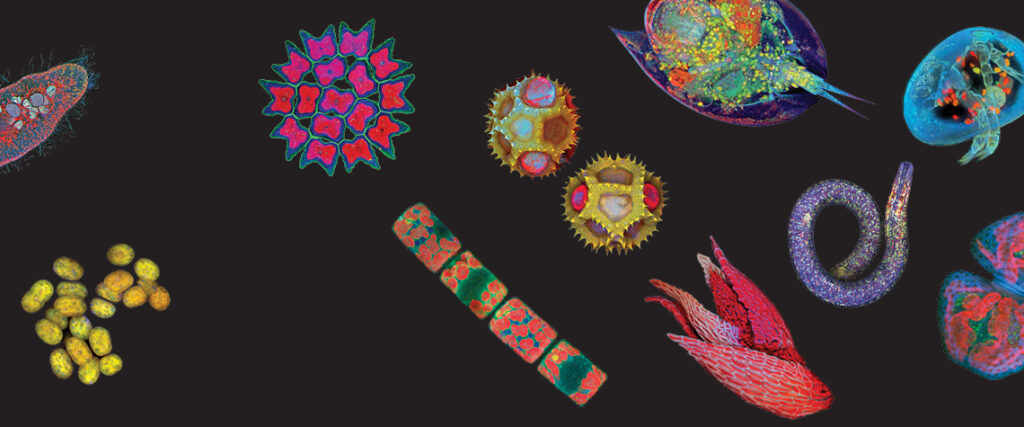 Taraxacum pollen (dandelion) collected at UMBC. This image and header image appear courtesy of Tagide deCarvalho.
THE MURKY WATERS of Library Pond. The surface of a dandelion. The moss of a nearby tree. Wherever she looks, Tagide deCarvalho finds specks of wonder — and then amplifies them for all to enjoy.
As research assistant professor for biological sciences and manager of UMBC’s Keith R. Porter Imaging Facility, a center that offer specialized microscopy, deCarvalho has perfected her unique mix of art and science. First she collects fluorescent molecules from organisms that come about it naturally, and then adds them to non-fluorescent organisms to make their natural tones more spectacular when magnified.
The result is a stunning display — Sci-Art, she calls it — of microscopic worlds many of us would never otherwise see or appreciate. Her dandelion spores were recently recognized as an “image of distinction” in Nikon’s annual Small World microphotography competition.
“I used to do field work, and I’ve been to Australia and Hawaii, but until I looked at pond water here, I don’t even know that I’ve felt such wonder,” she says. “You don’t have to go somewhere exotic to find biodiversity and wonder. The inspiration is all here. There’s a whole world here that you just need to learn how to look for.”
Tiny Sand, Tiny Money, Tiny Time: Corrie Francis Parks
 It takes 24 individual frames to fill up one second of film. Pictured: a still from Parks’ Foreign Exchange, featuring multiple currencies and pieces of sand from around the world. Images courtesy of Corrie Francis Parks.
YEARS AGO, AS Corrie Francis Parks began hand animating sand, friends and family started sending her samples from around the world. It came from New Jersey, from Kuwait, from the Moab desert — little baggies and Tupperwares full, of all shapes and sizes and colors.
Later, when Parks, an assistant professor of visual arts, started magnifying paper currencies, she found herself with new supplies arriving in the mail, and new places and economic systems to study and think about.
Her most recent work, “Foreign Exchange,” an animated short about imaginary borders, combines both worlds, with individual pieces of sand journeying across frames dotted with inked winks of paper presidents.

As small as the physical pieces are, they pale in comparison to the tininess of the time captured by the camera; as one second passes, 24 individual frames fly by. Parks invites viewers to make of it what they will, but it’s hard not to ascribe emotion and character to inanimate objects when they’re suddenly huge, dancing around each other.
“I think the really interesting part of what I’m doing right now is this idea of looking closely at things,” she says. “You start to see all of these little details, and I think that it’s a broader metaphor for the way we need to approach social problems, political problems. It’s about looking at the needs of the individual as well as this big, giant generalization.”
Microtechnological Marvel: Mike Adelstein ’96
 We can only imagine the tiny squirrels flitting about this 3-D printed model of UMBC’s campus, one four thousandth its true size. Images by Oscar Matatquin, Potomac Photonics.
UMBC’S CAMPUS IS 512 acres, comprising more than 50 buildings, 3,000 trees, and more than 15,000 people on any given day of the semester.
In the palm of Mike Adelstein’s hand sits a campus 1/4,000th its actual size. His lifelines flow like estuaries beneath the 3-D printed plastic loop. There are no squirrels, nor miniscule french fries to feed them.
“It’s pretty cool, right?” smiles Adelstein ’96, biochemistry, president of Potomac Photonics, which specializes in digital and microfabrication. Whatever his clients need — tiny holes in tiny spaces, micro bonding with lasers, you name it — his team will dream up a way for it to happen.

Several years ago, Adelstein worked with Ecosynth, an open source project at UMBC in which 3D models of terrain are created from photography taken by small radio-controlled aircraft. The main purpose is usually related to ecological study, but Adelstein couldn’t resist creating a model of his beloved alma mater.
And so he keeps it in his pocket, ready to impress visitors. It always does.
“This one’s small, but I can make it smaller,” he says, ready for a challenge. “We’re going to make it smaller.”
Hide and Seek
Can you match these tiny beautiful things to their descriptions? (See the answers at the end of the story.)
 #1
#1
 #2
#2
 #3
#3
 #4
#4
 #5
#5
Tiny Descriptions
A. Tesserae, or roughly squared pieces of colored stone, make up the edge of a foot or hand in a 5th-6th-century mosaic that likely decorated a synagogue in Caesarea Maritima, Israel. Today, students in UMBC’s Ancient Studies program use artifacts like this from the Spiro Collection in their hands-on study of history.
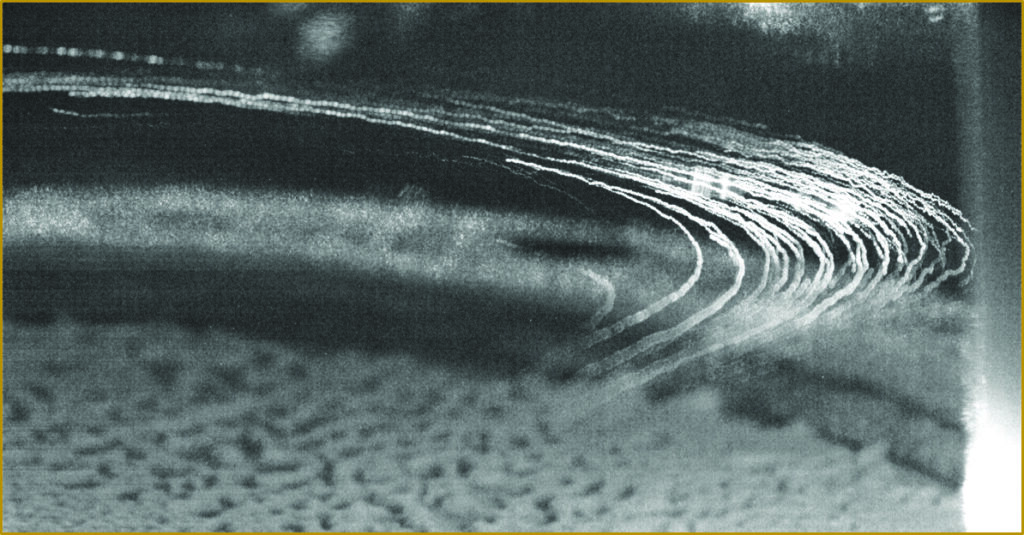
B. Saturn in a box? It may seem like magic, but Carlos Romero-Talamas, assistant professor of mechanical engineering, is using plasma fields to make small particles levitate to simulate the sixth planet’s famous rings right here in his lab.
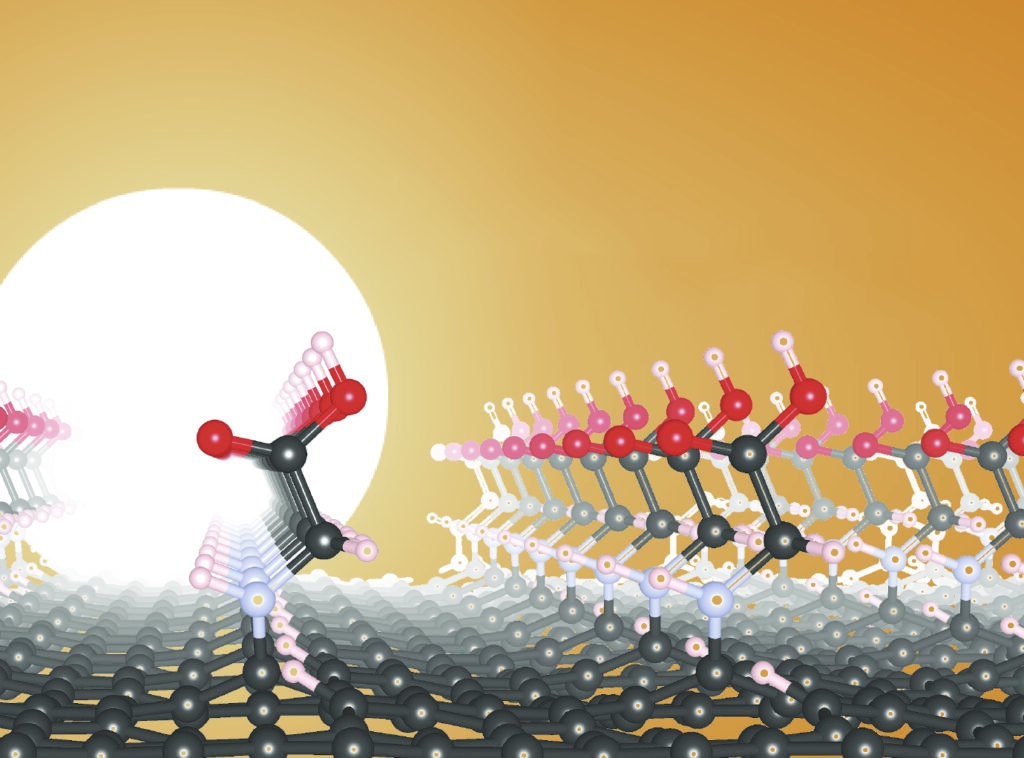
C. With a diameter ranging from about 0.1 to 0.5 nanometers, the average atom is a million times smaller than the thickest human hair. So, when we say that UMBC physicist Can Ataca is doing big things — developing cheaper ways of creating one-atom-thick materials — in very tiny ways, we really mean it.
D. You might need a stronger pair of reading glasses to understand UMBC’s oldest book, Biblia Sacra, a Vulgate bible from 1484. Interior pages show the original text and hand-painted letters, which you can see in person simply by making an appointment with Special Collections.
E. Can a parking lot ever be good for the Chesapeake Bay? It’s possible, according to senior research scientist Stu Schwartz of UMBC’s Center for Urban Environmental Research and Education (CUERE). The slow sponge-like draining of pervious concrete he studies can help prevent the rapid runoff of rainwater from traditional concrete that carries pollution into our waterways.
Answers: A5, B3, C4, D2, E1
Image #3 courtesy of Carlos Romero-Talamas. Image #4 courtesy of Can Ataca.
]]>
Beneath the black and gold, and far beyond what might immediately catch your eye, lies a world of wonder. You just need to know where — and how — to look. By Jenny O’Grady Campus...
https://umbc.edu/stories/tiny-beautiful-things/
https://my3.my.umbc.edu/api/v0/pixel/news/120254/guest@my.umbc.edu/8449ab5bb9ed2c749664e63500ee50b7/api/pixel
discovery
fall-2018
magazine
UMBC News & Magazine
https://my3.my.umbc.edu/groups/umbc-news-magazine
https://assets1-my.umbc.edu/system/shared/avatars/groups/000/001/943/24435aa6207c452e7bc15cc74b42c7bb/xsmall.png?1748556657
https://assets1-my.umbc.edu/system/shared/avatars/groups/000/001/943/24435aa6207c452e7bc15cc74b42c7bb/original.png?1748556657
https://assets2-my.umbc.edu/system/shared/avatars/groups/000/001/943/24435aa6207c452e7bc15cc74b42c7bb/xxlarge.png?1748556657
https://assets2-my.umbc.edu/system/shared/avatars/groups/000/001/943/24435aa6207c452e7bc15cc74b42c7bb/xlarge.png?1748556657
https://assets3-my.umbc.edu/system/shared/avatars/groups/000/001/943/24435aa6207c452e7bc15cc74b42c7bb/large.png?1748556657
https://assets1-my.umbc.edu/system/shared/avatars/groups/000/001/943/24435aa6207c452e7bc15cc74b42c7bb/medium.png?1748556657
https://assets2-my.umbc.edu/system/shared/avatars/groups/000/001/943/24435aa6207c452e7bc15cc74b42c7bb/small.png?1748556657
https://assets1-my.umbc.edu/system/shared/avatars/groups/000/001/943/24435aa6207c452e7bc15cc74b42c7bb/xsmall.png?1748556657
https://assets2-my.umbc.edu/system/shared/avatars/groups/000/001/943/24435aa6207c452e7bc15cc74b42c7bb/xxsmall.png?1748556657
UMBC News & Magazine
0
0
false
Tue, 11 Dec 2018 20:23:27 -0500
Thu, 05 Jan 2023 13:47:29 -0500
A Matter of Trust
Driven in her work by memories of her grandmother, Dr. Tabassum Majid, M18, ’10, interdisciplinary studies, M.A. ’18, management of aging studies, has made a career of education and research related to Alzheimer’s disease and dementia. Recently, she was recognized in the Baltimore Sun’s “25 Women to Watch in 2018” list. Following her undergraduate study in neurodegenerative disorders of the aged, she earned her Ph.D. from the Baylor College of Medicine in Houston and had a fellowship at the University of Maryland, School of Pharmacy. Today, as executive director of the Integrace Institute, former Meyerhoff Scholar Majid looks ahead to ways of improving the lives of elders and their support networks, and many of the tools she uses every day come from the interdisciplinary education she received at UMBC. Here, Majid tells us how taking a chance on UMBC, and granting the trust of her most precious possession — her dreams — has made all the difference.
“Trust us with your dreams; you were meant to heal the world.”
This is one of the first things that I heard as a freshman at UMBC, the first time a mentor ever pushed me to both be vulnerable and challenge the universe at the same time.
The mantra has stayed with me throughout my personal and professional journeys since setting foot on a campus that I have come to consider a second home. The story began there.
UMBC was not my first choice until I met the people in it. I had dreams, big ones: neurosurgery at Yale, curing Alzheimer’s disease, traveling the world and making music come alive.
Yet, my heart and mind were one when I interacted with society’s most vulnerable: Older adults with dementia who reminded me of my lifelong hero — my grandmother — and children with chronic illness but sunny dispositions.
 Majid cuts the ribbon at the launch of an exhibit created at Integrace Institute through collaborations with UMBC students. Image courtesy of Integrace Institute.
It took some trust to hand that over to the gentle soul who greeted me on my first day on campus. How could I refuse a place that was saying yes to my dreams, telling me that anything was possible? Freshman? Meyerhoff Scholar? Creating your own interdisciplinary studies degree focused neurodegenerative disorders of the aged? “We can figure that out,” they said. You want to be SGA Vice President? “We’ve never had a freshman do that, but why not? You were meant for greatness. Grit is in your nature.”
The opportunities kept coming, but I didn’t understand why. I kept looking for something to tell me I was in the right place doing the right thing. And then it happened. I was asked to write down the story of my grandmother. A release valve opened, passion flowed out, and I started to solidify those dreams. Before I knew it, I was graduating and off to Houston, Texas, to work with my new set of mentors, internationally renowned pioneers in Alzheimer’s and dementia research.
I finished my Ph.D. degree by focusing on all of those who came before me, who paved the path. Who I trusted with my dreams. My parents, two immigrants who came to the U.S. to give me a better life; my grandmother, who inspires me daily; my mentors, dozens of them, who encouraged, guarded, and nurtured my dreams. I defended my dissertation and got a letter from that same gentle soul at UMBC: “You’ve done what you went there to do; now you may come home.”
I came back to Maryland and decided to teach, to give back, and begin my research trajectory. I started teaching and mentoring UMBC students as an adjunct faculty member while doing my post-doctoral research. I found the most joy in seeing others be inspired to achieve their dreams, to discover their grit. I kept working with individuals with dementia and their caregivers, and got an amazing job at the Integrace Institute, a non-profit organization in Maryland that integrates research, education, and consulting together to transform the lives of those with neurocognitive changes.
I needed more knowledge on this new industry, so I came back to UMBC for my MAgS degree. Every day is different now. Whether I am teaching staff members on how to individualize care, chatting with a resident about their life, presenting at a national research conference on brain health, I’m living those dreams with my UMBC family. One of my students used her museum design background to create an exhibit space to communicate research and educational findings in an innovative way. Another is using his musical talents to help us with a meaningful music study. Faculty and staff are co-creating curriculum and collaborating on research and future intergenerational programs. We are always looking ahead for more ways to grow, expand, and change.
It has been a transformational journey for me, expanding and changing as quickly as UMBC. In times of change, however, it is comforting to know that a walk around the loop will always welcome me home.
 Majid speaks with a reporter during the production of Every 3 Seconds , a documentary produced by Alzheimer’s Disease International to help raise awareness of global impact of dementia. The documentary came out in July. Image courtesy of Alzheimer’s Disease International.
]]>
Driven in her work by memories of her grandmother, Dr. Tabassum Majid, M18, ’10, interdisciplinary studies, M.A. ’18, management of aging studies, has made a career of education and research...
https://umbc.edu/stories/a-matter-of-trust/
https://my3.my.umbc.edu/api/v0/pixel/news/120255/guest@my.umbc.edu/fbe992038eb4769c700f6f7641fa2d5e/api/pixel
alumni
fall-2018
meyerhoff
perspectives
UMBC News & Magazine
https://my3.my.umbc.edu/groups/umbc-news-magazine
https://assets1-my.umbc.edu/system/shared/avatars/groups/000/001/943/24435aa6207c452e7bc15cc74b42c7bb/xsmall.png?1748556657
https://assets1-my.umbc.edu/system/shared/avatars/groups/000/001/943/24435aa6207c452e7bc15cc74b42c7bb/original.png?1748556657
https://assets2-my.umbc.edu/system/shared/avatars/groups/000/001/943/24435aa6207c452e7bc15cc74b42c7bb/xxlarge.png?1748556657
https://assets2-my.umbc.edu/system/shared/avatars/groups/000/001/943/24435aa6207c452e7bc15cc74b42c7bb/xlarge.png?1748556657
https://assets3-my.umbc.edu/system/shared/avatars/groups/000/001/943/24435aa6207c452e7bc15cc74b42c7bb/large.png?1748556657
https://assets1-my.umbc.edu/system/shared/avatars/groups/000/001/943/24435aa6207c452e7bc15cc74b42c7bb/medium.png?1748556657
https://assets2-my.umbc.edu/system/shared/avatars/groups/000/001/943/24435aa6207c452e7bc15cc74b42c7bb/small.png?1748556657
https://assets1-my.umbc.edu/system/shared/avatars/groups/000/001/943/24435aa6207c452e7bc15cc74b42c7bb/xsmall.png?1748556657
https://assets2-my.umbc.edu/system/shared/avatars/groups/000/001/943/24435aa6207c452e7bc15cc74b42c7bb/xxsmall.png?1748556657
UMBC News & Magazine
0
0
false
Mon, 10 Dec 2018 02:21:29 -0500
Start at UMBC & Go Everywhere
Majid speaks with a reporter during the production of Every 3 Seconds , a documentary produced by Alzheimer’s Disease International to help raise awareness of global impact of dementia. The documentary came out in July. Image courtesy of Alzheimer’s Disease International.
]]>
Driven in her work by memories of her grandmother, Dr. Tabassum Majid, M18, ’10, interdisciplinary studies, M.A. ’18, management of aging studies, has made a career of education and research...
https://umbc.edu/stories/a-matter-of-trust/
https://my3.my.umbc.edu/api/v0/pixel/news/120255/guest@my.umbc.edu/fbe992038eb4769c700f6f7641fa2d5e/api/pixel
alumni
fall-2018
meyerhoff
perspectives
UMBC News & Magazine
https://my3.my.umbc.edu/groups/umbc-news-magazine
https://assets1-my.umbc.edu/system/shared/avatars/groups/000/001/943/24435aa6207c452e7bc15cc74b42c7bb/xsmall.png?1748556657
https://assets1-my.umbc.edu/system/shared/avatars/groups/000/001/943/24435aa6207c452e7bc15cc74b42c7bb/original.png?1748556657
https://assets2-my.umbc.edu/system/shared/avatars/groups/000/001/943/24435aa6207c452e7bc15cc74b42c7bb/xxlarge.png?1748556657
https://assets2-my.umbc.edu/system/shared/avatars/groups/000/001/943/24435aa6207c452e7bc15cc74b42c7bb/xlarge.png?1748556657
https://assets3-my.umbc.edu/system/shared/avatars/groups/000/001/943/24435aa6207c452e7bc15cc74b42c7bb/large.png?1748556657
https://assets1-my.umbc.edu/system/shared/avatars/groups/000/001/943/24435aa6207c452e7bc15cc74b42c7bb/medium.png?1748556657
https://assets2-my.umbc.edu/system/shared/avatars/groups/000/001/943/24435aa6207c452e7bc15cc74b42c7bb/small.png?1748556657
https://assets1-my.umbc.edu/system/shared/avatars/groups/000/001/943/24435aa6207c452e7bc15cc74b42c7bb/xsmall.png?1748556657
https://assets2-my.umbc.edu/system/shared/avatars/groups/000/001/943/24435aa6207c452e7bc15cc74b42c7bb/xxsmall.png?1748556657
UMBC News & Magazine
0
0
false
Mon, 10 Dec 2018 02:21:29 -0500
Start at UMBC & Go Everywhere
by Catalina Sofia Dansberger Duque
UMBC may be nestled in the small town of Catonsville, but over the years the university has become a crossroads of international research, civic engagement, and a welcome center to anyone pursuing the life of a global citizen.
But, what makes UMBC such an international campus? The famous flags in The Commons? The answer is much deeper than that. It’s a commitment to envisioning an inclusive path dependent on intercultural collaboration that has created a thriving world of possibilities through which to engage in all the world has to offer.
UMBC’s windows-to-the-world philosophy has caught the attention of some big names recently. Times Higher Education recognized UMBC as one of the world’s top young universities, and The Center for World University Rankings recognized us as one of the top 3.5 percent of all universities worldwide. Most recently, the Professionals in International Education (PIE) included UMBC as the only U.S. finalist for a 2018 PIEoneer Award, in the Student Support category.
Accolades aside, one thing is for sure — if you start at UMBC, you can go anywhere because you will have all the support that you need. So, feel free to move around the world.
You Are Welcome Here
 True Grit welcomes all to UMBC
UMBC’s visual connection to the world begins where visitors first set foot on campus: on the bricks of the Administration Building drop off circle. There, hellos in dozens of languages — from “Witamy” in Polish to 欢迎 in Mandarin — make it clear that all are welcome. Walking down Academic Row, you can hear what a global campus sounds like — from President Hrabowski practicing his French with faculty from the Caribbean, to students and faculty sharing conversations in English, Korean, Hindi, Hebrew, Urdu, Spanish, Igbo, and Italian, just to name a few.
 Students share their talents at PANGEA, an annual cultural showcase.
International pride is most evident in The Commons, where 156 flags hang to represent the countries our students come from; it is also the home of 26 cultural and ethnic student organizations. Over the last decade around 1,000 international students have made UMBC their home, both for short- and long-term study.
“We have a group of Japanese students attending in the spring for intensive English training and community service projects. In the summer we will host a group of high school students from the United Arab Emirates for a three week STEM and English Academy,” explains Sarah Gardenghi, director of the English Language Institute, which offers customized English language instruction. “Each of our programs focuses on the needs of the international student so they feel at home at UMBC, safe in our community, and connected with our students, faculty, and staff.”
Students at UMBC take pride in their cultures, languages, and traditions — and love sharing them with the campus community. One popular annual event, PANGEA, is a cultural showcase celebration organized by the student-led UMBC Cultural Showcase Board during Welcome Week. The event centers on sharing food, dance, and traditions important to the cultural and ethnic groups on campus as a way of welcoming students and encouraging all to get involved.
Many students swim, run, bat, or kick their way through college. At UMBC, international athletes are an important part of the athletic culture, sharing their world-class skills in a welcoming environment while preparing for the next level of their athletic career. For some that means Olympic level.
Mohamed Hussein ’14, mechanical engineering, M.S. ’16, engineering management, represented UMBC in swimming and diving for three seasons and was part of the Egyptian swim team in the 2016 Olympics. Cleopatra Borel ’02, interdisciplinary studies, was an NCAA women’s shot put champion and has participated in four Olympic games as a member of the Trinidad and Tobago track and field team. This year there are 375 student athletes on campus, and nearly 10% are international athletes.
“I thought it was impossible to find a home away from Cairo, but the support I get from my teammates and my [swimming] coach, Chad Cradock ’97, gives me so much energy and power to be my best self in the pool and in real life, too,” says Hania Moro ’19, financial economics, who holds an Egyptian National Record in the 400 free, and last year came in first place for the Retrievers in the 500 and 1650 free.
Learning Without Borders
 LEARNING TO LISTEN: As a travel photographer and writer for National Geographic, BBC, and Lonely Planet, among others, Lola Akinmade Akerstrom ’98, M.S. ’02, information systems, learns from every new job she takes and every new person she meets. But, coming to America from Nigeria to study at UMBC taught her invaluable skills that deeply changed the way she looks at the world. Read Lola’s full story.
Cultural and social engagements are just the beginning of UMBC’s global mindset. The core of understanding the roots of the world’s most pressing problems begins with conversations between people with different perspectives. When research crosses international boundaries, the sky’s the limit.
Tim Nohe, professor of visual arts and director of the Center for Innovation, Research, and Creativity in the Arts (CIRCA), embraces international research opportunities. In 2016, he shared ten years of his research on globalization in Botany Bay, Australia, which he completed as a Fulbright Senior Scholar fellow. This semester, via CIRCA, he hosted a visiting scholar from Nanyang Technological University School of Art, Design, and Media, and connected her with assistant professor of linguistics and French Renée Lambert-Brétière.
“International research welcomes a space to meet people that you wouldn’t in your regular day. Those personal touches last. You are never the same person after that exchange,” says Nohe. “You are greater than before by embracing these new social networks, affinity groups, and professional connections that are incredible for your own personal growth.”
The College of Arts, Humanities, and Social Sciences (CAHSS) houses many departments and programs that help students develop an interdisciplinary way of understanding based on human and social theories about world economies, internationalization, global education, global environmental changes, communication, culture, and art methodologies.
The Modern Languages, Linguistics, and Intercultural Communication (MLLI) department, which offers classes in 11 languages, helps students understand language in a culturally appropriate context for work and play. It also is the center of graduate studies for students who are combining language work with issues of media, communication, education, and diversity, including through the language, literacy, and culture graduate program. Retrievers wanting a daily immersion experience to prepare for future opportunities can be found sharpening their intercultural skills with their peers and native language resident mentors as residents in the Intercultural Living Exchange.
“I was a graduate student in MLLI. Both my graduate programs had many international students. The department was all about studying cultures all around the globe,” shares Romy Hübler ’09, modern languages and linguistics, M.A. ’11, intercultural communication, Ph.D. ’15, language, literacy, and culture. Hübler is a native of Germany who now serves as assistant director of the UMBC Center for Democracy and Civic Life.
 A field trip to Baltimore’s Russian Festival.
“It helped me gain a greater understanding and had a big impact on me. It made me want to explore some of the areas where other students were from. I studied abroad in Spain and in Mexico.”
Attention to international viewpoints drives the Global Studies program, an interdisciplinary major focusing on issues of internationalization in the political, social, cultural, and economic realms, both locally and in the world. Students from majors of all types are part of this program.
Felipe Filomeno, assistant professor of political science and global studies, came from Brazil and has made UMBC his second home. In his Approaches to Globalization class, students engage in critical questions about personal, local, and national identity and how civic engagement can help influence government policies and create more cosmopolitan communities. Last fall he took a class to the Russian Festival hosted by the Holy Trinity Russian Orthodox Church in East Baltimore, and his students also produced the Baltimore Intercultural Calendar, which, in partnership with the Mayor’s Office, is set to become the official calendar of festivals celebrating global cultures in Baltimore city.
Culturally specific programs and departments like ancient studies, Africana studies, and Asian studies, as well as courses in languages such as Arabic also offer students an opportunity to specialize in a unique global community. These options not only respond to the constantly evolving world of academia, but also reflect the cultural makeup of UMBC’s student body.
Tackling Global Challenges
The College of Engineering and Information Systems (COEIT) attracts the majority of UMBC’s international students. It is also home to a Global Engineering course specifically designed to meet the needs of companies with offices around the world looking for employees that have both the technical engineering skills and intercultural intelligence to work with diverse groups.
Led by Marc Zupan, associate professor of mechanical engineering, the course began in collaboration with the University of Porto in Portugal and expanded to include La Universidad de Los Andes in Colombia during mechanical engineering professor Chuck Eggleton’s Fulbright experience there. Using video teleconference, teams across three countries developed the intercultural and technical skills to solve global engineering challenges with attention to localized issues. Some students even had the chance to travel to Porto to meet their Portuguese colleagues in person.
“The incubation for the Global Engineering course came several years ago from our work with companies and agencies that hire our students and them saying, ‘We love the students you send us. They are well-defined engineers but they would be more effective if they had an international experience,’” says Zupan. “The research also reported a low percentage of engineering students going abroad. My goal was to reduce all barriers by creating a class that aligned entirely with major requirements and employer needs so students could take advantage of the depth of learning that happens when you incorporate other cultures, languages, and physical locations.”
 In the last decade, UMBC has helped 51 Fulbright recipients travel and learn around the world. Pictured: UMBC’s 2018 Fulbright awardees.
UMBC’s Grand Challenge Scholars Program, based on the National Academy of Engineering’s Grand Challenges for Engineering, was brought to UMBC by Marie desJardins, former associate dean of COEIT. It is now led by professor of the practice Maria Sanchez, director of Education and Outreach in COEIT. Students from all three UMBC colleges develop an individualized course plan to gain the content knowledge, technical skills, and a team-centered, interdisciplinary approach needed to solve 14 challenges facing the world, such as access to clean water, or an economical solution to solar energy.
“We want to deepen the global consciousness of faculty, staff, and students. Today, intercultural IQ is an essential skill in engineering,” says Sanchez, who collaborates with the International Education Services Office to provide intercultural training to students. “Our goal is to evolve Grand Challenges to not only be an interdisciplinary program focused on solving pressing global engineering problems, but also one that serves as a vehicle for students to understand their own cultural awareness and how that influences the way they approach problem-solving.”
Faculty in the College of Natural and Mathematical Sciences (CNMS) are also engaged in numerous international collaborations. For example, research by Kevin Omland, professor of biological sciences, looks at the critically endangered Bahama Oriole in close collaboration with the Bahamas National Trust. Through this experience students learn field research skills specific to a unique setting and culture and the importance of international collaboration in scientific research.
All the Places You Will Go
Application. Application. Application. The true test of how much students have learned is when they pack their bags and leave UMBC to study abroad, work abroad in fellowships as teachers, or stay local and engage with international communities.
In 1969, the late Walt Sherwin, professor of ancient studies and founding UMBC faculty; Jay Freyman, professor emeritus ancient studies; and Rudy Storch, professor emeritus ancient studies, inaugurated the ancient studies program and the first study abroad program at UMBC, Rome: Ancient and Modern. The popular program continues to this day, engaging travelers in research of ancient civilizations like China, Turkey, Greece, and, next year, England.
 The ANCS Study Tour visits the Lion Gates at the Hittite Capital of Hattusa, Turkey.
“The experiences I have had on several of these trips over the years have significantly contributed to my understanding and appreciation of different peoples and cultures, as well as their histories,” said Tessa Baumgartner ’05, ancient studies, a doctor of osteopathic medicine in Arizona. “The trips have also helped me understand my own culture better through an increased understanding of how modern civilization has evolved from ancient ones.”
Today, students have access to affordable, credit-earning, international learning opportunities in 33 countries thanks to the International Education Services Office (IES), which serves as the hub of all inbound and outbound international traffic. It provides individualized support through innovative programming and wrap-around support for: international students accepted to UMBC; students seeking research, study, and teaching opportunities abroad; and faculty-led study abroad courses. It also works with the Fulbright, Gilman, Boren, Critical Language, and Haiyu programs that provide students research opportunities abroad, as well as the You Are Welcome Here program which supports international and refugee students.
“In the last ten years we have had 51 Fulbright recipients, with three students choosing other competitive options,” explains Brian Souders, Ph.D. ’09, language, literacy, and culture, Fulbright Program advisor. “In general, we have gone from one to three recipients a year to seven to eight annually over the past five years.”
Marc Schultz ’18, political science and global studies, who is doing his Fulbright research in Chengdu, China, says his greatest learning comes from daily interactions with locals and the perspective they bring to his own life. “Although my Mandarin language ability is far from flawless, people are patient and encouraging with me, simply happy at the fact that I am trying to communicate with them wholly in their language — for this I am incredibly grateful, particularly knowing that many immigrants to the United States and other western countries are not treated with the same level of patience and kindness, even when their English is perfect but they have a foreign accent.”
Faculty are also leading international courses, which have helped students understand Muslim Tunisian immigrants in Sicily, Italian politics, the evolution of the English language in Amsterdam, engineering in Portugal and Colombia, and more — often collaborating with faculty from other countries.
Milvia Hernandez, Spanish lecturer and coordinator for Spanish Language Teaching in MLLI, leads a Spanish language immersion course in Colombia at the Instituto de Idiomas, Universidad del Norte in Barranquilla. Global studies majors sign up quickly for this educational experience because of its intensive Spanish language immersion and opportunities to volunteer with local school children and their communities.
“Barranquilla is one of the cities Gabriel García Márquez called home. It is Afro-Caribbean, Indigenous, and European, making it an ideal place for living and studying a notably diverse and intercultural population,” explains Hernandez.
 Student Tenzin Yangchen wrote a series of blogs during her trip to Italy.
Maggie Holland, associate professor of geography and environmental systems, led a course in sustainable development and conservation in Costa Rica in 2014 that included students from six different study areas. Two years later, Holland reached out to Lee Blaney, associate professor of chemical, biochemical, and environmental engineering, and Matt Fagan, assistant professor of geography and environmental systems, to co-teach an interdisciplinary field class in Costa Rica. The course helps students make the links between water, forests, climate change, and people’s livelihoods (smallholder farmers) in the cloud forest region of Monteverde.
Blaney later returned to Costa Rica with the UMBC chapter of Engineers Without Borders to begin a clean water project for a small community. Holland and Blaney are currently on sabbatical in Mozambique and China, respectively, looking for new research opportunities for students.
Global engagement is also local. The Shriver Center, UMBC’s portal for service-learning opportunities and internships, offers students opportunities to engage with local immigrant and refugee communities and the organizations that serve them. For instance, through the College JUMP program, UMBC students help 11thand 12th-grade refugees through the college application process.
Students can also apply their skills locally through international competitions like the National Association of Schools of Public Affairs and Administration (NASPAA)-Batten Student Simulation Competition. UMBC’s School of Public Policy participated in the competition for the first time last year, completing a global pandemic simulation. Any student interested in current world affairs can apply to be part of the Model UN, or for those ready to test the professional waters, UMBC offers access to GoinGlobal, an international internship search portal.
The Future of Global Commitment
 Collaborations with the University of Limpopo and others means new research possibilities.
Over the last fifty years, advances in technology have made it possible to forge seamless connections with people in the most remote parts of the world. Advances in travel have created lifelong bonds between researchers, students, and communities around the world. And the willingness to cross borders, collaborate, celebrate, and innovate, reminds us all about the significance of fighting intolerance.
Continuous collaboration is at the heart of all international understanding. UMBC is conscious of the importance of a strong commitment to partnerships to work on innovative research and create a network of opportunities for applied learning. Official partnerships that promote student and faculty research opportunities have been established with the University of Porto, Portugal, and University of Kassel, Germany, and three more have been added this past year with The University of Limpopo, South Africa; Universidad de Piura, Peru; and with South Korea.
On September 24, 2018, UMBC joined more than 100 universities, the Association of Public Land Grant Universities (APLU), and the United Nations in signing the first Declaration of University Global Engagement, a commitment, “to educating students who can successfully live and work in our globally connected world and change it for the better.” The Declaration noted, “We are also committed to discovering, producing, and sharing new solutions to the world’s most pressing problems. These missions require of universities an openness to — and engagement with — ideas, knowledge, and people from all parts of the world.”
UMBC is now also one of 11 colleges and universities in the nation participating in the American Council on Education’s 16th Internationalization Laboratory cohort. The university will go through a process of developing a multi-year plan to support continued growth in international and global engagement initiatives while also reinforcing our standing as one of the world’s top research universities.
David Di Maria, associate vice provost for international education, is thrilled at the future of global commitment at UMBC — and confident that we can help answer the world’s most pressing challenges like climate change, cybersecurity, energy, gender equity, global health, inequality, poverty, sustainable cities, and water.
“The answers will come from communities, companies, and individuals prepared to live and work effectively with individuals and groups whose cultures, languages, nationalities, and worldviews differ from their own,” he explains. “At UMBC we aspire to ensure all members of our community have substantive opportunities to understand and engage with the international and global dimensions of their academic disciplines and increase our capacity to create powerful interconnected solutions together.”
]]>
by Catalina Sofia Dansberger Duque UMBC may be nestled in the small town of Catonsville, but over the years the university has become a crossroads of international research, civic engagement,...
https://umbc.edu/stories/start-at-umbc-go-everywhere/
https://my3.my.umbc.edu/api/v0/pixel/news/120256/guest@my.umbc.edu/546bbb4e7adc797e2186b45bf844a8bf/api/pixel
campus-life
fall-2018
international
UMBC News & Magazine
https://my3.my.umbc.edu/groups/umbc-news-magazine
https://assets1-my.umbc.edu/system/shared/avatars/groups/000/001/943/24435aa6207c452e7bc15cc74b42c7bb/xsmall.png?1748556657
https://assets1-my.umbc.edu/system/shared/avatars/groups/000/001/943/24435aa6207c452e7bc15cc74b42c7bb/original.png?1748556657
https://assets2-my.umbc.edu/system/shared/avatars/groups/000/001/943/24435aa6207c452e7bc15cc74b42c7bb/xxlarge.png?1748556657
https://assets2-my.umbc.edu/system/shared/avatars/groups/000/001/943/24435aa6207c452e7bc15cc74b42c7bb/xlarge.png?1748556657
https://assets3-my.umbc.edu/system/shared/avatars/groups/000/001/943/24435aa6207c452e7bc15cc74b42c7bb/large.png?1748556657
https://assets1-my.umbc.edu/system/shared/avatars/groups/000/001/943/24435aa6207c452e7bc15cc74b42c7bb/medium.png?1748556657
https://assets2-my.umbc.edu/system/shared/avatars/groups/000/001/943/24435aa6207c452e7bc15cc74b42c7bb/small.png?1748556657
https://assets1-my.umbc.edu/system/shared/avatars/groups/000/001/943/24435aa6207c452e7bc15cc74b42c7bb/xsmall.png?1748556657
https://assets2-my.umbc.edu/system/shared/avatars/groups/000/001/943/24435aa6207c452e7bc15cc74b42c7bb/xxsmall.png?1748556657
UMBC News & Magazine
0
0
false
Sun, 09 Dec 2018 15:02:57 -0500
Moving the Needle

With their hearts in the work and their ears to the ground, the people behind some of UMBC’s longest-standing homegrown programs are solving big societal problems. But the work is never done.
By Jenny O’Grady
On the wall of the office, in bright Retriever gold, hangs UMBC’s vision statement, a bold call to action for any and all who happen to wander past. A call to “connect innovative teaching and learning, research across disciplines, and civic engagement.” A call to “advance knowledge, economic prosperity, and social justice.” No simple task, indeed.
There’s a quote from late Baltimore civic leader Walter Sondheim, as well. Christopher Steele keeps them here as a reminder that we’re all here to serve as well as learn. It can be messy work, he says, but worth the pursuit.
“Look at our vision statement. This notion of social justice and civic engagement are clearly stated…it’s in our values,” said Steele, Vice Provost, Division of Professional Studies, and Executive Director of the Shriver Center.
Founded in 1966, during a time of great civil unrest, UMBC is rooted in a type of service-learning that cuts across disciplines and traditional social structures. And the backbone of that work is programs like those of the Shriver Center, and many others homegrown on the UMBC campus, that over the last several decades have worked to address major societal problems of their time — from inclusivity in the workplace, to social justice in our cities — in collaboration with community partners.
Time passes, and successes come hard earned, because moving the needle takes both persistence and patience. Challenges change over time, forcing student learners and their instructors to bend and re-learn as they go.
The vision statement doesn’t precisely define the “why” of it all, but that’s not necessary. The answer is woven through everything these programs do.
Leveling the Playing Field
 More than 200 CWIT Scholar Alumni are bringing new perspectives to the tech industry.
Imagine having a passion for technology or science, and the desire to make a difference with your talents. Now imagine encountering multiple locked doors before you as you attempt to enter the field of your choice — or even to pursue the study that drives you. Imagine hearing over and over again that this is “just the way it is,” or worse, the silence of no one noticing.
Decades after their founding, issues of accessibility in learning and industry still exist in the STEM fields. But, UMBC’s Meyerhoff Scholars Program and the Center for Women in Technology (CWIT) forge on, as they have for 30 and 20 years, respectively, working to open doors for underrepresented groups both as they learn, and as they move into the workforce.
“This is what drives us…increasing the number of women, and the participation of women, as well as other underrepresented groups in computing and engineering,” says Carolyn Seaman, associate professor of information systems and interim director for CWIT, not only because of the principal of fairness, but because the industry needs it.
“Better design requires a diverse set of perspectives, a diverse set of life experiences, a diverse set of requirements,” that can only be improved through diversification of these traditionally male dominated work spaces, she says.
As one of the nation’s leading sources of African Americans who get Ph.D.s in science and engineering, UMBC’s Meyerhoff Scholars Program does its work for similar reasons. Many academic doors haven’t traditionally been open to these students — not just at the college level, but far before that.
“There’s so much potential, and there are so many problems in the world. We need as many hands in the work as possible,” says Keith Harmon, director of the Meyerhoff program.
Both Meyerhoff and CWIT have evolved over time, as industry and societal needs revealed themselves. CWIT, for one, broadened its scope to include not just women, but male allies who could contribute to a shared vision. The program has also branched out to cover study areas that map directly to industry needs with the creation of its Cyber Scholars group, and worked to expand the program to students who need them most.
“We had people saying, ‘Well, you’re serving the best of the best, which is fantastic, but there are more than 3,000 other students in the [College of Engineering and IT]. How can you serve them?’” said Danyelle Ireland, associate director of CWIT. “We’ve done great things for our scholars, so there’s now more demand.”
Even if his program could double in size, however, Harmon believes that pushing the numbers too far could hurt the one-on-one attention his students receive, and, ultimately take away from the experience. Students in both programs graduate among tightly-knit groups who often refer to their cohorts as families.
T-SITE Scholar Kiante Brantley ’15, M.S. ’16, computer science, recalls a fellow CWIT Scholar found time to personally tutor him in a class he was struggling in even though he was working 20 hours a week with a full course load.
“Being a minority in STEM is hard, but you have a support system of other minority students, faculty, and alumni, then the struggle becomes easier,” says Brantley, now a Ph.D. student at College Park. “CWIT created a family that provided students like myself with the encouragement to make it through…tough times.”
For CWIT, the family means living on a residence hall together, eating together, doing Zumba together, and celebrating life’s victories. The same happens with the Meyerhoffs, where new students begin school the summer before fall semester — in a Summer Bridge program, an academic and social immersion that helps students quickly establish solid study habits — as cohorts that stick together long after graduation.
Rockford “Rocky” Foster ’13, mathematics, a member of the 21st Meyerhoff cohort who is nearing completion of a Ph.D. in mathematics at UC Berkeley, says he was embraced by the community immediately. Because of what he learned, he has started a “mini- Meyerhoff” system on the west coast, seeking out mentors and mentees as a solid support system. The Meyerhoff program’s “secret sauce,” he says, is the strength of those bonds; 30 years in, those bonds can be found across the country.
“So now, when a Meyerhoff undergrad is facing a challenge, chances are there’s a Meyerhoff who can empathize and provide guidance. When they identify an institution or professor they want to work with, there’s someone who can put them in touch or put in a good word,” says Foster.
“The truth is there are many people who are born with such networks in place; their families have accumulated a sort of academic wealth. But other people, historically disadvantaged people, have been denied the ability to accumulate this wealth. The incredible thing about Meyerhoff is that they built it in less than thirty years.”
 Meyerhoff Scholars frequently work in the lab with professor Mike Summers.
As a Cyber Scholar, Priyanka Ranade ‘18, information systems, participated on an all-woman team in a cyber engineering competition sponsored by Northrop Grumman. The team won first place, and today Ranade works at Northrop as a cyber software engineer and serves as a mentor to a current Cyber Scholar team.
“We are not taught to solely invest in our own dreams,” she said, but “to use our strengths in helping others in their journeys, too.”
Filling a Teaching Need
Studies show that students in high-needs schools who are taught by teachers who come from similar backgrounds — and who can understand their specific needs and challenges — are more likely to succeed. And yet, filling those teaching spots presents a perpetual challenge, because teaching in those areas often carries stigmas that scare away potential candidates.
“The biggest challenges, we find, is just finding enough students who want to be teachers, whose families support that career path, and who want to teach in Baltimore,” said Rehana Shafi, director of the Sherman STEM Teacher Scholars Program, which for the past decade has worked to fulfill the mission of “for every Baltimore student an exceptional STEM educator.”
Today, the program has more than 90 alumni teaching and leading in schools all over the state, including in Baltimore city and Baltimore County, and 64 current students. Getting students interested in the first place may be difficult, but the program works to help them understand why this is such a special — and important — calling.
“We’ve shifted how we talk about teaching,” said Shafi. “We talk about social justice and equity. STEM is an integral part of our mission, but at the end of the day, we want people who are approaching teaching from those two lenses…especially when you’re working with kids — and with families and communities — who are the most underresourced.”
 Sherman Scholars teach at Lakeland Elementary School and beyond.
Knowing the challenges their students are facing as they student teach, the Sherman program in the last few years made shifts to offer higher levels of support, with the addition of staff who offer dedicated professional coaching for students. It also targets recruitment efforts in city schools because people often want to return to their home community to teach. And the program now requires annual applied learning experiences (an increase) in city schools or with programs that support kids from city schools.
This includes major work at Lakeland Elementary/Middle School in Baltimore city, where for the last six years the Sherman program has partnered on teacher professional development with math teachers, afterschool enrichment programs, and (along with elbow grease from the UMBC Peaceworker Fellows Program and financial support from the Northrop Grumman Foundation) the launch of a new Lakeland Community and STEAM Center.
Elizabeth “Rosie” Plitt ’14, psychology, M.A.T. ’16, education, who is in her second year of teaching kindergarten at Lakeland currently, says the professional coaching specifically regarding community and cultural responsiveness she received through Sherman is what sets the program apart.
“The program has opened my eyes to my passion for teaching in urban schools,” she said. “The community, the connection, and the reward outweigh the many challenging aspects that occur throughout the year.”
Joseph Skowronski ’18, biochemistry and molecular biology, joined Sherman “on a whim,” he said, “but it was a decision that I will be proud of for the rest of my life. I knew immediately that I was in the company of dedicated professionals who wanted nothing more than for each and every one of us to succeed and be the best teachers we could be.”
Currently completing both his master’s of arts in teaching and a year-long student teaching internship at Baltimore Polytechnic Institute, Skowronski said he “loves walking into a class and seeing a fellow Sherman in the room. An instant connection is made in that moment, and I have a friend and partner in the class on day one.”
For Shafi, though pushing the numbers of students working in high-need schools is a goal, the real mark of success is a shift in thinking among them.
“We really want our students to deeply understand who they are and what they walk into the room with, and who their students are. That takes time,” said Shafi. “And then, when people ask, ‘What do you teach?’ that the first thing they say is ‘I teach students.’ It might be math. It might be chemistry. It be elementary, but ‘I teach students.’”
A Community That Cares
Dealing directly with critical social challenges can be messy, but for the past 25 years the Shriver Center has moved and changed to keep up with the challenge, connecting thousands of students and faculty to partner with people and communities to address their needs. Alongside them, the Sondheim Public Affairs Scholars have also contributed to service-learning, internships, activism, and research to enact social change since 1999.
Named in honor of Eunice Kennedy Shriver and Sargent Shriver with the mission of “addressing critical social challenges by bridging campus and community through engaged scholarship and applied learning,” UMBC’s Shriver Center serves as an umbrella organization with numerous spokes and broadly sweeping goals. The center runs programs covering everything from service-learning and community engagement (including the Shriver Living Learning Community, and service and leadership scholarships) and Public Service Scholars programs for students, to orchestrating engaged scholarship by faculty, to advocacy, academic support, and work experience for youth offered by the Choice Program, and intense community engagement via the Shriver Peaceworker Program.
“We’re trying to move toward social justice and increased equity across the board in society,” through approaches that involve students, faculty and communities, said Shriver Director Michele Wolff ’89, sociology.
“On the student side, we want to create spaces in which they feel empowered to become change agents to tackle issues identified by the community…and with faculty, we want to collaborate to connect their research and creative work with community-based activity. And then, we work directly with the community to help them address their identified needs, usually with students as the resource that helps build their capacity to lead positive change.”
 Many Shriver Center staff are alumni of their own programs.
Studies by members of the Shriver staff have shown that in addition to helping surrounding communities, applied learning of this sort also improves GPAs and graduation rates among participating students, while nurturing skills in leadership, public speaking, personal growth, and career exploration.
The center’s Choice Program offers community-based case management services and aims to foster healthy development and resiliency among youth from under resourced schools and communities. It served nearly 1,000 youth and their families in 2017, resulting in lower recidivism rates and a reduction in out of home placements.
When she came to UMBC, MaryBeth Hyland ’06, social work, wanted to become an orthodontist. But, her experiences working as a site coordinator with the Choice Program and living in the Shriver Living Learning Community put her on track for an entirely different career. In one case, she helped a youth with serious dental issues get pro-bono treatment with an orthodontist with whom she had previously interned.
“It was in that experience that I realized that I wanted to help people to get the support they needed to live better lives,” said Hyland. Today she runs SparkVision, an organization that helps individuals and companies to live in alignment with their values. “And I changed my major to social work and began to thrive.”
Many Shriver alumni maintain their connections long after they graduate. Peaceworker alumna Katie Long, M.A. ’10, intercultural communication, who currently works as program director and Hispanic liaison for the Friends of Patterson Park in Baltimore, still calls upon her Peaceworker family for support and camaraderie.
“I think the practical idealism that is instilled by the Peaceworker Program is much of the reason why many of us are able to continue with the fight for social justice and betterment of our city,” she said.
 Sondheim Scholars help with a variety of programs, including UMBC’s community garden.
Service is also a core value of the Sondheim Public Affairs Scholars, who often collaborate with Shriver Center programs. By working closely on problems like poverty, inadequate education, or services for immigrants or disabled people, students broaden their horizons, build empathy, and become exposed to people they might not otherwise, says Laura Hussey, director of the program and associate professor of political science.
“When students learn about problems through direct encounters with the people they affect most keenly, the problems start to look a little different, and perhaps also more complex, than they might have looked from a set of statistics or ideological arguments,” says Hussey. “It’s a great learning exercise to balance and weigh these types of evidence — what students witness at their service sites, what they read in their textbooks, what they hear in the news or from their favorite political sources.”
During his years as a Sondheim Scholar, Evan Leiter-Mason ’17, economics and political science, started a student-run volunteer tax service for people in need of assistance. Today, he continues that work via the CASH Campaign of Maryland, driven by a desire to create a world free from poverty and financial hardship.
“The Sondheim program affirmed my existing desire to be involved in public service by connecting it to the legacy of Walter Sondheim and his work to make Baltimore a better place to live for its citizens,” said Leiter-Mason, who said he found mentors and friends who share his values and drive to help. “I believe we all have a responsibility, in our own way, to imagine and work toward a better world than the one we have.”
]]>
With their hearts in the work and their ears to the ground, the people behind some of UMBC’s longest-standing homegrown programs are solving big societal problems. But the work is never done....
https://umbc.edu/stories/moving-the-needle/
https://my3.my.umbc.edu/api/v0/pixel/news/120257/guest@my.umbc.edu/56fc4958c228b64f22d4baa0eaec92f1/api/pixel
cwit
fall-2018
impact
meyerhoff
mhoff
sherman
shriver
sondheim
UMBC News & Magazine
https://my3.my.umbc.edu/groups/umbc-news-magazine
https://assets1-my.umbc.edu/system/shared/avatars/groups/000/001/943/24435aa6207c452e7bc15cc74b42c7bb/xsmall.png?1748556657
https://assets1-my.umbc.edu/system/shared/avatars/groups/000/001/943/24435aa6207c452e7bc15cc74b42c7bb/original.png?1748556657
https://assets2-my.umbc.edu/system/shared/avatars/groups/000/001/943/24435aa6207c452e7bc15cc74b42c7bb/xxlarge.png?1748556657
https://assets2-my.umbc.edu/system/shared/avatars/groups/000/001/943/24435aa6207c452e7bc15cc74b42c7bb/xlarge.png?1748556657
https://assets3-my.umbc.edu/system/shared/avatars/groups/000/001/943/24435aa6207c452e7bc15cc74b42c7bb/large.png?1748556657
https://assets1-my.umbc.edu/system/shared/avatars/groups/000/001/943/24435aa6207c452e7bc15cc74b42c7bb/medium.png?1748556657
https://assets2-my.umbc.edu/system/shared/avatars/groups/000/001/943/24435aa6207c452e7bc15cc74b42c7bb/small.png?1748556657
https://assets1-my.umbc.edu/system/shared/avatars/groups/000/001/943/24435aa6207c452e7bc15cc74b42c7bb/xsmall.png?1748556657
https://assets2-my.umbc.edu/system/shared/avatars/groups/000/001/943/24435aa6207c452e7bc15cc74b42c7bb/xxsmall.png?1748556657
UMBC News & Magazine
0
0
false
Thu, 06 Dec 2018 23:41:54 -0500
Chew-MBC Aims to Help Students Eat Healthier

For many students who only experience home economics in middle or high school, college “cooking” becomes reduced to heating year-old ramen on the common room stovetop or chowing down on burnt Hot Pockets from a low quality microwave.
Founder and president of UMBC’s cooking club, Chew-MBC, Tola Abu ’20, chemistry, believes that college cooking should be different. “It’s such a fun, risky, and innovative craft. It’s also one of the few passions that has results that [are] shared with others,” said Abu.
In college, many students develop poor eating habits, or simply snack more than they eat nutritious meals, purely stemming from convenience. “Our goal is to teach UMBC students about the culinary arts and diet tips in a fun, easy, cheap, and healthy way,” said Abu, who counts cooking among his favorite hobbies.
Abu partnered with campus Dining Services, which provided space in The Commons for the students to practice food preparation and cooking every week, and offers guidance around cooking techniques, as well as access to campus executive chef Tim Dunn.
 Chew-MBC students even make their own pasta dough and form them into ravioli.
“Students should be able to gain a good understanding of nutrition during their college years,” said Tom DeLuca, Resident District Manager for Chartwells. “The habits that they form during college will continue after they graduate.”
Over the course of a semester, students make all types of delicious foods, and even took a trip to Baltimore’s famous Lexington Market.
“We made blueberry pancakes [the other] week and those were amazing. We baked some hash brown casserole and bacon…and last semester, we made macaroni and cheese, burgers, and brownies,” said club secretary Alexis Richardson ‘20, a computer science major with a minor in biology.
“What I like the most about Chew-MBC is that, after cooking, we can sit down, relax and enjoy our food with other people who share the same interest,” said Richardson.
– Anjali DasSarma ‘21
Photos by Kiirstn Pagan ’11 for UMBC Magazine.
]]>
For many students who only experience home economics in middle or high school, college “cooking” becomes reduced to heating year-old ramen on the common room stovetop or chowing down on burnt Hot...
https://umbc.edu/stories/chew-mbc/
https://my3.my.umbc.edu/api/v0/pixel/news/120260/guest@my.umbc.edu/3acafb2498b7b7393e353459bf6be893/api/pixel
campus-life
fall-2018
student-life
UMBC News & Magazine
https://my3.my.umbc.edu/groups/umbc-news-magazine
https://assets1-my.umbc.edu/system/shared/avatars/groups/000/001/943/24435aa6207c452e7bc15cc74b42c7bb/xsmall.png?1748556657
https://assets1-my.umbc.edu/system/shared/avatars/groups/000/001/943/24435aa6207c452e7bc15cc74b42c7bb/original.png?1748556657
https://assets2-my.umbc.edu/system/shared/avatars/groups/000/001/943/24435aa6207c452e7bc15cc74b42c7bb/xxlarge.png?1748556657
https://assets2-my.umbc.edu/system/shared/avatars/groups/000/001/943/24435aa6207c452e7bc15cc74b42c7bb/xlarge.png?1748556657
https://assets3-my.umbc.edu/system/shared/avatars/groups/000/001/943/24435aa6207c452e7bc15cc74b42c7bb/large.png?1748556657
https://assets1-my.umbc.edu/system/shared/avatars/groups/000/001/943/24435aa6207c452e7bc15cc74b42c7bb/medium.png?1748556657
https://assets2-my.umbc.edu/system/shared/avatars/groups/000/001/943/24435aa6207c452e7bc15cc74b42c7bb/small.png?1748556657
https://assets1-my.umbc.edu/system/shared/avatars/groups/000/001/943/24435aa6207c452e7bc15cc74b42c7bb/xsmall.png?1748556657
https://assets2-my.umbc.edu/system/shared/avatars/groups/000/001/943/24435aa6207c452e7bc15cc74b42c7bb/xxsmall.png?1748556657
UMBC News & Magazine
0
0
false
Sat, 01 Dec 2018 19:16:54 -0500
From Student Worker to Nationally Recognized IT Leader
Damian Doyle ‘99, B.S. Computer Science, ‘16 M.S Information Systems, says building trust and relationships are essential to his work every day at UMBC.
Doyle, assistant vice president of enterprise infrastructure in the Division of Information Technology (DoIT), has been recognized with Educause’s prestigious Rising Star award, “For demonstrating exemplary leadership in the implementation and deployment of information technology in support of the educational mission; for strong mentorship and promotion of diversity for those aspiring to the IT profession; for modeling collaborative partnerships within his institution and in the greater higher education community.” He received the award at the annual Educause Conference in October.
Like a number of DoIT staff, Doyle began his career as a student worker, and was hired full time after graduation (51 of DoIT’s 75 FT staff are UMBC alumni). Over time, he began taking on leadership roles in network service and security, technology to support classroom learning, and cloud services. Doyle’s collaborative, positive, and thoughtful approach extends beyond DoIT to his work across campus and beyond.
Doyle is a member of UMBC’s Center for Women in Information Technology (CWIT) internal board, and works closely with CWIT Scholars. He has developed an internship program for the scholars to receive hands-on experience in DoIT’s cybersecurity, UNIX infrastructure, and advanced networking teams. Doyle is also committed to working in shared governance and is currently president of the university’s Professional Staff Senate (PSS) and active with its University Steering Committee (USC). He is chair of the planning committee for Maryland’s First Lego League (FLL) and is one of the state head referees. He also coaches his son’s school FLL team.
“Damian has been a partner with the Center for Women in Technology (CWIT) as an advocate for women and underrepresented students, educator, supervisor to CWIT students, and ally within the University of Maryland, Baltimore County,” says Erica D’Eramo, assistant director of CWIT. “He has promoted the opportunities for employment and technical experience in DoIT, and he participates in professional development exercises with new CWIT students and multiple networking opportunities throughout the year for all class years. We greatly appreciate his support of CWIT’s mission and thoughtful collaborations for the past several years.”
DoIT Vice President and CIO Jack Suess, B.S. ‘81 mathematics, and M.S. ‘94, information systems operations analysis, says, “I am thrilled that the EDUCAUSE Awards Committee agreed that Damian’s body of work was exceptional and that he was awarded the Rising Star Award. Damian’s technical and managerial leadership has not only advanced IT at UMBC; he’s taken that leadership and talent to work across campus and in the community, and he is seen as a national leader in the field, especially in the use of cloud technology.”
“I love building bridges,” Doyle explains. “I’m able to work with people on campus and learn what they are doing, then find and match technology to that, in order to help make their work better.
“IT staff see themselves as partners with the university community and so we’re committed to intentional customer service. It’s important to take time with people, to hear their viewpoints and understand their needs. If we’re going to change how we do something, it has to be because it’s of benefit, not just because it’s cool technology.
We’re at a point where you can’t teach and learn without technology, so we have to implement it in a way that serves the community.”
 Damian Doyle. Photo by John Fritz.
Doyle has also helped DoIT create a culture that is inclusive and welcoming too. Beyond his work with CWIT, Doyle says it’s been important for DoIT keep in mind the wide range of ways people from all backgrounds bring different perspectives on problems and solutions to their work. “I feel we have good values around this, but we want to make sure students understand and have that in an intentional way.” He says DoIT will continue to work on developing this area, and they are planning to launch some new initiatives this spring.
When he’s not at UMBC, Doyle takes time away from IT, playing ultimate frisbee and tennis, running, and biking. But he also loves science fiction and video games, which he often plays with his son, Leo, who shares his love of technology. Doyle, whose parents were part of UMBC’s first graduating class, now enjoys this time with Leo much like he did as a child when he and his father built computers together. He says he explains to his son that using technology and understanding how it works are two different things. That understanding has not only helped Doyle in his career, but has become part of a philosophy that has made a difference to the UMBC community as well.
In an upcoming interview with Educause Review, Doyle shared what keeps him inspired. “The people within higher education and their stories, passions, and dreams have a huge impact every day on my thinking and motivation. I’m continually impressed by the challenges many students have overcome to get where they are, and by the faculty, staff, and colleagues who are changing lives through their work, their research, and their commitment to education. The more people I talk with, learn from, and connect with, the more inspired I am to help them succeed and achieve their goals.”
— Eleanor Lewis
Header image: Damian Doyle, right, Ray Soellner, left, the associate director of telecommunications, and Tobi Odunsi, middle, a master’s student in cyber security. Photo courtesy of Tobi Odunsi.
]]>
Damian Doyle ‘99, B.S. Computer Science, ‘16 M.S Information Systems, says building trust and relationships are essential to his work every day at UMBC. Doyle, assistant vice president of...
https://umbc.edu/stories/from-student-worker-to-nationally-recognized-it-leader/
https://my3.my.umbc.edu/api/v0/pixel/news/120261/guest@my.umbc.edu/eb2d8c2706ed5ad4405fb85959a5fb6c/api/pixel
alumni
coeit
fall-2018
graduateschool
UMBC News & Magazine
https://my3.my.umbc.edu/groups/umbc-news-magazine
https://assets1-my.umbc.edu/system/shared/avatars/groups/000/001/943/24435aa6207c452e7bc15cc74b42c7bb/xsmall.png?1748556657
https://assets1-my.umbc.edu/system/shared/avatars/groups/000/001/943/24435aa6207c452e7bc15cc74b42c7bb/original.png?1748556657
https://assets2-my.umbc.edu/system/shared/avatars/groups/000/001/943/24435aa6207c452e7bc15cc74b42c7bb/xxlarge.png?1748556657
https://assets2-my.umbc.edu/system/shared/avatars/groups/000/001/943/24435aa6207c452e7bc15cc74b42c7bb/xlarge.png?1748556657
https://assets3-my.umbc.edu/system/shared/avatars/groups/000/001/943/24435aa6207c452e7bc15cc74b42c7bb/large.png?1748556657
https://assets1-my.umbc.edu/system/shared/avatars/groups/000/001/943/24435aa6207c452e7bc15cc74b42c7bb/medium.png?1748556657
https://assets2-my.umbc.edu/system/shared/avatars/groups/000/001/943/24435aa6207c452e7bc15cc74b42c7bb/small.png?1748556657
https://assets1-my.umbc.edu/system/shared/avatars/groups/000/001/943/24435aa6207c452e7bc15cc74b42c7bb/xsmall.png?1748556657
https://assets2-my.umbc.edu/system/shared/avatars/groups/000/001/943/24435aa6207c452e7bc15cc74b42c7bb/xxsmall.png?1748556657
UMBC News & Magazine
0
0
false
Sat, 01 Dec 2018 01:18:29 -0500
Finding Your Niche – Emilie Llenado M.P.S. ’12
When Emilie Llenado, M.P.S. ’12, professional studies, first moved to Maryland from Kansas City, Missouri, she didn’t know a soul, and was working as a server at Longhorn Steakhouse. But, she was hopeful, and she knew she wanted to do great things, so she enrolled in UMBC at the Shady Grove campus. Four years later in 2012, she graduated from the Industrial/Organizational Psychology program with life-long friends, and a new job at Freddie Mac.
“When I first moved to Maryland, I didn’t know anyone. I came right out of my undergraduate degree. I didn’t know what it would take to succeed at school,” said Llenado, who recently joined the UMBC Alumni Association Board of Directors. “I made three goals, as I knew they would help me be a happier person, and the best version of myself.”
Pillars of Success
Those three goals, or the pillars of success as she called them, were “academic excellence, career enhancement, and interpersonal relationship growth.” With that in mind, she made the most of every moment at the Shady Grove campus.
“If there was a job fair, I would go. If there was a luncheon, I would be there. If a professor would offer up special office hours or a group study session, I would participate. You definitely get out of the program what you put into it,” she said.
At Shady Grove, she said, she built a network of faculty and friends who all encouraged her to succeed. “As I started studying more and getting more involved in my classes, I became closer with my classmates and teachers, who in turn became not just friends, but critical resources in building out my future career,” said Llenado.
Years later, she remains close with the friends she made during her time on campus. They go on an annual beach trip to Ocean City. “We go to the beach, boardwalk, and get crab toast, every year, rain or shine!” said Llenado. “We’ve all been close since the year I moved to Maryland, and this past year marked our 7th annual beach trip.”
For their 10th anniversary, they have big plans for a cruise or a resort to “celebrate our friendship, and tradition in style!”
The spring before she graduated, Llenado was offered a job at the Federal Home Loan Mortgage Corporation, also known as Freddie Mac. After graduating on her birthday in December of 2012, she received another offer to advance at the company. After yet another offer and a promotion, she is now a multifamily underwriting senior associate.
“All of my daily activities, throughout my career, in Freddie Mac have directly aligned with skills learned through UMBC,” she said. UMBC gave her the ability to serve as a leader, collaborate with others, prepare presentations and more.
Giving Back as an Alumni Leader
In addition to her busy days at work, Llenado was invited to join UMBC’s Alumni Association Board of Directors (AABOD), a group that plans events and recognizes outstanding alums, all while creating a community atmosphere among UMBC’s 77,000-plus alumni. With the start of her term this spring, Llenado became the first Shady Grove alum representative on the board.
“It is important for us in alumni relations that UMBC at Shady Grove alumni see themselves in the work we do,” said Stanyell Odom, director of alumni relations. “Having an alumna on the board of directors that represents that voice will be instrumental as we develop strategic initiatives to thoughtfully organize events and initiatives that will speak to this community of alumni.”
Llenado believes that with the support of UMBC’s Shady Grove community, she was able to find success, which is a big part of why she now gives back as a part of the AABOD. “UMBC gives you all the tools you need to succeed, and that investment and engagement definitely works both ways!”
]]>
When Emilie Llenado, M.P.S. ’12, professional studies, first moved to Maryland from Kansas City, Missouri, she didn’t know a soul, and was working as a server at Longhorn Steakhouse. But, she was...
https://umbc.edu/stories/finding-your-niche-emilie-llenado-m-p-s-12/
https://my3.my.umbc.edu/api/v0/pixel/news/120262/guest@my.umbc.edu/926a4e79a76b9326aba50dba77b16773/api/pixel
alumni
fall-2018
graduateschool
shady-grove
UMBC News & Magazine
https://my3.my.umbc.edu/groups/umbc-news-magazine
https://assets1-my.umbc.edu/system/shared/avatars/groups/000/001/943/24435aa6207c452e7bc15cc74b42c7bb/xsmall.png?1748556657
https://assets1-my.umbc.edu/system/shared/avatars/groups/000/001/943/24435aa6207c452e7bc15cc74b42c7bb/original.png?1748556657
https://assets2-my.umbc.edu/system/shared/avatars/groups/000/001/943/24435aa6207c452e7bc15cc74b42c7bb/xxlarge.png?1748556657
https://assets2-my.umbc.edu/system/shared/avatars/groups/000/001/943/24435aa6207c452e7bc15cc74b42c7bb/xlarge.png?1748556657
https://assets3-my.umbc.edu/system/shared/avatars/groups/000/001/943/24435aa6207c452e7bc15cc74b42c7bb/large.png?1748556657
https://assets1-my.umbc.edu/system/shared/avatars/groups/000/001/943/24435aa6207c452e7bc15cc74b42c7bb/medium.png?1748556657
https://assets2-my.umbc.edu/system/shared/avatars/groups/000/001/943/24435aa6207c452e7bc15cc74b42c7bb/small.png?1748556657
https://assets1-my.umbc.edu/system/shared/avatars/groups/000/001/943/24435aa6207c452e7bc15cc74b42c7bb/xsmall.png?1748556657
https://assets2-my.umbc.edu/system/shared/avatars/groups/000/001/943/24435aa6207c452e7bc15cc74b42c7bb/xxsmall.png?1748556657
UMBC News & Magazine
0
0
false
Fri, 30 Nov 2018 20:40:09 -0500


