“You belong here”—New and returning Retrievers are welcomed to campus for fall 2026
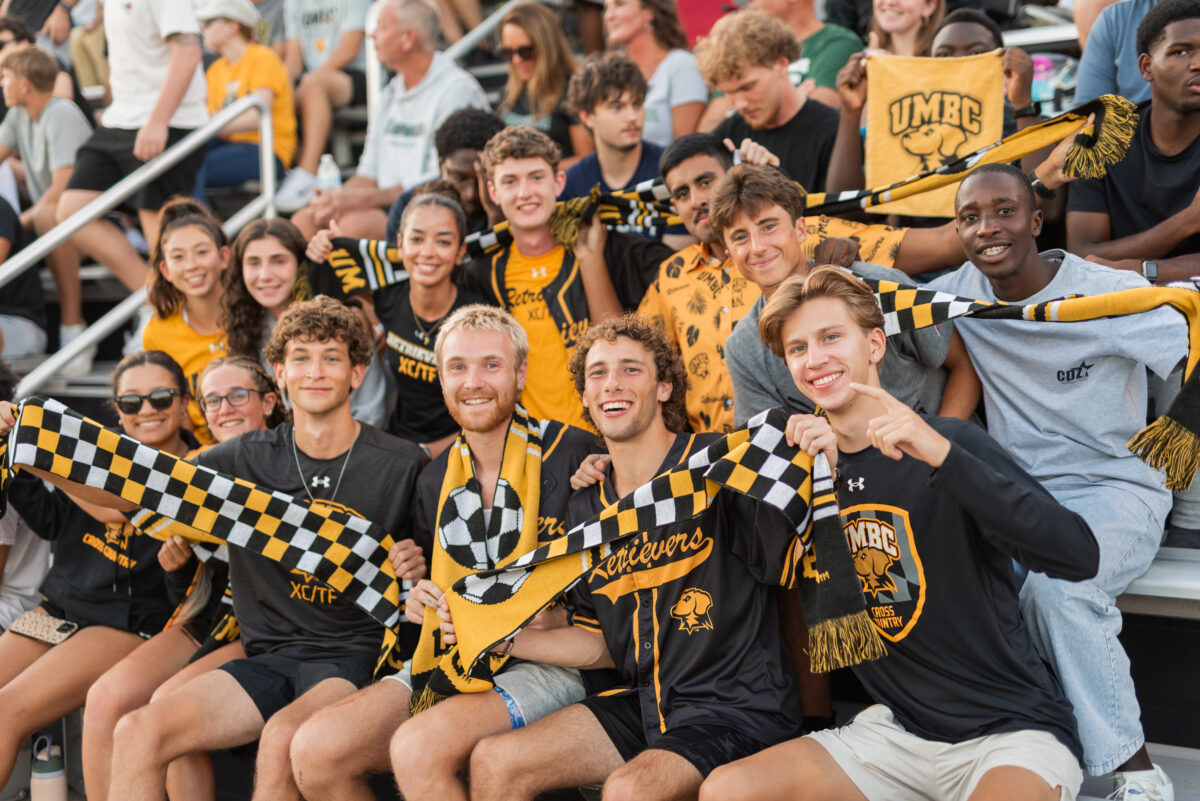
As fall 2026’s first full week of classes wrap up, Retrievers across campus—newly minted and returning—are finding their place. In addition to learning to navigate to the right classroom, they are bringing their unique strengths and voices to this ever evolving community.
This year’s incoming class of over 2,000 Retrievers boasts a median GPA of 4.0. Among them is Rodney Oglesby, an aspiring musician and a Gates Scholar. Oglesby was one of 750 students awarded this high honor among a pool of over 61,000 applicants nationwide.
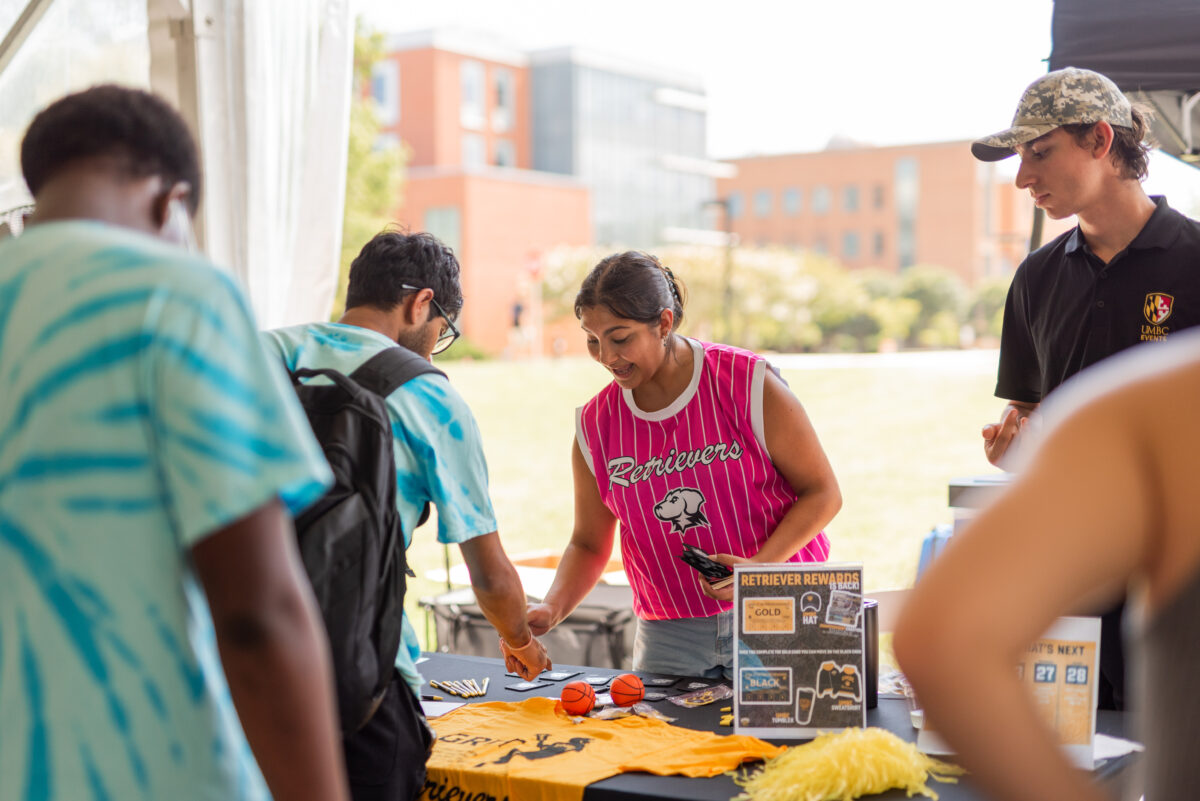
“We are thrilled to welcome another impressive entering undergraduate class, with a 15 percent increase in enrollment from Baltimore City, and, overall, students representing 42 countries,” says Dale Bittinger, M.P.P. ’16, assistant vice provost for strategic undergraduate engagement, partnerships, and pathways. “They are academically talented and engaged and we look forward to all they have to offer to our campus community.”
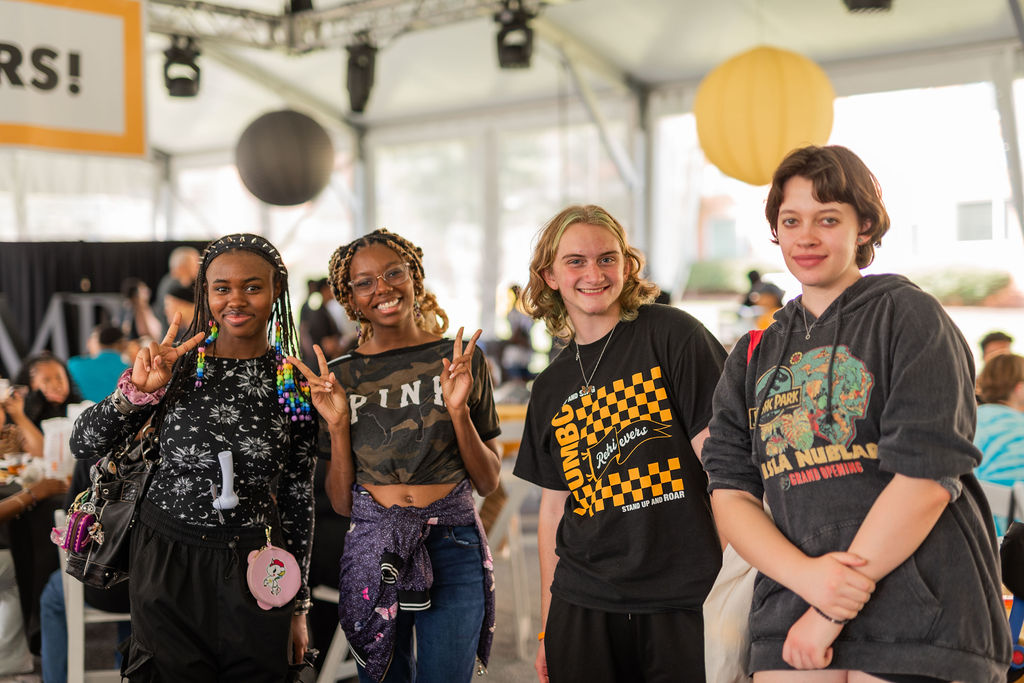
Joining Oglesby is Saad Bin Waqas, a new student who traveled nearly 7,000 miles from his home in Pakistan to address the UMBC community at this year’s Fall Opening Meeting. At just 16, this Sondheim Scholar and geography and environmental studies major is looking forward to planting some roots after growing up in a military family.
“After moving from place to place for much of my life, I am really excited to have a new place I can call home,” shared Waqas.
A place to flourish
Junior Sabirah Burt is joining UMBC as a transfer student from Howard Community College. Her aspirations to ultimately become a physician’s assistant are shaped by her own experience grappling with a medical condition. If you had asked Burt a few months ago to describe herself, she’d say “ticking time bomb.” In June 2025, she was rushed to the hospital for an agonizing headache. Medical professionals eventually discovered she had an active brain bleed and underwent emergency surgery.
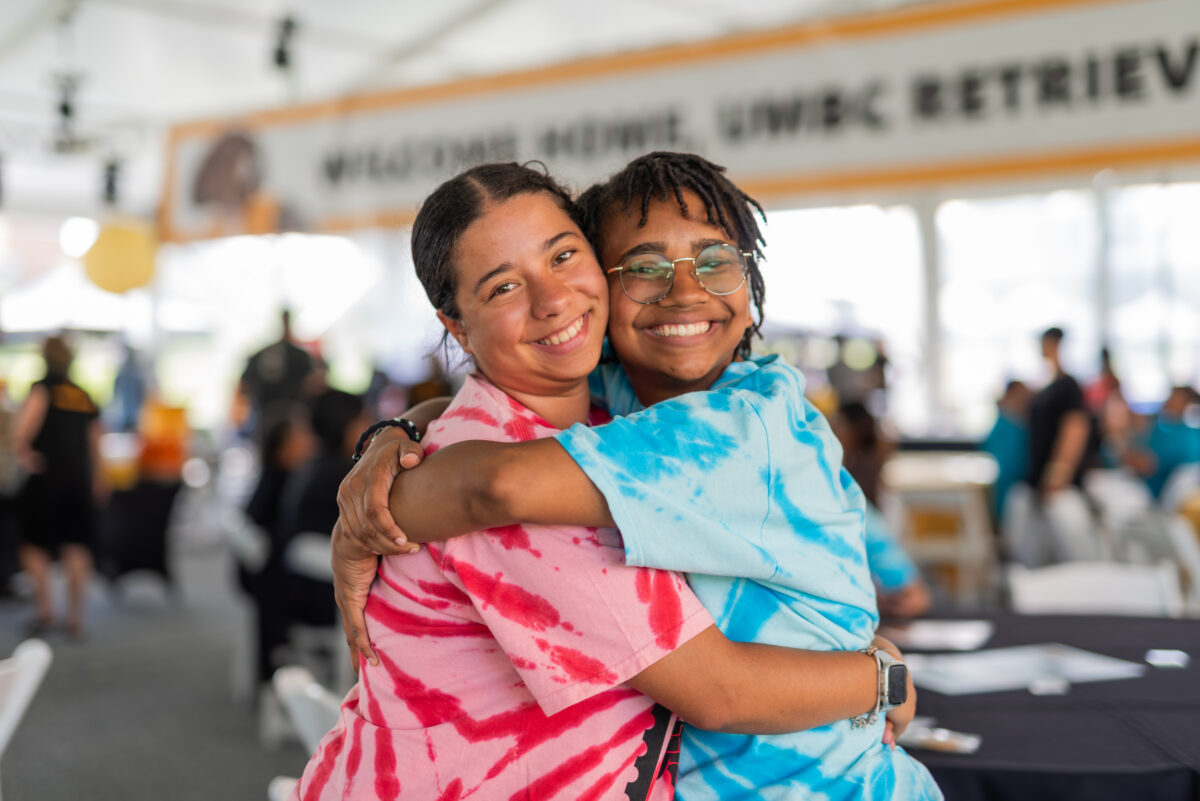
“I believe graduating with a public health degree from here will allow me to flourish when continuing my education and applying to graduate school in the future,” she said. “After going through my tough experiences last year, it’s made me even more passionate to pursue medicine, now more than ever before, and help those lying in hospitals wondering if it will be their last day.”
Strengthening connections—early
Some new Retrievers got a jump start to the year and arrived on campus over the summer to dive into work-integrated learning (WIL)—an educational approach that prepares students for a rewarding career after college by pairing what they are learning in the classroom with hands-on, authentic work experiences. In July, more than 100 incoming first-year and transfer students spent a night on campus, connected with an instructor and teaching assistant, and spent a day participating in service on site at five different community partner locations.
WIL students will participate in service with the same sites throughout their full first year at UMBC, deepening engagement and strengthening connection to their peers and faculty as well as to the campus and community.
“I believe a program like this is an excellent cohort building model. I was able to have individual conversations with all of them, learning what they cared about going into their unique UMBC journeys,” says Emily Passera, the senior program coordinator for community-engaged learning through The Shriver Center at UMBC, who led a group of students to Patterson Park in east Baltimore and will teach the same students in a first-year experience course called UNIV 101.
A community for all
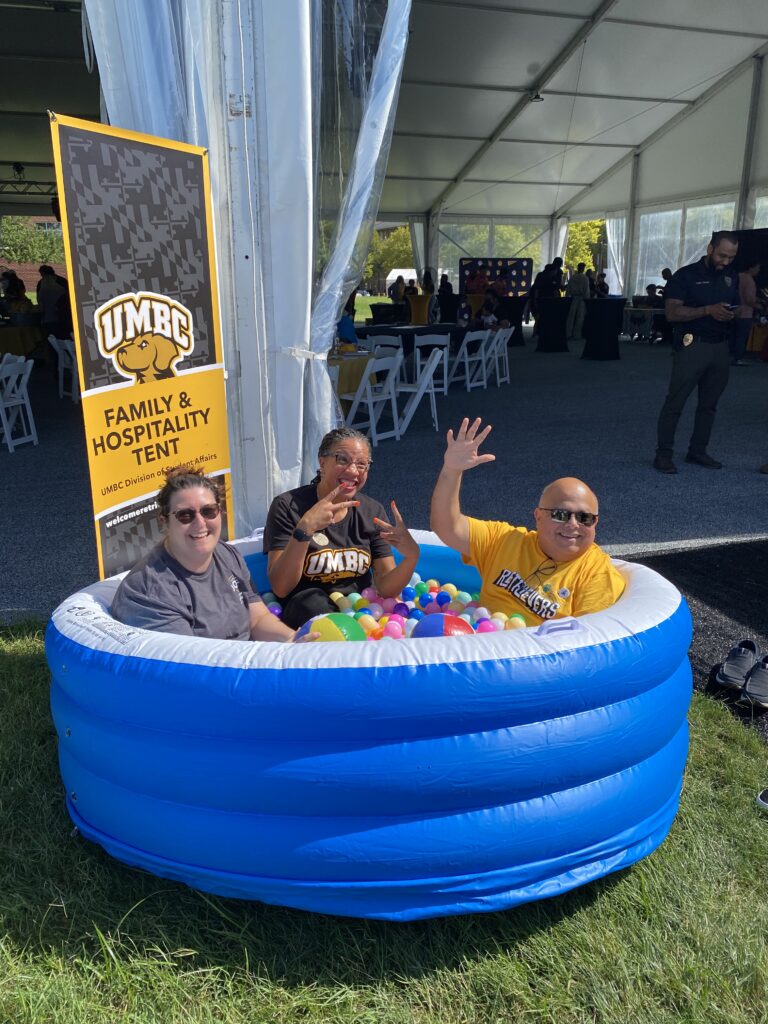 Diaz hangs out with Renique Kersh, vice president for student affairs (center), and Wendy Low, coordinator in the Division of Institutional Equity, in the hospitality tent’s ball pit. (Photo courtesy of Kait McCaffrey)
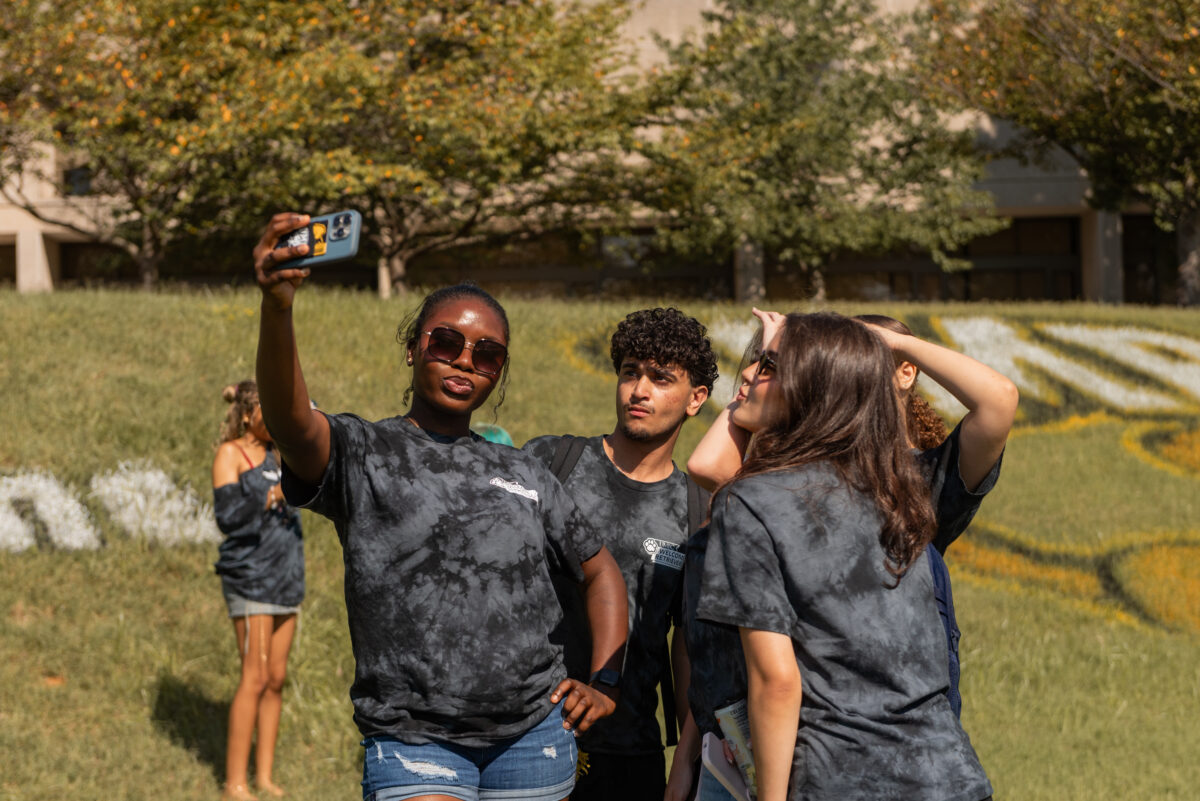
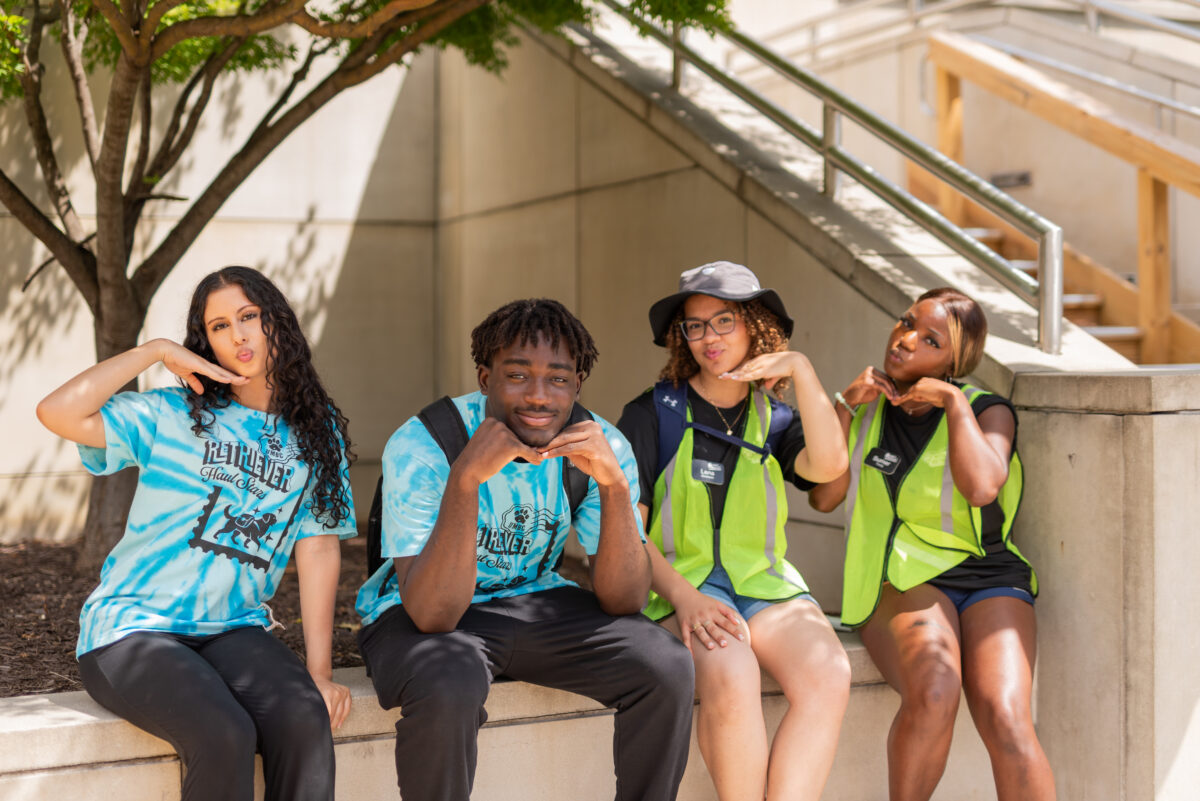
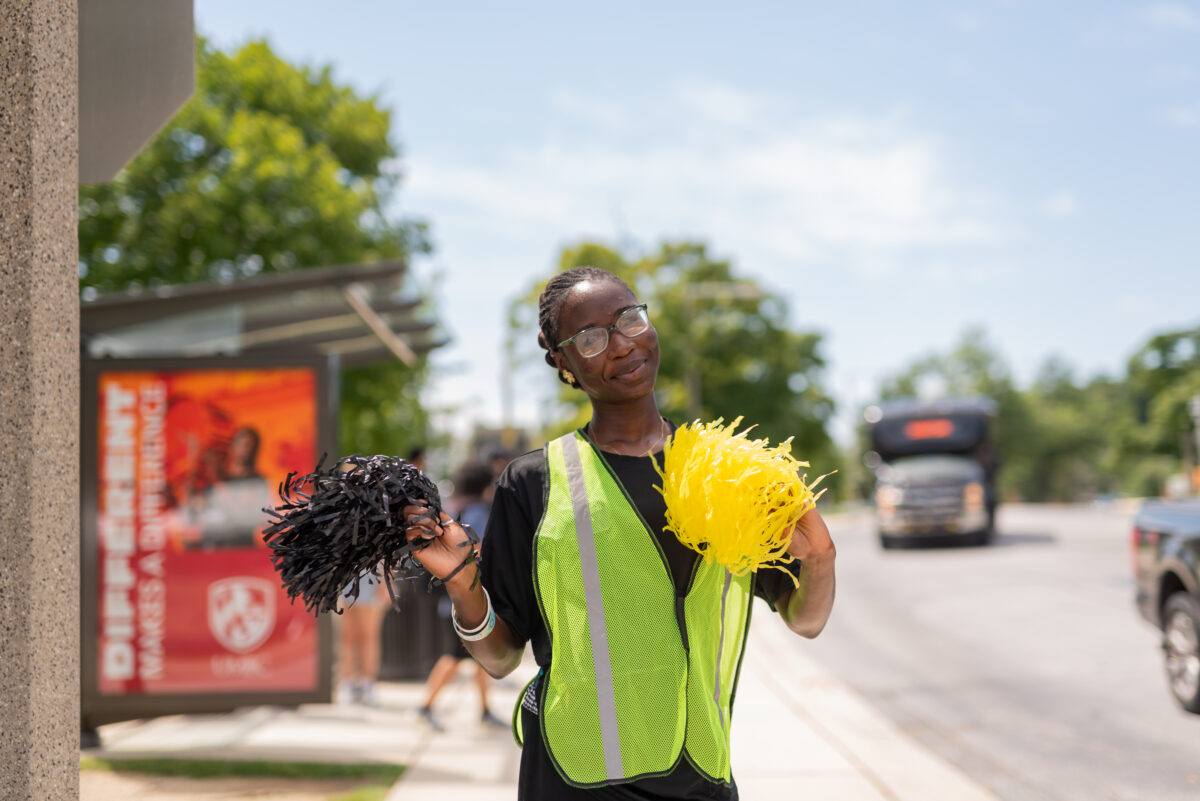
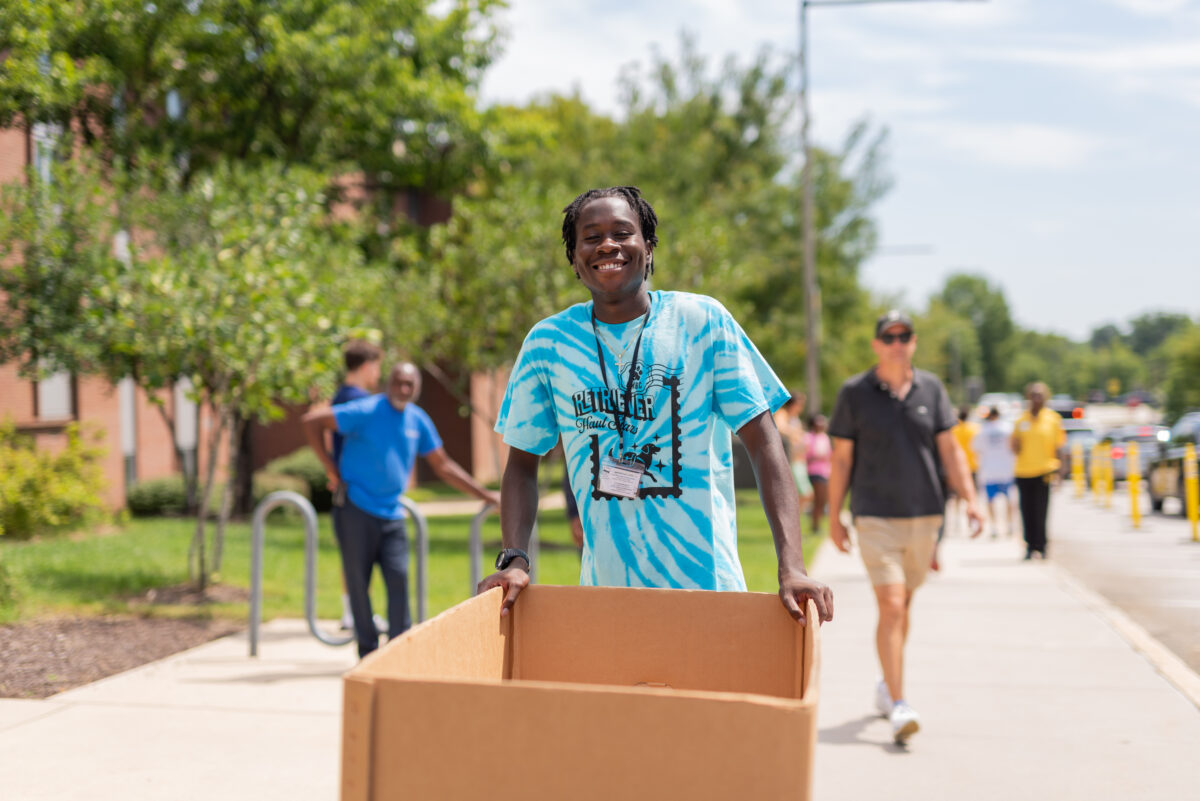
With a full lineup of events, this year’s Welcome, Retrievers efforts ensured that students started to find their place from the minute they stepped onto campus. Student volunteers (“Haul Stars”) were on hand to keep things moving as they helped new students with their belongings and offered directions.
Students weren’t the only ones getting in on the fun. Retriever Fest gave families the opportunity to meet with campus partners and learn more about everything UMBC has to offer—while enjoying refreshments and picking up some swag. Jake Diaz, inaugural assistant vice president and dean of students in the Division of Student Affairs, had a ball welcoming new students.
Throughout the weekend, students continued to enjoy Retriever 101 events, like First Night, an Student Events-Board-sponsored takeover of The Commons with inflatables, prizes, games, and plenty of other activities that cemented the first night as one students will remember for years to come.
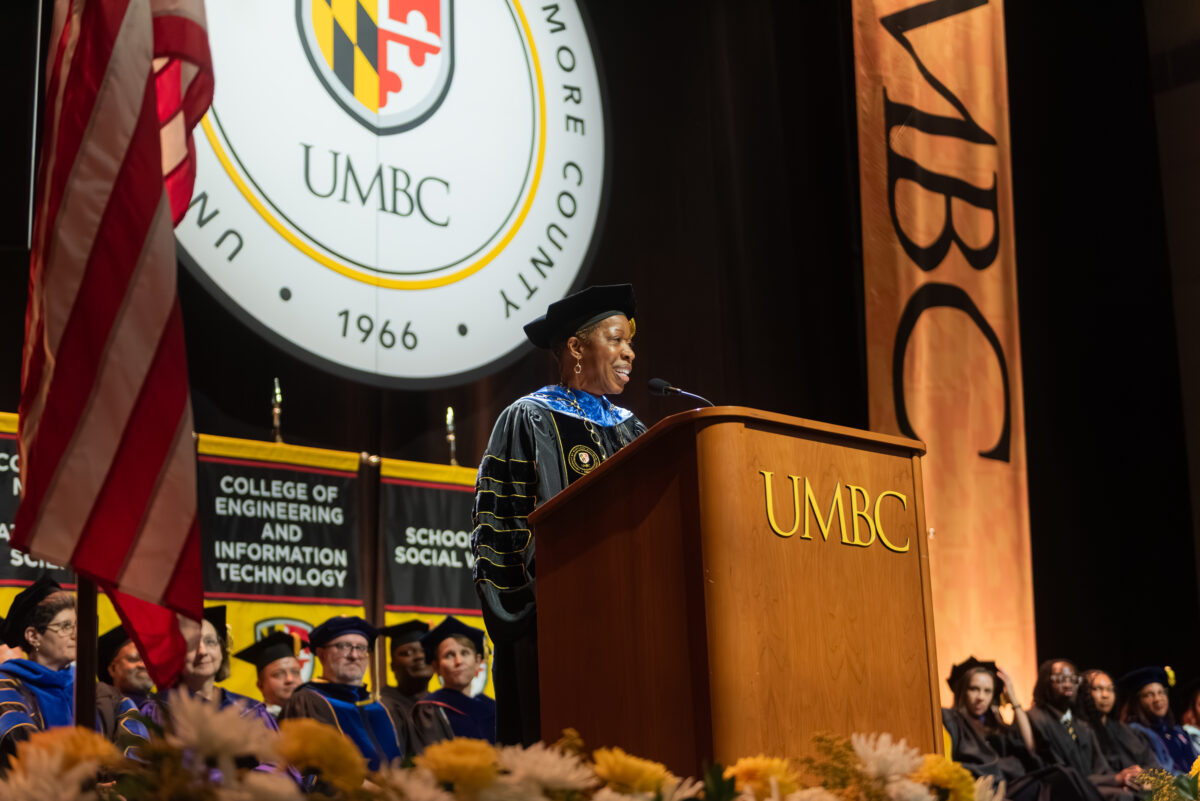
Events like the Taste of UMBC, Your Story Belongs Here, and the annual New Retriever Photo bonded students and filled their camera rolls. The first weekend concluded with Convocation, the official opening of the fall semester. President Valerie Sheares Ashby addressed the new students, reassuring them that UMBC is where they’re meant to be.
“…I want to make sure you hear this from me: You belong here. You have come to an institution that wants you here and believes that you can be successful here, even if you are not yet completely sure of that yourself.”
 ]]>
As fall 2026’s first full week of classes wrap up, Retrievers across campus—newly minted and returning—are finding their place. In addition to learning to navigate to the right classroom, they are...
https://umbc.edu/stories/you-belong-here-welcome-to-campus-for-fall-2026/
https://my3.my.umbc.edu/api/v0/pixel/news/162122/guest@my.umbc.edu/176c4fda6b22f7eb41f50de5e81bf5d4/api/pixel
cahss
campus-life
cnms
coeit
feature
ges
public-health
public-policy
shriver-center
stories
story
student-affairs
transfer
UMBC News & Magazine
https://my3.my.umbc.edu/groups/umbc-news-magazine
https://assets1-my.umbc.edu/system/shared/avatars/groups/000/001/943/24435aa6207c452e7bc15cc74b42c7bb/xsmall.png?1748556657
https://assets1-my.umbc.edu/system/shared/avatars/groups/000/001/943/24435aa6207c452e7bc15cc74b42c7bb/original.png?1748556657
https://assets2-my.umbc.edu/system/shared/avatars/groups/000/001/943/24435aa6207c452e7bc15cc74b42c7bb/xxlarge.png?1748556657
https://assets2-my.umbc.edu/system/shared/avatars/groups/000/001/943/24435aa6207c452e7bc15cc74b42c7bb/xlarge.png?1748556657
https://assets3-my.umbc.edu/system/shared/avatars/groups/000/001/943/24435aa6207c452e7bc15cc74b42c7bb/large.png?1748556657
https://assets1-my.umbc.edu/system/shared/avatars/groups/000/001/943/24435aa6207c452e7bc15cc74b42c7bb/medium.png?1748556657
https://assets2-my.umbc.edu/system/shared/avatars/groups/000/001/943/24435aa6207c452e7bc15cc74b42c7bb/small.png?1748556657
https://assets1-my.umbc.edu/system/shared/avatars/groups/000/001/943/24435aa6207c452e7bc15cc74b42c7bb/xsmall.png?1748556657
https://assets2-my.umbc.edu/system/shared/avatars/groups/000/001/943/24435aa6207c452e7bc15cc74b42c7bb/xxsmall.png?1748556657
UMBC News & Magazine
0
0
false
Fri, 28 Aug 2026 14:55:24 -0400
Four Retrievers selected for this summer’s Key Bridge rebuilding internship
]]>
As fall 2026’s first full week of classes wrap up, Retrievers across campus—newly minted and returning—are finding their place. In addition to learning to navigate to the right classroom, they are...
https://umbc.edu/stories/you-belong-here-welcome-to-campus-for-fall-2026/
https://my3.my.umbc.edu/api/v0/pixel/news/162122/guest@my.umbc.edu/176c4fda6b22f7eb41f50de5e81bf5d4/api/pixel
cahss
campus-life
cnms
coeit
feature
ges
public-health
public-policy
shriver-center
stories
story
student-affairs
transfer
UMBC News & Magazine
https://my3.my.umbc.edu/groups/umbc-news-magazine
https://assets1-my.umbc.edu/system/shared/avatars/groups/000/001/943/24435aa6207c452e7bc15cc74b42c7bb/xsmall.png?1748556657
https://assets1-my.umbc.edu/system/shared/avatars/groups/000/001/943/24435aa6207c452e7bc15cc74b42c7bb/original.png?1748556657
https://assets2-my.umbc.edu/system/shared/avatars/groups/000/001/943/24435aa6207c452e7bc15cc74b42c7bb/xxlarge.png?1748556657
https://assets2-my.umbc.edu/system/shared/avatars/groups/000/001/943/24435aa6207c452e7bc15cc74b42c7bb/xlarge.png?1748556657
https://assets3-my.umbc.edu/system/shared/avatars/groups/000/001/943/24435aa6207c452e7bc15cc74b42c7bb/large.png?1748556657
https://assets1-my.umbc.edu/system/shared/avatars/groups/000/001/943/24435aa6207c452e7bc15cc74b42c7bb/medium.png?1748556657
https://assets2-my.umbc.edu/system/shared/avatars/groups/000/001/943/24435aa6207c452e7bc15cc74b42c7bb/small.png?1748556657
https://assets1-my.umbc.edu/system/shared/avatars/groups/000/001/943/24435aa6207c452e7bc15cc74b42c7bb/xsmall.png?1748556657
https://assets2-my.umbc.edu/system/shared/avatars/groups/000/001/943/24435aa6207c452e7bc15cc74b42c7bb/xxsmall.png?1748556657
UMBC News & Magazine
0
0
false
Fri, 28 Aug 2026 14:55:24 -0400
Four Retrievers selected for this summer’s Key Bridge rebuilding internship
This summer, four UMBC students are getting hands-on experience contributing to efforts to rebuild the Francis Scott Key Bridge over the Patapsco River, which collapsed in March 2024 after a cargo ship collided with one of its supports. This is the second year in a row that the Maryland Transportation Authority has partnered with the Maryland Higher Education Commission to run the program.
Last year, three out of nine students in the program hailed from UMBC. This year, four out of the 10 interns are Retrievers. Mechanical engineering students Bilal Faizullah and Katelyn Prasad and geography and environmental systems students James Keller and Megan (Em) Schumacher ’26 will get the opportunity to learn about topics such as project management, environmental analysis, construction oversight, and community outreach. They will also get the chance to be a part of an iconic infrastructure project for Maryland, an experience that last year’s student interns found particularly meaningful.
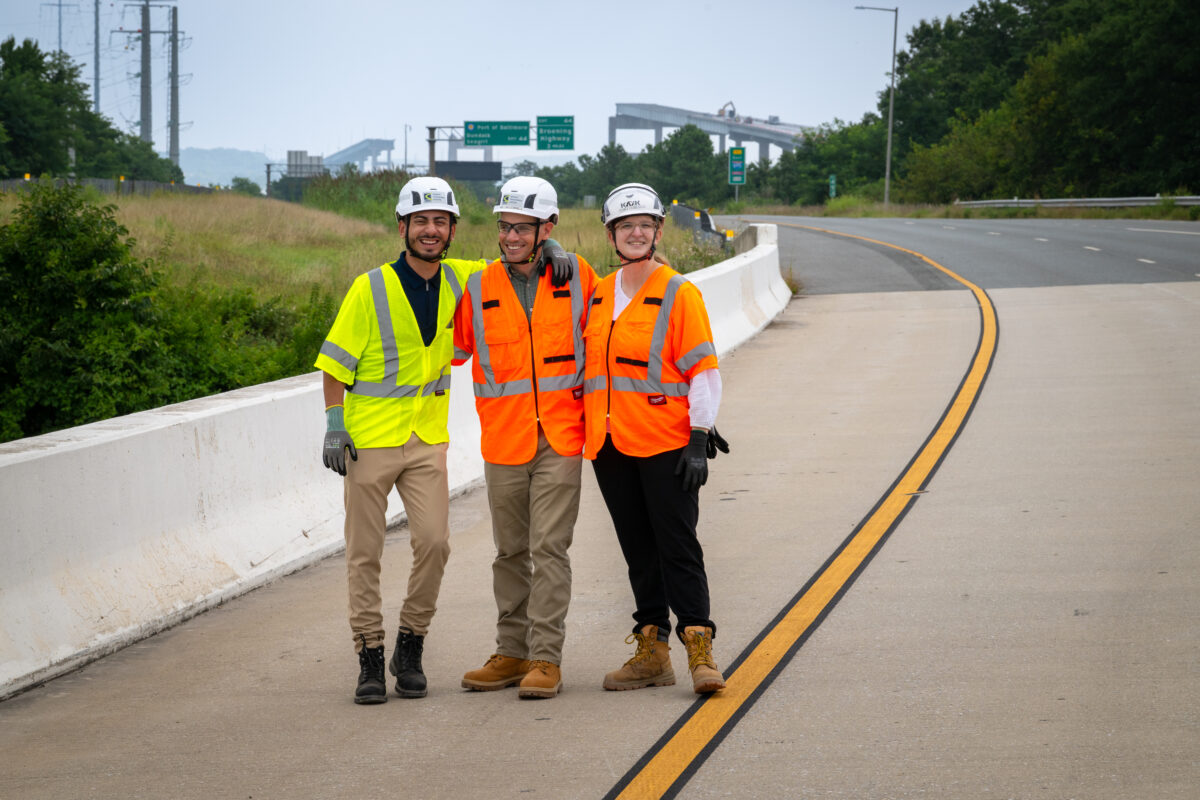 From left to right, Cristian Mena, William McConnell, and Emily DiMarzio pose for a photo near the site of the collapsed Key Bridge. The three worked on the bridge rebuilding project as interns with the Maryland Transportation Authority in summer 2025. (Brad Ziegler/UMBC)
“The Key Bridge Internship Program represents the very best of career-connected learning by giving students the opportunity to contribute to a project that will have a lasting impact on Maryland,” says Christine Routzahn, director of UMBC’s Career Center. “We’re incredibly proud that four UMBC students were selected for this prestigious program. Their selection reflects not only their talent and dedication, but also the strength of the partnerships that make opportunities like this possible. We are grateful to the Maryland Transportation Authority, Maryland Higher Education Commission, and its partners for investing in our students and in the state’s future workforce.”
]]>
This summer, four UMBC students are getting hands-on experience contributing to efforts to rebuild the Francis Scott Key Bridge over the Patapsco River, which collapsed in March 2024 after a cargo...
https://umbc.edu/stories/key-bridge-rebuilding-internship-summer-2026/
https://my3.my.umbc.edu/api/v0/pixel/news/161314/guest@my.umbc.edu/56fca8c62f428a6e6cff12abb2ccee1e/api/pixel
cahss
coeit
ges
impact
internship
meche
science-and-tech
stories
story
UMBC News & Magazine
https://my3.my.umbc.edu/groups/umbc-news-magazine
https://assets1-my.umbc.edu/system/shared/avatars/groups/000/001/943/24435aa6207c452e7bc15cc74b42c7bb/xsmall.png?1748556657
https://assets1-my.umbc.edu/system/shared/avatars/groups/000/001/943/24435aa6207c452e7bc15cc74b42c7bb/original.png?1748556657
https://assets2-my.umbc.edu/system/shared/avatars/groups/000/001/943/24435aa6207c452e7bc15cc74b42c7bb/xxlarge.png?1748556657
https://assets2-my.umbc.edu/system/shared/avatars/groups/000/001/943/24435aa6207c452e7bc15cc74b42c7bb/xlarge.png?1748556657
https://assets3-my.umbc.edu/system/shared/avatars/groups/000/001/943/24435aa6207c452e7bc15cc74b42c7bb/large.png?1748556657
https://assets1-my.umbc.edu/system/shared/avatars/groups/000/001/943/24435aa6207c452e7bc15cc74b42c7bb/medium.png?1748556657
https://assets2-my.umbc.edu/system/shared/avatars/groups/000/001/943/24435aa6207c452e7bc15cc74b42c7bb/small.png?1748556657
https://assets1-my.umbc.edu/system/shared/avatars/groups/000/001/943/24435aa6207c452e7bc15cc74b42c7bb/xsmall.png?1748556657
https://assets2-my.umbc.edu/system/shared/avatars/groups/000/001/943/24435aa6207c452e7bc15cc74b42c7bb/xxsmall.png?1748556657
UMBC News & Magazine
6
0
false
Mon, 27 Jul 2026 13:01:27 -0400
Mon, 27 Jul 2026 13:01:27 -0400
Inaugural “MyRCA” interdisciplinary faculty cohort empowers researchers to bring their work to life
UMBC’s new Make Your Research Come Alive (MyRCA) program is helping faculty translate their scholarship into compelling stories that resonate across disciplines, sectors, and audiences. Launched in November 2025, the program wrapped up its inaugural cohort with a May showcase.
“We created the MyRCA program to help faculty strengthen their research communication skills and effectively convey the significance and real-world impact of their work beyond traditional academic audiences and funding pathways,” says Christine Mallinson, assistant vice president for research and scholarly impact. “It also encourages faculty to think strategically and creatively about visibility, partnerships, collaboration, and long-term impact,” she adds.
Led by the Division of Research and Creative Achievement in partnership with the Office of Institutional Advancement, MyRCA brought together 14 faculty members for twice-monthly workshops and working group sessions, a January mini-retreat, and the culminating showcase. The program focused on identifying and articulating research impact, translating specialized scholarship for broad audiences, developing compelling narratives and pitches, understanding funding landscapes, exploring pathways for engagement with corporate, community, and philanthropic partners, and strengthening interdisciplinary collaboration.
“The value of this program is in connecting with each other,” cohort member Foad Hamidi, associate professor of information systems, shared at the showcase. “Strong research communication and collaboration can help our research come alive,” adds Dong Li, another cohort member and assistant professor of computer science and electrical engineering. Li added, “We are not just researchers, we are telling our story to our audience.”
The value of connection
The program intentionally grouped faculty into smaller interdisciplinary teams organized around broad themes such as health, youth, and the environment. These connections quickly sparked new ideas and collaborations.
For instance, Lauren Clay, professor and chair of emergency and disaster health systems, connected with Li, after learning about his work on wearable health-monitoring devices. Clay wondered how Li’s technology could support a colleague’s research on paramedic response during extreme heat events, including monitoring heat stroke risks for marathon runners.
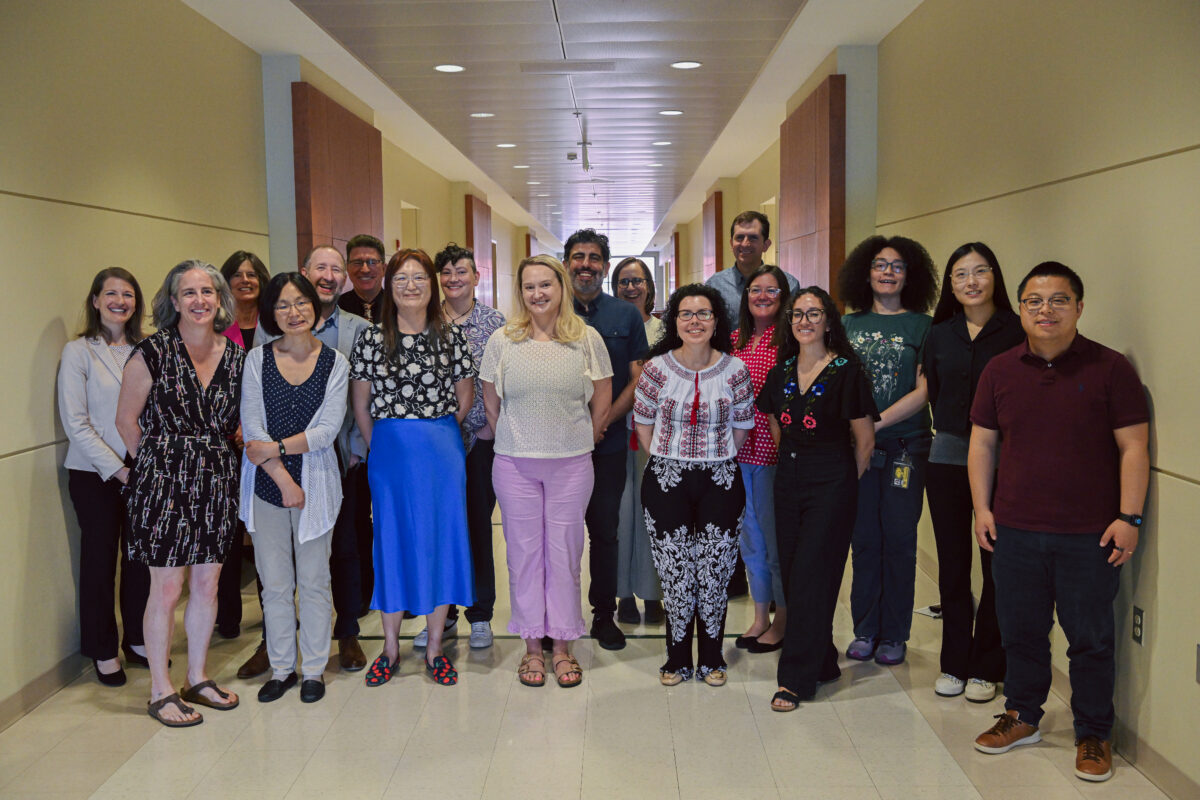 The inaugural MyRCA cohort and program organizers, left to right: Christine Mallinson, Ellen Kohl, Donna Ruginski, Karen Chen, Brian Kaufman, Karl Steiner, Shuling Yang, Sophie Comer-Warner, Amy Tondreau, Foad Hamidi, Linda Kidder Yarlott, Marie Christine-Daniel, Don Engel, Lauren Clay, Gabriella Weiss, Rebecca Williams, Yiwen Hu, Dong Li. Not pictured: Charissa Cheah.
A group including Gabriella Weiss, postdoctoral researcher with the Center for Spaces Sciences and Technology; Marie-Christine Daniel, associate professor of chemistry and biochemistry; and Sophie Comer-Warner, assistant professor of geography and environmental systems, examined remediation strategies for microplastics, heavy metals, and volatile organic compounds with a focus on wetlands. Their collaboration pointed to promising local funding opportunities with Maryland Sea Grant and Chesapeake Bay organizations.
Ellen Kohl, assistant professor of geography and environmental systems, strengthened a new science communication course with the skills she gained, and Shuling Yang, assistant professor of education, advanced her research using generative AI and Chinese pop music for biliteracy development. Brian Kaufman, professor of music, built on the UMBC Create Music Festival, which brings collaborative problem-solving into a typically performance-based discipline.
By the showcase, participants had developed polished pitches, public-facing materials, and broader impact narratives ready for funding proposals, donor outreach, and the media. Each received $500 in research support, along with new cross-campus and external connections.
MyRCA stretches faculty beyond their comfort zones
Mallinson has been excited to see the 14 faculty “stretch beyond their usual disciplinary comfort zones and immediately begin putting the skills and approaches they were learning into practice—developing cross-disciplinary proposals, crafting pitches, appearing in videos and podcasts, participating in panels, and bringing what they learned in the program back to their graduate students and colleagues.”
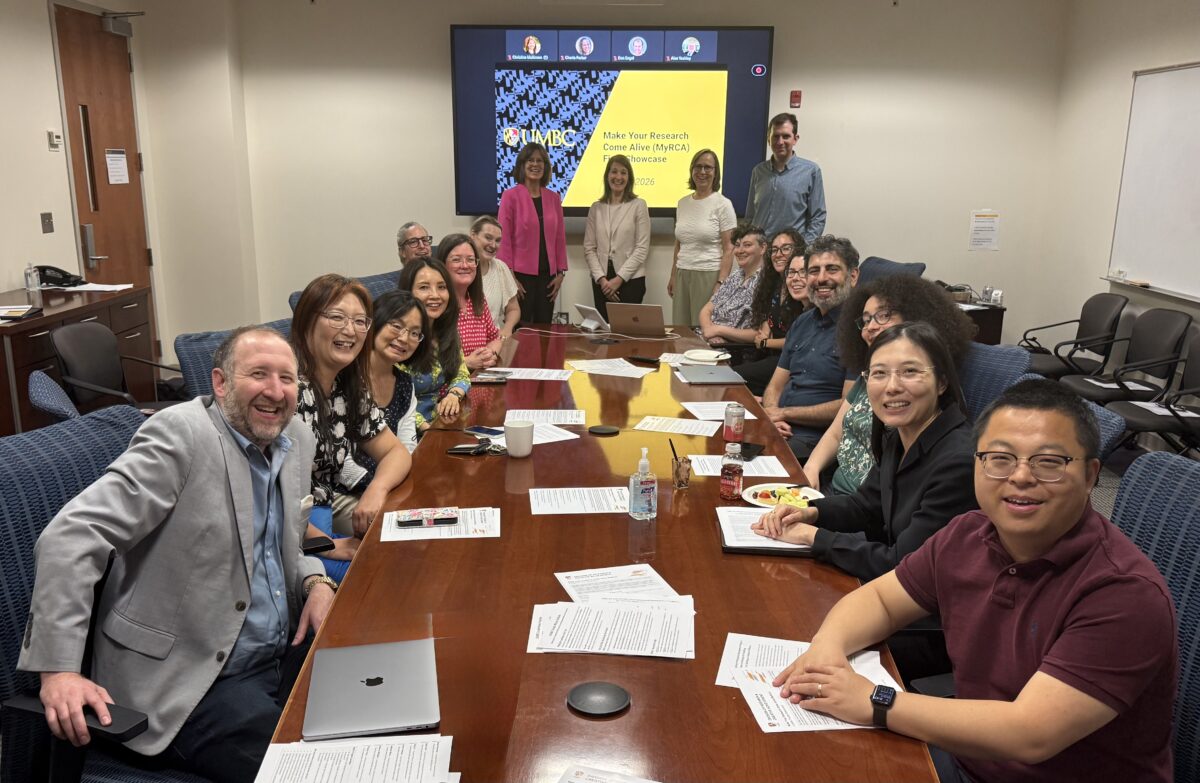 The inaugural MyRCA cohort shared progress and celebrated their accomplishments at a showcase event in May. (Photo by Karl Steiner)
Linda Kidder Yarlott, associate director for corporate research partnerships, highlighted the value of the partnership between the Division of Research and Creative Achievement and the Office of Institutional Advancement. “While federal funding agencies are looking for highly technical, methodology-driven proposals, it’s visionary, outcome-oriented narratives that clearly articulate the human impact and real-world return on investment that entice corporate and philanthropic partners,” Yarlott says.
Yarlott and Jocelyn Kehl, major gift officer for the College of Natural and Mathematical Sciences, worked with the cohort on practical skills—from strategic networking and optimizing LinkedIn profiles to crafting stories that resonate with donors and foundations. “Mentoring this cohort has been an incredibly rewarding experience, culminating in a spectacular program showcase where faculty teams powerfully demonstrated new communication skills that will help unlock new philanthropic pathways,” Yarlott shares.
For more information and to learn about the full 2025 – 2026 cohort, visit research.umbc.edu/myrca.
]]>
UMBC’s new Make Your Research Come Alive (MyRCA) program is helping faculty translate their scholarship into compelling stories that resonate across disciplines, sectors, and audiences. Launched...
https://umbc.edu/stories/myrca-empowers-interdisciplinary-researchers/
https://my3.my.umbc.edu/api/v0/pixel/news/160483/guest@my.umbc.edu/52d7d3b40ae47b848cd3806898a3a63d/api/pixel
cahss
chemistry-and-biochemistry
cnms
coeit
csee
edhs
education
ges
is
music
news
policy-and-society
rca
science-and-tech
story
UMBC News & Magazine
https://my3.my.umbc.edu/groups/umbc-news-magazine
https://assets1-my.umbc.edu/system/shared/avatars/groups/000/001/943/24435aa6207c452e7bc15cc74b42c7bb/xsmall.png?1748556657
https://assets1-my.umbc.edu/system/shared/avatars/groups/000/001/943/24435aa6207c452e7bc15cc74b42c7bb/original.png?1748556657
https://assets2-my.umbc.edu/system/shared/avatars/groups/000/001/943/24435aa6207c452e7bc15cc74b42c7bb/xxlarge.png?1748556657
https://assets2-my.umbc.edu/system/shared/avatars/groups/000/001/943/24435aa6207c452e7bc15cc74b42c7bb/xlarge.png?1748556657
https://assets3-my.umbc.edu/system/shared/avatars/groups/000/001/943/24435aa6207c452e7bc15cc74b42c7bb/large.png?1748556657
https://assets1-my.umbc.edu/system/shared/avatars/groups/000/001/943/24435aa6207c452e7bc15cc74b42c7bb/medium.png?1748556657
https://assets2-my.umbc.edu/system/shared/avatars/groups/000/001/943/24435aa6207c452e7bc15cc74b42c7bb/small.png?1748556657
https://assets1-my.umbc.edu/system/shared/avatars/groups/000/001/943/24435aa6207c452e7bc15cc74b42c7bb/xsmall.png?1748556657
https://assets2-my.umbc.edu/system/shared/avatars/groups/000/001/943/24435aa6207c452e7bc15cc74b42c7bb/xxsmall.png?1748556657
UMBC News & Magazine
1
0
false
Mon, 01 Jun 2026 15:17:46 -0400
Mon, 01 Jun 2026 15:17:46 -0400
Finley Bandy ’26 finds a future in history
Finley Bandy spent last summer in the cool temperatures and dim light of UMBC’s Albin O. Kuhn Library and Gallery Special Collections—the perfect environment to preserve rare books, photographs, manuscripts, archives, and artifacts. As part of UMBC’s 2025 Co-Lab interdisciplinary undergraduate summer research program, Bandy learned techniques to produce “Special Collections 101”, an informative video about how to use the resources in the collections. Bandy also loves being surrounded by thousands of historical narratives and working with Special Collections staff Beth Saunders, associate director and curator, and Lindsey Loeper, reference and instruction archivist. The infinite possibilities housed in Special Collections and the people who ensure historical narratives aren’t forgotten have inspired Bandy to join the cadre of museum and archive professionals.
“I was accepted into UMBC’s master’s program in historical studies,” says Bandy. “I love the process of using my historical and archival research to write about what I’m finding so that other people are aware that this piece of history exists. That’s why I want my master’s research to be an online exhibit that is accessible to the world.”
Museums and archives are only two of Bandy’s passions. When Bandy transferred to UMBC from Lamar Community College in Colorado, they brought their love of Russian language, history, and culture, and their deep love of Baltimore City.
Q: Did you come to UMBC already knowing what you wanted to study?
A: When I started at UMBC, I was all set to learn Russian and study Soviet history, but then I decided to go broader and major in history. I did finish all the Russian language courses, so I can speak Russian. I’m still interested in Russian history, and I love Russian music. I really love the language and like Eastern European culture.
Q: Where does your passion for Russian language and culture come from?
A: In my community college, I took a 20th-century world history class, and learned about the Cold War, which lasted from 1947 to 1991. A lot of the history really broke my heart. It made me want to learn more about it. I took a lot of Russian history classes and started reading Russian and Soviet literature. I really love how unique it is.
Q: Is there a modern piece of Russian culture that you enjoy, or are you focused on the history?
A: I think it’s really interesting to see how Soviet culture is beginning to meld with Western culture.
Soviet rock bands are really, really cool. There’s this great rock band that has been around since the ’70s called Akvarium or Aquarium. They were underground for a long time due to the war. I listen to them a lot. There’s also a current pop musician named Monetochka. She’s really cool.
I’ve never travelled abroad or have a passport, but one day I would like to visit Moscow and St. Petersburg, and travel all over Eastern Europe and the Balkans.
 UMBC’s proximity to Camden Yards makes for a great trip to cheer on the Orioles! (Image courtesy of Bandy)
Q: Do you have a community to speak Russian with and immerse yourself in Russian culture?
A: Yes! UMBC’s Russian Club is a really tight-knit group. In the past, we hosted many holiday celebrations. In post-Soviet Russia and Eastern Europe, they still celebrate Christmas, but New Year’s is celebrated more because during the Soviet era, atheism was promoted and New Year’s didn’t have religious ties. Towards the end of the fall semester, we organized a giant Novy God [New Year’s] celebration. And then in the spring, we celebrated Maslenitsa. In the Russian Orthodox Church, this is the last week to feast before a period of fasting that ends at Easter. We also hung out a lot and talked about different Eastern European cultures. It’s called the Russian Club, but we have students from all over Eastern Europe—Ukraine, Armenia, and Belarus.
Q: Why do you love Baltimore City?
A:. Even though I was in Colorado for community college, I spent a lot of my childhood in Baltimore City because my grandmother worked in the city and my mom lived there. I have a connection to Baltimore, but I never really knew its history. I took “The History of Baltimore” at the Lion Brothers Building downtown. Every week, we took field trips to historic sites in Baltimore City to connect what we were learning with real-world experiences.
Q: Why did you change your major from Russian to history, and who has inspired you in this path?
A: I decided to switch majors from Russian to history while doing research in Professor Melissa Blair‘s “The History of Baltimore” class. It inspired me to pivot and focus my work on Maryland’s transportation history. The experiential learning and field work inspired me to better understand Baltimore and its history. I think Baltimore is a very unique city with a rich history that is often ignored by the historical record. I enjoyed interacting with other public historians and museum professionals within the city through that class.
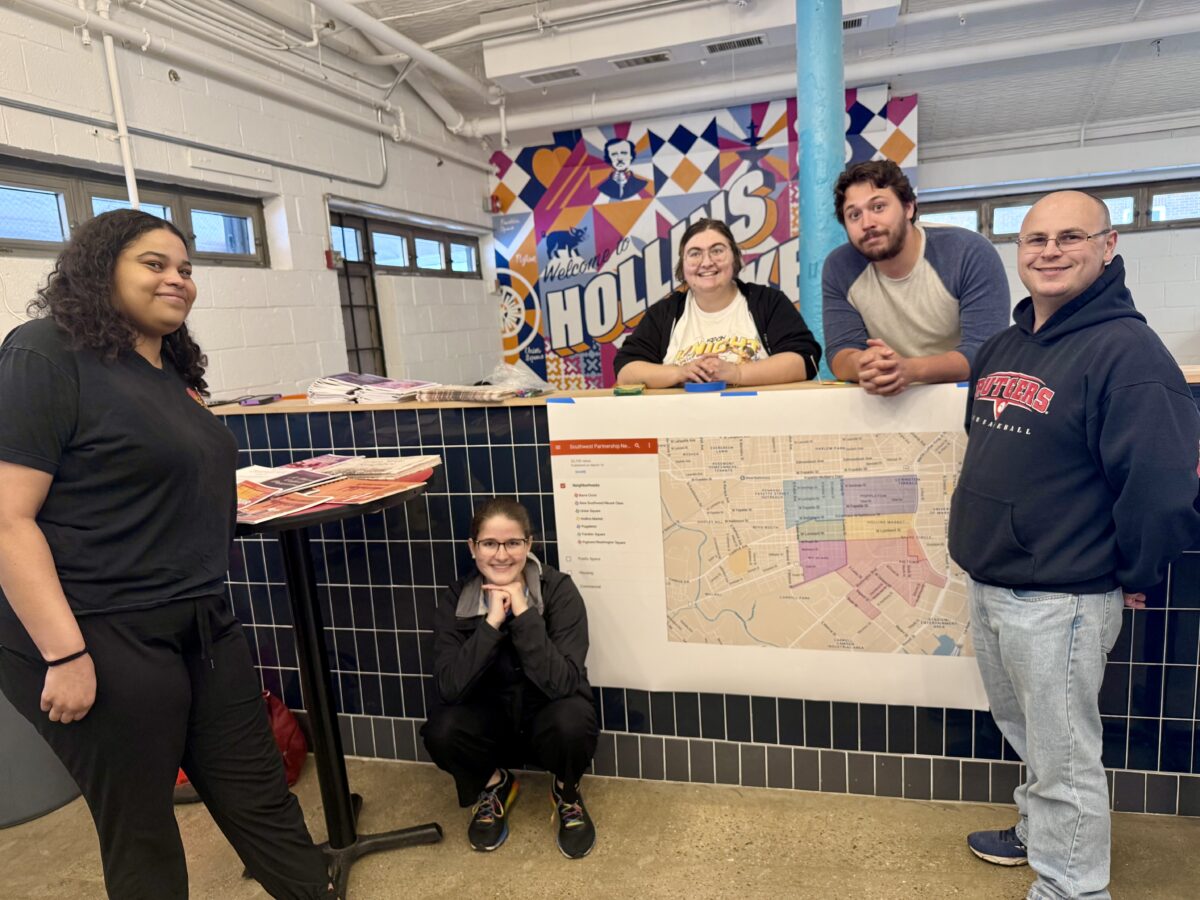 Students from King’s class, “Preserving Spaces, Making Spaces in Baltimore,” participated in a Community Archiving Day event. The class planned this event to engage with residents and community members from neighborhoods in Southwest Baltimore and to gauge interest in developing a Community Archive to preserve their histories. (l-r) Amina Thiam ’24, history, Em Schumacher, a geography and environmental systems senior, Bandy, Tristan Diaz ’25, cultural anthropology and sociology, and Bandy’s fiancé, Max Taylor (who is not a UMBC student). (Image courtesy of King)
I’ve also worked a lot with Professor Nicole King in American studies—I took her “Preserving Places, Making Spaces in Baltimore” class twice. In 2025, we worked with the Poppleton Now Community Association and the Southwest Partnership Historic Preservation Committee on a Public History and Preservation Study. It included my research on the “Highway to Nowhere,” a 1.4-mile stretch of U.S. Route 40 in West Baltimore, built in the 1970s, that ends abruptly. The highway cuts off a section of Poppleton, one of the city’s oldest historically Black neighborhoods. We also created an online story map.
Q: Why are you passionate about transportation equity?
A: I don’t have a car, so I rely on Baltimore’s terrible public transportation. I love public transit, and I need it to be better. In the Baltimore history class, I realized the bus schedules, the bus routes, and the history of highway construction in the city have limited transportation, not expanded it. I conducted research with American studies Professor Michael Cassiano, my public humanities advisor. I presented my research, “Our City Is a City Without an Expressway: A Historical Review of Transportation Injustice in Baltimore City,” at URCAD. I’m interested in exploring these topics in my master’s program.
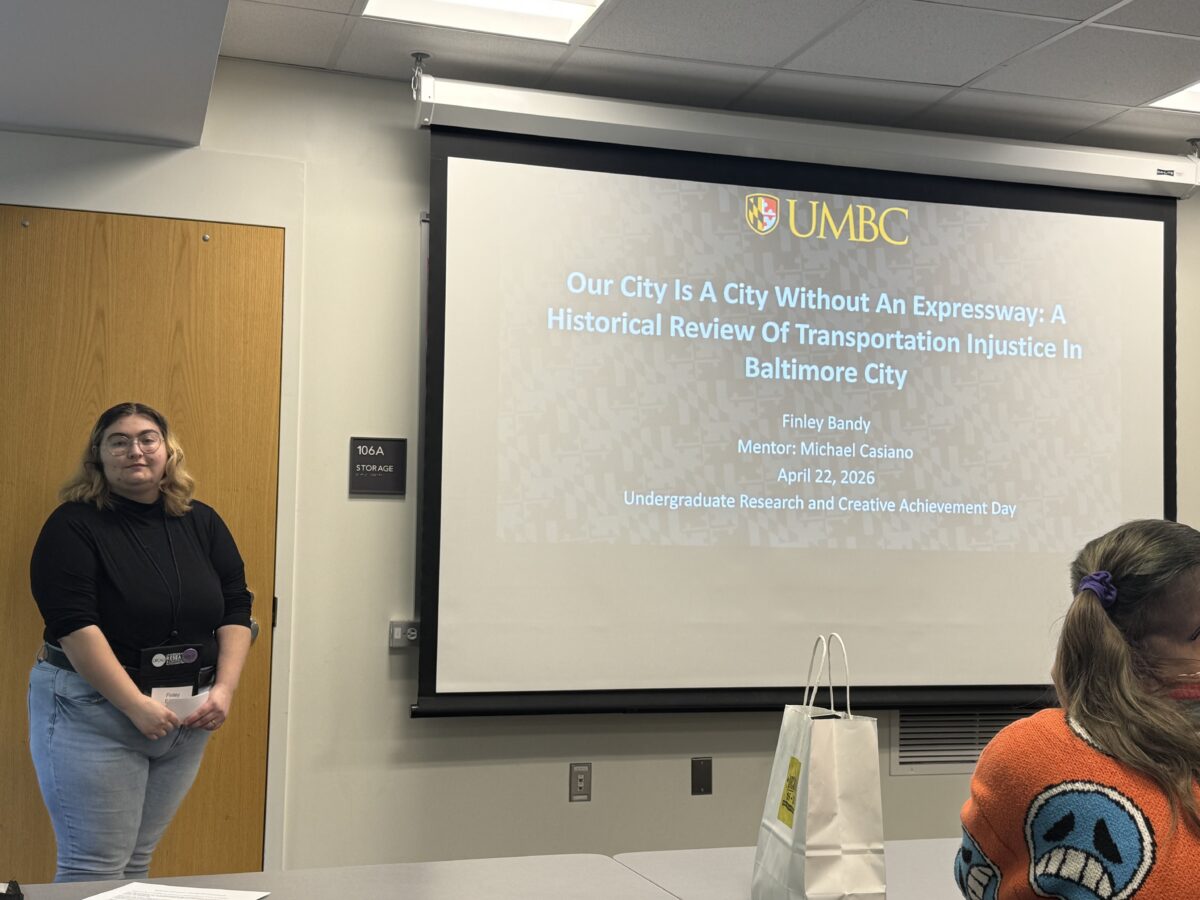 Bandy presents her research at the 2026 Undergraduate Research and Creative Achievement Day. (Image courtesy of King.)
Q: What is a challenge that you love?
A: I love creative writing. I’ve been writing since I was a kid. I think it’s a natural segue into history, because history is narrative-based. It’s very humanistic. I won’t say it comes naturally to me. It takes me probably an hour to write a sentence because I overthink my word choices a lot. But I love using language to evoke certain feelings and really press home on an idea. I try to choose the right word to fit what I’m talking about and its context. I also try to support students in the writing process as the History Student Council president. Last semester, we organized a bi-weekly writing group to encourage community and motivation within the major.
Q: What advice do you have for undergraduate and transfer students?
A: For undergraduate students, I would say to be realistic. Don’t put too much on your plate. That’s been the biggest challenge for me. I’ve been suffering a lot of burnout, because, in addition to my classes, I am a teaching assistant for “Introduction to the University for Transfer Students.” I started getting better at saying no to things. I encourage students to get out there, explore new things, but also recognize their limits. Prioritize making space for something that brings you joy.
For transfer students, I would say time management. Most of us work full-time or part-time, are raising families, and have other commitments. We’re not fresh out of high school and can sometimes internalize a feeling of being behind or not doing college “right.” It’s important to get over that because it doesn’t really matter. When I was 18 years old, my coworker was 40 years old. They had been working for decades. Once you leave high school, age doesn’t matter the same way—people are people, and everyone is busy. I wouldn’t focus on trying to get things done in a way that’s expected of you. Instead, focus on what you need to do to succeed.
Read more Class of 2026 stories.
]]>
Finley Bandy spent last summer in the cool temperatures and dim light of UMBC’s Albin O. Kuhn Library and Gallery Special Collections—the perfect environment to preserve rare books, photographs,...
https://umbc.edu/stories/finley-bandy-finds-a-future-in-history/
Video Preview
https://assets2-my.umbc.edu/system/shared/attachments/5cb64232f44a8f94f66094bec00ddc21/6a9574f0/news/000/160/021/753b160cd612d83ee6b7c8c05e556046/2VV5_EeP8xs.jpg?1778616307
https://my3.my.umbc.edu/api/v0/pixel/news/160021/guest@my.umbc.edu/74ebb52b16afdf97b14dc160572a104f/api/pixel
american-studies
aok-library
baltimore-city
cahss
class-of-2026
ges
history
news
policy-and-society
saph
story
UMBC News & Magazine
https://my3.my.umbc.edu/groups/umbc-news-magazine
https://assets1-my.umbc.edu/system/shared/avatars/groups/000/001/943/24435aa6207c452e7bc15cc74b42c7bb/xsmall.png?1748556657
https://assets1-my.umbc.edu/system/shared/avatars/groups/000/001/943/24435aa6207c452e7bc15cc74b42c7bb/original.png?1748556657
https://assets2-my.umbc.edu/system/shared/avatars/groups/000/001/943/24435aa6207c452e7bc15cc74b42c7bb/xxlarge.png?1748556657
https://assets2-my.umbc.edu/system/shared/avatars/groups/000/001/943/24435aa6207c452e7bc15cc74b42c7bb/xlarge.png?1748556657
https://assets3-my.umbc.edu/system/shared/avatars/groups/000/001/943/24435aa6207c452e7bc15cc74b42c7bb/large.png?1748556657
https://assets1-my.umbc.edu/system/shared/avatars/groups/000/001/943/24435aa6207c452e7bc15cc74b42c7bb/medium.png?1748556657
https://assets2-my.umbc.edu/system/shared/avatars/groups/000/001/943/24435aa6207c452e7bc15cc74b42c7bb/small.png?1748556657
https://assets1-my.umbc.edu/system/shared/avatars/groups/000/001/943/24435aa6207c452e7bc15cc74b42c7bb/xsmall.png?1748556657
https://assets2-my.umbc.edu/system/shared/avatars/groups/000/001/943/24435aa6207c452e7bc15cc74b42c7bb/xxsmall.png?1748556657
UMBC News & Magazine
0
0
false
Tue, 12 May 2026 15:44:27 -0400
Tue, 12 May 2026 15:44:27 -0400
Boosting resilience: UMBC secures $1M+ congressional funding to launch lab addressing flood risks in vulnerable Maryland communities
UMBC researchers have secured a $1,031,000 congressional earmark to launch a vital new initiative tackling the escalating threat of flooding in Maryland’s most vulnerable communities.
Led by Alan Yeakley, professor, and Dillon Mahmoudi, associate professor, both in geography and environmental systems, the project establishes the UMBC Laboratory for Flood Risk Impact Assessment and Adaptation in Impoverished Maryland Communities. This lab will serve as a hub for analyzing and tracking the impacts of rising flood risks on low-income populations in both urban and rural areas across the state. Yeakley and Mahmoudi will bring on two postdoctoral researchers and graduate and undergraduate research assistants, who will gain critical skills in community-engaged research and data analytics while supporting the work.
The project focuses on communities along the Chesapeake Bay and its major tributaries, including historically underserved neighborhoods in Baltimore such as Turner Station. Researchers will investigate how the legacies of blockbusting and redlining have heightened flood vulnerability in low-income areas and assess whether flood mitigation resources have been distributed equitably. The team will also evaluate the current state of adaptation strategies at every level—from individual households to the city, county, state, and federal governments.
 Alan Yeakley (left) and Dillon Mahmoudi discuss their project to help communities adapt to flood risks on the UMBC Library Pond, which itself serves as a stormwater management system for the UMBC campus.
 Dillon Mahmoudi studies urban geography and development.
 Alan Yeakley’s research centers on urban ecology.
Through hands-on workshops, interviews with residents, and discussions with government agency personnel, the lab will document communities’ existing adaptation methods and raise awareness of growing hazards. Advanced computer modeling completed in UMBC’s state-of-the-art geographic information systems (GIS) laboratory will help quantify predicted risks, which researchers will share with affected communities along with practical, low-cost strategies to enhance resilience. This approach will foster opportunities to co-create solutions, in alignment with UMBC’s commitment to bidirectional partnerships with our neighbors as we all seek to address environmental challenges.
“We’re thrilled to be able to help local communities experiencing flooding along the Chesapeake Bay,” Yeakley says. “We hope to learn what they are already doing to mitigate these hazards, and to suggest strategies that might improve their resilience to ongoing and future threats to their properties and their lives. We also hope that, eventually, communities will share successful strategies with each other directly, creating a grassroots network of neighborhood and environmental stewardship.”
]]>
UMBC researchers have secured a $1,031,000 congressional earmark to launch a vital new initiative tackling the escalating threat of flooding in Maryland’s most vulnerable communities. Led by...
https://umbc.edu/stories/flood-risks-in-vulnerable-maryland-communities/
https://my3.my.umbc.edu/api/v0/pixel/news/157493/guest@my.umbc.edu/accc117d36568d98ff85245aba7e02cc/api/pixel
cahss
ges
news
policy-and-society
research
science-and-tech
story
UMBC News & Magazine
https://my3.my.umbc.edu/groups/umbc-news-magazine
https://assets1-my.umbc.edu/system/shared/avatars/groups/000/001/943/24435aa6207c452e7bc15cc74b42c7bb/xsmall.png?1748556657
https://assets1-my.umbc.edu/system/shared/avatars/groups/000/001/943/24435aa6207c452e7bc15cc74b42c7bb/original.png?1748556657
https://assets2-my.umbc.edu/system/shared/avatars/groups/000/001/943/24435aa6207c452e7bc15cc74b42c7bb/xxlarge.png?1748556657
https://assets2-my.umbc.edu/system/shared/avatars/groups/000/001/943/24435aa6207c452e7bc15cc74b42c7bb/xlarge.png?1748556657
https://assets3-my.umbc.edu/system/shared/avatars/groups/000/001/943/24435aa6207c452e7bc15cc74b42c7bb/large.png?1748556657
https://assets1-my.umbc.edu/system/shared/avatars/groups/000/001/943/24435aa6207c452e7bc15cc74b42c7bb/medium.png?1748556657
https://assets2-my.umbc.edu/system/shared/avatars/groups/000/001/943/24435aa6207c452e7bc15cc74b42c7bb/small.png?1748556657
https://assets1-my.umbc.edu/system/shared/avatars/groups/000/001/943/24435aa6207c452e7bc15cc74b42c7bb/xsmall.png?1748556657
https://assets2-my.umbc.edu/system/shared/avatars/groups/000/001/943/24435aa6207c452e7bc15cc74b42c7bb/xxsmall.png?1748556657
UMBC News & Magazine
3
0
false
Fri, 13 Mar 2026 14:04:53 -0400
Fri, 13 Mar 2026 14:04:53 -0400
Building the Fourth Wall
Theatre magic isn’t magic at all—it’s the result of months of students conceiving, designing, and constructing the theatre set under the guidance of their mentors. Throughout various stages of the process, UMBC students get to see the world they created come to life—from prologue to final curtain call. All the detailed measuring and crafting to scale pays off, because when the curtain goes up and the lights go down, the audience surrenders to a willing suspension of disbelief.
Prologue
“Attention on stage,” echoed loudly across UMBC’s Proscenium Theatre as Malaak McDonald, a theatre design and production and geography and environmental systems junior, warned the production crew to stop and await safety instructions.
It was a humid summer day, technically the off-season for UMBC’s theatre shows, but not for the production crew. From mid-May to mid-August, the undergraduate production staff set up construction stations across the Proscenium and the Black Box Theatres.
“Mine’s at 16, second electric, flying in, down stage,” said McDonald. The crew of five, in unison, looked up to ensure they were not underneath the second electric batten descending by a manual counterweight pulley system. The batten is a hollow metal bar, about the length of the stage, with electrical cables threaded inside, and rigged with hooks to hang stage lights and scenery. Fully loaded, it can weigh hundreds of pounds and can be flown in (lowered down) or flown out (raised) for seamless scene changes. Once the bar is at eye level and the line is locked, the crew returns to work.
All were trained by Gregg Schraven ’97, production manager for UMBC’s design shop, and Evan McDougall, assistant technical director, to use onsite industrial woodworking tools, welding machines, and behind-the-scenes stage technology. While McDonald tended to the lights, others were hand-painting a set floor. Another group inspected eight long wooden trellises drying on sawhorses, checking for scratches from their move from the paint booth to the stage through one of two 16-foot-high doors connecting the shop to both theatres.

Malaak McDonald looks up at the electric batten.Photo by Brad Ziegler.
To produce two fall plays and two spring plays annually, the faculty, staff, and students in UMBC’s theatre productions must adhere to a strict cycle that begins in November when the next season’s plays are chosen. Directors develop their script and then share their vision with the set, lighting, sound, and costume design directors. They then pick their student counterparts, all while producing the current season and teaching classes.
Theatre magic is not magic at all. It is the product of extreme organization, hefty technical skills, and commitment to learn, show up, and do the work. Theatre is a community service, explains Gerrad Alex Taylor, assistant professor of theatre and director of the 2025 – 2026 season opener, Shakespeare in Harlem, in celebration of a hundred years of the Harlem Renaissance and part of UMBC’s Arts+ initiative.
“This phenomenon of watching a play is cathartic and an important community service. It’s healing. It’s a service of the heart,” said Taylor, a classically trained Shakespearean actor. “We have to ask, ‘What do the hearts of people need right now?’ and what stories can we be telling to connect with their hearts?”
 Abigail Adams, media and communication studies junior; McDonald; Ann Davies, visual artsand theatre design and production senior; Tyler Brust; Adam Harper, mechanical engineering and theatre design and production junior; and Gregg Schraven at the scene shop. Photo by Brad Ziegler.
Act One: Tools of the Trade
That kind of passion needs precision. Three years after graduation, Tyler Brust, theatre, a scenic designer and technical director, is a staple at the UMBC set design shop, where he is often on contract for the build cycle through tech week while also working in local theatre. “Coming back as an alum, it felt like I did not miss a beat as a result,” said Brust. “I immediately felt like I had the tools I needed to effectively lead small groups of student staff where necessary, all while balancing my own personal task list.”
He remembers his first production team project in 2019, building the floor layout for The Turn of the Screw set in late 1800’s England. The students created an illusion, a forced-perspective floor. Wooden floorboards were designed to be widest near the audience and gradually narrow toward the back of the stage, making the stage appear deeper and longer, creating a railroad-track effect. “This was all done by hand, with a straight edge and a router,” said Brust.

The forced perspective floor designed for the 2019 The Turn of the Screw. Photo by Marlayna Demond ’11.
“Now, for Shakespeare in Harlem, Evan helped us through a multi-step process to modify the hardboard floor from last fall’s play. I now have the skills to completely fake these lines via paint and handle the complex layout of overlapping ovals and forced-perspective bricks,” said Brust.
McDougall calls this “theatre production with training wheels.” Before the drilling and the cutting commence, he has students start with what he calls the boring part—reading the manufacturers’ manuals. He then reminds students of his number one rule: Don’t trust anything—even if it’s in the manual. “The students say I have trust issues.
You can’t make any assumptions about what is true in theatre production,” said McDougall. As UMBC’s master electrician with decades of experience in woodworking, welding, and blacksmithing, he is indispensable for students to understand the mechanical, manual, and technical aspects of set design, growing in expertise over their time at UMBC.
“I joke with my students that they come in with this preconceived notion of ‘this is parallel, this is plumb or level’—and once we begin installing sets and moving pieces around in the space, those realities don’t exist anymore,” said McDougall. After all, the production director aims to execute the set designer’s vision, while the set designer works to visualize and create the environment the director imagines.
 Left to Right: Evan McDougall and Tyler Brust work on a set piece. Brust discusses the floor design with student staff. Photos by Brad Ziegler.
Brust absorbed every lesson alongside McDougall and Schraven, which helped him become a Swiss Army Knife of technical abilities as a carpenter, scenic artist, puppet artist, associate scenic designer, and design and technical coordinator. “The agency and mentorship that Gregg and Evan give students is what makes all the difference,” said Brust. “It allows us to flex our muscles into actual project management, which is otherwise difficult to emulate during a class session.”
Schraven and McDougall’s mentorship helped Brust branch out of UMBC to local theatre production companies like the Strand Theatre, Submersive, and True Penny Productions as a scenic artist, carpenter, general fabricator, and technical director. It is also why he is highly sought after in the UMBC theatre cycle.
“Tyler is a person I trust. I want to know what he’s thinking and can have dialogue about a problem,” said McDougall. “Here’s what my gut’s telling me. What do you see? We can start riffing off of each other. He’s now a coworker.”
Act Two: Metal, Steel, and Wood
In partnership with the Langston Hughes estate, Taylor adapted Hughes’ collection of monologue poems exploring the rhythms of jazz, the blues, Black love, and the daily struggles and joys of life in Harlem into a full-length play, blending poetry, music, and dance for an immersive journey into the world he so vividly celebrated. The only thing left to do was to construct an equally inspiring home into being. To bring the physical world of the Harlem Renaissance to UMBC, Taylor worked with Nate Sinnott, the scenic designer and faculty properties and paints supervisor.
Sinnott found inspiration in the original New York City Penn Station of the 1920s with 150-foot ceilings, granite columns, steel-vaulted ceilings, and an arching glass roof. Enter Schraven, McDougall, Brust, and the summer student production staff: McDonald, Adam Harper, a theatre and engineering and information systems senior, Ann Davies, a visual arts senior, and Abigail Adams, a media and communication senior.
 Left to Right: Photo courtesy of New-York Historical Society, “Manhattan: interior main concourse of Penn Station, 1911,” which served as the inspiration for UMBC’s Shakespeare in Harlem scenic design. Part of the set’s faux steel trellis after layers of paint have been applied. Photo by Brad Ziegler.
Together, they built the director’s vision creatively and safely—with a unique twist. Taylor, who is a member of the resident company at Chesapeake Shakespeare Company (CSC) and founder of the company’s Black Classical Acting Ensemble, thought through a project that could “uplift the Black students who are about to graduate and have the acting chops to handle the material, and bring some of the Black Baltimore community to UMBC,” said Taylor. “Then take this Black ensemble and bring it back to Baltimore City’s community.” In brainstorming what all that could look like, UMBC theatre developed a collaboration with CSC.
This means that the technical crew designed the set to work for both UMBC’s Proscenium Theatre and Baltimore City’s CSC’s stage. The production team built a forced-perspective floor and 16 faux steel trellis arches constructed from multiple layers of wood and foam. Each trellis was finely carved with intricate triangular patterns using a computer-controlled machine, then glued together in pairs to form eight lightweight units. The arches had built-in break points, allowing them to be disassembled, packed into a 16-foot truck, and reassembled identically at each theatre—even with performances months apart.
“My job is to teach the students to the point where they can do it all,” said Schraven, associate teaching professor and technical director. For Schraven, UMBC is more than where he began studying theatre in 1989 and more than the place where he has worked, off and on, since the 1990s. It is where he gets to pass down the more than 30 years of theatre tech knowledge to students working in a scene shop he helped design.
 Top Right: Davies works on steel to add to a set structure at the Black Box Theatre. Top Left: Brust and Harper inspect the height of the trellis. Bottom: The official technical drawings for the arches. Photos by Brad Ziegler.
“When I was a student, I was easily in the shop six to 10 hours a day. I probably did more welding in a year than they will do in their entire careers. That’s why I keep the shop open to students in the summer. That’s why I have a student labor budget and why 100 percent of all show proceeds are for undergraduate scholarships. I want to use every single penny of it on students,” said Schraven. “The more you’re in the shop, the more you learn. When students learn how to weld, I tell them to give it 80 times. Then they’ll be really comfortable with it.”
Act Three: Dress Rehearsal
It’s two weeks before showtime. At 6:30 p.m. sharp, the unspoken hero of the play, Tatiyana ‘Tati’ Terrelonge, an acting and media and communication studies junior, is poised at center stage on the floor designed to look like brown bricks. Terrelonge, who intrepidly served as the entire cast’s understudy, is holding a binder with the lead’s lines at the ready. Looming behind her is the finalized, floor-to-ceiling vaulted arch. Four costumed students sit in wooden chairs recently stained brown by the production crew, while another peeks out of a window, one of several frosted glass ceiling panes below the arch.
In the audience are four crew members managing lights, sound, props, and character lines. Today, the lines are for a scene where a character, Bruce, is writing a letter to his mother in the South, and another character, Leonard, is reading a letter to his sweetheart, begging her not to return to the South.
They represent the millions of Black men and women of the Great Migration, who fled the legacy of slavery and the terror of racism of the South between 1910 – 1970 for the North. Hundreds of thousands arrived at NYC’s Penn Station with the artistic talents and skilled labor that birthed the Harlem Renaissance. Their success inspired others to follow, who were ready to reap all the freedom that the Harlem Renaissance promised, only to be met first with the daily grind of work that made Harlem glimmer with the dreams of its people.

Dario Prioleau, acting senior, as Leonard. Photo by Kiirstn Pagan ’11.
 Top: LaTrelle Jamez, acting senior, as Bruce; Taylor; Terrelonge; and Prioleau. Bottom: Taylor directs the ensemble. In the background, left to right: Sumedha Bhat, student assistant stage manager; Lucas Sanchez, student assistant stage manager; Isaiah Mason Harvey, guest assistant director for Shakespeare in Harlem and a member of the Black Classical Acting Ensemble at CSC; and Grace Shepperd, UMBC’s production stage manager. Photos by Brad Ziegler.
“Langston Hughes was canonizing Black life in America in the same way that William Shakespeare did, of life during England’s Elizabethan era,” said Taylor, who added a personal touch by including some of his grandmother’s stories and kept the show going by stepping in as the character of Simple. “A lot of my research here at the university and as an artist is looking at African American stories and stories of the diaspora that have been forgotten about, misrepresented, and stolen,” said Taylor, “and bringing a new lens and a new perspective of our contemporary consciousness to them.”
Curtain Call

Lauren Davis, as Griot—the play’s storyteller—gives respects to the ancestors that made the play possible. Photo by Kiirstn Pagan ’11.
“You are here!” said Lauren Davis, in the commanding voice of her character, Griot—the play’s storyteller, historian, and cultural guide—to the first audience of the fall season. Davis, a guest artist and member of the CSC’s Black Classical Acting Ensemble, is radiant in golden light. Behind her, the arched glass ceiling transforms with a projection of stained glass in rich royal hues, thanks to McDonald, the show’s head electrician, and the lighting team, who hung the lighting designer’s light plot—a map, essentially—a month early to give lighting design students time to learn the process.
“I want to get the acknowledgment well of the ancestors into the space,” booms Griot, lowering a large basket—the well—onto the floor. “I call so that you remember the grandmothers on whose shoulders we stand. I’m no longer accepting the things I cannot change. I am changing the things I cannot accept.”
With that, the set morphs into bedrooms, apartments, and streets, made real by the artistry of UMBC’s theatre students and their mentors. Traveling trunks become an altar, and light posts double as clotheslines. The actors tap in, weaving with the words and sounds—reading, stomping, marching, crying, laughing, inhaling—that syncopate the lives of lovers, friends, entrepreneurs, religious leaders, landlords, family, and a fledgling poet—an homage to Hughes—whose future letters are masterfully projected across the Harlem sky.


Top: The ensemble creates a church with luggage trunks as the altar and chairs as pews. Bottom: The ensemble creates a church with luggage trunks as the altar and chairs as pews. Photos by Kiirstn Pagan ’11.
Learn more about UMBC’s spring 2026 theatre season.
]]>
Theatre magic isn’t magic at all—it’s the result of months of students conceiving, designing, and constructing the theatre set under the guidance of their mentors. Throughout various stages of the...
https://umbc.edu/stories/building-the-fourth-wall/
https://my3.my.umbc.edu/api/v0/pixel/news/155224/guest@my.umbc.edu/44aecced3123d78dc1c809a9b3b8ac74/api/pixel
cahss
coeit
ges
magazine
meche
story
theatre
UMBC News & Magazine
https://my3.my.umbc.edu/groups/umbc-news-magazine
https://assets1-my.umbc.edu/system/shared/avatars/groups/000/001/943/24435aa6207c452e7bc15cc74b42c7bb/xsmall.png?1748556657
https://assets1-my.umbc.edu/system/shared/avatars/groups/000/001/943/24435aa6207c452e7bc15cc74b42c7bb/original.png?1748556657
https://assets2-my.umbc.edu/system/shared/avatars/groups/000/001/943/24435aa6207c452e7bc15cc74b42c7bb/xxlarge.png?1748556657
https://assets2-my.umbc.edu/system/shared/avatars/groups/000/001/943/24435aa6207c452e7bc15cc74b42c7bb/xlarge.png?1748556657
https://assets3-my.umbc.edu/system/shared/avatars/groups/000/001/943/24435aa6207c452e7bc15cc74b42c7bb/large.png?1748556657
https://assets1-my.umbc.edu/system/shared/avatars/groups/000/001/943/24435aa6207c452e7bc15cc74b42c7bb/medium.png?1748556657
https://assets2-my.umbc.edu/system/shared/avatars/groups/000/001/943/24435aa6207c452e7bc15cc74b42c7bb/small.png?1748556657
https://assets1-my.umbc.edu/system/shared/avatars/groups/000/001/943/24435aa6207c452e7bc15cc74b42c7bb/xsmall.png?1748556657
https://assets2-my.umbc.edu/system/shared/avatars/groups/000/001/943/24435aa6207c452e7bc15cc74b42c7bb/xxsmall.png?1748556657
UMBC News & Magazine
0
0
false
Fri, 05 Dec 2025 12:00:48 -0500
Feeling supported at summer internships gives Retrievers a leg up in applied learning
“Support” is one of the most frequently used words when UMBC students reflect on their internship experiences on and off campus. From resources offered by the Career Center, to guidance from professors, and even sometimes from peers who wind up working side-by-side, UMBC students depend on university support and the many shapes it takes.
This summer, hundreds of Retrievers built upon the foundational knowledge they learned in the classroom and applied it to hands-on, real-world learning through internships. From getting front seat roles in bridge engineering and analyzing cyber threats to using inspiration drawn from campus, these UMBC students had plenty to write about for their “What I Did with My Summer Vacation” essays.
The science of sticking together
Mustafa Akpinar, a senior information systems major; Alek Read, a senior environmental science major; and Ty Allen, a junior mechanical engineering major, honed technical expertise, built teamwork and communication skills, and forged connections with peers and professionals on the Baltimore/D.C. biotech scene working at AstraZeneca.
Akpinar worked as a cyber threat intelligence and threat detection intern, a position that closely aligned with his career trajectory. “This internship is a perfect fit for both my academic path and long-term career goals,” Akpinar says, noting how the role builds on his data communications and networks and database design courses.
 A mixer for UMBC alumni employees and interns at AstraZeneca was a meaningful way for the students to network with potential mentors. (Courtesy of Miriam Friedman)
Read and Allen also used the summer to further their professional goals. Read contributed to sustainability efforts at AstraZeneca’s Frederick Manufacturing Center as an environmental health safety intern and Allen served as a site operations intern, applying his engineering skills to edit technical drawings in AutoCAD.
Building bridges
As all of Baltimore and most of the country recalls, Maryland’s Francis Scott Key Bridge was struck by a cargo ship and collapsed in March of 2024. The impacts of this catastrophe are still felt throughout the region with travel complications, economic hardships, and more. Through a partnership between the Maryland Transportation Authority and the Maryland Higher Education Commission, three Retrievers and six other Maryland-based students had the chance to join the Key Bridge Rebuild Internship Program.
From left to right, Cristian Mena, William McConnell, and Emily DiMarzio pose for a photo near the site of the collapsed Key Bridge. The three worked on the bridge rebuilding project as interns with the Maryland Transportation Authority. (Brad Ziegler/UMBC)
Emily DiMarzio, a junior studying environmental science and geography, and Cristian Mena and William McConnell, both seniors studying mechanical engineering, all explored their individual areas of interest while actively helping to rebuild in their own community.
“It hurt when the bridge went down,” says McConnell, who grew up in Baltimore and now lives with his wife and three kids in Catonsville. “You could practically see it from our neighborhood, and now see that it is missing. So when the opportunity came along to apply for this internship, I jumped on it.”
Bustling Baltimore
The UMBC Career and Internship Fair is a first foot in the door for many UMBC students seeking to make networking connections. This was precisely the case for Wonder Akpabio, a junior computer science major, who connected with a recruiter from T. Rowe Price who helped guide her through the interview process.
With a massive network of UMBC alumni, T. Rowe Price is already a well-known investment management firm with Retrievers, with the added bonus of being headquartered in Baltimore. Gabriel Farmer, another junior computer science major, was impressed with the outreach efforts the company did with UMBC, like sending recruiters to events and hosting online programming.
 Gabriel Farmer in Baltimore’s Inner Harbor, near the headquarters of T. Rowe Price, where he interned in summer 2025. (Brad Ziegler/UMBC)
“Anytime you ask a question, people are ready to help,” Farmer says. “It’s been a very good experience, and T. Rowe Price is definitely a place I could see myself continuing to work at.”
Connections across campus
UMBC is far from a sleepy campus in the summer, with hundreds of research, internship, and student-employment opportunities available. So, while others traveled far and wide to secure an internship in their area of interest, some Retrievers saw the home-field advantage right in front of them.
Giovanna Orfali, a visual arts senior from São Paulo, Brazil, spent this summer behind the camera as a digital content intern at both the Maryland Center for History and Culture and UMBC’s event and conference services. Humanities Scholar Kendal Howell stepped off the plane after studying business management abroad in France this past spring and into the office as an intern at UMBC’s Division of Student Affairs for their new academic partnerships and high-impact experiences unit.
 Kendal Howell updates internship supervisor, James DeVita, on her latest project. (Brad Ziegler/UMBC)
Second-year gerontology doctoral student Claire McDonald also had the opportunity to conduct new research, working with Rowena Winkler, the new assistant director for graduate student career development at the UMBC Career Center, who was seeking graduate students to conduct a 10-week qualitative research project. Caleb Ruck ’22, modern languages, linguistics, and intercultural communication, and M.A. ’24, intercultural communication, continued his work becoming the first year-long graduate assistant for the Center for Social Justice Dialogue.
A numbers game
With so many resources available to help students land their dream internship, it’s not surprising to see the statistics of success—85 percent of recent alumni engaged in applied learning like internships, research, service-learning, or leadership during their time at UMBC. Thanks to the work they’re putting into their futures as a student, 93 percent graduate with firm plans for employment or graduate school within six months of graduation.
“I’m continually inspired by the way our students engage in applied learning to launch their careers,” says Marykate Conroy, associate director of internships and employment. “UMBC students are entering the workforce prepared and in demand.”
 Tanzila Malik speaking at the Women’s History Month panel, hosted by the Women’s, Gender, and Equity Center.
UMBC’s Career Center offers a comprehensive suite of resources including SteppingBlocks to explore alumni career paths and outcomes, UMBC Careers Unleashed Podcast for stories and insights, the Internship and Research Success Practicum course to complement student work experiences, Handshake for employer connections, and the UMBC Career Connectors network of faculty and staff linking the classroom to careers.
The annual Career and Internship Fair will be held on Wednesday, September 17, from 11:30 a.m. – 3:30 p.m. in the Retriever Activity Center. “Get engaged, ask the big questions, push yourself to achieve your goals, and influence the world. The UMBC community will be right there with you along your journey,” recommends Tanzila Malik ’26, women’s studies, who spent two years interning with the Women’s, Gender, and Equity Center.
Read more about where internships took Retrievers this summer.
]]>
“Support” is one of the most frequently used words when UMBC students reflect on their internship experiences on and off campus. From resources offered by the Career Center, to guidance from...
https://umbc.edu/stories/campus-support-umbc-summer-internships-2025/
https://my3.my.umbc.edu/api/v0/pixel/news/152407/guest@my.umbc.edu/bdde959821900d8673fa552b719cbdd0/api/pixel
cahss
careercenter
cnms
coeit
community
computer-science
ges
gwsst
humanities-scholar
internships
is
meche
mlli
news
story
visual-arts
UMBC News & Magazine
https://my3.my.umbc.edu/groups/umbc-news-magazine
https://assets1-my.umbc.edu/system/shared/avatars/groups/000/001/943/24435aa6207c452e7bc15cc74b42c7bb/xsmall.png?1748556657
https://assets1-my.umbc.edu/system/shared/avatars/groups/000/001/943/24435aa6207c452e7bc15cc74b42c7bb/original.png?1748556657
https://assets2-my.umbc.edu/system/shared/avatars/groups/000/001/943/24435aa6207c452e7bc15cc74b42c7bb/xxlarge.png?1748556657
https://assets2-my.umbc.edu/system/shared/avatars/groups/000/001/943/24435aa6207c452e7bc15cc74b42c7bb/xlarge.png?1748556657
https://assets3-my.umbc.edu/system/shared/avatars/groups/000/001/943/24435aa6207c452e7bc15cc74b42c7bb/large.png?1748556657
https://assets1-my.umbc.edu/system/shared/avatars/groups/000/001/943/24435aa6207c452e7bc15cc74b42c7bb/medium.png?1748556657
https://assets2-my.umbc.edu/system/shared/avatars/groups/000/001/943/24435aa6207c452e7bc15cc74b42c7bb/small.png?1748556657
https://assets1-my.umbc.edu/system/shared/avatars/groups/000/001/943/24435aa6207c452e7bc15cc74b42c7bb/xsmall.png?1748556657
https://assets2-my.umbc.edu/system/shared/avatars/groups/000/001/943/24435aa6207c452e7bc15cc74b42c7bb/xxsmall.png?1748556657
UMBC News & Magazine
0
0
false
Fri, 12 Sep 2025 16:12:34 -0400
Fri, 12 Sep 2025 16:12:34 -0400
These Retrievers have a role to play in rebuilding Baltimore’s Francis Scott Key Bridge
 Workers demolish parts of the old Key Bridge in preparation for building a new one. (Brad Ziegler/UMBC)
In the early morning of March 26, 2024, the massive cargo ship Dali lost power as it left the Port of Baltimore. The ship collided with one of the supports holding up the Francis Scott Key Bridge over the Patapsco River and the bridge collapsed, killing six construction workers and severely disrupting the flow of people and goods around Baltimore. In the immediate aftermath of the tragedy, officials began the process of planning for a new bridge, and now UMBC students are getting an up-close look at the massive project.
A year and half later, three Retrievers visited the bridge site, observing as workers demolished parts of the remaining structures in preparation for building a new bridge. Emily DiMarzio, a rising junior studying environmental science and geography, and Cristian Mena and William McConnell, both rising seniors studying mechanical engineering, were all selected to join The Key Bridge Rebuild Internship Program this summer. While their trip to the bridge this August was partly photo-op, it also represented their experiences throughout the summer, which included regular trips to the bridge and surrounding sites to learn about the ongoing work there.
The Key Bridge internship program launched this year as a partnership between the Maryland Transportation Authority (MDTA) and the Maryland Higher Education Commission (MHEC). This summer nine students from four Maryland universities, including Retrievers DiMarzio, Mena, and McConnell, got hands-on experience in project management, environmental analysis, construction oversight, and community outreach.
“It hurt when the bridge went down,” says McConnell, who grew up in Baltimore and now lives with his wife and three kids in Catonsville. “You could practically see it from our neighborhood, and now see that it is missing. So when the opportunity came along to apply for this internship, I jumped on it.”
Bridge building boot camp
At the start of the internship, the students were divided into teams based on their interests. McConnell and Mena were on the structural and geotechnical team, which worked to review, analyze, and visualize data that was collected earlier in the year while boring into the layers of sediment where the structural supports for the new bridge will go. DiMarzio was on the environmental compliance team that performed reviews of permitting documents and requirements and observed how the requirements are met during construction.
A large part of the process was coming up to speed fast on the bridge-building process.
“I’ve learned so much—I feel like a bridge expert after this summer,” laughs Mena.
McConnell noted that all the interns on the structural and geotechnical team came from mechanical engineering backgrounds. “It was nice for us to be exposed to and learn a lot about the civil engineering field,” he says.
The interns went on regular trips outside the office to see the bridge-building process in action. They visited the Chesapeake Bay Bridge, which was being redecked, and visited the Key Bridge site multiple times.
 From left to right, McConnell, DiMarzio, and Mena talk near the Key Bridge. (Brad Ziegler/UMBC)
They also visited the Turner-Fairbank Highway Research Center in McLean, Virginia, where they saw how researchers were testing a 3D model of the new bridge to better understand how the force of waves will affect the sand around the bridge’s supports.
“I thought that was super cool,” says Mena. “That was one of my favorite project sites.”
“The UMBC students are great to work with,” says Jason Stolicny, the deputy director of project development at MDTA who served as their supervisor this summer. “They show a genuine interest in learning and gaining exposure to new things.”
Community outreach
As part of the internship, DiMarzio, Mena, and McConnell also worked together to develop a hands-on workshop for students at Cherry Hill Middle School in Baltimore as part of the UMBC Summer Math Program through the George and Betsy Sherman Center. They prepared a presentation on different bridge types and the workers who come together to build and maintain them. They also worked with students to design and build model bridges. The workshop was part of a summer enrichment program that UMBC runs in partnership with Baltimore City Public Schools. The interns’ workshop fit into a curriculum about bridges that Malaysia McGinnis ’21, geography and environmental science, and M.A. ’24, secondary education and teaching, a teacher at Cherry Hill and Sherman Scholar, had designed for the summer program.
The interns agree it was rewarding to make connections with kids in the Baltimore community.
 Cristian Mena (left) works with students from Cherry Hill Middle School in Baltimore on a model bridge building activity. (Photo courtesy of Sara Krauss)
“There was one kid that stood out to me because during the whole presentation, he looked like he was asleep and so he kind of reminded me of myself,” says Mena. “So after the presentation I partnered up with him in the activity. He was super bright and answered all the questions I asked him. Hopefully, I inspired him to see his career choices and to continue learning and growing.”
MDTA plans to continue the Key Bridge internship program until the bridge has been rebuilt, which is currently anticipated to be in fall 2028.
“It was an honor to be part of the first group of interns,” says McConnell. “I hope we helped set the stage for future interns to have really great experiences too.”
Mena contemplates what it will feel like to see the new bridge spanning the river: “That’s going to be quite a sight. I think it’ll be pretty meaningful because even though I contributed in a very small way, it’ll stand in our community as something bigger than ourselves and a symbol of what we can do when we put our minds together.”
]]>
Workers demolish parts of the old Key Bridge in preparation for building a new one. (Brad Ziegler/UMBC) In the early morning of March 26, 2024, the massive cargo ship Dali lost power as it...
https://umbc.edu/stories/key-bridge-rebuild-internships/
https://my3.my.umbc.edu/api/v0/pixel/news/151663/guest@my.umbc.edu/020020d6aa1e73ea13283ada081591ae/api/pixel
cahss
career-center
coeit
community
ges
internships
meche
news
science-and-tech
story
UMBC News & Magazine
https://my3.my.umbc.edu/groups/umbc-news-magazine
https://assets1-my.umbc.edu/system/shared/avatars/groups/000/001/943/24435aa6207c452e7bc15cc74b42c7bb/xsmall.png?1748556657
https://assets1-my.umbc.edu/system/shared/avatars/groups/000/001/943/24435aa6207c452e7bc15cc74b42c7bb/original.png?1748556657
https://assets2-my.umbc.edu/system/shared/avatars/groups/000/001/943/24435aa6207c452e7bc15cc74b42c7bb/xxlarge.png?1748556657
https://assets2-my.umbc.edu/system/shared/avatars/groups/000/001/943/24435aa6207c452e7bc15cc74b42c7bb/xlarge.png?1748556657
https://assets3-my.umbc.edu/system/shared/avatars/groups/000/001/943/24435aa6207c452e7bc15cc74b42c7bb/large.png?1748556657
https://assets1-my.umbc.edu/system/shared/avatars/groups/000/001/943/24435aa6207c452e7bc15cc74b42c7bb/medium.png?1748556657
https://assets2-my.umbc.edu/system/shared/avatars/groups/000/001/943/24435aa6207c452e7bc15cc74b42c7bb/small.png?1748556657
https://assets1-my.umbc.edu/system/shared/avatars/groups/000/001/943/24435aa6207c452e7bc15cc74b42c7bb/xsmall.png?1748556657
https://assets2-my.umbc.edu/system/shared/avatars/groups/000/001/943/24435aa6207c452e7bc15cc74b42c7bb/xxsmall.png?1748556657
UMBC News & Magazine
1
0
false
Fri, 22 Aug 2025 10:53:13 -0400
Fri, 22 Aug 2025 10:53:13 -0400
From coursework to career: UMBC interns shine at AstraZeneca
In the heart of the BioHealth Capital Region—spanning Maryland, Virginia, and D.C.—more than 2,300 life science companies, 78 federal laboratories, and 35 million square feet of laboratory space create a vibrant hub for biotechnology and pharmaceutical innovation. For UMBC students interning at AstraZeneca, a global leader in healthcare, this summer offered a chance to bridge classroom learning with real-world challenges. Through their work, Mustafa Akpinar, Alek Read, and Ty Allen honed technical expertise, built teamwork and communication skills, and forged connections with peers and professionals on the Baltimore/D.C. biotech scene.
Building technical mastery
At AstraZeneca, UMBC interns are diving into hands-on projects that align with their academic training and career ambitions. Akpinar, a senior information systems major, works as a cyber threat intelligence and threat detection intern, analyzing potential cyber threats and sharpening detection systems using tools like Splunk.
“This internship is a perfect fit for both my academic path and long-term career goals,” Akpinar says, noting how the role builds on his data communications and networks and database design courses. “Long term, I want to work in cloud security or threat detection,” he adds, “and this internship gives me practical exposure to both.”
Alek Read, a senior environmental science major, contributes to sustainability efforts at AstraZeneca’s Frederick Manufacturing Center as an environmental health safety intern. His projects include measuring biochemical oxygen demand in wastewater and ensuring environmental compliance, directly tying into his passion for sustainable innovation.

 Left: Alek Read snapped this selfie while on a spill, prevention, control, and countermeasure (SPCC) inspection during his internship with AstraZeneca. Right: Read conducted parts of his internship in a high-level clean room, where strict procedures are in place to prevent contamination. (Courtesy of Read)
“This experience has helped me explore how large companies manage their environmental footprint,” Read explains. “It has been exciting to see how environmental practices are applied in real-world production settings.” He’s also learned about the environmental permitting process, he says.
Allen, a junior mechanical engineering major, is a site operations intern at AstraZeneca. He applies his engineering skills to edit technical drawings in AutoCAD. The role offers him a practical glimpse into the day-to-day life of an engineer, Allen says, allowing him to apply classroom knowledge in a professional setting. “It’s a great way to experience what being an engineer is like outside of school,” he shares.
Communicating for team success
Beyond technical skills, the interns are developing essential relational skills like collaboration and communication. Akpinar highlights the collaborative nature of his work, saying, “One major takeaway is how critical collaboration is in cyber defense—threat intelligence isn’t done in a vacuum.” His ability to share ideas with mentors and teammates has grown, and his suggestions are taken seriously and encouraged by his team, Akpinar says.
Read collaborates regularly with teammates across departments, giving him ample opportunities to practice clear communication. Plus, his teammates trust him to set task deadlines independently, boosting his project management skills. Similarly, Allen values the confidence his team has in him, explaining that as long as he checks in regularly, he can manage his work as he sees fit. Developing the ability to manage one’s workload independently and coordinate with colleagues across an organization are valuable skills that will serve these interns well in any future career.
 Alek Read, left, enjoyed the alumni and intern mixer at AstraZeneca, where he met Zulqifar Shah, M.P.S. ’13, engineering management. (Courtesy of Miriam Friedman)
A launchpad for future careers
The internship experience extends beyond individual tasks, offering opportunities to connect with fellow interns and industry professionals. Akpinar has enjoyed bonding with other UMBC interns across diverse roles at AstraZeneca. “It’s been great having that shared experience—we support each other and exchange insights from our different teams,” he says.
Read especially appreciated an AstraZeneca UMBC alumni and intern mixer, where he networked with former UMBC students now thriving at the company. These interactions not only broaden the interns’ perspectives on the kinds of careers available in the region, but also help them build lasting professional connections that could serve them in the future. Touring manufacturing facilities and participating in inspections was another highlight for Read.
For Akpinar, Read, and Allen, interning at AstraZeneca is more than a summer job—it’s a stepping stone to their future careers. From protecting digital assets to advancing sustainability and engineering innovation, their work has the potential for real-world impact well beyond the BioHealth Capital Region. As they grow in their roles, these UMBC students are building skills, forging connections, and laying the foundation for success in the booming biotech industry.
]]>
In the heart of the BioHealth Capital Region—spanning Maryland, Virginia, and D.C.—more than 2,300 life science companies, 78 federal laboratories, and 35 million square feet of laboratory space...
https://umbc.edu/stories/coursework-to-career-astrazeneca-interns/
https://my3.my.umbc.edu/api/v0/pixel/news/151596/guest@my.umbc.edu/2f97b6e044236edb45d81792abf54fa4/api/pixel
cahss
career-center
coeit
ges
internships
is
meche
news
science-and-tech
story
UMBC News & Magazine
https://my3.my.umbc.edu/groups/umbc-news-magazine
https://assets1-my.umbc.edu/system/shared/avatars/groups/000/001/943/24435aa6207c452e7bc15cc74b42c7bb/xsmall.png?1748556657
https://assets1-my.umbc.edu/system/shared/avatars/groups/000/001/943/24435aa6207c452e7bc15cc74b42c7bb/original.png?1748556657
https://assets2-my.umbc.edu/system/shared/avatars/groups/000/001/943/24435aa6207c452e7bc15cc74b42c7bb/xxlarge.png?1748556657
https://assets2-my.umbc.edu/system/shared/avatars/groups/000/001/943/24435aa6207c452e7bc15cc74b42c7bb/xlarge.png?1748556657
https://assets3-my.umbc.edu/system/shared/avatars/groups/000/001/943/24435aa6207c452e7bc15cc74b42c7bb/large.png?1748556657
https://assets1-my.umbc.edu/system/shared/avatars/groups/000/001/943/24435aa6207c452e7bc15cc74b42c7bb/medium.png?1748556657
https://assets2-my.umbc.edu/system/shared/avatars/groups/000/001/943/24435aa6207c452e7bc15cc74b42c7bb/small.png?1748556657
https://assets1-my.umbc.edu/system/shared/avatars/groups/000/001/943/24435aa6207c452e7bc15cc74b42c7bb/xsmall.png?1748556657
https://assets2-my.umbc.edu/system/shared/avatars/groups/000/001/943/24435aa6207c452e7bc15cc74b42c7bb/xxsmall.png?1748556657
UMBC News & Magazine
0
0
false
Mon, 18 Aug 2025 14:49:41 -0400
Mon, 18 Aug 2025 14:49:41 -0400
Erle Ellis and an international team of researchers propose a new way to motivate international action toward a better future for the living world
Imagine a world where, instead of pointing out everything nations are doing wrong to the living world based on how they create, improve, and sustain a thriving environment, we measure what they are doing right. By focusing on the good, people worldwide might be empowered to learn from success, instead of feeling more powerless in the face of all the messages of environmental harm and damage. For nearly three years, Erle Ellis, professor of geography and environmental systems, has collaborated with a team of researchers across six continents, led by the United Nations Development Program’s Human Development Report Office (UNDP-HDRO) to make that vision a reality by developing the Nature Relationship Index (NRI).
The NRI will be the first standardized global metric that measures the quality of a nation’s relationships with nature, including plants and animals, land, rivers, oceans, mountains, forests, deserts, and grasslands. Progress will be measured in terms of each nation’s contributions to the living world, based on three dimensions: the management of landscapes to enable people and nature to connect and thrive together, the use of nature to sustain human development without harming, diminishing, or degrading it, and financial, legal, and institutional support for environmental protections.
Towards a balanced living world
Nature, the world’s leading multidisciplinary science journal, has published this groundbreaking framework by conservation, environment, and human development experts and practitioners. The NRI is now being developed with the aim of a public release as part of the 2026 Human Development Report, with the goal of updating the NRI for all countries of the world annually.
“By focusing on human agency—people’s ability to hold values and make commitments and choices beyond their own individual well-being,” writes Ellis, the lead author, “the human development approach treats people as agents of change, rather than passive recipients of policy interventions, foregrounding people’s values, aspirations and struggles to achieve a better future.”
UMBC’s College of Arts, Humanities, and Social Sciences has named Ellis the 2025 – 2026 Lipitz Professor. The Roger C. Lipitz and the Lipitz Family Foundation endowed professorship that celebrates and sponsors cutting-edge research and teaching. This honor recognizes Ellis’s international leadership in research that supports the health of human-managed ecosystems at both local and global levels, aiming to guide sustainable and responsible stewardship. Ellis served as the 2021 – 2024 UMBC Presidential Research Professor for his contributions to ecology and geography, including landscape ecology and human-environmental interactions.
Learn more about Ellis’s research within UMBC’s Department of Geography and Environmental Systems.
]]>
Imagine a world where, instead of pointing out everything nations are doing wrong to the living world based on how they create, improve, and sustain a thriving environment, we measure what they...
https://umbc.edu/stories/nature-relationship-index-for-the-living-world/
https://my3.my.umbc.edu/api/v0/pixel/news/150852/guest@my.umbc.edu/46f6db96bd2ab3ba21aab6f44fa954cc/api/pixel
cahss
ges
news
policy-and-society
story
UMBC News & Magazine
https://my3.my.umbc.edu/groups/umbc-news-magazine
https://assets1-my.umbc.edu/system/shared/avatars/groups/000/001/943/24435aa6207c452e7bc15cc74b42c7bb/xsmall.png?1748556657
https://assets1-my.umbc.edu/system/shared/avatars/groups/000/001/943/24435aa6207c452e7bc15cc74b42c7bb/original.png?1748556657
https://assets2-my.umbc.edu/system/shared/avatars/groups/000/001/943/24435aa6207c452e7bc15cc74b42c7bb/xxlarge.png?1748556657
https://assets2-my.umbc.edu/system/shared/avatars/groups/000/001/943/24435aa6207c452e7bc15cc74b42c7bb/xlarge.png?1748556657
https://assets3-my.umbc.edu/system/shared/avatars/groups/000/001/943/24435aa6207c452e7bc15cc74b42c7bb/large.png?1748556657
https://assets1-my.umbc.edu/system/shared/avatars/groups/000/001/943/24435aa6207c452e7bc15cc74b42c7bb/medium.png?1748556657
https://assets2-my.umbc.edu/system/shared/avatars/groups/000/001/943/24435aa6207c452e7bc15cc74b42c7bb/small.png?1748556657
https://assets1-my.umbc.edu/system/shared/avatars/groups/000/001/943/24435aa6207c452e7bc15cc74b42c7bb/xsmall.png?1748556657
https://assets2-my.umbc.edu/system/shared/avatars/groups/000/001/943/24435aa6207c452e7bc15cc74b42c7bb/xxsmall.png?1748556657
UMBC News & Magazine
1
0
false
Fri, 27 Jun 2025 14:12:12 -0400
Fri, 27 Jun 2025 14:12:12 -0400