UMBC’s CIDER program supports new Hilltop Institute-led Medicaid study, other cross-collaborative projects
UMBC researchers are collaborating on a study that takes a closer look at specific diagnosis coding patterns that focus on societal factors that potentially influence the health of Maryland’s Medicaid recipients.
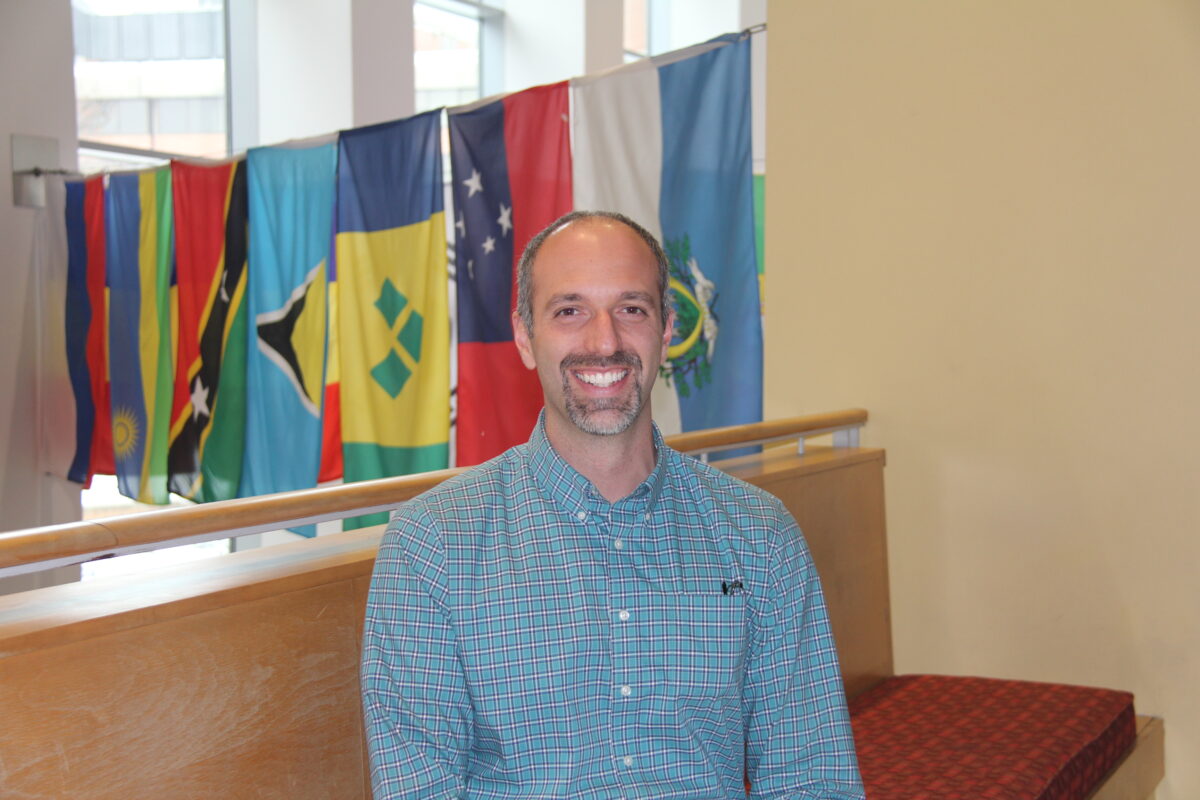
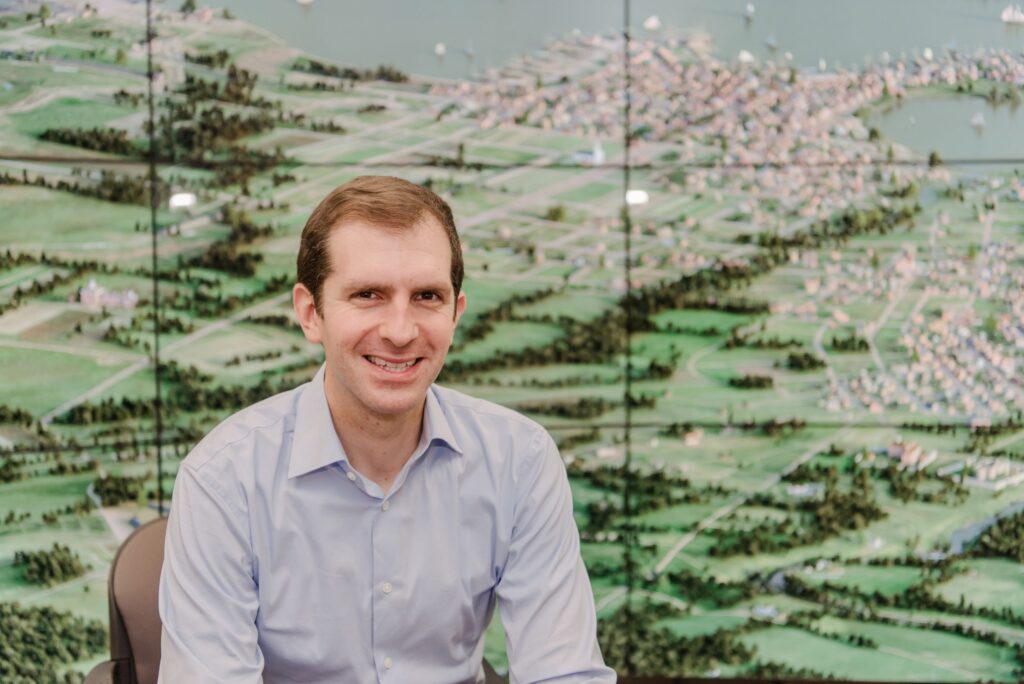
Morgan Henderson, director of analytics and research at UMBC’s The Hilltop Institute, and Jun Chu, assistant professor of public health, are among the five cross-collaborative teams selected to receive funding from UMBC’s Center and Institute Departmentally-Engaged Research (CIDER) program. Henderson and Chu’s CIDER-supported project will investigate potential “z code” patterns of the state’s Medicaid recipients. Z codes are a set of diagnosis codes that refer to factors influencing a patient’s health status beyond diseases or injuries, called social determinants of health.
“These specific diagnosis codes indicate certain social determinants of health-related factors, not just traditionally medical things,” explains Henderson, principal investigator of the study. Z code data indicates if a patient has an issue that’s related to social risk factors, such as unstable housing, lack of food, hazardous living environments, and employment status.
“There hasn’t been much analysis of z code patterns and we aim to lay a good foundation for better understanding these diagnosis codes within Maryland’s Medicaid data,” says Henderson.
A deeper look into z code diagnosing could be a useful identification “to bring extra resources to Medicaid recipients who are in need,” says Chu.
Analyzing Medicaid data
The study coincides with recent news of potential billion-dollar federal budget cuts to Maryland’s Medicaid program, which currently supports about 1.7 million Maryland residents. The Hilltop Institute specializes in working with the state’s Medicaid data. According to the institute’s Maryland Medicaid DataPort, two in five of those in Medicaid are children and Medicaid pays for 60 percent of nursing home stays.
Chu’s research has largely focused on social determinants of health with a particular focus on immigrant communities and Medicaid recipients who are children. Henderson helped to develop and currently manages Hilltop’s predictive modeling portfolio. These predictive models, which also utilize z code data, use a variety of risk factors derived from Medicare and Medicaid claims data to estimate the probability that a given patient incurs certain outcomes in the near future.
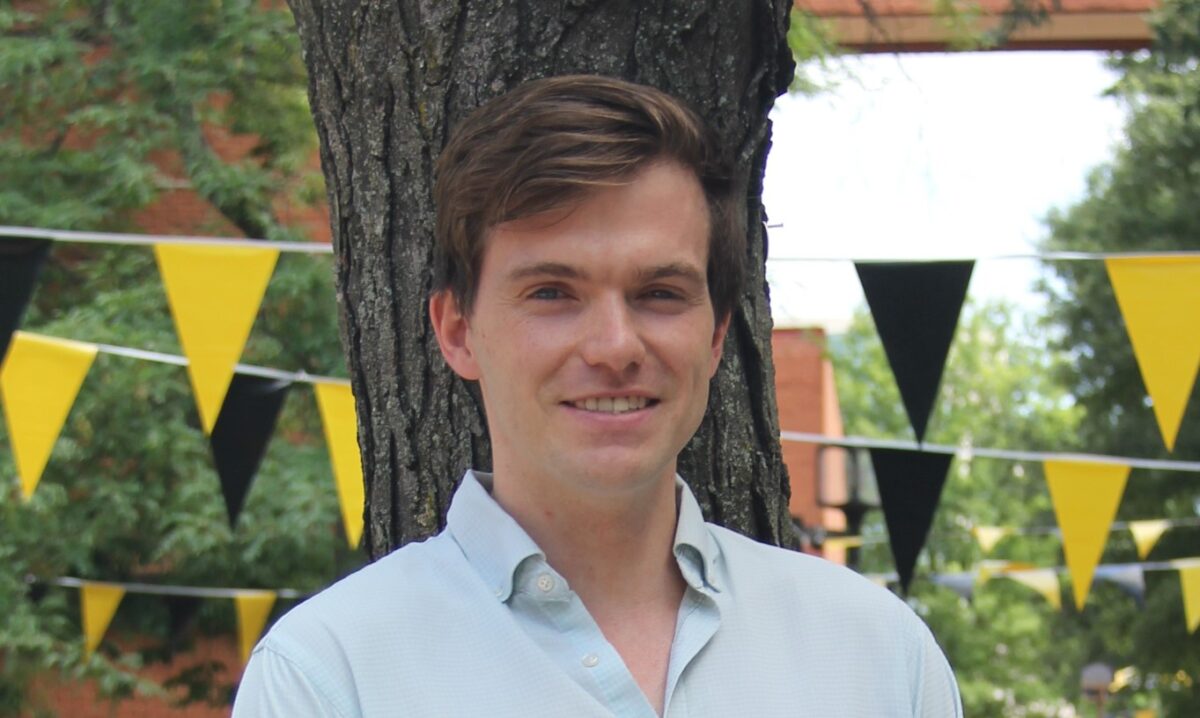
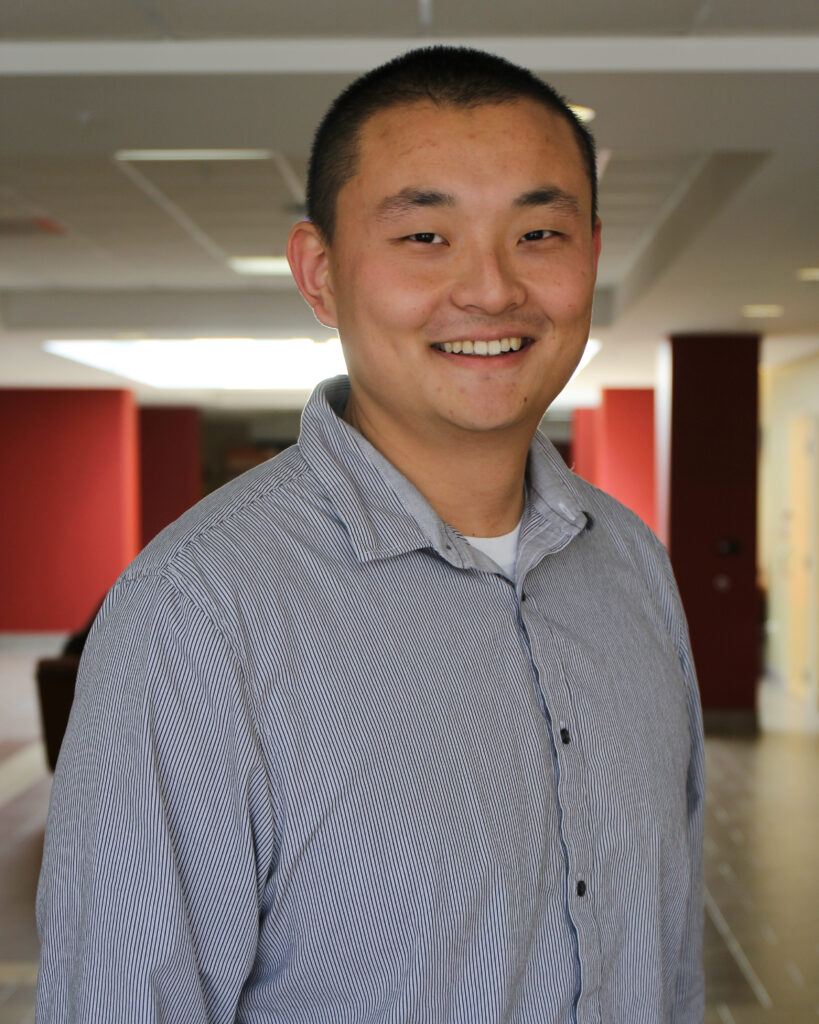 Principal investigator Morgan Henderson (left) and co-investigator Jun Chu of the CIDER Program study, “Analysis of Social Determinant of Health Diagnosis Coding Patterns Among Medicaid Recipients and Providers in Maryland.” (Photos courtesy of The Hilltop Institute and Jun Chu)
The pair’s project will include two studies: one study will focus specifically on the patients ascribed z codes to determine what patterns arise based on patient-specific factors such as demographics, health care utilization, or geography.
The second study will focus on analyzing the characteristics of the healthcare providers that indicate the z codes on Medicaid claims.
“Patient claims are the engine that so much of health analysis relies upon. It’s the decision of the provider on which coding diagnoses to include—it’s not a completely standardized process,” says Henderson.
CIDER 2025 recipients
The CIDER program’s goal includes supporting and promoting collaborative research between scholars based in one of UMBC’s affiliate centers and institutes and the university’s faculty researchers. Selected proposals are awarded up to $50,000 in seed funding for 18 months.
The 2025 CIDER program recipients include:
-
Anin Puthukkudy, Earth and Space Institute, and Vanderlei Martins, professor of physics
-
Jessica Sutton, Goddard Earth Sciences Technology and Research (GESTAR) II, Tejas Gokhale, assistant professor of computer science and electrical engineering, and Thomas Stanley, GESTAR II
-
Kaur Kullman, the Center for Space Sciences and Technology, Alan Sherman, Roberto Yus, and Enis Golaszewski, professors of computer science and electrical engineering
-
Morgan Henderson, The Hilltop Institute at UMBC, and Jun Chu, assistant professor of public health
-
Venkatesh Srinivasan, Center for Advanced Sensor Technology, Tyler Josephson, assistant professor of chemical, biochemical, and environmental engineering
Don Engel, associate vice president for research development, shares that the CIDER program was created to foster collaborations that draw on the full range of UMBC’s strengths in research and creative achievement.
“CIDER helps connect faculty in our research centers with colleagues in degree-granting departments to pursue work with real impact—work that informs policy, advances knowledge, and ultimately serves the public good,” says Engel.
Learn more about UMBC’s funding opportunities.
]]>
UMBC researchers are collaborating on a study that takes a closer look at specific diagnosis coding patterns that focus on societal factors that potentially influence the health of Maryland’s...
https://umbc.edu/stories/cider-program-hilltop-medicaid-study/
https://my3.my.umbc.edu/api/v0/pixel/news/149744/guest@my.umbc.edu/78db6f7fa7d09470bbd8c0df0856a68c/api/pixel
cahss
cbee
coeit
csee
gestar
hilltop-institute
news
policy-and-society
public-health
research
saph
story
UMBC News & Magazine
https://my3.my.umbc.edu/groups/umbc-news-magazine
https://assets1-my.umbc.edu/system/shared/avatars/groups/000/001/943/24435aa6207c452e7bc15cc74b42c7bb/xsmall.png?1748556657
https://assets1-my.umbc.edu/system/shared/avatars/groups/000/001/943/24435aa6207c452e7bc15cc74b42c7bb/original.png?1748556657
https://assets2-my.umbc.edu/system/shared/avatars/groups/000/001/943/24435aa6207c452e7bc15cc74b42c7bb/xxlarge.png?1748556657
https://assets2-my.umbc.edu/system/shared/avatars/groups/000/001/943/24435aa6207c452e7bc15cc74b42c7bb/xlarge.png?1748556657
https://assets3-my.umbc.edu/system/shared/avatars/groups/000/001/943/24435aa6207c452e7bc15cc74b42c7bb/large.png?1748556657
https://assets1-my.umbc.edu/system/shared/avatars/groups/000/001/943/24435aa6207c452e7bc15cc74b42c7bb/medium.png?1748556657
https://assets2-my.umbc.edu/system/shared/avatars/groups/000/001/943/24435aa6207c452e7bc15cc74b42c7bb/small.png?1748556657
https://assets1-my.umbc.edu/system/shared/avatars/groups/000/001/943/24435aa6207c452e7bc15cc74b42c7bb/xsmall.png?1748556657
https://assets2-my.umbc.edu/system/shared/avatars/groups/000/001/943/24435aa6207c452e7bc15cc74b42c7bb/xxsmall.png?1748556657
UMBC News & Magazine
0
0
false
Fri, 02 May 2025 15:04:11 -0400
Fri, 02 May 2025 15:04:11 -0400
GESTAR II center awarded $47 million extension on cooperative agreement with NASA Goddard Space Flight Center

The UMBC-led Goddard Earth Science Technology and Research (GESTAR) II center has been awarded a two-year, $47 million extension to continue its cooperative agreement with the NASA Goddard Space Flight Center (GSFC).
In fall 2021, NASA awarded $72 million for UMBC to establish GESTAR II in collaboration with primary partner Morgan State University and six other institutions. Since its launch, GESTAR II has employed more than 150 scientists who are distributed across nearly all of GSFC’s earth science division laboratories. GESTAR II scientists and engineers are currently working on active NASA earth science missions, such as the Plankton, Aerosol, Cloud, ocean Ecosystem (PACE) satellite mission, which launched into orbit earlier this year.
“Our scientists and engineers are continuing to contribute toward the advancement of earth science at NASA Goddard. We want to continue to do more of the same with this agreement extension,” said GESTAR II director Charles Ichoku. “With GSFC, we are making progress to keep our planet safe while continuing to make a lot of discoveries.”
GESTAR II is one of three cooperative agreements that UMBC has with GSFC, a partnership that began nearly 30 years ago. Earlier this month, the university collaborated with GSFC to host the “NASA-UMBC Interaction Days,” an interactive, three-day event series (concluding on September 30) that takes a closer look into the center’s current research activity, with insight into how faculty and students can engage with Goddard scientists and engineers.
In addition to contributions to NASA’s missions and earth science scholarship, GESTAR II also provides funding support for UMBC students with its undergraduate and graduate fellowships. The center also hosts a recurring seminar series for scientists.
Learn more about the research happening at the Goddard Earth Science Technology and Research (GESTAR) II center.
]]>
The UMBC-led Goddard Earth Science Technology and Research (GESTAR) II center has been awarded a two-year, $47 million extension to continue its cooperative agreement with the NASA Goddard Space...
https://umbc.edu/quick-posts/gestar-ii-center-extension/
https://my3.my.umbc.edu/api/v0/pixel/news/144266/guest@my.umbc.edu/67693ecb504c855e32d9d78a5289d181/api/pixel
gestar
gestar2
nasa
nasa-goddard-space-flight-center
quick-post
UMBC News & Magazine
https://my3.my.umbc.edu/groups/umbc-news-magazine
https://assets1-my.umbc.edu/system/shared/avatars/groups/000/001/943/24435aa6207c452e7bc15cc74b42c7bb/xsmall.png?1748556657
https://assets1-my.umbc.edu/system/shared/avatars/groups/000/001/943/24435aa6207c452e7bc15cc74b42c7bb/original.png?1748556657
https://assets2-my.umbc.edu/system/shared/avatars/groups/000/001/943/24435aa6207c452e7bc15cc74b42c7bb/xxlarge.png?1748556657
https://assets2-my.umbc.edu/system/shared/avatars/groups/000/001/943/24435aa6207c452e7bc15cc74b42c7bb/xlarge.png?1748556657
https://assets3-my.umbc.edu/system/shared/avatars/groups/000/001/943/24435aa6207c452e7bc15cc74b42c7bb/large.png?1748556657
https://assets1-my.umbc.edu/system/shared/avatars/groups/000/001/943/24435aa6207c452e7bc15cc74b42c7bb/medium.png?1748556657
https://assets2-my.umbc.edu/system/shared/avatars/groups/000/001/943/24435aa6207c452e7bc15cc74b42c7bb/small.png?1748556657
https://assets1-my.umbc.edu/system/shared/avatars/groups/000/001/943/24435aa6207c452e7bc15cc74b42c7bb/xsmall.png?1748556657
https://assets2-my.umbc.edu/system/shared/avatars/groups/000/001/943/24435aa6207c452e7bc15cc74b42c7bb/xxsmall.png?1748556657
UMBC News & Magazine
0
0
false
Thu, 26 Sep 2024 13:59:40 -0400
Thu, 26 Sep 2024 13:59:40 -0400
UMBC hosts “NASA Days” event series with Goddard Space Flight Center
UMBC is collaborating with the NASA Goddard Space Flight Center (GSFC) to host an interactive, three-day event series that takes a closer look into the center’s current research activity, with insight into how faculty and students can engage with Goddard scientists and engineers.
NASA-UMBC Interaction Days launched on September 9 and continues on September 16 and September 30, highlighting a range of topics on the diverse research and technological advancements in space exploration from leading scientists and engineers at GSFC. The series also provides an overview of the extensive research activity happening in collaboration between UMBC and NASA, a partnership that began nearly 30 years ago.
Astrophysicist Sibasish Laha, an associate research scientist with UMBC’s Center for Space Sciences and Technology who works out of GSFC, organized the series in response to an influx of students inquiring about the work that happens at NASA and ways to get involved.
“I started this interaction day series to help UMBC students better understand what NASA scientists and engineers do on a day-to-day basis,” says Laha. Students get a behind-the-scenes look into the research happening at GSFC, across an array of disciplinary fields such as earth science, data science and AI, astrobiology, and more.
Student opportunities at NASA
Day one of the event series included lectures focused on earth science, exoplanets, and laboratory astrophysics with featured speakers Maurice Leutenegger of GSFC’s x-ray astrophysics laboratory; Wayne Yu, an senior engineer in astrobiology; and planetary scientist Ravi Kopparap. A packed room of more than 90 attendees learned about the inquiring minds behind the GSFC’s research activity.
Day two of the event series (happening on September 16) will feature discussions on data science and AI, x-ray astrophysics, and astrobiology. The event will conclude on September 30 with lectures on the habitable worlds observatory, payload systems and engineering, and NASA’s long term goals with featured speaker Robert Petre, director of GSFC’s astrophysics science division.
Some Retrievers at the event were there out of general curiosity and some were looking for jobs and internship experiences. Brad Cenko, research scientist at GSFC, shared about the wide array of experiential learning opportunities happening at NASA’s research centers across the country.
“NASA has one of the largest internship programs in the state of Maryland, and students can apply to internships year-round,” said Cenko. This summer, UMBC students secured internship placements with NASA, which included senior Leah Narat, business technology administration, who worked at GSFC as a business intelligence intern.
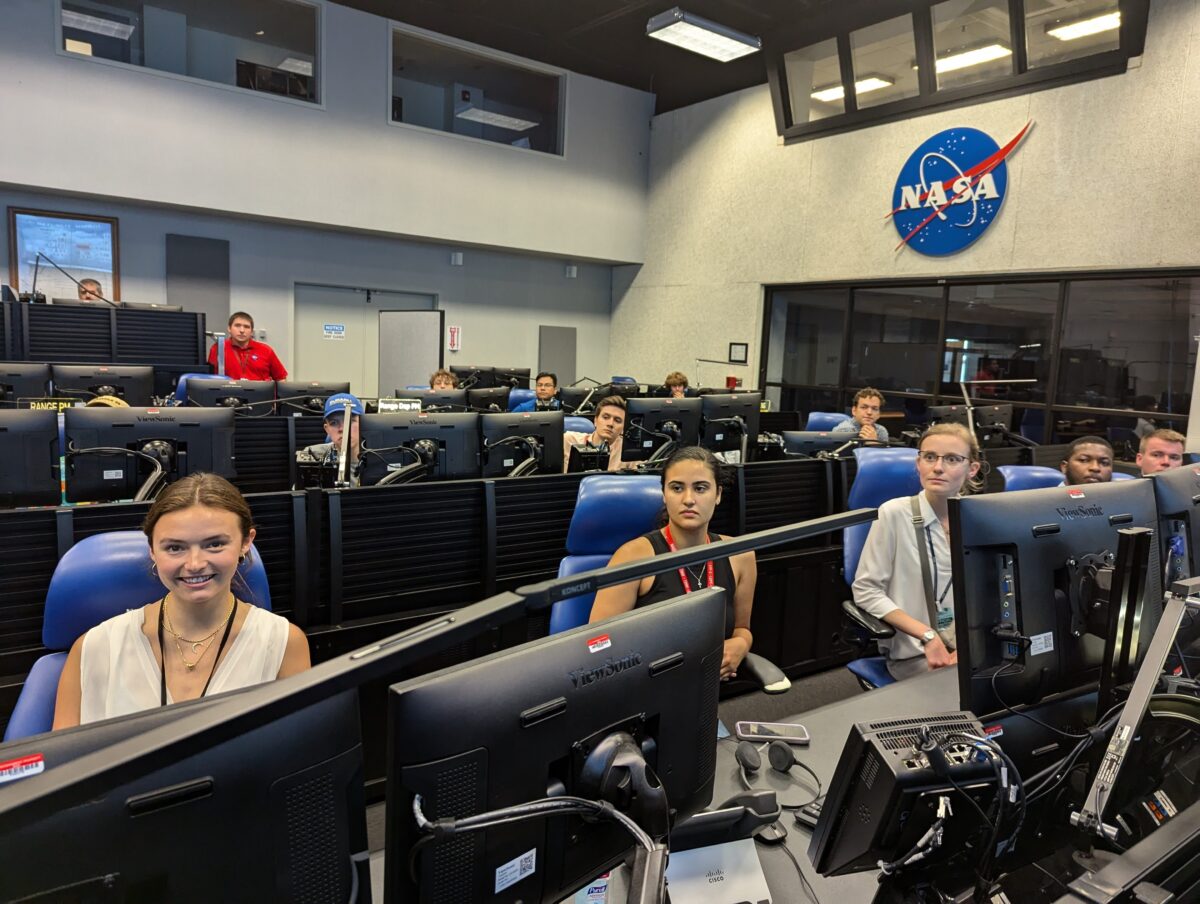 Interns from the Flight Projects Directorate at NASA Goddard, including Leah Narat, center, tour the Wallops Flight Facility in Virginia. (Image courtesy of Narat)
Narat created and updated databases to track awards given to NASA employees. The agency will use the information to maximize employees’ recognition and success and guide them toward career paths that best take advantage of their strengths.
“Honestly, being at NASA was something that I never thought I would achieve, but I put my application out there, and here I am,” says Narat, who worked as a business intelligence intern at the NASA Goddard Space Flight Center in Greenbelt, Maryland, this past summer. “It’s been wonderful.”
A 30-year partnership
While a large majority of students made up the attendee list for day one, the event also brought in many faculty and staff interested in collaborating with the agency. “Faculty are an integral part in these collaborative efforts and our goal is to connect them directly with NASA’s scientists and engineers,” said event organizer Laha.
 Makenzie Lystrup, director of NASA’s Goddard Space Flight Center, and UMBC President Valerie Sheares Ashby during Lystrup’s visit to UMBC in February 2024. (Marlayna Demond ’11/UMBC)
Currently, more than 250 UMBC scientists and research faculty members are partnering with NASA civil servants and are employed under three major cooperative agreements, of which includes the Goddard Earth Sciences Technology and Research II center (GESTAR II); the Center for Space Sciences and Technology (CSST); and the Goddard Planetary Heliophysics Institute (GPHI). The university also is home to the NASA-affiliated Earth and Space Institute based out of UMBC’s Physics Building.
Additionally, nearly 30 of the university’s scientists and research faculty are working on active NASA space missions. That includes the UMBC-developed Lunar Environment Monitoring Station, which was selected as one of the first three instruments to be a part of Artemis III, NASA’s mission that will send astronauts back to the lunar surface after more than 50 years, and UMBC’s Hyper-Angular Rainbow Polarimeter wide-angle imaging polarimeter instrument on board NASA’s Plankton, Aerosol, Cloud, ocean Ecosystem spacecraft mission.
“NASA is providing half of UMBC’s federal contract funding—on a national scale, this is really unusual,” says Don Engel, director of the CSST and assistant professor of computer science and electrical engineering. “Our NASA partnerships are so cross-disciplinary. All three of UMBC’s colleges are represented with these centers, and that’s extremely significant.”
Register for the remaining NASA-UMBC Interaction Days events here.
]]>
UMBC is collaborating with the NASA Goddard Space Flight Center (GSFC) to host an interactive, three-day event series that takes a closer look into the center’s current research activity, with...
https://umbc.edu/stories/nasa-days-event-series/
https://my3.my.umbc.edu/api/v0/pixel/news/143892/guest@my.umbc.edu/e03c952bb42087e2a28c0c06cd19474e/api/pixel
community
csst
esi
gestar
gestar2
gphi
nasa
nasa-goddard-space-flight-center
news
science-and-tech
story
UMBC News & Magazine
https://my3.my.umbc.edu/groups/umbc-news-magazine
https://assets1-my.umbc.edu/system/shared/avatars/groups/000/001/943/24435aa6207c452e7bc15cc74b42c7bb/xsmall.png?1748556657
https://assets1-my.umbc.edu/system/shared/avatars/groups/000/001/943/24435aa6207c452e7bc15cc74b42c7bb/original.png?1748556657
https://assets2-my.umbc.edu/system/shared/avatars/groups/000/001/943/24435aa6207c452e7bc15cc74b42c7bb/xxlarge.png?1748556657
https://assets2-my.umbc.edu/system/shared/avatars/groups/000/001/943/24435aa6207c452e7bc15cc74b42c7bb/xlarge.png?1748556657
https://assets3-my.umbc.edu/system/shared/avatars/groups/000/001/943/24435aa6207c452e7bc15cc74b42c7bb/large.png?1748556657
https://assets1-my.umbc.edu/system/shared/avatars/groups/000/001/943/24435aa6207c452e7bc15cc74b42c7bb/medium.png?1748556657
https://assets2-my.umbc.edu/system/shared/avatars/groups/000/001/943/24435aa6207c452e7bc15cc74b42c7bb/small.png?1748556657
https://assets1-my.umbc.edu/system/shared/avatars/groups/000/001/943/24435aa6207c452e7bc15cc74b42c7bb/xsmall.png?1748556657
https://assets2-my.umbc.edu/system/shared/avatars/groups/000/001/943/24435aa6207c452e7bc15cc74b42c7bb/xxsmall.png?1748556657
UMBC News & Magazine
0
0
false
Fri, 13 Sep 2024 16:04:17 -0400
Fri, 13 Sep 2024 16:04:17 -0400
UMBC scientists and engineers celebrate launch of HARP2 instrument on NASA’s PACE mission
By Anne Wainscott-Sargent
The third time’s the charm. Against a calm and crisp dark night sky on Florida’s Cape Canaveral last Thursday, February 8, just after 1:30 a.m., the Plankton, Aerosol, Cloud, Ocean Ecosystem (PACE) spacecraft rocketed to orbit carrying on board Hyper-Angular Rainbow Polarimeter (HARP2)―UMBC’s wide-angle imaging polarimeter. The launch marked the first time NASA deployed a university payload on a large operational Earth science space mission.
Following two scrubbed night launches on Tuesday and Wednesday due to strong winds, Thursday’s successful takeoff was well worth the wait for the core team of UMBC Earth and Space Institute researchers, graduate students, and their family and friends who journeyed from Baltimore to watch the historic launch.
Arriving by bus a little before midnight to the Banana Creek Launch Viewing Area at Kennedy Space Center, just over six miles from Space Launch Complex-40, the close-knit UMBC entourage huddled together waiting for the final countdown.
When it came, they—along with hundreds of other space launch watchers—held their breath and then yelled and clapped as SpaceX’s Falcon 9 rocket blasted off and propelled PACE 400 miles above Earth into sun-synchronous orbit. Minutes later the Falcon 9’s first stage—SpaceX’s reusable rocket booster—successfully landed at Landing Zone 1. The crowd gasped audibly at the sonic boom, caused when the spacecraft broke the sound barrier.
“It still doesn’t quite feel real,” said Noah Christian Sienkiewicz, a calibration scientist who earned his master’s degree in atmospheric physics from UMBC in 2019 and expects to complete his physics doctorate this summer. “I grew up watching Carl Sagan and dreamed of going into astrophysics. I never thought I’d be the person making the instruments that will go up and do the measurements.”
“It’s so exciting—I’m going to cry,” uttered Margo Young from the upper bleacher. “I don’t always see the pieces and parts put together, so this is really historic.”
Young serves as UMBC’s HARP program administrator, where she has overseen procurement and other back-end support for HARP since the program’s inception in 2013. “I get to see students come full circle—working in the lab and then graduating and becoming civil servants where they continue to be involved because it’s such an amazing project,” she explained.
On the path to PACE
The UMBC HARP team’s remarkable journey from idea to mission reality spanned over 15 years, and involved countless hours of design, modeling, testing, and validation. Earlier iterations of HARP flew first on private aircraft over the Maryland countryside and then an award-winning “cubesat” version launched into orbit from the International Space Station (ISS), all stepping stones on the path to PACE.
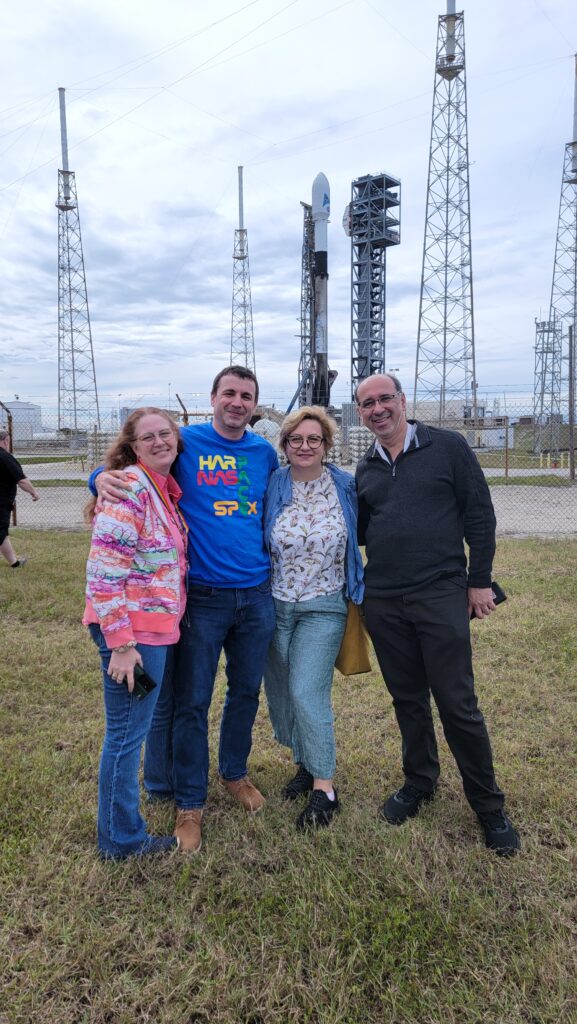 Left to right: Margo Young, Dominik Cieslak, Magdalena Kuzmicz-Cieslak, and Vanderlei Martins stand in front of the PACE spacecraft the day before its launch. (Image courtesy of Margo Young)
For the three multidisciplinary HARP2 physics, optics, and research engineering leads, Vanderlei Martins, Roberto Borda, and Dominik Cieslak, HARP2’s launch represents a career-defining moment that at times seemed against all odds for a mid-size public university. UMBC’s strong partnerships with NASA, such as the Goddard Earth Science Technology and Research (GESTAR) Center II that supports Borda’s and Cieslak’s roles, help enable milestones like this.
“I feel like I’m still dreaming,” said a visibly emotional Cieslak, research engineer, who captured the launch on his long-range camera.
Transfixed by the sight of live satellite footage of the PACE spacecraft heading to orbit, he added, “This is the last time we will physically see it [HARP2],” before hugging his long-time colleague, Borda.
“We’re very proud to have UMBC in space,” added Martins, professor of physics, who watched the big moment from a VIP viewing area three miles from the launch site. “We dreamed big from the beginning. The team persevered and just kept going.”
“I never despaired of having HARP2 on the PACE satellite,” admitted UMBC’s HARP2 manager, Lorraine Remer, research professor in the Joint Center for Earth Systems Technology. Her bigger worry wasn’t HARP2’s viability, but whether PACE would ever launch. “PACE was canceled four times and reinstated four times,” she recalled, noting that the program “survived a lengthy government shutdown and a global pandemic that destroyed our supply chains.”
Immediately after launch, Remer had to return to Maryland and the Goddard Space Flight Center to oversee HARP2 being turned on within 36 hours of launch. “It would be nice to bask in the successful launch, but I haven’t had much time to contemplate the success. There is just more work to do all the time,” she said.
An international effort
NASA’s PACE mission clears the path for revolutionary new measurements of Earth’s oceans and atmosphere. HARP2 measures aerosol particles and clouds, as well as properties of land and water surfaces. By analyzing particles like dust, wildfire smoke, or urban pollution, the science community gains deeper insights into air quality as well as global warming and its impacts. Scientists will be able see through things like sun glint to ascertain patterns never before possible.
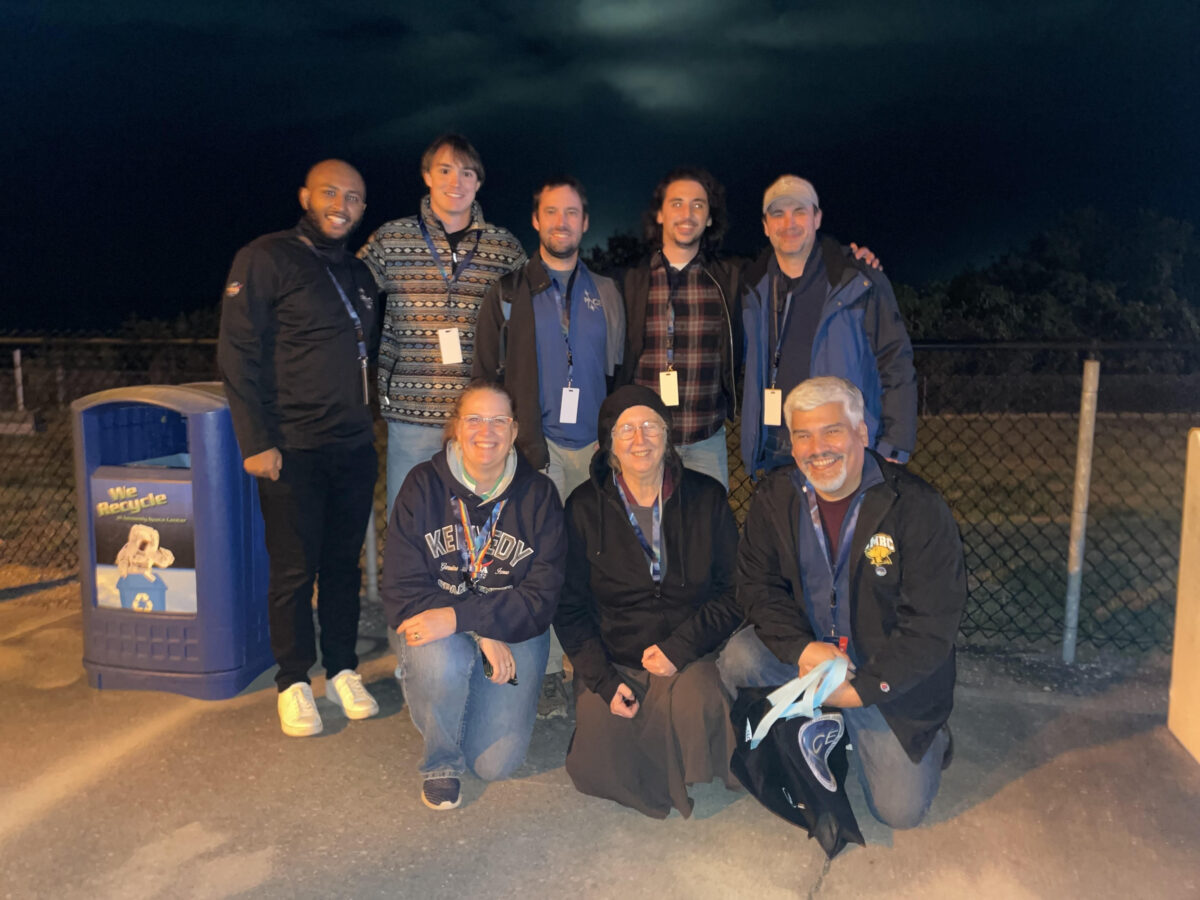 Members of the HARP team eagerly await the PACE launch at Kennedy Space Center’s Banana Creek Launch Viewing Area before the final countdown. Top, left to right: Yomiyu Fekadu, Ian Decker, Ben Cramer, Noah Sienkiewicz, Dominik Cieslak. Bottom, left to right: Margo Young, Lorraine Remer, Roberto Borda. (Image by Anne Wainscott-Sargent)
A second polarimeter on PACE, the Spectro-polarimeter for Planetary Exploration (SPEXone), developed through a Dutch consortium consisting of SRON Netherlands Institute for Space Research and Airbus Defence and Space Netherlands, will measure sunlight reflected from Earth’s atmosphere, land surface and ocean.
These two companion polarimeter instruments are important because the interaction between aerosols and clouds is the biggest unknown factor in atmospheric temperature change, according to reports from the U.N.’s Intergovernmental Panel on Climate Change.
“I have watched Dr. Martins and his team work toward this moment for about a decade, and have been aware of the trials and tribulations along the way. Seeing the smiles on their faces in the control station after the launch made it all worthwhile,” shared UMBC Vice President for Research Karl V. Steiner. “The HARP2 mission as an integral part of PACE is making all of us proud here on the UMBC campus. We cannot wait to see the science that will come from this engineering masterpiece conceptualized and created right here in Maryland.”
Waiting game
In the days leading up to the PACE launch, the HARP2 team knew there might be delays because of the weather so they rented a large Airbnb in neighboring Cocoa Beach for the full week. Earlier in the week, over grilled food at the shared house, the team reflected on their journey.
According to Martins, a key strategy was bringing together engineering and physics students, who typically don’t communicate well across disciplines.
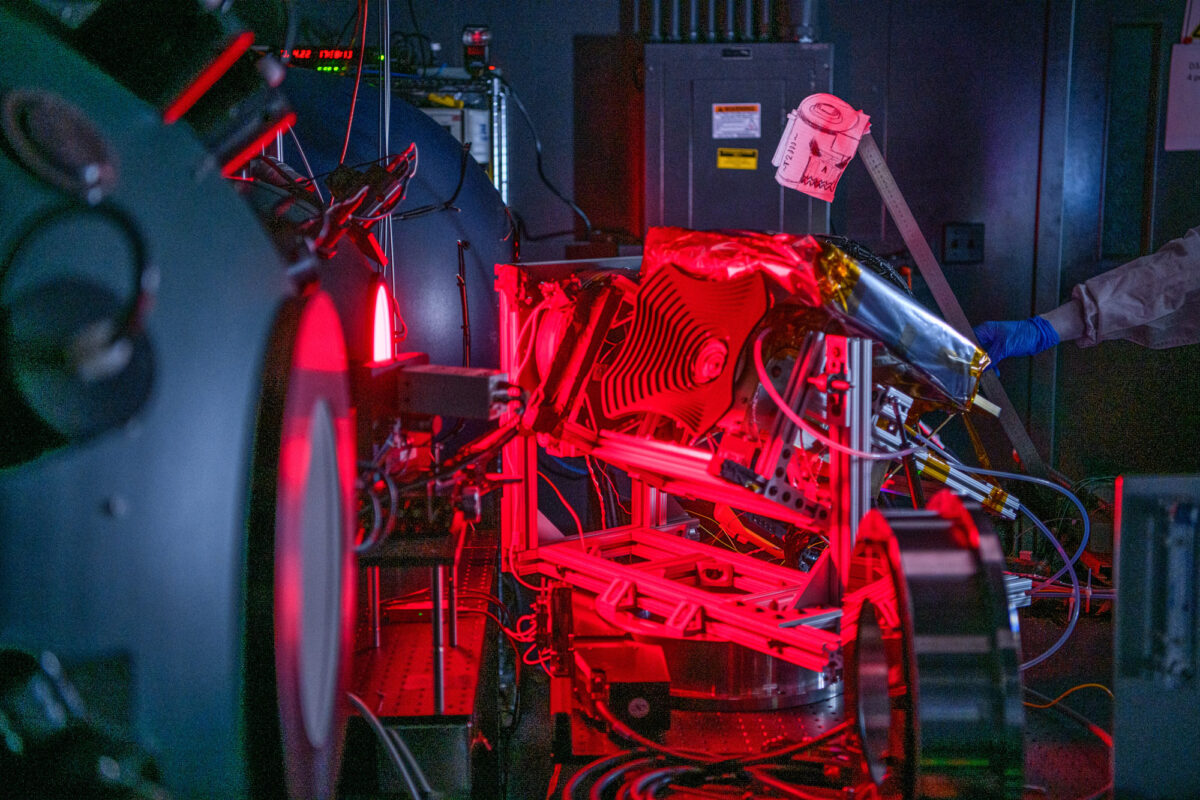 The HARP2 instrument undergoes calibration testing with red light. (Image by NASA)
“We introduced engineering students to the physics students and made them work together very quickly so they spoke the same language,” he said, crediting this multidisciplinary collaboration to the team’s ability to rapidly iterate and problem solve.
Borda, senior research engineer overseeing HARP2’s optical design, said a key technical challenge was determining how to best compensate for the effects of polarized light waves inside the instrument.
“It’s continuous work and you cannot do it alone. We needed a fantastic team with not only the staff but also students working at different levels,” Borda said. “There are undergraduate students and Ph.D.s integrated into the team who put in a lot of effort to make this real. We’re really thankful for the environment at this university—we’re able to work with students who find a career in this industry and field of research.”
Nurturing future career scientists
Martins echoed Borda’s pride in the broad level of participation in the HARP program, from high school students to senior scientists.
“We’ve had people from our team who now work in all levels of industry—at NASA, at NOAA, or in private industry. We’ve even had some students start their own company.”
Young, the program administrator, estimates that the cooperative agreements between UMBC and NASA have resulted in 20 UMBC graduates finding roles with NASA.
“It was everything I could have asked for. No other place would have let me be involved in the entire process, including making parts for HARP2 in the machine shop. Not only did I get to do hands-on stuff, but I also was part of the design and saw it all come together on a NASA mission.”
Yomiyu Fekadu ’20, mechanical engineering, M.S. ’23, engineering management
UMBC alumna Elissa Ogburn is one such graduate. She began working on HARP2 as a computer science major, tasked with creating a database that supported ground communications so researchers could communicate with the instrument when it was in space.
After graduating from UMBC in 2021, Ogburn joined NASA on the PACE project as a test conductor (TC)―responsible for integrating and testing the instruments onto the PACE spacecraft. During launch, she was one of five TCs in the PACE Control Room in Titusville, Florida, who powered up the spacecraft for the last time and configured it for launch.
“I never imagined having a job at NASA or working with people who were this smart, helpful, and kind. Every single person I’ve worked with was so fun. It’s also cool to have seen the whole process beginning as a student at UMBC. PACE is my first mission, so I’m learning everything as I go,” Ogburn said.
Close collaboration
The partnership between NASA and UMBC goes back over two decades. NASA Goddard Space Flight Center and UMBC are located just up the road from one another.
Jeremy Werdell, PACE project scientist at Goddard, recalled how initial calls to industry and academia for a polarimetry instrument for PACE were not promising due to cost and other factors.
However, Martins immediately suggested to Werdell that his lab develop a polarimeter, given his team’s experience with airborne instruments and the HARP cubesat, and the rest is history. In the end, NASA selected two polarimeters—HARP2 and SPEXone.
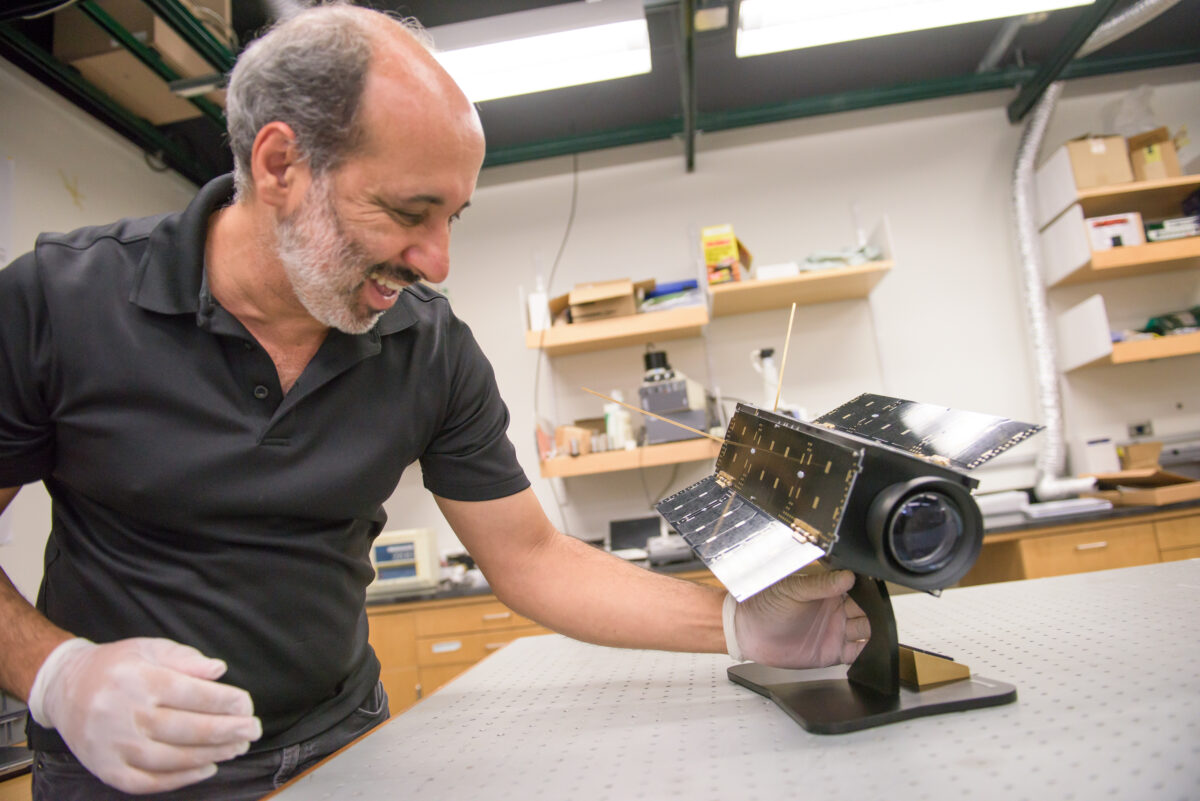 Vanderlei Martins inspects the HARP cubesat, which launched in 2019. (Image by Marlayna Demond ’11/UMBC)
Each instrument measures polarization differently: HARP2 is multispectral (measuring only four wavelengths of light) and hyperangular, so it looks at the same piece of real estate multiple times from dozens of different viewing directions. Its wide swath coverage means HARP2 will cover the globe every two days. SPEXone, on the other hand, is hyperspectral (measuring a continuous spectrum of light from the ultraviolet to near-infrared) but only views Earth at five angles. It has a narrower swath, meaning it will take almost a month to cover the globe.
“They’re small and mighty and miraculously complement each other very, very well,” said Werdell. “Having multi-band, multi-angle polarimetry is going to open up a lot of really interesting opportunities for discovery, because we can see clouds and aerosols in very different ways.”
HARP2 provides daily views that will help scientists understand how aerosols and clouds interact and their role in warming and cooling in the atmosphere.
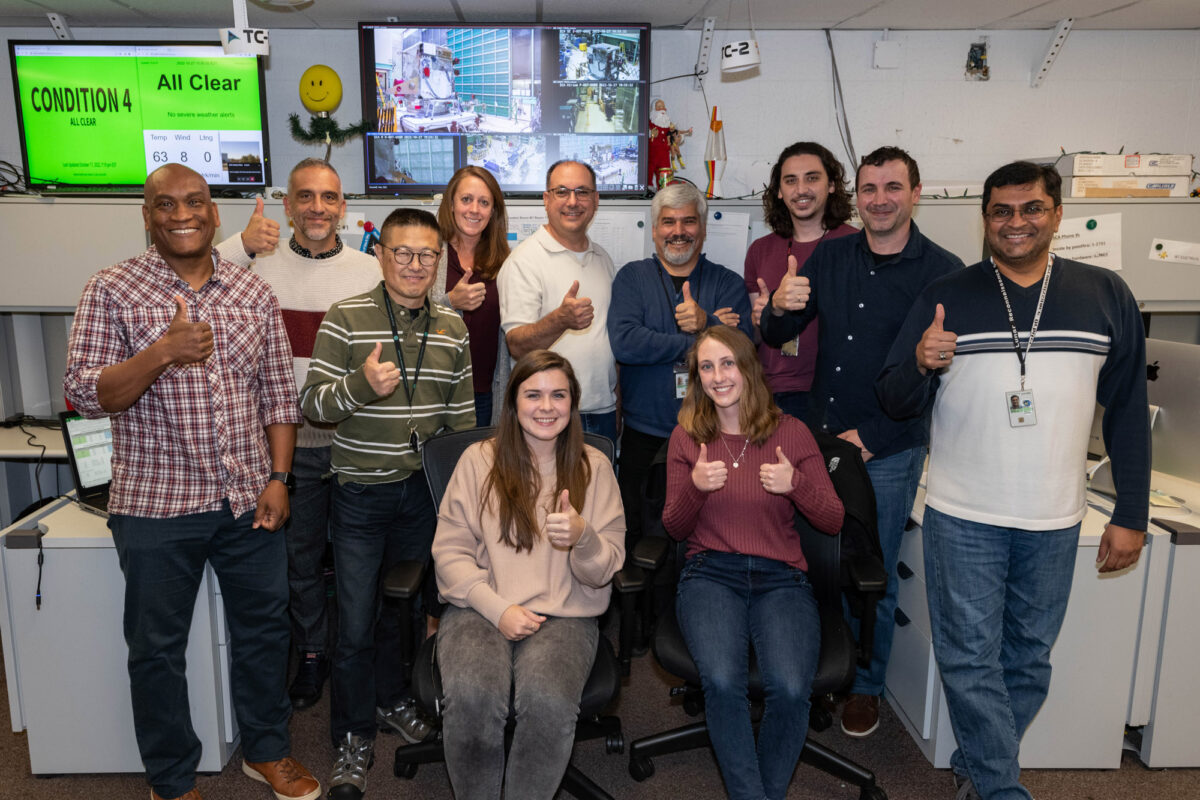 Some members of the HARP2 team successfully test HARP2’s electrical Integration to the Spacecraft. (Image by NASA)
“Understanding where aerosols are, how they’re transported, how they interact with clouds, and whether they absorb or reflect radiation is important to everybody because those characteristics are what drive warming of the atmosphere.” Werdell said.
Better air quality models
Onsite at the Cape for the first launch attempts, Nirandi Jayasinghe and Rachel Smith, both physics graduate research assistants at UMBC, shared their excitement for the PACE mission and HARP2’s potential to help modelers predict air quality, rain, or if the atmosphere is warming or cooling.
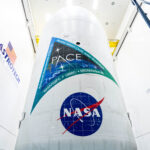
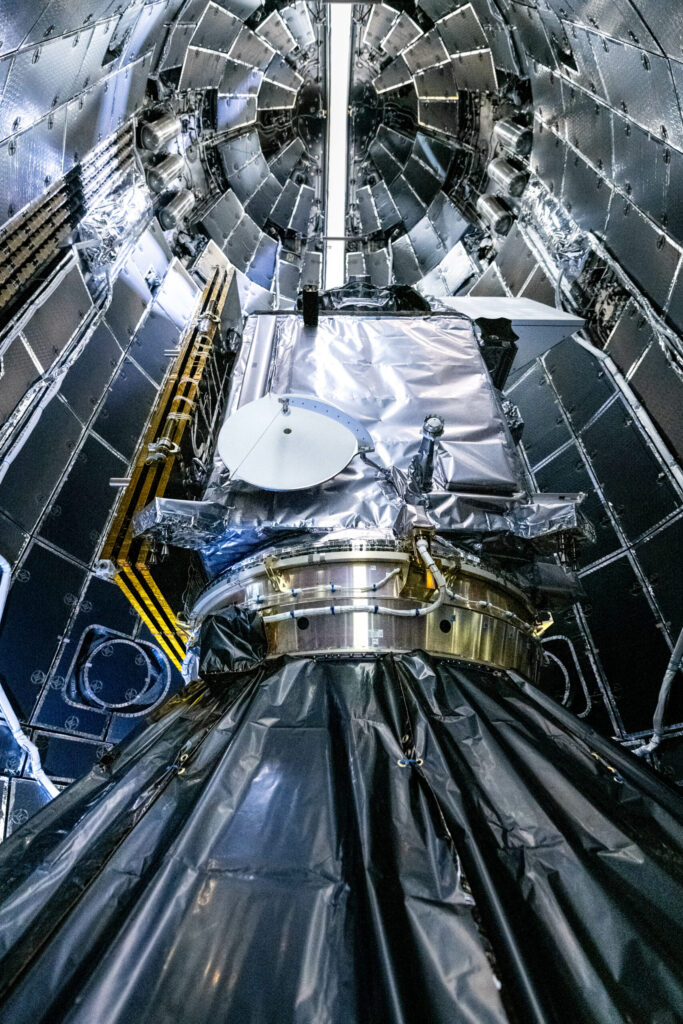 NASA and SpaceX technicians safely encapsulated NASA’s PACE spacecraft in SpaceX’s Falcon 9 payload fairings–a protective shell for the instruments on PACE during launch. (Image by NASA)
Jayasinghe is a data modeler who comes up with different methods to retrieve information from HARP2. Originally from Sri Lanka, Jayasinghe notes that her hometown used to be one of her country’s cleanest cities, and now due to development in Sri Lanka’s dominant neighbor, India, the air quality is extremely bad. She said HARP2 can help close the gap that exists in understanding the twilight zone—where a cloud starts and where it stops—by providing more accurate measurements.
Smith adds that this will go a long way in understanding cloud formation processes, weather patterns, forecasting, and climate modeling—information important for agriculture, transportation, disaster preparedness, and infrastructure planning.
“Even simple things like weather forecasting are impacted by how much dust is in the air,” said Smith, a 2026 doctoral candidate who earned her M.S. in atmospheric physics from UMBC in 2023. HARP2 will help address whether clouds have a net cooling effect or a net warming effect, which will allow for more accurate models of where Earth’s climate is headed. Smith notes that during events like the Canadian wildfires in 2023 no one could accurately predict rainfall, because the forecasting models were not accounting for the number of airborne aerosols.
“I’m really excited to see what new science questions come out of the instruments that we’re putting up in space,” she concluded.
Bouncing back from disaster
The HARP2 team has come a long way from initial concept to PACE. What impresses Werdell the most is the UMBC team’s resilience in the face of setbacks.
The most devastating moment came in February 2022, one month before the team was set to deliver HARP2 to NASA for integration on the spacecraft. As the instrument was in the last few seconds of vibration tests, the bonding on one of the prisms loosened and shattered.
“It tactically put us to point zero,” recalled Cieslak, who was shocked and humbled when so many NASA scientists volunteered their time and expertise to help the HARP2 team get back on track.
“We got an extension, and within two months we had built a new engineering model and were able to prove the new solution worked. By September, we were back to where we were before the incident,” he added.
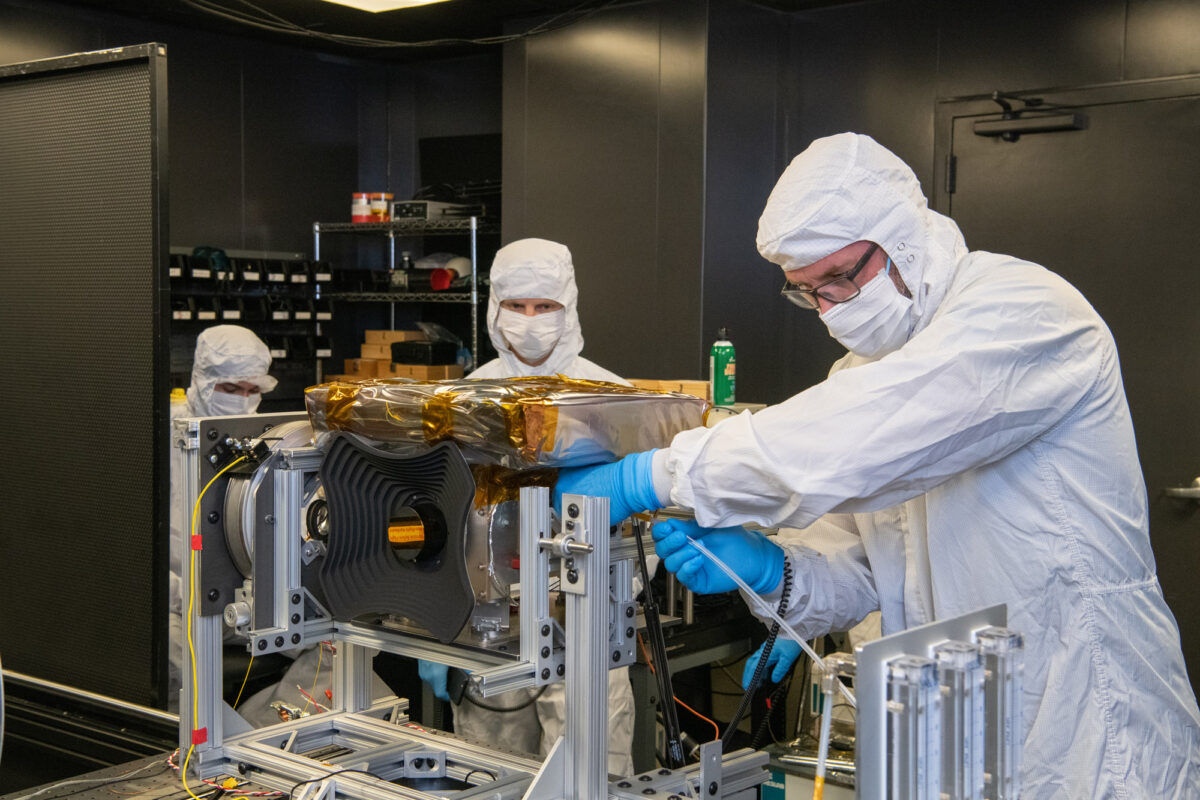 HARP2 calibration testing at Goddard Space Flight Center in Maryland, before the instrument was delivered to NASA. (Image by NASA)
First-time NASA launch attendee Yomiyu Fekadu ’20, mechanical engineering, M.S. ’23, engineering management, recalled that time well, as he helped assemble HARP2 as an intern under Benjamin Cramer ’17, M.S. ’20, mechanical engineer on the program.
“Especially after the failure, and the review board assessment, I helped put everything back together and do the test plans for construction and other documentation so NASA could give us the go-ahead to move on,” Fekadu said.
The experience was pivotal to his career. “It was everything I could have asked for,” said Fekado, now a systems engineer at Northrop Grumman. “No other place would have let me be involved in the entire process, including making parts for HARP2 in the machine shop. Not only did I get to do hands-on stuff, but I also was part of the design and saw it all come together on a NASA mission.”
As the HARP2 group left the viewing platform to line up for bus rides back to the Space Center, the smiles and easy camaraderie conveyed a collective sense of pride, relief, and excitement.
“I‘m now just anxious to see the first bytes of data,” said Cieslak, echoing the feeling of his colleagues.
In addition to the HARP team, several additional GESTAR II scientists and engineers were instrumental in their contributions to the overall PACE mission, including Ivona Cetinić, Andrew Sayer, Violeta Sanjuan Calzado, Bridget Seegers, Susanne Craig, Dirk Aurin, Meng Gao, Inia Soto Ramos, and Ian Carroll.
Update: On February 10, HARP2 successfully connected with instrumentation on the ground and all of its systems appear to be working as intended.
Follow along with what’s learned from the HARP2 project.
]]>
By Anne Wainscott-Sargent The third time’s the charm. Against a calm and crisp dark night sky on Florida’s Cape Canaveral last Thursday, February 8, just after 1:30 a.m., the Plankton,...
https://umbc.edu/stories/harp2-launches-on-nasa-pace-mission/
https://my3.my.umbc.edu/api/v0/pixel/news/139053/guest@my.umbc.edu/e0dbaea402ea1a164a7f168d63631a1e/api/pixel
cnms
coeit
compsci
engineering-management
esi
feature
gestar
gestar2
meche
news
physics
rca
research
science-and-tech
story
UMBC News & Magazine
https://my3.my.umbc.edu/groups/umbc-news-magazine
https://assets1-my.umbc.edu/system/shared/avatars/groups/000/001/943/24435aa6207c452e7bc15cc74b42c7bb/xsmall.png?1748556657
https://assets1-my.umbc.edu/system/shared/avatars/groups/000/001/943/24435aa6207c452e7bc15cc74b42c7bb/original.png?1748556657
https://assets2-my.umbc.edu/system/shared/avatars/groups/000/001/943/24435aa6207c452e7bc15cc74b42c7bb/xxlarge.png?1748556657
https://assets2-my.umbc.edu/system/shared/avatars/groups/000/001/943/24435aa6207c452e7bc15cc74b42c7bb/xlarge.png?1748556657
https://assets3-my.umbc.edu/system/shared/avatars/groups/000/001/943/24435aa6207c452e7bc15cc74b42c7bb/large.png?1748556657
https://assets1-my.umbc.edu/system/shared/avatars/groups/000/001/943/24435aa6207c452e7bc15cc74b42c7bb/medium.png?1748556657
https://assets2-my.umbc.edu/system/shared/avatars/groups/000/001/943/24435aa6207c452e7bc15cc74b42c7bb/small.png?1748556657
https://assets1-my.umbc.edu/system/shared/avatars/groups/000/001/943/24435aa6207c452e7bc15cc74b42c7bb/xsmall.png?1748556657
https://assets2-my.umbc.edu/system/shared/avatars/groups/000/001/943/24435aa6207c452e7bc15cc74b42c7bb/xxsmall.png?1748556657
UMBC News & Magazine
4
0
false
Fri, 16 Feb 2024 10:36:17 -0500
Fri, 16 Feb 2024 10:36:17 -0500
UMBC researchers co-author new Science study on how atmospheric dust impacts ocean health
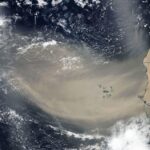
New findings in Science co-authored by UMBC researchers reveal details of the complex relationship between atmospheric dust and vast populations of phytoplankton at the ocean’s surface. These tiny photosynthetic organisms form the foundation of the ocean food chain and play a key role in the global carbon cycle, so the new research will be especially useful as dust patterns shift with climate change.
“Phytoplankton photosynthesis is fundamental to Earth’s carbon cycle,” says Lorraine Remer, an atmospheric scientist with UMBC’s Goddard Earth Sciences Technology and Research (GESTAR) Center II and a co-author on the study. “Change dust patterns, and you change phytoplankton health, which will subsequently affect carbon,” she explains.
Desert dust impacts ocean ecosystems
While most nutrition for phytoplankton rises up from the deep ocean, a meaningful portion comes from dust that’s traveled through the atmosphere from the world’s deserts. That dust delivers vital nutrients when it’s deposited in the ocean, but scientists lacked specifics about how dust affects phytoplankton health and abundance.
With their new Science paper, the research team, led by Toby Westberry, an oceanographer at Oregon State University, became the first to find a phytoplankton response to dust deposition across the global oceans.
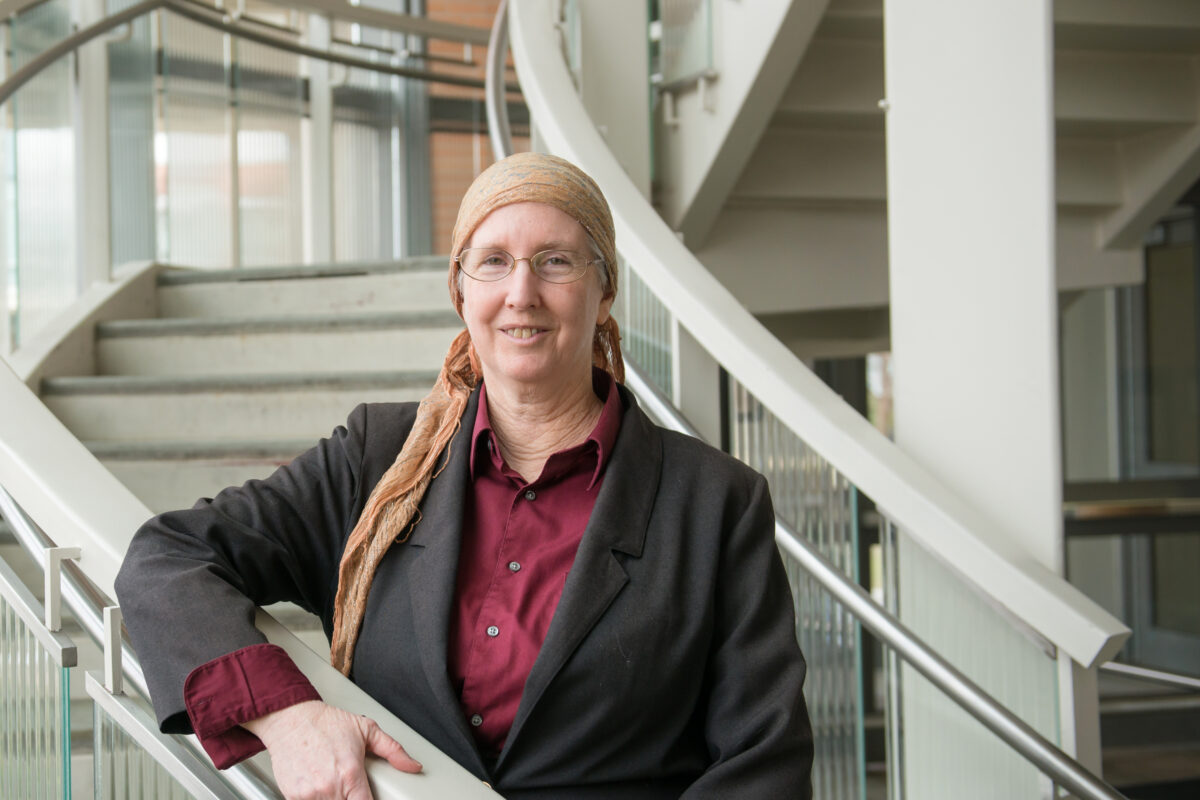 Lorraine Remer in the UMBC Physics Building (Marlayna Demond ’11/UMBC)
“This is really the first time it has been shown, using the modern observational record and at the global scale, that the nutrients carried by dust being deposited on the ocean are creating a response in the surface ocean biology,” Westberry said.
The team analyzed their model’s results in conjunction with satellite observations of phytoplankton around the world, revealing how dust is affecting ocean ecosystems. By developing a baseline understanding, scientists now have a better chance at predicting how phytoplankton will change when patterns of dust deposition change, which will have cascading effects throughout the ocean and beyond.
Models fill the gaps
For the new study, the Oregon State contributors focused on using the satellite data, which measures color changes in the ocean’s surface, to determine phytoplankton health and abundance across time and space.
Remer and UMBC researchers Yingxi Shi and Huisheng Bian focused on the dust model. “Determining how much dust is deposited into the ocean is hard, because much of the deposition occurs during rainstorms when satellites cannot see the dust. That is why we turned to a model,” Remer says. Remer and colleagues used observations to verify an existing NASA model before incorporating the model’s results into the study.
Combining their efforts, the research team found that dust’s effects on phytoplankton vary by region. Nearer the poles, more dust contributed to greater overall abundance of phytoplankton and improved health. Nearer the equator, dust primarily affected phytoplankton health and physiology, but not abundance.
 Atmospheric dust (upper right) from China sweeps across the Korean peninsula and onward. (Image courtesy of NASA Earth Observatory)
Joining forces across scientific fields
The research team plans to continue to work together to better understand the relationship between dust and phytoplankton—and how it may change over time. They are particularly anticipating more advanced satellite data from NASA’s Plankton, Aerosol, Cloud, ocean Ecosystem (PACE) satellite mission, some of which will be collected by the HARP2 instrument designed and built by UMBC.
There are many questions still to answer. “We still don’t understand how the specific nutrients in the dust become available to the phytoplankton in the water,” Remer says, “nor do we understand the role of individual dust sources providing specific nutrients to different regions of the ocean.”
Part of what made this work possible was collaboration between researchers in different fields. “One exciting aspect of this study was working with the oceanographers, who brought an entirely different perspective,” Remer says. “The scientific advances became possible only after the atmospheric scientists and oceanographers joined forces.”
It’s that interdisciplinary collaboration that will enable the team to continue asking and answering important questions about our global ecosystems.
]]>
New findings in Science co-authored by UMBC researchers reveal details of the complex relationship between atmospheric dust and vast populations of phytoplankton at the ocean’s surface. These tiny...
https://umbc.edu/stories/atmospheric-dust-and-ocean-health/
https://my3.my.umbc.edu/api/v0/pixel/news/133334/guest@my.umbc.edu/a3831c0912e50afa6ab21ce3b6872270/api/pixel
cnms
gestar
news
physics
research
science-and-tech
UMBC News & Magazine
https://my3.my.umbc.edu/groups/umbc-news-magazine
https://assets1-my.umbc.edu/system/shared/avatars/groups/000/001/943/24435aa6207c452e7bc15cc74b42c7bb/xsmall.png?1748556657
https://assets1-my.umbc.edu/system/shared/avatars/groups/000/001/943/24435aa6207c452e7bc15cc74b42c7bb/original.png?1748556657
https://assets2-my.umbc.edu/system/shared/avatars/groups/000/001/943/24435aa6207c452e7bc15cc74b42c7bb/xxlarge.png?1748556657
https://assets2-my.umbc.edu/system/shared/avatars/groups/000/001/943/24435aa6207c452e7bc15cc74b42c7bb/xlarge.png?1748556657
https://assets3-my.umbc.edu/system/shared/avatars/groups/000/001/943/24435aa6207c452e7bc15cc74b42c7bb/large.png?1748556657
https://assets1-my.umbc.edu/system/shared/avatars/groups/000/001/943/24435aa6207c452e7bc15cc74b42c7bb/medium.png?1748556657
https://assets2-my.umbc.edu/system/shared/avatars/groups/000/001/943/24435aa6207c452e7bc15cc74b42c7bb/small.png?1748556657
https://assets1-my.umbc.edu/system/shared/avatars/groups/000/001/943/24435aa6207c452e7bc15cc74b42c7bb/xsmall.png?1748556657
https://assets2-my.umbc.edu/system/shared/avatars/groups/000/001/943/24435aa6207c452e7bc15cc74b42c7bb/xxsmall.png?1748556657
UMBC News & Magazine
2
0
false
Mon, 08 May 2023 16:56:17 -0400
New UMBC/Los Alamos research on megafire smoke plumes clarifies what they contain, how they move, and their potential impacts
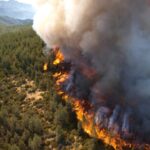
In recent years, large, intense wildfires, known as megafires, have increasingly caused severe damage to forests, homes, and crops. In addition to megafires fatally impacting humans and wildlife alike, they may also be impacting climate change. New research led by UMBC’s Stephen Guimond provides insight into how the large smoke plumes produced by megafires can be more accurately modeled and characterized to improve our understanding of how they might impact the earth.
Guimond, an associate research professor of physics, collaborated with scientists at the Los Alamos National Laboratory to determine the long-term effects of smoke plumes from megafires. Their findings, recently published in the Journal of Advances in Modeling Earth Systems, demonstrates how previous research utilized a model grid spacing that does not sample smoke plumes accurately. These inaccuracies in defining the dynamics of the problem lead to errors in interpretation of the smoke’s properties, vertical and horizontal movement of the plume, and potential climatic effects.
Tracking how smoke rises
The smoke plumes from megafires are voluminous and can rise very high into the upper atmosphere. Initially, the plumes get transported upwards by convective cells and travel into the stratosphere, explains Guimond, who is also a scientist at UMBC’s Goddard Earth Sciences Technology and Research (GESTAR) II (previously known as the Joint Center for Earth Systems Technology).
 Stephen Guimond. (Photo courtesy of Stephen Guimond)
“Once it gets up into the stratosphere, the smoke can stay around for many months, even up to a year or more. The fact that it can stay up there so long means that you can get effects on the solar radiation reaching the surface,” says Guimond. “If you have a big, dark-colored blanket of smoke up there, it’s going to absorb most of the sunlight, which will lead to less sunlight reaching the surface of the earth. Because of this, you could get, over a long period of time, a cooling that happens on the surface of the earth,” among other impacts.
For three years, scientists at Los Alamos studied the chemical properties of smoke plumes by burning objects like trees in a controlled setting to determine the percentages of carbon that the smoke emitted. The scientists evaluated atmospheric particulates, or aerosols, which have a major effect on climate. Guimond used a NASA climate model to determine the carbon characteristics of the smoke plumes, how they rise into the atmosphere, and the underlying causes of rotation within the plumes.
“The measurements we looked at included particle types, the spectrum of the particles, and their sizes,” says Guimond. “We also looked at the contributions of different chemical species such as black carbon, organic carbon, and other chemical compounds that come off of burning materials.”
Assessing previous smoke plume research
The color of the smoke is an important factor, Guimond notes, as different types of smoke have different radiative properties. White smoke is composed mostly of organic carbon: brightly-colored aerosol particles that in large part reflect radiation back into the atmosphere. Black smoke is composed mostly of black carbon: dark-colored aerosol particles that absorb radiation.
The researchers determined that previous models didn’t accurately sample the types of carbon within smoke plumes, leading to miscalculations or incorrect assumptions about the percentage of black carbon the plumes contained.
As the black smoke absorbs solar radiation, the smoke heats up, which can create a lofting effect that pushes the smoke higher into the atmosphere. The higher the smoke rises, the longer it stays in the stratosphere. The longer it stays, the more time it has to impact the surface of the earth. This means that inaccurate characterization of the percentage of black carbon in wildfire smoke can lead to inaccurate calculations of the lofting effect, height of the plume and stratospheric lifetime, as well as climatic effects.
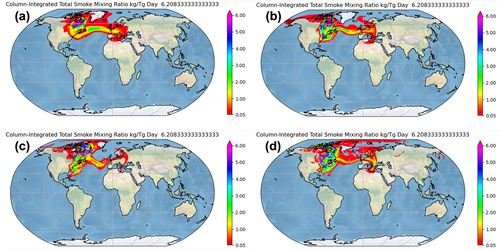 Figure 1
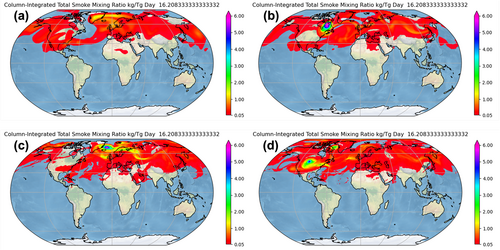 Figure 2
Figure 1 (left): The horizontal structure of the smoke plume at 6.2 days by vertically integrating the total smoke mixing ratio over the entire model atmosphere into the simulations for varying resolutions: (a) 2.0° (b) 1.0° (c) 0.25° and (d) 7 km.

    Figure 2 (right): The same as figure 1, except at 16.2 days. The horizontal structure of the smoke plume is significantly different between the various resolution simulations. (Images courtesy of Stephen Guimond and the Journal of Advances in Modeling Earth Systems)
Limits in how previous research represented the atmosphere also made for less accurate smoke plume simulations, Guimond said. He notes that prior smoke plume research used “coarse representation of the smoke plume in the model calculations, which has significant downstream effects on all other components of this problem, including the conclusions drawn from the research.”
Guimond hopes that his research can improve understanding of the dynamics of this problem: tracking of atmospheric motion and forces in three-dimensions, and how phenomena like rotating smoke plumes form and decay.
“Scientists need to accurately simulate the dynamics in order to get more accurate answers about aerosol properties inside the smoke plumes,” Guimond says, “such as how much of the smoke is black carbon, how long it is going to last in the stratosphere, how high it rises, and its effects on the radiation of the earth.”
With more accurate models and simulations, future research will be able to better inform climate policy and megafire response.
]]>
In recent years, large, intense wildfires, known as megafires, have increasingly caused severe damage to forests, homes, and crops. In addition to megafires fatally impacting humans and wildlife...
https://umbc.edu/stories/research-megafire-smoke-plumes/
https://my3.my.umbc.edu/api/v0/pixel/news/132851/guest@my.umbc.edu/1e34f79fff48056e08945b2093816fad/api/pixel
cnms
gestar
jcet
news
physics
rca-2
research
science-and-tech
UMBC News & Magazine
https://my3.my.umbc.edu/groups/umbc-news-magazine
https://assets1-my.umbc.edu/system/shared/avatars/groups/000/001/943/24435aa6207c452e7bc15cc74b42c7bb/xsmall.png?1748556657
https://assets1-my.umbc.edu/system/shared/avatars/groups/000/001/943/24435aa6207c452e7bc15cc74b42c7bb/original.png?1748556657
https://assets2-my.umbc.edu/system/shared/avatars/groups/000/001/943/24435aa6207c452e7bc15cc74b42c7bb/xxlarge.png?1748556657
https://assets2-my.umbc.edu/system/shared/avatars/groups/000/001/943/24435aa6207c452e7bc15cc74b42c7bb/xlarge.png?1748556657
https://assets3-my.umbc.edu/system/shared/avatars/groups/000/001/943/24435aa6207c452e7bc15cc74b42c7bb/large.png?1748556657
https://assets1-my.umbc.edu/system/shared/avatars/groups/000/001/943/24435aa6207c452e7bc15cc74b42c7bb/medium.png?1748556657
https://assets2-my.umbc.edu/system/shared/avatars/groups/000/001/943/24435aa6207c452e7bc15cc74b42c7bb/small.png?1748556657
https://assets1-my.umbc.edu/system/shared/avatars/groups/000/001/943/24435aa6207c452e7bc15cc74b42c7bb/xsmall.png?1748556657
https://assets2-my.umbc.edu/system/shared/avatars/groups/000/001/943/24435aa6207c452e7bc15cc74b42c7bb/xxsmall.png?1748556657
UMBC News & Magazine
0
0
false
Fri, 21 Apr 2023 08:02:38 -0400
Fri, 21 Apr 2023 08:02:38 -0400
CIDER program supports new approach to measuring nursing home quality, plus more research collaborations

Assessing the quality of nursing home care has historically been a challenging and complex process that considers only a portion of the factors involved—generally, clinical indicators reported by the nursing homes themselves. UMBC researchers are collaborating on a new measure of nursing home quality that combines care experiences with clinical data. And they are doing it with funding from a new UMBC program designed to support novel research across different teams.
Principal investigator Roberto Millar M.A ’19, sociology, Ph.D. ’20, gerontology, who is a policy analyst advanced at The Hilltop Institute, is collaborating on the study with Nancy Kusmaul, associate professor of social work, and Ian Stockwell, associate professor of information systems. Their goal is to create “a more complete measure that nursing homes will be able to use to evaluate how they’re doing to improve the resident experience,” says Kusmaul.
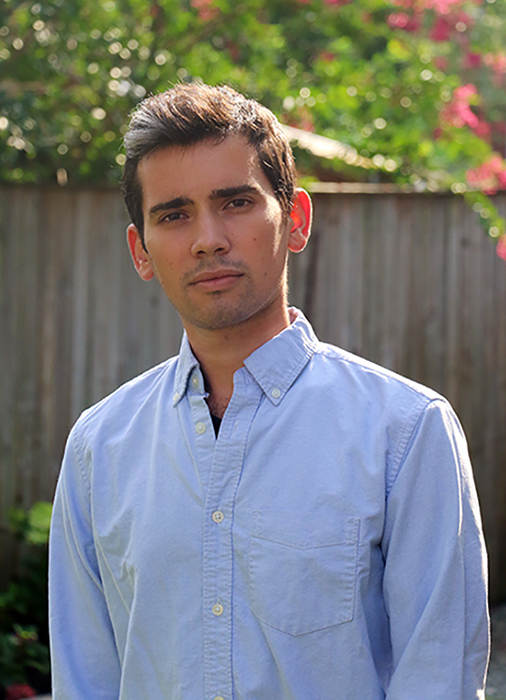 Roberto Millar (Image courtesy of The Hilltop Institute)
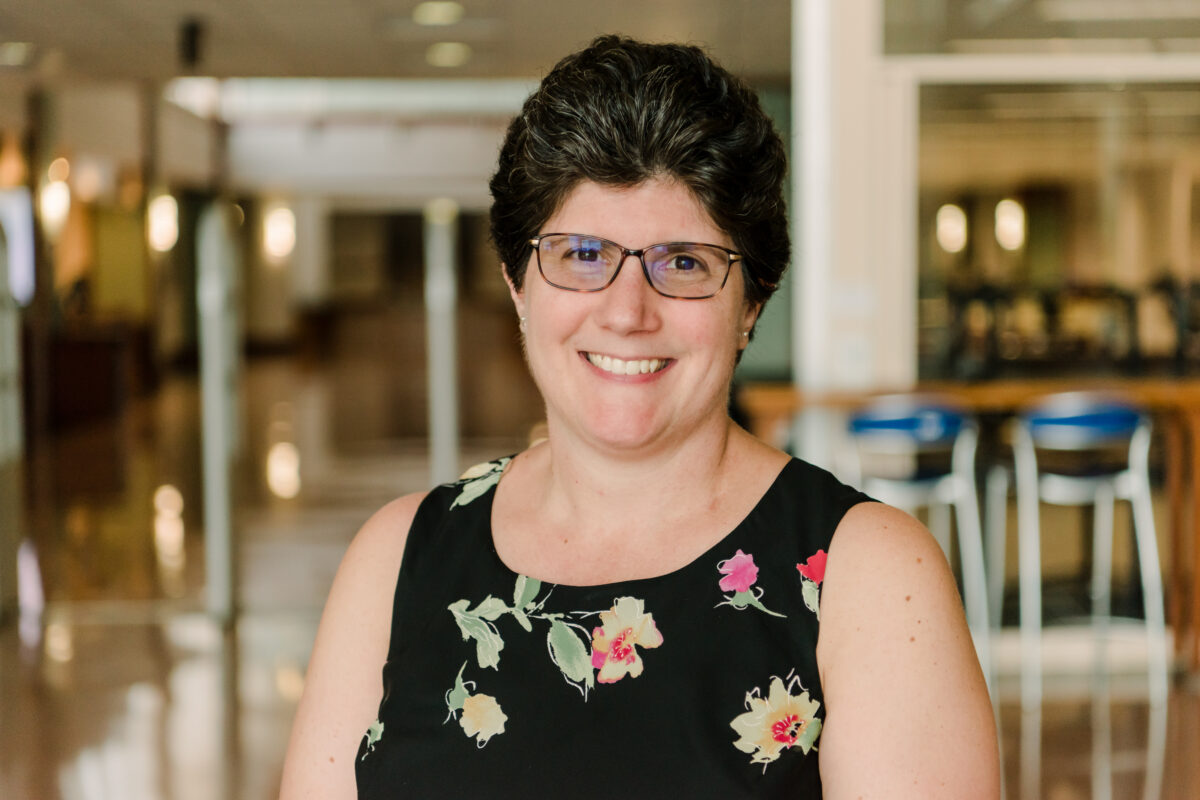 Nancy Kusmaul (Marlayna Demond ’11/UMBC)
 Ian Stockwell (Image courtesy of The Hilltop Institute)
The researchers will, for the first time, combine data from the Centers for Medicare and Medicaid Services’ Care Compare database and results of the Maryland Family Satisfaction Survey. The survey assesses the experiences of family members with loved ones in Maryland nursing homes and, Kusmaul notes, offers a unique approach to measuring quality of care.
“There are no national measures of nursing home quality that consider that side of things,” she explains. “When we think about what quality is and what are the outcomes that we’re measuring, we have to think about the different perspectives of what is good nursing home care.”
Creating a new national model
On a national level, the typical approach to measuring nursing home care focuses on clinical indicators that are measured quantitatively, Millar notes. This includes factors such as number of hospitalizations, vaccination rates, and staff training. It does not include more qualitative data that considers the experiences of people in nursing homes or their families. Maryland is one of only three states that assesses family satisfaction.
“What’s key here is bringing these two approaches together to see if these quantitative measures from the federal approach are actually predictive of family satisfaction across more qualitative domains,” says Millar.
“What we’re talking about is perhaps scaling this collection of qualitative data to a national level that does not exist right now,” says Stockwell. “We want to better measure quality of care to drive changes in the nursing home industry that would best help the patients.”
The team hopes to eventually create a more robust technical infrastructure to capture this data. Eventually, they might be able to utilize machine learning and artificial intelligence to better match prospective care recipients with the most suitable care facility.
Funding new collaborations
The nursing home study was funded through UMBC’s Office of Research Development via the new CIDER (Center and Institute Departmentally-Engaged Research) program. This internal funding opportunity brings together researchers from different disciplines and types of research units across UMBC.
At UMBC, a large volume of research and creative activity (RCA) happens within academic departments and colleges as well as outside of them, in a range of research centers and institutes. In fiscal year 2022, centers and institutes outside of academic departments were responsible for 48.6% of UMBC’s sponsored RCA expenditures ($42.3 million), with most of the rest falling within the departments. But while both groups contribute substantially, they don’t often receive shared project funding to collaborate.
CIDER was designed to increase collaboration between these groups. In this first round, four research teams were each awarded a $50,000 CIDER grant for 18 months to pursue their studies.
In addition to Millar’s team, the other three winning proposals include research across a very broad range of fields:
- “Visualizing the Factors in K-12 Education Success” is led by Lee Boot, director of UMBC’s Imaging Research Center (IRC), with co-investigator Amy Tondreau, assistant professor of education, and Anita Komlodi, associate professor of information systems and associate director of the IRC.
- “Harnessing the Power of Machine Learning to Discover What Powers Distant Galaxies” is led by Antara Basu-Zych, the Center for Research and Exploration in Space Science & Technology II, with co-investigator Sanjay Purushotham, assistant professor of information systems, and Kristen Garofali, NASA.
- “Model Development for Polarimetric Remote Sensing of Clouds in the Thermal Infrared” is led by Xiaoguang Xu, Goddard Earth Sciences Technology and Research II, with co-investigator Vanderlei Martins, professor of physics, and Jie Gong, NASA.
 Don Engel (Marlayna Demond ’11/UMBC)
Don Engel, associate vice president for research development and director of the Center for Space Sciences and Technology (CSST), helped to create CIDER. “We wanted to find a systemic way to make sure that everyone could draw value from being close to other researchers within the institution,” says Engel. “In addition to that, we wanted to make sure that research center faculty have internal funding opportunities that better connect them with the rest of the university. This better integrates them into the university and also makes sure that they have more opportunities to both contribute to and draw from the university’s other strengths and dimensions.”
Additional CIDER program creators include Cynthia Woodcock, director of The Hilltop Institute and Christine Mallinson, professor of language, literacy, and culture (LLC) and director of the Center of Social Science Scholarship. Kara Seidel ’18, psychology, an LLC doctoral student, also provided support in the program’s creation.
Program founders hope that CIDER can help kick-start successful partnerships that generate additional external support and grow far into the future. “We were really excited to see how much interest we had in this program,” says Engel. “We hope that our researchers can draw from each other’s expertise and this funding opportunity can enable the awardees to get subsequent grant funding.”
Ian Stockwell finds this kind of collaborative effort essential and can already see its growing impact. “It’s important for UMBC to facilitate the interaction of faculty across departments and in research centers. We are grateful for this opportunity in particular.”
]]>
Assessing the quality of nursing home care has historically been a challenging and complex process that considers only a portion of the factors involved—generally, clinical indicators reported by...
https://umbc.edu/stories/cider-program-nursing-home-study/
https://my3.my.umbc.edu/api/v0/pixel/news/131814/guest@my.umbc.edu/34544d5bfa4acb007b99792edf767459/api/pixel
coeit
gestar
hilltopinstitute
information-systems
news
policy-and-society
rca-2
research
socialwork
UMBC News & Magazine
https://my3.my.umbc.edu/groups/umbc-news-magazine
https://assets1-my.umbc.edu/system/shared/avatars/groups/000/001/943/24435aa6207c452e7bc15cc74b42c7bb/xsmall.png?1748556657
https://assets1-my.umbc.edu/system/shared/avatars/groups/000/001/943/24435aa6207c452e7bc15cc74b42c7bb/original.png?1748556657
https://assets2-my.umbc.edu/system/shared/avatars/groups/000/001/943/24435aa6207c452e7bc15cc74b42c7bb/xxlarge.png?1748556657
https://assets2-my.umbc.edu/system/shared/avatars/groups/000/001/943/24435aa6207c452e7bc15cc74b42c7bb/xlarge.png?1748556657
https://assets3-my.umbc.edu/system/shared/avatars/groups/000/001/943/24435aa6207c452e7bc15cc74b42c7bb/large.png?1748556657
https://assets1-my.umbc.edu/system/shared/avatars/groups/000/001/943/24435aa6207c452e7bc15cc74b42c7bb/medium.png?1748556657
https://assets2-my.umbc.edu/system/shared/avatars/groups/000/001/943/24435aa6207c452e7bc15cc74b42c7bb/small.png?1748556657
https://assets1-my.umbc.edu/system/shared/avatars/groups/000/001/943/24435aa6207c452e7bc15cc74b42c7bb/xsmall.png?1748556657
https://assets2-my.umbc.edu/system/shared/avatars/groups/000/001/943/24435aa6207c452e7bc15cc74b42c7bb/xxsmall.png?1748556657
UMBC News & Magazine
0
0
false
Wed, 15 Mar 2023 17:19:27 -0400
Wed, 15 Mar 2023 17:19:27 -0400
New center director to take NASA-supported Earth science research into next era at UMBC
The UMBC-led Goddard Earth Science Technology and Research (GESTAR) Center II includes over 120 researchers advancing Earth and atmospheric sciences and launching the next generation of scientists. GESTAR II scientists and engineers are tracking the effects of shipping regulations on air pollution, predicting fires in India, and much more, often relying on data collected via remote sensing from NASA satellites.
NASA awarded $72 million for UMBC to establish GESTAR II in fall 2021, in collaboration with primary partner Morgan State University and six other institutions. After a national search, a new director is taking the helm of this high-impact collaboration.
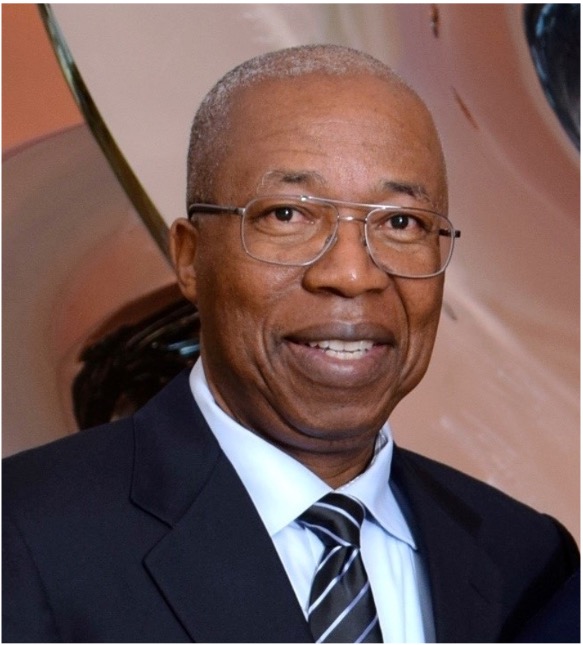 Charles Ichoku (image courtesy of Ichoku)
The new director, Charles Ichoku, brings deep and well-rounded experience in Earth science research, at NASA, and in student development programs—exactly the elements GESTAR II brings together and hopes to expand upon. Ichoku comes to GESTAR II from concurrent roles as professor of Earth and environmental sciences at Howard University and as the Distinguished Scientist of the National Oceanic and Atmospheric Administration (NOAA) Cooperative Science Center in Atmospheric Sciences and Meteorology (NCAS-M). Prior to that, he served at NASA Goddard Space Flight Center in Greenbelt, Maryland for 20 years in various research and management roles.
“Dr. Ichoku brings impressive credentials to this important leadership position at UMBC, not only as a world-class scientist, but also as a long-term NASA-based scientist and program manager,” shares Karl V. Steiner, Vice President for Research and Creative Achievement at UMBC. “He is a perfect fit for both GESTAR II and UMBC.”
Earth science from hundreds of miles up
Ichoku’s research program focuses on applying remote sensing—collecting data from a significant distance, most often from satellites orbiting Earth—and other data to study large-scale processes that affect the environment on land, weather, and air quality. In addition to directing GESTAR II, Ichoku will have an appointment as professor of geography and environmental systems (GES) at UMBC, where he will continue to conduct research, mentor students, and teach courses.
“GES is a good fit,” Ichoku says, “because I’m not just looking at developing the approaches and instrumentation to measure specific parameters, but I’m interested in how you apply the data, knowledge, and science to actually understand phenomena that happen on the ground and in the atmosphere.”
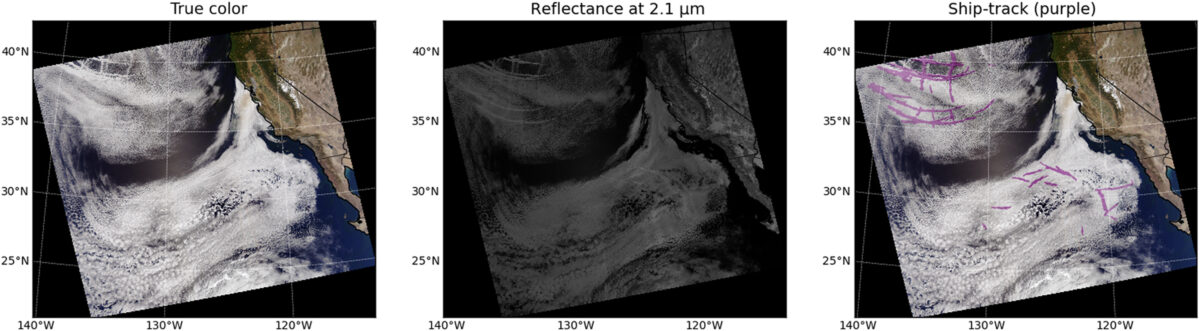 An image collected by NASA’s MODIS satellite of the U.S. West Coast (left) shows tracks of air pollution generated by shipping traffic (purple lines, right), which was detected by a GESTAR II research team’s algorithm.
Elevating African research
Ichoku’s work is influenced by his youth in West Africa, and focuses on phenomena that especially affect that region. For example, frequent agricultural fires send various particles into the atmosphere, which can affect air quality, precipitation, and more. In addition, Lake Chad in Central Africa has nearly dried up over the last few decades in part because of severe drought, resulting in widespread conflict and suffering. Drought also sends dust and other particles into the atmosphere, affecting air quality. These particles and other environmental components (like clouds) interact with radiation from the Sun, driving processes that can adversely impact human life on Earth’s surface, Ichoku explains.
“I’m very interested in seeing research and the application of its results improve in Africa overall, but in particular in Western and Central Africa,” Ichoku says. “So I hope to be able to continue research in that region.”
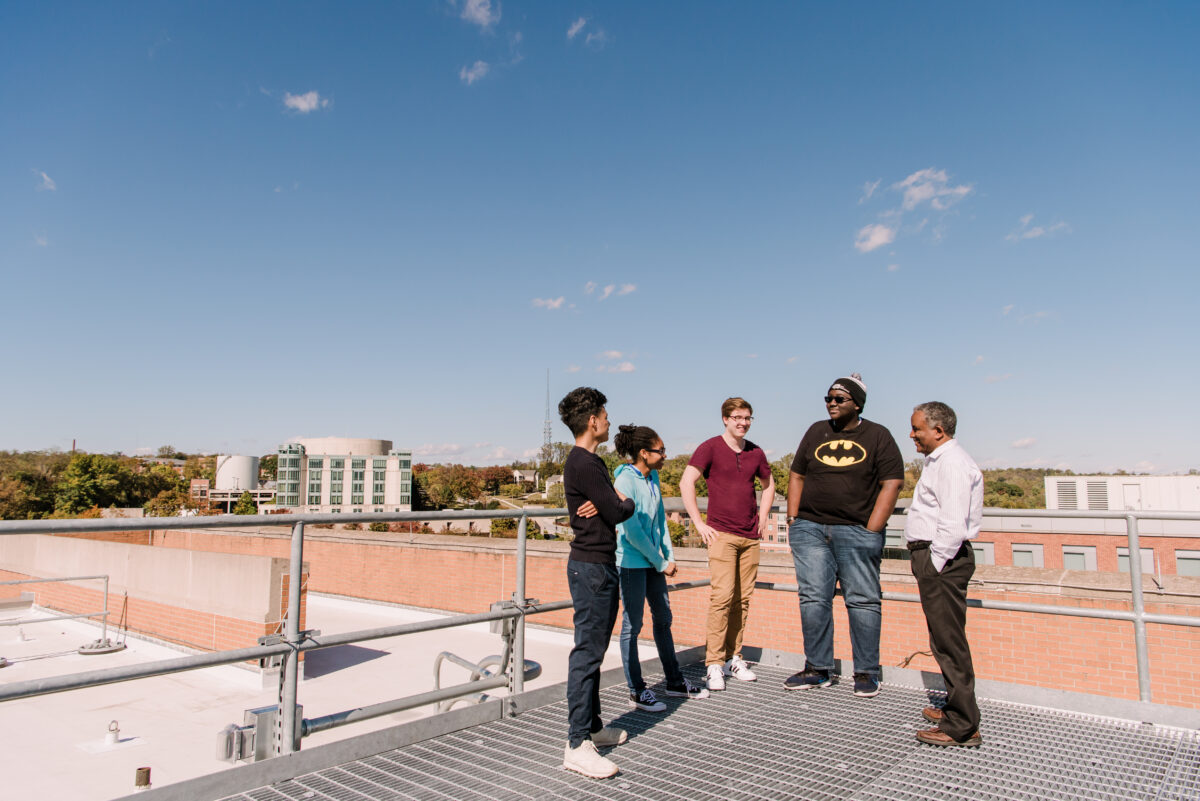 Belay Demoz, right, talks with students on the roof of the UMBC Physics Building. (Marlayna Demond ’11/UMBC)
To that end, a few years ago Ichoku joined with colleagues to initiate the U.S.-West African Coastal Resilience Research Consortium (CRRC). In addition, he recently played an important role in the inauguration of the African Meteorological Society (AfMS), where he serves as chair of the Diaspora and Friends of Africa Committee. The committee involves a significant number of colleagues who are similarly passionate about the advancement of scientific research and applications in Africa.
Those colleagues include GESTAR II’s inaugural director, Belay Demoz, whose research is similarly inspired by experiences with drought, displacement, and resulting conflict during his youth in East Africa—challenges that continue today. Demoz, professor of physics at UMBC, will continue in his departmental role after Ichoku takes up his post.
Demoz notes Ichoku’s extensive experience with Howard University (which is also a partner in UMBC’s Center for Space Sciences Technology) and at NASA as strengths, and shares his interest in expanding UMBC’s research and education efforts in Africa. “I’m looking forward to him leading the next iteration of GESTAR II, and increasing involvement of GES in what we do,” Demoz says.
Clearing the pathway for students
In addition to his own research, Ichoku has demonstrated a deep commitment to student research and success throughout his career. He moved from NASA to Howard and NCAS-M so he could focus more on student training, particularly supporting underrepresented minority students in Earth science.
With NCAS-M, on top of his typical professorial duties, Ichoku was responsible for matching students with appropriate research projects and NOAA mentors across 13 institutions. He also supported students’ success throughout their graduate projects, ensuring they persisted to graduation and were prepared to be competitive for sought-after professional roles, often at NOAA, NASA, or in academia.
With Demoz, Ichoku also served as co-PI for the NASA-funded Student Airborne Science Activation (SaSa) project, involving three NASA centers and six minority-serving Institutions, including UMBC. This past summer, 24 students, including four from UMBC, spent four weeks at UMBC as part of the SaSa program.
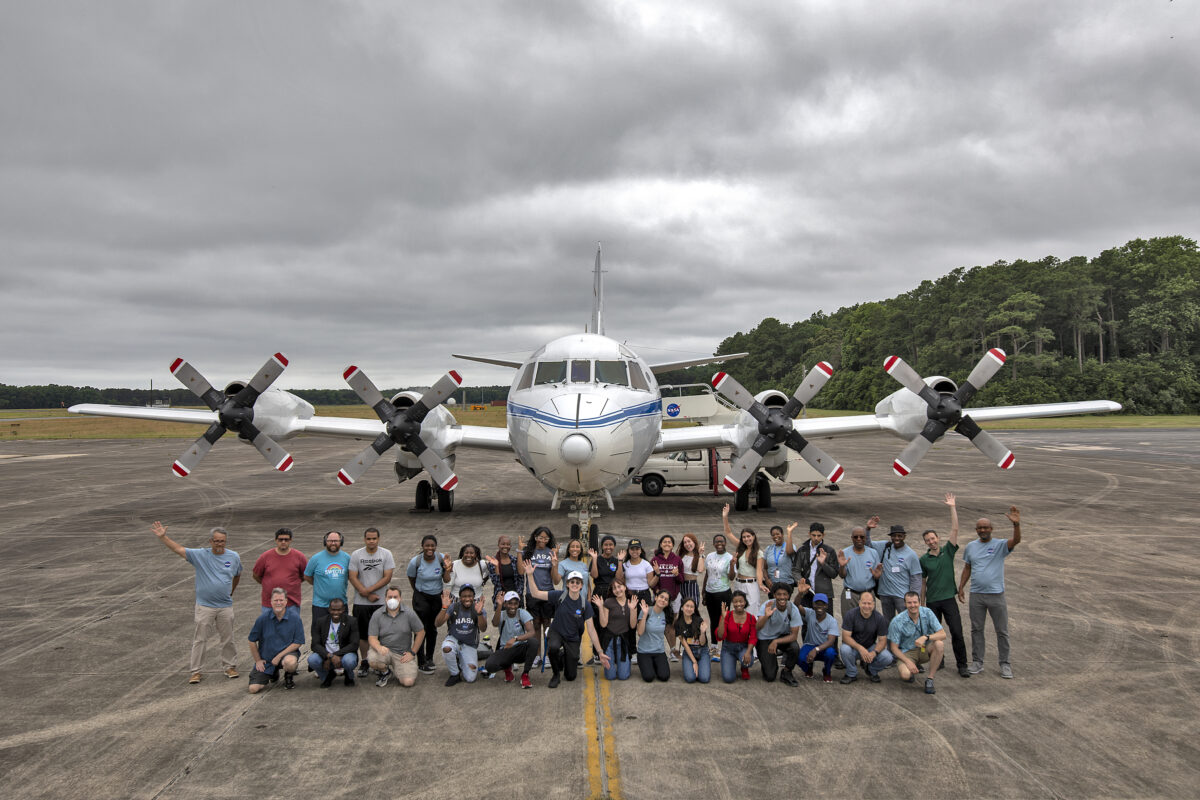 Participants in the 2022 SaSa program at NASA Wallops Flight Facility. (Image courtesy of Belay Demoz)
Now at GESTAR II, Ichoku is interested in continuing to enhance the connection between researchers, who often conduct their work at Goddard Space Flight Center, and members of the larger UMBC community—including students at all levels.
“I think it’s a good thing for a researcher to connect with students. Even if they are not teaching them in a traditional class setting, they can be mentors for interns, which I did myself for many years while I was at NASA as a research scientist,” Ichoku says. “I know that our faculty have a lot to offer to our students, so I will do my best to help facilitate that. My role will be to support the clearing of the pathway and the removal of any obstacles.”
A shining example
Ichoku also brings to GESTAR II and UMBC substantial experience in deepening relationships across institutions. He already has relationships with the scientific leads at other GESTAR II institutions, such as the Pennsylvania State University, Arizona State University, and University of Colorado Boulder, and is excited to continue working with them in a new capacity.
“When we start talking, ideas will flow,” Ichoku says. “We will then synthesize the ideas into strategic initiatives and make them happen.”
Moving forward, Ichoku plans to continue to emphasize top-quality research while enhancing opportunities for students and building bridges between the GESTAR II institutions. And he is especially looking forward to doing all of that at UMBC.
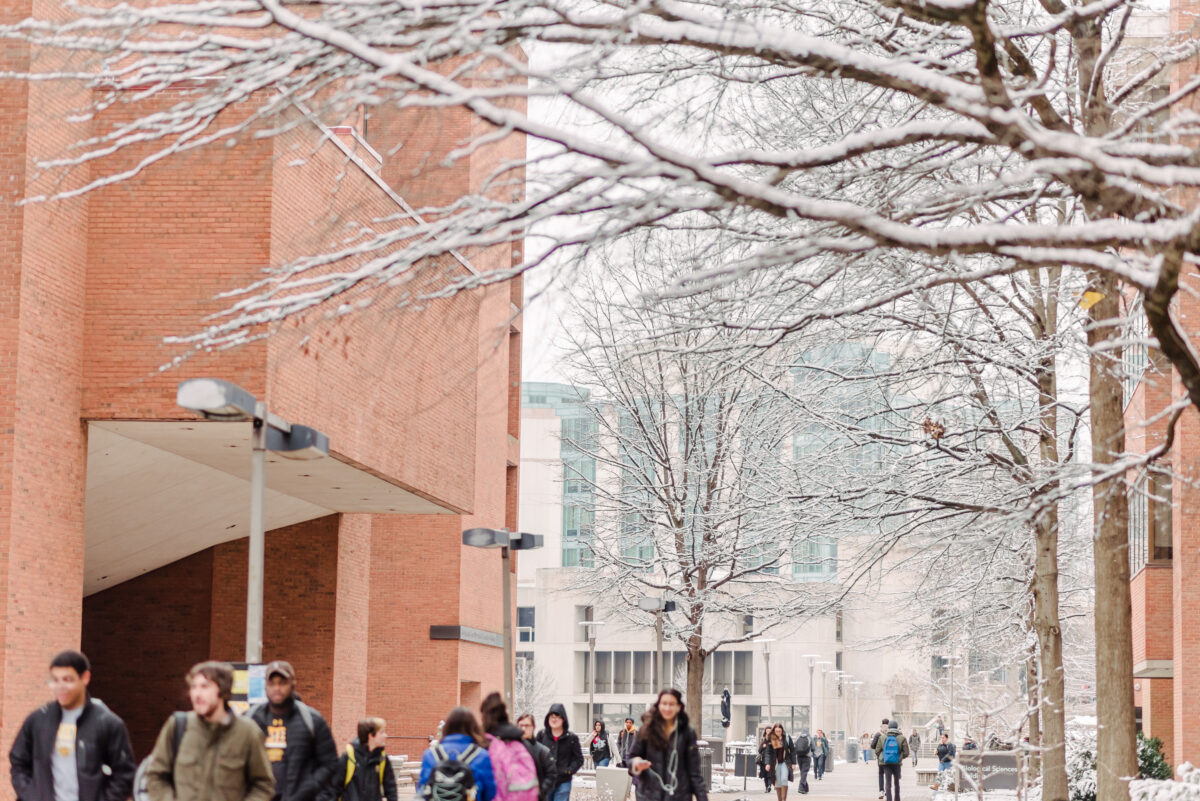 Students bustle through UMBC’s Academic Row on a winter day. (Marlayna Demond ’11/UMBC)
The opportunity to lead GESTAR II “is both a great pleasure and an honor for me, as I have always admired UMBC for being a shining example in all areas of university performance, including education, scholarship, research, innovation, technology, diversity, sports, environmental sustainability, and community outreach,” Ichoku says. “I am proud of UMBC for attaining the status of Carnegie R1 Doctoral Institution.”
“It is also a great blessing to have this wonderful opportunity to contribute to scientific discoveries and knowledge expansion for human advancement through NASA, and, in particular, Goddard Space Flight Center,” he adds. “I feel highly privileged to be involved in a program that connects two of the organizations that perform at the highest levels in their respective domains of activity, namely academia (UMBC) and space (NASA).”
]]>
The UMBC-led Goddard Earth Science Technology and Research (GESTAR) Center II includes over 120 researchers advancing Earth and atmospheric sciences and launching the next generation of...
https://umbc.edu/stories/new-director-to-take-earth-science-research-into-next-era/
https://my3.my.umbc.edu/api/v0/pixel/news/130456/guest@my.umbc.edu/84327406f7fb19fbcc10b317b3683061/api/pixel
cahss
cnms
ges
gestar
news
physics
science-and-tech
UMBC News & Magazine
https://my3.my.umbc.edu/groups/umbc-news-magazine
https://assets1-my.umbc.edu/system/shared/avatars/groups/000/001/943/24435aa6207c452e7bc15cc74b42c7bb/xsmall.png?1748556657
https://assets1-my.umbc.edu/system/shared/avatars/groups/000/001/943/24435aa6207c452e7bc15cc74b42c7bb/original.png?1748556657
https://assets2-my.umbc.edu/system/shared/avatars/groups/000/001/943/24435aa6207c452e7bc15cc74b42c7bb/xxlarge.png?1748556657
https://assets2-my.umbc.edu/system/shared/avatars/groups/000/001/943/24435aa6207c452e7bc15cc74b42c7bb/xlarge.png?1748556657
https://assets3-my.umbc.edu/system/shared/avatars/groups/000/001/943/24435aa6207c452e7bc15cc74b42c7bb/large.png?1748556657
https://assets1-my.umbc.edu/system/shared/avatars/groups/000/001/943/24435aa6207c452e7bc15cc74b42c7bb/medium.png?1748556657
https://assets2-my.umbc.edu/system/shared/avatars/groups/000/001/943/24435aa6207c452e7bc15cc74b42c7bb/small.png?1748556657
https://assets1-my.umbc.edu/system/shared/avatars/groups/000/001/943/24435aa6207c452e7bc15cc74b42c7bb/xsmall.png?1748556657
https://assets2-my.umbc.edu/system/shared/avatars/groups/000/001/943/24435aa6207c452e7bc15cc74b42c7bb/xxsmall.png?1748556657
UMBC News & Magazine
0
0
false
Fri, 27 Jan 2023 19:40:56 -0500
Fri, 27 Jan 2023 19:40:56 -0500
UMBC researchers listed among the world’s top 2% of most-cited scientists and engineers
More than 40 active UMBC researchers are listed among the top 2% of the world’s most-cited scientists and engineers in an analysis recently published by Elsevier.
These researchers include faculty across all three of UMBC’s academic colleges as well as UMBC’s NASA-funded centers, such as the Goddard Earth Sciences Technology and Research (GESTAR II) Center. Their work covers an incredibly diverse array of topics. Represented academic departments include:
- biological sciences
- chemical, biochemical, and environmental engineering
- chemistry and biochemistry
- computer science and electrical engineering
- geography and environmental systems
- information systems
- mathematics and statistics
- mechanical engineering
- physics
- psychology
“We perform research to further our understanding of how the various aspects of our world function,” says Karl V. Steiner, vice president for research and creative achievement. “One of the highest recognitions in the scientific community is when other members of this community cite our work.”
He notes, “The Elsevier analysis shows that our researchers are truly impacting the scientific community in a significant way.”
History of citation honors
The list includes faculty researchers who have also received other “highly cited” researcher accolades. In 2022, Erle Ellis, professor of geography and environmental systems (GES), was featured on Clarivate’s Highly Cited Researchers list, which includes papers ranked in the top 1% of citations within Clarivate’s Web of Science database. About 0.1% of the world’s researchers have received this distinction. Ellis is known for his transformational work on human-managed ecosystems, with his research described as top discovery of 2021 by the Smithsonian National Museum of Natural History.
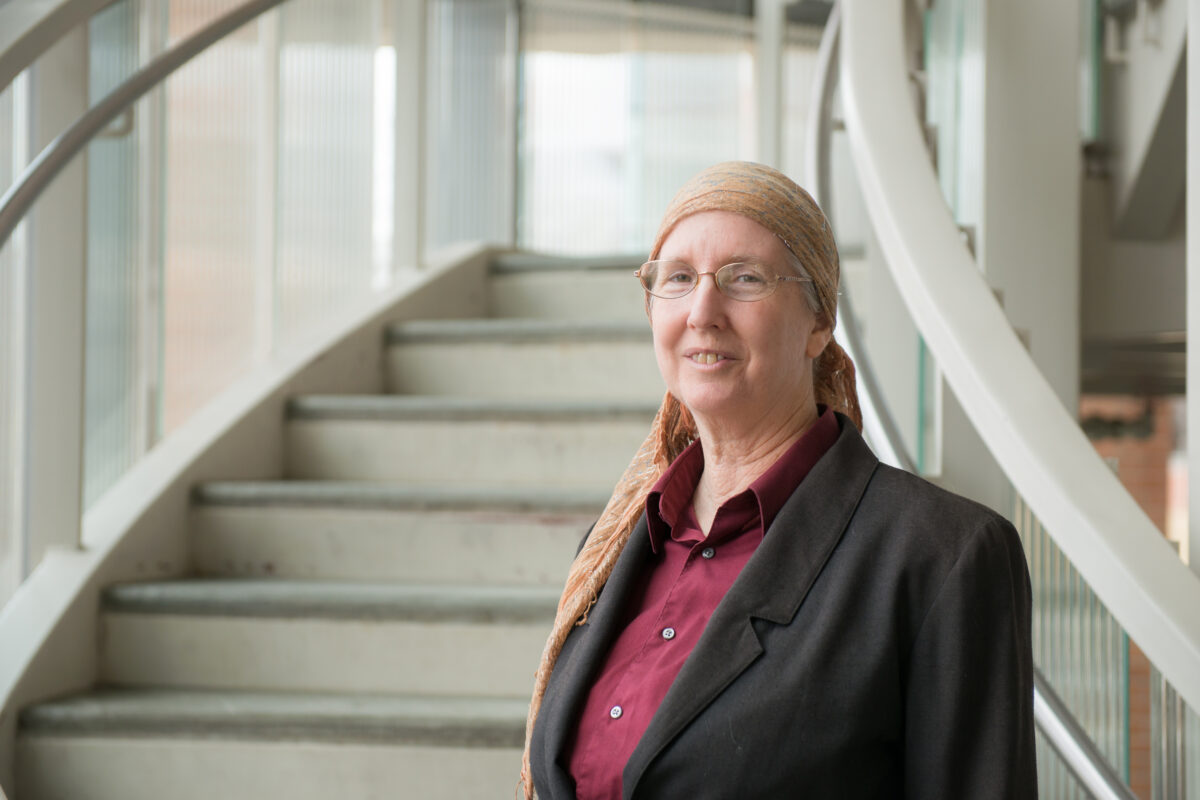 Lorraine Remer (Marlayna Demond ’11/UMBC)
Lorraine Remer, research professor for the Joint Center for Earth Systems Technology, who is affiliated with both GES and physics, is frequently honored for her geophysics publications. She received the 2019 UMBC Research Faculty Excellence Award following her recognition as one of “The Most Influential Scientific Minds” on the Thomson Reuters highly cited researchers list.
Anupam Joshi, director of UMBC’s Center for Cybersecurity and professor and chair of computer science and electrical engineering, was also included on Elsevier’s highly-cited list. His career trajectory demonstrates how UMBC faculty balance high-impact research with other forms of leadership. He has published more than 275 papers, has been granted nine patents, and has obtained research support from a variety of federal and industrial sources. At the same time, he is now serving as a 2022–23 American Council on Education (ACE) Fellow, an intensive program focused on agility and innovative problem solving among higher education leaders.
Measuring impact
This latest most-cited researchers list is based on data annually compiled from author profiles in Elsevier’s abstract and citation database, Scopus.
Elsevier’s 2022 database of standardized citation indicators classifies researchers into 22 fields and 174 subfields. Those with a composite indicator (c-score) within the top 2% of each subfield are included in the most-cited list. The list’s authors indicate that c-score is used because it “focuses on impact (citations) rather than productivity (number of publications)” and because it includes granular information on authorship, including co-authorship and author position (e.g., single, first, or last author).
]]>
More than 40 active UMBC researchers are listed among the top 2% of the world’s most-cited scientists and engineers in an analysis recently published by Elsevier. These researchers include...
https://umbc.edu/stories/most-cited-scientists-2022/
https://my3.my.umbc.edu/api/v0/pixel/news/130830/guest@my.umbc.edu/0a8209cd9947fb4136c6c8893cdbfae1/api/pixel
cahss
cbee
cnms
coeit
csee
cybersecurity
ges
gestar
is
jcet
meche
news
physics
rca-1
research
science-and-tech
UMBC News & Magazine
https://my3.my.umbc.edu/groups/umbc-news-magazine
https://assets1-my.umbc.edu/system/shared/avatars/groups/000/001/943/24435aa6207c452e7bc15cc74b42c7bb/xsmall.png?1748556657
https://assets1-my.umbc.edu/system/shared/avatars/groups/000/001/943/24435aa6207c452e7bc15cc74b42c7bb/original.png?1748556657
https://assets2-my.umbc.edu/system/shared/avatars/groups/000/001/943/24435aa6207c452e7bc15cc74b42c7bb/xxlarge.png?1748556657
https://assets2-my.umbc.edu/system/shared/avatars/groups/000/001/943/24435aa6207c452e7bc15cc74b42c7bb/xlarge.png?1748556657
https://assets3-my.umbc.edu/system/shared/avatars/groups/000/001/943/24435aa6207c452e7bc15cc74b42c7bb/large.png?1748556657
https://assets1-my.umbc.edu/system/shared/avatars/groups/000/001/943/24435aa6207c452e7bc15cc74b42c7bb/medium.png?1748556657
https://assets2-my.umbc.edu/system/shared/avatars/groups/000/001/943/24435aa6207c452e7bc15cc74b42c7bb/small.png?1748556657
https://assets1-my.umbc.edu/system/shared/avatars/groups/000/001/943/24435aa6207c452e7bc15cc74b42c7bb/xsmall.png?1748556657
https://assets2-my.umbc.edu/system/shared/avatars/groups/000/001/943/24435aa6207c452e7bc15cc74b42c7bb/xxsmall.png?1748556657
UMBC News & Magazine
0
0
false
Wed, 25 Jan 2023 11:47:33 -0500
Fri, 10 Feb 2023 17:01:24 -0500
UMBC-led team generates first global map of cargo ship pollution, revealing effects of fuel regulations

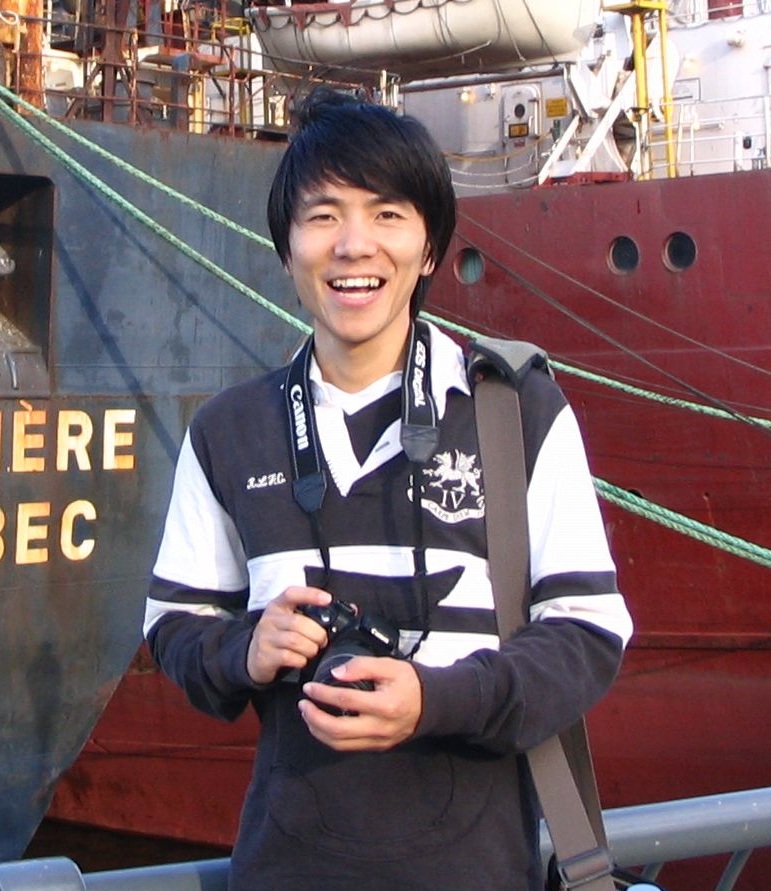 Tianle Yuan. (Image courtesy of Tianle Yuan)
A new study in Science Advances led by UMBC’s Tianle Yuan used satellite data from 2003 – 2020 to determine the effect of fuel regulations on pollution from cargo ships. The research team’s data revealed significant changes in sulfur pollution after regulations went into effect in 2015 and 2020. Their extensive data set can also contribute to answering a bigger question: How do pollutants and other particles interact with clouds to affect global temperatures overall?
Tiny particles in the atmosphere, which are called aerosols and include pollution, can harm human health, but they also often have a cooling effect on the planet because of the way they interact with clouds. However, estimates of the extent of that effect range by a factor of 10—not very precise for something so important.
“How much cooling the aerosols cause is a big unknown right now, and that’s where ship tracks come in,” says Yuan, an associate research scientist at the Goddard Earth Sciences Technology and Research (GESTAR) II Center.
Sea of data
When pollutant particles from ships enter clouds low in the atmosphere, they decrease the size of individual cloud droplets without changing the total volume of the cloud. That creates more droplet surface area, which reflects more energy entering Earth’s atmosphere back to space and cools the planet.
Instruments on satellites can detect these differences in droplet size. And the air over the ocean is generally very clean, making the relatively narrow ship tracks that snake across the ocean easy to pick out. “Most of the original cloud is unpolluted, and then some of it is polluted by the ship, so that creates a contrast,” Yuan explains.
While ship tracks can be relatively obvious in satellite data, you have to know where to look and have the time and resources to search. Before advances in computing power and machine learning, Yuan says, Ph.D. students could focus their entire thesis on identifying a group of ship tracks in satellite data.
“What we did is automate this process,” Yuan says. His group “developed an algorithm to automatically find these ship tracks from the sea of data.”
This huge advance allowed them to generate a comprehensive, global map of ship tracks over an extended period (18 years) for the first time. Next, they will share it with the world—opening the door for anyone to dig into the data and make further discoveries.
A figure from the new study shows an image collected by NASA’s MODIS satellite of the U.S. West Coast (left) overlaid with ship tracks detected by the research team’s algorithm (right).
Disappearing act
Even before pollution-limiting regulations were put into place, Yuan and his colleagues found that ship tracks didn’t occur everywhere ships were traveling. Only areas with certain types of low cloud cover had ship tracks, which is useful for adjusting the role of clouds in climate models. They also found that after Europe, the U.S., and Canada instated Emission Control Areas (ECAs) along their coastlines in 2015, ship tracks nearly disappeared in those regions, demonstrating the efficacy of such regulations for reducing cargo ship pollution in port cities.
However, shipping companies didn’t necessarily reduce their pollution output across the board. Instead, they made changes to adapt to the new rules. Ports in northern Mexico (not part of the ECA system) saw increased activity, and pollution “hot spots” built up along the boundaries of the ECAs as ships altered their routes to spend as few miles as possible inside the restrictive zones.
In 2020, though, an international agreement set a much more restrictive standard for shipping fuel across the entirety of global oceans, rather than only near coastlines. After that, the only ship tracks the team’s algorithm could detect were those in the cleanest clouds. In clouds with even mild background pollution, the presumed ship tracks blended right in.
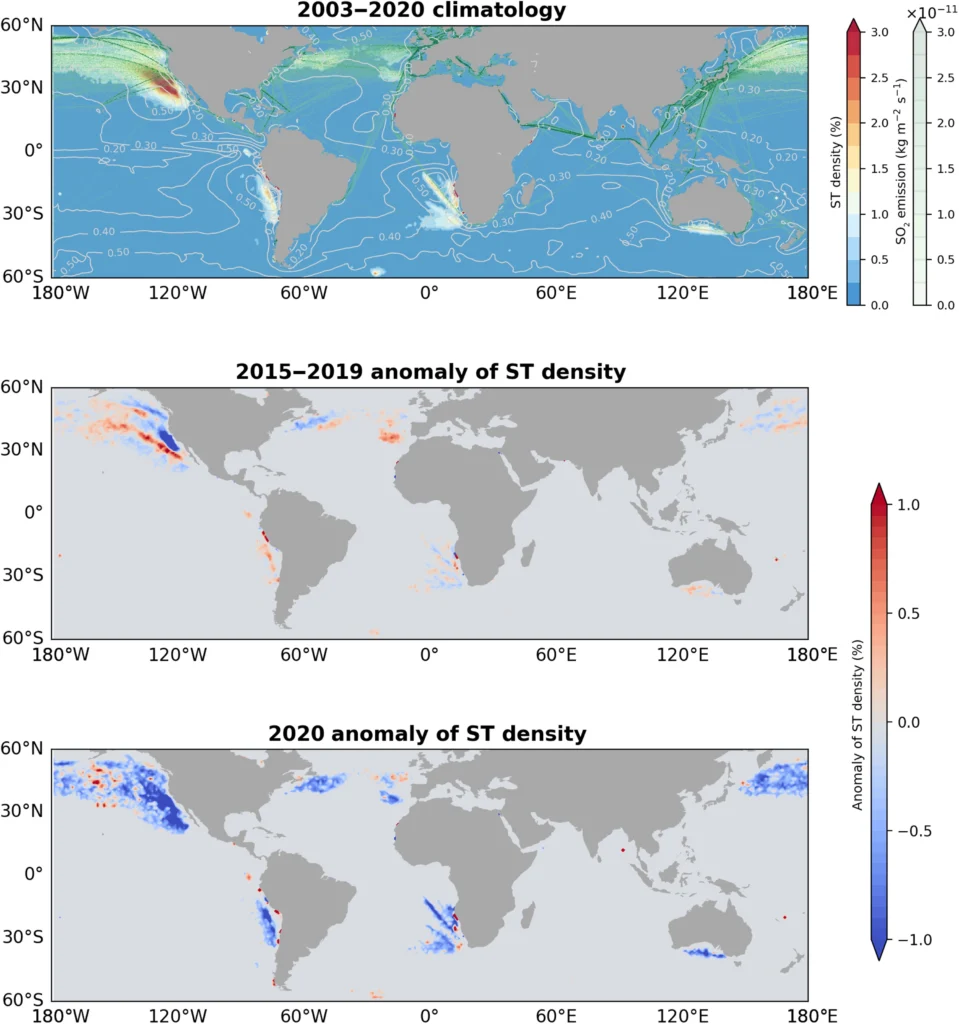 Another figure from the paper shows how regulations affected ship tracks. In the middle panel, blue areas show how ships were carefully avoiding the Emission Control Areas near the coasts. The red and orange areas show increased traffic just outside the ECA boundaries and at ports not affected by the regulations. In 2020 (bottom panel), blue areas indicate that ship tracks largely disappeared even in areas with high ship traffic.
Climate conundrum
It seems obvious that reducing pollution from ships would produce a net benefit. However, because particles (such as shipping pollution) have a cooling effect when interacting with clouds, reducing them significantly could contribute to a problematic uptick in global temperatures, Yuan says.
That’s another reason it’s important to firm up the degree to which particulate pollution cools the planet. If the cooling effect of these pollutants and other particles is significant, humans will need to balance the need to prevent extensive warming with the need to reduce pollution where people and other species live—which creates difficult choices.
“Ship pollution alone can create a substantial cooling effect,” Yuan says, “because the atmosphere over the ocean is so clean.” There is a physical limit to how small cloud droplets can get, so at a certain point, adding more pollution doesn’t increase the clouds’ cooling effect. But over the ocean, because the background is largely unpolluted, even a small amount of pollution from ships has an effect.
Ocean pollution is also an outsize driver of the cooling effect of aerosols, because low clouds, which are most conducive to creating ship tracks, are more common over water than on land. And, as Yuan reminds us, “the ocean covers two-thirds of the Earth’s surface.”
 Low clouds over the ocean. (Nicolas Raymond/CC BY 2.0)
The bigger picture
Moving forward, Yuan and his colleagues are helping address this conundrum by continuing their work to define more precisely the role clouds play in climate. “We can take advantage of the millions of ship track samples we have now to start to get hold of the overall aerosol-cloud interaction problem,” Yuan says, “because ship tracks can be used as mini-labs.”
By analyzing data from a relatively simple and well-controlled system—narrow ship tracks running through very clean clouds—they can come to conclusions they can be confident about.
Other research teams can also use the team’s data set and algorithm to come to their own conclusions, amplifying the potential public impact of this work. That spirit of collaboration will help scientists and communities determine how best to approach global challenges like pollution and temperature change.
]]>
Tianle Yuan. (Image courtesy of Tianle Yuan) A new study in Science Advances led by UMBC’s Tianle Yuan used satellite data from 2003 – 2020 to determine the effect of fuel regulations on...
https://umbc.edu/stories/first-global-map-of-cargo-ship-pollution-reveals-effects-of-regulations/
https://my3.my.umbc.edu/api/v0/pixel/news/126447/guest@my.umbc.edu/5e4dd3c1c6d724098128982c9ef98d29/api/pixel
gestar
news
research
science-and-tech
UMBC News & Magazine
https://my3.my.umbc.edu/groups/umbc-news-magazine
https://assets1-my.umbc.edu/system/shared/avatars/groups/000/001/943/24435aa6207c452e7bc15cc74b42c7bb/xsmall.png?1748556657
https://assets1-my.umbc.edu/system/shared/avatars/groups/000/001/943/24435aa6207c452e7bc15cc74b42c7bb/original.png?1748556657
https://assets2-my.umbc.edu/system/shared/avatars/groups/000/001/943/24435aa6207c452e7bc15cc74b42c7bb/xxlarge.png?1748556657
https://assets2-my.umbc.edu/system/shared/avatars/groups/000/001/943/24435aa6207c452e7bc15cc74b42c7bb/xlarge.png?1748556657
https://assets3-my.umbc.edu/system/shared/avatars/groups/000/001/943/24435aa6207c452e7bc15cc74b42c7bb/large.png?1748556657
https://assets1-my.umbc.edu/system/shared/avatars/groups/000/001/943/24435aa6207c452e7bc15cc74b42c7bb/medium.png?1748556657
https://assets2-my.umbc.edu/system/shared/avatars/groups/000/001/943/24435aa6207c452e7bc15cc74b42c7bb/small.png?1748556657
https://assets1-my.umbc.edu/system/shared/avatars/groups/000/001/943/24435aa6207c452e7bc15cc74b42c7bb/xsmall.png?1748556657
https://assets2-my.umbc.edu/system/shared/avatars/groups/000/001/943/24435aa6207c452e7bc15cc74b42c7bb/xxsmall.png?1748556657
UMBC News & Magazine
0
0
false
Wed, 27 Jul 2022 11:37:27 -0400
Wed, 27 Jul 2022 11:37:27 -0400